EP3779720B1 - Transaktionsverarbeitungsverfahren und -system sowie server - Google Patents
Transaktionsverarbeitungsverfahren und -system sowie server Download PDFInfo
- Publication number
- EP3779720B1 EP3779720B1 EP19774544.1A EP19774544A EP3779720B1 EP 3779720 B1 EP3779720 B1 EP 3779720B1 EP 19774544 A EP19774544 A EP 19774544A EP 3779720 B1 EP3779720 B1 EP 3779720B1
- Authority
- EP
- European Patent Office
- Prior art keywords
- statement
- transaction
- node
- type
- execution
- Prior art date
- Legal status (The legal status is an assumption and is not a legal conclusion. Google has not performed a legal analysis and makes no representation as to the accuracy of the status listed.)
- Active
Links
Images




Classifications
-
- H—ELECTRICITY
- H04—ELECTRIC COMMUNICATION TECHNIQUE
- H04L—TRANSMISSION OF DIGITAL INFORMATION, e.g. TELEGRAPHIC COMMUNICATION
- H04L67/00—Network arrangements or protocols for supporting network services or applications
- H04L67/50—Network services
- H04L67/60—Scheduling or organising the servicing of application requests, e.g. requests for application data transmissions using the analysis and optimisation of the required network resources
- H04L67/63—Routing a service request depending on the request content or context
-
- G—PHYSICS
- G06—COMPUTING OR CALCULATING; COUNTING
- G06F—ELECTRIC DIGITAL DATA PROCESSING
- G06F16/00—Information retrieval; Database structures therefor; File system structures therefor
- G06F16/20—Information retrieval; Database structures therefor; File system structures therefor of structured data, e.g. relational data
- G06F16/24—Querying
- G06F16/245—Query processing
- G06F16/2453—Query optimisation
- G06F16/24534—Query rewriting; Transformation
- G06F16/24542—Plan optimisation
-
- G—PHYSICS
- G06—COMPUTING OR CALCULATING; COUNTING
- G06F—ELECTRIC DIGITAL DATA PROCESSING
- G06F16/00—Information retrieval; Database structures therefor; File system structures therefor
- G06F16/20—Information retrieval; Database structures therefor; File system structures therefor of structured data, e.g. relational data
- G06F16/24—Querying
- G06F16/245—Query processing
- G06F16/2455—Query execution
-
- G—PHYSICS
- G06—COMPUTING OR CALCULATING; COUNTING
- G06F—ELECTRIC DIGITAL DATA PROCESSING
- G06F16/00—Information retrieval; Database structures therefor; File system structures therefor
- G06F16/20—Information retrieval; Database structures therefor; File system structures therefor of structured data, e.g. relational data
- G06F16/25—Integrating or interfacing systems involving database management systems
- G06F16/258—Data format conversion from or to a database
-
- G—PHYSICS
- G06—COMPUTING OR CALCULATING; COUNTING
- G06F—ELECTRIC DIGITAL DATA PROCESSING
- G06F16/00—Information retrieval; Database structures therefor; File system structures therefor
- G06F16/20—Information retrieval; Database structures therefor; File system structures therefor of structured data, e.g. relational data
- G06F16/28—Databases characterised by their database models, e.g. relational or object models
- G06F16/283—Multi-dimensional databases or data warehouses, e.g. MOLAP or ROLAP
-
- H—ELECTRICITY
- H04—ELECTRIC COMMUNICATION TECHNIQUE
- H04L—TRANSMISSION OF DIGITAL INFORMATION, e.g. TELEGRAPHIC COMMUNICATION
- H04L67/00—Network arrangements or protocols for supporting network services or applications
- H04L67/01—Protocols
- H04L67/10—Protocols in which an application is distributed across nodes in the network
-
- H—ELECTRICITY
- H04—ELECTRIC COMMUNICATION TECHNIQUE
- H04L—TRANSMISSION OF DIGITAL INFORMATION, e.g. TELEGRAPHIC COMMUNICATION
- H04L67/00—Network arrangements or protocols for supporting network services or applications
- H04L67/01—Protocols
- H04L67/10—Protocols in which an application is distributed across nodes in the network
- H04L67/1097—Protocols in which an application is distributed across nodes in the network for distributed storage of data in networks, e.g. transport arrangements for network file system [NFS], storage area networks [SAN] or network attached storage [NAS]
Definitions
- the invention relates to the field of communication technology, and in particular to a transaction processing method, a server and a transaction processing system.
- the distributed database can effectively solve the problem of massive data storage and concurrent data access.
- the distributed database system in the prior art includes at least one database, and each database includes at least one data table. In this way, the data in the original centralized database can be distributed and stored to multiple data storage nodes connected through the network, to obtain the larger storage capacity and higher concurrent visits.
- the distributed database in the prior art uses the same server to process different types of data access requirements, and the different types of data access requirements may include the access requirement of a single database, that is, this data access requirement requires the server to query one database to get the result; there may also be the access requirement of multiple databases, that is, this data access requirement requires the server to query multiple databases to get the result.
- the processing time periods required by these two types of data access requirements are different, which easily leads to the lower efficiency of the server in processing the data access requirements and increases the operating burden of the server.
- U.S. Patent No. 7689582 B2 discloses a computer implemented method, apparatus, and computer usable program code for generating an execution plan graph from a data flow.
- a metadata representation of the data flow is generated in response to receiving the data flow.
- a set of code units is generated from the metadata representation. Each code unit in the set of code units is executable on multiple different types of runtime engines. The set of code units is processed to produce the execution plan graph.
- U.S. Patent No. 7984043 B1 discloses that a system and method for distributed query processing may compile and optimize query plans for incoming query requests independent of hardware configurations and/or physical locations of data partitions in a distributed storage system (e.g., a data grid).
- the query plan may be divided into segments, and each segment may be instantiated on a remote query processing node of the distributed system by a query coordinator node according to metadata accessed at runtime by remote sub-query operators in the query plan.
- the metadata may include an indication of the physical locations of data partitions in the system and may be stored on one or more of the query processing nodes.
- the remote query processing nodes may execute the query plan segments and return results to the requestor. Cached query plans may be re-executed without recompilation, according to current metadata, even in the event of a node failure or data partition move.
- EP patent application No. EP 1649390 A2 relates generally to a system for processing database queries, and more particularly to a method for generating high level language or machine code to implement query execution plans.
- the method for generating executable machine code for query execution in EP 1649390 A2 is adaptive to dynamic runtime conditions, compiled just in time for execution and most importantly, avoids the bounds checking, pointer indirection, materialization and other similar kinds of overhead that are typical in interpretive runtime execution engines.
- US 2016/171070 A1 discloses a system, where two servers compute two corresponding execution plans for a same, statement, the better of the two is then executed.
- Embodiments of the invention provide a transaction processing method, a transaction management and execution server and a non-transitory computer readable storage medium as claimed in the appended claims, so as to solve the technical problem in the prior art that the processing efficiency of the server is low because the distributed database uses the same server to process different types of transaction access requirements.
- the method in embodiments of the invention may be applicable to a variety of system architectures.
- the method in embodiments of the invention will be described in detail below in combination with the system architectures given as examples in the embodiments.
- Fig. 1 exemplarily shows a schematic diagram of a system architecture applicable to an embodiment of the invention.
- the system architecture 100 applicable to the embodiment of the invention includes: first-type nodes, such as a first-type node 1011 and a first-type node 1012 as shown in Fig. 1 ; second-type nodes, such as a second-type node 1021 and a second-type node 1022 as shown in Fig. 1 ; and third-type nodes, such as a third-type node 1031, a third-type node 1032 and a third-type node 1033 as shown in Fig. 1 , wherein the third-type node may be a database for storing data.
- first-type nodes such as a first-type node 1011 and a first-type node 1012 as shown in Fig. 1
- second-type nodes such as a second-type node 1021 and a second-type node 1022 as shown in Fig. 1
- third-type nodes
- the first-type node 1011 obtains at least one statement of a certain transaction and classify each statement of the transaction, and then send the at least one statement to the second-type node 1021 and the second-type node 1022 respectively according to the type to which each statement belongs; further, after receiving the statement, the second-type node 1021 or the second-type node 1022 generates the execution plan corresponding to the statement according to the received statement and send the execution plan corresponding to the statement to the first-type node 1012; and further, the first-type node 1012 processes the transaction according to the received execution plan corresponding to at least one statement of the transaction sent by the second-type node 1021 and/or the second-type node 1022.
- the nodes in the embodiments of the invention may be physical entity nodes, or may be virtual nodes, which are not limited here.
- the first-type nodes can be deployed on different devices, for example, the first-type node 1011 shown in Fig. 1 is deployed on the device A and the first-type node 1012 is deployed on the device B; or the first-type nodes may also be deployed on the same device, for example, the first-type node 1011 and the first-type node 1012 shown in Fig. 1 are both deployed on the device A; (2) the number of second-type nodes is not specifically limited in the embodiments of the invention, the second-type node 1021 and the second-type node 1022 shown in Fig.
- the number of third-type nodes is not specifically limited in the embodiments of the invention, the third-type node 1031, the third-type node 1032 and the third-type node 1033 shown in Fig. 1 are just an example, and those skilled in the art can increase/decrease the number of third-type nodes according to the experience and actual condition.
- the transaction processing system 200 includes a transaction management and execution server 201, an OLTP server 202 and an OLAP server 203; wherein:
- the transaction management and execution server 201 is further configured to: receive an execution plan corresponding to the at least one statement of the first transaction sent by the at least one second node, and process the first transaction according to the execution plan corresponding to the at least one statement of the first transaction.
- the transaction management and execution server 201 may have the functions of multiple first-type nodes, for example, the transaction management and execution server 201 may have both the function of the first-type node 1011 and the function of the first-type node 1012 shown in Fig. 1 ;
- the OLTP server 202 may be any one of the second-type nodes shown in Fig. 1 , for example, the OLTP server 202 may be the second-type node 1021, and the OLAP server 203 may be any one of the second-type nodes shown in Fig. 1 other than the OLTP server, for example, the OLAP server 203 may be the second-type node 1022.
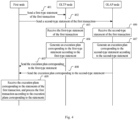
- Fig. 3 exemplarily shows a flow schematic diagram corresponding to a transaction processing method provided by an embodiment of the invention, wherein the first node is the transaction management and execution server 201 shown in Fig. 2 .
- the method specifically includes the following steps.
- Step 301 the first node obtains at least one statement of a first transaction.
- Step 302 the first node determines a type of a first statement and sends the first statement to a second node corresponding to the type of the first statement among at least one second node according to the type of the first statement.
- Step 303 at least one second node generates an execution plan corresponding to a received statement according to the received statement, and sends the execution plan corresponding to the received statement to the first node
- Step 304 the first node receives the execution plan corresponding to the at least one statement of the first transaction sent by the at least one second node, and processes the first transaction according to the execution plan corresponding to the at least one statement of the first transaction.
- One possible implementation is as follows: taking the system architecture shown in Fig. 1 as an example, the above steps 301 and 302 are be performed by the first-type node 1011 shown in Fig. 1 , the above step 303 is performed by at least one of the second-type nodes shown in Fig. 1 , and the above step 304 is performed by the first-type node 1012 shown in Fig. 1 ; another possible implementation is as follows: taking the system architecture shown in Fig. 2 as an example, the above steps 301, 302 and 304 are performed by the transaction management server 201 shown in Fig. 2 , and the above step 303 is performed by the OLTP server and/or the OLAP server shown in Fig. 2 .
- the first node may classify and then send at least one statement to at least one second node.
- This method of classifying and processing statements can reduce the design complexity of the statement system; further, compared with the mode in which only one server is used for transaction processing in the prior art, the embodiments of the invention can process multiple types of statements at the same time, effectively improving the processing performance of the system, reducing the operating burden of the system, and then increasing the overall parallelism of the system; and furthermore, at least one second node only needs to send the execution plan corresponding to the statement to the first node, and the first node performs unified processing on at least one statement included in the first transaction, thereby ensuring the transactionality.
- the first transaction includes at least one statement.
- the business scenario corresponding to the first transaction is: the educational administration system of a university needs to update the GPA of a student enrolled in 2004 and numbered 200401361211 to 3.9; then the name of the student's teacher is searched out for the purpose of instructing the teacher to confirm the student's GPA score; and it is known that there are two data tables in the database of the educational administration system of the university.
- Table 1 is a teacher list (teacher list), where the primary key is teacher ID (teacher id), and the other field is teacher name (name); and Table 2 is a student list (student list), where the primary key is student ID (student id), and the other fields are student name (name), teacher ID corresponding to student (teacher id), and Grade Point Average (GPA).
- Table 1 shows the statements of the first transaction (taking SQL statements as an example).
- step 302 there may be multiple methods for classifying the statements.
- One possible implementation is to classify the statements according to the degree of difficulty in executing the statements. Taking the content shown in Table 1 as an example, the statement 1, statement 2 and statement 4 are executed with fewer steps and lower degree of difficulty, and the statement 1, statement 2 and statement 4 may be classified as the first-type statements; and the statement 3 is executed with more steps and higher degree of difficulty, and the statement 3 may be classified as the second-type statement.
- the statements may also be divided into more types (that is, the number of types is greater than two).
- statements when the statements are classified, they may also be classified in other ways, for example, they may be classified according to the content of the statements or according to the execution order of the statements, which is not specifically limited.
- the first node sends at least one statement to at least one second node respectively according to the type of each statement and the correspondence between types of the statements and second nodes.
- Table 2 it is an example of the correspondence between types of statements and second nodes, wherein the second nodes includes an OLTP node and an OLAP node. If the type of the statement is the first-type statement, the corresponding second node is the OLTP node, and if the type of the statement is the second-type statement, the corresponding second node is the OLAP node.
- Table 2 an example of the correspondence between types of the statements and second nodes Type of statement Second node First-type statement OLTP node Second-type statement OLAP node
- the embodiment of the invention classifies the statements of the first transaction shown in Table 1 and sends them to the corresponding second nodes, where the statement 1, statement 2 and statement 4 may be the first-type statements, and the first node sends the statement 1, statement 2 and statement 4 to the OLTP node; and the statement 3 may be the second-type statement, and the first node sends the statement 3 to the OLAP node.
- different second nodes correspond to different types of statements.
- the second nodes include an OLTP node and an OLAP node as an example for description.
- the first node may process the first transaction according to the execution content corresponding to the first-type statement; if it is determined that the execution plan corresponding to the first-type statement includes the execution content and the storage node corresponding to the first-type statement, then the first node may access the storage node corresponding to the first-type statement according to the execution content corresponding to the first-type statement.
- the first node may access the storage node corresponding to the second-type statement included in the execution plan corresponding to the second-type statement according to the execution content corresponding to the second-type statement included in the execution plan corresponding to the second-type statement.
- Step 401 the first node sends a first-type statement of the first transaction to the OLTP node.
- Step 402 the first node sends a second-type statement of the first transaction to the OLAP node.
- Step 403 the OLTP node receives the first-type statement of the first transaction sent by the first node.
- Step 404 the OLTP node generates an execution plan corresponding to the first-type statement of the first transaction according to the first-type statement of the first transaction.
- the execution plan corresponding to the first-type statement may only include the execution content corresponding to the first-type statement.
- the statement 1 shown in Table 1 the statement 1 is 'begin'.
- the OLTP node may know that the first transaction needs to be started. Then, the OLTP node may generate an execution plan corresponding to the statement 1, that is, the execution content included in the execution plan corresponding to the statement 1 is starting the first transaction.
- the execution plan corresponding to the first-type statement may also include both the execution content corresponding to the first-type statement and the storage node corresponding to the first-type statement.
- the OLTP node may know that the data corresponding to the student number 200401361211 is stored in the storage node a, and then the OLTP node may generate the execution plan corresponding to the statement 2, that is, the execution content included in the execution plan corresponding to the statement 2 is searching for the data corresponding to the student number 200401361211, and the storage node included in the execution plan corresponding to the statement 2 is the storage node a.
- the first node may process the first transaction by searching for the data corresponding to the student number 200401361211 in the storage node a.
- Step 405 the OLTP node sends the execution plan corresponding to the first-type statement of the first transaction to the first node
- Step 406 the OLAP node receives the second-type statement of the first transaction sent by the first node.
- Step 407 the OLAP node generates an execution plan corresponding to the second-type statement of the first transaction according to the second-type statement of the first transaction.
- the execution plan corresponding to the second-type statement includes the execution content and the storage node corresponding to the second-type statement.
- the OLAP node may know that the data corresponding to the student number 200401361211 is stored in the storage node a and the data of the teacher corresponding to the student number 200401361211 is stored in the storage node b, and then the OLAP node may generate the execution plan corresponding to the statement 3, that is, the execution content included in the execution plan corresponding to the statement 3 is searching for the teacher number corresponding to the student number 200401361211 and then searching for the name of the teacher according to the obtained teacher number, and the storage nodes included in the execution plan corresponding to the statement 3 are the storage node a and storage node b.
- the first node processes the first transaction by searching for the teacher number corresponding to the student number 200401361211 in the storage node a and searching for the name of the teacher according to the teacher number in the storage node b.
- Step 408 the OLTP node sends the execution plan corresponding to the second-type statement of the first transaction to the first node.
- Step 409 the first node receives the execution plan corresponding to the at least one statement of the first transaction sent by the OLTP node and the OLAP node, and processes the first transaction according to the execution plan corresponding to the at least one statement of the first transaction.
- the first node may also firstly send the second-type statement of the first transaction to the OLAP node and then send the first-type statement of the first transaction to the OLTP node;
- the number of second nodes may be greater than two, for example, the first node may receive the execution plans corresponding to the at least one statement of the first transaction sent by the second node A, the second node B and the second node C, and process the first transaction according to the execution plans corresponding to the at least one statement of the first transaction, where the specific processing procedure may refer to the content described above and will not be repeated here;
- the OLAP node also generates an initial execution plan corresponding to the second-type statement of the first transaction according to the second-type statement of the first transaction, and then the OLAP node sends the
- the OLAP node does not need to consider the storage rule of the distributed database (that is, not need to consider the storage node corresponding to each data list), and only needs to consider the internal logical relationship of each data list; while the OLTP node needs to integrate the storage rule of the distributed database with the internal logical relationship of each data list, thereby simplifying the structure of the OLAP node, reducing the complexity of the transaction processing system, and then reducing the implementation cost of the transaction processing system.
- embodiments of the invention further provide a method of processing a first transaction by a first node.
- the first node may include multiple schedulers.
- the first node may start the first transaction and allocate a corresponding scheduler to the first transaction, and then process the first transaction through the scheduler corresponding to the first transaction according to the execution plan(s) corresponding to the at least one statement of the first transaction
- the first node receives the execution plan corresponding to at least one statement of the first transaction, the execution plan corresponding to at least one statement of the second transaction, and the execution plan corresponding to at least one statement of the third transaction, so the first node may start the first, second and third transactions respectively, and allocate the first scheduler to the first transaction, the second scheduler to the second transaction, and the third scheduler to the third transaction, so that multiple transactions can be processed concurrently, improving the processing efficiency of the transaction processing system and ensuring the transactionality.
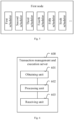
- Fig. 6 exemplarily shows a structural schematic diagram of a transaction management and execution server provided by an embodiment of the invention.
- the transaction management and execution server 600 includes an obtaining unit 601, a processing unit 602 and a receiving unit 603; wherein:
- the processing unit 602 is specifically configured to: start the first transaction and allocate a corresponding scheduler for the first transaction according to the execution plan corresponding to the at least one statement of the first transaction; and process the first transaction through the scheduler corresponding to the first transaction according to the execution plan corresponding to the at least one statement of the first transaction.
- the at least one second node includes an OLTP node and an OLAP node.
- the processing unit 602 is specifically configured to:
- the at least one second node includes an OLTP node.
- the receiving unit 603 is specifically configured to:
- Fig. 7 exemplarily shows a schematic diagram of another system architecture applicable to an embodiment of the invention.
- the system architecture 700 applicable to the embodiment of the invention includes a first-type node 701, a second-type node 702 and third-type nodes, such as a third-type node 7031, a third-type node 7032 and a third-type node 7033 as shown in Fig. 7 , wherein the third-type node may be a database for storing data.
- the first-type node 701 obtains at least one statement of a certain transaction and classify each statement of the transaction, and then send at least one statement to itself (i.e., the first-type node 701) and the second-type node 702 respectively according to the type of each statement; further, after receiving the statement, the second-type node 702 generates an initial execution plan corresponding to the statement according to the received statement and send the initial execution plan corresponding to the statement to the first-type node 701; and further, the first-type node 701 generates the execution plan corresponding to the statement according to the received initial execution plan corresponding to the statement sent by the second-type node 702, and process the transaction according to the execution plan corresponding to the statement.
- the number of second-type nodes is not specifically limited in the embodiments of the invention, the second-type node 702 shown in Fig. 7 is just an example, and those skilled in the art can increase/decrease the number of second-type nodes according to the experience and actual condition; and (2) the number of third-type nodes is not specifically limited in the embodiments of the invention, the third-type node 7031, the third-type node 7032 and the third-type node 7033 shown in Fig. 7 are just an example, and those skilled in the art can increase/decrease the number of third-type nodes according to the experience and actual condition.
- the transaction processing system 800 includes an OLTP server 801 and an OLAP server 802
- the OLTP server 801 is configured to: obtain at least one statement of a first transaction, determine a type of a first statement, generate an execution plan corresponding to a first-type statement if the first statement is determined as the first-type statement, and send a second-type statement to the OLAP server 802 if the first statement is determined as the second-type statement.
- the first statement is any one of the at least one statement.
- the OLAP server 802 is configured to: receive the second-type statement sent by the OLTP server, generate an initial execution plan corresponding to the second-type statement, and send the initial execution plan corresponding to the second-type statement to the OLTP server 801.
- the OLTP server 801 is further configured to: receive the initial execution plan corresponding to the second-type statement sent by the OLAP server 802, generate an execution plan corresponding to the second-type statement according to the initial execution plan corresponding to the second-type statement, and process the first transaction according to the execution plan corresponding to the first-type statement and the execution plan corresponding to the second-type statement.
- the OLTP server 801 may be the first-type node 701 shown in Fig. 7
- the OLAP server 802 may be the second-type node 702 shown in Fig. 7 .
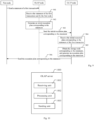
- Fig. 9 exemplarily shows a flow schematic diagram corresponding to another transaction processing method provided by an embodiment of the invention, wherein the OLTP node is the OLTP server 801 shown in Fig. 8 , and the OLAP node is the OLAP server 802 shown in Fig. 8 .
- the method specifically includes the following steps.
- Step 901 the OLAP node receives a statement of a first transaction sent by a first node.
- Step 902 the OLAP node generates an initial execution plan corresponding to the statement.
- Step 903 the OLAP node sends the initial execution plan corresponding to the statement to the OLTP node.
- Step 904 the OLTP node receives the initial execution plan corresponding to the statement of the first transaction sent by the OLAP node.
- Step 905 the OLTP node obtains the storage node corresponding to the statement according to the initial execution plan corresponding to the statement, and then generates an execution plan corresponding to the statement.
- Step 906 the OLTP node sends the execution plan corresponding to the statement to the first node, so that the first node processes the first transaction according to the execution plan corresponding to the statement.
- the first node may be directly deployed in the OLTP server. In this way, the complexity of the transaction processing system can be reduced.
- the initial execution plan corresponding to the statement includes the execution content corresponding to the statement.
- the OLAP node may know that there is a need to search for the data corresponding to the student number 200401361211 and then search for the name of the teacher according to the teacher number in the data corresponding to the student number 200401361211, that is, the execution content included in the initial execution plan corresponding to the statement 3 is searching for the teacher number corresponding to the student number 200401361211 and then searching for the name of the teacher according to the obtained teacher number.
- the execution plan corresponding to the statement includes the execution content and storage node corresponding to the statement.
- the OLTP node may know that the data corresponding to the student number 200401361211 is stored in the storage node a and the data of the teacher corresponding to the student number 200401361211 is stored in the storage node b, and then the OLTP node generates the execution plan corresponding to the statement 3, that is, the execution content included in the execution plan corresponding to the statement 3 is searching for the teacher number corresponding to the student number 200401361211 and then searching for the name of the teacher according to the obtained teacher number, and the storage nodes included in the execution plan corresponding to the statement 3 are the storage node a and storage node b.
- the OLAP node does not need to consider the storage rule of the distributed database (that is, not need to consider the storage node corresponding to each data list), and only needs to consider the internal logical relationship of each data list; while the OLTP node needs to integrate the storage rule of the distributed database with the internal logical relationship of each data list.
- Such method can simplify the structure of the OLAP node, reduce the complexity of the transaction processing system, and then reduce the implementation cost of the transaction processing system.
- the second-type node A and the second-type node B can respectively generate initial execution plans corresponding to statements according to the respectively received statements, and then the second-type node A and the second-type node B can respectively send the initial execution plans corresponding to the statements to the first-type node; in another example, the second-type node A can generate an initial execution plan A corresponding to the statement according to the received statement, and then the second-type node A sends the initial execution plan A corresponding to the statement to the second-type node B, and the second-type node B generates an initial execution plan B corresponding to the statement according to the initial execution plan A corresponding to the statement and sends the initial execution plan B corresponding to the statement to the first-type node.
- the second-type node A and the second-type node B can respectively generate initial execution plans corresponding to statements according to the respectively received statements, and then the second-type node A and the second-type node B can respectively send the initial execution plans corresponding to the statements to the first-type node; in another
- the first node may still include multiple schedulers. After receiving the execution plan corresponding to at least one statement of the first transaction, the first node may start the first transaction and allocate a corresponding scheduler to the first transaction, and then process the first transaction through the scheduler corresponding to the first transaction according to the execution plan corresponding to at least one statement of the first transaction.
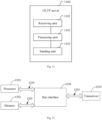
- Fig. 10 exemplarily shows a structural schematic diagram of an OLAP server provided by an embodiment of the invention.
- the OLAP server 1000 includes a receiving unit 1001, a processing unit 1002 and a sending unit 1003; wherein:
- Fig. 11 exemplarily shows a structural schematic diagram of an OLTP server provided by an embodiment of the invention.
- the OLTP server 1100 includes a receiving unit 1101, a processing unit 1102 and a sending unit 1103; wherein:
- An embodiment of the invention provides a server, which includes:
- An embodiment of the invention provides a computer storage medium storing a software program that implements the transaction processing method described above when being read and executed by one or more processors.
- the first node after obtaining at least one statement of the first transaction, classifies each statement and sends the at least one statement to at least one second node respectively according to the type of each statement, so that the at least one second node generates the execution plan corresponding to the statement according to the received statement; and then the first node processes the first transaction according to the received execution plan corresponding to at least one statement of the first transaction sent by the at least one second node.
- the first node classifies and then send at least one statement to at least one second node.
- This method of classifying and processing statements can reduce the design complexity of the statement system; further, compared with the mode in which only one server is used for transaction processing in the prior art, the embodiments of the invention can process multiple types of statements at the same time, effectively improving the processing performance of the system, reducing the operating burden of the system, and then increasing the overall parallelism of the system; and furthermore, at least one second node only needs to send the execution plan corresponding to the statement to the first node, and the first node performs unified processing on at least one statement included in the first transaction, thereby ensuring the transactionality.
- Fig. 12 is a structural schematic diagram of an electronic device provided by the present application.
- the electronic device includes a processor 1201, a memory 1202, a transceiver 1203 and a bus interface 1204; wherein the processor 1201, the memory 1202, the transceiver 1203 and the bus interface 1204 are connected to each other through buses 1205.
- the memory 1202 is used to store a program; and specifically, the program includes program codes including the computer operation instructions.
- the memory 1202 may include a volatile memory, e.g., Random-Access Memory (RAM); the memory may also include a non-volatile memory, e.g., flash memory, Hard Disk Drive (HDD) or Solid-State Drive (SSD); and the memory 1202 may also include a combination of the above types of memories.
- RAM Random-Access Memory
- HDD Hard Disk Drive
- SSD Solid-State Drive
- the memory 1202 stores the elements of: executable modules or data structures, or their subsets, or their extension sets.
- Operation instructions includes various operation instructions for implementing various operations.
- Operation systems includes various system programs for implementing various basic services and processing hardware-based tasks.
- the bus 1205 may be the Peripheral Component Interconnect (PCI) bus or Extended Industry Standard Architecture (EISA) bus or the like.
- PCI Peripheral Component Interconnect
- EISA Extended Industry Standard Architecture
- the buses may be divided into the address bus, data bus, control bus and so on.
- the buses are represented by only one thick line in Fig. 12 , but it does not represent only one bus or only one type of bus.
- the bus interface 1204 may be a wired communication interface, a wireless bus interface or the combination thereof, wherein the wired bus interface may be an Ethernet interface for example.
- the Ethernet interface may be an optical interface, an electrical interface or the combination thereof.
- the wireless bus interface may be a WLAN interface.
- the processor 1201 may be a Central Processing Unit (CPU), a Network Processor (NP) or the combination of the CPU and NP. It may also be a hardware chip.
- the above-mentioned hardware chip may be an Application-Specific Integrated Circuit (ASIC), a Programmable Logic Device (PLD) or the combination thereof.
- the above-mentioned PLD may be a Complex Programmable Logic Device (CPLD), a Field-Programmable Gate Array (FPGA), a Generic Array Logic (GAL) or any combination thereof
- the processor 1201 is configured to read the program in the memory 1202 to perform the following method: obtaining at least one statement of a first transaction; determining a type of a first statement, and sending the first statement to a second node corresponding to the type of the first statement among at least one second node according to the type of the first statement, so that the second node corresponding to the type of the first statement generates an execution plan corresponding to the statement according to the received statement; wherein the first statement is any one of the at least one statement.
- the memory 1202 is configured to store one or more executable programs and may store the data used by the processor 1201 when performing the operations.
- the transceiver 1203 is configured, under the control of the processor 1201, to receive the execution plan corresponding to the at least one statement of the first transaction sent by the at least one second node; and the processing unit is further configured to process the first transaction according to the execution plan corresponding to the at least one statement of the first transaction.
- the processor 1201 is configured to: start the first transaction and allocate a corresponding scheduler for the first transaction according to the execution plan corresponding to the at least one statement of the first transaction; and process the first transaction through the scheduler corresponding to the first transaction according to the execution plan corresponding to the at least one statement of the first transaction.
- the at least one second node includes an OLTP node and an OLAP node; and the processor 1201 is configured to: if an execution plan corresponding to a first-type statement includes execution content corresponding to the first-type statement, then process the first transaction according to the execution content corresponding to the first-type statement; if the execution plan corresponding to the first-type statement includes the execution content and a storage node corresponding to the first-type statement, then access the storage node corresponding to the first-type statement according to the execution content corresponding to the first-type statement; and access a storage node corresponding to a second-type statement according to execution content corresponding to the second-type statement; wherein an execution plan corresponding to the second-type statement includes the execution content and storage node corresponding to the second-type statement.
- the at least one second node includes an OLTP node; and the transceiver 1203 is configured to: receive the execution plan corresponding to the at least one statement of the first transaction sent by the OLTP node, wherein the execution plan corresponding to the at least one statement of the first transaction includes an execution plan corresponding to a first-type statement of the first transaction and an execution plan corresponding to a second-type statement of the first transaction; wherein the execution plan corresponding to the first-type statement is generated by the OLTP node according to the first-type statement; and the execution plan corresponding to the second-type statement is generated by the OLTP node according to a received initial execution plan of the second-type statement sent by the OLAP node; the initial execution plan of the second-type statement includes execution content corresponding to the second-type statement, and the execution plan corresponding to the second-type statement includes the execution content and a storage node corresponding to the second-type statement.
- the receiving unit 603 may be implemented by the transceiver 1203, and the obtaining unit 601 and the processing unit 602 may be implemented by the processor 1201.
- the electronic device 1200 may include a processor 1201, a transceiver 1203 and a memory 1202, wherein the memory 1202 may be configured to store the programs/codes pre-installed when the electronic device 1200 leaves the factory, and may also store the codes used to be executed by the processor 1201, etc.
- the embodiments of the invention since there is at least one second node in the transaction processing system, after obtaining at least one statement of the first transaction, the first node classifies and sends at least one statement to the corresponding second node.
- the embodiments of the invention can process multiple types of statements at the same time, effectively improving the processing efficiency of the system and reducing the operating burden of the system; further, at least one second node only needs to send the execution plan corresponding to the statement to the first node, and the first node performs unified processing on at least one statement included in the first transaction, thereby ensuring the transactionality.
- Fig. 13 is a structural schematic diagram of an electronic device provided by the present application.
- the electronic device includes a processor 1301, a memory 1302, a transceiver 1303 and a bus interface 1304; wherein the processor 1301, the memory 1302, the transceiver 1303 and the bus interface 1304 are connected to each other through buses 1305.
- the memory 1302 is used to store a program; and specifically, the program may include program codes including the computer operation instructions.
- the memory 1302 may include a volatile memory, e.g., Random-Access Memory (RAM); the memory may also include a non-volatile memory, e.g., flash memory, Hard Disk Drive (HDD) or Solid-State Drive (SSD); and the memory 1302 may also include a combination of the above types of memories.
- RAM Random-Access Memory
- HDD Hard Disk Drive
- SSD Solid-State Drive
- the memory 1302 stores the elements of: executable modules or data structures, or their subsets, or their extension sets.
- Operation instructions includes various operation instructions for implementing various operations.
- Operation systems includes various system programs for implementing various basic services and processing hardware-based tasks.
- the bus 1305 may be the Peripheral Component Interconnect (PCI) bus or Extended Industry Standard Architecture (EISA) bus or the like.
- PCI Peripheral Component Interconnect
- EISA Extended Industry Standard Architecture
- the buses may be divided into the address bus, data bus, control bus and so on.
- the buses are represented by only one thick line in Fig. 13 , but it does not represent only one bus or only one type of bus.
- the bus interface 1304 may be a wired communication interface, a wireless bus interface or the combination thereof, wherein the wired bus interface may be an Ethernet interface for example.
- the Ethernet interface may be an optical interface, an electrical interface or the combination thereof.
- the wireless bus interface may be a WLAN interface.
- the processor 1301 may be a Central Processing Unit (CPU), a Network Processor (NP) or the combination of the CPU and NP. It may also be a hardware chip.
- the above-mentioned hardware chip may be an Application-Specific Integrated Circuit (ASIC), a Programmable Logic Device (PLD) or the combination thereof.
- the above-mentioned PLD may be a Complex Programmable Logic Device (CPLD), a Field-Programmable Gate Array (FPGA), a Generic Array Logic (GAL) or any combination thereof
- the processor 1301 is configured to read the program in the memory 1302 to the following method: generating an initial execution plan corresponding to the statement that includes the execution content corresponding to the statement.
- the transceiver 1303 is configured to receive a statement of a first transaction sent by a first node; and send an initial execution plan corresponding to the statement to an OLTP node, so that the OLTP node generates an execution plan corresponding to the statement according to the initial execution plan corresponding to the statement.
- the receiving unit 1001 and the sending unit 1003 may be implemented by the transceiver 1303, and the processing unit 1002 may be implemented by the processor 1301.
- the electronic device 1300 may include a processor 1301, a transceiver 1303 and a memory 1302, wherein the memory 1302 may be configured to store the programs/codes pre-installed when the electronic device 1300 leaves the factory, and may also store the codes used to be executed by the processor 1301, etc.
- Fig. 14 is a structural schematic diagram of an electronic device provided by the present application.
- the electronic device includes a processor 1401, a memory 1402, a transceiver 1403 and a bus interface 1404; wherein the processor 1401, the memory 1402, the transceiver 1403 and the bus interface 1404 are connected to each other through buses 1405.
- the memory 1402 is used to store a program; and specifically, the program may include program codes including the computer operation instructions.
- the memory 1402 may include a volatile memory, e.g., Random-Access Memory (RAM); the memory may also include a non-volatile memory, e.g., flash memory, Hard Disk Drive (HDD) or Solid-State Drive (SSD); and the memory 1402 may also include a combination of the above types of memories.
- RAM Random-Access Memory
- HDD Hard Disk Drive
- SSD Solid-State Drive
- the memory 1402 stores the elements of: executable modules or data structures, or their subsets, or their extension sets.
- Operation instructions includes various operation instructions for implementing various operations.
- Operation systems includes various system programs for implementing various basic services and processing hardware-based tasks.
- the bus 1405 may be the Peripheral Component Interconnect (PCI) bus or Extended Industry Standard Architecture (EISA) bus or the like.
- PCI Peripheral Component Interconnect
- EISA Extended Industry Standard Architecture
- the buses may be divided into the address bus, data bus, control bus and so on.
- the buses are represented by only one thick line in Fig. 14 , but it does not represent only one bus or only one type of bus.
- the bus interface 1404 may be a wired communication interface, a wireless bus interface or the combination thereof, wherein the wired bus interface may be an Ethernet interface for example.
- the Ethernet interface may be an optical interface, an electrical interface or the combination thereof.
- the wireless bus interface may be a WLAN interface.
- the processor 1401 may be a Central Processing Unit (CPU), a Network Processor (NP) or the combination of the CPU and NP. It may also be a hardware chip.
- the above-mentioned hardware chip may be an Application-Specific Integrated Circuit (ASIC), a Programmable Logic Device (PLD) or the combination thereof.
- the above-mentioned PLD may be a Complex Programmable Logic Device (CPLD), a Field-Programmable Gate Array (FPGA), a Generic Array Logic (GAL) or any combination thereof.
- the processor 1401 is configured to read the program in the memory 1402 and perform the following method: obtaining a storage node corresponding to the statement according to the initial execution plan corresponding to the statement, and then generating the execution plan corresponding to the statement; wherein the execution plan corresponding to the statement includes the execution content and storage node corresponding to the statement.
- the transceiver 1403 is configured to receive an initial execution plan of a statement of a first transaction sent by an OLAP node, wherein the initial execution plan corresponding to the statement includes the execution content corresponding to the statement; and send an execution plan corresponding to the statement to a first node, so that the first node processes the first transaction according to the execution plan corresponding to the statement.
- the receiving unit 1101 and the sending unit 1103 may be implemented by the transceiver 1403, and the processing unit 1102 may be implemented by the processor 1401.
- the electronic device 1400 may include a processor 1401, a transceiver 1403 and a memory 1402, wherein the memory 1402 may be configured to store the programs/codes pre-installed when the electronic device 1400 leaves the factory, and may also store the codes used to be executed by the processor 1401, etc.
- embodiments of the invention may be provided as methods, systems or computer program products.
- the embodiments of the invention can take the form of hardware embodiments alone, software embodiments alone, or embodiments combining the software and hardware aspects.
- the embodiments of the invention can take the form of computer program products implemented on one or more computer usable storage mediums (including but not limited to magnetic disk memories, CD-ROMs, optical memories and the like) containing computer usable program codes therein.
- These computer program instructions can also be stored in a computer readable memory which is capable of guiding the computer or another programmable data processing device to operate in a particular way, so that the instructions stored in the computer readable memory produce a manufacture including the instruction apparatus which implements the functions specified in one or more processes of the flow charts and/or one or more blocks of the block diagrams.
- These computer program instructions can also be loaded onto the computer or another programmable data processing device, so that a series of operation steps are performed on the computer or another programmable device to produce the computer-implemented processing.
- the instructions executed on the computer or another programmable device provide steps for implementing the functions specified in one or more processes of the flow charts and/or one or more blocks of the block diagrams.
Landscapes
- Engineering & Computer Science (AREA)
- Theoretical Computer Science (AREA)
- Databases & Information Systems (AREA)
- General Physics & Mathematics (AREA)
- Data Mining & Analysis (AREA)
- Physics & Mathematics (AREA)
- General Engineering & Computer Science (AREA)
- Signal Processing (AREA)
- Computer Networks & Wireless Communication (AREA)
- Computational Linguistics (AREA)
- Operations Research (AREA)
- Information Retrieval, Db Structures And Fs Structures Therefor (AREA)
- Multi Processors (AREA)
Claims (5)
- Transaktionsverarbeitungsverfahren, das unter Verwendung eines Transaktions-Management- und -Ausführungsservers (201), eines Online-Transaction-Processing-Servers (OLTP) (202) und eines Online-Analytical-Processing-Servers (OLAP) (203) durchgeführt wird, wobei das Verfahren Folgendes umfasst:Erhalten (301) von mindestens zwei Anweisungen einer ersten Transaktion durch den Transaktions-Management- und -Ausführungsserver (201);Bestimmen (302), durch den Transaktions-Management- und -Ausführungsserver (201), eines Typs jeder der mindestens zwei Anweisungen, wobei die mindestens zwei Anweisungen eine Anweisung des ersten Typs und eine Anweisung des zweiten Typs umfassen;Senden (302, 401) der Anweisung des ersten Typs durch den Transaktion-Management- und -Ausführungsserver (201) an den OLTP-Server (202), so dass der OLTP-Server (202) einen Ausführungsplan erzeugt (404), der der Anweisung des ersten Typs entspricht; wobei der Ausführungsplan, der der Anweisung des ersten Typs entspricht, Folgendes umfasst: nur Ausführungsinhalt, der der Anweisung des ersten Typs entspricht, oder Ausführungsinhalt und einen Speicherknoten, der der Anweisung des ersten Typs entspricht;Senden (302, 402) der Anweisung zweiten Typs durch den Transaktions-Management- und- Ausführungsserver (201) an den OLAP-Server (203), so dass der OLAP-Server (203) einen anfänglichen Ausführungsplan erzeugt, der der Anweisung zweiten Typs entspricht, und den anfänglichen Ausführungsplan, der der Anweisung zweiten Typs entspricht, an den OLTP-Server (202) sendet; wobei der anfängliche Ausführungsplan, der der Anweisung des zweiten Typs entspricht, Ausführungsinhalte umfasst, die der Anweisung zweiten Typs entsprechen;Empfangen, durch den Transaktions-Management- und -Ausführungsserver (201), des Ausführungsplans, der der Anweisung des ersten Typs entspricht, und des Ausführungsplans, der der Anweisung des zweiten Typs entspricht, die vom OLTP-Server (202) gesendet wurden (303, 405); wobei der Ausführungsplan, der der Anweisung des zweiten Typs entspricht, vom OLTP-Server (202) gemäß dem anfänglichen Ausführungsplan, der der Anweisung des zweiten Typs entspricht, erzeugt wird; wobei der Ausführungsplan, der der Anweisung des zweiten Typs entspricht, den Ausführungsinhalt und einen Speicherknoten, der der Anweisung des zweiten Typs entspricht, umfasst; undVerarbeiten (304, 409) der ersten Transaktion durch den Transaktions-Management- und -Ausführungsserver (201) gemäß dem Ausführungsplan, der der Anweisung des ersten Typs entspricht, und dem Ausführungsplan, der der Anweisung des zweiten Typs entspricht.
- Verfahren gemäß Anspruch 1, wobei das Verarbeiten (304, 409) der ersten Transaktion durch den Transaktions-Management- und -Ausführungsserver (201) Folgendes umfasst:Starten der ersten Transaktion durch den Transaktions-Management- und - Ausführungsserver (201) und Zuweisen eines Schedulers, der der ersten Transaktion entspricht, gemäß dem Ausführungsplan, der der Anweisung des ersten Typs entspricht, und dem Ausführungsplan, der der Anweisung des zweiten Typs entspricht; undVerarbeiten, durch den Transaktions-Management- und -Ausführungsserver (201), der ersten Transaktion durch den Scheduler, der der ersten Transaktion entspricht, gemäß dem Ausführungsplan, der der Anweisung des ersten Typs entspricht, und dem Ausführungsplan, der der Anweisung des zweiten Typs entspricht.
- Verfahren gemäß Anspruch 1 oder 2, wobei das Verarbeiten (304, 409) der ersten Transaktion durch den Transaktions-Management- und -Ausführungsserver (201) Folgendes umfasst:wenn der Ausführungsplan, der der Anweisung des ersten Typs entspricht, nur den Ausführungsinhalt umfasst, der der Anweisung des ersten Typs entspricht, Verarbeiten der ersten Transaktion durch den Transaktions-Management- und - Ausführungsserver (201) gemäß dem Ausführungsinhalt, der der Anweisung des ersten Typs entspricht; und wenn der Ausführungsplan, der der Anweisung des ersten Typs entspricht, den Ausführungsinhalt und den Speicherknoten umfasst, der der Anweisung des ersten Typs entspricht, Zugreifen auf den Speicherknoten, der der Anweisung des ersten Typs entspricht, durch den Transaktions-Management- und - Ausführungsserver (201) gemäß dem Ausführungsinhalt, der der Anweisung des ersten Typs entspricht; undZugreifen, durch den Transaktions-Management- und -Ausführungsserver (201), auf den Speicherknoten, der der Anweisung des zweiten Typs entspricht, gemäß dem Ausführungsinhalt, der der Anweisung des zweiten Typs entspricht.
- Transaktions-Management- und -Ausführungsserver (201), umfassend:einen Speicher (1202), der so konfiguriert ist, dass er ein Softwareprogramm speichert;einen Prozessor (1201), der so konfiguriert ist, dass er das Softwareprogramm im Speicher (1202) liest und das Transaktionsverarbeitungsverfahren gemäß einem der Ansprüche 1-3 durchführt.
- Nicht-transitorisches, computerlesbares Speichermedium, das Computeranweisungen speichert, die einen Computer veranlassen, das Transaktionsverarbeitungsverfahren gemäß einem der Ansprüche 1 bis 3 durchzuführen.
Applications Claiming Priority (2)
| Application Number | Priority Date | Filing Date | Title |
|---|---|---|---|
| CN201810273942.5A CN108551478B (zh) | 2018-03-29 | 2018-03-29 | 一种事务处理方法、服务器及事务处理系统 |
| PCT/CN2019/073233 WO2019184577A1 (zh) | 2018-03-29 | 2019-01-25 | 一种事务处理方法、服务器及事务处理系统 |
Publications (3)
| Publication Number | Publication Date |
|---|---|
| EP3779720A4 EP3779720A4 (de) | 2021-02-17 |
| EP3779720A1 EP3779720A1 (de) | 2021-02-17 |
| EP3779720B1 true EP3779720B1 (de) | 2024-08-28 |
Family
ID=63517479
Family Applications (1)
| Application Number | Title | Priority Date | Filing Date |
|---|---|---|---|
| EP19774544.1A Active EP3779720B1 (de) | 2018-03-29 | 2019-01-25 | Transaktionsverarbeitungsverfahren und -system sowie server |
Country Status (9)
| Country | Link |
|---|---|
| US (1) | US11544260B2 (de) |
| EP (1) | EP3779720B1 (de) |
| JP (1) | JP7109572B2 (de) |
| KR (1) | KR102413144B1 (de) |
| CN (1) | CN108551478B (de) |
| AU (1) | AU2019241002B2 (de) |
| CA (1) | CA3094727C (de) |
| SG (1) | SG11202008855SA (de) |
| WO (1) | WO2019184577A1 (de) |
Families Citing this family (3)
| Publication number | Priority date | Publication date | Assignee | Title |
|---|---|---|---|---|
| CN111459398B (zh) * | 2019-01-22 | 2024-04-02 | 阿里巴巴集团控股有限公司 | 一种分布式系统的数据处理方法和装置 |
| US11860869B1 (en) * | 2019-06-28 | 2024-01-02 | Amazon Technologies, Inc. | Performing queries to a consistent view of a data set across query engine types |
| CN113407562A (zh) * | 2021-06-04 | 2021-09-17 | 北京金山云网络技术有限公司 | 分布式数据库系统的通信方法及装置 |
Citations (2)
| Publication number | Priority date | Publication date | Assignee | Title |
|---|---|---|---|---|
| EP1649390B1 (de) * | 2003-07-07 | 2014-08-20 | IBM International Group BV | Optimierte erzeugung von sql-kode |
| US20160171070A1 (en) * | 2014-12-10 | 2016-06-16 | International Business Machines Corporation | Query dispatching system and method |
Family Cites Families (27)
| Publication number | Priority date | Publication date | Assignee | Title |
|---|---|---|---|---|
| US5717911A (en) | 1995-01-23 | 1998-02-10 | Tandem Computers, Inc. | Relational database system and method with high availability compliation of SQL programs |
| US5873075A (en) * | 1997-06-30 | 1999-02-16 | International Business Machines Corporation | Synchronization of SQL actions in a relational database system |
| US6480842B1 (en) * | 1998-03-26 | 2002-11-12 | Sap Portals, Inc. | Dimension to domain server |
| US6385604B1 (en) | 1999-08-04 | 2002-05-07 | Hyperroll, Israel Limited | Relational database management system having integrated non-relational multi-dimensional data store of aggregated data elements |
| US6990503B1 (en) * | 2002-04-12 | 2006-01-24 | Ncr Corporation | Rescheduling transactions in a database system |
| US7689582B2 (en) * | 2006-03-10 | 2010-03-30 | International Business Machines Corporation | Data flow system and method for heterogeneous data integration environments |
| US8301589B2 (en) * | 2006-05-10 | 2012-10-30 | Sybase, Inc. | System and method for assignment of unique identifiers in a distributed environment |
| US7984043B1 (en) * | 2007-07-24 | 2011-07-19 | Amazon Technologies, Inc. | System and method for distributed query processing using configuration-independent query plans |
| US8650181B2 (en) * | 2010-11-22 | 2014-02-11 | Sap Ag | OLAP execution model using relational operations |
| US9501550B2 (en) * | 2012-04-18 | 2016-11-22 | Renmin University Of China | OLAP query processing method oriented to database and HADOOP hybrid platform |
| CN103514028B (zh) * | 2012-06-14 | 2016-12-21 | 北京新媒传信科技有限公司 | 一种处理分布式事务的方法和装置 |
| CN103092970A (zh) | 2013-01-24 | 2013-05-08 | 华为技术有限公司 | 一种数据库操作方法及设备 |
| CN104216894B (zh) | 2013-05-31 | 2017-07-14 | 国际商业机器公司 | 用于数据查询的方法和系统 |
| CN103345502B (zh) * | 2013-07-01 | 2017-04-26 | 曙光信息产业(北京)有限公司 | 分布式数据库的事务处理方法和系统 |
| CN103500180A (zh) * | 2013-09-09 | 2014-01-08 | 北京思特奇信息技术股份有限公司 | 一种基于连接池管理的分布式事务处理方法 |
| US20150120645A1 (en) * | 2013-10-31 | 2015-04-30 | Futurewei Technologies, Inc. | System and Method for Creating a Distributed Transaction Manager Supporting Repeatable Read Isolation level in a MPP Database |
| CN104199831B (zh) * | 2014-07-31 | 2017-10-24 | 深圳市腾讯计算机系统有限公司 | 信息处理方法及装置 |
| CN104331457A (zh) * | 2014-10-31 | 2015-02-04 | 北京思特奇信息技术股份有限公司 | 一种基于数据库节点的数据访问方法及系统 |
| WO2016085488A1 (en) * | 2014-11-26 | 2016-06-02 | Hewlett Packard Enterprise Development Lp | Database transfer of changes |
| EP3451197B1 (de) | 2015-05-13 | 2021-08-25 | Huawei Technologies Co., Ltd. | System und verfahren zur erzeugung von selektiven schnappschüssen einer datenbank |
| CN106547781B (zh) * | 2015-09-21 | 2021-06-11 | 南京中兴新软件有限责任公司 | 一种实现分布式事务的方法、装置及数据库服务器 |
| CN106548264A (zh) * | 2015-09-22 | 2017-03-29 | 阿里巴巴集团控股有限公司 | 一种数据分析方法和装置 |
| CN107122357A (zh) * | 2016-02-24 | 2017-09-01 | 阿里巴巴集团控股有限公司 | 数据库读写分离方法、装置和系统 |
| CN106055322A (zh) | 2016-05-26 | 2016-10-26 | 中国银联股份有限公司 | 一种流程调度方法及装置 |
| US10298702B2 (en) * | 2016-07-05 | 2019-05-21 | Sap Se | Parallelized replay of captured database workload |
| CN107784032B (zh) | 2016-08-31 | 2020-06-16 | 华为技术有限公司 | 一种数据查询结果的渐进式输出方法、装置及系统 |
| CN107403104A (zh) * | 2017-06-22 | 2017-11-28 | 努比亚技术有限公司 | 一种实现数据表查询限制的装置和方法 |
-
2018
- 2018-03-29 CN CN201810273942.5A patent/CN108551478B/zh active Active
-
2019
- 2019-01-25 WO PCT/CN2019/073233 patent/WO2019184577A1/zh not_active Ceased
- 2019-01-25 EP EP19774544.1A patent/EP3779720B1/de active Active
- 2019-01-25 SG SG11202008855SA patent/SG11202008855SA/en unknown
- 2019-01-25 US US17/041,030 patent/US11544260B2/en active Active
- 2019-01-25 KR KR1020207031059A patent/KR102413144B1/ko active Active
- 2019-01-25 CA CA3094727A patent/CA3094727C/en active Active
- 2019-01-25 AU AU2019241002A patent/AU2019241002B2/en active Active
- 2019-01-25 JP JP2020552790A patent/JP7109572B2/ja active Active
Patent Citations (2)
| Publication number | Priority date | Publication date | Assignee | Title |
|---|---|---|---|---|
| EP1649390B1 (de) * | 2003-07-07 | 2014-08-20 | IBM International Group BV | Optimierte erzeugung von sql-kode |
| US20160171070A1 (en) * | 2014-12-10 | 2016-06-16 | International Business Machines Corporation | Query dispatching system and method |
Also Published As
| Publication number | Publication date |
|---|---|
| AU2019241002A1 (en) | 2020-10-15 |
| AU2019241002B2 (en) | 2022-01-27 |
| CA3094727C (en) | 2021-08-24 |
| EP3779720A4 (de) | 2021-02-17 |
| CA3094727A1 (en) | 2019-10-03 |
| WO2019184577A1 (zh) | 2019-10-03 |
| CN108551478B (zh) | 2020-12-18 |
| KR102413144B1 (ko) | 2022-06-24 |
| EP3779720A1 (de) | 2021-02-17 |
| JP2021517322A (ja) | 2021-07-15 |
| US20210026854A1 (en) | 2021-01-28 |
| KR20200135522A (ko) | 2020-12-02 |
| SG11202008855SA (en) | 2020-10-29 |
| CN108551478A (zh) | 2018-09-18 |
| US11544260B2 (en) | 2023-01-03 |
| JP7109572B2 (ja) | 2022-07-29 |
Similar Documents
| Publication | Publication Date | Title |
|---|---|---|
| US10831562B2 (en) | Method and system for operating a data center by reducing an amount of data to be processed | |
| US8949222B2 (en) | Changing the compression level of query plans | |
| US10885031B2 (en) | Parallelizing SQL user defined transformation functions | |
| US12118004B2 (en) | Data aggregation processing apparatus and method, and storage medium | |
| US11163792B2 (en) | Work assignment in parallelized database synchronization | |
| CN111913955A (zh) | 数据的排序处理装置、方法和存储介质 | |
| US8812489B2 (en) | Swapping expected and candidate affinities in a query plan cache | |
| US20140250103A1 (en) | Obtaining partial results from a database query | |
| GB2508503A (en) | Batch evaluation of remote method calls to an object oriented database | |
| CN106156168A (zh) | 在跨分区数据库中查询数据的方法及跨分区查询装置 | |
| US10866960B2 (en) | Dynamic execution of ETL jobs without metadata repository | |
| EP3779720B1 (de) | Transaktionsverarbeitungsverfahren und -system sowie server | |
| US20210365300A9 (en) | Systems and methods for dynamic partitioning in distributed environments | |
| EP4600839A1 (de) | Verfahren und vorrichtung zur datentabellenverarbeitung einer verteilten datenbank, elektronische vorrichtung, computerlesbares speichermedium und computerprogrammprodukt | |
| US11500874B2 (en) | Systems and methods for linking metric data to resources | |
| US11727022B2 (en) | Generating a global delta in distributed databases | |
| CN110297842B (zh) | 一种数据比对方法、装置、终端和存储介质 | |
| US20230146136A1 (en) | Method and apparatus for scoring precomputation model, device, and storage medium | |
| CN113742346A (zh) | 资产大数据平台架构优化方法 | |
| US20200117763A1 (en) | Relational interval tree with distinct borders | |
| KR20250151967A (ko) | 개선된 답변 성능을 가지는 인공지능 서비스 제공 방법, 장치, 시스템 및 컴퓨터 프로그램 | |
| CN118656367A (zh) | 一种数据处理方法及装置 | |
| CN117573733A (zh) | 一种异构数据库的查询方法、装置、设备和存储介质 | |
| CN118409850A (zh) | 基于分布式服务器的数据处理方法、装置、设备和介质 | |
| Hespe et al. | Communication Efficient Algorithms for Distributed OLAP Query Execution |
Legal Events
| Date | Code | Title | Description |
|---|---|---|---|
| STAA | Information on the status of an ep patent application or granted ep patent |
Free format text: STATUS: THE INTERNATIONAL PUBLICATION HAS BEEN MADE |
|
| PUAI | Public reference made under article 153(3) epc to a published international application that has entered the european phase |
Free format text: ORIGINAL CODE: 0009012 |
|
| STAA | Information on the status of an ep patent application or granted ep patent |
Free format text: STATUS: REQUEST FOR EXAMINATION WAS MADE |
|
| 17P | Request for examination filed |
Effective date: 20201028 |
|
| A4 | Supplementary search report drawn up and despatched |
Effective date: 20201209 |
|
| AK | Designated contracting states |
Kind code of ref document: A1 Designated state(s): AL AT BE BG CH CY CZ DE DK EE ES FI FR GB GR HR HU IE IS IT LI LT LU LV MC MK MT NL NO PL PT RO RS SE SI SK SM TR |
|
| AX | Request for extension of the european patent |
Extension state: BA ME |
|
| DAV | Request for validation of the european patent (deleted) | ||
| DAX | Request for extension of the european patent (deleted) | ||
| STAA | Information on the status of an ep patent application or granted ep patent |
Free format text: STATUS: EXAMINATION IS IN PROGRESS |
|
| 17Q | First examination report despatched |
Effective date: 20220530 |
|
| GRAP | Despatch of communication of intention to grant a patent |
Free format text: ORIGINAL CODE: EPIDOSNIGR1 |
|
| STAA | Information on the status of an ep patent application or granted ep patent |
Free format text: STATUS: GRANT OF PATENT IS INTENDED |
|
| INTG | Intention to grant announced |
Effective date: 20240426 |
|
| GRAS | Grant fee paid |
Free format text: ORIGINAL CODE: EPIDOSNIGR3 |
|
| GRAA | (expected) grant |
Free format text: ORIGINAL CODE: 0009210 |
|
| STAA | Information on the status of an ep patent application or granted ep patent |
Free format text: STATUS: THE PATENT HAS BEEN GRANTED |
|
| P01 | Opt-out of the competence of the unified patent court (upc) registered |
Free format text: CASE NUMBER: APP_42230/2024 Effective date: 20240717 |
|
| AK | Designated contracting states |
Kind code of ref document: B1 Designated state(s): AL AT BE BG CH CY CZ DE DK EE ES FI FR GB GR HR HU IE IS IT LI LT LU LV MC MK MT NL NO PL PT RO RS SE SI SK SM TR |
|
| REG | Reference to a national code |
Ref country code: GB Ref legal event code: FG4D |
|
| REG | Reference to a national code |
Ref country code: CH Ref legal event code: EP |
|
| REG | Reference to a national code |
Ref country code: DE Ref legal event code: R096 Ref document number: 602019057924 Country of ref document: DE |
|
| REG | Reference to a national code |
Ref country code: IE Ref legal event code: FG4D |
|
| REG | Reference to a national code |
Ref country code: LT Ref legal event code: MG9D |
|
| PG25 | Lapsed in a contracting state [announced via postgrant information from national office to epo] |
Ref country code: NO Free format text: LAPSE BECAUSE OF FAILURE TO SUBMIT A TRANSLATION OF THE DESCRIPTION OR TO PAY THE FEE WITHIN THE PRESCRIBED TIME-LIMIT Effective date: 20241128 |
|
| REG | Reference to a national code |
Ref country code: AT Ref legal event code: MK05 Ref document number: 1718733 Country of ref document: AT Kind code of ref document: T Effective date: 20240828 |
|
| PG25 | Lapsed in a contracting state [announced via postgrant information from national office to epo] |
Ref country code: NL Free format text: LAPSE BECAUSE OF FAILURE TO SUBMIT A TRANSLATION OF THE DESCRIPTION OR TO PAY THE FEE WITHIN THE PRESCRIBED TIME-LIMIT Effective date: 20240828 Ref country code: FI Free format text: LAPSE BECAUSE OF FAILURE TO SUBMIT A TRANSLATION OF THE DESCRIPTION OR TO PAY THE FEE WITHIN THE PRESCRIBED TIME-LIMIT Effective date: 20240828 Ref country code: PL Free format text: LAPSE BECAUSE OF FAILURE TO SUBMIT A TRANSLATION OF THE DESCRIPTION OR TO PAY THE FEE WITHIN THE PRESCRIBED TIME-LIMIT Effective date: 20240828 Ref country code: GR Free format text: LAPSE BECAUSE OF FAILURE TO SUBMIT A TRANSLATION OF THE DESCRIPTION OR TO PAY THE FEE WITHIN THE PRESCRIBED TIME-LIMIT Effective date: 20241129 Ref country code: PT Free format text: LAPSE BECAUSE OF FAILURE TO SUBMIT A TRANSLATION OF THE DESCRIPTION OR TO PAY THE FEE WITHIN THE PRESCRIBED TIME-LIMIT Effective date: 20241230 |
|
| PG25 | Lapsed in a contracting state [announced via postgrant information from national office to epo] |
Ref country code: BG Free format text: LAPSE BECAUSE OF FAILURE TO SUBMIT A TRANSLATION OF THE DESCRIPTION OR TO PAY THE FEE WITHIN THE PRESCRIBED TIME-LIMIT Effective date: 20240828 |
|
| PG25 | Lapsed in a contracting state [announced via postgrant information from national office to epo] |
Ref country code: LV Free format text: LAPSE BECAUSE OF FAILURE TO SUBMIT A TRANSLATION OF THE DESCRIPTION OR TO PAY THE FEE WITHIN THE PRESCRIBED TIME-LIMIT Effective date: 20240828 |
|
| REG | Reference to a national code |
Ref country code: NL Ref legal event code: MP Effective date: 20240828 |
|
| PG25 | Lapsed in a contracting state [announced via postgrant information from national office to epo] |
Ref country code: AT Free format text: LAPSE BECAUSE OF FAILURE TO SUBMIT A TRANSLATION OF THE DESCRIPTION OR TO PAY THE FEE WITHIN THE PRESCRIBED TIME-LIMIT Effective date: 20240828 Ref country code: IS Free format text: LAPSE BECAUSE OF FAILURE TO SUBMIT A TRANSLATION OF THE DESCRIPTION OR TO PAY THE FEE WITHIN THE PRESCRIBED TIME-LIMIT Effective date: 20241228 |
|
| PG25 | Lapsed in a contracting state [announced via postgrant information from national office to epo] |
Ref country code: HR Free format text: LAPSE BECAUSE OF FAILURE TO SUBMIT A TRANSLATION OF THE DESCRIPTION OR TO PAY THE FEE WITHIN THE PRESCRIBED TIME-LIMIT Effective date: 20240828 |
|
| PG25 | Lapsed in a contracting state [announced via postgrant information from national office to epo] |
Ref country code: RS Free format text: LAPSE BECAUSE OF FAILURE TO SUBMIT A TRANSLATION OF THE DESCRIPTION OR TO PAY THE FEE WITHIN THE PRESCRIBED TIME-LIMIT Effective date: 20241128 Ref country code: ES Free format text: LAPSE BECAUSE OF FAILURE TO SUBMIT A TRANSLATION OF THE DESCRIPTION OR TO PAY THE FEE WITHIN THE PRESCRIBED TIME-LIMIT Effective date: 20240828 |
|
| PG25 | Lapsed in a contracting state [announced via postgrant information from national office to epo] |
Ref country code: RS Free format text: LAPSE BECAUSE OF FAILURE TO SUBMIT A TRANSLATION OF THE DESCRIPTION OR TO PAY THE FEE WITHIN THE PRESCRIBED TIME-LIMIT Effective date: 20241128 Ref country code: PT Free format text: LAPSE BECAUSE OF FAILURE TO SUBMIT A TRANSLATION OF THE DESCRIPTION OR TO PAY THE FEE WITHIN THE PRESCRIBED TIME-LIMIT Effective date: 20241230 Ref country code: PL Free format text: LAPSE BECAUSE OF FAILURE TO SUBMIT A TRANSLATION OF THE DESCRIPTION OR TO PAY THE FEE WITHIN THE PRESCRIBED TIME-LIMIT Effective date: 20240828 Ref country code: NO Free format text: LAPSE BECAUSE OF FAILURE TO SUBMIT A TRANSLATION OF THE DESCRIPTION OR TO PAY THE FEE WITHIN THE PRESCRIBED TIME-LIMIT Effective date: 20241128 Ref country code: NL Free format text: LAPSE BECAUSE OF FAILURE TO SUBMIT A TRANSLATION OF THE DESCRIPTION OR TO PAY THE FEE WITHIN THE PRESCRIBED TIME-LIMIT Effective date: 20240828 Ref country code: LV Free format text: LAPSE BECAUSE OF FAILURE TO SUBMIT A TRANSLATION OF THE DESCRIPTION OR TO PAY THE FEE WITHIN THE PRESCRIBED TIME-LIMIT Effective date: 20240828 Ref country code: IS Free format text: LAPSE BECAUSE OF FAILURE TO SUBMIT A TRANSLATION OF THE DESCRIPTION OR TO PAY THE FEE WITHIN THE PRESCRIBED TIME-LIMIT Effective date: 20241228 Ref country code: HR Free format text: LAPSE BECAUSE OF FAILURE TO SUBMIT A TRANSLATION OF THE DESCRIPTION OR TO PAY THE FEE WITHIN THE PRESCRIBED TIME-LIMIT Effective date: 20240828 Ref country code: GR Free format text: LAPSE BECAUSE OF FAILURE TO SUBMIT A TRANSLATION OF THE DESCRIPTION OR TO PAY THE FEE WITHIN THE PRESCRIBED TIME-LIMIT Effective date: 20241129 Ref country code: FI Free format text: LAPSE BECAUSE OF FAILURE TO SUBMIT A TRANSLATION OF THE DESCRIPTION OR TO PAY THE FEE WITHIN THE PRESCRIBED TIME-LIMIT Effective date: 20240828 Ref country code: ES Free format text: LAPSE BECAUSE OF FAILURE TO SUBMIT A TRANSLATION OF THE DESCRIPTION OR TO PAY THE FEE WITHIN THE PRESCRIBED TIME-LIMIT Effective date: 20240828 Ref country code: BG Free format text: LAPSE BECAUSE OF FAILURE TO SUBMIT A TRANSLATION OF THE DESCRIPTION OR TO PAY THE FEE WITHIN THE PRESCRIBED TIME-LIMIT Effective date: 20240828 Ref country code: AT Free format text: LAPSE BECAUSE OF FAILURE TO SUBMIT A TRANSLATION OF THE DESCRIPTION OR TO PAY THE FEE WITHIN THE PRESCRIBED TIME-LIMIT Effective date: 20240828 |
|
| PG25 | Lapsed in a contracting state [announced via postgrant information from national office to epo] |
Ref country code: DK Free format text: LAPSE BECAUSE OF FAILURE TO SUBMIT A TRANSLATION OF THE DESCRIPTION OR TO PAY THE FEE WITHIN THE PRESCRIBED TIME-LIMIT Effective date: 20240828 Ref country code: SM Free format text: LAPSE BECAUSE OF FAILURE TO SUBMIT A TRANSLATION OF THE DESCRIPTION OR TO PAY THE FEE WITHIN THE PRESCRIBED TIME-LIMIT Effective date: 20240828 Ref country code: RO Free format text: LAPSE BECAUSE OF FAILURE TO SUBMIT A TRANSLATION OF THE DESCRIPTION OR TO PAY THE FEE WITHIN THE PRESCRIBED TIME-LIMIT Effective date: 20240828 |
|
| PG25 | Lapsed in a contracting state [announced via postgrant information from national office to epo] |
Ref country code: EE Free format text: LAPSE BECAUSE OF FAILURE TO SUBMIT A TRANSLATION OF THE DESCRIPTION OR TO PAY THE FEE WITHIN THE PRESCRIBED TIME-LIMIT Effective date: 20240828 |
|
| PG25 | Lapsed in a contracting state [announced via postgrant information from national office to epo] |
Ref country code: CZ Free format text: LAPSE BECAUSE OF FAILURE TO SUBMIT A TRANSLATION OF THE DESCRIPTION OR TO PAY THE FEE WITHIN THE PRESCRIBED TIME-LIMIT Effective date: 20240828 |
|
| PG25 | Lapsed in a contracting state [announced via postgrant information from national office to epo] |
Ref country code: IT Free format text: LAPSE BECAUSE OF FAILURE TO SUBMIT A TRANSLATION OF THE DESCRIPTION OR TO PAY THE FEE WITHIN THE PRESCRIBED TIME-LIMIT Effective date: 20240828 Ref country code: SK Free format text: LAPSE BECAUSE OF FAILURE TO SUBMIT A TRANSLATION OF THE DESCRIPTION OR TO PAY THE FEE WITHIN THE PRESCRIBED TIME-LIMIT Effective date: 20240828 |
|
| REG | Reference to a national code |
Ref country code: DE Ref legal event code: R097 Ref document number: 602019057924 Country of ref document: DE |
|
| PLBE | No opposition filed within time limit |
Free format text: ORIGINAL CODE: 0009261 |
|
| STAA | Information on the status of an ep patent application or granted ep patent |
Free format text: STATUS: NO OPPOSITION FILED WITHIN TIME LIMIT |
|
| 26N | No opposition filed |
Effective date: 20250530 |
|
| REG | Reference to a national code |
Ref country code: CH Ref legal event code: PL |
|
| PG25 | Lapsed in a contracting state [announced via postgrant information from national office to epo] |
Ref country code: SE Free format text: LAPSE BECAUSE OF FAILURE TO SUBMIT A TRANSLATION OF THE DESCRIPTION OR TO PAY THE FEE WITHIN THE PRESCRIBED TIME-LIMIT Effective date: 20240828 |
|
| PG25 | Lapsed in a contracting state [announced via postgrant information from national office to epo] |
Ref country code: LU Free format text: LAPSE BECAUSE OF NON-PAYMENT OF DUE FEES Effective date: 20250125 Ref country code: MC Free format text: LAPSE BECAUSE OF FAILURE TO SUBMIT A TRANSLATION OF THE DESCRIPTION OR TO PAY THE FEE WITHIN THE PRESCRIBED TIME-LIMIT Effective date: 20240828 |
|
| PG25 | Lapsed in a contracting state [announced via postgrant information from national office to epo] |
Ref country code: BE Free format text: LAPSE BECAUSE OF NON-PAYMENT OF DUE FEES Effective date: 20250131 |
|
| PG25 | Lapsed in a contracting state [announced via postgrant information from national office to epo] |
Ref country code: CH Free format text: LAPSE BECAUSE OF NON-PAYMENT OF DUE FEES Effective date: 20250131 |
|
| REG | Reference to a national code |
Ref country code: BE Ref legal event code: MM Effective date: 20250131 |
|
| PG25 | Lapsed in a contracting state [announced via postgrant information from national office to epo] |
Ref country code: IE Free format text: LAPSE BECAUSE OF NON-PAYMENT OF DUE FEES Effective date: 20250125 |
|
| PGFP | Annual fee paid to national office [announced via postgrant information from national office to epo] |
Ref country code: GB Payment date: 20260123 Year of fee payment: 8 |
|
| PGFP | Annual fee paid to national office [announced via postgrant information from national office to epo] |
Ref country code: DE Payment date: 20260121 Year of fee payment: 8 |
|
| PGFP | Annual fee paid to national office [announced via postgrant information from national office to epo] |
Ref country code: FR Payment date: 20260123 Year of fee payment: 8 |