EP3778476A1 - Nanocarbon electron transfer action - Google Patents
Nanocarbon electron transfer action Download PDFInfo
- Publication number
- EP3778476A1 EP3778476A1 EP19775049.0A EP19775049A EP3778476A1 EP 3778476 A1 EP3778476 A1 EP 3778476A1 EP 19775049 A EP19775049 A EP 19775049A EP 3778476 A1 EP3778476 A1 EP 3778476A1
- Authority
- EP
- European Patent Office
- Prior art keywords
- nanocarbon
- tert
- compound
- aromatic ring
- butyl
- Prior art date
- Legal status (The legal status is an assumption and is not a legal conclusion. Google has not performed a legal analysis and makes no representation as to the accuracy of the status listed.)
- Pending
Links
- 229910021392 nanocarbon Inorganic materials 0.000 title claims abstract description 72
- 230000027756 respiratory electron transport chain Effects 0.000 title claims abstract description 41
- 230000009471 action Effects 0.000 title description 2
- 150000001875 compounds Chemical class 0.000 claims abstract description 89
- 125000003118 aryl group Chemical group 0.000 claims abstract description 57
- MGSRCZKZVOBKFT-UHFFFAOYSA-N thymol Chemical compound CC(C)C1=CC=C(C)C=C1O MGSRCZKZVOBKFT-UHFFFAOYSA-N 0.000 claims description 98
- OKTJSMMVPCPJKN-UHFFFAOYSA-N Carbon Chemical compound [C] OKTJSMMVPCPJKN-UHFFFAOYSA-N 0.000 claims description 51
- 239000005844 Thymol Substances 0.000 claims description 49
- 229960000790 thymol Drugs 0.000 claims description 49
- 239000000758 substrate Substances 0.000 claims description 39
- 239000002041 carbon nanotube Substances 0.000 claims description 38
- 229910021393 carbon nanotube Inorganic materials 0.000 claims description 38
- 102000004190 Enzymes Human genes 0.000 claims description 32
- 108090000790 Enzymes Proteins 0.000 claims description 32
- ISWSIDIOOBJBQZ-UHFFFAOYSA-N Phenol Chemical compound OC1=CC=CC=C1 ISWSIDIOOBJBQZ-UHFFFAOYSA-N 0.000 claims description 29
- 239000002109 single walled nanotube Substances 0.000 claims description 27
- YXFVVABEGXRONW-UHFFFAOYSA-N Toluene Chemical compound CC1=CC=CC=C1 YXFVVABEGXRONW-UHFFFAOYSA-N 0.000 claims description 21
- PAYRUJLWNCNPSJ-UHFFFAOYSA-N Aniline Chemical compound NC1=CC=CC=C1 PAYRUJLWNCNPSJ-UHFFFAOYSA-N 0.000 claims description 16
- KJCVRFUGPWSIIH-UHFFFAOYSA-N 1-naphthol Chemical compound C1=CC=C2C(O)=CC=CC2=C1 KJCVRFUGPWSIIH-UHFFFAOYSA-N 0.000 claims description 14
- ICKWICRCANNIBI-UHFFFAOYSA-N 2,4-di-tert-butylphenol Chemical compound CC(C)(C)C1=CC=C(O)C(C(C)(C)C)=C1 ICKWICRCANNIBI-UHFFFAOYSA-N 0.000 claims description 14
- CRBJBYGJVIBWIY-UHFFFAOYSA-N 2-isopropylphenol Chemical compound CC(C)C1=CC=CC=C1O CRBJBYGJVIBWIY-UHFFFAOYSA-N 0.000 claims description 14
- XOUQAVYLRNOXDO-UHFFFAOYSA-N 2-tert-butyl-5-methylphenol Chemical compound CC1=CC=C(C(C)(C)C)C(O)=C1 XOUQAVYLRNOXDO-UHFFFAOYSA-N 0.000 claims description 14
- YQUQWHNMBPIWGK-UHFFFAOYSA-N 4-isopropylphenol Chemical compound CC(C)C1=CC=C(O)C=C1 YQUQWHNMBPIWGK-UHFFFAOYSA-N 0.000 claims description 14
- LSQXNMXDFRRDSJ-UHFFFAOYSA-N Thymol methyl ether Chemical compound COC1=CC(C)=CC=C1C(C)C LSQXNMXDFRRDSJ-UHFFFAOYSA-N 0.000 claims description 14
- PXKLMJQFEQBVLD-UHFFFAOYSA-N bisphenol F Chemical compound C1=CC(O)=CC=C1CC1=CC=C(O)C=C1 PXKLMJQFEQBVLD-UHFFFAOYSA-N 0.000 claims description 14
- RLSSMJSEOOYNOY-UHFFFAOYSA-N m-cresol Chemical compound CC1=CC=CC(O)=C1 RLSSMJSEOOYNOY-UHFFFAOYSA-N 0.000 claims description 14
- QWVGKYWNOKOFNN-UHFFFAOYSA-N o-cresol Chemical compound CC1=CC=CC=C1O QWVGKYWNOKOFNN-UHFFFAOYSA-N 0.000 claims description 14
- IWDCLRJOBJJRNH-UHFFFAOYSA-N p-cresol Chemical compound CC1=CC=C(O)C=C1 IWDCLRJOBJJRNH-UHFFFAOYSA-N 0.000 claims description 14
- 229910052799 carbon Inorganic materials 0.000 claims description 12
- 108010050375 Glucose 1-Dehydrogenase Proteins 0.000 claims description 9
- 229910052751 metal Inorganic materials 0.000 claims description 9
- 239000002184 metal Substances 0.000 claims description 9
- RECUKUPTGUEGMW-UHFFFAOYSA-N carvacrol Chemical compound CC(C)C1=CC=C(C)C(O)=C1 RECUKUPTGUEGMW-UHFFFAOYSA-N 0.000 claims description 8
- HHTWOMMSBMNRKP-UHFFFAOYSA-N carvacrol Natural products CC(=C)C1=CC=C(C)C(O)=C1 HHTWOMMSBMNRKP-UHFFFAOYSA-N 0.000 claims description 8
- 235000007746 carvacrol Nutrition 0.000 claims description 8
- 239000002270 dispersing agent Substances 0.000 claims description 8
- WYXXLXHHWYNKJF-UHFFFAOYSA-N isocarvacrol Natural products CC(C)C1=CC=C(O)C(C)=C1 WYXXLXHHWYNKJF-UHFFFAOYSA-N 0.000 claims description 8
- BOKGTLAJQHTOKE-UHFFFAOYSA-N 1,5-dihydroxynaphthalene Chemical compound C1=CC=C2C(O)=CC=CC2=C1O BOKGTLAJQHTOKE-UHFFFAOYSA-N 0.000 claims description 7
- BPRYUXCVCCNUFE-UHFFFAOYSA-N 2,4,6-trimethylphenol Chemical compound CC1=CC(C)=C(O)C(C)=C1 BPRYUXCVCCNUFE-UHFFFAOYSA-N 0.000 claims description 7
- OPLCSTZDXXUYDU-UHFFFAOYSA-N 2,4-dimethyl-6-tert-butylphenol Chemical compound CC1=CC(C)=C(O)C(C(C)(C)C)=C1 OPLCSTZDXXUYDU-UHFFFAOYSA-N 0.000 claims description 7
- WYSSJDOPILWQDC-UHFFFAOYSA-N 2,4-ditert-butyl-5-methylphenol Chemical compound CC1=CC(O)=C(C(C)(C)C)C=C1C(C)(C)C WYSSJDOPILWQDC-UHFFFAOYSA-N 0.000 claims description 7
- LZHCVNIARUXHAL-UHFFFAOYSA-N 2-tert-butyl-4-ethylphenol Chemical compound CCC1=CC=C(O)C(C(C)(C)C)=C1 LZHCVNIARUXHAL-UHFFFAOYSA-N 0.000 claims description 7
- IKEHOXWJQXIQAG-UHFFFAOYSA-N 2-tert-butyl-4-methylphenol Chemical compound CC1=CC=C(O)C(C(C)(C)C)=C1 IKEHOXWJQXIQAG-UHFFFAOYSA-N 0.000 claims description 7
- BKZXZGWHTRCFPX-UHFFFAOYSA-N 2-tert-butyl-6-methylphenol Chemical compound CC1=CC=CC(C(C)(C)C)=C1O BKZXZGWHTRCFPX-UHFFFAOYSA-N 0.000 claims description 7
- CYEKUDPFXBLGHH-UHFFFAOYSA-N 3-tert-Butylphenol Chemical compound CC(C)(C)C1=CC=CC(O)=C1 CYEKUDPFXBLGHH-UHFFFAOYSA-N 0.000 claims description 7
- VPWNQTHUCYMVMZ-UHFFFAOYSA-N 4,4'-sulfonyldiphenol Chemical compound C1=CC(O)=CC=C1S(=O)(=O)C1=CC=C(O)C=C1 VPWNQTHUCYMVMZ-UHFFFAOYSA-N 0.000 claims description 7
- IJALWSVNUBBQRA-UHFFFAOYSA-N 4-Isopropyl-3-methylphenol Chemical compound CC(C)C1=CC=C(O)C=C1C IJALWSVNUBBQRA-UHFFFAOYSA-N 0.000 claims description 7
- LMIQERWZRIFWNZ-UHFFFAOYSA-N 5-hydroxyindole Chemical compound OC1=CC=C2NC=CC2=C1 LMIQERWZRIFWNZ-UHFFFAOYSA-N 0.000 claims description 7
- ABBQHOQBGMUPJH-UHFFFAOYSA-M Sodium salicylate Chemical compound [Na+].OC1=CC=CC=C1C([O-])=O ABBQHOQBGMUPJH-UHFFFAOYSA-M 0.000 claims description 7
- BKNBVEKCHVXGPH-UHFFFAOYSA-N anthracene-1,4,9,10-tetrol Chemical compound C1=CC=C2C(O)=C3C(O)=CC=C(O)C3=C(O)C2=C1 BKNBVEKCHVXGPH-UHFFFAOYSA-N 0.000 claims description 7
- ASIYFCYUCMQNGK-JZGIKJSDSA-L disodium L-tyrosinate Chemical compound [Na+].[Na+].[O-]C(=O)[C@@H](N)CC1=CC=C([O-])C=C1 ASIYFCYUCMQNGK-JZGIKJSDSA-L 0.000 claims description 7
- OLBCVFGFOZPWHH-UHFFFAOYSA-N propofol Chemical compound CC(C)C1=CC=CC(C(C)C)=C1O OLBCVFGFOZPWHH-UHFFFAOYSA-N 0.000 claims description 7
- 229960004025 sodium salicylate Drugs 0.000 claims description 7
- 239000010409 thin film Substances 0.000 claims description 6
- 125000004072 flavinyl group Chemical group 0.000 claims description 4
- 230000009878 intermolecular interaction Effects 0.000 claims description 3
- 239000000126 substance Substances 0.000 abstract description 16
- 230000001737 promoting effect Effects 0.000 abstract description 5
- LFQSCWFLJHTTHZ-UHFFFAOYSA-N Ethanol Chemical compound CCO LFQSCWFLJHTTHZ-UHFFFAOYSA-N 0.000 description 78
- 238000002484 cyclic voltammetry Methods 0.000 description 64
- WQZGKKKJIJFFOK-GASJEMHNSA-N Glucose Natural products OC[C@H]1OC(O)[C@H](O)[C@@H](O)[C@@H]1O WQZGKKKJIJFFOK-GASJEMHNSA-N 0.000 description 43
- 239000008103 glucose Substances 0.000 description 43
- 229940088598 enzyme Drugs 0.000 description 30
- 239000000872 buffer Substances 0.000 description 24
- 239000012064 sodium phosphate buffer Substances 0.000 description 23
- 230000000052 comparative effect Effects 0.000 description 22
- 239000007788 liquid Substances 0.000 description 20
- 239000006185 dispersion Substances 0.000 description 19
- 238000001035 drying Methods 0.000 description 19
- 239000002048 multi walled nanotube Substances 0.000 description 19
- 125000003275 alpha amino acid group Chemical group 0.000 description 16
- 238000010408 sweeping Methods 0.000 description 16
- 238000005259 measurement Methods 0.000 description 15
- NRHMKIHPTBHXPF-TUJRSCDTSA-M sodium cholate Chemical compound [Na+].C([C@H]1C[C@H]2O)[C@H](O)CC[C@]1(C)[C@@H]1[C@@H]2[C@@H]2CC[C@H]([C@@H](CCC([O-])=O)C)[C@@]2(C)[C@@H](O)C1 NRHMKIHPTBHXPF-TUJRSCDTSA-M 0.000 description 12
- 238000000034 method Methods 0.000 description 11
- BASFCYQUMIYNBI-UHFFFAOYSA-N platinum Chemical compound [Pt] BASFCYQUMIYNBI-UHFFFAOYSA-N 0.000 description 11
- XLYOFNOQVPJJNP-UHFFFAOYSA-N water Substances O XLYOFNOQVPJJNP-UHFFFAOYSA-N 0.000 description 11
- JVTAAEKCZFNVCJ-UHFFFAOYSA-N lactic acid Chemical compound CC(O)C(O)=O JVTAAEKCZFNVCJ-UHFFFAOYSA-N 0.000 description 10
- 239000000243 solution Substances 0.000 description 10
- CSCPPACGZOOCGX-UHFFFAOYSA-N Acetone Chemical compound CC(C)=O CSCPPACGZOOCGX-UHFFFAOYSA-N 0.000 description 9
- 229910021607 Silver chloride Inorganic materials 0.000 description 9
- 229920000139 polyethylene terephthalate Polymers 0.000 description 9
- 229910052709 silver Inorganic materials 0.000 description 9
- 239000004332 silver Substances 0.000 description 9
- HKZLPVFGJNLROG-UHFFFAOYSA-M silver monochloride Chemical compound [Cl-].[Ag+] HKZLPVFGJNLROG-UHFFFAOYSA-M 0.000 description 9
- 239000002904 solvent Substances 0.000 description 9
- 229920002799 BoPET Polymers 0.000 description 8
- 229920000557 Nafion® Polymers 0.000 description 8
- PCHJSUWPFVWCPO-UHFFFAOYSA-N gold Chemical compound [Au] PCHJSUWPFVWCPO-UHFFFAOYSA-N 0.000 description 8
- 229910052737 gold Inorganic materials 0.000 description 8
- 239000010931 gold Substances 0.000 description 8
- 229910021642 ultra pure water Inorganic materials 0.000 description 8
- 239000012498 ultrapure water Substances 0.000 description 8
- NOOLISFMXDJSKH-UTLUCORTSA-N (+)-Neomenthol Chemical compound CC(C)[C@@H]1CC[C@@H](C)C[C@@H]1O NOOLISFMXDJSKH-UTLUCORTSA-N 0.000 description 7
- NOOLISFMXDJSKH-UHFFFAOYSA-N DL-menthol Natural products CC(C)C1CCC(C)CC1O NOOLISFMXDJSKH-UHFFFAOYSA-N 0.000 description 7
- HPXRVTGHNJAIIH-UHFFFAOYSA-N cyclohexanol Chemical compound OC1CCCCC1 HPXRVTGHNJAIIH-UHFFFAOYSA-N 0.000 description 7
- 238000000151 deposition Methods 0.000 description 7
- VWWQXMAJTJZDQX-UYBVJOGSSA-N flavin adenine dinucleotide Chemical compound C1=NC2=C(N)N=CN=C2N1[C@@H]([C@H](O)[C@@H]1O)O[C@@H]1CO[P@](O)(=O)O[P@@](O)(=O)OC[C@@H](O)[C@@H](O)[C@@H](O)CN1C2=NC(=O)NC(=O)C2=NC2=C1C=C(C)C(C)=C2 VWWQXMAJTJZDQX-UYBVJOGSSA-N 0.000 description 7
- 235000019162 flavin adenine dinucleotide Nutrition 0.000 description 7
- 239000011714 flavin adenine dinucleotide Substances 0.000 description 7
- 229940093632 flavin-adenine dinucleotide Drugs 0.000 description 7
- 229940041616 menthol Drugs 0.000 description 7
- 241000235395 Mucor Species 0.000 description 5
- 239000005515 coenzyme Substances 0.000 description 5
- 239000010408 film Substances 0.000 description 5
- 230000003100 immobilizing effect Effects 0.000 description 5
- 239000004310 lactic acid Substances 0.000 description 5
- 235000014655 lactic acid Nutrition 0.000 description 5
- 239000004366 Glucose oxidase Substances 0.000 description 4
- 108010015776 Glucose oxidase Proteins 0.000 description 4
- 108010073450 Lactate 2-monooxygenase Proteins 0.000 description 4
- 239000000853 adhesive Substances 0.000 description 4
- 230000001070 adhesive effect Effects 0.000 description 4
- 229940116332 glucose oxidase Drugs 0.000 description 4
- 235000019420 glucose oxidase Nutrition 0.000 description 4
- 125000001424 substituent group Chemical group 0.000 description 4
- 240000006439 Aspergillus oryzae Species 0.000 description 3
- 235000002247 Aspergillus oryzae Nutrition 0.000 description 3
- 229920002134 Carboxymethyl cellulose Polymers 0.000 description 3
- 241001231443 Circinella simplex Species 0.000 description 3
- 241001480643 Colletotrichum sp. Species 0.000 description 3
- 241000488289 Metarhizium sp. Species 0.000 description 3
- 241000907556 Mucor hiemalis Species 0.000 description 3
- 238000002869 basic local alignment search tool Methods 0.000 description 3
- 150000001555 benzenes Chemical group 0.000 description 3
- 239000001768 carboxy methyl cellulose Substances 0.000 description 3
- 235000010948 carboxy methyl cellulose Nutrition 0.000 description 3
- 239000008112 carboxymethyl-cellulose Substances 0.000 description 3
- 125000002887 hydroxy group Chemical group [H]O* 0.000 description 3
- 125000001997 phenyl group Chemical group [H]C1=C([H])C([H])=C(*)C([H])=C1[H] 0.000 description 3
- PMJHHCWVYXUKFD-SNAWJCMRSA-N (E)-1,3-pentadiene Chemical group C\C=C\C=C PMJHHCWVYXUKFD-SNAWJCMRSA-N 0.000 description 2
- ZYDGCYWJDWIJCS-UHFFFAOYSA-N 1-methoxyphenazine Chemical compound C1=CC=C2N=C3C(OC)=CC=CC3=NC2=C1 ZYDGCYWJDWIJCS-UHFFFAOYSA-N 0.000 description 2
- IJGRMHOSHXDMSA-UHFFFAOYSA-N Atomic nitrogen Chemical compound N#N IJGRMHOSHXDMSA-UHFFFAOYSA-N 0.000 description 2
- 108090000854 Oxidoreductases Proteins 0.000 description 2
- 102000004316 Oxidoreductases Human genes 0.000 description 2
- NINIDFKCEFEMDL-UHFFFAOYSA-N Sulfur Chemical compound [S] NINIDFKCEFEMDL-UHFFFAOYSA-N 0.000 description 2
- 125000003277 amino group Chemical group 0.000 description 2
- QVGXLLKOCUKJST-UHFFFAOYSA-N atomic oxygen Chemical compound [O] QVGXLLKOCUKJST-UHFFFAOYSA-N 0.000 description 2
- 229960003964 deoxycholic acid Drugs 0.000 description 2
- KXGVEGMKQFWNSR-LLQZFEROSA-N deoxycholic acid Chemical compound C([C@H]1CC2)[C@H](O)CC[C@]1(C)[C@@H]1[C@@H]2[C@@H]2CC[C@H]([C@@H](CCC(O)=O)C)[C@@]2(C)[C@@H](O)C1 KXGVEGMKQFWNSR-LLQZFEROSA-N 0.000 description 2
- 230000000694 effects Effects 0.000 description 2
- VNWKTOKETHGBQD-UHFFFAOYSA-N methane Chemical compound C VNWKTOKETHGBQD-UHFFFAOYSA-N 0.000 description 2
- 125000002496 methyl group Chemical group [H]C([H])([H])* 0.000 description 2
- 229910052760 oxygen Inorganic materials 0.000 description 2
- 239000001301 oxygen Substances 0.000 description 2
- PMJHHCWVYXUKFD-UHFFFAOYSA-N piperylene Natural products CC=CC=C PMJHHCWVYXUKFD-UHFFFAOYSA-N 0.000 description 2
- 229910052717 sulfur Inorganic materials 0.000 description 2
- 239000011593 sulfur Substances 0.000 description 2
- YPUDISCJWPUYAX-VRPWFDPXSA-N (3S,4S,5R)-2-amino-2,5-bis(hydroxymethyl)oxolane-3,4-diol Chemical compound OCC1(N)O[C@H](CO)[C@@H](O)[C@@H]1O YPUDISCJWPUYAX-VRPWFDPXSA-N 0.000 description 1
- JYEUMXHLPRZUAT-UHFFFAOYSA-N 1,2,3-triazine Chemical group C1=CN=NN=C1 JYEUMXHLPRZUAT-UHFFFAOYSA-N 0.000 description 1
- AZQWKYJCGOJGHM-UHFFFAOYSA-N 1,4-benzoquinone Chemical compound O=C1C=CC(=O)C=C1 AZQWKYJCGOJGHM-UHFFFAOYSA-N 0.000 description 1
- IANQTJSKSUMEQM-UHFFFAOYSA-N 1-benzofuran Chemical group C1=CC=C2OC=CC2=C1 IANQTJSKSUMEQM-UHFFFAOYSA-N 0.000 description 1
- LJCNDNBULVLKSG-UHFFFAOYSA-N 2-aminoacetic acid;butane Chemical compound CCCC.CCCC.NCC(O)=O LJCNDNBULVLKSG-UHFFFAOYSA-N 0.000 description 1
- 102000034279 3-hydroxybutyrate dehydrogenases Human genes 0.000 description 1
- 108090000124 3-hydroxybutyrate dehydrogenases Proteins 0.000 description 1
- JYCQQPHGFMYQCF-UHFFFAOYSA-N 4-tert-Octylphenol monoethoxylate Chemical compound CC(C)(C)CC(C)(C)C1=CC=C(OCCO)C=C1 JYCQQPHGFMYQCF-UHFFFAOYSA-N 0.000 description 1
- LAVXELZOONTJAJ-SSPAHAAFSA-N 5-methyl-2-propan-2-ylphenol (2R,3S,4R,5R)-2,3,4,5,6-pentahydroxyhexanal Chemical compound C1=C(C)C=CC(C(C)C)=C1O.O=C[C@H](O)[C@@H](O)[C@H](O)[C@H](O)CO LAVXELZOONTJAJ-SSPAHAAFSA-N 0.000 description 1
- 241001570673 Absidia cylindrospora Species 0.000 description 1
- 240000005007 Actinomucor elegans Species 0.000 description 1
- 235000013650 Actinomucor elegans Nutrition 0.000 description 1
- 241000222519 Agaricus bisporus Species 0.000 description 1
- 235000001674 Agaricus brunnescens Nutrition 0.000 description 1
- 241000589155 Agrobacterium tumefaciens Species 0.000 description 1
- 102000007698 Alcohol dehydrogenase Human genes 0.000 description 1
- 108010021809 Alcohol dehydrogenase Proteins 0.000 description 1
- 108010025188 Alcohol oxidase Proteins 0.000 description 1
- 241000980809 Aspergillus aureus Species 0.000 description 1
- 241001513093 Aspergillus awamori Species 0.000 description 1
- 241000892910 Aspergillus foetidus Species 0.000 description 1
- 241000122821 Aspergillus kawachii Species 0.000 description 1
- 241000228245 Aspergillus niger Species 0.000 description 1
- 241001465318 Aspergillus terreus Species 0.000 description 1
- 241000203233 Aspergillus versicolor Species 0.000 description 1
- BTBUEUYNUDRHOZ-UHFFFAOYSA-N Borate Chemical compound [O-]B([O-])[O-] BTBUEUYNUDRHOZ-UHFFFAOYSA-N 0.000 description 1
- 241000589513 Burkholderia cepacia Species 0.000 description 1
- XMWRBQBLMFGWIX-UHFFFAOYSA-N C60 fullerene Chemical compound C12=C3C(C4=C56)=C7C8=C5C5=C9C%10=C6C6=C4C1=C1C4=C6C6=C%10C%10=C9C9=C%11C5=C8C5=C8C7=C3C3=C7C2=C1C1=C2C4=C6C4=C%10C6=C9C9=C%11C5=C5C8=C3C3=C7C1=C1C2=C4C6=C2C9=C5C3=C12 XMWRBQBLMFGWIX-UHFFFAOYSA-N 0.000 description 1
- LZZYPRNAOMGNLH-UHFFFAOYSA-M Cetrimonium bromide Chemical compound [Br-].CCCCCCCCCCCCCCCC[N+](C)(C)C LZZYPRNAOMGNLH-UHFFFAOYSA-M 0.000 description 1
- 241001480589 Chlorophyllum rhacodes Species 0.000 description 1
- 108010089254 Cholesterol oxidase Proteins 0.000 description 1
- 108010000659 Choline oxidase Proteins 0.000 description 1
- 241001231458 Circinella angarensis Species 0.000 description 1
- 241001231456 Circinella chinensis Species 0.000 description 1
- 241001231447 Circinella lacrymispora Species 0.000 description 1
- 241001231446 Circinella minor Species 0.000 description 1
- 241000266801 Circinella mucoroides Species 0.000 description 1
- 241000467320 Circinella muscae Species 0.000 description 1
- 241001450910 Circinella umbellata Species 0.000 description 1
- 102000003855 L-lactate dehydrogenase Human genes 0.000 description 1
- 108700023483 L-lactate dehydrogenases Proteins 0.000 description 1
- 241000605102 Leeuwenhoekiella marinoflava Species 0.000 description 1
- 241001305961 Lichtheimia hyalospora Species 0.000 description 1
- 241001489146 Mucor circinelloides Species 0.000 description 1
- 241001221732 Mucor circinelloides f. circinelloides Species 0.000 description 1
- 241001231445 Mucor durus Species 0.000 description 1
- 241001541164 Mucor guilliermondii Species 0.000 description 1
- 241000010214 Mucor hiemalis f. silvaticus Species 0.000 description 1
- 241000498617 Mucor javanicus Species 0.000 description 1
- JUJWROOIHBZHMG-UHFFFAOYSA-N Pyridine Chemical group C1=CC=NC=C1 JUJWROOIHBZHMG-UHFFFAOYSA-N 0.000 description 1
- 108010042687 Pyruvate Oxidase Proteins 0.000 description 1
- AUNGANRZJHBGPY-SCRDCRAPSA-N Riboflavin Chemical compound OC[C@@H](O)[C@@H](O)[C@@H](O)CN1C=2C=C(C)C(C)=CC=2N=C2C1=NC(=O)NC2=O AUNGANRZJHBGPY-SCRDCRAPSA-N 0.000 description 1
- 108010060059 Sarcosine Oxidase Proteins 0.000 description 1
- 102000008118 Sarcosine oxidase Human genes 0.000 description 1
- DBMJMQXJHONAFJ-UHFFFAOYSA-M Sodium laurylsulphate Chemical compound [Na+].CCCCCCCCCCCCOS([O-])(=O)=O DBMJMQXJHONAFJ-UHFFFAOYSA-M 0.000 description 1
- RTAQQCXQSZGOHL-UHFFFAOYSA-N Titanium Chemical compound [Ti] RTAQQCXQSZGOHL-UHFFFAOYSA-N 0.000 description 1
- 108010092464 Urate Oxidase Proteins 0.000 description 1
- 108010093894 Xanthine oxidase Proteins 0.000 description 1
- 102100033220 Xanthine oxidase Human genes 0.000 description 1
- DGEZNRSVGBDHLK-UHFFFAOYSA-N [1,10]phenanthroline Chemical group C1=CN=C2C3=NC=CC=C3C=CC2=C1 DGEZNRSVGBDHLK-UHFFFAOYSA-N 0.000 description 1
- 239000008351 acetate buffer Substances 0.000 description 1
- 230000002776 aggregation Effects 0.000 description 1
- 238000004220 aggregation Methods 0.000 description 1
- 239000005456 alcohol based solvent Substances 0.000 description 1
- 238000004458 analytical method Methods 0.000 description 1
- 125000005577 anthracene group Chemical group 0.000 description 1
- 125000003785 benzimidazolyl group Chemical group N1=C(NC2=C1C=CC=C2)* 0.000 description 1
- 125000000609 carbazolyl group Chemical group C1(=CC=CC=2C3=CC=CC=C3NC12)* 0.000 description 1
- 239000003575 carbonaceous material Substances 0.000 description 1
- 238000006555 catalytic reaction Methods 0.000 description 1
- 239000007979 citrate buffer Substances 0.000 description 1
- 239000004020 conductor Substances 0.000 description 1
- 229920001577 copolymer Polymers 0.000 description 1
- 238000006356 dehydrogenation reaction Methods 0.000 description 1
- 239000002612 dispersion medium Substances 0.000 description 1
- GVGUFUZHNYFZLC-UHFFFAOYSA-N dodecyl benzenesulfonate;sodium Chemical compound [Na].CCCCCCCCCCCCOS(=O)(=O)C1=CC=CC=C1 GVGUFUZHNYFZLC-UHFFFAOYSA-N 0.000 description 1
- 239000002079 double walled nanotube Substances 0.000 description 1
- 239000000446 fuel Substances 0.000 description 1
- 229910003472 fullerene Inorganic materials 0.000 description 1
- 239000011521 glass Substances 0.000 description 1
- 108010090622 glycerol oxidase Proteins 0.000 description 1
- 108010054790 glycerol-3-phosphate oxidase Proteins 0.000 description 1
- 229910021389 graphene Inorganic materials 0.000 description 1
- 230000006872 improvement Effects 0.000 description 1
- 239000005453 ketone based solvent Substances 0.000 description 1
- 125000001624 naphthyl group Chemical group 0.000 description 1
- 229910052757 nitrogen Inorganic materials 0.000 description 1
- QJGQUHMNIGDVPM-UHFFFAOYSA-N nitrogen group Chemical group [N] QJGQUHMNIGDVPM-UHFFFAOYSA-N 0.000 description 1
- 229920002113 octoxynol Polymers 0.000 description 1
- 239000003960 organic solvent Substances 0.000 description 1
- NRNCYVBFPDDJNE-UHFFFAOYSA-N pemoline Chemical compound O1C(N)=NC(=O)C1C1=CC=CC=C1 NRNCYVBFPDDJNE-UHFFFAOYSA-N 0.000 description 1
- 150000002978 peroxides Chemical class 0.000 description 1
- 239000008363 phosphate buffer Substances 0.000 description 1
- 229920003023 plastic Polymers 0.000 description 1
- 229910052697 platinum Inorganic materials 0.000 description 1
- 229920000642 polymer Polymers 0.000 description 1
- 229920001184 polypeptide Polymers 0.000 description 1
- 229920001289 polyvinyl ether Polymers 0.000 description 1
- 108090000765 processed proteins & peptides Proteins 0.000 description 1
- 102000004196 processed proteins & peptides Human genes 0.000 description 1
- 239000011347 resin Substances 0.000 description 1
- 229920005989 resin Polymers 0.000 description 1
- 229940083575 sodium dodecyl sulfate Drugs 0.000 description 1
- 229940080264 sodium dodecylbenzenesulfonate Drugs 0.000 description 1
- 235000019333 sodium laurylsulphate Nutrition 0.000 description 1
- BFKJFAAPBSQJPD-UHFFFAOYSA-N tetrafluoroethene Chemical group FC(F)=C(F)F BFKJFAAPBSQJPD-UHFFFAOYSA-N 0.000 description 1
- 229910052719 titanium Inorganic materials 0.000 description 1
- 239000010936 titanium Substances 0.000 description 1
- 125000001425 triazolyl group Chemical group 0.000 description 1
Images





Classifications
-
- G—PHYSICS
- G01—MEASURING; TESTING
- G01N—INVESTIGATING OR ANALYSING MATERIALS BY DETERMINING THEIR CHEMICAL OR PHYSICAL PROPERTIES
- G01N27/00—Investigating or analysing materials by the use of electric, electrochemical, or magnetic means
- G01N27/26—Investigating or analysing materials by the use of electric, electrochemical, or magnetic means by investigating electrochemical variables; by using electrolysis or electrophoresis
- G01N27/28—Electrolytic cell components
- G01N27/30—Electrodes, e.g. test electrodes; Half-cells
- G01N27/327—Biochemical electrodes, e.g. electrical or mechanical details for in vitro measurements
- G01N27/3271—Amperometric enzyme electrodes for analytes in body fluids, e.g. glucose in blood
- G01N27/3272—Test elements therefor, i.e. disposable laminated substrates with electrodes, reagent and channels
-
- G—PHYSICS
- G01—MEASURING; TESTING
- G01N—INVESTIGATING OR ANALYSING MATERIALS BY DETERMINING THEIR CHEMICAL OR PHYSICAL PROPERTIES
- G01N27/00—Investigating or analysing materials by the use of electric, electrochemical, or magnetic means
- G01N27/26—Investigating or analysing materials by the use of electric, electrochemical, or magnetic means by investigating electrochemical variables; by using electrolysis or electrophoresis
- G01N27/28—Electrolytic cell components
- G01N27/30—Electrodes, e.g. test electrodes; Half-cells
- G01N27/327—Biochemical electrodes, e.g. electrical or mechanical details for in vitro measurements
- G01N27/3275—Sensing specific biomolecules, e.g. nucleic acid strands, based on an electrode surface reaction
- G01N27/3278—Sensing specific biomolecules, e.g. nucleic acid strands, based on an electrode surface reaction involving nanosized elements, e.g. nanogaps or nanoparticles
-
- C—CHEMISTRY; METALLURGY
- C01—INORGANIC CHEMISTRY
- C01B—NON-METALLIC ELEMENTS; COMPOUNDS THEREOF; METALLOIDS OR COMPOUNDS THEREOF NOT COVERED BY SUBCLASS C01C
- C01B32/00—Carbon; Compounds thereof
- C01B32/15—Nano-sized carbon materials
- C01B32/158—Carbon nanotubes
- C01B32/159—Carbon nanotubes single-walled
-
- C—CHEMISTRY; METALLURGY
- C01—INORGANIC CHEMISTRY
- C01B—NON-METALLIC ELEMENTS; COMPOUNDS THEREOF; METALLOIDS OR COMPOUNDS THEREOF NOT COVERED BY SUBCLASS C01C
- C01B32/00—Carbon; Compounds thereof
- C01B32/15—Nano-sized carbon materials
- C01B32/158—Carbon nanotubes
- C01B32/168—After-treatment
-
- C—CHEMISTRY; METALLURGY
- C12—BIOCHEMISTRY; BEER; SPIRITS; WINE; VINEGAR; MICROBIOLOGY; ENZYMOLOGY; MUTATION OR GENETIC ENGINEERING
- C12N—MICROORGANISMS OR ENZYMES; COMPOSITIONS THEREOF; PROPAGATING, PRESERVING, OR MAINTAINING MICROORGANISMS; MUTATION OR GENETIC ENGINEERING; CULTURE MEDIA
- C12N11/00—Carrier-bound or immobilised enzymes; Carrier-bound or immobilised microbial cells; Preparation thereof
- C12N11/14—Enzymes or microbial cells immobilised on or in an inorganic carrier
-
- C—CHEMISTRY; METALLURGY
- C12—BIOCHEMISTRY; BEER; SPIRITS; WINE; VINEGAR; MICROBIOLOGY; ENZYMOLOGY; MUTATION OR GENETIC ENGINEERING
- C12Q—MEASURING OR TESTING PROCESSES INVOLVING ENZYMES, NUCLEIC ACIDS OR MICROORGANISMS; COMPOSITIONS OR TEST PAPERS THEREFOR; PROCESSES OF PREPARING SUCH COMPOSITIONS; CONDITION-RESPONSIVE CONTROL IN MICROBIOLOGICAL OR ENZYMOLOGICAL PROCESSES
- C12Q1/00—Measuring or testing processes involving enzymes, nucleic acids or microorganisms; Compositions therefor; Processes of preparing such compositions
- C12Q1/001—Enzyme electrodes
- C12Q1/005—Enzyme electrodes involving specific analytes or enzymes
-
- C—CHEMISTRY; METALLURGY
- C12—BIOCHEMISTRY; BEER; SPIRITS; WINE; VINEGAR; MICROBIOLOGY; ENZYMOLOGY; MUTATION OR GENETIC ENGINEERING
- C12Q—MEASURING OR TESTING PROCESSES INVOLVING ENZYMES, NUCLEIC ACIDS OR MICROORGANISMS; COMPOSITIONS OR TEST PAPERS THEREFOR; PROCESSES OF PREPARING SUCH COMPOSITIONS; CONDITION-RESPONSIVE CONTROL IN MICROBIOLOGICAL OR ENZYMOLOGICAL PROCESSES
- C12Q1/00—Measuring or testing processes involving enzymes, nucleic acids or microorganisms; Compositions therefor; Processes of preparing such compositions
- C12Q1/26—Measuring or testing processes involving enzymes, nucleic acids or microorganisms; Compositions therefor; Processes of preparing such compositions involving oxidoreductase
- C12Q1/32—Measuring or testing processes involving enzymes, nucleic acids or microorganisms; Compositions therefor; Processes of preparing such compositions involving oxidoreductase involving dehydrogenase
-
- C—CHEMISTRY; METALLURGY
- C12—BIOCHEMISTRY; BEER; SPIRITS; WINE; VINEGAR; MICROBIOLOGY; ENZYMOLOGY; MUTATION OR GENETIC ENGINEERING
- C12Y—ENZYMES
- C12Y101/00—Oxidoreductases acting on the CH-OH group of donors (1.1)
- C12Y101/05—Oxidoreductases acting on the CH-OH group of donors (1.1) with a quinone or similar compound as acceptor (1.1.5)
-
- G—PHYSICS
- G01—MEASURING; TESTING
- G01N—INVESTIGATING OR ANALYSING MATERIALS BY DETERMINING THEIR CHEMICAL OR PHYSICAL PROPERTIES
- G01N27/00—Investigating or analysing materials by the use of electric, electrochemical, or magnetic means
- G01N27/26—Investigating or analysing materials by the use of electric, electrochemical, or magnetic means by investigating electrochemical variables; by using electrolysis or electrophoresis
- G01N27/28—Electrolytic cell components
- G01N27/30—Electrodes, e.g. test electrodes; Half-cells
- G01N27/308—Electrodes, e.g. test electrodes; Half-cells at least partially made of carbon
-
- B—PERFORMING OPERATIONS; TRANSPORTING
- B82—NANOTECHNOLOGY
- B82Y—SPECIFIC USES OR APPLICATIONS OF NANOSTRUCTURES; MEASUREMENT OR ANALYSIS OF NANOSTRUCTURES; MANUFACTURE OR TREATMENT OF NANOSTRUCTURES
- B82Y15/00—Nanotechnology for interacting, sensing or actuating, e.g. quantum dots as markers in protein assays or molecular motors
-
- B—PERFORMING OPERATIONS; TRANSPORTING
- B82—NANOTECHNOLOGY
- B82Y—SPECIFIC USES OR APPLICATIONS OF NANOSTRUCTURES; MEASUREMENT OR ANALYSIS OF NANOSTRUCTURES; MANUFACTURE OR TREATMENT OF NANOSTRUCTURES
- B82Y40/00—Manufacture or treatment of nanostructures
-
- C—CHEMISTRY; METALLURGY
- C01—INORGANIC CHEMISTRY
- C01B—NON-METALLIC ELEMENTS; COMPOUNDS THEREOF; METALLOIDS OR COMPOUNDS THEREOF NOT COVERED BY SUBCLASS C01C
- C01B2202/00—Structure or properties of carbon nanotubes
- C01B2202/02—Single-walled nanotubes
-
- C—CHEMISTRY; METALLURGY
- C01—INORGANIC CHEMISTRY
- C01B—NON-METALLIC ELEMENTS; COMPOUNDS THEREOF; METALLOIDS OR COMPOUNDS THEREOF NOT COVERED BY SUBCLASS C01C
- C01B2202/00—Structure or properties of carbon nanotubes
- C01B2202/20—Nanotubes characterized by their properties
- C01B2202/22—Electronic properties
Definitions
- Nanocarbon which has a high electrical conductivity, is being increasingly applied as a conductive material for transferring electrons with other substances.
- PTL biosensor
- carbon nanotubes which are a kind of nanocarbon, are used in sensors for measuring peroxides (PTL 2), or are formed into films together with enzymes and used as electrodes for sensors and fuel cells (PTL 3).
- NPL single-walled carbon nanotubes
- NPL 1 ACS Catal. 2017, 7, 725-734
- An object of the present invention is to provide a means for promoting electron transfer between nanocarbon and other substances.
- An electron transfer accelerator for nanocarbon comprising a compound having an aromatic ring skeleton.
- the nanocarbon according to Item 2 wherein the compound having an aromatic ring skeleton is a compound that does not function as a mediator by itself.
- the nanocarbon according to Item 2 or 3, wherein the compound having an aromatic ring skeleton is selected from the group consisting of thymol, phenol, bis(4-hydroxyphenyl)sulfone, tyrosine disodium hydrate, sodium salicylate, toluene, 5-hydroxyindole, aniline, leucoquinizarin, carvacrol, 1,5-naphthalene diol, 4-isopropyl-3-methylphenol, 2-isopropylphenol, 4-isopropylphenol, 1-naphthol, 2-tert-butyl-5-methylphenol, 2,4,6-trimethylphenol, 2,6-diisopropylphenol, 2-tert-butyl-4-ethylphenol, 6-tert-butyl-2,4-xylenol, 2-tert-butyl-4-methylphenol, 2-tert-butyl-6-methylphenol, 2,4-di-tert-butylphenol, 2,4-di-tert-
- An electrode loaded with nanocarbon, a compound having an aromatic ring skeleton, and an enzyme on a substrate An electrode loaded with nanocarbon, a compound having an aromatic ring skeleton, and an enzyme on a substrate.
- the electrode according to Item 5 wherein the nanocarbon is a carbon nanotube.
- a sensor comprising the electrode according to any one of Items 5 to 10.
- any one of Items 12 to 14, wherein the compound having an aromatic ring skeleton is selected from the group consisting of thymol, phenol, bis(4-hydroxyphenyl)sulfone, tyrosine disodium hydrate, sodium salicylate, toluene, 5-hydroxyindole, aniline, leucoquinizarin, carvacrol, 1,5-naphthalene diol, 4-isopropyl-3-methylphenol, 2-isopropylphenol, 4-isopropylphenol, 1-naphthol, 2-tert-butyl-5-methylphenol, 2,4,6-trimethylphenol, 2,6-diisopropylphenol, 2-tert-butyl-4-ethylphenol, 6-tert-butyl-2,4-xylenol, 2-tert-butyl-4-methylphenol, 2-tert-butyl-6-methylphenol, 2,4-di-tert-butylphenol, 2,4-di-tert-butyl
- a method for promoting or improving electron transfer by nanocarbon comprising attaching or bringing close a compound having an aromatic ring skeleton to nanocarbon.
- the compound having an aromatic ring skeleton is selected from the group consisting of thymol, phenol, bis(4-hydroxyphenyl)sulfone, tyrosine disodium hydrate, sodium salicylate, toluene, 5-hydroxyindole, aniline, leucoquinizarin, carvacrol, 1,5-naphthalene diol, 4-isopropyl-3-methylphenol, 2-isopropylphenol, 4-isopropylphenol, 1-naphthol, 2-tert-butyl-5-methylphenol, 2,4,6-trimethylphenol, 2,6-diisopropylphenol, 2-tert-butyl-4-ethylphenol, 6-tert-butyl-2,4-xylenol, 2-tert-butyl-4-methylphenol, 2-tert-butyl-6-methylphenol, 2,4-di-tert-butylphenol, 2,4-di-tert-butylphenol, 2,4-di-ter
- a sensor comprising an electrode immersed in a solvent containing a compound having an aromatic ring skeleton, wherein the electrode is loaded with nanocarbon and an enzyme on a substrate.
- nanocarbon can be stably and/or more effectively used as a mediator of electron transfer between enzymes and electrodes.
- the nanocarbon is not particularly limited as long as it is a substance that has an electron transfer function and that is recognized as nanocarbon.
- examples of such substances include carbon materials mainly composed of carbon, including carbon nanotubes, carbon nanohorns, carbon nanotwists, cocoons, carbon nanocoils, graphene, and fullerene.
- the carbon nanotubes may be single-walled carbon nanotubes, double-walled carbon nanotubes, or multi-walled carbon nanotubes.
- the nanocarbon is preferably carbon nanotubes, and more preferably single-walled carbon nanotubes.
- the electron transfer accelerator for nanocarbon preferably comprises a compound having an aromatic ring skeleton.
- the number of ring-forming atoms in the aromatic ring skeleton is, for example, 5 to 18, preferably 5 to 16, and more preferably 5 to 14.
- the aromatic ring skeleton include a skeleton composed of one benzene ring, a skeleton composed of two or more (e.g., 2 to 4) benzene rings (naphthalene skeleton, anthracene skeleton, etc.), a skeleton composed of a condensed ring of a benzene ring and another aromatic ring (e.g., nitrogen-containing aromatic ring, oxygen-containing aromatic ring, or sulfur-containing aromatic ring) (phenanthroline skeleton, benzofuran skeleton, benzimidazole skeleton, carbazole skeleton, etc.), and a skeleton composed of an aromatic ring composed of carbon and another element (e.g., nitrogen, oxygen
- the compound having an aromatic ring skeleton is preferably a compound that does not function as a mediator by itself.
- the compound "that does not function as a mediator by itself” means that it does not have the function of transferring electrons by itself between electrodes and enzymes or between electrodes and substrates, unlike benzoquinone and 1-methoxyphenazine methosulfate.
- the compound having an aromatic ring skeleton preferably has an electron-donating substituent.
- the electron-donating substituent refers to a hydroxy group, an amino group, a methyl group, or the like.
- the electron-donating substituent is preferably a hydroxy group.
- Examples of compounds having an electron-donating substituent and an aromatic ring skeleton include compounds having a benzene ring substituted with a hydroxy group (e.g., thymol, phenol, bis(4-hydroxyphenyl)sulfone, tyrosine disodium hydrate, sodium salicylate, 5-hydroxyindole, leucoquinizarin, carvacrol, 1,5-naphthalene diol, 4-isopropyl-3-methylphenol, 2-isopropylphenol, 4-isopropylphenol, 1-naphthol, 2-tert-butyl-5-methylphenol, 2,4,6-trimethylphenol, 2,6-diisopropylphenol, 2-tert-butyl-4-ethylphenol, 6-tert-butyl-2,4-xylenol, 2-tert-butyl-4-methylphenol, 2-tert-butyl-6-methylphenol, 2,4-di-tert-butylphenol, 2,4-di
- thymol phenol, and carvacrol are preferable.
- the electron transfer accelerator for nanocarbon When the electron transfer accelerator for nanocarbon is brought close to or attached to nanocarbon, the electron transfer between the nanocarbon and other substances can be promoted. It is preferable that the electron transfer accelerator and nanocarbon are attached or close to each other due to intermolecular interaction.
- the amount of electron transfer accelerator arranged close to or attached to nanocarbon to promote the electron transfer by nanocarbon is not particularly limited.
- the means for bringing close or attaching the electron transfer accelerator to nanocarbon is not particularly limited. For example, it can be achieved by mixing nanocarbon and the electron transfer accelerator (including mixing them in a solution), or by arranging the electron transfer accelerator on nanocarbon.
- the electron transfer accelerator arranged close to or attached to nanocarbon may or may not be immobilized. The immobilization is not limited as long as it does not impair the functions of the nanocarbon and the electron transfer accelerator, and can be suitably selected from known means and used.
- the nanocarbon and electron transfer accelerator that can be used in the nanocarbon to which the electron transfer accelerator is close or attached are as described in section 1 above.
- the electrode preferably has a substrate on which nanocarbon, a compound having an aromatic ring skeleton, and an enzyme are loaded.
- the nanocarbon and the compound having an aromatic ring skeleton are as described in section 1 above.
- the amount of the compound having an aromatic ring skeleton loaded is not particularly limited.
- the amount of the compound having an aromatic ring skeleton loaded is, for example, 0.001 parts by mass or more, preferably 0.01 parts by mass or more, and more preferably 0.1 parts by mass or more, per 100 parts by mass of the amount of nanocarbon loaded.
- the amount of the compound having an aromatic ring skeleton loaded is, for example, 100000 parts by mass or less, preferably 10000 parts by mass or less, and more preferably 1000 parts by mass or less, per 100 parts by mass of the amount of nanocarbon loaded.
- the lower limit and the upper limit can be combined in any way.
- the amount of the compound having an aromatic ring skeleton loaded is, for example, 0.001 parts by mass or more, preferably 0.01 parts by mass or more, and more preferably 0.1 parts by mass or more, per 100 parts by mass of the amount of the enzyme loaded. Further, the amount of the compound having an aromatic ring skeleton loaded is, for example, 1000000 parts by mass or less, preferably 100000 parts by mass or less, and more preferably 10000 parts by mass or less, per 100 parts by mass of the amount of the enzyme loaded. The lower limit and the upper limit can be combined in any way.
- the substrate is not particularly limited as long as it is suitable for the electrode on which the enzyme used in the biosensor is immobilized.
- the substrate may be an insulating substrate on which a metal film (e.g., a metal thin film) is formed.
- the insulating substrate may be, for example, a glass substrate or a plastic substrate (e.g., a PET substrate).
- the type of metal forming the metal film is not particularly limited as long as it can be used for electrodes. For example, gold, platinum, titanium, etc., can be used.
- the substrate may have a carbon film (e.g., a thin film of carbon paste), in place of a metal film.
- the enzyme is preferably one that releases electrons upon catalytic reaction.
- examples of such enzymes include oxidoreductases.
- oxidoreductases include glucose dehydrogenase, glucose oxidase, lactate oxidase, cholesterol oxidase, alcohol oxidase, sarcosine oxidase, fructosylamine oxidase, pyruvate oxidase, lactate dehydrogenase, alcohol dehydrogenase, glycerol oxidase, glycerol-3-phosphate oxidase, uricase, choline oxidase, xanthine oxidase, hydroxybutyrate dehydrogenase, and the like.
- the enzyme is preferably glucose dehydrogenase, more preferably flavin-binding glucose dehydrogenase, and even more preferably glucose dehydrogenase using flavin adenine dinucleotide (FAD) as a coenzyme (also referred to as "FADGDH").
- FAD flavin adenine dinucleotide
- a substance called a mediator has been conventionally required to transfer electrons generated therein to electrodes.
- nanocarbon preferably carbon nanotubes, and more preferably single-walled carbon nanotubes
- the use of the electron transfer accelerator described above makes it possible to perform electron transfer via nanocarbon significantly efficiently (or strongly).
- FADGDH is not limited, and any type can be used.
- Specific examples of FADGDH include those derived from any of the following organisms: Aspergillus terreus, Aspergillus oryzae, Aspergillus niger, Aspergillus foetidus, Aspergillus aureus, Aspergillus versicolor, Aspergillus kawachii, Aspergillus awamori, Agrobacterium tumefaciens, Cytophaga marinoflava, Agaricus bisporus, Macrolepiota rhacodes, Burkholderia cepacia, Mucor subtilissimus, Mucor guilliermondii, Mucor prainii, Mucor javanicus, Mucor circinelloides, Mucor circinelloides f.
- the FADGDH is preferably FADGDH derived from Aspergillus oryzae, FADGDH derived from Mucor hiemalis, FADGDH derived from Mucor subtilissimus, FADGDH derived from Circinella simplex, FADGDH derived from Metarhizium sp., or FADGDH derived from Colletotrichum sp.
- the FADGDH preferably has 80% or more, more preferably 90% or more, and even more preferably 95% or more, identity to the amino acid sequences of SEQ ID Nos. 1 to 6.
- FADGDH having glucose dehydrogenation activity can be used.
- the amino acid sequence identity can be calculated using an analysis tool that is commercially available or available through a telecommunication line (the internet).
- amino acid sequence identity can be calculated using the homology algorithm BLAST (Basic Local Alignment Search Tool) of the National Center for Biotechnology Information (NCBI) (http://www.ncbi.nlm.nih.gov/BLAST/) with default (initially set) parameters.
- SEQ ID No. 1 is the amino acid sequence of FADGDH derived from Aspergillus oryzae
- SEQ ID No. 2 is the amino acid sequence of FADGDH derived from Mucor hiemalis
- SEQ ID No. 3 is the amino acid sequence of FADGDH derived from Mucor subtilissimus
- SEQ ID No. 4 is the amino acid sequence of FADGDH derived from Circinella simplex
- SEQ ID No. 5 is the amino acid sequence of FADGDH derived from Metarhizium sp.
- SEQ ID No. 6 is the amino acid sequence of FADGDH derived from Colletotrichum sp.
- a dispersant may be further loaded on the substrate.
- the dispersant is not particularly limited as long as it is a substance capable of suppressing the aggregation of nanocarbon on the substrate and dispersing it.
- examples of the dispersant include sodium cholate, sodium deoxycholate, sodium dodecylsulfate, sodium dodecylbenzenesulfonate, cetyltrimethylammonium bromide, octylphenol ethoxylate, and the like.
- the dispersant is preferably sodium cholate or sodium deoxycholate.
- the nanocarbon, the compound having an aromatic ring skeleton, and the enzyme can be loaded on the substrate by any means.
- solutions in which these substances are each dispersed or dissolved are prepared, and these solutions are sequentially added dropwise to a predetermined portion on the substrate (when the substrate is an insulating substrate on which a metal thin film is formed, the portion where the metal thin film is formed) and dried; this operation can be repeated to load them.
- the dispersion medium or solvent is not particularly limited, and examples thereof include water, alcohol solvents (e.g., ethanol), ketone solvents (e.g., acetone), and combinations thereof.
- the order of loading is preferably nanocarbon ⁇ enzyme ⁇ compound having an aromatic ring skeleton, or compound having an aromatic ring skeleton ⁇ nanocarbon ⁇ enzyme.
- nanocarbon compound having an aromatic ring skeleton, and enzyme used are not particularly limited.
- the nanocarbon, the compound having an aromatic ring skeleton, and the enzyme may be immobilized on the substrate.
- Immobilization can be performed by suitably selecting a known method.
- immobilization can be performed in such a manner that a liquid in which substances suitable for immobilization, such as a tetrafluoroethylene/perfluoro[2-(fluorosulfonylethoxy)polyvinyl ether] copolymer (e.g., Nafion (trademark)) and carboxymethyl cellulose, are dissolved is added dropwise to the substrate in a portion in which each of the above substances is loaded, followed by drying.
- a polymer substance such as carboxymethyl cellulose
- the dispersant is preferably mixed with a dispersion in which nanocarbon is dispersed.
- the mixing ratio of the dispersant is any ratio, and is preferably 0.2 to 2% (w/v), for example.
- the mixing ratio of the nanocarbon is also any ratio, and is preferably 0.05 to 0.5% (w/v), for example.
- the sensor preferably comprises the electrode described in section 3 above.
- the sensor preferably comprises the electrode of section 3 as a working electrode.
- the sensor preferably has a counter electrode, in addition to the working electrode.
- the sensor may further comprise configurations that are generally found in biosensors, such as a potentiostat and a current-sensing circuit.
- the counter electrode, potentiostat, current-sensing circuit, etc. may specifically have any configurations as long as the intended measurement can be performed by the sensor, and the specific configurations can be suitably selected from means known in the art and designed.
- the working electrode included in the sensor may be an electrode obtained by removing the compound having an aromatic ring skeleton from the electrode of section 3.
- the solvent containing a substance to be measured or a substrate
- the solvent in which each electrode is immersed contains a compound having an aromatic ring skeleton.
- solvents include buffers, and examples thereof include acetate buffers, citrate buffers, phosphate buffers, borate buffers, and the like.
- the concentration of the substance to be measured or the substrate in the solvent is not particularly limited, and can be set to any concentration necessary for measurement.
- the concentration of the compound having an aromatic ring skeleton in the solvent is not particularly limited.
- the lower limit of the concentration is, for example, 0.000001% (w/v), preferably 0.000005% (w/v), more preferably 0.00001% (w/v), more preferably 0.00005% (w/v), more preferably 0.0001% (w/v), more preferably 0.0005% (w/v), more preferably 0.001% (w/v), more preferably 0.005% (w/v), and more preferably 0.01% (w/v).
- the upper limit of the concentration is, for example, 2% (w/v), preferably 1.5% (w/v), and more preferably 1% (w/v). The lower limit and upper limit of the concentration can be combined in any way.
- These sensors can be used to detect and measure targets.
- An electrode tip having a 9 mm 2 working electrode section was produced using a sheet obtained by depositing gold on a PET substrate ( Fig. 1 ).
- Fig. 1 denotes a PET film
- Fig. 2 denotes an adhesive sheet
- "3” denotes a gold-deposited PET film
- "4" denotes a working electrode section.
- 5 ⁇ L of a water dispersion containing 2% (w/v) sodium cholate and 0.15% (w/v) single-walled carbon nanotubes (SuperPureTubes, NanoIntegris, outer diameter: 1.1 to 1.7 nm) was added dropwise and dried.
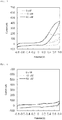
- Figs. 2 and 3 show the cyclic voltammograms measured at glucose concentrations of 0 mM, 10 mM, and 48 mM.
- Fig. 2 shows the case of using thymol
- Fig. 3 shows the case of using phenol.
- Cyclic voltammograms were measured in the same manner as in Example 1, except that compound (1) of Example 1 was changed to the following compound (3) or (4).
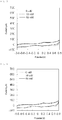
- Example 1 and Comparative Example 1 revealed that the current could be measured by adding thymol or phenol even under the conditions in which the current could not be measured only by immobilizing the enzyme and carbon nanotubes on the working electrode section. On the other hand, it was revealed that the current was not measured when menthol or cyclohexanol was used instead of thymol and phenol.
- An electrode tip having a 9 mm 2 working electrode section was produced using a sheet obtained by depositing gold on a PET substrate, in the same manner as in Example 1.
- a water dispersion containing 2% (w/v) sodium cholate and 0.15% (w/v) single-walled carbon nanotubes (outer diameter: 1.1 to 1.7 nm) was added dropwise and dried.
- 5 ⁇ L of FADGDH (having the amino acid sequence of SEQ ID No. 2; 20 U/ ⁇ L) dissolved in ultrapure water was added dropwise to the working electrode section and dried.
- 5 ⁇ L of 3% (w/v) Nafion liquid was added dropwise to the working electrode section and dried to immobilize the carbon nanotubes and FADGDH on the working electrode.
- the electrode produced above was set as the working electrode of an electrochemical analyzer (ALS/CHI 660B), a silver/silver chloride electrode was set as the reference electrode, and a platinum wire was set as the counter electrode. These electrodes were immersed in a sodium phosphate buffer in which any of compounds (5) to (10) above was dissolved. Cyclic voltammetry measurement was performed when glucose was not added to this buffer (0 mM), or when glucose was added at 10 mM or 48 mM. In the obtained cyclic voltammograms, the current values at +0.6 V when sweeping from -0.8 V to +0.8 V were as shown in Table 3 below.
- Example 1 As described above, it was confirmed that the current measured in Example 1 was also observed even when thymol or phenol was changed to compounds (5) to (10) above.
- Cyclic voltammograms were obtained in the same manner as in Example 2, except that any of compounds (5) to (10) was replaced with compound (3) or (4).
- the current values at +0.6 V when sweeping from - 0.8 V to +0.8 V were as shown in Table 4 below.
- Table 4 Compound added Current value ( ⁇ A) (a) 0 mM glucose (b) 48 mM glucose (b)-(a) (3) Menthol 43 45 2 (4) Cyclohexanol 40 47 7 Not added 41 48 7
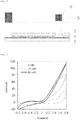
- An electrode tip having a 9 mm 2 working electrode section was produced using a sheet obtained by printing carbon paste on a PET substrate ( Fig. 7 ).
- Fig. 7 “ 5 " denotes a PET film, "6” denotes an adhesive sheet, "7” denotes a carbon paste-printed PET film, and "8” denotes a working electrode section.
- 5 ⁇ L of a water dispersion containing 2% (w/v) sodium cholate and 0.15% (w/v) single-walled carbon nanotubes (outer diameter: 1.1 to 1.7 nm) was added dropwise and dried. After drying the carbon nanotube dispersion, 5 ⁇ L of FADGDH (having the amino acid sequence represented by SEQ ID No.
- the electrode produced above was set as the working electrode of an electrochemical analyzer (ALS/CHI 660B), a silver/silver chloride electrode was set as the reference electrode, and a platinum wire was set as the counter electrode. These electrodes were immersed in a sodium phosphate buffer containing 0.01% (w/v) thymol. Cyclic voltammetry measurement was performed when glucose was not added to this buffer (0 mM), or when glucose was added at 10 mM or 48 mM. Fig. 8 shows the obtained cyclic voltammograms. In the cyclic voltammograms, the current values at +0.6 V when sweeping from -0.8 V to +0.8 V were as shown in Table 5 below. Table 5 Compound added Current value ( ⁇ A) (a) 0 mM glucose (b) 48 mM glucose (b)-(a) Thymol 20 83 63
- Example 3 As shown in Example 3 and Comparative Example 3, it was confirmed that the current could also be measured by adding thymol to the buffer, instead of immobilizing thymol on the electrode.
- An electrode tip having a 9 mm 2 working electrode section was produced using a sheet obtained by depositing gold on a PET substrate, in the same manner as in Example 1.
- a water dispersion containing 2% (w/v) sodium cholate and 0.15% (w/v) single-walled carbon nanotubes (outer diameter: 1.1 to 1.7 nm) was added dropwise and dried.
- 5 ⁇ L of FADGDH (having the amino acid sequence of SEQ ID No. 2; 20 U/ ⁇ L) dissolved in ultrapure water was added dropwise to the working electrode section and dried.
- the electrode tip produced above was set as the working electrode of an electrochemical analyzer (ALS/CHI 660B), a silver/silver chloride electrode was set as the reference electrode, and a platinum wire was set as the counter electrode.
- ALS/CHI 660B electrochemical analyzer
- a silver/silver chloride electrode was set as the reference electrode
- a platinum wire was set as the counter electrode.
- These electrodes were immersed in the thymol-containing buffer at any of the above concentrations, or in a 40 mM sodium phosphate buffer (pH 7.4), and cyclic voltammetry measurement was performed.
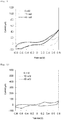
- Figs. 10 to 14 show the cyclic voltammograms measured at glucose concentrations of 0 mM, 10 mM, and 48 mM.
- the thymol concentration (w/v) is 0% in Fig. 10 , 0.00001% in Fig. 11 , 0.0001% in Fig. 12 , 0.001% in Fig. 13 , and 0.0
- the current could also be measured by adding a very small amount (0.00001% (w/v)) of thymol to the buffer even under the conditions in which the current could not be measured only by immobilizing the enzyme and the carbon nanotubes on the working electrode section. It was also revealed that 60% or more of the maximum current value obtained by adding thymol was measured by adding thymol to the buffer to 0.001% (w/v).
- An electrode tip produced in the same manner as in Example 1 was set as the working electrode of an electrochemical analyzer (ALS/CHI 660B), a silver/silver chloride electrode was set as the reference electrode, and a platinum wire was set as the counter electrode.
- ALS/CHI 660B electrochemical analyzer
- a silver/silver chloride electrode was set as the reference electrode
- a platinum wire was set as the counter electrode.
- These electrodes were immersed in the sodium phosphate buffer in which aniline was dissolved, or in a 40 mM sodium phosphate buffer (pH 7.4). Cyclic voltammetry measurement was performed when glucose was not added to this buffer (0 mM), or when glucose was added at 48 mM. In the obtained cyclic voltammograms, the current values at +0.6 V when sweeping from -0.8 V to +0.8 V were as shown in Table 8 below.
- An electrode tip having a 9 mm 2 working electrode section was produced using a sheet obtained by depositing gold on a PET substrate, in the same manner as in Example 1.
- a water dispersion containing 2% (w/v) sodium cholate and 0.15% (w/v) single-walled carbon nanotubes (outer diameter: 1.1 to 1.7 nm) was added dropwise and dried.
- 5 ⁇ L of FADGDH having the amino acid sequence of SEQ ID No. 2; 20 U/ ⁇ L
- ultrapure water was added dropwise to the working electrode section and dried.
- 5 ⁇ L of each of the following compounds (15) to (33) (each 1% (w/v) liquid) was added dropwise to the working electrode section and dried.
- the electrode tip produced above was set as the working electrode of an electrochemical analyzer (ALS/CHI 660B), a silver/silver chloride electrode was set as the reference electrode, and a platinum wire was set as the counter electrode. These three electrodes were immersed in a 40 mM sodium phosphate buffer (pH 7.4). Cyclic voltammetry measurement was performed when glucose was not added to this buffer (0 mM), or when glucose was added at 48 mM. In the obtained cyclic voltammograms, the current values at +0.6 V when sweeping from -0.8 V to +0.8 V were as shown in Table 9 below.
- Example 6 and Comparative Example 4 revealed that the current could be measured by adding compounds (15) to (33) even under the conditions in which the current could not be measured only by immobilizing the enzyme and the carbon nanotubes on the working electrode section. On the other hand, it was revealed that the current was not measured when compound (34) was added.
- An electrode tip having a 9 mm 2 working electrode section was produced using a sheet obtained by depositing gold on a PET substrate, in the same manner as in Example 1.
- a water dispersion containing 2% (w/v) sodium cholate and 0.092% (w/v) multi-walled carbon nanotubes (NC7000, Nanocyl, outer diameter: 5 to 15 nm) was added dropwise and dried.
- 5 ⁇ L of FADGDH having the amino acid sequence represented by SEQ ID No. 2; 20 U/ ⁇ L
- dissolved in ultrapure water was added dropwise to the working electrode section and dried.
- the electrode tip produced above was set as the working electrode of an electrochemical analyzer (ALS/CHI 660B), a silver/silver chloride electrode was set as the reference electrode, and a platinum wire was set as the counter electrode. These electrodes were immersed in a sodium phosphate buffer containing 0.01% (w/v) thymol, and cyclic voltammetry measurement was performed.
- Fig. 15 shows the cyclic voltammograms measured at glucose concentrations of 0 mM, 10 mM, and 48 mM. In the cyclic voltammograms, the current values at +0.6 V when sweeping from - 0.8 V to +0.8 V were as shown in Table 11 below. Table 11 Compound added Current value ( ⁇ A) (a) (b) (b)-(a) 0 mM glucose 48 mM glucose Thymol 14 42 28
- Example 7 As shown in Example 7 and Comparative Example 5, it was confirmed that the current could be measured by adding thymol to the buffer even when multi-walled carbon nanotubes were used.
- An electrode tip having a 9 mm 2 working electrode section was produced using a sheet obtained by depositing gold on a PET substrate, in the same manner as in Example 1.
- a water dispersion containing 2% (w/v) sodium cholate and 0.15% (w/v) single-walled carbon nanotubes (outer diameter: 1.1 to 1.7 nm)
- 8.2 ⁇ L of a water dispersion containing 2% (w/v) sodium cholate and 0.092% (w/v) multi-walled carbon nanotubes was added dropwise and dried.
- the electrode tip produced above was set as the working electrode of an electrochemical analyzer (ALS/CHI 660B), a silver/silver chloride electrode was set as the reference electrode, and a platinum wire was set as the counter electrode. These electrodes were immersed in a sodium phosphate buffer containing 0.01% (w/v) thymol, and cyclic voltammetry measurement was performed. The cyclic voltammograms measured at glucose concentrations of 0 mM, 10 mM, and 48 mM are shown in Fig. 17 (single-walled carbon nanotubes) and Fig. 18 (multi-walled carbon nanotubes).
- Example 8 As shown in Example 8 and Comparative Example 6, it was confirmed that the addition of thymol to the buffer increased the current values, even when using either single-walled carbon nanotubes or multi-walled carbon nanotubes.
- An electrode tip having a 9 mm 2 working electrode section was produced using a sheet obtained by depositing gold on a PET substrate, in the same manner as in Example 1.
- a water dispersion containing 2% (w/v) sodium cholate and 0.15% (w/v) single-walled carbon nanotubes (outer diameter: 1.1 to 1.7 nm)
- 8.2 ⁇ L of a water dispersion containing 2% (w/v) sodium cholate and 0.092% (w/v) multi-walled carbon nanotubes was added dropwise and dried.
- the electrode tip produced above was set as the working electrode of an electrochemical analyzer (ALS/CHI 660B), a silver/silver chloride electrode was set as the reference electrode, and a platinum wire was set as the counter electrode. These electrodes were immersed in a sodium phosphate buffer containing 0.01% (w/v) thymol, and cyclic voltammetry measurement was performed. The cyclic voltammograms measured at lactic acid concentrations of 0 mM, 5 mM, and 12 mM are shown in Fig. 21 (single-walled carbon nanotubes) and Fig. 22 (multi-walled carbon nanotubes).
- Cyclic voltammetry measurement was performed in the same manner as in Example 8, except that thymol was not added to a 40 mM sodium phosphate buffer (pH 7.4).
- the obtained cyclic voltammograms are shown in Fig. 23 (single-walled carbon nanotubes) and Fig. 24 (multi-walled carbon nanotubes).
- the current values at +0.6 V when sweeping from -0.8 V to +0.8 V were as shown in Table 16 below.
- Example 9 As shown in Example 9 and Comparative Example 7, it was confirmed that the addition of thymol to the buffer increased the current values, even when using either single-walled carbon nanotubes or multi-walled carbon nanotubes.
Landscapes
- Chemical & Material Sciences (AREA)
- Organic Chemistry (AREA)
- Life Sciences & Earth Sciences (AREA)
- Engineering & Computer Science (AREA)
- Health & Medical Sciences (AREA)
- Zoology (AREA)
- Nanotechnology (AREA)
- Wood Science & Technology (AREA)
- General Health & Medical Sciences (AREA)
- Biochemistry (AREA)
- Materials Engineering (AREA)
- Physics & Mathematics (AREA)
- Molecular Biology (AREA)
- Immunology (AREA)
- Proteomics, Peptides & Aminoacids (AREA)
- Analytical Chemistry (AREA)
- Genetics & Genomics (AREA)
- Bioinformatics & Cheminformatics (AREA)
- General Engineering & Computer Science (AREA)
- Inorganic Chemistry (AREA)
- Biotechnology (AREA)
- Microbiology (AREA)
- Biophysics (AREA)
- Pathology (AREA)
- General Physics & Mathematics (AREA)
- Chemical Kinetics & Catalysis (AREA)
- Electrochemistry (AREA)
- Spectroscopy & Molecular Physics (AREA)
- Hematology (AREA)
- Biomedical Technology (AREA)
- Apparatus Associated With Microorganisms And Enzymes (AREA)
- Inert Electrodes (AREA)
- Carbon And Carbon Compounds (AREA)
Abstract
Description
- Techniques for electron transfer between nanocarbon and other substances are disclosed.
- Nanocarbon, which has a high electrical conductivity, is being increasingly applied as a conductive material for transferring electrons with other substances. For example, it has been proposed to mix nanocarbon with an ink made of carbon, a resin, and an organic solvent, and print it on a substrate for use as an electrode for a biosensor (PTL 1). Further, carbon nanotubes, which are a kind of nanocarbon, are used in sensors for measuring peroxides (PTL 2), or are formed into films together with enzymes and used as electrodes for sensors and fuel cells (PTL 3). Furthermore, it has been reported that electrons are transferred from enzymes to electrodes by direct electron transfer using single-walled carbon nanotubes (NPL 1). This makes it possible to use glucose dehydrogenase (FADGDH) using flavin adenine dinucleotide as a coenzyme, which conventionally requires mediators, in glucose sensors without using mediators.
-
- PTL 1:
WO2005088288 - PTL 2:
WO2011007582 - PTL 3:
WO2012002290 - NPL 1: ACS Catal. 2017, 7, 725-734
- An object of the present invention is to provide a means for promoting electron transfer between nanocarbon and other substances.
- As a result of intensive studies to achieve the above object, it was found that compounds having an aromatic ring skeleton have an action of promoting the electron transfer function of nanocarbon. Upon further research and improvement based on this finding, the invention represented by the following has been provided.
- An electron transfer accelerator for nanocarbon, comprising a compound having an aromatic ring skeleton.
- Nanocarbon attached or present in close proximity to a compound having an aromatic ring skeleton due to intermolecular interaction.
- The nanocarbon according to Item 2, wherein the compound having an aromatic ring skeleton is a compound that does not function as a mediator by itself.
- The nanocarbon according to Item 2 or 3, wherein the compound having an aromatic ring skeleton is selected from the group consisting of thymol, phenol, bis(4-hydroxyphenyl)sulfone, tyrosine disodium hydrate, sodium salicylate, toluene, 5-hydroxyindole, aniline, leucoquinizarin, carvacrol, 1,5-naphthalene diol, 4-isopropyl-3-methylphenol, 2-isopropylphenol, 4-isopropylphenol, 1-naphthol, 2-tert-butyl-5-methylphenol, 2,4,6-trimethylphenol, 2,6-diisopropylphenol, 2-tert-butyl-4-ethylphenol, 6-tert-butyl-2,4-xylenol, 2-tert-butyl-4-methylphenol, 2-tert-butyl-6-methylphenol, 2,4-di-tert-butylphenol, 2,4-di-tert-butyl-5-methylphenol, bis(p-hydroxyphenyl)methane, 3-tert-butylphenol, 2-isopropyl-5-methylanisole, o-cresol, m-cresol, and p-cresol.
- An electrode loaded with nanocarbon, a compound having an aromatic ring skeleton, and an enzyme on a substrate.
- The electrode according to
Item 5, wherein the nanocarbon is a carbon nanotube. - The electrode according to
Item - The electrode according to any one of
Items 5 to 7, wherein the enzyme is flavin-binding glucose dehydrogenase. - The electrode according to any one of
Items 5 to 8, further comprising a dispersant loaded on the substrate. - The electrode according to any one of
Items 5 to 9, wherein a thin film of carbon or metal is formed on the substrate. - A sensor comprising the electrode according to any one of
Items 5 to 10. - Use of a compound having an aromatic ring skeleton for promoting or improving electron transfer by nanocarbon.
- The use according to Item 12, wherein the electron transfer by nanocarbon is electron transfer between an electrode and an enzyme.
- The use according to Item 13, wherein the enzyme is flavin-binding glucose dehydrogenase.
- The use according to any one of Items 12 to 14, wherein the compound having an aromatic ring skeleton is selected from the group consisting of thymol, phenol, bis(4-hydroxyphenyl)sulfone, tyrosine disodium hydrate, sodium salicylate, toluene, 5-hydroxyindole, aniline, leucoquinizarin, carvacrol, 1,5-naphthalene diol, 4-isopropyl-3-methylphenol, 2-isopropylphenol, 4-isopropylphenol, 1-naphthol, 2-tert-butyl-5-methylphenol, 2,4,6-trimethylphenol, 2,6-diisopropylphenol, 2-tert-butyl-4-ethylphenol, 6-tert-butyl-2,4-xylenol, 2-tert-butyl-4-methylphenol, 2-tert-butyl-6-methylphenol, 2,4-di-tert-butylphenol, 2,4-di-tert-butyl-5-methylphenol, bis(p-hydroxyphenyl)methane, 3-tert-butylphenol, 2-isopropyl-5-methylanisole, o-cresol, m-cresol, and p-cresol.
- The use according to any one of Items 12 to 15, wherein the nanocarbon is a carbon nanotube.
- A method for promoting or improving electron transfer by nanocarbon, the method comprising attaching or bringing close a compound having an aromatic ring skeleton to nanocarbon.
- The method according to Item 17, wherein the electron transfer by nanocarbon is electron transfer between an electrode and an enzyme.
- The method according to Item 18, wherein the enzyme is flavin-binding glucose dehydrogenase.
- The method according to any one of Items 17 to 19, wherein the compound having an aromatic ring skeleton is attached or brought close to nanocarbon by loading the nanocarbon, the compound having an aromatic ring skeleton, and an enzyme on an electrode substrate.
- The method according to any one of Items 17 to 19, wherein the compound having an aromatic ring skeleton is attached or brought close to nanocarbon by immersing an electrode loaded with the nanocarbon and an enzyme on a substrate in a solvent containing the compound having an aromatic ring skeleton.
- The method according to Item 21, wherein the concentration of the compound having an aromatic ring skeleton in the solvent is 0.000001 to 2% (w/v).
- The method according to any one of Items 17 to 22, wherein the compound having an aromatic ring skeleton is selected from the group consisting of thymol, phenol, bis(4-hydroxyphenyl)sulfone, tyrosine disodium hydrate, sodium salicylate, toluene, 5-hydroxyindole, aniline, leucoquinizarin, carvacrol, 1,5-naphthalene diol, 4-isopropyl-3-methylphenol, 2-isopropylphenol, 4-isopropylphenol, 1-naphthol, 2-tert-butyl-5-methylphenol, 2,4,6-trimethylphenol, 2,6-diisopropylphenol, 2-tert-butyl-4-ethylphenol, 6-tert-butyl-2,4-xylenol, 2-tert-butyl-4-methylphenol, 2-tert-butyl-6-methylphenol, 2,4-di-tert-butylphenol, 2,4-di-tert-butyl-5-methylphenol, bis(p-hydroxyphenyl)methane, 3-tert-butylphenol, 2-isopropyl-5-methylanisole, o-cresol, m-cresol, and p-cresol.
- The method according to any one of Items 17 to 23, wherein the nanocarbon is a carbon nanotube.
- A sensor comprising an electrode immersed in a solvent containing a compound having an aromatic ring skeleton, wherein the electrode is loaded with nanocarbon and an enzyme on a substrate.
- The sensor according to Item 25, wherein the concentration of the compound having an aromatic ring skeleton in the solvent is 0.000001 to 2% (w/v).
- Electron transfer by nanocarbon is promoted. Therefore, the field of application of electron transfer by nanocarbon will be expanded. In one embodiment, nanocarbon can be stably and/or more effectively used as a mediator of electron transfer between enzymes and electrodes.
-
-
Fig. 1 shows the structure of an electrode produced in Example 1. "1" denotes a PET film, "2" denotes an adhesive sheet, "3" denotes a gold-deposited PET film, and "4" denotes a working electrode section. -
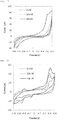
Fig. 2 shows cyclic voltammograms measured while loading thymol on the working electrode section in Example 1. -
Fig. 3 shows cyclic voltammograms measured while loading phenol on the working electrode section in Example 1. -
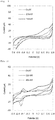
Fig. 4 shows cyclic voltammograms measured while loading menthol on the working electrode section in Comparative Example 1. -
Fig. 5 shows cyclic voltammograms measured while loading cyclohexanol on the working electrode section in Comparative Example 1. -
Fig. 6 shows cyclic voltammograms measured without loading a compound on the working electrode section in Comparative Example 1. -
Fig. 7 shows the structure of an electrode produced in Example 3. "5" denotes a PET film, "6" denotes an adhesive sheet, "7" denotes a carbon paste-printed PET film, and "8" denotes a working electrode section. -
Fig. 8 shows cyclic voltammograms measured while adding thymol to a buffer in Example 3. -
Fig. 9 shows cyclic voltammograms measured without adding thymol to a buffer in Comparative Example 3. -
Fig. 10 shows cyclic voltammograms measured without adding thymol to a buffer in Example 4. -
Fig. 11 shows cyclic voltammograms measured while adding thymol to a buffer to 0.00001% (w/v) in Example 4. -
Fig. 12 shows cyclic voltammograms measured while adding thymol to a buffer to 0.0001% (w/v) in Example 4. -
Fig. 13 shows cyclic voltammograms measured while adding thymol to a buffer to 0.001% (w/v) in Example 4. -
Fig. 14 shows cyclic voltammograms measured while adding thymol to a buffer to 0.01% (w/v) in Example 4. -
Fig. 15 shows cyclic voltammograms measured while adding thymol to a buffer in Example 7. -
Fig. 16 shows cyclic voltammograms measured without adding thymol to a buffer in Comparative Example 5. -
Fig. 17 shows cyclic voltammograms measured while loading single-walled carbon nanotubes on the working electrode section in Example 8. -
Fig. 18 shows cyclic voltammograms measured while loading multi-walled carbon nanotubes on the working electrode section in Example 8. -
Fig. 19 shows cyclic voltammograms measured while loading single-walled carbon nanotubes on the working electrode section in Comparative Example 6. -
Fig. 20 shows cyclic voltammograms measured while loading multi-walled carbon nanotubes on the working electrode section in Comparative Example 6. -
Fig. 21 shows cyclic voltammograms measured while loading single-walled carbon nanotubes on the working electrode section in Example 9. -
Fig. 22 shows cyclic voltammograms measured while loading multi-walled carbon nanotubes on the working electrode section in Example 9. -
Fig. 23 shows cyclic voltammograms measured while loading single-walled carbon nanotubes on the working electrode section in Comparative Example 7. -
Fig. 24 shows cyclic voltammograms measured while loading multi-walled carbon nanotubes on the working electrode section in Comparative Example 7. - The nanocarbon is not particularly limited as long as it is a substance that has an electron transfer function and that is recognized as nanocarbon. Examples of such substances include carbon materials mainly composed of carbon, including carbon nanotubes, carbon nanohorns, carbon nanotwists, cocoons, carbon nanocoils, graphene, and fullerene. The carbon nanotubes may be single-walled carbon nanotubes, double-walled carbon nanotubes, or multi-walled carbon nanotubes. In one embodiment, the nanocarbon is preferably carbon nanotubes, and more preferably single-walled carbon nanotubes.
- The electron transfer accelerator for nanocarbon preferably comprises a compound having an aromatic ring skeleton. The number of ring-forming atoms in the aromatic ring skeleton is, for example, 5 to 18, preferably 5 to 16, and more preferably 5 to 14. Examples of the aromatic ring skeleton include a skeleton composed of one benzene ring, a skeleton composed of two or more (e.g., 2 to 4) benzene rings (naphthalene skeleton, anthracene skeleton, etc.), a skeleton composed of a condensed ring of a benzene ring and another aromatic ring (e.g., nitrogen-containing aromatic ring, oxygen-containing aromatic ring, or sulfur-containing aromatic ring) (phenanthroline skeleton, benzofuran skeleton, benzimidazole skeleton, carbazole skeleton, etc.), and a skeleton composed of an aromatic ring composed of carbon and another element (e.g., nitrogen, oxygen, or sulfur) (triazine skeleton, triazole skeleton, pyridine skeleton, etc.). The compound having an aromatic ring skeleton is preferably a compound that does not function as a mediator by itself. The compound "that does not function as a mediator by itself" means that it does not have the function of transferring electrons by itself between electrodes and enzymes or between electrodes and substrates, unlike benzoquinone and 1-methoxyphenazine methosulfate.
- In one embodiment, the compound having an aromatic ring skeleton preferably has an electron-donating substituent. The electron-donating substituent refers to a hydroxy group, an amino group, a methyl group, or the like. The electron-donating substituent is preferably a hydroxy group. Examples of compounds having an electron-donating substituent and an aromatic ring skeleton include compounds having a benzene ring substituted with a hydroxy group (e.g., thymol, phenol, bis(4-hydroxyphenyl)sulfone, tyrosine disodium hydrate, sodium salicylate, 5-hydroxyindole, leucoquinizarin, carvacrol, 1,5-naphthalene diol, 4-isopropyl-3-methylphenol, 2-isopropylphenol, 4-isopropylphenol, 1-naphthol, 2-tert-butyl-5-methylphenol, 2,4,6-trimethylphenol, 2,6-diisopropylphenol, 2-tert-butyl-4-ethylphenol, 6-tert-butyl-2,4-xylenol, 2-tert-butyl-4-methylphenol, 2-tert-butyl-6-methylphenol, 2,4-di-tert-butylphenol, 2,4-di-tert-butyl-5-methylphenol, bis(p-hydroxyphenyl)methane, 3-tert-butylphenol, o-cresol, m-cresol, and p-cresol), compounds having a benzene ring substituted with an amino group (e.g., aniline), and compounds having a benzene ring substituted with a methyl group (e.g., toluene and 2-isopropyl-5-methylanisole).
- Among the above compounds, thymol, phenol, and carvacrol are preferable.
- When the electron transfer accelerator for nanocarbon is brought close to or attached to nanocarbon, the electron transfer between the nanocarbon and other substances can be promoted. It is preferable that the electron transfer accelerator and nanocarbon are attached or close to each other due to intermolecular interaction. The amount of electron transfer accelerator arranged close to or attached to nanocarbon to promote the electron transfer by nanocarbon is not particularly limited.
- When the electron transfer accelerator is brought close to or attached to nanocarbon, the electron transfer by the resulting nanocarbon can be promoted. The means for bringing close or attaching the electron transfer accelerator to nanocarbon is not particularly limited. For example, it can be achieved by mixing nanocarbon and the electron transfer accelerator (including mixing them in a solution), or by arranging the electron transfer accelerator on nanocarbon. The electron transfer accelerator arranged close to or attached to nanocarbon may or may not be immobilized. The immobilization is not limited as long as it does not impair the functions of the nanocarbon and the electron transfer accelerator, and can be suitably selected from known means and used.
- The nanocarbon and electron transfer accelerator that can be used in the nanocarbon to which the electron transfer accelerator is close or attached are as described in
section 1 above. - The electrode preferably has a substrate on which nanocarbon, a compound having an aromatic ring skeleton, and an enzyme are loaded. The nanocarbon and the compound having an aromatic ring skeleton are as described in
section 1 above. - The amount of the compound having an aromatic ring skeleton loaded is not particularly limited. The amount of the compound having an aromatic ring skeleton loaded is, for example, 0.001 parts by mass or more, preferably 0.01 parts by mass or more, and more preferably 0.1 parts by mass or more, per 100 parts by mass of the amount of nanocarbon loaded. Further, the amount of the compound having an aromatic ring skeleton loaded is, for example, 100000 parts by mass or less, preferably 10000 parts by mass or less, and more preferably 1000 parts by mass or less, per 100 parts by mass of the amount of nanocarbon loaded. The lower limit and the upper limit can be combined in any way. Moreover, the amount of the compound having an aromatic ring skeleton loaded is, for example, 0.001 parts by mass or more, preferably 0.01 parts by mass or more, and more preferably 0.1 parts by mass or more, per 100 parts by mass of the amount of the enzyme loaded. Further, the amount of the compound having an aromatic ring skeleton loaded is, for example, 1000000 parts by mass or less, preferably 100000 parts by mass or less, and more preferably 10000 parts by mass or less, per 100 parts by mass of the amount of the enzyme loaded. The lower limit and the upper limit can be combined in any way.
- The substrate is not particularly limited as long as it is suitable for the electrode on which the enzyme used in the biosensor is immobilized. For example, the substrate may be an insulating substrate on which a metal film (e.g., a metal thin film) is formed. The insulating substrate may be, for example, a glass substrate or a plastic substrate (e.g., a PET substrate). The type of metal forming the metal film is not particularly limited as long as it can be used for electrodes. For example, gold, platinum, titanium, etc., can be used. Further, the substrate may have a carbon film (e.g., a thin film of carbon paste), in place of a metal film.
- The enzyme is preferably one that releases electrons upon catalytic reaction. Examples of such enzymes include oxidoreductases. Examples of oxidoreductases include glucose dehydrogenase, glucose oxidase, lactate oxidase, cholesterol oxidase, alcohol oxidase, sarcosine oxidase, fructosylamine oxidase, pyruvate oxidase, lactate dehydrogenase, alcohol dehydrogenase, glycerol oxidase, glycerol-3-phosphate oxidase, uricase, choline oxidase, xanthine oxidase, hydroxybutyrate dehydrogenase, and the like.
- In one embodiment, the enzyme is preferably glucose dehydrogenase, more preferably flavin-binding glucose dehydrogenase, and even more preferably glucose dehydrogenase using flavin adenine dinucleotide (FAD) as a coenzyme (also referred to as "FADGDH"). Since FADGDH retains FAD in recesses of the three-dimensional structure formed by polypeptides, a substance called a mediator has been conventionally required to transfer electrons generated therein to electrodes. In contrast, the use of nanocarbon (preferably carbon nanotubes, and more preferably single-walled carbon nanotubes) makes it possible to transfer electrons to electrodes without using a mediator. Further, the use of the electron transfer accelerator described above makes it possible to perform electron transfer via nanocarbon significantly efficiently (or strongly).
- The type of FADGDH is not limited, and any type can be used. Specific examples of FADGDH include those derived from any of the following organisms: Aspergillus terreus, Aspergillus oryzae, Aspergillus niger, Aspergillus foetidus, Aspergillus aureus, Aspergillus versicolor, Aspergillus kawachii, Aspergillus awamori, Agrobacterium tumefaciens, Cytophaga marinoflava, Agaricus bisporus, Macrolepiota rhacodes, Burkholderia cepacia, Mucor subtilissimus, Mucor guilliermondii, Mucor prainii, Mucor javanicus, Mucor circinelloides, Mucor circinelloides f. circinelloides, Mucor hiemalis, Mucor hiemalis f. silvaticus, Mucor dimorphosporus, Absidia cylindrospora, Absidia hyalospora, Actinomucor elegans, Circinella simplex, Circinella angarensis, Circinella chinensis, Circinella lacrymispora, Circinella minor, Circinella mucoroides, Circinella rigida, Circinella umbellata, Circinella muscae, Metarhizium sp., and Colletotrichum sp.
- In one embodiment, the FADGDH is preferably FADGDH derived from Aspergillus oryzae, FADGDH derived from Mucor hiemalis, FADGDH derived from Mucor subtilissimus, FADGDH derived from Circinella simplex, FADGDH derived from Metarhizium sp., or FADGDH derived from Colletotrichum sp. The FADGDH preferably has 80% or more, more preferably 90% or more, and even more preferably 95% or more, identity to the amino acid sequences of SEQ ID Nos. 1 to 6. FADGDH having glucose dehydrogenation activity can be used. The amino acid sequence identity can be calculated using an analysis tool that is commercially available or available through a telecommunication line (the internet). For example, the amino acid sequence identity can be calculated using the homology algorithm BLAST (Basic Local Alignment Search Tool) of the National Center for Biotechnology Information (NCBI) (http://www.ncbi.nlm.nih.gov/BLAST/) with default (initially set) parameters. SEQ ID No. 1 is the amino acid sequence of FADGDH derived from Aspergillus oryzae, SEQ ID No. 2 is the amino acid sequence of FADGDH derived from Mucor hiemalis, SEQ ID No. 3 is the amino acid sequence of FADGDH derived from Mucor subtilissimus, SEQ ID No. 4 is the amino acid sequence of FADGDH derived from Circinella simplex, SEQ ID No. 5 is the amino acid sequence of FADGDH derived from Metarhizium sp., and SEQ ID No. 6 is the amino acid sequence of FADGDH derived from Colletotrichum sp.
- A dispersant may be further loaded on the substrate. The dispersant is not particularly limited as long as it is a substance capable of suppressing the aggregation of nanocarbon on the substrate and dispersing it. Examples of the dispersant include sodium cholate, sodium deoxycholate, sodium dodecylsulfate, sodium dodecylbenzenesulfonate, cetyltrimethylammonium bromide, octylphenol ethoxylate, and the like. In one embodiment, the dispersant is preferably sodium cholate or sodium deoxycholate.
- The nanocarbon, the compound having an aromatic ring skeleton, and the enzyme can be loaded on the substrate by any means. For example, solutions in which these substances are each dispersed or dissolved are prepared, and these solutions are sequentially added dropwise to a predetermined portion on the substrate (when the substrate is an insulating substrate on which a metal thin film is formed, the portion where the metal thin film is formed) and dried; this operation can be repeated to load them. The dispersion medium or solvent is not particularly limited, and examples thereof include water, alcohol solvents (e.g., ethanol), ketone solvents (e.g., acetone), and combinations thereof.
- They may be loaded in any order; however, in one embodiment, the order of loading is preferably nanocarbon → enzyme → compound having an aromatic ring skeleton, or compound having an aromatic ring skeleton → nanocarbon → enzyme.
- The amounts of nanocarbon, compound having an aromatic ring skeleton, and enzyme used are not particularly limited.
- In one embodiment, the nanocarbon, the compound having an aromatic ring skeleton, and the enzyme may be immobilized on the substrate. Immobilization can be performed by suitably selecting a known method. For example, immobilization can be performed in such a manner that a liquid in which substances suitable for immobilization, such as a tetrafluoroethylene/perfluoro[2-(fluorosulfonylethoxy)polyvinyl ether] copolymer (e.g., Nafion (trademark)) and carboxymethyl cellulose, are dissolved is added dropwise to the substrate in a portion in which each of the above substances is loaded, followed by drying. In one embodiment, it is preferable that the nanocarbon, the compound having an aromatic ring skeleton, and the enzyme are loaded on the substrate, followed by treatment with a polymer substance, such as carboxymethyl cellulose, so as to cover these substances.
- In one embodiment, the dispersant is preferably mixed with a dispersion in which nanocarbon is dispersed. The mixing ratio of the dispersant is any ratio, and is preferably 0.2 to 2% (w/v), for example. The mixing ratio of the nanocarbon is also any ratio, and is preferably 0.05 to 0.5% (w/v), for example.
- The sensor preferably comprises the electrode described in section 3 above. In one embodiment, the sensor preferably comprises the electrode of section 3 as a working electrode. The sensor preferably has a counter electrode, in addition to the working electrode. The sensor may further comprise configurations that are generally found in biosensors, such as a potentiostat and a current-sensing circuit. The counter electrode, potentiostat, current-sensing circuit, etc., may specifically have any configurations as long as the intended measurement can be performed by the sensor, and the specific configurations can be suitably selected from means known in the art and designed.
- In one embodiment, the working electrode included in the sensor may be an electrode obtained by removing the compound having an aromatic ring skeleton from the electrode of section 3. When such a working electrode is used, it is preferable that the solvent (containing a substance to be measured or a substrate) in which each electrode is immersed contains a compound having an aromatic ring skeleton. Typical examples of solvents include buffers, and examples thereof include acetate buffers, citrate buffers, phosphate buffers, borate buffers, and the like.
- The concentration of the substance to be measured or the substrate in the solvent is not particularly limited, and can be set to any concentration necessary for measurement.
- The concentration of the compound having an aromatic ring skeleton in the solvent is not particularly limited. The lower limit of the concentration is, for example, 0.000001% (w/v), preferably 0.000005% (w/v), more preferably 0.00001% (w/v), more preferably 0.00005% (w/v), more preferably 0.0001% (w/v), more preferably 0.0005% (w/v), more preferably 0.001% (w/v), more preferably 0.005% (w/v), and more preferably 0.01% (w/v). The upper limit of the concentration is, for example, 2% (w/v), preferably 1.5% (w/v), and more preferably 1% (w/v). The lower limit and upper limit of the concentration can be combined in any way.
- These sensors can be used to detect and measure targets.
- The present invention is described in more detail below with reference to Examples; however, the present invention is not limited thereto.
- An electrode tip having a 9 mm2 working electrode section was produced using a sheet obtained by depositing gold on a PET substrate (
Fig. 1 ). InFig. 1, "1 " denotes a PET film, "2" denotes an adhesive sheet, "3" denotes a gold-deposited PET film, and "4" denotes a working electrode section. To the working electrode section, 5 µL of a water dispersion containing 2% (w/v) sodium cholate and 0.15% (w/v) single-walled carbon nanotubes (SuperPureTubes, NanoIntegris, outer diameter: 1.1 to 1.7 nm) was added dropwise and dried. After drying the carbon nanotube dispersion, 5 µL of FADGDH (having the amino acid sequence of SEQ ID No. 2; 20 U/µL) dissolved in ultrapure water was added dropwise to the working electrode section and dried. After drying the FADGDH liquid, 5 µL of the following compound (1) or (2) (each 1% (w/v) solution) was added dropwise to the working electrode section and dried. - (1) thymol (dissolved in 50% (v/v) ethanol)
- (2) phenol (dissolved in a 40 mM sodium phosphate buffer)
- After drying the compound liquid, 5 µL of 3% (w/v) Nafion liquid was added dropwise to the working electrode section and dried to immobilize the carbon nanotubes and FAD-GDH on the working electrode. The electrode tip produced above was set as the working electrode of an electrochemical analyzer (ALS/CHI 660B, produced by ABS Inc.), a silver/silver chloride electrode was set as the reference electrode, and a platinum wire was set as the counter electrode. These three electrodes were immersed in a 40 mM sodium phosphate buffer (pH 7.4). Cyclic voltammetry measurement was performed when glucose was not added to this buffer (0 mM), or when glucose was added at 10 mM or 48 mM.
-
Figs. 2 and3 show the cyclic voltammograms measured at glucose concentrations of 0 mM, 10 mM, and 48 mM.Fig. 2 shows the case of using thymol, andFig. 3 shows the case of using phenol. - In the cyclic voltammograms, the current values at +0.6 V when sweeping from -0.8 V to +0.8 V are as shown in Table 1 below.
Table 1 Compound added Current value (µA) (a) 0 mM glucose (b) 48 mM glucose (b)-(a) (1) Thymol 108 539 431 (2) Phenol 63 373 309 - Cyclic voltammograms were measured in the same manner as in Example 1, except that compound (1) of Example 1 was changed to the following compound (3) or (4).
- (3) menthol (dissolved in 50% (v/v) ethanol)
- (4) cyclohexanol (dissolved in a 40 mM sodium phosphate buffer)
- The results are shown in
Fig. 4 (menthol),Fig. 5 (cyclohexanol), andFig. 6 (no compound added). In the cyclic voltammograms shown inFigs. 4 to 6 , the current values at +0.6 V when sweeping from -0.8 V to +0.8 V were as shown in Table 2 below.Table 2 Compound added Current value (µA) (a) 0 mM glucose (b) 48 mM glucose (b)-(a) (3) Menthol 47 50 3 (4) Cyclohexanol 42 49 7 Not added 46 51 5 - The results of Example 1 and Comparative Example 1 revealed that the current could be measured by adding thymol or phenol even under the conditions in which the current could not be measured only by immobilizing the enzyme and carbon nanotubes on the working electrode section. On the other hand, it was revealed that the current was not measured when menthol or cyclohexanol was used instead of thymol and phenol.
- An electrode tip having a 9 mm2 working electrode section was produced using a sheet obtained by depositing gold on a PET substrate, in the same manner as in Example 1. To the working electrode section, 5 µL of a water dispersion containing 2% (w/v) sodium cholate and 0.15% (w/v) single-walled carbon nanotubes (outer diameter: 1.1 to 1.7 nm) was added dropwise and dried. After drying the carbon nanotube dispersion, 5 µL of FADGDH (having the amino acid sequence of SEQ ID No. 2; 20 U/µL) dissolved in ultrapure water was added dropwise to the working electrode section and dried. After drying the FADGDH liquid, 5 µL of 3% (w/v) Nafion liquid was added dropwise to the working electrode section and dried to immobilize the carbon nanotubes and FADGDH on the working electrode.
- Then, 0.1% (w/v) of any of the following compounds (5) to (10) was added and dissolved in a 40 mM sodium phosphate buffer (pH 7.4).
- (5) phenol
- (6) bis(4-hydroxyphenyl)sulfone
- (7) tyrosine disodium hydrate
- (8) sodium salicylate
- (9) toluene
- (10) 5-hydroxyindole
- The electrode produced above was set as the working electrode of an electrochemical analyzer (ALS/CHI 660B), a silver/silver chloride electrode was set as the reference electrode, and a platinum wire was set as the counter electrode. These electrodes were immersed in a sodium phosphate buffer in which any of compounds (5) to (10) above was dissolved. Cyclic voltammetry measurement was performed when glucose was not added to this buffer (0 mM), or when glucose was added at 10 mM or 48 mM. In the obtained cyclic voltammograms, the current values at +0.6 V when sweeping from -0.8 V to +0.8 V were as shown in Table 3 below.
Table 3 Compound added Current value (µA) (a) 0 mM glucose (b) 48 mM glucose (b)-(a) (5) Phenol 183 552 369 (6) Bis(4-hydroxyphenyl)sulfone 72 161 89 (7) Tyrosine disodium hydrate 141 231 90 (8) Sodium salicylate 81 125 44 (9) Toluene 68 88 20 (10) 5-Hydroxyindole 675 856 181 - As described above, it was confirmed that the current measured in Example 1 was also observed even when thymol or phenol was changed to compounds (5) to (10) above.
- Cyclic voltammograms were obtained in the same manner as in Example 2, except that any of compounds (5) to (10) was replaced with compound (3) or (4). In the obtained cyclic voltammograms, the current values at +0.6 V when sweeping from - 0.8 V to +0.8 V were as shown in Table 4 below.
Table 4 Compound added Current value (µA) (a) 0 mM glucose (b) 48 mM glucose (b)-(a) (3) Menthol 43 45 2 (4) Cyclohexanol 40 47 7 Not added 41 48 7 - As described above, it was confirmed that in the configuration of Example 2, the current was not substantially measured when compounds (5) to (10) were not added or were replaced with menthol or cyclohexanol.
- Compounds (1), (2), and (5) to (10) all have an aromatic ring skeleton, whereas compounds (3) and (4) do not have an aromatic ring skeleton. Therefore, it is presumed that due to the aromatic ring skeleton, compounds (1), (2), and (5) to (10) mediate and promote electron transfer between the coenzyme FAD and the carbon nanotubes.
- An electrode tip having a 9 mm2 working electrode section was produced using a sheet obtained by printing carbon paste on a PET substrate (
Fig. 7 ). InFig. 7 , "5 " denotes a PET film, "6" denotes an adhesive sheet, "7" denotes a carbon paste-printed PET film, and "8" denotes a working electrode section. To the working electrode section, 5 µL of a water dispersion containing 2% (w/v) sodium cholate and 0.15% (w/v) single-walled carbon nanotubes (outer diameter: 1.1 to 1.7 nm) was added dropwise and dried. After drying the carbon nanotube dispersion, 5 µL of FADGDH (having the amino acid sequence represented by SEQ ID No. 2; 20 U/µL) dissolved in ultrapure water was added dropwise to the working electrode section and dried. After drying the FADGDH liquid, 5 µL of 1% (w/v) carboxymethylcellulose liquid was added dropwise to the working electrode section and dried to immobilize the carbon nanotubes and FAD-GDH on the working electrode. A 5% (w/v) thymol solution dissolved in 50% (v/v) ethanol was added and mixed with a 40 mM sodium phosphate buffer (pH 7.4) to 0.1% (w/v) thymol. - The electrode produced above was set as the working electrode of an electrochemical analyzer (ALS/CHI 660B), a silver/silver chloride electrode was set as the reference electrode, and a platinum wire was set as the counter electrode. These electrodes were immersed in a sodium phosphate buffer containing 0.01% (w/v) thymol. Cyclic voltammetry measurement was performed when glucose was not added to this buffer (0 mM), or when glucose was added at 10 mM or 48 mM.
Fig. 8 shows the obtained cyclic voltammograms. In the cyclic voltammograms, the current values at +0.6 V when sweeping from -0.8 V to +0.8 V were as shown in Table 5 below.Table 5 Compound added Current value (µA) (a) 0 mM glucose (b) 48 mM glucose (b)-(a) Thymol 20 83 63 - Cyclic voltammetry measurement was performed in the same manner as in Example 3, except that thymol was not added to a 40 mM sodium phosphate buffer (pH 7.4).
Fig. 9 shows the obtained cyclic voltammograms. In the cyclic voltammograms, the current values at +0.6 V when sweeping from -0.8 V to +0.8 V were as shown in Table 6 below.Table 6 Compound added Current value (µA) (a) 0 mM glucose (b) 48 mM glucose (b)-(a) Not added 14 31 17 - As shown in Example 3 and Comparative Example 3, it was confirmed that the current could also be measured by adding thymol to the buffer, instead of immobilizing thymol on the electrode. These results support that the compounds having an aromatic ring skeleton mediate and promote electron transfer between the coenzyme FAD and the carbon nanotubes.
- An electrode tip having a 9 mm2 working electrode section was produced using a sheet obtained by depositing gold on a PET substrate, in the same manner as in Example 1. To the working electrode section, 5 µL of a water dispersion containing 2% (w/v) sodium cholate and 0.15% (w/v) single-walled carbon nanotubes (outer diameter: 1.1 to 1.7 nm) was added dropwise and dried. After drying the carbon nanotube dispersion, 5 µL of FADGDH (having the amino acid sequence of SEQ ID No. 2; 20 U/µL) dissolved in ultrapure water was added dropwise to the working electrode section and dried.
- After drying the FADGDH liquid, 5 µL of 3% (w/v) Nafion liquid was added dropwise to the working electrode section and dried to immobilize the carbon nanotubes and FADGDH on the working electrode.
- Then, a 10% (w/v) thymol solution dissolved in 100% ethanol was added to a 40 mM sodium phosphate buffer (pH 7.4), and thymol-containing buffers with four concentrations (0.00001, 0.0001, 0.001, and 0.01 (w/v)) were prepared.
- The electrode tip produced above was set as the working electrode of an electrochemical analyzer (ALS/CHI 660B), a silver/silver chloride electrode was set as the reference electrode, and a platinum wire was set as the counter electrode. These electrodes were immersed in the thymol-containing buffer at any of the above concentrations, or in a 40 mM sodium phosphate buffer (pH 7.4), and cyclic voltammetry measurement was performed.
Figs. 10 to 14 show the cyclic voltammograms measured at glucose concentrations of 0 mM, 10 mM, and 48 mM. The thymol concentration (w/v) is 0% inFig. 10 , 0.00001% inFig. 11 , 0.0001% inFig. 12 , 0.001% inFig. 13 , and 0.01% inFig. 14 . - In the cyclic voltammograms, the current values at +0.6 V when sweeping from -0.8 V to +0.8 V were as shown in Table 7 below.
Table 7 Thymol concentration (% (w/v)) Current value (µA) (a) 0 mM glucose (b) 48 mM glucose (b)-(a) 0 (not added) 37 42 5 0.00001 37 86 49 0.0001 41 202 161 0.001 55 287 232 0.01 115 477 362 - As described above, it was revealed that the current could also be measured by adding a very small amount (0.00001% (w/v)) of thymol to the buffer even under the conditions in which the current could not be measured only by immobilizing the enzyme and the carbon nanotubes on the working electrode section. It was also revealed that 60% or more of the maximum current value obtained by adding thymol was measured by adding thymol to the buffer to 0.001% (w/v).
- Any of the following compounds (11) to (14) was added and dissolved in a 40 mM sodium phosphate buffer (pH 7.4) to 0.1% (w/v).
- (11) aniline
- (12) o-cresol
- (13) m-cresol
- (14) p-cresol
- An electrode tip produced in the same manner as in Example 1 was set as the working electrode of an electrochemical analyzer (ALS/CHI 660B), a silver/silver chloride electrode was set as the reference electrode, and a platinum wire was set as the counter electrode. These electrodes were immersed in the sodium phosphate buffer in which aniline was dissolved, or in a 40 mM sodium phosphate buffer (pH 7.4). Cyclic voltammetry measurement was performed when glucose was not added to this buffer (0 mM), or when glucose was added at 48 mM. In the obtained cyclic voltammograms, the current values at +0.6 V when sweeping from -0.8 V to +0.8 V were as shown in Table 8 below.
Table 8 Compound added Current value (µA) (a) 0 mM glucose (b) 48 mM glucose (b)-(a) (11) Aniline 203 520 317 (12) o-cresol 269 530 261 (13) m-cresol 205 419 214 (14) p-cresol 248 316 68 Not added 26 31 5 - As described above, it was revealed that the current could be measured by adding compounds (11) to (14) even under the conditions in which the current could not be measured only by immobilizing the enzyme and the carbon nanotubes on the working electrode section.
- An electrode tip having a 9 mm2 working electrode section was produced using a sheet obtained by depositing gold on a PET substrate, in the same manner as in Example 1. To the working electrode section, 5 µL of a water dispersion containing 2% (w/v) sodium cholate and 0.15% (w/v) single-walled carbon nanotubes (outer diameter: 1.1 to 1.7 nm) was added dropwise and dried. After drying the carbon nanotube dispersion, 5 µL of FADGDH (having the amino acid sequence of SEQ ID No. 2; 20 U/µL) dissolved in ultrapure water was added dropwise to the working electrode section and dried. After drying the FADGDH liquid, 5 µL of each of the following compounds (15) to (33) (each 1% (w/v) liquid) was added dropwise to the working electrode section and dried.
- (15) leucoquinizarin (dissolved in 80% (v/v) acetone)
- (16) carvacrol (dissolved in 50% (v/v) ethanol)
- (17) 1,5-naphthalene diol (dissolved in 50% (v/v) ethanol)
- (18) 4-isopropyl-3-methylphenol (dissolved in 50% (v/v) ethanol)
- (19) 2-isopropylphenol (dissolved in 50% (v/v) ethanol)
- (20) 4-isopropylphenol (dissolved in 50% (v/v) ethanol)
- (21) 1-naphthol (dissolved in 50% (v/v) ethanol)
- (22) 2-tert-butyl-5-methylphenol (dissolved in 50% (v/v) ethanol)
- (23) 2,4,6-trimethylphenol (dissolved in 50% (v/v) ethanol)
- (24) 2,6-diisopropylphenol (dissolved in 50% (v/v) ethanol)
- (25) 2-tert-butyl-4-ethylphenol (dissolved in 50% (v/v) ethanol)
- (26) 6-tert-butyl-2,4-xylenol (dissolved in 50% (v/v) ethanol)
- (27) 2-tert-butyl-4-methylphenol (dissolved in 50% (v/v) ethanol)
- (28) 2-tert-butyl-6-methylphenol (dissolved in 50% (v/v) ethanol)
- (29) 2,4-di-tert-butylphenol (dissolved in 50% (v/v) ethanol)
- (30) 2,4-di-tert-butyl-5-methylphenol (dissolved in 50% (v/v) ethanol)
- (31) bis(p-hydroxyphenyl)methane (dissolved in 50% (v/v) ethanol)
- (32) 3-tert-butylphenol (dissolved in 50% (v/v) ethanol)
- (33) 2-isopropyl-5-methylanisole (dissolved in 80% (v/v) ethanol)
- After drying the liquids of compounds (15) to (33), 5 µL of 3% (w/v) Nafion liquid was added dropwise to the working electrode section and dried to immobilize the carbon nanotubes and FADGDH on the working electrode.
- The electrode tip produced above was set as the working electrode of an electrochemical analyzer (ALS/CHI 660B), a silver/silver chloride electrode was set as the reference electrode, and a platinum wire was set as the counter electrode. These three electrodes were immersed in a 40 mM sodium phosphate buffer (pH 7.4). Cyclic voltammetry measurement was performed when glucose was not added to this buffer (0 mM), or when glucose was added at 48 mM. In the obtained cyclic voltammograms, the current values at +0.6 V when sweeping from -0.8 V to +0.8 V were as shown in Table 9 below.
Table 9 Compound added Current value (µA) (a) 0 mM glucose (b) 48 mM glucose (b)-(a) (15) Leucoquinizarin 59 397 338 (16) Carvacrol 90 591 501 (17) 1,5-Naphthalene diol 323 436 113 (18) 4-Isopropyl-3-methylphenol 72 497 425 (19) 2-Isopropylphenol 65 473 408 (20) 4-Isopropylphenol 63 335 272 (21) 1-Naphthol 81 539 458 (22) 2-Tert-butyl-5-methylphenol 70 325 255 (23) 2,4,6-Trimethylphenol 71 384 313 (24) 2,6-Diisopropylphenol 48 199 151 (25) 2-Tert-butyl-4-ethylphenol 59 310 251 (26) 6-Tert-butyl-2,4-xylenol 78 239 161 (27) 2-Tert-butyl-4-methylphenol 54 315 261 (28) 2-Tert-butyl-6-methylphenol 48 226 178 (29) 2,4-Di-tert-butylphenol 61 257 196 (30) 2,4-Di-tert-butyl-5-methylphenol 50 215 165 (31) Bis(p-hydroxyphenyl)methane 187 83 104 (32) 3-Tert-butylphenol 382 52 330 (33) 2-Isopropyl-5-methylanisole 72 43 29 - Cyclic voltammograms were measured in the same manner as in Example 3, except that compounds (15) to (33) were replaced with the following compound (34).
- In the obtained cyclic voltammograms, the current values at +0.6 V when sweeping from -0.8 V to +0.8 V were as shown in Table 10 below.
Table 10 Compound added Current value (µA) (a) 0 mM glucose (b) 48 mM glucose (b)-(a) (34) Piperylene 21 28 7 Not added 22 30 8 - The results of Example 6 and Comparative Example 4 revealed that the current could be measured by adding compounds (15) to (33) even under the conditions in which the current could not be measured only by immobilizing the enzyme and the carbon nanotubes on the working electrode section. On the other hand, it was revealed that the current was not measured when compound (34) was added.
- Compounds (15) to (33) all have an aromatic ring skeleton, whereas compound (34) has π electrons but no aromatic ring skeleton. Therefore, it is presumed that due to the aromatic ring skeleton, compounds (15) to (33) mediate and promote electron transfer between the coenzyme FAD and the carbon nanotubes.
- An electrode tip having a 9 mm2 working electrode section was produced using a sheet obtained by depositing gold on a PET substrate, in the same manner as in Example 1. To the working electrode section, 8.2 µL of a water dispersion containing 2% (w/v) sodium cholate and 0.092% (w/v) multi-walled carbon nanotubes (NC7000, Nanocyl, outer diameter: 5 to 15 nm) was added dropwise and dried. After drying the carbon nanotube dispersion, 5 µL of FADGDH (having the amino acid sequence represented by SEQ ID No. 2; 20 U/µL) dissolved in ultrapure water was added dropwise to the working electrode section and dried. After drying the FADGDH liquid, 5 µL of 3% (w/v) Nafion liquid was added dropwise to the working electrode section and dried to immobilize the carbon nanotubes and FAD-GDH on the working electrode. A 10% (w/v) thymol solution dissolved in 100% ethanol was added and mixed with a 40 mM sodium phosphate buffer (pH 7.4) to 0.01% (w/v).
- The electrode tip produced above was set as the working electrode of an electrochemical analyzer (ALS/CHI 660B), a silver/silver chloride electrode was set as the reference electrode, and a platinum wire was set as the counter electrode. These electrodes were immersed in a sodium phosphate buffer containing 0.01% (w/v) thymol, and cyclic voltammetry measurement was performed.
Fig. 15 shows the cyclic voltammograms measured at glucose concentrations of 0 mM, 10 mM, and 48 mM. In the cyclic voltammograms, the current values at +0.6 V when sweeping from - 0.8 V to +0.8 V were as shown in Table 11 below.Table 11 Compound added Current value (µA) (a) (b) (b)-(a) 0 mM glucose 48 mM glucose Thymol 14 42 28 - Cyclic voltammetry measurement was performed in the same manner as in Example 4, except that thymol was not added to a 40 mM sodium phosphate buffer (pH 7.4).
Fig. 16 shows the obtained cyclic voltammograms. In the cyclic voltammograms, the current values at +0.6 V when sweeping from -0.8 V to +0.8 V were as shown in Table 12 below.Table 12 Compound added Current value (µA) (a) (b) (b)-(a) 0 mM glucose 48 mM glucose Not added 5 11 6 - As shown in Example 7 and Comparative Example 5, it was confirmed that the current could be measured by adding thymol to the buffer even when multi-walled carbon nanotubes were used.
- An electrode tip having a 9 mm2 working electrode section was produced using a sheet obtained by depositing gold on a PET substrate, in the same manner as in Example 1. To the working electrode section, 5 µL of a water dispersion containing 2% (w/v) sodium cholate and 0.15% (w/v) single-walled carbon nanotubes (outer diameter: 1.1 to 1.7 nm), or 8.2 µL of a water dispersion containing 2% (w/v) sodium cholate and 0.092% (w/v) multi-walled carbon nanotubes (outer diameter: 5 to 15 nm), was added dropwise and dried. After drying the carbon nanotube dispersion, 5 µL of glucose oxidase (20 U/µL) dissolved in ultrapure water was added dropwise to the working electrode section and dried. After drying the glucose oxidase liquid, 5 µL of 3% (w/v) Nafion liquid was added dropwise to the working electrode section and dried to immobilize the carbon nanotubes and glucose oxidase on the working electrode. A 10% (w/v) thymol solution dissolved in 100% ethanol was added and mixed with a 40 mM sodium phosphate buffer (pH 7.4) to 0.01% (w/v).
- The electrode tip produced above was set as the working electrode of an electrochemical analyzer (ALS/CHI 660B), a silver/silver chloride electrode was set as the reference electrode, and a platinum wire was set as the counter electrode. These electrodes were immersed in a sodium phosphate buffer containing 0.01% (w/v) thymol, and cyclic voltammetry measurement was performed. The cyclic voltammograms measured at glucose concentrations of 0 mM, 10 mM, and 48 mM are shown in
Fig. 17 (single-walled carbon nanotubes) andFig. 18 (multi-walled carbon nanotubes). In the cyclic voltammograms, the current values at +0.6 V when sweeping from -0.8 V to +0.8 V were as shown in Table 13 below.Table 13 Carbon nanotubes Current value (µA) (a) (b) (b)-(a) 0 mM glucose 48 mM glucose Single- walled carbon nanotubes 6 72 66 Multi-walled carbon nanotubes 24 52 28 - Cyclic voltammetry measurement was performed in the same manner as in Example 8, except that thymol was not added to a 40 mM sodium phosphate buffer (pH 7.4). The obtained cyclic voltammograms are shown in
Fig. 19 (single-walled carbon nanotubes) andFig. 20 (multi-walled carbon nanotubes). In the cyclic voltammograms, the current values at +0.6 V when sweeping from -0.8 V to +0.8 V were as shown in Table 14 below.Table 14 Carbon nanotubes Current value (µA) (a) (b) (b)-(a) 0 mM glucose 48 mM glucose Single- walled carbon nanotubes 4 27 23 Multi-walled carbon nanotubes 10 19 9 - As shown in Example 8 and Comparative Example 6, it was confirmed that the addition of thymol to the buffer increased the current values, even when using either single-walled carbon nanotubes or multi-walled carbon nanotubes.
- An electrode tip having a 9 mm2 working electrode section was produced using a sheet obtained by depositing gold on a PET substrate, in the same manner as in Example 1. To the working electrode section, 5 µL of a water dispersion containing 2% (w/v) sodium cholate and 0.15% (w/v) single-walled carbon nanotubes (outer diameter: 1.1 to 1.7 nm), or 8.2 µL of a water dispersion containing 2% (w/v) sodium cholate and 0.092% (w/v) multi-walled carbon nanotubes (outer diameter: 5 to 15 nm), was added dropwise and dried. After drying the carbon nanotube dispersion, 5 µL of lactate oxidase (having the amino acid sequence of SEQ ID No. 7; 20 U/µL) dissolved in ultrapure water was added dropwise to the working electrode section and dried. After drying the lactate oxidase liquid, 5 µL of 3% (w/v) Nafion liquid was added dropwise to the working electrode section and dried to immobilize the carbon nanotubes and lactate oxidase on the working electrode. A 10% (w/v) thymol solution dissolved in 100% ethanol was added and mixed with a 40 mM sodium phosphate buffer (pH 7.4) to 0.01% (w/v).
- The electrode tip produced above was set as the working electrode of an electrochemical analyzer (ALS/CHI 660B), a silver/silver chloride electrode was set as the reference electrode, and a platinum wire was set as the counter electrode. These electrodes were immersed in a sodium phosphate buffer containing 0.01% (w/v) thymol, and cyclic voltammetry measurement was performed. The cyclic voltammograms measured at lactic acid concentrations of 0 mM, 5 mM, and 12 mM are shown in
Fig. 21 (single-walled carbon nanotubes) andFig. 22 (multi-walled carbon nanotubes). In the cyclic voltammograms, the current values at +0.6 V when sweeping from -0.8 V to +0.8 V were as shown in Table 15 below.Table 15 Carbon nanotubes Current value (µA) (a) (b) (b)-(a) 0 mM lactic acid 12 mM lactic acid Single-walled carbon nanotubes 1.3 3.4 2.1 Multi-walled carbon nanotubes 11.3 33.2 21.9 - Cyclic voltammetry measurement was performed in the same manner as in Example 8, except that thymol was not added to a 40 mM sodium phosphate buffer (pH 7.4). The obtained cyclic voltammograms are shown in
Fig. 23 (single-walled carbon nanotubes) andFig. 24 (multi-walled carbon nanotubes). In the cyclic voltammograms, the current values at +0.6 V when sweeping from -0.8 V to +0.8 V were as shown in Table 16 below.Table 16 Carbon nanotubes Current value (µA) (a) (b) (b)-(a) 0 mM lactic acid 12 mM lactic acid Single-walled carbon nanotubes 1.1 1.1 0.0 Multi-walled carbon nanotubes 8.4 9.2 0.8 - As shown in Example 9 and Comparative Example 7, it was confirmed that the addition of thymol to the buffer increased the current values, even when using either single-walled carbon nanotubes or multi-walled carbon nanotubes.
-


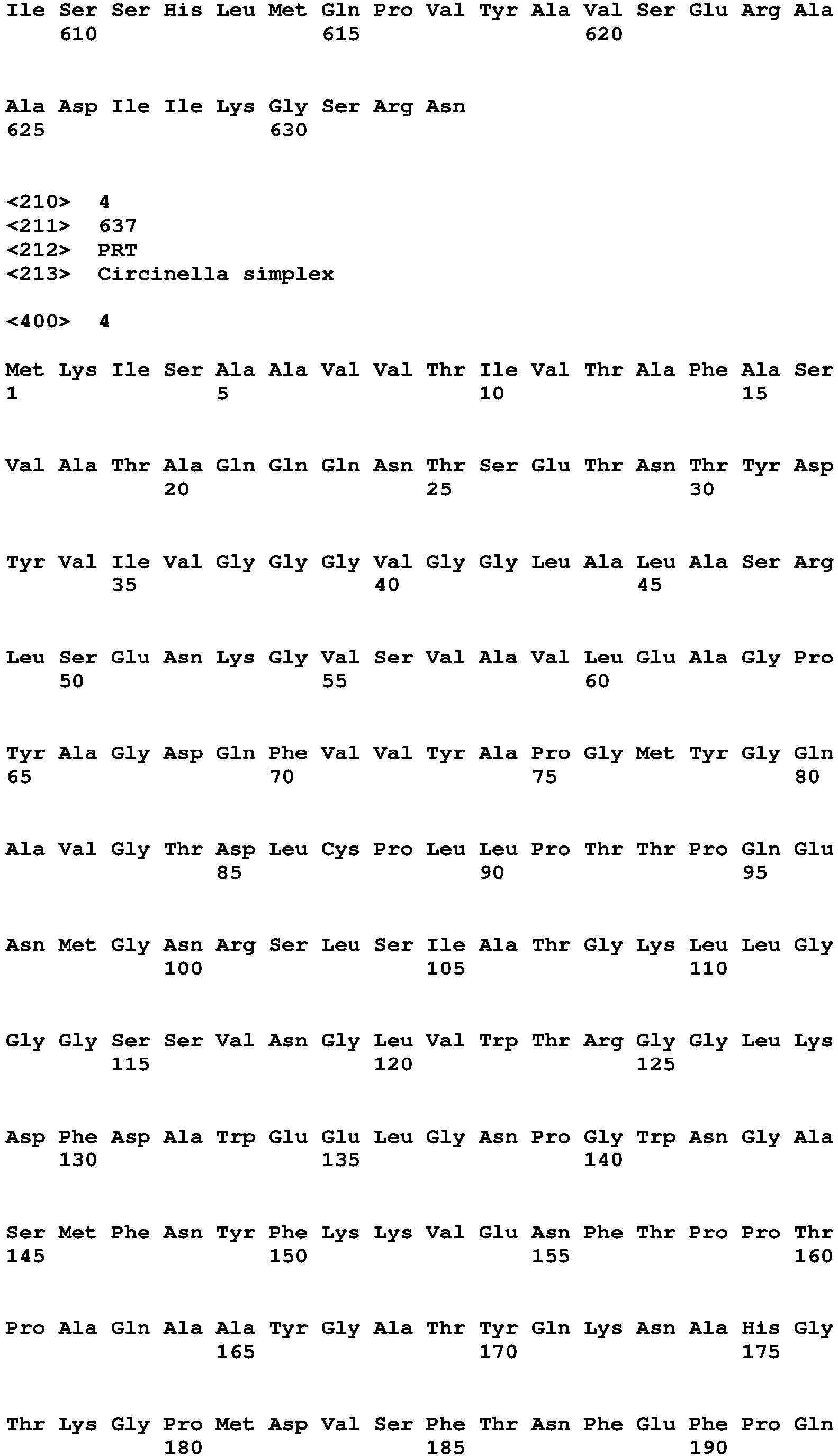
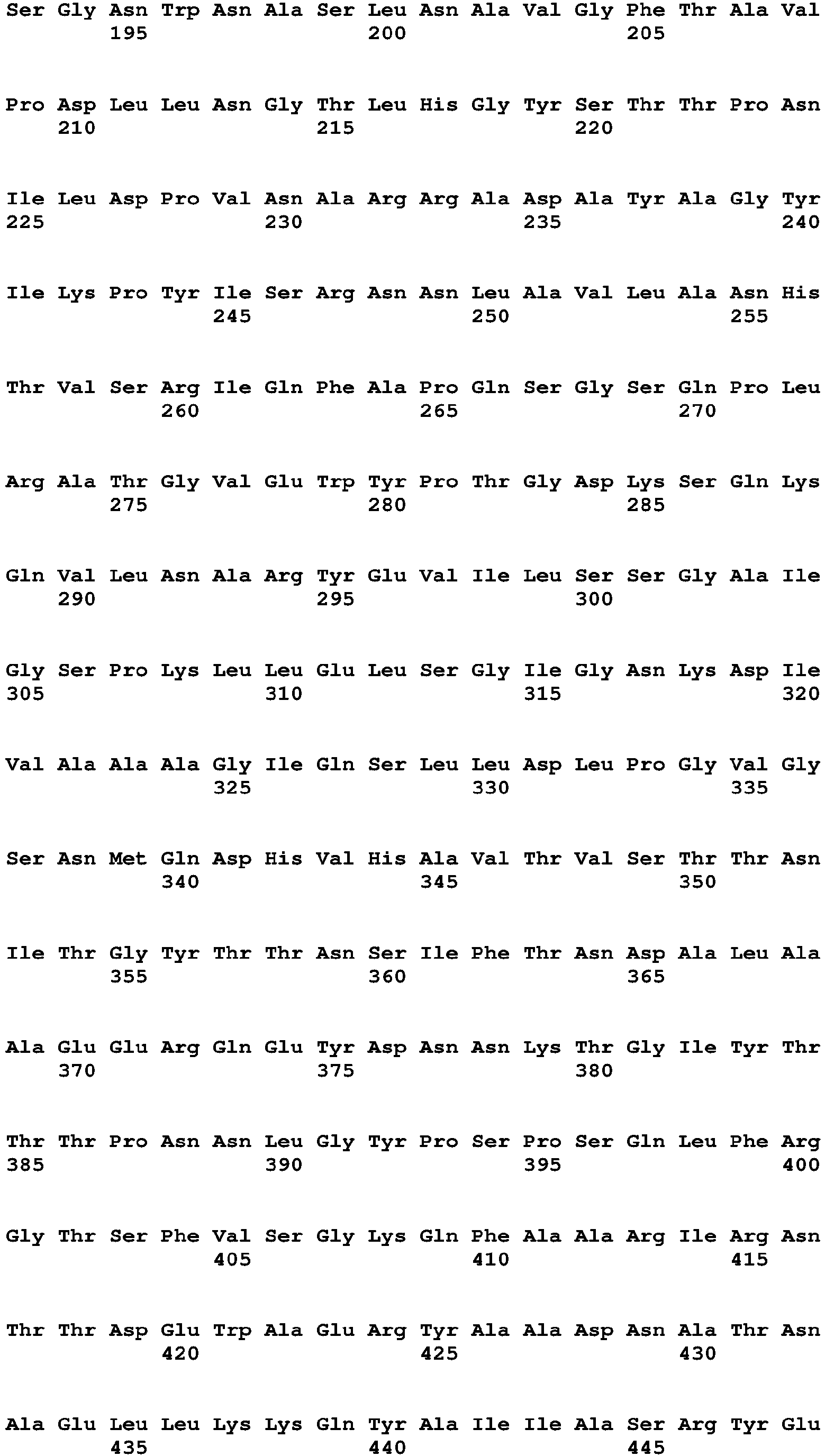


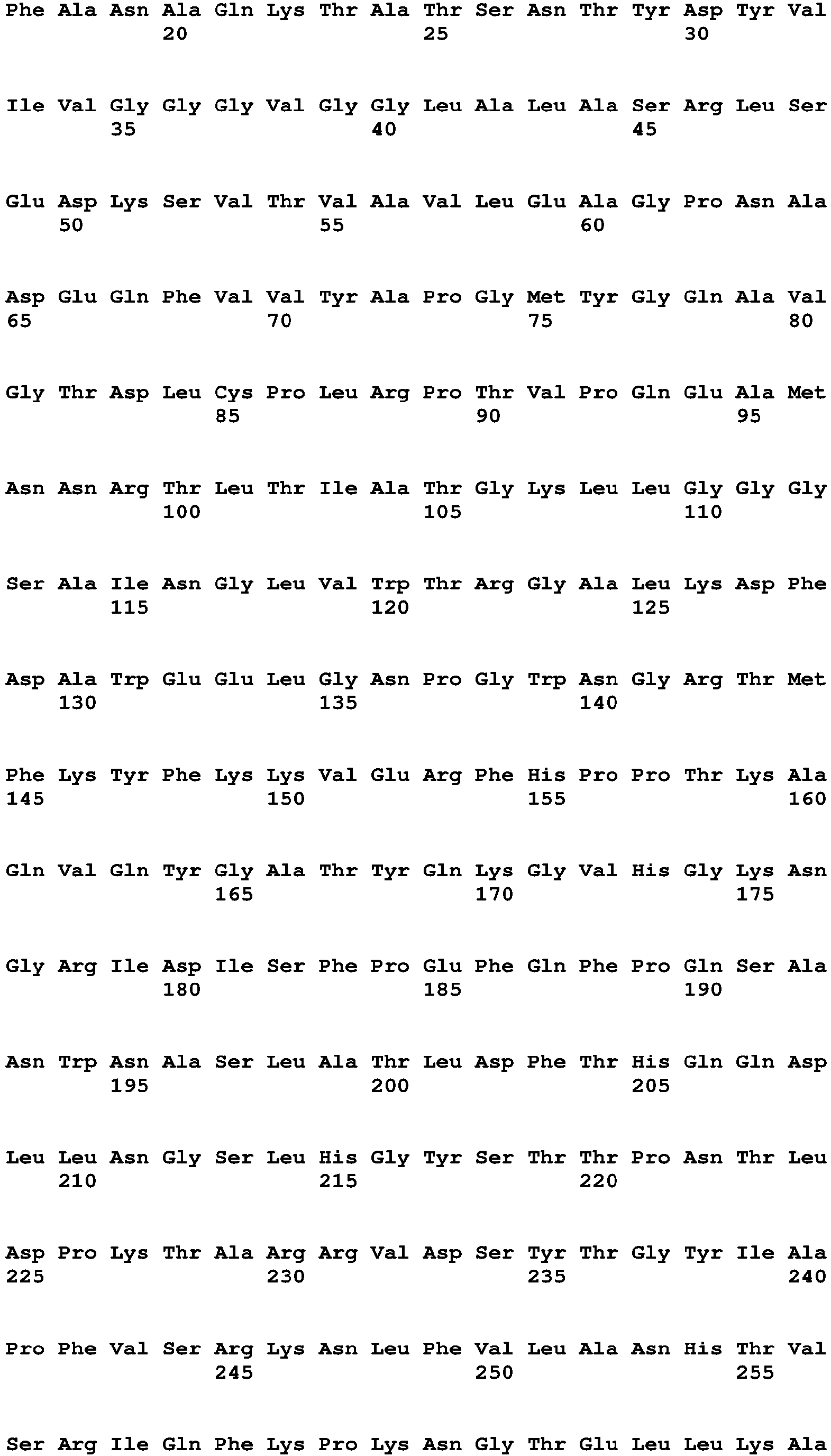


Claims (11)
- An electron transfer accelerator for nanocarbon, comprising a compound having an aromatic ring skeleton.
- Nanocarbon attached or present in close proximity to a compound having an aromatic ring skeleton due to intermolecular interaction.
- The nanocarbon according to claim 2, wherein the compound having an aromatic ring skeleton is a compound that does not function as a mediator by itself.
- The nanocarbon according to claim 2 or 3, wherein the compound having an aromatic ring skeleton is selected from the group consisting of thymol, phenol, bis(4-hydroxyphenyl)sulfone, tyrosine disodium hydrate, sodium salicylate, toluene, 5-hydroxyindole, aniline, leucoquinizarin, carvacrol, 1,5-naphthalene diol, 4-isopropyl-3-methylphenol, 2-isopropylphenol, 4-isopropylphenol, 1-naphthol, 2-tert-butyl-5-methylphenol, 2,4,6-trimethylphenol, 2,6-diisopropylphenol, 2-tert-butyl-4-ethylphenol, 6-tert-butyl-2,4-xylenol, 2-tert-butyl-4-methylphenol, 2-tert-butyl-6-methylphenol, 2,4-di-tert-butylphenol, 2,4-di-tert-butyl-5-methylphenol, bis(p-hydroxyphenyl)methane, 3-tert-butylphenol, 2-isopropyl-5-methylanisole, o-cresol, m-cresol, and p-cresol.
- An electrode loaded with nanocarbon, a compound having an aromatic ring skeleton, and an enzyme on a substrate.
- The electrode according to claim 5, wherein the nanocarbon is a carbon nanotube.
- The electrode according to claim 5 or 6, wherein the carbon nanotube is a single-walled carbon nanotube.
- The electrode according to any one of claims 5 to 7, wherein the enzyme is flavin-binding glucose dehydrogenase.
- The electrode according to any one of claims 5 to 8, further comprising a dispersant loaded on the substrate.
- The electrode according to any one of claims 5 to 9, wherein a thin film of carbon or metal is formed on the substrate.
- A sensor comprising the electrode according to any one of claims 5 to 10.
Applications Claiming Priority (3)
| Application Number | Priority Date | Filing Date | Title |
|---|---|---|---|
| JP2018065464 | 2018-03-29 | ||
| JP2019029534 | 2019-02-21 | ||
| PCT/JP2019/014133 WO2019189808A1 (en) | 2018-03-29 | 2019-03-29 | Nanocarbon electron transfer action |
Publications (2)
| Publication Number | Publication Date |
|---|---|
| EP3778476A1 true EP3778476A1 (en) | 2021-02-17 |
| EP3778476A4 EP3778476A4 (en) | 2022-03-09 |
Family
ID=68062012
Family Applications (1)
| Application Number | Title | Priority Date | Filing Date |
|---|---|---|---|
| EP19775049.0A Pending EP3778476A4 (en) | 2018-03-29 | 2019-03-29 | NANOCARBON ELECTRON TRANSFER ACTION |
Country Status (5)
| Country | Link |
|---|---|
| US (1) | US11906461B2 (en) |
| EP (1) | EP3778476A4 (en) |
| JP (1) | JP7398744B2 (en) |
| CN (1) | CN111954641B (en) |
| WO (1) | WO2019189808A1 (en) |
Families Citing this family (4)
| Publication number | Priority date | Publication date | Assignee | Title |
|---|---|---|---|---|
| WO2021149587A1 (en) * | 2020-01-23 | 2021-07-29 | 池田食研株式会社 | Method for producing glucuronic acid |
| JP7472609B2 (en) * | 2020-04-02 | 2024-04-23 | artience株式会社 | Electrode for enzyme sensor and enzyme sensor |
| JP2023071500A (en) * | 2021-11-11 | 2023-05-23 | 東洋紡株式会社 | Electrode including carbon nanotube and 3-hydroxybutyric acid dehydrogenase |
| JP2024070325A (en) * | 2022-11-11 | 2024-05-23 | 東洋紡株式会社 | Method for measuring substrate in a sample |
Family Cites Families (23)
| Publication number | Priority date | Publication date | Assignee | Title |
|---|---|---|---|---|
| US8444834B2 (en) * | 1999-11-15 | 2013-05-21 | Abbott Diabetes Care Inc. | Redox polymers for use in analyte monitoring |
| US7955559B2 (en) * | 2005-11-15 | 2011-06-07 | Nanomix, Inc. | Nanoelectronic electrochemical test device |
| US20050208304A1 (en) * | 2003-02-21 | 2005-09-22 | California Institute Of Technology | Coatings for carbon nanotubes |
| CN101151764A (en) * | 2003-11-05 | 2008-03-26 | 圣路易斯大学 | Immobilized enzymes in biocathode |
| US8859151B2 (en) | 2003-11-05 | 2014-10-14 | St. Louis University | Immobilized enzymes in biocathodes |
| JP4374464B2 (en) | 2004-03-10 | 2009-12-02 | 独立行政法人産業技術総合研究所 | Biosensor |
| JPWO2005093400A1 (en) | 2004-03-25 | 2008-02-14 | 有限会社アルティザイム・インターナショナル | Fuel cell type wireless enzyme sensor |
| JP5061342B2 (en) * | 2006-09-11 | 2012-10-31 | 国立大学法人大阪大学 | Carbon nanotube electrode and sensor using the electrode |
| CN100594379C (en) * | 2007-06-29 | 2010-03-17 | 浙江大学 | A carbon nanotube-modified blood glucose biosensor |
| ES2555295T3 (en) | 2007-09-18 | 2015-12-30 | Ultizyme International Ltd. | Enzymatic electrode |
| CN101475790B (en) | 2008-01-04 | 2012-10-10 | 杨光 | Novel timber adhesive and preparation thereof |
| JP2010156605A (en) * | 2008-12-26 | 2010-07-15 | Mitsubishi Chemical Medience Corp | Electrical analysis method |
| WO2011007582A1 (en) | 2009-07-17 | 2011-01-20 | 国立大学法人北海道大学 | Method for electric measurement of peroxide using cnt sensor |
| JP5652724B2 (en) | 2010-06-29 | 2015-01-14 | 国立大学法人東北大学 | Carbon nanotube film including protein, sensor and power generation device using the same |
| CN102478539A (en) | 2010-11-19 | 2012-05-30 | 中国科学院海洋研究所 | Application of hydroxypropyl chitosan/carbon nanotube modified electrochemical sensor |
| JP5584740B2 (en) | 2011-09-26 | 2014-09-03 | アークレイ株式会社 | Glucose sensor |
| US20130209807A1 (en) * | 2012-02-13 | 2013-08-15 | Florida State University Research Foundation, Inc. | Functionalized Carbon Nanotube Sheets for Electrochemical Biosensors and Methods |
| JP2014194411A (en) | 2013-02-28 | 2014-10-09 | Aisin Seiki Co Ltd | Modified electrode, method of manufacturing the modified electrode, bio battery including the modified electrode, and bio sensor |
| JP6312441B2 (en) * | 2014-01-09 | 2018-04-18 | 国立大学法人信州大学 | Single-walled carbon nanotube, electrode sheet including the same, method for producing the same, and method for producing a dispersion thereof |
| WO2016013010A1 (en) * | 2014-07-21 | 2016-01-28 | B. G. Negev Technologies And Applications Ltd. (Ben-Gurion University) | Phenothiazine/phenothiazone -graphene oxide composite |
| ES2623080B1 (en) * | 2015-12-10 | 2018-05-14 | Consejo Superior De Investigaciones Científicas (Csic) | ELECTROCROMIC BIOSENSOR |
| US10697918B2 (en) * | 2016-05-04 | 2020-06-30 | Massachusetts Institute Of Technology | Polymer / single-walled carbon nanotube composite for gas detection |
| JP6901717B2 (en) | 2016-08-29 | 2021-07-14 | 国立研究開発法人産業技術総合研究所 | Glucose sensor reagent, glucose sensor, glucose sensor manufacturing method, and glucose measuring device |
-
2019
- 2019-03-29 WO PCT/JP2019/014133 patent/WO2019189808A1/en not_active Ceased
- 2019-03-29 JP JP2020511116A patent/JP7398744B2/en active Active
- 2019-03-29 CN CN201980023140.1A patent/CN111954641B/en active Active
- 2019-03-29 EP EP19775049.0A patent/EP3778476A4/en active Pending
- 2019-03-29 US US17/043,175 patent/US11906461B2/en active Active
Also Published As
| Publication number | Publication date |
|---|---|
| WO2019189808A1 (en) | 2019-10-03 |
| US11906461B2 (en) | 2024-02-20 |
| US20210293742A1 (en) | 2021-09-23 |
| JPWO2019189808A1 (en) | 2021-03-18 |
| CN111954641B (en) | 2024-03-12 |
| JP7398744B2 (en) | 2023-12-15 |
| CN111954641A (en) | 2020-11-17 |
| EP3778476A4 (en) | 2022-03-09 |
Similar Documents
| Publication | Publication Date | Title |
|---|---|---|
| Muguruma et al. | Mediatorless direct electron transfer between flavin adenine dinucleotide-dependent glucose dehydrogenase and single-walled carbon nanotubes | |
| Boussema et al. | Dawson-type polyoxometalate nanoclusters confined in a carbon nanotube matrix as efficient redox mediators for enzymatic glucose biofuel cell anodes and glucose biosensors | |
| US11906461B2 (en) | Electron transfer by nanocarbon | |
| Bartlett et al. | There is no evidence to support literature claims of direct electron transfer (DET) for native glucose oxidase (GOx) at carbon nanotubes or graphene | |
| Feng et al. | Development of glucose biosensors based on nanostructured graphene-conducting polyaniline composite | |
| Antiochia et al. | Development of a carbon nanotube paste electrode osmium polymer-mediated biosensor for determination of glucose in alcoholic beverages | |
| Adachi et al. | Bioelectrocatalytic performance of d-fructose dehydrogenase | |
| Wang | Carbon‐nanotube based electrochemical biosensors: A review | |
| JP4706070B2 (en) | ink | |
| Ramanavicius et al. | Biofuel cell based on glucose oxidase from Penicillium funiculosum 46.1 and horseradish peroxidase | |
| Tominaga et al. | d-Fructose detection based on the direct heterogeneous electron transfer reaction of fructose dehydrogenase adsorbed onto multi-walled carbon nanotubes synthesized on platinum electrode | |
| Rochette et al. | A mediatorless biosensor for putrescine using multiwalled carbon nanotubes | |
| EP3973871A1 (en) | Electrochemical biosensor comprising carbon nanotube for measuring biosignals and method for manufacturing same | |
| Tricase et al. | Water‐based conductive ink formulations for enzyme‐based wearable biosensors | |
| CN101802597B (en) | Enzyme electrode | |
| Mano et al. | Detection of glucose at 2 fM concentration | |
| Kwon et al. | Nanoscale enzyme reactors in mesoporous carbon for improved performance and lifetime of biosensors and biofuel cells | |
| Moehlenbrock et al. | Bioelectrocatalytic oxidation of glucose in CNT impregnated hydrogels: advantages of synthetic enzymatic metabolon formation | |
| Quah et al. | Cholesterol as a promising alternative energy source: bioelectrocatalytic oxidation using NAD-dependent cholesterol dehydrogenase in human serum | |
| Wang et al. | Novel uric acid sensor based on enzyme electrode modified by zno nanoparticles and multiwall carbon nanotubes | |
| Titoiu et al. | Carbon nanofiber and meldola blue based electrochemical sensor for NADH: application to the detection of benzaldehyde | |
| JP2012028181A (en) | Enzyme electrode and fuel cell having the same | |
| Ramanavicius et al. | Comparison of glucose oxidases from Penicillium adametzii, Penicillium funiculosum and Aspergillus niger in the design of amperometric glucose biosensors | |
| JP7492708B2 (en) | The opposite modifier | |
| Barhoumi et al. | Amperometric determination of ethanol using a novel nanobiocomposite |
Legal Events
| Date | Code | Title | Description |
|---|---|---|---|
| STAA | Information on the status of an ep patent application or granted ep patent |
Free format text: STATUS: THE INTERNATIONAL PUBLICATION HAS BEEN MADE |
|
| PUAI | Public reference made under article 153(3) epc to a published international application that has entered the european phase |
Free format text: ORIGINAL CODE: 0009012 |
|
| STAA | Information on the status of an ep patent application or granted ep patent |
Free format text: STATUS: REQUEST FOR EXAMINATION WAS MADE |
|
| 17P | Request for examination filed |
Effective date: 20201002 |
|
| AK | Designated contracting states |
Kind code of ref document: A1 Designated state(s): AL AT BE BG CH CY CZ DE DK EE ES FI FR GB GR HR HU IE IS IT LI LT LU LV MC MK MT NL NO PL PT RO RS SE SI SK SM TR |
|
| AX | Request for extension of the european patent |
Extension state: BA ME |
|
| DAV | Request for validation of the european patent (deleted) | ||
| DAX | Request for extension of the european patent (deleted) | ||
| RIC1 | Information provided on ipc code assigned before grant |
Ipc: G01N 27/327 20060101ALI20211117BHEP Ipc: G01N 27/30 20060101ALI20211117BHEP Ipc: C12Q 1/00 20060101ALI20211117BHEP Ipc: C12N 11/14 20060101ALI20211117BHEP Ipc: C12M 1/40 20060101ALI20211117BHEP Ipc: C01B 32/159 20170101ALI20211117BHEP Ipc: C01B 32/168 20170101AFI20211117BHEP |
|
| A4 | Supplementary search report drawn up and despatched |
Effective date: 20220204 |
|
| RIC1 | Information provided on ipc code assigned before grant |
Ipc: G01N 27/327 20060101ALI20220131BHEP Ipc: G01N 27/30 20060101ALI20220131BHEP Ipc: C12Q 1/00 20060101ALI20220131BHEP Ipc: C12N 11/14 20060101ALI20220131BHEP Ipc: C12M 1/40 20060101ALI20220131BHEP Ipc: C01B 32/159 20170101ALI20220131BHEP Ipc: C01B 32/168 20170101AFI20220131BHEP |
|
| RAP3 | Party data changed (applicant data changed or rights of an application transferred) |
Owner name: NATIONAL INSTITUTE OF ADVANCED INDUSTRIAL SCIENCE AND TECHNOLOGY Owner name: TOYOBO CO., LTD. |
|
| P01 | Opt-out of the competence of the unified patent court (upc) registered |
Effective date: 20230518 |