EP3777667A1 - Verfahren zum nachweis der präsenz einer krankheit, die blutmikrozirkulationsschwingungen bei frauen beeinträchtigt, und vorrichtung dafür - Google Patents
Verfahren zum nachweis der präsenz einer krankheit, die blutmikrozirkulationsschwingungen bei frauen beeinträchtigt, und vorrichtung dafür Download PDFInfo
- Publication number
- EP3777667A1 EP3777667A1 EP19461568.8A EP19461568A EP3777667A1 EP 3777667 A1 EP3777667 A1 EP 3777667A1 EP 19461568 A EP19461568 A EP 19461568A EP 3777667 A1 EP3777667 A1 EP 3777667A1
- Authority
- EP
- European Patent Office
- Prior art keywords
- fluorescence signal
- skin
- nadh fluorescence
- parameter
- microcirculation
- Prior art date
- Legal status (The legal status is an assumption and is not a legal conclusion. Google has not performed a legal analysis and makes no representation as to the accuracy of the status listed.)
- Withdrawn
Links
- 230000004089 microcirculation Effects 0.000 title claims abstract description 72
- 238000000034 method Methods 0.000 title claims abstract description 50
- 230000007170 pathology Effects 0.000 title claims abstract description 45
- 239000008280 blood Substances 0.000 title claims abstract description 31
- 210000004369 blood Anatomy 0.000 title claims abstract description 31
- 238000001514 detection method Methods 0.000 title claims abstract description 23
- 230000010355 oscillation Effects 0.000 title claims description 22
- 229930027945 nicotinamide-adenine dinucleotide Natural products 0.000 claims abstract description 61
- BOPGDPNILDQYTO-NNYOXOHSSA-N nicotinamide-adenine dinucleotide Chemical compound C1=CCC(C(=O)N)=CN1[C@H]1[C@H](O)[C@H](O)[C@@H](COP(O)(=O)OP(O)(=O)OC[C@@H]2[C@H]([C@@H](O)[C@@H](O2)N2C3=NC=NC(N)=C3N=C2)O)O1 BOPGDPNILDQYTO-NNYOXOHSSA-N 0.000 claims abstract description 61
- 230000003534 oscillatory effect Effects 0.000 claims abstract description 29
- 238000005286 illumination Methods 0.000 claims abstract description 23
- 230000017531 blood circulation Effects 0.000 claims abstract description 14
- 230000000284 resting effect Effects 0.000 claims abstract description 9
- 230000000638 stimulation Effects 0.000 claims abstract description 9
- 230000001939 inductive effect Effects 0.000 claims abstract description 7
- 238000005259 measurement Methods 0.000 claims description 27
- 206010012601 diabetes mellitus Diseases 0.000 claims description 25
- 201000010099 disease Diseases 0.000 claims description 11
- 208000037265 diseases, disorders, signs and symptoms Diseases 0.000 claims description 11
- 238000004458 analytical method Methods 0.000 claims description 10
- 208000024172 Cardiovascular disease Diseases 0.000 claims description 7
- 208000001145 Metabolic Syndrome Diseases 0.000 claims description 5
- 206010028980 Neoplasm Diseases 0.000 claims description 5
- 201000000690 abdominal obesity-metabolic syndrome Diseases 0.000 claims description 5
- 230000003608 autoimmunological effect Effects 0.000 claims description 5
- 201000011510 cancer Diseases 0.000 claims description 5
- 208000020832 chronic kidney disease Diseases 0.000 claims description 5
- 208000022831 chronic renal failure syndrome Diseases 0.000 claims description 5
- 230000004770 neurodegeneration Effects 0.000 claims description 4
- 208000015122 neurodegenerative disease Diseases 0.000 claims description 4
- 200000000007 Arterial disease Diseases 0.000 claims description 3
- 208000007530 Essential hypertension Diseases 0.000 claims description 3
- 208000006011 Stroke Diseases 0.000 claims description 3
- 201000000083 maturity-onset diabetes of the young type 1 Diseases 0.000 claims description 2
- 230000009245 menopause Effects 0.000 claims description 2
- 238000012545 processing Methods 0.000 claims description 2
- 210000003491 skin Anatomy 0.000 description 70
- 230000006870 function Effects 0.000 description 28
- 230000006735 deficit Effects 0.000 description 11
- 230000001404 mediated effect Effects 0.000 description 10
- 230000002792 vascular Effects 0.000 description 10
- 210000003128 head Anatomy 0.000 description 9
- 238000012360 testing method Methods 0.000 description 9
- 230000004064 dysfunction Effects 0.000 description 8
- 201000001119 neuropathy Diseases 0.000 description 8
- 230000007823 neuropathy Effects 0.000 description 8
- 208000033808 peripheral neuropathy Diseases 0.000 description 8
- 230000000283 vasomotion Effects 0.000 description 7
- 208000008960 Diabetic foot Diseases 0.000 description 6
- 208000017442 Retinal disease Diseases 0.000 description 6
- 206010038923 Retinopathy Diseases 0.000 description 6
- 210000000245 forearm Anatomy 0.000 description 5
- 230000005284 excitation Effects 0.000 description 4
- NOESYZHRGYRDHS-UHFFFAOYSA-N insulin Chemical compound N1C(=O)C(NC(=O)C(CCC(N)=O)NC(=O)C(CCC(O)=O)NC(=O)C(C(C)C)NC(=O)C(NC(=O)CN)C(C)CC)CSSCC(C(NC(CO)C(=O)NC(CC(C)C)C(=O)NC(CC=2C=CC(O)=CC=2)C(=O)NC(CCC(N)=O)C(=O)NC(CC(C)C)C(=O)NC(CCC(O)=O)C(=O)NC(CC(N)=O)C(=O)NC(CC=2C=CC(O)=CC=2)C(=O)NC(CSSCC(NC(=O)C(C(C)C)NC(=O)C(CC(C)C)NC(=O)C(CC=2C=CC(O)=CC=2)NC(=O)C(CC(C)C)NC(=O)C(C)NC(=O)C(CCC(O)=O)NC(=O)C(C(C)C)NC(=O)C(CC(C)C)NC(=O)C(CC=2NC=NC=2)NC(=O)C(CO)NC(=O)CNC2=O)C(=O)NCC(=O)NC(CCC(O)=O)C(=O)NC(CCCNC(N)=N)C(=O)NCC(=O)NC(CC=3C=CC=CC=3)C(=O)NC(CC=3C=CC=CC=3)C(=O)NC(CC=3C=CC(O)=CC=3)C(=O)NC(C(C)O)C(=O)N3C(CCC3)C(=O)NC(CCCCN)C(=O)NC(C)C(O)=O)C(=O)NC(CC(N)=O)C(O)=O)=O)NC(=O)C(C(C)CC)NC(=O)C(CO)NC(=O)C(C(C)O)NC(=O)C1CSSCC2NC(=O)C(CC(C)C)NC(=O)C(NC(=O)C(CCC(N)=O)NC(=O)C(CC(N)=O)NC(=O)C(NC(=O)C(N)CC=1C=CC=CC=1)C(C)C)CC1=CN=CN1 NOESYZHRGYRDHS-UHFFFAOYSA-N 0.000 description 4
- 208000017169 kidney disease Diseases 0.000 description 4
- 230000008336 microcirculatory blood flow Effects 0.000 description 4
- 230000004044 response Effects 0.000 description 4
- 230000001020 rhythmical effect Effects 0.000 description 4
- 230000002269 spontaneous effect Effects 0.000 description 4
- 206010006187 Breast cancer Diseases 0.000 description 3
- 208000026310 Breast neoplasm Diseases 0.000 description 3
- 210000004027 cell Anatomy 0.000 description 3
- 230000004087 circulation Effects 0.000 description 3
- 238000011835 investigation Methods 0.000 description 3
- 230000000771 oncological effect Effects 0.000 description 3
- 238000011160 research Methods 0.000 description 3
- 208000001072 type 2 diabetes mellitus Diseases 0.000 description 3
- 208000024827 Alzheimer disease Diseases 0.000 description 2
- 208000002249 Diabetes Complications Diseases 0.000 description 2
- 206010012655 Diabetic complications Diseases 0.000 description 2
- 241000282412 Homo Species 0.000 description 2
- 208000023105 Huntington disease Diseases 0.000 description 2
- 206010020772 Hypertension Diseases 0.000 description 2
- 208000022559 Inflammatory bowel disease Diseases 0.000 description 2
- 102000004877 Insulin Human genes 0.000 description 2
- 108090001061 Insulin Proteins 0.000 description 2
- 206010022489 Insulin Resistance Diseases 0.000 description 2
- 206010058467 Lung neoplasm malignant Diseases 0.000 description 2
- 201000004681 Psoriasis Diseases 0.000 description 2
- MUMGGOZAMZWBJJ-DYKIIFRCSA-N Testostosterone Chemical compound O=C1CC[C@]2(C)[C@H]3CC[C@](C)([C@H](CC4)O)[C@@H]4[C@@H]3CCC2=C1 MUMGGOZAMZWBJJ-DYKIIFRCSA-N 0.000 description 2
- 206010067584 Type 1 diabetes mellitus Diseases 0.000 description 2
- 206010002026 amyotrophic lateral sclerosis Diseases 0.000 description 2
- 230000001174 ascending effect Effects 0.000 description 2
- 230000000903 blocking effect Effects 0.000 description 2
- 230000036772 blood pressure Effects 0.000 description 2
- 238000004590 computer program Methods 0.000 description 2
- 208000029078 coronary artery disease Diseases 0.000 description 2
- 229940011871 estrogen Drugs 0.000 description 2
- 239000000262 estrogen Substances 0.000 description 2
- 238000011156 evaluation Methods 0.000 description 2
- 208000014829 head and neck neoplasm Diseases 0.000 description 2
- 230000000544 hyperemic effect Effects 0.000 description 2
- 230000001771 impaired effect Effects 0.000 description 2
- 229940125396 insulin Drugs 0.000 description 2
- 201000002313 intestinal cancer Diseases 0.000 description 2
- 208000028867 ischemia Diseases 0.000 description 2
- 230000000302 ischemic effect Effects 0.000 description 2
- 230000033001 locomotion Effects 0.000 description 2
- 201000005202 lung cancer Diseases 0.000 description 2
- 208000020816 lung neoplasm Diseases 0.000 description 2
- 239000003550 marker Substances 0.000 description 2
- 230000007246 mechanism Effects 0.000 description 2
- 230000010060 microvascular dysfunction Effects 0.000 description 2
- 210000004088 microvessel Anatomy 0.000 description 2
- 201000006417 multiple sclerosis Diseases 0.000 description 2
- 230000003287 optical effect Effects 0.000 description 2
- 230000007310 pathophysiology Effects 0.000 description 2
- 230000000144 pharmacologic effect Effects 0.000 description 2
- 238000013186 photoplethysmography Methods 0.000 description 2
- 230000035479 physiological effects, processes and functions Effects 0.000 description 2
- 206010039073 rheumatoid arthritis Diseases 0.000 description 2
- 238000005070 sampling Methods 0.000 description 2
- 230000003595 spectral effect Effects 0.000 description 2
- 238000001228 spectrum Methods 0.000 description 2
- 238000007619 statistical method Methods 0.000 description 2
- 201000000596 systemic lupus erythematosus Diseases 0.000 description 2
- 210000001519 tissue Anatomy 0.000 description 2
- 102000012289 Corticotropin-Releasing Hormone Human genes 0.000 description 1
- 108010022152 Corticotropin-Releasing Hormone Proteins 0.000 description 1
- 239000000055 Corticotropin-Releasing Hormone Substances 0.000 description 1
- 102000001301 EGF receptor Human genes 0.000 description 1
- 108060006698 EGF receptor Proteins 0.000 description 1
- 206010048554 Endothelial dysfunction Diseases 0.000 description 1
- 206010019280 Heart failures Diseases 0.000 description 1
- 206010020565 Hyperaemia Diseases 0.000 description 1
- 208000018737 Parkinson disease Diseases 0.000 description 1
- 208000027032 Renal vascular disease Diseases 0.000 description 1
- 238000010521 absorption reaction Methods 0.000 description 1
- 210000001367 artery Anatomy 0.000 description 1
- QVGXLLKOCUKJST-UHFFFAOYSA-N atomic oxygen Chemical compound [O] QVGXLLKOCUKJST-UHFFFAOYSA-N 0.000 description 1
- 230000033228 biological regulation Effects 0.000 description 1
- 230000008859 change Effects 0.000 description 1
- 238000012790 confirmation Methods 0.000 description 1
- 229940041967 corticotropin-releasing hormone Drugs 0.000 description 1
- KLVRDXBAMSPYKH-RKYZNNDCSA-N corticotropin-releasing hormone (human) Chemical compound C([C@@H](C(=O)N[C@@H](CO)C(=O)N[C@@H](CC(N)=O)C(=O)N[C@@H](CCCNC(N)=N)C(=O)N[C@@H](CCCCN)C(=O)N[C@@H](CC(C)C)C(=O)N[C@@H](CCSC)C(=O)N[C@@H](CCC(O)=O)C(=O)N[C@H](C(=O)N[C@@H]([C@@H](C)CC)C(N)=O)[C@@H](C)CC)NC(=O)[C@H](C)NC(=O)[C@H](CCC(N)=O)NC(=O)[C@H](CCC(N)=O)NC(=O)[C@H](C)NC(=O)[C@H](CC(C)C)NC(=O)[C@H](CCC(N)=O)NC(=O)[C@H](CCC(O)=O)NC(=O)[C@H](C)NC(=O)[C@H](CCCNC(N)=N)NC(=O)[C@H](C)NC(=O)[C@H](CCSC)NC(=O)[C@H](CCC(O)=O)NC(=O)[C@H](CC(C)C)NC(=O)[C@@H](NC(=O)[C@H](CCC(O)=O)NC(=O)[C@H](CCCNC(N)=N)NC(=O)[C@H](CC(C)C)NC(=O)[C@H](CC(C)C)NC(=O)[C@H](CC=1N=CNC=1)NC(=O)[C@H](CC=1C=CC=CC=1)NC(=O)[C@@H](NC(=O)[C@H](CC(C)C)NC(=O)[C@H](CC(O)=O)NC(=O)[C@H](CC(C)C)NC(=O)[C@H](CO)NC(=O)[C@@H](NC(=O)[C@H]1N(CCC1)C(=O)[C@H]1N(CCC1)C(=O)[C@H](CCC(O)=O)NC(=O)[C@H](CCC(O)=O)NC(=O)[C@@H](N)CO)[C@@H](C)CC)C(C)C)C(C)C)C1=CNC=N1 KLVRDXBAMSPYKH-RKYZNNDCSA-N 0.000 description 1
- 230000007423 decrease Effects 0.000 description 1
- 230000003247 decreasing effect Effects 0.000 description 1
- 230000001419 dependent effect Effects 0.000 description 1
- 238000002405 diagnostic procedure Methods 0.000 description 1
- 230000010339 dilation Effects 0.000 description 1
- 230000000694 effects Effects 0.000 description 1
- 230000008694 endothelial dysfunction Effects 0.000 description 1
- 230000008753 endothelial function Effects 0.000 description 1
- 210000003038 endothelium Anatomy 0.000 description 1
- 210000003989 endothelium vascular Anatomy 0.000 description 1
- 102000052116 epidermal growth factor receptor activity proteins Human genes 0.000 description 1
- 108700015053 epidermal growth factor receptor activity proteins Proteins 0.000 description 1
- 238000005558 fluorometry Methods 0.000 description 1
- 230000004907 flux Effects 0.000 description 1
- 210000001061 forehead Anatomy 0.000 description 1
- 230000009760 functional impairment Effects 0.000 description 1
- 239000007789 gas Substances 0.000 description 1
- 230000004190 glucose uptake Effects 0.000 description 1
- 238000010438 heat treatment Methods 0.000 description 1
- 210000000987 immune system Anatomy 0.000 description 1
- 238000000338 in vitro Methods 0.000 description 1
- 238000001727 in vivo Methods 0.000 description 1
- 230000004155 insulin signaling pathway Effects 0.000 description 1
- 238000012417 linear regression Methods 0.000 description 1
- 210000003141 lower extremity Anatomy 0.000 description 1
- 238000009607 mammography Methods 0.000 description 1
- QSHDDOUJBYECFT-UHFFFAOYSA-N mercury Chemical compound [Hg] QSHDDOUJBYECFT-UHFFFAOYSA-N 0.000 description 1
- 229910052753 mercury Inorganic materials 0.000 description 1
- 230000002503 metabolic effect Effects 0.000 description 1
- 230000004060 metabolic process Effects 0.000 description 1
- 239000002207 metabolite Substances 0.000 description 1
- 230000002107 myocardial effect Effects 0.000 description 1
- 208000010125 myocardial infarction Diseases 0.000 description 1
- 208000031225 myocardial ischemia Diseases 0.000 description 1
- YOHYSYJDKVYCJI-UHFFFAOYSA-N n-[3-[[6-[3-(trifluoromethyl)anilino]pyrimidin-4-yl]amino]phenyl]cyclopropanecarboxamide Chemical compound FC(F)(F)C1=CC=CC(NC=2N=CN=C(NC=3C=C(NC(=O)C4CC4)C=CC=3)C=2)=C1 YOHYSYJDKVYCJI-UHFFFAOYSA-N 0.000 description 1
- 230000001537 neural effect Effects 0.000 description 1
- 239000013307 optical fiber Substances 0.000 description 1
- 210000000056 organ Anatomy 0.000 description 1
- 230000027758 ovulation cycle Effects 0.000 description 1
- 239000001301 oxygen Substances 0.000 description 1
- 229910052760 oxygen Inorganic materials 0.000 description 1
- 230000036513 peripheral conductance Effects 0.000 description 1
- 230000002093 peripheral effect Effects 0.000 description 1
- 230000035790 physiological processes and functions Effects 0.000 description 1
- 230000000069 prophylactic effect Effects 0.000 description 1
- 238000002106 pulse oximetry Methods 0.000 description 1
- 238000001055 reflectance spectroscopy Methods 0.000 description 1
- 208000015670 renal artery disease Diseases 0.000 description 1
- 206010038464 renal hypertension Diseases 0.000 description 1
- 230000029058 respiratory gaseous exchange Effects 0.000 description 1
- 238000012552 review Methods 0.000 description 1
- 238000012216 screening Methods 0.000 description 1
- 230000035945 sensitivity Effects 0.000 description 1
- 210000002027 skeletal muscle Anatomy 0.000 description 1
- 210000004927 skin cell Anatomy 0.000 description 1
- 230000000391 smoking effect Effects 0.000 description 1
- 210000002460 smooth muscle Anatomy 0.000 description 1
- 239000000126 substance Substances 0.000 description 1
- 229960003604 testosterone Drugs 0.000 description 1
- 230000001225 therapeutic effect Effects 0.000 description 1
- 230000009466 transformation Effects 0.000 description 1
- 230000001960 triggered effect Effects 0.000 description 1
- 210000001364 upper extremity Anatomy 0.000 description 1
- 210000000689 upper leg Anatomy 0.000 description 1
- 208000019553 vascular disease Diseases 0.000 description 1
- 230000004218 vascular function Effects 0.000 description 1
- 230000006442 vascular tone Effects 0.000 description 1
- 210000005166 vasculature Anatomy 0.000 description 1
- 230000002227 vasoactive effect Effects 0.000 description 1
- 238000012800 visualization Methods 0.000 description 1
- 229910052724 xenon Inorganic materials 0.000 description 1
- FHNFHKCVQCLJFQ-UHFFFAOYSA-N xenon atom Chemical compound [Xe] FHNFHKCVQCLJFQ-UHFFFAOYSA-N 0.000 description 1
Images



Classifications
-
- A—HUMAN NECESSITIES
- A61—MEDICAL OR VETERINARY SCIENCE; HYGIENE
- A61B—DIAGNOSIS; SURGERY; IDENTIFICATION
- A61B5/00—Measuring for diagnostic purposes; Identification of persons
- A61B5/02—Detecting, measuring or recording for evaluating the cardiovascular system, e.g. pulse, heart rate, blood pressure or blood flow
- A61B5/026—Measuring blood flow
- A61B5/0261—Measuring blood flow using optical means, e.g. infrared light
-
- A—HUMAN NECESSITIES
- A61—MEDICAL OR VETERINARY SCIENCE; HYGIENE
- A61B—DIAGNOSIS; SURGERY; IDENTIFICATION
- A61B5/00—Measuring for diagnostic purposes; Identification of persons
- A61B5/0059—Measuring for diagnostic purposes; Identification of persons using light, e.g. diagnosis by transillumination, diascopy, fluorescence
- A61B5/0071—Measuring for diagnostic purposes; Identification of persons using light, e.g. diagnosis by transillumination, diascopy, fluorescence by measuring fluorescence emission
-
- A—HUMAN NECESSITIES
- A61—MEDICAL OR VETERINARY SCIENCE; HYGIENE
- A61B—DIAGNOSIS; SURGERY; IDENTIFICATION
- A61B5/00—Measuring for diagnostic purposes; Identification of persons
- A61B5/72—Signal processing specially adapted for physiological signals or for diagnostic purposes
- A61B5/7271—Specific aspects of physiological measurement analysis
Definitions
- the invention relates to a method of detection of the presence of a pathology that impairs blood microcirculation oscillations (flowmotion) in a female human subject of the age below 60 years, a method of determination of a parameter for said detection, as well as a system or device for performing said detection or determination.
- vasomotion i.e. rhythmic oscillations of vascular tone that is generated within a vascular wall.
- Vasomotion is caused by local changes in smooth muscle constrictions and dilations and is not a consequence of heartbeat, respiration or neuronal input ( H. Nillson, C. Aalkj ⁇ r., Vasomotion: Mechanisms and Physiological Importance, Molecular Interventions 3(2), 79-89 (2003 )).
- Vasomotion is responsible for rhythmic variations (oscillations) of blood flow pressure and flow, also called flowmotion.
- Microcirculation is the part of the circulation system having very important physiological function. Microcirculation vessels ensure efficient diffusion-limited exchange of gases, metabolites and elements of the immune system between blood and extravascular aqueous space as well as efficient humoral and thermal regulation.
- Microcirculation is impaired in such pathologies as cardiovascular diseases, including coronary artery disease and stroke, diabetes, including type 2 diabetes, metabolic syndrome, cancer, and autoimmunological diseases. Both males and post-menopausal females are at similar enhanced and great risk of such pathologies. See V. L. Clifton et al., Microvascular effects of corticotropin-releasing hormone in human skin vary in relation to estrogen concentration during the menstrual cycle, Journal of Endocrinology 186, 69-76 (2005 ). Microvascular dysfunction and impairment may play a central role by increasing not only peripheral vascular resistance and blood pressure (BP), but also by decreasing insulin-stimulated glucose uptake in target cells.
- BP peripheral vascular resistance and blood pressure
- This metabolic insulin resistance is functionally coupled with insulin vascular resistance via shared insulin signaling pathways in the endothelium and skeletal muscles. See A. Vinet et al., Impact of a Lifestyle Program on Vascular Insulin Resistance in Metabolic Syndrome Subjects: The RESOLVE Study, The Journal of Clinical Endocrinology and Metabolism, 100(2):442-450 (2015 ).
- Microcirculatory blood flow has been up to now investigated indirectly in humans at the level of skin by means of laser Doppler flowmetry/fluximetry (LDF) and spectral Fourier analysis (transformation) of skin LDF signal from flow/flux variations in the time domain into frequency spectrum ( M. Rossi, Diagnostic values of skin vasomotion investigation in vascular diseases, Advances in Biomedical Research, 374-380 (2010 ).
- LDF laser Doppler flowmetry/fluximetry
- transformation spectral Fourier analysis
- PPG photoplethysmography
- pulse oximetry pulse oximetry
- diffuse reflection spectroscopy rely on the blood absorption and reflection of light by blood to estimate the blood volume and oxygen saturation. They give no information about the blood flow.
- LDF method is virtually the only existing method of non-invasive investigation of microcirculation and is based on the utilization of the Doppler shift arising when the laser light is scattered by a red cell moving in the microvessels.
- it has certain disadvantages, i.e. high cost, uncertainty and variability of obtained measurements, troublesome intra- and interindividual comparison.
- Impairment of microcirculation can be used for early detection of the presence of such a pathology or risk thereof before any physical or macroscopic signs of the pathology are present.
- a testing method is needed that would allow to investigate and assess microcirculation flowmotion (oscillations) function and detect any dysfunctions of microcirculation flowmotion at an early stage of impairment in order to identify patients for further more detailed and complicated diagnostic tests towards the identification of the type of pathology and/or for prophylactic or therapeutic intervention.
- the present invention provides a method of detection of the presence of a pathology that impairs blood microcirculation or a risk of said pathology, in a female human subject of the age below 60 years, by determination of a parameter of oscillatory function of skin microcirculation in said female human subject, said method comprising the following steps:
- the present invention provides also a method of determination of a parameter for detection of the presence of a pathology that impairs blood microcirculation, or a risk of said pathology, in a female human subject of the age below 60 years, wherein said parameter is determined as a parameter of oscillatory function of skin microcirculation in the following steps:
- the present invention provides also a device or system for determination of a parameter for detection of the presence of a pathology that impairs blood microcirculation, or a risk of said pathology, in a female human subject of the age below 60 years, said parameter being determined as a parameter of oscillatory function of skin microcirculation, the device or system consisting of:
- the device or system according to the present invention may further comprise a means for displaying the fluorescence signal oscillations against time and its pattern analysis or for retrieving and saving the said course of the fluorescence signal against time for it to be printed and its pattern analyzed later.
- pathology that impairs blood microcirculation can be selected from the group consisting of diabetes and its complications, including diabetes mellitus type 1 and diabetes mellitus type 2, metabolic syndrome, cardiovascular disease, including coronary arterial disease, idiopathic hypertension, myocardial infarct and stroke, cancer, neurodegenerative diseases, autoimmunological diseases, depression, chronic renal failure and bad abidance of menopause.
- diabetes and its complications, including diabetes mellitus type 1 and diabetes mellitus type 2, metabolic syndrome, cardiovascular disease, including coronary arterial disease, idiopathic hypertension, myocardial infarct and stroke, cancer, neurodegenerative diseases, autoimmunological diseases, depression, chronic renal failure and bad abidance of menopause.
- EGFR marker Epidermal Growth Factor Receptor
- breast cancer 18 months before macroscopic change emerges Therefore, analysis of the flowmotion parameter can turn out to be a better marker of the breast cancer than mammography.
- said detection is therefore an early detection.
- Neurodegenerative disease in particular is amyotrophic lateral sclerosis, Parkinon's disease, Alzheimer's disease and Huntington disease.
- Autoimmunological disease in particular is systemic lupus erythematosus, rheumatoid arthritis, multiple sclerosis, psoriasis and inflammatory bowel disease.
- said pathology that impairs blood microcirculation is selected from the group consisting of diabetes mellitus, in particular diabetes mellitus 1 and diabetes mellitus 2, diabetic complications selected from the group consisting of retinopathy, neuropathy, neuropathy and diabetic foot, metabolic syndrome and cancer.
- said pathology that impairs blood microcirculation is selected from the group consisting of diabetes mellitus, in particular diabetes mellitus 1 and diabetes mellitus 2, and diabetic complications selected from the group consisting of retinopathy, neuropathy, neuropathy and diabetic foot.
- said pathology that impairs blood microcirculation is cancer, in particular breast cancer.
- said pathology that impairs blood microcirculation is neurodegenerative disease, in particular amyotrophic lateral sclerosis, Parkinson's disease, Alzheimer's disease and Huntington disease.
- said pathology that impairs blood microcirculation is autoimmunological disease, in particular systemic lupus erythematosus, rheumatoid arthritis, multiple sclerosis, psoriasis and inflammatory bowel disease.
- said pathology that impairs blood microcirculation is cardiovascular disease, in particular idiopathic hypertension, coronary arterial disease and stroke.
- said pathology that impairs blood microcirculation is chronic renal failure.
- the present invention is based on unexpected finding that oscillatory function of blood microcirculation and the parameter thereof determined as skin microcirculation parameter in accordance with the method od the invention as defined above highly depends on the age in the group of females while depends very little, if at all, on the age in the group of males. At the age above 60 years essentially there is no difference between healthy males and females. However, it has been shown that in the group of females at the age 30-50 years observed values of the said parameter are ca. 2-times higher than in the group of males. This difference results from the powerful positive role of estrogen on microcirculation in females during pre-menopausal period. The role of testosterone in males is much weaker and age-dependence virtually does not exist.
- type 1 diabetes removes any differences between female and male subjects with respect to the said parameter. This means that in type 1 diabetes the amount of microvascular complications is much greater in the females group than in males group.
- eye detection refers to detection of a pathology or risk thereof before any physical or macroscopic signs of the pathology are present and can be physically observed.
- oscillatory function of skin microcirculation that can be also called flowmotion
- flowmotion is to be understood in accordance with its accepted meaning in the art as the "natural” (spontaneous, at rest) oscillatory function, without any prior stimulation or blockage of the blood flow, either by physical or pharmacological means.
- the method of the invention utilizes so-called flow-mediated skin fluorescence.
- the method is known, for example from M. Hellman et al., Microvascular Research, Reproducibility of flow mediated skin fluorescence to assess microvascular function. 113, 60-84 (2017 ); L. Piotrowski et al., Flow mediated skin fluorescence - A novel technique for evaluation of cutaneous microcirculation,Review of Scientific Instruments, 87(3): 036111 (2016 ); M.
- Oscillations of the time-course of skin NADH fluorescence in the method of the invention mirror the skin microcirculatory blood flow oscillations.
- the data obtained in the method of the invention can be used in the early diagnostics of microcirculation dysfunction.
- the method of the invention comprises illumination of a non-hairy skin surface of a female human subject in one selected location.
- Said non-hairy skin surface means inter alia the surface of the upper limb of the subject, such as forearm, hand or a finger, preferably the forearm.
- Such a non-hairy skin surface includes also the surface of the lower limb, such as thigh and feet.
- Such a non-hairy skin surface includes also for example the forehead area.
- the most preferred location of illumination is the forearm, as it allows that patient be seated comfortably motionless during the test.
- Illumination in one selected location should be understood as illumination wherein illumination means is directed onto one single position/location on the surface of the skin and is not intentionally moved with respect to this position/location.
- flow-mediated skin fluorescence signal is emitted from the skin when the skin is illuminated with exciting light and during such illumination.
- any mention herein of a fluorescence signal relates to the NADH fluorescence signal emitted by the skin of the subject.
- exciting light capable of inducing NADH fluorescence will have the wavelength at the UV range absorbed by NADH.
- NADH absorbs light at almost the entire UVA spectrum in the range from 300 to 400 nm and in response to illumination emits fluorescence light at the range of 400 nm to 600 nm, with a maximum at about 460 nm.
- exciting light will have the wavelength at about 350 to 360 nm, especially 360 nm.
- emitted fluorescence light will be detected and measured at the wavelength in the range from 420 nm to 480 nm, especially about 460 nm.
- the period of time during which the detection, measurement and recording of the fluorescence signal is performed is the period that allows to obtain sufficient evaluation of the fluorescence changes for computer implemented fitting of a baseline.
- Such sufficient period of time generally should be at least one minute, such as 1 to 5 minutes, such as 1, 2, 3, 4 or 5 minutes.
- Period of measurement can be longer than 5 minutes, such as up to 10 minutes.
- results of measurement are normalized with respect to the mean value of the fluorescence signal in the central period of measurement.
- fitted baseline about which NADH fluorescence signal oscillates is an artificially generated/created line. Fitting of a baseline about which NADH fluorescence signal oscillates can be performed using polynomial regression method.
- a baseline about which the fluorescence signal oscillates is not horizontal and can have various patterns, i.e. can be an ascending, descending, ascending reaching plateau, descending reaching plateau, parabolic, etc., one.
- a baseline second order polynomial regression method is used for fitting the baseline since it has the best fit to the changes in the course of fluorescence signal not related to the blood flow oscillations.
- Polynomial preferably second order polynomial is fitted to experimental points using linear regression method (least squares method). Such fitting is unique, as a result of the solution of the system of equations.
- linear regression method least squares method
- SSE value is the measure of the fitting error (deviation of the points from polynomial relationship).
- deviation of the fluorescence signal can be used as an assessment of oscillations measure; a parameter that is objective and patient specific result of the test.
- oscillations parameter as MSE makes it objective, operator independent, characteristic for a patient and his testing with the method of flow-mediated skin fluorescence.
- FM index Flowmotion index
- FM index as a parameter of oscillatory function has lower value when dysfunction or impairment of microcirculation is present in a given subject, compared with a subject with non-impaired microcirculation.
- Measurements performed on bigger populations of subjects can be used to establish limiting values or respective standards.
- FM index as a parameter of oscillatory function does not allow as such to differentiate between specific types of pathologies underlying impairment of oscillatory function. However, it can be used as indicia that some type of such pathology or risk thereof can be present and serve for early detection or confirmation of the presence thereof.
- the present invention provides also a device or system for performing the method of the invention as defined above.
- NADH fluorometry Techniques of obtaining, detecting, measuring and recording NADH fluorescence signal from tissue cells (NADH fluorometry) as well as fluorometers are as such well known in the art and can be used to perform the method of the invention and in the device/system of the invention.
- Said means for illuminating, detecting, measuring, recording and performing computer-implemented steps can be integrated in such a fluorometer.
- Said illumination means will be a source of excitation light capable of emitting UV light in the range absorbed by NADH, i.e. at the wavelength range of 300 to 400 nm.
- Said means for detecting will be a detector of fluorescence signal at least in the range emitted by NADH, i.e. at the wavelength range of 400 to 600 nm, preferably 420 nm to 480 nm, especially about 460 nm.
- Said illumination and detecting means preferably are combined in a single measuring head to be placed at the selected location close to the skin of the subject.
- a measuring head will also have measurement window and can also comprise interference filters.
- filtered spectral lamp such as mercury or xenon lamp
- light emitting diode LED laser diode or pulsed laser
- Advantageous light source is the light emitting diode LED.
- detectors such as photodiode detector, fast photodiode detector, photon multiplier tube, etc.
- the exciting light can be carried out to the skin through the window of the measuring head placed close to the skin, either in direct contact with the skin or in close vicinity to the skin.
- the emitted skin fluorescence can be collected through the same window of the measuring head.
- the measuring head can be connected to the light source and detector through the light guide or it can comprise of both light source and detector in one arrangement.
- Any conventional light guide can be used for carrying excitation light and for collecting fluorescence light, such as optical fibers, optionally in a flexible housing.
- the measurement will be performed on a forearm or the palmar side of a hand and the measuring head will be attached to the support for placing hand or to the band fixed on the hand.
- the measurement will be performed on the dorsal side of a hand placed on a support, such as tripod, and the measuring head will be fixed above the hand.
- the measurement will be performed on a finger, by means of a cup, a hoop or a cuff at the end of the measuring head, said cup, hoop or cuff being tightened around the finger depending on the size of the latter.
- the measurement will be performed in a multi-point manner.
- several light-guides can be carried to the band mounted around a forearm or a finger.
- Example 1 Determination FM index as a parameter of oscillatory function of microcirculation
- NADH fluorescence from skin cells of the hand of a human subject and changes of intensity of this fluorescence (in arbitrary units) in time were measured.
- the measurement was performed using prototype device equipped with a measuring head comprising of a light emitting diode LED, photodiode detector, interference filters in one arrangement attached to the armrest with the optical window suitable for measuring the emission from the surface of the skin.
- the wavelength of the excitation light was 340 nm and the wavelength of monitored emission signal was 460 nm.
- the measurements were performed in apparently healthy volunteers as a control as well as in the group of oncological patients.
- the course of florescence signal in time was recorded and plotted against time.
- results were normalized to the mean signal value in the between 2 and 3 minutes of measurement (central measurement period). The mean value of the results from this interval was computed and then fluorescence signals in the whole measurement range is divided by this mean value. In this manner normalized presentation of results is obtained (about the value 1), independently of an individual level of the fluorescence from the skin of a given subject.
- Table 1 control group of volunteers
- Table 2 oncological patients
- Variable 1 is the mean of the FM index for control group
- Variable 2 is the FM index for the groups of patients.
- Skin flowmotion index was determined in groups of diabetes mellitus 1 (DM1) and diabetes mellitus 2 (DM2) patients as an example of disease that impairs blood microcirculation and in control healthy groups of males and females of different age.
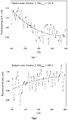
- Fig. 11 Correlation of determined FM index with age for control groups is shown in Fig. 11 , wherein solid line corresponds to linear fit to black circles (females) and dotted line corresponds to linear fit to open squares (males).
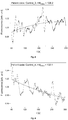
- Fig. 12a Comparison of FM index for control groups with respect to sex and age is shown in Fig. 12a , and in Fig. 12b for the whole control group of males and females together divided into subgroups of various age. It can be clearly seen that in the whole age range women have significantly better FM index than males ( Fig. 12a ). It can be also seen ( Fig. 12b ) that younger population (30-49 years, males and females together) had significantly higher FM index values that older population (50-72 years).
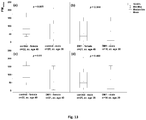
- Fig. 13 Comparison of FM index for group of diabetic patients with diabetes mellitus 1 (DM1) with respect to sex and age is shown in Fig. 13 . It has been shown that the presence of a pathology completely blurs sex differences ( Fig. 13a and 13b ). On the other hand FM index excellently differentiates between young women with DM1 and young control groups ( Fig. 13c ). There is no such difference for male subgroup ( Fig. 13d ).
- ROC Receiveiver Operating Characteristics
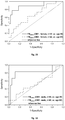
- AUC rea Under Curve curves for female diabetic patients in groups DM1 and DM2 of the age below and above 60 years as presented in Fig. 15 show high diagnostic power and value of FM index parameter for assessment of microvascular complications in diabetes (retinopathy, neuropathy, nephropathy and diabetic foot). High diagnostic value can be seen in the group of females with DM1 (age below 60 years), however there is no significant diagnostic potential for DM2 group, mainly because FM index parameter is low in the age above 60 years.
- Fig. 16 shows ROC (AUC) curves for male diabetic patients in groups DM1 and DM2.
Landscapes
- Health & Medical Sciences (AREA)
- Life Sciences & Earth Sciences (AREA)
- Engineering & Computer Science (AREA)
- Surgery (AREA)
- Animal Behavior & Ethology (AREA)
- Veterinary Medicine (AREA)
- Public Health (AREA)
- Physics & Mathematics (AREA)
- General Health & Medical Sciences (AREA)
- Biophysics (AREA)
- Pathology (AREA)
- Biomedical Technology (AREA)
- Heart & Thoracic Surgery (AREA)
- Medical Informatics (AREA)
- Molecular Biology (AREA)
- Physiology (AREA)
- Artificial Intelligence (AREA)
- Computer Vision & Pattern Recognition (AREA)
- Signal Processing (AREA)
- Psychiatry (AREA)
- Hematology (AREA)
- Cardiology (AREA)
- Measuring Pulse, Heart Rate, Blood Pressure Or Blood Flow (AREA)
Priority Applications (1)
| Application Number | Priority Date | Filing Date | Title |
|---|---|---|---|
| EP19461568.8A EP3777667A1 (de) | 2019-08-16 | 2019-08-16 | Verfahren zum nachweis der präsenz einer krankheit, die blutmikrozirkulationsschwingungen bei frauen beeinträchtigt, und vorrichtung dafür |
Applications Claiming Priority (1)
| Application Number | Priority Date | Filing Date | Title |
|---|---|---|---|
| EP19461568.8A EP3777667A1 (de) | 2019-08-16 | 2019-08-16 | Verfahren zum nachweis der präsenz einer krankheit, die blutmikrozirkulationsschwingungen bei frauen beeinträchtigt, und vorrichtung dafür |
Publications (1)
| Publication Number | Publication Date |
|---|---|
| EP3777667A1 true EP3777667A1 (de) | 2021-02-17 |
Family
ID=67659353
Family Applications (1)
| Application Number | Title | Priority Date | Filing Date |
|---|---|---|---|
| EP19461568.8A Withdrawn EP3777667A1 (de) | 2019-08-16 | 2019-08-16 | Verfahren zum nachweis der präsenz einer krankheit, die blutmikrozirkulationsschwingungen bei frauen beeinträchtigt, und vorrichtung dafür |
Country Status (1)
| Country | Link |
|---|---|
| EP (1) | EP3777667A1 (de) |
Cited By (1)
| Publication number | Priority date | Publication date | Assignee | Title |
|---|---|---|---|---|
| CN114916918A (zh) * | 2022-06-07 | 2022-08-19 | 北京创盈光电医疗科技有限公司 | 一种基于皮肤毛细血管微循环水平的估测方法及装置 |
Citations (3)
| Publication number | Priority date | Publication date | Assignee | Title |
|---|---|---|---|---|
| US20120310057A1 (en) * | 2011-05-31 | 2012-12-06 | Jerzy Gebicki | Method for evaluating vascular endothelium function and a system therefor |
| WO2012164494A1 (fr) | 2011-05-30 | 2012-12-06 | Flamel Technologies | Composition a liberation controlee de la buprenorphine |
| WO2019206869A1 (en) * | 2018-04-26 | 2019-10-31 | Angionica Sp. Z O.O. | A method of assessment of microcirculation oscillations and device therefor |
-
2019
- 2019-08-16 EP EP19461568.8A patent/EP3777667A1/de not_active Withdrawn
Patent Citations (3)
| Publication number | Priority date | Publication date | Assignee | Title |
|---|---|---|---|---|
| WO2012164494A1 (fr) | 2011-05-30 | 2012-12-06 | Flamel Technologies | Composition a liberation controlee de la buprenorphine |
| US20120310057A1 (en) * | 2011-05-31 | 2012-12-06 | Jerzy Gebicki | Method for evaluating vascular endothelium function and a system therefor |
| WO2019206869A1 (en) * | 2018-04-26 | 2019-10-31 | Angionica Sp. Z O.O. | A method of assessment of microcirculation oscillations and device therefor |
Non-Patent Citations (13)
| Title |
|---|
| A. VINET ET AL.: "Impact of a Lifestyle Program on Vascular Insulin Resistance in Metabolic Syndrome Subjects: The RESOLVE Study", THE JOURNAL OF CLINICAL ENDOCRINOLOGY AND METABOLISM, vol. 100, no. 2, 2015, pages 442 - 450 |
| B. GRYGLEWSKA: "Znaczenie mikrokr zenia w nadcisnieniu t tniczym i mozliwosci jego oceny na podstawie badania mikrounaczynienia skornego", NADCISNIENIE T TNICZE, vol. 14, no. 5, 2010, pages 395 - 410 |
| H. NILLSONC. AALKJAER: "Vasomotion: Mechanisms and Physiological Importance", MOLECULAR INTERVENTIONS, vol. 3, no. 2, 2003, pages 79 - 89 |
| KATARZYNSKA JOANNA ET AL: "Flow Mediated Skin Fluorescence technique reveals remarkable effect of age on microcirculation and metabolic regulation in type 1 diabetes", MICROVASCULAR RESEARCH, vol. 124, 23 February 2019 (2019-02-23), pages 19 - 24, XP085661031, ISSN: 0026-2862, DOI: 10.1016/J.MVR.2019.02.005 * |
| L. PIOTROWSKI ET AL.: "Flow mediated skin fluorescence - A novel technique for evaluation of cutaneous microcirculation", REVIEW OF SCIENTIFIC INSTRUMENTS, vol. 87, no. 3, 2016, pages 036111 |
| M. HELLMAN ET AL.: "Reproducibility of flow mediated skin fluorescence to assess microvascular function", MICROVASCULAR RESEARCH, vol. 113, 2017, pages 60 - 84 |
| M. ROSSI: "Diagnostic values of skin vasomotion investigation in vascular diseases", ADVANCES IN BIOMEDICAL RESEARCH, 2010, pages 374 - 380 |
| M. TARNAWSKA: "A pilot study with flow mediated skin fluorescence: A novel device to assess microvascular endothelial function in coronary artery disease", CARDIOLOGY JOURNAL, vol. 25, no. 2, 2018, pages 120 - 127, XP055510420, doi:10.5603/CJ.a2017.0096 |
| MARCIN HELLMANN ET AL: "Reproducibility of flow mediated skin fluorescence to assess microvascular function", MICROVASCULAR RESEARCH., vol. 113, 18 May 2017 (2017-05-18), US, pages 60 - 64, XP055665164, ISSN: 0026-2862, DOI: 10.1016/j.mvr.2017.05.004 * |
| MARIA TARNAWSKA ET AL: "A pilot study with flow mediated skin fluorescence: A novel device to assess microvascular endothelial function in coronary artery disease", CARDIOLOGY JOURNAL, vol. 25, no. 1, 27 February 2018 (2018-02-27), PL, pages 120 - 127, XP055510420, ISSN: 1897-5593, DOI: 10.5603/CJ.a2017.0096 * |
| PIOTROWSKI L ET AL: "Note: Flow mediated skin fluorescence-A novel technique for evaluation of cutaneous microcirculation", REVIEW OF SCIENTIFIC INSTRUMENTS, AIP, MELVILLE, NY, US, vol. 87, no. 3, 30 March 2016 (2016-03-30), XP012211286, ISSN: 0034-6748, [retrieved on 19010101], DOI: 10.1063/1.4945044 * |
| STEWART, J. ET AL.: "Noninvasive interrogation of microvasculature for signs of endothelial dysfunction in patients with chronic renal failure", AMERICAN JOURNAL OF PHYSIOLOGY - HEART AND CIRCULATORY PHYSIOLOGY, vol. 287, 2004, pages H2687 - H2696 |
| V. L. CLIFTON ET AL.: "Microvascular effects of corticotropin-releasing hormone in human skin vary in relation to estrogen concentration during the menstrual cycle", JOURNAL OF ENDOCRINOLOGY, vol. 186, 2005, pages 69 - 76 |
Cited By (1)
| Publication number | Priority date | Publication date | Assignee | Title |
|---|---|---|---|---|
| CN114916918A (zh) * | 2022-06-07 | 2022-08-19 | 北京创盈光电医疗科技有限公司 | 一种基于皮肤毛细血管微循环水平的估测方法及装置 |
Similar Documents
| Publication | Publication Date | Title |
|---|---|---|
| Kowalchuk et al. | The effect of resistive breathing on leg muscle oxygenation using near-infrared spectroscopy during exercise in men | |
| US5069214A (en) | Flash reflectance oximeter | |
| CA2552924C (en) | A system or method for assessing a subject's peripheral blood circulation | |
| US20110082355A1 (en) | Photoplethysmography device and method | |
| US20150105638A1 (en) | Photoplethysmography Device and Method | |
| US20130324814A1 (en) | Estimation of systemic vascular resistance and cardiac output using arterial pulse oximetry waveforms | |
| Manfredini et al. | A dynamic objective evaluation of peripheral arterial disease by near-infrared spectroscopy | |
| Dunaev | Wearable devices for multimodal optical diagnostics of microcirculatory-tissue systems: application experience in the clinic and space | |
| JP5039123B2 (ja) | 指動脈弾力性測定プログラム、指動脈弾力性測定装置および指動脈弾力性測定方法 | |
| US20120065523A1 (en) | Dvt detection | |
| Kyriacou | Introduction to photoplethysmography | |
| Wu et al. | Enhancing diffuse correlation spectroscopy pulsatile cerebral blood flow signal with near-infrared spectroscopy photoplethysmography | |
| Lee et al. | A noninvasive blood glucose estimation system using dual-channel PPGs and pulse-arrival velocity | |
| EP3784115B1 (de) | Verfahren von auswertung den mikrozirkulationsschwankungen und apparatus dafür | |
| Näslund et al. | Measuring arterial oxygen saturation from an intraosseous photoplethysmographic signal derived from the sternum | |
| US20110245687A1 (en) | Optical detection method and device for optical detection of the condition of joints | |
| JP2021519134A (ja) | 対象者の少なくとも1つのバイタルサインを示す生理学的情報を抽出するためのデバイス、システム及び方法 | |
| Segman | New method for computing optical hemodynamic blood pressure | |
| CN109106376B (zh) | 一种血液中总血红蛋白浓度的检测方法及装置 | |
| Neumann et al. | Light Reflection Rheography: A Non‐Invasive Diagnostic Tool for Screening for Venous Disease | |
| Arakaki et al. | Muscle oxygenation measurement in humans by noninvasive optical spectroscopy and Locally Weighted Regression | |
| EP3777667A1 (de) | Verfahren zum nachweis der präsenz einer krankheit, die blutmikrozirkulationsschwingungen bei frauen beeinträchtigt, und vorrichtung dafür | |
| Favilla et al. | Perfusion enhancement with respiratory impedance after stroke (PERI-Stroke) | |
| EP3040026A1 (de) | Diagnosevorrichtung und -verfahren für biologisches gewebe | |
| Hartwig et al. | Assessment of microvascular function using near-infrared spectroscopic 2D imaging of whole hand combined with vascular occlusion test |
Legal Events
| Date | Code | Title | Description |
|---|---|---|---|
| PUAI | Public reference made under article 153(3) epc to a published international application that has entered the european phase |
Free format text: ORIGINAL CODE: 0009012 |
|
| STAA | Information on the status of an ep patent application or granted ep patent |
Free format text: STATUS: THE APPLICATION HAS BEEN PUBLISHED |
|
| AK | Designated contracting states |
Kind code of ref document: A1 Designated state(s): AL AT BE BG CH CY CZ DE DK EE ES FI FR GB GR HR HU IE IS IT LI LT LU LV MC MK MT NL NO PL PT RO RS SE SI SK SM TR |
|
| AX | Request for extension of the european patent |
Extension state: BA ME |
|
| STAA | Information on the status of an ep patent application or granted ep patent |
Free format text: STATUS: THE APPLICATION IS DEEMED TO BE WITHDRAWN |
|
| 18D | Application deemed to be withdrawn |
Effective date: 20210818 |