EP3776322B1 - Systeme und verfahren zur automatisierung von arbeitsabläufen in einem verteilten system - Google Patents
Systeme und verfahren zur automatisierung von arbeitsabläufen in einem verteilten system Download PDFInfo
- Publication number
- EP3776322B1 EP3776322B1 EP19800101.8A EP19800101A EP3776322B1 EP 3776322 B1 EP3776322 B1 EP 3776322B1 EP 19800101 A EP19800101 A EP 19800101A EP 3776322 B1 EP3776322 B1 EP 3776322B1
- Authority
- EP
- European Patent Office
- Prior art keywords
- task
- worker
- request
- queue
- plugin
- Prior art date
- Legal status (The legal status is an assumption and is not a legal conclusion. Google has not performed a legal analysis and makes no representation as to the accuracy of the status listed.)
- Active
Links
Images

Classifications
-
- G—PHYSICS
- G06—COMPUTING OR CALCULATING; COUNTING
- G06F—ELECTRIC DIGITAL DATA PROCESSING
- G06F9/00—Arrangements for program control, e.g. control units
- G06F9/06—Arrangements for program control, e.g. control units using stored programs, i.e. using an internal store of processing equipment to receive or retain programs
- G06F9/46—Multiprogramming arrangements
- G06F9/48—Program initiating; Program switching, e.g. by interrupt
- G06F9/4806—Task transfer initiation or dispatching
-
- G—PHYSICS
- G06—COMPUTING OR CALCULATING; COUNTING
- G06F—ELECTRIC DIGITAL DATA PROCESSING
- G06F21/00—Security arrangements for protecting computers, components thereof, programs or data against unauthorised activity
- G06F21/50—Monitoring users, programs or devices to maintain the integrity of platforms, e.g. of processors, firmware or operating systems
- G06F21/55—Detecting local intrusion or implementing counter-measures
- G06F21/554—Detecting local intrusion or implementing counter-measures involving event detection and direct action
-
- G—PHYSICS
- G06—COMPUTING OR CALCULATING; COUNTING
- G06F—ELECTRIC DIGITAL DATA PROCESSING
- G06F21/00—Security arrangements for protecting computers, components thereof, programs or data against unauthorised activity
- G06F21/50—Monitoring users, programs or devices to maintain the integrity of platforms, e.g. of processors, firmware or operating systems
- G06F21/55—Detecting local intrusion or implementing counter-measures
- G06F21/552—Detecting local intrusion or implementing counter-measures involving long-term monitoring or reporting
-
- G—PHYSICS
- G06—COMPUTING OR CALCULATING; COUNTING
- G06F—ELECTRIC DIGITAL DATA PROCESSING
- G06F21/00—Security arrangements for protecting computers, components thereof, programs or data against unauthorised activity
- G06F21/50—Monitoring users, programs or devices to maintain the integrity of platforms, e.g. of processors, firmware or operating systems
- G06F21/57—Certifying or maintaining trusted computer platforms, e.g. secure boots or power-downs, version controls, system software checks, secure updates or assessing vulnerabilities
- G06F21/577—Assessing vulnerabilities and evaluating computer system security
-
- G—PHYSICS
- G06—COMPUTING OR CALCULATING; COUNTING
- G06F—ELECTRIC DIGITAL DATA PROCESSING
- G06F21/00—Security arrangements for protecting computers, components thereof, programs or data against unauthorised activity
- G06F21/60—Protecting data
- G06F21/606—Protecting data by securing the transmission between two devices or processes
-
- G—PHYSICS
- G06—COMPUTING OR CALCULATING; COUNTING
- G06F—ELECTRIC DIGITAL DATA PROCESSING
- G06F9/00—Arrangements for program control, e.g. control units
- G06F9/06—Arrangements for program control, e.g. control units using stored programs, i.e. using an internal store of processing equipment to receive or retain programs
- G06F9/44—Arrangements for executing specific programs
- G06F9/445—Program loading or initiating
- G06F9/44521—Dynamic linking or loading; Link editing at or after load time, e.g. Java class loading
- G06F9/44526—Plug-ins; Add-ons
-
- G—PHYSICS
- G06—COMPUTING OR CALCULATING; COUNTING
- G06F—ELECTRIC DIGITAL DATA PROCESSING
- G06F9/00—Arrangements for program control, e.g. control units
- G06F9/06—Arrangements for program control, e.g. control units using stored programs, i.e. using an internal store of processing equipment to receive or retain programs
- G06F9/46—Multiprogramming arrangements
- G06F9/50—Allocation of resources, e.g. of the central processing unit [CPU]
- G06F9/5005—Allocation of resources, e.g. of the central processing unit [CPU] to service a request
- G06F9/5027—Allocation of resources, e.g. of the central processing unit [CPU] to service a request the resource being a machine, e.g. CPUs, Servers, Terminals
-
- G—PHYSICS
- G06—COMPUTING OR CALCULATING; COUNTING
- G06N—COMPUTING ARRANGEMENTS BASED ON SPECIFIC COMPUTATIONAL MODELS
- G06N20/00—Machine learning
-
- G—PHYSICS
- G06—COMPUTING OR CALCULATING; COUNTING
- G06Q—INFORMATION AND COMMUNICATION TECHNOLOGY [ICT] SPECIALLY ADAPTED FOR ADMINISTRATIVE, COMMERCIAL, FINANCIAL, MANAGERIAL OR SUPERVISORY PURPOSES; SYSTEMS OR METHODS SPECIALLY ADAPTED FOR ADMINISTRATIVE, COMMERCIAL, FINANCIAL, MANAGERIAL OR SUPERVISORY PURPOSES, NOT OTHERWISE PROVIDED FOR
- G06Q10/00—Administration; Management
- G06Q10/06—Resources, workflows, human or project management; Enterprise or organisation planning; Enterprise or organisation modelling
- G06Q10/063—Operations research, analysis or management
- G06Q10/0631—Resource planning, allocation, distributing or scheduling for enterprises or organisations
- G06Q10/06311—Scheduling, planning or task assignment for a person or group
-
- H—ELECTRICITY
- H04—ELECTRIC COMMUNICATION TECHNIQUE
- H04L—TRANSMISSION OF DIGITAL INFORMATION, e.g. TELEGRAPHIC COMMUNICATION
- H04L63/00—Network architectures or network communication protocols for network security
- H04L63/04—Network architectures or network communication protocols for network security for providing a confidential data exchange among entities communicating through data packet networks
- H04L63/0428—Network architectures or network communication protocols for network security for providing a confidential data exchange among entities communicating through data packet networks wherein the data content is protected, e.g. by encrypting or encapsulating the payload
- H04L63/045—Network architectures or network communication protocols for network security for providing a confidential data exchange among entities communicating through data packet networks wherein the data content is protected, e.g. by encrypting or encapsulating the payload wherein the sending and receiving network entities apply hybrid encryption, i.e. combination of symmetric and asymmetric encryption
-
- H—ELECTRICITY
- H04—ELECTRIC COMMUNICATION TECHNIQUE
- H04L—TRANSMISSION OF DIGITAL INFORMATION, e.g. TELEGRAPHIC COMMUNICATION
- H04L63/00—Network architectures or network communication protocols for network security
- H04L63/04—Network architectures or network communication protocols for network security for providing a confidential data exchange among entities communicating through data packet networks
- H04L63/0428—Network architectures or network communication protocols for network security for providing a confidential data exchange among entities communicating through data packet networks wherein the data content is protected, e.g. by encrypting or encapsulating the payload
- H04L63/0464—Network architectures or network communication protocols for network security for providing a confidential data exchange among entities communicating through data packet networks wherein the data content is protected, e.g. by encrypting or encapsulating the payload using hop-by-hop encryption, i.e. wherein an intermediate entity decrypts the information and re-encrypts it before forwarding it
-
- G—PHYSICS
- G06—COMPUTING OR CALCULATING; COUNTING
- G06F—ELECTRIC DIGITAL DATA PROCESSING
- G06F2209/00—Indexing scheme relating to G06F9/00
- G06F2209/50—Indexing scheme relating to G06F9/50
- G06F2209/503—Resource availability
-
- G—PHYSICS
- G06—COMPUTING OR CALCULATING; COUNTING
- G06F—ELECTRIC DIGITAL DATA PROCESSING
- G06F2209/00—Indexing scheme relating to G06F9/00
- G06F2209/50—Indexing scheme relating to G06F9/50
- G06F2209/508—Monitor
Definitions
- the present subject matter is directed generally to automating workflows, and more particularly to automation of security workflows by integrating machine-based security applications of a distributed system into the automated security workflow.
- IS Information security
- modern security infrastructures are generally distributed across multiple platforms, which may be geographically dispersed, and may include a large number of resources that need to be protected.
- modern infrastructures may include multiple clouds, internal private clouds, data centers, and/or any combination thereof.
- US 2018/027006 A1 intends to secure an enterprise computing environment.
- Methods and systems provided include a cyber intelligence system, a unified application firewall, and a cloud security fabric that has enterprise APIs for connecting to the information technology infrastructure of an enterprise, developer APIs 102 for enabling developers to access capabilities of the fabric and connector APIs by which the fabric may discover information about entities relevant to the information security of the enterprise (such as events involving users, applications, and data of the enterprise occurring on a plurality of cloud-enabled platforms, including PaaS/IaaS platforms), with various modules that comprise services deployed in the cloud security fabric, such as a selective encryption module, a policy creation and automation module, a content classification as a service module, and user and entity behavior analytics modules.
- US 2013/124193 A1 describe a system and method implementing a text analysis service.
- One embodiment includes a computer implemented method of processing documents.
- the method includes generating a text analysis task object that includes instructions regarding a document processing pipeline and a document identifier.
- the method further includes accessing, by a worker system, the text analysis task object and generating the document processing pipeline according to the instructions.
- the method further includes performing text analysis using the document processing pipeline on a document identified by the document identifier.
- the invention provides a system and a method as defined in the appended claims.
- the present application relates to systems and methods for providing automation of IS workflows by integrating machine-based security applications of a distributed system into the automated IS workflow.
- Embodiments of the present disclosure provide functionality for implementing a cloud-ready security automation product that enables analysts to build automated IS workflows. Aspects of the present disclosure leverage the power of all enterprise and security applications an analyst might use, from a single interface.
- the handling of tasks in a machine-based security application is automated by embodiments disclosed herein, which in existing systems would be performed manually by an individual.
- various IS processes and/or components thereof can be translated to workflows that may be automated and/or executed when needed.
- Systems implemented in accordance with the present disclosure provide a scalable architecture that may fit any IS need, and that may be deployed in a public cloud, in a private cloud, in a company's datacenter, and/or any combination thereof.
- a system for automating execution of a workflow includes an application server hosted in a first cloud.
- the application server may be configured to receive a trigger to execute the workflow.
- the workflow may include at least one task to be executed in a device hosted in a second cloud.
- the application server may also be configured to send a task request to process the at least one task to a task queue (herein also referred to as a task queue module).
- the system includes the task queue configured to place the task request in at least one request queue of the task queue, and at least one worker hosted in the device hosted in the second cloud.
- the at least one worker may be configured to retrieve the task request from the at least one request queue of the task queue, and to process the task request.
- the system may further include at least one plugin, and the processing of the task request may include invoking a plugin, of the at least one plugin, to execute the at least one task.
- the at least one plugin may be configured to interact with a security application, e.g., an external application, or a security application to which the device hosted in the second cloud has access, to execute the at least one task. Executing the at least one task may yield task results.
- the at least one worker may be further configured to receive the task results and to push the task results into a result queue of the task queue, and the task queue may be further configured to send the task results from the result queue to the application server.
- a method of automating execution of a workflow includes receiving, by an application server hosted in a first cloud, a trigger to execute the workflow, the workflow including at least one task to be executed in a device hosted in a second cloud.
- the method also includes sending a task request to process the at least one task to a task queue, placing the task request in at least one request queue of the task queue, and retrieving, by at least one worker hosted in the device hosted in the second cloud, the task request from the at least one request queue of the task queue.
- the method further includes processing the task request. Processing the task request may include the at least one worker invoking a plugin to execute the at least one task.
- the method further includes interacting, by the plugin, with an external security application or a security application to which the device hosted in the second cloud has access, to execute the at least one task, which may yield task results.
- the method also includes receiving, by the at least one worker, the task results, pushing the task results into a result queue of the task queue, and sending, by the task queue, the task results from the result queue to the application server.
- a computer-based tool for automating execution of a workflow may include non-transitory computer readable media having stored thereon computer code which, when executed by a processor, causes a computing device to perform operations that may include receiving, by an application server hosted in a first cloud, a trigger to execute the workflow, the workflow including at least one task to be executed in a device hosted in a second cloud.
- the operations also include sending a task request to process the at least one task to a task queue, placing the task request in at least one request queue of the task queue, and retrieving, by at least one worker hosted in the device hosted in the second cloud, the task request from the at least one request queue of the task queue.
- the operations further include processing the task request.
- Processing the task request may include the at least one worker invoking a plugin to execute the at least one task.
- the operations further include interacting, by the plugin, with an external security application or a security application to which the device hosted in the second cloud has access, to execute the at least one task, which may yield task results.
- the operations also include receiving, by the at least one worker, the task results, pushing the task results into a result queue of the task queue, and sending, by the task queue, the task results from the result queue to the application server.
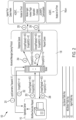
- FIG. 1 is a block diagram of an exemplary system 100 configured in accordance with embodiments of the present disclosure for providing a mechanism to automate information security (IS) workflows by integrating machine-based security applications of a distributed system into the automated IS workflow.
- system 100 may be configured to provide a mechanism for users to configure and generate the automated IS workflows.
- the automated IS workflows may be generated by specifying various tasks to be automatically processed by security applications. It is noted that in existing systems, the processing of a task by a security application is done manually by a user executing the security application. In this sense, various aspects of the present disclosure provide functionality for system 100 to generate IS workflows, which may include tasks that may be automated and/or executed based on certain conditions (e.g., when needed, when an event occurs, when manually executed by a user, etc.).
- system 100 includes application server 110, at least one cloud 120, task queue 130, workers 140a-n, and plugins 150a-n. These components, and their individual components, may cooperatively operate to provide functionality in accordance with the discussion herein.
- an automated IS workflow may be generated to include at least one task.
- Upon execution of an automated IS workflow may be generated to include at least one task.
- a request to perform a task of the automated IS workflow may be provided by application server 110 to task queue 130 (e.g., in a request queue of task queue 130).
- a worker of workers 140a-n may retrieve the task request from task queue 130, and may invoke a plugin of plugins 150a-n to execute the task.
- the invoked plugin may execute the task by performing platform specific tasks.
- the invoked plugin may interface with an external IS application (e.g., external IS applications 160), which may be an application running on the platform.
- the results of the task may be provided to the plugin by the external IS application to the invoked plugin, which in turns places the task results into the task queue (e.g., in a response queue of task queue 130).
- the tasks results may then be transferred to application server 110.
- application server 110 may provide another request to perform another task of the automated IS tasks to task queue 130 for processing, based on the task results.
- the functional blocks, and components thereof, of system 100 of embodiments of the present invention may be implemented using processors, electronic devices, hardware devices, electronic components, logical circuits, memories, software codes, firmware codes, etc., or any combination thereof.
- one or more functional blocks, or some portion thereof may be implemented as discrete gate or transistor logic, discrete hardware components, or combinations thereof configured to provide logic for performing the functions described herein.
- one or more of the functional blocks, or some portion thereof may comprise code segments operable upon a processor to provide logic for preforming the functions described herein.
- system 100 may be provided by the cooperative operation of various components of server 100.
- system 100 and its individual functional blocks may be implemented as a single device or may be distributed over multiple devices having their own processing resources, whose aggregate functionality may be configured to perform operations in accordance with the present disclosure.
- FIG. 1 illustrates components of system 100 as single and separate blocks, each of the various components of system 100 may be a single component, may be functional components of a same component, or the functionality may be distributed over multiple devices/components. In such aspects, the functionality of each respective component may be aggregated from the functionality of multiple modules residing in a single, or in multiple devices.
- system 100 may be orchestrated and/or implemented as a single component, or as separate and disjointed components interacting via a communication protocol. Additionally, the various components of system 100, and/or system 100, may be scaled up when it may be determined that utilization of the component or the system remains above a predetermined threshold for a predetermined duration, and/or may be scaled down when the utilization of the component or the system remains below a predetermined threshold for a predetermined duration.
- the thresholds for the scaling activity may be defined such as to optimally utilize the provisioned resources.
- each component operates independent of the other components with respect to the component's functionality and purposes.
- the independence of the various components may be with respect to the communication between components, and not with respect to the environment or systems in which the various components may be deployed.
- all relevant delegation of duties may be load-balanced.
- Clouds 120 may include a single cloud, over which the various functional components of system 100 may communicate, or in which the various functional components of system 100 may be hosted.
- clouds 120 may include a plurality of clouds, such as in a multi-cloud environment.
- clouds 120 may include one or more clouds, an internal private cloud, a data center, and/or any combination thereof.
- the functional components of system 100 may be distributed over clouds 120.
- each of the functional components of system 100 may be hosted in a different cloud, or some of the functional components of system 100 may be hosted in one cloud while others are hosted in a different cloud.
- each of workers 140a-n, or each subset of workers 140a-n may be hosted in a separate cloud.
- any worker of workers 140a-n may be installed in any server/host of any of clouds 120.
- the functionality of system 100 in accordance with aspects of the present invention is cloud agnostic, and may provide management and control of automated execution of a workflow of tasks across multiple clouds.
- Cloud 140 although illustrated as a single component including workers 140a-n for illustrative purposes, may include a plurality of clouds over which workers 140a-n may be distributed. Therefore, the illustration with respect to cloud 140 including workers 140a-n should not be construed as limiting in any way.
- application server 110 includes processor 111, memory 112, database 115, UI 113, and bot 114.
- application server 110 may be configured to provide functionality to facilitate configuration, generation, and management of automated IS workflows.
- Application server 110 may be configured to provide a user interface (UI) 113, where users may input specifications, parameters, and other configuration information for creating at least one automated IS workflow.
- UI user interface
- automated IS workflows may be created by specifying a number of tasks to be executed or processed in the automated IS workflow, the specified tasks defining the automated IS workflow.
- a workflow as used herein may refer to a combination of logically connected tasks which may perform a series of actions.
- the tasks of the automated IS workflow may be specified to be executed/processed in a particular order or sequence, or may be specified without a particular order or sequence.
- a task may refer to a task or process to be executed by a machined-based security application residing in a platform/host, and which may yield some results.
- Tasks may be platform/host specific, or may be able to run on any platform/host, of any cloud of clouds 120.
- the location where a task is to be executed may be specified, or the task may be executed wherever there are available resources.
- the machine-based security application may be one or more security products or resources available in the platform in which the task is to be executed, and which may return, upon its execution, some IS related results/data. It will be appreciated that, in existing systems, tasks may be performed manually by a user in response to IS incidents.
- application server 110 may be configured to, upon execution of an automated IS workflow, push requests to perform tasks of the automated IS workflow, in accordance with the automated IS workflow structure, to task queue 130. As will be discussed below in more detail, the task requests pushed to task queue 130 may be encrypted by application server 110 before being pushed to task queue 130.
- application server 110 may provide role-based access controls for automated IS workflows, plugins, and secrets (e.g., key encryption and other security related data) management.
- a user may only be given access (e.g., via UI 113) to manage automated IS workflows, plugins, and secrets if the role of the particular user meets a particular criteria.
- Application server 110 may also be configured to manage communications between task queue 130 and database 115.
- task information (e.g., task results, information on which task queue the task was pushed to, information on which worker processed the task, etc.) may be stored in database 115 as historical data.
- cache information such as location of task queues, information indicating which task queue each worker may be monitoring, etc. may also be stored in database 115.
- communications between task queue 130 and database 115 may be managed by application server 110.
- Application server 110 may also be configured to initiate execution of automated IS workflows. For example, after an automated IS workflow is created, execution of the automated IS workflow may be triggered by the occurrence of any one of a number of events.
- UI 113 may receive an input from a user indicating that execution of the automated IS workflow is desired. In this case, application server 110 may initiate execution of the automated IS workflow based on the user input.
- execution of the automated IS workflow may be triggered by bot 114.
- a user may interact with bot 114. Based on the interaction, bot 114 may determine to execute a particular automated IS workflow (or more than one automated IS workflow), and may cause application server 110 to perform the execution.
- application server 110 may initiate execution of the automated IS workflow based on an input received from an external source.
- application server 110 may be integrated with external applications and, upon the occurrence of an event, the external application may signal application server 110 to trigger an automated IS workflow.
- Application server 110 may also provide functionality for plugin and worker management.
- UI 113 may be configured to allow users to specify configuration information for plugins 150a-n and workers 140a-n, such as security applications associated with the plugins, and association of the plugins to workers.
- users may specify task queues (e.g., of tasks queue 130) to be monitored by each of the workers.
- application server 110 may trigger any one of the more than one automated IS workflows, or may trigger more than one automated IS workflow.
- discussion below with respect one automated IS workflow should not be construed as limiting in any way.
- Application server 110 may include bot 114 configured to provide user-interaction that may be used to access and/or leverage the functionality of application server 110.
- Bot 114 may allow a user to retrieve and/or manage automated IS workflows.
- users may interact with bot 114 and may be able to trigger workflows.
- users may ask for information on an IS entity, which may trigger an automated IS workflow that includes tasks that provide the requested information. In this manner, automation may be triggered by bot 114.
- Bot 114 may provide functionality to leverage historical data stored in database 115. This historical data may include information on previous events that occurred, previous tasks executed, previous workflows executed, and systems/components impacted by the events, tasks, and workflows. Bot 114 may be configured to correlate IS events with this historical data in order to update the relational database 115. In aspects, bot 114 may run continuously and every time a new IS event occurs, or an automated IS workflow is triggered, bot 114 may reference database 115 to identify similarities to past correlations.
- Bot 114 may also employ a neural network approach and or machine-based learning to bolster or weaken correlations that may be repeated. Additionally, or alternatively, bot 114 may be configured to predict, based on an event, potential future events with a reasonable level of confidence. As application server 110 maintains database 115 in an updated state, when an IS event occurs, bot 114 may use the historical data and correlations to predict possible future events with a reasonable level of confidence.
- bot 114 provides the advantage of predicting potential IS events/incidents with a reasonable level of confidence, in which case the appropriate personnel may be alerted to potential activity so that mitigating or prevention measures may be put in place.
- database 115 may potentially be used to identify which systems may be affected by those vulnerabilities.
- data about similarities between systems may be used to initiate remediation efforts if a certain IS event affecting a given system occurs.
- IS teams may be able to take pro-active actions instead of attempting to keep up with attacks after they have occurred.
- application server 110 may be provided by the cooperative operation of various components of application server 110.
- FIG. 1 shows a single application server 110, it will be appreciated that application server 110 and its individual functional blocks may be implemented as a single device or may be distributed over multiple devices having their own processing resources, whose aggregate functionality may be configured to perform operations in accordance with the present disclosure.
- FIG. 1 illustrates components of application server 110 as single and separate blocks, each of the various components of application server 110 may be a single component (e.g., a single application, server module, etc.), may be functional components of a same component, or the functionality may be distributed over multiple devices/components. In such aspects, the functionality of each respective component may be aggregated from the functionality of multiple modules residing in a single, or in multiple devices.
- Processor 111 may comprise a processor, a microprocessor, a controller, a microcontroller, a plurality of microprocessors, an application-specific integrated circuit (ASIC), an application-specific standard product (ASSP), or any combination thereof, and may be configured to execute instructions to perform operations in accordance with the disclosure herein.
- implementations of processor 111 may comprise code segments (e.g., software, firmware, and/or hardware logic) executable in hardware, such as a processor, to perform the tasks and functions described herein.
- processor 111 may be implemented as a combination of hardware and software.
- Processor 111 may be communicatively coupled to memory 112.
- Memory 112 may comprise one or more semiconductor memory devices, read only memory (ROM) devices, random access memory (RAM) devices, one or more hard disk drives (HDDs), flash memory devices, solid state drives (SSDs), erasable ROM (EROM), compact disk ROM (CD-ROM), optical disks, other devices configured to store data in a persistent or non-persistent state, network memory, cloud memory, local memory, or a combination of different memory devices.
- Memory 112 may comprise a processor readable medium configured to store one or more instruction sets (e.g., software, firmware, etc.) which, when executed by a processor (e.g., one or more processors of processor 111), perform tasks and functions as described herein.
- Memory 112 may also be configured to facilitate storage operations.
- memory 112 may comprise database 115 for storing user profile information (e.g., privilege levels, preference data, statistical data, login credentials, etc.), historical data, cached data, etc., which system 100 may use to provide the features discussed herein.
- Database 115 is illustrated as integrated into memory 112, but may be provided as a separate storage module. Additionally or alternatively, database 115 may be a single database, or may be a distributed database implemented over a plurality of database modules.
- Task queue 130 may be configured to facilitate dispatching of task requests to appropriate workers.
- task queue 130 may include one or more queues.
- the queues in task queue 130 may be read/write queues into which task requests may be added, and from which task requests may be retrieved. For example, upon execution of an automated IS workflow, requests to perform tasks of the automated IS workflow may be pushed (e.g., written) from application server 110 to a queue of task queue 130. Additionally, task requests in the queues of tasks queue 130 may be retrieved (e.g., read) by an appropriate worker.
- Task queue 130 may be configured to be reliable and highly available.
- the queues in task queue 130 may be specified in configuration information.
- the configuration information may be predefined, or may be provided by a user using UI 113.
- the queues in task queue 130 may be specific to a particular environment, a specific type of tasks, a specific task, etc.
- Configuration of the tasks or task requests may specify into which queue of task queue 130 a particular task requests is to be added after being pushed by application server 110.
- an automated IS workflow may specify into which queue the task requests may be added (e.g., all task requests may be added to the same queue, a subset of task requests may be added to one queue while another subset of task requests may be added to another queue, etc.).
- a general purpose queue may be provided in task queue 130. Task requests that do not specify into which queue these task requests are to be added may be added to the general purpose queue.
- the task requests may be held in the queues until the task requests may be dispatched to a worker (e.g., a worker of workers 140a-n).
- a worker e.g., a worker of workers 140a-n.
- task queue 130 provides an asynchronous mechanism for processing/executing the tasks, which decouples application server 110 and workers 140a-n by separating the sending and receiving of data via the asynchronous mechanism.
- Workers 140a-n may monitor queues of task queue 130 and may retrieve task requests from the queues.
- task queue 130 may actively search and determine (e.g., by polling workers 140a-n) which worker, or workers, may be able to process a particular task request, and may dispatch the particular task request to the determined worker(s).
- task requests in the queue of task queue 130 may be encrypted while at rest (before dispatching) and may also be encrypted before being dispatched to workers.
- Task queue 130 may also include at least one task results queue, which may be configured to receive task results from workers 140a-n, as described below.
- a task results queue may be provided for each corresponding request queue in task queue 130, or a single request queue may be provided for all queues.
- the request queue may also function as a results queue.
- Workers 140a-n may be configured to facilitate processing/execution of the tasks of the automated IS workflow.
- workers may be hosted, or may run, on one or more servers, platforms, or hosts.
- the one or more servers, platforms, or hosts may be associated with a cloud, or with more than one cloud, such as cloud 120.
- workers 140a-n are illustrated as included in cloud 140, it is noted that in embodiments, workers 140a-n may be distributed over multiple clouds, over multiple servers, or over multiple servers over multiple clouds. In this sense, workers may be deployed to various resources of an enterprise system without being limited by the distributed infrastructure of modern systems.
- Workers 140a-n may retrieve, or receive, messages from task queue 130.
- the messages may include task requests to execute tasks of the automated IS workflow.
- workers 140a-n may be configured to monitor task queue 130.
- task queue 130 may include a plurality of queues, and workers may selectively monitor various queues of the plurality of queues.
- worker 140a may monitor a general purpose queue of task queue 130
- worker 140b may monitor an environment-based queue of task queue 130.
- worker 140a and 140b may respectively retrieve the task requests for execution/processing.
- the worker may retrieve task requests from queues that the worker monitors based on the available resources of the worker, or based on the type of task requested in the queue.
- worker 140a may determine that it has insufficient resources available to handle a task, or may determine that a task in a task request available in the general purpose queue is of a type incompatible with worker 140a, or incompatible with any of the plugins associated with worker 140a. In this case, worker 140a may not retrieve the task request from the general purpose queue. Conversely, worker 140a may determine that it has sufficient resources available to handle a task, or may determine that a task in a task request available in the general purpose queue is of a type compatible with worker 140a, or compatible with at least one plugin associated with worker 140a. In this case, worker 140a may retrieve the task request from the general purpose queue for processing. In aspects, a worker retrieving a task request may decrypt the incoming task request, as will be discussed in more detail below.
- multiple workers may monitor the same queue (e.g., workers 140a and 140b may both monitor the general purpose queue of task queue 130), and a particular worker may monitor multiple queues (e.g., worker 140b may monitor both the general purpose queue and the environment-based queue of tasks queue 130).
- the workers may be load-balanced across the various queues of task queue 130 so that a particular queue may be monitored by more workers than other queues.
- the general purpose queue may be monitored by a larger number of workers than the number of workers monitoring the environment-base queue. This load-balancing of workers may be in response to a larger, or significant number of task requests being placed on particular queues.
- the general purpose queue may have more task requests placed on it, and as such, system performance may be improved by having more workers monitoring the general purpose queue than the workers monitoring the other available queues which may have a lesser number of task requests placed on them.
- the load-balancing may be done base on a threshold number of task requests being placed on a particular queue. For example, load-balancing may be performed when the task requests in the general purpose queue exceed a predetermined number of task requests.
- collected metrics and statistics may be used to determine which queue the various workers of workers 140a-n may monitor.
- load balancing may include dispatching the same task request to multiple workers. In this case, the multiple workers may process the task request in parallel. The number of multiple workers that may process the task request in parallel may be scaled or down depending on the task request load at the various queues.
- worker 140a-n may periodically ping application server 110.
- application server 110 may identify when workers have failed, or are unable to process task requests.
- application server 110 may pause execution of the automated IS workflow execution until one or more failed workers are back up, or until a predetermined period of time, in which case a failure may be declared.
- a worker retrieving a task request may be responsible for processing the task request.
- processing the task request may include invoking a plugin for execution of the task in the task request.
- the plugin may be associated with the worker, in which case the plugin to be invoked by the worker may be pre-identified, or the plugin to be invoked may be identified by the worker based on the task to be executed.
- worker 140a may retrieve a particular task request from task queue 130. The retrieved task request may be a request to perform a particular task.
- Worker 140a may be associated with plugin 150a, in which case worker 140a invokes plugin 150a and provides the task request to plugin 150a for execution of the particular task.
- worker 140a may determine a plugin that matches the particular task in the task request.
- worker 140a may make a determination as to which of plugins 150a-n matches the particular task to be executed, and provides the task request to the identified plugin.
- matching a plugin to the particular task may include determining that the plugin functionality is able to execute the task and provide relevant task results.
- a worker responsible for processing a task request may determine (e.g., via a service discovery call) whether the plugin to be invoked is running, and/or where the plugin is running. Upon receiving notification that the plugin is running, and/or where the plugin is running, the worker may send the task request to the plugin for execution. On the other hand, upon receiving notification that the plugin is not running, the worker may download the plugin to the appropriate location, and may then run the plugin. When the plugin is running, the worker may send the task request to the plugin for execution.
- the process described herein ensures that the matching plugin is downloaded and running.
- the matched plugin may be cached, such that another worker subsequently identifying the matched plugin as a plugin to be invoked for a subsequent task may re-use the plugin, without having to download and re-run.
- re-using the plugins may improve performance by making the execution of the automated IS workflow faster.
- Workers 140a-n may be configured to receive task results from plugins executing the tasks. For example, after execution of a task by an invoked plugin, the tasks results may be provided by the plugin to the worker that invoked the plugin. In other aspects, the task results from a plugin may be provided to a worker other than the worker that invoked the plugin. In yet other aspects, a task results worker may be provided to receive task results from plugins, regardless of which worker invoked the plugin.
- Plugins 150a-n may be configured to execute the tasks of the automated IS workflow.
- Plugins 150a-n may be configured as services running on particular resources (e.g., servers, platforms, hosts, etc.) where the tasks are to be executed.
- plugins 150a-n may be containerized components that interact with workers 140a-n to receive tasks requests.
- Plugins 150a-n may communicate with workers 140a-n via communication protocol (e.g., java script object notation/remote procedure call (JSON/RPC)).
- JSON/RPC java script object notation/remote procedure call
- each plugin of plugins 150a-n may be associated with a worker of workers 140a-n.
- more than one plugin may be associated with a single worker, or one plugin may be associated with multiple workers, or there may be no association between the plugins and the workers.
- Plugins 150a-n may be configured to interact with security applications (e.g., external IS applications 160) to execute the tasks of the automated IS workflow.
- security applications e.g., external IS applications 160
- plugin 150a having been invoked by a worker, may be responsible for executing a particular task of the automated IS workflow.
- Plugin 150a may interact with at least one IS application of external IS applications 160 in order to execute the task, such as by communicating with the external IS application's application programming interface (API).
- API application programming interface
- plugin 150a may interact with one or more of the external IS applications 160.
- External IS applications 160 may include one or more security applications, resources, or products available in a cloud, or in an enterprise.
- external IS applications 160 may be configured to at least partially interact with plugins 150a-n to execute the tasks of the automated IS workflow.
- Plugins 150a-n may be configured as small containerized services that may be configured to leverage a software development kit (SDK) to interface with system 100, while also interfacing with external IS applications 160.
- SDK software development kit
- plugins 150a-n provide a mechanism to execute a task that leverages the various security tools of an enterprise, while providing a standardized interface into the automated system provided in the embodiments described here.
- Plugins 150a-n may be written in any programming language, and may employ the SDK provided by a system in accordance with embodiments of the present disclosure to interface with the system.
- task requests and task results may be encrypted at rest and in transit.
- Various aspects provide for such encryption functionality via hop encryption.
- embodiments of the present disclosure are configured to be scalable. As such, data required to execute a particular task may be passed through the process along with the task request. In this manner, the task request may be processed by any worker, and executed by any plugin.
- systems implemented in accordance with the present disclosure may employ hop encryption as disclosed herein.
- FIG. 2 shows a diagram illustrating an example of a hop encryption implementation.
- HTTPS may be used to encrypt data in transit
- hop encryption in accordance with aspects of the present disclosure allows a large distributed infrastructure, with a wide attack surface for data to be potentially compromised, to mitigate the risk by providing for a secure transmission of data between various components of the system.
- a hybrid encryption technique using both symmetric encryption algorithms (e.g., advanced encryption standard (AES)) and asymmetric encryption algorithms (e.g., public/private key encryption) may be used.
- AES advanced encryption standard
- asymmetric encryption algorithms e.g., public/private key encryption
- a public key for application server 110 may be provided to task queue 130.
- task queue 130 may encrypt public key for task queue 130 using application server 110's public key.
- the encrypted task queue 130's public key may then be provided to application server 110.
- Application server 110 may decrypt the encrypted task queue 130's public key using application server 110's private key.
- application server 110 may encrypt a payload using an AES key.
- the payload may include a request to execute a task of an automated IS workflow to be added to a queue of task queue 130.
- Application server 110 may then encrypt the AES key using the decrypted task queue 130's public key.
- the payload is encrypted using AES encryption, whereas the AES key is encrypted using public/private key encryption.
- the encrypted payload and the encrypted AES key may be transmitted to task queue 130.
- Task queue 130 may then decrypt the encrypted AES key using its own private key.
- task queue 130 may use the decrypted AES key to decrypt the payload that may include the task request.
- task queue 130 may determine to place the task request in a particular queue, or particular queues. In addition, it may be determined that task request is to be processed by a particular worker, e.g., worker 140a. In this case, prior to dispatching the payload, which may include the task request, to worker 140a, task queue 130 may encrypt the AES key using worker 140a's public key. In optional aspects, task queue 130 may also encrypt the payload (when the payload may have been decrypted by task queue 130) using the AES key. At 205, the encrypted payload and the encrypted AES key may be transmitted to worker 140a.
- Worker 140a may then decrypt the encrypted AES key using its own private key, and then may use the decrypted AES key to decrypt the payload that may include the task request. Worker 140a may use the decrypted payload to process the task request as described above. Task results may be obtained by worker 140a. It is noted that in some aspects, the payload is not decrypted by any nodes prior to arriving at the worker. Thus, in these embodiments, only the worker decrypts the payload. In this case, even if a particular worker may be compromised, without the private key of the worker for which the task was intended, the malicious worker may not be able to decrypt the actual payload.
- worker 140a may encrypt a payload, which may include the task results, using the AES key, and then may encrypt the AES key using task queue 130's public key.
- the encrypted payload and the encrypted AES key may be transmitted to task queue 130 and placed on the response queue.
- task queue 130 may then decrypt the encrypted AES key using its own private key, and may then re-encrypt the AES key using application server 110's public key.
- task queue 130 may also decrypt and re-encrypt the payload using the decrypted AES key.
- the encrypted payload and the encrypted AES key may be transmitted to application server 110.
- Application server 110 may then decrypt the encrypted AES key using its own private key, and then may use the decrypted AES key to decrypt the payload that may include the task results. Again, it is noted that in some aspects, the payload that includes the task results may not be decrypted by any nodes prior to arriving at the application server. Thus, in these embodiments, only the application server decrypts the payload with the task results.
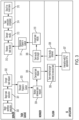
- FIG. 3 shows a high level flow diagram of operation of a system configured in accordance with aspects of the present disclosure for providing automation of IS workflows by integrating machine-based security applications of a distributed system into the automated IS workflow.
- embodiments of the present disclosure provide functionality for implementing a cloud-ready security automation product that enables analysts to build automated IS workflows. Aspects of the present disclosure leverage the power of all enterprise and security applications an analyst might use, from a single interface. The handling of task in a machine-based security application is automated by embodiments disclosed herein, which in existing system would be done manually by an individual. Additionally, various tasks/applications are managed in order to create workflows that may be automated and/or executed when needed.
- Systems implemented in accordance with the present disclosure provide a scalable architecture that may fit any IS need, and that may be deployed in a public cloud, in a private cloud, in a company's datacenter, and/or any combination thereof.
- One of the advantages of the techniques and systems disclosed herein is that repetitive tasks may be minimized and workflow execution may be faster, which may increase efficiency, quality, and efficacy of the process and may also improve event response times.
- the solutions provided herein may be applied in multi-cloud environments, which allow for on-demand, near real-time auto-scaling and load-balancing the execution of workflows across multiple servers, platforms, hosts, clouds, etc.
- the solutions herein also allow for targeted use of resources, which avoids under-utilization of resources.
- FIG. 3 lays out particular steps within the functionality of one of a server, task queue, worker, plugin, and IS application. It is noted that this component is similar to the respective components of system 100 of FIG. 1 discussed at length above. As such, the functions illustrated in the example blocks shown in FIG. 3 may be performed by system 100 of FIG. 1 according to embodiments herein.
- an application server begins execution of an automated IS workflow.
- automated IS workflow may include at least one task to be executed.
- the automated IS workflow including its configuration and the tasks to be executed, may be specified and configured by the application server, such as by a user specifying the configuration, or by a neural net, or machine-based learning, module (e.g., bot 114).
- the tasks of the automated IS workflow may define a sequence of tasks that may be executed to complete the execution of the automated IS workflow.
- the application server begins execution of a task of the automated IS workflow. For example, the application server may begin execution of the initial task in the sequence of tasks of the automated IS workflow, or may be a subsequent task, in cases where the execution of the initial task has already been completed.
- a payload of a task message which may include task request, is encrypted by the application server.
- encryption of the payload may be in accordance with the hop encryption schema described above.
- the encrypted task message may include the task request encrypted using an AES key, and the AES key encrypted using the task queue's public key.
- the task request is placed in a queue of the task queue.
- the queue in which the task request is placed may be determined based on the configuration of the automated IS workflow, which may specify into which queue each task of the automated IS workflow is to be placed. In some aspects, the task request may be placed on more than one queue.
- the task queue may not decrypt the task request and thus, the task request in the queue may be the task request encrypted at the application server. However, the task queue may decrypt the encrypted AES key received from the application server, and may re-encrypt the AES key using the intended worker's public key.
- the worker retrieving the task request may be a worker actively monitoring the queue in which the task request was placed.
- the worker may also be monitoring additional queues.
- additional workers may also be monitoring the queue, and in this case, the task may be retrieved by more than one worker and may be processed in parallel.
- the worker may running in a platform/host that is different than the platform/host in which the application server and the task queue are running.
- the worker decrypts the task request.
- the worker may decrypt the task request by first decrypting the AES key using its own private key, and then using the decrypted AES key to decrypt the task message payload that includes the task request. It is noted that, in embodiments, the task request is not decrypted during transit from the application server to the worker.
- the worker processes the task request by matching the task request to at least one plugin.
- the matched plugin may be a plugin associated with the worker, or may be a plugin identified by the worker based on the task to be executed.
- processing the task request may include invoking the matched plugin for execution of the task in the task request and providing the task request to the invoked plugin.
- the worker may determine (e.g., via a service discovery call) whether the matched plugin is running, and/or where the plugin is running. Upon receiving notification that the plugin is running, and/or where the plugin is running, the worker may send the task request to the plugin for execution. On the other hand, upon receiving notification that the plugin is not running, the worker may download the plugin to the appropriate location, and may then run the plugin. When the plugin is running, the worker may send the task request to the plugin for execution.
- the plugin executes the task.
- executing the task may include the plugin interacting and/or communicating with an API of an IS application hosted on or off the platform in which the task is executed (e.g., the platform/host in which the plugin resides).
- the plugin performs platform/host specific activities leveraging the IS application functionality and resources, and the interaction may yield task results.
- the task results are obtained by the plugin, and at block 309, the task results are obtained by the worker from the plugin.
- the worker interacts with the plugin via communications protocols (e.g., JSON/RPC).
- the worker encrypts the task results.
- the worker may encrypt the task results using the AES key obtained from the application server.
- the worker may then encrypt the AES key using the task queue's public key.
- the encrypted task results are placed in the response queue of the task queue.
- the response queue may be a separate queue, or may be the same queue as the request queue.
- the task queue may also receive the encrypted AES key from the worker.
- the task queue may decrypt the encrypted AES key using its own private key, and may then re-encrypt the AES key using the application server's public key.
- the task queue may not decrypt the task results.
- the task results are received by the application server from the task queue, and at block 313, the task results are decrypted by the application server.
- the application server may first decrypt the AES using its own private key, and may then decrypt the task results using the decrypted AES key. It is noted that, in embodiments, the task results are not decrypted during transit from the worker to the application server.
- an additional task may be executed when the automated IS workflow's sequence of tasks calls for additional tasks to be executed. In additional or alternate embodiments, an additional task may be determined to be executed based on the results of the currently completed task. If more tasks are to be executed, a next task may be selected and execution continues at block 301 as per the description above. Otherwise if no additional tasks are to be executed in the automated IS workflow, execution of the automated IS workflow stops and is considered complete.
- Functional blocks and modules in FIGS. 1-3 may comprise processors, electronics devices, hardware devices, electronics components, logical circuits, memories, software codes, firmware codes, etc., or any combination thereof. Consistent with the foregoing, various illustrative logical blocks, modules, and circuits described in connection with the disclosure herein may be implemented or performed with a general-purpose processor, a digital signal processor (DSP), an application specific integrated circuit (ASIC), a field programmable gate array (FPGA) or other programmable logic device, discrete gate or transistor logic, discrete hardware components, or any combination thereof designed to perform the functions described herein.
- DSP digital signal processor
- ASIC application specific integrated circuit
- FPGA field programmable gate array
- a general-purpose processor may be a microprocessor, but in the alternative, the processor may be any conventional processor, controller, microcontroller, or state machine.
- a processor may also be implemented as a combination of computing devices, e.g., a combination of a DSP and a microprocessor, a plurality of microprocessors, one or more microprocessors in conjunction with a DSP core, or any other such configuration.
- a software module may reside in RAM memory, flash memory, ROM memory, EPROM memory, EEPROM memory, registers, hard disk, a removable disk, a CD-ROM, a cloud storage facility, or any other form of storage medium known in the art.
- An exemplary storage medium is coupled to the processor such that the processor can read information from, and write information to, the storage medium.
- the storage medium may be integral to the processor.
- the processor and the storage medium may reside in an ASIC.
- the ASIC may reside in a user terminal, base station, a sensor, or any other communication device.
- the processor and the storage medium may reside as discrete components in a user terminal.
- the functions described may be implemented in hardware, software, firmware, or any combination thereof. If implemented in software, the functions may be stored on or transmitted over as one or more instructions or code on a computer-readable medium.
- Computer-readable media includes both computer storage media and communication media including any medium that facilitates transfer of a computer program from one place to another. Computer-readable storage media may be any available media that can be accessed by a general purpose or special purpose computer.
- such computer-readable media can comprise RAM, ROM, EEPROM, CD-ROM or other optical disk storage, magnetic disk storage or other magnetic storage devices, or any other medium that can be used to carry or store desired program code means in the form of instructions or data structures and that can be accessed by a general-purpose or special-purpose computer, or a general-purpose or special-purpose processor.
- a connection may be properly termed a computer-readable medium.
- the software is transmitted from a website, server, or other remote source using a coaxial cable, fiber optic cable, twisted pair, or digital subscriber line (DSL), then the coaxial cable, fiber optic cable, twisted pair, or DSL, are included in the definition of medium.
- DSL digital subscriber line
- Disk and disc includes compact disc (CD), laser disc, optical disc, digital versatile disc (DVD), floppy disk and blu-ray disc where disks usually reproduce data magnetically, while discs reproduce data optically with lasers. Combinations of the above should also be included within the scope of computer-readable media.
Landscapes
- Engineering & Computer Science (AREA)
- Software Systems (AREA)
- Theoretical Computer Science (AREA)
- General Engineering & Computer Science (AREA)
- Computer Security & Cryptography (AREA)
- General Physics & Mathematics (AREA)
- Physics & Mathematics (AREA)
- Computer Hardware Design (AREA)
- Business, Economics & Management (AREA)
- Human Resources & Organizations (AREA)
- Computing Systems (AREA)
- Computer Networks & Wireless Communication (AREA)
- Signal Processing (AREA)
- Strategic Management (AREA)
- Entrepreneurship & Innovation (AREA)
- Economics (AREA)
- Data Mining & Analysis (AREA)
- Mathematical Physics (AREA)
- Evolutionary Computation (AREA)
- Medical Informatics (AREA)
- Computer Vision & Pattern Recognition (AREA)
- Artificial Intelligence (AREA)
- Health & Medical Sciences (AREA)
- Bioethics (AREA)
- Educational Administration (AREA)
- Development Economics (AREA)
- Game Theory and Decision Science (AREA)
- General Health & Medical Sciences (AREA)
- Marketing (AREA)
- Operations Research (AREA)
- Quality & Reliability (AREA)
- Tourism & Hospitality (AREA)
- General Business, Economics & Management (AREA)
- Management, Administration, Business Operations System, And Electronic Commerce (AREA)
- Computer And Data Communications (AREA)
Claims (15)
- System, das Folgendes umfasst:ein Aufgabenwarteschlangenmodul;einen Anwendungsserver, gehostet in einer ersten Cloud, wobei der Anwendungsserver konfiguriert ist zum:Empfangen eines Auslösers, um einen Informationssicherheits-Workflow (IS-Workflow) auszuführen, wobei der IS-Workflow mindestens eine Aufgabe enthält, die in einem Gerät auszuführen ist, das in einer zweiten Cloud gehostet ist; undSenden einer Aufgabenanforderung zur Verarbeitung der mindestens einen Aufgabe an ein Aufgabenwarteschlangenmodul;wobei das Aufgabenwarteschlangenmodul so konfiguriert ist, dass es die Aufgabenanforderung in mindestens eine Anforderungswarteschlange aus einer Vielzahl von Anforderungswarteschlangen des Aufgabenwarteschlangenmoduls stellt; undmindestens einen Agenten, der in der Vorrichtung gehostet ist, die in der zweiten Cloud gehostet ist, wobei der mindestens eine Agent konfiguriert ist um:jede Anforderungswarteschlange der Vielzahl von Anforderungswarteschlangen auf die Aufgabenanforderung zu überwachen;als Reaktion auf eine Feststellung durch den mindestens einen Agenten, dass der mindestens eine Agent über ausreichende Ressourcen verfügt, um die mindestens eine der Aufgabenanforderung entsprechende Aufgabe durchzuführen, die Aufgabenanforderung aus der mindestens einen Anforderungswarteschlange des Aufgabenwarteschlangenmoduls abzurufen; undVerarbeiten der Aufgabenanforderung, wobei der mindestens eine Agent, der zum Verarbeiten der Aufgabenanforderung konfiguriert ist, den mindestens einen Agenten umfasst, der konfiguriert ist zum:Auswählen mindestens eines Plugins aus einer Vielzahl von Plugins auf der Grundlage einer Übereinstimmung zwischen dem mindestens einen Plugin und einer der Aufgabenanforderung entsprechenden Aufgabe;Aufrufen des mindestens einen Plugins, um die mindestens eine Aufgabe auszuführen, wobei das mindestens eine Plugin konfiguriert ist, um mit einer Sicherheitsanwendung zu interagieren, indem es mit einer Anwendungsprogrammierschnittstelle (API) der Sicherheitsanwendung kommuniziert, wobei die Ausführung der mindestens einen Aufgabe Aufgabenergebnisse liefert, der mindestens eine Agent ferner so konfiguriert ist, dass er die Aufgabenergebnisse empfängt und die Aufgabenergebnisse in eine Ergebniswarteschlange des Aufgabenwarteschlangenmoduls schiebt, wobei die Sicherheitsanwendung eine externe Sicherheitsanwendung oder eine Sicherheitsanwendung ist, auf die das in der zweiten Cloud gehostete Gerät Zugriff hat, und das Aufgabenwarteschlangenmodul ferner so konfiguriert ist, dass es die Aufgabenergebnisse aus der Ergebniswarteschlange an den Anwendungsserver sendet.
- System nach Anspruch 1, wobei der Anwendungsserver ferner konfiguriert ist zum:Empfangen mindestens einer Benutzereingabe, die die Konfiguration des IS-Workflows spezifiziert, wobei die Konfiguration Aufgaben definiert, die auszuführen sind, um die Ausführung des IS-Workflows abzuschliessen, wobei die Aufgaben die mindestens eine Aufgabe enthalten; undKonfigurieren des IS-Workflows durch ein maschinelles Lernmodul, wobei die Konfiguration die auszuführenden Aufgaben definiert, um die Ausführung des IS-Workflows zu vervollständigen, wobei die Aufgaben die mindestens eine Aufgabe einschliessen, wobei die Aufgaben durch das maschinelle Lernmodul auf der Grundlage der Korrelation von historischen IS-Workflow-bezogenen Daten bestimmt werden.
- System nach Anspruch 1, wobei der mindestens eine Agent weiterhin konfiguriert ist zum:
Überwachen der mindestens einen Anforderungswarteschlange, um Aufgaben zu identifizieren, die in der mindestens einen Anforderungswarteschlange platziert sind und die der mindestens eine Agent bearbeiten kann. - System nach Anspruch 3, wobei der mindestens eine Agent Aufgaben identifiziert, die in der mindestens einen Anforderungswarteschlange platziert sind und die der mindestens eine Agent bearbeiten kann, basierend auf einem der folgenden Punkte:den bei dem mindestens einen Agent verfügbaren Ressourcen; undeinem Aufgabentyp der in der mindestens einen Anforderungswarteschlange platzierten Aufgaben.
- System nach Anspruch 3, wobei die mindestens eine Anforderungswarteschlange eine Vielzahl von Anforderungswarteschlangen umfasst und wobei der mindestens eine Agent so konfiguriert ist, dass er mehrere Anforderungswarteschlangen der Vielzahl von Anforderungswarteschlangen überwacht.
- System nach Anspruch 1, wobei die Konfiguration des mindestens einen Agenten zum Aufrufen des mindestens einen Plugins die Konfiguration des mindestens einen Agenten umfasst zum:Festzustellen ob das mindestens eine Plugin läuft;in Reaktion auf eine erste Feststellung, dass das mindestens eine Plugin nicht läuft:Herunterladen des mindestens einen Plugins auf eine Ressource, die mit dem zweiten Gerät verbunden ist, das in der zweiten Cloud gehostet ist;Veranlassen, dass das mindestens eine Plugin ausgeführt wird;Bereitstellen der Aufgabenanforderung an das mindestens eine Plugin; oderals Reaktion auf eine erste Feststellung, dass das mindestens eine Plugin läuft, Bereitstellen der Aufgabenanforderung an das mindestens eine Plugin.
- System nach Anspruch 1, wobei die Konfiguration des Anwendungsservers zum Senden der Aufgabenanforderung an das Aufgabenwarteschlangenmodul die folgende Konfiguration des Anwendungsservers umfasst zum:Verschlüsseln der Aufgabenanforderung unter Verwendung eines symmetrischen Verschlüsselungsschlüssels;Verschlüsseln des symmetrischen Verschlüsselungsschlüssels unter Verwendung eines ersten asymmetrischen Verschlüsselungsschlüssels, der mit dem Aufgabenwarteschlangenmodul verbunden ist; undSenden der verschlüsselten Aufgabenanforderung und des verschlüsselten symmetrischen Verschlüsselungsschlüssels an das Aufgabenwarteschlangenmodul.
- System nach Anspruch 7, wobei das Aufgabenwarteschlangenmodul ferner konfiguriert ist zum:Entschlüsseln des verschlüsselten symmetrischen Verschlüsselungsschlüssels unter Verwendung eines zweiten asymmetrischen Verschlüsselungsschlüssels, der dem Aufgabenwarteschlangenmodul zugeordnet ist;erneutes Verschlüsseln des symmetrischen Verschlüsselungsschlüssels unter Verwendung eines ersten asymmetrischen Verschlüsselungsschlüssels, der mit dem mindestens einen Agenten verbunden ist; undSenden der verschlüsselten Aufgabenanforderung und des verschlüsselten symmetrischen Verschlüsselungsschlüssels an den mindestens einen Agenten.
- System nach Anspruch 8, wobei der mindestens eine Agent ferner konfiguriert ist zum:Entschlüsseln des verschlüsselten symmetrischen Verschlüsselungsschlüssels unter Verwendung eines zweiten asymmetrischen Verschlüsselungsschlüssels, der dem mindestens einen Agenten zugeordnet ist;Entschlüsseln der verschlüsselten Aufgabenanforderung unter Verwendung des entschlüsselten symmetrischen Verschlüsselungsschlüssels; undVerarbeiten der entschlüsselten Aufgabenanforderung.
- Verfahren, das Folgendes umfasst:Empfangen eines Auslösers zum Ausführen eines Informationssicherheits-Workflows (IS-Workflow) durch einen Anwendungsserver, der in einer ersten Cloud gehostet wird, wobei der IS-Workflow mindestens eine Aufgabe enthält, die in einem Gerät auszuführen ist, das in einer zweiten Cloud gehostet wird;Senden einer Aufgabenanforderung zur Verarbeitung der mindestens einen Aufgabe an ein Aufgabenwarteschlangenmodul;Platzieren der Aufgabenanforderung in mindestens einer Anforderungswarteschlange des Aufgabenwarteschlangenmoduls;Abrufen der Aufgabenanforderung aus der mindestens einen Anforderungswarteschlange des Aufgabenwarteschlangenmoduls durch mindestens einen Agenten, der in der in der zweiten Cloud gehosteten Vorrichtung untergebracht ist;Verarbeiten der Aufgabenanforderung, wobei das Verarbeiten der Aufgabenanforderung umfasst:
Auswählen, durch den mindestens einen Agenten, mindestens eines Plugins aus einer Vielzahl von Plugins, basierend auf einer Übereinstimmung zwischen dem mindestens einen Plugin und einer Aufgabe, die der Aufgabenanforderung entspricht, wobei die Vielzahl von Plugins in der zweiten Cloud gehostet wird; undAufrufen, durch den mindestens einen Agenten, des mindestens einen Plugins, um die mindestens eine Aufgabe auszuführen;Interagieren durch das mindestens eine Plugin mit einer Sicherheitsanwendung über eine Anwendungsprogrammierschnittstelle (API) der Sicherheitsanwendung, um die mindestens eine Aufgabe auszuführen, wobei die Sicherheitsanwendung eine externe Sicherheitsanwendung oder eine Sicherheitsanwendung ist, auf die das in der zweiten Cloud gehostete Gerät Zugriff hat, wobei die Ausführung der mindestens einen Aufgabe Aufgabenergebnisse liefert;Empfangen der Aufgabenergebnisse durch den mindestens einen Agenten;Pushen der Aufgabenergebnisse in eine Ergebniswarteschlange des Aufgabenwarteschlangenmoduls; undSenden, durch das Aufgabenwarteschlangenmodul, der Aufgabenergebnisse von der Ergebniswarteschlange an den Anwendungsserver. - Verfahren nach Anspruch 10, wobei das Aufrufen des mindestens einen Plugins zum Ausführen der mindestens einen Aufgabe Folgendes umfasst:Bestimmen, ob das mindestens eine Plugin läuft;wenn festgestellt wird, dass das mindestens eine Plugin nicht läuft:Herunterladen des mindestens einen Plugins auf eine Ressource, die mit dem zweiten Gerät verbunden ist, das in der zweiten Cloud gehostet wird;Veranlassen, dass das mindestens eine Plugin ausgeführt wird;Bereitstellen der Aufgabenanforderung an das mindestens eine Plugin; undwenn festgestellt wird, dass das mindestens eine Plugin läuft, Bereitstellen der Aufgabenanforderung an das mindestens eine Plugin.
- Verfahren nach Anspruch 10, wobei das Senden der Aufgabenanforderung an das Aufgabenwarteschlangenmodul Folgendes umfasst:Verschlüsseln der Aufgabenanforderung durch den Anwendungsserver unter Verwendung eines symmetrischen Verschlüsselungsschlüssels;Verschlüsseln des symmetrischen Verschlüsselungsschlüssels durch den Anwendungsserver unter Verwendung eines ersten asymmetrischen Verschlüsselungsschlüssels, der dem Aufgabenwarteschlangenmodul zugeordnet ist, um einen verschlüsselten symmetrischen Verschlüsselungsschlüssel zu erzeugen; undSenden der verschlüsselten Aufgabenanforderung und des verschlüsselten symmetrischen Verschlüsselungsschlüssels durch den Anwendungsserver an das Aufgabenwarteschlangenmodul.
- Verfahren nach Anspruch 12, wobei das Platzieren der Aufgabenanforderung in der mindestens einen Anforderungswarteschlange Folgendes umfasst:Entschlüsseln des verschlüsselten symmetrischen Verschlüsselungsschlüssels durch das Aufgabenwarteschlangenmodul unter Verwendung eines zweiten asymmetrischen Verschlüsselungsschlüssels, der dem Aufgabenwarteschlangenmodul zugeordnet ist;erneutes Verschlüsseln des symmetrischen Verschlüsselungsschlüssels durch das Aufgabenwarteschlangenmodul unter Verwendung eines ersten asymmetrischen Verschlüsselungsschlüssels, der dem mindestens einen Agenten zugeordnet ist; undSenden der verschlüsselten Aufgabenanforderung und des verschlüsselten symmetrischen Verschlüsselungsschlüssels durch das Aufgabenwarteschlangenmodul an den mindestens einen Agenten.
- Verfahren nach Anspruch 13, wobei das Abrufen der Aufgabenanforderung aus der mindestens einen Anforderungswarteschlange Folgendes umfasst:Entschlüsseln des verschlüsselten symmetrischen Verschlüsselungsschlüssels durch den mindestens einen Agenten unter Verwendung eines zweiten asymmetrischen Verschlüsselungsschlüssels, der dem mindestens einen Agenten zugeordnet ist;Entschlüsseln der verschlüsselten Aufgabenanforderung durch den mindestens einen Agenten unter Verwendung des entschlüsselten symmetrischen Verschlüsselungsschlüssels; undVerarbeiten der entschlüsselten Aufgabenanforderung durch den mindestens einen Agenten.
- Verfahren nach Anspruch 14, wobei der symmetrische Verschlüsselungsschlüssel ein AES-Schlüssel (Advanced Encryption Standard) ist, der erste asymmetrische Verschlüsselungsschlüssel, der dem Aufgabenwarteschlangenmodul zugeordnet ist, ein öffentlicher Schlüssel des Aufgabenwarteschlangenmoduls ist, der zweite asymmetrische Verschlüsselungsschlüssel, der dem Aufgabenwarteschlangenmodul zugeordnet ist, ein privater Schlüssel des Aufgabenwarteschlangenmoduls ist, der erste asymmetrische Verschlüsselungsschlüssel, der mit dem mindestens einen Agenten verbunden ist, ein öffentlicher Schlüssel des mindestens einen Agenten ist, und der zweite asymmetrische Verschlüsselungsschlüssel, der mit dem mindestens einen Agenten verbunden ist, ein privater Schlüssel des mindestens einen Agenten ist.
Applications Claiming Priority (3)
| Application Number | Priority Date | Filing Date | Title |
|---|---|---|---|
| US201862668349P | 2018-05-08 | 2018-05-08 | |
| US16/405,742 US11487573B2 (en) | 2018-05-08 | 2019-05-07 | Systems and method for automating security workflows in a distributed system using encrypted task requests |
| PCT/IB2019/053795 WO2019215647A1 (en) | 2018-05-08 | 2019-05-08 | Systems and method for automating workflows in a distributed system |
Publications (4)
| Publication Number | Publication Date |
|---|---|
| EP3776322A1 EP3776322A1 (de) | 2021-02-17 |
| EP3776322A4 EP3776322A4 (de) | 2021-12-22 |
| EP3776322C0 EP3776322C0 (de) | 2025-06-04 |
| EP3776322B1 true EP3776322B1 (de) | 2025-06-04 |
Family
ID=68467302
Family Applications (1)
| Application Number | Title | Priority Date | Filing Date |
|---|---|---|---|
| EP19800101.8A Active EP3776322B1 (de) | 2018-05-08 | 2019-05-08 | Systeme und verfahren zur automatisierung von arbeitsabläufen in einem verteilten system |
Country Status (6)
| Country | Link |
|---|---|
| US (1) | US11487573B2 (de) |
| EP (1) | EP3776322B1 (de) |
| AU (1) | AU2019265858B2 (de) |
| CA (1) | CA3099423C (de) |
| ES (1) | ES3033819T3 (de) |
| WO (1) | WO2019215647A1 (de) |
Families Citing this family (21)
| Publication number | Priority date | Publication date | Assignee | Title |
|---|---|---|---|---|
| GB2576454B (en) | 2017-05-19 | 2022-08-24 | Live Nation Entertainment Inc | Systems and methods for objective-based scoring using machine learning techniques |
| US10785291B2 (en) * | 2018-05-09 | 2020-09-22 | Bank Of America Corporation | Executing ad-hoc commands on-demand in a public cloud environment absent use of a command line interface |
| US10534928B1 (en) * | 2018-11-19 | 2020-01-14 | Live Nation Entertainment, Inc. | Systems and methods for dynamic queue control using machine learning techniques |
| US11182130B2 (en) | 2019-05-28 | 2021-11-23 | Oracle International Corporation | Semantic analysis-based plug-in application recipe generation |
| US10671410B1 (en) | 2019-05-28 | 2020-06-02 | Oracle International Corporation | Generating plug-in application recipe extensions |
| US11169826B2 (en) * | 2019-05-28 | 2021-11-09 | Oracle International Corporation | User-assisted plug-in application recipe execution |
| US11257042B2 (en) * | 2019-07-15 | 2022-02-22 | Vmware, Inc. | Workflow service email integration |
| US11586470B2 (en) * | 2019-08-07 | 2023-02-21 | International Business Machines Corporation | Scalable workflow engine with a stateless orchestrator |
| EP4032226A4 (de) * | 2019-09-17 | 2023-06-14 | Microsoft Technology Licensing, LLC | Zentralisierte remote-zugangsdatenverwaltung für migrations-client |
| JP7645877B2 (ja) * | 2019-09-20 | 2025-03-14 | アー.ペー.ムラ-メースク アクティーゼルスカブ | マイクロサービスアーキテクチャにおける最適化の提供 |
| US11368525B2 (en) * | 2019-12-02 | 2022-06-21 | Red Hat, Inc. | Relaying network management tasks using a multi-service receptor network |
| US11470123B2 (en) * | 2020-10-01 | 2022-10-11 | Dell Products L.P. | Routing requests in a distributed system |
| US11785031B2 (en) * | 2021-02-10 | 2023-10-10 | Cado Security Ltd | Automated and scalable worker orchestration for cloud-based computer forensic analysis |
| US11481515B2 (en) * | 2021-03-01 | 2022-10-25 | Fortanix, Inc. | Confidential computing workflows |
| US12238101B2 (en) * | 2021-03-09 | 2025-02-25 | Oracle International Corporation | Customizing authentication and handling pre and post authentication in identity cloud service |
| US12045662B2 (en) * | 2021-08-04 | 2024-07-23 | Sap Se | Data re-encryption for software applications |
| US12393446B2 (en) * | 2021-12-22 | 2025-08-19 | UiPath, Inc. | Cloud triggers for scheduling robots |
| CN114979100B (zh) * | 2022-04-15 | 2024-02-23 | 深信服科技股份有限公司 | 一种云资源检查方法及相关装置 |
| US12238109B2 (en) * | 2022-04-27 | 2025-02-25 | Capital One Services, Llc | Cloud service-based secured data workflow integration and methods thereof |
| CN116029539B (zh) * | 2023-03-30 | 2023-06-09 | 深圳市奥思网络科技有限公司 | 一种基于工作流的项目流转方法及相关组件 |
| US12335295B2 (en) * | 2023-04-18 | 2025-06-17 | Dell Products L.P. | System and method for management of system vulnerabilities |
Family Cites Families (13)
| Publication number | Priority date | Publication date | Assignee | Title |
|---|---|---|---|---|
| US8037474B2 (en) * | 2005-09-27 | 2011-10-11 | Sony Computer Entertainment Inc. | Task manager with stored task definition having pointer to a memory address containing required code data related to the task for execution |
| US8156179B2 (en) * | 2007-04-26 | 2012-04-10 | Platform Computing Corporation | Grid-enabled, service-oriented architecture for enabling high-speed computing applications |
| US8286198B2 (en) * | 2008-06-06 | 2012-10-09 | Apple Inc. | Application programming interfaces for data parallel computing on multiple processors |
| US8875152B2 (en) * | 2010-04-22 | 2014-10-28 | Salesforce.Com, Inc. | System, method and computer program product for dynamically increasing resources utilized for processing tasks |
| US20130124193A1 (en) | 2011-11-15 | 2013-05-16 | Business Objects Software Limited | System and Method Implementing a Text Analysis Service |
| US20150073892A1 (en) * | 2013-09-06 | 2015-03-12 | Tune, Inc. | Systems and methods for opening an application associated with an advertisement |
| US10402930B2 (en) * | 2013-10-14 | 2019-09-03 | Microsoft Technology Licensing, Llc | Management of graphics processing units in a cloud platform |
| US9313208B1 (en) | 2014-03-19 | 2016-04-12 | Amazon Technologies, Inc. | Managing restricted access resources |
| EP3210157B1 (de) | 2014-10-23 | 2020-04-01 | Pageproof.com Limited | Verschlüsseltes kollaborationssystem und -verfahren |
| US20180027006A1 (en) | 2015-02-24 | 2018-01-25 | Cloudlock, Inc. | System and method for securing an enterprise computing environment |
| KR102604046B1 (ko) * | 2016-11-28 | 2023-11-23 | 삼성전자주식회사 | 전자 기기의 프로그램 관리 방법 및 장치 |
| US10754588B2 (en) * | 2017-03-31 | 2020-08-25 | Intel Corporation | Performing data operations in a storage area network |
| US11188392B2 (en) * | 2017-09-20 | 2021-11-30 | Algorithmia inc. | Scheduling system for computational work on heterogeneous hardware |
-
2019
- 2019-05-07 US US16/405,742 patent/US11487573B2/en active Active
- 2019-05-08 AU AU2019265858A patent/AU2019265858B2/en active Active
- 2019-05-08 WO PCT/IB2019/053795 patent/WO2019215647A1/en not_active Ceased
- 2019-05-08 ES ES19800101T patent/ES3033819T3/es active Active
- 2019-05-08 EP EP19800101.8A patent/EP3776322B1/de active Active
- 2019-05-08 CA CA3099423A patent/CA3099423C/en active Active
Also Published As
| Publication number | Publication date |
|---|---|
| CA3099423C (en) | 2023-09-26 |
| EP3776322A1 (de) | 2021-02-17 |
| US11487573B2 (en) | 2022-11-01 |
| AU2019265858A1 (en) | 2020-11-26 |
| EP3776322C0 (de) | 2025-06-04 |
| CA3099423A1 (en) | 2019-11-14 |
| WO2019215647A1 (en) | 2019-11-14 |
| US20190384632A1 (en) | 2019-12-19 |
| AU2019265858B2 (en) | 2022-02-10 |
| ES3033819T3 (en) | 2025-08-08 |
| NZ769455A (en) | 2025-02-28 |
| EP3776322A4 (de) | 2021-12-22 |
Similar Documents
| Publication | Publication Date | Title |
|---|---|---|
| EP3776322B1 (de) | Systeme und verfahren zur automatisierung von arbeitsabläufen in einem verteilten system | |
| US11057407B2 (en) | Detecting malware attacks using extracted behavioral features | |
| US11438353B2 (en) | Application programming interface platform management using machine learning | |
| US20230412620A1 (en) | System and methods for cybersecurity analysis using ueba and network topology data and trigger - based network remediation | |
| US11218504B2 (en) | Systems and methods for multi-tier cache visual system and visual modes | |
| US20200252415A1 (en) | Systems and methods for computer environment situational awareness | |
| US10284589B2 (en) | Methods and systems for ranking, filtering and patching detected vulnerabilities in a networked system | |
| CA2998749C (en) | Systems and methods for security and risk assessment and testing of applications | |
| US10164951B2 (en) | Establishing secure communication over an internet of things (IoT) network | |
| US12225055B2 (en) | System and method for secure evaluation of cyber detection products | |
| US20190222594A1 (en) | Network flow control of Internet Of Things (IoT) devices | |
| US10761887B2 (en) | Allocating tasks in a computing environment | |
| US11799892B2 (en) | Methods for public cloud database activity monitoring and devices thereof | |
| US20160366142A1 (en) | Data socket descriptor attributes for application discovery in data centers | |
| US11171995B2 (en) | Identifying and mitigating risks of cryptographic obsolescence | |
| JP2016508353A (ja) | ネットワークメタデータを処理する改良されたストリーミング方法およびシステム | |
| US10498653B2 (en) | Encryption prioritization for distributed streaming applications | |
| CN111316272A (zh) | 使用行为和深度分析的先进网络安全威胁减缓 | |
| WO2022047415A1 (en) | System and method for secure evaluation of cyber detection products | |
| US20180322165A1 (en) | Systems and methods for database active monitoring | |
| US10216926B2 (en) | Isolation of untrusted code in operating system without isolation capability | |
| WO2023220063A1 (en) | Cryptographic inventory system | |
| US20220191688A1 (en) | Application-based security monitoring application |
Legal Events
| Date | Code | Title | Description |
|---|---|---|---|
| STAA | Information on the status of an ep patent application or granted ep patent |
Free format text: STATUS: THE INTERNATIONAL PUBLICATION HAS BEEN MADE |
|
| PUAI | Public reference made under article 153(3) epc to a published international application that has entered the european phase |
Free format text: ORIGINAL CODE: 0009012 |
|
| STAA | Information on the status of an ep patent application or granted ep patent |
Free format text: STATUS: REQUEST FOR EXAMINATION WAS MADE |
|
| 17P | Request for examination filed |
Effective date: 20201028 |
|
| AK | Designated contracting states |
Kind code of ref document: A1 Designated state(s): AL AT BE BG CH CY CZ DE DK EE ES FI FR GB GR HR HU IE IS IT LI LT LU LV MC MK MT NL NO PL PT RO RS SE SI SK SM TR |
|
| AX | Request for extension of the european patent |
Extension state: BA ME |
|
| RIN1 | Information on inventor provided before grant (corrected) |
Inventor name: PARIKH, VISHAL DILIPKUMAR Inventor name: RAWAL, AKSHAR Inventor name: RATNER, WILLIAM STUART |
|
| DAV | Request for validation of the european patent (deleted) | ||
| DAX | Request for extension of the european patent (deleted) | ||
| A4 | Supplementary search report drawn up and despatched |
Effective date: 20211123 |
|
| RIC1 | Information provided on ipc code assigned before grant |
Ipc: G06F 21/60 20130101ALI20211117BHEP Ipc: G06F 21/57 20130101ALI20211117BHEP Ipc: G06F 21/55 20130101ALI20211117BHEP Ipc: G06Q 10/06 20120101ALI20211117BHEP Ipc: G06F 21/62 20130101AFI20211117BHEP |
|
| P01 | Opt-out of the competence of the unified patent court (upc) registered |
Effective date: 20230524 |
|
| REG | Reference to a national code |
Ref country code: DE Ref legal event code: R079 Ipc: G06Q0010063100 Ref country code: DE Ref legal event code: R079 Ref document number: 602019070808 Country of ref document: DE Free format text: PREVIOUS MAIN CLASS: G06F0021620000 Ipc: G06Q0010063100 |
|
| GRAP | Despatch of communication of intention to grant a patent |
Free format text: ORIGINAL CODE: EPIDOSNIGR1 |
|
| STAA | Information on the status of an ep patent application or granted ep patent |
Free format text: STATUS: GRANT OF PATENT IS INTENDED |
|
| RIC1 | Information provided on ipc code assigned before grant |
Ipc: G06F 21/60 20130101ALI20250307BHEP Ipc: G06F 21/57 20130101ALI20250307BHEP Ipc: G06F 21/55 20130101ALI20250307BHEP Ipc: G06Q 10/0631 20230101AFI20250307BHEP |
|
| INTG | Intention to grant announced |
Effective date: 20250319 |
|
| GRAS | Grant fee paid |
Free format text: ORIGINAL CODE: EPIDOSNIGR3 |
|
| GRAA | (expected) grant |
Free format text: ORIGINAL CODE: 0009210 |
|
| STAA | Information on the status of an ep patent application or granted ep patent |
Free format text: STATUS: THE PATENT HAS BEEN GRANTED |
|
| P04 | Withdrawal of opt-out of the competence of the unified patent court (upc) registered |
Free format text: CASE NUMBER: APP_19220/2025 Effective date: 20250422 |
|
| AK | Designated contracting states |
Kind code of ref document: B1 Designated state(s): AL AT BE BG CH CY CZ DE DK EE ES FI FR GB GR HR HU IE IS IT LI LT LU LV MC MK MT NL NO PL PT RO RS SE SI SK SM TR |
|
| REG | Reference to a national code |
Ref country code: GB Ref legal event code: FG4D |
|
| REG | Reference to a national code |
Ref country code: CH Ref legal event code: EP |
|
| REG | Reference to a national code |
Ref country code: DE Ref legal event code: R096 Ref document number: 602019070808 Country of ref document: DE |
|
| REG | Reference to a national code |
Ref country code: IE Ref legal event code: FG4D |
|
| U01 | Request for unitary effect filed |
Effective date: 20250604 |
|
| U07 | Unitary effect registered |
Designated state(s): AT BE BG DE DK EE FI FR IT LT LU LV MT NL PT RO SE SI Effective date: 20250611 |
|
| REG | Reference to a national code |
Ref country code: ES Ref legal event code: FG2A Ref document number: 3033819 Country of ref document: ES Kind code of ref document: T3 Effective date: 20250808 |
|
| PG25 | Lapsed in a contracting state [announced via postgrant information from national office to epo] |
Ref country code: NO Free format text: LAPSE BECAUSE OF FAILURE TO SUBMIT A TRANSLATION OF THE DESCRIPTION OR TO PAY THE FEE WITHIN THE PRESCRIBED TIME-LIMIT Effective date: 20250904 Ref country code: GR Free format text: LAPSE BECAUSE OF FAILURE TO SUBMIT A TRANSLATION OF THE DESCRIPTION OR TO PAY THE FEE WITHIN THE PRESCRIBED TIME-LIMIT Effective date: 20250905 |
|
| PG25 | Lapsed in a contracting state [announced via postgrant information from national office to epo] |
Ref country code: PL Free format text: LAPSE BECAUSE OF FAILURE TO SUBMIT A TRANSLATION OF THE DESCRIPTION OR TO PAY THE FEE WITHIN THE PRESCRIBED TIME-LIMIT Effective date: 20250604 |
|
| PG25 | Lapsed in a contracting state [announced via postgrant information from national office to epo] |
Ref country code: HR Free format text: LAPSE BECAUSE OF FAILURE TO SUBMIT A TRANSLATION OF THE DESCRIPTION OR TO PAY THE FEE WITHIN THE PRESCRIBED TIME-LIMIT Effective date: 20250604 |
|
| PG25 | Lapsed in a contracting state [announced via postgrant information from national office to epo] |
Ref country code: RS Free format text: LAPSE BECAUSE OF FAILURE TO SUBMIT A TRANSLATION OF THE DESCRIPTION OR TO PAY THE FEE WITHIN THE PRESCRIBED TIME-LIMIT Effective date: 20250904 |