EP3774802B1 - Verbindungen und verfahren zur selektiven proteolyse von glucocorticoid-rezeptoren - Google Patents
Verbindungen und verfahren zur selektiven proteolyse von glucocorticoid-rezeptoren Download PDFInfo
- Publication number
- EP3774802B1 EP3774802B1 EP19785593.5A EP19785593A EP3774802B1 EP 3774802 B1 EP3774802 B1 EP 3774802B1 EP 19785593 A EP19785593 A EP 19785593A EP 3774802 B1 EP3774802 B1 EP 3774802B1
- Authority
- EP
- European Patent Office
- Prior art keywords
- alkyl
- chosen
- cycloalkyl
- heterocycloalkyl
- compound
- Prior art date
- Legal status (The legal status is an assumption and is not a legal conclusion. Google has not performed a legal analysis and makes no representation as to the accuracy of the status listed.)
- Active
Links
Images





Classifications
-
- A—HUMAN NECESSITIES
- A61—MEDICAL OR VETERINARY SCIENCE; HYGIENE
- A61K—PREPARATIONS FOR MEDICAL, DENTAL OR TOILETRY PURPOSES
- A61K47/00—Medicinal preparations characterised by the non-active ingredients used, e.g. carriers or inert additives; Targeting or modifying agents chemically bound to the active ingredient
- A61K47/50—Medicinal preparations characterised by the non-active ingredients used, e.g. carriers or inert additives; Targeting or modifying agents chemically bound to the active ingredient the non-active ingredient being chemically bound to the active ingredient, e.g. polymer-drug conjugates
- A61K47/51—Medicinal preparations characterised by the non-active ingredients used, e.g. carriers or inert additives; Targeting or modifying agents chemically bound to the active ingredient the non-active ingredient being chemically bound to the active ingredient, e.g. polymer-drug conjugates the non-active ingredient being a modifying agent
- A61K47/54—Medicinal preparations characterised by the non-active ingredients used, e.g. carriers or inert additives; Targeting or modifying agents chemically bound to the active ingredient the non-active ingredient being chemically bound to the active ingredient, e.g. polymer-drug conjugates the non-active ingredient being a modifying agent the modifying agent being an organic compound
- A61K47/545—Heterocyclic compounds
-
- A—HUMAN NECESSITIES
- A61—MEDICAL OR VETERINARY SCIENCE; HYGIENE
- A61K—PREPARATIONS FOR MEDICAL, DENTAL OR TOILETRY PURPOSES
- A61K45/00—Medicinal preparations containing active ingredients not provided for in groups A61K31/00 - A61K41/00
- A61K45/06—Mixtures of active ingredients without chemical characterisation, e.g. antiphlogistics and cardiaca
-
- A—HUMAN NECESSITIES
- A61—MEDICAL OR VETERINARY SCIENCE; HYGIENE
- A61K—PREPARATIONS FOR MEDICAL, DENTAL OR TOILETRY PURPOSES
- A61K47/00—Medicinal preparations characterised by the non-active ingredients used, e.g. carriers or inert additives; Targeting or modifying agents chemically bound to the active ingredient
- A61K47/50—Medicinal preparations characterised by the non-active ingredients used, e.g. carriers or inert additives; Targeting or modifying agents chemically bound to the active ingredient the non-active ingredient being chemically bound to the active ingredient, e.g. polymer-drug conjugates
- A61K47/51—Medicinal preparations characterised by the non-active ingredients used, e.g. carriers or inert additives; Targeting or modifying agents chemically bound to the active ingredient the non-active ingredient being chemically bound to the active ingredient, e.g. polymer-drug conjugates the non-active ingredient being a modifying agent
- A61K47/54—Medicinal preparations characterised by the non-active ingredients used, e.g. carriers or inert additives; Targeting or modifying agents chemically bound to the active ingredient the non-active ingredient being chemically bound to the active ingredient, e.g. polymer-drug conjugates the non-active ingredient being a modifying agent the modifying agent being an organic compound
- A61K47/55—Medicinal preparations characterised by the non-active ingredients used, e.g. carriers or inert additives; Targeting or modifying agents chemically bound to the active ingredient the non-active ingredient being chemically bound to the active ingredient, e.g. polymer-drug conjugates the non-active ingredient being a modifying agent the modifying agent being an organic compound the modifying agent being also a pharmacologically or therapeutically active agent, i.e. the entire conjugate being a codrug
-
- A—HUMAN NECESSITIES
- A61—MEDICAL OR VETERINARY SCIENCE; HYGIENE
- A61K—PREPARATIONS FOR MEDICAL, DENTAL OR TOILETRY PURPOSES
- A61K47/00—Medicinal preparations characterised by the non-active ingredients used, e.g. carriers or inert additives; Targeting or modifying agents chemically bound to the active ingredient
- A61K47/50—Medicinal preparations characterised by the non-active ingredients used, e.g. carriers or inert additives; Targeting or modifying agents chemically bound to the active ingredient the non-active ingredient being chemically bound to the active ingredient, e.g. polymer-drug conjugates
- A61K47/51—Medicinal preparations characterised by the non-active ingredients used, e.g. carriers or inert additives; Targeting or modifying agents chemically bound to the active ingredient the non-active ingredient being chemically bound to the active ingredient, e.g. polymer-drug conjugates the non-active ingredient being a modifying agent
- A61K47/54—Medicinal preparations characterised by the non-active ingredients used, e.g. carriers or inert additives; Targeting or modifying agents chemically bound to the active ingredient the non-active ingredient being chemically bound to the active ingredient, e.g. polymer-drug conjugates the non-active ingredient being a modifying agent the modifying agent being an organic compound
- A61K47/555—Medicinal preparations characterised by the non-active ingredients used, e.g. carriers or inert additives; Targeting or modifying agents chemically bound to the active ingredient the non-active ingredient being chemically bound to the active ingredient, e.g. polymer-drug conjugates the non-active ingredient being a modifying agent the modifying agent being an organic compound pre-targeting systems involving an organic compound, other than a peptide, protein or antibody, for targeting specific cells
- A61K47/556—Medicinal preparations characterised by the non-active ingredients used, e.g. carriers or inert additives; Targeting or modifying agents chemically bound to the active ingredient the non-active ingredient being chemically bound to the active ingredient, e.g. polymer-drug conjugates the non-active ingredient being a modifying agent the modifying agent being an organic compound pre-targeting systems involving an organic compound, other than a peptide, protein or antibody, for targeting specific cells enzyme catalyzed therapeutic agent [ECTA]
-
- A—HUMAN NECESSITIES
- A61—MEDICAL OR VETERINARY SCIENCE; HYGIENE
- A61P—SPECIFIC THERAPEUTIC ACTIVITY OF CHEMICAL COMPOUNDS OR MEDICINAL PREPARATIONS
- A61P35/00—Antineoplastic agents
-
- C—CHEMISTRY; METALLURGY
- C07—ORGANIC CHEMISTRY
- C07J—STEROIDS
- C07J41/00—Normal steroids containing one or more nitrogen atoms not belonging to a hetero ring
- C07J41/0033—Normal steroids containing one or more nitrogen atoms not belonging to a hetero ring not covered by C07J41/0005
- C07J41/0077—Normal steroids containing one or more nitrogen atoms not belonging to a hetero ring not covered by C07J41/0005 substituted in position 11-beta by a carbon atom, further substituted by a group comprising at least one further carbon atom
- C07J41/0083—Normal steroids containing one or more nitrogen atoms not belonging to a hetero ring not covered by C07J41/0005 substituted in position 11-beta by a carbon atom, further substituted by a group comprising at least one further carbon atom substituted in position 11-beta by an optionally substituted phenyl group not further condensed with other rings
-
- C—CHEMISTRY; METALLURGY
- C07—ORGANIC CHEMISTRY
- C07J—STEROIDS
- C07J43/00—Normal steroids having a nitrogen-containing hetero ring spiro-condensed or not condensed with the cyclopenta(a)hydrophenanthrene skeleton
- C07J43/003—Normal steroids having a nitrogen-containing hetero ring spiro-condensed or not condensed with the cyclopenta(a)hydrophenanthrene skeleton not condensed
Definitions
- compounds have structural Formula I: or a salt thereof, wherein:
- Certain compounds disclosed herein may possess useful activity for modulating or degrading the glucocorticoid receptor, and may be used in the treatment or prophylaxis of a disease or condition in which the glucocorticoid receptor plays an active role.
- certain embodiments also provide pharmaceutical compositions comprising one or more compounds disclosed herein together with a pharmaceutically acceptable carrier, as well as methods of making the compounds and compositions.
- E is chosen from
- n and p are independently chosen from 0-11, inclusive; and q is chosen from 0-3, inclusive.
- n and p are independently chosen from 0-3, inclusive; and q is chosen from 0-11, inclusive.
- R 1 and R 2 are independently chosen from H, alkyl, cycloalkyl, heterocycloalkyl, aryl, heteroaryl, alkoxy, halo, alkylamino, dialkylamino, cyano, and hydroxy.
- At least one of R 3 and R 4 is hydroxy.
- R 5 and R 6 are independently chosen from H, alkyl, haloalkyl, alkoxy, amino, alkylamino, dialkylamino, cycloalkyl, (cycloalkyl)alkyl, heterocycloalkyl, (heterocycloalkyl)alkyl, CONHR 12 R 13 , SO 2 NHR 12 R 13 , SOR 14 , SO 2 R 14 , halo, hydroxy, and cyano.
- R 5 and R 6 together with the atom to which they are attached, form a cycloalkyl or heterocycloalkyl ring.
- composition comprising a compound as disclosed herein, together with a pharmaceutically acceptable carrier.
- Carboxyl or “carboxy,” as used herein, refers to -C(O)OH or the corresponding “carboxylate” anion, such as is in a carboxylic acid salt.
- An "O-carboxy” group refers to a RC(O)O- group, where R is as defined herein.
- a “C-carboxy” group refers to a -C(O)OR groups where R is as defined herein.
- esters refers to a carboxy group bridging two moieties linked at carbon atoms.
- haloalkoxy refers to a haloalkyl group attached to the parent molecular moiety through an oxygen atom.
- haloalkyl radicals include fluoromethyl, difluoromethyl, trifluoromethyl, chloromethyl, dichloromethyl, trichloromethyl, pentafluoroethyl, heptafluoropropyl, difluorochloromethyl, dichlorofluoromethyl, difluoroethyl, difluoropropyl, dichloroethyl and dichloropropyl.
- Haloalkylene refers to a haloalkyl group attached at two or more positions. Examples include fluoromethylene (-CFH-), difluoromethylene (-CF 2 -), chloromethylene (-CHCl-) and the like.
- heterocyclic rings are fused with aryl rings, wherein heteroaryl rings are fused with other heteroaryl rings, wherein heteroaryl rings are fused with heterocycloalkyl rings, or wherein heteroaryl rings are fused with cycloalkyl rings.
- heteroaryl groups include pyrrolyl, pyrrolinyl, imidazolyl, pyrazolyl, pyridyl, pyrimidinyl, pyrazinyl, pyridazinyl, triazolyl, pyranyl, furyl, thienyl, oxazolyl, isoxazolyl, oxadiazolyl, thiazolyl, thiadiazolyl, isothiazolyl, indolyl, isoindolyl, indolizinyl, benzimidazolyl, quinolyl, isoquinolyl, quinoxalinyl, quinazolinyl, indazolyl, benzotriazolyl, benzodioxolyl, benzopyranyl, benzoxazolyl, benzoxadiazolyl, benzothiazolyl, benzothiadiazolyl, benzofuryl, benzothienyl, chromonyl,
- heterocycloalkyl will comprise from 3 to 7 ring members in each ring. In yet further embodiments, said heterocycloalkyl will comprise from 5 to 6 ring members in each ring.
- "Heterocycloalkyl” and “heterocycle” are intended to include sulfones, sulfoxides, N-oxides of tertiary nitrogen ring members, and carbocyclic fused and benzo fused ring systems; additionally, both terms also include systems where a heterocycle ring is fused to an aryl group, as defined herein, or an additional heterocycle group.
- hydroxyalkyl refers to a hydroxy group attached to the parent molecular moiety through an alkyl group.
- lower means containing from 1 to and including 6 carbon atoms (i.e., C 1 -C 6 alkyl).
- mercaptyl as used herein, alone or in combination, refers to an RSgroup, where R is as defined herein.
- nitro refers to -NO 2 .
- perhaloalkoxy refers to an alkoxy group where all of the hydrogen atoms are replaced by halogen atoms.
- perhaloalkyl refers to an alkyl group where all of the hydrogen atoms are replaced by halogen atoms.
- sulfonate refers the -SO 3 H group and its anion as the sulfonic acid is used in salt formation.
- sulfonyl as used herein, alone or in combination, refers to -S(O) 2 -.
- thia and thio refer to a - S- group or an ether wherein the oxygen is replaced with sulfur.
- the oxidized derivatives of the thio group namely sulfinyl and sulfonyl, are included in the definition of thia and thio.
- thiol as used herein, alone or in combination, refers to an -SH group.
- thiocarbonyl when alone includes thioformyl -C(S)H and in combination is a -C(S)- group.
- N-thiocarbamyl refers to an ROC(S)NR'- group, with R and R' as defined herein.
- O-thiocarbamyl refers to a -OC(S)NRR', group with R and R' as defined herein.
- thiocyanato refers to a -CNS group.
- trihalomethanesulfonamido refers to a X 3 CS(O) 2 NR- group with X is a halogen and R as defined herein.
- trihalomethoxy refers to a X 3 CO- group where X is a halogen.
- the term "optionally substituted” means the anteceding group may be substituted or unsubstituted.
- the substituents of an "optionally substituted” group may include, without limitation, one or more substituents independently selected from the following groups or a particular designated set of groups, alone or in combination: lower alkyl, lower alkenyl, lower alkynyl, lower alkanoyl, lower heteroalkyl, lower heterocycloalkyl, lower haloalkyl, lower haloalkenyl, lower haloalkynyl, lower perhaloalkyl, lower perhaloalkoxy, lower cycloalkyl, phenyl, aryl, aryloxy, lower alkoxy, lower haloalkoxy, oxo, lower acyloxy, carbonyl, carboxyl, lower alkylcarbonyl, lower carboxyester, lower carboxamido, cyano, hydrogen, halogen, hydroxy, amino, lower alkylamino
- two substituents may be joined together to form a fused five-, six-, or sevenmembered carbocyclic or heterocyclic ring consisting of zero to three heteroatoms, for example forming methylenedioxy or ethylenedioxy.
- An optionally substituted group may be unsubstituted (e.g., -CH 2 CH 3 ), fully substituted (e.g., -CF 2 CF 3 ), monosubstituted (e.g., - CH 2 CH 2 F) or substituted at a level anywhere in-between fully substituted and monosubstituted (e.g., -CH 2 CF 3 ).
- aryl, heterocycle, R, etc. occur more than one time in a formula or generic structure, its definition at each occurrence is independent of the definition at every other occurrence.
- certain groups may be attached to a parent molecule or may occupy a position in a chain of elements from either end as written.
- an unsymmetrical group such as -C(O)N(R)- may be attached to the parent moiety at either the carbon or the nitrogen.
- disease as used herein is intended to be generally synonymous, and is used interchangeably with, the terms “disorder,” “syndrome,” and “condition” (as in medical condition), in that all reflect an abnormal condition of the human or animal body or of one of its parts that impairs normal functioning, is typically manifested by distinguishing signs and symptoms, and causes the human or animal to have a reduced duration or quality of life.
- basic groups in the compounds disclosed herein can be quaternized with methyl, ethyl, propyl, and butyl chlorides, bromides, and iodides; dimethyl, diethyl, dibutyl, and diamyl sulfates; decyl, lauryl, myristyl, and steryl chlorides, bromides, and iodides; and benzyl and phenethyl bromides.
- acids which can be employed to form therapeutically acceptable addition salts include inorganic acids such as hydrochloric, hydrobromic, sulfuric, and phosphoric, and organic acids such as oxalic, maleic, succinic, and citric. Salts can also be formed by coordination of the compounds with an alkali metal or alkaline earth ion.
- the present disclosure contemplates sodium, potassium, magnesium, and calcium salts of the compounds disclosed herein, and the like.
- the formulations include those suitable for oral, parenteral (including subcutaneous, intradermal, intramuscular, intravenous, intraarticular, and intramedullary), intraperitoneal, transmucosal, transdermal, rectal and topical (including dermal, buccal, sublingual and intraocular) administration although the most suitable route may depend upon for example the condition and disorder of the recipient.
- the formulations may conveniently be presented in unit dosage form and may be prepared by any of the methods well known in the art of pharmacy. Typically, these methods include the step of bringing into association a compound of the subject disclosure or a pharmaceutically acceptable salt, ester, amide, prodrug or solvate thereof ("active ingredient”) with the carrier which constitutes one or more accessory ingredients.
- active ingredient a pharmaceutically acceptable salt, ester, amide, prodrug or solvate thereof
- the formulations are prepared by uniformly and intimately bringing into association the active ingredient with liquid carriers or finely divided solid carriers or both and then, if necessary, shaping the product into the desired formulation.
- Liquid formulations can include emulsions, solutions, syrups, elixirs and suspensions, which can be used in soft or hard capsules.
- Such formulations may include a pharmaceutically acceptable carrier, for example, water, ethanol, polyethylene glycol, cellulose, or an oil.
- the formulation may also include one or more emulsifying agents and/or suspending agents.
- compositions for oral administration may be formulated as immediate or modified release, including delayed or sustained release, optionally with enteric coating.
- compositions which can be used orally include tablets, push-fit capsules made of gelatin, as well as soft, sealed capsules made of gelatin and a plasticizer, such as glycerol or sorbitol. Tablets may be made by compression or molding, optionally with one or more accessory ingredients. Compressed tablets may be prepared by compressing in a suitable machine the active ingredient in a free-flowing form such as a powder or granules, optionally mixed with binders, inert diluents, or lubricating, surface active or dispersing agents. Molded tablets may be made by molding in a suitable machine a mixture of the powdered compound moistened with an inert liquid diluent.
- the tablets may optionally be coated or scored and may be formulated so as to provide slow or controlled release of the active ingredient therein. All formulations for oral administration should be in dosages suitable for such administration.
- the push-fit capsules can contain the active ingredients in admixture with filler such as lactose, binders such as starches, and/or lubricants such as talc or magnesium stearate and, optionally, stabilizers.
- the active compounds may be dissolved or suspended in suitable liquids, such as fatty oils, liquid paraffin, or liquid polyethylene glycols.
- stabilizers may be added.
- Dragee cores are provided with suitable coatings.
- parenteral formulations are aqueous solutions containing excipients, including salts, buffering, suspending, stabilizing and/or dispersing agents, antioxidants, bacteriostats, preservatives, and solutes which render the formulation isotonic with the blood of the intended recipient, and carbohydrates.
- the compounds may be formulated for parenteral administration by injection, e.g., by bolus injection or continuous infusion.
- Formulations for injection may be presented in unit dosage form, e.g., in ampoules or in multi-dose containers, with an added preservative.
- the compositions may take such forms as suspensions, solutions or emulsions in oily or aqueous vehicles, and may contain formulatory agents such as suspending, stabilizing and/or dispersing agents.
- Compounds of the present disclosure may be administered topically (for example to the skin, mucous membranes, ear, nose, or eye) or transdermally.
- Formulations for topical administration can include, but are not limited to, lotions, solutions, creams, gels, hydrogels, ointments, foams, implants, patches and the like.
- Carriers that are pharmaceutically acceptable for topical administration formulations can include water, alcohol, mineral oil, glycerin, polyethylene glycol and the like.
- Topical administration can also be performed by, for example, electroporation, iontophoresis, phonophoresis and the like.
- the active ingredient for topical administration may comprise from 0.001% to 10% w/w (by weight) of the formulation.
- the active ingredient may comprise as much as 10% w/w; less than 5% w/w; from 2% w/w to 5% w/w; or from 0.1% to 1% w/w of the formulation.
- compositions for topical administration may be formulated as immediate or modified release, including delayed or sustained release.
- Certain compounds disclosed herein may be administered topically, that is by nonsystemic administration. This includes the application of a compound disclosed herein externally to the epidermis or the buccal cavity and the instillation of such a compound into the ear, eye and nose, such that the compound does not significantly enter the blood stream.
- systemic administration refers to oral, intravenous, intraperitoneal and intramuscular administration.
- Formulations suitable for topical administration include liquid or semi-liquid preparations suitable for penetration through the skin to the site of inflammation such as gels, liniments, lotions, creams, ointments or pastes, and drops suitable for administration to the eye, ear or nose.
- the active ingredient for topical administration may comprise, for example, from 0.001% to 10% w/w (by weight) of the formulation. In certain embodiments, the active ingredient may comprise as much as 10% w/w. In other embodiments, it may comprise less than 5% w/w. In certain embodiments, the active ingredient may comprise from 2% w/w to 5% w/w. In other embodiments, it may comprise from 0.1% to 1% w/w of the formulation.
- Suppositories for rectal administration of the compounds of the present disclosure can be prepared by mixing the active agent with a suitable non-irritating excipient such as cocoa butter, synthetic mono-, di-, or triglycerides, fatty acids, or polyethylene glycols which are solid at ordinary temperatures but liquid at the rectal temperature, and which will therefore melt in the rectum and release the drug.
- a suitable non-irritating excipient such as cocoa butter, synthetic mono-, di-, or triglycerides, fatty acids, or polyethylene glycols which are solid at ordinary temperatures but liquid at the rectal temperature, and which will therefore melt in the rectum and release the drug.
- compositions may take the form of tablets, lozenges, pastilles, or gels formulated in conventional manner.
- Such compositions may comprise the active ingredient in a flavored basis such as sucrose and acacia or tragacanth.
- compounds may be conveniently delivered from an insufflator, nebulizer pressurized packs or other convenient means of delivering an aerosol spray.
- Pressurized packs may comprise a suitable propellant such as dichlorodifluoromethane, trichlorofluoromethane, dichlorotetrafluoroethane, carbon dioxide or other suitable gas.
- the dosage unit may be determined by providing a valve to deliver a metered amount.
- the compounds according to the disclosure may take the form of a dry powder composition, for example a powder mix of the compound and a suitable powder base such as lactose or starch.
- the powder composition may be presented in unit dosage form, in for example, capsules, cartridges, gelatin or blister packs from which the powder may be administered with the aid of an inhalator or insufflator.
- Compounds may be administered orally or via injection at a dose of from 0.1 to 500 mg/kg per day.
- the dose range for adult humans is generally from 5 mg to 2 g/day.
- Tablets or other forms of presentation provided in discrete units may conveniently contain an amount of one or more compounds which is effective at such dosage or as a multiple of the same, for instance, units containing 5 mg to 500 mg, usually around 10 mg to 200 mg.
- the amount of active ingredient that may be combined with the carrier materials to produce a single dosage form will vary depending upon the host treated and the particular mode of administration.
- formulations described above may include other agents conventional in the art having regard to the type of formulation in question, for example those suitable for oral administration may include flavoring agents.
- the amount of active ingredient that may be combined with the carrier materials to produce a single dosage form will vary depending upon the host treated and the particular mode of administration.
- the compounds can be administered in various modes, e.g . orally, topically, or by injection.
- the precise amount of compound administered to a patient will be the responsibility of the attendant physician.
- the specific dose level for any particular patient will depend upon a variety of factors including the activity of the specific compound employed, the age, body weight, general health, sex, diets, time of administration, route of administration, rate of excretion, drug combination, the precise disorder being treated, and the severity of the indication or condition being treated.
- the route of administration may vary depending on the condition and its severity.
- the compounds described herein may be administered in combination with another therapeutic agent.
- another therapeutic agent such as a pharmaceutically acceptable salt, ester, or prodrug thereof.
- the therapeutic effectiveness of one of the compounds described herein may be enhanced by administration of an adjuvant (i.e., by itself the adjuvant may only have minimal therapeutic benefit, but in combination with another therapeutic agent, the overall therapeutic benefit to the patient is enhanced).
- Non-limiting examples of possible combination therapies include use of certain compounds of the disclosure with: Abiraterone Acetate, Apalutamide, Bicalutamide, Cabazitaxel, Casodex (Bicalutamide), Degarelix, Docetaxel, Enzalutamide, Erleada (Apalutamide), Flutamide, Goserelin Acetate, Jevtana (Cabazitaxel), Leuprolide Acetate, Lupron (Leuprolide Acetate), Lupron Depot (Leuprolide Acetate), Lupron Depot-Ped (Leuprolide Acetate), Mitoxantrone Hydrochloride, Nilandron (Nilutamide), Nilutamide, Provenge (Sipuleucel-T), Radium 223 Dichloride, Sipuleucel-T, Taxotere (Docetaxel), Viadur (Leuprolide Acetate), Xofigo (Radium 223 Dichloride), Xtandi (Enza
- the multiple therapeutic agents may be administered in any order or even simultaneously. If simultaneously, the multiple therapeutic agents may be provided in a single, unified form, or in multiple forms (by way of example only, either as a single pill or as two separate pills). One of the therapeutic agents may be given in multiple doses, or both may be given as multiple doses. If not simultaneous, the timing between the multiple doses may be any duration of time ranging from a few minutes to four weeks.
- certain embodiments provide method of inhibition of the glucocorticoid receptor comprising contacting the glucocorticoid receptor with a compound as disclosed herein.
- certain embodiments provide method of degradation of the glucocorticoid receptor comprising contacting the glucocorticoid receptor with a compound as disclosed herein.
- said degradation is selective for the glucocorticoid receptor as compared to other nuclear receptors.
- said degradation does not decrease at elevated levels of said compound.
- certain embodiments provide methods for treating glucocorticoid receptor-mediated disorders in a human or animal subject in need of such treatment comprising administering to said subject an amount of a compound disclosed herein effective to reduce or prevent said disorder in the subject, in combination with at least one additional agent for the treatment of said disorder that is known in the art.
- certain embodiments provide therapeutic compositions comprising at least one compound disclosed herein in combination with one or more additional agents for the treatment of glucocorticoid receptor-mediated disorders.
- the diseases to be treated by the compounds, compositions, and methods disclosed herein include inflammation, tissue rejection, autoimmunity, cancer including leukemias and lymphomas, Cushing's syndrome, acute adrenal insufficiency, congenital adrenal hyperplasia, rheumatic fever, polyarteritis nodosa, granulomatous polyarteritis, inhibition of myeloid cell lines, immune proliferation/apoptosis, HPA axis suppression and regulation, hypercortisolemia, modulation of the Th1/Th2 cytokine balance, chronic kidney disease, stroke and spinal cord injury, hypercalcemia, hyperglycemia, acute adrenal insufficiency, chronic primary adrenal insufficiency, secondary adrenal insufficiency, congenital adrenal hyperplasia, cerebral edema, thrombocytopenia, and Little's syndrome.
- said disease is cancer
- said cancer is characterized by high expression of the glucocorticoid receptor.
- said cancer is chosen from prostate cancer, breast cancer, ovarian cancer, and endometrial cancer.
- said cancer is prostate cancer.
- prostate cancer is castration resistant prostate cancer.
- cancer is breast cancer.
- said breast cancer is triple negative breast cancer.
- said cancer is ovarian cancer.
- said cancer is endometrial cancer.
- Also provided is a method for treating cancer with a reduced incidence of one or more side effects in a patient comprising the administration of a therapeutically effective amount of a compound as disclosed herein to a patient, wherein the effect is chosen from weight loss, loss of appetite, anemia, bone pain, neurologic defects from spinal cord compression, lower extremity pain, and lower extremity edema.
- the therapeutically effective amount of the compound is not limited by competition of the ligand for ternary complex formation.
- the diseases to be treated by the compounds, compositions, and methods disclosed herein are inflammatory diseases.
- the inflammatory diseases include inflammatory bowel disease, systemic lupus erythematosus, polyarteritis nodosa, Wegener's granulomatosis, giant cell arteritis, rheumatoid arthritis, osteoarthritis, hay fever, allergic rhinitis, urticaria, angioneurotic edema, chronic obstructive pulmonary disease, asthma, tendonitis, bursitis, Crohn's disease, ulcerative colitis, autoimmune chronic active hepatitis, organ transplantation, hepatitis, cirrhosis, juvenile rheumatoid arthritis, juvenile idiopathic arthritis, ankylosing spondylitis, psoriasis, plaque psoriasis, and psoriatic arthritis.
- the compounds, compositions, and methods disclosed herein can be used as immunostimulants and repressors, and as wound healing and tissue repair agents.
- the diseases to be treated by the compounds, compositions, and methods disclosed herein are topical diseases.
- the topical diseases include inflammatory scalp alopecia, panniculitis, psoriasis, discoid lupus erythematosus, inflamed cysts, atopic dermatitis, pyoderma gangrenosum, pemphigus vulgaris, bullous pemphigoid, systemic lupus erythematosus, dermatomyositis, herpes gestationis, eosinophilic fasciitis, relapsing polychondritis, inflammatory vasculitis, sarcoidosis, Sweet's disease, type 1 reactive leprosy, capillary hemangiomas, contact dermatitis, atopic dermatitis, lichen planus, exfoliative dermatitis, erythema nodosum, acne, hirsutism, toxic epidermal necrolysis, erythema multiform, cutaneous T-cell lymphoma and o
- the compounds, compositions, and methods disclosed herein can be used to treat disease states associated with human immunodeficiency virus (HIV), cell apoptosis, and cancer.
- HIV human immunodeficiency virus
- cell apoptosis cell apoptosis
- cancer cancer
- the disease states associated with human immunodeficiency virus (HIV), cell apoptosis, and cancer include Kaposi's sarcoma, immune system activation and modulation, desensitization of inflammatory responses, IL-1 expression, anti-retroviral therapy, natural killer cell development, lymphocytic leukemia, and treatment of retinitis pigmentosa.
- the compounds, compositions, and methods disclosed herein can be used to treat disease states associated with cognitive and behavioral processes.
- the cognitive and behavioral processes include cognitive performance, memory and learning enhancement, depression, addiction, mood disorders, chronic fatigue syndrome, schizophrenia, stroke, sleep disorders, and anxiety.
- certain compounds and formulations disclosed herein may also be useful for veterinary treatment of companion animals, exotic animals and farm animals, including mammals, rodents, and the like. More preferred animals include horses, dogs, and cats.
- TFA trifluoroacetic acid
- TFAA trifluoroacetic anhydride
- THF tetrahydrofuran
- Tol toluene
- TsCl tosyl chloride
- XPhos 2-dicyclohexylphosphino-2',4',6'-triisopropylbiphenyl.
- Examples Y-Z can be synthesized using the following general synthetic procedure set forth in Scheme II.
- Compound 201 can be obtained from 101 via alkylation with a ⁇ -halo poly(oxyethylene) carboxylic ester, followed by hydrolysis of the ester functionality.
- Compounds of the present disclosure such as 202 can be prepared by coupling acid 201 , using standard peptide coupling conditions, with E3 ligand amines like (2S,4R)-1-((S)-2-amino-3,3-dimethylbutanoyl)-4-hydroxy-N-(4-(4-methylthiazol-5-yl)benzyl)pyrrolidine-2-carboxamide.
- the title compound can be prepared via the mono-piperidine compound, shown in the above scheme, beginning with Intermediate C, using two stepwise pairs of (a) amino acid coupling from with 1-(tert-butyl) 3-methyl piperazine-1,3-dicarboxylate, and (b) ester hydrolysis.
- HATU and DIPEA in DMF were employed at room temperature for 12 hours for the coupling reactions.
- the hydrolyses were accomplished with LiOH at room temperature for one hour.
- the combination of coupling and hydrolysis occurred in roughly 60% yield when performed on a gram scale. The steps could be accomplished by someone skilled in the art.
- the intraperitoneal bioavailability was determined in the following study: three CD-1 female mice were dosed by intraperitoneal injection (10mg/kg) and plasma collected at the following hourly time points (0.083, 0.25, 0.5, 1, 2, 48 and 24h). Plasma concentration was determined by HPLC-MS. Results of dosage with Example 3 are shown in Table 1.
- Compounds of the present disclosure are assessed for their activity in degrading GR in A549 and H1299 cells using the western blot method.
- the assay is carried out in the presence of 10% fetal bovine serum (FBS) or high percentage of human or mouse serum. Protocols of the western blot assay are described below.
- PC3 cells are routinely maintained in RPMI 1640 media.
- Cell growth is determined using crystal violet staining.
- Cells are initially seeded at density of 1000 to 2000 cells per well in 6-well plates. 24 hours post-seeding, cells are treated with DMSO control, enzalutamide, RU-486 or various GR degraders at 3.3 ⁇ M or 10 ⁇ M concentration. Cells are allowed to grow under regular growth conditions for 10-14 days. Cells are then fixed with 80% MeOH and stained with crystal violet solution (0.05%) overnight. Plates are then washed in water, dried and scanned. Results are presented in FIG. 2 .
- DU145 cells are routinely maintained in RPMI 1640 media. Proliferation is determined using a real time cell imaging device, Incucyte. Cells are initially seeded at density of 2000 cells per well in 96-well plates. 24 hours post-seeding, cells are treated with DMSO control or GR degraders at 1 ⁇ M, 3.3 ⁇ M or 10 ⁇ M concentration. Cells are allowed to grow under regular growth conditions for 5 days while being monitored and imaged every four hours by Incucyte. Confluency of cells, a surrogate for proliferation, is calculated and plotted. Results are presented in FIG. 3 . Example 3, disclosed herein, displays efficacy against DU145 cancer cells; similar assay with enzalutamide did not differ significantly from control (data not shown).
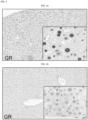
- NCR-Nude mice are injected with vehicle or different doses of GR degrader (5, 20, and 66 mg/kg) once intraperitoneally. Liver tissue are fixed in formalin for 24 hours, paraffin embedded, sectioned and stained according to standard procedures. Endogenous peroxidases are briefly inactivated by 3% hydrogen peroxide. Non-specific signals are blocked using 3% BSA, 10% goat serum in 0.1% Triton X-100. After antigen retrieval in citrate buffer, slides are stained using respective antibodies overnight at 4 °C, GR (Cell Signaling D8H2 #3660, 1:4000). After overnight incubation, the slides are washed and incubated with secondary antibody (HRP-polymers, Biocare Medical) for 30 min at room temperature.
- GR degrader 5, 20, and 66 mg/kg
- the slides are washed three times and stained with DAB substrate (ThermoFisher Scientific). The slides are then counterstained with hematoxylin and mounted with mounting medium. Results are shown in Fig. 4 .
- the staining reveals strong nuclear presence of GR in the liver of control treated mice whereas GR degrader treated mice have livers with absent or greatly diminished presence of GR protein.
- NCR-Nude mice were injected with vehicle or different doses of GR degrader (5, 20 and 66mg/kg) once intraperitoneally. Liver tissue were fixed in formalin for 24 hours, paraffin embedded, sectioned and stained according to standard procedures. Briefly, endogenous peroxidases were inactivated by 3% hydrogen peroxide. Non-specific signals were blocked using 3% BSA, 10% goat serum in 0.1% Triton X-100. After antigen retrieval in citrate buffer, slides were stained using respective antibodies overnight at 4°C, GR (Cell Signaling D8H2 #3660, 1:4000). After overnight incubation, the slides were washed and incubated with secondary antibody (HRP-polymers, Biocare Medical) for 30 min at room temperature.
- GR degrader 5, 20 and 66mg/kg
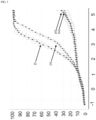
- FIG. 5 illustrates quantification of GR protein levels in the liver of mice treated once intraperitoneally with (i, circles) vehicle, or Example 3 at: (ii, squares) 5 mg/kg, (iii, triangles) 20 mg/kg or (iv, inverted triangles) 66.6 mg/kg concentration.
- NCR-Nude mice are injected with vehicle or different doses of GR degrader (5, 20 and 66 mg/kg) once intraperitoneally. Liver tissue is harvested and snap frozen in liquid N 2 . A 5 mm size fragment is then chopped off, and lysed in RIPA lysis buffer with the aid of a bullet blender. Lysates are centrifuged at 15000 rpm for 15 minutes. Supernatant is taken and protein quantification is performed using the BioRad DC method. A total of 10 ⁇ g protein is loaded on pre-cast gels and western blots are performed as described in detail above.
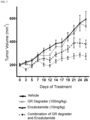
- the GR degrader Example 3 synergizes with enzalutamide to inhibit growth of prostate cancer; similar synergy is expected when other GR degraders are used in combination with enzalutamide or another anti androgen.
- TRAMP-C1 cells (5 ⁇ 10 6 ) were injected into the flanks of male C57/Bl6 mice. Tumor take was monitored visually and by palpation bi-weekly. Once tumors reached 200mm 3 mice were randomized into control and different treatment groups for 7 days. Treatment cohorts are as follows:
Landscapes
- Health & Medical Sciences (AREA)
- Chemical & Material Sciences (AREA)
- General Health & Medical Sciences (AREA)
- Life Sciences & Earth Sciences (AREA)
- Animal Behavior & Ethology (AREA)
- Veterinary Medicine (AREA)
- Pharmacology & Pharmacy (AREA)
- Medicinal Chemistry (AREA)
- Engineering & Computer Science (AREA)
- Bioinformatics & Cheminformatics (AREA)
- Public Health (AREA)
- Epidemiology (AREA)
- Organic Chemistry (AREA)
- Chemical Kinetics & Catalysis (AREA)
- General Chemical & Material Sciences (AREA)
- Nuclear Medicine, Radiotherapy & Molecular Imaging (AREA)
- Immunology (AREA)
- Molecular Biology (AREA)
- Pharmaceuticals Containing Other Organic And Inorganic Compounds (AREA)
Claims (15)
- Verbindung der Strukturformel I
 E ein E3-Ligaseligand ist;L ausgewählt ist aus *-(CH2)nCH2N(R7)CO(CH2)pCH2-**, *-CO(CH2)nCH2-**, *-CO(CH2)qO(CH2CH2O)nCH2(CH2)p-**, *-(CH2)nCH2-**, *-(CH2)qO(CH2CH2O)nCH2(CH2)p- * *,


 * den Anheftungspunkt an E darstellt;** den Anheftungspunkt an X darstellt;X ausgewählt ist aus O, NR10, S, SO und SO2;R1 und R2 unabhängig ausgewählt sind aus H, Alkyl, Cycloalkyl, Heterocycloalkyl, Aryl, Heteroaryl, Alkoxy, Alkenyl, Alkinyl, Halo, Alkylamino, Dialkylamino, Cyano und Hydroxy;R3 und R4 unabhängig ausgewählt sind aus H, Alkyl, Alkoxy, Alkenyl, Alkinyl und Hydroxyl oderR3 und R4, zusammen mit dem Atom, an das sie angeheftet sind, einen Cycloalkyl- oder Heterocycloalkylring bilden, wobei jeder davon optional substituiert ist mit 1, 2 oder 3 R11-Gruppen;R5 und R6 unabhängig ausgewählt sind aus H, Alkyl, Haloalkyl, Alkoxy, Amino, Alkylamino, Dialkylamino, Cycloalkyl, (Cycloalkyl)alkyl, Heterocycloalkyl, (Heterocycloalkyl)alkyl, CONR12R13, SO2NR12R13, SOR14, SO2R14, Halo, Hydroxy und Cyano oderR5 und R6, zusammen mit dem Atom, an das sie angeheftet sind, einen Cycloalkyl- oder Heterocycloalkylring bilden, wobei jeder davon optional substituiert ist mit 1, 2, oder 3 R15-Gruppen;R7 ausgewählt ist aus H, Alkyl, Cycloalkyl, (Cycloalkyl)alkyl, (CH2)tCOOH, Alkylcarbonyl und -CO(CH2)tCOOH;R8 und R9 unabhängig ausgewählt sind aus H, Alkyl, Alkylcarbonyl, Cycloalkylcarbonyl, Alkoxycarbonyl, Alkylsulfonyl, -(CH2)tCOOH, - CO(CH2)tCOOH, -COO(CH2)tCOOH und -(CH2)tSO2OH.R10 ausgewählt ist aus H, Alkyl, Alkoxyalkyl, Cycloalkyl und Heterocycloalkyl;jedes R11 unabhängig ausgewählt ist aus Alkyl, Cycloalkyl, Heterocycloalkyl, Alkoxy, Cyano, Halo und Hydroxy;jedes R12 und R13 unabhängig ausgewählt ist aus H, Alkyl, Cycloalkyl und Heterocycloalkyl;jedes R14 unabhängig ausgewählt ist aus Alkyl, Cycloalkyl und Heterocycloalkyl;jedes R15 unabhängig ausgewählt ist aus Alkyl, Cycloalkyl, Heterocycloalkyl, Alkoxy, Cyano, Halo und Hydroxy;n und p unabhängig ausgewählt sind aus 0-11, inklusive;q ausgewählt ist aus 0-11, inklusive;r und s unabhängig ausgewählt sind aus 1-4, inklusive;t ausgewählt ist aus 1-8, inklusive; undE ausgewählt ist aus
- Verbindung nach Anspruch 1, wobei:R3 und R4 unabhängig ausgewählt sind aus H, Alkyl, Alkoxy, Alkenyl, Alkinyl und Hydroxyl oderR3 und R4, zusammen mit dem Atom, an das sie angeheftet sind, einen Cycloalkylring bilden, der optional substituiert ist mit 1, 2 oder 3 R11-Gruppen oderR3 und R4, zusammen mit dem Atom, an das sie angeheftet sind, einen Heterocycloalkylring bilden, der optional substituiert ist mit 1, 2 oder 3 R11-Gruppen und der 1 oder 2 Gruppen enthält, die ausgewählt sind aus -O-, -NH-, -S-, -SO- und - SO2-.
- Verbindung nach Anspruch 2, wobei
mindestens eines von R3 und R4 ausgewählt ist aus Alkenyl und Alkinyl. - Verbindung nach Anspruch 3, wobei
R1 und R2 unabhängig ausgewählt sind aus H, Alkyl, Cycloalkyl, Heterocycloalkyl, Alkoxy, Halo, Alkylamino, Dialkylamino, Cyano und Hydroxy. - Verbindung nach Anspruch 4, wobei X NR10 ist.
- Verbindung nach Anspruch 5, wobei R10 ausgewählt ist aus H und Alkyl.
- Verbindung nach Anspruch 6, wobei R7 ausgewählt ist aus H, Alkyl und Cycloalkyl.
- Verbindung nach Anspruch 1, mit der Strukturformel (II)
 E ein E3-Ligaseligand ist;L ausgewählt ist aus *-(CH2)nCH2N(R7)CO(CH2)pCH2-**, *-CO(CH2)nCH2-**, *-CO(CH2)qO(CH2CH2O)nCH2(CH2)p-**, *-(CH2)nCH2-**, *-(CH2)qO(CH2CH2O)nCH2(CH2)p- * *,
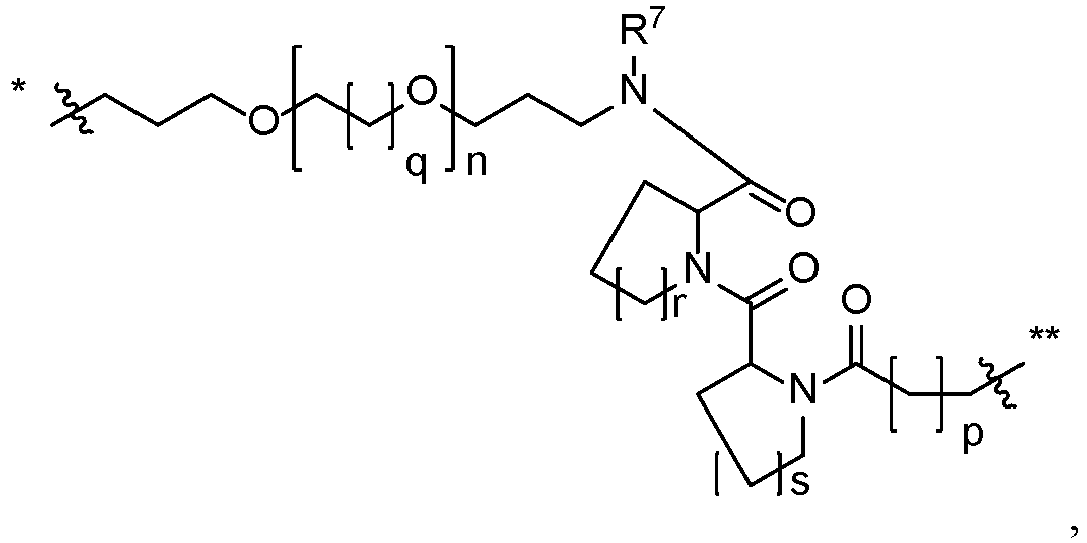


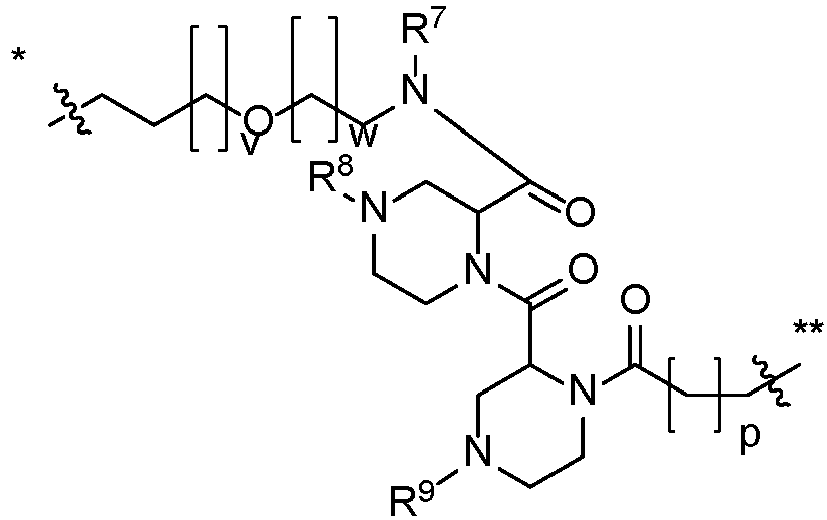
 * den Anheftungspunkt an E darstellt;** den Anheftungspunkt an X darstellt;X ausgewählt ist aus O, NR10, S, SO und SO2;R1 und R2 unabhängig ausgewählt sind aus H, Alkyl, Cycloalkyl, Heterocycloalkyl, Aryl, Heteroaryl, Alkoxy, Alkenyl, Alkinyl, Halo, Alkylamino, Dialkylamino, Cyano und Hydroxy;R5 und R6 unabhängig ausgewählt sind aus H, Alkyl, Haloalkyl, Alkoxy, Amino, Alkylamino, Dialkylamino, Cycloalkyl, (Cycloalkyl)alkyl, Heterocycloalkyl, (Heterocycloalkyl)alkyl, CONR12R13, SO2NR12R13, SOR14, SO2R14, Halo, Hydroxy und Cyano oderR5 und R6, zusammen mit dem Atom, an das sie angeheftet sind, einen Cycloalkyl- oder Heterocycloalkylring bilden, wobei jeder davon optional substituiert ist mit 1, 2, oder 3 R15-Gruppen;R7 ausgewählt ist aus H, Alkyl, Cycloalkyl, (Cycloalkyl)alkyl, (CH2)tCOOH, Alkylcarbonyl und -CO(CH2)tCOOH;R8 und R9 unabhängig ausgewählt sind aus H, Alkyl, Alkylcarbonyl, Cycloalkylcarbonyl, Alkoxycarbonyl, Alkylsulfonyl, -(CH2)tCOOH, - CO(CH2)tCOOH, -COO(CH2)tCOOH und -(CH2)tSO2OH.R10 ausgewählt ist aus H, Alkyl, Alkoxyalkyl, Cycloalkyl und Heterocycloalkyl;jedes R11 unabhängig ausgewählt ist aus Alkyl, Cycloalkyl, Heterocycloalkyl, Alkoxy, Cyano, Halo und Hydroxy;jedes R12 und R13 unabhängig ausgewählt ist aus H, Alkyl, Cycloalkyl und Heterocycloalkyl;jedes R14 unabhängig ausgewählt ist aus Alkyl, Cycloalkyl und Heterocycloalkyl;jedes R15 unabhängig ausgewählt ist aus Alkyl, Cycloalkyl, Heterocycloalkyl, Alkoxy, Cyano, Halo und Hydroxy;n und p unabhängig ausgewählt sind aus 0-11, inklusive;q ausgewählt ist aus 0-11, inklusive;r und s unabhängig ausgewählt sind aus 1-4, inklusive;t ausgewählt ist aus 1-8, inklusive; undE ausgewählt ist aus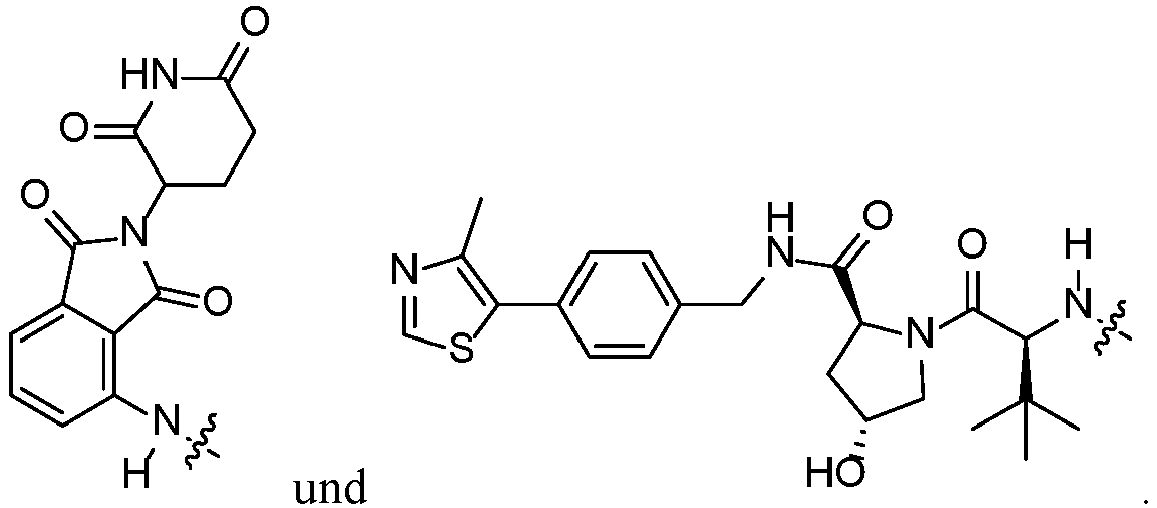
- Verbindung, ausgewählt aus


- Verbindung nach einem der Ansprüche 1-9 zur Verwendung als Medikament.
- Verbindung nach einem der Ansprüche 1-9 zur Verwendung bei der Behandlung einer Glukokortikoidrezeptor-vermittelten Krankheit.
- Pharmazeutische Zusammensetzung, umfassend eine Verbindung nach einem der Ansprüche 1-9 zusammen mit einem pharmazeutisch annehmbaren Träger.
- Verbindung zur Verwendung nach Anspruch 10, wobei die Krankheit Krebs ist.
- Verbindung zur Verwendung nach Anspruch 13, wobei der Krebs ausgewählt ist aus Prostatakrebs, Brustkrebs, Eierstockkrebs und Endometriumkrebs.
- Verbindung zur Verwendung nach Anspruch 11, wobei die Krankheit eine Entzündungskrankheit ist, ausgewählt aus entzündlicher Darmerkrankung, systemischem Lupus erythematodes, Polyarteritis nodosa, Wegener-Granulomatose, Riesenzellarteriitis, rheumatoider Arthritis, Osteoarthritis, Heuschnupfen, allergischer Rhinitis, Urtikaria, angioneurotischem Ödem, chronisch obstruktiver Lungenerkrankung, Asthma, Tendinitis, Bursitis, Morbus Crohn, Colitis ulcerosa, autoimmuner chronischer aktiver Hepatitis, Organtransplantation, Hepatitis, Zirrhose, juveniler rheumatoider Arthritis, juveniler idiopathischer Arthritis, ankylosierender Spondylitis, Psoriasis, Plaque-Psoriasis und psoriatischer Arthritis; eine topische Krankheit, ausgewählt aus entzündlicher Kopfhautalopezie, Pannikulitis, Psoriasis, diskoidem Lupus erythematodes, entzündeten Zysten, atopischer Dermatitis, Pyoderma gangrenosum, Pemphigus vulgaris, bullösem Pemphigoid, systemischem Lupus erythematodes, Dermatomyositis, Herpes gestationis, eosinophiler Fasziitis, rezidivierender Polychondritis, entzündlicher Vaskulitis, Sarkoidose, Sweet-Krankheit, reaktiver Lepra vom Typ 1, kapillären Hämangiomen, Kontaktdermatitis, atopischer Dermatitis, Lichen planus, exfoliativer Dermatitis, Erythema nodosum, Akne, Hirsutismus, toxischer epidermaler Nekrolyse, Erythema multiforme, kutanem T-Zellen-Lymphom und Augenkrankheiten.
Applications Claiming Priority (2)
| Application Number | Priority Date | Filing Date | Title |
|---|---|---|---|
| US201862657598P | 2018-04-13 | 2018-04-13 | |
| PCT/US2019/027163 WO2019200217A1 (en) | 2018-04-13 | 2019-04-12 | Compounds and methods for selective proteolysis of glucocorticoid receptors |
Publications (3)
| Publication Number | Publication Date |
|---|---|
| EP3774802A1 EP3774802A1 (de) | 2021-02-17 |
| EP3774802A4 EP3774802A4 (de) | 2021-12-29 |
| EP3774802B1 true EP3774802B1 (de) | 2024-07-03 |
Family
ID=68164593
Family Applications (1)
| Application Number | Title | Priority Date | Filing Date |
|---|---|---|---|
| EP19785593.5A Active EP3774802B1 (de) | 2018-04-13 | 2019-04-12 | Verbindungen und verfahren zur selektiven proteolyse von glucocorticoid-rezeptoren |
Country Status (3)
| Country | Link |
|---|---|
| US (1) | US11998606B2 (de) |
| EP (1) | EP3774802B1 (de) |
| WO (1) | WO2019200217A1 (de) |
Families Citing this family (1)
| Publication number | Priority date | Publication date | Assignee | Title |
|---|---|---|---|---|
| EP3774802B1 (de) | 2018-04-13 | 2024-07-03 | Board of Regents, The University of Texas System | Verbindungen und verfahren zur selektiven proteolyse von glucocorticoid-rezeptoren |
Family Cites Families (8)
| Publication number | Priority date | Publication date | Assignee | Title |
|---|---|---|---|---|
| US7141559B2 (en) | 2002-06-19 | 2006-11-28 | Karo Bio Ab | Glucocorticoid receptor ligands for the treatment of metabolic disorders |
| US8890745B2 (en) * | 2011-10-27 | 2014-11-18 | Raytheon Company | RF gun barrel detection system |
| KR102668696B1 (ko) | 2012-01-12 | 2024-05-29 | 예일 유니버시티 | E3 유비퀴틴 리가아제에 의한 표적 단백질 및 다른 폴리펩티드의 증진된 분해를 위한 화합물 및 방법 |
| WO2015089338A2 (en) | 2013-12-11 | 2015-06-18 | Sloan-Kettering Institute For Cancer Research | Glucocorticoid inhibitors for treatment of prostate cancer |
| US9694084B2 (en) * | 2014-12-23 | 2017-07-04 | Dana-Farber Cancer Institute, Inc. | Methods to induce targeted protein degradation through bifunctional molecules |
| US11110103B2 (en) | 2015-12-23 | 2021-09-07 | Oric Pharmaceuticals, Inc. | Inhibitors of glucocorticoid receptor |
| AU2016377702B2 (en) | 2015-12-23 | 2021-03-11 | Oric Pharmaceuticals, Inc. | Inhibitors of glucocorticoid receptor |
| EP3774802B1 (de) | 2018-04-13 | 2024-07-03 | Board of Regents, The University of Texas System | Verbindungen und verfahren zur selektiven proteolyse von glucocorticoid-rezeptoren |
-
2019
- 2019-04-12 EP EP19785593.5A patent/EP3774802B1/de active Active
- 2019-04-12 US US17/047,267 patent/US11998606B2/en active Active
- 2019-04-12 WO PCT/US2019/027163 patent/WO2019200217A1/en not_active Ceased
Also Published As
| Publication number | Publication date |
|---|---|
| US20210361773A1 (en) | 2021-11-25 |
| US11998606B2 (en) | 2024-06-04 |
| WO2019200217A1 (en) | 2019-10-17 |
| EP3774802A4 (de) | 2021-12-29 |
| EP3774802A1 (de) | 2021-02-17 |
Similar Documents
| Publication | Publication Date | Title |
|---|---|---|
| EP3551610B1 (de) | Bicyclo[1.1.1]pentan-inhibitoren der kinase von dualem leucin-zipper (dlk) zur behandlung von krankheiten | |
| WO2008006052A2 (en) | Bicyclic heteroaryl inhibitors of pde4 | |
| EP3773587A1 (de) | Imidazopiperazin-hemmer von transkriptionsaktivierungsproteinen | |
| WO2007015866A2 (en) | Inhibitors of p38 kinase and methods of treating inflammatory disorders | |
| EP2444092B1 (de) | Nichthormonale steroide Modulatoren von NF-KB zur Krankheitsbehandlung | |
| WO2008036459A2 (en) | Inhibitors of rho kinase | |
| AU2020391425A1 (en) | Inhibitors of Receptor Interacting Protein Kinase 1 for the treatment of disease | |
| US12559497B2 (en) | Imidazopiperazine inhibitors of transcription activating proteins | |
| EP4048662A1 (de) | Bicyclo[1.1.1]pentan-inhibitoren der kinase von dualem leucin-zipper (dlk) zur behandlung von krankheiten | |
| EP3823604A1 (de) | Verbindungen als inhibitoren der indolamin-2,3-dioxygenase und/oder tryptophan-dioxygenase | |
| WO2017004205A1 (en) | NON-HORMONAL STEROID MODULATORS OF NF-κB FOR TREATMENT OF DISEASE | |
| US12540139B2 (en) | Imidazopiperazine inhibitors of transcription activating proteins | |
| CA2855756A1 (en) | Non-hormonal steroid modulators of nf-kb for treatment of disease | |
| EP3774802B1 (de) | Verbindungen und verfahren zur selektiven proteolyse von glucocorticoid-rezeptoren | |
| US20190382396A1 (en) | Salts of bicyclo[1.1.1]pentane inhibitors of dual leucine zipper (dlk) kinase for the treatment of disease | |
| WO2008073733A1 (en) | Salts of inhibitors of histone deacetylase for the treatment of disease | |
| HK40016460B (en) | Bicyclo[1.1.1]pentane inhibitors of dual leucine zipper (dlk) kinase for the treatment of disease | |
| HK40016460A (en) | Bicyclo[1.1.1]pentane inhibitors of dual leucine zipper (dlk) kinase for the treatment of disease |
Legal Events
| Date | Code | Title | Description |
|---|---|---|---|
| STAA | Information on the status of an ep patent application or granted ep patent |
Free format text: STATUS: THE INTERNATIONAL PUBLICATION HAS BEEN MADE |
|
| PUAI | Public reference made under article 153(3) epc to a published international application that has entered the european phase |
Free format text: ORIGINAL CODE: 0009012 |
|
| STAA | Information on the status of an ep patent application or granted ep patent |
Free format text: STATUS: REQUEST FOR EXAMINATION WAS MADE |
|
| 17P | Request for examination filed |
Effective date: 20201014 |
|
| AK | Designated contracting states |
Kind code of ref document: A1 Designated state(s): AL AT BE BG CH CY CZ DE DK EE ES FI FR GB GR HR HU IE IS IT LI LT LU LV MC MK MT NL NO PL PT RO RS SE SI SK SM TR |
|
| AX | Request for extension of the european patent |
Extension state: BA ME |
|
| DAV | Request for validation of the european patent (deleted) | ||
| DAX | Request for extension of the european patent (deleted) | ||
| A4 | Supplementary search report drawn up and despatched |
Effective date: 20211130 |
|
| RIC1 | Information provided on ipc code assigned before grant |
Ipc: A61P 35/00 20060101ALI20211124BHEP Ipc: A61K 47/55 20170101ALI20211124BHEP Ipc: A61K 47/54 20170101ALI20211124BHEP Ipc: C07J 43/00 20060101ALI20211124BHEP Ipc: C07J 41/00 20060101ALI20211124BHEP Ipc: C07D 498/04 20060101ALI20211124BHEP Ipc: C07D 471/04 20060101AFI20211124BHEP |
|
| STAA | Information on the status of an ep patent application or granted ep patent |
Free format text: STATUS: EXAMINATION IS IN PROGRESS |
|
| 17Q | First examination report despatched |
Effective date: 20230426 |
|
| GRAP | Despatch of communication of intention to grant a patent |
Free format text: ORIGINAL CODE: EPIDOSNIGR1 |
|
| STAA | Information on the status of an ep patent application or granted ep patent |
Free format text: STATUS: GRANT OF PATENT IS INTENDED |
|
| INTG | Intention to grant announced |
Effective date: 20240126 |
|
| GRAS | Grant fee paid |
Free format text: ORIGINAL CODE: EPIDOSNIGR3 |
|
| GRAA | (expected) grant |
Free format text: ORIGINAL CODE: 0009210 |
|
| STAA | Information on the status of an ep patent application or granted ep patent |
Free format text: STATUS: THE PATENT HAS BEEN GRANTED |
|
| AK | Designated contracting states |
Kind code of ref document: B1 Designated state(s): AL AT BE BG CH CY CZ DE DK EE ES FI FR GB GR HR HU IE IS IT LI LT LU LV MC MK MT NL NO PL PT RO RS SE SI SK SM TR |
|
| REG | Reference to a national code |
Ref country code: CH Ref legal event code: EP |
|
| REG | Reference to a national code |
Ref country code: DE Ref legal event code: R096 Ref document number: 602019054651 Country of ref document: DE |
|
| P01 | Opt-out of the competence of the unified patent court (upc) registered |
Free format text: CASE NUMBER: APP_51547/2024 Effective date: 20240912 |
|
| REG | Reference to a national code |
Ref country code: LT Ref legal event code: MG9D |
|
| REG | Reference to a national code |
Ref country code: NL Ref legal event code: MP Effective date: 20240703 |
|
| PG25 | Lapsed in a contracting state [announced via postgrant information from national office to epo] |
Ref country code: PT Free format text: LAPSE BECAUSE OF FAILURE TO SUBMIT A TRANSLATION OF THE DESCRIPTION OR TO PAY THE FEE WITHIN THE PRESCRIBED TIME-LIMIT Effective date: 20241104 |
|
| REG | Reference to a national code |
Ref country code: AT Ref legal event code: MK05 Ref document number: 1699725 Country of ref document: AT Kind code of ref document: T Effective date: 20240703 |
|
| PG25 | Lapsed in a contracting state [announced via postgrant information from national office to epo] |
Ref country code: NL Free format text: LAPSE BECAUSE OF FAILURE TO SUBMIT A TRANSLATION OF THE DESCRIPTION OR TO PAY THE FEE WITHIN THE PRESCRIBED TIME-LIMIT Effective date: 20240703 |
|
| PG25 | Lapsed in a contracting state [announced via postgrant information from national office to epo] |
Ref country code: PT Free format text: LAPSE BECAUSE OF FAILURE TO SUBMIT A TRANSLATION OF THE DESCRIPTION OR TO PAY THE FEE WITHIN THE PRESCRIBED TIME-LIMIT Effective date: 20241104 Ref country code: NL Free format text: LAPSE BECAUSE OF FAILURE TO SUBMIT A TRANSLATION OF THE DESCRIPTION OR TO PAY THE FEE WITHIN THE PRESCRIBED TIME-LIMIT Effective date: 20240703 |
|
| PG25 | Lapsed in a contracting state [announced via postgrant information from national office to epo] |
Ref country code: NO Free format text: LAPSE BECAUSE OF FAILURE TO SUBMIT A TRANSLATION OF THE DESCRIPTION OR TO PAY THE FEE WITHIN THE PRESCRIBED TIME-LIMIT Effective date: 20241003 |
|
| PG25 | Lapsed in a contracting state [announced via postgrant information from national office to epo] |
Ref country code: FI Free format text: LAPSE BECAUSE OF FAILURE TO SUBMIT A TRANSLATION OF THE DESCRIPTION OR TO PAY THE FEE WITHIN THE PRESCRIBED TIME-LIMIT Effective date: 20240703 Ref country code: GR Free format text: LAPSE BECAUSE OF FAILURE TO SUBMIT A TRANSLATION OF THE DESCRIPTION OR TO PAY THE FEE WITHIN THE PRESCRIBED TIME-LIMIT Effective date: 20241004 Ref country code: PL Free format text: LAPSE BECAUSE OF FAILURE TO SUBMIT A TRANSLATION OF THE DESCRIPTION OR TO PAY THE FEE WITHIN THE PRESCRIBED TIME-LIMIT Effective date: 20240703 |
|
| PG25 | Lapsed in a contracting state [announced via postgrant information from national office to epo] |
Ref country code: BG Free format text: LAPSE BECAUSE OF FAILURE TO SUBMIT A TRANSLATION OF THE DESCRIPTION OR TO PAY THE FEE WITHIN THE PRESCRIBED TIME-LIMIT Effective date: 20240703 |
|
| PG25 | Lapsed in a contracting state [announced via postgrant information from national office to epo] |
Ref country code: LV Free format text: LAPSE BECAUSE OF FAILURE TO SUBMIT A TRANSLATION OF THE DESCRIPTION OR TO PAY THE FEE WITHIN THE PRESCRIBED TIME-LIMIT Effective date: 20240703 |
|
| PG25 | Lapsed in a contracting state [announced via postgrant information from national office to epo] |
Ref country code: IS Free format text: LAPSE BECAUSE OF FAILURE TO SUBMIT A TRANSLATION OF THE DESCRIPTION OR TO PAY THE FEE WITHIN THE PRESCRIBED TIME-LIMIT Effective date: 20241103 Ref country code: AT Free format text: LAPSE BECAUSE OF FAILURE TO SUBMIT A TRANSLATION OF THE DESCRIPTION OR TO PAY THE FEE WITHIN THE PRESCRIBED TIME-LIMIT Effective date: 20240703 |
|
| PG25 | Lapsed in a contracting state [announced via postgrant information from national office to epo] |
Ref country code: CZ Free format text: LAPSE BECAUSE OF FAILURE TO SUBMIT A TRANSLATION OF THE DESCRIPTION OR TO PAY THE FEE WITHIN THE PRESCRIBED TIME-LIMIT Effective date: 20240703 Ref country code: HR Free format text: LAPSE BECAUSE OF FAILURE TO SUBMIT A TRANSLATION OF THE DESCRIPTION OR TO PAY THE FEE WITHIN THE PRESCRIBED TIME-LIMIT Effective date: 20240703 |
|
| PG25 | Lapsed in a contracting state [announced via postgrant information from national office to epo] |
Ref country code: ES Free format text: LAPSE BECAUSE OF FAILURE TO SUBMIT A TRANSLATION OF THE DESCRIPTION OR TO PAY THE FEE WITHIN THE PRESCRIBED TIME-LIMIT Effective date: 20240703 Ref country code: RS Free format text: LAPSE BECAUSE OF FAILURE TO SUBMIT A TRANSLATION OF THE DESCRIPTION OR TO PAY THE FEE WITHIN THE PRESCRIBED TIME-LIMIT Effective date: 20241003 |
|
| PG25 | Lapsed in a contracting state [announced via postgrant information from national office to epo] |
Ref country code: RS Free format text: LAPSE BECAUSE OF FAILURE TO SUBMIT A TRANSLATION OF THE DESCRIPTION OR TO PAY THE FEE WITHIN THE PRESCRIBED TIME-LIMIT Effective date: 20241003 Ref country code: PL Free format text: LAPSE BECAUSE OF FAILURE TO SUBMIT A TRANSLATION OF THE DESCRIPTION OR TO PAY THE FEE WITHIN THE PRESCRIBED TIME-LIMIT Effective date: 20240703 Ref country code: NO Free format text: LAPSE BECAUSE OF FAILURE TO SUBMIT A TRANSLATION OF THE DESCRIPTION OR TO PAY THE FEE WITHIN THE PRESCRIBED TIME-LIMIT Effective date: 20241003 Ref country code: LV Free format text: LAPSE BECAUSE OF FAILURE TO SUBMIT A TRANSLATION OF THE DESCRIPTION OR TO PAY THE FEE WITHIN THE PRESCRIBED TIME-LIMIT Effective date: 20240703 Ref country code: IS Free format text: LAPSE BECAUSE OF FAILURE TO SUBMIT A TRANSLATION OF THE DESCRIPTION OR TO PAY THE FEE WITHIN THE PRESCRIBED TIME-LIMIT Effective date: 20241103 Ref country code: HR Free format text: LAPSE BECAUSE OF FAILURE TO SUBMIT A TRANSLATION OF THE DESCRIPTION OR TO PAY THE FEE WITHIN THE PRESCRIBED TIME-LIMIT Effective date: 20240703 Ref country code: GR Free format text: LAPSE BECAUSE OF FAILURE TO SUBMIT A TRANSLATION OF THE DESCRIPTION OR TO PAY THE FEE WITHIN THE PRESCRIBED TIME-LIMIT Effective date: 20241004 Ref country code: FI Free format text: LAPSE BECAUSE OF FAILURE TO SUBMIT A TRANSLATION OF THE DESCRIPTION OR TO PAY THE FEE WITHIN THE PRESCRIBED TIME-LIMIT Effective date: 20240703 Ref country code: ES Free format text: LAPSE BECAUSE OF FAILURE TO SUBMIT A TRANSLATION OF THE DESCRIPTION OR TO PAY THE FEE WITHIN THE PRESCRIBED TIME-LIMIT Effective date: 20240703 Ref country code: CZ Free format text: LAPSE BECAUSE OF FAILURE TO SUBMIT A TRANSLATION OF THE DESCRIPTION OR TO PAY THE FEE WITHIN THE PRESCRIBED TIME-LIMIT Effective date: 20240703 Ref country code: BG Free format text: LAPSE BECAUSE OF FAILURE TO SUBMIT A TRANSLATION OF THE DESCRIPTION OR TO PAY THE FEE WITHIN THE PRESCRIBED TIME-LIMIT Effective date: 20240703 Ref country code: AT Free format text: LAPSE BECAUSE OF FAILURE TO SUBMIT A TRANSLATION OF THE DESCRIPTION OR TO PAY THE FEE WITHIN THE PRESCRIBED TIME-LIMIT Effective date: 20240703 |
|
| REG | Reference to a national code |
Ref country code: DE Ref legal event code: R097 Ref document number: 602019054651 Country of ref document: DE |
|
| PG25 | Lapsed in a contracting state [announced via postgrant information from national office to epo] |
Ref country code: SM Free format text: LAPSE BECAUSE OF FAILURE TO SUBMIT A TRANSLATION OF THE DESCRIPTION OR TO PAY THE FEE WITHIN THE PRESCRIBED TIME-LIMIT Effective date: 20240703 Ref country code: RO Free format text: LAPSE BECAUSE OF FAILURE TO SUBMIT A TRANSLATION OF THE DESCRIPTION OR TO PAY THE FEE WITHIN THE PRESCRIBED TIME-LIMIT Effective date: 20240703 Ref country code: DK Free format text: LAPSE BECAUSE OF FAILURE TO SUBMIT A TRANSLATION OF THE DESCRIPTION OR TO PAY THE FEE WITHIN THE PRESCRIBED TIME-LIMIT Effective date: 20240703 |
|
| PG25 | Lapsed in a contracting state [announced via postgrant information from national office to epo] |
Ref country code: EE Free format text: LAPSE BECAUSE OF FAILURE TO SUBMIT A TRANSLATION OF THE DESCRIPTION OR TO PAY THE FEE WITHIN THE PRESCRIBED TIME-LIMIT Effective date: 20240703 |
|
| PG25 | Lapsed in a contracting state [announced via postgrant information from national office to epo] |
Ref country code: SK Free format text: LAPSE BECAUSE OF FAILURE TO SUBMIT A TRANSLATION OF THE DESCRIPTION OR TO PAY THE FEE WITHIN THE PRESCRIBED TIME-LIMIT Effective date: 20240703 Ref country code: IT Free format text: LAPSE BECAUSE OF FAILURE TO SUBMIT A TRANSLATION OF THE DESCRIPTION OR TO PAY THE FEE WITHIN THE PRESCRIBED TIME-LIMIT Effective date: 20240703 |
|
| PLBE | No opposition filed within time limit |
Free format text: ORIGINAL CODE: 0009261 |
|
| STAA | Information on the status of an ep patent application or granted ep patent |
Free format text: STATUS: NO OPPOSITION FILED WITHIN TIME LIMIT |
|
| 26N | No opposition filed |
Effective date: 20250404 |
|
| PGFP | Annual fee paid to national office [announced via postgrant information from national office to epo] |
Ref country code: DE Payment date: 20250429 Year of fee payment: 7 |
|
| PGFP | Annual fee paid to national office [announced via postgrant information from national office to epo] |
Ref country code: GB Payment date: 20250428 Year of fee payment: 7 |
|
| PG25 | Lapsed in a contracting state [announced via postgrant information from national office to epo] |
Ref country code: SE Free format text: LAPSE BECAUSE OF FAILURE TO SUBMIT A TRANSLATION OF THE DESCRIPTION OR TO PAY THE FEE WITHIN THE PRESCRIBED TIME-LIMIT Effective date: 20240703 |
|
| REG | Reference to a national code |
Ref country code: CH Ref legal event code: H13 Free format text: ST27 STATUS EVENT CODE: U-0-0-H10-H13 (AS PROVIDED BY THE NATIONAL OFFICE) Effective date: 20251125 |
|
| PG25 | Lapsed in a contracting state [announced via postgrant information from national office to epo] |
Ref country code: LU Free format text: LAPSE BECAUSE OF NON-PAYMENT OF DUE FEES Effective date: 20250412 |
|
| PG25 | Lapsed in a contracting state [announced via postgrant information from national office to epo] |
Ref country code: MC Free format text: LAPSE BECAUSE OF FAILURE TO SUBMIT A TRANSLATION OF THE DESCRIPTION OR TO PAY THE FEE WITHIN THE PRESCRIBED TIME-LIMIT Effective date: 20240703 |
|
| REG | Reference to a national code |
Ref country code: BE Ref legal event code: MM Effective date: 20250430 |
|
| PG25 | Lapsed in a contracting state [announced via postgrant information from national office to epo] |
Ref country code: FR Free format text: LAPSE BECAUSE OF NON-PAYMENT OF DUE FEES Effective date: 20250430 |
|
| PG25 | Lapsed in a contracting state [announced via postgrant information from national office to epo] |
Ref country code: BE Free format text: LAPSE BECAUSE OF NON-PAYMENT OF DUE FEES Effective date: 20250430 |
|
| PG25 | Lapsed in a contracting state [announced via postgrant information from national office to epo] |
Ref country code: CH Free format text: LAPSE BECAUSE OF NON-PAYMENT OF DUE FEES Effective date: 20250430 |