EP3774799B1 - Nek6 kinase inhibitors useful for the treatment of solid tumors - Google Patents
Nek6 kinase inhibitors useful for the treatment of solid tumors Download PDFInfo
- Publication number
- EP3774799B1 EP3774799B1 EP19721123.8A EP19721123A EP3774799B1 EP 3774799 B1 EP3774799 B1 EP 3774799B1 EP 19721123 A EP19721123 A EP 19721123A EP 3774799 B1 EP3774799 B1 EP 3774799B1
- Authority
- EP
- European Patent Office
- Prior art keywords
- compound
- tumour
- compounds
- nek6
- treatment
- Prior art date
- Legal status (The legal status is an assumption and is not a legal conclusion. Google has not performed a legal analysis and makes no representation as to the accuracy of the status listed.)
- Active
Links
Images


Classifications
-
- C—CHEMISTRY; METALLURGY
- C07—ORGANIC CHEMISTRY
- C07D—HETEROCYCLIC COMPOUNDS
- C07D405/00—Heterocyclic compounds containing both one or more hetero rings having oxygen atoms as the only ring hetero atoms, and one or more rings having nitrogen as the only ring hetero atom
- C07D405/02—Heterocyclic compounds containing both one or more hetero rings having oxygen atoms as the only ring hetero atoms, and one or more rings having nitrogen as the only ring hetero atom containing two hetero rings
- C07D405/06—Heterocyclic compounds containing both one or more hetero rings having oxygen atoms as the only ring hetero atoms, and one or more rings having nitrogen as the only ring hetero atom containing two hetero rings linked by a carbon chain containing only aliphatic carbon atoms
-
- C—CHEMISTRY; METALLURGY
- C07—ORGANIC CHEMISTRY
- C07D—HETEROCYCLIC COMPOUNDS
- C07D471/00—Heterocyclic compounds containing nitrogen atoms as the only ring hetero atoms in the condensed system, at least one ring being a six-membered ring with one nitrogen atom, not provided for by groups C07D451/00 - C07D463/00
- C07D471/02—Heterocyclic compounds containing nitrogen atoms as the only ring hetero atoms in the condensed system, at least one ring being a six-membered ring with one nitrogen atom, not provided for by groups C07D451/00 - C07D463/00 in which the condensed system contains two hetero rings
- C07D471/04—Ortho-condensed systems
-
- A—HUMAN NECESSITIES
- A61—MEDICAL OR VETERINARY SCIENCE; HYGIENE
- A61P—SPECIFIC THERAPEUTIC ACTIVITY OF CHEMICAL COMPOUNDS OR MEDICINAL PREPARATIONS
- A61P35/00—Antineoplastic agents
-
- A—HUMAN NECESSITIES
- A61—MEDICAL OR VETERINARY SCIENCE; HYGIENE
- A61K—PREPARATIONS FOR MEDICAL, DENTAL OR TOILETRY PURPOSES
- A61K31/00—Medicinal preparations containing organic active ingredients
- A61K31/33—Heterocyclic compounds
- A61K31/335—Heterocyclic compounds having oxygen as the only ring hetero atom, e.g. fungichromin
- A61K31/337—Heterocyclic compounds having oxygen as the only ring hetero atom, e.g. fungichromin having four-membered rings, e.g. taxol
-
- A—HUMAN NECESSITIES
- A61—MEDICAL OR VETERINARY SCIENCE; HYGIENE
- A61K—PREPARATIONS FOR MEDICAL, DENTAL OR TOILETRY PURPOSES
- A61K33/00—Medicinal preparations containing inorganic active ingredients
- A61K33/24—Heavy metals; Compounds thereof
- A61K33/243—Platinum; Compounds thereof
-
- A—HUMAN NECESSITIES
- A61—MEDICAL OR VETERINARY SCIENCE; HYGIENE
- A61K—PREPARATIONS FOR MEDICAL, DENTAL OR TOILETRY PURPOSES
- A61K45/00—Medicinal preparations containing active ingredients not provided for in groups A61K31/00 - A61K41/00
- A61K45/06—Mixtures of active ingredients without chemical characterisation, e.g. antiphlogistics and cardiaca
Definitions
- the mitotic kinases regulating the dynamics of centrosomes and the functions of the mitotic spindle are potential targets for the antitumour therapy.
- some molecules with inhibitory activity on NEK6 have been identified.
- the present invention relates to such molecules and to the compositions including them for use as NEK6 inhibitor in a method of treatment of tumours both in monotherapy and in combination with other drugs.
- NEK6 is a serine threonine protein kinase belonging to the family of "NIMA-related kinase". This family comprises eleven proteins (NEK1-NEK11), involved in the progression of the cell cycle and/or in the organization of the microtubules. The protein levels and the catalytic activity of NEK6 increase during mitosis.
- NEK6 seems to be requested in the separation of centrosomes and in the metaphase-anaphase transition of the cell cycle wherein it has a role in maintaining the mitotic spindle ( Fry AM J, Cell Sci. 2012;125:4423-33 ).
- NEK6 represents a direct target of the checkpoint of damage to DNA ( Lee MY et al. Cell Cycle. 2008;7:2705-9 ). In line with these data, during the last years experimental evidence has consolidated to support a role of NEK6 in tumorigenesis.
- Several types of solid tumours over-express NEK6, thereamong liver, stomach, breast, colon-rectum, lung, larynx, ovary and prostate ( Nassirpour et al. Mol Cancer Res. 2010;8:717-28 ; De Donato et al. Am J Cancer Res. 2015;5:1862-77 ).
- NEK6 further represents an independent negative prognostic factor in hepatic carcinoma ( Cao X et al.
- Pathol Oncol Res. 2012;18:201-7 ovarian carcinoma
- ovarian carcinoma De Donato et al. Am J Cancer Res. 2015;5:1862-77 ; patent WO2015/006262 A1 ), as well as a prognostic and diagnostic biomarker in the tumour of colon-rectum ( Gerçeker E. et al. Oncol Rep. 2015;34:1905-14 ).
- NEK6 results to be also a powerful inhibitor of senescence induced by p53 ( Jee HJ et al. Cell Cycle. 2010;9:4703-10 ).
- the patent application US2005216961A1 describes the use of several kinases, thereamong NEK6, in the prognosis and screening of new molecules useful in the treatment of different tumours.
- NEK6 then is an important therapeutic target for the development of antitumour drugs ( Dominguez-Brauer C. et al. Mol Cell. 2015; 60:524-36 ).
- the currently used antitumour drugs have the disadvantage of not being selective for the malignant cells. Therefore, the drugs used in past designated to stop specifically the cell cycle during mitosis, gave limited clinical results due to the low therapeutic index linked to the cytotoxicity on the not tumour cells ( Dominguez-Brauer C. et al. Mol Cell. 2015; 60:524-36 ).
- With the purpose of developing customized therapies in the treatment of tumours it is important to identify new drugs with selective activity against tumour cells. Such drugs could be used alone or in association to the already used first-line therapies or in subsequent therapeutic lines.
- NEK kinases which play a critical role for organizing the microtubules and carrying out the mitosis, represent emerging targets interesting for the development of compounds to be used in association with antitumour drugs ( Dominguez-Brauer et al 2015).
- the important result described by Nassirpour and colleagues shows that the inhibition of NEK6 induces apoptosis in several cell lines of human carcinoma, but not in the normal primary cell lines, by confirming the importance of the development of selective inhibitors of this protein in the development of new antitumour therapies.
- the serine threonine protein kinase NEK6 represents an important therapeutic target for the development of new drugs against tumour.
- the present invention arises from the search for compounds capable of inhibiting NEK6.
- the capability of inhibiting in vitro the kinase activity of NEK6 was examined in several inhibition assays and subsequently the cytotoxic activity of such inhibitors on different tumour cell lines of human origin was demonstrated.
- the compound C8 according to the present specification was assayed in combination with other chemotherapeutic drugs on a line of ovarian carcinoma by showing a synergic effect.
- Two families of compounds capable of inhibiting NEK6 and of inhibiting the growth of tumour cell lines were thus detected.
- the compounds identified by the authors of the present invention could have the additional advantage of improving the therapeutic effectiveness and reducing the toxic effects.
- the inhibition of NEK6 activity in fact, could determine a selective cytotoxic effect on the neoplastic cells and not on the normal cells.
- the invention relates to the compounds provided with inhibition activity of NEK6 protein having general formula having the structure formulas (A) as defined in the appended set of claims, their enantiomers, tautomers salts, and the use thereof in the treatment of a tumour.
- Compounds having the structure formulas (B) as disclosed in the present specification, their enantiomers, tautomers salts, compositions, kits, methods of preparation and uses thereof in the treatment of a tumour are not encompassed by the wording of the appended claims but are considered useful for understanding the present invention.
- the present invention further relates to the compounds having general formula selected from the structure formulas (A) as defined in the appended set of claims for use as inhibitors of NEK6 protein in a method of treatment, in particular in a method of treatment of a tumour.
- the present invention further relates to pharmaceutical compositions comprising the structure formulas (A) as defined in the appended set of claims and pharmaceutically suitable excipients.
- the present invention further relates to pharmaceutical compositions comprising the structure formulas (A) as defined in the appended set of claims and pharmaceutically suitable excipients and one or more additional chemotherapeutic drugs.
- the present invention further relates to kit comprising the compounds having general formula selected from the structure formulas (A) as defined in the appended set of claims and one or more additional chemotherapeutic drugs and use thereof in a method of treatment of a tumour.
- the present invention further relates to processes for the preparation of the compounds having general formula selected from the structure formulas (A) as defined in the appended set of claims.
- the compounds of the invention are compounds which have in common the same pharmacological activity, that is the inhibition of NEK6 protein, in particular of human NEK6 protein (code in data bank UniProtKB-Q9HC, NEK6_Human).
- the invention relates to the compounds having general formula selected from formula (A) as defined in the appended set of claims..
- a first group of the compounds, the present invention relates to, are compounds of general formula (A)
- the compound preferably will be selected from one of the following compounds of formula A wherein the substituents are selected according to formulas A1-A3, A5-A10 and A14:
- the compound of formula A is the compound (5Z)-2-hydroxy-4-methyl-6-oxy-5-[(5-phenylfuran-2il)methylidene]-5,6-dihydropyridine-3-carbonitrile identified in the description with the abbreviation C8 and the structure formula thereof is shown hereinafter:
- the compound of formula B is preferably the compound 6-amino-2-phenyl-5,7,9-triazatetracycle[8.7.0.0 3 , 8 .0 11 , 16 ]heptadeca 1(10),3(8),6,11,13,15 hexaene-4, 17-dione identified in the description with the abbreviation C21 and the structure formula thereof is shown hereinafter:
- the invention relates to the above-described compounds of general formula (A) for use as inhibitors of NEK6 protein in a method of treatment, in particular in a method of treatment of a tumour.
- compounds of general formula (B) as described above for use as inhibitors of NEK6 protein in a method of treatment, in particular in a method of treatment of a tumour are also herein disclosed as useful for understanding the present invention.
- inhibitor of NEK6 protein a substance is meant capable of inhibiting selectively the activity of NEK6 protein.
- the compounds of the present description could be used with any pathological condition associated to the activity of NEK6 kinase.
- the compounds of the present description could be used in the treatment of patients affected by cancer, preferably in association to one or more chemotherapeutic drugs, for example Paclitaxel and derivatives thereof, drugs belonging to the class of taxanes, Cisplatin and platinum-based compounds, or other antitumour compounds or biological drugs of potential therapeutic use in the treatment of the tumours.
- the treated tumour could be the ovarian tumour or other types of tumour such as for example the tumour of the mammary gland, of lung and of colon-rectum.
- the invention also relates to the pharmaceutical compositions including one or more compounds of the invention as active ingredient together with a pharmaceutically acceptable excipient and in case additives and stabilizers usual in pharmaceutical industry.
- Such compositions are suitable for systemic or local use and they can be both in liquid formulation, and in solid or semi-solid formulation or suppository.
- liquid formulations are solution, suspension, emulsion, suitable for example for parenteral or local parenteral, oral administration or even in form of spray.
- solid formulations are tablets, pills, capsules, granulate, lyophilized, suitable for oral administration.
- semi-solid formulations are pastes, creams, gels, ointments, suitable for a topic application.
- the present invention also relates to a pharmaceutical composition
- a pharmaceutical composition comprising one or more herein described NEK6 inhibitors and a carrier and/or a diluent for use as in a method of treatment of anyone of the herein described conditions to be treated.
- the composition comprising the NEK6 inhibitor could be oral, parenteral, rectal, transdermal, topic or suitable by other administration route.
- the compositions for use according to the present invention could be administered by any conventional means available for use together with drugs, or as individual therapeutic agents or in a combination of therapeutic agents. They can be administered alone, but generally administered with a pharmaceutical carrier selected based upon the selected administration route and the standard pharmaceutical practice.
- the administered dosage will vary depending upon known factors, such as the features of pharmacodynamics of the particular agent and upon the administration mode and route thereof; upon age, health and weight of the receiver; upon nature and level of the symptoms, upon the type of concomitant treatment; upon the treatment frequency; and upon the wished effect. It can be provided that a daily dosage of active ingredient is about 0.001 up to 1000 milligrams (mg) per kilogram (kg) of body weight, the preferred dose being 0.1 up to about 30 mg/kg.
- Dosage forms typically include from about 1 mg to about 100 mg of active ingredient per dosage unit. In these pharmaceutical compositions, the active ingredient will be normally present in an amount of about 0.1-95% by weight based upon the total weight of the composition.
- One or more herein described inhibitors of NEK6 can be administered by oral route in solid dosage forms, such as capsules, tablets, and powders, or in liquid dosage forms, such as elixirs, syrups and suspensions. It can be administered even by parenteral route, in sterile liquid dosage forms.
- Capsules of gelatine include the active ingredient and pulverized carriers, such as lactose, starch, cellulose derivatives, magnesium stearate, stearic acid and the like. Similar diluents can be used for preparing pressed tablets. Both tablets and capsules can be manufactured as prolonged-release products to provide continuous release of medication for a period of some hours.
- Pressed tablets can be coated with sugar or coated with a film to cover any unpleasant taste and protect the tablet from the atmosphere, or coated with enteric coating for the selective disintegration in the gastro-intestinal tract.
- Liquid dosage forms for oral administration can include dyes and flavours to increase the acceptance by the patient.
- water, a suitable oil, saline solution, aqueous dextrose (glucose), and solutions of connected sugars and glycols such as propylene glycol or polyethylene glycols are carriers suitable for parenteral solutions.
- Solutions for parenteral administration preferably include a salt soluble in water of the active ingredient, suitable stabilizing agents and, if required, buffering substances.
- Antioxidant agents such as bisulphite sodium, sulphite sodium or ascorbic acid, alone or combined, are suitable stabilizing agents. Even citric acid and salts thereof and EDTA sodium are also used.
- parenteral solutions can include preservatives, such as benzalkonium chloride, methyl- or propyl-paraben, and chlorobutanol.
- the pharmaceutical compositions according to the present invention apart from the herein described NEK6 inhibitors could include one or more active ingredients, that is pharmacologically active substances, in particular chemotherapeutic drugs.
- the methods of therapeutic treatment of the above-mentioned pathological conditions are described herein comprising a step for the administration of one of the herein described compounds or the compositions including them. The method could be for the treatment of the tumour and could include a step preceding the administration of the inhibitor wherein a sample of patient is analysed to detect the presence of expression, or not, of NEK6 protein.
- reaction conditions of the steps of the method for the preparation of the compounds of general formula (A) will be those shown in the following scheme:
- reaction conditions of the steps of the method for the preparation of the compounds of general formula (B) will be preferably those shown in the following scheme:
- the present invention further relates to kit comprising the compounds having general formula selected from the structure formulas (A) as defined in the appended set of claims and one or more additional chemotherapeutic drugs and use thereof in a method of treatment of a tumour.
- kit could be implemented for example for the oral or parenteral, sequential or simultaneous administration.
- Example 1 synthesis of the compound (5Z)-2-hydroxy-4-methyl-6-oxy-5-[(5-phenylfuran-2il)methylidene]-5,6-dihydropyridine-3-carbonitrile C8. The synthesis took place according to the following scheme:
- the compounds designated in the scheme as 1, 2 and 4 are commercially available with CAS numbers 141979 , 107915 and 13803399, respectively.
- example 1 reference is made to Würthner, F. et al. J. Am. Chem. Soc. 2001, 123, 2810 , Würthner, F. J. Org. Chem. 2003, 23, 8943 , Renck, D. J. Med. Chem. 2013, 56, 8892-8902 Karam A. El-Sharkawy Eur. Chem. Bull., 2013, 2 (8), 530-537 and W. Cai, C. Antiviral Research 2014, 108, 48-55 .
- Example 2 synthesis of the compound 6-amino-2-phenyl-5,7,9-triaza tetracycle[8.7.0.0 3 , 8 .0 11 , 16 ]heptadeca-1(10),3(8),6,11,13,15 hexaene-4, 17-dione C21.
- the synthesis took place according to the following scheme:
- the compounds designated in the scheme as 1 and 3 are commercially available with CAS numbers 100527 and 606235, respectively.
- the compound 2 can be obtained with the synthesis described in Vyacheslav E. Saraev, J. Heterocyclic Chem., 54, 318 (2017 ) and Tu, S.-J. et al Eur. J. Org. Chem. 2007,1522 .
- the compounds in powder were dissolved in DMSO 100% at a stock concentration of 10 mM.
- the fresh compounds were tested initially at a single concentration (30 ⁇ M) with LANCE NEK6 Ultra Kinase Assays (PerkinElmer, Monza (MB)), whereas the remaining solution was aliquoted, kept at - 20°C and used for the enzymatic inhibition curves of the selected compounds.
- the reaction was performed in 384-OptiPlate TM -384 (PerkinElmer # 6007290) white plates, by using as reagents the Europium-labeled anti-phospho-p70 S6K (Thr389) Antibody (PerkinElmer # TRF0214), ULight-p70 S6K (Thr389) (PerkinElmer # TRF0126), NEK6 (Carna, Chuo-ku, Kobe, Japan, # 05-130), LANCE ® Detection Buffer, 10X (PerkinElmer # CR97-100 ), ATP (Sigma-Aldrich, Saint Louis, U.S.A, # A2383 ).
- NEK6, ATP and the compounds were diluted in Kinase Buffer (50 mM HEPES pH 7.5, 1 mM EGTA, 10 mM MgCl2, 2 mM DTT and 0.01% Tween-20), and where necessary DMSO was added to obtain a concentration of 0.3% in the final reaction volume.
- Kinase Buffer 50 mM HEPES pH 7.5, 1 mM EGTA, 10 mM MgCl2, 2 mM DTT and 0.01% Tween-20
- DMSO DMSO 0.3% in kinase buffer and incubated with 4 nM NEK6, 50 nM ULight-p70 S6K Peptide and 100 ⁇ M ATP, in a reaction volume of 10 ⁇ L for 90 minutes at room temperature.
- control inhibitor quercetin (Molport # 001-740-557) was used.
- the selected compounds C8 (Molport # 002-933-483), C21 (Molport # 000-911-820) were diluted serially (dilutions 1:2) from 30 ⁇ M to 0.9375 ⁇ M (final concentrations: 30 ⁇ M; 15 ⁇ M; 7.5 ⁇ M; 3.75; 1.875 ⁇ M; 0.9375 ⁇ M in 0.3% DMSO) and incubated under the same conditions.
- the plates were covered with the film TopSeal TM -A film (PerkinElmer # 6050195) to avoid evaporation and incubated at room temperature for 90 minutes.
- the inhibitory activity on NEK6 of the compounds C8 and C21 was checked with the technique of Off-chip Mobility Shift Assay (MSA) (CARNA Biosciences Study ID: CBS170097, CARNA Biosciences, Kobe).
- MSA Off-chip Mobility Shift Assay
- the compounds were dissolved and diluted in DMSO to obtain a concentration 100x and tested at the following dilutions: 100, 30, 10, 3, 1, 0.3, 0.1, 0.03, 0.01, 0.003 ⁇ M, in presence of NEK6, 1000 nM peptide CDK7, 5 mM Mg and Km app/Bin :69/75 ⁇ M ATP.
- PKR inhibitor was used as positive control.
- the kinase reaction was then evaluated based upon the ratio (P / (P + S)) calculated based upon the heights of peak of peptides product (P) and substrate (S).
- the reading value of the control reaction (complete reaction mix) was placed as 0% of inhibition and the bottom value (Enzima (-)) was placed as 100% of inhibition, then the inhibition percentage of each sample was calculated.
- the value of IC50 was calculated by means of a logistic model at 4 parameters of the inhibition curves by adaptation to a four-parameter logistic curve.
- the total cell lysates were obtained by incubating the cells in 20mM Tris-HCl pH 7.4, 5mM EDTA, 150 mM of sodium chloride, 1% glycerol and 1% Triton X-100, in presence of inhibitors of protease and phosphatase. Forty micrograms of protein lysate were run on gel SDS-PAGE 12% in presence of a marker of molecular weight (Benchmark, Life Technologies, Monza, MB) and transferred on membrane PVDF (Millipore, Bedford, MA).
- a marker of molecular weight Benchmark, Life Technologies, Monza, MB
- the membrane was incubated for 1 hour with skimmed milk 5% in Tris-buffered saline buffer (Bio-Rad, Hercules, CA), 0.1% Tween-20 (TBST) and subsequently overnight with anti-NEK6 rabbit monoclonal antibody (1:5000, #ab109177 Abcam, Cambridge, UK) in 5% milk, TBST.
- anti- ⁇ -actin antibody was used (1:5000, #A5441 Sigma-Aldrich, St. Louis, MO).
- the membrane was incubated with the secondary antibody conjugated with horseradish peroxidase (Bio-Rad, Hercules, CA) for 1 hour at room temperature.
- the compounds C8 and C21 identified in the previous assay of enzymatic activity were tested on 8 tumour cell lines representative of different solid tumours: MDA-MB231 and MCF7 (mammary tumour; ATCC, LGC Standards S.r.L, Sesto San Rafael, MI), PEO1 and COV318 (ovarian tumour; ECACC, Saltssbury, UK), HCT-15 and SW948 (colon tumour; ECAC and ATCC, Sesto San Giovanni, MI), NCI-H1975 and NCI-H1299, (lung tumour; ATCC).
- MDA-MB231 and MCF7 mimmary tumour; ATCC, LGC Standards S.r.L, Sesto San Giovanni, MI
- PEO1 and COV318 ovarian tumour; ECACC, Saltssbury, UK
- HCT-15 and SW948 colon tumour; ECAC and ATCC, Sesto San Giovanni, MI), NCI-H1975 and NCI-H1299, (lung tumour; ATCC).
- the cell lines were kept in culture in 75-cm 2 average flasks in atmosphere humidified with 5% CO2/95% air in the following media: DMEM supplemented with 10% FBS, 1% Kanamycin, 1% amino acids not essential for MDA-MB231 and MCF7; RPMI 10% FBS, 1% Kanamycin, 1% amino acids not essential for COV318, NCI-H1975 and NCI-H1299, with addition of 2 mM Sodium Pyruvate for PEO-1; RPMI 20% FBS, 1% Kanamycin, 1% amino acids not essential for HCT-15; LEIBOVITZ'S L15, 10% FBS, 1% Kanamycin, 1% amino acids not essential for SW948. All reagents were purchased at Sigma-Aldrich (St. Louis, MO) if not otherwise specified.
- the cells were trypsinized, counted with NEUBAUER chamber and plated in black plate having 96 wells per line (Perkinelmer).
- the effect on the cell growth was evaluated by using the kit ATPlite (PerkinElmer) following the manufacturer's specifications.
- the luminescence signal was read at the instrument ENspire (PerkElmer).
- the % of inhibition of the growth with respect to the control and IC50 was calculated with software GraphPad Prism5 Software (San Diego, CA, USA).
- the combination index (CI) was calculated by using the program Compusyn (downloadable from www.combosyn.com), for the analysis of the combined effects of drugs based upon the equation of Chou-Talalay ( Chou-Talalay, Adv Enzyme Regul 1984;22:27- 55 ).
- MDA mammary tumour line MDA-MB231, incubated for 72h with the compound 8 at various scalar dilutions, has an inhibition of the cell growth.
- the dose of the compound 8 inhibiting 50% (IC50) of the cell growth resulted to be equal to 65 ⁇ 15 ⁇ M.
- the compound 21 inhibits the growth by 50% at 75 ⁇ 12 ⁇ M.
- MCF-7 were plated (40,000 cells/ml) in a 96-well black plate. In each well of the plate 200 ⁇ l of cell suspension were added. 24h after plating the compounds were added in quadruplicate at the following concentrations: C8 (6 ⁇ M; 12 ⁇ M; 24 ⁇ M; 48 ⁇ M; 96 ⁇ M; 192 ⁇ M) and C21 (8 ⁇ M; 16 ⁇ M; 32 ⁇ M; 64 ⁇ M; 128 ⁇ M; 256 ⁇ M).
- the results illustrated in table 1 show that the mammary tumour line MCF-7, incubated for 72h with the compounds 8 and 21 at various scalar dilutions, has no inhibition of the cell growth (IC50 > 100 ⁇ M).
- HCT-15 were plated (40,000 cells/ml) in a 96-well black plate. In each well of the plate 200 ⁇ l of cell suspension were added. 24h after plating the compounds were added in quadruplicate at the following concentrations: C8 (6 ⁇ M; 12 ⁇ M; 24 ⁇ M; 48 ⁇ M; 96 ⁇ M; 192 ⁇ M) and C21 (8 ⁇ M; 16 ⁇ M; 32 ⁇ M; 64 ⁇ M; 128 ⁇ M; 256 ⁇ M).
- the results illustrated in figure 5 show that the colon tumour line HCT-15, incubated for 72h with the compound 8 at various scalar dilutions, has a poor inhibition of the cell growth.
- the compound 21 has no inhibitory activity (IC50 > 100 ⁇ M), (Table 1).
- SW948 were plated (100,000 cells/ml) in a 96-well black plate. In each well of the plate 200 ⁇ l of cell suspension were added. 24h after plating the compounds were added in quadruplicate at the following concentrations: C8 (6 ⁇ M; 12 ⁇ M; 24 ⁇ M; 48 ⁇ M; 96 ⁇ M; 192 ⁇ M) and C21 (8 ⁇ M; 16 ⁇ M; 32 ⁇ M; 64 ⁇ M; 128 ⁇ M; 256 ⁇ M).
- the results illustrated in table 1 show that the colon tumour line SW948, incubated for 72h with the compounds 8 and 21 at various scalar dilutions, has no inhibition of the cell growth (IC50 > 100 ⁇ M).
- COV318 were plated (100,000 cells/ml) in a 96-well black plate. In each well of the plate 200 ⁇ l of cell suspension were added. 24h after plating the compounds were added in quadruplicate at the following concentrations: C8 (6 ⁇ M; 12 ⁇ M; 24 ⁇ M; 48 ⁇ M; 96 ⁇ M; 192 ⁇ M) and C21 (8 ⁇ M; 16 ⁇ M; 32 ⁇ M; 64 ⁇ M; 128 ⁇ M; 256 ⁇ M).
- the results illustrated in table 1 show that the ovarian tumour line COV318, incubated for 72h with the compounds 8 and 21 at various scalar dilutions, has no inhibition of the cell growth (IC50 > 100 ⁇ M).
- PEO-1 were plated (100,000 cells/ml) in a 96-well black plate. In each well of the plate 200 ⁇ l of cell suspension were added. 24h after plating the compounds were added in quadruplicate at the following concentrations: C8 (6 ⁇ M; 12 ⁇ M; 24 ⁇ M; 48 ⁇ M; 96 ⁇ M; 192 ⁇ M) and C21 (8 ⁇ M; 16 ⁇ M; 32 ⁇ M; 64 ⁇ M; 128 ⁇ M; 256 ⁇ M).
- the results illustrated in figure 5 show that the ovarian tumour line PEO-1, incubated for 72h with the compound 8 at various scalar dilutions, has an inhibition of the cell growth.
- the compound 21 has no inhibitory activity (IC50 > 100 ⁇ M) (Table1).
- NCI-H1975 were plated (100,000 cells/ml) in a 96-well black plate. In each well of the plate 200 ⁇ l of cell suspension were added. 24h after plating the compounds were added in quadruplicate at the following concentrations: C8 (6 ⁇ M; 12 ⁇ M; 24 ⁇ M; 48 ⁇ M; 96 ⁇ M; 192 ⁇ M) and C21 (8 ⁇ M; 16 ⁇ M; 32 ⁇ M; 64 ⁇ M; 128 ⁇ M; 256 ⁇ M).
- the results illustrated in table 1 show that the lung tumour line NCI-H1975, incubated for 72h with the compounds 8 and 21 at various scalar dilutions, has no inhibition of the cell growth (IC50 > 100 ⁇ M).
- NCI-H1299 were plated (100,000 cells/ml) in a 96-well black plate. In each well of the plate 200 ⁇ l of cell suspension were added. 24h after plating the compounds were added in quadruplicate at the following concentrations: C8 (6 ⁇ M; 12 ⁇ M; 24 ⁇ M; 48 ⁇ M; 96 ⁇ M; 192 ⁇ M) and C21 (8 ⁇ M; 16 ⁇ M; 32 ⁇ M; 64 ⁇ M; 128 ⁇ M; 256 ⁇ M).
- the results illustrated in figure 5 show that the lung tumour line NCI-H1299, incubated for 72h with the compound 8 at various scalar dilutions, has an inhibition of the cell growth.
- the compound 21 has no inhibitory activity (IC50 > 100 ⁇ M), (Table 1).
- Cisplatin was added in quadruplicate at the following concentrations: 1 ⁇ 10 -7 M; 1 ⁇ 10 -6 M; 2 ⁇ 10 -6 M; 5 ⁇ 10 -6 M; 1 ⁇ 10 -5 M in combination with the compound 8 at the concentration of IC50 equal to 44 ⁇ M. Parallelly, the single curves of Cisplatin and compound 8 were performed.
- PEO-1 were plated (100,000 cells/ml) in a 96-well black plate. In each well of the plate 200 ⁇ l of cell suspension were added. 24h after plating paclitaxel was added in quadruplicate at the following concentrations: 1 ⁇ 10 -9 M; 1 ⁇ 10 -8 M; 1 ⁇ 10 -7 M; 1 ⁇ 10 -6 M; 1 ⁇ 10 -5 M in combination with the compound 8 at the concentration of IC50 equal to 44 ⁇ M. Parallelly, the single curves of paclitaxel and compound 8 were performed.
- the combination index (CI) was calculated by using a program for analysing the combined effects of drugs based upon the equation of Chou-Talalay (Adv Enzyme Regul 1984;22:27-55 ), wherein CI ⁇ 0.1 designates very strong synergism; 0.1-0.3 strong synergism; 0.3-0.7 synergism; 0.7-0.85 moderate synergism; 0.85-0.90 weak synergism; 0.90-1.10 almost additive effect; 1.10-1.20 weak antagonism; 1.20-1.45 moderate antagonism; 1.45-3.3 antagonism; 3.3-10 strong antagonism; >10 very strong antagonism ( Chou TC. Pharmacol Rev. 2006;58:621-81 ).
- Tumour cell lines IC50 values ( ⁇ M ⁇ SEM) IC50 values ( ⁇ M ⁇ SEM) C8 C21 MDA-MB-231 (breast) 65 ⁇ 15 75 ⁇ 12 MCF-7 (breast) >100 >100 HCT-15 (colon) 98.5 ⁇ 0.5 >100 SW948 (colon) >100 >100 PEO-1 (ovary) 44 ⁇ 6.5 >100 COV318 (ovary) >100 >100 NCI-H1975 (lung) >100 >100 NCI-H1299 (lung) 87.8 ⁇ 10 >100 Table 2.
- the inhibitory activity of the two compounds on NEK6 was checked with a second method (Off-chip Mobility shift assay) which provided IC50 values equal to 13.8 ⁇ M and 49.8 ⁇ M for C8 and C21, respectively (CARNA Biosciences Study ID: CBS170097). Afterwards, the selected compounds were tested on a panel of tumour cell lines to evaluate the cytotoxic activity thereof. The expression levels of NEK6 in the used lines are shown in figure 3 ( Figure 3 ). The cells were incubated for 72h with the compounds C8 and C21 at different concentrations, and the cytotoxic effect was determined by measuring the levels of ATP (proportional to the number of vital cells).
- the results of the cytotoxic experiments show that the compound 8 determines an inhibition of the cell growth in the tumour cell lines of breast (MDA-MB-231), ovary (PEO-1), lung (NCI-H1299) and colon (HCT-15).
- IC50 of the compound which gave values lower than 100 ⁇ M ( Figures 4 , 5 , Table 1) was calculated.
- the compound 8 did not result to be active in the lines of colon (SW948), breast (MCF-7), ovary (COV318) and lung (NCI-H1975) (IC50 > 100 ⁇ M).
- the compound 21 showed cytotoxic activity with IC50 lower than 100 ⁇ M only in MDA-MB-231, whereas it has not lower activity on other lines (IC50 > 100 ⁇ M) ( Figure 4 , Table 1).
- the obtained results support the development of the two molecules of the derivatives thereof for a customized treatment of neoplastic pathologies.
- the present invention even the combination effect of the compound 8 with antitumour drugs known in the line PEO-1 was evaluated, wherein the compound 8 resulted to be more active.
- the cells were treated with serial dilutions of cytotoxic drugs (that is cisplatin and paclitaxel) in combination with a fixed dose of C8 (IC50) for 72h.
- cytotoxic drugs that is cisplatin and paclitaxel
- C8 IC50
- the present invention led to the identification of two molecular scaffolds active on NEK6 capable of inhibiting the growth of tumour cell lines.
- the use of such molecules alone or in combination with the currently used chemotherapeutic drugs could determine new therapeutic strategies customized for the patient, ultimately by improving the therapeutic index.
- Cytotoxicity experiments experiments allowing to evaluate in vitro the capability of an agent to inhibit the cell growth. The decrease in the number of cells can derive both from stopping proliferation and inducing cell death.
- IC50 IC50 or 50 inhibiting concentration, is the concentration of a compound required to inhibit by 50% the target activity under examination with respect to the values measured in absence of inhibitor. IC50 is a parameter used to evaluate the effectiveness of a substance in inhibiting the target and it is one of the methods commonly used in the pharmacological research to measure the power of an antagonist.
- Therapeutic index pharmacological parameter indicative of a drug safety. It is defined as the ratio between the average lethal dose and the average effective dose. The higher the ratio is, the higher the relative safety will be. nowadays more commonly under Therapeutic Index the ratio is meant between the maximum tolerated dose and the minimum effective dose, or by further simplifying, between toxic dose and effective dose.
- NEK6 is a serine threonine kinase involved in the separation of centrosomes and in keeping the mitotic spindle. It is known that an abnormal function of the centrosomes, deriving from the de-regulated activity of the mitotic kinases, can cause defects of the spindle and abnormal segregations of the chromosomes. This leads to an increase in the genomic instability and to the tumour development.
Landscapes
- Chemical & Material Sciences (AREA)
- Organic Chemistry (AREA)
- Health & Medical Sciences (AREA)
- Chemical Kinetics & Catalysis (AREA)
- General Chemical & Material Sciences (AREA)
- Medicinal Chemistry (AREA)
- Nuclear Medicine, Radiotherapy & Molecular Imaging (AREA)
- Pharmacology & Pharmacy (AREA)
- Life Sciences & Earth Sciences (AREA)
- Animal Behavior & Ethology (AREA)
- General Health & Medical Sciences (AREA)
- Public Health (AREA)
- Veterinary Medicine (AREA)
- Pharmaceuticals Containing Other Organic And Inorganic Compounds (AREA)
- Acyclic And Carbocyclic Compounds In Medicinal Compositions (AREA)
Description
- The mitotic kinases regulating the dynamics of centrosomes and the functions of the mitotic spindle are potential targets for the antitumour therapy. In the present invention some molecules with inhibitory activity on NEK6 have been identified. The present invention relates to such molecules and to the compositions including them for use as NEK6 inhibitor in a method of treatment of tumours both in monotherapy and in combination with other drugs.
- NEK6 is a serine threonine protein kinase belonging to the family of "NIMA-related kinase". This family comprises eleven proteins (NEK1-NEK11), involved in the progression of the cell cycle and/or in the organization of the microtubules. The protein levels and the catalytic activity of NEK6 increase during mitosis.
- In particular, NEK6 seems to be requested in the separation of centrosomes and in the metaphase-anaphase transition of the cell cycle wherein it has a role in maintaining the mitotic spindle (Fry AM J, Cell Sci. 2012;125:4423-33). Previous studies demonstrated that the inhibition of NEK6 activity, through RNA silencing or use of inactive mutants for the kinase activity, would determine the mitotic stop and apoptosis (Belham C et al. J Biol Chem. 2003;278:34897-909; Nassirpour et al. Mol Cancer Res. 2010;8:717-28). It was further reported that NEK6 represents a direct target of the checkpoint of damage to DNA (Lee MY et al. Cell Cycle. 2008;7:2705-9). In line with these data, during the last years experimental evidence has consolidated to support a role of NEK6 in tumorigenesis. Several types of solid tumours over-express NEK6, thereamong liver, stomach, breast, colon-rectum, lung, larynx, ovary and prostate (Nassirpour et al. Mol Cancer Res. 2010;8:717-28; De Donato et al. Am J Cancer Res. 2015;5:1862-77). NEK6 further represents an independent negative prognostic factor in hepatic carcinoma (Cao X et al. Pathol Oncol Res. 2012;18:201-7) and ovarian carcinoma (De Donato et al. Am J Cancer Res. 2015;5:1862-77; patent
WO2015/006262 A1 ), as well as a prognostic and diagnostic biomarker in the tumour of colon-rectum (Gerçeker E. et al. Oncol Rep. 2015;34:1905-14). - The role of NEK6 in the tumour pathogenesis was demonstrated in several human tumour cell lines wherein the expression levels correlate with aggressiveness of cells. The over-expression of NEK6 is capable of promoting the anchorage-independent growth, whereas the functional depletion, by means of silencing of mRNA or by means of the expression of a dominant inactive kinase mutant, annuls such effect, by inducing apoptosis in several lines of human carcinoma, but not in fibroblasts (Nassipour et al. Cancer Res. 2010; 8:717-28). NEK6 results to be also a powerful inhibitor of senescence induced by p53 (Jee HJ et al. Cell Cycle. 2010;9:4703-10). The patent application
US2005216961A1 describes the use of several kinases, thereamong NEK6, in the prognosis and screening of new molecules useful in the treatment of different tumours. - NEK6 then is an important therapeutic target for the development of antitumour drugs (Dominguez-Brauer C. et al. Mol Cell. 2015; 60:524-36). The currently used antitumour drugs have the disadvantage of not being selective for the malignant cells. Therefore, the drugs used in past designated to stop specifically the cell cycle during mitosis, gave limited clinical results due to the low therapeutic index linked to the cytotoxicity on the not tumour cells (Dominguez-Brauer C. et al. Mol Cell. 2015; 60:524-36). With the purpose of developing customized therapies in the treatment of tumours it is important to identify new drugs with selective activity against tumour cells. Such drugs could be used alone or in association to the already used first-line therapies or in subsequent therapeutic lines. From this perspective, the NEK kinases, which play a critical role for organizing the microtubules and carrying out the mitosis, represent emerging targets interesting for the development of compounds to be used in association with antitumour drugs (Dominguez-Brauer et al 2015). The important result described by Nassirpour and colleagues (Mol Cancer Res. 2010; 8:717-28) shows that the inhibition of NEK6 induces apoptosis in several cell lines of human carcinoma, but not in the normal primary cell lines, by confirming the importance of the development of selective inhibitors of this protein in the development of new antitumour therapies.
- The serine threonine protein kinase NEK6 represents an important therapeutic target for the development of new drugs against tumour.
- The present invention arises from the search for compounds capable of inhibiting NEK6. First of all, the capability of inhibiting in vitro the kinase activity of NEK6 was examined in several inhibition assays and subsequently the cytotoxic activity of such inhibitors on different tumour cell lines of human origin was demonstrated. Moreover, the compound C8 according to the present specification was assayed in combination with other chemotherapeutic drugs on a line of ovarian carcinoma by showing a synergic effect. Two families of compounds capable of inhibiting NEK6 and of inhibiting the growth of tumour cell lines were thus detected. The compounds identified by the authors of the present invention could have the additional advantage of improving the therapeutic effectiveness and reducing the toxic effects. The inhibition of NEK6 activity, in fact, could determine a selective cytotoxic effect on the neoplastic cells and not on the normal cells.
- Therefore, the invention relates to the compounds provided with inhibition activity of NEK6 protein having general formula having the structure formulas (A) as defined in the appended set of claims, their enantiomers, tautomers salts, and the use thereof in the treatment of a tumour. Compounds having the structure formulas (B) as disclosed in the present specification, their enantiomers, tautomers salts, compositions, kits, methods of preparation and uses thereof in the treatment of a tumour, are not encompassed by the wording of the appended claims but are considered useful for understanding the present invention.
- The present invention further relates to the compounds having general formula selected from the structure formulas (A) as defined in the appended set of claims for use as inhibitors of NEK6 protein in a method of treatment, in particular in a method of treatment of a tumour.
- The present invention further relates to pharmaceutical compositions comprising the structure formulas (A) as defined in the appended set of claims and pharmaceutically suitable excipients.
- The present invention further relates to pharmaceutical compositions comprising the structure formulas (A) as defined in the appended set of claims and pharmaceutically suitable excipients and one or more additional chemotherapeutic drugs.
- The present invention further relates to kit comprising the compounds having general formula selected from the structure formulas (A) as defined in the appended set of claims and one or more additional chemotherapeutic drugs and use thereof in a method of treatment of a tumour.
- The present invention further relates to processes for the preparation of the compounds having general formula selected from the structure formulas (A) as defined in the appended set of claims.
-
-
Figure 1 . NEK6 activity inhibition. Bar graph representing the results of the screening of several compounds at 30 µM by using LANCE-Ultra NEK6 kinase assay (PerkinElmer) incubated with 4 nM NEK6, 50 nM ULight-p70 S6K Peptide and 100 µM ATP for 90 minutes at room temperature. As control inhibitor quercetin was used. The most active compounds are those of formula A and B exemplified as compound C8 and C21. -
Figure 2. Figure 2 represents the molecules identified with inhibitory activity on NEK6 by using LANCE-Ultra NEK6 kinase assay (PerkinElmer). The curves represent the % of NEK6 activity depending upon the inhibitor concentration. A) The compound 8 (ZINC05007751) is capable of inhibiting the NEK6 activity with IC50=3.4 ± 1.2 µM; B) the compound 21 (ZINC04384801) inhibits NEK6 at IC50= 2.6 ± 0.05 µM. The IC50 value derives from the average of IC50s of 4 independent experiments ± SEM. Each point of the curve represents the average of a triplicate ± SEM of a representative experiment. -
Figure 3 . The western blot shows the expression levels of NEK6 in a panel of tumour cell lines representative of four solid tumours: MDA-MB231 and MCF7 (mammary tumour), PEO1 and COV318 (ovarian tumour), NCI-H1299 and NCI-H1975 (lung tumour), HCT-15 and SW948 (colon tumour). The immunoreaction with actin was used as charging control. -
Figure 4 . The graph represents the growth curves of the tumour cell line MDA-MB-231 in presence of growing concentrations of the compounds C8 and C21. Each point of the curve represents the average ± SEM of a quadruplicate of a representative experiment. The value of IC50 was calculated, by considering the average ± SEM of at least 2 independent experiments, with the program of statistical analysis Graphpad 5.0. -
Figure 5 . The graph represents the growth curves of the tumour cell lines PEO-1, HCT-15 and NCI-1299 in presence of growing concentrations of the compound C8. Each point of the curve represents the average ± SEM of a quadruplicate of a representative experiment. The value of IC50 was calculated, by considering the average ± SEM of at least 2 independent experiments, with the program of statistical analysis Graphpad 5.0. - The compounds of the invention are compounds which have in common the same pharmacological activity, that is the inhibition of NEK6 protein, in particular of human NEK6 protein (code in data bank UniProtKB-Q9HC, NEK6_Human). The invention relates to the compounds having general formula selected from formula (A) as defined in the appended set of claims..
- A first group of the compounds, the present invention relates to, are compounds of general formula (A)

- wherein R1 is a substituent selected from anyone of the following groups


- wherein R2 is:


- The compound preferably will be selected from one of the following compounds of formula A wherein the substituents are selected according to formulas A1-A3, A5-A10 and A14:


- According to a preferred embodiment the compound of formula A is the compound (5Z)-2-hydroxy-4-methyl-6-oxy-5-[(5-phenylfuran-2il)methylidene]-5,6-dihydropyridine-3-carbonitrile identified in the description with the abbreviation C8 and the structure formula thereof is shown hereinafter:

- Herein disclosed as useful to understand the present invention are the compounds of general formula (B):


- According to the present disclosure the compound of formula B is preferably the compound 6-amino-2-phenyl-5,7,9-triazatetracycle[8.7.0.03,8.011,16]heptadeca 1(10),3(8),6,11,13,15 hexaene-4, 17-dione identified in the description with the abbreviation C21 and the structure formula thereof is shown hereinafter:

- In case for anyone of the herein described compounds a centre of symmetry results, both the racemic mixture and the (R) or (S) enantiomers and a mixture enriched with one of the enantiomers belong to the invention. Even all compounds of formula (A) described herein in salified form and tautomers thereof belong to the invention.
- The invention relates to the above-described compounds of general formula (A) for use as inhibitors of NEK6 protein in a method of treatment, in particular in a method of treatment of a tumour. Also herein disclosed as useful for understanding the present invention are compounds of general formula (B) as described above for use as inhibitors of NEK6 protein in a method of treatment, in particular in a method of treatment of a tumour.
- In the present description under the term "inhibitor of NEK6 protein" a substance is meant capable of inhibiting selectively the activity of NEK6 protein. The compounds of the present description could be used with any pathological condition associated to the activity of NEK6 kinase. The compounds of the present description could be used in the treatment of patients affected by cancer, preferably in association to one or more chemotherapeutic drugs, for example Paclitaxel and derivatives thereof, drugs belonging to the class of taxanes, Cisplatin and platinum-based compounds, or other antitumour compounds or biological drugs of potential therapeutic use in the treatment of the tumours. The treated tumour could be the ovarian tumour or other types of tumour such as for example the tumour of the mammary gland, of lung and of colon-rectum.
- The invention also relates to the pharmaceutical compositions including one or more compounds of the invention as active ingredient together with a pharmaceutically acceptable excipient and in case additives and stabilizers usual in pharmaceutical industry. Such compositions are suitable for systemic or local use and they can be both in liquid formulation, and in solid or semi-solid formulation or suppository. Examples of liquid formulations are solution, suspension, emulsion, suitable for example for parenteral or local parenteral, oral administration or even in form of spray. Examples of solid formulations are tablets, pills, capsules, granulate, lyophilized, suitable for oral administration. Examples of semi-solid formulations are pastes, creams, gels, ointments, suitable for a topic application. The present invention also relates to a pharmaceutical composition comprising one or more herein described NEK6 inhibitors and a carrier and/or a diluent for use as in a method of treatment of anyone of the herein described conditions to be treated. The composition comprising the NEK6 inhibitor could be oral, parenteral, rectal, transdermal, topic or suitable by other administration route. The compositions for use according to the present invention could be administered by any conventional means available for use together with drugs, or as individual therapeutic agents or in a combination of therapeutic agents. They can be administered alone, but generally administered with a pharmaceutical carrier selected based upon the selected administration route and the standard pharmaceutical practice. The administered dosage, obviously, will vary depending upon known factors, such as the features of pharmacodynamics of the particular agent and upon the administration mode and route thereof; upon age, health and weight of the receiver; upon nature and level of the symptoms, upon the type of concomitant treatment; upon the treatment frequency; and upon the wished effect. It can be provided that a daily dosage of active ingredient is about 0.001 up to 1000 milligrams (mg) per kilogram (kg) of body weight, the preferred dose being 0.1 up to about 30 mg/kg. Dosage forms (compositions suitable for administration) typically include from about 1 mg to about 100 mg of active ingredient per dosage unit. In these pharmaceutical compositions, the active ingredient will be normally present in an amount of about 0.1-95% by weight based upon the total weight of the composition.
- One or more herein described inhibitors of NEK6 can be administered by oral route in solid dosage forms, such as capsules, tablets, and powders, or in liquid dosage forms, such as elixirs, syrups and suspensions. It can be administered even by parenteral route, in sterile liquid dosage forms. Capsules of gelatine include the active ingredient and pulverized carriers, such as lactose, starch, cellulose derivatives, magnesium stearate, stearic acid and the like. Similar diluents can be used for preparing pressed tablets. Both tablets and capsules can be manufactured as prolonged-release products to provide continuous release of medication for a period of some hours. Pressed tablets can be coated with sugar or coated with a film to cover any unpleasant taste and protect the tablet from the atmosphere, or coated with enteric coating for the selective disintegration in the gastro-intestinal tract. Liquid dosage forms for oral administration can include dyes and flavours to increase the acceptance by the patient. Generally, water, a suitable oil, saline solution, aqueous dextrose (glucose), and solutions of connected sugars and glycols such as propylene glycol or polyethylene glycols are carriers suitable for parenteral solutions. Solutions for parenteral administration preferably include a salt soluble in water of the active ingredient, suitable stabilizing agents and, if required, buffering substances. Antioxidant agents such as bisulphite sodium, sulphite sodium or ascorbic acid, alone or combined, are suitable stabilizing agents. Even citric acid and salts thereof and EDTA sodium are also used. Moreover, parenteral solutions can include preservatives, such as benzalkonium chloride, methyl- or propyl-paraben, and chlorobutanol. The pharmaceutical compositions according to the present invention apart from the herein described NEK6 inhibitors could include one or more active ingredients, that is pharmacologically active substances, in particular chemotherapeutic drugs. Also, the methods of therapeutic treatment of the above-mentioned pathological conditions are described herein comprising a step for the administration of one of the herein described compounds or the compositions including them. The method could be for the treatment of the tumour and could include a step preceding the administration of the inhibitor wherein a sample of patient is analysed to detect the presence of expression, or not, of NEK6 protein.
- All compounds of general formula (A) can be prepared through the synthesis method schematized and described hereinafter and in example 1. Such method is exemplified hereinafter:

- According to a preferred embodiment the reaction conditions of the steps of the method for the preparation of the compounds of general formula (A) will be those shown in the following scheme:

- All compounds of general formula (B) can be prepared through the synthesis method schematized and described hereinafter and in the example 2. Such method is exemplified hereinafter:

- According to the present disclosure the reaction conditions of the steps of the method for the preparation of the compounds of general formula (B) will be preferably those shown in the following scheme:

- The present invention further relates to kit comprising the compounds having general formula selected from the structure formulas (A) as defined in the appended set of claims and one or more additional chemotherapeutic drugs and use thereof in a method of treatment of a tumour. The kit could be implemented for example for the oral or parenteral, sequential or simultaneous administration.
- The invention will be illustrated in details hereinafter in the following examples, which have exemplifying, but not limitative purpose.
- Example 1: synthesis of the compound (5Z)-2-hydroxy-4-methyl-6-oxy-5-[(5-phenylfuran-2il)methylidene]-5,6-dihydropyridine-3-carbonitrile C8. The synthesis took place according to the following scheme:

- The compounds designated in the scheme as 1, 2 and 4 are commercially available with CAS numbers 141979, 107915 and 13803399, respectively. For the synthesis of example 1 reference is made to Würthner, F. et al. J. Am. Chem. Soc. 2001, 123, 2810, Würthner, F. J. Org. Chem. 2003, 23, 8943, Renck, D. J. Med. Chem. 2013, 56, 8892-8902 Karam A. El-Sharkawy Eur. Chem. Bull., 2013, 2 (8), 530-537 and W. Cai, C. Antiviral Research 2014, 108, 48-55.
- Example 2: synthesis of the compound 6-amino-2-phenyl-5,7,9-triaza tetracycle[8.7.0.03,8.011,16]heptadeca-1(10),3(8),6,11,13,15 hexaene-4, 17-dione C21. The synthesis took place according to the following scheme:

- The compounds designated in the scheme as 1 and 3 are commercially available with CAS numbers 100527 and 606235, respectively. The
compound 2 can be obtained with the synthesis described in Vyacheslav E. Saraev, J. Heterocyclic Chem., 54, 318 (2017 ) and Tu, S.-J. et al Eur. J. Org. Chem. 2007,1522. - The compounds in powder (Molport, Riga, LV-1011, Latvia) were dissolved in
DMSO 100% at a stock concentration of 10 mM. The fresh compounds were tested initially at a single concentration (30 µM) with LANCE NEK6 Ultra Kinase Assays (PerkinElmer, Monza (MB)), whereas the remaining solution was aliquoted, kept at - 20°C and used for the enzymatic inhibition curves of the selected compounds. The reaction was performed in 384-OptiPlate™-384 (PerkinElmer # 6007290) white plates, by using as reagents the Europium-labeled anti-phospho-p70 S6K (Thr389) Antibody (PerkinElmer # TRF0214), ULight-p70 S6K (Thr389) (PerkinElmer # TRF0126), NEK6 (Carna, Chuo-ku, Kobe, Japan, # 05-130), LANCE® Detection Buffer, 10X (PerkinElmer # CR97-100 ), ATP (Sigma-Aldrich, Saint Louis, U.S.A, # A2383 ). NEK6, ATP and the compounds were diluted in Kinase Buffer (50 mM HEPES pH 7.5, 1 mM EGTA, 10 mM MgCl2, 2 mM DTT and 0.01% Tween-20), and where necessary DMSO was added to obtain a concentration of 0.3% in the final reaction volume. For the initial screening the compounds were tested at the final concentration of 30 µM, final DMSO 0.3% in kinase buffer and incubated with 4 nM NEK6, 50 nM ULight-p70 S6K Peptide and 100 µM ATP, in a reaction volume of 10 µL for 90 minutes at room temperature. As control inhibitor quercetin (Molport # 001-740-557) was used. For the enzymatic inhibition curves, the selected compounds C8 (Molport # 002-933-483), C21 (Molport # 000-911-820) were diluted serially (dilutions 1:2) from 30 µM to 0.9375 µM (final concentrations: 30 µM; 15 µM; 7.5 µM; 3.75; 1.875 µM; 0.9375 µM in 0.3% DMSO) and incubated under the same conditions. The plates were covered with the film TopSeal™-A film (PerkinElmer # 6050195) to avoid evaporation and incubated at room temperature for 90 minutes. - The reaction was stopped with 5 µL of EDTA 40mM prepared in 1X LANCE Detection Buffer (STOP SOLUTION). After 5 minutes at room temperature, 5 µL of 4X Detection Mix (Eu-anti-phospho-
p70 S6K Antibody 8 nM in 1X LANCE Detection Buffer) were added. The plate was covered with TopSeal-A film and incubated at room temperature for 1h. After the film removal, the signal was read at the Enspire (PerkinElmer) plate reader (excitation 320 nm and emission at 665 nm). The % of enzymatic activity of NEK6 was calculated with respect to the control (100% activity), after subtracting the white of the experiment. For each compound the concentration inhibiting by 50% the activity of NEK6 (IC50) was calculated with software GraphPad Prism5 Software (San Diego, CA, USA). 1.3 OFF-CHIP MOBILITY SHIFT ASSAY (MSA): - The inhibitory activity on NEK6 of the compounds C8 and C21 was checked with the technique of Off-chip Mobility Shift Assay (MSA) (CARNA Biosciences Study ID: CBS170097, CARNA Biosciences, Kobe). The compounds were dissolved and diluted in DMSO to obtain a concentration 100x and tested at the following dilutions: 100, 30, 10, 3, 1, 0.3, 0.1, 0.03, 0.01, 0.003 µM, in presence of NEK6, 1000 nM peptide CDK7, 5 mM Mg and Km app/Bin :69/75 µM ATP. PKR inhibitor was used as positive control. 5 mL of solution 4x of the compounds, 5 mL of 4x Substrate/ATP/Metal solution, and 10 mL of 2x kinase solution were prepared with the reaction buffer (20 mM HEPES, 0.01% Triton X-100, 1 mM DTT, pH7.5), mixed and incubated in wells of polypropylene in 384-well plate for 5 hours at room temperature. Afterwards, 70 mL of Termination Buffer (QuickScout Screening Assist MSA; Carna Biosciences) were added. One proceeded with analysing the reaction with LabChip system (Perkin Elmer), by separating and quantizing the peaks of product and substrate. The kinase reaction was then evaluated based upon the ratio (P / (P + S)) calculated based upon the heights of peak of peptides product (P) and substrate (S). The reading value of the control reaction (complete reaction mix) was placed as 0% of inhibition and the bottom value (Enzima (-)) was placed as 100% of inhibition, then the inhibition percentage of each sample was calculated. The value of IC50 was calculated by means of a logistic model at 4 parameters of the inhibition curves by adaptation to a four-parameter logistic curve.
- The total cell lysates were obtained by incubating the cells in 20mM Tris-HCl pH 7.4, 5mM EDTA, 150 mM of sodium chloride, 1% glycerol and 1% Triton X-100, in presence of inhibitors of protease and phosphatase. Forty micrograms of protein lysate were run on gel SDS-PAGE 12% in presence of a marker of molecular weight (Benchmark, Life Technologies, Monza, MB) and transferred on membrane PVDF (Millipore, Bedford, MA). The membrane was incubated for 1 hour with skimmed milk 5% in Tris-buffered saline buffer (Bio-Rad, Hercules, CA), 0.1% Tween-20 (TBST) and subsequently overnight with anti-NEK6 rabbit monoclonal antibody (1:5000, #ab109177 Abcam, Cambridge, UK) in 5% milk, TBST. As charging control the anti-β-actin antibody was used (1:5000, #A5441 Sigma-Aldrich, St. Louis, MO). After 3 15-minute washings in TBST, the membrane was incubated with the secondary antibody conjugated with horseradish peroxidase (Bio-Rad, Hercules, CA) for 1 hour at room temperature. After three subsequent washings in TBST the specific signal for NEK6 was detected with a chemiluminescent system (Amersham Biosciences, Buckinghamshire, UK) by using as image detecting instrument Versadoc (Bio-Rad, Hercules, CA).
- The compounds C8 and C21 identified in the previous assay of enzymatic activity were tested on 8 tumour cell lines representative of different solid tumours: MDA-MB231 and MCF7 (mammary tumour; ATCC, LGC Standards S.r.L, Sesto San Giovanni, MI), PEO1 and COV318 (ovarian tumour; ECACC, Saltssbury, UK), HCT-15 and SW948 (colon tumour; ECAC and ATCC, Sesto San Giovanni, MI), NCI-H1975 and NCI-H1299, (lung tumour; ATCC). Through experiments of cytotoxicity the capability of such compounds of inhibiting the cell growth was evaluated.
- The cell lines were kept in culture in 75-cm2 average flasks in atmosphere humidified with 5% CO2/95% air in the following media: DMEM supplemented with 10% FBS, 1% Kanamycin, 1% amino acids not essential for MDA-MB231 and MCF7; RPMI 10% FBS, 1% Kanamycin, 1% amino acids not essential for COV318, NCI-H1975 and NCI-H1299, with addition of 2 mM Sodium Pyruvate for PEO-1; RPMI 20% FBS, 1% Kanamycin, 1% amino acids not essential for HCT-15; LEIBOVITZ'S L15, 10% FBS, 1% Kanamycin, 1% amino acids not essential for SW948. All reagents were purchased at Sigma-Aldrich (St. Louis, MO) if not otherwise specified.
- In order to prepare the cytotoxicity experiments the cells were trypsinized, counted with NEUBAUER chamber and plated in black plate having 96 wells per line (Perkinelmer). MDA-MB231, PEO-1, COV318, SW948, NCI-H1975 and NCI-H1299, were plated at 100,000 cells/ml, HCT-15 and MCF-7 at 40,000 cells/ml, In each well of the plate 200µl of cell suspension were added. 24h after plating the compounds and/or the drugs were added in quadruplicate at the following concentrations: 6×10⁻⁶ M; 1.2×10⁻⁵ M; 2.4×10⁻⁵ M; 4.8×10⁻⁵ M; 9.6×10⁻⁵ M; 1.92×10⁻⁴ M for C8 (stock solution 10 mM, DMSO100%) and 8×10⁻⁶ M; 1.6×10⁻⁵ M; 3.2×10⁻⁵ M; 6.4×10⁻⁵ M; 1.28×10⁻⁴ M; 2.56×10⁻⁴ M for C21 (stock solution 50 mM,
DMSO 100%). Cisplatin (Sigma-Aldrich, St. Louis, MO) was added at the concentrations of 1×10⁻⁷ M; 1×10⁻⁶ M; 2×10⁻⁶ M; 5×10⁻⁶ M; 1×10⁻⁵ M and paclitaxel (Sigma-Aldrich, St. Louis, MO) was added at the concentrations of 1×10⁻⁹ M; 1×10⁻⁸ M; 1×10⁻⁷ M; 1×10⁻⁶ M; 1×10⁻⁵ M. In order to evaluate the synergic effect in PEO-1 thecompound 8 was added, at the fixed concentration of IC50, to cisplatin or to paclitaxel. Parallelly, the single curves of each drug and of C8 were performed. - After 72h from the addition of the compounds and/or drugs, the effect on the cell growth was evaluated by using the kit ATPlite (PerkinElmer) following the manufacturer's specifications. The luminescence signal was read at the instrument ENspire (PerkElmer). For each treated line, the % of inhibition of the growth with respect to the control and IC50 was calculated with software GraphPad Prism5 Software (San Diego, CA, USA). The combination index (CI) was calculated by using the program Compusyn (downloadable from www.combosyn.com), for the analysis of the combined effects of drugs based upon the equation of Chou-Talalay (Chou-Talalay, Adv Enzyme Regul 1984;22:27- 55). CI <1, =1, and >1 designates synergism, additive effect and antagonism, respectively.
- MDA were plated (100,000 cells/ml) in a 96-well black plate. In each well of the plate 200 µl of cell suspension were added. 24h after plating the compounds were added in quadruplicate at the following concentrations: C8 (6 µM; 12 µM; 24 µM; 48 µM; 96 µM; 192 µM) and C21 (8 µM; 16 µM; 32 µM; 64 µM; 128 µM; 256 µM). The results illustrated in
figure 4 and table 1 show that the mammary tumour line MDA-MB231, incubated for 72h with thecompound 8 at various scalar dilutions, has an inhibition of the cell growth. The dose of thecompound 8 inhibiting 50% (IC50) of the cell growth resulted to be equal to 65±15 µM. Similarly, thecompound 21 inhibits the growth by 50% at 75±12 µM. - MCF-7 were plated (40,000 cells/ml) in a 96-well black plate. In each well of the plate 200 µl of cell suspension were added. 24h after plating the compounds were added in quadruplicate at the following concentrations: C8 (6 µM; 12 µM; 24 µM; 48 µM; 96 µM; 192 µM) and C21 (8 µM; 16 µM; 32 µM; 64 µM; 128 µM; 256 µM). The results illustrated in table 1 show that the mammary tumour line MCF-7, incubated for 72h with the
compounds - HCT-15 were plated (40,000 cells/ml) in a 96-well black plate. In each well of the plate 200 µl of cell suspension were added. 24h after plating the compounds were added in quadruplicate at the following concentrations: C8 (6 µM; 12 µM; 24 µM; 48 µM; 96 µM; 192 µM) and C21 (8 µM; 16 µM; 32 µM; 64 µM; 128 µM; 256 µM). The results illustrated in
figure 5 show that the colon tumour line HCT-15, incubated for 72h with thecompound 8 at various scalar dilutions, has a poor inhibition of the cell growth. The dose of thecompound 8 inhibiting by 50% (IC50) the cell growth resulted to be equal to 98.5±0.5 µM. Thecompound 21 has no inhibitory activity (IC50 > 100 µM), (Table 1). - SW948 were plated (100,000 cells/ml) in a 96-well black plate. In each well of the plate 200 µl of cell suspension were added. 24h after plating the compounds were added in quadruplicate at the following concentrations: C8 (6 µM; 12 µM; 24 µM; 48 µM; 96 µM; 192 µM) and C21 (8 µM; 16 µM; 32 µM; 64 µM; 128 µM; 256 µM). The results illustrated in table 1 show that the colon tumour line SW948, incubated for 72h with the
compounds - COV318 were plated (100,000 cells/ml) in a 96-well black plate. In each well of the plate 200 µl of cell suspension were added. 24h after plating the compounds were added in quadruplicate at the following concentrations: C8 (6 µM; 12 µM; 24 µM; 48 µM; 96 µM; 192 µM) and C21 (8 µM; 16 µM; 32 µM; 64 µM; 128 µM; 256 µM). The results illustrated in table 1 show that the ovarian tumour line COV318, incubated for 72h with the
compounds - PEO-1 were plated (100,000 cells/ml) in a 96-well black plate. In each well of the plate 200 µl of cell suspension were added. 24h after plating the compounds were added in quadruplicate at the following concentrations: C8 (6 µM; 12 µM; 24 µM; 48 µM; 96 µM; 192 µM) and C21 (8 µM; 16 µM; 32 µM; 64 µM; 128 µM; 256 µM). The results illustrated in
figure 5 show that the ovarian tumour line PEO-1, incubated for 72h with thecompound 8 at various scalar dilutions, has an inhibition of the cell growth. The dose of thecompound 8 inhibiting by 50% (IC50) the cell growth resulted to be equal to 44±6.5 µM. Thecompound 21 has no inhibitory activity (IC50 > 100 µM) (Table1). - NCI-H1975 were plated (100,000 cells/ml) in a 96-well black plate. In each well of the plate 200 µl of cell suspension were added. 24h after plating the compounds were added in quadruplicate at the following concentrations: C8 (6 µM; 12 µM; 24 µM; 48 µM; 96 µM; 192 µM) and C21 (8 µM; 16 µM; 32 µM; 64 µM; 128 µM; 256 µM). The results illustrated in table 1 show that the lung tumour line NCI-H1975, incubated for 72h with the
compounds - NCI-H1299 were plated (100,000 cells/ml) in a 96-well black plate. In each well of the plate 200 µl of cell suspension were added. 24h after plating the compounds were added in quadruplicate at the following concentrations: C8 (6 µM; 12 µM; 24 µM; 48 µM; 96 µM; 192 µM) and C21 (8 µM; 16 µM; 32 µM; 64 µM; 128 µM; 256 µM). The results illustrated in
figure 5 show that the lung tumour line NCI-H1299, incubated for 72h with thecompound 8 at various scalar dilutions, has an inhibition of the cell growth. The dose of thecompound 8 inhibiting by 50% (IC50) the cell growth resulted to be equal to 87.8±10 µM. Thecompound 21 has no inhibitory activity (IC50 > 100 µM), (Table 1). - PEO-1 were plated (100,000 cells/ml) in a 96-well black plate. In each well of the plate 200 µl of cell suspension were added. 24h after plating Cisplatin was added in quadruplicate at the following concentrations: 1×10⁻⁷ M; 1×10⁻⁶ M; 2×10⁻⁶ M; 5×10⁻⁶ M; 1×10⁻⁵ M in combination with the
compound 8 at the concentration of IC50 equal to 44 µM. Parallelly, the single curves of Cisplatin andcompound 8 were performed. The results illustrated in table 2 show that in the ovarian tumour line PEO-1 the combination Cisplatin +compound 8 has a synergic effect, greater for the combination Cisplatin 10 µM + C8 44 µM (CI=0.69±0.01). The combination index (CI) was calculated by using a program for analysing the combined effects of drugs based upon the equation of Chou-Talalay (Adv Enzyme Regul 1984;22:27- 55), wherein CI <0.1 designates very strong synergism; 0.1-0.3 strong synergism; 0.3-0.7 synergism; 0.7-0.85 moderate synergism; 0.85-0.90 weak synergism; 0.90-1.10 almost additive effect; 1.10-1.20 weak antagonism; 1.20-1.45 moderate antagonism; 1.45-3.3 antagonism; 3.3-10 strong antagonism; >10 very strong antagonism (Chou TC. Pharmacol Rev. 2006;58:621-81). In particular, the addition ofcompound 8 to Cisplatin reduces IC50 of Cisplatin in PEO-1 from 7.9±0.65 to 0.1±0.01 µM (Table 3). - PEO-1 were plated (100,000 cells/ml) in a 96-well black plate. In each well of the plate 200 µl of cell suspension were added. 24h after plating paclitaxel was added in quadruplicate at the following concentrations: 1×10⁻⁹ M; 1×10⁻⁸ M; 1×10⁻⁷ M; 1×10⁻⁶ M; 1×10⁻⁵ M in combination with the
compound 8 at the concentration of IC50 equal to 44 µM. Parallelly, the single curves of paclitaxel andcompound 8 were performed. The results illustrated in table 4 show that in the ovarian tumour line PEO-1 the combination paclitaxel +compound 8 has a weak synergic effect for the combination paclitaxel 1×10⁻⁹ M + C8 44 µM (CI=0.87±0.023). The combination index (CI) was calculated by using a program for analysing the combined effects of drugs based upon the equation of Chou-Talalay (Adv Enzyme Regul 1984;22:27-55), wherein CI <0.1 designates very strong synergism; 0.1-0.3 strong synergism; 0.3-0.7 synergism; 0.7-0.85 moderate synergism; 0.85-0.90 weak synergism; 0.90-1.10 almost additive effect; 1.10-1.20 weak antagonism; 1.20-1.45 moderate antagonism; 1.45-3.3 antagonism; 3.3-10 strong antagonism; >10 very strong antagonism (Chou TC. Pharmacol Rev. 2006;58:621-81). In particular, the addition ofcompound 8 to paclitaxel reduces IC50 of paclitaxel in PEO-1 from 7.0±0.01 to 0.64±0.057 nM (Table 5).Table 1. In vitro evaluation of the cytotoxic effect of the compounds Tumour cell lines IC50 values (µM ± SEM) IC50 values (µM ± SEM) C8 C21 MDA-MB-231 (breast) 65 ± 15 75 ± 12 MCF-7 (breast) >100 >100 HCT-15 (colon) 98.5 ± 0.5 >100 SW948 (colon) >100 >100 PEO-1 (ovary) 44 ± 6.5 >100 COV318 (ovary) >100 >100 NCI-H1975 (lung) >100 >100 NCI-H1299 (lung) 87.8 ± 10 >100 Table 2. In vitro evaluation of the cytotoxic effect of the compound 8 in combination with Cisplatin in the ovarian cancer line PEO-1.Cell line Drug C.I. (µM ± SEM) Combination effect PEO-1 Cisplatin (µM) Compound 8 (µM) 0.1 44 0.81 ± 0.08 Synergism 1 44 1.08 ± 0.26 Almost additive 2 44 1.01 ± 0.12 Almost additive 5 44 1.03 ± 0.18 Almost additive 10 44 0.69 ± 0.01 Synergism C.I <0.1 Very strong synergism; 0.1-0.3 Strong synergism; 0.3-0.7 Synergism; 0.7-0.85 Moderate synergism; 0.85-0.90 Weak synergism; 0.90-1.10 Almost additive; 1.10-1.20 Weak antagonism; 1.20-1.45 Moderate antagonism; 1.45-3.3 Antagonism; 3.3-10 Strong antagonism; >10 Very strong antagonism. Table 3. IC50 values for the combination cisplatin- compound 8 in PEO-1.Drug IC50 (µM ± SEM) Cisplatin 7.9 ± 0.65 Cisplatin+C8 (44 µM) 0.1 ± 0.01 Table 4. In vitro evaluation of the cytotoxic effect of the compound 8 in combination with paclitaxel in the ovarian cancer line PEO-1.Cell line Drug C.I. (nM ± SEM) Combination effect PEO-1 Paclitaxel (nM) Compound 8 (µM) 1 44 0.87 ± 0.023 Weak synergism 10 44 1.05 ± 0.003 Almost additive 100 44 4.68 ± 0.132 Strong antagonism 1000 44 29.58 ± 0.352 Very strong antagonism 10000 44 287.79 ± 0.001 Very strong antagonism C.I <0.1 Very strong synergism; 0.1-0.3 Strong synergism; 0.3-0.7 Synergism; 0.7-0.85 Moderate synergism; 0.85-0.90 Weak synergism; 0.90-1.10 Almost additive; 1.10-1.20 Weak antagonism; 1.20-1.45 Moderate antagonism; 1.45-3.3 Antagonism; 3.3-10 Strong antagonism; >10 Very strong antagonism. Table 5. IC50 values for the combination Paclitaxel- compound 8 in PEO-1.Drug IC50 (nM ± SEM) Paclitaxel 7.0 ± 0.001 Paclitaxel+C8 (44 µM) 0.64 ± 0.057 Table summarizing the binding affinities for NEK6 for all compounds of formula (A) and (B) calculated by the program Autodock Compounds of formula A Compounds of formula B Compound Binding affinity (kcal/mol) Compound Binding affinity (kcal/mol) A1 (C8) -7.46 B1 (C21) -9.29 A2 -8.42 B2 -9.94 A3 -8.9 B3 -10.63 A4 -9.38 B4 -9.89 A5 -8.57 B5 -9.82 A6 -8.51 B6 -9.78 A7 -8.2 B7 -9.83 A8 -8.26 B8 -9.97 A9 -8.2 B9 -9.91 B10 -9.91 A10 -8.28 B11 -9.97 A11 -8.55 B12 -9.79 A12 -8.25 B13 -10.19 A13 -8.44 B14 -10.1 A14 -8.7 B15 -9.92 A15 -9.18 - Molecules with different structures were assayed at a single concentration equal to 30 µM in experiments of inhibition of kinase activity of NEK6, by using LANCE technology (
Figure 1 ). From the initial screening two molecules C8 and C21 were identified, respectively (5Z)-2-hydroxy-4-methyl-6-oxo-5-[(5-phenylfuran-2-yl)methylidene]-5,6-dihydropyridine-3-carbonitrile and 6-amino-2-phenyl-5,7,9-triaza tetracycle[8.7.0.03,8.011,16]hheptadeca-1(10),3(8),6,11,13,15 hexaene - 4, 17-dione, having IC50 equal to 3.4 ± 1.2 and 2.6 ± 0.05 µM (IC50 ± SEM), respectively (Figure 2 ). The inhibitory activity of the two compounds on NEK6 was checked with a second method (Off-chip Mobility shift assay) which provided IC50 values equal to 13.8 µM and 49.8 µM for C8 and C21, respectively (CARNA Biosciences Study ID: CBS170097). Afterwards, the selected compounds were tested on a panel of tumour cell lines to evaluate the cytotoxic activity thereof. The expression levels of NEK6 in the used lines are shown infigure 3 (Figure 3 ). The cells were incubated for 72h with the compounds C8 and C21 at different concentrations, and the cytotoxic effect was determined by measuring the levels of ATP (proportional to the number of vital cells). The results of the cytotoxic experiments show that thecompound 8 determines an inhibition of the cell growth in the tumour cell lines of breast (MDA-MB-231), ovary (PEO-1), lung (NCI-H1299) and colon (HCT-15). For each one of these lines IC50 of the compound which gave values lower than 100 µM (Figures 4 ,5 , Table 1) was calculated. Thecompound 8 did not result to be active in the lines of colon (SW948), breast (MCF-7), ovary (COV318) and lung (NCI-H1975) (IC50 > 100 µM). Thecompound 21 showed cytotoxic activity with IC50 lower than 100 µM only in MDA-MB-231, whereas it has not lower activity on other lines (IC50 > 100 µM) (Figure 4 , Table 1). The obtained results support the development of the two molecules of the derivatives thereof for a customized treatment of neoplastic pathologies. - In the present invention even the combination effect of the
compound 8 with antitumour drugs known in the line PEO-1 was evaluated, wherein thecompound 8 resulted to be more active. To this purpose, the cells were treated with serial dilutions of cytotoxic drugs (that is cisplatin and paclitaxel) in combination with a fixed dose of C8 (IC50) for 72h. As reference the curves of the single agents were performed. In order to evaluate the cytotoxic activity of the single compounds and of the combination ATP levels were measured. The obtained results show that in the cell line of ovarian tumour PEO-1, the combination cisplatin + inhibitor C8 has a synergic effect (Table 2) with a decrease in IC50 of cisplatin from 7.9±0.65 to 0.1±0.01 µM (Table 3). IC50 value of cisplatin in PEO-1 is according to what reported in literature (3.2±1.4 µM ≥IC50≤ 12.79±1.15 µM) (Wang QE, et al. Mol Cancer. 2011;10:24; Stukova M, et al. J Inorg Biochem. 2015;149:45-8). In PEO-1 a weak synergic effect for the combination paclitaxel + inhibitor C8 at the concentration ofpaclitaxel 1 nM (Table 4) was further observed. The addition of C8 to paclitaxel determines a decrease in IC50 from 7.0±0.001 nM to 0.64±0.057 nM (Table 5). IC50 value of paclitaxel found in PEO-1 results to be in the range of the values reported in literature (6.5 nM ≥IC50≤ 37 nM) (Fader AN, et al. Anticancer Res. 2010;30:4791-8; Stukova M, et al. J Inorg Biochem. 2015;149:45-8). The present invention, led to the identification of two molecular scaffolds active on NEK6 capable of inhibiting the growth of tumour cell lines. The use of such molecules alone or in combination with the currently used chemotherapeutic drugs could determine new therapeutic strategies customized for the patient, ultimately by improving the therapeutic index. - 3. Cytotoxicity experiments: experiments allowing to evaluate in vitro the capability of an agent to inhibit the cell growth. The decrease in the number of cells can derive both from stopping proliferation and inducing cell death.
- IC50: IC50 or 50 inhibiting concentration, is the concentration of a compound required to inhibit by 50% the target activity under examination with respect to the values measured in absence of inhibitor. IC50 is a parameter used to evaluate the effectiveness of a substance in inhibiting the target and it is one of the methods commonly used in the pharmacological research to measure the power of an antagonist.
- Synergism: it is present when the effect of two drugs is higher than the algebraic sum of their single effects. By basing upon the equation of Chou-Talalay (Adv Enzyme Regul 1984;22:27-55), the combination index (C.I) Cl< 1, =1, and >1 designates synergism, additive effect and antagonism, respectively.
- Therapeutic index: pharmacological parameter indicative of a drug safety. It is defined as the ratio between the average lethal dose and the average effective dose. The higher the ratio is, the higher the relative safety will be. Nowadays more commonly under Therapeutic Index the ratio is meant between the maximum tolerated dose and the minimum effective dose, or by further simplifying, between toxic dose and effective dose.
- 4. NEK6 is a serine threonine kinase involved in the separation of centrosomes and in keeping the mitotic spindle. It is known that an abnormal function of the centrosomes, deriving from the de-regulated activity of the mitotic kinases, can cause defects of the spindle and abnormal segregations of the chromosomes. This leads to an increase in the genomic instability and to the tumour development. Even if one does not wish to bind the present invention to any theory, based upon the experiments it can be deduced that the inhibition of NEK6 activity by the compounds C8 and C21 could increase the genomic instability in the tumour cells until levels not compatible with the survival of the same, thus determining a selective cytotoxic effect on the neoplastic cells and not on the normal cells (Dominguez-Brauer C. et al. Mol Cell. 2015;60:524-36). Besides, several in vitro studies demonstrate that the inhibition of NEK6 activity, through RNA silencing or use of inactive mutants for the kinase activity, determines the mitotic stopping and apoptosis of tumour cells (Fry et al. J Cell Sci 2012;125:4423-33). In particular Nassirpour and colleagues demonstrated that NEK6 silencing determines an increase in the total expression of BAD and a decrease in the phosphorylation thereof, an increase in the levels of BAX, cutting of caspase-3 and of PARP in several tumour lines. These elements trigger the apoptotic process (Nassirpour et al. Mol Cancer Res. 2010;8:717-28).
Claims (14)
- The compound according to the general structure formula (A)
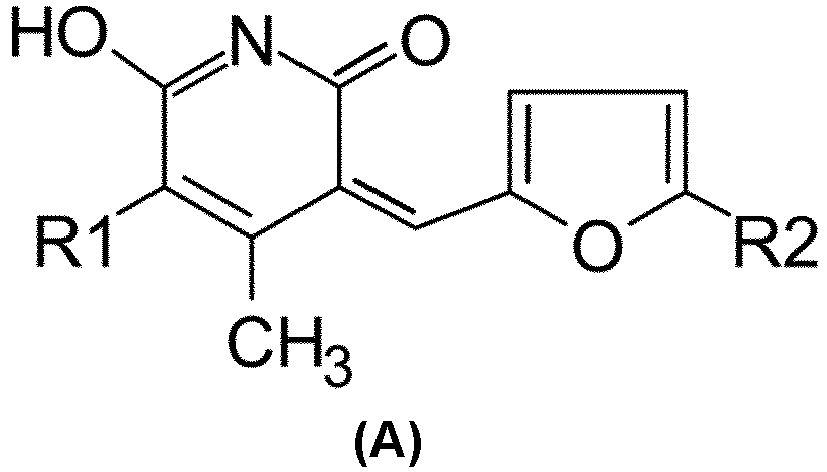 wherein R1 is a substituent selected from anyone of the following groups


 wherein R2 is:
- A pharmaceutical composition comprising, as active ingredient, a compound according to claim 1 and a pharmaceutically acceptable excipient.
- The composition according to claim 2 comprising as active ingredient an additional chemotherapeutic agent
- The composition according to claim 3 wherein said additional chemotherapeutic agent is selected from Paclitaxel or derivatives thereof, drugs belonging to the class of taxanes, Cisplatin and platinum-based compounds, biological anti-tumour compounds.
- A compound according to claim1 and of general structure formula (A)
 wherein R1 is a substituent selected from anyone of the following groups


 wherein R2 is:
- The compound for use according to claim 5 selected from one of the following compounds of formula A

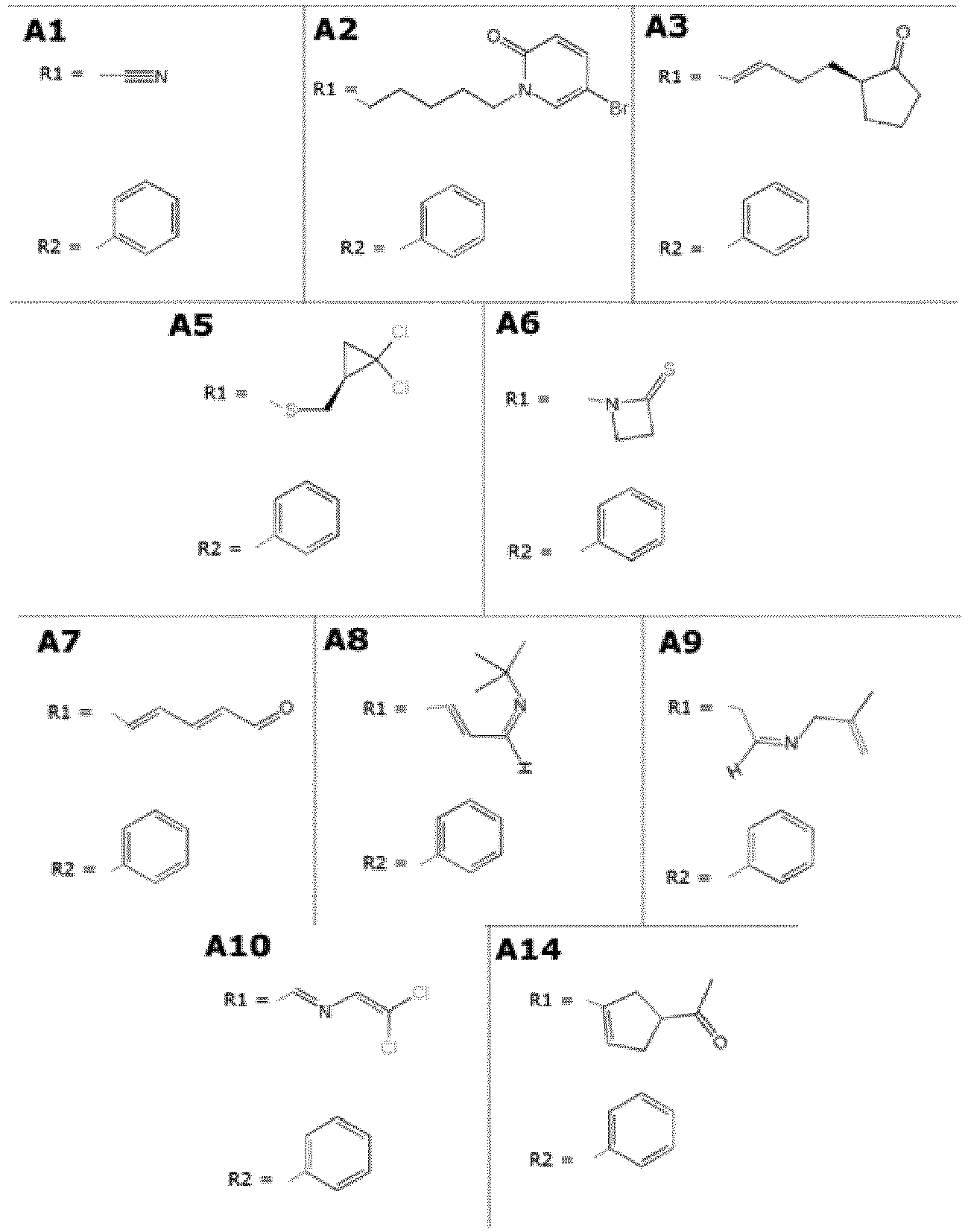
- The compound for use according to claim 5 wherein said compound has the following structure formula:

- The compound for use according to anyone of claims 5 to 7 wherein said tumour is selected from ovarian tumour, tumour of the mammary gland, lung and colon-rectum.
- The compound for use according to anyone of claims 5 to 8 wherein said compound is used in said treatment method in association with a chemotherapeutic agent.
- The compound for use according to anyone of claims 5 to 7 as inhibitor of NEK6 protein kinase activity in a method of treatment.
- The pharmaceutical composition according to anyone of claims 2 to 4 for use in a method of treatment.
- The pharmaceutical composition according to claim 11, for use in a method of treatment of a tumour, wherein said tumour is selected from ovarian tumour, tumour of the mammary gland, lung and colon-rectum.
- Kit of parts for use in the treatment method of a tumour comprising a compound according to anyone of claims 5 to 7 and a chemotherapeutic drug.
- The method for the preparation of anyone of the compounds of claim 1 comprising the following synthesis steps:

Applications Claiming Priority (3)
| Application Number | Priority Date | Filing Date | Title |
|---|---|---|---|
| IT102018000004177A IT201800004177A1 (en) | 2018-04-03 | 2018-04-03 | NEK6 KINASE INHIBITORS USEFUL FOR THE TREATMENT OF SOLID TUMORS |
| IT102018000004172A IT201800004172A1 (en) | 2018-04-03 | 2018-04-03 | NEK6 KINASE INHIBITORS USEFUL FOR THE TREATMENT OF SOLID TUMORS |
| PCT/IB2019/052688 WO2019193494A1 (en) | 2018-04-03 | 2019-04-02 | Nek6 kinase inhibitors useful for the treatment of solid tumors |
Publications (3)
| Publication Number | Publication Date |
|---|---|
| EP3774799A1 EP3774799A1 (en) | 2021-02-17 |
| EP3774799C0 EP3774799C0 (en) | 2023-07-12 |
| EP3774799B1 true EP3774799B1 (en) | 2023-07-12 |
Family
ID=66349604
Family Applications (1)
| Application Number | Title | Priority Date | Filing Date |
|---|---|---|---|
| EP19721123.8A Active EP3774799B1 (en) | 2018-04-03 | 2019-04-02 | Nek6 kinase inhibitors useful for the treatment of solid tumors |
Country Status (3)
| Country | Link |
|---|---|
| US (1) | US11820758B2 (en) |
| EP (1) | EP3774799B1 (en) |
| WO (1) | WO2019193494A1 (en) |
Families Citing this family (2)
| Publication number | Priority date | Publication date | Assignee | Title |
|---|---|---|---|---|
| WO2019193494A1 (en) | 2018-04-03 | 2019-10-10 | Consiglio Nazionale Delle Ricerche | Nek6 kinase inhibitors useful for the treatment of solid tumors |
| WO2022199804A1 (en) | 2021-03-24 | 2022-09-29 | Vib Vzw | Nek6 inhibition to treat als and ftd |
Family Cites Families (2)
| Publication number | Priority date | Publication date | Assignee | Title |
|---|---|---|---|---|
| EP3138838A1 (en) * | 2010-01-29 | 2017-03-08 | Dana-Farber Cancer Institute, Inc. | Small molecules for the modulation of mcl-1 and methods of modulating cell death, cell division, cell differentiation and methods of treating disorders |
| WO2019193494A1 (en) | 2018-04-03 | 2019-10-10 | Consiglio Nazionale Delle Ricerche | Nek6 kinase inhibitors useful for the treatment of solid tumors |
-
2019
- 2019-04-02 WO PCT/IB2019/052688 patent/WO2019193494A1/en not_active Ceased
- 2019-04-02 US US17/045,028 patent/US11820758B2/en active Active
- 2019-04-02 EP EP19721123.8A patent/EP3774799B1/en active Active
Non-Patent Citations (1)
| Title |
|---|
| MARTA DE DONATO ET AL: "Identification and antitumor activity of a novel inhibitor of the NIMA-related kinase NEK6", SCIENTIFIC REPORTS, vol. 8, no. 16047, 30 October 2018 (2018-10-30), pages 1 - 13, XP055728118, DOI: 10.1038/s41598-018-34471-y * |
Also Published As
| Publication number | Publication date |
|---|---|
| US11820758B2 (en) | 2023-11-21 |
| WO2019193494A1 (en) | 2019-10-10 |
| EP3774799C0 (en) | 2023-07-12 |
| US20210147395A1 (en) | 2021-05-20 |
| EP3774799A1 (en) | 2021-02-17 |
Similar Documents
| Publication | Publication Date | Title |
|---|---|---|
| US20240166668A1 (en) | Compounds and uses thereof | |
| JP6911019B2 (en) | A therapeutic agent for lung cancer that has acquired EGFR-TKI resistance | |
| US20090076122A1 (en) | PARP Modulators and Treatment of Cancer | |
| EP3513192B1 (en) | Cell death biomarker | |
| Hu et al. | Endoplasmic reticulum stress promotes autophagy and apoptosis and reverses chemoresistance in human ovarian cancer cells | |
| Meng et al. | Enhanced efficacy of histone deacetylase inhibitor panobinostat combined with dual PI3K/mTOR inhibitor BEZ235 against glioblastoma | |
| Sharma et al. | Enhancement of Chemotherapeutic Efficacy by Small Molecule Inhibition of NF-κ B and Checkpoint Kinases | |
| KR101454866B1 (en) | Use of ck2 inhibitor for the treatment and chemosensibilization of refractory tumors to anticancer drugs | |
| AU2022203204A1 (en) | Use of heterocyclic pdk1 inhibitors | |
| US11820758B2 (en) | NEK6 kinase inhibitors useful for the treatment of solid tumors | |
| Palrasu et al. | A novel probe for spliceosomal proteins that induces autophagy and death of melanoma cells reveals new targets for melanoma drug discovery | |
| Halaban et al. | A novel anti-melanoma SRC-family kinase inhibitor | |
| WO2016025621A1 (en) | Methods of treatment using an erk inhibitor | |
| EP3497083B1 (en) | Heterocyclic naphthoquinones derivatives for use in the treatment of cancers including cushing disease | |
| Zhang et al. | [Retracted] Artesunate Suppresses the Growth of Lung Cancer Cells by Downregulating the AKT/Survivin Signaling Pathway | |
| JP2008533021A (en) | Methods and compositions for treating cancer | |
| WO2017197210A1 (en) | Identification of small molecule inhibitors of jumonji at-rich interactive domain 1a (jarid1a) histone demethylase | |
| US10392398B2 (en) | Inhibitors of Late SV40 Factor (LSF) as cancer chemotherapeutics | |
| Roolf et al. | Novel isoquinolinamine and isoindoloquinazolinone compounds exhibit antiproliferative activity in acute lymphoblastic leukemia cells | |
| US9802948B2 (en) | Inhibitors of late SV40 factor (LSF) as cancer chemotherapeutics | |
| US20130079370A1 (en) | Method for the Inhibition of Deubiquitinating Activity | |
| US20220151976A1 (en) | Targeting lasp1, eif4a1, eif4b and cxc4 with modulators and combinations thereof for cancer therapy | |
| CN113384576B (en) | Mutated IDH1 inhibitor as antitumor drug | |
| IT201800004177A1 (en) | NEK6 KINASE INHIBITORS USEFUL FOR THE TREATMENT OF SOLID TUMORS | |
| IT201800004172A1 (en) | NEK6 KINASE INHIBITORS USEFUL FOR THE TREATMENT OF SOLID TUMORS |
Legal Events
| Date | Code | Title | Description |
|---|---|---|---|
| STAA | Information on the status of an ep patent application or granted ep patent |
Free format text: STATUS: UNKNOWN |
|
| STAA | Information on the status of an ep patent application or granted ep patent |
Free format text: STATUS: THE INTERNATIONAL PUBLICATION HAS BEEN MADE |
|
| PUAI | Public reference made under article 153(3) epc to a published international application that has entered the european phase |
Free format text: ORIGINAL CODE: 0009012 |
|
| STAA | Information on the status of an ep patent application or granted ep patent |
Free format text: STATUS: REQUEST FOR EXAMINATION WAS MADE |
|
| 17P | Request for examination filed |
Effective date: 20201023 |
|
| AK | Designated contracting states |
Kind code of ref document: A1 Designated state(s): AL AT BE BG CH CY CZ DE DK EE ES FI FR GB GR HR HU IE IS IT LI LT LU LV MC MK MT NL NO PL PT RO RS SE SI SK SM TR |
|
| AX | Request for extension of the european patent |
Extension state: BA ME |
|
| RAP1 | Party data changed (applicant data changed or rights of an application transferred) |
Owner name: CONSIGLIO NAZIONALE DELLE RICERCHE Owner name: MOLIPHARMA R&D S.R.L. |
|
| DAV | Request for validation of the european patent (deleted) | ||
| DAX | Request for extension of the european patent (deleted) | ||
| STAA | Information on the status of an ep patent application or granted ep patent |
Free format text: STATUS: EXAMINATION IS IN PROGRESS |
|
| 17Q | First examination report despatched |
Effective date: 20220120 |
|
| GRAP | Despatch of communication of intention to grant a patent |
Free format text: ORIGINAL CODE: EPIDOSNIGR1 |
|
| STAA | Information on the status of an ep patent application or granted ep patent |
Free format text: STATUS: GRANT OF PATENT IS INTENDED |
|
| INTG | Intention to grant announced |
Effective date: 20230320 |
|
| RAP3 | Party data changed (applicant data changed or rights of an application transferred) |
Owner name: MOLIPHARMA R&D S.R.L. Owner name: CONSIGLIO NAZIONALE DELLE RICERCHE |
|
| RIN1 | Information on inventor provided before grant (corrected) |
Inventor name: RIGHINO, BENEDETTA Inventor name: DE DONATO, MARTA Inventor name: PETRILLO, MARCO Inventor name: GALLO, DANIELA Inventor name: SCAMBIA, GIOVANNI Inventor name: PIROLLI, DAVIDE Inventor name: DE ROSA, MARIA CRISTINA |
|
| GRAS | Grant fee paid |
Free format text: ORIGINAL CODE: EPIDOSNIGR3 |
|
| GRAA | (expected) grant |
Free format text: ORIGINAL CODE: 0009210 |
|
| STAA | Information on the status of an ep patent application or granted ep patent |
Free format text: STATUS: THE PATENT HAS BEEN GRANTED |
|
| AK | Designated contracting states |
Kind code of ref document: B1 Designated state(s): AL AT BE BG CH CY CZ DE DK EE ES FI FR GB GR HR HU IE IS IT LI LT LU LV MC MK MT NL NO PL PT RO RS SE SI SK SM TR |
|
| REG | Reference to a national code |
Ref country code: CH Ref legal event code: EP |
|
| REG | Reference to a national code |
Ref country code: DE Ref legal event code: R096 Ref document number: 602019032554 Country of ref document: DE |
|
| REG | Reference to a national code |
Ref country code: IE Ref legal event code: FG4D |
|
| U01 | Request for unitary effect filed |
Effective date: 20230719 |
|
| U07 | Unitary effect registered |
Designated state(s): AT BE BG DE DK EE FI FR IT LT LU LV MT NL PT SE SI Effective date: 20230727 |
|
| REG | Reference to a national code |
Ref country code: LT Ref legal event code: MG9D |
|
| PG25 | Lapsed in a contracting state [announced via postgrant information from national office to epo] |
Ref country code: GR Free format text: LAPSE BECAUSE OF FAILURE TO SUBMIT A TRANSLATION OF THE DESCRIPTION OR TO PAY THE FEE WITHIN THE PRESCRIBED TIME-LIMIT Effective date: 20231013 |
|
| PG25 | Lapsed in a contracting state [announced via postgrant information from national office to epo] |
Ref country code: ES Free format text: LAPSE BECAUSE OF FAILURE TO SUBMIT A TRANSLATION OF THE DESCRIPTION OR TO PAY THE FEE WITHIN THE PRESCRIBED TIME-LIMIT Effective date: 20230712 |
|
| PG25 | Lapsed in a contracting state [announced via postgrant information from national office to epo] |
Ref country code: IS Free format text: LAPSE BECAUSE OF FAILURE TO SUBMIT A TRANSLATION OF THE DESCRIPTION OR TO PAY THE FEE WITHIN THE PRESCRIBED TIME-LIMIT Effective date: 20231112 |
|
| PG25 | Lapsed in a contracting state [announced via postgrant information from national office to epo] |
Ref country code: RS Free format text: LAPSE BECAUSE OF FAILURE TO SUBMIT A TRANSLATION OF THE DESCRIPTION OR TO PAY THE FEE WITHIN THE PRESCRIBED TIME-LIMIT Effective date: 20230712 Ref country code: NO Free format text: LAPSE BECAUSE OF FAILURE TO SUBMIT A TRANSLATION OF THE DESCRIPTION OR TO PAY THE FEE WITHIN THE PRESCRIBED TIME-LIMIT Effective date: 20231012 Ref country code: IS Free format text: LAPSE BECAUSE OF FAILURE TO SUBMIT A TRANSLATION OF THE DESCRIPTION OR TO PAY THE FEE WITHIN THE PRESCRIBED TIME-LIMIT Effective date: 20231112 Ref country code: HR Free format text: LAPSE BECAUSE OF FAILURE TO SUBMIT A TRANSLATION OF THE DESCRIPTION OR TO PAY THE FEE WITHIN THE PRESCRIBED TIME-LIMIT Effective date: 20230712 Ref country code: GR Free format text: LAPSE BECAUSE OF FAILURE TO SUBMIT A TRANSLATION OF THE DESCRIPTION OR TO PAY THE FEE WITHIN THE PRESCRIBED TIME-LIMIT Effective date: 20231013 Ref country code: ES Free format text: LAPSE BECAUSE OF FAILURE TO SUBMIT A TRANSLATION OF THE DESCRIPTION OR TO PAY THE FEE WITHIN THE PRESCRIBED TIME-LIMIT Effective date: 20230712 |
|
| PG25 | Lapsed in a contracting state [announced via postgrant information from national office to epo] |
Ref country code: PL Free format text: LAPSE BECAUSE OF FAILURE TO SUBMIT A TRANSLATION OF THE DESCRIPTION OR TO PAY THE FEE WITHIN THE PRESCRIBED TIME-LIMIT Effective date: 20230712 |
|
| REG | Reference to a national code |
Ref country code: DE Ref legal event code: R097 Ref document number: 602019032554 Country of ref document: DE |
|
| PG25 | Lapsed in a contracting state [announced via postgrant information from national office to epo] |
Ref country code: SM Free format text: LAPSE BECAUSE OF FAILURE TO SUBMIT A TRANSLATION OF THE DESCRIPTION OR TO PAY THE FEE WITHIN THE PRESCRIBED TIME-LIMIT Effective date: 20230712 Ref country code: RO Free format text: LAPSE BECAUSE OF FAILURE TO SUBMIT A TRANSLATION OF THE DESCRIPTION OR TO PAY THE FEE WITHIN THE PRESCRIBED TIME-LIMIT Effective date: 20230712 Ref country code: CZ Free format text: LAPSE BECAUSE OF FAILURE TO SUBMIT A TRANSLATION OF THE DESCRIPTION OR TO PAY THE FEE WITHIN THE PRESCRIBED TIME-LIMIT Effective date: 20230712 Ref country code: SK Free format text: LAPSE BECAUSE OF FAILURE TO SUBMIT A TRANSLATION OF THE DESCRIPTION OR TO PAY THE FEE WITHIN THE PRESCRIBED TIME-LIMIT Effective date: 20230712 |
|
| U20 | Renewal fee for the european patent with unitary effect paid |
Year of fee payment: 6 Effective date: 20240326 |
|
| PLBE | No opposition filed within time limit |
Free format text: ORIGINAL CODE: 0009261 |
|
| STAA | Information on the status of an ep patent application or granted ep patent |
Free format text: STATUS: NO OPPOSITION FILED WITHIN TIME LIMIT |
|
| 26N | No opposition filed |
Effective date: 20240415 |
|
| PGFP | Annual fee paid to national office [announced via postgrant information from national office to epo] |
Ref country code: CH Payment date: 20240501 Year of fee payment: 6 |
|
| PG25 | Lapsed in a contracting state [announced via postgrant information from national office to epo] |
Ref country code: MC Free format text: LAPSE BECAUSE OF FAILURE TO SUBMIT A TRANSLATION OF THE DESCRIPTION OR TO PAY THE FEE WITHIN THE PRESCRIBED TIME-LIMIT Effective date: 20230712 |
|
| PG25 | Lapsed in a contracting state [announced via postgrant information from national office to epo] |
Ref country code: MC Free format text: LAPSE BECAUSE OF FAILURE TO SUBMIT A TRANSLATION OF THE DESCRIPTION OR TO PAY THE FEE WITHIN THE PRESCRIBED TIME-LIMIT Effective date: 20230712 |
|
| PG25 | Lapsed in a contracting state [announced via postgrant information from national office to epo] |
Ref country code: IE Free format text: LAPSE BECAUSE OF NON-PAYMENT OF DUE FEES Effective date: 20240402 |
|
| U20 | Renewal fee for the european patent with unitary effect paid |
Year of fee payment: 7 Effective date: 20250407 |
|
| PGFP | Annual fee paid to national office [announced via postgrant information from national office to epo] |
Ref country code: GB Payment date: 20250423 Year of fee payment: 7 |
|
| PG25 | Lapsed in a contracting state [announced via postgrant information from national office to epo] |
Ref country code: CY Free format text: LAPSE BECAUSE OF FAILURE TO SUBMIT A TRANSLATION OF THE DESCRIPTION OR TO PAY THE FEE WITHIN THE PRESCRIBED TIME-LIMIT; INVALID AB INITIO Effective date: 20190402 |
|
| PG25 | Lapsed in a contracting state [announced via postgrant information from national office to epo] |
Ref country code: HU Free format text: LAPSE BECAUSE OF FAILURE TO SUBMIT A TRANSLATION OF THE DESCRIPTION OR TO PAY THE FEE WITHIN THE PRESCRIBED TIME-LIMIT; INVALID AB INITIO Effective date: 20190402 |
|
| REG | Reference to a national code |
Ref country code: CH Ref legal event code: H13 Free format text: ST27 STATUS EVENT CODE: U-0-0-H10-H13 (AS PROVIDED BY THE NATIONAL OFFICE) Effective date: 20251125 |
|
| PG25 | Lapsed in a contracting state [announced via postgrant information from national office to epo] |
Ref country code: TR Free format text: LAPSE BECAUSE OF FAILURE TO SUBMIT A TRANSLATION OF THE DESCRIPTION OR TO PAY THE FEE WITHIN THE PRESCRIBED TIME-LIMIT Effective date: 20230712 |
|
| PG25 | Lapsed in a contracting state [announced via postgrant information from national office to epo] |
Ref country code: CH Free format text: LAPSE BECAUSE OF NON-PAYMENT OF DUE FEES Effective date: 20250430 |