EP3774793B1 - New compounds with enhanced anti-tumor effects - Google Patents
New compounds with enhanced anti-tumor effects Download PDFInfo
- Publication number
- EP3774793B1 EP3774793B1 EP18716544.4A EP18716544A EP3774793B1 EP 3774793 B1 EP3774793 B1 EP 3774793B1 EP 18716544 A EP18716544 A EP 18716544A EP 3774793 B1 EP3774793 B1 EP 3774793B1
- Authority
- EP
- European Patent Office
- Prior art keywords
- compound
- cell
- formula
- pharmaceutically acceptable
- acceptable salt
- Prior art date
- Legal status (The legal status is an assumption and is not a legal conclusion. Google has not performed a legal analysis and makes no representation as to the accuracy of the status listed.)
- Active
Links
- GRILVDCPWMXABI-UHFFFAOYSA-N CC(C)(C)OC(N(CCC1)CC1N(C(c1ncccc1N1)=O)C1=O)=O Chemical compound CC(C)(C)OC(N(CCC1)CC1N(C(c1ncccc1N1)=O)C1=O)=O GRILVDCPWMXABI-UHFFFAOYSA-N 0.000 description 1
- OXPIWPOUKGRNBX-UHFFFAOYSA-N CC(C)(C)OC(N(CCC1)CC1N(C(c1ncccc1N1Cc(cc2)ccc2Oc2ccccc2)=O)C1=O)=O Chemical compound CC(C)(C)OC(N(CCC1)CC1N(C(c1ncccc1N1Cc(cc2)ccc2Oc2ccccc2)=O)C1=O)=O OXPIWPOUKGRNBX-UHFFFAOYSA-N 0.000 description 1
- HOMDKUOLHCMPNC-UHFFFAOYSA-N O=C(c1ncccc1N1Cc(cc2)ccc2Oc2ccccc2)N(C2CNCCC2)C1=O Chemical compound O=C(c1ncccc1N1Cc(cc2)ccc2Oc2ccccc2)N(C2CNCCC2)C1=O HOMDKUOLHCMPNC-UHFFFAOYSA-N 0.000 description 1
Images



Classifications
-
- A—HUMAN NECESSITIES
- A61—MEDICAL OR VETERINARY SCIENCE; HYGIENE
- A61K—PREPARATIONS FOR MEDICAL, DENTAL OR TOILETRY PURPOSES
- A61K31/00—Medicinal preparations containing organic active ingredients
- A61K31/33—Heterocyclic compounds
- A61K31/395—Heterocyclic compounds having nitrogen as a ring hetero atom, e.g. guanethidine or rifamycins
- A61K31/495—Heterocyclic compounds having nitrogen as a ring hetero atom, e.g. guanethidine or rifamycins having six-membered rings with two or more nitrogen atoms as the only ring heteroatoms, e.g. piperazine or tetrazines
- A61K31/505—Pyrimidines; Hydrogenated pyrimidines, e.g. trimethoprim
- A61K31/519—Pyrimidines; Hydrogenated pyrimidines, e.g. trimethoprim ortho- or peri-condensed with heterocyclic rings
-
- C—CHEMISTRY; METALLURGY
- C07—ORGANIC CHEMISTRY
- C07D—HETEROCYCLIC COMPOUNDS
- C07D471/00—Heterocyclic compounds containing nitrogen atoms as the only ring hetero atoms in the condensed system, at least one ring being a six-membered ring with one nitrogen atom, not provided for by groups C07D451/00 - C07D463/00
- C07D471/02—Heterocyclic compounds containing nitrogen atoms as the only ring hetero atoms in the condensed system, at least one ring being a six-membered ring with one nitrogen atom, not provided for by groups C07D451/00 - C07D463/00 in which the condensed system contains two hetero rings
- C07D471/04—Ortho-condensed systems
-
- A—HUMAN NECESSITIES
- A61—MEDICAL OR VETERINARY SCIENCE; HYGIENE
- A61K—PREPARATIONS FOR MEDICAL, DENTAL OR TOILETRY PURPOSES
- A61K31/00—Medicinal preparations containing organic active ingredients
- A61K31/33—Heterocyclic compounds
- A61K31/395—Heterocyclic compounds having nitrogen as a ring hetero atom, e.g. guanethidine or rifamycins
- A61K31/495—Heterocyclic compounds having nitrogen as a ring hetero atom, e.g. guanethidine or rifamycins having six-membered rings with two or more nitrogen atoms as the only ring heteroatoms, e.g. piperazine or tetrazines
- A61K31/505—Pyrimidines; Hydrogenated pyrimidines, e.g. trimethoprim
- A61K31/519—Pyrimidines; Hydrogenated pyrimidines, e.g. trimethoprim ortho- or peri-condensed with heterocyclic rings
- A61K31/52—Purines, e.g. adenine
- A61K31/522—Purines, e.g. adenine having oxo groups directly attached to the heterocyclic ring, e.g. hypoxanthine, guanine, acyclovir
-
- A—HUMAN NECESSITIES
- A61—MEDICAL OR VETERINARY SCIENCE; HYGIENE
- A61K—PREPARATIONS FOR MEDICAL, DENTAL OR TOILETRY PURPOSES
- A61K45/00—Medicinal preparations containing active ingredients not provided for in groups A61K31/00 - A61K41/00
- A61K45/06—Mixtures of active ingredients without chemical characterisation, e.g. antiphlogistics and cardiaca
-
- A—HUMAN NECESSITIES
- A61—MEDICAL OR VETERINARY SCIENCE; HYGIENE
- A61P—SPECIFIC THERAPEUTIC ACTIVITY OF CHEMICAL COMPOUNDS OR MEDICINAL PREPARATIONS
- A61P35/00—Antineoplastic agents
-
- A—HUMAN NECESSITIES
- A61—MEDICAL OR VETERINARY SCIENCE; HYGIENE
- A61P—SPECIFIC THERAPEUTIC ACTIVITY OF CHEMICAL COMPOUNDS OR MEDICINAL PREPARATIONS
- A61P35/00—Antineoplastic agents
- A61P35/02—Antineoplastic agents specific for leukemia
-
- C—CHEMISTRY; METALLURGY
- C07—ORGANIC CHEMISTRY
- C07D—HETEROCYCLIC COMPOUNDS
- C07D487/00—Heterocyclic compounds containing nitrogen atoms as the only ring hetero atoms in the condensed system, not provided for by groups C07D451/00 - C07D477/00
- C07D487/02—Heterocyclic compounds containing nitrogen atoms as the only ring hetero atoms in the condensed system, not provided for by groups C07D451/00 - C07D477/00 in which the condensed system contains two hetero rings
- C07D487/04—Ortho-condensed systems
Definitions
- lymphomas including chronic lymphocytic leukemia, are a group of tumors originating from lymphoid cells (Swerdlow, et al 2016) and are among the most common cancers, accounting for approximately 5% of all new cases in adults and up to 25% in children and adolescents (Siegel, et al 2016, Stewart and Wild 2014). Lymphomas comprise over 60 different entities or provisional entities that are distinguished based on a combination of histological, immunophenotypic, genetic and clinical features (Swerdlow, et al 2016).
- the most common lymphoma subtype is the diffuse large B-cell lymphoma (DLBCL), accounting for 30%-40% of all lymphomas (Sehn and Gascoyne 2015), and that includes at least two main subtypes, the germinal center B-cell (GCB) type and the activated B-cell like (ABC) type (Sehn and Gascoyne 2015, Swerdlow, et al 2016, Testoni, et al 2015).
- DLBCL diffuse large B-cell lymphoma
- GCB germinal center B-cell
- ABSC activated B-cell like
- Ibrutinib is a small molecule drug with structure: that binds permanently to a protein, Bruton's tyrosine kinase (BTK), that is important in B cells; the drug is used to treat B cell cancers.
- BTK Bruton's tyrosine kinase
- Biological testing showed, for the present compounds, an unexpected, potent anti-proliferative activity, with remarkable anti-tumour effects in-vivo; in particular, a wide spectrum of activity on lymphomas and leukaemias of various origin/symptomatology, such as: B-cell lymphomas, Hodgkin lymphoma, T-cells lymphomas, chronic lymphocytic leukaemia, T-cell leukaemias, etc.
- the present inventions concerns the compounds of formula (I) per se, as well as their use in therapy, in treating tumours, in particular leukemias and lymphomas; the invention also includes a process of production of the instant compounds, as well as pharmaceutical compositions containing them.
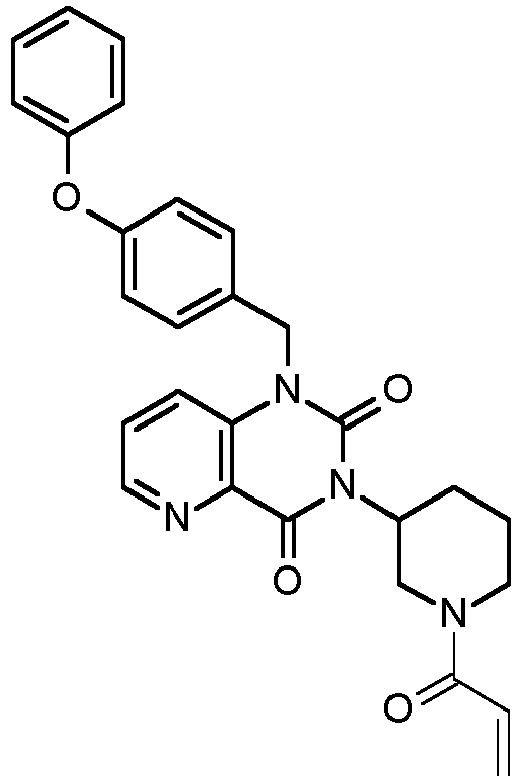
- the compound wherein -R is -H has chemical name: 1-[(4-phenoxyphenyl)methyl]-3-(1-prop-2-enoyl-3-piperidyl)pyrido[3,2-d]pyrimidine-2-one.
- the compounds of formula (I) are used as such, or as pharmaceutically acceptable salt thereof.
- pharmaceutically acceptable means that which is useful in preparing a pharmaceutical composition that is generally safe, non-toxic and neither biologically nor otherwise undesirable and includes that which is acceptable for veterinary use as well as human pharmaceutical use.
- salts of the compounds of formula (I) are typically, though not limitedly, those resulting from the protonation of one or more of its nitrogen atoms (I); in such salts, the compounds of formula (I) will normally be in cationic form, coupled to a suitable counter anion; non-limiting examples of counter anions are chloride, bromide, sulphate, sulfonate, aminosulfonate, phosphate, phosphonate, formate, carbonate, acetate, propionate, butyrate, fumarate, maleate, mesylate, citrate, oxalate, pivalate, etc.
- the compounds of formula (I) can also be used in a prodrug form, for example as a pharmaceutically acceptable ester which, after administration, can hydrolize and thus release the compound of formula (I) as such. All such forms are meant to be included for use in the present invention,
- tumor or “anti-tumour” or “use as anti-tumour agent” or “tumour diseases” refer to any diseases characterized by the formation and proliferation of tumour cells; the above terms include carcinomas, lymphomas, leukemias, sarcomas, myelomas, and the corresponding mixed-type forms; the above terms are inclusive of solid and liquid tumors.
- Preferred liquid tumors are leukemias and lymphomas.
- leukemias particular interest is attached to chronic lymphocytic leukaemia, T cell leukaemia, e.g. acute T cell leukaemia.
- lymphomas particular interest is attached to B cell lymphomas, e.g.
- diffuse large B cell lymphomas such as activated B cell-like diffuse large B cell lymphoma, or germinal center B cell diffuse large B cell lymphoma
- mantle cell lymphoma Hodgkin lymphoma
- non-Hodgkin lymphoma T cell lymphomas, e.g. cutaneous T-cell lymphoma, peripheral T cell lymphoma, anaplastic large T cell lymphoma, etc.
- the treatment or prevention tumour diseases by means of one or more compounds of formula (I) represents a further object of the present invention.
- the invention concerns the above described compounds of formula (I) or pharmaceutically acceptable salt thereof for use as anti-tumour agent, i.e. for the treatment or prevention of tumour diseases; in another embodiment, the invention concerns the use of the compound of formula (I) or pharmaceutically acceptable salt thereof for manufacturing a medicament for the treatment or prevention of tumour diseases.
- the invention extends to the compounds of formula (I) or pharmaceutically acceptable salt thereof for use in medicine.
- treatment means the administration of the instant compound to a subject (human or animal) who has already shown one or more symptoms of said tumour;
- treatment further refers to the medical management of a patient with the intent to cure, ameliorate, stabilize, or prevent the relevant disease, pathological condition, or disorder.
- active treatment that is, treatment directed specifically toward the improvement of a disease, pathological condition, or disorder
- causal treatment that is, treatment directed toward removal of the cause of the associated disease, pathological condition, or disorder.
- palliative treatment that is, treatment designed for the relief of symptoms rather than the curing of the disease, pathological condition, or disorder.
- prevention means the administration of the instant compounds to a subject who shows unclear symptoms or no symptoms of said tumour diseases, but who is at risk of developing them, for example by being in contact with tumorigenic substances in the environment, being genetically predisposed to develop tumour diseases, etc.; a preventative treatment is generally directed to minimizing or partially or completely inhibiting the development of the associated tumor disease.
- the compounds of formula (I) or pharmaceutically acceptable salt thereof can be administered in a variety of dosages and regimens in function of the type/severity of the tumour disease, the conditions/age of the patient, and the chosen administration route.
- dosages may vary between 10 and 500 mg/Kg, preferably between 100 and 300 mg/Kg, of the compound of formula (I) expressed as free base; regimens may involve administration of the above dosages for one or more days a week, e.g. 2,3,4,5,6 or 7 days a week, for one, two, three or more weeks as needed.
- the compounds of formula (I) or pharmaceutically acceptable salt thereof will be supplied to patients as one or more dosage units, each containing the aforementioned dosage amounts.
- the compounds of formula (I) or pharmaceutically acceptable salt thereof may be administered via any possible administration route, e.g. oral, peroral, buccal, sublingual, inhalatory, intramuscular, intravenous, topical, percutaneous, transcutaneous, rectal, etc., as dictated by convenience and/or medical reasons.
- the compound of formula (I) or pharmaceutically acceptable salt thereof will be formulated in a correspondingly suitable administration form.
- the administration form will be supplied to patients as one or more dosage units as defined above.
- compositions comprising the above described compounds of formula (I) or pharmaceutically acceptable salt thereof.
- the compounds of formula (I) or pharmaceutically acceptable salt thereof will be in presence of one or more pharmaceutical excipients.
- Tablets, pills, capsules, troches and the like can contain any of the following ingredients, or compounds of a similar nature: a binder such as microcrystalline cellulose, gum tragacanth or gelatin; an excipient such as starch or lactose, a disintegrating agent such as alginic acid, Primogel, or corn starch; a lubricant such as magnesium stearate; a gliding such as colloidal silicon dioxide; a sweetening agent such as sucrose or saccharin; or a flavoring agent such as peppermint, methyl salicylate, or orange flavoring.
- a binder such as microcrystalline cellulose, gum tragacanth or gelatin
- an excipient such as starch or lactose, a disintegrating agent such as alginic acid, Primogel, or corn starch
- a lubricant such as magnesium stearate
- a gliding such as colloidal silicon dioxide
- a sweetening agent such as sucrose or sacchar
- dosage unit form When the dosage unit form is a capsule, it can contain, in addition to material of the above type, a liquid carrier such as a fatty oil.
- dosage unit forms can contain various other materials which modify the physical form of the dosage unit, for example, coatings of sugar, shellac, or other enteric agents.
- the compounds can be administered as a component of an elixir, suspension, syrup, wafer, orally disintegrating film, orally disintegrating tablet, chewing gum.
- a syrup may contain, in addition to the active compounds, sucrose as a sweetening agent and certain preservatives, dyes and colorings and flavors.
- Solutions or suspensions used for injection can include the following components: a sterile diluent such as water for injection, saline solution, fixed oils, polyethylene glycols, glycerine, propylene glycol or other synthetic solvents; antibacterial agents such as benzyl alcohol or methyl parabens; antioxidants such as ascorbic acid or sodium bisulfite; chelating agents such as ethylenediaminetetraacetic acid; buffers such as acetates, citrates or phosphates and agents for the adjustment of tonicity such as sodium chloride, mannitol and dextrose.
- An injectable preparation can be enclosed in ampoules, disposable syringes or multiple dose vials made of glass or plastic.
- a further object of the invention is a process of preparing the aforementioned pharmaceutical compositions, comprising formulating (e.g. admixing or contacting) the compounds of formula (I) or pharmaceutically acceptable salt thereof with one or more pharmaceutical excipients.
- the compounds of formula (I) or pharmaceutically acceptable salt thereof may be administered alone or (alternatively) with further active agents, in particular further anti-tumour agents.
- the relevant combination treatment may be performed by administering dosage forms in which both active agents are co-formulated together or (alternatively) by administering, within suitable time windows, separate dosage forms containing one or the other active agent.
- anti-tumour agents suitable for said combination treatment are: Methotrexate, Paclitaxel, Brentuximab, Adriamycin, Afatinib, Imiquimod, Alectinib, Alemtuzumab, Pemetrexed, Melphalan, Brigatinib, Chlorambucil, Aminolevulinic Acid, Pamidronate, Ofatumumab, Atezolizumab, Avastin, Avelumab, Azacitidine, Avelumab, Carmustine, Belinostat, Inotuzumab Ozogamicin, Bevacizumab, Bexarotene, Bicalutamide, Bleomycin, Blinatumomab, Bortezomib, Bosutinib, Brentuximab, Brigatinib, Cabazitaxel, Acalabrutinib, Alemtuzumab, Irinotecan, Capecitabine, Fluorouracil, Car
- a further object of the present invention is a process for the preparation of the compound of formula (I) or pharmaceutically acceptable salt thereof, where said compound is obtained from one or more suitable precursors.
- An intermediate of formula (3) may be prepared according to Scheme 1 reported above by reaction of 3-isocyanatepyridine-2-carboxy1ate 1 with tert-butyl 3-aminopiperidine-1-carboxylate 2.
- Typical reaction conditions comprise reacting 3-isocyanatepyridine-2-carboxy1ate 1 with tert-butyl 3-aminopiperidine-1-carboxylate 2 in a suitable polar aprotic solvent, such as DC M, at an appropriate temperature such as, for example, at room temperature.
- An intermediate compound of formula (4) may be prepared according to Scheme 1 reported above by reaction of methyl 3-[(1-tert-butoxycarbonyl-3-piperidyl)carbamoylamino]pyridine-2-carboxylate 3 with sodium ethoxide.
- Typical reaction conditions comprise reacting methyl 3-[(1-tert-butoxycarbonyl-3-piperidyl)carbamoylamino]pyridine-2-carboxylate 3 with a 20% solution of sodium ethoxide in EtOH, in a suitable alcohol, such as MeOH or EtOH, at an appropriate temperature such as, for example, ranging from 65 to 80°C.
- An intermediate of formula (6) may be prepared according to Scheme 1 reported above by alkylation of tert-butyl 3-(2,4-dioxo-1H-pyrido[3,2-d]pyrimidin-3-yl)piperidine-1-carboxylate 4 with 1-(bromomethyl)-4-phenoxy-benzene 5.
- Typical reaction conditions comprise reacting tert-butyl 3-(2,4-dioxo-1H-pyrido[3,2-d]pyrimidin-3-yl)piperidine-1-carboxylate 4 with 1-(bromomethyl)-4-phenoxy-benzene 5, in the presence of an appropriate base, such as, for example, K 2 CO 3 , in a suitable polar aprotic solvent, such as DMF, at an appropriate temperature such as, for example, at room temperature.
- an appropriate base such as, for example, K 2 CO 3
- a suitable polar aprotic solvent such as DMF
- An intermediate of formula (7) may be prepared according to Scheme 1 reported above by deprotection of tert-butyl 3-[2,4-dioxo-1-[(4-phenoxyphenyl)methyl]pyrido[3,2-d]pyrimidin-3-yl]piperidine-1-carboxylate 5 in an acidic medium .
- Typical reaction conditions comprise reacting tert-butyl 3-[2,4-dioxo-1-[(4-phenoxyphenyl)methyl]pyrido[3,2-d]pyrimidin-3-yl]piperidine-1-carboxylate 6 with an acid, such as, for example, 4M HCI in dioxane, in a suitable polar aprotic solvent, such as DCM, at an appropriate temperature such as, for example, ranging form 0° to r.t. [see, for a general reference, T.W. Green; Protective Groups in Organic Synthesis (Wiley, N.Y. 1981 )].
- Typical reaction conditions comprise reacting 1-[(4-phenoxyphenyl)methyl]-3-(3-piperidyl)pyrido[3,2-d]pyrimidine-2,4-dione 7 with acryloyl chloride 8, in the presence of an appropriate base, such as, for example, TEA, in a suitable polar aprotic solvent, such as DCM, at an appropriate temperature such as, for example, at room temperature.
- an appropriate base such as, for example, TEA
- a suitable polar aprotic solvent such as DCM
- Proton Magnetic Resonance ( 1 H NMR) spectra were collected using deuterated solvents (DMSO- d 6 ) to 25°C on Bruker Avance 300 MHz. Chemical shifts are expressed in parts per million (ppm) and measured using the residual solvent signals as the reference. Multeplicity is indicated as follows: (s) singlet, (d) doublet, (dd) double doublet, (t) triplet, (q) quartet, (m) multiplet, (br s) broad signal.
- Mobile phase solvent A (H 2 O + 0.1% Formic acid); mobile phase solvent B (Acetonitrile + 0.1% Formic acid. Gradient: T (min) %A %B 0 80 20 15 30 70 35 30 70
- Flash chromatography purifications were performed using a Biotage Isolera autopurification system, and carried out over pre-packed Biotage SNAP KP-Sil cartridges, Biotage SNAP Ultra or Biotage SNAP KP-NH cartridges.
- Brine refers to a saturated aqueous solution of NaCl.
- Step 1 synthesis of methyl 3-[(1-tert-butoxycarbonyl-3-piperidyl)carbamoylamino] pyridine-2-carboxylate
- Step 2 synthesis of tert-butyl 3-(2,4-dioxo-1H-pyrido[3,2-d]pyrimidin-3-yl)piperidine-1-carboxylate
- Step 3 synthesis of tert-butyl 3-[2,4-dioxo-1-[(4-phenoxyphenyl)methyl]pyrido[3,2-d]pyrimidin-3-yl]piperidine-1-carboxylate
- Step 4 synthesis of 1-[(4-phenoxyphenyl)methyl]-3-(3-piperidyl)pyrido[3,2-d]pyrimidine-2,4-dione
- Step 5 synthesis of 1-[(4-phenoxyphenyl)methyl]-3-(1-prop-2-enoyl-3-piperidyl)pyrido[3,2-d]pyrimidine-2,4-dione
- EG-011 was dissolved in dimethyl sulphoxide (DMSO) to obtain a stock concentration of 10mM for in vitro experiments.
- EG-011 was dissolved in 25% hydroxypropyl beta cyclodextrin (HP-ß-CD) in water and adjusted at pH 6.0 using NaOH (0.1 N) and HCI (0.1 N) for in vivo experiments.
- Application volume was 4,5 mL/kg (100 mg in 4.5 mL), and mice received 200 microliters (corresponding to 200 mg/kg) though intra peritoneal i.p. injection, once per day and five days per week.
- DMSO dimethyl sulphoxide
- MTT (Sigma-Aldrich Chemie GmbH, Buchs, Switzerland) was prepared as a 5 mg/ml stock in PBS and filter-sterilized. MTT solution (22 ⁇ L) was added to each well and tissue culture plates were incubated at 37°C for 4 hours. Cells were then lysed with 25% SDS lysis buffer and absorbance was read at 570 nm using an AD340 plate reader (Beckman Coulter International SA, Switzerland). Absorbance values were expressed in percentage of proliferating cells in comparison with control cells (control corresponds to 100%).
- Lymphoma cells (10 6 per condition) were fixed in cold 70% ethanol (for at least 30 minutes at 4°C), added dropwise to the cell pellet while vortexing. Cells were washed x2 in PBS and Spin at 2000 rpm; supernatant was discarded and cells suspended in PBS (0.5 mL) and treated with Ribonuclease ( 50 ⁇ l of 100 ⁇ g/mL RNase). Then 200 ⁇ l of propidium iodide (50 ⁇ g/ml) were added and data acquisition was performed by using BD FACS-Canto II.
- Lymphoma cells (10 6 per condition) were exposed to single agents for 72h and assayed by FITC Annexin V Apoptosis Detection Kit (BD Biosciences) and by following the official protocol.
- NOD-Scid mice NOD.CB17- Prkdcscid /NCrHsd mice were purchased from Harlan Laboratory (five-six weeks of age, approximately 20 g body weight). Mice maintenance and animal experiments were performed under institutional guidelines established for the Animal Facility and with study protocols approved by the local Cantonal Veterinary Authority. Mice were subcutaneously engrafted with 15 ⁇ 10 6 of human Mantle cell lymphoma REC1 cells and divided into two experimental groups. Starting with tumors of 180 mm 3 volume, mice underwent treatment with single agent while controls received vehicle only. EG-011 was administered 5 days per week at the dose of 200mg/kg (200 microliters) though i.p. injection.
- Binomial exact 95% confidence intervals (95% C.I.s) were calculated for median percentages. Differences in IC50 values among lymphoma subtypes were calculated using the t-Student test. Statistical significance was defined by P values of 0.05 or less.
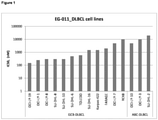
- EG-011 showed anti-tumor activity with a median IC50 of 2500 nM (95%C.I.; 100-20000 nM) across the 39 cell lines (Table 1).
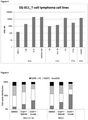
- ABC-DLBCL presented a median IC50 of 10 ⁇ M, GCB-DLBCL 550 nM, MCL 1000 nM, HL 13.5 ⁇ M, PLL 7.5, T cell lymphomas (CTCL, PTCL, ALCL) 2.5 ⁇ M ( Figures 1-3 ).
- CTCL, PTCL, ALCL T cell lymphomas
- Two cell lines (OCI-LY-19 and REC1) were exposed to two concentrations of EG-011 (500 and 2000 nM) for 72h, with a dose dependent increase of the cells in the sub-GO phase (indicating dead cells) ( Figures 4-5 ).
- EG-011 The anti-tumor activity of EG-011 as single agent was in vivo confirmed on a MCL model that has shown in vitro sensitivity, the REC1 cell line.
- EG-011 was administered at 200 mg/Kg once per day and 5 days per week. ( Figure 6 and Supplementary Figure 1 ). A group of mice of control was also used.
Landscapes
- Health & Medical Sciences (AREA)
- Chemical & Material Sciences (AREA)
- Organic Chemistry (AREA)
- Medicinal Chemistry (AREA)
- Pharmacology & Pharmacy (AREA)
- Life Sciences & Earth Sciences (AREA)
- Animal Behavior & Ethology (AREA)
- General Health & Medical Sciences (AREA)
- Public Health (AREA)
- Veterinary Medicine (AREA)
- Epidemiology (AREA)
- General Chemical & Material Sciences (AREA)
- Nuclear Medicine, Radiotherapy & Molecular Imaging (AREA)
- Chemical Kinetics & Catalysis (AREA)
- Hematology (AREA)
- Oncology (AREA)
- Pharmaceuticals Containing Other Organic And Inorganic Compounds (AREA)
Description
- Despite progress in pharmaceutical and medical research, tumors still represent a great challenge for life quality and life expectation. Among them, lymphomas, including chronic lymphocytic leukemia, are a group of tumors originating from lymphoid cells (Swerdlow, et al 2016) and are among the most common cancers, accounting for approximately 5% of all new cases in adults and up to 25% in children and adolescents (Siegel, et al 2016, Stewart and Wild 2014). Lymphomas comprise over 60 different entities or provisional entities that are distinguished based on a combination of histological, immunophenotypic, genetic and clinical features (Swerdlow, et al 2016). The most common lymphoma subtype is the diffuse large B-cell lymphoma (DLBCL), accounting for 30%-40% of all lymphomas (Sehn and Gascoyne 2015), and that includes at least two main subtypes, the germinal center B-cell (GCB) type and the activated B-cell like (ABC) type (Sehn and Gascoyne 2015, Swerdlow, et al 2016, Testoni, et al 2015). Most DLBCL patients are cured with regimens such as R-CHOP (rituximab, cyclophosphamide, doxorubicin, vincristine, and prednisone), but 30-40% of them present with a refractory disease or experience a relapse indicating the need of further therapeutics. Ibrutinib (Imbruvica) is a small molecule drug with structure:

- At present, the search for antitumor agents is still ongoing in the effort to widen the spectrum of available products, reduce the unwanted side effects, provide for alternatives in case if drug resistance, identify antitumor agents with sufficiently broad spectrum of activity and/or preferential activity on specific forms of tumors. In particular, liquid tumors like lymphomas and leukemias remain an important area of research, due to the relatively low number of effective products approved in therapy.
- The present Applicant has synthetized new compounds having the following structure (I)

-
-
Figure 1 . Distribution of IC50 values for EG-011 in 15 DLBCL cell lines. Cell lines were treated for 72h. X-axis, ABC, activated B cell-like DLBCL; GCB, germinal center B cell DLBCL. Y-axis, IC50 values in nM. -
Figure 2 . Distribution of IC50 values for EG-011 in 2 PLL, 9 MCL and 4 HL cell lines. Cell lines were treated for 72h. X-axis, PLL, chronic lymphocytic Leukemia; MCL, mantle cell lymphoma; HL, Hodgkin lymphoma. Y-axis, IC50 values in nM. -
Figure 3 . Distribution of IC50 values for EG-011 in 2 PLL, 9 MCL and 4 HL cell lines. Cell lines were treated for 72h. X-axis, ALCL, anaplastic large T cell lymphoma; CTCL, cutaneous T cell lymphoma; PTCL, peripheral T cell lymphoma; ATCL, acute T cell leukemia. Y-axis, IC50 values in nM. -
Figure 4 . Cell cycle phases distribution. OCI-LY-19 and REC1 were treated with two different concentration of EG-011 (500 and 2000 nM) for 72h. -
Figure 5 . Cell cycle peaks representation referred to the experiment reported inFigure 4 . -
Figure 6 . Tumor volume distributions during the in vivo experiment with the REC1 model. Treatment with EG-011 started when tumors became visible (180mm3). Y-axis tumor volume expressed in mm3. In each box-plot, the line in the middle of the - Supplementary
Figure 1 . Tumor volume averages during the experiment: REC1 model. Treatment with EG-011 started when tumors became visible (180mm3). Y-axis tumor volume expressed in mm3. - Supplementary
Figure 2 . The average tumor weight is reported together with standard deviation. P < 0.001. - Main object of the present invention are the compounds of formula (I) as such

- The compound wherein -R is =O has chemical name: 1-[(4-phenoxyphenyl)methyl]-3-(1-prop-2-enoyl-3-piperidyl)pyrido[3,2-d]pyrimidine-2,4-dione (also briefly identified herein as "EG-011") The compound wherein -R is -H has chemical name: 1-[(4-phenoxyphenyl)methyl]-3-(1-prop-2-enoyl-3-piperidyl)pyrido[3,2-d]pyrimidine-2-one.
- In the present invention, the compounds of formula (I) are used as such, or as pharmaceutically acceptable salt thereof. As used herein, the term "pharmaceutically acceptable" means that which is useful in preparing a pharmaceutical composition that is generally safe, non-toxic and neither biologically nor otherwise undesirable and includes that which is acceptable for veterinary use as well as human pharmaceutical use. Pharmaceutically acceptable salts of the compounds of formula (I) are typically, though not limitedly, those resulting from the protonation of one or more of its nitrogen atoms (I); in such salts, the compounds of formula (I) will normally be in cationic form, coupled to a suitable counter anion; non-limiting examples of counter anions are chloride, bromide, sulphate, sulfonate, aminosulfonate, phosphate, phosphonate, formate, carbonate, acetate, propionate, butyrate, fumarate, maleate, mesylate, citrate, oxalate, pivalate, etc. The compounds of formula (I) can also be used in a prodrug form, for example as a pharmaceutically acceptable ester which, after administration, can hydrolize and thus release the compound of formula (I) as such. All such forms are meant to be included for use in the present invention,
- As used herein, the terms "tumour" or "anti-tumour" or "use as anti-tumour agent" or "tumour diseases", refer to any diseases characterized by the formation and proliferation of tumour cells; the above terms include carcinomas, lymphomas, leukemias, sarcomas, myelomas, and the corresponding mixed-type forms; the above terms are inclusive of solid and liquid tumors. Preferred liquid tumors are leukemias and lymphomas. Among the leukemias, particular interest is attached to chronic lymphocytic leukaemia, T cell leukaemia, e.g. acute T cell leukaemia. Among the lymphomas, particular interest is attached to B cell lymphomas, e.g. diffuse large B cell lymphomas (such as activated B cell-like diffuse large B cell lymphoma, or germinal center B cell diffuse large B cell lymphoma), mantle cell lymphoma, Hodgkin lymphoma, non-Hodgkin lymphoma, T cell lymphomas, e.g. cutaneous T-cell lymphoma, peripheral T cell lymphoma, anaplastic large T cell lymphoma, etc.
- The treatment or prevention tumour diseases by means of one or more compounds of formula (I) represents a further object of the present invention. Accordingly, in one embodiment, the invention concerns the above described compounds of formula (I) or pharmaceutically acceptable salt thereof for use as anti-tumour agent, i.e. for the treatment or prevention of tumour diseases; in another embodiment, the invention concerns the use of the compound of formula (I) or pharmaceutically acceptable salt thereof for manufacturing a medicament for the treatment or prevention of tumour diseases. The invention extends to the compounds of formula (I) or pharmaceutically acceptable salt thereof for use in medicine.
- As used herein, "treatment" or "treating" means the administration of the instant compound to a subject (human or animal) who has already shown one or more symptoms of said tumour; The term "treatment," further refers to the medical management of a patient with the intent to cure, ameliorate, stabilize, or prevent the relevant disease, pathological condition, or disorder. This term includes active treatment, that is, treatment directed specifically toward the improvement of a disease, pathological condition, or disorder, and also includes causal treatment, that is, treatment directed toward removal of the cause of the associated disease, pathological condition, or disorder. In addition, this term includes palliative treatment, that is, treatment designed for the relief of symptoms rather than the curing of the disease, pathological condition, or disorder.
- As used herein, "prevention" or "preventing" means the administration of the instant compounds to a subject who shows unclear symptoms or no symptoms of said tumour diseases, but who is at risk of developing them, for example by being in contact with tumorigenic substances in the environment, being genetically predisposed to develop tumour diseases, etc.; a preventative treatment is generally directed to minimizing or partially or completely inhibiting the development of the associated tumor disease.
- The compounds of formula (I) or pharmaceutically acceptable salt thereof can be administered in a variety of dosages and regimens in function of the type/severity of the tumour disease, the conditions/age of the patient, and the chosen administration route. As non-limitative indication, dosages may vary between 10 and 500 mg/Kg, preferably between 100 and 300 mg/Kg, of the compound of formula (I) expressed as free base; regimens may involve administration of the above dosages for one or more days a week, e.g. 2,3,4,5,6 or 7 days a week, for one, two, three or more weeks as needed. Conveniently, the compounds of formula (I) or pharmaceutically acceptable salt thereof will be supplied to patients as one or more dosage units, each containing the aforementioned dosage amounts.
- The compounds of formula (I) or pharmaceutically acceptable salt thereof may be administered via any possible administration route, e.g. oral, peroral, buccal, sublingual, inhalatory, intramuscular, intravenous, topical, percutaneous, transcutaneous, rectal, etc., as dictated by convenience and/or medical reasons. Depending on the chosen administration route, the compound of formula (I) or pharmaceutically acceptable salt thereof will be formulated in a correspondingly suitable administration form. Non-limitative mention can be made herein to tablet, pill, capsule, microcapsule, granule, microgranule, pellet, micropellet, powder, lyophilized powder, solution, suspension or emulsion, film, gel, cream, percutaneous or transdermal delivery system, e.g. patch, plaster, etc. Wherever possible the administration form will be supplied to patients as one or more dosage units as defined above.
- Further object of the invention is a pharmaceutical composition comprising the above described compounds of formula (I) or pharmaceutically acceptable salt thereof. In such compositions, the compounds of formula (I) or pharmaceutically acceptable salt thereof will be in presence of one or more pharmaceutical excipients.
- The choice of the excipients will depend by enlarge from the chosen administration form. Tablets, pills, capsules, troches and the like can contain any of the following ingredients, or compounds of a similar nature: a binder such as microcrystalline cellulose, gum tragacanth or gelatin; an excipient such as starch or lactose, a disintegrating agent such as alginic acid, Primogel, or corn starch; a lubricant such as magnesium stearate; a gliding such as colloidal silicon dioxide; a sweetening agent such as sucrose or saccharin; or a flavoring agent such as peppermint, methyl salicylate, or orange flavoring. When the dosage unit form is a capsule, it can contain, in addition to material of the above type, a liquid carrier such as a fatty oil. In addition, dosage unit forms can contain various other materials which modify the physical form of the dosage unit, for example, coatings of sugar, shellac, or other enteric agents. The compounds can be administered as a component of an elixir, suspension, syrup, wafer, orally disintegrating film, orally disintegrating tablet, chewing gum. A syrup may contain, in addition to the active compounds, sucrose as a sweetening agent and certain preservatives, dyes and colorings and flavors. Solutions or suspensions used for injection can include the following components: a sterile diluent such as water for injection, saline solution, fixed oils, polyethylene glycols, glycerine, propylene glycol or other synthetic solvents; antibacterial agents such as benzyl alcohol or methyl parabens; antioxidants such as ascorbic acid or sodium bisulfite; chelating agents such as ethylenediaminetetraacetic acid; buffers such as acetates, citrates or phosphates and agents for the adjustment of tonicity such as sodium chloride, mannitol and dextrose. An injectable preparation, can be enclosed in ampoules, disposable syringes or multiple dose vials made of glass or plastic.
- A further object of the invention is a process of preparing the aforementioned pharmaceutical compositions, comprising formulating (e.g. admixing or contacting) the compounds of formula (I) or pharmaceutically acceptable salt thereof with one or more pharmaceutical excipients.
- For use in therapy, the compounds of formula (I) or pharmaceutically acceptable salt thereof may be administered alone or (alternatively) with further active agents, in particular further anti-tumour agents. In the latter case, the relevant combination treatment may be performed by administering dosage forms in which both active agents are co-formulated together or (alternatively) by administering, within suitable time windows, separate dosage forms containing one or the other active agent. Examples of further anti-tumour agents suitable for said combination treatment are: Methotrexate, Paclitaxel, Brentuximab, Adriamycin, Afatinib, Imiquimod, Alectinib, Alemtuzumab, Pemetrexed, Melphalan, Brigatinib, Chlorambucil, Aminolevulinic Acid, Pamidronate, Ofatumumab, Atezolizumab, Avastin, Avelumab, Azacitidine, Avelumab, Carmustine, Belinostat, Inotuzumab Ozogamicin, Bevacizumab, Bexarotene, Bicalutamide, Bleomycin, Blinatumomab, Bortezomib, Bosutinib, Brentuximab, Brigatinib, Cabazitaxel, Acalabrutinib, Alemtuzumab, Irinotecan, Capecitabine, Fluorouracil, Carboplatin, Carfilzomib, Ceritinib, Daunorubicin, Cetuximab, Chlorambucil, Cisplatin, Cladribine, Cyclophosphamide, Clofarabine, Clofarabine , Cobimetinib, Cometriq, Copanlisib, Dactinomycin, Cobimetinib, Crizotinib, Cyclophosphamide, Ifosfamide, Ramucirumab, Cytarabine, Cytarabine, Dabrafenib, Dacarbazine, Dacogen, Dactinomycin, Daratumumab, Daratumumab, Dasatinib, Daunorubicin, Decitabine, Defibrotide, Degarelix, Denosumab, Dexamethasone, Dexrazoxane, Dinutuximab, Docetaxel, Doxorubicin, Dacarbazine, Fluorouracil, Epirubicin Hydrochloride, Elotuzumab, Oxaliplatin, Elotuzumab, Enasidenib, Enzalutamide, Epirubicin, Cetuximab, Eribulin, Erivedge, Erlotinib, Amifostine, Etoposide, Doxorubicin, Raloxifene, Exemestane, Toremifene, Panobinostat, Fulvestrant, Fludarabine, Fluorouracil, Flutamide, Obinutuzumab, Gefitinib, Gemcitabine, Eribulin, Trastuzumab, Topotecan, Palbociclib, Ibritumomab, Ibrutinib, Ponatinib, Idarubicin, Idelalisib, Enasidenib, Ifosfamide, Imatinib, Durvalumab, Imiquimod, Inotuzumab Ozogamicin, Ipilimumab, Gefitinib, Irinotecan, Romidepsin, Ixabepilone, Ixazomib, Ixabepilone, Ruxolitinib, Cabazitaxel, Pembrolizumab, Ribociclib, Tisagenlecleucel, Carfilzomib, Lapatinib, Olaratumab, Lenalidomide, Lenvatinib, Letrozole, Leucovorin, Leuprolide, Lomustine, Olaparib, Vincristine, Procarbazine, Mechlorethamine, Trametinib, Mercaptopurine, Mesna, Temozolomide, Methotrexate, Methylnaltrexone , Midostaurin, Mitomycin C, Mitoxantrone, Vinorelbine, Necitumumab, Nelarabine, Neratinib, Sorafenib, Nilutamide, Nilotinib, Ixazomib, Niraparib, Nivolumab, Tamoxifen, Obinutuzumab, Ofatumumab, Olaparib, Olaratumab, Omacetaxine, Nivolumab, Osimertinib, Oxaliplatin, Paclitaxel, Palbociclib, Palifermin, Panitumumab, Panobinostat, Carboplatin, Pembrolizumab, Pertuzumab, Ponatinib, Necitumumab, Pralatrexate, Procarbazine, Denosumab, Ramucirumab, Rasburicase, Regorafenib, Methylnaltrexone, Lenalidomide, Ribociclib, Rituximab, Romidepsin, Rucaparib, Siltuximab, Sonidegib, Sorafenib, Dasatinib, Regorafenib, Sunitinib, Siltuximab, Omacetaxine, Thioguanine,Dabrafenib, Osimertinib, Erlotinib, Targretin, Nilotinib, Taxol, Taxotere, Atezolizumab, Temozolomide, Temozolomide, Thiotepa, Topotecan, Toremifene, Trabectedin, Trametinib, Bendamustine, Lapatinib Ditosylate, Dinutuximab, Valrubicin, Vandetanib, Panitumumab,Vinblastine, Bortezomib, Vemurafenib, Abemaciclib, Vinorelbine, Vismodegib, Vorinostat, Pazopanib, Crizotinib, Ipilimumab, Trabectedin, Ibritumomab, Goserelin, Zoledronic Acid, Ceritinib, pharmaceutically acceptable salts, esters or derivatives thereof.
- A further object of the present invention is a process for the preparation of the compound of formula (I) or pharmaceutically acceptable salt thereof, where said compound is obtained from one or more suitable precursors. Typical precursors are those represented as formulas (1) to (7) in the
Scheme 1 here below, with reference to the compound where -R is =O. .
- Processes which can be used and are described and reported in detail in the following examplifications; yet they should not be viewed as limiting the scope of the synthetic methods available for the preparation of the compound of the invention. Where the preparation of starting materials is not described, these are commercially available, known in the literature, or readily obtainable by those skilled in the art using standard procedures. Any of the compounds and intermediates showed herein which are racemic, may also exist and be used as enantiomers.
- An intermediate of formula (3), may be prepared according to
Scheme 1 reported above by reaction of 3-isocyanatepyridine-2-carboxy1ate 1 with tert-butyl 3-aminopiperidine-1-carboxylate 2. Typical reaction conditions comprise reacting 3-isocyanatepyridine-2-carboxy1ate 1 with tert-butyl 3-aminopiperidine-1-carboxylate 2 in a suitable polar aprotic solvent, such as DC M, at an appropriate temperature such as, for example, at room temperature. - An intermediate compound of formula (4), may be prepared according to
Scheme 1 reported above by reaction of methyl 3-[(1-tert-butoxycarbonyl-3-piperidyl)carbamoylamino]pyridine-2-carboxylate 3 with sodium ethoxide. Typical reaction conditions comprise reacting methyl 3-[(1-tert-butoxycarbonyl-3-piperidyl)carbamoylamino]pyridine-2-carboxylate 3 with a 20% solution of sodium ethoxide in EtOH, in a suitable alcohol, such as MeOH or EtOH, at an appropriate temperature such as, for example, ranging from 65 to 80°C. - An intermediate of formula (6), may be prepared according to
Scheme 1 reported above by alkylation of tert-butyl 3-(2,4-dioxo-1H-pyrido[3,2-d]pyrimidin-3-yl)piperidine-1-carboxylate 4 with 1-(bromomethyl)-4-phenoxy-benzene 5. Typical reaction conditions comprise reacting tert-butyl 3-(2,4-dioxo-1H-pyrido[3,2-d]pyrimidin-3-yl)piperidine-1-carboxylate 4 with 1-(bromomethyl)-4-phenoxy-benzene 5, in the presence of an appropriate base, such as, for example, K2CO3, in a suitable polar aprotic solvent, such as DMF, at an appropriate temperature such as, for example, at room temperature. - An intermediate of formula (7) may be prepared according to
Scheme 1 reported above by deprotection of tert-butyl 3-[2,4-dioxo-1-[(4-phenoxyphenyl)methyl]pyrido[3,2-d]pyrimidin-3-yl]piperidine-1-carboxylate 5 in an acidic medium . Typical reaction conditions comprise reacting tert-butyl 3-[2,4-dioxo-1-[(4-phenoxyphenyl)methyl]pyrido[3,2-d]pyrimidin-3-yl]piperidine-1-carboxylate 6 with an acid, such as, for example, 4M HCI in dioxane, in a suitable polar aprotic solvent, such as DCM, at an appropriate temperature such as, for example, rangingform 0° to r.t. [see, for a general reference, T.W. Green; Protective Groups in Organic Synthesis (Wiley, N.Y. 1981 )]. - The compound of formula (I) in which-R is =O may be prepared according to
Scheme 1 reported above by acylation of 1-[(4-phenoxyphenyl)methyl]-3-(3-piperidyl)pyrido[3,2-d]pyrimidine-2,4-dione 7 withacryloyl chloride 8. Typical reaction conditions comprise reacting 1-[(4-phenoxyphenyl)methyl]-3-(3-piperidyl)pyrido[3,2-d]pyrimidine-2,4-dione 7 withacryloyl chloride 8, in the presence of an appropriate base, such as, for example, TEA, in a suitable polar aprotic solvent, such as DCM, at an appropriate temperature such as, for example, at room temperature. For synthesis of the compound of formula (I) in which -R is -H, reference can be made to theabove scheme 1 reactions, suitably modified in that the corresponding precursors, intermediates and final product bear the same modification of -R. - The invention is described next with reference to the following non-limiting examples.
- Chemical names of compounds are generated with BIOVIA Draw 2017 R2 tool. The solution of common inorganic salts used in workups are aqueous solutions.
-
DCM Dichloromethane DMF N, N-Dimethylformamide EtOAc Ethylacetate MeOH Methanol TEA Triethylamine TFA Trifluoroacetic acid h hour eq equivalents min minutes r.t. room temperature Rt retention time sat. saturated - Proton Magnetic Resonance (1H NMR) spectra were collected using deuterated solvents (DMSO-d6 ) to 25°C on
Bruker Avance 300 MHz. Chemical shifts are expressed in parts per million (ppm) and measured using the residual solvent signals as the reference. Multeplicity is indicated as follows: (s) singlet, (d) doublet, (dd) double doublet, (t) triplet, (q) quartet, (m) multiplet, (br s) broad signal. - The MS/ESI+ [MH] + values reported in the text below may be obtained by Mass Spectrometer ZQ or equivalent:
- MS instrument: Waters ZQ (or equivalent)
- Polarity: ES+
- Capillary (kV): 3.50
- Cone (V): 20.00
- Extractor (V): 2.00
- RF Lens (V): 0.2
- Source Temperature (°C): 130
- Desolvation Temperature (°C): 350
- Desolvation Gas Flow (L/hr): 600
- Mass range (Da): 50 to 900
- Scan time (sec): 0.6
- Inter-Scan delay (sec): 0.2
- LC instrument: Waters Alliance e2695
- Instrument: HPLC Waters with Photodiode Detector 2998, Column Oven and Mass Spectrometer ZQ or equivalent
- Column: Phenomenex Gemini-NX C18, 150x2.0, 3µm or equivalent
- Column Temperature (°C): 25
- Wavelength (nm): 215
- Flow (mL/min): 0.2
- Injection volume (µL): 5
- Mobile phase solvent A: (H2O + 0.1% Formic acid); mobile phase solvent B (Acetonitrile + 0.1% Formic acid.
Gradient: T (min) % A %B 0 80 20 15 30 70 35 30 70 - Flash chromatography purifications were performed using a Biotage Isolera autopurification system, and carried out over pre-packed Biotage SNAP KP-Sil cartridges, Biotage SNAP Ultra or Biotage SNAP KP-NH cartridges.
- Brine refers to a saturated aqueous solution of NaCl.
- The compound of structure (I) could be prepared following the synthetic route depicted in Scheme 2:

-

- To a solution of 3-isocyanatepyridine-2-carboxy1ate (prepared as described in Synthetic Communications, 2003, 33(24), 4259-4268; 1.20 g, 6.736 mmol) in dry dichloromethane (8 mL), a solution of racemic tert-butyl 3-aminopiperidine-1-carboxylate (1.349 g, 6.736 mmol) in DCM (4 mL) was added drop-wise and the resulting mixture was stirred at room temperature overnight. After evaporation of the solvent at reduced pressure, the residue was purified by flash chromatography on Biotage KP-Sil SNAP cartridge (DCM : EtOAc = 80 : 20 to 100% EtOAc). A further purification by flash chromatography on Bitotage NH SNAP cartridge (hexane : EtOAc = 80 : 20 to 40 : 60) was required to afford title compound (1.4 g). MS/ESI+ 379.1 [MH]+, Rt = 13.6 min
-

- To a solution of methyl 3-[(1-tert-butoxycarbonyl-3-piperidyl)carbamoylamino]pyridine-2-carboxylate (1.3 g) in MeOH (15 mL), 20% sodium ethoxide solution in EtOH (1.48 mL, 3.8 mmol) was added and the resulting mixture was heated to reflux for 8 h, then stirred at room temperature overnight. The mixture was evaporated to dryness together with a smaller batch (obtained by reacting 0.100 g of methyl 3-[(1-tert-butoxycarbonyl-3-piperidyl)carbamoylamino]pyridine-2-carboxylate under the same conditions) and the residue was dissolved in water and acidified with acetic acid (pH ≈ 4-5). The precipitate was collected by filtration and washed several times with plenty of water. The solid was dried under vacuum at 50°C affording title compound as a beige solid (1.1 g, 3.175 mmol, 47% yield over 2 steps). MS/ESI+ 347.0 [MH]+, Rt = 11.8 min
-

- To a suspension of tert-butyl 3-(2,4-dioxo-1H-pyrido[3,2-d]pyrimidin-3-yl)piperidine-1-carboxylate (1.00 g, 2.89 mmol) in dry DMF (8 mL), K2CO3 (0.798 g, 5.78 mmol) was added followed by a solution of 1-(bromomethyl)-4-phenoxy-benzene (0.911 g, 3.46 mmol) in DMF (1 mL) and the resulting mixture was stirred at room temperature for 46 h. The mixture was partitioned between EtOAc (70 mL) and water (60 mL). The organic phase was washed with brine (3 × 70 mL), dried over sodium sulfate, filtered and concentrated. The residue was purified by flash chromatography on Biotage KP-Sil SNAP cartridge (100% EtOAc) to afford title compound as a beige foam (1.380 g, 2.61 mmol, 90% yield). MS/ESI+ 529.1 [MH]+, Rt = 25.4 min
-

- To a solution of tert-butyl 3-[2,4-dioxo-1-[(4-phenoxyphenyl)methyl]pyrido[3,2-d]pyrimidin-3-yl]piperidine-1-carboxylate (1.375 g, 2.60 mmol) in DCM (20 mL) cooled to 3°C, TFA (1.992 mL, 26.0 mmol) was added drop-wise and the resulting mixture was left to warm to r.t. and stirred for 6 h. The mixture was diluted with DCM and washed with sat. NaHCO3. The organic phase was dried over sodium sulfate, filtered and concentrated to afford title compound as a beige foam (1.086 g, 2.53 mmol, 97% yield) which was used without purification. MS/ESI+ 429.0 [MH]+, Rt = 8.9 min
-
- Thirty-nine cell lines derived from activated B cell-like (ABC) (n=3) and germinal center B Cell (GCB) (n=12) diffuse large B cell lymphoma (DLBCL), mantle cell lymphoma (MCL) (n=9), chronic lymphocytic leukemia (CLL) (n=2), Hodgkin lymphoma (HL) (n=4), cutaneous T cell lymphoma (CTCL) (n=3), peripheral T cell lymphoma (PTCL) (n=1), anaplastic large T cell lymphoma (ALCL) (n=4), acute T cell leukemia (ATCL) (n=1) were cultured according to the recommended conditions. All media were supplemented with fetal bovine serum (10%), Penicillin-Streptomycin-Neomycin (-5,000 units penicillin, 5 mg streptomycin and 10 mg neomycin/mL, Sigma) and L-glutamine (1%).
- EG-011 was dissolved in dimethyl sulphoxide (DMSO) to obtain a stock concentration of 10mM for in vitro experiments. EG-011 was dissolved in 25% hydroxypropyl beta cyclodextrin (HP-ß-CD) in water and adjusted at pH 6.0 using NaOH (0.1 N) and HCI (0.1 N) for in vivo experiments. Application volume was 4,5 mL/kg (100 mg in 4.5 mL), and mice received 200 microliters (corresponding to 200 mg/kg) though intra peritoneal i.p. injection, once per day and five days per week.
- Cells were seeded in 96-well plates (non-tissue culture treated) at a density of 10,000 cells for all cell lines. Each compound was dissolved in dimethyl sulphoxide (DMSO). For treatment of cells, compounds were serially diluted in the appropriate tissue culture medium, at a range of 20 mcM - 78 nM following a 1:2 dilution factor and added to cells (in three replicates). Cells were incubated for 72 hours at 37 °C, 5% CO2. DMSO alone was added to negative control (untreated) cells. Wells containing medium only were included on each plate and served as blanks for absorbance readings. MTT (Sigma-Aldrich Chemie GmbH, Buchs, Switzerland) was prepared as a 5 mg/ml stock in PBS and filter-sterilized. MTT solution (22µL) was added to each well and tissue culture plates were incubated at 37°C for 4 hours. Cells were then lysed with 25% SDS lysis buffer and absorbance was read at 570 nm using an AD340 plate reader (Beckman Coulter International SA, Switzerland). Absorbance values were expressed in percentage of proliferating cells in comparison with control cells (control corresponds to 100%).
- Lymphoma cells (106 per condition) were fixed in cold 70% ethanol (for at least 30 minutes at 4°C), added dropwise to the cell pellet while vortexing. Cells were washed x2 in PBS and Spin at 2000 rpm; supernatant was discarded and cells suspended in PBS (0.5 mL) and treated with Ribonuclease ( 50 µl of 100 µg/mL RNase). Then 200 µl of propidium iodide (50 µg/ml) were added and data acquisition was performed by using BD FACS-Canto II.
- Lymphoma cells (106 per condition) were exposed to single agents for 72h and assayed by FITC Annexin V Apoptosis Detection Kit (BD Biosciences) and by following the official protocol.
- NOD-Scid (NOD.CB17-Prkdcscid/NCrHsd) mice were purchased from Harlan Laboratory (five-six weeks of age, approximately 20 g body weight). Mice maintenance and animal experiments were performed under institutional guidelines established for the Animal Facility and with study protocols approved by the local Cantonal Veterinary Authority. Mice were subcutaneously engrafted with 15 ×106 of human Mantle cell lymphoma REC1 cells and divided into two experimental groups. Starting with tumors of 180 mm3 volume, mice underwent treatment with single agent while controls received vehicle only. EG-011 was administered 5 days per week at the dose of 200mg/kg (200 microliters) though i.p. injection.
- Binomial exact 95% confidence intervals (95% C.I.s) were calculated for median percentages. Differences in IC50 values among lymphoma subtypes were calculated using the t-Student test. Statistical significance was defined by P values of 0.05 or less.
- EG-011 showed anti-tumor activity with a median IC50 of 2500 nM (95%C.I.; 100-20000 nM) across the 39 cell lines (Table 1). In particular, ABC-DLBCL presented a median IC50 of 10 µM, GCB-DLBCL 550 nM,
MCL 1000 nM, HL 13.5 µM, PLL 7.5, T cell lymphomas (CTCL, PTCL, ALCL) 2.5 µM (Figures 1-3 ). As a whole, 12 out 39 cell lines showed IC50 values lower than 1 µM (95%C.I.; 100-600 nM). TP53, BCL2 and MYC were not associated with sensitivity/resistance across all the cell lines. Among GCB-DLBCL, representing the largest group, TP53 inactivation was detected in 5 out of 6 GCB-DLBCL sensitive (IC50s < 600 nM) and in 3 out of 4 GCB-DLBCL resistant (IC50s >600 nM) cell lines (P = n.s.). BCL2 translocation was detected in 5 out of 6 GCB-DLBCL sensitive (IC50s < 600 nM) and in 1 out of 3 GCB-DLBCL resistant (IC50s >600 nM) cell lines (P = n.s.). MYC translocation was detected in 3 out of 7 GCB-DLBCL sensitive (IC50s < 600 nM) and in 1 out of 3 GCB-DLBCL resistant (IC50s >600 nM) cell lines (P = n.s.). - Two cell lines (OCI-LY-19 and REC1) were exposed to two concentrations of EG-011 (500 and 2000 nM) for 72h, with a dose dependent increase of the cells in the sub-GO phase (indicating dead cells) (
Figures 4-5 ). - The anti-tumor activity of EG-011 as single agent was in vivo confirmed on a MCL model that has shown in vitro sensitivity, the REC1 cell line. EG-011 was administered at 200 mg/Kg once per day and 5 days per week. (
Figure 6 and SupplementaryFigure 1 ). A group of mice of control was also used. EG-011 200 mg/Kg delayed tumor growth (volume) versus control (Day 6,Day 7,Day 9, P < 0.05) and tumor weight (SupplementaryFigure 2 ). There was no reduction in the body weight of animals treated with EG-011 confirming the lack of in vivo toxicity.Table 1. IC50 values obtained from MTT assay with a 72h exposure time on lymphoma cell lines. Cell line IC50 (nM) MCL MINO 100 MCL REC1 100 MCL UPN1 120 T Cell - ALCL MAC-1 150 GCB-DLBCL OCI-LY-19 150 GCB-DLBCL OCI-LY-1 250 MCL GRANTA519 250 GCB-DLBCL OCI-LY-8 300 GCB-DLBCL SU-DHL-8 300 GCB-DLBCL SU-DHL-10 300 GCB-DLBCL SU-DHL-6 500 GCB-DLBCL TOLEDO 600 T Cell - CTCL H9 1000 MCL SP53 1000 T Cell - CTCL HUT-78 1500 GCB-DLBCL SU-DHL-16 1500 GCB-DLBCL Karpas-422 1500 T Cell - ALCL L-82 2000 GCB- DLBCL FARAGE 2000 HL KM-H2 2500 T Cell -PTCL FEPD 3000 MCL JEKO1 4000 ABC-DLBCL OCI-LY-10 5000 GCB-DLBCL OCI-LY-7 5000 CLL PCL-12 7000 MCL SP49 8000 CLL MEC1 8000 HL L-1236 9000 ABC-DLBCL OCI-LY-3 10000 GCB-DLBCL RCK8 10000 T Cell Leukemia JURKAT 15000 T Cell - CTCL HH 15000 HL AM-HLH 18000 ABC-DLBCL SU-DHL-2 20000 T Cell - ALCL KI-JK 20000 T Cell - ALCL KARPAS-299 20000 HL L-428 20000 MCL MAVER1 20000 MCL Z138 20000 -
- Sehn, L.H. & Gascoyne, R.D. (2015) Diffuse large B-cell lymphoma: optimizing outcome in the context of clinical and biologic heterogeneity. Blood, 125, 22-32.
- Siegel, R.L., Miller, K.D. & Jemal, A. (2016) Cancer statistics, 2016. CA Cancer J Clin, 66, 7-30.
- Stewart, B. & Wild, C.P. (eds.) (2014) World Cancer Report 2014. IARC Nonserial Publication.
- Swerdlow, S.H., Campo, E., Pileri, S.A., Harris, N.L., Stein, H., Siebert, R.,
- Advani, R., Ghielmini, M., Salles, G.A., Zelenetz, A.D. & Jaffe, E.S. (2016) The 2016 revision of the World Health Organization classification of lymphoid neoplasms. Blood, 127, 2375-2390.
- Testoni, M., Zucca, E., Young, K.H. & Bertoni, F. (2015) Genetic lesions in diffuse large B-cell lymphomas. Ann Oncol, 26, 1069-1080.
- Further reference may be made to:
-
-
-
Claims (11)
- A compound of formula (I) or a pharmaceutically acceptable salt thereof,

- A pharmaceutical composition comprising the compound of formula (I) or pharmaceutically acceptable salt thereof as claimed in claim 1, in association with one or pharmaceutically acceptable excipient.
- A compound of formula (I) or pharmaceutically acceptable salt thereof as claimed in claim 1, for use in therapy.
- A compound or salt thereof for the use according to claim 3, in the treatment and/or prevention of one or more among carcinomas, lymphomas, leukemias, sarcomas, myelomas, and the corresponding mixed-type forms.
- A compound or salt thereof for the use according to claim 4, in the treatment and/or prevention of one or more among: chronic lymphocytic leukaemia; T cell leukaemia, e.g. acute T cell leukaemia; T cell lymphomas, e.g. cutaneous T-cell lymphoma, peripheral T cell lymphoma, anaplastic large T cell lymphoma; B cell leukemia; B cell lymphomas, e.g. diffuse large B cell lymphomas, diffuse large B cell lymphomas (such as activated B cell-like diffuse large B cell lymphoma, or germinal center B cell diffuse large B cell lymphoma); mantle cell lymphoma; Hodgkin lymphoma; non-Hodgkin lymphoma;
- A composition or compound for use according to claims 2-5, wherein said compound of formula (I) or pharmaceutically acceptable salt thereof is present or administered at a dose comprised between 10 and 500 mg/Kg.
- A composition or compound for use according to claim 6, wherein said compound of formula (I) or pharmaceutically acceptable salt thereof is present or administered at a dose comprised between 100 and 300 mg/Kg.
- A composition or compound for use according to any of claims 2-7, wherein the compound of formula (I) or pharmaceutically acceptable salt thereof is formulated or co-administered with a further antitumor agent.
- A composition or compound for use according to any of claims 2-8, wherein the compound of formula (I) or pharmaceutically acceptable salt thereof is formulated for an administration route selected from: oral, peroral, buccal, sublingual, inhalatory, intramuscular, intravenous, topical, percutaneous, transcutaneous, rectal.
- A process to prepare a pharmaceutical composition as claimed in claim 2, comprising contacting a compound of formula (I) or salt thereof, with one or more pharmaceutical excipients.
- A process to obtain a compound of formula (I) as defined in claim 1, comprising reacting a compound of formula (II), wherein -R is -H or =O

Applications Claiming Priority (1)
| Application Number | Priority Date | Filing Date | Title |
|---|---|---|---|
| PCT/EP2018/057678 WO2019185117A1 (en) | 2018-03-26 | 2018-03-26 | New compounds with enhanced anti-tumor effects |
Publications (2)
| Publication Number | Publication Date |
|---|---|
| EP3774793A1 EP3774793A1 (en) | 2021-02-17 |
| EP3774793B1 true EP3774793B1 (en) | 2022-02-23 |
Family
ID=61913138
Family Applications (1)
| Application Number | Title | Priority Date | Filing Date |
|---|---|---|---|
| EP18716544.4A Active EP3774793B1 (en) | 2018-03-26 | 2018-03-26 | New compounds with enhanced anti-tumor effects |
Country Status (4)
| Country | Link |
|---|---|
| US (1) | US11471459B2 (en) |
| EP (1) | EP3774793B1 (en) |
| CN (1) | CN111971283B (en) |
| WO (1) | WO2019185117A1 (en) |
Families Citing this family (2)
| Publication number | Priority date | Publication date | Assignee | Title |
|---|---|---|---|---|
| US20240400560A1 (en) * | 2021-09-17 | 2024-12-05 | Shionogi & Co., Ltd. | Bicyclic heterocyclic derivative having viral growth inhibitory activity and pharmaceutical composition containing same |
| TW202400158A (en) * | 2022-03-10 | 2024-01-01 | 美商葛萊希克斯莫爾公司 | Methods of treating cancer and other conditions with a mu opioid receptor antagonist |
Family Cites Families (4)
| Publication number | Priority date | Publication date | Assignee | Title |
|---|---|---|---|---|
| JP5227321B2 (en) * | 2006-08-23 | 2013-07-03 | クドス ファーマシューティカルズ リミテッド | 2-Methylmorpholine pyrido-, pyrazo- and pyrimido-pyrimidine derivatives as MTOR inhibitors |
| JP2015027951A (en) * | 2011-11-02 | 2015-02-12 | 日本農薬株式会社 | Phthalamide derivatives, agricultural and horticultural insecticides containing the derivatives, and methods of use thereof |
| MX351225B (en) * | 2012-04-24 | 2017-10-05 | Ea Pharma Co Ltd | Sulfonamide derivative and medicinal use thereof. |
| CN105753863B (en) * | 2015-09-11 | 2018-07-31 | 东莞市真兴贝特医药技术有限公司 | Oxo-dihydroimidazopyridine compound and application thereof |
-
2018
- 2018-03-26 US US16/981,826 patent/US11471459B2/en active Active
- 2018-03-26 EP EP18716544.4A patent/EP3774793B1/en active Active
- 2018-03-26 CN CN201880091835.9A patent/CN111971283B/en active Active
- 2018-03-26 WO PCT/EP2018/057678 patent/WO2019185117A1/en not_active Ceased
Also Published As
| Publication number | Publication date |
|---|---|
| US11471459B2 (en) | 2022-10-18 |
| WO2019185117A1 (en) | 2019-10-03 |
| CN111971283A (en) | 2020-11-20 |
| US20210113565A1 (en) | 2021-04-22 |
| CN111971283B (en) | 2023-04-14 |
| EP3774793A1 (en) | 2021-02-17 |
Similar Documents
| Publication | Publication Date | Title |
|---|---|---|
| US11787801B2 (en) | Protein kinase inhibitors, preparation method and medical use thereof | |
| CN109311868B (en) | Compounds for the treatment of cancer and inflammatory diseases | |
| WO2025023957A1 (en) | Substituted 2-amino-9-(3,3-difluoropiperidin-4-yl)-7,9-dihydro-8h-purin-8-one compounds and their use in treating cancer | |
| AU2020342189B2 (en) | 3, 5-disubstituted pyrazole compounds as kinase inhibitors and uses thereof | |
| CN108069946B (en) | Substituted quinazoline compounds having the ability to cross the blood brain barrier | |
| US20180222870A1 (en) | Inhibitor of the mutated isocitrate dehydrogenase idh1 r132h | |
| CN110914277B (en) | Imidazo [1,2-b ] pyrimido [4,5-d ] pyridazin-5 (6H) -one compounds and application thereof | |
| EP4448512A1 (en) | Methods and compositions for targeting pd-l1 | |
| JP2021502332A (en) | Selective inhibitor of protein arginine methyltransferase 5 (PRMT5) | |
| CN118344349A (en) | 4-Alkoxybenzimidazole-6-carboxylic acid derivatives as GLP-1 receptor agonists | |
| TW201639824A (en) | Novel water-soluble prodrugs | |
| US20240010655A1 (en) | Dihydroimidazo pyrimido pyrimidinone compound | |
| US11471459B2 (en) | Compounds with enhanced anti-tumor effects | |
| CN111886237A (en) | Dihydrochromene derivatives | |
| IL320655A (en) | 4-Aminopyrrolo[f-2,1] triazines and their preparation and uses | |
| CN120051473A (en) | Compounds that inhibit or degrade CDK2 and/or CDK9 and medical uses thereof | |
| AU2022421580A1 (en) | 1h-pyrazole-3-amine derivative having bicyclic backbone | |
| CA3245813A1 (en) | Polymorphic compounds and uses thereof | |
| CN119215050A (en) | Application of substituted imidazoquinoxaline compounds in the preparation of anticancer drugs | |
| EA049737B1 (en) | A 1H-PYRAZOLE-3-AMINE DERIVATIVE HAVING A BICYCLIC BACK CHAIN | |
| HK1260629B (en) | 4-(3h-indol-5-yl)-n-(pyridin-2-yl)pyrimidin-2-amine derivatives as protein kinase inhibitors, preparation method and medical use thereof | |
| HK1257988A1 (en) | 3,5-disubstituted pyrazoles useful as checkpoint kinase 1 (chk1) inhibitors, and their preparations and applications | |
| HK1257988B (en) | 3,5-disubstituted pyrazoles useful as checkpoint kinase 1 (chk1) inhibitors, and their preparations and applications | |
| HK1260629A1 (en) | 4-(3h-indol-5-yl)-n-(pyridin-2-yl)pyrimidin-2-amine derivatives as protein kinase inhibitors, preparation method and medical use thereof |
Legal Events
| Date | Code | Title | Description |
|---|---|---|---|
| STAA | Information on the status of an ep patent application or granted ep patent |
Free format text: STATUS: UNKNOWN |
|
| STAA | Information on the status of an ep patent application or granted ep patent |
Free format text: STATUS: THE INTERNATIONAL PUBLICATION HAS BEEN MADE |
|
| PUAI | Public reference made under article 153(3) epc to a published international application that has entered the european phase |
Free format text: ORIGINAL CODE: 0009012 |
|
| STAA | Information on the status of an ep patent application or granted ep patent |
Free format text: STATUS: REQUEST FOR EXAMINATION WAS MADE |
|
| 17P | Request for examination filed |
Effective date: 20200923 |
|
| AK | Designated contracting states |
Kind code of ref document: A1 Designated state(s): AL AT BE BG CH CY CZ DE DK EE ES FI FR GB GR HR HU IE IS IT LI LT LU LV MC MK MT NL NO PL PT RO RS SE SI SK SM TR |
|
| AX | Request for extension of the european patent |
Extension state: BA ME |
|
| DAV | Request for validation of the european patent (deleted) | ||
| DAX | Request for extension of the european patent (deleted) | ||
| GRAP | Despatch of communication of intention to grant a patent |
Free format text: ORIGINAL CODE: EPIDOSNIGR1 |
|
| STAA | Information on the status of an ep patent application or granted ep patent |
Free format text: STATUS: GRANT OF PATENT IS INTENDED |
|
| INTG | Intention to grant announced |
Effective date: 20211021 |
|
| GRAS | Grant fee paid |
Free format text: ORIGINAL CODE: EPIDOSNIGR3 |
|
| GRAA | (expected) grant |
Free format text: ORIGINAL CODE: 0009210 |
|
| STAA | Information on the status of an ep patent application or granted ep patent |
Free format text: STATUS: THE PATENT HAS BEEN GRANTED |
|
| AK | Designated contracting states |
Kind code of ref document: B1 Designated state(s): AL AT BE BG CH CY CZ DE DK EE ES FI FR GB GR HR HU IE IS IT LI LT LU LV MC MK MT NL NO PL PT RO RS SE SI SK SM TR |
|
| REG | Reference to a national code |
Ref country code: GB Ref legal event code: FG4D |
|
| REG | Reference to a national code |
Ref country code: CH Ref legal event code: EP |
|
| REG | Reference to a national code |
Ref country code: DE Ref legal event code: R096 Ref document number: 602018031209 Country of ref document: DE |
|
| REG | Reference to a national code |
Ref country code: AT Ref legal event code: REF Ref document number: 1470389 Country of ref document: AT Kind code of ref document: T Effective date: 20220315 |
|
| REG | Reference to a national code |
Ref country code: IE Ref legal event code: FG4D |
|
| REG | Reference to a national code |
Ref country code: NL Ref legal event code: FP |
|
| REG | Reference to a national code |
Ref country code: LT Ref legal event code: MG9D |
|
| REG | Reference to a national code |
Ref country code: AT Ref legal event code: MK05 Ref document number: 1470389 Country of ref document: AT Kind code of ref document: T Effective date: 20220223 |
|
| PG25 | Lapsed in a contracting state [announced via postgrant information from national office to epo] |
Ref country code: SE Free format text: LAPSE BECAUSE OF FAILURE TO SUBMIT A TRANSLATION OF THE DESCRIPTION OR TO PAY THE FEE WITHIN THE PRESCRIBED TIME-LIMIT Effective date: 20220223 Ref country code: RS Free format text: LAPSE BECAUSE OF FAILURE TO SUBMIT A TRANSLATION OF THE DESCRIPTION OR TO PAY THE FEE WITHIN THE PRESCRIBED TIME-LIMIT Effective date: 20220223 Ref country code: PT Free format text: LAPSE BECAUSE OF FAILURE TO SUBMIT A TRANSLATION OF THE DESCRIPTION OR TO PAY THE FEE WITHIN THE PRESCRIBED TIME-LIMIT Effective date: 20220623 Ref country code: NO Free format text: LAPSE BECAUSE OF FAILURE TO SUBMIT A TRANSLATION OF THE DESCRIPTION OR TO PAY THE FEE WITHIN THE PRESCRIBED TIME-LIMIT Effective date: 20220523 Ref country code: LT Free format text: LAPSE BECAUSE OF FAILURE TO SUBMIT A TRANSLATION OF THE DESCRIPTION OR TO PAY THE FEE WITHIN THE PRESCRIBED TIME-LIMIT Effective date: 20220223 Ref country code: HR Free format text: LAPSE BECAUSE OF FAILURE TO SUBMIT A TRANSLATION OF THE DESCRIPTION OR TO PAY THE FEE WITHIN THE PRESCRIBED TIME-LIMIT Effective date: 20220223 Ref country code: ES Free format text: LAPSE BECAUSE OF FAILURE TO SUBMIT A TRANSLATION OF THE DESCRIPTION OR TO PAY THE FEE WITHIN THE PRESCRIBED TIME-LIMIT Effective date: 20220223 Ref country code: BG Free format text: LAPSE BECAUSE OF FAILURE TO SUBMIT A TRANSLATION OF THE DESCRIPTION OR TO PAY THE FEE WITHIN THE PRESCRIBED TIME-LIMIT Effective date: 20220523 |
|
| PG25 | Lapsed in a contracting state [announced via postgrant information from national office to epo] |
Ref country code: PL Free format text: LAPSE BECAUSE OF FAILURE TO SUBMIT A TRANSLATION OF THE DESCRIPTION OR TO PAY THE FEE WITHIN THE PRESCRIBED TIME-LIMIT Effective date: 20220223 Ref country code: LV Free format text: LAPSE BECAUSE OF FAILURE TO SUBMIT A TRANSLATION OF THE DESCRIPTION OR TO PAY THE FEE WITHIN THE PRESCRIBED TIME-LIMIT Effective date: 20220223 Ref country code: GR Free format text: LAPSE BECAUSE OF FAILURE TO SUBMIT A TRANSLATION OF THE DESCRIPTION OR TO PAY THE FEE WITHIN THE PRESCRIBED TIME-LIMIT Effective date: 20220524 Ref country code: FI Free format text: LAPSE BECAUSE OF FAILURE TO SUBMIT A TRANSLATION OF THE DESCRIPTION OR TO PAY THE FEE WITHIN THE PRESCRIBED TIME-LIMIT Effective date: 20220223 Ref country code: AT Free format text: LAPSE BECAUSE OF FAILURE TO SUBMIT A TRANSLATION OF THE DESCRIPTION OR TO PAY THE FEE WITHIN THE PRESCRIBED TIME-LIMIT Effective date: 20220223 |
|
| PG25 | Lapsed in a contracting state [announced via postgrant information from national office to epo] |
Ref country code: IS Free format text: LAPSE BECAUSE OF FAILURE TO SUBMIT A TRANSLATION OF THE DESCRIPTION OR TO PAY THE FEE WITHIN THE PRESCRIBED TIME-LIMIT Effective date: 20220623 |
|
| PG25 | Lapsed in a contracting state [announced via postgrant information from national office to epo] |
Ref country code: SM Free format text: LAPSE BECAUSE OF FAILURE TO SUBMIT A TRANSLATION OF THE DESCRIPTION OR TO PAY THE FEE WITHIN THE PRESCRIBED TIME-LIMIT Effective date: 20220223 Ref country code: SK Free format text: LAPSE BECAUSE OF FAILURE TO SUBMIT A TRANSLATION OF THE DESCRIPTION OR TO PAY THE FEE WITHIN THE PRESCRIBED TIME-LIMIT Effective date: 20220223 Ref country code: RO Free format text: LAPSE BECAUSE OF FAILURE TO SUBMIT A TRANSLATION OF THE DESCRIPTION OR TO PAY THE FEE WITHIN THE PRESCRIBED TIME-LIMIT Effective date: 20220223 Ref country code: EE Free format text: LAPSE BECAUSE OF FAILURE TO SUBMIT A TRANSLATION OF THE DESCRIPTION OR TO PAY THE FEE WITHIN THE PRESCRIBED TIME-LIMIT Effective date: 20220223 Ref country code: DK Free format text: LAPSE BECAUSE OF FAILURE TO SUBMIT A TRANSLATION OF THE DESCRIPTION OR TO PAY THE FEE WITHIN THE PRESCRIBED TIME-LIMIT Effective date: 20220223 Ref country code: CZ Free format text: LAPSE BECAUSE OF FAILURE TO SUBMIT A TRANSLATION OF THE DESCRIPTION OR TO PAY THE FEE WITHIN THE PRESCRIBED TIME-LIMIT Effective date: 20220223 |
|
| REG | Reference to a national code |
Ref country code: DE Ref legal event code: R097 Ref document number: 602018031209 Country of ref document: DE |
|
| PG25 | Lapsed in a contracting state [announced via postgrant information from national office to epo] |
Ref country code: MC Free format text: LAPSE BECAUSE OF FAILURE TO SUBMIT A TRANSLATION OF THE DESCRIPTION OR TO PAY THE FEE WITHIN THE PRESCRIBED TIME-LIMIT Effective date: 20220223 Ref country code: AL Free format text: LAPSE BECAUSE OF FAILURE TO SUBMIT A TRANSLATION OF THE DESCRIPTION OR TO PAY THE FEE WITHIN THE PRESCRIBED TIME-LIMIT Effective date: 20220223 |
|
| REG | Reference to a national code |
Ref country code: BE Ref legal event code: MM Effective date: 20220331 |
|
| PLBE | No opposition filed within time limit |
Free format text: ORIGINAL CODE: 0009261 |
|
| STAA | Information on the status of an ep patent application or granted ep patent |
Free format text: STATUS: NO OPPOSITION FILED WITHIN TIME LIMIT |
|
| PG25 | Lapsed in a contracting state [announced via postgrant information from national office to epo] |
Ref country code: LU Free format text: LAPSE BECAUSE OF NON-PAYMENT OF DUE FEES Effective date: 20220326 |
|
| 26N | No opposition filed |
Effective date: 20221124 |
|
| PG25 | Lapsed in a contracting state [announced via postgrant information from national office to epo] |
Ref country code: SI Free format text: LAPSE BECAUSE OF FAILURE TO SUBMIT A TRANSLATION OF THE DESCRIPTION OR TO PAY THE FEE WITHIN THE PRESCRIBED TIME-LIMIT Effective date: 20220223 Ref country code: BE Free format text: LAPSE BECAUSE OF NON-PAYMENT OF DUE FEES Effective date: 20220331 |
|
| P01 | Opt-out of the competence of the unified patent court (upc) registered |
Effective date: 20230522 |
|
| PG25 | Lapsed in a contracting state [announced via postgrant information from national office to epo] |
Ref country code: MK Free format text: LAPSE BECAUSE OF FAILURE TO SUBMIT A TRANSLATION OF THE DESCRIPTION OR TO PAY THE FEE WITHIN THE PRESCRIBED TIME-LIMIT Effective date: 20220223 Ref country code: CY Free format text: LAPSE BECAUSE OF FAILURE TO SUBMIT A TRANSLATION OF THE DESCRIPTION OR TO PAY THE FEE WITHIN THE PRESCRIBED TIME-LIMIT Effective date: 20220223 |
|
| PG25 | Lapsed in a contracting state [announced via postgrant information from national office to epo] |
Ref country code: HU Free format text: LAPSE BECAUSE OF FAILURE TO SUBMIT A TRANSLATION OF THE DESCRIPTION OR TO PAY THE FEE WITHIN THE PRESCRIBED TIME-LIMIT; INVALID AB INITIO Effective date: 20180326 |
|
| PG25 | Lapsed in a contracting state [announced via postgrant information from national office to epo] |
Ref country code: MT Free format text: LAPSE BECAUSE OF FAILURE TO SUBMIT A TRANSLATION OF THE DESCRIPTION OR TO PAY THE FEE WITHIN THE PRESCRIBED TIME-LIMIT Effective date: 20220223 |
|
| PG25 | Lapsed in a contracting state [announced via postgrant information from national office to epo] |
Ref country code: TR Free format text: LAPSE BECAUSE OF FAILURE TO SUBMIT A TRANSLATION OF THE DESCRIPTION OR TO PAY THE FEE WITHIN THE PRESCRIBED TIME-LIMIT Effective date: 20220223 |
|
| PGFP | Annual fee paid to national office [announced via postgrant information from national office to epo] |
Ref country code: NL Payment date: 20260219 Year of fee payment: 9 |
|
| REG | Reference to a national code |
Ref country code: CH Ref legal event code: U11 Free format text: ST27 STATUS EVENT CODE: U-0-0-U10-U11 (AS PROVIDED BY THE NATIONAL OFFICE) Effective date: 20260401 |
|
| PGFP | Annual fee paid to national office [announced via postgrant information from national office to epo] |
Ref country code: GB Payment date: 20260220 Year of fee payment: 9 |
|
| PGFP | Annual fee paid to national office [announced via postgrant information from national office to epo] |
Ref country code: DE Payment date: 20260219 Year of fee payment: 9 Ref country code: IE Payment date: 20260223 Year of fee payment: 9 |
|
| PGFP | Annual fee paid to national office [announced via postgrant information from national office to epo] |
Ref country code: IT Payment date: 20260219 Year of fee payment: 9 |
|
| PGFP | Annual fee paid to national office [announced via postgrant information from national office to epo] |
Ref country code: FR Payment date: 20260219 Year of fee payment: 9 |
|
| PGFP | Annual fee paid to national office [announced via postgrant information from national office to epo] |
Ref country code: CH Payment date: 20260401 Year of fee payment: 9 |