EP3772791B1 - System and method for adding a high voltage dc source to a power bus - Google Patents
System and method for adding a high voltage dc source to a power bus Download PDFInfo
- Publication number
- EP3772791B1 EP3772791B1 EP19216125.5A EP19216125A EP3772791B1 EP 3772791 B1 EP3772791 B1 EP 3772791B1 EP 19216125 A EP19216125 A EP 19216125A EP 3772791 B1 EP3772791 B1 EP 3772791B1
- Authority
- EP
- European Patent Office
- Prior art keywords
- positive
- negative
- hvdc
- output line
- rail
- Prior art date
- Legal status (The legal status is an assumption and is not a legal conclusion. Google has not performed a legal analysis and makes no representation as to the accuracy of the status listed.)
- Active
Links
Images

Classifications
-
- H—ELECTRICITY
- H02—GENERATION; CONVERSION OR DISTRIBUTION OF ELECTRIC POWER
- H02J—ELECTRIC POWER NETWORKS; CIRCUIT ARRANGEMENTS OR SYSTEMS FOR SUPPLYING OR DISTRIBUTING ELECTRIC POWER; SYSTEMS FOR STORING ELECTRIC ENERGY
- H02J1/00—Circuit arrangements for DC mains or DC distribution networks
-
- H—ELECTRICITY
- H02—GENERATION; CONVERSION OR DISTRIBUTION OF ELECTRIC POWER
- H02J—ELECTRIC POWER NETWORKS; CIRCUIT ARRANGEMENTS OR SYSTEMS FOR SUPPLYING OR DISTRIBUTING ELECTRIC POWER; SYSTEMS FOR STORING ELECTRIC ENERGY
- H02J1/00—Circuit arrangements for DC mains or DC distribution networks
- H02J1/10—Parallel operation of DC sources
- H02J1/109—Scheduling or re-scheduling the operation of the DC sources in a particular order, e.g. connecting or disconnecting the sources in sequential, alternating or in subsets, to meet a given demand
-
- G—PHYSICS
- G05—CONTROLLING; REGULATING
- G05F—SYSTEMS FOR REGULATING ELECTRIC OR MAGNETIC VARIABLES
- G05F1/00—Automatic systems in which deviations of an electric quantity from one or more predetermined values are detected at the output of the system and fed back to a device within the system to restore the detected quantity to its predetermined value or values, i.e. retroactive systems
- G05F1/10—Regulating voltage or current
- G05F1/46—Regulating voltage or current wherein the variable actually regulated by the final control device is DC
-
- H—ELECTRICITY
- H02—GENERATION; CONVERSION OR DISTRIBUTION OF ELECTRIC POWER
- H02J—ELECTRIC POWER NETWORKS; CIRCUIT ARRANGEMENTS OR SYSTEMS FOR SUPPLYING OR DISTRIBUTING ELECTRIC POWER; SYSTEMS FOR STORING ELECTRIC ENERGY
- H02J1/00—Circuit arrangements for DC mains or DC distribution networks
- H02J1/10—Parallel operation of DC sources
- H02J1/108—Parallel operation of DC sources having arrangements for blocking reverse current flow, e.g. using diodes
-
- H—ELECTRICITY
- H02—GENERATION; CONVERSION OR DISTRIBUTION OF ELECTRIC POWER
- H02J—ELECTRIC POWER NETWORKS; CIRCUIT ARRANGEMENTS OR SYSTEMS FOR SUPPLYING OR DISTRIBUTING ELECTRIC POWER; SYSTEMS FOR STORING ELECTRIC ENERGY
- H02J3/00—Circuit arrangements for AC mains or AC distribution networks
- H02J3/04—Arrangements for connecting networks of the same frequency but supplied from different sources
- H02J3/06—Controlling the transfer of power between connected networks; Controlling load sharing between connected networks
-
- H—ELECTRICITY
- H02—GENERATION; CONVERSION OR DISTRIBUTION OF ELECTRIC POWER
- H02J—ELECTRIC POWER NETWORKS; CIRCUIT ARRANGEMENTS OR SYSTEMS FOR SUPPLYING OR DISTRIBUTING ELECTRIC POWER; SYSTEMS FOR STORING ELECTRIC ENERGY
- H02J2105/00—Networks for supplying or distributing electric power characterised by their spatial reach or by the load
- H02J2105/30—Networks for supplying or distributing electric power characterised by their spatial reach or by the load the load networks being external to vehicles, i.e. exchanging power with vehicles
- H02J2105/32—Networks for supplying or distributing electric power characterised by their spatial reach or by the load the load networks being external to vehicles, i.e. exchanging power with vehicles for aircrafts
Definitions
- Exemplary embodiments pertain to the art of power distribution and, in particular, to adding a high voltage DC source to an already powered DC bus.
- Aircraft require electrical power to operate many parts of the aircraft system, including on-board flight control systems, lighting, air conditioning etc.
- the current and future generations of aircraft use more and more electrical control in place of convention hydraulic, pneumatic etc. control.
- Such MEA aircraft have advantages in terms of the size and weight of the controls and power systems as well as in terms of maintenance and reliability.
- HVDC high voltage de
- voltage is provided on board aircraft in one of two (or more) ways.
- power comes from an external ground generator supplying, say 115 V ac at 400 Hz.
- An auto-transformer rectifier unit (ATRU) rectifies the supply voltage to provide voltages required for the different loads on the aircraft.
- ATRU auto-transformer rectifier unit
- the power can be rectified by active rectification using power flow controllers.
- a method according to claim 1 is provided.
- a system according to claim 7 is provided.
- a system according to claim 15 is provided.
- the power comes from the aircraft engine or aircraft power unit (APU) generally provides power to the DC bus.
- APU aircraft power unit
- a generator connects to the high pressure spool of a gas turbine engine via gear box. The power thus produced is connected to the DC bus of the aircraft.
- he proposed approach for and one HVDC source into parallel with another is to temporarily lower the voltage of the channel requesting to come on-line and use a pair of diodes and an auxiliary contactor to make the parallel connection while the voltage of the channel coming on line is ramped up.
- the natural commutation of the diodes connects the capacitors at the point(s) in time when their voltages are equal and thereby avoid a current spike.
- the main contactor is closed to provides paths around the diodes and the auxiliary contactors. At this time normal voltage and load division control is engaged.
- the auxiliary contactors carry modest current and only for a short time.
- FIG. 1 shows an example of bus 100 that includes a positive bus rail 102 and negative bus rail 104.
- the terms positive and negative merely refer to the fact that the rails 102, 104 can have a voltage differential.
- the positive rail 102 can be at +270V and the negative rail 104 can be a -270V.
- these voltages could be +540V and 0V.
- the bus 100 is being driven by a first high voltage source 110.
- the first high voltage source 110 includes a prime mover 112 that drives a first AC generator 114.
- the prime mover 112 can be a spool of the gas turbine engine.
- the prime mover 112 is a high pressure spool of the gas turbine engine in one embodiment but can be other spools (e.g., low or medium) or can be an auxiliary power unit (APU) in one embodiment.
- the prime mover 112 can be connected to the first AC generator 114 by a gear box as is known in the art.
- the output of the first AC generator 114 is provided to a first rectifier 116 that converts the AC power received form the first AC generator 114 into a HVDC power.
- the first rectifier 116 produces a positive output (V+) on a first positive output line 120 and a negative output (V-) on a first negative output line 122.
- V+ positive output
- V- negative output
- first negative output line 122 This can be accomplished in any known manner including having two rectifiers, one of which is inverting.
- the first positive output line 120 and the first negative output line 122 are connected to the positive and negative bus rails 102, 104, respectively.
- First positive and negative smoothing capacitors 124, 126 are connected between the first positive output line 120 and the first negative output line 122, respectively, and ground to smooth the voltages provided on the first positive output line 120 and the first negative output line 122 (and thus, positive and negative bus rails 102, 104).
- the first high voltage source 110 can be connected to the bus by one or more contactors 128, 129 on the first positive output line 120 and the first negative output line 122, respectively.
- the contactors 128, 129 are shown as being closed.
- a bus coupling circuit 160 and method may allow the second high voltage source 130 to be added without creating a large current spike.
- the second high voltage source 130 is not connected to the bus 100 in FIG. 1 but based on the discussion herein, after the steps disclosed herein are performed, the second high voltage source 130 will be connected to the bus 100 in parallel with the first high voltage source 110.
- the first and second high voltage sources can also be referred to as first and second high voltage direct current (HVDC) sources herein.
- the second high voltage source 130 includes a second prime mover 142 that drives a second AC generator 144.
- the second prime mover 142 can be another spool of the gas turbine engine that is different than the first prime mover or can be an auxiliary power unit (APU).
- the second prime mover 142 can be connected to the second AC generator 144 by a gear box as is known in the art.
- the output of the second AC generator 144 is provided to a second rectifier 146 that converts the AC signal received form the second AC generator 144 into a HVDC signal. As shown, the second rectifier 146 produces a positive output (V+) on a second positive output line 150 and a negative output (V-) on a second negative output line 152.
- Second positive and negative smoothing capacitors 154, 156 are connected between the second positive output line 150 and the second negative output line 152, respectively, and ground to smooth the voltages provided on second positive output line 150 and the second negative output line 152.
- bus coupling circuit 160 is connected between the second high voltage source 130 and the bus 100. After the steps herein are performed, contactors 166 and 176 will couple the second positive output line 150 and the second negative output line 152 to the positive and negative bus rails 102, 104, respectively.
- the bus coupling circuit 160 includes positive line coupler 161 and a negative line coupler 171 that, respectively, are connected to the second positive output line 150 and the second negative output line 152 and the positive and negative bus rails 102, 104.
- Both the positive line coupler 161 and the negative line coupler 171 include main contactors that are connected in parallel to a serially connected diode/ auxiliary contactor combination.
- the positive line coupler 161 includes a first auxiliary contactor 162 serially connected to a first diode 164 such that the diode 164 allows current flow from the second high voltage source 130 to the bus 100 but block a reverse flow of current (assuming the diode is not in reverse breakdown). The order of the two components can be reversed.
- a first main contactor 166 is connected in parallel with the first auxiliary contactor 162/first diode 164 combination.
- negative positive line coupler 141 includes a first auxiliary contactor 162 serially connected to a second diode 174 such that the diode 164 allows current flow from the bus 100 to return to the second high voltage source 130 and such that is block a reverse flow of current (assume the diode is not in reverse breakdown). The order of the two components can be reversed.
- a second main contactor 176 is connected in parallel with the second auxiliary contactor 172/second diode 174 combination.
- the output voltage out of the second high voltage source 130 is lowered so that it is below that of the first high voltage source 110.
- This can include lowering the voltage so that the voltages across the second positive and negative smoothing capacitors 154, 156 are below the voltages across the first positive and negative smoothing capacitors 124, 126.
- a controller 190 can be connected to voltage sensors (not shown) to perform this operation.
- the voltage of the second high voltage source 130 is ramped up. This ramping can continue until a current is detected through both the first and second diodes 164, 174 as indicated by decision block 208.
- This determination can be made by a controller 190 connected to one or more current sensors 192, 194 that measure current through the first and second diodes.
- the current sensor 192 could measure current though both the diode and the switch in each line coupler 161, 171. That is, the current sensor could measure current through the first diode 162 and through the first main contactor 166. In this manner, the sensors could also be sued for load division control after first main contactor 166 closes.
- the main contactors 166 and 176 are closed and the auxiliary contactors 162, 172 can be opened as indicated at block 210.
- the natural commutation of the first and second diodes 164, 174 is used to connect the capacitors of each high voltage source 110, 130 at the point(s) in time when their voltage is equal and thereby avoid a current spike.
- the main contactors 166 and 176 can each have two poles and be actuated by a single solenoid.
- the diodes are connected as shown in FIG. 1 . If the direction was reversed, rather than ramping voltage up, the voltage of the second high voltage source could be brought to level above that of the voltage of the second high voltage source could be brought to level above that of the first and lowered until the diodes conduct. Such a configuration is shown in FIG. 3 . To distinguish, the reverse oriented diodes include a prime indication attached thereto. Thus, in one embodiment, in the system of FIG. 3 , the voltage across provided by the second high voltage source can be raised above that of the first high voltage source 110 and then lowered.
- the second high voltage source 130 includes a battery 143 rather than a prime mover/generator combination.
- the battery 143 could be replaced by the prime mover/generator combination of FIG. 1 .
- the battery 143 could replace the prime mover/generator combination in FIG. 1 .
- the voltage of the first power source 100 would be adjusted to connect the battery.
Landscapes
- Engineering & Computer Science (AREA)
- Power Engineering (AREA)
- Physics & Mathematics (AREA)
- Electromagnetism (AREA)
- General Physics & Mathematics (AREA)
- Radar, Positioning & Navigation (AREA)
- Automation & Control Theory (AREA)
- Control Of Eletrric Generators (AREA)
- Direct Current Feeding And Distribution (AREA)
Description
- Exemplary embodiments pertain to the art of power distribution and, in particular, to adding a high voltage DC source to an already powered DC bus.
- Aircraft require electrical power to operate many parts of the aircraft system, including on-board flight control systems, lighting, air conditioning etc. The current and future generations of aircraft use more and more electrical control in place of convention hydraulic, pneumatic etc. control. Such MEA aircraft have advantages in terms of the size and weight of the controls and power systems as well as in terms of maintenance and reliability.
- Most current large commercial aircraft use electricity, on-board, in the form of an AC fixed frequency and/or variable frequency network. Steps have been made to move from 115 V ac to 230 V ac and more recent developments have allowed power supplies to supply high voltage de (HVDC) e.g. +/-270 V dc, providing improvements in terms of additional functionality, power supply simplification, weight savings and thus fuel efficiency.
- Generally, voltage is provided on board aircraft in one of two (or more) ways. When the aircraft is on the ground, power comes from an external ground generator supplying, say 115 V ac at 400 Hz. An auto-transformer rectifier unit (ATRU) rectifies the supply voltage to provide voltages required for the different loads on the aircraft. Instead of an ATRU, the power can be rectified by active rectification using power flow controllers.
- When the aircraft is in the air the power comes from the aircraft engine or aircraft power unit (APU) via a three-phase ac generator that is then rectified. The rectified power is provided to a so-called DC bus.
US 2018/0375327 A1 describes a solid state power contactor.US 2016/322809 A1 describes a DC circuit breaker and method of use. - A method according to claim 1 is provided.
- A system according to claim 7 is provided.
- A system according to claim 15 is provided.
- The following descriptions should not be considered limiting in any way. With reference to the accompanying drawings, like elements are numbered alike:
-
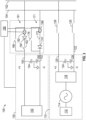
FIG. 1 is a schematic of a power bus that is initially driven by a first power source and to which a second power source is to be added in parallel; -
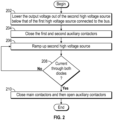
FIG. 2 is a flow chart illustrating a method of connecting two high voltage DC sources to a bus in parallel according to one embodiment; and -
FIG. 3 is a schematic of a power bus that is initially driven by a first power source and to which a second power source (battery) is to be added in parallel. - A detailed description of one or more embodiments of the disclosed apparatus and method are presented herein by way of exemplification and not limitation with reference to the Figures.
- As discussed above, when the aircraft is in the air the power comes from the aircraft engine or aircraft power unit (APU) generally provides power to the DC bus. In some instances it may be desirable to have two sources (e.g., generators) provide to the bus at the same time. For example, in the general case, a generator connects to the high pressure spool of a gas turbine engine via gear box. The power thus produced is connected to the DC bus of the aircraft. In some instances it may be desirable to add an additional source of DC power to the bus in parallel. For example, it may be desirable to add power from a second generator connected to the low pressure spool or the APU or both to the DC bus. This can allow for the DC bus to provide more power for larger loads such as an electric propulsion system. Such instances can occur anytime increased electrical power to the DC bus is needed such as during take-off.
- Bringing two HVDC channels into parallel will produce a very large current spike unless the voltages across capacitors connected to the DC bus are very close to one another. Another complication is that there are two capacitor voltages to consider, one each for the upper and lower rails of the DC bus. This current spike might weld a contactor forming the connection closed or will at least shorten the useful life of the contactor.
- Disclosed is procedure where the current spike can be reduced or eliminated when bringing two HVDC power channels into parallel.
- As will be more fully understood from reviewing the below disclosure, in one embodiment, he proposed approach for and one HVDC source into parallel with another is to temporarily lower the voltage of the channel requesting to come on-line and use a pair of diodes and an auxiliary contactor to make the parallel connection while the voltage of the channel coming on line is ramped up. In this manner, the natural commutation of the diodes connects the capacitors at the point(s) in time when their voltages are equal and thereby avoid a current spike. When current is detected in both diodes, the main contactor is closed to provides paths around the diodes and the auxiliary contactors. At this time normal voltage and load division control is engaged. The auxiliary contactors carry modest current and only for a short time.
-
FIG. 1 shows an example ofbus 100 that includes apositive bus rail 102 andnegative bus rail 104. The terms positive and negative merely refer to the fact that therails positive rail 102 can be at +270V and thenegative rail 104 can be a -270V. Of course, depending on how grounded, these voltages could be +540V and 0V. - As illustrated the
bus 100 is being driven by a firsthigh voltage source 110. The firsthigh voltage source 110 includes aprime mover 112 that drives afirst AC generator 114. Theprime mover 112 can be a spool of the gas turbine engine. Theprime mover 112 is a high pressure spool of the gas turbine engine in one embodiment but can be other spools (e.g., low or medium) or can be an auxiliary power unit (APU) in one embodiment. Theprime mover 112 can be connected to thefirst AC generator 114 by a gear box as is known in the art. The output of thefirst AC generator 114 is provided to afirst rectifier 116 that converts the AC power received form thefirst AC generator 114 into a HVDC power. As shown, thefirst rectifier 116 produces a positive output (V+) on a firstpositive output line 120 and a negative output (V-) on a firstnegative output line 122. This can be accomplished in any known manner including having two rectifiers, one of which is inverting. The firstpositive output line 120 and the firstnegative output line 122 are connected to the positive andnegative bus rails - First positive and
negative smoothing capacitors positive output line 120 and the firstnegative output line 122, respectively, and ground to smooth the voltages provided on the firstpositive output line 120 and the first negative output line 122 (and thus, positive andnegative bus rails 102, 104). - In shall be understood that the first
high voltage source 110 can be connected to the bus by one ormore contactors positive output line 120 and the firstnegative output line 122, respectively. InFIG. 1 thecontactors - As discussed above, in some instances it may be desirable to add connect a second
high voltage source 130 to thebus 100. Herein disclosed is abus coupling circuit 160 and method that may allow the secondhigh voltage source 130 to be added without creating a large current spike. - As shown, the second
high voltage source 130 is not connected to thebus 100 inFIG. 1 but based on the discussion herein, after the steps disclosed herein are performed, the secondhigh voltage source 130 will be connected to thebus 100 in parallel with the firsthigh voltage source 110. The first and second high voltage sources can also be referred to as first and second high voltage direct current (HVDC) sources herein. - As illustrated, similar to the first
high voltage source 110, the secondhigh voltage source 130 includes a secondprime mover 142 that drives asecond AC generator 144. The secondprime mover 142 can be another spool of the gas turbine engine that is different than the first prime mover or can be an auxiliary power unit (APU). The secondprime mover 142 can be connected to thesecond AC generator 144 by a gear box as is known in the art. The output of thesecond AC generator 144 is provided to asecond rectifier 146 that converts the AC signal received form thesecond AC generator 144 into a HVDC signal. As shown, thesecond rectifier 146 produces a positive output (V+) on a secondpositive output line 150 and a negative output (V-) on a secondnegative output line 152. - Second positive and
negative smoothing capacitors positive output line 150 and the secondnegative output line 152, respectively, and ground to smooth the voltages provided on secondpositive output line 150 and the secondnegative output line 152. - As illustrated,
bus coupling circuit 160 is connected between the secondhigh voltage source 130 and thebus 100. After the steps herein are performed,contactors positive output line 150 and the secondnegative output line 152 to the positive andnegative bus rails - The
bus coupling circuit 160 includespositive line coupler 161 and anegative line coupler 171 that, respectively, are connected to the secondpositive output line 150 and the secondnegative output line 152 and the positive andnegative bus rails - Both the
positive line coupler 161 and thenegative line coupler 171 include main contactors that are connected in parallel to a serially connected diode/ auxiliary contactor combination. In particular, thepositive line coupler 161 includes a firstauxiliary contactor 162 serially connected to afirst diode 164 such that thediode 164 allows current flow from the secondhigh voltage source 130 to thebus 100 but block a reverse flow of current (assuming the diode is not in reverse breakdown). The order of the two components can be reversed. A firstmain contactor 166 is connected in parallel with the firstauxiliary contactor 162/first diode 164 combination. - In addition, negative positive line coupler 141 includes a first
auxiliary contactor 162 serially connected to asecond diode 174 such that thediode 164 allows current flow from thebus 100 to return to the secondhigh voltage source 130 and such that is block a reverse flow of current (assume the diode is not in reverse breakdown). The order of the two components can be reversed. A secondmain contactor 176 is connected in parallel with the secondauxiliary contactor 172/second diode 174 combination. - Operation of the second
high voltage source 130 and thebus coupling circuit 160 will now be described in the context of adding the secondhigh voltage source 130 in parallel to the firsthigh voltage source 110 at a time that the firsthigh voltage source 110 is driving thebus 100. The discussion will refer to bothFIGs. 1 and2 . - As indicated at
block 202, the output voltage out of the secondhigh voltage source 130 is lowered so that it is below that of the firsthigh voltage source 110. This can include lowering the voltage so that the voltages across the second positive andnegative smoothing capacitors negative smoothing capacitors controller 190 can be connected to voltage sensors (not shown) to perform this operation. - Then, at
block 204, the first and secondauxiliary contactors - At
block 206, the voltage of the secondhigh voltage source 130 is ramped up. This ramping can continue until a current is detected through both the first andsecond diodes decision block 208. This determination can be made by acontroller 190 connected to one or morecurrent sensors current sensor 192 could measure current though both the diode and the switch in eachline coupler first diode 162 and through the firstmain contactor 166. In this manner, the sensors could also be sued for load division control after firstmain contactor 166 closes. - When the current is detected in both diodes, the
main contactors auxiliary contactors block 210. - Based on the above description, the skilled artisan will realize that the natural commutation of the first and
second diodes high voltage source main contactors - In the above examples it has assumed that the diodes are connected as shown in
FIG. 1 . If the direction was reversed, rather than ramping voltage up, the voltage of the second high voltage source could be brought to level above that of the voltage of the second high voltage source could be brought to level above that of the first and lowered until the diodes conduct. Such a configuration is shown inFIG. 3 . To distinguish, the reverse oriented diodes include a prime indication attached thereto. Thus, in one embodiment, in the system ofFIG. 3 , the voltage across provided by the second high voltage source can be raised above that of the firsthigh voltage source 110 and then lowered. - In
FIG. 3 , the secondhigh voltage source 130 includes abattery 143 rather than a prime mover/generator combination. Of course, thebattery 143 could be replaced by the prime mover/generator combination ofFIG. 1 . Further, thebattery 143 could replace the prime mover/generator combination inFIG. 1 . As shown, to connect the battery, the voltage of thefirst power source 100 would be adjusted to connect the battery. - The term "about" is intended to include the degree of error associated with measurement of the particular quantity based upon the equipment available at the time of filing the application.
- The terminology used herein is for the purpose of describing particular embodiments only and is not intended to be limiting of the present disclosure. As used herein, the singular forms "a", "an" and "the" are intended to include the plural forms as well, unless the context clearly indicates otherwise. It will be further understood that the terms "comprises" and/or "comprising," when used in this specification, specify the presence of stated features, integers, steps, operations, elements, and/or components, but do not preclude the presence or addition of one or more other features, integers, steps, operations, element components, and/or groups thereof.
Claims (15)
- A method of connecting first and second high voltage direct current (HVDC) sources in parallel to bus for an aircraft including a positive rail and a negative rail, the first HVDC source having a first positive output line and a first negative output line and the second HVDC source having a second positive output line and a second negative output line, the method including:connecting the first HVDC source to the bus such that the first positive output line is connected to the positive rail and the first negative output line is connected to the negative rail;lowering (202) a voltage output by the second HVDC source below a voltage being output by the first HVDC source while the first HVDC is providing power to the bus;closing (204) a first auxiliary contactor to connect the second positive output line to the positive rail through a first diode;closing (204) a second auxiliary contactor to connect the second negative output line to the negative rail through a second diode;raising (206) the voltage output by the second HVDC source until current is flowing through the first and second diodes;closing (210), after current is flowing in through the first and second diodes, a first main contactor that is connected in parallel with the first auxiliary contactor and the first diode to connect the second positive output line to positive rail and a second main contactor that is connected in parallel with the second auxiliary contactor and the second diode to connect the second negative output line to positive rail; andopening the first and second auxiliary contactors.
- The method of claim 1, wherein the first HVDC source includes a first generator connected to a first prime mover.
- The method of claim 2, wherein the first prime mover is a high pressure spool of a gas turbine engine.
- The method of claim 3, wherein the second HVDC source includes a second generator connected to a second prime mover, wherein the second prime mover is one of: a low pressure spool of the gas turbine engine, a medium pressure spool of the gas turbine engine or an auxiliary power unit, or wherein the second HVDC source includes a second generator connected to a second prime mover, wherein the second prime mover is a high pressure spool of the gas turbine engine.
- The method of claim 2, wherein the first prime mover is one of: a low pressure spool of a gas turbine engine, a medium pressure spool of the gas turbine engine or an auxiliary power unit.
- The method of any preceding claim, wherein lowering the voltage output by the second HVDC source includes lowering a voltage across second positive and negative smoothing capacitors connected, respectively, between the second positive and negative output lines and ground to below a voltage across first positive and negative smoothing capacitors connected, respectively, between the first positive and negative output lines and ground, or wherein lowering the voltage output by the second HVDC source includes lowering a voltage between the second positive and negative output lines and ground to below a voltage between the first positive and negative output lines and ground.
- A system for connecting first and second high voltage direct current (HVDC) sources (110, 130) in parallel to a bus (100) for an aircraft including a positive rail (102) and a negative rail (104), the first HVDC source (110) having a first positive output line (120) and a first negative output line (122) and the second HVDC source (130) having a second positive output line (150) and a second negative output line (152), the system including:one or more contactors (128, 129) connecting the first HVDC source to the bus such that the first positive output line is connected to the positive rail and the first negative output line is connected to the negative rail;a bus coupling circuit (160) located between the second HVDC source and the bus that, in operation, couples the second HVDC source to the bus such that first and second HVDC sources are in parallel with the second positive output is connected to the positive rail and the second negative output connected to the negative rail,the bus coupling circuit including:
a positive line coupler (161) and a negative line coupler (171), the positive line coupler including a first auxiliary contactor (162) and a first diode (164) connected in series and a first main contactor (166) connected in parallel with the series connected first auxiliary contactor and first diode, the negative line coupler including a second auxiliary contactor (172) and a second diode (174) connected in series and a second main contactor (176) connected in parallel with the series connected second auxiliary contactor and second diode; anda controller (190) configured to:lower a voltage output by the second HVDC source below a voltage being output by the first HVDC source while the first HVDC is providing power to the bus;close the first auxiliary contactor to connect the second positive output line to the positive rail through the first diode;close the second auxiliary contactor to connect the second negative output line to the negative rail through the second diode;raise the voltage output by the second HVDC source until that current is flowing through the first and second diodes; andclose the first and second main contactor after current is flowing through the first and second diodes. - The system of claim 7, wherein the controller (190) is further configured to open the first and second auxiliary contactors (162, 172) after current is flowing through the first and second diodes (164, 174).
- The system of claim 7 or 8, wherein the first HVDC source (110) includes a first generator (114) connected to a first prime mover (112).
- The system of claim 9, wherein the first prime mover (112) is a high pressure spool of a gas turbine engine.
- The system of claim 10, wherein the second HVDC source (130) includes a second generator (144) connected to a second prime mover (142), wherein the second prime mover is one of: a low pressure spool of the gas turbine engine, a medium pressure spool of the gas turbine engine or an auxiliary power unit.
- The system of claim 10, wherein the second HVDC source (130) includes a battery.
- The system of claim 9, wherein the first prime mover (112) is one of: a low pressure spool of a gas turbine engine, a medium pressure spool of the gas turbine engine or an auxiliary power unit, and optionally wherein the second HVDC source (130) includes a battery.
- The system of claim 12, wherein the second HVDC source (130) includes a second generator (144) connected to a second prime mover (142), wherein the second prime mover is a high pressure spool of the gas turbine engine.
- A system for connecting first and second high voltage direct current (HVDC) sources (110, 130) in parallel to a bus (100) for an aircraft including a positive rail (102) and a negative rail (104), the first HVDC source (110) having a first positive output line (120) and a first negative output line (122) and the second HVDC source (130) having a second positive output line (150) and a second negative output line (152), the system including:one or more contactors (128, 129) connecting the first HVDC source to the bus such that the first positive output line is connected to the positive rail and the first negative output line is connected to the negative rail;a bus coupling circuit (160) located between the second HVDC source and the bus that, in operation, couples the second HVDC source to the bus such that first and second HVDC sources are in parallel with the second positive output is connected to the positive rail and the second negative output connected to the negative rail,the bus coupling circuit including:
a positive line coupler (161) and a negative line coupler (171), the positive line coupler including a first auxiliary contactor (162) and a first diode (164) connected in series and a first main contactor (166) connected in parallel with the series connected first auxiliary contactor and first diode, the negative line coupler including a second auxiliary contactor (172) and a second diode (174) connected in series and a second main contactor (176) connected in parallel with the series connected second auxiliary contactor and second diode; anda controller (190) configured to:raise a voltage output by the second HVDC source above a voltage being output by the first HVDC source while the first HVDC is providing power to the bus;close the first auxiliary contactor to connect the second positive output line to positive rail through the first diode;close the second auxiliary contactor to connect the second negative output line to the negative rail through the second diode;lower the voltage output by the second HVDC source until current is flowing through the first and second diodes; andclose the first and second main contactor after current is flowing through the first and second diodes.
Applications Claiming Priority (1)
| Application Number | Priority Date | Filing Date | Title |
|---|---|---|---|
| US16/532,683 US11011908B2 (en) | 2019-08-06 | 2019-08-06 | System and method for adding a high voltage DC source to a power bus |
Publications (2)
| Publication Number | Publication Date |
|---|---|
| EP3772791A1 EP3772791A1 (en) | 2021-02-10 |
| EP3772791B1 true EP3772791B1 (en) | 2023-09-13 |
Family
ID=68917324
Family Applications (1)
| Application Number | Title | Priority Date | Filing Date |
|---|---|---|---|
| EP19216125.5A Active EP3772791B1 (en) | 2019-08-06 | 2019-12-13 | System and method for adding a high voltage dc source to a power bus |
Country Status (2)
| Country | Link |
|---|---|
| US (1) | US11011908B2 (en) |
| EP (1) | EP3772791B1 (en) |
Families Citing this family (4)
| Publication number | Priority date | Publication date | Assignee | Title |
|---|---|---|---|---|
| US12146922B2 (en) * | 2022-02-09 | 2024-11-19 | Hamilton Sundstrand Corporation | System and method for input power detection of two power sources using single monitoring circuit |
| US12107409B2 (en) * | 2022-05-20 | 2024-10-01 | Hamilton Sundstrand Corporation | Direct current bus control scheme |
| JP2025116912A (en) * | 2024-01-30 | 2025-08-12 | 本田技研工業株式会社 | Power supply system, mobile body, and power supply system control method |
| FR3167262A1 (en) * | 2024-10-03 | 2026-04-10 | Safran Electrical & Power | Aircraft electrical distribution system |
Family Cites Families (16)
| Publication number | Priority date | Publication date | Assignee | Title |
|---|---|---|---|---|
| US6130813A (en) * | 1999-01-11 | 2000-10-10 | Dell U.S.A., L.P. | Protection circuit for electronic devices |
| JP4158112B2 (en) * | 2004-05-31 | 2008-10-01 | 株式会社デンソー | Inrush current limiting power switch circuit for vehicles |
| US7595609B2 (en) * | 2006-03-09 | 2009-09-29 | Dell Products L.P. | Battery system power path configuration and methods for implementing same |
| US7466573B2 (en) | 2006-05-16 | 2008-12-16 | Honeywell International, Inc. | Method and apparatus for integrated active-diode-ORing and soft power switching |
| US7936086B2 (en) * | 2008-03-06 | 2011-05-03 | Honeywell International, Inc. | Paralleled HVDC bus electrical power system architecture |
| GB0819561D0 (en) | 2008-10-27 | 2008-12-03 | Rolls Royce Plc | A distributed electrical generation system |
| CN201656461U (en) * | 2010-02-26 | 2010-11-24 | 国基电子(上海)有限公司 | Surge current suppressing device and electronic equipment using same |
| CN102394557A (en) | 2011-09-06 | 2012-03-28 | 清华大学 | Hybrid parallel type high-voltage direct current traction power supply current transformer and control method thereof |
| US9197056B2 (en) * | 2012-06-11 | 2015-11-24 | Honeywell International Inc. | Solid state power control system for aircraft high voltage DC power distribution |
| US20140146582A1 (en) | 2012-11-29 | 2014-05-29 | General Electric Company | High voltage direct current (hvdc) converter system and method of operating the same |
| US9099936B2 (en) | 2013-03-14 | 2015-08-04 | General Electric Company | High voltage direct current (HVDC) converter system and method of operating the same |
| US9742185B2 (en) | 2015-04-28 | 2017-08-22 | General Electric Company | DC circuit breaker and method of use |
| PL3568915T3 (en) | 2017-01-13 | 2023-10-30 | Siemens Energy AS | Dc power switching assembly and method |
| US10381833B2 (en) | 2017-06-27 | 2019-08-13 | Ge Aviation Systems Llc | Solid state power contactor |
| WO2019097926A1 (en) * | 2017-11-16 | 2019-05-23 | 株式会社村田製作所 | Power storage module and power supply system |
| US10609836B2 (en) * | 2018-05-10 | 2020-03-31 | Microsoft Technology Licensing, Llc | DC bus architecture for datacenters |
-
2019
- 2019-08-06 US US16/532,683 patent/US11011908B2/en active Active
- 2019-12-13 EP EP19216125.5A patent/EP3772791B1/en active Active
Also Published As
| Publication number | Publication date |
|---|---|
| US20210044107A1 (en) | 2021-02-11 |
| EP3772791A1 (en) | 2021-02-10 |
| US11011908B2 (en) | 2021-05-18 |
Similar Documents
| Publication | Publication Date | Title |
|---|---|---|
| EP3772791B1 (en) | System and method for adding a high voltage dc source to a power bus | |
| EP3876375A1 (en) | System and method for adding a high voltage dc source to a power bus | |
| KR101787123B1 (en) | Power generation apparatus | |
| US12145634B2 (en) | Traction assembly including a locomotive and a tender and associated method | |
| GB2508998A (en) | Circuit and method for allocating power among generators | |
| US20250273980A1 (en) | Machine and process for driving an electric motor | |
| US10910842B2 (en) | Systems and methods for providing electrical power to wind turbine components | |
| CN101903202A (en) | Device for supplying electrical energy to a device of a locomotive and method for operating the device | |
| FI119765B (en) | Electric supply device for a transport system | |
| CN108702001B (en) | Multi-source power distribution system | |
| US20240300343A1 (en) | Power Supply and Distribution Networks | |
| CN109327073A (en) | A kind of double dynamical power supply system | |
| CN109421539A (en) | A kind of train rescuing power supply unit and its control method | |
| CN1758503B (en) | Method and system for applying power to critical locomotive system | |
| CN112600252A (en) | Multi-power supply parallel operation system and method for petroleum drilling machine | |
| US10658959B2 (en) | Power supply system with first and second AC voltage generators and respective 6-pulse rectifier units | |
| CN109412469B (en) | Traction converter system main circuit, control method and system | |
| CN205945056U (en) | Unmanned aerial vehicle's power supply system and unmanned aerial vehicle | |
| CN105501076A (en) | Device and method for recycling neutral-section passing energy of train | |
| SE524384C2 (en) | Electric power transmission system | |
| CN102588212A (en) | Manual variable-propeller device for wind generating set | |
| CN120423084A (en) | A multi-level power supply UAV electrical system | |
| CN101537885A (en) | Aerobridge and control circuit thereof | |
| CN106655178A (en) | Motor train unit overhaul power system free of switch and special bus | |
| US20260081420A1 (en) | Power distribution system and method of operating |
Legal Events
| Date | Code | Title | Description |
|---|---|---|---|
| PUAI | Public reference made under article 153(3) epc to a published international application that has entered the european phase |
Free format text: ORIGINAL CODE: 0009012 |
|
| STAA | Information on the status of an ep patent application or granted ep patent |
Free format text: STATUS: THE APPLICATION HAS BEEN PUBLISHED |
|
| AK | Designated contracting states |
Kind code of ref document: A1 Designated state(s): AL AT BE BG CH CY CZ DE DK EE ES FI FR GB GR HR HU IE IS IT LI LT LU LV MC MK MT NL NO PL PT RO RS SE SI SK SM TR |
|
| AX | Request for extension of the european patent |
Extension state: BA ME |
|
| STAA | Information on the status of an ep patent application or granted ep patent |
Free format text: STATUS: REQUEST FOR EXAMINATION WAS MADE |
|
| 17P | Request for examination filed |
Effective date: 20210809 |
|
| RBV | Designated contracting states (corrected) |
Designated state(s): AL AT BE BG CH CY CZ DE DK EE ES FI FR GB GR HR HU IE IS IT LI LT LU LV MC MK MT NL NO PL PT RO RS SE SI SK SM TR |
|
| STAA | Information on the status of an ep patent application or granted ep patent |
Free format text: STATUS: EXAMINATION IS IN PROGRESS |
|
| 17Q | First examination report despatched |
Effective date: 20220302 |
|
| GRAP | Despatch of communication of intention to grant a patent |
Free format text: ORIGINAL CODE: EPIDOSNIGR1 |
|
| STAA | Information on the status of an ep patent application or granted ep patent |
Free format text: STATUS: GRANT OF PATENT IS INTENDED |
|
| INTG | Intention to grant announced |
Effective date: 20230405 |
|
| GRAS | Grant fee paid |
Free format text: ORIGINAL CODE: EPIDOSNIGR3 |
|
| GRAA | (expected) grant |
Free format text: ORIGINAL CODE: 0009210 |
|
| STAA | Information on the status of an ep patent application or granted ep patent |
Free format text: STATUS: THE PATENT HAS BEEN GRANTED |
|
| AK | Designated contracting states |
Kind code of ref document: B1 Designated state(s): AL AT BE BG CH CY CZ DE DK EE ES FI FR GB GR HR HU IE IS IT LI LT LU LV MC MK MT NL NO PL PT RO RS SE SI SK SM TR |
|
| REG | Reference to a national code |
Ref country code: CH Ref legal event code: EP |
|
| REG | Reference to a national code |
Ref country code: DE Ref legal event code: R096 Ref document number: 602019037273 Country of ref document: DE |
|
| REG | Reference to a national code |
Ref country code: IE Ref legal event code: FG4D |
|
| REG | Reference to a national code |
Ref country code: LT Ref legal event code: MG9D |
|
| REG | Reference to a national code |
Ref country code: NL Ref legal event code: MP Effective date: 20230913 |
|
| PG25 | Lapsed in a contracting state [announced via postgrant information from national office to epo] |
Ref country code: GR Free format text: LAPSE BECAUSE OF FAILURE TO SUBMIT A TRANSLATION OF THE DESCRIPTION OR TO PAY THE FEE WITHIN THE PRESCRIBED TIME-LIMIT Effective date: 20231214 |
|
| PG25 | Lapsed in a contracting state [announced via postgrant information from national office to epo] |
Ref country code: SE Free format text: LAPSE BECAUSE OF FAILURE TO SUBMIT A TRANSLATION OF THE DESCRIPTION OR TO PAY THE FEE WITHIN THE PRESCRIBED TIME-LIMIT Effective date: 20230913 Ref country code: RS Free format text: LAPSE BECAUSE OF FAILURE TO SUBMIT A TRANSLATION OF THE DESCRIPTION OR TO PAY THE FEE WITHIN THE PRESCRIBED TIME-LIMIT Effective date: 20230913 Ref country code: NO Free format text: LAPSE BECAUSE OF FAILURE TO SUBMIT A TRANSLATION OF THE DESCRIPTION OR TO PAY THE FEE WITHIN THE PRESCRIBED TIME-LIMIT Effective date: 20231213 Ref country code: LV Free format text: LAPSE BECAUSE OF FAILURE TO SUBMIT A TRANSLATION OF THE DESCRIPTION OR TO PAY THE FEE WITHIN THE PRESCRIBED TIME-LIMIT Effective date: 20230913 Ref country code: LT Free format text: LAPSE BECAUSE OF FAILURE TO SUBMIT A TRANSLATION OF THE DESCRIPTION OR TO PAY THE FEE WITHIN THE PRESCRIBED TIME-LIMIT Effective date: 20230913 Ref country code: HR Free format text: LAPSE BECAUSE OF FAILURE TO SUBMIT A TRANSLATION OF THE DESCRIPTION OR TO PAY THE FEE WITHIN THE PRESCRIBED TIME-LIMIT Effective date: 20230913 Ref country code: GR Free format text: LAPSE BECAUSE OF FAILURE TO SUBMIT A TRANSLATION OF THE DESCRIPTION OR TO PAY THE FEE WITHIN THE PRESCRIBED TIME-LIMIT Effective date: 20231214 Ref country code: FI Free format text: LAPSE BECAUSE OF FAILURE TO SUBMIT A TRANSLATION OF THE DESCRIPTION OR TO PAY THE FEE WITHIN THE PRESCRIBED TIME-LIMIT Effective date: 20230913 |
|
| REG | Reference to a national code |
Ref country code: AT Ref legal event code: MK05 Ref document number: 1612278 Country of ref document: AT Kind code of ref document: T Effective date: 20230913 |
|
| PG25 | Lapsed in a contracting state [announced via postgrant information from national office to epo] |
Ref country code: NL Free format text: LAPSE BECAUSE OF FAILURE TO SUBMIT A TRANSLATION OF THE DESCRIPTION OR TO PAY THE FEE WITHIN THE PRESCRIBED TIME-LIMIT Effective date: 20230913 |
|
| PG25 | Lapsed in a contracting state [announced via postgrant information from national office to epo] |
Ref country code: IS Free format text: LAPSE BECAUSE OF FAILURE TO SUBMIT A TRANSLATION OF THE DESCRIPTION OR TO PAY THE FEE WITHIN THE PRESCRIBED TIME-LIMIT Effective date: 20240113 |
|
| PG25 | Lapsed in a contracting state [announced via postgrant information from national office to epo] |
Ref country code: AT Free format text: LAPSE BECAUSE OF FAILURE TO SUBMIT A TRANSLATION OF THE DESCRIPTION OR TO PAY THE FEE WITHIN THE PRESCRIBED TIME-LIMIT Effective date: 20230913 |
|
| PG25 | Lapsed in a contracting state [announced via postgrant information from national office to epo] |
Ref country code: ES Free format text: LAPSE BECAUSE OF FAILURE TO SUBMIT A TRANSLATION OF THE DESCRIPTION OR TO PAY THE FEE WITHIN THE PRESCRIBED TIME-LIMIT Effective date: 20230913 |
|
| PG25 | Lapsed in a contracting state [announced via postgrant information from national office to epo] |
Ref country code: SM Free format text: LAPSE BECAUSE OF FAILURE TO SUBMIT A TRANSLATION OF THE DESCRIPTION OR TO PAY THE FEE WITHIN THE PRESCRIBED TIME-LIMIT Effective date: 20230913 Ref country code: RO Free format text: LAPSE BECAUSE OF FAILURE TO SUBMIT A TRANSLATION OF THE DESCRIPTION OR TO PAY THE FEE WITHIN THE PRESCRIBED TIME-LIMIT Effective date: 20230913 Ref country code: IS Free format text: LAPSE BECAUSE OF FAILURE TO SUBMIT A TRANSLATION OF THE DESCRIPTION OR TO PAY THE FEE WITHIN THE PRESCRIBED TIME-LIMIT Effective date: 20240113 Ref country code: ES Free format text: LAPSE BECAUSE OF FAILURE TO SUBMIT A TRANSLATION OF THE DESCRIPTION OR TO PAY THE FEE WITHIN THE PRESCRIBED TIME-LIMIT Effective date: 20230913 Ref country code: EE Free format text: LAPSE BECAUSE OF FAILURE TO SUBMIT A TRANSLATION OF THE DESCRIPTION OR TO PAY THE FEE WITHIN THE PRESCRIBED TIME-LIMIT Effective date: 20230913 Ref country code: CZ Free format text: LAPSE BECAUSE OF FAILURE TO SUBMIT A TRANSLATION OF THE DESCRIPTION OR TO PAY THE FEE WITHIN THE PRESCRIBED TIME-LIMIT Effective date: 20230913 Ref country code: AT Free format text: LAPSE BECAUSE OF FAILURE TO SUBMIT A TRANSLATION OF THE DESCRIPTION OR TO PAY THE FEE WITHIN THE PRESCRIBED TIME-LIMIT Effective date: 20230913 Ref country code: PT Free format text: LAPSE BECAUSE OF FAILURE TO SUBMIT A TRANSLATION OF THE DESCRIPTION OR TO PAY THE FEE WITHIN THE PRESCRIBED TIME-LIMIT Effective date: 20240115 Ref country code: SK Free format text: LAPSE BECAUSE OF FAILURE TO SUBMIT A TRANSLATION OF THE DESCRIPTION OR TO PAY THE FEE WITHIN THE PRESCRIBED TIME-LIMIT Effective date: 20230913 |
|
| PG25 | Lapsed in a contracting state [announced via postgrant information from national office to epo] |
Ref country code: PL Free format text: LAPSE BECAUSE OF FAILURE TO SUBMIT A TRANSLATION OF THE DESCRIPTION OR TO PAY THE FEE WITHIN THE PRESCRIBED TIME-LIMIT Effective date: 20230913 Ref country code: IT Free format text: LAPSE BECAUSE OF FAILURE TO SUBMIT A TRANSLATION OF THE DESCRIPTION OR TO PAY THE FEE WITHIN THE PRESCRIBED TIME-LIMIT Effective date: 20230913 |
|
| REG | Reference to a national code |
Ref country code: DE Ref legal event code: R097 Ref document number: 602019037273 Country of ref document: DE |
|
| PG25 | Lapsed in a contracting state [announced via postgrant information from national office to epo] |
Ref country code: DK Free format text: LAPSE BECAUSE OF FAILURE TO SUBMIT A TRANSLATION OF THE DESCRIPTION OR TO PAY THE FEE WITHIN THE PRESCRIBED TIME-LIMIT Effective date: 20230913 |
|
| PLBE | No opposition filed within time limit |
Free format text: ORIGINAL CODE: 0009261 |
|
| STAA | Information on the status of an ep patent application or granted ep patent |
Free format text: STATUS: NO OPPOSITION FILED WITHIN TIME LIMIT |
|
| PG25 | Lapsed in a contracting state [announced via postgrant information from national office to epo] |
Ref country code: DK Free format text: LAPSE BECAUSE OF FAILURE TO SUBMIT A TRANSLATION OF THE DESCRIPTION OR TO PAY THE FEE WITHIN THE PRESCRIBED TIME-LIMIT Effective date: 20230913 |
|
| REG | Reference to a national code |
Ref country code: CH Ref legal event code: PL |
|
| 26N | No opposition filed |
Effective date: 20240614 |
|
| PG25 | Lapsed in a contracting state [announced via postgrant information from national office to epo] |
Ref country code: LU Free format text: LAPSE BECAUSE OF NON-PAYMENT OF DUE FEES Effective date: 20231213 |
|
| PG25 | Lapsed in a contracting state [announced via postgrant information from national office to epo] |
Ref country code: MC Free format text: LAPSE BECAUSE OF FAILURE TO SUBMIT A TRANSLATION OF THE DESCRIPTION OR TO PAY THE FEE WITHIN THE PRESCRIBED TIME-LIMIT Effective date: 20230913 |
|
| REG | Reference to a national code |
Ref country code: BE Ref legal event code: MM Effective date: 20231231 |
|
| PG25 | Lapsed in a contracting state [announced via postgrant information from national office to epo] |
Ref country code: MC Free format text: LAPSE BECAUSE OF FAILURE TO SUBMIT A TRANSLATION OF THE DESCRIPTION OR TO PAY THE FEE WITHIN THE PRESCRIBED TIME-LIMIT Effective date: 20230913 Ref country code: LU Free format text: LAPSE BECAUSE OF NON-PAYMENT OF DUE FEES Effective date: 20231213 |
|
| REG | Reference to a national code |
Ref country code: IE Ref legal event code: MM4A |
|
| PG25 | Lapsed in a contracting state [announced via postgrant information from national office to epo] |
Ref country code: IE Free format text: LAPSE BECAUSE OF NON-PAYMENT OF DUE FEES Effective date: 20231213 |
|
| PG25 | Lapsed in a contracting state [announced via postgrant information from national office to epo] |
Ref country code: BE Free format text: LAPSE BECAUSE OF NON-PAYMENT OF DUE FEES Effective date: 20231231 |
|
| PG25 | Lapsed in a contracting state [announced via postgrant information from national office to epo] |
Ref country code: CH Free format text: LAPSE BECAUSE OF NON-PAYMENT OF DUE FEES Effective date: 20231231 |
|
| PG25 | Lapsed in a contracting state [announced via postgrant information from national office to epo] |
Ref country code: SI Free format text: LAPSE BECAUSE OF FAILURE TO SUBMIT A TRANSLATION OF THE DESCRIPTION OR TO PAY THE FEE WITHIN THE PRESCRIBED TIME-LIMIT Effective date: 20230913 |
|
| PG25 | Lapsed in a contracting state [announced via postgrant information from national office to epo] |
Ref country code: SI Free format text: LAPSE BECAUSE OF FAILURE TO SUBMIT A TRANSLATION OF THE DESCRIPTION OR TO PAY THE FEE WITHIN THE PRESCRIBED TIME-LIMIT Effective date: 20230913 Ref country code: IE Free format text: LAPSE BECAUSE OF NON-PAYMENT OF DUE FEES Effective date: 20231213 Ref country code: CH Free format text: LAPSE BECAUSE OF NON-PAYMENT OF DUE FEES Effective date: 20231231 Ref country code: BE Free format text: LAPSE BECAUSE OF NON-PAYMENT OF DUE FEES Effective date: 20231231 |
|
| PG25 | Lapsed in a contracting state [announced via postgrant information from national office to epo] |
Ref country code: BG Free format text: LAPSE BECAUSE OF FAILURE TO SUBMIT A TRANSLATION OF THE DESCRIPTION OR TO PAY THE FEE WITHIN THE PRESCRIBED TIME-LIMIT Effective date: 20230913 |
|
| PG25 | Lapsed in a contracting state [announced via postgrant information from national office to epo] |
Ref country code: BG Free format text: LAPSE BECAUSE OF FAILURE TO SUBMIT A TRANSLATION OF THE DESCRIPTION OR TO PAY THE FEE WITHIN THE PRESCRIBED TIME-LIMIT Effective date: 20230913 |
|
| PG25 | Lapsed in a contracting state [announced via postgrant information from national office to epo] |
Ref country code: CY Free format text: LAPSE BECAUSE OF FAILURE TO SUBMIT A TRANSLATION OF THE DESCRIPTION OR TO PAY THE FEE WITHIN THE PRESCRIBED TIME-LIMIT; INVALID AB INITIO Effective date: 20191213 |
|
| PG25 | Lapsed in a contracting state [announced via postgrant information from national office to epo] |
Ref country code: HU Free format text: LAPSE BECAUSE OF FAILURE TO SUBMIT A TRANSLATION OF THE DESCRIPTION OR TO PAY THE FEE WITHIN THE PRESCRIBED TIME-LIMIT; INVALID AB INITIO Effective date: 20191213 |
|
| PG25 | Lapsed in a contracting state [announced via postgrant information from national office to epo] |
Ref country code: TR Free format text: LAPSE BECAUSE OF FAILURE TO SUBMIT A TRANSLATION OF THE DESCRIPTION OR TO PAY THE FEE WITHIN THE PRESCRIBED TIME-LIMIT Effective date: 20230913 |
|
| PGFP | Annual fee paid to national office [announced via postgrant information from national office to epo] |
Ref country code: DE Payment date: 20251126 Year of fee payment: 7 |
|
| PGFP | Annual fee paid to national office [announced via postgrant information from national office to epo] |
Ref country code: GB Payment date: 20251120 Year of fee payment: 7 |
|
| PGFP | Annual fee paid to national office [announced via postgrant information from national office to epo] |
Ref country code: FR Payment date: 20251120 Year of fee payment: 7 |
|
| P01 | Opt-out of the competence of the unified patent court (upc) registered |
Free format text: CASE NUMBER: UPC_APP_0019035_3772791/2025 Effective date: 20251222 |