EP3772688B1 - System, verfahren und computerprogrammprodukt zur erzeugung eines datenspeicher-server-verteilungsmusters - Google Patents
System, verfahren und computerprogrammprodukt zur erzeugung eines datenspeicher-server-verteilungsmusters Download PDFInfo
- Publication number
- EP3772688B1 EP3772688B1 EP20189469.8A EP20189469A EP3772688B1 EP 3772688 B1 EP3772688 B1 EP 3772688B1 EP 20189469 A EP20189469 A EP 20189469A EP 3772688 B1 EP3772688 B1 EP 3772688B1
- Authority
- EP
- European Patent Office
- Prior art keywords
- data
- servers
- server
- distributable
- reliability
- Prior art date
- Legal status (The legal status is an assumption and is not a legal conclusion. Google has not performed a legal analysis and makes no representation as to the accuracy of the status listed.)
- Active
Links
Images



Classifications
-
- G—PHYSICS
- G06—COMPUTING OR CALCULATING; COUNTING
- G06F—ELECTRIC DIGITAL DATA PROCESSING
- G06F3/00—Input arrangements for transferring data to be processed into a form capable of being handled by the computer; Output arrangements for transferring data from processing unit to output unit, e.g. interface arrangements
- G06F3/06—Digital input from, or digital output to, record carriers, e.g. RAID, emulated record carriers or networked record carriers
- G06F3/0601—Interfaces specially adapted for storage systems
- G06F3/0668—Interfaces specially adapted for storage systems adopting a particular infrastructure
- G06F3/067—Distributed or networked storage systems, e.g. storage area networks [SAN], network attached storage [NAS]
-
- G—PHYSICS
- G06—COMPUTING OR CALCULATING; COUNTING
- G06F—ELECTRIC DIGITAL DATA PROCESSING
- G06F11/00—Error detection; Error correction; Monitoring
- G06F11/07—Responding to the occurrence of a fault, e.g. fault tolerance
- G06F11/08—Error detection or correction by redundancy in data representation, e.g. by using checking codes
- G06F11/10—Adding special bits or symbols to the coded information, e.g. parity check, casting out 9's or 11's
- G06F11/1076—Parity data used in redundant arrays of independent storages, e.g. in RAID systems
-
- G—PHYSICS
- G06—COMPUTING OR CALCULATING; COUNTING
- G06F—ELECTRIC DIGITAL DATA PROCESSING
- G06F11/00—Error detection; Error correction; Monitoring
- G06F11/07—Responding to the occurrence of a fault, e.g. fault tolerance
- G06F11/08—Error detection or correction by redundancy in data representation, e.g. by using checking codes
- G06F11/10—Adding special bits or symbols to the coded information, e.g. parity check, casting out 9's or 11's
- G06F11/1008—Adding special bits or symbols to the coded information, e.g. parity check, casting out 9's or 11's in individual solid state devices
- G06F11/1012—Adding special bits or symbols to the coded information, e.g. parity check, casting out 9's or 11's in individual solid state devices using codes or arrangements adapted for a specific type of error
- G06F11/102—Error in check bits
-
- G—PHYSICS
- G06—COMPUTING OR CALCULATING; COUNTING
- G06F—ELECTRIC DIGITAL DATA PROCESSING
- G06F3/00—Input arrangements for transferring data to be processed into a form capable of being handled by the computer; Output arrangements for transferring data from processing unit to output unit, e.g. interface arrangements
- G06F3/06—Digital input from, or digital output to, record carriers, e.g. RAID, emulated record carriers or networked record carriers
- G06F3/0601—Interfaces specially adapted for storage systems
- G06F3/0602—Interfaces specially adapted for storage systems specifically adapted to achieve a particular effect
- G06F3/0614—Improving the reliability of storage systems
-
- G—PHYSICS
- G06—COMPUTING OR CALCULATING; COUNTING
- G06F—ELECTRIC DIGITAL DATA PROCESSING
- G06F3/00—Input arrangements for transferring data to be processed into a form capable of being handled by the computer; Output arrangements for transferring data from processing unit to output unit, e.g. interface arrangements
- G06F3/06—Digital input from, or digital output to, record carriers, e.g. RAID, emulated record carriers or networked record carriers
- G06F3/0601—Interfaces specially adapted for storage systems
- G06F3/0628—Interfaces specially adapted for storage systems making use of a particular technique
- G06F3/0638—Organizing or formatting or addressing of data
- G06F3/0644—Management of space entities, e.g. partitions, extents, pools
-
- G—PHYSICS
- G06—COMPUTING OR CALCULATING; COUNTING
- G06F—ELECTRIC DIGITAL DATA PROCESSING
- G06F3/00—Input arrangements for transferring data to be processed into a form capable of being handled by the computer; Output arrangements for transferring data from processing unit to output unit, e.g. interface arrangements
- G06F3/06—Digital input from, or digital output to, record carriers, e.g. RAID, emulated record carriers or networked record carriers
- G06F3/0601—Interfaces specially adapted for storage systems
- G06F3/0628—Interfaces specially adapted for storage systems making use of a particular technique
- G06F3/0655—Vertical data movement, i.e. input-output transfer; data movement between one or more hosts and one or more storage devices
-
- G—PHYSICS
- G06—COMPUTING OR CALCULATING; COUNTING
- G06F—ELECTRIC DIGITAL DATA PROCESSING
- G06F3/00—Input arrangements for transferring data to be processed into a form capable of being handled by the computer; Output arrangements for transferring data from processing unit to output unit, e.g. interface arrangements
- G06F3/06—Digital input from, or digital output to, record carriers, e.g. RAID, emulated record carriers or networked record carriers
- G06F3/0601—Interfaces specially adapted for storage systems
- G06F3/0668—Interfaces specially adapted for storage systems adopting a particular infrastructure
- G06F3/0671—In-line storage system
- G06F3/0683—Plurality of storage devices
-
- H—ELECTRICITY
- H03—ELECTRONIC CIRCUITRY
- H03M—CODING; DECODING; CODE CONVERSION IN GENERAL
- H03M13/00—Coding, decoding or code conversion, for error detection or error correction; Coding theory basic assumptions; Coding bounds; Error probability evaluation methods; Channel models; Simulation or testing of codes
- H03M13/03—Error detection or forward error correction by redundancy in data representation, i.e. code words containing more digits than the source words
- H03M13/05—Error detection or forward error correction by redundancy in data representation, i.e. code words containing more digits than the source words using block codes, i.e. a predetermined number of check bits joined to a predetermined number of information bits
- H03M13/13—Linear codes
- H03M13/15—Cyclic codes, i.e. cyclic shifts of codewords produce other codewords, e.g. codes defined by a generator polynomial, Bose-Chaudhuri-Hocquenghem [BCH] codes
- H03M13/151—Cyclic codes, i.e. cyclic shifts of codewords produce other codewords, e.g. codes defined by a generator polynomial, Bose-Chaudhuri-Hocquenghem [BCH] codes using error location or error correction polynomials
- H03M13/1515—Reed-Solomon codes
Definitions
- Disclosed embodiments or aspects relate generally to networked data storage, and, in one particular embodiment or aspect, to a system, method, and computer program product for generating a data storage server distribution pattern across multiple servers.
- data may be distributed across multiple servers.
- duplicating data on multiple servers may be memory intensive and inefficient, particularly if a set of data is duplicated in full on each individual backup server.
- a backup server belongs to a third party, there is also the risk of the third party accessing the stored data, which may be a security concern.
- portions of the data may be partially on each individual server, so that the overall memory use is reduced and so that no one third party has access to all the data. However, this reduces the usefulness of the backup system,
- Error-correcting code schemes may be used to transform and store a portion of data in a manner that the entirety of the data can be determined, or "reconstructed," from the portion alone by a central data distributor, thereby reducing memory requirements.
- error-correcting code schemes do not provide for a method of storing the transformed data across a set of available servers, nor do they provide a motivation for creating a server distribution pattern that might further improve storage efficiencies, increase system reliability, and reduce security risks.
- US 9,448,883 describes a method for efficient allocation of data in a memory array having regions of varying storage reliability.
- Storage locations for bands of data are selectively allocated in a manner which evenly distributes the probability of error in the data when stored in the memory array in spite of the varying storage reliability.
- a distribution controller is provided to effect such distribution of data to maintain a collective error rate of each data band within a preselected or predetermined range.
- the system and method also generally provide for storing at least a first and a second data band in different corresponding sets of storage channels.
- the system and method also generally provide for at least one of the data bands being stored in regions of differing reliability across the set of storage channels therefor.
- satisfying a threshold may refer to a value being greater than the threshold, more than the threshold, higher than the threshold, greater than or equal to the threshold, less than the threshold, fewer than the threshold, lower than the threshold, less than or equal to the threshold, equal to the threshold, and/or the like.
- the terms “communication” and “communicate” may refer to the reception, receipt, transmission, transfer, provision, and/or the like, of information (e.g., data, signals, messages, instructions, commands, and/or the like).
- one unit e.g., a device, a system, a component of a device or system, combinations thereof, and/or the like
- to be in communication with another unit means that the one unit is able to directly or indirectly receive information from and/or transmit information to the other unit.
- This may refer to a direct or indirect connection (e.g., a direct communication connection, an indirect communication connection, and/or the like) that is wired and/or wireless in nature.
- two units may be in communication with each other even though the information transmitted may be modified, processed, relayed, and/or routed between the first and second unit.
- a first unit may be in communication with a second unit even though the first unit passively receives information and does not actively transmit information to the second unit.
- a first unit may be in communication with a second unit if at least one intermediary unit (e.g., a third unit located between the first unit and the second unit) processes information received from the first unit and communicates the processed information to the second unit.
- a message may refer to a network packet (e.g., a data packet, and/or the like) that includes data.
- Any known electronic communication protocols and/or algorithms may be used such as, for example, TCP/IP (including HTTP and other protocols), WLAN (including 802.11 and other radio frequency-based protocols and methods), analog transmissions, cellular networks (e.g., Global System for Mobile Communications (GSM), Code Division Multiple Access (CDMA), Long-Term Evolution (LTE), Worldwide Interoperability for Microwave Access (WiMAX), etc.), and/or the like. It will be appreciated that numerous other arrangements are possible.
- GSM Global System for Mobile Communications
- CDMA Code Division Multiple Access
- LTE Long-Term Evolution
- WiMAX Worldwide Interoperability for Microwave Access
- a mobile device may refer to one or more portable electronic devices configured to communicate with one or more networks.
- a mobile device may include a cellular phone (e.g., a smartphone or standard cellular phone), a portable computer (e.g., a tablet computer, a laptop computer, etc.), a wearable device (e.g., a watch, pair of glasses, lens, clothing, and/or the like), a personal digital assistant (PDA), and/or other like devices.
- PDA personal digital assistant
- client device refers to any electronic device that is configured to communicate with one or more servers or remote devices and/or systems.
- a client device may include a mobile device, a network-enabled appliance (e.g., a network-enabled television, refrigerator, thermostat, and/or the like), a computer, a POS ("point-of-sale") system, and/or any other device or system capable of communicating with a network.
- a network-enabled appliance e.g., a network-enabled television, refrigerator, thermostat, and/or the like
- POS point-of-sale
- the term "computing device” may refer to one or more electronic devices that are configured to directly or indirectly communicate with or over one or more networks.
- the computing device may be a mobile device.
- a mobile device may include a cellular phone (e.g., a smartphone or standard cellular phone), a portable computer, a wearable device (e.g., watches, glasses, lenses, clothing, and/or the like), a personal digital assistant (PDA), and/or other like devices.
- PDA personal digital assistant
- the computing device may not be a mobile device, such as a desktop computer.
- the term "computer” may refer to any computing device that includes the necessary components to receive, process, and output data, and normally includes a display, a processor, a memory, an input device, and a network interface.
- An "application” or “application program interface” (API) refers to computer code or other data sorted on a computer-readable medium that may be executed by a processor to facilitate the interaction between software components, such as a client-side front-end and/or server-side back-end for receiving data from the client.
- An “interface” refers to a generated display, such as one or more graphical user interfaces (GUIs) with which a user may interact, either directly or indirectly (e.g., through a keyboard, mouse, etc.).
- GUIs graphical user interfaces
- transaction service provider may refer to an entity that receives transaction authorization requests from merchants or other entities and provides guarantees of payment, in some cases through an agreement between the transaction service provider and an issuer institution.
- a transaction service provider may include a payment network such as Visa ® or any other entity that processes transactions.
- transaction processing system may refer to one or more computer systems operated by or on behalf of a transaction service provider, such as a transaction processing server executing one or more software applications, a token service executing one or more software applications, and/or the like.
- a transaction processing server may include one or more processors and, in some non-limiting embodiments, may be operated by or on behalf of a transaction service provider.
- account identifier may include one or more PANs, tokens, or other identifiers associated with a customer account.
- token may refer to an identifier that is used as a substitute or replacement identifier for an original account identifier, such as a PAN.
- Account identifiers may be alphanumeric or any combination of characters and/or symbols.
- Tokens may be associated with a PAN or other original account identifier in one or more data structures (e.g., one or more databases and/or the like) such that they may be used to conduct a transaction without directly using the original account identifier.
- an original account identifier such as a PAN, may be associated with a plurality of tokens for different individuals or purposes.
- server may refer to or include one or more processors or computers, storage devices, or similar computer arrangements that are operated by or facilitate communication and processing for multiple parties in a network environment, such as the Internet, although it will be appreciated that communication may be facilitated over one or more public or private network environments and that various other arrangements are possible.
- a network environment such as the Internet
- multiple computers, e.g., servers, or other computerized devices, e.g., POS devices, directly or indirectly communicating in the network environment may constitute a "system,” such as a cloud provider system.
- references to "a server” or "a processor,” as used herein, may refer to a previously-recited server and/or processor that is recited as performing a previous step or function, a different server and/or processor, and/or a combination of servers and/or processors.
- a first server and/or a first processor that is recited as performing a first step or function may refer to the same or different server and/or a processor recited as performing a second step or function.
- a configuration of bits of data to be stored across one or more server may be referred to herein as a "data storage distribution pattern.”
- Non-limiting embodiments or aspects of the present disclosure are directed to a system, method, and computer program product for generating a data storage server distribution pattern.
- the described arrangement of network architecture and components therein are configured to transform raw data to be stored into distributable data by an error-correcting code scheme, to allow for non-overlapping portions of the data to be distributed across a plurality of servers, minimizing data storage requirements while also allowing for the entire data to be reconstructed by the data distributor from less than the entire data.
- the data may be encrypted prior to applying an error-correcting code scheme, further providing additional layers of security against third party server hosts from reconstructing the entire data or interpreting portions of the data.
- the portions of data distributed across servers may be intentionally segmented so that no one server stores the entirety of any data parameter or field.
- the described systems and methods further provide a technically improved data storage server distribution pattern by maximizing a system reliability (e.g., an evaluation of system uptime, availability, likelihood of a server not becoming inoperative, and the like) relative to maximizing a system entropy (e.g., an evaluation of the data segmentation distribution minimizing occurrences of any one server having a greater proportion of data).
- a system reliability e.g., an evaluation of system uptime, availability, likelihood of a server not becoming inoperative, and the like
- a system entropy e.g., an evaluation of the data segmentation distribution minimizing occurrences of any one server having a greater proportion of data.
- the balance of objectives of procedurally maximizing system reliability while also maximizing system entropy provides the technical benefit of simultaneously improved system security and improved storage network accessibility.
- the various permutations of partitions of bits of distributable data may be iterated to assure an absolute combined maximum system reliability and system entropy.
- a genetic algorithm may be employed to more quickly determine a relative or absolute combined maximum system reliability and system entropy, allowing for such an improved data storage server distribution pattern to be generated at faster rates, thereby reducing system delay in executing a distribution and shortening the time for subsequent data recall.
- Error-correcting codes are a class of techniques that take data and add redundancy so that the data may be transmitted in the presence of noise. The redundancy is added so that, if a part of the data is missing, transposed, etc., the entire sequence of data may be reconstructed.
- a Hamming code known as a checksum pad may add parity bits for row and column sums, allowing for single error correction/double error detection.
- Error-correcting code schemes may be used to allow data to be stored reliably for recall and backup.
- a piece of data such as a PAN may be encoded using an error-correcting code scheme, which expands the data with redundant information.
- the encoded PAN may then be segmented across multiple servers so that no one server has enough information to reproduce the original data (e.g., the full PAN).
- the error-correcting code allows for reconstruction of the original data if sufficient data are present in the available servers.
- An error correction scheme may be applied to a single data item consisting of k bits.
- an error correction scheme may be applied to a PAN consisting of 16 decimal digits. This would require 64 bits to store/transmit (16 digits ⁇ 4 bits/digit) while un-encoded.
- the resultant encoded data may have size n bits, where n ⁇ k. Further, these n encoded bits may be distributed over a set of servers, having total number C servers, with each server having a reliability r i , where the index i ranges from 0 to C - 1. Assume an objective of minimum system reliability R .
- the data distributor may determine L out of the C servers (where L ⁇ C ) in order to produce sufficient obfuscation of the data item (e.g., to partition the data item into portions so no one server has enough of the data item to deduce the data item content). It may be an objective to meet or exceed R overall reliability (typically stated in "nines,” e.g., "six nines” equals 99.999999%) in total.
- Block codes are a large family of error-correcting codes that encode data in blocks. Examples of block codes include Reed-Solomon codes, Hamming codes, Hadamard codes, Expander codes, Golay codes, and Reed-Muller codes. These may be referred to as algebraic block codes or cyclic block codes, because such codes can be generated using Boolean polynomials. Algebraic block codes are typically hard-decoded using algebraic decoders. The term block code may also refer to any error-correcting code that acts on a block of k bits of input data to produce n bits of output data.
- convolutional codes work on bit or symbol streams of arbitrary length.
- Convolutional codes may be decoded with the Viterbi algorithm, though other algorithms may be used.
- Viterbi decoding allows asymptotically optimal decoding efficiency with increasing constraint length of the convolutional code, but at the expense of exponentially increasing complexity (e.g., time).
- a terminated convolutional code is a block code in that it encodes a block of input data but the block size of a convolutional code is arbitrary. Block codes have a fixed size, dictated by their algebraic characteristics.
- the probability of a single bit error occurring in data may be defined using bit error rate (BER), where a bit error is a bit improperly stored/retrieved (e.g., on one or more stored media or retrieved from a cloud network) or sent/received (e.g., over a telecommunications system).
- the BER may be in the range of 10 -6 to 10 -9 , yielding a reliability value (a complement of the BER) between 0.999999 (e.g., 99.9999% "four nines") to 0.999999999 (e.g., 99.9999999%, "seven nines”), respectively.
- the reliability of N bits all being sent/received or stored/retrieved correctly is given as the product of each bit remaining intact: 1 - (1 - BER ) N .
- the desired solution (e.g., allocation of bits) may be a choice of n encoded bits (k + d), along with a vector of C values, L of which are non-zero. This vector may represent how many of those n bits get allocated to each server. The sum of these integer components of the vector will be n.
- the choice of n and the vector solution will meet at least two objectives: (1) efficiently maximize the use of available servers; and (2) produce an overall reliability of a data item of at least R or greater.
- One goal may be efficiently maximizing the use of the available servers (e.g., distributing the n bits across L or more servers) to obfuscate the encoding of a data item so that no one server will contain enough of the data item to reconstruct or deduce the underlying data item (e.g., exploiting personally identifiable information).
- the distribution may be described as being the entropy of the signal. Mathematically, this may define a function that describes the smear/distribution of bits across available servers.
- the entropy E could be increased by selecting a more uniform distribution (e.g., "smear") across all the servers available (e.g., [5,5,5,2,5,5,5], yielding an E of 2.760692411).
- Another goal may be, given known reliabilities r i of a collection of servers C , to select an encoding ( n,k,d ) that produces an overall reliability of a data item of at least R or greater when the encoded data is stored across a proper subset L ( L ⁇ C ) of servers.
- the "best worst case" is to be ensured, that the collection of selected servers yield reliability better than R, subject to the entropy constraint. This constraint may not be met; it is possible that no combination of servers results in an overall "best worst case” that meets or exceeds R. In such case, the data distributor may seek the maximum achievable reliability.
- the constraints may also be weighted to give greater or lesser importance to the objectives.
- a data distributor would be interested in ensuring the overall worst-case reliability remains above R, which requires the consideration of permutations. For example, if L is 5 and the number of available servers C is 7, then two servers are assigned zero bits (they are unused). In such a case, two servers would be omitted from being allocated data. The data distributor would therefore discard the two least reliable servers. This is a factor of the reliabilities of the individual servers. If the server reliabilities are [0.999, 0.99995, 0.99997, 0.99995, 0.99996, 0.999998, 0.9993], assigning the first and last servers zero bits makes sense. However, another permutation of [0,7,7,4,7,7,0] might be used for a different set of reliability numbers. Determining which servers are unused and which servers are assigned bits is important in computing the overall reliability. For each of those five non-zero partitions, there are five factorial (5! or 120) permutations possible (some of which will be duplicates).
- Servers may be sorted in the order of their reliability, and the bottom-scoring servers, in terms of reliability numbers, may be dropped and/or ignored. This may be adopted as a general pre-conditioning practice to maximize reliability and to reduce and possibly eliminate the need to examine all those many permutations.
- the number of bits assigned to the servers may be represented as an integer vector b i (as before) and the number of bit errors occurring in the servers may be represented as another integer vector e i .
- the sum of all the components of b i should equal the total number of bits n. In other words, the n bits are somehow distributed over the servers. Every component of b i is an integer between 0 and n . Likewise, the sum of all the components of the error vector e i must be less than or equal to ⁇ (d-1)/2 ⁇ or the data item cannot be recovered. Finally, there is an upper limit for all the values of e i : every component of e i must be less than or equal to its corresponding component in b i (namely, a server cannot have more bit errors than the number of bits stored thereon).
- the reliabilities of all the servers may be represented by a floating-point vector r i . All the values of this vector may be between 0.0 and 1.0 (e.g., ideally all extremely close to 1.0). The values may be sorted in decreasing order of reliability, with the most reliable provider first and the least reliable provider last.
- the value ⁇ ( d- 1)/2 ⁇ may be denoted as the variable m (for maximum number of bit errors tolerable).
- the number of bits in the data, k may be known.
- the data distributor may select m, the number of tolerable bit errors, which determines d.
- An allocation of bits to servers b i vector may be determined using some algorithm (discussed further below). That allocation vector b i may be scored against r i , the reliability vector.
- the data distributor may iterate over all possible error vectors e i , which are L -wise partitions of d across C servers with ( C - L ) zeroes. For each of these partitions, the reliability may be computed for all allowable vector permutations of that partition (e.g., ones where the e i components are less than or equal to the b i components). The lowest score may be taken as a metric. Formulaically, this is:
- all permutations e.g., rearrangements
- all L-wise partitions of m e.g., the "min” operator
- This is may be a sequence of e vectors.
- the products of the reliability functions may be computed across the set of servers (e.g., a product of sums). So, each e vector may produce an associated reliability. Of all those reliability values, the minimum value may be used as the reliability metric R.
- E entropy
- R reliability
- servers may be sorted in decreasing order of reliability, larger b i numbers would be arranged early on in the vector. It will be appreciated that it may not be possible to fully satisfy both objectives simultaneously.
- the data distributor might need to increase/decrease m and retry the entire process. Or the data distributor may wish to weight the E and/or R functions to give greater or lesser priority to one or the other function, where the E function measures obfuscation of the data and the R function measures reliability of recovering the data from the distributed encoding.
- the design of this approach allows for adjustment, customization, and dynamic implementation.
- an algorithm may be determined.
- the data distributor may select a minimum value for m , the number of tolerable bit errors, which determines d .
- the data distributor may increase m by one until arriving at a solution that produces an E and R that meets the system needs, or the data distributor may stop at some point where m is a reasonable factor of k . Then, the data distributor may decide on some allocation of bits to the set of servers-the b i vector.
- the data distributor may iterate over all C-wise partitions of n (with zeroes allowed) and run those partitions through the E and R computation process. While this process may take more computation time, the computation may be completed only once before the actual encoding and storage of bits in the servers is done. This approach may also guarantee a best-possible set of values for E and R.
- Another approach may be to generate a random subset of C-wise partitions of n and use a genetic algorithm to permute these values in search of maximizing the E and R objective functions.
- the data distributor may encode a population of solutions in the form ⁇ m ,[ b 0 , b 1 ,... , b c-2 , a c-1 ] ⁇ , compute the E and R objective functions for this population, and apply operations (e.g., permutation, grafting, etc.) on individual putative solutions to converge on the most optimal (e.g., high value) solution.
- This approach has the advantage of likely reducing the computation time of a fully iterative approach.
- any given approach e.g., algorithm
- m e.g., how many bits are needed to augment the original k bits to obtain an n bit encoding with high reliability
- b i e.g., the allocation of those n bits to servers that assure obfuscation and high reliability
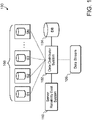
- the system 100 includes a data distributor system 102 having one or more servers for receiving data to be stored.
- the data distributor system 102 may be programmed and/or configured to generate one or more data storage server distribution pattern and communicate data to and from a set of servers 108.
- the data distributor system 102 may be communicatively connected to other sets of servers other than the exemplary illustrated set of servers 108.
- the set of servers 108 may include two or more servers, e.g., a first server (S1), a second server (S2), a third server (S3), and up to and including an nth server (SN).
- the data distributor system 102 may receive raw data to be stored on the set of servers 108.
- the data distributor system 102 may receive the raw data from a database 104, which may store the raw data as an additional storage medium or may temporarily store the raw data until it is distributed among the set of servers 108. Other servers and systems may populate the database 104 with raw data to be distributed.
- the data distributor system 102 may also receive the raw data from a data stream 106, such as a data stream of transaction data representing processed transactions from a transaction service provider system.
- a database 104 source of raw data may be considered to include any source of at least temporarily stored data from a data storage medium.
- a data stream 106 source of raw data may be considered to include directly or indirectly communicated data that is transmitted to the data distributor system 102 after generation.
- Raw data may be communicated to the data distributor system 102 through a combination of databases 104 or data streams 106.
- the data distributor system 102 may determine the set of servers 108 (e.g., two or more servers), on which raw data (transformed or non-transformed) may be stored.
- the raw data may be transformed by the data distributor system 102 according to an error-correcting code scheme to produce distributable data for storage on the set of servers 108.
- the raw data may also be transformed by another server prior to being communicated to the data distributor system 102 via a database 104 or a data stream 106.
- the raw data may also be encrypted prior to transformation by an error-correcting code scheme.
- the data distributor system 102 may also determine a server reliability of each server in the set of servers 108.
- Server reliability may be computed, such as by determining an actual or projected server uptime, likelihood of failure, rate of data communication success, and/or similar metrics. Server reliability may also be reported, such as from one or more cloud providers associated with one or more servers of the set of servers 108. Server reliability for each server in the set of servers 108 may also be determined by a server reliability evaluation system 110. The server reliability evaluation system 110 may monitor activity on one or more servers to determine a reliability score for each server. The server reliability evaluation system 110 may be coextensive with the data distributor system 102.
- the data distributor system 102 may then generate a data storage server distribution pattern of the distributable data. Portions of the distributable data (e.g., bits) may be allocated to two or more servers of the set of servers 108. Not all of the servers 108 need be selected for storing portions of the distributable data.
- the data storage server distribution pattern may be based on maximizing a system reliability of the set of servers 108 relative to maximizing a system entropy of the set of servers 108.
- the system reliability may be determined (by the server reliability evaluation system 110, the data distributor system 102, etc.) at least partly by a minimum reliability yielded from permuting error vectors over various partitions of the distributable data across the set of servers 108.
- the system entropy may be determined (by the server reliability evaluation system 110, the data distributor system 102, etc.) at least partly by a cumulated information entropy of each server of the set of servers 108 using a probability mass function based on a ratio of bits stored on a given server relative to a total number of bits in the distributable data.
- a non-limiting method of determining system reliability and system entropy is described herein.
- the data distributor system 102 may distribute the distributable data for storage across two or more servers of the set of servers 108 according to the data storage server distribution pattern. If one or more servers of the set of servers 108 become inoperative, the data distribution server 102 may retrieve a portion of the distributable data from one or more other operative servers. Using the error-correcting code scheme that was used to transform the raw data into the distributable data, the data distributor system 102 may determine the raw data from the portion of the distributable data. Thereafter, the data distributor system 102 may attempt a new distribution of the data based on the remaining operative servers in the set of servers 108.
- the raw data determined from the portion of distributable data may be transformed again by the data distributor system 102 to produce new distributable data, according to an error-correcting code scheme.
- a same or different error-correcting code scheme may be employed to generate the new distributable data.
- the data distributor system 102 may then generate a new data storage server distribution pattern across two or more operative servers of the set of servers 108.
- the new data storage server distribution pattern may be based on maximizing the system reliability relative to maximizing the system entropy.
- the system reliability may be determined at least partly by a minimum reliability yielded from permuting error vectors over various partitions of the new distributable data across the set of servers excluding the one or more inoperative servers.
- the system entropy may be determined at least partly by a cumulated information entropy of each server of the set of servers excluding the one or more inoperative servers using a probability mass function based on a ratio of bits stored on a given server relative to a total number of bits in the new distributable data.
- the data distributor system 102 may distribute the new distributable data for storage across at least two servers of the set of servers, excluding the one or more inoperative servers.
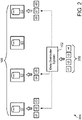
- relational diagrams 200, 300, 400 of a system and method for generating a data storage server distribution pattern Illustrated for ease of understanding is a data distributor system 102, a set of servers 108 including four servers S1-S4, and raw data 202 having four bits r1-r4, which is transformed into distributable data d1-d8. It will be appreciated that various other arrangements are possible.
- the data distributor system 102 may determine the set of servers 108 on two or more servers of which data will be stored.
- the data distributor system 102 may be communicatively connected to each server of the set of servers 108, or a system associated therewith, e.g., a cloud provider system.
- the data distributor system 102 may also determine the raw data 202 to be stored (e.g., by receiving a communication including data for data storage, by accessing a database containing stored data, etc.).
- the data distributor system 102 may transform the raw data 202 according to an error-correcting code scheme to produce distributable data d1-d8.
- the data distributor system 102 may determine a server reliability of search server in the set of servers. For illustrative purposes, server S3 may be assumed to have a lower reliability score than server S2, which may be assumed to have a lower reliability score than server S1 or server S4.
- the data distributor system 102 may also determine how many servers of the set of servers 108 on which to store data. For illustrative purposes in this non-limiting example, only three of the four servers S1-S4 will be used in an initial round of data storage. The determination of how many servers may be used may be always maximized, may be predetermined by system parameters, may be dynamically determined according to server availability, cost, etc., and/or other similar methods.
- the data distributor system 102 may then generate the data storage server distribution pattern based on maximizing a system reliability relative to maximizing a system entropy.
- system entropy may be maximized by achieving a relatively uniform distribution of bits across the three servers S1, S2, and S4, and system reliability may be maximized relative to system entropy by eliminating the lowest reliability server S3 from consideration as one of the three servers for storage, and then distributing fewer bits (d4, d5) to the second-lowest reliable server S2.
- the data distributor system 102 may retrieve a portion of the distributable data from one or more of the remaining operative servers. As illustrated in this non-limiting example, distributable data bits d1, d2, d3, d6, d7, d8 may be retrieved by the data distributor system 102. From the retrieved portion of distributable data, the data distributor system 102 may determine the raw data 202 using the error-correcting code scheme that was used to transform the raw data 202 into the distributable data.
- the data distributor system 102 may transform the raw data 202 into new distributable data n1-n8 using an error-correcting code scheme, which may be the same or different from the previously applied error-correcting code scheme.
- the data distributor system 102 may then generate a new data storage server distribution pattern based on maximizing the system reliability relative to maximizing the system entropy.
- the system reliability may be determined at least partly by a minimum reliability yielded from permuting error vectors over various partitions of the new distributable data n1-n8 across the set of servers excluding the one or more inoperative servers.
- the system entropy may be determined at least partly by a cumulated information entropy of each server of the set of servers excluding the one or more inoperative servers, using a probability mass function based on a ratio of bits stored on a given server relative to a total number of bits in the new distributable data n1-n8.
- the data distributor system 102 may then distribute the new distributable data n1-n8 across at least two servers of the set of servers (excluding the one or more inoperative servers) according to the new data storage server distribution pattern.
- system entropy is maximized by achieving a relatively uniform distribution of bits across the three servers S1, S3, and S4.
- System reliability is maximized relative to system entropy by distributing fewer bits (n4, n5) to the least reliable server S3.
- three bits of new distributable data n1, n2, n3 are assigned to server S1
- two bits of new distributable data n4, n5 are assigned to server S3
- three bits of new distributable data n6, n7, n8 are assigned to server S4.
- multiple servers may become inoperative at any one time.
- one or more bit errors in stored distributable data may occur without a server becoming inoperative, such that even while a given server can be communicated with, one or more bits of distributable data stored thereon cannot be retrieved or are not transmitted correctly. Bit errors may occur across more than one server.
- By transforming raw data into distributable data using an error-correcting code scheme one or more bit errors may occur, and one or more servers may become inoperative, while the raw data remains recoverable from the remaining portion of accessible distributable data.
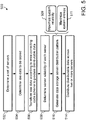
- a method 500 for generating a data storage server distribution pattern may be completed by a data distributor system, a server reliability evaluation system, and/or one or more other servers communicatively connected to one or more servers for data storage.
- the data distributor system determines a set of servers, one or more of which may be used to store portions of distributed data.
- the data distributor system determines raw data to be stored.
- the data distributor system transforms the raw data according to an error-correcting code scheme to produce distributable data.
- the data distributor system determines a server reliability of each server in the set of servers, which may be used for generation of the data storage server distribution pattern.
- the data distributor system In step 510, the data distributor system generates the data storage server distribution pattern.
- the data storage server distribution pattern may be based on maximizing a system reliability (step 509) relative to maximizing a system entropy (step 511).
- System reliability is determined at least partly by a minimum reliability yielded from permuting error vectors over various partitions of the distributable data across the set of servers.
- System entropy is determined at least partly by a cumulated information entropy of each server of the set of servers using a probability mass function based on a ratio of bits stored on a given server relative to a total number of bits in the distributable data.
- the data distributor system After generating the data storage server distribution pattern, the data distributor system distributes, in step 514, the distributable data for storage across two or more servers of the set of servers according to the data storage server distribution pattern.
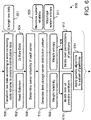
- a method 600 for generating a data storage server distribution pattern may be completed by a data distributor system, a server reliability evaluation system, and/or one or more other servers communicatively connected to one or more servers for data storage.
- the method 500 of FIG. 5 may include the method of 600 of FIG. 6 .
- the data distributor system may transform the raw data according to an error-correcting code scheme to produce distributable data.
- the data distributor system may apply a Reed-Solomon error-correcting code scheme in step 602, and may generate a number of distributable bits that is at least twice a number of bits in the raw data in step 604.
- the data distributor system may determine a server reliability of each server in the set of servers, which may be used for generation of the data storage server distribution pattern.
- the data distributor system In step 510, the data distributor system generates the data storage server distribution pattern.
- the data storage server distribution pattern may be based on maximizing a system reliability (step 509) relative to maximizing a system entropy (step 511).
- the data distributor system may also weight reliability (in step 606) and/or weight entropy (step 608) to give greater significance to one or the other when maximizing one score relative to another.
- System reliability may be determined at least partly by a minimum reliability yielded from permuting error vectors over various partitions of the distributable data across the set of servers.
- System entropy may be determined at least partly by a cumulated information entropy of each server of the set of servers using a probability mass function based on a ratio of bits stored on a given server relative to a total number of bits in the distributable data.
- the data distributor system may determine a maximum value for the combined system reliability and system entropy by iterating over all possible partitions of the distributable data across the set of servers.
- the data distributor system may determine maximum value for the combined system reliability and system entropy by iterating over permutations of partitions of bit allocations to identify an optimal assignment of bits to the set of servers.
- the data distributor may determine the maximum value for the combined system reliability and system entropy by applying a genetic algorithm to permute over a random subset of partitions of the distributable data.
- the data distributor system may distribute the distributable data for storage across two or more servers of the set of servers according to the data storage server distribution pattern.
- a method 700 for generating a data storage server distribution pattern may be completed by a data distributor system, a server reliability evaluation system, and/or one or more other servers communicatively connected to one or more servers for data storage.
- the data distributor system may detect an inoperative server.
- the data distributor system may monitor the communicative status of one or more servers, and/or may be configured to receive operational status communications from one or more servers.
- the data distributor system may retrieve a portion of the distributable data from one or more operative servers, in step 704.
- the data distributor system may determine the raw data from the portion of the distributable data using the error-correcting code scheme.
- the data distributor system may transform the raw data into new distributable data with a new error-correcting code scheme or parameters thereof.
- the new error-correcting code scheme may also be the same as the previously applied error-correcting code scheme.
- the data distributor system may generate a new data storage server distribution pattern.
- the new data storage server distribution pattern may also be based on maximizing a system reliability relative to maximizing a system entropy.
- System reliability may be determined at least partly by a minimum reliability yielded from permuting error vectors over various partitions of the new distributable data across the set of servers, excluding the one or more inoperative servers.
- System entropy may be determined at least partly by a cumulated information entropy of each server of the set of servers (excluding the one or more inoperative servers) using a probability mass function based on a ratio of bits stored on a given server relative to a total number of bits in the new distributable data.
- the data distributor system may distribute, in step 712, the new distributable data for storage across two or more servers of the set of servers according to the new data storage server distribution pattern.
Landscapes
- Engineering & Computer Science (AREA)
- Theoretical Computer Science (AREA)
- Physics & Mathematics (AREA)
- General Physics & Mathematics (AREA)
- General Engineering & Computer Science (AREA)
- Human Computer Interaction (AREA)
- Mathematical Physics (AREA)
- Quality & Reliability (AREA)
- Pure & Applied Mathematics (AREA)
- Probability & Statistics with Applications (AREA)
- Algebra (AREA)
- Information Retrieval, Db Structures And Fs Structures Therefor (AREA)
- Detection And Prevention Of Errors In Transmission (AREA)
Claims (14)
- Computerimplementiertes Verfahren zum Erzeugen eines Datenspeicherserver-Verteilungsmusters, das Verfahren umfassend:Bestimmen (502), mit zumindest einem Prozessor, eines Satzes von Servern (S1 - SN);Bestimmen (504), mit zumindest einem Prozessor, von Rohdaten, die gespeichert werden sollen;Umwandeln (506), mit zumindest einem Prozessor, der Rohdaten gemäß einem Fehlerkorrekturcodeschema, um verteilbare Daten zu erzeugen;Bestimmen (508), mit zumindest einem Prozessor, einer Serverzuverlässigkeit jedes Servers in dem Satz von Servern;Erzeugen (510), mit zumindest einem Prozessor, des Datenspeicherserver-Verteilungsmusters basierend auf dem Maximieren einer Systemzuverlässigkeit relativ zum Maximieren einer Systementropie, wobei die Systemzuverlässigkeit zumindest teilweise durch eine Mindestzuverlässigkeit bestimmt wird, die sich aus dem Berechnen von Zuverlässigkeiten ergibt, während Fehlervektoren über verschiedene Partitionen der verteilbaren Daten über den Satz von Servern (S1 - SN) permutiert werden, und wobei die Systementropie zumindest teilweise durch eine kumulierte Informationsentropie jedes Servers des Satzes von Servern unter Verwendung einer Wahrscheinlichkeitsfunktion, basierend auf einem Verhältnis der Anzahl von Bits der verteilbaren Daten, die auf einem vorgegebenen Server gespeichert werden sollen, relativ zur Gesamtzahl von Bits in den verteilbaren Daten, bestimmt wird; undVerteilen (514), mit zumindest einem Prozessor, der verteilbaren Daten, die gespeichert werden sollen, über zumindest zwei Server des Satzes von Servern (S1 - SN) gemäß dem Datenspeicherserver-Verteilungsmuster.
- Verfahren nach Anspruch 1, wobei das Fehlerkorrekturcodeschema ein Reed-Solomon-Fehlerkorrekturcodeschema ist und eine Anzahl von Bits in den verteilbaren Daten zumindest das Doppelte einer Anzahl von Bits in den Rohdaten ist.
- Verfahren nach Anspruch 1 oder Anspruch 2, wobei das Datenspeicherserver-Verteilungsmuster durch Gewichten (606, 608) der Systemzuverlässigkeit und der Systementropie erzeugt wird, um ein Muster von verteilten Bits mit einem Maximalwert für die kombinierte Systemzuverlässigkeit und Systementropie zu bestimmen.
- Verfahren nach Anspruch 3, wobei der Maximalwert für die kombinierte Systemzuverlässigkeit und Systementropie durch zumindest eines der Folgenden bestimmt wird:- Iterieren (610) über alle möglichen Partitionen der verteilbaren Daten über den Satz von Servern (S1 - SN)- Iterieren (612) über Permutationen von Partitionen von Bitzuweisungen, um eine optimale Zuordnung von Bits zu dem Satz von Servern (S1 - SN) zu identifizieren- einen genetischen (614) Algorithmus, der über eine zufällige Teilmenge von Partitionen der verteilbaren Daten oder eine beliebige Kombination davon permutiert.
- Verfahren nach einem beliebigen vorhergehenden Anspruch, ferner das Verschlüsseln, mit zumindest einem Prozessor, der Rohdaten vor dem Umwandeln der Rohdaten gemäß dem Fehlerkorrekturcodeschema, um die verteilbaren Daten zu erzeugen, umfassend.
- Verfahren nach einem beliebigen vorhergehenden Anspruch, ferner in Reaktion darauf, dass ein Server der zumindest zwei Server (S1 - SN) untätig wird, umfassend:Abrufen (704), mit zumindest einem Prozessor, eines Teils der verteilbaren Daten von zumindest einem tätigen Server; undBestimmen (706), mit zumindest einem Prozessor, der Rohdaten aus dem Teil der verteilbaren Daten unter Verwendung des Fehlerkorrekturcodeschemas.
- Verfahren nach Anspruch 6, ferner umfassend:Umwandeln (708), mit zumindest einem Prozessor, der Rohdaten gemäß einem Fehlerkorrekturcodeschema, um verteilbare Daten zu erzeugen;Erzeugen (710), mit zumindest einem Prozessor, eines neuen Datenspeicherserver-Verteilungsmusters basierend auf dem Maximieren der Systemzuverlässigkeit relativ zum Maximieren der Systementropie, wobei die Systemzuverlässigkeit zumindest teilweise durch eine Mindestzuverlässigkeit bestimmt wird, die sich aus dem Berechnen von Zuverlässigkeiten ergibt, während Fehlervektoren über verschiedene Partitionen der neuen verteilbaren Daten über den Satz von Servern (S1 - SN) ausschließlich des untätigen Servers permutiert werden, und wobei die Systementropie zumindest teilweise durch eine kumulierte Informationsentropie jedes Servers des Satzes von Servern ausschließlich des untätigen Servers unter Verwendung einer Wahrscheinlichkeitsfunktion, basierend auf einem Verhältnis der Anzahl von Bits der verteilbaren Daten, die auf einem vorgegebenen Server gespeichert werden sollen, relativ zu einer Gesamtzahl von Bits in den neuen verteilbaren Daten, bestimmt wird; undVerteilen (712), mit zumindest einem Prozessor, der neuen verteilbaren Daten, die gespeichert werden sollen, über zumindest zwei Server des Satzes von Servern (S1 - SN) ausschließlich des untätigen Servers gemäß dem neuen Datenspeicherserver-Verteilungsmuster.
- System zum Erzeugen eines Datenspeicherserver-Verteilungsmusters, wobei das System einen Server (102) umfasst, der zumindest einen Prozessor umfasst, wobei der Server (102) programmiert und/oder konfiguriert ist zum:Bestimmen (502) eines Satzes von Servern (S1 - SN);Bestimmen (504) der Rohdaten, die gespeichert werden sollen;Umwandeln (506) der Rohdaten gemäß einem Fehlerkorrekturcodeschema, um verteilbare Daten zu erzeugen;Bestimmen (508) einer Serverzuverlässigkeit jedes Servers in dem Satz von Servern (S1 - SN);Erzeugen (510) des Datenspeicherserver-Verteilungsmusters basierend auf dem Maximieren einer Systemzuverlässigkeit relativ zum Maximieren einer Systementropie,wobei die Systemzuverlässigkeit zumindest teilweise durch eine Mindestzuverlässigkeit bestimmt wird, die sich aus dem Berechnen von Zuverlässigkeiten ergibt, während Fehlervektoren über verschiedene Partitionen der verteilbaren Daten über den Satz von Servern permutiert werden, und wobei die Systementropie zumindest teilweise durch eine kumulierte Informationsentropie jedes Servers des Satzes von Servern unter Verwendung einer Wahrscheinlichkeitsfunktion, basierend auf einem Verhältnis der Anzahl von Bits der verteilbaren Daten, die auf einem vorgegebenen Server gespeichert werden sollen, relativ zu einer Gesamtzahl von Bits in den verteilbaren Daten,bestimmt wird; undVerteilen (514) der verteilbaren Daten, die gespeichert werden sollen, über zumindest zwei Server des Satzes von Servern (S1 - SN) gemäß dem Datenspeicherserver-Verteilungsmuster.
- System nach Anspruch 8, wobei das Datenspeicherserver-Verteilungsmuster durch Gewichten (606, 608) der Systemzuverlässigkeit und der Systementropie erzeugt wird, um ein Muster von verteilten Bits mit einem Maximalwert für die kombinierte Systemzuverlässigkeit und Systementropie zu bestimmen.
- System nach Anspruch 9, wobei der Maximalwert für die kombinierte Systemzuverlässigkeit und Systementropie durch einen genetischen Algorithmus bestimmt wird (614), der über eine zufällige Teilmenge von Partitionen der verteilbaren Daten permutiert.
- System nach einem beliebigen der Ansprüche 8 bis 10, wobei der Server (102) ferner programmiert und/oder konfiguriert ist, um die Rohdaten vor dem Umwandeln der Rohdaten gemäß dem Fehlerkorrekturcodeschema zu verschlüsseln, um die verteilbaren Daten zu erzeugen.
- System nach einem beliebigen der Ansprüche 8 bis 11, wobei der Server (102) ferner programmiert und/oder konfiguriert ist, um in Reaktion darauf, dass ein Server der zumindest zwei Server (S1 - SN) untätig wird:einen Teil der verteilbaren Daten von zumindest einem tätigen Server abzurufen (704); unddie Rohdaten aus dem Teil der verteilbaren Daten unter Verwendung des Fehlerkorrekturcodeschemas zu bestimmen (706).
- System nach Anspruch 12, wobei der Server (102) ferner programmiert und/oder konfiguriert ist, um:die Rohdaten gemäß einem Fehlerkorrekturcodeschema umzuwandeln (708), um neue verteilbare Daten zu erzeugen;ein neues Datenspeicherserver-Verteilungsmuster basierend auf dem Maximieren der Systemzuverlässigkeit relativ zum Maximieren der Systementropie zu erzeugen (710), wobei die Systemzuverlässigkeit zumindest teilweise durch eine Mindestzuverlässigkeit bestimmt wird, die sich aus dem Berechnen von Zuverlässigkeiten ergibt, während Fehlervektoren über verschiedene Partitionen der neuen verteilbaren Daten über den Satz von Servern (S1 - SN) ausschließlich des untätigen Servers permutiert werden, undwobei die Systementropie zumindest teilweise durch eine kumulierte Informationsentropie jedes Servers des Satzes von Servern ausschließlich des untätigen Servers unter Verwendung einer Wahrscheinlichkeitsfunktion, basierend auf einem Verhältnis der Anzahl von Bits der verteilbaren Daten, die auf einem vorgegebenen Server gespeichert werden sollen, relativ zu einer Gesamtzahl von Bits in den neuen verteilbaren Daten, bestimmt wird; unddie neuen verteilbaren Daten, die gespeichert werden sollen, über zumindest zwei Server des Satzes von Servern (S1 - SN) ausschließlich des untätigen Servers gemäß dem neuen Datenspeicherserver-Verteilungsmuster zu verteilen (712).
- Computerprogrammprodukt zum Erzeugen eines Datenspeicherserver-Verteilungsmusters, wobei das Computerprogrammprodukt zumindest ein nichtflüchtiges computerlesbares Medium umfasst, das Programmbefehle beinhaltet, die, wenn sie von zumindest einem Prozessor ausgeführt werden, den zumindest einen Prozessor veranlassen, das Verfahren nach einem der Ansprüche 1 bis 7 durchzuführen.
Applications Claiming Priority (1)
| Application Number | Priority Date | Filing Date | Title |
|---|---|---|---|
| US16/531,803 US11481159B2 (en) | 2019-08-05 | 2019-08-05 | System, method, and computer program product for generating a data storage server distribution pattern |
Publications (2)
| Publication Number | Publication Date |
|---|---|
| EP3772688A1 EP3772688A1 (de) | 2021-02-10 |
| EP3772688B1 true EP3772688B1 (de) | 2022-05-04 |
Family
ID=71950427
Family Applications (1)
| Application Number | Title | Priority Date | Filing Date |
|---|---|---|---|
| EP20189469.8A Active EP3772688B1 (de) | 2019-08-05 | 2020-08-04 | System, verfahren und computerprogrammprodukt zur erzeugung eines datenspeicher-server-verteilungsmusters |
Country Status (2)
| Country | Link |
|---|---|
| US (2) | US11481159B2 (de) |
| EP (1) | EP3772688B1 (de) |
Families Citing this family (4)
| Publication number | Priority date | Publication date | Assignee | Title |
|---|---|---|---|---|
| CN113485637A (zh) * | 2021-05-11 | 2021-10-08 | 广州炒米信息科技有限公司 | 数据存储方法、装置及计算机设备 |
| US12399769B2 (en) * | 2021-07-15 | 2025-08-26 | The Regents Of The University Of California | Systems and methods for distributed storage using storage codes with flexible number of nodes |
| CN118301156B (zh) * | 2024-06-06 | 2024-08-20 | 倍施特科技(集团)股份有限公司 | 基于批量数据请求的自动售票防卡顿系统及方法 |
| CN118331513B (zh) * | 2024-06-14 | 2024-08-23 | 武汉泽塔云科技股份有限公司 | 一种数据智能动态调度方法、装置和计算机设备 |
Family Cites Families (11)
| Publication number | Priority date | Publication date | Assignee | Title |
|---|---|---|---|---|
| US7421642B2 (en) * | 2002-04-05 | 2008-09-02 | Seagate Technology Llc | Method and apparatus for error detection |
| AU2003261440C1 (en) * | 2003-02-26 | 2010-06-03 | Qualcomm Incorporated | Soft information scaling for iterative decoding |
| US7992037B2 (en) * | 2008-09-11 | 2011-08-02 | Nec Laboratories America, Inc. | Scalable secondary storage systems and methods |
| WO2011159805A2 (en) * | 2010-06-15 | 2011-12-22 | Fusion-Io, Inc. | Apparatus, system, and method for providing error correction |
| CN106452737A (zh) * | 2010-08-11 | 2017-02-22 | 安全第公司 | 用于安全多租户数据存储的系统和方法 |
| US9584359B2 (en) * | 2011-12-12 | 2017-02-28 | International Business Machines Corporation | Distributed storage and computing of interim data |
| US9448883B1 (en) * | 2012-12-04 | 2016-09-20 | Cadence Design Systems, Inc. | System and method for allocating data in memory array having regions of varying storage reliability |
| EP2981892B1 (de) * | 2013-04-01 | 2020-05-06 | OC Acquisition LLC | Aktualisierungsverwaltung für ein verteiltes rechnersystem |
| US9325348B2 (en) * | 2013-04-24 | 2016-04-26 | Pronet Labs Ltd. | Method and system of intelligent error correction for hardware data storages |
| US9507566B2 (en) * | 2014-04-01 | 2016-11-29 | Oracle International Corporation | Entropy generation for a distributed computing system |
| US10892784B2 (en) * | 2019-06-03 | 2021-01-12 | Western Digital Technologies, Inc. | Memory device with enhanced error correction via data rearrangement, data partitioning, and content aware decoding |
-
2019
- 2019-08-05 US US16/531,803 patent/US11481159B2/en active Active
-
2020
- 2020-08-04 EP EP20189469.8A patent/EP3772688B1/de active Active
-
2022
- 2022-09-14 US US17/944,470 patent/US11809752B2/en active Active
Also Published As
| Publication number | Publication date |
|---|---|
| US11481159B2 (en) | 2022-10-25 |
| EP3772688A1 (de) | 2021-02-10 |
| US11809752B2 (en) | 2023-11-07 |
| US20210042036A1 (en) | 2021-02-11 |
| US20230004300A1 (en) | 2023-01-05 |
Similar Documents
| Publication | Publication Date | Title |
|---|---|---|
| US11809752B2 (en) | System, method, and computer program product for generating a data storage server distribution pattern | |
| US10095872B2 (en) | Accessing data based on a dispersed storage network rebuilding issue | |
| US10169150B2 (en) | Concatenating data objects for storage in a dispersed storage network | |
| US10205783B2 (en) | Identifying a task execution resource of a dispersed storage network | |
| US10360097B2 (en) | Securing data in a dispersed storage network | |
| US11210151B1 (en) | Peer-assisted data rebuilding | |
| US10362111B2 (en) | Selecting a data storage resource of a dispersed storage network | |
| US9900316B2 (en) | Accessing storage units of a dispersed storage network | |
| US9311187B2 (en) | Achieving storage compliance in a dispersed storage network | |
| US9424132B2 (en) | Adjusting dispersed storage network traffic due to rebuilding | |
| US20150378616A1 (en) | Adjusting timing of storing data in a dispersed storage network | |
| US20170060684A1 (en) | Encoding data for storage in a dispersed storage network | |
| US10013203B2 (en) | Achieving storage compliance in a dispersed storage network | |
| US11513685B2 (en) | Retrieving data in a storage network | |
| CN115098295A (zh) | 数据局部恢复方法、设备及存储介质 | |
| US20260050517A1 (en) | Storing Data in Multiple Types of Storage Network Memory | |
| US20220107861A1 (en) | Updating Pointer List to Remove Reference to Stored Encoded Data Slice in Response to Delete Request | |
| US10769016B2 (en) | Storing a plurality of correlated data in a dispersed storage network | |
| US20170288704A1 (en) | Accelerated erasure coding for storage systems | |
| US9740547B2 (en) | Storing data using a dual path storage approach | |
| US20150261607A1 (en) | Enhanced security for offsite data storage | |
| US10740180B2 (en) | Storing and retrieving data using proxies | |
| US10949302B2 (en) | Erasure-coding-based efficient data storage and retrieval | |
| US10044807B2 (en) | Optimistic checked writes | |
| Kumar | Privacy, Security, and Repair in Distributed Storage Systems |
Legal Events
| Date | Code | Title | Description |
|---|---|---|---|
| PUAI | Public reference made under article 153(3) epc to a published international application that has entered the european phase |
Free format text: ORIGINAL CODE: 0009012 |
|
| STAA | Information on the status of an ep patent application or granted ep patent |
Free format text: STATUS: THE APPLICATION HAS BEEN PUBLISHED |
|
| AK | Designated contracting states |
Kind code of ref document: A1 Designated state(s): AL AT BE BG CH CY CZ DE DK EE ES FI FR GB GR HR HU IE IS IT LI LT LU LV MC MK MT NL NO PL PT RO RS SE SI SK SM TR |
|
| AX | Request for extension of the european patent |
Extension state: BA ME |
|
| STAA | Information on the status of an ep patent application or granted ep patent |
Free format text: STATUS: REQUEST FOR EXAMINATION WAS MADE |
|
| 17P | Request for examination filed |
Effective date: 20210810 |
|
| RBV | Designated contracting states (corrected) |
Designated state(s): AL AT BE BG CH CY CZ DE DK EE ES FI FR GB GR HR HU IE IS IT LI LT LU LV MC MK MT NL NO PL PT RO RS SE SI SK SM TR |
|
| RIN1 | Information on inventor provided before grant (corrected) |
Inventor name: PAYTON, PAUL MAX |
|
| GRAP | Despatch of communication of intention to grant a patent |
Free format text: ORIGINAL CODE: EPIDOSNIGR1 |
|
| STAA | Information on the status of an ep patent application or granted ep patent |
Free format text: STATUS: GRANT OF PATENT IS INTENDED |
|
| INTG | Intention to grant announced |
Effective date: 20220202 |
|
| GRAS | Grant fee paid |
Free format text: ORIGINAL CODE: EPIDOSNIGR3 |
|
| GRAA | (expected) grant |
Free format text: ORIGINAL CODE: 0009210 |
|
| STAA | Information on the status of an ep patent application or granted ep patent |
Free format text: STATUS: THE PATENT HAS BEEN GRANTED |
|
| AK | Designated contracting states |
Kind code of ref document: B1 Designated state(s): AL AT BE BG CH CY CZ DE DK EE ES FI FR GB GR HR HU IE IS IT LI LT LU LV MC MK MT NL NO PL PT RO RS SE SI SK SM TR |
|
| REG | Reference to a national code |
Ref country code: GB Ref legal event code: FG4D |
|
| REG | Reference to a national code |
Ref country code: CH Ref legal event code: EP |
|
| REG | Reference to a national code |
Ref country code: AT Ref legal event code: REF Ref document number: 1489822 Country of ref document: AT Kind code of ref document: T Effective date: 20220515 |
|
| REG | Reference to a national code |
Ref country code: DE Ref legal event code: R096 Ref document number: 602020002995 Country of ref document: DE |
|
| REG | Reference to a national code |
Ref country code: IE Ref legal event code: FG4D |
|
| REG | Reference to a national code |
Ref country code: LT Ref legal event code: MG9D |
|
| REG | Reference to a national code |
Ref country code: NL Ref legal event code: MP Effective date: 20220504 |
|
| REG | Reference to a national code |
Ref country code: AT Ref legal event code: MK05 Ref document number: 1489822 Country of ref document: AT Kind code of ref document: T Effective date: 20220504 |
|
| PG25 | Lapsed in a contracting state [announced via postgrant information from national office to epo] |
Ref country code: SE Free format text: LAPSE BECAUSE OF FAILURE TO SUBMIT A TRANSLATION OF THE DESCRIPTION OR TO PAY THE FEE WITHIN THE PRESCRIBED TIME-LIMIT Effective date: 20220504 Ref country code: PT Free format text: LAPSE BECAUSE OF FAILURE TO SUBMIT A TRANSLATION OF THE DESCRIPTION OR TO PAY THE FEE WITHIN THE PRESCRIBED TIME-LIMIT Effective date: 20220905 Ref country code: NO Free format text: LAPSE BECAUSE OF FAILURE TO SUBMIT A TRANSLATION OF THE DESCRIPTION OR TO PAY THE FEE WITHIN THE PRESCRIBED TIME-LIMIT Effective date: 20220804 Ref country code: NL Free format text: LAPSE BECAUSE OF FAILURE TO SUBMIT A TRANSLATION OF THE DESCRIPTION OR TO PAY THE FEE WITHIN THE PRESCRIBED TIME-LIMIT Effective date: 20220504 Ref country code: LT Free format text: LAPSE BECAUSE OF FAILURE TO SUBMIT A TRANSLATION OF THE DESCRIPTION OR TO PAY THE FEE WITHIN THE PRESCRIBED TIME-LIMIT Effective date: 20220504 Ref country code: HR Free format text: LAPSE BECAUSE OF FAILURE TO SUBMIT A TRANSLATION OF THE DESCRIPTION OR TO PAY THE FEE WITHIN THE PRESCRIBED TIME-LIMIT Effective date: 20220504 Ref country code: GR Free format text: LAPSE BECAUSE OF FAILURE TO SUBMIT A TRANSLATION OF THE DESCRIPTION OR TO PAY THE FEE WITHIN THE PRESCRIBED TIME-LIMIT Effective date: 20220805 Ref country code: FI Free format text: LAPSE BECAUSE OF FAILURE TO SUBMIT A TRANSLATION OF THE DESCRIPTION OR TO PAY THE FEE WITHIN THE PRESCRIBED TIME-LIMIT Effective date: 20220504 Ref country code: BG Free format text: LAPSE BECAUSE OF FAILURE TO SUBMIT A TRANSLATION OF THE DESCRIPTION OR TO PAY THE FEE WITHIN THE PRESCRIBED TIME-LIMIT Effective date: 20220804 Ref country code: AT Free format text: LAPSE BECAUSE OF FAILURE TO SUBMIT A TRANSLATION OF THE DESCRIPTION OR TO PAY THE FEE WITHIN THE PRESCRIBED TIME-LIMIT Effective date: 20220504 |
|
| PG25 | Lapsed in a contracting state [announced via postgrant information from national office to epo] |
Ref country code: RS Free format text: LAPSE BECAUSE OF FAILURE TO SUBMIT A TRANSLATION OF THE DESCRIPTION OR TO PAY THE FEE WITHIN THE PRESCRIBED TIME-LIMIT Effective date: 20220504 Ref country code: PL Free format text: LAPSE BECAUSE OF FAILURE TO SUBMIT A TRANSLATION OF THE DESCRIPTION OR TO PAY THE FEE WITHIN THE PRESCRIBED TIME-LIMIT Effective date: 20220504 Ref country code: LV Free format text: LAPSE BECAUSE OF FAILURE TO SUBMIT A TRANSLATION OF THE DESCRIPTION OR TO PAY THE FEE WITHIN THE PRESCRIBED TIME-LIMIT Effective date: 20220504 Ref country code: IS Free format text: LAPSE BECAUSE OF FAILURE TO SUBMIT A TRANSLATION OF THE DESCRIPTION OR TO PAY THE FEE WITHIN THE PRESCRIBED TIME-LIMIT Effective date: 20220904 |
|
| PG25 | Lapsed in a contracting state [announced via postgrant information from national office to epo] |
Ref country code: SM Free format text: LAPSE BECAUSE OF FAILURE TO SUBMIT A TRANSLATION OF THE DESCRIPTION OR TO PAY THE FEE WITHIN THE PRESCRIBED TIME-LIMIT Effective date: 20220504 Ref country code: SK Free format text: LAPSE BECAUSE OF FAILURE TO SUBMIT A TRANSLATION OF THE DESCRIPTION OR TO PAY THE FEE WITHIN THE PRESCRIBED TIME-LIMIT Effective date: 20220504 Ref country code: RO Free format text: LAPSE BECAUSE OF FAILURE TO SUBMIT A TRANSLATION OF THE DESCRIPTION OR TO PAY THE FEE WITHIN THE PRESCRIBED TIME-LIMIT Effective date: 20220504 Ref country code: ES Free format text: LAPSE BECAUSE OF FAILURE TO SUBMIT A TRANSLATION OF THE DESCRIPTION OR TO PAY THE FEE WITHIN THE PRESCRIBED TIME-LIMIT Effective date: 20220504 Ref country code: EE Free format text: LAPSE BECAUSE OF FAILURE TO SUBMIT A TRANSLATION OF THE DESCRIPTION OR TO PAY THE FEE WITHIN THE PRESCRIBED TIME-LIMIT Effective date: 20220504 Ref country code: DK Free format text: LAPSE BECAUSE OF FAILURE TO SUBMIT A TRANSLATION OF THE DESCRIPTION OR TO PAY THE FEE WITHIN THE PRESCRIBED TIME-LIMIT Effective date: 20220504 Ref country code: CZ Free format text: LAPSE BECAUSE OF FAILURE TO SUBMIT A TRANSLATION OF THE DESCRIPTION OR TO PAY THE FEE WITHIN THE PRESCRIBED TIME-LIMIT Effective date: 20220504 |
|
| REG | Reference to a national code |
Ref country code: DE Ref legal event code: R097 Ref document number: 602020002995 Country of ref document: DE |
|
| PLBE | No opposition filed within time limit |
Free format text: ORIGINAL CODE: 0009261 |
|
| STAA | Information on the status of an ep patent application or granted ep patent |
Free format text: STATUS: NO OPPOSITION FILED WITHIN TIME LIMIT |
|
| PG25 | Lapsed in a contracting state [announced via postgrant information from national office to epo] |
Ref country code: MC Free format text: LAPSE BECAUSE OF FAILURE TO SUBMIT A TRANSLATION OF THE DESCRIPTION OR TO PAY THE FEE WITHIN THE PRESCRIBED TIME-LIMIT Effective date: 20220504 Ref country code: AL Free format text: LAPSE BECAUSE OF FAILURE TO SUBMIT A TRANSLATION OF THE DESCRIPTION OR TO PAY THE FEE WITHIN THE PRESCRIBED TIME-LIMIT Effective date: 20220504 |
|
| 26N | No opposition filed |
Effective date: 20230207 |
|
| PG25 | Lapsed in a contracting state [announced via postgrant information from national office to epo] |
Ref country code: LU Free format text: LAPSE BECAUSE OF NON-PAYMENT OF DUE FEES Effective date: 20220804 |
|
| REG | Reference to a national code |
Ref country code: BE Ref legal event code: MM Effective date: 20220831 |
|
| PG25 | Lapsed in a contracting state [announced via postgrant information from national office to epo] |
Ref country code: SI Free format text: LAPSE BECAUSE OF FAILURE TO SUBMIT A TRANSLATION OF THE DESCRIPTION OR TO PAY THE FEE WITHIN THE PRESCRIBED TIME-LIMIT Effective date: 20220504 |
|
| P01 | Opt-out of the competence of the unified patent court (upc) registered |
Effective date: 20230511 |
|
| PG25 | Lapsed in a contracting state [announced via postgrant information from national office to epo] |
Ref country code: IE Free format text: LAPSE BECAUSE OF NON-PAYMENT OF DUE FEES Effective date: 20220804 |
|
| PG25 | Lapsed in a contracting state [announced via postgrant information from national office to epo] |
Ref country code: BE Free format text: LAPSE BECAUSE OF NON-PAYMENT OF DUE FEES Effective date: 20220831 |
|
| PG25 | Lapsed in a contracting state [announced via postgrant information from national office to epo] |
Ref country code: IT Free format text: LAPSE BECAUSE OF FAILURE TO SUBMIT A TRANSLATION OF THE DESCRIPTION OR TO PAY THE FEE WITHIN THE PRESCRIBED TIME-LIMIT Effective date: 20220504 |
|
| REG | Reference to a national code |
Ref country code: CH Ref legal event code: PL |
|
| PG25 | Lapsed in a contracting state [announced via postgrant information from national office to epo] |
Ref country code: MK Free format text: LAPSE BECAUSE OF FAILURE TO SUBMIT A TRANSLATION OF THE DESCRIPTION OR TO PAY THE FEE WITHIN THE PRESCRIBED TIME-LIMIT Effective date: 20220504 Ref country code: CY Free format text: LAPSE BECAUSE OF FAILURE TO SUBMIT A TRANSLATION OF THE DESCRIPTION OR TO PAY THE FEE WITHIN THE PRESCRIBED TIME-LIMIT Effective date: 20220504 Ref country code: CH Free format text: LAPSE BECAUSE OF NON-PAYMENT OF DUE FEES Effective date: 20230831 |
|
| PG25 | Lapsed in a contracting state [announced via postgrant information from national office to epo] |
Ref country code: HU Free format text: LAPSE BECAUSE OF FAILURE TO SUBMIT A TRANSLATION OF THE DESCRIPTION OR TO PAY THE FEE WITHIN THE PRESCRIBED TIME-LIMIT; INVALID AB INITIO Effective date: 20200804 |
|
| PG25 | Lapsed in a contracting state [announced via postgrant information from national office to epo] |
Ref country code: TR Free format text: LAPSE BECAUSE OF FAILURE TO SUBMIT A TRANSLATION OF THE DESCRIPTION OR TO PAY THE FEE WITHIN THE PRESCRIBED TIME-LIMIT Effective date: 20220504 |
|
| PG25 | Lapsed in a contracting state [announced via postgrant information from national office to epo] |
Ref country code: MT Free format text: LAPSE BECAUSE OF FAILURE TO SUBMIT A TRANSLATION OF THE DESCRIPTION OR TO PAY THE FEE WITHIN THE PRESCRIBED TIME-LIMIT Effective date: 20220504 |
|
| PG25 | Lapsed in a contracting state [announced via postgrant information from national office to epo] |
Ref country code: BG Free format text: LAPSE BECAUSE OF FAILURE TO SUBMIT A TRANSLATION OF THE DESCRIPTION OR TO PAY THE FEE WITHIN THE PRESCRIBED TIME-LIMIT Effective date: 20220504 |
|
| PG25 | Lapsed in a contracting state [announced via postgrant information from national office to epo] |
Ref country code: BG Free format text: LAPSE BECAUSE OF FAILURE TO SUBMIT A TRANSLATION OF THE DESCRIPTION OR TO PAY THE FEE WITHIN THE PRESCRIBED TIME-LIMIT Effective date: 20220504 |
|
| PGFP | Annual fee paid to national office [announced via postgrant information from national office to epo] |
Ref country code: DE Payment date: 20250724 Year of fee payment: 6 |
|
| PGFP | Annual fee paid to national office [announced via postgrant information from national office to epo] |
Ref country code: GB Payment date: 20250725 Year of fee payment: 6 |
|
| PGFP | Annual fee paid to national office [announced via postgrant information from national office to epo] |
Ref country code: FR Payment date: 20250725 Year of fee payment: 6 |
|
| PG25 | Lapsed in a contracting state [announced via postgrant information from national office to epo] |
Ref country code: CH Free format text: THE PATENT HAS BEEN ANNULLED BY A DECISION OF A NATIONAL AUTHORITY Effective date: 20230831 |