EP3772687B1 - Système et procédés d'allocation optimale des ressources d'infrastructure de plate-forme multi-locataires - Google Patents
Système et procédés d'allocation optimale des ressources d'infrastructure de plate-forme multi-locataires Download PDFInfo
- Publication number
- EP3772687B1 EP3772687B1 EP20186503.7A EP20186503A EP3772687B1 EP 3772687 B1 EP3772687 B1 EP 3772687B1 EP 20186503 A EP20186503 A EP 20186503A EP 3772687 B1 EP3772687 B1 EP 3772687B1
- Authority
- EP
- European Patent Office
- Prior art keywords
- vector
- tenant
- platform
- vectors
- tenants
- Prior art date
- Legal status (The legal status is an assumption and is not a legal conclusion. Google has not performed a legal analysis and makes no representation as to the accuracy of the status listed.)
- Active
Links
Images


Classifications
-
- G—PHYSICS
- G06—COMPUTING OR CALCULATING; COUNTING
- G06F—ELECTRIC DIGITAL DATA PROCESSING
- G06F9/00—Arrangements for program control, e.g. control units
- G06F9/06—Arrangements for program control, e.g. control units using stored programs, i.e. using an internal store of processing equipment to receive or retain programs
- G06F9/46—Multiprogramming arrangements
- G06F9/50—Allocation of resources, e.g. of the central processing unit [CPU]
- G06F9/5061—Partitioning or combining of resources
- G06F9/5077—Logical partitioning of resources; Management or configuration of virtualized resources
-
- G—PHYSICS
- G06—COMPUTING OR CALCULATING; COUNTING
- G06F—ELECTRIC DIGITAL DATA PROCESSING
- G06F16/00—Information retrieval; Database structures therefor; File system structures therefor
- G06F16/20—Information retrieval; Database structures therefor; File system structures therefor of structured data, e.g. relational data
- G06F16/22—Indexing; Data structures therefor; Storage structures
- G06F16/2228—Indexing structures
- G06F16/2237—Vectors, bitmaps or matrices
-
- G—PHYSICS
- G06—COMPUTING OR CALCULATING; COUNTING
- G06F—ELECTRIC DIGITAL DATA PROCESSING
- G06F16/00—Information retrieval; Database structures therefor; File system structures therefor
- G06F16/20—Information retrieval; Database structures therefor; File system structures therefor of structured data, e.g. relational data
- G06F16/22—Indexing; Data structures therefor; Storage structures
- G06F16/2228—Indexing structures
- G06F16/2264—Multidimensional index structures
-
- G—PHYSICS
- G06—COMPUTING OR CALCULATING; COUNTING
- G06F—ELECTRIC DIGITAL DATA PROCESSING
- G06F17/00—Digital computing or data processing equipment or methods, specially adapted for specific functions
- G06F17/10—Complex mathematical operations
- G06F17/16—Matrix or vector computation, e.g. matrix-matrix or matrix-vector multiplication, matrix factorization
-
- G—PHYSICS
- G06—COMPUTING OR CALCULATING; COUNTING
- G06F—ELECTRIC DIGITAL DATA PROCESSING
- G06F9/00—Arrangements for program control, e.g. control units
- G06F9/06—Arrangements for program control, e.g. control units using stored programs, i.e. using an internal store of processing equipment to receive or retain programs
- G06F9/46—Multiprogramming arrangements
- G06F9/50—Allocation of resources, e.g. of the central processing unit [CPU]
-
- G—PHYSICS
- G06—COMPUTING OR CALCULATING; COUNTING
- G06F—ELECTRIC DIGITAL DATA PROCESSING
- G06F9/00—Arrangements for program control, e.g. control units
- G06F9/06—Arrangements for program control, e.g. control units using stored programs, i.e. using an internal store of processing equipment to receive or retain programs
- G06F9/46—Multiprogramming arrangements
- G06F9/50—Allocation of resources, e.g. of the central processing unit [CPU]
- G06F9/5083—Techniques for rebalancing the load in a distributed system
-
- H—ELECTRICITY
- H04—ELECTRIC COMMUNICATION TECHNIQUE
- H04L—TRANSMISSION OF DIGITAL INFORMATION, e.g. TELEGRAPHIC COMMUNICATION
- H04L41/00—Arrangements for maintenance, administration or management of data switching networks, e.g. of packet switching networks
- H04L41/14—Network analysis or design
-
- H—ELECTRICITY
- H04—ELECTRIC COMMUNICATION TECHNIQUE
- H04L—TRANSMISSION OF DIGITAL INFORMATION, e.g. TELEGRAPHIC COMMUNICATION
- H04L47/00—Traffic control in data switching networks
- H04L47/70—Admission control; Resource allocation
- H04L47/83—Admission control; Resource allocation based on usage prediction
-
- H—ELECTRICITY
- H04—ELECTRIC COMMUNICATION TECHNIQUE
- H04L—TRANSMISSION OF DIGITAL INFORMATION, e.g. TELEGRAPHIC COMMUNICATION
- H04L67/00—Network arrangements or protocols for supporting network services or applications
- H04L67/01—Protocols
- H04L67/10—Protocols in which an application is distributed across nodes in the network
-
- G—PHYSICS
- G06—COMPUTING OR CALCULATING; COUNTING
- G06F—ELECTRIC DIGITAL DATA PROCESSING
- G06F17/00—Digital computing or data processing equipment or methods, specially adapted for specific functions
- G06F17/10—Complex mathematical operations
- G06F17/11—Complex mathematical operations for solving equations, e.g. nonlinear equations, general mathematical optimization problems
-
- G—PHYSICS
- G06—COMPUTING OR CALCULATING; COUNTING
- G06F—ELECTRIC DIGITAL DATA PROCESSING
- G06F9/00—Arrangements for program control, e.g. control units
- G06F9/06—Arrangements for program control, e.g. control units using stored programs, i.e. using an internal store of processing equipment to receive or retain programs
- G06F9/44—Arrangements for executing specific programs
- G06F9/455—Emulation; Interpretation; Software simulation, e.g. virtualisation or emulation of application or operating system execution engines
- G06F9/45533—Hypervisors; Virtual machine monitors
- G06F9/45558—Hypervisor-specific management and integration aspects
- G06F2009/4557—Distribution of virtual machine instances; Migration and load balancing
-
- G—PHYSICS
- G06—COMPUTING OR CALCULATING; COUNTING
- G06F—ELECTRIC DIGITAL DATA PROCESSING
- G06F2209/00—Indexing scheme relating to G06F9/00
- G06F2209/50—Indexing scheme relating to G06F9/50
- G06F2209/506—Constraint
-
- G—PHYSICS
- G06—COMPUTING OR CALCULATING; COUNTING
- G06F—ELECTRIC DIGITAL DATA PROCESSING
- G06F9/00—Arrangements for program control, e.g. control units
- G06F9/06—Arrangements for program control, e.g. control units using stored programs, i.e. using an internal store of processing equipment to receive or retain programs
- G06F9/44—Arrangements for executing specific programs
- G06F9/455—Emulation; Interpretation; Software simulation, e.g. virtualisation or emulation of application or operating system execution engines
- G06F9/45533—Hypervisors; Virtual machine monitors
Definitions
- a multi-tenant architecture provides a means for multiple accounts (tenants) and users to store and access their data, and to utilize specific applications that reside on a remote platform.
- the platform is typically implemented as a plurality of (K) servers or server groups, and is administered and operated by another party that provides use of the platform infrastructure as a service to the accounts and each account's users.
- This service may provide data storage, computational processing power, data analytics, and applications or workflows that may be executed with reference to an account's data (in whole or in part, and account-wide or user-specific).
- SaaS Software-as-a-Service
- cloud-based services web-services, or remote services.
- Multi-tenant environments experience varying demands for the platform resources by the plurality (N) of tenants.
- the demand at times, will exceed the finite supply of such resources available over a communication network as a cloud-based application.
- Illustrative examples of the resources include, but are not limited to at least one of: computational data processing capabilities, data storage capacity, pre-processing/optimization techniques, network bandwidth, etc.
- Examples of applications that reside on the servers of a platform may be used to process certain of a user's data by instantiating an occurrence of the application within the user's account; for these types of uses, the applications may be used in the operation of a business, such as ERP, CRM, HR (HCM), eCommerce, and financial applications.
- Tenant customizations to the operation of the architecture may include custom functionality (such as the capability to perform tenant or user-specific functions, workflows, data processing, or operations) built on top of lower level operating system functions.
- Some multi-tenant service platforms may offer the ability to customize functions or operations at several different levels of the service platform, from aesthetic modifications to a graphical user interface to providing integration of components and/or entire applications developed by independent third-party vendors. This can be very beneficial, since by permitting use of components and/or applications developed by third party vendors, a multi-tenant service can significantly enhance the functionality available to tenants and increase tenant satisfaction with the platform.
- the applications may be ones used by a platform operator or administrator to manage the platform's operation, such as by managing the allocation of the resources available to the platform users.
- the applications may be used to monitor events within a set of the users of an account, to manage an aspect of an account or set of accounts, or to determine metrics relating to the events initiated by a user, a set of users, an account, or a set of accounts, etc.
- the resources being allocated and re-allocated may include access to computational data processing capabilities, data storage capacity, pre-processing/optimization techniques, etc., and may be distributed among multiple sources (servers, server groups, data storage elements, etc.).
- Platform operators and administrators need to be able to alter how platform resources are allocated to (and used by) each account or a set of accounts in order to ensure optimal use of the resources, respond to system operational problems, or to execute a business plan involving segmented levels/qualities of service.
- the available resources are distributed in the multi-tenant platform among the K different network-connected servers. At times when the demand for platform resources exceeds the supply, the resources distributed among the K servers must be allocated to the multiple tenants requesting those resources. Inequitably allocating the available resources can cause some tenants to experience diminished computational performance, or even cause some tenants to be excluded from the resource allocation altogether.
- Kwok et al describes a multi-tenant placement tool for application deployment in a distributed computing environment.
- a dynamic resource balance algorithm for multi-tenant placement problem in SaaS by X.
- Chen et al describes a new method for computing the distance between resource vectors in a distributed computing environment.
- Embodiments of the inventive system and methods are directed to providing ways to characterize resource usage data by account or tenant, and to process that data to enable platform operators and administrators to make more optimal decisions regarding allocation or allocation changes for platform infrastructure resources. Such decisions may involve placement of a new tenant or set of users' accounts on a specific server or server group, reallocation of one or more accounts, tenants, or users to a specific server or server group, or adjusting constraints or conditions on a tenant's or a set of users' access to certain platform resources.
- Embodiments of the inventive system and methods are directed to overcoming the limitations associated with conventional approaches to managing the allocation of cloud-based resources to a plurality of tenants, individually and collectively.
- Embodiments of the present technology distribute N tenants among K different servers in such a way that demand for resources satisfies an available supply.
- Both N and K are integer values of at least 2.
- the N tenants are distributed among K different servers in such a way that no one specific tenant is being "hurt" significantly more than some other tenants.
- “Hurt,” in the context of the present application, means that some tenants would experience degraded computational performance (for example, slow execution of network operations) because of an assumption that there is insufficient supply of a given resource to satisfy the demands of all tenants to maintain normal cloud operations.
- Normal cloud operations are the performance of cloud operations experienced when the supply of computational resources exceeds the demand for those resources. Those operations could be, for example, one of the following: financial transactions, purchase orders, SQL based queries, search based queries etc.
- the tenants can be distributed among the K servers so the network-accessible resources are allocated approximately evenly among the K different servers.
- the demand for the resources experienced or satisfied by each of the K different servers is approximately the same.
- Each of the K servers can maintain evenly distributed "room” or excess supply in terms of resources available from each server.
- the platform ensures that each of the K servers maintains at least some capacity to satisfy a portion of a spike in a demand for that resource.
- Embodiments of the invention provide a mechanism for a multi-tenant platform operator or administrator to make more optimal decisions with regards to the allocation of platform infrastructure resources (such as computational capabilities, data storage, etc.) among one or more tenants or accounts.
- the inventive methods construct a data "signature" for a set of identified users, accounts, or tenants, where the signature contains data regarding the user, account, or tenant's “consumption" of platform infrastructure resources.
- This consumption may be expressed in terms of any suitable metric, such as a value or number that represents the number or relative number of events that the user, account, or tenant has initiated within a specified time frame, the number of CPU cycles utilized by the user, account, or tenant during a specific time interval, or the maximum amount of data storage utilized within a specified time frame, with the origin of the time frame(s) involved being synchronized for all users, regardless of location and local time zone.
- any suitable metric such as a value or number that represents the number or relative number of events that the user, account, or tenant has initiated within a specified time frame, the number of CPU cycles utilized by the user, account, or tenant during a specific time interval, or the maximum amount of data storage utilized within a specified time frame, with the origin of the time frame(s) involved being synchronized for all users, regardless of location and local time zone.
- each hour or other time increment may be represented as a dimension of a multi-dimensional vector that represents a tenant's consumption of one or more platform infrastructure resources within a day, for example.
- Such "signature" vectors for one user or account/tenant may be subjected to appropriate data processing (including, but not limited to, or required to include machine learning, statistical analysis, pattern matching, etc.) to identify usage metrics or trends in such metrics among users of an account or tenant.
- demand for a resource by any specific tenant can be modeled as vector, where each dimension of the vector represents some time unit (minute, hour, day, month etc).
- each tenant's demand is represented as a 24-dimensional vector (i.e., one dimension for each of 24 hours in a day).
- each tenant's demand for the resource can be modeled as a 364-dimensional vector.
- signature vectors for multiple users, accounts or tenants may be subjected to appropriate data processing in aggregate (including, but not limited to, or required to include machine learning, statistical analysis, pattern matching, etc.) to identify broader usage metrics and investigate larger scale resource demands over time, between locations, within industries, across verticals, etc.
- the present invention may be embodied in whole or in part as a system, as one or more methods, or as one or more devices.
- Embodiments of the invention may take the form of a hardware implemented embodiment, a software implemented embodiment, or an embodiment combining software and hardware aspects.
- one or more of the operations, functions, processes, or methods described herein may be implemented by one or more suitable processing elements (such as a processor, microprocessor, CPU, controller, etc.) that is part of a client device, server, network element, or other form of computing or data processing device/platform and that is programmed with a set of executable instructions (e.g., software instructions), where the instructions may be stored in a suitable data storage element.
- suitable processing elements such as a processor, microprocessor, CPU, controller, etc.
- one or more of the operations, functions, processes, or methods described herein may be implemented by a specialized form of hardware, such as a programmable gate array, application specific integrated circuit (ASIC), or the like.
- ASIC application specific integrated circuit
- Embodiments of the invention provide a mechanism for a multi-tenant platform operator or administrator to make more optimal decisions with regards to the allocation of platform infrastructure resources (e.g., computational capabilities, data storage, usage of an extension to a platform application, access to a restricted feature, etc.) among one or more tenants or accounts.
- platform infrastructure resources e.g., computational capabilities, data storage, usage of an extension to a platform application, access to a restricted feature, etc.
- the inventive methods construct a data "signature" for a set of identified users, accounts, or tenants, where the signature contains data regarding the user, account, or tenant's "consumption" or utilization of one or more platform infrastructure resources.
- This consumption may be expressed as a value or number that represents one or more of the number or relative number of events that the user, account, or tenant has initiated within a specified time interval, the number of CPU cycles utilized by the user, account, or tenant during a specific time interval, or the maximum amount of data storage utilized within a specified time interval, with the origin of the time frame(s)/intervals involved being synchronized for all users, regardless of location and local time zone.
- an embodiment of the inventive system and methods may be used to assist in making infrastructure resource allocation decisions in a variety of operating environments, it is particularly applicable for use as part of managing or operating a multi-tenant platform.
- a platform provides services to a relatively large number of separate accounts or clients, and each account may have its own associated resource usage characteristics, agreed upon quality-of-service (QoS) to be provided, short or longer-term spikes in resource demand, etc. This may make it more difficult for a platform manager or operator to identify and respond to trends or factors that influence infrastructure resource demand as the number of accounts and the number of users within those accounts increases.
- QoS quality-of-service
- an example environment in which an embodiment of the inventive system and methods is that of a multi-tenant platform used to deliver Software-as-a-Service (SaaS)
- SaaS Software-as-a-Service
- other computing or data processing architectures may also benefit by using an embodiment of the invention (such as client-server architectures with a large number of client users).
- the invention may be implemented in the context of a multi-tenant, "cloud" based environment (such as a multi-tenant business data processing platform), typically used to develop and provide Internet/web-based services and business applications for end users.
- a multi-tenant, "cloud” based environment such as a multi-tenant business data processing platform
- This example implementation environment will be described with reference to Figures 1-3 .
- embodiments of the invention may also be implemented in the context of other computing or operational environments or systems, such as for an individual business data processing system, a private network used with a plurality of client terminals, a remote or on-site data processing system, another form of client-server architecture, etc.
- Modern computer networks incorporate layers of virtualization so that physically remote computers and computer components can be allocated to a particular task and then reallocated when the task is done.
- Users sometimes speak in terms of computing "clouds" because of the way groups of computers and computing components can form and split responsive to user demand, and because users often never see the computing hardware that ultimately provides the computing services. More recently, different types of computing clouds and cloud services have begun emerging.
- cloud services may be divided broadly into “low level” services and “high level” services.
- Low level cloud services sometimes called “raw” or “commodity” services
- high or higher-level cloud services typically focus on one or more well-defined end user applications, such as business-oriented applications.
- Some high-level cloud services provide an ability to customize and/or extend the functionality of one or more of the end user applications they provide; however, high level cloud services typically do not provide direct access to low level computing functions.
- ERP Enterprise Resource Planning
- the capabilities or modules of an ERP system may include (but are not required to include, nor limited to only including): accounting, order processing, time and billing, inventory management, retail point of sale (POS) systems, eCommerce, product information management (PIM), demand/material requirements planning (MRP), purchasing, content management systems (CMS), professional services automation (PSA), employee management/payroll, human resources management (HR or HCM), and employee calendaring and collaboration, as well as reporting and analysis capabilities relating to these functions.
- PIM product information management
- MRP demand/material requirements planning
- CMS content management systems
- PSA professional services automation
- HR or HCM human resources management
- employee calendaring and collaboration as well as reporting and analysis capabilities relating to these functions.
- CRM Customer Relationship Management
- SFA sales force automation
- RMA returns management authorization
- PLM product lifecycle management
- SCM supply chain management
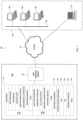
- FIG. 1 is a diagram illustrating a system 100, including an integrated business system 102 and an enterprise network 104 in which an embodiment of the invention may be implemented.
- Enterprise network 104 may be associated with a business enterprise, such as a retailer, merchant, service provider, or other type of business.
- a business enterprise such as a retailer, merchant, service provider, or other type of business.
- ASP application service provider
- the business enterprise may comprise fewer or no dedicated facilities or business network at all, provided that its end users have access to an internet browser and an internet connection.
- the enterprise network 104 is represented by an on-site local area network 106 to which a plurality of personal computers 108 are connected, each generally dedicated to a particular end user (although such dedication is not required), along with an example remote user computer 110 that can be, for example, a laptop computer or tablet computer of a traveling employee having internet access through a hotel, coffee shop, a public Wi-Fi access point, or other internet access method.
- the end users associated with computers 108 and 110 may also (or instead) possess an internet-enabled smartphone or other electronic device (such as a PDA) having wireless internet access or other synchronization capabilities.
- Users of the enterprise network 104 interface with the integrated business system 102 across the Internet 112 or another suitable communications network or combination of networks.
- Integrated business system 102 which may be hosted by a dedicated third party, may include an integrated business server 114 and a web interface server 116, coupled as shown in Figure 1 . It is to be appreciated that either or both the integrated business server 114 and the web interface server 116 may be implemented on one or more different hardware systems and components, even though represented as singular units in Figure 1 .
- integrated business server 114 comprises an ERP module 118 and further comprises a CRM module 120.
- ERP module 118 it will be desirable for the ERP module 118 to share methods, libraries, databases, subroutines, variables, etc., with CRM module 120, and indeed ERP module 118 may be intertwined with CRM module 120 into an integrated Business Data Processing Platform (which may be single tenant, but is typically multi-tenant).
- the ERP module 118 may include, but is not limited to, a finance and accounting module, an order processing module, a time and billing module, an inventory management and distribution module, an employee management and payroll module, a calendaring and collaboration module, a reporting and analysis module, and other ERPrelated modules.
- the CRM module 120 may include, but is not limited to, a sales force automation (SFA) module, a marketing automation module, a contact list module (not shown), a call center support module, a web-based customer support module, a reporting and analysis module, and other CRM-related modules.
- the integrated business server 114 (or multi-tenant data processing platform) further may provide other business functionalities including a web store/eCommerce module 122, a partner and vendor management module 124, and an integrated reporting module 130.
- An SCM (supply chain management) module 126 and PLM (product lifecycle management) module 128 may also be provided.
- Web interface server 116 is configured and adapted to interface with the integrated business server 114 to provide one or more web-based user interfaces to end users of the enterprise network 104.
- the integrated business system shown in Figure 1 may be hosted on a distributed computing system made up of at least one, but likely multiple, "servers.”
- a server is a physical computer dedicated to providing data storage and an execution environment for one or more software applications or services intended to serve the needs of the users of other computers that are in data communication with the server, for instance via a public network such as the Internet or a private "intranet” network.
- the server, and the services it provides, may be referred to as the "host” and the remote computers, and the software applications running on the remote computers, being served may be referred to as "clients.”
- clients Depending on the computing service(s) that a server offers it could be referred to as a database server, data storage server, file server, mail server, print server, web server, etc.
- a web server is a most often a combination of hardware and the software that helps deliver content, commonly by hosting a website, to client web browsers that access the web server via the Internet.
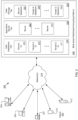
- FIG. 2 is a diagram illustrating elements or components of an example operating environment 200 in which an embodiment of the invention may be implemented.
- a variety of clients 202 incorporating and/or incorporated into a variety of computing devices may communicate with a distributed computing service/platform 208 through one or more networks 214.
- a client may incorporate and/or be incorporated into a client application (e.g., software) implemented at least in part by one or more of the computing devices.
- suitable computing devices include personal computers, server computers 204, desktop computers 206, laptop computers 207, notebook computers, tablet computers or personal digital assistants (PDAs) 210, smart phones 212, cell phones, and consumer electronic devices incorporating one or more computing device components, such as one or more electronic processors, microprocessors, central processing units (CPU), or controllers.
- suitable networks 214 include networks utilizing wired and/or wireless communication technologies and networks operating in accordance with any suitable networking and/or communication protocol (e.g., the Internet).
- the distributed computing service/platform (which may also be referred to as a multi-tenant business data processing platform) 208 may include multiple processing tiers, including a user interface tier 216, an application server tier 220, and a data storage tier 224.
- the user interface tier 216 may maintain multiple user interfaces 217, including graphical user interfaces and/or web-based interfaces.
- the user interfaces may include a default user interface for the service to provide access to applications and data for a user or "tenant" of the service (depicted as “Service UI” in the figure), as well as one or more user interfaces that have been specialized/customized in accordance with user specific requirements (e.g., represented by "Tenant A UI", ..., "Tenant Z UI” in the figure, and which may be accessed via one or more APIs).
- the default user interface may include components enabling a tenant to administer the tenant's participation in the functions and capabilities provided by the service platform, such as accessing data, causing the execution of specific data processing operations, etc.
- Each processing tier shown in the figure may be implemented with a set of computers and/or computer components including computer servers and processors, and may perform various functions, methods, processes, or operations as determined by the execution of a software application or set of instructions.
- the data storage tier 224 may include one or more data stores, which may include a Service Data store 225 and one or more Tenant Data stores 226.
- Each tenant data store 226 may contain tenant-specific data that is used as part of providing a range of tenant-specific business services or functions, including but not limited to ERP, CRM, eCommerce, Human Resources management, payroll, etc.
- Data stores may be implemented with any suitable data storage technology, including structured query language (SQL) based relational database management systems (RDBMS).
- SQL structured query language
- RDBMS relational database management systems
- distributed computing service/platform 208 may be multi-tenant and service platform 208 may be operated by an entity to provide multiple tenants with a set of business related applications, data storage, and functionality.
- These applications and functionality may include ones that a business uses to manage various aspects of its operations.
- the applications and functionality may include providing web-based access to business information systems, thereby allowing a user with a browser and an Internet or intranet connection to view, enter, process, or modify certain types of business information.
- ERP Enterprise Resource Planning
- modules of an ERP system may include (but are not required to include, nor limited to only including): accounting, order processing, time and billing, inventory management, retail point of sale (POS) systems, eCommerce, product information management (PIM), demand/material requirements planning (MRP), purchasing, content management systems (CMS), professional services automation (PSA), employee management/payroll, human resources management, and employee calendaring and collaboration, as well as reporting and analysis capabilities relating to these functions.
- PIM product information management
- MRP demand/material requirements planning
- CMS content management systems
- PSA professional services automation
- employee management/payroll human resources management
- employee calendaring and collaboration as well as reporting and analysis capabilities relating to these functions.
- Such functions or business applications are typically implemented by one or more modules of software code/instructions that are maintained on and executed by one or more servers 222 that are part of the platform's Application Server Tier 220.
- CRM Customer Relationship Management
- SFA sales force automation
- RMA returns management authorization
- loyalty program support loyalty program support
- web-based customer support as well as reporting and analysis capabilities relating to these functions.
- a business information system/platform may also include one or more of an integrated partner and vendor management system, eCommerce system (e.g., a virtual storefront application or platform), product lifecycle management (PLM) system, Human Resources management system (which may include medical/dental insurance administration, payroll, etc.), or supply chain management (SCM) system.
- Such functions or business applications are typically implemented by one or more modules of software code/instructions that are maintained on and executed by one or more servers 222 that are part of the platform's Application Server Tier 220.
- both functional advantages and strategic advantages may be gained by using an integrated business system comprising ERP, CRM, and other business capabilities, as for example where the integrated business system is integrated with a merchant's eCommerce platform and/or "web-store.”
- a customer searching for a particular product can be directed to a merchant's website and presented with a wide array of product and/or services from the comfort of their home computer, or even from their mobile phone.
- the integrated business system can process the order, update accounts receivable, update inventory databases and other ERP-based systems, and can also automatically update strategic customer information databases and other CRMbased systems.
- These modules and other applications and functionalities may advantageously be integrated and executed by a single code base accessing one or more integrated databases as necessary, forming an integrated business management system or platform (such as platform 208 of Figure 2 ).
- the integrated business system shown in Figure 2 may be hosted on a distributed computing system made up of at least one, but typically multiple, "servers."
- a server is a physical computer dedicated to providing data storage and an execution environment for one or more software applications or services intended to serve the needs of the users of other computers that are in data communication with the server, for instance via a public network such as the Internet or a private "intranet” network.
- a business may utilize systems provided by a third party.
- a third party may implement an integrated business system/platform as described above in the context of a multi-tenant platform, wherein individual instantiations of a single comprehensive integrated business system are provided to a variety of tenants.
- One advantage to such multi-tenant platforms is the ability for each tenant to customize their instantiation of the integrated business system (e.g., its user interfaces, applications, or workflow) to that tenant's specific business needs or operational methods.
- Each tenant may be a business or entity that uses the multi-tenant platform to provide business data and functionality to multiple users. Some of those multiple users may have distinct roles or responsibilities within the business or entity.
- a tenant may desire to modify or supplement the functionality of an existing platform application by introducing an extension to that application, where the extension is to be made available to the tenant's employees and/or customers.
- an extension may be applied to the processing of the tenant's business related data that is resident on the platform.
- the extension may be developed by the tenant or by a third-party developer and then made available to the tenant for installation.
- the platform may include a "library" or catalog of available extensions, which can be accessed by a tenant and searched to identify an extension of interest.
- Software developers may be permitted to "publish" an extension to the library or catalog after appropriate validation of a proposed extension.
- a multi-tenant service platform may permit a tenant to configure certain aspects of the available service(s) to better suit their business needs.
- aspects of the service platform may be customizable, and thereby enable a tenant to configure aspects of the platform to provide distinctive services to their respective users or to groups of those users.
- a business enterprise that uses the service platform may want to provide additional functions or capabilities to their employees and/or customers, or to cause their business data to be processed in a specific way in accordance with a defined workflow that is tailored to their business needs, etc.
- Tenant customizations to the platform may include custom functionality (such as the capability to perform tenant or user-specific functions, data processing, or operations) built on top of lower level operating system functions.
- Some multi-tenant service platforms may offer the ability to customize functions or operations at a number of different levels of the service platform, from aesthetic modifications to a graphical user interface to providing integration of components and/or entire applications developed by independent third party vendors. This can be very beneficial, since by permitting use of components and/or applications developed by third party vendors, a multi-tenant service can significantly enhance the functionality available to tenants and increase tenant satisfaction with the platform.
- an independent software developer may create an extension to an application that is available to users through a multi-tenant data processing platform.
- the extension may add new functionality or capabilities to the underlying application.
- tenants/users of the platform may wish to add the extension to the underlying application to be able to utilize the enhancements to the application that are made possible by the extension.
- the developer may wish to upgrade or provide a patch to the extension as they recognize a need for fixes or additional functionality that would be beneficial to incorporate into the extension.
- the developer may prefer to make the upgrade available to only a select set of users (at least initially) to obtain feedback for improving the newer version of the extension, to test the stability of the extension, or to assist them to segment the market for their extension(s).
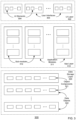
- FIG 3 is a diagram illustrating additional details of the elements or components of the multi-tenant distributed computing service platform of Figure 2 , in which an embodiment of the invention may be implemented.
- the software architecture depicted in Figure 2 represents an example of a complex software system to which an embodiment of the invention may be applied.
- an embodiment of the invention may be implemented using a set of software instructions that are designed to be executed by a suitably programmed processing element (such as a CPU, microprocessor, processor, controller, computing device, etc.).
- a processing element such as a CPU, microprocessor, processor, controller, computing device, etc.
- modules typically arranged into “modules” with each such module performing a specific task, process, function, or operation.
- the entire set of modules may be controlled or coordinated in their operation by an operating system (OS) or other form of organizational platform.
- OS operating system
- FIG 3 is a diagram illustrating additional details of the elements or components 300 of the multi-tenant distributed computing service platform of Figure 2 , in which an embodiment of the invention may be implemented.
- the example architecture includes a user interface layer or tier 302 having one or more user interfaces 303. Examples of such user interfaces include graphical user interfaces and application programming interfaces (APIs). Each user interface may include one or more interface elements 304. For example, users may interact with interface elements to access functionality and/or data provided by application and/or data storage layers of the example architecture.
- Application programming interfaces may be local or remote, and may include interface elements such as parameterized procedure calls, programmatic objects and messaging protocols.
- the application layer 310 may include one or more application modules 311, each having one or more sub-modules 312.
- Each application module 311 or sub-module 312 may correspond to a particular function, method, process, or operation that is implemented by the module or sub-module (e.g., a function or process related to providing ERP, CRM, eCommerce or another functionality to a user of the platform).
- function, method, process, or operation may also include those used to implement one or more aspects of the inventive system and methods, such as for:
- the application modules and/or sub-modules may include any suitable computer-executable code or set of instructions (e.g., as would be executed by a suitably programmed processor, microprocessor, or CPU), such as computer-executable code corresponding to a programming language.
- a suitably programmed processor, microprocessor, or CPU such as computer-executable code corresponding to a programming language.
- programming language source code may be compiled into computer-executable code.
- the programming language may be an interpreted programming language such as a scripting language.
- Each application server (e.g., as represented by element 222 of Figure 2 ) may include each application module.
- different application servers may include different sets of application modules. Such sets may be disjoint or overlapping.
- the data storage layer 320 may include one or more data objects 322 each having one or more data object components 321, such as attributes and/or behaviors.
- the data objects may correspond to tables of a relational database, and the data object components may correspond to columns or fields of such tables.
- the data objects may correspond to data records having fields and associated services.
- the data objects may correspond to persistent instances of programmatic data objects, such as structures and classes.
- Each data store in the data storage layer may include each data object.
- different data stores may include different sets of data objects. Such sets may be disjoint or overlapping.
- computing environments depicted in Figures 1-3 are not intended to be limiting examples.
- computing environments in which an embodiment of the invention may be implemented include any suitable system that permits users to provide data to, and access, process, and utilize data stored in a data storage element (e.g., a database) that can be accessed remotely over a network.
- a data storage element e.g., a database
- Further example environments in which an embodiment of the invention may be implemented include those having devices (including mobile devices), software applications, systems, apparatuses, networks, or other configurable components that may be used by multiple users for data entry, data processing, application execution, data review, etc. and which have user interfaces or user interface components that can be configured to present an interface to a user.
- Embodiments of the inventive system and methods control the usage of resources of a cloud-based platform infrastructure by each tenant/account on a daily, weekly, monthly, annually or another basis. Generally, this is accomplished in part by an analysis module that generates a set of vectors X i that includes values indicative of resource consumption by the tenants. A vector is generated for each of N tenants. A Targeted Vectors Distribution Steepest Descent ("TVDSD”) Algorithm is applied to establish a distribution of the vectors representing the N tenants to the K different servers.
- TVDSD Targeted Vectors Distribution Steepest Descent
- a fitness metric is determined based on a result of the distribution.
- the fitness metric is compared to a threshold to determine whether the distribution established according to the TVDSD is within an acceptable tolerance of an optimal distribution. If the distribution is suitably close to the optimal distribution, the servers are caused to be allocated to the tenants, or vice versa, according to the distribution. If the distribution is determined not to be suitably close to the optimal distribution based on the comparison of the fitness metric to the threshold, the TVDSD algorithm can be applied again to reallocate the tenants to the servers, or vice versa.
- the present technology can be used by an infrastructure management team or used by an automated process, to better (i.e., more optimally) distribute the different tenants/accounts among a plurality of servers and/or other infrastructure elements of the platform.
- This type of resource allocation methodology is expected to improve the performance of the platform software in each server of the cloud, and help to optimize allocation of the financial and support resources provided by the platform operator/administrator.
- Figure 4 is a flow diagram schematically illustrating an embodiment of a process for automatically distributing N tenants among K different servers.
- the distribution of eff- N tenants among the K servers promotes satisfaction of a demand for resources by an available supply of the server resources.
- a vector X i is generated at block 400 for each of the N tenants to be distributed among the K servers.
- the vectors X i can be generated by receiving, with a computer processor, values of the resource demand from a specific tenant during dimensions that correspond to a defined time increment. The received values can be used to generate a data structure comprising one or more of the vectors X i .
- the vector for tenant N1 expressed herein as X 1
- a Euclidean norm of the vector X i is denoted ⁇ X i ⁇ .
- the current embodiment of the process for allocating the N tenants among the K different servers can be iterative.
- a plurality of the N tenants can be allocated to one server K, before another plurality of the N tenants is then allocated to a different one of the K servers.
- a target vector (TV) is determined for the set of vectors X i corresponding to the tenants to be distributed to one of the different servers at block 405.
- the target vector TV is referred to as a "target" because it establishes a desired value of the sum S j of all the vectors X i corresponding to tenants allocated to a given server, included among the K servers.
- the sum of all the vectors X i corresponding to tenants allocated to a first server can approach, be within a defined maximum deviation from, or be approximately the same as the target vector TV.
- the sum S j of all the vectors X i corresponding to tenants allocated to a given server should be as close as possible, or practical in terms of computational complexity, to the target vector TV.
- the TVDSD uses the target vector TV to allocate tenants to a first server K 1 at block 410.
- allocating tenants to the first server K 1 is casually referred to herein as “filling a first bucket B 1 .”
- allocating tenants to a second server K 2 is casually referred to herein as “filing a second bucket B 2 ,” and so on.
- the tenant corresponding to the vector X m is allocated to the first server K 1 at block 415.
- the network-accessible resources demanded by the tenant corresponding to the vector X m are caused to be supplied by the first server K 1 .
- the remaining vectors are those vectors corresponding to tenants not already selected for allocation to a server such as the first server K 1 .
- the vector X m is excluded from the set of vectors under consideration as part of the analysis to determine whether the vector X p exists.
- the second vector X p may or may not exist.
- the second vector X p if it exists, can be selected as the vector X p , from among the remaining and unallocated vectors X i , that minimizes a Euclidean norm of a difference between: (a) the target vector TV, and (b) a combination of the selected vector X m satisfying expression (3) and the second vector X p .
- the tenant corresponding to vector X p is selected for allocation to the first server (i.e., used to fill the first bucket B 1 ) at block 430.
- the tenant corresponding to vector X q is selected for allocation to the first server corresponding to the first bucket B 1 at block 430.
- filling the first bucket B 1 continues by repeatedly attempting to select vectors from among the remaining, unallocated vectors X i .
- Selected vectors are determined to exist if they satisfy the growing expression built according to the trend established by expressions (3)-(5). In other words, the most-recently selected vector is added to the expression that was satisfied to allocate that most-recent vector to a server.
- a vector that satisfies the modified expression is the vector that results in a Euclidean norm that is no greater than the Euclidean norm generated as a function of each of the other remaining vectors.
- the TVDSD algorithm progresses to fill the second bucket B 1 .
- the set of remaining vectors X i from which one or more vectors are to be selected to fill the second bucket B 2 is redefined at block 435.
- N 2 includes two fewer tenants because the tenants associated with X m and X p were allocated to the first server K 1 .
- the target vector TV is recalculated to reflect the fewer number (N 2 ) of remaining vectors X i to be distributed, taking into consideration the vectors such as X m and X p for example, that were selected for assignment to the first server K 1 .
- the steps of selecting vectors that satisfy one or more expressions in the form of expressions (3)-(5) above, and determining whether such a vector exists at block 425 are repeated to fill the second bucket B 2 .
- the tenant corresponding to the satisfying vector is allocated to the second server K 2 .
- a refined set of remaining, unallocated vectors N 3 (i.e., corresponding to the tenants that have not been allocated to either the first server K 1 or the second server K 2 ) is defined at block 435.
- a new target vector TV is determined at block 440 to fill a third bucket B 3 , to reflect the fewer number of remaining vectors X i to be distributed (i.e., vectors not allocated to the first or second servers K 1 , K 2 ).
- K 3 K - 2
- alternative fitness metrics could be used according to other embodiments.
- the present process is useful to establish a vector distribution with the fitness metric defined in expression (7) that is a reasonable approximation to the global minimum GM in expression (8).
- This "closeness" of the fitness metric to the global minimum GM resulting from the present approach provides a sub-optimal solution, which is satisfactory to allocate tenants in a computationally-efficient manner.
- the system, apparatus, methods, processes, functions, and/or operations for efficiently managing access to and usage of an extension or application installed on a multi-tenant platform may be wholly or partially implemented in the form of a set of instructions executed by one or more programmed computer processors such as a central processing unit (CPU) or microprocessor. Such processors may be incorporated in an apparatus, server, client or other computing or data processing device operated by, or in communication with, other components of the system.
- Figure 5 is a diagram illustrating elements or components that may be present in a computer device or system 700 configured to implement a method, process, function, or operation in accordance with an embodiment of the invention. The subsystems shown in Figure 5 are interconnected via a system bus 702.
- Additional subsystems include a printer 704, a keyboard 706, a fixed disk 708, and a monitor 710, which is coupled to a display adapter 712.
- Peripherals and input/output (I/O) devices which couple to an I/O controller 714, can be connected to the computer system by any number of means known in the art, such as a serial port 716.
- the serial port 716 or an external interface 718 can be utilized to connect the computer device 700 to further devices and/or systems not shown in Figure 5 including a wide area network such as the Internet, a mouse input device, and/or a scanner.
- the interconnection via the system bus 702 allows one or more processors 720 to communicate with each subsystem and to control the execution of instructions that may be stored in a system memory 722 and/or the fixed disk 708, as well as the exchange of information between subsystems.
- the system memory 722 and/or the fixed disk 608 may embody a tangible computer-readable medium.
- a set of vectors corresponding to a plurality of tenants to be allocated is generated.
- a target vector establishing a desired value of a sum of vectors allocated to a first platform resource is determined.
- a first vector included in the set of vectors that satisfies a defined relationship with the target vector is identified, and a tenant corresponding to the first vector is allocated to the platform resource as a result. It is determined whether a second vector satisfies a defined relationship with both the target vector and the first vector exists. If so, a tenant corresponding to the second vector is allocated to the first platform resource. If not, the tenant corresponding to the second vector is allocated to a second platform resource, that is different from the first platform resource.
- any of the software components, processes or functions described in this application may be implemented as software code to be executed by a processor using any suitable computer language such as, for example, Java, Javascript, C++ or Perl using, for example, conventional or object-oriented techniques.
- the software code may be stored as a series of instructions, or commands on a computer readable medium, such as a random-access memory (RAM), a read only memory (ROM), a magnetic medium such as a hard-drive or a floppy disk, or an optical medium such as a CD-ROM.
- RAM random-access memory
- ROM read only memory
- magnetic medium such as a hard-drive or a floppy disk
- optical medium such as a CD-ROM.
- Any such computer readable medium may reside on or within a single computational apparatus, and may be present on or within different computational apparatuses within a system or network.
- a computer readable medium may also or alternatively be a transient medium such as a transmission signal or carrier wave, in use to convey the instructions. Such a transient medium may occur between components of a single computer system, or between multiple separate computer systems. Both the storage and conveyance of instructions by any form of computer readable medium may be termed carrying instructions.
Landscapes
- Engineering & Computer Science (AREA)
- Theoretical Computer Science (AREA)
- Software Systems (AREA)
- Physics & Mathematics (AREA)
- General Physics & Mathematics (AREA)
- General Engineering & Computer Science (AREA)
- Computer Networks & Wireless Communication (AREA)
- Signal Processing (AREA)
- Data Mining & Analysis (AREA)
- Databases & Information Systems (AREA)
- Mathematical Physics (AREA)
- Computational Mathematics (AREA)
- Mathematical Analysis (AREA)
- Mathematical Optimization (AREA)
- Pure & Applied Mathematics (AREA)
- Computing Systems (AREA)
- Algebra (AREA)
- Management, Administration, Business Operations System, And Electronic Commerce (AREA)
- Debugging And Monitoring (AREA)
Claims (7)
- Procédé mis en œuvre par ordinateur, ce procédé comprenant :(a) la génération, par au moins un processeur, d'une structure de données comprenant un ensemble de vecteurs correspondant à une pluralité de locataires devant être attribués à une pluralité de ressources de plateforme qui sont accessibles par réseau, chaque vecteur étant multidimensionnel et comprenant des valeurs indiquant une demande d'une ressource de plateforme parmi les ressources de plateforme par un locataire respectif, chaque dimension de chaque vecteur représentant une unité de temps ;(b) la détermination, par au moins le processeur, d'un vecteur cible pour attribuer une partie de la pluralité de locataires à une première ressource de plateforme comprise parmi les ressources de plateforme, ce vecteur cible établissant une valeur désirée d'une somme de vecteurs correspondant à la pluralité de locataires attribués à la première ressource de plateforme, cette partie de la pluralité de locataires étant générée en recevant des valeurs de la demande de ressource venant un locataire spécifique pendant des dimensions qui correspondent à un incrément de temps défini ;(c) l'identification, par au moins le processeur, d'un premier vecteur compris dans l'ensemble de vecteurs qui minimise une norme euclidienne d'une différence entre le vecteur cible et le vecteur de l'ensemble de vecteurs ;(d) l'attribution, par au moins le processeur, d'un locataire correspondant au premier vecteur à la première ressource de plateforme à la suite de l'identification du premier vecteur ;(f) l'analyse, par au moins le processeur, de l'ensemble de vecteurs afin de déterminer si un deuxième vecteur qui minimise une norme euclidienne d'une différence entre : (i) le vecteur cible, et (ii) une combinaison du premier vecteur et du deuxième vecteur existe ou pas ;(g) à la suite de la détermination que le deuxième vecteur existe, l'attribution, par au moins le processeur, d'un locataire correspondant au deuxième vecteur à la première ressource de plateforme ; et(h) à la suite de la détermination que le deuxième vecteur n'existe pas, le recalcul du vecteur cible sans prendre en considération le premier vecteur ni le deuxième vecteur, et la répétition des étapes (c) à (h).
- Procédé mis en œuvre par ordinateur selon la revendication 1, dans lequel le vecteur cible est déterminé comme :
 Xi sont les vecteurs correspondant à la pluralité de locataires attribués à la première ressource de plateforme pour des valeurs de i = 1, ..., N,N est un nombre entier positif qui est plus grand que 2, ou égal à 2, etK est un nombre entier positif qui est plus grand que 2 ou égal à 2, et qui est indicatif d'une quantité des ressources de plateforme auxquelles la pluralité de locataires doivent être attribués.
 - Procédé mis en œuvre par ordinateur selon la revendication 2, dans lequel les instructions, lorsqu'elles sont exécutées par au moins le processeur, font en sorte que le système informatique :analyse l'ensemble de vecteurs afin de déterminer si le deuxième vecteur satisfait ou pas à l'expression suivante :
 expression dans laquelle :TV est le vecteur cible,Xm est le premier vecteur,Xp est le deuxième vecteur,XI est le iième vecteur pour toutes les valeurs de i = 1, ..., N, etN est un nombre entier positif qui est plus grand que 2, ou égal à 2.
 - Procédé mis en œuvre par ordinateur selon l'une quelconque des revendications précédentes, comprenant en outre :
à la suite de la détermination que le deuxième vecteur n'existe pas :(i) la définition d'un ensemble raffiné de vecteurs restants, ces vecteurs restants comprenant chaque vecteur compris dans l'ensemble de vecteurs sauf le premier vecteur ; et(ii) la détermination d'un vecteur cible différent devant être utilisé pour attribuer le locataire correspondant au deuxième vecteur à une deuxième ressource de plateforme, qui est différente de la première ressource de plateforme. - Procédé mis en œuvre par ordinateur selon l'une quelconque des revendications précédentes, comprenant, à la suite de l'attribution du locataire correspondant au premier vecteur à la ressource de plateforme, le contrôle de l'utilisation de la première ressource de plateforme par le locataire correspondant au premier vecteur.
- Support lisible par ordinateur contenant des instructions exécutables par ordinateur qui, lorsqu'elles sont exécutées par au moins un processeur d'un système informatique, font en sorte que ce système informatique exécute le procédé selon l'une quelconque des revendications précédentes.
- Système informatique, comprenant :un processeur connecté à une mémoire ; etun module d'analyse stocké sur un support lisible par ordinateur et comprenant des instructions qui, lorsqu'elles sont exécutées par au moins le processeur, font en sorte que le système informatique exécute le procédé selon l'une quelconque des revendications 1 à 5.
Applications Claiming Priority (1)
| Application Number | Priority Date | Filing Date | Title |
|---|---|---|---|
| US16/534,201 US11178065B2 (en) | 2019-08-07 | 2019-08-07 | System and methods for optimal allocation of multi-tenant platform infrastructure resources |
Publications (2)
| Publication Number | Publication Date |
|---|---|
| EP3772687A1 EP3772687A1 (fr) | 2021-02-10 |
| EP3772687B1 true EP3772687B1 (fr) | 2023-09-06 |
Family
ID=71670139
Family Applications (1)
| Application Number | Title | Priority Date | Filing Date |
|---|---|---|---|
| EP20186503.7A Active EP3772687B1 (fr) | 2019-08-07 | 2020-07-17 | Système et procédés d'allocation optimale des ressources d'infrastructure de plate-forme multi-locataires |
Country Status (2)
| Country | Link |
|---|---|
| US (2) | US11178065B2 (fr) |
| EP (1) | EP3772687B1 (fr) |
Families Citing this family (12)
| Publication number | Priority date | Publication date | Assignee | Title |
|---|---|---|---|---|
| US10489202B2 (en) * | 2014-12-30 | 2019-11-26 | NetSuite Inc. | System and methods for implementing control of use of shared resource in a multi-tenant system |
| CN111651263B (zh) * | 2020-02-12 | 2023-10-13 | 北京小米移动软件有限公司 | 移动终端的资源处理方法、装置、计算机设备及存储介质 |
| CN113407337B (zh) * | 2021-05-25 | 2024-08-13 | 深圳市元征科技股份有限公司 | 资源分配方法、装置、服务器及介质 |
| US12126547B2 (en) | 2021-06-29 | 2024-10-22 | Microsoft Technology Licensing, Llc | Method and system for resource governance in a multi-tenant system |
| US20230071886A1 (en) * | 2021-09-07 | 2023-03-09 | Salesforce.Com, Inc. | Performance system for forecasting feature degradations |
| US12699599B2 (en) | 2021-11-30 | 2026-08-04 | Oracle International Corporation | Dynamic system workload placement in cloud infrastructures |
| EP4469895B1 (fr) * | 2022-01-26 | 2026-04-29 | Diebold Nixdorf, Incorporated | Dimensionnement dynamique d'un système et procédé de traitement de transactions financières |
| US12367339B1 (en) * | 2022-03-04 | 2025-07-22 | Cdw Llc | Methods and systems for dynamic procurement data mining |
| WO2023236187A1 (fr) * | 2022-06-10 | 2023-12-14 | Baidu.Com Times Technology (Beijing) Co., Ltd. | Calcul parallèle de services et d'applications d'apprentissage automatique |
| US11985032B2 (en) | 2022-08-31 | 2024-05-14 | 6Connect, Inc | Metadata-aware templating engine for assigning internet protocol address space in an organization |
| CN115442444B (zh) * | 2022-11-04 | 2023-03-24 | 山东紫菜云数字科技有限公司 | 一种应用于多对多匹配平台的资源平衡自适应调度方法 |
| US12481946B2 (en) * | 2023-03-10 | 2025-11-25 | Adobe Inc. | Resource provisioning by a reinforcement learning framework using guided ordering of services |
Family Cites Families (54)
| Publication number | Priority date | Publication date | Assignee | Title |
|---|---|---|---|---|
| US6996615B1 (en) | 2000-09-29 | 2006-02-07 | Cisco Technology, Inc. | Highly scalable least connections load balancing |
| US7310673B2 (en) * | 2001-12-21 | 2007-12-18 | Hewlett-Packard Development Company, L.P. | Network resource assignment system and method |
| US8478782B1 (en) | 2008-05-08 | 2013-07-02 | Salesforce.Com, Inc. | System, method and computer program product for sharing tenant information utilizing a multi-tenant on-demand database service |
| CN101656657A (zh) | 2008-08-19 | 2010-02-24 | 国际商业机器公司 | 在多租户架构中确定每个租户的资源使用率的方法和系统 |
| US8424059B2 (en) * | 2008-09-22 | 2013-04-16 | International Business Machines Corporation | Calculating multi-tenancy resource requirements and automated tenant dynamic placement in a multi-tenant shared environment |
| US8706772B2 (en) | 2010-12-30 | 2014-04-22 | Sap Ag | Strict tenant isolation in multi-tenant enabled systems |
| US8966084B2 (en) | 2011-06-17 | 2015-02-24 | International Business Machines Corporation | Virtual machine load balancing |
| US9235443B2 (en) * | 2011-11-30 | 2016-01-12 | International Business Machines Corporation | Allocation enforcement in a multi-tenant cache mechanism |
| US8850122B2 (en) * | 2011-11-30 | 2014-09-30 | International Business Machines Corporation | Cache optimization via predictive cache size modification |
| JP5914699B2 (ja) | 2012-04-04 | 2016-05-11 | エヌイーシー ラボラトリーズ アメリカ インクNEC Laboratories America, Inc. | マイグレーションによるデータベースの作業負荷バランシング |
| US20140019415A1 (en) | 2012-07-11 | 2014-01-16 | Nec Laboratories America, Inc. | Method and System for Database Cloud Bursting |
| US9323577B2 (en) | 2012-09-20 | 2016-04-26 | Amazon Technologies, Inc. | Automated profiling of resource usage |
| GB201307702D0 (en) * | 2013-04-29 | 2013-06-12 | Maxymiser Ltd | Customer community analytics |
| US10250451B1 (en) * | 2014-01-13 | 2019-04-02 | Cazena, Inc. | Intelligent analytic cloud provisioning |
| US9733921B1 (en) | 2014-01-23 | 2017-08-15 | NetSuite Inc. | System and methods for management of cloud application extensions |
| WO2015143393A1 (fr) * | 2014-03-20 | 2015-09-24 | The Regents Of The University Of California | Classificateur de données comportementales de dimension élevée sans surveillance |
| US10592328B1 (en) * | 2015-03-26 | 2020-03-17 | Amazon Technologies, Inc. | Using cluster processing to identify sets of similarly failing hosts |
| US10536357B2 (en) * | 2015-06-05 | 2020-01-14 | Cisco Technology, Inc. | Late data detection in data center |
| US11115273B2 (en) * | 2015-07-13 | 2021-09-07 | Telefonaktiebolaget Lm Ericsson (Publ) | Analytics-driven dynamic network design and configuration |
| US10439886B2 (en) * | 2015-07-13 | 2019-10-08 | Telefonaktiebolaget Lm Ericsson (Publ) | Analytics-driven dynamic network design and configuration |
| US10016897B2 (en) | 2015-09-14 | 2018-07-10 | OneMarket Network LLC | Robotic systems and methods in prediction and presentation of resource availability |
| US9672074B2 (en) * | 2015-10-19 | 2017-06-06 | Vmware, Inc. | Methods and systems to determine and improve cost efficiency of virtual machines |
| US10354201B1 (en) * | 2016-01-07 | 2019-07-16 | Amazon Technologies, Inc. | Scalable clustering for mixed machine learning data |
| US20170220365A1 (en) * | 2016-01-29 | 2017-08-03 | International Business Machines Corporation | Virtual machine allocation to hosts for data centers |
| US10594620B1 (en) * | 2016-03-23 | 2020-03-17 | Amazon Technologies, Inc. | Bit vector analysis for resource placement in a distributed system |
| US10659542B2 (en) * | 2016-04-27 | 2020-05-19 | NetSuite Inc. | System and methods for optimal allocation of multi-tenant platform infrastructure resources |
| US9742435B1 (en) * | 2016-06-21 | 2017-08-22 | Vmware, Inc. | Multi-stage data compression for time-series metric data within computer systems |
| US20180212837A1 (en) * | 2017-01-25 | 2018-07-26 | At&T Intellectual Property I, Lp. | Network resource allocation based upon network service profile trajectories |
| US20180255122A1 (en) * | 2017-03-02 | 2018-09-06 | Futurewei Technologies, Inc. | Learning-based resource management in a data center cloud architecture |
| US10817803B2 (en) * | 2017-06-02 | 2020-10-27 | Oracle International Corporation | Data driven methods and systems for what if analysis |
| US10452665B2 (en) * | 2017-06-20 | 2019-10-22 | Vmware, Inc. | Methods and systems to reduce time series data and detect outliers |
| US10419437B2 (en) * | 2017-06-30 | 2019-09-17 | Futurewei Technologies, Inc. | Quasi-agentless cloud resource management |
| US10496396B2 (en) * | 2017-09-29 | 2019-12-03 | Oracle International Corporation | Scalable artificial intelligence driven configuration management |
| US20190123983A1 (en) * | 2017-10-25 | 2019-04-25 | Cisco Technology, Inc. | Data integration and user application framework |
| US10467211B2 (en) * | 2017-11-15 | 2019-11-05 | International Business Machines Corporation | Representing and analyzing cloud computing data as pseudo systems |
| US10810052B2 (en) * | 2018-04-12 | 2020-10-20 | Vmware, Inc. | Methods and systems to proactively manage usage of computational resources of a distributed computing system |
| US11086646B2 (en) * | 2018-05-18 | 2021-08-10 | Adobe Inc. | Tenant-side detection, classification, and mitigation of noisy-neighbor-induced performance degradation |
| US20200225046A1 (en) * | 2018-08-02 | 2020-07-16 | Mapanything, Inc. | Geographic routing engine |
| US11681944B2 (en) * | 2018-08-09 | 2023-06-20 | Oracle International Corporation | System and method to generate a labeled dataset for training an entity detection system |
| US20200073953A1 (en) * | 2018-08-30 | 2020-03-05 | Salesforce.Com, Inc. | Ranking Entity Based Search Results Using User Clusters |
| US11423501B2 (en) * | 2018-10-30 | 2022-08-23 | Oracle International Corporation | Machine learning for optimal student guidance |
| US10747957B2 (en) * | 2018-11-13 | 2020-08-18 | Asapp, Inc. | Processing communications using a prototype classifier |
| US11551004B2 (en) * | 2018-11-13 | 2023-01-10 | Asapp, Inc. | Intent discovery with a prototype classifier |
| US11102236B2 (en) * | 2018-11-19 | 2021-08-24 | Cisco Technology, Inc. | Systems and methods for remediating internet of things devices |
| US20200177485A1 (en) * | 2018-12-04 | 2020-06-04 | Cisco Technology, Inc. | Network traffic metrics and trends for internet of things management |
| US20200341832A1 (en) * | 2019-04-23 | 2020-10-29 | Vmware, Inc. | Processes that determine states of systems of a distributed computing system |
| US20200341833A1 (en) * | 2019-04-23 | 2020-10-29 | Vmware, Inc. | Processes and systems that determine abnormal states of systems of a distributed computing system |
| US11366697B2 (en) * | 2019-05-01 | 2022-06-21 | EMC IP Holding Company LLC | Adaptive controller for online adaptation of resource allocation policies for iterative workloads using reinforcement learning |
| US11595484B2 (en) * | 2019-05-03 | 2023-02-28 | Servicenow, Inc. | Centralized machine learning predictor for a remote network management platform |
| US11157298B2 (en) * | 2019-05-21 | 2021-10-26 | Salesforce.Com, Inc. | Method and system for automatically invoking functionality while using a primary application without user action |
| US11586474B2 (en) * | 2019-06-28 | 2023-02-21 | EMC IP Holding Company LLC | Adaptation of resource allocation for multiple workloads using interference effect of resource allocation of additional workloads on performance |
| US10958521B2 (en) * | 2019-07-19 | 2021-03-23 | Oracle International Corporation | Method and apparatus for configuring a cloud storage software appliance |
| US11720826B2 (en) * | 2019-07-24 | 2023-08-08 | International Business Machines Corporation | Feedback loop learning between artificial intelligence systems |
| US12393860B2 (en) * | 2019-07-29 | 2025-08-19 | Oracle International Corporation | Systems and methods for optimizing machine learning models by summarizing list characteristics based on multi-dimensional feature vectors |
-
2019
- 2019-08-07 US US16/534,201 patent/US11178065B2/en active Active
-
2020
- 2020-07-17 EP EP20186503.7A patent/EP3772687B1/fr active Active
-
2021
- 2021-11-15 US US17/526,954 patent/US11736409B2/en active Active
Also Published As
| Publication number | Publication date |
|---|---|
| US20210044535A1 (en) | 2021-02-11 |
| US11736409B2 (en) | 2023-08-22 |
| US20220078129A1 (en) | 2022-03-10 |
| EP3772687A1 (fr) | 2021-02-10 |
| US11178065B2 (en) | 2021-11-16 |
Similar Documents
| Publication | Publication Date | Title |
|---|---|---|
| US11736409B2 (en) | System and methods for optimal allocation of multi-tenant platform infrastructure resources | |
| US10659542B2 (en) | System and methods for optimal allocation of multi-tenant platform infrastructure resources | |
| US11233708B1 (en) | System, apparatus and method for deploying infrastructure to the cloud | |
| US9818127B2 (en) | Implementing comparison of cloud service provider package offerings | |
| US10133608B2 (en) | Creating, provisioning and managing virtual data centers | |
| US9832205B2 (en) | Cross provider security management functionality within a cloud service brokerage platform | |
| US9813318B2 (en) | Assessment of best fit cloud deployment infrastructures | |
| US10990370B1 (en) | System, apparatus and method for deploying infrastructure to the cloud | |
| US20150222723A1 (en) | Budget management functionality within a cloud service brokerage platform | |
| US20150156065A1 (en) | Policy management functionality within a cloud service brokerage platform | |
| US20150206207A1 (en) | Pricing rules management functionality within a cloud service brokerage platform | |
| US11087255B2 (en) | System and methods for fulfilling an order by determining an optimal set of sources and resources | |
| AU2019201406B2 (en) | Transformation platform | |
| US20150341230A1 (en) | Advanced discovery of cloud resources | |
| CN115220882A (zh) | 一种数据处理方法以及装置 | |
| US20170236221A1 (en) | System and methods for visualization of supply chain and data processing of related tasks and events | |
| US20150106163A1 (en) | Obtaining optimal pricing strategy in a service engagement | |
| US20240064068A1 (en) | Risk mitigation in service level agreements | |
| US20210349450A1 (en) | Hierarchical assessment of processes for implementing robotic process automation | |
| Beaty et al. | Economics of cloud computing for enterprise IT | |
| Enos | A Model-Based System for On-Premises Software-Defined Infrastructure | |
| Degtiareve | A Semi-Markov decision model-based brokering mechanism for mobile cloud market |
Legal Events
| Date | Code | Title | Description |
|---|---|---|---|
| PUAI | Public reference made under article 153(3) epc to a published international application that has entered the european phase |
Free format text: ORIGINAL CODE: 0009012 |
|
| STAA | Information on the status of an ep patent application or granted ep patent |
Free format text: STATUS: THE APPLICATION HAS BEEN PUBLISHED |
|
| AK | Designated contracting states |
Kind code of ref document: A1 Designated state(s): AL AT BE BG CH CY CZ DE DK EE ES FI FR GB GR HR HU IE IS IT LI LT LU LV MC MK MT NL NO PL PT RO RS SE SI SK SM TR |
|
| AX | Request for extension of the european patent |
Extension state: BA ME |
|
| STAA | Information on the status of an ep patent application or granted ep patent |
Free format text: STATUS: REQUEST FOR EXAMINATION WAS MADE |
|
| 17P | Request for examination filed |
Effective date: 20210727 |
|
| RBV | Designated contracting states (corrected) |
Designated state(s): AL AT BE BG CH CY CZ DE DK EE ES FI FR GB GR HR HU IE IS IT LI LT LU LV MC MK MT NL NO PL PT RO RS SE SI SK SM TR |
|
| STAA | Information on the status of an ep patent application or granted ep patent |
Free format text: STATUS: EXAMINATION IS IN PROGRESS |
|
| 17Q | First examination report despatched |
Effective date: 20221011 |
|
| RIC1 | Information provided on ipc code assigned before grant |
Ipc: G06F 9/455 20060101ALN20230228BHEP Ipc: G06F 9/50 20060101AFI20230228BHEP |
|
| GRAP | Despatch of communication of intention to grant a patent |
Free format text: ORIGINAL CODE: EPIDOSNIGR1 |
|
| STAA | Information on the status of an ep patent application or granted ep patent |
Free format text: STATUS: GRANT OF PATENT IS INTENDED |
|
| RIC1 | Information provided on ipc code assigned before grant |
Ipc: G06F 9/455 20180101ALN20230327BHEP Ipc: G06F 9/50 20060101AFI20230327BHEP |
|
| INTG | Intention to grant announced |
Effective date: 20230414 |
|
| P01 | Opt-out of the competence of the unified patent court (upc) registered |
Effective date: 20230522 |
|
| GRAS | Grant fee paid |
Free format text: ORIGINAL CODE: EPIDOSNIGR3 |
|
| GRAA | (expected) grant |
Free format text: ORIGINAL CODE: 0009210 |
|
| STAA | Information on the status of an ep patent application or granted ep patent |
Free format text: STATUS: THE PATENT HAS BEEN GRANTED |
|
| AK | Designated contracting states |
Kind code of ref document: B1 Designated state(s): AL AT BE BG CH CY CZ DE DK EE ES FI FR GB GR HR HU IE IS IT LI LT LU LV MC MK MT NL NO PL PT RO RS SE SI SK SM TR |
|
| REG | Reference to a national code |
Ref country code: GB Ref legal event code: FG4D |
|
| REG | Reference to a national code |
Ref country code: CH Ref legal event code: EP |
|
| REG | Reference to a national code |
Ref country code: IE Ref legal event code: FG4D |
|
| REG | Reference to a national code |
Ref country code: DE Ref legal event code: R096 Ref document number: 602020017081 Country of ref document: DE |
|
| REG | Reference to a national code |
Ref country code: LT Ref legal event code: MG9D |
|
| REG | Reference to a national code |
Ref country code: NL Ref legal event code: MP Effective date: 20230906 |
|
| PG25 | Lapsed in a contracting state [announced via postgrant information from national office to epo] |
Ref country code: GR Free format text: LAPSE BECAUSE OF FAILURE TO SUBMIT A TRANSLATION OF THE DESCRIPTION OR TO PAY THE FEE WITHIN THE PRESCRIBED TIME-LIMIT Effective date: 20231207 |
|
| PG25 | Lapsed in a contracting state [announced via postgrant information from national office to epo] |
Ref country code: SE Free format text: LAPSE BECAUSE OF FAILURE TO SUBMIT A TRANSLATION OF THE DESCRIPTION OR TO PAY THE FEE WITHIN THE PRESCRIBED TIME-LIMIT Effective date: 20230906 Ref country code: RS Free format text: LAPSE BECAUSE OF FAILURE TO SUBMIT A TRANSLATION OF THE DESCRIPTION OR TO PAY THE FEE WITHIN THE PRESCRIBED TIME-LIMIT Effective date: 20230906 Ref country code: NO Free format text: LAPSE BECAUSE OF FAILURE TO SUBMIT A TRANSLATION OF THE DESCRIPTION OR TO PAY THE FEE WITHIN THE PRESCRIBED TIME-LIMIT Effective date: 20231206 Ref country code: LV Free format text: LAPSE BECAUSE OF FAILURE TO SUBMIT A TRANSLATION OF THE DESCRIPTION OR TO PAY THE FEE WITHIN THE PRESCRIBED TIME-LIMIT Effective date: 20230906 Ref country code: LT Free format text: LAPSE BECAUSE OF FAILURE TO SUBMIT A TRANSLATION OF THE DESCRIPTION OR TO PAY THE FEE WITHIN THE PRESCRIBED TIME-LIMIT Effective date: 20230906 Ref country code: HR Free format text: LAPSE BECAUSE OF FAILURE TO SUBMIT A TRANSLATION OF THE DESCRIPTION OR TO PAY THE FEE WITHIN THE PRESCRIBED TIME-LIMIT Effective date: 20230906 Ref country code: GR Free format text: LAPSE BECAUSE OF FAILURE TO SUBMIT A TRANSLATION OF THE DESCRIPTION OR TO PAY THE FEE WITHIN THE PRESCRIBED TIME-LIMIT Effective date: 20231207 Ref country code: FI Free format text: LAPSE BECAUSE OF FAILURE TO SUBMIT A TRANSLATION OF THE DESCRIPTION OR TO PAY THE FEE WITHIN THE PRESCRIBED TIME-LIMIT Effective date: 20230906 |
|
| REG | Reference to a national code |
Ref country code: AT Ref legal event code: MK05 Ref document number: 1609435 Country of ref document: AT Kind code of ref document: T Effective date: 20230906 |
|
| PG25 | Lapsed in a contracting state [announced via postgrant information from national office to epo] |
Ref country code: NL Free format text: LAPSE BECAUSE OF FAILURE TO SUBMIT A TRANSLATION OF THE DESCRIPTION OR TO PAY THE FEE WITHIN THE PRESCRIBED TIME-LIMIT Effective date: 20230906 |
|
| PG25 | Lapsed in a contracting state [announced via postgrant information from national office to epo] |
Ref country code: IS Free format text: LAPSE BECAUSE OF FAILURE TO SUBMIT A TRANSLATION OF THE DESCRIPTION OR TO PAY THE FEE WITHIN THE PRESCRIBED TIME-LIMIT Effective date: 20240106 |
|
| PG25 | Lapsed in a contracting state [announced via postgrant information from national office to epo] |
Ref country code: AT Free format text: LAPSE BECAUSE OF FAILURE TO SUBMIT A TRANSLATION OF THE DESCRIPTION OR TO PAY THE FEE WITHIN THE PRESCRIBED TIME-LIMIT Effective date: 20230906 |
|
| PG25 | Lapsed in a contracting state [announced via postgrant information from national office to epo] |
Ref country code: ES Free format text: LAPSE BECAUSE OF FAILURE TO SUBMIT A TRANSLATION OF THE DESCRIPTION OR TO PAY THE FEE WITHIN THE PRESCRIBED TIME-LIMIT Effective date: 20230906 |
|
| PG25 | Lapsed in a contracting state [announced via postgrant information from national office to epo] |
Ref country code: SM Free format text: LAPSE BECAUSE OF FAILURE TO SUBMIT A TRANSLATION OF THE DESCRIPTION OR TO PAY THE FEE WITHIN THE PRESCRIBED TIME-LIMIT Effective date: 20230906 Ref country code: RO Free format text: LAPSE BECAUSE OF FAILURE TO SUBMIT A TRANSLATION OF THE DESCRIPTION OR TO PAY THE FEE WITHIN THE PRESCRIBED TIME-LIMIT Effective date: 20230906 Ref country code: IS Free format text: LAPSE BECAUSE OF FAILURE TO SUBMIT A TRANSLATION OF THE DESCRIPTION OR TO PAY THE FEE WITHIN THE PRESCRIBED TIME-LIMIT Effective date: 20240106 Ref country code: ES Free format text: LAPSE BECAUSE OF FAILURE TO SUBMIT A TRANSLATION OF THE DESCRIPTION OR TO PAY THE FEE WITHIN THE PRESCRIBED TIME-LIMIT Effective date: 20230906 Ref country code: EE Free format text: LAPSE BECAUSE OF FAILURE TO SUBMIT A TRANSLATION OF THE DESCRIPTION OR TO PAY THE FEE WITHIN THE PRESCRIBED TIME-LIMIT Effective date: 20230906 Ref country code: CZ Free format text: LAPSE BECAUSE OF FAILURE TO SUBMIT A TRANSLATION OF THE DESCRIPTION OR TO PAY THE FEE WITHIN THE PRESCRIBED TIME-LIMIT Effective date: 20230906 Ref country code: AT Free format text: LAPSE BECAUSE OF FAILURE TO SUBMIT A TRANSLATION OF THE DESCRIPTION OR TO PAY THE FEE WITHIN THE PRESCRIBED TIME-LIMIT Effective date: 20230906 Ref country code: SK Free format text: LAPSE BECAUSE OF FAILURE TO SUBMIT A TRANSLATION OF THE DESCRIPTION OR TO PAY THE FEE WITHIN THE PRESCRIBED TIME-LIMIT Effective date: 20230906 Ref country code: PT Free format text: LAPSE BECAUSE OF FAILURE TO SUBMIT A TRANSLATION OF THE DESCRIPTION OR TO PAY THE FEE WITHIN THE PRESCRIBED TIME-LIMIT Effective date: 20240108 |
|
| PG25 | Lapsed in a contracting state [announced via postgrant information from national office to epo] |
Ref country code: PL Free format text: LAPSE BECAUSE OF FAILURE TO SUBMIT A TRANSLATION OF THE DESCRIPTION OR TO PAY THE FEE WITHIN THE PRESCRIBED TIME-LIMIT Effective date: 20230906 Ref country code: IT Free format text: LAPSE BECAUSE OF FAILURE TO SUBMIT A TRANSLATION OF THE DESCRIPTION OR TO PAY THE FEE WITHIN THE PRESCRIBED TIME-LIMIT Effective date: 20230906 |
|
| REG | Reference to a national code |
Ref country code: DE Ref legal event code: R097 Ref document number: 602020017081 Country of ref document: DE |
|
| PG25 | Lapsed in a contracting state [announced via postgrant information from national office to epo] |
Ref country code: DK Free format text: LAPSE BECAUSE OF FAILURE TO SUBMIT A TRANSLATION OF THE DESCRIPTION OR TO PAY THE FEE WITHIN THE PRESCRIBED TIME-LIMIT Effective date: 20230906 |
|
| PLBE | No opposition filed within time limit |
Free format text: ORIGINAL CODE: 0009261 |
|
| STAA | Information on the status of an ep patent application or granted ep patent |
Free format text: STATUS: NO OPPOSITION FILED WITHIN TIME LIMIT |
|
| PG25 | Lapsed in a contracting state [announced via postgrant information from national office to epo] |
Ref country code: DK Free format text: LAPSE BECAUSE OF FAILURE TO SUBMIT A TRANSLATION OF THE DESCRIPTION OR TO PAY THE FEE WITHIN THE PRESCRIBED TIME-LIMIT Effective date: 20230906 Ref country code: SI Free format text: LAPSE BECAUSE OF FAILURE TO SUBMIT A TRANSLATION OF THE DESCRIPTION OR TO PAY THE FEE WITHIN THE PRESCRIBED TIME-LIMIT Effective date: 20230906 |
|
| 26N | No opposition filed |
Effective date: 20240607 |
|
| PG25 | Lapsed in a contracting state [announced via postgrant information from national office to epo] |
Ref country code: BG Free format text: LAPSE BECAUSE OF FAILURE TO SUBMIT A TRANSLATION OF THE DESCRIPTION OR TO PAY THE FEE WITHIN THE PRESCRIBED TIME-LIMIT Effective date: 20230906 |
|
| PG25 | Lapsed in a contracting state [announced via postgrant information from national office to epo] |
Ref country code: BG Free format text: LAPSE BECAUSE OF FAILURE TO SUBMIT A TRANSLATION OF THE DESCRIPTION OR TO PAY THE FEE WITHIN THE PRESCRIBED TIME-LIMIT Effective date: 20230906 |
|
| PG25 | Lapsed in a contracting state [announced via postgrant information from national office to epo] |
Ref country code: MC Free format text: LAPSE BECAUSE OF FAILURE TO SUBMIT A TRANSLATION OF THE DESCRIPTION OR TO PAY THE FEE WITHIN THE PRESCRIBED TIME-LIMIT Effective date: 20230906 |
|
| REG | Reference to a national code |
Ref country code: CH Ref legal event code: PL |
|
| PG25 | Lapsed in a contracting state [announced via postgrant information from national office to epo] |
Ref country code: LU Free format text: LAPSE BECAUSE OF NON-PAYMENT OF DUE FEES Effective date: 20240717 |
|
| PG25 | Lapsed in a contracting state [announced via postgrant information from national office to epo] |
Ref country code: LU Free format text: LAPSE BECAUSE OF NON-PAYMENT OF DUE FEES Effective date: 20240717 |
|
| PG25 | Lapsed in a contracting state [announced via postgrant information from national office to epo] |
Ref country code: CH Free format text: LAPSE BECAUSE OF NON-PAYMENT OF DUE FEES Effective date: 20240731 Ref country code: BE Free format text: LAPSE BECAUSE OF NON-PAYMENT OF DUE FEES Effective date: 20240731 |
|
| PG25 | Lapsed in a contracting state [announced via postgrant information from national office to epo] |
Ref country code: FR Free format text: LAPSE BECAUSE OF NON-PAYMENT OF DUE FEES Effective date: 20240731 |
|
| REG | Reference to a national code |
Ref country code: BE Ref legal event code: MM Effective date: 20240731 |
|
| PG25 | Lapsed in a contracting state [announced via postgrant information from national office to epo] |
Ref country code: IE Free format text: LAPSE BECAUSE OF NON-PAYMENT OF DUE FEES Effective date: 20240717 |
|
| PGFP | Annual fee paid to national office [announced via postgrant information from national office to epo] |
Ref country code: DE Payment date: 20250604 Year of fee payment: 6 |
|
| PG25 | Lapsed in a contracting state [announced via postgrant information from national office to epo] |
Ref country code: CY Free format text: LAPSE BECAUSE OF FAILURE TO SUBMIT A TRANSLATION OF THE DESCRIPTION OR TO PAY THE FEE WITHIN THE PRESCRIBED TIME-LIMIT; INVALID AB INITIO Effective date: 20200717 |
|
| PG25 | Lapsed in a contracting state [announced via postgrant information from national office to epo] |
Ref country code: HU Free format text: LAPSE BECAUSE OF FAILURE TO SUBMIT A TRANSLATION OF THE DESCRIPTION OR TO PAY THE FEE WITHIN THE PRESCRIBED TIME-LIMIT; INVALID AB INITIO Effective date: 20200717 |
|
| PG25 | Lapsed in a contracting state [announced via postgrant information from national office to epo] |
Ref country code: TR Free format text: LAPSE BECAUSE OF FAILURE TO SUBMIT A TRANSLATION OF THE DESCRIPTION OR TO PAY THE FEE WITHIN THE PRESCRIBED TIME-LIMIT Effective date: 20230906 |
|
| PGFP | Annual fee paid to national office [announced via postgrant information from national office to epo] |
Ref country code: GB Payment date: 20260608 Year of fee payment: 7 |