EP3772685A1 - Dispositif et procédé ayant une entrée - Google Patents
Dispositif et procédé ayant une entrée Download PDFInfo
- Publication number
- EP3772685A1 EP3772685A1 EP20168189.7A EP20168189A EP3772685A1 EP 3772685 A1 EP3772685 A1 EP 3772685A1 EP 20168189 A EP20168189 A EP 20168189A EP 3772685 A1 EP3772685 A1 EP 3772685A1
- Authority
- EP
- European Patent Office
- Prior art keywords
- input
- speech recognition
- recognition result
- input items
- text token
- Prior art date
- Legal status (The legal status is an assumption and is not a legal conclusion. Google has not performed a legal analysis and makes no representation as to the accuracy of the status listed.)
- Granted
Links
Images




Classifications
-
- G—PHYSICS
- G10—MUSICAL INSTRUMENTS; ACOUSTICS
- G10L—SPEECH ANALYSIS TECHNIQUES OR SPEECH SYNTHESIS; SPEECH RECOGNITION; SPEECH OR VOICE PROCESSING TECHNIQUES; SPEECH OR AUDIO CODING OR DECODING
- G10L15/00—Speech recognition
- G10L15/22—Procedures used during a speech recognition process, e.g. man-machine dialogue
-
- G—PHYSICS
- G06—COMPUTING OR CALCULATING; COUNTING
- G06F—ELECTRIC DIGITAL DATA PROCESSING
- G06F3/00—Input arrangements for transferring data to be processed into a form capable of being handled by the computer; Output arrangements for transferring data from processing unit to output unit, e.g. interface arrangements
- G06F3/16—Sound input; Sound output
- G06F3/167—Audio in a user interface, e.g. using voice commands for navigating, audio feedback
-
- G—PHYSICS
- G06—COMPUTING OR CALCULATING; COUNTING
- G06F—ELECTRIC DIGITAL DATA PROCESSING
- G06F3/00—Input arrangements for transferring data to be processed into a form capable of being handled by the computer; Output arrangements for transferring data from processing unit to output unit, e.g. interface arrangements
- G06F3/01—Input arrangements or combined input and output arrangements for interaction between user and computer
- G06F3/02—Input arrangements using manually operated switches, e.g. using keyboards or dials
- G06F3/023—Arrangements for converting discrete items of information into a coded form, e.g. arrangements for interpreting keyboard generated codes as alphanumeric codes, operand codes or instruction codes
- G06F3/0233—Character input methods
-
- G—PHYSICS
- G06—COMPUTING OR CALCULATING; COUNTING
- G06F—ELECTRIC DIGITAL DATA PROCESSING
- G06F3/00—Input arrangements for transferring data to be processed into a form capable of being handled by the computer; Output arrangements for transferring data from processing unit to output unit, e.g. interface arrangements
- G06F3/01—Input arrangements or combined input and output arrangements for interaction between user and computer
- G06F3/048—Interaction techniques based on graphical user interfaces [GUI]
- G06F3/0481—Interaction techniques based on graphical user interfaces [GUI] based on specific properties of the displayed interaction object or a metaphor-based environment, e.g. interaction with desktop elements like windows or icons, or assisted by a cursor's changing behaviour or appearance
-
- G—PHYSICS
- G06—COMPUTING OR CALCULATING; COUNTING
- G06T—IMAGE DATA PROCESSING OR GENERATION, IN GENERAL
- G06T7/00—Image analysis
- G06T7/70—Determining position or orientation of objects or cameras
-
- G—PHYSICS
- G10—MUSICAL INSTRUMENTS; ACOUSTICS
- G10L—SPEECH ANALYSIS TECHNIQUES OR SPEECH SYNTHESIS; SPEECH RECOGNITION; SPEECH OR VOICE PROCESSING TECHNIQUES; SPEECH OR AUDIO CODING OR DECODING
- G10L15/00—Speech recognition
- G10L15/08—Speech classification or search
- G10L15/18—Speech classification or search using natural language modelling
-
- G—PHYSICS
- G10—MUSICAL INSTRUMENTS; ACOUSTICS
- G10L—SPEECH ANALYSIS TECHNIQUES OR SPEECH SYNTHESIS; SPEECH RECOGNITION; SPEECH OR VOICE PROCESSING TECHNIQUES; SPEECH OR AUDIO CODING OR DECODING
- G10L15/00—Speech recognition
- G10L15/26—Speech to text systems
-
- H—ELECTRICITY
- H04—ELECTRIC COMMUNICATION TECHNIQUE
- H04M—TELEPHONIC COMMUNICATION
- H04M1/00—Substation equipment, e.g. for use by subscribers
- H04M1/72—Mobile telephones; Cordless telephones, i.e. devices for establishing wireless links to base stations without route selection
- H04M1/724—User interfaces specially adapted for cordless or mobile telephones
-
- G—PHYSICS
- G10—MUSICAL INSTRUMENTS; ACOUSTICS
- G10L—SPEECH ANALYSIS TECHNIQUES OR SPEECH SYNTHESIS; SPEECH RECOGNITION; SPEECH OR VOICE PROCESSING TECHNIQUES; SPEECH OR AUDIO CODING OR DECODING
- G10L15/00—Speech recognition
- G10L15/22—Procedures used during a speech recognition process, e.g. man-machine dialogue
- G10L2015/221—Announcement of recognition results
-
- G—PHYSICS
- G10—MUSICAL INSTRUMENTS; ACOUSTICS
- G10L—SPEECH ANALYSIS TECHNIQUES OR SPEECH SYNTHESIS; SPEECH RECOGNITION; SPEECH OR VOICE PROCESSING TECHNIQUES; SPEECH OR AUDIO CODING OR DECODING
- G10L15/00—Speech recognition
- G10L15/22—Procedures used during a speech recognition process, e.g. man-machine dialogue
- G10L2015/223—Execution procedure of a spoken command
Definitions
- the following description relates to an apparatus and method with input.
- a typical smart phone is incapable of receiving or processing, as an input, an amount of information above a certain threshold.
- a processor-implemented electronic device input method includes: identifying input items configured to receive information on a displayed screen, by performing either one or both of a layout analysis and an image analysis with respect to the screen; tagging one of the input items with a text token extracted from a speech recognition result of a speech signal; and inputting the tagged text token into the one of the input items.
- a user of the electronic device implementing the above method may input a variety of information into the input items with speech, thereby avoiding the inconvenience of typing and significantly reducing the time for input.
- the above method also allows isolating information from speech for automatic information filling, which decreases the processing needed to treat every information in the speech.
- the layout analysis may be performed based on a user interface (UI) layout file defining the input items on the displayed screen.
- UI user interface
- the Ul layout file may be a file accessible at a platform level, and the file may define any one or any combination of any two or more of positions, an order, value types, and object types of the input items included in the screen at a code level.
- the image analysis may be performed with respect to relative positions among the input items in the displayed screen.
- the tagging may include extracting the text token from the speech recognition result and tagging the one of the input items with the extracted text token, based on any one or any combination of any two or more of: whether the one of the input items is mentioned in the speech recognition result; whether an expression indicating the one of the input items is to be filled in by the user is included in the speech recognition result; and any one or any combination of any two or more of content, a type, and an order of the speech recognition result.
- the tagging may include, in response to the speech recognition result mentioning the one of the input items: extracting, from the speech recognition result, one or more words following the one of the input items as the text token; and tagging the one of the input items with the extracted text token.
- the tagging may include, in response to the speech recognition result including an expression related to the one of the input items: extracting, from the speech recognition result, one or more words following the expression as the text token; and tagging the one of the input items with the extracted text token.
- the expression related to the one of the input items may include either one or both of an expression indicating the one of the input items and an expression mentioning information previously input into the one of the input items.
- the tagging may include: identifying, as the one of the input items, an input item corresponding to any one or any combination of any two or more of content, types, and an order of one or more words included in the speech recognition result; and tagging the one of the input items with the text token, the text token including the one or more words.
- the inputting may include, in response to a format of the text token not corresponding to a format of the one of the input items, converting the text token to the format of the one of the input items and inputting the text token into the one of the input items.
- the method may include displaying the speech recognition result on the screen.
- One or more words extracted as the text token from the speech recognition result may be displayed on the screen in a format visually different than a format of the displayed speech recognition result.
- the method may include receiving an instruction to call a speech recognition from a user, wherein the speech signal is of the user.
- a non-transitory computer-readable storage medium may store instructions that, when executed by one or more processors, configure the one or more processors to perform the method.
- an electronic device includes: one or more processors configured to: identify input items configured to receive information on a displayed screen, by performing either one or both of a layout analysis and an image analysis with respect to the screen, tag one of the input items with a text token extracted from a speech recognition result of a speech signal, and input the tagged text token into the one of the input items.
- the one or more processors may be configured to extract the text token from the speech recognition result and tag the one of the input items with the extracted text token, based on any one or any combination of any two or more of: whether the one of the input items is mentioned in the speech recognition result; whether an expression indicating the one of the input items is to be filled in by the user is included in the speech recognition result; and any one or any combination of any two or more of content, a type, and an order of the speech recognition result.
- the one or more processors may be configured to, in response to the speech recognition result mentioning one of the input items: extract, from the speech recognition result, one or more words following the one of the input items as the text token; and tag the one of the input items with the extracted text token.
- the one or more processors may be configured to, in response to the speech recognition result including an expression related to the one of the input items: extract, from the speech recognition result, one or more words following the expression as the text token, and tag the one of the input items with the extracted text token.
- the one or more processors may be configured to: identify, as the one of the input items, an input item corresponding to any one or any combination of any two or more of content, types, and an order of one or more words included in the speech recognition result; and tag the one of the input items with the text token, the text token including the one or more words.
- the layout analysis may be performed based on a user interface (UI) layout file defining the input items on the displayed screen.
- UI user interface
- the device may be any one or any combination of any two or more of a mobile phone, a smart phone, a personal digital assistant (PDA), a tablet computer, a laptop computer, a personal computer (PC), a tablet computer, and a netbook.
- PDA personal digital assistant
- PC personal computer
- the apparatus may include a memory storing instructions that, when executed by the one or more processors, configure the one or more processors to perform the identifying of the input items, the tagging of the one of the input items, and the inputting of the tagged text token.
- a processor-implemented electronic device input method includes: identifying an input item configured to receive input information in a user interface display; tagging the input item with a corresponding text token of a speech recognition result; and inputting the tagged text token into the input item.
- the identifying may include identifying a plurality of input items configured to receive input information in the user interface display, the tagging may include tagging each of the plurality of input items with a corresponding text token from among a plurality of text tokens of the speech recognition result, and the inputting may include inputting each of the tagged text tokens into the respectively corresponding input items.
- the identifying of the input item may include identifying a category of the input information to be received by the input item, and the tagging of the input item may include tagging the input item with the text token in response to determining that an expression of the speech recognition result adjacent to the text token corresponds to the category of the input information to be received by the input item.
- the identifying of the input item may include identifying either one or both of a hierarchical order and a directional position of the input item with respect to another item of the user interface display, and the tagging of the input item may include tagging the input item with the text token in response to determining that an expression of the speech recognition result adjacent to the text token corresponds to the either one or both of the hierarchical order and the directional position.
- the identifying of the input item may include identifying an input format of the input item, and the tagging of the input item may include tagging the input item with the text token in response to determining that a format of the text token corresponds to the input format of the input item.
- first,” “second,” and “third” may be used herein to describe various members, components, regions, layers, or sections, these members, components, regions, layers, or sections are not to be limited by these terms. Rather, these terms are only used to distinguish one member, component, region, layer, or section from another member, component, region, layer, or section. Thus, a first member, component, region, layer, or section referred to in examples described herein may also be referred to as a second member, component, region, layer, or section without departing from the teachings of the examples.
- a third component may be “connected”, “coupled”, and “joined” between the first and second components, although the first component may be directly connected, coupled, or joined to the second component.
- FIGS. 1 and 2 illustrate examples of inputting information into input items with speech.
- information may be input into input items with speech.
- An electronic device 110 may display a plurality of input items 120 to be filled in with information by a user 130 on a screen.
- the user 130 may input information into the plurality of input items 120 using a keyboard displayed on the electronic device 110.
- the user 130 may need to select an input item to be filled in and type every information to be input. Such a series of tasks may be inconvenient to the user 130, and it may take a long time to input information.
- the user 130 may input a variety of information into the input items 120 with speech, thereby avoiding the inconvenience of typing and significantly reducing the time for input.
- the electronic device 110 may identify a plurality of input items 120 to be filled in with information by analyzing the currently displayed screen, and receive a speech signal of "The name is ⁇ , the phone number is ⁇ , and the address is ⁇ " from the user 130.
- the electronic device 110 may perform a speech recognition on the speech signal of "The name is ⁇ , the phone number is ⁇ , and the address is ⁇ " and obtain sentence data of "The name is ⁇ , the phone number is ⁇ , and the address is ⁇ " as a speech recognition result.
- the electronic device 110 may input one or more text tokens extracted from the speech recognition result into the plurality of input items 120.
- a text token refers to one or more words extracted from the speech recognition result so as to be input into an input item.
- the electronic device 110 may advantageously provide an intuitive and practical user experience (UX) which enables the user 130 to easily input the variety of information included in the speech signal of the user 130 all at once into the plurality of input items 120 based on natural language processing (NLP) and foreground application view analysis.
- UX intuitive and practical user experience
- some or all operations may be performed by the electronic device 110 owned and directly controlled by the user 130.
- the electronic device 110 may transfer the speech signal of the user 130 to a separate server connected to the electronic device 110 via a communication network, and input information into an input item by receiving a result of processing performed by the server.
- operations may be performed by either one or both of the electronic device 110 and by the separate server.
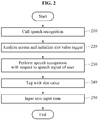
- an operation method of an electronic device may include operations of inputting information into input items with speech.
- an electronic device may call a speech recognition based on an instruction input from a user.
- the user may instruct the electronic device to call the speech recognition by selecting a predetermined button or by uttering a predetermined keyword like "Hi Bixby".
- the electronic device may analyze a displayed screen and initializes a slot value tagger.
- the electronic device may identify input items to be filled in on the screen by performing a layout analysis and an image analysis with respect to the displayed screen, examples of which will be described further below with reference to FIG. 3 .
- the electronic device may perform the speech recognition with respect to a speech signal of the user.
- the speech signal uttered by the user may be converted into sentence data through the speech recognition and obtained as a speech recognition result.
- the electronic device may tag one of the input items with a text token extracted from the speech recognition result.
- the electronic device may extract a text token including information to be input by the user from the speech recognition result, and tag an input item corresponding to the extracted text token with the corresponding text token.
- tagging with respect to text tokens may be performed as " ⁇ /name”, “ ⁇ /phone number”, and " ⁇ /address”.
- the electronic device may tag one of the input items with the text token extracted from the speech recognition result based on NLP.
- the electronic device may use slot value determination, while excluding domain determination or intent determination, in NLP. That is, the electronic device may extract a meaningful word as the text token from the speech recognition result and tag an input item with the text token, irrespective of functional purpose or intent.
- the electronic device may use the slot value determination of NLP to input information into the input items displayed on the screen.
- the electronic device may input the tagged text token into the corresponding input item. For example, the electronic device may input “ ⁇ ” into an input item “name”, “ ⁇ ” into an input item “phone number”, and “ ⁇ ” into an input item “address”, based on a tagging result (for example, " ⁇ /name”, “ ⁇ /phone number”, “ ⁇ /address”).
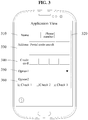
- FIG. 3 illustrates an example of analyzing a screen of an electronic device.
- a plurality of input items 310 through 360 may be included in a screen.
- An electronic device may perform a layout analysis with respect to the displayed screen.
- the screen may be configured based on prewritten program codes, and the program codes may define sizes, value types, object types, and positions of input items.
- a file configuring the displayed screen may be referred to as a user interface (UI) layout file, and the layout analysis may be performed based on the Ul layout file defining the input items included in the displayed screen.
- UI user interface
- the Ul layout file may be a file accessible at a platform (for example, Android) level, and the file may define any one or any combination of positions, an order, value types, and object types of the input items included in the screen at a code level.
- a platform for example, Android
- the positions of the input items may include absolute positions of the input items and/or relative positions among the input items.
- the Ul layout file may define an input item "name” 310 as being on the left of an input item “phone number” 320 and above an input item "address” 330.
- the order of the input items may be a general order in which information is input into the input items (for example, an order from left to right and/or an order from top to bottom).
- the Ul layout file may define the input item "name" 310 as being ahead of the input item "phone number” 320 and the input item "address” 330.
- Values of the input items may be associated with enumeration of letters (for example, the Korean alphabet (Hangul) or the English alphabet), numbers, and/or signs present in the form of text on the screen displayed in the electronic device.
- the value types of the input items may be condition definitions with respect to the form (or format) of the values.
- the value types may be conditions such as a letter-number combination, and the maximum or minimum length of a value. In an example of FIG.
- the Ul layout file may define a value type of the input item "name” 310 as letters, a value type of the input item "phone number” 320 as a number including up to n digits, a value type of the input item "address” 330 as a letter-number combination, and a value type of an input item "credit card” 340 as numbers.
- a value type of an input item may be applied as constraints for information to be input into the corresponding item.
- the object types of the input items may be types of screen elements displayed in the electronic device and include, for example, a text field which is a region for outputting text, an input field for inputting information, a list box for selecting one from a predetermined list, and/or a checkbox for selecting one or more from a predetermined list.
- the Ul layout file may define an object type of the input item "name" 310 as an input field, an object type of an input item "Option1" 350 as a list box, and an object type of an input item "Option2" 360 as a checkbox.
- An input item to be filled in by a user may be identified in view of a value type and an object type of the input item, examples of which will be described further below.
- the input item "Option1" may be is a list box related to "languages” and have a list including 1: Korean, 2: English.
- an input item to be filled in may be identified by recognizing an object type corresponding to "list” and a value type corresponding to "Korean”.
- an image and a button displayed in the electronic device may correspond to the object types. If there is a text displayed on the image or the button, the corresponding text may be regarded as a value type.
- the electronic device may perform the image analysis with respect to the displayed screen.
- the electronic device may capture the displayed screen and identify the positions of the input items in the captured screen. For example, the electronic device may identify input boxes to be filled with information and checkboxes to be checked in the captured screen, identify relative positions among the input boxes and the checkboxes, and verify information to be input into each input box based on character reading technology (for example, optical character reader (OCR)).
- character reading technology for example, optical character reader (OCR)
- the electronic device may verify the positions, the order, the value types, and the object types of the input items included in the screen through the layout analysis and the image analysis with respect to the screen, and thus determine words to be extracted as a text token from the speech recognition result.
- FIGS. 4 through 6 illustrate examples of tagging input items with text tokens.
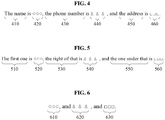
- input items with text tokens may be tagged in response to a speech recognition result mentioning the input items.
- sentence data of "The name is ⁇ , the phone number is ⁇ , and the address is ⁇ " may be obtained as a speech recognition result to be used with the example screen analysis described above with reference to FIG. 3 .
- the electronic device may verify that input items include a name, a phone number, and an address through the screen analysis described above, and verify that the input items are mentioned in the speech recognition result.
- the electronic device may extract one or more words following each input item mentioned in the speech recognition result, and tag the corresponding input item with the extracted text token.
- the electronic device may extract one or more words ooo 420 following "name” 410 as a text token from the speech recognition result, and tag an input item "name” (e.g., the input item "name” 310) with the text token.
- the electronic device may extract ⁇ 420 positioned between the "name” 410 and "phone number” 430 corresponding to input items as a text token.
- the electronic device may extract one or more meaningful words ⁇ 420 to be input into an input item from the speech recognition result using a threshold value of a slot value tagger model.
- the electronic device may extract ⁇ 440 following the "phone number” 430 from the speech recognition result and tag an input item “phone number” (e.g., the input item “phone number” 320) therewith, and extract ⁇ 460 following "address” 450 from the speech recognition result and tag an input item "address” (e.g., the input item "address” 330) therewith.
- an input item to be filled in by a user with a text token may be tagged in response to a speech recognition result including an expression indicating the input item.
- sentence data of "The first one is ⁇ , the right of that is ⁇ , and the one under that is ⁇ " may be obtained as a speech recognition result to be used with the example screen analysis described above with reference to FIG. 3 .
- the electronic device may verify that input items include a name, a phone number, and an address, and positions and/or an order of the input items through the screen analysis described above, and verify that expressions indicating the input items to be filled in are included in the speech recognition result even when the input items are not directly mentioned in the speech recognition result.
- the electronic device may extract one or more words following each expression as a text token from the speech recognition result, and tag the corresponding input item with the extracted text token.
- the electronic device may extract one or more words ⁇ 520 following an expression "the first one” 510 indicating an input item as a text token, and tag the input item "name” (e.g., the input item "name” 310) indicated by the expression “the first one” 510 therewith.
- the electronic device may verify that an input item positioned on the left top, among the input items included in the screen, is "name” based on the positions and/or the order of the input items, and thus identify the input item indicated by the expression "the first one” 510.
- the electronic device may extract ⁇ 520 positioned between the expressions "the first one” 510 and "the right of that" 530 indicating input items as a text token.
- the electronic device may extract one or more words ⁇ 540 following the expression "the right of that" 530 indicating an input item, and tag an input item "phone number” (e.g., the input item “phone number” 320) indicated by the expression “the right of that” 530 therewith.
- the electronic device may verify that the input item "phone number” is positioned on the right side of the input item "name” based on the positions and/or the order of the input items, and thus identify the input item indicated by the expression “the right of that” 530.
- the electronic device may extract ⁇ 560 and tag an input item "address” (e.g., the input item "address” 330) indicated by an expression “the one under that” 550 therewith.
- the electronic device may verify that the input item "address” is positioned under the input item "phone number” based on the positions and/or the order of the input items, and thus identify the input item indicated by the expression "the one under that” 550.
- an input item may be tagged with a text token in response to the input item being identified as corresponding to any one or any combination of content, types, and an order of one or more words included in a speech recognition result.
- sentence data of " ⁇ , and ⁇ , and ⁇ " may be obtained as a speech recognition result to be used with the example screen analysis described above with reference to FIG. 3 .
- the electronic device may verify that input items include a name, a phone number and an address, and positions and/or an order of the input items through the screen analysis described above, and verify that the speech recognition result includes one or more words to be input into the input items even when the input items are not directly mentioned in the speech recognition result or expressions indicating the input items to be filled in are not included in the speech recognition result.
- the electronic device may tag a corresponding input item with a text token including the one or more words in the speech recognition result.
- the electronic device may extract ⁇ 610 as a text token from the speech recognition result and tag an input item "name” (e.g., the input item "name” 310) therewith.
- the electronic device may tag the input item "name” positioned on the left top, among the input items, with ⁇ 610, considering the speech recognition result in which ⁇ 610 is mentioned first.
- the electronic device may extract ⁇ 620 as a text token from the speech recognition result and tags an input item "phone number” (e.g., the input item "phone number” 320) therewith.
- the electronic device may tag the input item "phone number” following the input item "name” with ⁇ 620, considering the speech recognition result in which ⁇ 620 is mentioned after ⁇ 610 with which the input item "name” is tagged.
- the electronic device may extract ⁇ 630 as a text token from the speech recognition result and tags an input item "address” (e.g., the input item "address” 330) therewith.
- the electronic device may tag the input item "address” following the input item "phone number” with ⁇ 630, considering the speech recognition result in which ⁇ 630 is mentioned after ⁇ 620 with which the input item "phone number” is tagged.
- the user may desire to change the already input information to another information.
- sentence data of "Change ⁇ to XXX" may be obtained from the user as a speech recognition result.
- the electronic device may verify that input items include a name, a phone number, and an address through the screen analysis described above, and verify information already input into each input item through text token tagging.
- a result of text token tagging may be stored in a memory, and the electronic device may verify information already input into each input item by referring to the text token tagging result stored in the memory.
- the electronic device may recognize " ⁇ ” as an expression mentioning information already input into an input item that the user desires to edit, and identify an input item "name” tagged with “ ⁇ ".
- the electronic device may extract one or more words “XXX” following " ⁇ ” as a text token, and tag the identified input item "name” (e.g., the input item "name” 310) therewith.
- the text token, with which the input item "name” is tagged, may be changed from “ ⁇ " to "XXX".
- the electronic device of one or more embodiments may adaptively perform tagging in view of any one or any combination of content, types, and an order of one or more words included in a speech recognition result.
- another example includes any combination of these examples represented in a single speech recognition result, wherein the above description is applicable thereto without limitation.
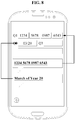
- FIGS. 7 and 8 illustrate examples of displaying a speech recognition result on a screen of an electronic device.
- entire sentence data corresponding to a speech recognition result may be displayed on a screen of an electronic device.
- a text token input into an input item may be displayed visually differently from other displayed words or information. For example, visual effects (for example, underline, bold, and color) may be applied to the text token.
- FIG. 7 shows an example of inputting credit card information.
- a credit card expiration date as "March of Year 20”
- the utterance may be converted to a predetermined format, such that "03/20" is input into an input item, which will be described further below.
- speech recognition results may be displayed sequentially on a screen of the electronic device, and a text token input into an input item may be displayed visually differently from other displayed words or information.
- FIG. 9 illustrates an example of an operating method of an electronic device.
- an operation method of an electronic device may be performed by a processor (e.g., one or more processors) provided in the electronic device.
- a processor e.g., one or more processors
- the electronic device may identify input items to be filled in on a displayed screen by performing a layout analysis and an image analysis with respect to the screen.
- the layout analysis may be performed based on a Ul layout file defining input items included in the displayed screen.
- the Ul layout file may be a file accessible at a platform level, the file defining any one or any combination of positions, an order, value types, and object types of the input items included in the screen at a code level.
- the image analysis may be performed with respect to relative positions among the input items in the displayed screen.
- the electronic device may tag one of the input items with a text token extracted from a speech recognition result with respect to a speech signal of a user.
- the electronic device may extract the text token from the speech recognition result and tag one of the input items with the extracted text token, based on any one or any combination of (1) whether one of the input items is mentioned in the speech recognition result, (2) whether an expression indicating an input item to be filled in by the user is included in the speech recognition result, and (3) any one or any combination of content, a type, and an order of the speech recognition result.
- the electronic device may input the tagged text token into the corresponding input item.
- the electronic device may convert the tagged text token to a predetermined appropriate format and input the text token of the predetermined format into the corresponding input item.
- the electronic device may convert those numerals into Arabic numerals and input the Arabic numerals into the input item.
- the electronic device may convert the text token to "03/20" and input the same into the input item.
- an input of selecting at least one candidate matching the tagged text token or with a similarity exceeding a predetermined threshold similarity may be performed.
- an utterance of a user may be converted to a format appropriate for an input item and input into the input item, whereby more intuitive and practical voice assistant is provided.
- a typical electronic device may input a text token into a displayed input item only when a single input item is displayed, or only when the input item is selected from a plurality of displayed input items.
- the electronic device of one or more embodiments of the present disclosure may advantageously identify a plurality of displayed input items and tag the plurality of input items with respective text tokens extracted from a single speech recognition result. Accordingly, the electronic device of one or more embodiments of the present disclosure may provide a more intuitive and practical voice assistant to a user, as the user need not select each individual displayed input item and input respective speech signals to be converted into respective text tokens to be input, as in the typical electronic device.
- the user may intuitively and conveniently input a single speech signal the user intends to be used to populate a plurality of different displayed input items, and the device of one or more embodiments may advantageously input a plurality of text tokens extracted from a speech recognition result of the single speech signal into respectively corresponding input items.
- FIGS. 1 through 8 The description provided through FIGS. 1 through 8 applies to the operations of FIG. 9 , and thus duplicated description will be omitted for conciseness.
- FIG. 10 illustrates an example of an electronic device.
- an electronic device 1000 may include a memory 1010 and a processor 1020 (e.g., one or more processors).
- the memory 1010 and the processor 1020 may communicate with each other through a bus 1030.
- the electronic device 1000 may correspond to the electronic device 110 described above with reference to FIG. 1 .
- the memory 1010 may include computer-readable instructions. When an instruction stored in the memory 1010 is executed by the processor 1020, the processor 1020 may be configured to perform the operations described above.
- the memory 1010 may be a volatile memory or a non-volatile memory.
- the processor 1020 may be a device configured to execute instructions or programs, or control the electronic device 1000, and the electronic device 1000 may be (and the processor 1020 may be implemented as a part of) any one of various computing devices, for example, a mobile phone, a smart phone, a personal digital assistant (PDA), a tablet computer, a laptop computer, and a computing device such as a personal computer (PC), a tablet computer or a netbook.
- the processor 1020 may identify input items to be filled in on a displayed screen by performing a layout analysis and an image analysis with respect to the screen, tag one of the input items with a text token extracted from a speech recognition result with respect to a speech signal of a user, and input the tagged text token into the corresponding input item.
- the electronic device 1000 may provide a UX which enables a user to easily input a variety of information with speech, without inconveniently using a keyboard, through the operations described above.
- the electronic devices, electronic device 110, electronic device 1000, memories, memory 1010, processors, processor 1020, and other apparatuses, modules, devices, and other components described herein with respect to FIGS. 1-10 are implemented by or representative of hardware components.
- hardware components that may be used to perform the operations described in this application where appropriate include controllers, sensors, generators, drivers, memories, comparators, arithmetic logic modules, adders, subtractors, multipliers, dividers, integrators, and any other electronic components configured to perform the operations described in this application.
- one or more of the hardware components that perform the operations described in this application are implemented by computing hardware, for example, by one or more processors or computers.
- a processor or computer may be implemented by one or more processing elements, such as an array of logic gates, a controller and an arithmetic logic module, a digital signal processor, a microcomputer, a programmable logic controller, a field-programmable gate array, a programmable logic array, a microprocessor, or any other device or combination of devices that is configured to respond to and execute instructions in a defined manner to achieve a desired result.
- a processor or computer includes, or is connected to, one or more memories storing instructions or software that are executed by the processor or computer.
- Hardware components implemented by a processor or computer may execute instructions or software, such as an operating system (OS) and one or more software applications that run on the OS, to perform the operations described in this application.
- OS operating system
- the hardware components may also access, manipulate, process, create, and store data in response to execution of the instructions or software.
- processor or “computer” may be used in the description of the examples described in this application, but in other examples multiple processors or computers may be used, or a processor or computer may include multiple processing elements, or multiple types of processing elements, or both.
- a single hardware component or two or more hardware components may be implemented by a single processor, or two or more processors, or a processor and a controller.
- One or more hardware components may be implemented by one or more processors, or a processor and a controller, and one or more other hardware components may be implemented by one or more other processors, or another processor and another controller.
- One or more processors may implement a single hardware component, or two or more hardware components.
- a hardware component may have any one or more of different processing configurations, examples of which include a single processor, independent processors, parallel processors, single-instruction single-data (SISD) multiprocessing, single-instruction multiple-data (SIMD) multiprocessing, multiple-instruction single-data (MISD) multiprocessing, and multiple-instruction multiple-data (MIMD) multiprocessing.
- SISD single-instruction single-data
- SIMD single-instruction multiple-data
- MIMD multiple-instruction multiple-data
- FIGS. 1-10 that perform the operations described in this application are performed by computing hardware, for example, by one or more processors or computers, implemented as described above executing instructions or software to perform the operations described in this application that are performed by the methods.
- a single operation or two or more operations may be performed by a single processor, or two or more processors, or a processor and a controller.
- One or more operations may be performed by one or more processors, or a processor and a controller, and one or more other operations may be performed by one or more other processors, or another processor and another controller.
- One or more processors, or a processor and a controller may perform a single operation, or two or more operations.
- Instructions or software to control computing hardware may be written as computer programs, code segments, instructions or any combination thereof, for individually or collectively instructing or configuring the one or more processors or computers to operate as a machine or special-purpose computer to perform the operations that are performed by the hardware components and the methods as described above.
- the instructions or software include machine code that is directly executed by the one or more processors or computers, such as machine code produced by a compiler.
- the instructions or software includes higher-level code that is executed by the one or more processors or computer using an interpreter.
- the instructions or software may be written using any programming language based on the block diagrams and the flow charts illustrated in the drawings and the corresponding descriptions used herein, which disclose algorithms for performing the operations that are performed by the hardware components and the methods as described above.
- the instructions or software to control computing hardware for example, one or more processors or computers, to implement the hardware components and perform the methods as described above, and any associated data, data files, and data structures, may be recorded, stored, or fixed in or on one or more non-transitory computer-readable storage media.
- Examples of a non-transitory computer-readable storage medium include read-only memory (ROM), random-access programmable read only memory (PROM), electrically erasable programmable read-only memory (EEPROM), random-access memory (RAM), dynamic random access memory (DRAM), static random access memory (SRAM), flash memory, non-volatile memory, CD-ROMs, CD-Rs, CD+Rs, CD-RWs, CD+RWs, DVD-ROMs, DVD-Rs, DVD+Rs, DVD-RWs, DVD+RWs, DVD-RAMs, BD-ROMs, BD-Rs, BD-R LTHs, BD-REs, blue-ray or optical disk storage, hard disk drive (HDD), solid state drive (SSD), flash memory, a card type memory such as multimedia card micro or a card (for example, secure digital (SD) or extreme digital (XD)), magnetic tapes, floppy disks, magneto-optical data storage devices, optical data storage devices, hard disks,
- the instructions or software and any associated data, data files, and data structures are distributed over network-coupled computer systems so that the instructions and software and any associated data, data files, and data structures are stored, accessed, and executed in a distributed fashion by the one or more processors or computers.
Landscapes
- Engineering & Computer Science (AREA)
- Theoretical Computer Science (AREA)
- Physics & Mathematics (AREA)
- Human Computer Interaction (AREA)
- General Engineering & Computer Science (AREA)
- Multimedia (AREA)
- Health & Medical Sciences (AREA)
- Audiology, Speech & Language Pathology (AREA)
- General Physics & Mathematics (AREA)
- Acoustics & Sound (AREA)
- Computational Linguistics (AREA)
- General Health & Medical Sciences (AREA)
- Computer Vision & Pattern Recognition (AREA)
- Artificial Intelligence (AREA)
- Computer Networks & Wireless Communication (AREA)
- Signal Processing (AREA)
- User Interface Of Digital Computer (AREA)
- Telephone Function (AREA)
Applications Claiming Priority (1)
| Application Number | Priority Date | Filing Date | Title |
|---|---|---|---|
| KR1020190094871A KR102793523B1 (ko) | 2019-08-05 | 2019-08-05 | 전자 장치 및 전자 장치의 입력 방법 |
Publications (2)
| Publication Number | Publication Date |
|---|---|
| EP3772685A1 true EP3772685A1 (fr) | 2021-02-10 |
| EP3772685B1 EP3772685B1 (fr) | 2025-05-28 |
Family
ID=70189848
Family Applications (1)
| Application Number | Title | Priority Date | Filing Date |
|---|---|---|---|
| EP20168189.7A Active EP3772685B1 (fr) | 2019-08-05 | 2020-04-06 | Dispositif et procédé ayant une entrée |
Country Status (4)
| Country | Link |
|---|---|
| US (1) | US11367442B2 (fr) |
| EP (1) | EP3772685B1 (fr) |
| KR (1) | KR102793523B1 (fr) |
| CN (1) | CN112333328B (fr) |
Families Citing this family (2)
| Publication number | Priority date | Publication date | Assignee | Title |
|---|---|---|---|---|
| US12165648B2 (en) | 2021-05-25 | 2024-12-10 | Samsung Electronics Co., Ltd. | Electronic device and operation method thereof |
| WO2022255502A1 (fr) * | 2021-05-31 | 2022-12-08 | 엘지전자 주식회사 | Dispositif d'affichage et son procédé de fonctionnement |
Citations (2)
| Publication number | Priority date | Publication date | Assignee | Title |
|---|---|---|---|---|
| EP2653964A2 (fr) * | 2012-04-20 | 2013-10-23 | Nuance Communications, Inc. | Procédés et systèmes pour activation vocale d'une interface homme-machine |
| WO2017201041A1 (fr) * | 2016-05-17 | 2017-11-23 | Hassel Bruce | Système et méthodologies de validation/assistance audio interactifs |
Family Cites Families (22)
| Publication number | Priority date | Publication date | Assignee | Title |
|---|---|---|---|---|
| US7003463B1 (en) * | 1998-10-02 | 2006-02-21 | International Business Machines Corporation | System and method for providing network coordinated conversational services |
| US8275617B1 (en) | 1998-12-17 | 2012-09-25 | Nuance Communications, Inc. | Speech command input recognition system for interactive computer display with interpretation of ancillary relevant speech query terms into commands |
| GB2390704A (en) * | 2002-07-09 | 2004-01-14 | Canon Kk | Automatic summary generation and display |
| JP2004110332A (ja) * | 2002-09-18 | 2004-04-08 | Dainippon Printing Co Ltd | 音声を利用した電子フォームへの情報入力方法 |
| US7660400B2 (en) * | 2003-12-19 | 2010-02-09 | At&T Intellectual Property Ii, L.P. | Method and apparatus for automatically building conversational systems |
| US7822699B2 (en) | 2005-11-30 | 2010-10-26 | Microsoft Corporation | Adaptive semantic reasoning engine |
| US8326637B2 (en) | 2009-02-20 | 2012-12-04 | Voicebox Technologies, Inc. | System and method for processing multi-modal device interactions in a natural language voice services environment |
| EP3091535B1 (fr) | 2009-12-23 | 2023-10-11 | Google LLC | Entrée multimodale sur un dispositif électronique |
| KR101372837B1 (ko) * | 2011-12-30 | 2014-03-13 | 주식회사 인프라웨어 | 직접입력과 음성 명령을 이용한 하이브리드 방식의 전자문서 입력 방법 및 이를 위한 컴퓨터로 판독가능한 기록매체 |
| US9257115B2 (en) * | 2012-03-08 | 2016-02-09 | Facebook, Inc. | Device for extracting information from a dialog |
| US9135571B2 (en) * | 2013-03-12 | 2015-09-15 | Nuance Communications, Inc. | Methods and apparatus for entity detection |
| KR101427040B1 (ko) | 2013-03-22 | 2014-08-05 | 박동기 | 음성인식을 이용한 스마트기기용 거래정보 입력 시스템 및 이를 이용한 자산 관리를 위한 정보 입력방법 |
| KR102199786B1 (ko) * | 2013-08-27 | 2021-01-07 | 삼성전자주식회사 | 콘텐트를 기반으로 하는 정보 제공 방법 및 장치 |
| US9690854B2 (en) * | 2013-11-27 | 2017-06-27 | Nuance Communications, Inc. | Voice-enabled dialog interaction with web pages |
| US20150234822A1 (en) | 2014-02-14 | 2015-08-20 | DAXTecnologia da informação Ltda | Query method to identify relevant interests using modified natural language |
| US9288321B2 (en) * | 2014-03-07 | 2016-03-15 | Paypal, Inc. | Interactive voice response interface for webpage navigation |
| US10210204B2 (en) * | 2014-06-16 | 2019-02-19 | Jeffrey E. Koziol | Voice actuated data retrieval and automated retrieved data display |
| WO2016017978A1 (fr) * | 2014-07-31 | 2016-02-04 | Samsung Electronics Co., Ltd. | Dispositif et procédé pour exécuter des fonctions |
| KR102340231B1 (ko) * | 2015-01-16 | 2021-12-16 | 엘지전자 주식회사 | 멀티미디어 디바이스 및 그 제어 방법 |
| RU2646350C2 (ru) * | 2015-01-27 | 2018-03-02 | Общество С Ограниченной Ответственностью "Яндекс" | Способ ввода данных в электронное устройство, способ обработки голосового запроса, машиночитаемый носитель (варианты), электронное устройство, сервер и система |
| DE102015221304A1 (de) * | 2015-10-30 | 2017-05-04 | Continental Automotive Gmbh | Verfahren und Vorrichtung zur Verbesserung der Erkennungsgenauigkeit bei der handschriftlichen Eingabe von alphanumerischen Zeichen und Gesten |
| JP6712940B2 (ja) | 2016-10-27 | 2020-06-24 | トッパン・フォームズ株式会社 | 音声入力装置、音声入力方法 |
-
2019
- 2019-08-05 KR KR1020190094871A patent/KR102793523B1/ko active Active
- 2019-12-16 US US16/715,089 patent/US11367442B2/en active Active
-
2020
- 2020-01-22 CN CN202010073939.6A patent/CN112333328B/zh active Active
- 2020-04-06 EP EP20168189.7A patent/EP3772685B1/fr active Active
Patent Citations (2)
| Publication number | Priority date | Publication date | Assignee | Title |
|---|---|---|---|---|
| EP2653964A2 (fr) * | 2012-04-20 | 2013-10-23 | Nuance Communications, Inc. | Procédés et systèmes pour activation vocale d'une interface homme-machine |
| WO2017201041A1 (fr) * | 2016-05-17 | 2017-11-23 | Hassel Bruce | Système et méthodologies de validation/assistance audio interactifs |
Also Published As
| Publication number | Publication date |
|---|---|
| KR102793523B1 (ko) | 2025-04-09 |
| EP3772685B1 (fr) | 2025-05-28 |
| US20210043201A1 (en) | 2021-02-11 |
| CN112333328A (zh) | 2021-02-05 |
| CN112333328B (zh) | 2024-08-09 |
| US11367442B2 (en) | 2022-06-21 |
| KR20210016739A (ko) | 2021-02-17 |
Similar Documents
| Publication | Publication Date | Title |
|---|---|---|
| US11769111B2 (en) | Probabilistic language models for identifying sequential reading order of discontinuous text segments | |
| US11348352B2 (en) | Contract lifecycle management | |
| CN108052577B (zh) | 一种通用文本内容挖掘方法、装置、服务器及存储介质 | |
| US10372821B2 (en) | Identification of reading order text segments with a probabilistic language model | |
| RU2661750C1 (ru) | Распознавание символов с использованием искусственного интеллекта | |
| AU2018279013B2 (en) | Method and system for extraction of relevant sections from plurality of documents | |
| CN106250385B (zh) | 用于文档的自动化信息抽象处理的系统和方法 | |
| US8762873B2 (en) | Graphical user interface component identification | |
| CN109034203B (zh) | 表情推荐模型的训练、表情推荐方法、装置、设备及介质 | |
| KR102546895B1 (ko) | 논문의 요약과 본문 매칭에 기반한 학술 정보 제공 방법 및 장치 | |
| CN112464927B (zh) | 一种信息提取方法、装置及系统 | |
| KR20220058259A (ko) | 논문의 메타데이터 추출 방법 및 장치 | |
| CN107408112A (zh) | 用于翻译的协调用户词选择和所选词的上下文信息的获得 | |
| CN114547301B (zh) | 文档处理、识别模型训练方法、装置、设备及存储介质 | |
| EP3772685B1 (fr) | Dispositif et procédé ayant une entrée | |
| CN112818687B (zh) | 一种用于构建标题识别模型的方法、装置、电子设备以及存储介质 | |
| KR102467096B1 (ko) | 논문 메타데이터 영역 분류 모델을 학습하기 위한 데이터셋의 검수 방법 및 장치 | |
| Sahin | Introduction to apple ml tools | |
| US20240135740A1 (en) | System to extract checkbox symbol and checkbox option pertaining to checkbox question from a document | |
| CN116883982A (zh) | 电子发票录入方法、装置、电子设备及可读存储介质 | |
| US20230334885A1 (en) | Neural Network Architecture for Classifying Documents | |
| US20250218206A1 (en) | Ai-generated datasets for ai model training and validation | |
| Pathirana et al. | A comparative evaluation of pdf-to-html conversion tools | |
| CN114064906A (zh) | 情感分类网络训练方法以及情感分类方法 | |
| CN116956052B (zh) | 应用匹配方法和应用匹配装置 |
Legal Events
| Date | Code | Title | Description |
|---|---|---|---|
| PUAI | Public reference made under article 153(3) epc to a published international application that has entered the european phase |
Free format text: ORIGINAL CODE: 0009012 |
|
| STAA | Information on the status of an ep patent application or granted ep patent |
Free format text: STATUS: THE APPLICATION HAS BEEN PUBLISHED |
|
| AK | Designated contracting states |
Kind code of ref document: A1 Designated state(s): AL AT BE BG CH CY CZ DE DK EE ES FI FR GB GR HR HU IE IS IT LI LT LU LV MC MK MT NL NO PL PT RO RS SE SI SK SM TR |
|
| AX | Request for extension of the european patent |
Extension state: BA ME |
|
| STAA | Information on the status of an ep patent application or granted ep patent |
Free format text: STATUS: REQUEST FOR EXAMINATION WAS MADE |
|
| 17P | Request for examination filed |
Effective date: 20210806 |
|
| RBV | Designated contracting states (corrected) |
Designated state(s): AL AT BE BG CH CY CZ DE DK EE ES FI FR GB GR HR HU IE IS IT LI LT LU LV MC MK MT NL NO PL PT RO RS SE SI SK SM TR |
|
| STAA | Information on the status of an ep patent application or granted ep patent |
Free format text: STATUS: EXAMINATION IS IN PROGRESS |
|
| 17Q | First examination report despatched |
Effective date: 20220923 |
|
| P01 | Opt-out of the competence of the unified patent court (upc) registered |
Effective date: 20230520 |
|
| GRAP | Despatch of communication of intention to grant a patent |
Free format text: ORIGINAL CODE: EPIDOSNIGR1 |
|
| STAA | Information on the status of an ep patent application or granted ep patent |
Free format text: STATUS: GRANT OF PATENT IS INTENDED |
|
| INTG | Intention to grant announced |
Effective date: 20241210 |
|
| GRAS | Grant fee paid |
Free format text: ORIGINAL CODE: EPIDOSNIGR3 |
|
| GRAA | (expected) grant |
Free format text: ORIGINAL CODE: 0009210 |
|
| STAA | Information on the status of an ep patent application or granted ep patent |
Free format text: STATUS: THE PATENT HAS BEEN GRANTED |
|
| AK | Designated contracting states |
Kind code of ref document: B1 Designated state(s): AL AT BE BG CH CY CZ DE DK EE ES FI FR GB GR HR HU IE IS IT LI LT LU LV MC MK MT NL NO PL PT RO RS SE SI SK SM TR |
|
| REG | Reference to a national code |
Ref country code: GB Ref legal event code: FG4D |
|
| REG | Reference to a national code |
Ref country code: CH Ref legal event code: EP |
|
| REG | Reference to a national code |
Ref country code: IE Ref legal event code: FG4D Ref country code: DE Ref legal event code: R096 Ref document number: 602020051939 Country of ref document: DE |
|
| REG | Reference to a national code |
Ref country code: NL Ref legal event code: MP Effective date: 20250528 |
|
| PG25 | Lapsed in a contracting state [announced via postgrant information from national office to epo] |
Ref country code: FI Free format text: LAPSE BECAUSE OF FAILURE TO SUBMIT A TRANSLATION OF THE DESCRIPTION OR TO PAY THE FEE WITHIN THE PRESCRIBED TIME-LIMIT Effective date: 20250528 Ref country code: ES Free format text: LAPSE BECAUSE OF FAILURE TO SUBMIT A TRANSLATION OF THE DESCRIPTION OR TO PAY THE FEE WITHIN THE PRESCRIBED TIME-LIMIT Effective date: 20250528 |
|
| REG | Reference to a national code |
Ref country code: LT Ref legal event code: MG9D |
|
| PG25 | Lapsed in a contracting state [announced via postgrant information from national office to epo] |
Ref country code: GR Free format text: LAPSE BECAUSE OF FAILURE TO SUBMIT A TRANSLATION OF THE DESCRIPTION OR TO PAY THE FEE WITHIN THE PRESCRIBED TIME-LIMIT Effective date: 20250829 Ref country code: NO Free format text: LAPSE BECAUSE OF FAILURE TO SUBMIT A TRANSLATION OF THE DESCRIPTION OR TO PAY THE FEE WITHIN THE PRESCRIBED TIME-LIMIT Effective date: 20250828 |
|
| PG25 | Lapsed in a contracting state [announced via postgrant information from national office to epo] |
Ref country code: PL Free format text: LAPSE BECAUSE OF FAILURE TO SUBMIT A TRANSLATION OF THE DESCRIPTION OR TO PAY THE FEE WITHIN THE PRESCRIBED TIME-LIMIT Effective date: 20250528 Ref country code: NL Free format text: LAPSE BECAUSE OF FAILURE TO SUBMIT A TRANSLATION OF THE DESCRIPTION OR TO PAY THE FEE WITHIN THE PRESCRIBED TIME-LIMIT Effective date: 20250528 |
|
| PG25 | Lapsed in a contracting state [announced via postgrant information from national office to epo] |
Ref country code: BG Free format text: LAPSE BECAUSE OF FAILURE TO SUBMIT A TRANSLATION OF THE DESCRIPTION OR TO PAY THE FEE WITHIN THE PRESCRIBED TIME-LIMIT Effective date: 20250528 |
|
| PG25 | Lapsed in a contracting state [announced via postgrant information from national office to epo] |
Ref country code: HR Free format text: LAPSE BECAUSE OF FAILURE TO SUBMIT A TRANSLATION OF THE DESCRIPTION OR TO PAY THE FEE WITHIN THE PRESCRIBED TIME-LIMIT Effective date: 20250528 |
|
| PG25 | Lapsed in a contracting state [announced via postgrant information from national office to epo] |
Ref country code: RS Free format text: LAPSE BECAUSE OF FAILURE TO SUBMIT A TRANSLATION OF THE DESCRIPTION OR TO PAY THE FEE WITHIN THE PRESCRIBED TIME-LIMIT Effective date: 20250828 |
|
| PG25 | Lapsed in a contracting state [announced via postgrant information from national office to epo] |
Ref country code: IS Free format text: LAPSE BECAUSE OF FAILURE TO SUBMIT A TRANSLATION OF THE DESCRIPTION OR TO PAY THE FEE WITHIN THE PRESCRIBED TIME-LIMIT Effective date: 20250928 |
|
| PG25 | Lapsed in a contracting state [announced via postgrant information from national office to epo] |
Ref country code: LV Free format text: LAPSE BECAUSE OF FAILURE TO SUBMIT A TRANSLATION OF THE DESCRIPTION OR TO PAY THE FEE WITHIN THE PRESCRIBED TIME-LIMIT Effective date: 20250528 |
|
| REG | Reference to a national code |
Ref country code: AT Ref legal event code: MK05 Ref document number: 1798994 Country of ref document: AT Kind code of ref document: T Effective date: 20250528 |
|
| PG25 | Lapsed in a contracting state [announced via postgrant information from national office to epo] |
Ref country code: SM Free format text: LAPSE BECAUSE OF FAILURE TO SUBMIT A TRANSLATION OF THE DESCRIPTION OR TO PAY THE FEE WITHIN THE PRESCRIBED TIME-LIMIT Effective date: 20250528 Ref country code: DK Free format text: LAPSE BECAUSE OF FAILURE TO SUBMIT A TRANSLATION OF THE DESCRIPTION OR TO PAY THE FEE WITHIN THE PRESCRIBED TIME-LIMIT Effective date: 20250528 Ref country code: AT Free format text: LAPSE BECAUSE OF FAILURE TO SUBMIT A TRANSLATION OF THE DESCRIPTION OR TO PAY THE FEE WITHIN THE PRESCRIBED TIME-LIMIT Effective date: 20250528 |
|
| PG25 | Lapsed in a contracting state [announced via postgrant information from national office to epo] |
Ref country code: CZ Free format text: LAPSE BECAUSE OF FAILURE TO SUBMIT A TRANSLATION OF THE DESCRIPTION OR TO PAY THE FEE WITHIN THE PRESCRIBED TIME-LIMIT Effective date: 20250528 |
|
| PG25 | Lapsed in a contracting state [announced via postgrant information from national office to epo] |
Ref country code: EE Free format text: LAPSE BECAUSE OF FAILURE TO SUBMIT A TRANSLATION OF THE DESCRIPTION OR TO PAY THE FEE WITHIN THE PRESCRIBED TIME-LIMIT Effective date: 20250528 |
|
| PG25 | Lapsed in a contracting state [announced via postgrant information from national office to epo] |
Ref country code: SK Free format text: LAPSE BECAUSE OF FAILURE TO SUBMIT A TRANSLATION OF THE DESCRIPTION OR TO PAY THE FEE WITHIN THE PRESCRIBED TIME-LIMIT Effective date: 20250528 |
|
| PG25 | Lapsed in a contracting state [announced via postgrant information from national office to epo] |
Ref country code: IT Free format text: LAPSE BECAUSE OF FAILURE TO SUBMIT A TRANSLATION OF THE DESCRIPTION OR TO PAY THE FEE WITHIN THE PRESCRIBED TIME-LIMIT Effective date: 20250528 |
|
| REG | Reference to a national code |
Ref country code: DE Ref legal event code: R097 Ref document number: 602020051939 Country of ref document: DE |
|
| PLBE | No opposition filed within time limit |
Free format text: ORIGINAL CODE: 0009261 |
|
| STAA | Information on the status of an ep patent application or granted ep patent |
Free format text: STATUS: NO OPPOSITION FILED WITHIN TIME LIMIT |
|
| PGFP | Annual fee paid to national office [announced via postgrant information from national office to epo] |
Ref country code: GB Payment date: 20260323 Year of fee payment: 7 |
|
| REG | Reference to a national code |
Ref country code: CH Ref legal event code: L10 Free format text: ST27 STATUS EVENT CODE: U-0-0-L10-L00 (AS PROVIDED BY THE NATIONAL OFFICE) Effective date: 20260409 |
|
| PGFP | Annual fee paid to national office [announced via postgrant information from national office to epo] |
Ref country code: FR Payment date: 20260323 Year of fee payment: 7 |
|
| 26N | No opposition filed |
Effective date: 20260303 |