EP3772661A1 - Vorrichtungslokalisierung basierend auf poi-daten und zahlungstransaktionsdaten - Google Patents
Vorrichtungslokalisierung basierend auf poi-daten und zahlungstransaktionsdaten Download PDFInfo
- Publication number
- EP3772661A1 EP3772661A1 EP19191130.4A EP19191130A EP3772661A1 EP 3772661 A1 EP3772661 A1 EP 3772661A1 EP 19191130 A EP19191130 A EP 19191130A EP 3772661 A1 EP3772661 A1 EP 3772661A1
- Authority
- EP
- European Patent Office
- Prior art keywords
- payment
- entity
- mobile
- point
- mobile payment
- Prior art date
- Legal status (The legal status is an assumption and is not a legal conclusion. Google has not performed a legal analysis and makes no representation as to the accuracy of the status listed.)
- Withdrawn
Links
Images



Classifications
-
- G—PHYSICS
- G01—MEASURING; TESTING
- G01S—RADIO DIRECTION-FINDING; RADIO NAVIGATION; DETERMINING DISTANCE OR VELOCITY BY USE OF RADIO WAVES; LOCATING OR PRESENCE-DETECTING BY USE OF THE REFLECTION OR RERADIATION OF RADIO WAVES; ANALOGOUS ARRANGEMENTS USING OTHER WAVES
- G01S5/00—Position-fixing by co-ordinating two or more direction or position line determinations; Position-fixing by co-ordinating two or more distance determinations
- G01S5/0009—Transmission of position information to remote stations
- G01S5/0018—Transmission from mobile station to base station
- G01S5/0036—Transmission from mobile station to base station of measured values, i.e. measurement on mobile and position calculation on base station
-
- H—ELECTRICITY
- H04—ELECTRIC COMMUNICATION TECHNIQUE
- H04W—WIRELESS COMMUNICATION NETWORKS
- H04W4/00—Services specially adapted for wireless communication networks; Facilities therefor
- H04W4/02—Services making use of location information
- H04W4/021—Services related to particular areas, e.g. point of interest [POI] services, venue services or geofences
-
- G—PHYSICS
- G01—MEASURING; TESTING
- G01S—RADIO DIRECTION-FINDING; RADIO NAVIGATION; DETERMINING DISTANCE OR VELOCITY BY USE OF RADIO WAVES; LOCATING OR PRESENCE-DETECTING BY USE OF THE REFLECTION OR RERADIATION OF RADIO WAVES; ANALOGOUS ARRANGEMENTS USING OTHER WAVES
- G01S5/00—Position-fixing by co-ordinating two or more direction or position line determinations; Position-fixing by co-ordinating two or more distance determinations
- G01S5/02—Position-fixing by co-ordinating two or more direction or position line determinations; Position-fixing by co-ordinating two or more distance determinations using radio waves
- G01S5/0295—Proximity-based methods, e.g. position inferred from reception of particular signals
-
- G—PHYSICS
- G06—COMPUTING OR CALCULATING; COUNTING
- G06Q—INFORMATION AND COMMUNICATION TECHNOLOGY [ICT] SPECIALLY ADAPTED FOR ADMINISTRATIVE, COMMERCIAL, FINANCIAL, MANAGERIAL OR SUPERVISORY PURPOSES; SYSTEMS OR METHODS SPECIALLY ADAPTED FOR ADMINISTRATIVE, COMMERCIAL, FINANCIAL, MANAGERIAL OR SUPERVISORY PURPOSES, NOT OTHERWISE PROVIDED FOR
- G06Q20/00—Payment architectures, schemes or protocols
- G06Q20/30—Payment architectures, schemes or protocols characterised by the use of specific devices or networks
- G06Q20/32—Payment architectures, schemes or protocols characterised by the use of specific devices or networks using wireless devices
- G06Q20/322—Aspects of commerce using mobile devices [M-devices]
-
- G—PHYSICS
- G06—COMPUTING OR CALCULATING; COUNTING
- G06Q—INFORMATION AND COMMUNICATION TECHNOLOGY [ICT] SPECIALLY ADAPTED FOR ADMINISTRATIVE, COMMERCIAL, FINANCIAL, MANAGERIAL OR SUPERVISORY PURPOSES; SYSTEMS OR METHODS SPECIALLY ADAPTED FOR ADMINISTRATIVE, COMMERCIAL, FINANCIAL, MANAGERIAL OR SUPERVISORY PURPOSES, NOT OTHERWISE PROVIDED FOR
- G06Q20/00—Payment architectures, schemes or protocols
- G06Q20/30—Payment architectures, schemes or protocols characterised by the use of specific devices or networks
- G06Q20/32—Payment architectures, schemes or protocols characterised by the use of specific devices or networks using wireless devices
- G06Q20/327—Short range or proximity payments by means of M-devices
-
- H—ELECTRICITY
- H04—ELECTRIC COMMUNICATION TECHNIQUE
- H04W—WIRELESS COMMUNICATION NETWORKS
- H04W4/00—Services specially adapted for wireless communication networks; Facilities therefor
- H04W4/30—Services specially adapted for particular environments, situations or purposes
- H04W4/33—Services specially adapted for particular environments, situations or purposes for indoor environments, e.g. buildings
-
- G—PHYSICS
- G01—MEASURING; TESTING
- G01S—RADIO DIRECTION-FINDING; RADIO NAVIGATION; DETERMINING DISTANCE OR VELOCITY BY USE OF RADIO WAVES; LOCATING OR PRESENCE-DETECTING BY USE OF THE REFLECTION OR RERADIATION OF RADIO WAVES; ANALOGOUS ARRANGEMENTS USING OTHER WAVES
- G01S5/00—Position-fixing by co-ordinating two or more direction or position line determinations; Position-fixing by co-ordinating two or more distance determinations
- G01S5/02—Position-fixing by co-ordinating two or more direction or position line determinations; Position-fixing by co-ordinating two or more distance determinations using radio waves
- G01S5/0252—Radio frequency fingerprinting
- G01S5/02521—Radio frequency fingerprinting using a radio-map
- G01S5/02523—Details of interaction of receiver with radio-map
Definitions
- the invention relates to the field of providing location estimates for mobile payment entities.
- Satellite-based (e.g. GNSS) radio navigation signals simply do not penetrate through the walls and roofs for the adequate signal reception and the cellular signals have too narrow bandwidth for accurate ranging by default.
- the solution needs to be based on an existing infrastructure in the buildings and on existing capabilities in the consumer devices.
- Wi-Fi- and/or Bluetooth (BT)-technologies that are already supported in almost every smartphone, tablet, laptop and even in the majority of the feature phones. It is, thus, required to find a solution that uses the Wi-Fi- and BT-radio signals in such a way that makes it possible to achieve 2-3 m horizontal positioning accuracy, close to 100% floor detection with the ability to quickly build the global coverage for this approach.
- radio-based indoor positioning that models e.g. the Wi-Fi-radio environment (or any similar radio e.g. Bluetooth) from observed Received Signal Strength (RSS)-measurements as 2-dimensional radio maps may be used and is hereby able to capture the dynamics of the indoor radio propagation environment in a compressible and highly accurate way. This makes it possible to achieve unprecedented horizontal positioning accuracy with the Wifi-signals only within the coverage of the created radio maps and also gives highly reliable floor detection.
- RSS Received Signal Strength
- Wi-Fi-measurements data could be harvested via crowd-sourcing if the consumer devices were equipped with the necessary functionality to enable the Wi-Fi-data collection as a background process, naturally with the end-user consent. It could also be possible to use volunteers to survey the sites (buildings) in exchange of reward or recognition and get the coverage climbing up globally in the places and venues important for the key customers.
- the technical challenges related to the harvesting, processing, redundancy, ambiguity and storing the crowd-sourced data need to be understood and solved first, before the Wi-Fi radioman creation can be based on the fully crowd-sourced data.
- GNSS e.g. GPS
- absolute position reference such as GPS fixes
- a method which comprises obtaining payment-related data being associated with a short-range payment transaction of a mobile payment entity, and determining a location estimate of the mobile payment entity at least partially based on the payment-related data and point of interest data.
- the method according to the exemplary aspect of the invention may, for example, at least partially be performed by an apparatus, wherein the apparatus may be a mobile payment entity or a component of a mobile payment entity, and, for instance, it may be the mobile payment entity which performs the short-range payment transaction.
- the apparatus may be at least one different device (the device being different from the mobile payment entity which performs the short-range payment transaction), wherein the at least one different device may be at least one server.
- an apparatus which comprises means for at least partially realizing the method according to the exemplary aspect of the invention.
- the means of the apparatus may be implemented in hardware and/or software. They may comprise for instance at least one processor for executing computer program code for realizing the required functions, at least one memory storing the program code, or both. Alternatively, they could comprise for instance circuitry that is designed to realize the required functions, for instance implemented in a chipset or a chip, like an integrated circuit.
- the means may comprise for instance one or more processing means such as a processor and a memory.
- the apparatus may comprise various other components, like a radio interface, a data interface, a user interface etc.
- the apparatus comprises at least one processor and at least one memory including computer program code, the at least one memory and the computer program code configured to, with the at least one processor, cause an apparatus at least to perform at least partially the method and/or the steps of the method according to the exemplary aspect of the invention.
- the apparatus may be a mobile device or a component of a mobile device, and, for instance, it may comprise the mobile payment entity which performs the short-range payment transaction.
- the apparatus may be at least one different device (the device being different from the mobile payment entity which performs the short-range payment transaction), wherein the at least one different device may be at least one server or at least one different apparatus like a mobile device being different from the mobile payment entity.
- the apparatus is at least one different device (or at least one different apparatus) being different from the mobile payment entity which performs the short-range payment transaction
- the mobile payment entity e.g. a token such as a bank card, wherein the mogile payment entity performs the short-range payment transaction
- information about the transaction is sent to the apparatus (the at least one different device) such that apparatus obtains the payment-related data being associated with a short-range payment transaction of the mobile payment entity, wherein this transmission could be performed via a payment system and/or bank server(s).
- the apparatus may receive instant information about payment made by another authentification token (which is the payment entity which performs the short-range payment transaction and thus provides the payment-related data being associated with a short-range payment transaction of the mobile payment entity) such as bank card.
- another authentification token which is the payment entity which performs the short-range payment transaction and thus provides the payment-related data being associated with a short-range payment transaction of the mobile payment entity
- a system which comprises the apparatus.
- the apparatus is not the mobile payment entity which performs the short-range payment transaction
- the system might comprise the mobile payment entity which performs the short range payment transaction and the apparatus might be configured to obtain (at least a part or all of) the payment-related data from the mobile payment entity, e.g. receiving (at least a part or all of) the payment-related data from the mobile payment entity via a network interface (and e.g. via the internet).
- the mobile payment entity may be an Internet-of-Thing (IoT) device, a smart home device, a smartphone, a tablet computer, a notebook computer, a smart watch, a smart band, a token or a bank card.
- IoT Internet-of-Thing
- the mobile payment entity is enabled for or support performing short-range payment transactions with another device, e.g. a contactless payment transaction with another device, wherein this other device may be connected to a cashier or may be a part of a cashier.
- the short-range payment transaction performed between the mobile payment entity and the other device e.g. a cashier or a reader of a cashier
- the other device e.g. a cashier or a reader of a cashier
- the short distance between the mobile payment entity and the other device e.g. a cashier or a reader of a cashier
- a cashier or a reader of a cashier must be less than 5m, 2m, 1m, 0.5m, 0.2m, 0.1m, 0.05m, or 0.02m.
- a user of the mobile payment entity must bring (or move) the mobile payment entity in proximity of the other device (e.g. a cashier or a reader of a cashier) such that the payment transaction can be performed.
- this mobile payment entity may be part of the apparatus or may be a mobile payment entity being different from the apparatus.
- the short range payment transaction functionality of the mobile may use a short-range communication link in order to communicate with the other device for performing the contactless payment transaction.
- payment transaction of the mobile may be configured to establish a short-range communication link with a cashier of a business entity (which might be any kind of a shop), e.g. if a user of the mobile payment entity moves the mobile payment entity over a reader of the cashier such that the short range payment transaction of the mobile payment entity can be performed.
- the short range payment transaction may be a contactless payment transaction which might use radio-frequency identification (RFID) or near field communication (NFC, e.g.
- RFID radio-frequency identification
- NFC near field communication
- RFID and NFC and magnetic reading system are three examples of the above-mentioned short-range communication link, but it has to be understood that other technologies for short-range communication may be used by the contactless payment transaction functionality (of the mobile payment entity and the corresponding other device, which might be a cashier or a reader of a cashier). Furthermore, it might be assumed that contactless payments of the mobile payment entity are made in close physical proximity with respect to the other device, e.g.
- the distance between mobile payment entity and the other device must be less than 5m, 2m, 1m, 0.5m, 0.2m, 0.1m, 0.05m, or 0.02m, wherein this distance might be the distance between an antenna of the mobile payment entity used for short-range communication link and the reader of the other device.
- the mobile payment entity When the mobile payment entity performs a short-range payment transaction with the other device payment-related data being associated with this payment transaction are received by the mobile payment entity. At least a part (or all) of this received payment-related data is obtained by apparatus when obtaining payment-related data being associated with a payment transaction of a mobile payment entity.
- the apparatus determines a location estimate of the mobile payment entity at least partially based on the obtained payment-related data and point of interest data.
- said determining a location estimate of the mobile payment entity at least partially based on the obtained payment-related data and point of interest data might comprise determining which location of the point of interest data can be associated with the obtained payment-related data, and this determined location may be represent the determined location estimate of the mobile payment entity.
- the short-range payment transaction of the mobile payment entity is in proximity to the other device, and it may be assumed that this other device is positioned at a fixed location.
- the obtained payment-related data may (at least partially) be used to try to identify the other device (e.g. a cashier or a reader of the cashier) and/or a business entity (e.g.
- the other device in which the other device is located by means of searching the point of interest data and by comparing the payment-related data with the point of interest data in order to identify the other device and/or a business entity (e.g. a shop), wherein the point of interest data may comprise the location of the identified business entity and/or the location of the identified other device. Then, this location may be the determined location estimate of the mobile payment entity.
- a shop in which the other device is located by means of searching the point of interest data and by comparing the payment-related data with the point of interest data in order to identify the other device and/or a business entity (e.g. a shop), wherein the point of interest data may comprise the location of the identified business entity and/or the location of the identified other device. Then, this location may be the determined location estimate of the mobile payment entity.
- a user of mobile payment entity may perform a short-range payment transaction when moving mobile payment entity close to other device (e.g. cashier or reader of cashier), wherein this other device is located in a business entity which might represent a shop or the like. Since the mobile payment entity is in proximity with the other device a short-range-communication link between the mobile payment entity and the other device may be established and the short-range payment transaction can be performed via this short-range communication link.
- other device e.g. cashier or reader of cashier
- Payment-related data being associated with this short-range payment transaction is then obtained and, at least partially based on these payment-related data and point of interest data, the location of the mobile payment entity can be estimated, since the payment-related data may be used to identify the location of the business entity (or the cashier or reader of the cashier of the business entity), e.g. by means of identifying the respective business entity (or the cashier or reader of the cashier) by using the point of interest data and by using, at least partially, the payment-related data.
- the payment-related data may comprise information which is configured to identify, at least partially, the business entity at which the payment transaction was performed.
- said determining a location estimate of the mobile payment entity at least partially based on the obtained payment-related data and point of interest data might lead to a negative result, e.g. a result indicating that it is not possible to determine the location estimate.
- said point of interest data comprises one or more point of interest information, wherein each point of interest information of the one or more point of interest information is associated with a business entity which is configured to provide payment for mobile payment entities and is associated with a location of the respective business entity.
- said determining a location estimate of the mobile payment entity comprises detecting which location of the one or more point of interest information can be associated with the payment-related data, and determining the location estimate of the mobile payment entity to be the location associated with the point of interest information which is detected to be associated with the payment-related data.
- the location of the business entity associated with a point of interest information of the one or more point of interest information represents the location of a cashier of the business entity.
- said detecting which location information of the one or more point of interest information can be associated with the payment-related data comprises detecting which point of interest information of the one or more point of interest information matches best with said payment-related data.
- said payment-related data comprises identifier information of the business entity being associated with the payment transaction
- said detecting which point of interest information of the one or more point of interest information matches best with said payment-related data comprises detecting which business entity associated with a point of interest information of the one or more point of interest information matches best with the identifier information of the business entity being associated with the payment transaction.
- said identifier information of the business entity being associated with the payment transaction comprises a name information of the business entity being associated with the payment transaction and wherein each point of interest information of the one or more point of interest information comprises a name information of the business entity associated with the respective point of interest information, and wherein said detecting which business entity associated with a point of interest information of the one or more point of interest information matches best with the identifier information of the business entity being associated with the payment transaction comprises determining which name information of a business entity associated with a point of interest information of the one or more point of interest information matches best with the name information of the business entity of the payment-related data.
- the location of the business entity of a point of interest information of each point of interest information of the one or more point of interest information fulfills a distance criterion with respect to a location information associated with the mobile payment entity, wherein, in particular, said location information associated with mobile payment entity represents a coarse mobile payment entity location information.
- said location information comprises an information on a previous location estimate of the mobile payment entity, in particular a previous location estimate obtained by one of the following:
- a location estimation performed by the mobile device being different from the mobile payment entity may be used as position information of the mobile payment entity even if this position information deviates from the current position of the mobile payment entity.
- the mobile being different from the mobile payment entity might be a smart home device, a smartphone, a tablet computer, a notebook computer, a smart watch or a smart band.
- mobile payment entity which might be a token or a bankcard
- the mobile device might be considered to be associated (e.g. associated locally) with the mobile payment entity, and, therefore, it might be assumed that a location estimation performed by the mobile device may be used as position information of the mobile payment entity.
- the mobile payment entity related measurement data comprises at least one of the following:
- said mobile payment entity related measurement date might comprise any kind of measurement performed by the mobile payment entity and/or a mobile device, e.g. audio signal measurement and/or image signal measurement.
- At least a part of the payment entity related measurement data is obtained by the mobile payment entity and/or at least a part of the payment entity related measurement data is obtained by a mobile device.
- the mobile payment entity may be a token or a bank card and the mobile payment entity related measurement data is obtained (or measured) by a mobile device (being different from the mobile payment entity), wherein, for instance, the mobile device might be a smart home device, a smartphone, a tablet computer, a notebook computer, a smart watch or a smart band.
- the mobile device is carried by a user who performs the mobile payment by means of the token or the bankcard and thus the mobile payment entity related measurement data can be considered to be related with the mobile payment entity (and therefore can be considered to represent mobile payment entity related measurement data) since the mobile device can be assumed to be in proximity with the mobile payment entity.
- the mobile payment entity may be a mobile device, e.g. a smart home device, a smartphone, a tablet computer, a notebook computer, a smart watch or a smart band, the mobile device is configured to obtain the mobile payment entity related measurement data, e.g. by performing the respective measurement.
- a mobile device e.g. a smart home device, a smartphone, a tablet computer, a notebook computer, a smart watch or a smart band
- the mobile device is configured to obtain the mobile payment entity related measurement data, e.g. by performing the respective measurement.
- said payment-related data comprises time information regarding the payment transaction, and it is disclosed to check whether a time difference between previously obtained mobile payment entity related measurement data and the time information of the payment-related information is less than a predefined time difference threshold, and if yes, associating the previously obtained mobile payment entity related measurement data with the determined location estimate of the mobile payment entity.
- said causing to obtain new mobile payment entity measurement related data may comprise causing the mobile device being different (from the mobile payment entity) to obtain new mobile payment entity measurement related data.
- said causing to obtain new mobile payment entity measurement related data may comprise causing the mobile payment entity to obtain new mobile payment entity measurement related data.
- said causing to obtain mobile payment entity measurement related data may comprise causing the mobile device being different (from the mobile payment entity) to obtain mobile payment entity measurement related data.
- said causing to obtain mobile payment entity measurement related data may comprise causing the mobile payment entity to obtain mobile payment entity measurement related data.
- said short-range payment transaction is a contactless payment transaction.
- said payment transaction may be a payment made with a token.
- the method is performed by the mobile payment entity, the method comprising performing the short-range payment transaction, and wherein said obtained payment-related data being associated with a short-range payment transaction of a mobile payment entity is payment-related data obtained from the performed short-range payment transaction.
- the method is performed by an apparatus being different from the mobile payment entity, wherein said obtained payment-related data being associated with a short-range payment transaction of a mobile payment entity is payment-related data received from the mobile payment entity, in particular via a server, e.g. via a payment system and/or bank server(s).
- said mobile payment entity is a token, in particular an authentication token like a bank card.
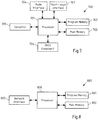
- FIG. 1 is a schematic block diagram of an example embodiment of an apparatus according to the invention.
- Apparatus 100 comprises a processor 101 and, linked to processor 101, a memory 102.
- Memory 102 stores computer program code for obtaining payment-related data being associated with a short-range payment transaction of a mobile payment entity, and for determining a location estimate of the mobile payment entity at least partially based on the payment-related data and point of interest data.
- Processor 101 is configured to execute computer program code stored in memory 102 in order to cause an apparatus to perform desired actions.
- Memory 102 is thus an example embodiment of a non-transitory computer readable storage medium, in which computer program code according to the invention is stored.
- memory 102 may store computer program code for obtaining payment-related data being associated with a payment transaction of a mobile payment entity, and for determining a location estimate of the mobile payment entity at least partially based on the payment-related data and point of interest data.
- Apparatus 100 could be a server or a cloud component or any other kind of mobile or stationary device.
- said apparatus 100 may represent a plurality of apparatus are used, wherein each apparatus may comprise a processor 101, and linked to processor 101, a memory 102, wherein memory 102 at least partially stores computer program code for obtaining payment-related data being associated with a short-range payment transaction of a mobile payment entity and for determining a location estimate of the mobile payment entity at least partially based on the payment-related data and point of interest data.
- said plurality of apparatus may represent servers in a cloud interaction together for obtaining payment-related data being associated with a payment transaction of a mobile payment entity and for determining a location estimate of the mobile payment entity at least partially based on the payment-related data and point of interest data.
- Apparatus 100 could equally be a component, like a chip, circuitry on a chip or a plug-in board, for any server, mobile or stationary device.
- apparatus 100 could comprise various other components, like a data interface configured to enable an exchange of data with separate devices, a user interface like a touchscreen, a further memory, a further processor, etc.
- At least one processor 101 may be one processor 101 or a plurality of processors 101
- the program code stored in at least one memory 102 may be one memory 102 or a plurality of memories 102
- at least one apparatus may be one apparatus ore a plurality of apparatuses
- the at least one apparatus that is caused to perform the operation can be apparatus 100 or some other apparatus, for example but not necessarily a device comprising apparatus 100.
- apparatus 100 and of method 200 will be explained, without any limitation, with the example system 300 depicted in Fig 3 , but it has to be understood that operation of apparatus 100 and/or method 200 is not limited to system 300.
- the apparatus 100 obtains payment-related data being associated with a short-range payment transaction of a mobile payment entity (action 210 of method 200).
- the mobile payment entity may be one of an Internet-of-Thing (IoT) device, smartphone, a tablet computer, a notebook computer, a smart watch, a smart glass, a smart band, a token (e.g. a bank card) wherein the mobile payment entity is enabled for or support performing short-range payment transactions with an other device, e.g. a contactless payment transaction with another device, wherein this other device may be connected to a cashier or may be a part of a cashier.
- the short-range payment transaction performed between the mobile payment entity and the other device e.g. a cashier or a reader of a cashier
- requires a short distance between the mobile payment entity and the other device e.g.
- a cashier or a reader of a cashier (otherwise no payment transaction is possible between the mobile payment entity and the other device), wherein, for instance, the short distance between the mobile payment entity and the other device (e.g. a cashier or a reader of a cashier) must be less than 5m, 2m, 1m, 0.5m, 0.2m, 0.1m, 0.05m, or 0.02m.
- the short distance between the mobile payment entity and the other device e.g. a cashier or a reader of a cashier
- the short distance between the mobile payment entity and the other device e.g. a cashier or a reader of a cashier
- the mobile payment entity may be mobile device 350 depicted in Fig. 3 , wherein this non-limiting example of a mobile device 350 may be a smartphone, and/or may be mobile payment entity 324 depicted in Fig. 3 , wherein mobile payment entity 324 may be a token like a bank card.
- the payment transaction functionality of the mobile payment entity e.g. mobile device 350 or mobile payment entity 324) may use a short-range communication link in order to communicate with the other device for performing the contactless payment transaction.
- the payment transaction of mobile device 350 may be configured to establish a short-range communication link 315 with a cashier of a business entity, e.g.
- the payment transaction may be a contactless payment transaction which might use radio-frequency identification (RFID) or near field communication (NFC, e.g. Samsung Pay, Apple Pay, Google Pay, Fitbit Pay, Merpay or any bank mobile application that support contactless payment) or a magnetic reading system, wherein the contactless payment transaction may be configured for making secure payments.
- RFID radio-frequency identification
- NFC near field communication
- the contactless payment transaction may be configured for making secure payments.
- RFID and NFC and magnetic reading systems are three examples of the above-mentioned short-range communication link 315, but it has to be understood that other technologies for short-range communication may be used by the contactless payment transaction functionality (of the mobile device 350 and the corresponding other device, which might be a cashier, e.g. cashier 311, 321 or 331 or a reader of cashiers 311, 321, 331). Furthermore, it might be assumed that contactless payments of the mobile device 350 are made in close physical proximity with respect to the other device (e.g. one of cashiers 311, 312, 313 or a reader of cashiers 311, 321, 331), e.g. the distance between mobile device 350 and the other device (e.g.
- one of cashiers 311, 312, 313 or a reader of cashiers 311, 321, 331) must be less than 5m, 2m, 1m, 0.5m, 0.2m, 0.1m, 0.05m, or 0.02m, wherein this distance might be the distance between an antenna of the mobile device 350 used for short-range communication link and the reader of the other device.
- the payment transaction of mobile payment entity 324 may be configured to establish a short-range communication link 325 with a cashier of a business entity, e.g. short-range communication link 325 with casher 321 of business entity 320 (which might be any kind of a shop), e.g. if a user of the mobile payment entity 324 moves the mobile payment entity 324 over a reader of the cashier 321 (or if the mobile payment entity 324 is swiped through a reader o cashier 324) such that the payment transaction of the mobile payment entity 324 can be performed.
- a cashier of a business entity e.g. short-range communication link 325 with casher 321 of business entity 320 (which might be any kind of a shop)
- casher 321 of business entity 320 which might be any kind of a shop
- the payment transaction may be a contactless payment transaction which might use radio-frequency identification (RFID) or near field communication (NFC) or a magnetic reading system, wherein the contactless payment transaction may be configured for making secure payments.
- RFID and NFC and magnetic reading system three examples of the above-mentioned short-range communication link 315, but it has to be understood that other technologies for short-range communication may be used by the contactless payment transaction functionality (of the mobile payment entity 324 and the corresponding other device, which might be a cashier, e.g. cashier 311, 321 or 331 or a reader of cashiers 311, 321, 331).
- contactless payments of the mobile payment entity 324 are made in close physical proximity with respect to the other device (e.g. one of cashiers 311, 312, 313 or a reader of cashiers 311, 321, 331), e.g. the distance between mobile payment entity 324 and the other device (e.g. one of cashiers 311, 312, 313 or a reader of cashiers 311, 321, 331) must be less than 5m, 2m, 1m, 0.5m, 0.2m, 0.1m, 0.05m, or 0.02m, wherein this distance might be the distance between an antenna of the mobile device 350 used for short-range communication link and the reader of the other device.
- the mobile device 350 When the mobile device 350 performs a short-range payment transaction with the other device (e.g. one of cashiers 311, 312, 313 or a reader of one of cashiers 311, 312, 313), payment-related data being associated with this payment transaction are received by the mobile device 350. At least a part of this received payment-related data is obtained by apparatus 100 in action 210, when obtaining payment-related data being associated with a payment transaction of a mobile device 350 (action 210 of method 200).
- the other device e.g. one of cashiers 311, 312, 313 or a reader of one of cashiers 311, 312, 313
- method 200 may be performed by the mobile device 350 that performed the payment transaction, but method 200 could be also be performed by a separate apparatus (e.g. different apparatus or different device) being different from the mobile device 350 that performed the payment transaction, e.g. method 200 could be performed by another mobile device or by one or more servers, e.g. server 360 exemplarily depicted in Fig. 3 , or by an apparatus being different from mobile device 350 that performed the payment transaction.
- apparatus 100 may be part or may represent mobile device 350 or may be part or may represent server 360 or may represent another apparatus (e.g. not depicted in system 300).
- System 300 is not limited to a single server 360, but may optionally comprise a plurality of servers (e.g. forming a server cloud). Accordingly, server 360 may be part of such a plurality of servers (e.g. a server cloud) or may be represented by such a plurality of servers (e.g. a server cloud). Server 360 may be configured to communicate with the mobile device 360, e.g.
- server 360 may be configured to receive the payment-related data being associated with a payment transaction of the mobile device 350 (i.e., the payment-related data of action 210 of method 200) via the wireless connection from the mobile device 350.
- the apparatus 100 is at least one different device 100 (or at least one different apparatus 100) being different from the mobile payment entity which performs the short-range payment transaction (the mobile payment entity 324 depicted in Fig.
- apparatus 100 may be part of or may represent server 360 or may represent another apparatus (e.g. not depicted in system 300).
- the apparatus 100 may receive instant information about payment made by another authentification token 324 (which is the mobile payment entity 324 which performs the short-range payment transaction and thus provides the payment-related data being associated with a short-range payment transaction of the mobile device) such as bank card.
- another authentification token 324 which is the mobile payment entity 324 which performs the short-range payment transaction and thus provides the payment-related data being associated with a short-range payment transaction of the mobile device
- another authentification token 324 which is the mobile payment entity 324 which performs the short-range payment transaction and thus provides the payment-related data being associated with a short-range payment transaction of the mobile device
- bank card such as bank card
- the apparatus 100 determines a location estimate of the mobile payment entity (e.g. mobile device 350 or mobile payment entity 324) at least partially based on the payment-related data and point of interest data (action 220 of method 200).
- a location estimate of the mobile payment entity e.g. mobile device 350 or mobile payment entity 324
- this determined location may be represent the location estimate of the mobile payment entity (e.g. mobile device 350 or mobile payment entity 324, or apparatus 100 if it comprises the mobile payment entity) device determined in action 220.
- the short-range payment transaction of the mobile payment entity e.g. mobile device 350 or mobile payment entity 324 or apparatus 100 if it comprises the mobile payment entity
- the other device e.g. one of cashiers 311, 312, 313 or a reader of cashiers 311, 312, 313
- the payment-related data obtained in action 210 may be used to try to identify the other device (e.g. one of cashiers 311, 312, 313 or a reader of cashiers 311, 312, 313) and/or a business entity 310, 320, 330 (e.g. a shop) in which the other device is located by means of searching the point of interest data and by comparing the payment-related data with the point of interest data in order to identify the other device (e.g. one of cashiers 311, 312, 313 or a reader of cashiers 311, 312, 313) and/or a business entity 310, 320, 330 (e.g.
- the point of interest data may comprise the location of the identified business entity 310, 320, 330 and/or the location of the identified other device (e.g. one of cashiers 311, 312, 313 or a reader of cashiers 311, 312, 313). Then, this location may be the location estimate of the mobile payment entity determined in action 220.
- a user of mobile device 350 may perform a short-range payment transaction when moving mobile device 350 close to other device 311 (cashier 311 or reader of cashier 311), wherein this other device 311 is located in a business entity 310 which might represent a shop or the like. Since the mobile device 350 is in proximity with the other device 311 (cashier 311 or reader of cashier 311) a short-range-communication link 315 between the mobile device 350 and the other device 311 can be established and the short-range payment transaction can be performed via this short-range communication link 315.
- a user of mobile payment entity 324 may perform a short-range payment transaction when moving mobile payment entity 324 close to other device 321 (cashier 321 or reader of cashier 321) or when swiping mobile payment entity 324 through a reader of cashier 321 (e.g. if mobile payment entity 324 is a token comprising a magnetic stripe, like a bankcard with a magnetic strip), wherein this other device 321 is located in a business entity 320 which might represent a shop or the like.
- a short-range-communication link 325 between the mobile payment entity 324 and the other device 321 can be established and the short-range payment transaction can be performed via this short-range communication link 325.
- Payment-related data being associated with this short-range payment transaction is then obtained in action 210 and in action 220, at least partially based on these payment-related data and point of interest data, the location of the mobile payment entity (e.g. mobile device 350 or mobile payment entity 324) can be estimated, since in the first example the payment-related data may be used to identify the location of the business entity 310 (or the cashier 311 or reader of cashier 311), e.g.
- the payment-related data may be used to identify the location of the business entity 320 (or the cashier 321 or reader of cashier 321), e.g. by means of identifying the respective business entity 320 (or the cashier 321 or reader of cashier 321) by using the point of interest data and by using, at least partially, the payment-related data)
- the payment-related data may comprise information which is configured to identify, at least partially, the business entity at which the payment transaction was performed.
- said point of interest data may be stored in apparatus 100, e.g. in mobile device 350 and/or in server 360 and/or another apparatus.
- method 200 may comprise assigning the location estimate determined in action 220 to the mobile payment entity (e.g. mobile device 350 or mobile payment entity 324 or apparatus 100 if it comprises the mobile payment entity), and, furthermore, may comprise assigning the time of the payment transaction of the mobile payment entity (the payment-transaction which served as basis for obtaining the payment-related data in action 210) to this location estimate of the mobile payment entity. For instance, the time of the payment transaction may be part of the payment-related dated obtained in action 210.
- said point of interest data may comprise one or more point of interest information, wherein each point of interest information of the one or more point of interest information is associated with a business entity which is configured to provide payment for mobile payment entities and is associated with a location of the respective business entity.
- the location associated with a business entity of a respective point of interest information of the one or more point of interest information may comprise location coordinates being indicative of the location of the business entity, wherein, for instance, the location coordinates may include altitude and/or a floor index (e.g. the floor index being indicative of the floor of the business entity of the respective point of interest information of the one or more point of interest information.
- first business entity 310 which is configured to provide payment for mobile payment entities, e.g. via cashier 311 of the first business entity 310, wherein the point of interest data comprises point of interest information associated with the first business entity 310 and associated with a location of the first business entity 310.
- second business entity 310 which is configured to provide payment for mobile payment entities, e.g. via cashier 321 of the second business entity 320, wherein the point of interest data comprises point of interest information associated with the second business entity 320 and associated with a location of the second business entity 320.
- a third business entity 330 which is configured to provide payment for mobile payment entities, e.g. via cashier 331 of the third business entity 330, wherein the point of interest data comprises point of interest information associated with the third business entity 330 and associated with a location of the third business entity 330.
- a point of interest information of the one or more point of interest information of the point of interest data may represent (or may identify) a point of interest (POI).
- the location of the business entity associated with a point of interest information of the one or more point of interest information may represent the location of a cashier 311, 312, 313 of the business entity 310, 320, 330 or the location of the room of the business entity 310, 320, 330 in which a cashier 311, 312, 313 of the business entity is located.
- location of the business entity associated with a point of interest information of the one or more point of interest information might comprise location coordinates being indicative of the location of the business entity, wherein, for instance, the location coordinates may include altitude and/or a floor index (e.g. the floor index being indicative of the floor of the business entity of the respective point of interest information of the one or more point of interest information.
- apparatus 100 may detect which point of interest information of the one or more point of interest information of the point of interest data can be associated with the payment-related data (obtained in action 210), wherein the location estimation of the mobile payment entity (e.g. mobile device 350 or payment entity 324 or apparatus 100 if it comprises the mobile payment entity) is determined to be the location associated with the detected point of interest information (which is detected to be associated with the payment-related data).
- the location estimation of the mobile payment entity e.g. mobile device 350 or payment entity 324 or apparatus 100 if it comprises the mobile payment entity
- said detecting which point of interest information of the one or more point of interest information of the point of interest data can be associated with the payment-related data might use correlations between at least a part of the payment-related data and a respective point of interest information of the one or more point of interest information of the point of interest data and might detect the point of interest information of the one or more point of interest information of the point of interest data which shows the best correlation with respect to between at least a part of the payment-related data.
- any well-suited information of the payment-related data may be used for building such a correlation, e.g. an identifier of the business entity 310, 320, 330 involved in the respective payment transaction between the mobile payment entity (e.g.
- the payment-related data may be used in action 220 in order to identify the point of interest information (as part of the point of interest data) at which the payment transaction between the mobile payment entity (e.g. mobile device 350 or mobile payment entity or apparatus 100 if it comprises the mobile payment entity) and the other device (e.g. cashier 311, 321, 331 (or reader of the cashier) of the respective business entity 310, 320, 330) was performed, and then, based on the identified (i.e.
- the location estimation of the mobile payment entity e.g. mobile device 350 or mobile payment entity 324 or apparatus 100 if it comprises the mobile payment entity
- the location estimation of the mobile payment entity is determined to be the location associated with the identified point of interest information (which is detected to be associated with the payment-related data).
- said location associated with the identified point of interest information (which is detected to be associated with the payment-related data) might comprise coordinates being indicative of the location of the business entity of the identified point of interest information, wherein, for instance, the location coordinates may include altitude and/or a floor index (e.g. the floor index being indicative of the floor of the business entity of the respective point of interest information of the one or more point of interest information.
- the location coordinates may include altitude and/or a floor index (e.g. the floor index being indicative of the floor of the business entity of the respective point of interest information of the one or more point of interest information.
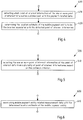
- Fig. 4 is a flow chart 400 illustrating an exemplary embodiment of a method 400 according to the invention, wherein this flow chart 400 may be part or may correspond to action 220 of method 200.
- apparatus 100 as described above with respect to Fig. 1 performs the steps of flow chart 400, wherein apparatus 100 may be a mobile device (e.g. mobile device 350) or a server, e.g. server 360 or another apparatus.
- said determining a location estimate of the mobile payment entity at least partially based on the payment-related data and point of interest data comprises detecting which point of interest information of the one or more point of interest information matches best with said payment-related data.
- said above mentioned detecting which point of interest information of the one or more point of interest information of the point of interest data can be associated with the payment-related data might comprise action 220, i.e., detecting which point of interest information of the one or more point of interest information matches best with said payment-related data.
- said detecting which point of interest information of the one or more point of interest information matches best with said payment-related data might comprise comparing the payment-related data which each (or at least one) point of interest information of the one or more point of interest of the point of interest information in order to check which point of interest information of the one or more point of interest information of the point of interest information matches best with the payment-related data.
- the location estimation of the payment entities is determined to be the location associated with the detected point of interest information (which is detected to be matches best with the payment-related data in action 410).
- the point of interest information of the one or more point of interest information may be detected to match best with said payment-related data if (at least a part of) the point of interest information shows the best correlation with respect to the payment-related data (from the one or more point of interest information and/or the subset of point of interest information).
- said payment-related data comprises identifier information of the business entity being associated with the payment transaction
- said detecting which point of interest information of the one or more point of interest information matches best with said payment-related data comprises detecting which business entity associated with a point of interest information of the one or more point of interest information matches best with the identifier information of the business entity being associated with the payment transaction.
- a point of interest information of the one or more point of interest information of the point of interest data may comprise identifier information for identifying the business entity of the respective point of interest information, and in action 410 it may be checked, e.g. for each (or at least one) point of interest information of the one or more point of interest information, which identifier information of a respective point of interest information of the one or more point of interest information matches best with the identifier information of the of the business entity being associated with the payment transaction.
- the identifier information of the business entity being associated with the payment transaction may be a code associated with the business entity (e.g. a specific number), wherein this code may be unique and/or may be a name information (e.g. a name or a part of a name) of the business entity or any other well-suited identifier information of the business entity. It has to be understood that it might be not necessary that the identifier information of the business entity being associated with the payment transaction uniquely identifies the business entity, and it has to be understood that it is not necessary that there is a perfect match (e.g.
- said identifier information of the business entity being associated with the payment transaction comprises a name information of the business entity being associated with the payment transaction and wherein each point of interest information of the one or more point of interest information comprises a name information of the business entity associated with the respective point of interest information.
- said detecting which business entity associated with a point of interest information of the one or more point of interest information matches best with the identifier information of the business entity being associated with the payment transaction may comprise determining which name information of a business entity associated with a point of interest information of the one or more point of interest information matches best with the name information of the business entity of the payment-related data.
- apparatus 100 may use the name information of the business entity being associated with the payment transaction in order to check which point of interest information of the one or more point of interest information of the point of interest data is associated with the same name information or with a similar name information, e.g. by detecting for which point of interest information of the one or more point of interest information of the point of interest data the name information of the business entity of the respective point of interest information matches best with the name information of the business entity being associated with the payment transaction (of the payment-related data) in order to detect the point of interest information in action 410.
- action 410 might comprise, for each (or at least one) point of interest information of at least one point of interest information of the one or more point of interest information, determining a similarity measure between the name information of the business entity being associated with the payment transaction and the name information associated with the respective point of interest information.
- the at least one point of interest information may be the one or more point of interest information or a subset of point of interest information of the the one or more point of interest information of the point of interest information, wherein the subset of point of interest information may be determined as will be exemplarily explained with respect to method 500 in Fig. 5 .
- the point of interest information for which the highest similarity measure was determined may be detected to be the point of interest information of the one or more point of interest information which matches best with the payment-related data.
- the location of the business entity of a point of interest information of each point of interest information of the one or more point of interest information of the point of interest data fulfills a distance criterion with respect to a location information associated with the mobile payment entity (e.g. mobile device 350 or mobile payment entity 324 or apparatus 100 if it comprises the mobile payment entity), wherein, in particular, said location information associated with the mobile payment (e.g. mobile device 350 or mobile payment entitiy 324 or apparatus 100 if it comprises the mobile payment entity) may represent a coarse mobile payment entity location information.
- the point of interest data may comprise a plurality of point of interest information, wherein each point of interest information of the plurality of interest information is associated with a business entity which is configured to provide payment for mobile payment entities and is associated with a location of the respective business entity and may be associated with an identifier information (e.g. a name information) of the respective business entity, and, as an example, the one or more point of interest information of the point of interest may represent a subset of one or more point of interest information of the plurality of point of interest information, wherein each point of interest information of the one or more point of interest information of the point of interest data fulfills a distance criterion with respect to a location information associated with the mobile payment entity (e.g. mobile device 350 or mobile payment entity or apparatus 100 if it comprises the mobile payment entity).
- the mobile payment entity e.g. mobile device 350 or mobile payment entity or apparatus 100 if it comprises the mobile payment entity.
- Said location information associated with the mobile payment entity may represent a location estimate of the mobile payment entity (e.g. mobile device 350 or mobile payment entity 324 or apparatus 100 if it comprises the mobile payment entity) which has been performed previously (e.g. compared to the location estimate performed in action 220), e.g. it may be the last available location estimation of the mobile payment entity (e.g. mobile device 350 or mobile payment entity 324 or apparatus 100 if it comprises the mobile payment entity), e.g. even if this does not exactly correspond to the actual position.
- said location information comprises an information on a previous location estimate of the mobile payment entity (e.g. mobile device 350 or mobile payment entity 324 or apparatus 100 if it comprises the mobile payment entity), in particular a previous location estimate obtained by one of the following:
- apparatus 100 (if it comprises the mobile payment entity) and/or the mobile payment entity might comprise a GNSS interface and might be configured to perform a GNSS based positioning, wherein in example (i), the mobile payment entity may preferably be a mobile device, e.g. mobile device 350). It may be now assumed without any limitation that in this example (i) the mobile payment entity is a mobile device, e.g. mobile device 350. Then, for instance, said location information of the mobile device 350 may represent a location estimation of the mobile device 350 being determined by GNSS based positioning, e.g. the last available GNSS location estimation of mobile device 350.
- apparatus 100 and/or mobile device 350 may comprise an GNSS interface which may comprise any kind of global navigation satellite signal receiver, for example a GPS receiver and/or a GLONASS receiver and/or a GALILEO receiver.
- the GNSS interface may be configured to receive corresponding satellite signals and to determine the current position of mobile device 350 based on the signals, e.g.
- GNSS location application may be denoted as GNSS location application, wherein the GNSS location application may be considered to be part of a platform location manager of an operating system of the apparatus 100.
- GNSS related position may be understood in a way that the GNSS related position is not determined based on a non-GNSS positioning system, e.g. a radio network based positioning system like a Wi-Fi-based positioning system using fingerprints of access points (e.g. beacons) (e.g. optional access points 391, 392 and 393 depicted in Fig. 3 ) and a radio map to estimate the position of a mobile device (e.g. as explained with respect to optional radio interface 704 of mobile device 700 of Fig. 7 ).
- a non-GNSS positioning system e.g. a radio network based positioning system like a Wi-Fi-based positioning system using fingerprints of access points (e.g. beacons) (e.g. optional access points 391, 392 and 393 depicted in Fig. 3
- the apparatus 100 if it comprises the mobile payment entity and/or mobile payment entity might be configured to support radio-network based positioning (e.g. non GNSS based radio-network based positioning), and apparatus 100 (if it comprises the mobile payment entity) and/or mobile device 350 and/or mobile payment entity 324 may be enabled for support such a non-GNSS based radio positioning system, wherein in example (ii), the mobile payment entity may preferably be a mobile device, e.g. mobile device 350.). It may be now assumed without any limitation that in this example (i) the mobile payment entity is a mobile device, e.g. as part of apparatus 100 or the mobile device 350.
- the apparatus 100 and/or mobile device 350 is configured to estimate (e.g. determine) or to cause estimating (e.g. determining) its position at least partially based on radio signal parameters of one or more radio signals (e.g. one or more terrestrial radio signals transmitted from access points or beacons, e.g. optional access points 391, 392 and 393 depicted in Fig. 3 ) obtained at this position (e.g. obtained as a scanning result of scanning for observable radio signals at this position).
- Estimating (e.g. determining) of a position of the apparatus 100 and/or mobile device 350 at least partially based on (a) radio signal parameter(s) may be understood to mean that the estimating is performed as a function of the radio signal parameter(s).
- the estimating may optionally depend on further information like a radio map.
- a radio map may be configured to enable apparatus 100 and/or mobile device 350 to estimate its position at least partially based on this radio map when the apparatus 100 and/or mobile device 350 is located in the area covered by the radio map.
- the radio map is represented by radio map information which may be provided (e.g. transmitted) by a positioning server to the apparatus 100 and/or mobile device 350 and/or which may be hold available by the apparatus 100 and/or mobile device 350 (e.g. stored in memory means of the mobile device 350). Further exemplary details of this radio-network based positioning performed by apparatus 100 will be explained with respect to mobile device 700 depicted in Fig. 7 , in particular with respect to optional radio interface 704 of mobile device 700.
- Examples of such a terrestrial radio signal are a Bluetooth signal, a Bluetooth Low Energy (BLE) signal, a cellular network signal, an low-power wide-area network (LPWAN) signal or a Wireless Local Area Network (WLAN) signal.
- BLE Bluetooth Low Energy
- LPWAN low-power wide-area network
- WLAN Wireless Local Area Network
- the Bluetooth standards are specified by the Bluetooth Special Interest Group and are presently available under https://www.bluetooth.com/.
- a cellular network may for example be mobile phone network like a 2G/3G/4G/5G cellular communication network or any other cellular communication networks, in particular successors of 5G.
- the 2G/3G/4G/5G cellular radio communication standards are developed by the 3GPP and presently available under http://www.3gpp.org/.
- LPWAN specifications are the LoRaWAN specification developed by the LoRa Alliance and presently available under https://lora-alliance.org/ as well as the Narrowband IoT (NB-IoT) specification developed by 3GPP and presently available under http://www.3gpp.org/ .
- WLAN is for example specified by the standards of the IEEE 802.11 family (http://www.ieee.org/).
- said radio-network based positioning of the apparatus 100 (if it comprises the mobile payment entity, and in particular a mobile payment entity representing a mobile device) and/or of the mobile device 350 may be at least one of:
- that last available position estimate of the mobile device 350 (or apparatus 100 if it comprises the mobile payment entity, and in particular a mobile payment entity representing a mobile device) obtained by radio-network based positioning of the mobile device 350 (or apparatus 100 if it comprises the mobile payment entity, and in particular a mobile payment entity representing a mobile device) may be used as position information of the mobile device 350 (or apparatus 100 if it comprises the mobile payment entity, and in particular a mobile payment entity representing a mobile device), even if this position information deviates from the current position of the mobile device 350 (of from the current position of the apparatus 100 if it comprises the mobile payment entity, and in particular a mobile payment entity representing a mobile device).
- a location estimation at least partially obtained based on previous payment related data and point of interest data may be used as position information of the mobile payment entity (e.g. mobile device 350 or mobile payment entity 324 or apparatus 100 if it comprises the mobile payment entity), even if this position information deviates from the current position of the mobile payment entity.
- the mobile payment entity e.g. mobile device 350 or mobile payment entity 324 or apparatus 100 if it comprises the mobile payment entity
- this position information deviates from the current position of the mobile payment entity.
- a user might had performed a payment transaction between his mobile payment entity and the third business entity 330 depicted in Fig. 3 , e.g. by moving the mobile device 350 in proximity to cashier 331 or by moving the mobile payment entity 324 in proximity to cashier 331 (e.g.
- a location estimate of the mobile payment entity was determined at least partially by means of a previously performed method 200 performed by mobile device 350 or apparatus 100. Then, the user may have walked from the third business entity 330 to the first business entity 310 and makes another payment transaction - now between the same mobile payment entity as before (e.g. mobile device 350 or mobile payment entity 324) and the first business entity 310, e.g.
- the location estimation determined by lastly performed method 200 may be used as location information of the mobile payment entity (e.g. mobile device 350 or mobile payment entity 324) (which represents a location estimation at least partially obtained based on previous payment related data and point of interest data), even if this position information deviates from the current position of the mobile payment entity (e.g. mobile device 350 or mobile payment entity 324) (which may now be located at the first business entity 310 instead of at the third business entity 330 in this example).
- a location estimation performed by the mobile device 380 being different from the mobile payment entity may be used as position information of the mobile payment entity (e.g. mobile device 350 or mobile payment entity 324 or apparatus 100 if it comprises the mobile payment entity), even if this position information deviates from the current position of the mobile payment entity.
- the mobile device 384 e.g. depicted in Fig. 3
- the mobile device 384 being different from the mobile payment entity 324 might be a smart home device, a smartphone, a tablet computer, a notebook computer, a smart watch or a smart band.
- the mobile device 380 is carried by a user who performs the mobile payment by means of mobile payment entity 324 (which might be a token or a bankcard) and thus the mobile device 384 might be considered to be associated with the mobile payment entity 324, and, therefore, it might be assumed that a location estimation performed by the mobile device 384 may be used as position information of the mobile payment entity 324.
- said location estimation performed by the mobile device 380 might be performed based on GNSS based positioning performed by the mobile device 380 (e.g. as explained above with respect to the apparatus 100 or mobile device 350 or mobile payment entity 324) and/or might be performed based on radio-network based positioning performed by the mobile device 380 (e.g. as explained above with respect to the apparatus 100 or mobile device 350 or mobile payment entity 324).
- the location information of the mobile payment entity may deviate from the from the current position of the mobile payment entity and thus it might be understood to be a kind of course mobile device location information.
- the mobile payment entity has not moved so much compared to the location indicated by the location information of the mobile payment entity (e.g. only a few meters or e.g. up to 100m, or 200m, or 500m).
- the location information of the mobile payment entity (e.g. mobile device 350 or mobile payment entity 324 or apparatus 100 if it comprises the mobile payment entity, and in particular comprises mobile payment entity representing a mobile device) might be used to ensure that for each of the one or more point of interest information of the point of interest data the location of the business entity of the respective point of interest information fulfills the distance criterion with respect to the location information associated with the mobile payment entity (e.g. mobile device 350 or mobile payment entity 324 or apparatus 100 if it comprises the mobile payment entity, and in particular comprises mobile payment entity representing a mobile device) (i.e., the location information of the mobile payment entity).
- the distance criterion might specify that the distance between the location indicated by the location information associated with the mobile payment entity and the location of the business entity of the respective point of interest information is less or equal than a predefined distance threshold, wherein this predefined distance threshold might be 50m, or 100m, or 200m, or 500m, or 1km or any other well suited-distance. Then, it may be ensured that the one or more point of interest information of the point of interest data do not comprise a point of interest information of a business entity which's location does not fulfill the distance criterion with respect to the location information associated with the mobile payment entity, e.g.
- point of interest information of business entities being far away from the location indicated by the location information associated with the mobile payment entity may not be considered for determining the location estimate of the mobile payment entity in action 220 since those business entities can be excluded from the payment transaction of the mobile payment entity which was performed for obtaining the payment-related data in action 210.
- This may be helpful to reduce the search space in the point of interest data when performing action 220 and/or may avoid ambiguities, e.g. if a business entity at a completely distinct location (or a location far away) has the same name as the current business entity at which the payment transaction was performed.
- Fig. 5 is a flow chart 500 illustrating an exemplary embodiment of a method 500 according to the invention, wherein this flow chart 500 may be part of method 200 and may be performed before action 220 is performed.
- apparatus 100 as described above with respect to Fig. 1 performs the steps of flow chart 500, wherein apparatus 100 may be a mobile device (e.g. mobile device 350) or a server, e.g. server 360, or another apparatus.
- Method 500 comprises selecting the one or more point of interest information from a plurality of point of interest information based on the distance criterion, i.e., the distance criterion as example above.
- the point of interest data may comprise a plurality of point of interest information, wherein each point of interest information of the plurality of interest information is associated with a business entity which is configured to provide payment for mobile payment entities and is associated with a location of the respective business entity and may be associated with an identifier information (e.g. a name information) of the respective business entity, and, as an example, the one or more point of interest information of the point of interest may represent a subset of one or more point of interest information of the plurality of point of interest information, as explained with respect to the preceding example embodiment.
- identifier information e.g. a name information
- the one or more point of interest information may be selected from the plurality of point of interest information such that each point of interest information of the one or more point of interest information of the point of interest data fulfills the distance criterion with respect to the location information associated with the mobile device 350, e.g. as explained above, in particular by using the predefined distance threshold, i.e., each of the selected one or more point of interest information of the point of interest data the location of the business entity of the respective point of interest information fulfills the distance criterion with respect to the location information associated with the mobile payment entity (e.g. mobile device 350 or mobile payment entity 324 or apparatus 100 if it comprises the mobile payment entity, and in particular comprises mobile payment entity representing a mobile device) (i.e., the location information of the mobile payment entity).
- the mobile payment entity e.g. mobile device 350 or mobile payment entity 324 or apparatus 100 if it comprises the mobile payment entity, and in particular comprises mobile payment entity representing a mobile device
- Fig. 6 is a flow chart 600 illustrating an exemplary embodiment of a method 600 according to the invention, wherein this flow chart 600 may be part of method 200 and may be performed after action 220 is performed. Without limiting the scope of the invention, it is assumed in the following that the apparatus 100 as described above with respect to Fig. 1 performs the steps of flow chart 600, wherein apparatus 100 may be a mobile device (e.g. mobile device 350) or a server, e.g. server 360 or another apparatus.
- apparatus 100 may be a mobile device (e.g. mobile device 350) or a server, e.g. server 360 or another apparatus.
- Method 600 comprises associating mobile payment entity related measurement data with the determined location estimate of the mobile payment entity (e.g. mobile device 350 or mobile payment entity 324 or apparatus 100 if it comprises the mobile payment entity, and in particular comprises mobile payment entity representing a mobile device) (action 610). For instance, if in action 220 a location estimate of mobile payment entity has been determined in action 610 mobile device related measurement data can be associated with this determined location estimate of the mobile payment entity.
- the mobile payment entity related measurement data e.g. mobile device 350 or mobile payment entity 324 or apparatus 100 if it comprises the mobile payment entity, and in particular comprises mobile payment entity representing a mobile device
- the mobile payment entity related measurement data may by any data measured by a mobile device or obtained based on data measured by a mobile device, e.g. by means of at least one sensor of the mobile device, wherein, if the mobile payment entity represents a mobile device (e.g. mobile device 350), the mobile device which measures (or obtains) the mobile payment entity related measurement data may represent the mobile payment entity, or, as another example, if the mobile payment entity is a token or a bankcard, the mobile device which measures (or obtains) the mobile payment entity related measurement data may represent a mobile device being different from the mobile payment entity (e.g. mobile device 380).
- a mobile device e.g. mobile device 350
- the mobile device which measures (or obtains) the mobile payment entity related measurement data may represent the mobile payment entity, or, as another example, if the mobile payment entity is a token or a bankcard, the mobile device which measures (or obtains) the mobile payment entity related measurement data may represent a mobile device being different from the mobile payment entity (e.g. mobile
- the mobile device 380 which measures (or obtains) the mobile payment entity related measurement data is different from the mobile payment entity 324
- the mobile device might be a smart home device, a smartphone, a tablet computer, a notebook computer, a smart watch or a smart band.
- mobile payment entity 324 which might be a token or a bankcard
- mobile payment entity related measurement data can be considered to be related with the mobile payment entity 324 (and therefore can be considered to represent mobile payment entity related measurement data) since the mobile device 380 can be assumed to be in proximity with the mobile payment entity 324.
- mobile device 380 might be configured to communicate with server 360 in order to transmit the obtained (or measured) mobile payment entity related measurement data to the server 360.
- the mobile device related measurement data comprises at least one of the following:
- the apparatus 100 (if it comprises the mobile device being the mobile payment entity) and/or mobile device 350 and/or mobile device 380 might be configured to support radio-network based positioning (e.g. non GNSS based radio-network based positioning), and apparatus 100 (if it comprises the mobile device) and/or mobile device 350 and/or mobile device 380 may comprise a radio interface (e.g. a radio transceiver) which is configured to support such a non-GNSS based radio positioning system.
- the radio interface is configured to transmit and receive radio signals in line with a respective radio network system.
- said radio network system may be one of: (i) WLAN, (ii) low-power wide-area network (LPWAN), (iii) a Bluetooth (e.g. Bluetooth standard supporting a low energy mode); (iv) a cellular radio system.
- the radio interface enables apparatus 100 (if it comprises the mobile device) and/or mobile device 350 and/or mobile device 380 to scan for observable radio signals transmitted (e.g. broadcasted) by the respective network system.
- a BLE radio signal may be understood to be observable if the radio signal is receivable with a minimum quality (e.g. a minimum signal-to-noise ratio and/or a minimum signal power, e.g.
- the radio interface is configured determine one or more radio signal parameters of radio signals observed (e.g. received) when scanning for observable radio signals of the radio network system.
- the radio interface may for example extract, from each observed radio signal, the respective identifier (e.g. UUID) contained therein and measure the respective received signal strength of each observed radio signal.
- the extracted identifiers and the received signal strength values may then for example used as scanning results for the respective radio scan performed by the apparatus 100 (if it comprises the mobile device) and/or mobile device 350 and/or mobile device 380. For instance, such a radio scan be represent a fingerprint.
- apparatus 100 may transmit the radio scan to a positioning server, e.g. server 360, such that the positioning server may use this received radio scan for determining and/or updating a radio map used for the non-GNSS based radio positioning system.
- a positioning server e.g. server 360
- the apparatus 100 if it comprises the mobile device being the mobile payment entity
- mobile device 350 and/or mobile device 380 might comprise a temperature sensor and the mobile device related measurement data comprises a temperature measured by the mobile device.
- the apparatus 100 if it comprises the mobile device being the mobile payment entity
- mobile device 350 and/or mobile device 380 might comprise a pressure sensor and the mobile device related measurement data comprises a pressure measured by the mobile device.
- said payment-related data comprises time information regarding the payment transaction
- method 600 comprises: checking whether a time difference between previously obtained mobile payment entity related measurement data and the time information of the payment-related information is less than a predefined time distance threshold, and if yes, associating the previously obtained mobile payment entity related measurement data with the determined location estimate of the mobile payment entity (e.g. action 610).
- the previously obtained mobile payment entity related measurement data may be any of the one of the following, as mentioned before: (i) a radio scan; (ii) a temperature; (iii) a pressure.
- the time information regarding the payment transaction is indicative of the time when the payment transaction (which served as basis of the payment-related data obtained in action 210 of method 200) was made.
- the measurement data is not too old compared to time when the payment transaction was performed, i.e., if the time difference between previously obtained mobile payment entityrelated measurement data and the time information of the payment-related information is less than a predefined time distance threshold, then it may be assumed that the measurement data can be associated with the location estimate determined in action 220 and the previously obtained mobile payment entityrelated measurement data with the determined location estimate of the mobile payment entity.
- the predefined time distance threshold might be 1sec, 5sec, 10sec, 30sec, lmin or 5min or any other well-suited predefined time distance threshold.
- the time difference between previously obtained mobile payment entityrelated measurement data and the time information of the payment-related information represent the time different between the time point when the respectively mobile payment entityrelated measurement data was obtained by the mobile device being the mobile payment entity. And/or, for instance, the time information regarding the payment transaction must not necessarily represent the exact time when the payment transaction was performed.
- the time of apparatus 100 if it comprises the mobile device being the mobile payment entity
- mobile device 350 and/or mobile device 380 after action 210 and/or action 220 is performed may be used since it might be assumed that action 210 and/or action 220 may be performed more or less immediately after the payment transaction was performed and this time resolution may be considered to be sufficient to check whether the payment transaction is considered to be outdated or not.
- method 600 may comprise causing the mobile device being the mobile payment entity (e.g. the apparatus 100 (if it comprises the mobile device) and/or mobile device 350) and/or the mobile device 380 to obtain new mobile payment entityrelated measurement data and associating the newly obtained mobile payment entity related measurement with the determined location estimate of the mobile payment entity (e.g. action 610).
- the mobile device being the mobile payment entity (e.g. the apparatus 100 (if it comprises the mobile device) and/or mobile device 350) and/or the mobile device 380 to obtain new mobile payment entityrelated measurement data and associating the newly obtained mobile payment entity related measurement with the determined location estimate of the mobile payment entity (e.g. action 610).
- the previously obtained mobile payment entity related measurement data is outdated and is likely not obtained at that location where the payment transaction was performed.
- a new measurement for obtaining mobile measurement payment entity related data can be trigged and this obtained mobile measurement payment entityrelated data is associated with the location estimate of the mobile payment entity (e.g. mobile device 350 or mobile payment entity 324) determined in action 220 of method
- method 600 may comprise, after said obtaining payment-related data being associated with a payment transaction of a mobile payment entity (e.g. mobile device 350 or mobile payment entity 324 or apparatus 100 if it comprises the mobile payment entity, and in particular comprises mobile payment entity representing a mobile device) (action 210 of method 200), causing the mobile payment entity (e.g. mobile device 350 or mobile payment entity 324 or apparatus 100 if it comprises the mobile payment entity, and in particular comprises mobile payment entity representing a mobile device) or the mobile device 380 to obtain mobile device related measurement data and associating the obtained mobile payment entity related measurement data with the determined location estimate of the mobile payment entity (e.g. mobile device 350 or mobile payment entity 324 or apparatus 100 if it comprises the mobile payment entity, and in particular comprises mobile payment entity representing a mobile device) (e.g. action 610).
- a mobile payment entity e.g. mobile device 350 or mobile payment entity 324 or apparatus 100 if it comprises the mobile payment entity, and in particular comprises mobile payment entity representing a mobile device
- method 600 may automatically trigger the mobile payment entity (e.g. mobile device 350 or mobile payment entity 324 or apparatus 100 if it comprises the mobile payment entity, and in particular comprises mobile payment entity representing a mobile device) or the mobile device 380, e.g. after action 210 or after action 220 of method 200 is performed, to obtain the mobile payment entity related measurement data and then this obtained mobile payment entityrelated measurement data is associated with the determined location estimate of the mobile payment entity (e.g. action 610).
- the mobile payment entity e.g. mobile device 350 or mobile payment entity 324 or apparatus 100 if it comprises the mobile payment entity, and in particular comprises mobile payment entity representing a mobile device
- the mobile device 380 e.g. after action 210 or after action 220 of method 200 is performed, to obtain the mobile payment entity related measurement data and then this obtained mobile payment entityrelated measurement data is associated with the determined location estimate of the mobile payment entity (e.g. action 610).
- Fig. 7 is a block diagram of an exemplary embodiment of mobile device 700 according to the invention.
- apparatus 100 and/or that mobile device 350 and/or that mobile device 380 may correspond to this mobile device 700.
- mobile device 700 might represent an example of the mobile payment entity.
- Mobile device 700 comprises a processor 701.
- Processor 701 may represent a single processor or two or more processors, which are for instance at least partially coupled, for instance via a bus.
- Processor 701 executes a computer program code stored in program memory 702 (e.g. computer program code causing mobile device 700 to perform any one embodiment of the disclosed method (e.g. the steps of any one embodiment of the disclosed method) or a part thereof (e.g. at least some steps of any one embodiment of the disclosed method) (in particular method 200 and/or method 400 and/or method 500 and/or method 600 as described with respect to of Figs. 2 , 4, 5 and 6 ), when executed on processor 701), and interfaces with a main memory 703.
- program memory 702 e.g. computer program code causing mobile device 700 to perform any one embodiment of the disclosed method (e.g. the steps of any one embodiment of the disclosed method) or a part thereof (e.g. at least some steps of any one embodiment of the disclosed method) (in particular method 200 and/
- Program memory 702 may also contain an operating system for processor 701, wherein, for instance, this operating system may be an iOS operating system or an Android operating system or an Android based operating system or any other well-suited operating system.
- radio map information representing a radio map in an environment of the radio-network system may be used for radio-network based positioning and may be stored e.g. in main memory 703 or in program memory 702.
- Some or all of memories 702 and 703 may also be included into processor 701.
- One of or both of memories 702 and 703 may be fixedly connected to processor 701 or at least partially removable from processor 701, for example in the form of a memory card or stick.
- a program memory may for example be a non-volatile memory. It may for instance be a FLASH memory (or a part thereof), any of a ROM, PROM, EPROM, MRAM or a FeRAM (or a part thereof) or a hard disc (or a part thereof), to name but a few examples.
- a program memory may for instance comprise a first memory section that is fixedly installed, and a second memory section that is removable, for instance in the form of a removable SD memory card.
- a main memory may for example be a volatile memory. It may for example be a DRAM memory, to give non-limiting example. It may for instance be used as a working memory for a processor (e.g. processor 701) when executing an operating system and/or programs.
- a processor e.g. processor 701
- Mobile device 700 comprises a short-range communication interface 707 which is configured to support payment transactions, e.g. contactless payment transactions.
- Processor 701 may control this short-range communication interface 707 which is configured for receiving and, optionally, transmitting signals via a short-range communication link which might be established between the short-range interface 707 and an other device, e.g. a cashier or a reader of a cashier, e.g. of one of cashiers 311, 321, 331.
- the short-range communication interface 707 might be configured in such a way that the short-range communication link with the other device can only be established if distance between the short-range communication interface 707 and the other device is less than 5m, 2m, 1m, 0.5m, 0.2m, 0.1m, 0.05m, or 0.02m.
- a user of the mobile device 700 must bring (or move) the mobile device 700 in proximity of the other device (e.g. a cashier or a reader of a cashier also supporting the short-range communication link for payment transaction) such that the payment transaction can be performed via the short-range communication interface 707.
- the other device e.g. a cashier or a reader of a cashier also supporting the short-range communication link for payment transaction
- the short-range communication interface may comprise radio-frequency identification (RFID) or near field communication (NFC) interface, such that the payment transaction enabled by the mobile device 700 and by the short-range communication interface 707 may be a contactless payment transaction which might use radio-frequency identification (RFID) or near field communication (NFC, e.g. Samsung Pay, Apple Pay, Google Pay, Fitbit Pay, Merpay or any bank mobile application that support contactless payment), wherein the contactless payment transaction may be configured for making secure payments.
- RFID radio-frequency identification
- NFC near field communication
- RFID and NFC are two examples of the above-mentioned short-range communication but it has to be understood that other technologies for short-range communication may be used by the contactless payment transaction functionality of the mobile device 700 and the corresponding other device, which might be a cashier, e.g. cashier 311, 321 or 331 or a reader of cashiers 311, 312, 313). Furthermore, it might be assumed that contactless payments of the mobile device 700 are made in close physical proximity with respect to the other device (e.g. one of cashiers 311, 312, 313 or a reader of cashiers 311, 312, 313), e.g. the distance between mobile device 700 and the other device (e.g.
- one of cashiers 311, 312, 313 or a reader of cashiers 311, 312, 313) must be less than 5m, 2m, 1m, 0.5m, 0.2m, 0.1m, 0.05m, or 0.02m, wherein this distance might be the distance between an antenna of the mobile device 350 used for short-range communication link and the reader of the other device.
- the mobile device 700 When the mobile device 700 (if representing the mobile payment entity) performs a payment transaction with the other device (e.g. one of cashiers 311, 312, 313 or a reader of one of cashiers 311, 312, 313), payment-related data being associated with this payment transaction are received by the mobile device 700. At least a part of this received payment-related data may be at least a part (or all) of the payment-related data used in action 210 of method 200.
- the other device e.g. one of cashiers 311, 312, 313 or a reader of one of cashiers 311, 312, 313
- the mobile device 700 performs method 200 (and/or method 400 and/or method 500) then at least part (or all) of the payment-related data received via the short-range communication interface 707 can be used by the mobile device 710 in action 710 as a part (or all) of the payment-related data in action 210 of method 200.
- the mobile device 700 might transmit at least part (or all) of the payment-related data received via the short-range communication interface 707 when performing a payment transaction with the other device to the different device (e.g. server 360), wherein, for instance, optional radio interface 704 of mobile device 700 might be used for this transmission.
- mobile device 700 may comprise an optional radio interface 704.
- Processor 701 may control this optional radio interface 704 which is configured for receiving and, optionally, transmitting radio signals.
- a radio interface may be or may comprise a radio receiver circuit and/or a radio transmitter circuit and/or a radio transceiver circuit.
- Such circuits may comprise modulators, filters, mixers, switches and/or one or more antennas to allow transmission and/or reception of radio signals.
- the optional radio interface may comprise at least one of (i) a cellular radio transceiver which is configured to communicate via a cellular radio network (e.g. to transmit and receive cellular radio signals), (ii) a WLAN transceiver which is configured to communicate via a WLAN network (e.g. according to one of the IEEE 802.11 standards or any other WiFi/WLAN standard), (iii) a Bluetooth transceiver (which might be a Bluetooth Lower Energy (BLE) transceiver), (iv) a low-power wide-area transceiver configured to communication via a low-power wide-area network (LPWAN).
- a cellular radio transceiver which is configured to communicate via a cellular radio network (e.g. to transmit and receive cellular radio signals)
- a WLAN transceiver which is configured to communicate via a WLAN network (e.g. according to one of the IEEE 802.11 standards or any other WiFi/WLAN standard)
- a Bluetooth transceiver which might be a Bluetooth Lower Energy (
- the cellular radio transceiver may be or may comprise a 2G/3G/4G/5G radio transceiver.
- the mobile device 700 might transmit at least part (or all) of the payment-related data received via the short-range communication interface 707 when performing a payment transaction with the other device to the different device (e.g. server 360), via the optional interface 704 of mobile device 700 (e.g. via the internet).
- the different device e.g. server 360
- the optional interface 704 of mobile device 700 e.g. via the internet
- mobile device 700 may comprise a GNSS interface 706.
- Processor 701 may control the GNSS (Global Navigation Satellite System) interface 706 which may comprise any kind of global navigation satellite signal receiver (e.g. a GNSS sensor), e.g. a GPS and/or a Galileo and/or a GLONASS signal receiver (e.g. GPS and/or a Galileo and/or a GLONASS signal sensor) or any other well-suited satellite signal receiver (e.g. satellite signal sensor) which can be used for GNSS positioning.
- the GNSS interface may be configured to receive corresponding satellite signals and to determine the current position of apparatus 700 based on the signals, e.g.
- GNSS location application may be used in order determine the location information associated with the mobile device 700.
- GNSS related position may be understood in a way that the GNSS related position is not determined based on a non-GNSS positioning system, e.g. a radio network based positioning system like a WiFi-based positioning system using fingerprints of access points and a radio maps to estimated the position of a mobile device.
- mobile device 700 may comprise one or more optional sensors 705, and the processor 701 controls the one or more sensors 705 configured for determining sensor information from the one or more optional sensors 705.
- the determined sensor information may be provided to processor 701.
- this determined sensor information might comprise the mobile payment entity related measurement data (e.g. as used in action 610 of method 600) or might be used to obtain the mobile payment entity related measurement data (e.g. as used in action 610 of method 600).
- said one or more optional sensors 705 might comprise a temperature sensor and/or a pressure (e.g. air pressure) sensor.
- mobile device 700 might be configured to perform non-GNSS positioning including radio-network based positioning by using the radio interface 704 for a radio positioning system.
- mobile device 701 may be enabled for or support such a non-GNSS based radio positioning system.
- the mobile device 400 is configured to estimate (e.g. determine) or to cause estimating (e.g. determining) its position at least partially based on radio signal parameters of one or more radio signals (e.g. one or more terrestrial radio signals) obtained at this position (e.g. obtained as a scanning result of scanning for observable radio signals at this position). Estimating (e.g.
- determining) of a position of the mobile device 700 at least partially based on (a) radio signal parameter(s) may be understood to mean that the estimating is performed as a function of the radio signal parameter(s). It is however to be understood that the estimating may optionally depend on further information like a radio map, which may be stored in main memory 703 or main memory 702.
- a radio map may be configured to enable mobile device 700 to estimate its position at least partially based on this radio map when the mobile device 700 is located in the area covered by the radio map.
- the radio map is represented by radio map information which may be provided (e.g. transmitted) by a positioning server to the mobile device 700 and/or which may be hold available by the mobile device 700 (e.g.
- the radio map contains or represents a respective radio model for a plurality of radio devices transmitting (e.g. broadcasting) radio signals that are observable within the area covered by the radio map. If the radio map covers a building, the radio map may contain or represent, for each floor of the building, a respective radio model for a plurality of radio devices transmitting (e.g. broadcasting) radio signals that are observable on the respective floor of the building.
- a respective radio model for a respective radio device of the plurality of radio devices may be understood to represent at least the expected radio coverage of the respective radio device (e.g. on a certain floor of a building).
- the radio model of such a radio device may describe the coverage area (e.g. on a certain floor of a building) within which radio signals transmitted or triggered to be transmitted by this radio device are expected to be observable.
- An example for such a radio model is a radio image representing an expected radio signal strength field of the radio signals transmitted or triggered to be transmitted by this radio device.
- the real radio coverage of such a radio positioning support device may however deviate from the expected radio coverage as described by such a radio model.
- the radio map may be determined at the positioning server during a training stage of the non-GNSS based radio positioning system.
- Causing of estimating (e.g. determining) of a position of a mobile device 700 at least partially based on the radio signal parameter(s) may be understood to mean that the radio signal parameter(s) are provided (e.g. transmitted) by the mobile device 700 to a positioning server to cause the positioning server to estimate (e.g. determine) a position of the mobile device 700 at least partially based on the radio signal parameter(s) and wherein the mobile device 700 received the estimated position from the positioning server.
- the one or more radio signals may be terrestrial radio signals.
- a terrestrial radio signal examples include a Bluetooth signal, a Bluetooth Low Energy (BLE) signal, a cellular network signal, an low-power wide-area network (LPWAN) signal or a Wireless Local Area Network (WLAN) signal.
- BLE Bluetooth Low Energy
- LPWAN low-power wide-area network
- WLAN Wireless Local Area Network
- the Bluetooth standards are specified by the Bluetooth Special Interest Group and are presently available under https://www.bluetooth.com/.
- a cellular network may for example be mobile phone network like a 2G/3G/4G/5G cellular communication network.
- the 2G/3G/4G/5G cellular radio communication standards are developed by the 3GPP and presently available under http://www.3gpp.org/.
- LPWAN specifications are the LoRaWAN specification developed by the LoRa Alliance and presently available under https://lora-alliance.org/ as well as the Narrowband IoT (NB-IoT) specification developed by 3GPP and presently available under http://www.3gpp.org/ .
- WLAN is for example specified by the standards of the IEEE 802.11 family (http://www.ieee.org/).
- a radio signal parameter of a certain radio signal may for example be obtained by the mobile 400 as a scanning result when scanning for observable radio signals at a certain position (e.g. for estimating its position).
- a radio signal may be understood to be observable at a certain position if the radio signal is receivable with a minimum quality (e.g. a minimum signal-to-noise ratio and/or a minimum signal power, e.g. at least -90 dbm or -95 dbm) at this position.
- the mobile device 700 may determine at least one respective radio signal parameter for each radio signal observed when scanning for radio signals at a certain position.
- a radio signal parameter of a certain radio signal may be understood to be at least one of (1) an information (e.g. an identifier) contained in the radio signal and (2) a representation (e.g. an indicator or a value) of a physical quantity (e.g. a received signal strengths) of the radio signal. Accordingly, a radio signal parameter may be determined by at least one of (1) extracting information contained in the radio signal and (2) measuring a physical quantity (e.g. a received signal strength) of the radio signal.
- the mobile device 350, 380, 700 may scan for observable radio signals at a position for estimating its position (e.g. based on a non-GNSS based radio positioning system as disclosed above).
- mobile device 700 may use optional radio interface 704 to communicate with a server (e.g. a positioning server) (e.g. via the internet).
- a server e.g. a positioning server
- mobile device 700 may use radio interface 704 to transmit radio fingerprint observation reports (e.g. including a radio scan) to a positioning server and/or receive radio map information from a positioning server and/or to transmit the radio signal parameter(s) to a positioning server to cause the positioning server to estimate (e.g. determine) a position of the mobile device 700 at least partially based on the radio signal parameter(s) and to receive the estimated position from the positioning server.
- mobile device 380, 700 may use radio interface 704 to transmit the mobile payment entity related measurement data (e.g. as used in action 610 of method 600) to the server.
- the components 702 to 706 of mobile device 700 may for instance be connected with processor 701 by means of one or more serial and/or parallel busses.
- mobile device 700 may comprise various other components like a user interface for receiving user input.
- mobile device 700 may be an Internet-of-Thing (IoT) device, a smart home device, a smartphone, a tablet computer, a notebook computer, a smart watch, and a smart band or any other well-suited mobile device.
- IoT Internet-of-Thing
- mobile device 700 may represent apparatus 100 and/or mobile device 350.
- Fig. 8 is a block diagram of an exemplary embodiment of a server 800 according to the invention, which may (for instance) represent server 360 depicted in Fig. 3 .
- server 800 may be considered to represent a cloud component.
- server 800 might comprise apparatus 100 (e.g. if apparatus 100 represents a server and not a mobile device (and/or not a mobile payment entity)).
- Server 8 comprises a processor 801.
- Processor 800 may represent a single processor or two or more processors, which are for instance at least partially coupled, for instance via a bus.
- Processor 800 executes a computer program code stored (e.g. computer program code causing server 8 to perform any one embodiment of the disclosed method (e.g. the steps of any one embodiment of the disclosed method) or a part thereof (e.g. at least some steps of any one embodiment of the disclosed method) (in particular method 200, and/or method 400, and/or method 500 and/or method 600 as described with respect to of Figs. 2 , 3 , 4, 5 and 6 ), in program memory 801, and interfaces with a main memory 802.
- a computer program code stored e.g. computer program code causing server 8 to perform any one embodiment of the disclosed method (e.g. the steps of any one embodiment of the disclosed method) or a part thereof (e.g. at least some steps of any one embodiment of the disclosed method) (in particular method 200, and/or method 400,
- Program memory 801 may also contain an operating system for processor 800 and, for instance, radio map information representing a radio map of a predetermined environment system (e.g. system 300). Some or all of memories 801 and 802 may also be included into processor 800. One of or both of memories 801 and 802 may be fixedly connected to processor 800 or at least partially removable from processor 800, for example in the form of a memory card or stick.
- Processor 800 further controls a network interface 803 which is configured to communicate via a communication network (e.g. the internet).
- Server 8 may use network interface 803 to communicate with mobile devices, e.g. mobile device 350 of Fig. 2 (e.g. via the internet) and/or apparatus 100 (if apparatus 100 represents a mobile device) and/or mobile device 700 (e.g. via optional radio interface 704 of mobile device 700).
- server 8 might be configured to receive payment-related data from the mobile device (e.g. mobile device 350 or mobile device 700) which performed a payment transaction with the other device (e.g. a cashier or a reader of a cashier, e.g.
- server 8 might obtain the payment-related data in action 210 of method 200 based on this received payment-related data, wherein the obtained payment-related data may at least partially comprise the received payment-related data or may comprise at least part of the received payment-related data. And/or, for example, server 8 may use network interface 803 to communicate with a cashier (e.g. of one of cashiers 311, 321, 331) via the network interface, and then, server 8 might receive payment-related data from the cashier after a mobile payment entity (e.g. mobile device 350 or mobile payment entity 324) performed a payment transaction with the cashier (e.g.
- a mobile payment entity e.g. mobile device 350 or mobile payment entity 324
- server 8 might obtain the payment-related data in action 210 of method 200 based on this received payment-related data, wherein the obtained payment-related data may at least partially comprise the received payment-related data or may comprise at least part of the received payment-related data.
- server 8 may use network interface 803 to receive radio fingerprint observation reports (e.g. including a radio scan from mobile devices (e.g. mobile device 350) and/or transmit radio map information to mobile devices (e.g. mobile device 350). And/or, as an example, server 8 may use radio interface 803 to receive the mobile payment entity related measurement data (e.g. as used in action 610 of method 600) from the mobile payment entity, e.g. from. mobile device 350, or from the mobile device 380 being different from the mobile payment entity.
- radio fingerprint observation reports e.g. including a radio scan from mobile devices (e.g. mobile device 350) and/or transmit radio map information to mobile devices (e.g. mobile device 350).
- server 8 may use radio interface 803 to receive the mobile payment entity related measurement data (e.g. as used in action 610 of method 600) from the mobile payment entity, e.g. from. mobile device 350, or from the mobile device 380 being different from the mobile payment entity.
- the components 801 to 803 of server 8 may for example be connected with processor 800 by means of one or more serial and/or parallel busses.
- server 8 may comprise various other components like a user interface for receiving user input.
- Fig. 9 is a schematic illustration of examples of tangible and non-transitory computer-readable storage media according to the present invention that may for instance be used to implement memory 701 of Fig. 7 , and memory 801 of Fig. 8 .
- Fig. 9 displays a flash memory 900, which may for instance be soldered or bonded to a printed circuit board, a solid-state drive 901 comprising a plurality of memory chips (e.g. Flash memory chips), a magnetic hard drive 902, a Secure Digital (SD) card 903, a Universal Serial Bus (USB) memory stick 904, an optical storage medium 905 (such as for instance a CD-ROM or DVD) and a magnetic storage medium 906.
- SD Secure Digital
- USB Universal Serial Bus
- connection in the described embodiments is to be understood in a way that the involved components are operationally coupled.
- connections can be direct or indirect with any number or combination of intervening elements, and there may be merely a functional relationship between the components.
- circuitry refers to any of the following:
- circuitry' also covers an implementation of merely a processor (or multiple processors) or section of a processor and its (or their) accompanying software and/or firmware.
- the term 'circuitry' also covers, for example, a baseband integrated circuit or applications processor integrated circuit for a mobile phone.
- Any processor may comprise but is not limited to one or more microprocessors, one or more processor(s) with accompanying digital signal processor(s), one or more processor(s) without accompanying digital signal processor(s), one or more special-purpose computer chips, one or more field-programmable gate arrays (FPGAS), one or more controllers, one or more application-specific integrated circuits (ASICS), or one or more computer(s).
- FPGAS field-programmable gate arrays
- ASICS application-specific integrated circuits
- the relevant structure/hardware has been programmed in such a way to carry out the described function.
- any of the actions or steps described or illustrated herein may be implemented using executable instructions in a general-purpose or special-purpose processor and stored on a computer-readable storage medium (e.g., disk, memory, or the like) to be executed by such a processor.
- a computer-readable storage medium e.g., disk, memory, or the like
- References to 'computer-readable storage medium' should be understood to encompass specialized circuits such as FPGAs, ASICs, signal processing devices, and other devices.
- A, or B, or C, or a combination thereof' or "at least one of A, B and C” may be understood to be not exhaustive and to include at least the following: (1) A, or (2) B, or (3) C, or (4) A and B, or (5) A and C, or (6) B and C, or (7) A and B and C.
Landscapes
- Engineering & Computer Science (AREA)
- Computer Networks & Wireless Communication (AREA)
- Business, Economics & Management (AREA)
- General Physics & Mathematics (AREA)
- Physics & Mathematics (AREA)
- Strategic Management (AREA)
- Signal Processing (AREA)
- Accounting & Taxation (AREA)
- General Business, Economics & Management (AREA)
- Theoretical Computer Science (AREA)
- Remote Sensing (AREA)
- Radar, Positioning & Navigation (AREA)
- Financial Or Insurance-Related Operations Such As Payment And Settlement (AREA)
Priority Applications (2)
| Application Number | Priority Date | Filing Date | Title |
|---|---|---|---|
| EP19191130.4A EP3772661A1 (de) | 2019-08-09 | 2019-08-09 | Vorrichtungslokalisierung basierend auf poi-daten und zahlungstransaktionsdaten |
| US16/986,523 US20210044919A1 (en) | 2019-08-09 | 2020-08-06 | Device localisation based on poi data and payment transaction data |
Applications Claiming Priority (1)
| Application Number | Priority Date | Filing Date | Title |
|---|---|---|---|
| EP19191130.4A EP3772661A1 (de) | 2019-08-09 | 2019-08-09 | Vorrichtungslokalisierung basierend auf poi-daten und zahlungstransaktionsdaten |
Publications (1)
| Publication Number | Publication Date |
|---|---|
| EP3772661A1 true EP3772661A1 (de) | 2021-02-10 |
Family
ID=67587689
Family Applications (1)
| Application Number | Title | Priority Date | Filing Date |
|---|---|---|---|
| EP19191130.4A Withdrawn EP3772661A1 (de) | 2019-08-09 | 2019-08-09 | Vorrichtungslokalisierung basierend auf poi-daten und zahlungstransaktionsdaten |
Country Status (2)
| Country | Link |
|---|---|
| US (1) | US20210044919A1 (de) |
| EP (1) | EP3772661A1 (de) |
Families Citing this family (3)
| Publication number | Priority date | Publication date | Assignee | Title |
|---|---|---|---|---|
| US11644334B2 (en) * | 2019-02-07 | 2023-05-09 | Uber Technologies, Inc. | Route optimization system based on height parameter |
| US12219427B2 (en) | 2020-09-04 | 2025-02-04 | Uber Technologies, Inc. | Elevation-aware hotspot generation system |
| US12073376B2 (en) | 2022-05-31 | 2024-08-27 | Bank Of America Corporation | Light-weight and secure payment processing using a low-power wide-area networking protocol |
Citations (3)
| Publication number | Priority date | Publication date | Assignee | Title |
|---|---|---|---|---|
| US20120246074A1 (en) * | 2011-03-25 | 2012-09-27 | T-Mobile Usa, Inc. | Service Enhancements Using Near Field Communication |
| US20150023562A1 (en) * | 2013-07-18 | 2015-01-22 | Golba Llc | Hybrid multi-camera based positioning |
| US20170094541A1 (en) * | 2015-09-30 | 2017-03-30 | The Nielsen Company (Us), Llc | Methods and apparatus to measure wireless networks indoors |
Family Cites Families (6)
| Publication number | Priority date | Publication date | Assignee | Title |
|---|---|---|---|---|
| US10055714B2 (en) * | 2002-10-01 | 2018-08-21 | World Award Academy, World Award Foundation, Amobilepay, Inc. | Digital currency (virtual payment cards) issued by central bank for mobile and wearable devices |
| US9519901B1 (en) * | 2015-09-16 | 2016-12-13 | Square, Inc. | Biometric payment technology |
| US10506373B2 (en) * | 2016-06-10 | 2019-12-10 | Apple Inc. | Harvesting labels for significant locations based on candidate points of interest and contextual data |
| US9940612B1 (en) * | 2016-09-30 | 2018-04-10 | Square, Inc. | Fraud detection in portable payment readers |
| US10568017B2 (en) * | 2018-03-30 | 2020-02-18 | AVAST Software s.r.o. | Enabling wireless security measures based on wireless access point attributes |
| US10963917B2 (en) * | 2018-12-26 | 2021-03-30 | Yandex Europe Ag | Method and system for determining fact of visit of user to point of interest |
-
2019
- 2019-08-09 EP EP19191130.4A patent/EP3772661A1/de not_active Withdrawn
-
2020
- 2020-08-06 US US16/986,523 patent/US20210044919A1/en not_active Abandoned
Patent Citations (3)
| Publication number | Priority date | Publication date | Assignee | Title |
|---|---|---|---|---|
| US20120246074A1 (en) * | 2011-03-25 | 2012-09-27 | T-Mobile Usa, Inc. | Service Enhancements Using Near Field Communication |
| US20150023562A1 (en) * | 2013-07-18 | 2015-01-22 | Golba Llc | Hybrid multi-camera based positioning |
| US20170094541A1 (en) * | 2015-09-30 | 2017-03-30 | The Nielsen Company (Us), Llc | Methods and apparatus to measure wireless networks indoors |
Also Published As
| Publication number | Publication date |
|---|---|
| US20210044919A1 (en) | 2021-02-11 |
Similar Documents
| Publication | Publication Date | Title |
|---|---|---|
| US10845456B2 (en) | Supporting the use of radio maps | |
| US11506499B2 (en) | Determining of absolute altitudes of floors of a structure | |
| US10484880B2 (en) | Determining one or more potential installation positions and/or areas for installing one or more radio positioning support devices | |
| US10547983B2 (en) | Controlling radio fingerprint observation report collection | |
| US20200200856A1 (en) | Identifying potentially manipulated radio signals and/or radio signal parameters based on a first radio map information and a second radio map information | |
| US20200205005A1 (en) | Identifying potentially manipulated radio signals and/or radio signal parameters based on radio map information | |
| US20210044919A1 (en) | Device localisation based on poi data and payment transaction data | |
| US20200364717A1 (en) | Mapping radio data layers of radio map to floor identifiers | |
| US11506744B2 (en) | Aligning indoor maps with QR-codes | |
| WO2017054853A1 (en) | Checking fingerprint samples for a radio model | |
| US20220312147A1 (en) | Proximity-based offline geofencing | |
| US11054497B2 (en) | Hybrid radio maps | |
| US20210240745A1 (en) | Matching location-related information with name information of points of interest | |
| EP3736708A1 (de) | Transformation von positionsschätzungen basierend auf funkkarten zur verwendung mit einer geografischen karte | |
| US10306399B2 (en) | Supporting an update of radio map data | |
| US20220167116A1 (en) | Determining whether a tracking device is within an area of interest based on at least one set of radio signal observation results captured by a tracking device | |
| WO2015188847A1 (en) | Supporting indoor positioning | |
| EP3671282A1 (de) | Gnss-anti-spoofing | |
| US20210204095A1 (en) | Managing sensor and/or actuator devices | |
| EP2569958A1 (de) | Verfahren, computerprogramm und vorrichtung zur bestimmung eines objekts in sicht |
Legal Events
| Date | Code | Title | Description |
|---|---|---|---|
| PUAI | Public reference made under article 153(3) epc to a published international application that has entered the european phase |
Free format text: ORIGINAL CODE: 0009012 |
|
| STAA | Information on the status of an ep patent application or granted ep patent |
Free format text: STATUS: THE APPLICATION HAS BEEN PUBLISHED |
|
| AK | Designated contracting states |
Kind code of ref document: A1 Designated state(s): AL AT BE BG CH CY CZ DE DK EE ES FI FR GB GR HR HU IE IS IT LI LT LU LV MC MK MT NL NO PL PT RO RS SE SI SK SM TR |
|
| AX | Request for extension of the european patent |
Extension state: BA ME |
|
| STAA | Information on the status of an ep patent application or granted ep patent |
Free format text: STATUS: REQUEST FOR EXAMINATION WAS MADE |
|
| 17P | Request for examination filed |
Effective date: 20210810 |
|
| RBV | Designated contracting states (corrected) |
Designated state(s): AL AT BE BG CH CY CZ DE DK EE ES FI FR GB GR HR HU IE IS IT LI LT LU LV MC MK MT NL NO PL PT RO RS SE SI SK SM TR |
|
| STAA | Information on the status of an ep patent application or granted ep patent |
Free format text: STATUS: THE APPLICATION HAS BEEN WITHDRAWN |
|
| 18W | Application withdrawn |
Effective date: 20230524 |