EP3771176B1 - Domänenübergreifendes informationsübertragungssystem und zugehörige verfahren - Google Patents
Domänenübergreifendes informationsübertragungssystem und zugehörige verfahren Download PDFInfo
- Publication number
- EP3771176B1 EP3771176B1 EP20184685.4A EP20184685A EP3771176B1 EP 3771176 B1 EP3771176 B1 EP 3771176B1 EP 20184685 A EP20184685 A EP 20184685A EP 3771176 B1 EP3771176 B1 EP 3771176B1
- Authority
- EP
- European Patent Office
- Prior art keywords
- attribute
- ciphertext
- key
- domain
- secret
- Prior art date
- Legal status (The legal status is an assumption and is not a legal conclusion. Google has not performed a legal analysis and makes no representation as to the accuracy of the status listed.)
- Active
Links
Images




Classifications
-
- H—ELECTRICITY
- H04—ELECTRIC COMMUNICATION TECHNIQUE
- H04L—TRANSMISSION OF DIGITAL INFORMATION, e.g. TELEGRAPHIC COMMUNICATION
- H04L9/00—Cryptographic mechanisms or cryptographic arrangements for secret or secure communications; Network security protocols
-
- H—ELECTRICITY
- H04—ELECTRIC COMMUNICATION TECHNIQUE
- H04L—TRANSMISSION OF DIGITAL INFORMATION, e.g. TELEGRAPHIC COMMUNICATION
- H04L63/00—Network architectures or network communication protocols for network security
- H04L63/02—Network architectures or network communication protocols for network security for separating internal from external traffic, e.g. firewalls
- H04L63/0227—Filtering policies
- H04L63/0263—Rule management
-
- H—ELECTRICITY
- H04—ELECTRIC COMMUNICATION TECHNIQUE
- H04L—TRANSMISSION OF DIGITAL INFORMATION, e.g. TELEGRAPHIC COMMUNICATION
- H04L63/00—Network architectures or network communication protocols for network security
- H04L63/04—Network architectures or network communication protocols for network security for providing a confidential data exchange among entities communicating through data packet networks
- H04L63/0428—Network architectures or network communication protocols for network security for providing a confidential data exchange among entities communicating through data packet networks wherein the data content is protected, e.g. by encrypting or encapsulating the payload
- H04L63/0435—Network architectures or network communication protocols for network security for providing a confidential data exchange among entities communicating through data packet networks wherein the data content is protected, e.g. by encrypting or encapsulating the payload wherein the sending and receiving network entities apply symmetric encryption, i.e. same key used for encryption and decryption
-
- H—ELECTRICITY
- H04—ELECTRIC COMMUNICATION TECHNIQUE
- H04L—TRANSMISSION OF DIGITAL INFORMATION, e.g. TELEGRAPHIC COMMUNICATION
- H04L63/00—Network architectures or network communication protocols for network security
- H04L63/04—Network architectures or network communication protocols for network security for providing a confidential data exchange among entities communicating through data packet networks
- H04L63/0428—Network architectures or network communication protocols for network security for providing a confidential data exchange among entities communicating through data packet networks wherein the data content is protected, e.g. by encrypting or encapsulating the payload
- H04L63/0442—Network architectures or network communication protocols for network security for providing a confidential data exchange among entities communicating through data packet networks wherein the data content is protected, e.g. by encrypting or encapsulating the payload wherein the sending and receiving network entities apply asymmetric encryption, i.e. different keys for encryption and decryption
-
- H—ELECTRICITY
- H04—ELECTRIC COMMUNICATION TECHNIQUE
- H04L—TRANSMISSION OF DIGITAL INFORMATION, e.g. TELEGRAPHIC COMMUNICATION
- H04L63/00—Network architectures or network communication protocols for network security
- H04L63/10—Network architectures or network communication protocols for network security for controlling access to devices or network resources
- H04L63/105—Multiple levels of security
-
- H—ELECTRICITY
- H04—ELECTRIC COMMUNICATION TECHNIQUE
- H04L—TRANSMISSION OF DIGITAL INFORMATION, e.g. TELEGRAPHIC COMMUNICATION
- H04L9/00—Cryptographic mechanisms or cryptographic arrangements for secret or secure communications; Network security protocols
- H04L9/06—Cryptographic mechanisms or cryptographic arrangements for secret or secure communications; Network security protocols the encryption apparatus using shift registers or memories for block-wise or stream coding, e.g. DES systems or RC4; Hash functions; Pseudorandom sequence generators
- H04L9/0618—Block ciphers, i.e. encrypting groups of characters of a plain text message using fixed encryption transformation
- H04L9/0631—Substitution permutation network [SPN], i.e. cipher composed of a number of stages or rounds each involving linear and nonlinear transformations, e.g. AES algorithms
-
- H—ELECTRICITY
- H04—ELECTRIC COMMUNICATION TECHNIQUE
- H04L—TRANSMISSION OF DIGITAL INFORMATION, e.g. TELEGRAPHIC COMMUNICATION
- H04L9/00—Cryptographic mechanisms or cryptographic arrangements for secret or secure communications; Network security protocols
- H04L9/08—Key distribution or management, e.g. generation, sharing or updating, of cryptographic keys or passwords
- H04L9/0816—Key establishment, i.e. cryptographic processes or cryptographic protocols whereby a shared secret becomes available to two or more parties, for subsequent use
- H04L9/0819—Key transport or distribution, i.e. key establishment techniques where one party creates or otherwise obtains a secret value, and securely transfers it to the other(s)
- H04L9/083—Key transport or distribution, i.e. key establishment techniques where one party creates or otherwise obtains a secret value, and securely transfers it to the other(s) involving central third party, e.g. key distribution center [KDC] or trusted third party [TTP]
-
- H—ELECTRICITY
- H04—ELECTRIC COMMUNICATION TECHNIQUE
- H04L—TRANSMISSION OF DIGITAL INFORMATION, e.g. TELEGRAPHIC COMMUNICATION
- H04L9/00—Cryptographic mechanisms or cryptographic arrangements for secret or secure communications; Network security protocols
- H04L9/08—Key distribution or management, e.g. generation, sharing or updating, of cryptographic keys or passwords
- H04L9/088—Usage controlling of secret information, e.g. techniques for restricting cryptographic keys to pre-authorized uses, different access levels, validity of crypto-period, different key- or password length, or different strong and weak cryptographic algorithms
-
- H—ELECTRICITY
- H04—ELECTRIC COMMUNICATION TECHNIQUE
- H04L—TRANSMISSION OF DIGITAL INFORMATION, e.g. TELEGRAPHIC COMMUNICATION
- H04L9/00—Cryptographic mechanisms or cryptographic arrangements for secret or secure communications; Network security protocols
- H04L9/32—Cryptographic mechanisms or cryptographic arrangements for secret or secure communications; Network security protocols including means for verifying the identity or authority of a user of the system or for message authentication, e.g. authorization, entity authentication, data integrity or data verification, non-repudiation, key authentication or verification of credentials
- H04L9/3247—Cryptographic mechanisms or cryptographic arrangements for secret or secure communications; Network security protocols including means for verifying the identity or authority of a user of the system or for message authentication, e.g. authorization, entity authentication, data integrity or data verification, non-repudiation, key authentication or verification of credentials involving digital signatures
- H04L9/3252—Cryptographic mechanisms or cryptographic arrangements for secret or secure communications; Network security protocols including means for verifying the identity or authority of a user of the system or for message authentication, e.g. authorization, entity authentication, data integrity or data verification, non-repudiation, key authentication or verification of credentials involving digital signatures using DSA or related signature schemes, e.g. elliptic based signatures, ElGamal or Schnorr schemes
Definitions
- the present invention relates to information systems, and, more particularly, to transferring information across domains using encryption keys.
- a cross-domain approach provides the ability to manually or automatically access or transfer information between two or more different domains. These approaches offer integrated hardware and software that enable information transfer among incompatible security domains, allowing commercial, intelligence, and law enforcement operations to depend on the timely sharing of information.
- a cross-domain approach allows an isolated, critical network to exchange information with other networks and users without introducing a security threat that normally comes from network connectivity.
- End-to-end encryption is a potential cross-domain approach, but network routers may be limited in their capacity to route fully encrypted data, since the endpoint addresses in the payload are also encrypted.
- data payloads are encrypted, but the data addresses and destinations are not encrypted. As a result, packets in these systems are vulnerable to traffic flow analysis.
- An efficient cross-domain approach allows an isolated critical network to exchange information without introducing the security threats that normally come from network connectivity.
- Three elements that are common in cross-domain approaches may include: 1) data confidentiality imposed by hardware-enforced, one-way data transfer; 2) data integrity using filtering for viruses and Malware, including content examination utilities and high-to-low security transfer audited human reviews; and 3) data availability provided by security-hardened operating systems, role-based administration access, and redundant hardware.
- a cross-domain information transfer system for transferring data from a low to high security domain may include an anti-virus scanning before transfer. Transfer from high to low security domains, however, usually requires complex data analysis, including time-consuming human review, where individuals examine and prove a document before release.
- One-way data transfer systems, such as data diodes, are sometimes used to move information from low security domains to higher security enclaves, while ensuring information will not escape.
- Some cross-domain approaches may include a high assurance guard, for example, a multilevel secure device that communicates between different security domains and runs multiple virtual machines or physical machines.
- One or more subsystems may be included for a lower classification, and one or more subsystems may be included for a higher classification.
- Some devices operate an acknowledgment management software system that examines data and rejects higher classified data. These devices, however, may require complex and computationally intensive digital signature algorithms and may not be computationally efficient, and for this reason, often they are not implemented with battery-operated devices, e.g., radios used by first responders or by other commercial operators.
- Document XP055632415 discloses an updated version of the Encapsulating Security Payload (ESP) protocol, which is designed to provide a mix of security services in IPv4 and IPv6.
- ESP Encapsulating Security Payload
- IPv4 and IPv6 IPv6
- ESP is used to provide confidentiality, data origin authentication, connectionless integrity, an anti-replay service (a form of partial sequence integrity), and limited traffic flow confidentiality.
- Document US5481613A discloses cryptographic key distribution techniques to be used in large computer networks.
- the techniques require trusted key release agent systems in each security domain.
- the encryptor of a data message nominates the set of authorized decryptors, using a set of access control attributes recognized by a key release agent in a target security domain.
- Data enabling the message decryption key and the access control attributes to be recovered are sent to the decryptor in an access controlled decryption block, which is encrypted under a separate key.
- the access controlled decryption block can only be decrypted by a key release agent in the correct security domain.
- the key release agent recovers the decryption key and supplies it to an authorized decryptor, which allows the decryptor to recover the original data message.
- Document XP055730256 discloses an Internet standards track protocol for the Internet community, and requests discussion and suggestions for improvements. Please refer to the current edition of the "Internet Official Protocol Standards" (STD 1) for the standardization state and status of this protocol. Distribution of this memo is unlimited.
- a cross-domain information transfer system may include a key distribution center configured to generate a plurality of private encryption keys, and a respective signature key pair for an attribute from among a plurality of different attributes.
- Each attribute may be associated with a given domain among a plurality of different domains, and each signature key pair may comprise a secret signing key and a secret verifying key.
- a sender device may be configured to receive a respective private encryption key and generate ciphertext from plaintext based upon the private encryption key, append a respective attribute for a given domain to the ciphertext, receive a respective signing key and generate ciphertext with a concealed attribute from the ciphertext with the appended attribute based upon the secret signing key, and broadcast the ciphertext with the concealed attribute through an untrusted network.
- a plurality of domain gateway devices are in communication with the untrusted network.
- Each domain gateway device may have a respective attribute associated therewith and configured to receive a respective secret verifying key, receive the ciphertext with the concealed attribute from the untrusted network, and use the secret verifying key to determine if the concealed attribute matches the attribute associated with the domain gateway device, and, when so, pass the ciphertext to at least one receiver device coupled with the domain gateway device.
- the plurality of different domains may have different security levels associated therewith.
- At least one receiver device may be configured to decrypt the ciphertext into plaintext based upon the private encryption key.
- Each attribute may comprise a binary attribute.
- Each private encryption key may be based upon an Advanced Encryption Standard (AES).
- Each signature key pair may be based upon an the Elliptic Curve Digital Signature Algorithm (ECDSA).
- the sender device may be configured to process information to generate multiple broadcasts to different domains.
- Another aspect is directed to a method of cross-domain information transfer that may comprise operating a sender device to receive a respective private encryption key and generate ciphertext from plaintext based upon the private encryption key, append a respective attribute for a given domain to the ciphertext, receive a respective signing key and generate ciphertext with a concealed attribute from the ciphertext with the appended attribute based upon the secret signing key, and broadcast the ciphertext with the concealed attribute.
- the method further includes operating a plurality of domain gateway devices, each domain gateway device having a respective attribute associated therewith.
- Operating each domain gateway device may comprise receiving a respective secret verifying key, receiving the ciphertext with the concealed attribute from the untrusted network, and using the secret verifying key to determine if the concealed attribute matches the attribute associated with the domain gateway device, and, when so, pass the ciphertext to at least one receiver device coupled with the domain gateway device.
- a cross-domain information transfer system is illustrated generally at 20 and includes a Key Distribution Center (KDC) 22 that is configured to generate a plurality of private encryption keys 24, given the designation pk 0,1,2 , i.e., the first private encryption key corresponding to pk 0 .
- KDC Key Distribution Center
- the Key Distribution Center also generates a respective signature key pair 26 for an attribute 28 from among a plurality of different attributes, with each attribute associated with a given domain among a plurality of different domains 32.
- attributes 28 are each designated with the letter "A" and a subscript numerical indicia, indicating a separate attribute, such as A 0 , A 1 , and A 2 .
- Each signature key pair 26 includes a secret signing key 26a and a secret verifying key 26b.
- each signing key 26a is given a designation ski with a numerical indicia as a subscript for each individual secret signing key, such as sk 0 , sk 1 , and sk 2
- each secret verifying key 26b is given a designation vk i with a numerical subscript, such as vk 0 , pk 1 , and vk 2 .
- Three different domains 32 are illustrated, e.g., a Level One domain 32a, Level Two domain 32b, and a Level Three domain 32a.
- a sender device 36 includes basic components of a processor 37a and transceiver 37b, and is configured to receive a respective private encryption key 24, e.g., pk i , and generate ciphertext (CT) 38 from plaintext (PT) 40 based upon the private encryption key.
- the private encryption key 24 may be a symmetric key enabling block cipher encryption to form the ciphertext 38.
- the sender device 36 appends (CT
- the sender device 36 receives a respective secret signing key 26a and generates the ciphertext 38 with one or more concealed attributes 42 (X 0 , X 1 , X 2 ) from the ciphertext based upon the secret signing key.
- the sender device 36 broadcasts the ciphertext 38 (CT) with one or more concealed attributes 42, e.g., CT and X 0 , X 1 , and X 2 , to an untrusted network 46.
- CT ciphertext
- a plurality of domain gateway devices 50 are in communication with the untrusted network 46.
- Each domain gateway device 50 has a respective attribute 28 (A 0 , A 1 , and A 2 ) associated therewith and receives a respective secret verifying key 26b, and receives a ciphertext 38 with the concealed attribute 42 from the untrusted network 46.
- each domain gateway device 50 uses its secret verifying key 26b to determine if the concealed attribute 42 matches the attribute associated with the domain gateway device, and, when so, passes the ciphertext 38 to at least one receiver device 52 coupled with the domain gateway device.
- Three domain gateway devices 50 are illustrated with the first domain gateway device 50a associated with the Level One domain 32a, and the Level Two and Level Three domain gateway devices 50b, 50c associated with the respective domains 32b, 32c.
- Each domain 32 has at least one receiver device 52 that is configured to decrypt the ciphertext 38 into plaintext 40 based upon the private encryption key 24, such as the pk 2 that the receiver device 52 in the top secret domain employs.
- the corresponding secret verifying key 26b (vk 2 ) had been transmitted to that third domain gateway device 50c, which operates as the gateway for the top secret domain 32c and any receiver devices 52 contained in that top secret domain.
- Each domain gateway device 50 may include a processor 54a and transceiver 54b as shown in the larger block diagram of the Level Three domain gateway device 50c.
- Each receiver device 52 may include a processor 60a and transceiver 60b associated therewith as shown in the enlarged block diagram of the receiver device associated with the Level Three domain 32c and connected to the Level Three domain gateway device 50c.
- the sender device 36 is configured to process information and generate multiple broadcasts to different domains 32, such as showing the three transmissions to the domain gateway devices 50a, 50b, 50c in FIG. 1 .
- the private encryption key 24 may be based upon an Advanced Encryption Standard (AES) and the signature key pair 26 may be based upon an Elliptic Curve Digital Signature Algorithm (ECDSA).
- Each attribute 28 may include a binary attribute, such as illustrated by the A i (0 or 1) ( FIG. 2 ), and used to form the concealed attribute X i where the attribute is appended to the ciphertext 38, i.e., CT
- a domain gateway device 50 may have two verifications 70a, 70b as will be explained in greater detail below, for example, based on appending to the ciphertext (CT) 38 a logical 0 in the first verification i.e., CT
- CT ciphertext
- a logical 1 is obtained after appending a logical 1 to the ciphertext 38 in the second verification 70b, i.e., CT
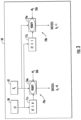
- more than one sender device 36 may be used, e.g., sender devices labeled V, W, X, Y, and Z, with each sender device receiving a respective private encryption key pk i 24 for generating ciphertexts 38 from plaintext 40 based upon a received private encryption key.
- Each sender device 36 will append a respective attribute 28 for a given domain 32 to the ciphertext 38 and receive a respective secret signing key ski 26a and generate ciphertext with a concealed attribute 42 from the ciphertext based upon the secret signing key.
- Each sender device 36 broadcasts its ciphertext 38 with the concealed attribute 42 through the untrusted network 46 to each of the domain gateway devices 50.
- Each domain gateway device 50 has already received its respective secret verifying key vk i 26b and receives the ciphertext 38 with the concealed attribute 42 from the untrusted network 46 and uses the secret verifying key to determine if the concealed attribute 42 matches the attribute associated with the domain gateway device 50, and, when so, pass the ciphertext 38 to at least one receiver device 52 coupled with the domain gateway device 56.
- Each domain 32 may have more than one receiver device 52, such as shown in the Level Three domain 32c and Level One domain 32a, each shown with two receiver devices (A TS , B TS and E c , F c ) respectively.
- FIG. 5 there is illustrated a flowchart showing a sequence of steps that may be used for operating the cross-domain information transfer system 20 as shown in FIG. 1 , with the method indicated generally at 100.
- the process starts at Block 102.
- the sender device 36 receives a respective private encryption key 24 (Block 104 ).
- the sender device 36 generates ciphertext 38 from plaintext 40 based upon the private encryption key (Block 106 ).
- the sender device 36 appends a respective attribute 28 for a given domain 32 to the ciphertext 38 (Block 108 ), receives a respective secret signing key 26a (Block 110 ), and generates ciphertext with a concealed attribute 42 from the ciphertext with the appended attribute based upon the secret signing key 26a (Block 112 ).
- the sender device 36 broadcasts the ciphertext 38 with the concealed attribute 42 (Block 114 ).
- Each domain gateway device 50 receives a respective secret verifying key 22b (Block 116 ) and receives the ciphertext 38 with the concealed attribute 42 from the untrusted network 46 (Block 118 ).
- the secret verifying key 26b is applied to the concealed attribute 42 (Block 120) and a determination made if there is a match of the attribute 28 associated with the respective domain gateway device 50 (Block 122). If no, the domain gateway device 50 will not pass the ciphertext 38 to at least one receiver device 52 coupled with the domain gateway device 50 (Block 124), and the process ends (Block 126). If yes, then the domain gateway device 50 passes the ciphertext 38 to at least one receiver device 52 coupled with the domain gateway device 50 (Block 128) and the process ends (Block 126).
- the cross-domain information transfer system 20 as described has security benefits because a domain gateway device 50 may not determine the plaintext 40 because it lacks the private encryption key 24 and it may not determine any attribute 28 value that is not its own because it does not have the secret verifying key 26b that belongs to other respective domain gateway devices.
- a domain gateway device 50 may not forge or offer altered ciphertexts 38 or concealed attributes 42 because it lacks the secret signing key 26a used to form the concealed attributes and cannot deduce the secret signing key as a digital signature.
- An intruder may not determine the plaintext 40 because the intruder lacks the private encryption key 24 and may not determine the value of any attribute 28 because the intruder lacks any secret verifying keys 26b.
- the intruder may not forge or alter ciphertexts 38 or concealed attributes 42 because the intruder lacks the secret signing key 26a.
- the cross-domain information transfer system 20 as described is applicable to various applications, including the communication of sensitive sensor data over heterogeneous networks.
- the flight control data could be sent to a sensitive domain in the aircraft, such as a pilot navigation system, while a more limited set of flight control data may be sent to a less secure domain as part of an in-flight entertainment system for displaying the location of the aircraft to the passengers.
- a sender device 36 In operation, a sender device 36 generates a sensitive message as plaintext 40 and using a symmetric or block cipher, i.e., the private encryption key pk i 24, and generates in its processor 37c a ciphertext 38 from the plaintext. As shown in the example of FIG. 2 , the sender device 36 attaches one or more Boolean-valued attributes 28 to the ciphertext 38 at CT
- a domain gateway device 50 receives the ciphertext 38 along with the attached, concealed attributes 42.
- a particular receiver device 52 has the secret verifying key 26b to process the ciphertext 38 and attached concealed attributes 42 to learn the true/false value of a particular attribute.
- the domain gateway device 50 cannot learn the true/false value of any attribute 28 for which that particular domain gateway device is not authorized, i.e., it does not have the particular secret verifying key 26b.
- a domain gateway device 50 cannot correctly attach any concealed attributes 42 to any ciphertexts 38.
- a domain gateway device 50 cannot learn any plaintext.
- An intruder or hacker to the system 20 cannot learn any plaintext 40 since the intruder does not have the private encryption key 24 and cannot correctly attach any concealed attributes 42 to any ciphertexts 38.
- An intruder cannot learn the true/false values of any attributes 28. If an intruder alters a ciphertext 38 and/or its concealed attributes 42, it will not be possible for any domain gateway device 50 to learn the attribute values and as a result, the intruder's attack becomes, in effect, a denial-of-service attack. That attack, however, does not break the security of the system 20.
- the encryption protocol for the signature key pair 26 includes the secret signing key 26a and secret verifying key 26b and relies on a digital signature algorithm, e.g., the Elliptic Curve Digital Signature Algorithm (ECDSA) defined in FIPS PUB 186-4 Digital Signature Standard (DSS) with Curve P-192.
- ECDSA Elliptic Curve Digital Signature Algorithm
- DSS Digital Signature Standard
- the private key may use an Advanced Encryption Standard (AES) such as AES-128-GCM (Galois/Counter Mode) and combines Galois field multiplication with a counter mode of operation for block ciphers.
- AES Advanced Encryption Standard
- AES-128-GCM Galois/Counter Mode
- the Key Distribution Center (KDC) 22 is a trusted key source generating the private encryption key 24 and a signature key pair 26 for each attribute Ai, i.e., the secret signing key 26a (sk i ) and secret verifying key 26b (vk i ). Both the secret signing key 26a and the secret verifying key 26b are both maintained secret.
- the secret verifying key 26a in this system 20 is not made public, as is often the case for signature key pairs.
- the key distribution center 22 securely sends each attribute's secret signing key 26a to each sender device 36.
- the key distribution center 22 securely sends each attribute's secret verifying key 26b to each domain gateway device 50 that is authorized to learn the true/false value of that attribute 28 corresponding to a specific domain 32 when a binary attribute is used.
- a sender device 36 may generate a ciphertext 38 (C) and determine the value of each attribute Ai, and may generate each concealed attribute Xi as follows: If the value of Ai is false:
- the sender device 36 attaches the concealed attributes Xi to the ciphertext 38 (C) and transmits the message.
- a domain gateway device 50 receives a ciphertext 38 (C) along with its attached concealed attributes Xi.
- the domain gateway device 50 that contains the complement secret verifying key 26b to the secret signing key 26a is authorized to learn the true/false value of a particular attribute Ai when a binary attribute is used.
- the domain gateway device 50 operates as follows:
- no domain gateway devices 50 or intruder has the private encryption key 24 used to generate the ciphertexts 38, no other domain gateway device 50 or intruder, such as a hacker, can learn the plaintexts 40.
- a domain gateway device 50 or intruder If a domain gateway device 50 or intruder is not authorized to learn the true/false value of Ai, then that domain gateway device or intruder will not have vk i as the secret verifying key 26b, and that domain gateway device or intruder will not be able to carry out the above computation. If an intruder tries to learn the value of an attribute 28 using the wrong secret verifying key 26b, both signature verifications for Xi will fail.
- no domain gateway device 50 or intruder has the secret signing key sk i for any attribute
- no domain gateway device 50 or intruder can generate a correct concealed value Xi for any attribute 28.
- the concealed attribute value Xi may be different in every message, even if the attribute value Ai is the same. Therefore, no intruder or domain gateway device 50 not having the secret verifying key 26b for the attribute 28 will be able to correlate the concealed attribute values with the actual attribute values.
- the ciphertexts 38 are encrypted sensitive documents.
- the sender devices 36 create documents as ciphertexts 38.
- a sender device 36 that creates a document at a particular secrecy level attaches concealed attributes to the ciphertext as follows:
- the domain gateway devices 50 operate with the receiver devices for the domains 32 as networks. Each domain 32 as a network has a security level.
- a specific domain gateway device 50 for a device 32 determines whether a specific document is allowed to be sent on a specific domain as a network.
- the domain gateway device 50 receives and processes data within its processor 54a and determines the true/false value of the attribute 28 associated with the secrecy level of the specific domain 32 and allows the document to be sent on the domain 32 as the network only if the attribute is true.
- multi-valued attributes may be used so that a number of attributes may be used, i.e., A 0 , A 1 , A 2 , etc.
- the technique as described can be extended to attributes with "N" possible discrete values (N > 2).
- N possible discrete values
Landscapes
- Engineering & Computer Science (AREA)
- Computer Security & Cryptography (AREA)
- Signal Processing (AREA)
- Computer Networks & Wireless Communication (AREA)
- General Engineering & Computer Science (AREA)
- Computing Systems (AREA)
- Computer Hardware Design (AREA)
- Business, Economics & Management (AREA)
- General Business, Economics & Management (AREA)
- Data Exchanges In Wide-Area Networks (AREA)
- Traffic Control Systems (AREA)
- Peptides Or Proteins (AREA)
- Optical Record Carriers And Manufacture Thereof (AREA)
Claims (6)
- Ein domänenübergreifendes Informationsübertragungssystem (20), das Folgendes umfasst:ein Schlüsselverteilungszentrum (22), das so konfiguriert ist, dass es eine Vielzahl von privaten Verschlüsselungsschlüsseln (24) und ein jeweiliges Signaturschlüsselpaar (26) für jedes Attribut (28) aus einer Vielzahl von verschiedenen Attributen erzeugt, wobei jedes Attribut mit einer gegebenen Domäne (32) aus einer Vielzahl von verschiedenen Domänen (32) verbunden ist und jedes Signaturschlüsselpaar (26) einen geheimen Signierschlüssel (26a) und einen geheimen Verifizierungsschlüssel (26b) umfasst;eine Sendevorrichtung (36), die einen Prozessor (37a) und einen damit gekoppelten Sender-Empfänger (37b) umfasst und so konfiguriert ist, dass sie einen jeweiligen privaten Verschlüsselungsschlüssel (24) empfängt und auf der Grundlage des privaten Verschlüsselungsschlüssels (24) einen Chiffretext (38) aus einem Klartext (40) erzeugt, ein jeweiliges Attribut (28) für eine gegebene Domäne an den Chiffretext anhängt, einen jeweiligen geheimen Signierschlüssel empfängt, und Chiffriertext (38) mit einem verborgenen Attribut (42) aus dem Chiffriertext (38) mit dem angehängten Attribut auf der Grundlage des geheimen Signierschlüssels (26a) erzeugt, und den Chiffriertext (38) mit dem verborgenen Attribut (42) über ein nicht vertrauenswürdiges Netzwerk (46) rundsendet; undeine Vielzahl von Domänen-Gateway-Vorrichtungen (50), die mit dem nicht vertrauenswürdigen Netzwerk (46) kommunizieren, wobei die Vielzahl von verschiedenen Domänen diesen zugeordnete, unterschiedliche Sicherheitsstufen aufweist, wobei jede Domänen-Gateway-Vorrichtung (50) einen Prozessor (54a) und einen damit gekoppelten Sender-Empfänger (54b) umfasst und ein entsprechendes, diesem zugeordnetes Attribut aufweist, und konfiguriert ist, um:einen entsprechenden geheimen Verifizierungsschlüssel (26b) zu empfangen,den Chiffriertext (38) mit dem verborgenen Attribut (42) von dem nicht vertrauenswürdigen Netzwerk (46) zu empfangen, undden geheimen Verifizierungsschlüssels (26b) zu verwenden, um zu bestimmen, ob das verborgene Attribut (42) mit dem Attribut (28) übereinstimmt, das der Domänen-Gateway-Vorrichtung (50) zugeordnet ist, und, wenn dies der Fall ist, den Chiffriertext (38) an mindestens eine Empfängervorrichtung (52) weiterzuleiten, die mit der Domänen-Gateway-Vorrichtung (50) gekoppelt ist, wobei die mindestens eine Empfängervorrichtung (52), die einen Prozessor (60a) und einen damit gekoppelten Sender-Empfänger (60b) umfasst, so konfiguriert ist, dass sie den Chiffriertext (38) auf der Grundlage des privaten Verschlüsselungsschlüssels (24) in Klartext (40) entschlüsselt.
- Das domänenübergreifende Informationsübertragungssystem (20) nach Anspruch 1, wobei jedes Attribut (28) ein binäres Attribut umfasst.
- Das domänenübergreifende Informationsübertragungssystem (20) nach Anspruch 1, wobei jeder private Verschlüsselungsschlüssel (24) auf dem Advanced Encryption Standard (AES) basiert.
- Das domänenübergreifende Informationsübertragungssystem (20) nach Anspruch 1, wobei die Sendevorrichtung (36) so konfiguriert ist, dass sie Informationen verarbeitet, um mehrere Rundsendungen an verschiedene Domänen (32) zu erzeugen.
- Ein Verfahren zur domänenübergreifenden Informationsübertragung, das Folgendes umfasst:
Betreiben einer Sendevorrichtung (36), die einen Prozessor (37a) und einen damit verbundenen Sender-Empfänger (37b) umfasst:Empfangen eines jeweiligen privaten Verschlüsselungsschlüssels (24) und Erzeugen eines Chiffretextes (38)auf der Grundlage des privaten Verschlüsselungsschlüssels (24) aus dem Klartext (40),Anhängen eines entsprechenden Attributs (28) aus einer Vielzahl unterschiedlicher Attribute (28) an den Chiffriertext (38), wobei jedes Attribut (28) einer gegebenen Domäne (32) aus einer Vielzahl von verschiedenen Domänen (32) zugeordnet ist,Empfangen eines jeweiligen geheimen Signierschlüssels (26) und Erzeugen von Chiffretext (38) mit einem verborgenen Attribut (42) aus dem Chiffretext (38) mit dem angehängten Attribut (28) auf der Grundlage des geheimen Signierschlüssels (26a), undVersenden des Chiffriertextes mit dem verborgenen Attribut (42); undBetreiben einer Vielzahl von Domain-Gateway-Vorrichtungen (50), wobei der Vielzahl von verschiedenen Domains verschiedene Sicherheitsstufen zugeordnet sind, wobei jede Domain-Gateway-Vorrichtung (50) einen Prozessor (54a) und einen damit gekoppelten Sender-Empfänger (54b) umfasst und ein ihr zugeordnetes, entsprechendes Attribut (28) aufweist, wobei das Betreiben jeder Domain-Gateway-Vorrichtung (50) umfasst:Empfangen eines entsprechenden geheimen Verifizierungsschlüssels (26b),Empfangen des Chiffriertextes (38) mit dem verborgenen Attribut (42) von dem nicht vertrauenswürdigen Netzwerk (46), undVerwenden des geheimen Verifizierungsschlüssels (26b), um zu bestimmen, ob das verborgene Attribut (42) mit dem der Domänen-Gateway-Vorrichtung (50) zugeordneten Attribut (28) übereinstimmt, und, wenn dies der Fall ist, Weiterleiten des verschlüsselten Textes (38) an mindestens eine mit der Domänen-Gateway-Vorrichtung (50) gekoppelte Empfängervorrichtung (52), wobei die mindestens eine Empfängervorrichtung (52), die einen Prozessor (60a) und einen damit gekoppelten Sender-Empfänger (60b)umfasst, den verschlüsselten Text (38) auf der Grundlage des privaten Verschlüsselungsschlüssels (24) in Klartext (40) entschlüsselt. - Das Verfahren nach Anspruch 5, wobei jedes Attribut (28) ein binäres Attribut umfasst.
Applications Claiming Priority (1)
| Application Number | Priority Date | Filing Date | Title |
|---|---|---|---|
| US16/519,098 US11115395B2 (en) | 2019-07-23 | 2019-07-23 | Cross-domain information transfer system and associated methods |
Publications (2)
| Publication Number | Publication Date |
|---|---|
| EP3771176A1 EP3771176A1 (de) | 2021-01-27 |
| EP3771176B1 true EP3771176B1 (de) | 2024-12-18 |
Family
ID=71527647
Family Applications (1)
| Application Number | Title | Priority Date | Filing Date |
|---|---|---|---|
| EP20184685.4A Active EP3771176B1 (de) | 2019-07-23 | 2020-07-08 | Domänenübergreifendes informationsübertragungssystem und zugehörige verfahren |
Country Status (3)
| Country | Link |
|---|---|
| US (1) | US11115395B2 (de) |
| EP (1) | EP3771176B1 (de) |
| IL (1) | IL274628B (de) |
Families Citing this family (4)
| Publication number | Priority date | Publication date | Assignee | Title |
|---|---|---|---|---|
| CN113691510A (zh) * | 2021-08-09 | 2021-11-23 | 中国科学院深圳先进技术研究院 | 一种跨域访问控制方法、系统、存储介质及设备 |
| WO2023024057A1 (zh) | 2021-08-27 | 2023-03-02 | 京东方科技集团股份有限公司 | 跨域授权处理方法及跨域调用处理方法 |
| CN114785543B (zh) * | 2022-03-09 | 2023-10-20 | 西安电子科技大学 | 一种车内网络跨域通信方法、计算机设备及智能终端 |
| CN119172166B (zh) * | 2024-11-11 | 2025-02-21 | 公安部第一研究所 | 分布式跨域数据加密方法、解密方法及系统 |
Family Cites Families (12)
| Publication number | Priority date | Publication date | Assignee | Title |
|---|---|---|---|---|
| US5481613A (en) | 1994-04-15 | 1996-01-02 | Northern Telecom Limited | Computer network cryptographic key distribution system |
| US20030005317A1 (en) * | 2001-06-28 | 2003-01-02 | Audebert Yves Louis Gabriel | Method and system for generating and verifying a key protection certificate |
| US8135645B2 (en) * | 2005-12-06 | 2012-03-13 | Microsoft Corporation | Key distribution for secure messaging |
| US20100011337A1 (en) * | 2008-07-14 | 2010-01-14 | Borland Software Corporation | Open application lifecycle management framework domain model |
| US8634563B2 (en) | 2010-12-17 | 2014-01-21 | Microsoft Corporation | Attribute based encryption using lattices |
| US8516244B2 (en) | 2011-06-10 | 2013-08-20 | Zeutro Llc | System, apparatus and method for decentralizing attribute-based encryption information |
| US9292248B2 (en) * | 2011-06-22 | 2016-03-22 | Microsoft Technology Licensing, Llc | Span out load balancing model |
| CN104620535A (zh) | 2012-08-17 | 2015-05-13 | 皇家飞利浦有限公司 | 基于属性的加密 |
| JP5939242B2 (ja) * | 2013-12-12 | 2016-06-22 | コニカミノルタ株式会社 | 通信システム、管理サーバ、ゲートウエイおよびプログラム |
| US10437985B2 (en) * | 2016-10-01 | 2019-10-08 | Intel Corporation | Using a second device to enroll a secure application enclave |
| JP2020022057A (ja) * | 2018-07-31 | 2020-02-06 | 株式会社東芝 | 暗号化データ生成装置、デジタル署名生成装置、デジタル署名付きデータ生成装置、およびデジタル署名付きデータ生成システム |
| US11095684B2 (en) * | 2019-01-07 | 2021-08-17 | Fortanix, Inc. | Providing attributes of a network service |
-
2019
- 2019-07-23 US US16/519,098 patent/US11115395B2/en active Active
-
2020
- 2020-05-13 IL IL274628A patent/IL274628B/en unknown
- 2020-07-08 EP EP20184685.4A patent/EP3771176B1/de active Active
Also Published As
| Publication number | Publication date |
|---|---|
| US20210029097A1 (en) | 2021-01-28 |
| IL274628B (en) | 2022-08-01 |
| EP3771176A1 (de) | 2021-01-27 |
| IL274628A (en) | 2021-01-31 |
| US11115395B2 (en) | 2021-09-07 |
Similar Documents
| Publication | Publication Date | Title |
|---|---|---|
| US7864959B2 (en) | Methods and apparatus for multi-level dynamic security system | |
| US7051365B1 (en) | Method and apparatus for a distributed firewall | |
| US6986061B1 (en) | Integrated system for network layer security and fine-grained identity-based access control | |
| US11658944B2 (en) | Methods and apparatus for encrypted communication | |
| EP3771176A1 (de) | Domänenübergreifendes informationsübertragungssystem und zugehörige verfahren | |
| US6396929B1 (en) | Apparatus, method, and computer program product for high-availability multi-agent cryptographic key recovery | |
| US7636848B2 (en) | Method, system, network and computer program product for securing administrative transactions over a network | |
| US10841840B2 (en) | Processing packets in a computer system | |
| US11070532B1 (en) | Methods for communicating data utilizing sessionless dynamic encryption | |
| Kent | Security requirements and protocols for a broadcast scenario | |
| Alornyo et al. | Encrypted traffic analytic using identity based encryption with equality test for cloud computing | |
| Tennekoon et al. | Prototype implementation of fast and secure traceability service over public networks | |
| Khan et al. | Securing ADS-B communications through a novel authentication framework | |
| EP1283630B1 (de) | Netzwerkrouting unter Benutzung eines ungesicherten Routers | |
| McParland et al. | Securing air-ground communications | |
| Prabhu et al. | Security in computer networks and distributed systems | |
| Wernberg | Security and privacy of controller pilot data link communication | |
| Rial et al. | Outfox: a Postquantum Packet Format for Layered Mixnets | |
| CN116506174A (zh) | 适用于车联网支持用户隐藏身份的多服务器数据传输方法 | |
| Dowling et al. | Cryptography is Rocket Science: Analysis of BPSec | |
| Voydock et al. | Security mechanisms in a transport layer protocol | |
| KR0171003B1 (ko) | 정보보호 프로토콜 및 그를 이용한 정보 보호방법 | |
| Cohen | A secure computer network design | |
| Cook et al. | Conversion functions for symmetric key ciphers | |
| JP2001111612A (ja) | 情報漏洩防止方法およびシステム並びに情報漏洩防止プログラムを記録した記録媒体 |
Legal Events
| Date | Code | Title | Description |
|---|---|---|---|
| PUAI | Public reference made under article 153(3) epc to a published international application that has entered the european phase |
Free format text: ORIGINAL CODE: 0009012 |
|
| STAA | Information on the status of an ep patent application or granted ep patent |
Free format text: STATUS: REQUEST FOR EXAMINATION WAS MADE |
|
| 17P | Request for examination filed |
Effective date: 20200708 |
|
| AK | Designated contracting states |
Kind code of ref document: A1 Designated state(s): AL AT BE BG CH CY CZ DE DK EE ES FI FR GB GR HR HU IE IS IT LI LT LU LV MC MK MT NL NO PL PT RO RS SE SI SK SM TR |
|
| AX | Request for extension of the european patent |
Extension state: BA ME |
|
| STAA | Information on the status of an ep patent application or granted ep patent |
Free format text: STATUS: EXAMINATION IS IN PROGRESS |
|
| 17Q | First examination report despatched |
Effective date: 20221219 |
|
| REG | Reference to a national code |
Ref country code: DE Free format text: PREVIOUS MAIN CLASS: H04L0029060000 Ref country code: DE Ref legal event code: R079 Ref document number: 602020043242 Country of ref document: DE Free format text: PREVIOUS MAIN CLASS: H04L0029060000 Ipc: H04L0009080000 |
|
| GRAP | Despatch of communication of intention to grant a patent |
Free format text: ORIGINAL CODE: EPIDOSNIGR1 |
|
| STAA | Information on the status of an ep patent application or granted ep patent |
Free format text: STATUS: GRANT OF PATENT IS INTENDED |
|
| RIC1 | Information provided on ipc code assigned before grant |
Ipc: H04L 9/40 20220101ALI20240926BHEP Ipc: H04L 9/08 20060101AFI20240926BHEP |
|
| GRAS | Grant fee paid |
Free format text: ORIGINAL CODE: EPIDOSNIGR3 |
|
| GRAA | (expected) grant |
Free format text: ORIGINAL CODE: 0009210 |
|
| STAA | Information on the status of an ep patent application or granted ep patent |
Free format text: STATUS: THE PATENT HAS BEEN GRANTED |
|
| INTG | Intention to grant announced |
Effective date: 20241025 |
|
| P01 | Opt-out of the competence of the unified patent court (upc) registered |
Free format text: CASE NUMBER: APP_60113/2024 Effective date: 20241107 |
|
| AK | Designated contracting states |
Kind code of ref document: B1 Designated state(s): AL AT BE BG CH CY CZ DE DK EE ES FI FR GB GR HR HU IE IS IT LI LT LU LV MC MK MT NL NO PL PT RO RS SE SI SK SM TR |
|
| REG | Reference to a national code |
Ref country code: CH Ref legal event code: EP |
|
| REG | Reference to a national code |
Ref country code: DE Ref legal event code: R096 Ref document number: 602020043242 Country of ref document: DE |
|
| REG | Reference to a national code |
Ref country code: IE Ref legal event code: FG4D |
|
| REG | Reference to a national code |
Ref country code: LT Ref legal event code: MG9D |
|
| PG25 | Lapsed in a contracting state [announced via postgrant information from national office to epo] |
Ref country code: HR Free format text: LAPSE BECAUSE OF FAILURE TO SUBMIT A TRANSLATION OF THE DESCRIPTION OR TO PAY THE FEE WITHIN THE PRESCRIBED TIME-LIMIT Effective date: 20241218 |
|
| PG25 | Lapsed in a contracting state [announced via postgrant information from national office to epo] |
Ref country code: FI Free format text: LAPSE BECAUSE OF FAILURE TO SUBMIT A TRANSLATION OF THE DESCRIPTION OR TO PAY THE FEE WITHIN THE PRESCRIBED TIME-LIMIT Effective date: 20241218 |
|
| PG25 | Lapsed in a contracting state [announced via postgrant information from national office to epo] |
Ref country code: BG Free format text: LAPSE BECAUSE OF FAILURE TO SUBMIT A TRANSLATION OF THE DESCRIPTION OR TO PAY THE FEE WITHIN THE PRESCRIBED TIME-LIMIT Effective date: 20241218 |
|
| PG25 | Lapsed in a contracting state [announced via postgrant information from national office to epo] |
Ref country code: NO Free format text: LAPSE BECAUSE OF FAILURE TO SUBMIT A TRANSLATION OF THE DESCRIPTION OR TO PAY THE FEE WITHIN THE PRESCRIBED TIME-LIMIT Effective date: 20250318 |
|
| REG | Reference to a national code |
Ref country code: NL Ref legal event code: MP Effective date: 20241218 |
|
| PG25 | Lapsed in a contracting state [announced via postgrant information from national office to epo] |
Ref country code: LV Free format text: LAPSE BECAUSE OF FAILURE TO SUBMIT A TRANSLATION OF THE DESCRIPTION OR TO PAY THE FEE WITHIN THE PRESCRIBED TIME-LIMIT Effective date: 20241218 Ref country code: GR Free format text: LAPSE BECAUSE OF FAILURE TO SUBMIT A TRANSLATION OF THE DESCRIPTION OR TO PAY THE FEE WITHIN THE PRESCRIBED TIME-LIMIT Effective date: 20250319 |
|
| PG25 | Lapsed in a contracting state [announced via postgrant information from national office to epo] |
Ref country code: RS Free format text: LAPSE BECAUSE OF FAILURE TO SUBMIT A TRANSLATION OF THE DESCRIPTION OR TO PAY THE FEE WITHIN THE PRESCRIBED TIME-LIMIT Effective date: 20250318 |
|
| PG25 | Lapsed in a contracting state [announced via postgrant information from national office to epo] |
Ref country code: NL Free format text: LAPSE BECAUSE OF FAILURE TO SUBMIT A TRANSLATION OF THE DESCRIPTION OR TO PAY THE FEE WITHIN THE PRESCRIBED TIME-LIMIT Effective date: 20241218 |
|
| REG | Reference to a national code |
Ref country code: AT Ref legal event code: MK05 Ref document number: 1753135 Country of ref document: AT Kind code of ref document: T Effective date: 20241218 |
|
| PG25 | Lapsed in a contracting state [announced via postgrant information from national office to epo] |
Ref country code: SM Free format text: LAPSE BECAUSE OF FAILURE TO SUBMIT A TRANSLATION OF THE DESCRIPTION OR TO PAY THE FEE WITHIN THE PRESCRIBED TIME-LIMIT Effective date: 20241218 |
|
| PG25 | Lapsed in a contracting state [announced via postgrant information from national office to epo] |
Ref country code: PL Free format text: LAPSE BECAUSE OF FAILURE TO SUBMIT A TRANSLATION OF THE DESCRIPTION OR TO PAY THE FEE WITHIN THE PRESCRIBED TIME-LIMIT Effective date: 20241218 |
|
| PG25 | Lapsed in a contracting state [announced via postgrant information from national office to epo] |
Ref country code: ES Free format text: LAPSE BECAUSE OF FAILURE TO SUBMIT A TRANSLATION OF THE DESCRIPTION OR TO PAY THE FEE WITHIN THE PRESCRIBED TIME-LIMIT Effective date: 20241218 |
|
| PG25 | Lapsed in a contracting state [announced via postgrant information from national office to epo] |
Ref country code: IS Free format text: LAPSE BECAUSE OF FAILURE TO SUBMIT A TRANSLATION OF THE DESCRIPTION OR TO PAY THE FEE WITHIN THE PRESCRIBED TIME-LIMIT Effective date: 20250418 |
|
| PG25 | Lapsed in a contracting state [announced via postgrant information from national office to epo] |
Ref country code: PT Free format text: LAPSE BECAUSE OF FAILURE TO SUBMIT A TRANSLATION OF THE DESCRIPTION OR TO PAY THE FEE WITHIN THE PRESCRIBED TIME-LIMIT Effective date: 20250421 |
|
| PG25 | Lapsed in a contracting state [announced via postgrant information from national office to epo] |
Ref country code: EE Free format text: LAPSE BECAUSE OF FAILURE TO SUBMIT A TRANSLATION OF THE DESCRIPTION OR TO PAY THE FEE WITHIN THE PRESCRIBED TIME-LIMIT Effective date: 20241218 |
|
| PG25 | Lapsed in a contracting state [announced via postgrant information from national office to epo] |
Ref country code: AT Free format text: LAPSE BECAUSE OF FAILURE TO SUBMIT A TRANSLATION OF THE DESCRIPTION OR TO PAY THE FEE WITHIN THE PRESCRIBED TIME-LIMIT Effective date: 20241218 Ref country code: RO Free format text: LAPSE BECAUSE OF FAILURE TO SUBMIT A TRANSLATION OF THE DESCRIPTION OR TO PAY THE FEE WITHIN THE PRESCRIBED TIME-LIMIT Effective date: 20241218 |
|
| PG25 | Lapsed in a contracting state [announced via postgrant information from national office to epo] |
Ref country code: SK Free format text: LAPSE BECAUSE OF FAILURE TO SUBMIT A TRANSLATION OF THE DESCRIPTION OR TO PAY THE FEE WITHIN THE PRESCRIBED TIME-LIMIT Effective date: 20241218 |
|
| PG25 | Lapsed in a contracting state [announced via postgrant information from national office to epo] |
Ref country code: CZ Free format text: LAPSE BECAUSE OF FAILURE TO SUBMIT A TRANSLATION OF THE DESCRIPTION OR TO PAY THE FEE WITHIN THE PRESCRIBED TIME-LIMIT Effective date: 20241218 |
|
| PG25 | Lapsed in a contracting state [announced via postgrant information from national office to epo] |
Ref country code: IT Free format text: LAPSE BECAUSE OF FAILURE TO SUBMIT A TRANSLATION OF THE DESCRIPTION OR TO PAY THE FEE WITHIN THE PRESCRIBED TIME-LIMIT Effective date: 20241218 |
|
| PG25 | Lapsed in a contracting state [announced via postgrant information from national office to epo] |
Ref country code: SE Free format text: LAPSE BECAUSE OF FAILURE TO SUBMIT A TRANSLATION OF THE DESCRIPTION OR TO PAY THE FEE WITHIN THE PRESCRIBED TIME-LIMIT Effective date: 20241218 |
|
| REG | Reference to a national code |
Ref country code: DE Ref legal event code: R097 Ref document number: 602020043242 Country of ref document: DE |
|
| PG25 | Lapsed in a contracting state [announced via postgrant information from national office to epo] |
Ref country code: DK Free format text: LAPSE BECAUSE OF FAILURE TO SUBMIT A TRANSLATION OF THE DESCRIPTION OR TO PAY THE FEE WITHIN THE PRESCRIBED TIME-LIMIT Effective date: 20241218 |
|
| PGFP | Annual fee paid to national office [announced via postgrant information from national office to epo] |
Ref country code: DE Payment date: 20250729 Year of fee payment: 6 |
|
| PGFP | Annual fee paid to national office [announced via postgrant information from national office to epo] |
Ref country code: GB Payment date: 20250728 Year of fee payment: 6 |
|
| PGFP | Annual fee paid to national office [announced via postgrant information from national office to epo] |
Ref country code: FR Payment date: 20250725 Year of fee payment: 6 |
|
| PLBE | No opposition filed within time limit |
Free format text: ORIGINAL CODE: 0009261 |
|
| STAA | Information on the status of an ep patent application or granted ep patent |
Free format text: STATUS: NO OPPOSITION FILED WITHIN TIME LIMIT |
|
| REG | Reference to a national code |
Ref country code: CH Ref legal event code: L10 Free format text: ST27 STATUS EVENT CODE: U-0-0-L10-L00 (AS PROVIDED BY THE NATIONAL OFFICE) Effective date: 20251029 |
|
| 26N | No opposition filed |
Effective date: 20250919 |
|
| REG | Reference to a national code |
Ref country code: CH Ref legal event code: H13 Free format text: ST27 STATUS EVENT CODE: U-0-0-H10-H13 (AS PROVIDED BY THE NATIONAL OFFICE) Effective date: 20260224 |
|
| PG25 | Lapsed in a contracting state [announced via postgrant information from national office to epo] |
Ref country code: LU Free format text: LAPSE BECAUSE OF NON-PAYMENT OF DUE FEES Effective date: 20250708 |
|
| REG | Reference to a national code |
Ref country code: BE Ref legal event code: MM Effective date: 20250731 |
|
| PG25 | Lapsed in a contracting state [announced via postgrant information from national office to epo] |
Ref country code: BE Free format text: LAPSE BECAUSE OF NON-PAYMENT OF DUE FEES Effective date: 20250731 |
|
| PG25 | Lapsed in a contracting state [announced via postgrant information from national office to epo] |
Ref country code: CH Free format text: LAPSE BECAUSE OF NON-PAYMENT OF DUE FEES Effective date: 20250731 |