EP3771065B1 - Photovoltaic power generation inverter system - Google Patents
Photovoltaic power generation inverter system Download PDFInfo
- Publication number
- EP3771065B1 EP3771065B1 EP19862695.4A EP19862695A EP3771065B1 EP 3771065 B1 EP3771065 B1 EP 3771065B1 EP 19862695 A EP19862695 A EP 19862695A EP 3771065 B1 EP3771065 B1 EP 3771065B1
- Authority
- EP
- European Patent Office
- Prior art keywords
- direct current
- unit
- bus
- photovoltaic
- power generation
- Prior art date
- Legal status (The legal status is an assumption and is not a legal conclusion. Google has not performed a legal analysis and makes no representation as to the accuracy of the status listed.)
- Active
Links
Images


Classifications
-
- H—ELECTRICITY
- H02—GENERATION; CONVERSION OR DISTRIBUTION OF ELECTRIC POWER
- H02J—ELECTRIC POWER NETWORKS; CIRCUIT ARRANGEMENTS OR SYSTEMS FOR SUPPLYING OR DISTRIBUTING ELECTRIC POWER; SYSTEMS FOR STORING ELECTRIC ENERGY
- H02J3/00—Circuit arrangements for AC mains or AC distribution networks
- H02J3/38—Arrangements for feeding a single network from two or more generators or sources in parallel; Arrangements for feeding already energised networks from additional generators or sources in parallel
- H02J3/381—Dispersed generators
-
- H—ELECTRICITY
- H02—GENERATION; CONVERSION OR DISTRIBUTION OF ELECTRIC POWER
- H02J—ELECTRIC POWER NETWORKS; CIRCUIT ARRANGEMENTS OR SYSTEMS FOR SUPPLYING OR DISTRIBUTING ELECTRIC POWER; SYSTEMS FOR STORING ELECTRIC ENERGY
- H02J3/00—Circuit arrangements for AC mains or AC distribution networks
- H02J3/38—Arrangements for feeding a single network from two or more generators or sources in parallel; Arrangements for feeding already energised networks from additional generators or sources in parallel
-
- H—ELECTRICITY
- H02—GENERATION; CONVERSION OR DISTRIBUTION OF ELECTRIC POWER
- H02J—ELECTRIC POWER NETWORKS; CIRCUIT ARRANGEMENTS OR SYSTEMS FOR SUPPLYING OR DISTRIBUTING ELECTRIC POWER; SYSTEMS FOR STORING ELECTRIC ENERGY
- H02J7/00—Circuit arrangements for charging or discharging batteries or for supplying loads from batteries
- H02J7/34—Parallel operation in networks using both storage and other DC sources, e.g. providing buffering
-
- H—ELECTRICITY
- H02—GENERATION; CONVERSION OR DISTRIBUTION OF ELECTRIC POWER
- H02J—ELECTRIC POWER NETWORKS; CIRCUIT ARRANGEMENTS OR SYSTEMS FOR SUPPLYING OR DISTRIBUTING ELECTRIC POWER; SYSTEMS FOR STORING ELECTRIC ENERGY
- H02J7/00—Circuit arrangements for charging or discharging batteries or for supplying loads from batteries
- H02J7/34—Parallel operation in networks using both storage and other DC sources, e.g. providing buffering
- H02J7/35—Parallel operation in networks using both storage and other DC sources, e.g. providing buffering with light sensitive cells
-
- H—ELECTRICITY
- H02—GENERATION; CONVERSION OR DISTRIBUTION OF ELECTRIC POWER
- H02J—ELECTRIC POWER NETWORKS; CIRCUIT ARRANGEMENTS OR SYSTEMS FOR SUPPLYING OR DISTRIBUTING ELECTRIC POWER; SYSTEMS FOR STORING ELECTRIC ENERGY
- H02J2101/00—Supply or distribution of decentralised, dispersed or local electric power generation
- H02J2101/20—Dispersed power generation using renewable energy sources
- H02J2101/22—Solar energy
- H02J2101/24—Photovoltaics
-
- Y—GENERAL TAGGING OF NEW TECHNOLOGICAL DEVELOPMENTS; GENERAL TAGGING OF CROSS-SECTIONAL TECHNOLOGIES SPANNING OVER SEVERAL SECTIONS OF THE IPC; TECHNICAL SUBJECTS COVERED BY FORMER USPC CROSS-REFERENCE ART COLLECTIONS [XRACs] AND DIGESTS
- Y02—TECHNOLOGIES OR APPLICATIONS FOR MITIGATION OR ADAPTATION AGAINST CLIMATE CHANGE
- Y02E—REDUCTION OF GREENHOUSE GAS [GHG] EMISSIONS, RELATED TO ENERGY GENERATION, TRANSMISSION OR DISTRIBUTION
- Y02E10/00—Energy generation through renewable energy sources
- Y02E10/50—Photovoltaic [PV] energy
- Y02E10/56—Power conversion systems, e.g. maximum power point trackers
Definitions
- This application relates to the field of photovoltaic power generation technologies, and in particular, to a photovoltaic power generation inverter system.
- inverter architectures in the photovoltaic power generation system: a centralized architecture, a distributed architecture, and a decentralized architecture.
- An energy loss in the photovoltaic power generation system increases with a current in the photovoltaic power generation system with the centralized, distributed, and decentralized architectures.
- the CN 103368200 A discloses a single-ended voltage source converter (VSC) high voltage direct current (HVDC) (VSC-HVDC) photovoltaic power generation system, which comprises more than one photovoltaic direct current booster station, an HVDC positive cable, an HVDC negative cable, an HVDC converter, a transformer and a high voltage alternating current network.
- VSC voltage source converter
- HVDC high voltage direct current
- the positive and negative ends of the photovoltaic direct current booster station are respectively connected with the HVDC converter via the HVDC positive cable and the HVDC negative cable
- the output end of the HVDC converter is connected with the high voltage alternating current network via the transformer.
- a power conditioner for connection with a solar photovoltaic power generation apparatus is provided.
- the power conditioner includes an inverter unit and a control unit that outputs an error signal indicating a mounting error of a first or second current sensor based on a result of detection by the first current sensor and a result of detection by the
- Embodiments of this application provide a photovoltaic power generation system, so that a voltage in the photovoltaic power generation system can be increased under a same power conversion condition, to reduce a current in the photovoltaic power generation system, thereby reducing energy consumption and reducing costs of the photovoltaic power generation system.
- the photovoltaic array is configured to: convert solar energy into electric energy, in other words, generate direct current power, and output a direct current voltage;
- the bus unit is configured to store direct current electric energy output by the direct current conversion unit or directly store the direct current electric energy output by the photovoltaic array, to increase a bus voltage between the positive electrode and the negative electrode of the first bus unit, where the bus voltage is a direct current voltage;
- the inverter unit converts the bus voltage in the bus unit into an alternating current voltage, to transmit energy to the power grid.
- an increase in the bus voltage in the bus unit means an increase in an input voltage of the inverter unit, so that the input voltage of the inverter unit is increased under a same power conversion condition, which can effectively reduce a direct current bus current in the photovoltaic power generation inverter system and correspondingly reduce an alternating current obtained after inversion by the inversion unit. Therefore, an electric energy loss in the photovoltaic power generation inverter system is reduced.
- the embodiments of this application are applicable to photovoltaic power generation in which solar energy is converted into electric energy by using a photovoltaic panel, and the electric energy is integrated into a power grid.
- the electric energy obtained through conversion by the photovoltaic panel is a direct current, and needs to be transmitted in the power grid in an alternating current form. Therefore, after the photovoltaic panel converts the solar energy into the direct current, the direct current needs to be inverted into a three-phase alternating current to be integrated into the power grid by using a step-up transformer.
- the photovoltaic power generation inverter system provided in the embodiments of this application is configured to convert a direct current output by the photovoltaic panel into an alternating current, to transmit energy to the power grid.
- an input voltage of an inverter unit can be increased under a same power conversion condition, which can effectively reduce a direct current bus current in the photovoltaic power generation inverter system and correspondingly reduce an alternating current obtained after inversion by the inverter unit. Therefore, an electric energy loss in the photovoltaic power generation inverter system is reduced.
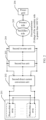
- FIG. 1 is a schematic diagram of an embodiment of a photovoltaic power generation inverter system according to an embodiment of this application.
- the photovoltaic power generation inverter system includes a photovoltaic array 101, a first direct current conversion unit 102, a first bus unit 103, and a first inverter unit 104.
- a positive electrode input end of the first direct current conversion unit 102 is connected to a positive electrode output end of the photovoltaic array 101, a negative electrode output end of the first direct current conversion unit 102 is connected to a negative electrode output end of the photovoltaic array 101, a positive electrode output end of the first direct current conversion unit 102 is connected to a positive electrode of the first bus unit 103, a negative electrode output end of the first direct current conversion unit 102 is connected to a negative electrode of the first bus unit 103, a bus voltage between the positive electrode and the negative electrode of the first bus unit 103 is greater than a maximum system voltage applied to the cell panel in the photovoltaic array, and the first bus unit 103 is connected to the first inverter unit 104.
- the photovoltaic array 101 When the photovoltaic power generation inverter system works normally, the photovoltaic array 101 generates direct current power, the first direct current conversion unit 102 performs direct current power conversion on the direct current power generated by the photovoltaic array 101, and then inputs the direct current power to the first bus unit 103 for storage, and the first inverter unit 104 converts a direct current stored between the positive electrode and the negative electrode of the first bus unit 103 into an alternating current, to transmit energy to a power grid.
- one direct current conversion unit may be connected to one or more corresponding photovoltaic arrays.
- the positive electrode output end, a midpoint potential, and the negative electrode output end of the first direct current conversion unit 102 are respectively connected to the positive electrode, a midpoint potential, and the negative electrode of the first bus unit 103 through coupling.
- the midpoint potential of the first direct current conversion unit 102 is connected to the midpoint potential of the first bus unit 103 through coupling, as shown in a dotted line part between the first direct current conversion unit 102 and the first bus unit 103 in FIG. 1 .
- the positive electrode output end and the negative electrode output end of the first direct current conversion unit 102 are respectively connected to the positive electrode and the negative electrode of the first bus unit 103 through coupling.
- the first bus unit 103 is connected to the first inverter unit 104 through coupling by using the positive electrode, a midpoint potential, and the negative electrode.
- the midpoint potential of the first bus unit 103 is connected to a midpoint potential of the first inverter unit 104 through coupling, as shown in a dotted line part between the first bus unit 103 and the first inverter unit 104 in FIG. 1 .
- the first bus unit is connected to the first inverter unit through coupling by using the positive electrode and the negative electrode.
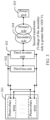
- FIG. 2 is a schematic diagram of another embodiment of a photovoltaic power generation inverter system according to an embodiment of this application.
- the photovoltaic power generation inverter system includes a photovoltaic array 201, a second direct current conversion unit 202, a second bus unit 203, a second inverter unit 204, and a first transformer 205. There are one or more photovoltaic arrays.
- a positive electrode input end of the second direct current conversion unit 202 is connected to a positive electrode output end of the photovoltaic array 201, a negative electrode input end of the second direct current conversion unit is connected to a negative electrode output end of the photovoltaic array 201, a positive electrode output end of the second direct current conversion unit 202 is connected to a positive electrode of the second bus unit 203, a negative electrode output end of the second direct current conversion unit 202 is connected to a negative electrode of the second bus unit 203, the positive electrode and the negative electrode of the second bus unit 203 are connected to an input end of the second inverter unit 204, an output end of the second inverter unit 204 is connected to a secondary side of the first transformer 205, and a primary side of the first transformer 205 is connected to a power grid 206.
- the photovoltaic power generation inverter system works normally, the photovoltaic array 201 generates direct current power, the second direct current conversion unit 202 performs direct current power conversion on the direct current power generated by the photovoltaic array 201, and then inputs the direct current power to the second bus unit 203 for storage, the second inverter unit 204 converts a direct current stored between the positive electrode and the negative electrode of the second bus unit 203 into an alternating current, and the first transformer 205 outputs, to the power grid 206, an alternating current voltage output by the second inverter unit 204.
- a line voltage of the secondary side of the first transformer 205 is an alternating current voltage greater than 1000 V
- one direct current conversion unit may be connected to one or more corresponding photovoltaic arrays.
- the positive electrode output end, a midpoint potential, and the negative electrode output end of the second direct current conversion unit 202 are respectively connected to the positive electrode, a midpoint potential, and the negative electrode of the second bus unit 203 through coupling.
- the midpoint potential of the second direct current conversion unit 202 is connected to the midpoint potential of the second bus unit 203 through coupling, as shown in a dotted line part between the second direct current conversion unit 202 and the second bus unit 203 in FIG. 2 .
- the positive electrode output end and the negative electrode output end of the second direct current conversion unit 202 are respectively connected to the positive electrode and the negative electrode of the second bus unit 203 through coupling.
- the second bus unit 203 is connected to the second inverter unit 204 through coupling by using the positive electrode, a midpoint potential, and the negative electrode.
- the midpoint potential of the second bus unit 203 is connected to a midpoint potential of the second inverter unit 204 through coupling, as shown in a dotted line part between the second bus unit 203 and the second inverter unit 204 in FIG. 2 .
- the second bus unit 203 is connected to the second inverter unit 204 through coupling by using the positive electrode and the negative electrode.
- FIG. 3 is a schematic diagram of another embodiment of a photovoltaic power generation inverter system according to an embodiment of this application.
- the photovoltaic power generation inverter system includes a photovoltaic array 301, a third bus unit 302, a third inverter unit 303, and a second transformer 304. There are one or more photovoltaic arrays.
- a positive electrode and a negative electrode of the photovoltaic array 301 are respectively connected to a positive electrode and a negative electrode of the third bus unit 302, the third bus unit 302 is connected to an input end of the third inverter unit 303, an output end of the third inverter unit 303 is connected to a secondary side of the second transformer 304, and a primary side of the second transformer 304 is connected to a power grid 305.
- the photovoltaic power generation inverter system works normally, the photovoltaic array 301 generates direct current power, the third bus unit 302 stores the direct current power generated by the photovoltaic array 301, the third inverter unit 303 converts a direct current stored between the positive electrode and the negative electrode of the third bus unit 302 into an alternating current, and the second transformer 304 outputs, to the power grid 305, an alternating current voltage output by the third inverter unit 303.
- a line voltage of the secondary side of the second transformer 304 is an alternating current voltage greater than 1000 V
- one direct current conversion unit may be connected to one or more corresponding photovoltaic arrays.
- a positive electrode output end and a negative electrode output end of the photovoltaic array 301 are respectively connected to the positive electrode and the negative electrode of the second bus unit 302 through coupling.
- the third bus unit 302 is connected to the third inverter unit 303 through coupling by using the positive electrode, a midpoint potential, and the negative electrode.
- the midpoint potential of the third bus unit 302 is connected to a midpoint potential of the third inverter unit 303 through coupling, as shown in a dotted line part between the third bus unit 302 and the third inverter unit 303 in FIG. 3 .
- the third bus unit 302 is connected to the third inverter unit 303 through coupling by using the positive electrode and the negative electrode.
- FIG. 4 is a schematic diagram of another embodiment of a photovoltaic power generation inverter system according to an embodiment of this application.
- the photovoltaic power generation inverter system includes a photovoltaic array 401, a third direct current conversion unit 402, a fourth bus unit 403, and a fourth inverter unit 404. There are one or more photovoltaic arrays.
- a positive electrode input end of the third direct current conversion unit 402 is connected to a positive electrode output end of the photovoltaic array 401, a negative electrode output end of the third direct current conversion unit 402 is connected to a negative electrode output end of the photovoltaic array 401, a positive electrode output end of the third direct current conversion unit 402 is connected to a positive electrode of the fourth bus unit 403, a negative electrode output end of the third direct current conversion unit 402 is connected to a negative electrode of the fourth bus unit 403, a bus voltage between the positive electrode and the negative electrode of the fourth bus unit 403 is greater than 1000 V, and the fourth bus unit 403 is connected to the fourth inverter unit 404.
- the photovoltaic array 401 When the photovoltaic power generation inverter system works normally, the photovoltaic array 401 generates direct current power, the third direct current conversion unit 402 performs direct current power conversion on the direct current power generated by the photovoltaic array 401, and then inputs the direct current power to the fourth bus unit 403 for storage, and the fourth inverter unit 404 converts a direct current stored between the positive electrode and the negative electrode of the fourth bus unit 403 into an alternating current, to transmit energy to a power grid.
- one direct current conversion unit may be connected to one or more corresponding photovoltaic arrays.
- the positive electrode output end, a midpoint potential, and the negative electrode output end of the third direct current conversion unit 402 are respectively connected to the positive electrode, a midpoint potential, and the negative electrode of the fourth bus unit 403 through coupling.
- the midpoint potential of the third direct current conversion unit 402 is connected to the midpoint potential of the fourth bus unit 403 through coupling, as shown in a dotted line part between the third direct current conversion unit 402 and the fourth bus unit 403 in FIG. 4 .
- the positive electrode output end and the negative electrode output end of the third direct current conversion unit 402 are respectively connected to the positive electrode and the negative electrode of the fourth bus unit 403 through coupling.
- the fourth bus unit 403 is connected to the fourth inverter unit 404 through coupling by using the positive electrode, a midpoint potential, and the negative electrode.
- the midpoint potential of the fourth bus unit 403 is connected to a midpoint potential of the fourth inverter unit 404 through coupling, as shown in a dotted line part between the fourth bus unit 403 and the fourth inverter unit 404 in FIG. 4 .
- the fourth bus unit 403 is connected to the fourth inverter unit 404 through coupling by using the positive electrode and the negative electrode.
- FIG. 5 is a schematic diagram of another embodiment of a photovoltaic power generation inverter system according to an embodiment of this application.
- the photovoltaic power generation inverter system includes a photovoltaic array 501, a fourth direct current conversion unit 502, a fifth bus unit 503, and a fifth inverter unit 504. There are one or more photovoltaic arrays.
- a positive electrode input end of the fourth direct current conversion unit 502 is connected to a positive electrode output end of the photovoltaic array 501, a negative electrode output end of the fourth direct current conversion unit 502 is connected to a negative electrode output end of the photovoltaic array 501, a positive electrode output end of the fourth direct current conversion unit 502 is connected to a positive electrode of the fifth bus unit 503, a negative electrode output end of the fourth direct current conversion unit 502 is connected to a negative electrode of the fifth bus unit 503, a bus voltage between the positive electrode and the negative electrode of the fifth bus unit 503 is greater than 1500 V, and the fifth bus unit 503 is connected to the fifth inverter unit 504.
- the photovoltaic array 501 When the photovoltaic power generation inverter system works normally, the photovoltaic array 501 generates direct current power, the fourth direct current conversion unit 502 performs direct current power conversion on the direct current power generated by the photovoltaic array 501, and then inputs the direct current power to the fifth bus unit 503 for storage, and the fifth inverter unit 504 converts a direct current stored between the positive electrode and the negative electrode of the fifth bus unit 503 into an alternating current, to transmit energy to a power grid.
- one direct current conversion unit may be connected to one or more corresponding photovoltaic arrays.
- the positive electrode output end, a midpoint potential, and the negative electrode output end of the fourth direct current conversion unit 502 are respectively connected to the positive electrode, a midpoint potential, and the negative electrode of the fifth bus unit 503 through coupling.
- the midpoint potential of the fourth direct current conversion unit 502 is connected to the midpoint potential of the fifth bus unit 503 through coupling, as shown in a dotted line part in FIG. 5 .
- the positive electrode output end and the negative electrode output end of the fourth direct current conversion unit 502 are respectively connected to the positive electrode and the negative electrode of the fifth bus unit 503 through coupling.
- the fifth bus unit 503 is connected to the fifth inverter unit 504 through coupling by using the positive electrode, a midpoint potential, and the negative electrode.
- the midpoint potential of the fifth bus unit is connected to the fifth inverter unit 504, as shown in a dotted line part in FIG. 5 .
- the fifth bus unit 503 is connected to the fifth inverter unit 504 through coupling by using the positive electrode and the negative electrode.
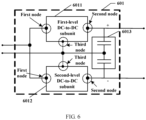
- FIG. 6 is a schematic diagram of an embodiment of a direct current conversion unit according to an embodiment of this application.
- the direct current conversion unit in any one of FIG. 1 , FIG. 2 , FIG. 4, and FIG. 5 may be but is not limited to the direct current conversion unit shown in FIG. 6 .
- the direct current conversion unit 601 includes a first-level DC-to-DC subunit 6011, a second-level DC-to-DC subunit 6012, and a direct current output bus 6013.
- a structure of the direct current output bus 6013 is similar to that of a bus unit.
- the direct current output bus 6013 also includes a midpoint potential including two capacitors: an upper capacitor and a lower capacitor.
- a positive electrode of the upper capacitor is a positive electrode of the direct current output bus 6013
- a negative electrode of the upper capacitor is connected to a positive electrode of the lower capacitor
- a negative electrode of the lower capacitor is a negative electrode of the direct current output bus 6013.
- the first-level DC-to-DC subunit 6011 and the second-level DC-to-DC subunit each include three nodes.
- the six nodes shown in FIG. 6 are connected as follows: A first node of the first-level DC-to-DC subunit 6011 and a first node of the second-level DC-to-DC subunit are connected to a positive electrode output end of a photovoltaic array, a second node of the first-level DC-to-DC subunit 6011 is connected to the positive electrode of the direct current output bus 6013, a second node of the second-level DC-to-DC subunit 6012 is connected to the negative electrode of the direct current output bus 6013, a third node of the first-level DC-to-DC subunit 6011 is connected to a negative electrode output end of the photovoltaic array and the midpoint potential of the direct current output bus 6013, and a third node of the second-level DC-to-DC subunit 6012 is connected to the negative electrode output end of the photovoltaic array and
- the six nodes may be alternatively connected as follows: A first node of the first-level DC-to-DC subunit 6011 and a first node of the second-level DC-to-DC subunit are connected to a negative electrode output end of a photovoltaic array, a second node of the first-level DC-to-DC subunit 6011 is connected to the positive electrode of the direct current output bus 6013, a second node of the second-level DC-to-DC subunit 6012 is connected to the negative electrode of the direct current output bus 6013, a third node of the first-level DC-to-DC subunit 6011 is connected to a positive electrode output end of the photovoltaic array and the midpoint potential of the direct current output bus 6013, and a third node of the second-level DC-to-DC subunit 6012 is connected to the positive electrode output end of the photovoltaic array and the midpoint potential of the direct current output bus 6013.
Landscapes
- Engineering & Computer Science (AREA)
- Power Engineering (AREA)
- Inverter Devices (AREA)
- Photovoltaic Devices (AREA)
- Charge And Discharge Circuits For Batteries Or The Like (AREA)
- Supply And Distribution Of Alternating Current (AREA)
Description
- This application relates to the field of photovoltaic power generation technologies, and in particular, to a photovoltaic power generation inverter system.
- In recent years, renewable energy has attracted extensive attention. In the renewable energy, solar power generation causes less environmental pollution than conventional fossil power generation. In a photovoltaic power generation system, performance, reliability, management technologies, and the like of photovoltaic power generation become increasingly mature.
- Currently, there are mainly the following three types of inverter architectures in the photovoltaic power generation system: a centralized architecture, a distributed architecture, and a decentralized architecture. An energy loss in the photovoltaic power generation system increases with a current in the photovoltaic power generation system with the centralized, distributed, and decentralized architectures.
- The
CN 103368200 A discloses a single-ended voltage source converter (VSC) high voltage direct current (HVDC) (VSC-HVDC) photovoltaic power generation system, which comprises more than one photovoltaic direct current booster station, an HVDC positive cable, an HVDC negative cable, an HVDC converter, a transformer and a high voltage alternating current network. Hereby, the positive and negative ends of the photovoltaic direct current booster station are respectively connected with the HVDC converter via the HVDC positive cable and the HVDC negative cable, and the output end of the HVDC converter is connected with the high voltage alternating current network via the transformer.InUS 2018/198284 A1 a power conditioner for connection with a solar photovoltaic power generation apparatus is provided. The power conditioner includes an inverter unit and a control unit that outputs an error signal indicating a mounting error of a first or second current sensor based on a result of detection by the first current sensor and a result of detection by the second current sensor. - The invention is defined in the independent claims. Additional features of the invention are provided in the dependent claims.
- Embodiments of this application provide a photovoltaic power generation system, so that a voltage in the photovoltaic power generation system can be increased under a same power conversion condition, to reduce a current in the photovoltaic power generation system, thereby reducing energy consumption and reducing costs of the photovoltaic power generation system.
- To achieve the foregoing objective, the application provide the technical solution as specified in
claim 1. - It can be learned from the foregoing technical solutions that the photovoltaic array is configured to: convert solar energy into electric energy, in other words, generate direct current power, and output a direct current voltage; the bus unit is configured to store direct current electric energy output by the direct current conversion unit or directly store the direct current electric energy output by the photovoltaic array, to increase a bus voltage between the positive electrode and the negative electrode of the first bus unit, where the bus voltage is a direct current voltage; and the inverter unit converts the bus voltage in the bus unit into an alternating current voltage, to transmit energy to the power grid. It can be learned from the foregoing technical solutions that an increase in the bus voltage in the bus unit means an increase in an input voltage of the inverter unit, so that the input voltage of the inverter unit is increased under a same power conversion condition, which can effectively reduce a direct current bus current in the photovoltaic power generation inverter system and correspondingly reduce an alternating current obtained after inversion by the inversion unit. Therefore, an electric energy loss in the photovoltaic power generation inverter system is reduced.
- Further, because of a reduction in the direct current bus current, costs and a loss of a direct current cable can be reduced by using a low-voltage small-diameter cable, and because of a reduction in the alternating current output by an inverter, costs and a loss of an alternating current cable are reduced, thereby reducing costs of the photovoltaic power generation inverter system.
- To describe the technical solutions in the embodiments of this application more clearly, the following briefly describes the accompanying drawings required for describing the embodiments. Apparently, the accompanying drawings in the following description show merely some embodiments of this application, and persons of ordinary skill in the art may further derive other drawings from these accompanying drawings without creative efforts.
-
FIG. 1 is a schematic diagram of an embodiment of a photovoltaic power generation inverter system according to an embodiment of this application; -
FIG. 2 is a schematic diagram of another embodiment of a photovoltaic power generation inverter system according to an embodiment of this application; -
FIG. 3 is a schematic diagram of another embodiment of a photovoltaic power generation inverter system according to an embodiment of this application; -
FIG. 4 is a schematic diagram of another embodiment of a photovoltaic power generation inverter system according to an embodiment of this application; -
FIG. 5 is a schematic diagram of another embodiment of a photovoltaic power generation inverter system according to an embodiment of this application; and -
FIG. 6 is a schematic diagram of an embodiment of a direct current conversion unit according to an embodiment of this application. - The embodiments of this application are applicable to photovoltaic power generation in which solar energy is converted into electric energy by using a photovoltaic panel, and the electric energy is integrated into a power grid. The electric energy obtained through conversion by the photovoltaic panel is a direct current, and needs to be transmitted in the power grid in an alternating current form. Therefore, after the photovoltaic panel converts the solar energy into the direct current, the direct current needs to be inverted into a three-phase alternating current to be integrated into the power grid by using a step-up transformer. The photovoltaic power generation inverter system provided in the embodiments of this application is configured to convert a direct current output by the photovoltaic panel into an alternating current, to transmit energy to the power grid.
- According to the photovoltaic power generation inverter system provided in the embodiments of this application, an input voltage of an inverter unit can be increased under a same power conversion condition, which can effectively reduce a direct current bus current in the photovoltaic power generation inverter system and correspondingly reduce an alternating current obtained after inversion by the inverter unit. Therefore, an electric energy loss in the photovoltaic power generation inverter system is reduced.
- To facilitate understanding of the technical solutions in the embodiments of this application, the following describes in detail, with reference to specific embodiments in the following aspects, the photovoltaic power generation inverter system provided in the embodiments of this application.
-
FIG. 1 is a schematic diagram of an embodiment of a photovoltaic power generation inverter system according to an embodiment of this application. - According to a first aspect, as shown in
FIG. 1 , the photovoltaic power generation inverter system includes aphotovoltaic array 101, a first directcurrent conversion unit 102, afirst bus unit 103, and afirst inverter unit 104. There are one or morephotovoltaic arrays 101, and each photovoltaic array includes one or more cell panels. - A positive electrode input end of the first direct
current conversion unit 102 is connected to a positive electrode output end of thephotovoltaic array 101, a negative electrode output end of the first directcurrent conversion unit 102 is connected to a negative electrode output end of thephotovoltaic array 101, a positive electrode output end of the first directcurrent conversion unit 102 is connected to a positive electrode of thefirst bus unit 103, a negative electrode output end of the first directcurrent conversion unit 102 is connected to a negative electrode of thefirst bus unit 103, a bus voltage between the positive electrode and the negative electrode of thefirst bus unit 103 is greater than a maximum system voltage applied to the cell panel in the photovoltaic array, and thefirst bus unit 103 is connected to thefirst inverter unit 104. - When the photovoltaic power generation inverter system works normally, the
photovoltaic array 101 generates direct current power, the first directcurrent conversion unit 102 performs direct current power conversion on the direct current power generated by thephotovoltaic array 101, and then inputs the direct current power to thefirst bus unit 103 for storage, and thefirst inverter unit 104 converts a direct current stored between the positive electrode and the negative electrode of thefirst bus unit 103 into an alternating current, to transmit energy to a power grid. - It should be noted that there may be one or more direct current conversion units. When there are a plurality of direct current conversion units, one direct current conversion unit may be connected to one or more corresponding photovoltaic arrays. There may also be one or more bus units. When there are a plurality of bus units, one bus unit may be connected to one or more corresponding direct current conversion units.
- In an implementation of the first aspect, the positive electrode output end, a midpoint potential, and the negative electrode output end of the first direct
current conversion unit 102 are respectively connected to the positive electrode, a midpoint potential, and the negative electrode of thefirst bus unit 103 through coupling. The midpoint potential of the first directcurrent conversion unit 102 is connected to the midpoint potential of thefirst bus unit 103 through coupling, as shown in a dotted line part between the first directcurrent conversion unit 102 and thefirst bus unit 103 inFIG. 1 . - In an implementation of the first aspect, the positive electrode output end and the negative electrode output end of the first direct
current conversion unit 102 are respectively connected to the positive electrode and the negative electrode of thefirst bus unit 103 through coupling. - In an implementation of the first aspect, the
first bus unit 103 is connected to thefirst inverter unit 104 through coupling by using the positive electrode, a midpoint potential, and the negative electrode. The midpoint potential of thefirst bus unit 103 is connected to a midpoint potential of thefirst inverter unit 104 through coupling, as shown in a dotted line part between thefirst bus unit 103 and thefirst inverter unit 104 inFIG. 1 . - In an implementation of the first aspect, the first bus unit is connected to the first inverter unit through coupling by using the positive electrode and the negative electrode.
-
FIG. 2 is a schematic diagram of another embodiment of a photovoltaic power generation inverter system according to an embodiment of this application. - According to a second aspect, the photovoltaic power generation inverter system includes a
photovoltaic array 201, a second directcurrent conversion unit 202, asecond bus unit 203, asecond inverter unit 204, and afirst transformer 205. There are one or more photovoltaic arrays. - A positive electrode input end of the second direct
current conversion unit 202 is connected to a positive electrode output end of thephotovoltaic array 201, a negative electrode input end of the second direct current conversion unit is connected to a negative electrode output end of thephotovoltaic array 201, a positive electrode output end of the second directcurrent conversion unit 202 is connected to a positive electrode of thesecond bus unit 203, a negative electrode output end of the second directcurrent conversion unit 202 is connected to a negative electrode of thesecond bus unit 203, the positive electrode and the negative electrode of thesecond bus unit 203 are connected to an input end of thesecond inverter unit 204, an output end of thesecond inverter unit 204 is connected to a secondary side of thefirst transformer 205, and a primary side of thefirst transformer 205 is connected to apower grid 206. - When the photovoltaic power generation inverter system works normally, the
photovoltaic array 201 generates direct current power, the second directcurrent conversion unit 202 performs direct current power conversion on the direct current power generated by thephotovoltaic array 201, and then inputs the direct current power to thesecond bus unit 203 for storage, thesecond inverter unit 204 converts a direct current stored between the positive electrode and the negative electrode of thesecond bus unit 203 into an alternating current, and thefirst transformer 205 outputs, to thepower grid 206, an alternating current voltage output by thesecond inverter unit 204. When the photovoltaic power generation inverter system works normally, a line voltage of the secondary side of thefirst transformer 205 is an alternating current voltage greater than 1000 V - Similarly, it should be noted that there may be one or more direct current conversion units. When there are a plurality of direct current conversion units, one direct current conversion unit may be connected to one or more corresponding photovoltaic arrays. There may also be one or more bus units. When there are a plurality of bus units, one bus unit may be connected to one or more corresponding direct current conversion units.
- In an implementation of the second aspect, the positive electrode output end, a midpoint potential, and the negative electrode output end of the second direct
current conversion unit 202 are respectively connected to the positive electrode, a midpoint potential, and the negative electrode of thesecond bus unit 203 through coupling. The midpoint potential of the second directcurrent conversion unit 202 is connected to the midpoint potential of thesecond bus unit 203 through coupling, as shown in a dotted line part between the second directcurrent conversion unit 202 and thesecond bus unit 203 inFIG. 2 . - In an implementation of the second aspect, the positive electrode output end and the negative electrode output end of the second direct
current conversion unit 202 are respectively connected to the positive electrode and the negative electrode of thesecond bus unit 203 through coupling. - In an implementation of the second aspect, the
second bus unit 203 is connected to thesecond inverter unit 204 through coupling by using the positive electrode, a midpoint potential, and the negative electrode. The midpoint potential of thesecond bus unit 203 is connected to a midpoint potential of thesecond inverter unit 204 through coupling, as shown in a dotted line part between thesecond bus unit 203 and thesecond inverter unit 204 inFIG. 2 . - In an implementation of the second aspect, the
second bus unit 203 is connected to thesecond inverter unit 204 through coupling by using the positive electrode and the negative electrode. -
FIG. 3 is a schematic diagram of another embodiment of a photovoltaic power generation inverter system according to an embodiment of this application. - According to a third aspect, as shown in
FIG. 3 , the photovoltaic power generation inverter system includes aphotovoltaic array 301, athird bus unit 302, athird inverter unit 303, and asecond transformer 304. There are one or more photovoltaic arrays. - A positive electrode and a negative electrode of the
photovoltaic array 301 are respectively connected to a positive electrode and a negative electrode of thethird bus unit 302, thethird bus unit 302 is connected to an input end of thethird inverter unit 303, an output end of thethird inverter unit 303 is connected to a secondary side of thesecond transformer 304, and a primary side of thesecond transformer 304 is connected to apower grid 305. - When the photovoltaic power generation inverter system works normally, the
photovoltaic array 301 generates direct current power, thethird bus unit 302 stores the direct current power generated by thephotovoltaic array 301, thethird inverter unit 303 converts a direct current stored between the positive electrode and the negative electrode of thethird bus unit 302 into an alternating current, and thesecond transformer 304 outputs, to thepower grid 305, an alternating current voltage output by thethird inverter unit 303. When the photovoltaic power generation inverter system works normally, a line voltage of the secondary side of thesecond transformer 304 is an alternating current voltage greater than 1000 V - Similarly, it should be noted that there may be one or more direct current conversion units. When there are a plurality of direct current conversion units, one direct current conversion unit may be connected to one or more corresponding photovoltaic arrays. There may also be one or more bus units. When there are a plurality of bus units, one bus unit may be connected to one or more corresponding direct current conversion units.
- In an implementation of the third aspect, a positive electrode output end and a negative electrode output end of the
photovoltaic array 301 are respectively connected to the positive electrode and the negative electrode of thesecond bus unit 302 through coupling. - In an implementation of the third aspect, the
third bus unit 302 is connected to thethird inverter unit 303 through coupling by using the positive electrode, a midpoint potential, and the negative electrode. The midpoint potential of thethird bus unit 302 is connected to a midpoint potential of thethird inverter unit 303 through coupling, as shown in a dotted line part between thethird bus unit 302 and thethird inverter unit 303 inFIG. 3 . - In an implementation of the third aspect, the
third bus unit 302 is connected to thethird inverter unit 303 through coupling by using the positive electrode and the negative electrode. -
FIG. 4 is a schematic diagram of another embodiment of a photovoltaic power generation inverter system according to an embodiment of this application. - According to a fourth aspect, as shown in
FIG. 4 , the photovoltaic power generation inverter system includes aphotovoltaic array 401, a third directcurrent conversion unit 402, afourth bus unit 403, and afourth inverter unit 404. There are one or more photovoltaic arrays. - A positive electrode input end of the third direct
current conversion unit 402 is connected to a positive electrode output end of thephotovoltaic array 401, a negative electrode output end of the third directcurrent conversion unit 402 is connected to a negative electrode output end of thephotovoltaic array 401, a positive electrode output end of the third directcurrent conversion unit 402 is connected to a positive electrode of thefourth bus unit 403, a negative electrode output end of the third directcurrent conversion unit 402 is connected to a negative electrode of thefourth bus unit 403, a bus voltage between the positive electrode and the negative electrode of thefourth bus unit 403 is greater than 1000 V, and thefourth bus unit 403 is connected to thefourth inverter unit 404. - When the photovoltaic power generation inverter system works normally, the
photovoltaic array 401 generates direct current power, the third directcurrent conversion unit 402 performs direct current power conversion on the direct current power generated by thephotovoltaic array 401, and then inputs the direct current power to thefourth bus unit 403 for storage, and thefourth inverter unit 404 converts a direct current stored between the positive electrode and the negative electrode of thefourth bus unit 403 into an alternating current, to transmit energy to a power grid. - Similarly, it should be noted that there may be one or more direct current conversion units. When there are a plurality of direct current conversion units, one direct current conversion unit may be connected to one or more corresponding photovoltaic arrays. There may also be one or more bus units. When there are a plurality of bus units, one bus unit may be connected to one or more corresponding direct current conversion units.
- In an implementation of the fourth aspect, the positive electrode output end, a midpoint potential, and the negative electrode output end of the third direct
current conversion unit 402 are respectively connected to the positive electrode, a midpoint potential, and the negative electrode of thefourth bus unit 403 through coupling. The midpoint potential of the third directcurrent conversion unit 402 is connected to the midpoint potential of thefourth bus unit 403 through coupling, as shown in a dotted line part between the third directcurrent conversion unit 402 and thefourth bus unit 403 inFIG. 4 . - In an implementation of the fourth aspect, the positive electrode output end and the negative electrode output end of the third direct
current conversion unit 402 are respectively connected to the positive electrode and the negative electrode of thefourth bus unit 403 through coupling. - In an implementation of the fourth aspect, the
fourth bus unit 403 is connected to thefourth inverter unit 404 through coupling by using the positive electrode, a midpoint potential, and the negative electrode. The midpoint potential of thefourth bus unit 403 is connected to a midpoint potential of thefourth inverter unit 404 through coupling, as shown in a dotted line part between thefourth bus unit 403 and thefourth inverter unit 404 inFIG. 4 . - In an implementation of the fourth aspect, the
fourth bus unit 403 is connected to thefourth inverter unit 404 through coupling by using the positive electrode and the negative electrode. -
FIG. 5 is a schematic diagram of another embodiment of a photovoltaic power generation inverter system according to an embodiment of this application. - According to a fifth aspect, as shown in
FIG. 5 , the photovoltaic power generation inverter system includes aphotovoltaic array 501, a fourth directcurrent conversion unit 502, afifth bus unit 503, and afifth inverter unit 504. There are one or more photovoltaic arrays. - A positive electrode input end of the fourth direct
current conversion unit 502 is connected to a positive electrode output end of thephotovoltaic array 501, a negative electrode output end of the fourth directcurrent conversion unit 502 is connected to a negative electrode output end of thephotovoltaic array 501, a positive electrode output end of the fourth directcurrent conversion unit 502 is connected to a positive electrode of thefifth bus unit 503, a negative electrode output end of the fourth directcurrent conversion unit 502 is connected to a negative electrode of thefifth bus unit 503, a bus voltage between the positive electrode and the negative electrode of thefifth bus unit 503 is greater than 1500 V, and thefifth bus unit 503 is connected to thefifth inverter unit 504. - When the photovoltaic power generation inverter system works normally, the
photovoltaic array 501 generates direct current power, the fourth directcurrent conversion unit 502 performs direct current power conversion on the direct current power generated by thephotovoltaic array 501, and then inputs the direct current power to thefifth bus unit 503 for storage, and thefifth inverter unit 504 converts a direct current stored between the positive electrode and the negative electrode of thefifth bus unit 503 into an alternating current, to transmit energy to a power grid. - Similarly, it should be noted that there may be one or more direct current conversion units. When there are a plurality of direct current conversion units, one direct current conversion unit may be connected to one or more corresponding photovoltaic arrays. There may also be one or more bus units. When there are a plurality of bus units, one bus unit may be connected to one or more corresponding direct current conversion units.
- In an implementation of the fifth aspect, the positive electrode output end, a midpoint potential, and the negative electrode output end of the fourth direct
current conversion unit 502 are respectively connected to the positive electrode, a midpoint potential, and the negative electrode of thefifth bus unit 503 through coupling. The midpoint potential of the fourth directcurrent conversion unit 502 is connected to the midpoint potential of thefifth bus unit 503 through coupling, as shown in a dotted line part inFIG. 5 . - In an implementation of the fifth aspect, the positive electrode output end and the negative electrode output end of the fourth direct
current conversion unit 502 are respectively connected to the positive electrode and the negative electrode of thefifth bus unit 503 through coupling. - In an implementation of the fifth aspect, the
fifth bus unit 503 is connected to thefifth inverter unit 504 through coupling by using the positive electrode, a midpoint potential, and the negative electrode. The midpoint potential of the fifth bus unit is connected to thefifth inverter unit 504, as shown in a dotted line part inFIG. 5 . - In an implementation of the fifth aspect, the
fifth bus unit 503 is connected to thefifth inverter unit 504 through coupling by using the positive electrode and the negative electrode. -
FIG. 6 is a schematic diagram of an embodiment of a direct current conversion unit according to an embodiment of this application. - The direct current conversion unit in any one of
FIG. 1 ,FIG. 2 ,FIG. 4, and FIG. 5 may be but is not limited to the direct current conversion unit shown inFIG. 6 . - As shown in
FIG. 6 , the directcurrent conversion unit 601 includes a first-level DC-to-DC subunit 6011, a second-level DC-to-DC subunit 6012, and a directcurrent output bus 6013. A structure of the directcurrent output bus 6013 is similar to that of a bus unit. The directcurrent output bus 6013 also includes a midpoint potential including two capacitors: an upper capacitor and a lower capacitor. A positive electrode of the upper capacitor is a positive electrode of the directcurrent output bus 6013, a negative electrode of the upper capacitor is connected to a positive electrode of the lower capacitor, and a negative electrode of the lower capacitor is a negative electrode of the directcurrent output bus 6013. - The first-level DC-to-
DC subunit 6011 and the second-level DC-to-DC subunit each include three nodes. The six nodes shown inFIG. 6 are connected as follows: A first node of the first-level DC-to-DC subunit 6011 and a first node of the second-level DC-to-DC subunit are connected to a positive electrode output end of a photovoltaic array, a second node of the first-level DC-to-DC subunit 6011 is connected to the positive electrode of the directcurrent output bus 6013, a second node of the second-level DC-to-DC subunit 6012 is connected to the negative electrode of the directcurrent output bus 6013, a third node of the first-level DC-to-DC subunit 6011 is connected to a negative electrode output end of the photovoltaic array and the midpoint potential of the directcurrent output bus 6013, and a third node of the second-level DC-to-DC subunit 6012 is connected to the negative electrode output end of the photovoltaic array and the midpoint potential of the directcurrent output bus 6013. - In addition, different from the connection manner in
FIG. 6 , the six nodes may be alternatively connected as follows: A first node of the first-level DC-to-DC subunit 6011 and a first node of the second-level DC-to-DC subunit are connected to a negative electrode output end of a photovoltaic array, a second node of the first-level DC-to-DC subunit 6011 is connected to the positive electrode of the directcurrent output bus 6013, a second node of the second-level DC-to-DC subunit 6012 is connected to the negative electrode of the directcurrent output bus 6013, a third node of the first-level DC-to-DC subunit 6011 is connected to a positive electrode output end of the photovoltaic array and the midpoint potential of the directcurrent output bus 6013, and a third node of the second-level DC-to-DC subunit 6012 is connected to the positive electrode output end of the photovoltaic array and the midpoint potential of the directcurrent output bus 6013.
Claims (3)
- A photovoltaic power generation inverter system comprising:• a photovoltaic array comprising one or more cell panels;• a direct current conversion unit (102, 402, 502, 601) configured to perform direct current power conversion on a direct current voltage output by the photovoltaic array;• a bus unit (103, 403, 503), wherein a direct current voltage in the bus unit (103, 403, 503) is greater than a maximum system voltage applied to the one or more cell panels;• an inverter unit (104, 404, 504) configured to convert the direct current voltage in the first bus unit (103, 403, 503) into an alternating current voltage,∘ wherein:▪ a positive output electrode of the photovoltaic array is connected to a positive input electrode of the direct current conversion unit (102, 402, 502, 601),▪ a negative output electrode of the photovoltaic array is connected to a negative input electrode of the direct current conversion unit (102, 402, 502, 601),▪ a positive output electrode of the direct current conversion unit (102, 402, 502, 601) is connected to a positive electrode of the bus unit (103, 403, 503),▪ a negative output electrode of the direct current conversion unit (102, 402, 502, 601) is connected to a negative electrode of the bus unit (103, 403, 503),▪ the positive electrode of the bus unit (103, 403, 503) is connected to a positive electrode of the inverter unit (104, 404, 504), and▪ the negative electrode of the bus unit (103, 403, 503) is connected to a negative electrode of the inverter unit (104, 404, 504),∘ characterized in that:▪ the direct current conversion unit (102, 402, 502, 601) comprises a first-level DC-to-DC subunit, a second-level DC-to-DC subunit, a first capacitor and a second capacitor,▪ the first capacitor and the second capacitor are connected in series between the output electrodes of the direct current conversion unit (102, 402, 502, 601),▪ in a first alternative, a first node of the first-level DC-to-DC subunit and a first node of the second-level DC-to-DC subunit are both connected to the positive output electrode of the photovoltaic array, or, in a second alternative, the first node of the first-level DC-to-DC subunit and the first node of the second-level DC-to-DC subunit are both connected to the negative output electrode of the photovoltaic array,▪ a second node of the first-level DC-to-DC subunit is connected to one end of the series connection of the first capacitor and the second capacitor and a second node of the second-level DC-to-DC subunit is connected to the other end of the series connection of the first capacitor and the second capacitor, and▪ a midpoint between the first capacitor and the second capacitor is connected to a third node of the first-level DC-to-DC subunit and to a third node of the second-level DC-to-DC subunit as well as to, in the first alternative, the negative output electrode of the photovoltaic array, or, in the second alternative, the positive output electrode of the photovoltaic array.
- The photovoltaic power generation inverter system according to claim 1, wherein the direct current voltage in the bus unit (103, 403, 503) is greater than 1000 V.
- The photovoltaic power generation inverter system according to claim 2, wherein the direct current voltage in the bus unit (103, 403, 503) is greater than 1500 V.
Applications Claiming Priority (3)
| Application Number | Priority Date | Filing Date | Title |
|---|---|---|---|
| CN201811109472 | 2018-09-21 | ||
| CN201811150106.4A CN109167390B (en) | 2018-09-21 | 2018-09-29 | Photovoltaic power generation inverter system |
| PCT/CN2019/106971 WO2020057635A1 (en) | 2018-09-21 | 2019-09-20 | Photovoltaic power generation inverter system |
Publications (3)
| Publication Number | Publication Date |
|---|---|
| EP3771065A1 EP3771065A1 (en) | 2021-01-27 |
| EP3771065A4 EP3771065A4 (en) | 2021-03-03 |
| EP3771065B1 true EP3771065B1 (en) | 2024-05-22 |
Family
ID=64893027
Family Applications (1)
| Application Number | Title | Priority Date | Filing Date |
|---|---|---|---|
| EP19862695.4A Active EP3771065B1 (en) | 2018-09-21 | 2019-09-20 | Photovoltaic power generation inverter system |
Country Status (5)
| Country | Link |
|---|---|
| US (1) | US11217999B2 (en) |
| EP (1) | EP3771065B1 (en) |
| CN (1) | CN109167390B (en) |
| AU (1) | AU2019343425B2 (en) |
| WO (1) | WO2020057635A1 (en) |
Families Citing this family (11)
| Publication number | Priority date | Publication date | Assignee | Title |
|---|---|---|---|---|
| CN109167390B (en) | 2018-09-21 | 2021-11-26 | 华为数字能源技术有限公司 | Photovoltaic power generation inverter system |
| WO2021208044A1 (en) * | 2020-04-16 | 2021-10-21 | 华为技术有限公司 | Power supply system |
| WO2021208045A1 (en) * | 2020-04-16 | 2021-10-21 | 华为技术有限公司 | Power supply system |
| EP4170887B1 (en) | 2020-07-07 | 2025-12-31 | Huawei Digital Power Technologies Co., Ltd. | POWER SUPPLY SYSTEM |
| EP4246801A4 (en) * | 2020-12-18 | 2024-03-13 | Huawei Digital Power Technologies Co., Ltd. | PHOTOVOLTAIC SYSTEM AND POWER SYSTEM |
| CN112953285B (en) * | 2021-02-20 | 2024-05-14 | 阳光电源股份有限公司 | Series inverter system and protection method thereof |
| CN117157864A (en) * | 2021-04-19 | 2023-12-01 | 华为数字能源技术有限公司 | Direct-current combiner box, photovoltaic power generation system and fault detection method |
| CN113271009A (en) * | 2021-06-28 | 2021-08-17 | 阳光电源股份有限公司 | DC/DC conversion unit and energy conversion system |
| CN117501575A (en) | 2021-07-12 | 2024-02-02 | 华为数字能源技术有限公司 | Power supply system, protection method of power supply system and DC/DC converter |
| US11824358B2 (en) * | 2022-03-30 | 2023-11-21 | 741 Solutions LLC | Transformer economizer |
| CN115912959A (en) * | 2022-12-30 | 2023-04-04 | 阳光电源股份有限公司 | A photovoltaic inverter system |
Citations (3)
| Publication number | Priority date | Publication date | Assignee | Title |
|---|---|---|---|---|
| DE102006012164A1 (en) | 2005-12-23 | 2007-07-05 | Fraunhofer-Gesellschaft zur Förderung der angewandten Forschung e.V. | Circuit arrangement for generating an alternating voltage or an alternating current |
| EP1971018A1 (en) | 2007-03-13 | 2008-09-17 | SMA Solar Technology AG | Switching device for transformerless conversion of a direct voltage into an alternating voltage with two DC/DC converters and a DC/AC converter |
| DE102009052461A1 (en) | 2009-11-09 | 2011-05-26 | Sma Solar Technology Ag | Inverter circuitry |
Family Cites Families (13)
| Publication number | Priority date | Publication date | Assignee | Title |
|---|---|---|---|---|
| US8203069B2 (en) | 2007-08-03 | 2012-06-19 | Advanced Energy Industries, Inc | System, method, and apparatus for coupling photovoltaic arrays |
| CN102624022A (en) * | 2011-01-30 | 2012-08-01 | 上海康威特吉能源技术有限公司 | Photovoltaic grid-connected power generation system and direct current bus voltage control method thereof |
| EP2624433A1 (en) * | 2012-02-03 | 2013-08-07 | ABB Research Ltd. | Non-isolated PV inverter system with ground current mitigation |
| CN103368200A (en) * | 2013-06-25 | 2013-10-23 | 南车株洲电力机车研究所有限公司 | Single-ended VSC-HVDC photovoltaic power generation system |
| CN104167918B (en) * | 2014-06-30 | 2017-06-13 | 阳光电源股份有限公司 | A kind of DC dc converter of transformation ratio high |
| CN104124703A (en) * | 2014-07-01 | 2014-10-29 | 特变电工新疆新能源股份有限公司 | High-voltage suspended type photovoltaic grid-connected inverter system |
| CN104113280B (en) * | 2014-07-05 | 2016-06-29 | 北京科诺伟业科技股份有限公司 | Tandem photovoltaic square formation |
| CN204103503U (en) * | 2014-08-25 | 2015-01-14 | 特变电工新疆新能源股份有限公司 | A kind of grid-connected photovoltaic system based on the access of mesohigh direct current |
| CN105743432B (en) * | 2015-11-19 | 2019-04-09 | 中民新能投资集团有限公司 | A kind of photovoltaic generating system and its control method |
| JP6579117B2 (en) * | 2017-01-06 | 2019-09-25 | 株式会社村田製作所 | Inverter |
| CN206517369U (en) * | 2017-01-23 | 2017-09-22 | 特变电工西安电气科技有限公司 | A kind of photovoltaic system positive and negative busbar voltage lifting circuit |
| CN206892800U (en) * | 2017-06-09 | 2018-01-16 | 中国长城科技集团股份有限公司 | A kind of leakage protection circuit and computer power supply |
| CN109167390B (en) * | 2018-09-21 | 2021-11-26 | 华为数字能源技术有限公司 | Photovoltaic power generation inverter system |
-
2018
- 2018-09-29 CN CN201811150106.4A patent/CN109167390B/en active Active
-
2019
- 2019-09-20 AU AU2019343425A patent/AU2019343425B2/en active Active
- 2019-09-20 EP EP19862695.4A patent/EP3771065B1/en active Active
- 2019-09-20 WO PCT/CN2019/106971 patent/WO2020057635A1/en not_active Ceased
-
2020
- 2020-12-07 US US17/113,453 patent/US11217999B2/en active Active
Patent Citations (3)
| Publication number | Priority date | Publication date | Assignee | Title |
|---|---|---|---|---|
| DE102006012164A1 (en) | 2005-12-23 | 2007-07-05 | Fraunhofer-Gesellschaft zur Förderung der angewandten Forschung e.V. | Circuit arrangement for generating an alternating voltage or an alternating current |
| EP1971018A1 (en) | 2007-03-13 | 2008-09-17 | SMA Solar Technology AG | Switching device for transformerless conversion of a direct voltage into an alternating voltage with two DC/DC converters and a DC/AC converter |
| DE102009052461A1 (en) | 2009-11-09 | 2011-05-26 | Sma Solar Technology Ag | Inverter circuitry |
Non-Patent Citations (4)
| Title |
|---|
| ANONYMOUS: "CIGS DÜNNSCHICHTMODUL SL 1-F", Q.CELLS MODULES, 1 September 2009 (2009-09-01), XP093263661 |
| ANONYMOUS: "Das volle Energiepotenzial ausschöpfen -SMA präsentiert neue Energy Solutions auf der Intersolar 2017 ", SMA SOLAR TECHNOLOGY AG, 3 May 2017 (2017-05-03), XP093263609, Retrieved from the Internet <URL:https://www.pv-magazine.de/unternehmensmeldungen/das-volle-energiepotenzial-ausschoepfen-sma-praesentiert-neue-energy-solutions-auf-der-intersolar-2017/> |
| DURAN-GOMEZ J.L., GARCIA-CERVANTES E., LOPEZ-FLORES D.R., ENJETI P.N., PALMA L.: "Analysis and Evaluation of a Series-Combined Connected Boost and Buck-Boost DC-DC Converter for Photovoltaic Application", APPLIED POWER ELECTRONICS CONFERENCE AND EXPOSITION, 2006. APEC '06. T WENTY-FIRST ANNUAL IEEE MARCH 19, 2006, PISCATAWAY, NJ, USA,IEEE, PISCATAWAY, NJ, USA, 19 March 2006 (2006-03-19), Piscataway, NJ, USA , pages 979 - 985, XP010910063, ISBN: 978-0-7803-9547-3, DOI: 10.1109/APEC.2006.1620657 |
| G. R. WALKER: "Cascaded DC-DC Converter Connection of Photovoltaic Modules", 2002 IEEE 33RD ANNUAL IEEE POWER ELECTRONICS SPECIALISTS CONFERENCE PROCEEDINGS, vol. 1, 23 June 2002 (2002-06-23), pages 24 - 29, XP010596060, ISSN: 0-7803-7262-X |
Also Published As
| Publication number | Publication date |
|---|---|
| AU2019343425B2 (en) | 2023-08-24 |
| EP3771065A4 (en) | 2021-03-03 |
| CN109167390B (en) | 2021-11-26 |
| WO2020057635A1 (en) | 2020-03-26 |
| CN109167390A (en) | 2019-01-08 |
| AU2019343425A1 (en) | 2021-04-29 |
| US11217999B2 (en) | 2022-01-04 |
| US20210091571A1 (en) | 2021-03-25 |
| EP3771065A1 (en) | 2021-01-27 |
Similar Documents
| Publication | Publication Date | Title |
|---|---|---|
| US11217999B2 (en) | Photovoltaic power generation inverter system | |
| US10177683B2 (en) | Multi-level inverter | |
| CN101662230B (en) | Non-contact multiple input voltage source type resonant converter | |
| US20140117770A1 (en) | Power converter | |
| US20200259330A1 (en) | Energy storage system with string balance function | |
| US10284115B2 (en) | Inverter system | |
| CN205265555U (en) | Cascade many inverter and application system thereof | |
| WO2017000910A1 (en) | Photovoltaic electricity generation system and method of operating same to perform photovoltaic electricity generation | |
| CN107026447A (en) | A kind of green data center electric power system based on many direct-current grids | |
| CN103904638B (en) | Direct-current distributed load system based on three-port converter and control method thereof | |
| CN202616801U (en) | Photovoltaic/ storage-battery hybrid distribution-type power generation system based on current inverter | |
| EP4274078A1 (en) | Partial power dc-dc converter with controllable topology | |
| US11777336B2 (en) | PV inverter apparatus with energy storage capability | |
| CN117650555A (en) | A kind of off-grid photovoltaic energy storage integrated converter | |
| CN108173280A (en) | Light stores up integral system | |
| CN111146808A (en) | A multi-energy energy router circuit topology and power supply system | |
| CN106208131B (en) | Multilevel converter topology for new energy access and active distribution network | |
| CN110535172B (en) | Alternating current-direct current wind-solar hybrid power generation system and power smooth control method | |
| CN111884242A (en) | Multi-bus network topological structure of distributed electric energy system | |
| CN110224668A (en) | A kind of tandem type MPPT energy management system | |
| CN103825453B (en) | A kind of structure changes multi input high-gain DC converter | |
| CN207994717U (en) | A kind of power supply device and system | |
| TWM625387U (en) | Regional Off-Grid Hybrid Electric DC Charging System | |
| CN207098618U (en) | A VSC-based AC/DC grid system for new energy access | |
| Hu et al. | A high frequency isolated current-fed bidirectional DC/AC converter for grid-tied energy storage system |
Legal Events
| Date | Code | Title | Description |
|---|---|---|---|
| STAA | Information on the status of an ep patent application or granted ep patent |
Free format text: STATUS: THE INTERNATIONAL PUBLICATION HAS BEEN MADE |
|
| PUAI | Public reference made under article 153(3) epc to a published international application that has entered the european phase |
Free format text: ORIGINAL CODE: 0009012 |
|
| STAA | Information on the status of an ep patent application or granted ep patent |
Free format text: STATUS: REQUEST FOR EXAMINATION WAS MADE |
|
| 17P | Request for examination filed |
Effective date: 20201022 |
|
| AK | Designated contracting states |
Kind code of ref document: A1 Designated state(s): AL AT BE BG CH CY CZ DE DK EE ES FI FR GB GR HR HU IE IS IT LI LT LU LV MC MK MT NL NO PL PT RO RS SE SI SK SM TR |
|
| AX | Request for extension of the european patent |
Extension state: BA ME |
|
| A4 | Supplementary search report drawn up and despatched |
Effective date: 20210202 |
|
| RIC1 | Information provided on ipc code assigned before grant |
Ipc: H02J 7/34 20060101ALI20210127BHEP Ipc: H02J 7/35 20060101ALI20210127BHEP Ipc: H02J 3/38 20060101AFI20210127BHEP |
|
| DAV | Request for validation of the european patent (deleted) | ||
| DAX | Request for extension of the european patent (deleted) | ||
| RAP1 | Party data changed (applicant data changed or rights of an application transferred) |
Owner name: HUAWEI DIGITAL POWER TECHNOLOGIES CO., LTD. |
|
| STAA | Information on the status of an ep patent application or granted ep patent |
Free format text: STATUS: EXAMINATION IS IN PROGRESS |
|
| 17Q | First examination report despatched |
Effective date: 20221206 |
|
| GRAP | Despatch of communication of intention to grant a patent |
Free format text: ORIGINAL CODE: EPIDOSNIGR1 |
|
| STAA | Information on the status of an ep patent application or granted ep patent |
Free format text: STATUS: GRANT OF PATENT IS INTENDED |
|
| INTG | Intention to grant announced |
Effective date: 20240105 |
|
| GRAS | Grant fee paid |
Free format text: ORIGINAL CODE: EPIDOSNIGR3 |
|
| GRAA | (expected) grant |
Free format text: ORIGINAL CODE: 0009210 |
|
| STAA | Information on the status of an ep patent application or granted ep patent |
Free format text: STATUS: THE PATENT HAS BEEN GRANTED |
|
| P01 | Opt-out of the competence of the unified patent court (upc) registered |
Effective date: 20240404 |
|
| AK | Designated contracting states |
Kind code of ref document: B1 Designated state(s): AL AT BE BG CH CY CZ DE DK EE ES FI FR GB GR HR HU IE IS IT LI LT LU LV MC MK MT NL NO PL PT RO RS SE SI SK SM TR |
|
| REG | Reference to a national code |
Ref country code: GB Ref legal event code: FG4D |
|
| REG | Reference to a national code |
Ref country code: CH Ref legal event code: EP |
|
| REG | Reference to a national code |
Ref country code: DE Ref legal event code: R096 Ref document number: 602019052736 Country of ref document: DE |
|
| REG | Reference to a national code |
Ref country code: IE Ref legal event code: FG4D |
|
| REG | Reference to a national code |
Ref country code: LT Ref legal event code: MG9D |
|
| REG | Reference to a national code |
Ref country code: NL Ref legal event code: MP Effective date: 20240522 |
|
| PG25 | Lapsed in a contracting state [announced via postgrant information from national office to epo] |
Ref country code: IS Free format text: LAPSE BECAUSE OF FAILURE TO SUBMIT A TRANSLATION OF THE DESCRIPTION OR TO PAY THE FEE WITHIN THE PRESCRIBED TIME-LIMIT Effective date: 20240922 |
|
| PG25 | Lapsed in a contracting state [announced via postgrant information from national office to epo] |
Ref country code: BG Free format text: LAPSE BECAUSE OF FAILURE TO SUBMIT A TRANSLATION OF THE DESCRIPTION OR TO PAY THE FEE WITHIN THE PRESCRIBED TIME-LIMIT Effective date: 20240522 |
|
| PG25 | Lapsed in a contracting state [announced via postgrant information from national office to epo] |
Ref country code: HR Free format text: LAPSE BECAUSE OF FAILURE TO SUBMIT A TRANSLATION OF THE DESCRIPTION OR TO PAY THE FEE WITHIN THE PRESCRIBED TIME-LIMIT Effective date: 20240522 Ref country code: FI Free format text: LAPSE BECAUSE OF FAILURE TO SUBMIT A TRANSLATION OF THE DESCRIPTION OR TO PAY THE FEE WITHIN THE PRESCRIBED TIME-LIMIT Effective date: 20240522 |
|
| PG25 | Lapsed in a contracting state [announced via postgrant information from national office to epo] |
Ref country code: GR Free format text: LAPSE BECAUSE OF FAILURE TO SUBMIT A TRANSLATION OF THE DESCRIPTION OR TO PAY THE FEE WITHIN THE PRESCRIBED TIME-LIMIT Effective date: 20240823 |
|
| PG25 | Lapsed in a contracting state [announced via postgrant information from national office to epo] |
Ref country code: PT Free format text: LAPSE BECAUSE OF FAILURE TO SUBMIT A TRANSLATION OF THE DESCRIPTION OR TO PAY THE FEE WITHIN THE PRESCRIBED TIME-LIMIT Effective date: 20240923 |
|
| REG | Reference to a national code |
Ref country code: AT Ref legal event code: MK05 Ref document number: 1689559 Country of ref document: AT Kind code of ref document: T Effective date: 20240522 |
|
| PG25 | Lapsed in a contracting state [announced via postgrant information from national office to epo] |
Ref country code: NL Free format text: LAPSE BECAUSE OF FAILURE TO SUBMIT A TRANSLATION OF THE DESCRIPTION OR TO PAY THE FEE WITHIN THE PRESCRIBED TIME-LIMIT Effective date: 20240522 |
|
| PG25 | Lapsed in a contracting state [announced via postgrant information from national office to epo] |
Ref country code: ES Free format text: LAPSE BECAUSE OF FAILURE TO SUBMIT A TRANSLATION OF THE DESCRIPTION OR TO PAY THE FEE WITHIN THE PRESCRIBED TIME-LIMIT Effective date: 20240522 |
|
| PG25 | Lapsed in a contracting state [announced via postgrant information from national office to epo] |
Ref country code: AT Free format text: LAPSE BECAUSE OF FAILURE TO SUBMIT A TRANSLATION OF THE DESCRIPTION OR TO PAY THE FEE WITHIN THE PRESCRIBED TIME-LIMIT Effective date: 20240522 |
|
| PG25 | Lapsed in a contracting state [announced via postgrant information from national office to epo] |
Ref country code: PL Free format text: LAPSE BECAUSE OF FAILURE TO SUBMIT A TRANSLATION OF THE DESCRIPTION OR TO PAY THE FEE WITHIN THE PRESCRIBED TIME-LIMIT Effective date: 20240522 |
|
| PG25 | Lapsed in a contracting state [announced via postgrant information from national office to epo] |
Ref country code: LV Free format text: LAPSE BECAUSE OF FAILURE TO SUBMIT A TRANSLATION OF THE DESCRIPTION OR TO PAY THE FEE WITHIN THE PRESCRIBED TIME-LIMIT Effective date: 20240522 |
|
| PG25 | Lapsed in a contracting state [announced via postgrant information from national office to epo] |
Ref country code: PT Free format text: LAPSE BECAUSE OF FAILURE TO SUBMIT A TRANSLATION OF THE DESCRIPTION OR TO PAY THE FEE WITHIN THE PRESCRIBED TIME-LIMIT Effective date: 20240923 Ref country code: PL Free format text: LAPSE BECAUSE OF FAILURE TO SUBMIT A TRANSLATION OF THE DESCRIPTION OR TO PAY THE FEE WITHIN THE PRESCRIBED TIME-LIMIT Effective date: 20240522 Ref country code: NO Free format text: LAPSE BECAUSE OF FAILURE TO SUBMIT A TRANSLATION OF THE DESCRIPTION OR TO PAY THE FEE WITHIN THE PRESCRIBED TIME-LIMIT Effective date: 20240822 Ref country code: NL Free format text: LAPSE BECAUSE OF FAILURE TO SUBMIT A TRANSLATION OF THE DESCRIPTION OR TO PAY THE FEE WITHIN THE PRESCRIBED TIME-LIMIT Effective date: 20240522 Ref country code: LV Free format text: LAPSE BECAUSE OF FAILURE TO SUBMIT A TRANSLATION OF THE DESCRIPTION OR TO PAY THE FEE WITHIN THE PRESCRIBED TIME-LIMIT Effective date: 20240522 Ref country code: IS Free format text: LAPSE BECAUSE OF FAILURE TO SUBMIT A TRANSLATION OF THE DESCRIPTION OR TO PAY THE FEE WITHIN THE PRESCRIBED TIME-LIMIT Effective date: 20240922 Ref country code: HR Free format text: LAPSE BECAUSE OF FAILURE TO SUBMIT A TRANSLATION OF THE DESCRIPTION OR TO PAY THE FEE WITHIN THE PRESCRIBED TIME-LIMIT Effective date: 20240522 Ref country code: GR Free format text: LAPSE BECAUSE OF FAILURE TO SUBMIT A TRANSLATION OF THE DESCRIPTION OR TO PAY THE FEE WITHIN THE PRESCRIBED TIME-LIMIT Effective date: 20240823 Ref country code: FI Free format text: LAPSE BECAUSE OF FAILURE TO SUBMIT A TRANSLATION OF THE DESCRIPTION OR TO PAY THE FEE WITHIN THE PRESCRIBED TIME-LIMIT Effective date: 20240522 Ref country code: ES Free format text: LAPSE BECAUSE OF FAILURE TO SUBMIT A TRANSLATION OF THE DESCRIPTION OR TO PAY THE FEE WITHIN THE PRESCRIBED TIME-LIMIT Effective date: 20240522 Ref country code: BG Free format text: LAPSE BECAUSE OF FAILURE TO SUBMIT A TRANSLATION OF THE DESCRIPTION OR TO PAY THE FEE WITHIN THE PRESCRIBED TIME-LIMIT Effective date: 20240522 Ref country code: AT Free format text: LAPSE BECAUSE OF FAILURE TO SUBMIT A TRANSLATION OF THE DESCRIPTION OR TO PAY THE FEE WITHIN THE PRESCRIBED TIME-LIMIT Effective date: 20240522 Ref country code: RS Free format text: LAPSE BECAUSE OF FAILURE TO SUBMIT A TRANSLATION OF THE DESCRIPTION OR TO PAY THE FEE WITHIN THE PRESCRIBED TIME-LIMIT Effective date: 20240822 |
|
| PG25 | Lapsed in a contracting state [announced via postgrant information from national office to epo] |
Ref country code: DK Free format text: LAPSE BECAUSE OF FAILURE TO SUBMIT A TRANSLATION OF THE DESCRIPTION OR TO PAY THE FEE WITHIN THE PRESCRIBED TIME-LIMIT Effective date: 20240522 |
|
| PG25 | Lapsed in a contracting state [announced via postgrant information from national office to epo] |
Ref country code: EE Free format text: LAPSE BECAUSE OF FAILURE TO SUBMIT A TRANSLATION OF THE DESCRIPTION OR TO PAY THE FEE WITHIN THE PRESCRIBED TIME-LIMIT Effective date: 20240522 |
|
| PG25 | Lapsed in a contracting state [announced via postgrant information from national office to epo] |
Ref country code: CZ Free format text: LAPSE BECAUSE OF FAILURE TO SUBMIT A TRANSLATION OF THE DESCRIPTION OR TO PAY THE FEE WITHIN THE PRESCRIBED TIME-LIMIT Effective date: 20240522 |
|
| PG25 | Lapsed in a contracting state [announced via postgrant information from national office to epo] |
Ref country code: RO Free format text: LAPSE BECAUSE OF FAILURE TO SUBMIT A TRANSLATION OF THE DESCRIPTION OR TO PAY THE FEE WITHIN THE PRESCRIBED TIME-LIMIT Effective date: 20240522 Ref country code: SK Free format text: LAPSE BECAUSE OF FAILURE TO SUBMIT A TRANSLATION OF THE DESCRIPTION OR TO PAY THE FEE WITHIN THE PRESCRIBED TIME-LIMIT Effective date: 20240522 |
|
| PG25 | Lapsed in a contracting state [announced via postgrant information from national office to epo] |
Ref country code: SM Free format text: LAPSE BECAUSE OF FAILURE TO SUBMIT A TRANSLATION OF THE DESCRIPTION OR TO PAY THE FEE WITHIN THE PRESCRIBED TIME-LIMIT Effective date: 20240522 |
|
| PG25 | Lapsed in a contracting state [announced via postgrant information from national office to epo] |
Ref country code: SM Free format text: LAPSE BECAUSE OF FAILURE TO SUBMIT A TRANSLATION OF THE DESCRIPTION OR TO PAY THE FEE WITHIN THE PRESCRIBED TIME-LIMIT Effective date: 20240522 Ref country code: SK Free format text: LAPSE BECAUSE OF FAILURE TO SUBMIT A TRANSLATION OF THE DESCRIPTION OR TO PAY THE FEE WITHIN THE PRESCRIBED TIME-LIMIT Effective date: 20240522 Ref country code: RO Free format text: LAPSE BECAUSE OF FAILURE TO SUBMIT A TRANSLATION OF THE DESCRIPTION OR TO PAY THE FEE WITHIN THE PRESCRIBED TIME-LIMIT Effective date: 20240522 Ref country code: EE Free format text: LAPSE BECAUSE OF FAILURE TO SUBMIT A TRANSLATION OF THE DESCRIPTION OR TO PAY THE FEE WITHIN THE PRESCRIBED TIME-LIMIT Effective date: 20240522 Ref country code: DK Free format text: LAPSE BECAUSE OF FAILURE TO SUBMIT A TRANSLATION OF THE DESCRIPTION OR TO PAY THE FEE WITHIN THE PRESCRIBED TIME-LIMIT Effective date: 20240522 Ref country code: CZ Free format text: LAPSE BECAUSE OF FAILURE TO SUBMIT A TRANSLATION OF THE DESCRIPTION OR TO PAY THE FEE WITHIN THE PRESCRIBED TIME-LIMIT Effective date: 20240522 |
|
| PG25 | Lapsed in a contracting state [announced via postgrant information from national office to epo] |
Ref country code: IT Free format text: LAPSE BECAUSE OF FAILURE TO SUBMIT A TRANSLATION OF THE DESCRIPTION OR TO PAY THE FEE WITHIN THE PRESCRIBED TIME-LIMIT Effective date: 20240522 |
|
| REG | Reference to a national code |
Ref country code: DE Ref legal event code: R026 Ref document number: 602019052736 Country of ref document: DE |
|
| PLBI | Opposition filed |
Free format text: ORIGINAL CODE: 0009260 |
|
| PLAX | Notice of opposition and request to file observation + time limit sent |
Free format text: ORIGINAL CODE: EPIDOSNOBS2 |
|
| 26 | Opposition filed |
Opponent name: SMA SOLAR TECHNOLOGY AG Effective date: 20250221 |
|
| PG25 | Lapsed in a contracting state [announced via postgrant information from national office to epo] |
Ref country code: MC Free format text: LAPSE BECAUSE OF FAILURE TO SUBMIT A TRANSLATION OF THE DESCRIPTION OR TO PAY THE FEE WITHIN THE PRESCRIBED TIME-LIMIT Effective date: 20240522 Ref country code: SI Free format text: LAPSE BECAUSE OF FAILURE TO SUBMIT A TRANSLATION OF THE DESCRIPTION OR TO PAY THE FEE WITHIN THE PRESCRIBED TIME-LIMIT Effective date: 20240522 |
|
| REG | Reference to a national code |
Ref country code: CH Ref legal event code: PL |
|
| PG25 | Lapsed in a contracting state [announced via postgrant information from national office to epo] |
Ref country code: LU Free format text: LAPSE BECAUSE OF NON-PAYMENT OF DUE FEES Effective date: 20240920 |
|
| GBPC | Gb: european patent ceased through non-payment of renewal fee |
Effective date: 20240920 |
|
| PLBB | Reply of patent proprietor to notice(s) of opposition received |
Free format text: ORIGINAL CODE: EPIDOSNOBS3 |
|
| PG25 | Lapsed in a contracting state [announced via postgrant information from national office to epo] |
Ref country code: GB Free format text: LAPSE BECAUSE OF NON-PAYMENT OF DUE FEES Effective date: 20240920 |
|
| REG | Reference to a national code |
Ref country code: BE Ref legal event code: MM Effective date: 20240930 |
|
| PG25 | Lapsed in a contracting state [announced via postgrant information from national office to epo] |
Ref country code: BE Free format text: LAPSE BECAUSE OF NON-PAYMENT OF DUE FEES Effective date: 20240930 |
|
| PG25 | Lapsed in a contracting state [announced via postgrant information from national office to epo] |
Ref country code: FR Free format text: LAPSE BECAUSE OF NON-PAYMENT OF DUE FEES Effective date: 20240930 |
|
| PG25 | Lapsed in a contracting state [announced via postgrant information from national office to epo] |
Ref country code: CH Free format text: LAPSE BECAUSE OF NON-PAYMENT OF DUE FEES Effective date: 20240930 |
|
| PG25 | Lapsed in a contracting state [announced via postgrant information from national office to epo] |
Ref country code: IE Free format text: LAPSE BECAUSE OF NON-PAYMENT OF DUE FEES Effective date: 20240920 |
|
| PG25 | Lapsed in a contracting state [announced via postgrant information from national office to epo] |
Ref country code: SE Free format text: LAPSE BECAUSE OF FAILURE TO SUBMIT A TRANSLATION OF THE DESCRIPTION OR TO PAY THE FEE WITHIN THE PRESCRIBED TIME-LIMIT Effective date: 20240522 |
|
| PGFP | Annual fee paid to national office [announced via postgrant information from national office to epo] |
Ref country code: DE Payment date: 20250730 Year of fee payment: 7 |
|
| PG25 | Lapsed in a contracting state [announced via postgrant information from national office to epo] |
Ref country code: CY Free format text: LAPSE BECAUSE OF FAILURE TO SUBMIT A TRANSLATION OF THE DESCRIPTION OR TO PAY THE FEE WITHIN THE PRESCRIBED TIME-LIMIT; INVALID AB INITIO Effective date: 20190920 |
|
| PG25 | Lapsed in a contracting state [announced via postgrant information from national office to epo] |
Ref country code: HU Free format text: LAPSE BECAUSE OF FAILURE TO SUBMIT A TRANSLATION OF THE DESCRIPTION OR TO PAY THE FEE WITHIN THE PRESCRIBED TIME-LIMIT; INVALID AB INITIO Effective date: 20190920 |
|
| PG25 | Lapsed in a contracting state [announced via postgrant information from national office to epo] |
Ref country code: TR Free format text: LAPSE BECAUSE OF FAILURE TO SUBMIT A TRANSLATION OF THE DESCRIPTION OR TO PAY THE FEE WITHIN THE PRESCRIBED TIME-LIMIT Effective date: 20240522 |
|
| PG25 | Lapsed in a contracting state [announced via postgrant information from national office to epo] |
Ref country code: LT Free format text: LAPSE BECAUSE OF FAILURE TO SUBMIT A TRANSLATION OF THE DESCRIPTION OR TO PAY THE FEE WITHIN THE PRESCRIBED TIME-LIMIT Effective date: 20240522 |
|
| RDAF | Communication despatched that patent is revoked |
Free format text: ORIGINAL CODE: EPIDOSNREV1 |