EP3770839A1 - Data protection with translation - Google Patents
Data protection with translation Download PDFInfo
- Publication number
- EP3770839A1 EP3770839A1 EP20192277.0A EP20192277A EP3770839A1 EP 3770839 A1 EP3770839 A1 EP 3770839A1 EP 20192277 A EP20192277 A EP 20192277A EP 3770839 A1 EP3770839 A1 EP 3770839A1
- Authority
- EP
- European Patent Office
- Prior art keywords
- pan
- encrypted
- request message
- authorization request
- data
- Prior art date
- Legal status (The legal status is an assumption and is not a legal conclusion. Google has not performed a legal analysis and makes no representation as to the accuracy of the status listed.)
- Pending
Links
Images




Classifications
-
- G—PHYSICS
- G06—COMPUTING OR CALCULATING; COUNTING
- G06Q—INFORMATION AND COMMUNICATION TECHNOLOGY [ICT] SPECIALLY ADAPTED FOR ADMINISTRATIVE, COMMERCIAL, FINANCIAL, MANAGERIAL OR SUPERVISORY PURPOSES; SYSTEMS OR METHODS SPECIALLY ADAPTED FOR ADMINISTRATIVE, COMMERCIAL, FINANCIAL, MANAGERIAL OR SUPERVISORY PURPOSES, NOT OTHERWISE PROVIDED FOR
- G06Q20/00—Payment architectures, schemes or protocols
- G06Q20/38—Payment protocols; Details thereof
- G06Q20/382—Payment protocols; Details thereof insuring higher security of transaction
- G06Q20/3823—Payment protocols; Details thereof insuring higher security of transaction combining multiple encryption tools for a transaction
-
- G—PHYSICS
- G06—COMPUTING OR CALCULATING; COUNTING
- G06F—ELECTRIC DIGITAL DATA PROCESSING
- G06F21/00—Security arrangements for protecting computers, components thereof, programs or data against unauthorised activity
- G06F21/60—Protecting data
- G06F21/606—Protecting data by securing the transmission between two devices or processes
-
- G—PHYSICS
- G06—COMPUTING OR CALCULATING; COUNTING
- G06Q—INFORMATION AND COMMUNICATION TECHNOLOGY [ICT] SPECIALLY ADAPTED FOR ADMINISTRATIVE, COMMERCIAL, FINANCIAL, MANAGERIAL OR SUPERVISORY PURPOSES; SYSTEMS OR METHODS SPECIALLY ADAPTED FOR ADMINISTRATIVE, COMMERCIAL, FINANCIAL, MANAGERIAL OR SUPERVISORY PURPOSES, NOT OTHERWISE PROVIDED FOR
- G06Q20/00—Payment architectures, schemes or protocols
- G06Q20/38—Payment protocols; Details thereof
- G06Q20/40—Authorisation, e.g. identification of payer or payee, verification of customer or shop credentials; Review and approval of payers, e.g. check credit lines or negative lists
- G06Q20/401—Transaction verification
- G06Q20/4012—Verifying personal identification numbers [PIN]
-
- G—PHYSICS
- G07—CHECKING-DEVICES
- G07F—COIN-FREED OR LIKE APPARATUS
- G07F7/00—Mechanisms actuated by objects other than coins to free or to actuate vending, hiring, coin or paper currency dispensing or refunding apparatus
- G07F7/08—Mechanisms actuated by objects other than coins to free or to actuate vending, hiring, coin or paper currency dispensing or refunding apparatus by coded identity card or credit card or other personal identification means
- G07F7/10—Mechanisms actuated by objects other than coins to free or to actuate vending, hiring, coin or paper currency dispensing or refunding apparatus by coded identity card or credit card or other personal identification means together with a coded signal, e.g. in the form of personal identification information, like personal identification number [PIN] or biometric data
- G07F7/1025—Identification of user by a PIN code
- G07F7/1091—Use of an encrypted form of the PIN
-
- H—ELECTRICITY
- H04—ELECTRIC COMMUNICATION TECHNIQUE
- H04L—TRANSMISSION OF DIGITAL INFORMATION, e.g. TELEGRAPHIC COMMUNICATION
- H04L63/00—Network architectures or network communication protocols for network security
- H04L63/06—Network architectures or network communication protocols for network security for supporting key management in a packet data network
-
- H—ELECTRICITY
- H04—ELECTRIC COMMUNICATION TECHNIQUE
- H04L—TRANSMISSION OF DIGITAL INFORMATION, e.g. TELEGRAPHIC COMMUNICATION
- H04L9/00—Cryptographic mechanisms or cryptographic arrangements for secret or secure communications; Network security protocols
- H04L9/08—Key distribution or management, e.g. generation, sharing or updating, of cryptographic keys or passwords
- H04L9/0861—Generation of secret information including derivation or calculation of cryptographic keys or passwords
- H04L9/0866—Generation of secret information including derivation or calculation of cryptographic keys or passwords involving user or device identifiers, e.g. serial number, physical or biometrical information, DNA, hand-signature or measurable physical characteristics
-
- H—ELECTRICITY
- H04—ELECTRIC COMMUNICATION TECHNIQUE
- H04L—TRANSMISSION OF DIGITAL INFORMATION, e.g. TELEGRAPHIC COMMUNICATION
- H04L9/00—Cryptographic mechanisms or cryptographic arrangements for secret or secure communications; Network security protocols
- H04L9/08—Key distribution or management, e.g. generation, sharing or updating, of cryptographic keys or passwords
- H04L9/0894—Escrow, recovery or storing of secret information, e.g. secret key escrow or cryptographic key storage
-
- H—ELECTRICITY
- H04—ELECTRIC COMMUNICATION TECHNIQUE
- H04L—TRANSMISSION OF DIGITAL INFORMATION, e.g. TELEGRAPHIC COMMUNICATION
- H04L9/00—Cryptographic mechanisms or cryptographic arrangements for secret or secure communications; Network security protocols
- H04L9/14—Cryptographic mechanisms or cryptographic arrangements for secret or secure communications; Network security protocols using a plurality of keys or algorithms
-
- H—ELECTRICITY
- H04—ELECTRIC COMMUNICATION TECHNIQUE
- H04L—TRANSMISSION OF DIGITAL INFORMATION, e.g. TELEGRAPHIC COMMUNICATION
- H04L9/00—Cryptographic mechanisms or cryptographic arrangements for secret or secure communications; Network security protocols
- H04L9/32—Cryptographic mechanisms or cryptographic arrangements for secret or secure communications; Network security protocols including means for verifying the identity or authority of a user of the system or for message authentication, e.g. authorization, entity authentication, data integrity or data verification, non-repudiation, key authentication or verification of credentials
- H04L9/3226—Cryptographic mechanisms or cryptographic arrangements for secret or secure communications; Network security protocols including means for verifying the identity or authority of a user of the system or for message authentication, e.g. authorization, entity authentication, data integrity or data verification, non-repudiation, key authentication or verification of credentials using a predetermined code, e.g. password, passphrase or PIN
-
- H—ELECTRICITY
- H04—ELECTRIC COMMUNICATION TECHNIQUE
- H04L—TRANSMISSION OF DIGITAL INFORMATION, e.g. TELEGRAPHIC COMMUNICATION
- H04L2209/00—Additional information or applications relating to cryptographic mechanisms or cryptographic arrangements for secret or secure communication H04L9/00
- H04L2209/56—Financial cryptography, e.g. electronic payment or e-cash
-
- H—ELECTRICITY
- H04—ELECTRIC COMMUNICATION TECHNIQUE
- H04L—TRANSMISSION OF DIGITAL INFORMATION, e.g. TELEGRAPHIC COMMUNICATION
- H04L2463/00—Additional details relating to network architectures or network communication protocols for network security covered by H04L63/00
- H04L2463/061—Additional details relating to network architectures or network communication protocols for network security covered by H04L63/00 applying further key derivation, e.g. deriving traffic keys from a pair-wise master key
-
- H—ELECTRICITY
- H04—ELECTRIC COMMUNICATION TECHNIQUE
- H04L—TRANSMISSION OF DIGITAL INFORMATION, e.g. TELEGRAPHIC COMMUNICATION
- H04L2463/00—Additional details relating to network architectures or network communication protocols for network security covered by H04L63/00
- H04L2463/102—Additional details relating to network architectures or network communication protocols for network security covered by H04L63/00 applying security measure for e-commerce
Definitions
- the present application is related to U.S. Provisional Application No. 61/583,550, filed on January 5, 2012 (Attorney Docket No.: 79900-819288), the entire contents of which are herein incorporated by reference for all purposes.
- the present application is also related to U.S. Provisional Application No. 61/607,546, filed on March 6, 2012 (Attorney Docket No.: 79900-829470), the entire contents of which are herein incorporated by reference for all purposes.
- the present application is further related to U.S. Provisional Application No. 61/704,428, filed on September 21, 2012 (Attorney Docket No.: 79900-851259), the entire contents of which are herein incorporated by reference for all purposes.
- Financial account data can be protected from unauthorized access through measures such as encryption of data within devices having hardware-based security controls.
- existing security measures such as encrypting a personal identification number (PIN)
- PIN personal identification number
- PAN primary account number
- Existing solutions for protecting sensitive data may require application of key management schemes that differ from those used to encrypt PIN data, increasing the burden to merchants of providing security for financial data.
- Merchants may protect financial account data by routing all transactions to a single destination for payment processing. However, when routing an authorization request for a transaction, a merchant may be able to select a payment processing network among multiple available payment processing networks. It may be necessary for the merchant to provide for decryption of information in the authorization request message and re-encryption of information based on the routing destination of the authorization request message. Some payment processing networks may lack an encryption solution for sensitive data. A merchant may wish to utilize the encryption measures provided by a first payment processing network while continuing to have the ability to route authorization requests to alternative payment processing networks.
- Embodiments described herein solve these and other problems.
- Techniques are provided for protecting sensitive data when an authorization request for a transaction is routed in an environment comprising a plurality of payment processing network options.
- a method in one embodiment, includes encrypting a personal identification number (PIN) by an access device.
- PIN personal identification number
- the PIN encryption uses a first encryption key variant based on an initial key.
- the access device encrypts sensitive data using a second encryption key variant based on the initial key.
- An authorization request message including the encrypted PIN and encrypted sensitive data are transmitted to a host server.
- a method in another embodiment, includes receiving an authorization request message at a host server.
- a secure module communicatively connected to the host server decrypts the encrypted sensitive data.
- the secure module re-encrypts the decrypted sensitive data with a first sensitive data zone encryption key associated with the first payment processing network.
- a first translated authorization request message including the re-encrypted sensitive data is transmitted by the host server to the first payment processing network.
- the authorization request message received at the host server includes a PIN.
- the secure module decrypts the encrypted PIN and re-encrypts the decrypted PIN with a first PIN zone encryption key associated with the first payment processing network.
- the first translated authorization request message includes the re-encrypted PIN.
- the secure module is configured to transmit a second translated authorization request message to a second payment processing network.
- a second PIN zone encryption key is used for re-encryption of a PIN for the second translated authorization request message and a second sensitive data zone encryption key is used for re-encryption of sensitive data for the second authorization request message.
- the system includes a processor and a computer readable medium coupled to the processor.
- the computer readable medium comprises code executable by the processor for implementing a method comprising encrypting a personal identification number (PIN) by an access device.
- PIN personal identification number
- the PIN encryption uses a first encryption key variant based on an initial key.
- the access device encrypts sensitive data using a second encryption key variant based on the initial key.
- An authorization request message including the encrypted PIN and encrypted sensitive data are transmitted to a host server.
- a further embodiment of the technology is directed to a system.
- the system includes a processor and a computer readable medium coupled to the processor.
- the computer readable medium comprises code executable by the processor for implementing a method comprising receiving an authorization request message at a host server.
- the authorization request message includes encrypted sensitive data.
- a secure module communicatively connected to the host server decrypts the encrypted sensitive data.
- the secure module re-encrypts the decrypted sensitive data with a first sensitive data zone encryption key associated with the first payment processing network.
- a first translated authorization request message including the re-encrypted sensitive data is transmitted by the host server to the first payment processing network.
- a method includes receiving data associated with a personal account identifier (PAI).
- An access device can encrypt the PAI.
- the encrypted PAI can have the same format as the PAI.
- the encrypted PAI is written to a field of an authorization request message.
- the field of the authorization request message is a field that is designated to receive a PAI.
- An authorization request message data element is used as a signal to identify the presence of the encrypted PAI in the authorization request message.
- the access device transmits the authorization request message.
- Embodiments disclosed herein are directed to techniques for protecting financial data in an authorization request message. Terms used to describe embodiments herein can be understood with reference to the descriptions provided below.
- An "authorization request message" can be a request to authorize a transaction.
- the authorization request message can be sent to an issuer of a payment account to request authorization of a transaction performed with the payment account.
- a merchant may generate the authorization request message.
- the authorization request message may be transmitted to the issuer via an acquirer.
- the authorization request message may have a defined format to facilitate requests and responses between points in a financial network.
- an authorization request message may be a standardized interchange message such as a message that complies with International Organization for Standardisation (ISO) 8583, which is a standard for systems that exchange electronic transactions.
- ISO 8583 message can include a message type indicator, one or more bitmaps indicating which data elements are present in the message, and data elements of the message.
- the data included in the authorization request message may include data obtained from a payment device as well as other data related to the transaction, the payment account holder, and the merchant.
- the authorization request message can include a personal identification number (PIN), and sensitive data such as a primary account number (PAN), cardholder name, and discretionary data.
- PIN personal identification number
- PAN primary account number
- discretionary data discretionary data.
- the authorization request message can include payment device expiration date, currency code, transaction amount, a merchant transaction stamp, acceptor city, acceptor state/country, routing transit number, terminal identification, network identification, etc.
- An authorization request message may be protected using encryption in order to prevent data from being compromised.
- the authorization request message may include a payment account identifier.
- the payment account identifier may be associated with a portable consumer device, such as a credit card or debit card.
- a payment account identifier may be a primary account number (PAN).
- PAN may be a unique payment card number, such as a credit card account number associated with a credit card or a debit account number associated with a debit account.
- the PAN may identify the issuer as well as the cardholder account. Where the term PAN is employed herein, it will be understood that any payment account identifier could be used.
- a personal identification number can be a numeric password shared between a user and a system and used to authenticate the user to the system.
- a PIN block can be an encrypted block of data used to encapsulate a PIN.
- the PIN block may be composed of the PIN, the PIN length, and a subset of the PAN.
- Issuer discretionary data can be data residing in Track 1 and/or Track 2 of a magnetic strip or a chip of a payment device or otherwise associated with a payment account.
- the IDD may be variable in length and may contain customer and/or card verification data such as a PIN offset value, PIN verification value (PVV), card verification value (CW), etc.
- the IDD may also include other data defined by card brands and/or issuers, such as information used in a loyalty program, fleet data, etc.
- An “acquirer” is typically a business entity (e.g., a commercial bank) that has a business relationship with a particular merchant. For example, the acquirer may deposit funds into a merchant bank account and recoup those funds from issuers.
- An "issuer” is typically a business entity (e.g., a bank or credit union) which issues a payment device to an account owner and provides administrative and management functions for the payment account. Some entities may perform both issuer and acquirer functions.
- a payment account may be any account usable in a transaction, such as a credit, debit or prepaid account.
- a “payment device” may refer to a device used to initiate a transaction, such as a portable consumer device or a portable communication device.
- the payment device may interface with an access device such as a point of sale device to initiate the transaction.
- a portable consumer device is hand-held and compact so that it can fit into a consumer's wallet or pocket (e.g., pocket sized).
- Specific examples of portable consumer devices include payment cards such as smartcards, debit devices (e.g., a debit card), credit devices (e.g., a credit card), or stored value devices (e.g., a stored value card or "prepaid" card).
- a portable communication device also referred to as a "mobile device,” may be, for example, a cellular or wireless telephone (e.g., a smartphone), personal digital assistant (PDA), portable computer (e.g., tablet or laptop computer), pager, or other portable device carried by the payment account holder.
- a cellular or wireless telephone e.g., a smartphone
- PDA personal digital assistant
- portable computer e.g., tablet or laptop computer
- pager e.g., pager, or other portable device carried by the payment account holder.
- An “access device” may refer to a device that receives information from a payment device to initiate a transaction.
- an access device may be a point of sale device configured to read account data encoded in a magnetic stripe or chip of a card-format portable consumer device.
- Other examples of access devices include cellular phones, PDAs, personal computers, server computers, tablets, handheld specialized readers, set-top boxes, electronic cash registers, automated teller machines (ATMs), virtual cash registers, kiosks, security systems, access systems, and the like.
- Access devices may use means such as radio frequency (RF) and magnetic stripe readers to interact with a payment device.
- RF radio frequency
- the access device may be a device located at a merchant's physical location or may be a virtual point of sale such as a web-site that is part of an eCommerce (electronic commerce) transaction.
- the account owner may enter payment account data into a portable communication device, personal computer, or other device capable of communicating with a merchant computer.
- information may be entered into a merchant computer serving as an access device.
- communication may occur between a contactless element of a portable communication device and an access device, such as a merchant device reader or point of sale terminal, by using a wireless communications mechanism, such as near field communications (NFC), RF, infra-red, optical communications, etc.
- NFC near field communications
- RF radio frequency
- a "payment processing network” may include a system that receives an authorization request message.
- the payment processing network may obtain information from the authorization request message to use in determining whether to approve a transaction associated with the authorization request message.
- the payment processing network may send an authorization response message to the merchant indicating whether a transaction is approved.
- the payment processing network may perform a settlement process, which can involve posting the transactions to the accounts associated with the payment devices used for the transactions and calculating the net debit or credit position of each user of the payment devices.
- a payment processing network may be operated by an acquirer and/or an issuer.
- a “host” may be one or more systems, such as a server, responsible for performing merchant transaction processing, routing decision and/or capture.
- the host may be resident at a merchant, gateway, processor or other entity.
- a host may be associated with a merchant direct exchange (MDEX), value added reseller (VAR), or other connectivity model.
- MDEX merchant direct exchange
- VAR value added reseller
- TRSM tamper-resistant security module
- a TRSM that is tamper-resistant may employ physical measures such as hardened casing to make intrusion into the device difficult.
- a tamper-evident TRSM may have hardware features to make intrusion attempts evident to subsequent viewers, such as a seal that would be broken during intrusion into the device.
- a tamper-responsive TRSM may be configured to detect an intrusion attempt and destroy sensitive information, such as cryptographic security parameters, should an intrusion attempt occur.
- a "hardware security module” is a TRSM with a secure cryptoprocessor that can manage digital keys, accelerate cryptoprocesses and/or provide strong authentication for accessing critical keys for server applications.
- An HSM may provide both logical and physical protection of sensitive information from non-authorized access.
- the HSM may be a physical device in the form of a plug-in card or external security device.
- the HSM may be communicatively coupled to a host.
- PCI DSS Payment card industry data security standards
- DUKPT Derived Unique Key Per Transaction
- DUKPT uses a base derivation key (BDK) that is typically known only to the party that initializes a TRSM and recipient of a message encrypted by the TRSM.
- the TRSM is typically injected with an initial key that is derived from the BDK.
- a transaction key may be derived from the initial key. If a derived key is compromised, future and past transaction data remain protected because the next or prior keys cannot be easily determined from the derived key.
- DUKPT can be used for the encryption of data associated with electronic commerce transactions, such as a PIN and/or sensitive data.
- a PIN pad may include a TRSM injected with a unique initial key and a key serial number.
- the PIN pad may generate a unique key for each transaction.
- An authorization request message generated by the PIN pad may include an encrypted PIN block and the key serial number.
- the authorization request message may be transmitted from the PIN pad to a merchant host server having its own TRSM.
- the merchant host server TRSM can use a key serial number (KSN) to retrieve the base derivation key (BDK) used in the generation of the unique initial PIN pad key.
- KSN key serial number
- BDK base derivation key
- the TRSM can use the BDK and the KSN to decrypt the encrypted data.
- TDEA Triple Data Encryption Algorithm
- 3DES Triple Data Encryption Standard
- Triple DES Triple DES
- TDES Triple Data Encryption Standard
- a "Zone Encryption Key” can indicate one or more keys used to encrypt data between two specific points (e.g., between a host and a payment processing network). Separate ZEKs may be used for PIN and for sensitive data. In a preferred embodiment, ZEKs are used only for sensitive data encryption between parties, and is preferably not the same as PIN, MAC or other specific encryption keys
- a “server” can include one or more computers. Multiple computers of a server may be communicatively coupled via network connections, such as wired, wireless, and/or internet network connections. One or more of the computers of a server may store databases.
- an authorization request message may be generated for the transaction.
- the authorization request message may include a personal identification number (PIN) and sensitive data such as a primary account number (PAN), cardholder name, cardholder address, issuer discretionary data, or other sensitive data.
- Sensitive data may be data that is stored with a payment device, such as in the magnetic stripe or in a chip of the payment device. Alternatively, storage data may be data provided by a user to an access device, such as cardholder address information provided by a user in the course of an e-commerce or other card not present transaction.
- the PIN and sensitive data may be encrypted by an access device that receives information from the payment device.
- the PIN and sensitive data may be encrypted using encryption key variants based on an initial key injected into the access device.
- FIG. 1 shows an exemplary system 100 in which embodiments of the technology can be implemented.
- System 100 includes one or more server computers, data processing subsystems and networks that can be used to initiate an authorization request message for a transaction and route the authorization request message to an entity capable of approving the transaction.
- server computers data processing subsystems and networks that can be used to initiate an authorization request message for a transaction and route the authorization request message to an entity capable of approving the transaction.
- embodiments of the technology may include more than one of each component.
- some embodiments of the technology may include fewer than all of the components shown in FIG. 1 .
- the components in FIG. 1 may communicate via any suitable communication medium (including the internet), using any suitable communication protocol.
- a payment device 102 interfaces with an access device 104 to initiate a transaction.
- Access device 104 may include access device tamper resistant security module (TRSM) 106.
- TRSM 106 may be physically and/or communicatively coupled to (or may be an integral component of) access device 104.
- Access information can receive information associated with payment device 102, including sensitive data, when payment device 102 interfaces with access device 104.
- access device 104 receives sensitive data and/or a PIN from a device storing account information, such as a portable communication device.
- payment device 102 may be a credit card and access device 104 may be a PIN pad housed in a TRSM.
- the PIN pad may have a user interface for receiving numerical input indicating PIN passwords and a magnetic stripe reader for obtaining track data from the magnetic stripe of a payment device.
- payment device information may be user input that is received by access device 104.
- PIN data may be received from payment device 102 or from user input received by access device 106.
- TRSM 106 may encrypt the data. In some cases, it may be necessary to obtain a PAN prior to encrypting the PIN. Sensitive data such as PAN, cardholder name, cardholder address, and discretionary data may be determined from the information received from payment device 102. The sensitive data may be parsed from track data obtained by access device 104 from payment device 102. In some embodiments, access device 106 encrypts the PIN by generating a PIN block based on the PIN, PIN length, and a subset of the PAN. Access device 104 may encrypt sensitive data including one or more of PAN, cardholder name, cardholder address, discretionary data, and any other information to be treated as sensitive data.
- Access device TRSM 106 may store an initial key used for encrypting data. For each transaction, one or more transaction keys may be derived from the initial key. It may be necessary for different transaction keys to be applied to PIN and sensitive data for compliance with regulations such as PCI DSS.
- the PIN may be encrypted using a first transaction key derived from the initial key and sensitive data may be encrypted using a second transaction key derived from the initial key. In this manner, both the PIN and the sensitive data can be encrypted using the same key management scheme (such as DUKPT) and the same encryption algorithm (such as TDEA).
- An authorization request message including encrypted PIN data and encrypted sensitive data may be generated by access device 104 and transmitted to merchant host server 108.
- the authorization request message may include designated fields for various types of data.
- the encryption may change parameters (such as data type, data length, etc.) of a field associated with the encrypted data. Due to the changed parameters, the encrypted data may be placed in a new field.
- an authorization request message may include a field sized to accommodate a PAN.
- the PAN and other sensitive data may be placed in one or more alternative fields of the authorization request message.
- a field may be added to an authorization request message to signal that the encrypted PAN is located in an encrypted PAN field.
- Sensitive data such as a PAN, a cardholder name, and discretionary data may be encrypted at access device 104 and placed in individual elements within a field of an authorization request message, such as field 53 of an ISO formatted authorization request message.
- format preserving encryption is applied to sensitive data in the authorization request message.
- a subset of the digits of the PAN may be replaced with encrypted values while particular digits of the PAN remain unchanged.
- the first six digits and the last four digits of the PAN remain unchanged and the middle digits are replaced with encrypted values.
- the authorization request message can be handled by payment processing networks that are not configured to handle authorization request messages having alternative fields for storing encrypted data.
- an altered expiration date may be included in the expiration date field of the authorization request message.
- the authorization request message may contain an expiration date that is 40 years after the expiration date associated with the payment device used for a transaction.
- Merchant host server 108 may include merchant host TRSM 110.
- Merchant host TRSM 110 may be communicatively and/or physically coupled to or an integral component of merchant host server 108.
- merchant host TRSM 110 may be located remotely from the premises of merchant server 108.
- a merchant may need to have a merchant host TRSM 110 to translate encrypted data in the authorization request message. For example, it may be necessary to translate keys at a merchant host TRSM 110 for compliance with PCI DSS standards limiting the exposure of keys associated with access device TRSM 106.
- merchant host server 108 When merchant host server 108 is configured to route authorization request messages to multiple payment processing networks 112-116, merchant host server 108 may translate encrypted data into a Zone Encryption Key (ZEK) associated with a particular payment processing network. Merchant host server 108 may determine how to route an authorization request message based on information contained in the authorization request message. For example, the first six digits of a PAN field containing a PAN encrypted according to a format preserving encryption method may be used by merchant host server 108 to determine how to route the authorization request message.
- ZK Zone Encryption Key
- Translation by merchant host TRSM 110 can include decryption of PIN and sensitive data in the authorization request message received from access device 104 and re-encryption of the PIN and sensitive data using one or more Zone Encryption Keys (ZEK).
- a ZEK may be associated with a particular payment processing network. The ZEK is typically a shared key between a payment processing network and merchant host server 108. It may be necessary to apply different ZEKs to PIN and to sensitive data, e.g., for compliance with PCI DSS.
- the translation may be performed by Merchant Host TRSM 110 such that decrypted PIN and sensitive data are never exposed to merchant host server 108.
- Merchant host server 108 may transmit an authorization request message including the translated PIN and sensitive data to the one of payment processing networks 112-116 to which the authorization request message is to be routed.
- merchant host server 108 may route an authorization request message to a payment processing network that is not configured to handle encrypted data.
- encrypted sensitive data may be decrypted and an authorization request message including the decrypted sensitive data may be transmitted from merchant host server 108 to the payment processing network.
- the payment processing network that receives the authorization request message may decrypt the PAN or other sensitive data and may also verify the PIN.
- the payment processing network may determine whether the transaction is authorized.
- the authorization request message can be transmitted to an issuer server which may determine whether the transaction is authorized.
- An authorization response message indicating whether the transaction was authorized may be routed back to merchant host server 108 from the issuer and/or payment processing network that received the authorization request message.
- the authorization response may be displayed by the access device 104, printed on a receipt, or otherwise conveyed to the payment account holder.
- a server associated with a payment processing network or other entity and associated TRSM can be used in lieu of merchant host server 108 and merchant host TRSM 110.
- a clearing and settlement process is typically conducted by each of the payment processing networks at a fixed time.
- the fixed time may vary from one network to another.
- a clearing process Is a process of exchanging financial details between an acquirer and an issuer to facilitate posting to the payment account holder's account and reconciliation of the consumer's settlement position.
- data may be encrypted and/or decrypted using DUKPT and TDES.
- key management systems such as master/sesion and fixed key
- other encryption algorithms such as RSA, DEA, ECIES, AES, or other encryption algorithms
- FIG. 2 is an illustrative flowchart for encryption of PIN and sensitive data at the access device and merchant host.
- the cardholder can present a payment device 102 at access device 104.
- access device 104 can read data from payment device 102, such as track data stored in the magnetic stripe of the payment device.
- the data read from payment device 102 can include sensitive data, such as a PAN, cardholder name, and discretionary data.
- access device 104 can receive a PIN, such as a PIN entered at a user interface of access device 104.
- access device 104 can encrypt the PIN using a first key.
- the first key may be a first transaction specific key derived from a key injected into access device 104.
- access device 104 can encrypt sensitive data using a second key. Sensitive data may include one or more of a PAN, cardholder name, discretionary data, cardholder address, and any other sensitive data received by acess device 104.
- the second key may be a second transaction specific key derived from a key injected into access device 104.
- access device 104 can generate an authorization request message including the encrypted PIN and encrypted sensitive data and transmit the authorization request message to a host server, such as merchant host server 108.
- an host device may receive an authorization request message including encrypted sensitive data from an access device.
- the authorization request may or may not include an encrypted PIN.
- an access device may receive sensitive data from a credit card or other payment device for a transaction that does not require a PIN number.
- a host device may translate sensitive data.
- FIG. 3 is an illustrative flowchart for translation of sensitive data at the host.
- a host such as merchant host server 108 receives an authorization request message including encrypted sensitive data from access device 104.
- the host may parse the sensitive data from the authorization request message.
- the host may decrypt sensitive data using information derived from a base derivation key.
- the host may decrypt the sensitive data using the information derived from the base derivation key associated with access device 104, as indicated at operation 304, and re-encrypt the sensitive data using a zone encryption key, as indicated at operation 306.
- the host may transmit an authorization request message to the payment processing network.
- a host may receive an authorization request message including an encrypted PIN and encrypted sensitive data.
- the host may translate the PIN and the sensitive data.
- FIG. 4 is an illustrative flowchart for translation of PIN and sensitive data at the host.
- a host such as merchant host server 108 receives an authorization request message including an encrypted PIN and encrypted sensitive data from access device 104.
- Decrypted sensitive data such as a decrypted PAN may be needed for decryption of the PIN.
- the host may parse the sensitive data from the authorization request message.
- the host may decrypt sensitive data using information derived from a base derivation key.
- the host may parse the PIN from the authorization request message.
- the host may decrypt the PIN using the information derived from the base derivation key, and, in some cases, also using the decrypted PAN.
- the host may re-encrypt the PIN using a zone encryption key, as indicated at operation 408.
- the PIN is re-encrypted using the zone encryption key and the decrypted PAN.
- the host may re-encrypt the sensitive data using a zone encryption key, as indicated at operation 410.
- separate zone encryption keys may be used to encrypt the PIN and the sensitive data.
- a PIN-specific zone encryption key may be used or generated for use in encrypting PIN numbers
- a sensitive-data-specific zone encryption key may be used or generated for use in encrypting sensitive data.
- each payment processing network 112-116 may use one or more zone encryption keys that are specific to the particular payment processing network.
- a first PIN-specific zone encryption key and a first sensitive-data-specific zone encryption key can be used for translation when an authorization request message will be routed to a first payment processing network 112
- a second PIN-specific zone encryption key and a second sensitive-data-specific zone encryption key can be used for translation when an authorization request message will be routed to a second payment processing network 114.
- Merchant host server 108 may determine which payment processing network of payment processing networks 112-116 is to receive the authorization request message. At operation 412, the merchant host server 108 may transmit an authorization request message including the translated (re-encrypted) PIN and translated (re-encrypted) sensitive data to the determined payment processing network.
- merchant host server 108 includes "white list" support for allowing specific card ranges defined by the merchant or payment processing network to be excluded from protection.
- sensitive data is encrypted at access device 104
- a part of the sensitive data may be maintained in cleartext for use at access device 104.
- some or all of the data in the discretionary data field or other field of the track data on the magnetic stripe of payment device 102 may remain unencrypted in the authorization request message.
- Merchants that use data in the discretionary data field for loyalty programs, fleet programs, or the like may require that this data remain unencrypted for data gathering or other purposes.
- a cardholder name and/or data in the discretionary data field may be made available to the access device prior to encryption. For example, if an application executed by the access device or another merchant device uses this sensitive data (e.g., displaying a cardholder name at a cash register communicatively connected to a PIN pad device), the sensitive data may be exposed to the merchant device prior to encryption.
- a chip or magnetic stripe in a payment device may have one or more tracks (typically three tracks, referred to as “track one,” “track two,” and “track three”) that hold data.
- the data may be formatted in accordance to a standardized structure.
- FIGS. 5 and 6 are tables showing illustrative specifications for payment device track data. It will be recognized that track data having the structure described in FIGS. 5 and 6 may be stored in association with a payment account on a portable media device or other device used for ecommerce or other card not present transactions.
- FIG. 5 is a table showing an illustrative specification for the structure and content of track one of a payment device.
- Track 1 is encoded with a 7-bit scheme that is based on ASCII.
- Track 1 fields can include a start sentinel (such as "%"), indicating the position at which the formatted track data begins.
- a format code (such as "B,” indicating a financial institution) is typically the next character in track 1.
- the Primary Account Number can be comprised of a six digit Issuer Identification Number (IIN), a variable length (maximum 12 digits) individual account number and a check digit.
- IIN Issuer Identification Number
- maximum 12 digits variable length individual account number
- check digit The end of the data associated with the PAN can be indicated with a separator character, such as a caret ( ⁇ ).
- the name field may include a single alpha character (as surname) and the surname separator.
- the space character may be required to separate the logical elements of the name field other than the surname.
- the separator terminating the name field may be encoded following the last logical element of the name field. If only the surname is encoded, the Field Separator (FS), such as " ⁇ " can follow the surname.
- the name field includes a surname, followed by a surname separator (e.g., the "/" character), followed by a first name or initial, followed by a space, followed by a middle name or initial.
- the name can additionally include a period after the middle name or initial, followed by a title.
- the name is typically ended with a separator (the character " ⁇ ").
- the name John C. Smith may be encoded as "SMITH/JOHN C".
- the expiration field of track one may have the format YYMM, where 'YY' represents the last two digits of the year and 'MM' is the numeric representation of the month.
- the service code may be a numeric field with three sub-fields represented by individual digits.
- the service code is used to indicate the issuer's acceptance criteria for magnetic stripe transactions and whether a related integrated circuit supporting the equivalent application as identified by the magnetic stripe or embossing is present on the card.
- Each sub-field of the service code can be identified by its position (position 1, 2 and 3) and can operate independently, allowing judgments on its separate functions.
- Issuer discretionary data may follow the service code.
- the end of the track is indicated by an end sentinel, such as a question mark character ("?").
- a longitudinal redundancy check character LRC
- FIG. 6 is a table showing an illustrative specification for the structure and content of track two of a payment device.
- the character codes in track two are based on a 5-bit scheme that is based on ASCII.
- Track two may contain similar fields to those contained in track one, as described above, but may lack a cardholder name field.
- PIN data may be stored on and read from track three of a payment device.
- encrypted information may be stored in one or more alternate fields of the authorization request message and obfuscated data may be stored in the original fields of the authorization request message.
- data may be read from the PAN, cardholder name, and discretionary data fields associated with payment device 102.
- Obfuscated data may be written to the fields of the authorization request message designated for the PAN, cardholder name, and discretionary data and encrypted versions of the PAN, cardholder name and discretionary data may be written to one or more alternate fields of the authorization request message.
- an alternate field such as ISO field 53 may be defined to receive encrypted data and associated encryption attributes.
- the new definition of ISO field 53 may conform to the "composite" field type as defined in the ISO standard.
- the new field 53 may receive encrypted PIN block data and encrypted sensitive data.
- zone encryption may be applied to field 53.
- obfuscated data When obfuscated data is written to a PAN field of an authorization request message, some digits of the PAN in the retained PAN field can be maintained and other digits of the PAN can be obfuscated. For example, a subset of digits of the PAN, e.g. digits 7-12 (the "middle six" digits) of the PAN, can be obfuscated, while other digits, such as the first six and last four digits of the PAN, remain as plain text.
- Obfuscation may be performed, for example, by replacing digits 7-11 of the PAN with the number 9 and replacing digit 12 of the PAN with a number calculated to insure that the last digit of the PAN is a valid check digit. Because the remaining digits of the PAN, such as the first six digits and the final four digits, are not obfuscated, the remaining digits can be used for functions such as routing and receipt determination. In this manner, systems that are designed to handle data contained in the PAN field can function normally although the PAN is protected through obfuscation of the middle six digits.
- the encrypted PAN stored in an encrypted PAN field can be decrypted, allowing the decrypted (original) PAN to be written into the PAN field.
- a PAN may be encrypted such that the resulting encrypted PAN has the same size as the original PAN.
- the encrypted PAN can be written to the original PAN field of the authorization request message, and no alternate field of the authorization request message is required to receive an encrypted PAN.
- Some digits of the PAN may remain unencrypted when format preserving encryption is applied to the PAN. For example, the first six and last four digits of the PAN may remain unencrypted to allow for routing and other functions dependent on data contained in these digits.
- Format preserving encryption may function differently for PANs that contain valid check digits.
- An algorithm for determination of valid check digits may be as defined in ISO standards.
- the check digit which is typically the final digit of the PAN, may be a digit computed from the other digits in the message that can be used to determine whether all digits of the PAN were correctly received.
- the check digit may be used to detect transmission errors.
- the last digit of digits 7-12 (the "middle six" digits) of the PAN is calculated such that the original last digit of the unencrypted PAN is still a valid check digit for the PAN encrypted with format preserving encryption.
- all middle digits may be encrypted with a format preserving encryption algorithm.
- Sensitive data may be converted into the a base-10 alphabet prior to encryption. After the format preserving encryption algorithm has been applied, the resulting encrypted characters in base-10 alphabet form may be converted to the original code set and format of the original sensitive data. The converted encryption result may be used to replace the original fields for sensitive data such as PAN, cardholder name, discretionary data, etc. in the authorization request message.
- a signal may be used in an existing data field of the authorization request message to indicate that a field of an authorization request message contains encrypted data.
- a field of the authorization request message that does not contain encrypted data can be overwritten with new contents that are a modified version of the original contents of the field.
- an expiration date in an expiration date field of the authorization request message can be replaced with an altered expiration date.
- the altered expiration date is obtained by adding a number to the expiration date or a portion of the expiration date. For example, a number such as 40 may be added to the year portion of the expiration date.
- an expiration date field of an authorization request message contained an expiration date of "01/13," indicating an expiration date of January 2013, the number 40 can be added to year portion 13 and the resulting altered expiration date "01/53" can be written to the expiration date field.
- a device reading the expiration date portion of the authorization request message may be able to determine that the expiration date is an altered expiration date because payment devices are typically issued with an expiration date that is under 20 years (e.g., 1-10 years) from the date the card issues. On this basis, it can be determined that an expiration date that is over twenty years past the present date is an altered expiration date.
- the last digit of the PAN may not contain a valid check digit.
- the last digit of the PAN may not have a check digit as specified by ISO/IEC standard 7812-1.
- the number 20 may be added to the month of the expiration data before the altered expiration date is written to the expiration date field of the authorization request message.
- the expiration date field may be missing from the information received by access device 104.
- a card read or key entry may have errors or otherwise lack the expiration date.
- the number 40 may be added to the month of the expiration date created in the format preserving encryption process before the altered expiration date is written to the expiration date field of the authorization request message.
- the format preserving encryption algorithm may operate as a stream cipher that is format preserving.
- the format preserving encryption may be similar to the Counter Mode (CTR) from the National Institute Standards and Technology (NIST) standard SP800-38A, generalized to modulo-n addition instead of modulo-2 addition.
- CTR Counter Mode
- NIST National Institute Standards and Technology
- A may be an alphabet with n different characters, where n is a natural number greater than 1.
- A* may be denoted as the set of strings with elements from A, including the empty string.
- the alphabet A is the set ⁇ 0, ..., n -1 ⁇ . If this is not the case, a translation is needed, based on the number of different characters in the alphabet A. The translation may happen prior to encryption, and again, after decryption, so that encryption and decryption will always work on alphabets of the form ⁇ 0, ..., n -1 ⁇ for some positive integer n, greater than 1.
- the format preserving encryption algorithm may use Counter (CTR) mode as defined in SP800-38A with a block cipher CIPH (AES or TDEA) with block size b bits, and encryption key K for CIPH, and a sequence of counter blocks (called counters in SP800-38A) T 1 , T 2 , ... , to produce a sequence of output blocks, one for each counter block.
- Each output block consists of k base-n digits, where k is a configurable parameter which must be chosen from the interval ⁇ 1,...,[log n 2 b ] ⁇ .
- each counter block is b-7 bits, rather than b bits as in SP800-38A. The mechanism for how to produce the output blocks is also described below.
- an output block consisting of k base- n digits is produced in the following way:
- the maximum value for L that is, the bit length of the longest plaintext that can be enciphered is 2 b /2 .
- n k ⁇ 2 b n k ⁇ for B interpreted as an integer is chosen as the largest possible whole multiple of n k , that makes it possible to extract a k -digit base- n number uniformly from it, assuming the distribution of B is uniform.
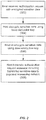
- FIG. 7 is a flow chart illustrating an implementation of format preserving encryption according to an embodiment. The operations described with reference to FIG. 7 may be performed, for example, by an access device or a host.
- a PAN is read.
- the PAN may be read by access device 104 from payment device 102.
- the PAN may be read from a PAN field of an authorization request message.
- At operation 704 at least a part of the PAN is encrypted such that the length of the encrypted PAN is equal to the length of the original PAN.
- the PAN may be encrypted by access device 104 or merchant host server 108.
- the encrypted PAN may be written to the PAN field of the authorization request.
- the expiration date can be read from the expiration date field of the authorization request message (or from the payment device).
- an altered expiration date can be written to the authorization request message.
- An altered expiration date may be generated by, for example, adding a number to the year portion of the original expiration date.
- the number added to the original expiration date may be a number between 5-99, such as a number between 10 and 50, e.g., 40. It will be recognized that alternative algorithms, such as subtraction of a number from the original expiration date, may be used.
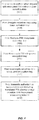
- FIG. 8 is a flow chart illustrating interpretation of data to determine whether format preserving encryption has been applied.
- the operations described with reference to FIG. 8 may be performed, for example, by merchant host server 108, a payment processing network 112-116, an issuer, an acquirer, etc.
- an authorization request message is received.
- the authorization request message may be received by merchant host server 108 or a payment processing network.
- decision diamond 802 it may be determined whether the year portion of an expiration date read from the expiration date field of an authorization request message is less than a particular number of years from the current date, e.g., 20 years from the current date. If the expiration year is less than 20 years from the current date, no signal for format preserving encryption is present in the authorization request message, as indicated at 804.
- unencrypted data of the PAN can be read from the PAN field, as indicated at operation 806.
- the unencrypted PAN data may be used for routing (e.g., by the merchant host server 108), fraud detection, authorization determination, or other purposes.
- FIG. 9 is an illustrative high level block diagram of a computer system that may be used to implement any of the entities or components described above (e.g., the access device, host, payment processing network, acquirer processor, etc.).
- the subsystems shown in FIG. 9 are interconnected via a system bus 902. Additional subsystems such as a printer 904, keyboard 906, fixed disk 908, and monitor 910, are coupled to display adapter 912. Peripherals and input/output (I/O) devices, which couple to I/O controller 914, can be connected to the computer system by any number of means known in the art, such as serial port 916.
- I/O input/output
- serial port 916 or external interface 918 can be used to connect the computer apparatus to a wide area network such as the Internet, a mouse input device, or a scanner.
- the interconnection via system bus 902 allows the central processor 920 to communicate with each subsystem and to control the execution of instructions from system memory 922 or the fixed disk 908, as well as the exchange of information between subsystems.
- the system memory 922 and/or the fixed disk 908 may embody a computer readable medium.
- the inventive service may involve implementing one or more functions, processes, operations or method steps.
- the functions, processes, operations or method steps may be implemented as a result of the execution of a set of instructions or software code by a suitably programmed computing device, microprocessor, data processor, or the like.
- the set of instructions or software code may be stored in a memory or other form of data storage element which is accessed by the computing device, microprocessor, etc.
- the functions, processes, operations or method steps may be implemented by firmware or a dedicated processor, integrated circuit, etc.
- any of the software components or functions described in this application may be implemented as software code to be executed by a processor using any suitable computer language such as, for example, Java, C++ or Perl using, for example, conventional or object-oriented techniques.
- the software code may be stored as a series of instructions, or commands on a computer-readable medium, such as a random access memory (RAM), a read only memory (ROM), a magnetic medium such as a hard-drive or a floppy disk, or an optical medium such as a CD-ROM.
- RAM random access memory
- ROM read only memory
- magnetic medium such as a hard-drive or a floppy disk
- optical medium such as a CD-ROM.
- Any such computer-readable medium may reside on or within a single computational apparatus, and may be present on or within different computational apparatuses within a system or network.
Landscapes
- Engineering & Computer Science (AREA)
- Computer Security & Cryptography (AREA)
- Business, Economics & Management (AREA)
- Accounting & Taxation (AREA)
- Physics & Mathematics (AREA)
- Theoretical Computer Science (AREA)
- General Physics & Mathematics (AREA)
- Signal Processing (AREA)
- Computer Networks & Wireless Communication (AREA)
- Finance (AREA)
- Strategic Management (AREA)
- General Business, Economics & Management (AREA)
- General Engineering & Computer Science (AREA)
- Computer Hardware Design (AREA)
- Health & Medical Sciences (AREA)
- Bioethics (AREA)
- General Health & Medical Sciences (AREA)
- Software Systems (AREA)
- Computing Systems (AREA)
- Financial Or Insurance-Related Operations Such As Payment And Settlement (AREA)
- Cash Registers Or Receiving Machines (AREA)
- Storage Device Security (AREA)
Abstract
Description
- The present application is related to
U.S. Provisional Application No. 61/583,550, filed on January 5, 2012 U.S. Provisional Application No. 61/607,546, filed on March 6, 2012 U.S. Provisional Application No. 61/704,428, filed on September 21, 2012 - Financial account data can be protected from unauthorized access through measures such as encryption of data within devices having hardware-based security controls. However, existing security measures, such as encrypting a personal identification number (PIN), may leave sensitive data, such as a primary account number (PAN) exposed. Existing solutions for protecting sensitive data may require application of key management schemes that differ from those used to encrypt PIN data, increasing the burden to merchants of providing security for financial data.
- Merchants may protect financial account data by routing all transactions to a single destination for payment processing. However, when routing an authorization request for a transaction, a merchant may be able to select a payment processing network among multiple available payment processing networks. It may be necessary for the merchant to provide for decryption of information in the authorization request message and re-encryption of information based on the routing destination of the authorization request message. Some payment processing networks may lack an encryption solution for sensitive data. A merchant may wish to utilize the encryption measures provided by a first payment processing network while continuing to have the ability to route authorization requests to alternative payment processing networks.
- Embodiments described herein solve these and other problems.
- Techniques are provided for protecting sensitive data when an authorization request for a transaction is routed in an environment comprising a plurality of payment processing network options.
- In one embodiment, a method is described. The method includes encrypting a personal identification number (PIN) by an access device. The PIN encryption uses a first encryption key variant based on an initial key. The access device encrypts sensitive data using a second encryption key variant based on the initial key. An authorization request message including the encrypted PIN and encrypted sensitive data are transmitted to a host server.
- In another embodiment, a method includes receiving an authorization request message at a host server. A secure module communicatively connected to the host server decrypts the encrypted sensitive data. The secure module re-encrypts the decrypted sensitive data with a first sensitive data zone encryption key associated with the first payment processing network. A first translated authorization request message including the re-encrypted sensitive data is transmitted by the host server to the first payment processing network. In a further embodiment, the authorization request message received at the host server includes a PIN. The secure module decrypts the encrypted PIN and re-encrypts the decrypted PIN with a first PIN zone encryption key associated with the first payment processing network. The first translated authorization request message includes the re-encrypted PIN. In an additional embodiment, the secure module is configured to transmit a second translated authorization request message to a second payment processing network. A second PIN zone encryption key is used for re-encryption of a PIN for the second translated authorization request message and a second sensitive data zone encryption key is used for re-encryption of sensitive data for the second authorization request message.
- Another embodiment of the technology is directed to a system. The system includes a processor and a computer readable medium coupled to the processor. The computer readable medium comprises code executable by the processor for implementing a method comprising encrypting a personal identification number (PIN) by an access device. The PIN encryption uses a first encryption key variant based on an initial key. The access device encrypts sensitive data using a second encryption key variant based on the initial key. An authorization request message including the encrypted PIN and encrypted sensitive data are transmitted to a host server.
- A further embodiment of the technology is directed to a system. The system includes a processor and a computer readable medium coupled to the processor. The computer readable medium comprises code executable by the processor for implementing a method comprising receiving an authorization request message at a host server. The authorization request message includes encrypted sensitive data. A secure module communicatively connected to the host server decrypts the encrypted sensitive data. The secure module re-encrypts the decrypted sensitive data with a first sensitive data zone encryption key associated with the first payment processing network. A first translated authorization request message including the re-encrypted sensitive data is transmitted by the host server to the first payment processing network.
- In a further embodiment, a method includes receiving data associated with a personal account identifier (PAI). An access device can encrypt the PAI. The encrypted PAI can have the same format as the PAI. The encrypted PAI is written to a field of an authorization request message. The field of the authorization request message is a field that is designated to receive a PAI. An authorization request message data element is used as a signal to identify the presence of the encrypted PAI in the authorization request message. The access device transmits the authorization request message.
- These and other embodiments are described in further detail below.
-
-
FIG. 1 shows an exemplary system in which embodiments of the technology can be implemented. -
FIG. 2 is an illustrative flowchart for encryption of PIN and sensitive data at the access device and merchant host. -
FIG. 3 is an illustrative flowchart for translation of sensitive data at the host. -
FIG. 4 is an illustrative flowchart for translation of PIN and sensitive data at the host. -
FIG. 5 is a table showing an illustrative specification for the structure and content of track one of a payment device. -
FIG. 6 is a table showing an illustrative specification for the structure and content of track two of a payment device. -
FIG. 7 is a flow chart illustrating an implementation of format preserving encryption according to an embodiment. -
FIG. 8 is a flow chart illustrating interpretation of data to determine whether format preserving encryption has been applied. -
FIG. 9 depicts an illustrative high level block diagram of a computer system. - Embodiments disclosed herein are directed to techniques for protecting financial data in an authorization request message. Terms used to describe embodiments herein can be understood with reference to the descriptions provided below.
- An "authorization request message" can be a request to authorize a transaction. The authorization request message can be sent to an issuer of a payment account to request authorization of a transaction performed with the payment account. A merchant may generate the authorization request message. The authorization request message may be transmitted to the issuer via an acquirer.
- The authorization request message may have a defined format to facilitate requests and responses between points in a financial network. For example, an authorization request message may be a standardized interchange message such as a message that complies with International Organization for Standardisation (ISO) 8583, which is a standard for systems that exchange electronic transactions. An ISO 8583 message can include a message type indicator, one or more bitmaps indicating which data elements are present in the message, and data elements of the message. The data included in the authorization request message may include data obtained from a payment device as well as other data related to the transaction, the payment account holder, and the merchant. For example, the authorization request message can include a personal identification number (PIN), and sensitive data such as a primary account number (PAN), cardholder name, and discretionary data. Additionally, the authorization request message can include payment device expiration date, currency code, transaction amount, a merchant transaction stamp, acceptor city, acceptor state/country, routing transit number, terminal identification, network identification, etc. An authorization request message may be protected using encryption in order to prevent data from being compromised.
- The authorization request message may include a payment account identifier. The payment account identifier may be associated with a portable consumer device, such as a credit card or debit card. For example, a payment account identifier may be a primary account number (PAN). The PAN may be a unique payment card number, such as a credit card account number associated with a credit card or a debit account number associated with a debit account. The PAN may identify the issuer as well as the cardholder account. Where the term PAN is employed herein, it will be understood that any payment account identifier could be used.
- A personal identification number (PIN) can be a numeric password shared between a user and a system and used to authenticate the user to the system. A PIN block can be an encrypted block of data used to encapsulate a PIN. The PIN block may be composed of the PIN, the PIN length, and a subset of the PAN.
- Issuer discretionary data (IDD), also referred to as "discretionary data," can be data residing in
Track 1 and/orTrack 2 of a magnetic strip or a chip of a payment device or otherwise associated with a payment account. The IDD may be variable in length and may contain customer and/or card verification data such as a PIN offset value, PIN verification value (PVV), card verification value (CW), etc. The IDD may also include other data defined by card brands and/or issuers, such as information used in a loyalty program, fleet data, etc. - An "acquirer" is typically a business entity (e.g., a commercial bank) that has a business relationship with a particular merchant. For example, the acquirer may deposit funds into a merchant bank account and recoup those funds from issuers.
- An "issuer" is typically a business entity (e.g., a bank or credit union) which issues a payment device to an account owner and provides administrative and management functions for the payment account. Some entities may perform both issuer and acquirer functions. A payment account may be any account usable in a transaction, such as a credit, debit or prepaid account.
- A "payment device" may refer to a device used to initiate a transaction, such as a portable consumer device or a portable communication device. The payment device may interface with an access device such as a point of sale device to initiate the transaction. Typically, a portable consumer device is hand-held and compact so that it can fit into a consumer's wallet or pocket (e.g., pocket sized). Specific examples of portable consumer devices include payment cards such as smartcards, debit devices (e.g., a debit card), credit devices (e.g., a credit card), or stored value devices (e.g., a stored value card or "prepaid" card). A portable communication device, also referred to as a "mobile device," may be, for example, a cellular or wireless telephone (e.g., a smartphone), personal digital assistant (PDA), portable computer (e.g., tablet or laptop computer), pager, or other portable device carried by the payment account holder.
- An "access device" may refer to a device that receives information from a payment device to initiate a transaction. For example, an access device may be a point of sale device configured to read account data encoded in a magnetic stripe or chip of a card-format portable consumer device. Other examples of access devices include cellular phones, PDAs, personal computers, server computers, tablets, handheld specialized readers, set-top boxes, electronic cash registers, automated teller machines (ATMs), virtual cash registers, kiosks, security systems, access systems, and the like. Access devices may use means such as radio frequency (RF) and magnetic stripe readers to interact with a payment device. The access device may be a device located at a merchant's physical location or may be a virtual point of sale such as a web-site that is part of an eCommerce (electronic commerce) transaction. In an eCommerce transaction, the account owner may enter payment account data into a portable communication device, personal computer, or other device capable of communicating with a merchant computer. In other card not present transactions, such as mail-order or telephone-order transactions, information may be entered into a merchant computer serving as an access device. In a further example, communication may occur between a contactless element of a portable communication device and an access device, such as a merchant device reader or point of sale terminal, by using a wireless communications mechanism, such as near field communications (NFC), RF, infra-red, optical communications, etc.
- A "payment processing network" may include a system that receives an authorization request message. The payment processing network may obtain information from the authorization request message to use in determining whether to approve a transaction associated with the authorization request message. The payment processing network may send an authorization response message to the merchant indicating whether a transaction is approved. In some embodiments, the payment processing network may perform a settlement process, which can involve posting the transactions to the accounts associated with the payment devices used for the transactions and calculating the net debit or credit position of each user of the payment devices. A payment processing network may be operated by an acquirer and/or an issuer.
- A "host" may be one or more systems, such as a server, responsible for performing merchant transaction processing, routing decision and/or capture. The host may be resident at a merchant, gateway, processor or other entity. In some embodiments, a host may be associated with a merchant direct exchange (MDEX), value added reseller (VAR), or other connectivity model. Where the term "merchant host server" is used herein, it will be recognized that any server, such as a payment processor server, could be used.
- A "tamper-resistant security module" (TRSM) is a device that incorporates physical protections to prevent compromise of cryptographic security parameters contained by the device. TRSMs are available with varying levels of protection. A TRSM that is tamper-resistant may employ physical measures such as hardened casing to make intrusion into the device difficult. A tamper-evident TRSM may have hardware features to make intrusion attempts evident to subsequent viewers, such as a seal that would be broken during intrusion into the device. A tamper-responsive TRSM may be configured to detect an intrusion attempt and destroy sensitive information, such as cryptographic security parameters, should an intrusion attempt occur.
- A "hardware security module" (HSM) is a TRSM with a secure cryptoprocessor that can manage digital keys, accelerate cryptoprocesses and/or provide strong authentication for accessing critical keys for server applications. An HSM may provide both logical and physical protection of sensitive information from non-authorized access. The HSM may be a physical device in the form of a plug-in card or external security device. The HSM may be communicatively coupled to a host.
- Payment card industry data security standards (PCI DSS) are a set of requirements applicable to entities involved with transaction processing. The purpose of the requirements is to maintain the security of financial data.
- Derived Unique Key Per Transaction (DUKPT) is a key management scheme that can derive a unique transaction key for each transaction. DUKPT uses a base derivation key (BDK) that is typically known only to the party that initializes a TRSM and recipient of a message encrypted by the TRSM. The TRSM is typically injected with an initial key that is derived from the BDK. A transaction key may be derived from the initial key. If a derived key is compromised, future and past transaction data remain protected because the next or prior keys cannot be easily determined from the derived key. DUKPT can be used for the encryption of data associated with electronic commerce transactions, such as a PIN and/or sensitive data.
- For example, a PIN pad may include a TRSM injected with a unique initial key and a key serial number. The PIN pad may generate a unique key for each transaction. An authorization request message generated by the PIN pad may include an encrypted PIN block and the key serial number. The authorization request message may be transmitted from the PIN pad to a merchant host server having its own TRSM. The merchant host server TRSM can use a key serial number (KSN) to retrieve the base derivation key (BDK) used in the generation of the unique initial PIN pad key. The TRSM can use the BDK and the KSN to decrypt the encrypted data.
- Triple Data Encryption Algorithm (TDEA), also referred to as "Triple Data Encryption Standard", "3DES," "Triple DES" and "TDES," is a block cipher that applies the Data Encryption Standard (DES) cipher algorithm three times to each block of data being encrypted.
- A "Zone Encryption Key" (ZEK) can indicate one or more keys used to encrypt data between two specific points (e.g., between a host and a payment processing network). Separate ZEKs may be used for PIN and for sensitive data. In a preferred embodiment, ZEKs are used only for sensitive data encryption between parties, and is preferably not the same as PIN, MAC or other specific encryption keys
- A "server" can include one or more computers. Multiple computers of a server may be communicatively coupled via network connections, such as wired, wireless, and/or internet network connections. One or more of the computers of a server may store databases.
- When a payment device is used for a transaction, an authorization request message may be generated for the transaction. The authorization request message may include a personal identification number (PIN) and sensitive data such as a primary account number (PAN), cardholder name, cardholder address, issuer discretionary data, or other sensitive data. Sensitive data may be data that is stored with a payment device, such as in the magnetic stripe or in a chip of the payment device. Alternatively, storage data may be data provided by a user to an access device, such as cardholder address information provided by a user in the course of an e-commerce or other card not present transaction. The PIN and sensitive data may be encrypted by an access device that receives information from the payment device. The PIN and sensitive data may be encrypted using encryption key variants based on an initial key injected into the access device.
-
FIG. 1 shows anexemplary system 100 in which embodiments of the technology can be implemented.System 100 includes one or more server computers, data processing subsystems and networks that can be used to initiate an authorization request message for a transaction and route the authorization request message to an entity capable of approving the transaction. Where only one of each component is shown, it is understood that embodiments of the technology may include more than one of each component. In addition, some embodiments of the technology may include fewer than all of the components shown inFIG. 1 . Also, the components inFIG. 1 may communicate via any suitable communication medium (including the internet), using any suitable communication protocol. - In a typical transaction, a payment device 102 interfaces with an
access device 104 to initiate a transaction.Access device 104 may include access device tamper resistant security module (TRSM) 106.Access device TRSM 106 may be physically and/or communicatively coupled to (or may be an integral component of)access device 104. Access information can receive information associated with payment device 102, including sensitive data, when payment device 102 interfaces withaccess device 104. In some embodiments,access device 104 receives sensitive data and/or a PIN from a device storing account information, such as a portable communication device. - In an illustrative example, payment device 102 may be a credit card and
access device 104 may be a PIN pad housed in a TRSM. The PIN pad may have a user interface for receiving numerical input indicating PIN passwords and a magnetic stripe reader for obtaining track data from the magnetic stripe of a payment device. - In other embodiments, payment device information may be user input that is received by
access device 104. PIN data may be received from payment device 102 or from user input received byaccess device 106. - When
access device 104 receives data such as PIN and payment device information,TRSM 106 may encrypt the data. In some cases, it may be necessary to obtain a PAN prior to encrypting the PIN. Sensitive data such as PAN, cardholder name, cardholder address, and discretionary data may be determined from the information received from payment device 102. The sensitive data may be parsed from track data obtained byaccess device 104 from payment device 102. In some embodiments,access device 106 encrypts the PIN by generating a PIN block based on the PIN, PIN length, and a subset of the PAN.Access device 104 may encrypt sensitive data including one or more of PAN, cardholder name, cardholder address, discretionary data, and any other information to be treated as sensitive data. -
Access device TRSM 106 may store an initial key used for encrypting data. For each transaction, one or more transaction keys may be derived from the initial key. It may be necessary for different transaction keys to be applied to PIN and sensitive data for compliance with regulations such as PCI DSS. The PIN may be encrypted using a first transaction key derived from the initial key and sensitive data may be encrypted using a second transaction key derived from the initial key. In this manner, both the PIN and the sensitive data can be encrypted using the same key management scheme (such as DUKPT) and the same encryption algorithm (such as TDEA). - An authorization request message including encrypted PIN data and encrypted sensitive data may be generated by
access device 104 and transmitted tomerchant host server 108. The authorization request message may include designated fields for various types of data. When encryption is applied to data in an authorization request message, the encryption may change parameters (such as data type, data length, etc.) of a field associated with the encrypted data. Due to the changed parameters, the encrypted data may be placed in a new field. For example, an authorization request message may include a field sized to accommodate a PAN. When the encryption is applied, the PAN and other sensitive data may be placed in one or more alternative fields of the authorization request message. A field may be added to an authorization request message to signal that the encrypted PAN is located in an encrypted PAN field. Sensitive data such as a PAN, a cardholder name, and discretionary data may be encrypted ataccess device 104 and placed in individual elements within a field of an authorization request message, such as field 53 of an ISO formatted authorization request message. - In some embodiments, format preserving encryption is applied to sensitive data in the authorization request message. For example, when format preserving encryption is used, a subset of the digits of the PAN may be replaced with encrypted values while particular digits of the PAN remain unchanged. In a preferred embodiment, the first six digits and the last four digits of the PAN remain unchanged and the middle digits are replaced with encrypted values. In this manner, the authorization request message can be handled by payment processing networks that are not configured to handle authorization request messages having alternative fields for storing encrypted data. To signal the presence of encrypted data within the PAN field of the authorization request message, an altered expiration date may be included in the expiration date field of the authorization request message. For example, the authorization request message may contain an expiration date that is 40 years after the expiration date associated with the payment device used for a transaction.
-
Merchant host server 108 may includemerchant host TRSM 110.Merchant host TRSM 110 may be communicatively and/or physically coupled to or an integral component ofmerchant host server 108. In some embodiments,merchant host TRSM 110 may be located remotely from the premises ofmerchant server 108. In order to route transactions to multiple payment processing networks, a merchant may need to have amerchant host TRSM 110 to translate encrypted data in the authorization request message. For example, it may be necessary to translate keys at amerchant host TRSM 110 for compliance with PCI DSS standards limiting the exposure of keys associated withaccess device TRSM 106. Whenmerchant host server 108 is configured to route authorization request messages to multiple payment processing networks 112-116,merchant host server 108 may translate encrypted data into a Zone Encryption Key (ZEK) associated with a particular payment processing network.Merchant host server 108 may determine how to route an authorization request message based on information contained in the authorization request message. For example, the first six digits of a PAN field containing a PAN encrypted according to a format preserving encryption method may be used bymerchant host server 108 to determine how to route the authorization request message. - Translation by
merchant host TRSM 110 can include decryption of PIN and sensitive data in the authorization request message received fromaccess device 104 and re-encryption of the PIN and sensitive data using one or more Zone Encryption Keys (ZEK). A ZEK may be associated with a particular payment processing network. The ZEK is typically a shared key between a payment processing network andmerchant host server 108. It may be necessary to apply different ZEKs to PIN and to sensitive data, e.g., for compliance with PCI DSS. The translation may be performed byMerchant Host TRSM 110 such that decrypted PIN and sensitive data are never exposed tomerchant host server 108.Merchant host server 108 may transmit an authorization request message including the translated PIN and sensitive data to the one of payment processing networks 112-116 to which the authorization request message is to be routed. - In some embodiments,
merchant host server 108 may route an authorization request message to a payment processing network that is not configured to handle encrypted data. In such embodiments, encrypted sensitive data may be decrypted and an authorization request message including the decrypted sensitive data may be transmitted frommerchant host server 108 to the payment processing network. - The payment processing network that receives the authorization request message may decrypt the PAN or other sensitive data and may also verify the PIN. The payment processing network may determine whether the transaction is authorized. In some cases, the authorization request message can be transmitted to an issuer server which may determine whether the transaction is authorized. An authorization response message indicating whether the transaction was authorized may be routed back to
merchant host server 108 from the issuer and/or payment processing network that received the authorization request message. The authorization response may be displayed by theaccess device 104, printed on a receipt, or otherwise conveyed to the payment account holder. - It will be understood that a server associated with a payment processing network or other entity and associated TRSM can be used in lieu of
merchant host server 108 andmerchant host TRSM 110. - A clearing and settlement process is typically conducted by each of the payment processing networks at a fixed time. The fixed time may vary from one network to another. A clearing process Is a process of exchanging financial details between an acquirer and an issuer to facilitate posting to the payment account holder's account and reconciliation of the consumer's settlement position.
- Within a TRSM, data may be encrypted and/or decrypted using DUKPT and TDES. It will be recognized that other key management systems (such as master/sesion and fixed key) and/or other encryption algorithms (such as RSA, DEA, ECIES, AES, or other encryption algorithms) could be applied.
-
FIG. 2 is an illustrative flowchart for encryption of PIN and sensitive data at the access device and merchant host. Atoperation 202, the cardholder can present a payment device 102 ataccess device 104. Atoperation 204,access device 104 can read data from payment device 102, such as track data stored in the magnetic stripe of the payment device. The data read from payment device 102 can include sensitive data, such as a PAN, cardholder name, and discretionary data. Atoperation 206,access device 104 can receive a PIN, such as a PIN entered at a user interface ofaccess device 104. - At
operation 208,access device 104 can encrypt the PIN using a first key. The first key may be a first transaction specific key derived from a key injected intoaccess device 104. Atoperation 210,access device 104 can encrypt sensitive data using a second key. Sensitive data may include one or more of a PAN, cardholder name, discretionary data, cardholder address, and any other sensitive data received byacess device 104. The second key may be a second transaction specific key derived from a key injected intoaccess device 104. Atoperation 212,access device 104 can generate an authorization request message including the encrypted PIN and encrypted sensitive data and transmit the authorization request message to a host server, such asmerchant host server 108. - In some embodiments, an host device may receive an authorization request message including encrypted sensitive data from an access device. The authorization request may or may not include an encrypted PIN. For example, an access device may receive sensitive data from a credit card or other payment device for a transaction that does not require a PIN number. In such embodiments, a host device may translate sensitive data.
-
FIG. 3 is an illustrative flowchart for translation of sensitive data at the host. Atoperation 302, a host such asmerchant host server 108 receives an authorization request message including encrypted sensitive data fromaccess device 104. The host may parse the sensitive data from the authorization request message. At operation 304, the host may decrypt sensitive data using information derived from a base derivation key. To translate the sensitive data, the host may decrypt the sensitive data using the information derived from the base derivation key associated withaccess device 104, as indicated at operation 304, and re-encrypt the sensitive data using a zone encryption key, as indicated at operation 306. Atoperation 308, the host may transmit an authorization request message to the payment processing network. - In some embodiments, a host may receive an authorization request message including an encrypted PIN and encrypted sensitive data. The host may translate the PIN and the sensitive data.
-
FIG. 4 is an illustrative flowchart for translation of PIN and sensitive data at the host. Atoperation 402, a host such asmerchant host server 108 receives an authorization request message including an encrypted PIN and encrypted sensitive data fromaccess device 104. Decrypted sensitive data such as a decrypted PAN may be needed for decryption of the PIN. The host may parse the sensitive data from the authorization request message. At operation 404, the host may decrypt sensitive data using information derived from a base derivation key. The host may parse the PIN from the authorization request message. At operation 406, the host may decrypt the PIN using the information derived from the base derivation key, and, in some cases, also using the decrypted PAN. To translate the PIN, the host may re-encrypt the PIN using a zone encryption key, as indicated at operation 408. In some embodiments, the PIN is re-encrypted using the zone encryption key and the decrypted PAN. To translate the sensitive data, the host may re-encrypt the sensitive data using a zone encryption key, as indicated at operation 410. - In some embodiments, separate zone encryption keys may be used to encrypt the PIN and the sensitive data. For example, a PIN-specific zone encryption key may be used or generated for use in encrypting PIN numbers, and a sensitive-data-specific zone encryption key may be used or generated for use in encrypting sensitive data. Furthermore, each payment processing network 112-116 may use one or more zone encryption keys that are specific to the particular payment processing network. Thus, a first PIN-specific zone encryption key and a first sensitive-data-specific zone encryption key can be used for translation when an authorization request message will be routed to a first
payment processing network 112, and a second PIN-specific zone encryption key and a second sensitive-data-specific zone encryption key can be used for translation when an authorization request message will be routed to a secondpayment processing network 114. -
Merchant host server 108 may determine which payment processing network of payment processing networks 112-116 is to receive the authorization request message. Atoperation 412, themerchant host server 108 may transmit an authorization request message including the translated (re-encrypted) PIN and translated (re-encrypted) sensitive data to the determined payment processing network. - In some embodiments,
merchant host server 108 includes "white list" support for allowing specific card ranges defined by the merchant or payment processing network to be excluded from protection. When sensitive data is encrypted ataccess device 104, a part of the sensitive data may be may be maintained in cleartext for use ataccess device 104. For example, some or all of the data in the discretionary data field or other field of the track data on the magnetic stripe of payment device 102 may remain unencrypted in the authorization request message. Merchants that use data in the discretionary data field for loyalty programs, fleet programs, or the like may require that this data remain unencrypted for data gathering or other purposes. - In some embodiments, a cardholder name and/or data in the discretionary data field may be made available to the access device prior to encryption. For example, if an application executed by the access device or another merchant device uses this sensitive data (e.g., displaying a cardholder name at a cash register communicatively connected to a PIN pad device), the sensitive data may be exposed to the merchant device prior to encryption.
- As discussed above, a chip or magnetic stripe in a payment device may have one or more tracks (typically three tracks, referred to as "track one," "track two," and "track three") that hold data. The data may be formatted in accordance to a standardized structure.
FIGS. 5 and6 are tables showing illustrative specifications for payment device track data. It will be recognized that track data having the structure described inFIGS. 5 and6 may be stored in association with a payment account on a portable media device or other device used for ecommerce or other card not present transactions. -
FIG. 5 is a table showing an illustrative specification for the structure and content of track one of a payment device.Track 1 is encoded with a 7-bit scheme that is based on ASCII.Track 1 fields can include a start sentinel (such as "%"), indicating the position at which the formatted track data begins. - A format code (such as "B," indicating a financial institution) is typically the next character in
track 1. - The Primary Account Number (PAN) can be comprised of a six digit Issuer Identification Number (IIN), a variable length (maximum 12 digits) individual account number and a check digit. The end of the data associated with the PAN can be indicated with a separator character, such as a caret (^).
- The name field may include a single alpha character (as surname) and the surname separator. The space character may be required to separate the logical elements of the name field other than the surname. The separator terminating the name field may be encoded following the last logical element of the name field. If only the surname is encoded, the Field Separator (FS), such as "^" can follow the surname. In some embodiments, the name field includes a surname, followed by a surname separator (e.g., the "/" character), followed by a first name or initial, followed by a space, followed by a middle name or initial. The name can additionally include a period after the middle name or initial, followed by a title. The name is typically ended with a separator (the character "^"). For example, the name John C. Smith may be encoded as "SMITH/JOHN C".
- The expiration field of track one may have the format YYMM, where 'YY' represents the last two digits of the year and 'MM' is the numeric representation of the month.
- The service code may be a numeric field with three sub-fields represented by individual digits. Typically, the service code is used to indicate the issuer's acceptance criteria for magnetic stripe transactions and whether a related integrated circuit supporting the equivalent application as identified by the magnetic stripe or embossing is present on the card. Each sub-field of the service code can be identified by its position (
position - Issuer discretionary data may follow the service code. The end of the track is indicated by an end sentinel, such as a question mark character ("?"). Following the end sentinel, a longitudinal redundancy check character (LRC) may be included.
-
FIG. 6 is a table showing an illustrative specification for the structure and content of track two of a payment device. The character codes in track two are based on a 5-bit scheme that is based on ASCII. Track two may contain similar fields to those contained in track one, as described above, but may lack a cardholder name field. - In some embodiments, PIN data may be stored on and read from track three of a payment device.
- After encryption is performed on data fields associated with payment device 102, encrypted information may be stored in one or more alternate fields of the authorization request message and obfuscated data may be stored in the original fields of the authorization request message. For example, data may be read from the PAN, cardholder name, and discretionary data fields associated with payment device 102. Obfuscated data may be written to the fields of the authorization request message designated for the PAN, cardholder name, and discretionary data and encrypted versions of the PAN, cardholder name and discretionary data may be written to one or more alternate fields of the authorization request message.
- In an illustrative example, for an authorization request message that complies with ISO standards, an alternate field such as ISO field 53 may be defined to receive encrypted data and associated encryption attributes. The new definition of ISO field 53 may conform to the "composite" field type as defined in the ISO standard. The new field 53 may receive encrypted PIN block data and encrypted sensitive data. When zone encryption is applied to an authorization request message, zone encryption may be applied to field 53.
- When obfuscated data is written to a PAN field of an authorization request message, some digits of the PAN in the retained PAN field can be maintained and other digits of the PAN can be obfuscated. For example, a subset of digits of the PAN, e.g. digits 7-12 (the "middle six" digits) of the PAN, can be obfuscated, while other digits, such as the first six and last four digits of the PAN, remain as plain text. Obfuscation may be performed, for example, by replacing digits 7-11 of the PAN with the number 9 and replacing digit 12 of the PAN with a number calculated to insure that the last digit of the PAN is a valid check digit. Because the remaining digits of the PAN, such as the first six digits and the final four digits, are not obfuscated, the remaining digits can be used for functions such as routing and receipt determination. In this manner, systems that are designed to handle data contained in the PAN field can function normally although the PAN is protected through obfuscation of the middle six digits. The encrypted PAN stored in an encrypted PAN field can be decrypted, allowing the decrypted (original) PAN to be written into the PAN field.
- It may be desirable to encrypt data contained in the authorization request message without altering the format of the authorization request message. For example, some systems may not be designed to handle an authorization request message having an added encrypted PAN field. Format preserving encryption may be applied to sensitive data such as PAN, cardholder name and discretionary data from
track 1 andtrack 2 of the track data associated with payment device 102. - A PAN may be encrypted such that the resulting encrypted PAN has the same size as the original PAN. In this manner, the encrypted PAN can be written to the original PAN field of the authorization request message, and no alternate field of the authorization request message is required to receive an encrypted PAN. Some digits of the PAN may remain unencrypted when format preserving encryption is applied to the PAN. For example, the first six and last four digits of the PAN may remain unencrypted to allow for routing and other functions dependent on data contained in these digits.
- Format preserving encryption may function differently for PANs that contain valid check digits. An algorithm for determination of valid check digits may be as defined in ISO standards. The check digit, which is typically the final digit of the PAN, may be a digit computed from the other digits in the message that can be used to determine whether all digits of the PAN were correctly received. The check digit may be used to detect transmission errors. In some embodiments, the last digit of digits 7-12 (the "middle six" digits) of the PAN is calculated such that the original last digit of the unencrypted PAN is still a valid check digit for the PAN encrypted with format preserving encryption. When a PAN does not contain a valid check digit, all middle digits may be encrypted with a format preserving encryption algorithm.
- Sensitive data may be converted into the a base-10 alphabet prior to encryption. After the format preserving encryption algorithm has been applied, the resulting encrypted characters in base-10 alphabet form may be converted to the original code set and format of the original sensitive data. The converted encryption result may be used to replace the original fields for sensitive data such as PAN, cardholder name, discretionary data, etc. in the authorization request message.
- Typically, it will not be apparent from the data in the fields to which format preserving encryption has been applied that the data has been encrypted. A signal may be used in an existing data field of the authorization request message to indicate that a field of an authorization request message contains encrypted data. To implement the signal, a field of the authorization request message that does not contain encrypted data can be overwritten with new contents that are a modified version of the original contents of the field. For example, an expiration date in an expiration date field of the authorization request message can be replaced with an altered expiration date. In one embodiment, the altered expiration date is obtained by adding a number to the expiration date or a portion of the expiration date. For example, a number such as 40 may be added to the year portion of the expiration date. If an expiration date field of an authorization request message contained an expiration date of "01/13," indicating an expiration date of January 2013, the
number 40 can be added to year portion 13 and the resulting altered expiration date "01/53" can be written to the expiration date field. If a transaction takes place in 2013, a device reading the expiration date portion of the authorization request message may be able to determine that the expiration date is an altered expiration date because payment devices are typically issued with an expiration date that is under 20 years (e.g., 1-10 years) from the date the card issues. On this basis, it can be determined that an expiration date that is over twenty years past the present date is an altered expiration date. - In some embodiments, the last digit of the PAN may not contain a valid check digit. For example, the last digit of the PAN may not have a check digit as specified by ISO/IEC standard 7812-1. In cases where the last digit of the PAN is not a valid check digit, the number 20 may be added to the month of the expiration data before the altered expiration date is written to the expiration date field of the authorization request message.
- In some embodiments, the expiration date field may be missing from the information received by
access device 104. For example, a card read or key entry may have errors or otherwise lack the expiration date. Thenumber 40 may be added to the month of the expiration date created in the format preserving encryption process before the altered expiration date is written to the expiration date field of the authorization request message. - Below, an exemplary algorithm for format preserving encryption is described. The format preserving encryption algorithm may operate as a stream cipher that is format preserving. For example, the format preserving encryption may be similar to the Counter Mode (CTR) from the National Institute Standards and Technology (NIST) standard SP800-38A, generalized to modulo-n addition instead of modulo-2 addition.
- In the format preserving algorithm, A may be an alphabet with n different characters, where n is a natural number greater than 1. A* may be denoted as the set of strings with elements from A, including the empty string. In this description it is assumed that the alphabet A is the set {0, ...,n-1}. If this is not the case, a translation is needed, based on the number of different characters in the alphabet A. The translation may happen prior to encryption, and again, after decryption, so that encryption and decryption will always work on alphabets of the form {0, ...,n-1} for some positive integer n, greater than 1.
- The format preserving encryption algorithm may use Counter (CTR) mode as defined in SP800-38A with a block cipher CIPH (AES or TDEA) with block size b bits, and encryption key K for CIPH, and a sequence of counter blocks (called counters in SP800-38A) T1 , T2, ... , to produce a sequence of output blocks, one for each counter block. Each output block consists of k base-n digits, where k is a configurable parameter which must be chosen from the interval {1,...,[log n 2 b ]}. For reasons explained below, each counter block is b-7 bits, rather than b bits as in SP800-38A. The mechanism for how to produce the output blocks is also described below.
- To encipher a plaintext P of length L, with 1≤L, as many output blocks as necessary (but no more) are generated, so that the total number of base-n digits in the output blocks is at least L, that Is, we calculate the unique integers p and r such that


- Since k may not divide L, some digits of the last output block, Gp may be ignored. The last r base-n digits of Gr are not used.
- To decipher a ciphertext C of length L, with 1≤L, as many output blocks as necessary (but no more) are generated, so that the total number of base-n digits in the output blocks exceed L, which is done in the same way as for encryption. Then from each ciphertext base-n digit C[i] is subtracted, modulo-n, the ith base-n digit from the concatenation of the output blocks, G1 ∥...∥Gp , to form the ith digit of the plaintext:

- For format preserving encryption, as for Counter mode itself, the sequence of counter blocks must have the property that each block in the sequence is different from every other block. This condition is not restricted to a single encryption: across all of the messages that are encrypted under a given key K, all counters must be distinct. SP800-38A describes methods for generating counters.
- Given a block cipher CIPH with block length b, a key K for CIPH, a b-7 bit counter T, a natural number n>1, which is the base of the plaintext to be enciphered, and an Integer k with 0 < k ≤ └log n (2 b )┘, an output block consisting of k base-n digits is produced in the following way:
- A 7-bit counter, S, is initialized to 0. Then CIPHK is applied to S∥T to produce a block B of b bits. B is interpreted as an integer in the interval {0,...,2 b -1}, and if
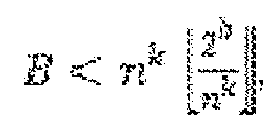

- Here It is assumed that S 0, S 1, ..., S 127 enumerate the 128 different 7-bit combinations, that "AsInteger" takes a string of b bits B[1], ..., B[b] and converts it to the integer

                         Convert(B, k, n) {
                                M = AsInteger(B);
                                for (i=1; i≤k; i++){
                                      D[i] = M mod n;
                                      M = M div n;
                                };
                                return D; }

- 1. A method comprising: receiving, by an access device, a personal identification number (PIN) and sensitive data;
encrypting, by the access device, the PIN, wherein PIN encryption uses a first encryption key variant based on an initial key;
encrypting, by the access device, the sensitive data, wherein sensitive data encryption uses a second encryption key variant based on the initial key; and transmitting, to a host server, an authorization request message including the encrypted PIN and encrypted sensitive data. - 2. The method of
clause 1 , wherein the initial key is generated by a derived unique key per transaction (DUKPT) key management scheme. - 3. The method of clause , wherein at least one of the PIN and the sensitive data are encrypted using Triple DES Encryption Algorithm (TDEA).
- 4. The method of
clause 1, wherein the sensitive data includes at least one of a primary account number (PAN), a cardholder name, a cardholder address, and discretionary data. - 5. The method of
clause 1, wherein a subset of discretionary data remains unencrypted when discretionary data is included in encrypted sensitive data. - 6. The method of
clause 1 , wherein an encrypted PAN is written to the PAN field of the authorization request message, wherein the encrypted PAN has the same format as the unencrypted PAN. - 7. The method of clause 8, wherein a subset of digits of the unencrypted PAN remain unencrypted in the encrypted PAN.
- 8. The method of clause 6, wherein an expiration date field of the authorization request message is overwritten with an altered expiration date to indicate that the PAN field of the authorization request message contains an encrypted PAN.
- 9. The method of
clause 1, wherein the access device is a point of sale terminal. - 10. The method of
clause 1, wherein the access device receives information, associated with an e-commerce transaction. - 11. A method comprising:
- receiving, by a host server, an authorization request message, wherein the authorization request message includes encrypted sensitive data;
- decrypting, by a secure module communicatively connected to the merchant server, the encrypted sensitive data;
- re-encrypting, by the secure module, the decrypted sensitive data, wherein the sensitive data re-encryption uses a first sensitive data zone encryption key associated with the first payment processing network; and
- transmitting, by the host server, a first translated authorization request message to the first payment processing network, wherein the translated authorization request message includes the re-encrypted sensitive data.
- 12. The method of clause 11 , wherein the authorization request message further includes an encrypted PIN, the method further comprising:
- decrypting, by the secure module, the encrypted PIN; and
- re-encrypting, by the secure module, the decrypted PIN, wherein the PIN re-encryption uses a first PIN zone encryption key associated with a first payment processing network; and
- wherein the first translated authorization request message includes the re-encrypted PIN.
- 13. The method of clause 12, wherein the secure module is configured to transmit a second translated authorization request message to a second payment processing network, wherein a second PIN zone encryption key is used for re-encryption a PIN for the second translated authorization request message and a second sensitive data zone encryption key is used for re-encryption of sensitive data for the second authorization request message.
- 14. The method of clause 11 , wherein the encrypted PIN is encrypted using a first encryption key variant based on an initial key and the encrypted sensitive data is encrypted using a second encryption key variant based on the initial key.
- 15. The method of clause 14, wherein the initial key is generated by a derived unique key per transaction (DUKPT) key management scheme.
- 16. The method of clause 11 , wherein the secure device is a tamper resistant security module.
- 17. The method of clause 11 , wherein the secure device is a hardware security module.
- 18. The method of clause 11 , wherein the sensitive data includes at least one of a primary account number (PAN), a cardholder name, a cardholder address, and discretionary data.
- 19. A system comprising:
- a processor; and
- a computer readable medium coupled to the processor, wherein the computer readable medium comprises code executable by the processor for implementing a method of routing transactions, the method comprising;
- encrypting, by an access device, a personal identification number (PIN), wherein the PIN encryption uses a first encryption key variant based on an initial key;
- encrypting, by the access device, sensitive data, wherein the sensitive data encryption uses a second encryption key variant based on the initial key; and
- transmitting, to a host server, an authorization request message including the encrypted PIN and encrypted sensitive data.
- 20. The system of
clause 19, wherein the processor is a secure cryptoprocessor. - 21. The system of
clause 19, wherein the system includes a tamper resistant security module. - 22. The system of
clause 19, wherein the system Includes a tamper resistant security module. - 23. A system comprising:
- a processor; and
a computer readable medium coupied to the processor, wherein the computer readable medium comprises code executable by the processor for implementing a method comprising:- receiving, by a host server, an authorization request message, wherein the authorization request message includes encrypted sensitive data;
- decrypting, by a secure module communicatively connected to the merchant server, the encrypted sensitive data;
- re-encrypting, by the secure module, the decrypted sensitive data, wherein the sensitive data re-encryption uses a first sensitive data zone encryption key associated with the first payment processing network; and
- transmitting, by the merchant server, a first translated authorization request message to the first payment processing nelwork, wherein the translated authorization request message includes re-encrypted sensitive data.
- a processor; and
- 24. The method of clause 23, wherein the authorization request message further includes an encrypted PIN, the method further comprising:
- decrypting, by the secure module, the encrypted PIN; and
- re-encrypting, by the secure module, the decrypted PIN, wherein the PIN re-encryption uses a first PIN zone encryption key associated with a first payment processing network; and
- wherein the first translated authorization request message includes the re-encrypted PIN
- 25. The system of clause 23, wherein the secure module is configured to transmit a second translated authorization request message to a second payment processing network, wherein a second PIH zone encryption key is used for re-encryption of a PIN for the second translated authorization request message and a second sensitive data zone encryption key is used for re-encryption of sensitive data for the second authorization request message.
- 26. The system of clause 23, wherein the processor is a secure cryptoprocessor.
- 27. The system of clause 23, wherein the system includes a tamper resistant security module.
- 28. The system of clause 23, wherein the system includes a hardware security module.
- 29. A method, comprising:
- receiving data associated with a personal account identifier (PAI) encrypting, by the access device, the PAI, wherein the encrypted PAI has the same format as the PAI;
- writing the encrypted PAI to a field of an authorization request message, wherein the field is designated to receive a PAI;
- using an authorization request message data element as a signal to identify the presence of the encrypted PAI in the authorization request message; and transmitting the authorization request message.
- 30. The method of clause 29, wherein the PAS is a primary account number (PAN), wherein a subset of digits of the encrypted PAN in the authorization request message are unencrypted digits of the PAN.
- 31. The method of clause 30, wherein the first six digits of the encrypted PAN are the same as the first six digits of the unencrypted PAN and wherein the last four digits of the encrypted PAN are the same as the last six digits of the unencrypted PAN.
- 32. The method of clause 30, further comprising calculating a value for a designated digit of the encrypted PAN such that the fast digit of the unencrypted PAN is the same as the test digit of the encrypted PAN and wherein the test digit of the encrypted PAN is a valid check digit for the encrypted PAN.
- 33. The method of clause 32, wherein the designated digit is the twelfth digit of the encrypted PAN.
- 34. The method of clause 29, wherein the authorization request message includes an expiration date, and wherein the expiration date field of the authorization request message is overwritten with an altered expiration date when the PAI field of the authorization request message contains an encrypted PAI.
Claims (15)
- A method of an access device, the method comprising:receiving a personal identification number (PIN) and sensitive data;encrypting the PIN using a first encryption key variant based on an initial key;encrypting the sensitive data using a second encryption key variant based on the initial key, wherein the first encryption key variant is different from the second encryption key variant, and wherein the initial key is derived from a base derivation key associated with a key serial number;generating an authorization request message including the encrypted PIN and the encrypted sensitive data; andsending the authorization request message to a host server for processing.
- The method of claim 1, wherein the initial key is stored in a secure module of the access device.
- The method of any preceding claim, wherein the initial key is generated by a derived unique key per transaction key management scheme.
- The method of any preceding claim wherein the authorization request message includes a modified field that does not contain encrypted data, and wherein the modified filed is altered to indicate that the authorization request message includes encrypted data.
- The method of claim 4, wherein the modified field is an expiration data field.
- The method of claim 4, wherein the modified field contains an altered expiration date that is derived by adding at least twenty years to an expiration date associated with a primary account number (PAN) associated with the PIN.
- The method of any preceding claim, wherein the sensitive data being encrypted includes at least one of a PAN, a cardholder name, a cardholder address, and discretionary data.
- The method of claim 7, wherein an encrypted PAN is written to a PAN field of the authorization request message, wherein the encrypted PAN has the same format as the PAN.
- The method of claim 8, wherein a subset of digits of the PAN remains unencrypted in the encrypted PAN.
- The method of claim 8, wherein the first six digits of the encrypted PAN are the same as the first six digits of the PAN and wherein the last four digits of the encrypted PAN are the same as the last four digits of the PAN.
- The method of claim 8, wherein encryption of the PAN includes calculating a value for a designated digit of the encrypted PAN such that the last digit of the PAN is the same as the last digit of the PAN, and wherein the last digit of the encrypted PAN is a valid check digit for the encrypted PAN.
- The method of claim 11, wherein the designated digit is the twelfth digit of the encrypted PAN.
- The method of any preceding claims, wherein the host server uses the key serial number to retrieve the base derivation key, and decrypts the sensitive data using the base derivation key.
- The method of claim 13, wherein the host server re-encrypts the sensitive data using a zone encryption key associated with a payment processing network, and sends a translated authorization request message to the payment processing network, wherein the translated authorization request message includes the re-encrypted sensitive data.
- An access device comprising:
a processor; and
a computer readable medium coupled to the processor, wherein the computer readable medium comprises code executable by the processor for implementing the method of any of claims 1 to 14.
Applications Claiming Priority (5)
| Application Number | Priority Date | Filing Date | Title |
|---|---|---|---|
| US201261583550P | 2012-01-05 | 2012-01-05 | |
| US201261607546P | 2012-03-06 | 2012-03-06 | |
| US201261704428P | 2012-09-21 | 2012-09-21 | |
| PCT/US2013/020580 WO2013103991A1 (en) | 2012-01-05 | 2013-01-07 | Data protection with translation |
| EP13733792.9A EP2801061B1 (en) | 2012-01-05 | 2013-01-07 | Data protection with translation |
Related Parent Applications (1)
| Application Number | Title | Priority Date | Filing Date |
|---|---|---|---|
| EP13733792.9A Division EP2801061B1 (en) | 2012-01-05 | 2013-01-07 | Data protection with translation |
Publications (1)
| Publication Number | Publication Date |
|---|---|
| EP3770839A1 true EP3770839A1 (en) | 2021-01-27 |
Family
ID=48745484
Family Applications (2)
| Application Number | Title | Priority Date | Filing Date |
|---|---|---|---|
| EP13733792.9A Active EP2801061B1 (en) | 2012-01-05 | 2013-01-07 | Data protection with translation |
| EP20192277.0A Pending EP3770839A1 (en) | 2012-01-05 | 2013-01-07 | Data protection with translation |
Family Applications Before (1)
| Application Number | Title | Priority Date | Filing Date |
|---|---|---|---|
| EP13733792.9A Active EP2801061B1 (en) | 2012-01-05 | 2013-01-07 | Data protection with translation |
Country Status (6)
| Country | Link |
|---|---|
| US (3) | US10147089B2 (en) |
| EP (2) | EP2801061B1 (en) |
| CN (2) | CN104094302B (en) |
| RU (2) | RU2017131424A (en) |
| SG (1) | SG11201403861XA (en) |
| WO (1) | WO2013103991A1 (en) |
Families Citing this family (162)
| Publication number | Priority date | Publication date | Assignee | Title |
|---|---|---|---|---|
| US20140019352A1 (en) | 2011-02-22 | 2014-01-16 | Visa International Service Association | Multi-purpose virtual card transaction apparatuses, methods and systems |
| US8762263B2 (en) | 2005-09-06 | 2014-06-24 | Visa U.S.A. Inc. | System and method for secured account numbers in proximity devices |
| US7739169B2 (en) | 2007-06-25 | 2010-06-15 | Visa U.S.A. Inc. | Restricting access to compromised account information |
| US7937324B2 (en) | 2007-09-13 | 2011-05-03 | Visa U.S.A. Inc. | Account permanence |
| US12121328B2 (en) * | 2007-12-24 | 2024-10-22 | Dynamics Inc. | Credit, security, debit cards and the like with buttons |
| US8219489B2 (en) | 2008-07-29 | 2012-07-10 | Visa U.S.A. Inc. | Transaction processing using a global unique identifier |
| US9715681B2 (en) | 2009-04-28 | 2017-07-25 | Visa International Service Association | Verification of portable consumer devices |
| US9105027B2 (en) | 2009-05-15 | 2015-08-11 | Visa International Service Association | Verification of portable consumer device for secure services |
| US10846683B2 (en) | 2009-05-15 | 2020-11-24 | Visa International Service Association | Integration of verification tokens with mobile communication devices |
| US9038886B2 (en) | 2009-05-15 | 2015-05-26 | Visa International Service Association | Verification of portable consumer devices |
| US8534564B2 (en) | 2009-05-15 | 2013-09-17 | Ayman Hammad | Integration of verification tokens with mobile communication devices |
| US8893967B2 (en) | 2009-05-15 | 2014-11-25 | Visa International Service Association | Secure Communication of payment information to merchants using a verification token |
| US10140598B2 (en) | 2009-05-20 | 2018-11-27 | Visa International Service Association | Device including encrypted data for expiration date and verification value creation |
| CN105243313B (en) | 2010-01-12 | 2018-12-25 | 维萨国际服务协会 | For the method whenever confirmed to verifying token |
| US9424413B2 (en) | 2010-02-24 | 2016-08-23 | Visa International Service Association | Integration of payment capability into secure elements of computers |
| US9245267B2 (en) | 2010-03-03 | 2016-01-26 | Visa International Service Association | Portable account number for consumer payment account |
| CN103201758A (en) | 2010-11-10 | 2013-07-10 | 斯玛特哈伯私人有限公司 | Method and apparatus for executing financial transactions via unsecured public telecommunications infrastructure |
| US10586227B2 (en) | 2011-02-16 | 2020-03-10 | Visa International Service Association | Snap mobile payment apparatuses, methods and systems |
| BR112013021059A2 (en) | 2011-02-16 | 2020-10-27 | Visa International Service Association | Snap mobile payment systems, methods and devices |
| EP2678812A4 (en) | 2011-02-22 | 2015-05-20 | Visa Int Service Ass | APPARATUSES, METHODS AND SYSTEMS FOR UNIVERSAL ELECTRONIC PAYMENT |
| WO2012142045A2 (en) | 2011-04-11 | 2012-10-18 | Visa International Service Association | Multiple tokenization for authentication |
| US10121129B2 (en) | 2011-07-05 | 2018-11-06 | Visa International Service Association | Electronic wallet checkout platform apparatuses, methods and systems |
| US9582598B2 (en) | 2011-07-05 | 2017-02-28 | Visa International Service Association | Hybrid applications utilizing distributed models and views apparatuses, methods and systems |
| US9355393B2 (en) | 2011-08-18 | 2016-05-31 | Visa International Service Association | Multi-directional wallet connector apparatuses, methods and systems |
| US9704155B2 (en) | 2011-07-29 | 2017-07-11 | Visa International Service Association | Passing payment tokens through an hop/sop |
| US10825001B2 (en) | 2011-08-18 | 2020-11-03 | Visa International Service Association | Multi-directional wallet connector apparatuses, methods and systems |
| US12462245B2 (en) | 2011-08-18 | 2025-11-04 | Visa International Service Association | Remote decoupled application persistent state apparatuses, methods and systems |
| US10242358B2 (en) | 2011-08-18 | 2019-03-26 | Visa International Service Association | Remote decoupled application persistent state apparatuses, methods and systems |
| US9710807B2 (en) | 2011-08-18 | 2017-07-18 | Visa International Service Association | Third-party value added wallet features and interfaces apparatuses, methods and systems |
| US10223730B2 (en) | 2011-09-23 | 2019-03-05 | Visa International Service Association | E-wallet store injection search apparatuses, methods and systems |
| US11354723B2 (en) | 2011-09-23 | 2022-06-07 | Visa International Service Association | Smart shopping cart with E-wallet store injection search |
| SG11201403861XA (en) * | 2012-01-05 | 2014-08-28 | Visa Int Service Ass | Data protection with translation |
| US10223710B2 (en) | 2013-01-04 | 2019-03-05 | Visa International Service Association | Wearable intelligent vision device apparatuses, methods and systems |
| WO2013113004A1 (en) | 2012-01-26 | 2013-08-01 | Visa International Service Association | System and method of providing tokenization as a service |
| AU2013214801B2 (en) | 2012-02-02 | 2018-06-21 | Visa International Service Association | Multi-source, multi-dimensional, cross-entity, multimedia database platform apparatuses, methods and systems |
| US10282724B2 (en) | 2012-03-06 | 2019-05-07 | Visa International Service Association | Security system incorporating mobile device |
| US20130297501A1 (en) | 2012-05-04 | 2013-11-07 | Justin Monk | System and method for local data conversion |
| US9524501B2 (en) | 2012-06-06 | 2016-12-20 | Visa International Service Association | Method and system for correlating diverse transaction data |
| US9547769B2 (en) | 2012-07-03 | 2017-01-17 | Visa International Service Association | Data protection hub |
| US9256871B2 (en) | 2012-07-26 | 2016-02-09 | Visa U.S.A. Inc. | Configurable payment tokens |
| US9665722B2 (en) | 2012-08-10 | 2017-05-30 | Visa International Service Association | Privacy firewall |
| AU2013315510B2 (en) | 2012-09-11 | 2019-08-22 | Visa International Service Association | Cloud-based Virtual Wallet NFC Apparatuses, methods and systems |
| US9390412B2 (en) | 2012-10-16 | 2016-07-12 | Visa International Service Association | Dynamic point of sale system integrated with reader device |
| US10176478B2 (en) | 2012-10-23 | 2019-01-08 | Visa International Service Association | Transaction initiation determination system utilizing transaction data elements |
| US9911118B2 (en) | 2012-11-21 | 2018-03-06 | Visa International Service Association | Device pairing via trusted intermediary |
| US10304047B2 (en) | 2012-12-07 | 2019-05-28 | Visa International Service Association | Token generating component |
| US10740731B2 (en) | 2013-01-02 | 2020-08-11 | Visa International Service Association | Third party settlement |
| US9741051B2 (en) | 2013-01-02 | 2017-08-22 | Visa International Service Association | Tokenization and third-party interaction |
| US11055710B2 (en) | 2013-05-02 | 2021-07-06 | Visa International Service Association | Systems and methods for verifying and processing transactions using virtual currency |
| US9978062B2 (en) | 2013-05-15 | 2018-05-22 | Visa International Service Association | Mobile tokenization hub |
| US10878422B2 (en) | 2013-06-17 | 2020-12-29 | Visa International Service Association | System and method using merchant token |
| CA2918788C (en) | 2013-07-24 | 2020-06-16 | Visa International Service Association | Systems and methods for interoperable network token processing |
| EP3025291A1 (en) | 2013-07-26 | 2016-06-01 | Visa International Service Association | Provisioning payment credentials to a consumer |
| SG10201801086RA (en) | 2013-08-08 | 2018-03-28 | Visa Int Service Ass | Methods and systems for provisioning mobile devices with payment credentials |
| US10496986B2 (en) | 2013-08-08 | 2019-12-03 | Visa International Service Association | Multi-network tokenization processing |
| US11748746B2 (en) | 2013-09-30 | 2023-09-05 | Apple Inc. | Multi-path communication of electronic device secure element data for online payments |
| US10878414B2 (en) * | 2013-09-30 | 2020-12-29 | Apple Inc. | Multi-path communication of electronic device secure element data for online payments |
| US9978094B2 (en) | 2013-10-11 | 2018-05-22 | Visa International Service Association | Tokenization revocation list |
| RU2691843C2 (en) | 2013-10-11 | 2019-06-18 | Виза Интернэшнл Сервис Ассосиэйшн | Network token system |
| US10515358B2 (en) | 2013-10-18 | 2019-12-24 | Visa International Service Association | Contextual transaction token methods and systems |
| US10489779B2 (en) | 2013-10-21 | 2019-11-26 | Visa International Service Association | Multi-network token bin routing with defined verification parameters |
| US10366387B2 (en) | 2013-10-29 | 2019-07-30 | Visa International Service Association | Digital wallet system and method |
| US9972005B2 (en) | 2013-12-19 | 2018-05-15 | Visa International Service Association | Cloud-based transactions methods and systems |
| US9922322B2 (en) | 2013-12-19 | 2018-03-20 | Visa International Service Association | Cloud-based transactions with magnetic secure transmission |
| US10433128B2 (en) | 2014-01-07 | 2019-10-01 | Visa International Service Association | Methods and systems for provisioning multiple devices |
| US9846878B2 (en) | 2014-01-14 | 2017-12-19 | Visa International Service Association | Payment account identifier system |
| US12469021B2 (en) | 2014-02-18 | 2025-11-11 | Visa International Service Association | Limited-use keys and cryptograms |
| US9355374B2 (en) * | 2014-03-19 | 2016-05-31 | Bluefin Payment Systems Llc | Systems and methods for creating fingerprints of encryption devices |
| US10026087B2 (en) | 2014-04-08 | 2018-07-17 | Visa International Service Association | Data passed in an interaction |
| US9942043B2 (en) | 2014-04-23 | 2018-04-10 | Visa International Service Association | Token security on a communication device |
| WO2015167425A1 (en) * | 2014-04-28 | 2015-11-05 | Hewlett-Packard Development Company, L.P. | Virtual point of sale |
| CA2946150A1 (en) | 2014-05-01 | 2015-11-05 | Visa International Service Association | Data verification using access device |
| EP3140798A4 (en) | 2014-05-05 | 2017-12-20 | Visa International Service Association | System and method for token domain control |
| US10959093B2 (en) | 2014-05-08 | 2021-03-23 | Visa International Service Association | Method and system for provisioning access data to mobile device |
| US10070310B2 (en) | 2014-05-08 | 2018-09-04 | Visa International Service Association | Method and system for provisioning access data to mobile device |
| US10846694B2 (en) | 2014-05-21 | 2020-11-24 | Visa International Service Association | Offline authentication |
| US11023890B2 (en) | 2014-06-05 | 2021-06-01 | Visa International Service Association | Identification and verification for provisioning mobile application |
| US9584492B2 (en) * | 2014-06-23 | 2017-02-28 | Vmware, Inc. | Cryptographic proxy service |
| US9780953B2 (en) | 2014-07-23 | 2017-10-03 | Visa International Service Association | Systems and methods for secure detokenization |
| US20160027006A1 (en) * | 2014-07-23 | 2016-01-28 | Diebold Self-Service Systems, Division Of Diebold, Incorporated | Encrypting pin receiver |
| US10326803B1 (en) * | 2014-07-30 | 2019-06-18 | The University Of Tulsa | System, method and apparatus for network security monitoring, information sharing, and collective intelligence |
| US10484345B2 (en) | 2014-07-31 | 2019-11-19 | Visa International Service Association | System and method for identity verification across mobile applications |
| US9775029B2 (en) | 2014-08-22 | 2017-09-26 | Visa International Service Association | Embedding cloud-based functionalities in a communication device |
| US10140615B2 (en) | 2014-09-22 | 2018-11-27 | Visa International Service Association | Secure mobile device credential provisioning using risk decision non-overrides |
| BR112017005824A2 (en) | 2014-09-26 | 2017-12-12 | Visa Int Service Ass | method and mobile device. |
| US11257074B2 (en) | 2014-09-29 | 2022-02-22 | Visa International Service Association | Transaction risk based token |
| US10015147B2 (en) | 2014-10-22 | 2018-07-03 | Visa International Service Association | Token enrollment system and method |
| GB201419016D0 (en) | 2014-10-24 | 2014-12-10 | Visa Europe Ltd | Transaction Messaging |
| WO2016086154A1 (en) | 2014-11-26 | 2016-06-02 | Visa International Service Association | Tokenization request via access device |
| US10257185B2 (en) | 2014-12-12 | 2019-04-09 | Visa International Service Association | Automated access data provisioning |
| BR112017011176A2 (en) | 2014-12-12 | 2018-02-27 | Visa Int Service Ass | method, electronic device, and first electronic device |
| KR102323805B1 (en) * | 2014-12-24 | 2021-11-10 | 십일번가 주식회사 | Apparatus for authentication and payment based on web, method for authentication and payment based on web, system for authentication and payment based on web and computer readable medium having computer program recorded therefor |
| US10096009B2 (en) | 2015-01-20 | 2018-10-09 | Visa International Service Association | Secure payment processing using authorization request |
| US11250391B2 (en) | 2015-01-30 | 2022-02-15 | Visa International Service Association | Token check offline |
| US10164996B2 (en) | 2015-03-12 | 2018-12-25 | Visa International Service Association | Methods and systems for providing a low value token buffer |
| CN107438992B (en) | 2015-04-10 | 2020-12-01 | 维萨国际服务协会 | Browser and Password Integration |
| US9998978B2 (en) | 2015-04-16 | 2018-06-12 | Visa International Service Association | Systems and methods for processing dormant virtual access devices |
| US10552834B2 (en) | 2015-04-30 | 2020-02-04 | Visa International Service Association | Tokenization capable authentication framework |
| US20160335649A1 (en) | 2015-05-15 | 2016-11-17 | Mastercard International Incorporated | Systems and methods for determining an impact event on a sector location |
| CA2989009C (en) * | 2015-06-09 | 2023-02-21 | Datex Inc. | Peripheral bus security interface and method |
| CN105046489A (en) * | 2015-06-26 | 2015-11-11 | 深圳国微技术有限公司 | Mobile payment method, mobile payment device and mobile payment |
| AU2016310500A1 (en) | 2015-08-25 | 2018-04-19 | Paypal, Inc. | Token service provider for electronic/mobile commerce transactions |
| US11308485B2 (en) * | 2016-07-15 | 2022-04-19 | Paypal, Inc. | Processing a transaction using electronic tokens |
| US9825946B2 (en) * | 2015-08-27 | 2017-11-21 | Mastercard International Incorporated | Method and system for enhanced validation of cryptograms in cloud-based systems |
| CN108352029A (en) * | 2015-09-08 | 2018-07-31 | 万事达卡国际股份有限公司 | Polymerization business analysis is generated using the initial position of online transaction |
| CA2997379A1 (en) | 2015-10-15 | 2017-04-20 | Visa International Service Association | Instant token issuance system |
| CN113542293B (en) | 2015-12-04 | 2023-11-07 | 维萨国际服务协会 | Method and computer for token verification |
| US10243958B2 (en) | 2016-01-07 | 2019-03-26 | Visa International Service Association | Systems and methods for device push provisoning |
| WO2017123199A1 (en) * | 2016-01-11 | 2017-07-20 | Visa International Service Association | Fast format-preserving encryption for variable length data |
| US11080696B2 (en) | 2016-02-01 | 2021-08-03 | Visa International Service Association | Systems and methods for code display and use |
| US11501288B2 (en) | 2016-02-09 | 2022-11-15 | Visa International Service Association | Resource provider account token provisioning and processing |
| US10313321B2 (en) | 2016-04-07 | 2019-06-04 | Visa International Service Association | Tokenization of co-network accounts |
| AU2016403734B2 (en) | 2016-04-19 | 2022-11-17 | Visa International Service Association | Systems and methods for performing push transactions |
| US11250424B2 (en) | 2016-05-19 | 2022-02-15 | Visa International Service Association | Systems and methods for creating subtokens using primary tokens |
| WO2017209767A1 (en) | 2016-06-03 | 2017-12-07 | Visa International Service Association | Subtoken management system for connected devices |
| US11068899B2 (en) | 2016-06-17 | 2021-07-20 | Visa International Service Association | Token aggregation for multi-party transactions |
| WO2017223525A1 (en) | 2016-06-24 | 2017-12-28 | Visa International Service Association | Unique token authentication cryptogram |
| SG11201808998RA (en) | 2016-07-11 | 2018-11-29 | Visa Int Service Ass | Encryption key exchange process using access device |
| WO2018017068A1 (en) | 2016-07-19 | 2018-01-25 | Visa International Service Association | Method of distributing tokens and managing token relationships |
| US10509779B2 (en) | 2016-09-14 | 2019-12-17 | Visa International Service Association | Self-cleaning token vault |
| SG11201901280YA (en) | 2016-10-28 | 2019-03-28 | Visa Int Service Ass | System for data set translation of accounts |
| WO2018098492A1 (en) | 2016-11-28 | 2018-05-31 | Visa International Service Association | Access identifier provisioning to application |
| US10915899B2 (en) | 2017-03-17 | 2021-02-09 | Visa International Service Association | Replacing token on a multi-token user device |
| US10902418B2 (en) | 2017-05-02 | 2021-01-26 | Visa International Service Association | System and method using interaction token |
| US11494765B2 (en) | 2017-05-11 | 2022-11-08 | Visa International Service Association | Secure remote transaction system using mobile devices |
| US10491389B2 (en) | 2017-07-14 | 2019-11-26 | Visa International Service Association | Token provisioning utilizing a secure authentication system |
| US11587073B1 (en) * | 2017-12-15 | 2023-02-21 | Worldpay, Llc | Systems and methods for encryption and decryption service for electronic transaction monitoring and reporting |
| US11921615B2 (en) * | 2017-12-21 | 2024-03-05 | Mastercard International Corporation | Computer-implemented methods, computer-readable media and electronic devices for processing test electronic transactions |
| US11356257B2 (en) | 2018-03-07 | 2022-06-07 | Visa International Service Association | Secure remote token release with online authentication |
| US12223502B2 (en) * | 2018-06-18 | 2025-02-11 | First Data Corporation | Instant digital issuance |
| US11887080B2 (en) | 2018-06-18 | 2024-01-30 | First Data Corporation | Instant digital issuance |
| US11256789B2 (en) | 2018-06-18 | 2022-02-22 | Visa International Service Association | Recurring token transactions |
| US12481980B2 (en) | 2018-06-22 | 2025-11-25 | Visa International Service Association | Secure remote transaction framework using dynamic secure checkout element |
| US20210326866A1 (en) * | 2018-08-17 | 2021-10-21 | Visa International Service Association | Techniques For Securely Communicating Sensitive Data |
| SG11202101587SA (en) | 2018-08-22 | 2021-03-30 | Visa Int Service Ass | Method and system for token provisioning and processing |
| US11551208B2 (en) | 2018-10-04 | 2023-01-10 | Verifone, Inc. | Systems and methods for point-to-point encryption compliance |
| EP4462338A1 (en) | 2018-10-08 | 2024-11-13 | Visa International Service Association | Techniques for token proximity transactions |
| CN116074089A (en) | 2018-11-14 | 2023-05-05 | 维萨国际服务协会 | Cloud token provisioning for multiple tokens |
| WO2020146602A1 (en) | 2019-01-09 | 2020-07-16 | Visa International Service Association | Method, system, and computer program product for network bound proxy re-encryption and pin translation |
| US11748744B2 (en) | 2019-04-03 | 2023-09-05 | First Data Corporation | Source independent consistent tokenization |
| US11144673B2 (en) | 2019-04-04 | 2021-10-12 | Bank Of America Corporation | Centralized system for sensitive data conversion |
| CN113518990B (en) | 2019-05-17 | 2025-09-23 | 维萨国际服务协会 | Virtual access credential interaction system and method |
| US11296862B2 (en) * | 2019-08-29 | 2022-04-05 | Visa International Service Association | Provisioning method and system with message conversion |
| RU2726144C1 (en) * | 2019-11-25 | 2020-07-09 | Валерий Алексеевич Степанов | Device for cryptographic protection of information transmitted over communication networks |
| US10657754B1 (en) | 2019-12-23 | 2020-05-19 | Capital One Services, Llc | Contactless card and personal identification system |
| US11223470B1 (en) | 2020-03-06 | 2022-01-11 | Wells Fargo Bank, N.A. | Post-quantum cryptography side chain |
| US11995194B1 (en) | 2020-03-06 | 2024-05-28 | Wells Fargo Bank, N.A. | Self-contained encrypted data and decryption application for third party data storage and data dissemination |
| EP4136575A4 (en) * | 2020-04-16 | 2023-06-14 | Visa International Service Association | COMPUTER SYSTEM, METHOD AND PRODUCT-PROGRAM FOR SCRAMBLING SENSITIVE DATA |
| US12244690B2 (en) | 2020-04-22 | 2025-03-04 | Visa International Service Association | Online secret encryption |
| WO2022130347A1 (en) | 2020-12-18 | 2022-06-23 | Sita Information Networking Computing Usa, Inc. | Payment processing system and method therefor |
| EP4016424A1 (en) * | 2020-12-18 | 2022-06-22 | Sita Information Networking Computing USA, Inc. | Payment processing system and method therefor |
| CN112583592A (en) * | 2020-12-29 | 2021-03-30 | 湖南万慧通科技有限公司 | How an encryption system works |
| US12141800B2 (en) | 2021-02-12 | 2024-11-12 | Visa International Service Association | Interaction account tokenization system and method |
| CN115334495B (en) * | 2021-05-11 | 2025-09-26 | 意法半导体(格勒诺布尔2)公司 | Information communication method |
| US12368572B2 (en) * | 2021-09-17 | 2025-07-22 | Micro Focus Llc | Method and apparatus for protecting numbers and strings using format-preserving encryption with automatic precision |
| US20230102292A1 (en) * | 2021-09-29 | 2023-03-30 | Moesif, Inc. | Secure management of application programming interface (api) request information |
| US12021847B2 (en) | 2022-05-03 | 2024-06-25 | Capital One Services, Llc | Secure data exchange using format-preserving encryption |
| US12328304B2 (en) * | 2022-05-23 | 2025-06-10 | Visa International Service Association | Secure and privacy preserving message routing system |
| US20260080401A1 (en) * | 2023-09-29 | 2026-03-19 | Visa International Service Association | Sensitive data protection |
| US12513144B2 (en) | 2024-05-14 | 2025-12-30 | Bank Of America Corporation | System and method for validating an interaction |
| US12561075B2 (en) | 2024-07-01 | 2026-02-24 | T-Mobile Usa, Inc. | Secure storing and retrieval of sensitive data from a server system |
| US12563020B2 (en) | 2024-07-01 | 2026-02-24 | T-Mobile Usa, Inc. | Secure collection of sensitive data on computer devices |
Citations (3)
| Publication number | Priority date | Publication date | Assignee | Title |
|---|---|---|---|---|
| CN101647220A (en) * | 2007-02-02 | 2010-02-10 | 塞姆泰克创新解决方案公司 | The PIN piece is replaced |
| US20100179909A1 (en) * | 2009-01-14 | 2010-07-15 | Jubin Dana | User defined udk |
| US20110211689A1 (en) * | 2006-10-17 | 2011-09-01 | Von Mueller Clay Werner | System and method for variable length encryption |
Family Cites Families (484)
| Publication number | Priority date | Publication date | Assignee | Title |
|---|---|---|---|---|
| US4423287A (en) | 1981-06-26 | 1983-12-27 | Visa U.S.A., Inc. | End-to-end encryption system and method of operation |
| US5228084A (en) * | 1991-02-28 | 1993-07-13 | Gilbarco, Inc. | Security apparatus and system for retail environments |
| US5613012A (en) | 1994-11-28 | 1997-03-18 | Smarttouch, Llc. | Tokenless identification system for authorization of electronic transactions and electronic transmissions |
| US6366682B1 (en) * | 1994-11-28 | 2002-04-02 | Indivos Corporation | Tokenless electronic transaction system |
| US5671279A (en) | 1995-11-13 | 1997-09-23 | Netscape Communications Corporation | Electronic commerce using a secure courier system |
| US5781438A (en) | 1995-12-19 | 1998-07-14 | Pitney Bowes Inc. | Token generation process in an open metering system |
| US6044360A (en) | 1996-04-16 | 2000-03-28 | Picciallo; Michael J. | Third party credit card |
| US5987140A (en) | 1996-04-26 | 1999-11-16 | Verifone, Inc. | System, method and article of manufacture for secure network electronic payment and credit collection |
| US5745576A (en) | 1996-05-17 | 1998-04-28 | Visa International Service Association | Method and apparatus for initialization of cryptographic terminal |
| US5850446A (en) | 1996-06-17 | 1998-12-15 | Verifone, Inc. | System, method and article of manufacture for virtual point of sale processing utilizing an extensible, flexible architecture |
| US6119105A (en) | 1996-06-17 | 2000-09-12 | Verifone, Inc. | System, method and article of manufacture for initiation of software distribution from a point of certificate creation utilizing an extensible, flexible architecture |
| US6373950B1 (en) | 1996-06-17 | 2002-04-16 | Hewlett-Packard Company | System, method and article of manufacture for transmitting messages within messages utilizing an extensible, flexible architecture |
| US6253027B1 (en) | 1996-06-17 | 2001-06-26 | Hewlett-Packard Company | System, method and article of manufacture for exchanging software and configuration data over a multichannel, extensible, flexible architecture |
| US5987132A (en) | 1996-06-17 | 1999-11-16 | Verifone, Inc. | System, method and article of manufacture for conditionally accepting a payment method utilizing an extensible, flexible architecture |
| AU3492697A (en) | 1996-06-17 | 1998-01-07 | Verifone, Inc. | A system, method and article of manufacture for a virtual point of sale processing utilizing a multichannel, extensible, flexible architecture |
| WO1998005011A2 (en) | 1996-07-31 | 1998-02-05 | Verifone, Inc. | A system, method and article of manufacture for secure, stored value transactions over an open communication network utilizing an extensible, flexible architecture |
| US5978840A (en) | 1996-09-26 | 1999-11-02 | Verifone, Inc. | System, method and article of manufacture for a payment gateway system architecture for processing encrypted payment transactions utilizing a multichannel, extensible, flexible architecture |
| US5931917A (en) | 1996-09-26 | 1999-08-03 | Verifone, Inc. | System, method and article of manufacture for a gateway system architecture with system administration information accessible from a browser |
| US5913203A (en) | 1996-10-03 | 1999-06-15 | Jaesent Inc. | System and method for pseudo cash transactions |
| US5953710A (en) | 1996-10-09 | 1999-09-14 | Fleming; Stephen S. | Children's credit or debit card system |
| GB9624127D0 (en) | 1996-11-20 | 1997-01-08 | British Telecomm | Transaction system |
| US5917913A (en) | 1996-12-04 | 1999-06-29 | Wang; Ynjiun Paul | Portable electronic authorization devices and methods therefor |
| US6175922B1 (en) | 1996-12-04 | 2001-01-16 | Esign, Inc. | Electronic transaction systems and methods therefor |
| US8225089B2 (en) | 1996-12-04 | 2012-07-17 | Otomaku Properties Ltd., L.L.C. | Electronic transaction systems utilizing a PEAD and a private key |
| US6061665A (en) | 1997-06-06 | 2000-05-09 | Verifone, Inc. | System, method and article of manufacture for dynamic negotiation of a network payment framework |
| US5949044A (en) | 1997-06-13 | 1999-09-07 | Walker Asset Management Limited Partnership | Method and apparatus for funds and credit line transfers |
| US7177835B1 (en) | 1997-08-28 | 2007-02-13 | Walker Digital, Llc | Method and device for generating a single-use financial account number |
| US6163771A (en) | 1997-08-28 | 2000-12-19 | Walker Digital, Llc | Method and device for generating a single-use financial account number |
| US6128391A (en) | 1997-09-22 | 2000-10-03 | Visa International Service Association | Method and apparatus for asymetric key management in a cryptographic system |
| US5883810A (en) | 1997-09-24 | 1999-03-16 | Microsoft Corporation | Electronic online commerce card with transactionproxy number for online transactions |
| US6000832A (en) | 1997-09-24 | 1999-12-14 | Microsoft Corporation | Electronic online commerce card with customer generated transaction proxy number for online transactions |
| US6014635A (en) | 1997-12-08 | 2000-01-11 | Shc Direct, Inc. | System and method for providing a discount credit transaction network |
| US6098053A (en) | 1998-01-28 | 2000-08-01 | Citibank, N.A. | System and method for performing an electronic financial transaction |
| US6385596B1 (en) | 1998-02-06 | 2002-05-07 | Liquid Audio, Inc. | Secure online music distribution system |
| US6980670B1 (en) | 1998-02-09 | 2005-12-27 | Indivos Corporation | Biometric tokenless electronic rewards system and method |
| US6636833B1 (en) | 1998-03-25 | 2003-10-21 | Obis Patents Ltd. | Credit card system and method |
| US6422462B1 (en) | 1998-03-30 | 2002-07-23 | Morris E. Cohen | Apparatus and methods for improved credit cards and credit card transactions |
| US7107246B2 (en) | 1998-04-27 | 2006-09-12 | Esignx Corporation | Methods of exchanging secure messages |
| US6850916B1 (en) | 1998-04-27 | 2005-02-01 | Esignx Corporation | Portable electronic charge and authorization devices and methods therefor |
| IL125826A (en) | 1998-08-17 | 2001-05-20 | Ur Jonathan Shem | Method for preventing unauthorized use of credit cards in remote payments and an optional supplemental-code card for use therein |
| US6947908B1 (en) | 1998-08-27 | 2005-09-20 | Citibank, N.A. | System and use for correspondent banking |
| WO2000022559A1 (en) | 1998-08-27 | 2000-04-20 | Citibank, N.A. | System and use for correspondent banking |
| US8799153B2 (en) | 1998-08-31 | 2014-08-05 | Mastercard International Incorporated | Systems and methods for appending supplemental payment data to a transaction message |
| US6327578B1 (en) | 1998-12-29 | 2001-12-04 | International Business Machines Corporation | Four-party credit/debit payment protocol |
| US7571139B1 (en) | 1999-02-19 | 2009-08-04 | Giordano Joseph A | System and method for processing financial transactions |
| IL145664A0 (en) * | 1999-04-13 | 2002-06-30 | Orbis Patents Ltd | Preson-to person, person-to-business, business-to-person, and business-to-business financial transaction system |
| US6227447B1 (en) | 1999-05-10 | 2001-05-08 | First Usa Bank, Na | Cardless payment system |
| US7194437B1 (en) | 1999-05-14 | 2007-03-20 | Amazon.Com, Inc. | Computer-based funds transfer system |
| AU6061300A (en) | 1999-06-30 | 2001-01-31 | Ac Properties B.V. | A system, method and article of manufacture for an electronic software distribution, post-download payment scheme with encryption capabilities |
| US7908216B1 (en) | 1999-07-22 | 2011-03-15 | Visa International Service Association | Internet payment, authentication and loading system using virtual smart card |
| WO2001008066A1 (en) | 1999-07-26 | 2001-02-01 | Iprivacy Llc | Electronic purchase of goods over a communication network including physical delivery while securing private and personal information |
| US6748367B1 (en) | 1999-09-24 | 2004-06-08 | Joonho John Lee | Method and system for effecting financial transactions over a public network without submission of sensitive information |
| US8046305B1 (en) | 1999-09-24 | 2011-10-25 | Elavon, Inc. | Gateway to transaction processing network |
| GB9922847D0 (en) * | 1999-09-27 | 1999-11-24 | Simoco Int Ltd | Radio communications |
| US8195565B2 (en) | 1999-11-05 | 2012-06-05 | Lead Core Fund, L.L.C. | Systems and methods for point of interaction based policy routing of transactions |
| AU1598101A (en) | 1999-11-10 | 2001-06-06 | Serge M. Krasnyansky | On-line payment system |
| US20030130955A1 (en) | 1999-12-17 | 2003-07-10 | Hawthorne William Mcmullan | Secure transaction systems |
| US7426750B2 (en) | 2000-02-18 | 2008-09-16 | Verimatrix, Inc. | Network-based content distribution system |
| AU2001239945A1 (en) | 2000-02-29 | 2001-09-12 | E-Scoring, Inc. | Systems and methods enabling anonymous credit transactions |
| US7865414B2 (en) | 2000-03-01 | 2011-01-04 | Passgate Corporation | Method, system and computer readable medium for web site account and e-commerce management from a central location |
| TW550477B (en) | 2000-03-01 | 2003-09-01 | Passgate Corp | Method, system and computer readable medium for Web site account and e-commerce management from a central location |
| WO2001067355A2 (en) | 2000-03-07 | 2001-09-13 | American Express Travel Related Services Company, Inc. | System for facilitating a transaction |
| AU2001243658B2 (en) | 2000-03-15 | 2005-12-15 | Mastercard International Incorporated | Method and system for secure payments over a computer network |
| US7376629B1 (en) | 2000-04-03 | 2008-05-20 | Incogno Corporation | Method of and system for effecting anonymous credit card purchases over the internet |
| WO2001075744A1 (en) | 2000-04-03 | 2001-10-11 | Incogno Corporation | Method of and system for effecting anonymous credit card purchases over the internet |
| US20100228668A1 (en) | 2000-04-11 | 2010-09-09 | Hogan Edward J | Method and System for Conducting a Transaction Using a Proximity Device and an Identifier |
| US6990470B2 (en) | 2000-04-11 | 2006-01-24 | Mastercard International Incorporated | Method and system for conducting secure payments over a computer network |
| US20100223186A1 (en) | 2000-04-11 | 2010-09-02 | Hogan Edward J | Method and System for Conducting Secure Payments |
| US7177848B2 (en) | 2000-04-11 | 2007-02-13 | Mastercard International Incorporated | Method and system for conducting secure payments over a computer network without a pseudo or proxy account number |
| US7379919B2 (en) | 2000-04-11 | 2008-05-27 | Mastercard International Incorporated | Method and system for conducting secure payments over a computer network |
| US20070129955A1 (en) | 2000-04-14 | 2007-06-07 | American Express Travel Related Services Company, Inc. | System and method for issuing and using a loyalty point advance |
| CA2406001A1 (en) | 2000-04-14 | 2001-10-25 | American Express Travel Related Services Company, Inc. | A system and method for using loyalty points |
| CA2305249A1 (en) | 2000-04-14 | 2001-10-14 | Branko Sarcanin | Virtual safe |
| US20040182921A1 (en) * | 2000-05-09 | 2004-09-23 | Dickson Timothy E. | Card reader module with account encryption |
| US6592044B1 (en) | 2000-05-15 | 2003-07-15 | Jacob Y. Wong | Anonymous electronic card for generating personal coupons useful in commercial and security transactions |
| WO2001092989A2 (en) | 2000-05-26 | 2001-12-06 | Interchecks, Llc | Methods and systems for network based electronic purchasing system |
| US7237255B2 (en) | 2000-06-16 | 2007-06-26 | Entriq Inc. | Method and system to dynamically present a payment gateway for content distributed via a network |
| US6891953B1 (en) | 2000-06-27 | 2005-05-10 | Microsoft Corporation | Method and system for binding enhanced software features to a persona |
| US6938019B1 (en) | 2000-08-29 | 2005-08-30 | Uzo Chijioke Chukwuemeka | Method and apparatus for making secure electronic payments |
| AU2001286985A1 (en) | 2000-09-01 | 2002-03-13 | Infospace, Inc. | Method and system for facilitating the transfer of funds utilizing a telephonic identifier |
| US7233920B1 (en) | 2000-09-07 | 2007-06-19 | Paymentech, L.P. | System and apparatus for credit transaction data transmission |
| US20020073045A1 (en) | 2000-10-23 | 2002-06-13 | Rubin Aviel D. | Off-line generation of limited-use credit card numbers |
| US7996288B1 (en) | 2000-11-15 | 2011-08-09 | Iprivacy, Llc | Method and system for processing recurrent consumer transactions |
| US7562041B2 (en) | 2001-01-09 | 2009-07-14 | International Business Machines Corporation | Method and apparatus for facilitating business processes |
| US6931382B2 (en) | 2001-01-24 | 2005-08-16 | Cdck Corporation | Payment instrument authorization technique |
| US20020123972A1 (en) | 2001-02-02 | 2002-09-05 | Hodgson Robert B. | Apparatus for and method of secure ATM debit card and credit card payment transactions via the internet |
| GB2372616A (en) | 2001-02-23 | 2002-08-28 | Hewlett Packard Co | Transaction method and apparatus using two part tokens |
| US7292999B2 (en) | 2001-03-15 | 2007-11-06 | American Express Travel Related Services Company, Inc. | Online card present transaction |
| US7237117B2 (en) | 2001-03-16 | 2007-06-26 | Kenneth P. Weiss | Universal secure registry |
| WO2002077745A2 (en) | 2001-03-26 | 2002-10-03 | Wolfram Johannes Bernd Reiners | Transaction authorisation system |
| US20020147913A1 (en) | 2001-04-09 | 2002-10-10 | Lun Yip William Wai | Tamper-proof mobile commerce system |
| US7136840B2 (en) | 2001-04-20 | 2006-11-14 | Intertrust Technologies Corp. | Systems and methods for conducting transactions and communications using a trusted third party |
| US7650314B1 (en) | 2001-05-25 | 2010-01-19 | American Express Travel Related Services Company, Inc. | System and method for securing a recurrent billing transaction |
| US8060448B2 (en) | 2001-05-30 | 2011-11-15 | Jones Thomas C | Late binding tokens |
| JP4363800B2 (en) | 2001-06-11 | 2009-11-11 | ソニー株式会社 | Electronic commerce support apparatus, electronic commerce support method, and computer program |
| US7805378B2 (en) | 2001-07-10 | 2010-09-28 | American Express Travel Related Servicex Company, Inc. | System and method for encoding information in magnetic stripe format for use in radio frequency identification transactions |
| US20060237528A1 (en) | 2001-07-10 | 2006-10-26 | Fred Bishop | Systems and methods for non-traditional payment |
| US6990471B1 (en) * | 2001-08-02 | 2006-01-24 | Oracle International Corp. | Method and apparatus for secure electronic commerce |
| US8737954B2 (en) | 2001-08-21 | 2014-05-27 | Bookit Oy Ajanvarauspalvelu | Managing recurring payments from mobile terminals |
| US7444676B1 (en) | 2001-08-29 | 2008-10-28 | Nader Asghari-Kamrani | Direct authentication and authorization system and method for trusted network of financial institutions |
| US7195154B2 (en) | 2001-09-21 | 2007-03-27 | Privasys, Inc. | Method for generating customer secure card numbers |
| US7103576B2 (en) | 2001-09-21 | 2006-09-05 | First Usa Bank, Na | System for providing cardless payment |
| US7805376B2 (en) | 2002-06-14 | 2010-09-28 | American Express Travel Related Services Company, Inc. | Methods and apparatus for facilitating a transaction |
| US6901387B2 (en) | 2001-12-07 | 2005-05-31 | General Electric Capital Financial | Electronic purchasing method and apparatus for performing the same |
| US7472825B2 (en) * | 2002-01-11 | 2009-01-06 | Hand Held Products, Inc. | Transaction terminal |
| US8190530B2 (en) | 2002-01-30 | 2012-05-29 | Visa U.S.A. Inc. | Method and system for providing multiple services via a point-of-sale portal architecture |
| US7382637B1 (en) * | 2002-02-01 | 2008-06-03 | Netlogic Microsystems, Inc. | Block-writable content addressable memory device |
| US7904360B2 (en) | 2002-02-04 | 2011-03-08 | Alexander William EVANS | System and method for verification, authentication, and notification of a transaction |
| US9916581B2 (en) * | 2002-02-05 | 2018-03-13 | Square, Inc. | Back end of payment system associated with financial transactions using card readers coupled to mobile devices |
| US7890393B2 (en) | 2002-02-07 | 2011-02-15 | Ebay, Inc. | Method and system for completing a transaction between a customer and a merchant |
| AUPS087602A0 (en) | 2002-03-04 | 2002-03-28 | Ong, Yong Kin (Michael) | Electronic fund transfer system |
| KR20030074853A (en) * | 2002-03-14 | 2003-09-22 | 주식회사 하렉스인포텍 | Method and apparatus for person confirmation of finance/identification card in commercial pay through mobile unit |
| US20040210498A1 (en) | 2002-03-29 | 2004-10-21 | Bank One, National Association | Method and system for performing purchase and other transactions using tokens with multiple chips |
| US8751391B2 (en) | 2002-03-29 | 2014-06-10 | Jpmorgan Chase Bank, N.A. | System and process for performing purchase transactions using tokens |
| GB2387253B (en) | 2002-04-03 | 2004-02-18 | Swivel Technologies Ltd | System and method for secure credit and debit card transactions |
| US20030191709A1 (en) | 2002-04-03 | 2003-10-09 | Stephen Elston | Distributed payment and loyalty processing for retail and vending |
| US7707120B2 (en) | 2002-04-17 | 2010-04-27 | Visa International Service Association | Mobile account authentication service |
| US7979348B2 (en) | 2002-04-23 | 2011-07-12 | Clearing House Payments Co Llc | Payment identification code and payment system using the same |
| JP2004005643A (en) | 2002-05-30 | 2004-01-08 | Internatl Business Mach Corp <Ibm> | Anonymous payment method verifiable by defined party |
| US8412623B2 (en) | 2002-07-15 | 2013-04-02 | Citicorp Credit Services, Inc. | Method and system for a multi-purpose transactional platform |
| US7209561B1 (en) | 2002-07-19 | 2007-04-24 | Cybersource Corporation | System and method for generating encryption seed values |
| US20040127256A1 (en) | 2002-07-30 | 2004-07-01 | Scott Goldthwaite | Mobile device equipped with a contactless smart card reader/writer |
| US7606560B2 (en) | 2002-08-08 | 2009-10-20 | Fujitsu Limited | Authentication services using mobile device |
| US7353382B2 (en) | 2002-08-08 | 2008-04-01 | Fujitsu Limited | Security framework and protocol for universal pervasive transactions |
| US7801826B2 (en) | 2002-08-08 | 2010-09-21 | Fujitsu Limited | Framework and system for purchasing of goods and services |
| US6805287B2 (en) | 2002-09-12 | 2004-10-19 | American Express Travel Related Services Company, Inc. | System and method for converting a stored value card to a credit card |
| US7548621B1 (en) * | 2002-09-26 | 2009-06-16 | Ncr Corporation | System and method for securing a base derivation key for use in injection of derived unique key per transaction devices |
| AU2003296927A1 (en) | 2002-11-05 | 2004-06-07 | Todd Silverstein | Remote purchasing system and method |
| US7107445B2 (en) * | 2002-11-20 | 2006-09-12 | International Business Machines Corporation | Method and apparatus for secure processing of sensitive data |
| GB2396472A (en) | 2002-12-18 | 2004-06-23 | Ncr Int Inc | System for cash withdrawal |
| US7827101B2 (en) | 2003-01-10 | 2010-11-02 | First Data Corporation | Payment system clearing for transactions |
| TW200412524A (en) | 2003-01-15 | 2004-07-16 | Lee Fung Chi | A small amount paying/receiving system |
| US7702916B2 (en) | 2003-03-31 | 2010-04-20 | Visa U.S.A. Inc. | Method and system for secure authentication |
| US8082210B2 (en) | 2003-04-29 | 2011-12-20 | The Western Union Company | Authentication for online money transfers |
| GB0318000D0 (en) | 2003-07-31 | 2003-09-03 | Ncr Int Inc | Mobile applications |
| US7740168B2 (en) * | 2003-08-18 | 2010-06-22 | Visa U.S.A. Inc. | Method and system for generating a dynamic verification value |
| US20050199709A1 (en) | 2003-10-10 | 2005-09-15 | James Linlor | Secure money transfer between hand-held devices |
| US20050080730A1 (en) | 2003-10-14 | 2005-04-14 | First Data Corporation | System and method for secure account transactions |
| US7567936B1 (en) | 2003-10-14 | 2009-07-28 | Paradox Technical Solutions Llc | Method and apparatus for handling pseudo identities |
| US20050108178A1 (en) | 2003-11-17 | 2005-05-19 | Richard York | Order risk determination |
| US7543739B2 (en) | 2003-12-17 | 2009-06-09 | Qsecure, Inc. | Automated payment card fraud detection and location |
| CN1914895B (en) | 2004-01-20 | 2018-03-09 | 黄金富 | System and method for safe money payment with lock bank computer account by telephone |
| US7584153B2 (en) | 2004-03-15 | 2009-09-01 | Qsecure, Inc. | Financial transactions with dynamic card verification values |
| US7580898B2 (en) | 2004-03-15 | 2009-08-25 | Qsecure, Inc. | Financial transactions with dynamic personal account numbers |
| GB0407369D0 (en) | 2004-03-31 | 2004-05-05 | British Telecomm | Trust tokens |
| US20140019352A1 (en) | 2011-02-22 | 2014-01-16 | Visa International Service Association | Multi-purpose virtual card transaction apparatuses, methods and systems |
| US20050269402A1 (en) | 2004-06-03 | 2005-12-08 | Tyfone, Inc. | System and method for securing financial transactions |
| WO2005119608A1 (en) | 2004-06-03 | 2005-12-15 | Tyfone, Inc. | System and method for securing financial transactions |
| US8412837B1 (en) | 2004-07-08 | 2013-04-02 | James A. Roskind | Data privacy |
| US7264154B2 (en) | 2004-07-12 | 2007-09-04 | Harris David N | System and method for securing a credit account |
| US7746846B2 (en) | 2004-07-15 | 2010-06-29 | Broadcom Corporation | Method and system for a gigabit Ethernet IP telephone chip with integrated security module |
| US7287692B1 (en) | 2004-07-28 | 2007-10-30 | Cisco Technology, Inc. | System and method for securing transactions in a contact center environment |
| US7506812B2 (en) * | 2004-09-07 | 2009-03-24 | Semtek Innovative Solutions Corporation | Transparently securing data for transmission on financial networks |
| GB0420409D0 (en) | 2004-09-14 | 2004-10-20 | Waterleaf Ltd | Online commercial transaction system and method of operation thereof |
| US7051929B2 (en) | 2004-10-18 | 2006-05-30 | Gongling Li | Secure credit card having daily changed security number |
| US7764792B1 (en) * | 2005-01-13 | 2010-07-27 | Marvell International Ltd. | System and method for encoding data transmitted on a bus |
| US7548889B2 (en) | 2005-01-24 | 2009-06-16 | Microsoft Corporation | Payment information security for multi-merchant purchasing environment for downloadable products |
| US20120089835A1 (en) * | 2005-03-16 | 2012-04-12 | Dt Labs, Llc | System and Method for Automatic Authentication of an Item |
| US20060235795A1 (en) | 2005-04-19 | 2006-10-19 | Microsoft Corporation | Secure network commercial transactions |
| MX2007012648A (en) | 2005-04-19 | 2007-12-13 | Microsoft Corp | Network commercial transactions. |
| US7849020B2 (en) | 2005-04-19 | 2010-12-07 | Microsoft Corporation | Method and apparatus for network transactions |
| US20080035738A1 (en) | 2005-05-09 | 2008-02-14 | Mullen Jeffrey D | Dynamic credit card with magnetic stripe and embedded encoder and methods for using the same to provide a copy-proof credit card |
| US7793851B2 (en) | 2005-05-09 | 2010-09-14 | Dynamics Inc. | Dynamic credit card with magnetic stripe and embedded encoder and methods for using the same to provide a copy-proof credit card |
| US7731086B2 (en) | 2005-06-10 | 2010-06-08 | American Express Travel Related Services Company, Inc. | System and method for mass transit merchant payment |
| US8762263B2 (en) | 2005-09-06 | 2014-06-24 | Visa U.S.A. Inc. | System and method for secured account numbers in proximity devices |
| US8205791B2 (en) | 2005-10-11 | 2012-06-26 | National Payment Card Association | Payment system and methods |
| US8352376B2 (en) | 2005-10-11 | 2013-01-08 | Amazon Technologies, Inc. | System and method for authorization of transactions |
| US7853995B2 (en) | 2005-11-18 | 2010-12-14 | Microsoft Corporation | Short-lived certificate authority service |
| EP1955471A4 (en) | 2005-12-01 | 2009-03-11 | Firestar Software Inc | SYSTEM AND METHOD FOR EXCHANGING INFORMATION BETWEEN EXCHANGE APPLICATIONS |
| US20070136193A1 (en) | 2005-12-13 | 2007-06-14 | Bellsouth Intellectual Property Corporation | Methods, transactional cards, and systems using account identifers customized by the account holder |
| US8352323B2 (en) | 2007-11-30 | 2013-01-08 | Blaze Mobile, Inc. | Conducting an online payment transaction using an NFC enabled mobile communication device |
| US8275312B2 (en) | 2005-12-31 | 2012-09-25 | Blaze Mobile, Inc. | Induction triggered transactions using an external NFC device |
| US20070170247A1 (en) | 2006-01-20 | 2007-07-26 | Maury Samuel Friedman | Payment card authentication system and method |
| EP1979864A1 (en) | 2006-01-30 | 2008-10-15 | CPNI Inc. | A system and method for authorizing a funds transfer or payment using a phone number |
| US8234220B2 (en) | 2007-02-21 | 2012-07-31 | Weiss Kenneth P | Universal secure registry |
| US8001055B2 (en) | 2006-02-21 | 2011-08-16 | Weiss Kenneth P | Method, system and apparatus for secure access, payment and identification |
| MX2008010705A (en) | 2006-02-22 | 2009-03-02 | Hypercom Corp | Secure electronic transaction system. |
| WO2007103831A2 (en) | 2006-03-02 | 2007-09-13 | Visa International Service Association | Method and system for performing two factor authentication in mail order and telephone order transactions |
| US8225385B2 (en) | 2006-03-23 | 2012-07-17 | Microsoft Corporation | Multiple security token transactions |
| US9065643B2 (en) * | 2006-04-05 | 2015-06-23 | Visa U.S.A. Inc. | System and method for account identifier obfuscation |
| US7818264B2 (en) | 2006-06-19 | 2010-10-19 | Visa U.S.A. Inc. | Track data encryption |
| US20070245414A1 (en) | 2006-04-14 | 2007-10-18 | Microsoft Corporation | Proxy Authentication and Indirect Certificate Chaining |
| WO2007148234A2 (en) | 2006-04-26 | 2007-12-27 | Yosef Shaked | System and method for authenticating a customer's identity and completing a secure credit card transaction without the use of a credit card number |
| US20070291995A1 (en) | 2006-06-09 | 2007-12-20 | Rivera Paul G | System, Method, and Apparatus for Preventing Identity Fraud Associated With Payment and Identity Cards |
| US20080015988A1 (en) | 2006-06-28 | 2008-01-17 | Gary Brown | Proxy card authorization system |
| US10019708B2 (en) | 2006-08-25 | 2018-07-10 | Amazon Technologies, Inc. | Utilizing phrase tokens in transactions |
| US7469151B2 (en) | 2006-09-01 | 2008-12-23 | Vivotech, Inc. | Methods, systems and computer program products for over the air (OTA) provisioning of soft cards on devices with wireless communications capabilities |
| US20080228646A1 (en) | 2006-10-04 | 2008-09-18 | Myers James R | Method and system for managing a non-changing payment card account number |
| US9123042B2 (en) | 2006-10-17 | 2015-09-01 | Verifone, Inc. | Pin block replacement |
| US8769279B2 (en) * | 2006-10-17 | 2014-07-01 | Verifone, Inc. | System and method for variable length encryption |
| KR20160011698A (en) | 2006-11-16 | 2016-02-01 | 네트 1 유이피에스 테크놀로지스, 인코포레이티드 | Secure financial transactions |
| US7848980B2 (en) | 2006-12-26 | 2010-12-07 | Visa U.S.A. Inc. | Mobile payment system and method using alias |
| US20090006262A1 (en) | 2006-12-30 | 2009-01-01 | Brown Kerry D | Financial transaction payment processor |
| US7841539B2 (en) | 2007-02-15 | 2010-11-30 | Alfred Hewton | Smart card with random temporary account number generation |
| US20080201264A1 (en) | 2007-02-17 | 2008-08-21 | Brown Kerry D | Payment card financial transaction authenticator |
| US9846866B2 (en) * | 2007-02-22 | 2017-12-19 | First Data Corporation | Processing of financial transactions using debit networks |
| US20080243702A1 (en) | 2007-03-30 | 2008-10-02 | Ricoh Company, Ltd. | Tokens Usable in Value-Based Transactions |
| US7938318B2 (en) | 2007-04-03 | 2011-05-10 | Intellectual Ventures Holding 32 Llc | System and method for controlling secured transaction using directionally coded account identifiers |
| US7896238B2 (en) | 2007-04-03 | 2011-03-01 | Intellectual Ventures Holding 32 Llc | Secured transaction using color coded account identifiers |
| AU2008243004B2 (en) | 2007-04-17 | 2013-06-27 | Visa U.S.A. Inc. | Method and system for authenticating a party to a transaction |
| US7784685B1 (en) | 2007-04-26 | 2010-08-31 | United Services Automobile Association (Usaa) | Secure card |
| US8109436B1 (en) | 2007-04-26 | 2012-02-07 | United Services Automobile Association (Usaa) | Secure card |
| US7959076B1 (en) | 2007-04-26 | 2011-06-14 | United Services Automobile Association (Usaa) | Secure card |
| ES2748847T3 (en) | 2007-05-17 | 2020-03-18 | Shift4 Corp | Secure payment card transactions |
| US7841523B2 (en) | 2007-05-17 | 2010-11-30 | Shift4 Corporation | Secure payment card transactions |
| US7770789B2 (en) | 2007-05-17 | 2010-08-10 | Shift4 Corporation | Secure payment card transactions |
| US7891563B2 (en) | 2007-05-17 | 2011-02-22 | Shift4 Corporation | Secure payment card transactions |
| EP1998279A1 (en) | 2007-05-29 | 2008-12-03 | First Data Corporation | Secure payment transaction in multi-host environment |
| US7971261B2 (en) | 2007-06-12 | 2011-06-28 | Microsoft Corporation | Domain management for digital media |
| US7739169B2 (en) | 2007-06-25 | 2010-06-15 | Visa U.S.A. Inc. | Restricting access to compromised account information |
| US8121942B2 (en) | 2007-06-25 | 2012-02-21 | Visa U.S.A. Inc. | Systems and methods for secure and transparent cardless transactions |
| JP2009015548A (en) | 2007-07-04 | 2009-01-22 | Omron Corp | Driving support apparatus and method, and program |
| US8326758B2 (en) | 2007-08-06 | 2012-12-04 | Enpulz, L.L.C. | Proxy card representing many monetary sources from a plurality of vendors |
| WO2009018683A1 (en) | 2007-08-08 | 2009-02-12 | Kamfu Wong | A payment method and system for certification by a smart card with a display and a keyboard using one time dynamic cipher code |
| US8494959B2 (en) | 2007-08-17 | 2013-07-23 | Emc Corporation | Payment card with dynamic account number |
| US20090055323A1 (en) * | 2007-08-22 | 2009-02-26 | Total System Services, Inc. | System and method for providing custom personal identification numbers at point of sale |
| US7849014B2 (en) | 2007-08-29 | 2010-12-07 | American Express Travel Related Services Company, Inc. | System and method for facilitating a financial transaction with a dynamically generated identifier |
| US9070129B2 (en) | 2007-09-04 | 2015-06-30 | Visa U.S.A. Inc. | Method and system for securing data fields |
| US7937324B2 (en) | 2007-09-13 | 2011-05-03 | Visa U.S.A. Inc. | Account permanence |
| US9747598B2 (en) | 2007-10-02 | 2017-08-29 | Iii Holdings 1, Llc | Dynamic security code push |
| US8095113B2 (en) | 2007-10-17 | 2012-01-10 | First Data Corporation | Onetime passwords for smart chip cards |
| US20090106160A1 (en) | 2007-10-19 | 2009-04-23 | First Data Corporation | Authorizations for mobile contactless payment transactions |
| CN101425894B (en) | 2007-10-30 | 2012-03-21 | 阿里巴巴集团控股有限公司 | Service implementing system and method |
| WO2009061788A1 (en) | 2007-11-05 | 2009-05-14 | Gilbarco Inc. | System and method for secure keypad protocol emulation in a fuel dispenser environment |
| US8249985B2 (en) | 2007-11-29 | 2012-08-21 | Bank Of America Corporation | Sub-account mechanism |
| US20090157555A1 (en) | 2007-12-12 | 2009-06-18 | American Express Travel Related Services Company, | Bill payment system and method |
| US8145569B2 (en) | 2007-12-13 | 2012-03-27 | Google Inc. | Multiple party on-line transactions |
| US8117129B2 (en) | 2007-12-21 | 2012-02-14 | American Express Travel Related Services Company, Inc. | Systems, methods and computer program products for performing mass transit merchant transactions |
| US12121328B2 (en) | 2007-12-24 | 2024-10-22 | Dynamics Inc. | Credit, security, debit cards and the like with buttons |
| US8224702B2 (en) | 2007-12-28 | 2012-07-17 | Ebay, Inc. | Systems and methods for facilitating financial transactions over a network |
| WO2009089099A1 (en) | 2008-01-04 | 2009-07-16 | M2 International Ltd. | Dynamic card verification value |
| FR2926938B1 (en) | 2008-01-28 | 2010-03-19 | Paycool Dev | METHOD OF AUTHENTICATING AND SIGNING A USER TO AN APPLICATION SERVICE USING A MOBILE PHONE AS A SECOND FACTOR IN COMPLEMENT AND INDEPENDENTLY OF A FIRST FACTOR |
| US8255971B1 (en) | 2008-03-03 | 2012-08-28 | Jpmorgan Chase Bank, N.A. | Authentication system and method |
| US8578176B2 (en) | 2008-03-26 | 2013-11-05 | Protegrity Corporation | Method and apparatus for tokenization of sensitive sets of characters |
| US20090248583A1 (en) | 2008-03-31 | 2009-10-01 | Jasmeet Chhabra | Device, system, and method for secure online transactions |
| US20090327131A1 (en) | 2008-04-29 | 2009-12-31 | American Express Travel Related Services Company, Inc. | Dynamic account authentication using a mobile device |
| US20090276347A1 (en) | 2008-05-01 | 2009-11-05 | Kargman James B | Method and apparatus for use of a temporary financial transaction number or code |
| US9715709B2 (en) | 2008-05-09 | 2017-07-25 | Visa International Services Association | Communication device including multi-part alias identifier |
| US8651374B2 (en) | 2008-06-02 | 2014-02-18 | Sears Brands, L.L.C. | System and method for payment card industry enterprise account number elimination |
| US20090307140A1 (en) | 2008-06-06 | 2009-12-10 | Upendra Mardikar | Mobile device over-the-air (ota) registration and point-of-sale (pos) payment |
| US20100057621A1 (en) | 2008-06-30 | 2010-03-04 | Faith Patrick L | Payment processing system secure healthcare data trafficking |
| US9269010B2 (en) | 2008-07-14 | 2016-02-23 | Jumio Inc. | Mobile phone payment system using integrated camera credit card reader |
| US8090650B2 (en) | 2008-07-24 | 2012-01-03 | At&T Intellectual Property I, L.P. | Secure payment service and system for interactive voice response (IVR) systems |
| US8219489B2 (en) | 2008-07-29 | 2012-07-10 | Visa U.S.A. Inc. | Transaction processing using a global unique identifier |
| US9053474B2 (en) | 2008-08-04 | 2015-06-09 | At&T Mobility Ii Llc | Systems and methods for handling point-of-sale transactions using a mobile device |
| US8281991B2 (en) | 2008-08-07 | 2012-10-09 | Visa U.S.A. Inc. | Transaction secured in an untrusted environment |
| US20100049658A1 (en) | 2008-08-22 | 2010-02-25 | Javier Sanchez | Secure electronic transaction system |
| US8403211B2 (en) | 2008-09-04 | 2013-03-26 | Metabank | System, program product and methods for retail activation and reload associated with partial authorization transactions |
| US8965811B2 (en) | 2008-10-04 | 2015-02-24 | Mastercard International Incorporated | Methods and systems for using physical payment cards in secure E-commerce transactions |
| US20100094755A1 (en) | 2008-10-09 | 2010-04-15 | Nelnet Business Solutions, Inc. | Providing payment data tokens for online transactions utilizing hosted inline frames |
| US20100106644A1 (en) | 2008-10-23 | 2010-04-29 | Diversinet Corp. | System and Method for Authorizing Transactions Via Mobile Devices |
| US8126449B2 (en) | 2008-11-13 | 2012-02-28 | American Express Travel Related Services Company, Inc. | Servicing attributes on a mobile device |
| US8196813B2 (en) | 2008-12-03 | 2012-06-12 | Ebay Inc. | System and method to allow access to a value holding account |
| US8838503B2 (en) | 2008-12-08 | 2014-09-16 | Ebay Inc. | Unified identity verification |
| US20100161494A1 (en) | 2008-12-24 | 2010-06-24 | Intuit Inc. | Technique for performing financial transactions over a network |
| US8060449B1 (en) | 2009-01-05 | 2011-11-15 | Sprint Communications Company L.P. | Partially delegated over-the-air provisioning of a secure element |
| US10037524B2 (en) | 2009-01-22 | 2018-07-31 | First Data Corporation | Dynamic primary account number (PAN) and unique key per card |
| US10354321B2 (en) | 2009-01-22 | 2019-07-16 | First Data Corporation | Processing transactions with an extended application ID and dynamic cryptograms |
| US8606638B2 (en) | 2009-03-02 | 2013-12-10 | First Data Corporation | Systems, methods and apparatus for facilitating transactions using a mobile device |
| US20100235284A1 (en) | 2009-03-13 | 2010-09-16 | Gidah, Inc. | Method and systems for generating and using tokens in a transaction handling system |
| US8595098B2 (en) | 2009-03-18 | 2013-11-26 | Network Merchants, Inc. | Transmission of sensitive customer information during electronic-based transactions |
| CA2697921C (en) | 2009-03-27 | 2019-09-24 | Intersections Inc. | Dynamic card verification values and credit transactions |
| US8584251B2 (en) | 2009-04-07 | 2013-11-12 | Princeton Payment Solutions | Token-based payment processing system |
| US20100258620A1 (en) | 2009-04-10 | 2010-10-14 | Denise Torreyson | Methods and systems for linking multiple accounts |
| JP5547803B2 (en) | 2009-04-16 | 2014-07-16 | テレフオンアクチーボラゲット エル エム エリクソン(パブル) | Method, server, and computer program for sending a message to a secure element |
| WO2010126509A2 (en) | 2009-04-30 | 2010-11-04 | Donald Michael Cardina | Systems and methods for randomized mobile payment |
| US8566721B2 (en) * | 2009-04-30 | 2013-10-22 | Apple Inc. | Editing key-indexed graphs in media editing applications |
| US8725122B2 (en) | 2009-05-13 | 2014-05-13 | First Data Corporation | Systems and methods for providing trusted service management services |
| US9704159B2 (en) | 2009-05-15 | 2017-07-11 | Entit Software Llc | Purchase transaction system with encrypted transaction information |
| US10140598B2 (en) | 2009-05-20 | 2018-11-27 | Visa International Service Association | Device including encrypted data for expiration date and verification value creation |
| US20100306076A1 (en) | 2009-05-29 | 2010-12-02 | Ebay Inc. | Trusted Integrity Manager (TIM) |
| EP2438580A2 (en) * | 2009-06-02 | 2012-04-11 | Voltage Security, Inc. | Purchase transaction system with encrypted payment card data |
| US10748146B2 (en) * | 2009-06-16 | 2020-08-18 | Heartland Payment Systems, Llc | Tamper-resistant secure methods, systems and apparatuses for credit and debit transactions |
| TWI402775B (en) | 2009-07-16 | 2013-07-21 | Mxtran Inc | Financial transaction system, automated teller machine, and method of operating an automated teller machine |
| WO2011019660A2 (en) | 2009-08-10 | 2011-02-17 | Visa International Service Association | Systems and methods for enrolling users in a payment service |
| US8818882B2 (en) | 2009-08-24 | 2014-08-26 | Visa International Service Association | Alias identity and reputation validation engine |
| US8799666B2 (en) | 2009-10-06 | 2014-08-05 | Synaptics Incorporated | Secure user authentication using biometric information |
| CN102598046A (en) | 2009-10-13 | 2012-07-18 | 平方股份有限公司 | System and method for conducting financial transactions through a miniaturized card reader |
| US8447699B2 (en) | 2009-10-13 | 2013-05-21 | Qualcomm Incorporated | Global secure service provider directory |
| AU2010306566B2 (en) | 2009-10-16 | 2015-12-10 | Visa International Service Association | Anti-phishing system and method including list with user data |
| US20110238580A1 (en) * | 2009-10-23 | 2011-09-29 | Apriva, Llc | System and device for consolidating sim, personal token, and associated applications for secure transmission of sensitive data |
| US20110246317A1 (en) | 2009-10-23 | 2011-10-06 | Apriva, Llc | System and device for facilitating a transaction through use of a proxy account code |
| US8296568B2 (en) | 2009-10-27 | 2012-10-23 | Google Inc. | Systems and methods for authenticating an electronic transaction |
| US8433116B2 (en) | 2009-11-03 | 2013-04-30 | Mela Sciences, Inc. | Showing skin lesion information |
| US8739262B2 (en) | 2009-12-18 | 2014-05-27 | Sabre Glbl Inc. | Tokenized data security |
| US10255591B2 (en) | 2009-12-18 | 2019-04-09 | Visa International Service Association | Payment channel returning limited use proxy dynamic value |
| US9324066B2 (en) | 2009-12-21 | 2016-04-26 | Verizon Patent And Licensing Inc. | Method and system for providing virtual credit card services |
| US8788429B2 (en) | 2009-12-30 | 2014-07-22 | First Data Corporation | Secure transaction management |
| AU2011207551C1 (en) | 2010-01-19 | 2015-05-14 | Visa International Service Association | Token based transaction authentication |
| CA2787041C (en) | 2010-01-19 | 2020-02-25 | Visa International Service Association | Remote variable authentication processing |
| US8615468B2 (en) | 2010-01-27 | 2013-12-24 | Ca, Inc. | System and method for generating a dynamic card value |
| US9501773B2 (en) | 2010-02-02 | 2016-11-22 | Xia Dai | Secured transaction system |
| US9424413B2 (en) | 2010-02-24 | 2016-08-23 | Visa International Service Association | Integration of payment capability into secure elements of computers |
| US8510816B2 (en) | 2010-02-25 | 2013-08-13 | Secureauth Corporation | Security device provisioning |
| US8458487B1 (en) | 2010-03-03 | 2013-06-04 | Liaison Technologies, Inc. | System and methods for format preserving tokenization of sensitive information |
| US9245267B2 (en) | 2010-03-03 | 2016-01-26 | Visa International Service Association | Portable account number for consumer payment account |
| EP2545508A4 (en) | 2010-03-07 | 2014-01-29 | Gilbarco Inc | Fuel dispenser payment system and method |
| US8887308B2 (en) | 2010-03-21 | 2014-11-11 | William Grecia | Digital cloud access (PDMAS part III) |
| US8533860B1 (en) | 2010-03-21 | 2013-09-10 | William Grecia | Personalized digital media access system—PDMAS part II |
| US8402555B2 (en) | 2010-03-21 | 2013-03-19 | William Grecia | Personalized digital media access system (PDMAS) |
| US20110238573A1 (en) | 2010-03-25 | 2011-09-29 | Computer Associates Think, Inc. | Cardless atm transaction method and system |
| US8666823B2 (en) * | 2010-04-05 | 2014-03-04 | Voltage Security, Inc. | System for structured encryption of payment card track data |
| US8380177B2 (en) | 2010-04-09 | 2013-02-19 | Paydiant, Inc. | Mobile phone payment processing methods and systems |
| US8336088B2 (en) | 2010-04-19 | 2012-12-18 | Visa International Service Association | Alias management and value transfer claim processing |
| BR112012023314A2 (en) | 2010-06-04 | 2018-07-24 | Visa Int Service Ass | payment tokenization apparatus, methods and systems |
| US8442914B2 (en) | 2010-07-06 | 2013-05-14 | Mastercard International Incorporated | Virtual wallet account with automatic-loading |
| US8571939B2 (en) | 2010-07-07 | 2013-10-29 | Toshiba Global Commerce Solutions Holdings Corporation | Two phase payment link and authorization for mobile devices |
| US8453226B2 (en) | 2010-07-16 | 2013-05-28 | Visa International Service Association | Token validation for advanced authorization |
| US8635157B2 (en) | 2010-07-19 | 2014-01-21 | Payme, Inc. | Mobile system and method for payments and non-financial transactions |
| US20120028609A1 (en) | 2010-07-27 | 2012-02-02 | John Hruska | Secure financial transaction system using a registered mobile device |
| US9342832B2 (en) | 2010-08-12 | 2016-05-17 | Visa International Service Association | Securing external systems with account token substitution |
| CN101938520B (en) | 2010-09-07 | 2015-01-28 | 中兴通讯股份有限公司 | Mobile terminal signature-based remote payment system and method |
| US20120066078A1 (en) | 2010-09-10 | 2012-03-15 | Bank Of America Corporation | Overage service using overage passcode |
| US8737623B2 (en) * | 2010-09-13 | 2014-05-27 | Magtek, Inc. | Systems and methods for remotely loading encryption keys in a card reader systems |
| US8898086B2 (en) | 2010-09-27 | 2014-11-25 | Fidelity National Information Services | Systems and methods for transmitting financial account information |
| US20120095852A1 (en) | 2010-10-15 | 2012-04-19 | John Bauer | Method and system for electronic wallet access |
| US9558481B2 (en) | 2010-09-28 | 2017-01-31 | Barclays Bank Plc | Secure account provisioning |
| US20120095865A1 (en) | 2010-10-15 | 2012-04-19 | Ezpayy, Inc. | System And Method For Mobile Electronic Purchasing |
| GB201018836D0 (en) * | 2010-11-08 | 2010-12-22 | Hewlett Packard Development Co | Data manager |
| US10176477B2 (en) | 2010-11-16 | 2019-01-08 | Mastercard International Incorporated | Methods and systems for universal payment account translation |
| US8577336B2 (en) | 2010-11-18 | 2013-11-05 | Mobilesphere Holdings LLC | System and method for transaction authentication using a mobile communication device |
| US20130275308A1 (en) | 2010-11-29 | 2013-10-17 | Mobay Technologies Limited | System for verifying electronic transactions |
| US20120143769A1 (en) | 2010-12-02 | 2012-06-07 | Microsoft Corporation | Commerce card |
| US9141945B2 (en) | 2010-12-02 | 2015-09-22 | Appmobi Iplc, Inc. | Secure distributed single action payment system |
| US8762284B2 (en) | 2010-12-16 | 2014-06-24 | Democracyontheweb, Llc | Systems and methods for facilitating secure transactions |
| US8646059B1 (en) | 2010-12-17 | 2014-02-04 | Google Inc. | Wallet application for interacting with a secure element application without a trusted server for authentication |
| EP2656281A4 (en) | 2010-12-20 | 2015-01-14 | Antonio Claudiu Eram | System and method for mobile payments enablement and order fulfillment |
| US9262760B2 (en) | 2010-12-22 | 2016-02-16 | Gilbarco Inc. | Fuel dispensing payment system for secure evaluation of cardholder data |
| US20120173431A1 (en) | 2010-12-30 | 2012-07-05 | First Data Corporation | Systems and methods for using a token as a payment in a transaction |
| US20120185386A1 (en) | 2011-01-18 | 2012-07-19 | Bank Of America | Authentication tool |
| WO2012098555A1 (en) | 2011-01-20 | 2012-07-26 | Google Inc. | Direct carrier billing |
| US8725644B2 (en) | 2011-01-28 | 2014-05-13 | The Active Network, Inc. | Secure online transaction processing |
| US20120203664A1 (en) | 2011-02-09 | 2012-08-09 | Tycoon Unlimited, Inc. | Contactless wireless transaction processing system |
| US20120203666A1 (en) | 2011-02-09 | 2012-08-09 | Tycoon Unlimited, Inc. | Contactless wireless transaction processing system |
| WO2012116221A1 (en) | 2011-02-23 | 2012-08-30 | Mastercard International, Inc. | Demand deposit account payment system |
| WO2012118870A1 (en) | 2011-02-28 | 2012-09-07 | Visa International Service Association | Secure anonymous transaction apparatuses, methods and systems |
| US20120231844A1 (en) | 2011-03-11 | 2012-09-13 | Apriva, Llc | System and device for facilitating a transaction by consolidating sim, personal token, and associated applications for electronic wallet transactions |
| US20120233004A1 (en) | 2011-03-11 | 2012-09-13 | James Bercaw | System for mobile electronic commerce |
| US20120246071A1 (en) | 2011-03-21 | 2012-09-27 | Nikhil Jain | System and method for presentment of nonconfidential transaction token identifier |
| US9883387B2 (en) | 2011-03-24 | 2018-01-30 | Visa International Service Association | Authentication using application authentication element |
| WO2012142045A2 (en) | 2011-04-11 | 2012-10-18 | Visa International Service Association | Multiple tokenization for authentication |
| US9818111B2 (en) | 2011-04-15 | 2017-11-14 | Shift4 Corporation | Merchant-based token sharing |
| US8688589B2 (en) | 2011-04-15 | 2014-04-01 | Shift4 Corporation | Method and system for utilizing authorization factor pools |
| EP2697756A4 (en) | 2011-04-15 | 2014-09-10 | Shift4 Corp | Method and system for enabling merchants to share tokens |
| US9256874B2 (en) | 2011-04-15 | 2016-02-09 | Shift4 Corporation | Method and system for enabling merchants to share tokens |
| US20120271770A1 (en) | 2011-04-20 | 2012-10-25 | Visa International Service Association | Managing electronic tokens in a transaction processing system |
| WO2012151590A2 (en) | 2011-05-05 | 2012-11-08 | Transaction Network Services, Inc. | Systems and methods for enabling mobile payments |
| US20130204793A1 (en) | 2011-05-17 | 2013-08-08 | Kevin S. Kerridge | Smart communication device secured electronic payment system |
| US9106632B2 (en) | 2011-05-26 | 2015-08-11 | First Data Corporation | Provisioning by delivered items |
| US8943574B2 (en) | 2011-05-27 | 2015-01-27 | Vantiv, Llc | Tokenizing sensitive data |
| US10395256B2 (en) | 2011-06-02 | 2019-08-27 | Visa International Service Association | Reputation management in a transaction processing system |
| CN103797500A (en) | 2011-06-03 | 2014-05-14 | 维萨国际服务协会 | Virtual wallet card selection apparatuses, methods and systems |
| US8538845B2 (en) | 2011-06-03 | 2013-09-17 | Mozido, Llc | Monetary transaction system |
| US10318932B2 (en) | 2011-06-07 | 2019-06-11 | Entit Software Llc | Payment card processing system with structure preserving encryption |
| US20120316992A1 (en) | 2011-06-07 | 2012-12-13 | Oborne Timothy W | Payment privacy tokenization apparatuses, methods and systems |
| WO2012167941A1 (en) | 2011-06-09 | 2012-12-13 | Gemalto Sa | Method to validate a transaction between a user and a service provider |
| US9355393B2 (en) | 2011-08-18 | 2016-05-31 | Visa International Service Association | Multi-directional wallet connector apparatuses, methods and systems |
| US9639828B2 (en) | 2011-07-15 | 2017-05-02 | Visa International Service Association | Method and system for hosted order page/silent order post plus fraud detection |
| US9704155B2 (en) | 2011-07-29 | 2017-07-11 | Visa International Service Association | Passing payment tokens through an hop/sop |
| US20130054337A1 (en) | 2011-08-22 | 2013-02-28 | American Express Travel Related Services Company, Inc. | Methods and systems for contactless payments for online ecommerce checkout |
| WO2013028910A2 (en) | 2011-08-23 | 2013-02-28 | Visa International Service Association | Mobile funding method and system |
| WO2013028901A2 (en) | 2011-08-23 | 2013-02-28 | Visa International Service Association | Authentication process for value transfer machine |
| EP3996019A1 (en) | 2011-08-30 | 2022-05-11 | OV Loop Inc. | Systems and methods for authorizing a transaction with an unexpected cryptogram |
| US20130339253A1 (en) | 2011-08-31 | 2013-12-19 | Dan Moshe Sincai | Mobile Device Based Financial Transaction System |
| US8171525B1 (en) | 2011-09-15 | 2012-05-01 | Google Inc. | Enabling users to select between secure service providers using a central trusted service manager |
| US8838982B2 (en) | 2011-09-21 | 2014-09-16 | Visa International Service Association | Systems and methods to secure user identification |
| US8453223B2 (en) | 2011-09-23 | 2013-05-28 | Jerome Svigals | Method, device and system for secure transactions |
| WO2013048538A1 (en) | 2011-10-01 | 2013-04-04 | Intel Corporation | Cloud based credit card emulation |
| IN2014KN00998A (en) | 2011-10-12 | 2015-09-04 | C Sam Inc | |
| US9229964B2 (en) | 2011-10-27 | 2016-01-05 | Visa International Business Machines Corporation | Database cloning and migration for quality assurance |
| US9830596B2 (en) | 2011-11-01 | 2017-11-28 | Stripe, Inc. | Method for conducting a transaction between a merchant site and a customer's electronic device without exposing payment information to a server-side application of the merchant site |
| JP6290090B2 (en) | 2011-11-01 | 2018-03-07 | グーグル エルエルシー | System, method and computer program product for managing safety elements |
| US9165321B1 (en) | 2011-11-13 | 2015-10-20 | Google Inc. | Optimistic receipt flow |
| US20130124364A1 (en) | 2011-11-13 | 2013-05-16 | Millind Mittal | System and method of electronic payment using payee provided transaction identification codes |
| US9348896B2 (en) | 2011-12-05 | 2016-05-24 | Visa International Service Association | Dynamic network analytics system |
| US8656180B2 (en) | 2011-12-06 | 2014-02-18 | Wwpass Corporation | Token activation |
| US8972719B2 (en) | 2011-12-06 | 2015-03-03 | Wwpass Corporation | Passcode restoration |
| US8555079B2 (en) | 2011-12-06 | 2013-10-08 | Wwpass Corporation | Token management |
| US20130159178A1 (en) | 2011-12-14 | 2013-06-20 | Firethorn Mobile, Inc. | System and Method For Loading A Virtual Token Managed By A Mobile Wallet System |
| US20130159184A1 (en) | 2011-12-15 | 2013-06-20 | Visa International Service Association | System and method of using load network to associate product or service with a consumer token |
| US20140040139A1 (en) | 2011-12-19 | 2014-02-06 | Sequent Software, Inc. | System and method for dynamic temporary payment authorization in a portable communication device |
| EP2795549A4 (en) | 2011-12-21 | 2015-09-23 | Mastercard International Inc | METHODS IS SYSTEMS FOR EQUIPPING AN ADAPTIVE EXCHANGE PAYMENT ACCOUNT |
| US9077769B2 (en) | 2011-12-29 | 2015-07-07 | Blackberry Limited | Communications system providing enhanced trusted service manager (TSM) verification features and related methods |
| US20130254117A1 (en) | 2011-12-30 | 2013-09-26 | Clay W. von Mueller | Secured transaction system and method |
| US8566168B1 (en) | 2012-01-05 | 2013-10-22 | Sprint Communications Company L.P. | Electronic payment using a proxy account number stored in a secure element |
| SG11201403861XA (en) * | 2012-01-05 | 2014-08-28 | Visa Int Service Ass | Data protection with translation |
| WO2013113004A1 (en) | 2012-01-26 | 2013-08-01 | Visa International Service Association | System and method of providing tokenization as a service |
| US10643191B2 (en) | 2012-01-27 | 2020-05-05 | Visa International Service Association | Mobile services remote deposit capture |
| US8595850B2 (en) | 2012-01-30 | 2013-11-26 | Voltage Security, Inc. | System for protecting sensitive data with distributed tokenization |
| US9218624B2 (en) | 2012-02-03 | 2015-12-22 | Paypal, Inc. | Adding card to mobile/cloud wallet using NFC |
| EP2624190A1 (en) | 2012-02-03 | 2013-08-07 | Pieter Dubois | Authentication of payment transactions using an alias |
| US20130212019A1 (en) | 2012-02-10 | 2013-08-15 | Ulf Mattsson | Tokenization of payment information in mobile environments |
| US20130212017A1 (en) | 2012-02-14 | 2013-08-15 | N.B. Development Services Inc. | Transaction system and method of conducting a transaction |
| US20130226813A1 (en) | 2012-02-23 | 2013-08-29 | Robert Matthew Voltz | Cyberspace Identification Trust Authority (CITA) System and Method |
| WO2013138528A1 (en) | 2012-03-14 | 2013-09-19 | Visa International Service Association | Point-of-transaction account feature redirection apparatuses, methods and systems |
| US20130246267A1 (en) | 2012-03-15 | 2013-09-19 | Ebay Inc. | Systems, Methods, and Computer Program Products for Using Proxy Accounts |
| US9092776B2 (en) | 2012-03-15 | 2015-07-28 | Qualcomm Incorporated | System and method for managing payment in transactions with a PCD |
| US9105021B2 (en) | 2012-03-15 | 2015-08-11 | Ebay, Inc. | Systems, methods, and computer program products for using proxy accounts |
| US20130246259A1 (en) | 2012-03-15 | 2013-09-19 | Firethorn Mobile, Inc. | System and method for managing payment in transactions with a pcd |
| US20130254102A1 (en) | 2012-03-20 | 2013-09-26 | First Data Corporation | Systems and Methods for Distributing Tokenization and De-Tokenization Services |
| US9818098B2 (en) | 2012-03-20 | 2017-11-14 | First Data Corporation | Systems and methods for facilitating payments via a peer-to-peer protocol |
| US20130254028A1 (en) | 2012-03-22 | 2013-09-26 | Corbuss Kurumsal Telekom Hizmetleri A.S. | System and method for conducting mobile commerce |
| US20130262315A1 (en) | 2012-03-30 | 2013-10-03 | John Hruska | System for Secure Purchases Made by Scanning Barcode Using a Registered Mobile Phone Application Linked to a Consumer-Merchant Closed Loop Financial Proxy Account System |
| US10515359B2 (en) | 2012-04-02 | 2019-12-24 | Mastercard International Incorporated | Systems and methods for processing mobile payments by provisioning credentials to mobile devices without secure elements |
| WO2013151807A1 (en) | 2012-04-02 | 2013-10-10 | Jvl Ventures, Llc | Systems, methods, and computer program products for provisioning payment accounts into mobile wallets and managing events |
| EP2836971B1 (en) | 2012-04-13 | 2017-12-13 | Mastercard International, Inc. | Systems, methods, and computer readable media for conducting a transaction using cloud based credentials |
| CA2869208C (en) | 2012-04-18 | 2015-11-17 | Google, Inc. | Processing payment transactions without a secure element |
| US20130282588A1 (en) | 2012-04-22 | 2013-10-24 | John Hruska | Consumer, Merchant and Mobile Device Specific, Real-Time Dynamic Tokenization Activation within a Secure Mobile-Wallet Financial Transaction System |
| US20130297501A1 (en) | 2012-05-04 | 2013-11-07 | Justin Monk | System and method for local data conversion |
| US10275764B2 (en) | 2012-05-04 | 2019-04-30 | Mastercard International Incorporated | Transaction data tokenization |
| US20130311382A1 (en) | 2012-05-21 | 2013-11-21 | Klaus S. Fosmark | Obtaining information for a payment transaction |
| US9521548B2 (en) | 2012-05-21 | 2016-12-13 | Nexiden, Inc. | Secure registration of a mobile device for use with a session |
| WO2013179271A2 (en) | 2012-06-01 | 2013-12-05 | Mani Venkatachalam Sthanu Subra | Method and system for human assisted secure payment by phone to an insecure third-party service provider |
| US9524501B2 (en) | 2012-06-06 | 2016-12-20 | Visa International Service Association | Method and system for correlating diverse transaction data |
| US20140007213A1 (en) | 2012-06-29 | 2014-01-02 | Wepay, Inc. | Systems and methods for push notification based application authentication and authorization |
| US9547769B2 (en) | 2012-07-03 | 2017-01-17 | Visa International Service Association | Data protection hub |
| US9059972B2 (en) | 2012-07-03 | 2015-06-16 | International Business Machines Corporation | Issuing, presenting and challenging mobile device identification documents |
| US20140025585A1 (en) | 2012-07-19 | 2014-01-23 | Bank Of America Corporation | Distributing authorized tokens to conduct mobile transactions |
| US9043609B2 (en) | 2012-07-19 | 2015-05-26 | Bank Of America Corporation | Implementing security measures for authorized tokens used in mobile transactions |
| US20140025581A1 (en) | 2012-07-19 | 2014-01-23 | Bank Of America Corporation | Mobile transactions using authorized tokens |
| US9846861B2 (en) | 2012-07-25 | 2017-12-19 | Visa International Service Association | Upstream and downstream data conversion |
| US9256871B2 (en) | 2012-07-26 | 2016-02-09 | Visa U.S.A. Inc. | Configurable payment tokens |
| US10346838B2 (en) | 2012-07-31 | 2019-07-09 | Worldpay, Llc | Systems and methods for distributed enhanced payment processing |
| US10152711B2 (en) | 2012-07-31 | 2018-12-11 | Worldpay, Llc | Systems and methods for arbitraged enhanced payment processing |
| US10339524B2 (en) | 2012-07-31 | 2019-07-02 | Worldpay, Llc | Systems and methods for multi-merchant tokenization |
| CN104662864B (en) | 2012-08-03 | 2018-03-09 | 威斯科数据安全国际有限公司 | The convenient authentication method of user and device that mobile authentication is applied are used |
| US9665722B2 (en) | 2012-08-10 | 2017-05-30 | Visa International Service Association | Privacy firewall |
| EP2885753A4 (en) | 2012-08-17 | 2016-01-06 | Google Inc | Wireless reader and payment transaction terminal functionality |
| AU2013308905B2 (en) | 2012-08-28 | 2018-12-13 | Visa International Service Association | Protecting assets on a device |
| AU2013315510B2 (en) | 2012-09-11 | 2019-08-22 | Visa International Service Association | Cloud-based Virtual Wallet NFC Apparatuses, methods and systems |
| US9390412B2 (en) | 2012-10-16 | 2016-07-12 | Visa International Service Association | Dynamic point of sale system integrated with reader device |
| US10176478B2 (en) | 2012-10-23 | 2019-01-08 | Visa International Service Association | Transaction initiation determination system utilizing transaction data elements |
| US9911118B2 (en) | 2012-11-21 | 2018-03-06 | Visa International Service Association | Device pairing via trusted intermediary |
| US20140164243A1 (en) | 2012-12-07 | 2014-06-12 | Christian Aabye | Dynamic Account Identifier With Return Real Account Identifier |
| US9741051B2 (en) | 2013-01-02 | 2017-08-22 | Visa International Service Association | Tokenization and third-party interaction |
| US9249241B2 (en) | 2013-03-27 | 2016-02-02 | Ut-Battelle, Llc | Surface-functionalized mesoporous carbon materials |
| US20140310183A1 (en) | 2013-04-15 | 2014-10-16 | Lance Weber | Embedded acceptance system |
| US20140331265A1 (en) | 2013-05-01 | 2014-11-06 | Microsoft Corporation | Integrated interactive television entertainment system |
| US20140330722A1 (en) | 2013-05-02 | 2014-11-06 | Prasanna Laxminarayanan | System and method for using an account sequence identifier |
| US11055710B2 (en) | 2013-05-02 | 2021-07-06 | Visa International Service Association | Systems and methods for verifying and processing transactions using virtual currency |
| US9760886B2 (en) | 2013-05-10 | 2017-09-12 | Visa International Service Association | Device provisioning using partial personalization scripts |
| US9978062B2 (en) | 2013-05-15 | 2018-05-22 | Visa International Service Association | Mobile tokenization hub |
| US10878422B2 (en) | 2013-06-17 | 2020-12-29 | Visa International Service Association | System and method using merchant token |
| EP3022700B1 (en) | 2013-07-15 | 2023-11-01 | Visa International Service Association | Secure remote payment transaction processing |
| CA2918788C (en) | 2013-07-24 | 2020-06-16 | Visa International Service Association | Systems and methods for interoperable network token processing |
| US10496986B2 (en) | 2013-08-08 | 2019-12-03 | Visa International Service Association | Multi-network tokenization processing |
| SG10201801086RA (en) | 2013-08-08 | 2018-03-28 | Visa Int Service Ass | Methods and systems for provisioning mobile devices with payment credentials |
| EP3843023A1 (en) | 2013-08-15 | 2021-06-30 | Visa International Service Association | Secure remote payment transaction processing using a secure element |
| AU2014321178A1 (en) | 2013-09-20 | 2016-04-14 | Visa International Service Association | Secure remote payment transaction processing including consumer authentication |
| RU2691843C2 (en) | 2013-10-11 | 2019-06-18 | Виза Интернэшнл Сервис Ассосиэйшн | Network token system |
| US9978094B2 (en) | 2013-10-11 | 2018-05-22 | Visa International Service Association | Tokenization revocation list |
| US10515358B2 (en) | 2013-10-18 | 2019-12-24 | Visa International Service Association | Contextual transaction token methods and systems |
| US10489779B2 (en) | 2013-10-21 | 2019-11-26 | Visa International Service Association | Multi-network token bin routing with defined verification parameters |
| US10366387B2 (en) | 2013-10-29 | 2019-07-30 | Visa International Service Association | Digital wallet system and method |
| US20150127529A1 (en) | 2013-11-05 | 2015-05-07 | Oleg Makhotin | Methods and systems for mobile payment application selection and management using an application linker |
| US20150142673A1 (en) | 2013-11-18 | 2015-05-21 | Mark Nelsen | Methods and systems for token request management |
| WO2015077247A1 (en) | 2013-11-19 | 2015-05-28 | Visa International Service Association | Automated account provisioning |
| US20150161597A1 (en) | 2013-12-09 | 2015-06-11 | Kaushik Subramanian | Transactions using temporary credential data |
| US9922322B2 (en) | 2013-12-19 | 2018-03-20 | Visa International Service Association | Cloud-based transactions with magnetic secure transmission |
| US9972005B2 (en) | 2013-12-19 | 2018-05-15 | Visa International Service Association | Cloud-based transactions methods and systems |
| US10445718B2 (en) | 2013-12-27 | 2019-10-15 | Visa International Service Association | Processing a transaction using multiple application identifiers |
| US10108409B2 (en) | 2014-01-03 | 2018-10-23 | Visa International Service Association | Systems and methods for updatable applets |
| US10433128B2 (en) | 2014-01-07 | 2019-10-01 | Visa International Service Association | Methods and systems for provisioning multiple devices |
| US20150199679A1 (en) | 2014-01-13 | 2015-07-16 | Karthikeyan Palanisamy | Multiple token provisioning |
| US9846878B2 (en) | 2014-01-14 | 2017-12-19 | Visa International Service Association | Payment account identifier system |
| CN105960776B (en) | 2014-02-04 | 2020-04-03 | 维萨国际服务协会 | Token verification with limited-use certificates |
| EP3120310A4 (en) | 2014-03-18 | 2017-12-27 | Visa International Service Association | Systems and methods for locally derived tokens |
| US9942043B2 (en) | 2014-04-23 | 2018-04-10 | Visa International Service Association | Token security on a communication device |
| EP3140798A4 (en) | 2014-05-05 | 2017-12-20 | Visa International Service Association | System and method for token domain control |
| AU2015259162B2 (en) | 2014-05-13 | 2020-08-13 | Visa International Service Association | Master applet for secure remote payment processing |
| US10846694B2 (en) | 2014-05-21 | 2020-11-24 | Visa International Service Association | Offline authentication |
| US11023890B2 (en) | 2014-06-05 | 2021-06-01 | Visa International Service Association | Identification and verification for provisioning mobile application |
| US9780953B2 (en) | 2014-07-23 | 2017-10-03 | Visa International Service Association | Systems and methods for secure detokenization |
| US9779345B2 (en) | 2014-08-11 | 2017-10-03 | Visa International Service Association | Mobile device with scannable image including dynamic data |
| US9813245B2 (en) | 2014-08-29 | 2017-11-07 | Visa International Service Association | Methods for secure cryptogram generation |
| BR112017005824A2 (en) | 2014-09-26 | 2017-12-12 | Visa Int Service Ass | method and mobile device. |
| US11257074B2 (en) | 2014-09-29 | 2022-02-22 | Visa International Service Association | Transaction risk based token |
| JP2017531873A (en) | 2014-10-10 | 2017-10-26 | ビザ インターナショナル サービス アソシエーション | Method and system for partial personalization during mobile application updates |
| US10015147B2 (en) | 2014-10-22 | 2018-07-03 | Visa International Service Association | Token enrollment system and method |
| US10325261B2 (en) | 2014-11-25 | 2019-06-18 | Visa International Service Association | Systems communications with non-sensitive identifiers |
| WO2016086154A1 (en) | 2014-11-26 | 2016-06-02 | Visa International Service Association | Tokenization request via access device |
| BR112017011176A2 (en) | 2014-12-12 | 2018-02-27 | Visa Int Service Ass | method, electronic device, and first electronic device |
| US10257185B2 (en) | 2014-12-12 | 2019-04-09 | Visa International Service Association | Automated access data provisioning |
| US11501288B2 (en) | 2016-02-09 | 2022-11-15 | Visa International Service Association | Resource provider account token provisioning and processing |
-
2013
- 2013-01-07 SG SG11201403861XA patent/SG11201403861XA/en unknown
- 2013-01-07 US US13/735,800 patent/US10147089B2/en active Active
- 2013-01-07 RU RU2017131424A patent/RU2017131424A/en not_active Application Discontinuation
- 2013-01-07 WO PCT/US2013/020580 patent/WO2013103991A1/en not_active Ceased
- 2013-01-07 EP EP13733792.9A patent/EP2801061B1/en active Active
- 2013-01-07 EP EP20192277.0A patent/EP3770839A1/en active Pending
- 2013-01-07 RU RU2014132162A patent/RU2631983C2/en active
- 2013-01-07 CN CN201380008011.8A patent/CN104094302B/en active Active
- 2013-01-07 CN CN201811415212.0A patent/CN109508983A/en not_active Withdrawn
-
2018
- 2018-10-26 US US16/171,905 patent/US11276058B2/en active Active
-
2022
- 2022-02-04 US US17/665,127 patent/US12450597B2/en active Active
Patent Citations (3)
| Publication number | Priority date | Publication date | Assignee | Title |
|---|---|---|---|---|
| US20110211689A1 (en) * | 2006-10-17 | 2011-09-01 | Von Mueller Clay Werner | System and method for variable length encryption |
| CN101647220A (en) * | 2007-02-02 | 2010-02-10 | 塞姆泰克创新解决方案公司 | The PIN piece is replaced |
| US20100179909A1 (en) * | 2009-01-14 | 2010-07-15 | Jubin Dana | User defined udk |
Also Published As
| Publication number | Publication date |
|---|---|
| US10147089B2 (en) | 2018-12-04 |
| US11276058B2 (en) | 2022-03-15 |
| SG11201403861XA (en) | 2014-08-28 |
| RU2014132162A (en) | 2016-02-27 |
| US20130212026A1 (en) | 2013-08-15 |
| EP2801061A4 (en) | 2015-06-03 |
| CN104094302B (en) | 2018-12-14 |
| US20220156732A1 (en) | 2022-05-19 |
| EP2801061B1 (en) | 2020-08-26 |
| US20190066102A1 (en) | 2019-02-28 |
| RU2017131424A (en) | 2019-02-06 |
| CN109508983A (en) | 2019-03-22 |
| EP2801061A1 (en) | 2014-11-12 |
| US12450597B2 (en) | 2025-10-21 |
| WO2013103991A1 (en) | 2013-07-11 |
| RU2631983C2 (en) | 2017-09-29 |
| CN104094302A (en) | 2014-10-08 |
Similar Documents
| Publication | Publication Date | Title |
|---|---|---|
| US12450597B2 (en) | Data protection with translation | |
| AU2008268326B2 (en) | System and method for account identifier obfuscation | |
| US11055704B2 (en) | Terminal data encryption | |
| US9633351B2 (en) | Encryption switch processing | |
| AU2007311025B2 (en) | Encrypted token transactions | |
| US8620824B2 (en) | Pin protection for portable payment devices | |
| EP2122880A1 (en) | Pin block replacement | |
| CA2561077A1 (en) | System and method for secure verification of electronic transactions | |
| US20070033149A1 (en) | Secure transaction string | |
| WO2009039600A1 (en) | System and method for secure verification of electronic transactions | |
| KR20100104056A (en) | Billing system for encryption and the method thereof |
Legal Events
| Date | Code | Title | Description |
|---|---|---|---|
| PUAI | Public reference made under article 153(3) epc to a published international application that has entered the european phase |
Free format text: ORIGINAL CODE: 0009012 |
|
| STAA | Information on the status of an ep patent application or granted ep patent |
Free format text: STATUS: THE APPLICATION HAS BEEN PUBLISHED |
|
| AC | Divisional application: reference to earlier application |
Ref document number: 2801061 Country of ref document: EP Kind code of ref document: P |
|
| AK | Designated contracting states |
Kind code of ref document: A1 Designated state(s): AL AT BE BG CH CY CZ DE DK EE ES FI FR GB GR HR HU IE IS IT LI LT LU LV MC MK MT NL NO PL PT RO RS SE SI SK SM TR |
|
| STAA | Information on the status of an ep patent application or granted ep patent |
Free format text: STATUS: REQUEST FOR EXAMINATION WAS MADE |
|
| 17P | Request for examination filed |
Effective date: 20210727 |
|
| RBV | Designated contracting states (corrected) |
Designated state(s): AL AT BE BG CH CY CZ DE DK EE ES FI FR GB GR HR HU IE IS IT LI LT LU LV MC MK MT NL NO PL PT RO RS SE SI SK SM TR |
|
| STAA | Information on the status of an ep patent application or granted ep patent |
Free format text: STATUS: EXAMINATION IS IN PROGRESS |
|
| 17Q | First examination report despatched |
Effective date: 20230302 |
|
| P01 | Opt-out of the competence of the unified patent court (upc) registered |
Effective date: 20230511 |
|
| GRAP | Despatch of communication of intention to grant a patent |
Free format text: ORIGINAL CODE: EPIDOSNIGR1 |
|
| STAA | Information on the status of an ep patent application or granted ep patent |
Free format text: STATUS: GRANT OF PATENT IS INTENDED |
|
| RIC1 | Information provided on ipc code assigned before grant |
Ipc: G06Q 20/38 20120101AFI20260203BHEP Ipc: G06F 21/60 20130101ALI20260203BHEP Ipc: H04L 9/08 20060101ALI20260203BHEP Ipc: H04L 9/40 20220101ALI20260203BHEP Ipc: G06Q 20/40 20120101ALI20260203BHEP Ipc: G07F 7/10 20060101ALI20260203BHEP Ipc: H04L 9/14 20060101ALI20260203BHEP Ipc: H04L 9/32 20060101ALI20260203BHEP |
|
| INTG | Intention to grant announced |
Effective date: 20260217 |