EP3770606A1 - Method for judging psychiatric disorder - Google Patents
Method for judging psychiatric disorder Download PDFInfo
- Publication number
- EP3770606A1 EP3770606A1 EP19770838.1A EP19770838A EP3770606A1 EP 3770606 A1 EP3770606 A1 EP 3770606A1 EP 19770838 A EP19770838 A EP 19770838A EP 3770606 A1 EP3770606 A1 EP 3770606A1
- Authority
- EP
- European Patent Office
- Prior art keywords
- amount
- acid
- kynurenine
- tryptophan
- anthranilic acid
- Prior art date
- Legal status (The legal status is an assumption and is not a legal conclusion. Google has not performed a legal analysis and makes no representation as to the accuracy of the status listed.)
- Pending
Links
- 238000000034 method Methods 0.000 title claims abstract description 149
- 208000020016 psychiatric disease Diseases 0.000 title claims abstract description 87
- 208000020401 Depressive disease Diseases 0.000 claims abstract description 27
- 239000003550 marker Substances 0.000 claims abstract description 15
- 208000020925 Bipolar disease Diseases 0.000 claims abstract description 13
- 206010012289 Dementia Diseases 0.000 claims abstract description 13
- 201000000980 schizophrenia Diseases 0.000 claims abstract description 13
- RWZYAGGXGHYGMB-UHFFFAOYSA-N anthranilic acid Chemical compound NC1=CC=CC=C1C(O)=O RWZYAGGXGHYGMB-UHFFFAOYSA-N 0.000 claims description 248
- YGPSJZOEDVAXAB-UHFFFAOYSA-N kynurenine Chemical compound OC(=O)C(N)CC(=O)C1=CC=CC=C1N YGPSJZOEDVAXAB-UHFFFAOYSA-N 0.000 claims description 202
- WJXSWCUQABXPFS-UHFFFAOYSA-N 3-hydroxyanthranilic acid Chemical compound NC1=C(O)C=CC=C1C(O)=O WJXSWCUQABXPFS-UHFFFAOYSA-N 0.000 claims description 186
- QIVBCDIJIAJPQS-VIFPVBQESA-N L-tryptophane Chemical compound C1=CC=C2C(C[C@H](N)C(O)=O)=CNC2=C1 QIVBCDIJIAJPQS-VIFPVBQESA-N 0.000 claims description 90
- QIVBCDIJIAJPQS-UHFFFAOYSA-N Tryptophan Natural products C1=CC=C2C(CC(N)C(O)=O)=CNC2=C1 QIVBCDIJIAJPQS-UHFFFAOYSA-N 0.000 claims description 90
- 238000004364 calculation method Methods 0.000 claims description 19
- 210000002966 serum Anatomy 0.000 claims description 16
- 210000004369 blood Anatomy 0.000 claims description 11
- 239000008280 blood Substances 0.000 claims description 11
- 210000001175 cerebrospinal fluid Anatomy 0.000 claims description 6
- 210000002700 urine Anatomy 0.000 claims description 6
- 238000012360 testing method Methods 0.000 description 44
- 241001465754 Metazoa Species 0.000 description 40
- VCKPUUFAIGNJHC-UHFFFAOYSA-N 3-hydroxykynurenine Chemical compound OC(=O)C(N)CC(=O)C1=CC=CC(O)=C1N VCKPUUFAIGNJHC-UHFFFAOYSA-N 0.000 description 32
- 239000000126 substance Substances 0.000 description 30
- HCZHHEIFKROPDY-UHFFFAOYSA-N kynurenic acid Chemical compound C1=CC=C2NC(C(=O)O)=CC(=O)C2=C1 HCZHHEIFKROPDY-UHFFFAOYSA-N 0.000 description 28
- 238000005259 measurement Methods 0.000 description 26
- 239000003153 chemical reaction reagent Substances 0.000 description 18
- 238000003018 immunoassay Methods 0.000 description 15
- WEVYAHXRMPXWCK-UHFFFAOYSA-N Acetonitrile Chemical compound CC#N WEVYAHXRMPXWCK-UHFFFAOYSA-N 0.000 description 12
- 238000002372 labelling Methods 0.000 description 12
- 239000007790 solid phase Substances 0.000 description 11
- 238000004128 high performance liquid chromatography Methods 0.000 description 10
- 102000008394 Immunoglobulin Fragments Human genes 0.000 description 8
- 108010021625 Immunoglobulin Fragments Proteins 0.000 description 8
- 238000012545 processing Methods 0.000 description 8
- 239000012071 phase Substances 0.000 description 7
- 239000006228 supernatant Substances 0.000 description 7
- VLTRZXGMWDSKGL-UHFFFAOYSA-N perchloric acid Chemical compound OCl(=O)(=O)=O VLTRZXGMWDSKGL-UHFFFAOYSA-N 0.000 description 6
- 108090000790 Enzymes Proteins 0.000 description 5
- 102000004190 Enzymes Human genes 0.000 description 5
- 239000002207 metabolite Substances 0.000 description 5
- -1 octadecylsilyl Chemical group 0.000 description 5
- 238000002965 ELISA Methods 0.000 description 4
- LFQSCWFLJHTTHZ-UHFFFAOYSA-N Ethanol Chemical compound CCO LFQSCWFLJHTTHZ-UHFFFAOYSA-N 0.000 description 4
- NBIIXXVUZAFLBC-UHFFFAOYSA-N Phosphoric acid Chemical compound OP(O)(O)=O NBIIXXVUZAFLBC-UHFFFAOYSA-N 0.000 description 4
- 238000002835 absorbance Methods 0.000 description 4
- 150000001413 amino acids Chemical class 0.000 description 4
- 238000012767 chemiluminescent enzyme immunoassay Methods 0.000 description 4
- 230000003247 decreasing effect Effects 0.000 description 4
- 238000003745 diagnosis Methods 0.000 description 4
- 239000000975 dye Substances 0.000 description 4
- 238000004817 gas chromatography Methods 0.000 description 4
- 239000000463 material Substances 0.000 description 4
- 102000004169 proteins and genes Human genes 0.000 description 4
- 108090000623 proteins and genes Proteins 0.000 description 4
- 238000003127 radioimmunoassay Methods 0.000 description 4
- 239000000758 substrate Substances 0.000 description 4
- QTBSBXVTEAMEQO-UHFFFAOYSA-N Acetic acid Chemical compound CC(O)=O QTBSBXVTEAMEQO-UHFFFAOYSA-N 0.000 description 3
- 241000282412 Homo Species 0.000 description 3
- OKKJLVBELUTLKV-UHFFFAOYSA-N Methanol Chemical compound OC OKKJLVBELUTLKV-UHFFFAOYSA-N 0.000 description 3
- ZMANZCXQSJIPKH-UHFFFAOYSA-N Triethylamine Chemical compound CCN(CC)CC ZMANZCXQSJIPKH-UHFFFAOYSA-N 0.000 description 3
- 238000004458 analytical method Methods 0.000 description 3
- 238000005119 centrifugation Methods 0.000 description 3
- 230000003203 everyday effect Effects 0.000 description 3
- 239000012530 fluid Substances 0.000 description 3
- 238000004811 liquid chromatography Methods 0.000 description 3
- 239000006249 magnetic particle Substances 0.000 description 3
- 230000037361 pathway Effects 0.000 description 3
- 208000024891 symptom Diseases 0.000 description 3
- FUAXXVSVFLEVSF-UHFFFAOYSA-N 1h-2,1-benzoxazol-3-one Chemical compound C1=CC=C2C(=O)ONC2=C1 FUAXXVSVFLEVSF-UHFFFAOYSA-N 0.000 description 2
- HSHNITRMYYLLCV-UHFFFAOYSA-N 4-methylumbelliferone Chemical compound C1=C(O)C=CC2=C1OC(=O)C=C2C HSHNITRMYYLLCV-UHFFFAOYSA-N 0.000 description 2
- 241000282693 Cercopithecidae Species 0.000 description 2
- 238000012413 Fluorescence activated cell sorting analysis Methods 0.000 description 2
- 108010001336 Horseradish Peroxidase Proteins 0.000 description 2
- KFZMGEQAYNKOFK-UHFFFAOYSA-N Isopropanol Chemical compound CC(C)O KFZMGEQAYNKOFK-UHFFFAOYSA-N 0.000 description 2
- 102000004856 Lectins Human genes 0.000 description 2
- 108090001090 Lectins Proteins 0.000 description 2
- 241000699670 Mus sp. Species 0.000 description 2
- 238000005481 NMR spectroscopy Methods 0.000 description 2
- ISWSIDIOOBJBQZ-UHFFFAOYSA-N Phenol Chemical compound OC1=CC=CC=C1 ISWSIDIOOBJBQZ-UHFFFAOYSA-N 0.000 description 2
- 241000700159 Rattus Species 0.000 description 2
- VYPSYNLAJGMNEJ-UHFFFAOYSA-N Silicium dioxide Chemical compound O=[Si]=O VYPSYNLAJGMNEJ-UHFFFAOYSA-N 0.000 description 2
- 208000013738 Sleep Initiation and Maintenance disease Diseases 0.000 description 2
- VMHLLURERBWHNL-UHFFFAOYSA-M Sodium acetate Chemical compound [Na+].CC([O-])=O VMHLLURERBWHNL-UHFFFAOYSA-M 0.000 description 2
- WYURNTSHIVDZCO-UHFFFAOYSA-N Tetrahydrofuran Chemical compound C1CCOC1 WYURNTSHIVDZCO-UHFFFAOYSA-N 0.000 description 2
- 230000004520 agglutination Effects 0.000 description 2
- 229910000147 aluminium phosphate Inorganic materials 0.000 description 2
- MWPLVEDNUUSJAV-UHFFFAOYSA-N anthracene Chemical compound C1=CC=CC2=CC3=CC=CC=C3C=C21 MWPLVEDNUUSJAV-UHFFFAOYSA-N 0.000 description 2
- 230000001430 anti-depressive effect Effects 0.000 description 2
- 239000000935 antidepressant agent Substances 0.000 description 2
- 229940005513 antidepressants Drugs 0.000 description 2
- 230000004596 appetite loss Effects 0.000 description 2
- 239000007864 aqueous solution Substances 0.000 description 2
- 239000003795 chemical substances by application Substances 0.000 description 2
- HVYWMOMLDIMFJA-DPAQBDIFSA-N cholesterol Chemical compound C1C=C2C[C@@H](O)CC[C@]2(C)[C@@H]2[C@@H]1[C@@H]1CC[C@H]([C@H](C)CCCC(C)C)[C@@]1(C)CC2 HVYWMOMLDIMFJA-DPAQBDIFSA-N 0.000 description 2
- 230000003544 deproteinization Effects 0.000 description 2
- 208000037265 diseases, disorders, signs and symptoms Diseases 0.000 description 2
- 208000035475 disorder Diseases 0.000 description 2
- 238000011984 electrochemiluminescence immunoassay Methods 0.000 description 2
- 230000005284 excitation Effects 0.000 description 2
- MHMNJMPURVTYEJ-UHFFFAOYSA-N fluorescein-5-isothiocyanate Chemical compound O1C(=O)C2=CC(N=C=S)=CC=C2C21C1=CC=C(O)C=C1OC1=CC(O)=CC=C21 MHMNJMPURVTYEJ-UHFFFAOYSA-N 0.000 description 2
- 238000002290 gas chromatography-mass spectrometry Methods 0.000 description 2
- 150000004676 glycans Chemical class 0.000 description 2
- 238000003317 immunochromatography Methods 0.000 description 2
- 238000009616 inductively coupled plasma Methods 0.000 description 2
- 206010022437 insomnia Diseases 0.000 description 2
- 239000004816 latex Substances 0.000 description 2
- 229920000126 latex Polymers 0.000 description 2
- 239000002523 lectin Substances 0.000 description 2
- 238000001294 liquid chromatography-tandem mass spectrometry Methods 0.000 description 2
- 235000021266 loss of appetite Nutrition 0.000 description 2
- 208000019017 loss of appetite Diseases 0.000 description 2
- HWYHZTIRURJOHG-UHFFFAOYSA-N luminol Chemical compound O=C1NNC(=O)C2=C1C(N)=CC=C2 HWYHZTIRURJOHG-UHFFFAOYSA-N 0.000 description 2
- IWYDHOAUDWTVEP-UHFFFAOYSA-N mandelic acid Chemical compound OC(=O)C(O)C1=CC=CC=C1 IWYDHOAUDWTVEP-UHFFFAOYSA-N 0.000 description 2
- 230000003340 mental effect Effects 0.000 description 2
- BDAGIHXWWSANSR-UHFFFAOYSA-N methanoic acid Natural products OC=O BDAGIHXWWSANSR-UHFFFAOYSA-N 0.000 description 2
- 239000003960 organic solvent Substances 0.000 description 2
- 229920001282 polysaccharide Polymers 0.000 description 2
- 239000005017 polysaccharide Substances 0.000 description 2
- 238000000611 regression analysis Methods 0.000 description 2
- 239000001632 sodium acetate Substances 0.000 description 2
- 235000017281 sodium acetate Nutrition 0.000 description 2
- 239000000243 solution Substances 0.000 description 2
- XLYOFNOQVPJJNP-UHFFFAOYSA-N water Substances O XLYOFNOQVPJJNP-UHFFFAOYSA-N 0.000 description 2
- AHOUBRCZNHFOSL-YOEHRIQHSA-N (+)-Casbol Chemical compound C1=CC(F)=CC=C1[C@H]1[C@H](COC=2C=C3OCOC3=CC=2)CNCC1 AHOUBRCZNHFOSL-YOEHRIQHSA-N 0.000 description 1
- GJJFMKBJSRMPLA-HIFRSBDPSA-N (1R,2S)-2-(aminomethyl)-N,N-diethyl-1-phenyl-1-cyclopropanecarboxamide Chemical compound C=1C=CC=CC=1[C@@]1(C(=O)N(CC)CC)C[C@@H]1CN GJJFMKBJSRMPLA-HIFRSBDPSA-N 0.000 description 1
- BCHIXGBGRHLSBE-UHFFFAOYSA-N (4-methyl-2-oxochromen-7-yl) dihydrogen phosphate Chemical compound C1=C(OP(O)(O)=O)C=CC2=C1OC(=O)C=C2C BCHIXGBGRHLSBE-UHFFFAOYSA-N 0.000 description 1
- GEYOCULIXLDCMW-UHFFFAOYSA-N 1,2-phenylenediamine Chemical compound NC1=CC=CC=C1N GEYOCULIXLDCMW-UHFFFAOYSA-N 0.000 description 1
- KJCVRFUGPWSIIH-UHFFFAOYSA-N 1-naphthol Chemical compound C1=CC=C2C(O)=CC=CC2=C1 KJCVRFUGPWSIIH-UHFFFAOYSA-N 0.000 description 1
- OSWFIVFLDKOXQC-UHFFFAOYSA-N 4-(3-methoxyphenyl)aniline Chemical compound COC1=CC=CC(C=2C=CC(N)=CC=2)=C1 OSWFIVFLDKOXQC-UHFFFAOYSA-N 0.000 description 1
- XZKIHKMTEMTJQX-UHFFFAOYSA-N 4-Nitrophenyl Phosphate Chemical compound OP(O)(=O)OC1=CC=C([N+]([O-])=O)C=C1 XZKIHKMTEMTJQX-UHFFFAOYSA-N 0.000 description 1
- YRNWIFYIFSBPAU-UHFFFAOYSA-N 4-[4-(dimethylamino)phenyl]-n,n-dimethylaniline Chemical compound C1=CC(N(C)C)=CC=C1C1=CC=C(N(C)C)C=C1 YRNWIFYIFSBPAU-UHFFFAOYSA-N 0.000 description 1
- XUXUHDYTLNCYQQ-UHFFFAOYSA-N 4-amino-TEMPO Chemical group CC1(C)CC(N)CC(C)(C)N1[O] XUXUHDYTLNCYQQ-UHFFFAOYSA-N 0.000 description 1
- 229920000936 Agarose Polymers 0.000 description 1
- 208000024827 Alzheimer disease Diseases 0.000 description 1
- 208000019901 Anxiety disease Diseases 0.000 description 1
- 206010003445 Ascites Diseases 0.000 description 1
- 241000282472 Canis lupus familiaris Species 0.000 description 1
- 206010010144 Completed suicide Diseases 0.000 description 1
- IGXWBGJHJZYPQS-SSDOTTSWSA-N D-Luciferin Chemical compound OC(=O)[C@H]1CSC(C=2SC3=CC=C(O)C=C3N=2)=N1 IGXWBGJHJZYPQS-SSDOTTSWSA-N 0.000 description 1
- CYCGRDQQIOGCKX-UHFFFAOYSA-N Dehydro-luciferin Natural products OC(=O)C1=CSC(C=2SC3=CC(O)=CC=C3N=2)=N1 CYCGRDQQIOGCKX-UHFFFAOYSA-N 0.000 description 1
- KCXVZYZYPLLWCC-UHFFFAOYSA-N EDTA Chemical compound OC(=O)CN(CC(O)=O)CCN(CC(O)=O)CC(O)=O KCXVZYZYPLLWCC-UHFFFAOYSA-N 0.000 description 1
- 241000282326 Felis catus Species 0.000 description 1
- BJGNCJDXODQBOB-UHFFFAOYSA-N Fivefly Luciferin Natural products OC(=O)C1CSC(C=2SC3=CC(O)=CC=C3N=2)=N1 BJGNCJDXODQBOB-UHFFFAOYSA-N 0.000 description 1
- 108010010803 Gelatin Proteins 0.000 description 1
- DGAQECJNVWCQMB-PUAWFVPOSA-M Ilexoside XXIX Chemical compound C[C@@H]1CC[C@@]2(CC[C@@]3(C(=CC[C@H]4[C@]3(CC[C@@H]5[C@@]4(CC[C@@H](C5(C)C)OS(=O)(=O)[O-])C)C)[C@@H]2[C@]1(C)O)C)C(=O)O[C@H]6[C@@H]([C@H]([C@@H]([C@H](O6)CO)O)O)O.[Na+] DGAQECJNVWCQMB-PUAWFVPOSA-M 0.000 description 1
- 102100024319 Intestinal-type alkaline phosphatase Human genes 0.000 description 1
- 101710184243 Intestinal-type alkaline phosphatase Proteins 0.000 description 1
- 238000008214 LDL Cholesterol Methods 0.000 description 1
- DDWFXDSYGUXRAY-UHFFFAOYSA-N Luciferin Natural products CCc1c(C)c(CC2NC(=O)C(=C2C=C)C)[nH]c1Cc3[nH]c4C(=C5/NC(CC(=O)O)C(C)C5CC(=O)O)CC(=O)c4c3C DDWFXDSYGUXRAY-UHFFFAOYSA-N 0.000 description 1
- 241000124008 Mammalia Species 0.000 description 1
- 208000019022 Mood disease Diseases 0.000 description 1
- 239000004677 Nylon Substances 0.000 description 1
- 241000283973 Oryctolagus cuniculus Species 0.000 description 1
- AHOUBRCZNHFOSL-UHFFFAOYSA-N Paroxetine hydrochloride Natural products C1=CC(F)=CC=C1C1C(COC=2C=C3OCOC3=CC=2)CNCC1 AHOUBRCZNHFOSL-UHFFFAOYSA-N 0.000 description 1
- 239000004698 Polyethylene Substances 0.000 description 1
- 239000004743 Polypropylene Substances 0.000 description 1
- 239000004793 Polystyrene Substances 0.000 description 1
- 239000012327 Ruthenium complex Substances 0.000 description 1
- 238000000692 Student's t-test Methods 0.000 description 1
- 241000282887 Suidae Species 0.000 description 1
- 238000010521 absorption reaction Methods 0.000 description 1
- 210000004381 amniotic fluid Anatomy 0.000 description 1
- 229960002519 amoxapine Drugs 0.000 description 1
- QWGDMFLQWFTERH-UHFFFAOYSA-N amoxapine Chemical compound C12=CC(Cl)=CC=C2OC2=CC=CC=C2N=C1N1CCNCC1 QWGDMFLQWFTERH-UHFFFAOYSA-N 0.000 description 1
- 239000012491 analyte Substances 0.000 description 1
- 210000001742 aqueous humor Anatomy 0.000 description 1
- 238000003556 assay Methods 0.000 description 1
- QVGXLLKOCUKJST-UHFFFAOYSA-N atomic oxygen Chemical compound [O] QVGXLLKOCUKJST-UHFFFAOYSA-N 0.000 description 1
- NWCHELUCVWSRRS-UHFFFAOYSA-N atrolactic acid Chemical compound OC(=O)C(O)(C)C1=CC=CC=C1 NWCHELUCVWSRRS-UHFFFAOYSA-N 0.000 description 1
- 239000003637 basic solution Substances 0.000 description 1
- 102000005936 beta-Galactosidase Human genes 0.000 description 1
- 108010005774 beta-Galactosidase Proteins 0.000 description 1
- 238000011325 biochemical measurement Methods 0.000 description 1
- 210000001185 bone marrow Anatomy 0.000 description 1
- 239000000872 buffer Substances 0.000 description 1
- 244000309466 calf Species 0.000 description 1
- 238000005251 capillar electrophoresis Methods 0.000 description 1
- 238000000738 capillary electrophoresis-mass spectrometry Methods 0.000 description 1
- 150000001720 carbohydrates Chemical class 0.000 description 1
- 229920002678 cellulose Polymers 0.000 description 1
- 239000001913 cellulose Substances 0.000 description 1
- 239000000919 ceramic Substances 0.000 description 1
- 230000005465 channeling Effects 0.000 description 1
- 238000006243 chemical reaction Methods 0.000 description 1
- 235000012000 cholesterol Nutrition 0.000 description 1
- 150000001875 compounds Chemical class 0.000 description 1
- 239000000470 constituent Substances 0.000 description 1
- 238000013211 curve analysis Methods 0.000 description 1
- 230000007547 defect Effects 0.000 description 1
- 230000002950 deficient Effects 0.000 description 1
- 230000000994 depressogenic effect Effects 0.000 description 1
- 239000003599 detergent Substances 0.000 description 1
- 238000010586 diagram Methods 0.000 description 1
- 230000035487 diastolic blood pressure Effects 0.000 description 1
- 238000007865 diluting Methods 0.000 description 1
- 229940079593 drug Drugs 0.000 description 1
- 239000003814 drug Substances 0.000 description 1
- 208000024732 dysthymic disease Diseases 0.000 description 1
- 230000000694 effects Effects 0.000 description 1
- 238000002635 electroconvulsive therapy Methods 0.000 description 1
- 206010015037 epilepsy Diseases 0.000 description 1
- 238000009231 family therapy Methods 0.000 description 1
- GNBHRKFJIUUOQI-UHFFFAOYSA-N fluorescein Chemical compound O1C(=O)C2=CC=CC=C2C21C1=CC=C(O)C=C1OC1=CC(O)=CC=C21 GNBHRKFJIUUOQI-UHFFFAOYSA-N 0.000 description 1
- 229960004038 fluvoxamine Drugs 0.000 description 1
- CJOFXWAVKWHTFT-XSFVSMFZSA-N fluvoxamine Chemical compound COCCCC\C(=N/OCCN)C1=CC=C(C(F)(F)F)C=C1 CJOFXWAVKWHTFT-XSFVSMFZSA-N 0.000 description 1
- 235000019253 formic acid Nutrition 0.000 description 1
- 229920000159 gelatin Polymers 0.000 description 1
- 239000008273 gelatin Substances 0.000 description 1
- 235000019322 gelatine Nutrition 0.000 description 1
- 235000011852 gelatine desserts Nutrition 0.000 description 1
- 239000011521 glass Substances 0.000 description 1
- PCHJSUWPFVWCPO-UHFFFAOYSA-N gold Chemical compound [Au] PCHJSUWPFVWCPO-UHFFFAOYSA-N 0.000 description 1
- 230000003100 immobilizing effect Effects 0.000 description 1
- 238000007689 inspection Methods 0.000 description 1
- 239000003446 ligand Substances 0.000 description 1
- 239000007788 liquid Substances 0.000 description 1
- 238000004895 liquid chromatography mass spectrometry Methods 0.000 description 1
- 239000007791 liquid phase Substances 0.000 description 1
- 238000007477 logistic regression Methods 0.000 description 1
- 208000024714 major depressive disease Diseases 0.000 description 1
- QSLMDECMDJKHMQ-GSXCWMCISA-N maprotiline Chemical compound C12=CC=CC=C2[C@@]2(CCCNC)C3=CC=CC=C3[C@@H]1CC2 QSLMDECMDJKHMQ-GSXCWMCISA-N 0.000 description 1
- 229960004090 maprotiline Drugs 0.000 description 1
- 201000003995 melancholia Diseases 0.000 description 1
- 230000037353 metabolic pathway Effects 0.000 description 1
- 229960000600 milnacipran Drugs 0.000 description 1
- 229960001785 mirtazapine Drugs 0.000 description 1
- RONZAEMNMFQXRA-UHFFFAOYSA-N mirtazapine Chemical compound C1C2=CC=CN=C2N2CCN(C)CC2C2=CC=CC=C21 RONZAEMNMFQXRA-UHFFFAOYSA-N 0.000 description 1
- 238000012544 monitoring process Methods 0.000 description 1
- 238000000491 multivariate analysis Methods 0.000 description 1
- 239000002105 nanoparticle Substances 0.000 description 1
- 230000007935 neutral effect Effects 0.000 description 1
- 102000039446 nucleic acids Human genes 0.000 description 1
- 108020004707 nucleic acids Proteins 0.000 description 1
- 150000007523 nucleic acids Chemical class 0.000 description 1
- 229920001778 nylon Polymers 0.000 description 1
- 238000011017 operating method Methods 0.000 description 1
- 239000001301 oxygen Substances 0.000 description 1
- 229910052760 oxygen Inorganic materials 0.000 description 1
- 229960002296 paroxetine Drugs 0.000 description 1
- 238000001050 pharmacotherapy Methods 0.000 description 1
- 210000004910 pleural fluid Anatomy 0.000 description 1
- 229920000515 polycarbonate Polymers 0.000 description 1
- 239000004417 polycarbonate Substances 0.000 description 1
- 229920000573 polyethylene Polymers 0.000 description 1
- 239000005020 polyethylene terephthalate Substances 0.000 description 1
- 229920000139 polyethylene terephthalate Polymers 0.000 description 1
- 229920000193 polymethacrylate Polymers 0.000 description 1
- 229920001155 polypropylene Polymers 0.000 description 1
- 229920002223 polystyrene Polymers 0.000 description 1
- 239000004800 polyvinyl chloride Substances 0.000 description 1
- 229920000915 polyvinyl chloride Polymers 0.000 description 1
- 229920002102 polyvinyl toluene Polymers 0.000 description 1
- 239000003755 preservative agent Substances 0.000 description 1
- 238000001671 psychotherapy Methods 0.000 description 1
- 238000000746 purification Methods 0.000 description 1
- 239000002096 quantum dot Substances 0.000 description 1
- 230000002285 radioactive effect Effects 0.000 description 1
- 238000011160 research Methods 0.000 description 1
- PYWVYCXTNDRMGF-UHFFFAOYSA-N rhodamine B Chemical compound [Cl-].C=12C=CC(=[N+](CC)CC)C=C2OC2=CC(N(CC)CC)=CC=C2C=1C1=CC=CC=C1C(O)=O PYWVYCXTNDRMGF-UHFFFAOYSA-N 0.000 description 1
- 210000003296 saliva Anatomy 0.000 description 1
- 150000003839 salts Chemical class 0.000 description 1
- 230000035945 sensitivity Effects 0.000 description 1
- 238000000926 separation method Methods 0.000 description 1
- 230000000391 smoking effect Effects 0.000 description 1
- 229910052708 sodium Inorganic materials 0.000 description 1
- 239000011734 sodium Substances 0.000 description 1
- 239000003381 stabilizer Substances 0.000 description 1
- 238000007619 statistical method Methods 0.000 description 1
- BDHFUVZGWQCTTF-UHFFFAOYSA-M sulfonate Chemical compound [O-]S(=O)=O BDHFUVZGWQCTTF-UHFFFAOYSA-M 0.000 description 1
- 239000004094 surface-active agent Substances 0.000 description 1
- 210000004243 sweat Anatomy 0.000 description 1
- 210000001179 synovial fluid Anatomy 0.000 description 1
- 230000035488 systolic blood pressure Effects 0.000 description 1
- 238000012353 t test Methods 0.000 description 1
- 210000001138 tear Anatomy 0.000 description 1
- YLQBMQCUIZJEEH-UHFFFAOYSA-N tetrahydrofuran Natural products C=1C=COC=1 YLQBMQCUIZJEEH-UHFFFAOYSA-N 0.000 description 1
- 230000001225 therapeutic effect Effects 0.000 description 1
- 210000001519 tissue Anatomy 0.000 description 1
- 210000004127 vitreous body Anatomy 0.000 description 1
- 238000001262 western blot Methods 0.000 description 1
Classifications
-
- G—PHYSICS
- G01—MEASURING; TESTING
- G01N—INVESTIGATING OR ANALYSING MATERIALS BY DETERMINING THEIR CHEMICAL OR PHYSICAL PROPERTIES
- G01N33/00—Investigating or analysing materials by specific methods not covered by groups G01N1/00 - G01N31/00
- G01N33/48—Biological material, e.g. blood, urine; Haemocytometers
- G01N33/50—Chemical analysis of biological material, e.g. blood, urine; Testing involving biospecific ligand binding methods; Immunological testing
- G01N33/68—Chemical analysis of biological material, e.g. blood, urine; Testing involving biospecific ligand binding methods; Immunological testing involving proteins, peptides or amino acids
- G01N33/6893—Chemical analysis of biological material, e.g. blood, urine; Testing involving biospecific ligand binding methods; Immunological testing involving proteins, peptides or amino acids related to diseases not provided for elsewhere
-
- G—PHYSICS
- G01—MEASURING; TESTING
- G01N—INVESTIGATING OR ANALYSING MATERIALS BY DETERMINING THEIR CHEMICAL OR PHYSICAL PROPERTIES
- G01N33/00—Investigating or analysing materials by specific methods not covered by groups G01N1/00 - G01N31/00
- G01N33/48—Biological material, e.g. blood, urine; Haemocytometers
- G01N33/50—Chemical analysis of biological material, e.g. blood, urine; Testing involving biospecific ligand binding methods; Immunological testing
- G01N33/68—Chemical analysis of biological material, e.g. blood, urine; Testing involving biospecific ligand binding methods; Immunological testing involving proteins, peptides or amino acids
- G01N33/6803—General methods of protein analysis not limited to specific proteins or families of proteins
- G01N33/6806—Determination of free amino acids
- G01N33/6812—Assays for specific amino acids
-
- G—PHYSICS
- G01—MEASURING; TESTING
- G01N—INVESTIGATING OR ANALYSING MATERIALS BY DETERMINING THEIR CHEMICAL OR PHYSICAL PROPERTIES
- G01N33/00—Investigating or analysing materials by specific methods not covered by groups G01N1/00 - G01N31/00
- G01N33/48—Biological material, e.g. blood, urine; Haemocytometers
- G01N33/50—Chemical analysis of biological material, e.g. blood, urine; Testing involving biospecific ligand binding methods; Immunological testing
- G01N33/68—Chemical analysis of biological material, e.g. blood, urine; Testing involving biospecific ligand binding methods; Immunological testing involving proteins, peptides or amino acids
- G01N33/6893—Chemical analysis of biological material, e.g. blood, urine; Testing involving biospecific ligand binding methods; Immunological testing involving proteins, peptides or amino acids related to diseases not provided for elsewhere
- G01N33/6896—Neurological disorders, e.g. Alzheimer's disease
-
- A—HUMAN NECESSITIES
- A61—MEDICAL OR VETERINARY SCIENCE; HYGIENE
- A61B—DIAGNOSIS; SURGERY; IDENTIFICATION
- A61B10/00—Instruments for taking body samples for diagnostic purposes; Other methods or instruments for diagnosis, e.g. for vaccination diagnosis, sex determination or ovulation-period determination; Throat striking implements
- A61B10/0045—Devices for taking samples of body liquids
- A61B10/007—Devices for taking samples of body liquids for taking urine samples
-
- A—HUMAN NECESSITIES
- A61—MEDICAL OR VETERINARY SCIENCE; HYGIENE
- A61B—DIAGNOSIS; SURGERY; IDENTIFICATION
- A61B10/00—Instruments for taking body samples for diagnostic purposes; Other methods or instruments for diagnosis, e.g. for vaccination diagnosis, sex determination or ovulation-period determination; Throat striking implements
- A61B10/0045—Devices for taking samples of body liquids
- A61B2010/0077—Cerebrospinal fluid
-
- A—HUMAN NECESSITIES
- A61—MEDICAL OR VETERINARY SCIENCE; HYGIENE
- A61B—DIAGNOSIS; SURGERY; IDENTIFICATION
- A61B5/00—Measuring for diagnostic purposes; Identification of persons
- A61B5/15—Devices for taking samples of blood
-
- G—PHYSICS
- G01—MEASURING; TESTING
- G01N—INVESTIGATING OR ANALYSING MATERIALS BY DETERMINING THEIR CHEMICAL OR PHYSICAL PROPERTIES
- G01N2800/00—Detection or diagnosis of diseases
- G01N2800/28—Neurological disorders
- G01N2800/2814—Dementia; Cognitive disorders
-
- G—PHYSICS
- G01—MEASURING; TESTING
- G01N—INVESTIGATING OR ANALYSING MATERIALS BY DETERMINING THEIR CHEMICAL OR PHYSICAL PROPERTIES
- G01N2800/00—Detection or diagnosis of diseases
- G01N2800/30—Psychoses; Psychiatry
-
- G—PHYSICS
- G01—MEASURING; TESTING
- G01N—INVESTIGATING OR ANALYSING MATERIALS BY DETERMINING THEIR CHEMICAL OR PHYSICAL PROPERTIES
- G01N2800/00—Detection or diagnosis of diseases
- G01N2800/30—Psychoses; Psychiatry
- G01N2800/302—Schizophrenia
-
- G—PHYSICS
- G01—MEASURING; TESTING
- G01N—INVESTIGATING OR ANALYSING MATERIALS BY DETERMINING THEIR CHEMICAL OR PHYSICAL PROPERTIES
- G01N2800/00—Detection or diagnosis of diseases
- G01N2800/30—Psychoses; Psychiatry
- G01N2800/304—Mood disorders, e.g. bipolar, depression
Definitions
- the present invention relates to a method for determining a psychiatric disorder such as depressive disorder, bipolar disorder, schizophrenia, or dementia.
- a psychiatric disorder such as depressive disorder, bipolar disorder, schizophrenia, or dementia has become a social problem. According to a survey by the Ministry of Health, Labor and Welfare in 2011, 3.2 million people suffer from psychiatric disorders. In addition, since a psychiatric disorder is common in a so-called productive age group between the ages of 15 to 65, the impact on society such as economic losses due to a decrease in labor force is immeasurable.
- depressive disorder characterized by symptoms such as depression, decreased mental activity, loss of appetite, and insomnia accounts for a high proportion of the psychiatric disorder.
- depressive disorder has become a major social problem such as being a main cause of suicide.
- An object of the present invention is to provide a method for determining a psychiatric disorder such as depressive disorder, bipolar disorder, schizophrenia, or dementia with high reliability (accuracy and precision).
- the present invention has been made to solve the problems, and has the following configurations.
- the method for determining a psychiatric disorder and a marker for determining a psychiatric disorder of the present invention it is possible to determining (diagnose and inspect) a psychiatric disorder such as depressive disorder, bipolar disorder, schizophrenia, or dementia with high reliability (accuracy and precision).
- a psychiatric disorder such as depressive disorder, bipolar disorder, schizophrenia, or dementia with high reliability (accuracy and precision).
- the method for obtaining data for determining a psychiatric disorder according to the present invention it is possible to obtain data for accurately performing the determination of a psychiatric disorder such as depressive disorder, bipolar disorder, schizophrenia, or dementia.
- a method for determining a psychiatric disorder according to the present invention (hereinafter, sometimes abbreviated as a determining method of the present invention) comprises
- the psychiatric disorder according to the present invention is a disorder in which a depressive state continues, and specific examples thereof include depressive disorder, bipolar disorder, schizophrenia, dementia, Alzheimer's disease, anxiety disorder, and epilepsy.
- the determining method of the present invention is useful for depressive disorder, bipolar disorder, schizophrenia, or dementia, and is particularly useful for depressive disorder.
- depressive disorder is one of mood disorders and is a disorder characterized by symptoms such as depression, decreased mental activity, loss of appetite, and insomnia.
- the depressive disorder also includes major depressive disorder and dysthymic disorder.
- the sample according to the present invention may be a sample derived from a test animal, and examples thereof include living body-derived samples such as serum, plasma, whole blood, urine, saliva, cerebrospinal fluid, tissue fluid, sweat, tears, amniotic fluid, bone marrow fluid, pleural fluid, ascites fluid, synovial fluid, aqueous humor, and vitreous humor.
- a blood-derived sample such as serum, plasma, or whole blood, urine, or cerebrospinal fluid is preferable, a blood-derived sample such as serum, plasma, or whole blood is more preferable, and serum is particularly preferable.
- test animal examples include mammals such as humans, monkeys, mice, rats, dogs, cats, pigs, and rabbits. Humans, monkeys, mice, and rats are preferable, and humans are more preferable.
- the method for obtaining (collecting) the sample according to the present invention from a test animal is not particularly limited.
- a method for obtaining (collecting) the sample from the test animal based on a method known per se may be used, and separation, concentration, purification, and the like may be performed according to a method known per se, if necessary.
- sample a sample immediately after being collected from the test animal or the preserved sample may be used.
- a method for preserving the sample any method which is commonly used in this field may be used.
- Step 1 is a step of measuring an amount of anthranilic acid in a sample and an amount of tryptophan, kynurenine, or 3-hydroxyanthranilic acid in a sample.
- Tryptophan in the step 1 according to the present invention is a kind of amino acid, and is known that 90% thereof is metabolized through the Kynurenine pathway.
- anthranilic acid, kynurenine, and 3-hydroxyanthranilic acid in the step 1 of the present invention are each a kind of amino acid, and are metabolites produced from tryptophan in the Kynurenine pathway that is the tryptophan metabolic pathway.
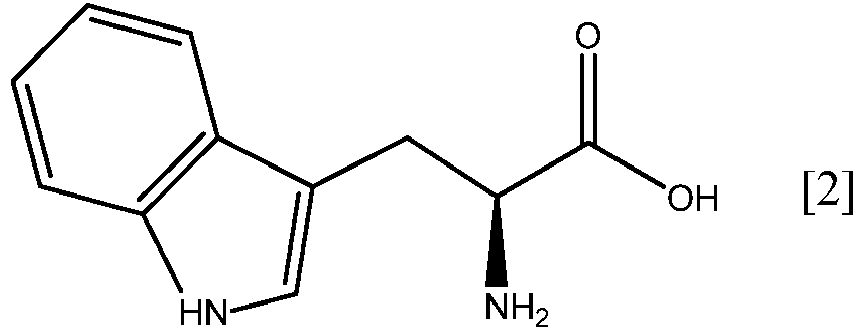
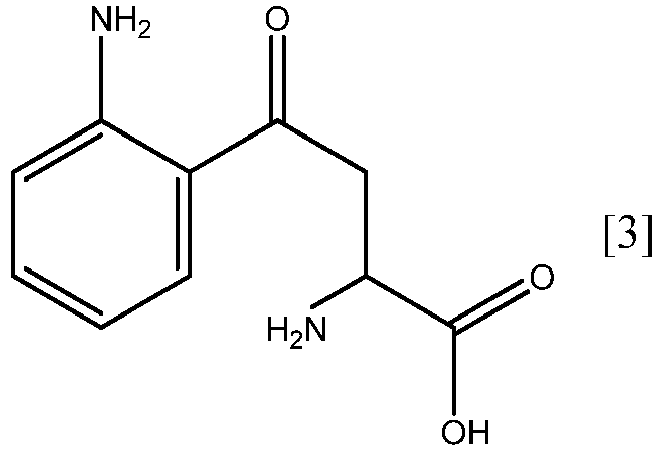
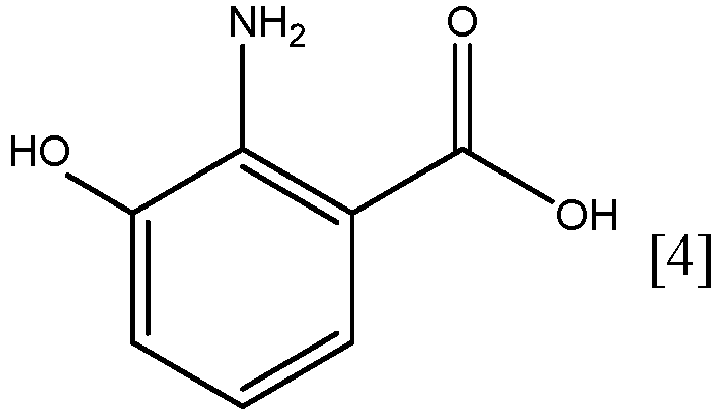
- anthranilic acid (the structural formula [1]), tryptophan (the structural formula [2]), kynurenine (the structural formula [3]), and 3-hydroxyanthranilic acid (the structural formula [4]) are shown below.
- any method may be used as long as the method is usually performed in this field.
- the method include a method using a mass spectrometer, an immunoassay, a method using NMR analysis, a method using an amino acid analyzer, and a FACS analysis.
- a method using a mass spectrometer or an immunoassay is preferable.
- the amounts thereof may be measured by injecting a mobile phase (such as an organic solvent-based mobile phase such as acetonitrile, methanol, tetrahydrofuran, isopropanol, or ethanol, and a water-based mobile phase such as water, phosphoric acid, formic acid, or acetic acid) and a sample into an apparatus provided with a column [such as an octadecylsilyl (ODS) column], a detector (such as a fluorescence detector, an electrochemical detector, or an ultraviolet visible spectroscopic detector), and separating and detecting anthranilic acid, and tryptophan, kynurenine, or 3-hydroxyanthranilic acid.
- a mobile phase such as an organic solvent-based mobile phase such as acetonitrile, methanol, tetrahydrofuran, isopropanol, or ethanol
- a water-based mobile phase such as water, phosphoric acid, formic acid, or acetic
- the method using a mass spectrometer include a method using high performance liquid chromatography (HPLC), a method using gas chromatography (GC), a method using a liquid chromatography mass spectrometer (LC/MS), a method using a capillary electrophoresis mass spectrometer (CE/MS), a method using a gas chromatography mass spectrometer (GC/MS), a method using an inductively coupled plasma mass spectrometer (ICP/MS), a method using a liquid chromatography tandem type mass spectrometer (LC/MS/MS), and a method using a gas chromatography tandem type mass spectrometer (GC/MS/MS), a method using high performance liquid chromatography (HPLC) or a method a liquid chromatography tandem type mass spectrometer (LC/MS/MS) is preferable, and a method using high performance liquid chromatography (HPLC) is more preferable.
- HPLC high performance liquid chromatography
- HPLC high performance liquid chromatography
- the amounts thereof may be measured by using a substance having affinity with anthranilic acid, and a substance having affinity with tryptophan, a substance having affinity with kynurenine, or a substance having affinity with 3-hydroxyanthranilic acid to form a complex of anthranilic acid and the substance having affinity with anthranilic acid, and a complex of tryptophan and the substance having affinity with tryptophan, a complex of kynurenine and the substance having affinity with kynurenine, or a complex of 3-hydroxyanthranilic acid and the substance having affinity with 3-hydroxyanthranilic acid, respectively, and measuring each complex.
- enzyme-linked immunosorbent assay enzyme-linked immunosorbent assay
- enzyme immunoassay enzyme immunoassay
- radioimmunoassay RIA method
- fluorescent immunoassay FIA method
- chemiluminescent enzyme immunoassay CLIA method
- electrochemiluminescence immunoassay ELEIA method
- enzyme-linked immunosorbent assay ELISA method
- enzyme immunoassay enzyme immunoassay
- radioimmunoassay RIA method
- fluorescent immunoassay FIA method
- chemiluminescent enzyme immunoassay chemiluminescent enzyme immunoassay(CLEIA method)
- the substance having affinity with anthranilic acid examples include antibodies, lectins, polysaccharides, DNA, enzyme substrates, proteins, various receptors, and various ligands, and antibodies such as an anti-anthranilic acid antibody, an anti-tryptophan antibody, an anti-kynurenine antibody, and an anti-3-hydroxyanthranilic acid antibody are preferable.
- the anti-anthranilic acid antibody, the anti-tryptophan antibody, the anti-kynurenine antibody, and the anti-3-hydroxyanthranilic acid antibody may be antibodies capable of specifically recognizing anthranilic acid, tryptophan, kynurenine, and 3-hydroxyanthranilic acid, respectively.
- the antibodies may be polyclonal antibodies or monoclonal antibodies, and these may be used alone or in combination.
- the antibodies may be antibody fragments such as Fab, F(ab'2), Fv, and sFv, or synthetic antibodies such as diabody, triabody, and tetrabody.
- antibodies commercially available antibodies may be used, or antibodies prepared according to method knowns per se may be used.
- the antibodies may be prepared according to the methods described in " Immunoassay” (edited by the Society for Biochemical Measurement, Kodansha, 2014 ) and JP2018-501202A .
- the anti-anthranilic acid antibody, the anti-tryptophan antibody, the anti-kynurenine antibody, and the anti-3-hydroxyanthranilic acid antibody may be labeled with labeling substances.
- the labeling substances include enzymes such as horseradish peroxidase (HRP), calf intestinal alkaline phosphatase, and ⁇ -galactosidase, radioactive isotopes such as 99m Tc, 131 I, 125 I, 14 C, 3 H, 32 P, and 35 S, fluorescent substances such as fluorescein, fluorescein isothiocyanate (FITC), 4-methylumbelliferone, rhodamine, or derivatives thereof, luminescent substances such as luciferin, luminol, and ruthenium complex, substances having absorption in the ultraviolet region, such as phenol, naphthol, anthracene, or derivatives thereof, substances having properties as spin labeling agents typified by compounds with oxyl groups such as 4-amino-2,2,6,6-tetramethylpiperidine-1-oxyl, dyes such as HiLyte type dyes, Alexa type dyes, and CyDye type dyes, and nanoparticles such
- any method known per se may be used as the method for binding the labeling substances to the anti-anthranilic acid antibody.
- the “amount” in the amount of anthranilic acid, and the amount of tryptophan, kynurenine, or 3-hydroxyanthranil may be an absolute value such as volume or mass, or a relative value such as concentration, ionic strength, light absorbance, fluorescence intensity, or turbidity. However, a relative value such as concentration, ionic strength, light absorbance, fluorescence intensity, or turbidity is preferable, and concentration is more preferable.
- any reagent commonly used in this field may be used and the concentration and the pH thereof may be in a range commonly used in this field.
- condition and operation method of the apparatus any condition and operation method may be used as long as the condition and the operation method are commonly used in this field.
- step 1 it is preferable to measure the amount of anthranilic acid and the amount of kynurenine or 3-hydroxyanthranilic acid, and it is more preferable to measure the amount of anthranilic acid and the amount of 3-hydroxyanthranilic acid.
- Step 2 is a step of (i) calculating a ratio of the amount of anthranilic acid to the amount of tryptophan, kynurenine, or 3-hydroxyanthranilic acid, or (ii) calculating a ratio of the amount of tryptophan, kynurenine, or 3-hydroxyanthranilic acid to the amount of anthranilic acid.
- the step 2 according to the present invention is performed by (i) dividing the amount of anthranilic acid obtained in the step 1 according to the present invention by the amount of tryptophan, kynurenine, or 3-hydroxyanthranilic acid obtained in the step 1 according to the present invention, or (ii) dividing the amount of tryptophan, kynurenine, or 3-hydroxyanthranilic acid obtained in the step 1 according to the present invention by the amount of anthranilic acid obtained in the step 1 according to the present invention.
- step 2 it is preferable to calculate a ratio of the amount of anthranilic acid to the amount of tryptophan, kynurenine, or 3-hydroxyanthranilic acid, it is more preferable to calculate a ratio of the amount of anthranilic acid to the amount of kynurenine or 3-hydroxyanthranilic acid, and it is particularly preferable to calculate a ratio of the amount of anthranilic acid to the amount of 3-hydroxyanthranilic acid.
- Step 3 according to the present invention is a step of determining a psychiatric disorder based on the calculation result of the step 2 according to the present invention.
- the step 3 according to the present invention is performed using values obtained by the step 1 and the step 2 according to the present invention using a sample derived from a test animal (hereinafter, sometimes abbreviated as a value derived from a test animal) and a preset reference value (cutoff value or the like).
- a sample derived from a test animal hereinafter, sometimes abbreviated as a value derived from a test animal
- a preset reference value cutoff value or the like
- the above reference value can be determined based on statistical analysis such as receiver operating characteristic (ROC) curve analysis by using the values obtained in the step 1 and the step 2 according to the present invention using a sample derived from an animal suffering from a psychiatric disorder and the values obtained in the step 1 and the step 2 using a sample derived from a healthy animal.
- the sensitivity or/and specificity of the reference value is, for example, 60% or more, preferably 70% or more, more preferably 80% or more, even more preferably 90% or more, and particularly preferably 95% or more.
- a sample for example, serum
- a test animal for example, human
- a protein denaturing agent for example, 5% to 10% of perchloric acid
- a mass spectrometer provided with a reversed phase column such as an ODS column (for example, high performance liquid chromatography apparatus), and a basic solution (for example, 5 to 15 mM of sodium acetate) and an organic solvent (for example, acetonitrile) are used as a mobile phase to flow the solution at a flow rate of 0.1 to 1 mL/min to separate the components in the sample.
- a reversed phase column such as an ODS column (for example, high performance liquid chromatography apparatus)
- a basic solution for example, 5 to 15 mM of sodium acetate
- an organic solvent for example, acetonitrile
- the amount of anthranilic acid and the amount of tryptophan, kynurenine, or 3-hydroxyanthranilic acid in the supernatant are measured using a detector (for example, an ultraviolet visible spectroscopic detector, a fluorescence detector, or an electrochemical detector).
- a detector for example, an ultraviolet visible spectroscopic detector, a fluorescence detector, or an electrochemical detector.
- a ratio is calculated by dividing the amount of anthranilic acid derived from the test animal measured in (1) by the amount of tryptophan, kynurenine, or 3-hydroxyanthranilic acid.
- the method for obtaining data for determining a psychiatric disorder of the present invention comprises (1) step 1 of measuring an amount (A) of anthranilic acid in a sample and an amount (B) of tryptophan, kynurenine, or 3-hydroxyanthranilic acid in the sample, and (2) step 2 of (i) calculating a ratio ((A)/(B)) of the amount (A) of anthranilic acid to the amount (B) of tryptophan, kynurenine, or 3-hydroxyanthranilic acid, or (ii) calculating a ratio ((B)/(A)) of the amount (B) of tryptophan, kynurenine, or 3-hydroxyanthranilic acid to the amount (A) of anthranilic acid.
- Examples of the data in the method for obtaining data of the present invention include (i) the value calculated in the step 2 according to the method for obtaining data of the present invention, (ii) a value obtained by further subjecting the value to multivariate analysis such as multiple logistic regression analysis, discriminant analysis, Poisson regression analysis, multiple regression analysis, Cox proportional hazards model, or path analysis, (iii) data showing the magnitude relationship between the value calculated in the step 2 according to the method for obtaining data of the present invention and the reference value (cutoff value or the like) (comparison result), and (iv) data indicating that there is a risk of psychiatric disorder in the test animal or there is a high risk of psychiatric disorder in the test animal. (i) or (iii) is preferable, and (i) is more preferable.
- multivariate analysis such as multiple logistic regression analysis, discriminant analysis, Poisson regression analysis, multiple regression analysis, Cox proportional hazards model, or path analysis
- sample [psychiatric disorder], [step 1], and [step 2] in the method for obtaining data of the present invention are as described in the ⁇ Determining Method of the Present Invention>, and preferable examples, specific examples, and the like are also the same.
- a marker for determining psychiatric disorder of the present invention comprises anthranilic acid and tryptophan, kynurenine, or 3-hydroxyanthranilic acid.
- the term [psychiatric disorder] in the marker of the present invention is as described in the ⁇ Determining Method of the Present Invention>, and preferable examples, specific examples and the like are also the same.
- the marker of the present invention preferably contains anthranilic acid and kynurenine or 3-hydroxyanthranilic acid, and more preferably contains anthranilic acid and 3-hydroxyanthranilic acid.
- An apparatus for determining psychiatric disorder according to the present invention (hereinafter, sometimes abbreviated as a determining apparatus according to the present invention) is provided with at least (1) measurement unit, and (2) processing unit. Further, the determining apparatus may be provided with (3) determining unit, (4) output unit, and (5) input unit.
- (2) processing unit is configured to (i) calculate a ratio ((A)/(B)) of the amount (A) of anthranilic acid to the amount (B) of tryptophan, kynurenine, or 3-hydroxyanthranilic acid measured by (1) measurement unit or (ii) calculate a ratio ((B)/(A)) of the amount (B) of tryptophan, kynurenine, or 3-hydroxyanthranilic acid to the amount (A) of anthranilic acid.
- the processing unit may be configured to calculate the amount of anthranilic acid, and the amount of tryptophan, kynurenine, or 3-hydroxyanthranilic acid based on the measurement values measured by (1) measurement unit and calculate the ratio ((A)/(B) or (B)/(A)) based on the calculation result.
- the measurement, calculation, and determination using (1) measurement unit, (2) processing unit, and (3) determining unit of the determining apparatus according to the present invention may be performed according to the ⁇ Determining Method of the Present Invention>, and preferable examples, specific examples, and the like are also made according to the determining method.
- the determining method of the present invention and/or the method for obtaining data of the present invention can be easily and accurately performed in a short period of time.
- a method for performing measurement and calculation for determining a psychiatric disorder comprises, in order to determine a psychiatric disorder, (1) a measurement step of measuring an amount (A) of anthranilic acid in a sample, and an amount (B) of tryptophan, kynurenine, or 3-hydroxyanthranilic acid in the sample, and (2) a calculation step of (i) calculating a ratio ((A)/(B)) of the amount (A) of anthranilic acid to the amount (B) of tryptophan, kynurenine, or 3-hydroxyanthranilic acid, or (ii) calculating a ratio ((B)/(A)) of the amount (B) of tryptophan, kynurenine, or 3-hydroxyanthranilic acid to the amount (A) of anthranilic acid.
- the amount of anthranilic acid, and the amount of tryptophan, kynurenine, or 3-hydroxyanthranilic acid in the sample may be calculated based on the measurement values obtained as results of the measurement in (1) to calculate the ratio ((A)/(B) or (B)/(A)) based on the calculation results.
- the measurement step and the calculation step in the method of performing measurement and calculation of the present invention are as described in the ⁇ Determining Method of the Present Invention>, and preferable examples, specific examples, and the like are also the same.
- a method for assisting the determination of a psychiatric disorder according to the present invention includes (1) step 1 of measuring an amount (A) of anthranilic acid in a sample, and an amount (B) of tryptophan, kynurenine, or 3-hydroxyanthranilic acid in the sample,
- sample [psychiatric disorder], [step 1], [step 2], and [step 3] in the method for obtaining data of the present invention are as described in the ⁇ Determining Method of the Present Invention>, and preferable examples, specific examples, and the like are also the same.
- the amount of anthranilic acid, and the amount of tryptophan, kynurenine, or 3-hydroxyanthranilic acid in the sample may be calculated based on the measurement values obtained as results of the measurement in (1), and the ratio ((A)/(B) or (B)/(A)) may be calculated based on the calculation results.
- a method for determining and treating a psychiatric disorder according to the present invention includes (1) step 1 of measuring an amount (A) of anthranilic acid in a sample, and an amount (B) of tryptophan, kynurenine, or 3-hydroxyanthranilic acid in the sample,
- the terms [sample], [psychiatric disorder], [step 1], [step 2], and [step 3] in the treatment method for the present invention are as described in the ⁇ Determining Method of the Present Invention>, and preferable examples, specific examples, and the like are also the same.
- the amount of anthranilic acid, and the amount of tryptophan, kynurenine, or 3-hydroxyanthranilic acid in the sample may be calculated based on the measurement values obtained as results of the measurement in (1), and the ratio ((A)/(B) or (B)/(A)) may be calculated based on the calculation results.
- psychotherapy including an interview with a medical staff such as a doctor, pharmacotherapy that is performed by administering an antidepressant such as amoxapine (trade name), maprotiline (trade name), fluvoxamine (trade name), paroxetine (trade name), milnacipran (trade name), or mirtazapine (trade name), modified electroconvulsive therapy, family therapy, and rehabilitation.
- an antidepressant such as amoxapine (trade name), maprotiline (trade name), fluvoxamine (trade name), paroxetine (trade name), milnacipran (trade name), or mirtazapine (trade name), modified electroconvulsive therapy, family therapy, and rehabilitation.
- a reagent for determining a psychiatric disorder according to the present invention includes a reagent for detecting the marker of the present invention as a constituent element.
- Examples of the reagent for detecting the marker of the present invention include those containing a substance having affinity with the marker of the present invention, and specifically, for example, antibodies, lectins, polysaccharides, nucleic acids, enzymes, proteins, and the like may be used.
- Antibodies such as an anti-anthranilic acid antibody, an anti-tryptophan antibody, an anti-kynurenine antibody, and an anti-3-hydroxyanthranilic acid antibody are preferable.
- the antibodies are as described in the ⁇ Determining Method of the Present Invention>, and preferable examples and specific examples are also the same.
- the reagent according to the present invention may includes reagents commonly used in this field, and examples thereof include buffers, detergents, reaction promoters, saccharides, proteins, salts, stabilizers such as surfactants, preservatives, liquids for diluting samples, immobilized solid phases such as antibody-immobilized solid phases and antigen-immobilized solid phases, secondary antibodies labeled with labeling substances or antibody fragments thereof, and reagents for detecting labeling substances.
- a reagent that does not impair stability of a coexisting reagent or the like may be used.
- the concentration and pH thereof may be in the ranges commonly used in this field.
- any immobilized solid phases may be used as long as the immobilized solid phases are those obtained by immobilizing anthranilic acid, tryptophan, kynurenine, or 3-hydroxyanthranilic acid, or antibodies such as an anti-anthranilic acid antibody, an anti-tryptophan antibody, an anti-kynurenine antibody, and an anti-3-hydroxyanthranilic acid antibody, or antibody fragments thereof to materials such as magnetic particles such as magnetic silica particles, polystyrene, polycarbonate, polyvinyltoluene, polypropylene, polyethylene, polyvinyl chloride, nylon, polymethacrylate, gelatin, agarose, cellulose, polyethylene terephthalate, glass, and ceramics.
- magnetic particles such as magnetic silica particles, polystyrene, polycarbonate, polyvinyltoluene, polypropylene, polyethylene, polyvinyl chloride, nylon, polymethacrylate, gelatin, agarose, cellulose
- the materials for the immobilized solid phases such as antibody-immobilized solid phases, and antigen-immobilized solid phases
- materials produced by method knowns per se or commercially available materials may be used.
- the magnetic particles such as magnetic silica particles are produced by a method known per se
- the magnetic particles can be produced by the method described in WO2012/173002 .
- the secondary antibodies labeled with labeling substances or the antibody fragments thereof are antibodies or antibody fragments thereof to be bonded to an anti-anthranilic acid antibody, an anti-tryptophan antibody, an anti-kynurenine antibody, and an anti-3-hydroxyanthranilic acid antibody, respectively.
- labeling substances and the method for binding the labeling substances in the secondary antibodies labeled with labeling substances or the antibody fragments thereof are as described in the ⁇ Determining Method of the Present Invention>, and preferable examples, specific examples, and the like are also the same.
- the reagent for detecting a labeling substance is a reagent that detects, in a case where an antibody such as an anti-anthranilic acid antibody, an anti-tryptophan antibody, an anti-kynurenine antibody, or an anti-3-hydroxyanthranilic acid antibody is labeled with a labeling substance, the label in the labeled antibody such as an anti-anthranilic acid antibody, an anti-tryptophan antibody, an anti-kynurenine antibody, or an anti-3-hydroxyanthranilic acid antibody or an antibody fragment thereof, and/or the label in the labeled secondary antibody or an antibody fragment thereof, and examples thereof include substrates for measuring absorbance such as tetramethylbenzidine and orthophenylenediamine, fluorescent substrates such as hydroxyphenylpropionic acid and hydroxyphenylacetic acid, luminescent substances such as luminol, and further includes reagents for measuring absorbance such as 4-nitrophenyl phosphate and fluorescent substrates such as 4-methylum
- the reagent according to the present invention may include an instruction for performing the determining method and/or the method for obtaining data of the present invention.
- the "instruction” means an instruction manual, attached document, or pamphlet (leaflet) for the reagent according to the present invention in which the features, principles, operating procedure, determination procedure, and the like of the determining method or/and the method for obtaining data of the present invention are substantially disclosed in sentences and/or using diagrams.
- the determining method of the present invention, and/or the method for obtaining data of the present invention can be easily and accurately performed in a short period of time.
- the serums of examinees corresponding to the following "depression group” or "healthy group” were used as samples from 2080 examinees excluding 5 examinees with defective inspection results from 2085 human dock examinees.
- Table 1 show the results of 1990 examinees who did not have any defects in the test answers among the 2085 clinical survey examinees.
- CES-D test a score of 16 or higher was considered positive in depression according to the guidelines thereof, and in the GHQ28 test, a score of 8 or higher was considered positive in depression according to the " The Psychological Assessment Handbook (Nishimura Shoten Co. Ltd; 2001 )".
- the concentrations of tryptophan and its metabolites (kynurenine, 3-hydroxyanthranilic acid, kynurenic acid, anthranilic acid, and 3-hydroxykynurenine) in the serum derived from the depression group and the healthy group were measured by the following method.
- Deproteinization was performed by adding 25 ⁇ L of 10% perchloric acid to 100 ⁇ L of serum derived from the depression group and the healthy group. Next, after centrifugation was performed at 14000 rpm and 4°C for 10 minutes, 50 ⁇ L of a supernatant was injected into a high performance liquid chromatography [LC-20AD (manufactured by Shimadzu Corporation)], tryptophan and kynurenine in the supernatant were measured by an ultraviolet visible spectroscopic detector [SPD-20A (manufactured by Shimadzu Corporation), and 3-hydroxyanthranilic acid, kynurenic acid, and anthranilic acid in the supernatant were measured with a fluorescence detector [RF-10AXL (manufactured by Shimadzu Corporation)].
- LC-20AD ultraviolet visible spectroscopic detector
- SPD-20A ultraviolet visible spectroscopic detector
- RF-10AXL fluorescence detector
- the conditions of the high performance liquid chromatography and the detector are as follows.
- Deproteinization was performed by adding 400 ⁇ L of 10% perchloric acid to 100 ⁇ L of serum derived from the depression group and the healthy group. Next, after centrifugation was performed at 14000 rpm and 4°C for 10 minutes, 50 ⁇ L of a supernatant was injected into a high performance liquid chromatography (manufactured by Eicom Corporation), and 3-hydroxykynurenine in the supernatant was measured by an electrochemical detector [Eicom ECD-300 (manufactured by Eicom Corporation)].
- the conditions of the high performance liquid chromatography and the electrochemical detector are as follows.
- Table 4 shows the measurement results (mean values) of the healthy group and the depression group obtained in (2) above, P values obtained by a significant difference determination, and the presence or absence of the significant difference.
- Table 5 shows the results of calculating respective ratios of the amount of anthranilic acid to the amount of tryptophan, the amount of anthranilic acid to the amount of kynurenine, the amount of anthranilic acid to the amount of 3-hydroxyanthranilic acid, the amount of anthranilic acid to the amount of kynurenic acid, the amount of anthranilic acid to the amount of 3-hydroxykynurenine, the amount of kynurenine to the amount of tryptophan, the amount of kynurenic acid to the amount of kynurenine, the amount of 3-hydroxykynurenine to the amount of kynurenine, and the amount of 3-hydroxyanthranilic acid to the amount of 3-hydroxykynurenine, using the measurement values of the healthy group and the depression group
- the P value showing a significant difference in the increase in the value of the amount of anthranilic acid alone in the depression group is 0.000052.
- the P values showing the significance of the increase in the values of the ratios of the amount of anthranilic acid to the amount of tryptophan, the amount of anthranilic acid to the amount of kynurenine, and the amount of anthranilic acid to the amount of 3-hydroxyanthranilic acid in the depression group are 0.000021, 0.0000072, and 0.0000028, respectively. [Table 5 (A) to (C)].
- the P value showing the significance of the increase in the values of the ratios of the amount of anthranilic acid to the amount of kynurenine, and the amount of anthranilic acid to the amount of 3-hydroxyanthranilic acid is a value of about 1/10 of the P value showing the significant difference of the increase in the value of the amount of anthranilic acid alone.
- the P values showing the significance of the increase in the values of the ratios of the amount of anthranilic acid to the amount of kynurenic acid and the amount of anthranilic acid to the amount of 3-hydroxykynurenine are 0.00082 and 0.010, respectively [(D) and (E) in Table 5].
- the P-values showing the significance of the increase in the values of the ratios of the amount of kynurenine to the amount of tryptophan, the amount of kynurenic acid to the amount of kynurenine, and the amount of 3-hydroxyanthranilic acid to the amount of 3-hydroxykynurenine are 0.7268, 0.0045, and 0.879, respectively. [(F) to (H) in Table 5].
- anthranilic acid and substances related to tryptophan that is, a combination of anthranilic acid and tryptophan, anthranilic acid and kynurenine, or anthranilic acid and 3-hydroxyanthranilic acid is useful in distinguishing between the depression group and the healthy group.
- the depression group in the example is a group before a doctor makes a diagnosis of depressive disorder. Therefore, according to the determining method of the present invention, it is possible to determine whether or not the examinee has depressive disorder at an early stage.
- the monitoring of a change in the value of the ratio of the amount of anthranilic acid and the amount of tryptophan, kynurenine, or 3-hydroxyanthranilic acid calculated by the determining method of the present invention can also be used to determine the therapeutic effect of depressive disorder.
- a psychiatric disorder such as depressive disorder, bipolar disorder, schizophrenia, or dementia with high reliability (accuracy and precision).
Landscapes
- Life Sciences & Earth Sciences (AREA)
- Health & Medical Sciences (AREA)
- Engineering & Computer Science (AREA)
- Molecular Biology (AREA)
- Biomedical Technology (AREA)
- Immunology (AREA)
- Chemical & Material Sciences (AREA)
- Urology & Nephrology (AREA)
- Hematology (AREA)
- Physics & Mathematics (AREA)
- Proteomics, Peptides & Aminoacids (AREA)
- Biochemistry (AREA)
- Cell Biology (AREA)
- Biotechnology (AREA)
- Pathology (AREA)
- Food Science & Technology (AREA)
- Medicinal Chemistry (AREA)
- General Physics & Mathematics (AREA)
- Analytical Chemistry (AREA)
- Microbiology (AREA)
- General Health & Medical Sciences (AREA)
- Bioinformatics & Cheminformatics (AREA)
- Bioinformatics & Computational Biology (AREA)
- Biophysics (AREA)
- Neurology (AREA)
- Neurosurgery (AREA)
- Investigating Or Analysing Biological Materials (AREA)
Abstract
Description
- The present invention relates to a method for determining a psychiatric disorder such as depressive disorder, bipolar disorder, schizophrenia, or dementia.
- In modern society, a psychiatric disorder such as depressive disorder, bipolar disorder, schizophrenia, or dementia has become a social problem. According to a survey by the Ministry of Health, Labor and Welfare in 2011, 3.2 million people suffer from psychiatric disorders. In addition, since a psychiatric disorder is common in a so-called productive age group between the ages of 15 to 65, the impact on society such as economic losses due to a decrease in labor force is immeasurable.
- Particularly, depressive disorder characterized by symptoms such as depression, decreased mental activity, loss of appetite, and insomnia accounts for a high proportion of the psychiatric disorder. In addition, in recent years, depressive disorder has become a major social problem such as being a main cause of suicide.
- However, since the diagnosis of a psychiatric disorder is currently made based on the subjective information of a patient obtained from an interview, it is difficult to make a diagnosis with high reliability (accuracy and precision).
- Therefore, it has been desired to develop a method for diagnosing a psychiatric disorder using an objective index (such as a marker) with high reliability (accuracy and precision).
- Various methods for diagnosing psychiatric disorders using the objective index (such as a marker) have been reported so far. For example, there are methods based on detecting markers using tryptophan and its metabolites in blood as the markers (Patent Document 1 and Non-Patent Documents 1 and 2).
- However, none of these methods has been put to practical use.
- [Patent Document 1]
JP2008-537111A -
- [Non-Patent Document 1] Darlington et al. On the Biological Importance of the 3-hydroxyanthranilic Acid: Anthranilic Acid Ratio. International Journal of Tryptophan Research 2010: 3 51-59
- [Non-Patent Document 2] Gabbay et al. The possible role of the kynurenine pathway in adolescent depression with melancholic features. Journal of Child Psychology and Psychiatry 2010: 51 (8) 935-943
- An object of the present invention is to provide a method for determining a psychiatric disorder such as depressive disorder, bipolar disorder, schizophrenia, or dementia with high reliability (accuracy and precision).
- The present invention has been made to solve the problems, and has the following configurations.
- [1] A method for determining a psychiatric disorder comprising the following steps (1) to (3):
- (1) step 1 of measuring an amount (A) of anthranilic acid in a sample, and an amount (B) of tryptophan, kynurenine, or 3-hydroxyanthranilic acid in the sample;
- (2) step 2 of (i) calculating a ratio ((A)/(B)) of the amount (A) of anthranilic acid to the amount (B) of tryptophan, kynurenine, or 3-hydroxyanthranilic acid, or (ii) calculating a ratio ((B)/(A)) of the amount (B) of tryptophan, kynurenine, or 3-hydroxyanthranilic acid to the amount (A) of anthranilic acid; and
- (3) step 3 of determining a psychiatric disorder based on a calculation result of the step 2.
- [2] The determining method according to [1], in which the step 2 is a step of (i) calculating a ratio ((A)/(B)) of the amount (A) of anthranilic acid to the amount (B) of tryptophan, kynurenine, or 3-hydroxyanthranilic acid.
- [3] The determining method according to [1] or [2], in which the step 2 is a step of calculating a ratio of the amount of anthranilic acid to the amount of kynurenine or 3-hydroxyanthranilic acid.
- [4] The determining method according to any one of [1] to [3], in which the psychiatric disorder is depressive disorder, bipolar disorder, schizophrenia, or dementia.
- [5] The determining method according to any one of [1] to [4], in which the psychiatric disorder is depressive disorder.
- [6] The determining method according to any one of [1] to [5], in which the sample is serum, plasma, whole blood, urine, or cerebrospinal fluid.
- [7] A method for obtaining data for determining a psychiatric disorder, the method comprising the following steps (1) and (2):
- (1) step 1 of measuring an amount (A) of anthranilic acid in a sample, and an amount (B) of tryptophan, kynurenine, or 3-hydroxyanthranilic acid in the sample; and
- (2) step 2 of (i) calculating a ratio ((A)/(B)) of the amount (A) of anthranilic acid to the amount (B) of tryptophan, kynurenine, or 3-hydroxyanthranilic acid, or (ii) calculating a ratio ((B)/(A)) of the amount (B) of tryptophan, kynurenine, or 3-hydroxyanthranilic acid to the amount (A) of anthranilic acid.
- [8] The method for obtaining data according to [7], in which the step 2 is a step of (i) calculating a ratio ((B)/(A)) of the amount (A) of anthranilic acid to the amount (B) of tryptophan, kynurenine, or 3-hydroxyanthranilic acid.
- [9] The method for obtaining data according to [7] or [8], in which the step 2 is a step of calculating a ratio of the amount of anthranilic acid to the amount of kynurenine or 3-hydroxyanthranilic acid.
- [10] The method for obtaining data according to any one of [7] to [9], in which the psychiatric disorder is depressive disorder, bipolar disorder, schizophrenia, or dementia.
- [11] The method for obtaining data according to any one of [7] to [10], in which the psychiatric disorder is depressive disorder.
- [12] The method for obtaining data according to any one of [7] to [11], in which the sample is serum, plasma, whole blood, urine, or cerebrospinal fluid.
- [13] A marker for determining a psychiatric disorder comprising: anthranilic acid; and tryptophan, kynurenine, or 3-hydroxyanthranilic acid.
- According to the method for determining a psychiatric disorder and a marker for determining a psychiatric disorder of the present invention, it is possible to determining (diagnose and inspect) a psychiatric disorder such as depressive disorder, bipolar disorder, schizophrenia, or dementia with high reliability (accuracy and precision). In addition, according to the method for obtaining data for determining a psychiatric disorder according to the present invention, it is possible to obtain data for accurately performing the determination of a psychiatric disorder such as depressive disorder, bipolar disorder, schizophrenia, or dementia.
- A method for determining a psychiatric disorder according to the present invention (hereinafter, sometimes abbreviated as a determining method of the present invention) comprises
- (1) step 1 of measuring an amount (A) of anthranilic acid in a sample, and an amount (B) of tryptophan, kynurenine, or 3-hydroxyanthranilic acid in the sample,
- (2) step 2 of (i) calculating a ratio ((A)/(B)) of the amount (A) of anthranilic acid to the amount (B) of tryptophan, kynurenine, or 3-hydroxyanthranilic acid, or (ii) calculating a ratio ((B)/(A)) of the amount (B) of tryptophan, kynurenine, or 3-hydroxyanthranilic acid to the amount (A) of anthranilic acid,
and - (3) step 3 of determining a psychiatric disorder based on a calculation result of the step 2.
- The psychiatric disorder according to the present invention is a disorder in which a depressive state continues, and specific examples thereof include depressive disorder, bipolar disorder, schizophrenia, dementia, Alzheimer's disease, anxiety disorder, and epilepsy. Among these, the determining method of the present invention is useful for depressive disorder, bipolar disorder, schizophrenia, or dementia, and is particularly useful for depressive disorder.
- In addition, depressive disorder is one of mood disorders and is a disorder characterized by symptoms such as depression, decreased mental activity, loss of appetite, and insomnia. In addition, the depressive disorder also includes major depressive disorder and dysthymic disorder.
- The sample according to the present invention may be a sample derived from a test animal, and examples thereof include living body-derived samples such as serum, plasma, whole blood, urine, saliva, cerebrospinal fluid, tissue fluid, sweat, tears, amniotic fluid, bone marrow fluid, pleural fluid, ascites fluid, synovial fluid, aqueous humor, and vitreous humor. A blood-derived sample such as serum, plasma, or whole blood, urine, or cerebrospinal fluid is preferable, a blood-derived sample such as serum, plasma, or whole blood is more preferable, and serum is particularly preferable.
- Examples of the test animal include mammals such as humans, monkeys, mice, rats, dogs, cats, pigs, and rabbits. Humans, monkeys, mice, and rats are preferable, and humans are more preferable.
- The method for obtaining (collecting) the sample according to the present invention from a test animal is not particularly limited. For example, a method for obtaining (collecting) the sample from the test animal based on a method known per se may be used, and separation, concentration, purification, and the like may be performed according to a method known per se, if necessary.
- In addition, as the sample, a sample immediately after being collected from the test animal or the preserved sample may be used. As a method for preserving the sample, any method which is commonly used in this field may be used.
- Step 1 according to the present invention is a step of measuring an amount of anthranilic acid in a sample and an amount of tryptophan, kynurenine, or 3-hydroxyanthranilic acid in a sample.
- Tryptophan in the step 1 according to the present invention is a kind of amino acid, and is known that 90% thereof is metabolized through the Kynurenine pathway.
- In addition, anthranilic acid, kynurenine, and 3-hydroxyanthranilic acid in the step 1 of the present invention are each a kind of amino acid, and are metabolites produced from tryptophan in the Kynurenine pathway that is the tryptophan metabolic pathway.
- The structural formulas of anthranilic acid (the structural formula [1]), tryptophan (the structural formula [2]), kynurenine (the structural formula [3]), and 3-hydroxyanthranilic acid (the structural formula [4]) are shown below.

- In the step 1 according to the present invention, as a method for measuring the amount of anthranilic acid, and the amount of tryptophan, kynurenine, or 3-hydroxyanthranil, any method may be used as long as the method is usually performed in this field. Specific examples of the method include a method using a mass spectrometer, an immunoassay, a method using NMR analysis, a method using an amino acid analyzer, and a FACS analysis. A method using a mass spectrometer or an immunoassay is preferable.
- In a case of measuring the amount of anthranilic acid, and the amount of tryptophan, kynurenine, or 3-hydroxyanthranilic acid by the method using a mass spectrometer, the amounts thereof may be measured by injecting a mobile phase (such as an organic solvent-based mobile phase such as acetonitrile, methanol, tetrahydrofuran, isopropanol, or ethanol, and a water-based mobile phase such as water, phosphoric acid, formic acid, or acetic acid) and a sample into an apparatus provided with a column [such as an octadecylsilyl (ODS) column], a detector (such as a fluorescence detector, an electrochemical detector, or an ultraviolet visible spectroscopic detector), and separating and detecting anthranilic acid, and tryptophan, kynurenine, or 3-hydroxyanthranilic acid.
- As a specific method of the method using a mass spectrometer, a method known per se may be used.
- Specific examples of the method using a mass spectrometer include a method using high performance liquid chromatography (HPLC), a method using gas chromatography (GC), a method using a liquid chromatography mass spectrometer (LC/MS), a method using a capillary electrophoresis mass spectrometer (CE/MS), a method using a gas chromatography mass spectrometer (GC/MS), a method using an inductively coupled plasma mass spectrometer (ICP/MS), a method using a liquid chromatography tandem type mass spectrometer (LC/MS/MS), and a method using a gas chromatography tandem type mass spectrometer (GC/MS/MS), a method using high performance liquid chromatography (HPLC) or a method a liquid chromatography tandem type mass spectrometer (LC/MS/MS) is preferable, and a method using high performance liquid chromatography (HPLC) is more preferable.
- In a case of measuring the amount of anthranilic acid, and the amount of tryptophan, kynurenine, or 3-hydroxyanthranilic acid by the immunoassay, the amounts thereof may be measured by using a substance having affinity with anthranilic acid, and a substance having affinity with tryptophan, a substance having affinity with kynurenine, or a substance having affinity with 3-hydroxyanthranilic acid to form a complex of anthranilic acid and the substance having affinity with anthranilic acid, and a complex of tryptophan and the substance having affinity with tryptophan, a complex of kynurenine and the substance having affinity with kynurenine, or a complex of 3-hydroxyanthranilic acid and the substance having affinity with 3-hydroxyanthranilic acid, respectively, and measuring each complex.
- Regarding the specific method of the immunoassay, a method known per se may be used.
- As the immunoassay, enzyme-linked immunosorbent assay (ELISA method), enzyme immunoassay (EIA method), radioimmunoassay (RIA method), fluorescent immunoassay (FIA method), chemiluminescent enzyme immunoassay (CLEIA method), electrochemiluminescence immunoassay (ECLEIA method), turbidimetric immunoassay, nephelometric Immunoassay, a latex agglutination method, immunochromatography, western blotting, luminescent oxygen channeling immunoassay (LOCI method), and liquid-phase binding assay-electrokinetic analyte transport assay (LBA-EATA method) may be used, and enzyme-linked immunosorbent assay (ELISA method), enzyme immunoassay (EIA method), radioimmunoassay (RIA method), fluorescent immunoassay (FIA method), chemiluminescent enzyme immunoassay(CLEIA method), electrochemiluminescence immunoassay (ECLEIA method), turbidimetric immunoassay, a latex agglutination method, or immunochromatography is preferable.
- Specific examples of the substance having affinity with anthranilic acid, the substance having affinity with tryptophan, the substance having affinity with kynurenine and the substance having affinity with 3-hydroxyanthranilic acid include antibodies, lectins, polysaccharides, DNA, enzyme substrates, proteins, various receptors, and various ligands, and antibodies such as an anti-anthranilic acid antibody, an anti-tryptophan antibody, an anti-kynurenine antibody, and an anti-3-hydroxyanthranilic acid antibody are preferable.
- The anti-anthranilic acid antibody, the anti-tryptophan antibody, the anti-kynurenine antibody, and the anti-3-hydroxyanthranilic acid antibody may be antibodies capable of specifically recognizing anthranilic acid, tryptophan, kynurenine, and 3-hydroxyanthranilic acid, respectively.
- The antibodies may be polyclonal antibodies or monoclonal antibodies, and these may be used alone or in combination.
- The antibodies may be antibody fragments such as Fab, F(ab'2), Fv, and sFv, or synthetic antibodies such as diabody, triabody, and tetrabody.
- In addition, as the antibodies, commercially available antibodies may be used, or antibodies prepared according to method knowns per se may be used.
- In addition, in a case of preparing the anti-anthranilic acid antibody, the anti-tryptophan antibody, the anti-kynurenine antibody, and the anti-3-hydroxyanthranilic acid antibody according to methods known per se, for example, the antibodies may be prepared according to the methods described in "Immunoassay" (edited by the Society for Biochemical Measurement, Kodansha, 2014) and
JP2018-501202A - Further, the anti-anthranilic acid antibody, the anti-tryptophan antibody, the anti-kynurenine antibody, and the anti-3-hydroxyanthranilic acid antibody may be labeled with labeling substances.
- Specific examples of the labeling substances include enzymes such as horseradish peroxidase (HRP), calf intestinal alkaline phosphatase, and β-galactosidase, radioactive isotopes such as 99mTc, 131I, 125I, 14C, 3H, 32P, and 35S, fluorescent substances such as fluorescein, fluorescein isothiocyanate (FITC), 4-methylumbelliferone, rhodamine, or derivatives thereof, luminescent substances such as luciferin, luminol, and ruthenium complex, substances having absorption in the ultraviolet region, such as phenol, naphthol, anthracene, or derivatives thereof, substances having properties as spin labeling agents typified by compounds with oxyl groups such as 4-amino-2,2,6,6-tetramethylpiperidine-1-oxyl, dyes such as HiLyte type dyes, Alexa type dyes, and CyDye type dyes, and nanoparticles such as colloidal gold and quantum dots.
- In addition, as the method for binding the labeling substances to the anti-anthranilic acid antibody, anti-tryptophan antibody, anti-kynurenine antibody, and anti-3-hydroxyanthranilic acid antibody, any method known per se may be used.
- The "amount" in the amount of anthranilic acid, and the amount of tryptophan, kynurenine, or 3-hydroxyanthranil may be an absolute value such as volume or mass, or a relative value such as concentration, ionic strength, light absorbance, fluorescence intensity, or turbidity. However, a relative value such as concentration, ionic strength, light absorbance, fluorescence intensity, or turbidity is preferable, and concentration is more preferable.
- In the step 1 according to the present invention, as the reagent used for measuring the amount of anthranilic acid, and the amount of tryptophan, kynurenine, or 3-hydroxyanthranilic acid, any reagent commonly used in this field may be used and the concentration and the pH thereof may be in a range commonly used in this field.
- In addition, as the condition and operation method of the apparatus, any condition and operation method may be used as long as the condition and the operation method are commonly used in this field.
- In the step 1 according to the present invention, it is preferable to measure the amount of anthranilic acid and the amount of kynurenine or 3-hydroxyanthranilic acid, and it is more preferable to measure the amount of anthranilic acid and the amount of 3-hydroxyanthranilic acid.
- Step 2 according to the present invention is a step of (i) calculating a ratio of the amount of anthranilic acid to the amount of tryptophan, kynurenine, or 3-hydroxyanthranilic acid, or (ii) calculating a ratio of the amount of tryptophan, kynurenine, or 3-hydroxyanthranilic acid to the amount of anthranilic acid.
- Specifically, the step 2 according to the present invention is performed by (i) dividing the amount of anthranilic acid obtained in the step 1 according to the present invention by the amount of tryptophan, kynurenine, or 3-hydroxyanthranilic acid obtained in the step 1 according to the present invention, or (ii) dividing the amount of tryptophan, kynurenine, or 3-hydroxyanthranilic acid obtained in the step 1 according to the present invention by the amount of anthranilic acid obtained in the step 1 according to the present invention.
- In the step 2 according to the present invention, it is preferable to calculate a ratio of the amount of anthranilic acid to the amount of tryptophan, kynurenine, or 3-hydroxyanthranilic acid, it is more preferable to calculate a ratio of the amount of anthranilic acid to the amount of kynurenine or 3-hydroxyanthranilic acid, and it is particularly preferable to calculate a ratio of the amount of anthranilic acid to the amount of 3-hydroxyanthranilic acid.
- Step 3 according to the present invention is a step of determining a psychiatric disorder based on the calculation result of the step 2 according to the present invention.
- Specifically, the step 3 according to the present invention is performed using values obtained by the step 1 and the step 2 according to the present invention using a sample derived from a test animal (hereinafter, sometimes abbreviated as a value derived from a test animal) and a preset reference value (cutoff value or the like).
- That is, (i) in a case where the value derived from a test animal is equal to or greater than a preset reference value (cutoff value or the like), it can be determined that "there is a risk of psychiatric disorder in the test animal or a high risk of psychiatric disorder in the test animal". On the other hand, (ii) in a case where the value derived from a test animal is less than a preset reference value (cutoff value or the like), it can be determined that "there is no risk of psychiatric disorder in the test animal or there is a low risk of psychiatric disorder".
- In addition, as another aspect, (i) in a case where the value derived from a test animal is equal to or less than a preset reference value (cutoff value or the like), it can be determined that "there is a risk of psychiatric disorder in the test animal or there is a high risk of psychiatric disorder in the test animal". On the other hand, (ii) in a case where the value derived from a test animal is greater than a preset reference value (cutoff value or the like), it can be determined that "there is no risk of psychiatric disorder in the test animal or there is a low risk of psychiatric disorder in the test animal".
- The above reference value (cutoff value or the like) can be determined based on statistical analysis such as receiver operating characteristic (ROC) curve analysis by using the values obtained in the step 1 and the step 2 according to the present invention using a sample derived from an animal suffering from a psychiatric disorder and the values obtained in the step 1 and the step 2 using a sample derived from a healthy animal. In addition, the sensitivity or/and specificity of the reference value (cutoff value or the like) is, for example, 60% or more, preferably 70% or more, more preferably 80% or more, even more preferably 90% or more, and particularly preferably 95% or more.
- A specific example of the determining method of the present invention will be described below.
- After 10 to 200 µL of a sample (for example, serum) is extracted from a test animal (for example, human) and 25 to 800 µL of a protein denaturing agent (for example, 5% to 10% of perchloric acid) is added, centrifugation is performed at 10000 to 15000 rpm and 4°C for 5 to 15 minutes. Then, 40 to 60 µL of a supernatant is injected into a mass spectrometer provided with a reversed phase column such as an ODS column (for example, high performance liquid chromatography apparatus), and a basic solution (for example, 5 to 15 mM of sodium acetate) and an organic solvent (for example, acetonitrile) are used as a mobile phase to flow the solution at a flow rate of 0.1 to 1 mL/min to separate the components in the sample. Next, the amount of anthranilic acid and the amount of tryptophan, kynurenine, or 3-hydroxyanthranilic acid in the supernatant are measured using a detector (for example, an ultraviolet visible spectroscopic detector, a fluorescence detector, or an electrochemical detector).
- A ratio is calculated by dividing the amount of anthranilic acid derived from the test animal measured in (1) by the amount of tryptophan, kynurenine, or 3-hydroxyanthranilic acid.
- In a case where the value derived from the test animal calculated by (2) above is compared with a preset reference value (cutoff value or the like) and the value derived from the test animal is equal to or greater than the preset reference value (cutoff value or the like), it is determined that "there is a risk of psychiatric disorder in the test animal or there is a high risk of psychiatric disorder in the test animal". On the other hand, in a case where the value derived from the test animal calculated in (2) above is compared with a preset reference value (cutoff value or the like) and the value derived from the test animal is less than the preset reference value (cutoff value or the like), it is determined that "there is no risk of psychiatric disorder in the test animal or there is a low risk of psychiatric disorder in the test animal".
- In addition, as another aspect, in a case where the value derived from the test animal calculated in (2) above is compared with a preset reference value (cutoff value or the like) and the value derived from the test animal is equal to or less than the preset reference value (cutoff value or the like), it is determined that "there is a risk of psychiatric disorder in the test animal or there is a high risk of psychiatric disorder in the test animal".
- On the other hand, in a case where the value derived from the test animal calculated in (2) above is compared with the preset reference value (cutoff value or the like), and the value derived from the test animal is greater than the preset reference value (cutoff value or the like), it is determined that "there is no risk of psychiatric disorder in the test animal or there is a low risk of psychiatric disorder in the test animal".
- The method for obtaining data for determining a psychiatric disorder of the present invention (hereinafter, sometimes abbreviated as the method for obtaining data of the present invention) comprises (1) step 1 of measuring an amount (A) of anthranilic acid in a sample and an amount (B) of tryptophan, kynurenine, or 3-hydroxyanthranilic acid in the sample, and
(2) step 2 of (i) calculating a ratio ((A)/(B)) of the amount (A) of anthranilic acid to the amount (B) of tryptophan, kynurenine, or 3-hydroxyanthranilic acid, or (ii) calculating a ratio ((B)/(A)) of the amount (B) of tryptophan, kynurenine, or 3-hydroxyanthranilic acid to the amount (A) of anthranilic acid. - Examples of the data in the method for obtaining data of the present invention include (i) the value calculated in the step 2 according to the method for obtaining data of the present invention, (ii) a value obtained by further subjecting the value to multivariate analysis such as multiple logistic regression analysis, discriminant analysis, Poisson regression analysis, multiple regression analysis, Cox proportional hazards model, or path analysis, (iii) data showing the magnitude relationship between the value calculated in the step 2 according to the method for obtaining data of the present invention and the reference value (cutoff value or the like) (comparison result), and (iv) data indicating that there is a risk of psychiatric disorder in the test animal or there is a high risk of psychiatric disorder in the test animal. (i) or (iii) is preferable, and (i) is more preferable.
- In addition, the terms [sample], [psychiatric disorder], [step 1], and [step 2] in the method for obtaining data of the present invention are as described in the <Determining Method of the Present Invention>, and preferable examples, specific examples, and the like are also the same.
- A marker for determining psychiatric disorder of the present invention (hereinafter, sometimes abbreviated as a marker of the present invention) comprises anthranilic acid and tryptophan, kynurenine, or 3-hydroxyanthranilic acid.
- In addition, the term [psychiatric disorder] in the marker of the present invention is as described in the <Determining Method of the Present Invention>, and preferable examples, specific examples and the like are also the same.
- The marker of the present invention preferably contains anthranilic acid and kynurenine or 3-hydroxyanthranilic acid, and more preferably contains anthranilic acid and 3-hydroxyanthranilic acid.
- An apparatus for determining psychiatric disorder according to the present invention (hereinafter, sometimes abbreviated as a determining apparatus according to the present invention) is provided with at least (1) measurement unit, and (2) processing unit. Further, the determining apparatus may be provided with (3) determining unit, (4) output unit, and (5) input unit.
-
- (1) Measurement unit in the determining apparatus according to the present invention is configured to measure an amount (A) of anthranilic acid in a sample, and an amount (B) of tryptophan, kynurenine, or 3-hydroxyanthranilic acid in the sample. Specific examples thereof include measurement apparatuses such as a mass spectrometer used in the above measuring method, a device used in an immunoassay, an NMR analyzer, an amino acid analyzer, and a device used in FACS analysis.
- In the determining apparatus according to the present invention, (2) processing unit is configured to (i) calculate a ratio ((A)/(B)) of the amount (A) of anthranilic acid to the amount (B) of tryptophan, kynurenine, or 3-hydroxyanthranilic acid measured by (1) measurement unit or (ii) calculate a ratio ((B)/(A)) of the amount (B) of tryptophan, kynurenine, or 3-hydroxyanthranilic acid to the amount (A) of anthranilic acid. In addition, if necessary, the processing unit may be configured to calculate the amount of anthranilic acid, and the amount of tryptophan, kynurenine, or 3-hydroxyanthranilic acid based on the measurement values measured by (1) measurement unit and calculate the ratio ((A)/(B) or (B)/(A)) based on the calculation result.
- (3) Determining unit in the determining apparatus according to the present invention is configured to determine a psychiatric disorder based on the calculation result obtained by (2) processing unit.
- (4) Output unit in the determining apparatus according to the present invention is configured to output the calculation result obtained by (2) processing unit and/or the determinatin result obtained by (3) determining unit.
- (5) Input unit in the determining apparatus according to the present invention is configured to send a signal to (1) measurement unit or/and (2) processing unit to activate (1) measurement unit or/and (2) processing unit by receiving the operation of an operator.
- In addition, the measurement, calculation, and determination using (1) measurement unit, (2) processing unit, and (3) determining unit of the determining apparatus according to the present invention may be performed according to the <Determining Method of the Present Invention>, and preferable examples, specific examples, and the like are also made according to the determining method.
- According to the determining apparatus of the present invention, the determining method of the present invention and/or the method for obtaining data of the present invention can be easily and accurately performed in a short period of time.
- A method for performing measurement and calculation for determining a psychiatric disorder according to the present invention comprises, in order to determine a psychiatric disorder, (1) a measurement step of measuring an amount (A) of anthranilic acid in a sample, and an amount (B) of tryptophan, kynurenine, or 3-hydroxyanthranilic acid in the sample, and
(2) a calculation step of (i) calculating a ratio ((A)/(B)) of the amount (A) of anthranilic acid to the amount (B) of tryptophan, kynurenine, or 3-hydroxyanthranilic acid, or (ii) calculating a ratio ((B)/(A)) of the amount (B) of tryptophan, kynurenine, or 3-hydroxyanthranilic acid to the amount (A) of anthranilic acid. In addition, in the calculation step, if necessary, the amount of anthranilic acid, and the amount of tryptophan, kynurenine, or 3-hydroxyanthranilic acid in the sample may be calculated based on the measurement values obtained as results of the measurement in (1) to calculate the ratio ((A)/(B) or (B)/(A)) based on the calculation results. - In addition, the measurement step and the calculation step in the method of performing measurement and calculation of the present invention are as described in the <Determining Method of the Present Invention>, and preferable examples, specific examples, and the like are also the same.
- A method for assisting the determination of a psychiatric disorder according to the present invention (hereinafter, sometimes abbreviated as an assisting method according to the present invention) includes (1) step 1 of measuring an amount (A) of anthranilic acid in a sample, and an amount (B) of tryptophan, kynurenine, or 3-hydroxyanthranilic acid in the sample,
- (2) step 2 of (i) calculating a ratio ((A)/(B)) of the amount (A) of anthranilic acid to the amount (B) of tryptophan, kynurenine, or 3-hydroxyanthranilic acid, or (ii) calculating a ratio ((B)/(A)) of the amount (B) of tryptophan, kynurenine, or 3-hydroxyanthranilic acid to the amount (A) of anthranilic acid,
and - (3) step 3 of assisting determination of a psychiatric disorder based on the calculation result of the step 2. The assisting method according to the present invention can be used as a method for assisting the diagnosis of a psychiatric disorder by a doctor or the like.
- In addition, the terms [sample], [psychiatric disorder], [step 1], [step 2], and [step 3] in the method for obtaining data of the present invention are as described in the <Determining Method of the Present Invention>, and preferable examples, specific examples, and the like are also the same.
- In addition, in the step 2, if necessary, the amount of anthranilic acid, and the amount of tryptophan, kynurenine, or 3-hydroxyanthranilic acid in the sample may be calculated based on the measurement values obtained as results of the measurement in (1), and the ratio ((A)/(B) or (B)/(A)) may be calculated based on the calculation results.
- A method for determining and treating a psychiatric disorder according to the present invention (hereinafter, sometimes abbreviated as a treatment method according to the present invention) includes (1) step 1 of measuring an amount (A) of anthranilic acid in a sample, and an amount (B) of tryptophan, kynurenine, or 3-hydroxyanthranilic acid in the sample,
- (2) step 2 of (i) calculating a ratio ((A)/(B)) of the amount (A) of anthranilic acid to the amount (B) of tryptophan, kynurenine, or 3-hydroxyanthranilic acid, or (ii) calculating a ratio ((B)/(A)) of the amount (B) of tryptophan, kynurenine, or 3-hydroxyanthranilic acid to the amount (A) of anthranilic acid, (3) step 3 of determining a psychiatric disorder based on a calculation result of the step 2,
and - (4) step 4 of appropriately treating a patient who is determined to have a risk of psychiatric disorder or a high risk of psychiatric disorder based on the determination result of the step 3.
- In addition, the terms [sample], [psychiatric disorder], [step 1], [step 2], and [step 3] in the treatment method for the present invention are as described in the <Determining Method of the Present Invention>, and preferable examples, specific examples, and the like are also the same. In addition, in the step 2, if necessary, the amount of anthranilic acid, and the amount of tryptophan, kynurenine, or 3-hydroxyanthranilic acid in the sample may be calculated based on the measurement values obtained as results of the measurement in (1), and the ratio ((A)/(B) or (B)/(A)) may be calculated based on the calculation results. As the appropriate treatment in the step 4 of the treatment method according to the present invention, psychotherapy including an interview with a medical staff such as a doctor, pharmacotherapy that is performed by administering an antidepressant such as amoxapine (trade name), maprotiline (trade name), fluvoxamine (trade name), paroxetine (trade name), milnacipran (trade name), or mirtazapine (trade name), modified electroconvulsive therapy, family therapy, and rehabilitation.
- A reagent for determining a psychiatric disorder according to the present invention (hereinafter, sometimes abbreviated as a reagent according to the present invention) includes a reagent for detecting the marker of the present invention as a constituent element.
- Examples of the reagent for detecting the marker of the present invention include those containing a substance having affinity with the marker of the present invention, and specifically, for example, antibodies, lectins, polysaccharides, nucleic acids, enzymes, proteins, and the like may be used. Antibodies such as an anti-anthranilic acid antibody, an anti-tryptophan antibody, an anti-kynurenine antibody, and an anti-3-hydroxyanthranilic acid antibody are preferable.
- In addition, the antibodies are as described in the <Determining Method of the Present Invention>, and preferable examples and specific examples are also the same.
- The reagent according to the present invention may includes reagents commonly used in this field, and examples thereof include buffers, detergents, reaction promoters, saccharides, proteins, salts, stabilizers such as surfactants, preservatives, liquids for diluting samples, immobilized solid phases such as antibody-immobilized solid phases and antigen-immobilized solid phases, secondary antibodies labeled with labeling substances or antibody fragments thereof, and reagents for detecting labeling substances. A reagent that does not impair stability of a coexisting reagent or the like may be used. In addition, the concentration and pH thereof may be in the ranges commonly used in this field.
- As the immobilized solid phases such as antibody-immobilized solid phases and antigen-immobilized solid phases, any immobilized solid phases may be used as long as the immobilized solid phases are those obtained by immobilizing anthranilic acid, tryptophan, kynurenine, or 3-hydroxyanthranilic acid, or antibodies such as an anti-anthranilic acid antibody, an anti-tryptophan antibody, an anti-kynurenine antibody, and an anti-3-hydroxyanthranilic acid antibody, or antibody fragments thereof to materials such as magnetic particles such as magnetic silica particles, polystyrene, polycarbonate, polyvinyltoluene, polypropylene, polyethylene, polyvinyl chloride, nylon, polymethacrylate, gelatin, agarose, cellulose, polyethylene terephthalate, glass, and ceramics.
- As the materials for the immobilized solid phases such as antibody-immobilized solid phases, and antigen-immobilized solid phases, materials produced by method knowns per se or commercially available materials may be used. For example, in a case where the magnetic particles such as magnetic silica particles are produced by a method known per se, the magnetic particles can be produced by the method described in
WO2012/173002 . - The secondary antibodies labeled with labeling substances or the antibody fragments thereof are antibodies or antibody fragments thereof to be bonded to an anti-anthranilic acid antibody, an anti-tryptophan antibody, an anti-kynurenine antibody, and an anti-3-hydroxyanthranilic acid antibody, respectively.
- In addition, the labeling substances and the method for binding the labeling substances in the secondary antibodies labeled with labeling substances or the antibody fragments thereof are as described in the <Determining Method of the Present Invention>, and preferable examples, specific examples, and the like are also the same.
- The reagent for detecting a labeling substance is a reagent that detects, in a case where an antibody such as an anti-anthranilic acid antibody, an anti-tryptophan antibody, an anti-kynurenine antibody, or an anti-3-hydroxyanthranilic acid antibody is labeled with a labeling substance, the label in the labeled antibody such as an anti-anthranilic acid antibody, an anti-tryptophan antibody, an anti-kynurenine antibody, or an anti-3-hydroxyanthranilic acid antibody or an antibody fragment thereof, and/or the label in the labeled secondary antibody or an antibody fragment thereof, and examples thereof include substrates for measuring absorbance such as tetramethylbenzidine and orthophenylenediamine, fluorescent substrates such as hydroxyphenylpropionic acid and hydroxyphenylacetic acid, luminescent substances such as luminol, and further includes reagents for measuring absorbance such as 4-nitrophenyl phosphate and fluorescent substrates such as 4-methylumbelliferyl phosphate.
- Further, the reagent according to the present invention may include an instruction for performing the determining method and/or the method for obtaining data of the present invention. The "instruction" means an instruction manual, attached document, or pamphlet (leaflet) for the reagent according to the present invention in which the features, principles, operating procedure, determination procedure, and the like of the determining method or/and the method for obtaining data of the present invention are substantially disclosed in sentences and/or using diagrams.
- As described above, according to the reagent of the present invention, the determining method of the present invention, and/or the method for obtaining data of the present invention can be easily and accurately performed in a short period of time.
- Hereinafter, the present invention will be described more specifically based on examples, but the present invention is not limited to the examples.
- The serums of examinees corresponding to the following "depression group" or "healthy group" were used as samples from 2080 examinees excluding 5 examinees with defective inspection results from 2085 human dock examinees.
- Among the 2080 examinees, 42 examinees (28 males and 14 females) were classified into a depression group according to the following classification method.
- That is, among 60 examinees tested positive in depression in all three tests [center for epidemiologic studies depression scale (CES-D), general health questionnaire (GHQ28), and brief structured interview for depression (BSID)] aimed at evaluating depression symptoms, 6 examinees who were taking an antidepressant were excluded, further, the age with the healthy group described later was adjusted, and 42 examinees (28 males and 14 females) of the 2080 examinees were classified into the depression group.
- The results of CES-D, GHQ28 and BSID tests are shown in Table 1. In addition, in the table, "+" indicates positive and "-" indicates negative.
[Table 1] CES-D GHQ28 BSID Number of people + + + 60 + + - 198 - + + 3 + - + 3 + - - 91 - + - 206 - - + 0 - - - 1429 - The results in Table 1 show the results of 1990 examinees who did not have any defects in the test answers among the 2085 clinical survey examinees. In the CES-D test, a score of 16 or higher was considered positive in depression according to the guidelines thereof, and in the GHQ28 test, a score of 8 or higher was considered positive in depression according to the "The Psychological Assessment Handbook (Nishimura Shoten Co. Ltd; 2001)".
- In addition, in the BSID test, in a case where at least one of Q1 or Q2 in Table 2 below was "Yes", the answers of Q3 and Q4 in Table 2 below were promoted, and in a case where at least one of Q3 or Q4 was "Yes", this case was considered positive in depression.
[Table 2] Q1 Do you feel depressed or feel down all day long almost every day? Has the feeling continued for two weeks or longer? Q2 Do you lose interest in most things or are you no longer enjoying what you normally enjoy? Has the feeling continued for two weeks or longer? Q3 In a case where you have felt down or not have been interested in most things for two weeks or longer, do you feel worthless of yourself or guilty almost every day? Q4 Do you feel difficulty in focusing or making decisions almost every day? - Among the 2080 examinees, 42 examinees (25 males and 17 females) were classified into a healthy group according to the following classification method.
- That is, among 61 examinees who satisfied the conditions in Table 3 below, the age with the depression group was adjusted, and 42 examinees (25 males and 17 females) among the 2080 examinees were classified into a healthy group.
[Table 3] Item Numerical value, Result Item Numerical value, Result Regular medication None LDL cholesterol < 140 mmHg/dL Smoking Non-smoking Neutral fat < 150 mg/dL Alcohol consumption Less than 20 g/day HDL cholesterol ≧ 40 mg/dL BMI <25 CES-D score < 16 points Systolic blood pressure < 140 mmHg GHQ28 score < 8 points Diastolic blood pressure < 90 mmHg BSID result Negative in depression Fasting blood sugar < 110 mg/dL - - - The concentrations of tryptophan and its metabolites (kynurenine, 3-hydroxyanthranilic acid, kynurenic acid, anthranilic acid, and 3-hydroxykynurenine) in the serum derived from the depression group and the healthy group were measured by the following method.
- Deproteinization was performed by adding 25 µL of 10% perchloric acid to 100 µL of serum derived from the depression group and the healthy group. Next, after centrifugation was performed at 14000 rpm and 4°C for 10 minutes, 50 µL of a supernatant was injected into a high performance liquid chromatography [LC-20AD (manufactured by Shimadzu Corporation)], tryptophan and kynurenine in the supernatant were measured by an ultraviolet visible spectroscopic detector [SPD-20A (manufactured by Shimadzu Corporation), and 3-hydroxyanthranilic acid, kynurenic acid, and anthranilic acid in the supernatant were measured with a fluorescence detector [RF-10AXL (manufactured by Shimadzu Corporation)].
- The conditions of the high performance liquid chromatography and the detector are as follows.
- High performance liquid chromatography [LC-20AD (manufactured by Shimadzu Corporation)]
- Mobile phase: Aqueous solution containing 10 mM sodium acetate and 0.5% to 1.25% acetonitrile (pH 4.5)
- Flow rate: 0.9 mL/min
- Column: TSKgel ODS-100V, 3 µm, 4.6 mm (ID) × 15 cm (L) [manufactured by Tosoh Corporation]
- Column temperature: 40°C
- Detector
- Ultraviolet visible spectroscopic detector [SPD-20A (manufactured by Shimadzu Corporation)]:
Tryptophan → UV wavelength: 280 nm, kynurenine → UV wavelength: 365 nm - Fluorescence detector [RF-10AXL (manufactured by Shimadzu Corporation)]: 3-hydroxyanthranilic acid and anthranilic acid → excitation wavelength: 320 nm, fluorescence wavelength: 420 nm, kynurenic acid → excitation wavelength: 334 nm, fluorescence wavelength: 380 nm
- Ultraviolet visible spectroscopic detector [SPD-20A (manufactured by Shimadzu Corporation)]:
- Deproteinization was performed by adding 400 µL of 10% perchloric acid to 100 µL of serum derived from the depression group and the healthy group. Next, after centrifugation was performed at 14000 rpm and 4°C for 10 minutes, 50 µL of a supernatant was injected into a high performance liquid chromatography (manufactured by Eicom Corporation), and 3-hydroxykynurenine in the supernatant was measured by an electrochemical detector [Eicom ECD-300 (manufactured by Eicom Corporation)].
- The conditions of the high performance liquid chromatography and the electrochemical detector are as follows.
- High performance liquid chromatography (manufactured by Eicom Corporation)
- Mobile phase: Aqueous solution containing 0.27 mM EDTA, 8.9 mM M1-heptane sodium sulfonate, 0.59% phosphoric acid, 0.9% triethylamine, and 1% acetonitrile
- Flow rate: 0.5 mL/min
- Column: EICOMPAK SC-50DS 3.0 mm (ID) × 150 mm (L) [manufactured by Eicom Corporation]
- Column temperature: 25°C
- Electrochemical detector [Eicom ECD-300 (manufactured by Eicom Corporation)] Applied voltage: + 500 mV
- Table 4 shows the measurement results (mean values) of the healthy group and the depression group obtained in (2) above, P values obtained by a significant difference determination, and the presence or absence of the significant difference. Further, Table 5 shows the results of calculating respective ratios of the amount of anthranilic acid to the amount of tryptophan, the amount of anthranilic acid to the amount of kynurenine, the amount of anthranilic acid to the amount of 3-hydroxyanthranilic acid, the amount of anthranilic acid to the amount of kynurenic acid, the amount of anthranilic acid to the amount of 3-hydroxykynurenine, the amount of kynurenine to the amount of tryptophan, the amount of kynurenic acid to the amount of kynurenine, the amount of 3-hydroxykynurenine to the amount of kynurenine, and the amount of 3-hydroxyanthranilic acid to the amount of 3-hydroxykynurenine, using the measurement values of the healthy group and the depression group obtained in (2) above.
- It is noted that, all the mean values in the table are expressed as mean ± standard deviation (mean ± SD). In addition, the t-test was used for the determination of the significant difference, and those having a P value of less than 0.05 (P < 0.05) were determined to have the significant difference.
[Table 4] Males and Females Healy group (n=42) Depression group (n=42) P Value Significant difference Anthranilic acid (nM) 9.495±3.567 14.669±6.988 0.000052 **** Presence (P<0.0001) Tryptophan (µM) 51.994±7.205 47.634±7.301 0.0072 ** Presence (P<0.01) Kynurenine (µM) 1.527±0.249 1.443±0.321 0.1834 Absence 3-Hydroxyanthranilic acid (nM) 14.271±5.359 13.305±5.920 0.4355 Absence Kynurenic acid (nM) 23.625±5.806 27.127±10.087 0.0546 Absence 3-Hydroxykynurenine (nM) 17.466±6.919 15.409±8.419 0.4164 Absence [Table 5] Males and Females Healthy group (n=42) Depression group(n=42) P Value Significant difference A Anthranilic acid/ tryptophan 0.00019±0.000084 0.000313±0.000157 0.000021 **** Presence (P<0.0001) B Anthranilic acid/ kynurenine 0.00627±0.0023 0.0104±0.00517 0.0000072 **** Presence (P<0.0001) C Anthranilic acid/ 3-Hydroxyanthranilic acid 0.719±0.275 1.225±0.590 0.0000028 **** Presence (P<0.0001) D Anthranilic acid/ kynurenic acid 0.418±0.165 0.576±0.244 0.00082 *** Presence (P<0.001) E Anthranilic acid/ 3-Hydroxykynurenine 0.648±0.227 1.230±0.819 0.010 * Presence (P<0.05) F Kynurenine/ tryptophan 0.02984±0.0061 0.0303±0.00453 0.7268 Absence G Kynurenic acid/ kynurenine 0.0156±0.0038 0.0187±0.00573 0.0045 ** Presence (P<0.01) H 3-Hydroxykynurenine/ kynurenine 0.0119±0.0041 0.0117±0.00833 0.879 Absence I 3-Hydroxyanthranilic acid/ 3-Hydroxykynurenine 1.0155±0.442 1.0404±0.548 0.879 Absence - From Table 4, it was found that the amount of anthranilic acid, the amount of tryptophan, and the amount of kynurenic acid in the serum were increased in the depression group compared with the healthy group. Among these, it was found that the amount of anthranilic acid was significantly increased (P = 0.000052).
- On the other hand, it was found that the amount of kynurenine, the amount of 3-hydroxyanthranilic acid, and the amount of 3-hydroxykynurenine in the serum were decreased in the depression group compared with the healthy group, but no significant difference was observed.
- From Table 5, it was found that the values of the ratios of the amount of anthranilic acid to the amount of tryptophan, the amount of anthranilic acid to the amount of kynurenine, the amount of anthranilic acid to the amount of 3-hydroxyanthranilic acid, the amount of anthranilic acid to the amount of kynurenic acid, the amount of anthranilic acid to the amount of 3-hydroxykynurenine, the amount of kynurenine to the amount of tryptophan, the amount of kynurenic acid to the amount of kynurenine, and the amount of 3-hydroxyanthranilic acid to the amount of 3-hydroxykynurenine [(A) to (G) and (I) in Table 5] were increased in the depression group compared to the healthy group. Among these, it was found that the values of the ratios of the amount of anthranilic acid to the amount of tryptophan, the amount of anthranilic acid to the amount of kynurenine, and the amount of anthranilic acid to the amount of 3-hydroxyanthranilic acid [(A) to (C) in Table 5] were particularly significantly increased (P = 0.000021, P = 0.0000072, and P = 0.0000028, respectively).
- On the other hand, it was found that the value of the ratio of the amount of 3-hydroxykynurenine to the amount of kynurenine [(H) in Table 5] was decreased in the depression group compared with the healthy group, but no significant difference was observed.
- From Tables 4 and 5, it is found that compared with the healthy group, in the depression group, an increase in the values of the ratios of the amount of anthranilic acid to the amount of tryptophan, the amount of anthranilic acid to the amount of the kynurenine, and the amount of anthranilic acid to the amount of 3-hydroxyanthranilic acid was more significant than an increase in the value of the amount of anthranilic acid alone.
- That is, the P value showing a significant difference in the increase in the value of the amount of anthranilic acid alone in the depression group is 0.000052. On the other hand, the P values showing the significance of the increase in the values of the ratios of the amount of anthranilic acid to the amount of tryptophan, the amount of anthranilic acid to the amount of kynurenine, and the amount of anthranilic acid to the amount of 3-hydroxyanthranilic acid in the depression group are 0.000021, 0.0000072, and 0.0000028, respectively. [Table 5 (A) to (C)]. Particularly, the P value showing the significance of the increase in the values of the ratios of the amount of anthranilic acid to the amount of kynurenine, and the amount of anthranilic acid to the amount of 3-hydroxyanthranilic acid is a value of about 1/10 of the P value showing the significant difference of the increase in the value of the amount of anthranilic acid alone.
- Accordingly, it was found that the values of the ratios of the amount of anthranilic acid to the amount of tryptophan, the amount of anthranilic acid to the amount of kynurenine, and the amount of anthranilic acid to the amount of 3-hydroxyanthranilic acid were more useful in distinguishing between the depression group and the healthy group than the value of the amount of anthranilic acid alone.
- In addition, from Table 5, the P values showing the significance of the increase in the values of the ratios of the amount of anthranilic acid to the amount of kynurenic acid and the amount of anthranilic acid to the amount of 3-hydroxykynurenine are 0.00082 and 0.010, respectively [(D) and (E) in Table 5]. In addition, the P-values showing the significance of the increase in the values of the ratios of the amount of kynurenine to the amount of tryptophan, the amount of kynurenic acid to the amount of kynurenine, and the amount of 3-hydroxyanthranilic acid to the amount of 3-hydroxykynurenine are 0.7268, 0.0045, and 0.879, respectively. [(F) to (H) in Table 5].
- Accordingly, a specific combination of anthranilic acid and substances related to tryptophan, that is, a combination of anthranilic acid and tryptophan, anthranilic acid and kynurenine, or anthranilic acid and 3-hydroxyanthranilic acid is useful in distinguishing between the depression group and the healthy group.
- In other words, it is possible to determine (diagnose and inspect) depressive disorder with high reliability (accuracy and precision) by calculating the ratio of the amount of anthranilic acid to the amount of tryptophan, the amount of anthranilic acid to the amount of kynurenine, or the amount of anthranilic acid to the amount of 3-hydroxyanthranilic acid.
- In addition, the depression group in the example is a group before a doctor makes a diagnosis of depressive disorder. Therefore, according to the determining method of the present invention, it is possible to determine whether or not the examinee has depressive disorder at an early stage.
- Further, the monitoring of a change in the value of the ratio of the amount of anthranilic acid and the amount of tryptophan, kynurenine, or 3-hydroxyanthranilic acid calculated by the determining method of the present invention can also be used to determine the therapeutic effect of depressive disorder.
- According to the method for determining a psychiatric disorder and the marker for determining a psychiatric disorder of the present invention, it is possible to determine (diagnose and inspect) a psychiatric disorder such as depressive disorder, bipolar disorder, schizophrenia, or dementia with high reliability (accuracy and precision).
Claims (13)
- A method for determining a psychiatric disorder comprising the following steps (1) to (3):(1) step 1 of measuring an amount (A) of anthranilic acid in a sample, and an amount (B) of tryptophan, kynurenine, or 3-hydroxyanthranilic acid in the sample;(2) step 2 of (i) calculating a ratio ((A)/(B)) of the amount (A) of anthranilic acid to the amount (B) of tryptophan, kynurenine, or 3-hydroxyanthranilic acid, or (ii) calculating a ratio ((B)/(A)) of the amount (B) of tryptophan, kynurenine, or 3-hydroxyanthranilic acid to the amount (A) of anthranilic acid; and(3) step 3 of determining a psychiatric disorder based on a calculation result of the step 2.
- The determining method according to claim 1,
wherein the step 2 is a step of (i) calculating a ratio ((A)/(B)) of the amount (A) of anthranilic acid to the amount (B) of tryptophan, kynurenine, or 3-hydroxyanthranilic acid. - The determining method according to claim 1,
wherein the step 2 is a step of calculating a ratio of the amount of anthranilic acid to the amount of kynurenine or 3-hydroxyanthranilic acid. - The determining method according to claim 1,
wherein the psychiatric disorder is depressive disorder, bipolar disorder, schizophrenia, or dementia. - The determining method according to claim 1,
wherein the psychiatric disorder is depressive disorder. - The determining method according to claim 1,
wherein the sample is serum, plasma, whole blood, urine, or cerebrospinal fluid. - A method for obtaining data for determining a psychiatric disorder, the method comprising the following steps (1) and (2):(1) step 1 of measuring an amount (A) of anthranilic acid in a sample, and an amount (B) of tryptophan, kynurenine, or 3-hydroxyanthranilic acid in the sample; and(2) step 2 of (i) calculating a ratio ((A)/(B)) of the amount (A) of anthranilic acid to the amount (B) of tryptophan, kynurenine, or 3-hydroxyanthranilic acid, or (ii) calculating a ratio ((B)/(A)) of the amount (B) of tryptophan, kynurenine, or 3-hydroxyanthranilic acid to the amount (A) of anthranilic acid.
- The method for obtaining data according to claim 7,
wherein the step 2 is a step of (i) calculating a ratio ((B)/(A)) of the amount (A) of anthranilic acid to the amount (B) of tryptophan, kynurenine, or 3-hydroxyanthranilic acid. - The method for obtaining data according to claim 7,
wherein the step 2 is a step of calculating a ratio of the amount of anthranilic acid to the amount of kynurenine or 3-hydroxyanthranilic acid. - The method for obtaining data according to claim 7,
wherein the psychiatric disorder is depressive disorder, bipolar disorder, schizophrenia, or dementia. - The method for obtaining data according to claim 7,
wherein the psychiatric disorder is depressive disorder. - The method for obtaining data according to claim 7,
wherein the sample is serum, plasma, whole blood, urine, or cerebrospinal fluid. - A marker for determining a psychiatric disorder comprising:anthranilic acid; andtryptophan, kynurenine, or 3-hydroxyanthranilic acid.
Applications Claiming Priority (2)
| Application Number | Priority Date | Filing Date | Title |
|---|---|---|---|
| JP2018051017 | 2018-03-19 | ||
| PCT/JP2019/011091 WO2019181830A1 (en) | 2018-03-19 | 2019-03-18 | Method for judging psychiatric disorder |
Publications (2)
| Publication Number | Publication Date |
|---|---|
| EP3770606A1 true EP3770606A1 (en) | 2021-01-27 |
| EP3770606A4 EP3770606A4 (en) | 2021-12-29 |
Family
ID=67987282
Family Applications (1)
| Application Number | Title | Priority Date | Filing Date |
|---|---|---|---|
| EP19770838.1A Pending EP3770606A4 (en) | 2018-03-19 | 2019-03-18 | Method for judging psychiatric disorder |
Country Status (6)
| Country | Link |
|---|---|
| US (1) | US20210041460A1 (en) |
| EP (1) | EP3770606A4 (en) |
| JP (1) | JP7453908B2 (en) |
| KR (1) | KR102699211B1 (en) |
| CN (1) | CN111886501A (en) |
| WO (1) | WO2019181830A1 (en) |
Families Citing this family (1)
| Publication number | Priority date | Publication date | Assignee | Title |
|---|---|---|---|---|
| WO2024253194A1 (en) * | 2023-06-08 | 2024-12-12 | 東洋紡株式会社 | Method for assisting with stratification of brain function level, stratification device, and stratification program |
Family Cites Families (13)
| Publication number | Priority date | Publication date | Assignee | Title |
|---|---|---|---|---|
| IL124444A0 (en) * | 1998-05-12 | 1998-12-06 | Svetlana Dolina | Biochemical approach to diagnosis of predisposition to epilepsy and monitoring of antiepileptic treatment |
| EP2146209B1 (en) * | 2005-04-06 | 2011-11-16 | University of Antwerp | Neurodegenerative markers for Alzheimer's disease |
| AT9843U1 (en) * | 2007-03-27 | 2008-04-15 | Kepplinger Berthold Dr | MEASUREMENT OF BIOLOGICAL MARKERS |
| CA2787365A1 (en) * | 2010-01-25 | 2011-07-28 | Chdi Foundation, Inc. | Certain kynurenine-3-monooxygenase inhibitors, pharmaceutical compositions, and methods of use thereof |
| EP2722672B1 (en) | 2011-06-15 | 2019-02-20 | Sanyo Chemical Industries, Ltd. | Assay method using magnetic silica particles and reagent for said assay method |
| EP2799878A1 (en) * | 2013-05-03 | 2014-11-05 | SALION GmbH | In vitro method for the early detection of a potential inflammation, in particular associated with rejection of a transplant using kynurenine as a marker. |
| JP2016521683A (en) * | 2013-05-24 | 2016-07-25 | ネステク ソシエテ アノニム | A pathway-specific assay to predict the diagnosis of irritable bowel syndrome |
| KR101462206B1 (en) * | 2013-06-26 | 2014-11-20 | 한국과학기술연구원 | Method for providing basic information for diagnosing stomach cancer using the change of tryptophan metabolism |
| JP2018501202A (en) | 2014-11-19 | 2018-01-18 | ネステク ソシエテ アノニム | Antibodies against serotonin, tryptophan, and kynurenine metabolites and uses thereof |
| US20190282628A1 (en) * | 2016-01-11 | 2019-09-19 | Synlogic Inc. | Recombinant bacteria engineered to treat diseases and disorders associated with amino acid metabolism and methods of use thereof |
| FR3055548B1 (en) * | 2016-09-05 | 2018-09-28 | Metabrain Research | USE OF METABOLITES OF TRYPTOPHAN IN THE TREATMENT OF MUSCLE ATROPHY |
| WO2018106945A1 (en) * | 2016-12-07 | 2018-06-14 | Progenity Inc. | Gastrointestinal tract detection methods, devices and systems |
| EP3413050A1 (en) * | 2017-06-08 | 2018-12-12 | SALION GmbH | In vitro method for the determination of neurodegenerative diseases |
-
2019
- 2019-03-18 EP EP19770838.1A patent/EP3770606A4/en active Pending
- 2019-03-18 KR KR1020207017815A patent/KR102699211B1/en active Active
- 2019-03-18 JP JP2020507774A patent/JP7453908B2/en active Active
- 2019-03-18 US US16/979,719 patent/US20210041460A1/en not_active Abandoned
- 2019-03-18 CN CN201980019089.7A patent/CN111886501A/en active Pending
- 2019-03-18 WO PCT/JP2019/011091 patent/WO2019181830A1/en not_active Ceased
Also Published As
| Publication number | Publication date |
|---|---|
| KR102699211B1 (en) | 2024-08-26 |
| JPWO2019181830A1 (en) | 2021-03-25 |
| KR20200134205A (en) | 2020-12-01 |
| US20210041460A1 (en) | 2021-02-11 |
| EP3770606A4 (en) | 2021-12-29 |
| CN111886501A (en) | 2020-11-03 |
| JP7453908B2 (en) | 2024-03-21 |
| WO2019181830A1 (en) | 2019-09-26 |
Similar Documents
| Publication | Publication Date | Title |
|---|---|---|
| Teunissen et al. | Novel diagnostic cerebrospinal fluid biomarkers for pathologic subtypes of frontotemporal dementia identified by proteomics | |
| Samadi et al. | Oxysterol species: reliable markers of oxidative stress in diabetes mellitus | |
| US20150204869A1 (en) | Lipocalin-2 as a Biomarker for Pneumococcal Infection Status and Uses Thereof | |
| EP4067906A1 (en) | Method for assisting with diagnosis of alzheimer's disease or mild cognitive impairment, biomarker, reagent kit, and device | |
| Mitaki et al. | Proteomic analysis of extracellular vesicles enriched serum associated with future ischemic stroke | |
| US20220099686A1 (en) | Brain-derived vesicle-specific marker and brain disease diagnostic method using same | |
| US20230266343A1 (en) | Methods, Systems & Kits for Prediction, Detection, Monitoring & Treatment of Alzheimer's Disease | |
| CA3250869A1 (en) | Methods for assessing likelihood of post-operative delirium in patients undergoing surgery | |
| Chen et al. | Targeted protein quantitation in human body fluids by mass spectrometry | |
| Scholl et al. | Identification and validation of a tear fluid-derived protein biomarker signature in patients with amyotrophic lateral sclerosis | |
| EP3770606A1 (en) | Method for judging psychiatric disorder | |
| CN107002017B (en) | Accurate assay measurement of hydrophobic hapten analytes | |
| EP3816628B1 (en) | Pancreatic cancer determination marker | |
| KR102475926B1 (en) | Biomarker Composition for Diagnosing Systemic lupus erythematous and Method of providing information for diagnosis of Systemic lupus erythematous using the same | |
| Liu et al. | Bilirubin level is decreased in patients with allergic rhinitis | |
| Fu et al. | Development and application of an amplified luminescent proximity homogeneous assay-linked immunosorbent assay for the accurate quantification of kidney injury molecule-1 | |
| US20170315133A1 (en) | Method of diagnosing and treating brain endothelial inflammation related disease | |
| Maeda et al. | Urinary kidney injury molecule-1 as early diagnostic marker of chronic kidney disease in cats | |
| US20230273220A1 (en) | Methods for prediction, detection and monitoring of substanceuse disorders and/or an infection | |
| Nizhamuding et al. | Challenges and perspectives on the adoption of cystatin C testing in China: a laboratory technician’s perspective | |
| Morichon et al. | Ultrasensitive digital immunoassays for SOD1 conformation in amyotrophic lateral sclerosis | |
| Lee et al. | Bronchoalveolar Lavage Proteomics in Acute Exacerbation of Bronchiectasis | |
| Sato et al. | Determination of desmosine in bronchoalveolar lavage fluids by time-resolved fluoroimmunoassay | |
| WO2023229024A1 (en) | Method for assisting diagnosis of blood tumor, method for obtaining data for diagnosing blood tumor, and kit for said methods | |
| Maeda et al. | Urinary carboxylesterase 5A fragment as an early diagnostic marker of cat chronic kidney disease |
Legal Events
| Date | Code | Title | Description |
|---|---|---|---|
| STAA | Information on the status of an ep patent application or granted ep patent |
Free format text: STATUS: THE INTERNATIONAL PUBLICATION HAS BEEN MADE |
|
| PUAI | Public reference made under article 153(3) epc to a published international application that has entered the european phase |
Free format text: ORIGINAL CODE: 0009012 |
|
| STAA | Information on the status of an ep patent application or granted ep patent |
Free format text: STATUS: REQUEST FOR EXAMINATION WAS MADE |
|
| 17P | Request for examination filed |
Effective date: 20200925 |
|
| AK | Designated contracting states |
Kind code of ref document: A1 Designated state(s): AL AT BE BG CH CY CZ DE DK EE ES FI FR GB GR HR HU IE IS IT LI LT LU LV MC MK MT NL NO PL PT RO RS SE SI SK SM TR |
|
| AX | Request for extension of the european patent |
Extension state: BA ME |
|
| DAV | Request for validation of the european patent (deleted) | ||
| DAX | Request for extension of the european patent (deleted) | ||
| A4 | Supplementary search report drawn up and despatched |
Effective date: 20211129 |
|
| RIC1 | Information provided on ipc code assigned before grant |
Ipc: G01N 33/68 20060101AFI20211123BHEP |
|
| RAP1 | Party data changed (applicant data changed or rights of an application transferred) |
Owner name: FUJIFILM CORPORATION |
|
| STAA | Information on the status of an ep patent application or granted ep patent |
Free format text: STATUS: EXAMINATION IS IN PROGRESS |
|
| 17Q | First examination report despatched |
Effective date: 20240801 |