EP3770603A2 - Assay and method - Google Patents
Assay and method Download PDFInfo
- Publication number
- EP3770603A2 EP3770603A2 EP20189438.3A EP20189438A EP3770603A2 EP 3770603 A2 EP3770603 A2 EP 3770603A2 EP 20189438 A EP20189438 A EP 20189438A EP 3770603 A2 EP3770603 A2 EP 3770603A2
- Authority
- EP
- European Patent Office
- Prior art keywords
- cot
- peptostreptococcaceae
- treponema
- capnocytophaga
- bacteria
- Prior art date
- Legal status (The legal status is an assumption and is not a legal conclusion. Google has not performed a legal analysis and makes no representation as to the accuracy of the status listed.)
- Pending
Links
- 238000003556 assay Methods 0.000 title claims abstract description 65
- 238000000034 method Methods 0.000 title claims abstract description 49
- 241000894006 Bacteria Species 0.000 claims abstract description 90
- 230000003862 health status Effects 0.000 claims abstract description 85
- 241001465754 Metazoa Species 0.000 claims abstract description 75
- 241000282465 Canis Species 0.000 claims abstract description 38
- 238000013179 statistical model Methods 0.000 claims abstract description 12
- 230000036541 health Effects 0.000 claims description 104
- 201000001245 periodontitis Diseases 0.000 claims description 103
- 241000190890 Capnocytophaga Species 0.000 claims description 18
- 241000178967 Filifactor Species 0.000 claims description 18
- 241000122116 Parvimonas Species 0.000 claims description 16
- 241001147825 Actinomyces sp. Species 0.000 claims description 15
- 229940023064 escherichia coli Drugs 0.000 claims description 15
- 241000720942 Globicatella Species 0.000 claims description 14
- 241000543650 Schwartzia <Bacteria> Species 0.000 claims description 14
- 241000589886 Treponema Species 0.000 claims description 14
- 241000186046 Actinomyces Species 0.000 claims description 13
- 241000193818 Atopobium Species 0.000 claims description 13
- 241001135194 Capnocytophaga canimorsus Species 0.000 claims description 13
- 241000588724 Escherichia coli Species 0.000 claims description 13
- 241000203813 Curtobacterium Species 0.000 claims description 12
- 241000235796 Granulicatella Species 0.000 claims description 12
- 241001464921 Phascolarctobacterium Species 0.000 claims description 12
- 241000549372 Solobacterium Species 0.000 claims description 12
- 241000605939 Wolinella succinogenes Species 0.000 claims description 12
- 241001412650 bacterium cp04.17 Species 0.000 claims description 12
- 238000012163 sequencing technique Methods 0.000 claims description 12
- 241000605861 Prevotella Species 0.000 claims description 11
- 241000605909 Fusobacterium Species 0.000 claims description 10
- 241000588621 Moraxella Species 0.000 claims description 10
- 241000191992 Peptostreptococcus Species 0.000 claims description 10
- 241000785902 Odoribacter Species 0.000 claims description 8
- 241000159556 Catonella Species 0.000 claims description 7
- 241000186216 Corynebacterium Species 0.000 claims description 7
- 241000217859 Lautropia Species 0.000 claims description 7
- 241000546181 Leucobacter Species 0.000 claims description 7
- 241000605036 Selenomonas Species 0.000 claims description 7
- 241001640588 Xenophilus Species 0.000 claims description 7
- 239000013589 supplement Substances 0.000 claims description 7
- 241000264851 Actinomyces catuli Species 0.000 claims description 6
- 241001135163 Arcobacter Species 0.000 claims description 6
- 241000312126 CDC Group NO-1 Species 0.000 claims description 6
- 241000611330 Chryseobacterium Species 0.000 claims description 6
- 208000002064 Dental Plaque Diseases 0.000 claims description 6
- 241001453171 Leptotrichia Species 0.000 claims description 6
- 241001546335 Propionibacteriaceae bacterium Species 0.000 claims description 6
- 241001648298 Propionivibrio Species 0.000 claims description 6
- 241000191940 Staphylococcus Species 0.000 claims description 6
- 241001470488 Tannerella Species 0.000 claims description 6
- 241000588722 Escherichia Species 0.000 claims description 5
- 210000003296 saliva Anatomy 0.000 claims description 5
- 241001112693 Lachnospiraceae Species 0.000 claims description 4
- 210000003731 gingival crevicular fluid Anatomy 0.000 claims description 4
- 238000009396 hybridization Methods 0.000 claims description 3
- 238000011065 in-situ storage Methods 0.000 claims description 3
- 238000003753 real-time PCR Methods 0.000 claims description 3
- 208000007565 gingivitis Diseases 0.000 description 83
- 241000894007 species Species 0.000 description 69
- 241000282472 Canis lupus familiaris Species 0.000 description 53
- 239000000523 sample Substances 0.000 description 38
- 238000012360 testing method Methods 0.000 description 28
- 201000010099 disease Diseases 0.000 description 27
- 208000037265 diseases, disorders, signs and symptoms Diseases 0.000 description 27
- 241001112692 Peptostreptococcaceae Species 0.000 description 22
- 230000001580 bacterial effect Effects 0.000 description 22
- 238000012549 training Methods 0.000 description 15
- 238000004458 analytical method Methods 0.000 description 14
- 241000605894 Porphyromonas Species 0.000 description 13
- 241000577082 Peptostreptococcaceae bacterium Species 0.000 description 11
- 230000000694 effects Effects 0.000 description 11
- 239000000047 product Substances 0.000 description 10
- 239000011159 matrix material Substances 0.000 description 9
- 108020004414 DNA Proteins 0.000 description 8
- 230000006870 function Effects 0.000 description 8
- 210000004195 gingiva Anatomy 0.000 description 8
- 238000007477 logistic regression Methods 0.000 description 8
- 208000028169 periodontal disease Diseases 0.000 description 8
- 241000588628 Moraxella sp. Species 0.000 description 7
- 241001584893 Synergistales Species 0.000 description 7
- 244000005700 microbiome Species 0.000 description 7
- 210000000214 mouth Anatomy 0.000 description 7
- 210000001519 tissue Anatomy 0.000 description 7
- 108020004465 16S ribosomal RNA Proteins 0.000 description 6
- 241000192125 Firmicutes Species 0.000 description 6
- 241001509393 Porphyromonas cangingivalis Species 0.000 description 6
- 241000190863 Bergeyella zoohelcum Species 0.000 description 5
- 241000168484 Capnocytophaga sp. Species 0.000 description 5
- 241000904825 Clostridiales bacterium Species 0.000 description 5
- 241000588653 Neisseria Species 0.000 description 5
- 241000425347 Phyla <beetle> Species 0.000 description 5
- 241001335908 Xanthomonadaceae bacterium Species 0.000 description 5
- 230000003444 anaesthetic effect Effects 0.000 description 5
- QVGXLLKOCUKJST-UHFFFAOYSA-N atomic oxygen Chemical compound [O] QVGXLLKOCUKJST-UHFFFAOYSA-N 0.000 description 5
- 230000001680 brushing effect Effects 0.000 description 5
- 239000000203 mixture Substances 0.000 description 5
- 229910052760 oxygen Inorganic materials 0.000 description 5
- 239000001301 oxygen Substances 0.000 description 5
- 238000000513 principal component analysis Methods 0.000 description 5
- 241000606125 Bacteroides Species 0.000 description 4
- 241001112695 Clostridiales Species 0.000 description 4
- 206010061218 Inflammation Diseases 0.000 description 4
- 241000194017 Streptococcus Species 0.000 description 4
- RTAQQCXQSZGOHL-UHFFFAOYSA-N Titanium Chemical compound [Ti] RTAQQCXQSZGOHL-UHFFFAOYSA-N 0.000 description 4
- 230000008901 benefit Effects 0.000 description 4
- 230000006378 damage Effects 0.000 description 4
- 230000004054 inflammatory process Effects 0.000 description 4
- 238000013332 literature search Methods 0.000 description 4
- 238000002887 multiple sequence alignment Methods 0.000 description 4
- 238000011056 performance test Methods 0.000 description 4
- 230000003239 periodontal effect Effects 0.000 description 4
- 210000002379 periodontal ligament Anatomy 0.000 description 4
- 108090000623 proteins and genes Proteins 0.000 description 4
- 238000007619 statistical method Methods 0.000 description 4
- 229910052719 titanium Inorganic materials 0.000 description 4
- 239000010936 titanium Substances 0.000 description 4
- 241000605059 Bacteroidetes Species 0.000 description 3
- 241000611351 Bergeyella Species 0.000 description 3
- 241001135159 Capnocytophaga cynodegmi Species 0.000 description 3
- 238000007400 DNA extraction Methods 0.000 description 3
- 241000282412 Homo Species 0.000 description 3
- 241000904817 Lachnospiraceae bacterium Species 0.000 description 3
- 241000086764 Neisseria shayeganii Species 0.000 description 3
- 241000606752 Pasteurellaceae Species 0.000 description 3
- 241000192033 Peptostreptococcus sp. Species 0.000 description 3
- 208000005888 Periodontal Pocket Diseases 0.000 description 3
- 241000162745 Porphyromonas gulae Species 0.000 description 3
- 241000192142 Proteobacteria Species 0.000 description 3
- 239000007984 Tris EDTA buffer Substances 0.000 description 3
- 239000003795 chemical substances by application Substances 0.000 description 3
- 235000015111 chews Nutrition 0.000 description 3
- 238000013461 design Methods 0.000 description 3
- 235000005911 diet Nutrition 0.000 description 3
- 230000037213 diet Effects 0.000 description 3
- 230000006872 improvement Effects 0.000 description 3
- 230000008569 process Effects 0.000 description 3
- 102000004169 proteins and genes Human genes 0.000 description 3
- 238000012175 pyrosequencing Methods 0.000 description 3
- 238000011160 research Methods 0.000 description 3
- 230000004044 response Effects 0.000 description 3
- 230000002441 reversible effect Effects 0.000 description 3
- 230000009466 transformation Effects 0.000 description 3
- 241001156739 Actinobacteria <phylum> Species 0.000 description 2
- 241001448602 Actinomyces canis Species 0.000 description 2
- 108091093088 Amplicon Proteins 0.000 description 2
- 241000589944 Aquaspirillum Species 0.000 description 2
- 241000207206 Cardiobacterium Species 0.000 description 2
- 241001142109 Chloroflexi Species 0.000 description 2
- 241001014386 Corynebacterium canis Species 0.000 description 2
- 241001571085 Desulfovibrionales Species 0.000 description 2
- KCXVZYZYPLLWCC-UHFFFAOYSA-N EDTA Chemical compound OC(=O)CN(CC(O)=O)CCN(CC(O)=O)CC(O)=O KCXVZYZYPLLWCC-UHFFFAOYSA-N 0.000 description 2
- 108090000790 Enzymes Proteins 0.000 description 2
- 102000004190 Enzymes Human genes 0.000 description 2
- 241000609971 Erysipelotrichaceae Species 0.000 description 2
- 241000711946 Erysipelotrichaceae bacterium Species 0.000 description 2
- 241000959640 Fusobacterium sp. Species 0.000 description 2
- 241000465865 Geodermatophilaceae bacterium Species 0.000 description 2
- 241001430278 Helcococcus Species 0.000 description 2
- 241001037902 Lautropia sp. Species 0.000 description 2
- 241001490530 Leptotrichia sp. Species 0.000 description 2
- 241000736262 Microbiota Species 0.000 description 2
- 241000588675 Neisseria canis Species 0.000 description 2
- 108091028043 Nucleic acid sequence Proteins 0.000 description 2
- 238000012408 PCR amplification Methods 0.000 description 2
- 241000378279 Parvimonas sp. Species 0.000 description 2
- 241000064304 Pasteurellaceae bacterium Species 0.000 description 2
- 241000711850 Peptococcus sp. Species 0.000 description 2
- 241000095441 Porphyromonas gingivicanis Species 0.000 description 2
- 241000589973 Spirochaeta Species 0.000 description 2
- 241000983364 Stenotrophomonas sp. Species 0.000 description 2
- 208000008312 Tooth Loss Diseases 0.000 description 2
- 241000589892 Treponema denticola Species 0.000 description 2
- 230000003044 adaptive effect Effects 0.000 description 2
- 230000004931 aggregating effect Effects 0.000 description 2
- 229940124326 anaesthetic agent Drugs 0.000 description 2
- 238000013459 approach Methods 0.000 description 2
- 210000000988 bone and bone Anatomy 0.000 description 2
- 230000001013 cariogenic effect Effects 0.000 description 2
- 230000015556 catabolic process Effects 0.000 description 2
- 238000002790 cross-validation Methods 0.000 description 2
- 230000009089 cytolysis Effects 0.000 description 2
- 230000001419 dependent effect Effects 0.000 description 2
- 238000011161 development Methods 0.000 description 2
- 239000006185 dispersion Substances 0.000 description 2
- 229940088598 enzyme Drugs 0.000 description 2
- 238000001914 filtration Methods 0.000 description 2
- 239000008188 pellet Substances 0.000 description 2
- 238000002360 preparation method Methods 0.000 description 2
- 238000007637 random forest analysis Methods 0.000 description 2
- 238000000611 regression analysis Methods 0.000 description 2
- 238000005070 sampling Methods 0.000 description 2
- 235000000346 sugar Nutrition 0.000 description 2
- 150000008163 sugars Chemical class 0.000 description 2
- 230000000451 tissue damage Effects 0.000 description 2
- 231100000827 tissue damage Toxicity 0.000 description 2
- 241001112780 Acetoanaerobium Species 0.000 description 1
- 241001038522 Acholeplasmatales bacterium Species 0.000 description 1
- 241001147824 Actinomyces hyovaginalis Species 0.000 description 1
- 241000517707 Actinomyces suimastitidis Species 0.000 description 1
- 208000010266 Aggressive Periodontitis Diseases 0.000 description 1
- 241001558988 Anaerovorax Species 0.000 description 1
- 206010002091 Anaesthesia Diseases 0.000 description 1
- 241000293841 Antirrhinum cyathiferum Species 0.000 description 1
- 241001148536 Bacteroides sp. Species 0.000 description 1
- 241001141113 Bacteroidia Species 0.000 description 1
- 241000665752 Bacteroidia bacterium Species 0.000 description 1
- 241001135754 Brachymonas Species 0.000 description 1
- 241000041433 Brachymonas sp. Species 0.000 description 1
- 102100037084 C4b-binding protein alpha chain Human genes 0.000 description 1
- 241000589876 Campylobacter Species 0.000 description 1
- 241000589994 Campylobacter sp. Species 0.000 description 1
- 208000024172 Cardiovascular disease Diseases 0.000 description 1
- 241001642814 Chloroflexi bacterium Species 0.000 description 1
- 241000972562 Cloacibacterium sp. Species 0.000 description 1
- 241001478312 Comamonas sp. Species 0.000 description 1
- 241001657414 Conchiformibius steedae Species 0.000 description 1
- 241000521406 Corynebacterium freiburgense Species 0.000 description 1
- 241001186315 Corynebacterium mustelae Species 0.000 description 1
- 102000053602 DNA Human genes 0.000 description 1
- 241000605826 Desulfomicrobium Species 0.000 description 1
- 241000605716 Desulfovibrio Species 0.000 description 1
- 238000002965 ELISA Methods 0.000 description 1
- 241001260322 Elusimicrobia <phylum> Species 0.000 description 1
- 240000008168 Ficus benjamina Species 0.000 description 1
- 241001282092 Filifactor alocis Species 0.000 description 1
- 241001147710 Filifactor villosus Species 0.000 description 1
- 241000662772 Flavonifractor Species 0.000 description 1
- 241001453172 Fusobacteria Species 0.000 description 1
- 241000193789 Gemella Species 0.000 description 1
- 238000007476 Maximum Likelihood Methods 0.000 description 1
- 102000015728 Mucins Human genes 0.000 description 1
- 108010063954 Mucins Proteins 0.000 description 1
- 102000016943 Muramidase Human genes 0.000 description 1
- 108010014251 Muramidase Proteins 0.000 description 1
- 108010062010 N-Acetylmuramoyl-L-alanine Amidase Proteins 0.000 description 1
- 241000785903 Odoribacter denticanis Species 0.000 description 1
- 206010065233 Oral bacterial infection Diseases 0.000 description 1
- 241001639641 Ottowia Species 0.000 description 1
- 241000606860 Pasteurella Species 0.000 description 1
- 241000606598 Pasteurella canis Species 0.000 description 1
- 241000606594 Pasteurella dagmatis Species 0.000 description 1
- 241001520297 Phascolarctos Species 0.000 description 1
- ZYFVNVRFVHJEIU-UHFFFAOYSA-N PicoGreen Chemical compound CN(C)CCCN(CCCN(C)C)C1=CC(=CC2=[N+](C3=CC=CC=C3S2)C)C2=CC=CC=C2N1C1=CC=CC=C1 ZYFVNVRFVHJEIU-UHFFFAOYSA-N 0.000 description 1
- 229920001213 Polysorbate 20 Polymers 0.000 description 1
- 241000692843 Porphyromonadaceae Species 0.000 description 1
- 241001509390 Porphyromonas canoris Species 0.000 description 1
- 241000605862 Porphyromonas gingivalis Species 0.000 description 1
- 241001300940 Porphyromonas sp. Species 0.000 description 1
- 241000611831 Prevotella sp. Species 0.000 description 1
- 101710136733 Proline-rich protein Proteins 0.000 description 1
- 241001053147 Proteocatella Species 0.000 description 1
- 238000011529 RT qPCR Methods 0.000 description 1
- 241000888053 Saccharofermentans Species 0.000 description 1
- 241001180364 Spirochaetes Species 0.000 description 1
- 241000194008 Streptococcus anginosus Species 0.000 description 1
- 241000390529 Synergistetes Species 0.000 description 1
- 241000289297 Tectus Species 0.000 description 1
- 241000131694 Tenericutes Species 0.000 description 1
- 241000589906 Treponema sp. Species 0.000 description 1
- 239000007983 Tris buffer Substances 0.000 description 1
- 241001430183 Veillonellaceae Species 0.000 description 1
- 241001494431 [Eubacterium] nodatum Species 0.000 description 1
- 238000005299 abrasion Methods 0.000 description 1
- 230000009471 action Effects 0.000 description 1
- 230000004913 activation Effects 0.000 description 1
- 239000004480 active ingredient Substances 0.000 description 1
- 230000003321 amplification Effects 0.000 description 1
- 238000001949 anaesthesia Methods 0.000 description 1
- 230000037005 anaesthesia Effects 0.000 description 1
- 239000000427 antigen Substances 0.000 description 1
- 102000036639 antigens Human genes 0.000 description 1
- 108091007433 antigens Proteins 0.000 description 1
- 238000003149 assay kit Methods 0.000 description 1
- 239000011324 bead Substances 0.000 description 1
- 238000007622 bioinformatic analysis Methods 0.000 description 1
- 238000004422 calculation algorithm Methods 0.000 description 1
- 235000014633 carbohydrates Nutrition 0.000 description 1
- 150000001720 carbohydrates Chemical class 0.000 description 1
- 230000008859 change Effects 0.000 description 1
- 208000019884 chronic gingivitis Diseases 0.000 description 1
- 208000001277 chronic periodontitis Diseases 0.000 description 1
- 238000013145 classification model Methods 0.000 description 1
- 238000012937 correction Methods 0.000 description 1
- 208000002925 dental caries Diseases 0.000 description 1
- 235000021045 dietary change Nutrition 0.000 description 1
- 238000009826 distribution Methods 0.000 description 1
- 239000000839 emulsion Substances 0.000 description 1
- 238000005516 engineering process Methods 0.000 description 1
- 230000007613 environmental effect Effects 0.000 description 1
- 210000000416 exudates and transudate Anatomy 0.000 description 1
- YLRFCQOZQXIBAB-RBZZARIASA-N fluoxymesterone Chemical compound C1CC2=CC(=O)CC[C@]2(C)[C@]2(F)[C@@H]1[C@@H]1CC[C@](C)(O)[C@@]1(C)C[C@@H]2O YLRFCQOZQXIBAB-RBZZARIASA-N 0.000 description 1
- 235000013305 food Nutrition 0.000 description 1
- 238000013467 fragmentation Methods 0.000 description 1
- 238000006062 fragmentation reaction Methods 0.000 description 1
- 201000005562 gingival recession Diseases 0.000 description 1
- 230000005745 host immune response Effects 0.000 description 1
- 230000028993 immune response Effects 0.000 description 1
- 239000000677 immunologic agent Substances 0.000 description 1
- 239000000367 immunologic factor Substances 0.000 description 1
- 229940088592 immunologic factor Drugs 0.000 description 1
- 229940124541 immunological agent Drugs 0.000 description 1
- 208000015181 infectious disease Diseases 0.000 description 1
- 230000002458 infectious effect Effects 0.000 description 1
- 208000027866 inflammatory disease Diseases 0.000 description 1
- 230000028709 inflammatory response Effects 0.000 description 1
- 230000000977 initiatory effect Effects 0.000 description 1
- 238000007689 inspection Methods 0.000 description 1
- 230000002427 irreversible effect Effects 0.000 description 1
- 230000007774 longterm Effects 0.000 description 1
- 229960000274 lysozyme Drugs 0.000 description 1
- 235000010335 lysozyme Nutrition 0.000 description 1
- 239000004325 lysozyme Substances 0.000 description 1
- 238000012423 maintenance Methods 0.000 description 1
- 238000013507 mapping Methods 0.000 description 1
- 230000000813 microbial effect Effects 0.000 description 1
- 244000005706 microflora Species 0.000 description 1
- 238000012544 monitoring process Methods 0.000 description 1
- 229940051875 mucins Drugs 0.000 description 1
- 238000003199 nucleic acid amplification method Methods 0.000 description 1
- 239000002773 nucleotide Substances 0.000 description 1
- 125000003729 nucleotide group Chemical group 0.000 description 1
- 235000015097 nutrients Nutrition 0.000 description 1
- 230000035764 nutrition Effects 0.000 description 1
- 235000016709 nutrition Nutrition 0.000 description 1
- 229940127249 oral antibiotic Drugs 0.000 description 1
- 230000001590 oxidative effect Effects 0.000 description 1
- 230000001575 pathological effect Effects 0.000 description 1
- 201000006727 periodontosis Diseases 0.000 description 1
- 238000001558 permutation test Methods 0.000 description 1
- 230000007505 plaque formation Effects 0.000 description 1
- 238000005498 polishing Methods 0.000 description 1
- 235000010486 polyoxyethylene sorbitan monolaurate Nutrition 0.000 description 1
- 239000000256 polyoxyethylene sorbitan monolaurate Substances 0.000 description 1
- 230000002265 prevention Effects 0.000 description 1
- 238000012545 processing Methods 0.000 description 1
- 230000002035 prolonged effect Effects 0.000 description 1
- 230000002797 proteolythic effect Effects 0.000 description 1
- 238000000746 purification Methods 0.000 description 1
- 238000005215 recombination Methods 0.000 description 1
- 230000006798 recombination Effects 0.000 description 1
- 230000009467 reduction Effects 0.000 description 1
- 238000012552 review Methods 0.000 description 1
- 238000007480 sanger sequencing Methods 0.000 description 1
- 230000005477 standard model Effects 0.000 description 1
- 238000003860 storage Methods 0.000 description 1
- 238000006467 substitution reaction Methods 0.000 description 1
- 238000011477 surgical intervention Methods 0.000 description 1
- 208000024891 symptom Diseases 0.000 description 1
- 230000009885 systemic effect Effects 0.000 description 1
- 230000008685 targeting Effects 0.000 description 1
- LENZDBCJOHFCAS-UHFFFAOYSA-N tris Chemical compound OCC(N)(CO)CO LENZDBCJOHFCAS-UHFFFAOYSA-N 0.000 description 1
- 241001059369 uncultured Actinomyces sp. Species 0.000 description 1
- 241000060046 uncultured Capnocytophaga sp. Species 0.000 description 1
- 238000003260 vortexing Methods 0.000 description 1
- 230000003442 weekly effect Effects 0.000 description 1
Images



























Classifications
-
- C—CHEMISTRY; METALLURGY
- C12—BIOCHEMISTRY; BEER; SPIRITS; WINE; VINEGAR; MICROBIOLOGY; ENZYMOLOGY; MUTATION OR GENETIC ENGINEERING
- C12Q—MEASURING OR TESTING PROCESSES INVOLVING ENZYMES, NUCLEIC ACIDS OR MICROORGANISMS; COMPOSITIONS OR TEST PAPERS THEREFOR; PROCESSES OF PREPARING SUCH COMPOSITIONS; CONDITION-RESPONSIVE CONTROL IN MICROBIOLOGICAL OR ENZYMOLOGICAL PROCESSES
- C12Q1/00—Measuring or testing processes involving enzymes, nucleic acids or microorganisms; Compositions therefor; Processes of preparing such compositions
- C12Q1/68—Measuring or testing processes involving enzymes, nucleic acids or microorganisms; Compositions therefor; Processes of preparing such compositions involving nucleic acids
- C12Q1/6876—Nucleic acid products used in the analysis of nucleic acids, e.g. primers or probes
- C12Q1/6888—Nucleic acid products used in the analysis of nucleic acids, e.g. primers or probes for detection or identification of organisms
- C12Q1/689—Nucleic acid products used in the analysis of nucleic acids, e.g. primers or probes for detection or identification of organisms for bacteria
-
- G—PHYSICS
- G16—INFORMATION AND COMMUNICATION TECHNOLOGY [ICT] SPECIALLY ADAPTED FOR SPECIFIC APPLICATION FIELDS
- G16B—BIOINFORMATICS, i.e. INFORMATION AND COMMUNICATION TECHNOLOGY [ICT] SPECIALLY ADAPTED FOR GENETIC OR PROTEIN-RELATED DATA PROCESSING IN COMPUTATIONAL MOLECULAR BIOLOGY
- G16B20/00—ICT specially adapted for functional genomics or proteomics, e.g. genotype-phenotype associations
- G16B20/20—Allele or variant detection, e.g. single nucleotide polymorphism [SNP] detection
-
- A—HUMAN NECESSITIES
- A23—FOODS OR FOODSTUFFS; TREATMENT THEREOF, NOT COVERED BY OTHER CLASSES
- A23K—FODDER
- A23K50/00—Feeding-stuffs specially adapted for particular animals
- A23K50/40—Feeding-stuffs specially adapted for particular animals for carnivorous animals, e.g. cats or dogs
-
- A—HUMAN NECESSITIES
- A61—MEDICAL OR VETERINARY SCIENCE; HYGIENE
- A61K—PREPARATIONS FOR MEDICAL, DENTAL OR TOILETRY PURPOSES
- A61K8/00—Cosmetics or similar toiletry preparations
- A61K8/02—Cosmetics or similar toiletry preparations characterised by special physical form
- A61K8/0204—Specific forms not provided for by any of groups A61K8/0208 - A61K8/14
-
- A—HUMAN NECESSITIES
- A61—MEDICAL OR VETERINARY SCIENCE; HYGIENE
- A61Q—SPECIFIC USE OF COSMETICS OR SIMILAR TOILETRY PREPARATIONS
- A61Q11/00—Preparations for care of the teeth, of the oral cavity or of dentures; Dentifrices, e.g. toothpastes; Mouth rinses
-
- G—PHYSICS
- G01—MEASURING; TESTING
- G01N—INVESTIGATING OR ANALYSING MATERIALS BY DETERMINING THEIR CHEMICAL OR PHYSICAL PROPERTIES
- G01N33/00—Investigating or analysing materials by specific methods not covered by groups G01N1/00 - G01N31/00
- G01N33/48—Biological material, e.g. blood, urine; Haemocytometers
- G01N33/50—Chemical analysis of biological material, e.g. blood, urine; Testing involving biospecific ligand binding methods; Immunological testing
- G01N33/53—Immunoassay; Biospecific binding assay; Materials therefor
- G01N33/569—Immunoassay; Biospecific binding assay; Materials therefor for microorganisms, e.g. protozoa, bacteria, viruses
- G01N33/56911—Bacteria
- G01N33/56955—Bacteria involved in periodontal diseases
-
- G—PHYSICS
- G16—INFORMATION AND COMMUNICATION TECHNOLOGY [ICT] SPECIALLY ADAPTED FOR SPECIFIC APPLICATION FIELDS
- G16B—BIOINFORMATICS, i.e. INFORMATION AND COMMUNICATION TECHNOLOGY [ICT] SPECIALLY ADAPTED FOR GENETIC OR PROTEIN-RELATED DATA PROCESSING IN COMPUTATIONAL MOLECULAR BIOLOGY
- G16B20/00—ICT specially adapted for functional genomics or proteomics, e.g. genotype-phenotype associations
-
- G—PHYSICS
- G16—INFORMATION AND COMMUNICATION TECHNOLOGY [ICT] SPECIALLY ADAPTED FOR SPECIFIC APPLICATION FIELDS
- G16B—BIOINFORMATICS, i.e. INFORMATION AND COMMUNICATION TECHNOLOGY [ICT] SPECIALLY ADAPTED FOR GENETIC OR PROTEIN-RELATED DATA PROCESSING IN COMPUTATIONAL MOLECULAR BIOLOGY
- G16B40/00—ICT specially adapted for biostatistics; ICT specially adapted for bioinformatics-related machine learning or data mining, e.g. knowledge discovery or pattern finding
-
- A—HUMAN NECESSITIES
- A61—MEDICAL OR VETERINARY SCIENCE; HYGIENE
- A61K—PREPARATIONS FOR MEDICAL, DENTAL OR TOILETRY PURPOSES
- A61K2800/00—Properties of cosmetic compositions or active ingredients thereof or formulation aids used therein and process related aspects
- A61K2800/70—Biological properties of the composition as a whole
-
- C—CHEMISTRY; METALLURGY
- C12—BIOCHEMISTRY; BEER; SPIRITS; WINE; VINEGAR; MICROBIOLOGY; ENZYMOLOGY; MUTATION OR GENETIC ENGINEERING
- C12Q—MEASURING OR TESTING PROCESSES INVOLVING ENZYMES, NUCLEIC ACIDS OR MICROORGANISMS; COMPOSITIONS OR TEST PAPERS THEREFOR; PROCESSES OF PREPARING SUCH COMPOSITIONS; CONDITION-RESPONSIVE CONTROL IN MICROBIOLOGICAL OR ENZYMOLOGICAL PROCESSES
- C12Q2600/00—Oligonucleotides characterized by their use
- C12Q2600/112—Disease subtyping, staging or classification
Definitions
- the present invention relates to an assay for use in a method of determining the oral health status of a canine animal by identifying certain bacteria present or absent in a sample taken from the animal, and applying the information set out herein for each identified bacteria to statistical models in order to determine the oral health status of the animal.
- Periodontal disease is a significant problem in dogs, affecting 56-60% of the adult population. It is an inflammatory disease of the supporting tissues of the teeth with tissue damage eventually leading to tooth loss if left untreated.
- the aetiological agent of periodontitis is dental plaque, a complex biofilm of bacteria suspended in a matrix of bacterial exudates and secreted products. The activity of some bacteria induces a host immune response and results in inflammation of the gingival tissue referred to as gingivitis (G). If the disease progresses, tissue damage becomes more severe leading to an increasing loss of the periodontal ligament surrounding the tooth and is referred to as early stage periodontitis (PD1).
- PD3-PD4 Further progression to advanced periodontitis (PD3-PD4) is characterized by significant destruction of the periodontal ligament and supporting tissues including bone. If left untreated the condition is painful for a prolonged period before eventual tooth loss occurs. There is also some evidence in the human field that periodontitis is a risk factor for numerous other conditions, most notably cardiovascular disease.
- gingivitis The initial stages of disease are observed clinically as red and inflamed gums, defined as gingivitis. Without treatment by removal of the plaque biofilm, gingivitis may progress to early periodontitis.
- the earliest stage of periodontitis (PD1) is characterised by initial tissue breakdown and loss of up to 25% attachment of the periodontal ligament surrounding the tooth root. In humans, this switch from gingivitis to periodontitis appears to be restricted to 10-15% of the population.
- the onset of periodontitis is defined by irreversible tissue destruction and if left untreated will progress to extreme periodontitis (PD3-PD4). This is characterised by extensive (50-75%) destruction of the periodontal ligament, gum recession and breakdown of supporting tissues eventually leading to the loss of the tooth.
- the periodontal disease process can be inhibited in the early stages (PD1) by dental scaling and polishing of the periodontal pocket to remove the source of inflammation (dental plaque) with subsequent regular plaque removal by tooth brushing.
- PD1 early stages
- dental scaling and polishing of the periodontal pocket to remove the source of inflammation (dental plaque) with subsequent regular plaque removal by tooth brushing.
- the present invention provides an assay for use in a method for determining the oral health status of a canine animal, the method comprising an assay, wherein the assay comprises means for identifying at least two bacteria selected from the list consisting of Peptostreptococcaceae_XIII_[G-1]_sp._COT-030 Peptostreptococcaceae_XIII_[G-2]_sp._COT-077 Capnocytophaga_canimorsus Moraxella_sp._COT-017 Escherichia_coli Fusobacterium_sp._COT-189 Selenomonas_sproda_COT-342 Proprion ibacterium_sp._COT -365 Treponema_sp._COT-200 Corynebacterium_sp._cluster 88112 Erysipelotrichaceae_[G-3]_sp._COT-302 Filifactor_sp._COT
- the assay may also further comprise means for identifying at least one bacteria selected from the list consisting of; Filifactor_alocis_COT-001 Lachnospiraceae_XIVa_[G-6]_sp._COT-106 Parvimonas_sp._COT-035 Peptostreptococcaceae_XI_[G-1]_sp._COT-006 Peptostreptococcaceae_XI_[G-3]_sp._COT-104 Peptostreptococcaceae_XI_[G4]_sp._COT-021 Porphyromonas_crevioricanis_COT-253 Proprionibacterium_sp._COT-296 Spirochaeta_sp._COT-379 Treponema_sp._COT-359 Actinomyces_sp._COT-252 Bacteroides_denticanoris_COT-183 (Prevotella_
- the assay may also comprise means for identifying at least one bacteria selected from the list consisting of; Peptostreptococcaceae_XI_[G-1]_sp._COT-004 Peptostreptococcaceae_XI_[G-1]_sp._COT-258 Peptostreptococcaceae _XI_[G-6]_sp._COT-068 Porphyromonas_sp._COT-290 Prevotella_sp._COT-195 Prevotella_sp._COT-282 Proprionibacterium_sp._COT-300 Stenotrophomonas_sp._COT-224 Streptococcus_minor_COT-116 Xenophilus_sp._COT-174 Actinomyces_sp.
- the bacteria identified may be of a particular species or are of a genus. Where a genus is identified, any number of members of that genus can be indicative of a particular oral health status when used in the assay of the invention; the sum of all members of the genus may be used in the predictive models. Where a species is identified, different species from the same genus cannot be assumed to have the same predictive value.
- the inventors surveyed the oral microbiota of a sufficiently large canine cohort, at great enough depth to identify significant changes in bacterial taxa (phyla, genera and species) between dogs with healthy gingiva and those with gingivitis or mild periodontitis (PD1), and found important links between certain bacteria and different health states.
- the inventors have developed a more relevant conscious testing methodology whereby the oral health status of the animal is assessed by molecular markers for disease state, such as bacterial species. Such a test allows much higher numbers of animals to be assessed and eliminate the need for general anaesthetics.
- a conscious test for oral health state enables more frequent monitoring of a pets oral health and provides encouragement for the use of preventative measures such as oral care treats and tooth brushing.
- the oral health status of the canine animal may be classified as healthy, gingivitis or periodontitis.
- the models used to reliably predict the oral health status can predict health/ not health (referred to herein as H/not H), where "not health” means gingivitis or periodontitis, or disease/not disease (also referred to herein as P/not P), where "not disease” means health or gingivitis.
- H/not H health/not health
- P/not P disease/not disease
- the sample from the animal to be tested in the animal may be dental plaque, gingival crevicular fluid saliva, or a mixture of any of these.
- samples can be obtained non-invasively and without the need for anaesthetic or expert veterinary care.
- the sample may be used in the assay of the invention immediately, or it may be processed and stored for future analysis.
- the means to identify the two or more bacteria present in the sample may be Quantitative PCR, sequencing or antibody binding. Fluorescent in situ hybridisation may be used. Methods of extracting DNA or protein from bacteria are well known to one skilled in the art.
- the bacteria disclosed herein each have 16S DNA sequences that are used to identify them, as is known in the art. Such sequences are publically available and, as such, enable the design of primers by the skilled person.
- the COT (canine oral taxon) numbers associated with each species or genus described herein enables its identification through sequencing.
- the species may, for example, be identified through www.ncbi.nlm.nih.gov/nuccore, carrying out a text search for "canine oral taxon" which produces the list of known species, and their associated COT number. Sequences associated with each species are given, enabling, for example, primer design for species identification within a sample from the animal. Methods of extracting bacteria from a sample are well known to one skilled in the art, as are techniques for extracting DNA from bacterial cells.
- Sequencing techniques are well known in the art, including primer design, PCR techniques, sequencing techniques, and antibody assays, such as ELISAs.
- Antibodies to bacteria-specific proteins can be generated by the skilled person and used to detect certain bacteria in a sample by routine methods.
- the assay may comprise means for identifying from 2 to 20 bacteria, or suitably, from 3 to 10, or 4 to 12 bacteria.
- the assay may comprise means to identify from 2 to 100 bacteria, 5 to 50 bacteria, or 10 to 30 bacteria selected from the lists of species and genera as set out above.
- the step to identify the bacteria in order to determine the oral health status of the animal may comprise determining the presence or absence of two or more of a bacteria selected from the list consisting of; Peptostreptococcaceae_XIII_[G-1 ]_sp._COT-030 Peptostreptococcaceae_XIII_[G-2]_sp._COT-077 Capnocytophaga_canimorsus Moraxella_sp._COT-017 Escherichia_coli Fusobacterium_sp._COT-189 Selenomonas_sproda_COT-342 Proprionibacteriu m_sp._COT-365 Treponema_sp._COT-200 Corynebacterium_sp._cluster 88112 Erysipelotrichaceae_[G-3]_sp._COT-302 Filifactor_sp._COT-163 Lachnospiraceae_XIVa_
- the presence or absence may be referred to as a 'binary' test.
- the presence or absence may be determined of one or more further bacteria selected from the list consisting of; Filifactor_alocis_COT-001 Lachnospiraceae_XIVa_[G-6]_sp._COT-106 Parvimonas_sp._COT-035 Peptostreptococcaceae_XI_[G-1]_sp._COT-006 Peptostreptococcaceae_XI_[G-3]_sp._COT-104 Peptostreptococcaceae_XI_[G-4]_sp._COT-021 Porphyromonas_crevioricanis_COT-253 Proprionibacterium_sp._COT-296 Spirochaeta_sp._COT-379 Treponema_sp._COT-359 Actinomyces_sp._COT-252 Bacter
- the presence or absence may be determined of one or more further bacteria selected from the list consisting of; Peptostreptococcaceae_XI_[G-1]_sp._COT-004 Peptostreptococcaceae_XI_[G-1]_sp._COT-258 Peptostreptococcaceae_XI_[G-6]_sp._COT -068 Porphyromonas_sp._COT-290 Prevotella_sp._COT-195 Prevotella_sp._COT-282 Proprionibacterium_sp._COT-300 Stenotrophomonas_sp._COT-224 Streptococcus_minor_COT-116 Xenophitus_sp._COT-174 Actinomyces_sp.
- the presence of bacteria associated with disease can give an indication that the animal has gingivitis or periodontitis.
- the absence of a bacteria associated with disease is a good indication that the dog has good oral health.
- the presence of the health associated bacteria can help to determine how healthy is the mouth of the animal, although is less strong of an indicator than the presence of a disease associated bacterial species or genera.
- a binary test (determining presence or absence) can involve identifying just one incidence of a bacterial species or there may be a threshold, in that a particular bacterial species or genus is not considered present until the count for that particular species/genera reaches at least 3, or at least 5 or at least 7, or at least 9.
- a bacterial count may be determined by the number of times its sequence information is identified in a sample, by qPCR or by colony count. By counts, it is meant an absolute number, rather than a proportional number.
- the step to determine the oral health status may comprise determining the proportion of total plaque bacteria of two or more of a bacteria species or genera selected from the list consisting of Peptostreptococcaceae_XIII_[G-1]_sp._COT-030 Peptostreptococcaceae_XIII_[G-2]_sp._COT-077 Capnocytophaga_canimorsus Moraxella_sp._COT-017 Escherichia_coli Fusobacteriu m_sp._COT -189 Selenomonas_sproda_COT-342 Proprionibacterium_sp._COT-365 Treponema_sp._COT-200 Corynebacterium_sp._cluster 88112 Erysipelotrichaceae_[G-3]_ sp._COT-302 Filifactor_sp._COT-163 Lachnospiraceae_XIVa_[
- the proportion of total plaque bacteria may be determined, at a further one or more bacteria selected from the list consisting of Filifactor_alocis_COT-001 Lachnospiraceae_XIVa_[G-6]_sp._COT-106 Parvimonas_sp._COT-035 Peptostreptococcaceae_XI_[G-1 ]_sp._COT-006 Peptostreptococcaceae _XI_[G-3]_sp._COT-104 Peptostreptococcaceae_XI_[G-4]_sp._COT-021 Porphyromonas_crevioricanis_COT-253 Proprionibacterium_sp._COT-296 Spirochaeta_sp._COT-379 Treponema_sp._COT-359 Actinomyces_sp._COT-252 Bacteroides_denticanoris_COT-183 (Pre
- the proportion of total plaque bacteria may be determined of a further one or more bacteria selected from the list consisting of Peptostreptococcaceae_XI_[G-1]_ sp._COT-004 Peptostreptococcaceae_XI_[G-1]_sp._COT-258 Peptostreptococcaceae_XI_[G-6]_sp._COT-068 Porphyromonas_sp._COT-290 Prevotella_sp._COT -195 Prevotella_sp._COT-282 Proprionibacterium_sp._COT-300 Stenotrophomonas_sp._COT-224 Streptococcus_minor_COT-116 Xenophilus_sp._COT-174 Actinomyces_sp.
- proportion means the percentage of total bacteria within the sample that is formed by a particular bacterial species or genus.
- the step to identify the bacteria in order to determine the oral health status may comprise determining the number of counts of two or more of a bacteria species or genera selected from the list consisting of Peptostreptococcaceae_XII_[G-1]_sp._COT-030 Peptostreptococcaceae_XIII_[G-2]_sp._COT-077 Capnocytophaga_canimorsus Moraxella_sp._COT-017 Escherichia_coli Fusobacterium_sp._COT-189 Selenomonas_sproda_COT-342 Proprionibacterium_sp._COT-365 Treponema_sp._COT-200 Corynebacterium_sp._cluster 88112 Erysipelotrichaceae_[G-3]_sp._COT-302 Filifactor_sp._COT-163 Lachnospiraceae_XIVa_[
- the number of counts may be determined of a further one or more bacteria selected from the list consisting of Filifactor_alocis_COT-001 Lachnospiraceae_XIVa_[G-6]_sp._COT-106 Parvimonas_sp._COT-035 Peptostreptococcaceae_XI_[G-1]_sp._COT-006 Peptostreptococcaceae_XI_[G-3]_sp._COT-104 Peptostreptococcaceae_XI_[G-4]_sp._COT -021 Porphyromonas_crevioricanis_COT-253 Proprionibacterium_sp._COT-296 Spirochaeta_sp._COT -379 Treponema_sp._COT-359 Actinomyces_sp._COT-252 Bacteroides_denticanoris_COT-183 (Prevotella
- the number of counts may be determined of a further one or more bacteria selected from the list consisting of Peptostreptococcaceae_XI_[G-1]_sp._COT-004 Peptostreptococcaceae _XI_[G-1]_sp._COT -258 Peptostreptococcaceae _XI_[G-6]_sp._COT -068 Porphyromonas _sp._COT -290 Prevotella_sp._COT-195 Prevotella _sp._COT-282 Proprionibacterium_sp._COT-300 Stenotrophomonas_sp._COT-224 Streptococcus_minor_COT-116 Xenophilus_sp._ COT -174 Actinomyces_sp.
- Information such as the (i) presence or absence; (ii) the proportion of total bacteria; or (iii) number of counts of two or more bacterial species or genus can be used individually or in combination in order to predict the oral health status of an animal, as shown by the examples, below.
- the present invention also relates to a method of determining the oral health status of a canine animal, the method comprising the use of the assay of the invention to identify at least two bacteria as herein described in a sample taken from the animal and applying the information set out in table 5 for each identified bacteria to statistical models in order to make a prediction of oral health status.
- a canine animal is predicted to have a 50/50 chance of suffering from periodontitis, or not (i.e. being P/not P).
- the present invention shows a clear improvement and benefit over current invasive, time consuming and expensive methods.
- one or more known statistical models can be used to predict the oral health status of the canine animal.
- Models are shown in Examples 2 to 12. Further models are known to one skilled in the art. The information obtained can be analysed to produce predictive values to enable the oral health status of an animal (health, gingivitis or periodontisis/disease) to be determined.
- the oral health status it is meant that the current status is determined, such as whether the mouth of the animal is in good oral health, has gingivitis or periodontitis at the time of taking the sample.
- the oral health status prediction may also encompass a prediction on whether a healthy mouth is likely to develop gingivitis or periodontitis, or whether gingivitis is likely to develop into periodontitis, based on the bacterial species or genera that are present/absent and the levels or counts of such bacteria.
- the assay of the present invention allows reliable prediction of the future oral health of the animal as well as providing information on the current oral health of the canine animal.
- method of the invention involves the (non-invasive) collection of a sample from the oral cavity of a canine animal, the use of the assay of the invention to identify the presence or absence of the herein described bacteria in the sample. The information can then be compared to that presented in table 5, and suitable statistical models, such as those exemplified herein, can be used to generate a reliable prediction and determination of the oral health status of the animal.
- the present invention also provides a method of improving or maintaining the oral health of an animal, the method comprising determining the oral health status of a canine animal using the assay according to the invention and providing to the animal a foodstuff or supplement which is formulated to improve or maintain oral health, depending on the oral health status that has been determined by way of the assay.
- Such food products are known in the art, such as those containing active ingredients to improve oral health or those designed to remove plaque by abrasion, analogous to regular tooth-brushing.
- the amount or frequency of the foodstuff or supplement can be determined depending on the result of the assay.
- the predicted future health of the animal can also be taken into account when determining how often such oral care foodstuffs should be provided.
- the present invention also provides an assay for determining the oral health status of a canine animal, the assay comprising means for identifying at least two bacteria selected from the list consisting of Anaerovorax.sp.COT-124, Actinobaceria.sp.COT-376, Actinomyces.sp., Actinomyces.sp.COT-252, Aquaspirillum.sp.COT-091, Bergeyella.zoohelcum.COT-186, Brachymonas.sp.COT-015, Campylobacter.sp.COT-011, Capnocytophaga.canimorsus, Capnocytophaga.sp.COT-339, Capnocytophaga.sp.COT-362, Cardiobacterium.sp.COT-176, Desulfovibrionales.sp.COT-009, Escherichia.coli, Fusobacterium.sp.COT-169, Fusobacterium.sp.
- the animal may be referred for a more thorough dental check to determine the next course of action.
- the assay determines that the oral health status is "not H” (i.e. not healthy)
- a further assay may be carried out to determine whether the status is P/not P.
- diet changes as described above
- dental chews such as Dentastix®
- tooth brushing or a dental check may be recommended for the animal.
- a further test in 1 month, 3 months, 6 months or 12 months may also be recommended.
- a further assay may be recommended in 1 month, 3 months, 6 months or 12 months and for the oral health regime (e.g. diet, dental chews, tooth brushing) to be maintained.
- oral health regime e.g. diet, dental chews, tooth brushing
- the present invention also provides a method of determining the efficacy of an oral care product in a canine animal, the method comprising determining the oral health status of a canine animal using the assay of the invention; providing to the animal an oral care product for a certain period of time; and determining the oral health status of the animal using the assay of the invention after the period of time has elapsed.
- Such a method enables the progress of the improvement of oral health to be monitored, without any invasive or risky procedures to the animal. More than one time point may be used, for example weekly, monthly, every two, three, four, five or six months, or annually.
- the amount of improvement of the oral health status may give an indication of the efficacy of the oral care product used in the method.
- Such oral care products or procedures may include foodstuffs, supplements, dental chews, tooth brushing, amongst others.
- Such a method allows product efficacy to be tested in a scenario that more closely mimics the real life environment and would have the following impact on the ability to test oral care products.
- Larger scale trials could be performed, as the choice of animals would not be limited to those in research facilities.
- the access to animals outside of research facilities also allows longer term trials to be performed allowing the long term benefits of oral care products to be assessed.
- Products could be tested for their ability to remove plaque and reduce gingivitis rather than for only the ability to prevent the formation of plaque or development of gingivitis.
- the method also allows the measuring of prevention and the measuring of treatment. Comparison trials between products are able to be performed easily and with no detriment or stress to the animal.
- Subgingival plaque samples were collected from 223 dogs with healthy gingiva, gingivitis and mild periodontitis with 72 to 77 samples per health status.
- DNA was extracted from the plaque samples and subjected to PCR amplification of the V1-V3 region of the 16S rDNA. Pyrosequencing of the PCR amplicons identified a total of 274 operational taxonomic units (OTUs) after bioinformatic and statistical analysis.
- OTUs operational taxonomic units
- Porphyromonas was the most abundant genus in all disease stages, particularly in health along with Moraxella and Bergeyella.
- Peptostreptococcus, Actinomyces, and Peptostreptococcaceae were the most abundant genera in mild periodontitis.
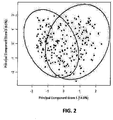
- Logistic regression analysis identified species from each of these genera that were significantly associated with health, gingivitis or mild periodontitis. Principal component analysis showed distinct community profiles in health and disease. The species identified show some similarities with health and periodontal disease in humans but also major differences. In contrast to human, healthy canine plaque was found to be dominated by Gram negative bacterial species whereas Gram positive anaerobic species predominate in disease.
- Dental assessments, scoring and subgingival plaque sampling were performed by a single veterinary dentist (L. Milella) to avoid variation in scoring.
- the study cohort comprised client owned pet dogs presented at a veterinary referral dental clinic. Only dogs under anaesthetic for routine dental treatment or treatment for non-periodontal complications e.g. broken teeth or other non-infectious conditions were screened for inclusion in the study. No dogs were anaesthetised solely for the collection of plaque samples.
- the periodontal health status of each dog was obtained following the Wiggs & Lobprise scoring system (Wiggs & Lobprise, 1997) and plaque samples taken from dogs regarded as having healthy teeth and gums, gingivitis or mild periodontitis (PD1, ⁇ 25% attachment loss).
- Dogs were excluded from the study if they had: 1) Significant veterinary oral care within the preceding 3 months; 2) Regular dental care at home i.e. dogs whose teeth are regularly brushed; 3) Systemic or oral antibiotic treatment any of the previous 3 months and 4) Evidence of any extra-oral bacterial infections in the past month. Breeds thought to exhibit an alternative early onset/ aggressive form of periodontitis, were also excluded. These breeds were Greyhounds, Buffalo Terriers, Maltese and Toy Poodles.
- Sub-gingival plaque samples were collected using a sterile periodontal probe and placed in 350 ⁇ l TE buffer (50 mM Tris pH 7.6, 1 mM EDTA pH 8.0 & 0.5% Tween 20) prior to storage at -20°C.
- TE buffer 50 mM Tris pH 7.6, 1 mM EDTA pH 8.0 & 0.5% Tween 20
- Healthy dogs were sampled subgingivally at eighteen sites, targeting the teeth most often affected by PD (upper 103-108 bilaterally and lower 404, 408 and 409 bilaterally), to support plaque volumes in the absence of periodontal pockets.
- Periodontally diseased dogs were sampled for subgingival plaque at up to twelve diseased sites (103, 104, 108, 404, 408, 409 bilaterally) during their normal periodontal treatment. Information on dog age, breed, size, sex and neuter status was collated.
- the V1-V3 region of the 16S rDNA was amplified from subgingival plaque DNA extractions using Extensor Hi-Fidelity PCR Enzyme Mix (AB-0792, Thermo, UK) in a 96-well format.
- a mix of two universal forward primers was used; FLX_27FYM ( CGTATCGCCTCCCTCGCGCCATCAG AGAGTTTGATYMTGGCTCAG) at 9.5pmol/ ⁇ l and FLX_27F_Bif ( CGTATCGCCTCCCTCGCGCCATCAG AGGGTTCGATTCTGGCTCAG) at 0.5pmol/ ⁇ l (where italics represent FLX Titanium Primer A and bold represents 16S sDNA primer sequence).
- the DNA was to be sequenced from the reverse primer thus 20 different 7mer MID tags were included in the reverse primer ( CTATGCGCCTTGCCAGCCCGCTCAGX XXXXXX TYACCGCGGCTGCTGG ) where italics represent FLX Titanium Primer B, X represents MID sequence and bold represents 16S sDNA reverse primer sequence.
- the standard flowgram files (SFF) for each of the 223 samples were initially filtered by selecting reads with at least 360 flows and truncating long reads to 720 flows. Reads were filtered and denoised using the AmpliconNoise software (version V1.21; Quince et al., 2009, 2011). For the initial filtering step, reads were truncated when flow signals dropped below 0.7, indicative of poor quality. A maximum of 20,000 reads per sample were used with exception of a few samples due to the computational demands of the denoising algorithm.
- the QIIME script pick_otus.py which utilises the Uclust software program, was used to cluster sequences with >98% identity. Uclust was run with modified parameters, with gap opening penalty set to 2.0 and gap extension penalty set to 1.0 and -A flag to ensure optimum alignment.
- Representative sequences of all observed OTUs that passed the filtering criteria for sequence abundance (see statistical analysis section) across health states were searched against the Canine Oral Microbiome Database (COMD) using BLASTN of NCBI-BLAST 2.2.27+.
- the COMD sequence database contained 460 published 16S DNA sequences obtained from canine oral taxa (Genbank accession numbers JN713151-JN713566 & KF030193-KF030235). Additionally, representative sequences were searched against the 376,437 sequences in the Silva SSU database release 108. For each representative sequence the best BLAST hit in the COMD database was chosen as the reference sequence.
- the best hit from the Silva database was chosen.
- the assignments were checked for redundancies (two or more OTUs assigned to the same reference sequence). Redundancies were resolved by keeping the taxonomy for the OTU with the better match and assigning the next best match to the other OTU.
- a multiple sequence alignment was constructed by aligning each reference sequence to the Greengenes core set (revision 3 rd May 2011) with PyNAST using the script align_seqs.py of the Qiime pipeline.
- the MSA was filtered using the filter_alignment.py script of the Qiime pipeline.
- the MSA was converted to Phylip interleaved format using ClustalW 2.1.
- a maximum likelihood tree of 1000 bootstrap replicates was inferred with PhyML 3 revision 20120412.
- a GTR model of nucleotide substitution was chosen and the proportion of invariant sites was estimated from the data. Evolutionary rates were approximated by a discrete gamma model of eight categories. The tree was visualised and combined with abundance and significance data in iTOL.
- a second tree with a reduced amount of taxa was inferred at the genus level. For this purpose all species of the same genus were collated into a single taxon. The 16S sequence of the most abundant species of that genus was used for tree inference using the methods described above. If no genus information was present, taxa forming a clade in the full tree were grouped together and the new taxon was named e.g. "Actinomyces clade A". Abundance information was added up for all members of each summarised taxon and plotted on the tree using iTOL. The tree was complemented with information on the number of original taxa summarised and the number of significant taxa. See table 3 in which taxa were grouped together.
- Health and disease associations The most abundant OTUs (>0.05%) were analysed using logistic regression analyses (Generalised linear model with a binomial distribution and logit link) for proportions, using the count for the OTU out of the total number of sequences and health status was included as a fixed effect. OTUs were classified in a single group of "rare" taxa if either they were present in each health status group at an average proportion below 0.05% or were present in less than two samples. The 0.05% cut-off was selected based on statistical analysis of data from mock communities containing 17 known species sequenced on five separate 454 runs. The mock communities were analysed for presence and absence of species using a false positive rate of 0.3% (i.e.
- PCA Principal component analysis
- Gram-stain status The OTUs excluding rares were classified as gram positive or gram negative based on literature searches using the genus name. The number of sequences gram positive or gram negative were then analysed by logistic regression for proportions (adjusting for the total number of sequences and allowing for estimation of over dispersion) with health status as a fixed effect.
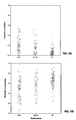
- Oxygen Requirement The non-rare OTUs were classified as aerobic, anaerobic or facultative anaerobe based on literature searches using the genus name. The number of sequences of aerobic, anaerobic and facultative anaerobe were then analysed (separately) by logistic regression for proportions (adjusting for the total number of sequences and allowing for estimation of over dispersion) with health status as a fixed effect. All health statuses were significantly different Shannon diversity Index: a linear model was used to analyse the data, with health status as a fixed effect and weighting the variability by health status as there were significant differences in the variability of indexes between health statuses.
- Species richness a linear model was used to analyse all OTUs including the rare sequences with health status as a fixed effect, the total number of sequences as a covariate (to adjust for the differing number of sequences between samples), and weighting the variability by health status (as there were significant differences in the variability of indexes between health statuses.
- Subgingival plaque bacterial communities were sampled from a total of 223 dogs; 72 with healthy gingiva, 77 with gingivitis and 74 with mild periodontitis. Dog size and age are putative risk factors for periodontitis and therefore sample associated metadata was also obtained (see Table 1). The majority of samples were collected from small, medium and large dogs with giant dogs represented at a much lower frequency. As expected the mean age of dogs increased with disease stage and significant differences (p ⁇ 0.001) were observed in the mean ages of dogs in health compared to gingivitis and gingivitis compared to mild periodontitis using a two-tailed T-test with unequal variance. Lesser significance was observed in health versus gingivitis (p ⁇ 0.05). Table 1.
- the 223 canine subgingival plaque samples were analysed by 454-pyrosequenicng of the 3' end of the V1-V3 region and a total of 6,071,129 sequence reads were obtained that passed the sequencing providers initial sequence quality filter. After Pyronoise, Seqnoise and chimera removal using Perseus the number of sequence reads was reduced to 3,110,837. The final number of sequence reads per sample ranged from 2,801 to 30,050 with a median number of reads of 11,682, 12,674 and 15,111 from healthy, gingivitis and mild periodontitis samples respectively.
- OTUs 6,431 operational taxonomic units
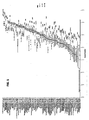
- Taxonomic assignment of each of the 274 OTUs resulted in 222 (81%) and 30 (11%) mapping to sequences within COMD (Dewhirst et al., 2012) and Silva respectively with ⁇ 98% identity. The remaining 22 OTUs (8%) shared between 91.4% and 97.7% identity to sequences within the Silva database. The majority of the sequences belonged to seven phyla; Firmicutes (28.5%), Bacteroidetes (26.5%), Proteobacteria (17.36%), Actinobacteria (15.3%), Fusobacteria (3.7%), Spirochaetes (1.9%) and TM7 (1.1%).
- OTU Species Percentage identity Total number of sequence reads Proportion of total sequence reads (%) 2517 Porphyromonas cangingivalis COT-109 99.4 230327 7.40% 4266 Moraxella sp. COT-396 98.9 107867 3.47% 6029 Actinomyces canis COT-409 99.1 100436 3.23% 2232 Bergeyella zoohelcum COT-186 99.1 87570 2.81% 6027 Peptostreptococcus sp. COT-033 99.7 74661 2.40% 5570 Peptostreptococcaceae sp.
- COT-004 100.0 65764 2.11% 2678 Porphyromonas gulae COT-052 100.0 64382 2.07% 5364 Porphyromonas gingivicanis COT-022 99.7 63838 2.05% 2908 Filifactor villosus COT-031 100.0 60684 1.95% 2905 Actinomyces sp. COT-083 100.0 60238 1.94% 3307 Actinomyces sp. COT-252 100.0 56776 1.83% 2233 Neisseria shayeganii COT-090 100.0 52354 1.68% 5572 Fusobacterium sp.
- COT-189 99.1 50612 1.63% 3434 Porphyromonas canoris COT-108 100.0 47457 1.53% 3638 Porphyromonas gulae COT-052 99.7 46699 1.50% 2576 Corynebacterium myburgense COT-403 99.7 41549 1.34% 2463 Peptostreptococcaceae sp. COT-077 100.0 39940 1.28% 1916 Clostridiales sp. COT-028 100.0 39516 1.27% 4116 Fusobacterium sp. COT-169 99.4 39001 1.25% 1678 Pasteurellaceae sp.
- COT-080 100.0 37073 1.19% 4929 Capnocytophaga sp. COT-339 100.0 36692 1.18% 5804 Erysipelotrichaceae sp. COT-311 100.0 31319 1.01% 368 Peptostreptococcaceae sp. COT-135 100.0 31151 1.00% 6025 Lachnospiraceae sp. COT-036 100.0 29757 0.96% 1773 Moraxella sp. COT-018 100.0 27348 0.88% 5514 Capnocytophaga cynodegmi COT-254 100.0 26402 0.85%
- COT-295 100.00 0.0084 0.0020 0.0007 5.3000 11.9 2.3 0.0064 ⁇ 0.001 ⁇ 0.001 0.1246 4929
- Capnocytophaga sp. COT-339 100.00 0.0296 0.0040 0.0040 6.7000 7.2 1.1 0.0064 ⁇ 0.001 ⁇ 0.001 0.8919
- Cloacibacterium sp. COT-320 99.14 0.0010 0.0003 2.100 2.1000 7.7 3.6 0.0064 0.0021 ⁇ 0.001 0.0016 5324
- Chloroflexi bacterium COT-306 100.00 0.0021 0.0040 0.0090 0.5000 0.2 0.5 0.0064 0.0206 ⁇ 0.001 ⁇ 0.001 3793 3Helcococcus sp.
- COT-329 99.71 0.0016 0.0006 0.0001 2.8000 14.7 5.3 0.014 ⁇ 0.001 ⁇ 0.001 0.0075 5917 Catonella sp. COT-257 100.00 0.0014 0.0008 0.0004 1.8000 3.5 2 0.014 0.0129 ⁇ 0.001 0.019 5573 Peptostreptococcaceae bacterium COT-129 100.00 0.0001 0.0006 0.0010 0.1000 0.1 0.5 0.014 0.0031 ⁇ 0.001 0.0133 5813", Synergistales bacterium COT-178 100.00 0.0033 0.0060 0.0070 0.5000 0.5 0.9 0.014 0.0026 ⁇ 0.001 0.3083 5383 [Eubacterium] nodatum COT-045 99.71 0.0000 10.000 0.0006 0.3000 0 0.1 0.014 0.2527 ⁇ 0.001 ⁇ 0.001 3155 uncultured Actinomyces HM336429 96.59 0.0000 0.0000 0.0007 0.2000 0
- COT-372 100.00 0.0014 0.0004 0.0003 3.7000 4.1 1.1 0.0211 ⁇ 0.001 ⁇ 0.001 0.8096 4924 Schwartzia sp.
- COT-213 98.86 0.0000 0.0000 0.0009 1.2000 0 0 0.0211 0.9082 ⁇ 0.001 ⁇ 0.001 1418 Erysipelotrichaceae bacterium COT-381 99.71 0.0003 0.0010 0.0020 0.4000 0.2 0.5 0.0211 0.023 ⁇ 0.001 0.0045 4647 Treponema sp.
- COT-011 100.00 0.0082 0.0080 0.0050 1.0000 1.7 1.7 0.0297 0.9003 0.0017 0.002 6026 Escherichia coli COT-277 99.71 0.0010 0.0006 0.0003 1.8000 3 1.7 0.0297 0.0115 ⁇ 0.001 0.0687 4534
- Clostridiales bacterium COT-038 100.00 0.0004 0.0010 0.0040 0.3000 0.1 0.3 0.0325 0.0738 ⁇ 0.001 ⁇ 0.001 6024
- Acholeplasmatales bacterium COT-375 100.00 0.0001 0.0002 0.0006 0.7000 0.2 0.3 0.0325 0.3626 ⁇ 0.001 ⁇ 0.001 1372 Globicatella sp.
- COT-345 100.00 0.0023 0.0050 0.0020 0.4000 1.5 3.5 0.0392 0.0031 0.2767 ⁇ 0.001 3358 Aquaspirillum sp.
- COT-091 99.141 0.0053 0.0040 0.0006 1.2000 9.3 7.7 0.0411 0.4646 ⁇ 0.001 ⁇ 0.001 564 Stenotrophomonas sp.
- Moraxella sp. COT_396 (QIIME OTU# 4266, 6.61%), Bergeyella zoohelcum COT-186 (OTU# 2232, 5.48%), Neisseria shayeganii COT-090 (OTU# 2233, 3.28%) and Pasteurellaceae sp. COT-080 (OTU# 1678, 2.37%) were significantly more abundant in health and gingivitis than in mild periodontitis and were also significantly more abundant in health than gingivitis (See table 3). Capnocytophaga sp. COT-339 (OTU# 4929, 2.96%), Stenotrophomonas sp.
- COT-224 (OTU# 564, 1.1%) were also significantly more abundant in health than in gingivitis and mild periodontitis but the relative abundance in gingivitis and mild periodontitis were not significantly different.
- Porphyromonas cangingivalis COT-109 (OTU# 2517, 10.47%) and Capnocytophaga cynodegmi COT-254 (OTU# 5514, 1.24%) were significantly more abundant in health and gingivitis than in mild periodontitis but the relative abundance in health and gingivitis did not significantly differ.
- Clostridiales sp. COT-028 (OTU# 1916, 2.2%), Peptostreptococcaceae sp. COT-135 (OTU# 368, 1.4%), Peptostreptococcaceae sp. COT-077 (OTU# 2463, 2.7%), Peptococcus sp.
- COT-044 (OTU# 4905, 1.2%), Peptostreptococcaceae sp. COT-019 (OTU# 908, 1.2%) and Peptostreptococcaceae sp. COT-030 (OTU#4774, 1.1%) were also significantly more abundant in mild periodontitis than in health and gingivitis but were also more abundant in gingivitis than health.
- Corynebacterium canis COT-421 (OTU# 149, 1.1%) was significantly more abundant in mild periodontitis and gingivitis than health but gingivitis and mild periodontitis samples were not significantly different.
- periodontitis associated Firmicutes In contrast to health, the abundance of periodontitis associated Firmicutes, particularly Peptostreptococcaceae spp., means that Gram-positive anaerobes predominate in the periodontitis associated species.
- the environmental pressures that drive selection of species presumably include nutrient sources, oxygen stress, pH and immunological factors.
- the major health associates may be aerobic early colonisers that are able to metabolise salivary carbohydrates such as mucins and proline rich proteins. With chronic gingivitis and periodontitis, uncontrolled inflammation and bacterial activity result in the destruction of gingival tissue leading to anaerobic periodontal pockets containing protein rich gingival crevicular fluid and immunological agents.
- the primary output of interest was the classification of cases into one of three health categories. These were:
- An output of secondary interest was the average Gingivitis score obtained from sampled teeth. Although the individual teeth receive a discrete score taking the values 0,1, 2 or 3, the average score is a continuous variable ranging from 0 to 3, which has an impact on the types of predictive models used and the approach to assessing the performance of the models.
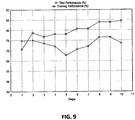
- the Test Set Performance was assessed in terms of the regression R-squared value (the percentage of the variability in the output variable explained by the model). Since the R-squared can be difficult to interpret, the Residual Standard Deviation, which provides an indication of the mean distance between the observed and predicted values, was also calculated.
- variable prefixes identify the variable type and should be interpreted as follows:
- Tree structure 1 (Training Data) Dependent variable: Health State Options: Categorical response, Tree number 1 Left branch Right branch Size of node N in class P N in class Not-P Selected category Split variable Split constant 1 2 3 155 52 103 Not-P bn Peptostreptococcaceae_ XI_[G-6]_sp._COT-06 0.5 2 4 5 93 15 78 Not-P bn_Treponema_sp._COT-191 0.5 4 6 7 89 11 78 Not-P bn_ g_Atopobium 0.5 6 8 9 83 7 76 Not-P bn_Streptococcus_anginosus_COT-117 0.5 8 10 11 80 5 75 Not-P bn_g_Porphyromonadaceae 0.5 10 12 13 79 4 75 Not-P bn Synergistales_[G-1]_sp._COT-244 0.5 12 78 3 75 Not-P 13
- Tree structure 1 (Training Data) Dependent variable: Health State Options: Categorical response, Tree number 1 Left branch Right branch node N in class H Not-H N in class Selected category Split variable 1 2 3 155 52 103 Not-H pr_g_ Peptostreptococcus 2 4 5 71 43 28 H pr_Treponema_sp._COT-200 4 6 7 46 36 10 H ct_Frgovirgula_sp._COT-007 6 8 9 39 34 5 H ct_q_Leucobacter 8 10 11 33 32 1 H pr_ q_ Odoribacter 10 32 32 0 H 11 1 0 1 Not-H 9 6 2 4 Not-H 7 7 2 5 Not-H 5 12 13 25 7 18 Not-H ct_Peptostreptococcaceae_XIII_[G-2]_sp._COT-077 12 11 7 4 H 13 14 0 14 Not-H 3 84 9 75 Not-H
- Tree Structure (Spreadsheet In Perio Diagnostic Data - Merged Data (COT-077 first)) Response: Health State Model: C&RT; Size of node N in class P N in class Not-P Selected category Split variable Criterion for child 1 Criterion for child 2 Child node 1 Child node 2 1 155 52 103 Not-P bn Peptostreptococcaceae XIII [G-2] sp.
- the following PMML files show the deployment code for each of models 1 to 4.
- the invention also provides the following numbered embodiments: 1.
- An assay for use in a method for determining the oral health status of a canine animal comprising means for identifying at least two bacteria selected from the list consisting of: Peptostreptococcaceae_XIII_[G-1]_sp._COT-030 Peptostreptococcaceae_XIII_[G-2]_sp._COT-077 Capnocytophaga_canimorsus Moraxella_sp._COT-017 Escherichia_coli Fusobacterium_sp._COT-189 Selenomonas_sproda_COT-342 Proprionibacterium_sp._COT-365 Treponema_sp._COT-200 Corynebacterium_sp._cluster 88112 Erysipelotrichaceae_[G-3]_sp._COT-302 Filifactor_sp._COT-163 Lach
- An assay according to embodiment 1 or embodiment 2 further comprising means for identifying at least one bacteria selected from the list consisting of Peptostreptococcaceae_XI_[G-I]_sp._COT-004 Peptostreptococcaceae_XI_[G-1]_sp._COT-258 Peptostreptococcaceae_XI_[G-6]sp._COT-068 Porphyromonas_sp._COT-290 Prevotella_sp._COT-195 Prevotella_sp._COT-282 Proprionibacterium_sp._COT-300 Stenotrophomonas_sp._COT-224 Streptococcus_minor_COT-116 Xenophilus_sp._COT-174 Actinomyces_sp.
- a method of improving or maintaining the oral health of an animal comprising determining the oral health status of a canine animal using the assay according to any one of embodiments 1 to 13 wherein when the health status is predicted to be "not health” or “periodontitis", providing to the animal a foodstuff or supplement which is formulated to improve the oral health status.
- a method of improving or maintaining the oral health of an animal comprising determining the oral health status of a canine animal using the assay according to any one of embodiments 1 to 13 wherein when the health status is "health” or “not periodontitis", providing to the animal a foodstuff or supplement which is formulated to maintain the oral health status.
Landscapes
- Life Sciences & Earth Sciences (AREA)
- Health & Medical Sciences (AREA)
- Engineering & Computer Science (AREA)
- Chemical & Material Sciences (AREA)
- Physics & Mathematics (AREA)
- General Health & Medical Sciences (AREA)
- Bioinformatics & Cheminformatics (AREA)
- Analytical Chemistry (AREA)
- Biotechnology (AREA)
- Molecular Biology (AREA)
- Medical Informatics (AREA)
- Proteomics, Peptides & Aminoacids (AREA)
- Immunology (AREA)
- Biophysics (AREA)
- Theoretical Computer Science (AREA)
- Spectroscopy & Molecular Physics (AREA)
- Bioinformatics & Computational Biology (AREA)
- Evolutionary Biology (AREA)
- Genetics & Genomics (AREA)
- Public Health (AREA)
- Zoology (AREA)
- Polymers & Plastics (AREA)
- Hematology (AREA)
- Food Science & Technology (AREA)
- Urology & Nephrology (AREA)
- Biomedical Technology (AREA)
- Organic Chemistry (AREA)
- Birds (AREA)
- Biochemistry (AREA)
- Epidemiology (AREA)
- Microbiology (AREA)
- Animal Behavior & Ethology (AREA)
- Veterinary Medicine (AREA)
- Wood Science & Technology (AREA)
- Virology (AREA)
- Bioethics (AREA)
- Medicinal Chemistry (AREA)
- Artificial Intelligence (AREA)
- General Physics & Mathematics (AREA)
- Pathology (AREA)
Abstract
Description
- The present invention relates to an assay for use in a method of determining the oral health status of a canine animal by identifying certain bacteria present or absent in a sample taken from the animal, and applying the information set out herein for each identified bacteria to statistical models in order to determine the oral health status of the animal.
- Periodontal disease is a significant problem in dogs, affecting 56-60% of the adult population. It is an inflammatory disease of the supporting tissues of the teeth with tissue damage eventually leading to tooth loss if left untreated. The aetiological agent of periodontitis is dental plaque, a complex biofilm of bacteria suspended in a matrix of bacterial exudates and secreted products. The activity of some bacteria induces a host immune response and results in inflammation of the gingival tissue referred to as gingivitis (G). If the disease progresses, tissue damage becomes more severe leading to an increasing loss of the periodontal ligament surrounding the tooth and is referred to as early stage periodontitis (PD1). Further progression to advanced periodontitis (PD3-PD4) is characterized by significant destruction of the periodontal ligament and supporting tissues including bone. If left untreated the condition is painful for a prolonged period before eventual tooth loss occurs. There is also some evidence in the human field that periodontitis is a risk factor for numerous other conditions, most notably cardiovascular disease.
- Assessment of canine oral health is usually made by performing a clinical examination of the dog's mouth while the animal is under anaesthesia, which is a time consuming and resource intensive process which is not without risk to the animal. Physical characteristics of the teeth and gums are used to determine the levels of gingivitis and periodontitis. If other indicators could be reliably used to determine oral health status there may be benefits both in terms of the need to anaesthetise dogs and the ways in which dogs can be used for oral health research.
- Traditional methods used to diagnose periodontitis rely on clinical indicators such as signs of inflammation, probing depths, extent and pattern of loss of clinical attachment and bone and other symptoms including the amount of observable plaque and calculus. Such an examination is costly and requires highly trained professionals to examine patients closely. In the case of dogs thorough examination usually requires the attention of a veterinary dentist. Also routine dental maintenance, scaling and inspection of any diseased areas usually require a general anaesthetic to be applied, further complicating the procedure and increasing the resources required.
- It is accepted that bacteria present in human dental plaque are the aetiological agent of periodontal disease; though the specific organisms involved in the initiation of disease and the basis of the subsequent events thereafter are unclear. A working hypothesis is that specific antigens or enzymes produced by bacteria in the plaque biofilm initiate activation of the host inflammatory response, the latter being the main pathological agent of periodontal disease.
- The initial stages of disease are observed clinically as red and inflamed gums, defined as gingivitis. Without treatment by removal of the plaque biofilm, gingivitis may progress to early periodontitis. The earliest stage of periodontitis (PD1) is characterised by initial tissue breakdown and loss of up to 25% attachment of the periodontal ligament surrounding the tooth root. In humans, this switch from gingivitis to periodontitis appears to be restricted to 10-15% of the population. The onset of periodontitis is defined by irreversible tissue destruction and if left untreated will progress to extreme periodontitis (PD3-PD4). This is characterised by extensive (50-75%) destruction of the periodontal ligament, gum recession and breakdown of supporting tissues eventually leading to the loss of the tooth. The periodontal disease process can be inhibited in the early stages (PD1) by dental scaling and polishing of the periodontal pocket to remove the source of inflammation (dental plaque) with subsequent regular plaque removal by tooth brushing. As such, increasing the understanding of the early stages of disease, (gingivitis through to PD1) in pet dogs where non-surgical interventions may be effective would be desirable.
- The diversity of bacterial species found in the canine oral microbiome has been reported using culture independent molecular methods from 51 dogs. Based on full length 16S rDNA Sanger sequencing, 353 taxa were identified; of these 80% were novel and only 16.4% were shared with the human oral microbiome. This indicates a clear difference between the bacterial populations in human versus canine mouths.
- Dewhirst et al., (PLoS One, ) describes a study to identify the major species of bacteria present in the canine oral microbiome. This paper describes the major bacteria present in the canine oral microbiome. However, without information linking the different species and genera of bacteria found to specific health conditions (whether healthy, gingivitis or periodontitis) then knowledge about which bacteria are present is not informative with regards to predicting the health state of the animal concerned.
- Sturgeon et al., (Vet. Microbiol., Vol.162, 2013) describe a study that used pyrosequencing of 16S rRNA gene to study oral samples from six healthy dogs. This paper lists the genera found in the six healthy dogs. Since the authors did not test dogs that were not healthy (with gingivitis or periodontitis, for example) it is not possible to tell if any of the genera that they identified are especially characteristic of health. In the absence of these data, simply knowing that these genera are present in some healthy samples is not informative with regard to predicting the health state of the animal concerned.
- Thus, there is a clear need to identify particular bacterial species in canine plaque that are significantly associated with health, gingivitis and mild periodontitis.
- Therefore, the present invention provides an assay for use in a method for determining the oral health status of a canine animal, the method comprising an assay, wherein the assay comprises means for identifying at least two bacteria selected from the list consisting of
Peptostreptococcaceae_XIII_[G-1]_sp._COT-030 Peptostreptococcaceae_XIII_[G-2]_sp._COT-077 Capnocytophaga_canimorsus Moraxella_sp._COT-017 Escherichia_coli Fusobacterium_sp._COT-189 Selenomonas_sputigena_COT-342 Proprion ibacterium_sp._COT -365 Treponema_sp._COT-200 Corynebacterium_sp._cluster 88112 Erysipelotrichaceae_[G-3]_sp._COT-302 Filifactor_sp._COT-163 Lachnospiraceae_XIVa_[G-3]_sp. Filifactor_sp._COT-064 Neisseria_sp._COT-049 Neisseria_weaveri_COT-269 Peptostreptococcaceae_XI_[G-6]_pp._COT-067 Capnocytophaga_canimorus_COT-235 Porphyromonas_macacae_COT-192 Treponema_sp._COT-351 Lachnospiraceae_XIVa_[G-6]_sp._COT-161 Cardiobacterium_sp._COT-176 Pasteurellaceae_sp._COT-271 Peptostreptococcaceae_XI_[G-7]_sp._COT-155 Schwartzia_sp._COT-063 Wolinella_succinogenes Actinobaceria_sp._COT-376 Clostridiales_[F-2.G-1]_sp._COT-1 00_PO005 Clostridiales_III_[G-3]_sp._COT-388 Desulfovibrionales_sp._COT-009 Peptostreptococcaceae _XI_[G-3]_sp._COT-034 Porphyromonas_gulae_I_COT-052 Treponema_sp._COT-198 Parvimonas Peptostreptococcus Moraxella Filifactor Schwartzia Treponema bacterium_cp04.17 Capnocytophaga Atopobium Phascolarctobacterium Globicatella Prevotella Curtobacterium Granulicatella Solobacterium Peptostreptococcaceae_XIII_[G-1]_sp._COT-030 Peptostreptococcaceae_XIII_[G-2]_sp._COT-077 Capnocytophaga_canimorsus Escherichia_coli Fusobacterium_sp._COT-189 Selenomonas_sputigena_COT-342 Proprionibacterium_sp._COT-365 Treponema_sp._COT-200 Corynebacterium_sp._cluster 88112 Erysipelotrichaceae_[G-3]_sp._COT-302 Filifactor_sp._COT-163 Lachnospiraceae_XIVa_[G-3]_sp. Fi lifactor_sp._COT-064 Neisseria_sp._COT-049 Peptostreptococcaceae_XI_[G-6]_sp._COT-067 Capnocytophaga_canimorus_COT-235 Porphyromonas_macacae_COT-192 Treponema_sp._COT-351 Lachnospiraceae_XIVa_[G-6]_sp._COT-161 Cardiobacterium_sp._COT-176 Peptostreptococcaceae_XI_[G-7]_sp._COT-155 Schwartzia_sp._COT-063 Wolinella_succinogenes Actinobaceria_sp._COT-376 Clostridiales_[F-2.G-1]_sp._COT-1 00_PO005 Clostridiales_III_[G-3]_sp._COT-388 Desulfovibrionales_sp._COT-009 Peptostreptococcaceae_XI_[G-3]_sp._COT-034 Treponema_sp._COT-198 Parvimonas Filifactor Schwartzia bacterium_cp04.17 Capnocytophaga Atopobium Phascolarctobacterium Globicatella Curtobacterium Granulicatella Solobacterium - The assay may also further comprise means for identifying at least one bacteria selected from the list consisting of;
Filifactor_alocis_COT-001 Lachnospiraceae_XIVa_[G-6]_sp._COT-106 Parvimonas_sp._COT-035 Peptostreptococcaceae_XI_[G-1]_sp._COT-006 Peptostreptococcaceae_XI_[G-3]_sp._COT-104 Peptostreptococcaceae_XI_[G4]_sp._COT-021 Porphyromonas_crevioricanis_COT-253 Proprionibacterium_sp._COT-296 Spirochaeta_sp._COT-379 Treponema_sp._COT-359 Actinomyces_sp._COT-252 Bacteroides_denticanoris_COT-183 (Prevotella_sp?) Catonella_sp._COT-257 Chryseobacterium_sp._COT-320 Pasteu relia_canis_COT-273 Prophyromonas_sp._COT-239 Spirochaeta_sp._COT-314 Treponema_denticola_COT-197 Actinomyces_catuli Anerovorax_sp._COT-066 Bacteroidia_[G-5]_sp._COT-187 Capnocytophaga_sp._COT-339 Capnocytophaga_sp._COT-362 Erysipelotrichaceae_[G-1]_sp._COT-311 Filifactor_villosus_COT-031 Globicatella_sp._COT-107 Lachnospiraceae_XIVa_[G-2]_sp._COT-062 Leucobacter_sp._COT-288 Parvimonas_sp._COT-102 Pasteurella_dogmatis_COT-092 Xanthomonadaceae_bacterium Leucobacter Odoribacter Propionibacteriaceae_bacterium Selenomonas Actinomyces CDC_Group_NO-1 Clostridiales_III_[G-3]_sp._COT-388_1P046 Propionivibrio Xenophilus Corynebacterium Escherichia Lautropia Leptotrichia - Alternatively or additionally, the assay may also comprise means for identifying at least one bacteria selected from the list consisting of;
Peptostreptococcaceae_XI_[G-1]_sp._COT-004 Peptostreptococcaceae_XI_[G-1]_sp._COT-258 Peptostreptococcaceae _XI_[G-6]_sp._COT-068 Porphyromonas_sp._COT-290 Prevotella_sp._COT-195 Prevotella_sp._COT-282 Proprionibacterium_sp._COT-300 Stenotrophomonas_sp._COT-224 Streptococcus_minor_COT-116 Xenophilus_sp._COT-174 Actinomyces_sp. Actinomyces_sp. Cluster 7595 Anaerovorax_sp._COT-125 Capnocytophaga_sp._COT-254 Catonella_sp._COT-025 Erysipelotrichaceae_[G-4]_sp._COT-381 Frigovirgula_sp._COT-007 Fusobacterium_sp._COT-169 Moraxella_sp._COT-018 Parvimonas_sp._COT-101 Peptostreptococcaceae_XI_[G-2]_sp._COT-047 Peptostreptococcaceae_XI_[G-4]_sp._COT-019 Porphyromonas_gulae_II_COT-052 Porphyromonas_sp._COT-181 Porphyromonas_sp._COT-361 Prevotella_sp._COT-298 Synergistales_[G-1]_sp._COT-178 Treponema_sp._COT-233 Staphylococcus Tannerella Arcobacter Catonella Chryseobacterium Fusobacterium - The bacteria identified may be of a particular species or are of a genus. Where a genus is identified, any number of members of that genus can be indicative of a particular oral health status when used in the assay of the invention; the sum of all members of the genus may be used in the predictive models. Where a species is identified, different species from the same genus cannot be assumed to have the same predictive value.
- The inventors surveyed the oral microbiota of a sufficiently large canine cohort, at great enough depth to identify significant changes in bacterial taxa (phyla, genera and species) between dogs with healthy gingiva and those with gingivitis or mild periodontitis (PD1), and found important links between certain bacteria and different health states.
- In this way, the inventors have developed a more relevant conscious testing methodology whereby the oral health status of the animal is assessed by molecular markers for disease state, such as bacterial species. Such a test allows much higher numbers of animals to be assessed and eliminate the need for general anaesthetics.
- The development of such a method also has applications for home-owned pets. A conscious test for oral health state enables more frequent monitoring of a pets oral health and provides encouragement for the use of preventative measures such as oral care treats and tooth brushing.
- The oral health status of the canine animal may be classified as healthy, gingivitis or periodontitis. The models used to reliably predict the oral health status can predict health/ not health (referred to herein as H/not H), where "not health" means gingivitis or periodontitis, or disease/not disease (also referred to herein as P/not P), where "not disease" means health or gingivitis. In this way, models can be combined in order to predict whether an animal has gingivitis, is healthy or has periodontitis.
- The sample from the animal to be tested in the animal may be dental plaque, gingival crevicular fluid saliva, or a mixture of any of these. As an advantage over present methods for determining the oral health status of an animal, such samples can be obtained non-invasively and without the need for anaesthetic or expert veterinary care. The sample may be used in the assay of the invention immediately, or it may be processed and stored for future analysis.
- The means to identify the two or more bacteria present in the sample may be Quantitative PCR, sequencing or antibody binding. Fluorescent in situ hybridisation may be used. Methods of extracting DNA or protein from bacteria are well known to one skilled in the art.
- The bacteria disclosed herein each have 16S DNA sequences that are used to identify them, as is known in the art. Such sequences are publically available and, as such, enable the design of primers by the skilled person. The COT (canine oral taxon) numbers associated with each species or genus described herein enables its identification through sequencing. The species may, for example, be identified through www.ncbi.nlm.nih.gov/nuccore, carrying out a text search for "canine oral taxon" which produces the list of known species, and their associated COT number. Sequences associated with each species are given, enabling, for example, primer design for species identification within a sample from the animal.
Methods of extracting bacteria from a sample are well known to one skilled in the art, as are techniques for extracting DNA from bacterial cells. - Sequencing techniques are well known in the art, including primer design, PCR techniques, sequencing techniques, and antibody assays, such as ELISAs. Antibodies to bacteria-specific proteins can be generated by the skilled person and used to detect certain bacteria in a sample by routine methods.
- The assay may comprise means for identifying from 2 to 20 bacteria, or suitably, from 3 to 10, or 4 to 12 bacteria. Alternatively, the assay may comprise means to identify from 2 to 100 bacteria, 5 to 50 bacteria, or 10 to 30 bacteria selected from the lists of species and genera as set out above.
- The step to identify the bacteria in order to determine the oral health status of the animal may comprise determining the presence or absence of two or more of a bacteria selected from the list consisting of;
Peptostreptococcaceae_XIII_[G-1 ]_sp._COT-030 Peptostreptococcaceae_XIII_[G-2]_sp._COT-077 Capnocytophaga_canimorsus Moraxella_sp._COT-017 Escherichia_coli Fusobacterium_sp._COT-189 Selenomonas_sputigena_COT-342 Proprionibacteriu m_sp._COT-365 Treponema_sp._COT-200 Corynebacterium_sp._cluster 88112 Erysipelotrichaceae_[G-3]_sp._COT-302 Filifactor_sp._COT-163 Lachnospiraceae_XIVa_[G-3]_sp. Filifactor_ sp._COT-064 Neisseria_sp._COT-049 Neisseria_weaveri_COT-269 Peptostreptococcaceae_XI_[G-6]_sp._COT-067 Capnocytophaga_canimorus_COT-235 Porphyromonas_macacae_COT-192 Treponema_sp._COT-351 Lachnospiraceae_XIVa_[G-6]_sp_COT-161 Cardiobacterium_sp._COT-176 Pasteurellaceae_sp._COT-271 Peptostreptococcaceae_XI_[G-7]_sp._COT-155 Schwartzia_sp._COT-063 Wolinella_succinogenes Actinobaceria_sp._COT-376 Clostridiales_[F-2.G-1]_sp._COT-1 00_PO005 Clostridiales_III_[G-3]_sp._COT-388 Desulfovibrionales_sp._COT-009 Peptostreptococcaceae_XI_[G-3]_sp._COT-034 Porphyromonas_gulae_I_COT-052 Treponema_sp._COT-198 Parvimonas Peptostreptococcus Moraxella Filifactor Schwartzia Treponema bacterium_cp04.17 Capnocytophaga Atopobium Phascolarctobacterium Globicatella Prevotella Curtobacterium Granulicatella Solobacterium Peptostreptococcaceae_XIII_[G-1]_sp._COT-030 Peptostreptococcaceae_XIII_[G-2]_sp._COT-077 Capnocytophaga_canimorsus Escherichia_coli Fusobacterium_sp._COT-189 Selenomonas_sputigena_COT-342 Proprionibacterium_sp._COT-365 Treponema_sp._COT-200 Corynebacterium_sp._cluster 88112 Erysipelotrichaceae_[G-3]_ sp._COT-302 Fil ifactor_sp._COT-163 Lachnospiraceae_XIVa_[G-3]_sp. Filifactor_sp._COT-064 Neisseria_sp._COT-049 Peptostreptococcaceae_XI_[G-6]_sp._COT-067 Capnocytophaga_canimorus_COT-235 Porphyromonas_macacae_COT-192 Treponema_sp._COT-351 Lachnospiraceae_XIVa_[G-6]sp._COT-161 Cardiobacterium_sp._COT-176 Peptostreptococcaceae_XI_[G-7]_sp._COT-155 Schwartzia_sp._COT-063 Wolinella_succinogenes Actinobaceria_sp._COT-376 Clostridiales_[F-2.G-1]_sp._COT-100_PO005 Clostridiales_III_[G-3]_sp._COT-388 Desulfovibrionales_sp._COT -009 Peptostreptococcaceae_XI_[G-3]_sp._COT-034 Treponema_sp._COT-198 Parvimonas Filifactor Schwartzia bacterium_cp04.17 Capnocytophaga Atopobium Phascolarctobacterium Globicatella Curtobacterium Granulicatella Solobacterium Filifactor_alocis_COT-001 Lachnospiraceae_XIVa_[G-6]_sp._COT-106 Parvimonas_sp._COT-035 Peptostreptococcaceae_XI_[G-1]_sp._COT-006 Peptostreptococcaceae_XI_[G-3]_sp._COT-104 Peptostreptococcaceae_XI_[G-4]_sp._COT-021 Porphyromonas_crevioricanis_COT-253 Proprionibacterium_sp._COT-296 Spirochaeta_sp._COT-379 Treponema_sp._COT-359 Actinomyces_sp._COT-252 Bacteroides_denticanoris_COT-183 (Prevotella_sp?) Catonella_sp._COT-257 Chryseobacterium_sp._COT-320 Pasteurella_canis_COT-273 Prophyromonas_sp._COT-239 Spirochaeta_sp._COT-314 Treponema_denticola_COT-197 Actinomyces_catuli Anerovorax_sp._COT-066 Bacteroidia_[G-5]_sp._COT-187 Capnocytophaga_sp._COT-339 Capnocytophaga_sp._COT-362 Erysipelotrichaceae_[G-1]_sp._COT-311 Filifactor_villosus_COT-031 Globicatella_sp._COT-107 Lachnospiraceae_XIVa_[G-2]_sp._COT-062 Leucobacter_sp._COT-288 Parvimonas_sp._COT-102 Pasteurella_dogmatis_COT-092 Xanthomonadaceae_bacterium Leucobacter Odoribacter Propionibacteriaceae_bacterium Selenomonas Actinomyces CDC_Group_NO-1 Clostridiales_III_[G-3]_sp._COT-388_1 P046 Propionivibrio Xenophilus Corynebacterium Escherichia Lautropia Leptotrichia - Alternatively or additionally the presence or absence may be determined of one or more further bacteria selected from the list consisting of;
Peptostreptococcaceae_XI_[G-1]_sp._COT-004 Peptostreptococcaceae_XI_[G-1]_sp._COT-258 Peptostreptococcaceae_XI_[G-6]_sp._COT -068 Porphyromonas_sp._COT-290 Prevotella_sp._COT-195 Prevotella_sp._COT-282 Proprionibacterium_sp._COT-300 Stenotrophomonas_sp._COT-224 Streptococcus_minor_COT-116 Xenophitus_sp._COT-174 Actinomyces_sp. Actinomyces_sp. Cluster 7595 Anaerovorax_sp._COT-125 Capnocytophaga_sp._COT-254 Catonella_sp._COT-025 Erysipelotrichaceae_[G-4]_sp._ COT-381 Frigovirgula_sp._COT-007 Fusobacterium_sp._COT-169 Moraxella_sp._COT-018 Parvimonas_sp._COT-101 Peptostreptococcaceae_XI_[G-2]_sp._COT-047 Peptostreptococcaceae_XI_[G-4]_sp._COT-019 Porphyromonas_gulae_II_COT-052 Porphyromonas_sp._COT-181 Porphyromonas_sp._COT-361 Prevotella_sp._COT-298 Synergistales_[G-1]_sp._COT-178 Treponema_sp._COT-233 Staphylococcus Tannerella Arcobacter Catonella Chryseobacterium Fusobacterium - The presence of bacteria associated with disease can give an indication that the animal has gingivitis or periodontitis. The absence of a bacteria associated with disease is a good indication that the dog has good oral health. The presence of the health associated bacteria can help to determine how healthy is the mouth of the animal, although is less strong of an indicator than the presence of a disease associated bacterial species or genera. A binary test (determining presence or absence) can involve identifying just one incidence of a bacterial species or there may be a threshold, in that a particular bacterial species or genus is not considered present until the count for that particular species/genera reaches at least 3, or at least 5 or at least 7, or at least 9.
- A bacterial count may be determined by the number of times its sequence information is identified in a sample, by qPCR or by colony count. By counts, it is meant an absolute number, rather than a proportional number.
- Alternatively or additionally the step to determine the oral health status may comprise determining the proportion of total plaque bacteria of two or more of a bacteria species or genera selected from the list consisting of
Peptostreptococcaceae_XIII_[G-1]_sp._COT-030 Peptostreptococcaceae_XIII_[G-2]_sp._COT-077 Capnocytophaga_canimorsus Moraxella_sp._COT-017 Escherichia_coli Fusobacteriu m_sp._COT -189 Selenomonas_sputigena_COT-342 Proprionibacterium_sp._COT-365 Treponema_sp._COT-200 Corynebacterium_sp._cluster 88112 Erysipelotrichaceae_[G-3]_ sp._COT-302 Filifactor_sp._COT-163 Lachnospiraceae_XIVa_[G-3]_sp. Filifactor_sp._COT-064 Neisseria_sp._COT-049 Neisseria_weaveri_COT-269 Peptostreptococcaceae_XI_[G-6]_sp._COT -067 Capnocytophaga_canimorus_COT-235 Porphyromonas_macacae_COT-192 Treponema_sp._COT-351 Lachnospiraceae_XIVa_[G-6]_sp._COT-161 Cardiobacterium_sp._COT-176 Pasteu rellaceae_sp._COT-271 Peptostreptococcaceae_XI_[G-7]_sp._COT-155 Schwartzia_sp._COT-063 Wolinella_succinogenes Actinobaceria_sp._COT-376 Clostridiales_[F-2.G-1]_sp._COT-1 00_PO005 Clostridiales_III_[G-3]_sp._COT-388 Desulfovibrionales_sp._COT-009 Peptostreptococcaceae_XI_[G-3]_sp._COT-034 Porphyromonas_gulae_I_COT-052 Treponema_sp._COT-198 Parvimonas Peptostreptococcus Moraxella Filifactor Schwartzia Treponema bacterium_cp04.17 Capnocytophaga Atopobium Phascolarctobacterium Globicatella Prevotella Curtobacterium Granulicatella Solo bacterium Peptostreptococcaceae_XIII_[G-1]_sp._COT-030 Peptostreptococcaceae_XII_[G-2]_sp._COT-077 Capnocytophaga_canimorsus Escherichia_coli Fusobacterium_sp._COT-189 Selenomonas_sputigena_ COT-342 Proprionibacterium_sp._COT-365 Treponema_sp._COT-200 Corynebacterium_sp._cluster 88112 Erysipelotrichaceae_[G-3]_ sp._COT-302 Filifactor_sp._COT-163 Lachnospiraceae_XIVa_[G-3]_sp. Filifactor_sp._COT-064 Neisseria_sp._COT-049 Peptostreptococcaceae_XI_[G-6]_sp._COT-067 Capnocytophaga_canimorus_COT-235 Porphyromonas_macacae_COT-192 Treponema_sp._COT-351 Lachnospiraceae_XIVa_[G-6]_sp._COT-161 Cardiobacterium_sp._COT-176 Peptostreptococcaceae_XI_[G-7]_sp._COT-155 Schwartzia_sp._COT-063 Wolinella_succinogenes Actinobaceria_sp._COT-376 Clostridiales_[F-2.G-1 ]_sp._COT-1 00_PO005 Clostridiales_III_[G-3]_sp._COT-388 Desulfovibrionales_sp._COT-009 Peptostreptococcaceae_ XI_[G-3]_sp._COT-034 Treponema_sp._COT-198 Parvimonas Filifactor Schwartzi a bacterium_cp04.17 Capnocytophaga Atopobium Phascolarctobacterium Globicatella Curtobacterium Granulicatella Solobacterium - The proportion of total plaque bacteria may be determined, at a further one or more bacteria selected from the list consisting of
Filifactor_alocis_COT-001 Lachnospiraceae_XIVa_[G-6]_sp._COT-106 Parvimonas_sp._COT-035 Peptostreptococcaceae_XI_[G-1 ]_sp._COT-006 Peptostreptococcaceae _XI_[G-3]_sp._COT-104 Peptostreptococcaceae_XI_[G-4]_sp._COT-021 Porphyromonas_crevioricanis_COT-253 Proprionibacterium_sp._COT-296 Spirochaeta_sp._COT-379 Treponema_sp._COT-359 Actinomyces_sp._COT-252 Bacteroides_denticanoris_COT-183 (Prevotella_sp?) Catonella_sp._COT-257 Chryseobacterium_sp._COT-320 Pasteurella_canis_COT-273 Prophyromonas_sp._COT-239 Spirochaeta_sp._COT-314 Treponema_denticola_COT-197 Actinomyces_catuli Anerovorax_sp._COT-066 Bacteroidia_[G-5]_sp._COT-187 Capnocytophaga_sp._COT-339 Capnocytophaga_sp._COT-362 Erysipelotrichaceae_[G-1 ]_sp._COT-311 Filifactor_villosus_COT-031 Globicatella_sp._COT-107 Lachnospiraceae _XIVa_[G-2]_sp._COT-062 Leucobacter_sp._COT-288 Parvimonas_sp._COT-102 Pasteu rella_dogmatis_COT-092 Xanthomonadaceae_bacterium Leucobacter Odoribacter Propionibacteriaceae_ bacterium Selenomonas Actinomyces CDC_Group_NO-1 Clostridiales_III_[G-3]_sp._COT-388_1P046 Propionivibrio Xenophilus Corynebacterium Escherichia Lautropia Leptotrichia - Alternatively or additional, the proportion of total plaque bacteria may be determined of a further one or more bacteria selected from the list consisting of
Peptostreptococcaceae_XI_[G-1]_ sp._COT-004 Peptostreptococcaceae_XI_[G-1]_sp._COT-258 Peptostreptococcaceae_XI_[G-6]_sp._COT-068 Porphyromonas_sp._COT-290 Prevotella_sp._COT -195 Prevotella_sp._COT-282 Proprionibacterium_sp._COT-300 Stenotrophomonas_sp._COT-224 Streptococcus_minor_COT-116 Xenophilus_sp._COT-174 Actinomyces_sp. Actinomyces_sp. Cluster 7595 Anaerovorax_sp._COT-125 Capnocytophaga_sp._COT-254 Catonellasp._COT-025 Erysipelotrichaceae_[G-4]_sp._COT-381 Frigovirgula_sp._COT-007 Fusobacterium_sp._COT -169 Moraxella_sp._COT-018 Parvimonas_sp._COT-101 Peptostreptococcaceae_XI_[G-2]_sp._COT-047 Peptostreptococcaceae_XI_[G-4]_sp._COT-019 Porphyromonas_gulae_II_COT-052 Porphyromonas_sp._COT-181 Porphyromonas_ sp._COT-361 Prevotella_sp._COT-298 Synergistales_[G-1]_sp._COT-178 Treponema_sp._COT-233 Staphylococcus Tannerella Arcobacter Catonella Chryseobacterium Fusobacterium - By proportion it is meant the percentage of total bacteria within the sample that is formed by a particular bacterial species or genus.
- Alternatively or additionally the step to identify the bacteria in order to determine the oral health status may comprise determining the number of counts of two or more of a bacteria species or genera selected from the list consisting of
Peptostreptococcaceae_XII_[G-1]_sp._COT-030 Peptostreptococcaceae_XIII_[G-2]_sp._COT-077 Capnocytophaga_canimorsus Moraxella_sp._COT-017 Escherichia_coli Fusobacterium_sp._COT-189 Selenomonas_sputigena_COT-342 Proprionibacterium_sp._COT-365 Treponema_sp._COT-200 Corynebacterium_sp._cluster 88112 Erysipelotrichaceae_[G-3]_sp._COT-302 Filifactor_sp._COT-163 Lachnospiraceae_XIVa_[G-3]_sp. Filifactor_sp._COT-064 Neisseria_sp._COT-049 Neisseria_weaveri_COT-269 Peptostreptococcaceae_XI_[G-6]_sp._COT-067 Capnocytophaga_canimorus_COT-235 Porphyromonas_macacae_COT-192 Treponema_sp._COT-351 Lachnospiraceae_XIVa_[G-6]_sp._COT-161 Cardiobacterium_sp._COT-176 Pasteu rellaceae_sp._COT-271 Peptostreptococcaceae_XI_[G-7]_sp._COT-155 Schwartzia_sp._COT-063 Wolinella_succinogenes Actinobaceria_sp._COT-376 Clostridiales_[F-2.G-1]_sp._COT-1 00_PO005 Clostridiales_III_[G-3]_sp._COT-388 Desulfovibrionales_sp._COT-009 Peptostreptococcaceae-XI_[G-3]_sp._COT-034 Porphyromonas_gulae_I_COT-052 Treponema_sp._COT-198 Parvimonas Peptostreptococcus Moraxella Filifactor Schwartzia Treponema bacterium_cp04.17 Capnocytophaga Atopobium Phascolarctobacterium Globicatella Prevotella Curtobacterium Granulicatella Solobacteriu m Peptostreptococcaceae_XIII_[G-1]_sp._COT-030 Peptostreptococcaceae_XIII_[G-2]_sp._COT-077 Capnocytophaga_canimorsus Escherichia_coli Fusobacterium_sp._COT-189 Selenomonas_sputigena_COT-342 Proprionibacterium_sp._COT-365 Treponema_sp._COT-200 Corynebacterium_sp._cluster 88112 Erysipelotnchaceae_[G-3]_ sp._COT-302 Filifactor_sp._COT-163 Lachnospiraceae_XIVa_[G-3]_sp. Filifactor_sp._COT-064 Neisseria_sp._COT-049 Peptostreptococcaceae_XI_[G-6]_sp._COT-067 Capnocytophaga_canimorus_COT-235 Porphyromonas_macacae_COT-192 Treponema_sp._COT-351 Lachnospiraceae_XIVa_[G-6]_sp._COT-161 Cardiobacterium_sp._COT-176 Peptostreptococcaceae_XI_[G-7]_sp._COT-155 Schwartzia_sp._COT-063 Wolinella_succinogenes Actinobaceria_sp._COT-376 Clostridiales_[F-2.G-1 ]_sp._COT-100_PO005 Clostridiales_III_[G-3]_sp._COT-388 Desulfovibrionales_sp._COT-009 Peptostreptococcaceae_XI_[G-3]_sp._COT-034 Treponema_sp._COT-198 Parvimonas Filifactor Schwartzia bacterium_cp04.17 Capnocytophaga Atopobium Phascolarctobacterium Globicatella Curtobacterium Granulicatella Solobacterium - The number of counts may be determined of a further one or more bacteria selected from the list consisting of
Filifactor_alocis_COT-001 Lachnospiraceae_XIVa_[G-6]_sp._COT-106 Parvimonas_sp._COT-035 Peptostreptococcaceae_XI_[G-1]_sp._COT-006 Peptostreptococcaceae_XI_[G-3]_sp._COT-104 Peptostreptococcaceae_XI_[G-4]_sp._COT -021 Porphyromonas_crevioricanis_COT-253 Proprionibacterium_sp._COT-296 Spirochaeta_sp._COT -379 Treponema_sp._COT-359 Actinomyces_sp._COT-252 Bacteroides_denticanoris_COT-183 (Prevotella_sp?) Catonella_sp._COT -257 Chryseobacterium_sp._COT-320 Pasteu rella_canis_COT-273 Prophyromonas_sp._COT-239 Spirochaeta_sp._COT-314 Treponema_denticola_COT-197 Actinomyces_catuli Anerovorax_sp._COT -066 Bacteroidia_[G-5]_sp._ COT -187 Capnocytophaga_sp._COT-339 Capnocytophaga_sp._COT -362 Erysipelotrichaceae_[G-1] _sp._COT -311 Filifaotor_villosus_COT-031 Globicatella_sp._COT-107 Lachnospiraceae_XIVa_[G-2]_sp._COT-062 Leucobacter_sp._COT-288 Parvimonas_sp._COT-102 Pasteurella_dogmatis_COT-092 Xanthomonadaceae_bacterium Leucobacter Odoribacter Propionibacteriaceae_bacterium Selenomonas Actinomyces CDC_Group_NO-1 Clostridiales_III_[G-3]_sp._COT-388_1P046 Propionivibrio Xenophilus Corynebacterium Escherich ia Lautropia Leptotrichia - Alternatively or additional, the number of counts may be determined of a further one or more bacteria selected from the list consisting of
Peptostreptococcaceae_XI_[G-1]_sp._COT-004 Peptostreptococcaceae _XI_[G-1]_sp._COT -258 Peptostreptococcaceae _XI_[G-6]_sp._COT -068 Porphyromonas _sp._COT -290 Prevotella_sp._COT-195 Prevotella _sp._COT-282 Proprionibacterium_sp._COT-300 Stenotrophomonas_sp._COT-224 Streptococcus_minor_COT-116 Xenophilus_sp._ COT -174 Actinomyces_sp. Actinomyces_sp. Cluster 7595 Anaerovorax_sp._COT-125 Capnocytophaga_sp._COT-254 Catonella_sp._COT-025 Erysipelotrichaceae_[G-4 ]_sp._COT-381 Frigovirgula_sp._COT-007 Fusobacterium_sp._COT-169 Moraxella_sp._COT-018 Parvimonas_sp._COT-101 Peptostreptococcaceae_XI_[G-2]_sp._COT-047 Peptostreptococcaceae_XI_[G-4]_sp._COT-019 Porphyromonas_gulae_II_COT-052 Porphyromonas_sp._COT-181 Porphyromonas _sp._COT-361 Prevotella_sp._COT-298 Synergistales_[G-1]_sp._COT-178 Treponema_sp._COT-233 Staphylococcus Tannerella Arcobacter Catonella Chryseobacterium Fusobacterium - Information such as the (i) presence or absence; (ii) the proportion of total bacteria; or (iii) number of counts of two or more bacterial species or genus can be used individually or in combination in order to predict the oral health status of an animal, as shown by the examples, below.
- The present invention also relates to a method of determining the oral health status of a canine animal, the method comprising the use of the assay of the invention to identify at least two bacteria as herein described in a sample taken from the animal and applying the information set out in table 5 for each identified bacteria to statistical models in order to make a prediction of oral health status.
- Statistical models that are able to be used in order to generate such predictions are well known in the art, using the data included herein, in tables 1 to 5. The data show the number of times a certain species or genus was found in the oral cavity of animals, and whether each animal in which it was found has been classed as being in good oral health, having gingivitis or periodontitis.
- This information, combined with information regarding a particular animal obtained from the assay of the invention, and the use of statistical models known to the skilled person (examples of which are described herein) can lead to a prediction that is up to 83% accurate.
- Currently, without using methods (that involve invasive procedures and anaesthetics), a canine animal is predicted to have a 50/50 chance of suffering from periodontitis, or not (i.e. being P/not P).
- Thus, the present invention shows a clear improvement and benefit over current invasive, time consuming and expensive methods.
- Once the information on presence/absence and/or proportion and/or counts of two or more bacteria has been obtained, one or more known statistical models can be used to predict the oral health status of the canine animal.
- Models are shown in Examples 2 to 12. Further models are known to one skilled in the art. The information obtained can be analysed to produce predictive values to enable the oral health status of an animal (health, gingivitis or periodontisis/disease) to be determined.
- By determining the oral health status it is meant that the current status is determined, such as whether the mouth of the animal is in good oral health, has gingivitis or periodontitis at the time of taking the sample. The oral health status prediction may also encompass a prediction on whether a healthy mouth is likely to develop gingivitis or periodontitis, or whether gingivitis is likely to develop into periodontitis, based on the bacterial species or genera that are present/absent and the levels or counts of such bacteria. Thus, the assay of the present invention allows reliable prediction of the future oral health of the animal as well as providing information on the current oral health of the canine animal.
- In practice, method of the invention involves the (non-invasive) collection of a sample from the oral cavity of a canine animal, the use of the assay of the invention to identify the presence or absence of the herein described bacteria in the sample. The information can then be compared to that presented in table 5, and suitable statistical models, such as those exemplified herein, can be used to generate a reliable prediction and determination of the oral health status of the animal.
- The present invention also provides a method of improving or maintaining the oral health of an animal, the method comprising determining the oral health status of a canine animal using the assay according to the invention and providing to the animal a foodstuff or supplement which is formulated to improve or maintain oral health, depending on the oral health status that has been determined by way of the assay.
- Such food products are known in the art, such as those containing active ingredients to improve oral health or those designed to remove plaque by abrasion, analogous to regular tooth-brushing. The amount or frequency of the foodstuff or supplement can be determined depending on the result of the assay. The predicted future health of the animal can also be taken into account when determining how often such oral care foodstuffs should be provided.
- The present invention also provides an assay for determining the oral health status of a canine animal, the assay comprising means for identifying at least two bacteria selected from the list consisting of Anaerovorax.sp.COT-124, Actinobaceria.sp.COT-376, Actinomyces.sp., Actinomyces.sp.COT-252, Aquaspirillum.sp.COT-091, Bergeyella.zoohelcum.COT-186, Brachymonas.sp.COT-015, Campylobacter.sp.COT-011, Capnocytophaga.canimorsus, Capnocytophaga.sp.COT-339, Capnocytophaga.sp.COT-362, Cardiobacterium.sp.COT-176, Desulfovibrionales.sp.COT-009, Escherichia.coli, Fusobacterium.sp.COT-169, Fusobacterium.sp.COT-189, g.Atopobium, g.bacterium.cp04.17, g.Capnocytophaga, g.Corynebacterium, g.Ottowia, g.Parvimonas, g.Prevotella, g.Schwartzia, Globicatella.sp.COT-107, LachnospiraceaeXIVa[G-2].sp.COT-062, LachnospiraceaeXIVa[G-4].sp.COT-099, Lautropia.sp.COT-060, Leucobacter.sp.COT-288, Parvimonas.sp.COT-101, PeptostreptococcaceaeXI[G-1].sp.COT-006, PeptostreptococcaceaeXI[G-1].sp.COT-071, PeptostreptococcaceaeXI[G-3].sp.COT-034, PeptostreptococcaceaeXI[G-3].sp.COT-307, PeptostreptococcaceaeXIII[G-2].sp.COT-077, Porphyromonadaceae[G-1].sp.COT-184, Porphyromonas.sp.COT-290, Prevotella.sp.COT-282, Prevotella.sp.COT-298, Prophyromonas.sp.COT-239, Proprionibacterium.sp.COT-296, Proprionibacterium.sp.COT-321, Proprionibacterium.sp.COT-365, Spirochaeta.sp.COT-314, Spirochaeta.sp.COT-379, Streptococcus.sp.cluster2789, Capnocytophaga.canimorus.COT-235, Chloroflexi[G-1].sp.COT-306, Desulfovibrio.sp.COT-070, Erysipelotrichaceae[G-3].sp.COT-302, Filifactor.sp.COT-064, Filifactor.sp.COT-163, Fusobacterium.sp.COT-236, g.bacterium.cp04.17, g.Parvimonas, g.Phascolarcto.bacterium, g.Solobacterium, g.Veillonellaceae. bacterium, Gemella.palaticanis.COT-089, Helcococcus.sp.COT-069, Helcococcus.sp.COT-140, LachnospiraceaeXIVa[G-6].sp.COT-161, Parvimonas.sp.COT-101, PeptostreptococcaceaeXI[G-1].sp.COT-004, PeptostreptococcaceaeXI[G-1].sp.COT- 258, PeptostreptococcaceaeXI[G-3].sp.COT-104, PeptostreptococcaceaeXI[G4].sp.COT-019, PeptostreptococcaceaeXI[G-4].sp.COT-019, PeptostreptococcaceaeXI[G-6].sp.COT-067, PeptostreptococcaceaeXIII[G-1].sp.COT-030, PeptostreptococcaceaeXIII[G-2].sp.COT-077, Porphyromonas.crevioricanis.COT-253, Porphyromonas.macacae.COT-192, Porphyromonas.sp.COT-181, Porphyromonas.sp.COT-361, Prevotella.sp.COT-195, Proprionibacterium.sp.COT-296, Selenomonas.sputigena.COT-342, Streptococcus.minor.COT-116, Xenophilus.sp.COT-174, Bacteroidia[G-4].sp.COT-387, Bacteroides.denticanoris.COT-183(Prevotellasp?), Desulfomicrobium.orale.COT-008, Filifactor.villosus.COT-031, g.Moraxella, g.Peptostreptococcus, Porphyromonas.gulael.COT-052, Porphyromonas.gulaell.COT-052, Treponema.denticola.COT-197, Frigovirgula.sp.COT-058, Moraxella.sp.COT-017, g.Filifactor, g.Treponema, Bacteroides.heparinolyticus.COT-310, Bacteroides.sp.COT-040, Bacteroides.tectus.COT-039, Clostridiales[F-2.G-1].sp.COT-100PO005, Clostridialeslll[G-3].sp.COT-388, Neisseria.sp.COT-049, Neisseria.sp.COT-090, Neisseria.weaveri.COT-269, Neisseria.zoodegmatis.COT-349, Pasteurella.canis.COT-273, Pasteurellaceae.sp.COT-271, Pasteurelladogmatis.COT-092, Synergistales[G-1].sp.COT-180, Synergistales[G-1].sp.COT-244, Filifactor.sp.COT-064, Peptostreptococcus.sp.COT-033, Treponema.sp.COT-200, Treponema.sp.COT-351, Treponema.sp.COT-359, Treponema.sp.COT-198, Streptococcus anginosus COT-117, Peptostreptococcus_XI_sp COT-067, Frigovirgula_sp_COT-007, g. Odoribacter, in a sample taken from the animal and determining the oral health status of the animal.
- Should the assay or method of the invention determine the likelihood that the oral health status is "P" (periodontosis/disease), the animal may be referred for a more thorough dental check to determine the next course of action.
- If the assay determines that the oral health status is "not H" (i.e. not healthy), a further assay may be carried out to determine whether the status is P/not P. Alternatively or additionally, diet changes (as described above), dental chews (such as Dentastix®), tooth brushing or a dental check may be recommended for the animal. A further test in 1 month, 3 months, 6 months or 12 months may also be recommended.
- If the assay determines the likelihood of 'health', a further assay may be recommended in 1 month, 3 months, 6 months or 12 months and for the oral health regime (e.g. diet, dental chews, tooth brushing) to be maintained.
- The present invention also provides a method of determining the efficacy of an oral care product in a canine animal, the method comprising determining the oral health status of a canine animal using the assay of the invention; providing to the animal an oral care product for a certain period of time; and determining the oral health status of the animal using the assay of the invention after the period of time has elapsed.
- Such a method enables the progress of the improvement of oral health to be monitored, without any invasive or risky procedures to the animal. More than one time point may be used, for example weekly, monthly, every two, three, four, five or six months, or annually. The amount of improvement of the oral health status may give an indication of the efficacy of the oral care product used in the method. Such oral care products or procedures may include foodstuffs, supplements, dental chews, tooth brushing, amongst others.
- Such a method allows product efficacy to be tested in a scenario that more closely mimics the real life environment and would have the following impact on the ability to test oral care products. Larger scale trials could be performed, as the choice of animals would not be limited to those in research facilities. The access to animals outside of research facilities also allows longer term trials to be performed allowing the long term benefits of oral care products to be assessed. Products could be tested for their ability to remove plaque and reduce gingivitis rather than for only the ability to prevent the formation of plaque or development of gingivitis. The method also allows the measuring of prevention and the measuring of treatment. Comparison trials between products are able to be performed easily and with no detriment or stress to the animal.
- The invention will now be described with reference to the following non-limiting figures and examples in which;
-
Figure 1 shows the average proportions with 95% confidence interval for OTUs with a significant health status effect; health, gingivitis and mild periodontitis; -
Figure 2 shows principal component analysis performed on the log10 proportions of OTUs identified in each individual by health status; health, gingivitis and PD1; -
Figure 3a shows proportions of Gram negative OTUs for each sample by health status; health, gingivitis and mild periodontitis: black bars indicate mean proportion of OTUs that are Gram negative with 95% confidence intervals; -
Figure 3b shows proportions of Gram positive OTUs for each sample by health status; health, gingivitis and mild periodontitis; black bars indicate mean proportion of OTUs that are Gram positive with 95% confidence intervals; -
Figure 4a shows proportions of aerobes for each sample by health status; health, gingivitis and mild periodontitis; black bars indicate mean proportion of species that are aerobic with 95% confidence intervals; -
Figure 4b shows proportions of anaerobes for each sample by health status; health, gingivitis and mild periodontitis; black bars indicate mean proportion of species that are anaerobic with 95% confidence intervals; -
Figure 4c shows proportions of facultative anaerobes for each sample by health status; health, gingivitis and mild periodontitis; black bars indicate mean proportion of species that are facultatively anaerobic with 95% confidence intervals; -
Figure 5a shows the number of OTUs for plaque samples from healthy dogs, dogs with gingivitis and those with mild periodontitis; -
Figure 5b shows the shannon diversity Index for plaque samples from healthy dogs, dogs with gingivitis and those with mild periodontitis; -
Figure 6 shows the test performance and training performance forModel 1; -
Figure 7 shows the test performance and training performance forModel 2; -
Figure 8 shows a tree graph for P and Not-P; -
Figure 9 shows the test performance and training performance forModel 3; -
Figure 10 shows the test performance and training performance forModel 4; and -
Figure 11 shows a tree graph for H and Not-H. - Subgingival plaque samples were collected from 223 dogs with healthy gingiva, gingivitis and mild periodontitis with 72 to 77 samples per health status. DNA was extracted from the plaque samples and subjected to PCR amplification of the V1-V3 region of the 16S rDNA. Pyrosequencing of the PCR amplicons identified a total of 274 operational taxonomic units (OTUs) after bioinformatic and statistical analysis. Porphyromonas was the most abundant genus in all disease stages, particularly in health along with Moraxella and Bergeyella. Peptostreptococcus, Actinomyces, and Peptostreptococcaceae were the most abundant genera in mild periodontitis. Logistic regression analysis identified species from each of these genera that were significantly associated with health, gingivitis or mild periodontitis. Principal component analysis showed distinct community profiles in health and disease. The species identified show some similarities with health and periodontal disease in humans but also major differences. In contrast to human, healthy canine plaque was found to be dominated by Gram negative bacterial species whereas Gram positive anaerobic species predominate in disease.
- The study was approved by the WALTHAM® Centre for Pet Nutrition ethical review committee, and run under licensed authority in accordance with the UK Animals (Scientific Procedures) Act 1986. Owner consent was obtained and an owner survey was completed for all dogs included in the study.
- Dental assessments, scoring and subgingival plaque sampling were performed by a single veterinary dentist (L. Milella) to avoid variation in scoring. The study cohort comprised client owned pet dogs presented at a veterinary referral dental clinic. Only dogs under anaesthetic for routine dental treatment or treatment for non-periodontal complications e.g. broken teeth or other non-infectious conditions were screened for inclusion in the study. No dogs were anaesthetised solely for the collection of plaque samples. The periodontal health status of each dog was obtained following the Wiggs & Lobprise scoring system (Wiggs & Lobprise, 1997) and plaque samples taken from dogs regarded as having healthy teeth and gums, gingivitis or mild periodontitis (PD1, <25% attachment loss). Dogs were excluded from the study if they had: 1) Significant veterinary oral care within the preceding 3 months; 2) Regular dental care at home i.e. dogs whose teeth are regularly brushed; 3) Systemic or oral antibiotic treatment any of the previous 3 months and 4) Evidence of any extra-oral bacterial infections in the past month. Breeds thought to exhibit an alternative early onset/ aggressive form of periodontitis, were also excluded. These breeds were Greyhounds, Yorkshire Terriers, Maltese and Toy Poodles.
- Sub-gingival plaque samples were collected using a sterile periodontal probe and placed in 350µl TE buffer (50 mM Tris pH 7.6, 1 mM EDTA pH 8.0 & 0.5% Tween 20) prior to storage at -20°C.
- Healthy dogs were sampled subgingivally at eighteen sites, targeting the teeth most often affected by PD (upper 103-108 bilaterally and lower 404, 408 and 409 bilaterally), to support plaque volumes in the absence of periodontal pockets. Periodontally diseased dogs were sampled for subgingival plaque at up to twelve diseased sites (103, 104, 108, 404, 408, 409 bilaterally) during their normal periodontal treatment. Information on dog age, breed, size, sex and neuter status was collated.
- DNA was extracted from the plaque samples using an Epicentre Masterpure Gram Positive DNA Purification Kit, according to the manufacturer's instructions with an additional overnight lysis. Plaque samples were centrifuged at 5000 x g for 10 minutes and the cell pellet resuspended in 150µl of TE buffer. Following vortexing, 1 µl Ready-Lyse Lysozyme (Epicentre, UK) was added and the lysis mix incubated overnight at 37°C for 18hrs overnight. After DNA extraction the DNA pellet was suspended in TE buffer (10mM Tris-CI and 0.5 mM pH 9.0 EDTA) and quantified and the purity ascertained using a NanoDrop ND1000 spectrophotometer (NanoDrop Technologies Inc).
- The V1-V3 region of the 16S rDNA was amplified from subgingival plaque DNA extractions using Extensor Hi-Fidelity PCR Enzyme Mix (AB-0792, Thermo, UK) in a 96-well format. A mix of two universal forward primers was used; FLX_27FYM (CGTATCGCCTCCCTCGCGCCATCAG AGAGTTTGATYMTGGCTCAG) at 9.5pmol/µl and FLX_27F_Bif (CGTATCGCCTCCCTCGCGCCATCAG AGGGTTCGATTCTGGCTCAG) at 0.5pmol/µl (where italics represent FLX Titanium Primer A and bold represents 16S sDNA primer sequence). The latter was included to ensure representation of the genus Bifidobacter, a lower concentration was chosen due to the low representation of this genus in previous studies of canine plaque. The DNA was to be sequenced from the reverse primer thus 20 different 7mer MID tags were included in the reverse primer (CTATGCGCCTTGCCAGCCCGCTCAGXXXXXXXTYACCGCGGCTGCTGG) where italics represent FLX Titanium Primer B, X represents MID sequence and bold represents 16S sDNA reverse primer sequence.
- Library preparation and sequencing was performed by Beckman Coulter Genomics, UK. The 16S rDNA amplicons were purified with Agencourt AMPure XP beads (Beckman Coulter Inc, UK), quantified using the Quant-iT™ PicoGreen® dsDNA Assay Kit (Invitrogen, UK) then pooled into groups of 20 samples prior to Emulsion PCR. Libraries were then sequenced on a Roche Genome Sequencer FLX Titanium System™ using the FLX Titanium B primer only with a target of ∼ 15,000 unidirectional reads per sample.
- The standard flowgram files (SFF) for each of the 223 samples were initially filtered by selecting reads with at least 360 flows and truncating long reads to 720 flows. Reads were filtered and denoised using the AmpliconNoise software (version V1.21; Quince et al., 2009, 2011). For the initial filtering step, reads were truncated when flow signals dropped below 0.7, indicative of poor quality. A maximum of 20,000 reads per sample were used with exception of a few samples due to the computational demands of the denoising algorithm. Subsequently reads were denoised in three stages; 1) Pyronoise to remove noise from flowgrams resulting from 454 sequencing errors (PyronoiseM parameters -
s 60, -c 0.01), 2) Seqnoise to remove errors resulting from PCR amplification (SeqNoiseM parameters -s 25, -c 0.08), 3) Perseus to detect and remove chimeras resulting from PCR recombination. The denoised sequences were then clustered using QIIME, a pipeline for performing microbial community analysis that integrates many third party tools which have become standard in the field. The QIIME script pick_otus.py, which utilises the Uclust software program, was used to cluster sequences with >98% identity. Uclust was run with modified parameters, with gap opening penalty set to 2.0 and gap extension penalty set to 1.0 and -A flag to ensure optimum alignment. - Representative sequences of all observed OTUs that passed the filtering criteria for sequence abundance (see statistical analysis section) across health states were searched against the Canine Oral Microbiome Database (COMD) using BLASTN of NCBI-BLAST 2.2.27+. The COMD sequence database contained 460 published 16S DNA sequences obtained from canine oral taxa (Genbank accession numbers JN713151-JN713566 & KF030193-KF030235). Additionally, representative sequences were searched against the 376,437 sequences in the Silva
SSU database release 108. For each representative sequence the best BLAST hit in the COMD database was chosen as the reference sequence. If the alignment did not meet the cut-off criteria of ≥98% sequence identity and ≥98% sequence coverage the best hit from the Silva database was chosen. The assignments were checked for redundancies (two or more OTUs assigned to the same reference sequence). Redundancies were resolved by keeping the taxonomy for the OTU with the better match and assigning the next best match to the other OTU. - A multiple sequence alignment (MSA) was constructed by aligning each reference sequence to the Greengenes core set (
revision 3rd May 2011) with PyNAST using the script align_seqs.py of the Qiime pipeline. The MSA was filtered using the filter_alignment.py script of the Qiime pipeline. The MSA was converted to Phylip interleaved format using ClustalW 2.1. A maximum likelihood tree of 1000 bootstrap replicates was inferred withPhyML 3 revision 20120412. A GTR model of nucleotide substitution was chosen and the proportion of invariant sites was estimated from the data. Evolutionary rates were approximated by a discrete gamma model of eight categories. The tree was visualised and combined with abundance and significance data in iTOL. - A second tree with a reduced amount of taxa was inferred at the genus level. For this purpose all species of the same genus were collated into a single taxon. The 16S sequence of the most abundant species of that genus was used for tree inference using the methods described above. If no genus information was present, taxa forming a clade in the full tree were grouped together and the new taxon was named e.g. "Actinomyces clade A". Abundance information was added up for all members of each summarised taxon and plotted on the tree using iTOL. The tree was complemented with information on the number of original taxa summarised and the number of significant taxa. See table 3 in which taxa were grouped together.
- Health and disease associations: The most abundant OTUs (>0.05%) were analysed using logistic regression analyses (Generalised linear model with a binomial distribution and logit link) for proportions, using the count for the OTU out of the total number of sequences and health status was included as a fixed effect. OTUs were classified in a single group of "rare" taxa if either they were present in each health status group at an average proportion below 0.05% or were present in less than two samples. The 0.05% cut-off was selected based on statistical analysis of data from mock communities containing 17 known species sequenced on five separate 454 runs. The mock communities were analysed for presence and absence of species using a false positive rate of 0.3% (i.e. finding species that were not included in the mock community) and false negative rate of 1.7% (i.e. the failure to identify the species that were known to be present) and aimed for a coefficient of variation of <20% (data not shown). As the data were of very low proportions ∼0.1%, a permutation test (1000 repeats) was used to test the robustness of the logistic regression analysis assumptions. The effect of health status for the true data was then compared to the effects from the permutations to give a more robust p-value for the overall effect of health status. The permutation p-values were adjusted according to the false discovery method of Benjamini and Hochberg (1995).
- Principal component analysis (PCA) was performed on the log10 (proportions+0.00003 to allow for zeros) to determine if variability of the most abundant OTUs (>0.05% of total reads) was associated with health status, gender, size and age.
- Gram-stain status: The OTUs excluding rares were classified as gram positive or gram negative based on literature searches using the genus name. The number of sequences gram positive or gram negative were then analysed by logistic regression for proportions (adjusting for the total number of sequences and allowing for estimation of over dispersion) with health status as a fixed effect.
- Oxygen Requirement: The non-rare OTUs were classified as aerobic, anaerobic or facultative anaerobe based on literature searches using the genus name. The number of sequences of aerobic, anaerobic and facultative anaerobe were then analysed (separately) by logistic regression for proportions (adjusting for the total number of sequences and allowing for estimation of over dispersion) with health status as a fixed effect. All health statuses were significantly different Shannon diversity Index: a linear model was used to analyse the data, with health status as a fixed effect and weighting the variability by health status as there were significant differences in the variability of indexes between health statuses.
- Species richness: a linear model was used to analyse all OTUs including the rare sequences with health status as a fixed effect, the total number of sequences as a covariate (to adjust for the differing number of sequences between samples), and weighting the variability by health status (as there were significant differences in the variability of indexes between health statuses.
- All analyses were performed in SIMCA-P version 10 (Umetrics).
- Subgingival plaque bacterial communities were sampled from a total of 223 dogs; 72 with healthy gingiva, 77 with gingivitis and 74 with mild periodontitis. Dog size and age are putative risk factors for periodontitis and therefore sample associated metadata was also obtained (see Table 1). The majority of samples were collected from small, medium and large dogs with giant dogs represented at a much lower frequency. As expected the mean age of dogs increased with disease stage and significant differences (p<0.001) were observed in the mean ages of dogs in health compared to gingivitis and gingivitis compared to mild periodontitis using a two-tailed T-test with unequal variance. Lesser significance was observed in health versus gingivitis (p<0.05).
Table 1. Health Gingivitis Mild periodontitis Age 4.5 ± 2.3 years 5.0 ± 2.8 years 7.3 ± 3.1 years Gender 31 female, 41 male 38 female, 39 male 32 female, 42 male Neuter status 38 neutered, 15 entire, 19 unknown 46 neutered, 11 entire, 20 unknown 59 neutered, 9 entire, 6 unknown Size 8 small, 30 medium, 29 large, 3 giant, 2 unknown 12 small, 31 medium, 30 large, 3 giant, 1 unknown 23 small, 16 medium, 31 large, 3 giant, I unknown Breed 57 pure breed, 15 cross breeds 69 pure breed, 8 cross breeds 61 pure breed, 13 cross breeds - The 223 canine subgingival plaque samples were analysed by 454-pyrosequenicng of the 3' end of the V1-V3 region and a total of 6,071,129 sequence reads were obtained that passed the sequencing providers initial sequence quality filter. After Pyronoise, Seqnoise and chimera removal using Perseus the number of sequence reads was reduced to 3,110,837. The final number of sequence reads per sample ranged from 2,801 to 30,050 with a median number of reads of 11,682, 12,674 and 15,111 from healthy, gingivitis and mild periodontitis samples respectively.
- The resulting 3,110,837 sequences were assigned to 6,431 operational taxonomic units (OTUs) using U-Clust within QIIME and a cut-off of ≥98% sequence identity. OTUs were classed and grouped as rare if either they were present in each health status group at an average proportion below 0.05% or were present in less than two samples (see methods for rationale). This reduced the number of OTUs analysed to 274 plus the rare group.
- Taxonomic assignment of each of the 274 OTUs resulted in 222 (81%) and 30 (11%) mapping to sequences within COMD (Dewhirst et al., 2012) and Silva respectively with ≥98% identity. The remaining 22 OTUs (8%) shared between 91.4% and 97.7% identity to sequences within the Silva database. The majority of the sequences belonged to seven phyla; Firmicutes (28.5%), Bacteroidetes (26.5%), Proteobacteria (17.36%), Actinobacteria (15.3%), Fusobacteria (3.7%), Spirochaetes (1.9%) and TM7 (1.1%). There were also a further five phyla identified; Synergistetes (0.9%), Chloroflexi (0.7%), SRI (0.4%), Tenericutes (0.09%) Elusimicrobia (0.04%) and a small proportion of the sequences were of unknown phylogeny (0.08%). The rare group accounted for the remaining 3.4% of the sequence reads.
- The abundance of each of the 99 genera in plaque samples from healthy dogs and those with gingivitis and mild periodontitis are depicted by the green, orange and red outer bars respectively and the grey bar indicates the number of species (OTUs ≥98% sequence identity) in that genus. Of the 274 species identified, the 26 most abundant accounted for approximately 50% of the sequence reads (see Table 2). Porphyromonas cangingivalis COT-109 (OTU# 2517) was the most abundant taxa representing 7.4% of the total number of sequence reads. Moraxella sp. COT-396 (4266) and Actinomyces canis COT-409 (OTU# 6029) were the next most abundant representing 3.47% and 3.23% of the sequence reads respectively. Five other species each represented between 2% and 2.8% of the population; Bergeyella zoohelcum COT-186 (OTU# 2232), Peptostreptococcus sp. COT_033 (OTU# 6027), Peptostreptococcaceae sp. COT_004 (OTU# 5570), Porphyromonas gulae COT-052 (OTU# 2678), Porphyromonas gingivicanis COT-022 (OTU# 5364). A further 18 OTUs represented between 0.85% and 2% of the population and the remaining 248 OTUs ranged in relative abundance from 0.01% to 0.81%
Table 2. OTU Species Percentage identity Total number of sequence reads Proportion of total sequence reads (%) 2517 Porphyromonas cangingivalis COT-109 99.4 230327 7.40% 4266 Moraxella sp. COT-396 98.9 107867 3.47% 6029 Actinomyces canis COT-409 99.1 100436 3.23% 2232 Bergeyella zoohelcum COT-186 99.1 87570 2.81% 6027 Peptostreptococcus sp. COT-033 99.7 74661 2.40% 5570 Peptostreptococcaceae sp. COT-004 100.0 65764 2.11% 2678 Porphyromonas gulae COT-052 100.0 64382 2.07% 5364 Porphyromonas gingivicanis COT-022 99.7 63838 2.05% 2908 Filifactor villosus COT-031 100.0 60684 1.95% 2905 Actinomyces sp. COT-083 100.0 60238 1.94% 3307 Actinomyces sp. COT-252 100.0 56776 1.83% 2233 Neisseria shayeganii COT-090 100.0 52354 1.68% 5572 Fusobacterium sp. COT-189 99.1 50612 1.63% 3434 Porphyromonas canoris COT-108 100.0 47457 1.53% 3638 Porphyromonas gulae COT-052 99.7 46699 1.50% 2576 Corynebacterium freiburgense COT-403 99.7 41549 1.34% 2463 Peptostreptococcaceae sp. COT-077 100.0 39940 1.28% 1916 Clostridiales sp. COT-028 100.0 39516 1.27% 4116 Fusobacterium sp. COT-169 99.4 39001 1.25% 1678 Pasteurellaceae sp. COT-080 100.0 37073 1.19% 4929 Capnocytophaga sp. COT-339 100.0 36692 1.18% 5804 Erysipelotrichaceae sp. COT-311 100.0 31319 1.01% 368 Peptostreptococcaceae sp. COT-135 100.0 31151 1.00% 6025 Lachnospiraceae sp. COT-036 100.0 29757 0.96% 1773 Moraxella sp. COT-018 100.0 27348 0.88% 5514 Capnocytophaga cynodegmi COT-254 100.0 26402 0.85% - Logistic regression analysis identified that 90 of the 274 OTUs had a statistically significant effect of health status after randomisation and multiplicity correction. Of these, 54 showed a significant difference between health and gingivitis, 73 showed a significant difference between gingivitis and mild periodontitis and 87 showed a significant difference between health and mild periodontitis (
figure 1 and table 3).Table 3. OTU Species % identity Average Proportion Fold Change Overall Health status p-value (adjusted for multiplicity ) Pair-wise p-value between Health states H G PD1 H/G H/PD1 G/PD1 HvG HvPD1 GvPD1 279 uncultured Actinomyces sp. GU227175 96.88 0.0000 0.0002 0.0010 0.1000 0 0.1 0.0064 0.1255 0.0026 <0.001 3157 Bacteroides sp. COT-040 100.00 0.0086 0.0050 0.0030 1.6000 3.2 2.1 0.0064 0.0231 <0.001 0.0057 6013 Odoribacter denticanis COT-084 99.71 0.0002 0.0010 0.0020 0.2000 0.1 0.7 0.0064 <0.001 <0.001 0.1065 2232 Bergeyella zoohelcum COT-186 99.14 0.0548 0.0260 0.0080 2.1000 6.5 3.1 0.0064 0.001 <0.001 0.002 5389 Capnocytophaga canimorsus COT-235 100.00 0.0065 0.0040 0.0010 1.5000 5.5 3.7 0.0064 0.0762 <0.001 <0.001 5514 Capnocytophaga cynodegmi COT-254 100.00 0.0124 0.0100 0.0030 1.2000 3.6 3 0.0064 0.3334 <0.001 <0.001 3849 9 Capnocytophaga sp. COT-295 100.00 0.0084 0.0020 0.0007 5.3000 11.9 2.3 0.0064 <0.001 <0.001 0.1246 4929 Capnocytophaga sp. COT-339 100.00 0.0296 0.0040 0.0040 6.7000 7.2 1.1 0.0064 <0.001 <0.001 0.8919 5624 Cloacibacterium sp. COT-320 99.14 0.0010 0.0003 2.100 2.1000 7.7 3.6 0.0064 0.0021 <0.001 0.0016 5324 Chloroflexi bacterium COT-306 100.00 0.0021 0.0040 0.0090 0.5000 0.2 0.5 0.0064 0.0206 <0.001 <0.001 3793 3Helcococcus sp. COT-069 99.43 0.0010 0.0050 0.0100 0.2000 0.1 0.5 0.0064 <0.001 <0.001 0.0049 6025 Lachnospiraceae bacterium COT-036 100.00 0.0036 0.0060 0.0170 0.6000 0.2 0.4 0.0064 0.051 <0.001 <0.001 5844 Lachnospiraceae bacterium COT-106 99.71 0.0020 0.0006 1.2000 5.1 4.2 0.0064 0.2696 <0.001 <0.001 4905 Peptococcus sp. COT-044 99.71 0.0027 0.0050 0.0120 0.5000 0.2 0.4 0.0064 0.0479 <0.001 <0.001 5883 3Filifactor alocis COT-001 99.71 0.0003 0.0005 0.0030 0.5000 0.1 0.2 0.0064 0.2332 <0.001 <0.001 3747 Filifactor sp. COT-164 100.00 0.0004 0.0010 0.0050 0.3000 0.1 0.2 0.0064 0.034 <0.001 <0.001 5570 Peptostreptococcaceae bacterium COT-004 100.00 0.0109 0.0150 0.0350 0.7000 0.3 0.4 0.0064 0.2292 <0.001 <0.001 908 Peptostreptococcaceae bacterium COT-019 100.00 0.0026 0.0050 0.0120 0.5000 0.2 0.4 0.0064 0.0221 <0.001 <0.001 1476 Peptostreptococcaceae bacterium COT-021 100.00 0.0037 0.0040 0.0090 1.0000 0.4 0.5 0.0064 0.8728 <0.001 <0.001 281 Peptostreptococcaceae bacterium COT-067 99.71 0.0001 0.0006 0.0010 0.1000 0 0.4 0.0064 0.0014 <0.001 <0.001 2819 Peptostreptococcaceae bacterium COT-155 99.71 0.0001 0.0005 0.0010 0.2000 0.1 0.4 0.0064 0.0017 <0.001 <0.001 4774 Peptostreptococcaceae bacterium COT-030 100.00 0.0004 0.0040 0.0110 0.1000 0 0.4 0.0064 0.0024 <0.001 <0.001 2463 Peptostreptococcaceae bacterium COT-077 100.00 0.0006 0.0080 0.0270 0.1000 0 0.3 0.0064 0.0059 <0.001 <0.001 2539 Clostridiales bacterium COT-027 99.71 0.0007 0.0030 0.0070 0.3000 0.1 0.4 0.0064 0.0017 <0.001 <0.001 1916 Clostridiales bacterium COT-028 100.00 0.0026 0.0110 0.0220 0.2000 0.1 0.5 0.0064 <0.001 <0.001 <0.001 4926 clostridiales bacterium COT-388 100.00 0.0002 0.0020 0.0030 0.1000 0.1 0.7 0.0064 <0.001 <0.001 0.0448 5566 schwartzia sp. COT-063 99.71 0.0002 0.0030 0.0050 0.1000 0.1 0.6 0.0064 <0.001 <0.001 0.0485 2677 Erysipelotrichaceae bacterium COT-302 99.71 0.0005 0.0010 0.0040 0.4000 0.1 0.3 0.0064 0.0573 <0.001 <0.001 5007 Lautropia sp. COT-175 99.71 0.0096 0.0070 0.0030 1.4000 3.2 2.2 0.0064 0.00678 <0.001 0.0033 4615 Brachymonas sp. COT-015 99.43 0.0054 0.0040 0.0010 1.4000 3.6 2.6 0.0064 0.0538 <0.001 <0.001 5022 Comamonas sp. COT-270 2.8 0.0064 <0.001 <0.001 0.0305 2233 Neisseria shayeganii COT-090 5 0.0064 0.0014 <0.001 <0.001 2139 uncultured Neisseria FM872599 99.71 0.0060 0.0010 0.0001 4.6000 41.8 9.1 0.0064 <0.001 <0.001 0.0271 4901 Cardiobacterium sp. COT-177 100.00 0.0048 0.0030 0.0010 1.5000 4.4 3 0.0064 0.0506 <0.001 <0.001 4266 Moraxella sp. COT-396 98.86 0.0661 0.0350 0.0090 1.9000 7.6 4 0.0064 <0.001 <0.001 <0.001 1678 Pasteurellaceae bacterium COT-080 100.00 0.0237 0.0120 0.0030 2.0000 9.3 4.6 0.0064 <0.001 <0.001 <0.001 4930 Pasteurella canis COT-273 100.00 0.0047 0.0020 0.0010 2.5000 4.3 1.7 0.0064 <0.001 <0.001 0.0609 3811 Pasteurellaceae bacterium COT-271 98.28 0.0005 0.0002 0.0001 2.1000 7.5 3.5 0.0064 0.0068 <0.001 0.007 3222 Treponema denticola COT-197 99.71 0.0028 0.0050 0.0070 0.6000 0.4 0.7 0.0064 0.0287 <0.001 0.0327 5414 Synergistales bacterium COT-179 99.71 0.0001 0.0001 0.0 007 1.2000 0.2 0.1 0.0064 0.7476 <0.001 <0.001 349 Synergistales bacterium COT-180 98.86 0.0006 0.0020 0.0040 0.3000 0.2 0.6 0.0064 <0.001 <0.001 0.0282 3928 Synergistales bacterium COT-244 99.71 0.0000 0.0001 0.0005 0.1000 0 0.2 0.0064 0.0905 0.0022 <0.001 3912 SR1 bacterium COT-380 100.00 0.0011 0.0007 0.0002 1.5000 6.5 4.2 0.0064 0.0559 <0.001 <0.001 3006 Actinomyces suimastitidis AJ277385 96.87 0.0002 0.0004 0.0020 0.5000 0.1 0.2 0.0104 0.2597 <0.001 <0.001 2517 Porphyromonas cangingivalis COT-109 99.43 0.1047 0.0790 0.0450 1.3000 2.3 1.8 0.0104 0.0753 <0.001 0.004 2906 Porphyromonas sp. COT-290 100.00 0.0097 0.0060 0.0030 1.7000 3.1 1.9 0.0104 0.0139 <0.001 0.016 107 uncultured Acetoanaerobium HM277905 99.71 0.0010 0.0020 0.0060 0.6000 0.2 0.3 0.0104 0.2774 <0.001 <0.001 4775 Peptostreptococcaceae bacterium COT-068 99.71 0.0004 0.0030 0.0050 0.2000 0.1 0.6 0.0104 0.0013 <0.001 0.0209 5567 uncultured Saccharofermentans EU381658 93.71 0.0000 0.0003 0.0007 0.1000 0.1 0.5 0.0104 0.0052 <0.001 0.0088 3071 uncultured Flavonifractor FJ365194 98.86 0.002 0.0010 0.0020 0.2000 0.1 0.6 0.0104 0.0031 <0.001 0.0339 2999 uncultured TM7 FJ879268 97.41 0.0000 0.0001 0.0005 0.2000 0 0.2 0.0104 0.1184 <0.001 <0.001 3805 Conchiformibius steedae AF328156 99.43 0.0028 0.0006 0.0001 4.4000 19.7 4.5 0.0104 <0.001 <0.001 0.0459 5219 Synergistales bacterium COT-138 99.71 0.0001 0.0007 0.0009 0.2000 0.2 0.7 0.0104 <0.001 <0.001 0.1685 5486 uncultured Actinomyces JF203363 96.02 0.0004 0.0004 0.0020 0.900 0.3 0.3 0.014 0.8218 <0.001 <0.001 4401 Capnocytophaga sp. COT-329 99.71 0.0016 0.0006 0.0001 2.8000 14.7 5.3 0.014 <0.001 <0.001 0.0075 5917 Catonella sp. COT-257 100.00 0.0014 0.0008 0.0004 1.8000 3.5 2 0.014 0.0129 <0.001 0.019 5573 Peptostreptococcaceae bacterium COT-129 100.00 0.0001 0.0006 0.0010 0.1000 0.1 0.5 0.014 0.0031 <0.001 0.0133 5813", Synergistales bacterium COT-178 100.00 0.0033 0.0060 0.0070 0.5000 0.5 0.9 0.014 0.0026 <0.001 0.3083 5383 [Eubacterium] nodatum COT-045 99.71 0.0000 10.000 0.0006 0.3000 0 0.1 0.014 0.2527 <0.001 <0.001 3155 uncultured Actinomyces HM336429 96.59 0.0000 0.0000 0.0007 0.2000 0 0 0.018 0.6623 0.0816 0.0033 368 Peptostreptococcaceae bacterium COT-135 100.00 0.0056 0.0090 0.0140 0.6000 0.4 0.6 0.018 0.0483 <0.001 0.021 6321 Prevotella sp. COT-372 100.00 0.0014 0.0004 0.0003 3.7000 4.1 1.1 0.0211 <0.001 <0.001 0.8096 4924 Schwartzia sp. COT-213 98.86 0.0000 0.0000 0.0009 1.2000 0 0 0.0211 0.9082 <0.001 <0.001 1418 Erysipelotrichaceae bacterium COT-381 99.71 0.0003 0.0010 0.0020 0.4000 0.2 0.5 0.0211 0.023 <0.001 0.0045 4647 Treponema sp. COT-351 99.72 0.0001 0.0003 0.0008 0.1000 0.1 0.4 0.0211 0.0102 <0.001 0.0026 2167 Bacteroidia bacterium COT-187 99.71 0.0002 0.4000 0.1 0.3 0.0232 0.1237 <0.001 <0.001 5649 Parvimonas sp. COT-101 99.43 0.0005 0.0020 0.0030 0.3000 0.2 0.7 0.0232 0.002 <0.001 0.0682 1776 Peptostreptococcaceae bacterium COT-124 100.00 0.0004 0.0007 0.0020 0.6000 0.3 0.4 0.0232 0.2099 <0.001 0.0025 1163 Lautropia sp. COT-060 100.00 0.0066 0.0030 0.0020 2.1000 2.9 1.4 0.0232 0.0039 <0.001 0.3209 1406 Pasteurella dagmatis COT-092 100.00 0.0050 0.0060 0.0010 0.8000 3.5 4.4 0.0232 0.3167 <0.001 <0.001 4114 Corynebacterium mustelae COT-419 100.00 0.0053 0.0070 0.0020 0.8000 2.6 3.3 0.0232 0.2333 0.0026 <0.001 149 Corynebacterium canis COT-421 99.72 0.0020 0.0090 0.0110 0.2000 0.2 0.8 0.0267 <0.001 <0.001 0.3379 1479 Campylobacter sp. COT-011 100.00 0.0082 0.0080 0.0050 1.0000 1.7 1.7 0.0297 0.9003 0.0017 0.002 6026 Escherichia coli COT-277 99.71 0.0010 0.0006 0.0003 1.8000 3 1.7 0.0297 0.0115 <0.001 0.0687 4534 Clostridiales bacterium COT-038 100.00 0.0004 0.0010 0.0040 0.3000 0.1 0.3 0.0325 0.0738 <0.001 <0.001 6024 Acholeplasmatales bacterium COT-375 100.00 0.0001 0.0002 0.0006 0.7000 0.2 0.3 0.0325 0.3626 <0.001 <0.001 1372 Globicatella sp. COT-107 100.00 0.0088 0.0040 0.0030 2.2000 2.7 1.2 0.0369 0.0024 <0.001 0.4696 6043 Parvimonas sp. COT-035 99.43 0.0004 0.0020 0.0090 0.2000 0 0.2 0.0369 0.0632 <0.001 <0.001 5021 Moraxella sp. COT-328 100.00 0.0027 0.0020 0.0002 1.4000 14.9 10.6 0.0369 0.2247 <0.001 <0.001 811 Lachnospiraceae bacterium COT-161 99.43 0.0008 0.0010 0.0004 0.7000 2 2.8 0.0369 0.1519 0.0161 <0.001 214 Neisseria canis AY426973 100.00 0.0000 0.0003 0.0000 0.0000 0 11 0.0369 0.377 0.5199 <0.001 4265 Desulfovibrionales bacterium COT-009 100.00 0.0002 0.0020 0.0020 0.1000 0.1 1 0.0369 <0.001 <0.001 0.8891 5681 uncultured Capnocytophaga HM333068 100.00 0.0004 0.0010 0.0001 0.4000 3.2 7.3 0.0392 0.0089 0.0185 <0.001 2577 Leptotrichia sp. COT-345 100.00 0.0023 0.0050 0.0020 0.4000 1.5 3.5 0.0392 0.0031 0.2767 <0.001 3358 Aquaspirillum sp. COT-091 99.141 0.0053 0.0040 0.0006 1.2000 9.3 7.7 0.0411 0.4646 <0.001 <0.001 564 Stenotrophomonas sp. COT-224 98.86 0.0110 0.0050 0.0030 2.100C 3.5 1.7 0.0411 0.0045 <0.001 0.1232 138 uncultured TM7 EF614904 98.00 0.0002 0.0005 0.0006 0.4000 0.3 0.8 0.0411 0.0085 <0.001 0.4009 1158 Actinomyces hyovaginalis X69616 97.63 0.0001 0.0020 0.0030 0.0000 0 0.7 0.0488 0.0133 0.006 0.1989 4778 Clostridiales bacterium COT-141 99.71 0.0000 0.0006 0.0010 0.1000 0 0.6 0.0488 0.011 0.0025 0.0893 3319 uncultured TM7 DQ815554 97.41 0.0003 0.0003 0.0007 0.9000 0.4 0.4 0.0488 0.8595 <0.001 <0.001 - Of the most abundant health associated species, Moraxella sp. COT_396 (QIIME OTU# 4266, 6.61%), Bergeyella zoohelcum COT-186 (OTU# 2232, 5.48%), Neisseria shayeganii COT-090 (OTU# 2233, 3.28%) and Pasteurellaceae sp. COT-080 (
OTU# 1678, 2.37%) were significantly more abundant in health and gingivitis than in mild periodontitis and were also significantly more abundant in health than gingivitis (See table 3). Capnocytophaga sp. COT-339 (OTU# 4929, 2.96%), Stenotrophomonas sp. COT-224 (OTU# 564, 1.1%) were also significantly more abundant in health than in gingivitis and mild periodontitis but the relative abundance in gingivitis and mild periodontitis were not significantly different. Again, Porphyromonas cangingivalis COT-109 (OTU# 2517, 10.47%) and Capnocytophaga cynodegmi COT-254 (OTU# 5514, 1.24%) were significantly more abundant in health and gingivitis than in mild periodontitis but the relative abundance in health and gingivitis did not significantly differ. - The most abundant disease associated species included Peptostreptococcaceae sp. COT-004 (OTU# 5570, 3.5%) and Lachnospiraceae sp. COT-036 (OTU# 6025, 1.7%) which were significantly more abundant in mild periodontitis than health and gingivitis and did not significantly differ in their relative abundance in health and gingivitis. Clostridiales sp. COT-028 (OTU# 1916, 2.2%), Peptostreptococcaceae sp. COT-135 (
OTU# 368, 1.4%), Peptostreptococcaceae sp. COT-077 (OTU# 2463, 2.7%), Peptococcus sp. COT-044 (OTU# 4905, 1.2%), Peptostreptococcaceae sp. COT-019 (OTU# 908, 1.2%) and Peptostreptococcaceae sp. COT-030 (OTU#4774, 1.1%) were also significantly more abundant in mild periodontitis than in health and gingivitis but were also more abundant in gingivitis than health. Corynebacterium canis COT-421 (OTU# 149, 1.1%) was significantly more abundant in mild periodontitis and gingivitis than health but gingivitis and mild periodontitis samples were not significantly different. - Principal component analysis was used to investigate correlations of OTUs with health status, age, size and gender. The first component explained 14.7% and the second component 9.5% of the variability in the OTU log10 proportions (see
figure 2 ). Discrete clustering of healthy and mild periodontitis samples was seen, whilst gingivitis samples overlaid both health and mild periodontitis clusters. Gender, size and age did not appear to show any distinct clusters. - The probable Gram-stain status was determined by literature searches followed by logistic regression analysis of proportions of Gram positive or Gram negative non-rare OTUs; this showed that health, gingivitis and mild periodontitis groups were significantly different. Samples from dogs with mild periodontitis had a significantly higher proportion of Gram positive OTUs than those from dogs with gingivitis (P<0.001) and healthy gingiva (P<0.001). Gingivitis samples had a significantly higher proportion of Gram positive OTUs than samples from the healthy group (P=0.003; see
figure 3 ). These data show that plaque samples from dogs with mild periodontitis have a higher proportion of Gram positive species whereas those isolated from healthy gingiva are dominated by Gram negatives. - The probable oxygen requirements were also determined by literature searches and analysed by logistic regression for proportions of aerobes, facultative anaerobes and anaerobes. Clear differences in oxygen requirements were observed between the bacterial population in healthy, gingivitis and mild periodontitis samples. Samples from dogs with healthy gingiva had significantly higher proportions of aerobes than gingivitis and periodontitis samples (P=0.006 & P<0.001 respectively) and gingivitis samples had a significantly higher proportion of aerobes than samples from dogs with mild periodontitis (P<0.001; see
figure 4 ). Mild periodontitis samples had a significantly higher proportion of anaerobes than healthy and gingivitis samples (P<0.001 & P=0.005 respectively) and gingivitis samples had a significantly higher proportion than healthy samples (P=0.009). In terms of facultative anaerobes, healthy and gingivitis samples did not significantly differ (p=0.166) and the same was true for gingivitis and periodontitis samples (P=0.165). However, there were significantly more facultative anaerobes in health than mild periodontitis (P=0.006). - A linear model was used to compare the number of operational taxonomic units (OTUs) including rare OTUs in health, gingivitis and mild periodontitis. This showed that all health status were significantly different (see
figure 5 ). There were significantly more OTUs in plaque samples from dogs with mild periodontitis than gingivitis (P=0.022). In addition, samples from healthy gingiva contained significantly fewer OTUs than PD1 (P<0.001) and gingivitis samples (P=0.014). - A linear model was used to analyse the Shannon diversity index data and showed that all health status were significantly different (see
figure 5 ). The Shannon diversity index was significantly greater in PD1 samples than health samples (P<0.001) and also in mild periodontitis versus gingivitis samples (P=0.036). The diversity index was also significantly smaller in samples from healthy dogs compared with gingivitis samples (P=0.0065). This demonstrates that plaque samples from dogs with mild periodontitis are more species rich and diverse than those obtained from dogs with healthy gingiva. - As a whole the most predominant phyla observed were the Bacteroidetes, Proteobacteria, Firmicutes and Actinobacteria from which 26 of the most abundant species made up 49.8% of all sequences. The proportions of these phyla shifted between disease stages with the Proteobacteria and Bacteroidetes being most abundant in plaque from the healthy cohort and the Firmicutes being more abundant in the mild periodontitis cohort. Comparisons with the human oral microbiota become most striking at the genus & species level. Whilst Streptococcus spp. are abundant in healthy humans they are rare in dogs; the lack of cariogenic Streptococcus spp. is presumably the reason dental caries is a rarely observed disease in dogs. Of note in this respect is the pH of canine saliva (pH 8.5), which is considerably more alkaline than that of human saliva (pH 6.5 to 7.5). It is possible that this difference in pH contributes to the lack of Streptococci in the dog oral cavity along with the lower level of sugars in the diet. The latter would be consistent with the recent observation that the human oral microflora evolved to a more cariogenic nature following the introduction of processed sugars to the diet during the industrial revolution (Adler et al. 2013). In healthy dogs Porphyromonas cangingivalis Canine Oral Taxon (COT)-109, Moraxella sp. COT-396 and Bergeyella zoohelcum COT-186 were the most abundant species. The latter two are also abundant in human health but the abundance of a Porphyromonad in healthy dogs is in contrast to the human oral microbiome where P. gingivalis has been synonymous with the red complex and human periodontal disease. The abundance of Porphyromonas, Moraxella and Bergeyella in healthy dogs was also observed in a recent 454 pyrosequencing study of 6 dogs.
- With respect to canine periodontal disease the Actinomyces, Peptostreptococcaceae and Porphyromonas species predominated. The most abundant species being P. cangingivalis COT-109 (again), Peptostreptococcus sp. COT-033, Actinomyces sp. COT-374, Peptostreptococcaceae XI [G-1] sp. COT-004 and Peptostreptococcaceae XIII [G-2] sp. COT-077. Fusobacterium and Treponema spp associated with human periodontal disease where present but at lower abundance and only one Treponema spp. (T. denticola) was significantly associated with mild periodontitis (Griffen et al., 2012). This difference in the apparent importance of Treponemes in the disease state may be as a result of an earlier stage of Periodontitis being surveyed in this study than the human one. It is also accentuated by the large number of different Treponeme species identified in our analysis (16) leading to fragmentation of the abundance. Indeed, if grouped at the genus level the Treponeme species make up 2.15% of the total in disease.
- Relatively few species were associated solely with gingivitis (Leptotrichia sp. COT-345, Neisseria canis AY426973 and an uncultured Capnocytophaga sp. HM333068). The abundance of health associated species did not always follow a linear reduction in abundance in gingivitis through to PD1, for many their abundance was also relatively high in gingivitis. This was also true for mild periodontitis associated species making it challenging to differentiate a health/ gingivitis associated species from a health associated species or a gingivitis/ periodontitis associated species from a periodontitis associated species. Presumably certain health associated species can compete in the gingivitis environment but not in periodontitis and vice versa for periodontitis associated species.
- In human plaque Gram-positive bacteria have traditionally been regarded as health associated and anaerobic Gram-negative bacteria as disease associated. Griffen's recent survey noted that this may be an over simplification with at least one Gram-positive bacteria (Filifactor alocis) being abundant in human disease (Griffen et al., 2012). Our observations in dog are in contrast to those from the human oral microbiome with Gram negative species being significantly more abundant in healthy plaque samples and Gram positives significantly more abundant in periodontitis plaque samples. The lack of Streptococci in dog results in the health associated species being dominated by Gram-negative aerobes. In contrast to health, the abundance of periodontitis associated Firmicutes, particularly Peptostreptococcaceae spp., means that Gram-positive anaerobes predominate in the periodontitis associated species. The environmental pressures that drive selection of species presumably include nutrient sources, oxygen stress, pH and immunological factors. We hypothesise that the major health associates may be aerobic early colonisers that are able to metabolise salivary carbohydrates such as mucins and proline rich proteins. With chronic gingivitis and periodontitis, uncontrolled inflammation and bacterial activity result in the destruction of gingival tissue leading to anaerobic periodontal pockets containing protein rich gingival crevicular fluid and immunological agents. This may then drive the rise in abundance of proteolytic anaerobic Clostridiales and Peptostreptococcaceae and Porphyromonads known for their ability to resist host defences and utilise host oxidative immune responses (Mydel et al., 2006). The ability of the Gram negative anaerobe Porphyromonas cangingivalis to predominate in all three health states suggests that it is both metabolically flexible enough to colonise in health and able to compete against other Porphyromonas spp. in the disease environment. Its ability to prosper in health which is traditionally considered to be a more aerobic environment is interesting given that Porphyromonads are strict anaerobes.
- The data set used consisted of 454 sequencing data from 223 dog (H=72, G= 77 & PD1=74) sub-gingival plaque samples pooled from multiple teeth of the same health state from the same individual.
- The primary output of interest was the classification of cases into one of three health categories. These were:
- H: Animals diagnosed as Healthy
- G: Animals diagnosed with Gingivitis, and
- P: Animals diagnosed with Periodontitis
- In the predictive modelling process, in addition to this 3-way classification, several alternative outputs were also investigated for the purpose of simplifying the models, for understanding which bacterial markers were indicative of each classification and for possible use in 'two-stage' predictive models. The primary set of outputs used was:
- H/G/P
- H/Not-H (aggregating G and P into a single class)
- P/Not-P (aggregating G and H into a single class)
- H/G (excluding P)
- G/P (Excluding H)
- An output of secondary interest was the average Gingivitis score obtained from sampled teeth. Although the individual teeth receive a discrete score taking the
values - In addition to the actual (continuous) mean Gingivitis score, the score rounded to the nearest integer value was also used as an output in some models. This was treated as purely categorical, which allows the performance to be assessed in the same way as for the Health State models. Since the initial results of this exercise were not very promising, no further optimisation of these models was performed.
- Several sets of predictors were used in the predictive modelling. The following predictor variants were used:
- Counts: These are the original count variables, comprising prevalence counts for individual bacterial species and genera.
- Proportions: These are the counts transformed to proportions by dividing by the total count for each animal ('row-wise' transformation).
- Binary (count>1): These are binary presence/absence scores obtained using counts less than or equal to one to define "absent" and counts greater than one as "present".
- Binary (count>7): These are binary presence/absence scores obtained using counts less than or equal to seven to define "absent" and counts greater than seven as "present".
- Relative Counts & Proportions: These are obtained by dividing the counts and proportions by the mean value for the whole predictor ('column-wise' transformation).
- Relative Counts & Proportions Truncated: These are obtained by taking the Relative values and "truncating" any values greater than 1 by setting them equal to 1. This transformation results in values ranging from 0 to 1 (with, typically, a large number of truncated values).
- Relative Counts & Proportions 3-level Categorical: These are categorical variables obtained by taking the Relative values and setting them into three categories using threshold values of 0.0005 (0.05% of the mean) and 0.1 (10% of the mean). These were then used as categorical predictors in the models.
- Based on the results from the above separate modelling exercises, a further set of models was fitted using a subset of predictors identified as those selected by the earlier models. These are listed in table 4. These predictors were drawn from the Count, Proportion and Binary predictor sets, but omitted the Relative predictors. This allowed the models to select any combination of these predictors. For a subset of output variables, a further set of 3-level categorical predictors (those selected by the earlier models) were added to this set to allow the creation of models that included a combination of continuous/binary and categorical predictors. Table 4 - Subset of 'best' Predictors
- This list shows the subset of 'best' predictor variables identified from the early-stage modelling and used in later stages to allow the creation of models including more than one predictor type. The variable prefixes identify the variable type and should be interpreted as follows:
- ct_
- Counts
- pr_
- Proportions
- bn_
- Binary predictors using a cut-off of 1
- b7_
- Binary predictors using a cut-off of 7
- g_
- Indicates that the variable relates to a genus, rather than an individual species
- A standard set of models (as known to the person skilled in the art) was applied to each combination of predictors and output variables. The classification model types used were:
- General Stepwise Discriminant Analysis with maximum of 10 predictors
- General Stepwise Discriminant Analysis with maximum of 5 predictors
- Classification Trees
- Classification Trees with v-fold cross-validation
- Multivariate Adaptive Regression Splines
- Boosted Classification Trees
- Random Forests
- The model types used for the prediction of Gingivitis score (a continuous output variable) were:
- General Stepwise Regression Analysis with maximum of 10 predictors
- General Stepwise Regression Analysis with maximum of 5 predictors
- Regression Trees
- Regression Trees with v-fold cross-validation
- Multivariate Adaptive Regression Splines
- Boosted Regression Trees
- Random Forests
- Two-stage Models
- Because of the limited success of the attempts a two-stage approach to produce models capable of performing a (H/G/P) classification was investigated. This involved developing a set of models trained for simpler two-way classification and combining some of the best-performing two-way models to produce a final three-way (H/G/P) classification, in the following combinations:
- H/Not-H with G/P
- P/Not-P with H/G
- H/Not-H with P/Not-P
- These results provide evidence that it is possible to use the bacterial species found in canine sub-gingival plaque to diagnose oral health state.
-
Output Classes P/Not-P Model Type Stepwise Discriminant Function Predictor Set Binary (>1) Selected Model 4 Predictors (Test Performance 83.8%) -
Observed Class Test Set Training Set Predicted Class Total Predicted Class Total P Not-P P Not- P P 11 11 22 29 23 52 Not- P 0 46 46 7 96 103 -
P Not-P A priori probabilities 0.3355 0.6645 Intercept -3.70073 -2.27400 bn_Capnocytophaga_canimorus_COT-235 1.86706 3.96701 bn_Peptostreptococcaceae_XI_[G-6]_sp._COT-067 2.94594 1.14205 bn_Porphyromonas_macacae_COT-192 2.37558 1.01832 bn_g_Solobacterium 2.26286 0.16566 -
Output Classes P/Not-P Model Type Classification Tree Predictor Set Binary (>1) Selected Model 7 Splits (Test Performance 82.4%) -
Observed Class Test Set Training Set Predicted Class Total Predicted Class Total P Not-P P Not- P P 12 10 22 37 15 52 Not- P 2 44 46 9 94 103 -
Node # Tree structure 1 (Training Data) Dependent variable: Health State Options: Categorical response, Tree number 1Left branch Right branch Size of node N in class P N in class Not-P Selected category Split variable Split constant 1 2 3 155 52 103 Not-P bn Peptostreptococcaceae_ XI_[G-6]_sp._COT-06 0.5 2 4 5 93 15 78 Not-P bn_Treponema_sp._COT-191 0.5 4 6 7 89 11 78 Not-P bn_ g_Atopobium 0.5 6 8 9 83 7 76 Not-P bn_Streptococcus_anginosus_COT-117 0.5 8 10 11 80 5 75 Not-P bn_g_Porphyromonadaceae 0.5 10 12 13 79 4 75 Not-P bn Synergistales_[G-1]_sp._COT-244 0.5 12 78 3 75 Not- P 13 1 1 0 P 11 1 1 0 P 9 3 2 1 P 7 6 4 2 P 5 4 4 0 P 3 20 21 62 37 25 P bn_ Capnocytophaga_canimorus_COT-235 0.5 20 31 25 6 P 21 31 12 19 Not-P -
Output Classes H/Not-H Model Type Stepwise Discriminant Function Predictor Set Binary (>1) Selected Model 8 Predictors (Test Performance 76.5%) -
Observed Class Test Set Training Set Predicted Class Total Predicted Class Total H Not-H H Not- H H 13 6 19 42 10 52 Not- H 10 39 49 15 88 103 -
H Not-H A priori probabilities 0.3355 0.6645 Intercept -9.75622 -11.9690 bn_Actinobaceria_sp._COT-376 3.20990 5.5783 bn_Bacteroides_denticanoris_COT-183 (Prevotella_sp?) 1.43898 3.0533 bn_Capnocytophaga_canimorsus 3.76502 2.4305 bn_Lachnospiraceae_XIVa_[G-2]_sp._COT-062 1.37525 0.0051 bn_Neisseria_weaveri_COT-269 0.71473 -1.3992 bn_Treponema_denticola_COT-197 12.86457 15.3769 bn_Treponema_sp._COT-351 -0.83313 0.7140 bn_g_Schwartzia -0.60100 1.5399 -
Output Classes H/Not-H Model Type Classification Tree Predictor Set Best predictors (Counts, Proportions and Binary) Selected Model 6 Splits (Test Performance 79.4%) -
Observed Class Test Set Training Set Predicted Class Total Predicted Class Total H Not-H H Not- H H 17 2 19 39 13 52 Not- H 12 37 49 4 99 103 -
Node # Tree structure 1 (Training Data) Dependent variable: Health State Options: Categorical response, Tree number 1Left branch Right branch node N in class H Not-H N in class Selected category Split variable 1 2 3 155 52 103 Not- H pr_g_ Peptostreptococcus 2 4 5 71 43 28 H pr_Treponema_sp._COT-200 4 6 7 46 36 10 H ct_Frgovirgula_sp._COT-007 6 8 9 39 34 5 H ct_q_Leucobacter 8 10 11 33 32 1 H pr_ q_ Odoribacter 10 32 32 0 H 11 1 0 1 Not- H 9 6 2 4 Not- H 7 7 2 5 Not- H 5 12 13 25 7 18 Not-H ct_Peptostreptococcaceae_XIII_[G-2]_sp._COT-077 12 11 7 4 H 13 14 0 14 Not- H 3 84 9 75 Not-H -
Observed Class Test Set Training Set Predicted Class Total Predicted Class Total H G P H G P H 17 2 0 19 39 12 1 52 G 8 19 0 27 4 43 4 51 P 4 7 11 22 0 23 29 52 - This example shows the identification of two or more bacteria as claimed using a binary test, combined with the information give n in tables 1 to 5 and the use of statistical models gives a reliable prediction of the health status of an animal.
Output Variable Model Type Novel Predictors only Training Performance Test Performance Classes P/Not-P Discriminant - Forward Stepwise - 10 predictors bn_Peptostreptococcaceae_XI_[G-6]_sp._COT-067 85.8 80.9 bn_Capnocytophaga_canimorus_COT-235 bn_g_Solobacterium bn_Fusobacterium_sp._COT-236 bn_Capnocytophaga_sp._COT-362 bn_Ottowia_sp._COT-014 bn_Neisseria_animaloris_COT-016 bn_Moraxella_sp._COT-328 bn_Peptostreptococcaceae_XIII_[G-2]_sp._COT-077 bn_Peptostreptococcaeeae_XI_[G-2]_sp._COT-003 Classes P/Not-P Classification Trees bn_Peptostreptococcaceae_XI_[G-6]_sp._COT-067 89.7 75.0 bn_Treponema_sp._COT-198 bn_g_Atopobium bn_Streptococcus_anginosus_COT-117 bn_g_Porphyromonadaceae bn_Fusobacterium_sp._COT-189 bn_Streptococcus_anginosus bn_Treponema_sp._COT-351 bn_Capnocytophaga_sp._COT-362 bn_g_Anaerovorax bn_Capnocytophaga_canimorus_COT-235 bn_Erysipelotrichaceae_[G-3]_sp._COT-302 bn_g_Leucobacter bn_g_Lautropia Classes H/Not-H Discriminant - Forward Stepwise -10 predictors bn_g_Schwartzia 84.5 70.6 bn_Capnocytophaga_canimorsus bn_Treponema_sp._COT-351 bn_Erysipelotrichaceae_[G-3]_sp._COT-302 bn_Actinobaceria_sp._COT-376 bn_Pasteurella_canis_COT-273 bn_Anaerovorax_sp._COT-124 bn_Streptococcus_sp._cluster 2789 bn_Moraxella_sp._COT-018 bn_Chloroflexi_[G-1]_sp._COT-306 Classes H/Not-H Classification Trees with v-fold pr_g_Peptostreptococcus 83.2 72.1 pr_Treponema_sp._COT-200 Classes H/Not-H Discriminant - Forward Stepwise - 3 predictors bn_Peptostreptococcaceae_XIII_[G-2]_sp._COT-077 78.7 75.0 bn_Capnocytophaga_canimorsus bn_g_Schwartzia Classes P/Not-P Classification Trees bn_Peptostreptococcaceae_XIII_[G-2]_sp._COT-077 81.3 77.9 bn_Capnocytophaga_canimorus_COT-235 bn_Peptostreptococcaceae_XI_[G-6]_sp._COT-067 bn_Neisseria_sp._COT-049 Classes P/Not-P Discriminant - Forward Stepwise - 5 predictors bn_Peptostreptococcaceae_XIII_[G-2]_sp._COT-077 86.5 80.9 bn_Capnocytophaga_canimorus_COT-235 bn_Peptostreptococcaceae_XI_[G-6]_sp._COT-067 bn_g_Solobacterium bn_Neisseria_sp._COT-049 Classes P/Not-P Discriminant - Forward Stepwise - 5 predictors b7_Peptostreptococcaceae_XIII_[G-1]_sp._COT_030 80.6 76.5 b7_g_Parvimonas b7_Filifactor_alocis_COT-001 b7_Peptostreptococcaceae_XI_[G-1]_sp._COT-258 b7_Peptostreptococcaceae_XI_[G-3]_sp._COT-104 Classes P/Not-P MAR Splines bn_Lachnospiraceae_XIVa_[G-6]_sp.-COT-106 91.7 73.5 bn_Neisseria_sp._COT-049 bn_Peptostreptococcaceae_XI_[G-6]_sp._COT-067 bn_Selenomonas_sputigena_COT-342 - This example shows the identification of two or more bacteria as claimed using a proportional test, combined with the information give n in tables 1 to 5 and the use of statistical models gives a reliable prediction of the health status of an animal.
Output Variable Model Type Novel Predictors only Training Performance Test Performance Classes P/Not-P Discriminant - Forward Stepwise - 5 predictors rel_pr_Peptostreptococcaceae_XIII_[G-2]_sp._COT-077 83.9 75.0 rel_pr_Filifactor_sp_COT-064 rel_pr_Peptostreptococcaceae_XI_[G-4]_sp._COT-019 rel_pr_Selenomonas_sputigena_COT-342 rel_ct_Neisseria_sp._COT-049 Classes P/Not-P Discriminant - Forward Stepwise - 10 predictors rel_pr_Peptostreptococcaceae_XIII_[G-2]_sp._COT-077 86.5 79.4 rel_pr_Filifactor_sp._COT-064 rel_pr_Peptostreptococcaceae_XI_[G-4]_sp._COT-019 rel_pr_Selenomonas_sputigena_COT-342 rel_ct_Neisseria_sp._COT-049 rel_ct_Filifactor_sp._COT-163 rel_ct_Frigovirgula_sp.-COT-058 rel_pr_Treponema_denticola_COT-197 rel_pr_Erysipelotrichaceae_[G-3]_sp._COT-302 rel_pr_g_Peptostreptococcus - This example shows that predictive models based on known bacteria are improved once at least one novel bacteria identified as part of the present invention is included in the analysis.
Output Variable Model Type Non-Novel Predictors Training Performance Test Performance With addition of Novel Predictor(s) Training Performance Test Performance Classes P/Not-P Discriminant - Forward Stepwise-10 predictors bn_Porphyromonas_macacae_COT-192 81.3 61.8 bn_Porphyromonas_macacae_COT-192 80.0 66.2 bn_Neisseria_weaveri_COT-269 bn_Neisseria_weaveri_COT-269 bn_Helcococcus_sp._COT-140 bn_Helcococcus_sp._COT-140 bn_Bacteroides_denticanoris_COT-183 bn_Bacteroides_denticanoris_COT-183 bn_Pasteurellaceae_Sp._COT-271 bn_Pasteurellaceae_sp._COT-271 bn_Treponema_denticola_COT-197 bn_Treponema_denticola_COT-197 bn_Synergistales_[G-1]sp._COT-244 bn_Synergistales_[G-1]_sp._COT-244 bn_Porphyromonas_gulae_II_COT-052 bn_Porphyromonas_gulae-II-COT-052 bn_Helcococcus_sp._COT-069 bn_Helcococcus_sp._COT-069 bn_Moraxella_sp._COT-017 bn_Moraxella_sp._COT-017 bn_Filifactor_sp._COT-163 Classes P/Not-P Classification Trees bn_Porphyromonas_macacae_COT-192 70.3 bn_Porphyromonas_macacae_COT-192 84.5 70.6 bn_Neisseria_zoodegmatis_COT-349 bn_Neisseria_zoodegmatis_COT-349 bn_Porphyromonas_gulae_I_COT-052 bn_Porphyromonas_gulae_I_COT-052 bn_Bacteroides_denticanoris_COT-183 bn_Bacteroides_denticanoris_COT-183 bn_Synergistales_[G-1]_sp._COT-180 bn_Synergistales_[G-1]_sp._COT-180 bn_Prigovirgula_sp._COT-058 bn_Frigovirgula_sp._COT-058 bn_Porphyromonas_gulae_II_COT-052 bn_Porphyromonas_gulae_II_COT-052 bn_Parvimonas_sp._COT-035 bn_Proprionibacterium_sp._COT-296 bn_Proprionibacterium_sp._COT-365 bn_Pasteurella_dogmatis_COT-092 Classes P/Not-P Discriminant-Forward Stepwise -11 predictors bn_Synergistales_[G-1]_sp._COT-180 81.9 75.0 bn_Synergistales_[G-1]_sp._COT-180 81.9 76.5 bn_Neisseria_weaveri_COT-269 bn_Neisseria_weaveri_COT-269 bn_Treponema_denticola_COT-197 bn_Treponema_denticola_COT-197 bn_Bacteroides_denticanoris_COT-183 bn_Bacteroides_denticanoris_COT-183 bn_Porphyromonas_macacae_COT-192 bn_Porphyromonas_macacae_COT-192 bn_Porphyromonas_gulae_II_COT-052 bn_Porphyromonas_gulae_II_COT-052 bn_Helcococcus_sp._COT-140 bn_Actinobaceria_sp._COT-376 bn_Porphyromonas_gulae_I_COT-052 bn_Bacteroides_tectus_COT-039 bn_Filifactor_viilosus_COT-031 bn_Helcococcus_sp._COT-069 -
Output Classes P/Not-P Model Type Stepwise Discriminant Function Predictor Set Relative counts and proportions Selected Model 5 Predictors ( Test Performance 75%) -

-
P Not-P A priori probabilities 0.3355 0.6645 Intercept -3.34369 -0.551900 rel_ct_Neisseria_sp._COT-049 0.35971 0.092469 rel_pr_Filifactor_sp._COT-064 0.31352 0.027470 rel_pr_Peptostreptococcaceae_XI_[G-4]_sp._COT-019 0.85807 0.330981 rel_pr_Peptostreptococcaceae_XHL_[G-2]_sp._COT-077 0.40666 0.041811 rel_pr_Selenomonas_sputigena_COT-342 0.33040 0.024742 -
Output Classes H/Not-H Model Type Stepwise Discriminant Function Predictor Set Binary (>1) Selected Model 10 Predictors ( Test Performance 71%) -

-
H Not-H A priori probabilities 0.3355 0.6645 Intercept -9.72349 -10.0961 bn_Actinobaceria_sp._COT-376 1.68931 3.6721 bn_Anaerovorax_sp._COT-124 0.86471 -0.6651 bn_Capnocytophaga_canimorsus 2.92731 1.8613 bn_Chloroflexi_[G-1]_sp._COT-306 5.03974 6.7966 bn_Erysipelotrichaceae_[G-3]_sp._COT-302 -0.08136 1.7031 bn_Moraxella_sp._COT-018 3.56547 1.9579 bn_Pasteurella_canis_COT-273 6.97270 5.0997 bn_Streptococcus_sp._cluster 2789 5.21252 10.0025 bn_Treponema_sp._COT-351 -1.56851 0.5099 bn_g_Schwartzia 0.76941 2.6864 -
Output Classes P/Not-P Model Type Classification Tree Predictor Set Binary (>1) - COT-077 forced Selected Model 5 Predictors ( Test Performance 78%) -

-
Tree Structure (Spreadsheet In Perio Diagnostic Data - Merged Data (COT-077 first)) Response: Health State Model: C&RT; Size of node N in class P N in class Not-P Selected category Split variable Criterion for child 1Criterion for child 2Child node 1Child node 21 155 52 103 Not-P bn Peptostreptococcaceae XIII [G-2] sp. COT-077 x <= 0.5000 x > 0.5000 2 3 2 51 5 46 Not- P 3 104 47 57 Not-P bn_ Capnocytophaga_canimorus_COT-235 x <= 0.5000 x > 0.5000 4 5 4 43 30 13 P bn Peptostreptococcaceae XI [G-6]_ sp._ COT-067 x <= 0.5000 x > 0.5000 6 7 6 17 7 7 10 Nat- P 7 26 23 3 P 5 61 17 44 Not-P bn_Neisseria_ sp._COT-049 x <= 0.5000 x > 0.5000 10 11 10 40 5 35 Not- P 11 21 12 9 P - The following PMML files show the deployment code for each of
models 1 to 4.
| 1. | | 30. | | |
| 2. | pr_Peptostreptococcaceae_XIII_[G-2]_sp._COT-077 | 31. | ct_Capnocytophaga_canimorus_COT-235 | |
| 32. | | |||
| 3. | pr_Filifactor_sp._COT-064 | 33. | ct_Peptostreptococcaceae_XI_[G-6]_sp._COT-067 | |
| 4. | | |||
| 5. | | 34. | ct_Catonella_sp._COT-257 | |
| 6. | pr_Porphyromonas_sp._COT-290 | 35. | | |
| 7. | ct_Neisseria_sp._COT-049 | 36. | pr_g_bacterium_cp04.17 | |
| 8. | ct_Filifactor_sp._COT-163 | 37. | pr_Peptostreptococcaceae_XI_[G-4]_sp._COT-019 | |
| 9. | pr_Selenomonas_sputigena_COT-342 | |||
| 10. | pr_Corynebacterium_sp._cluster 88112 | 38. | pr_Treponema_denticola_COT-197 | |
| 11. | | 39. | | |
| 12. | ct_Xenophilus_sp_COT-174 | 40. | pr_Moraxella_sp._COT-017 | |
| 13. | pr_Peptostreptococcaceae_XI_[G-1]_sp._COT- | 41. | ct_Peptostreptococcaceae_XIII_[G-2]_sp._COT-077 | |
| 14. | ct_Peptostreptococcaceae_XIII_[G-1]_sp._COT-030 | 42. | pr_Spirochaeta_sp._COT-379 | |
| 43. | | |||
| 15. | ct_Fusobacterium_sp._COT-189 | 44. | pr_Proprionibacterium_sp._COT-300 | |
| 16. | ct_Peptostreptococcaceae_XI_[G-6]_sp._COT-068 | 45. | | |
| 46. | | |||
| 17. | | 47. | ct_Actinomyces_sp. | |
| 18. | | 48. | | |
| 19. | | 49. | ct_Filifactor_villosus_COT-031 | |
| 20. | ct_Peptostreptococcaceae_XI_[G-2]_sp._COT-047 | 50. | ct_Actinomyces_sp. Cluster 7595 | |
| 51. | ct_Peptostreptococcaceae_XI_[G-1]_sp._COT-006 | |||
| 21. | | |||
| 22. | | 52. | pr_Lachnospiraceae_XIVa_[G-3]_sp. | |
| 23. | | 53. | pr_Peptostreptococcaceae_XIII_[G-1]_sp._COT-030 | |
| 24. | pr_Clostridiales_III_[G-3]_sp._COT-388 | |||
| 25. | ct_Clostridiales_[F-2.G-1]_sp._COT- | 54. | pr_Cardiobacterium_sp._COT-176 | |
| 55. | pr_Peptostreptococcaceae_XI_[G-4]_sp._COT-021 | |||
| 26. | | |||
| 27. | pr_Parvimonas_sp._COT-101 | 56. | | |
| 28. | | 57. | pr_Pasteurella_canis_COT-273 | |
| 29. | | 58. | pr_Moraxella_sp._COT-018 | |
| 59. | ct_Anaerovorax_sp._COT-125 | 90. | ct_Actinomyces_sp. Cluster 7596 | |
| 60. | pr_Fusobacterium_sp._COT-189 | 91. | | |
| 61. | | 92. | ct_Filifactor_sp._COT-064 | |
| 62. | | 93. | pbn_Erysipelotrichaceae_[G-3]_sp._COT-302 | |
| 63. | ct_Peptostreptococcaceae_XI_[G-7]_sp._COT-155 | |||
| 94. | bn_Capnocytophaga_canimorus_COT-235 | |||
| 64. | ct_Spirochaeta_sp._COT-314 | 95. | bn_Porphyromonas_macacae_COT-192 | |
| 65. | pr_Peptostreptococcaceae_XI_[G-6]_sp._COT-068 | 96. | bn_Neisseria_weaveri_COT-269 | |
| 97. | bn_Neisseria_sp._COT-049 | |||
| 66. | pr_Pasteurellaceae_sp._COT-271 | 98. | bn_Actinobaceria_sp._COT-376 | |
| 67. | | 99. | bn_Treponema_denticola_COT-197 | |
| 68. | pr_Treponema_sp._COT-233 | 100. | bn_Lachnospiraceae_XlVa_[G-6]_sp._COT-161 | |
| 69. | ct_Prevotella_sp._COT-195 | |||
| 70. | | 101. | bn_Porphyromonas_gulae_II_COT-052 | |
| 71. | | 102. | bn_Proprionibacterium_sp._COT-365 | |
| 72. | ct_Parvimonas_sp._COT-101 | 103. | bn_Schwartzia_sp._COT-063 | |
| 73. | ct_Proprionibacterium_sp._COT-296 | 104. | bn_Capnocytophaga_sp._COT-362 | |
| 74. | pr_Treponema_sp._COT-200 | 105. | bn_Filifactor_sp._COT-064 | |
| 75. | ct_Frigovirgula_sp._COT-007 | 106. | bn_Filifactor_sp._COT-163 | |
| 76. | | 107. | bn_Peptostreptococcaceae_XI_[G-6]_sp._COT-067 | |
| 77. | | |||
| 78. | pr_Lachnospiraceae_XIVa_[G-6]_sp._COT-Indicates that the variable relates to a genus, rather than an | 108. | | |
| 109. | bn_Porphyromonas_sp._COT-361 | |||
| 79. | | 110. | bn_Prevotella_sp._COT-195 | |
| 80. | | 111. | bn_Proprionibacterium_sp._COT-296 | |
| 81. | ct_Lachnospiraceae_XIVa_[G-2]_sp._COT-062 | 112. | bn_Treponema_sp._COT-198 | |
| 113. | | |||
| 82. | ct_Porphyromonas_sp._COT-361 | 114. | | |
| 83. | | 115. | | |
| 84. | ct_Catonella_sp._COT-025 | 116. | | |
| 85. | pr_Parvimonas_sp._COT-035 | 117. | | |
| 86. | | 118. | bn_Lachnospiraceae_XIVa_[G-6]_sp._COT-106 | |
| 87. | pr_Chryseobacterium_sp._COT-320 | |||
| 88. | | 119. | bn_Treponema_sp._COT-351 | |
| 89. | pr_Actinomyces_sp._COT-252 | 120. | | |
| 121. | bn_Bacteroides_denticanoris_COT-183(Prevotella_sp?) | 126. | bn_Peptostreptococcaceae_XI_[G-1]_sp._COT-006 | |
| 122. | bn_Parvimonas_sp._COT-102 | 127. | bn_Porphyromonas_gulae_I-COT-052 | |
| 123. | | 128. | | |
| 124. | bn_Peptostreptococcaceae_XIII_[G- | 129. | bn_g_Schwartzia | |
| 1]_sp._COT-030 | 130. | bn_Cardiobacterium_sp._COT-176 | ||
| 125. | | 131. | | |
| 132. | | 157. | b7_Filifactor_alocis_COT-001 | |
| 133. | bn_Treponema_sp._COT-359 | 158. | b7_Peptostreptococcaceae_XI_[G- | |
| 134. | bn_g_Xenophilus | 1]_sp._COT-258 | ||
| 135. | bn_Lachnospiraceae_XIVa_[G-2]_sp._COT-062 | 159. | b7_Peptostreptococcaceae_XI_[G-3]_sp._COT-104 | |
| 136. | bn_Frigovirgula_sp._COT-007 | 160. | b7_Clostridiales_[F-2.G-1]_sp._COT- | |
| 137. | | |||
| 138. | | 161. | b7_Selenomonas_sputigena_COT-342 | |
| 139. | bn_Chryseobacterium_sp._COT-320 | 162. | | |
| 140. | bn_Bacteroidia_[G-5]_sp._COT-187 | 163. | | |
| 141. | bn_Synergistales_[G-1]_sp._COT-178 | 164. | b7_Peptostreptococcaceae_XIII_[G-2]_sp._COT-077 | |
| 142. | | |||
| 143. | bn_Selenomonas_sputigena_COT-342 | 165. | b7_Leucobacter_sp._COT-288 | |
| 144. | bn_Streptococcus_minor_COT-116 | 166. | | |
| 145. | bn_Porphyromonas_sp._COT-182 | 167. | | |
| 146. | b7_Clostridiales_III_[G-3]_sp._COT-388 | 168. | b7_Spirochaeta_sp._COT-314 | |
| 147. | | 169. | b7_g_CDC_Group_NO-1 | |
| 148. | | 170. | b7_Catonella_sp._COT-257 | |
| 149. | | 171. | b7_corynebacterium_sp._cluster 88112 | |
| 150. | b7_Peptostreptococcaceae_XIII_[G-1]_sp._COT-030 | 172. | | |
| 173. | b7_Fusobacterium_sp._COT-189 | |||
| 151. | b7_Desulfovibrionales_sp._COT-009 | 174. | b7_Peptostreptococcaceae_XI_[G-3]_sp._COT-034 | |
| 152. | b7_Peptostreptococcaceae_XI_[G-7]_sp._COT-155 | |||
| 175. | b7_Treponema_sp._COT-233 | |||
| 153. | b7_Fusobacterium_sp._COT-169 | 176. | _g_Chryseobacterium | |
| 154. | b7_Anerovorax_sp._COT-066 | 177. | | |
| 155. | b7_Lachnospiraceae_XIVa_[G-3]_sp. | 178. | b7_Peptostreptococcaceae_XI_[G-6]_sp._COT-067 | |
| 156. | b7_g_bacterium_cp04.17 | |||
| 179. | b7_Proprionibacterium_sp._COT-365 | 183. | b7_Prevotella_sp._COT-282 | |
| 180. | | 184. | b7_g_Clostridiales_III_[G-3]_sp._COT- | |
| 181. | b7_Capnocytophaga_sp._COT-339 | |||
| 182. | | 185. | b7_Porphyromonas_gulae_I_COT-052 | |
| 186. | | 193. | b7_Peptostreptococcaceae_XI_[G-1]_sp._COT-006 | |
| 187. | | |||
| 188. | b7_Streptococcus_minor_COT-116 | 194. | b7_bacterium_cp04.17 | |
| 189. | | 195. | b7_Porphyromonas_macacae_COT-192 | |
| 190. | b7_Pasteurellaceae_sp._COT-271 | 196. | b7_Spirochaeta_sp._COT-379 | |
| 191. | | 197. | b7_Stenotrophomonas_sp._COT-224 | |
| 192. | b7_Filifactor_sp._COT-163 | 198. | b7_Parvimonas_sp._COT-035 | |
| 199. | b7_Capnocytophaga_sp._COT-362 |
Model 1 <?xml version="1.0" encoding="Windows-1252" ?> <PMML version="2.0"> <Header copyright="STATISTICA Data Miner, Copyright (c) StatSoft, Inc., www.statsoft.com."/> <DataDictionary numberOfFields="5"> <DataField name="Health State" optype="categorical"> <Value value="P" NumericValue="103"/> <Value value="Not-P" NumericValue="104"/> </DataField> <DataField name="bn_Capnocytophaga_canimorus_COT-235" optype="continuous"/> <DataField name="bn_Peptostreptococcaceae_XI_[G-6]_sp._COT-067" optype="continuous"/> <DataField name="bn_Porphyromonas_macacae_COT-192" optype="continuous"/> <DataField name="bn_g_Solobacterium" optype="continuous"/> </DataDictionary> <GeneralDiscriminantAnalysis functionName="classification" modelName="General discriminant analysis" modelType="generalLinear" targetVariableName="Health State"> <ParameterList> <Parameter name="pl" label="Intercept"/> <Parameter name="p2" label="bn_Capnocytophaga_canimorus_COT-235"/> <Parameter name="p3" label="bn_Peptostreptococcaceae_XI_[G-6]_sp._COT- 067"/> <Parameter name="p4" label="bn-Porphyromonas-macacae-COT-192"/> <Parameter name="p5" label="bn_g_Solobacterium"/> </ParameterList> <FactorList> </FactorList> <CovariateList> <Predictor name="bn_Capnocytophaga_canimorus_COT-235"/> <Predictor name="bn_Peptostreptococcaceae_XI_[G-6]_sp._COT-067"/> <Predictor name="bn_Porphyromonas_macacae_COT-192"/> <Predictor name="bn_g_Solobacterium"/> </CovariateList> <PPMatrix> <PPCell value="1" predictorName="bn_Capnocytophaga_canimorus_COT-235" parameterName="p2"/> <PPCell value="1" predictorName="bn_Peptostreptococcaceae_XI_[G-6]_sp._COT- 067" parameterName="p3"/> <PPCell value="1" predictorName="bn_Porphyromonas_macacae_COT-192" parameterName="p4"/> <PPCell value="1" predictorName="bn_g_Solobacterium" parameterName="p5"/> </PPMatrix> <Extension name="CorrectDummyCode" value="1"/> <Extension name="IncorrectDummyCode" value="-1"/> <ParamMatrix> <PCell targetCategory="P" parameterName="p1" beta="- 3.70073449195254e+000"/> <PCell targetCategory="P" parameterName="p2" beta="1.86705716305613e+000"/> <PCell targetCategory="P" parameterName="p3" beta="2.94593793157859e+000"/> <PCell targetCategory="P" parameterName="p4" beta="2.37557530180906e+000"/> <PCell targetCategory="P" parameterName="p5" beta="2.26285729194501e+000"/> <PCell targetCategory="Not-P" parameterName="p1" beta="- 2.27399820671763e+000"/> <PCell targetCategory="Not-P" parameterName="p2" beta="3.96700693000221e+000"/> <PCell targetCategory="Not-P" parameterName="p3" beta="1.14204503369275e+000"/> <PCell targetCategory="Not-P" parameterName="p4" beta="1.01832179904648e+000"/> <PCell targetCategory="Not-P" parameterName="p5" beta="1.65660316639435e- 001"/> </ParamMatrix> </GeneralDiscriminantAnalysis> </PMML>
Model 2 <?xml version="1.0" encoding="Windows-1252" ?> <PMML version="2.0"> <Header copyright="STATISTICA Data Miner, Copyright (c) StatSoft, Inc., www.statsoft.com."/> <DataDictionary numberOfFields="8"> <DataField name="Health State" optype="categorical"> <Value value="P" NumericValue="103"/> <Value value="Not-P" NumericValue="104"/> </DataField> <DataField name="bn_Capnocytophaga_canimorus_COT-235" optype="continuous"/> <DataField name="bn_Peptostreptococcaceae_XI_[G-6]_sp._COT-067" optype="continuous"/> <DataField name="bn_Streptococcus_anginosus_COT-117" optype="continuous"/> <DataField name="bn_Synergistales_[G-1]_sp._COT-244" optype="continuous"/> <DataField name="bn_Treponema_sp._COT-198" optype="continuous"/> <DataField name="bn_g_Atopobium" optype="continuous"/> <DataField name="bn_g_Porphyromonadaceae" optype="continuous"/> </DataDictionary> <TreeModel functionName="classification" modelName="Classification and regression trees" splitCharacteristic="binarySplit"> <MiningSchema> <MiningField name="Health State" usageType="predicted"/> <MiningField name="bn_Capnocytophaga_canimorus_COT-235"/> <MiningField name="bn_Peptostreptococcaceae_XI_[G-6]_sp._COT-067"/> <MiningField name="bn_Streptococcus_anginosus_COT-117"/> <MiningField name="bn_Synergistales_[G-1]_sp._COT-244"/> <MiningField name="bn_Treponema_sp._COT-198"/> <MiningField name="bn_g_Atopobium"/> <MiningField name="bn_g_Porphyromonadaceae"/> </MiningSchema> <Node score="Not-P"> <targetPrediction name="P" value="3.35483870967742e-001"/> <targetPrediction name="Not-P" value="6.64516129032258e-001"/> <TRUE/> <Node score="Not-P"> <targetPrediction name="P" value="1.61290322580645e-001"/> <targetPrediction name="Not-P" value="8.38709677419355e-001"/> <SimplePredicate field="bn_Peptostreptococcaceae_XI_[G-6]_sp._COT- 067" operator="lessOrEqual" value="5.00000000000000e-001"/> <Node score="Not-P"> <targetPrediction name="P" value="1.23595505617978e-001"/> <targetPrediction name="Not-P" value="8.76404494382023e-001"/> <SimplePredicate field="bn_Treponema_sp._COT-198" operator="lessOrEqual" value="5.00000000000000e-001"/> <Node score="Not-P"> <targetPrediction name="P" value="8.43373493975904e-002"/> <targetPrediction name="Not-P" value="9.15662650602410e-001"/> <SimplePredicate field="bn_g_Atopobium" operator="lessOrEqual" value="5.00000000000000e-001"/> <Node score="Not-P"> <targetPrediction name="P" value="6.25000000000000e-002"/> <targetPrediction name="Not-P" value="9.37500000000000e-001"/> <SimplePredicate field="bn_Streptococcus_anginosus_COT-117" operator="lessOrEqual" value="5.00000000000000e-001"/> <Node score="Not-P"> <targetPrediction name="P" value="5.06329113924051e-002"/> <targetPrediction name="Not-P" value="9.49367088607595e-001"/> <SimplePredicate field="bn_g_Porphyromonadaceae" operator="lessOrEqual" value="5.00000000000000e- 001"/> <Node score="Not-P"> <targetPrediction name="P" value="3.84615384615385e-002"/> <targetPrediction name="Not-P" value="9.61538461538462e-001"/> <SimplePredicate field="bn_Synergistales_[G-1]_sp._COT-244" operator="lessOrEqual" value="5.00000000000000e-001"/> </Node> <Node score="P"> <targetPrediction name="P" value="1.00000000000000e+000"/> <targetPrediction name="Not-P" value="0.00000000000000e+000"/> <SimplePredicate field="bn_Synergistales_[G-1]_sp._COT-244" operator="greaterThan" value="5.00000000000000e-001"/> </Node> </Node> <Node score="P"> <targetPrediction name="P" value="1.00000000000000e+000"/> <targetPrediction name="Not-P" value="0.00000000000000e+000"/> <SimplePredicate field="bn_g_Porphyromonadaceae" operator="greaterThan" value="5.00000000000000e- 001"/> </Node> </Node> <Node score="P"> <targetPrediction name="P" value="6.66666666666667e-001"/> <targetPrediction name="Not-P" value="3.33333333333333e-001"/> <SimplePredicate field="bn_Streptococcus_anginosus_COT-117" operator="greaterThan" value="5.00000000000000e-001"/> </Node> </Node> <Node score="P"> <targetPrediction name="P" value="6.66666666666667e-001"/> <targetPrediction name="Not-P" value="3.33333333333333e-001"/> <SimplePredicate field="bn_g_Atopobium" operator="greaterThan" value="5.00000000000000e-001"/> </Node> </Node> <Node score="P"> <targetPrediction name="P" value="1.00000000000000e+000"/> <targetPrediction name="Not-P" value="0.00000000000000e+000"/> <SimplePredicate field="bn_Treponema_sp._COT-198" operator="greaterThan" value="5.00000000000000e-001"/> </Node> </Node> <Node score="P"> <targetPrediction name="P" value="5.96774193548387e-001"/> <targetPrediction name="Not-P" value="4.03225806451613e-001"/> <SimplePredicate field="bn_Peptostreptococcaceae_XI_[G-6]_sp._COT- 067" operator="greaterThan" value="5.00000000000000e-001"/> <Node score="P"> <targetPrediction name="P" value="8.06451612903226e-001"/> <targetPrediction name="Not-P" value="1.93548387096774e-001"/> <SimplePredicate field="bn_Capnocytophaga_canimorus_COT-235" operator="lessOrEqual" value="5.00000000000000e-001"/> </Node> <Node score="Not-P"> <targetPrediction name="P" value="3.87096774193548e-001"/> <targetPrediction name="Not-P" value="6.12903225806452e-001"/> <SimplePredicate field="bn_Capnocytophaga_canimorus_COT-235" operator="greaterThan" value="5.00000000000000e-001"/> </Node> </Node> </Node> </TreeModel> </PMML>
Model 3 <?xml version="1.0" encoding="Windows-1252" ?> <PMML version="2.0"> <Header copyright="STATISTICA Data Miner, Copyright (c) StatSoft, Inc., www.statsoft.com."/> <DataDictionary numberOfFields="9"> <DataField name="Health State" optype="categorical"> <Value value="H" NumericValue="102"/> <Value value="Not-H" NumericValue="104"/> </DataField> <DataField name="bn_Actinobaceria_sp._COT-376" optype="continuous"/> <DataField name="bn_Bacteroides_denticanoris_COT-183 (Prevotella_sp?)" optype="continuous"/> <DataField name="bn_Capnocytophaga_canimorsus" optype="continuous"/> <DataField name="bn_Lachnospiraceae_XIVa_[G-2]_sp._COT-062" optype="continuous"/> <DataField name="bn_Neisseria_weaveri_COT-269" optype="continuous"/> <DataField name="bn_Treponema_denticola_COT-197" optype="continuous"/> <DataField name="bn_Treponema_sp._COT-351" optype="continuous"/> <DataField name="bn_g_Schwartzia" optype="continuous"/> </DataDictionary> <GeneralDiscriminantAnalysis functionName="classification" modelName="General discriminant analysis" modelType="generalLinear" targetVariableName="Health State"> <ParameterList> <Parameter name="p1" label="Intercept"/> <Parameter name="p2" label="bn_Actinobaceria_sp._COT-376"/> <Parameter name="p3" label="bn_Bacteroides_denticanoris_COT-183 (Prevotella_sp?)"/> <Parameter name="p4" label="bn_Capnocytophaga_canimorsus"/> <Parameter name="p5" label="bn_Lachnospiraceae_XIVa_[G-2]_sp.-COT-062"/> <Parameter name="p6" label="bn_Neisseria_weaveri_COT-269"/> <Parameter name="p7" label="bn_Treponema_denticola_COT-197"/> <Parameter name="p8" label="bn_Treponema_sp._COT-351"/> <Parameter name="p9" label="bn_g_Schwartzia"/> </ParameterList> <FactorList> </FactorList> <CovariateList> <Predictor name="bn_Actinobaceria_sp._COT-376"/> <Predictor name="bn_Bacteroides_denticanoris_COT-183 (Prevotella_sp?)"/> <Predictor name="bn_Capnocytophaga_canimorsus"/> <Predictor name="bn_Lachnospiraceae_XIVa_[G-2]_sp._COT-062"/> <Predictor name="bn_Neisseria_weaveri_COT-269"/> <Predictor name="bn_Treponema_denticola_COT-197"/> <Predictor name="bn_Treponema_sp._COT-351"/> <Predictor name="bn_g_Schwartzia"/> </CovariateList> <PPMatrix> <PPCell value="1" predictorName="bn_Actinobaceria_sp._COT-376" parameterName="p2"/> <PPCell value="1" predictorName="bn_Bacteroides_denticanoris_COT-183 (Prevotella_sp?)" parameterName="p3"/> <PPCell value="1" predictorName="bn_Capnocytophaga_canimorsus" parameterName="p4"/> <PPCell value="1" predictorName="bn_Lachnospiraceae_XIVa_[G-2]_sp._COT-062" parameterName="p5"/> <PPCell value="1" predictorName="bn_Neisseria_weaveri_COT-269" parameterName="p6"/> <PPCell value="1" predictorName="bn_Treponema_denticola_COT-197" parameterName="p7"/> <PPCell value="1" predictorName="bn_Treponema_sp._COT-351" parameterName="p8"/> <PPCell value="1" predictorName="bn_g_Schwartzia" parameterName="p9"/> </PPMatrix> <Extension name="CorrectDummyCode" value="1"/> <Extension name="IncorrectDummyCode" value="-1"/> <ParamMatrix> <PCell targetCategory="H" parameterName="p1" beta="- 9.75622064437969e+000"/> <PCell targetCategory="H" parameterName="p2" beta="3.20989889837442e+000"/> <PCell targetCategory="H" parameterName="p3" beta="1.43898462811349e+000"/> <PCell targetCategory="H" parameterName="p4" beta="3.76502266494249e+000"/> <PCell targetCategory="H" parameterName="p5" beta="1.37524971518131e+000"/> <PCell targetCategory="H" parameterName="p6" beta="7.14727034546135e-001"/> <PCell targetCategory="H" parameterName="p7" beta="1.28645669925727e+001"/> <PCell targetCategory="H" parameterName="p8" beta="-8.33126809707693e- 001"/> <PCell targetCategory="H" parameterName="p9" beta="-6.01000099372420e- 001"/> <PCell targetCategory="Not-H" parameterName="p1" beta="- 1.19689712113546e+001"/> <PCell targetCategory="Not-H" parameterName="p2" beta="5.57825947432191e+000"/> <PCell targetCategory="Not-H" parameterName="p3" beta="3.05332567144992e+000"/> <PCell targetCategory="Not-H" parameterName="p4" beta="2.43051095188849e+000"/> <PCell targetCategory="Not-H" parameterName="p5" beta="5.08135558741085e- 003"/> <PCell targetCategory="Not-H" parameterName="p6" beta="- 1.39921917120777e+000"/> <PCell targetCategory="Not-H" parameterName="p7" beta="1.53768975757821e+001"/> <PCell targetCategory="Not-H" parameterName="p8" beta="7.14047368351369e- 001"/> <PCell targetCategory="Not-H" parameterName="p9" beta="1.53986820729639e+000"/> </ParamMatrix> </GeneralDiscriminantAnalysis> </PMML>
Model 4 <?xml version="1.0" encoding="Windows-1252" ?> <PMML version="2.0"> <Header copyright="STATISTICA Data Miner, Copyright (c) StatSoft, Inc., www.statsoft.com."/> <DataDictionary numberOfFields="7"> <DataField name="Health State" optype="categorical"> <Value value="H" NumericValue="102"/> <Value value="Not-H" NumericValue="104"/> </DataField> <DataField name="pr_g_Peptostreptococcus" optype="continuous"/> <DataField name='pr_Treponema_sp._COT-200' optype="continuous"/> <DataField name="ct_Frigovirgula_sp._COT-007" optype="continuous"/> <DataField name="ct_g_Leucobacter" optype="continuous"/> <DataField name="pr_g_Odoribacter" optype="continuous"/> <DataField name="ct_Peptostreptococcaceae_XIII_[G-2]_sp._COT-077" optype="continuous"/> </DataDictionary> <TreeModel functionName="classification" modelName="Classification and regression trees" splitCharacteristic="binarySplit"> <MiningSchema> <MiningField name="Health State" usageType="predicted"/> <MiningField name="pr_g_Peptostreptococcus"/> <MiningField name='pr_Treponema_sp._COT-200'/> <MiningField name='ct_Frigovirgula_sp._COT-007"/> <MiningField name="ct_g_Leucobacter"/> <MiningField name="pr_g_Odoribacter"/> <MiningField name="ct_Peptostreptococcaceae_XIII_[G-2]_sp._COT-077"/> </MiningSchema> <Node score="Not-H"> <targetPrediction name="H" value="3.35483870967742e-001"/> <targetPrediction name="Not-H" value="6.64516129032258e-001"/> <TRUE/> <Node score="H"> <targetPrediction name="H" value="6.05633802816901e-001"/> <targetPrediction name="Not-H" value="3.94366197183099e-001"/> <SimplePredicate field="pr_g_Peptostreptococcus" operator="lessOrEqual" value="3.30806684009437e-003"/> <Node score="H"> <targetPrediction name="H" value="7.82608695652174e-001"/> <targetPrediction name="Not-H" value="2.17391304347826e-001"/> <SimplePredicate field="pr_Treponema_sp._COT-200" operator="lessOrEqual" value="6.58711443509121e-005"/> <Node score="H"> <targetPrediction name="H" value="8.71794871794872e-001"/> <targetPrediction name="Not-H" value="1.28205128205128e-001"/> <SimplePredicate field="ct_Frigovirgula_sp._COT-007" operator="lessOrEqual" value="4.62000000000000e+002"/> <Node score="H"> <targetPrediction name="H" value="9.69696969696970e-001"/> <targetPrediction name="Not-H" value="3.03030303030303e-002"/> <SimplePredicate field="ct_g_Leucobacter" operator="lessOrEqual" value="2.31500000000000e+002"/> <Node score="H"> <targetPrediction name="H" value="1.00000000000000e+000"/> <targetPrediction name="Not-H" value="0.00000000000000e+000"/> <SimplePredicate field="pr_g_Odoribacter" operator="lessOrEqual" value="8.16526942392993e-003"/> </Node> <Node score="Not-H"> <targetPrediction name="H" value="0.00000000000000e+000"/> <targetPrediction name="Not-H" value="1.00000000000000e+000"/> <SimplePredicate field="pr_g_Odoribacter" operator="greaterThan" value="8.16526942392993e-003"/> </Node> </Node> <Node score="Not-H"> <targetPrediction name="H" value="3.33333333333333e-001"/> <targetPrediction name="Not-H" value="6.66666666666667e-001"/> <SimplePredicate field="ct_g_Leucobacter" operator="greaterThan" value="2.31500000000000e+002"/> </Node> </Node> <Node score="Not-H"> <targetPrediction name="H" value="2.85714285714286e-001"/> <targetPrediction name="Not-H" value="7.14285714285714e-001"/> <SimplePredicate field="ct_Frigovirgula_sp._COT-007" operator="greaterThan" value="4.62000000000000e+002"/> </Node> </Node> <Node score="Not-H"> <targetPrediction name="H" value="2.80000000000000e-001"/> <targetPrediction name="Not-H" value="7.20000000000000e-001"/> <SimplePredicate field="pr_Treponema_sp._COT-200" operator="greaterThan" value="6.58711443509121e-005"/> <Node score="H"> <targetPrediction name="H" value="6.36363636363636e-001"/> <targetPrediction name="Not-H" value="3.63636363636364e-001"/> <SimplePredicate field="ct_Peptostreptococcaceae_XIII_[G- 2]_sp._COT-077" operator="lessOrEqual" value="2.50000000000000e+000"/> </Node> <Node score="Not-H"> <targetPrediction name="H" value="0.00000000000000e+000"/> <targetPrediction name="Not-H" value="1.00000000000000e+000"/> <SimplePredicate field="ct_Peptostreptococcaceae_XIII_[G- 2]_sp._COT-077" operator="greaterThan" value="2.50000000000000e+000"/> </Node> </Node> </Node> <Node score="Not-H"> <targetPrediction name="H" value="l.07142857142857e-001"/> <targetPrediction name="Not-H" value="8.92857142857143e-001"/> <SimplePredicate field="pr_g_Peptostreptococcus" operator="greaterThan" value="3.30806684009437e-003"/> </Node> </Node> </TreeModel> </PMML>
1. An assay for use in a method for determining the oral health status of a canine animal, the assay comprising means for identifying at least two bacteria selected from the list consisting of:
| Peptostreptococcaceae_XIII_[G-1]_sp._COT-030 |
| Peptostreptococcaceae_XIII_[G-2]_sp._COT-077 |
| Capnocytophaga_canimorsus |
| Moraxella_sp._COT-017 |
| Escherichia_coli |
| Fusobacterium_sp._COT-189 |
| Selenomonas_sputigena_COT-342 |
| Proprionibacterium_sp._COT-365 |
| Treponema_sp._COT-200 |
| Corynebacterium_sp._cluster 88112 |
| Erysipelotrichaceae_[G-3]_sp._COT-302 |
| Filifactor_sp._COT-163 |
| Lachnospiraceae_XIVa_[G-3]_sp. |
| Filifactor_sp._COT-064 |
| Neisseria_sp._COT-049 |
| Neisseria_weaveri_COT-269 |
| Peptostreptococcaceae_XI_[G-6]_sp._COT-067 |
| Capnocytophaga_canimorus_COT-235 |
| Porphyromonas_macacae_COT-192 |
| Treponema_sp._COT-351 |
| Lachnospiraceae_XIVa_[G-6]_sp._COT-161 |
| Cardiobacterium_sp._COT-176 |
| Pasteurellaceae_sp._COT-271 |
| Peptostreptococcaceae_XI_[G-7]_sp._COT-155 |
| Schwartzia_sp._COT-063 |
| Wolinella_succinogenes |
| Actinobaceria_sp._COT-376 |
| Clostridiales_[F-2.G-1]_sp._COT-1 00_PO005 |
| Clostridiales_III_[G-3]_sp._COT-388 |
| Desulfovibrionales_sp._COT-009 |
| Peptostreptococcaceae_XI_[G-3]_sp._COT-034 |
| Porphyromonas_gulae_I_COT-052 |
| Treponema_sp._COT-198 |
| Parvimonas |
| Peptostreptococcus |
| Moraxella |
| Filifactor |
| Schwartzia |
| Treponema |
| bacterium_cp04.17 |
| Capnocytophaga |
| Atopobium |
| Phascolarctobacterium |
| Globicatella |
| Prevotella |
| Curtobacterium |
| Granulicatella |
| Solobacterium |
| Peptostreptococcaceae_XIII_[G-1]_sp._COT-030 |
| Peptostreptococcaceae_XIII_[G-2]_sp._COT-077 |
| Capnocytophaga_canimorsus |
| Escherichia_coli |
| Fusobacterium_sp._COT -189 |
| Selenomonas_sputigena_COT-342 |
| Proprionibacterium_sp._COT-365 |
| Treponema_sp._COT-200 |
| Corynebacterium_sp._cluster 88112 |
| Erysipelotrichaceae_[G-3]_ sp._COT-302 |
| Filifactor_sp._COT-163 |
| Lachnospiraceae_XIVa_[G-3]_sp. |
| Filifactor_sp._COT-064 |
| Neisseria_sp._COT-049 |
| Peptostreptococcaceae_XI_[G-6]_sp._COT-067 |
| Capnocytophaga_canimorus_COT-235 |
| Porphyromonas_macacae_COT-192 |
| Treponema_sp._COT-351 |
| Lachnospiraceae_XIVa_[G-6]_sp._COT-161 |
| Cardiobacterium_sp._COT-176 |
| Peptostreptococcaceae_XI_[G-7]_sp._COT-155 |
| Schwartzia_sp._COT-063 |
| Wolinella_succinogenes |
| Actinobaceria_sp._COT-376 |
| Clostridiales_[F-2.G-1 ]_sp._COT-100_PO005 |
| Clostridiales_III_[G-3]_sp.COT-388 |
| Desulfovibrionales_sp._COT-009 |
| Peptostreptococcaceae_XI_[G-3]_sp._COT-034 |
| Treponema_sp._COT-198 |
| Parvimonas |
| Filifactor |
| Schwartzia |
| bacterium_cp04.17 |
| Capnocytophaga |
| Atopobium |
| Phascolarctobacterium |
| Globicatella |
| Curtobacterium |
| Granulicatella |
| Solobacterium |
2. An assay according to
| Filifactor_alocis_COT-001 |
| Lachnospiraceae_XIVa_[G-6]_sp._COT-106 |
| Parvimonas_sp._COT-035 |
| Peptostreptococcaceae_XI_[G-1]_sp._COT-006 |
| Peptostreptococcaceae_XI_[G-3]_sp._COT-104 |
| Peptostreptococcaceae_XI_[G-4]_sp._COT-021 |
| Porphyromonas_crevioricanis_COT-253 |
| Proprionibacterium_sp._COT-296 |
| Spirochaeta_sp._COT-379 |
| Treponema_sp._COT-359 |
| Actinomyces_sp._COT-252 |
| Bacteroides_denticanoris_COT-183 (Prevotella_sp?) |
| Catonella_sp._COT-257 |
| Chryseobacterium_sp._COT-320 |
| Pasteurella_canis_COT-273 |
| Prophyromonas_sp._COT-239 |
| Spirochaeta_sp._COT-314 |
| Treponema_denticola_COT-197 |
| Actinomyces_catuli |
| Anerovorax_sp._COT-066 |
| Bacteroidia_[G-5]_sp._COT-187 |
| Capnocytophaga_sp._COT-339 |
| Capnocytophaga_sp._COT-362 |
| Erysipelotrichaceae_[G-1 ]_sp._COT-311 |
| Filifactor_villosus_COT-031 |
| Globicatella_sp._COT-107 |
| Lachnospiraceae_XIVa_[G-2]_sp._COT-062 |
| Leucobacter_sp._COT-288 |
| Parvimonas_sp._COT-102 |
| Pasteurella_dogmatis_COT-092 |
| Xanthomonadaceae_bacterium |
| Leucobacter |
| Odoribacter |
| Propionibacteriaceae_bacterium |
| Selenomonas |
| Actinomyces |
| CDC_Group_NO-1 |
| Clostridiales_III_[G-3]_sp._COT-388_1P046 |
| Propionivibrio |
| Xenophilus |
| Corynebacterium |
| Escherich ia |
| Lautropia |
| Leptotrichia |
3. An assay according to
| Peptostreptococcaceae_XI_[G-I]_sp._COT-004 |
| Peptostreptococcaceae_XI_[G-1]_sp._COT-258 |
| Peptostreptococcaceae_XI_[G-6]sp._COT-068 |
| Porphyromonas_sp._COT-290 |
| Prevotella_sp._COT-195 |
| Prevotella_sp._COT-282 |
| Proprionibacterium_sp._COT-300 |
| Stenotrophomonas_sp._COT-224 |
| Streptococcus_minor_COT-116 |
| Xenophilus_sp._COT-174 |
| Actinomyces_sp. |
| Actinomyces_sp. Cluster 7595 |
| Anaerovorax_sp._COT-125 |
| Capnocytophaga_sp._COT-254 |
| Catonella_sp._COT-025 |
| Erysipelotrichaceae_[G-4 ]_sp._COT-381 |
| Frigovirgula_ sp._COT-007 |
| Fusobacterium_sp._COT-169 |
| Moraxella_sp._COT-018 |
| Parvimonas_sp._COT-101 |
| Peptostreptococcaceae_XI_[G-2]_sp._COT-047 |
| Peptostreptococcaceae_XI_[G-4]_sp._COT-019 |
| Porphyromonas_gulae_II_COT-052 |
| Porphyromonas_sp._COT-181 |
| Porphyromonas_sp._COT -361 |
| Prevotella_sp._COT-298 |
| Synergistales_[G-1]_sp._COT-178 |
| Treponema_sp._COT-233 |
| Staphylococcus |
| Tannerella |
| Arcobacter |
| Catonella |
| Chryseobacterium |
| Fusobacterium |
4. An assay according to any one of
5. An assay according to any one of
6. An assay according to any one of
7. An assay according to any one of
8. An assay according to any one of
9. An assay according to anyone of
10. An assay according to any one of
11. An assay according to any one of
12. An assay according to any one of
13. An assay according to any one of
14. A method of improving or maintaining the oral health of an animal, the method comprising determining the oral health status of a canine animal using the assay according to any one of
15. A method of improving or maintaining the oral health of an animal, the method comprising determining the oral health status of a canine animal using the assay according to any one of


Claims (15)
- An assay for determining the oral health status of a canine animal, the assay comprising means for identifying at least two bacteria selected from the list consisting of:
Peptostreptococcaceae_XIII_[G-2]_sp._COT-077 Peptostreptococcaceae_XIII_[G-1]_sp._COT-030 Capnocytophaga_canimorsus Moraxella_sp._COT-017 Escherichia_coli Fusobacterium_sp._COT-189 Selenomonas_sputigena_COT-342 Proprionibacterium_sp._COT-365 Treponema_sp._COT-200 Corynebacterium_sp._cluster 88112 Erysipelotrichaceae_[G-3]_sp._COT-302 Filifactor_sp._COT-163 Lachnospiraceae_ _XIVa_[G-3]_sp. Filifactor_sp._COT-064 Neisseria_sp._COT-049 Neisseria_weaveri_COT-269 Peptostreptococcaceae_XI_[G-6]_sp._COT-067 Capnocytophaga_canimorus_COT-235 Porphyromonas_macacae_COT-192 Treponema_sp._COT-351 Lachnospiraceae_XIVa_[G-6]_sp._COT-161 Cardiobacterium_sp._COT-176 Pasteurellaceae_sp._COT-271 Peptostreptococcaceae_XI_[G-7]_sp._COT-155 Schwartzia_sp._COT-063 Wolinella_ succinogenes Actinobaceria_sp._COT-376 Clostridiales_[F-2.G-1]_sp._COT-100_PO005 Clostridiales_III_[G-3]_sp._COT-388 Desulfovibrionales_sp._COT-009 Peptostreptococcaceae_XI_[G-3]_sp._COT-034 Porphyromonas_gulae_I_COT-052 Treponema_sp._COT-198 Parvimonas Peptostreptococcus Moraxella Filifactor Schwartzia Treponema bacterium_cp04.17 Capnocytophaga Atopobium Phascolarctobacterium Globicatella Prevotella Curtobacterium Granulicatella Solobacterium Peptostreptococcaceae_XIII_[G-2]_sp._COT-077 Peptostreptococcaceae_XIII_[G-1]_sp._COT-030 Capnocytophaga_canimorsus Escherichia_coli Fusobacterium_sp._COT-189 Selenomonas_sputigena_COT-342 Proprionibacterium_sp._COT-365 Treponema_sp._COT-200 Corynebacterium_sp._cluster 88112 Erysipelotrichaceae_[G-3]_sp._COT-302 Filifactor_sp._COT-163 Lachnospiraceae _XIVa_[G-3]_sp. Filifactor_sp._COT-064 Neisseria_sp._COT-049 Peptostreptococcaceae_XI_[G-6]_sp._COT-067 Capnocytophaga_canimorus_COT-235 Porphyromonas_macacae_COT-192 Treponema_sp._COT-351 Lachnospiraceae_XIVa_[G-6]_sp._COT-161 Cardiobacterium_sp._COT-176 Peptostreptococcaceae_XI_[G-7]_sp._COT-155 Schwartzia_sp._COT-063 Wolinella_ succinogenes Actinobaceria_sp._COT-376 Clostridiales_[F-2.G-1]_sp._COT-100_PO005 Clostridiales_III_[G-3]_sp._COT-388 Desulfovibrionales_sp._COT-009 Peptostreptococcaceae_XI_[G-3]_sp._COT-034 Treponema_sp._COT-198 Parvimonas Filifactor Schwartzia bacterium_cp04.17 Capnocytophaga Atopobium Phascolarctobacterium Globicatella Curtobacterium Granulicatella Solobacterium - An assay according to claim 1, further comprising means for identifying at least one bacteria selected from the list consisting of
Filifactor_alocis_COT-001 Lachnospiraceae_XIVa_[G-6]_sp._COT-106 Parvimonas_sp._COT-035 Peptostreptococcaceae_XI_[G-1]_sp._COT-006 Peptostreptococcaceae_XI_[G-3]_sp._COT-104 Peptostreptococcaceae_XI_[G-4]_sp._COT-021 Porphyromonas_crevioricanis_COT-253 Proprionibacterium_p._COT-296 Spirochaeta_sp._COT-379 Treponema_sp._COT-359 Actinomyces_sp._COT-252 Bacteroides_denticanoris_COT-183 (Prevotella_sp?) Catonella_sp._COT-257 Chryseobacterium_sp._COT-320 Pasteurella_canis_COT-273 Prophyromonas_ sp._COT-239 Spirochaeta_sp._COT-314 Treponema_denticola_COT-197 Actinomyces_catuli Anerovorax_sp._COT-066 Bacteroidia_[G-5]_sp._COT-187 Capnocytophaga_sp._COT-339 Capnocytophaga_sp._COT-362 Erysipelotrichaceae_[G-1 ]_sp._COT-311 Filifactor_villosus_COT-031 Globicatella_sp._COT-107 Lachnospiraceae_XIVa_[G-2]_sp._COT-062 Leucobacter_sp._COT-288 Parvimonas_sp._COT-102 Pasteurella_dogmatis_COT-092 Xanthamanadaceae_bacterium Leucobacter Odoribacter Propionibacteriaceae_bacterium Selenomonas Actinomyces CDC_Group_NO-1 Clostridiales_III_[G-3]_sp._COT-388_1 P046 Propionivibrio Xenophilus Corynebacterium Escherichia Lautropia Leptotrichia - An assay according to claim 1 or claim 2 further comprising means for identifying at least one bacteria selected from the list consisting of
Peptostreptococcaceae_XI_[G-1]_sp._COT-004 Peptostreptococcaceae_XI_[G-1]_sp._COT-258 Peptostreptococcaceae_XI_[G-6]_sp._COT-068 Porphyromonas_sp._COT-290 Prevotella_sp._COT-195 Prevotella_sp._COT-282 Proprionibacterium_sp._COT-300 Stenotrophomonas_sp._COT-224 Streptococcus_minor_COT-116 Xenophilus_sp._COT-174 Actinomyces_sp. Actinomyces_sp. Cluster 7595 Anaerovorax_sp._COT-125 Capnocytophaga_sp._COT-254 Catonella_sp._COT-025 Erysipelotrichaceae_[G-4]_sp._COT-381 Frigovirgula_sp._COT-007 Fusobacterium_sp._COT-169 Moraxella_sp._COT-018 Parvimonas_sp._COT-101 Peptostreptococcaceae_XI_[G-2]_sp._COT-047 Peptostreptococcaceae_XI_[G-4]_sp._COT-019 Porphyromonas_gulae_II_COT-052 Porphyromonas_sp._COT-181 Porphyromonas_sp._COT-361 Prevotella_sp._COT-298 Synergistales_[G-1]_sp._COT-178 Treponema_sp._COT-233 Staphylococcus Tannerella Arcobacter Catonella Chryseobacterium Fusobacterium - An assay according to any one of claims 1 to 3, wherein the sample is dental plaque, gingival crevicular fluid or saliva.
- An assay according to any one of claims 1 to 4, wherein the means for identifying the bacteria is Quantitative PCR, sequencing, antibody binding or fluorescent in situ hybridisation.
- An assay according to any one of claims 1 to 5, wherein the assay comprises means for identifying from 2 to 20 bacteria.
- An assay according to any one of claims 1 to 6, wherein the assay comprises means for identifying from 3 to 10 bacteria.
- An assay according to any one of claims 1 to 7 wherein the identification step comprises determining the presence or absence of the bacteria.
- An assay according to any one of claims 1 to 8 wherein the identification step comprises determining the proportion of total plaque bacteria of each of the bacteria.
- An assay according to any one of claims 1 to 9 wherein the identification step comprises determining the number of counts of each of the bacteria.
- An assay according to any one of claims 1 to 10, wherein the number of counts is determined by sequencing or colony counts.
- An assay according to any one of claims 1 to 11, wherein the oral health status is current or predicted.
- An assay according to any one of claims 1 to 12, wherein the oral health status is health/not health and/or periodontitis/not periodontitis.
- A method of improving or maintaining the oral health of an animal, the method comprising determining the oral health status of a canine animal using the assay according to any one of claims 1 to 13 wherein when the health status is predicted to be "not health" or "periodontitis", providing to the animal a foodstuff or supplement which is formulated to improve the oral health status.
- A method of improving or maintaining the oral health of an animal, the method comprising determining the oral health status of a canine animal using the assay according to any one of claims 1 to 13 wherein when the health status is "health" or "not periodontitis", providing to the animal a foodstuff or supplement which is formulated to maintain the oral health status.
Applications Claiming Priority (3)
| Application Number | Priority Date | Filing Date | Title |
|---|---|---|---|
| GBGB1310691.9A GB201310691D0 (en) | 2013-06-14 | 2013-06-14 | Assay |
| EP14732281.2A EP3008468B1 (en) | 2013-06-14 | 2014-06-13 | Assay and method |
| PCT/GB2014/000234 WO2014199115A1 (en) | 2013-06-14 | 2014-06-13 | Assay and method |
Related Parent Applications (1)
| Application Number | Title | Priority Date | Filing Date |
|---|---|---|---|
| EP14732281.2A Division EP3008468B1 (en) | 2013-06-14 | 2014-06-13 | Assay and method |
Publications (2)
| Publication Number | Publication Date |
|---|---|
| EP3770603A2 true EP3770603A2 (en) | 2021-01-27 |
| EP3770603A3 EP3770603A3 (en) | 2021-02-17 |
Family
ID=48914621
Family Applications (2)
| Application Number | Title | Priority Date | Filing Date |
|---|---|---|---|
| EP20189438.3A Pending EP3770603A3 (en) | 2013-06-14 | 2014-06-13 | Assay and method |
| EP14732281.2A Active EP3008468B1 (en) | 2013-06-14 | 2014-06-13 | Assay and method |
Family Applications After (1)
| Application Number | Title | Priority Date | Filing Date |
|---|---|---|---|
| EP14732281.2A Active EP3008468B1 (en) | 2013-06-14 | 2014-06-13 | Assay and method |
Country Status (4)
| Country | Link |
|---|---|
| US (1) | US11390924B2 (en) |
| EP (2) | EP3770603A3 (en) |
| GB (1) | GB201310691D0 (en) |
| WO (1) | WO2014199115A1 (en) |
Families Citing this family (30)
| Publication number | Priority date | Publication date | Assignee | Title |
|---|---|---|---|---|
| US9754080B2 (en) | 2014-10-21 | 2017-09-05 | uBiome, Inc. | Method and system for microbiome-derived characterization, diagnostics and therapeutics for cardiovascular disease conditions |
| US10410749B2 (en) | 2014-10-21 | 2019-09-10 | uBiome, Inc. | Method and system for microbiome-derived characterization, diagnostics and therapeutics for cutaneous conditions |
| US10357157B2 (en) | 2014-10-21 | 2019-07-23 | uBiome, Inc. | Method and system for microbiome-derived characterization, diagnostics and therapeutics for conditions associated with functional features |
| US10793907B2 (en) | 2014-10-21 | 2020-10-06 | Psomagen, Inc. | Method and system for microbiome-derived diagnostics and therapeutics for endocrine system conditions |
| US10777320B2 (en) | 2014-10-21 | 2020-09-15 | Psomagen, Inc. | Method and system for microbiome-derived diagnostics and therapeutics for mental health associated conditions |
| US10381112B2 (en) | 2014-10-21 | 2019-08-13 | uBiome, Inc. | Method and system for characterizing allergy-related conditions associated with microorganisms |
| US10346592B2 (en) | 2014-10-21 | 2019-07-09 | uBiome, Inc. | Method and system for microbiome-derived diagnostics and therapeutics for neurological health issues |
| US10409955B2 (en) | 2014-10-21 | 2019-09-10 | uBiome, Inc. | Method and system for microbiome-derived diagnostics and therapeutics for locomotor system conditions |
| US9760676B2 (en) | 2014-10-21 | 2017-09-12 | uBiome, Inc. | Method and system for microbiome-derived diagnostics and therapeutics for endocrine system conditions |
| US10388407B2 (en) | 2014-10-21 | 2019-08-20 | uBiome, Inc. | Method and system for characterizing a headache-related condition |
| US10325685B2 (en) | 2014-10-21 | 2019-06-18 | uBiome, Inc. | Method and system for characterizing diet-related conditions |
| US9758839B2 (en) | 2014-10-21 | 2017-09-12 | uBiome, Inc. | Method and system for microbiome-derived diagnostics and therapeutics for conditions associated with microbiome functional features |
| US10265009B2 (en) | 2014-10-21 | 2019-04-23 | uBiome, Inc. | Method and system for microbiome-derived diagnostics and therapeutics for conditions associated with microbiome taxonomic features |
| EP3209803A4 (en) | 2014-10-21 | 2018-06-13 | Ubiome, Inc. | Method and system for microbiome-derived diagnostics and therapeutics |
| US10395777B2 (en) | 2014-10-21 | 2019-08-27 | uBiome, Inc. | Method and system for characterizing microorganism-associated sleep-related conditions |
| US11783914B2 (en) | 2014-10-21 | 2023-10-10 | Psomagen, Inc. | Method and system for panel characterizations |
| US10311973B2 (en) | 2014-10-21 | 2019-06-04 | uBiome, Inc. | Method and system for microbiome-derived diagnostics and therapeutics for autoimmune system conditions |
| US10366793B2 (en) | 2014-10-21 | 2019-07-30 | uBiome, Inc. | Method and system for characterizing microorganism-related conditions |
| US9710606B2 (en) | 2014-10-21 | 2017-07-18 | uBiome, Inc. | Method and system for microbiome-derived diagnostics and therapeutics for neurological health issues |
| US10073952B2 (en) | 2014-10-21 | 2018-09-11 | uBiome, Inc. | Method and system for microbiome-derived diagnostics and therapeutics for autoimmune system conditions |
| US10789334B2 (en) | 2014-10-21 | 2020-09-29 | Psomagen, Inc. | Method and system for microbial pharmacogenomics |
| US10246753B2 (en) | 2015-04-13 | 2019-04-02 | uBiome, Inc. | Method and system for characterizing mouth-associated conditions |
| US20210401408A1 (en) | 2019-02-01 | 2021-12-30 | Mars, Incorporated | Kit, method, and device for sampling oral microbiome |
| GB201908109D0 (en) * | 2019-06-06 | 2019-07-24 | Mars Inc | Use of oral chew |
| JP7271341B2 (en) * | 2019-06-28 | 2023-05-11 | サンスター スイス エスエー | Periodontal disease progression risk measurement method and kit |
| WO2021113542A1 (en) * | 2019-12-03 | 2021-06-10 | Animal Microbiome Analytics, Inc. (D/B/A Animalbiome) | System and methods for manipulation of the oral microbiome in mammals |
| GB202015675D0 (en) * | 2020-10-02 | 2020-11-18 | Mars Inc | Monitoring tools and diagnostic methods |
| JP7701813B2 (en) * | 2021-06-30 | 2025-07-02 | アニコム ホールディングス株式会社 | Disease incidence prediction system, insurance premium calculation system, disease incidence prediction method, and insurance premium calculation method |
| CN120153096A (en) | 2022-09-02 | 2025-06-13 | 玛氏公司 | Bacterial species in the diagnosis of canine periodontitis by quantitative polymerase chain reaction |
| EP4728100A1 (en) * | 2023-06-16 | 2026-04-22 | Mars, Incorporated | Bacterial associations with gingivitis and periodontitis in animal, for example yorkshire terriers |
Family Cites Families (20)
| Publication number | Priority date | Publication date | Assignee | Title |
|---|---|---|---|---|
| US1466578A (en) | 1921-08-20 | 1923-08-28 | Clifton Isabel | Pyorrhea remedy |
| FR2461499A1 (en) | 1979-07-23 | 1981-02-06 | Inverni Della Beffa Spa | Topical compsns. with cicatrising activity - contg. bilberry vaccinium myrtillus extract with high anthocyanoside content |
| FR2622453A1 (en) | 1987-11-04 | 1989-05-05 | Vaillant Defresne Laboratoire | COMPOSITION IN THE FORM OF TRANSPARENT GEL CONTAINING GRAINS OR PARTICLES OF FRESH OR DRIED PLANTS, METHOD FOR THE PREPARATION THEREOF AND USE IN COSMETOLOGY, PHARMACY AND HYGIENE |
| NL9102102A (en) | 1991-12-17 | 1993-07-16 | Dirk Hector Van Leuven En Carm | NEW TOBACCO REPLACEMENT. |
| US5296209A (en) * | 1992-01-17 | 1994-03-22 | Colgate Palmolive Company | Pet chew product having oral care properties |
| JP2804232B2 (en) | 1994-10-11 | 1998-09-24 | 株式会社ロッテ | Anti-caries, periodontal agent and oral composition containing it |
| US6197305B1 (en) | 1998-01-05 | 2001-03-06 | Farmo-Nat Ltd. | Anti-fungal compositions with prolonged activity |
| FR2773711B1 (en) | 1998-01-16 | 2001-05-04 | Andre Pierre Morice | COMPOSITION COMPRISING HONEY, AT LEAST ONE ESSENTIAL OIL AND / OR AT LEAST ONE DERIVATIVE OF ESSENTIAL OIL |
| GB9815634D0 (en) | 1998-07-17 | 1998-09-16 | Mars Uk Ltd | Animal food composition |
| FR2781162B1 (en) | 1998-07-17 | 2000-11-17 | Andre Mazaury | COSMETIC TREATMENT PROCESS FOR SKIN, SCALP AND DERIVATIVES THEREOF USING ELECTRO-MAGNETIC WAVES AND ESSENTIAL OILS |
| US6414036B1 (en) | 1999-09-01 | 2002-07-02 | Van Beek Global/Ninkov Llc | Composition for treatment of infections of humans and animals |
| US7879377B2 (en) | 2002-04-18 | 2011-02-01 | Nestec, Ltd. | Pet snack |
| KR100521782B1 (en) | 2002-07-23 | 2005-10-14 | 주식회사 내츄로바이오텍 | Composition containing extract derived from natural products that have growth-inhibition activity against dandruff causing microorganism |
| ITMI20032287A1 (en) | 2003-11-24 | 2005-05-25 | Indena Spa | COMPOSITIONS FOR THE TREATMENT OF THE ORAL CABLE AFFECTIONS AND THE FIRST RESPIRATORY ROUTES |
| EP1796656A2 (en) | 2004-09-17 | 2007-06-20 | Oystershell NV | Composition for inhibiting or preventing the formation of a biofilm |
| US20070134402A1 (en) | 2005-10-17 | 2007-06-14 | Feder David P | Dry flavoring blend and method of making same |
| US20080026083A1 (en) | 2006-07-17 | 2008-01-31 | Reynolds Maxwell J | Antimicrobial and pesticidal compositions and methods comprising reduced monoterpene oil extracted from myrtaceae |
| GB0623619D0 (en) | 2006-11-27 | 2007-01-03 | Mars Uk Ltd | Composition |
| GB0809665D0 (en) * | 2008-05-28 | 2008-07-02 | Mars Uk Ltd | Food product |
| US20130330681A1 (en) * | 2012-06-08 | 2013-12-12 | Margot Sacks | Canine Dental Tool and Method of Canine Dentistry |
-
2013
- 2013-06-14 GB GBGB1310691.9A patent/GB201310691D0/en not_active Ceased
-
2014
- 2014-06-13 EP EP20189438.3A patent/EP3770603A3/en active Pending
- 2014-06-13 EP EP14732281.2A patent/EP3008468B1/en active Active
- 2014-06-13 US US14/898,149 patent/US11390924B2/en active Active
- 2014-06-13 WO PCT/GB2014/000234 patent/WO2014199115A1/en not_active Ceased
Also Published As
| Publication number | Publication date |
|---|---|
| US11390924B2 (en) | 2022-07-19 |
| EP3770603A3 (en) | 2021-02-17 |
| GB201310691D0 (en) | 2013-07-31 |
| EP3008468A1 (en) | 2016-04-20 |
| US20160138089A1 (en) | 2016-05-19 |
| EP3008468B1 (en) | 2020-08-05 |
| WO2014199115A1 (en) | 2014-12-18 |
Similar Documents
| Publication | Publication Date | Title |
|---|---|---|
| EP3008468B1 (en) | Assay and method | |
| Dapa et al. | Diet leaves a genetic signature in a keystone member of the gut microbiota | |
| Davis et al. | A cross-sectional survey of bacterial species in plaque from client owned dogs with healthy gingiva, gingivitis or mild periodontitis | |
| Furman et al. | Stochasticity constrained by deterministic effects of diet and age drive rumen microbiome assembly dynamics | |
| Ruparell et al. | The canine oral microbiome: variation in bacterial populations across different niches | |
| Peterson et al. | The dental plaque microbiome in health and disease | |
| Richards et al. | Population gene introgression and high genome plasticity for the zoonotic pathogen Streptococcus agalactiae | |
| Janem et al. | Salivary inflammatory markers and microbiome in normoglycemic lean and obese children compared to obese children with type 2 diabetes | |
| Harris et al. | A pyrosequencing investigation of differences in the feline subgingival microbiota in health, gingivitis and mild periodontitis | |
| Wang et al. | Metagenomic sequencing reveals microbiota and its functional potential associated with periodontal disease | |
| Tran et al. | Effects of spray-dried porcine plasma on fecal microbiota in nursery pigs | |
| Seddik et al. | A rapid shift to high-grain diet results in dynamic changes in rumen epimural microbiome in sheep | |
| Mtshali et al. | Exploration and comparison of bacterial communities present in bovine faeces, milk and blood using 16S rRNA metagenomic sequencing | |
| US20230386661A1 (en) | Animal diagnostics using machine learning | |
| Marcatili et al. | A novel approach to probe host-pathogen interactions of bovine digital dermatitis, a model of a complex polymicrobial infection | |
| Gani et al. | Habitat shapes the gut microbiome diversity of Malayan tigers (Panthera tigris jacksoni) as revealed through metabarcoding 16S rRNA profiling | |
| Cazals et al. | Differences in caecal microbiota composition and Salmonella carriage between experimentally infected inbred lines of chickens | |
| Ribeiro-Almeida et al. | Raw meat-based diet for pets: a neglected source of human exposure to Salmonella and pathogenic Escherichia coli clones carrying mcr, Portugal, September 2019 to January 2020 | |
| Najmanova et al. | R/G value—a numeric Index of individual periodontal health and oral microbiome dynamics | |
| Borsanelli et al. | Dysbiosis and predicted functions of the dental biofilm of dairy goats with periodontitis | |
| CN119317363A (en) | Modulation of the oral microbiota in periodontal disease | |
| US20230063495A1 (en) | Bacterial populations for desirable traits in ruminating animals | |
| Hess et al. | Rapid diagnostic of Streptococcus suis in necropsy samples of pigs by thrA-based loop-mediated isothermal amplification assay | |
| WO2016164402A1 (en) | Methods of diagnosing and treating autoimmune disease | |
| US20230149477A1 (en) | Methods of improving health of young ruminants |
Legal Events
| Date | Code | Title | Description |
|---|---|---|---|
| PUAI | Public reference made under article 153(3) epc to a published international application that has entered the european phase |
Free format text: ORIGINAL CODE: 0009012 |
|
| STAA | Information on the status of an ep patent application or granted ep patent |
Free format text: STATUS: THE APPLICATION HAS BEEN PUBLISHED |
|
| PUAL | Search report despatched |
Free format text: ORIGINAL CODE: 0009013 |
|
| AC | Divisional application: reference to earlier application |
Ref document number: 3008468 Country of ref document: EP Kind code of ref document: P |
|
| AK | Designated contracting states |
Kind code of ref document: A2 Designated state(s): AL AT BE BG CH CY CZ DE DK EE ES FI FR GB GR HR HU IE IS IT LI LT LU LV MC MK MT NL NO PL PT RO RS SE SI SK SM TR |
|
| AK | Designated contracting states |
Kind code of ref document: A3 Designated state(s): AL AT BE BG CH CY CZ DE DK EE ES FI FR GB GR HR HU IE IS IT LI LT LU LV MC MK MT NL NO PL PT RO RS SE SI SK SM TR |
|
| RIC1 | Information provided on ipc code assigned before grant |
Ipc: G01N 33/569 20060101AFI20210112BHEP |
|
| STAA | Information on the status of an ep patent application or granted ep patent |
Free format text: STATUS: REQUEST FOR EXAMINATION WAS MADE |
|
| 17P | Request for examination filed |
Effective date: 20210817 |
|
| RBV | Designated contracting states (corrected) |
Designated state(s): AL AT BE BG CH CY CZ DE DK EE ES FI FR GB GR HR HU IE IS IT LI LT LU LV MC MK MT NL NO PL PT RO RS SE SI SK SM TR |
|
| STAA | Information on the status of an ep patent application or granted ep patent |
Free format text: STATUS: EXAMINATION IS IN PROGRESS |
|
| 17Q | First examination report despatched |
Effective date: 20240228 |