EP3769947B1 - Hybride metall-/verbundstoffrohrkonstruktion zur übertragung von biege-, axial- und elastischer schubbeanspruchung - Google Patents
Hybride metall-/verbundstoffrohrkonstruktion zur übertragung von biege-, axial- und elastischer schubbeanspruchung Download PDFInfo
- Publication number
- EP3769947B1 EP3769947B1 EP19215839.2A EP19215839A EP3769947B1 EP 3769947 B1 EP3769947 B1 EP 3769947B1 EP 19215839 A EP19215839 A EP 19215839A EP 3769947 B1 EP3769947 B1 EP 3769947B1
- Authority
- EP
- European Patent Office
- Prior art keywords
- composite tube
- tube
- end fitting
- terminating
- flared
- Prior art date
- Legal status (The legal status is an assumption and is not a legal conclusion. Google has not performed a legal analysis and makes no representation as to the accuracy of the status listed.)
- Active
Links
Images

Classifications
-
- B—PERFORMING OPERATIONS; TRANSPORTING
- B29—WORKING OF PLASTICS; WORKING OF SUBSTANCES IN A PLASTIC STATE IN GENERAL
- B29C—SHAPING OR JOINING OF PLASTICS; SHAPING OF MATERIAL IN A PLASTIC STATE, NOT OTHERWISE PROVIDED FOR; AFTER-TREATMENT OF THE SHAPED PRODUCTS, e.g. REPAIRING
- B29C70/00—Shaping composites, i.e. plastics material comprising reinforcements, fillers or preformed parts, e.g. inserts
- B29C70/68—Shaping composites, i.e. plastics material comprising reinforcements, fillers or preformed parts, e.g. inserts by incorporating or moulding on preformed parts, e.g. inserts or layers, e.g. foam blocks
- B29C70/86—Incorporated in coherent impregnated reinforcing layers, e.g. by winding
-
- F—MECHANICAL ENGINEERING; LIGHTING; HEATING; WEAPONS; BLASTING
- F16—ENGINEERING ELEMENTS AND UNITS; GENERAL MEASURES FOR PRODUCING AND MAINTAINING EFFECTIVE FUNCTIONING OF MACHINES OR INSTALLATIONS; THERMAL INSULATION IN GENERAL
- F16C—SHAFTS; FLEXIBLE SHAFTS; ELEMENTS OR CRANKSHAFT MECHANISMS; ROTARY BODIES OTHER THAN GEARING ELEMENTS; BEARINGS
- F16C7/00—Connecting-rods or like links pivoted at both ends; Construction of connecting-rod heads
- F16C7/02—Constructions of connecting-rods with constant length
-
- B—PERFORMING OPERATIONS; TRANSPORTING
- B29—WORKING OF PLASTICS; WORKING OF SUBSTANCES IN A PLASTIC STATE IN GENERAL
- B29C—SHAPING OR JOINING OF PLASTICS; SHAPING OF MATERIAL IN A PLASTIC STATE, NOT OTHERWISE PROVIDED FOR; AFTER-TREATMENT OF THE SHAPED PRODUCTS, e.g. REPAIRING
- B29C37/00—Component parts, details, accessories or auxiliary operations, not covered by group B29C33/00 or B29C35/00
- B29C37/0078—Measures or configurations for obtaining anchoring effects in the contact areas between layers
- B29C37/0082—Mechanical anchoring
-
- F—MECHANICAL ENGINEERING; LIGHTING; HEATING; WEAPONS; BLASTING
- F16—ENGINEERING ELEMENTS AND UNITS; GENERAL MEASURES FOR PRODUCING AND MAINTAINING EFFECTIVE FUNCTIONING OF MACHINES OR INSTALLATIONS; THERMAL INSULATION IN GENERAL
- F16D—COUPLINGS FOR TRANSMITTING ROTATION; CLUTCHES; BRAKES
- F16D1/00—Couplings for rigidly connecting two coaxial shafts or other movable machine elements
- F16D1/06—Couplings for rigidly connecting two coaxial shafts or other movable machine elements for attachment of a member on a shaft or on a shaft-end
-
- B—PERFORMING OPERATIONS; TRANSPORTING
- B29—WORKING OF PLASTICS; WORKING OF SUBSTANCES IN A PLASTIC STATE IN GENERAL
- B29L—INDEXING SCHEME ASSOCIATED WITH SUBCLASS B29C, RELATING TO PARTICULAR ARTICLES
- B29L2031/00—Other particular articles
- B29L2031/06—Rods, e.g. connecting rods, rails, stakes
-
- B—PERFORMING OPERATIONS; TRANSPORTING
- B29—WORKING OF PLASTICS; WORKING OF SUBSTANCES IN A PLASTIC STATE IN GENERAL
- B29L—INDEXING SCHEME ASSOCIATED WITH SUBCLASS B29C, RELATING TO PARTICULAR ARTICLES
- B29L2031/00—Other particular articles
- B29L2031/748—Machines or parts thereof not otherwise provided for
- B29L2031/75—Shafts
-
- F—MECHANICAL ENGINEERING; LIGHTING; HEATING; WEAPONS; BLASTING
- F16—ENGINEERING ELEMENTS AND UNITS; GENERAL MEASURES FOR PRODUCING AND MAINTAINING EFFECTIVE FUNCTIONING OF MACHINES OR INSTALLATIONS; THERMAL INSULATION IN GENERAL
- F16C—SHAFTS; FLEXIBLE SHAFTS; ELEMENTS OR CRANKSHAFT MECHANISMS; ROTARY BODIES OTHER THAN GEARING ELEMENTS; BEARINGS
- F16C2226/00—Joining parts; Fastening; Assembling or mounting parts
- F16C2226/50—Positive connections
- F16C2226/80—Positive connections with splines, serrations or similar profiles to prevent movement between joined parts
-
- F—MECHANICAL ENGINEERING; LIGHTING; HEATING; WEAPONS; BLASTING
- F16—ENGINEERING ELEMENTS AND UNITS; GENERAL MEASURES FOR PRODUCING AND MAINTAINING EFFECTIVE FUNCTIONING OF MACHINES OR INSTALLATIONS; THERMAL INSULATION IN GENERAL
- F16C—SHAFTS; FLEXIBLE SHAFTS; ELEMENTS OR CRANKSHAFT MECHANISMS; ROTARY BODIES OTHER THAN GEARING ELEMENTS; BEARINGS
- F16C2240/00—Specified values or numerical ranges of parameters; Relations between them
- F16C2240/40—Linear dimensions, e.g. length, radius, thickness, gap
-
- F—MECHANICAL ENGINEERING; LIGHTING; HEATING; WEAPONS; BLASTING
- F16—ENGINEERING ELEMENTS AND UNITS; GENERAL MEASURES FOR PRODUCING AND MAINTAINING EFFECTIVE FUNCTIONING OF MACHINES OR INSTALLATIONS; THERMAL INSULATION IN GENERAL
- F16C—SHAFTS; FLEXIBLE SHAFTS; ELEMENTS OR CRANKSHAFT MECHANISMS; ROTARY BODIES OTHER THAN GEARING ELEMENTS; BEARINGS
- F16C2240/00—Specified values or numerical ranges of parameters; Relations between them
- F16C2240/40—Linear dimensions, e.g. length, radius, thickness, gap
- F16C2240/70—Diameters; Radii
-
- F—MECHANICAL ENGINEERING; LIGHTING; HEATING; WEAPONS; BLASTING
- F16—ENGINEERING ELEMENTS AND UNITS; GENERAL MEASURES FOR PRODUCING AND MAINTAINING EFFECTIVE FUNCTIONING OF MACHINES OR INSTALLATIONS; THERMAL INSULATION IN GENERAL
- F16C—SHAFTS; FLEXIBLE SHAFTS; ELEMENTS OR CRANKSHAFT MECHANISMS; ROTARY BODIES OTHER THAN GEARING ELEMENTS; BEARINGS
- F16C7/00—Connecting-rods or like links pivoted at both ends; Construction of connecting-rod heads
- F16C7/02—Constructions of connecting-rods with constant length
- F16C7/026—Constructions of connecting-rods with constant length made of fibre reinforced resin
-
- F—MECHANICAL ENGINEERING; LIGHTING; HEATING; WEAPONS; BLASTING
- F16—ENGINEERING ELEMENTS AND UNITS; GENERAL MEASURES FOR PRODUCING AND MAINTAINING EFFECTIVE FUNCTIONING OF MACHINES OR INSTALLATIONS; THERMAL INSULATION IN GENERAL
- F16D—COUPLINGS FOR TRANSMITTING ROTATION; CLUTCHES; BRAKES
- F16D1/00—Couplings for rigidly connecting two coaxial shafts or other movable machine elements
- F16D1/06—Couplings for rigidly connecting two coaxial shafts or other movable machine elements for attachment of a member on a shaft or on a shaft-end
- F16D1/064—Couplings for rigidly connecting two coaxial shafts or other movable machine elements for attachment of a member on a shaft or on a shaft-end non-disconnectable
Definitions
- the present disclosure relates generally to joints, and more specifically to joints having composite components.
- EP 1 154 166 A1 describes an attachment fitting for composite material structures.
- DE 195 24 903 A1 describes a power transmission device and a method for manufacturing such a device in accordance with the preamble of claim 14.
- a tube arrangement comprising a composite tube defining a centerline axis, wherein the composite tube comprises a proximal surface and a distal surface, and an end fitting comprising a first end disposed within the composite tube and a second end extending from the composite tube.
- An outer surface of the end fitting defines a flared portion defining a terminus of the first end, a lobe portion disposed axially from the flared portion, and a terminating portion disposed axially from the lobe portion.
- the proximal surface conforms to a geometry of the outer surface of the end fitting.
- the lobe portion and the flared portion mechanically lock the end fitting to the composite tube to mitigate movement of the end fitting relative to the composite tube.
- the lobe portion defines an annular ridge disposed around the end fitting.
- the annular ridge defines a first convex fitting surface.
- annular groove is formed into the proximal surface of the composite tube, the annular groove receives the lobe portion.
- the annular groove defines a concave tube surface.
- annular protrusion is formed into the proximal surface of the composite tube, the annular protrusion is in contact with the lobe portion and the flared portion.
- the annular protrusion defines a convex tube surface.
- the flared portion defines a second convex fitting surface.
- the terminating portion defines a concave fitting surface.
- the concave fitting surface is rounded.
- the composite tube terminates at the terminating portion.
- a combined axial length of the flared portion, the lobe portion, and the terminating portion is between one and three times the maximum diameter of the flared portion.
- the end fitting is monolithic.
- a tube arrangement is disclosed and defined in claim 1, comprising a composite tube defining a centerline axis, wherein the composite tube comprises a proximal surface and a distal surface, and an end fitting comprising a first end disposed within the composite tube and a second end extending from the composite tube.
- An outer surface of the end fitting defines a flared portion defining a terminus of the first end, a lobe portion disposed axially from the flared portion, and a terminating portion disposed axially from the lobe portion, the terminating portion defines a second flared portion, the second flared portion defining a concave fitting surface, wherein the concave fitting surface is rounded, the composite tube terminates at the terminating portion, and the composite tube comprises a rounded, flared proximal surface terminating at the terminating portion.
- the lobe portion defines an annular ridge diposed around the end fitting, the annular ridge being oriented orthogonal with respect to a ceneterline axis of the end fitting.
- an axial length of the flared portion is between 0.3 and 0.7 times the maximum diameter of the flared portion.
- an axial length of the lobe portion is between 0.6 and 1.2 times the maximum diameter of the lobe portion.
- an axial length of the terminating portion is between 0.2 and 0.6 times the minimum diameter of the terminating portion.
- an axial length between a terminus of the end fitting and a terminus of the terminating portion is between one and three times the maximum diameter of the flared portion.
- a method for manufacturing a tube arrangement comprising disposing a composite material about an end fitting to form a composite tube defining a centerline axis, wherein the composite tube comprises a proximal surface and a distal surface, and the end fitting comprises a first end disposed within the composite tube and a second end extending from the composite tube, wherein an outer surface of the end fitting defines a flared portion defining a terminus of the first end, a lobe portion disposed axially from the flared portion, and a terminating portion disposed axially from the lobe portion, the proximal surface conforms to a geometry of the outer surface of the end fitting, and the lobe portion and the flared portion mechanically lock the end fitting to the composite tube to mitigate movement of the end fitting relative to the composite tube.
- the lobe portion defines an annular ridge disposed around the end fitting, the annular ridge being oriented orthogonal with respect to a centerline axis of the end fitting.
- the composite tube terminates at the terminating portion.
- any reference to attached, fixed, connected or the like may include permanent, removable, temporary, partial, full and/or any other possible attachment option. Additionally, any reference to without contact (or similar phrases) may also include reduced contact or minimal contact. Surface shading lines may be used throughout the figures to denote different parts but not necessarily to denote the same or different materials. In some cases, reference coordinates may be specific to each figure.
- distal refers to the direction radially outward, or generally, away from the centerline axis of a tube.
- proximal refers to a direction radially inward, or generally, towards the centerline axis of a tube.
- the term “concave surface” refers to a surface having an outline or periphery that curves inward like the interior of a circle or spheroid.
- the term “convex surface” refers to a surface having an outline or periphery that curves outward like the exterior of a circle or spheroid.
- the present disclosure describes composite tube arrangements having a composite tube and at least one end fitting.
- the end fitting may be made from a metallic material.
- a composite may comprise a polymer matrix composite.
- the composite may comprise a polymer matrix composite reinforced by fibers such as a carbon, glass, organic fibers, or combinations thereof.
- Such composite tube joints may be used in aircraft systems, such as, for example, landing gear systems.
- the systems and methods of the present disclosure may be suitable for use in non-aircraft systems as well.
- a hybrid metallic/composite tube joint of the present disclosure may include an end of a composite tube and an end fitting.
- a composite tube joint may experience bending loads.
- Composite tube joints having a flared terminus, a lobe portion, and a terminating portion, of the present disclosure, may mitigate slipping of the composite tube with respect to the end fitting, and may reduce stress and flexural shear in the composite tube when under bending loads.
- a composite tube joint of the present disclosure may be useful for various components including, but not limited to, linkages, connecting rods, actuator rods, struts, structural supports, etc.
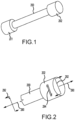
- Hybrid metallic/composite tube joint 201 and hybrid metallic/composite tube joint 202 may be disposed at either end of a composite tube 200.
- composite tube 200 may comprise only one hybrid metallic/composite tube joint 201 at an end thereof.
- hybrid metallic/composite tube joint 202 may experience an axial load, represented by arrows 290.
- the axial load may be a tensile load or a compressive load.
- Hybrid metallic/composite tube joint 202 may experience a bending moment, represented by arrows 292.
- Hybrid metallic/composite tube joint 202 may experience a flexural shear load, represented by arrows 294.
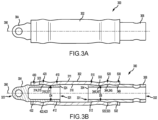
- Tube arrangement 300 (also referred to herein as a hybrid metallic/composite tube arrangement) is illustrated, in accordance with various embodiments.
- Tube arrangement 300 generally comprises a composite tube 302 and at least one end fitting, such as end fitting 304 and/or end fitting 306.
- Composite tube 302 may define a centerline axis 390.
- Composite tube 302 and end fitting 304 may be coaxially disposed about centerline axis 390.
- Composite tube 302 and end fitting 306 may be coaxially disposed about centerline axis 390.
- Composite tube 302 may comprise a proximal surface 310 and a distal surface 311.
- a cross-section geometry (e.g., taken perpendicular to centerline axis 390) of composite tube 302 may be circular or may be non-circular (e.g., elliptical). Centerline axis 390 may be linear or may be non-linear.
- end fitting 304 and/or end fitting 306 are configured to couple composite tube 302 to an adjacent component.
- End fitting 304 and/or end fitting 306 may comprise any suitable attachment feature, including a lug, a clevis, a rod, or the like.
- end fitting 304 and/or end fitting 306 are made from a metallic material.
- end fitting 304 is formed as a single, monolithic piece.
- end fitting 306 is formed as a single, monolithic piece.
- End fitting 304 and/or end fitting 306 may be configured to transfer loads (e.g., axial loads, bending loads, and/or flexural shear loads) between composite tube 302 and end fitting 304 and/or end fitting 306, respectively.
- end fitting 304 comprises a first end 321 disposed within composite tube 302 and a second end 322 extending from composite tube 302.
- an outer surface 323 of end fitting 304 may define a flared portion (also referred to herein as a first flared portion) 410.
- Flared portion 410 may define a terminus 324 of first end 321.
- flared portion 410 defines a convex surface 412 (also referred to herein as a second convex fitting surface).
- flared portion 410 may be rounded or curved.
- Outer surface 323 of end fitting 304 may define a lobe portion 420.
- Lobe portion 420 may be disposed axially from flared portion 410.
- Lobe portion 420 may be axially adjacent flared portion 410.
- lobe portion 420 defines a convex surface 422 (also referred to herein as a first convex fitting surface).
- lobe portion 420 may be rounded or curved.
- lobe portion 420 defines an annular ridge 423 disposed perimetrically around the end fitting 304. The annular ridge 423 may define the convex surface 422.
- Outer surface 323 of end fitting 304 may define a terminating portion 430.
- Terminating portion 430 may be disposed axially from lobe portion 420.
- Terminating portion 430 may be axially adjacent lobe portion 420.
- Lobe portion 420 may be disposed axially between terminating portion 430 and flared portion 410.
- Composite tube 302 may terminate at terminating portion 430.
- terminating portion 430 defines a cylindrical surface 432.
- terminating portion 430 may comprise a constant diameter, in accordance with various embodiments.
- terminating portion 430 may be tapered.
- Composite tube 302 may be formed around end fitting 304 in a known manner during manufacture of tube arrangement 300 using, for example, a filament winding process, and/or a resin film infusion process, among others.
- composite tube 302 may comprise a fiber-reinforced polymer.
- the proximal surface 310 of composite tube 302 may conform to the geometry of outer surface 323 of end fitting 304.
- an annular groove 314 may be formed into the proximal surface 310 of the composite tube 302.
- the annular groove 314 may define a concave surface 315 (also referred to herein as a concave tube surface).
- the annular groove 314 may receive the lobe portion 420.
- annular protrusion 316 may be formed into the proximal surface 310 of the composite tube 302.
- the annular protrusion 316 may define a convex surface 317 (also referred to herein as a convex tube surface).
- the annular protrusion 316 may be in contact with the lobe portion 420 and the flared portion 410.
- the annular protrusion 316 may be partially formed by the lobe portion 420 and partially formed by the flared portion 410.
- the maximum diameter D1 of terminating portion 430 may be less than the maximum diameter D2 of lobe portion 420.
- the minimum inside diameter D4 of annular protrusion 316 may be less than the maximum outside diameter D3 of flared portion 410. In this manner, the lobe portion 420 and the flared portion 410, together with composite tube 302, mechanically lock the end fitting 304 to the composite tube 302 to mitigate movement of the end fitting 304 relative to the composite tube 302.
- the axial length L1 of flared portion 410 may be equal to between 0.3 and 0.7 times the maximum diameter D3 of flared portion 410.
- the axial length L2 of lobe portion 420 may be equal to between 0.6 and 1.0 times the maximum diameter D2 of lobe portion 420.
- the axial length L3 of terminating portion 430 may be equal to between 0.2 and 0.6 times the maximum diameter D1 of terminating portion 430.
- end fitting 306 may be similar to end fitting 304, except that the terminating surface of end fitting 306 comprises a flared portion defining a rounded, concave surface. In this manner, end fitting 306 may effectively transfer bending loads between end fitting 306 and composite tube 302, reducing the amount of stress at the terminus of composite tube 302.
- end fitting 304 may be configured for applications where the bending moment is less dominant.
- end fitting 306 may be configured for applications where the bending moment is more dominant.
- end fitting 306 comprises a first end 331 disposed within composite tube 302 and a second end 332 extending from composite tube 302.
- an outer surface 333 of end fitting 306 may define a flared portion (also referred to herein as a first flared portion) 510.
- Flared portion 510 may define a terminus 334 of first end 331.
- flared portion 510 defines a convex surface 512 (also referred to herein as a second convex fitting surface).
- flared portion 510 may be rounded or curved.
- Outer surface 333 of end fitting 306 may define a lobe portion 520.
- Lobe portion 520 may be disposed axially from flared portion 510.
- Lobe portion 520 may be axially adjacent flared portion 510.
- lobe portion 520 defines a convex surface 522 (also referred to herein as a first convex fitting surface).
- lobe portion 520 may be rounded or curved.
- lobe portion 520 defines an annular ridge 523 disposed perimetrically around the end fitting 306. The annular ridge 523 may define the convex surface 522.
- Outer surface 333 of end fitting 306 may define a terminating portion 530.
- Terminating portion 530 may be disposed axially from lobe portion 520.
- Terminating portion 530 may be axially adjacent lobe portion 520.
- Lobe portion 520 may be disposed axially between terminating portion 530 and flared portion 510.
- Composite tube 302 may terminate at terminating portion 530.
- terminating portion 530 is flared outward (i.e., away from centerline axis 390).
- terminating portion 530 may be referred to herein as a flared portion or a second flared portion.
- terminating portion 530 defines a concave surface 532 (also referred to herein as a concave fitting surface).
- terminating portion 530 may be rounded or curved, in accordance with various embodiments.
- the terminus of composite tube 302 which terminates at terminating portion 530 may comprise a rounded, flared proximal surface 349 conforming to the geometry of terminating portion 530.
- Composite tube 302 may be formed around end fitting 306 in a known manner during manufacture of tube arrangement 300 using, for example, a filament winding process, and/or a resin film infusion process, among others.
- the proximal surface 310 of composite tube 302 may conform to the geometry of outer surface 333 of end fitting 306.
- an annular groove 344 may be formed into the proximal surface 310 of the composite tube 302.
- the annular groove 344 may define a concave surface 345 (also referred to herein as a concave tube surface).
- the annular groove 344 may receive the lobe portion 520.
- an annular protrusion 346 may be formed into the proximal surface 310 of the composite tube 302.
- the annular protrusion 346 may define a convex surface 347 (also referred to herein as a convex tube surface).
- the annular protrusion 346 may be in contact with the lobe portion 520 and the flared portion 510. Stated differently, the annular protrusion 346 may be partially formed by the lobe portion 520 and partially formed by the flared portion 510.
- the minimum diameter D5 of terminating portion 530 may be less than the maximum diameter D6 of lobe portion 520.
- the minimum inside diameter D8 of annular protrusion 346 may be less than the maximum outside diameter D7 of flared portion 510. In this manner, the lobe portion 520 and the flared portion 510, together with composite tube 302, mechanically lock the end fitting 306 to the composite tube 302 to mitigate movement of the end fitting 306 relative to the composite tube 302.
- the axial length L4 of flared portion 510 may be equal to between 0.3 and 0.7 times the maximum diameter D7 of flared portion 510.
- the axial length L5 of lobe portion 520 may be equal to between 0.6 and 1.2 times the maximum diameter D6 of lobe portion 520.
- the axial length L6 of terminating portion 530 may be equal to between 0.2 and 0.6 times the minimum diameter D5 of terminating portion 530.
- the total combined axial length L7 of flared portion 410, lobe portion 420, and terminating portion 430 may be between 1 and 3 times the maximum diameter D7 of flared portion 510 (1 ⁇ L7/D7 ⁇ 3).
- the axial length L7 between terminus 334 (see FIG. 3B ) and the end 502 of terminating portion 530 may be between 1 and 3 times the maximum diameter D7 of flared portion 510.
- the total combined axial length L7 of flared portion 410, lobe portion 420, and terminating portion 430 may be between 1.4 and 2 times the maximum diameter D7 of flared portion 510 (1.4 ⁇ L7/D7 ⁇ 2).
- end fitting 306 and composite tube 302 are illustrated experiencing combined axial, bending, and flexural loads. End fitting 306 may effectively transfer these loads between end fitting 306 and composite tube 302, reducing the amount of stress around the terminus 602 of composite tube 302 due to the shape of end fitting 306 at and around terminus 602.
Landscapes
- Engineering & Computer Science (AREA)
- General Engineering & Computer Science (AREA)
- Mechanical Engineering (AREA)
- Chemical & Material Sciences (AREA)
- Composite Materials (AREA)
- Rigid Pipes And Flexible Pipes (AREA)
Claims (15)
- Rohranordnung, umfassend:ein Verbundstoffrohr (200), das eine Mittellinienachse definiert, wobei das Verbundstoffrohr (20) eine proximale Fläche und eine distale Fläche umfasst; undein Endstück (306), umfassend ein erstes Ende, das innerhalb des Verbundstoffrohrs angeordnet ist, und ein zweites Ende, das sich von dem Verbundstoffrohr erstreckt;wobei eine Außenfläche des Endstücks (306) einen aufgeweiteten Abschnitt (510), der einen Endpunkt des ersten Endes definiert, einen Bauchabschnitt (420), der axial von dem aufgeweiteten Abschnitt (510) angeordnet ist, und einen Abschlussabschnitt (530), der axial von dem Bauchabschnitt angeordnet ist, definiert, wobei der Abschlussabschnitt einen zweiten aufgeweiteten Abschnitt definiert, wobei der zweite aufgeweitete Abschnitt eine konkave Passfläche definiert, wobei die konkave Passfläche gerundet ist, wobei das Verbundstoffrohr an dem Abschlussabschnitt endet und wobei der Bauchabschnitt einen ringförmigen Grat definiert, der um das Endstück angeordnet ist,wobei der ringförmige Grat orthogonal in Bezug auf eine Mittellinienachse des Endstücks ausgerichtet ist und die distale Fläche des Verbundstoffrohrs der Geometrie der Außenfläche des Endstücks entspricht, und dadurch gekennzeichnet, dass das Verbundstoffrohr eine gerundete aufgeweitete proximale Fläche umfasst, die an dem Abschlussabschnitt endet.
- Rohranordnung nach Anspruch 1, wobei eine axiale Länge des aufgeweiteten Abschnitts (510) zwischen dem 0,3- und dem 0,7-Fachen eines maximalen Durchmessers des aufgeweiteten Abschnitts beträgt.
- Rohranordnung nach Anspruch 1 oder 2
wobei eine axiale Länge des Bauchabschnitts (420) zwischen dem 0,6- und dem 1,2-Fachen eines maximalen Durchmessers des Bauchabschnitts (420) beträgt. - Rohranordnungen nach Anspruch 1, 2 oder 3
wobei eine axiale Länge des Abschlussabschnitts (53) zwischen dem 0,2- und dem 0,6-Fachen eines minimalen Durchmessers des Abschlussabschnitts (510) beträgt. - Rohranordnung nach Anspruch 1, wobei eine axiale Länge zwischen einem Endpunkt des Endstücks und einem Endpunkt des Abschlussabschnitts (510) zwischen dem Ein- und dem Dreifachen eines maximalen Durchmessers des aufgeweiteten Abschnitts beträgt.
- Rohranordnung nach Anspruch 1, wobei der ringförmige Grat eine erste konvexe Passfläche definiert.
- Rohranordnung nach einem der vorhergehenden Ansprüche, wobei eine ringförmige Nut (344) in die proximale Fläche des Verbundstoffrohrs geformt ist, die ringförmige Nut (344) den Bauchabschnitt aufnimmt, die ringförmige Nut (344) eine konkave Rohrfläche definiert und die ringförmige Nut orthogonal in Bezug auf die Mittellinienachse des Endstücks ausgerichtet ist.
- Rohranordnung nach einem der vorhergehenden Ansprüche, wobei ein ringförmiger Vorsprung (316) in die proximale Fläche des Verbundstoffrohrs geformt ist, der ringförmige Vorsprung (316) mit dem Bauchabschnitt (420) und dem aufgeweiteten Abschnitt in Kontakt steht und der ringförmige Vorsprung eine konvexe Rohrfläche definiert.
- Rohranordnung nach Anspruch 6, wobei der aufgeweitete Abschnitt (510) eine zweite konvexe Passfläche definiert.
- Rohranordnung nach Anspruch 9, wobei der Abschlussabschnitt (530) eine konkave Passfläche definiert und die konkave Passfläche gerundet ist.
- Rohranordnung nach einem der vorhergehenden Ansprüche, wobei das Verbundstoffrohr an dem Abschlussabschnitt (530) endet.
- Rohranordnung nach einem der vorhergehenden Ansprüche, wobei eine kombinierte axiale Länge des aufgeweiteten Abschnitts, des Bauchabschnitts (420) und des Abschlussabschnitts (530) zwischen dem Ein- und dem Dreifachen eines maximalen Durchmessers des aufgeweiteten Abschnitts (510) beträgt.
- Rohranordnung nach einem der vorhergehenden Ansprüche, wobei das Endstück monolithisch ist.
- Verfahren zur Herstellung einer Rohranordnung, umfassend:Anordnen eines Verbundstoffmaterials um ein Endstück, um ein Verbundstoffrohr zu bilden, das eine Mittellinienachse definiert;wobei das Verbundstoffrohr eine proximale Fläche und eine distale Fläche umfasst und das Endstück ein erstes Ende, das innerhalb des Verbundstoffrohrs angeordnet ist, und ein zweites Ende, das sich von dem Verbundrohr erstreckt, umfasst;wobei eine Außenfläche des Endstücks einen aufgeweiteten Abschnitt, der einen Endpunkt des ersten Endes definiert, einen Bauchabschnitt, der axial von dem aufgeweiteten Abschnitt angeordnet ist, und einen Abschlussabschnitt, der axial von dem Bauchabschnitt angeordnet ist, definiert;die proximale Fläche einer Geometrie der Außenfläche des Endstücks entspricht; undder Bauchabschnitt und der aufgeweitete Abschnitt das Endstück mechanisch mit dem Verbundstoffrohr arretieren, um eine Bewegung des Endstücks in Bezug auf das Verbundstoffrohr einzudämmen, undwobei der Bauchabschnitt einen ringförmigen Grat definiert, der um das Endstück angeordnet ist, wobei der ringförmige Grat orthogonal in Bezug auf eine Mittellinienachse des Endstücks ausgerichtet ist und die distale Fläche des Verbundstoffrohrs der Geometrie der Außenfläche des Endstücks entspricht,und dadurch gekennzeichnet, dass das Verbundstoffrohr eine gerundete aufgeweitete proximale Fläche umfasst, die an dem Abschlussabschnitt endet.
- Verfahren nach Anspruch 14, wobei das Verbundstoffrohr an dem Abschlussabschnitt endet.
Applications Claiming Priority (1)
| Application Number | Priority Date | Filing Date | Title |
|---|---|---|---|
| US16/520,968 US11519454B2 (en) | 2019-07-24 | 2019-07-24 | Hybrid metallic/composite tube design to transfer bending, axial, and flexural shear |
Publications (2)
| Publication Number | Publication Date |
|---|---|
| EP3769947A1 EP3769947A1 (de) | 2021-01-27 |
| EP3769947B1 true EP3769947B1 (de) | 2025-03-26 |
Family
ID=68916281
Family Applications (1)
| Application Number | Title | Priority Date | Filing Date |
|---|---|---|---|
| EP19215839.2A Active EP3769947B1 (de) | 2019-07-24 | 2019-12-12 | Hybride metall-/verbundstoffrohrkonstruktion zur übertragung von biege-, axial- und elastischer schubbeanspruchung |
Country Status (4)
| Country | Link |
|---|---|
| US (1) | US11519454B2 (de) |
| EP (1) | EP3769947B1 (de) |
| BR (1) | BR102020000435A2 (de) |
| CA (1) | CA3064091A1 (de) |
Families Citing this family (3)
| Publication number | Priority date | Publication date | Assignee | Title |
|---|---|---|---|---|
| US11384788B2 (en) * | 2019-11-05 | 2022-07-12 | The Boeing Company | Thermoplastic tie-rod |
| JP7746069B2 (ja) | 2021-08-30 | 2025-09-30 | ナブテスコ株式会社 | 接合構造体及び接合構造体の製造方法 |
| JP7746070B2 (ja) * | 2021-08-30 | 2025-09-30 | ナブテスコ株式会社 | 接合構造体及び接合構造体の製造方法 |
Citations (2)
| Publication number | Priority date | Publication date | Assignee | Title |
|---|---|---|---|---|
| DE19524903A1 (de) * | 1995-07-08 | 1997-04-30 | Inst Kraftfahrwesen Rwth Aache | Wellenförmige Kraftübertragungseinrichtung in faserverstärkte Rahmenstrukturen sowie Verfahren zu ihrer Herstellung |
| EP1154166A1 (de) * | 2000-05-12 | 2001-11-14 | Nova Composites, Inc. | Befestigungsanordnung für Verbundwerkstoffstrukturen |
Family Cites Families (34)
| Publication number | Priority date | Publication date | Assignee | Title |
|---|---|---|---|---|
| US617484A (en) * | 1899-01-10 | Push-rod | ||
| DE889869C (de) * | 1951-10-07 | 1953-09-14 | Ehrenreich & Cie A | Befestigung der Zapfen von Kugelgelenken od. dgl. in Rohr- oder Stangenenden, insbesondere fuer Kraftfahrzeuggestaenge |
| US4353268A (en) * | 1976-03-10 | 1982-10-12 | Avions Marcel Dassault-Breguet Aviation | Connecting rods |
| JPS5896515A (ja) * | 1981-12-03 | 1983-06-08 | Mitsubishi Electric Corp | 金属継手のパイプへの接合方法 |
| DE3641632A1 (de) * | 1986-12-04 | 1988-06-16 | Siemens Ag | Verfahren zur herstellung einer faserverstaerkten druck- oder zugstange |
| EP0270484B1 (de) * | 1986-12-04 | 1990-03-07 | Siemens Aktiengesellschaft | Faserverstärkte Druck- oder Zugstange |
| US5160392A (en) * | 1991-08-06 | 1992-11-03 | The United States Of America As Represented By The Secretary Of The Army | Method for joining tubular filament wound composites to other bodies |
| US5233737A (en) * | 1991-10-25 | 1993-08-10 | Hercules Incorporated | Filament wound threaded tube connection |
| US6379763B1 (en) * | 1998-08-19 | 2002-04-30 | Nova Composites, Inc. | Attachment fitting for composite material structures |
| DE20010341U1 (de) * | 2000-06-09 | 2000-10-12 | TRW Fahrwerksysteme GmbH & Co KG, 40547 Düsseldorf | Gelenkstange für ein Kraftfahrzeug |
| US20030086756A1 (en) * | 2001-11-07 | 2003-05-08 | Trotter Jason K | Modular linkage system |
| DE60333912D1 (de) | 2002-04-19 | 2010-10-07 | Bell Helicopter Textron Inc | Verbundantriebswelle mit aufgenommenen endadaptern |
| US20050067037A1 (en) * | 2003-09-30 | 2005-03-31 | Conocophillips Company | Collapse resistant composite riser |
| US8479775B2 (en) * | 2004-03-11 | 2013-07-09 | Parker-Hannifin Corporation | Push-on hose construction |
| GB2424464B (en) | 2005-03-22 | 2007-02-14 | Crompton Technology Group Ltd | Composite transmission shaft joint |
| FR2895041B1 (fr) * | 2005-12-15 | 2009-07-10 | Skf Aerospace France Soc Par A | Bielle a tube en un materiau composite et procede de fabrication d'une telle bielle |
| GB2435317B (en) | 2006-01-17 | 2008-01-02 | Crompton Technology Group Ltd | Transmission shaft joint design |
| US7419435B2 (en) * | 2006-03-09 | 2008-09-02 | Northrop Grumman Corporation | Composite torque tube captured end fitting |
| US7452156B2 (en) * | 2006-11-17 | 2008-11-18 | The Boeing Company | Composite structural member and method for making the same |
| US8157469B2 (en) * | 2006-11-22 | 2012-04-17 | The Boeing Company | Composite structural member and method for producing the same |
| JP4263753B2 (ja) * | 2007-08-10 | 2009-05-13 | トヨタ自動車株式会社 | 繊維強化樹脂製筒部材の製造方法 |
| GB2473007B (en) | 2009-08-26 | 2012-11-21 | Messier Dowty Ltd | Apparatus comprising an end fitting connected to a body |
| JP5683798B2 (ja) | 2009-08-31 | 2015-03-11 | 藤倉ゴム工業株式会社 | Frp製駆動シャフト |
| US9352538B1 (en) * | 2010-12-29 | 2016-05-31 | Park Electrochemical Corporation | Composite material structure and method of manufacturing same |
| US9180631B2 (en) * | 2011-07-22 | 2015-11-10 | The Boeing Company | Molded-in insert and method for fiber reinforced thermoplastic composite structure |
| EP2607229B1 (de) * | 2011-12-22 | 2016-05-11 | Airbus Operations, S.L. | Verbundstange und Herstellungsverfahren |
| DE102012022198A1 (de) | 2012-11-13 | 2014-05-28 | Rolls-Royce Deutschland Ltd & Co Kg | Welle eines Gasturbinentriebwerks, insbesondere einer Radialwelle oder einer zur Maschinenachse in einem Winkel angeordneten Welle |
| US9546678B2 (en) * | 2012-12-14 | 2017-01-17 | The United States Of America As Represented By The Administrator Of The National Aeronautics And Space Administration | Structural joint with multi-axis load carrying capability |
| DE102015111388A1 (de) | 2015-07-14 | 2017-01-19 | Airbus Operations Gmbh | Verfahren zum verbinden von metallischen beschlägen mit rohren aus faserverbundmaterial und leitungen, nach diesem verfahren erhältlich |
| EP3382221B1 (de) * | 2017-03-31 | 2020-06-17 | Crompton Technology Group Limited | Zusammengesetzte endanschlüsse |
| EP3473874B1 (de) | 2017-10-20 | 2020-08-26 | Crompton Technology Group Limited | Verzahnte endstücke |
| US10875265B2 (en) * | 2019-01-08 | 2020-12-29 | Goodrich Corporation | Hybrid metallic/composite arrangement for torque, bending, shear, and axial loading |
| US12378983B2 (en) * | 2019-02-13 | 2025-08-05 | Gmt Gummi-Metall-Technik Gmbh | Connecting sleeve, push-pull rod and method for producing a push-pull rod |
| DE102019006280A1 (de) * | 2019-09-05 | 2021-03-11 | Albany Engineered Composites, Inc. | Verfahren zur Herstellung einer formschlüssigen Lasteinleitung für stabförmige Fasernbundstrukturen sowie deren Gestaltung |
-
2019
- 2019-07-24 US US16/520,968 patent/US11519454B2/en active Active
- 2019-12-05 CA CA3064091A patent/CA3064091A1/en active Pending
- 2019-12-12 EP EP19215839.2A patent/EP3769947B1/de active Active
-
2020
- 2020-01-08 BR BR102020000435-2A patent/BR102020000435A2/pt unknown
Patent Citations (2)
| Publication number | Priority date | Publication date | Assignee | Title |
|---|---|---|---|---|
| DE19524903A1 (de) * | 1995-07-08 | 1997-04-30 | Inst Kraftfahrwesen Rwth Aache | Wellenförmige Kraftübertragungseinrichtung in faserverstärkte Rahmenstrukturen sowie Verfahren zu ihrer Herstellung |
| EP1154166A1 (de) * | 2000-05-12 | 2001-11-14 | Nova Composites, Inc. | Befestigungsanordnung für Verbundwerkstoffstrukturen |
Also Published As
| Publication number | Publication date |
|---|---|
| EP3769947A1 (de) | 2021-01-27 |
| BR102020000435A2 (pt) | 2021-02-02 |
| US20210025526A1 (en) | 2021-01-28 |
| US11519454B2 (en) | 2022-12-06 |
| CA3064091A1 (en) | 2021-01-24 |
Similar Documents
| Publication | Publication Date | Title |
|---|---|---|
| EP3332946B1 (de) | Verbundgelenkanordnung | |
| EP3397451B1 (de) | Verfahren zur befestigung eines zusammengesetzten drehmomentrohrendes | |
| EP3769947B1 (de) | Hybride metall-/verbundstoffrohrkonstruktion zur übertragung von biege-, axial- und elastischer schubbeanspruchung | |
| EP3382221B1 (de) | Zusammengesetzte endanschlüsse | |
| US4362521A (en) | Power transmission shaft | |
| EP3402656B1 (de) | Vollkomposit-drehmomentrohr mit metallösen | |
| EP3381665B1 (de) | Strukturelle verbundkomponente mit verliersicherer mechanischer verbindung | |
| EP3427927B1 (de) | Verbundgelenkanordnung | |
| US12152633B2 (en) | Composite drive shafts | |
| EP3382220A1 (de) | Strukturelle verbundkomponente mit mechanischer zug-/kompressionsverbindung | |
| US20190120283A1 (en) | Splined end fittings | |
| EP3306118B1 (de) | Hybrides metall-/verbundgelenk mit verbesserter leistung | |
| US12092137B2 (en) | Hybrid metallic/composite joint with enhanced strength | |
| GB2051304A (en) | Fibre-reinforced composite shaft with metallic connector sleeves | |
| EP3680093B1 (de) | Hybrides metall-/verbundbauteil für drehmoment-, biege-, scher- und axialbelastung und verfahren zu dessen herstellung | |
| EP3508336B1 (de) | Hybrid-metall-/verbundstoff-axialzug-/druckkeulengelenk |
Legal Events
| Date | Code | Title | Description |
|---|---|---|---|
| PUAI | Public reference made under article 153(3) epc to a published international application that has entered the european phase |
Free format text: ORIGINAL CODE: 0009012 |
|
| STAA | Information on the status of an ep patent application or granted ep patent |
Free format text: STATUS: THE APPLICATION HAS BEEN PUBLISHED |
|
| AK | Designated contracting states |
Kind code of ref document: A1 Designated state(s): AL AT BE BG CH CY CZ DE DK EE ES FI FR GB GR HR HU IE IS IT LI LT LU LV MC MK MT NL NO PL PT RO RS SE SI SK SM TR |
|
| AX | Request for extension of the european patent |
Extension state: BA ME |
|
| STAA | Information on the status of an ep patent application or granted ep patent |
Free format text: STATUS: REQUEST FOR EXAMINATION WAS MADE |
|
| 17P | Request for examination filed |
Effective date: 20210727 |
|
| RBV | Designated contracting states (corrected) |
Designated state(s): AL AT BE BG CH CY CZ DE DK EE ES FI FR GB GR HR HU IE IS IT LI LT LU LV MC MK MT NL NO PL PT RO RS SE SI SK SM TR |
|
| STAA | Information on the status of an ep patent application or granted ep patent |
Free format text: STATUS: EXAMINATION IS IN PROGRESS |
|
| 17Q | First examination report despatched |
Effective date: 20230313 |
|
| P01 | Opt-out of the competence of the unified patent court (upc) registered |
Effective date: 20230922 |
|
| GRAP | Despatch of communication of intention to grant a patent |
Free format text: ORIGINAL CODE: EPIDOSNIGR1 |
|
| STAA | Information on the status of an ep patent application or granted ep patent |
Free format text: STATUS: GRANT OF PATENT IS INTENDED |
|
| INTG | Intention to grant announced |
Effective date: 20241030 |
|
| GRAS | Grant fee paid |
Free format text: ORIGINAL CODE: EPIDOSNIGR3 |
|
| GRAA | (expected) grant |
Free format text: ORIGINAL CODE: 0009210 |
|
| STAA | Information on the status of an ep patent application or granted ep patent |
Free format text: STATUS: THE PATENT HAS BEEN GRANTED |
|
| AK | Designated contracting states |
Kind code of ref document: B1 Designated state(s): AL AT BE BG CH CY CZ DE DK EE ES FI FR GB GR HR HU IE IS IT LI LT LU LV MC MK MT NL NO PL PT RO RS SE SI SK SM TR |
|
| REG | Reference to a national code |
Ref country code: GB Ref legal event code: FG4D |
|
| REG | Reference to a national code |
Ref country code: CH Ref legal event code: EP |
|
| REG | Reference to a national code |
Ref country code: DE Ref legal event code: R096 Ref document number: 602019067714 Country of ref document: DE |
|
| REG | Reference to a national code |
Ref country code: IE Ref legal event code: FG4D |
|
| PG25 | Lapsed in a contracting state [announced via postgrant information from national office to epo] |
Ref country code: RS Free format text: LAPSE BECAUSE OF FAILURE TO SUBMIT A TRANSLATION OF THE DESCRIPTION OR TO PAY THE FEE WITHIN THE PRESCRIBED TIME-LIMIT Effective date: 20250626 |
|
| PG25 | Lapsed in a contracting state [announced via postgrant information from national office to epo] |
Ref country code: FI Free format text: LAPSE BECAUSE OF FAILURE TO SUBMIT A TRANSLATION OF THE DESCRIPTION OR TO PAY THE FEE WITHIN THE PRESCRIBED TIME-LIMIT Effective date: 20250326 |
|
| REG | Reference to a national code |
Ref country code: LT Ref legal event code: MG9D |
|
| PG25 | Lapsed in a contracting state [announced via postgrant information from national office to epo] |
Ref country code: NO Free format text: LAPSE BECAUSE OF FAILURE TO SUBMIT A TRANSLATION OF THE DESCRIPTION OR TO PAY THE FEE WITHIN THE PRESCRIBED TIME-LIMIT Effective date: 20250626 |
|
| PG25 | Lapsed in a contracting state [announced via postgrant information from national office to epo] |
Ref country code: HR Free format text: LAPSE BECAUSE OF FAILURE TO SUBMIT A TRANSLATION OF THE DESCRIPTION OR TO PAY THE FEE WITHIN THE PRESCRIBED TIME-LIMIT Effective date: 20250326 |
|
| PG25 | Lapsed in a contracting state [announced via postgrant information from national office to epo] |
Ref country code: LV Free format text: LAPSE BECAUSE OF FAILURE TO SUBMIT A TRANSLATION OF THE DESCRIPTION OR TO PAY THE FEE WITHIN THE PRESCRIBED TIME-LIMIT Effective date: 20250326 |
|
| PG25 | Lapsed in a contracting state [announced via postgrant information from national office to epo] |
Ref country code: BG Free format text: LAPSE BECAUSE OF FAILURE TO SUBMIT A TRANSLATION OF THE DESCRIPTION OR TO PAY THE FEE WITHIN THE PRESCRIBED TIME-LIMIT Effective date: 20250326 Ref country code: GR Free format text: LAPSE BECAUSE OF FAILURE TO SUBMIT A TRANSLATION OF THE DESCRIPTION OR TO PAY THE FEE WITHIN THE PRESCRIBED TIME-LIMIT Effective date: 20250627 |
|
| REG | Reference to a national code |
Ref country code: NL Ref legal event code: MP Effective date: 20250326 |
|
| PG25 | Lapsed in a contracting state [announced via postgrant information from national office to epo] |
Ref country code: NL Free format text: LAPSE BECAUSE OF FAILURE TO SUBMIT A TRANSLATION OF THE DESCRIPTION OR TO PAY THE FEE WITHIN THE PRESCRIBED TIME-LIMIT Effective date: 20250326 |
|
| PG25 | Lapsed in a contracting state [announced via postgrant information from national office to epo] |
Ref country code: SE Free format text: LAPSE BECAUSE OF FAILURE TO SUBMIT A TRANSLATION OF THE DESCRIPTION OR TO PAY THE FEE WITHIN THE PRESCRIBED TIME-LIMIT Effective date: 20250326 |
|
| REG | Reference to a national code |
Ref country code: AT Ref legal event code: MK05 Ref document number: 1778656 Country of ref document: AT Kind code of ref document: T Effective date: 20250326 |
|
| PG25 | Lapsed in a contracting state [announced via postgrant information from national office to epo] |
Ref country code: SM Free format text: LAPSE BECAUSE OF FAILURE TO SUBMIT A TRANSLATION OF THE DESCRIPTION OR TO PAY THE FEE WITHIN THE PRESCRIBED TIME-LIMIT Effective date: 20250326 |
|
| PG25 | Lapsed in a contracting state [announced via postgrant information from national office to epo] |
Ref country code: ES Free format text: LAPSE BECAUSE OF FAILURE TO SUBMIT A TRANSLATION OF THE DESCRIPTION OR TO PAY THE FEE WITHIN THE PRESCRIBED TIME-LIMIT Effective date: 20250326 Ref country code: PT Free format text: LAPSE BECAUSE OF FAILURE TO SUBMIT A TRANSLATION OF THE DESCRIPTION OR TO PAY THE FEE WITHIN THE PRESCRIBED TIME-LIMIT Effective date: 20250728 |
|
| PG25 | Lapsed in a contracting state [announced via postgrant information from national office to epo] |
Ref country code: PL Free format text: LAPSE BECAUSE OF FAILURE TO SUBMIT A TRANSLATION OF THE DESCRIPTION OR TO PAY THE FEE WITHIN THE PRESCRIBED TIME-LIMIT Effective date: 20250326 Ref country code: IT Free format text: LAPSE BECAUSE OF FAILURE TO SUBMIT A TRANSLATION OF THE DESCRIPTION OR TO PAY THE FEE WITHIN THE PRESCRIBED TIME-LIMIT Effective date: 20250326 |
|
| PG25 | Lapsed in a contracting state [announced via postgrant information from national office to epo] |
Ref country code: AT Free format text: LAPSE BECAUSE OF FAILURE TO SUBMIT A TRANSLATION OF THE DESCRIPTION OR TO PAY THE FEE WITHIN THE PRESCRIBED TIME-LIMIT Effective date: 20250326 |
|
| PG25 | Lapsed in a contracting state [announced via postgrant information from national office to epo] |
Ref country code: EE Free format text: LAPSE BECAUSE OF FAILURE TO SUBMIT A TRANSLATION OF THE DESCRIPTION OR TO PAY THE FEE WITHIN THE PRESCRIBED TIME-LIMIT Effective date: 20250326 |
|
| PG25 | Lapsed in a contracting state [announced via postgrant information from national office to epo] |
Ref country code: RO Free format text: LAPSE BECAUSE OF FAILURE TO SUBMIT A TRANSLATION OF THE DESCRIPTION OR TO PAY THE FEE WITHIN THE PRESCRIBED TIME-LIMIT Effective date: 20250326 |
|
| PG25 | Lapsed in a contracting state [announced via postgrant information from national office to epo] |
Ref country code: SK Free format text: LAPSE BECAUSE OF FAILURE TO SUBMIT A TRANSLATION OF THE DESCRIPTION OR TO PAY THE FEE WITHIN THE PRESCRIBED TIME-LIMIT Effective date: 20250326 |
|
| PG25 | Lapsed in a contracting state [announced via postgrant information from national office to epo] |
Ref country code: IS Free format text: LAPSE BECAUSE OF FAILURE TO SUBMIT A TRANSLATION OF THE DESCRIPTION OR TO PAY THE FEE WITHIN THE PRESCRIBED TIME-LIMIT Effective date: 20250726 |
|
| PGFP | Annual fee paid to national office [announced via postgrant information from national office to epo] |
Ref country code: DE Payment date: 20251126 Year of fee payment: 7 |
|
| PGFP | Annual fee paid to national office [announced via postgrant information from national office to epo] |
Ref country code: GB Payment date: 20251119 Year of fee payment: 7 |
|
| PG25 | Lapsed in a contracting state [announced via postgrant information from national office to epo] |
Ref country code: DK Free format text: LAPSE BECAUSE OF FAILURE TO SUBMIT A TRANSLATION OF THE DESCRIPTION OR TO PAY THE FEE WITHIN THE PRESCRIBED TIME-LIMIT Effective date: 20250326 |
|
| PGFP | Annual fee paid to national office [announced via postgrant information from national office to epo] |
Ref country code: FR Payment date: 20251119 Year of fee payment: 7 |
|
| PG25 | Lapsed in a contracting state [announced via postgrant information from national office to epo] |
Ref country code: CZ Free format text: LAPSE BECAUSE OF FAILURE TO SUBMIT A TRANSLATION OF THE DESCRIPTION OR TO PAY THE FEE WITHIN THE PRESCRIBED TIME-LIMIT Effective date: 20250326 |
|
| PLBE | No opposition filed within time limit |
Free format text: ORIGINAL CODE: 0009261 |
|
| STAA | Information on the status of an ep patent application or granted ep patent |
Free format text: STATUS: NO OPPOSITION FILED WITHIN TIME LIMIT |