EP3769231B1 - Verfahren und system zur bereitstellung einer generischen anfrageschnittstelle - Google Patents
Verfahren und system zur bereitstellung einer generischen anfrageschnittstelle Download PDFInfo
- Publication number
- EP3769231B1 EP3769231B1 EP19720466.2A EP19720466A EP3769231B1 EP 3769231 B1 EP3769231 B1 EP 3769231B1 EP 19720466 A EP19720466 A EP 19720466A EP 3769231 B1 EP3769231 B1 EP 3769231B1
- Authority
- EP
- European Patent Office
- Prior art keywords
- query
- model
- application
- generic
- customer
- Prior art date
- Legal status (The legal status is an assumption and is not a legal conclusion. Google has not performed a legal analysis and makes no representation as to the accuracy of the status listed.)
- Active
Links
Images

Classifications
-
- G—PHYSICS
- G06—COMPUTING OR CALCULATING; COUNTING
- G06F—ELECTRIC DIGITAL DATA PROCESSING
- G06F16/00—Information retrieval; Database structures therefor; File system structures therefor
- G06F16/20—Information retrieval; Database structures therefor; File system structures therefor of structured data, e.g. relational data
- G06F16/24—Querying
- G06F16/245—Query processing
- G06F16/2452—Query translation
-
- G—PHYSICS
- G06—COMPUTING OR CALCULATING; COUNTING
- G06F—ELECTRIC DIGITAL DATA PROCESSING
- G06F16/00—Information retrieval; Database structures therefor; File system structures therefor
- G06F16/20—Information retrieval; Database structures therefor; File system structures therefor of structured data, e.g. relational data
- G06F16/24—Querying
- G06F16/245—Query processing
- G06F16/2453—Query optimisation
- G06F16/24534—Query rewriting; Transformation
-
- G—PHYSICS
- G06—COMPUTING OR CALCULATING; COUNTING
- G06F—ELECTRIC DIGITAL DATA PROCESSING
- G06F16/00—Information retrieval; Database structures therefor; File system structures therefor
- G06F16/20—Information retrieval; Database structures therefor; File system structures therefor of structured data, e.g. relational data
- G06F16/24—Querying
- G06F16/248—Presentation of query results
-
- G—PHYSICS
- G06—COMPUTING OR CALCULATING; COUNTING
- G06F—ELECTRIC DIGITAL DATA PROCESSING
- G06F16/00—Information retrieval; Database structures therefor; File system structures therefor
- G06F16/20—Information retrieval; Database structures therefor; File system structures therefor of structured data, e.g. relational data
- G06F16/25—Integrating or interfacing systems involving database management systems
- G06F16/252—Integrating or interfacing systems involving database management systems between a Database Management System and a front-end application
-
- G—PHYSICS
- G06—COMPUTING OR CALCULATING; COUNTING
- G06F—ELECTRIC DIGITAL DATA PROCESSING
- G06F40/00—Handling natural language data
- G06F40/20—Natural language analysis
- G06F40/237—Lexical tools
-
- G—PHYSICS
- G06—COMPUTING OR CALCULATING; COUNTING
- G06F—ELECTRIC DIGITAL DATA PROCESSING
- G06F40/00—Handling natural language data
- G06F40/30—Semantic analysis
Definitions
- the invention relates to a method and system for providing a generic query interface for industrial systems of different customers.
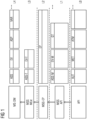
- Fig. 1 shows conventional multi-layered interface design of a software system.
- customer layer comprising customer specific APIs of costumers or OEMs.
- specific interface features are required for different customers or technical domains.
- These technical domains can for instance comprise for example an automotive domain AUT, a metal processing domain MET, an automation domain ATM or any other kinds of technical domains.
- Each technical domain can comprise one or several API for different customers or OEM as illustrated in the diagram of Fig. 1 .
- the next layer L1 of the multi-layered interface has available interface features of a data cloud backend software MSS which can be visible towards the customer interface designers offering different kinds of functionality which can help to realize the customer interface itself.
- the functionality offered in layer L1 can comprise asset manipulation ASS-M, including creation, modification, deletion or retrieval of assets. Further, the offered functionality can comprise event manipulation EV-M such as creation, modification, deletion or retrieval of events.
- a graph traversal functionality GT can comprise get asset parts, get asset subclasses, get event subclasses or get related elements.
- the next layer L2 of the multi-layered interface illustrated in Fig. 1 comprises a generic interface i.e. a data cloud backend generic SPARQL endpoint MSG EP.
- This generic interface of layer L2 offers a highly versatile query interface based on a query language.
- the query language can be for instance a contemporary database language like SQL or a more advanced semantic query language like SPARQL.
- the layer L2 itself operates on a specific data model such as a database model or a semantic model.
- the interface logic can access information from the data cloud backend system (such as a mind sphere system) by calling interface routines from the next layer up e.g. an asset manipulation method call.
- the interface logic then itself calls the SPARQL endpoint with a SPARQL query for asset manipulation.
- the SPARQL query can operate on the semantic model of a web sphere application.
- Layer L3 can comprise a data cloud backend Semantics Model Extension MSSM Ext.
- Layer L4 can comprise a data cloud backend Data model (with REST based API).
- Different layers L of the multi-layered interface can decouple the high versatile generic query interface (such as SPARQL endpoint) from the end user (e.g. OEM).
- the generic interface of layer L2 does offer for different customers different interfaces by adhering or using the same data model.
- GB 2 459 354 A discloses a database system comprising a plurality of databases on a plurality of servers, each database coupled to at least one application of a set of applications. Consolidation of such a system to a single physical database comprises substituting all logical names from the plurality of databases with a unique physical name for all the plurality of databases.
- a mapping catalogue is created which comprises the logical names and their assigned unique physical names, the mapping catalogue being located in a physical layer.
- Each database is saved with its unique physical names into a different segment of the single database, the single database being located in the physical layer.
- a consolidation layer is provided which is coupled to each application.
- This object is achieved according to a first aspect of the present invention by a method for providing a generic query interface for industrial systems of customers providing the features of claim 1.
- the invention provides according to a first aspect a method for providing a generic query interface for industrial systems of customers, the method comprising the steps of:
- the stored query reformulation model comprises mappings for terms of model elements between customer specific terms and application semantic model terms of the application semantic model and transformation rules used for translating model terms.
- the stored application semantic model comprises an ontological model.
- mapping for terms of model elements comprise mappings between data source terms, mappings between event source terms and mappings between other information terms.
- the generated generic query is transmitted via a local and/or global network to the application logic which processes the received generic query based on a generic data model of the industrial system to calculate a generic query result.
- the calculated generic query result is reformulated into a customer specific query result based on the stored query reformulation model and output by means of the application query interface of the customer industrial system.
- the invention further provides according to a second aspect a query processing system comprising the features of claim 5.
- the invention provides according to the second aspect a query processing system for providing a generic query interface for industrial systems of different customers,
- the stored query reformulation model comprises mappings for terms of model elements between customer specific terms and application semantic model terms of the application semantic model as well as transformation rules used for translating model terms.
- the stored application semantic model comprises an ontological model.
- mappings for terms of model elements comprise mappings between data source terms, mappings between event source terms and mappings between other information terms.
- the generated generic query is transmitted via a local or global network to the application logic which is adapted to process the received generic query based on a stored generic data model of the industrial system to calculate a generic query result.
- the calculated generic query result is reformulated by the query processing unit into a customer specific query result based on the stored query reformulation model, wherein the customer specific query result is output by means of the application query interface of the customer industrial system.
- the query processing unit comprises a local query processing unit or a remote query processing unit implemented on a server of a service provider.
- the query reformulation model is decentralized.
- the query reformulation model is stored in a central database of a service provider.
- the application query interface comprises a user interface to receive a customer query input by a user of the industrial system.
- the application query interface comprises a data interface to receive a customer query generated by a controller of the industrial system.
- Fig. 2 shows schematically a possible exemplary embodiment of a query processing system (QPS) 1 according to an aspect of the present invention.
- the query processing system 1 as illustrated in Fig. 2 can be used to provide a generic query interface for industrial systems of different customers.
- the customers can be for instance manufacturing companies operating in the same technical domain.
- the customers can be different automotive companies using similar manufacturing processes to produce vehicles.
- the query processing system 1 according to the present invention comprises at least one application query interface (AQI) 2 adapted to input customer queries Q of customer industrial systems such as manufacturing facilities.
- An end user of the customer or manufacturing company can access an application executed by a processing entity via an application user interface which can comprise some kind of application query interface AQI as illustrated in the schematic diagram of Fig.
- the application query interface 2 can allow monitoring, diagnosis or information retrieval.
- the application query interface AQI 2 can form a front end of an application logic 3 of the software system illustrated in Fig. 2 .
- One part of the application logic 3 is formed by a query endpoint to a database storing an application semantic data model (ASM). Based on these components of the system user queries Q can be processed and answered.
- ASM application semantic data model
- the application query interface AQI can in a possible embodiment be also multi-layered.
- the query processing system 1 illustrated in Fig. 2 comprises a query processing unit (QPU) 4 which is configured to perform automatically a query decomposition of the input customer query Q into query parts based on a query reformulation model QRM stored in a database 5 of the query processing system 1 as shown in Fig. 2 .
- QPU query processing unit
- the application semantic model ASM comprises a semantic description of an application including data sources, system events and additional information such as diagnosis cases etc.
- the query processing unit 4 is further configured to reformulate automatically query parts QP not available in the application semantic model ASM based on the query reformulation model QRM and to perform automatically a query recomposition of the query parts QP available in the application semantic model ASM and the reformulated semantic query parts QP to generate a generic query.
- the generated generic query is then applied by the query processing unit 4 to the application logic 3 of the query processing system 1 to provide a query result.
- the query result is output by the application query interface 2 to a user of the industrial system.
- the query reformulation model QRM stored in the database 5 can comprise in a possible embodiment mappings for terms of model elements between customer specific terms and application semantic model terms of the application semantic model ASM as well as transformation rules which can be used for translating model terms.
- the application semantic model ASM stored in the database 6 can comprise an ontological model.
- the mappings for terms of model elements can comprise for instance mappings between data source terms of data sources, mappings between event source terms of event sources and mappings between other information terms.
- the generated generic query gQ provided by the query processing unit 4 can in a possible embodiment be transmitted or supplied via a local and/or global network to the application logic 3.
- the application logic 3 of the system is adapted to process the received generic query gQ based on a stored generic data model of the industrial system to calculate a generic query result gQR.
- the calculated generic query result gQR can be reformulated by the query processing unit 4 into a customer specific query result based on the stored query reformulation model QRM.
- the customer specific query result is then output by means of the application query interface AQI of the customer's industrial system.
- the query processing unit 4 of the query processing system can comprise a local query processing unit on the site of the customer industrial system.
- the query processing unit 4 of the query processing system 1 can comprise a remote query processing unit implemented on a remote server of a service provider.
- the query reformulation model QRM can be stored in a possible implementation in a decentralized manner at different sites, in particular at the sites of the industrial systems. Further, the query reformulation model QRM can also be stored in an alternative embodiment in a central database of a service provider.
- the application query interface (AQI) 2 of the query processing system 1 can comprise a user interface to receive a customer query Q input by a user of the customer industrial system.
- the application query interface AQI 2 can further comprise a data interface to receive a customer query generated by a controller of the customer industrial system.
- the query processing unit QPU 4 can comprise a query reformulation reasoner.
- the query reformulation reasoner can brake up a direct link between the application query interface AQI and the application logic AL 3.
- a query entered into the application query interface AQI 2 of the system 1 can be intercepted in a possible embodiment by the query reformulation reasoner of the query processing unit 4 at once.
- the query processing unit 4 can comprise a query decomposition module 4A which is adapted to decompose the received query Q into single terms.
- the query decomposition module 4A can implement different methods including pattern matching as well as software compilation and decompilation methods.
- the query processing unit 4 can in a possible embodiment comprise a query reasoning module 4B shown in the embodiment of Fig. 2 .
- the query parts or query terms provided by the query decomposition module 4A can in a possible embodiment be compared to the application semantic model ASM stored in the database 6.
- Query parts that are not available in the application semantic model ASM are reformulated using the query re-formulation model QRM stored in the database 5.
- the query processing unit 4 can comprise in a possible embodiment a query recomposition module 4C as illustrated in the schematic diagram of Fig. 2 which is adapted to perform a query recomposition process wherein all query parts or query terms including those from the original application semantic model ASM and those created during the dynamic query reformulation process are recomposed into a single query.
- the query composition or query recomposition can be performed in a possible embodiment by pattern matching where query parts of the query Q are replaced by the matching parts of the query reformulation model QRM.
- the resulting dynamically generated query can be fed back into the standard application logic 3 where the generic query endpoint can now be called using the generated query.
- the system can process the reply to answer using its system inherent data model elements (end of forward direction processing).
- the calculated query result QR can be dynamically reformulated for the calling user.
- Those parts of the query result QR which contain application semantic model elements that are unknown to the calling user, can be reformulated in a possible embodiment by means of the query reformulation reasoning unit 4B on the basis of the query reformulation model QRM stored in the database 5 into the original model terms that are known to the customer or user.
- the reformulation is not required, for instance in data retrieval only the pure data (e.g. numbers) can be output to the user so that no query result reformulation is required.
- the query re-formulation reasoning module 4B can comprise standard reasoning software components such as ontological reasoners, in particular if ontological data models are chosen for the application semantic model ASM and the query reformulation model QRM.
- the query reformulation model QRM stored in the database 5 of the system can comprise a collection of model elements and transformation rules that can be used in the process of query reformulation.
- query parts that are not available in the application semantic model ASM are automatically reformulated using the stored query reformulation model QRM.
- the query reformulation model QRM can contain mappings for terms of model elements between a specific customer data term and corresponding application semantic model terms.
- Model elements that might need to be mapped can comprise data source types (such as "SPS” mapped to "ASSET"), events (such as “high temperatur” mapped to "temperature above 80 degree Celsius”) and further information (such as “Rule (43) instance of diagnosis: exists convey or block create Instance (alert)” mapped to "diagnosis-rule 43: if conveyor block issue alert”).
- data source types such as "SPS” mapped to "ASSET”
- events such as “high temperatur” mapped to "temperature above 80 degree Celsius”
- further information such as “Rule (43) instance of diagnosis: exists convey or block create Instance (alert)” mapped to "diagnosis-rule 43: if conveyor block issue alert”).
- the query reformulation model QRM can provide a bridge between the application semantic model ASM (the application world) and the customer model (the end user world). Further, the query reformulation model QRM can contain parts (mappings, rules) that are customer specific and other parts that apply to a group of customers such as OEMs in the automotive domain.
- the query reformulation models QRMs and model parts can be maintained centralized or decentralized. Further, the query reformulation models can be re-used and cross-checked with other models. Depending on the expressive-ness of the query reformulation model QRM consistency checks, versioning, model integration etc. can be realized.
- the query processing system 1 can be implemented by means of an FPGA.
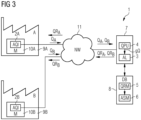
- Fig. 3 shows a schematic block diagram of a possible exemplary embodiment of query processing system (QPS) 1 according to an aspect of the present invention.
- the query processing system 1 comprises a query processing unit (QPU) 4 and an application logic (AL) 3 implemented on a server 7 of a service provider.
- the server 7 has access to a central database 8 comprising the query re-formulation model QRM and the application semantic model ASM.
- two customers A, B operate an industrial system such as a manufacturing system 9A, 9B including one or several subsystems or machines 10A, 10B comprising application query interfaces (AQI) 2A, 2B as shown in Fig. 3 .
- AQI application query interfaces
- the application query interfaces 2A, 2B can for instance comprise user interfaces who receive a customer query input by a user such as a technician of the respective industrial system.
- the application query interfaces AQI 2A, 2B can also comprise a data interface to receive a customer query generated by a control unit or controller of the respective industrial system 9A, 9B.
- the application query interface AQI 2A, 2B is connected in the illustrated embodiment via a local or a global network 11 to the server 7 of the service provider.
- the customer queries Qa, Qb of the different customers A, B are supplied via the network 11 to the query processing unit 4 implemented on the server 7 of the service provider.
- the query processing unit 4 is adapted to perform automatically a query decomposition of the received customer queries Q into query parts based on the query reformulation model QRM stored in the memory 5 of the database 8 as shown in Fig. 3 .
- For each decomposed query part QP it can be determined by the query processing unit 4 of the server 7 whether the decomposed query part QP is available in the application semantic model ASM stored in the memory 6 of the database 8.
- the query processing unit 4 is configured to reformulate automatically query parts QP which are not available in the application semantic model ASM based on the query reformulation model QRM.
- the query processing unit 4 can be adapted to perform automatically a query recomposition of the query parts QP available in the application semantic model ASM and the reformulated semantic query parts QP to generate a generic query gQ applied to the application model 3 implemented on the server 7 to provide a query result QR transmitted back to the respective application query interface 2A 2B as shown in Fig. 3 .
- the application query interface 2A, 2B can output the respective received query result QRa, QRb.
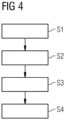
- Fig. 4 shows a flowchart of a possible exemplary embodiment of a method for providing a generic query interface for industrial systems of different customers according to an aspect of the present invention.
- the method comprises several main steps.
- a query decomposition of a customer query Q input by an application query interface AQI of a customer industrial system into query parts QP is performed based on a stored query re-formulation model QRM.
- step S2 it is determined whether the decomposed query parts QP of the received customer query Q are available in a stored application semantic model ASM.
- a query composition of the query parts QP available in the application semantic model ASM and the reformulated query parts QP is performed to generate a generic query gQ which is supplied to an application logic AL to provide a query result QR.
- the generic query gQ generated in step S4 can be transmitted via a local or global network to the application logic AL which does process the received generic query gQ based on a generic data model of the respective industrial system to calculate a generic query result gQR.
- This generic query result can then be reformulated into a customer specific query result using the stored query re-formulation model.
- the customer specific query result is then output by means of the application query interface AQI of the respective customer industrial system.
- the spraying device is a critical component and therefore must be observed to prevent outages. It has sensors attached to it, which deliver sensor information (events) for further processing or information to human users. Therefore the spraying device is a data source.
- This software includes, besides other components, an application query interface AQI for use by employees of companies A and B, and an data model (application semantic model) defining the physical components of the lacquering production line.
- This can comprise some kind of application query interface AQI in current industrial systems (allowing monitoring, diagnosis, information retrieval, etc.).
- This application query interface AQI is the frontend for the installed software system for the lacquering line where user queries Q can be processed and answered.
- the query reformulation reasoner now gets the query "Shivesline 32, Collaboration 9, Spritzdüse verstopft?".
- the Reasoner decomposes the query into the parts (based on its internal query reformulation model):
- the reasoner can reason about the decomposed query (i.e. are all required parts of the query available, are the replaced parts correct, and so on) and compose the final query: "Element 3A, Asset 4F, Düse 1?"
Landscapes
- Engineering & Computer Science (AREA)
- Theoretical Computer Science (AREA)
- General Physics & Mathematics (AREA)
- Databases & Information Systems (AREA)
- Physics & Mathematics (AREA)
- General Engineering & Computer Science (AREA)
- Computational Linguistics (AREA)
- Data Mining & Analysis (AREA)
- Health & Medical Sciences (AREA)
- Artificial Intelligence (AREA)
- Audiology, Speech & Language Pathology (AREA)
- General Health & Medical Sciences (AREA)
- Information Retrieval, Db Structures And Fs Structures Therefor (AREA)
- Management, Administration, Business Operations System, And Electronic Commerce (AREA)
Claims (11)
- Verfahren zum Bereitstellen einer generischen Abfrageoberfläche für Industriesysteme verschiedener Kunden eines Diensteanbieters, das von einem Abfrageverarbeitungssystem (1) durchgeführt wird, wobei das Abfrageverarbeitungssystem (1) eine Abfrage-Anwendungsoberfläche AQI (2), die für das Eingeben von Kundenabfragen Q aus Industriesystemen von Kunden ausgelegt ist, und eine Abfrageverarbeitungseinheit (4) umfasst, wobei das Verfahren folgende Schritte umfasst:(a) Durchführen (S1) einer Abfragezerlegung an einer über die Abfrage-Anwendungsoberfläche AQI (2) eingegebenen Kundenabfrage Q in Abfragebestandteile QP auf der Grundlage eines Abfrageneuformulierungsmodells QRM, das in einer zentralen Datenbank (8) gespeichert ist,(b) Bestimmen (S2) durch die Abfrageverarbeitungseinheit (4), ob die zerlegten Abfragebestandteile QP der eingegangenen Kundenabfrage Q in einem semantischen Anwendungsmodell ASM zur Verfügung stehen, das in der zentralen Datenbank (8) gespeichert ist,(c) Neuformulieren (S3) von Abfragebestandteilen QP, die nicht in dem semantischen Anwendungsmodell ASM zur Verfügung stehen, auf der Grundlage des Abfrageneuformulierungsmodells QRM durch die Abfrageverarbeitungseinheit (4),(d) Durchführen (S4) einer Abfrageneuzusammensetzung der im semantischen Anwendungsmodell ASM zur Verfügung stehenden Abfragebestandteile QP und der neuformulierten Abfragebestandteile rQP durch die Abfrageverarbeitungseinheit (4) zwecks Erzeugens einer generischen Abfrage gQ,(e) Anwenden der generischen Abfrage gQ auf eine Anwendungslogik AL (3), die auf einem Server (7) des Diensteanbieters implementiert ist, durch die Abfrageverarbeitungseinheit (4), und(f) Verarbeiten der eingegangenen generischen Abfrage gQ auf der Grundlage eines generischen Datenmodells des Industriesystems durch die Anwendungslogik AL zwecks Berechnens eines generischen Abfrageresultats gQR, und(g) Neuformulieren des berechneten generischen Abfrageresultats gQR in ein kundenspezifisches Abfrageresultat QR auf der Grundlage des gespeicherten Abfrageneuformulierungsmodells QRM durch die Abfrageverarbeitungseinheit (4),(h) Bereitstellen des kundenspezifischen Abfrageresultats QR für den Kunden über die Abfrage-Anwendungsoberfläche (2),wobei das gespeicherte Abfrageneuformulierungsmodell QRM Folgendes umfasst:
Mappings für Begriffe von Modellelementen zwischen kundenspezifischen Begriffen und Begriffen des semantischen Anwendungsmodells ASM und für das Übersetzen von Modellbegriffen verwendete Umwandlungsregeln. - Verfahren nach Anspruch 1, wobei das gespeicherte semantische Anwendungsmodell ASM ein ontologisches Modell umfasst.
- Verfahren nach Anspruch 1 oder 2, wobei Mappings für Begriffe von Modellelementen Mappings zwischen Datenquellenbegriffen, Mappings zwischen Ereignisquellenbegriffen und Mappings zwischen anderen Informationsbegriffen umfassen.
- Verfahren nach einem der vorhergehenden Ansprüche 1 bis 3, wobei die erzeugte generische Abfrage gQ über ein lokales oder ein globales Netzwerk zur Anwendungslogik AL (3) übertragen wird.
- Abfrageverarbeitungssystem zum Bereitstellen einer generischen Abfrageoberfläche für Industriesysteme verschiedener Kunden eines Diensteanbieters,wobei das Abfrageverarbeitungssystem (1) Folgendes umfasst:- eine Abfrage-Anwendungsoberfläche AQI (2), die so ausgelegt ist, dass sie Kundenabfragen Q aus Industriesystemen von Kunden eingibt,- eine Abfrageverarbeitungseinheit (4), die so konfiguriert ist, dass sie an einer der eingegebenen Kundenabfragen Q auf der Grundlage eines Abfrageneuformulierungsmodells QRM, das in einer Datenbank (5) des Abfrageverarbeitungssystems (1) gespeichert ist, automatisch eine Abfragezerlegung in Abfragebestandteile QP durchführt,wobei die Abfrageverarbeitungseinheit (4) für jeden zerlegten Abfragebestandteil QP bestimmt, ob der zerlegte Abfragebestandteil QP in einem semantischen Anwendungsmodell ASM zur Verfügung steht, das in der Datenbank (6) des Abfrageverarbeitungssystems (1) gespeichert ist,wobei die Abfrageverarbeitungseinheit (4) ferner so konfiguriert ist, dass sie Abfragebestandteile QP, die in dem semantischen Anwendungsmodell ASM nicht zur Verfügung stehen, auf der Grundlage des Abfrageneuformulierungsmodells QRM automatisch neu formuliert und automatisch eine Abfrageneuzusammensetzung der in dem semantischen Anwendungsmodell ASM zur Verfügung stehenden Abfragebestandteile und der neuformulierten semantischen Abfragebestandteile rQP durchführt und so eine generische Abfrage gQ erzeugt,Anwenden der generischen Abfrage gQ auf eine Anwendungslogik AL (3), die auf einem Server (7) des Diensteanbieters implementiert ist, durch die Abfrageverarbeitungseinheit (4), wobei die Anwendungslogik AL (3) so ausgelegt ist, dass sie die eingegangene generische Abfrage gQ zwecks Berechnens eines generischen Abfrageresultats gQR auf der Grundlage eines gespeicherten generischen Datenmodells des Industriesystems verarbeitet,wobei das berechnete generische Abfrageresultat gQR von der Abfrageverarbeitungseinheit (4) auf der Grundlage des gespeicherten Abfrageneuformulierungsmodells QRM neu in ein kundenspezifisches Abfrageresultat QR formuliert wird,wobei die Abfrage-Anwendungsoberfläche AQI (2) so ausgelegt ist, dass sie das kundenspezifische Abfrageresultat QR ausgibt, undwobei das gespeicherte Abfrageneuformulierungsmodell QRM Mappings für Begriffe von Modellelementen zwischen kundenspezifischen Begriffen und Begriffen des semantischen Anwendungsmodells ASM und für das Übersetzen von Modellbegriffen verwendete Umwandlungsregeln umfasst.
- Abfrageverarbeitungssystem nach Anspruch 5, wobei das gespeicherte semantische Anwendungsmodell ASM ein ontologisches Modell umfasst.
- Abfrageverarbeitungssystem nach einem der vorhergehenden Ansprüche 5 bis 6, wobei die Mappings für Begriffe von Modellelementen Mappings zwischen Datenquellenbegriffen, Mappings zwischen Ereignisquellenegriffen und Mappings zwischen anderen Informationsbegriffen umfassen.
- Abfrageverarbeitungssystem nach einem der vorhergehenden Ansprüche 5 bis 7, wobei die erzeugte generische Abfrage gQ über ein lokales oder ein globales Netzwerk zur Anwendungslogik (3) übertragen wird.
- Abfrageverarbeitungssystem nach einem der vorhergehenden Ansprüche 5 bis 8, wobei die Abfrageverarbeitungseinheit (4) eine lokale oder eine entfernt gelegeneAbfrageverarbeitungseinheit umfasst, die auf einem Server (7) eines Diensteanbieters implementiert ist, undwobei das Abfrageneuformulierungsmodell QRM dezentralisiert oder in einer zentralen Datenbank (8) eines Diensteanbieters gespeichert ist.
- Abfrageverarbeitungssystem nach einem der vorhergehenden Ansprüche 5 bis 9, wobei die Abfrage-Anwendungsoberfläche AQI (2) eine Benutzerschnittstelle zum Empfangen einer Kundenabfrage Q, die von einem Benutzer des Industriesystems eingegeben wird, und/oder eine Datenschnittstelle zum Empfangen einer Kundenabfrage umfasst, die von einer Steuerung des Industriesystems erzeugt wird.
- Abfrageverarbeitungssystem nach einem der vorhergehenden Ansprüche 5 bis 10, wobei das Abfrageverarbeitungssystem auf einem FPGA implementiert ist.
Applications Claiming Priority (2)
| Application Number | Priority Date | Filing Date | Title |
|---|---|---|---|
| EP18170062.6A EP3564834A1 (de) | 2018-04-30 | 2018-04-30 | Verfahren und system zur bereitstellung einer generischen anfrageschnittstelle |
| PCT/EP2019/059723 WO2019211090A1 (en) | 2018-04-30 | 2019-04-16 | A method and system for providing a generic query interface |
Publications (3)
| Publication Number | Publication Date |
|---|---|
| EP3769231A1 EP3769231A1 (de) | 2021-01-27 |
| EP3769231C0 EP3769231C0 (de) | 2025-02-12 |
| EP3769231B1 true EP3769231B1 (de) | 2025-02-12 |
Family
ID=62148109
Family Applications (2)
| Application Number | Title | Priority Date | Filing Date |
|---|---|---|---|
| EP18170062.6A Withdrawn EP3564834A1 (de) | 2018-04-30 | 2018-04-30 | Verfahren und system zur bereitstellung einer generischen anfrageschnittstelle |
| EP19720466.2A Active EP3769231B1 (de) | 2018-04-30 | 2019-04-16 | Verfahren und system zur bereitstellung einer generischen anfrageschnittstelle |
Family Applications Before (1)
| Application Number | Title | Priority Date | Filing Date |
|---|---|---|---|
| EP18170062.6A Withdrawn EP3564834A1 (de) | 2018-04-30 | 2018-04-30 | Verfahren und system zur bereitstellung einer generischen anfrageschnittstelle |
Country Status (4)
| Country | Link |
|---|---|
| US (1) | US11468057B2 (de) |
| EP (2) | EP3564834A1 (de) |
| CN (1) | CN112292677A (de) |
| WO (1) | WO2019211090A1 (de) |
Families Citing this family (3)
| Publication number | Priority date | Publication date | Assignee | Title |
|---|---|---|---|---|
| EP3564834A1 (de) * | 2018-04-30 | 2019-11-06 | Siemens Aktiengesellschaft | Verfahren und system zur bereitstellung einer generischen anfrageschnittstelle |
| WO2022064034A1 (en) * | 2020-09-28 | 2022-03-31 | Siemens Aktiengesellschaft | Method and system for providing seamless access to industrial data in a data lake in a cloud computing environment |
| US20250053562A1 (en) * | 2023-08-07 | 2025-02-13 | Adobe Inc. | Machine learning recollection as part of question answering using a corpus |
Family Cites Families (10)
| Publication number | Priority date | Publication date | Assignee | Title |
|---|---|---|---|---|
| GB2459354A (en) * | 2008-04-25 | 2009-10-28 | Ibm | Emulating a plurality of databases using a single physical database |
| US8672837B2 (en) * | 2010-06-24 | 2014-03-18 | Hansen Medical, Inc. | Methods and devices for controlling a shapeable medical device |
| WO2012121728A1 (en) * | 2011-03-10 | 2012-09-13 | Textwise Llc | Method and system for unified information representation and applications thereof |
| US10073835B2 (en) * | 2013-12-03 | 2018-09-11 | International Business Machines Corporation | Detecting literary elements in literature and their importance through semantic analysis and literary correlation |
| US20170116260A1 (en) * | 2014-02-25 | 2017-04-27 | Google Inc. | Using a dimensional data model for transforming a natural language query to a structured language query |
| EP3180662B1 (de) * | 2014-09-25 | 2019-11-20 | Siemens Aktiengesellschaft | Steuerungsvorrichtung für ein automationssystem |
| US10769375B2 (en) * | 2017-08-17 | 2020-09-08 | International Business Machines Corporation | Domain-specific lexical analysis |
| US11334854B2 (en) * | 2017-11-10 | 2022-05-17 | General Electric Company | Systems and methods to generate an asset workscope |
| US12190250B2 (en) * | 2018-03-16 | 2025-01-07 | International Business Machines Corporation | Contextual intelligence for unified data governance |
| EP3564834A1 (de) * | 2018-04-30 | 2019-11-06 | Siemens Aktiengesellschaft | Verfahren und system zur bereitstellung einer generischen anfrageschnittstelle |
-
2018
- 2018-04-30 EP EP18170062.6A patent/EP3564834A1/de not_active Withdrawn
-
2019
- 2019-04-16 EP EP19720466.2A patent/EP3769231B1/de active Active
- 2019-04-16 WO PCT/EP2019/059723 patent/WO2019211090A1/en not_active Ceased
- 2019-04-16 US US17/051,769 patent/US11468057B2/en active Active
- 2019-04-16 CN CN201980044242.1A patent/CN112292677A/zh active Pending
Also Published As
| Publication number | Publication date |
|---|---|
| WO2019211090A1 (en) | 2019-11-07 |
| CN112292677A (zh) | 2021-01-29 |
| EP3564834A1 (de) | 2019-11-06 |
| US11468057B2 (en) | 2022-10-11 |
| EP3769231A1 (de) | 2021-01-27 |
| EP3769231C0 (de) | 2025-02-12 |
| US20210240707A1 (en) | 2021-08-05 |
Similar Documents
| Publication | Publication Date | Title |
|---|---|---|
| EP3769231B1 (de) | Verfahren und system zur bereitstellung einer generischen anfrageschnittstelle | |
| CN110471949B (zh) | 数据血缘分析方法、装置、系统、服务器及存储介质 | |
| Atzeni et al. | A metamodel approach for the management of multiple models and the translation of schemes | |
| CA2493269A1 (en) | Method and system of unifying data | |
| WO2011019586A1 (en) | Method and system for querying an ontology model | |
| CN106056492A (zh) | 一种不动产统一登记信息管理解决的方法 | |
| CN113853597A (zh) | 一种用于查询工业数据的方法以及查询模块 | |
| CN108446335A (zh) | 基于数据库的异构系统数据抽取及统一对外数据交换方法 | |
| US7848834B2 (en) | Computerized system for network-based management of engineering projects | |
| CN106168963A (zh) | 实时流数据的处理方法、装置及服务器 | |
| Poka et al. | Design and implementation of a machine log for PBF-LB/M on basis of IoT communication architectures and an ETL pipeline | |
| Macke et al. | Advances in smart manufacturing change management | |
| US11514119B2 (en) | Data filtering utilizing broadcast context object | |
| EP1653308A1 (de) | System und Verfahren zur Speicherung und Bereitstellung von Informationen | |
| CN114254973A (zh) | 基于小程序的冷链运输方法、装置、设备及存储介质 | |
| Wettstein et al. | Feasibility queries in distributed architectures–concept and implementation in HiGHmed | |
| Jiang et al. | Industrial dataspace: A broker to run cyber-physical-social production system in level of machining workshops | |
| Brecher et al. | Ontology-based data management for adaptable safety functions in cyber-physical production systems | |
| Bell et al. | EDDS—a system to harmonize access to heterogeneous databases on distributed micros and mainframes | |
| Mitchell et al. | Data distribution in the NBS automated manufacturing research facility | |
| Whiteside | OpenGIS web services architecture description. | |
| Straßburger et al. | Using HLA ownership management in distributed material flow simulations | |
| CN117312446A (zh) | 数据同步方法、装置、电子设备及介质 | |
| Bitsch et al. | Open semantic modeling for smart production systems | |
| US7899838B1 (en) | Business rules preprocessing |
Legal Events
| Date | Code | Title | Description |
|---|---|---|---|
| STAA | Information on the status of an ep patent application or granted ep patent |
Free format text: STATUS: UNKNOWN |
|
| STAA | Information on the status of an ep patent application or granted ep patent |
Free format text: STATUS: THE INTERNATIONAL PUBLICATION HAS BEEN MADE |
|
| PUAI | Public reference made under article 153(3) epc to a published international application that has entered the european phase |
Free format text: ORIGINAL CODE: 0009012 |
|
| STAA | Information on the status of an ep patent application or granted ep patent |
Free format text: STATUS: REQUEST FOR EXAMINATION WAS MADE |
|
| 17P | Request for examination filed |
Effective date: 20201022 |
|
| AK | Designated contracting states |
Kind code of ref document: A1 Designated state(s): AL AT BE BG CH CY CZ DE DK EE ES FI FR GB GR HR HU IE IS IT LI LT LU LV MC MK MT NL NO PL PT RO RS SE SI SK SM TR |
|
| AX | Request for extension of the european patent |
Extension state: BA ME |
|
| DAV | Request for validation of the european patent (deleted) | ||
| DAX | Request for extension of the european patent (deleted) | ||
| STAA | Information on the status of an ep patent application or granted ep patent |
Free format text: STATUS: EXAMINATION IS IN PROGRESS |
|
| 17Q | First examination report despatched |
Effective date: 20220701 |
|
| GRAP | Despatch of communication of intention to grant a patent |
Free format text: ORIGINAL CODE: EPIDOSNIGR1 |
|
| STAA | Information on the status of an ep patent application or granted ep patent |
Free format text: STATUS: GRANT OF PATENT IS INTENDED |
|
| INTG | Intention to grant announced |
Effective date: 20241023 |
|
| GRAS | Grant fee paid |
Free format text: ORIGINAL CODE: EPIDOSNIGR3 |
|
| GRAA | (expected) grant |
Free format text: ORIGINAL CODE: 0009210 |
|
| STAA | Information on the status of an ep patent application or granted ep patent |
Free format text: STATUS: THE PATENT HAS BEEN GRANTED |
|
| AK | Designated contracting states |
Kind code of ref document: B1 Designated state(s): AL AT BE BG CH CY CZ DE DK EE ES FI FR GB GR HR HU IE IS IT LI LT LU LV MC MK MT NL NO PL PT RO RS SE SI SK SM TR |
|
| REG | Reference to a national code |
Ref country code: GB Ref legal event code: FG4D |
|
| REG | Reference to a national code |
Ref country code: CH Ref legal event code: EP |
|
| REG | Reference to a national code |
Ref country code: DE Ref legal event code: R096 Ref document number: 602019065753 Country of ref document: DE |
|
| REG | Reference to a national code |
Ref country code: IE Ref legal event code: FG4D |
|
| U01 | Request for unitary effect filed |
Effective date: 20250221 |
|
| U07 | Unitary effect registered |
Designated state(s): AT BE BG DE DK EE FI FR IT LT LU LV MT NL PT RO SE SI Effective date: 20250228 |
|
| U20 | Renewal fee for the european patent with unitary effect paid |
Year of fee payment: 7 Effective date: 20250417 |
|
| PG25 | Lapsed in a contracting state [announced via postgrant information from national office to epo] |
Ref country code: RS Free format text: LAPSE BECAUSE OF FAILURE TO SUBMIT A TRANSLATION OF THE DESCRIPTION OR TO PAY THE FEE WITHIN THE PRESCRIBED TIME-LIMIT Effective date: 20250512 |
|
| PG25 | Lapsed in a contracting state [announced via postgrant information from national office to epo] |
Ref country code: PL Free format text: LAPSE BECAUSE OF FAILURE TO SUBMIT A TRANSLATION OF THE DESCRIPTION OR TO PAY THE FEE WITHIN THE PRESCRIBED TIME-LIMIT Effective date: 20250212 |
|
| PG25 | Lapsed in a contracting state [announced via postgrant information from national office to epo] |
Ref country code: ES Free format text: LAPSE BECAUSE OF FAILURE TO SUBMIT A TRANSLATION OF THE DESCRIPTION OR TO PAY THE FEE WITHIN THE PRESCRIBED TIME-LIMIT Effective date: 20250212 |
|
| PG25 | Lapsed in a contracting state [announced via postgrant information from national office to epo] |
Ref country code: IS Free format text: LAPSE BECAUSE OF FAILURE TO SUBMIT A TRANSLATION OF THE DESCRIPTION OR TO PAY THE FEE WITHIN THE PRESCRIBED TIME-LIMIT Effective date: 20250612 Ref country code: NO Free format text: LAPSE BECAUSE OF FAILURE TO SUBMIT A TRANSLATION OF THE DESCRIPTION OR TO PAY THE FEE WITHIN THE PRESCRIBED TIME-LIMIT Effective date: 20250512 |
|
| PG25 | Lapsed in a contracting state [announced via postgrant information from national office to epo] |
Ref country code: HR Free format text: LAPSE BECAUSE OF FAILURE TO SUBMIT A TRANSLATION OF THE DESCRIPTION OR TO PAY THE FEE WITHIN THE PRESCRIBED TIME-LIMIT Effective date: 20250212 |
|
| PG25 | Lapsed in a contracting state [announced via postgrant information from national office to epo] |
Ref country code: GR Free format text: LAPSE BECAUSE OF FAILURE TO SUBMIT A TRANSLATION OF THE DESCRIPTION OR TO PAY THE FEE WITHIN THE PRESCRIBED TIME-LIMIT Effective date: 20250513 |
|
| PG25 | Lapsed in a contracting state [announced via postgrant information from national office to epo] |
Ref country code: SM Free format text: LAPSE BECAUSE OF FAILURE TO SUBMIT A TRANSLATION OF THE DESCRIPTION OR TO PAY THE FEE WITHIN THE PRESCRIBED TIME-LIMIT Effective date: 20250212 |
|
| PG25 | Lapsed in a contracting state [announced via postgrant information from national office to epo] |
Ref country code: CZ Free format text: LAPSE BECAUSE OF FAILURE TO SUBMIT A TRANSLATION OF THE DESCRIPTION OR TO PAY THE FEE WITHIN THE PRESCRIBED TIME-LIMIT Effective date: 20250212 |
|
| PG25 | Lapsed in a contracting state [announced via postgrant information from national office to epo] |
Ref country code: SK Free format text: LAPSE BECAUSE OF FAILURE TO SUBMIT A TRANSLATION OF THE DESCRIPTION OR TO PAY THE FEE WITHIN THE PRESCRIBED TIME-LIMIT Effective date: 20250212 |
|
| REG | Reference to a national code |
Ref country code: CH Ref legal event code: H13 Free format text: ST27 STATUS EVENT CODE: U-0-0-H10-H13 (AS PROVIDED BY THE NATIONAL OFFICE) Effective date: 20251125 |