EP3768397B1 - Leg press exercise machine - Google Patents
Leg press exercise machine Download PDFInfo
- Publication number
- EP3768397B1 EP3768397B1 EP19772621.9A EP19772621A EP3768397B1 EP 3768397 B1 EP3768397 B1 EP 3768397B1 EP 19772621 A EP19772621 A EP 19772621A EP 3768397 B1 EP3768397 B1 EP 3768397B1
- Authority
- EP
- European Patent Office
- Prior art keywords
- seat
- exercise machine
- support bar
- exercise
- bar
- Prior art date
- Legal status (The legal status is an assumption and is not a legal conclusion. Google has not performed a legal analysis and makes no representation as to the accuracy of the status listed.)
- Active
Links
Images





Classifications
-
- A—HUMAN NECESSITIES
- A63—SPORTS; GAMES; AMUSEMENTS
- A63B—APPARATUS FOR PHYSICAL TRAINING, GYMNASTICS, SWIMMING, CLIMBING, OR FENCING; BALL GAMES; TRAINING EQUIPMENT
- A63B21/00—Exercising apparatus for developing or strengthening the muscles or joints of the body by working against a counterforce, with or without measuring devices
- A63B21/06—User-manipulated weights
- A63B21/062—User-manipulated weights including guide for vertical or non-vertical weights or array of weights to move against gravity forces
- A63B21/0626—User-manipulated weights including guide for vertical or non-vertical weights or array of weights to move against gravity forces with substantially vertical guiding means
- A63B21/0628—User-manipulated weights including guide for vertical or non-vertical weights or array of weights to move against gravity forces with substantially vertical guiding means for vertical array of weights
-
- A—HUMAN NECESSITIES
- A63—SPORTS; GAMES; AMUSEMENTS
- A63B—APPARATUS FOR PHYSICAL TRAINING, GYMNASTICS, SWIMMING, CLIMBING, OR FENCING; BALL GAMES; TRAINING EQUIPMENT
- A63B21/00—Exercising apparatus for developing or strengthening the muscles or joints of the body by working against a counterforce, with or without measuring devices
- A63B21/15—Arrangements for force transmissions
- A63B21/151—Using flexible elements for reciprocating movements, e.g. ropes or chains
-
- A—HUMAN NECESSITIES
- A63—SPORTS; GAMES; AMUSEMENTS
- A63B—APPARATUS FOR PHYSICAL TRAINING, GYMNASTICS, SWIMMING, CLIMBING, OR FENCING; BALL GAMES; TRAINING EQUIPMENT
- A63B21/00—Exercising apparatus for developing or strengthening the muscles or joints of the body by working against a counterforce, with or without measuring devices
- A63B21/06—User-manipulated weights
- A63B21/068—User-manipulated weights using user's body weight
-
- A—HUMAN NECESSITIES
- A63—SPORTS; GAMES; AMUSEMENTS
- A63B—APPARATUS FOR PHYSICAL TRAINING, GYMNASTICS, SWIMMING, CLIMBING, OR FENCING; BALL GAMES; TRAINING EQUIPMENT
- A63B21/00—Exercising apparatus for developing or strengthening the muscles or joints of the body by working against a counterforce, with or without measuring devices
- A63B21/06—User-manipulated weights
- A63B21/078—Devices for bench press exercises, e.g. supports, guiding means
-
- A—HUMAN NECESSITIES
- A63—SPORTS; GAMES; AMUSEMENTS
- A63B—APPARATUS FOR PHYSICAL TRAINING, GYMNASTICS, SWIMMING, CLIMBING, OR FENCING; BALL GAMES; TRAINING EQUIPMENT
- A63B21/00—Exercising apparatus for developing or strengthening the muscles or joints of the body by working against a counterforce, with or without measuring devices
- A63B21/15—Arrangements for force transmissions
- A63B21/151—Using flexible elements for reciprocating movements, e.g. ropes or chains
- A63B21/154—Using flexible elements for reciprocating movements, e.g. ropes or chains using special pulley-assemblies
-
- A—HUMAN NECESSITIES
- A63—SPORTS; GAMES; AMUSEMENTS
- A63B—APPARATUS FOR PHYSICAL TRAINING, GYMNASTICS, SWIMMING, CLIMBING, OR FENCING; BALL GAMES; TRAINING EQUIPMENT
- A63B21/00—Exercising apparatus for developing or strengthening the muscles or joints of the body by working against a counterforce, with or without measuring devices
- A63B21/40—Interfaces with the user related to strength training; Details thereof
- A63B21/4041—Interfaces with the user related to strength training; Details thereof characterised by the movements of the interface
- A63B21/4045—Reciprocating movement along, in or on a guide
-
- A—HUMAN NECESSITIES
- A63—SPORTS; GAMES; AMUSEMENTS
- A63B—APPARATUS FOR PHYSICAL TRAINING, GYMNASTICS, SWIMMING, CLIMBING, OR FENCING; BALL GAMES; TRAINING EQUIPMENT
- A63B23/00—Exercising apparatus specially adapted for particular parts of the body
- A63B23/035—Exercising apparatus specially adapted for particular parts of the body for limbs, i.e. upper or lower limbs, e.g. simultaneously
- A63B23/03516—For both arms together or both legs together; Aspects related to the co-ordination between right and left side limbs of a user
- A63B23/03525—Supports for both feet or both hands performing simultaneously the same movement, e.g. single pedal or single handle
-
- A—HUMAN NECESSITIES
- A63—SPORTS; GAMES; AMUSEMENTS
- A63B—APPARATUS FOR PHYSICAL TRAINING, GYMNASTICS, SWIMMING, CLIMBING, OR FENCING; BALL GAMES; TRAINING EQUIPMENT
- A63B23/00—Exercising apparatus specially adapted for particular parts of the body
- A63B23/035—Exercising apparatus specially adapted for particular parts of the body for limbs, i.e. upper or lower limbs, e.g. simultaneously
- A63B23/04—Exercising apparatus specially adapted for particular parts of the body for limbs, i.e. upper or lower limbs, e.g. simultaneously for lower limbs
- A63B23/0405—Exercising apparatus specially adapted for particular parts of the body for limbs, i.e. upper or lower limbs, e.g. simultaneously for lower limbs involving a bending of the knee and hip joints simultaneously
-
- A—HUMAN NECESSITIES
- A63—SPORTS; GAMES; AMUSEMENTS
- A63B—APPARATUS FOR PHYSICAL TRAINING, GYMNASTICS, SWIMMING, CLIMBING, OR FENCING; BALL GAMES; TRAINING EQUIPMENT
- A63B23/00—Exercising apparatus specially adapted for particular parts of the body
- A63B23/035—Exercising apparatus specially adapted for particular parts of the body for limbs, i.e. upper or lower limbs, e.g. simultaneously
- A63B23/04—Exercising apparatus specially adapted for particular parts of the body for limbs, i.e. upper or lower limbs, e.g. simultaneously for lower limbs
- A63B23/0405—Exercising apparatus specially adapted for particular parts of the body for limbs, i.e. upper or lower limbs, e.g. simultaneously for lower limbs involving a bending of the knee and hip joints simultaneously
- A63B23/0429—Exercising apparatus specially adapted for particular parts of the body for limbs, i.e. upper or lower limbs, e.g. simultaneously for lower limbs involving a bending of the knee and hip joints simultaneously with guided foot supports moving parallel to the body-symmetrical-plane by being cantilevered about a horizontal axis
-
- A—HUMAN NECESSITIES
- A63—SPORTS; GAMES; AMUSEMENTS
- A63B—APPARATUS FOR PHYSICAL TRAINING, GYMNASTICS, SWIMMING, CLIMBING, OR FENCING; BALL GAMES; TRAINING EQUIPMENT
- A63B23/00—Exercising apparatus specially adapted for particular parts of the body
- A63B23/035—Exercising apparatus specially adapted for particular parts of the body for limbs, i.e. upper or lower limbs, e.g. simultaneously
- A63B23/04—Exercising apparatus specially adapted for particular parts of the body for limbs, i.e. upper or lower limbs, e.g. simultaneously for lower limbs
- A63B23/0405—Exercising apparatus specially adapted for particular parts of the body for limbs, i.e. upper or lower limbs, e.g. simultaneously for lower limbs involving a bending of the knee and hip joints simultaneously
- A63B23/0429—Exercising apparatus specially adapted for particular parts of the body for limbs, i.e. upper or lower limbs, e.g. simultaneously for lower limbs involving a bending of the knee and hip joints simultaneously with guided foot supports moving parallel to the body-symmetrical-plane by being cantilevered about a horizontal axis
- A63B2023/0441—Exercising apparatus specially adapted for particular parts of the body for limbs, i.e. upper or lower limbs, e.g. simultaneously for lower limbs involving a bending of the knee and hip joints simultaneously with guided foot supports moving parallel to the body-symmetrical-plane by being cantilevered about a horizontal axis cantilevered about two horizontal axes, e.g. parallelogram systems
-
- A—HUMAN NECESSITIES
- A63—SPORTS; GAMES; AMUSEMENTS
- A63B—APPARATUS FOR PHYSICAL TRAINING, GYMNASTICS, SWIMMING, CLIMBING, OR FENCING; BALL GAMES; TRAINING EQUIPMENT
- A63B21/00—Exercising apparatus for developing or strengthening the muscles or joints of the body by working against a counterforce, with or without measuring devices
- A63B21/40—Interfaces with the user related to strength training; Details thereof
- A63B21/4027—Specific exercise interfaces
- A63B21/4033—Handles, pedals, bars or platforms
- A63B21/4034—Handles, pedals, bars or platforms for operation by feet
-
- A—HUMAN NECESSITIES
- A63—SPORTS; GAMES; AMUSEMENTS
- A63B—APPARATUS FOR PHYSICAL TRAINING, GYMNASTICS, SWIMMING, CLIMBING, OR FENCING; BALL GAMES; TRAINING EQUIPMENT
- A63B2208/00—Characteristics or parameters related to the user or player
- A63B2208/02—Characteristics or parameters related to the user or player posture
- A63B2208/0228—Sitting on the buttocks
- A63B2208/0238—Sitting on the buttocks with stretched legs, like on a bed
-
- A—HUMAN NECESSITIES
- A63—SPORTS; GAMES; AMUSEMENTS
- A63B—APPARATUS FOR PHYSICAL TRAINING, GYMNASTICS, SWIMMING, CLIMBING, OR FENCING; BALL GAMES; TRAINING EQUIPMENT
- A63B2225/00—Miscellaneous features of sport apparatus, devices or equipment
- A63B2225/09—Adjustable dimensions
Definitions
- the present invention relates to leg press exercise equipment.
- U.S. Patent 5,554,086 to Habing describes a leg press machine in which a user sits and presses down on two foot pads to lift their seat.
- Habing has several limitations, including the fact that its seat is not adjustable back and forth on the support below. As such, shorter users are forced to begin the exercise with their legs comparatively more straightened out, whereas taller users will be forced to begin the exercise with their legs comparatively more crunched up towards their belly. As such, Habing is not adjustable to accommodate users having different body types and dimensions.
- Habing's seat is inclined at a steep angle (approximately 30 degrees) to the ground both when starting and when finishing the leg press exercise. This geometry has the disadvantage of making the resistance on the user's legs become too heavy too quickly (as the user straightens their legs).
- the present system provides a leg press exercise machine as set out in claim 1.
- a leg press exercise machine is ideally suited for attachment to a cable weight stack.
- the preferred length of the present rotating bars combined with their preferred angle to the vertical provides a preferred range of motion for most users in which the resistance to motion is neither too high nor too low.
- the overwhelming majority of users receive an optimal "push back" from the machine over a preferred range of motion.
- the rotating bars are disposed at an angle from 0 to 30 degrees, and more preferably 5 to 15 degrees, and most preferably about 10 degrees to the vertical when the machine is in its rest position.
- the support assembly holds the seat support bar at a downward angle from a line passing through the locations where the first and second rotating bars are connected to the support assembly.
- this downward angle is between 20 and 60 or more preferably between 30 to 50 degrees.
- the seat is preferably mounted to sit horizontally onto the seat support bar.
- the downward angle of the seat support bar defines the angle of the seat but does not define its trajectory of movement. Instead, the trajectory of the seat moves at a shallower angle than the seat is mounted.
- the present system's rotating bars are also longer (and therefore move through a much smaller angle of curvature from the start to the end of the leg press exercise). Together, all this has the advantage of preventing the user from swinging too far upwardly during the exercise. As a result, the combined weight of the user and the support frame does not become too heavy too quickly as the user straightens their legs during the leg press exercise. In addition, the present geometry also keeps the user generally parallel to the ground throughout the exercise.
- the rotating bars are angled 0 to 30 degrees, and more preferably 5 to 15 degrees (and most preferably about 10 degrees) to the vertical at the start of the leg press exercise. The greater this angle, the heavier the exercise gets. Conversely, the shallower the angle, the bigger the overall machine becomes. As can be seen, the first and second rotating bars are spaced significantly farther apart than in the Habing system. As a result of this different physical design, the entire present structure is stronger (due to both lower torque loading both where the rotating bars connect to the main frame and where they connect to the seat support bar).
- the seat is adjustably mounted onto the seat support bar such that the seat is moveable forwards and backwards along the seat support bar.
- This has the advantage of accommodating users of different body shapes and leg lengths. As such, users with longer legs do not have to start the leg press with their legs too crunched up towards their chest (which would put unnecessary stress on their legs and strain on their lower back), and users with shorter legs do not have to start the leg press with their legs too extended (thereby limiting the full range of motion that they can achieve with the device).
- An additional advantage of the adjustable seat is that a user can push themselves far enough away from the footplate to perform a calf raise exercise.
- the support assembly is generally triangular in shape with the first and second rotating bars connected to first and second points of the triangle, and the seat support bar connected to the third point of the triangle.
- the exercise machine also preferably includes full width footplate mounted to the main frame.
- Advantages of using a full width footplate are that the user can perform the leg press using a variety of foot positions (such as a narrower or wider stance, and with their feet positioned higher or lower relative to their hips).
- the footplate is advantageously positioned at a height such that the user's feet are positioned higher than the seat at the start (and optionally the end) of the leg press exercise.
- the top end of the first rotating bar is preferably positioned above the user's hips at the end of the leg press exercise.
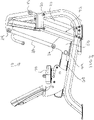
- a leg press exercise machine 10 comprises: a main frame 20; a first rotating bar 30 connected at one end to main frame 20; a second rotating bar 40 connected at one end to main frame 20; a support assembly 50 is connected to first and second rotating bars 20 and 30, as shown. Rotation of first and second rotating bars 20 and 30 causes support assembly 50 to move with respect to main frame 20. This rotational movement of bars 20 and 30 can be seen by comparing Fig. 6 (which is the start position of the leg press exercise) to Fig. 7 (which is the end position of the leg press exercise).
- Leg press exercise machine 10 further comprises a seat support bar 60 and a seat 70 mounted onto seat support bar 60.
- support assembly 50 holds seat support bar 60 at a downward angle.
- axis A1 passes along through seat support 60.
- First rotating bar 30 is connected to support assembly 50 at pivot point 32.
- Second rotating bar 40 is connected to support assembly 50 at pivot point 42.
- a line passing through the locations where the first and second rotating bars are connected to the support assembly i.e.: through points 32 and 42) defines a second axis A2.
- axis A1 is downwardly angled from axis A2 by angle ⁇ 1 .
- angle ⁇ 1 is between 20 to 60 degrees. More preferably, angle ⁇ 1 is between 30 to 50 degrees.
- a horizontal axis H is also shown.
- support assembly 50 holds seat support bar 60 at an angle ⁇ 2 to the horizontal. In preferred aspects, angle ⁇ 2 is between 10 to 30 degrees.
- seat 70 is mounted onto seat support bar 60 such that seat 70 is positioned horizontally (i.e.: generally parallel to the ground). As can be seen in Figs. 10 and 11, seat 70 remains horizontal throughout a full leg press exercise. This provides ample comfort to the user during the exercise.
- seat 70 is adjustably mounted onto the seat support bar 60 such that seat 70 is moveable forwards and backwards along seat support bar 60 (i.e.: seat 70 can be moved back and forth along axis A1 to accommodate users of different leg lengths. Having the seat moveable along axis A1 at angle ⁇ 2 to the horizontal will tend to return seat 70 to a forward position, thereby avoiding the need for a spring to pull the seat 70 forward when readjusting the position of seat 70 for different users.
- First rotating bar 30 is pivotally connected to support assembly 50 at point 32 and is pivotally connected to frame 20 at point 34.
- second rotating bar 40 is pivotally connected to support assembly 50 at point 42 and is pivotally connected to frame 20 at point 44.
- first and second rotating bars 30 and 40 are positioned parallel to one another and remain parallel to one another when moved.
- support assembly 50 is generally triangular in shape and the first and second rotating bars 30 and 40 are connected to first and second points of the triangle (at 32 and 42).
- seat support bar 60 can be connected to a third point of the triangle (at non-rotational point 62) and also at non-rotational point 64.
- seat support bar 60 can be connected to support assembly 50 at two or more locations (62 and 64).
- Fig. 5A also shows further details of seat 70, specifically top wheels 72 and bottom wheels 74 for moving seat 70 back and forth along seat support bar 60 to a desired position to accommodate the particular leg length of the user.
- Fig. 5B shows an alternate embodiment where seat 70 is connected to support bar 60 with a triangular aluminum extrusion 65 resting in an adjustable bracket with V-shaped plastic bushings 67.
- the present leg press exercise machine 10 also includes a footplate 80 mounted to main frame 20.
- footplate 80 is positioned at a height on main frame 20 such that the user's feet are positioned higher than seat 70 at the start position of the leg press exercise (see Fig. 6 ).
- footplate 80 is also positioned at a height on main frame 20 such that the user's feet are even positioned higher than seat 70 at the end position of the leg press exercise (see Fig. 7 ).
- top end (location 34) of first rotating bar 30 is positioned above the user's hips at the end of the leg press exercise.
- Exercise machine 10 is ideally suited for use with a cable weight stack (weight stack not shown).
- the weight stack is positioned in front or to the side of the seated user.
- a cable 90 can be connected from the weights being lifted to the bottom of seat support bar 60 (See Fig. 7 ).
- the user performs the leg press, (s)he pushes down on footplate 80, thereby pulling cable 60, lifting the weight(s) supported at the opposite end of the cable.
- Fig. 6 shows preferred angles and spacings for rotating bars 30 and 40, as follows.
- Angle ⁇ 3 shows the angle between second rotating bar 40 and a vertical axis V (which is also the same angle between first rotating bar 30 and a vertical axis).
- rotating bars are angled 0 to 30 degrees, or more preferably 5 to 15 degrees, (or most preferably about 10 degrees) to vertical axis V at the start of the leg press exercise, as shown.
- the greater angle ⁇ 3 the heavier the exercise gets.
- the shallower angle ⁇ 3 the bigger the overall machine becomes.
- the first and second rotating bars 30 and 40 are spaced significantly farther apart than in the Habing system.
- the entire structure is stronger (due to both lower torque loading both where the rotating bars connect to the main frame at 34 and 44, and also where the rotating bars 30 and 40 connect to the seat support bar at 32 and 42).
- the user may also perform a calf press exercise as seen in Fig. 8 (where the user keeps her/his legs extended as shown and rotates his/her ankles to slightly raise /lower and move back/forth seat 70, thereby exercising the user's calf muscles.
- a calf press exercise as seen in Fig. 8 (where the user keeps her/his legs extended as shown and rotates his/her ankles to slightly raise /lower and move back/forth seat 70, thereby exercising the user's calf muscles.
- Figs. 9 and 10 are side elevation views of an alternate embodiment of the present system, instead having rotating bars 30 and 40 of unequal lengths.
- length 30A is slightly longer than length 40A.
- the user's trajectory is more level, making the initial lifting at the start of the exercise feel lighter on the user.
- This beneficially manages the weight of the parts of the present system and gives a favorable rate of increase to a user as the user pushes away from the footplate 80.
- the present system encompasses both versions where rotating bars 30 and 40 are the same length or are of unequal lengths.
- bar 30 i.e.: the rotating bar closest to the user
- bar 40 is longer than bar 40. This has the advantageous effect of lowing the angle of the seat 70 relative to the horizontal (i.e.: decreasing angle ⁇ 1 ). This increases user comfort.
Landscapes
- Health & Medical Sciences (AREA)
- Orthopedic Medicine & Surgery (AREA)
- General Health & Medical Sciences (AREA)
- Physical Education & Sports Medicine (AREA)
- Life Sciences & Earth Sciences (AREA)
- Biophysics (AREA)
- Rehabilitation Tools (AREA)
Description
- The present invention relates to leg press exercise equipment.
-
U.S. Patent 5,554,086 to Habing describes a leg press machine in which a user sits and presses down on two foot pads to lift their seat. Unfortunately, Habing has several limitations, including the fact that its seat is not adjustable back and forth on the support below. As such, shorter users are forced to begin the exercise with their legs comparatively more straightened out, whereas taller users will be forced to begin the exercise with their legs comparatively more crunched up towards their belly. As such, Habing is not adjustable to accommodate users having different body types and dimensions. In addition, Habing's seat is inclined at a steep angle (approximately 30 degrees) to the ground both when starting and when finishing the leg press exercise. This geometry has the disadvantage of making the resistance on the user's legs become too heavy too quickly (as the user straightens their legs). -
DE 2020 04008938 U discloses a leg press exercise machine with a seat that is movable against gravity by a user pushing their feet against a foot plate. The seat is supported to move on a circular path. - The present system provides a leg press exercise machine as set out in claim 1. Such a leg press exercise machine is ideally suited for attachment to a cable weight stack.
- Advantageously, the preferred length of the present rotating bars combined with their preferred angle to the vertical (when the device is sitting in its rest position) provides a preferred range of motion for most users in which the resistance to motion is neither too high nor too low. As a result, the overwhelming majority of users receive an optimal "push back" from the machine over a preferred range of motion. In various preferred embodiments, the rotating bars are disposed at an angle from 0 to 30 degrees, and more preferably 5 to 15 degrees, and most preferably about 10 degrees to the vertical when the machine is in its rest position.
- Advantageously, the support assembly holds the seat support bar at a downward angle from a line passing through the locations where the first and second rotating bars are connected to the support assembly. Preferably, this downward angle is between 20 and 60 or more preferably between 30 to 50 degrees. In addition, the seat is preferably mounted to sit horizontally onto the seat support bar. Advantageously, the downward angle of the seat support bar defines the angle of the seat but does not define its trajectory of movement. Instead, the trajectory of the seat moves at a shallower angle than the seat is mounted. An advantage of having the seat support bar be angled to the horizontal is that the seat is biased to move forwardly, thereby eliminating the need for a gas spring or other system to return the seat to a forward position after a user has moved it backwards on the support bar. Moreover, in contrast to the Habing system, the present system's rotating bars are also longer (and therefore move through a much smaller angle of curvature from the start to the end of the leg press exercise). Together, all this has the advantage of preventing the user from swinging too far upwardly during the exercise. As a result, the combined weight of the user and the support frame does not become too heavy too quickly as the user straightens their legs during the leg press exercise. In addition, the present geometry also keeps the user generally parallel to the ground throughout the exercise.
- In various preferred aspects of the present system, the rotating bars are angled 0 to 30 degrees, and more preferably 5 to 15 degrees (and most preferably about 10 degrees) to the vertical at the start of the leg press exercise. The greater this angle, the heavier the exercise gets. Conversely, the shallower the angle, the bigger the overall machine becomes. As can be seen, the first and second rotating bars are spaced significantly farther apart than in the Habing system. As a result of this different physical design, the entire present structure is stronger (due to both lower torque loading both where the rotating bars connect to the main frame and where they connect to the seat support bar).
- As mentioned above, the seat is adjustably mounted onto the seat support bar such that the seat is moveable forwards and backwards along the seat support bar. This has the advantage of accommodating users of different body shapes and leg lengths. As such, users with longer legs do not have to start the leg press with their legs too crunched up towards their chest (which would put unnecessary stress on their legs and strain on their lower back), and users with shorter legs do not have to start the leg press with their legs too extended (thereby limiting the full range of motion that they can achieve with the device). An additional advantage of the adjustable seat is that a user can push themselves far enough away from the footplate to perform a calf raise exercise.
- In preferred aspects, the support assembly is generally triangular in shape with the first and second rotating bars connected to first and second points of the triangle, and the seat support bar connected to the third point of the triangle.
- The exercise machine also preferably includes full width footplate mounted to the main frame. Advantages of using a full width footplate are that the user can perform the leg press using a variety of foot positions (such as a narrower or wider stance, and with their feet positioned higher or lower relative to their hips). The footplate is advantageously positioned at a height such that the user's feet are positioned higher than the seat at the start (and optionally the end) of the leg press exercise. In addition, the top end of the first rotating bar is preferably positioned above the user's hips at the end of the leg press exercise. Taken together, this geometry has the advantage of preventing the resistance on the user's legs from becoming too heavy too quickly, thereby preventing unnecessary stress on the user's legs and unnecessary strain on the user's lower back.
-
-
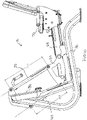
Fig. 1 is a rear side perspective view of the leg press. -
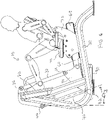
Fig. 2 is a left side elevation view of the leg press. -
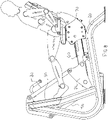
Fig. 3 is a right side elevation view of the leg press. -
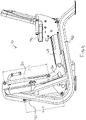
Fig. 4 is a front side perspective view of the leg press. -
Fig. 5A is a partial perspective view of the leg press. -
Fig. 5B is a rear perspective view similar toFig. 5A , but showing a slightly different embodiment of how the seat is connected to the support bar. -
Fig. 6 is a side elevation view showing a user starting the leg press, showing preferred angles and positions for the rotating bars at the start of the leg press exercise. -
Fig. 7 is a side elevation view showing the user finish the leg press. -
Fig. 8 is a rear perspective view of a system for mounting the seat on the seat support bar. -
Fig. 9 is a side elevation view of an alternate embodiment of the present system, instead having rotating bars of unequal lengths at an exercise start position. -
Fig. 10 is a side elevation view corresponding toFig. 9 , but at the exercise finish position. - Referring to the attached Figures, a leg
press exercise machine 10 is provided. Legpress exercise machine 10 comprises: amain frame 20; a first rotatingbar 30 connected at one end tomain frame 20; a second rotatingbar 40 connected at one end tomain frame 20; asupport assembly 50 is connected to first and second rotatingbars bars support assembly 50 to move with respect tomain frame 20. This rotational movement ofbars Fig. 6 (which is the start position of the leg press exercise) toFig. 7 (which is the end position of the leg press exercise). Legpress exercise machine 10 further comprises aseat support bar 60 and aseat 70 mounted ontoseat support bar 60. - In accordance with the present system,
support assembly 50 holdsseat support bar 60 at a downward angle. Specifically, as seen inFig. 2 , axis A1 passes along throughseat support 60. First rotatingbar 30 is connected to supportassembly 50 at pivot point 32. Second rotatingbar 40 is connected to supportassembly 50 atpivot point 42. A line passing through the locations where the first and second rotating bars are connected to the support assembly (i.e.: through points 32 and 42) defines a second axis A2. In accordance with the present system, axis A1 is downwardly angled from axis A2 by angle Θ1. In preferred aspects, angle Θ1 is between 20 to 60 degrees. More preferably, angle Θ1 is between 30 to 50 degrees. A horizontal axis H is also shown. In preferred aspects,support assembly 50 holdsseat support bar 60 at an angle Θ2 to the horizontal. In preferred aspects, angle Θ2 is between 10 to 30 degrees. - As seen in
Figs. 2 and3 ,seat 70 is mounted ontoseat support bar 60 such thatseat 70 is positioned horizontally (i.e.: generally parallel to the ground). As can be seen inFigs. 10 and 11,seat 70 remains horizontal throughout a full leg press exercise. This provides ample comfort to the user during the exercise. - A further advantageous feature of the present exercise machine is that
seat 70 is adjustably mounted onto theseat support bar 60 such thatseat 70 is moveable forwards and backwards along seat support bar 60 (i.e.:seat 70 can be moved back and forth along axis A1 to accommodate users of different leg lengths. Having the seat moveable along axis A1 at angle Θ2 to the horizontal will tend to returnseat 70 to a forward position, thereby avoiding the need for a spring to pull theseat 70 forward when readjusting the position ofseat 70 for different users. - First rotating
bar 30 is pivotally connected to supportassembly 50 at point 32 and is pivotally connected to frame 20 atpoint 34. Similarly, secondrotating bar 40 is pivotally connected to supportassembly 50 atpoint 42 and is pivotally connected to frame 20 atpoint 44. As can be seen in the Figures, first and secondrotating bars - As seen most clearly in
Fig. 5A ,support assembly 50 is generally triangular in shape and the first and secondrotating bars seat support bar 60 can be connected to a third point of the triangle (at non-rotational point 62) and also atnon-rotational point 64. Thus,seat support bar 60 can be connected to supportassembly 50 at two or more locations (62 and 64). -
Fig. 5A also shows further details ofseat 70, specificallytop wheels 72 andbottom wheels 74 for movingseat 70 back and forth alongseat support bar 60 to a desired position to accommodate the particular leg length of the user.Fig. 5B shows an alternate embodiment whereseat 70 is connected to supportbar 60 with atriangular aluminum extrusion 65 resting in an adjustable bracket with V-shapedplastic bushings 67. - The present leg
press exercise machine 10 also includes a footplate 80 mounted tomain frame 20. The novel positioning offootplate 80 provides advantages to the user in that unwanted stress on the user's legs and back is avoided. According to the invention,footplate 80 is positioned at a height onmain frame 20 such that the user's feet are positioned higher thanseat 70 at the start position of the leg press exercise (seeFig. 6 ). Moreover,footplate 80 is also positioned at a height onmain frame 20 such that the user's feet are even positioned higher thanseat 70 at the end position of the leg press exercise (seeFig. 7 ). As can also be seen inFig. 7 , top end (location 34) of firstrotating bar 30 is positioned above the user's hips at the end of the leg press exercise. -
Exercise machine 10 is ideally suited for use with a cable weight stack (weight stack not shown). Preferably, the weight stack is positioned in front or to the side of the seated user. A cable 90 can be connected from the weights being lifted to the bottom of seat support bar 60 (SeeFig. 7 ). As the user performs the leg press, (s)he pushes down onfootplate 80, thereby pullingcable 60, lifting the weight(s) supported at the opposite end of the cable. -
Fig. 6 shows preferred angles and spacings for rotatingbars rotating bar 40 and a vertical axis V (which is also the same angle between firstrotating bar 30 and a vertical axis). In preferred aspects, rotating bars are angled 0 to 30 degrees, or more preferably 5 to 15 degrees, (or most preferably about 10 degrees) to vertical axis V at the start of the leg press exercise, as shown. The greater angle Θ3, the heavier the exercise gets. Conversely, the shallower angle Θ3, the bigger the overall machine becomes. - Preferably as well, the first and second
rotating bars rotating bars - In addition to performing a leg press exercise, the user may also perform a calf press exercise as seen in
Fig. 8 (where the user keeps her/his legs extended as shown and rotates his/her ankles to slightly raise /lower and move back/forthseat 70, thereby exercising the user's calf muscles. -
Figs. 9 and10 are side elevation views of an alternate embodiment of the present system, instead having rotatingbars length 40A. Using this geometry of unequal bar lengths, the user's trajectory is more level, making the initial lifting at the start of the exercise feel lighter on the user. This beneficially manages the weight of the parts of the present system and gives a favorable rate of increase to a user as the user pushes away from thefootplate 80. It is to be understood therefore, that the present system encompasses both versions whererotating bars bar 40. This has the advantageous effect of lowing the angle of theseat 70 relative to the horizontal (i.e.: decreasing angle Θ1). This increases user comfort.
Claims (15)
- A leg press exercise machine (10), comprising:a main frame (20);a stationary footplate (80) mounted to the main frame (20);a first rotating bar (30) connected at a top end of the first rotating bar to the main frame (20);a second rotating bar (40) connected at one end to the main frame;a support assembly (50) connected to bottom ends of each of the first and second rotating bars (30, 40) at pivot points (32, 42), wherein rotation of the first and second rotating bars (30, 40) causes the support assembly (50) to move with respect to the main frame (20);a seat (70);wherein the first and second rotating bars (30, 40) are disposed at an angle to a vertical axis when the exercise machine (10) is in its rest position, and wherein the stationary footplate (80) is positioned at a height on the main frame such that the user's feet are position higher than above the seat (70) throughout a leg press exercise,characterized bya seat support bar (60) connected to the support assembly (50); andwherein the seat (70) is mounted onto the seat support bar (60), andwherein the support assembly (50) holds the seat support bar (60) at a downward angle from a line passing through the locations where the first and second rotating bars (30, 40) are connected to the support assembly (50).
- The exercise machine of claim 1, wherein the angle to the vertical axis is between 0 to 30 degrees, and optionally wherein the angle to the vertical axis is 5 to 15 degrees.
- The exercise machine of claim 1, wherein the support assembly holds the seat support bar (60) at an angle of 10 to 30 degrees inclined from horizontal.
- The exercise machine of claim 1, wherein the downward angle is from 20 to 60 degrees.
- The exercise machine of claim 1, wherein the seat (70) is mounted to sit horizontally onto the seat support bar (60), and wherein optionally the seat (70) remains horizontal throughout a leg press exercise.
- The exercise machine of claim 1, wherein the seat (70) is adjustably mounted onto the seat support bar (60) such that the seat is moveable forwards and backwards along the seat support bar.
- The exercise machine of claim 1, wherein the first and second rotating bars (30, 40) are positioned parallel to one another and remain parallel to one another when moved.
- The exercise machine of claim 1, wherein the support assembly (50) is generally triangular in shape and wherein the first and second rotating bars (30, 40) are connected to first and second points of the triangle, and wherein optionally the seat support bar (60) is connected to a third point of the triangle.
- The exercise machine of claim 1, wherein the seat support bar (60) is connected to the support assembly (50) at two or more locations.
- The exercise machine of claim 1, wherein the seat (70) remains generally parallel to the ground during the exercise.
- The exercise machine of claim 1, wherein the top end of the first rotating bar (30) is positioned above the user's hips at the end of the leg press exercise.
- The exercise machine of claim 1, further comprising:
a cable (90) attached to the bottom of the seat support bar (60). - The exercise machine of claim 1, wherein the seat (70) is mounted onto the seat support bar (60) with an adjustable bracket and plastic bushing (67).
- The exercise machine of claim 1, wherein the first and second rotating bars (30, 40) are of equal lengths.
- The exercise machine of claim 1, wherein the first and second rotating bars (30, 40) are of unequal lengths, and the rotating bar closest to the user is the longer of the first and second rotating bars (30, 40).
Applications Claiming Priority (2)
| Application Number | Priority Date | Filing Date | Title |
|---|---|---|---|
| US201862644829P | 2018-03-19 | 2018-03-19 | |
| PCT/US2019/021418 WO2019182770A1 (en) | 2018-03-19 | 2019-03-08 | Leg press exercise machine |
Publications (3)
| Publication Number | Publication Date |
|---|---|
| EP3768397A1 EP3768397A1 (en) | 2021-01-27 |
| EP3768397A4 EP3768397A4 (en) | 2021-12-08 |
| EP3768397B1 true EP3768397B1 (en) | 2022-08-03 |
Family
ID=67904970
Family Applications (1)
| Application Number | Title | Priority Date | Filing Date |
|---|---|---|---|
| EP19772621.9A Active EP3768397B1 (en) | 2018-03-19 | 2019-03-08 | Leg press exercise machine |
Country Status (8)
| Country | Link |
|---|---|
| US (1) | US10780310B2 (en) |
| EP (1) | EP3768397B1 (en) |
| CN (1) | CN111867684B (en) |
| BR (1) | BR112020018841B1 (en) |
| CA (1) | CA3093374C (en) |
| DK (1) | DK3768397T3 (en) |
| ES (1) | ES2926143T3 (en) |
| WO (1) | WO2019182770A1 (en) |
Families Citing this family (5)
| Publication number | Priority date | Publication date | Assignee | Title |
|---|---|---|---|---|
| DK3765162T3 (en) | 2018-03-19 | 2022-02-14 | Hoist Fitness Systems Inc | Flip and grip handle system for lateral pulldown exercise machine |
| US11439862B2 (en) * | 2019-11-03 | 2022-09-13 | Duane Anderson | Therapeutic isometric testing and isotonic training exercise device |
| CN112206129A (en) * | 2020-10-24 | 2021-01-12 | 段文娜 | Diabetes exercise compensator |
| FR3115674B1 (en) | 2020-11-02 | 2022-12-23 | Univ Aix Marseille | Neuromuscular characterization method and associated measurement bench |
| CN223055019U (en) * | 2024-09-11 | 2025-07-04 | 力昂健康科技(北京)有限公司 | Back pedal machine |
Family Cites Families (23)
| Publication number | Priority date | Publication date | Assignee | Title |
|---|---|---|---|---|
| US5106081A (en) * | 1991-01-28 | 1992-04-21 | Nautilus Acquisition Corporation | Leg exercise machine |
| US5366432A (en) * | 1992-06-18 | 1994-11-22 | Pacific Fitness Corporation | Leg press |
| US5549533A (en) | 1993-10-21 | 1996-08-27 | Icon Health & Fitness, Inc. | Combined leg press/leg extension machine |
| US5570957A (en) * | 1994-06-24 | 1996-11-05 | Body-Solid, Inc. | Bushing arrangement for carriage on exercise equipment |
| US5554086A (en) | 1994-09-23 | 1996-09-10 | Pacific Fitness Corporation | Leg press exercise apparatus |
| US5628715A (en) * | 1995-02-14 | 1997-05-13 | Cybex International, Inc. | Squat press exercise machine |
| US5722917A (en) * | 1996-09-18 | 1998-03-03 | Exerfun, Inc. | Displaceable seat exercise system |
| US6220993B1 (en) | 1999-08-03 | 2001-04-24 | Medx 96, Inc. | Leg press machine |
| US6743158B2 (en) | 2000-03-01 | 2004-06-01 | Cybex Interational, Inc. | Leg press |
| US6770017B1 (en) * | 2000-03-21 | 2004-08-03 | Strive Enterprises, Inc. | Weight training machine |
| US7004890B2 (en) * | 2002-07-10 | 2006-02-28 | Nautilus Human Performance Systems, Inc. | Leg press weight training machine |
| US7070545B2 (en) * | 2002-07-01 | 2006-07-04 | Nautilus, Inc. | Leg press and abdominal crunch exercise machine |
| DE202004008938U1 (en) | 2004-06-03 | 2004-08-12 | Fiebig, Heiko | Multi-functional exercise machine for strengthening leg and back muscles has seat hung swinging on circular path from vario swing consisting of support swing and control swing mounted at fixed distance at rotational points on seat |
| US20060084555A1 (en) * | 2004-10-15 | 2006-04-20 | Baylor University | Variable resistance flexion and extension exercise machine |
| CN101087632A (en) * | 2004-12-13 | 2007-12-12 | 鹦鹉螺公司 | Arm assembly for exercise devices |
| US7981011B1 (en) * | 2006-11-10 | 2011-07-19 | Roger Batca | Combination exercise machine |
| US8262543B1 (en) * | 2006-11-10 | 2012-09-11 | Roger Batca | Leg exercise machine with multi exercise capability |
| US7794372B1 (en) * | 2007-08-02 | 2010-09-14 | Hoist Fitness Systems, Inc. | Leg press exercise machine with self-aligning pivoting seat |
| CN102089041B (en) * | 2008-04-14 | 2014-01-29 | 赤道健身Ip控股公司 | Fitness equipment |
| IT1391359B1 (en) * | 2008-10-08 | 2011-12-13 | Technogym Spa | DEVICE FOR GINNICA MACHINE. |
| CN104998374A (en) * | 2014-04-18 | 2015-10-28 | 石磊 | Hip exercise device |
| US9533188B2 (en) | 2014-09-24 | 2017-01-03 | Tuffstuff Fitness International, Inc. | Functional training equipment with multiple movement planes used for lower body exercises |
| US20170080287A1 (en) * | 2015-09-18 | 2017-03-23 | Paul Edward Jaquish | Devices for exercise apparatuses |
-
2019
- 2019-03-08 ES ES19772621T patent/ES2926143T3/en active Active
- 2019-03-08 US US16/297,260 patent/US10780310B2/en active Active
- 2019-03-08 EP EP19772621.9A patent/EP3768397B1/en active Active
- 2019-03-08 CN CN201980019887.XA patent/CN111867684B/en active Active
- 2019-03-08 WO PCT/US2019/021418 patent/WO2019182770A1/en not_active Ceased
- 2019-03-08 DK DK19772621.9T patent/DK3768397T3/en active
- 2019-03-08 BR BR112020018841-7A patent/BR112020018841B1/en active IP Right Grant
- 2019-03-08 CA CA3093374A patent/CA3093374C/en active Active
Also Published As
| Publication number | Publication date |
|---|---|
| BR112020018841B1 (en) | 2021-10-19 |
| CN111867684B (en) | 2021-10-22 |
| WO2019182770A1 (en) | 2019-09-26 |
| DK3768397T3 (en) | 2022-08-29 |
| BR112020018841A2 (en) | 2020-12-08 |
| US20190282848A1 (en) | 2019-09-19 |
| EP3768397A1 (en) | 2021-01-27 |
| EP3768397A4 (en) | 2021-12-08 |
| CA3093374C (en) | 2022-05-17 |
| CN111867684A (en) | 2020-10-30 |
| US10780310B2 (en) | 2020-09-22 |
| ES2926143T3 (en) | 2022-10-24 |
| CA3093374A1 (en) | 2019-09-26 |
Similar Documents
| Publication | Publication Date | Title |
|---|---|---|
| EP3768397B1 (en) | Leg press exercise machine | |
| US6558303B1 (en) | Combination leg exercise machine with adjustable seat assembly | |
| US5573485A (en) | Exercising and stretching apparatus | |
| US4256302A (en) | Variable resistance exercising device | |
| US6743158B2 (en) | Leg press | |
| US5370594A (en) | Adjustable and configurable exercise machine | |
| US6074328A (en) | Linked leverage exercise system | |
| US7549949B2 (en) | Chest press exercise machine with self-aligning pivoting user support | |
| US7384381B2 (en) | Exercise arm assembly for exercise machine | |
| US20110207584A1 (en) | Calf Exercise Machine With Rocking User Support | |
| EP3237080B1 (en) | Leg curl exercise machine including a moving support for performing prone leg curl exercises | |
| US8033967B2 (en) | Gym machine | |
| WO1995017225A1 (en) | Upper body exercise machine | |
| EP4218962A1 (en) | Glute press exercise machine | |
| US20090105054A1 (en) | Abdominal exercise machine | |
| US10737131B2 (en) | Triceps press exercise machine with a moving user support | |
| US7553263B2 (en) | Calf extension weight training machine | |
| EP3713651B1 (en) | Machine for assisted physical activity exercise | |
| EP1993678B1 (en) | Multi-link exercise machine | |
| US12280295B2 (en) | Exercise apparatus | |
| US20050245366A1 (en) | Exercise apparatus | |
| EP3202466B1 (en) | Squat rack |
Legal Events
| Date | Code | Title | Description |
|---|---|---|---|
| STAA | Information on the status of an ep patent application or granted ep patent |
Free format text: STATUS: THE INTERNATIONAL PUBLICATION HAS BEEN MADE |
|
| PUAI | Public reference made under article 153(3) epc to a published international application that has entered the european phase |
Free format text: ORIGINAL CODE: 0009012 |
|
| STAA | Information on the status of an ep patent application or granted ep patent |
Free format text: STATUS: REQUEST FOR EXAMINATION WAS MADE |
|
| 17P | Request for examination filed |
Effective date: 20200928 |
|
| AK | Designated contracting states |
Kind code of ref document: A1 Designated state(s): AL AT BE BG CH CY CZ DE DK EE ES FI FR GB GR HR HU IE IS IT LI LT LU LV MC MK MT NL NO PL PT RO RS SE SI SK SM TR |
|
| AX | Request for extension of the european patent |
Extension state: BA ME |
|
| DAV | Request for validation of the european patent (deleted) | ||
| DAX | Request for extension of the european patent (deleted) | ||
| A4 | Supplementary search report drawn up and despatched |
Effective date: 20211109 |
|
| RIC1 | Information provided on ipc code assigned before grant |
Ipc: A63B 23/035 20060101ALI20211103BHEP Ipc: A63B 21/068 20060101ALI20211103BHEP Ipc: A63B 21/078 20060101ALI20211103BHEP Ipc: A63B 21/08 20060101ALI20211103BHEP Ipc: A63B 21/062 20060101ALI20211103BHEP Ipc: A63B 21/06 20060101ALI20211103BHEP Ipc: A63B 23/04 20060101ALI20211103BHEP Ipc: A63B 21/00 20060101AFI20211103BHEP |
|
| GRAP | Despatch of communication of intention to grant a patent |
Free format text: ORIGINAL CODE: EPIDOSNIGR1 |
|
| STAA | Information on the status of an ep patent application or granted ep patent |
Free format text: STATUS: GRANT OF PATENT IS INTENDED |
|
| INTG | Intention to grant announced |
Effective date: 20220509 |
|
| RIN1 | Information on inventor provided before grant (corrected) |
Inventor name: MEREDITH, JEFFREY |
|
| GRAS | Grant fee paid |
Free format text: ORIGINAL CODE: EPIDOSNIGR3 |
|
| GRAA | (expected) grant |
Free format text: ORIGINAL CODE: 0009210 |
|
| STAA | Information on the status of an ep patent application or granted ep patent |
Free format text: STATUS: THE PATENT HAS BEEN GRANTED |
|
| AK | Designated contracting states |
Kind code of ref document: B1 Designated state(s): AL AT BE BG CH CY CZ DE DK EE ES FI FR GB GR HR HU IE IS IT LI LT LU LV MC MK MT NL NO PL PT RO RS SE SI SK SM TR |
|
| REG | Reference to a national code |
Ref country code: AT Ref legal event code: REF Ref document number: 1508278 Country of ref document: AT Kind code of ref document: T Effective date: 20220815 Ref country code: CH Ref legal event code: EP |
|
| REG | Reference to a national code |
Ref country code: DE Ref legal event code: R096 Ref document number: 602019017874 Country of ref document: DE |
|
| REG | Reference to a national code |
Ref country code: DK Ref legal event code: T3 Effective date: 20220824 |
|
| REG | Reference to a national code |
Ref country code: IE Ref legal event code: FG4D |
|
| REG | Reference to a national code |
Ref country code: NL Ref legal event code: FP |
|
| REG | Reference to a national code |
Ref country code: ES Ref legal event code: FG2A Ref document number: 2926143 Country of ref document: ES Kind code of ref document: T3 Effective date: 20221024 |
|
| REG | Reference to a national code |
Ref country code: LT Ref legal event code: MG9D |
|
| PG25 | Lapsed in a contracting state [announced via postgrant information from national office to epo] |
Ref country code: SE Free format text: LAPSE BECAUSE OF FAILURE TO SUBMIT A TRANSLATION OF THE DESCRIPTION OR TO PAY THE FEE WITHIN THE PRESCRIBED TIME-LIMIT Effective date: 20220803 Ref country code: RS Free format text: LAPSE BECAUSE OF FAILURE TO SUBMIT A TRANSLATION OF THE DESCRIPTION OR TO PAY THE FEE WITHIN THE PRESCRIBED TIME-LIMIT Effective date: 20220803 Ref country code: PT Free format text: LAPSE BECAUSE OF FAILURE TO SUBMIT A TRANSLATION OF THE DESCRIPTION OR TO PAY THE FEE WITHIN THE PRESCRIBED TIME-LIMIT Effective date: 20221205 Ref country code: NO Free format text: LAPSE BECAUSE OF FAILURE TO SUBMIT A TRANSLATION OF THE DESCRIPTION OR TO PAY THE FEE WITHIN THE PRESCRIBED TIME-LIMIT Effective date: 20221103 Ref country code: LV Free format text: LAPSE BECAUSE OF FAILURE TO SUBMIT A TRANSLATION OF THE DESCRIPTION OR TO PAY THE FEE WITHIN THE PRESCRIBED TIME-LIMIT Effective date: 20220803 Ref country code: LT Free format text: LAPSE BECAUSE OF FAILURE TO SUBMIT A TRANSLATION OF THE DESCRIPTION OR TO PAY THE FEE WITHIN THE PRESCRIBED TIME-LIMIT Effective date: 20220803 Ref country code: FI Free format text: LAPSE BECAUSE OF FAILURE TO SUBMIT A TRANSLATION OF THE DESCRIPTION OR TO PAY THE FEE WITHIN THE PRESCRIBED TIME-LIMIT Effective date: 20220803 |
|
| REG | Reference to a national code |
Ref country code: AT Ref legal event code: MK05 Ref document number: 1508278 Country of ref document: AT Kind code of ref document: T Effective date: 20220803 |
|
| PG25 | Lapsed in a contracting state [announced via postgrant information from national office to epo] |
Ref country code: PL Free format text: LAPSE BECAUSE OF FAILURE TO SUBMIT A TRANSLATION OF THE DESCRIPTION OR TO PAY THE FEE WITHIN THE PRESCRIBED TIME-LIMIT Effective date: 20220803 Ref country code: IS Free format text: LAPSE BECAUSE OF FAILURE TO SUBMIT A TRANSLATION OF THE DESCRIPTION OR TO PAY THE FEE WITHIN THE PRESCRIBED TIME-LIMIT Effective date: 20221203 Ref country code: HR Free format text: LAPSE BECAUSE OF FAILURE TO SUBMIT A TRANSLATION OF THE DESCRIPTION OR TO PAY THE FEE WITHIN THE PRESCRIBED TIME-LIMIT Effective date: 20220803 Ref country code: GR Free format text: LAPSE BECAUSE OF FAILURE TO SUBMIT A TRANSLATION OF THE DESCRIPTION OR TO PAY THE FEE WITHIN THE PRESCRIBED TIME-LIMIT Effective date: 20221104 |
|
| PG25 | Lapsed in a contracting state [announced via postgrant information from national office to epo] |
Ref country code: SM Free format text: LAPSE BECAUSE OF FAILURE TO SUBMIT A TRANSLATION OF THE DESCRIPTION OR TO PAY THE FEE WITHIN THE PRESCRIBED TIME-LIMIT Effective date: 20220803 Ref country code: RO Free format text: LAPSE BECAUSE OF FAILURE TO SUBMIT A TRANSLATION OF THE DESCRIPTION OR TO PAY THE FEE WITHIN THE PRESCRIBED TIME-LIMIT Effective date: 20220803 Ref country code: CZ Free format text: LAPSE BECAUSE OF FAILURE TO SUBMIT A TRANSLATION OF THE DESCRIPTION OR TO PAY THE FEE WITHIN THE PRESCRIBED TIME-LIMIT Effective date: 20220803 Ref country code: AT Free format text: LAPSE BECAUSE OF FAILURE TO SUBMIT A TRANSLATION OF THE DESCRIPTION OR TO PAY THE FEE WITHIN THE PRESCRIBED TIME-LIMIT Effective date: 20220803 |
|
| REG | Reference to a national code |
Ref country code: DE Ref legal event code: R097 Ref document number: 602019017874 Country of ref document: DE |
|
| PG25 | Lapsed in a contracting state [announced via postgrant information from national office to epo] |
Ref country code: SK Free format text: LAPSE BECAUSE OF FAILURE TO SUBMIT A TRANSLATION OF THE DESCRIPTION OR TO PAY THE FEE WITHIN THE PRESCRIBED TIME-LIMIT Effective date: 20220803 Ref country code: EE Free format text: LAPSE BECAUSE OF FAILURE TO SUBMIT A TRANSLATION OF THE DESCRIPTION OR TO PAY THE FEE WITHIN THE PRESCRIBED TIME-LIMIT Effective date: 20220803 |
|
| PLBE | No opposition filed within time limit |
Free format text: ORIGINAL CODE: 0009261 |
|
| STAA | Information on the status of an ep patent application or granted ep patent |
Free format text: STATUS: NO OPPOSITION FILED WITHIN TIME LIMIT |
|
| PG25 | Lapsed in a contracting state [announced via postgrant information from national office to epo] |
Ref country code: AL Free format text: LAPSE BECAUSE OF FAILURE TO SUBMIT A TRANSLATION OF THE DESCRIPTION OR TO PAY THE FEE WITHIN THE PRESCRIBED TIME-LIMIT Effective date: 20220803 |
|
| 26N | No opposition filed |
Effective date: 20230504 |
|
| PG25 | Lapsed in a contracting state [announced via postgrant information from national office to epo] |
Ref country code: SI Free format text: LAPSE BECAUSE OF FAILURE TO SUBMIT A TRANSLATION OF THE DESCRIPTION OR TO PAY THE FEE WITHIN THE PRESCRIBED TIME-LIMIT Effective date: 20220803 |
|
| PG25 | Lapsed in a contracting state [announced via postgrant information from national office to epo] |
Ref country code: MC Free format text: LAPSE BECAUSE OF FAILURE TO SUBMIT A TRANSLATION OF THE DESCRIPTION OR TO PAY THE FEE WITHIN THE PRESCRIBED TIME-LIMIT Effective date: 20220803 |
|
| REG | Reference to a national code |
Ref country code: CH Ref legal event code: PL |
|
| REG | Reference to a national code |
Ref country code: BE Ref legal event code: MM Effective date: 20230331 |
|
| PG25 | Lapsed in a contracting state [announced via postgrant information from national office to epo] |
Ref country code: LU Free format text: LAPSE BECAUSE OF NON-PAYMENT OF DUE FEES Effective date: 20230308 |
|
| REG | Reference to a national code |
Ref country code: IE Ref legal event code: MM4A |
|
| PG25 | Lapsed in a contracting state [announced via postgrant information from national office to epo] |
Ref country code: LI Free format text: LAPSE BECAUSE OF NON-PAYMENT OF DUE FEES Effective date: 20230331 Ref country code: IE Free format text: LAPSE BECAUSE OF NON-PAYMENT OF DUE FEES Effective date: 20230308 Ref country code: CH Free format text: LAPSE BECAUSE OF NON-PAYMENT OF DUE FEES Effective date: 20230331 |
|
| PG25 | Lapsed in a contracting state [announced via postgrant information from national office to epo] |
Ref country code: BE Free format text: LAPSE BECAUSE OF NON-PAYMENT OF DUE FEES Effective date: 20230331 |
|
| PG25 | Lapsed in a contracting state [announced via postgrant information from national office to epo] |
Ref country code: IT Free format text: LAPSE BECAUSE OF FAILURE TO SUBMIT A TRANSLATION OF THE DESCRIPTION OR TO PAY THE FEE WITHIN THE PRESCRIBED TIME-LIMIT Effective date: 20220803 |
|
| PG25 | Lapsed in a contracting state [announced via postgrant information from national office to epo] |
Ref country code: BG Free format text: LAPSE BECAUSE OF FAILURE TO SUBMIT A TRANSLATION OF THE DESCRIPTION OR TO PAY THE FEE WITHIN THE PRESCRIBED TIME-LIMIT Effective date: 20220803 |
|
| PG25 | Lapsed in a contracting state [announced via postgrant information from national office to epo] |
Ref country code: BG Free format text: LAPSE BECAUSE OF FAILURE TO SUBMIT A TRANSLATION OF THE DESCRIPTION OR TO PAY THE FEE WITHIN THE PRESCRIBED TIME-LIMIT Effective date: 20220803 |
|
| PGFP | Annual fee paid to national office [announced via postgrant information from national office to epo] |
Ref country code: DE Payment date: 20250327 Year of fee payment: 7 |
|
| PGFP | Annual fee paid to national office [announced via postgrant information from national office to epo] |
Ref country code: DK Payment date: 20250325 Year of fee payment: 7 Ref country code: NL Payment date: 20250327 Year of fee payment: 7 |
|
| PGFP | Annual fee paid to national office [announced via postgrant information from national office to epo] |
Ref country code: FR Payment date: 20250325 Year of fee payment: 7 |
|
| PGFP | Annual fee paid to national office [announced via postgrant information from national office to epo] |
Ref country code: GB Payment date: 20250327 Year of fee payment: 7 |
|
| PGFP | Annual fee paid to national office [announced via postgrant information from national office to epo] |
Ref country code: ES Payment date: 20250401 Year of fee payment: 7 |
|
| PG25 | Lapsed in a contracting state [announced via postgrant information from national office to epo] |
Ref country code: CY Free format text: LAPSE BECAUSE OF FAILURE TO SUBMIT A TRANSLATION OF THE DESCRIPTION OR TO PAY THE FEE WITHIN THE PRESCRIBED TIME-LIMIT; INVALID AB INITIO Effective date: 20190308 |
|
| PG25 | Lapsed in a contracting state [announced via postgrant information from national office to epo] |
Ref country code: HU Free format text: LAPSE BECAUSE OF FAILURE TO SUBMIT A TRANSLATION OF THE DESCRIPTION OR TO PAY THE FEE WITHIN THE PRESCRIBED TIME-LIMIT; INVALID AB INITIO Effective date: 20190308 |
|
| PG25 | Lapsed in a contracting state [announced via postgrant information from national office to epo] |
Ref country code: TR Free format text: LAPSE BECAUSE OF FAILURE TO SUBMIT A TRANSLATION OF THE DESCRIPTION OR TO PAY THE FEE WITHIN THE PRESCRIBED TIME-LIMIT Effective date: 20220803 |