EP3766040B1 - Method and electronic device for recommending image capture mode - Google Patents
Method and electronic device for recommending image capture mode Download PDFInfo
- Publication number
- EP3766040B1 EP3766040B1 EP19838480.2A EP19838480A EP3766040B1 EP 3766040 B1 EP3766040 B1 EP 3766040B1 EP 19838480 A EP19838480 A EP 19838480A EP 3766040 B1 EP3766040 B1 EP 3766040B1
- Authority
- EP
- European Patent Office
- Prior art keywords
- image capture
- roi
- ultra
- capture mode
- wide
- Prior art date
- Legal status (The legal status is an assumption and is not a legal conclusion. Google has not performed a legal analysis and makes no representation as to the accuracy of the status listed.)
- Active
Links
Images




Classifications
-
- H—ELECTRICITY
- H04—ELECTRIC COMMUNICATION TECHNIQUE
- H04N—PICTORIAL COMMUNICATION, e.g. TELEVISION
- H04N23/00—Cameras or camera modules comprising electronic image sensors; Control thereof
- H04N23/60—Control of cameras or camera modules
-
- H—ELECTRICITY
- H04—ELECTRIC COMMUNICATION TECHNIQUE
- H04N—PICTORIAL COMMUNICATION, e.g. TELEVISION
- H04N23/00—Cameras or camera modules comprising electronic image sensors; Control thereof
- H04N23/60—Control of cameras or camera modules
- H04N23/64—Computer-aided capture of images, e.g. transfer from script file into camera, check of taken image quality, advice or proposal for image composition or decision on when to take image
-
- H—ELECTRICITY
- H04—ELECTRIC COMMUNICATION TECHNIQUE
- H04N—PICTORIAL COMMUNICATION, e.g. TELEVISION
- H04N23/00—Cameras or camera modules comprising electronic image sensors; Control thereof
- H04N23/60—Control of cameras or camera modules
- H04N23/61—Control of cameras or camera modules based on recognised objects
- H04N23/611—Control of cameras or camera modules based on recognised objects where the recognised objects include parts of the human body
-
- H—ELECTRICITY
- H04—ELECTRIC COMMUNICATION TECHNIQUE
- H04N—PICTORIAL COMMUNICATION, e.g. TELEVISION
- H04N23/00—Cameras or camera modules comprising electronic image sensors; Control thereof
- H04N23/60—Control of cameras or camera modules
- H04N23/62—Control of parameters via user interfaces
-
- H—ELECTRICITY
- H04—ELECTRIC COMMUNICATION TECHNIQUE
- H04N—PICTORIAL COMMUNICATION, e.g. TELEVISION
- H04N23/00—Cameras or camera modules comprising electronic image sensors; Control thereof
- H04N23/60—Control of cameras or camera modules
- H04N23/63—Control of cameras or camera modules by using electronic viewfinders
- H04N23/633—Control of cameras or camera modules by using electronic viewfinders for displaying additional information relating to control or operation of the camera
-
- H—ELECTRICITY
- H04—ELECTRIC COMMUNICATION TECHNIQUE
- H04N—PICTORIAL COMMUNICATION, e.g. TELEVISION
- H04N23/00—Cameras or camera modules comprising electronic image sensors; Control thereof
- H04N23/60—Control of cameras or camera modules
- H04N23/667—Camera operation mode switching, e.g. between still and video, sport and normal or high- and low-resolution modes
-
- H—ELECTRICITY
- H04—ELECTRIC COMMUNICATION TECHNIQUE
- H04N—PICTORIAL COMMUNICATION, e.g. TELEVISION
- H04N23/00—Cameras or camera modules comprising electronic image sensors; Control thereof
- H04N23/60—Control of cameras or camera modules
- H04N23/69—Control of means for changing angle of the field of view, e.g. optical zoom objectives or electronic zooming
-
- H—ELECTRICITY
- H04—ELECTRIC COMMUNICATION TECHNIQUE
- H04N—PICTORIAL COMMUNICATION, e.g. TELEVISION
- H04N23/00—Cameras or camera modules comprising electronic image sensors; Control thereof
- H04N23/60—Control of cameras or camera modules
- H04N23/698—Control of cameras or camera modules for achieving an enlarged field of view, e.g. panoramic image capture
Definitions
- the present disclosure relates to an image capturing system, and is more specifically related to a method for recommending an image capture mode by an electronic device.
- the posture of holding the camera has a lot of impact on the taken picture.
- Each scene has its own set of rules which an ordinary camera user may not understand. For example, just taking a few steps towards a subject can give a better photo and the user may not understand this. Doing wide scene analysis and providing an indication/suggesting an action can help the user in getting a great capture.
- US 2016/381282 A1 discloses a method for automatically zooming in on a ROI selected by a user.
- US 2017/285736 A1 discloses a method and system for determining a region of interest on a screen based on a user's gaze towards the region of interest on the screen with respect to one or more images.
- O'kane Sean ET AL "Light L16 camera review: futuristic frustration - The Verge”, 10 April 2018 , discloses a smartphone having 16 different smartphone-sized imaging modules.
- An electronic device for recommending an image capture mode is defined as per the appended claims.
- ROI region of interest
- circuits may, for example, be embodied in one or more semiconductor chips, or on substrate supports such as printed circuit boards and the like.
- circuits constituting a block may be implemented by dedicated hardware, or by a processor (e.g., one or more programmed microprocessors and associated circuitry), or by a combination of dedicated hardware to perform some functions of the block and a processor to perform other functions of the block.
- a processor e.g., one or more programmed microprocessors and associated circuitry
- Each block of the embodiments may be physically separated into two or more interacting and discrete blocks without departing from the scope of the disclosure.
- the blocks of the embodiments may be physically combined into more complex blocks without departing from the scope of the disclosure.
- the embodiments herein provides a method for recommending an image capture mode by an electronic device.
- the method includes identifying, by the electronic device, at least one region of interest (ROI) displayed in a camera preview of the electronic device for capturing an image in a non-ultra-wide image capture mode. Further, the method includes determining, by the electronic device, that the at least one ROI is suitable to capture in an ultra-wide image capture mode. Further, the method includes providing, by the electronic device, at least one recommendation to switch to the ultra-wide image capture mode from the non-ultra-wide image capture mode for capturing the image.
- ROI region of interest
- the proposed method can be used to sense, analyze, understand a wider field of view and recreate a natural or artificial light from the ambience (physical world) into a current live experience for capturing a better image.
- the electronic device includes the ultra-wide lens for better scene understanding for sensing immense motion in the background to trigger a light painting nature of capture.
- the method can be used to understand the scene to provide intelligent capture suggestions.
- the method can be used to provide best compositions for capturing photos by using the ultra-wide angle lens along with telephoto lens, wide lens clubbed with AI.
- the system provide effortless and auto triggered capturing suggestions for achieving signature aesthetics in photography using the ultra-wide lens and intelligence in a phone (best compositions).
- the electronic device enable the user to capture a best possible shot even at the lack of resources like light (subject being dark) by borrowing and recreating actual ambient lighting for a natural looking output.
- the system uses the ultra-wide angle lens's field of view to ensure best composition due to more data availability. This improves the user's experience.
- each scene has its own set of rules which an ordinary camera user may not understand.
- just taking a few steps away from the subject can give a better photo, the user may not understand this.
- doing wide scene analysis and providing an indication / suggesting an action can help a user in getting a great capture based on photography rules.
- FIGS. 1 through 8b where similar reference characters denote corresponding features consistently throughout the figures, there are shown preferred embodiments.
- FIG. 1 illustrates various blocks of an electronic device (100) for recommending an image capture mode, according to an embodiment as disclosed herein.
- the electronic device (100) can be, for example, but not limited to a cellular phone, a smart phone, a Personal Digital Assistant (PDA), a tablet computer, a laptop computer, a virtual reality device, a mixed reality device, an augmented reality device, a multi camera system, a smart watch, or the like.
- PDA Personal Digital Assistant
- the electronic device (100) includes a processor (110), a communicator (120), a memory (130), a display (140), an ultra-wide lens (150), a telephoto lens (160), a sensor (170), an image capturing application (180), and a wide lens (190).
- the processor (110) is coupled with the communicator (120), the memory (130), the display (140), the ultra-wide lens (150), the telephoto lens (160), the sensor (170), the image capturing application (180) and the wide lens (190).
- the processor (110) is configured to identify at least one ROI displayed in a camera preview for capturing an image in a non-ultra-wide image capture mode.
- the camera preview is shown on the image capturing application (180).
- the least one ROI is automatically identified based on at least one of a presence of a user in the camera preview and a direction of a gaze of the user towards at least one portion in the camera preview.
- the presence of the user in the camera preview and the direction of the gaze of the user towards at least one portion in the camera preview is identified using the sensor (170).
- the processor (110) is configured to determine that the at least one ROI is suitable to capture in an ultra-wide image capture mode.
- the processor (110) is configured to determine at least one object in the at least one ROI and determine whether the at least one object in the at least one ROI matches with at least one predefined object.
- the predefined object can be, for example, but not limited to a mountain, a sky, a snow, a sunset, a sunrise, a waterfall, a beach, a city, a waterside scenery, a stage, people or the like.
- the processor (110) is configured to determine that the at least one ROI is suitable to capture in the ultra-wide image capture mode in response to determining that the at least one object in the at least one ROI matches with the at least one predefined object.
- the processor (110) is configured to provide at least one recommendation to switch to the ultra-wide image capture mode from the non-ultra-wide image capture mode for capturing the image.
- the electronic device (100) switches to the ultra-wide lens (150) from the telephoto lens (160) for capturing the image.
- the at least one recommendation is provided in the camera preview. The at least one recommendation is provided when the wide lens (190) and the telephoto lens (160) are activated.
- the suggestion to switch to the ultra-wide lens (150) can be provided upon analysis of wide frame data and upon user selection based on suggestion, the ultra-wide lens (150) is activated.
- the ultra-wide lens (150) manipulates the view for better aesthetics and gaining perspective.
- the telephoto lens (160) is a type of camera lens designed for taking photographs of the user or object at moderate to far distances or the any distance.
- the wide lens (190) refers to a lens whose focal length is substantially smaller than a focal length of a normal lens for a given film plane.
- the ultra-wide lens (150) is a lens whose focal length is shorter than the short side of the sensor (170).
- the processor (110) is configured to identify the at least one ROI displayed in the camera preview. Further, the processor (110) is configured to determine at least one image capture mode from the plurality of image capture modes based on the at least one of ROI. Further, the processor is configured to provide at least one recommendation to activate the at least one determined image capture mode from the plurality of image capture modes to capture the image. In an example, based on the at least one of ROI, the electronic device (100) activates the ultra-wide lens (150) among the ultra-wide lens (150), the telephoto lens (160) and the wide lens (190) for capturing the image.
- the processor (110) is configured to provide a feedback to capture the image of the at least one ROI in the ultra-wide image capture mode. Further, the processor (110) is configured to activate the ultra-wide image capture mode. Further, the processor (110) is configured to generate the image of the at least one ROI in the ultra-wide image capture mode based on the feedback.
- the processor (110) is configured to capture scene data of the at least one ROI in the ultra-wide image capture mode. Further, the processor (110) is configured to automatically modify or correct at least one portion of the scene data corresponding to the at least one ROI based on the feedback. Further, the processor (110) is configured to generate the image based on the modified portions of the scene data corresponding to the at least one ROI or the correction portions of the scene data corresponding to the at least one ROI.
- the communicator (120) is configured for communicating internally between internal hardware components and with external devices via one or more networks.
- the memory (130) stores instructions to be executed by the processor (110).
- the memory (130) may include non-volatile storage elements. Examples of such non-volatile storage elements may include magnetic hard discs, optical discs, floppy discs, flash memories, or forms of electrically programmable memories (EPROM) or electrically erasable and programmable (EEPROM) memories.
- EPROM electrically programmable memories
- EEPROM electrically erasable and programmable
- the memory (130) may, in some examples, be considered a non-transitory storage medium.
- the term "non-transitory" may indicate that the storage medium is not embodied in a carrier wave or a propagated signal.
- non-transitory should not be interpreted that the memory (130) is non-movable.
- the memory (130) can be configured to store larger amounts of information than the memory.
- a non-transitory storage medium may store data that can, over time, change (e.g., in Random Access Memory (RAM) or cache).
- RAM Random Access Memory
- FIG. 3a to FIG. 8b Various examples of the electronic device (100) configured to recommending the image capture mode is explained in the FIG. 3a to FIG. 8b .
- FIG. 1a shows various hardware components of the electronic device (100) but it is to be understood that other embodiments are not limited thereon.
- the electronic device (100) may include less or more number of components.
- the labels or names of the components are used only for illustrative purpose and does not limit the scope of the invention.
- One or more components can be combined together to perform same or substantially similar function to recommend the image capture mode in the electronic device (100).
- FIG. 1b illustrates various blocks of the processor (110), according to an embodiment as disclosed herein.
- the processor (110) includes an object detector (110a), a ROI detector (110b), a scene classifier (110c), a scene analyzer (110d), a view corrector (110e), a feedback provider (110f) and an ultra-wide image capture mode activator (110g).
- the ROI detector (110b) is configured to identify the at least one ROI displayed in the camera preview for capturing the image in the non-ultra-wide image capture mode. After identifying the at least one ROI displayed in the camera preview for capturing the image in the non-ultra-wide image capture mode, the scene classifier (110c) and the scene analyzer (110d) are configured to determine that the at least one ROI is suitable to capture in the ultra-wide image capture mode.
- the object detector (110a) is configured to determine the at least one object in the at least one ROI and the view corrector (110e) determines whether the at least one object in the at least one ROI matches with at least one predefined object.
- the scene classifier (110c) and the scene analyzer (110d) are configured to determine that the at least one ROI is suitable to capture in the ultra-wide image capture mode in response to determining that the at least one object in the at least one ROI matches with the at least one predefined object.
- the ultra-wide image capture mode activator (110g) is configured to provide at least one recommendation to switch to the ultra-wide image capture mode from the non-ultra-wide image capture mode for capturing the image.
- the feedback provider (110f) is configured to provide the feedback to capture the image of the at least one ROI in the ultra-wide image capture mode.
- the ultra-wide image capture mode activator (110g) is configured to activate the ultra-wide image capture mode.
- the ultra-wide image capture mode activator (110g) is configured to generate the image of the at least one ROI in the ultra-wide image capture mode based on the feedback.
- FIG. 1b shows various hardware components of the processor (110) but it is to be understood that other embodiments are not limited thereon.
- the processor (110) may include less or more number of components.
- the labels or names of the components are used only for illustrative purpose and does not limit the scope of the invention.
- One or more components can be combined together to perform same or substantially similar function to recommend the image capture mode in the electronic device (100).
- FIG. 2a is a flow chart (S200) illustrating a method for recommending the image capture mode, according to an embodiment as disclosed herein. The operations (S202-S206) are performed by the processor (110).
- the method includes identifying the at least one ROI displayed in the camera preview of the electronic device (100) for capturing the image in the non-ultra-wide image capture mode.
- the method includes determining that the at least one ROI is suitable to capture in the ultra-wide image capture mode.
- the method includes providing at least one recommendation to switch to the ultra-wide image capture mode from the non-ultra-wide image capture mode for capturing the image.
- FIG. 2b is a flow chart (S204) illustrating various operations for determining that the at least one ROI is suitable to capture in the ultra-wide image capture mode, according to an embodiment as disclosed herein.
- the operations (S204a - S204c) are performed by the processor (110).
- the method includes determining the at least one object in the at least one ROI.
- the method includes determining whether the at least one object in the at least one ROI matches with the at least one predefined object.
- the method includes determining that the at least one ROI is suitable to capture in the ultra-wide image capture mode in response to determining that the at least one object in the at least one ROI matches with the at least one predefined object.
- FIG. 2c is another flow chart (S300) illustrating a method for recommending the image capture mode, according to an embodiment as disclosed herein.
- the operations (S302-S306) are performed by the processor (110).
- the method includes identifying the at least one ROI displayed in the camera preview.
- the method includes determining the at least one image capture mode from the plurality of image capture modes based on the at least one of ROI.
- the method includes providing at least one recommendation to activate the at least one determined image capture mode from the plurality of image capture modes to capture an image.
- determining the at least one image capture mode from the plurality of image capture modes based on the at least one of ROI comprises determining at least one object in the at least one ROI, determining that the at least one object in the at least one ROI matches with at least one predefined object, and determining the at least one image capture mode from the plurality of image capture modes based on determination.
- FIG. 3a-FIG. 8b are example scenarios in which the electronic device (100) recommends the image capture mode, according to an embodiment as disclosed herein.
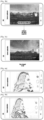
- the electronic device (100) identifies the mountain present in the camera preview in the current image capture mode. As shown in the FIG. 3b , the electronic device (100) compares the identified mountain in the current image capture mode with that of a repository of pre-defined mountain objects, where the predefined objects are suitable for capturing in the ultra-wide image capture mode. As shown in the FIG. 3c , based on the comparison, the electronic device (100) provides a recommending in the preview, to switch to the ultra-wide image capture mode if the mountain in the current image capture mode match with that of the pre-defined mountain objects in the repository.
- the electronic device (100) identifies the ROI displayed in the camera preview for capturing the image in the non-ultra-wide image capture mode.
- the electronic device (100) identifies the user eye gaze direction and suggest the ultra-wide lens (150) (i.e., switch to the ultra-wide image capture mode from the non-ultra-wide image capture mode for capturing the image) to leave space in front of the user.
- the ultra-wide lens (150) manipulates the view for better aesthetics
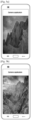
- the electronic device (100) identifies the at least one ROI displayed in the camera preview for capturing the mountain image in the non-ultra-wide image capture mode. Further, the electronic device (100) determines that the at least one ROI is suitable to capture in the ultra-wide image capture mode. Further, the electronic device (100) provides the recommendation (i.e., select ultra-wide lens (150) for interesting landscape) to switch to the ultra-wide image capture mode from the non-ultra-wide image capture mode for capturing the mountain image.
- the recommendation i.e., select ultra-wide lens (150) for interesting landscape
- the electronic device (100) identifies the at least one ROI displayed in the camera preview for capturing the child in the non-ultra-wide image capture mode. Further, the electronic device (100) determines that the at least one ROI is suitable to capture in the ultra-wide image capture mode using the eye direction of the child. Further, the electronic device (100) provides the recommendation (i.e., select the ultra-wide lens (150) and apply cropping to ensure eye position of user) to switch to the ultra-wide image capture mode from the non-ultra-wide image capture mode for capturing the child image.
- the recommendation i.e., select the ultra-wide lens (150) and apply cropping to ensure eye position of user
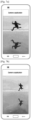
- the electronic device (100) identifies at least one ROI displayed in the camera preview for capturing the subject in the non-ultra-wide image capture mode. Further, the electronic device (100) determines that the at least one ROI is suitable to capture in the ultra-wide image capture mode. Further, the electronic device (100) provides the recommendation (i.e., identify subject movement direction, select the ultra-wide lens (150) and appropriate crop to leave space for movement) to switch to the ultra-wide image capture mode from the non-ultra-wide image capture mode for capturing the subject.
- the recommendation i.e., identify subject movement direction, select the ultra-wide lens (150) and appropriate crop to leave space for movement
- the electronic device (100) identifies the at least one ROI displayed in the camera preview for capturing the subject in the non-ultra-wide image capture mode. Further, the electronic device (100) determines that the at least one ROI is suitable to capture in the ultra-wide image capture mode based on the subject's head direction. Further, the electronic device (100) provides the recommendation (i.e., select ultra-wide lens (150) and appropriate crop to leave enough space above the subject's head) to switch to the ultra-wide image capture mode from the non-ultra-wide image capture mode for capturing the subject.
- the recommendation i.e., select ultra-wide lens (150) and appropriate crop to leave enough space above the subject's head
- the embodiments disclosed herein can be implemented using at least one software program running on at least one hardware device and performing network management functions to control the elements.
Landscapes
- Engineering & Computer Science (AREA)
- Multimedia (AREA)
- Signal Processing (AREA)
- Human Computer Interaction (AREA)
- Studio Devices (AREA)
Description
- The present disclosure relates to an image capturing system, and is more specifically related to a method for recommending an image capture mode by an electronic device.
- In general, with scene understanding capabilities, user's naked eye cannot see or imagine the possible outputs that an intelligent camera along with an ultra-widen angles lens Field of View (FOV) would be able to provide. Currently, the camera has FOV clubbed with artificial intelligence (Al) provides plethora of opportunities to assist the user capture images that would not be possible otherwise.
- The posture of holding the camera has a lot of impact on the taken picture. Each scene has its own set of rules which an ordinary camera user may not understand. For example, just taking a few steps towards a subject can give a better photo and the user may not understand this. Doing wide scene analysis and providing an indication/suggesting an action can help the user in getting a great capture.
- Conventional systems identify a scene and understanding few filter/color/ correction options is known. Further, the systems use intelligence and machine learning to suggest best possible composition of the current view is of existence. Further, the conventional systems perform low aperture captures and pick objects from physical world and converting them to virtual objects.
- Hsien Chou Liao et al - Automatic zooming mechanism for capturing clear moving object image using high definition fixed camera - XP 33082666 A; Hsien-Chou Liao, Po-Yueh Chen, Zi-Jun Lin, Zi-Yi Lim; ICACT Transaction on Advanced Communications Technology (TACT) Vol. 5, Issue 4, July 2016 discloses an automatic zooming method for a camera capturing moving object in a FOV with a wide-angle mode being the starting point of the method, wherein the wide-angle mode is maintained as long as no object is detected in a FOV.
-
US 2016/381282 A1 discloses a method for automatically zooming in on a ROI selected by a user.US 2017/285736 A1 discloses a method and system for determining a region of interest on a screen based on a user's gaze towards the region of interest on the screen with respect to one or more images. Lastly, a publication of O'kane Sean ET AL: "Light L16 camera review: futuristic frustration - The Verge", 10 April 2018, discloses a smartphone having 16 different smartphone-sized imaging modules. - Thus, it is desired to address the above mentioned shortcomings or at least provide a useful alternative.
- In general, with scene understanding capabilities, user's naked eye cannot see or imagine the possible outputs that an intelligent camera along with an ultra-widen angles lens Field of View (FOV) would be able to provide.
- An electronic device for recommending an image capture mode is defined as per the appended claims.
- Further a method for recommending an image capture mode by an electronic device is defined as per the appended claims.
- According to the embodiments herein, it is possible to identify at least one region of interest (ROI) displayed in a camera preview for capturing an image in a non-ultra-wide image capture mode.
- This method and system is illustrated in the accompanying drawings, throughout which like reference letters indicate corresponding parts in the various figures. The embodiments herein will be better understood from the following description with reference to the drawings, in which:
-
FIG. 1a illustrates various blocks of an electronic device for recommending an image capture mode, according to an embodiment as disclosed herein; -
FIG. 1b illustrates various blocks of a processor, according to an embodiment as disclosed herein; -
FIG. 2a is a flow chart illustrating a method for recommending the image capture mode, according to an embodiment as disclosed herein; -
FIG. 2b is a flow chart illustrating various operations for determining that at least one ROI is suitable to capture in an ultra-wide image capture mode, according to an embodiment as disclosed herein; -
FIG. 2c is another flow chart illustrating a method for recommending the image capture mode, according to an embodiment as disclosed herein; and -
FIG. 3a-FIG. 8b are example scenarios in which the electronic device recommends the image capture mode, according to an embodiment as disclosed herein. - The invention is defined by the appended claims.
- The embodiments herein and the various features and advantageous details thereof are explained more fully with reference to the non-limiting embodiments that are illustrated in the accompanying drawings and detailed in the following description. Descriptions of well-known components and processing techniques are omitted so as to not unnecessarily obscure the embodiments herein. Also, the various embodiments described herein are not necessarily mutually exclusive, as some embodiments can be combined with one or more other embodiments to form new embodiments. The term "or" as used herein, refers to a non-exclusive or, unless otherwise indicated. The examples used herein are intended merely to facilitate an understanding of ways in which the embodiments herein can be practiced and to further enable those skilled in the art to practice the embodiments herein. Accordingly, the examples should not be construed as limiting the scope of the embodiments herein.
- As is traditional in the field, embodiments may be described and illustrated in terms of blocks which carry out a described function or functions. These blocks, which may be referred to herein as managers, units, modules, hardware components or the like, are physically implemented by analog and/or digital circuits such as logic gates, integrated circuits, microprocessors, microcontrollers, memory circuits, passive electronic components, active electronic components, optical components, hardwired circuits and the like, and may optionally be driven by firmware and software. The circuits may, for example, be embodied in one or more semiconductor chips, or on substrate supports such as printed circuit boards and the like. The circuits constituting a block may be implemented by dedicated hardware, or by a processor (e.g., one or more programmed microprocessors and associated circuitry), or by a combination of dedicated hardware to perform some functions of the block and a processor to perform other functions of the block. Each block of the embodiments may be physically separated into two or more interacting and discrete blocks without departing from the scope of the disclosure. Likewise, the blocks of the embodiments may be physically combined into more complex blocks without departing from the scope of the disclosure.
- Accordingly the embodiments herein provides a method for recommending an image capture mode by an electronic device. The method includes identifying, by the electronic device, at least one region of interest (ROI) displayed in a camera preview of the electronic device for capturing an image in a non-ultra-wide image capture mode. Further, the method includes determining, by the electronic device, that the at least one ROI is suitable to capture in an ultra-wide image capture mode. Further, the method includes providing, by the electronic device, at least one recommendation to switch to the ultra-wide image capture mode from the non-ultra-wide image capture mode for capturing the image.
- The proposed method can be used to sense, analyze, understand a wider field of view and recreate a natural or artificial light from the ambience (physical world) into a current live experience for capturing a better image. The electronic device includes the ultra-wide lens for better scene understanding for sensing immense motion in the background to trigger a light painting nature of capture. The method can be used to understand the scene to provide intelligent capture suggestions.
- The method can be used to provide best compositions for capturing photos by using the ultra-wide angle lens along with telephoto lens, wide lens clubbed with AI. The system provide effortless and auto triggered capturing suggestions for achieving signature aesthetics in photography using the ultra-wide lens and intelligence in a phone (best compositions).
- The electronic device enable the user to capture a best possible shot even at the lack of resources like light (subject being dark) by borrowing and recreating actual ambient lighting for a natural looking output. The system uses the ultra-wide angle lens's field of view to ensure best composition due to more data availability. This improves the user's experience.
- In general, each scene has its own set of rules which an ordinary camera user may not understand. In an example, just taking a few steps away from the subject can give a better photo, the user may not understand this. Based on the proposed methods, doing wide scene analysis and providing an indication / suggesting an action can help a user in getting a great capture based on photography rules.
- Referring now to the drawings, and more particularly to
FIGS. 1 through 8b , where similar reference characters denote corresponding features consistently throughout the figures, there are shown preferred embodiments. -
FIG. 1 illustrates various blocks of an electronic device (100) for recommending an image capture mode, according to an embodiment as disclosed herein. The electronic device (100) can be, for example, but not limited to a cellular phone, a smart phone, a Personal Digital Assistant (PDA), a tablet computer, a laptop computer, a virtual reality device, a mixed reality device, an augmented reality device, a multi camera system, a smart watch, or the like. - In an embodiment, the electronic device (100) includes a processor (110), a communicator (120), a memory (130), a display (140), an ultra-wide lens (150), a telephoto lens (160), a sensor (170), an image capturing application (180), and a wide lens (190). The processor (110) is coupled with the communicator (120), the memory (130), the display (140), the ultra-wide lens (150), the telephoto lens (160), the sensor (170), the image capturing application (180) and the wide lens (190).
- In an embodiment, the processor (110) is configured to identify at least one ROI displayed in a camera preview for capturing an image in a non-ultra-wide image capture mode. In an embodiment, the camera preview is shown on the image capturing application (180). In an embodiment, the least one ROI is automatically identified based on at least one of a presence of a user in the camera preview and a direction of a gaze of the user towards at least one portion in the camera preview. In an embodiment, the presence of the user in the camera preview and the direction of the gaze of the user towards at least one portion in the camera preview is identified using the sensor (170). After identifying the at least one ROI displayed in the camera preview for capturing the image in the non-ultra-wide image capture mode, the processor (110) is configured to determine that the at least one ROI is suitable to capture in an ultra-wide image capture mode.
- In an embodiment, the processor (110) is configured to determine at least one object in the at least one ROI and determine whether the at least one object in the at least one ROI matches with at least one predefined object. The predefined object can be, for example, but not limited to a mountain, a sky, a snow, a sunset, a sunrise, a waterfall, a beach, a city, a waterside scenery, a stage, people or the like. Further, the processor (110) is configured to determine that the at least one ROI is suitable to capture in the ultra-wide image capture mode in response to determining that the at least one object in the at least one ROI matches with the at least one predefined object.
- Based on the determination, the processor (110) is configured to provide at least one recommendation to switch to the ultra-wide image capture mode from the non-ultra-wide image capture mode for capturing the image. In an example, the electronic device (100) switches to the ultra-wide lens (150) from the telephoto lens (160) for capturing the image. In an embodiment, the at least one recommendation is provided in the camera preview. The at least one recommendation is provided when the wide lens (190) and the telephoto lens (160) are activated. In an embodiment, the suggestion to switch to the ultra-wide lens (150) can be provided upon analysis of wide frame data and upon user selection based on suggestion, the ultra-wide lens (150) is activated.
- The ultra-wide lens (150) manipulates the view for better aesthetics and gaining perspective. The telephoto lens (160) is a type of camera lens designed for taking photographs of the user or object at moderate to far distances or the any distance. The wide lens (190) refers to a lens whose focal length is substantially smaller than a focal length of a normal lens for a given film plane. The ultra-wide lens (150) is a lens whose focal length is shorter than the short side of the sensor (170).
- In another embodiment, the processor (110) is configured to identify the at least one ROI displayed in the camera preview. Further, the processor (110) is configured to determine at least one image capture mode from the plurality of image capture modes based on the at least one of ROI. Further, the processor is configured to provide at least one recommendation to activate the at least one determined image capture mode from the plurality of image capture modes to capture the image. In an example, based on the at least one of ROI, the electronic device (100) activates the ultra-wide lens (150) among the ultra-wide lens (150), the telephoto lens (160) and the wide lens (190) for capturing the image.
- Further, the processor (110) is configured to provide a feedback to capture the image of the at least one ROI in the ultra-wide image capture mode. Further, the processor (110) is configured to activate the ultra-wide image capture mode. Further, the processor (110) is configured to generate the image of the at least one ROI in the ultra-wide image capture mode based on the feedback.
- In an embodiment, the processor (110) is configured to capture scene data of the at least one ROI in the ultra-wide image capture mode. Further, the processor (110) is configured to automatically modify or correct at least one portion of the scene data corresponding to the at least one ROI based on the feedback. Further, the processor (110) is configured to generate the image based on the modified portions of the scene data corresponding to the at least one ROI or the correction portions of the scene data corresponding to the at least one ROI.
- Further, the communicator (120) is configured for communicating internally between internal hardware components and with external devices via one or more networks. The memory (130) stores instructions to be executed by the processor (110). The memory (130) may include non-volatile storage elements. Examples of such non-volatile storage elements may include magnetic hard discs, optical discs, floppy discs, flash memories, or forms of electrically programmable memories (EPROM) or electrically erasable and programmable (EEPROM) memories. In addition, the memory (130) may, in some examples, be considered a non-transitory storage medium. The term "non-transitory" may indicate that the storage medium is not embodied in a carrier wave or a propagated signal. However, the term "non-transitory" should not be interpreted that the memory (130) is non-movable. In some examples, the memory (130) can be configured to store larger amounts of information than the memory. In certain examples, a non-transitory storage medium may store data that can, over time, change (e.g., in Random Access Memory (RAM) or cache).
- Various examples of the electronic device (100) configured to recommending the image capture mode is explained in the
FIG. 3a to FIG. 8b . - Although the
FIG. 1a shows various hardware components of the electronic device (100) but it is to be understood that other embodiments are not limited thereon. In other embodiments, the electronic device (100) may include less or more number of components. Further, the labels or names of the components are used only for illustrative purpose and does not limit the scope of the invention. One or more components can be combined together to perform same or substantially similar function to recommend the image capture mode in the electronic device (100). -
FIG. 1b illustrates various blocks of the processor (110), according to an embodiment as disclosed herein. In an embodiment, the processor (110) includes an object detector (110a), a ROI detector (110b), a scene classifier (110c), a scene analyzer (110d), a view corrector (110e), a feedback provider (110f) and an ultra-wide image capture mode activator (110g). - In an embodiment, the ROI detector (110b) is configured to identify the at least one ROI displayed in the camera preview for capturing the image in the non-ultra-wide image capture mode. After identifying the at least one ROI displayed in the camera preview for capturing the image in the non-ultra-wide image capture mode, the scene classifier (110c) and the scene analyzer (110d) are configured to determine that the at least one ROI is suitable to capture in the ultra-wide image capture mode.
- In an embodiment, the object detector (110a) is configured to determine the at least one object in the at least one ROI and the view corrector (110e) determines whether the at least one object in the at least one ROI matches with at least one predefined object. Further, the scene classifier (110c) and the scene analyzer (110d) are configured to determine that the at least one ROI is suitable to capture in the ultra-wide image capture mode in response to determining that the at least one object in the at least one ROI matches with the at least one predefined object.
- Based on the determination, the ultra-wide image capture mode activator (110g) is configured to provide at least one recommendation to switch to the ultra-wide image capture mode from the non-ultra-wide image capture mode for capturing the image.
- Further, the feedback provider (110f) is configured to provide the feedback to capture the image of the at least one ROI in the ultra-wide image capture mode. Further, the ultra-wide image capture mode activator (110g) is configured to activate the ultra-wide image capture mode. Further, the ultra-wide image capture mode activator (110g) is configured to generate the image of the at least one ROI in the ultra-wide image capture mode based on the feedback.
- Although the
FIG. 1b shows various hardware components of the processor (110) but it is to be understood that other embodiments are not limited thereon. In other embodiments, the processor (110) may include less or more number of components. Further, the labels or names of the components are used only for illustrative purpose and does not limit the scope of the invention. One or more components can be combined together to perform same or substantially similar function to recommend the image capture mode in the electronic device (100).
FIG. 2a is a flow chart (S200) illustrating a method for recommending the image capture mode, according to an embodiment as disclosed herein. The operations (S202-S206) are performed by the processor (110). - At S202, the method includes identifying the at least one ROI displayed in the camera preview of the electronic device (100) for capturing the image in the non-ultra-wide image capture mode. At S204, the method includes determining that the at least one ROI is suitable to capture in the ultra-wide image capture mode. At S206, the method includes providing at least one recommendation to switch to the ultra-wide image capture mode from the non-ultra-wide image capture mode for capturing the image.
-
FIG. 2b is a flow chart (S204) illustrating various operations for determining that the at least one ROI is suitable to capture in the ultra-wide image capture mode, according to an embodiment as disclosed herein. The operations (S204a - S204c) are performed by the processor (110). - At S204a, the method includes determining the at least one object in the at least one ROI. At S204b, the method includes determining whether the at least one object in the at least one ROI matches with the at least one predefined object. At S204c, the method includes determining that the at least one ROI is suitable to capture in the ultra-wide image capture mode in response to determining that the at least one object in the at least one ROI matches with the at least one predefined object.
-
FIG. 2c is another flow chart (S300) illustrating a method for recommending the image capture mode, according to an embodiment as disclosed herein. The operations (S302-S306) are performed by the processor (110). At S302, the method includes identifying the at least one ROI displayed in the camera preview. At S302, the method includes determining the at least one image capture mode from the plurality of image capture modes based on the at least one of ROI. At S306, the method includes providing at least one recommendation to activate the at least one determined image capture mode from the plurality of image capture modes to capture an image. - In an embodiment, determining the at least one image capture mode from the plurality of image capture modes based on the at least one of ROI comprises determining at least one object in the at least one ROI, determining that the at least one object in the at least one ROI matches with at least one predefined object, and determining the at least one image capture mode from the plurality of image capture modes based on determination.
- The various actions, acts, blocks, steps, or the like in the flow charts (S200, S204, and S300) may be performed in the order presented, in a different order or simultaneously. Further, in some embodiments, some of the actions, acts, blocks, steps, or the like may be omitted, added, modified, skipped, or the like without departing from the scope of the invention.
-
FIG. 3a-FIG. 8b are example scenarios in which the electronic device (100) recommends the image capture mode, according to an embodiment as disclosed herein. - As shown in the
FIG. 3a , the electronic device (100) identifies the mountain present in the camera preview in the current image capture mode. As shown in theFIG. 3b , the electronic device (100) compares the identified mountain in the current image capture mode with that of a repository of pre-defined mountain objects, where the predefined objects are suitable for capturing in the ultra-wide image capture mode. As shown in theFIG. 3c , based on the comparison, the electronic device (100) provides a recommending in the preview, to switch to the ultra-wide image capture mode if the mountain in the current image capture mode match with that of the pre-defined mountain objects in the repository. - As shown in the
FIG. 4a and FIG. 4b , the electronic device (100) identifies the ROI displayed in the camera preview for capturing the image in the non-ultra-wide image capture mode. The electronic device (100) identifies the user eye gaze direction and suggest the ultra-wide lens (150) (i.e., switch to the ultra-wide image capture mode from the non-ultra-wide image capture mode for capturing the image) to leave space in front of the user. The ultra-wide lens (150) manipulates the view for better aesthetics - As shown in the
FIG. 5a and FIG. 5b , the electronic device (100) identifies the at least one ROI displayed in the camera preview for capturing the mountain image in the non-ultra-wide image capture mode. Further, the electronic device (100) determines that the at least one ROI is suitable to capture in the ultra-wide image capture mode. Further, the electronic device (100) provides the recommendation (i.e., select ultra-wide lens (150) for interesting landscape) to switch to the ultra-wide image capture mode from the non-ultra-wide image capture mode for capturing the mountain image. - As shown in the
FIG. 6a and FIG. 6b , the electronic device (100) identifies the at least one ROI displayed in the camera preview for capturing the child in the non-ultra-wide image capture mode. Further, the electronic device (100) determines that the at least one ROI is suitable to capture in the ultra-wide image capture mode using the eye direction of the child. Further, the electronic device (100) provides the recommendation (i.e., select the ultra-wide lens (150) and apply cropping to ensure eye position of user) to switch to the ultra-wide image capture mode from the non-ultra-wide image capture mode for capturing the child image. - As shown in the
FIG. 7a and FIG. 7b , the electronic device (100) identifies at least one ROI displayed in the camera preview for capturing the subject in the non-ultra-wide image capture mode. Further, the electronic device (100) determines that the at least one ROI is suitable to capture in the ultra-wide image capture mode. Further, the electronic device (100) provides the recommendation (i.e., identify subject movement direction, select the ultra-wide lens (150) and appropriate crop to leave space for movement) to switch to the ultra-wide image capture mode from the non-ultra-wide image capture mode for capturing the subject. - As shown in the
FIG. 8a and FIG. 8b , the electronic device (100) identifies the at least one ROI displayed in the camera preview for capturing the subject in the non-ultra-wide image capture mode. Further, the electronic device (100) determines that the at least one ROI is suitable to capture in the ultra-wide image capture mode based on the subject's head direction. Further, the electronic device (100) provides the recommendation (i.e., select ultra-wide lens (150) and appropriate crop to leave enough space above the subject's head) to switch to the ultra-wide image capture mode from the non-ultra-wide image capture mode for capturing the subject. - The embodiments disclosed herein can be implemented using at least one software program running on at least one hardware device and performing network management functions to control the elements.
Claims (8)
- An electronic device (100) for recommending an image capture mode, comprising:a memory (130); anda processor (110), coupled with the memory (130), configured to:identify (S202) at least one region of interest, ROI, displayed in a camera preview of the electronic device (100) for capturing an image in a non-ultra-wide image capture mode associated with a telephoto lens (160) and a wide lens (190);determine (S204) that the at least one ROI is suitable to be captured in an ultra-wide image capture mode associated with an ultra-wide lens (150) configured to capture a wider image than the telephoto lens (160) and the wide lens (190); andprovide (S206) at least one recommendation in the camera preview to switch to the ultra-wide image capture mode from the non-ultra-wide image capture mode for capturing the image and cropping the ultra-wide image such that after cropping a positioning of the at least one ROI in the captured image fulfils the photography rule of thirds;wherein the determining that the at least one ROI is suitable to capture in the ultra-wide image capture mode comprises:determining (S204a) at least one object in the at least one ROI;determining (S204b) whether the at least one object in the at least one ROI matches with at least one predefined object; anddetermining (S204c) that the at least one ROI is suitable to capture in the ultra-wide image capture mode in response to determining that the at least one object in the at least one ROI matches with the at least one predefined object.
- The electronic device (100) of claim 1, wherein the processor (110) is configured to:provide feedback to capture the image of the at least one ROI in the ultra-wide image capture mode;activate the ultra-wide image capture mode; andgenerate the image of the at least one ROI in the ultra-wide image capture mode based on the feedback.
- The electronic device (100) of claim 1, wherein the at least one ROI is automatically identified based on at least one of a presence of a user in the camera preview and a direction of a gaze of the user towards at least one portion in the camera preview.
- A method for recommending an image capture mode by an electronic device (100), comprising:identifying, by the electronic device (100), at least one region of interest, ROI, displayed in a camera preview of the electronic device (100) for capturing an image in a non-ultra-wide image capture mode associated with a telephoto lens (160) and a wide lens (190);determining, by the electronic device (100), that the at least one ROI is suitable to be captured in a ultra-wide image capture mode associated with an ultra-wide lens (150) configured to capture a wider image than the telephoto lens (160) and the wide lens (190); andproviding, by the electronic device (100), at least one recommendation in the camera preview to switch to the ultra-wide image capture mode from the non-ultra-wide image capture mode for capturing the image and cropping the ultra-wide image such that after cropping a positioning of the at least one ROI in the captured image fulfils the photography rule of thirds;wherein determining, by the electronic device (100), that the at least one ROI is suitable to capture in the ultra-wide image capture mode comprises:determining, by the electronic device (100), at least one object in the at least one ROI;determining, by the electronic device (100), whether the at least one object in the at least one ROI matches with at least one predefined object; anddetermining, by the electronic device (100), that the at least one ROI is suitable to capture in the ultra-wide image capture mode in response to determining that the at least one object in the at least one ROI matches with the at least one predefined object.
- The electronic device (100) of claim 4, wherein the processor (110) is further configured to:determine at least one image capture mode from a plurality of image capture modes based on the at least one of ROI; andprovide at least one recommendation in the camera preview to activate the at least one determined image capture mode from the plurality of image capture modes to capture an image.
- The electronic device (100) of claim 5, wherein determine the at least one image capture mode from the plurality of image capture modes based on the at least one of ROI comprises:determine at least one object in the at least one ROI;determine that the at least one object in the at least one ROI matches with at least one predefined object; anddetermine the at least one image capture mode from the plurality of image capture modes based on determination.
- The electronic device (100) of claim 5, wherein the processor (110) is configured to:provide feedback to capture the image of the at least one ROI in the at least one determined image capture mode; andgenerate the image of the at least one ROI in the at least one determined image capture mode based on the feedback.
- The electronic device (100) of claim 6, wherein the at least one ROI is automatically identified based on at least one of a presence of a user in the camera preview and a direction of a gaze of the user towards at least one portion in the camera preview.
Applications Claiming Priority (2)
| Application Number | Priority Date | Filing Date | Title |
|---|---|---|---|
| IN201841027230 | 2018-07-20 | ||
| PCT/KR2019/008990 WO2020017937A1 (en) | 2018-07-20 | 2019-07-19 | Method and electronic device for recommending image capture mode |
Publications (4)
| Publication Number | Publication Date |
|---|---|
| EP3766040A1 EP3766040A1 (en) | 2021-01-20 |
| EP3766040A4 EP3766040A4 (en) | 2021-04-28 |
| EP3766040B1 true EP3766040B1 (en) | 2024-09-04 |
| EP3766040C0 EP3766040C0 (en) | 2024-09-04 |
Family
ID=69165220
Family Applications (1)
| Application Number | Title | Priority Date | Filing Date |
|---|---|---|---|
| EP19838480.2A Active EP3766040B1 (en) | 2018-07-20 | 2019-07-19 | Method and electronic device for recommending image capture mode |
Country Status (4)
| Country | Link |
|---|---|
| US (1) | US11233936B2 (en) |
| EP (1) | EP3766040B1 (en) |
| CN (1) | CN112219218B (en) |
| WO (1) | WO2020017937A1 (en) |
Families Citing this family (3)
| Publication number | Priority date | Publication date | Assignee | Title |
|---|---|---|---|---|
| US11394875B2 (en) * | 2019-12-11 | 2022-07-19 | At&T Intellectual Property I, L.P. | Content capture service |
| JP7541850B2 (en) * | 2020-05-15 | 2024-08-29 | キヤノン株式会社 | Electronic device, control method, and program |
| US20240334050A1 (en) * | 2023-03-27 | 2024-10-03 | Samsung Electronics Co., Ltd. | Device and method for automatic camera transition |
Family Cites Families (26)
| Publication number | Priority date | Publication date | Assignee | Title |
|---|---|---|---|---|
| JP4717766B2 (en) * | 2006-09-14 | 2011-07-06 | キヤノン株式会社 | Image display device, imaging device, image display method, storage medium, and program |
| US8982180B2 (en) * | 2011-03-31 | 2015-03-17 | Fotonation Limited | Face and other object detection and tracking in off-center peripheral regions for nonlinear lens geometries |
| KR101867051B1 (en) | 2011-12-16 | 2018-06-14 | 삼성전자주식회사 | Image pickup apparatus, method for providing composition of pickup and computer-readable recording medium |
| US9197864B1 (en) * | 2012-01-06 | 2015-11-24 | Google Inc. | Zoom and image capture based on features of interest |
| US20150193658A1 (en) * | 2014-01-09 | 2015-07-09 | Quentin Simon Charles Miller | Enhanced Photo And Video Taking Using Gaze Tracking |
| US9667860B2 (en) | 2014-02-13 | 2017-05-30 | Google Inc. | Photo composition and position guidance in a camera or augmented reality system |
| KR101533686B1 (en) * | 2014-06-30 | 2015-07-09 | 숭실대학교산학협력단 | Apparatus and method for tracking gaze, recording medium for performing the method |
| KR102157675B1 (en) | 2014-07-25 | 2020-09-18 | 삼성전자주식회사 | Image photographing apparatus and methods for photographing image thereof |
| TWI539226B (en) | 2014-10-09 | 2016-06-21 | 聚晶半導體股份有限公司 | Object-tracing image processing method and system thereof |
| KR102618495B1 (en) * | 2015-01-18 | 2023-12-29 | 삼성전자주식회사 | Apparatus and method for processing image |
| US9521321B1 (en) * | 2015-02-11 | 2016-12-13 | 360 Lab Llc. | Enabling manually triggered multiple field of view image capture within a surround image mode for multi-lens mobile devices |
| CN104994291B (en) * | 2015-06-30 | 2018-09-04 | 广东欧珀移动通信有限公司 | A kind of method and terminal starting wide-angle camera based on photographed scene environment |
| CN105007431B (en) * | 2015-07-03 | 2017-11-24 | 广东欧珀移动通信有限公司 | A kind of picture shooting method and terminal based on a variety of photographed scenes |
| US9749543B2 (en) | 2015-07-21 | 2017-08-29 | Lg Electronics Inc. | Mobile terminal having two cameras and method for storing images taken by two cameras |
| KR20170020069A (en) * | 2015-08-13 | 2017-02-22 | 엘지전자 주식회사 | Mobile terminal and image capturing method thereof |
| US20170054897A1 (en) | 2015-08-21 | 2017-02-23 | Samsung Electronics Co., Ltd. | Method of automatically focusing on region of interest by an electronic device |
| KR102526544B1 (en) | 2016-01-29 | 2023-04-27 | 한국전자통신연구원 | Apparatus and method for eye tracking based on multi array |
| US10401952B2 (en) | 2016-03-31 | 2019-09-03 | Sony Interactive Entertainment Inc. | Reducing rendering computation and power consumption by detecting saccades and blinks |
| CN106210512B (en) * | 2016-06-30 | 2019-06-07 | 维沃移动通信有限公司 | A kind of camera switching method and mobile terminal |
| US20180070010A1 (en) * | 2016-09-02 | 2018-03-08 | Altek Semiconductor Corp. | Image capturing apparatus and image zooming method thereof |
| EP3491504A4 (en) * | 2016-11-16 | 2019-07-17 | Samsung Electronics Co., Ltd. | IMAGE MANAGEMENT METHOD AND APPARATUS THEREOF |
| CN106454132A (en) * | 2016-11-29 | 2017-02-22 | 广东欧珀移动通信有限公司 | Control method, control device and electronic device |
| CN106454139B (en) * | 2016-12-22 | 2020-01-10 | Oppo广东移动通信有限公司 | Photographing method and mobile terminal |
| CN106875433A (en) * | 2017-03-09 | 2017-06-20 | 广东欧珀移动通信有限公司 | Control method, control device and electronic device for cropping composition |
| CN106851107A (en) * | 2017-03-09 | 2017-06-13 | 广东欧珀移动通信有限公司 | Control method, control device and electronic device for switching camera auxiliary composition |
| CN107465856B (en) * | 2017-08-31 | 2020-01-14 | Oppo广东移动通信有限公司 | Image pickup method and device and terminal equipment |
-
2019
- 2019-07-19 US US16/517,373 patent/US11233936B2/en active Active
- 2019-07-19 WO PCT/KR2019/008990 patent/WO2020017937A1/en not_active Ceased
- 2019-07-19 EP EP19838480.2A patent/EP3766040B1/en active Active
- 2019-07-19 CN CN201980037094.0A patent/CN112219218B/en active Active
Non-Patent Citations (2)
| Title |
|---|
| CINDY X. ET AL: "Object tracking with a pan-tilt-zoom camera: application to car driving assistance", PROCEEDINGS OF THE 2001 IEEE INTERNATIONAL CONFERENCE ON ROBOTICS AND AUTOMATION. ICRA 2001. SEOUL, KOREA, MAY 21 - 26, 2001., vol. 2, 1 January 2001 (2001-01-01), US, pages 1653 - 1658, XP055786414, ISBN: 978-0-7803-6576-6, Retrieved from the Internet <URL:https://hal.inria.fr/inria-00548285/document> DOI: 10.1109/ROBOT.2001.932848 * |
| O'KANE SEAN ET AL: "Light L16 camera review: futuristic frustration - The Verge", 10 April 2018 (2018-04-10), XP093042309, Retrieved from the Internet <URL:https://www.theverge.com/circuitbreaker/2018/4/10/17218758/light-l16-review-camera-photos> [retrieved on 20230426] * |
Also Published As
| Publication number | Publication date |
|---|---|
| US20200045225A1 (en) | 2020-02-06 |
| EP3766040C0 (en) | 2024-09-04 |
| CN112219218B (en) | 2026-03-24 |
| US11233936B2 (en) | 2022-01-25 |
| EP3766040A1 (en) | 2021-01-20 |
| WO2020017937A1 (en) | 2020-01-23 |
| EP3766040A4 (en) | 2021-04-28 |
| CN112219218A (en) | 2021-01-12 |
Similar Documents
| Publication | Publication Date | Title |
|---|---|---|
| KR102598109B1 (en) | Electronic device and method for providing notification relative to image displayed via display and image stored in memory based on image analysis | |
| EP3063730B1 (en) | Automated image cropping and sharing | |
| CN106688227B (en) | Multi-camera device, multi-camera method | |
| US9990536B2 (en) | Combining images aligned to reference frame | |
| EP3697079B1 (en) | Image capturing method and apparatus, and terminal | |
| US20130120602A1 (en) | Taking Photos With Multiple Cameras | |
| CN112532881B (en) | Image processing method and device and electronic equipment | |
| KR102858882B1 (en) | Systems and methods for obtaining a smart panoramic image | |
| CN114500837B (en) | Shooting method and device and electronic equipment | |
| CN110383335A (en) | The background subtraction inputted in video content based on light stream and sensor | |
| WO2021185374A1 (en) | Image capturing method and electronic device | |
| WO2019084712A1 (en) | Image processing method and apparatus, and terminal | |
| CN114125268A (en) | Focusing method and device | |
| CN112219218B (en) | Methods and electronic devices for recommending image capture modes | |
| CN104994291A (en) | Method for starting wide-angle camera based on shooting scene environment, and terminal | |
| EP3069510A1 (en) | Method and apparatus for enhanced digital imaging | |
| CN108495038B (en) | Image processing method, device, storage medium and electronic device | |
| CN114125226A (en) | Image shooting method and device, electronic equipment and readable storage medium | |
| WO2025151726A1 (en) | Systems, methods, and apparatuses for a stable superzoom | |
| CN112911059A (en) | Photographing method and device, electronic equipment and readable storage medium | |
| CN105791689A (en) | An image processing method and device | |
| CN117692771A (en) | Focusing method and related device | |
| CN112995502B (en) | Image processing method and device and electronic equipment | |
| CN114449172B (en) | Shooting method, device and electronic equipment | |
| JP7169431B2 (en) | Image processing device, image processing method and program, imaging device |
Legal Events
| Date | Code | Title | Description |
|---|---|---|---|
| STAA | Information on the status of an ep patent application or granted ep patent |
Free format text: STATUS: THE INTERNATIONAL PUBLICATION HAS BEEN MADE |
|
| PUAI | Public reference made under article 153(3) epc to a published international application that has entered the european phase |
Free format text: ORIGINAL CODE: 0009012 |
|
| STAA | Information on the status of an ep patent application or granted ep patent |
Free format text: STATUS: REQUEST FOR EXAMINATION WAS MADE |
|
| 17P | Request for examination filed |
Effective date: 20201016 |
|
| AK | Designated contracting states |
Kind code of ref document: A1 Designated state(s): AL AT BE BG CH CY CZ DE DK EE ES FI FR GB GR HR HU IE IS IT LI LT LU LV MC MK MT NL NO PL PT RO RS SE SI SK SM TR |
|
| AX | Request for extension of the european patent |
Extension state: BA ME |
|
| A4 | Supplementary search report drawn up and despatched |
Effective date: 20210330 |
|
| RIC1 | Information provided on ipc code assigned before grant |
Ipc: G06T 1/00 20060101AFI20210324BHEP Ipc: G06T 7/11 20170101ALI20210324BHEP Ipc: G06K 9/32 20060101ALI20210324BHEP Ipc: G06T 3/40 20060101ALI20210324BHEP Ipc: H04N 5/232 20060101ALI20210324BHEP |
|
| DAV | Request for validation of the european patent (deleted) | ||
| DAX | Request for extension of the european patent (deleted) | ||
| STAA | Information on the status of an ep patent application or granted ep patent |
Free format text: STATUS: EXAMINATION IS IN PROGRESS |
|
| 17Q | First examination report despatched |
Effective date: 20230504 |
|
| RIC1 | Information provided on ipc code assigned before grant |
Ipc: G06T 7/11 20170101ALI20240222BHEP Ipc: G06T 3/40 20060101ALI20240222BHEP Ipc: G06T 1/00 20060101AFI20240222BHEP |
|
| GRAP | Despatch of communication of intention to grant a patent |
Free format text: ORIGINAL CODE: EPIDOSNIGR1 |
|
| STAA | Information on the status of an ep patent application or granted ep patent |
Free format text: STATUS: GRANT OF PATENT IS INTENDED |
|
| INTG | Intention to grant announced |
Effective date: 20240411 |
|
| GRAS | Grant fee paid |
Free format text: ORIGINAL CODE: EPIDOSNIGR3 |
|
| GRAA | (expected) grant |
Free format text: ORIGINAL CODE: 0009210 |
|
| STAA | Information on the status of an ep patent application or granted ep patent |
Free format text: STATUS: THE PATENT HAS BEEN GRANTED |
|
| AK | Designated contracting states |
Kind code of ref document: B1 Designated state(s): AL AT BE BG CH CY CZ DE DK EE ES FI FR GB GR HR HU IE IS IT LI LT LU LV MC MK MT NL NO PL PT RO RS SE SI SK SM TR |
|
| REG | Reference to a national code |
Ref country code: GB Ref legal event code: FG4D |
|
| REG | Reference to a national code |
Ref country code: CH Ref legal event code: EP |
|
| REG | Reference to a national code |
Ref country code: IE Ref legal event code: FG4D |
|
| REG | Reference to a national code |
Ref country code: DE Ref legal event code: R096 Ref document number: 602019058432 Country of ref document: DE |
|
| U01 | Request for unitary effect filed |
Effective date: 20240926 |
|
| U07 | Unitary effect registered |
Designated state(s): AT BE BG DE DK EE FI FR IT LT LU LV MT NL PT RO SE SI Effective date: 20241023 |
|
| PG25 | Lapsed in a contracting state [announced via postgrant information from national office to epo] |
Ref country code: NO Free format text: LAPSE BECAUSE OF FAILURE TO SUBMIT A TRANSLATION OF THE DESCRIPTION OR TO PAY THE FEE WITHIN THE PRESCRIBED TIME-LIMIT Effective date: 20241204 |
|
| PG25 | Lapsed in a contracting state [announced via postgrant information from national office to epo] |
Ref country code: GR Free format text: LAPSE BECAUSE OF FAILURE TO SUBMIT A TRANSLATION OF THE DESCRIPTION OR TO PAY THE FEE WITHIN THE PRESCRIBED TIME-LIMIT Effective date: 20241205 Ref country code: PL Free format text: LAPSE BECAUSE OF FAILURE TO SUBMIT A TRANSLATION OF THE DESCRIPTION OR TO PAY THE FEE WITHIN THE PRESCRIBED TIME-LIMIT Effective date: 20240904 |
|
| PG25 | Lapsed in a contracting state [announced via postgrant information from national office to epo] |
Ref country code: HR Free format text: LAPSE BECAUSE OF FAILURE TO SUBMIT A TRANSLATION OF THE DESCRIPTION OR TO PAY THE FEE WITHIN THE PRESCRIBED TIME-LIMIT Effective date: 20240904 |
|
| PG25 | Lapsed in a contracting state [announced via postgrant information from national office to epo] |
Ref country code: ES Free format text: LAPSE BECAUSE OF FAILURE TO SUBMIT A TRANSLATION OF THE DESCRIPTION OR TO PAY THE FEE WITHIN THE PRESCRIBED TIME-LIMIT Effective date: 20240904 Ref country code: RS Free format text: LAPSE BECAUSE OF FAILURE TO SUBMIT A TRANSLATION OF THE DESCRIPTION OR TO PAY THE FEE WITHIN THE PRESCRIBED TIME-LIMIT Effective date: 20241204 |
|
| PG25 | Lapsed in a contracting state [announced via postgrant information from national office to epo] |
Ref country code: RS Free format text: LAPSE BECAUSE OF FAILURE TO SUBMIT A TRANSLATION OF THE DESCRIPTION OR TO PAY THE FEE WITHIN THE PRESCRIBED TIME-LIMIT Effective date: 20241204 Ref country code: PL Free format text: LAPSE BECAUSE OF FAILURE TO SUBMIT A TRANSLATION OF THE DESCRIPTION OR TO PAY THE FEE WITHIN THE PRESCRIBED TIME-LIMIT Effective date: 20240904 Ref country code: NO Free format text: LAPSE BECAUSE OF FAILURE TO SUBMIT A TRANSLATION OF THE DESCRIPTION OR TO PAY THE FEE WITHIN THE PRESCRIBED TIME-LIMIT Effective date: 20241204 Ref country code: HR Free format text: LAPSE BECAUSE OF FAILURE TO SUBMIT A TRANSLATION OF THE DESCRIPTION OR TO PAY THE FEE WITHIN THE PRESCRIBED TIME-LIMIT Effective date: 20240904 Ref country code: GR Free format text: LAPSE BECAUSE OF FAILURE TO SUBMIT A TRANSLATION OF THE DESCRIPTION OR TO PAY THE FEE WITHIN THE PRESCRIBED TIME-LIMIT Effective date: 20241205 Ref country code: ES Free format text: LAPSE BECAUSE OF FAILURE TO SUBMIT A TRANSLATION OF THE DESCRIPTION OR TO PAY THE FEE WITHIN THE PRESCRIBED TIME-LIMIT Effective date: 20240904 |
|
| PG25 | Lapsed in a contracting state [announced via postgrant information from national office to epo] |
Ref country code: IS Free format text: LAPSE BECAUSE OF FAILURE TO SUBMIT A TRANSLATION OF THE DESCRIPTION OR TO PAY THE FEE WITHIN THE PRESCRIBED TIME-LIMIT Effective date: 20250104 |
|
| PG25 | Lapsed in a contracting state [announced via postgrant information from national office to epo] |
Ref country code: SM Free format text: LAPSE BECAUSE OF FAILURE TO SUBMIT A TRANSLATION OF THE DESCRIPTION OR TO PAY THE FEE WITHIN THE PRESCRIBED TIME-LIMIT Effective date: 20240904 |
|
| PG25 | Lapsed in a contracting state [announced via postgrant information from national office to epo] |
Ref country code: CZ Free format text: LAPSE BECAUSE OF FAILURE TO SUBMIT A TRANSLATION OF THE DESCRIPTION OR TO PAY THE FEE WITHIN THE PRESCRIBED TIME-LIMIT Effective date: 20240904 |
|
| PG25 | Lapsed in a contracting state [announced via postgrant information from national office to epo] |
Ref country code: SK Free format text: LAPSE BECAUSE OF FAILURE TO SUBMIT A TRANSLATION OF THE DESCRIPTION OR TO PAY THE FEE WITHIN THE PRESCRIBED TIME-LIMIT Effective date: 20240904 |
|
| PGFP | Annual fee paid to national office [announced via postgrant information from national office to epo] |
Ref country code: GB Payment date: 20250624 Year of fee payment: 7 |
|
| PLBE | No opposition filed within time limit |
Free format text: ORIGINAL CODE: 0009261 |
|
| STAA | Information on the status of an ep patent application or granted ep patent |
Free format text: STATUS: NO OPPOSITION FILED WITHIN TIME LIMIT |
|
| 26N | No opposition filed |
Effective date: 20250605 |
|
| U20 | Renewal fee for the european patent with unitary effect paid |
Year of fee payment: 7 Effective date: 20250723 |
|
| REG | Reference to a national code |
Ref country code: CH Ref legal event code: H13 Free format text: ST27 STATUS EVENT CODE: U-0-0-H10-H13 (AS PROVIDED BY THE NATIONAL OFFICE) Effective date: 20260224 |
|
| PG25 | Lapsed in a contracting state [announced via postgrant information from national office to epo] |
Ref country code: CH Free format text: LAPSE BECAUSE OF NON-PAYMENT OF DUE FEES Effective date: 20250731 |