EP3764707A1 - Communication method, and communication device - Google Patents
Communication method, and communication device Download PDFInfo
- Publication number
- EP3764707A1 EP3764707A1 EP19781433.8A EP19781433A EP3764707A1 EP 3764707 A1 EP3764707 A1 EP 3764707A1 EP 19781433 A EP19781433 A EP 19781433A EP 3764707 A1 EP3764707 A1 EP 3764707A1
- Authority
- EP
- European Patent Office
- Prior art keywords
- identification information
- cell
- area
- network device
- radio access
- Prior art date
- Legal status (The legal status is an assumption and is not a legal conclusion. Google has not performed a legal analysis and makes no representation as to the accuracy of the status listed.)
- Pending
Links
Images



Classifications
-
- H—ELECTRICITY
- H04—ELECTRIC COMMUNICATION TECHNIQUE
- H04W—WIRELESS COMMUNICATION NETWORKS
- H04W76/00—Connection management
- H04W76/10—Connection setup
- H04W76/11—Allocation or use of connection identifiers
-
- H—ELECTRICITY
- H04—ELECTRIC COMMUNICATION TECHNIQUE
- H04W—WIRELESS COMMUNICATION NETWORKS
- H04W68/00—User notification, e.g. alerting and paging, for incoming communication, change of service or the like
- H04W68/02—Arrangements for increasing efficiency of notification or paging channel
-
- H—ELECTRICITY
- H04—ELECTRIC COMMUNICATION TECHNIQUE
- H04W—WIRELESS COMMUNICATION NETWORKS
- H04W68/00—User notification, e.g. alerting and paging, for incoming communication, change of service or the like
-
- H—ELECTRICITY
- H04—ELECTRIC COMMUNICATION TECHNIQUE
- H04W—WIRELESS COMMUNICATION NETWORKS
- H04W76/00—Connection management
- H04W76/10—Connection setup
- H04W76/15—Setup of multiple wireless link connections
-
- H—ELECTRICITY
- H04—ELECTRIC COMMUNICATION TECHNIQUE
- H04W—WIRELESS COMMUNICATION NETWORKS
- H04W84/00—Network topologies
- H04W84/02—Hierarchically pre-organised networks, e.g. paging networks, cellular networks, WLAN [Wireless Local Area Network] or WLL [Wireless Local Loop]
-
- H—ELECTRICITY
- H04—ELECTRIC COMMUNICATION TECHNIQUE
- H04W—WIRELESS COMMUNICATION NETWORKS
- H04W60/00—Affiliation to network, e.g. registration; Terminating affiliation with the network, e.g. de-registration
- H04W60/04—Affiliation to network, e.g. registration; Terminating affiliation with the network, e.g. de-registration using triggered events
-
- H—ELECTRICITY
- H04—ELECTRIC COMMUNICATION TECHNIQUE
- H04W—WIRELESS COMMUNICATION NETWORKS
- H04W92/00—Interfaces specially adapted for wireless communication networks
- H04W92/16—Interfaces between hierarchically similar devices
- H04W92/20—Interfaces between hierarchically similar devices between access points
Definitions
- This application relates to the field of communications technologies, and in particular, to a communication method and a communications apparatus.
- a source network device sends information about a radio access network notification area (RAN Notification Area, RNA) to a terminal, the terminal enters an inactive state based on the information about the RNA, and the terminal may move in the RNA, or move out of the RNA.
- RNA radio access network notification area
- the terminal may not send a radio access network notification area update (RNA Update, RNAU) notification message to the source network device, or may periodically send the RNAU notification message to the source network device.
- RNA Update, RNAU radio access network notification area update
- the terminal needs to send an RNAU notification message to a network device of a current serving cell, so that the network device knows that the terminal moves out of the RNA allocated by the source network device to the terminal.
- Embodiments of this application provide a communication method and a communications apparatus, so that a network device or a core network node can successfully page a terminal.
- this application provides a communication method.
- the method includes: receiving, by a core network node from a first network device, information that is about a radio access network notification area RNA and that is sent by the first network device to a terminal, where the information about the RNA includes identification information of at least one radio access network area or identification information of at least one tracking area; and indicating, by the core network node to page the terminal, a network device of a cell corresponding to the radio access network area or the tracking area identified by the identification information.
- a case in which the terminal cannot be paged when the terminal in an inactive state moves out of the RNA configured by the first network device for the terminal may be avoided.
- the method further includes: receiving, by the core network node, identification information of at least one second network device from the first network device, where the second network device is a network device that fails to page the terminal; and the indicating, by the core network node to page the terminal, a network device of a cell corresponding to the radio access network area or the tracking area identified by the identification information includes: indicating, by the core network node to page the terminal, a network device of the cell corresponding to the radio access network area or the tracking area identified by the identification information other than the at least one second network device.
- the first network device and the second network device may be prevented from repeatedly paging the terminal. Therefore, unnecessary paging overheads may be reduced, and network resources may be saved.
- the method further includes: receiving, by the core network node, first identification information of the terminal from the first network device, where the first identification information is used to uniquely identify the terminal in the RNA; and the indicating, by the core network node to send a paging message for paging the terminal, a network device of a cell corresponding to the radio access network area or the tracking area identified by the identification information includes: indicating, by the core network node to send a first paging message, the network device of the cell corresponding to the radio access network area or the tracking area identified by the identification information, where the first paging message includes the first identification information.
- the method further includes: receiving, by the core network node, second identification information of the terminal from the first network device, where the second identification information includes any one of a system architecture evolution-temporary mobile subscriber identity S-TMSI, an international mobile subscriber identity IMSI, or identification information determined based on the S-TMSI or the IMSI; and the indicating, by the core network node to send a paging message for paging the terminal, a network device of a cell corresponding to the radio access network area or the tracking area identified by the identification information includes: indicating, by the core network node to send a second paging message, the network device of the cell corresponding to the radio access network area or the tracking area identified by the identification information, where the second paging message includes the second identification information.
- the second identification information includes any one of a system architecture evolution-temporary mobile subscriber identity S-TMSI, an international mobile subscriber identity IMSI, or identification information determined based on the S-TMSI or the IMSI
- the method further includes: receiving, by the core network node from the first network device, a period in which the terminal listens to the first paging message or a sending period of the first paging message.
- the core network node may select a minimum sending period in which the terminal listens to a paging message, so as to improve a success rate of paging the terminal.
- the method further includes: if the network device of the cell corresponding to the radio access network area or the tracking area identified by the identification information fails to page the terminal, sending, by the core network node, second indication information to a network device in a tracking area allocated by the core network node to the terminal, where the second indication information is used to indicate, to send a second paging message for paging the terminal, the network device in the tracking area allocated by the core network node to the terminal.
- a success rate of paging the terminal may be further improved.
- the method further includes: receiving, by the core network node from a plurality of network devices, identification information of a radio access network area or a tracking area to which a cell corresponding to each network device belongs.
- this application provides a communication method.
- the method includes: sending, by a first network device, information about a radio access network notification area RNA to a terminal, where the information about the RNA includes identification information of at least one radio access network area or identification information of at least one tracking area; and sending, by the first network device, the information about the RNA to a core network node.
- the method further includes: sending, by the first network device, identification information of at least one second network device to the core network node, where the second network device is a network device that fails to page the terminal.
- the method further includes: sending, by the first network device, first identification information of the terminal to the core network node, where the first identification information is used to uniquely identify the terminal in the RNA.
- the method further includes: sending, by the first network device, second identification information of the terminal to the core network node, where the second identification information includes any one of a system architecture evolution-temporary mobile subscriber identity S-TMSI, an international mobile subscriber identity IMSI, or identification information determined based on the S-TMSI or the IMSI.
- the second identification information includes any one of a system architecture evolution-temporary mobile subscriber identity S-TMSI, an international mobile subscriber identity IMSI, or identification information determined based on the S-TMSI or the IMSI.
- the method further includes: sending, by the first network device to the core network node, a period in which the terminal listens to a first paging message or a sending period of the first paging message.
- the method further includes: sending, by the first network device to the core network node, identification information of a radio access network area or a tracking area to which a cell corresponding to the first network device belongs.
- the method further includes: sending, by the first network device to the core network node, an identifier of a cell corresponding to the first network device and identification information of a radio access network area to which the cell belongs; or sending, by the first network device to the core network node, an identifier of a cell corresponding to the first network device and identification information of a tracking area to which the cell belongs.
- this application provides a communication method.
- the method includes: determining, by a first network device, information that is about a radio access network notification area RNA and that is to be sent to a terminal, where the information about the RNA includes identification information of at least one first radio access network area or identification information of at least one first tracking area; and sending, by the first network device, the information about the RNA and identification information of at least one cell to the terminal.
- a network device or a core network node can successfully page the terminal.
- identification information of a radio access network area to which each of the at least one cell belongs belongs to the identification information, of the at least one first radio access network area, that is included in the information about the RNA; or identification information of a tracking area to which each of the at least one cell belongs belongs to the identification information, of the at least one first tracking area, that is included in the information about the RNA.
- the method further includes: receiving, by the first network device from a second network device, identification information of a radio access network area or a tracking area to which a cell corresponding to the second network device belongs; and/or receiving, by the first network device from a second network device, identification information of a radio access network area or a tracking area to which a cell corresponding to a third network device belongs.
- the at least one cell is determined based on the cell corresponding to the second network device and/or the cell corresponding to the third network device.
- the method further includes: receiving, by the first network device from a core network node, identification information of at least one second radio access network area and identification information of a cell corresponding to identification information of each of the at least one second radio access network area; or receiving, by the first network device from a core network node, identification information of at least one second tracking area and identification information of a cell corresponding to each of the at least one second tracking area.
- the at least one cell is determined based on the identification information of the at least one second radio access network area and the identification information of the cell corresponding to the identification information of each of the at least one second radio access network area; or the at least one cell is determined based on the identification information of the at least one second tracking area and the identification information of the cell corresponding to each of the at least one second tracking area.
- this application provides a communication method.
- the method includes: receiving information about a radio access network notification area RNA and identification information of at least one cell, where the information about the RNA includes identification information of at least one radio access network area or identification information of at least one tracking area; and determining, based on identification information of a current cell of a terminal and the identification information of the at least one cell, whether to send a radio access network notification area update RNAU notification message, where identification information of a radio access network area to which the current cell belongs belongs to the identification information, of the at least one radio access network area, that is included in the information about the RNA, or identification information of a tracking area to which the current cell belongs belongs to the identification information, of the at least one tracking area, that is included in the information about the RNA.
- identification information of a radio access network area to which each of the at least one cell belongs belongs to the identification information, of the at least one radio access network area, that is included in the information about the RNA; or identification information of a tracking area to which each of the at least one cell belongs belongs to the identification information, of the at least one tracking area, that is included in the information about the RNA.
- the identification information of the at least one cell is a blacklist
- the determining, based on identification information of a current cell of a terminal and the identification information of the at least one cell, whether to send a radio access network notification area update RNAU notification message includes: if the identification information of the current cell is the same as identification information of the cell in the at least one cell, determining to send the RNAU notification message to a network device of the current cell. Therefore, a network device or a core network node determines a location of the terminal in a timely manner, and when the network device or the core network node needs to page the terminal, a paging area can be better determined, thereby saving signaling overheads.
- the information of the at least one cell is a whitelist
- the determining, based on identification information of a current cell of a terminal and the identification information of the at least one cell, whether to send a radio access network notification area update RNAU notification message includes: if the identification information of the current cell is different from identification information of each of the at least one cell, determining to send the RNAU notification message to a network device of the current cell. Therefore, a network device or a core network node determines a location of the terminal in a timely manner, and when the network device or the core network node needs to page the terminal, a paging area can be better determined, thereby saving signaling overheads.
- this application provides a communications apparatus.
- the communications apparatus includes a module, a component, or a circuit configured to implement the communication method according to any one of the first to fourth aspects.
- this application provides a communications apparatus.
- the communications apparatus includes:
- the communications apparatus in the fifth aspect or the sixth aspect may be a core network node, a base station, or a terminal, or may be a component (such as a chip or a circuit) of the core network node, the base station, or the terminal.
- this application provides a computer readable storage medium.
- the computer readable storage medium stores a computer program, and when the computer program is run on a computer, the communications apparatus is enabled to perform the method according to the first aspect, the second aspect, the third aspect, or the fourth aspect.
- this application provides a computer program.
- the computer program When the computer program is executed by a computer, the method according to the first aspect, the second aspect, the third aspect, or the fourth aspect is performed.
- the program in the eleventh aspect may be all or partially stored on a storage medium packaged with a processor, or may be all or partially stored on a memory not packaged with the processor.
- an embodiment of this application further provides a communications system.
- the communications system includes the communications apparatus according to the fifth aspect or the sixth aspect.
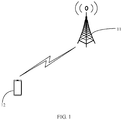
- FIG. 1 is a schematic diagram of an application scenario according to an embodiment of this application.
- a communications system shown in FIG. 1 mainly includes a network device 11 and a terminal 12.
- the communications system may further include more terminals 12 that communicate with the network device 11.
- the terminals 12 are not described in the accompanying drawings one by one.
- the network device 11 and the terminal 12 are shown in the communications system shown in FIG. 1 , the communications system may not be limited to including the network device 11 and the terminal 12.
- the communications system may further include a core network node or a device configured to carry a virtualized network function. This is obvious to a person skilled in the art, and details are not described herein.
- the embodiments of this application may not only be applied to a next-generation wireless communications system, namely, the 5G communications system, but to another system that may appear in the future, such as a next-generation Wi-Fi network and a 5G internet of vehicles.
- a radio resource control (Radio Resource Control, RRC) connection between the terminal and a network device is disconnected, and there is no continuous data transmission between the terminal and the network device.
- RRC Radio Resource Control
- the inactive state is a radio resource control (Radio Resource Control, RRC) state, and is also referred to as an RRC inactive state.
- a difference between the inactive state and the idle state lies in that when the terminal is in the inactive state, the terminal and an access network device store a context of the terminal, and the access network device sends information about a radio access network notification area (RAN Notification Area, RNA) to the terminal.
- RNA radio access network notification area
- an access network device that configures the terminal to enter the inactive state and stores the context of the terminal is a source network device or an anchor (anchor) network device.
- the terminal may be located in the RNA for a long time, or may move out of the RNA.
- the terminal does not send a radio access network notification area update (RNA Update, RNAU) notification message to the source network device for a change of a serving cell.
- RNA Update radio access network notification area update
- the terminal sends an RNAU notification message to a network device of a serving cell in which the terminal is currently located, to notify the network device that the terminal moves out of the originally configured RNA.
- a network device or a core network node determines, in a timely manner, that the terminal moves out of the RNA allocated by the source base station to the terminal.
- a paging area may be better determined, thereby saving signaling overheads.
- the source network device sends configuration information to the terminal that enters the inactive state, where the configuration information includes information used to indicate the terminal to periodically send an RNAU notification message, so that when the terminal moves in the RNA, the terminal may periodically send the RNAU notification message to the source network device.
- the periodic RNAU notification message may ensure that a status of the terminal recorded by the source network device is consistent with an actual status of the terminal.
- the information that is about the RNA and that is sent by the source network device to the terminal may include the following several possible forms.
- the information about the RNA is cell information.
- the cell information includes identification information of at least one cell, and the identification information of the at least one cell constitutes a cell list.
- identification information of a cell may specifically include at least one of a cell global identifier (Cell Global Identifier, CGI), a physical cell identifier (Physical Cell Identifier, PCI), and a cell identifier (cell identifier) of the cell.
- CGI Cell Global Identifier
- PCI Physical Cell Identifier
- cell identifier cell identifier
- the information about the RNA is RAN area information.
- the RAN area information includes at least one radio access network (Radio Access Network, RAN) area (area) identity (Identity, ID), and the at least one RAN area ID constitutes a RAN area ID list.
- a RAN area ID may include a tracking area identity (Tracking Area Identity, TAI) and a RAN area code (RAN Area Code, RANAC), or the RAN area ID includes only the RANAC.
- An area identified by the RANAC includes one or more cells.
- the RANAC is unique within a TAI range.
- the information about the RNA is tracking area information.
- the tracking area information includes at least one tracking area identity (Tracking Area Identity, TAI), and the at least one TAI constitutes a TAI list.
- TAI may include a PLMN identifier and a tracking area code (Tracking Area Code, TAC), or the TAI includes only the tracking area code.
- Both the RAN area ID and the TAI are area identification information of a cell.
- a difference lies in that the RAN area ID is perceived by an access network and the TAI is perceived by a core network.
- a tracking area includes one or more cells, and a RAN area may also include one or more cells.
- a range of the RAN area is less than that of the tracking area TA.
- the information that is about the RNA and that is sent by the source network device to the terminal may include at least one RAN area ID or at least one TAI.
- the information about the RNA includes at least one RAN area ID.
- a tracking area TA 20 includes a plurality of cells, for example, a cell 0, a cell 1, a cell 2, a cell 3, a cell 4, a cell 5, a cell 6, a cell 7, and a cell 8.
- the cell 0 is a cell of a source base station, namely, a cell corresponding to the source base station.
- the source base station may send information about an RNA to the terminal, where the information about the RNA includes at least one RAN area ID, and the at least one RAN area ID may constitute a RAN area ID list.
- the cell 1, the cell 2, the cell 3, the cell 4, and the cell 5 are adjacent cells of the cell of the source base station, and the cell 6, the cell 7, and the cell 8 are non-adjacent cells of the cell of the source base station.
- RAN area IDs respectively corresponding to the cell 1, the cell 2, the cell 3, and the cell 4 are 10, a RAN area ID corresponding to the cell 5 is 4, RAN area IDs respectively corresponding to the cell 6 and the cell 7 are 10, a RAN area ID corresponding to the cell 8 is 4, and a RAN area ID corresponding to the cell of the source base station is 10.
- There is a direct Xn interface between the source base station and a base station of an adjacent cell and the source base station may obtain, through the Xn interface, a RAN area ID corresponding to the adjacent cell.
- the information that is about the RNA and that is sent by the source base station to the terminal based on RAN area IDs corresponding to adjacent cells include the RAN area ID 10 and the RAN area ID 4, and the RAN area ID 10 and the RAN area ID 4 constitute a RAN area ID list.
- the terminal when the terminal moves to a range shown in a solid-line area 22 in FIG. 2 , because RAN area IDs respectively corresponding to the cell 6, the cell 7, and the cell 8 in the range shown in the solid-line area 22 are in the RAN area ID list sent by the source base station to the terminal, the terminal considers that the terminal does not move out of the RNA allocated by the source base station to the terminal, and therefore the terminal does not send an RNAU notification message to a base station of a serving cell in which the terminal is currently located.
- the terminal moves to the cell 6. Because the RAN area ID of the cell 6 is 10, the RAN area ID of the cell 6 is in the RAN area ID list sent by the source base station to the terminal. Similarly, when the terminal moves to the cell 8, because the RAN area ID of the cell 8 is 4, the RAN area ID of the cell 8 is in the RAN area ID list sent by the source base station to the terminal. To be specific, when the terminal moves to the range shown in the solid-line area 22, the terminal considers that the terminal does not move out of the RNA allocated by the source base station to the terminal, and therefore the terminal does not send the RNAU notification message.
- this application provides a communication method, to improve a success rate of paging the terminal.
- the following describes the communication method in combination with a specific application scenario.
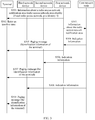
- FIG. 3 is a schematic diagram of a communication method according to this application.
- the communication method described in this embodiment is applicable to the application scenario shown in FIG. 2 .
- a first network device may be a source base station that configures a terminal to enter an inactive state.
- a second network device may be specifically a base station that has a direct interface such as an Xn interface to the source base station.
- the second network device may be specifically a base station corresponding to at least one of the cell 1, the cell 2, the cell 3, the cell 4, and the cell 5 that are adjacent to the cell of the source base station.
- a third network device may be specifically a base station that does not have a direct interface to the source base station.
- the third network device may be specifically a base station corresponding to at least one of the cell 6, the cell 7, and the cell 8 that are not adjacent to the cell of the source base station.
- the communication method specifically includes the following steps.
- Step S301 The first network device sends information about a radio access network notification area RNA to the terminal, where the information about the RNA includes a RAN area identity 10 and a RAN area identity 4.
- the information about the RNA configured by the first network device for the terminal in the inactive state is RAN area information.
- the RAN area information may include, for example, the RAN area identity 10 and the RAN area identity 4.
- Step S302 The terminal enters the inactive state.
- the terminal After receiving the information that is about the RNA and that is sent by the first network device, the terminal enters the inactive state.
- Step S303 The first network device sends the information about the RNA to a core network node.
- the first network device sends the information about the RNA to the core network node after allocating the RNA to the terminal in the inactive state.
- the first network device may also send the information about the RNA to the core network node when the terminal in the inactive state cannot be paged.
- the first network device sends the information about the RNA to the core network node after allocating the RNA to the terminal in the inactive state is used as an example.
- the core network node determines, based on the RAN area identity 10 included in the information about the RNA, at least one cell corresponding to the RAN area identity 10, and determines, based on the RAN area identity 4 included in the information about the RNA, at least one cell corresponding to the RAN area identity 4.
- the core network node may determine, based on identification information of a cell and identification information of a RAN area to which the cell belongs, a network device of a cell corresponding to the RAN area identity 10 and a network device of a cell corresponding to the RAN area identity 4. For example, the core network node determines, based on a correspondence shown in the following Table 1, a network device that pages the terminal. It may be understood that the core network node may determine, as network devices that page the terminal, all network devices of cells corresponding to the RAN area identity 10 and the RAN area identity 4, or may determine, as network devices that page the terminal, some network devices of cells corresponding to the RAN area identity 10 and the RAN area identity 4. In a possible manner, the some network devices may be, for example, network devices in all the network devices of the cells corresponding to the RAN area identity 10 and the RAN area identity 4 other than a network device that fails to page the terminal.
- the first network device may send, to the core network node, identification information of the network device that fails to page the terminal, so that the core network node learns of the network device that fails to page the terminal, and indicates, to page the terminal, a network device in network devices corresponding to the cell corresponding to the RAN area other than the network device that fails to page the terminal, so as to prevent, from repeatedly paging the terminal, the network device that fails in paging, thereby reducing unnecessary paging overheads and saving network resources.
- the first network device may further send, to the core network node, the identification information of the network device that fails to page the terminal.
- the correspondence shown in Table 1 may be determined by the core network node by using identification information of a cell and RAN area ID information corresponding to the cell, where the identification information of the cell and the RAN area ID information corresponding to the cell are received from a network device.
- the network device is not limited to the first network device, the second network device, and the third network device, and the network device may be further another network device other than the first network device, the second network device, and the third network device.
- the core network node determines, based on the correspondence shown in Table 1, that cells corresponding to the RAN area identity 10 includes a cell 0, a cell 1, a cell 2, a cell 3, a cell 4, a cell 6, and a cell 7, and cells corresponding to the RAN area identity 4 includes a cell 5 and a cell 8.
- There are direct interfaces between the source base station and base stations corresponding to the cell 1, the cell 2, the cell 3, the cell 4, and the cell 5, and the base stations corresponding to the cell 1, the cell 2, the cell 3, the cell 4, and the cell 5 may be referred to as second network devices in this embodiment.
- the core network node may indicate all network devices or some network devices in the first network device, the second network device, and the third network device to page the terminal. For a manner of indicating the first network device, the second network device, and the third network device to page the terminal, refer to steps S304 and S305, S306 and S307, and S308 and S309.
- Step S304 The core network node sends indication information to the first network device.
- Step S305 The first network device sends a paging message for paging the terminal, where the paging message includes identification information of the terminal.
- Step S306 The core network node sends indication information to the second network device.
- Step S307 The second network device sends a paging message for paging the terminal, where the paging message includes identification information of the terminal.
- Step S308 The core network node sends indication information to the third network device.
- Step S309 The third network device sends a paging message for paging the terminal, where the paging message includes identification information of the terminal.
- the core network node separately sends indication information to the first network device, the second network device, and the third network device, to separately indicate the first network device, the second network device, and the third network device to send paging messages for paging the terminal.
- the indication information may be used to indicate the first network device, the second network device, and the third network device to send first paging messages, for example, paging messages triggered by a RAN (RAN based paging).
- the indication information may also be used to indicate the first network device, the second network device, and the third network device to send second paging messages, for example, paging messages triggered by a core network (Core Network, CN) (CN based paging).
- Core Network CN
- the indication information is described based on a function, and the indication information may be an explicit indication, an implicit message name, or an information element indication.
- the first network device, the second network device, and the third network device After receiving the indication information from the core network node, the first network device, the second network device, and the third network device send the corresponding paging messages based on an indication of the indication information. If the paging message is the RAN based paging, the RAN based paging includes first identification information of the terminal. The first identification information may uniquely identify the terminal in the RNA. If the paging message is the CN based paging, the CN based paging includes second identification information of the terminal.
- the second identification information of the terminal may be any one of a system architecture evolution-temporary mobile subscriber identity (System Architecture-Temporary Mobile Subscriber Identity, S-TMSI) corresponding to the terminal, an international mobile subscriber identity (International Mobile Subscriber Identity, IMSI) corresponding to the terminal, or identification information that is determined based on the S-TMSI or the IMSI and that is corresponding to the terminal.
- S-TMSI System Architecture-Temporary Mobile Subscriber Identity
- IMSI International Mobile Subscriber Identity
- step S304, step S306, and step S308 is not limited in this embodiment, and an execution sequence of step S305, step S307, and step S309 is not limited. It may be understood that, when the core network device indicates some network devices (for example, the third network device) to page the terminal, S304 to S307 may not be performed.
- the core network node may add the second identification information of the terminal to the indication information.
- the first network device, the second network device, and the third network device respectively send, based on the indication information, the second paging messages for paging the terminal.
- the second paging messages include the second identification information of the terminal.
- descriptions in step S304 to step S309 in this embodiment of this application may be a possible procedure after a procedure in which the first network device sends the information about the RNA to the core network node and the core network node receives, from another network element, downlink data or signaling corresponding to the terminal.
- descriptions in step S303 to step S309 in this embodiment of this application may be a possible procedure after a procedure in which after the first network device allocates the RNA to the terminal in the inactive state, the first network device receives, from the core network node, downlink data or signaling corresponding to the terminal and fails to page the terminal. This is not limited in this embodiment of this application.
- this embodiment is described by using an example in which the information that is about the RNA and that is sent by the source base station to the terminal is the RAN area information.
- This embodiment is further applicable to a scenario in which the information about the RNA is tracking area information or a scenario in which the information about the RNA is other configuration.
- a specific implementation is similar to the implementation of the embodiment shown in FIG. 3 , and details are not described herein again.
- the first network device sends, to the core network node, the information about the RNA allocated by the first network device to the terminal in the inactive state, where the information about the RNA may include at least one radio access network RAN area identity.
- the core network node determines a cell corresponding to the RAN area identity, and indicates a network device of the corresponding cell to page the terminal, so as to avoid a case in which the terminal cannot be paged when the terminal in the inactive state moves out of the RNA configured by the first network device for the terminal, so that downlink signaling or data of the terminal can be sent to the terminal in a timely manner, thereby improving service experience of the terminal.
- the first network device may further send the identification information of the terminal to the core network node, where the identification information of the terminal may be the first identification information or the second identification information.
- the identification information of the terminal may be the first identification information or the second identification information.
- FIG. 3 is used as an example.
- the first network device may send the information about the RNA and the first identification information of the terminal to the core network node.
- the indication information sent by the core network node to the first network device is used to indicate the first network device to send the first paging message, such as the RAN based paging, for paging the terminal.
- the paging message sent by the first network device is specifically the RAN based paging, and the RAN based paging includes the first identification information of the terminal.
- Step S306 to step S309 are similar to this, and details are not described herein again.
- the first network device may send the information about the RNA and the second identification information of the terminal to the core network node.
- the indication information sent by the core network node to the first network device is used to indicate the first network device to send the second paging message, such as the CN based paging, for paging the terminal.
- the paging message sent by the first network device is specifically the CN based paging, and the CN based paging includes the first identification information of the terminal.
- Step S306 to step S309 are similar to this, and details are not described herein again.
- the first network device sends the first identification information or the second identification information of the terminal to the core network node
- the core network node may indicate the network device to send the first paging message or the second paging message for paging the terminal, thereby improving flexibility of paging the terminal by the network device.
- the first network device may further send, to the core network node, a period in which the terminal listens to the first paging message or a sending period of the first paging message.
- the first network device may send the information about the RNA, the first identification information of the terminal, and the paging configuration information to the core network node.
- the indication information sent by the core network node to the second network device and the third network device is specifically first indication information, and the first indication information includes the first identification information of the terminal and the paging configuration information.
- the second network device and the third network device may send, based on the paging configuration information, first paging messages to the terminal within the period in which the terminal listens to the first paging message, so that the terminal can normally receive the first paging messages, thereby improving a success rate of paging the terminal.
- the core network node may further send second indication information to a network device in a tracking area allocated by the core network node to the terminal, where the second indication information is used to indicate, to send a second paging message for paging the terminal, the network device in the tracking area allocated by the core network node to the terminal.
- the base station can page the terminal in a larger range, thereby further improving a success rate of paging the terminal.
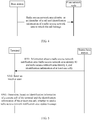
- the following describes a method for establishing, by a core network node, a correspondence between an identifier of a cell and an identity of a RAN area to which the cell belongs.
- the method includes the following several feasible implementations.
- a base station sends a RAN area identity and identification information of a cell to a core network node.
- the RAN area identity is an identity of a RAN area to which a cell corresponding to the base station belongs.
- the core network node establishes a correspondence between an identifier of the cell and the RAN area identity based on the cell corresponding to the base station.
- the base station is corresponding to one cell, and the base station sends, to the core network node, a RAN area identity corresponding to the cell.
- the base station is corresponding to a plurality of cells, RAN areas to which all of the plurality of cells belong have a same identity, in other words, the plurality of cells are corresponding to the same RAN area ID, and the base station sends, to the core network node, the RAN area ID corresponding to the plurality of cells.
- the core network node establishes a correspondence between the RAN area ID and an identifier of each of the plurality of cells.
- a base station sends, to a core network node, identification information of a cell and identification information of a RAN area to which the cell belongs.
- the base station may be corresponding to a plurality of cells, and RAN areas to which all of the plurality of cells belong have different identities, in other words, the plurality of cells are corresponding to different RAN area IDs.
- the base station is corresponding to a cell 1 and a cell 2, a RAN area ID corresponding to the cell 1 is 1, and a RAN area ID corresponding to the cell 2 is 2.
- the base station sends identification information of the cell 1 and the RAN area ID 1, and identification information of the cell 2 and the RAN area ID 2 to the core network node. It may be understood that the plurality of cells corresponding to the base station may belong to a same RAN area. This is not limited in this embodiment of this application.
- the base station may be corresponding to one cell 1.
- the cell may belong to different RAN areas, in other words, the cell is corresponding to a plurality of different RAN area IDs.
- the cell is corresponding to a RAN area ID 1 and a RAN area ID 2, and the base station sends identification information 1 of the cell, the RAN area ID 1, and the RAN area ID 2 to the core network node.
- the base station sends the identification information 1 of the cell and the RAN area ID 1, and the identification information 1 of the cell and the RAN area ID 2 to the core network node.
- the base station in this embodiment may be the first network device, the second network device, or the third network device in the foregoing embodiment, or may be another network device. This is not specifically limited in this embodiment.
- this embodiment is described by using an example in which information that is about an RNA and that is sent by a source base station to a terminal is RAN area information. This embodiment is further applicable to a scenario in which the information about the RNA is tracking area information or a scenario in which the information about the RNA is other configuration.
- the base station may add any one of the following information to an interface establishment request message or a base station configuration update message sent to the core network node: a RAN area identity, identification information of a cell, identification information of a RAN area to which the cell belongs, a tracking area identity, identification information of a cell, and identification information of a tracking area of the cell.
- the method for establishing, by a core network node, a correspondence between an identifier of a cell and an identity of a RAN area to which the cell belongs in the foregoing embodiment is applicable to the method embodiment shown in FIG. 3 , or may be independent of the method embodiment shown in FIG. 3 , and is applicable to another scenario in which the correspondence may be applied. This is not limited in this embodiment of this application.
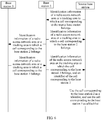
- FIG. 5 is a schematic diagram of another communication method according to this application. As shown in FIG. 5 , the communication method may include the following steps.
- Step S501 A source base station sends information about an RNA and identification information of at least one cell to a terminal.
- the information that is about the RNA and that is sent by the source base station to the terminal is RAN area information.
- the RAN area information includes a RAN area identity 10 and a RAN area identity 4.
- the source base station further sends the identification information of the at least one cell to the terminal, where identification information of a radio access network area to which each of the at least one cell belongs belongs to identification information, of at least one radio access network area, that is included in the information about the RNA.
- a PLMN identifier of each of the at least one cell belongs to a PLMN identifier of at least one cell in the RNA.
- the identification information, of the at least one cell, that is sent by the source base station to the terminal is identification information of the cell 1, the cell 2, the cell 3, the cell 4, and the cell 5 shown in FIG. 2 .
- RAN area IDs corresponding to the cell 1, the cell 2, the cell 3, and the cell 4 are 10, and the RAN area ID 10 belongs to the RAN area identity 10 and the RAN area identity 4 that are included in the information that is about the RNA and that is sent by the source base station to the terminal.
- a RAN area ID 4 corresponding to the cell 5 also belongs to the RAN area identity 10 and the RAN area identity 4 that are included in the information that is about the RNA and that is sent by the source base station to the terminal.
- a list including the identification information of the cell 1, the cell 2, the cell 3, the cell 4, and the cell 5 is referred to as a whitelist.
- a cell in the whitelist may be an adjacent cell of a cell corresponding to the source base station.
- a base station corresponding to the cell in the whitelist has a direct interface, such as an Xn interface, to the source base station.
- the identification information, of the at least one cell, that is sent by the source base station to the terminal is identification information of the cell 6, the cell 7, and the cell 8 shown in FIG. 2 .
- RAN area IDs corresponding to the cell 6 and the cell 7 are 10, and the RAN area ID 10 belongs to the RAN area identity 10 and the RAN area identity 4 that are included in the information that is about the RNA and that is sent by the source base station to the terminal.
- a RAN area ID 4 corresponding to the cell 8 also belongs to the RAN area identity 10 and the RAN area identity 4 that are included in the information that is about the RNA and that is sent by the source base station to the terminal.
- a list including the identification information of the cell 6, the cell 7, and the cell 8 is referred to as a blacklist.
- a cell in the blacklist is a non-adjacent cell of a cell corresponding to the source base station.
- a base station corresponding to the cell in the blacklist does not have a direct interface, such as an Xn interface, to the source base station.
- identification information of a cell may be a cell global identifier (Cell Global Identifier, CGI), and the CGI is used to uniquely identify the cell.
- identification information of a cell may be a cell identifier, and the cell identifier is used to uniquely identify the cell in a PLMN.
- identification information of a cell may be a physical cell identifier (Physical Cell Identifier, PCI) and a frequency channel number. If a cell is identified by using a cell identifier or PCI and a frequency channel number, the cell may be uniquely identified with reference to a RAN area ID corresponding to the cell, in other words, the cell is uniquely identified by using the PCI, the frequency channel number, and the RAN area ID.
- PCI Physical Cell Identifier
- Step S502 The terminal enters an inactive state.
- the terminal After receiving the information about the RNA and the identification information of the at least one cell from the source base station, the terminal enters the inactive state.
- Step S503 The terminal determines, based on identification information of a current cell of the terminal and the identification information of the at least one cell, whether to send an RNAU notification message.
- the terminal in the inactive state may move in cells corresponding to the RAN area ID 10 and the RAN area ID 4, or may move out of the cells corresponding to the RAN area ID 10 and the RAN area ID 4.
- the identification information of a radio access network area to which the current cell of the terminal belongs belongs to the identification information, of the at least one radio access network area, that is included in the information that is about the RNA and that is sent by the source base station to the terminal
- the identification information of the radio access network area to which the current cell of the terminal belongs is the RAN area ID 10
- the RAN area ID 10 belongs to the identification information, of the at least one radio access network area, that is included in the information that is about the RNA and that is sent by the source base station to the terminal.
- the identification information of the radio access network area to which the current cell of the terminal belongs is the RAN area ID 10, and the RAN area ID 10 is the same as the RAN area ID 10 in the information about the RNA configured by the source base station for the terminal.
- the current cell may be one of the cell 1, the cell 2, the cell 3, the cell 4, the cell 6, and the cell 7. If the identification information of the radio access network area to which the current cell of the terminal belongs is the RAN area ID 4, the current cell may be the cell 5 or the cell 8.
- That the terminal determines, based on identification information of a current cell of the terminal and the identification information of the at least one cell, whether to send an RNAU notification message includes the following several possible cases.
- the at least one cell is used to indicate the terminal to camp on any one of cells corresponding to the identification information of the at least one cell, and send the RNAU notification message to a base station of the cell on which the terminal currently camps.
- the at least one cell is a non-adjacent cell of the cell corresponding to the source base station.
- the identification information, of the at least one cell, that is sent by the source base station to the terminal is the identification information of the cell 6, the cell 7, and the cell 8.
- the cell 6, the cell 7, and the cell 8 are non-adjacent cells of the cell corresponding to the source base station.
- the source base station sends the blacklist to the terminal in this case. In this case, if identification information of the cell on which the terminal currently camps is the same as identification information of a cell in the blacklist, the terminal sends the RNAU notification message to the base station of the cell on which the terminal currently camps.
- the terminal camps on the cell 6, the RAN area ID corresponding to the cell 6 is 10, and the RAN area ID 10 belongs to the identification information, of the at least one radio access network area, that is included in the information that is about the RNA and that is sent by the source base station to the terminal.
- the RAN area ID 10 corresponding to the cell 6 is the same as the RAN area ID 10 in the information about the RNA configured by the source base station for the terminal.
- the identification information, of the at least one cell, that is received by the terminal is the cell 6, the cell 7, and the cell 8, in other words, the identification information of the cell 6 is in the blacklist. Therefore, the terminal sends the RNAU notification message to a base station corresponding to the cell 6, so that a network device or a core network node determines location information of the terminal.
- the identification information of the at least one cell is used to indicate the terminal to camp on any cell other than cells corresponding to the identification information of the at least one cell, and send the RNAU notification message to a base station of the cell on which the terminal currently camps.
- the at least one cell may be an adjacent cell of the cell corresponding to the source base station.
- the identification information, of the at least one cell, that is sent by the source base station to the terminal is the identification information of the cell 1, the cell 2, the cell 3, the cell 4, and the cell 5.
- the cell 1, the cell 2, the cell 3, the cell 4, and the cell 5 are adjacent cells of the cell corresponding to the source base station.
- the source base station sends the whitelist to the terminal in this case.
- the terminal sends the RNAU notification message to the base station of the cell on which the terminal currently camps.
- the terminal camps on the cell 6, the RAN area ID corresponding to the cell 6 is 10, and the RAN area ID 10 belongs to the identification information, of the at least one radio access network area, that is included in the information that is about the RNA and that is sent by the source base station to the terminal.
- the RAN area ID 10 corresponding to the cell 6 is the same as the RAN area ID 10 in the information about the RNA configured by the source base station for the terminal.
- the identification information, of the at least one cell, that is received by the terminal is the cell 1, the cell 2, the cell 3, the cell 4, and the cell 5, in other words, the identification information of the cell 6 is not in the whitelist. Therefore, the terminal sends the RNAU notification message to a base station corresponding to the cell 6, so that a network device or a core network node determines location information of the terminal.
- the terminal sends the RNAU notification message to a network device of the current cell.
- whether the identification information, of the at least one cell, that is sent by the source base station to the terminal is the whitelist or the blacklist may be agreed on in advance by using a communications protocol.
- the source base station may further send indication information to the terminal, where the indication information is used to indicate whether the identification information, of the at least one cell, that is sent by the source base station to the terminal is the whitelist or the blacklist.
- the source base station may simultaneously send the indication information and the identification information of the at least one cell to the terminal, or may successively send the indication information and the identification information of the at least one cell to the terminal.
- this embodiment is described by using an example in which the information that is about the RNA and that is sent by the source base station to the terminal is the RAN area information. This embodiment is further applicable to a scenario in which the information about the RNA is tracking area information or a scenario in which the information about the RNA is other configuration. A specific implementation is similar to the implementation of the embodiment shown in FIG. 5 , and details are not described herein again.
- the source base station sends the information about the RNA and the identification information of the at least one cell to the terminal.
- the identification information of the at least one cell may constitute the whitelist or the blacklist.
- the terminal enters a cell in the blacklist or leaves a cell in the whitelist, the terminal sends the RNAU notification message to a base station in a current cell, so that the network device or the core network node determines location information of the terminal, and when downlink data or signaling arrives, the network device or the core network node can successfully page the terminal.
- the identification information, of the at least one radio access network area, that is included in the information that is about the RNA and that is sent by the source base station to the terminal in the foregoing embodiment is referred to as identification information of at least one first radio access network area
- the identification information, of the at least one radio access network area, that is sent by the core network node to the source base station in the subsequent embodiment is referred to as identification information of at least one second radio access network area.
- identification information, of at least one tracking area, that is included in the information that is about the RNA and that is sent by the source base station to the terminal in the foregoing embodiment is referred to as identification information of at least one first tracking area
- identification information, of at least one tracking area, that is sent by the core network node to the source base station in the subsequent embodiment is referred to as identification information of at least one second tracking area.
- the source base station may determine, by using the following several feasible implementations, the identification information, of the at least one cell, that is sent to the terminal.
- the source base station receives, from the core network node, the identification information of the at least one second radio access network area and identification information of a cell corresponding to identification information of each of the at least one second radio access network area, and determines the identification information of the at least one cell based on the identification information of the at least one second radio access network area and the identification information of the cell corresponding to the identification information of each of the at least one second radio access network area.
- the core network node may further send, to the source base station, identification information of a base station of the cell corresponding to each second radio access network area.
- the source base station may determine, based on the identification information of the base station, whether there is a direct interface between the source base station and the base station.
- the direct interface may be an original interface, or may be an interface newly established by the source base station based on the identification information of the base station.
- identification information of a second radio access network area may be the same as or different from identification information of a first radio access network area.
- the core network node receives, in a manner shown in FIG. 4 , an identifier of a cell corresponding to a base station and identification information of a RAN area to which the cell belongs.
- the base station may be a base station corresponding to the cell 0, the cell 1, the cell 2, the cell 3, the cell 4, or the cell 5, or may be a base station corresponding to the cell 6, the cell 7, or the cell 8.
- the core network node may determine, based on cell identifiers respectively corresponding to the cell 0, the cell 1, the cell 2, the cell 3, the cell 4, the cell 6, and the cell 7 and RAN area IDs respectively corresponding to the cell 0, the cell 1, the cell 2, the cell 3, the cell 4, the cell 6, and the cell 7, the RAN area ID 10 and identification information of cells corresponding to the RAN area ID 10.
- the core network node may determine the RAN area ID 4 and identification information of cells corresponding to the RAN area ID 4.
- the base station may be further a base station of another cell, and a RAN area ID corresponding to the another cell is, for example, 3.
- the core network node may further determine the RAN area ID 3 and identification information of a cell corresponding to the RAN area ID 3.
- the core network node sends, to the source base station, the RAN area ID 10, the identification information of the cells corresponding to the RAN area ID 10, the RAN area ID 4, and the identification information of the cells corresponding to the RAN area ID 4.
- the core network node sends ⁇ RAN area ID 10; cell 1, cell 2, cell 3, cell 4, cell 6, and cell 7 ⁇ and ⁇ RAN area ID 4; cell 5 and cell 8 ⁇ to the source base station.
- the source base station determines, based on the RAN area ID 10, the identification information of the cells corresponding to the RAN area ID 10, the RAN area ID 4, and the identification information of the cells corresponding to the RAN area ID 4, that there are no direct interfaces between the source base station and base stations corresponding to the cell 6, the cell 7, and the cell 8, and the source base station may use the cell 6, the cell 7, and the cell 8 as the blacklist.
- the source base station uses the cell 0, the cell 1, the cell 2, the cell 3, the cell 4, and the cell 5 as the whitelist.
- the core network node may further send identification information of base stations corresponding to the foregoing cells to the source base station.
- each base station is corresponding to only one cell, and identification information of the base station is corresponding to identification information of the cell.
- identification information of the source base station is 0, and identification information of the cell 0 corresponding to the source base station is 0.
- the core network node sends ⁇ RAN area ID 10; (base station 1, cell 1), (base station 2, cell 2), (base station 3, cell 3), (base station 4, cell 4), (base station 6, cell 6), (base station 7, cell 7) ⁇ , and ⁇ RAN area ID 4; (base station 5, cell 5) and (base station 8, cell 8) ⁇ to the source base station.
- the source base station determines, based on RAN area IDs, identification information of cells, and identification information of base stations that are received from the core network node, that there are no direct interfaces between the source base station and the base station 6, the base station 7, and the base station 8, and the source base station may use the cell 6, the cell 7, and the cell 8 as the blacklist.
- the source base station uses the cell 0, the cell 1, the cell 2, the cell 3, the cell 4, and the cell 5 as the whitelist.
- the core network node may receive RAN area ID information sent by a base station. Based on a request of the base station, the core network node selectively sends a corresponding RAN area ID and identication information of a cell corresponding to the RAN area ID, thereby reducing signaling overheads between the base station and the core network node. For example, in this embodiment, if the source base station sends the RAN area ID 10 to the core network node, the core network node sends only the RAN area ID 10 and the identification information of the cells corresponding to the RAN area ID 10 to the source base station.
- the identification information of the at least one second radio access network area and the identification information of the cell corresponding to the identification information of each of the at least one second radio access network area that are sent by the core network node to the source base station may be included in at least one type of signaling: an initial context setup request (INITIAL CONTEXT SETUP REQUEST), a terminal context modification request (UE CONTEXT MODIFICATION REQUEST), and a path switch request response (PATH SWITCH REQUEST ACKNOWLEDGE).
- the signaling is not limited to the foregoing signaling.
- this embodiment is described by using an example in which the source base station receives, from the core network node, the identification information of the at least one second radio access network area and the identification information of the cell corresponding to the identification information of each of the at least one second radio access network area.
- this embodiment is further applicable to a scenario in which the source base station receives, from the core network node, the identification information of the at least one second tracking area and identification information of a cell corresponding to each of the at least one second tracking area, and determines the identification information of the at least one cell based on the identification information of the at least one second tracking area and the identification information of the cell corresponding to each of the at least one second tracking area.
- a specific implementation is similar to the implementation of this embodiment, and details are not described herein again.
- the source base station receives, from a second network device, identification information of a cell corresponding to the second network device and identification information of a radio access network area or a tracking area to which the cell belongs.
- the source base station may further receive, from a second network device, identification information of the second network device, and/or the source base station receives, from a second network device, identification information of a cell corresponding to a third network device and identification information of a radio access network area or a tracking area to which the cell belongs.
- the source base station may further receive identification information of the third network device.
- the identification information of the third network device and the identification information of the radio access network area or the tracking area to which the cell corresponding to the third network device belongs may be directly received by the second network device from the third network device, or may be indirectly obtained from another network device. This is not limited in this embodiment of this application.
- the source base station 1 and the base station 2 may exchange, through the Xn interface, identification information of RAN areas or TAs to which cells corresponding to the source base station 1 and the base station 2 belong.
- the source base station 1 may send, to the base station 2 through the Xn interface, identification information of a RAN area or a TA to which a cell corresponding to the source base station 1 belongs, and the base station 2 may send, to the source base station 1 through the Xn interface, identification information of a RAN area or a TA to which a cell corresponding to the base station 2 belongs.
- the base station 2 and the base station 3 may exchange, through the Xn interface, identification information of RAN areas or TAs to which cells corresponding to base station 2 and the base station 3 belong.
- the base station 2 may further send, to the source base station 1, identification information of a RAN area or a TA to which a cell corresponding to the base station 3 belongs.
- the base station 2 may further send, to the base station 3, the identification information of the RAN area or the TA to which the cell corresponding to the base station 1 belongs.
- the identification information of the RAN area to which the cell 1 corresponding to the source base station 1 belongs is a RAN area ID 10
- the source base station 1 determines that the identification information of the RAN area to which the cell 2 corresponding to the base station 2 belongs is the RAN area ID 10 and that the identification information of the RAN area to which the cell 3 corresponding to the base station 3 belongs is the RAN area ID 10.
- the source base station 1 determines, based on identification information of the base station 3, that there is no direct Xn interface between the source base station 1 and the base station 3.
- identification information of the cell 3 corresponding to the base station 3 may be used as a blacklist, or identification information of the cell 2 corresponding to the base station 2 may be used as a whitelist.
- this embodiment is described by using an example in which the information that is about the RNA and that is sent by the source base station to the terminal is RAN area information. This embodiment is further applicable to a scenario in which the information about the RNA is tracking area information or a scenario in which the information about the RNA is other configuration. A specific implementation is consistent with the implementation of the embodiment shown in FIG. 6 , and details are not described herein again.
- the base station A in a process in which one base station (base station A) sends a RAN area identity or identification information of a TA to another base station (base station B), the base station A also sends identification information of the base station A to the base station B.
- the base station 2 may not only send, to the source base station 1 through the Xn interface, the identification information of the RAN area or the TA to which the cell corresponding to the base station 2 belongs, but also send identification information of the base station 2 to the source base station 1.
- the source base station sends the information about the RNA and the identification information of at least one cell to the terminal, and the RNAU notification message is sent and notified to the network device or the core network node in a timely manner based on a current location of the terminal, so that the network device or the core network node can find the terminal when downlink data or signaling arrives.
- an operation or step implemented by a terminal may also be implemented by a component (such as a chip or a circuit) that may be used for the terminal
- an operation or step implemented by a core network node may also be implemented by a component (such as a chip or a circuit) that may be used for the core network node
- an operation or step implemented by a network device such as a first network device, a second network device, and a third network device
- a component such as a chip or a circuit
- FIG. 7 is a schematic structural diagram of a communications apparatus.
- the communications apparatus may be configured to implement a method corresponding to a network device (for example, a first network device, a second network device, or a third network device), a method corresponding to a terminal, or a method corresponding to a core network node in the foregoing method embodiments.
- a network device for example, a first network device, a second network device, or a third network device
- a method corresponding to a terminal for example, a first network device, a second network device, or a third network device
- a core network node for example, a core network node
- a communications apparatus 70 may include one or more processors 71.
- the processor 71 may also be referred to as a processing unit, and can implement a specific control function.
- the processor 71 may be a general-purpose processor, a dedicated processor, or the like.
- the processor 71 may also store an instruction 73, and the instruction may be run by the processor, so that the communications apparatus 70 performs the method that is corresponding to the terminal, the network device, or the core network node and that is described in the foregoing method embodiments.
- the communications apparatus 70 may include a circuit.
- the circuit may be used to implement a transmitting function, a receiving function, or a communication function in the foregoing method embodiments.
- the communications apparatus 70 may include one or more memories 72.
- the memory 72 stores an instruction 74 or intermediate data.
- the instruction 74 may be run by the processor, so that the communications apparatus 70 performs the methods described in the foregoing method embodiments.
- the memory may further store other related data.
- the processor may also store an instruction and/or data.
- the processor and the memory may be disposed separately, or may be integrated together.
- the communications apparatus 70 may further include a transceiver 75.
- the processor 71 may be referred to as the processing unit.
- the transceiver 75 may be referred to as a transceiver unit, a transceiver, a transceiver circuit, a transceiver, or the like, and is configured to implement a transmitting and receiving function of the communications apparatus.
- the transceiver may receive, from a first network device, information that is about a radio access network notification area RNA and that is sent by the first network device to a terminal, and indicate, to page the terminal, a network device of a cell corresponding to a radio access network area or a tracking area identified by the identification information.
- the transceiver may further complete another corresponding communication function.
- the processor is configured to complete a corresponding determining or control operation.
- a corresponding instruction may be further stored in the memory.
- the transceiver of the first network device may send information about a radio access network notification area RNA to a terminal, and send the information about the RNA to a core network node.
- the transceiver may further complete another corresponding communication function.
- the processor is configured to complete a corresponding determining or control operation.
- a corresponding instruction may be further stored in the memory.
- the processor is configured to determine information that is about a radio access network notification area RNA and that is to be sent to a terminal, and the transceiver is configured to send the information about the RNA and identification information of at least one cell to the terminal.
- the transceiver may be further configured to complete another related communication operation, and the processor may be further configured to complete another corresponding determining or control operation, for example, determining information about the at least one cell.
- a corresponding instruction may be further stored in the memory.
- the transceiver is configured to receive information about a radio access network notification area RNA and identification information of at least one cell, and the processor is configured to determine, based on identification information of a current cell of the terminal and the identification information of the at least one cell, whether to send a radio access network notification area update RNAU notification message.
- the transceiver may be further configured to complete another related communication operation, and the processor may be further configured to complete another corresponding determining or control operation.
- a corresponding instruction may be further stored in the memory.
- the processor and the transceiver described in this application may be implemented on an integrated circuit (integrated circuit, IC), an analog IC, a radio frequency integrated circuit RFIC, a mixed signal IC, an application-specific integrated circuits (application specific integrated circuit, ASIC), a printed circuit board (printed circuit board, PCB), an electronic device, or the like.
- the processor and transceiver may be manufactured by using various 1C process technologies such as complementary metal-oxide-semiconductor (complementary metal oxide semiconductor, CMOS), N-channel metal oxide semiconductor (nMetal-oxide-semiconductor, NMOS), p-channel metal oxide semiconductor (positive channel metal oxide semiconductor, PMOS), bipolar junction transistor (Bipolar Junction Transistor, BJT), bipolar CMOS (BiCMOS), silicon germanium (SiGe), and gallium arsenide (GaAs).
- CMOS complementary metal oxide semiconductor
- NMOS N-channel metal oxide semiconductor
- NMOS nMetal-oxide-semiconductor
- p-channel metal oxide semiconductor positive channel metal oxide semiconductor
- PMOS bipolar junction transistor
- BiCMOS bipolar CMOS
- SiGe silicon germanium
- GaAs gallium arsenide
- the communications apparatus may be an independent device or may be part of a larger device.
- the device may be:
- FIG. 8 is a schematic structural diagram of a communications apparatus according to an embodiment of this application.
- the communications apparatus 80 includes a receiving module 801 and an indication module 802.
- the receiving module 801 is configured to receive, from a first network device, information that is about a radio access network notification area RNA and that is sent by the first network device to a terminal.
- the indication module 802 is configured to indicate, to page the terminal, a network device of a cell corresponding to a radio access network area or a tracking area identified by the identification information.
- the receiving module 801 may be further configured to receive identification information of at least one second network device from the first network device, where the second network device is a network device that fails to page the terminal.
- the indication module 802 is specifically configured to indicate, to page the terminal, a network device in network devices of the cell corresponding to the radio access network area or the tracking area identified by the identification information other than the at least one second network device.
- the receiving module 801 may be further configured to receive first identification information of the terminal from the first network device, where the first identification information is used to uniquely identify the terminal in the RNA.
- the indication module 802 may be configured to indicate, to send a first paging message, the network device of the cell corresponding to the radio access network area or the tracking area identified by the identification information, where the first paging message includes the first identification information.
- the receiving module 801 may be further configured to receive second identification information of the terminal from the first network device, where the second identification information includes any one of a system architecture evolution-temporary mobile subscriber identity S-TMSI, an international mobile subscriber identity IMSI, or identification information determined based on the S-TMSI or the IMSI.
- the indication module 802 may be configured to indicate, to send a second paging message, the network device of the cell corresponding to the radio access network area or the tracking area identified by the identification information, where the second paging message includes the second identification information.
- the receiving module 801 may be further configured to receive, from the first network device, a period in which the terminal listens to the first paging message or a sending period of the first paging message.
- the communications apparatus may further include a sending module, configured to: when all the indicated network devices fail to page the terminal, send second indication information to a network device in a tracking area allocated by the communications apparatus to the terminal, where the second indication information is used to indicate, to send a second paging message for paging the terminal, the network device in the tracking area allocated by the communications apparatus to the terminal.
- a sending module configured to: when all the indicated network devices fail to page the terminal, send second indication information to a network device in a tracking area allocated by the communications apparatus to the terminal, where the second indication information is used to indicate, to send a second paging message for paging the terminal, the network device in the tracking area allocated by the communications apparatus to the terminal.
- the receiving module 801 may be further configured to receive, from a plurality of network devices, identification information of a radio access network area or a tracking area to which a cell corresponding to each network device belongs.
- the communications apparatus in the embodiment shown in FIG. 8 may be configured to execute the technical solutions in the foregoing method embodiments.
- the communications apparatus may be a core network node, or may be a component (such as a chip or a circuit) of the core network node.
- FIG. 9 is a schematic structural diagram of another communications apparatus according to an embodiment of this application.
- the communications apparatus 90 includes a first sending module 901 and a second sending module 902.
- the first sending module 901 is configured to send information about a radio access network notification area RNA to a terminal, where the information about the RNA includes identification information of at least one radio access network area or identification information of at least one tracking area.
- the second sending module 902 is configured to send the information about the RNA to a core network node.
- the second sending module 902 is further configured to send identification information of at least one second network device to the core network node, where the second network device is a network device that fails to page the terminal.
- the second sending module 902 may be further configured to send first identification information of the terminal to the core network node, where the first identification information is used to uniquely identify the terminal in the RNA.
- the second sending module 902 may be further configured to send second identification information of the terminal to the core network node, where the second identification information includes any one of a system architecture evolution-temporary mobile subscriber identity S-TMSI, an international mobile subscriber identity IMSI, or identification information determined based on the S-TMSI or the IMSI.
- S-TMSI system architecture evolution-temporary mobile subscriber identity
- IMSI international mobile subscriber identity
- the second sending module 902 may be further configured to send, to the core network node, a period in which the terminal listens to a first paging message or a sending period of the first paging message.
- the second sending module 902 may be further configured to send, to the core network node, identification information of a radio access network area or a tracking area to which a cell corresponding to the communications apparatus belongs.
- the second sending module 902 is further configured to send, to the core network node, an identifier of a cell corresponding to the communications apparatus and identification information of a radio access network area to which the cell belongs; or send, to the core network node, an identifier of a cell corresponding to the communications apparatus and identification information of a tracking area to which the cell belongs.
- the communications apparatus in the embodiment shown in FIG. 9 may be configured to execute the technical solutions in the foregoing method embodiments.
- the communications apparatus may be a base station, or may be a component (such as a chip or a circuit) of the base station.
- FIG. 10 is a schematic structural diagram of another communications apparatus according to an embodiment of this application.
- the communications apparatus 100 includes a determining module 1001 and a sending module 1002.
- the determining module 1001 is configured to determine information that is about a radio access network notification area RNA and that is to be sent to a terminal, where the information about the RNA includes identification information of at least one first radio access network area or identification information of at least one first tracking area.
- the sending module 1002 is configured to send the information about the RNA and identification information of at least one cell to the terminal.
- identification information of a radio access network area to which each of the at least one cell belongs belongs to the identification information, of the at least one first radio access network area, that is included in the information about the RNA; or identification information of a tracking area to which each of the at least one cell belongs belongs to the identification information, of the at least one first tracking area, that is included in the information about the RNA.
- the communications apparatus 100 may further include a receiving module 1003.
- the receiving module 1003 is configured to: receive, from a second network device, identification information of a radio access network area or a tracking area to which a cell corresponding to the second network device belongs, and/or receive, from a second network device, identification information of a radio access network area or a tracking area to which a cell corresponding to a third network device belongs.
- the at least one cell may be determined based on the cell corresponding to the second network device and/or the cell corresponding to the third network device.
- the receiving module 1003 is further configured to receive, from a core network node, identification information of at least one second radio access network area and identification information of a cell corresponding to each of the at least one second radio access network area; or receive, from a core network node, identification information of at least one second tracking area and identification information of a cell corresponding to each of the at least one second tracking area.
- the at least one cell may be determined based on the identification information of the at least one second radio access network area and the identification information of the cell corresponding to each of the at least one second radio access network area; or the at least one cell is determined based on the identification information of the at least one second tracking area and the identification information of the cell corresponding to each of the at least one second tracking area.
- the communications apparatus in the embodiment shown in FIG. 10 may be configured to execute the technical solutions in the foregoing method embodiments.
- the communications apparatus may be a base station, or may be a component (such as a chip or a circuit) of the base station.
- FIG. 11 is a schematic structural diagram of another communications apparatus according to an embodiment of this application.
- the communications apparatus 110 includes a receiving module 1101 and a determining module 1102.
- the receiving module 1101 is configured to receive, from a network device, information about a radio access network notification area RNA and identification information of at least one cell, where the information about the RNA includes identification information of at least one radio access network area or identification information of at least one tracking area.
- the determining module 1102 is configured to determine, based on identification information of a current cell of a terminal and the identification information of the at least one cell, whether to send a radio access network notification area update RNAU notification message.
- Identification information of a radio access network area to which the current cell belongs belongs to the identification information, of the at least one radio access network area, that is included in the information about the RNA, or identification information of a tracking area to which the current cell belongs belongs to the identification information, of the at least one tracking area, that is included in the information about the RNA.
- identification information of a radio access network area to which each of the at least one cell belongs belongs to the identification information, of the at least one radio access network area, that is included in the information about the RNA; or identification information of a tracking area to which each of the at least one cell belongs belongs to the identification information, of the at least one tracking area, that is included in the information about the RNA.
- the determining module 1102 may be configured to: when the identification information of the current cell is the same as identification information of any one of the at least one cell, determine to send the RNAU notification message to the network device, where the identification information of the at least one cell is used to indicate the terminal to camp on any one of cells corresponding to the identification information of the at least one cell; and send the RNAU notification message to a network device of the cell on which the terminal currently camps.
- the determining module 1102 may be configured to: when the identification information of the current cell is different from identification information of each of the at least one cell, determine to send the RNAU notification message to the network device, where the identification information of the at least one cell is used to indicate the terminal to camp on any cell other than a cell corresponding to the identification information of the at least one cell; and send the RNAU notification message to a base station of the cell on which the terminal currently camps.
- the communications apparatus in the embodiment shown in FIG. 11 may be configured to execute the technical solutions in the foregoing method embodiments. Implementation principles and technical effects of the communications apparatus are similar to those of the method embodiments. Details are not described herein again.
- the communications apparatus may be a terminal, or may be a component (such as a chip or a circuit) of the terminal.
- modules in the communications apparatuses in FIG. 8 to FIG. 11 are merely logical function division. In actual implementation, all or some of the modules may be integrated into one physical entity, or the modules may be physically separated. In addition, the modules may be all implemented in a form of software invoked by using a processing element, or may be implemented in a form of hardware, or some modules may be implemented in a form of software invoked by using a processing element and some modules may be implemented in a form of hardware. For example, a determining module may be a processing element disposed separately, or may be integrated into a communications apparatus, for example, may be implemented in a chip of a terminal.
- the determining module may be stored in a memory of the communications apparatus in a form of a program, and invoked by a processing element of the communications apparatus to perform functions of the modules. Implementation of other modules is similar to this. In addition, all or some of the modules may be integrated together or may be implemented separately.
- the processing element herein may be an integrated circuit and has a signal processing capability. In an implementation process, steps in the foregoing methods or the foregoing modules can be implemented by using an integrated logic circuit of hardware in the processing element, or by using instructions in a form of software.
- the foregoing modules may be configured as one or more integrated circuits for performing the foregoing methods, for example, one or more application-specific integrated circuits (Application Specific Integrated Circuit, ASIC), one or more microprocessors (digital singnal processor, DSP), or one or more field programmable gate arrays (Field Programmable Gate Array, FPGA).
- ASIC Application Specific Integrated Circuit
- DSP digital singnal processor
- FPGA Field Programmable Gate Array
- the processing element may be a general-purpose processor, for example, a central processing unit (Central Processing Unit, CPU) or another processor that can invoke a program.
- the modules may be integrated together and implemented in a form of a system-on-a-chip (system-on-a-chip, SOC).
- FIG. 12 is a schematic structural diagram of still another communications apparatus according to an embodiment of this application.
- the communications apparatus may be specifically a base station.
- the base station includes an antenna 121, a radio frequency apparatus 122, and a baseband apparatus 123.
- the antenna 121 is connected to the radio frequency apparatus 122.
- the radio frequency apparatus 122 receives, by using the antenna 121, information sent by a terminal, and sends, to the baseband apparatus 123 for processing, the information sent by the terminal.
- the baseband apparatus 123 processes the information of the terminal, and sends the information to the radio frequency apparatus 122.
- the radio frequency apparatus 122 processes the information of the terminal, and sends the information to the terminal by using the antenna 121.
- the foregoing communications apparatus may be located in the baseband apparatus 123.
- the foregoing modules are implemented in a form of a program invoked by a processing element.
- the baseband apparatus 123 includes a processing element and a storage element, and the processing element 1231 invokes a program stored in the storage element 1232 to perform the methods in the foregoing method embodiments.
- the baseband apparatus 123 may further include an interface 1233, configured to exchange information with the radio frequency apparatus 122.
- the interface is, for example, a common public radio interface (common public radio interface, CPRI).
- the foregoing modules may be configured as one or more processing elements for implementing the foregoing methods. These processing elements are disposed on the baseband apparatus 123.
- the processing element herein may be an integrated circuit, for example, one or more ASICs, one or more DSPs, or one or more FPGAs.
- the integrated circuits may be integrated together to form a chip.
- the foregoing modules may be integrated together and implemented in a form of a system-on-a-chip (system-on-a-chip, SOC).
- the baseband apparatus 123 includes an SOC chip, and the SOC chip is configured to implement the foregoing methods.
- the processing element 1231 and the storage element 1232 may be integrated into the chip, and the processing element 1231 invokes a program stored in the storage element 1232, to implement the foregoing methods or functions of the foregoing modules.
- at least one integrated circuit may be integrated into the chip to implement the foregoing methods or functions of the foregoing modules.
- the foregoing implementations may be combined, functions of some modules are implemented by the processing element by invoking programs, and functions of some modules are implemented by using an integrated circuit.
- the communications apparatus includes at least one processing element, a storage element, and a communications interface, and the at least one processing element is configured to perform the methods provided in the foregoing method embodiments.
- the processing element may perform some or all of the steps in the foregoing method embodiments in a first manner of executing the program stored in the storage element, or in a second manner of using an integrated logic circuit of hardware in the processing element with reference to an instruction.
- the methods provided in the foregoing method embodiments may alternatively be performed by combining the first manner with the second manner.
- the processing element herein may be a general-purpose processor, for example, a central processing unit (Central Processing Unit, CPU), or may be configured as one or more integrated circuits that perform the foregoing methods, for example, one or more application-specific integrated circuits (Application Specific Integrated Circuit, ASIC), one or more microprocessors (digital singnal processor, DSP), or one or more field programmable gate arrays (Field Programmable Gate Array, FPGA).
- the storage element may be a memory, or may be a general name for a plurality of storage elements.
- FIG. 13 is a schematic structural diagram of still another communications apparatus according to an embodiment of this application.
- a communications apparatus 130 includes a processor 132 and a transceiver apparatus 133.
- the transceiver apparatus 133 is configured to receive, from a network device, information about a radio access network notification area RNA and identification information of at least one cell, where the information about the RNA includes identification information of at least one radio access network area or identification information of at least one tracking area.
- the processor 132 is configured to determine, based on identification information of a current cell of a terminal and the identification information of the at least one cell, whether to send a radio access network notification area update RNAU notification message.
- the communications apparatus 130 further includes a memory 131, configured to store a computer program or an instruction.
- the processor 132 is configured to invoke the program or the instruction.
- the communications apparatus in the embodiment shown in FIG. 13 may be configured to execute the technical solutions in the foregoing method embodiments.
- the communications apparatus may be a terminal, or may be a component (such as a chip or a circuit) of the terminal.
- the transceiver apparatus 133 may be connected to an antenna.
- the transceiver apparatus 133 receives, by using the antenna, information sent by a base station, and sends the information to the processor 132 for processing.
- the processor 132 processes data of the terminal, and sends the data to the base station by using the transceiver apparatus 133.
- the processor 132 may be configured to implement a corresponding function of the determining module 1102 in the communications apparatus shown in FIG. 11
- the transceiver apparatus may be configured to implement a corresponding function of the receiving module 1101 in the communications apparatus shown in FIG. 11
- some or all of the foregoing modules may be implemented by using an integrated circuit that is embedded in a chip of the terminal.
- the modules may be implemented separately, or may be integrated together.
- the foregoing modules may be configured as one or more integrated circuits for performing the foregoing methods, for example, one or more application-specific integrated circuits (Application Specific Integrated Circuit, ASIC), one or more microprocessors (digital singnal processor, DSP), or one or more field programmable gate arrays (Field Programmable Gate Array, FPGA).
- ASIC Application Specific Integrated Circuit
- DSP digital singnal processor
- FPGA Field Programmable Gate Array
- An embodiment of this application further provides a computer readable storage medium, where the computer readable storage medium stores a computer program.
- the computer program When the computer program is run on a computer, the computer is enabled to perform the communication methods in the foregoing embodiments.
- an embodiment of this application further provides a computer program product, where the computer program product includes a computer program.
- the computer program product includes a computer program.
- All or some of the foregoing embodiments may be implemented through software, hardware, firmware, or any combination thereof.
- the embodiments may be all or partially implemented in a form of a computer program product.
- the computer program product includes one or more computer instructions.
- the computer may be a general-purpose computer, a dedicated computer, a computer network, or another programmable apparatus.
- the computer instructions may be stored in a computer readable storage medium or may be transmitted from a computer readable storage medium to another computer readable storage medium.
- the computer instructions may be transmitted from a website, computer, server, or data center to another website, computer, server, or data center in a wired (for example, a coaxial cable, an optical fiber, or a digital subscriber line) or wireless (for example, infrared, radio, or microwave) manner.
- the computer readable storage medium may be any usable medium accessible by a computer, or a data storage device, such as a server or a data center, integrating one or more usable media.
- the usable medium may be a magnetic medium (for example, a floppy disk, a hard disk, or a magnetic tape), an optical medium (for example, a DVD), a semiconductor medium (for example, a solid state disk Solid State Disk), or the like.
Landscapes
- Engineering & Computer Science (AREA)
- Computer Networks & Wireless Communication (AREA)
- Signal Processing (AREA)
- Mobile Radio Communication Systems (AREA)
Abstract
Description
- This application claims priority to Chinese Patent Application No.
2018103005594 - This application relates to the field of communications technologies, and in particular, to a communication method and a communications apparatus.
- In a communications system, a source network device sends information about a radio access network notification area (RAN Notification Area, RNA) to a terminal, the terminal enters an inactive state based on the information about the RNA, and the terminal may move in the RNA, or move out of the RNA. When the terminal moves in the RNA, the terminal may not send a radio access network notification area update (RNA Update, RNAU) notification message to the source network device, or may periodically send the RNAU notification message to the source network device. When the terminal moves out of the RNA, the terminal needs to send an RNAU notification message to a network device of a current serving cell, so that the network device knows that the terminal moves out of the RNA allocated by the source network device to the terminal.
- In the prior art, after the source network device sends the information about the RNA to the terminal, a failure in paging the terminal is easily caused.
- Embodiments of this application provide a communication method and a communications apparatus, so that a network device or a core network node can successfully page a terminal.
- According to a first aspect, this application provides a communication method. The method includes: receiving, by a core network node from a first network device, information that is about a radio access network notification area RNA and that is sent by the first network device to a terminal, where the information about the RNA includes identification information of at least one radio access network area or identification information of at least one tracking area; and indicating, by the core network node to page the terminal, a network device of a cell corresponding to the radio access network area or the tracking area identified by the identification information. According to the solution provided in this embodiment, a case in which the terminal cannot be paged when the terminal in an inactive state moves out of the RNA configured by the first network device for the terminal may be avoided.
- In a possible design, the method further includes: receiving, by the core network node, identification information of at least one second network device from the first network device, where the second network device is a network device that fails to page the terminal; and the indicating, by the core network node to page the terminal, a network device of a cell corresponding to the radio access network area or the tracking area identified by the identification information includes: indicating, by the core network node to page the terminal, a network device of the cell corresponding to the radio access network area or the tracking area identified by the identification information other than the at least one second network device. According to the solution provided in this embodiment, the first network device and the second network device may be prevented from repeatedly paging the terminal. Therefore, unnecessary paging overheads may be reduced, and network resources may be saved.
- In a possible design, the method further includes: receiving, by the core network node, first identification information of the terminal from the first network device, where the first identification information is used to uniquely identify the terminal in the RNA; and the indicating, by the core network node to send a paging message for paging the terminal, a network device of a cell corresponding to the radio access network area or the tracking area identified by the identification information includes: indicating, by the core network node to send a first paging message, the network device of the cell corresponding to the radio access network area or the tracking area identified by the identification information, where the first paging message includes the first identification information.
- In a possible design, the method further includes: receiving, by the core network node, second identification information of the terminal from the first network device, where the second identification information includes any one of a system architecture evolution-temporary mobile subscriber identity S-TMSI, an international mobile subscriber identity IMSI, or identification information determined based on the S-TMSI or the IMSI; and the indicating, by the core network node to send a paging message for paging the terminal, a network device of a cell corresponding to the radio access network area or the tracking area identified by the identification information includes: indicating, by the core network node to send a second paging message, the network device of the cell corresponding to the radio access network area or the tracking area identified by the identification information, where the second paging message includes the second identification information. According to the solution provided in this embodiment, flexibility of paging the terminal by the network device may be improved.
- In a possible design, the method further includes: receiving, by the core network node from the first network device, a period in which the terminal listens to the first paging message or a sending period of the first paging message. According to the solution provided in this embodiment, the core network node may select a minimum sending period in which the terminal listens to a paging message, so as to improve a success rate of paging the terminal.
- In a possible design, after the indicating, by the core network node to page the terminal, a network device of a cell corresponding to the radio access network area or the tracking area identified by the identification information, the method further includes: if the network device of the cell corresponding to the radio access network area or the tracking area identified by the identification information fails to page the terminal, sending, by the core network node, second indication information to a network device in a tracking area allocated by the core network node to the terminal, where the second indication information is used to indicate, to send a second paging message for paging the terminal, the network device in the tracking area allocated by the core network node to the terminal. According to the solution provided in this embodiment, a success rate of paging the terminal may be further improved.
- In a possible design, the method further includes: receiving, by the core network node from a plurality of network devices, identification information of a radio access network area or a tracking area to which a cell corresponding to each network device belongs.
- According to a second aspect, this application provides a communication method. The method includes: sending, by a first network device, information about a radio access network notification area RNA to a terminal, where the information about the RNA includes identification information of at least one radio access network area or identification information of at least one tracking area; and sending, by the first network device, the information about the RNA to a core network node.
- In a possible design, the method further includes: sending, by the first network device, identification information of at least one second network device to the core network node, where the second network device is a network device that fails to page the terminal.
- In a possible design, the method further includes: sending, by the first network device, first identification information of the terminal to the core network node, where the first identification information is used to uniquely identify the terminal in the RNA.
- In a possible design, the method further includes: sending, by the first network device, second identification information of the terminal to the core network node, where the second identification information includes any one of a system architecture evolution-temporary mobile subscriber identity S-TMSI, an international mobile subscriber identity IMSI, or identification information determined based on the S-TMSI or the IMSI.
- In a possible design, the method further includes: sending, by the first network device to the core network node, a period in which the terminal listens to a first paging message or a sending period of the first paging message.
- In a possible design, the method further includes: sending, by the first network device to the core network node, identification information of a radio access network area or a tracking area to which a cell corresponding to the first network device belongs.
- In a possible design, the method further includes: sending, by the first network device to the core network node, an identifier of a cell corresponding to the first network device and identification information of a radio access network area to which the cell belongs; or sending, by the first network device to the core network node, an identifier of a cell corresponding to the first network device and identification information of a tracking area to which the cell belongs.
- According to a third aspect, this application provides a communication method. The method includes: determining, by a first network device, information that is about a radio access network notification area RNA and that is to be sent to a terminal, where the information about the RNA includes identification information of at least one first radio access network area or identification information of at least one first tracking area; and sending, by the first network device, the information about the RNA and identification information of at least one cell to the terminal. According to the solution provided in this embodiment, when downlink data or signaling arrives, a network device or a core network node can successfully page the terminal.
- In a possible design, identification information of a radio access network area to which each of the at least one cell belongs belongs to the identification information, of the at least one first radio access network area, that is included in the information about the RNA; or identification information of a tracking area to which each of the at least one cell belongs belongs to the identification information, of the at least one first tracking area, that is included in the information about the RNA.
- In a possible design, the method further includes: receiving, by the first network device from a second network device, identification information of a radio access network area or a tracking area to which a cell corresponding to the second network device belongs; and/or receiving, by the first network device from a second network device, identification information of a radio access network area or a tracking area to which a cell corresponding to a third network device belongs.
- In a possible design, the at least one cell is determined based on the cell corresponding to the second network device and/or the cell corresponding to the third network device.
- In a possible design, the method further includes: receiving, by the first network device from a core network node, identification information of at least one second radio access network area and identification information of a cell corresponding to identification information of each of the at least one second radio access network area; or receiving, by the first network device from a core network node, identification information of at least one second tracking area and identification information of a cell corresponding to each of the at least one second tracking area.
- In a possible design, the at least one cell is determined based on the identification information of the at least one second radio access network area and the identification information of the cell corresponding to the identification information of each of the at least one second radio access network area; or the at least one cell is determined based on the identification information of the at least one second tracking area and the identification information of the cell corresponding to each of the at least one second tracking area.
- According to a fourth aspect, this application provides a communication method. The method includes: receiving information about a radio access network notification area RNA and identification information of at least one cell, where the information about the RNA includes identification information of at least one radio access network area or identification information of at least one tracking area; and determining, based on identification information of a current cell of a terminal and the identification information of the at least one cell, whether to send a radio access network notification area update RNAU notification message, where identification information of a radio access network area to which the current cell belongs belongs to the identification information, of the at least one radio access network area, that is included in the information about the RNA, or identification information of a tracking area to which the current cell belongs belongs to the identification information, of the at least one tracking area, that is included in the information about the RNA.
- In a possible design, identification information of a radio access network area to which each of the at least one cell belongs belongs to the identification information, of the at least one radio access network area, that is included in the information about the RNA; or identification information of a tracking area to which each of the at least one cell belongs belongs to the identification information, of the at least one tracking area, that is included in the information about the RNA.
- In a possible design, the identification information of the at least one cell is a blacklist, and the determining, based on identification information of a current cell of a terminal and the identification information of the at least one cell, whether to send a radio access network notification area update RNAU notification message includes: if the identification information of the current cell is the same as identification information of the cell in the at least one cell, determining to send the RNAU notification message to a network device of the current cell. Therefore, a network device or a core network node determines a location of the terminal in a timely manner, and when the network device or the core network node needs to page the terminal, a paging area can be better determined, thereby saving signaling overheads.
- In a possible design, the information of the at least one cell is a whitelist, and the determining, based on identification information of a current cell of a terminal and the identification information of the at least one cell, whether to send a radio access network notification area update RNAU notification message includes: if the identification information of the current cell is different from identification information of each of the at least one cell, determining to send the RNAU notification message to a network device of the current cell. Therefore, a network device or a core network node determines a location of the terminal in a timely manner, and when the network device or the core network node needs to page the terminal, a paging area can be better determined, thereby saving signaling overheads.
- According to a fifth aspect, this application provides a communications apparatus. The communications apparatus includes a module, a component, or a circuit configured to implement the communication method according to any one of the first to fourth aspects.
- According to a sixth aspect, this application provides a communications apparatus. The communications apparatus includes:
- a memory and a processor, where the memory is coupled to the processor; and
- the processor is configured to perform the method according to the first aspect, the second aspect, the third aspect, or the fourth aspect.
- In a possible design, the communications apparatus in the fifth aspect or the sixth aspect may be a core network node, a base station, or a terminal, or may be a component (such as a chip or a circuit) of the core network node, the base station, or the terminal.
- According to a seventh aspect, this application provides a computer readable storage medium. The computer readable storage medium stores a computer program, and when the computer program is run on a computer, the communications apparatus is enabled to perform the method according to the first aspect, the second aspect, the third aspect, or the fourth aspect.
- According to an eighth aspect, this application provides a computer program. When the computer program is executed by a computer, the method according to the first aspect, the second aspect, the third aspect, or the fourth aspect is performed.
- In a possible design, the program in the eleventh aspect may be all or partially stored on a storage medium packaged with a processor, or may be all or partially stored on a memory not packaged with the processor.
- According to a ninth aspect, an embodiment of this application further provides a communications system. The communications system includes the communications apparatus according to the fifth aspect or the sixth aspect.
-
-
FIG. 1 is a schematic diagram of an application scenario according to an embodiment of this application; -
FIG. 2 is a schematic diagram of another application scenario according to an embodiment of this application; -
FIG. 3 is a schematic diagram of a communication method according to this application; -
FIG. 4 is a schematic diagram of another communication method according to this application; -
FIG. 5 is a schematic diagram of another communication method according to this application; -
FIG. 6 is a schematic diagram of another communication method according to this application; -
FIG. 7 is a schematic structural diagram of a communications apparatus according to an embodiment of this application; -
FIG. 8 is a schematic structural diagram of another communications apparatus according to an embodiment of this application; -
FIG. 9 is a schematic structural diagram of another communications apparatus according to an embodiment of this application; -
FIG. 10 is a schematic structural diagram of another communications apparatus according to an embodiment of this application; -
FIG. 11 is a schematic structural diagram of a communications apparatus according to an embodiment of this application; -
FIG. 12 is a schematic structural diagram of still another communications apparatus according to an embodiment of this application; and -
FIG. 13 is a schematic structural diagram of still another communications apparatus according to an embodiment of this application. - Some terms used in implementations of this application are merely used to explain specific embodiments of this application, but are not intended to limit this application.
- The embodiments of this application may be applied to various types of communications systems.
FIG. 1 is a schematic diagram of an application scenario according to an embodiment of this application. A communications system shown inFIG. 1 mainly includes anetwork device 11 and a terminal 12. - (1) The
network device 11 may be a network side device, for example, an access point AP of wireless fidelity (Wireless-Fidelity, Wi-Fi), or a base station in next-generation communication, such as a gNB, a small cell, a micro base station, or a TRP in 5G, or may be a relay station, an access point, a vehicle-mounted device, a wearable device, or the like. In the embodiments, communications systems of different communications standards include different base stations. For ease of distinction, a base station in a 4G communications system is referred to as an LTE eNB, a base station in a 5G communications system is referred to as an NR gNB, and a base station that supports both the 4G communications system and the 5G communications system is referred to as an eLTE eNB. These names are merely for convenience of distinction, and do not have a limitation meaning. - (2) The terminal 12, also referred to as user equipment (User Equipment, UE), is a device that provides a user with voice and/or data connectivity, for example, a handheld device or a vehicle-mounted device having a wireless connection function. Common terminals include, for example, a mobile phone, a tablet computer, a notebook computer, a palmtop computer, a mobile internet device (mobile internet device, MID), and a wearable device, such as a smartwatch, a smart band, or a pedometer.
- (3) "A plurality of' means two or more, and another quantifier is similar to this. The term "and/or" describes a correspondence between associated objects and represents that three relationships may exist. For example, A and/or B may represent the following three cases: Only A exists, both A and B exist, and only B exists. The character "/" generally indicates an "or" relationship between the associated objects.
- It should be noted that a quantity and types of
terminals 12 included in the communications system shown inFIG. 1 are merely examples, and the embodiments of this application are not limited thereto. For example, the communications system may further includemore terminals 12 that communicate with thenetwork device 11. For brief description, theterminals 12 are not described in the accompanying drawings one by one. In addition, although thenetwork device 11 and the terminal 12 are shown in the communications system shown inFIG. 1 , the communications system may not be limited to including thenetwork device 11 and the terminal 12. For example, the communications system may further include a core network node or a device configured to carry a virtualized network function. This is obvious to a person skilled in the art, and details are not described herein. - In addition, the embodiments of this application may not only be applied to a next-generation wireless communications system, namely, the 5G communications system, but to another system that may appear in the future, such as a next-generation Wi-Fi network and a 5G internet of vehicles.
- Generally, when a terminal is in an idle state (idle state), a radio resource control (Radio Resource Control, RRC) connection between the terminal and a network device is disconnected, and there is no continuous data transmission between the terminal and the network device. Similar to the idle state, when the terminal is in an inactive state (inactive state), the RRC connection between the terminal and the network device is also disconnected, and there is no continuous data transmission. The inactive state is a radio resource control (Radio Resource Control, RRC) state, and is also referred to as an RRC inactive state. A difference between the inactive state and the idle state lies in that when the terminal is in the inactive state, the terminal and an access network device store a context of the terminal, and the access network device sends information about a radio access network notification area (RAN Notification Area, RNA) to the terminal. Generally, an access network device that configures the terminal to enter the inactive state and stores the context of the terminal is a source network device or an anchor (anchor) network device.
- After the terminal receives the information about the radio access network notification area (RAN Notification Area, RNA) from the source network device and enters the inactive state, the terminal may be located in the RNA for a long time, or may move out of the RNA. Generally, when the terminal performs cell reselection and reselects another cell in the RNA, the terminal does not send a radio access network notification area update (RNA Update, RNAU) notification message to the source network device for a change of a serving cell. However, when the terminal moves out of the RNA, the terminal sends an RNAU notification message to a network device of a serving cell in which the terminal is currently located, to notify the network device that the terminal moves out of the originally configured RNA. Therefore, a network device or a core network node determines, in a timely manner, that the terminal moves out of the RNA allocated by the source base station to the terminal. When the network device or the core network node needs to page the terminal, a paging area may be better determined, thereby saving signaling overheads. In some scenarios, the source network device sends configuration information to the terminal that enters the inactive state, where the configuration information includes information used to indicate the terminal to periodically send an RNAU notification message, so that when the terminal moves in the RNA, the terminal may periodically send the RNAU notification message to the source network device. The periodic RNAU notification message may ensure that a status of the terminal recorded by the source network device is consistent with an actual status of the terminal.
- The information that is about the RNA and that is sent by the source network device to the terminal may include the following several possible forms.
- In a possible form, the information about the RNA is cell information. The cell information includes identification information of at least one cell, and the identification information of the at least one cell constitutes a cell list. Optionally, identification information of a cell may specifically include at least one of a cell global identifier (Cell Global Identifier, CGI), a physical cell identifier (Physical Cell Identifier, PCI), and a cell identifier (cell identifier) of the cell.
- In another possible form, the information about the RNA is RAN area information. The RAN area information includes at least one radio access network (Radio Access Network, RAN) area (area) identity (Identity, ID), and the at least one RAN area ID constitutes a RAN area ID list. Optionally, a RAN area ID may include a tracking area identity (Tracking Area Identity, TAI) and a RAN area code (RAN Area Code, RANAC), or the RAN area ID includes only the RANAC. An area identified by the RANAC includes one or more cells. Optionally, the RANAC is unique within a TAI range.
- In still another possible form, the information about the RNA is tracking area information. The tracking area information includes at least one tracking area identity (Tracking Area Identity, TAI), and the at least one TAI constitutes a TAI list. Optionally, a TAI may include a PLMN identifier and a tracking area code (Tracking Area Code, TAC), or the TAI includes only the tracking area code.
- Both the RAN area ID and the TAI are area identification information of a cell. A difference lies in that the RAN area ID is perceived by an access network and the TAI is perceived by a core network. A tracking area includes one or more cells, and a RAN area may also include one or more cells. Optionally, a range of the RAN area is less than that of the tracking area TA.
- In this embodiment, the information that is about the RNA and that is sent by the source network device to the terminal may include at least one RAN area ID or at least one TAI. For example, the information about the RNA includes at least one RAN area ID. As shown in
FIG. 2 , atracking area TA 20 includes a plurality of cells, for example, acell 0, acell 1, acell 2, acell 3, acell 4, acell 5, acell 6, acell 7, and acell 8. Thecell 0 is a cell of a source base station, namely, a cell corresponding to the source base station. The source base station may send information about an RNA to the terminal, where the information about the RNA includes at least one RAN area ID, and the at least one RAN area ID may constitute a RAN area ID list. As shown inFIG. 2 , thecell 1, thecell 2, thecell 3, thecell 4, and thecell 5 are adjacent cells of the cell of the source base station, and thecell 6, thecell 7, and thecell 8 are non-adjacent cells of the cell of the source base station. Optionally, there may be direct interfaces, such as Xn interfaces, between the source base station and base stations corresponding to thecell 1, thecell 2, thecell 3, thecell 4, and thecell 5. There are no direct interfaces between the source base station and base stations corresponding to thecell 6, thecell 7, and thecell 8. RAN area IDs respectively corresponding to thecell 1, thecell 2, thecell 3, and thecell 4 are 10, a RAN area ID corresponding to thecell 5 is 4, RAN area IDs respectively corresponding to thecell 6 and thecell 7 are 10, a RAN area ID corresponding to thecell 8 is 4, and a RAN area ID corresponding to the cell of the source base station is 10. There is a direct Xn interface between the source base station and a base station of an adjacent cell, and the source base station may obtain, through the Xn interface, a RAN area ID corresponding to the adjacent cell. Optionally, the information that is about the RNA and that is sent by the source base station to the terminal based on RAN area IDs corresponding to adjacent cells include theRAN area ID 10 and theRAN area ID 4, and theRAN area ID 10 and theRAN area ID 4 constitute a RAN area ID list. - However, when the terminal moves to a range shown in a solid-
line area 22 inFIG. 2 , because RAN area IDs respectively corresponding to thecell 6, thecell 7, and thecell 8 in the range shown in the solid-line area 22 are in the RAN area ID list sent by the source base station to the terminal, the terminal considers that the terminal does not move out of the RNA allocated by the source base station to the terminal, and therefore the terminal does not send an RNAU notification message to a base station of a serving cell in which the terminal is currently located. - For example, the terminal moves to the
cell 6. Because the RAN area ID of thecell 6 is 10, the RAN area ID of thecell 6 is in the RAN area ID list sent by the source base station to the terminal. Similarly, when the terminal moves to thecell 8, because the RAN area ID of thecell 8 is 4, the RAN area ID of thecell 8 is in the RAN area ID list sent by the source base station to the terminal. To be specific, when the terminal moves to the range shown in the solid-line area 22, the terminal considers that the terminal does not move out of the RNA allocated by the source base station to the terminal, and therefore the terminal does not send the RNAU notification message. When a core network node sends, to the source base station, downlink data or signaling corresponding to the terminal, the source base station cannot successfully page the terminal. Consequently, the terminal cannot normally receive the downlink data or signaling. To resolve this problem, this application provides a communication method, to improve a success rate of paging the terminal. The following describes the communication method in combination with a specific application scenario. -
FIG. 3 is a schematic diagram of a communication method according to this application. As shown inFIG. 3 , the communication method described in this embodiment is applicable to the application scenario shown inFIG. 2 . InFIG. 3 , a first network device may be a source base station that configures a terminal to enter an inactive state. A second network device may be specifically a base station that has a direct interface such as an Xn interface to the source base station. As shown inFIG. 2 , the second network device may be specifically a base station corresponding to at least one of thecell 1, thecell 2, thecell 3, thecell 4, and thecell 5 that are adjacent to the cell of the source base station. A third network device may be specifically a base station that does not have a direct interface to the source base station. As shown inFIG. 2 , the third network device may be specifically a base station corresponding to at least one of thecell 6, thecell 7, and thecell 8 that are not adjacent to the cell of the source base station. The communication method specifically includes the following steps. - Step S301: The first network device sends information about a radio access network notification area RNA to the terminal, where the information about the RNA includes a
RAN area identity 10 and aRAN area identity 4. - In this embodiment, as shown in
FIG. 2 , an example in which the information about the RNA configured by the first network device for the terminal in the inactive state is RAN area information is used. In the scenario shown inFIG. 2 , the RAN area information may include, for example, theRAN area identity 10 and theRAN area identity 4. - Step S302: The terminal enters the inactive state.
- After receiving the information that is about the RNA and that is sent by the first network device, the terminal enters the inactive state.
- Step S303: The first network device sends the information about the RNA to a core network node.
- In this embodiment, the first network device sends the information about the RNA to the core network node after allocating the RNA to the terminal in the inactive state. Optionally, the first network device may also send the information about the RNA to the core network node when the terminal in the inactive state cannot be paged.
- Herein, that the first network device sends the information about the RNA to the core network node after allocating the RNA to the terminal in the inactive state is used as an example. After receiving the information about the RNA from the first network device, the core network node determines, based on the
RAN area identity 10 included in the information about the RNA, at least one cell corresponding to theRAN area identity 10, and determines, based on theRAN area identity 4 included in the information about the RNA, at least one cell corresponding to theRAN area identity 4. - Specifically, the core network node may determine, based on identification information of a cell and identification information of a RAN area to which the cell belongs, a network device of a cell corresponding to the
RAN area identity 10 and a network device of a cell corresponding to theRAN area identity 4. For example, the core network node determines, based on a correspondence shown in the following Table 1, a network device that pages the terminal. It may be understood that the core network node may determine, as network devices that page the terminal, all network devices of cells corresponding to theRAN area identity 10 and theRAN area identity 4, or may determine, as network devices that page the terminal, some network devices of cells corresponding to theRAN area identity 10 and theRAN area identity 4. In a possible manner, the some network devices may be, for example, network devices in all the network devices of the cells corresponding to theRAN area identity 10 and theRAN area identity 4 other than a network device that fails to page the terminal. - The first network device may send, to the core network node, identification information of the network device that fails to page the terminal, so that the core network node learns of the network device that fails to page the terminal, and indicates, to page the terminal, a network device in network devices corresponding to the cell corresponding to the RAN area other than the network device that fails to page the terminal, so as to prevent, from repeatedly paging the terminal, the network device that fails in paging, thereby reducing unnecessary paging overheads and saving network resources.
- In a possible manner, when sending the information about the RNA to the core network node, the first network device may further send, to the core network node, the identification information of the network device that fails to page the terminal.
Table 1 Identification information of a cell Identification information of a RAN area Cell ID 0 RAN area ID 10Cell ID 1RAN area ID 10Cell ID 2RAN area ID 10Cell ID 3RAN area ID 10Cell ID 4RAN area ID 10Cell ID 5RAN area ID 4Cell ID 6RAN area ID 10Cell ID 7RAN area ID 10Cell ID 8RAN area ID 4 - It may be understood that the correspondence shown in Table 1 may be determined by the core network node by using identification information of a cell and RAN area ID information corresponding to the cell, where the identification information of the cell and the RAN area ID information corresponding to the cell are received from a network device. The network device is not limited to the first network device, the second network device, and the third network device, and the network device may be further another network device other than the first network device, the second network device, and the third network device.
- The core network node determines, based on the correspondence shown in Table 1, that cells corresponding to the
RAN area identity 10 includes acell 0, acell 1, acell 2, acell 3, acell 4, acell 6, and acell 7, and cells corresponding to theRAN area identity 4 includes acell 5 and acell 8. There are direct interfaces between the source base station and base stations corresponding to thecell 1, thecell 2, thecell 3, thecell 4, and thecell 5, and the base stations corresponding to thecell 1, thecell 2, thecell 3, thecell 4, and thecell 5 may be referred to as second network devices in this embodiment. There are no direct interfaces between the source base station and base stations corresponding to thecell 6, thecell 7, and thecell 8, and the base stations corresponding to thecell 6, thecell 7, and thecell 8 may be referred to as third network devices in this embodiment. The core network node may indicate all network devices or some network devices in the first network device, the second network device, and the third network device to page the terminal. For a manner of indicating the first network device, the second network device, and the third network device to page the terminal, refer to steps S304 and S305, S306 and S307, and S308 and S309. - Step S304: The core network node sends indication information to the first network device.
- Step S305: The first network device sends a paging message for paging the terminal, where the paging message includes identification information of the terminal.
- Step S306: The core network node sends indication information to the second network device.
- Step S307: The second network device sends a paging message for paging the terminal, where the paging message includes identification information of the terminal.
- Step S308: The core network node sends indication information to the third network device.
- Step S309: The third network device sends a paging message for paging the terminal, where the paging message includes identification information of the terminal.
- As described in the foregoing steps S304 to S309, the core network node separately sends indication information to the first network device, the second network device, and the third network device, to separately indicate the first network device, the second network device, and the third network device to send paging messages for paging the terminal. The indication information may be used to indicate the first network device, the second network device, and the third network device to send first paging messages, for example, paging messages triggered by a RAN (RAN based paging). Alternatively, the indication information may also be used to indicate the first network device, the second network device, and the third network device to send second paging messages, for example, paging messages triggered by a core network (Core Network, CN) (CN based paging). It may be understood that the indication information is described based on a function, and the indication information may be an explicit indication, an implicit message name, or an information element indication.
- After receiving the indication information from the core network node, the first network device, the second network device, and the third network device send the corresponding paging messages based on an indication of the indication information. If the paging message is the RAN based paging, the RAN based paging includes first identification information of the terminal. The first identification information may uniquely identify the terminal in the RNA. If the paging message is the CN based paging, the CN based paging includes second identification information of the terminal. The second identification information of the terminal may be any one of a system architecture evolution-temporary mobile subscriber identity (System Architecture-Temporary Mobile Subscriber Identity, S-TMSI) corresponding to the terminal, an international mobile subscriber identity (International Mobile Subscriber Identity, IMSI) corresponding to the terminal, or identification information that is determined based on the S-TMSI or the IMSI and that is corresponding to the terminal.
- It should be noted that an execution sequence of step S304, step S306, and step S308 is not limited in this embodiment, and an execution sequence of step S305, step S307, and step S309 is not limited. It may be understood that, when the core network device indicates some network devices (for example, the third network device) to page the terminal, S304 to S307 may not be performed.
- Optionally, when separately sending the indication information to the first network device, the second network device, and the third network device, the core network node may add the second identification information of the terminal to the indication information. The first network device, the second network device, and the third network device respectively send, based on the indication information, the second paging messages for paging the terminal. The second paging messages include the second identification information of the terminal.
- In a possible manner, descriptions in step S304 to step S309 in this embodiment of this application may be a possible procedure after a procedure in which the first network device sends the information about the RNA to the core network node and the core network node receives, from another network element, downlink data or signaling corresponding to the terminal.
- In another possible manner, descriptions in step S303 to step S309 in this embodiment of this application may be a possible procedure after a procedure in which after the first network device allocates the RNA to the terminal in the inactive state, the first network device receives, from the core network node, downlink data or signaling corresponding to the terminal and fails to page the terminal. This is not limited in this embodiment of this application.
- In addition, this embodiment is described by using an example in which the information that is about the RNA and that is sent by the source base station to the terminal is the RAN area information. This embodiment is further applicable to a scenario in which the information about the RNA is tracking area information or a scenario in which the information about the RNA is other configuration. A specific implementation is similar to the implementation of the embodiment shown in
FIG. 3 , and details are not described herein again. - In this embodiment, the first network device sends, to the core network node, the information about the RNA allocated by the first network device to the terminal in the inactive state, where the information about the RNA may include at least one radio access network RAN area identity. The core network node determines a cell corresponding to the RAN area identity, and indicates a network device of the corresponding cell to page the terminal, so as to avoid a case in which the terminal cannot be paged when the terminal in the inactive state moves out of the RNA configured by the first network device for the terminal, so that downlink signaling or data of the terminal can be sent to the terminal in a timely manner, thereby improving service experience of the terminal.
- Based on the foregoing embodiment, the first network device may further send the identification information of the terminal to the core network node, where the identification information of the terminal may be the first identification information or the second identification information. The first identification information and the second identification information are specifically described in the foregoing embodiment, and details are not described herein again.
-
FIG. 3 is used as an example. In step S303, the first network device may send the information about the RNA and the first identification information of the terminal to the core network node. In step S304, the indication information sent by the core network node to the first network device is used to indicate the first network device to send the first paging message, such as the RAN based paging, for paging the terminal. In step S305, the paging message sent by the first network device is specifically the RAN based paging, and the RAN based paging includes the first identification information of the terminal. Step S306 to step S309 are similar to this, and details are not described herein again. - Alternatively, in step S303, the first network device may send the information about the RNA and the second identification information of the terminal to the core network node. In step S304, the indication information sent by the core network node to the first network device is used to indicate the first network device to send the second paging message, such as the CN based paging, for paging the terminal. In step S305, the paging message sent by the first network device is specifically the CN based paging, and the CN based paging includes the first identification information of the terminal. Step S306 to step S309 are similar to this, and details are not described herein again.
- In this embodiment, the first network device sends the first identification information or the second identification information of the terminal to the core network node, and the core network node may indicate the network device to send the first paging message or the second paging message for paging the terminal, thereby improving flexibility of paging the terminal by the network device.
- In addition, based on the foregoing embodiment, the first network device may further send, to the core network node, a period in which the terminal listens to the first paging message or a sending period of the first paging message.
-
FIG. 3 is used as an example. In step S303, the first network device may send the information about the RNA, the first identification information of the terminal, and the paging configuration information to the core network node. In step S306 and step S308, the indication information sent by the core network node to the second network device and the third network device is specifically first indication information, and the first indication information includes the first identification information of the terminal and the paging configuration information. In step S307 and step S309, the second network device and the third network device may send, based on the paging configuration information, first paging messages to the terminal within the period in which the terminal listens to the first paging message, so that the terminal can normally receive the first paging messages, thereby improving a success rate of paging the terminal. - Based on
FIG. 3 , after the core network node indicates all or some network devices in the first network device, the second network device, and the third network device to page the terminal, and all the indicated network devices fail to page the terminal, the core network node may further send second indication information to a network device in a tracking area allocated by the core network node to the terminal, where the second indication information is used to indicate, to send a second paging message for paging the terminal, the network device in the tracking area allocated by the core network node to the terminal. Because the tracking area allocated by the core network node to the terminal is larger than the RNA allocated by the source base station to the terminal, when the core network node indicates a base station in the tracking area TA to page the terminal, the base station can page the terminal in a larger range, thereby further improving a success rate of paging the terminal. - It may be understood that some or all of the steps or operations in the foregoing embodiment are merely examples. Other operations or variations of various operations may be performed in the embodiments of this application. In addition, the steps may be performed in a sequence different from that shown in the foregoing embodiment, and not all the operations in the foregoing embodiment are necessarily performed.
- In another possible embodiment, the following describes a method for establishing, by a core network node, a correspondence between an identifier of a cell and an identity of a RAN area to which the cell belongs. The method includes the following several feasible implementations.
- In a feasible implementation, as shown in
FIG. 4 , a base station sends a RAN area identity and identification information of a cell to a core network node. The RAN area identity is an identity of a RAN area to which a cell corresponding to the base station belongs. The core network node establishes a correspondence between an identifier of the cell and the RAN area identity based on the cell corresponding to the base station. - Optionally, the base station is corresponding to one cell, and the base station sends, to the core network node, a RAN area identity corresponding to the cell.
- Optionally, the base station is corresponding to a plurality of cells, RAN areas to which all of the plurality of cells belong have a same identity, in other words, the plurality of cells are corresponding to the same RAN area ID, and the base station sends, to the core network node, the RAN area ID corresponding to the plurality of cells. The core network node establishes a correspondence between the RAN area ID and an identifier of each of the plurality of cells.
- In another feasible implementation, as shown in
FIG. 4 , a base station sends, to a core network node, identification information of a cell and identification information of a RAN area to which the cell belongs. - Optionally, the base station may be corresponding to a plurality of cells, and RAN areas to which all of the plurality of cells belong have different identities, in other words, the plurality of cells are corresponding to different RAN area IDs. For example, the base station is corresponding to a
cell 1 and acell 2, a RAN area ID corresponding to thecell 1 is 1, and a RAN area ID corresponding to thecell 2 is 2. The base station sends identification information of thecell 1 and theRAN area ID 1, and identification information of thecell 2 and theRAN area ID 2 to the core network node. It may be understood that the plurality of cells corresponding to the base station may belong to a same RAN area. This is not limited in this embodiment of this application. - Optionally, the base station may be corresponding to one
cell 1. The cell may belong to different RAN areas, in other words, the cell is corresponding to a plurality of different RAN area IDs. For example, the cell is corresponding to aRAN area ID 1 and aRAN area ID 2, and the base station sendsidentification information 1 of the cell, theRAN area ID 1, and theRAN area ID 2 to the core network node. Alternatively, the base station sends theidentification information 1 of the cell and theRAN area ID 1, and theidentification information 1 of the cell and theRAN area ID 2 to the core network node. - It may be understood that the base station in this embodiment may be the first network device, the second network device, or the third network device in the foregoing embodiment, or may be another network device. This is not specifically limited in this embodiment.
- It should be noted that this embodiment is described by using an example in which information that is about an RNA and that is sent by a source base station to a terminal is RAN area information. This embodiment is further applicable to a scenario in which the information about the RNA is tracking area information or a scenario in which the information about the RNA is other configuration.
- Optionally, the base station may add any one of the following information to an interface establishment request message or a base station configuration update message sent to the core network node: a RAN area identity, identification information of a cell, identification information of a RAN area to which the cell belongs, a tracking area identity, identification information of a cell, and identification information of a tracking area of the cell.
- It may be understood that the method for establishing, by a core network node, a correspondence between an identifier of a cell and an identity of a RAN area to which the cell belongs in the foregoing embodiment is applicable to the method embodiment shown in
FIG. 3 , or may be independent of the method embodiment shown inFIG. 3 , and is applicable to another scenario in which the correspondence may be applied. This is not limited in this embodiment of this application. -
FIG. 5 is a schematic diagram of another communication method according to this application. As shown inFIG. 5 , the communication method may include the following steps. - Step S501: A source base station sends information about an RNA and identification information of at least one cell to a terminal.
- In this embodiment, an example in which the information that is about the RNA and that is sent by the source base station to the terminal is RAN area information is used. The RAN area information includes a
RAN area identity 10 and aRAN area identity 4. In addition, the source base station further sends the identification information of the at least one cell to the terminal, where identification information of a radio access network area to which each of the at least one cell belongs belongs to identification information, of at least one radio access network area, that is included in the information about the RNA. Optionally, a PLMN identifier of each of the at least one cell belongs to a PLMN identifier of at least one cell in the RNA. For example, the identification information, of the at least one cell, that is sent by the source base station to the terminal is identification information of thecell 1, thecell 2, thecell 3, thecell 4, and thecell 5 shown inFIG. 2 . RAN area IDs corresponding to thecell 1, thecell 2, thecell 3, and thecell 4 are 10, and theRAN area ID 10 belongs to theRAN area identity 10 and theRAN area identity 4 that are included in the information that is about the RNA and that is sent by the source base station to the terminal. ARAN area ID 4 corresponding to thecell 5 also belongs to theRAN area identity 10 and theRAN area identity 4 that are included in the information that is about the RNA and that is sent by the source base station to the terminal. Optionally, in this embodiment, a list including the identification information of thecell 1, thecell 2, thecell 3, thecell 4, and thecell 5 is referred to as a whitelist. In a possible manner, a cell in the whitelist may be an adjacent cell of a cell corresponding to the source base station. Alternatively, in another possible manner, a base station corresponding to the cell in the whitelist has a direct interface, such as an Xn interface, to the source base station. - Alternatively, the identification information, of the at least one cell, that is sent by the source base station to the terminal is identification information of the
cell 6, thecell 7, and thecell 8 shown inFIG. 2 . RAN area IDs corresponding to thecell 6 and thecell 7 are 10, and theRAN area ID 10 belongs to theRAN area identity 10 and theRAN area identity 4 that are included in the information that is about the RNA and that is sent by the source base station to the terminal. ARAN area ID 4 corresponding to thecell 8 also belongs to theRAN area identity 10 and theRAN area identity 4 that are included in the information that is about the RNA and that is sent by the source base station to the terminal. Optionally, in this embodiment, a list including the identification information of thecell 6, thecell 7, and thecell 8 is referred to as a blacklist. In a possible manner, a cell in the blacklist is a non-adjacent cell of a cell corresponding to the source base station. Alternatively, in another possible manner, a base station corresponding to the cell in the blacklist does not have a direct interface, such as an Xn interface, to the source base station. - In this embodiment, identification information of a cell may be a cell global identifier (Cell Global Identifier, CGI), and the CGI is used to uniquely identify the cell. Alternatively, identification information of a cell may be a cell identifier, and the cell identifier is used to uniquely identify the cell in a PLMN. Alternatively, identification information of a cell may be a physical cell identifier (Physical Cell Identifier, PCI) and a frequency channel number. If a cell is identified by using a cell identifier or PCI and a frequency channel number, the cell may be uniquely identified with reference to a RAN area ID corresponding to the cell, in other words, the cell is uniquely identified by using the PCI, the frequency channel number, and the RAN area ID.
- Step S502: The terminal enters an inactive state.
- After receiving the information about the RNA and the identification information of the at least one cell from the source base station, the terminal enters the inactive state.
- Step S503: The terminal determines, based on identification information of a current cell of the terminal and the identification information of the at least one cell, whether to send an RNAU notification message.
- The terminal in the inactive state may move in cells corresponding to the
RAN area ID 10 and theRAN area ID 4, or may move out of the cells corresponding to theRAN area ID 10 and theRAN area ID 4. - In this embodiment of this application, in a scenario in which identification information of a radio access network area to which the current cell of the terminal belongs belongs to the identification information, of the at least one radio access network area, that is included in the information that is about the RNA and that is sent by the source base station to the terminal, for example, the identification information of the radio access network area to which the current cell of the terminal belongs is the
RAN area ID 10, and theRAN area ID 10 belongs to the identification information, of the at least one radio access network area, that is included in the information that is about the RNA and that is sent by the source base station to the terminal. Alternatively, the identification information of the radio access network area to which the current cell of the terminal belongs is theRAN area ID 10, and theRAN area ID 10 is the same as theRAN area ID 10 in the information about the RNA configured by the source base station for the terminal. As shown inFIG. 2 , the current cell may be one of thecell 1, thecell 2, thecell 3, thecell 4, thecell 6, and thecell 7. If the identification information of the radio access network area to which the current cell of the terminal belongs is theRAN area ID 4, the current cell may be thecell 5 or thecell 8. - That the terminal determines, based on identification information of a current cell of the terminal and the identification information of the at least one cell, whether to send an RNAU notification message includes the following several possible cases.
- In a possible case, the at least one cell is used to indicate the terminal to camp on any one of cells corresponding to the identification information of the at least one cell, and send the RNAU notification message to a base station of the cell on which the terminal currently camps. For example, in a possible manner, the at least one cell is a non-adjacent cell of the cell corresponding to the source base station. For example, the identification information, of the at least one cell, that is sent by the source base station to the terminal is the identification information of the
cell 6, thecell 7, and thecell 8. Optionally, thecell 6, thecell 7, and thecell 8 are non-adjacent cells of the cell corresponding to the source base station. Alternatively, it may be understood that the source base station sends the blacklist to the terminal in this case. In this case, if identification information of the cell on which the terminal currently camps is the same as identification information of a cell in the blacklist, the terminal sends the RNAU notification message to the base station of the cell on which the terminal currently camps. - For example, the terminal camps on the
cell 6, the RAN area ID corresponding to thecell 6 is 10, and theRAN area ID 10 belongs to the identification information, of the at least one radio access network area, that is included in the information that is about the RNA and that is sent by the source base station to the terminal. Alternatively, theRAN area ID 10 corresponding to thecell 6 is the same as theRAN area ID 10 in the information about the RNA configured by the source base station for the terminal. In this case, the identification information, of the at least one cell, that is received by the terminal is thecell 6, thecell 7, and thecell 8, in other words, the identification information of thecell 6 is in the blacklist. Therefore, the terminal sends the RNAU notification message to a base station corresponding to thecell 6, so that a network device or a core network node determines location information of the terminal. - In a possible case, the identification information of the at least one cell is used to indicate the terminal to camp on any cell other than cells corresponding to the identification information of the at least one cell, and send the RNAU notification message to a base station of the cell on which the terminal currently camps. For example, in a possible manner, the at least one cell may be an adjacent cell of the cell corresponding to the source base station. For example, the identification information, of the at least one cell, that is sent by the source base station to the terminal is the identification information of the
cell 1, thecell 2, thecell 3, thecell 4, and thecell 5. Optionally, thecell 1, thecell 2, thecell 3, thecell 4, and thecell 5 are adjacent cells of the cell corresponding to the source base station. Alternatively, it may be understood that the source base station sends the whitelist to the terminal in this case. In this case, if identification information of the cell on which the terminal currently camps is different from identification information of each cell in the whitelist, the terminal sends the RNAU notification message to the base station of the cell on which the terminal currently camps. - For example, the terminal camps on the
cell 6, the RAN area ID corresponding to thecell 6 is 10, and theRAN area ID 10 belongs to the identification information, of the at least one radio access network area, that is included in the information that is about the RNA and that is sent by the source base station to the terminal. Alternatively, theRAN area ID 10 corresponding to thecell 6 is the same as theRAN area ID 10 in the information about the RNA configured by the source base station for the terminal. In this case, the identification information, of the at least one cell, that is received by the terminal is thecell 1, thecell 2, thecell 3, thecell 4, and thecell 5, in other words, the identification information of thecell 6 is not in the whitelist. Therefore, the terminal sends the RNAU notification message to a base station corresponding to thecell 6, so that a network device or a core network node determines location information of the terminal. - It may be understood that, in a scenario in which identification information of a radio access network area to which the current cell of the terminal belongs does not belong to the identification information, of the at least one radio access network area, that is included in the information that is about the RNA and that is sent by the source base station to the terminal, the terminal sends the RNAU notification message to a network device of the current cell.
- In a possible manner, whether the identification information, of the at least one cell, that is sent by the source base station to the terminal is the whitelist or the blacklist may be agreed on in advance by using a communications protocol.
- In addition, in another implementation, the source base station may further send indication information to the terminal, where the indication information is used to indicate whether the identification information, of the at least one cell, that is sent by the source base station to the terminal is the whitelist or the blacklist. The source base station may simultaneously send the indication information and the identification information of the at least one cell to the terminal, or may successively send the indication information and the identification information of the at least one cell to the terminal.
- It may be understood that this embodiment is described by using an example in which the information that is about the RNA and that is sent by the source base station to the terminal is the RAN area information. This embodiment is further applicable to a scenario in which the information about the RNA is tracking area information or a scenario in which the information about the RNA is other configuration. A specific implementation is similar to the implementation of the embodiment shown in
FIG. 5 , and details are not described herein again. - In this embodiment, the source base station sends the information about the RNA and the identification information of the at least one cell to the terminal. The identification information of the at least one cell may constitute the whitelist or the blacklist. When the terminal enters a cell in the blacklist or leaves a cell in the whitelist, the terminal sends the RNAU notification message to a base station in a current cell, so that the network device or the core network node determines location information of the terminal, and when downlink data or signaling arrives, the network device or the core network node can successfully page the terminal.
- To distinguish the identification information, of the at least one radio access network area, that is included in the information that is about the RNA and that is sent by the source base station to the terminal in the foregoing embodiment from identification information, of at least one radio access network area, that is sent by the core network node to the source base station in a subsequent embodiment, the identification information, of the at least one radio access network area, that is included in the information that is about the RNA and that is sent by the source base station to the terminal in the foregoing embodiment is referred to as identification information of at least one first radio access network area, and the identification information, of the at least one radio access network area, that is sent by the core network node to the source base station in the subsequent embodiment is referred to as identification information of at least one second radio access network area. Similarly, identification information, of at least one tracking area, that is included in the information that is about the RNA and that is sent by the source base station to the terminal in the foregoing embodiment is referred to as identification information of at least one first tracking area, and identification information, of at least one tracking area, that is sent by the core network node to the source base station in the subsequent embodiment is referred to as identification information of at least one second tracking area.
- In a possible embodiment, the source base station may determine, by using the following several feasible implementations, the identification information, of the at least one cell, that is sent to the terminal.
- In a feasible implementation, the source base station receives, from the core network node, the identification information of the at least one second radio access network area and identification information of a cell corresponding to identification information of each of the at least one second radio access network area, and determines the identification information of the at least one cell based on the identification information of the at least one second radio access network area and the identification information of the cell corresponding to the identification information of each of the at least one second radio access network area.
- Optionally, the core network node may further send, to the source base station, identification information of a base station of the cell corresponding to each second radio access network area. The source base station may determine, based on the identification information of the base station, whether there is a direct interface between the source base station and the base station. The direct interface may be an original interface, or may be an interface newly established by the source base station based on the identification information of the base station.
- In this embodiment, identification information of a second radio access network area may be the same as or different from identification information of a first radio access network area. For example, the core network node receives, in a manner shown in
FIG. 4 , an identifier of a cell corresponding to a base station and identification information of a RAN area to which the cell belongs. The base station may be a base station corresponding to thecell 0, thecell 1, thecell 2, thecell 3, thecell 4, or thecell 5, or may be a base station corresponding to thecell 6, thecell 7, or thecell 8. The core network node may determine, based on cell identifiers respectively corresponding to thecell 0, thecell 1, thecell 2, thecell 3, thecell 4, thecell 6, and thecell 7 and RAN area IDs respectively corresponding to thecell 0, thecell 1, thecell 2, thecell 3, thecell 4, thecell 6, and thecell 7, theRAN area ID 10 and identification information of cells corresponding to theRAN area ID 10. Similarly, the core network node may determine theRAN area ID 4 and identification information of cells corresponding to theRAN area ID 4. In addition, as shown inFIG. 4 , the base station may be further a base station of another cell, and a RAN area ID corresponding to the another cell is, for example, 3. The core network node may further determine theRAN area ID 3 and identification information of a cell corresponding to theRAN area ID 3. - For example, the core network node sends, to the source base station, the
RAN area ID 10, the identification information of the cells corresponding to theRAN area ID 10, theRAN area ID 4, and the identification information of the cells corresponding to theRAN area ID 4. For example, the core network node sends {RAN area ID 10;cell 1,cell 2,cell 3,cell 4,cell 6, and cell 7} and {RAN area ID 4;cell 5 and cell 8} to the source base station. The source base station determines, based on theRAN area ID 10, the identification information of the cells corresponding to theRAN area ID 10, theRAN area ID 4, and the identification information of the cells corresponding to theRAN area ID 4, that there are no direct interfaces between the source base station and base stations corresponding to thecell 6, thecell 7, and thecell 8, and the source base station may use thecell 6, thecell 7, and thecell 8 as the blacklist. Alternatively, the source base station uses thecell 0, thecell 1, thecell 2, thecell 3, thecell 4, and thecell 5 as the whitelist. - Optionally, the core network node may further send identification information of base stations corresponding to the foregoing cells to the source base station. In an implementation, it is assumed that each base station is corresponding to only one cell, and identification information of the base station is corresponding to identification information of the cell. For example, identification information of the source base station is 0, and identification information of the
cell 0 corresponding to the source base station is 0. The core network node sends {RAN area ID 10; (base station 1, cell 1), (base station 2, cell 2), (base station 3, cell 3), (base station 4, cell 4), (base station 6, cell 6), (base station 7, cell 7)}, and {RAN area ID 4; (base station 5, cell 5) and (base station 8, cell 8)} to the source base station. The source base station determines, based on RAN area IDs, identification information of cells, and identification information of base stations that are received from the core network node, that there are no direct interfaces between the source base station and thebase station 6, thebase station 7, and thebase station 8, and the source base station may use thecell 6, thecell 7, and thecell 8 as the blacklist. Alternatively, the source base station uses thecell 0, thecell 1, thecell 2, thecell 3, thecell 4, and thecell 5 as the whitelist. - Optionally, before sending the RAN area IDs and the identification information of the cells corresponding to the RAN area IDs to the source base station, the core network node may receive RAN area ID information sent by a base station. Based on a request of the base station, the core network node selectively sends a corresponding RAN area ID and identication information of a cell corresponding to the RAN area ID, thereby reducing signaling overheads between the base station and the core network node. For example, in this embodiment, if the source base station sends the
RAN area ID 10 to the core network node, the core network node sends only theRAN area ID 10 and the identification information of the cells corresponding to theRAN area ID 10 to the source base station. - Optionally, the identification information of the at least one second radio access network area and the identification information of the cell corresponding to the identification information of each of the at least one second radio access network area that are sent by the core network node to the source base station may be included in at least one type of signaling: an initial context setup request (INITIAL CONTEXT SETUP REQUEST), a terminal context modification request (UE CONTEXT MODIFICATION REQUEST), and a path switch request response (PATH SWITCH REQUEST ACKNOWLEDGE). In addition, the signaling is not limited to the foregoing signaling.
- It may be understood that this embodiment is described by using an example in which the source base station receives, from the core network node, the identification information of the at least one second radio access network area and the identification information of the cell corresponding to the identification information of each of the at least one second radio access network area. In addition, this embodiment is further applicable to a scenario in which the source base station receives, from the core network node, the identification information of the at least one second tracking area and identification information of a cell corresponding to each of the at least one second tracking area, and determines the identification information of the at least one cell based on the identification information of the at least one second tracking area and the identification information of the cell corresponding to each of the at least one second tracking area. A specific implementation is similar to the implementation of this embodiment, and details are not described herein again.
- In another feasible implementation, the source base station receives, from a second network device, identification information of a cell corresponding to the second network device and identification information of a radio access network area or a tracking area to which the cell belongs. Optionally, the source base station may further receive, from a second network device, identification information of the second network device, and/or the source base station receives, from a second network device, identification information of a cell corresponding to a third network device and identification information of a radio access network area or a tracking area to which the cell belongs. Optionally, the source base station may further receive identification information of the third network device. The identification information of the third network device and the identification information of the radio access network area or the tracking area to which the cell corresponding to the third network device belongs may be directly received by the second network device from the third network device, or may be indirectly obtained from another network device. This is not limited in this embodiment of this application.
- As shown in
FIG. 6 , there is a direct Xn interface between asource base station 1 and a second network device such as abase station 2, there is no direct Xn interface between thesource base station 1 and a third network device such as abase station 3, and there is a direct Xn interface between thebase station 2 and thebase station 3. Thesource base station 1 and thebase station 2 may exchange, through the Xn interface, identification information of RAN areas or TAs to which cells corresponding to thesource base station 1 and thebase station 2 belong. For example, thesource base station 1 may send, to thebase station 2 through the Xn interface, identification information of a RAN area or a TA to which a cell corresponding to thesource base station 1 belongs, and thebase station 2 may send, to thesource base station 1 through the Xn interface, identification information of a RAN area or a TA to which a cell corresponding to thebase station 2 belongs. Thebase station 2 and thebase station 3 may exchange, through the Xn interface, identification information of RAN areas or TAs to which cells corresponding tobase station 2 and thebase station 3 belong. Thebase station 2 may further send, to thesource base station 1, identification information of a RAN area or a TA to which a cell corresponding to thebase station 3 belongs. Alternatively, thebase station 2 may further send, to thebase station 3, the identification information of the RAN area or the TA to which the cell corresponding to thebase station 1 belongs. For example, the identification information of the RAN area to which thecell 1 corresponding to thesource base station 1 belongs is aRAN area ID 10, and thesource base station 1 determines that the identification information of the RAN area to which thecell 2 corresponding to thebase station 2 belongs is theRAN area ID 10 and that the identification information of the RAN area to which thecell 3 corresponding to thebase station 3 belongs is theRAN area ID 10. Optionally, thesource base station 1 determines, based on identification information of thebase station 3, that there is no direct Xn interface between thesource base station 1 and thebase station 3. When information that is about an RNA and that is sent by thesource base station 1 to a terminal includes theRAN area ID 10, identification information of thecell 3 corresponding to thebase station 3 may be used as a blacklist, or identification information of thecell 2 corresponding to thebase station 2 may be used as a whitelist. - It may be understood that this embodiment is described by using an example in which the information that is about the RNA and that is sent by the source base station to the terminal is RAN area information. This embodiment is further applicable to a scenario in which the information about the RNA is tracking area information or a scenario in which the information about the RNA is other configuration. A specific implementation is consistent with the implementation of the embodiment shown in
FIG. 6 , and details are not described herein again. - It may be understood that, in this embodiment of this application, in a process in which one base station (base station A) sends a RAN area identity or identification information of a TA to another base station (base station B), the base station A also sends identification information of the base station A to the base station B. For example, as shown in
FIG. 5 , thebase station 2 may not only send, to thesource base station 1 through the Xn interface, the identification information of the RAN area or the TA to which the cell corresponding to thebase station 2 belongs, but also send identification information of thebase station 2 to thesource base station 1. - In this embodiment, the source base station sends the information about the RNA and the identification information of at least one cell to the terminal, and the RNAU notification message is sent and notified to the network device or the core network node in a timely manner based on a current location of the terminal, so that the network device or the core network node can find the terminal when downlink data or signaling arrives.
- It may be understood that some or all of the steps or operations in the foregoing embodiment are merely examples. Other operations or variations of various operations may be performed in the embodiments of this application. In addition, the steps may be performed in a sequence different from that shown in the foregoing embodiment, and not all the operations in the foregoing embodiment are necessarily performed.
- It may be understood that, in the foregoing embodiments, an operation or step implemented by a terminal may also be implemented by a component (such as a chip or a circuit) that may be used for the terminal, an operation or step implemented by a core network node may also be implemented by a component (such as a chip or a circuit) that may be used for the core network node, and an operation or step implemented by a network device (such as a first network device, a second network device, and a third network device) may also be implemented by a component (such as a chip or a circuit) that may be used for the network device.
-
FIG. 7 is a schematic structural diagram of a communications apparatus. The communications apparatus may be configured to implement a method corresponding to a network device (for example, a first network device, a second network device, or a third network device), a method corresponding to a terminal, or a method corresponding to a core network node in the foregoing method embodiments. For details, refer to descriptions in the foregoing method embodiments. - A
communications apparatus 70 may include one ormore processors 71. Theprocessor 71 may also be referred to as a processing unit, and can implement a specific control function. Theprocessor 71 may be a general-purpose processor, a dedicated processor, or the like. - In an optional design, the
processor 71 may also store aninstruction 73, and the instruction may be run by the processor, so that thecommunications apparatus 70 performs the method that is corresponding to the terminal, the network device, or the core network node and that is described in the foregoing method embodiments. - In another possible design, the
communications apparatus 70 may include a circuit. The circuit may be used to implement a transmitting function, a receiving function, or a communication function in the foregoing method embodiments. - Optionally, the
communications apparatus 70 may include one ormore memories 72. Thememory 72 stores aninstruction 74 or intermediate data. Theinstruction 74 may be run by the processor, so that thecommunications apparatus 70 performs the methods described in the foregoing method embodiments. Optionally, the memory may further store other related data. Optionally, the processor may also store an instruction and/or data. The processor and the memory may be disposed separately, or may be integrated together. - Optionally, the
communications apparatus 70 may further include atransceiver 75. - The
processor 71 may be referred to as the processing unit. Thetransceiver 75 may be referred to as a transceiver unit, a transceiver, a transceiver circuit, a transceiver, or the like, and is configured to implement a transmitting and receiving function of the communications apparatus. - If the communications apparatus is configured to implement an operation corresponding to the core network node in the embodiment shown in
FIG. 3 , for example, the transceiver may receive, from a first network device, information that is about a radio access network notification area RNA and that is sent by the first network device to a terminal, and indicate, to page the terminal, a network device of a cell corresponding to a radio access network area or a tracking area identified by the identification information. The transceiver may further complete another corresponding communication function. The processor is configured to complete a corresponding determining or control operation. Optionally, a corresponding instruction may be further stored in the memory. For specific processing manners of the components, refer to related descriptions in the foregoing embodiments. - If the communications apparatus is configured to implement an operation corresponding to the first network device in
FIG. 3 , for example, the transceiver of the first network device may send information about a radio access network notification area RNA to a terminal, and send the information about the RNA to a core network node. The transceiver may further complete another corresponding communication function. The processor is configured to complete a corresponding determining or control operation. Optionally, a corresponding instruction may be further stored in the memory. For specific processing manners of the components, refer to related descriptions in the foregoing embodiments. - If the communications apparatus is configured to implement an operation corresponding to the first network device in the embodiment shown in
FIG. 5 , the processor is configured to determine information that is about a radio access network notification area RNA and that is to be sent to a terminal, and the transceiver is configured to send the information about the RNA and identification information of at least one cell to the terminal. Optionally, the transceiver may be further configured to complete another related communication operation, and the processor may be further configured to complete another corresponding determining or control operation, for example, determining information about the at least one cell. Optionally, a corresponding instruction may be further stored in the memory. For specific processing manners of the components, refer to related descriptions in the foregoing embodiments. - If the communications apparatus is configured to implement an operation corresponding to the terminal in the embodiment shown in
FIG. 5 , the transceiver is configured to receive information about a radio access network notification area RNA and identification information of at least one cell, and the processor is configured to determine, based on identification information of a current cell of the terminal and the identification information of the at least one cell, whether to send a radio access network notification area update RNAU notification message. Optionally, the transceiver may be further configured to complete another related communication operation, and the processor may be further configured to complete another corresponding determining or control operation. Optionally, a corresponding instruction may be further stored in the memory. For specific processing manners of the components, refer to related descriptions in the foregoing embodiments. - The processor and the transceiver described in this application may be implemented on an integrated circuit (integrated circuit, IC), an analog IC, a radio frequency integrated circuit RFIC, a mixed signal IC, an application-specific integrated circuits (application specific integrated circuit, ASIC), a printed circuit board (printed circuit board, PCB), an electronic device, or the like. The processor and transceiver may be manufactured by using various 1C process technologies such as complementary metal-oxide-semiconductor (complementary metal oxide semiconductor, CMOS), N-channel metal oxide semiconductor (nMetal-oxide-semiconductor, NMOS), p-channel metal oxide semiconductor (positive channel metal oxide semiconductor, PMOS), bipolar junction transistor (Bipolar Junction Transistor, BJT), bipolar CMOS (BiCMOS), silicon germanium (SiGe), and gallium arsenide (GaAs).
- Optionally, the communications apparatus may be an independent device or may be part of a larger device. For example, the device may be:
- (1) an independent integrated circuit IC, a chip, a chip system, or a subsystem;
- (2) a set of one or more ICs, where optionally, the IC set may also include a storage component for storing data and/or an instruction;
- (3) an ASIC, such as a modem (MSM);
- (4) a module that may be embedded in another device;
- (5) a receiver, a terminal, a cellular phone, a wireless device, a handset, a mobile unit, a network device, and the like; or
- (6) another device, and the like.
-
FIG. 8 is a schematic structural diagram of a communications apparatus according to an embodiment of this application. As shown inFIG. 8 , thecommunications apparatus 80 includes a receivingmodule 801 and anindication module 802. The receivingmodule 801 is configured to receive, from a first network device, information that is about a radio access network notification area RNA and that is sent by the first network device to a terminal. Theindication module 802 is configured to indicate, to page the terminal, a network device of a cell corresponding to a radio access network area or a tracking area identified by the identification information. - In
FIG. 8 , further, the receivingmodule 801 may be further configured to receive identification information of at least one second network device from the first network device, where the second network device is a network device that fails to page the terminal. Theindication module 802 is specifically configured to indicate, to page the terminal, a network device in network devices of the cell corresponding to the radio access network area or the tracking area identified by the identification information other than the at least one second network device. - In a possible manner, the receiving
module 801 may be further configured to receive first identification information of the terminal from the first network device, where the first identification information is used to uniquely identify the terminal in the RNA. Theindication module 802 may be configured to indicate, to send a first paging message, the network device of the cell corresponding to the radio access network area or the tracking area identified by the identification information, where the first paging message includes the first identification information. - In another possible manner, the receiving
module 801 may be further configured to receive second identification information of the terminal from the first network device, where the second identification information includes any one of a system architecture evolution-temporary mobile subscriber identity S-TMSI, an international mobile subscriber identity IMSI, or identification information determined based on the S-TMSI or the IMSI. Theindication module 802 may be configured to indicate, to send a second paging message, the network device of the cell corresponding to the radio access network area or the tracking area identified by the identification information, where the second paging message includes the second identification information. - Optionally, the receiving
module 801 may be further configured to receive, from the first network device, a period in which the terminal listens to the first paging message or a sending period of the first paging message. - Optionally, the communications apparatus may further include a sending module, configured to: when all the indicated network devices fail to page the terminal, send second indication information to a network device in a tracking area allocated by the communications apparatus to the terminal, where the second indication information is used to indicate, to send a second paging message for paging the terminal, the network device in the tracking area allocated by the communications apparatus to the terminal.
- Optionally, the receiving
module 801 may be further configured to receive, from a plurality of network devices, identification information of a radio access network area or a tracking area to which a cell corresponding to each network device belongs. - The communications apparatus in the embodiment shown in
FIG. 8 may be configured to execute the technical solutions in the foregoing method embodiments. For implementation principles and technical effects of the communications apparatus, refer to related descriptions in the method embodiments. Optionally, the communications apparatus may be a core network node, or may be a component (such as a chip or a circuit) of the core network node. -
FIG. 9 is a schematic structural diagram of another communications apparatus according to an embodiment of this application. As shown inFIG. 9 , thecommunications apparatus 90 includes afirst sending module 901 and asecond sending module 902. Thefirst sending module 901 is configured to send information about a radio access network notification area RNA to a terminal, where the information about the RNA includes identification information of at least one radio access network area or identification information of at least one tracking area. Thesecond sending module 902 is configured to send the information about the RNA to a core network node. - In
FIG. 9 , thesecond sending module 902 is further configured to send identification information of at least one second network device to the core network node, where the second network device is a network device that fails to page the terminal. - In a possible manner, the
second sending module 902 may be further configured to send first identification information of the terminal to the core network node, where the first identification information is used to uniquely identify the terminal in the RNA. - In another possible manner, the
second sending module 902 may be further configured to send second identification information of the terminal to the core network node, where the second identification information includes any one of a system architecture evolution-temporary mobile subscriber identity S-TMSI, an international mobile subscriber identity IMSI, or identification information determined based on the S-TMSI or the IMSI. - Optionally, the
second sending module 902 may be further configured to send, to the core network node, a period in which the terminal listens to a first paging message or a sending period of the first paging message. - Optionally, the
second sending module 902 may be further configured to send, to the core network node, identification information of a radio access network area or a tracking area to which a cell corresponding to the communications apparatus belongs. - Optionally, the
second sending module 902 is further configured to send, to the core network node, an identifier of a cell corresponding to the communications apparatus and identification information of a radio access network area to which the cell belongs; or send, to the core network node, an identifier of a cell corresponding to the communications apparatus and identification information of a tracking area to which the cell belongs. - The communications apparatus in the embodiment shown in
FIG. 9 may be configured to execute the technical solutions in the foregoing method embodiments. For implementation principles and technical effects of the communications apparatus, refer to related descriptions in the method embodiments. Optionally, the communications apparatus may be a base station, or may be a component (such as a chip or a circuit) of the base station. -
FIG. 10 is a schematic structural diagram of another communications apparatus according to an embodiment of this application. As shown inFIG. 10 , thecommunications apparatus 100 includes a determiningmodule 1001 and asending module 1002. The determiningmodule 1001 is configured to determine information that is about a radio access network notification area RNA and that is to be sent to a terminal, where the information about the RNA includes identification information of at least one first radio access network area or identification information of at least one first tracking area. The sendingmodule 1002 is configured to send the information about the RNA and identification information of at least one cell to the terminal. - In
FIG. 10 , further, identification information of a radio access network area to which each of the at least one cell belongs belongs to the identification information, of the at least one first radio access network area, that is included in the information about the RNA; or identification information of a tracking area to which each of the at least one cell belongs belongs to the identification information, of the at least one first tracking area, that is included in the information about the RNA. - In a possible manner, the
communications apparatus 100 may further include areceiving module 1003. Thereceiving module 1003 is configured to: receive, from a second network device, identification information of a radio access network area or a tracking area to which a cell corresponding to the second network device belongs, and/or receive, from a second network device, identification information of a radio access network area or a tracking area to which a cell corresponding to a third network device belongs. - In the foregoing embodiment, the at least one cell may be determined based on the cell corresponding to the second network device and/or the cell corresponding to the third network device.
- In another possible manner, the
receiving module 1003 is further configured to receive, from a core network node, identification information of at least one second radio access network area and identification information of a cell corresponding to each of the at least one second radio access network area; or receive, from a core network node, identification information of at least one second tracking area and identification information of a cell corresponding to each of the at least one second tracking area. - In the foregoing embodiment, the at least one cell may be determined based on the identification information of the at least one second radio access network area and the identification information of the cell corresponding to each of the at least one second radio access network area; or the at least one cell is determined based on the identification information of the at least one second tracking area and the identification information of the cell corresponding to each of the at least one second tracking area.
- The communications apparatus in the embodiment shown in
FIG. 10 may be configured to execute the technical solutions in the foregoing method embodiments. For implementation principles and technical effects of the communications apparatus, refer to corresponding descriptions in the method embodiments. Details are not described herein again. Optionally, the communications apparatus may be a base station, or may be a component (such as a chip or a circuit) of the base station. -
FIG. 11 is a schematic structural diagram of another communications apparatus according to an embodiment of this application. As shown inFIG. 11 , thecommunications apparatus 110 includes areceiving module 1101 and a determiningmodule 1102. Thereceiving module 1101 is configured to receive, from a network device, information about a radio access network notification area RNA and identification information of at least one cell, where the information about the RNA includes identification information of at least one radio access network area or identification information of at least one tracking area. The determiningmodule 1102 is configured to determine, based on identification information of a current cell of a terminal and the identification information of the at least one cell, whether to send a radio access network notification area update RNAU notification message. Identification information of a radio access network area to which the current cell belongs belongs to the identification information, of the at least one radio access network area, that is included in the information about the RNA, or identification information of a tracking area to which the current cell belongs belongs to the identification information, of the at least one tracking area, that is included in the information about the RNA. - In
FIG. 11 , further, identification information of a radio access network area to which each of the at least one cell belongs belongs to the identification information, of the at least one radio access network area, that is included in the information about the RNA; or identification information of a tracking area to which each of the at least one cell belongs belongs to the identification information, of the at least one tracking area, that is included in the information about the RNA. - In a possible manner, the determining
module 1102 may be configured to: when the identification information of the current cell is the same as identification information of any one of the at least one cell, determine to send the RNAU notification message to the network device, where the identification information of the at least one cell is used to indicate the terminal to camp on any one of cells corresponding to the identification information of the at least one cell; and send the RNAU notification message to a network device of the cell on which the terminal currently camps. - In another possible manner, the determining
module 1102 may be configured to: when the identification information of the current cell is different from identification information of each of the at least one cell, determine to send the RNAU notification message to the network device, where the identification information of the at least one cell is used to indicate the terminal to camp on any cell other than a cell corresponding to the identification information of the at least one cell; and send the RNAU notification message to a base station of the cell on which the terminal currently camps. - The communications apparatus in the embodiment shown in
FIG. 11 may be configured to execute the technical solutions in the foregoing method embodiments. Implementation principles and technical effects of the communications apparatus are similar to those of the method embodiments. Details are not described herein again. Optionally, the communications apparatus may be a terminal, or may be a component (such as a chip or a circuit) of the terminal. - It should be understood that division of the modules in the communications apparatuses in
FIG. 8 to FIG. 11 is merely logical function division. In actual implementation, all or some of the modules may be integrated into one physical entity, or the modules may be physically separated. In addition, the modules may be all implemented in a form of software invoked by using a processing element, or may be implemented in a form of hardware, or some modules may be implemented in a form of software invoked by using a processing element and some modules may be implemented in a form of hardware. For example, a determining module may be a processing element disposed separately, or may be integrated into a communications apparatus, for example, may be implemented in a chip of a terminal. In addition, the determining module may be stored in a memory of the communications apparatus in a form of a program, and invoked by a processing element of the communications apparatus to perform functions of the modules. Implementation of other modules is similar to this. In addition, all or some of the modules may be integrated together or may be implemented separately. The processing element herein may be an integrated circuit and has a signal processing capability. In an implementation process, steps in the foregoing methods or the foregoing modules can be implemented by using an integrated logic circuit of hardware in the processing element, or by using instructions in a form of software. - For example, the foregoing modules may be configured as one or more integrated circuits for performing the foregoing methods, for example, one or more application-specific integrated circuits (Application Specific Integrated Circuit, ASIC), one or more microprocessors (digital singnal processor, DSP), or one or more field programmable gate arrays (Field Programmable Gate Array, FPGA). For another example, when one of the modules is implemented in a form of a program invoked by the processing element, the processing element may be a general-purpose processor, for example, a central processing unit (Central Processing Unit, CPU) or another processor that can invoke a program. For another example, the modules may be integrated together and implemented in a form of a system-on-a-chip (system-on-a-chip, SOC).
-
FIG. 12 is a schematic structural diagram of still another communications apparatus according to an embodiment of this application. The communications apparatus may be specifically a base station. As shown inFIG. 12 , the base station includes anantenna 121, aradio frequency apparatus 122, and abaseband apparatus 123. Theantenna 121 is connected to theradio frequency apparatus 122. In an uplink direction, theradio frequency apparatus 122 receives, by using theantenna 121, information sent by a terminal, and sends, to thebaseband apparatus 123 for processing, the information sent by the terminal. In a downlink direction, thebaseband apparatus 123 processes the information of the terminal, and sends the information to theradio frequency apparatus 122. Theradio frequency apparatus 122 processes the information of the terminal, and sends the information to the terminal by using theantenna 121. - The foregoing communications apparatus may be located in the
baseband apparatus 123. In an implementation, the foregoing modules are implemented in a form of a program invoked by a processing element. For example, thebaseband apparatus 123 includes a processing element and a storage element, and theprocessing element 1231 invokes a program stored in thestorage element 1232 to perform the methods in the foregoing method embodiments. In addition, thebaseband apparatus 123 may further include aninterface 1233, configured to exchange information with theradio frequency apparatus 122. The interface is, for example, a common public radio interface (common public radio interface, CPRI). - In another implementation, the foregoing modules may be configured as one or more processing elements for implementing the foregoing methods. These processing elements are disposed on the
baseband apparatus 123. The processing element herein may be an integrated circuit, for example, one or more ASICs, one or more DSPs, or one or more FPGAs. The integrated circuits may be integrated together to form a chip. - For example, the foregoing modules may be integrated together and implemented in a form of a system-on-a-chip (system-on-a-chip, SOC). For example, the
baseband apparatus 123 includes an SOC chip, and the SOC chip is configured to implement the foregoing methods. Theprocessing element 1231 and thestorage element 1232 may be integrated into the chip, and theprocessing element 1231 invokes a program stored in thestorage element 1232, to implement the foregoing methods or functions of the foregoing modules. Alternatively, at least one integrated circuit may be integrated into the chip to implement the foregoing methods or functions of the foregoing modules. Alternatively, the foregoing implementations may be combined, functions of some modules are implemented by the processing element by invoking programs, and functions of some modules are implemented by using an integrated circuit. - Regardless of a used manner, the communications apparatus includes at least one processing element, a storage element, and a communications interface, and the at least one processing element is configured to perform the methods provided in the foregoing method embodiments. The processing element may perform some or all of the steps in the foregoing method embodiments in a first manner of executing the program stored in the storage element, or in a second manner of using an integrated logic circuit of hardware in the processing element with reference to an instruction. Certainly, the methods provided in the foregoing method embodiments may alternatively be performed by combining the first manner with the second manner.
- Same as that in the foregoing description, the processing element herein may be a general-purpose processor, for example, a central processing unit (Central Processing Unit, CPU), or may be configured as one or more integrated circuits that perform the foregoing methods, for example, one or more application-specific integrated circuits (Application Specific Integrated Circuit, ASIC), one or more microprocessors (digital singnal processor, DSP), or one or more field programmable gate arrays (Field Programmable Gate Array, FPGA). The storage element may be a memory, or may be a general name for a plurality of storage elements.
-
FIG. 13 is a schematic structural diagram of still another communications apparatus according to an embodiment of this application. As shown inFIG. 13 , acommunications apparatus 130 includes aprocessor 132 and atransceiver apparatus 133. Thetransceiver apparatus 133 is configured to receive, from a network device, information about a radio access network notification area RNA and identification information of at least one cell, where the information about the RNA includes identification information of at least one radio access network area or identification information of at least one tracking area. Theprocessor 132 is configured to determine, based on identification information of a current cell of a terminal and the identification information of the at least one cell, whether to send a radio access network notification area update RNAU notification message. Identification information of a radio access network area to which the current cell belongs belongs to the identification information, of the at least one radio access network area, that is included in the information about the RNA, or identification information of a tracking area to which the current cell belongs belongs to the identification information, of the at least one tracking area, that is included in the information about the RNA. Further, thecommunications apparatus 130 further includes amemory 131, configured to store a computer program or an instruction. Theprocessor 132 is configured to invoke the program or the instruction. - The communications apparatus in the embodiment shown in
FIG. 13 may be configured to execute the technical solutions in the foregoing method embodiments. For implementation principles and technical effects of the communications apparatus, refer to related descriptions in the method embodiments. Details are not described herein again. Optionally, the communications apparatus may be a terminal, or may be a component (such as a chip or a circuit) of the terminal. - In
FIG. 13 , thetransceiver apparatus 133 may be connected to an antenna. In a downlink direction, thetransceiver apparatus 133 receives, by using the antenna, information sent by a base station, and sends the information to theprocessor 132 for processing. In an uplink direction, theprocessor 132 processes data of the terminal, and sends the data to the base station by using thetransceiver apparatus 133. - Optionally, the
processor 132 may be configured to implement a corresponding function of the determiningmodule 1102 in the communications apparatus shown inFIG. 11 , and the transceiver apparatus may be configured to implement a corresponding function of thereceiving module 1101 in the communications apparatus shown inFIG. 11 . Alternatively, some or all of the foregoing modules may be implemented by using an integrated circuit that is embedded in a chip of the terminal. In addition, the modules may be implemented separately, or may be integrated together. In other words, the foregoing modules may be configured as one or more integrated circuits for performing the foregoing methods, for example, one or more application-specific integrated circuits (Application Specific Integrated Circuit, ASIC), one or more microprocessors (digital singnal processor, DSP), or one or more field programmable gate arrays (Field Programmable Gate Array, FPGA). - An embodiment of this application further provides a computer readable storage medium, where the computer readable storage medium stores a computer program. When the computer program is run on a computer, the computer is enabled to perform the communication methods in the foregoing embodiments.
- In addition, an embodiment of this application further provides a computer program product, where the computer program product includes a computer program. When the computer program is run on a computer, the computer is enabled to perform the communication methods in the foregoing embodiments.
- All or some of the foregoing embodiments may be implemented through software, hardware, firmware, or any combination thereof. When software is used to implement the embodiments, the embodiments may be all or partially implemented in a form of a computer program product. The computer program product includes one or more computer instructions. When the computer program instructions are loaded and executed on a computer, the procedure or functions according to this application are all or partially generated. The computer may be a general-purpose computer, a dedicated computer, a computer network, or another programmable apparatus. The computer instructions may be stored in a computer readable storage medium or may be transmitted from a computer readable storage medium to another computer readable storage medium. For example, the computer instructions may be transmitted from a website, computer, server, or data center to another website, computer, server, or data center in a wired (for example, a coaxial cable, an optical fiber, or a digital subscriber line) or wireless (for example, infrared, radio, or microwave) manner. The computer readable storage medium may be any usable medium accessible by a computer, or a data storage device, such as a server or a data center, integrating one or more usable media. The usable medium may be a magnetic medium (for example, a floppy disk, a hard disk, or a magnetic tape), an optical medium (for example, a DVD), a semiconductor medium (for example, a solid state disk Solid State Disk), or the like.
Claims (31)
- A communication method, comprising:determining, by a first network device, information that is about a radio access network notification area RNA and that is to be sent to a terminal, wherein the information about the RNA comprises identification information of at least one first radio access network area or identification information of at least one first tracking area; andsending, by the first network device, the information about the RNA and identification information of at least one cell to the terminal.
- The method according to claim 1, wherein identification information of a radio access network area to which each of the at least one cell belongs belongs to the identification information of the at least one first radio access network area included in the information about the RNA; or
identification information of a tracking area to which each of the at least one cell belongs belongs to the identification information of the at least one first tracking area included in the information about the RNA. - The method according to claim 1 or 2, wherein the method further comprises:receiving, by the first network device from a second network device, identification information of a radio access network area or a tracking area to which a cell corresponding to the second network device belongs; and/orreceiving, by the first network device from a second network device, identification information of a radio access network area or a tracking area to which a cell corresponding to a third network device belongs.
- The method according to claim 3, wherein the at least one cell is determined based on the cell corresponding to the second network device and/or the cell corresponding to the third network device.
- The method according to claim 1 or 2, wherein the method further comprises:receiving, by the first network device from a core network node, identification information of at least one second radio access network area and identification information of a cell corresponding to each of the at least one second radio access network area; orreceiving, by the first network device from a core network node, identification information of at least one second tracking area and identification information of a cell corresponding to each of the at least one second tracking area.
- The method according to claim 5, wherein the at least one cell is determined based on the identification information of the at least one second radio access network area and the identification information of the cell corresponding to each of the at least one second radio access network area; or
the at least one cell is determined based on the identification information of the at least one second tracking area and the identification information of the cell corresponding to each of the at least one second tracking area. - A communication method, comprising:receiving information about a radio access network notification area RNA and identification information of at least one cell, wherein the information about the RNA comprises identification information of at least one radio access network area or identification information of at least one tracking area; anddetermining, based on identification information of a current cell of a terminal and the identification information of the at least one cell, whether to send a radio access network notification area update RNAU notification message, whereinidentification information of a radio access network area to which the current cell belongs belongs to the identification information, of the at least one radio access network area, that is comprised in the information about the RNA, or identification information of a tracking area to which the current cell belongs belongs to the identification information, of the at least one tracking area, that is comprised in the information about the RNA.
- The method according to claim 7, wherein identification information of a radio access network area to which each of the at least one cell belongs belongs to the identification information, of the at least one radio access network area, that is comprised in the information about the RNA; or
identification information of a tracking area to which each of the at least one cell belongs belongs to the identification information, of the at least one tracking area, that is comprised in the information about the RNA. - The method according to claim 7 or 8, wherein
the determining, based on identification information of a current cell of a terminal and the identification information of the at least one cell, whether to send a radio access network notification area update RNAU notification message comprises:
when the identification information of the current cell is the same as identification information of any one of the at least one cell, determining to send the RNAU notification message to a network device of the current cell. - The method according to claim 7 or 8, wherein
the determining, based on identification information of a current cell of a terminal and the identification information of the at least one cell, whether to send a radio access network notification area update RNAU notification message comprises:
when the identification information of the current cell is different from identification information of each of the at least one cell, determining to send the RNAU notification message to a network device of the current cell. - A communications apparatus, comprising:a determining module, configured to determine information that is about a radio access network notification area RNA and that is to be sent to a terminal, wherein the information about the RNA comprises identification information of at least one first radio access network area or identification information of at least one first tracking area; anda sending module, configured to send the information about the RNA and identification information of at least one cell to the terminal.
- The communications apparatus according to claim 11, wherein identification information of a radio access network area to which each of the at least one cell belongs belongs to the identification information, of the at least one first radio access network area, that is comprised in the information about the RNA; or
identification information of a tracking area to which each of the at least one cell belongs belongs to the identification information, of the at least one first tracking area, that is comprised in the information about the RNA. - The communications apparatus according to claim 11 or 12, wherein the communications apparatus further comprises a receiving module, and the receiving module is configured to:receive, from a second network device, identification information of a radio access network area or a tracking area to which a cell corresponding to the second network device belongs; and/orreceive, from a second network device, identification information of a radio access network area or a tracking area to which a cell corresponding to a third network device belongs.
- The communications apparatus according to claim 13, wherein the at least one cell is determined based on the cell corresponding to the second network device and/or the cell corresponding to the third network device.
- The communications apparatus according to claim 11 or 12, wherein the communications apparatus further comprises a receiving module, and the receiving module is configured to:receive, from a core network node, identification information of at least one second radio access network area and identification information of a cell corresponding to each of the at least one second radio access network area; orreceive, from a core network node, identification information of at least one second tracking area and identification information of a cell corresponding to each of the at least one second tracking area.
- The communications apparatus according to claim 15, wherein the at least one cell is determined based on the identification information of the at least one second radio access network area and the identification information of the cell corresponding to each of the at least one second radio access network area; or
the at least one cell is determined based on the identification information of the at least one second tracking area and the identification information of the cell corresponding to each of the at least one second tracking area. - A communications apparatus, comprising:a receiving module, configured to receive information about a radio access network notification area RNA and identification information of at least one cell, wherein the information about the RNA comprises identification information of at least one radio access network area or identification information of at least one tracking area; anda determining module, configured to determine, based on identification information of a current cell of the terminal and the identification information of the at least one cell, whether to send a radio access network notification area update RNAU notification message, whereinidentification information of a radio access network area to which the current cell belongs belongs to the identification information, of the at least one radio access network area, that is comprised in the information about the RNA, or identification information of a tracking area to which the current cell belongs belongs to the identification information, of the at least one tracking area, that is comprised in the information about the RNA.
- The communications apparatus according to claim 17, wherein identification information of a radio access network area to which each of the at least one cell belongs belongs to the identification information, of the at least one radio access network area, that is comprised in the information about the RNA; or
identification information of a tracking area to which each of the at least one cell belongs belongs to the identification information, of the at least one tracking area, that is comprised in the information about the RNA. - The communications apparatus according to claim 17 or 18, wherein
the determining module is specifically configured to: when the identification information of the current cell is the same as identification information of any one of the at least one cell, determine to send the RNAU notification message to a network device of the current cell. - The communications apparatus according to claim 17 or 18, wherein
the determining module is specifically configured to: when the identification information of the current cell is different from identification information of each of the at least one cell, determine to send the RNAU notification message to a network device of the current cell. - A computer readable storage medium, wherein the computer readable storage medium stores a computer program, and when the computer program is run on a computer, the communications apparatus is enabled to perform the method according to any one of claims 1 to 6 or claims 7 to 10.
- A communication method, comprising:receiving, by a first network device from a second network device, identification information of a cell corresponding to the second network device and identification information of a radio access network area to which the cell corresponding to the second network device belongs;receiving, by the first network device from the second network device, identification information of a cell corresponding to a third network device and identification information of a radio access network area to which the cell corresponding to the third network device belongs; anddetermining, by the first network device based on the identification information of the cell corresponding to the second network device and/or the identification information of the radio access network area to which the cell corresponding to the second network device belongs or based on the identification information of the cell corresponding to the third network device and/or the identification information of the radio access network area to which the cell corresponding to the third network device belongs, information that is about a radio access network notification area RNA and that is to be sent to a terminal, wherein the information about the RNA comprises identification information of at least one first radio access network area.
- The method according to claim 22, wherein the method further comprises:
sending, by the first network device, identification information of at least one cell to the terminal. - The method according to claim 23, wherein identification information of a radio access network area to which each of the at least one cell belongs belongs to the identification information, of the at least one first radio access network area, that is comprised in the information about the RNA.
- The method according to claim 23, wherein the at least one cell is determined based on the cell corresponding to the second network device and/or the cell corresponding to the third network device.
- The method according to any one of claims 22 to 24, wherein the method further comprises:
receiving, by the first network device from a core network node, identification information of at least one second radio access network area and identification information of a cell corresponding to each of the at least one second radio access network area. - The method according to claim 26, wherein the at least one cell is determined based on the identification information of the at least one second radio access network area and the identification information of the cell corresponding to each of the at least one second radio access network area.
- A communication method, comprising:receiving, by a second network device, identification information of a radio access network area to which a cell corresponding to a third network device belongs;sending, by the second network device to a first network device, identification information of a cell corresponding to the second network device and identification information of a radio access network area to which the cell corresponding to the second network device belongs; andsending, by the second network device to the first network device, identification information of the cell corresponding to the third network device and the identification information of the radio access network area to which the cell corresponding to the third network device belongs.
- A communications apparatus, configured to implement the communication method according to any one of claims 22 to 27.
- A communications apparatus, configured to implement the communication method according to claim 28.
- A computer readable storage medium, wherein the computer readable storage medium stores a computer program, and when the computer program is run on a computer, the communications apparatus is enabled to perform the method according to any one of claims 22 to 28.
Applications Claiming Priority (2)
| Application Number | Priority Date | Filing Date | Title |
|---|---|---|---|
| CN201810300559.4A CN110351830B (en) | 2018-04-04 | 2018-04-04 | Communication method and communication device |
| PCT/CN2019/081416 WO2019192584A1 (en) | 2018-04-04 | 2019-04-04 | Communication method, and communication device |
Publications (2)
| Publication Number | Publication Date |
|---|---|
| EP3764707A1 true EP3764707A1 (en) | 2021-01-13 |
| EP3764707A4 EP3764707A4 (en) | 2021-04-21 |
Family
ID=68100075
Family Applications (1)
| Application Number | Title | Priority Date | Filing Date |
|---|---|---|---|
| EP19781433.8A Pending EP3764707A4 (en) | 2018-04-04 | 2019-04-04 | COMMUNICATION PROCESS, AND COMMUNICATION DEVICE |
Country Status (6)
| Country | Link |
|---|---|
| US (1) | US11758591B2 (en) |
| EP (1) | EP3764707A4 (en) |
| JP (1) | JP7253565B2 (en) |
| CN (2) | CN112584492B (en) |
| BR (1) | BR112020020070A2 (en) |
| WO (1) | WO2019192584A1 (en) |
Families Citing this family (6)
| Publication number | Priority date | Publication date | Assignee | Title |
|---|---|---|---|---|
| WO2021134496A1 (en) * | 2019-12-31 | 2021-07-08 | 华为技术有限公司 | Communication method and apparatus |
| CN114339713B (en) * | 2020-09-29 | 2023-07-14 | 维沃移动通信有限公司 | Transmission processing method, terminal and network side equipment |
| CN114727224B (en) * | 2020-12-22 | 2025-07-29 | 中国电信股份有限公司 | Method, apparatus, and storage medium for controlling communication of mobile terminal |
| WO2022140395A1 (en) * | 2020-12-24 | 2022-06-30 | Qualcomm Incorporated | Configuration of radio access network notification area for positioning |
| JP7186248B2 (en) * | 2021-01-06 | 2022-12-08 | Kddi株式会社 | BASE STATION DEVICE, TERMINAL DEVICE, CONTROL METHOD, AND PROGRAM FOR EFFICIENT LOCATION REGISTRATION |
| WO2023143908A1 (en) * | 2022-01-28 | 2023-08-03 | Sony Group Corporation | Methods for paging a wireless device to resume communication and related devices |
Family Cites Families (13)
| Publication number | Priority date | Publication date | Assignee | Title |
|---|---|---|---|---|
| JP5492218B2 (en) | 2008-10-29 | 2014-05-14 | テレフオンアクチーボラゲット エル エム エリクソン(パブル) | Sharing cell type information between neighboring base stations |
| US20110089233A1 (en) * | 2009-05-29 | 2011-04-21 | Aixum Ag | Device and process for the authentication of authorizations or enablement of a person with the use of a mobile communication device |
| WO2012060757A1 (en) * | 2010-11-03 | 2012-05-10 | Telefonaktiebolaget L M Ericsson (Publ) | A method and a network node for sharing information over an interface in a telecommunications system |
| EP2727401A1 (en) | 2011-07-01 | 2014-05-07 | InterDigital Patent Holdings, Inc. | Method and apparatus for supporting local ip access -lipa- mobility |
| KR101820049B1 (en) * | 2011-08-24 | 2018-01-19 | 주식회사 케이티 | Method and Apparatus for Automatically Setting Location ID based on PCI Sniffing of Neighbor Cell in Femto Cell |
| GB2500248A (en) * | 2012-03-16 | 2013-09-18 | Sharp Kk | Relay node enforcing access class barring for UEs supported by the relay node to restrict tracking area update signalling |
| CN104160745B (en) * | 2013-02-07 | 2018-05-18 | 华为技术有限公司 | Communication method, communication device and communication equipment |
| US9788275B2 (en) * | 2013-08-26 | 2017-10-10 | Samsung Electronics Co., Ltd | Method for reducing current consumption and electronic device thereof |
| EP3311608B1 (en) * | 2015-06-17 | 2020-11-04 | Telefonaktiebolaget LM Ericsson (PUBL) | Method for neighbor cell measurement, base station and terminal device |
| US20170272930A1 (en) * | 2016-03-16 | 2017-09-21 | Globetouch, Inc. | Communication exchange for local data services |
| ES2914398T3 (en) * | 2017-02-12 | 2022-06-10 | Fg innovation co ltd | Mobility management for user equipment RRC_INACTIVE |
| CN106879009B (en) * | 2017-03-24 | 2020-03-20 | 电信科学技术研究院 | Cell reselection method, user equipment and network side equipment |
| CN107645753B (en) * | 2017-09-15 | 2020-08-07 | 武汉虹信通信技术有限责任公司 | Position reporting method during UE cell reselection |
-
2018
- 2018-04-04 CN CN202011303145.0A patent/CN112584492B/en active Active
- 2018-04-04 CN CN201810300559.4A patent/CN110351830B/en not_active Expired - Fee Related
-
2019
- 2019-04-04 EP EP19781433.8A patent/EP3764707A4/en active Pending
- 2019-04-04 JP JP2020554224A patent/JP7253565B2/en active Active
- 2019-04-04 BR BR112020020070-0A patent/BR112020020070A2/en unknown
- 2019-04-04 WO PCT/CN2019/081416 patent/WO2019192584A1/en not_active Ceased
-
2020
- 2020-09-29 US US17/036,924 patent/US11758591B2/en active Active
Also Published As
| Publication number | Publication date |
|---|---|
| US20210014915A1 (en) | 2021-01-14 |
| CN112584492B (en) | 2022-04-29 |
| WO2019192584A1 (en) | 2019-10-10 |
| US11758591B2 (en) | 2023-09-12 |
| JP7253565B2 (en) | 2023-04-06 |
| JP2021520131A (en) | 2021-08-12 |
| CN110351830A (en) | 2019-10-18 |
| EP3764707A4 (en) | 2021-04-21 |
| BR112020020070A2 (en) | 2021-01-05 |
| CN112584492A (en) | 2021-03-30 |
| CN110351830B (en) | 2020-12-04 |
Similar Documents
| Publication | Publication Date | Title |
|---|---|---|
| US11758591B2 (en) | Communication method and communications apparatus | |
| US12256365B2 (en) | Communication method and apparatus | |
| US10123242B2 (en) | Method, apparatus and system for dual connectivity handover | |
| US11553456B2 (en) | RAN area ID configuration | |
| EP4351193A1 (en) | Method, apparatus and system for relay communication | |
| EP3636017B1 (en) | Area update procedure(s) for radio system | |
| US11290871B2 (en) | Tracking area update methods and devices | |
| EP4598172A1 (en) | Communication method and communication apparatus | |
| EP4637227A1 (en) | Synchronization signal block measurement method and apparatus | |
| CN117242821A (en) | Paging instruction method and device | |
| CN119014055A (en) | Communication method and communication device | |
| WO2022222012A1 (en) | Paging processing method and apparatus thereof | |
| WO2021136309A1 (en) | Communication method and related device | |
| EP4391670A1 (en) | Temporary tracking area support | |
| US20240214987A1 (en) | Temporary tracking area support cross-reference to related applications | |
| GB2574016A (en) | Apparatus, method and computer program | |
| CN119485263A (en) | A communication method, device and communication system | |
| CN114760596A (en) | Data transmission method and device and network side equipment |
Legal Events
| Date | Code | Title | Description |
|---|---|---|---|
| STAA | Information on the status of an ep patent application or granted ep patent |
Free format text: STATUS: THE INTERNATIONAL PUBLICATION HAS BEEN MADE |
|
| PUAI | Public reference made under article 153(3) epc to a published international application that has entered the european phase |
Free format text: ORIGINAL CODE: 0009012 |
|
| STAA | Information on the status of an ep patent application or granted ep patent |
Free format text: STATUS: REQUEST FOR EXAMINATION WAS MADE |
|
| 17P | Request for examination filed |
Effective date: 20201007 |
|
| AK | Designated contracting states |
Kind code of ref document: A1 Designated state(s): AL AT BE BG CH CY CZ DE DK EE ES FI FR GB GR HR HU IE IS IT LI LT LU LV MC MK MT NL NO PL PT RO RS SE SI SK SM TR |
|
| AX | Request for extension of the european patent |
Extension state: BA ME |
|
| A4 | Supplementary search report drawn up and despatched |
Effective date: 20210322 |
|
| RIC1 | Information provided on ipc code assigned before grant |
Ipc: H04W 68/00 20090101AFI20210316BHEP Ipc: H04W 60/00 20090101ALI20210316BHEP Ipc: H04W 92/20 20090101ALN20210316BHEP |
|
| DAV | Request for validation of the european patent (deleted) | ||
| DAX | Request for extension of the european patent (deleted) | ||
| STAA | Information on the status of an ep patent application or granted ep patent |
Free format text: STATUS: EXAMINATION IS IN PROGRESS |
|
| 17Q | First examination report despatched |
Effective date: 20220302 |
|
| REG | Reference to a national code |
Ref country code: DE Ref legal event code: R079 Free format text: PREVIOUS MAIN CLASS: H04W0068000000 Ipc: H04W0068020000 |
|
| GRAJ | Information related to disapproval of communication of intention to grant by the applicant or resumption of examination proceedings by the epo deleted |
Free format text: ORIGINAL CODE: EPIDOSDIGR1 |
|
| GRAP | Despatch of communication of intention to grant a patent |
Free format text: ORIGINAL CODE: EPIDOSNIGR1 |
|
| GRAP | Despatch of communication of intention to grant a patent |
Free format text: ORIGINAL CODE: EPIDOSNIGR1 |
|
| STAA | Information on the status of an ep patent application or granted ep patent |
Free format text: STATUS: GRANT OF PATENT IS INTENDED |
|
| RIC1 | Information provided on ipc code assigned before grant |
Ipc: H04W 68/02 20090101AFI20251118BHEP Ipc: H04W 92/20 20090101ALN20251118BHEP Ipc: H04W 60/04 20090101ALN20251118BHEP |
|
| INTG | Intention to grant announced |
Effective date: 20251211 |
|
| GRAS | Grant fee paid |
Free format text: ORIGINAL CODE: EPIDOSNIGR3 |