EP3763707A1 - Amine derivative and an organic electroluminescent device thereof - Google Patents
Amine derivative and an organic electroluminescent device thereof Download PDFInfo
- Publication number
- EP3763707A1 EP3763707A1 EP20166566.8A EP20166566A EP3763707A1 EP 3763707 A1 EP3763707 A1 EP 3763707A1 EP 20166566 A EP20166566 A EP 20166566A EP 3763707 A1 EP3763707 A1 EP 3763707A1
- Authority
- EP
- European Patent Office
- Prior art keywords
- group
- unsubstituted
- substituted
- compound
- present disclosure
- Prior art date
- Legal status (The legal status is an assumption and is not a legal conclusion. Google has not performed a legal analysis and makes no representation as to the accuracy of the status listed.)
- Granted
Links
- 0 CC1c(cccc2)c2OC(C)=CC*(C)=C1 Chemical compound CC1c(cccc2)c2OC(C)=CC*(C)=C1 0.000 description 5
- QARVLSVVCXYDNA-UHFFFAOYSA-N Brc1ccccc1 Chemical compound Brc1ccccc1 QARVLSVVCXYDNA-UHFFFAOYSA-N 0.000 description 2
- UPJLZKCEPFAKSH-UHFFFAOYSA-N Brc(cc1)cc(C2(c3ccccc3-c3ccccc23)c2c3)c1-c2ccc3Br Chemical compound Brc(cc1)cc(C2(c3ccccc3-c3ccccc23)c2c3)c1-c2ccc3Br UPJLZKCEPFAKSH-UHFFFAOYSA-N 0.000 description 1
- PKJBWOWQJHHAHG-UHFFFAOYSA-N Brc(cc1)ccc1-c1ccccc1 Chemical compound Brc(cc1)ccc1-c1ccccc1 PKJBWOWQJHHAHG-UHFFFAOYSA-N 0.000 description 1
- BONWEDKRARCCLI-UHFFFAOYSA-N CC(C(C=C1)N)C=C1c1nc2ccccc2[s]1 Chemical compound CC(C(C=C1)N)C=C1c1nc2ccccc2[s]1 BONWEDKRARCCLI-UHFFFAOYSA-N 0.000 description 1
- LCGPVLBEWJQMHC-UHFFFAOYSA-N CC(C)(c1c2)c(cc(cc3)[BrH]C)c3-c1ccc2Br Chemical compound CC(C)(c1c2)c(cc(cc3)[BrH]C)c3-c1ccc2Br LCGPVLBEWJQMHC-UHFFFAOYSA-N 0.000 description 1
- WRALTSCVHCUPKP-UHFFFAOYSA-N CC1(C)c2cc(N(c3ccccc3)c(cc3)ccc3-c3nc4ccccc4[s]3)ccc2-c(cc2)c1cc2N(c1ccccc1)c(cc1)ccc1-c1nc(cccc2)c2[s]1 Chemical compound CC1(C)c2cc(N(c3ccccc3)c(cc3)ccc3-c3nc4ccccc4[s]3)ccc2-c(cc2)c1cc2N(c1ccccc1)c(cc1)ccc1-c1nc(cccc2)c2[s]1 WRALTSCVHCUPKP-UHFFFAOYSA-N 0.000 description 1
- DGLNFMAGBYCRQK-UHFFFAOYSA-N CC1(C23C)C=C(C=CC4=CC=C5)C2=C4C5=CC=C3C=C1 Chemical compound CC1(C23C)C=C(C=CC4=CC=C5)C2=C4C5=CC=C3C=C1 DGLNFMAGBYCRQK-UHFFFAOYSA-N 0.000 description 1
- VJUMDJHYSJYBBF-UHFFFAOYSA-N CC1C=C2Oc3ccccc3C2=CC1N(c(cc1)ccc1-c1nc(cccc2)c2[o]1)c(cc1C(C)(C)c2c3)ccc1-c2ccc3N(c(cc1)ccc1-c1ccccc1)C([I]=C1)=C[I]=C1c1ccccc1 Chemical compound CC1C=C2Oc3ccccc3C2=CC1N(c(cc1)ccc1-c1nc(cccc2)c2[o]1)c(cc1C(C)(C)c2c3)ccc1-c2ccc3N(c(cc1)ccc1-c1ccccc1)C([I]=C1)=C[I]=C1c1ccccc1 VJUMDJHYSJYBBF-UHFFFAOYSA-N 0.000 description 1
- QXBUYALKJGBACG-UHFFFAOYSA-N CN1c2ccccc2Sc2c1cccc2 Chemical compound CN1c2ccccc2Sc2c1cccc2 QXBUYALKJGBACG-UHFFFAOYSA-N 0.000 description 1
- NNJUASGKUMSCLX-UHFFFAOYSA-N Cc1cc(-c2nc3ccccc3[n]2-c2ccccc2)ccc1Nc1ccccc1 Chemical compound Cc1cc(-c2nc3ccccc3[n]2-c2ccccc2)ccc1Nc1ccccc1 NNJUASGKUMSCLX-UHFFFAOYSA-N 0.000 description 1
- LCXWJQUYGKFHMF-UHFFFAOYSA-N Nc(cc1)ccc1-c1nc2ccccc2[n]1-c1ccccc1 Chemical compound Nc(cc1)ccc1-c1nc2ccccc2[n]1-c1ccccc1 LCXWJQUYGKFHMF-UHFFFAOYSA-N 0.000 description 1
- XZYQBYQGHHGXBC-UHFFFAOYSA-N Nc(cc1)ccc1-c1nc2ccccc2[o]1 Chemical compound Nc(cc1)ccc1-c1nc2ccccc2[o]1 XZYQBYQGHHGXBC-UHFFFAOYSA-N 0.000 description 1
- GIFGTCVCOGLNIZ-UHFFFAOYSA-N c(cc1)ccc1N(c(cc1)ccc1-c1nc(cccc2)c2[n]1-c1ccccc1)c(cc1)cc(C2(c3ccccc3-c3ccccc23)c2c3)c1-c2ccc3N(c1ccccc1)c(cc1)ccc1-c1nc2ccccc2[n]1-c1ccccc1 Chemical compound c(cc1)ccc1N(c(cc1)ccc1-c1nc(cccc2)c2[n]1-c1ccccc1)c(cc1)cc(C2(c3ccccc3-c3ccccc23)c2c3)c1-c2ccc3N(c1ccccc1)c(cc1)ccc1-c1nc2ccccc2[n]1-c1ccccc1 GIFGTCVCOGLNIZ-UHFFFAOYSA-N 0.000 description 1
- ZQXSFYZCBLMGKL-UHFFFAOYSA-N c1ccc(C(c2c3)(c(cc(cc4)N(c(cc5)ccc5-c5nc6ccccc6[o]5)c(cc5)ccc5-c5ccccc5)c4-c2ccc3N(c(cc2)ccc2-c2nc(cccc3)c3[o]2)c(cc2)ccc2-c2ccccc2)c2ccccc2)cc1 Chemical compound c1ccc(C(c2c3)(c(cc(cc4)N(c(cc5)ccc5-c5nc6ccccc6[o]5)c(cc5)ccc5-c5ccccc5)c4-c2ccc3N(c(cc2)ccc2-c2nc(cccc3)c3[o]2)c(cc2)ccc2-c2ccccc2)c2ccccc2)cc1 ZQXSFYZCBLMGKL-UHFFFAOYSA-N 0.000 description 1
Images






Classifications
-
- C—CHEMISTRY; METALLURGY
- C07—ORGANIC CHEMISTRY
- C07D—HETEROCYCLIC COMPOUNDS
- C07D235/00—Heterocyclic compounds containing 1,3-diazole or hydrogenated 1,3-diazole rings, condensed with other rings
- C07D235/02—Heterocyclic compounds containing 1,3-diazole or hydrogenated 1,3-diazole rings, condensed with other rings condensed with carbocyclic rings or ring systems
- C07D235/04—Benzimidazoles; Hydrogenated benzimidazoles
- C07D235/18—Benzimidazoles; Hydrogenated benzimidazoles with aryl radicals directly attached in position 2
-
- C—CHEMISTRY; METALLURGY
- C07—ORGANIC CHEMISTRY
- C07D—HETEROCYCLIC COMPOUNDS
- C07D263/00—Heterocyclic compounds containing 1,3-oxazole or hydrogenated 1,3-oxazole rings
- C07D263/52—Heterocyclic compounds containing 1,3-oxazole or hydrogenated 1,3-oxazole rings condensed with carbocyclic rings or ring systems
- C07D263/54—Benzoxazoles; Hydrogenated benzoxazoles
- C07D263/56—Benzoxazoles; Hydrogenated benzoxazoles with only hydrogen atoms, hydrocarbon or substituted hydrocarbon radicals, directly attached in position 2
- C07D263/57—Aryl or substituted aryl radicals
-
- C—CHEMISTRY; METALLURGY
- C07—ORGANIC CHEMISTRY
- C07D—HETEROCYCLIC COMPOUNDS
- C07D277/00—Heterocyclic compounds containing 1,3-thiazole or hydrogenated 1,3-thiazole rings
- C07D277/60—Heterocyclic compounds containing 1,3-thiazole or hydrogenated 1,3-thiazole rings condensed with carbocyclic rings or ring systems
- C07D277/62—Benzothiazoles
- C07D277/64—Benzothiazoles with only hydrocarbon or substituted hydrocarbon radicals attached in position 2
- C07D277/66—Benzothiazoles with only hydrocarbon or substituted hydrocarbon radicals attached in position 2 with aromatic rings or ring systems directly attached in position 2
-
- C—CHEMISTRY; METALLURGY
- C07—ORGANIC CHEMISTRY
- C07D—HETEROCYCLIC COMPOUNDS
- C07D403/00—Heterocyclic compounds containing two or more hetero rings, having nitrogen atoms as the only ring hetero atoms, not provided for by group C07D401/00
- C07D403/02—Heterocyclic compounds containing two or more hetero rings, having nitrogen atoms as the only ring hetero atoms, not provided for by group C07D401/00 containing two hetero rings
- C07D403/12—Heterocyclic compounds containing two or more hetero rings, having nitrogen atoms as the only ring hetero atoms, not provided for by group C07D401/00 containing two hetero rings linked by a chain containing hetero atoms as chain links
-
- C—CHEMISTRY; METALLURGY
- C07—ORGANIC CHEMISTRY
- C07D—HETEROCYCLIC COMPOUNDS
- C07D413/00—Heterocyclic compounds containing two or more hetero rings, at least one ring having nitrogen and oxygen atoms as the only ring hetero atoms
- C07D413/02—Heterocyclic compounds containing two or more hetero rings, at least one ring having nitrogen and oxygen atoms as the only ring hetero atoms containing two hetero rings
- C07D413/12—Heterocyclic compounds containing two or more hetero rings, at least one ring having nitrogen and oxygen atoms as the only ring hetero atoms containing two hetero rings linked by a chain containing hetero atoms as chain links
-
- C—CHEMISTRY; METALLURGY
- C07—ORGANIC CHEMISTRY
- C07D—HETEROCYCLIC COMPOUNDS
- C07D413/00—Heterocyclic compounds containing two or more hetero rings, at least one ring having nitrogen and oxygen atoms as the only ring hetero atoms
- C07D413/14—Heterocyclic compounds containing two or more hetero rings, at least one ring having nitrogen and oxygen atoms as the only ring hetero atoms containing three or more hetero rings
-
- C—CHEMISTRY; METALLURGY
- C07—ORGANIC CHEMISTRY
- C07D—HETEROCYCLIC COMPOUNDS
- C07D417/00—Heterocyclic compounds containing two or more hetero rings, at least one ring having nitrogen and sulfur atoms as the only ring hetero atoms, not provided for by group C07D415/00
- C07D417/02—Heterocyclic compounds containing two or more hetero rings, at least one ring having nitrogen and sulfur atoms as the only ring hetero atoms, not provided for by group C07D415/00 containing two hetero rings
- C07D417/12—Heterocyclic compounds containing two or more hetero rings, at least one ring having nitrogen and sulfur atoms as the only ring hetero atoms, not provided for by group C07D415/00 containing two hetero rings linked by a chain containing hetero atoms as chain links
-
- C—CHEMISTRY; METALLURGY
- C07—ORGANIC CHEMISTRY
- C07D—HETEROCYCLIC COMPOUNDS
- C07D417/00—Heterocyclic compounds containing two or more hetero rings, at least one ring having nitrogen and sulfur atoms as the only ring hetero atoms, not provided for by group C07D415/00
- C07D417/14—Heterocyclic compounds containing two or more hetero rings, at least one ring having nitrogen and sulfur atoms as the only ring hetero atoms, not provided for by group C07D415/00 containing three or more hetero rings
-
- H—ELECTRICITY
- H10—SEMICONDUCTOR DEVICES; ELECTRIC SOLID-STATE DEVICES NOT OTHERWISE PROVIDED FOR
- H10K—ORGANIC ELECTRIC SOLID-STATE DEVICES
- H10K50/00—Organic light-emitting devices
- H10K50/80—Constructional details
- H10K50/85—Arrangements for extracting light from the devices
-
- H—ELECTRICITY
- H10—SEMICONDUCTOR DEVICES; ELECTRIC SOLID-STATE DEVICES NOT OTHERWISE PROVIDED FOR
- H10K—ORGANIC ELECTRIC SOLID-STATE DEVICES
- H10K85/00—Organic materials used in the body or electrodes of devices covered by this subclass
- H10K85/60—Organic compounds having low molecular weight
- H10K85/615—Polycyclic condensed aromatic hydrocarbons, e.g. anthracene
-
- H—ELECTRICITY
- H10—SEMICONDUCTOR DEVICES; ELECTRIC SOLID-STATE DEVICES NOT OTHERWISE PROVIDED FOR
- H10K—ORGANIC ELECTRIC SOLID-STATE DEVICES
- H10K85/00—Organic materials used in the body or electrodes of devices covered by this subclass
- H10K85/60—Organic compounds having low molecular weight
- H10K85/615—Polycyclic condensed aromatic hydrocarbons, e.g. anthracene
- H10K85/622—Polycyclic condensed aromatic hydrocarbons, e.g. anthracene containing four rings, e.g. pyrene
-
- H—ELECTRICITY
- H10—SEMICONDUCTOR DEVICES; ELECTRIC SOLID-STATE DEVICES NOT OTHERWISE PROVIDED FOR
- H10K—ORGANIC ELECTRIC SOLID-STATE DEVICES
- H10K85/00—Organic materials used in the body or electrodes of devices covered by this subclass
- H10K85/60—Organic compounds having low molecular weight
- H10K85/615—Polycyclic condensed aromatic hydrocarbons, e.g. anthracene
- H10K85/624—Polycyclic condensed aromatic hydrocarbons, e.g. anthracene containing six or more rings
-
- H—ELECTRICITY
- H10—SEMICONDUCTOR DEVICES; ELECTRIC SOLID-STATE DEVICES NOT OTHERWISE PROVIDED FOR
- H10K—ORGANIC ELECTRIC SOLID-STATE DEVICES
- H10K85/00—Organic materials used in the body or electrodes of devices covered by this subclass
- H10K85/60—Organic compounds having low molecular weight
- H10K85/615—Polycyclic condensed aromatic hydrocarbons, e.g. anthracene
- H10K85/626—Polycyclic condensed aromatic hydrocarbons, e.g. anthracene containing more than one polycyclic condensed aromatic rings, e.g. bis-anthracene
-
- H—ELECTRICITY
- H10—SEMICONDUCTOR DEVICES; ELECTRIC SOLID-STATE DEVICES NOT OTHERWISE PROVIDED FOR
- H10K—ORGANIC ELECTRIC SOLID-STATE DEVICES
- H10K85/00—Organic materials used in the body or electrodes of devices covered by this subclass
- H10K85/60—Organic compounds having low molecular weight
- H10K85/631—Amine compounds having at least two aryl rest on at least one amine-nitrogen atom, e.g. triphenylamine
-
- H—ELECTRICITY
- H10—SEMICONDUCTOR DEVICES; ELECTRIC SOLID-STATE DEVICES NOT OTHERWISE PROVIDED FOR
- H10K—ORGANIC ELECTRIC SOLID-STATE DEVICES
- H10K85/00—Organic materials used in the body or electrodes of devices covered by this subclass
- H10K85/60—Organic compounds having low molecular weight
- H10K85/631—Amine compounds having at least two aryl rest on at least one amine-nitrogen atom, e.g. triphenylamine
- H10K85/633—Amine compounds having at least two aryl rest on at least one amine-nitrogen atom, e.g. triphenylamine comprising polycyclic condensed aromatic hydrocarbons as substituents on the nitrogen atom
-
- H—ELECTRICITY
- H10—SEMICONDUCTOR DEVICES; ELECTRIC SOLID-STATE DEVICES NOT OTHERWISE PROVIDED FOR
- H10K—ORGANIC ELECTRIC SOLID-STATE DEVICES
- H10K85/00—Organic materials used in the body or electrodes of devices covered by this subclass
- H10K85/60—Organic compounds having low molecular weight
- H10K85/631—Amine compounds having at least two aryl rest on at least one amine-nitrogen atom, e.g. triphenylamine
- H10K85/636—Amine compounds having at least two aryl rest on at least one amine-nitrogen atom, e.g. triphenylamine comprising heteroaromatic hydrocarbons as substituents on the nitrogen atom
-
- H—ELECTRICITY
- H10—SEMICONDUCTOR DEVICES; ELECTRIC SOLID-STATE DEVICES NOT OTHERWISE PROVIDED FOR
- H10K—ORGANIC ELECTRIC SOLID-STATE DEVICES
- H10K85/00—Organic materials used in the body or electrodes of devices covered by this subclass
- H10K85/60—Organic compounds having low molecular weight
- H10K85/649—Aromatic compounds comprising a hetero atom
- H10K85/657—Polycyclic condensed heteroaromatic hydrocarbons
-
- H—ELECTRICITY
- H10—SEMICONDUCTOR DEVICES; ELECTRIC SOLID-STATE DEVICES NOT OTHERWISE PROVIDED FOR
- H10K—ORGANIC ELECTRIC SOLID-STATE DEVICES
- H10K85/00—Organic materials used in the body or electrodes of devices covered by this subclass
- H10K85/60—Organic compounds having low molecular weight
- H10K85/649—Aromatic compounds comprising a hetero atom
- H10K85/657—Polycyclic condensed heteroaromatic hydrocarbons
- H10K85/6572—Polycyclic condensed heteroaromatic hydrocarbons comprising only nitrogen in the heteroaromatic polycondensed ring system, e.g. phenanthroline or carbazole
-
- H—ELECTRICITY
- H10—SEMICONDUCTOR DEVICES; ELECTRIC SOLID-STATE DEVICES NOT OTHERWISE PROVIDED FOR
- H10K—ORGANIC ELECTRIC SOLID-STATE DEVICES
- H10K85/00—Organic materials used in the body or electrodes of devices covered by this subclass
- H10K85/60—Organic compounds having low molecular weight
- H10K85/649—Aromatic compounds comprising a hetero atom
- H10K85/657—Polycyclic condensed heteroaromatic hydrocarbons
- H10K85/6574—Polycyclic condensed heteroaromatic hydrocarbons comprising only oxygen in the heteroaromatic polycondensed ring system, e.g. cumarine dyes
-
- H—ELECTRICITY
- H10—SEMICONDUCTOR DEVICES; ELECTRIC SOLID-STATE DEVICES NOT OTHERWISE PROVIDED FOR
- H10K—ORGANIC ELECTRIC SOLID-STATE DEVICES
- H10K85/00—Organic materials used in the body or electrodes of devices covered by this subclass
- H10K85/60—Organic compounds having low molecular weight
- H10K85/649—Aromatic compounds comprising a hetero atom
- H10K85/657—Polycyclic condensed heteroaromatic hydrocarbons
- H10K85/6576—Polycyclic condensed heteroaromatic hydrocarbons comprising only sulfur in the heteroaromatic polycondensed ring system, e.g. benzothiophene
-
- H—ELECTRICITY
- H10—SEMICONDUCTOR DEVICES; ELECTRIC SOLID-STATE DEVICES NOT OTHERWISE PROVIDED FOR
- H10K—ORGANIC ELECTRIC SOLID-STATE DEVICES
- H10K50/00—Organic light-emitting devices
- H10K50/80—Constructional details
- H10K50/85—Arrangements for extracting light from the devices
- H10K50/858—Arrangements for extracting light from the devices comprising refractive means, e.g. lenses
Definitions
- the present disclosure relates to the technical field of organic photoelectric materials, in particular to an amine derivative and an organic electroluminescent device thereof.
- Organic electroluminescence represents a phenomenon that an organic material emits light under the excitation of a current or an electric field. Due to its importance in applications, the research and exploration of electroluminescence has always been a science of great interest. Electroluminescence has been hailed as a phenomenon that can produce "cold light".
- a device made of a small organic molecule as a light-emitting material is called an organic light-emitting device, which is abbreviated as an OLED; and a device made of a polymer as an electroluminescent material is called a polymer light-emitting device, which is abbreviated as a PLED.
- OLED organic light-emitting device
- PLED polymer light-emitting device
- organic electroluminescence Compared with the earlier developed inorganic electroluminescence, organic electroluminescence has many advantages such as a wide selection range of materials, capability of achieving full color display from blue light to red light regions, low driving voltage, high luminance and luminous efficiency, wide viewing angle, fast response speed, relatively simple production process, low cost, and flexible display, and the like.
- the organic electroluminescent device is generally considered to be the mainstream of the next generation of display device.
- An Organic electroluminescent device mostly uses a sandwich structure, that is, an organic functional layer is sandwiched between an anode and a cathode on both sides of the device, which usually use a metal or metal oxide having a higher work function as an anode, and a metal having a lower work function as a cathode.
- a sandwich structure that is, an organic functional layer is sandwiched between an anode and a cathode on both sides of the device, which usually use a metal or metal oxide having a higher work function as an anode, and a metal having a lower work function as a cathode.
- holes and electrons generated from the anode and the cathode move towards the other side along the HOMO level and the LUMO level of the material, respectively.
- When the two meet at the light emitting layer tightly bound hole-electron pairs, i.e., excitons, are formed. Since the excitons are not stable, they will jump to a lower energy level and return to
- the structure of the device can be roughly classified into four types: a single-layer, a double-layer, a three-layer, and a multi-layer. According to the different paths of light emission, the device is further divided into two types: a top emitting device and a bottom emitting device.
- Organic electroluminescence has evolved from the original single-layer device to various complex device structures, and the luminescent properties have also made a qualitative leap.
- the cathode material commonly used is a metal composite film, which is generally consisting of a less absorbed metal such as Ag, etc., matching with a metal having a lower work function such as Mg, and Al, etc.
- the concept of the top emitting device has been developed rapidly in terms of both theory and technology since it was put forward, and the top emitting device has rapidly entered the commercial market with its wide color gamut and high brightness. Due to the presence of the composite metal cathode, the top emitting device is affected by the plasma loss and the waveguide mode, and its external photocoupling efficiency is greatly lost.
- the usual improvement method is to deposit a light extraction layer on the surface of the cathode to further improve the luminous efficiency of the device, however, the thermal stability of the light extraction material currently used is mostly poor, resulting in a short service life of the device. Therefore, how to improve the thermal stability of the light extraction material to obtain an organic electroluminescent device with a longer lifetime has become one of the concerns that researchers focus on currently.
- the present disclosure provides an amine derivative and an organic electroluminescent device thereof.
- the present disclosure can achieve the above objects by using an amine derivative represented by Formula I below as the light extraction material of the organic electroluminescent device, thereby completing the present disclosure.
- the present disclosure provides an amine derivative, which is represented by Formula I, wherein Ar 1 and Ar 2 are independently selected from the group consisting of a substituted or unsubstituted C6-C30 aryl group, a substituted or unsubstituted C3-C30 heteroaryl group, and at least one of Ar 1 and Ar 2 are selected from a group as shown in Formula II,
- the present disclosure further provides an organic electroluminescent device comprising an anode, an organic layer, a cathode and a light extraction layer, the organic layer being located between the anode and the cathode, the organic layer comprising a hole transport layer, a light emitting layer, and an electron transport layer, with the hole transport layer being located between the anode and the light emitting layer, and the electron transport layer being located between the light emitting layer and the cathode, the light extraction layer being located on a side of the cathode away from the anode, and the light extraction layer contains the above-described amine derivative as shown in Formula I according to the present disclosure.
- the amine derivative of the present disclosure has a high glass transition temperature and good thermal stability. Therefore, the amine derivative of the present disclosure is a more stable optical material, and when it is used as a light extraction material of an organic electroluminescent device, the organic electroluminescent device exhibits a longer service life.
- the amine derivative of the present disclosure has a high refractive index to light, and when it is used as a light extraction layer of an organic electroluminescent device, it can reduce surface plasma loss and adverse effects caused by the waveguide mode, and increase the output efficiency of photocoupling, so that the luminous efficiency of the organic electroluminescent device is effectively improved.
- C6-C30 in the "substituted or unsubstituted C6-C30 aryl group” means the number of carbon atoms contained in the unsubstituted aryl group, and the number of carbon atoms of the substituent is excluded;
- C3-C30 in the "substituted or unsubstituted C3-C30 heteroaryl group” means the number of carbon atoms contained in the unsubstituted heteroaryl group, and the number of carbon atoms of the substituent is excluded;
- C6-C18 in the "substituted or unsubstituted C6-C18 arylene group” means the number of carbon atoms contained in the unsubstituted arylene group, and the number of carbon atoms of the substituent is excluded;
- C3-C18 in the "substituted or unsubstituted C3-C18 heteroarylene group” means the number of carbon atoms contained in
- the chain alkyl group having a carbon number of more than two such as a propyl, a butyl or a pentyl includes isomers thereof, such as isopropyl, isobutyl, sec-butyl, tert-butyl, isopentyl, neopentyl, and tert-pentyl, etc., but are not limited thereto.
- an alkyl group means a hydrocarbyl group in which one hydrogen atom is missing from an alkane molecule, and it may be a linear alkyl, a branched alkyl or a cycloalkyl.
- the linear alkyl includes methyl, ethyl, n-propyl, n-butyl, n-pentyl, n-hexyl, n-heptyl, n-octyl, n-nonyl, n-decyl, undecyl, and dodecyl, etc., but is not limited thereto;
- the branched alkyl includes isopropyl, isobutyl, sec-butyl, tert-butyl, an isomeric group of n-pentyl, an isomeric group of n-hexyl, an isomeric group of n-heptyl, an isomeric group of n-octyl, an isomeric group of n-nonyl group, and an isomeric group of n-decyl, etc., but is not limited thereto;
- the cycloalkyl group includes cyclopropyl, cyclo
- the aryl group means a general term for a monovalent group remaining after removing one hydrogen atom from an aromatic nucleus carbon of an aromatic compound molecule, which may be a monocyclic aryl, a polycyclic aryl or a fused ring aryl.
- the monocyclic aryl means an aryl having only one aromatic ring in the molecule, for example, a phenyl, etc., but is not limited thereto;
- the polycyclic aryl means an aryl having two or more independent aromatic rings in the molecule, for example, a biphenyl, a terphenyl, etc., but is not limited thereto;
- the fused ring aryl means an aryl having two or more aromatic rings and fused to each other by sharing two adjacent carbon atoms in the molecule, for example, a naphthyl, an anthracenyl, a phenanthryl, a fluorenyl, a benzofluorenyl, a pyrenyl, a triphenylene, a fluoranthenyl, a spirobifluorenyl, etc., but is not limited thereto.
- the above aryl is preferably a phenyl, a biphenyl, a terphenyl, a naphthyl, a phenanthryl, a fluorenyl, a benzofluorenyl, a triphenylene or a spirobifluorenyl.
- the heteroaryl means a general term for a group obtained by substituting one or more aromatic nucleus carbon atoms in an aryl group with a heteroatom
- the heteroatom includes but is not limited to oxygen, sulfur, nitrogen or phosphorus atoms.
- the linkage site of the heteroaryl may be located on a ring-forming carbon atom or on a ring-forming nitrogen atom, and the heteroaryl group may be a monocyclic heteroaryl, a polycyclic heteroaryl or a fused ring heteroaryl.
- the monocyclic heteroaryl group includes a pyridyl, a pyrimidinyl, a triazinyl, a furyl, a thienyl, a pyrrolyl, and an imidazolyl, etc., but is not limited thereto;
- the polycyclic heteroaryl includes a bipyridyl, a bipyrimidinyl, and a phenylpyridinyl, etc., but is not limited thereto;
- the fused ring heteroaryl includes a quinolyl, an isoquinolyl, an indolyl, a phenanthrolinyl, a dibenzofuranyl, a benzodibenzofuranyl a dibenzothiophenyl, a benzodibenzothienyl, a carbazolyl, a benzocarbazolyl, an acridinyl, a 9,10-dihydroacridinyl, a
- the above heteroaryl is preferably a furyl, a thienyl, a dibenzofuranyl, a benzodibenzofuranyl a dibenzothiophenyl, a benzodibenzothienyl, a carbazolyl, a benzocarbazolyl, an acridinyl, a 9,10-dihydroacridinyl, a phenoxazinyl, an oxanthracene group, a thianthracene group, etc.
- the arylene group means a general term for a bivalent group remaining after removing two hydrogen atoms from an aromatic nucleus carbon of a substituted or unsubstituted aromatic compound molecule, which may be a monocyclic arylene group, a polycyclic arylene group or a fused ring arylene group.
- the monocyclic arylene group includes a phenylene group, etc., but is not limited thereto; the polycyclic arylene group includes a biphenylene group, a terphenylylene group, etc., but is not limited thereto; the fused ring arylene group includes a naphthylene group, an anthranylene group, a phenanthrylene group, a fluorenylidene group, a pyrenylene group, a terphenylenylidene group, a fluoranthenylidene group, and a phenylenefluorenyl group, etc., but is not limited thereto.
- the above arylene group is preferably a phenylene group, a biphenylylene group, a terphenylylene group, a naphthylene group, a fluorenylidene group or a phenylenefluorenyl group.
- the heteroarylene group means a general term for a group obtained by substituting one or more aromatic nucleus carbon atoms in an arylene group with a heteroatom, the heteroatom includes but is not limited to oxygen, sulfur, nitrogen or phosphorus atoms.
- the heteroarylene group may be a monocyclic heteroarylene group, a polycyclic heteroarylene group or a fused ring heteroarylene group.
- the monocyclic heteroarylene group includes a pyridylene group, a pyrimidinylene group, a furylene group, a thienylene group, etc., but is not limited thereto;
- the polycyclic heteroarylene group includes a bipyridylene group, a bipyrimidylene group, a phenylene pyridyl group, etc., but is not limited thereto;
- the fused ring heteroarylene includes a quinolinylene group, an isoquinolinylene group, a phenanthrolinylene group, a dibenzofuranylene group, a dibenzothiophenylene group, a carbazolylene group, etc., but is not limited thereto
- the above heteroarylene group is preferably a phenanthrolinylene group, a dibenzofuranylene group or a dibenzothiophenylene group.
- the substituted alkyl group means a general term for a group in which a hydrogen on an alkyl group is replaced by a substituent group
- the substituent group may be one or more, and when there are more than one substituent groups, they may be the same or different, and the substituent group includes deuterium, a halogen, a cyano, a nitro, a hydroxyl, a carbonyl, a substituted or unsubstituted C6-C30 aryl, a substituted or unsubstituted C3-C30 heteroaryl, with the aryl, and heteroaryl being as defined above.
- the substituted aryl group means a general term for a group in which a hydrogen on an aryl group is replaced by a substituent group
- the substituent group may be one or more, and when there are more than one substituent groups, they may be the same or different, and the substituent group includes deuterium, a halogen, a cyano, a nitro, a hydroxyl, a carbonyl, a substituted or unsubstituted C1-C15 alkyl, a substituted or unsubstituted C6-C30 aryl, a substituted or unsubstituted C3-C30 heteroaryl, with the alkyl, aryl, and heteroaryl being as defined above.
- the substituted heteroaryl group means a general term for a group in which a hydrogen on a heteroaryl group is replaced by a substituent group
- the substituent group may be one or more, and when there are more than one substituent groups, they may be the same or different, and the substituent group includes deuterium, a halogen, a cyano, a nitro, a hydroxyl, a carbonyl, a substituted or unsubstituted C1-C15 alkyl, a substituted or unsubstituted C6-C30 aryl, a substituted or unsubstituted C3-C30 heteroaryl, with the alkyl, aryl, and heteroaryl being as defined above.
- the substituted arylene group means a general term for a group in which a hydrogen on an arylene group is replaced by a substituent group
- the substituent group may be one or more, and when there are more than one substituent groups, they may be the same or different, and the substituent group includes deuterium, a halogen, a cyano, a nitro, a hydroxyl, a carbonyl, a substituted or unsubstituted C1-C15 alkyl, a substituted or unsubstituted C6-C30 aryl, a substituted or unsubstituted C3-C30 heteroaryl, with the alkyl, aryl, and heteroaryl being as defined above.
- the substituted heteroarylene group means a general term for a group in which a hydrogen on a heteroarylene group is replaced by a substituent group
- the substituent group may be one or more, and when there are more than one substituent groups, they may be the same or different, and the substituent group includes deuterium, a halogen, a cyano, a nitro, a hydroxyl, a carbonyl, a substituted or unsubstituted C1-C15 alkyl, a substituted or unsubstituted C6-C30 aryl, a substituted or unsubstituted C3-C30 heteroaryl, with the alkyl, aryl, and heteroaryl being as defined above.
- the present disclosure provides an amine derivative, which is represented by Formula I, wherein the Ar 1 and Ar 2 are independently selected from the group consisting of a substituted or unsubstituted C6-C30 aryl group, a substituted or unsubstituted C3-C30 heteroaryl group, and at least one of Ar 1 and Ar 2 are selected from a group as shown in Formula II,
- Formula II is selected from the group consisting of the groups as shown below,
- the amine derivative is as shown in Formula 1-1,
- Ar 2 and Ar 4 are selected from the same substituents.
- the amine derivative is as shown in Formula 1-2
- Ar 3 and Ar 4 are independently selected from the group consisting of a substituted or unsubstituted C6-C30 aryl group, and a substituted or unsubstituted C3-C30 heteroaryl group.
- Ar 3 and Ar 4 are independently selected from the group consisting of the groups as shown below,
- Ar 3 and Ar 4 are independently selected from the group consisting of the groups as shown below,
- Formula II is selected from the group consisting of the groups as shown below,
- amine derivative is selected from one of the structures as shown below,
- the organic electroluminescent device of the present disclosure comprises an anode, an organic layer, a cathode and a light extraction layer, the organic layer being located between the anode and the cathode, and the light extraction layer being located on a side of the cathode away from the anode.
- the light extraction layer of the organic electroluminescent device of the present disclosure may have a single layer structure or have a multilayer structure having two or more layers.
- the light extraction layer of the present disclosure comprises the amine derivative of the present disclosure. There is no particular limitation on the content of the amine derivative, and it can be appropriately adjusted as needed.
- the organic layer of the organic electroluminescent device of the present disclosure may comprise any one or more selected from the group consisting of a hole injection layer, a hole transport layer, an electron blocking layer, a light emitting layer, a hole blocking layer, an electron transport layer, an electron injection layer or a buffer layer between an anode and a hole injection layer.
- the film thickness of each layer is not particularly limited.
- the film thickness is preferably from 0.1 nm to 10 ⁇ m, more preferably from 0.5 nm to 0.5 ⁇ m.
- the device structure of the organic electroluminescent device of the present disclosure is preferably:
- the organic electroluminescent device of the present disclosure can be produced by a known method using known materials.
- the structure of the organic electroluminescent device is not limited thereto.
- the substrate according to the present disclosure is preferably a glass plate, a quartz plate, a polymer plate,etc., but is not limited thereto.
- the glass includes soda lime glass, lead glass, aluminosilicate glass, borosilicate glass, barium borosilicate glass, etc.
- the polymer includes polycarbonate, polyarylate, polyethersulfone, polypropylene, polyvinyl fluoride, polyvinyl chloride, etc.
- the anode of the present disclosure has a function of injecting holes into the hole transport layer, and the anode material is required to have a high work function, and generally a material having a work function of 4.5 eV or more is effective. Since the organic electroluminescent device of the present disclosure is a top emitting device, it is required that the anode material have a higher reflectivity and a lower absorptivity in the visible light range.
- the anode material of the present disclosure may be selected from one or more of the following materials, a metal oxide, a metal, a metal alloy, and a polymer, etc.
- indium tin oxide abbreviation: ITO
- indium zinc oxide abbreviation: IZO
- aluminum zinc oxide abbreviation: AZO
- indium oxide zinc oxide
- the film thickness of the anode varies depending on the materials, and is usually selected from the range of 10 nm to 1 ⁇ m, preferably 10 nm to 200 nm.
- the anode of the present disclosure may be a single-layer structure or a multilayer structure with two or more layers, and the anode material contained in each layer may be a single material or a mixed material.
- the buffer layer of the present disclosure refers to a very thin layer of insulating material evaporated on the anode, which can improve hole injection efficiency and lower the driving voltage.
- the buffer layer may be a material selected from the group consisting of silica, carbon tetrafluoride, lithium fluoride, etc., but is not limited thereto.
- the hole injection layer of the present disclosure has a function of lowering the barrier of the interface between the hole transport layer and the anode in the organic electroluminescent device, improving the hole injection efficiency, and prolonging the life of the device.
- the hole injection material of the present disclosure is preferably a material having good hole injection properties, and can be selected from one or more of the following materials: a metal oxide such as molybdenum oxide, silver oxide, vanadium oxide, tungsten oxide, ruthenium oxide nickel oxide, copper oxide, titanium oxide, and aluminum oxide, etc., a low molecular organic compound such as phthalocyanine compound, aromatic amine derivative, and conjugated organic material containing polycyano groups, etc., and a polymer, and the like, but is not limited thereto.
- it can be selected from the group consisting of molybdenum trioxide, silver oxide, vanadium pentoxide, tungsten trioxide, antimony oxide, nickel oxide, copper oxide, titanium dioxide, aluminum oxide, copper (II) phthalocyanine (abbreviation: CuPc), titanyl phthalocyanine (abbreviation: TiOPC), N,N'-bis(N,N'-diphenyl-4-aminophenyl)-N,N'-diphenyl-4,4'-diamino-1,1'-biphenyl, N4,N4,N4',N4'-tetrakis([1,1'-biphenyl]-4-yl)-[1,1'-biphenyl]-4,4'-diamine, 4,4'4"-tris(N,N-diphenylamino)triphenylamine (abbreviation: NATA), 4,4',4"-tris(N-(naphthalen-1
- the hole transport layer of the present disclosure has an effect of improving the transport efficiency of holes in the device and blocking electrons in the light-emitting layer.
- the hole transport material of the present disclosure is preferably a material having good hole transport properties, and can be selected from one or more of the following materials: a small molecular material such as an aromatic amine derivative, a pyrazoline compound, a carbazole derivative, a hydrazone compound, a styrene compound, and a butadiene compound, etc., and a polymer material, but is not limited thereto.
- the light-emitting layer of the present disclosure refers to an organic layer capable of emitting photons.
- the light-emitting layer of the present disclosure may comprise a single material or two or more mixed materials, and the light-emitting material is divided into a blue light-emitting material, a green light-emitting material, and a red light-emitting material.
- the blue light-emitting material is selected from one or more of the following materials, a pyrene derivative, an anthracene derivative, a fluorene derivative, a perylene derivative, a styrylamine derivative, and a metal complex, etc., but is not limited thereto.
- the above green light-emitting material is selected from one or more of the following materials, a coumarin dye, a quinacridone derivative, a polycyclic aromatic hydrocarbon, a diamine anthracene derivative, a carbazole derivative, and a metal complex, etc., but is not limited thereto.
- coumarin 6 abbreviation: C-6
- coumarin 545T abbreviation: C-525T
- quinacridone abbreviation: QA
- N N'-dimethyl quinacridone
- DPT 5,12-diphenyltetracene
- BA-TAD N10, N10'-diphenyl-N10, N10'-diphthaloyl-9,9'-dianthracene-10,10'-diamine
- BA-NPB 9,9',9"-(5-(4,6-diphenyl-1,3,5-triazin-2-yl)benzene-1,2,3-triyl)tris(3,6-dimethyl-9
- the red light-emitting material is selected from one or more of the following materials, a DCM series material, and a metal complex, etc., but is not limited thereto. Specifically, it can be selected from the group consisting of 4-(dicyanomethylidene)-2-methyl-6-(4-dimethylaminostyryl)-4H-pyran (abbreviation: DCM), 4-(dicyanomethylene)-2-tert-butyl-6-(1,1,7,7-tetramethyljulolidin-9-enyl)-4H-pyran (abbreviation: DCJTB), bis(1-phenylisoquinoline) (acetylacetone)iridium (III) (abbreviation: Ir(piq) 2 (acac)), octaethylporphyrin platinum (abbreviation: PtOEP), bis(2-(2'-benzothienyl)pyridine-N, C3') (acetylacetone)irid
- the host material is preferably a material having a high lowest unoccupied orbital energy level and a low highest occupied orbital energy level as compared with the guest material.
- the above host material includes a metal complex such as an aluminum complex or a zinc complex, a fluorene derivative, an anthracene derivative, and a carbazole derivative, etc., but is not limited thereto.
- it can be selected from the group consisting of tris(8-hydroxyquinoline)aluminum (III) (abbreviation: Alq 3 ), zinc 8-hydroxyquinoline (abbreviation: Znq 2 ), 2,7-bis[9,9-di(4-methylphenyl)-fluorene-2-yl]-9,9-bis(4-methylphenyl)fluorene (abbreviation: TDAF), 9,10-di(2-naphthyl)anthracene (abbreviation: ADN), 9-(1-naphthyl)-10-[4-(2-naphthyl)phenyl]anthracene, 1,3,5-tris(9-carbazolyl)benzene (abbreviation: TCP), 9,9'-(1,3-phenyl)di-9H-carbazole (abbreviation: MCP), 4,4'-bis(9-carbazole)bipheny
- the hole blocking layer of the present disclosure has a function of preventing holes from leaking from the light emitting layer to the electron transport layer.
- the hole blocking material of the present disclosure is preferably a material having good hole blocking properties, and can be selected from one or more of the following materials: a phenanthroline derivative, an aluminum complex, a benzimidazole derivative, an aromatic compound, an organic boron compound, etc., but is not limited thereto.
- Bphen 4,7-diphenyl-1,10-phenanthroline
- NBphen 2,9-di(naphthalen-2-yl)-4,7-diphenyl-1,10-phenanthroline
- BCP 2,9-dimethyl-4,7-diphenyl-1,10-phenanthroline
- BAlq bis(8-hydroxy-2-methylquinoline)-(4-phenylphenoxy)aluminum
- TPBi 1,3,5-tris(N-phenyl-2-benzimidazole)benzene
- TBB 1,3,5-terphenyl)benzene
- TFB 1,3,5-tris(9,9-dimethyl-9H-fluorene-2-yl)benzene
- TFB Trimesitylborane
- the electron transport layer of the present disclosure has an effect of improving the transmission efficiency of electrons in the device and blocking holes in the light-emitting layer.
- the electron transport material of the present disclosure is preferably a material having good electron transport properties, and can be selected from one or more of the following materials: a metal complex such as an aluminum complex, a beryllium complex and a zinc complex, etc., and an aromatic heterocyclic compound such as an oxazole derivative, an imidazole derivative, a triazole compound, a phenanthroline derivative, and a pyridine derivative, and a polymer, etc., but is not limited thereto.
- it can be selected from the group consisting of tris(8-hydroxyquinoline)aluminum (III) (abbreviation:Alq 3 ), tris(4-methyl-8-hydroxyquinoline)aluminum (abbreviation: Almq 3 ), bis(10-hydroxybenzo[h]quinoline)beryllium (abbreviation: Bepq 2 ), bis(2-methyl-8-hydroxyquinoline)(4-phenylphenol)aluminum(III) (abbreviation: BAlq), bis(8-hydroxyquinoline)zinc (II) (abbreviation: Znq), 2,5-di-(4-naphthyl)-1,3,4-oxadiazole (abbreviation: BND), 2-(4-biphenyl) 5-(4-tert-butylphenyl)-1,3,4-oxadiazole (abbreviation: PBD), 2-(4-(9,10-di(naphthalen-2-yl)
- the electron transport layer of the present disclosure may also be a mixed material formed by doping the above electron transport material and the following electron injection material with each other, such as Alq 3 /LiF, Alq 3 /Liq, BAlq/LiF, and BAlq/Liq, etc., but is not limited thereto.
- the electron transport layer of the present disclosure may be a single-layer structure or a multilayer structure with two or more layers, and the electron transport material contained in each layer may be a single material or a mixed material.
- the electron injection layer of the present disclosure functions to increase the efficiency of electron injection from the cathode into the electron transport layer and the light emitting layer.
- the electron injection material of the present disclosure is preferably a material having good electron injection properties, and can be selected from one or more of the following materials: an alkali metal, an alkaline earth metal or a compound containing an alkali metal or an alkaline earth metal, but is not limited thereto.
- the electron injection layer of the present disclosure may be a single-layer structure or a multilayer structure with two or more layers, and the electron injection material contained in each layer may be a single material or a mixed material.
- the cathode of the present disclosure has a function of injecting electrons into the electron transport layer, and the cathode material is required to have a lower work function, and since the light of the top emitting device is transmitted from the cathode, the cathode is required to have a high transmittance.
- the cathode material of the present disclosure can be selected from one or more of the following materials: a metal or an alloy such as a main group metal, an alkali metal, an alkaline earth metal, a transition metal, and a lanthanide metal, but is not limited thereto.
- the film thickness of the cathode varies depending on the materials, and is usually selected from the range of 10 nm to 1 ⁇ m, preferably 10 nm to 300 nm.
- the cathode of the present disclosure may be a single-layer structure or a multilayer structure with two or more layers, and the cathode material contained in each layer may be a single material or a mixed material.
- the light extraction layer according to the present disclosure can be selected from one or more of the following materials: a metal compound, an aromatic amine derivative, a carbazole derivative or an amine derivative according to the present disclosure, etc., but is not limited thereto.
- a metal compound an aromatic amine derivative, a carbazole derivative or an amine derivative according to the present disclosure, etc.
- tris(8-hydroxyquinoline)aluminum (III) abbreviation: Alq 3
- magnesium oxide zinc selenide, zinc sulfide, tin oxide, molybdenum oxide, tellurium oxide, N, N'-di(naphthalene- 1-yl)-N,N'-bis(phenyl)-2,2'-dimethylbenzidine (abbreviation: ⁇ -NPD), N,N'-diphenyl-N,N'-(1-naphthyl)-1,1'-biphenyl-4,4'-diamine (abbreviation: NPB),
- the method for forming each layer of the organic electroluminescent device of the present disclosure is not particularly limited, and a well-known method such as a dry film forming method or a wet film forming method, etc., can be employed.
- the dry film forming method includes a vacuum deposition method, a sputtering method, and a plasma method, etc.
- the wet film forming method includes a spin coating method, a dipping method, an ink-jet method, etc., but is not limited thereto.
- the organic electroluminescent device of the present disclosure can be widely used in the fields of flat panel display, solid lighting, organic photoreceptor or organic thin film transistor, etc.
- Ar 2 -NH 2 is obtained by Ar 4 -Br and through Buchwald reaction.
- the raw materials used in the following examples are not particularly limited in the present disclosure, and may be a commercially available product or be prepared by a production method well known to those skilled in the art.
- Degassed toluene solvent 400 mL was added to a 1 L reaction flask, and then the starting material 4-(2-benzoxazolyl)aniline (37.8 g, 0.18 mol), bromobenzene (19.0 ml, 0.18 mol) and sodium tert-butoxide (22.8 g, 0.234 mol) were added therein, sequentially. After purged with nitrogen for three times, palladium acetate (0.4 g, 0.0018 mol) was added. After purged with nitrogen for three times, tri-tert-butylphosphine (7.2 mL of a 1.0 M solution in toluene, 0.0072 mol) was added.
- Degassed toluene solvent 100 mL was added to a 250 mL reaction flask, and then the starting material intermediate 1-1 (17.6 g, 0.062 mol), 2,7-dibromo-9,9-dimethylfluorene (9.8 g, 0.028 mol) and sodium tert-butoxide (8.0 g, 0.084 mol) were added therein, sequentially.
- the starting material intermediate 1-1 17.6 g, 0.062 mol
- 2,7-dibromo-9,9-dimethylfluorene 9.8 g, 0.028 mol
- sodium tert-butoxide 8.0 g, 0.084 mol
- the mixture was vacuum purged with nitrogen three times, continuously, and reacted under reflux at 80°C for 4 hours with stirring, and then the heating was stopped, then 150 mL of water was added to the mixture, which was stirred for 30 minutes, cooled down to about 40°C and filtered under reduced pressure, the filter cake was rinsed with hot water (100 mL) and acetone (150 mL) sequentially to ensure the pH of the filtrate was about 7.
- the filter cake was dissolved in 1 L of chloroform, the solution was passed through a silica gel funnel, and the filtrate was concentrated to 500 mL, then a small amount of methanol (about 25 mL) was added to recrystallize, filtered under reduced pressure to give a solid (36.0 g, yield of about 90%), the purity of the solid was 98.6% when detected by HPLC.
- Degassed toluene solvent 100 mL was added to a 250 mL reaction flask, and then the starting material intermediate 1-2 (17.6 g, 0.028 mol), N,N-bis([1,1'-biphenyl]-4-yl)-7-bromo-9,9-dimethyl-9H-fluorene-2-amine (9.8 g, 0.028 mol) and sodium tert-butoxide (4.0 g, 0.042 mol) were added therein, sequentially. After purged with nitrogen for three times, palladium acetate (0.06 g, 0.00028mol) was added.
- T g glass transition temperature of the compounds
- the measuring instrument was a DSC 25 type differential scanning calorimeter from TA Co., USA; the test atmosphere was nitrogen, the flow rate of nitrogen was 50 ml/min; and the heating rate was 10°C/min.
- the temperature range was 50-350°C; the mass of the compound sample was 1 to 6 mg; and the type of crucible was aluminium crucible.
- the measured glass transition temperature (T g ) is shown in Table 1.
- the glass transition temperature of the amine derivative of the present disclosure is higher than that of CPM-1 and CPM-2, therefore the amine derivative of the present disclosure is more excellent in thermal stability, and is a material with more stable properties.
- refractive index (n) of the compounds The measuring instrument was M-2000 Spectroscopic Ellipsometer from J.A.Woollam Co., USA; the scanning range of the instrument was 245 to 1000 nm; the size of the glass substrate was 200 ⁇ 200 mm, and the thickness of the material film was 20 to 60 nm.
- the measured refractive index (n) at 450 nm is shown in Table 2.
- the refractive index of the amine derivative of the present disclosure is comparable to that of the compounds CPM-1 and CPM-2, indicating that the amine derivative of the present disclosure can effectively couple the light in the device out when used as a light extraction material, improving the luminous efficiency of the organic electroluminescent device.
- the organic materials were sublimed and the purities thereof were above 99.99%.
- the ITO glass substrate used in the experiment was purchased from Shenzhen South Glass Display Devices Technology Co., Ltd.
- the ITO glass substrate was ultrasonically cleaned twice with 5% of glass cleaning solution for 20 minutes each time, and then ultrasonically washed twice with deionized water for 10 minutes each time. It was ultrasonically cleaned with acetone and isopropanone in sequence for 20 minutes, and then dried at 120°C.
- the device was prepared by vacuum evaporation system and continuously evaporated under vacuum without interruption.
- the materials used were in quartz crucibles containing different evaporation sources, and the temperature of the evaporation sources can be controlled separately.
- the thermal evaporation rate of the organic material or the doped parent organic material was generally set at 0.1 nm/s, and the evaporation rate of the doping material was adjusted according to the doping ratio; the evaporation rate of the electrode metal was 0.4 to 0.6 nm/s.
- the treated glass substrate was placed in an OLED vacuum coating machine.
- the vacuum degree of the system should be maintained below 5 ⁇ 10 -5 Pa, and the organic layer and the metal electrode were evaporated by replacing the mask plate, respectively, the evaporation rate was measured by SQM160 Quartz Crystal Film Thickness detector from Inficon, and the film thickness was measured by a quartz crystal oscillator.
- the test software, computer, K2400 digital source meter manufactured by Keithley Company, USA and PR788 Spectral scanning luminometer from Photo Research Company, USA were combined to form a joint IVL test system to test the driving voltage, luminous efficiency and CIE color coordinate of the organic electroluminescent device.
- the life test was performed using McScience's M6000 OLED Life Test System. The test was performed in atmospheric environment and the temperature was at room temperature.
- ITO/Ag/ITO was used as an anode on the glass substrate; HIM-1 was vacuum evaporated on the anode as a first hole injection layer, and the evaporation thickness was 60 nm; HAT-CN was vacuum evaporated on the first hole injection layer as a second hole injection layer, and the evaporation thickness was 5 nm; NPB was vacuum evaporated on the second hole injection layer as a hole transport layer, and the evaporation thickness was 60 nm; BH-1 and 3% BD-1 were vacuum evaporated on the hole transport layer as a light emitting layer, and the evaporation thickness was 25 nm; Alq 3 :Liq (1:1) was vacuum evaporated on the light emitting layer as an electron transport layer, and the evaporation thickness was 30 nm; LiF was vacuum evaporated on the electron transport layer as an electron injection layer, and the evaporation thickness was 1 nm; Mg/Ag (9:1) was vacuum evaporated on the electron injection layer as a cathode,
- Example 2-19 Compound 1 in the light extraction layer of Example 1 was replaced with Compound 10, Compound 22, Compound 26, Compound 27, Compound 35, Compound 41, Compound 44, Compound 73, Compound 75, Compound 78, Compound 89, Compound 101, Compound 121, Compound 125, Compound 143, Compound 144, Compound 146, Compound 153, respectively, and the other steps were the same to obtain the organic electroluminescent devices 2-19.
- Comparative Example 1 The compound 1 in the light extraction layer of Example 1 was replaced with the compound CPM-1, and the other steps were the same to obtain a comparative organic electroluminescent device 1.
- Comparative Example 2 The compound 1 in the light extraction layer of Example 1 was replaced with the compound CPM-2, and the other steps were the same to obtain a comparative organic electroluminescent device 2.
- Comparative Example 3 An organic electroluminescent device was prepared by referring to the procedure of Example 1, without forming a light extraction layer, and a comparative organic electroluminescent device 3 was obtained.
- the organic electroluminescent device using the amine derivative of the present disclosure as a light extraction material has a longer service life than Comparative Example 1 and Comparative Example 2.
- the organic electroluminescent device using the amine derivative of the present disclosure as a light extraction material has higher luminous efficiency and longer service life. Therefore, the amine derivative of the present disclosure is a light extraction material having a better performance.
Landscapes
- Chemical & Material Sciences (AREA)
- Organic Chemistry (AREA)
- Physics & Mathematics (AREA)
- Spectroscopy & Molecular Physics (AREA)
- Engineering & Computer Science (AREA)
- Materials Engineering (AREA)
- Optics & Photonics (AREA)
- Electroluminescent Light Sources (AREA)
- Heterocyclic Carbon Compounds Containing A Hetero Ring Having Nitrogen And Oxygen As The Only Ring Hetero Atoms (AREA)
- Plural Heterocyclic Compounds (AREA)
- Luminescent Compositions (AREA)
- Acyclic And Carbocyclic Compounds In Medicinal Compositions (AREA)
Abstract
Description
- The application claims the benefit of the earlier filing date of Chinese Patent Application No.
201910631205.2 filed on July 12, 2019 - The present disclosure relates to the technical field of organic photoelectric materials, in particular to an amine derivative and an organic electroluminescent device thereof.
- Organic electroluminescence represents a phenomenon that an organic material emits light under the excitation of a current or an electric field. Due to its importance in applications, the research and exploration of electroluminescence has always been a science of great interest. Electroluminescence has been hailed as a phenomenon that can produce "cold light". Depending on the use of varied organic electroluminescent materials, a device made of a small organic molecule as a light-emitting material is called an organic light-emitting device, which is abbreviated as an OLED; and a device made of a polymer as an electroluminescent material is called a polymer light-emitting device, which is abbreviated as a PLED. However, these two are generally referred to as organic electroluminescent devices, also abbreviated as OLED.
- Compared with the earlier developed inorganic electroluminescence, organic electroluminescence has many advantages such as a wide selection range of materials, capability of achieving full color display from blue light to red light regions, low driving voltage, high luminance and luminous efficiency, wide viewing angle, fast response speed, relatively simple production process, low cost, and flexible display, and the like. The organic electroluminescent device is generally considered to be the mainstream of the next generation of display device.
- An Organic electroluminescent device mostly uses a sandwich structure, that is, an organic functional layer is sandwiched between an anode and a cathode on both sides of the device, which usually use a metal or metal oxide having a higher work function as an anode, and a metal having a lower work function as a cathode. After a certain voltage is applied across the device, holes and electrons generated from the anode and the cathode move towards the other side along the HOMO level and the LUMO level of the material, respectively. When the two meet at the light emitting layer, tightly bound hole-electron pairs, i.e., excitons, are formed. Since the excitons are not stable, they will jump to a lower energy level and return to a stable state. During the transition, a part of the energy will be converted to heat energy and dissipated, while the other part of the energy will be emitted as light energy.
- According to the number of organic functional layers in the organic electroluminescent device, the structure of the device can be roughly classified into four types: a single-layer, a double-layer, a three-layer, and a multi-layer. According to the different paths of light emission, the device is further divided into two types: a top emitting device and a bottom emitting device. Organic electroluminescence has evolved from the original single-layer device to various complex device structures, and the luminescent properties have also made a qualitative leap.
- Light from the bottom emitting device propagates from the anode through the substrate to the outside of the device, and light from the top emitting device propagates through the cathode to the outside of the device. Regardless of whether it is a bottom emitting device or a top emitting device, it is required to have high transmittance and good carrier injection characteristics for the electrode on the light emitting side. The bottom emitting device emits light from the anode, and ITO with excellent transmittance is generally used as the anode material. Light from the top emitting device propagates through the cathode, and it is required for the cathode to have a high transmittance, and its work function is required to satisfy the electron injection characteristic. Currently, the cathode material commonly used is a metal composite film, which is generally consisting of a less absorbed metal such as Ag, etc., matching with a metal having a lower work function such as Mg, and Al, etc.
- The concept of the top emitting device has been developed rapidly in terms of both theory and technology since it was put forward, and the top emitting device has rapidly entered the commercial market with its wide color gamut and high brightness. Due to the presence of the composite metal cathode, the top emitting device is affected by the plasma loss and the waveguide mode, and its external photocoupling efficiency is greatly lost. The usual improvement method is to deposit a light extraction layer on the surface of the cathode to further improve the luminous efficiency of the device, however, the thermal stability of the light extraction material currently used is mostly poor, resulting in a short service life of the device. Therefore, how to improve the thermal stability of the light extraction material to obtain an organic electroluminescent device with a longer lifetime has become one of the concerns that researchers focus on currently.
- In order to solve the problem that the current light extraction material has poor thermal stability and a short service life of the organic electroluminescent device, the present disclosure provides an amine derivative and an organic electroluminescent device thereof.
- The present disclosure can achieve the above objects by using an amine derivative represented by Formula I below as the light extraction material of the organic electroluminescent device, thereby completing the present disclosure.
- The present disclosure provides an amine derivative, which is represented by Formula I,


- L1 is selected from the group consisting of a single bond, a substituted or unsubstituted C6-C18 arylene group, a substituted or unsubstituted C3-C18 heteroarylene group; a is selected from an integer of 0 to 4, and R1 is selected from the group consisting of a substituted or unsubstituted C1-C15 alkyl group, a substituted or unsubstituted C6-C18 aryl group, and when a is greater than 1, each R1 is the same or different, X is selected from O, S or N (Rx), and Rx is selected from the group consisting of a substituted or unsubstituted C1-C15 alkyl group, a substituted or unsubstituted C6-C18 aryl group;
- Ar3 and Ar4 are independently selected from the group consisting of a substituted or unsubstituted C6-C30 aryl group, and a substituted or unsubstituted C3-C30 heteroaryl group;
- L is selected from the group consisting of the groups as shown below,
- R is selected from the group consisting of hydrogen, a substituted or unsubstituted C1-C15 alkyl group, a substituted or unsubstituted C6-C18 aryl group, and a substituted or unsubstituted C3-C18 heteroaryl group;
- L11 and L12 are independently selected from the group consisting of a single bond, a substituted or unsubstituted C6-C18 arylene group, and a substituted or unsubstituted C3-C18 heteroarylene group.
- In addition, the present disclosure further provides an organic electroluminescent device comprising an anode, an organic layer, a cathode and a light extraction layer, the organic layer being located between the anode and the cathode, the organic layer comprising a hole transport layer, a light emitting layer, and an electron transport layer, with the hole transport layer being located between the anode and the light emitting layer, and the electron transport layer being located between the light emitting layer and the cathode, the light extraction layer being located on a side of the cathode away from the anode, and the light extraction layer contains the above-described amine derivative as shown in Formula I according to the present disclosure.
- Beneficial effects: The amine derivative of the present disclosure has a high glass transition temperature and good thermal stability. Therefore, the amine derivative of the present disclosure is a more stable optical material, and when it is used as a light extraction material of an organic electroluminescent device, the organic electroluminescent device exhibits a longer service life.
- In addition, the amine derivative of the present disclosure has a high refractive index to light, and when it is used as a light extraction layer of an organic electroluminescent device, it can reduce surface plasma loss and adverse effects caused by the waveguide mode, and increase the output efficiency of photocoupling, so that the luminous efficiency of the organic electroluminescent device is effectively improved.
-
-
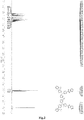
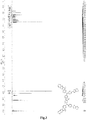
Fig. 1 is a 1H NMR spectrum of thecompound 1 of the present disclosure; andFig. 2 is a 1H NMR spectrum of the compound 22 of the present disclosure; -
Fig. 3 is a 1H NMR spectrum of thecompound 26 of the present disclosure; andFig. 4 is a 1H NMR spectrum of the compound 35 of the present disclosure; -
Fig. 5 is a 1H NMR spectrum of the compound 41 of the present disclosure; andFig. 6 is a 1H NMR spectrum of thecompound 73 of the present disclosure; -
Fig. 7 is a 1H NMR spectrum of the compound 101 of the present disclosure; andFig. 8 is a 1H NMR spectrum of the compound 121 of the present disclosure; -
Fig. 9 is a 1H NMR spectrum of the compound 143 of the present disclosure; andFig. 10 is a 1H NMR spectrum of the compound 146 of the present disclosure; -
Fig. 11 is a DSC graph of thecompound 1 of the present disclosure; andFig. 12 is a DSC graph of the compound 22 of the present disclosure; -
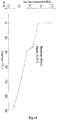
Fig. 13 is a DSC graph of thecompound 26 of the present disclosure; andFig. 14 is a DSC graph of the compound 35 of the present disclosure; -
Fig. 15 is a DSC graph of the compound 41 of the present disclosure; andFig. 16 is a DSC graph of thecompound 73 of the present disclosure; -
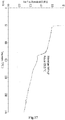
Fig. 17 is a DSC graph of the compound 101 of the present disclosure; andFig. 18 is a DSC graph of the compound 121 of the present disclosure; -
Fig. 19 is a DSC graph of the compound 143 of the present disclosure; andFig. 20 is a DSC graph of the compound 146 of the present disclosure. - The present disclosure will be further set forth in combination with the following specific examples, which are construed as illustrative of the present disclosure only and not to limit the scope of the present disclosure. Upon reading the present disclosure, various equivalent modifications to the present disclosure by those skilled in the art fall within the claimed protection scope of the present application.
- According to the present disclosure, "C6-C30" in the "substituted or unsubstituted C6-C30 aryl group" means the number of carbon atoms contained in the unsubstituted aryl group, and the number of carbon atoms of the substituent is excluded; "C3-C30" in the "substituted or unsubstituted C3-C30 heteroaryl group" means the number of carbon atoms contained in the unsubstituted heteroaryl group, and the number of carbon atoms of the substituent is excluded; "C6-C18" in the "substituted or unsubstituted C6-C18 arylene group" means the number of carbon atoms contained in the unsubstituted arylene group, and the number of carbon atoms of the substituent is excluded; "C3-C18" in the "substituted or unsubstituted C3-C18 heteroarylene group" means the number of carbon atoms contained in the unsubstituted heteroarylene group, and the number of carbon atoms of the substituent is excluded; and "C1-C15" in the "substituted or unsubstituted C1-C15 alkyl group" means the number of carbon atoms contained in the unsubstituted alkyl group, and the number of carbon atoms of the substituent is excluded. The rest can be done in the same manner.
- According to the present disclosure, the chain alkyl group having a carbon number of more than two such as a propyl, a butyl or a pentyl includes isomers thereof, such as isopropyl, isobutyl, sec-butyl, tert-butyl, isopentyl, neopentyl, and tert-pentyl, etc., but are not limited thereto.
- According to the present disclosure, an alkyl group means a hydrocarbyl group in which one hydrogen atom is missing from an alkane molecule, and it may be a linear alkyl, a branched alkyl or a cycloalkyl. The linear alkyl includes methyl, ethyl, n-propyl, n-butyl, n-pentyl, n-hexyl, n-heptyl, n-octyl, n-nonyl, n-decyl, undecyl, and dodecyl, etc., but is not limited thereto; the branched alkyl includes isopropyl, isobutyl, sec-butyl, tert-butyl, an isomeric group of n-pentyl, an isomeric group of n-hexyl, an isomeric group of n-heptyl, an isomeric group of n-octyl, an isomeric group of n-nonyl group, and an isomeric group of n-decyl, etc., but is not limited thereto; the cycloalkyl group includes cyclopropyl, cyclobutyl, a cyclopentyl, cyclohexyl, etc., but is not limited thereto. The above alkyl is preferably methyl, ethyl, n-propyl, isopropyl, n-butyl, isobutyl, sec-butyl and t-butyl.
- According to the present disclosure, the aryl group means a general term for a monovalent group remaining after removing one hydrogen atom from an aromatic nucleus carbon of an aromatic compound molecule, which may be a monocyclic aryl, a polycyclic aryl or a fused ring aryl. The monocyclic aryl means an aryl having only one aromatic ring in the molecule, for example, a phenyl, etc., but is not limited thereto; the polycyclic aryl means an aryl having two or more independent aromatic rings in the molecule, for example, a biphenyl, a terphenyl, etc., but is not limited thereto; the fused ring aryl means an aryl having two or more aromatic rings and fused to each other by sharing two adjacent carbon atoms in the molecule, for example, a naphthyl, an anthracenyl, a phenanthryl, a fluorenyl, a benzofluorenyl, a pyrenyl, a triphenylene, a fluoranthenyl, a spirobifluorenyl, etc., but is not limited thereto. The above aryl is preferably a phenyl, a biphenyl, a terphenyl, a naphthyl, a phenanthryl, a fluorenyl, a benzofluorenyl, a triphenylene or a spirobifluorenyl.
- According to the present disclosure, the heteroaryl means a general term for a group obtained by substituting one or more aromatic nucleus carbon atoms in an aryl group with a heteroatom, the heteroatom includes but is not limited to oxygen, sulfur, nitrogen or phosphorus atoms. The linkage site of the heteroaryl may be located on a ring-forming carbon atom or on a ring-forming nitrogen atom, and the heteroaryl group may be a monocyclic heteroaryl, a polycyclic heteroaryl or a fused ring heteroaryl. The monocyclic heteroaryl group includes a pyridyl, a pyrimidinyl, a triazinyl, a furyl, a thienyl, a pyrrolyl, and an imidazolyl, etc., but is not limited thereto; the polycyclic heteroaryl includes a bipyridyl, a bipyrimidinyl, and a phenylpyridinyl, etc., but is not limited thereto; the fused ring heteroaryl includes a quinolyl, an isoquinolyl, an indolyl, a phenanthrolinyl, a dibenzofuranyl, a benzodibenzofuranyl a dibenzothiophenyl, a benzodibenzothienyl, a carbazolyl, a benzocarbazolyl, an acridinyl, a 9,10-dihydroacridinyl, a phenoxazinyl, an oxanthracene group, a thianthracene group, etc., but is not limited thereto. The above heteroaryl is preferably a furyl, a thienyl, a dibenzofuranyl, a benzodibenzofuranyl a dibenzothiophenyl, a benzodibenzothienyl, a carbazolyl, a benzocarbazolyl, an acridinyl, a 9,10-dihydroacridinyl, a phenoxazinyl, an oxanthracene group, a thianthracene group, etc.
- According to the present disclosure, the arylene group means a general term for a bivalent group remaining after removing two hydrogen atoms from an aromatic nucleus carbon of a substituted or unsubstituted aromatic compound molecule, which may be a monocyclic arylene group, a polycyclic arylene group or a fused ring arylene group. The monocyclic arylene group includes a phenylene group, etc., but is not limited thereto; the polycyclic arylene group includes a biphenylene group, a terphenylylene group, etc., but is not limited thereto; the fused ring arylene group includes a naphthylene group, an anthranylene group, a phenanthrylene group, a fluorenylidene group, a pyrenylene group, a terphenylenylidene group, a fluoranthenylidene group, and a phenylenefluorenyl group, etc., but is not limited thereto. The above arylene group is preferably a phenylene group, a biphenylylene group, a terphenylylene group, a naphthylene group, a fluorenylidene group or a phenylenefluorenyl group.
- According to the present disclosure, the heteroarylene group means a general term for a group obtained by substituting one or more aromatic nucleus carbon atoms in an arylene group with a heteroatom, the heteroatom includes but is not limited to oxygen, sulfur, nitrogen or phosphorus atoms. The heteroarylene group may be a monocyclic heteroarylene group, a polycyclic heteroarylene group or a fused ring heteroarylene group. The monocyclic heteroarylene group includes a pyridylene group, a pyrimidinylene group, a furylene group, a thienylene group, etc., but is not limited thereto; the polycyclic heteroarylene group includes a bipyridylene group, a bipyrimidylene group, a phenylene pyridyl group, etc., but is not limited thereto; the fused ring heteroarylene includes a quinolinylene group, an isoquinolinylene group, a phenanthrolinylene group, a dibenzofuranylene group, a dibenzothiophenylene group, a carbazolylene group, etc., but is not limited thereto The above heteroarylene group is preferably a phenanthrolinylene group, a dibenzofuranylene group or a dibenzothiophenylene group.
- According to the present disclosure, the substituted alkyl group means a general term for a group in which a hydrogen on an alkyl group is replaced by a substituent group, and the substituent group may be one or more, and when there are more than one substituent groups, they may be the same or different, and the substituent group includes deuterium, a halogen, a cyano, a nitro, a hydroxyl, a carbonyl, a substituted or unsubstituted C6-C30 aryl, a substituted or unsubstituted C3-C30 heteroaryl, with the aryl, and heteroaryl being as defined above.
- According to the present disclosure, the substituted aryl group means a general term for a group in which a hydrogen on an aryl group is replaced by a substituent group, and the substituent group may be one or more, and when there are more than one substituent groups, they may be the same or different, and the substituent group includes deuterium, a halogen, a cyano, a nitro, a hydroxyl, a carbonyl, a substituted or unsubstituted C1-C15 alkyl, a substituted or unsubstituted C6-C30 aryl, a substituted or unsubstituted C3-C30 heteroaryl, with the alkyl, aryl, and heteroaryl being as defined above.
- According to the present disclosure, the substituted heteroaryl group means a general term for a group in which a hydrogen on a heteroaryl group is replaced by a substituent group, and the substituent group may be one or more, and when there are more than one substituent groups, they may be the same or different, and the substituent group includes deuterium, a halogen, a cyano, a nitro, a hydroxyl, a carbonyl, a substituted or unsubstituted C1-C15 alkyl, a substituted or unsubstituted C6-C30 aryl, a substituted or unsubstituted C3-C30 heteroaryl, with the alkyl, aryl, and heteroaryl being as defined above.
- According to the present disclosure, the substituted arylene group means a general term for a group in which a hydrogen on an arylene group is replaced by a substituent group, and the substituent group may be one or more, and when there are more than one substituent groups, they may be the same or different, and the substituent group includes deuterium, a halogen, a cyano, a nitro, a hydroxyl, a carbonyl, a substituted or unsubstituted C1-C15 alkyl, a substituted or unsubstituted C6-C30 aryl, a substituted or unsubstituted C3-C30 heteroaryl, with the alkyl, aryl, and heteroaryl being as defined above.
- According to the present disclosure, the substituted heteroarylene group means a general term for a group in which a hydrogen on a heteroarylene group is replaced by a substituent group, and the substituent group may be one or more, and when there are more than one substituent groups, they may be the same or different, and the substituent group includes deuterium, a halogen, a cyano, a nitro, a hydroxyl, a carbonyl, a substituted or unsubstituted C1-C15 alkyl, a substituted or unsubstituted C6-C30 aryl, a substituted or unsubstituted C3-C30 heteroaryl, with the alkyl, aryl, and heteroaryl being as defined above.
- The present disclosure provides an amine derivative, which is represented by Formula I,


- L1 is selected from the group consisting of a single bond, a substituted or unsubstituted C6-C18 arylene group, a substituted or unsubstituted C3-C18 heteroarylene group; a is selected from an integer of 0 to 4, and R1 is selected from the group consisting of a substituted or unsubstituted C1-C15 alkyl group, a substituted or unsubstituted C6-C18 aryl group, and when a is greater than 1, each R1 is the same or different, X is selected from O, S or N (Rx), and Rx is selected from the group consisting of a substituted or unsubstituted C1-C15 alkyl group, a substituted or unsubstituted C6-C18 aryl group;
- Ar3 and Ar4 are independently selected from the group consisting of a substituted or unsubstituted C6-C30 aryl group, and a substituted or unsubstituted C3-C30 heteroaryl group;
- L is selected from the group consisting of the groups as shown below,
- R is selected from the group consisting of hydrogen, a substituted or unsubstituted C1-C15 alkyl group, a substituted or unsubstituted C6-C18 aryl group, and a substituted or unsubstituted C3-C18 heteroaryl group;
- L11 and L12 are independently selected from the group consisting of a single bond, a substituted or unsubstituted C6-C18 arylene group, and a substituted or unsubstituted C3-C18 heteroarylene group.
- Preferably, Formula II is selected from the group consisting of the groups as shown below,


- wherein, b is selected from an integer of 0 to 4, and R2 is selected from the group consisting of a substituted or unsubstituted C1-C10 alkyl group, a substituted or unsubstituted C6-C18 aryl group, when b is greater than 1, each R2 is the same or different;
- c is selected from an integer of 0 to 4, and R3 is selected from the group consisting of a substituted or unsubstituted C1-C10 alkyl group, a substituted or unsubstituted C6-C18 aryl group, when c is greater than 1, each R3 is the same or different.
- Preferably, the amine derivative is as shown in Formula 1-1,

- Ar2 is selected from the group consisting of a substituted or unsubstituted C6-C30 aryl group, and a substituted or unsubstituted C3-C30 heteroaryl group, and Ar2 is not Formula II;
- Ar3 and Ar4 are independently selected from the group consisting of a substituted or unsubstituted C6-C30 aryl group, and a substituted or unsubstituted C3-C30 heteroaryl group.
- Preferably, Ar2 and Ar4 are selected from the same substituents.
- Preferably, the amine derivative is as shown in Formula 1-2,

- Preferably, Ar3 and Ar4 are independently selected from the group consisting of the groups as shown below,


- wherein, d is selected from an integer of 0 to 5, and R4 is selected from a substituted or unsubstituted C1-C10 alkyl group, when d is greater than 1, each R4 is the same or different;
- e is selected from an integer of 0 to 4, and R5 is selected from the group consisting of a substituted or unsubstituted C1-C10 alkyl group, a substituted or unsubstituted C6-C18 aryl group, when e is greater than 1, each R5 is the same or different;
- f is selected from an integer of 0 to 4, and R6 is selected from the group consisting of a substituted or unsubstituted C1-C10 alkyl group, a substituted or unsubstituted C6-C18 aryl group, when f is greater than 1, each R6 is the same or different;
- g is selected from an integer of 0 to 5, and R7 is selected from the group consisting of a substituted or unsubstituted C1-C10 alkyl group, a substituted or unsubstituted C6-C18 aryl group, when g is greater than 1, each R7 is the same or different;
- R0 is selected from the group consisting of a substituted or unsubstituted C1-C10 alkyl group, a substituted or unsubstituted C6-C18 aryl group;
- L2 is selected from the group consisting of a single bond, a substituted or unsubstituted C6-C18 arylene group, and a substituted or unsubstituted C3-C18 heteroarylene group.
- Preferably, Ar3 and Ar4 are independently selected from the group consisting of the groups as shown below,







- wherein, R4 is selected from the group consisting of methyl, ethyl, propyl, butyl, pentyl, hexyl, heptyl, and octyl, and each R4 is the same or different;
- R5 is selected from the group consisting of methyl, ethyl, propyl, and butyl, and each R5 is the same or different;
- R7 is selected from the group consisting of methyl, ethyl, propyl, butyl, phenyl, tolyl, and ethylphenyl, and each R7 is the same or different.
- Preferably, Formula II is selected from the group consisting of the groups as shown below,


- wherein, R1 is selected from the group consisting of methyl, ethyl, propyl, butyl, pentyl, hexyl, heptyl, and octyl, and each R1 is the same or different;
- R2 is selected from the group consisting of methyl, ethyl, propyl, and butyl, and each R2 is the same or different;
- R3 is selected from the group consisting of methyl, ethyl, propyl, and butyl.
- Further, the amine derivative is selected from one of the structures as shown below,



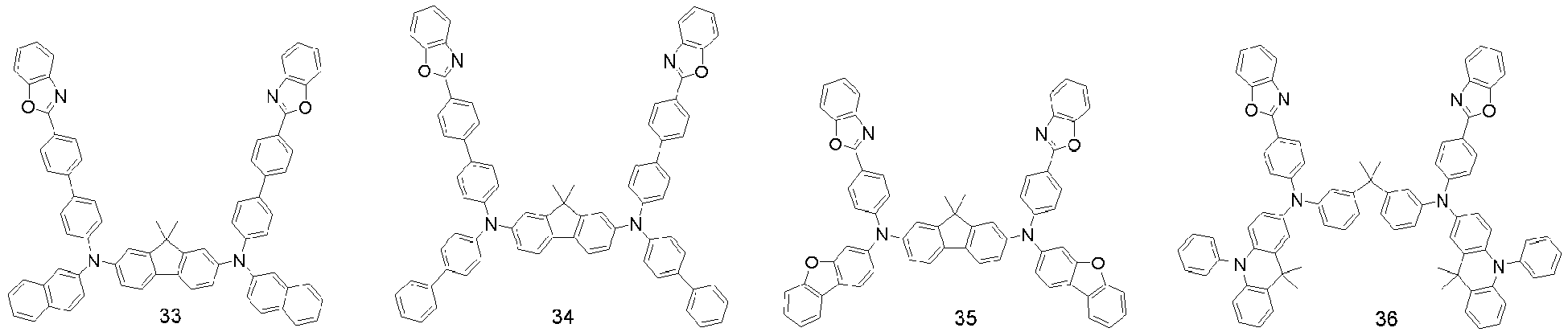



- Some specific chemical structures of the amine derivatives of Formula I described in the present disclosure are enumerated above, but the present disclosure is not limited to the listed chemical structures, and the groups based on the structure represented by Formula I and limited by the substituents as defined above should be included therein.
- The organic electroluminescent device of the present disclosure comprises an anode, an organic layer, a cathode and a light extraction layer, the organic layer being located between the anode and the cathode, and the light extraction layer being located on a side of the cathode away from the anode.
- The light extraction layer of the organic electroluminescent device of the present disclosure may have a single layer structure or have a multilayer structure having two or more layers. The light extraction layer of the present disclosure comprises the amine derivative of the present disclosure. There is no particular limitation on the content of the amine derivative, and it can be appropriately adjusted as needed. The organic layer of the organic electroluminescent device of the present disclosure may comprise any one or more selected from the group consisting of a hole injection layer, a hole transport layer, an electron blocking layer, a light emitting layer, a hole blocking layer, an electron transport layer, an electron injection layer or a buffer layer between an anode and a hole injection layer. The film thickness of each layer is not particularly limited. Generally, if the film is too thin, the film is liable to produce defects such as pinholes, etc., if the film is too thick, the driving voltage of the organic electroluminescent device is increased and the luminous efficiency is decreased. Therefore, the film thickness is preferably from 0.1 nm to 10 µm, more preferably from 0.5 nm to 0.5 µm.
- The device structure of the organic electroluminescent device of the present disclosure is preferably:
- substrate/anode/hole transport layer/light emitting layer/electron transport layer/metal cathode/light extraction layer; or
- substrate/anode/hole transport layer/light emitting layer/electron transport layer/electron injection layer/metal cathode/light extraction layer; or
- substrate/anode/hole transport layer/light emitting layer/hole blocking layer/electron transport layer/metal cathode/light extraction layer; or
- substrate/anode/hole injection layer/hole transport layer/light emitting layer/electron transport layer/electron injection layer/metal cathode/light extraction layer; or
- substrate/anode/hole injection layer/hole transport layer/light emitting layer/hole blocking layer/electron transport layer/electron injection layer/metal cathode/light extraction layer.
- The organic electroluminescent device of the present disclosure can be produced by a known method using known materials. However, the structure of the organic electroluminescent device is not limited thereto.
- The substrate according to the present disclosure is preferably a glass plate, a quartz plate, a polymer plate,etc., but is not limited thereto. The glass includes soda lime glass, lead glass, aluminosilicate glass, borosilicate glass, barium borosilicate glass, etc. The polymer includes polycarbonate, polyarylate, polyethersulfone, polypropylene, polyvinyl fluoride, polyvinyl chloride, etc.
- The anode of the present disclosure has a function of injecting holes into the hole transport layer, and the anode material is required to have a high work function, and generally a material having a work function of 4.5 eV or more is effective. Since the organic electroluminescent device of the present disclosure is a top emitting device, it is required that the anode material have a higher reflectivity and a lower absorptivity in the visible light range. The anode material of the present disclosure may be selected from one or more of the following materials, a metal oxide, a metal, a metal alloy, and a polymer, etc. Specifically, indium tin oxide (abbreviation: ITO), indium zinc oxide (abbreviation: IZO), aluminum zinc oxide (abbreviation: AZO), indium oxide, zinc oxide, Ag, Au, Al, Cu, Ni, Mo, Ti, Zn, Pd, Pt, polypyrrole, etc., but is not limited thereto. The film thickness of the anode varies depending on the materials, and is usually selected from the range of 10 nm to 1 µm, preferably 10 nm to 200 nm. The anode of the present disclosure may be a single-layer structure or a multilayer structure with two or more layers, and the anode material contained in each layer may be a single material or a mixed material.
- The buffer layer of the present disclosure refers to a very thin layer of insulating material evaporated on the anode, which can improve hole injection efficiency and lower the driving voltage. Specifically, the buffer layer may be a material selected from the group consisting of silica, carbon tetrafluoride, lithium fluoride, etc., but is not limited thereto.
- The hole injection layer of the present disclosure has a function of lowering the barrier of the interface between the hole transport layer and the anode in the organic electroluminescent device, improving the hole injection efficiency, and prolonging the life of the device. The hole injection material of the present disclosure is preferably a material having good hole injection properties, and can be selected from one or more of the following materials: a metal oxide such as molybdenum oxide, silver oxide, vanadium oxide, tungsten oxide, ruthenium oxide nickel oxide, copper oxide, titanium oxide, and aluminum oxide, etc., a low molecular organic compound such as phthalocyanine compound, aromatic amine derivative, and conjugated organic material containing polycyano groups, etc., and a polymer, and the like, but is not limited thereto. Specifically, it can be selected from the group consisting of molybdenum trioxide, silver oxide, vanadium pentoxide, tungsten trioxide, antimony oxide, nickel oxide, copper oxide, titanium dioxide, aluminum oxide, copper (II) phthalocyanine (abbreviation: CuPc), titanyl phthalocyanine (abbreviation: TiOPC), N,N'-bis(N,N'-diphenyl-4-aminophenyl)-N,N'-diphenyl-4,4'-diamino-1,1'-biphenyl, N4,N4,N4',N4'-tetrakis([1,1'-biphenyl]-4-yl)-[1,1'-biphenyl]-4,4'-diamine, 4,4'4"-tris(N,N-diphenylamino)triphenylamine (abbreviation: NATA), 4,4',4"-tris(N-(naphthalen-1-yl)-N -phenyl-amino)triphenylamine (abbreviation: 1T-NATA), 4,4',4"-tris[2-naphthylphenylamino]triphenylamine (abbreviation: 2T-NATA), 4,4',4"-Tris(N-3-methylphenyl-N-phenylamino)triphenylamine (abbreviation: m-MTDATA), N4,N4,N4',N4'-tetrakis (4-methoxyl)phenyl)-[1,1'-biphenyl]-4,4'-diamine (abbreviation: MeO-TPD), 2,7-bis[N,N-bis(4-methoxyphenyl)ammonia]-9,9-spirobis[9H-fluorene] (abbreviation: MeO-Spiro-TPD), N,N'-bis[4-di(m-tolyl)aminophenyl]-N,N'-diphenylbenzidine (abbreviation: DNTPD), 7,7,8,8-tetracyanoquinodimethane (abbreviation: TCNQ), 2,3,5,6-tetrafluoro-7,7',8,8'-tetracyanodimethyl p-benzoquinone (abbreviation: F4-TCNQ), pyrazolo[2,3-F][1,10] phenanthroline-2,3-dinitrile (abbreviation: PPDN), 1,4,5,8,9,11-hexaazabenzonitrile (abbreviation: HAT-CN), poly (N-vinylcarbazole) (abbreviation: PVK), poly(4-vinyltriphenylamine) (abbreviation: PVTPA), poly[N,N'-bis(4-butylphenyl)-N,N'-Bis(phenyl)benzidine] (abbreviation: Poly-TPD), poly(3,4-ethylenedioxythiophene)/poly(styrenesulfonic acid) (abbreviation: PEDOT/PSS), etc., but is not limited thereto. The hole injection layer of the present disclosure may be a single-layer structure or a multilayer structure with two or more layers, and the hole injection material contained in each layer may be a single material or a mixed material.
- The hole transport layer of the present disclosure has an effect of improving the transport efficiency of holes in the device and blocking electrons in the light-emitting layer. The hole transport material of the present disclosure is preferably a material having good hole transport properties, and can be selected from one or more of the following materials: a small molecular material such as an aromatic amine derivative, a pyrazoline compound, a carbazole derivative, a hydrazone compound, a styrene compound, and a butadiene compound, etc., and a polymer material, but is not limited thereto. Specifically, it can be selected from the group consisting of N4,N4,N4',N4'-tetrakis([1,1'-biphenyl]-4-yl)-[1,1'-biphenyl]-4,4'-diamine, 4,4',4" -Tris(N,N-diphenylamino)triphenylamine (abbreviation: TDATA), 4,4',4"-tris[N-(3-methylphenyl)-N-phenylamino]triphenylamine (abbreviation: MTDATA), N,N'-diphenyl-N,N'-diphenanthrene-9-yl-4,4'-benzidine (abbreviation: PPD), N, N'-bis(naphthalen-1-yl)-N,N'-di(phenyl)-2,2'-dimethylbenzidine (abbreviation: α-NPD), N,N'-diphenyl-N,N'-(1-naphthyl)-1,1-biphenyl-4,4'-diamine (abbreviation: NPB), N,N'-di(naphthalen-2-yl)-N,N' -di(phenyl)biphenyl-4,4'-diamine (abbreviation: β-NPB), N,N'-diphenyl-N,N'-bis(α-naphthyl)-1,1'-binaphthyl-4,4'-diamine (abbreviation: α-NPN), 4,4'-cyclohexyl bis[N,N-bis(4-methylphenyl)aniline] (abbreviation: TAPC), N,N'-diphenyl-N,N'-bis(3-methylphenyl)-1,1'-biphenyl-4,4'-diamine (abbreviation: TPD), 2,2,7,7-tetrakis(diphenylamino)-9,9-spirobifluorene (abbreviation: Spiro-TAD), 3,3'-(1,4-phenylene)bis(1,5-diphenyl-4,5-dihydro-1H-pyrazole) (abbreviation: PYR-D1), 4,4',4"-tris(carbazol-9-yl)triphenylamine (abbreviation: TCTA); poly(N-vinylcarbazole) (abbreviation: PVK), 4-(N,N-di-p-methylphenyl)aminobenzaldehyde-1,1-diphenylhydrazone, 1,4-bis[4-(N,N-di-p-methylphenylamino)styryl]benzene (abbreviation: DPD), etc., but is not limited thereto. The hole transport layer of the present disclosure may be a single-layer structure or a multilayer structure with two or more layers, and the hole transport material contained in each layer may be a single material or a mixed material.
- The light-emitting layer of the present disclosure refers to an organic layer capable of emitting photons. The light-emitting layer of the present disclosure may comprise a single material or two or more mixed materials, and the light-emitting material is divided into a blue light-emitting material, a green light-emitting material, and a red light-emitting material.
- The blue light-emitting material is selected from one or more of the following materials, a pyrene derivative, an anthracene derivative, a fluorene derivative, a perylene derivative, a styrylamine derivative, and a metal complex, etc., but is not limited thereto. Specifically, it can be selected from the group consisting of N1,N6-bis([1,1'-biphenyl]-2-yl)-N1,N6-bis([1,1'-biphenyl]-4-yl)pyrene-1,6-diamine, 9,10-di-(2-naphthyl)anthracene (abbreviation: ADN), 2-methyl-9,10-di-2-naphthylanthracene (abbreviation: MADN), 2,7-bis(4-diphenylaminophenyl)-9,9-bis(4-diphenylaminophenyl)fluorene (abbreviation: XB10), 2,5,8,11-tetra-tert-butylperylene (abbreviation: TBPe), 4,4'-bis[4-(diphenylamino)styryl]biphenyl (abbreviation: BDAVBi), 4,4'-bis[4-(di-p-tolylamino)styrene]biphenyl (abbreviation: DPAVBi), 1,4-bis[4-(N,N-diphenyl)amino]styrene (abbreviation: DSA-Ph), tris[1-(2,6-diisopropylphenyl)-2-phenyl-1H-imidazole]iridium (abbreviation: fac-Ir(iprpmi)3), bis(2-hydroxyphenylpyridine)beryllium (abbreviation: Bepp2), bis(4,6-difluorophenylpyridine)-C2,N)picolinatoiridium (abbreviation: FIrpic), bis(2,4-difluorophenylpyridine)-tetrakis(1-pyrazolyl)iridiumborate (III) (abbreviation: Fir6), etc., but is not limited thereto.
- The above green light-emitting material is selected from one or more of the following materials, a coumarin dye, a quinacridone derivative, a polycyclic aromatic hydrocarbon, a diamine anthracene derivative, a carbazole derivative, and a metal complex, etc., but is not limited thereto. Specifically, it can be selected from the group consisting of coumarin 6 (abbreviation: C-6), coumarin 545T (abbreviation: C-525T), quinacridone (abbreviation: QA), N, N'-dimethyl quinacridone (Abbreviation: DMQA), 5,12-diphenyltetracene (abbreviation: DPT), N10,N10,N10',N10'-tetraphenyl-9,9'-dianthracene-10,10'-diamine (abbreviation: BA-TAD), N10, N10'-diphenyl-N10, N10'-diphthaloyl-9,9'-dianthracene-10,10'-diamine (abbreviation: BA-NPB), 9,9',9"-(5-(4,6-diphenyl-1,3,5-triazin-2-yl)benzene-1,2,3-triyl)tris(3,6-dimethyl-9H-carbazole) (abbreviation: TmCzTrz), tris(8-hydroxyquinoline)aluminum (III) (abbreviation: Alq3), tris(2-phenylpyridine)iridium (abbreviation: Ir(ppy)3), bis(2-phenylpyridinium)iridium acetylacetonate (abbreviation: Ir(ppy)2(acac)), tris[2-(p-tolyl)pyridine-C2,N]iridium (III) (abbreviation: Ir(mppy)3), tris[2-(3-methyl-2-pyridyl)phenyl]iridium (abbreviation: Ir(3mppy)3), bis[2-(2-benzothiazole)phenol]zinc (abbreviation: Zn(BTZ)2), etc., but is not limited thereto.
- The red light-emitting material is selected from one or more of the following materials, a DCM series material, and a metal complex, etc., but is not limited thereto. Specifically, it can be selected from the group consisting of 4-(dicyanomethylidene)-2-methyl-6-(4-dimethylaminostyryl)-4H-pyran (abbreviation: DCM), 4-(dicyanomethylene)-2-tert-butyl-6-(1,1,7,7-tetramethyljulolidin-9-enyl)-4H-pyran (abbreviation: DCJTB), bis(1-phenylisoquinoline) (acetylacetone)iridium (III) (abbreviation: Ir(piq)2(acac)), octaethylporphyrin platinum (abbreviation: PtOEP), bis(2-(2'-benzothienyl)pyridine-N, C3') (acetylacetone)iridium (abbreviation: Ir(btp)2(acac), bis[1-(9,9-dimethyl-9H-fluorene-2-yl)-isoquinoline (acetylacetone)iridium (III) (abbreviation: Ir(fliq)2(acac)), bis[2-(9,9-dimethyl-9H-fluorene-2-yl)-quinoline] (acetylacetone)iridium(III) (abbreviation: Ir(flq)2(acac)), tris(dibenzoylmethane)mono(phenanthroline) europium (III) (abbreviation: Eu(dbm)3(Phen)), etc., but it is not limited thereto.
- When the above-mentioned light-emitting material is used as a guest material, it is necessary to select a suitable host material to be matched thereto, and the host material is preferably a material having a high lowest unoccupied orbital energy level and a low highest occupied orbital energy level as compared with the guest material. The above host material includes a metal complex such as an aluminum complex or a zinc complex, a fluorene derivative, an anthracene derivative, and a carbazole derivative, etc., but is not limited thereto. Specifically, it can be selected from the group consisting of tris(8-hydroxyquinoline)aluminum (III) (abbreviation: Alq3), zinc 8-hydroxyquinoline (abbreviation: Znq2), 2,7-bis[9,9-di(4-methylphenyl)-fluorene-2-yl]-9,9-bis(4-methylphenyl)fluorene (abbreviation: TDAF), 9,10-di(2-naphthyl)anthracene (abbreviation: ADN), 9-(1-naphthyl)-10-[4-(2-naphthyl)phenyl]anthracene, 1,3,5-tris(9-carbazolyl)benzene (abbreviation: TCP), 9,9'-(1,3-phenyl)di-9H-carbazole (abbreviation: MCP), 4,4'-bis(9-carbazole)biphenyl (abbreviation: CBP), 4,4',4"-tris(carbazol-9-yl)triphenylamine (abbreviation: TCTA), etc., but is not limited thereto.
- The hole blocking layer of the present disclosure has a function of preventing holes from leaking from the light emitting layer to the electron transport layer. The hole blocking material of the present disclosure is preferably a material having good hole blocking properties, and can be selected from one or more of the following materials: a phenanthroline derivative, an aluminum complex, a benzimidazole derivative, an aromatic compound, an organic boron compound, etc., but is not limited thereto. Specifically, it can be selected from the group consisting of 4,7-diphenyl-1,10-phenanthroline (abbreviation: Bphen), 2,9-di(naphthalen-2-yl)-4,7-diphenyl-1,10-phenanthroline (abbreviation: NBphen), 2,9-dimethyl-4,7-diphenyl-1,10-phenanthroline (abbreviation: BCP), bis(8-hydroxy-2-methylquinoline)-(4-phenylphenoxy)aluminum (abbreviation: BAlq), 1,3,5-tris(N-phenyl-2-benzimidazole)benzene (abbreviation: TPBi), (1,3,5-terphenyl)benzene (abbreviation: TBB), 1,3,5-tris(9,9-dimethyl-9H-fluorene-2-yl)benzene (abbreviation: TFB), Trimesitylborane (abbreviation: TPhB), etc., but is not limited thereto. The hole blocking layer of the present disclosure may be a single-layer structure or a multilayer structure with two or more layers, and the hole blocking material contained in each layer may be a single material or a mixed material.
- The electron transport layer of the present disclosure has an effect of improving the transmission efficiency of electrons in the device and blocking holes in the light-emitting layer. The electron transport material of the present disclosure is preferably a material having good electron transport properties, and can be selected from one or more of the following materials: a metal complex such as an aluminum complex, a beryllium complex and a zinc complex, etc., and an aromatic heterocyclic compound such as an oxazole derivative, an imidazole derivative, a triazole compound, a phenanthroline derivative, and a pyridine derivative, and a polymer, etc., but is not limited thereto. Specifically, it can be selected from the group consisting of tris(8-hydroxyquinoline)aluminum (III) (abbreviation:Alq3), tris(4-methyl-8-hydroxyquinoline)aluminum (abbreviation: Almq3), bis(10-hydroxybenzo[h]quinoline)beryllium (abbreviation: Bepq2), bis(2-methyl-8-hydroxyquinoline)(4-phenylphenol)aluminum(III) (abbreviation: BAlq), bis(8-hydroxyquinoline)zinc (II) (abbreviation: Znq), 2,5-di-(4-naphthyl)-1,3,4-oxadiazole (abbreviation: BND), 2-(4-biphenyl) 5-(4-tert-butylphenyl)-1,3,4-oxadiazole (abbreviation: PBD), 2-(4-(9,10-di(naphthalen-2-yl)anthracene-2-yl)phenyl)-1-phenyl-1H-benzo[d]imidazole, 1,3,5-tris(N-phenyl-2-benzimidazole)benzene (abbreviation: TPBi), 4,7-diphenyl-1,10-phenanthroline (abbreviation: Bphen), 2,9-dimethyl-4,7-diphenyl-1,10-phenanthroline (abbreviation: BCP), 2,9-bis(naphthalen-2-yl)-4,7-diphenyl-1,10-phenanthroline (abbreviation: NBphen), 3,3'-[5'-[3-(3-pyridyl)phenyl] (abbreviation: TmPyPB), 1,3,5 -tris(4-pyridin-3 -ylphenyl)benzene (abbreviation: TpPyPB), 1,3,5-tris(6-(3-(3-pyridyl) phenyl)pyridin-2-yl)benzene (abbreviation: Tm3PyP26PyB), 2,4,6-tris(3-(3-pyridyl)-(1,1'-biphenyl)-3-yl)-1,3,5-triazine (abbreviation: TmPPPyTz), poly[9,9-bis[6'-(N,N,N-trimethylammonium)hexyl]fluorene-alt-co-1,4-phenylene] bromide (abbreviation: FPQ-Br), etc., but is not limited thereto. The electron transport layer of the present disclosure may also be a mixed material formed by doping the above electron transport material and the following electron injection material with each other, such as Alq3/LiF, Alq3/Liq, BAlq/LiF, and BAlq/Liq, etc., but is not limited thereto. The electron transport layer of the present disclosure may be a single-layer structure or a multilayer structure with two or more layers, and the electron transport material contained in each layer may be a single material or a mixed material.
- The electron injection layer of the present disclosure functions to increase the efficiency of electron injection from the cathode into the electron transport layer and the light emitting layer. The electron injection material of the present disclosure is preferably a material having good electron injection properties, and can be selected from one or more of the following materials: an alkali metal, an alkaline earth metal or a compound containing an alkali metal or an alkaline earth metal, but is not limited thereto. Specifically, it can be selected from the group consisting of Li, Na, K, Rb, Cs, Be, Mg, Ca, Sr, Ba, lithium fluoride, sodium fluoride, potassium fluoride, rubidium fluoride, cesium fluoride, magnesium fluoride, calcium fluoride, lithium oxide, cesium carbonate, lithium metaborate, potassium silicate, lithium acetate, sodium acetate, rubidium acetate, potassium acetate, cesium acetate, lithium tetra(8-hydroxyquinolinato)boron, and 8-hydroxyquionline lithium, etc., but is not limited thereto. The electron injection layer of the present disclosure may be a single-layer structure or a multilayer structure with two or more layers, and the electron injection material contained in each layer may be a single material or a mixed material.
- The cathode of the present disclosure has a function of injecting electrons into the electron transport layer, and the cathode material is required to have a lower work function, and since the light of the top emitting device is transmitted from the cathode, the cathode is required to have a high transmittance. The cathode material of the present disclosure can be selected from one or more of the following materials: a metal or an alloy such as a main group metal, an alkali metal, an alkaline earth metal, a transition metal, and a lanthanide metal, but is not limited thereto. Specifically, it can be selected from the group consisting of Al, In, Li, Mg, Ca, Ag, Ti, Sm, Mg/Ag, and Li/Al, etc., but is not limited thereto. The film thickness of the cathode varies depending on the materials, and is usually selected from the range of 10 nm to 1 µm, preferably 10 nm to 300 nm. The cathode of the present disclosure may be a single-layer structure or a multilayer structure with two or more layers, and the cathode material contained in each layer may be a single material or a mixed material.
- The light extraction layer according to the present disclosure can be selected from one or more of the following materials: a metal compound, an aromatic amine derivative, a carbazole derivative or an amine derivative according to the present disclosure, etc., but is not limited thereto. Specifically, tris(8-hydroxyquinoline)aluminum (III) (abbreviation: Alq3), magnesium oxide, zinc selenide, zinc sulfide, tin oxide, molybdenum oxide, tellurium oxide, N, N'-di(naphthalene- 1-yl)-N,N'-bis(phenyl)-2,2'-dimethylbenzidine (abbreviation: α-NPD), N,N'-diphenyl-N,N'-(1-naphthyl)-1,1'-biphenyl-4,4'-diamine (abbreviation: NPB), N4, N4, N4', N4'-tetrakis(4-methoxyphenyl)-[1,1'-biphenyl]-4,4'-diamine (abbreviation: MeO-TPD), 4,4'-bis(9-carbazole)biphenyl (abbreviation: CBP), etc., but is not limited thereto. Preferred is the amine derivative of the present disclosure. The light extraction material of the present disclosure may be a single-layer structure or a multilayer structure with two or more layers, and the light extraction material contained in each layer may be a single material or a mixed material.
- The method for forming each layer of the organic electroluminescent device of the present disclosure is not particularly limited, and a well-known method such as a dry film forming method or a wet film forming method, etc., can be employed. The dry film forming method includes a vacuum deposition method, a sputtering method, and a plasma method, etc. The wet film forming method includes a spin coating method, a dipping method, an ink-jet method, etc., but is not limited thereto.
- The organic electroluminescent device of the present disclosure can be widely used in the fields of flat panel display, solid lighting, organic photoreceptor or organic thin film transistor, etc.
- The synthetic route of the amine derivative as shown in Formula I according to the present disclosure is as follows:
-

- In the above synthetic route,

-

- In the above synthetic route, Ar2-NH2 is obtained by Ar4-Br and

-
- 1. When


- 2. When


- In the above synthetic route, an amine derivative of Formula I is obtained by

- The raw materials used in the following examples are not particularly limited in the present disclosure, and may be a commercially available product or be prepared by a production method well known to those skilled in the art.
- Description of raw materials, reagents, and characterization equipment:
- The raw materials and reagents used in the present disclosure are all reagent pure;
- Mass spectrometry was performed using AXIMA-CFR plus matrix-assisted laser desorption ionization flight mass spectrometer from Kratos Analytical Inc., Shimadzu, UK, with chloroform as solvent;
- Elemental analysis was performed using the Vario EL cube type organic element analyzer from Elementar, Germany, with a sample mass of 5-10 mg;
- Nuclear magnetic resonance (1HNMR) was performed using a Bruker-510 type nuclear magnetic resonance spectrometer (Bruker, Germany) at 600 MHz, with CDCl3 as the solvent and TMS as the internal standard.
-

- Degassed toluene solvent (400 mL) was added to a 1 L reaction flask, and then the starting material 4-(2-benzoxazolyl)aniline (37.8 g, 0.18 mol), bromobenzene (19.0 ml, 0.18 mol) and sodium tert-butoxide (22.8 g, 0.234 mol) were added therein, sequentially. After purged with nitrogen for three times, palladium acetate (0.4 g, 0.0018 mol) was added. After purged with nitrogen for three times, tri-tert-butylphosphine (7.2 mL of a 1.0 M solution in toluene, 0.0072 mol) was added. After purged with nitrogen for three times again, the mixture was refluxed for 2 hours under a nitrogen atmosphere. After the reaction ceased, the mixture was cooled to room temperature and filtered through Celite to give a filtrate. The filtrate was concentrated, and a small amount of methanol was added thereto, the mixture was allowed to stand still and recrystallize. After a period of time, a solid was formed, which was filtered with suction and eluted with methanol to give a recrystallized solid as Intermediate 1-1 (46.3 g, yield: about 90%), the purity of the solid was 98.1% when detected by HPLC.
- Degassed toluene solvent (100 mL) was added to a 250 mL reaction flask, and then the starting material intermediate 1-1 (17.6 g, 0.062 mol), 2,7-dibromo-9,9-dimethylfluorene (9.8 g, 0.028 mol) and sodium tert-butoxide (8.0 g, 0.084 mol) were added therein, sequentially. After purged with nitrogen for three times, palladium acetate (0.12 g, 0.00056 mol) was added. After purged with nitrogen for three times, tri-tert-butylphosphine (2.24 mL of a 1.0 M solution in toluene, 0.00224mol) was added. After purged with nitrogen for three times again, the mixture was refluxed for 2 hours under a nitrogen atmosphere. After the reaction ceased, the mixture was cooled to room temperature and filtered through Celite to give a filtrate. The filtrate was concentrated and heated to 60°C, and then a small amount of ethanol was added thereto, and the mixture was allowed to stand still at room temperature to recrystallize. After a period of time, a solid was formed, which was filtered with suction and eluted with ethanol to obtain a recrystallized solid to give a pale yellow solid compound 1 (18.1 g, yield of about 85%), the purity of the solid was 99.9% when detected by HPLC.
- Mass spectrum m/z: 762.85 (calc.: 762.91). Theoretical element content (%) C53H38N4O2: C, 83.44; H, 5.02; N, 7.34; O, 4.19 Measured element content (%): C, 83.52; H, 5.02; N, 7.35; O, 4.11. 1H NMR (600 MHz, CDCl3) (δ, ppm): 8.10 (d, J=8.6 Hz, 4H), 7.82-7.67 (m, 2H), 7.67-7.50 (m, 4H), 7.40-7.28 (m, 8H), 7.23 (d, J=8.5 Hz, 6H), 7.20-6.99 (m, 8H), 1.40 (s, 6H). The above results confirmed that the obtained product was the target product.
-

- The bromobenzene in Synthesis Example 1 was replaced with an equimolar amount of 4-bromobiphenyl, and the other steps were the same to obtain a yellow solid compound 10 (22.5 g, yield of about 88%). Mass spectrum m/z: 914.41 (calc.: 915.11). Theoretical element content (%) C65H46N4O2: C, 85.31; H, 5.07; N, 6.12; O, 3.50 Measured element content (%): C, 85.28; H, 4.95 N, 6.08; O, 3.55. The above results confirmed that the obtained product was the target product.
-

- The bromobenzene in Synthesis Example 1 was replaced with an equimolar amount of 2-bromo-9,9-dimethylfluorene, and the other steps were the same to obtain a yellow solid compound 22 (20.0 g, yield of about 72%). Mass spectrum m/z: 995.32 (calc.: 995.24). Theoretical element content (%) C71H54N4O2: C, 85.69; H, 5.47; N, 5.63; O, 3.22 Measured element content (%): C, 85.77; H, 5.48; N, 5.62; O, 3.12. 1H NMR (600 MHz, CDCl3) (δ, ppm): 7.92 (d, J=3.3 Hz, 1H), 7.89 (d, J=3.2 Hz, 1H), 7.88 (s, 2H), 7.85 (s, 2H), 7.79-7.70 (m, 8H), 7.56 (d, J=3.2 Hz, 1H), 7.53 (dd, J=2.8, 1.3 Hz, 5H), 7.42-7.33 (m, 9H), 7.31 (dd, J=5.3, 2.3 Hz, 3H), 7.28 (dd, J=6.6, 3.3 Hz, 3H), 7.24 (d, J=3.2 Hz, 1H), 1.47 (d, J=30.9 Hz, 12H), 1.39 (s, 6H). The above results confirmed that the obtained product was the target product.
-

- The bromobenzene in Synthesis Example 1 was replaced with an equimolar amount of 2-bromo-11,11-dimethyl-benzo[b]fluorene, and the other steps were the same to obtain a yellow solid compound 26 (20.8 g, yield of about 68%). Mass spectrum m/z: 1095.44 (calc.: 1095.36). Theoretical element content (%) C79H58N4O2: C, 86.63; H, 5.34; N, 5.12; O, 2.92 Measured element content (%): C, 86.71; H, 5.32; N, 5.12; O, 2.87. 1H NMR (600 MHz, CDCl3) (δ, ppm): 8.15 (d, J=8.6 Hz, 4H), 8.02 (s, 2H), 7.86 (dt, J=6.8, 2.1 Hz, 6H), 7.79-7.74 (m, 2H), 7.73 (s, 2H), 7.65 (d, J=8.1 Hz, 2H), 7.60-7.53 (m, 2H), 7.49-7.39 (m, 6H), 7.34 (dd, J=9.5, 4.0 Hz, 6H), 7.25 (s, 2H), 7.23-7.16 (m, 4H), 1.63 (s, 12H), 1.45 (s, 6H). The above results confirmed that the obtained product was the target product.
-

- The bromobenzene in Synthesis Example 1 was replaced with an equimolar amount of 9-bromo-11,11-dimethyl-11H-benzo[A]fluorene, and the other steps were the same to obtain a yellow solid compound 27 (20.24 g, yield of about 66%). Mass spectrum m/z: 1094.48 (calc.: 1095.36). Theoretical element content (%) C79H58N4O2: C, 86.63; H, 5.34; N, 5.12; O, 2.92 Measured element content (%): C, 86.56; H, 5.30; N, 5.16; O, 2.88. The above results confirmed that the obtained product was the target product.
-

- The bromobenzene in Synthesis Example 1 was replaced with an equimolar amount of 3-bromodibenzo[b,d]furan, and the other steps were the same to obtain a yellow solid compound 35 (19.5 g, yield of about 74%). Mass spectrum m/z: 943.31 (calc.: 943.08). Theoretical element content (%) C65H42N4O4: C, 82.78; H, 4.49; N, 5.94; O, 6.79 Measured element content (%): C, 82.83; H, 4.50; N, 5.92; O, 6.75. 1H NMR (600 MHz, CDCl3) (δ, ppm): 8.12-8.08 (m, 4H), 7.88-7.81 (m, 4H), 7.76-7.71 (m, 2H), 7.62-7.53 (m, 8H), 7.47 (d, J=1.0 Hz, 2H), 7.38-7.30 (m, 8H), 7.28 (s, 2H), 7.18-7.15 (m, 6H), 1.39 (s, 6H). The above results confirmed that the obtained product was the target product.
-

- The 2,7-dibromo-9,9-dimethylfluorene in Synthesis Example 1 was replaced with an equimolar amount of 2,7-dibromo-9,9-diphenylfluorene, and the other steps were the same to obtain a pale yellow solid compound 41 (20.6 g, yield of about 83%). Mass spectrum m/z: 887.31 (calc.: 887.06). Theoretical element content (%) C63H42N4O2: C, 85.30; H, 4.77; N, 6.32; O, 3.61 Measured element content (%): C, 85.38; H, 4.85; N, 6.38; O, 3.70. 1H NMR (600 MHz, CDCl3) (δ, ppm): 8.06 (d, J=7.9 Hz, 4H), 7.80-7.69 (m, 2H), 7.62 (d, J=6.6 Hz, 2H), 7.58-7.53 (m, 6H), 7.51 (t, J=9.5 Hz, 4H), 7.43 (t, J=7.7 Hz, 4H), 7.37-7.30 (m, 6H), 7.22-7.18 (m, 8H), 7.14-7.10 (m, 6H). The above results confirmed that the obtained product was the target product.
-

- The bromobenzene in Synthesis Example 1 was replaced with an equimolar amount of 4-bromobiphenyl, the 2,7-dibromo-9,9-dimethylfluorene was replaced with an equimolar amount of 2,7-dibromo-9,9-diphenylfluorene, and the other steps were the same to obtain a pale yellow solid compound 44 (23.6 g, yield of about 81%). Mass spectrum m/z: 1038.43 (calc.: 1039.25). Theoretical element content (%) C75H50N4O2: C, 86.68; H, 4.85; N, 5.39; O, 3.08 Measured element content (%): C, 86.56; H, 4.82; N, 5.49; O, 3.08. The above results confirmed that the obtained product was the target product.
-

- The solid raw materials of 2-bromo-7-iodofluorene (37.1 g, 0.1 mol) and p-bromobenzeneboronic acid (22.1 g, 0.11 mol) were added to a 1 L reaction flask, sequentially, followed by ultrasonic degassed toluene (250 mL), ethanol (100 mL) and 150 mL of aqueous potassium carbonate (41.4 g, 0.3 mol). The mixture was vacuum purged with nitrogen three times, and the catalyst tetrakis(triphenylphosphine) palladium (1.15 g, 0.001 mol) was added under a nitrogen atmosphere. The mixture was vacuum purged with nitrogen three times, continuously, and reacted under reflux at 80°C for 4 hours with stirring, and then the heating was stopped, then 150 mL of water was added to the mixture, which was stirred for 30 minutes, cooled down to about 40°C and filtered under reduced pressure, the filter cake was rinsed with hot water (100 mL) and acetone (150 mL) sequentially to ensure the pH of the filtrate was about 7. The filter cake was dissolved in 1 L of chloroform, the solution was passed through a silica gel funnel, and the filtrate was concentrated to 500 mL, then a small amount of methanol (about 25 mL) was added to recrystallize, filtered under reduced pressure to give a solid (36.0 g, yield of about 90%), the purity of the solid was 98.6% when detected by HPLC.
- The above solid (20 g, 0.05 mol) was dissolved in 700 mL of toluene, and iodomethane (6.2 mL, 0.1 mol) and potassium t-butoxide (16.8 g, 0.15 mol) were added under a nitrogen atmosphere, followed by the addition of a ligand 3-cyclohexylphenol (1.41 g, 0.008 mol) and the catalyst palladium acetate (1.12 g, 0.005 mol), after purged with nitrogen for three times, the mixture was refluxed overnight. At the end of the reaction, the temperature was lowered to room temperature. After passing through a silica gel funnel, the filtrate was poured into 400 mL of water, stirred for half an hour, and then extracted with toluene. The organic phase was combined, dried and concentrated to 500 mL, and recrystallized by adding 200 mL of methanol. After a period of time, a solid was formed, i.e, intermediate a (19.3 g, yield of about 90%), the purity of the solid was 99.2% when detected by HPLC.
- The 2,7-dibromo-9,9-dimethylfluorene in Synthesis Example 1 was replaced with an equimolar amount of intermediate a, and the other steps were the same to obtain a pale yellow solid compound 73 (18.3 g, yield of about 78%). Mass spectrum m/z: 839.29 (calc.: 839.01). Theoretical element content (%) C59H42N4O2: C, 84.46; H, 5.05; N, 6.68; O, 3.81 Measured element content (%): C, 84.54; H, 5.05; N, 6.66; O, 3.75. 1H NMR (600 MHz, CDCl3) (δ, ppm): 8.19-8.05 (m, 4H), 7.74 (ddd, J=14.1, 8.0, 4.9 Hz, 3H), 7.67 (d, J=8.1 Hz, 1H), 7.63 (dd, J=5.0, 3.5 Hz, 3H), 7.60-7.52 (m, 3H), 7.39-7.29 (m, 8H), 7.29-7.26 (m, 2H), 7.26-7.21 (m, 5H), 7.21-7.10 (m, 7H), 1.49 (s, 6H). The above results confirmed that the obtained product was the target product.
-

- The bromobenzene in Synthesis Example 9 was replaced with an equimolar amount of 4-tert-butyl bromobenzene, and the other steps were the same to obtain a yellow solid compound 75 (21.0 g, yield of about 79%). Mass spectrum m/z: 950.51 (calc.: 951.23). Theoretical element content (%) C67H58N4O2: C, 84.60; H, 6.15; N, 5.89; O, 3.36 Measured element content (%): C, 84.56; H, 6.18; N, 5.83; O, 3.43. The above results confirmed that the obtained product was the target product.
-

- The bromobenzene in Synthesis Example 9 was replaced with an equimolar amount of 4-bromobiphenyl, and the other steps were the same to obtain a pale yellow solid compound 78 (20.8 g, yield of about 75%). Mass spectrum m/z: 990.40 (calc.: 991.21). Theoretical element content (%) C71H50N4O2: C, 86.03; H, 5.08; N, 5.65; O, 3.23 Measured element content (%): C, 86.11; H, 5.04; N, 5.69; O, 3.20. The above results confirmed that the obtained product was the target product.
-

- The bromobenzene in Synthesis Example 9 was replaced with an equimolar amount of 4-bromobiphenyl, and the other steps were the same to obtain a pale yellow solid compound 89 (21.9 g, yield of about 73%). Mass spectrum m/z: 1070.49 (calc.: 1071.34). Theoretical element content (%) C77H58N4O2: C, 86.33; H, 5.46; N, 5.23; O, 2.99 Measured element content (%): C, 86.27; H, 5.41; N, 5.29; O, 2.88. The above results confirmed that the obtained product was the target product.
-

- The 4-(2-benzoxazolyl)aniline in Synthesis Example 1 was replaced with an equimolar amount of 4-(2-benzothiazolyl) aniline, and the other steps were the same to obtain a bright yellow solid compound 101 (18.5 g, yield of about 83%). Mass spectrum m/z: 795.19 (calc.: 795.04). Theoretical element content (%) C53H38N4S2: C, 80.07; H, 4.82; N, 7.05; S, 8.07 Measured element content (%): C, 80.13; H, 4.80; N, 7.04; S, 8.03. 1H NMR (600 MHz, CDCl3) (δ, ppm): 8.18 (dd, J=6.9, 2.0 Hz, 2H), 8.02 (dd, J=6.8, 2.1 Hz, 2H), 7.86 (dd, J=7.5, 5.0 Hz, 6H), 7.58-7.47 (m, 6H), 7.37 (d, J=7.5 Hz, 4H), 7.31-7.21 (m, 6H), 7.08 (dd, J=7.5, 1.4 Hz, 4H), 7.04-6.96 (m, 2H), 1.69 (s, 6H). The above results confirmed that the obtained product was the target product.
-

- The 4-(2-benzoxazolyl)aniline in Synthesis Example 9 was replaced with an equimolar amount of 4-(2-benzothiazolyl) aniline, and the other steps were the same to obtain a bright yellow solid compound 121 (18.0 g, yield of about 74%). Mass spectrum m/z: 870.25 (calc.: 871.13). Theoretical element content (%) C59H42N4O2: C, 81.35; H, 4.86; N, 6.43; S, 7.36 Measured element content (%): C, 81.32; H, 4.85; N, 6.45; S, 7.37. 1H NMR (600 MHz, CDCl3) (δ, ppm): 8.22-8.14 (m, 2H), 8.08 (t, J=10.0 Hz, 1H), 8.05-7.98 (m, 3H), 7.89-7.82 (m, 5H), 7.78 (dd, J=15.0, 2.9 Hz, 1H), 7.60-7.46 (m, 7H), 7.42-7.33 (m, 6H), 7.33-7.19 (m, 5H), 7.12-7.05 (m, 4H), 7.04-6.95 (m, 2H), 1.69 (s, 6H). The above results confirmed that the obtained product was the target product.
-

- The bromobenzene in Synthesis Example 9 was replaced with an equimolar amount of 4-bromobiphenyl, the 4-(2-benzoxazolyl)aniline was replaced with an equimolar amount of 4-(2-benzothiazolyl) aniline, and the other steps were the same to obtain a bright yellow solid compound 125 (20.9 g, yield of about 73%). Mass spectrum m/z: 1022.38 (calc.: 1023.33). Theoretical element content (%) C71H50N4S2: C, 83.33; H, 4.93; N, 5.48; S, 6.27 Measured element content (%): C, 83.24; H, 4.97; N, 5.51; S, 6.24. The above results confirmed that the obtained product was the target product.
-

- The 4-(2-benzoxazolyl)aniline in Synthesis Example 1 was replaced with an equimolar amount of 4-(1-phenylbenzimidazol-2-yl)aniline, 2,7-dibromo-9,9 -dimethylfluorene was replaced with an equimolar amount of 2,7-dibromo-9,9'-spirobifluorene, and the other steps were the same to obtain a yellow solid compound 143 (20.58 g, yield of about 71%). Mass spectrum m/z: 1034.35 (calc.: 1035.27). Theoretical element content (%) C59H42N4O2: C, 87.01; H, 4.87; N, 8.12; Measured element content (%): C, 86.98; H, 4.91; N, 8.11. 1H NMR (600 MHz, CDCl3) (δ, ppm): 1H NMR (600 MHz, CDCl3) (δ, ppm) 7.85 (d, J=7.2 Hz, 2H), 7.70 (d, J=7.6 Hz, 2H), 7.61 (d, J=8.2 Hz, 2H), 7.48 (d, J=6.9 Hz, 6H), 7.40-7.27 (m, 12H), 7.25-7.20 (m, 2H), 7.20-7.10 (m, 8H), 7.06-6.86 (m, 8H), 6.83 (d, J=7.6 Hz, 2H), 6.77 (d, J=8.7 Hz, 4H), 6.50 (d, J=1.7 Hz, 2H). The above results confirmed that the obtained product was the target product.
-

- The 4-(2-benzoxazolyl)aniline in Synthesis Example 9 was replaced with an equimolar amount of 4-(1-phenylbenzimidazol-2-yl)aniline, and the other steps were the same to obtain a yellow solid compound 144 (19.4 g, yield of about 70%). Mass spectrum m/z: 988.49 (calc.: 989.24). Theoretical element content (%) C71H52N6: C, 86.21; H, 5.30; N, 8.50 Measured element content (%): C, 86.32; H, 5.24; N, 8.56. The above results confirmed that the obtained product was the target product.
-

- Degassed toluene solvent (100 mL) was added to a 250 mL reaction flask, and then the starting material intermediate 1-2 (17.6 g, 0.028 mol), N,N-bis([1,1'-biphenyl]-4-yl)-7-bromo-9,9-dimethyl-9H-fluorene-2-amine (9.8 g, 0.028 mol) and sodium tert-butoxide (4.0 g, 0.042 mol) were added therein, sequentially. After purged with nitrogen for three times, palladium acetate (0.06 g, 0.00028mol) was added. After purged with nitrogen for three times, tri-tert-butylphosphine (1.12 mL of a 1.0 M solution in toluene, 0.00112mol) was added. After purged with nitrogen for three times again, the mixture was refluxed for 2 hours under a nitrogen atmosphere. After the reaction ceased, the mixture was cooled to room temperature and filtered through Celite to give a filtrate. The filtrate was concentrated and heated to 60°C, and then a small amount of ethanol was added thereto, and the mixture was allowed to stand still at room temperature to recrystallize. After a period of time, a solid was formed, which was filtered with suction and eluted with ethanol to obtain a recrystallized solid to give a pale yellow solid compound 146 (21.8 g, yield of about 89%), the purity of the solid was 99.9% when detected by HPLC.
- Mass spectrum m/z: 873.35 (calc.: 874.10). Theoretical element content (%) C64H47N3O: C, 87.94; H, 5.42; N, 4.81; O, 1.83 Measured element content (%): C, 87.85; H, 5.54; N, 4.84; O, 1.99. 1H NMR (600 MHz, CDCl3) (δ, ppm): 7.88 (s, 1H), 7.85 (s, 1H), 7.77 - 7.75 (m, 3H), 7.75 - 7.73 (m, 5H), 7.72 (t, J = 3.5 Hz, 2H), 7.56 (d, J = 2.3 Hz, 2H), 7.55 - 7.51 (m, 7H), 7.49 (dd, J = 3.9, 3.0 Hz, 3H), 7.48 - 7.45 (m, 2H), 7.43 (dd, J = 7.7, 4.4 Hz, 2H), 7.41 - 7.39 (m, 2H), 7.39 - 7.37 (m, 5H), 7.37 - 7.34 (m, 4H), 7.32 (d, J = 2.9 Hz, 1H), 7.29 (d, J = 2.9 Hz, 1H), 1.69 (s, 6H). The above results confirmed that the obtained product was the target product.
-

- The Intermediate 1-2 in Synthesis Example 18 was replaced with an equimolar amount of Intermediate II-2, and the other steps were the same to obtain a bright yellow solid compound 153 (22.7g, yield of about 91%). Mass spectrum m/z: 889.37 (calc.: 890.16). Theoretical element content (%) C64H47N3S: C, 86.36; H, 5.32; N, 4.72; S, 3.60 Measured element content (%): C, 86.26; H, 5.25; N, 4.87; S, 3.55. The above results confirmed that the obtained product was the target product.
- Determination of the glass transition temperature (Tg) of the compounds: The measuring instrument was a DSC 25 type differential scanning calorimeter from TA Co., USA; the test atmosphere was nitrogen, the flow rate of nitrogen was 50 ml/min; and the heating rate was 10°C/min. The temperature range was 50-350°C; the mass of the compound sample was 1 to 6 mg; and the type of crucible was aluminium crucible. The measured glass transition temperature (Tg) is shown in Table 1.
Table 1 Glass transition temperature (Tg) of the compounds Compounds Glass transition temperature(°C) Compounds Glass transition temperature(°C) Compound 1130 Compound 89 140 Compound 10133 Compound 101 129 Compound 22 139 Compound 121 132 Compound 26140 Compound 125 135 Compound 27140 Compound 143 131 Compound 35 137 Compound 144 129 Compound 41 132 Compound 146 131 Compound 44 135 Compound 153 132 Compound 73132 CPM-1 125 Compound 75131 CPM-2 128 Compound 78 134 - It can be seen from Table 1 that the glass transition temperature of the amine derivative of the present disclosure is higher than that of CPM-1 and CPM-2, therefore the amine derivative of the present disclosure is more excellent in thermal stability, and is a material with more stable properties.
- Determination of refractive index (n) of the compounds: The measuring instrument was M-2000 Spectroscopic Ellipsometer from J.A.Woollam Co., USA; the scanning range of the instrument was 245 to 1000 nm; the size of the glass substrate was 200 × 200 mm, and the thickness of the material film was 20 to 60 nm. The measured refractive index (n) at 450 nm is shown in Table 2.
Table 2 Refractive index(n) of compounds Compounds Refractive index Compounds Refractive index Compound 1 2.07 Compound 89 2.12 Compound 102.11 Compound 101 2.07 Compound 22 2.09 Compound 121 2.05 Compound 262.10 Compound 125 2.09 Compound 272.10 Compound 143 2.04 Compound 35 2.12 Compound 144 2.07 Compound 41 2.08 Compound 146 2.14 Compound 44 2.12 Compound 153 2.13 Compound 732.06 CPM-1 2.10 Compound 752.05 CPM-2 2.15 Compound 78 2.10 - As can be seen from Table 2, the refractive index of the amine derivative of the present disclosure is comparable to that of the compounds CPM-1 and CPM-2, indicating that the amine derivative of the present disclosure can effectively couple the light in the device out when used as a light extraction material, improving the luminous efficiency of the organic electroluminescent device.
- In the present disclosure, the organic materials were sublimed and the purities thereof were above 99.99%. The ITO glass substrate used in the experiment was purchased from Shenzhen South Glass Display Devices Technology Co., Ltd. The ITO glass substrate was ultrasonically cleaned twice with 5% of glass cleaning solution for 20 minutes each time, and then ultrasonically washed twice with deionized water for 10 minutes each time. It was ultrasonically cleaned with acetone and isopropanone in sequence for 20 minutes, and then dried at 120°C.
- The device was prepared by vacuum evaporation system and continuously evaporated under vacuum without interruption. The materials used were in quartz crucibles containing different evaporation sources, and the temperature of the evaporation sources can be controlled separately. The thermal evaporation rate of the organic material or the doped parent organic material was generally set at 0.1 nm/s, and the evaporation rate of the doping material was adjusted according to the doping ratio; the evaporation rate of the electrode metal was 0.4 to 0.6 nm/s. The treated glass substrate was placed in an OLED vacuum coating machine. During the film making process, the vacuum degree of the system should be maintained below 5×10⁻⁵ Pa, and the organic layer and the metal electrode were evaporated by replacing the mask plate, respectively, the evaporation rate was measured by SQM160 Quartz Crystal Film Thickness detector from Inficon, and the film thickness was measured by a quartz crystal oscillator. The test software, computer, K2400 digital source meter manufactured by Keithley Company, USA and PR788 Spectral scanning luminometer from Photo Research Company, USA were combined to form a joint IVL test system to test the driving voltage, luminous efficiency and CIE color coordinate of the organic electroluminescent device. The life test was performed using McScience's M6000 OLED Life Test System. The test was performed in atmospheric environment and the temperature was at room temperature.
- ITO/Ag/ITO was used as an anode on the glass substrate; HIM-1 was vacuum evaporated on the anode as a first hole injection layer, and the evaporation thickness was 60 nm; HAT-CN was vacuum evaporated on the first hole injection layer as a second hole injection layer, and the evaporation thickness was 5 nm; NPB was vacuum evaporated on the second hole injection layer as a hole transport layer, and the evaporation thickness was 60 nm; BH-1 and 3% BD-1 were vacuum evaporated on the hole transport layer as a light emitting layer, and the evaporation thickness was 25 nm; Alq3:Liq (1:1) was vacuum evaporated on the light emitting layer as an electron transport layer, and the evaporation thickness was 30 nm; LiF was vacuum evaporated on the electron transport layer as an electron injection layer, and the evaporation thickness was 1 nm; Mg/Ag (9:1) was vacuum evaporated on the electron injection layer as a cathode, and the evaporation thickness was 15 nm; the
compound 1 of the present disclosure was vacuum evaporated on the cathode as a light extraction layer, and the evaporation thickness was 60 nm.

- Example 2-19:
Compound 1 in the light extraction layer of Example 1 was replaced withCompound 10, Compound 22,Compound 26,Compound 27, Compound 35, Compound 41, Compound 44,Compound 73,Compound 75, Compound 78, Compound 89, Compound 101, Compound 121, Compound 125, Compound 143, Compound 144, Compound 146, Compound 153, respectively, and the other steps were the same to obtain the organic electroluminescent devices 2-19. - Comparative Example 1: The
compound 1 in the light extraction layer of Example 1 was replaced with the compound CPM-1, and the other steps were the same to obtain a comparativeorganic electroluminescent device 1. - Comparative Example 2: The
compound 1 in the light extraction layer of Example 1 was replaced with the compound CPM-2, and the other steps were the same to obtain a comparativeorganic electroluminescent device 2. - Comparative Example 3: An organic electroluminescent device was prepared by referring to the procedure of Example 1, without forming a light extraction layer, and a comparative organic electroluminescent device 3 was obtained.
- The luminescent property test results of the organic electroluminescent devices prepared in Examples 1 to 19 and Comparative Examples 1-3 of the present disclosure are shown in Table 3.
Table 3 Data of the luminescent property test of the organic electroluminescent devices No. Material of light extraction layer Driving voltage [V] (@ 10 mA/cm2) Luminous efficiency [cd/A] (@ 10 mA/cm2) Lifetime [T97, h] (@ 10 mA/cm2) Color Example 1 Compound 13.98 6.82 123 Blue Example 2 Compound 103.99 6.86 132 Blue Example 3 Compound 22 4.00 6.84 150 Blue Example 4 Compound 264.00 6.85 153 Blue Example 5 Compound 274.00 6.85 152 Blue Example 6 Compound 35 3.99 6.87 144 Blue Example 7 Compound 41 3.99 6.83 130 Blue Example 8 Compound 44 4.00 6.87 138 Blue Example 9 Compound 734.02 6.81 129 Blue Example 10 Compound 754.01 6.80 127 Blue Example 11 Compound 78 4.02 6.85 135 Blue Example 12 Compound 89 4.02 6.87 154 Blue Example 13 Compound 101 4.00 6.82 120 Blue Example 14 Compound 121 4.01 6.80 131 Blue Example 15 Compound 125 4.01 6.84 138 Blue Example 16 Compound 143 4.00 6.80 128 Blue Example 17 Compound 144 4.03 6.82 120 Blue Example 18 Compound 146 3.98 6.89 126 Blue Example 19 Compound 153 3.99 6.88 131 Blue Comparative Example 1 CPM-1 4.01 6.85 95 Blue Comparative Example 2 CPM-2 4.00 6.88 105 Blue Comparative Example 3 - 4.00 4.56 90 Blue - As can be seen from Table 3, the organic electroluminescent device using the amine derivative of the present disclosure as a light extraction material has a longer service life than Comparative Example 1 and Comparative Example 2. Compared with Comparative Example 3, the organic electroluminescent device using the amine derivative of the present disclosure as a light extraction material has higher luminous efficiency and longer service life. Therefore, the amine derivative of the present disclosure is a light extraction material having a better performance.


Claims (10)
- An amine derivative, wherein the amine derivative is represented by Formula I,

 L1 is selected from the group consisting of a single bond, a substituted or unsubstituted C6-C18 arylene group, a substituted or unsubstituted C3-C18 heteroarylene group; a is selected from an integer of 0 to 4, and R1 is selected from the group consisting of a substituted or unsubstituted C1-C15 alkyl group, a substituted or unsubstituted C6-C18 aryl group, and when a is greater than 1, each R1 is the same or different, X is selected from O, S or N (Rx), and Rx is selected from the group consisting of a substituted or unsubstituted C1-C15 alkyl group, a substituted or unsubstituted C6-C18 aryl group;Ar3 and Ar4 are independently selected from the group consisting of a substituted or unsubstituted C6-C30 aryl group, and a substituted or unsubstituted C3-C30 heteroaryl group;L is selected from the group consisting of one of the groups as shown below,
 R is selected from the group consisting of hydrogen, a substituted or unsubstituted C1-C15 alkyl group, a substituted or unsubstituted C6-C18 aryl group, and a substituted or unsubstituted C3-C18 heteroaryl group;L11 and L12 are independently selected from the group consisting of a single bond, a substituted or unsubstituted C6-C18 arylene group, and a substituted or unsubstituted C3-C18 heteroarylene group.
 - The amine derivative according to claim 1, wherein Formula II is selected from the group consisting of groups as shown below,

 wherein, b is selected from an integer of 0 to 4, and R2 is selected from the group consisting of a substituted or unsubstituted C1-C10 alkyl group, a substituted or unsubstituted C6-C18 aryl group, when b is greater than 1, each R2 is the same or different;c is selected from an integer of 0 to 4, and R3 is selected from the group consisting of a substituted or unsubstituted C1-C10 alkyl group, a substituted or unsubstituted C6-C18 aryl group, when c is greater than 1, each R3 is the same or different.
 - The amine derivative according to claim 1, wherein the amine derivative is as shown in Formula 1-1,
 Ar2 is selected from the group consisting of a substituted or unsubstituted C6-C30 aryl group, and a substituted or unsubstituted C3-C30 heteroaryl group, and Ar2 is not Formula II;Ar3 and Ar4 are independently selected from the group consisting of a substituted or unsubstituted C6-C30 aryl group, and a substituted or unsubstituted C3-C30 heteroaryl group.
 - The amine derivative according to claim 3, wherein Ar2 and Ar4 are selected from the same substituents.
- The amine derivative according to claim 1, wherein the amine derivative is as shown in Formula 1-2,

- The amine derivative according to any one of claims 1 to 5, wherein Ar3 and Ar4 are independently selected from one of the groups as shown below,


 wherein, d is selected from an integer of 0 to 5, and R4 is selected from a substituted or unsubstituted C1-C10 alkyl group, when d is greater than 1, each R4 is the same or different;e is selected from an integer of 0 to 4, and R5 is selected from the group consisting of a substituted or unsubstituted C1-C10 alkyl group, a substituted or unsubstituted C6-C18 aryl group, when e is greater than 1, each R5 is the same or different;f is selected from an integer of 0 to 4, and R6 is selected from the group consisting of a substituted or unsubstituted C1-C10 alkyl group, a substituted or unsubstituted C6-C18 aryl group, when f is greater than 1, each R6 is the same or different;g is selected from an integer of 0 to 5, and R7 is selected from the group consisting of a substituted or unsubstituted C1-C10 alkyl group, a substituted or unsubstituted C6-C18 aryl group, when g is greater than 1, each R7 is the same or different;R0 is selected from the group consisting of a substituted or unsubstituted C1-C10 alkyl group, a substituted or unsubstituted C6-C18 aryl group;L2 is selected from the group consisting of a single bond, a substituted or unsubstituted C6-C18 arylene group, and a substituted or unsubstituted C3-C18 heteroarylene group.
 - The amine derivative according to claim 6, wherein Ar3 and Ar4 are independently selected from one of the groups as shown below,








 wherein, R4 is selected from the group consisting of methyl, ethyl, propyl, butyl, pentyl, hexyl, heptyl, and octyl, and each R4 is the same or different;R5 is selected from the group consisting of methyl, ethyl, propyl, and butyl, and each R5 is the same or different;R7 is selected from the group consisting of methyl, ethyl, propyl, butyl, phenyl, tolyl, and ethylphenyl, and each R7 is the same or different.
 - The amine derivative according to claim 1, wherein Formula II is selected from one of the groups as shown below,





 wherein, R1 is selected from the group consisting of methyl, ethyl, propyl, butyl, pentyl, hexyl, heptyl, and octyl, and each R1 is the same or different;R2 is selected from the group consisting of methyl, ethyl, propyl, and butyl, and each R2 is the same or different;R3 is selected from the group consisting of methyl, ethyl, propyl, and butyl.
 - The amine derivative according to claim 1, wherein the amine derivative is selected from one of the structures as shown below,



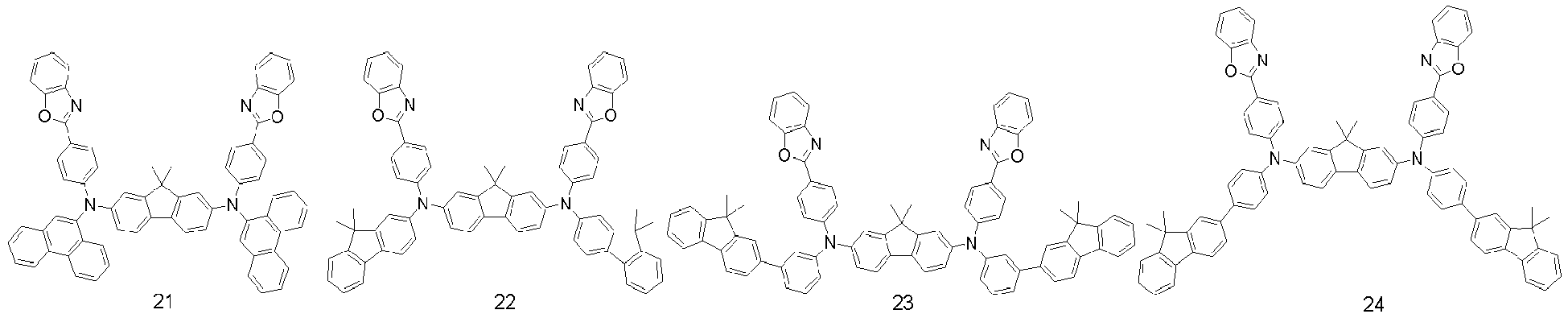




- An organic electroluminescent device, wherein it comprises an anode, an organic layer, a cathode and a light extraction layer, the organic layer is located between the anode and the cathode, the organic layer comprises a hole transport layer, a light emitting layer, and an electron transport layer, with the hole transport layer being located between the anode and the light emitting layer, and the electron transport layer being located between the light emitting layer and the cathode, the light extraction layer being located on a side of the cathode away from the anode, and the light extraction layer contains the amine derivative according to any one of claims 1 to 9.
Applications Claiming Priority (1)
| Application Number | Priority Date | Filing Date | Title |
|---|---|---|---|
| CN201910631205.2A CN110256358B (en) | 2019-07-12 | 2019-07-12 | Amine derivative and organic electroluminescent device thereof |
Publications (2)
| Publication Number | Publication Date |
|---|---|
| EP3763707A1 true EP3763707A1 (en) | 2021-01-13 |
| EP3763707B1 EP3763707B1 (en) | 2023-05-03 |
Family
ID=67925881
Family Applications (1)
| Application Number | Title | Priority Date | Filing Date |
|---|---|---|---|
| EP20166566.8A Active EP3763707B1 (en) | 2019-07-12 | 2020-03-30 | Amine derivative and an organic electroluminescent device thereof |
Country Status (7)
| Country | Link |
|---|---|
| US (1) | US11725003B2 (en) |
| EP (1) | EP3763707B1 (en) |
| JP (1) | JP6972226B2 (en) |
| KR (1) | KR102429199B1 (en) |
| CN (1) | CN110256358B (en) |
| ES (1) | ES2949041T3 (en) |
| PL (1) | PL3763707T3 (en) |
Cited By (1)
| Publication number | Priority date | Publication date | Assignee | Title |
|---|---|---|---|---|
| CN115872987A (en) * | 2021-09-28 | 2023-03-31 | 京东方科技集团股份有限公司 | Arylamine compound, electroluminescent device and display device |
Families Citing this family (13)
| Publication number | Priority date | Publication date | Assignee | Title |
|---|---|---|---|---|
| CN110669025A (en) * | 2019-09-26 | 2020-01-10 | 吉林奥来德光电材料股份有限公司 | Aromatic amine compound, preparation method thereof and organic light-emitting device comprising aromatic amine compound |
| KR102710664B1 (en) * | 2019-10-24 | 2024-09-25 | 주식회사 엘지화학 | Novel compound and organic light emitting device comprising the same |
| CN110964002A (en) * | 2019-12-13 | 2020-04-07 | 长春海谱润斯科技有限公司 | Arylamine derivative and organic light-emitting device thereof |
| CN111205237B (en) * | 2020-01-13 | 2020-12-29 | 长春海谱润斯科技股份有限公司 | Triamine derivative and organic electroluminescent device thereof |
| CN111785849B (en) * | 2020-07-14 | 2021-02-02 | 长春海谱润斯科技股份有限公司 | Top-emitting organic electroluminescent device with covering layer |
| CN111892586B (en) * | 2020-09-08 | 2021-08-24 | 长春海谱润斯科技股份有限公司 | Benzo five-membered N-containing heterocyclic heteroaryl amine compound and organic electroluminescent device thereof |
| CN111978329B (en) * | 2020-09-09 | 2023-04-07 | 烟台显华化工科技有限公司 | Compound, hole transport material, organic electroluminescent device and display device |
| US20240260458A1 (en) * | 2020-11-13 | 2024-08-01 | Guangzhou Chinaray Optoelectronic Materials Ltd. | Compound for organic electroluminescent device |
| CN113582938A (en) * | 2021-07-30 | 2021-11-02 | 上海天马有机发光显示技术有限公司 | Organic compound and application thereof |
| TWI847260B (en) * | 2021-09-08 | 2024-07-01 | 中央研究院 | Compounds and their uses for treating neurodegenerative disease |
| CN113937233B (en) * | 2021-09-30 | 2024-04-02 | 武汉天马微电子有限公司 | Organic electroluminescent device and application thereof |
| CN116082266B (en) * | 2021-11-03 | 2025-02-28 | 广州华睿光电材料有限公司 | Organic compound, mixture, composition, light extraction layer material and organic electronic device |
| CN116261385B (en) * | 2023-01-18 | 2026-04-24 | 长春海谱润斯科技股份有限公司 | An organic electroluminescent device |
Citations (7)
| Publication number | Priority date | Publication date | Assignee | Title |
|---|---|---|---|---|
| EP0879868A2 (en) * | 1997-05-19 | 1998-11-25 | Canon Kabushiki Kaisha | Organic compound and electroluminescent device using the same |
| JP2001106678A (en) * | 1999-10-04 | 2001-04-17 | Chemiprokasei Kaisha Ltd | Novel heterocyclic-containing arylamine compound and organic electroluminescent device using the same |
| US20120001127A1 (en) * | 2010-07-02 | 2012-01-05 | Plextronics, Inc. | Hole transport compositions and related devices and methods (i) |
| WO2013094951A1 (en) * | 2011-12-23 | 2013-06-27 | 제일모직 주식회사 | Compound for organic optoelectronic device, organic light-emitting diode containing same, and display device comprising organic light-emitting diode |
| KR20130118811A (en) * | 2012-04-20 | 2013-10-30 | 주식회사 엘지화학 | New compound and organic light emitting device using the same |
| EP2861044A1 (en) * | 2012-06-12 | 2015-04-15 | Sony Corporation | Organic electroluminescent element and display device |
| CN109535012A (en) * | 2018-12-17 | 2019-03-29 | 长春海谱润斯科技有限公司 | A kind of organic electroluminescence device |
Family Cites Families (12)
| Publication number | Priority date | Publication date | Assignee | Title |
|---|---|---|---|---|
| US4769292A (en) * | 1987-03-02 | 1988-09-06 | Eastman Kodak Company | Electroluminescent device with modified thin film luminescent zone |
| JP3508984B2 (en) * | 1997-05-19 | 2004-03-22 | キヤノン株式会社 | Organic compound and light emitting device using the organic compound |
| KR101226700B1 (en) | 2009-08-21 | 2013-01-25 | 에스에프씨 주식회사 | Amine derivatives and organoelectroluminescent device employing the same |
| US9051274B2 (en) | 2011-06-24 | 2015-06-09 | Semiconductor Energy Laboratory Co., Ltd. | Triarylamine compound, light-emitting element, light-emitting device, electronic device, and lighting device |
| WO2015001726A1 (en) | 2013-07-03 | 2015-01-08 | 保土谷化学工業株式会社 | Organic electroluminescent element |
| CN108047130A (en) | 2017-12-05 | 2018-05-18 | 李现伟 | Benzanthracenes electroluminescent organic material, luminescent device and display |
| CN108191744A (en) | 2017-12-05 | 2018-06-22 | 李现伟 | Benzfluorene class electroluminescent organic material, luminescent device and display |
| CN107936955A (en) | 2017-12-05 | 2018-04-20 | 李现伟 | 7H benzos [de] anthracene class electroluminescent organic material, luminescent device and display |
| CN108203406A (en) | 2017-12-05 | 2018-06-26 | 李现伟 | Benzfluorene class electroluminescent organic material, luminescent device and display |
| CN109574857A (en) | 2018-11-29 | 2019-04-05 | 长春海谱润斯科技有限公司 | A kind of organic electroluminescence device aromatic amine compound and its organic electroluminescence device |
| KR102641712B1 (en) * | 2019-06-24 | 2024-02-27 | 덕산네오룩스 주식회사 | Organic electric device |
| CN110669025A (en) * | 2019-09-26 | 2020-01-10 | 吉林奥来德光电材料股份有限公司 | Aromatic amine compound, preparation method thereof and organic light-emitting device comprising aromatic amine compound |
-
2019
- 2019-07-12 CN CN201910631205.2A patent/CN110256358B/en active Active
-
2020
- 2020-03-24 KR KR1020200035608A patent/KR102429199B1/en active Active
- 2020-03-30 ES ES20166566T patent/ES2949041T3/en active Active
- 2020-03-30 PL PL20166566.8T patent/PL3763707T3/en unknown
- 2020-03-30 EP EP20166566.8A patent/EP3763707B1/en active Active
- 2020-04-14 US US16/848,401 patent/US11725003B2/en active Active
- 2020-04-28 JP JP2020079126A patent/JP6972226B2/en active Active
Patent Citations (7)
| Publication number | Priority date | Publication date | Assignee | Title |
|---|---|---|---|---|
| EP0879868A2 (en) * | 1997-05-19 | 1998-11-25 | Canon Kabushiki Kaisha | Organic compound and electroluminescent device using the same |
| JP2001106678A (en) * | 1999-10-04 | 2001-04-17 | Chemiprokasei Kaisha Ltd | Novel heterocyclic-containing arylamine compound and organic electroluminescent device using the same |
| US20120001127A1 (en) * | 2010-07-02 | 2012-01-05 | Plextronics, Inc. | Hole transport compositions and related devices and methods (i) |
| WO2013094951A1 (en) * | 2011-12-23 | 2013-06-27 | 제일모직 주식회사 | Compound for organic optoelectronic device, organic light-emitting diode containing same, and display device comprising organic light-emitting diode |
| KR20130118811A (en) * | 2012-04-20 | 2013-10-30 | 주식회사 엘지화학 | New compound and organic light emitting device using the same |
| EP2861044A1 (en) * | 2012-06-12 | 2015-04-15 | Sony Corporation | Organic electroluminescent element and display device |
| CN109535012A (en) * | 2018-12-17 | 2019-03-29 | 长春海谱润斯科技有限公司 | A kind of organic electroluminescence device |
Cited By (1)
| Publication number | Priority date | Publication date | Assignee | Title |
|---|---|---|---|---|
| CN115872987A (en) * | 2021-09-28 | 2023-03-31 | 京东方科技集团股份有限公司 | Arylamine compound, electroluminescent device and display device |
Also Published As
| Publication number | Publication date |
|---|---|
| ES2949041T3 (en) | 2023-09-25 |
| KR102429199B1 (en) | 2022-08-04 |
| US20210009574A1 (en) | 2021-01-14 |
| EP3763707B1 (en) | 2023-05-03 |
| CN110256358B (en) | 2020-03-17 |
| JP6972226B2 (en) | 2021-11-24 |
| KR20210007817A (en) | 2021-01-20 |
| CN110256358A (en) | 2019-09-20 |
| US11725003B2 (en) | 2023-08-15 |
| PL3763707T3 (en) | 2023-10-09 |
| JP2021014444A (en) | 2021-02-12 |
Similar Documents
| Publication | Publication Date | Title |
|---|---|---|
| EP3763707B1 (en) | Amine derivative and an organic electroluminescent device thereof | |
| CN113527181B (en) | Nitrogen-containing heterocyclic organic compound and organic light-emitting device thereof | |
| CN112661714B (en) | Heterocyclic compound and organic electroluminescent device containing same | |
| CN109651406B (en) | Thermally activated delayed fluorescence compound, luminescent material and organic electroluminescent device | |
| CN113620818A (en) | Triarylamine compound containing condensed ring and organic light-emitting device thereof | |
| CN113683630B (en) | Nitrogen-containing heterocyclic derivative and organic electroluminescent device thereof | |
| CN116874477B (en) | Heteroatom-containing compound and organic electroluminescent device thereof | |
| CN115974806A (en) | Heterocyclic compound and organic electroluminescent device thereof | |
| CN111116505B (en) | Amine compound and organic light-emitting device thereof | |
| WO2020151500A1 (en) | Organic electroluminescent compound, electroluminescent material and organic electroluminescent device | |
| CN113666921A (en) | Heterocyclic compound and organic electroluminescent device thereof | |
| CN114195813A (en) | Boron-containing fused ring compound and electronic device | |
| CN110838561A (en) | Organic electroluminescent device | |
| CN114907217B (en) | Triamine compound and organic electroluminescent device thereof | |
| CN113845512A (en) | Compound containing heterocycle and organic electroluminescent device thereof | |
| CN114394949A (en) | Biphenylamine derivative and organic electroluminescent device thereof | |
| CN115448870B (en) | Arylamine compound containing carbazole group and organic electroluminescent device thereof | |
| CN113056468A (en) | Compound and organic light emitting device including the same | |
| CN112701238B (en) | Organic light-emitting device comprising covering layer and sealing layer | |
| CN114944459A (en) | Organic electroluminescent device | |
| CN113698360A (en) | Oxazole or thiazole compound and organic electroluminescent device thereof | |
| CN116261385B (en) | An organic electroluminescent device | |
| CN115811921B (en) | An organic electroluminescent device | |
| CN121673273A (en) | Carbazole compound and organic electroluminescent device thereof | |
| CN122059937A (en) | A compound containing condensed furan and its organic electroluminescent device |
Legal Events
| Date | Code | Title | Description |
|---|---|---|---|
| PUAI | Public reference made under article 153(3) epc to a published international application that has entered the european phase |
Free format text: ORIGINAL CODE: 0009012 |
|
| STAA | Information on the status of an ep patent application or granted ep patent |
Free format text: STATUS: REQUEST FOR EXAMINATION WAS MADE |
|
| 17P | Request for examination filed |
Effective date: 20200330 |
|
| AK | Designated contracting states |
Kind code of ref document: A1 Designated state(s): AL AT BE BG CH CY CZ DE DK EE ES FI FR GB GR HR HU IE IS IT LI LT LU LV MC MK MT NL NO PL PT RO RS SE SI SK SM TR |
|
| AX | Request for extension of the european patent |
Extension state: BA ME |
|
| RAP1 | Party data changed (applicant data changed or rights of an application transferred) |
Owner name: CHANGCHUN HYPERIONS TECHNOLOGY CO., LTD. |
|
| STAA | Information on the status of an ep patent application or granted ep patent |
Free format text: STATUS: EXAMINATION IS IN PROGRESS |
|
| 17Q | First examination report despatched |
Effective date: 20220218 |
|
| GRAP | Despatch of communication of intention to grant a patent |
Free format text: ORIGINAL CODE: EPIDOSNIGR1 |
|
| STAA | Information on the status of an ep patent application or granted ep patent |
Free format text: STATUS: GRANT OF PATENT IS INTENDED |
|
| INTG | Intention to grant announced |
Effective date: 20221202 |
|
| GRAS | Grant fee paid |
Free format text: ORIGINAL CODE: EPIDOSNIGR3 |
|
| GRAA | (expected) grant |
Free format text: ORIGINAL CODE: 0009210 |
|
| STAA | Information on the status of an ep patent application or granted ep patent |
Free format text: STATUS: THE PATENT HAS BEEN GRANTED |
|
| AK | Designated contracting states |
Kind code of ref document: B1 Designated state(s): AL AT BE BG CH CY CZ DE DK EE ES FI FR GB GR HR HU IE IS IT LI LT LU LV MC MK MT NL NO PL PT RO RS SE SI SK SM TR |
|
| REG | Reference to a national code |
Ref country code: GB Ref legal event code: FG4D |
|
| REG | Reference to a national code |
Ref country code: DE Ref legal event code: R096 Ref document number: 602020010266 Country of ref document: DE |
|
| REG | Reference to a national code |
Ref country code: AT Ref legal event code: REF Ref document number: 1564509 Country of ref document: AT Kind code of ref document: T Effective date: 20230515 Ref country code: CH Ref legal event code: EP |
|
| REG | Reference to a national code |
Ref country code: IE Ref legal event code: FG4D |
|
| REG | Reference to a national code |
Ref country code: LT Ref legal event code: MG9D |
|
| REG | Reference to a national code |
Ref country code: NL Ref legal event code: MP Effective date: 20230503 |
|
| REG | Reference to a national code |
Ref country code: ES Ref legal event code: FG2A Ref document number: 2949041 Country of ref document: ES Kind code of ref document: T3 Effective date: 20230925 |
|
| REG | Reference to a national code |
Ref country code: AT Ref legal event code: MK05 Ref document number: 1564509 Country of ref document: AT Kind code of ref document: T Effective date: 20230503 |
|
| PG25 | Lapsed in a contracting state [announced via postgrant information from national office to epo] |
Ref country code: SE Free format text: LAPSE BECAUSE OF FAILURE TO SUBMIT A TRANSLATION OF THE DESCRIPTION OR TO PAY THE FEE WITHIN THE PRESCRIBED TIME-LIMIT Effective date: 20230503 Ref country code: PT Free format text: LAPSE BECAUSE OF FAILURE TO SUBMIT A TRANSLATION OF THE DESCRIPTION OR TO PAY THE FEE WITHIN THE PRESCRIBED TIME-LIMIT Effective date: 20230904 Ref country code: NO Free format text: LAPSE BECAUSE OF FAILURE TO SUBMIT A TRANSLATION OF THE DESCRIPTION OR TO PAY THE FEE WITHIN THE PRESCRIBED TIME-LIMIT Effective date: 20230803 Ref country code: NL Free format text: LAPSE BECAUSE OF FAILURE TO SUBMIT A TRANSLATION OF THE DESCRIPTION OR TO PAY THE FEE WITHIN THE PRESCRIBED TIME-LIMIT Effective date: 20230503 Ref country code: AT Free format text: LAPSE BECAUSE OF FAILURE TO SUBMIT A TRANSLATION OF THE DESCRIPTION OR TO PAY THE FEE WITHIN THE PRESCRIBED TIME-LIMIT Effective date: 20230503 |
|
| PG25 | Lapsed in a contracting state [announced via postgrant information from national office to epo] |
Ref country code: RS Free format text: LAPSE BECAUSE OF FAILURE TO SUBMIT A TRANSLATION OF THE DESCRIPTION OR TO PAY THE FEE WITHIN THE PRESCRIBED TIME-LIMIT Effective date: 20230503 Ref country code: LV Free format text: LAPSE BECAUSE OF FAILURE TO SUBMIT A TRANSLATION OF THE DESCRIPTION OR TO PAY THE FEE WITHIN THE PRESCRIBED TIME-LIMIT Effective date: 20230503 Ref country code: LT Free format text: LAPSE BECAUSE OF FAILURE TO SUBMIT A TRANSLATION OF THE DESCRIPTION OR TO PAY THE FEE WITHIN THE PRESCRIBED TIME-LIMIT Effective date: 20230503 Ref country code: IS Free format text: LAPSE BECAUSE OF FAILURE TO SUBMIT A TRANSLATION OF THE DESCRIPTION OR TO PAY THE FEE WITHIN THE PRESCRIBED TIME-LIMIT Effective date: 20230903 Ref country code: HR Free format text: LAPSE BECAUSE OF FAILURE TO SUBMIT A TRANSLATION OF THE DESCRIPTION OR TO PAY THE FEE WITHIN THE PRESCRIBED TIME-LIMIT Effective date: 20230503 Ref country code: GR Free format text: LAPSE BECAUSE OF FAILURE TO SUBMIT A TRANSLATION OF THE DESCRIPTION OR TO PAY THE FEE WITHIN THE PRESCRIBED TIME-LIMIT Effective date: 20230804 |
|
| PG25 | Lapsed in a contracting state [announced via postgrant information from national office to epo] |
Ref country code: FI Free format text: LAPSE BECAUSE OF FAILURE TO SUBMIT A TRANSLATION OF THE DESCRIPTION OR TO PAY THE FEE WITHIN THE PRESCRIBED TIME-LIMIT Effective date: 20230503 |
|
| PG25 | Lapsed in a contracting state [announced via postgrant information from national office to epo] |
Ref country code: SK Free format text: LAPSE BECAUSE OF FAILURE TO SUBMIT A TRANSLATION OF THE DESCRIPTION OR TO PAY THE FEE WITHIN THE PRESCRIBED TIME-LIMIT Effective date: 20230503 |
|
| PG25 | Lapsed in a contracting state [announced via postgrant information from national office to epo] |
Ref country code: SM Free format text: LAPSE BECAUSE OF FAILURE TO SUBMIT A TRANSLATION OF THE DESCRIPTION OR TO PAY THE FEE WITHIN THE PRESCRIBED TIME-LIMIT Effective date: 20230503 Ref country code: SK Free format text: LAPSE BECAUSE OF FAILURE TO SUBMIT A TRANSLATION OF THE DESCRIPTION OR TO PAY THE FEE WITHIN THE PRESCRIBED TIME-LIMIT Effective date: 20230503 Ref country code: RO Free format text: LAPSE BECAUSE OF FAILURE TO SUBMIT A TRANSLATION OF THE DESCRIPTION OR TO PAY THE FEE WITHIN THE PRESCRIBED TIME-LIMIT Effective date: 20230503 Ref country code: EE Free format text: LAPSE BECAUSE OF FAILURE TO SUBMIT A TRANSLATION OF THE DESCRIPTION OR TO PAY THE FEE WITHIN THE PRESCRIBED TIME-LIMIT Effective date: 20230503 Ref country code: DK Free format text: LAPSE BECAUSE OF FAILURE TO SUBMIT A TRANSLATION OF THE DESCRIPTION OR TO PAY THE FEE WITHIN THE PRESCRIBED TIME-LIMIT Effective date: 20230503 Ref country code: CZ Free format text: LAPSE BECAUSE OF FAILURE TO SUBMIT A TRANSLATION OF THE DESCRIPTION OR TO PAY THE FEE WITHIN THE PRESCRIBED TIME-LIMIT Effective date: 20230503 |
|
| REG | Reference to a national code |
Ref country code: DE Ref legal event code: R097 Ref document number: 602020010266 Country of ref document: DE |
|
| PLBE | No opposition filed within time limit |
Free format text: ORIGINAL CODE: 0009261 |
|
| STAA | Information on the status of an ep patent application or granted ep patent |
Free format text: STATUS: NO OPPOSITION FILED WITHIN TIME LIMIT |
|
| 26N | No opposition filed |
Effective date: 20240206 |
|
| PG25 | Lapsed in a contracting state [announced via postgrant information from national office to epo] |
Ref country code: SI Free format text: LAPSE BECAUSE OF FAILURE TO SUBMIT A TRANSLATION OF THE DESCRIPTION OR TO PAY THE FEE WITHIN THE PRESCRIBED TIME-LIMIT Effective date: 20230503 |
|
| PG25 | Lapsed in a contracting state [announced via postgrant information from national office to epo] |
Ref country code: SI Free format text: LAPSE BECAUSE OF FAILURE TO SUBMIT A TRANSLATION OF THE DESCRIPTION OR TO PAY THE FEE WITHIN THE PRESCRIBED TIME-LIMIT Effective date: 20230503 |
|
| REG | Reference to a national code |
Ref country code: CH Ref legal event code: PL |
|
| PG25 | Lapsed in a contracting state [announced via postgrant information from national office to epo] |
Ref country code: BG Free format text: LAPSE BECAUSE OF FAILURE TO SUBMIT A TRANSLATION OF THE DESCRIPTION OR TO PAY THE FEE WITHIN THE PRESCRIBED TIME-LIMIT Effective date: 20230503 |
|
| PG25 | Lapsed in a contracting state [announced via postgrant information from national office to epo] |
Ref country code: LU Free format text: LAPSE BECAUSE OF NON-PAYMENT OF DUE FEES Effective date: 20240330 |
|
| PG25 | Lapsed in a contracting state [announced via postgrant information from national office to epo] |
Ref country code: MC Free format text: LAPSE BECAUSE OF FAILURE TO SUBMIT A TRANSLATION OF THE DESCRIPTION OR TO PAY THE FEE WITHIN THE PRESCRIBED TIME-LIMIT Effective date: 20230503 |
|
| PG25 | Lapsed in a contracting state [announced via postgrant information from national office to epo] |
Ref country code: MC Free format text: LAPSE BECAUSE OF FAILURE TO SUBMIT A TRANSLATION OF THE DESCRIPTION OR TO PAY THE FEE WITHIN THE PRESCRIBED TIME-LIMIT Effective date: 20230503 Ref country code: BG Free format text: LAPSE BECAUSE OF FAILURE TO SUBMIT A TRANSLATION OF THE DESCRIPTION OR TO PAY THE FEE WITHIN THE PRESCRIBED TIME-LIMIT Effective date: 20230503 Ref country code: LU Free format text: LAPSE BECAUSE OF NON-PAYMENT OF DUE FEES Effective date: 20240330 |
|
| REG | Reference to a national code |
Ref country code: BE Ref legal event code: MM Effective date: 20240331 |
|
| PG25 | Lapsed in a contracting state [announced via postgrant information from national office to epo] |
Ref country code: BE Free format text: LAPSE BECAUSE OF NON-PAYMENT OF DUE FEES Effective date: 20240331 |
|
| PG25 | Lapsed in a contracting state [announced via postgrant information from national office to epo] |
Ref country code: IE Free format text: LAPSE BECAUSE OF NON-PAYMENT OF DUE FEES Effective date: 20240330 |
|
| PG25 | Lapsed in a contracting state [announced via postgrant information from national office to epo] |
Ref country code: IE Free format text: LAPSE BECAUSE OF NON-PAYMENT OF DUE FEES Effective date: 20240330 Ref country code: BE Free format text: LAPSE BECAUSE OF NON-PAYMENT OF DUE FEES Effective date: 20240331 Ref country code: CH Free format text: LAPSE BECAUSE OF NON-PAYMENT OF DUE FEES Effective date: 20240331 |
|
| PG25 | Lapsed in a contracting state [announced via postgrant information from national office to epo] |
Ref country code: CY Free format text: LAPSE BECAUSE OF FAILURE TO SUBMIT A TRANSLATION OF THE DESCRIPTION OR TO PAY THE FEE WITHIN THE PRESCRIBED TIME-LIMIT; INVALID AB INITIO Effective date: 20200330 |
|
| PG25 | Lapsed in a contracting state [announced via postgrant information from national office to epo] |
Ref country code: HU Free format text: LAPSE BECAUSE OF FAILURE TO SUBMIT A TRANSLATION OF THE DESCRIPTION OR TO PAY THE FEE WITHIN THE PRESCRIBED TIME-LIMIT; INVALID AB INITIO Effective date: 20200330 |
|
| PG25 | Lapsed in a contracting state [announced via postgrant information from national office to epo] |
Ref country code: TR Free format text: LAPSE BECAUSE OF FAILURE TO SUBMIT A TRANSLATION OF THE DESCRIPTION OR TO PAY THE FEE WITHIN THE PRESCRIBED TIME-LIMIT Effective date: 20230503 |
|
| PGFP | Annual fee paid to national office [announced via postgrant information from national office to epo] |
Ref country code: GB Payment date: 20260324 Year of fee payment: 7 |
|
| PGFP | Annual fee paid to national office [announced via postgrant information from national office to epo] |
Ref country code: DE Payment date: 20260319 Year of fee payment: 7 |
|
| PGFP | Annual fee paid to national office [announced via postgrant information from national office to epo] |
Ref country code: IT Payment date: 20260324 Year of fee payment: 7 |
|
| PGFP | Annual fee paid to national office [announced via postgrant information from national office to epo] |
Ref country code: FR Payment date: 20260323 Year of fee payment: 7 |
|
| PGFP | Annual fee paid to national office [announced via postgrant information from national office to epo] |
Ref country code: PL Payment date: 20260319 Year of fee payment: 7 |
|
| PGFP | Annual fee paid to national office [announced via postgrant information from national office to epo] |
Ref country code: ES Payment date: 20260427 Year of fee payment: 7 |