EP3761673A1 - Stereo audio - Google Patents
Stereo audio Download PDFInfo
- Publication number
- EP3761673A1 EP3761673A1 EP20182429.9A EP20182429A EP3761673A1 EP 3761673 A1 EP3761673 A1 EP 3761673A1 EP 20182429 A EP20182429 A EP 20182429A EP 3761673 A1 EP3761673 A1 EP 3761673A1
- Authority
- EP
- European Patent Office
- Prior art keywords
- channel
- processed
- right channel
- left channel
- level difference
- Prior art date
- Legal status (The legal status is an assumption and is not a legal conclusion. Google has not performed a legal analysis and makes no representation as to the accuracy of the status listed.)
- Granted
Links
Images


Classifications
-
- H—ELECTRICITY
- H04—ELECTRIC COMMUNICATION TECHNIQUE
- H04S—STEREOPHONIC SYSTEMS
- H04S1/00—Two-channel systems
- H04S1/002—Non-adaptive circuits, e.g. manually adjustable or static, for enhancing the sound image or the spatial distribution
-
- H—ELECTRICITY
- H04—ELECTRIC COMMUNICATION TECHNIQUE
- H04S—STEREOPHONIC SYSTEMS
- H04S7/00—Indicating arrangements; Control arrangements, e.g. balance control
- H04S7/30—Control circuits for electronic adaptation of the sound field
- H04S7/302—Electronic adaptation of stereophonic sound system to listener position or orientation
- H04S7/303—Tracking of listener position or orientation
- H04S7/304—For headphones
-
- H—ELECTRICITY
- H04—ELECTRIC COMMUNICATION TECHNIQUE
- H04S—STEREOPHONIC SYSTEMS
- H04S7/00—Indicating arrangements; Control arrangements, e.g. balance control
- H04S7/30—Control circuits for electronic adaptation of the sound field
-
- H—ELECTRICITY
- H04—ELECTRIC COMMUNICATION TECHNIQUE
- H04S—STEREOPHONIC SYSTEMS
- H04S1/00—Two-channel systems
- H04S1/002—Non-adaptive circuits, e.g. manually adjustable or static, for enhancing the sound image or the spatial distribution
- H04S1/005—For headphones
-
- H—ELECTRICITY
- H04—ELECTRIC COMMUNICATION TECHNIQUE
- H04S—STEREOPHONIC SYSTEMS
- H04S2400/00—Details of stereophonic systems covered by H04S but not provided for in its groups
- H04S2400/13—Aspects of volume control, not necessarily automatic, in stereophonic sound systems
-
- H—ELECTRICITY
- H04—ELECTRIC COMMUNICATION TECHNIQUE
- H04S—STEREOPHONIC SYSTEMS
- H04S7/00—Indicating arrangements; Control arrangements, e.g. balance control
- H04S7/30—Control circuits for electronic adaptation of the sound field
- H04S7/307—Frequency adjustment, e.g. tone control
Definitions
- Embodiments of the present disclosure relate to stereo audio. Some relate to stereo audio render via headphones.
- a stereo audio signal comprises a left channel and a right channel.
- the left channel of the stereo audio signal is rendered to a left audio output device.
- the right channel of the stereo audio signal is rendered to a right audio output device.
- an apparatus comprising means for:
- the apparatus comprises means for smoothing the level difference over time before determining if the level difference between the left channel and the right channel is above a threshold.
- the apparatus comprises means for conditionally, if the level difference is above the threshold for a first one of a plurality of frequency bands, moving signal energy for that first frequency band from the louder one of the left channel and the right channel to the other of the left channel and the right channel to create the processed left channel and the processed right channel of the processed stereo audio signal.
- the apparatus comprises:
- the apparatus comprises means for smoothing over time movement of signal energy from the louder one of the left channel and the right channel to the other of the left channel and the right channel.
- the apparatus comprises means for re-scaling a signal energy level of the louder one of the left channel and the right channel after moving signal energy from the louder one of the left channel and the right channel to the other of the left channel and the right channel
- a first gain is used to re-scale a signal energy level of the louder one of the left channel and the right channel after moving signal energy from the louder one of the left channel and the right channel to the other of the left channel and the right channel and a second gain is used to define the signal energy moved from the louder one of the left channel and the right channel to the other of the left channel and the right channel, wherein the second gain used for a current time frame is based on a weighted summation of a putative second gain for the current time frame and at least a used second gain for a preceding time frame, wherein weightings of the summation are adaptable in dependence upon a putative impact of the putative second gain for the current time frame on the level difference between the processed left channel and the processed right channel.
- the weightings of the summation are biased to decrease the level difference between the processed left channel and the processed right channel more quickly than increase the level difference between the processed left channel and the processed right channel.
- moving signal energy from a louder one of the left channel and the right channel to the other of the left channel and the right channel is controlled in dependence upon a function that is dependent upon the determined level difference, wherein when the determined level difference is above the threshold, then the target level difference is less than the determined level difference and wherein the function is adaptable by a user and/or wherein the target level difference has a maximum value at least when the determined level difference exceeds a saturation value.
- the apparatus comprises means for conditionally, if the level difference is not above the threshold, not moving signal energy from a louder one of the left channel and the right channel to the other of the left channel and the right channel to create a processed left channel and a processed right channel of a processed stereo audio signal.
- the apparatus comprises means for conditionally, if the level difference is not above the threshold for a frequency band , bypassing moving signal energy for that frequency band from a louder one of the left channel and the right channel to the other of the left channel and the right channel to create a processed left channel and a processed right channel of a processed stereo audio signal.
- the apparatus is configured as headphones comprising a left-ear audio output device and a right-ear audio output device and comprising means for rendering the processed left channel from the left-ear audio output device and the processed right channel from the right-ear audio output device.
- a system comprises the apparatus and headphones comprising a left-ear audio output device for rendering the processed left channel and a right-ear audio output device for rendering the processed right channel.
- the computer program is configured as an application program for user selection of audio for playback to the user.
- a stereo audio signal comprises a left channel and a right channel.
- the left channel of the stereo audio signal is rendered to a left audio output device.
- the right channel of the stereo audio signal is rendered to a right audio output device.
- the left audio output device is a left headphone for positioning at or in a user's left ear and the right audio output device is a right headphone for positioning at or in a user's right ear.
- the left and right headphones are provided as in-ear buds.
- the left and right headphones are positioned at a user's ears by a supporting headset.
- the left audio output device is a loudspeaker for positioning at least partially to the left of a user's position and the right audio output device is a loudspeaker for positioning at least partially to the right of a user's position.
- the left and right loudspeakers are often positioned in front of and the respective left and right of the intended user position.
- Stereo audio signals have been distributed for stereo music and other audio content from the 1960s. Before that the music and audio was distributed as a mono audio signal (a single channel signal). Up until the 1980s rendering (reproducing) of music was normally via stereo loudspeakers. In the 1980s headphones become more popular.
- Teleconferencing systems may also position different participants to extreme directions, in order to enable maximal sound source spacing. While such stereo signals may be good for loudspeaker listening in the case of teleconferencing, they may not be optimal for headphone listening.
- At least some of the examples described below conditionally modify a user's listening experience by reducing level differences between the stereo channels when a condition is satisfied.
- stereo audio is modified to avoid excessive positioning (e.g., hard-panning or extreme-panning) but is not modified if the stereo audio does not have excessive positioning.
- the adaptive processing mitigates excessive level differences between channels of stereo audio signals when needed. Stereo audio content that is lacking extreme positioning is not modified. As a result, the method can be enabled for all music and audio, and it improves listening experience with some signals without harming it with others.
- a user can provide inputs that control the user's listening experience.
- the user can, in some examples, control at least partially the condition for reducing level differences between the stereo channels.
- the user can, in some examples, control at least partially the processing used to reduce level differences between the stereo channels. This can, for example, modify one or more of: granularity of processing, the amount of reduction of level differences, smoothing of changes to level difference.
- the processing to obtain reduced level differences between the stereo channels does not create a mono channel, the channels remain different stereo channels.
- the left channel and the right channel are different after a reduction in level difference. Spatial audio cues with the stereo audio are, at least partially, retained.
- FIGs illustrate examples of an apparatus 10 comprising means 20, 30, 40 for:
- the louder one of the left channel and the right channel is the channel with the higher level. Moving the signal energy changes that level and reduces the level difference between the left and right channels
- the processing of level differences may, for example, take place in broadband or in multiple frequency bands.
- the apparatus comprises means for (iii) conditionally, if the level difference 7 is above the threshold 9 for one or more frequency bands of a plurality of frequency bands, moving signal energy 140 for the one or more frequency bands from the louder of the left channel and the right channel to the other of the left channel and the right channel to create the processed left channel and the processed right channel of the processed stereo audio signal.
- the level differences between a left channel and a right channel of a stereo audio signal can, for a broadband single band example be a single level difference determined at different times.
- the level differences between a left channel and a right channel of a stereo audio signal can, for a multi-frequency band example be multiple level differences determined at different frequencies and different times.
- Each of the functions (i), (ii), (iii), (iv) can be performed automatically or semi-automatically.
- the term automatically means that the function is performed without any need for user input at the time of the performance of the function. In some circumstances the user may need to have performed a set-up procedure in advance to set parameters that are re-used for subsequent automatic performances of the function. If a function is performed automatically, in some circumstances it can be performed transparently with respect to the user at the time of its performance. That is no indication is provided to the user at the time of performing the function that the function is being performed.
- the term semi-automatically means that the function is performed but only after user input at the time of the performance of the function. The user input can, for example, be a confirmatory input or other input.
- the apparatus is configured to automatically reduce level differences between stereo channels. In some example, this can be transparent to the user.
- the apparatus is configured to semi-automatically reduce level differences between stereo channels.
- FIG 1 illustrates an example of an apparatus 10 comprising:
- the determining means 30 provides a control signal 11 that causes means 50 to output the original stereo audio signal 3.
- a control signal 11 is provided by determining means 30 to the analysis means 20, which provides the original stereo audio signal 3 to the output means 50.
- One or more or all of the analysis means 20, determining means 30, modifying means 40 and output means 50 can be provided as circuitry.
- One or more or all of the analysis means 20, determining means 30, modifying means 40 and output means 50 can be provided as computer program code executed by circuitry.
- FIG 2 illustrates an example of a method 100 comprising:
- the method 100 is conditional. If the level difference 7 is above the threshold 9, the method 100 moves from block 130 to 140 else the method 100 returns to block 120.
- the method 100 is iterative. The method 100 is repeated for each contiguous time segment of the stereo audio signal 3. In the example illustrated, but not necessarily all examples, the method 100 repeats when the processed stereo audio signal 5 is output. However, it will be appreciated that processing of the next segment can, in some circumstances, occur sequentially but earlier or occur in parallel.
- One or more or all of the blocks 120, 130, 140, 150 can be performed by circuitry.
- One or more or all of the blocks 120, 130, 140, 150 can be caused to be performed by computer program code when executed by circuitry.
- FIG 3 illustrates another example of an apparatus 10, for example as illustrated in FIG 1 .
- the apparatus 10 comprises:
- a stereo audio signal 3 is input to the apparatus 10.
- the stereo signal 3 comprises a left channel and a right channel.
- the stereo audio signal 3 is represented using s i ( t ), where i is the channel index and t is time.
- a time to frequency domain transform 60 is used to transform the time-domain stereo signals s i ( t ) to time-frequency domain signals S i ( b , n ) , where b is a frequency bin index and n is a temporal frame index.
- the transformation can be performed using any suitable transform, such as short-time Fourier transform (STFT) or complex-modulated quadrature mirror filter bank (QMF).
- STFT short-time Fourier transform
- QMF complex-modulated quadrature mirror filter bank
- levels are determined for the different channel.
- a different level is determined for each channel, for each frequency band (k), for each consecutive contiguous time period n.
- the level is computed in terms of energy.
- the frequency bands can be any suitable arrangement of bands. For example, between 20 and 40 bands may be used. In some but not necessarily all examples, the bands are Bark scale critical bands.
- a different level is determined for each channel, for each frequency band (k), over an extended time period.
- the smoothed energy level can be a weighted moving average of energy levels for recent time periods, where the weighting more heavily favors more recent time periods.
- the louder and the softer of the two channels are determined.
- the louder channel has a greater level.
- analysis determines level differences 7 between the left channel and the right channel of the stereo audio signal 3.
- the relative level measurement is in dB (for energy). If the level ⁇ 0 ( k , n ) is expressed in amplitude, instead of energy, the multiplication factor would be 20 instead of 10.
- the blocks 62, 64, 66 provide analysis means 20 for analyzing level differences 7 between the left channel and the right channel of the stereo audio signal 3.
- the level differences 7 between the left channel and the right channel are analyzed for each frequency band.
- the threshold 9 can be selected to define excess level differences 7 between stereo channels that would be perceived as unpleasant when listening to with headphones.
- the threshold 9 can, in some but not necessarily all examples, be a user adjustable parameter.
- the mixing mode is set to "passthrough” mode. Otherwise, the mixing mode is set to "mix” mode.
- the condition for selecting the mix mode or the passthrough mode is based on the threshold.
- the apparatus 10 moves signal energy for that frequency band (but not necessarily other frequency bands) from a louder one of the left channel and the right channel to the other of the left channel and the right channel to create a processed left channel and a processed right channel of a processed stereo audio signal 5.
- the apparatus 10 bypasses moving signal energy for that frequency band (but not necessarily other frequency bands) from a louder one of the left channel and the right channel to the other of the left channel and the right channel to create a processed left channel and a processed right channel of a processed stereo audio signal 5.
- the block 68 provides determining means 30 for determining if a level difference 7 between the left channel and the right channel is above a threshold 9.
- mixing gains are determined based on the determined mixing mode.
- initial gains g 0 ( k,n ) and g 1 ( k,n ) are computed.
- a first gain g 0 ( k,n ) 2 is applied to the louder channel signal ⁇ 1 ( k , n ) and the resulting signal ( g 0 ( k , n ) 2 ⁇ 1 ( k , n ) is moved to the softer channel ⁇ 0 ( k, n ) .
- the resulting processed softer channel signal ⁇ 0 ( k,n )' is the sum ( g 0 ( k , n ) 2 ⁇ 1 ( k,n ) + ⁇ 0 ( k,n )) .
- a second gain g 1 ( k,n ) 2 is applied to the louder channel signal ⁇ 1 ( k , n ) to produce a resulting processed louder channel signal ⁇ 1 ( k , n )'.
- Gains are not applied to the softer channel signal ⁇ 0 ( k,n ) . Instead, a part of the louder channel signal ( g 0 ( k,n ) 2 ⁇ 1 ( k,n ) is moved to the softer signal ⁇ 0 ( k,n ) .
- the louder channel is attenuated by second gain g 1 ( k , n ) 2 so that the total loudness is not affected.
- the gains can be determined to move signal energy from a louder one of the left channel and the right channel to the other of the left channel and the right channel to create a processed left channel and a processed right channel of a processed stereo audio signal 5.
- the level difference 7 between the stereo channels is reduced by moving signal energy from a louder one of the left channel and the right channel to the other of the left channel and the right channel.
- the level difference between the processed left channel and the processed right channel of the processed stereo audio signal 5 is less than the determined level difference between the left channel and the right channel of the original stereo audio signal 3.
- signal energy for that frequency band (but not other frequency bands) is moved from a louder one of the left channel and the right channel to the other of the left channel and the right channel to create a processed left channel and a processed right channel of a processed stereo audio signal.
- the derived gains for the mix mode can fulfil at least two criteria. First, energy is moved from the higher level channel to the lower level channel. Second the resulting audio signals (after the gains have been applied) should have the same total energy as the original signals.
- the lower energy signal is ⁇ 0 ( k,n ) and the higher energy signal is ⁇ 1 ( k , n ) .
- the gains g 0 ( k,n ) and g 1 ( k,n ) can then be expressed in terms of g 0 ( k,n ) , g 1 ( k,n ) , ⁇ 0 ( k,n ) , ⁇ 1 ( k,n ) .
- the gain g 0 ( k,n ) relates to an estimated instantaneous need for moving energy from one channel to another.
- the gain g 1 ( k,n ) relates to a need for conservation of energy.
- the target level difference T is then a function dependent upon the determined level difference (R). When the determined level difference (R) is above the threshold (X), then the target level difference is less than the determined level difference (R).
- the target level difference T has a maximum value T max at least when the determined level difference (R) exceeds a saturation value R sat .
- the target level difference T is monotonically increasing between a minimum value Tmin and a maximum value Tmax.
- the function at least when the determined level difference (R) is initially above the threshold (X), is a monotonically increasing function that has a gradient (dT/dR) that is less than 1.
- the function at least when the determined level difference (R) is initially above the threshold (X), is a linearly increasing function that has a gradient (dT/dR) that is less than 1.
- the function is adaptable by a user.
- the user could adapt one of more of X, R sa, Tmin, Tmax, the gradient dT/dR.
- a first gain g 1 ( k,n ) is used to re-scale a signal level S 1 ( k,n ) of the louder channel to provide the processed channel S 1 ⁇ k n .
- a second gain g 0 ( k,n ) is used to define the signal energy moved from the louder channel S 1 ( k, n ) to the other processed channel S 0 ⁇ k n .
- a first gain g 1 ( k,n ) is used to re-scale a signal level S 0 ( k , n ) of the louder channel to provide the processed channel S 0 ⁇ k n .
- a second gain g 0 ( k,n ) is used to define the signal energy moved from the louder channel S 0 ( k,n ) to the other processed channel S 1 ⁇ k n .
- the movement of signal energy between channels can be smoothed over time.
- the first gain and the second gain can be smoothed over time.
- the second gain g r 0 ( k,n ) used for a current time frame is based on a weighted summation of a putative second gain g 0 ( k,n ) for the current time frame and at least a used second gain g r 0 ( k,n - 1 ) for a (immediately) preceding time frame.
- the first gain g r1 ( k,n ) used for a current time frame is based on a weighted summation of a putative first gain for the current time frame g 1 ( k,n ) and at least a used firsbt gain g r 1 ( k,n - 1) for a (immediately) preceding time frame.
- the second gain for a current time frame is g l 1 ( k, n)
- the putative second gain for the current time frame is g 1 ( k,n )
- the second gain for a (immediately) preceding time frame is g l 1 ( k,n - 1)
- the first gain for a current time frame is g l 0 ( k,n )
- the putative first gain for the current time frame g 0 ( k,n ) and the first gain for a (immediately) preceding time frame is g l 0 ( k,n - 1).
- the gains are thus smoothed over time. As the louder channel may change over time, the signal may be moved from either channel.
- the smoothing is adaptive.
- weighting of the weighted summation is adaptable in dependence upon a putative impact of the putative second gain for the current time frame on the level difference 7 between the processed left channel and the processed right channel.
- the coefficients a and b can depend upon the second gain and the movement of energy between channels.
- the more recent greater gain is weighted more (a/b is greater), for example the more recent gain is as favored or more favored than previous gains. For example, if E 0 ⁇ k n ⁇ E 1 ⁇ k n , then a/b is greater when g 0 ( k,n ) > g r 0 ( k,n - 1) than when g 0 ( k,n ) ⁇ g r 0 ( k,n - 1).
- the weighting of the weighted summation can be biased to decrease the level difference between the processed left channel and the processed right channel more quickly than increase the level difference between the processed left channel and the processed right channel.
- the putative second gain for the current time frame will reduce the level difference E 0 ⁇ k n ⁇ E 1 ⁇ k n , between the left channel and the right channel, then it is more heavily weighted in the summation. If the putative second gain for the current time frame will increase the level difference between the left channel and the right channel, then it is less heavily weighted in the summation.
- smoothing can for example be asymmetric.
- Changes in movement of energy over time e.g. controlled by selection of values of a and b
- the difference between a 2 & a 3 indicates different weighting of more recent gain.
- the difference between b 3 & b 2 indicates different weighting of older gain.
- the difference between a 2 & b 2 compared to the difference between a 3 & b 3 makes movement of energy greater if the movement causes a decrease in the level difference.
- a mixer 72 is controlled by the mixing gains provided by block 70 which are dependent upon the mixing mode.
- the apparatus 10 moves signal energy for that frequency band (but not necessarily other frequency bands) from a louder one of the left channel and the right channel to the other of the left channel and the right channel to create a processed left channel and a processed right channel of a processed stereo audio signal.
- the stage of moving energy from the louder channel to the softer channel is bypassed. If the level difference 7 is not above the threshold for a frequency band, the apparatus 10 bypasses moving signal energy for that frequency band (but not necessarily other frequency bands) from a louder one of the left channel and the right channel to the other of the left channel and the right channel to create a processed left channel and a processed right channel of a processed stereo audio signal.
- S 0 ⁇ S 0
- S 1 ⁇ S 1
- the mixing gains g l 1 ( k, n ) , g r 0 ( k, n ) , g r 1 ( k, n ) , g l 0 ( k, n ) have been computed in frequency bands k, and they need to be transformed to values for each frequency bin b . This can, e.g., be performed by simply setting the value for the frequency band to each frequency bin inside the frequency band.
- the resulting signals S' 0 ( b, n ) and S' 1 ( b, n ) are transformed back to time domain at block 74. This transform should be the inverse of the transform that was applied at block 60.
- the resulting signals s' i ( t ) 5 are the output of the processing.
- the output may also be unmodified input signal 3 if the level difference 7 is not above the threshold in any frequency band.
- the processing described can occur in real time.
- the apparatus 10 is a real-time audio processing apparatus.
- the processing described can be performed during playback.
- processing in the frequency domain This is optional.
- the processing can occur in the time domain only. This processing can be understood in the limit of a single (large) frequency bin in a single (large) frequency band.
- FIG 5 illustrates an example of headphones 200 comprising a left-ear audio output device 202 and a right-ear audio output device 204.
- the processed left channel is rendered from the left-ear audio output device 202 and the processed right channel is rendered from the right-ear audio output device 204.
- the headphones 200 are the apparatus 10 and receive the audio signal 3.
- the headphones 200 are coupled to the apparatus 10 and receive from the apparatus 10 the audio signals 3,5.
- the left audio output device 202 is a left headphone for positioning at or in a user's left ear and the right audio output device 204 is a right headphone for positioning at or in a user's right ear.
- the left and right headphones are provided as in-ear buds.
- the left and right headphones are positioned at a user's ears by a supporting headset.
- the input stereo signal 3 comprises a sound source that is hard-panned (i.e., positioned to only left or right) or extreme-panned (i.e., positioned predominantly to left or right) then it can be reproduced satisfactorily using stereo loudspeakers.
- that kind of stereo signal is reproduced with headphones, it produces an unnatural perception.
- the left audio signal is reproduced by the left headphone, and, as a result, it reaches only (or predominantly) the left ear and the right audio signal reaches only the right ear.
- Hard-panned or extreme-panned audio sources in stereo content when reproduced by headphones cause inter-aural level differences (ILD) that are very high. Furthermore, the ILDs are very high at all frequencies.
- ILDs are very small at low frequencies (regardless of the sound source direction) and increase when the frequency is increased (for sound sources on the sides). This is due to frequency-dependent shadowing of the human head. At lower frequencies, the head does not significantly shadow the audio.
- headphone reproduction of hard-panned or extreme-panned sound sources causes very large ILDs, which causes unnatural ILDs. In practice, this is perceived as unpleasant and unnatural playback. This may be characterized as a "feeling of pressure", or even as slight pain.
- the apparatus 10 can be used to address this problem and provide improved headphone playback.
- the stereo signals are modified when they would not be pleasant to listen to with headphones, and not otherwise.
- the stereo image is kept unmodified (preserving the spatial impression), unless modifications are needed (in which case spatiality is still maintained but extreme panning effects are softened for enhanced listening comfort).
- the apparatus 10 can also be used with loudspeaker playback.
- the processing can be performed as for the headphone playback, but the output stereo signals are forwarded to loudspeakers instead of headphones (the processing may also be different in alternative embodiments).
- the apparatus can be used to get more natural stereo mixing instead of extreme, hard-panned mixing.
- the original signal 3 (e.g. "Wild Life” by “Wings")
- the modified signal 5 has different level differences 7.
- the largest level differences (between 10 and 20 seconds) will have been made smaller. As a result, the listening experience is made significantly more comfortable for headphone listening.
- the signal 5 is not modified and is the same or substantially the same as the original signal.
- FIGs 6A and 6B illustrate examples of a system 211 comprising an apparatus 10 as previously described, and an audio rendering apparatus 200, for example headphones 200 comprising a left-ear audio output device 202 for rendering the processed left channel and a right-ear audio output device 204 for rendering the processed right channel.
- headphones 200 comprising a left-ear audio output device 202 for rendering the processed left channel and a right-ear audio output device 204 for rendering the processed right channel.
- a bitstream is retrieved from storage, or it may be received via network.
- the bitstream can be fed to a decoder, if the audio signals have been compressed, to decode the audio signals.
- the resulting stereo audio signals 3 are fed to excess panning remover 210 that comprises analysis means 20, determining means 30 and modifying means 40.
- the excess panning remover 210 performs the method 100, an example of which have been described with reference to FIG 3 and FIG 4 .
- the excess panning remover 210 is provided by software running inside a computer or computing device (e.g. a mobile phone, a personal audio device).
- the excess panning remover 210 is provided by code running inside player software.
- the manufacturer of the player software thus provides improved user experience for headphone listening.
- the excess panning remover 210 is provided by code running outside player software 212 in a plug-in.
- the manufacturer of the apparatus 10 or the headphones 200 can provide the plug-in to provide improved user experience for headphone listening.
- the plugin could be implemented as stand-alone software by a third party.
- Fig 7 illustrates an example of a controller 240.
- Implementation of a controller 240 may be as controller circuitry.
- the controller 240 may be implemented in hardware alone, have certain aspects in software including firmware alone or can be a combination of hardware and software (including firmware).
- controller 240 may be implemented using instructions that enable hardware functionality, for example, by using executable instructions of a computer program 246 in a general-purpose or special-purpose processor 242 that may be stored on a computer readable storage medium (disk, memory etc) to be executed by such a processor 242.
- a general-purpose or special-purpose processor 242 may be stored on a computer readable storage medium (disk, memory etc) to be executed by such a processor 242.
- the processor 242 is configured to read from and write to the memory 244.
- the processor 242 may also comprise an output interface via which data and/or commands are output by the processor 242 and an input interface via which data and/or commands are input to the processor 242.
- the memory 244 stores a computer program 246 comprising computer program instructions (computer program code) that controls the operation of the apparatus 10 when loaded into the processor 242.
- the computer program instructions, of the computer program 246, provide the logic and routines that enables the apparatus to perform the methods illustrated in Figs 1, 2 or 3 .
- the processor 242 by reading the memory 244 is able to load and execute the computer program 246.
- the apparatus 10 therefore comprises:
- the computer program 246 may arrive at the apparatus 10 via any suitable delivery mechanism 250.
- the delivery mechanism 250 may be, for example, a machine readable medium, a computer-readable medium, a non-transitory computer-readable storage medium, a computer program product, a memory device, a record medium such as a Compact Disc Read-Only Memory (CD-ROM) or a Digital Versatile Disc (DVD) or a solid state memory, an article of manufacture that comprises or tangibly embodies the computer program 246.
- the delivery mechanism may be a signal configured to reliably transfer the computer program 246.
- the apparatus 10 may propagate or transmit the computer program 246 as a computer data signal.
- Computer program instructions for causing an apparatus to perform at least the following or for performing at least the following:
- the computer program instructions may be comprised in a computer program, a non-transitory computer readable medium, a computer program product, a machine readable medium. In some but not necessarily all examples, the computer program instructions may be distributed over more than one computer program.
- memory 244 is illustrated as a single component/circuitry it may be implemented as one or more separate components/circuitry some or all of which may be integrated/removable and/or may provide permanent/semi-permanent/ dynamic/cached storage.
- processor 242 is illustrated as a single component/circuitry it may be implemented as one or more separate components/circuitry some or all of which may be integrated/removable.
- the processor 242 may be a single core or multi-core processor.
- references to 'computer-readable storage medium', 'computer program product', 'tangibly embodied computer program' etc. or a 'controller', 'computer', 'processor' etc. should be understood to encompass not only computers having different architectures such as single /multi- processor architectures and sequential (Von Neumann)/parallel architectures but also specialized circuits such as field-programmable gate arrays (FPGA), application specific circuits (ASIC), signal processing devices and other processing circuitry.
- References to computer program, instructions, code etc. should be understood to encompass software for a programmable processor or firmware such as, for example, the programmable content of a hardware device whether instructions for a processor, or configuration settings for a fixed-function device, gate array or programmable logic device etc.
- circuitry may refer to one or more or all of the following:
- circuitry also covers an implementation of merely a hardware circuit or processor and its (or their) accompanying software and/or firmware.
- circuitry also covers, for example and if applicable to the particular claim element, a baseband integrated circuit for a mobile device or a similar integrated circuit in a server, a cellular network device, or other computing or network device.
- the blocks illustrated in the Figs 1, 2 or 3 may represent steps in a method and/or sections of code in the computer program 246.
- the illustration of a particular order to the blocks does not necessarily imply that there is a required or preferred order for the blocks and the order and arrangement of the block may be varied. Furthermore, it may be possible for some blocks to be omitted.
- Blocks or components that are described or illustrated as connected can, in at least some examples, be operationally coupled. Operationally coupled means any number or combination of intervening elements can exist (including no intervening elements).
- module' refers to a unit or apparatus that excludes certain parts/components that would be added by an end manufacturer or a user.
- the apparatus 100 can be a module.
- the computer program 246 can be a module.
- the audio signal 5 can be transmitted as an electromagnetic signal encoding information.
- the audio signal 5 can be stored as an addressable data structure encoding information.
- the signal 5 is a signal with embedded data, the signal being encoded in accordance with an encoding process which comprises:
- the above described examples find application as enabling components of: automotive systems; telecommunication systems; electronic systems including consumer electronic products; distributed computing systems; media systems for generating or rendering media content including audio, visual and audio visual content and mixed, mediated, virtual and/or augmented reality; personal systems including personal health systems or personal fitness systems; navigation systems; user interfaces also known as human machine interfaces; networks including cellular, non-cellular, and optical networks; ad-hoc networks; the internet; the internet of things; virtualized networks; and related software and services.
- a property of the instance can be a property of only that instance or a property of the class or a property of a sub-class of the class that includes some but not all of the instances in the class. It is therefore implicitly disclosed that a feature described with reference to one example but not with reference to another example, can where possible be used in that other example as part of a working combination but does not necessarily have to be used in that other example.
- 'a' or 'the' is used in this document with an inclusive not an exclusive meaning. That is any reference to X comprising a/the Y indicates that X may comprise only one Y or may comprise more than one Y unless the context clearly indicates the contrary. If it is intended to use 'a' or 'the' with an exclusive meaning then it will be made clear in the context. In some circumstances the use of 'at least one' or 'one or more' may be used to emphasis an inclusive meaning but the absence of these terms should not be taken to infer and exclusive meaning.
- the presence of a feature (or combination of features) in a claim is a reference to that feature or (combination of features) itself and also to features that achieve substantially the same technical effect (equivalent features).
- the equivalent features include, for example, features that are variants and achieve substantially the same result in substantially the same way.
- the equivalent features include, for example, features that perform substantially the same function, in substantially the same way to achieve substantially the same result.
Landscapes
- Physics & Mathematics (AREA)
- Engineering & Computer Science (AREA)
- Acoustics & Sound (AREA)
- Signal Processing (AREA)
- Stereophonic System (AREA)
Abstract
Description
- Embodiments of the present disclosure relate to stereo audio. Some relate to stereo audio render via headphones.
- A stereo audio signal comprises a left channel and a right channel. The left channel of the stereo audio signal is rendered to a left audio output device. The right channel of the stereo audio signal is rendered to a right audio output device.
- According to various, but not necessarily all, embodiments there is provided an apparatus comprising means for:
- analyzing a level difference between a left channel and a right channel of a stereo audio signal;
- determining if the level difference between the left channel and the right channel is above a threshold;
- conditionally, if the determined level difference is above the threshold, moving signal energy from a louder one of the left channel and the right channel to the other of the left channel and the right channel to create a processed left channel and a processed right channel of a processed stereo audio signal.
- In some but not necessarily all examples, the apparatus comprises means for smoothing the level difference over time before determining if the level difference between the left channel and the right channel is above a threshold.
- In some but not necessarily all examples, the apparatus comprises means for conditionally, if the level difference is above the threshold for a first one of a plurality of frequency bands, moving signal energy for that first frequency band from the louder one of the left channel and the right channel to the other of the left channel and the right channel to create the processed left channel and the processed right channel of the processed stereo audio signal.
- In some but not necessarily all examples, the apparatus comprises:
- means for moving first signal energy for a first frequency band from the louder one of the left channel and the right channel for the first frequency band to the other of the left channel and the right channel for the first frequency band, if the level difference is above the threshold for the first frequency band, and
- means for moving second signal energy for a second frequency band from the louder one of the left channel and the right channel for the second frequency band to the other of the left channel and the right channel for the second frequency band, if the level difference is above the threshold for the second frequency band,
- wherein moving first signal energy and moving second signal energy creates the processed left channel and the processed right channel of the processed stereo audio signal.
- In some but not necessarily all examples, the apparatus comprises means for smoothing over time movement of signal energy from the louder one of the left channel and the right channel to the other of the left channel and the right channel.
- In some but not necessarily all examples, the apparatus comprises means for re-scaling a signal energy level of the louder one of the left channel and the right channel after moving signal energy from the louder one of the left channel and the right channel to the other of the left channel and the right channel
- In some but not necessarily all examples, a first gain is used to re-scale a signal energy level of the louder one of the left channel and the right channel after moving signal energy from the louder one of the left channel and the right channel to the other of the left channel and the right channel and a second gain is used to define the signal energy moved from the louder one of the left channel and the right channel to the other of the left channel and the right channel, wherein the second gain used for a current time frame is based on a weighted summation of a putative second gain for the current time frame and at least a used second gain for a preceding time frame, wherein weightings of the summation are adaptable in dependence upon a putative impact of the putative second gain for the current time frame on the level difference between the processed left channel and the processed right channel.
- In some but not necessarily all examples, the weightings of the summation are biased to decrease the level difference between the processed left channel and the processed right channel more quickly than increase the level difference between the processed left channel and the processed right channel.
- In some but not necessarily all examples, moving signal energy from a louder one of the left channel and the right channel to the other of the left channel and the right channel is controlled in dependence upon a function that is dependent upon the determined level difference, wherein when the determined level difference is above the threshold, then the target level difference is less than the determined level difference and wherein the function is adaptable by a user and/or wherein the target level difference has a maximum value at least when the determined level difference exceeds a saturation value.
- In some but not necessarily all examples, the apparatus comprises means for conditionally, if the level difference is not above the threshold, not moving signal energy from a louder one of the left channel and the right channel to the other of the left channel and the right channel to create a processed left channel and a processed right channel of a processed stereo audio signal.
- In some but not necessarily all examples, the apparatus comprises means for conditionally, if the level difference is not above the threshold for a frequency band , bypassing moving signal energy for that frequency band from a louder one of the left channel and the right channel to the other of the left channel and the right channel to create a processed left channel and a processed right channel of a processed stereo audio signal.
- In some but not necessarily all examples, the apparatus is configured as headphones comprising a left-ear audio output device and a right-ear audio output device and comprising means for rendering the processed left channel from the left-ear audio output device and the processed right channel from the right-ear audio output device.
- In some but not necessarily all examples, a system comprises the apparatus and headphones comprising a left-ear audio output device for rendering the processed left channel and a right-ear audio output device for rendering the processed right channel.
- According to various, but not necessarily all, embodiments there is provided a computer program that when run by a processor causes:
- analyzing a level difference between a left channel and a right channel of a stereo audio signal;
- determining if the level difference between the left channel and the right channel is above a threshold;
- conditionally, if the determined level difference is above the threshold, moving signal energy from a louder one of the left channel and the right channel to the other of the left channel and the right channel to create a processed left channel and a processed right channel of a processed stereo audio signal.
- In some but not necessarily all examples, the computer program is configured as an application program for user selection of audio for playback to the user.
- According to various, but not necessarily all, embodiments there is provided a method comprising:
- Analyzing a level difference between a left channel and a right channel of a stereo audio signal;
- determining if the level difference between the left channel and the right channel is above a threshold; and
- conditionally, if the determined level difference is above the threshold, moving signal energy from a louder one of the left channel and the right channel to the other of the left channel and the right channel to create a processed left channel and a processed right channel of a processed stereo audio signal.
- According to various, but not necessarily all, embodiments there is provided examples as claimed in the appended claims.
- Some example embodiments will now be described with reference to the accompanying drawings in which:
- FIG. 1
- shows an example embodiment of the subject matter described herein;
- FIG. 2
- shows another example embodiment of the subject matter described herein;
- FIG. 3
- shows another example embodiment of the subject matter described herein;
- FIG. 4
- shows another example embodiment of the subject matter described herein;
- FIG. 5
- shows another example embodiment of the subject matter described herein;
- FIG. 6A
- shows another example embodiment of the subject matter described herein;
- FIG. 6B
- shows another example embodiment of the subject matter described herein;
- FIG. 7
- shows another example embodiment of the subject matter described herein;
- FIG. 8
- shows another example embodiment of the subject matter described herein.
- A stereo audio signal comprises a left channel and a right channel. The left channel of the stereo audio signal is rendered to a left audio output device. The right channel of the stereo audio signal is rendered to a right audio output device.
- In some examples, the left audio output device is a left headphone for positioning at or in a user's left ear and the right audio output device is a right headphone for positioning at or in a user's right ear. In some examples, the left and right headphones are provided as in-ear buds. In some examples, the left and right headphones are positioned at a user's ears by a supporting headset.
- In some examples, the left audio output device is a loudspeaker for positioning at least partially to the left of a user's position and the right audio output device is a loudspeaker for positioning at least partially to the right of a user's position. The left and right loudspeakers are often positioned in front of and the respective left and right of the intended user position.
- Stereo audio signals have been distributed for stereo music and other audio content from the 1960s. Before that the music and audio was distributed as a mono audio signal (a single channel signal). Up until the 1980s rendering (reproducing) of music was normally via stereo loudspeakers. In the 1980s headphones become more popular.
- In the early days of stereo music (i.e., in the 60s and 70s), as the music was rendered only with loudspeakers it was customary to produce the stereo mixes as relatively "extreme", e.g., by positioning one instrument to extreme left and another different instrument to extreme right. This highlighted the effect of stereo rendering in contrast to mono rendering. Later, less "extreme" positioning was used, and both loudspeakers rendered all instruments at least to some degree, however, instruments could be positioned by rendering the instruments at different levels in different channels. The term level can be indicative of amplitude or indicative of energy or indicative of intensity or indicative of loudness. The energy can be estimated as the square of the amplitude.
- Teleconferencing systems may also position different participants to extreme directions, in order to enable maximal sound source spacing. While such stereo signals may be good for loudspeaker listening in the case of teleconferencing, they may not be optimal for headphone listening.
- At least some of the examples described below conditionally modify a user's listening experience by reducing level differences between the stereo channels when a condition is satisfied. As a result, stereo audio is modified to avoid excessive positioning (e.g., hard-panning or extreme-panning) but is not modified if the stereo audio does not have excessive positioning.
- The adaptive processing mitigates excessive level differences between channels of stereo audio signals when needed. Stereo audio content that is lacking extreme positioning is not modified. As a result, the method can be enabled for all music and audio, and it improves listening experience with some signals without harming it with others.
- In at least some examples, a user can provide inputs that control the user's listening experience. The user can, in some examples, control at least partially the condition for reducing level differences between the stereo channels. The user can, in some examples, control at least partially the processing used to reduce level differences between the stereo channels. This can, for example, modify one or more of: granularity of processing, the amount of reduction of level differences, smoothing of changes to level difference.
- The processing to obtain reduced level differences between the stereo channels does not create a mono channel, the channels remain different stereo channels. The left channel and the right channel are different after a reduction in level difference. Spatial audio cues with the stereo audio are, at least partially, retained.
- The FIGs illustrate examples of an
apparatus 10 comprisingmeans - (i) analyzing 120
level differences 7 between a left channel and a right channel of astereo audio signal 3; - (ii) determining 130 if a
level difference 7 between the left channel and the right channel is above athreshold 9; - (iii) conditionally, if the
level difference 7 is above thethreshold 9, moving 140 signal energy from a louder one of the left channel and the right channel to the other of the left channel and the right channel to create a processed left channel and a processed right channel of a processedstereo audio signal 5; and - (iv)
output 150 the processedstereo audio signal 5. - The louder one of the left channel and the right channel is the channel with the higher level. Moving the signal energy changes that level and reduces the level difference between the left and right channels
- The processing of level differences may, for example, take place in broadband or in multiple frequency bands. In at least some examples, the apparatus comprises means for (iii) conditionally, if the
level difference 7 is above thethreshold 9 for one or more frequency bands of a plurality of frequency bands, movingsignal energy 140 for the one or more frequency bands from the louder of the left channel and the right channel to the other of the left channel and the right channel to create the processed left channel and the processed right channel of the processed stereo audio signal. - The level differences between a left channel and a right channel of a stereo audio signal can, for a broadband single band example be a single level difference determined at different times.
- The level differences between a left channel and a right channel of a stereo audio signal can, for a multi-frequency band example be multiple level differences determined at different frequencies and different times.
- Each of the functions (i), (ii), (iii), (iv) (and other functions described below) can be performed automatically or semi-automatically. The term automatically means that the function is performed without any need for user input at the time of the performance of the function. In some circumstances the user may need to have performed a set-up procedure in advance to set parameters that are re-used for subsequent automatic performances of the function. If a function is performed automatically, in some circumstances it can be performed transparently with respect to the user at the time of its performance. That is no indication is provided to the user at the time of performing the function that the function is being performed. The term semi-automatically means that the function is performed but only after user input at the time of the performance of the function. The user input can, for example, be a confirmatory input or other input.
- Therefore in at least some examples the apparatus is configured to automatically reduce level differences between stereo channels. In some example, this can be transparent to the user.
- Therefore in at least some examples the apparatus is configured to semi-automatically reduce level differences between stereo channels.
-
FIG 1 illustrates an example of anapparatus 10 comprising: - (i) analysis means 20 for analyzing a
level difference 7 between a left channel and a right channel of astereo audio signal 3; - (ii) determining means 30 for determining if the
level difference 7 between the left channel and the right channel is above athreshold 9; - (iii) modifying means 40 for conditionally moving signal energy from a louder one of the left channel and the right channel to the other of the left channel and the right channel to create a processed left channel and a processed right channel of a processed
stereo audio signal 5, if thelevel difference 7 is above thethreshold 9; and - (iv) output means 50 for outputting the processed
stereo audio signal 5. - If the
level difference 7 is not above thethreshold 9, the determiningmeans 30 provides acontrol signal 11 that causes means 50 to output the originalstereo audio signal 3. In the example illustrated, acontrol signal 11 is provided by determiningmeans 30 to the analysis means 20, which provides the originalstereo audio signal 3 to the output means 50. - One or more or all of the analysis means 20, determining
means 30, modifyingmeans 40 and output means 50 can be provided as circuitry. - One or more or all of the analysis means 20, determining
means 30, modifyingmeans 40 and output means 50 can be provided as computer program code executed by circuitry. -
FIG 2 illustrates an example of amethod 100 comprising: - (i) at
block 120 analyzing alevel difference 7 between a left channel and a right channel of astereo audio signal 3; - (ii) at
block 130 determining if thelevel difference 7 between the left channel and the right channel is above athreshold 9; - (iii) at
block 140 conditionally, if thelevel difference 7 is above thethreshold 9, moving signal energy from a louder one of the left channel and the right channel to the other of the left channel and the right channel to create a processed left channel and a processed right channel of a processedstereo audio signal 5; and - (iv) at
block 150 outputting the processedstereo audio signal 5. - The
method 100 is conditional. If thelevel difference 7 is above thethreshold 9, themethod 100 moves fromblock 130 to 140 else themethod 100 returns to block 120. - The
method 100 is iterative. Themethod 100 is repeated for each contiguous time segment of thestereo audio signal 3. In the example illustrated, but not necessarily all examples, themethod 100 repeats when the processedstereo audio signal 5 is output. However, it will be appreciated that processing of the next segment can, in some circumstances, occur sequentially but earlier or occur in parallel. - One or more or all of the
blocks
One or more or all of theblocks
performed by computer program code when executed by circuitry. -
FIG 3 illustrates another example of anapparatus 10, for example as illustrated inFIG 1 . - The
apparatus 10 comprises: - (i) analysis means 20 for analyzing a
level difference 7 between a left channel and a right channel of astereo audio signal 3; - (ii) determining means 30 for determining if the
level difference 7 between the left channel and the right channel is above athreshold 9; - (iii) modifying means 40 for conditionally moving signal energy from a louder one of the left channel and the right channel to the other of the left channel and the right channel to create a processed left channel and a processed right channel of a processed
stereo audio signal 5, if thelevel difference 7 is above thethreshold 9; and - (iv) output means 50 for outputting the processed
stereo audio signal 5. - A
stereo audio signal 3 is input to theapparatus 10. Thestereo signal 3 comprises a left channel and a right channel. In the following, thestereo audio signal 3 is represented using si (t), where i is the channel index and t is time. - In this example but not necessarily all examples, a time to frequency domain transform 60 is used to transform the time-domain stereo signals si ( t ) to time-frequency domain signals Si ( b, n), where b is a frequency bin index and n is a temporal frame index. The transformation can be performed using any suitable transform, such as short-time Fourier transform (STFT) or complex-modulated quadrature mirror filter bank (QMF).
- Next, at
block 62, levels are determined for the different channel. A different level is determined for each channel, for each frequency band (k), for each consecutive contiguous time period n. In this example, the level is computed in terms of energy. - The frequency bands can be any suitable arrangement of bands. For example, between 20 and 40 bands may be used. In some but not necessarily all examples, the bands are Bark scale critical bands.
- Energy is computed in frequency bands for each channel

- In this example, but not necessarily all examples, at block 64 a different level is determined for each channel, for each frequency band (k), over an extended time period. The level (energy) estimates are smoothed over time, e.g., by

- The smoothed energy level can be a weighted moving average of energy levels for recent time periods, where the weighting more heavily favors more recent time periods.
- The louder and the softer of the two channels are determined. The louder channel has a greater level. The corresponding energies

If


- Next, at
block 66, analysis determineslevel differences 7 between the left channel and the right channel of thestereo audio signal 3. - The level difference can, for example, be expressed as a quotient of louder to softer:

- The level difference can, for example, be expressed as a subtraction:

- In these examples, the relative level measurement is in dB (for energy). If the level Ξ0(k,n ) is expressed in amplitude, instead of energy, the multiplication factor would be 20 instead of 10.
- The
blocks level differences 7 between the left channel and the right channel of thestereo audio signal 3. Thelevel differences 7 between the left channel and the right channel are analyzed for each frequency band. - Next, at
block 68, it is determined if thelevel difference 7 between the channels is above athreshold 9. - The
threshold 9 can be selected to defineexcess level differences 7 between stereo channels that would be perceived as unpleasant when listening to with headphones. Thethreshold 9 can, in some but not necessarily all examples, be a user adjustable parameter. - For example, if R(k,n) is below a threshold X (e.g., 6 dB), the mixing mode is set to "passthrough" mode. Otherwise, the mixing mode is set to "mix" mode. The condition for selecting the mix mode or the passthrough mode is based on the threshold.
- If it is determined to use the "mix" mode for signals Si (b,n), (i.e., R(k,n) is above the threshold), some energy should be moved from the louder channel to the softer channel. This creates a processed left channel and a processed right channel of a processed
stereo audio signal 5. - If the
level difference 7 is above thethreshold 9 for a frequency band, theapparatus 10 moves signal energy for that frequency band (but not necessarily other frequency bands) from a louder one of the left channel and the right channel to the other of the left channel and the right channel to create a processed left channel and a processed right channel of a processedstereo audio signal 5. - If it is determined to use the passthrough mode for signals Si (b,n), (i.e., R(k,n) is not above the threshold), then stage of moving energy from the louder channel to the softer channel is bypassed.
- If the
level difference 7 is not above thethreshold 9 for a frequency band, theapparatus 10 bypasses moving signal energy for that frequency band (but not necessarily other frequency bands) from a louder one of the left channel and the right channel to the other of the left channel and the right channel to create a processed left channel and a processed right channel of a processedstereo audio signal 5. - The
block 68 provides determiningmeans 30 for determining if alevel difference 7 between the left channel and the right channel is above athreshold 9. - Next, at block 70, mixing gains are determined based on the determined mixing mode. First, initial gains g 0(k,n) and g 1(k,n) are computed.
- Before reduction of the level difference:
- the lower energy signal is Ξ 0(k,n )
- the higher energy signal is Ξ 1(k,n).
- After reduction of the level difference:
- the lower energy signal has become Ξ 0(k,n)' = (g 0(k,n)2 Ξ 1(k,n) + Ξ 0(k,n))
and - the higher energy signal has become Ξ 1(k,n)' = (g 1(k,n)2 Ξ 1(k,n))
- A first gain g 0(k,n)2 is applied to the louder channel signal Ξ 1(k,n) and the resulting signal (g 0 ( k,n)2 Ξ 1(k,n) is moved to the softer channel Ξ0(k, n) . The resulting processed softer channel signal Ξ0(k,n)' is the sum (g 0(k,n)2Ξ1(k,n) + Ξ0(k,n)) . A second gain g 1(k,n)2 is applied to the louder channel signal Ξ1(k,n) to produce a resulting processed louder channel signal Ξ1 (k,n)'.
- Gains are not applied to the softer channel signal Ξ0(k,n) . Instead, a part of the louder channel signal (g 0(k,n)2Ξ1(k,n) is moved to the softer signal Ξ0(k,n) . The louder channel is attenuated by second gain g 1(k,n)2 so that the total loudness is not affected.
- This approach avoids amplifying the softer lower level signal at a low level signal Ξ0(k,n) , which could make any noise audible. Also, the left and right channel signals may be incoherent. Hence, amplifying the softer signal would not actually move the perceived audio source towards center, but, instead, it could just amplify some other audio source. Moving a part of the signal from the louder channel to the softer channel is a better alternative as it does not amplify any signal, and it actually moves the perception of a sound source towards the center.
- If mixing is in the "passthrough" mode, the gains can be determined simply by

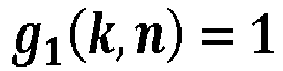


- In this case, it is assumed that there is no excessive positioning, and no need to move energy from louder channel to softer channel.
- If mixing is in the "mix" mode, the gains can be determined to move signal energy from a louder one of the left channel and the right channel to the other of the left channel and the right channel to create a processed left channel and a processed right channel of a processed
stereo audio signal 5. - The
level difference 7 between the stereo channels is reduced by moving signal energy from a louder one of the left channel and the right channel to the other of the left channel and the right channel. The level difference between the processed left channel and the processed right channel of the processedstereo audio signal 5 is less than the determined level difference between the left channel and the right channel of the originalstereo audio signal 3. - Thus if the inter-channel level difference is above the threshold for a frequency band, signal energy for that frequency band (but not other frequency bands) is moved from a louder one of the left channel and the right channel to the other of the left channel and the right channel to create a processed left channel and a processed right channel of a processed stereo audio signal.
- In some but not necessarily all examples, the derived gains for the mix mode can fulfil at least two criteria. First, energy is moved from the higher level channel to the lower level channel. Second the resulting audio signals (after the gains have been applied) should have the same total energy as the original signals.
- Before reduction of the level difference: the lower energy signal is Ξ0(k,n ) and the higher energy signal is Ξ1(k,n).
After reduction of the level difference: the lower energy signal has become Ξ0(k,n)' = (g 0(k,n)2Ξ1(k,n) + Ξ0(k,n)) and
the higher energy signal has become Ξ1(k,n)' = (g 1(k,n)2Ξ1(k,n)) . - Then because the resulting audio signals (after the gains have been applied) should have the same total energy as the original signals, i.e.,


- Let us define a target level difference T(k,n)' . The gains g 0(k,n) and g 1(k,n) can then be expressed in terms of g 0(k,n), g 1(k,n), Ξ0(k,n) , Ξ1 (k,n).
- For example let T(k,n)' be the target ratio of levels after the gains have been applied, where the levels are measure as energy

- Therefore

- Substituting into the constant energy equation:

- Results is the following gains:


- The gain g 0(k,n) relates to an estimated instantaneous need for moving energy from one channel to another. The gain g 1(k,n) relates to a need for conservation of energy.
- Let us define a target level difference T(k,n) (in dB)


- Let us define a function F that relates the actual level difference R to the target level difference i.e. T=F(R), where R≥X.
- The target level difference T is then a function dependent upon the determined level difference (R). When the determined level difference (R) is above the threshold (X), then the target level difference is less than the determined level difference (R).
- In some but not necessarily all examples, the target level difference T has a maximum value Tmax at least when the determined level difference (R) exceeds a saturation value Rsat.
- In some but not necessarily all examples, the target level difference T is monotonically increasing between a minimum value Tmin and a maximum value Tmax.
- In some but not necessarily all examples the function, at least when the determined level difference (R) is initially above the threshold (X), is a monotonically increasing function that has a gradient (dT/dR) that is less than 1.
- In some but not necessarily all examples the function, at least when the determined level difference (R) is initially above the threshold (X), is a linearly increasing function that has a gradient (dT/dR) that is less than 1.
- In some but not necessarily all examples the function is adaptable by a user. For example, the user could adapt one of more of X, Rsa, Tmin, Tmax, the gradient dT/dR.
-
Fig 4 illustrates an example of a function F, where T=F(R). - In this example:

- For R>X, T<R


- Energy is moved from the louder channel to the quieter channel, and the louder channel is re-scaled using:


- Energy is moved from the louder channel to the quieter channel, and the louder channel is re-scaled. A first gain g 1(k,n) is used to re-scale a signal level S1 (k,n) of the louder channel to provide the processed
channel 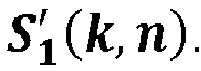

if




- Energy is moved from the louder channel to the quieter channel, and the louder channel is re-scaled. A first gain g 1(k,n) is used to re-scale a signal level S 0( k, n) of the louder channel to provide the processed channel

channel 
- In some but not necessarily all examples, the movement of signal energy between channels can be smoothed over time. For example, the first gain and the second gain can be smoothed over time.
- In some but not necessarily all examples, the second gain g r0(k,n) used for a current time frame is based on a weighted summation of a putative second gain g0 (k,n) for the current time frame and at least a used second gain g r0(k,n - 1) for a (immediately) preceding time frame. The first gain gr1 (k,n) used for a current time frame is based on a weighted summation of a putative first gain for the current time frame g 1(k,n) and at least a used firsbt gain g r1(k,n - 1) for a (immediately) preceding time frame. For example,
If


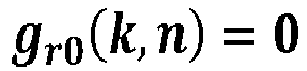


- When

- The gains are thus smoothed over time. As the louder channel may change over time, the signal may be moved from either channel.
- In some but not necessarily all examples, the smoothing is adaptive.
- For example, weighting of the weighted summation is adaptable in dependence upon a putative impact of the putative second gain for the current time frame on the
level difference 7 between the processed left channel and the processed right channel. - For example, the coefficients a and b can depend upon the second gain and the movement of energy between channels.
- If the gain g 0(k,n) that determines how much energy is being moved from the louder to the softer channel
is increasing over time then the more recent greater gain is weighted more (a/b is greater), for example the more recent gain is as favored or more favored than previous gains. For example, if
- The weighting of the weighted summation can be biased to decrease the level difference between the processed left channel and the processed right channel more quickly than increase the level difference between the processed left channel and the processed right channel.
- If the putative second gain for the current time frame will reduce the level difference

- Thus smoothing can for example be asymmetric. Changes in movement of energy over time (e.g. controlled by selection of values of a and b) is more responsive for changes that cause a decrease in the level difference between the processed left channel and the processed right channel than changes that cause an increase in the level difference between the processed left channel and the processed right channel.
- The processing is done based which one of the channels is louder. If

if g 0(k,n) > g r0(k,n - 1)


- Correspondingly, if

- if g 0(k,n ) > g l0( k,n - 1)


- A
mixer 72 is controlled by the mixing gains provided by block 70 which are dependent upon the mixing mode. - In the "mix" mode some energy is moved from the louder channel to the softer channel. This creates a processed left channel and a processed right channel of a processed
stereo audio signal 5. If thelevel difference 7 is above thethreshold 9 for a frequency band, theapparatus 10 moves signal energy for that frequency band (but not necessarily other frequency bands) from a louder one of the left channel and the right channel to the other of the left channel and the right channel to create a processed left channel and a processed right channel of a processed stereo audio signal.

- If it is determined to use the passthrough mode then the stage of moving energy from the louder channel to the softer channel is bypassed. If the
level difference 7 is not above the threshold for a frequency band, theapparatus 10 bypasses moving signal energy for that frequency band (but not necessarily other frequency bands) from a louder one of the left channel and the right channel to the other of the left channel and the right channel to create a processed left channel and a processed right channel of a processed stereo audio signal.

- In the mix mode, the mixing gains g l1(k, n), g r0(k, n), g r1(k, n), g l0(k, n) have been computed in frequency bands k, and they need to be transformed to values for each frequency bin b. This can, e.g., be performed by simply setting the value for the frequency band to each frequency bin inside the frequency band. Using these values, the input signal can be processed


- The resulting signals S' 0(b, n) and S' 1(b, n) are transformed back to time domain at
block 74. This transform should be the inverse of the transform that was applied atblock 60. The resulting signals s'i ( t ) 5 are the output of the processing. - The output may also be
unmodified input signal 3 if thelevel difference 7 is not above the threshold in any frequency band. - The processing described can occur in real time. The
apparatus 10 is a real-time audio processing apparatus. The processing described can be performed during playback. - In other examples, some or all of the processing described can be performed before playback.
- The descriptions above have described processing in the frequency domain. This is optional. The processing can occur in the time domain only. This processing can be understood in the limit of a single (large) frequency bin in a single (large) frequency band.
-
FIG 5 illustrates an example ofheadphones 200 comprising a left-earaudio output device 202 and a right-earaudio output device 204. The processed left channel is rendered from the left-earaudio output device 202 and the processed right channel is rendered from the right-earaudio output device 204. - In some examples, the
headphones 200 are theapparatus 10 and receive theaudio signal 3. - In some examples, the
headphones 200 are coupled to theapparatus 10 and receive from theapparatus 10 the audio signals 3,5. - In some examples, the left
audio output device 202 is a left headphone for positioning at or in a user's left ear and the rightaudio output device 204 is a right headphone for positioning at or in a user's right ear. In some examples, the left and right headphones are provided as in-ear buds. In some examples, the left and right headphones are positioned at a user's ears by a supporting headset. - If the
input stereo signal 3 comprises a sound source that is hard-panned (i.e., positioned to only left or right) or extreme-panned (i.e., positioned predominantly to left or right) then it can be reproduced satisfactorily using stereo loudspeakers. However, if that kind of stereo signal is reproduced with headphones, it produces an unnatural perception. In headphone reproduction, the left audio signal is reproduced by the left headphone, and, as a result, it reaches only (or predominantly) the left ear and the right audio signal reaches only the right ear. Hard-panned or extreme-panned audio sources in stereo content, when reproduced by headphones cause inter-aural level differences (ILD) that are very high. Furthermore, the ILDs are very high at all frequencies. - For a natural sound source, ILDs are very small at low frequencies (regardless of the sound source direction) and increase when the frequency is increased (for sound sources on the sides). This is due to frequency-dependent shadowing of the human head. At lower frequencies, the head does not significantly shadow the audio. Thus headphone reproduction of hard-panned or extreme-panned sound sources causes very large ILDs, which causes unnatural ILDs. In practice, this is perceived as unpleasant and unnatural playback. This may be characterized as a "feeling of pressure", or even as slight pain.
- The
apparatus 10 can be used to address this problem and provide improved headphone playback. - The stereo signals are modified when they would not be pleasant to listen to with headphones, and not otherwise. The stereo image is kept unmodified (preserving the spatial impression), unless modifications are needed (in which case spatiality is still maintained but extreme panning effects are softened for enhanced listening comfort).
- The
apparatus 10 can also be used with loudspeaker playback. The processing can be performed as for the headphone playback, but the output stereo signals are forwarded to loudspeakers instead of headphones (the processing may also be different in alternative embodiments). In the case of loudspeaker playback, the apparatus can be used to get more natural stereo mixing instead of extreme, hard-panned mixing. - A use case will now be described. The original signal 3 (e.g. "Wild Life" by "Wings"), has
level differences 7 between the channels of the stereo signals computed using 10ms frames. There isprominent level difference 7 at certain time instants (especially between 10 and 20 seconds, due to hard-panned keyboards in the right channel). This creates an unpleasant listening experience when listening with headphones. The modifiedsignal 5 hasdifferent level differences 7. The largest level differences (between 10 and 20 seconds) will have been made smaller. As a result, the listening experience is made significantly more comfortable for headphone listening. When there are noexcess level differences 7 in the original signal, thesignal 5 is not modified and is the same or substantially the same as the original signal. -
FIGs 6A and 6B illustrate examples of asystem 211 comprising anapparatus 10 as previously described, and anaudio rendering apparatus 200, forexample headphones 200 comprising a left-earaudio output device 202 for rendering the processed left channel and a right-earaudio output device 204 for rendering the processed right channel. - In this example a bitstream is retrieved from storage, or it may be received via network. The bitstream can be fed to a decoder, if the audio signals have been compressed, to decode the audio signals. The resulting
stereo audio signals 3 are fed toexcess panning remover 210 that comprises analysis means 20, determiningmeans 30 and modifyingmeans 40. Theexcess panning remover 210 performs themethod 100, an example of which have been described with reference toFIG 3 and FIG 4 . Theexcess panning remover 210 is provided by software running inside a computer or computing device (e.g. a mobile phone, a personal audio device). - In the example of
FIG 6A , theexcess panning remover 210 is provided by code running inside player software. The manufacturer of the player software thus provides improved user experience for headphone listening. - In the example of
FIG 6B , theexcess panning remover 210 is provided by code running outsideplayer software 212 in a plug-in. The manufacturer of theapparatus 10 or theheadphones 200 can provide the plug-in to provide improved user experience for headphone listening. The plugin could be implemented as stand-alone software by a third party. -
Fig 7 illustrates an example of acontroller 240. Implementation of acontroller 240 may be as controller circuitry. Thecontroller 240 may be implemented in hardware alone, have certain aspects in software including firmware alone or can be a combination of hardware and software (including firmware). - As illustrated in
Fig 7 thecontroller 240 may be implemented using instructions that enable hardware functionality, for example, by using executable instructions of acomputer program 246 in a general-purpose or special-purpose processor 242 that may be stored on a computer readable storage medium (disk, memory etc) to be executed by such aprocessor 242. - The
processor 242 is configured to read from and write to thememory 244. Theprocessor 242 may also comprise an output interface via which data and/or commands are output by theprocessor 242 and an input interface via which data and/or commands are input to theprocessor 242. - The
memory 244 stores acomputer program 246 comprising computer program instructions (computer program code) that controls the operation of theapparatus 10 when loaded into theprocessor 242. The computer program instructions, of thecomputer program 246, provide the logic and routines that enables the apparatus to perform the methods illustrated inFigs 1, 2 or3 . Theprocessor 242 by reading thememory 244 is able to load and execute thecomputer program 246. - The
apparatus 10 therefore comprises: - at least one
processor 242; and - at least one
memory 244 including computer program code - the at least one
memory 244 and the computer program code configured to, with the at least oneprocessor 242, cause theapparatus 10 at least to perform:- (i) analyzing 120
level differences 7 between a left channel and a right channel of astereo audio signal 3; - (ii) determining 130 if a
level difference 7 between the left channel and the right channel is above athreshold 9; - (iii) conditionally, if the
level difference 7 is above thethreshold 9, moving 140 signal energy from a louder one of the left channel and the right channel to the other of the left channel and the right channel to create a processed left channel and a processed right channel of a processedstereo audio signal 5.
- (i) analyzing 120
- As illustrated in
Fig 8 , thecomputer program 246 may arrive at theapparatus 10 via anysuitable delivery mechanism 250. Thedelivery mechanism 250 may be, for example, a machine readable medium, a computer-readable medium, a non-transitory computer-readable storage medium, a computer program product, a memory device, a record medium such as a Compact Disc Read-Only Memory (CD-ROM) or a Digital Versatile Disc (DVD) or a solid state memory, an article of manufacture that comprises or tangibly embodies thecomputer program 246. The delivery mechanism may be a signal configured to reliably transfer thecomputer program 246. Theapparatus 10 may propagate or transmit thecomputer program 246 as a computer data signal. - Computer program instructions for causing an apparatus to perform at least the following or for performing at least the following:
- (i) analyzing 120
level differences 7 between a left channel and a right channel of astereo audio signal 3; - (ii) determining 130 if a
level difference 7 between the left channel and the right channel is above athreshold 9; - (iii) conditionally, if the
level difference 7 is above thethreshold 9, moving 140 signal energy from a louder one of the left channel and the right channel to the other of the left channel and the right channel to create a processed left channel and a processed right channel of a processedstereo audio signal 5. - The computer program instructions may be comprised in a computer program, a non-transitory computer readable medium, a computer program product, a machine readable medium. In some but not necessarily all examples, the computer program instructions may be distributed over more than one computer program.
- Although the
memory 244 is illustrated as a single component/circuitry it may be implemented as one or more separate components/circuitry some or all of which may be integrated/removable and/or may provide permanent/semi-permanent/ dynamic/cached storage. - Although the
processor 242 is illustrated as a single component/circuitry it may be implemented as one or more separate components/circuitry some or all of which may be integrated/removable. Theprocessor 242 may be a single core or multi-core processor. - References to 'computer-readable storage medium', 'computer program product', 'tangibly embodied computer program' etc. or a 'controller', 'computer', 'processor' etc. should be understood to encompass not only computers having different architectures such as single /multi- processor architectures and sequential (Von Neumann)/parallel architectures but also specialized circuits such as field-programmable gate arrays (FPGA), application specific circuits (ASIC), signal processing devices and other processing circuitry. References to computer program, instructions, code etc. should be understood to encompass software for a programmable processor or firmware such as, for example, the programmable content of a hardware device whether instructions for a processor, or configuration settings for a fixed-function device, gate array or programmable logic device etc.
- As used in this application, the term 'circuitry' may refer to one or more or all of the following:
- (a) hardware-only circuitry implementations (such as implementations in only analog and/or digital circuitry) and
- (b) combinations of hardware circuits and software, such as (as applicable):
- (i) a combination of analog and/or digital hardware circuit(s) with software/firmware and
- (ii) any portions of hardware processor(s) with software (including digital signal processor(s)), software, and memory(ies) that work together to cause an apparatus, such as a mobile phone or server, to perform various functions and
- (c) hardware circuit(s) and or processor(s), such as a microprocessor(s) or a portion of a microprocessor(s), that requires software (e.g. firmware) for operation, but the software may not be present when it is not needed for operation.
- This definition of circuitry applies to all uses of this term in this application, including in any claims. As a further example, as used in this application, the term circuitry also covers an implementation of merely a hardware circuit or processor and its (or their) accompanying software and/or firmware. The term circuitry also covers, for example and if applicable to the particular claim element, a baseband integrated circuit for a mobile device or a similar integrated circuit in a server, a cellular network device, or other computing or network device.
- The blocks illustrated in the
Figs 1, 2 or3 may represent steps in a method and/or sections of code in thecomputer program 246. The illustration of a particular order to the blocks does not necessarily imply that there is a required or preferred order for the blocks and the order and arrangement of the block may be varied. Furthermore, it may be possible for some blocks to be omitted. - Blocks or components that are described or illustrated as connected can, in at least some examples, be operationally coupled. Operationally coupled means any number or combination of intervening elements can exist (including no intervening elements).
- Where a structural feature has been described, it may be replaced by means for performing one or more of the functions of the structural feature whether that function or those functions are explicitly or implicitly described.
- As used here 'module' refers to a unit or apparatus that excludes certain parts/components that would be added by an end manufacturer or a user. The
apparatus 100 can be a module. Thecomputer program 246 can be a module. - The
audio signal 5 can be transmitted as an electromagnetic signal encoding information. - The
audio signal 5 can be stored as an addressable data structure encoding information. - The
signal 5 is a signal with embedded data, the signal being encoded in accordance with an encoding process which comprises: - (i) analyzing 120
level differences 7 between a left channel and a right channel of astereo audio signal 3; - (ii) determining 130 if a
level difference 7 between the left channel and the right channel is above athreshold 9; - (iii) conditionally, if the
level difference 7 is above thethreshold 9, moving 140 signal energy from a louder one of the left channel and the right channel to the other of the left channel and the right channel to create a processed left channel and a processed right channel of a processedstereo audio signal 5. - The above described examples find application as enabling components of:
automotive systems; telecommunication systems; electronic systems including consumer electronic products; distributed computing systems; media systems for generating or rendering media content including audio, visual and audio visual content and mixed, mediated, virtual and/or augmented reality; personal systems including personal health systems or personal fitness systems; navigation systems; user interfaces also known as human machine interfaces; networks including cellular, non-cellular, and optical networks; ad-hoc networks; the internet; the internet of things; virtualized networks; and related software and services. - The term 'comprise' is used in this document with an inclusive not an exclusive meaning. That is any reference to X comprising Y indicates that X may comprise only one Y or may comprise more than one Y. If it is intended to use 'comprise' with an exclusive meaning then it will be made clear in the context by referring to "comprising only one..." or by using "consisting".
- In this description, reference has been made to various examples. The description of features or functions in relation to an example indicates that those features or functions are present in that example. The use of the term 'example' or 'for example' or 'can' or 'may' in the text denotes, whether explicitly stated or not, that such features or functions are present in at least the described example, whether described as an example or not, and that they can be, but are not necessarily, present in some of or all other examples. Thus 'example', 'for example', 'can' or 'may' refers to a particular instance in a class of examples. A property of the instance can be a property of only that instance or a property of the class or a property of a sub-class of the class that includes some but not all of the instances in the class. It is therefore implicitly disclosed that a feature described with reference to one example but not with reference to another example, can where possible be used in that other example as part of a working combination but does not necessarily have to be used in that other example.
- Although embodiments have been described in the preceding paragraphs with reference to various examples, it should be appreciated that modifications to the examples given can be made without departing from the scope of the claims.
- Features described in the preceding description may be used in combinations other than the combinations explicitly described above.
- Although functions have been described with reference to certain features, those functions may be performable by other features whether described or not.
- Although features have been described with reference to certain embodiments, those features may also be present in other embodiments whether described or not.
- The term 'a' or 'the' is used in this document with an inclusive not an exclusive meaning. That is any reference to X comprising a/the Y indicates that X may comprise only one Y or may comprise more than one Y unless the context clearly indicates the contrary. If it is intended to use 'a' or 'the' with an exclusive meaning then it will be made clear in the context. In some circumstances the use of 'at least one' or 'one or more' may be used to emphasis an inclusive meaning but the absence of these terms should not be taken to infer and exclusive meaning.
- The presence of a feature (or combination of features) in a claim is a reference to that feature or (combination of features) itself and also to features that achieve substantially the same technical effect (equivalent features). The equivalent features include, for example, features that are variants and achieve substantially the same result in substantially the same way. The equivalent features include, for example, features that perform substantially the same function, in substantially the same way to achieve substantially the same result.
- In this description, reference has been made to various examples using adjectives or adjectival phrases to describe characteristics of the examples. Such a description of a characteristic in relation to an example indicates that the characteristic is present in some examples exactly as described and is present in other examples substantially as described.
- Whilst endeavoring in the foregoing specification to draw attention to those features believed to be of importance it should be understood that the Applicant may seek protection via the claims in respect of any patentable feature or combination of features hereinbefore referred to and/or shown in the drawings whether or not emphasis has been placed thereon.
Claims (15)
- An apparatus comprising means for:analyzing a level difference between a left channel and a right channel of a stereo audio signal;determining if the level difference between the left channel and the right channel is above a threshold;conditionally, if the determined level difference is above the threshold, moving signal energy from a louder one of the left channel and the right channel to the other of the left channel and the right channel to create a processed left channel and a processed right channel of a processed stereo audio signal.
- An apparatus as claimed in claim 1, comprising means for smoothing the level difference over time before determining if the level difference between the left channel and the right channel is above the threshold.
- An apparatus as claimed in any of claim 1 or 2, comprising means for conditionally, if the level difference is above the threshold for at least one frequency band of a plurality of frequency bands, moving signal energy for that at least one frequency band from the louder one of the left channel and the right channel to the other of the left channel and the right channel to create the processed left channel and the processed right channel of the processed stereo audio signal.
- An apparatus as claimed in any preceding claim, comprising means for smoothing over time movement of signal energy from the louder one of the left channel and the right channel to the other of the left channel and the right channel.
- An apparatus as claimed in any preceding claim, comprising means for re-scaling a signal energy level of the louder one of the left channel and the right channel after moving signal energy from the louder one of the left channel and the right channel to the other of the left channel and the right channel
- An apparatus as claimed in any preceding claim, wherein a first gain is used to re-scale a signal energy level of the louder one of the left channel and the right channel after moving signal energy from the louder one of the left channel and the right channel to the other of the left channel and the right channel and a second gain is used to define the signal energy moved from the louder one of the left channel and the right channel to the other of the left channel and the right channel, wherein the second gain used for a current time frame is based on a weighted summation of a putative second gain for the current time frame and at least a used second gain for a preceding time frame, wherein weightings of the summation are adaptable in dependence upon a putative impact of the putative second gain for the current time frame on the level difference between the processed left channel and the processed right channel.
- An apparatus as claimed in claim 6, wherein the weightings of the summation are biased to decrease the level difference between the processed left channel and the processed right channel more quickly than increase the level difference between the processed left channel and the processed right channel.
- An apparatus as claimed in any preceding claim, wherein said moving signal energy from a louder one of the left channel and the right channel to the other of the left channel and the right channel is controlled in dependence upon a function that is dependent upon the determined level difference, wherein when the determined level difference is above the threshold, then the target level difference is less than the determined level difference and wherein the function is adaptable by a user and/or wherein the target level difference has a maximum value at least when the determined level difference exceeds a saturation value.
- An apparatus as claimed in any preceding claim, comprising means for conditionally, if the level difference is not above the threshold, not moving signal energy from a louder one of the left channel and the right channel to the other of the left channel and the right channel to create a processed left channel and a processed right channel of a processed stereo audio signal.
- An apparatus as claimed in any preceding claim, comprising means for conditionally, if the level difference is not above the threshold for a frequency band , bypassing moving signal energy for that frequency band from a louder one of the left channel and the right channel to the other of the left channel and the right channel to create a processed left channel and a processed right channel of a processed stereo audio signal.
- An apparatus as claimed in any preceding claim, configured as a headphone, wherein the headphone comprises a left-ear audio output device and a right-ear audio output device and the headphone is configured to render the processed left channel from the left-ear audio output device and the processed right channel from the right-ear audio output device.
- An apparatus as claimed in any of claims 1 to 10, further comprising means for rendering the processed stereo signal from a headphone, wherein the headphone comprises a left-ear audio output device for rendering the processed left channel and a right-ear audio output device for rendering the processed right channel.
- An apparatus as claimed in any of claims 1 to 10, is at least one of:a headphone, wherein the stereo audio signal is received at the headphone; andcoupled to the headphone, wherein the apparatus comprising means for providing the stereo audio signal to the headphone.
- An apparatus as claimed in any of claims 1 to 13, further comprising an application for user selection of audio for playback.
- A method comprising:analyzing a level difference between a left channel and a right channel of a stereo audio signal;determining if the level difference between the left channel and the right channel is above a threshold; andconditionally, if the determined level difference is above the threshold, moving signal energy from a louder one of the left channel and the right channel to the other of the left channel and the right channel to create a processed left channel and a processed right channel of a processed stereo audio signal.
Applications Claiming Priority (1)
| Application Number | Priority Date | Filing Date | Title |
|---|---|---|---|
| GBGB1909715.3A GB201909715D0 (en) | 2019-07-05 | 2019-07-05 | Stereo audio |
Publications (2)
| Publication Number | Publication Date |
|---|---|
| EP3761673A1 true EP3761673A1 (en) | 2021-01-06 |
| EP3761673B1 EP3761673B1 (en) | 2025-07-23 |
Family
ID=67623180
Family Applications (1)
| Application Number | Title | Priority Date | Filing Date |
|---|---|---|---|
| EP20182429.9A Active EP3761673B1 (en) | 2019-07-05 | 2020-06-26 | Stereo audio |
Country Status (3)
| Country | Link |
|---|---|
| US (1) | US11343635B2 (en) |
| EP (1) | EP3761673B1 (en) |
| GB (1) | GB201909715D0 (en) |
Families Citing this family (1)
| Publication number | Priority date | Publication date | Assignee | Title |
|---|---|---|---|---|
| CN121844576A (en) * | 2023-09-20 | 2026-04-10 | 高通股份有限公司 | Stereo expansion using null formers and panning |
Citations (4)
| Publication number | Priority date | Publication date | Assignee | Title |
|---|---|---|---|---|
| JPS5760800A (en) * | 1980-09-27 | 1982-04-12 | Pioneer Electronic Corp | Tone quality adjusting circuit |
| US4837824A (en) * | 1988-03-02 | 1989-06-06 | Orban Associates, Inc. | Stereophonic image widening circuit |
| JP2943713B2 (en) * | 1996-08-28 | 1999-08-30 | 日本電気株式会社 | Surround circuit with pseudo stereo function |
| US20180048277A1 (en) * | 2016-08-13 | 2018-02-15 | Xiamen Fuliye Electric Co., Ltd. | Method for synchronizing left and right channels in smart audio amplifiers |
Family Cites Families (17)
| Publication number | Priority date | Publication date | Assignee | Title |
|---|---|---|---|---|
| US5872851A (en) * | 1995-09-18 | 1999-02-16 | Harman Motive Incorporated | Dynamic stereophonic enchancement signal processing system |
| ATE388599T1 (en) * | 2004-04-16 | 2008-03-15 | Dublin Inst Of Technology | METHOD AND SYSTEM FOR SOUND SOURCE SEPARATION |
| JP2006135489A (en) | 2004-11-04 | 2006-05-25 | Dimagic:Kk | Reproduction balance adjusting method, program, and reproduction balance adjusting device |
| CN101053152B (en) * | 2005-07-29 | 2010-12-29 | 哈曼国际工业有限公司 | automatic audio tuning system and method |
| JP4839924B2 (en) * | 2006-03-29 | 2011-12-21 | ソニー株式会社 | In-vehicle electronic device, sound field optimization correction method for vehicle interior space, and sound field optimization correction system for vehicle interior space |
| KR101597375B1 (en) * | 2007-12-21 | 2016-02-24 | 디티에스 엘엘씨 | System for adjusting perceived loudness of audio signals |
| WO2009125046A1 (en) | 2008-04-11 | 2009-10-15 | Nokia Corporation | Processing of signals |
| US8208660B2 (en) * | 2008-08-26 | 2012-06-26 | Broadcom Corporation | Method and system for audio level detection and control |
| JP5355690B2 (en) * | 2009-06-01 | 2013-11-27 | 三菱電機株式会社 | Signal processing device |
| US8571232B2 (en) * | 2009-09-11 | 2013-10-29 | Barry Stephen Goldfarb | Apparatus and method for a complete audio signal |
| JP2014072724A (en) | 2012-09-28 | 2014-04-21 | Fujitsu Mobile Communications Ltd | Terminal device, sound processing method, and program |
| US9515629B2 (en) * | 2013-05-16 | 2016-12-06 | Apple Inc. | Adaptive audio equalization for personal listening devices |
| CN104299615B (en) | 2013-07-16 | 2017-11-17 | 华为技术有限公司 | Level difference processing method and processing device between a kind of sound channel |
| CN106416301B (en) | 2014-03-28 | 2018-07-06 | 三星电子株式会社 | Method and device for rendering an acoustic signal |
| US9749766B2 (en) | 2015-12-27 | 2017-08-29 | Philip Scott Lyren | Switching binaural sound |
| JP6821699B2 (en) | 2016-04-20 | 2021-01-27 | ジェネレック・オーワイGenelec Oy | How to regularize active monitoring headphones and their inversion |
| CN108834037B (en) | 2018-06-12 | 2019-09-13 | 广州酷狗计算机科技有限公司 | The method and apparatus of playing audio-fequency data |
-
2019
- 2019-07-05 GB GBGB1909715.3A patent/GB201909715D0/en not_active Ceased
-
2020
- 2020-06-26 EP EP20182429.9A patent/EP3761673B1/en active Active
- 2020-06-30 US US16/916,322 patent/US11343635B2/en active Active
Patent Citations (4)
| Publication number | Priority date | Publication date | Assignee | Title |
|---|---|---|---|---|
| JPS5760800A (en) * | 1980-09-27 | 1982-04-12 | Pioneer Electronic Corp | Tone quality adjusting circuit |
| US4837824A (en) * | 1988-03-02 | 1989-06-06 | Orban Associates, Inc. | Stereophonic image widening circuit |
| JP2943713B2 (en) * | 1996-08-28 | 1999-08-30 | 日本電気株式会社 | Surround circuit with pseudo stereo function |
| US20180048277A1 (en) * | 2016-08-13 | 2018-02-15 | Xiamen Fuliye Electric Co., Ltd. | Method for synchronizing left and right channels in smart audio amplifiers |
Also Published As
| Publication number | Publication date |
|---|---|
| US11343635B2 (en) | 2022-05-24 |
| GB201909715D0 (en) | 2019-08-21 |
| US20210006928A1 (en) | 2021-01-07 |
| EP3761673B1 (en) | 2025-07-23 |
Similar Documents
| Publication | Publication Date | Title |
|---|---|---|
| KR101805110B1 (en) | Apparatus and method for sound stage enhancement | |
| CN103181191B (en) | Stereo image widening system | |
| US8515104B2 (en) | Binaural filters for monophonic compatibility and loudspeaker compatibility | |
| US9307338B2 (en) | Upmixing method and system for multichannel audio reproduction | |
| US20190057713A1 (en) | Methods and apparatus for decoding based on speech enhancement metadata | |
| US9408010B2 (en) | Audio system and method therefor | |
| CN112534717A (en) | Multi-channel audio enhancement, decoding and rendering responsive to feedback | |
| US9743215B2 (en) | Apparatus and method for center signal scaling and stereophonic enhancement based on a signal-to-downmix ratio | |
| EP3691124B1 (en) | Audio system and method for controlling same | |
| CN112585868A (en) | Audio enhancement in response to compression feedback | |
| EP3761673B1 (en) | Stereo audio | |
| CN106658340B (en) | Content-Adaptive Surround Virtualization | |
| JP2024507535A (en) | Virtualizer for binaural audio | |
| EP4604120A1 (en) | Apparatus, method and computer program for audio signal processing based on inter-channel-level-difference and side signal component manipulation | |
| HK40102435A (en) | Binaural filters for monophonic compatibility and loudspeaker compatibility | |
| GB2639982A (en) | Processing of captured multi-channel audio to mitigate the problem of acoustic echo | |
| HK40040794A (en) | Binaural filters for monophonic compatibility and loudspeaker compatibility | |
| HK1222470B (en) | Hybrid waveform-coded and parametric-coded speech enhancement | |
| HK1199978A1 (en) | Bass enhancement system | |
| HK1199978B (en) | Bass enhancement system | |
| HK1227210B (en) | Apparatus and method for sound stage enhancement |
Legal Events
| Date | Code | Title | Description |
|---|---|---|---|
| PUAI | Public reference made under article 153(3) epc to a published international application that has entered the european phase |
Free format text: ORIGINAL CODE: 0009012 |
|
| STAA | Information on the status of an ep patent application or granted ep patent |
Free format text: STATUS: THE APPLICATION HAS BEEN PUBLISHED |
|
| AK | Designated contracting states |
Kind code of ref document: A1 Designated state(s): AL AT BE BG CH CY CZ DE DK EE ES FI FR GB GR HR HU IE IS IT LI LT LU LV MC MK MT NL NO PL PT RO RS SE SI SK SM TR |
|
| AX | Request for extension of the european patent |
Extension state: BA ME |
|
| STAA | Information on the status of an ep patent application or granted ep patent |
Free format text: STATUS: REQUEST FOR EXAMINATION WAS MADE |
|
| 17P | Request for examination filed |
Effective date: 20210705 |
|
| RBV | Designated contracting states (corrected) |
Designated state(s): AL AT BE BG CH CY CZ DE DK EE ES FI FR GB GR HR HU IE IS IT LI LT LU LV MC MK MT NL NO PL PT RO RS SE SI SK SM TR |
|
| STAA | Information on the status of an ep patent application or granted ep patent |
Free format text: STATUS: EXAMINATION IS IN PROGRESS |
|
| 17Q | First examination report despatched |
Effective date: 20220315 |
|
| GRAP | Despatch of communication of intention to grant a patent |
Free format text: ORIGINAL CODE: EPIDOSNIGR1 |
|
| STAA | Information on the status of an ep patent application or granted ep patent |
Free format text: STATUS: GRANT OF PATENT IS INTENDED |
|
| INTG | Intention to grant announced |
Effective date: 20241002 |
|
| GRAJ | Information related to disapproval of communication of intention to grant by the applicant or resumption of examination proceedings by the epo deleted |
Free format text: ORIGINAL CODE: EPIDOSDIGR1 |
|
| STAA | Information on the status of an ep patent application or granted ep patent |
Free format text: STATUS: EXAMINATION IS IN PROGRESS |
|
| GRAP | Despatch of communication of intention to grant a patent |
Free format text: ORIGINAL CODE: EPIDOSNIGR1 |
|
| STAA | Information on the status of an ep patent application or granted ep patent |
Free format text: STATUS: GRANT OF PATENT IS INTENDED |
|
| INTC | Intention to grant announced (deleted) | ||
| INTG | Intention to grant announced |
Effective date: 20250221 |
|
| GRAS | Grant fee paid |
Free format text: ORIGINAL CODE: EPIDOSNIGR3 |
|
| GRAA | (expected) grant |
Free format text: ORIGINAL CODE: 0009210 |
|
| STAA | Information on the status of an ep patent application or granted ep patent |
Free format text: STATUS: THE PATENT HAS BEEN GRANTED |
|
| AK | Designated contracting states |
Kind code of ref document: B1 Designated state(s): AL AT BE BG CH CY CZ DE DK EE ES FI FR GB GR HR HU IE IS IT LI LT LU LV MC MK MT NL NO PL PT RO RS SE SI SK SM TR |
|
| REG | Reference to a national code |
Ref country code: GB Ref legal event code: FG4D |
|
| REG | Reference to a national code |
Ref country code: CH Ref legal event code: EP |
|
| REG | Reference to a national code |
Ref country code: IE Ref legal event code: FG4D |
|
| REG | Reference to a national code |
Ref country code: DE Ref legal event code: R096 Ref document number: 602020054896 Country of ref document: DE |
|
| REG | Reference to a national code |
Ref country code: NL Ref legal event code: FP |
|
| PG25 | Lapsed in a contracting state [announced via postgrant information from national office to epo] |
Ref country code: PT Free format text: LAPSE BECAUSE OF FAILURE TO SUBMIT A TRANSLATION OF THE DESCRIPTION OR TO PAY THE FEE WITHIN THE PRESCRIBED TIME-LIMIT Effective date: 20251124 |
|
| REG | Reference to a national code |
Ref country code: AT Ref legal event code: MK05 Ref document number: 1817701 Country of ref document: AT Kind code of ref document: T Effective date: 20250723 |
|
| PG25 | Lapsed in a contracting state [announced via postgrant information from national office to epo] |
Ref country code: IS Free format text: LAPSE BECAUSE OF FAILURE TO SUBMIT A TRANSLATION OF THE DESCRIPTION OR TO PAY THE FEE WITHIN THE PRESCRIBED TIME-LIMIT Effective date: 20251123 |
|
| PG25 | Lapsed in a contracting state [announced via postgrant information from national office to epo] |
Ref country code: NO Free format text: LAPSE BECAUSE OF FAILURE TO SUBMIT A TRANSLATION OF THE DESCRIPTION OR TO PAY THE FEE WITHIN THE PRESCRIBED TIME-LIMIT Effective date: 20251023 |
|
| REG | Reference to a national code |
Ref country code: LT Ref legal event code: MG9D |
|
| PG25 | Lapsed in a contracting state [announced via postgrant information from national office to epo] |
Ref country code: AT Free format text: LAPSE BECAUSE OF FAILURE TO SUBMIT A TRANSLATION OF THE DESCRIPTION OR TO PAY THE FEE WITHIN THE PRESCRIBED TIME-LIMIT Effective date: 20250723 |
|
| PG25 | Lapsed in a contracting state [announced via postgrant information from national office to epo] |
Ref country code: FI Free format text: LAPSE BECAUSE OF FAILURE TO SUBMIT A TRANSLATION OF THE DESCRIPTION OR TO PAY THE FEE WITHIN THE PRESCRIBED TIME-LIMIT Effective date: 20250723 |
|
| PG25 | Lapsed in a contracting state [announced via postgrant information from national office to epo] |
Ref country code: HR Free format text: LAPSE BECAUSE OF FAILURE TO SUBMIT A TRANSLATION OF THE DESCRIPTION OR TO PAY THE FEE WITHIN THE PRESCRIBED TIME-LIMIT Effective date: 20250723 |
|
| PG25 | Lapsed in a contracting state [announced via postgrant information from national office to epo] |
Ref country code: GR Free format text: LAPSE BECAUSE OF FAILURE TO SUBMIT A TRANSLATION OF THE DESCRIPTION OR TO PAY THE FEE WITHIN THE PRESCRIBED TIME-LIMIT Effective date: 20251024 |
|
| PG25 | Lapsed in a contracting state [announced via postgrant information from national office to epo] |
Ref country code: SE Free format text: LAPSE BECAUSE OF FAILURE TO SUBMIT A TRANSLATION OF THE DESCRIPTION OR TO PAY THE FEE WITHIN THE PRESCRIBED TIME-LIMIT Effective date: 20250723 |
|
| PG25 | Lapsed in a contracting state [announced via postgrant information from national office to epo] |
Ref country code: LV Free format text: LAPSE BECAUSE OF FAILURE TO SUBMIT A TRANSLATION OF THE DESCRIPTION OR TO PAY THE FEE WITHIN THE PRESCRIBED TIME-LIMIT Effective date: 20250723 |
|
| PG25 | Lapsed in a contracting state [announced via postgrant information from national office to epo] |
Ref country code: BG Free format text: LAPSE BECAUSE OF FAILURE TO SUBMIT A TRANSLATION OF THE DESCRIPTION OR TO PAY THE FEE WITHIN THE PRESCRIBED TIME-LIMIT Effective date: 20250723 Ref country code: PL Free format text: LAPSE BECAUSE OF FAILURE TO SUBMIT A TRANSLATION OF THE DESCRIPTION OR TO PAY THE FEE WITHIN THE PRESCRIBED TIME-LIMIT Effective date: 20250723 |
|
| PG25 | Lapsed in a contracting state [announced via postgrant information from national office to epo] |
Ref country code: RS Free format text: LAPSE BECAUSE OF FAILURE TO SUBMIT A TRANSLATION OF THE DESCRIPTION OR TO PAY THE FEE WITHIN THE PRESCRIBED TIME-LIMIT Effective date: 20251023 |
|
| PG25 | Lapsed in a contracting state [announced via postgrant information from national office to epo] |
Ref country code: ES Free format text: LAPSE BECAUSE OF FAILURE TO SUBMIT A TRANSLATION OF THE DESCRIPTION OR TO PAY THE FEE WITHIN THE PRESCRIBED TIME-LIMIT Effective date: 20250723 |
|
| PG25 | Lapsed in a contracting state [announced via postgrant information from national office to epo] |
Ref country code: SM Free format text: LAPSE BECAUSE OF FAILURE TO SUBMIT A TRANSLATION OF THE DESCRIPTION OR TO PAY THE FEE WITHIN THE PRESCRIBED TIME-LIMIT Effective date: 20250723 |
|
| PG25 | Lapsed in a contracting state [announced via postgrant information from national office to epo] |
Ref country code: DK Free format text: LAPSE BECAUSE OF FAILURE TO SUBMIT A TRANSLATION OF THE DESCRIPTION OR TO PAY THE FEE WITHIN THE PRESCRIBED TIME-LIMIT Effective date: 20250723 |
|
| PG25 | Lapsed in a contracting state [announced via postgrant information from national office to epo] |
Ref country code: IT Free format text: LAPSE BECAUSE OF FAILURE TO SUBMIT A TRANSLATION OF THE DESCRIPTION OR TO PAY THE FEE WITHIN THE PRESCRIBED TIME-LIMIT Effective date: 20250723 |
|
| PG25 | Lapsed in a contracting state [announced via postgrant information from national office to epo] |
Ref country code: CZ Free format text: LAPSE BECAUSE OF FAILURE TO SUBMIT A TRANSLATION OF THE DESCRIPTION OR TO PAY THE FEE WITHIN THE PRESCRIBED TIME-LIMIT Effective date: 20250723 |
|
| PG25 | Lapsed in a contracting state [announced via postgrant information from national office to epo] |
Ref country code: SK Free format text: LAPSE BECAUSE OF FAILURE TO SUBMIT A TRANSLATION OF THE DESCRIPTION OR TO PAY THE FEE WITHIN THE PRESCRIBED TIME-LIMIT Effective date: 20250723 Ref country code: EE Free format text: LAPSE BECAUSE OF FAILURE TO SUBMIT A TRANSLATION OF THE DESCRIPTION OR TO PAY THE FEE WITHIN THE PRESCRIBED TIME-LIMIT Effective date: 20250723 |