EP3761470B1 - Multi-slope droop control - Google Patents
Multi-slope droop control Download PDFInfo
- Publication number
- EP3761470B1 EP3761470B1 EP20183022.1A EP20183022A EP3761470B1 EP 3761470 B1 EP3761470 B1 EP 3761470B1 EP 20183022 A EP20183022 A EP 20183022A EP 3761470 B1 EP3761470 B1 EP 3761470B1
- Authority
- EP
- European Patent Office
- Prior art keywords
- power
- sources
- region
- source
- electrical
- Prior art date
- Legal status (The legal status is an assumption and is not a legal conclusion. Google has not performed a legal analysis and makes no representation as to the accuracy of the status listed.)
- Active
Links
Images

Classifications
-
- H—ELECTRICITY
- H02—GENERATION; CONVERSION OR DISTRIBUTION OF ELECTRIC POWER
- H02J—ELECTRIC POWER NETWORKS; CIRCUIT ARRANGEMENTS OR SYSTEMS FOR SUPPLYING OR DISTRIBUTING ELECTRIC POWER; SYSTEMS FOR STORING ELECTRIC ENERGY
- H02J1/00—Circuit arrangements for DC mains or DC distribution networks
- H02J1/10—Parallel operation of DC sources
- H02J1/106—Parallel operation of DC sources for load balancing, symmetrisation, or sharing
-
- B—PERFORMING OPERATIONS; TRANSPORTING
- B63—SHIPS OR OTHER WATERBORNE VESSELS; RELATED EQUIPMENT
- B63H—MARINE PROPULSION OR STEERING
- B63H21/00—Use of propulsion power plant or units on vessels
- B63H21/12—Use of propulsion power plant or units on vessels the vessels being motor-driven
- B63H21/17—Use of propulsion power plant or units on vessels the vessels being motor-driven by electric motor
-
- B—PERFORMING OPERATIONS; TRANSPORTING
- B64—AIRCRAFT; AVIATION; COSMONAUTICS
- B64D—EQUIPMENT FOR FITTING IN OR TO AIRCRAFT; FLIGHT SUITS; PARACHUTES; ARRANGEMENT OR MOUNTING OF POWER PLANTS OR PROPULSION TRANSMISSIONS IN AIRCRAFT
- B64D41/00—Power installations for auxiliary purposes
-
- G—PHYSICS
- G05—CONTROLLING; REGULATING
- G05F—SYSTEMS FOR REGULATING ELECTRIC OR MAGNETIC VARIABLES
- G05F1/00—Automatic systems in which deviations of an electric quantity from one or more predetermined values are detected at the output of the system and fed back to a device within the system to restore the detected quantity to its predetermined value or values, i.e. retroactive systems
- G05F1/10—Regulating voltage or current
- G05F1/46—Regulating voltage or current wherein the variable actually regulated by the final control device is DC
-
- H—ELECTRICITY
- H02—GENERATION; CONVERSION OR DISTRIBUTION OF ELECTRIC POWER
- H02J—ELECTRIC POWER NETWORKS; CIRCUIT ARRANGEMENTS OR SYSTEMS FOR SUPPLYING OR DISTRIBUTING ELECTRIC POWER; SYSTEMS FOR STORING ELECTRIC ENERGY
- H02J1/00—Circuit arrangements for DC mains or DC distribution networks
-
- H—ELECTRICITY
- H02—GENERATION; CONVERSION OR DISTRIBUTION OF ELECTRIC POWER
- H02J—ELECTRIC POWER NETWORKS; CIRCUIT ARRANGEMENTS OR SYSTEMS FOR SUPPLYING OR DISTRIBUTING ELECTRIC POWER; SYSTEMS FOR STORING ELECTRIC ENERGY
- H02J1/00—Circuit arrangements for DC mains or DC distribution networks
- H02J1/10—Parallel operation of DC sources
- H02J1/102—Parallel operation of DC sources being switching converters
-
- H—ELECTRICITY
- H02—GENERATION; CONVERSION OR DISTRIBUTION OF ELECTRIC POWER
- H02J—ELECTRIC POWER NETWORKS; CIRCUIT ARRANGEMENTS OR SYSTEMS FOR SUPPLYING OR DISTRIBUTING ELECTRIC POWER; SYSTEMS FOR STORING ELECTRIC ENERGY
- H02J1/00—Circuit arrangements for DC mains or DC distribution networks
- H02J1/10—Parallel operation of DC sources
- H02J1/12—Parallel operation of DC sources having power converters with further DC sources without power converters
-
- B—PERFORMING OPERATIONS; TRANSPORTING
- B64—AIRCRAFT; AVIATION; COSMONAUTICS
- B64D—EQUIPMENT FOR FITTING IN OR TO AIRCRAFT; FLIGHT SUITS; PARACHUTES; ARRANGEMENT OR MOUNTING OF POWER PLANTS OR PROPULSION TRANSMISSIONS IN AIRCRAFT
- B64D2221/00—Electric power distribution systems onboard aircraft
Definitions
- the present disclosure relates to a method of controlling two or more sources of electrical power.
- Control algorithms have been used in the context of electrical power generation and distribution for some time.
- a particularly important control algorithm is that which regulates the voltage on a bus, where multiple sources provide electrical power to the bus, and also regulates the power contribution share of each source to the total load demand. This is better done without a master slave configuration, due to the master being a single point of failure.
- Droop control is one such control algorithm.
- the principle of droop control is that a reference is adjusted not only with the baseline reference, but also with a scaled subtraction of a plant or electrical source process variable.
- the most common example is droop speed control.
- Droop control has also been applied to the DC bus voltages.
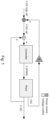
- Figure 1 shows a control scheme implementing this principle.
- the DC voltage (“V DC”) is the manipulated variable
- DC voltage (“V DC”) and current (“I DC”) are the process variables, where “I DC” is used for droop feedback, "V (PWM”) is shown as the state variable
- the controller is the power electronics controller
- Plant is an electrical source of power (motor / generator / energy storage etc.).
- V DC high ref is the DC voltage reference supplied externally, from it a scaled process variable “I DC” is subtracted, scaled by a scaling factor "K” to form the voltage reference "V DC ref” for the inner voltage control loop.
- the droop control principle relies on the following:
- each source having the same "V DC ref high"
- the contribution of each source can be controlled by manipulating the droop slope for each source through its respective gain K i with i being an integer from 1 to n ,
- V DC high ref the voltage is allowed to be anywhere between V high (referred to as "V DC high ref” above) and a minimum voltage V low where I DC is the maximum allowed source current, which can be referred to as the rated current I r .
- the slopes are generally adjusted depending on:
- Source A has its K parameter set such as to provide full rated power at V low
- source B has its K parameter set such as to provide half its rated power at V low . This means that source A will always provide double the power that B is providing, and for any particular load 2/3 of the power supply will come from A and 1/3 from B, or a 66.7:33.3 split between A and B.
- the maximum load the system can deliver at this power supply split would be 150 kW i.e. full A and half B. However, if the demand is changed to 200 kW (the full rated power of A and B together), the K value of B will need to be adjusted to supply 100% power at V low , i.e. a 50:50 split would be needed.
- the change in demand can happen instantaneously.
- a transient overload would push A over its capability.
- the overload time would be dependent on the response time of the slower supervisory control system updating the K value for at least B. This delay, especially in cases where demand can instantaneously change to values significantly larger than the electrical power the weakest power source on the network is capable of supplying, present a significant risk of hardware damage and/or loss of voltage control/quality, and or network brownouts/blackouts.
- Chinese patent application 107104427 discloses an adaptive multi slope droop control system and an adaptive multi-slope droop control method for a direct current microgrid.
- the disclosure is aimed at the problem that in a direct current microgrid, the system average current is contradictory with busbar voltage deviation in distributed microsource parallel operation.
- a load current is divided into three areas including a light load area, a rate load area and a heavy load area, and then multi slope droop control (MSDC) method is implemented for the different load areas.
- MSDC multi slope droop control
- An MSDC converter output characteristic curve is different from a traditional constant droop output characteristic, the light load area, the rate load area and the heavy load area in the load area can be flexibly distributed according to system requirements on average current error and busbar voltage deviation, and an adaptive adjustment capacity to the load is provided, so that optimal configuration and design for the droop characteristic within a relatively wide load range can be achieved.
- embodiments of the present disclosure provide a method of controlling two or more sources of electrical power to supply electrical power to a shared bus for provision to an electrical load wherein each source of electrical power has a rated power P r , a maximum overload power P m , and is operable along a multi-voltage droop slope, the multi-voltage droop slope including a share region and a catch region, the share region being defined by an upper voltage limit, V high and a base voltage V base , and the catch region being defined by the base voltage V base and a lower voltage limit, V low ; and the method includes:
- Such a method allows for power sharing, whilst also accommodating safe transient overload. This is achieved by having each source of electrical power rated to a nominal power P r , a maximum overload power P m , and is operable along a multi-voltage droop slope, e.g. two slopes.
- the multi-voltage droop slope being defined by at least two regions, a share region and a catch region.
- the catch region has the slope running from V base to V low on the voltage scale and may run from P b to P m on the power scale, and therefore can be used to catch transient overload.
- the scaling factors K (and therefore slope factors sf ) are set such as to achieve the desired load power contribution split ratio, which will be the same as the ratio of the resulting base powers P b . As long as the load power does not exceed the sum of all P b , the system operates in the share region and the demanded load power contribution split is achieved (see e.g. Fig 2 ).
- Such a method can be used to manage an instantaneous change in demand on the shared bus without the risk of pushing any given source of power over its maximum capability, mitigating the risk of hardware damage.
- the electrical power may be DC power.
- the DC voltage on the shared bus can also be maintained within a band, and power sharing may be controlled via an outer loop power management system. Further, in comparison to a masterslave arrangement, if any given source of power is lost or falls offline, the load is distributed across the remaining sources whilst minimising the risk of overload.
- the method also provides a solution to meeting the bus power quality requirements set by various international standards (e.g. MIL-STD-704F) for a multi-source electrical network.
- the method may have any one or, to the extent that they are compatible, any combination of the following optional features.
- the scaling factor may be a scaling function f ( K, I ), where K is a control parameter relating to a split ratio contribution demand.
- the share and catch regions may be further defined by a plurality of piecewise linear slopes, each with respective knee points.
- a power manager control system may adjust the scaling factor of one or more sources of power so as to bring the sources of power operating in the catch region back into the share region.
- a thermal state of each source of power may be monitored, and the maximum overload power P m of each source of power may be adjusted in accordance with the monitored thermal state of the respective source of power.
- the process variable used to control the output of the respective source of electrical power is an electrical current output I DC from that source to the shared bus.
- the sources of electrical power may be turbines and the shared bus may be connected to one or more electrical engines for an aircraft. Alternatively the sources of electrical power may be turbines, and the shared bus may be connected to one or more electrical loads for a ship.
- the sources of electrical power may be electrical storage (e.g. batteries) or electrical machines (e.g. generators).
- embodiments of the present disclosure provide a power management controller, connected to two or more sources of electrical power configured to supply DC power to a shared bus, wherein:
- embodiments of the present disclosure provide an aircraft including:
- embodiments of the present disclosure provide a ship including:
- a computer program comprising code which, when run on the power management controller of the second aspect, causes the the power management controller to perform the method of the first aspect; and further, not covered by the appended claims: a computer readable medium storing a computer program comprising code which when run on a computer, causes the computer to perform the method of the first aspect; and a computer system programmed to perform the method of the first aspect.
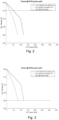
- Figure 2 is a plot of DC power against DC voltage for two sources of power: A and B.
- Source A has a rated power P r of 100 kW, and a maximum overload power P m of 120 kW.
- Source B has a rated power P r of 50kW, and an overload power P m of 80 kW. Both have a V high , V base , and V low set to 280 V, 270 V, and 260 V respectively.
- Each source supplies power by following the multi-voltage droop slope shown.
- the power share split ratio is therefore defined by the contribution of all sources and so, on the share region, the split ratio is equal to the ratio of P r to the sum of both rated powers. In this example it is 67:33 or 67%/33% (rounded to the nearest whole number/percent).
- the share split would be determined by the ratio of P m to the sum of both maximum overload powers, or 120/200 to 80/200 i.e. a 60:40 split. This is shown in Figure 3 , where both sources of power are operating in the catch regions of their respective multi-voltage droop slopes. The catch region is used to gradually transition the share split from the inherent ratio dictated by the rated powers to the inherent ratio of the maximum overload powers.
- the value of sf can be used to move the knee point to a virtual rated power: P b by making the share region steeper.
- the system is capable of providing 150 kW continuously, at a 66.7:33.3 split, as shown before. Therefore it is possible for the load to be stepped up to 150 kW instantaneously. However, if a 50:50 split is demanded before this change in demand, a slower high level power manger needs to update the 50:50 split to the 66.7:33.3 split to meet this increase in demand.
- the temporary situation during the transient is handled by the catch region, as shown in Figure 5 , until the power manager adjusts the sf values and brings each source power back into the share region of its respective multi-voltage droop slope.
- the dual slope method aims to adhere as much as possible to the demanded split.
- Operation in the catch regions of the respective multi-voltage droop slopes is intended to be of a relatively short duration, until the slower power manager control system catches up and changes the split demands such that operation in the share regions is possible.
Landscapes
- Engineering & Computer Science (AREA)
- Power Engineering (AREA)
- Physics & Mathematics (AREA)
- Electromagnetism (AREA)
- General Physics & Mathematics (AREA)
- Radar, Positioning & Navigation (AREA)
- Automation & Control Theory (AREA)
- Aviation & Aerospace Engineering (AREA)
- Chemical & Material Sciences (AREA)
- Combustion & Propulsion (AREA)
- Mechanical Engineering (AREA)
- Ocean & Marine Engineering (AREA)
- Direct Current Feeding And Distribution (AREA)
- Supply And Distribution Of Alternating Current (AREA)
Description
- The present disclosure relates to a method of controlling two or more sources of electrical power.
- Control algorithms have been used in the context of electrical power generation and distribution for some time. A particularly important control algorithm is that which regulates the voltage on a bus, where multiple sources provide electrical power to the bus, and also regulates the power contribution share of each source to the total load demand. This is better done without a master slave configuration, due to the master being a single point of failure.
- Droop control is one such control algorithm. The principle of droop control is that a reference is adjusted not only with the baseline reference, but also with a scaled subtraction of a plant or electrical source process variable. The most common example is droop speed control.
- Droop control has also been applied to the DC bus voltages.
Figure 1 shows a control scheme implementing this principle. The DC voltage ("V DC") is the manipulated variable, DC voltage ("V DC") and current ("I DC") are the process variables, where "I DC" is used for droop feedback, "V (PWM") is shown as the state variable, the controller is the power electronics controller, and Plant is an electrical source of power (motor / generator / energy storage etc.). "V DC high ref" is the DC voltage reference supplied externally, from it a scaled process variable "I DC" is subtracted, scaled by a scaling factor "K" to form the voltage reference "V DC ref" for the inner voltage control loop. - The droop control principle relies on the following:
- (i) When sources are connected in parallel with each other and parallel to the load, Kirchhoff's laws apply:
- a. Voltage across each source is the same and is equal to the voltage across the load; and
- b. The load current equals the sum of all source currents.
- (ii) For each source, the scaling parameter "K" defines a droop slope, where "V DC ref" droops or falls from "V DC ref high", depending on the amount of current "I DC" that the source is supplying. This relationship can be drawn as a line where "V DC ref" is on the y-axis, and either DC power or "I DC" is on the x-axis.
- (iii) For any number of sources, there is an equilibrium the system will find, where all sources are at the same V (i.e. their "V DC ref" is the same) and the sum of their output currents equals the load current (i.e. abide to Kirchhoff's law).
- Considering n sources in parallel, each having the same "V DC ref high", the contribution of each source can be controlled by manipulating the droop slope for each source through its respective gain Ki with i being an integer from 1 to n,
- Having multiple sources under DC voltage droop control allows regulation of the DC bus voltage within a voltage droop band, i.e. the voltage is allowed to be anywhere between Vhigh (referred to as "V DC high ref" above) and a minimum voltage Vlow where IDC is the maximum allowed source current, which can be referred to as the rated current Ir.
- The slopes are generally adjusted depending on:
- (i) User requirement;
- (ii) Source capability;
- (iii) Load demand.
- Generally a higher level (and therefore slower) supervisory control system will be adjusting the Ki slope parameters defining the power contributions of each source, however when the percentage contribution of each source needs to be varied 'online' i.e. during power supply operations a fast response mechanism needs to be implemented.
- An issue may arise when transients need to be handled. For example, consider two sources: A and B, each capable of providing 100 kW of DC power. Source A has its K parameter set such as to provide full rated power at Vlow , whereas source B has its K parameter set such as to provide half its rated power at Vlow. This means that source A will always provide double the power that B is providing, and for any
particular load 2/3 of the power supply will come from A and 1/3 from B, or a 66.7:33.3 split between A and B. - The maximum load the system can deliver at this power supply split would be 150 kW i.e. full A and half B. However, if the demand is changed to 200 kW (the full rated power of A and B together), the K value of B will need to be adjusted to supply 100% power at Vlow , i.e. a 50:50 split would be needed.
- The change in demand (at the consumer end) can happen instantaneously. A transient overload would push A over its capability. The overload time would be dependent on the response time of the slower supervisory control system updating the K value for at least B. This delay, especially in cases where demand can instantaneously change to values significantly larger than the electrical power the weakest power source on the network is capable of supplying, present a significant risk of hardware damage and/or loss of voltage control/quality, and or network brownouts/blackouts.
- To take an example, if a pilot applies a conventional aircraft electrical load such as a 20 kW radar whilst the electrical bus loading was 140 kW with the power split discussed above. The new bus load would be 160 kW, which is greater than the configured 150 kW generation capacity, risking an electrical brownout event due to the bus voltage collapse or an overcurrent trip event.
-
Chinese patent application 107104427 discloses an adaptive multi slope droop control system and an adaptive multi-slope droop control method for a direct current microgrid. The disclosure is aimed at the problem that in a direct current microgrid, the system average current is contradictory with busbar voltage deviation in distributed microsource parallel operation. In the disclosed system, a load current is divided into three areas including a light load area, a rate load area and a heavy load area, and then multi slope droop control (MSDC) method is implemented for the different load areas. An MSDC converter output characteristic curve is different from a traditional constant droop output characteristic, the light load area, the rate load area and the heavy load area in the load area can be flexibly distributed according to system requirements on average current error and busbar voltage deviation, and an adaptive adjustment capacity to the load is provided, so that optimal configuration and design for the droop characteristic within a relatively wide load range can be achieved. - Accordingly, in a first aspect, embodiments of the present disclosure provide a method of controlling two or more sources of electrical power to supply electrical power to a shared bus for provision to an electrical load wherein each source of electrical power has a rated power Pr , a maximum overload power Pm , and is operable along a multi-voltage droop slope, the multi-voltage droop slope including a share region and a catch region, the share region being defined by an upper voltage limit, Vhigh and a base voltage Vbase , and the catch region being defined by the base voltage Vbase and a lower voltage limit, Vlow ;
and the method includes: - providing a scaling factor, K, for each of the sources of electrical power, the scaling factor operating on a process variable used to control an output of the respective source of electrical power in a control loop, such that the sources of electrical power operate on one of the share region and the catch region; and
- when a power demand of the electrical load is less than the sum of the rated powers Pr , setting one or more scaling factor K such that each source of electrical power is operating in the share region of the multi-voltage droop slope in which a power split between the sources of electrical power is equal to the ratio of Pr for a given source of power to the sum of rated powers Pr for the sources of electrical power; and
- when the power demand of the electrical load is greater than the sum of the rated powers Pr , setting one or more scaling factor K such that each source is operating in the catch region of the multi-voltage droop slope in which a power split between the sources of electrical power is equal to a ratio of Pm for a given source of power to the sum of overload powers Pm for the sources of electrical power.
- Such a method allows for power sharing, whilst also accommodating safe transient overload. This is achieved by having each source of electrical power rated to a nominal power Pr , a maximum overload power Pm , and is operable along a multi-voltage droop slope, e.g. two slopes. The multi-voltage droop slope being defined by at least two regions, a share region and a catch region. The share region runs from Vhigh to Vbase on the voltage scale and may run from 0 to Pr /sf = Pb on the power scale where sf ≥ 1 This implies that Pb ≤ Pr and thus the scaling factor is used to control load power contribution split between sources. The catch region has the slope running from Vbase to Vlow on the voltage scale and may run from Pb to Pm on the power scale, and therefore can be used to catch transient overload. The scaling factor, K relates to sf by the equation sf = K/Kr , where Kr = (Vhigh - Vbase )/Ir. The scaling factors K (and therefore slope factors sf) are set such as to achieve the desired load power contribution split ratio, which will be the same as the ratio of the resulting base powers Pb. As long as the load power does not exceed the sum of all Pb , the system operates in the share region and the demanded load power contribution split is achieved (see e.g.
Fig 2 ). If the load power exceeds the sum of Pb , the system starts operating in the catch region (as the voltage droops down), which changes the droop slope angles, which results in progressive load share split change from the demanded split to the inherent split of Pm (see e.g.Fig 3 ), with the change being proportional to the amount of overload. - Such a method can be used to manage an instantaneous change in demand on the shared bus without the risk of pushing any given source of power over its maximum capability, mitigating the risk of hardware damage. The electrical power may be DC power. The DC voltage on the shared bus can also be maintained within a band, and power sharing may be controlled via an outer loop power management system. Further, in comparison to a masterslave arrangement, if any given source of power is lost or falls offline, the load is distributed across the remaining sources whilst minimising the risk of overload. The method also provides a solution to meeting the bus power quality requirements set by various international standards (e.g. MIL-STD-704F) for a multi-source electrical network.
- The method may have any one or, to the extent that they are compatible, any combination of the following optional features.
- The scaling factor may be a scaling function f(K, I), where K is a control parameter relating to a split ratio contribution demand. The scaling factor K for each source of electrical power may be defined as K = Kr × sf, where Kr is set such that a transition point between the share region and the catch region of the multi-voltage droop slope for each source of power is at a value corresponding to the rated power for that source of electrical power, and sf is a slope factor greater than or equal to 1.
- The share region may be further defined as a region of the multi-voltage droop slope between 0 watts power output and the base power output Pb = Pr /sf, on the power scale.
- The catch may be further defined as a region of the multi-voltage droop slope between the base power output Pb = Pr /sf and the maximum power output Pm , on the power scale.
- The share and catch regions may be further defined by a plurality of piecewise linear slopes, each with respective knee points. The knee points may have the values (In , Vn ) or (Pn , Vn ), where n is the nth piecewise linear slope. This can be extended to n = ∞ such that the slopes become continuous functions.
- When the sources of power are operating in the catch region of their respective multi-voltage droop slopes, a power manager control system may adjust the scaling factor of one or more sources of power so as to bring the sources of power operating in the catch region back into the share region.
- A thermal state of each source of power may be monitored, and the maximum overload power Pm of each source of power may be adjusted in accordance with the monitored thermal state of the respective source of power.
- By doing so, the likelihood of overloading any given source can be significantly reduced.
- The process variable used to control the output of the respective source of electrical power is an electrical current output IDC from that source to the shared bus.
- The sources of electrical power may be turbines and the shared bus may be connected to one or more electrical engines for an aircraft. Alternatively the sources of electrical power may be turbines, and the shared bus may be connected to one or more electrical loads for a ship. The sources of electrical power may be electrical storage (e.g. batteries) or electrical machines (e.g. generators).
- In a second aspect, embodiments of the present disclosure provide a power management controller, connected to two or more sources of electrical power configured to supply DC power to a shared bus, wherein:
- each source of electrical power has a rated power Pr , a maximum overload power Pm , and is operable along a multi-voltage droop slope, the multi-voltage droop slope including a share region and a catch region, the share region being defined by an upper voltage limited, Vhigh and a base voltage Vbase , and the catch region being defined by the base voltage Vbase and a lower voltage limit Vlow ; and
- the power management controller is configured to perform the method of the first aspect.
- In a third aspect, embodiments of the present disclosure provide an aircraft including:
- two or more sources of electrical power, connected to a shared bus;
- the power management controller of the second aspect; and
- one or more electric engines, for propelling the aircraft, connected to the shared bus and driven by the two or more sources of electrical power.
- In a fourth aspect, embodiments of the present disclosure provide a ship including:
- two or more sources of electrical power, connected to a shared bus;
- the power management controller of the second aspect; and
- one or more electrical loads, connected to the shared bus and provided with power by the two or more sources of electrical power.
- Further aspects of the present disclosure provide: a computer program comprising code which, when run on the power management controller of the second aspect, causes the the power management controller to perform the method of the first aspect; and further, not covered by the appended claims:
a computer readable medium storing a computer program comprising code which when run on a computer, causes the computer to perform the method of the first aspect; and a computer system programmed to perform the method of the first aspect. - Embodiments of the disclosure will now be described by way of example with reference to the accompanying drawings in which:
-
Figure 1 shows a control scheme implementing voltage droop control; -
Figure 2 is a plot of DC power against DC voltage illustrating the multi-voltage droop slopes of two sources of power operating in a share region; -
Figure 3 is a plot of DC power against DC voltage illustrating the multi-voltage droop slopes of two sources of power operating in a catch region; -
Figure 4 is a plot of DC power against DC voltage illustrating the multi-voltage droop slopes of two sources of power operating in a share region; and -
Figure 5 is a plot of DC power against DC voltage illustrating the multi-voltage droop slopes of two sources of power operating in a catch region. - Aspects and embodiments of the present disclosure will now be discussed with reference to the accompanying figures. Further aspects and embodiments will be apparent to those skilled in the art.
-
Figure 2 is a plot of DC power against DC voltage for two sources of power: A and B. Source A has a rated power Pr of 100 kW, and a maximum overload power Pm of 120 kW. Source B has a rated power Pr of 50kW, and an overload power Pm of 80 kW. Both have a Vhigh , Vbase , and Vlow set to 280 V, 270 V, and 260 V respectively. - Each source supplies power by following the multi-voltage droop slope shown. The share region, defined as the region between (0, Vhigh ) to (Pr , Vbase ), is characterised by the inherent value of K, or gain. Therefore, subject to the load placed on the sources of power being below the sum of the rated values Pr , 50 kW + 100 kW = 150 kW in this example, both sources of power will work in the share region of their multi-voltage droop slopes. The power share split ratio is therefore defined by the contribution of all sources and so, on the share region, the split ratio is equal to the ratio of Pr to the sum of both rated powers. In this example it is 67:33 or 67%/33% (rounded to the nearest whole number/percent).
- The full overload capacity in this example is 80 kW + 120 kW = 200 kW. When operating over the rated power output, the share split would be determined by the ratio of Pm to the sum of both maximum overload powers, or 120/200 to 80/200 i.e. a 60:40 split. This is shown in
Figure 3 , where both sources of power are operating in the catch regions of their respective multi-voltage droop slopes. The catch region is used to gradually transition the share split from the inherent ratio dictated by the rated powers to the inherent ratio of the maximum overload powers. - Advantageously, K may be redefined as K = Kr × sf, where Kr is the K needed to bring the knee point in the respective multi-voltage droop slope to the actual rated power Pr of that source, and sf is a slope factor greater or equal to 1. The value of sf can be used to move the knee point to a virtual rated power: Pb by making the share region steeper.
- Under such an operating scheme, if a 50:50 power split was demanded, the more powerful source, Source A in this example, would need to work on the same slope as Source B. This can be achieved by setting the slope factor of A to Pr
A /PrB = 2. The virtual rated power of A, PbA now equals 50 kW, which means that the 50:50 split cam be adhered to up to a PbA + PrB = 100 kW load. This is shown inFigure 4 . - The system is capable of providing 150 kW continuously, at a 66.7:33.3 split, as shown before. Therefore it is possible for the load to be stepped up to 150 kW instantaneously. However, if a 50:50 split is demanded before this change in demand, a slower high level power manger needs to update the 50:50 split to the 66.7:33.3 split to meet this increase in demand. The temporary situation during the transient is handled by the catch region, as shown in
Figure 5 , until the power manager adjusts the sf values and brings each source power back into the share region of its respective multi-voltage droop slope. - The dual slope method aims to adhere as much as possible to the demanded split. The larger the overload beyond the knee point, the further the split deviates from the demanded split and starts to look more like the inherent overload capability split. Operation in the catch regions of the respective multi-voltage droop slopes is intended to be of a relatively short duration, until the slower power manager control system catches up and changes the split demands such that operation in the share regions is possible.
- While the disclosure has been described in conjunction with the exemplary embodiments described above, many equivalent modifications and variations will be apparent to those skilled in the art when given this disclosure. Accordingly, the exemplary embodiments of the disclosure set forth above are considered to be illustrative and not limiting. Various changes to the described embodiments may be made without departing from the scope of the disclosure. The scope of protection is solely defined by the appended claims.
Claims (13)
- A method of controlling two or more sources of electrical power to supply electrical power to a shared bus for provision to an electrical load;wherein each source of electrical power has a rated power Pr , a maximum overload power Pm , and is operable along a multi-voltage droop slope, the multi-voltage droop slope including a share region and a catch region, the share region being defined by an upper voltage limit, Vhigh and a base voltage Vbase , and the catch region being defined by the base voltage Vbase and a lower voltage limit, Vlow ;and the method includes:providing a scaling factor, K, for each of the sources of electrical power, the scaling factor operating on a process variable used to control an output of the respective source of electrical power in a control loop, such that the sources of electrical power operate on one of the share region and the catch region; andwhen a power demand of the electrical load is less than the sum of the rated powers Pr , setting one or more scaling factor K such that each source of electrical power is operating in the share region of the multi-voltage droop slope in which a power split between the sources of electrical power is equal to the ratio of Pr for a given source of power to the sum of rated powers Pr for the sources of electrical power; andwhen the power demand of the electrical load is greater than the sum of the rated powers Pr , setting one or more scaling factor K such that each source is operating in the catch region of the multi-voltage droop slope in which a power split between the sources of electrical power is equal to a ratio of Pm for a given source of power to the sum of overload powers Pm for the sources of electrical power.
- The method of claim 1, wherein the scaling factor K for each source of electrical power is defined as K = Kr × sf, where Kr is set such that a transition point between the share region and the catch region of the multi-voltage droop slope for each source of power is at a value corresponding to the rated power for that source of electrical power, and sf is a slope factor greater than or equal to 1.
- The method of claim 2, wherein the share region is further defined as a region of the multi-voltage droop slope between 0 watts power output and a base power output Pb = Pr / sf, on the power scale.
- The method of claim 2 or claim 3, wherein the catch region is further defined as a region of the multi-voltage droop slope between the base power output Pb = Pr /sf and the maximum power output Pm , on the power scale.
- The method of any preceding claim, where the share and catch regions are further defined by a plurality of piecewise linear slopes, each with respective knee points.
- The method of any preceding claim, wherein when the sources of power are operating in the catch region of their respective multi-voltage droop slope, a power manager control system adjusts the scaling factor of one or more sources of power so as to bring the sources of power operating in the catch region back into the share region.
- The method of any preceding claim, wherein a thermal state of each source of power is monitored, and wherein the maximum overload power Pm of each source of power is adjusted in accordance with the monitored thermal state of the respective source of power.
- The method of any preceding claim, wherein the process variable used to control the output of the respective source of electrical power is an electrical current output to the shared bus IDC.
- The method of any preceding claim, wherein the two or more sources of electrical power are turbines, and the shared bus is connected to one or more electrical engines for an aircraft.
- A power management controller, configured to be connected to two or more sources of electrical power configured to supply DC power to a shared bus, wherein:each source of electrical power has a rated power Pr , a maximum overload power Pm , and is operable along a multi-voltage droop slope, the multi-voltage droop slope including a share region and a catch region, the share region being defined by an upper voltage limited, Vhigh and a base voltage Vbase , and the catch region being defined by the base voltage Vbase and a lower voltage limit Vlow ; andthe power management controller is configured to perform the method of any preceding claim.
- An aircraft, including:two or more sources of electrical power, connected to a shared bus;the power management controller of claim 10 connected to said two or more sources; andone or more electric engines, for propelling the aircraft, connected to the shared bus and driven by the two or more sources of electrical power.
- A ship, including:two or more sources of electrical power, connected to a shared bus;the power management controller of claim 10 connected to said two or more sources; andone or more electric loads, connected to the shared bus and provided with power by the two or more sources of electrical power.
- A computer program comprising code which, when run on the power management controller of claim 10, causes the power management controller to perform the method of any of claims 1 to 9.
Applications Claiming Priority (1)
| Application Number | Priority Date | Filing Date | Title |
|---|---|---|---|
| GBGB1909684.1A GB201909684D0 (en) | 2019-07-05 | 2019-07-05 | Multi-slope droop control |
Publications (2)
| Publication Number | Publication Date |
|---|---|
| EP3761470A1 EP3761470A1 (en) | 2021-01-06 |
| EP3761470B1 true EP3761470B1 (en) | 2024-08-21 |
Family
ID=67623313
Family Applications (1)
| Application Number | Title | Priority Date | Filing Date |
|---|---|---|---|
| EP20183022.1A Active EP3761470B1 (en) | 2019-07-05 | 2020-06-30 | Multi-slope droop control |
Country Status (3)
| Country | Link |
|---|---|
| US (1) | US11196254B2 (en) |
| EP (1) | EP3761470B1 (en) |
| GB (1) | GB201909684D0 (en) |
Families Citing this family (6)
| Publication number | Priority date | Publication date | Assignee | Title |
|---|---|---|---|---|
| CN116075997A (en) * | 2020-09-15 | 2023-05-05 | 古河电气工业株式会社 | Power converter and control method, power system and control method and program |
| CN112736889A (en) * | 2020-12-30 | 2021-04-30 | 丽水市普明电力建设工程有限公司 | Variable slope droop control method with low-voltage early warning function |
| CN112769120A (en) * | 2020-12-30 | 2021-05-07 | 丽水市普明电力建设工程有限公司 | Variable slope droop control method with overvoltage early warning function |
| US12061509B2 (en) | 2022-12-15 | 2024-08-13 | International Business Machines Corporation | Voltage droop and overshoot management using non-linear slope detection |
| EP4583343A1 (en) * | 2024-01-04 | 2025-07-09 | Hamilton Sundstrand Corporation | Aircraft electrical system |
| US20260031615A1 (en) * | 2024-07-29 | 2026-01-29 | Schneider Electric It Corporation | Redundant power supply apparatus for multi-input it loads |
Family Cites Families (2)
| Publication number | Priority date | Publication date | Assignee | Title |
|---|---|---|---|---|
| US10770988B2 (en) * | 2015-10-20 | 2020-09-08 | Virginia Tech Intellectual Properties, Inc. | Non-linear droop control |
| CN107104427B (en) | 2017-05-17 | 2019-08-09 | 安徽工业大学 | An adaptive multi-slope droop control system and method for DC microgrid |
-
2019
- 2019-07-05 GB GBGB1909684.1A patent/GB201909684D0/en not_active Ceased
-
2020
- 2020-06-30 US US16/916,841 patent/US11196254B2/en active Active
- 2020-06-30 EP EP20183022.1A patent/EP3761470B1/en active Active
Also Published As
| Publication number | Publication date |
|---|---|
| GB201909684D0 (en) | 2019-08-21 |
| US20210004029A1 (en) | 2021-01-07 |
| EP3761470A1 (en) | 2021-01-06 |
| US11196254B2 (en) | 2021-12-07 |
Similar Documents
| Publication | Publication Date | Title |
|---|---|---|
| EP3761470B1 (en) | Multi-slope droop control | |
| CA2871370C (en) | Wind farm with fast local reactive power control | |
| JP2018509134A (en) | Dynamic hybrid control | |
| US20200169083A1 (en) | Dc voltage regulation by independent power converters | |
| CN110720165A (en) | Method for operating a wind power plant | |
| CN108493919B (en) | Droop control method and system for direct-current micro-grid | |
| Issa et al. | Smooth mode transfer in AC microgrids during unintentional islanding | |
| CA3049617C (en) | Method for feeding electrical power into an electrical supply network | |
| EP2941805B1 (en) | Power supply control | |
| Elhassaneen et al. | Cooperative decentralized tertiary based control of DC microgrid with renewable distributed generation | |
| Nassar et al. | A new adaptive instantaneous average current sharing technique for circulating current minimization among parallel converters in a LV DC-microgrid | |
| US11557901B2 (en) | Method for feeding electrical power into an electrical supply grid | |
| US10411469B2 (en) | Reactive power control integrated with renewable energy power invertor | |
| RU2550154C2 (en) | Method for control of tap changer under load for forced excitation circuit, respective unit and forced excitation circuit with this unit | |
| US10923750B2 (en) | DC voltage brownout protection for parallel-connected fuel-cell power plants in islanded mode | |
| KR102234526B1 (en) | SoC Management System and Method using Frequency Control and Adaptive Control at ESS Interfacing Generation Plant | |
| Aboelsoud et al. | Cooperative decentralized hierarchical based voltage control of DC microgrids | |
| Ullah et al. | A distributed secondary control strategy for power sharing and voltage regulation by multiple converters in DC micro-grids | |
| AU2010358881B2 (en) | Management system for variable-resource energy generation systems | |
| JP7700499B2 (en) | Distributed power supply control device, control program, and distributed power supply system | |
| RU2767178C1 (en) | System for controlling excitation of synchronous generator in alternating current distribution network | |
| CN121417120B (en) | All-condition parallel networking control method for direct-current comprehensive power system of electric-electric hybrid ship | |
| US20250381884A1 (en) | Nested control loop structure for hybrid propulsion system | |
| Jha et al. | Conservation Voltage Reduction Integrated EV Control Strategy Toward Self-Sufficiency of Standalone Microgrid | |
| CN112653181B (en) | Method for feeding electrical power into a power supply network with the aid of a wind turbine with a voltage-influencing effect |
Legal Events
| Date | Code | Title | Description |
|---|---|---|---|
| PUAI | Public reference made under article 153(3) epc to a published international application that has entered the european phase |
Free format text: ORIGINAL CODE: 0009012 |
|
| STAA | Information on the status of an ep patent application or granted ep patent |
Free format text: STATUS: THE APPLICATION HAS BEEN PUBLISHED |
|
| AK | Designated contracting states |
Kind code of ref document: A1 Designated state(s): AL AT BE BG CH CY CZ DE DK EE ES FI FR GB GR HR HU IE IS IT LI LT LU LV MC MK MT NL NO PL PT RO RS SE SI SK SM TR |
|
| AX | Request for extension of the european patent |
Extension state: BA ME |
|
| STAA | Information on the status of an ep patent application or granted ep patent |
Free format text: STATUS: REQUEST FOR EXAMINATION WAS MADE |
|
| 17P | Request for examination filed |
Effective date: 20210219 |
|
| RBV | Designated contracting states (corrected) |
Designated state(s): AL AT BE BG CH CY CZ DE DK EE ES FI FR GB GR HR HU IE IS IT LI LT LU LV MC MK MT NL NO PL PT RO RS SE SI SK SM TR |
|
| GRAP | Despatch of communication of intention to grant a patent |
Free format text: ORIGINAL CODE: EPIDOSNIGR1 |
|
| STAA | Information on the status of an ep patent application or granted ep patent |
Free format text: STATUS: GRANT OF PATENT IS INTENDED |
|
| INTG | Intention to grant announced |
Effective date: 20240613 |
|
| GRAS | Grant fee paid |
Free format text: ORIGINAL CODE: EPIDOSNIGR3 |
|
| GRAA | (expected) grant |
Free format text: ORIGINAL CODE: 0009210 |
|
| STAA | Information on the status of an ep patent application or granted ep patent |
Free format text: STATUS: THE PATENT HAS BEEN GRANTED |
|
| P01 | Opt-out of the competence of the unified patent court (upc) registered |
Free format text: CASE NUMBER: APP_38635/2024 Effective date: 20240627 |
|
| AK | Designated contracting states |
Kind code of ref document: B1 Designated state(s): AL AT BE BG CH CY CZ DE DK EE ES FI FR GB GR HR HU IE IS IT LI LT LU LV MC MK MT NL NO PL PT RO RS SE SI SK SM TR |
|
| REG | Reference to a national code |
Ref country code: GB Ref legal event code: FG4D |
|
| REG | Reference to a national code |
Ref country code: CH Ref legal event code: EP |
|
| REG | Reference to a national code |
Ref country code: IE Ref legal event code: FG4D |
|
| REG | Reference to a national code |
Ref country code: DE Ref legal event code: R096 Ref document number: 602020036068 Country of ref document: DE |
|
| REG | Reference to a national code |
Ref country code: LT Ref legal event code: MG9D |
|
| REG | Reference to a national code |
Ref country code: NL Ref legal event code: MP Effective date: 20240821 |
|
| PG25 | Lapsed in a contracting state [announced via postgrant information from national office to epo] |
Ref country code: NO Free format text: LAPSE BECAUSE OF FAILURE TO SUBMIT A TRANSLATION OF THE DESCRIPTION OR TO PAY THE FEE WITHIN THE PRESCRIBED TIME-LIMIT Effective date: 20241121 |
|
| REG | Reference to a national code |
Ref country code: AT Ref legal event code: MK05 Ref document number: 1716480 Country of ref document: AT Kind code of ref document: T Effective date: 20240821 |
|
| PG25 | Lapsed in a contracting state [announced via postgrant information from national office to epo] |
Ref country code: NL Free format text: LAPSE BECAUSE OF FAILURE TO SUBMIT A TRANSLATION OF THE DESCRIPTION OR TO PAY THE FEE WITHIN THE PRESCRIBED TIME-LIMIT Effective date: 20240821 Ref country code: GR Free format text: LAPSE BECAUSE OF FAILURE TO SUBMIT A TRANSLATION OF THE DESCRIPTION OR TO PAY THE FEE WITHIN THE PRESCRIBED TIME-LIMIT Effective date: 20241122 Ref country code: FI Free format text: LAPSE BECAUSE OF FAILURE TO SUBMIT A TRANSLATION OF THE DESCRIPTION OR TO PAY THE FEE WITHIN THE PRESCRIBED TIME-LIMIT Effective date: 20240821 Ref country code: PL Free format text: LAPSE BECAUSE OF FAILURE TO SUBMIT A TRANSLATION OF THE DESCRIPTION OR TO PAY THE FEE WITHIN THE PRESCRIBED TIME-LIMIT Effective date: 20240821 Ref country code: PT Free format text: LAPSE BECAUSE OF FAILURE TO SUBMIT A TRANSLATION OF THE DESCRIPTION OR TO PAY THE FEE WITHIN THE PRESCRIBED TIME-LIMIT Effective date: 20241223 |
|
| PG25 | Lapsed in a contracting state [announced via postgrant information from national office to epo] |
Ref country code: BG Free format text: LAPSE BECAUSE OF FAILURE TO SUBMIT A TRANSLATION OF THE DESCRIPTION OR TO PAY THE FEE WITHIN THE PRESCRIBED TIME-LIMIT Effective date: 20240821 |
|
| PG25 | Lapsed in a contracting state [announced via postgrant information from national office to epo] |
Ref country code: LV Free format text: LAPSE BECAUSE OF FAILURE TO SUBMIT A TRANSLATION OF THE DESCRIPTION OR TO PAY THE FEE WITHIN THE PRESCRIBED TIME-LIMIT Effective date: 20240821 |
|
| PG25 | Lapsed in a contracting state [announced via postgrant information from national office to epo] |
Ref country code: AT Free format text: LAPSE BECAUSE OF FAILURE TO SUBMIT A TRANSLATION OF THE DESCRIPTION OR TO PAY THE FEE WITHIN THE PRESCRIBED TIME-LIMIT Effective date: 20240821 Ref country code: IS Free format text: LAPSE BECAUSE OF FAILURE TO SUBMIT A TRANSLATION OF THE DESCRIPTION OR TO PAY THE FEE WITHIN THE PRESCRIBED TIME-LIMIT Effective date: 20241221 |
|
| PG25 | Lapsed in a contracting state [announced via postgrant information from national office to epo] |
Ref country code: HR Free format text: LAPSE BECAUSE OF FAILURE TO SUBMIT A TRANSLATION OF THE DESCRIPTION OR TO PAY THE FEE WITHIN THE PRESCRIBED TIME-LIMIT Effective date: 20240821 |
|
| PG25 | Lapsed in a contracting state [announced via postgrant information from national office to epo] |
Ref country code: RS Free format text: LAPSE BECAUSE OF FAILURE TO SUBMIT A TRANSLATION OF THE DESCRIPTION OR TO PAY THE FEE WITHIN THE PRESCRIBED TIME-LIMIT Effective date: 20241121 Ref country code: ES Free format text: LAPSE BECAUSE OF FAILURE TO SUBMIT A TRANSLATION OF THE DESCRIPTION OR TO PAY THE FEE WITHIN THE PRESCRIBED TIME-LIMIT Effective date: 20240821 |
|
| PG25 | Lapsed in a contracting state [announced via postgrant information from national office to epo] |
Ref country code: RS Free format text: LAPSE BECAUSE OF FAILURE TO SUBMIT A TRANSLATION OF THE DESCRIPTION OR TO PAY THE FEE WITHIN THE PRESCRIBED TIME-LIMIT Effective date: 20241121 Ref country code: PT Free format text: LAPSE BECAUSE OF FAILURE TO SUBMIT A TRANSLATION OF THE DESCRIPTION OR TO PAY THE FEE WITHIN THE PRESCRIBED TIME-LIMIT Effective date: 20241223 Ref country code: PL Free format text: LAPSE BECAUSE OF FAILURE TO SUBMIT A TRANSLATION OF THE DESCRIPTION OR TO PAY THE FEE WITHIN THE PRESCRIBED TIME-LIMIT Effective date: 20240821 Ref country code: NO Free format text: LAPSE BECAUSE OF FAILURE TO SUBMIT A TRANSLATION OF THE DESCRIPTION OR TO PAY THE FEE WITHIN THE PRESCRIBED TIME-LIMIT Effective date: 20241121 Ref country code: NL Free format text: LAPSE BECAUSE OF FAILURE TO SUBMIT A TRANSLATION OF THE DESCRIPTION OR TO PAY THE FEE WITHIN THE PRESCRIBED TIME-LIMIT Effective date: 20240821 Ref country code: LV Free format text: LAPSE BECAUSE OF FAILURE TO SUBMIT A TRANSLATION OF THE DESCRIPTION OR TO PAY THE FEE WITHIN THE PRESCRIBED TIME-LIMIT Effective date: 20240821 Ref country code: IS Free format text: LAPSE BECAUSE OF FAILURE TO SUBMIT A TRANSLATION OF THE DESCRIPTION OR TO PAY THE FEE WITHIN THE PRESCRIBED TIME-LIMIT Effective date: 20241221 Ref country code: HR Free format text: LAPSE BECAUSE OF FAILURE TO SUBMIT A TRANSLATION OF THE DESCRIPTION OR TO PAY THE FEE WITHIN THE PRESCRIBED TIME-LIMIT Effective date: 20240821 Ref country code: GR Free format text: LAPSE BECAUSE OF FAILURE TO SUBMIT A TRANSLATION OF THE DESCRIPTION OR TO PAY THE FEE WITHIN THE PRESCRIBED TIME-LIMIT Effective date: 20241122 Ref country code: FI Free format text: LAPSE BECAUSE OF FAILURE TO SUBMIT A TRANSLATION OF THE DESCRIPTION OR TO PAY THE FEE WITHIN THE PRESCRIBED TIME-LIMIT Effective date: 20240821 Ref country code: ES Free format text: LAPSE BECAUSE OF FAILURE TO SUBMIT A TRANSLATION OF THE DESCRIPTION OR TO PAY THE FEE WITHIN THE PRESCRIBED TIME-LIMIT Effective date: 20240821 Ref country code: BG Free format text: LAPSE BECAUSE OF FAILURE TO SUBMIT A TRANSLATION OF THE DESCRIPTION OR TO PAY THE FEE WITHIN THE PRESCRIBED TIME-LIMIT Effective date: 20240821 Ref country code: AT Free format text: LAPSE BECAUSE OF FAILURE TO SUBMIT A TRANSLATION OF THE DESCRIPTION OR TO PAY THE FEE WITHIN THE PRESCRIBED TIME-LIMIT Effective date: 20240821 |
|
| PG25 | Lapsed in a contracting state [announced via postgrant information from national office to epo] |
Ref country code: RO Free format text: LAPSE BECAUSE OF FAILURE TO SUBMIT A TRANSLATION OF THE DESCRIPTION OR TO PAY THE FEE WITHIN THE PRESCRIBED TIME-LIMIT Effective date: 20240821 Ref country code: DK Free format text: LAPSE BECAUSE OF FAILURE TO SUBMIT A TRANSLATION OF THE DESCRIPTION OR TO PAY THE FEE WITHIN THE PRESCRIBED TIME-LIMIT Effective date: 20240821 Ref country code: SM Free format text: LAPSE BECAUSE OF FAILURE TO SUBMIT A TRANSLATION OF THE DESCRIPTION OR TO PAY THE FEE WITHIN THE PRESCRIBED TIME-LIMIT Effective date: 20240821 |
|
| PG25 | Lapsed in a contracting state [announced via postgrant information from national office to epo] |
Ref country code: EE Free format text: LAPSE BECAUSE OF FAILURE TO SUBMIT A TRANSLATION OF THE DESCRIPTION OR TO PAY THE FEE WITHIN THE PRESCRIBED TIME-LIMIT Effective date: 20240821 |
|
| PG25 | Lapsed in a contracting state [announced via postgrant information from national office to epo] |
Ref country code: CZ Free format text: LAPSE BECAUSE OF FAILURE TO SUBMIT A TRANSLATION OF THE DESCRIPTION OR TO PAY THE FEE WITHIN THE PRESCRIBED TIME-LIMIT Effective date: 20240821 |
|
| PG25 | Lapsed in a contracting state [announced via postgrant information from national office to epo] |
Ref country code: SK Free format text: LAPSE BECAUSE OF FAILURE TO SUBMIT A TRANSLATION OF THE DESCRIPTION OR TO PAY THE FEE WITHIN THE PRESCRIBED TIME-LIMIT Effective date: 20240821 Ref country code: IT Free format text: LAPSE BECAUSE OF FAILURE TO SUBMIT A TRANSLATION OF THE DESCRIPTION OR TO PAY THE FEE WITHIN THE PRESCRIBED TIME-LIMIT Effective date: 20240821 |
|
| REG | Reference to a national code |
Ref country code: DE Ref legal event code: R097 Ref document number: 602020036068 Country of ref document: DE |
|
| PLBE | No opposition filed within time limit |
Free format text: ORIGINAL CODE: 0009261 |
|
| STAA | Information on the status of an ep patent application or granted ep patent |
Free format text: STATUS: NO OPPOSITION FILED WITHIN TIME LIMIT |
|
| PGFP | Annual fee paid to national office [announced via postgrant information from national office to epo] |
Ref country code: DE Payment date: 20250626 Year of fee payment: 6 |
|
| PGFP | Annual fee paid to national office [announced via postgrant information from national office to epo] |
Ref country code: GB Payment date: 20250617 Year of fee payment: 6 |
|
| PGFP | Annual fee paid to national office [announced via postgrant information from national office to epo] |
Ref country code: FR Payment date: 20250624 Year of fee payment: 6 |
|
| 26N | No opposition filed |
Effective date: 20250522 |
|
| PG25 | Lapsed in a contracting state [announced via postgrant information from national office to epo] |
Ref country code: SE Free format text: LAPSE BECAUSE OF FAILURE TO SUBMIT A TRANSLATION OF THE DESCRIPTION OR TO PAY THE FEE WITHIN THE PRESCRIBED TIME-LIMIT Effective date: 20240821 |
|
| REG | Reference to a national code |
Ref country code: CH Ref legal event code: H13 Free format text: ST27 STATUS EVENT CODE: U-0-0-H10-H13 (AS PROVIDED BY THE NATIONAL OFFICE) Effective date: 20260127 |
|
| PG25 | Lapsed in a contracting state [announced via postgrant information from national office to epo] |
Ref country code: MC Free format text: LAPSE BECAUSE OF FAILURE TO SUBMIT A TRANSLATION OF THE DESCRIPTION OR TO PAY THE FEE WITHIN THE PRESCRIBED TIME-LIMIT Effective date: 20240821 |
|
| PG25 | Lapsed in a contracting state [announced via postgrant information from national office to epo] |
Ref country code: LU Free format text: LAPSE BECAUSE OF NON-PAYMENT OF DUE FEES Effective date: 20250630 |
|
| REG | Reference to a national code |
Ref country code: BE Ref legal event code: MM Effective date: 20250630 |
|
| PG25 | Lapsed in a contracting state [announced via postgrant information from national office to epo] |
Ref country code: IE Free format text: LAPSE BECAUSE OF NON-PAYMENT OF DUE FEES Effective date: 20250630 |
|
| PG25 | Lapsed in a contracting state [announced via postgrant information from national office to epo] |
Ref country code: BE Free format text: LAPSE BECAUSE OF NON-PAYMENT OF DUE FEES Effective date: 20250630 |
|
| PG25 | Lapsed in a contracting state [announced via postgrant information from national office to epo] |
Ref country code: CH Free format text: LAPSE BECAUSE OF NON-PAYMENT OF DUE FEES Effective date: 20250630 |