EP3759900B1 - Rauchersatzvorrichtung - Google Patents
Rauchersatzvorrichtung Download PDFInfo
- Publication number
- EP3759900B1 EP3759900B1 EP19704814.3A EP19704814A EP3759900B1 EP 3759900 B1 EP3759900 B1 EP 3759900B1 EP 19704814 A EP19704814 A EP 19704814A EP 3759900 B1 EP3759900 B1 EP 3759900B1
- Authority
- EP
- European Patent Office
- Prior art keywords
- smoking substitute
- substitute device
- recommended configuration
- usage
- user
- Prior art date
- Legal status (The legal status is an assumption and is not a legal conclusion. Google has not performed a legal analysis and makes no representation as to the accuracy of the status listed.)
- Active
Links
Images


Classifications
-
- A—HUMAN NECESSITIES
- A24—TOBACCO; CIGARS; CIGARETTES; SIMULATED SMOKING DEVICES; SMOKERS' REQUISITES
- A24F—SMOKERS' REQUISITES; MATCH BOXES; SIMULATED SMOKING DEVICES
- A24F40/00—Electrically operated smoking devices; Component parts thereof; Manufacture thereof; Maintenance or testing thereof; Charging means specially adapted therefor
- A24F40/50—Control or monitoring
-
- A—HUMAN NECESSITIES
- A24—TOBACCO; CIGARS; CIGARETTES; SIMULATED SMOKING DEVICES; SMOKERS' REQUISITES
- A24F—SMOKERS' REQUISITES; MATCH BOXES; SIMULATED SMOKING DEVICES
- A24F40/00—Electrically operated smoking devices; Component parts thereof; Manufacture thereof; Maintenance or testing thereof; Charging means specially adapted therefor
- A24F40/50—Control or monitoring
- A24F40/53—Monitoring, e.g. fault detection
-
- H—ELECTRICITY
- H04—ELECTRIC COMMUNICATION TECHNIQUE
- H04M—TELEPHONIC COMMUNICATION
- H04M1/00—Substation equipment, e.g. for use by subscribers
- H04M1/72—Mobile telephones; Cordless telephones, i.e. devices for establishing wireless links to base stations without route selection
- H04M1/724—User interfaces specially adapted for cordless or mobile telephones
- H04M1/72403—User interfaces specially adapted for cordless or mobile telephones with means for local support of applications that increase the functionality
- H04M1/72409—User interfaces specially adapted for cordless or mobile telephones with means for local support of applications that increase the functionality by interfacing with external accessories
- H04M1/72412—User interfaces specially adapted for cordless or mobile telephones with means for local support of applications that increase the functionality by interfacing with external accessories using two-way short-range wireless interfaces
-
- A—HUMAN NECESSITIES
- A24—TOBACCO; CIGARS; CIGARETTES; SIMULATED SMOKING DEVICES; SMOKERS' REQUISITES
- A24F—SMOKERS' REQUISITES; MATCH BOXES; SIMULATED SMOKING DEVICES
- A24F40/00—Electrically operated smoking devices; Component parts thereof; Manufacture thereof; Maintenance or testing thereof; Charging means specially adapted therefor
- A24F40/10—Devices using liquid inhalable precursors
-
- A—HUMAN NECESSITIES
- A24—TOBACCO; CIGARS; CIGARETTES; SIMULATED SMOKING DEVICES; SMOKERS' REQUISITES
- A24F—SMOKERS' REQUISITES; MATCH BOXES; SIMULATED SMOKING DEVICES
- A24F40/00—Electrically operated smoking devices; Component parts thereof; Manufacture thereof; Maintenance or testing thereof; Charging means specially adapted therefor
- A24F40/65—Devices with integrated communication means, e.g. wireless communication means
-
- H—ELECTRICITY
- H04—ELECTRIC COMMUNICATION TECHNIQUE
- H04M—TELEPHONIC COMMUNICATION
- H04M1/00—Substation equipment, e.g. for use by subscribers
- H04M1/72—Mobile telephones; Cordless telephones, i.e. devices for establishing wireless links to base stations without route selection
- H04M1/724—User interfaces specially adapted for cordless or mobile telephones
- H04M1/72403—User interfaces specially adapted for cordless or mobile telephones with means for local support of applications that increase the functionality
Definitions
- the present invention relates to smoking substitute devices, and particularly, although not exclusively, to providing a recommended configuration to a smoking substitute device based on the usage of the smoking substitute device.
- the smoking of tobacco is generally considered to expose a smoker to potentially harmful substances. It is generally thought that a significant amount of the potentially harmful substances are generated through the heat caused by the burning and/or combustion of the tobacco and the constituents of the burnt tobacco in the tobacco smoke itself.
- Such smoking substitute devices can form part of nicotine replacement therapies aimed at people who wish to stop smoking and overcome a dependence on nicotine.
- Smoking substitute devices which may also be known as electronic nicotine delivery systems, may comprise electronic systems that permit a user to simulate the act of smoking by producing an aerosol, also referred to as a "vapour", which is drawn into the lungs through the mouth (inhaled) and then exhaled.
- the inhaled aerosol typically bears nicotine and/or flavourings without, or with fewer of, the odour and health risks associated with traditional smoking.
- smoking substitute devices are intended to provide a substitute for the rituals of smoking, whilst providing the user with a similar experience and satisfaction to those experienced with traditional smoking and tobacco products.
- smoking substitute devices are designed to resemble a traditional cigarette and are cylindrical in form with a mouthpiece at one end. Other smoking substitute devices do not generally resemble a cigarette (for example, the smoking substitute device may have a generally box-like form).
- a smoking substitute approach corresponds to the manner in which the substitute system operates for a user.
- vaping in which a vapourisable liquid, typically referred to (and referred to herein) as “e-liquid”, is heated by a heating device to produce an aerosol vapour which is inhaled by a user.
- An e-liquid typically includes a base liquid as well as nicotine and/or flavourings.
- the resulting vapour therefore typically contains nicotine and/or flavourings.
- the base liquid may include propylene glycol and/or vegetable glycerin.
- a typical vaping smoking substitute device includes a mouthpiece, a power source (typically a battery), a tank for containing e-liquid, as well as a heating device.
- a power source typically a battery
- a tank for containing e-liquid as well as a heating device.
- electrical energy is supplied from the power source to the heating device, which heats the e-liquid to produce an aerosol (or "vapour") which is inhaled by a user through the mouthpiece.
- Vaping smoking substitute devices can be configured in a variety of ways.
- there are "closed system" vaping smoking substitute devices which typically have a sealed tank and heating element which is pre-filled with e-liquid and is not intended to be refilled by an end user.
- One subset of closed system vaping smoking substitute devices include a main body which includes the power source, wherein the main body is configured to be physically and electrically coupled to a consumable including the tank and the heating element. In this way, when the tank of a consumable has been emptied, the main body can be reused by connecting it to a new consumable.
- Another subset of closed system vaping smoking substitute devices are completely disposable, and intended for one-use only.
- vaping smoking substitute devices which typically have a tank that is configured to be refilled by a user, so the device can be used multiple times.
- An example vaping smoking substitute device is the myblu TM e-cigarette.
- the myblu TM e-cigarette is a closed system device which includes a main body and a consumable.
- the main body and consumable are physically and electrically coupled together by pushing the consumable into the main body.
- the main body includes a rechargeable battery.
- the consumable includes a mouthpiece, a sealed tank which contains e-liquid, as well as a heating device, which for this device is a heating filament coiled around a portion of a wick which is partially immersed in the e-liquid.
- the device is activated when a microprocessor on board the main body detects a user inhaling through the mouthpiece. When the device is activated, electrical energy is supplied from the power source to the heating device, which heats e-liquid from the tank to produce a vapour which is inhaled by a user through the mouthpiece.
- the blu PRO TM e-cigarette is an open system device which includes a main body, a (refillable) tank, and a mouthpiece.
- the main body and tank are physically and electrically coupled together by screwing one to the other.
- the mouthpiece and refillable tank are physically coupled together by screwing one into the other, and detaching the mouthpiece from the refillable tank allows the tank to be refilled with e-liquid.
- the device is activated by a button on the main body. When the device is activated, electrical energy is supplied from the power source to a heating device, which heats e-liquid from the tank to produce a vapour which is inhaled by a user through the mouthpiece.
- HNB heat not burn
- a typical HNB smoking substitute device may include a main body and a consumable.
- the consumable may include the tobacco material.
- the main body and consumable may be configured to be physically coupled together.
- heat may be imparted to the tobacco material by a heating device that is typically located in the main body, wherein airflow through the tobacco material causes moisture in the tobacco material to be released as vapour.
- a vapour may be formed from a carrier in the tobacco material (this carrier may for example include propylene glycol and/or vegetable glycerin) and additionally volatile compounds released from the tobacco. The released vapour may be entrained in the airflow drawn through the tobacco.
- the vapour As the vapour passes through the smoking substitute device (entrained in the airflow) from an inlet to a mouthpiece (outlet), the vapour cools and condenses to form an aerosol (also referred to as a vapour) for inhalation by the user.
- the aerosol will normally contain the volatile compounds.
- HNB smoking substitute devices heating as opposed to burning the tobacco material is believed to cause fewer, or smaller quantities, of the more harmful compounds ordinarily produced during smoking. Consequently, the HNB approach may reduce the odour and/or health risks that can arise through the burning, combustion and pyrolytic degradation of tobacco.
- the IQOS ® smoking substitute device uses a consumable, including reconstituted tobacco located in a wrapper.
- the consumable includes a holder incorporating a mouthpiece.
- the consumable may be inserted into a main body that includes a heating device.
- the heating device has a thermally conductive heating knife which penetrates the reconstituted tobacco of the consumable, when the consumable is inserted into the heating device. Activation of the heating device heats the heating element (in this case a heating knife), which, in turn, heats the tobacco in the consumable.
- the heating of the tobacco causes it to release nicotine vapour and flavourings which may be drawn through the mouthpiece by the user through inhalation.
- a second example of the HNB approach is the device known as "Glo" ® from British American Tobacco p.l.c. Glo ® comprises a relatively thin consumable.
- the consumable includes leaf tobacco which is heated by a heating device located in a main body. When the consumable is placed in the main body, the tobacco is surrounded by a heating element of the heating device. Activation of the heating device heats the heating element, which, in turn, heats the tobacco in the consumable. The heating of the tobacco causes it to release nicotine vapour and flavourings which may be drawn through the consumable by the user through inhalation.
- the tobacco when heated by the heating device, is configured to produce vapour when heated rather than when burned (as in a smoking apparatus, e.g. a cigarette).
- the tobacco may contain high levels of aerosol formers (carrier), such as vegetable glycerine ("VG”) or propylene glycol ("PG").
- the present inventor(s) have observed that most smoking substitute devices currently on the market are configured to operate in isolation of other devices, which limits the functions the smoking substitute devices can perform.
- US 2018/043114 A1 discloses a device in communication with a vaporizer, which can include one or more features related to control of functions and/or features of the vaporizer, identification of a cartridge and/or a vaporizable material in the cartridge and data exchange (either one-way or two-way) between a cartridge and a vaporizer with which the cartridge is engaged.
- US 2015/181945 A1 discloses an electronic vaping device designed to enhance or facilitate its use, for example, allow a capability of the electronic vaping device to provide vapor to be altered and be able to communicate with an external communication device (e.g., a smartphone, a computer, etc).
- an external communication device e.g., a smartphone, a computer, etc.
- US 2013/319439 A1 discloses a smartphone application used for monitoring electronic-cigarette usage and collecting data regarding the user and the usage.
- US 2014/246035 A1 discloses a personal vapor inhaling unit including a microprocessor, memory and a wireless communication interface, as well as an application for controlling aspects of the personal vapor inhaling unit via the wireless interface.
- the present invention has been devised in light of the above considerations.
- the invention provides a method of modifying the configuration of a smoking substitute device based on its usage pattern so as to improve the user's experience.
- the invention provides a computer implemented method for adapting a configuration of a smoking substitute device, as defined in independent claim 1.
- Such a method can substantially enhance a user's experience of the smoking substitute device, by ensuring that it is configured in a way which corresponds to their particular use.
- the one or more usage parameter(s) may be transmitted from the smoking substitute device to an application installed on a mobile device, said application assessing the one or more usage parameter(s) to derive the recommended configuration.
- the one or more usage parameter(s) may be transmitted from the smoking substitute device to a remote server, said remote server assessing the one or more usage parameter(s) to derive the recommended configuration.
- Implementing the recommended configuration may include changing one or more values in a memory of the smoking substitute device.
- the derivation of the recommended configuration may be performed so as to adapt the smoking substitute device in a manner which enhances a user's experience of the device.
- the one or more usage parameter(s) may include at least one of:
- Implementing the recommended configuration of the smoking substitute device may include setting a power level of a heater in the smoking substitute device.
- Implementing the recommended configuration of the smoking substitute device may include altering one or more settings of the smoking substitute device from the list:
- the method of may further including the steps, implemented on the smoking substitute device, of:
- the method may further comprising the steps, implemented on the smoking substitute device, of:
- Assessing the one or more usage parameters may include comparing the one or more usage parameters to a plurality of stored example usage parameters, and identifying a type of user of the device from said comparison, and deriving the recommended configuration of the smoking substitute device may be performed by selecting a corresponding recommended configuration associated with the identified type of user.
- the invention provides a smoking substitute device, as defined in independent claim 13.
- Such a smoking substitute device can substantially enhance a user's experience of the smoking substitute device, by ensuring that it is configured in a way which corresponds to their particular use.
- the invention provides a mobile device, as defined in independent claim 14.
- Such a mobile device can substantially enhance a user's experience of the smoking substitute device, by ensuring that it is configured in a way which corresponds to their particular use.
- the invention provides a remote server comprising a processor and memory, as defined in independent claim 15.
- Such a remote server can substantially enhance a user's experience of the smoking substitute device, by ensuring that it is configured in a way which corresponds to their particular use.
- the invention includes the combination of the aspects and preferred features described except where such a combination is clearly impermissible or expressly avoided.
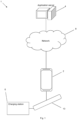
- Fig. 1 shows an example system 1 for managing a smoking substitute device 10.
- the system 1 as shown in Fig. 1 includes a mobile device 2, an application server 4, an optional charging station 6, as well as the smoking substitute device 10.
- the smoking substitute device 10 is configured to communicate wirelessly, e.g. via Bluetooth ® , with an application (or "app") installed on the mobile device 2, e.g. via a suitable wireless interface (not shown) on the mobile device 2.
- the smoking substitute device 10 may, in some examples, be configured to communicate wirelessly with the application server directly (i.e. not via mobile device 2).
- the mobile device 2 may be a mobile phone, for example.
- the application on the mobile phone is configured to communicate with the application server 4, via a network 8.
- the application server 4 may utilise cloud storage, for example.
- the network 8 may include a cellular network and/or the internet.
- the mobile device 2 may be configured to communicate via the network 8 according to various communication channels, preferably a wireless communication channel such as via a cellular network (e.g. according to a standard protocol, such as 3G or 4G) or via a WiFi ® network.
- a wireless communication channel such as via a cellular network (e.g. according to a standard protocol, such as 3G or 4G) or via a WiFi ® network.
- the app installed on the mobile device and the application server 4 may be configured to assist a user with their smoking substitute device 10, based on information communicated between the smoking substitute device 10 and the app and/or information communicated between the app and the application server 4.
- the charging station 6 may be configured to charge (and optionally communicate with) the smoking substitute device 10, via a charging port on the smoking substitute device 10.
- the charging port on the smoking substitute device 10 may be a USB port, for example, which may allow the smoking substitute device to be charged by any USB-compatible device capable of delivering power to the smoking substitute device 10 via a suitable USB cable (in this case the USB-compatible device would be acting as the charging station 6).
- the charging station could be a docking station specifically configured to dock with the smoking substitute device 10 and charge the smoking substitute device 10 via the charging port on the smoking substitute device 10.
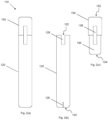
- Fig. 2(a) shows an example smoking substitute device 110 for use as the smoking substitute device 10 in the system 1 of Fig. 1 .
- the smoking substitute device 110 includes a main body 120 and a consumable 150.
- the consumable 150 may alternatively be referred to as a "pod".
- the smoking substitute device 110 is a closed system vaping device, wherein the consumable 150 includes a sealed tank 156 and is intended for one-use only.
- Fig. 2(a) shows the smoking substitute device 110 with the main body 120 physically coupled to the consumable 150.
- Fig. 2(b) shows the main body 120 of the smoking substitute device 110 without the consumable 150.
- Fig. 2(c) shows the consumable 150 of the smoking substitute device 110 without the main body 120.
- the main body 120 and the consumable 150 are configured to be physically coupled together, in this example by pushing the consumable 150 into an aperture in a top end 122 of the main body 120.
- the main body 120 and the consumable could be physically coupled together by screwing one onto the other, or through a bayonet fitting, for example.
- An optional light 126 e.g. an LED located behind a small translucent cover, is located a bottom end 124 of the main body 120. The light 126 may be configured to illuminate when the smoking substitute device 110 is activated.
- the consumable 150 includes a mouthpiece (not shown) at a top end 152 of the consumable 150, as well as one or more air inlets (not shown in Fig. 2 ) so that air can be drawn into the smoking substitute device 110 when a user inhales through the mouthpiece.
- a tank 156 that contains e-liquid.
- the tank 156 may be a translucent body, for example.
- the tank 156 preferably includes a window 158, so that the amount of e-liquid in the tank 156 can be visually assessed.
- the main body 120 includes a slot 128 so that the window 158 of the consumable 150 can be seen whilst the rest of the tank 156 is obscured from view when the consumable 150 is inserted into the aperture in the top end 122 of the main body 120.
- the tank 156 may be referred to as a "clearomizer” if it includes a window 158, or a “cartomizer” if it does not.
- the consumable 150 may identify itself to the main body 120, via an electrical interface, RFID chip, or barcode.
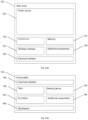
- Fig. 3(a) is a schematic view of the main body 120 of the smoking substitute device 110.
- Fig. 3(b) is a schematic view of the consumable 150 of the smoking substitute device 110.
- the main body 120 includes a power source 128, a control unit 130, a memory 132, a wireless interface 134, an electrical interface 136, and, optionally, one or more additional components 138.
- the power source 128 is preferably a battery, more preferably a rechargeable battery.
- the control unit 130 may include a microprocessor, for example.
- the memory 132 is preferably includes non-volatile memory.
- the memory may include instructions which, when implemented, cause the control unit 130 to perform certain tasks or steps of a method.
- the wireless interface 134 is preferably configured to communicate wirelessly with the mobile device 2, e.g. via Bluetooth ® .
- the wireless interface 134 could include a Bluetooth ® antenna.
- Other wireless communication interfaces, e.g. WiFi ® are also possible.
- the wireless interface 134 may be configured to communicate wirelessly with the remote server 2.
- the electrical interface 136 of the main body 120 may include one or more electrical contacts.
- the electrical interface 136 may be located in, and preferably at the bottom of, the aperture in the top end 122 of the main body 120.
- the electrical interface 136 may be configured to pass electrical power from the power source 128 to (e.g. a heating device of) the consumable 150 when the smoking substitute device 110 is activated, e.g. via the electrical interface 160 of the consumable 150 (discussed below).
- the electrical interface may be configured to receive power from the charging station 6.
- the electrical interface 136 may also be used to identify the consumable 150 from a list of known consumables.
- the consumable may be a particular flavour and/or have a certain concentration of nicotine. This can be identified to the control unit 130 of the main body 120 when the consumable is connected to the main body. Additionally, or alternatively, there may be a separate communication interface provided in the main body 120 and a corresponding communication interface in the consumable 150 such that, when connected, the consumable can identify itself to the main body 120.
- the additional components 138 of the main body 120 may include the optional light 126 discussed above.
- the additional components 138 of the main body 120 may, if the power source 128 is a rechargeable battery, include a charging port configured to receive power from the charging station 6. This may be located at the bottom end 124 of the main body 120. Alternatively, the electrical interface 136 discussed above is configured to act as a charging port configured to receive power from the charging station 6 such that a separate charging port is not required.
- the additional components 138 of the main body 120 may, if the power source 128 is a rechargeable battery, include a battery charging control circuit, for controlling the charging of the rechargeable battery.
- a battery charging control circuit could equally be located in the charging station 6 (if present).
- the additional components 138 of the main body 120 may include an airflow sensor for detecting airflow in the smoking substitute device 110, e.g. caused by a user inhaling through a mouthpiece 166 (discussed below) of the smoking substitute device 110.
- the smoking substitute device 110 may be configured to be activated when airflow is detected by the airflow sensor.
- This optional sensor could alternatively be included in the consumable 150 (though this is less preferred where the consumable 150 is intended to be disposed of after use, as in this example).
- the airflow sensor can be used to determine, for example, how heavily a user draws on the mouthpiece or how many times a user draws on the mouthpiece in a particular time period.
- the additional components 138 of the main body 120 may include an actuator, e.g. a button.
- the smoking substitute device 110 may be configured to be activated when the actuator is actuated. This provides an alternative to the airflow sensor noted, as a mechanism for activating the smoking substitute device 110.
- the consumable 150 includes the tank 156, an electrical interface 160, a heating device 162, one or more air inlets 164, a mouthpiece 166, and, optionally, one or more additional components 168.
- the electrical interface 160 of the consumable 150 may include one or more electrical contacts.
- the electrical interface 136 of the main body 120 and an electrical interface 160 of the consumable 150 are preferably configured to contact each other and therefore electrically couple the main body 120 to the consumable 150 when the main body 120 is physically coupled to the consumable 150. In this way, electrical energy (e.g. in the form of an electrical current) is able to be supplied from the power source 128 in the main body 120 to the heating device 162 in the consumable 150.
- the heating device 162 is preferably configured to heat e-liquid contained in the tank 156, e.g. using electrical energy supplied from the power source 128.
- the heating device 162 may include a heating filament and a wick, wherein a first portion of the wick extends into the tank 156 in order to draw e-liquid out from the tank 156, and wherein the heating filament coils around a second portion of the wick located outside the tank 156.
- the heating filament is configured to heat up e-liquid drawn out of the tank 156 by the wick to produce an aerosol vapour.
- the one or more air inlets 164 are preferably configured to allow air to be drawn into the smoking substitute device 110, when a user inhales through the mouthpiece 166.
- a user activates the smoking substitute device 110, e.g. through actuating an actuator included in the main body 120 or by inhaling through the mouthpiece 166 as described above.
- the control unit 130 may supply electrical energy from the power source 128 to the heating device 162 (via electrical interfaces 136, 166), which may cause the heating device 162 to heat e-liquid drawn from the tank 156 to produce a vapour which is inhaled by a user through the mouthpiece 166.
- an interface for obtaining an identifier of the consumable may be provided.
- this interface may be, for example, an RFID reader, a barcode or QR code reader, or an electronic interface which is able to identify the consumable to the main body.
- the consumable may, therefore include any one or more of an RFID chip, a barcode or QR code, or memory within which is an identifier and which can be interrogated via the electronic interface in the main body.
- smoking substitute device 110 shown in Figs. 2 and 3 shows just one example implementation of a smoking substitute device, and that other forms of smoking substitute device could be used as the smoking substitute device 10 of Fig. 1 .
- a HNB smoking substitute device including a main body and a consumable could be used as the smoking substitute device 10 of Fig. 1 , instead of the smoking substitute device 110.
- One such HNB smoking substitute device is the IQOS ® smoking substitute device discussed above.
- an open system vaping device which includes a main body, a refillable tank, and a mouthpiece could be used as the smoking substitute device 10 of Fig. 1 , instead of the smoking substitute device 110.
- One such open system vaping device is the blu PRO TM e-cigarette discussed above.
- an entirely disposable (one use) smoking substitute device could be used as the smoking substitute device 10 of Fig. 1 , instead of the smoking substitute device 110.
- Figure 4 illustrates a method according to the present invention.
- the figure is a data flow diagram, where time is presented along the long (vertical) axis.
- usage data is gathered by the smoking substitute device 10.
- this usage data can be gathered in many different ways.
- the control unit 130 may be configured to note and store in memory 132 the number of times the smoking substitute device 10 is used within a predetermined time period e.g. 1 hour, 12 hours, etc. Additionally, or alternatively, the control unit 130 may be configured to record the power remaining in power source 128 at different times during a given time period, e.g. a day.
- the gathered usage data is transmitted to the mobile device 2.
- the mobile device derives the one or more usage parameter(s).
- the usage parameter(s) may be derived by the smoking substitute device itself.
- the usage parameter(s) may be a processed form of the usage data, e.g. ordered temporally or linked to the smoking substitute device which gathered the usage data.
- the usage parameter(s) may be essentially the same as the gathered usage data.
- the mobile device After the usage parameter(s) have been derived, either by the mobile device 2 or by smoking substitute device 10, they are transmitted to remote server 4. In the embodiment shown in Figure 4 , the mobile device transmits the usage parameters in step S404 to the remote server.
- the remote server 4 assess them. By assessing, it may be meant that the remote server ascribes a user type based on the usage data. Two examples as discussed below:
- the usage parameter(s) indicate that the device runs low on battery before a time when the user normally charges the device.
- the usage parameter(s) indicate that the user draws very heavily on the device.
- the remote server After assessing the one or more usage parameter(s) in step S405, the remote server derives a recommended configuration of the smoking substitute device in step S406. Again, relating these to the examples discussed above:
- the recommended configuration in this instance may be to change the device to a more economical mode, e.g. by changing a voltage of a heater in the device, so that the battery will last longer.
- the recommended configuration in this instance may be to increase the voltage of the heater in the device, so that more nicotine is delivered per inhalation and therefore the user is not required to draw so heavily.
- the remote server 4 has assessed the usage parameters and derived the recommended configuration, in some embodiments either the smoking substitute device itself can assess and derive or the mobile device can assess and derive.
- step S406 after the recommended configuration has been derived it is transmitted, in step S406 to the mobile device.
- step S408 where the recommended configuration is presented to the user for authorization.
- This presentation can be undertaken by, for example, an application installed on the mobile device which presents information relating to the recommended configuration and requests that the user either authorise or deny the implementation of the recommended configuration.
- the mobile device 2 presents the recommended configuration
- the recommended configuration may be presented by the smoking substitute device itself either visually or audibly.
- the recommended configuration is then transmitted to the smoking substitute device in step S409. Subsequently, the recommended configuration is then implemented on the smoking substitute device in step 410.
- FIG. 5 illustrates a method according to embodiments of the present invention.
- a processor either in the smoking substitute device 10 or in the mobile device 2, identifies a consumable connected to the smoking substitute device.
- consumable it is meant a pod as described above e.g. a cartomizer or clearomizer.
- the consumable may be identified by any one or more of: a processor within the consumable which communicates with a processor in either the smoking substitute device or the mobile device; an RFID chip within the consumable which is read by a corresponding reader in either the smoking substitute device or the mobile device; or a barcode, which is optically read by a corresponding reader in either the smoking substitute device or the mobile device.
- the processor in either the smoking substitute device or the mobile device determines, in step S502, whether that consumable is known to the processor.
- known it is meant that the processor identifies whether a recommended configuration is already associated with the consumable identified. This may involve checking a database of consumables which have associated recommended configurations.
- step S503 a store of associated configurations is interrogated so as to identify the recommended configuration associated with the consumable currently connected to the smoking substitute device. This may be the last configuration used with that type of consumable in the smoking substitute device, or a pre-programmed configuration for that type of consumable which is set up in the store of configurations when the device is manufactured.
- step S504 the associated configuration which has been identified based on the identity of the consumable is implemented on the smoking substitute device.
- a default mode configuration is implemented.
- default mode configuration it may be meant values known to work for all consumables compatible with the smoking substitute device are implemented. Whilst these may not be optimal from a user's perspective, e.g. not enough nicotine delivered per inhalation, they ensure that the consumable is not damaged by applying a configuration of the smoking substitute device which is not suitable therefor.
- connect and “connected” should be understood to express a networked connection between one device and another which is can be either direct or indirect (via intermediary).
Landscapes
- Engineering & Computer Science (AREA)
- Computer Networks & Wireless Communication (AREA)
- Human Computer Interaction (AREA)
- Signal Processing (AREA)
- Charge And Discharge Circuits For Batteries Or The Like (AREA)
- Telephonic Communication Services (AREA)
- Debugging And Monitoring (AREA)
Claims (15)
- Computerimplementiertes Verfahren zum Anpassen einer Konfiguration einer Rauchersatzvorrichtung (10, 110), das die folgenden Schritte umfasst:Überwachen der Verwendung der Rauchersatzvorrichtung (10, 110) und Ableiten von der überwachten Verwendung eines oder mehrerer Verwendungsparameter, die der Verwendung der Rauchersatzvorrichtung (10, 110) zugeordnet sind;Bewerten des einen oder der mehreren Verwendungsparameter, um basierend auf dem einen oder den mehreren Verwendungsparametern eine empfohlene Konfiguration der Rauchersatzvorrichtung (10, 110) abzuleiten;Anzeigen der empfohlenen Konfiguration der Rauchersatzvorrichtung (10, 110) für einen Benutzer der Rauchersatzvorrichtung (10, 110) zur Autorisierung vor Implementieren der empfohlenen Konfiguration auf der Rauchersatzvorrichtung (10, 110), wobei der eine oder die mehreren Verwendungsparameter vor einem Zeitpunkt, zu dem ein Benutzer die Rauchersatzvorrichtung (10, 110) normalerweise lädt, angeben, dass eine Batterie der Rauchersatzvorrichtung (10, 110) fast leer ist, und die empfohlene Konfiguration der Rauchersatzvorrichtung (10, 110) das Umschalten der Rauchersatzvorrichtung (10, 110) auf einen energiesparenderen Modus umfasst, sodass die Batterie der Rauchersatzvorrichtung (10, 110) länger halten wird; undnach der Autorisierung der empfohlenen Konfiguration Implementieren der empfohlenen Konfiguration an der Rauchersatzvorrichtung (10, 110).
- Verfahren nach Anspruch 1, wobei das Implementieren der empfohlenen Konfiguration der Rauchersatzvorrichtung (10, 110) das Einstellen eines Leistungspegels eines Heizelements in der Rauchersatzvorrichtung (10, 110) umfasst.
- Verfahren nach Anspruch 1 oder Anspruch 2, wobei das Implementieren der empfohlenen Konfiguration der Rauchersatzvorrichtung (10, 110) das Ändern eines Leistungsprofils über eine Inhalationszeitspanne umfasst.
- Verfahren nach Anspruch 1, wobei der eine oder die mehreren Verwendungsparameter von der Rauchersatzvorrichtung (10, 110) an eine Anwendung übertragen werden, die auf einer Mobilvorrichtung (2) installiert ist, wobei die Anwendung den einen oder die mehreren Verwendungsparameter bewertet, um die empfohlene Konfiguration abzuleiten.
- Verfahren nach Anspruch 1, wobei der eine oder die mehreren Verwendungsparameter von der Rauchersatzvorrichtung (10, 110) an einen Fernserver (4) übertragen werden, wobei der Fernserver (4) den einen oder die mehreren Verwendungsparameter bewertet, um die empfohlene Konfiguration abzuleiten.
- Verfahren nach einem der vorangegangenen Ansprüche, wobei das Implementieren der empfohlenen Konfiguration das Ändern eines oder mehrerer Werte in einem Speicher (132) der Rauchersatzvorrichtung (10, 110) umfasst.
- Verfahren nach einem der vorangegangenen Ansprüche, wobei die Ableitung der empfohlenen Konfiguration so durchgeführt wird, um die Rauchersatzvorrichtung (10, 110) so anzupassen, dass ein Benutzererlebnis der Vorrichtung (10, 110) verbessert wird.
- Verfahren nach einem der vorangegangenen Ansprüche, wobei der eine oder die mehreren Verwendungsparameter zumindest eines der Folgenden umfassen:eine Gesamtverwendungszeit der Vorrichtung (10, 110) innerhalb einer gegebenen Zeitspanne;einen Batteriestand;eine Angabe der Anzahl von Malen, die die Rauchersatzvorrichtung (10, 110) innerhalb einer gegebenen Zeitspanne verwendet wird;eine Angabe darüber, wie stark ein Benutzer an der Rauchersatzvorrichtung (10, 110) anzieht; undeine Angabe der Anzahl von Malen, die eine Verbrauchsware (150) in die Rauchersatzvorrichtung (10, 110) eingesetzt oder entfernt wurde.
- Verfahren nach einem der vorangegangenen Ansprüche, wobei das Implementieren der empfohlenen Konfiguration der Rauchersatzvorrichtung (10, 110) das Ändern einer oder mehrerer Einstellungen der Rauchersatzvorrichtung (10, 110) aus folgender Liste umfasst:eine Leistung, mit der ein Heizelement der Rauchersatzvorrichtung (10, 110) versorgt wird; undein Leistungsprofil, das einer Klasse von Verbrauchswaren (150) zugeordnet ist.
- Verfahren nach einem der vorangegangenen Ansprüche, das ferner die folgenden Schritte umfasst, die an der Rauchersatzvorrichtung (10, 110) implementiert werden:Erhalten eines Identifikators einer Verbrauchsware (150), die mit der Rauchersatzvorrichtung (10, 110) verbunden ist;Bestimmen einer zugeordneten empfohlenen Konfiguration der Rauchersatzvorrichtung (10, 110) unter Verwendung des Identifikators, die innerhalb eines Speichers (132) der Rauchersatzvorrichtung (10, 110) gespeichert ist; undImplementieren der zugeordneten empfohlenen Konfiguration an der Rauchersatzvorrichtung (10, 110).
- Verfahren nach einem der vorangegangenen Ansprüche, das ferner die folgenden Schritte umfasst, die an der Rauchersatzvorrichtung (10, 110) implementiert werden:Erhalten eines Identifikators einer Verbrauchsware, die mit der Rauchersatzvorrichtung (10, 110) verbunden ist;Bestimmen, dass keine zugeordnete empfohlene Konfiguration der Rauchersatzvorrichtung (10, 110), die innerhalb des Speichers (132) der Rauchersatzvorrichtung (10, 110) gespeichert ist, vorhanden ist, unter Verwendung des Identifikators; undImplementieren einer Standardmoduskonfiguration an der Rauchersatzvorrichtung (10, 110).
- Verfahren nach einem der vorangegangenen Ansprüche, wobei:das Bewerten des einen oder der mehreren Verwendungsparameter das Vergleichen des einen oder der mehreren Verwendungsparameter mit einer Vielzahl von gespeicherten Beispielsverwendungsparametern und das Identifizieren eines Benutzertyps der Vorrichtung (10, 110) aus dem Vergleich umfasst, unddas Ableiten der empfohlenen Konfiguration der Rauchersatzvorrichtung (10, 110) durch Auswählen einer entsprechenden empfohlenen Konfiguration, die dem identifizierten Benutzertyp zugeordnet ist, durchgeführt wird.
- Rauchersatzvorrichtung (10, 110), umfassend einen Prozessor und einen Speicher (132), wobei der Speicher (132) Befehle umfasst, die bewirken, dass der Prozessor:die Verwendung der Rauchersatzvorrichtung (10, 110) überwacht und von der überwachten Verwendung einen oder mehrere Verwendungsparameter ableitet, die der Verwendung der Rauchersatzvorrichtung (10, 110) zugeordnet sind;entweder:(a) Bewerten des einen oder der mehreren Verwendungsparameter und Ableiten einer empfohlenen Konfiguration der Rauchersatzvorrichtung (10, 110), oder(b) Übertragen des einen oder der mehreren Verwendungsparameter an eine externe Vorrichtung (2, 4) und Empfangen von der externen Vorrichtung (2, 4) einer empfohlenen Konfiguration, die von dem einen oder den mehreren Parametern abgeleitet wurde;Anzeigen der empfohlenen Konfiguration der Rauchersatzvorrichtung (10, 110) für einen Benutzer der Rauchersatzvorrichtung (10, 110) zur Autorisierung vor Implementieren der empfohlenen Konfiguration auf der Rauchersatzvorrichtung (10, 110), wobei der eine oder die mehreren Verwendungsparameter vor einem Zeitpunkt, zu dem ein Benutzer die Rauchersatzvorrichtung (10, 110) normalerweise lädt, angeben, dass eine Batterie der Rauchersatzvorrichtung (10, 110) fast leer ist, und die empfohlene Konfiguration der Rauchersatzvorrichtung (10, 110) das Umschalten der Rauchersatzvorrichtung (10, 110) auf einen energiesparenderen Modus umfasst, sodass die Batterie der Rauchersatzvorrichtung (10, 110) länger halten wird; undnach der Autorisierung der empfohlenen Konfiguration Implementieren der empfohlenen Konfiguration an der Rauchersatzvorrichtung (10, 110).
- Mobilvorrichtung (2), umfassend einen Prozessor und einen Speicher, wobei der Speicher Befehle enthält, die den Prozessor veranlassen zum:Empfangen eines oder mehrerer Verwendungsparameter von einer Rauchersatzvorrichtung (10, 110), die mit der Mobilvorrichtung (2) verbunden ist;(a) Bewerten des einen oder der mehreren Verwendungsparameter und Ableiten einer empfohlenen Konfiguration der Rauchersatzvorrichtung (10, 110), oder(b) Übertragen des einen oder der mehreren Verwendungsparameter an einen Fernserver (4) und Empfangen von dem Fernserver (4) einer empfohlenen Konfiguration, die von dem einen oder den mehreren Parametern abgeleitet wurde;Anzeigen der empfohlenen Konfiguration der Rauchersatzvorrichtung (10, 110) für einen Benutzer der Rauchersatzvorrichtung (10, 110) zur Autorisierung vor Implementieren der empfohlenen Konfiguration auf der Rauchersatzvorrichtung (10, 110), wobei der eine oder die mehreren Verwendungsparameter vor einem Zeitpunkt, zu dem ein Benutzer die Rauchersatzvorrichtung (10, 110) normalerweise lädt, angeben, dass eine Batterie der Rauchersatzvorrichtung (10, 110) fast leer ist, und die empfohlene Konfiguration der Rauchersatzvorrichtung (10, 110) das Umschalten der Rauchersatzvorrichtung (10, 110) auf einen energiesparenderen Modus umfasst, sodass die Batterie der Rauchersatzvorrichtung (10, 110) länger halten wird; undnach der Autorisierung der empfohlenen Konfiguration Übertragen der empfohlenen Konfiguration an der Rauchersatzvorrichtung (10, 110) zur Implementierung.
- Fernserver (4), umfassend einen Prozessor und einen Speicher, wobei der Speicher Befehle enthält, die den Prozessor veranlassen zum:Empfangen eines oder mehrerer Verwendungsparameter von einer Rauchersatzvorrichtung (10, 110), die mit dem Fernserver (4) verbunden ist;Bewerten des einen oder der mehreren Verwendungsparameter und Ableiten einer empfohlenen Konfiguration der Rauchersatzvorrichtung (10, 110);Anzeigen der empfohlenen Konfiguration der Rauchersatzvorrichtung (10, 110) für einen Benutzer der Rauchersatzvorrichtung (10, 110) zur Autorisierung vor Implementieren der empfohlenen Konfiguration auf der Rauchersatzvorrichtung (10, 110), wobei der eine oder die mehreren Verwendungsparameter vor einem Zeitpunkt, zu dem ein Benutzer die Rauchersatzvorrichtung (10, 110) normalerweise lädt, angeben, dass eine Batterie der Rauchersatzvorrichtung (10, 110) fast leer ist, und die empfohlene Konfiguration der Rauchersatzvorrichtung (10, 110) das Umschalten der Rauchersatzvorrichtung (10, 110) auf einen energiesparenderen Modus umfasst, sodass die Batterie der Rauchersatzvorrichtung (10, 110) länger halten wird; undnach der Autorisierung der empfohlenen Konfiguration Übertragen der empfohlenen Konfiguration an der Rauchersatzvorrichtung (10, 110) zur Implementierung.
Priority Applications (1)
| Application Number | Priority Date | Filing Date | Title |
|---|---|---|---|
| EP25164318.5A EP4546765A3 (de) | 2018-02-26 | 2019-02-13 | Rauchersatzvorrichtung |
Applications Claiming Priority (2)
| Application Number | Priority Date | Filing Date | Title |
|---|---|---|---|
| GBGB1803025.4A GB201803025D0 (en) | 2018-02-26 | 2018-02-26 | Smoking substitute device |
| PCT/EP2019/053501 WO2019162156A1 (en) | 2018-02-26 | 2019-02-13 | Smoking substitute device |
Related Child Applications (2)
| Application Number | Title | Priority Date | Filing Date |
|---|---|---|---|
| EP25164318.5A Division EP4546765A3 (de) | 2018-02-26 | 2019-02-13 | Rauchersatzvorrichtung |
| EP25164318.5A Division-Into EP4546765A3 (de) | 2018-02-26 | 2019-02-13 | Rauchersatzvorrichtung |
Publications (2)
| Publication Number | Publication Date |
|---|---|
| EP3759900A1 EP3759900A1 (de) | 2021-01-06 |
| EP3759900B1 true EP3759900B1 (de) | 2025-06-18 |
Family
ID=61903174
Family Applications (2)
| Application Number | Title | Priority Date | Filing Date |
|---|---|---|---|
| EP19704814.3A Active EP3759900B1 (de) | 2018-02-26 | 2019-02-13 | Rauchersatzvorrichtung |
| EP25164318.5A Pending EP4546765A3 (de) | 2018-02-26 | 2019-02-13 | Rauchersatzvorrichtung |
Family Applications After (1)
| Application Number | Title | Priority Date | Filing Date |
|---|---|---|---|
| EP25164318.5A Pending EP4546765A3 (de) | 2018-02-26 | 2019-02-13 | Rauchersatzvorrichtung |
Country Status (6)
| Country | Link |
|---|---|
| US (1) | US20210037891A1 (de) |
| EP (2) | EP3759900B1 (de) |
| ES (1) | ES3036705T3 (de) |
| GB (1) | GB201803025D0 (de) |
| PL (1) | PL3759900T3 (de) |
| WO (1) | WO2019162156A1 (de) |
Families Citing this family (5)
| Publication number | Priority date | Publication date | Assignee | Title |
|---|---|---|---|---|
| GB201803025D0 (en) | 2018-02-26 | 2018-04-11 | Nerudia Ltd | Smoking substitute device |
| US12055532B2 (en) * | 2018-04-12 | 2024-08-06 | Evolv, Llc | Systems and methods for vaporizer analysis |
| EP3869427A1 (de) * | 2020-02-19 | 2021-08-25 | Nerudia Limited | Rauchersatzvorrichtung |
| GB202109226D0 (en) * | 2021-06-25 | 2021-08-11 | Nicoventures Trading Ltd | An aerosol provision system |
| US12550942B2 (en) | 2022-09-19 | 2026-02-17 | Altria Client Services Llc | Session control system |
Citations (12)
| Publication number | Priority date | Publication date | Assignee | Title |
|---|---|---|---|---|
| US20110226236A1 (en) | 2008-10-23 | 2011-09-22 | Helmut Buchberger | Inhaler |
| EP1211628B1 (de) | 2000-11-30 | 2014-05-14 | Canon Kabushiki Kaisha | Inhalator und Ausstosskopfkontrolverfahren |
| WO2015050981A1 (en) | 2013-10-04 | 2015-04-09 | R. J. Reynolds Tobacco Company | Accessory for an aerosol delivery device and related method and computer program product |
| US20150224268A1 (en) | 2014-02-07 | 2015-08-13 | R.J. Reynolds Tobacco Company | Charging Accessory Device for an Aerosol Delivery Device and Related System, Method, Apparatus, and Computer Program Product for Providing Interactive Services for Aerosol Delivery Devices |
| US20150258289A1 (en) | 2014-03-12 | 2015-09-17 | R.J. Reynolds Tobacco Company | Aerosol Delivery System and Related Method, Apparatus, and Computer Program Product for Providing Control Information to an Aerosol Delivery Device Via a Cartridge |
| WO2015155612A2 (en) | 2014-03-28 | 2015-10-15 | Sis Resources Ltd. | Systems and methods for providing battery voltage indication in an electronic vapor device |
| US20150333552A1 (en) | 2014-05-13 | 2015-11-19 | Loec, Inc. | Method, system and device for controlling charging of batteries in electronic cigarettes |
| WO2016210242A1 (en) | 2015-06-25 | 2016-12-29 | Altria Client Services Llc | Electronic vaping device having pressure sensor |
| WO2017055793A1 (en) | 2015-09-28 | 2017-04-06 | Nicoventures Holdings Limited | Electronic vapour provision system |
| US20170318861A1 (en) | 2014-12-11 | 2017-11-09 | Philip Morris Products S.A. | Inhaling device with user recognition based on inhalation behaviour |
| US9880611B2 (en) | 2015-08-31 | 2018-01-30 | Google Llc | Energy saving mode for electronic devices |
| WO2019162156A1 (en) | 2018-02-26 | 2019-08-29 | Nerudia Ltd | Smoking substitute device |
Family Cites Families (5)
| Publication number | Priority date | Publication date | Assignee | Title |
|---|---|---|---|---|
| US9743691B2 (en) * | 2010-05-15 | 2017-08-29 | Rai Strategic Holdings, Inc. | Vaporizer configuration, control, and reporting |
| US11517042B2 (en) * | 2012-04-25 | 2022-12-06 | Altria Client Services Llc | Digital marketing applications for electronic cigarette users |
| US20150181945A1 (en) * | 2013-12-31 | 2015-07-02 | Martin Tremblay | Electronic vaping device |
| KR20250159287A (ko) * | 2016-05-25 | 2025-11-10 | 쥴 랩스, 인크. | 기화기의 제어를 위한 카트리지 및 기화기 |
| US20210401061A1 (en) * | 2018-03-14 | 2021-12-30 | Canopy Growth Corporation | Vape devices, including cartridges, tablets, sensors, and controls for vape devices, and methods for making and using the same |
-
2018
- 2018-02-26 GB GBGB1803025.4A patent/GB201803025D0/en not_active Ceased
-
2019
- 2019-02-13 WO PCT/EP2019/053501 patent/WO2019162156A1/en not_active Ceased
- 2019-02-13 EP EP19704814.3A patent/EP3759900B1/de active Active
- 2019-02-13 ES ES19704814T patent/ES3036705T3/es active Active
- 2019-02-13 PL PL19704814.3T patent/PL3759900T3/pl unknown
- 2019-02-13 EP EP25164318.5A patent/EP4546765A3/de active Pending
-
2020
- 2020-08-25 US US17/001,876 patent/US20210037891A1/en active Pending
Patent Citations (12)
| Publication number | Priority date | Publication date | Assignee | Title |
|---|---|---|---|---|
| EP1211628B1 (de) | 2000-11-30 | 2014-05-14 | Canon Kabushiki Kaisha | Inhalator und Ausstosskopfkontrolverfahren |
| US20110226236A1 (en) | 2008-10-23 | 2011-09-22 | Helmut Buchberger | Inhaler |
| WO2015050981A1 (en) | 2013-10-04 | 2015-04-09 | R. J. Reynolds Tobacco Company | Accessory for an aerosol delivery device and related method and computer program product |
| US20150224268A1 (en) | 2014-02-07 | 2015-08-13 | R.J. Reynolds Tobacco Company | Charging Accessory Device for an Aerosol Delivery Device and Related System, Method, Apparatus, and Computer Program Product for Providing Interactive Services for Aerosol Delivery Devices |
| US20150258289A1 (en) | 2014-03-12 | 2015-09-17 | R.J. Reynolds Tobacco Company | Aerosol Delivery System and Related Method, Apparatus, and Computer Program Product for Providing Control Information to an Aerosol Delivery Device Via a Cartridge |
| WO2015155612A2 (en) | 2014-03-28 | 2015-10-15 | Sis Resources Ltd. | Systems and methods for providing battery voltage indication in an electronic vapor device |
| US20150333552A1 (en) | 2014-05-13 | 2015-11-19 | Loec, Inc. | Method, system and device for controlling charging of batteries in electronic cigarettes |
| US20170318861A1 (en) | 2014-12-11 | 2017-11-09 | Philip Morris Products S.A. | Inhaling device with user recognition based on inhalation behaviour |
| WO2016210242A1 (en) | 2015-06-25 | 2016-12-29 | Altria Client Services Llc | Electronic vaping device having pressure sensor |
| US9880611B2 (en) | 2015-08-31 | 2018-01-30 | Google Llc | Energy saving mode for electronic devices |
| WO2017055793A1 (en) | 2015-09-28 | 2017-04-06 | Nicoventures Holdings Limited | Electronic vapour provision system |
| WO2019162156A1 (en) | 2018-02-26 | 2019-08-29 | Nerudia Ltd | Smoking substitute device |
Also Published As
| Publication number | Publication date |
|---|---|
| EP3759900A1 (de) | 2021-01-06 |
| GB201803025D0 (en) | 2018-04-11 |
| US20210037891A1 (en) | 2021-02-11 |
| EP4546765A3 (de) | 2025-07-23 |
| PL3759900T3 (pl) | 2025-10-20 |
| WO2019162156A1 (en) | 2019-08-29 |
| EP4546765A2 (de) | 2025-04-30 |
| ES3036705T3 (en) | 2025-09-23 |
Similar Documents
| Publication | Publication Date | Title |
|---|---|---|
| EP3759890B1 (de) | System und verfahren zur verwaltung von rauchersatzgeräten und zugehöriges verfahren | |
| EP3759900B1 (de) | Rauchersatzvorrichtung | |
| EP3785550B1 (de) | Rauchersatzvorrichtung | |
| US11178913B2 (en) | Apparatus and method for component lifetime monitoring in a network-enabled smoking substitute device | |
| US12089653B2 (en) | Smoking substitute device | |
| EP3758523B1 (de) | Verfahren, vorrichtungen und systeme im zusammenhang mit rauchersatzvorrichtungen | |
| US20240265426A1 (en) | Smoking substitute device | |
| US12063975B2 (en) | Systems for managing smoking substitute devices and associated methods | |
| US20250040616A1 (en) | Moking substitute device | |
| EP3869427A1 (de) | Rauchersatzvorrichtung | |
| EP3795014A1 (de) | Drahtloses ladegerät für eine rauchersatzvorrichtung | |
| EP3927201B1 (de) | Rauchersatzvorrichtung | |
| EP3838029A1 (de) | Rauchersatzvorrichtung und -system | |
| EP3838031A1 (de) | Rauchersatzsystem und verfahren zum synchronisieren von mindestens zwei rauchersatzvorrichtungen | |
| WO2019206608A1 (en) | Smoking substitute device | |
| EP3838032A1 (de) | Rauchersatzvorrichtung und verfahren zur kommunikation | |
| EP3838017A1 (de) | System und verfahren zur bereitstellung einer benachrichtigung auf einer rauchersatzvorrichtung und mobile vorrichtung |
Legal Events
| Date | Code | Title | Description |
|---|---|---|---|
| STAA | Information on the status of an ep patent application or granted ep patent |
Free format text: STATUS: UNKNOWN |
|
| STAA | Information on the status of an ep patent application or granted ep patent |
Free format text: STATUS: THE INTERNATIONAL PUBLICATION HAS BEEN MADE |
|
| PUAI | Public reference made under article 153(3) epc to a published international application that has entered the european phase |
Free format text: ORIGINAL CODE: 0009012 |
|
| STAA | Information on the status of an ep patent application or granted ep patent |
Free format text: STATUS: REQUEST FOR EXAMINATION WAS MADE |
|
| 17P | Request for examination filed |
Effective date: 20200915 |
|
| AK | Designated contracting states |
Kind code of ref document: A1 Designated state(s): AL AT BE BG CH CY CZ DE DK EE ES FI FR GB GR HR HU IE IS IT LI LT LU LV MC MK MT NL NO PL PT RO RS SE SI SK SM TR |
|
| AX | Request for extension of the european patent |
Extension state: BA ME |
|
| DAV | Request for validation of the european patent (deleted) | ||
| DAX | Request for extension of the european patent (deleted) | ||
| STAA | Information on the status of an ep patent application or granted ep patent |
Free format text: STATUS: EXAMINATION IS IN PROGRESS |
|
| 17Q | First examination report despatched |
Effective date: 20220309 |
|
| RAP1 | Party data changed (applicant data changed or rights of an application transferred) |
Owner name: IMPERIAL TOBACCO LIMITED |
|
| REG | Reference to a national code |
Ref country code: DE Ref legal event code: R079 Free format text: PREVIOUS MAIN CLASS: H04M0001725000 Ipc: A24F0040500000 Ref country code: DE Ref legal event code: R079 Ref document number: 602019071215 Country of ref document: DE Free format text: PREVIOUS MAIN CLASS: H04M0001725000 Ipc: A24F0040500000 |
|
| GRAP | Despatch of communication of intention to grant a patent |
Free format text: ORIGINAL CODE: EPIDOSNIGR1 |
|
| STAA | Information on the status of an ep patent application or granted ep patent |
Free format text: STATUS: GRANT OF PATENT IS INTENDED |
|
| RIC1 | Information provided on ipc code assigned before grant |
Ipc: H04M 1/72403 20210101ALN20241022BHEP Ipc: A24F 40/65 20200101ALN20241022BHEP Ipc: A24F 40/10 20200101ALN20241022BHEP Ipc: H04M 1/72412 20210101ALI20241022BHEP Ipc: A24F 40/53 20200101ALI20241022BHEP Ipc: A24F 40/50 20200101AFI20241022BHEP |
|
| INTG | Intention to grant announced |
Effective date: 20241114 |
|
| GRAJ | Information related to disapproval of communication of intention to grant by the applicant or resumption of examination proceedings by the epo deleted |
Free format text: ORIGINAL CODE: EPIDOSDIGR1 |
|
| STAA | Information on the status of an ep patent application or granted ep patent |
Free format text: STATUS: EXAMINATION IS IN PROGRESS |
|
| GRAP | Despatch of communication of intention to grant a patent |
Free format text: ORIGINAL CODE: EPIDOSNIGR1 |
|
| STAA | Information on the status of an ep patent application or granted ep patent |
Free format text: STATUS: GRANT OF PATENT IS INTENDED |
|
| INTC | Intention to grant announced (deleted) | ||
| RIC1 | Information provided on ipc code assigned before grant |
Ipc: H04M 1/72403 20210101ALN20250102BHEP Ipc: A24F 40/65 20200101ALN20250102BHEP Ipc: A24F 40/10 20200101ALN20250102BHEP Ipc: H04M 1/72412 20210101ALI20250102BHEP Ipc: A24F 40/53 20200101ALI20250102BHEP Ipc: A24F 40/50 20200101AFI20250102BHEP |
|
| INTG | Intention to grant announced |
Effective date: 20250120 |
|
| GRAS | Grant fee paid |
Free format text: ORIGINAL CODE: EPIDOSNIGR3 |
|
| GRAA | (expected) grant |
Free format text: ORIGINAL CODE: 0009210 |
|
| STAA | Information on the status of an ep patent application or granted ep patent |
Free format text: STATUS: THE PATENT HAS BEEN GRANTED |
|
| AK | Designated contracting states |
Kind code of ref document: B1 Designated state(s): AL AT BE BG CH CY CZ DE DK EE ES FI FR GB GR HR HU IE IS IT LI LT LU LV MC MK MT NL NO PL PT RO RS SE SI SK SM TR |
|
| REG | Reference to a national code |
Ref country code: GB Ref legal event code: FG4D |
|
| REG | Reference to a national code |
Ref country code: CH Ref legal event code: EP |
|
| P01 | Opt-out of the competence of the unified patent court (upc) registered |
Free format text: CASE NUMBER: APP_25812/2025 Effective date: 20250530 |
|
| REG | Reference to a national code |
Ref country code: DE Ref legal event code: R096 Ref document number: 602019071215 Country of ref document: DE |
|
| REG | Reference to a national code |
Ref country code: CH Ref legal event code: EP |
|
| REG | Reference to a national code |
Ref country code: IE Ref legal event code: FG4D |
|
| REG | Reference to a national code |
Ref country code: ES Ref legal event code: FG2A Ref document number: 3036705 Country of ref document: ES Kind code of ref document: T3 Effective date: 20250923 |
|
| PG25 | Lapsed in a contracting state [announced via postgrant information from national office to epo] |
Ref country code: FI Free format text: LAPSE BECAUSE OF FAILURE TO SUBMIT A TRANSLATION OF THE DESCRIPTION OR TO PAY THE FEE WITHIN THE PRESCRIBED TIME-LIMIT Effective date: 20250618 |
|
| REG | Reference to a national code |
Ref country code: LT Ref legal event code: MG9D |
|
| PG25 | Lapsed in a contracting state [announced via postgrant information from national office to epo] |
Ref country code: NO Free format text: LAPSE BECAUSE OF FAILURE TO SUBMIT A TRANSLATION OF THE DESCRIPTION OR TO PAY THE FEE WITHIN THE PRESCRIBED TIME-LIMIT Effective date: 20250918 |
|
| PG25 | Lapsed in a contracting state [announced via postgrant information from national office to epo] |
Ref country code: BG Free format text: LAPSE BECAUSE OF FAILURE TO SUBMIT A TRANSLATION OF THE DESCRIPTION OR TO PAY THE FEE WITHIN THE PRESCRIBED TIME-LIMIT Effective date: 20250618 |
|
| PG25 | Lapsed in a contracting state [announced via postgrant information from national office to epo] |
Ref country code: HR Free format text: LAPSE BECAUSE OF FAILURE TO SUBMIT A TRANSLATION OF THE DESCRIPTION OR TO PAY THE FEE WITHIN THE PRESCRIBED TIME-LIMIT Effective date: 20250618 |
|
| PG25 | Lapsed in a contracting state [announced via postgrant information from national office to epo] |
Ref country code: RS Free format text: LAPSE BECAUSE OF FAILURE TO SUBMIT A TRANSLATION OF THE DESCRIPTION OR TO PAY THE FEE WITHIN THE PRESCRIBED TIME-LIMIT Effective date: 20250918 |
|
| REG | Reference to a national code |
Ref country code: NL Ref legal event code: MP Effective date: 20250618 |
|
| PG25 | Lapsed in a contracting state [announced via postgrant information from national office to epo] |
Ref country code: LV Free format text: LAPSE BECAUSE OF FAILURE TO SUBMIT A TRANSLATION OF THE DESCRIPTION OR TO PAY THE FEE WITHIN THE PRESCRIBED TIME-LIMIT Effective date: 20250618 |
|
| REG | Reference to a national code |
Ref country code: GR Ref legal event code: EP Ref document number: 20250401787 Country of ref document: GR Effective date: 20251009 |
|
| PG25 | Lapsed in a contracting state [announced via postgrant information from national office to epo] |
Ref country code: NL Free format text: LAPSE BECAUSE OF FAILURE TO SUBMIT A TRANSLATION OF THE DESCRIPTION OR TO PAY THE FEE WITHIN THE PRESCRIBED TIME-LIMIT Effective date: 20250618 |
|
| PG25 | Lapsed in a contracting state [announced via postgrant information from national office to epo] |
Ref country code: PT Free format text: LAPSE BECAUSE OF FAILURE TO SUBMIT A TRANSLATION OF THE DESCRIPTION OR TO PAY THE FEE WITHIN THE PRESCRIBED TIME-LIMIT Effective date: 20251020 |
|
| REG | Reference to a national code |
Ref country code: AT Ref legal event code: MK05 Ref document number: 1803372 Country of ref document: AT Kind code of ref document: T Effective date: 20250618 |
|
| PG25 | Lapsed in a contracting state [announced via postgrant information from national office to epo] |
Ref country code: IS Free format text: LAPSE BECAUSE OF FAILURE TO SUBMIT A TRANSLATION OF THE DESCRIPTION OR TO PAY THE FEE WITHIN THE PRESCRIBED TIME-LIMIT Effective date: 20251018 |
|
| PG25 | Lapsed in a contracting state [announced via postgrant information from national office to epo] |
Ref country code: SM Free format text: LAPSE BECAUSE OF FAILURE TO SUBMIT A TRANSLATION OF THE DESCRIPTION OR TO PAY THE FEE WITHIN THE PRESCRIBED TIME-LIMIT Effective date: 20250618 Ref country code: AT Free format text: LAPSE BECAUSE OF FAILURE TO SUBMIT A TRANSLATION OF THE DESCRIPTION OR TO PAY THE FEE WITHIN THE PRESCRIBED TIME-LIMIT Effective date: 20250618 |
|
| PG25 | Lapsed in a contracting state [announced via postgrant information from national office to epo] |
Ref country code: EE Free format text: LAPSE BECAUSE OF FAILURE TO SUBMIT A TRANSLATION OF THE DESCRIPTION OR TO PAY THE FEE WITHIN THE PRESCRIBED TIME-LIMIT Effective date: 20250618 |
|
| PG25 | Lapsed in a contracting state [announced via postgrant information from national office to epo] |
Ref country code: RO Free format text: LAPSE BECAUSE OF FAILURE TO SUBMIT A TRANSLATION OF THE DESCRIPTION OR TO PAY THE FEE WITHIN THE PRESCRIBED TIME-LIMIT Effective date: 20250618 Ref country code: SK Free format text: LAPSE BECAUSE OF FAILURE TO SUBMIT A TRANSLATION OF THE DESCRIPTION OR TO PAY THE FEE WITHIN THE PRESCRIBED TIME-LIMIT Effective date: 20250618 |
|
| REG | Reference to a national code |
Ref country code: DE Ref legal event code: R026 Ref document number: 602019071215 Country of ref document: DE |
|
| PLBI | Opposition filed |
Free format text: ORIGINAL CODE: 0009260 |
|
| REG | Reference to a national code |
Ref country code: CH Ref legal event code: L10 Free format text: ST27 STATUS EVENT CODE: U-0-0-L10-L00 (AS PROVIDED BY THE NATIONAL OFFICE) Effective date: 20260325 |
|
| PLAX | Notice of opposition and request to file observation + time limit sent |
Free format text: ORIGINAL CODE: EPIDOSNOBS2 |
|
| PGFP | Annual fee paid to national office [announced via postgrant information from national office to epo] |
Ref country code: GB Payment date: 20260121 Year of fee payment: 8 |
|
| PGFP | Annual fee paid to national office [announced via postgrant information from national office to epo] |
Ref country code: ES Payment date: 20260302 Year of fee payment: 8 |
|
| PG25 | Lapsed in a contracting state [announced via postgrant information from national office to epo] |
Ref country code: DK Free format text: LAPSE BECAUSE OF FAILURE TO SUBMIT A TRANSLATION OF THE DESCRIPTION OR TO PAY THE FEE WITHIN THE PRESCRIBED TIME-LIMIT Effective date: 20250618 |
|
| PGFP | Annual fee paid to national office [announced via postgrant information from national office to epo] |
Ref country code: DE Payment date: 20260121 Year of fee payment: 8 |
|
| PGFP | Annual fee paid to national office [announced via postgrant information from national office to epo] |
Ref country code: IT Payment date: 20260121 Year of fee payment: 8 |
|
| PGFP | Annual fee paid to national office [announced via postgrant information from national office to epo] |
Ref country code: FR Payment date: 20260121 Year of fee payment: 8 |
|
| 26 | Opposition filed |
Opponent name: NICOVENTURES TRADING LIMITED Effective date: 20260316 |