EP3757945B1 - Vorrichtung zur erzeugung eines bildes der erweiterten realität - Google Patents
Vorrichtung zur erzeugung eines bildes der erweiterten realität Download PDFInfo
- Publication number
- EP3757945B1 EP3757945B1 EP19182040.6A EP19182040A EP3757945B1 EP 3757945 B1 EP3757945 B1 EP 3757945B1 EP 19182040 A EP19182040 A EP 19182040A EP 3757945 B1 EP3757945 B1 EP 3757945B1
- Authority
- EP
- European Patent Office
- Prior art keywords
- image
- scene
- occlusion
- parts
- predetermined depth
- Prior art date
- Legal status (The legal status is an assumption and is not a legal conclusion. Google has not performed a legal analysis and makes no representation as to the accuracy of the status listed.)
- Active
Links
Images
Classifications
-
- G—PHYSICS
- G06—COMPUTING OR CALCULATING; COUNTING
- G06T—IMAGE DATA PROCESSING OR GENERATION, IN GENERAL
- G06T15/00—Three-dimensional [3D] image rendering
- G06T15/50—Lighting effects
- G06T15/503—Blending, e.g. for anti-aliasing
-
- G—PHYSICS
- G06—COMPUTING OR CALCULATING; COUNTING
- G06T—IMAGE DATA PROCESSING OR GENERATION, IN GENERAL
- G06T15/00—Three-dimensional [3D] image rendering
- G06T15/10—Geometric effects
- G06T15/40—Hidden part removal
-
- G—PHYSICS
- G06—COMPUTING OR CALCULATING; COUNTING
- G06T—IMAGE DATA PROCESSING OR GENERATION, IN GENERAL
- G06T1/00—General purpose image data processing
- G06T1/20—Processor architectures; Processor configuration, e.g. pipelining
-
- G—PHYSICS
- G06—COMPUTING OR CALCULATING; COUNTING
- G06T—IMAGE DATA PROCESSING OR GENERATION, IN GENERAL
- G06T15/00—Three-dimensional [3D] image rendering
- G06T15/10—Geometric effects
- G06T15/20—Perspective computation
-
- G—PHYSICS
- G06—COMPUTING OR CALCULATING; COUNTING
- G06T—IMAGE DATA PROCESSING OR GENERATION, IN GENERAL
- G06T19/00—Manipulating three-dimensional [3D] models or images for computer graphics
- G06T19/006—Mixed reality
-
- G—PHYSICS
- G06—COMPUTING OR CALCULATING; COUNTING
- G06T—IMAGE DATA PROCESSING OR GENERATION, IN GENERAL
- G06T7/00—Image analysis
- G06T7/50—Depth or shape recovery
-
- G—PHYSICS
- G06—COMPUTING OR CALCULATING; COUNTING
- G06V—IMAGE OR VIDEO RECOGNITION OR UNDERSTANDING
- G06V20/00—Scenes; Scene-specific elements
- G06V20/20—Scenes; Scene-specific elements in augmented reality scenes
Definitions
- the present invention relates to the technical field of augmented reality (AR).
- the invention presents a device and a method, respectively, for generating an AR image (or AR video) based on input images (or videos).
- the AR image is specifically generated based on an image of a scene and an image of an object, and considering what parts of the scene are occluded by the object and/or occlude the object, respectively.
- Digital photography and videography are widely used applications and are available in various formats and included in image recording devices such as mobile phones, digital still cameras, and video cameras.
- the traditional purpose of these image recording devices is to record images with the highest possible fidelity.
- a new trend, however, is to modify the recoded image with additional visual content that was not present in the original image.
- This technique of augmenting a recorded image with additional visual content, i.e. with another image, and subsequently displaying the modified image to a viewer, is generally referred to as AR (augmented reality).
- a device that produces an AR image requires depth information to augment or overlay the original image with the additional visual content.
- the depth information provides the device with knowledge about the distance relationship between the observer and different parts of the original image, which is essential for rendering a realistic AR experience.
- a depth map imaging unit may thus be provided next to a main camera. This allows overlaying an original image obtained with the main camera with depth information at each point of the image, based on the information provided by the depth mapping unit.
- embodiments of the present invention aim to provide an improved device for generating an AR image (or AR video).
- the crucial task to be performed when rendering an AR image is the placement of an image of a virtual object (e.g. a figurine to be added to or replacing the background of) an original image (still image or video frame).
- a key task is determining which parts of the scene of the original image that should be shaded (occluded) by the virtual object, and vice versa, i.e. which parts of the original image will overlap the virtual object. This task is generally referred to as determining occlusion.
- An objective is to provide a device that achieves satisfactory AR image rendering, in particular that handles occlusion, but that does not require a high-performance depth mapping unit. Accordingly, a simpler way for realizing AR image generation is desired.
- the occlusion should be handled by the device efficiently, without requiring increased cost, power, and/or volume.
- a first aspect of the invention provides a device for generating an AR image, the device being configured to: obtain a first image of a scene, obtain a second image of an object, obtain a predetermined depth, which relates to a distance from an observer at which the object will appear to be located within the scene in the AR image, capture a third image of only the parts of the scene in front of the predetermined depth, wherein the third image is captured with a range gated imager and has a field of view that is substantially the same as a field of view of the first image, generate occlusion information based on the third image, wherein the occlusion information identifies parts of the first image that are in front of the predetermined depth and parts of the first image that are not in front of the predetermined depth, and overlay the first image and the second image based on the occlusion information, in order to generate the AR image, wherein the occlusion information identifies the parts of the first image that are to be replaced by the second image when overlaying the first image and the second image,
- the device of the first aspect is configured to overlay the image of the scene and the image of the object based on the occlusion information, in order to generate the AR image.
- the device could only obtain pixels (and their location relative to each other and/or relative to the pixels of the first image) that make up an "object", i.e. there is a picture of the object.
- an "object" i.e. there is a picture of the object.
- the "second image” in this case can be a lateral XY positioning reference frame defined relative to the first image.
- the device is configured to, in order to generate the AR image: position the object of the second image in the scene of the first image, wherein parts of the scene are occluded by the object and/or the object is occluded by parts of the scene, according to the occlusion information.
- the occlusion information can be or include an occlusion map.
- the occlusion map may indicate whether that pixel is behind the predetermined depth or in front of the predetermined depth.
- the occlusion information is a binary occlusion map.
- the device is able to generate high resolution AR images.
- the occlusion map has a field of view that is substantially the same as the field of view of the first image.
- the device is able to generate a realistic AR image.
- the device comprises an imaging device configured to capture the first image and the third image.
- the device comprises a range gate imager as a distance imaging unit configured to capture the third image.
- the range gated imager may be part of the imaging device.
- the range gated imager may be configured to: send a light pulse onto the scene, synchronize a shutter, which may e.g. be arranged in front of an image sensor, based on an expected return time of light reflected from the parts of the scene within the depth range, and detect the light that passes the shutter with the image sensor, in order to capture the third image.
- the required depth information for generating the occlusion information can be efficiently obtained with good accuracy.
- the device is further configured to display the generated AR image.
- the first image is a frame of a video
- the AR image is a frame of an AR video
- a second aspect of the invention provides a method of generating an augmented reality (AR) image, the method comprising: obtaining a first image of a scene, obtaining a second image of an object, obtaining a predetermined depth which relates to a distance from an observer at which the object will appear to be located within the scene in the AR image, capturing a third image of only the parts of the scene in front of the predetermined depth, wherein the third image is captured with a range gated imager and has a field of view that is substantially the same as a field of view of the first image, generating occlusion information based on the third image, wherein the occlusion information identifies parts of the first image that are in front of the predetermined depth and parts of the first image that are not in front of the predetermined depth, and overlaying the first image and the second image based on the occlusion information, in order to generate the AR image, wherein the occlusion information further identifies the parts of the first image that are to be replaced by the second image when
- the method comprises, in order to generate the AR image: positioning the object of the second image in the scene of the first image, wherein parts of the scene are occluded by the object and/or the object is occluded by parts of the scene, according to the occlusion information.
- the occlusion information is a binary occlusion map.
- the occlusion map has the same pixel resolution as the third image.
- the occlusion map has a field of view that is substantially the same as the field of view of the first image.
- the method comprises capturing the first image and the third image.
- the method further comprises displaying the generated AR image.
- the method of the second aspect and its implementations achieves the same advantages and effects as described above for the device of the first aspect and its respective implementations.
- a third aspect of the invention provides a computer program product comprising a program code for carrying out, when implemented on an imaging device, the method according to the second aspect or any of its implementation forms.
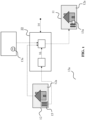
- FIG. 1 shows a device 10 according to an embodiment of the invention.
- the device 10 is configured to generate an AR image 11.
- the device 10 overlays different images of one or more scenes and/or objects to generate the AR image 11.
- the AR image 11 is a still image or may be a frame of an AR video.
- the device 10 is configured to obtain a first image 12 of a scene 12a, and to obtain a second image 13 of an object 13a.
- the images 12 and 13 may have the same pixel resolution.
- the device 10 may be capable to capture the first image 12 and/or the second image 13 by means of e.g. an imaging unit, like one or more cameras.
- the device 10 is further configured to obtain a predetermined depth range 14, which is one depth value, and to capture a third image 15 of only the parts of the scene 12a in front of this obtained predetermined depth.
- the device 10 is configured to capture the third image 15 by means of a range gated imager.
- the device 10 is further configured to generate occlusion information 16 based on the third image 15.
- the occlusion information 16 may be an occlusion map having a pixel resolution of the third image 15.
- the occlusion information 16 may be a binary occlusion map.
- the occlusion information 16 provides information regarding an occlusion relationship between the scene 12a of the first image 12 and the object 13a of the second image 13. For instance, it may define parts of the scene 12a, which are occluded by the object 13a, and/or it may define parts of the scene 12a, which occlude the object 13a, when the object 13a of the second image 13 is arranged in the scene 12a of the first image 12 to form the AR image 11.
- the device 10 is further configured to overlay the first image 12 and the second image 13 based on the occlusion information 16, to generate the AR image 11.
- parts of the first image 12 are replaced by the second image 13.
- parts of the second image 13, particularly pixels of the object 13 may be replaced by pixels of the first image 12 (as illustrated in FIG. 1 ).
- the device 10 For generating the AR image 11, it is necessary for the device 10 to know a priori information regarding the distance relative to the observer, at which the virtual object 13a is to be placed, before an occlusion determination can be carried out.
- the origin of this a priori placement distance information is dependent on the specific AR application, and is outside the scope of this disclosure.
- This distance information correlates to the depth range 14 that is obtained by the device 10.
- the depth range 14 may, for example, be provided by to the device 10 by a content supplier of the first image 12 and/or second image 13.
- the depth range 14 corresponds to the virtual object 13a placement in the depth extent of the scene 12a.
- the device 10 may further be configured 10 to obtain the virtual object 13a placement in the lateral extent of the scene 12a, i.e. it may obtain the vertical/horizontal position, at which the object 13 of the second image 13 should appear in the scene 12a of the first image 12.
- the device 10 can determine which part of the scene 12 a of the first image 12 is either in front of, or behind the object 13a in the AR image 11, at the location where the virtual object 13a of the second image 13 is to be inserted into the scene 12a of the first image 12.
- the occlusion should be determined by the device 10 at high resolution and a high video frame rate (in case that the AR image 11 is a frame of an AR video).
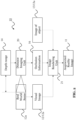
- FIG. 2 shows a schematic of the device 10, which builds on the device 10 shown in FIG. 1 . Same elements in FIG. 1 and FIG. 2 share the same reference signs and function likewise.
- the device 10 comprises a distance imaging unit 20, which is configured to image the real-world scene 12a according to the depth range 14, which is the predetermined depth, in order to determine the occlusion information.
- the device 10 may further comprise an image rendering unit 21, which is configured to generate the AR image 11 taking as an input: the first visual image 12 of the scene 12a, the image 13 of the graphical object 13a, and the occlusion information.
- the distance imaging unit 20 is a range gated imager. That means, the device 10 uses active illumination gated imaging to determine the third image 15, in order to determine which part of the scene 12a is in front of the predetermined depth, and which part of the scene 12a is behind the predetermined depth.
- This technique combines, or optionally may combine a pulsed light source with a global shutter image sensor. By synchronizing the timing of the light pulse and the shutter, the image sensor can be made to have increased sensitivity to objects that are within the predetermined depth from the distance imaging unit 20. For instance, it can be made to have increased sensitivity for objects that are within 5 meters distance from the image sensor.
- This technique may be based on the amount of time that a pulse of light needs to travel from the light emitter towards the object and back to the camera after reflecting off of the object.
- This technique is well known in literature and is generally referred to as Time-Of-Flight (TOF).
- TOF applied to active illumination gated imaging is referred to as range gated imaging.
- the range of higher sensitivity is typically determined primarily by the width of the light pulse and the trigger signal, and by the relative timing of light pulse and shutter.
- the occlusion information 16 may identify parts of the image 12 that are within the predetermined depth and parts that are not.
- the device 10 may be configured to control the light pulse, shutter and relative timing between them at nanosecond time scales for reasonable levels of depth accuracy to be obtained, typically at least on the order of centimeters.
- active illumination gated image systems with such timing capabilities, resolution and frame rate have been reported in literature.
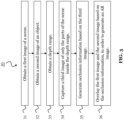
- FIG. 3 shows a flow-diagram of a method 30 according to an embodiment of the invention.
- the method 30 of FIG. 3 can be carried out by the device 10, e.g. as shown in FIG. 1 or FIG. 2 .
- the method 30 comprises: a step 31 of obtaining a first image 12 of a scene 12a; a step 32 of obtaining a second image 13 of an object 13a; a step 33 of obtaining 33 the predetermined depth 14; and a step 34 of capturing 34 a third image 15 of only the parts of the scene 12a within the predetermined depth.
- the method further comprises: a step 35 of generating occlusion information 16 based on the third image 15; and a step 36 of overlaying the first image 12 and the second image 13 based on the occlusion information 16, in order to generate the AR image 11.
- the occlusion of the object 13a can be determined from the occlusion information 16, e.g. from the binary occlusion map that describes parts of the first image 12 in front of and/or behind the obtained predetermined depth.
- the device 10 can perform at higher range, resolution, frame rate, and power efficiency. Further, the device 10 can be built in a compact manner and with low cost.
Landscapes
- Engineering & Computer Science (AREA)
- Physics & Mathematics (AREA)
- Theoretical Computer Science (AREA)
- General Physics & Mathematics (AREA)
- Computer Graphics (AREA)
- Geometry (AREA)
- Computer Hardware Design (AREA)
- General Engineering & Computer Science (AREA)
- Software Systems (AREA)
- Computing Systems (AREA)
- Computer Vision & Pattern Recognition (AREA)
- Multimedia (AREA)
- Processing Or Creating Images (AREA)
Claims (10)
- Vorrichtung (10) zum Erzeugen eines Bildes der erweiterten Realität, AR-Bildes, (11), wobei die Vorrichtung (10) konfiguriert ist zum:- Erhalten eines ersten Bildes (12) einer Szene (12a),- Erhalten eines zweiten Bildes (13) eines Objekts (13a),- Erhalten einer vorbestimmten Tiefe, die sich auf einen Abstand von einem Beobachter bezieht, bei dem sich das Objekt (13a) innerhalb der Szene (12a) in dem AR-Bild (11) zu befinden scheint;dadurch gekennzeichnet, dass sie konfiguriert ist zum:- Aufnehmen eines dritten Bildes (15) nur der Teile der Szene (12a) vor der vorbestimmten Tiefe, wobei das dritte Bild (15) mit einem entfernungstorgesteuerten Bildgeber aufgenommen wird und ein Sichtfeld aufweist, das im Wesentlichen gleich einem Sichtfeld des ersten Bildes ist,- Erzeugen von Verdeckungsinformationen (16) durch Vergleichen des ersten Bildes (12) und des dritten Bildes (15), wobei die Verdeckungsinformationen (16) Teile des ersten Bildes (12), die vor der vorbestimmten Tiefe sind, und Teile des ersten Bildes (12), die nicht vor der vorbestimmten Tiefe sind, identifizieren, und- Überlagern des ersten Bildes (12) und des zweiten Bildes (13) basierend auf den Verdeckungsinformationen (16), um das AR-Bild (11) zu erzeugen, wobei die Verdeckungsinformationen (16) die Teile des ersten Bildes (12) identifizieren, die durch das zweite Bild (13) ersetzt werden sollen, wenn das erste Bild (12) und das zweite Bild (13) überlagert werden, um das AR-Bild (11) zu erzeugen.
- Vorrichtung (10) nach Anspruch 1, die zum Erzeugen des AR-Bildes (11) konfiguriert ist zum:Positionieren des Objekts (13a) des zweiten Bildes (13) in der Szene (12a) des ersten Bildes (12), wobeigemäß den Verdeckungsinformationen (16) Teile der Szene (12a) durch das Objekt (13a) verdeckt werden und/oder das Objekt (13a) durch Teile der Szene (12a) verdeckt wird.
- Vorrichtung (10) nach Anspruch 1 oder 2, wobei:
die Verdeckungsinformationen (16) eine binäre Verdeckungskarte sind. - Vorrichtung (10) nach Anspruch 3, wobei:
die Verdeckungskarte die gleiche Pixelauflösung wie das dritte Bild (15) aufweist. - Vorrichtung (10) nach einem der Ansprüche 1 bis 4, wobei:
die Verdeckungskarte (16) ein Sichtfeld aufweist, das im Wesentlichen gleich dem Sichtfeld des ersten Bildes (12) ist. - Vorrichtung (10) nach einem der Ansprüche 1 bis 5, die umfasst:
eine Bildgebungsvorrichtung (20), die konfiguriert ist, um das erste Bild (12) und das dritte Bild (15) aufzunehmen. - Vorrichtung (10) nach einem der Ansprüche 1 bis 6, die ferner konfiguriert ist zum:
Anzeigen des erzeugten AR-Bildes (11). - Vorrichtung (10) nach einem der Ansprüche 1 bis 7, wobei:
das erste Bild (12) ein Einzelbild eines Videos ist und das AR-Bild (11) ein Einzelbild eines AR-Videos ist. - Verfahren (30) zum Erzeugen eines Bildes der erweiterten Realität, AR-Bildes, (11), wobei das Verfahren (30) umfasst:- Erhalten (31) eines ersten Bildes (12) einer Szene (12a),- Erhalten (32) eines zweiten Bildes (13) eines Objekts (13a),- Erhalten (33) einer vorbestimmten Tiefe, die sich auf einen Abstand von einem Beobachter bezieht, bei dem sich das Objekt (13a) innerhalb der Szene (12a) in dem AR-Bild (11) zu befinden scheint,gekennzeichnet durch:- Aufnehmen (34) eines dritten Bildes (15) nur der Teile der Szene (12a) vor der vorbestimmten Tiefe, wobei das dritte Bild (15) mit einem entfernungstorgesteuerten Bildgeber aufgenommen wird und ein Sichtfeld aufweist, das im Wesentlichen gleich einem Sichtfeld des ersten Bildes ist,- Erzeugen (35) von Verdeckungsinformationen (16) durch Vergleichen des ersten Bildes (12) und des dritten Bildes (15), wobei die Verdeckungsinformationen (16) Teile des ersten Bildes (12), die vor der vorbestimmten Tiefe sind, und Teile des ersten Bildes (12), die nicht vor der vorbestimmten Tiefe sind, identifizieren, und- Überlagern (36) des ersten Bildes (12) und des zweiten Bildes (13) basierend auf den Verdeckungsinformationen (16), um das AR-Bild (11) zu erzeugen, wobei die Verdeckungsinformationen (16) ferner die Teile des ersten Bildes (12) identifizieren, die durch das zweite Bild (13) ersetzt werden sollen, wenn das erste Bild (12) und das zweite Bild (13) überlagert werden, um das AR-Bild (11) zu erzeugen.
- Computerprogrammprodukt, das einen Programmcode zum Ausführen, wenn es auf einer Bildgebungsvorrichtung implementiert ist, des Verfahrens (12) nach Anspruch 9 umfasst.
Priority Applications (2)
| Application Number | Priority Date | Filing Date | Title |
|---|---|---|---|
| EP19182040.6A EP3757945B1 (de) | 2019-06-24 | 2019-06-24 | Vorrichtung zur erzeugung eines bildes der erweiterten realität |
| US16/909,831 US11367251B2 (en) | 2019-06-24 | 2020-06-23 | Device using local depth information to generate an augmented reality image |
Applications Claiming Priority (1)
| Application Number | Priority Date | Filing Date | Title |
|---|---|---|---|
| EP19182040.6A EP3757945B1 (de) | 2019-06-24 | 2019-06-24 | Vorrichtung zur erzeugung eines bildes der erweiterten realität |
Publications (2)
| Publication Number | Publication Date |
|---|---|
| EP3757945A1 EP3757945A1 (de) | 2020-12-30 |
| EP3757945B1 true EP3757945B1 (de) | 2025-03-05 |
Family
ID=67060278
Family Applications (1)
| Application Number | Title | Priority Date | Filing Date |
|---|---|---|---|
| EP19182040.6A Active EP3757945B1 (de) | 2019-06-24 | 2019-06-24 | Vorrichtung zur erzeugung eines bildes der erweiterten realität |
Country Status (2)
| Country | Link |
|---|---|
| US (1) | US11367251B2 (de) |
| EP (1) | EP3757945B1 (de) |
Families Citing this family (5)
| Publication number | Priority date | Publication date | Assignee | Title |
|---|---|---|---|---|
| EP3757945B1 (de) * | 2019-06-24 | 2025-03-05 | Imec VZW | Vorrichtung zur erzeugung eines bildes der erweiterten realität |
| CN113377205B (zh) * | 2021-07-06 | 2022-11-11 | 浙江商汤科技开发有限公司 | 场景显示方法及装置、设备、车辆、计算机可读存储介质 |
| US11636658B1 (en) * | 2022-05-04 | 2023-04-25 | Google Llc | Dynamic augmented reality overlay display |
| CN115239923A (zh) * | 2022-07-26 | 2022-10-25 | 联想(北京)有限公司 | 图像生成方法和设备 |
| CN117079168A (zh) * | 2023-08-03 | 2023-11-17 | 歌尔科技有限公司 | 图像处理方法、装置、头戴显示设备及介质 |
Family Cites Families (9)
| Publication number | Priority date | Publication date | Assignee | Title |
|---|---|---|---|---|
| US20120200667A1 (en) * | 2011-02-08 | 2012-08-09 | Gay Michael F | Systems and methods to facilitate interactions with virtual content |
| EP2856207B1 (de) | 2012-05-29 | 2020-11-11 | Brightway Vision Ltd. | Geschaltete bildgebung unter verwendung einer adaptiven tiefenschärfe |
| US9761049B2 (en) * | 2014-03-28 | 2017-09-12 | Intel Corporation | Determination of mobile display position and orientation using micropower impulse radar |
| US10708577B2 (en) * | 2015-12-16 | 2020-07-07 | Facebook Technologies, Llc | Range-gated depth camera assembly |
| US11086396B2 (en) * | 2017-03-31 | 2021-08-10 | Sony Interactive Entertainment LLC | Depth-keying of web content |
| US10692287B2 (en) * | 2017-04-17 | 2020-06-23 | Microsoft Technology Licensing, Llc | Multi-step placement of virtual objects |
| US20200242813A1 (en) * | 2017-10-20 | 2020-07-30 | Mitsubishi Electric Corporation | Display control device, display control method, and display system |
| US10771512B2 (en) * | 2018-05-18 | 2020-09-08 | Microsoft Technology Licensing, Llc | Viewing a virtual reality environment on a user device by joining the user device to an augmented reality session |
| EP3757945B1 (de) * | 2019-06-24 | 2025-03-05 | Imec VZW | Vorrichtung zur erzeugung eines bildes der erweiterten realität |
-
2019
- 2019-06-24 EP EP19182040.6A patent/EP3757945B1/de active Active
-
2020
- 2020-06-23 US US16/909,831 patent/US11367251B2/en active Active
Non-Patent Citations (1)
| Title |
|---|
| ANONYMOUS: "Time-of-flight camera", WIKIPEDIA - THE FREE ENCYCLOPEDIA, 21 June 2019 (2019-06-21), pages 1 - 12, XP093139319, Retrieved from the Internet <URL:https://en.wikipedia.org/w/index.php?title=Time-of-flight_camera&oldid=902851519> [retrieved on 20240308] * |
Also Published As
| Publication number | Publication date |
|---|---|
| EP3757945A1 (de) | 2020-12-30 |
| US20200402296A1 (en) | 2020-12-24 |
| US11367251B2 (en) | 2022-06-21 |
Similar Documents
| Publication | Publication Date | Title |
|---|---|---|
| EP3757945B1 (de) | Vorrichtung zur erzeugung eines bildes der erweiterten realität | |
| US11131753B2 (en) | Method, apparatus and computer program for a vehicle | |
| US10404969B2 (en) | Method and apparatus for multiple technology depth map acquisition and fusion | |
| KR102534698B1 (ko) | 캡처된 이미지에 대한 패스-스루 디스플레이 | |
| KR102743306B1 (ko) | 이미지 캡쳐 및 투영을 위한 시스템, 시스템의 사용, 그리고 이미지 캡쳐, 투영 및 삽입 방법 | |
| US10545215B2 (en) | 4D camera tracking and optical stabilization | |
| US10127456B2 (en) | Information processing apparatus that corrects image distortion to set a passage detection line, information processing method, and medium | |
| US8730302B2 (en) | Method and system for enhancing 3D effects for 3D video rendering | |
| JP2004515832A (ja) | 画像系列の時空的正規化マッチング装置及び方法 | |
| KR20070105322A (ko) | 포인터광 트래킹 방법, 프로그램 및 그 기록 매체 | |
| CN105611267B (zh) | 现实世界和虚拟世界图像基于深度和色度信息的合并 | |
| CN107710280A (zh) | 对象可视化方法 | |
| JP2016511850A (ja) | プレノプティックライトフィールドに対しアノテーションを付加するための方法および装置 | |
| US12183021B2 (en) | High dynamic range viewpoint synthesis | |
| JP2020028096A (ja) | 画像処理装置、画像処理装置の制御方法及びプログラム | |
| CN112312041B (zh) | 基于拍摄的图像校正方法、装置、电子设备及存储介质 | |
| GB2537886A (en) | An image acquisition technique | |
| JPH08242469A (ja) | 撮像カメラ装置 | |
| EP4171015A1 (de) | Handhabung von unschärfe in der mehrfachansichtsbildgebung | |
| JP2019536388A (ja) | 拡張画像を生成するテレビジョン放送システム | |
| JP2002042158A (ja) | 画像合成装置および画像合成方法およびプログラムを記録した媒体 | |
| EP3933782B1 (de) | Anzeige von bildern mit beleuchtung auf der basis erfasster zusätzlicher bilder | |
| US12597167B2 (en) | System and methods for determining camera parameters and uses thereof | |
| CN119865566B (zh) | 虚拟拍摄中画面特效合成方法和装置、电子设备与存储介质 | |
| Keinert et al. | Cost-effective multi-camera array for high quality video with very high dynamic range |
Legal Events
| Date | Code | Title | Description |
|---|---|---|---|
| PUAI | Public reference made under article 153(3) epc to a published international application that has entered the european phase |
Free format text: ORIGINAL CODE: 0009012 |
|
| STAA | Information on the status of an ep patent application or granted ep patent |
Free format text: STATUS: THE APPLICATION HAS BEEN PUBLISHED |
|
| AK | Designated contracting states |
Kind code of ref document: A1 Designated state(s): AL AT BE BG CH CY CZ DE DK EE ES FI FR GB GR HR HU IE IS IT LI LT LU LV MC MK MT NL NO PL PT RO RS SE SI SK SM TR |
|
| AX | Request for extension of the european patent |
Extension state: BA ME |
|
| STAA | Information on the status of an ep patent application or granted ep patent |
Free format text: STATUS: REQUEST FOR EXAMINATION WAS MADE |
|
| 17P | Request for examination filed |
Effective date: 20210630 |
|
| RBV | Designated contracting states (corrected) |
Designated state(s): AL AT BE BG CH CY CZ DE DK EE ES FI FR GB GR HR HU IE IS IT LI LT LU LV MC MK MT NL NO PL PT RO RS SE SI SK SM TR |
|
| STAA | Information on the status of an ep patent application or granted ep patent |
Free format text: STATUS: EXAMINATION IS IN PROGRESS |
|
| 17Q | First examination report despatched |
Effective date: 20230512 |
|
| GRAP | Despatch of communication of intention to grant a patent |
Free format text: ORIGINAL CODE: EPIDOSNIGR1 |
|
| STAA | Information on the status of an ep patent application or granted ep patent |
Free format text: STATUS: GRANT OF PATENT IS INTENDED |
|
| RIC1 | Information provided on ipc code assigned before grant |
Ipc: G01S 17/10 20200101ALN20240916BHEP Ipc: G06T 19/00 20110101ALI20240916BHEP Ipc: G06T 15/50 20110101AFI20240916BHEP |
|
| INTG | Intention to grant announced |
Effective date: 20240926 |
|
| GRAJ | Information related to disapproval of communication of intention to grant by the applicant or resumption of examination proceedings by the epo deleted |
Free format text: ORIGINAL CODE: EPIDOSDIGR1 |
|
| STAA | Information on the status of an ep patent application or granted ep patent |
Free format text: STATUS: EXAMINATION IS IN PROGRESS |
|
| P01 | Opt-out of the competence of the unified patent court (upc) registered |
Free format text: CASE NUMBER: APP_58998/2024 Effective date: 20241029 |
|
| GRAP | Despatch of communication of intention to grant a patent |
Free format text: ORIGINAL CODE: EPIDOSNIGR1 |
|
| STAA | Information on the status of an ep patent application or granted ep patent |
Free format text: STATUS: GRANT OF PATENT IS INTENDED |
|
| INTC | Intention to grant announced (deleted) | ||
| RIC1 | Information provided on ipc code assigned before grant |
Ipc: G01S 17/10 20200101ALN20241203BHEP Ipc: G06T 19/00 20110101ALI20241203BHEP Ipc: G06T 15/50 20110101AFI20241203BHEP |
|
| INTG | Intention to grant announced |
Effective date: 20241212 |
|
| GRAS | Grant fee paid |
Free format text: ORIGINAL CODE: EPIDOSNIGR3 |
|
| GRAA | (expected) grant |
Free format text: ORIGINAL CODE: 0009210 |
|
| STAA | Information on the status of an ep patent application or granted ep patent |
Free format text: STATUS: THE PATENT HAS BEEN GRANTED |
|
| AK | Designated contracting states |
Kind code of ref document: B1 Designated state(s): AL AT BE BG CH CY CZ DE DK EE ES FI FR GB GR HR HU IE IS IT LI LT LU LV MC MK MT NL NO PL PT RO RS SE SI SK SM TR |
|
| REG | Reference to a national code |
Ref country code: GB Ref legal event code: FG4D |
|
| REG | Reference to a national code |
Ref country code: CH Ref legal event code: EP |
|
| REG | Reference to a national code |
Ref country code: DE Ref legal event code: R096 Ref document number: 602019066763 Country of ref document: DE |
|
| REG | Reference to a national code |
Ref country code: IE Ref legal event code: FG4D |
|
| PG25 | Lapsed in a contracting state [announced via postgrant information from national office to epo] |
Ref country code: RS Free format text: LAPSE BECAUSE OF FAILURE TO SUBMIT A TRANSLATION OF THE DESCRIPTION OR TO PAY THE FEE WITHIN THE PRESCRIBED TIME-LIMIT Effective date: 20250605 |
|
| PG25 | Lapsed in a contracting state [announced via postgrant information from national office to epo] |
Ref country code: FI Free format text: LAPSE BECAUSE OF FAILURE TO SUBMIT A TRANSLATION OF THE DESCRIPTION OR TO PAY THE FEE WITHIN THE PRESCRIBED TIME-LIMIT Effective date: 20250305 |
|
| PGFP | Annual fee paid to national office [announced via postgrant information from national office to epo] |
Ref country code: DE Payment date: 20250620 Year of fee payment: 7 |
|
| REG | Reference to a national code |
Ref country code: NL Ref legal event code: MP Effective date: 20250305 |
|
| PG25 | Lapsed in a contracting state [announced via postgrant information from national office to epo] |
Ref country code: ES Free format text: LAPSE BECAUSE OF FAILURE TO SUBMIT A TRANSLATION OF THE DESCRIPTION OR TO PAY THE FEE WITHIN THE PRESCRIBED TIME-LIMIT Effective date: 20250305 |
|
| REG | Reference to a national code |
Ref country code: LT Ref legal event code: MG9D |
|
| PG25 | Lapsed in a contracting state [announced via postgrant information from national office to epo] |
Ref country code: NO Free format text: LAPSE BECAUSE OF FAILURE TO SUBMIT A TRANSLATION OF THE DESCRIPTION OR TO PAY THE FEE WITHIN THE PRESCRIBED TIME-LIMIT Effective date: 20250605 |
|
| PG25 | Lapsed in a contracting state [announced via postgrant information from national office to epo] |
Ref country code: HR Free format text: LAPSE BECAUSE OF FAILURE TO SUBMIT A TRANSLATION OF THE DESCRIPTION OR TO PAY THE FEE WITHIN THE PRESCRIBED TIME-LIMIT Effective date: 20250305 |
|
| PG25 | Lapsed in a contracting state [announced via postgrant information from national office to epo] |
Ref country code: LV Free format text: LAPSE BECAUSE OF FAILURE TO SUBMIT A TRANSLATION OF THE DESCRIPTION OR TO PAY THE FEE WITHIN THE PRESCRIBED TIME-LIMIT Effective date: 20250305 |
|
| PG25 | Lapsed in a contracting state [announced via postgrant information from national office to epo] |
Ref country code: GR Free format text: LAPSE BECAUSE OF FAILURE TO SUBMIT A TRANSLATION OF THE DESCRIPTION OR TO PAY THE FEE WITHIN THE PRESCRIBED TIME-LIMIT Effective date: 20250606 Ref country code: BG Free format text: LAPSE BECAUSE OF FAILURE TO SUBMIT A TRANSLATION OF THE DESCRIPTION OR TO PAY THE FEE WITHIN THE PRESCRIBED TIME-LIMIT Effective date: 20250305 |
|
| REG | Reference to a national code |
Ref country code: AT Ref legal event code: MK05 Ref document number: 1773651 Country of ref document: AT Kind code of ref document: T Effective date: 20250305 |
|
| PG25 | Lapsed in a contracting state [announced via postgrant information from national office to epo] |
Ref country code: NL Free format text: LAPSE BECAUSE OF FAILURE TO SUBMIT A TRANSLATION OF THE DESCRIPTION OR TO PAY THE FEE WITHIN THE PRESCRIBED TIME-LIMIT Effective date: 20250305 |
|
| PG25 | Lapsed in a contracting state [announced via postgrant information from national office to epo] |
Ref country code: SE Free format text: LAPSE BECAUSE OF FAILURE TO SUBMIT A TRANSLATION OF THE DESCRIPTION OR TO PAY THE FEE WITHIN THE PRESCRIBED TIME-LIMIT Effective date: 20250305 |
|
| PG25 | Lapsed in a contracting state [announced via postgrant information from national office to epo] |
Ref country code: SM Free format text: LAPSE BECAUSE OF FAILURE TO SUBMIT A TRANSLATION OF THE DESCRIPTION OR TO PAY THE FEE WITHIN THE PRESCRIBED TIME-LIMIT Effective date: 20250305 |
|
| PG25 | Lapsed in a contracting state [announced via postgrant information from national office to epo] |
Ref country code: PT Free format text: LAPSE BECAUSE OF FAILURE TO SUBMIT A TRANSLATION OF THE DESCRIPTION OR TO PAY THE FEE WITHIN THE PRESCRIBED TIME-LIMIT Effective date: 20250707 |
|
| PG25 | Lapsed in a contracting state [announced via postgrant information from national office to epo] |
Ref country code: PL Free format text: LAPSE BECAUSE OF FAILURE TO SUBMIT A TRANSLATION OF THE DESCRIPTION OR TO PAY THE FEE WITHIN THE PRESCRIBED TIME-LIMIT Effective date: 20250305 Ref country code: IT Free format text: LAPSE BECAUSE OF FAILURE TO SUBMIT A TRANSLATION OF THE DESCRIPTION OR TO PAY THE FEE WITHIN THE PRESCRIBED TIME-LIMIT Effective date: 20250305 |
|
| PG25 | Lapsed in a contracting state [announced via postgrant information from national office to epo] |
Ref country code: AT Free format text: LAPSE BECAUSE OF FAILURE TO SUBMIT A TRANSLATION OF THE DESCRIPTION OR TO PAY THE FEE WITHIN THE PRESCRIBED TIME-LIMIT Effective date: 20250305 |
|
| PG25 | Lapsed in a contracting state [announced via postgrant information from national office to epo] |
Ref country code: EE Free format text: LAPSE BECAUSE OF FAILURE TO SUBMIT A TRANSLATION OF THE DESCRIPTION OR TO PAY THE FEE WITHIN THE PRESCRIBED TIME-LIMIT Effective date: 20250305 Ref country code: CZ Free format text: LAPSE BECAUSE OF FAILURE TO SUBMIT A TRANSLATION OF THE DESCRIPTION OR TO PAY THE FEE WITHIN THE PRESCRIBED TIME-LIMIT Effective date: 20250305 |
|
| PG25 | Lapsed in a contracting state [announced via postgrant information from national office to epo] |
Ref country code: RO Free format text: LAPSE BECAUSE OF FAILURE TO SUBMIT A TRANSLATION OF THE DESCRIPTION OR TO PAY THE FEE WITHIN THE PRESCRIBED TIME-LIMIT Effective date: 20250305 |
|
| PG25 | Lapsed in a contracting state [announced via postgrant information from national office to epo] |
Ref country code: SK Free format text: LAPSE BECAUSE OF FAILURE TO SUBMIT A TRANSLATION OF THE DESCRIPTION OR TO PAY THE FEE WITHIN THE PRESCRIBED TIME-LIMIT Effective date: 20250305 |
|
| PG25 | Lapsed in a contracting state [announced via postgrant information from national office to epo] |
Ref country code: IS Free format text: LAPSE BECAUSE OF FAILURE TO SUBMIT A TRANSLATION OF THE DESCRIPTION OR TO PAY THE FEE WITHIN THE PRESCRIBED TIME-LIMIT Effective date: 20250705 |
|
| REG | Reference to a national code |
Ref country code: DE Ref legal event code: R097 Ref document number: 602019066763 Country of ref document: DE |
|
| PLBE | No opposition filed within time limit |
Free format text: ORIGINAL CODE: 0009261 |
|
| STAA | Information on the status of an ep patent application or granted ep patent |
Free format text: STATUS: NO OPPOSITION FILED WITHIN TIME LIMIT |
|
| PG25 | Lapsed in a contracting state [announced via postgrant information from national office to epo] |
Ref country code: DK Free format text: LAPSE BECAUSE OF FAILURE TO SUBMIT A TRANSLATION OF THE DESCRIPTION OR TO PAY THE FEE WITHIN THE PRESCRIBED TIME-LIMIT Effective date: 20250305 |
|
| REG | Reference to a national code |
Ref country code: CH Ref legal event code: L10 Free format text: ST27 STATUS EVENT CODE: U-0-0-L10-L00 (AS PROVIDED BY THE NATIONAL OFFICE) Effective date: 20260114 |
|
| REG | Reference to a national code |
Ref country code: CH Ref legal event code: H13 Free format text: ST27 STATUS EVENT CODE: U-0-0-H10-H13 (AS PROVIDED BY THE NATIONAL OFFICE) Effective date: 20260127 |
|
| PG25 | Lapsed in a contracting state [announced via postgrant information from national office to epo] |
Ref country code: MC Free format text: LAPSE BECAUSE OF FAILURE TO SUBMIT A TRANSLATION OF THE DESCRIPTION OR TO PAY THE FEE WITHIN THE PRESCRIBED TIME-LIMIT Effective date: 20250305 |
|
| 26N | No opposition filed |
Effective date: 20251208 |
|
| PG25 | Lapsed in a contracting state [announced via postgrant information from national office to epo] |
Ref country code: LU Free format text: LAPSE BECAUSE OF NON-PAYMENT OF DUE FEES Effective date: 20250624 |
|
| GBPC | Gb: european patent ceased through non-payment of renewal fee |
Effective date: 20250624 |
|
| REG | Reference to a national code |
Ref country code: BE Ref legal event code: MM Effective date: 20250630 |
|
| PG25 | Lapsed in a contracting state [announced via postgrant information from national office to epo] |
Ref country code: GB Free format text: LAPSE BECAUSE OF NON-PAYMENT OF DUE FEES Effective date: 20250624 |
|
| PG25 | Lapsed in a contracting state [announced via postgrant information from national office to epo] |
Ref country code: IE Free format text: LAPSE BECAUSE OF NON-PAYMENT OF DUE FEES Effective date: 20250624 |
|
| PG25 | Lapsed in a contracting state [announced via postgrant information from national office to epo] |
Ref country code: BE Free format text: LAPSE BECAUSE OF NON-PAYMENT OF DUE FEES Effective date: 20250630 |
|
| PG25 | Lapsed in a contracting state [announced via postgrant information from national office to epo] |
Ref country code: FR Free format text: LAPSE BECAUSE OF NON-PAYMENT OF DUE FEES Effective date: 20250630 |