EP3757828B1 - Systeme und verfahren unter verwendung von modularen benutzerschnittstellen zur verwaltung von netzwerkerlaubnissen - Google Patents
Systeme und verfahren unter verwendung von modularen benutzerschnittstellen zur verwaltung von netzwerkerlaubnissen Download PDFInfo
- Publication number
- EP3757828B1 EP3757828B1 EP20182935.5A EP20182935A EP3757828B1 EP 3757828 B1 EP3757828 B1 EP 3757828B1 EP 20182935 A EP20182935 A EP 20182935A EP 3757828 B1 EP3757828 B1 EP 3757828B1
- Authority
- EP
- European Patent Office
- Prior art keywords
- user
- interactive elements
- mode
- computer
- readable code
- Prior art date
- Legal status (The legal status is an assumption and is not a legal conclusion. Google has not performed a legal analysis and makes no representation as to the accuracy of the status listed.)
- Active
Links
Images






Classifications
-
- H—ELECTRICITY
- H04—ELECTRIC COMMUNICATION TECHNIQUE
- H04L—TRANSMISSION OF DIGITAL INFORMATION, e.g. TELEGRAPHIC COMMUNICATION
- H04L63/00—Network architectures or network communication protocols for network security
- H04L63/10—Network architectures or network communication protocols for network security for controlling access to devices or network resources
-
- G—PHYSICS
- G06—COMPUTING OR CALCULATING; COUNTING
- G06F—ELECTRIC DIGITAL DATA PROCESSING
- G06F21/00—Security arrangements for protecting computers, components thereof, programs or data against unauthorised activity
- G06F21/10—Protecting distributed programs or content, e.g. vending or licensing of copyrighted material ; Digital rights management [DRM]
-
- G—PHYSICS
- G06—COMPUTING OR CALCULATING; COUNTING
- G06F—ELECTRIC DIGITAL DATA PROCESSING
- G06F3/00—Input arrangements for transferring data to be processed into a form capable of being handled by the computer; Output arrangements for transferring data from processing unit to output unit, e.g. interface arrangements
- G06F3/01—Input arrangements or combined input and output arrangements for interaction between user and computer
- G06F3/048—Interaction techniques based on graphical user interfaces [GUI]
- G06F3/0484—Interaction techniques based on graphical user interfaces [GUI] for the control of specific functions or operations, e.g. selecting or manipulating an object, an image or a displayed text element, setting a parameter value or selecting a range
-
- G—PHYSICS
- G06—COMPUTING OR CALCULATING; COUNTING
- G06F—ELECTRIC DIGITAL DATA PROCESSING
- G06F8/00—Arrangements for software engineering
- G06F8/30—Creation or generation of source code
- G06F8/34—Graphical or visual programming
-
- H—ELECTRICITY
- H04—ELECTRIC COMMUNICATION TECHNIQUE
- H04L—TRANSMISSION OF DIGITAL INFORMATION, e.g. TELEGRAPHIC COMMUNICATION
- H04L41/00—Arrangements for maintenance, administration or management of data switching networks, e.g. of packet switching networks
- H04L41/08—Configuration management of networks or network elements
- H04L41/0803—Configuration setting
- H04L41/0813—Configuration setting characterised by the conditions triggering a change of settings
- H04L41/082—Configuration setting characterised by the conditions triggering a change of settings the condition being updates or upgrades of network functionality
-
- H—ELECTRICITY
- H04—ELECTRIC COMMUNICATION TECHNIQUE
- H04L—TRANSMISSION OF DIGITAL INFORMATION, e.g. TELEGRAPHIC COMMUNICATION
- H04L41/00—Arrangements for maintenance, administration or management of data switching networks, e.g. of packet switching networks
- H04L41/50—Network service management, e.g. ensuring proper service fulfilment according to agreements
- H04L41/508—Network service management, e.g. ensuring proper service fulfilment according to agreements based on type of value added network service under agreement
- H04L41/5096—Network service management, e.g. ensuring proper service fulfilment according to agreements based on type of value added network service under agreement wherein the managed service relates to distributed or central networked applications
-
- H—ELECTRICITY
- H04—ELECTRIC COMMUNICATION TECHNIQUE
- H04L—TRANSMISSION OF DIGITAL INFORMATION, e.g. TELEGRAPHIC COMMUNICATION
- H04L63/00—Network architectures or network communication protocols for network security
- H04L63/20—Network architectures or network communication protocols for network security for managing network security; network security policies in general
-
- H—ELECTRICITY
- H04—ELECTRIC COMMUNICATION TECHNIQUE
- H04W—WIRELESS COMMUNICATION NETWORKS
- H04W12/00—Security arrangements; Authentication; Protecting privacy or anonymity
- H04W12/08—Access security
Definitions
- the present disclosure relates generally to systems and methods for managing permissions to computing resources. More particularly, the present disclosure relates to computing systems and methods configured to provide a modular user interface that can be used for applications such as managing said permissions.
- An administrator defining access permissions may be required to input permissions for each member of her team, thereby ensuring that the correct set of people access the right kind of resources or applications.
- these permissions may be defined in the form of a set of computer-executable code that allows a particular team member to access a resource and/or to act according to a certain role or identity only when a certain set of configured conditions or rules are met or satisfied. Thus, when conditions exist, the role is only granted to the member if the condition evaluates to true.
- the mechanism to define a condition is by writing the condition using a policy language (e.g., common expression language (CEL)).
- a policy language e.g., common expression language (CEL)
- CEL common expression language
- the condition can be written by writing the condition in a text box.
- CEL common expression language
- policy languages such as CEL allow the expression of a large set of policies through conditions, it may be challenging for a novice or unskilled administrator to learn and correctly use such language.
- CEL syntax works for security developers, this may not be the case for infrastructure administrators and/or identity and access management administrators that do not have a developer background.
- US2019026083 (A1 ) relates to website building systems for building indexable websites and web applications which integrate custom backend functionality running on a system fully managed by a third-party.
- US2012291011 (A1 ) describes systems, devices, and methods for a software architecture and development environment that facilitates rapid development of data-driven cloud-based applications.
- the present disclosure is directed to systems and methods for providing improved tools (e.g., intuitive user interfaces) that can be used for managing access permissions to cloud or other network resources.
- the systems and methods include providing a user interface that can function in at least two modes which together can provide an improved user experience for intuitively and effectively developing code.
- the two interface modes can include a builder mode in which the user interface includes one or more interactive elements that enable a user to modularly build a set of computer-readable code that controls access permissions to one or more computing resources and an editor mode in which the user interface allows the user to directly edit the set of computer-readable code.
- Implementations of the disclosure can be integrated into a cloud service for example through an application programming interface (API) that can be used to generate code that implements one or more access controls according to the API of the cloud service.
- API application programming interface
- One example aspect of the present disclosure is directed to modularly building code by modifying one or more interactive elements displayed according to a first mode of the interface.
- Another example aspect of the present disclosure is directed to the automated generation of computer-readable code based on receiving a user interaction with the one or more interactive elements.
- Another example aspect of the present disclosure is directed to adjusting and/or updating the computer-readable code by editing the code in a text format according to a second mode of the interface. Additionally or alternatively, a user may update the computer-readable code by modifying and/or rearranging the order of interactive elements, including ones having been modified to set a value.
- the present disclosure is directed to systems and methods for providing improved tools for managing access permissions to cloud or network resources, which may be referred to as identity and access management.
- the systems and methods include providing a user interface that can function in at least two modes which together can provide an improved user experience for intuitively and efficiently developing code.
- the two interface modes can include a builder mode and an editor mode.
- the user interface can include one or more interactive elements that enable a user to modularly build a set of computer-readable code that controls access permissions to one or more computing resources.
- the editor mode the user interface can allow the user to directly edit the set of computer-readable code.
- Using such a multi-modal interface system can allow a novice such as an unskilled service user or administrator, who may be unfamiliar with coding syntax or the programming language, to visually and/or modularly build code in an intuitive manner (e.g., via interaction with the interface in the builder mode).
- the computer-readable code can be accessed through the editor mode, which enables the user to more specifically and granularly modify the generated code, such as inserting complex code portions that cannot be input or that cannot easily be input using the builder mode.
- the proposed systems and methods can be included in or otherwise provided as a portion of a cloud computing service.
- An administrator of the cloud computing service can interact with the user interface to generate computer-readable code that, when executed by the cloud computing service, controls access permissions to one or more cloud computing resources included in, accessed via, or otherwise associated with the cloud computing service.
- the proposed systems and methods can be provided as part of a cloud computing service to generate code specifically tailored to control access to the system being administered.
- the user interface can be provided as part of a cloud computing service package. The user interface can enable generation of code (e.g., by an administrator) that can be executed by the cloud computing service to control access to resources of the service.
- an application programming interface can be associated with the cloud computing service.
- the API can include a set of predefined functions or other units of computer-readable code.
- the builder mode of the user interface can enable an administrator to modularly build the set of computer-readable code that complies with the API through use of a plurality of predefined application programming interface snippets. That is, predefined snippets of API-compliant code can be mixed, matched, edited, combined, etc. according to various rules to facilitate modular building of access control code based on user input.
- an administrator defining access permissions may be required to input permissions for each member of her team, thereby ensuring that the correct set of people access right kind of resources or applications.
- these permissions may be defined in the form of a set of computer-executable code that allows a member to access a resource and/or to act according to a certain role only when a certain set of conditions or rules are met or satisfied. While some administrators may be familiar with coding syntax, text is not easily evaluated visually.
- the present disclosure provides systems and methods that enable an improved user interface that focuses on supporting conditions agnostic of the policy language. This will allow infrastructure or identity and access management administrators, for example that do not have a developer background, to create conditions.
- a guided user interface can focus on task-driven structured forms and can lower the barrier of adoption as the administrator or other user can now focus on the goal of granting access based on a condition and not learn the syntax and grammar of the policy language. Additionally, it can be a tool to help administrators or other users learn about the policy language by viewing and copying the condition in the language (e.g., CEL) syntax after the condition has been built through the interactive user interface (e.g., in the editor mode).
- the condition in the language e.g., CEL
- aspects of the present disclosure are directed to a user interface for the development of conditions for member permission to cloud and networks resources
- the described user interface can also be extended to generation of computer-executable code in the context of network security (e.g., a web application firewall to protect workloads from DDoS attacks) and/or other condition-based schemes.
- An example aspect of the systems and methods can include providing the user interface including at least two input modes to a user.
- instructions for providing the user interface can be stored on non-transitory computer readable media that can be present on a local device such as a computer or smart phone.
- the non-transitory computer readable media may be present on a remote device such as a server that may be accessed by a local device using a communications protocol and/or API.
- a computing system can operate to provide to an administrator a user interface having a first mode (e.g., a builder mode) that can provide visual representations for building one or more conditions that control user permissions.
- a dropdown menu may be used to select one or more users to grant access permissions to a certain resource.
- a new menu may be generated based on the prior selections that can be used to select a condition (e.g., a time or date) for accessing the resource.
- an API associated with the computing system may include definitions for setting resource permissions for a group based on a set of characteristics.
- the set of characteristics may be restricted by the API to a set of choices that can be presented to the administrator when making selections using the interface. Additionally, certain choices may require a user specified input based on instructions included in the API.
- the builder mode can be configured to access the type of input based at least in part on the API and provide a user interface element such as a text box that can receive a user input.
- information included in the API may be used to determine the type of user interface element, as well as choices/options that can be associated with the user interface element.
- these selections can be organized as a hierarchy to provide groupings such as users granted access to a certain resource or logical conditions such as users having access to the resource weekdays between 9:00 A.M and 5:00 P.M.
- the menu options and permissions space provided by the user interface can be tailored to the specific settings being modified and/or in view of the specific API or other structures of the specific cloud service for which code is being generated.
- the administrator can access a second mode displaying the computer readable version of the code, which is generated based on the selections made in the first mode.
- the second mode e.g., an editor mode
- the administrator can interact with a text version of the code for the purpose of editing and/or further refining the code or to improve her knowledge of the underlying coding syntax.
- aspects of the builder mode include displaying one or more interactive elements such as text boxes, drop-down menus, buttons, check boxes, switches, or similar user interface graphics.
- the builder mode can generate additional interactive elements based on receiving a user interaction with one of the interactive elements. For example, a user interacting with an example user interface displayed on a smartphone may utilize a touch screen to select a category from a drop-down menu when in the builder mode. After selecting a category (e.g., a resource type), a new interactive element or elements can be generated to prompt selection of the resource type (e.g., storage bucket). Additional user interactions such as typing, voice input, or other interactions may also be used to modify elements displayed in the builder mode (e.g., for the purpose of selecting and/or setting one or more conditions.)
- a category e.g., a resource type
- Additional user interactions such as typing, voice input, or other interactions may also be used to modify elements displayed in the builder mode (e.g., for the purpose of selecting and/or setting
- computing systems and methods disclosed herein may generate a corresponding computer-executable code that includes instructions for performing the operations selected according to the first mode.
- a portion or all of the corresponding code may be displayed in the builder mode so that a user can dynamically see how her selections translate to the coding syntax.
- user interfaces according to this disclosure may display the builder mode and the editor mode in a single interface such as by segmenting the interface into two regions (e.g., top - bottom, left - right, etc.)
- user interfaces according to this disclosure may display the corresponding code or a portion of the corresponding code as a non-editable notation while the user is in the builder mode.
- the user interface can include a builder arrangement to specify an experience level of the user. This builder arrangement can be used to set a default arrangement for displaying the builder mode, the editor mode, or aspects of each mode on a single interface screen.
- help elements can allow a user to test whether the code they have built runs without error when executed or to suggest an input and/or input type for one of the interactive elements.
- these help elements can be displayed dynamically such as only when interacting with an icon (e.g., hovering over the icon or another help element present on the user interface.)
- some or all of the help elements can be displayed as static information such as text below the interactive element.
- Further aspects of the builder mode may include providing for display one or more logic groupings to segment the selections into a hierarchy. For example, it is common in programing to select logical operators such as and, or, not, etc. to create complex queries and/or specify unique conditions.
- the builder mode may be configured to display groupings separated based on the selection of a logical operator. These logic groupings may contain one or more interactive elements that can individually be modified. Additionally, these logic groupings may be modified as a whole, such as by dragging and dropping one or more of the logical groupings into a different logical grouping to create a nested grouping. In this manner, as the interactive elements displayed on the user interface are adjusted, the corresponding code may update to represent the new conditions displayed in the builder mode.
- aspects of the editor mode can include providing for display an editable version of the corresponding code generated based on the user interactions in the builder mode.
- the user interface may require receiving a user input to provide displaying the editor mode.
- the user interface may include an interactive element to toggle on and off displaying the editor mode.
- the editable version of the corresponding code can be provided in the form of a text box that a user can directly interact with or that can be exported for editing in a different interface.
- the corresponding code includes computer-readable instructions that substantially represent the totality of user interactions with the one or more interactive elements. Since the corresponding code represents each of the user interactions, the systems and methods disclosed herein may provide user interfaces that dynamically update such that the corresponding code is generated for display in substantially real time. For example, as each user interaction is received according to the builder mode, the corresponding code can automatically update and be provided for display according to the editor mode. Alternatively, in some implementations, the computing systems and methods may generate the corresponding code for display in the builder mode based in part on a user interaction such as switching to the editor mode or interacting with a help element.
- a method for controlling access to a cloud resource can include: providing for display a user interface which includes a first mode depicting one or more interactive elements, receiving a first user input adjusting one of the interactive elements, and generating, based at least in part on the first user input, a set of code.
- the method can also include providing for display a second mode displaying the set of code in a text editable format such that the first mode and the second mode are displayed together on the user interface.
- the second mode may be provided for display only on receiving a certain user interaction.
- the first mode can include an interactive element for selecting displaying the first mode, the second mode, or switching between displaying the first mode and the second mode.
- the method for controlling access to a cloud resource can also include updating the one or more interactive elements based on receiving the first user input. For example, upon receiving a user interaction such as the selection of an item from a drop-down menu, the user interface may include instructions for generating a new interactive element such as another drop-down menu, a text box, etc.
- updating the one or more interactive elements need not mean that each of the one or more interactive elements provided for display must update or change. In some cases, most or a majority of the one or more interactive elements may not update or change.
- updating the one or more interactive elements can also include organizing a subset of the one or more interactive elements into a grouping and providing for display the grouping.
- one or more groupings each including a unique subset of the one or more interactive elements may be generated and organized into a hierarchy and updating the one or more interactive elements can include providing for display the hierarchy.
- implementations of the present disclosure provide intuitive systems and methods that can allow the testing and development of permissions (e.g., for cloud access) by both experienced and novice developers.
- permissions e.g., for cloud access
- a novice developer may quickly grow her understanding of the syntax for a new programming language.
- users such as administrators or managers may share the permissions defined according to the first mode with other coworkers who lack a knowledge of programming to provide a visual representation of the underlying code.
- the conditions and corresponding codes generated through use of the present disclosure may provide improved security and access control relative to conditions developed by an unskilled or novice administrator attempting to directly write the code itself.
- the security performance of the computing system itself can be improved.
- Implementations of the disclosure are directed to systems and methods that provide flexible user interfaces that adapt based on user input.
- the flexible user interfaces can provide intuitive modes for growing a user's familiarity with the coding syntax, while also allowing experienced developers to modify the underlying code.
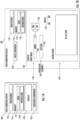
- Figure 1A depicts a block diagram of an example computing system such as one including a user computing device 102.
- the user computing device 102 can be any type of computing device, such as, for example, a personal computing device (e.g., laptop or desktop), a mobile computing device (e.g., smartphone or tablet), a gaming console or controller, a wearable computing device, an embedded computing device, or any other type of computing device.
- a personal computing device e.g., laptop or desktop
- a mobile computing device e.g., smartphone or tablet
- a gaming console or controller e.g., a gaming console or controller
- a wearable computing device e.g., an embedded computing device, or any other type of computing device.
- the user computing device 102 includes one or more processors 112 and a memory 114.
- the one or more processors 112 can be any suitable processing device (e.g., a processor core, a microprocessor, an ASIC, a FPGA, a controller, a microcontroller, etc.) and can be one processor or a plurality of processors that are operatively connected.
- the memory 114 can include one or more non-transitory computer-readable storage mediums, such as RAM, ROM, EEPROM, EPROM, flash memory devices, magnetic disks, etc., and combinations thereof.
- the memory 114 can store data 116 and instructions 118 which are executed by the processor 112 to cause the user computing device 102 to perform operations.
- the user computing device 102 can include a display 120.
- the display 120 can be or can otherwise include hardware configured to provide imagery to a user.
- a display 120 can include a phone screen, a computer monitor, or other similar visual display devices.
- the display 120 may be included as part of the user computing device.
- the display 120 can be separate from the user computing device 102 and may receive imagery for display from a remote computing system such as a server or computer through a wireless or hardwired connection.
- the display 120 can be configured to provide a user interface according to a first mode and a second mode.
- the first mode can include one or more interactive elements 130 such as a text box 131, dropdown menu 132, button 133, switch 134, etc. that can be modified by receiving a user interaction such as a click or touch.
- the user interface can be toggleable such that upon receiving a user interaction, the user computing device, 102 can provide for display the user interface according to the first mode 140, the second mode 150, or both the first 140 and second mode 150.
- both modes are depicted in Figure 1B it should be understood that the user interface can be configured to display (e.g., by receiving a user interaction) at any time only the first mode, only the second mode, or both the first and second mode.
- the user computing device 102 can also include one or more user input components 122 that can receive user input.
- the user input component 122 can be a touch-sensitive component (e.g., a touch-sensitive display screen or a touch pad) that is sensitive to the touch of a user input object (e.g., a finger or a stylus).
- the touch-sensitive component can serve to implement a virtual keyboard.
- Other example user input components include a microphone, a traditional keyboard, or other means by which a user can provide user input.
- the one or more processors 112 can be any suitable processing device (e.g., a processor core, a microprocessor, an ASIC, a FPGA, a controller, a microcontroller, etc.) and can be one processor or a plurality of processors that are operatively connected.
- the memory 114 (included as part of the user computing device or housed on a remote computing system) can include one or more non-transitory computer-readable storage mediums, such as RAM, ROM, EEPROM, EPROM, flash memory devices, magnetic disks, etc., and combinations thereof.
- the memory 114 can store data 116 and instructions 118 which are executed by the processor 112 to cause the computing system to perform operations.
- the remote computing system can include or otherwise be implemented by one or more computing devices.
- the remote computing system includes plural computing devices, such computing devices can operate according to sequential computing architectures, parallel computing architectures, or some combination thereof.
- the wireless connection can include one or a combination of communications networks, such as a local area network (e.g., intranet), wide area network (e.g., Internet), or some combination thereof and can include any number of wired or wireless links.
- communication over the network can be carried via any type of wired and/or wireless connection, using a wide variety of communication protocols (e.g., TCP/IP, HTTP, SMTP, FTP), encodings or formats (e.g., HTML, XML), and/or protection schemes (e.g., VPN, secure HTTP, SSL).
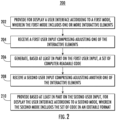
- Figures 2 and 3 depicts flow chart diagrams of example methods to guide user interactions using an intuitive user interface. These methods can build computer readable code without the need of a user to have specific expertise in an expression language and can be used to define permissions for tasks such as cloud access in accordance with example embodiments of the present disclosure.
- Figures 2 and 3 depict steps performed in a particular order for purposes of illustration and discussion, the methods of the present disclosure are not limited to the particularly illustrated order or arrangement. The various steps of the methods 200 and 300 can be omitted, rearranged, combined, and/or adapted in various ways without deviating from the scope of the present disclosure.
- a computing system can provide for display a user interface according to a first mode, the first mode including one or more interactive elements.
- the first mode including one or more interactive elements.
- each of the one or more interactive elements are interrelated and can be toggled to set one or more values to define different logical combinations of conditions that must be met for access to be granted.
- the computing system can receive a first user input including adjusting one of the interactive elements (e.g., to set a value such as a user, an access time, an access resource, etc.).
- the first user input can include a touch or click interacting with a device included in the computing system to modify one of the interactive elements or to rearrange a grouping of multiple interactive elements.
- the computing system can generate, based at least in part on the first user input, a set of computer-readable code.
- the computer-readable code may embody actions based on the first user input. For example, using a drop-down menu to select a certain user for setting a permission can generate computer-readable code for associating the user with the permission. In some implementations, this code can be generated without necessarily being executed. Thus, generating the set of computer-readable code can, in certain implementations, be performed without executing the code to set the user permission.
- the computing system can receive a second user input that includes adjusting another of the interactive elements.
- one of the interactive elements can include a mode toggle, such that upon receiving a user input to modify the element, the user interface can adjust or update.
- the computing system can provide, based at least in part on the second user input, for display the user interface according to a second mode.
- the second mode includes the set of computer-readable code in an editable format that may be used to further refine the permissions beyond the selections made according to the first mode.
- a computing system can provide for display a user interface according to a first mode, the first mode including one or more interactive elements.
- the computing system can receive a first user input which includes adjusting of the interactive elements.
- the computing system can generate, based at least in part on the first user input, a set of code.
- the computing system can provide for display the set of code.
- the systems and methods can include user interfaces that may dynamically display the set of computer-readable code without the need to toggle or otherwise interact with one of the interactive elements.
- the set of computer-readable code may be displayed according to a first mode in a non-editable format, according to a second mode in a text-editable format, or both simultaneously on the user interface.
- the set of computer-readable code can be generated and displayed substantially in real time.
- the computer-readable code can be displayed according to a second mode shown alongside the first mode, the second mode providing the code in a text-editable format.
- the computer-readable code can be displayed according to a first mode in a non-editable format that can be displayed substantially in real time as a user modifies the interactive elements.
- implementations of the disclosure contemplate various arrangements for providing the user interface according to the first mode and/or the second mode.
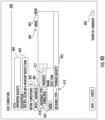
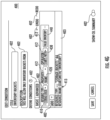
- Figures 4A-4I depict example images of operations that can be performed in accordance with example embodiments of the disclosure.
- an example interface 400 is depicted according to a first mode including one or more interactive elements 402.
- a non-editable region 403 for displaying a summary of the conditions defined by receiving a user interaction(s). This region 403 can be toggled on and off for display, for example by interacting with one of the interactive elements 402 (e.g., Show CEL summary switch).
- Figure 4B displays an example result of a user interaction with one of the one or more interactive elements shown in Figure 4A .
- a user interaction such as clicking the dropdown menu 404 can provide a selection of options 405 from which a user can chose an option.
- Example options 405 may be predefined such as by designating that resource type includes: pubsub, runtime config, spanner, SQL admin, and storage. Alternatively, the options 405 presented may depend on one or more prior user interactions.
- Figure 4C displays another example result of a user interaction with the one or more interactive elements 402.
- the interaction may result in the interactive element spawning or otherwise providing for display one or more new selection options 405 (e.g., as part of embedded dropdown menu).
- Figure 4D displays an example result of a user interaction after selecting one of the options. For example, after selecting "storage buckets" 410 as the resource type, a new interactive element 412 (e.g., a dropdown menu) can be generated and displayed to the user. Additionally, Figure 4D depicts the generation of computer readable code 413 based on the user selection for resource type.
- a new interactive element 412 e.g., a dropdown menu
- the user interface of Figure 4A is depicted after receiving the user interactions illustrated in Figures 4B-4D .
- the user interaction selecting "name" 420 as the property generates an additional new interactive element 412 (e.g., a dropdown menu).
- the user interface may include pre-defined logic that includes instructions for how new interactive elements 412 may be suggested or generated for presentation to a user. For instance, the selection of resource type "storage buckets" 410 and the property "name" 420 may indicate that a new interactive element 412 providing a comparison operation should be generated.
- operators include: is equal to, is not equal to, starts with, ends with, and contains.
- Figure 4F continues this process displaying the further interaction selecting "starts with” 430 as the operator which generates another new interactive element 412 (e.g., a text box).
- Figure 4F also shows that the computer readable code 413 is now updated to include a second line of code based on the user interactions.
- Figure 4G displays another example of how a user interaction such as inputting "inventory” 440 as the value updates the computer readable code 413.
- the series of user interactions with the interactive elements 402 and/or new interactive elements 412 can be used to modularly select or otherwise define conditions for a purpose such as allowing only inventory buckets based on the selections.
- the interface can prompt or otherwise intuitively guide a user to make selections based on based on receiving an interaction with one or more interactive elements 402.
- an example interaction is shown with another one of the interactive elements 402 that can allow the interface to generate a new condition or group of conditions.
- the totality of user interactions may be translated into computer readable code 413 using logic that depends on the language or script for a desired application.
- an example user interface 400 according to the disclosure may be included as a software package for managing cloud resources.
- the software package may include options for database management that may utilize standard query language "SQL", and options for data science using python or a python library.
- the interactive elements may be modularly generated or include options that are directed to the functionality desired by a user.
- this interaction can include a logical operation 450 (e.g., AND) that can be displayed as an organized grouping 451 (e.g., a hierarchy). Setting this interactive element can be used to tie together the two conditions based on the logical operation. In the case of "AND" both conditions must be satisfied, though other logical operators and their functions can be implemented such as OR, NOT, etc.
- a logical operation 450 e.g., AND
- an organized grouping 451 e.g., a hierarchy
- Figures 5A and 5B illustrate an example user interface 500 after receiving multiple user interactions with the one or more interactive elements.
- several logical groupings defined by receiving a user interaction with the one or more interactive elements may be organized in a hierarchy 510 based on one or more logic groupings 512 according to a first mode of operation 504 (e.g., a builder mode).
- a first mode of operation 504 e.g., a builder mode
- the logic groupings 512 are connected by the operator "Or" so that satisfying either the condition of group 1 or group 2 may be used to satisfy the overall function.
- Figure 5B displays the user interface of Figure 5A according to a second mode of operation 506 (e.g., an editor mode).
- a second mode of operation 506 e.g., an editor mode
- the computer readable code 508 embodying the selections defined in the builder mode 504 is provided for display in a text box 520 that the user may edit.
- a user selection such as clicking on the condition builder tab or the condition editor tab may be used to select the mode by which the user interface operates.
- the technology discussed herein makes reference to servers, databases, software applications, and other computer-based systems, as well as actions taken and information sent to and from such systems.
- the inherent flexibility of computer-based systems allows for a great variety of possible configurations, combinations, and divisions of tasks and functionality between and among components.
- processes discussed herein can be implemented using a single device or component or multiple devices or components working in combination.
- Databases and applications can be implemented on a single system or distributed across multiple systems. Distributed components can operate sequentially or in parallel.
Landscapes
- Engineering & Computer Science (AREA)
- General Engineering & Computer Science (AREA)
- Computer Security & Cryptography (AREA)
- Theoretical Computer Science (AREA)
- Computer Networks & Wireless Communication (AREA)
- Signal Processing (AREA)
- Software Systems (AREA)
- Computer Hardware Design (AREA)
- Physics & Mathematics (AREA)
- General Physics & Mathematics (AREA)
- Computing Systems (AREA)
- Technology Law (AREA)
- Multimedia (AREA)
- Human Computer Interaction (AREA)
- User Interface Of Digital Computer (AREA)
Claims (15)
- Ein Computersystem zur Verwaltung von Berechtigungen für Cloud-Computing-Ressourcen, wobei das Computersystem Folgendes aufweist:einen oder mehrere Prozessoren; undein oder mehrere nicht-flüchtige computerlesbare Medien, die gemeinsam Befehle speichern, die, wenn sie von dem einen oder den mehreren Prozessoren ausgeführt werden, das Computersystem veranlassen, Operationen durchzuführen, wobei die Operationen aufweisen:Bereitstellen einer Benutzerschnittstelle als Teil eines Cloud-Computing-Dienstes, die von einem Administrator des Cloud-Computing-Dienstes in mindestens zwei verschiedenen Eingabemodi bedient werden kann, wobei die mindestens zwei verschiedenen Eingabemodi Folgendes aufweisen:einen Builder-Modus, in dem die Benutzerschnittstelle ein oder mehrere interaktive Elemente aufweist, die es dem Administrator ermöglichen, einen oder mehrere modular aufgebaute computerlesbare Codeabschnitte modular aufzubauen, wobei mindestens einer der einen oder mehreren modular aufgebauten computerlesbaren Codeabschnitte, wenn er von dem Cloud-Computing-Dienst ausgeführt wird, Zugriffsberechtigungen auf eine oder mehrere Cloud-Computing-Ressourcen steuert, die mit dem Cloud-Computing-Dienst verbunden sind; undeinen Editormodus, in dem die Benutzerschnittstelle es dem Administrator ermöglicht, den mindestens einen modular aufgebauten computerlesbaren Codeabschnitt direkt zu bearbeiten;wobei eine Benutzerinteraktion mit dem einen oder den mehreren interaktiven Elementen, die in dem Erstellungsmodus enthalten sind, zur Erzeugung des mindestens einen modular aufgebauten computerlesbaren Codeabschnitts in Echtzeit führt, und wobei die Benutzerschnittstelle ein Modusauswahlelement zum Umschalten zwischen den mindestens zwei verschiedenen Eingabemodi aufweist.
- Computersystem nach Anspruch 1, wobei eine
Anwendungsprogrammierschnittstelle mit dem Cloud-Computing-Dienst verbunden ist, wobei der Builder-Modus es dem Administrator ermöglicht, den mindestens einen modular aufgebauten computerlesbaren Codeabschnitt, der mit der Anwendungsprogrammierschnittstelle übereinstimmt, unter Verwendung einer Vielzahl von vordefinierten Anwendungsprogrammierschnittstellen-Snippets modular aufzubauen. - Computersystem nach Anspruch 1 oder 2, wobei die ein oder mehreren interaktiven Elemente miteinander verbunden und vom Benutzer umschaltbar sind, um verschiedene logische Kombinationen von Bedingungen zu definieren, die erfüllt sein müssen, damit der Zugang gewährt wird.
- Computersystem nach einem der Ansprüche 1 bis 3, wobei der mindestens eine modular aufgebaute computerlesbare Codeabschnitt computerlesbare Anweisungen aufweist, die eine Gesamtheit von Benutzerinteraktionen mit dem einen oder den mehreren interaktiven Elementen darstellen.
- Computersystem nach einem der Ansprüche 1 bis 4, wobei die Operationen ferner das Erzeugen einer Ausgabe aufweisen, die anzeigt, ob der mindestens eine modular aufgebaute computerlesbare Codeabschnitt bei der Ausführung des mindestens einen modular aufgebauten computerlesbaren Codeabschnitts einen Fehler erzeugt, und das Erzeugen ohne Ausführung des mindestens einen modular aufgebauten computerlesbaren Codeabschnitts durchgeführt wird.
- Computersystem nach einem der Ansprüche 1 bis 5, wobei mindestens eines der einen oder mehreren interaktiven Elemente als Hinzufügeelement konfiguriert ist, und wobei das Hinzufügeelement so konfiguriert ist, dass es ein weiteres interaktives Element zum Builder-Modus hinzufügt; und/oderwobei der Builder-Modus so konfiguriert ist, dass er das eine oder die mehreren interaktiven Elemente als eine hierarchische Gruppierung anzeigt; und/oderferner eine Ressource aufweist, die so konfiguriert ist, dass sie dem Administrator bei Interaktion mit der Ressource eine Nachricht übermittelt.
- Ein computerimplementiertes Verfahren zur Steuerung des Zugriffs auf eine Cloud-Ressource, wobei das Verfahren Folgendes aufweist:Bereitstellen, durch eine oder mehrere Rechenvorrichtungen und als Teil eines Cloud-Computing-Dienstes, einer Benutzeroberfläche zur Anzeige gemäß einem ersten Modus, wobei der erste Modus ein oder mehrere interaktive Elemente enthält;Empfangen einer ersten Benutzereingabe, die das Einstellen eines der interaktiven Elemente aufweist, durch die eine oder mehrere Rechenvorrichtungen;Erzeugen von einem oder mehreren modular aufgebauten computerlesbaren Codeabschnitten durch die eine oder mehrere Rechenvorrichtungen und zumindest teilweise auf der Grundlage der ersten Benutzereingabe, wobei mindestens einer der einen oder mehreren modular aufgebauten computerlesbaren Codeabschnitte bei Ausführung durch den Cloud-Computing-Dienst den Zugriff auf die mit dem Cloud-Computing-Dienst verbundene Cloud-Ressource steuert;Empfangen einer zweiten Benutzereingabe, die das Einstellen eines anderen der interaktiven Elemente aufweist, durch die eine oder mehrere Rechenvorrichtungen; undBereitstellen, durch die eine oder mehrere Rechenvorrichtungen und zumindest teilweise basierend auf der zweiten Benutzereingabe, der Benutzerschnittstelle zur Anzeige gemäß einem zweiten Modus, wobei der zweite Modus den mindestens einen modular aufgebauten computerlesbaren Codeabschnitt in einem editierbaren Format enthält.
- Computerimplementiertes Verfahren nach Anspruch 7, das ferner aufweist:
Aktualisieren des einen oder der mehreren interaktiven Elemente durch die eine oder die mehreren Rechenvorrichtungen zumindest teilweise auf der Grundlage der ersten Benutzereingabe. - Computerimplementiertes Verfahren nach Anspruch 8, wobei die Aktualisierung des einen oder der mehreren interaktiven Elemente, die Bereitstellung mindestens eines zusätzlichen interaktiven Elements zur Anzeige auf der Benutzeroberfläche aufweist.
- Computerimplementiertes Verfahren nach Anspruch 9, wobei das Aktualisieren des einen oder der mehreren interaktiven Elemente ferner aufweist:Organisieren des einen oder der mehreren interaktiven Elemente als eine Hierarchie, undwobei die Hierarchie die interaktiven Elemente, die ein Benutzer eingestellt hat, in eine oder mehrere logische Gruppierungen segmentiert.
- Computerimplementiertes Verfahren nach Anspruch 10, das ferner das Umordnen der Hierarchie aufweist, wobei das Umordnen der Hierarchie aufweist:Empfangen einer dritten Benutzereingabe, die das Einstellen einer der einen oder mehreren logischen Gruppierungen aufweist, durch die eine oder mehrere Rechenvorrichtungen; undAktualisieren des mindestens einen modular aufgebauten computerlesbaren Codeabschnitts durch die eine oder mehrere Rechenvorrichtungen zumindest teilweise auf der Grundlage der dritten Benutzereingabe.
- Computerimplementiertes Verfahren nach einem der Ansprüche 7 bis 11, wobei das Erzeugen des mindestens einen modular aufgebauten computerlesbaren Codeabschnitts im Wesentlichen in Echtzeit erfolgt; und/oderwobei das eine oder die mehreren interaktiven Elemente mindestens ein Feld mit einer vordefinierten Liste zur Auswahl durch einen Benutzer aufweisen; und/oderwobei der erste Modus außerdem einen nicht editierbaren Bereich enthält, der den mindestens einen modular aufgebauten computerlesbaren Codeabschnitt anzeigt.
- Ein Computersystem, das so konfiguriert ist, dass es den Zugriff auf eine Cloud-Ressource steuert, wobei das Computersystem Folgendes aufweist:einen oder mehrere Prozessoren; undein oder mehrere nicht-flüchtige computerlesbare Medien, die gemeinsam Befehle speichern, die, wenn sie von dem einen oder den mehreren Prozessoren ausgeführt werden, das Computersystem veranlassen, Operationen durchzuführen, wobei die Operationen aufweisen:Bereitstellen einer Benutzeroberfläche zur Anzeige, die einen ersten Modus und einen zweiten Modus aufweist, durch eine oder mehrere Rechenvorrichtungen und als Teil eines Cloud-Computing-Dienstes, wobei der erste Modus ein oder mehrere interaktive Elemente enthält;Empfangen einer ersten Benutzereingabe, die das Einstellen eines der interaktiven Elemente aufweist, durch die eine oder mehrere Rechenvorrichtungen; undErzeugen eines oder mehrerer modular aufgebauter computerlesbarer Codeabschnitte durch die eine oder die mehreren Rechenvorrichtungen und zumindest teilweise auf der Grundlage der ersten Benutzereingabe, wobei mindestens einer der einen oder mehreren modular aufgebauten computerlesbaren Codeabschnitte bei Ausführung durch den Cloud-Computing-Dienst den Zugriff auf die mit dem Cloud-Computing-Dienst verbundene Cloud-Ressource steuert;wobei der zweite Modus einen textbearbeitbaren Bereich enthält, der den mindestens einen modular aufgebauten computerlesbaren Codeabschnitt enthält.
- Rechensystem nach Anspruch 13, wobei die Operationen ferner Folgendes aufweisen:Aktualisieren des einen oder der mehreren interaktiven Elemente durch die eine oder die mehreren Rechenvorrichtungen zumindest teilweise auf der Grundlage der ersten Eingabe; und/oderwobei die ein oder mehreren interaktiven Elemente miteinander verbunden und vom Benutzer umschaltbar sind, um verschiedene logische Kombinationen von Bedingungen zu definieren, die erfüllt sein müssen, damit der Zugang gewährt wird.
- Computersystem nach Anspruch 14, wobei das Aktualisieren des einen oder der mehreren interaktiven Elemente weiterhin aufweist:Organisieren des einen oder der mehreren interaktiven Elemente als Hierarchie, undwobei die Hierarchie die interaktiven Elemente, die ein Benutzer eingestellt hat, in eine oder mehrere logische Gruppierungen unterteilt.
Applications Claiming Priority (2)
| Application Number | Priority Date | Filing Date | Title |
|---|---|---|---|
| US201962868417P | 2019-06-28 | 2019-06-28 | |
| US16/713,205 US11349839B2 (en) | 2019-06-28 | 2019-12-13 | Systems and methods using modular user interfaces for managing network permissions |
Publications (2)
| Publication Number | Publication Date |
|---|---|
| EP3757828A1 EP3757828A1 (de) | 2020-12-30 |
| EP3757828B1 true EP3757828B1 (de) | 2024-05-08 |
Family
ID=71401630
Family Applications (1)
| Application Number | Title | Priority Date | Filing Date |
|---|---|---|---|
| EP20182935.5A Active EP3757828B1 (de) | 2019-06-28 | 2020-06-29 | Systeme und verfahren unter verwendung von modularen benutzerschnittstellen zur verwaltung von netzwerkerlaubnissen |
Country Status (2)
| Country | Link |
|---|---|
| US (1) | US11349839B2 (de) |
| EP (1) | EP3757828B1 (de) |
Families Citing this family (1)
| Publication number | Priority date | Publication date | Assignee | Title |
|---|---|---|---|---|
| US11567737B1 (en) | 2021-09-21 | 2023-01-31 | Rockwell Automation Technologies, Inc. | Graphical and text based co-design editor for industrial automation projects |
Family Cites Families (15)
| Publication number | Priority date | Publication date | Assignee | Title |
|---|---|---|---|---|
| US5956715A (en) * | 1994-12-13 | 1999-09-21 | Microsoft Corporation | Method and system for controlling user access to a resource in a networked computing environment |
| US5760788A (en) * | 1995-07-28 | 1998-06-02 | Microsoft Corporation | Graphical programming system and method for enabling a person to learn text-based programming |
| GB0207354D0 (en) * | 2002-03-28 | 2002-05-08 | Ibm | Inheritance of access controls within a hierarchy of data processing system resources |
| US7979804B1 (en) * | 2003-04-28 | 2011-07-12 | Adobe Systems Incorporated | Cross-view undo/redo for multi-view editing environments |
| US7716640B2 (en) * | 2004-05-21 | 2010-05-11 | Sap Portals Israel Ltd. | Techniques for developing portal snippets using an integrated development environment (IDE) |
| US7631290B1 (en) * | 2004-10-27 | 2009-12-08 | Adobe Systems Incorporated | Enhanced navigation for visual design editing |
| SG162820A1 (en) * | 2005-03-21 | 2010-07-29 | Dexterra Inc | Adapter architecture for mobile data system |
| US20080034412A1 (en) * | 2006-08-02 | 2008-02-07 | Informed Control Inc. | System to prevent misuse of access rights in a single sign on environment |
| US8306999B2 (en) * | 2007-03-23 | 2012-11-06 | Sas Institute Inc. | Computer-implemented systems, methods, and computer program product for providing row-level security in a database network |
| US8387006B1 (en) * | 2007-12-05 | 2013-02-26 | Adobe Systems Incorporated | System and method for authoring a web page to be run-time editable |
| US20120084758A1 (en) * | 2010-10-05 | 2012-04-05 | International Business Machines Corporation | Collaborative Software Debugging In A Distributed System With Client-Specific Variable Evaluation |
| US20120291011A1 (en) | 2011-05-12 | 2012-11-15 | Google Inc. | User Interfaces to Assist in Creating Application Scripts |
| US9571500B1 (en) | 2016-01-21 | 2017-02-14 | International Business Machines Corporation | Context sensitive security help |
| US11106860B2 (en) * | 2017-07-24 | 2021-08-31 | Wix.Com Ltd. | Common database for live operation and testing of a website |
| US11115421B2 (en) * | 2019-06-26 | 2021-09-07 | Accenture Global Solutions Limited | Security monitoring platform for managing access rights associated with cloud applications |
-
2019
- 2019-12-13 US US16/713,205 patent/US11349839B2/en active Active
-
2020
- 2020-06-29 EP EP20182935.5A patent/EP3757828B1/de active Active
Also Published As
| Publication number | Publication date |
|---|---|
| US11349839B2 (en) | 2022-05-31 |
| EP3757828A1 (de) | 2020-12-30 |
| US20200412724A1 (en) | 2020-12-31 |
Similar Documents
| Publication | Publication Date | Title |
|---|---|---|
| CN113490934B (zh) | 数据可视化的基于语言的操纵 | |
| US11816309B2 (en) | User interface logical and execution view navigation and shifting | |
| US10740072B2 (en) | Layout management in a rapid application development tool | |
| US9465822B2 (en) | Data model generation based on user interface specification | |
| US10311141B1 (en) | Data driven spreadsheet chart system | |
| US8671387B2 (en) | Compilation and injection of scripts in a rapid application development | |
| US8788955B2 (en) | Creation and configuration of compound widgets | |
| US20120291011A1 (en) | User Interfaces to Assist in Creating Application Scripts | |
| US20120291006A1 (en) | Development Architecture for Cloud-Based Applications | |
| EP3598357A1 (de) | Verfahren zur entwicklung einer anwendung zur ausführung in einem arbeitsflussverwaltungssystem und vorrichtung zur unterstützung bei der erzeugung einer anwendung zur ausführung in einem arbeitsflussverwaltungssystem | |
| EP2482186A1 (de) | Verbesserte Organisation und automatische Navigation von Anzeigebildschirmen zur Erleichterung der automatischen Steuerung | |
| CN108228169A (zh) | 基于eCharts工具的图表制作方法、装置、设备及介质 | |
| US10768978B2 (en) | Management system and management method for creating service | |
| US20250028759A1 (en) | User Interface Framework for Enhancing Content with Language Model Interactions | |
| US9280320B2 (en) | Software design sharing systems and methods | |
| ES3050086T3 (en) | System and method for smart interaction between website components | |
| US11775142B2 (en) | Preferential automation view curation | |
| US12014172B2 (en) | Presentation design dynamic generation from data model server | |
| US9372675B1 (en) | Unified declarative model for user interfaces | |
| US11675748B2 (en) | External data repository file integration using a virtual file system | |
| US20050193370A1 (en) | System and method for interactive wireless applications with conditional UI controls and screen navigation | |
| US20240296244A1 (en) | Visibility for particularized data security | |
| US11349839B2 (en) | Systems and methods using modular user interfaces for managing network permissions | |
| US9747080B2 (en) | Software design sharing systems and methods | |
| US11429376B2 (en) | Run-time modification of an application definition schema that controls the behavior of a software application |
Legal Events
| Date | Code | Title | Description |
|---|---|---|---|
| PUAI | Public reference made under article 153(3) epc to a published international application that has entered the european phase |
Free format text: ORIGINAL CODE: 0009012 |
|
| STAA | Information on the status of an ep patent application or granted ep patent |
Free format text: STATUS: THE APPLICATION HAS BEEN PUBLISHED |
|
| AK | Designated contracting states |
Kind code of ref document: A1 Designated state(s): AL AT BE BG CH CY CZ DE DK EE ES FI FR GB GR HR HU IE IS IT LI LT LU LV MC MK MT NL NO PL PT RO RS SE SI SK SM TR |
|
| AX | Request for extension of the european patent |
Extension state: BA ME |
|
| STAA | Information on the status of an ep patent application or granted ep patent |
Free format text: STATUS: REQUEST FOR EXAMINATION WAS MADE |
|
| 17P | Request for examination filed |
Effective date: 20210623 |
|
| RBV | Designated contracting states (corrected) |
Designated state(s): AL AT BE BG CH CY CZ DE DK EE ES FI FR GB GR HR HU IE IS IT LI LT LU LV MC MK MT NL NO PL PT RO RS SE SI SK SM TR |
|
| STAA | Information on the status of an ep patent application or granted ep patent |
Free format text: STATUS: EXAMINATION IS IN PROGRESS |
|
| 17Q | First examination report despatched |
Effective date: 20221205 |
|
| REG | Reference to a national code |
Ref legal event code: R079 Free format text: PREVIOUS MAIN CLASS: G06F0021100000 Ipc: H04L0009400000 Ref country code: DE Ref legal event code: R079 Ref document number: 602020030510 Country of ref document: DE Free format text: PREVIOUS MAIN CLASS: G06F0021100000 Ipc: H04L0009400000 |
|
| GRAP | Despatch of communication of intention to grant a patent |
Free format text: ORIGINAL CODE: EPIDOSNIGR1 |
|
| STAA | Information on the status of an ep patent application or granted ep patent |
Free format text: STATUS: GRANT OF PATENT IS INTENDED |
|
| RIC1 | Information provided on ipc code assigned before grant |
Ipc: H04W 12/08 20090101ALI20231107BHEP Ipc: G06F 21/10 20130101ALI20231107BHEP Ipc: H04L 9/40 20220101AFI20231107BHEP |
|
| INTG | Intention to grant announced |
Effective date: 20231204 |
|
| P01 | Opt-out of the competence of the unified patent court (upc) registered |
Effective date: 20240201 |
|
| GRAS | Grant fee paid |
Free format text: ORIGINAL CODE: EPIDOSNIGR3 |
|
| GRAA | (expected) grant |
Free format text: ORIGINAL CODE: 0009210 |
|
| STAA | Information on the status of an ep patent application or granted ep patent |
Free format text: STATUS: THE PATENT HAS BEEN GRANTED |
|
| AK | Designated contracting states |
Kind code of ref document: B1 Designated state(s): AL AT BE BG CH CY CZ DE DK EE ES FI FR GB GR HR HU IE IS IT LI LT LU LV MC MK MT NL NO PL PT RO RS SE SI SK SM TR |
|
| REG | Reference to a national code |
Ref country code: GB Ref legal event code: FG4D |
|
| REG | Reference to a national code |
Ref country code: CH Ref legal event code: EP |
|
| REG | Reference to a national code |
Ref country code: DE Ref legal event code: R096 Ref document number: 602020030510 Country of ref document: DE |
|
| REG | Reference to a national code |
Ref country code: IE Ref legal event code: FG4D |
|
| REG | Reference to a national code |
Ref country code: LT Ref legal event code: MG9D |
|
| REG | Reference to a national code |
Ref country code: NL Ref legal event code: MP Effective date: 20240508 |
|
| PG25 | Lapsed in a contracting state [announced via postgrant information from national office to epo] |
Ref country code: IS Free format text: LAPSE BECAUSE OF FAILURE TO SUBMIT A TRANSLATION OF THE DESCRIPTION OR TO PAY THE FEE WITHIN THE PRESCRIBED TIME-LIMIT Effective date: 20240908 |
|
| PG25 | Lapsed in a contracting state [announced via postgrant information from national office to epo] |
Ref country code: BG Free format text: LAPSE BECAUSE OF FAILURE TO SUBMIT A TRANSLATION OF THE DESCRIPTION OR TO PAY THE FEE WITHIN THE PRESCRIBED TIME-LIMIT Effective date: 20240508 |
|
| PG25 | Lapsed in a contracting state [announced via postgrant information from national office to epo] |
Ref country code: FI Free format text: LAPSE BECAUSE OF FAILURE TO SUBMIT A TRANSLATION OF THE DESCRIPTION OR TO PAY THE FEE WITHIN THE PRESCRIBED TIME-LIMIT Effective date: 20240508 Ref country code: HR Free format text: LAPSE BECAUSE OF FAILURE TO SUBMIT A TRANSLATION OF THE DESCRIPTION OR TO PAY THE FEE WITHIN THE PRESCRIBED TIME-LIMIT Effective date: 20240508 |
|
| PG25 | Lapsed in a contracting state [announced via postgrant information from national office to epo] |
Ref country code: GR Free format text: LAPSE BECAUSE OF FAILURE TO SUBMIT A TRANSLATION OF THE DESCRIPTION OR TO PAY THE FEE WITHIN THE PRESCRIBED TIME-LIMIT Effective date: 20240809 |
|
| PG25 | Lapsed in a contracting state [announced via postgrant information from national office to epo] |
Ref country code: PT Free format text: LAPSE BECAUSE OF FAILURE TO SUBMIT A TRANSLATION OF THE DESCRIPTION OR TO PAY THE FEE WITHIN THE PRESCRIBED TIME-LIMIT Effective date: 20240909 |
|
| REG | Reference to a national code |
Ref country code: AT Ref legal event code: MK05 Ref document number: 1685900 Country of ref document: AT Kind code of ref document: T Effective date: 20240508 |
|
| PG25 | Lapsed in a contracting state [announced via postgrant information from national office to epo] |
Ref country code: NL Free format text: LAPSE BECAUSE OF FAILURE TO SUBMIT A TRANSLATION OF THE DESCRIPTION OR TO PAY THE FEE WITHIN THE PRESCRIBED TIME-LIMIT Effective date: 20240508 |
|
| PG25 | Lapsed in a contracting state [announced via postgrant information from national office to epo] |
Ref country code: ES Free format text: LAPSE BECAUSE OF FAILURE TO SUBMIT A TRANSLATION OF THE DESCRIPTION OR TO PAY THE FEE WITHIN THE PRESCRIBED TIME-LIMIT Effective date: 20240508 |
|
| PG25 | Lapsed in a contracting state [announced via postgrant information from national office to epo] |
Ref country code: AT Free format text: LAPSE BECAUSE OF FAILURE TO SUBMIT A TRANSLATION OF THE DESCRIPTION OR TO PAY THE FEE WITHIN THE PRESCRIBED TIME-LIMIT Effective date: 20240508 |
|
| PG25 | Lapsed in a contracting state [announced via postgrant information from national office to epo] |
Ref country code: PL Free format text: LAPSE BECAUSE OF FAILURE TO SUBMIT A TRANSLATION OF THE DESCRIPTION OR TO PAY THE FEE WITHIN THE PRESCRIBED TIME-LIMIT Effective date: 20240508 |
|
| PG25 | Lapsed in a contracting state [announced via postgrant information from national office to epo] |
Ref country code: LV Free format text: LAPSE BECAUSE OF FAILURE TO SUBMIT A TRANSLATION OF THE DESCRIPTION OR TO PAY THE FEE WITHIN THE PRESCRIBED TIME-LIMIT Effective date: 20240508 |
|
| PG25 | Lapsed in a contracting state [announced via postgrant information from national office to epo] |
Ref country code: PT Free format text: LAPSE BECAUSE OF FAILURE TO SUBMIT A TRANSLATION OF THE DESCRIPTION OR TO PAY THE FEE WITHIN THE PRESCRIBED TIME-LIMIT Effective date: 20240909 Ref country code: PL Free format text: LAPSE BECAUSE OF FAILURE TO SUBMIT A TRANSLATION OF THE DESCRIPTION OR TO PAY THE FEE WITHIN THE PRESCRIBED TIME-LIMIT Effective date: 20240508 Ref country code: NO Free format text: LAPSE BECAUSE OF FAILURE TO SUBMIT A TRANSLATION OF THE DESCRIPTION OR TO PAY THE FEE WITHIN THE PRESCRIBED TIME-LIMIT Effective date: 20240808 Ref country code: NL Free format text: LAPSE BECAUSE OF FAILURE TO SUBMIT A TRANSLATION OF THE DESCRIPTION OR TO PAY THE FEE WITHIN THE PRESCRIBED TIME-LIMIT Effective date: 20240508 Ref country code: LV Free format text: LAPSE BECAUSE OF FAILURE TO SUBMIT A TRANSLATION OF THE DESCRIPTION OR TO PAY THE FEE WITHIN THE PRESCRIBED TIME-LIMIT Effective date: 20240508 Ref country code: IS Free format text: LAPSE BECAUSE OF FAILURE TO SUBMIT A TRANSLATION OF THE DESCRIPTION OR TO PAY THE FEE WITHIN THE PRESCRIBED TIME-LIMIT Effective date: 20240908 Ref country code: HR Free format text: LAPSE BECAUSE OF FAILURE TO SUBMIT A TRANSLATION OF THE DESCRIPTION OR TO PAY THE FEE WITHIN THE PRESCRIBED TIME-LIMIT Effective date: 20240508 Ref country code: GR Free format text: LAPSE BECAUSE OF FAILURE TO SUBMIT A TRANSLATION OF THE DESCRIPTION OR TO PAY THE FEE WITHIN THE PRESCRIBED TIME-LIMIT Effective date: 20240809 Ref country code: FI Free format text: LAPSE BECAUSE OF FAILURE TO SUBMIT A TRANSLATION OF THE DESCRIPTION OR TO PAY THE FEE WITHIN THE PRESCRIBED TIME-LIMIT Effective date: 20240508 Ref country code: ES Free format text: LAPSE BECAUSE OF FAILURE TO SUBMIT A TRANSLATION OF THE DESCRIPTION OR TO PAY THE FEE WITHIN THE PRESCRIBED TIME-LIMIT Effective date: 20240508 Ref country code: BG Free format text: LAPSE BECAUSE OF FAILURE TO SUBMIT A TRANSLATION OF THE DESCRIPTION OR TO PAY THE FEE WITHIN THE PRESCRIBED TIME-LIMIT Effective date: 20240508 Ref country code: AT Free format text: LAPSE BECAUSE OF FAILURE TO SUBMIT A TRANSLATION OF THE DESCRIPTION OR TO PAY THE FEE WITHIN THE PRESCRIBED TIME-LIMIT Effective date: 20240508 Ref country code: RS Free format text: LAPSE BECAUSE OF FAILURE TO SUBMIT A TRANSLATION OF THE DESCRIPTION OR TO PAY THE FEE WITHIN THE PRESCRIBED TIME-LIMIT Effective date: 20240808 |
|
| PG25 | Lapsed in a contracting state [announced via postgrant information from national office to epo] |
Ref country code: DK Free format text: LAPSE BECAUSE OF FAILURE TO SUBMIT A TRANSLATION OF THE DESCRIPTION OR TO PAY THE FEE WITHIN THE PRESCRIBED TIME-LIMIT Effective date: 20240508 |
|
| PG25 | Lapsed in a contracting state [announced via postgrant information from national office to epo] |
Ref country code: EE Free format text: LAPSE BECAUSE OF FAILURE TO SUBMIT A TRANSLATION OF THE DESCRIPTION OR TO PAY THE FEE WITHIN THE PRESCRIBED TIME-LIMIT Effective date: 20240508 |
|
| PG25 | Lapsed in a contracting state [announced via postgrant information from national office to epo] |
Ref country code: CZ Free format text: LAPSE BECAUSE OF FAILURE TO SUBMIT A TRANSLATION OF THE DESCRIPTION OR TO PAY THE FEE WITHIN THE PRESCRIBED TIME-LIMIT Effective date: 20240508 |
|
| PG25 | Lapsed in a contracting state [announced via postgrant information from national office to epo] |
Ref country code: SK Free format text: LAPSE BECAUSE OF FAILURE TO SUBMIT A TRANSLATION OF THE DESCRIPTION OR TO PAY THE FEE WITHIN THE PRESCRIBED TIME-LIMIT Effective date: 20240508 Ref country code: RO Free format text: LAPSE BECAUSE OF FAILURE TO SUBMIT A TRANSLATION OF THE DESCRIPTION OR TO PAY THE FEE WITHIN THE PRESCRIBED TIME-LIMIT Effective date: 20240508 |
|
| PG25 | Lapsed in a contracting state [announced via postgrant information from national office to epo] |
Ref country code: SM Free format text: LAPSE BECAUSE OF FAILURE TO SUBMIT A TRANSLATION OF THE DESCRIPTION OR TO PAY THE FEE WITHIN THE PRESCRIBED TIME-LIMIT Effective date: 20240508 |
|
| PG25 | Lapsed in a contracting state [announced via postgrant information from national office to epo] |
Ref country code: SM Free format text: LAPSE BECAUSE OF FAILURE TO SUBMIT A TRANSLATION OF THE DESCRIPTION OR TO PAY THE FEE WITHIN THE PRESCRIBED TIME-LIMIT Effective date: 20240508 Ref country code: SK Free format text: LAPSE BECAUSE OF FAILURE TO SUBMIT A TRANSLATION OF THE DESCRIPTION OR TO PAY THE FEE WITHIN THE PRESCRIBED TIME-LIMIT Effective date: 20240508 Ref country code: RO Free format text: LAPSE BECAUSE OF FAILURE TO SUBMIT A TRANSLATION OF THE DESCRIPTION OR TO PAY THE FEE WITHIN THE PRESCRIBED TIME-LIMIT Effective date: 20240508 Ref country code: EE Free format text: LAPSE BECAUSE OF FAILURE TO SUBMIT A TRANSLATION OF THE DESCRIPTION OR TO PAY THE FEE WITHIN THE PRESCRIBED TIME-LIMIT Effective date: 20240508 Ref country code: DK Free format text: LAPSE BECAUSE OF FAILURE TO SUBMIT A TRANSLATION OF THE DESCRIPTION OR TO PAY THE FEE WITHIN THE PRESCRIBED TIME-LIMIT Effective date: 20240508 Ref country code: CZ Free format text: LAPSE BECAUSE OF FAILURE TO SUBMIT A TRANSLATION OF THE DESCRIPTION OR TO PAY THE FEE WITHIN THE PRESCRIBED TIME-LIMIT Effective date: 20240508 |
|
| REG | Reference to a national code |
Ref country code: CH Ref legal event code: PL |
|
| PG25 | Lapsed in a contracting state [announced via postgrant information from national office to epo] |
Ref country code: IT Free format text: LAPSE BECAUSE OF FAILURE TO SUBMIT A TRANSLATION OF THE DESCRIPTION OR TO PAY THE FEE WITHIN THE PRESCRIBED TIME-LIMIT Effective date: 20240508 Ref country code: MC Free format text: LAPSE BECAUSE OF FAILURE TO SUBMIT A TRANSLATION OF THE DESCRIPTION OR TO PAY THE FEE WITHIN THE PRESCRIBED TIME-LIMIT Effective date: 20240508 |
|
| REG | Reference to a national code |
Ref country code: DE Ref legal event code: R097 Ref document number: 602020030510 Country of ref document: DE |
|
| PG25 | Lapsed in a contracting state [announced via postgrant information from national office to epo] |
Ref country code: LU Free format text: LAPSE BECAUSE OF NON-PAYMENT OF DUE FEES Effective date: 20240629 |
|
| PLBE | No opposition filed within time limit |
Free format text: ORIGINAL CODE: 0009261 |
|
| STAA | Information on the status of an ep patent application or granted ep patent |
Free format text: STATUS: NO OPPOSITION FILED WITHIN TIME LIMIT |
|
| 26N | No opposition filed |
Effective date: 20250211 |
|
| PG25 | Lapsed in a contracting state [announced via postgrant information from national office to epo] |
Ref country code: IE Free format text: LAPSE BECAUSE OF NON-PAYMENT OF DUE FEES Effective date: 20240629 |
|
| PG25 | Lapsed in a contracting state [announced via postgrant information from national office to epo] |
Ref country code: SI Free format text: LAPSE BECAUSE OF FAILURE TO SUBMIT A TRANSLATION OF THE DESCRIPTION OR TO PAY THE FEE WITHIN THE PRESCRIBED TIME-LIMIT Effective date: 20240508 Ref country code: CH Free format text: LAPSE BECAUSE OF NON-PAYMENT OF DUE FEES Effective date: 20240630 Ref country code: BE Free format text: LAPSE BECAUSE OF NON-PAYMENT OF DUE FEES Effective date: 20240630 |
|
| REG | Reference to a national code |
Ref country code: BE Ref legal event code: MM Effective date: 20240630 |
|
| PGFP | Annual fee paid to national office [announced via postgrant information from national office to epo] |
Ref country code: DE Payment date: 20250627 Year of fee payment: 6 |
|
| PGFP | Annual fee paid to national office [announced via postgrant information from national office to epo] |
Ref country code: GB Payment date: 20250627 Year of fee payment: 6 |
|
| PGFP | Annual fee paid to national office [announced via postgrant information from national office to epo] |
Ref country code: FR Payment date: 20250625 Year of fee payment: 6 |
|
| PG25 | Lapsed in a contracting state [announced via postgrant information from national office to epo] |
Ref country code: SE Free format text: LAPSE BECAUSE OF FAILURE TO SUBMIT A TRANSLATION OF THE DESCRIPTION OR TO PAY THE FEE WITHIN THE PRESCRIBED TIME-LIMIT Effective date: 20240508 |
|
| PG25 | Lapsed in a contracting state [announced via postgrant information from national office to epo] |
Ref country code: CY Free format text: LAPSE BECAUSE OF FAILURE TO SUBMIT A TRANSLATION OF THE DESCRIPTION OR TO PAY THE FEE WITHIN THE PRESCRIBED TIME-LIMIT; INVALID AB INITIO Effective date: 20200629 |
|
| PG25 | Lapsed in a contracting state [announced via postgrant information from national office to epo] |
Ref country code: HU Free format text: LAPSE BECAUSE OF FAILURE TO SUBMIT A TRANSLATION OF THE DESCRIPTION OR TO PAY THE FEE WITHIN THE PRESCRIBED TIME-LIMIT; INVALID AB INITIO Effective date: 20200629 |