EP3757706A1 - Maintenance method for a laboratory system - Google Patents
Maintenance method for a laboratory system Download PDFInfo
- Publication number
- EP3757706A1 EP3757706A1 EP20181529.7A EP20181529A EP3757706A1 EP 3757706 A1 EP3757706 A1 EP 3757706A1 EP 20181529 A EP20181529 A EP 20181529A EP 3757706 A1 EP3757706 A1 EP 3757706A1
- Authority
- EP
- European Patent Office
- Prior art keywords
- data
- anomaly
- laboratory
- data collection
- laboratory instruments
- Prior art date
- Legal status (The legal status is an assumption and is not a legal conclusion. Google has not performed a legal analysis and makes no representation as to the accuracy of the status listed.)
- Granted
Links
Images




Classifications
-
- G—PHYSICS
- G05—CONTROLLING; REGULATING
- G05B—CONTROL OR REGULATING SYSTEMS IN GENERAL; FUNCTIONAL ELEMENTS OF SUCH SYSTEMS; MONITORING OR TESTING ARRANGEMENTS FOR SUCH SYSTEMS OR ELEMENTS
- G05B23/00—Testing or monitoring of control systems or parts thereof
- G05B23/02—Electric testing or monitoring
- G05B23/0205—Electric testing or monitoring by means of a monitoring system capable of detecting and responding to faults
- G05B23/0259—Electric testing or monitoring by means of a monitoring system capable of detecting and responding to faults characterized by the response to fault detection
- G05B23/0283—Predictive maintenance, e.g. involving the monitoring of a system and, based on the monitoring results, taking decisions on the maintenance schedule of the monitored system; Estimating remaining useful life [RUL]
-
- G—PHYSICS
- G16—INFORMATION AND COMMUNICATION TECHNOLOGY [ICT] SPECIALLY ADAPTED FOR SPECIFIC APPLICATION FIELDS
- G16H—HEALTHCARE INFORMATICS, i.e. INFORMATION AND COMMUNICATION TECHNOLOGY [ICT] SPECIALLY ADAPTED FOR THE HANDLING OR PROCESSING OF MEDICAL OR HEALTHCARE DATA
- G16H40/00—ICT specially adapted for the management or administration of healthcare resources or facilities; ICT specially adapted for the management or operation of medical equipment or devices
- G16H40/60—ICT specially adapted for the management or administration of healthcare resources or facilities; ICT specially adapted for the management or operation of medical equipment or devices for the operation of medical equipment or devices
- G16H40/67—ICT specially adapted for the management or administration of healthcare resources or facilities; ICT specially adapted for the management or operation of medical equipment or devices for the operation of medical equipment or devices for remote operation
-
- G—PHYSICS
- G06—COMPUTING OR CALCULATING; COUNTING
- G06Q—INFORMATION AND COMMUNICATION TECHNOLOGY [ICT] SPECIALLY ADAPTED FOR ADMINISTRATIVE, COMMERCIAL, FINANCIAL, MANAGERIAL OR SUPERVISORY PURPOSES; SYSTEMS OR METHODS SPECIALLY ADAPTED FOR ADMINISTRATIVE, COMMERCIAL, FINANCIAL, MANAGERIAL OR SUPERVISORY PURPOSES, NOT OTHERWISE PROVIDED FOR
- G06Q10/00—Administration; Management
- G06Q10/20—Administration of product repair or maintenance
-
- G—PHYSICS
- G01—MEASURING; TESTING
- G01N—INVESTIGATING OR ANALYSING MATERIALS BY DETERMINING THEIR CHEMICAL OR PHYSICAL PROPERTIES
- G01N35/00—Automatic analysis not limited to methods or materials provided for in any single one of groups G01N1/00 - G01N33/00; Handling materials therefor
- G01N35/00584—Control arrangements for automatic analysers
- G01N35/00594—Quality control, including calibration or testing of components of the analyser
- G01N35/00613—Quality control
- G01N35/00623—Quality control of instruments
-
- G—PHYSICS
- G01—MEASURING; TESTING
- G01N—INVESTIGATING OR ANALYSING MATERIALS BY DETERMINING THEIR CHEMICAL OR PHYSICAL PROPERTIES
- G01N35/00—Automatic analysis not limited to methods or materials provided for in any single one of groups G01N1/00 - G01N33/00; Handling materials therefor
- G01N35/00584—Control arrangements for automatic analysers
- G01N35/00722—Communications; Identification
- G01N35/00871—Communications between instruments or with remote terminals
-
- G—PHYSICS
- G06—COMPUTING OR CALCULATING; COUNTING
- G06N—COMPUTING ARRANGEMENTS BASED ON SPECIFIC COMPUTATIONAL MODELS
- G06N20/00—Machine learning
-
- G—PHYSICS
- G06—COMPUTING OR CALCULATING; COUNTING
- G06Q—INFORMATION AND COMMUNICATION TECHNOLOGY [ICT] SPECIALLY ADAPTED FOR ADMINISTRATIVE, COMMERCIAL, FINANCIAL, MANAGERIAL OR SUPERVISORY PURPOSES; SYSTEMS OR METHODS SPECIALLY ADAPTED FOR ADMINISTRATIVE, COMMERCIAL, FINANCIAL, MANAGERIAL OR SUPERVISORY PURPOSES, NOT OTHERWISE PROVIDED FOR
- G06Q10/00—Administration; Management
- G06Q10/04—Forecasting or optimisation specially adapted for administrative or management purposes, e.g. linear programming or "cutting stock problem"
-
- G—PHYSICS
- G16—INFORMATION AND COMMUNICATION TECHNOLOGY [ICT] SPECIALLY ADAPTED FOR SPECIFIC APPLICATION FIELDS
- G16H—HEALTHCARE INFORMATICS, i.e. INFORMATION AND COMMUNICATION TECHNOLOGY [ICT] SPECIALLY ADAPTED FOR THE HANDLING OR PROCESSING OF MEDICAL OR HEALTHCARE DATA
- G16H10/00—ICT specially adapted for the handling or processing of patient-related medical or healthcare data
- G16H10/40—ICT specially adapted for the handling or processing of patient-related medical or healthcare data for data related to laboratory analysis, e.g. patient specimen analysis
-
- G—PHYSICS
- G16—INFORMATION AND COMMUNICATION TECHNOLOGY [ICT] SPECIALLY ADAPTED FOR SPECIFIC APPLICATION FIELDS
- G16H—HEALTHCARE INFORMATICS, i.e. INFORMATION AND COMMUNICATION TECHNOLOGY [ICT] SPECIALLY ADAPTED FOR THE HANDLING OR PROCESSING OF MEDICAL OR HEALTHCARE DATA
- G16H40/00—ICT specially adapted for the management or administration of healthcare resources or facilities; ICT specially adapted for the management or operation of medical equipment or devices
- G16H40/20—ICT specially adapted for the management or administration of healthcare resources or facilities; ICT specially adapted for the management or operation of medical equipment or devices for the management or administration of healthcare resources or facilities, e.g. managing hospital staff or surgery rooms
-
- G—PHYSICS
- G16—INFORMATION AND COMMUNICATION TECHNOLOGY [ICT] SPECIALLY ADAPTED FOR SPECIFIC APPLICATION FIELDS
- G16H—HEALTHCARE INFORMATICS, i.e. INFORMATION AND COMMUNICATION TECHNOLOGY [ICT] SPECIALLY ADAPTED FOR THE HANDLING OR PROCESSING OF MEDICAL OR HEALTHCARE DATA
- G16H40/00—ICT specially adapted for the management or administration of healthcare resources or facilities; ICT specially adapted for the management or operation of medical equipment or devices
- G16H40/40—ICT specially adapted for the management or administration of healthcare resources or facilities; ICT specially adapted for the management or operation of medical equipment or devices for the management of medical equipment or devices, e.g. scheduling maintenance or upgrades
-
- G—PHYSICS
- G16—INFORMATION AND COMMUNICATION TECHNOLOGY [ICT] SPECIALLY ADAPTED FOR SPECIFIC APPLICATION FIELDS
- G16Y—INFORMATION AND COMMUNICATION TECHNOLOGY SPECIALLY ADAPTED FOR THE INTERNET OF THINGS [IoT]
- G16Y10/00—Economic sectors
- G16Y10/60—Healthcare; Welfare
-
- G—PHYSICS
- G16—INFORMATION AND COMMUNICATION TECHNOLOGY [ICT] SPECIALLY ADAPTED FOR SPECIFIC APPLICATION FIELDS
- G16Y—INFORMATION AND COMMUNICATION TECHNOLOGY SPECIALLY ADAPTED FOR THE INTERNET OF THINGS [IoT]
- G16Y20/00—Information sensed or collected by the things
- G16Y20/10—Information sensed or collected by the things relating to the environment, e.g. temperature; relating to location
-
- G—PHYSICS
- G16—INFORMATION AND COMMUNICATION TECHNOLOGY [ICT] SPECIALLY ADAPTED FOR SPECIFIC APPLICATION FIELDS
- G16Y—INFORMATION AND COMMUNICATION TECHNOLOGY SPECIALLY ADAPTED FOR THE INTERNET OF THINGS [IoT]
- G16Y20/00—Information sensed or collected by the things
- G16Y20/20—Information sensed or collected by the things relating to the thing itself
-
- G—PHYSICS
- G16—INFORMATION AND COMMUNICATION TECHNOLOGY [ICT] SPECIALLY ADAPTED FOR SPECIFIC APPLICATION FIELDS
- G16Y—INFORMATION AND COMMUNICATION TECHNOLOGY SPECIALLY ADAPTED FOR THE INTERNET OF THINGS [IoT]
- G16Y40/00—IoT characterised by the purpose of the information processing
- G16Y40/10—Detection; Monitoring
-
- G—PHYSICS
- G16—INFORMATION AND COMMUNICATION TECHNOLOGY [ICT] SPECIALLY ADAPTED FOR SPECIFIC APPLICATION FIELDS
- G16Y—INFORMATION AND COMMUNICATION TECHNOLOGY SPECIALLY ADAPTED FOR THE INTERNET OF THINGS [IoT]
- G16Y40/00—IoT characterised by the purpose of the information processing
- G16Y40/20—Analytics; Diagnosis
-
- G—PHYSICS
- G16—INFORMATION AND COMMUNICATION TECHNOLOGY [ICT] SPECIALLY ADAPTED FOR SPECIFIC APPLICATION FIELDS
- G16Y—INFORMATION AND COMMUNICATION TECHNOLOGY SPECIALLY ADAPTED FOR THE INTERNET OF THINGS [IoT]
- G16Y40/00—IoT characterised by the purpose of the information processing
- G16Y40/40—Maintenance of things
-
- G—PHYSICS
- G01—MEASURING; TESTING
- G01N—INVESTIGATING OR ANALYSING MATERIALS BY DETERMINING THEIR CHEMICAL OR PHYSICAL PROPERTIES
- G01N35/00—Automatic analysis not limited to methods or materials provided for in any single one of groups G01N1/00 - G01N33/00; Handling materials therefor
- G01N35/00584—Control arrangements for automatic analysers
- G01N35/00594—Quality control, including calibration or testing of components of the analyser
- G01N35/00613—Quality control
- G01N35/00623—Quality control of instruments
- G01N2035/00653—Quality control of instruments statistical methods comparing labs or apparatuses
-
- G—PHYSICS
- G06—COMPUTING OR CALCULATING; COUNTING
- G06F—ELECTRIC DIGITAL DATA PROCESSING
- G06F11/00—Error detection; Error correction; Monitoring
- G06F11/004—Error avoidance
-
- G—PHYSICS
- G06—COMPUTING OR CALCULATING; COUNTING
- G06N—COMPUTING ARRANGEMENTS BASED ON SPECIFIC COMPUTATIONAL MODELS
- G06N7/00—Computing arrangements based on specific mathematical models
- G06N7/01—Probabilistic graphical models, e.g. probabilistic networks
Definitions
- the present application relates to a maintenance method for a laboratory system, a laboratory system configured to carry out the maintenance method, a computer program product which when executed by a remote maintenance system of a laboratory system causes the laboratory system to carry out the maintenance method.
- an anomaly relates to a failure of a laboratory instrument/ system or system components and/or a deviation of the respective system or instrument from a status considered as normal respectively accepted operation.
- the normal respectively accepted operation is defined by one or more of: operating parameters/ specification defined by the manufacturer/ owner/ regulatory body; statistically determined mean/average values of the respective operating parameters of identical or similar systems/instruments (peer comparison); and/or operation marked by an operator/technician/ expert as normal operation.
- reactive maintenance that is - as its name implies - by reacting to an anomaly that already happened.
- reactive maintenance is usually accompanied by down-time of the affected laboratory instrument/ system which impacts operation of the laboratory instrument(s) and even the entire laboratory system.
- reactive maintenance often leads to the need of emergency dispatch of a technician to remedy the anomaly since the reaction cannot be planned.
- preventive maintenance The occurrence of down-times and the need for emergency dispatches of technicians is to some degree reduced by preventive maintenance.
- laboratory instruments/ systems are maintained according to a set of recommendations on how to maintain the equipment based on insights from an engineering or R&D team that created the product. Often compliance with time-based maintenance requirements is required as part of leasing or warranty terms.
- preventive maintenance is only efficient for relatively predictable service activities.
- preventive maintenance introduces additional costs since - as its name implies - it is based on the concept of performing a maintenance task before it is actually required to prevent a foreseeable (at least to a certain degree of probability) anomaly. That means that components are exchanged, serviced, checked, etc.
- Condition-based maintenance addresses the disadvantages of preventive maintenance in that, instead of maintaining laboratory instruments/ systems based on a pre-defined schedule, condition-based maintenance evaluates an asset's actual condition to determine the need for maintenance. With the automation of many industries and the wide-spread use of computers and sensors, condition-based maintenance has become more and more automated. Sensors part of or connected to laboratory instrument(s)/ system(s) provide (real-time) data to remote maintenance systems that aid maintenance teams in maintaining equipment before anomalies occur.
- predictive maintenance is based on the concept of actively predicting an anomaly specific to the respective laboratory instrument/ system. Predictive maintenance takes condition-based maintenance a step further. Once operational data as well as data indicative of anomalies is available, advanced analytics are used to identify correlations between the operational data and the anomaly(s).
- predictive maintenance uses data from the laboratory instrument(s)/ system(s) to monitor parameters of the laboratory instrument(s)/ system(s), and uses this data in conjunction with analyzed historical trends to (continuously) evaluate the system health and predict an anomaly before it happens.
- data beyond instruments can be used for predictions, such as environmental data, information from other systems (such as patient data), and any other data sources that may be valuable.
- a maintenance method for a laboratory system comprising a first group and second group of laboratory instruments for processing biological samples; a plurality of data collection components communicatively connected to the first group respectively second group of laboratory instruments and a remote maintenance system communicatively connected to the data collection components.
- the first group of laboratory instruments is connected to a first data collection component while the second group of laboratory instruments is connected to a second data collection component.
- the data collection components are dedicated for a specific group of laboratory instruments and have direct access to operative data of the laboratory instruments.
- one data collection component is communicatively connected to each group of laboratory instruments.
- Embodiments disclosed herein are advantageous as they combine the advantages associated with direct access to operational data of the instruments to detect and predict anomalies with leveraging the power of centralized processing of operational data by the remote maintenance system.
- the maintenance method further comprises determining at the remote maintenance system one or more prescriptive maintenance action(s) corresponding to the anomaly, transmitting the one or more prescriptive maintenance action(s) from the remote maintenance system to the plurality of data collection components and one or more of the plurality of collection components instructing one or more of the laboratory instruments to execute the one or more prescriptive maintenance action(s) upon predicting occurrence of an anomaly related thereto.
- the one or more prescriptive maintenance action(s) comprise instruction(s) which, when executed by one or more of the laboratory instruments, reduce the probability of occurrence of the anomaly.
- further embodiments disclosed herein comprise determining anomaly mitigation action(s) corresponding to the anomaly; transmitting the mitigation action(s) from the remote maintenance system to the plurality of data collection components; and the data collection component instructing laboratory instrument(s) to execute anomaly mitigation action(s) if the anomaly has been detected by the data collection component which instructed one or more of the laboratory instruments to execute the one or more prescriptive maintenance action(s).
- the one or more anomaly mitigation action(s) comprise instruction(s) which, when executed by one or more of the laboratory instruments, mitigate the negative effects of the anomaly. In other words, the impact of the anomaly is reduced.
- the remote maintenance system comprises one or more regional server(s) each communicatively connected to a plurality of data collection components.
- the method further comprises the step of each regional server analyzing operational parameters common to all and/or common to a subset of laboratory instruments connected to the particular regional server in order to detect correlation(s) between operational data and anomaly(s) specific to the respective region.
- Such embodiments are advantageous as they allow a compromise between use of a data set as large as possible for advanced analytics and the amount/ type of data transmitted between different regions - thereby fulfilling limitations due to data privacy regulations.
- embodiments disclosed herein effectively combine edge computing for comprehensive and timely data capture respectively anomaly prediction (avoiding data volume and/or privacy limitations) with the power of cloud computing for advanced data analysis based on multiple data sources as well as quality assurance by means of validations.
- qualifiers such as 'about,' 'approximately,' and 'substantially' are intended to signify that the item or value being qualified is not limited to the exact value or amount specified, but includes some slight variations or deviations therefrom, caused by measuring error or imprecision, manufacturing tolerances, stress exerted on various parts, wear and tear, and combinations thereof, for example.
- sample', patient sample' and 'biological sample' refer to material(s) that may potentially contain an analyte of interest.
- the patient sample can be derived from any biological source, such as a physiological fluid, including blood, saliva, ocular lens fluid, cerebrospinal fluid, sweat, urine, stool, semen, milk, ascites fluid, mucous, synovial fluid, peritoneal fluid, amniotic fluid, tissue, cultured cells, or the like.
- the patient sample can be pretreated prior to use, such as preparing plasma from blood, diluting viscous fluids, lysis or the like. Methods of treatment can involve filtration, distillation, concentration, inactivation of interfering components, and the addition of reagents.
- a patient sample may be used directly as obtained from the source or used following a pretreatment to modify the character of the sample.
- an initially solid or semi-solid biological material can be rendered liquid by dissolving or suspending it with a suitable liquid medium.
- the sample can be suspected to contain a certain antigen or nucleic acid.
- 'analyte' is a component of a sample to be analyzed, e.g. molecules of various sizes, ions, proteins, metabolites and the like. Information gathered on an analyte may be used to evaluate the impact of the administration of drugs on the organism or on particular tissues or to make a diagnosis. Thus 'analyte' is a general term for substances for which information about presence and/or concentration is intended. Examples of analytes are e.g. glucose, coagulation parameters, endogenic proteins (e.g. proteins released from the heart muscle), metabolites, nucleic acids and so on.
- the term 'laboratory instrument' as used herein encompasses any apparatus or apparatus component operable to execute and/or cause the execution of one or more processing steps / workflow steps on one or more biological samples and/or one or more reagents.
- the expression 'processing steps' thereby refers to physically executed processing steps such as centrifugation, aliquotation, sample analysis and the like.
- the term 'instrument' covers pre-analytical instruments, post-analytical instruments, analytical instruments and laboratory middleware.
- post-analytical instrument' as used herein encompasses any apparatus or apparatus component that is configured to perform one or more post-analytical processing steps / workflow steps comprising - but not limited to - sample unloading, transport, recapping, decapping, temporary storage/ buffering, archiving (refrigerated or not), retrieval and/ or disposal.
- pre-analytical instrument' as used herein encompasses any apparatus or apparatus component that is configured to perform one or more pre-analytical processing steps / workflow steps comprising - but not limited to - centrifugation, resuspension (e.g. by mixing or vortexing), capping, decapping, recapping, sorting, tube type identification, sample quality determination and/or aliquotation steps.
- Said processing steps may also comprise adding chemicals or buffers to a sample, concentrating a sample, incubating a sample, and the like.
- the term 'analyzer' / 'analytical instrument' as used herein encompasses any apparatus or apparatus component configured to obtain a measurement value.
- An analyzer is operable to determine via various chemical, biological, physical, optical or other technical procedures a parameter value of the sample or a component thereof.
- An analyzer may be operable to measure said parameter of the sample or of at least one analyte and return the obtained measurement value.
- the list of possible analysis results returned by the analyzer comprises, without limitation, concentrations of the analyte in the sample, a digital (yes or no) result indicating the existence of the analyte in the sample (corresponding to a concentration above the detection level), optical parameters, DNA or RNA sequences, data obtained from mass spectrometry of proteins or metabolites and physical or chemical parameters of various types.
- An analytical instrument may comprise units assisting with the pipetting, dosing, and mixing of samples and/or reagents.
- the analyzer may comprise a reagent holding unit for holding reagents to perform the assays.
- Reagents may be arranged for example in the form of containers or cassettes containing individual reagents or group of reagents, placed in appropriate receptacles or positions within a storage compartment or conveyor. It may comprise a consumable feeding unit.
- the analyzer may comprise a process and detection system whose workflow is optimized for certain types of analysis. Examples of such analyzer are clinical chemistry analyzers, coagulation chemistry analyzers, immunochemistry analyzers, urine analyzers, nucleic acid analyzers, used to detect the result of chemical or biological reactions or to monitor the progress of chemical or biological reactions.
- the term 'laboratory middleware' as used herein refers to any physical or virtual processing device configurable to control a laboratory instrument / or system comprising one or more laboratory instruments in a way that workflow(s) and workflow step(s) are conducted by the laboratory instrument / system.
- the laboratory middleware may, for example, instruct the laboratory instrument / system to conduct pre-analytical, post analytical and analytical workflow(s)/ workflow step(s).
- the laboratory middleware may receive information from a data management unit regarding which steps need to be performed with a certain sample.
- the laboratory middleware is integral with a data management unit, is comprised by a server computer and/or be part of one laboratory instrument or even distributed across multiple instruments of the laboratory system.
- the laboratory middleware may, for instance, be embodied as a programmable logic controller running a computer-readable program provided with instructions to perform operations.
- sample transportation system encompasses any apparatus or apparatus component that is configured to transport sample carriers (each holding one or more sample containers) between laboratory instruments.
- sample transportation system is a one dimensional conveyor-belt based system, a two-dimensional transportation system (such as a magnetic sample carrier transport system) or a combination thereof.
- a 'laboratory system' as used herein comprises a system comprising one or more analytical; pre- and post-analytical laboratory instruments; a sample transportation system and/or a laboratory middleware.
- the term 'analysis or 'analytical test' as used herein encompasses a laboratory procedure characterizing a parameter of a biological sample for qualitatively assessing or quantitatively measuring the presence or amount or the functional activity of an analyte.
- 'consumable' comprises - but is not limited - to reagents, system fluids, quality control material, calibrator materials, microplates/ microwell plates, reaction vessels, measurement cuvettes, sample tubes, pipetting tips, etc.
- the term 'communication network' as used herein encompasses any type of wireless network, such as a WiFiTM, GSMTM, UMTS or other wireless digital network or a cable based network, such as EthernetTM or the like.
- the communication network can implement the Internet protocol (IP).
- IP Internet protocol
- the communication network comprises a combination of cable-based and wireless networks.
- the term 'remote system' or 'server' as used herein encompasses any physical machine or virtual machine having a physical or virtual processor, capable of receiving; processing and sending data.
- a server can run on any computer including dedicated computers, which individually are also often referred to as 'the server' or shared resources such as virtual servers. In many cases, a computer can provide several services and have several servers running. Therefore, the term server shall encompass any computerized device that shares a resource with one or more client processes.
- the terms 'remote system' or 'server' encompasses a data transmission and processing system distributed over a data network (such as a cloud environment).
- 'user interface' encompasses any suitable piece of software and/or hardware for interactions between an operator and a machine, including but not limited to a graphical user interface for receiving as input a command from an operator and also to provide feedback and convey information thereto. Also, a system /device may expose several user interfaces to serve different kinds of users/ operators.
- 'Quality control' or 'analytical quality control' refers to all those processes and procedures designed to ensure that the results of laboratory analysis (analytical tests) are consistent, comparable, accurate and within specified limits of precision.
- the disclosed laboratory system 100 comprises a plurality of laboratory instruments 10 grouped into a first group 1 and second group 2 of laboratory instruments 10.
- the laboratory instruments 10 are communicatively connected (e.g. by a communication network) to one of the plurality of data collection components 20.1, 20.2.
- the first group 1 of laboratory instruments 10 is connected to a first data collection component 20.1 while the second group 2 of laboratory instruments 10 is connected to a second data collection component 20.2.
- an optional laboratory middleware 15 is illustrated, which is configured to instruct a plurality of laboratory instruments 10 to process biological samples according to one or more test orders.
- the data collection components 20.1, 20.2 are connected to the laboratory instruments 10 either directly or via laboratory middleware 15. It shall be noted that the data collection components 20.1, 20.2 are either dedicated hardware units and/or part of a server computer such as the laboratory middleware 15, a router, or any computing device configured to carry out the functions of the data collection components as disclosed herein (e.g. in a server instance/ process and/or a virtual machine). Common to the data collection components 20.1, 20.2 of all embodiments is that they are dedicated for a specific group of laboratory instruments 10 and have direct access to operative data of the laboratory instruments 10.
- the data collection components 20.1, 20.2 are communicatively connected to the remote maintenance system 50, e.g. by means of a communication network.
- the term remote with respect to a remote maintenance system shall be understood as a computer system located at a location different from at least one of the first or second group of laboratory instruments 10.
- laboratory instruments are grouped into various groups.
- the grouping of laboratory instruments may be based on a common physical location of the respective laboratory instruments and/or a logical grouping by the type; manufacturer and/or work area of the respective laboratory instruments. According to embodiments disclosed herein, laboratory instruments of a particular group may even be located at different physical locations.
- each group of laboratory instruments is communicatively connected to a data collection component, e.g. by a communication network.
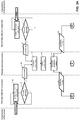
- Fig. 2 shows a swim-lane diagram showing the interaction between elements of the system carrying out a first embodiment of the disclosed method.
- the data collection components 20.1, 20.2 collect operational data from the laboratory instruments 10 of the first respectively the second group 2.
- the operational data is indicative of one or more operational parameters of the respective laboratory instruments 10.
- the operational data comprises one or more of:
- a subsequent step 104 anomalies related to one or more of the plurality of laboratory instruments 10 of the first group 1 are detected by the first of the plurality of data collection components 20.1.
- the data collection components 20.1, 20.2 detect anomalies by applying one or more anomaly detection rules, comprising detecting deviations of the operational parameters from set threshold values.
- the threshold values are set either by a manufacturer of the respective laboratory instruments and/or set by an operator of the laboratory system.
- the step 104 of detecting an anomaly related to one or more of the plurality of laboratory instruments 10 comprises: detecting deviation(s) of one or more operating parameters of the laboratory instrument 10 from manufacturer's operational ranges; and/or detecting deviation(s) of one or more environmental parameters around the laboratory instrument 10 based on data captured by one or more sensors located in the proximity of but outside the laboratory instrument 10 and communicatively connected to one of the plurality of data collection components 20.1, 20.2.
- the data collection components 20.1, 20.2 detect anomalies by consulting log file(s) of the laboratory instruments to identify log entries that could point to an anomaly related to the respective laboratory instrument(s).
- the data collection components 20.1, 20.2 can detect anomalies based on the collected operational data, e.g. operational parameters, environmental data, and/or log file entries.
- the data collection components 20.1, 20.2 can detect anomalies of one or more of the plurality of laboratory instruments 10 by detecting deviations of one or more operational parameters from set threshold values, by detecting deviations of one or more environmental parameters from set threshold values, and/ or by identifying log entries that could point to an anomaly.
- Data indicative of an anomaly can comprise any data indicative of an anomaly, e.g. deviations of operational data and/or an indication that an anomaly has occurred and which type of anomaly has occurred (e.g. as a flag in a log file).
- the data indicative of an anomaly can be created automatically and/or by input (e.g. from an expert).
- the data collection components 20.1, 20.2 can e.g. detect anomalies of one or more of the plurality of laboratory instruments 10 by detecting a failure of a laboratory instrument/ system or system components and/or a deviation of the respective instrument from a status considered as normal respectively accepted operation.
- the normal respectively accepted operation can be e.g. defined by one or more of: operating parameters/ specification defined by the manufacturer/ owner/ regulatory body; statistically determined mean/average values of the respective operating parameters of identical or similar instruments (peer comparison); and/or operation marked by an operator/technician/ expert as normal operation.
- step 104 anomalies related to one or more of the plurality of laboratory instruments 10 of the first group 1 are detected by the first of the plurality of data collection components 20.1 and/ or anomalies related to one or more of the plurality of laboratory instruments 10 of the second group 2 are detected by the second of the plurality of data collection components 20.2.
- the first of the plurality of data collection components 20.1 transmits context data to the remote maintenance system 50.
- the term 'upon' can be understood to comprise transmission immediately (as technically feasible) after the detection of the anomaly and/or transmission after the detection of the anomaly based on a schedule and/or transmission as soon as a network connection between the fist data collection component 20.1 to the remote maintenance system 50 for such transmission becomes available.
- the context data comprises both operational data and data indicative of the anomaly. According to embodiments disclosed herein the context data comprises only operational data related to the anomaly, such as operational data collected during and a specified amount of time before and/or after the anomaly has been detected. Furthermore, operational data related to the anomaly may comprise test result data of the respective laboratory instruments generated during and/or a specified amount of time before and/or after the anomaly has been detected.
- the first of the plurality of data collection components 20.1 transmits context data to the remote maintenance system 50 and/ or the second of the plurality of data collection components 20.2 transmits context data to the remote maintenance system 50.
- the plurality of data collection components 20.1, 20.2 filter out sensitive data from the operational data collected from the plurality of laboratory instruments 10, before transmitting said operational data to the remote maintenance system 50.
- sensitive data comprises data identifying a patient; results of analytical tests performed by one of the laboratory instruments and/or any data that is classified as sensitive in view of regulations or rules set by an operator of the laboratory system 100.
- one or more correlation(s) between the operational data and the anomaly(s) are determined at the remote maintenance system 50.
- correlation(s) between the operational data and the anomaly(s) are determined by receiving input (e.g. from an expert) indicative of such correlation(s).
- correlation(s) between the operational data and the anomaly(s) are determined automatically using a set of rules; pattern recognition methods, in particular based on preceding determination(s) by an expert (expert supervised pattern matching).
- machine learning methods are employed in order to improve the detection of correlations, having preceding expert determined correlations as teaching data.
- a validated correlation is an indication of a (probable) causality between particular operational data and an anomaly.
- a degree/ percentage of probability of a causality is set above which a correlation is validated.
- the degree/ percentage of probability (of a causality above which a correlation is validated) is set at different levels corresponding to different anomalies or types of anomalies, for example by the severity/impact of the respective anomaly.
- correlation(s) between the operational data and the anomaly(s) are validated by receiving input (e.g.
- correlation(s) between the operational data and the anomaly(s) are validated automatically using a set of rules; pattern recognition methods, in particular based on preceding validation(s) by an expert (expert supervised pattern matching).
- machine learning methods are employed in order to improve the validation of correlations, having preceding expert determined validations as teaching data.
- An analytical instrument comprises multiple components (e.g. pipetting device, heating device, light source, detection device) and each component is involved to obtain measurement values such as QC results.
- a data collection component 20.1, 20.2 collects operational data comprising the QC results and operational data of each component.
- the operational data of each of the components is provided by sensors within the analytical instrument and is indicative of a condition of the component of the analytical instrument.
- the data collection component detects an anomaly by detecting a deviation of the QC results from a predefined range or target value.
- the data collection component Upon detection of the deviation of the QC results, the data collection component transmits context data comprising the deviation of the QC results (data indicative of the anomaly) and the operational data of each component to the remote maintenance system 50.
- the transmitted context data comprises only operational data of the components related to the anomaly, e.g. operational data of each component collected during a specified amount of time before and/or after the deviation of the QC results has been detected.
- the remote maintenance system 50 determines one or more correlation(s) between the operational data of the components and the deviation of the QC results. Operational data of some components may correlate with the deviation of the QC results whereas operational data of other components may not correlate with the deviation of the QC results.
- operational data of the heating device and the light source correlate with the deviation of QC results
- operational data of the pipetting device and detection device do not correlate with the deviation of QC results.
- the determined correlations of the operational data of the heating device and the light source are validated in order to determine a causality between the determined correlation(s) of the operational data of the corresponding components and the deviation of QC results.
- the condition of the light source is relevant and has an impact on the measurement of QC results, whereas the condition of the heating device is not relevant. Accordingly, only the correlation of the operational data of the light source and the deviation of the QC result is validated.
- the causality of a condition of one or more of the multiple components and an anomaly can be determined.
- the plurality of data collection components 20.1, 20.2 filter out some of the operational data collected from the plurality of laboratory instruments 10, before transmitting said operational data to the remote maintenance system 50.
- the plurality of data collection components 20.1, 20.2 filter out operational data for which correlations were not validated, i.e. rejected, in preceding validations. Accordingly, by filtering out operational data which would lead to invalid correlations, the transmitted data volume to the remote maintenance system 50 is further reduced.
- one or more predictive rules are determined corresponding to validated correlations at the remote maintenance system 50.
- a predictive rule comprises a condition which, if met by operational data predicts the occurrence of the anomaly with a certain probability in a certain amount of timeframe.
- the probability and timeframe of occurrence of the anomaly is set at different levels corresponding to different anomalies or types of anomalies, for example by the severity/impact of the respective anomaly.
- the probability of occurrence of the anomaly defined by the predictive rules(s) is equal to the probability of a causality.
- the probability of occurrence of the anomaly defined by the predictive rules(s) is determined as a function of the probability of a causality, for example the probability of a causality may be multiplied by a value specific to a particular group of laboratory instruments, such as an anomaly risk factor.
- predictive rules(s) are determined by receiving input (e.g. from an expert) indicative of such predictive rules(s).
- predictive rules(s) are determined automatically using a set of rules; pattern recognition methods, in particular based on preceding predictive rules(s) determined by an expert (expert supervised pattern matching).
- machine learning methods are employed in order to improve the determination of predictive rule(s), having preceding expert determined predictive rules as teaching data.
- the one or more predictive rule(s) are transmitted by the remote maintenance system 50 to the data collection components 20.1, 20.2.
- the predictive rules are transmitted either immediately (as technically feasible) after their determination and/or based on a distribution schedule and/or as soon as a network connection between the remote maintenance system 50 and the data collection components 20.1, 20.2 becomes available.
- the one or more predictive rule(s) are transmitted by the remote maintenance system 50 to the first of the plurality of data collection components 20.1 and/ or to the second of the plurality of data collection components, 20.2.
- the one or more of the plurality of data collection components 20.1, 20.2 predict occurrence of anomaly(s) of one or more of the plurality of laboratory instruments 10 based on the one or more predictive rule(s).
- the step 116 of predicting an occurrence of an anomaly(s) comprises determining with a defined probability that the respective anomaly is about to occur in a certain amount of time.
- the disclosed method/ system allows timely prediction of the occurrence of an anomaly. Furthermore, by deploying the predictive rules to the data collection components 20.1, 20.2, the disclosed method/ system allows prediction of anomalies also with respect to laboratory instruments 10, the context data of which is not available (or restricted) at the remote maintenance server 50 - for privacy or technical reasons. This offers a significant advantage over known solutions by allowing anomaly prediction even for laboratory instruments 10 which themselves may not upload data to a remote location. According to particular embodiments disclosed herein, the predictive rules may even be distributed to certain data collection components on offline data carriers such as a portable storage device, an optical or magnetic data carrier.
- the frequency and/or volume and/or selection of parameters of the operational data from the laboratory instruments 10 captured by the data collection components 20.1, 20.2 is increased respectively changed.
- the data collection components 20.1, 20.2 monitor the laboratory instruments 10 much more closely, in particular for a set period of close monitoring.
- Fig. 3A shows a first page of a swim-lane diagram until off page connectors A, B1 and B2.
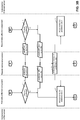
- Fig. 3B shows the second page of the swim-lane diagram of figures 3A to 3E , as from the off-page connectors A, B1 and B2.
- step 116 if in step 116 an anomaly has been detected but not predicted, in step 117, the respective data collection component 20.1, 20.2 transmits data indicative of failure of the one or more predictive rule(s) to the remote maintenance system 50, in particular failure of the predictive rules associated with the detected but unpredicted anomaly.
- the respective data collection component 20.1, 20.2 transmits data indicative of success of the predictive rule(s) that predicted the anomaly.
- the success of the predictive rules is confirmed before transmitting data indicative of its success in order to rule out false positives.
- the confirmation of success may be performed either by receiving input (from an expert) indicative of success of the predictive rule and/or determined automatically using a set of rules; pattern recognition methods, in particular based on preceding confirmations by an expert (expert supervised pattern matching).
- machine learning methods are employed in order to improve the confirmation of predictive rules, having preceding expert confirmations as teaching data.
- the remote maintenance system 50 evaluates data indicative of success respectively failure of predictive rule(s). Predictive rule(s) are flagged as effective if the data indicative of success outweighs data indicative of failure. On the other hand, predictive rule(s) are flagged as ineffective if the data indicative of failure outweighs data indicative of success.
- the term outweighs is to be understood to comprise a comparison of the number of indications of success vs failure. Alternatively, or additionally, a weighted function may be applied wherein data indicative of failure is considered with a different weight as compared to data indicative of success. Furthermore, the source of such indications (the particular data collection component) may affect the weighting of the indication of success resp. failure.
- the remote maintenance system 50 instructs the plurality of data collection components 20.1, 20.2 to discard predictive rule(s) flagged as ineffective. Discarding is understood to comprise deletion from the list of stored predictive rules and/or deactivating said predictive rules and/or flagging for review (by an expert) any prediction resulting from a predictive rule marked as ineffective.
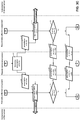
- Fig. 3C shows the third page of the swim-lane diagram of figures 3A to 3E , as from the off-page connectors C1, C2 and D of figure 3B .
- one or more prescriptive maintenance action(s) corresponding to the anomaly are determined at the remote maintenance system 50.
- a prescriptive maintenance action comprises instruction(s) which, when executed with respect to one or more of the laboratory instruments 10, reduce the probability of occurrence of the anomaly.
- prescriptive maintenance action(s) are determined by receiving input (e.g. from an expert) indicative of such prescriptive maintenance action(s).
- maintenance action(s) are determined automatically using a set of rules; pattern recognition methods, in particular based on preceding prescriptive maintenance action(s) determined by an expert (expert supervised pattern matching).
- machine learning methods are employed in order to improve the determination of maintenance action(s), having preceding expert determined maintenance action as teaching data.
- the one or more prescriptive maintenance action(s) are transmitted from the remote maintenance system 50 to the plurality of data collection components 20.1, 20.2.
- the one or more of the plurality of data collection components 20.1, 20.2 trigger execution of the one or more prescriptive maintenance action(s).
- the prescriptive maintenance action comprises computer readable instruction(s), the data collection components 20.1, 20.2 instructing the respective laboratory instruments 10 to execute the one or more prescriptive maintenance action(s).
- the prescriptive maintenance action comprises human readable instruction(s) to be executed by an operator/ service technician on laboratory instruments 10.
- the prescriptive maintenance action(s) comprise one or more of the following:
- the data collection component 20.1, 20.2 which triggered execution of the one or more prescriptive maintenance action(s) monitors the respective laboratory instrument 10 to determine whether the anomaly has been avoided. If the anomaly could not be detected, in a step 138, the data collection component 20.1, 20.2 transmits data indicative of success of the prescriptive maintenance action(s) to the remote maintenance system 50. If - despite triggering of the prescriptive maintenance actions, the anomaly has been detected, in a step 139, the data collection component 20.1, 20.2 transmits data indicative of failure of the prescriptive maintenance action(s).
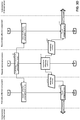
- Fig. 3D shows the fourth page of a swim-lane diagram from off-page connectors E1, E2 and F of figure 3C .
- the remote maintenance system 50 evaluates data indicative of success respectively failure of prescriptive maintenance actions. Prescriptive maintenance actions are flagged as effective if the data indicative of success outweighs data indicative of failure. On the other hand, prescriptive maintenance actions are flagged as ineffective if the data indicative of failure outweighs data indicative of success.
- the term outweighs is to be understood to comprise a comparison of the number of indications of success vs failure. Alternatively, or additionally, a weighted function may be applied wherein data indicative of failure is considered with a different weight as compared to data indicative of success.
- the source of such indications may affect the weighting of the indication of success resp. failure.
- the remote maintenance system 50 instructs the plurality of data collection components 20.1, 20.2 to discard prescriptive maintenance actions flagged as ineffective. Discarding is understood to comprise deletion from the list of stored prescriptive maintenance actions and/or deactivating said prescriptive maintenance actions and/or flagging for review (by an expert) any prescriptive maintenance actions marked as ineffective.
- mitigation actions are determined and distributed.
- the anomaly mitigation actions come into effect when despite all efforts (preventive, prescriptive or other forms of maintenance), the anomaly occurs or is expected to occur in a certain amount of time.
- the anomaly mitigation action comprises unloading of all unprocessed biological samples from the respective laboratory instrument 10 and transferring them to other laboratory instruments or into storage until the failure is rectified.
- mitigation actions are deployed to data collection components 20.1, 20.2 of groups of laboratory instruments 10 which have not yet experienced the anomaly, but determined by the remote maintenance system 50 to be at risk of facing the anomaly.
- the mitigation action may be for example in the form of triggering new or renewed training activities of operators of the laboratory instruments.
- one or more anomaly mitigation action(s) are determined at the remote maintenance system 50 corresponding to the anomaly.
- the one or more anomaly mitigation action(s) comprise instruction(s) which, when executed by one or more of the laboratory instruments 10, mitigate the negative effects of the anomaly.
- anomaly mitigation action(s) are determined by receiving input (e.g. from an expert) indicative of such anomaly mitigation action(s).
- anomaly mitigation action(s) are determined automatically using a set of rules; pattern recognition methods, in particular based on preceding anomaly mitigation actions determined by an expert (expert supervised pattern matching).
- machine learning methods are employed in order to improve the determination of anomaly mitigation action(s), having preceding expert determined anomaly mitigation actions as teaching data.
- the anomaly mitigation action comprises computer readable instruction(s), the data collection components 20.1, 20.2 instructing the respective laboratory instruments 10 to execute the one or more anomaly mitigation action(s).
- the anomaly mitigation action comprises human readable instruction(s) to be executed by an operator/ service technician on laboratory instruments 10.
- the remote maintenance system 50 transmits the one or more mitigation action(s) to the plurality of data collection components 20.1, 20.2.
- the data collection component 20.1, 20.2 triggers execution of one or more anomaly mitigation action(s) if the anomaly has been detected by the data collection component 20.1, 20.2 which instructed one or more of the laboratory instruments 10 to execute the one or more prescriptive maintenance action(s).
- Triggering of anomaly mitigation action(s) comprises the data collection components 20.1, 20.2 instructing the respective laboratory instruments 10 to execute the one or more anomaly mitigation action(s) and/or causing the anomaly mitigation action to be provided as human readable instruction(s) to an operator/ service technician to be executed.
- Fig. 3E shows the fourth page of a swim-lane diagram from off-page connectors G1, G2 and F of figure 3D .
- the data collection component 20.1, 20.2 which triggered execution of the one or more anomaly mitigation action(s) monitors the respective laboratory instrument 10 to determine whether the impact of the anomaly has been mitigated (reduced). If the anomaly could be mitigated, in a step 158, the data collection component 20.1, 20.2 transmits data indicative of success of the anomaly mitigation action(s) to the remote maintenance system 50. If - despite triggering of the anomaly mitigation actions, the anomaly has not been mitigated, in a step 159, the data collection component 20.1, 20.2 transmits data indicative of failure of the anomaly mitigation action(s).
- the remote maintenance system 50 evaluates data indicative of success respectively failure of anomaly mitigation actions. Anomaly mitigation actions are flagged as effective if the data indicative of success outweighs data indicative of failure. On the other hand, anomaly mitigation actions are flagged as ineffective if the data indicative of failure outweighs data indicative of success.
- the term outweighs is to be understood to comprise a comparison of the number of indications of success vs failure. Alternatively, or additionally, a weighted function may be applied wherein data indicative of failure is considered with a different weight as compared to data indicative of success. Furthermore, the source of such indications (the particular data collection component) may affect the weighting of the indication of success resp. failure.
- step 162 the remote maintenance system 50 instructs the plurality of data collection components 20.1, 20.2 to discard anomaly mitigation actions flagged as ineffective. Discarding is understood to comprise deletion from the list of stored anomaly mitigation actions and/or deactivating said anomaly mitigation actions and/or flagging for review by an expert any anomaly mitigation actions marked as ineffective.
- FIG 4 shows a highly schematic block diagram of a further embodiment of the disclosed laboratory system 100, wherein the remote maintenance system 50 comprises a plurality of regional servers 150 each communicatively connected to a plurality of data collection components 20.1, 20.2.
- Embodiments of the disclosed method corresponding to remote maintenance system 50 comprising one or more regional server(s) 150 each communicatively connected to a plurality of data collection components 20.1, 20.2, further comprise the step of each regional server 150 analyzing operational parameters common to all and/or common to a subset of laboratory instruments 10 connected to the particular regional server 150 in order to detect correlation(s) between operational data and anomaly(s) specific to the respective region.
- Such a method/system is advantageous as it allows detection of correlations between anomalies and context data specific to a region but common to several groups of laboratory instruments within the region. For example, it has been observed that a certain consumable occasionally resulted in out of range analytical test results.
- the corresponding mitigation action is to stop processing any more samples using such reagents and to flag any test results as invalid.
- having an "abstraction" level for a particular region is advantageous in determining correlations, predictive rules, prescriptive and mitigation actions applicable to an entire region.
- Further regional factors comprise common regulatory constrains to groups of laboratory instruments 10 in a region; common transportation and storage conditions of consumables and/or common environmental factors affecting the operation of laboratory instruments (increased humidity; high altitude e.g. Mexico City).
- a global server 250 communicatively connected to a plurality of regional servers 150.
- the terms global and regional are to be interpreted in a relative way, that is a global server 250 is communicatively connected to a larger number of groups of laboratory instruments 10 (via the regional servers and the respective data collection components) than the regional server 150.
- the terms global and regional comprise a geographical and/or logical grouping.
- Embodiments of the disclosed method corresponding to the hierarchically organized remote maintenance system 50 further comprising a global server 250 communicatively connected to a plurality of regional servers 150 further comprise the steps of:
- Global factors which are irrespective of region comprise (but not limited to) design or manufacturing parameters affecting operation of any laboratory instrument of a kind; globally common maintenance and operation processes and/or globally common software versions of laboratory instruments and/or insights (e.g. in the service organization of the provider of the laboratory instruments) generated after the launch of the respective laboratory instrument(s).
- a computer program product comprising instructions which, when executed by a remote maintenance system 50 and a plurality of data collection components 20.1, 20.2 of a laboratory system 100 comprising a first group 1 and second group 2 of laboratory instruments 10 for processing biological samples; the plurality of data collection components 20.1, 20.2 communicatively connected to the first group 1 respectively second group 2 of laboratory instruments 10 and the remote maintenance system 50 communicatively connected to the data collection components 20.1, 20.2, wherein the first group 1 of laboratory instruments 10 is connected to a first data collection component 20.1 while the second group 2 of laboratory instruments 10 is connected to a second data collection component 20.2, cause the laboratory system 100 to perform the steps of any one of the methods disclosed herein.
- a computer program product refers to the program as a tradable product.
- the product may generally exist in any format, such as in a downloadable file, on a computer-readable data carrier on premise or located at a remote location (cloud).
- the computer program product may be stored on a non-transitory computer-readable data carrier; a server computer as well as on transitory computer-readable data carrier such as a data carrier signal.
- the computer program product may be distributed over a data network.
- the execution hardware may be located on-premise or in a remotely, such as in a cloud environment.
- a non-transitory computer-readable storage medium comprising instructions which, when executed by a remote maintenance system 50 of a laboratory system 100 comprising a first group 1 and second group 2 of laboratory instruments 10 for processing biological samples; a plurality of data collection components 20.1, 20.2 communicatively connected to the first group 1 respectively second group 2 of laboratory instruments 10 and a remote maintenance system 50 communicatively connected to the data collection components 20.1, 20.2, cause the laboratory system 100 to perform the steps of any one of the methods disclosed herein.
- a modulated data signal comprising instructions which, when executed by a remote maintenance system 50 of a laboratory system 100 comprising a first group 1 and second group 2 of laboratory instruments 10 for processing biological samples; a plurality of data collection components 20.1, 20.2 communicatively connected to the first group 1 respectively second group 2 of laboratory instruments 10 and a remote maintenance system 50 communicatively connected to the data collection components 20.1, 20.2, cause the laboratory system 100 to perform the steps of any one of the methods disclosed herein.
- operational data from the laboratory instruments 10 is collected by the data collection components 20.1, 20.2 connected to the first group 1 of laboratory instruments 10 and second group 2 of laboratory instruments 10, the operational data being indicative of one or more operational parameters of the respective laboratory instruments 10.
- An anomaly related to one or more of the plurality of laboratory instruments 10 of the first group 1 is detected by the first of the plurality of data collection components 20.1 connected to the first group 1 of laboratory instruments 10 based on the collected operational data.
- Context data is transmitted by the first of the plurality of data collection components 20.1 to the remote maintenance system 50 upon detection of an anomaly, the context data comprising operational data and data indicative of the anomaly.
- One or more correlation(s) between the operational data and the anomaly(s) are determined at the remote maintenance system 50.
- One or more correlation(s) are validated at the remote maintenance system 50.
- One or more predictive rules corresponding to validated correlations are determined at the remote maintenance system 50.
- One or more predictive rule(s) are transmitted by the remote maintenance system 50 to data collection components 20.1, 20.2 connected to the first group 1 of laboratory instruments 10 and second group 2 of laboratory instruments 10. Occurrence of an anomaly of one or more of the plurality of laboratory instruments 10 of at least the second group 2 of laboratory instruments is predicted based on the one or more predictive rule(s) by the second of the plurality of data collection components 20.2 connected to the second group 2 of laboratory instruments 10.
- operational data from the laboratory instruments 10 is collected by the first of the plurality of data collection components 20.1 connected to the first group 1 of laboratory instruments for the detection of the anomaly, transmission of context data, determination of one or more correlation(s) between the operational data and the anomaly(s), validation of one or more correlation(s), and determination of one or more predictive rules corresponding to validated correlations.
- Operational data from the laboratory instruments 10 is collected by the second of the plurality of data collection components 20.2 connected to the second group 2 of laboratory instruments for the prediction of an occurrence of an anomaly of one or more of the plurality of laboratory instruments 10 of at least the second group 2 of laboratory instruments based on the one or more predictive rule(s) by the second of the plurality of data collection components 20.2 connected to the second group 2 of laboratory instruments 10.
- operational data from the laboratory instruments 10 is collected by the first of the plurality of data collection components 20.1 connected to the first group 1 of laboratory instruments, the operational data being indicative of one or more operational parameters of the respective laboratory instruments 10.
- An anomaly related to one or more of the plurality of laboratory instruments 10 of the first group 1 is detected by the first of the plurality of data collection components 20.1 connected to the first group 1 of laboratory instruments 10 based on the collected operational data.
- Context data is transmitted by the first of the plurality of data collection components 20.1 to the remote maintenance system 50 upon detection of an anomaly, the context data comprising operational data and data indicative of the anomaly.
- One or more correlation(s) between the operational data and the anomaly(s) are determined at the remote maintenance system 50.
- One or more correlation(s) are validated at the remote maintenance system 50.
- One or more predictive rules corresponding to validated correlations are determined at the remote maintenance system 50.
- One or more predictive rule(s) are transmitted by the remote maintenance system 50 to data collection components 20.1, 20.2 connected to the first group 1 of laboratory instruments 10 and second group 2 of laboratory instruments 10.
- Operational data from the laboratory instruments 10 is collected by the second of the plurality of data collection components 20.2 connected to the second group 2 of laboratory instruments, the operational data being indicative of one or more operational parameters of the respective laboratory instruments 10, and used for the prediction of an occurrence of an anomaly of one or more of the plurality of laboratory instruments 10 of at least the second group 2 of laboratory instruments based on the one or more predictive rule(s) by the second of the plurality of data collection components 20.2 connected to the second group 2 of laboratory instruments 10.
- operational data from the laboratory instruments 10 is collected by the data collection components connected to the first group 1 of laboratory instruments 10, connected to the second group 2 of laboratory instruments 10, and connected to a third group of laboratory instruments, the operational data being indicative of one or more operational parameters of the respective laboratory instruments 10.
- An anomaly related to one or more of the plurality of instruments 10 of the first group 1 is detected by the first of the plurality of data collection components 20.1 connected to the first group 1 of laboratory instruments 10 based on the collected operational data and/or an anomaly related to one or more of the plurality of instruments 10 of the second group 2 is detected by the second of the plurality of data collection components 20.2 connected to the second group 2 of laboratory instruments 10 based on the collected operational data.
- Context data is transmitted by the first of the plurality of data collection components 20.1 and/or by the second of the plurality of data collection components 20.2 to the remote maintenance system 50 upon detection of an anomaly, the context data comprising operational data and data indicative of the anomaly.
- One or more correlation(s) between the operational data and the anomaly(s) are determined at the remote maintenance system 50.
- One or more correlation(s) are validated at the remote maintenance system 50.
- One or more predictive rules corresponding to validated correlations are determined at the remote maintenance system 50.
- One or more predictive rule(s) are transmitted by the remote maintenance system 50 to the data collection components connected to the first group 1 of laboratory instruments 10, connected to the second group 2 of laboratory instruments 10, and connected to the third group of laboratory instruments.
- Occurrence of an anomaly of one or more of the plurality of laboratory instruments of at least the third group of laboratory instruments is predicted based on the one or more predictive rule(s) by a third of the plurality of data collection components connected to the third group of laboratory instruments 10.
- operational data from the laboratory instruments 10 is collected by the data collection components 20.1, 20.2 connected to the first group 1 of laboratory instruments 10 and second group 2 of laboratory instruments 10 for the detection of the anomaly(s), transmission of context data, determination of one or more correlation(s) between the operational data and the anomaly(s), validation of one or more correlation(s), and determination of one or more predictive rules corresponding to validated correlations.
- Operational data from the laboratory instruments is collected by the third of the plurality of data collection components connected to the third group of laboratory instruments for the prediction of an occurrence of an anomaly of one or more of the plurality of laboratory instruments of at least the third group of laboratory instruments based on the one or more predictive rule(s) by the third of the plurality of data collection components connected to the third group of laboratory instruments.
- one or more of the plurality of data collection components 20.1, 20.2 connected to the first group 1 of laboratory instruments 10 and second group 2 of laboratory instruments 10 transmit data indicative of failure of the one or more predictive rule(s) to the remote maintenance system 50 if an anomaly has been detected but not predicted. And/or one or more of the plurality of data collection components 20.1, 20.2 connected to the first group 1 of laboratory instruments 10 and second group 2 of laboratory instruments 10 transmit data to the remote maintenance system 50 indicative of success of the predictive rule(s) that predicted the anomaly, in particular if the prediction of the anomaly has been confirmed.
- the remote maintenance system 50 evaluates said data indicative of success respectively failure of predictive rule(s), flags predictive rule(s) with data indicative of success outweighing data indicative of failure as effective, and flags predictive rule(s) with data indicative of failure outweighing data indicative of success as ineffective.
- the remote maintenance system 50 instructs the plurality of data collection components 20.1, 20.2 connected to the first group 1 of laboratory instruments 10 and second group 2 of laboratory instruments 10 to discard predictive rule(s) flagged as ineffective.
- one or more prescriptive maintenance action(s) corresponding to the anomaly are determined at the remote maintenance system 50.
- the one or more prescriptive maintenance action(s) comprising instruction(s) which, when executed with respect to one or more of the laboratory instruments 10, reduce the probability of occurrence of the anomaly.
- One or more prescriptive maintenance action(s) are transmitted from the remote maintenance system 50 to the plurality of data collection components 20.1, 20.2 connected to the first group 1 of laboratory instruments 10 and second group 2 of laboratory instruments 10.
- One or more of the plurality of collection components 20.1, 20.2 connected to the first group 1 of laboratory instruments 10 and second group 2 of laboratory instruments 10 triggers execution of the one or more prescriptive maintenance action(s) upon predicting occurrence of an anomaly, comprising instructing one or more of the laboratory instruments 10 to execute the one or more prescriptive maintenance action(s) and/or providing the prescriptive maintenance action(s) to an operator.
- data indicative of success of the prescriptive maintenance actions are transmitted to the remote maintenance system 50 if the anomaly could not be detected by the data collection component 20.1, 20.2 which triggered execution of the one or more prescriptive maintenance action(s).
- Data indicative of failure of the prescriptive maintenance actions are transmitted to the remote maintenance system 50 if the anomaly has been detected by the data collection component 20.1, 20.2 which triggered execution of the one or more prescriptive maintenance action(s).
- the remote maintenance system 50 evaluates said data indicative of success respectively failure of prescriptive maintenance actions, flags prescriptive maintenance action(s) with data indicative of success outweighing data indicative of failure as effective, and flags prescriptive maintenance action(s) with data indicative of failure outweighing data indicative of success as ineffective.
- the remote maintenance system 50 instructs the plurality of data collection components 20.1, 20.2 connected to the first group 1 of laboratory instruments 10 and second group 2 of laboratory instruments 10 to discard prescriptive maintenance action(s) flagged as ineffective.
- one or more anomaly mitigation action(s) corresponding to the anomaly are determined at the remote maintenance system 50.
- the one or more anomaly mitigation action(s) comprising instruction(s) which, when executed by one or more of the laboratory instruments 10, mitigate the negative effects of the anomaly.
- One or more mitigation action(s) are transmitted from the remote maintenance system 50 to the plurality of data collection components 20.1, 20.2 connected to the first group 1 of laboratory instruments 10 and second group 2 of laboratory instruments 10.
- the data collection component 20.1, 20.2 triggers execution of one or more anomaly mitigation action(s) if the anomaly has been detected by the collection component 20.1, 20.2 which instructed one or more of the laboratory instruments 10 to execute the one or more prescriptive maintenance action(s).
- data indicative of success of the mitigation action(s) are transmitted from the plurality of data collection components 20.1, 20.2 connected to the first group 1 of laboratory instruments 10 and second group 2 of laboratory instruments 10 to the remote maintenance system 50 if the negative effects of the anomaly have been mitigated.
- Data indicative of failure of the mitigation action(s) is transmitted to the remote maintenance system 50 if the negative effects of the anomaly could not be mitigated.
- the remote maintenance system 50 consolidates said data indicative of success respectively failure of mitigation action(s), flags mitigation action(s) with data indicative of success outweighing data indicative of failure as effective, and flags mitigation action(s) with data indicative of failure outweighing data indicative of success as ineffective.
- the remote maintenance system 50 instructs the plurality of data collection components 20.1, 20.2 connected to the first group 1 of laboratory instruments 10 and second group 2 of laboratory instruments 10 to discard mitigation action(s) flagged as ineffective.
- the step of detecting an anomaly related to one or more of the plurality of laboratory instruments 10 comprises:
- the maintenance method further comprises the step of increasing the frequency and/or volume and/or selection of parameters of the operational data from the laboratory instruments 10 captured by the data collection components 20.1, 20.2 connected to the first group 1 of laboratory instruments 10 and second group 2 of laboratory instruments 10 upon predicting occurrence of an anomaly.
- the remote maintenance system 50 comprises one or more regional server(s) 150 each communicatively connected to a plurality of data collection components 20.1, 20.2.
- the method further comprises the step of each regional server 150 analyzing operational parameters common to all and/or common to a subset of laboratory instruments 10 connected to the particular regional server 150 in order to detect correlation(s) between operational data and anomaly(s) specific to the respective region.
- each of the plurality of data collection components 20.1, 20.2 communicatively connected to a regional server 150 is dedicated for a specific group of laboratory instruments.
- a maintenance method for a laboratory system comprising a first group and a second group of laboratory instruments for processing biological samples; a plurality of data collection components communicatively connected to the first group respectively second group of laboratory instruments and a remote maintenance system communicatively connected to the data collection components, the method comprising:
- a maintenance method according to the first aspect is proposed, further comprising:
- a maintenance method according to the first aspect or second aspect is proposed, further comprising the steps:
- a maintenance method according to the third aspect is proposed, further comprising the steps:
- a maintenance method according to the third aspect or forth aspect is proposed, wherein the prescriptive maintenance action(s) comprise one or more of the following:
- a maintenance method according to any of the third aspect to fifth aspect is proposed, further comprising the steps:
- a maintenance method according to the sixth aspect is proposed, further comprising the steps:
- a maintenance method according to any of the preceding aspects, wherein the step of detecting an anomaly related to one or more of the plurality of laboratory instruments comprises:
- a maintenance method according to any of the preceding aspects is proposed, further comprising the step of increasing the frequency and/or volume and/or selection of parameters of the operational data from the laboratory instruments captured by the data collection components upon predicting occurrence of an anomaly.
- a maintenance method according to any of the preceding aspects, wherein the step of determining one or more correlation(s) between the operational data and the anomaly(s) at the remote maintenance system comprises:
- a maintenance method according to any of the preceding aspects, wherein the step of validating one or more correlation(s) and marking the respective correlations as validated comprises:
- a maintenance method according to any of the preceding aspects, wherein the remote maintenance system comprises one or more regional server(s) each communicatively connected to a plurality of data collection components, the method further comprising the step of each regional server analyzing operational parameters common to all and/or common to a subset of laboratory instruments connected to the particular regional server in order to detect correlation(s) between operational data and anomaly(s) specific to the respective region.
- a maintenance method according to the twelfth aspect, wherein the remote maintenance system comprises a global server communicatively connected to a plurality of regional servers; the method further comprising:
- a laboratory system comprising:
- a computer program product comprising instructions which, when executed by a remote maintenance system of a laboratory system comprising a first group and second group of laboratory instruments for processing biological samples; a plurality of data collection components communicatively connected to the first group respectively second group of laboratory instruments and a remote maintenance system communicatively connected to the data collection components, cause the laboratory system to perform the steps of any one of the methods according to any of the first aspect to the thirteenth aspect.
- REFERENCE LIST first group (of laboratory instruments) 1 second group (of laboratory instruments) 2 laboratory instrument 10 laboratory middleware 15 laboratory system 100 first data collection component 20.1 second data collection component 20.2 remote maintenance system 50 collecting operational data step 102 detecting anomaly(s) step 104 transmitting context data step 106 determine correlation(s) (between context data and anomaly step 108 validating correlations step 110 determining predictive rule(s) step 112 transmitting predictive rule(s) to data collection components step 114 predicting anomaly(s) step 116 transmitting data indicative of failure of predictive rule(s) step 117 transmitting data indicative of success of predictive rule(s) step 118 evaluating effectiveness of predictive rule(s) step 120 discarding ineffective predictive rule(s) step 122 determining prescriptive maintenance actions step 130 transmitting prescriptive maintenance actions step 132 triggering prescriptive maintenance actions step 134 determining whether anomaly has been avoided step 136 transmitting data indicative of success of the prescriptive maintenance actions step 138 transmitting data indicative of failure of the prescriptive maintenance actions step 139 evaluating effectiveness of
Landscapes
- Engineering & Computer Science (AREA)
- Health & Medical Sciences (AREA)
- Business, Economics & Management (AREA)
- General Health & Medical Sciences (AREA)
- General Business, Economics & Management (AREA)
- Biomedical Technology (AREA)
- Computing Systems (AREA)
- Medical Informatics (AREA)
- General Physics & Mathematics (AREA)
- Physics & Mathematics (AREA)
- Primary Health Care (AREA)
- Epidemiology (AREA)
- Quality & Reliability (AREA)
- Public Health (AREA)
- Theoretical Computer Science (AREA)
- Human Resources & Organizations (AREA)
- Economics (AREA)
- Strategic Management (AREA)
- Entrepreneurship & Innovation (AREA)
- Life Sciences & Earth Sciences (AREA)
- Operations Research (AREA)
- Marketing (AREA)
- Pathology (AREA)
- Development Economics (AREA)
- Immunology (AREA)
- Tourism & Hospitality (AREA)
- Biochemistry (AREA)
- Analytical Chemistry (AREA)
- Software Systems (AREA)
- Chemical & Material Sciences (AREA)
- General Engineering & Computer Science (AREA)
- Computer Vision & Pattern Recognition (AREA)
- Toxicology (AREA)
- Bioethics (AREA)
- Accounting & Taxation (AREA)
- Automation & Control Theory (AREA)
- Environmental & Geological Engineering (AREA)
- Mathematical Physics (AREA)
- Evolutionary Computation (AREA)
- Data Mining & Analysis (AREA)
Abstract
Description
- The present application relates to a maintenance method for a laboratory system, a laboratory system configured to carry out the maintenance method, a computer program product which when executed by a remote maintenance system of a laboratory system causes the laboratory system to carry out the maintenance method.
- With the rising complexity of laboratory instruments (such as pre, post and analytical laboratory instruments, transportation systems or laboratory middleware) and laboratory systems, the modalities of addressing anomalies requiring some degree of intervention/ maintenance is gaining more and more importance. In the context of the present disclosure, an anomaly relates to a failure of a laboratory instrument/ system or system components and/or a deviation of the respective system or instrument from a status considered as normal respectively accepted operation. The normal respectively accepted operation is defined by one or more of: operating parameters/ specification defined by the manufacturer/ owner/ regulatory body; statistically determined mean/average values of the respective operating parameters of identical or similar systems/instruments (peer comparison); and/or operation marked by an operator/technician/ expert as normal operation.
- One modality of addressing anomalies is by reactive maintenance, that is - as its name implies - by reacting to an anomaly that already happened. However, reactive maintenance is usually accompanied by down-time of the affected laboratory instrument/ system which impacts operation of the laboratory instrument(s) and even the entire laboratory system. Furthermore, reactive maintenance often leads to the need of emergency dispatch of a technician to remedy the anomaly since the reaction cannot be planned.
- The occurrence of down-times and the need for emergency dispatches of technicians is to some degree reduced by preventive maintenance. According to this approach, laboratory instruments/ systems are maintained according to a set of recommendations on how to maintain the equipment based on insights from an engineering or R&D team that created the product. Often compliance with time-based maintenance requirements is required as part of leasing or warranty terms. However, preventive maintenance is only efficient for relatively predictable service activities. In addition, preventive maintenance introduces additional costs since - as its name implies - it is based on the concept of performing a maintenance task before it is actually required to prevent a foreseeable (at least to a certain degree of probability) anomaly. That means that components are exchanged, serviced, checked, etc. when the probability of an anomaly exceeds a certain threshold, a probability based on statistical data and not dependent on the actual state of the laboratory instrument/ system. Hence, it could happen that for example spare parts that are still functional are exchanged due to the expiration of a pre-defined time period. This leads to significant unnecessary costs.
- Condition-based maintenance addresses the disadvantages of preventive maintenance in that, instead of maintaining laboratory instruments/ systems based on a pre-defined schedule, condition-based maintenance evaluates an asset's actual condition to determine the need for maintenance. With the automation of many industries and the wide-spread use of computers and sensors, condition-based maintenance has become more and more automated. Sensors part of or connected to laboratory instrument(s)/ system(s) provide (real-time) data to remote maintenance systems that aid maintenance teams in maintaining equipment before anomalies occur.
- In order to address shortcomings of reactive, respectively preventive maintenance, predictive maintenance is based on the concept of actively predicting an anomaly specific to the respective laboratory instrument/ system. Predictive maintenance takes condition-based maintenance a step further. Once operational data as well as data indicative of anomalies is available, advanced analytics are used to identify correlations between the operational data and the anomaly(s).
- By applying analytics (expert driven and/or by machine learning) to data generated by the laboratory instrument(s)/ system(s) to gain a better understanding of their condition, one can act on these as part of an improvement process. In other words, predictive maintenance uses data from the laboratory instrument(s)/ system(s) to monitor parameters of the laboratory instrument(s)/ system(s), and uses this data in conjunction with analyzed historical trends to (continuously) evaluate the system health and predict an anomaly before it happens. In addition, data beyond instruments can be used for predictions, such as environmental data, information from other systems (such as patient data), and any other data sources that may be valuable.
- Known implementations of predictive maintenance have the common prerequisite of complete access to data in order for advanced analytics to be able to identify condition(s) of the laboratory instrument(s)/ system(s) that could lead to an anomaly. However, the volume of data required for predictive maintenance poses a serious limitation. Complex laboratory systems comprise tens or even hundreds of instruments, each being characterized by dozens of operational parameters. The volume of data needed to be transmitted for analysis for predictive maintenance is enormous, which could lead to bottlenecks and possibly rendering advanced analytics impractical.
- In order to reduce the volume of data transferred for advanced analytics, known solutions filter the data transferred from the laboratory. However, filtering the data used for determining the cause of an anomaly bears the risk that data relevant to the anomaly is not available.
- In order to avoid the bottleneck of transferring large amounts of data and also the risks posed by filtering out potentially relevant data, according to another known proposed system, predictive maintenance is performed on-site.
- In addition to limitations on the volume of data required for advanced analytics of predictive maintenance, restricted availability of data due to privacy concerns poses a further limitation on the applicability of predictive maintenance, in particular in the field of diagnostic laboratory systems handling sensitive data related to the health of patients, such as data indicative of a certain disease, condition, infection, etc. In view of the sensitive nature of the data, operators of certain laboratory systems greatly limit or even prohibit any data from leaving the laboratory system. Furthermore, even if the data is allowed to leave the laboratory system, sometimes regulatory requirements limit or even prohibit data leaving a certain jurisdiction (e.g. beyond the borders of a state). In order to address this problem - limitations on the kind of data available for advanced analytics of predictive maintenance - according to a known proposal, predictive maintenance is provided within the boundaries of the region within which the sensitive data must be kept.
- However, regardless whether due to data volume and/or data privacy limitations, local or regional implementations of predictive maintenance are unable to leverage the findings of advanced analytics enabled by large amounts of data. For example, rarely occurring anomalies might not be detected in a single locally implemented system before it already leads to the need for reactive maintenance. At the same time, it could happen that the same anomaly occurred at a different location in the past unbeknownst to any other location. Even a plurality of local or regional implementations of predictive maintenance would be unable to effectively predict such rare anomalies as these anomalies would only occur in isolated systems, each unable to recognize a pattern between certain operational data and the occurrence of the respective anomaly.
- Hence, there is a need for a maintenance method for a laboratory system addressing the drawbacks of reactive and preventive maintenance as well as the limitations of currently known implementations of predictive maintenance.
- Disclosed herein is a maintenance method for a laboratory system comprising a first group and second group of laboratory instruments for processing biological samples; a plurality of data collection components communicatively connected to the first group respectively second group of laboratory instruments and a remote maintenance system communicatively connected to the data collection components. The first group of laboratory instruments is connected to a first data collection component while the second group of laboratory instruments is connected to a second data collection component. The data collection components are dedicated for a specific group of laboratory instruments and have direct access to operative data of the laboratory instruments. According to embodiments disclosed herein, one data collection component is communicatively connected to each group of laboratory instruments.
- Embodiments herein disclosed address the above-identified need by way of a maintenance method for a laboratory system comprising:
- Collecting operational data from the laboratory instruments by the data collection components.
The operational data collected from the laboratory instruments is indicative of one or more operational parameters of the respective laboratory instruments. According to embodiments disclosed herein, operational data of laboratory instruments of the first group of laboratory instruments are collected by the first of the plurality of data collection components and operational data of laboratory instruments of the second group of laboratory instruments are collected by a second of the plurality of data collection components. - Detecting an anomaly related to one or more of the plurality of laboratory instruments of the first group by the first of the plurality of data collection components. Optionally, in addition, an anomaly related to one or more of the plurality of laboratory instruments of the second group is detected by the second of the plurality of data collection components.
According to embodiments disclosed herein, an anomaly is indicative of a failure/ suboptimal operation of a laboratory instrument/ system reflected by a deviation of the operational parameter(s) from standard value(s) and/or ranges. - Transmitting context data by the first of the plurality of data collection components to the remote maintenance system upon detection of an anomaly. The context data sent by the first of the plurality of data collection components to the remote maintenance system comprises both the operational data and data indicative of the anomaly. Optionally, in addition, context data is transmitted by the second of the plurality of data collection components to the remote maintenance system upon detection of an anomaly. The context data sent by the second of the plurality of data collection components to the remote maintenance system comprises both the operational data and data indicative of the anomaly.
Determining one or more correlation(s) between the operational data and the anomaly(s) at the remote maintenance system.
According to embodiments disclosed herein, a correlation is indicative of an (repeated) occurrence of an anomaly associated with particular operational data (such as within a certain time period).
According to embodiments disclosed herein, correlation(s) between the operational data and the anomaly(s) are determined by receiving input (e.g. from an expert) indicative of such correlation(s). Alternatively, or additionally, correlation(s) between the operational data and the anomaly(s) are determined automatically using pattern recognition methods, in particular based on preceding determination(s) by an expert.
According to embodiments disclosed herein, correlation(s) between operational data transmitted by the first of the plurality of data collection components and the anomaly(s) are determined and/ or correlation(s) between operational data transmitted by the second of the plurality of collection components and the anomaly(s) are determined. - Validating one or more correlation(s) and marking the respective correlations as validated.
Since correlation is not always indicative of causality, the correlation(s) between the operational data and the anomaly(s) need to be validated. A validated correlation is an indication of a (probable) causality between particular operational data and an anomaly.
According to embodiments disclosed herein, the correlation(s) between the operational data and the anomaly(s) are validated by receiving input (e.g. from an expert) indicative of a validity (probable causality) of the correlation(s) between the operational data and the anomaly(s). Alternatively, or additionally, the correlation(s) between the operational data and the anomaly(s) are validated by instructing a computer implemented validation engine to validate the correlation(s) between the operational data and the anomaly(s), in particular based on preceding validation(s) by an expert.
According to some embodiments, the correlation(s) between the operational data transmitted by the first of the plurality of data collection components and the anomaly(s) are validated by comparing them with validated correlations of operational data transmitted by the second of the plurality of data collection components and the anomaly(s). Thus, validated correlations derived from operational data transmitted by the second of the plurality of data collection components may be used as a references for validating correlation(s) between the operational data transmitted by the first of the plurality of data collection components and the anomaly(s). - Determining - at the remote maintenance system - one or more predictive rules corresponding to validated correlations.
According to embodiments disclosed herein, a predictive rule comprises a condition which, if met by the operational data, predicts the occurrence of the anomaly with a certain probability in a certain amount of timeframe and/or dependent on a further predictive rule (nested or dependent rule). - In order to allow the data collection components to timely predict the occurrence of an anomaly, the one or more predictive rule(s) are transmitted by the remote maintenance system to the data collection components.
According to embodiments disclosed herein, the predictive rule(s) are transmitted by the remote maintenance system also to data collection components which (for data privacy or other reasons) do not themselves transmit context data to the remote maintenance system. - Predicting occurrence of an anomaly of one or more of the plurality of laboratory instruments based on the one or more predictive rule(s) by one or more of the plurality of data collection components.
According to embodiments disclosed herein, the data collection components predict the anomaly(s) with a certain rate of probability. - Embodiments disclosed herein are advantageous as they combine the advantages associated with direct access to operational data of the instruments to detect and predict anomalies with leveraging the power of centralized processing of operational data by the remote maintenance system.
- I. By performing the data collection and anomaly detection locally by the data collection components, embodiments disclosed herein ensure that the detection of anomalies is based on all data available locally (within the respective group of instruments - without limitations due to volume and/or privacy) and without delays due to transmission to a remote location. This allows a more precise detection of anomalies and ensures that the most relevant operational data is associated with the anomaly.
- II. By transmitting operational data associated with the anomaly to the remote maintenance system and performing the data analytics (determination and validation of correlations as well as determination of predictive rules) at a centralized location, embodiments disclosed herein combine the data from multiple groups of laboratory instruments in order to collaboratively harvest and centrally analyze as much of the available data as possible.
- III. By transmitting the one or more predictive rule(s) to the data collection components and predicting anomalies by the data collection components, embodiments disclosed herein allow a much more timely prediction of anomalies by avoiding possible lags due to transmission of data to a remote location. Furthermore, predicting anomalies by the data collection components ensures that the prediction of anomalies is based on the entire operative data available locally within the respective group of instruments.
- According to further embodiments disclosed herein, the maintenance method further comprises determining at the remote maintenance system one or more prescriptive maintenance action(s) corresponding to the anomaly, transmitting the one or more prescriptive maintenance action(s) from the remote maintenance system to the plurality of data collection components and one or more of the plurality of collection components instructing one or more of the laboratory instruments to execute the one or more prescriptive maintenance action(s) upon predicting occurrence of an anomaly related thereto. The one or more prescriptive maintenance action(s) comprise instruction(s) which, when executed by one or more of the laboratory instruments, reduce the probability of occurrence of the anomaly.
- In order to address cases when - despite predictive rules being used to predict anomalies - an anomaly nevertheless occurs, further embodiments disclosed herein comprise determining anomaly mitigation action(s) corresponding to the anomaly; transmitting the mitigation action(s) from the remote maintenance system to the plurality of data collection components; and the data collection component instructing laboratory instrument(s) to execute anomaly mitigation action(s) if the anomaly has been detected by the data collection component which instructed one or more of the laboratory instruments to execute the one or more prescriptive maintenance action(s). The one or more anomaly mitigation action(s) comprise instruction(s) which, when executed by one or more of the laboratory instruments, mitigate the negative effects of the anomaly. In other words, the impact of the anomaly is reduced.
- Further embodiments disclosed herein relate to a maintenance method wherein the remote maintenance system comprises one or more regional server(s) each communicatively connected to a plurality of data collection components. The method further comprises the step of each regional server analyzing operational parameters common to all and/or common to a subset of laboratory instruments connected to the particular regional server in order to detect correlation(s) between operational data and anomaly(s) specific to the respective region. Such embodiments are advantageous as they allow a compromise between use of a data set as large as possible for advanced analytics and the amount/ type of data transmitted between different regions - thereby fulfilling limitations due to data privacy regulations.
- Overall, embodiments disclosed herein effectively combine edge computing for comprehensive and timely data capture respectively anomaly prediction (avoiding data volume and/or privacy limitations) with the power of cloud computing for advanced data analysis based on multiple data sources as well as quality assurance by means of validations.
- Further characteristics and advantages of the disclosed method / device /system will in the following be described in detail by means of the description and by making reference to the following drawings:
- Fig. 1
- A highly schematic block diagram of an embodiment of the disclosed laboratory system;
- Fig. 2
- A swim-lane diagram showing the interaction between elements of the system carrying out a first embodiment of the disclosed method;
- Fig. 3A
- First page of a swim-lane diagram showing the interaction between elements of the system carrying out a further embodiment of the disclosed method;
- Fig. 3B
- Second page of a swim-lane diagram showing the interaction between elements of the system carrying out a further embodiment of the disclosed method;
- Fig. 3C
- Third page of a swim-lane diagram showing the interaction between elements of the system carrying out a further embodiment of the disclosed method further comprising prescriptive maintenance;
- Fig. 3D
- Fourth page of a swim-lane diagram showing the interaction between elements of the system carrying out a further embodiment of the disclosed method further comprising mitigating actions;
- Fig. 3E
- Fifth page of a swim-lane diagram showing the interaction between elements of the system carrying out a further embodiment of the disclosed method further comprising evaluation of mitigating actions;
- Fig. 4
- A highly schematic block diagram of a further embodiment of the disclosed laboratory system.
- The use of the 'a' or 'an' are employed to describe elements and components of the embodiments herein. This is done merely for convenience and to give a general sense of the inventive concepts. This description should be read to include one or at least one and the singular also includes the plural unless it is obvious that it is meant otherwise.
- As used herein qualifiers such as 'about,' 'approximately,' and 'substantially' are intended to signify that the item or value being qualified is not limited to the exact value or amount specified, but includes some slight variations or deviations therefrom, caused by measuring error or imprecision, manufacturing tolerances, stress exerted on various parts, wear and tear, and combinations thereof, for example.
- The terms 'sample', patient sample' and 'biological sample' refer to material(s) that may potentially contain an analyte of interest. The patient sample can be derived from any biological source, such as a physiological fluid, including blood, saliva, ocular lens fluid, cerebrospinal fluid, sweat, urine, stool, semen, milk, ascites fluid, mucous, synovial fluid, peritoneal fluid, amniotic fluid, tissue, cultured cells, or the like. The patient sample can be pretreated prior to use, such as preparing plasma from blood, diluting viscous fluids, lysis or the like. Methods of treatment can involve filtration, distillation, concentration, inactivation of interfering components, and the addition of reagents. A patient sample may be used directly as obtained from the source or used following a pretreatment to modify the character of the sample. In some embodiments, an initially solid or semi-solid biological material can be rendered liquid by dissolving or suspending it with a suitable liquid medium. In some embodiments, the sample can be suspected to contain a certain antigen or nucleic acid.
- The term 'analyte' is a component of a sample to be analyzed, e.g. molecules of various sizes, ions, proteins, metabolites and the like. Information gathered on an analyte may be used to evaluate the impact of the administration of drugs on the organism or on particular tissues or to make a diagnosis. Thus 'analyte' is a general term for substances for which information about presence and/or concentration is intended. Examples of analytes are e.g. glucose, coagulation parameters, endogenic proteins (e.g. proteins released from the heart muscle), metabolites, nucleic acids and so on.
- The term 'laboratory instrument' as used herein encompasses any apparatus or apparatus component operable to execute and/or cause the execution of one or more processing steps / workflow steps on one or more biological samples and/or one or more reagents. The expression 'processing steps' thereby refers to physically executed processing steps such as centrifugation, aliquotation, sample analysis and the like. The term 'instrument' covers pre-analytical instruments, post-analytical instruments, analytical instruments and laboratory middleware.
- The term 'post-analytical instrument' as used herein encompasses any apparatus or apparatus component that is configured to perform one or more post-analytical processing steps / workflow steps comprising - but not limited to - sample unloading, transport, recapping, decapping, temporary storage/ buffering, archiving (refrigerated or not), retrieval and/ or disposal.
- The term 'pre-analytical instrument' as used herein encompasses any apparatus or apparatus component that is configured to perform one or more pre-analytical processing steps / workflow steps comprising - but not limited to - centrifugation, resuspension (e.g. by mixing or vortexing), capping, decapping, recapping, sorting, tube type identification, sample quality determination and/or aliquotation steps. Said processing steps may also comprise adding chemicals or buffers to a sample, concentrating a sample, incubating a sample, and the like.
- The term 'analyzer' / 'analytical instrument' as used herein encompasses any apparatus or apparatus component configured to obtain a measurement value. An analyzer is operable to determine via various chemical, biological, physical, optical or other technical procedures a parameter value of the sample or a component thereof. An analyzer may be operable to measure said parameter of the sample or of at least one analyte and return the obtained measurement value. The list of possible analysis results returned by the analyzer comprises, without limitation, concentrations of the analyte in the sample, a digital (yes or no) result indicating the existence of the analyte in the sample (corresponding to a concentration above the detection level), optical parameters, DNA or RNA sequences, data obtained from mass spectrometry of proteins or metabolites and physical or chemical parameters of various types. An analytical instrument may comprise units assisting with the pipetting, dosing, and mixing of samples and/or reagents. The analyzer may comprise a reagent holding unit for holding reagents to perform the assays. Reagents may be arranged for example in the form of containers or cassettes containing individual reagents or group of reagents, placed in appropriate receptacles or positions within a storage compartment or conveyor. It may comprise a consumable feeding unit. The analyzer may comprise a process and detection system whose workflow is optimized for certain types of analysis. Examples of such analyzer are clinical chemistry analyzers, coagulation chemistry analyzers, immunochemistry analyzers, urine analyzers, nucleic acid analyzers, used to detect the result of chemical or biological reactions or to monitor the progress of chemical or biological reactions.
- The term 'laboratory middleware' as used herein refers to any physical or virtual processing device configurable to control a laboratory instrument / or system comprising one or more laboratory instruments in a way that workflow(s) and workflow step(s) are conducted by the laboratory instrument / system. The laboratory middleware may, for example, instruct the laboratory instrument / system to conduct pre-analytical, post analytical and analytical workflow(s)/ workflow step(s). The laboratory middleware may receive information from a data management unit regarding which steps need to be performed with a certain sample. In some embodiments, the laboratory middleware is integral with a data management unit, is comprised by a server computer and/or be part of one laboratory instrument or even distributed across multiple instruments of the laboratory system. The laboratory middleware may, for instance, be embodied as a programmable logic controller running a computer-readable program provided with instructions to perform operations.
- The term 'sample transportation system' as used herein encompasses any apparatus or apparatus component that is configured to transport sample carriers (each holding one or more sample containers) between laboratory instruments. In particular, the sample transportation system is a one dimensional conveyor-belt based system, a two-dimensional transportation system (such as a magnetic sample carrier transport system) or a combination thereof.
- A 'laboratory system' as used herein comprises a system comprising one or more analytical; pre- and post-analytical laboratory instruments; a sample transportation system and/or a laboratory middleware.
- The term 'analysis or 'analytical test' as used herein encompasses a laboratory procedure characterizing a parameter of a biological sample for qualitatively assessing or quantitatively measuring the presence or amount or the functional activity of an analyte.
- The term 'consumable' comprises - but is not limited - to reagents, system fluids, quality control material, calibrator materials, microplates/ microwell plates, reaction vessels, measurement cuvettes, sample tubes, pipetting tips, etc.
- The term 'communication network' as used herein encompasses any type of wireless network, such as a WiFi™, GSM™, UMTS or other wireless digital network or a cable based network, such as Ethernet™ or the like. In particular, the communication network can implement the Internet protocol (IP). For example, the communication network comprises a combination of cable-based and wireless networks.
- The term 'remote system' or 'server' as used herein encompasses any physical machine or virtual machine having a physical or virtual processor, capable of receiving; processing and sending data. A server can run on any computer including dedicated computers, which individually are also often referred to as 'the server' or shared resources such as virtual servers. In many cases, a computer can provide several services and have several servers running. Therefore, the term server shall encompass any computerized device that shares a resource with one or more client processes. Furthermore, the terms 'remote system' or 'server' encompasses a data transmission and processing system distributed over a data network (such as a cloud environment).
- The term 'user interface' as used herein encompasses any suitable piece of software and/or hardware for interactions between an operator and a machine, including but not limited to a graphical user interface for receiving as input a command from an operator and also to provide feedback and convey information thereto. Also, a system /device may expose several user interfaces to serve different kinds of users/ operators.
- The term 'Quality control' or 'analytical quality control' refers to all those processes and procedures designed to ensure that the results of laboratory analysis (analytical tests) are consistent, comparable, accurate and within specified limits of precision.
- Embodiments of the disclosed method shall now be presented with reference to the illustrative figures.
- As shown on the highly schematic block diagram of
Fig. 1 , the disclosedlaboratory system 100 comprises a plurality oflaboratory instruments 10 grouped into afirst group 1 andsecond group 2 oflaboratory instruments 10. Thelaboratory instruments 10 are communicatively connected (e.g. by a communication network) to one of the plurality of data collection components 20.1, 20.2. In the example shown onfigure 1 , thefirst group 1 oflaboratory instruments 10 is connected to a first data collection component 20.1 while thesecond group 2 oflaboratory instruments 10 is connected to a second data collection component 20.2. In the example offigure 1 anoptional laboratory middleware 15 is illustrated, which is configured to instruct a plurality oflaboratory instruments 10 to process biological samples according to one or more test orders. According to various embodiments disclosed herein, the data collection components 20.1, 20.2 are connected to thelaboratory instruments 10 either directly or vialaboratory middleware 15. It shall be noted that the data collection components 20.1, 20.2 are either dedicated hardware units and/or part of a server computer such as thelaboratory middleware 15, a router, or any computing device configured to carry out the functions of the data collection components as disclosed herein (e.g. in a server instance/ process and/or a virtual machine). Common to the data collection components 20.1, 20.2 of all embodiments is that they are dedicated for a specific group oflaboratory instruments 10 and have direct access to operative data of thelaboratory instruments 10. - The data collection components 20.1, 20.2 are communicatively connected to the
remote maintenance system 50, e.g. by means of a communication network. The term remote with respect to a remote maintenance system shall be understood as a computer system located at a location different from at least one of the first or second group oflaboratory instruments 10. - Turning now to
figures 2 to 3E , embodiments of the disclosed method shall be described. - In a preparatory step, not explicitly shown in the figures, laboratory instruments are grouped into various groups. The grouping of laboratory instruments may be based on a common physical location of the respective laboratory instruments and/or a logical grouping by the type; manufacturer and/or work area of the respective laboratory instruments. According to embodiments disclosed herein, laboratory instruments of a particular group may even be located at different physical locations.
- In a further preparatory step, each group of laboratory instruments is communicatively connected to a data collection component, e.g. by a communication network.
-
Fig. 2 shows a swim-lane diagram showing the interaction between elements of the system carrying out a first embodiment of the disclosed method. - In a
first step 102, the data collection components 20.1, 20.2 collect operational data from thelaboratory instruments 10 of the first respectively thesecond group 2. The operational data is indicative of one or more operational parameters of therespective laboratory instruments 10. - According to embodiments disclosed herein, the operational data comprises one or more of:
- Environmental factors like humidity, temperature, air, water, power supply quality, vibration:
- ∘ provided by sensors within the respective laboratory instrument, indicative of a condition of one or more components of the laboratory instrument, such as temperature, humidity, voltage, current, torque (e.g. of a motor), noise and/or vibrations;
- ∘ provided by sensors arranged outside the laboratory instruments, providing data indicative of temperature, humidity, voltage, current, torque (e.g. of a motor), noise and/or vibrations in the proximity of the laboratory instruments;
- Operational factors such as throughput, QC and calibration frequency of the laboratory instruments;
- Device performance factors like QC and calibration results, error messages, log files of the laboratory instruments;
- Data on consumables comprising expiration date, transport and storage conditions;
- Data on operator handling comprising performance/ non-performance of maintenance activities, customer maintenance due/overdue;
- Data indicative of HW and SW performance comprising availability/non-availability of storage space and/or memory, up-to-dateness of software.
- In a
subsequent step 104, anomalies related to one or more of the plurality oflaboratory instruments 10 of thefirst group 1 are detected by the first of the plurality of data collection components 20.1. - According to embodiments disclosed herein, the data collection components 20.1, 20.2 detect anomalies by applying one or more anomaly detection rules, comprising detecting deviations of the operational parameters from set threshold values. The threshold values are set either by a manufacturer of the respective laboratory instruments and/or set by an operator of the laboratory system. In particular, the
step 104 of detecting an anomaly related to one or more of the plurality oflaboratory instruments 10 comprises: detecting deviation(s) of one or more operating parameters of thelaboratory instrument 10 from manufacturer's operational ranges; and/or detecting deviation(s) of one or more environmental parameters around thelaboratory instrument 10 based on data captured by one or more sensors located in the proximity of but outside thelaboratory instrument 10 and communicatively connected to one of the plurality of data collection components 20.1, 20.2. - Additionally, or alternatively the data collection components 20.1, 20.2 detect anomalies by consulting log file(s) of the laboratory instruments to identify log entries that could point to an anomaly related to the respective laboratory instrument(s).
- Thus, the data collection components 20.1, 20.2 can detect anomalies based on the collected operational data, e.g. operational parameters, environmental data, and/or log file entries. For example, the data collection components 20.1, 20.2 can detect anomalies of one or more of the plurality of
laboratory instruments 10 by detecting deviations of one or more operational parameters from set threshold values, by detecting deviations of one or more environmental parameters from set threshold values, and/ or by identifying log entries that could point to an anomaly. - Data indicative of an anomaly can comprise any data indicative of an anomaly, e.g. deviations of operational data and/or an indication that an anomaly has occurred and which type of anomaly has occurred (e.g. as a flag in a log file). The data indicative of an anomaly can be created automatically and/or by input (e.g. from an expert).
- The data collection components 20.1, 20.2 can e.g. detect anomalies of one or more of the plurality of
laboratory instruments 10 by detecting a failure of a laboratory instrument/ system or system components and/or a deviation of the respective instrument from a status considered as normal respectively accepted operation. The normal respectively accepted operation can be e.g. defined by one or more of: operating parameters/ specification defined by the manufacturer/ owner/ regulatory body; statistically determined mean/average values of the respective operating parameters of identical or similar instruments (peer comparison); and/or operation marked by an operator/technician/ expert as normal operation. - According to embodiments disclosed herein, in
step 104, anomalies related to one or more of the plurality oflaboratory instruments 10 of thefirst group 1 are detected by the first of the plurality of data collection components 20.1 and/ or anomalies related to one or more of the plurality oflaboratory instruments 10 of thesecond group 2 are detected by the second of the plurality of data collection components 20.2. - Upon detection of an anomaly, in a
step 106, the first of the plurality of data collection components 20.1 transmits context data to theremote maintenance system 50. The term 'upon' can be understood to comprise transmission immediately (as technically feasible) after the detection of the anomaly and/or transmission after the detection of the anomaly based on a schedule and/or transmission as soon as a network connection between the fist data collection component 20.1 to theremote maintenance system 50 for such transmission becomes available. The context data comprises both operational data and data indicative of the anomaly. According to embodiments disclosed herein the context data comprises only operational data related to the anomaly, such as operational data collected during and a specified amount of time before and/or after the anomaly has been detected. Furthermore, operational data related to the anomaly may comprise test result data of the respective laboratory instruments generated during and/or a specified amount of time before and/or after the anomaly has been detected. - According to embodiments disclosed herein, upon detection of an anomaly, in
step 106, the first of the plurality of data collection components 20.1 transmits context data to theremote maintenance system 50 and/ or the second of the plurality of data collection components 20.2 transmits context data to theremote maintenance system 50. - According to embodiments disclosed herein, the plurality of data collection components 20.1, 20.2 filter out sensitive data from the operational data collected from the plurality of
laboratory instruments 10, before transmitting said operational data to theremote maintenance system 50. For example, sensitive data comprises data identifying a patient; results of analytical tests performed by one of the laboratory instruments and/or any data that is classified as sensitive in view of regulations or rules set by an operator of thelaboratory system 100. - Based on the context data transmitted by data collection components 20.1, 20.2, in a
step 108, one or more correlation(s) between the operational data and the anomaly(s) are determined at theremote maintenance system 50. According to embodiments disclosed herein, correlation(s) between the operational data and the anomaly(s) are determined by receiving input (e.g. from an expert) indicative of such correlation(s). Alternatively, or additionally, correlation(s) between the operational data and the anomaly(s) are determined automatically using a set of rules; pattern recognition methods, in particular based on preceding determination(s) by an expert (expert supervised pattern matching). According to further embodiments disclosed herein, machine learning methods are employed in order to improve the detection of correlations, having preceding expert determined correlations as teaching data. - However, since a correlation is not necessarily associated with a causal relationship, in a
step 110, correlations are validated at theremote maintenance system 50. A validated correlation is an indication of a (probable) causality between particular operational data and an anomaly. According to various embodiments disclosed herein, a degree/ percentage of probability of a causality is set above which a correlation is validated. According to embodiments disclosed herein, the degree/ percentage of probability (of a causality above which a correlation is validated) is set at different levels corresponding to different anomalies or types of anomalies, for example by the severity/impact of the respective anomaly. According to embodiments disclosed herein, correlation(s) between the operational data and the anomaly(s) are validated by receiving input (e.g. from an expert) indicative of such validation(s). Alternatively, or additionally, correlation(s) between the operational data and the anomaly(s) are validated automatically using a set of rules; pattern recognition methods, in particular based on preceding validation(s) by an expert (expert supervised pattern matching). According to further embodiments disclosed herein, machine learning methods are employed in order to improve the validation of correlations, having preceding expert determined validations as teaching data. - The following example shall further exemplify
steps 102 to 110: An analytical instrument comprises multiple components (e.g. pipetting device, heating device, light source, detection device) and each component is involved to obtain measurement values such as QC results. A data collection component 20.1, 20.2 collects operational data comprising the QC results and operational data of each component. The operational data of each of the components is provided by sensors within the analytical instrument and is indicative of a condition of the component of the analytical instrument. The data collection component detects an anomaly by detecting a deviation of the QC results from a predefined range or target value. Upon detection of the deviation of the QC results, the data collection component transmits context data comprising the deviation of the QC results (data indicative of the anomaly) and the operational data of each component to theremote maintenance system 50. The transmitted context data comprises only operational data of the components related to the anomaly, e.g. operational data of each component collected during a specified amount of time before and/or after the deviation of the QC results has been detected. Subsequently, theremote maintenance system 50 determines one or more correlation(s) between the operational data of the components and the deviation of the QC results. Operational data of some components may correlate with the deviation of the QC results whereas operational data of other components may not correlate with the deviation of the QC results. For example, operational data of the heating device and the light source correlate with the deviation of QC results, whereas operational data of the pipetting device and detection device do not correlate with the deviation of QC results. Then, the determined correlations of the operational data of the heating device and the light source are validated in order to determine a causality between the determined correlation(s) of the operational data of the corresponding components and the deviation of QC results. For example, only the condition of the light source is relevant and has an impact on the measurement of QC results, whereas the condition of the heating device is not relevant. Accordingly, only the correlation of the operational data of the light source and the deviation of the QC result is validated. Thus, based on the determination of correlations and subsequent validation of the determined correlations the causality of a condition of one or more of the multiple components and an anomaly can be determined. - According to embodiments disclosed herein, the plurality of data collection components 20.1, 20.2 filter out some of the operational data collected from the plurality of
laboratory instruments 10, before transmitting said operational data to theremote maintenance system 50. For example, the plurality of data collection components 20.1, 20.2 filter out operational data for which correlations were not validated, i.e. rejected, in preceding validations. Accordingly, by filtering out operational data which would lead to invalid correlations, the transmitted data volume to theremote maintenance system 50 is further reduced. - In a
subsequent step 112, one or more predictive rules are determined corresponding to validated correlations at theremote maintenance system 50. A predictive rule comprises a condition which, if met by operational data predicts the occurrence of the anomaly with a certain probability in a certain amount of timeframe. According to embodiments disclosed herein, the probability and timeframe of occurrence of the anomaly is set at different levels corresponding to different anomalies or types of anomalies, for example by the severity/impact of the respective anomaly. According to embodiments disclosed herein, the probability of occurrence of the anomaly defined by the predictive rules(s) is equal to the probability of a causality. According to further embodiments disclosed herein, the probability of occurrence of the anomaly defined by the predictive rules(s) is determined as a function of the probability of a causality, for example the probability of a causality may be multiplied by a value specific to a particular group of laboratory instruments, such as an anomaly risk factor. - According to embodiments disclosed herein, predictive rules(s) are determined by receiving input (e.g. from an expert) indicative of such predictive rules(s). Alternatively, or additionally, predictive rules(s) are determined automatically using a set of rules; pattern recognition methods, in particular based on preceding predictive rules(s) determined by an expert (expert supervised pattern matching). According to further embodiments disclosed herein, machine learning methods are employed in order to improve the determination of predictive rule(s), having preceding expert determined predictive rules as teaching data.
- In a
subsequent step 114, the one or more predictive rule(s) are transmitted by theremote maintenance system 50 to the data collection components 20.1, 20.2. The predictive rules are transmitted either immediately (as technically feasible) after their determination and/or based on a distribution schedule and/or as soon as a network connection between theremote maintenance system 50 and the data collection components 20.1, 20.2 becomes available. - According to embodiments disclosed herein, the one or more predictive rule(s) are transmitted by the
remote maintenance system 50 to the first of the plurality of data collection components 20.1 and/ or to the second of the plurality of data collection components, 20.2. - Having received one or more predictive rule(s), in a
step 116, the one or more of the plurality of data collection components 20.1, 20.2 predict occurrence of anomaly(s) of one or more of the plurality oflaboratory instruments 10 based on the one or more predictive rule(s). Thestep 116 of predicting an occurrence of an anomaly(s) comprises determining with a defined probability that the respective anomaly is about to occur in a certain amount of time. - By deploying the predictive rules to the data collection components 20.1, 20.2, the disclosed method/ system allows timely prediction of the occurrence of an anomaly. Furthermore, by deploying the predictive rules to the data collection components 20.1, 20.2, the disclosed method/ system allows prediction of anomalies also with respect to
laboratory instruments 10, the context data of which is not available (or restricted) at the remote maintenance server 50 - for privacy or technical reasons. This offers a significant advantage over known solutions by allowing anomaly prediction even forlaboratory instruments 10 which themselves may not upload data to a remote location. According to particular embodiments disclosed herein, the predictive rules may even be distributed to certain data collection components on offline data carriers such as a portable storage device, an optical or magnetic data carrier. - According to embodiments disclosed herein, upon predicting occurrence of an anomaly, the frequency and/or volume and/or selection of parameters of the operational data from the
laboratory instruments 10 captured by the data collection components 20.1, 20.2 is increased respectively changed. In other words, upon predicting occurrence of an anomaly, the data collection components 20.1, 20.2 monitor thelaboratory instruments 10 much more closely, in particular for a set period of close monitoring. - Turning now to
figures 3A to 3E further embodiments of the disclosed method shall be described. -
Fig. 3A shows a first page of a swim-lane diagram until off page connectors A, B1 and B2.Fig. 3B shows the second page of the swim-lane diagram offigures 3A to 3E , as from the off-page connectors A, B1 and B2. - According to further embodiments disclosed herein, as shown on
figure 3B , if instep 116 an anomaly has been detected but not predicted, instep 117, the respective data collection component 20.1, 20.2 transmits data indicative of failure of the one or more predictive rule(s) to theremote maintenance system 50, in particular failure of the predictive rules associated with the detected but unpredicted anomaly. On the other hand, if the anomaly has been predicted by a data collection component 20.1, 20.2 using a predictive rule, in astep 118, the respective data collection component 20.1, 20.2 transmits data indicative of success of the predictive rule(s) that predicted the anomaly. According to particular embodiments, the success of the predictive rules is confirmed before transmitting data indicative of its success in order to rule out false positives. The confirmation of success may be performed either by receiving input (from an expert) indicative of success of the predictive rule and/or determined automatically using a set of rules; pattern recognition methods, in particular based on preceding confirmations by an expert (expert supervised pattern matching). According to further embodiments disclosed herein, machine learning methods are employed in order to improve the confirmation of predictive rules, having preceding expert confirmations as teaching data. - In a
subsequent step 120, theremote maintenance system 50 evaluates data indicative of success respectively failure of predictive rule(s). Predictive rule(s) are flagged as effective if the data indicative of success outweighs data indicative of failure. On the other hand, predictive rule(s) are flagged as ineffective if the data indicative of failure outweighs data indicative of success. The term outweighs is to be understood to comprise a comparison of the number of indications of success vs failure. Alternatively, or additionally, a weighted function may be applied wherein data indicative of failure is considered with a different weight as compared to data indicative of success. Furthermore, the source of such indications (the particular data collection component) may affect the weighting of the indication of success resp. failure. Following the evaluation ofstep 120, theremote maintenance system 50 instructs the plurality of data collection components 20.1, 20.2 to discard predictive rule(s) flagged as ineffective. Discarding is understood to comprise deletion from the list of stored predictive rules and/or deactivating said predictive rules and/or flagging for review (by an expert) any prediction resulting from a predictive rule marked as ineffective. -
Fig. 3C shows the third page of the swim-lane diagram offigures 3A to 3E , as from the off-page connectors C1, C2 and D offigure 3B . - According to embodiments disclosed herein and illustrated on
figure 3C , in a step 130, one or more prescriptive maintenance action(s) corresponding to the anomaly are determined at theremote maintenance system 50. A prescriptive maintenance action comprises instruction(s) which, when executed with respect to one or more of thelaboratory instruments 10, reduce the probability of occurrence of the anomaly. According to embodiments disclosed herein, prescriptive maintenance action(s) are determined by receiving input (e.g. from an expert) indicative of such prescriptive maintenance action(s). Alternatively, or additionally, maintenance action(s) are determined automatically using a set of rules; pattern recognition methods, in particular based on preceding prescriptive maintenance action(s) determined by an expert (expert supervised pattern matching). According to further embodiments disclosed herein, machine learning methods are employed in order to improve the determination of maintenance action(s), having preceding expert determined maintenance action as teaching data. - In a
subsequent step 132, the one or more prescriptive maintenance action(s) are transmitted from theremote maintenance system 50 to the plurality of data collection components 20.1, 20.2. - Upon predicting occurrence of an anomaly, in a
step 134, the one or more of the plurality of data collection components 20.1, 20.2 trigger execution of the one or more prescriptive maintenance action(s). - According to embodiments disclosed herein, the prescriptive maintenance action comprises computer readable instruction(s), the data collection components 20.1, 20.2 instructing the
respective laboratory instruments 10 to execute the one or more prescriptive maintenance action(s). According to further embodiments disclosed herein, the prescriptive maintenance action comprises human readable instruction(s) to be executed by an operator/ service technician onlaboratory instruments 10. - According to embodiments disclosed herein, the prescriptive maintenance action(s) comprise one or more of the following:
- Updating a software or software component on the
respective laboratory instrument 10. - Causing a redistribution of a workload between a plurality of
laboratory instruments 10. According to embodiments disclosed herein, redistribution of a workload between a plurality oflaboratory instruments 10 comprises instructing alaboratory middleware 15 to adjust one or more load balancing rules to reduce the load on the affected instrument. - Redirecting of one or more biological samples from the laboratory instrument(s) 10 corresponding to the predicted anomaly to laboratory instrument(s) 10 other than the laboratory instrument(s) 10 corresponding to the predicted anomaly.
- Triggering replacement and/or service of one or more parts of the laboratory instrument(s) 10 corresponding to the predicted anomaly;
- Triggering calibration and/or quality control processes of the of the laboratory instrument(s) 10 corresponding to the predicted anomaly;
- Triggering the discarding of reagents and/or lots of reagents with a corresponding indication of improper handling and/or manufacturer recall;
- Triggering the discarding of laboratory instrument(s) 10 with a corresponding indication of improper maintenance.
- Triggering the automatic readjustment of laboratory instrument(s) or component(s) of the of laboratory instrument(s)
- In order to measure the effectiveness of the prescriptive maintenance actions, in a
step 136, the data collection component 20.1, 20.2 which triggered execution of the one or more prescriptive maintenance action(s) monitors therespective laboratory instrument 10 to determine whether the anomaly has been avoided. If the anomaly could not be detected, in astep 138, the data collection component 20.1, 20.2 transmits data indicative of success of the prescriptive maintenance action(s) to theremote maintenance system 50. If - despite triggering of the prescriptive maintenance actions, the anomaly has been detected, in astep 139, the data collection component 20.1, 20.2 transmits data indicative of failure of the prescriptive maintenance action(s). -
Fig. 3D shows the fourth page of a swim-lane diagram from off-page connectors E1, E2 and F offigure 3C . As illustrated onfigure 3D , in astep 140, theremote maintenance system 50 evaluates data indicative of success respectively failure of prescriptive maintenance actions. Prescriptive maintenance actions are flagged as effective if the data indicative of success outweighs data indicative of failure. On the other hand, prescriptive maintenance actions are flagged as ineffective if the data indicative of failure outweighs data indicative of success. The term outweighs is to be understood to comprise a comparison of the number of indications of success vs failure. Alternatively, or additionally, a weighted function may be applied wherein data indicative of failure is considered with a different weight as compared to data indicative of success. Furthermore, the source of such indications (the particular data collection component) may affect the weighting of the indication of success resp. failure. Following the evaluation ofstep 140, in astep 142 theremote maintenance system 50 instructs the plurality of data collection components 20.1, 20.2 to discard prescriptive maintenance actions flagged as ineffective. Discarding is understood to comprise deletion from the list of stored prescriptive maintenance actions and/or deactivating said prescriptive maintenance actions and/or flagging for review (by an expert) any prescriptive maintenance actions marked as ineffective. - As further shown on
figure 3D , according to embodiments disclosed herein, in order to reduce the impact (negative effects) of an anomaly, mitigation actions are determined and distributed. In other words, the anomaly mitigation actions come into effect when despite all efforts (preventive, prescriptive or other forms of maintenance), the anomaly occurs or is expected to occur in a certain amount of time. For example, if it is unavoidable that a component of alaboratory instrument 10 will fail, the anomaly mitigation action comprises unloading of all unprocessed biological samples from therespective laboratory instrument 10 and transferring them to other laboratory instruments or into storage until the failure is rectified. According to further embodiments disclosed herein, mitigation actions are deployed to data collection components 20.1, 20.2 of groups oflaboratory instruments 10 which have not yet experienced the anomaly, but determined by theremote maintenance system 50 to be at risk of facing the anomaly. The mitigation action may be for example in the form of triggering new or renewed training activities of operators of the laboratory instruments. - In a
step 150, one or more anomaly mitigation action(s) are determined at theremote maintenance system 50 corresponding to the anomaly. The one or more anomaly mitigation action(s) comprise instruction(s) which, when executed by one or more of thelaboratory instruments 10, mitigate the negative effects of the anomaly. According to embodiments disclosed herein, anomaly mitigation action(s) are determined by receiving input (e.g. from an expert) indicative of such anomaly mitigation action(s). Alternatively, or additionally, anomaly mitigation action(s) are determined automatically using a set of rules; pattern recognition methods, in particular based on preceding anomaly mitigation actions determined by an expert (expert supervised pattern matching). According to further embodiments disclosed herein, machine learning methods are employed in order to improve the determination of anomaly mitigation action(s), having preceding expert determined anomaly mitigation actions as teaching data. - According to embodiments disclosed herein, the anomaly mitigation action comprises computer readable instruction(s), the data collection components 20.1, 20.2 instructing the
respective laboratory instruments 10 to execute the one or more anomaly mitigation action(s). According to further embodiments disclosed herein, the anomaly mitigation action comprises human readable instruction(s) to be executed by an operator/ service technician onlaboratory instruments 10. - In a
step 152, theremote maintenance system 50 transmits the one or more mitigation action(s) to the plurality of data collection components 20.1, 20.2. - In a
subsequent step 154, the data collection component 20.1, 20.2 triggers execution of one or more anomaly mitigation action(s) if the anomaly has been detected by the data collection component 20.1, 20.2 which instructed one or more of thelaboratory instruments 10 to execute the one or more prescriptive maintenance action(s). Triggering of anomaly mitigation action(s) comprises the data collection components 20.1, 20.2 instructing therespective laboratory instruments 10 to execute the one or more anomaly mitigation action(s) and/or causing the anomaly mitigation action to be provided as human readable instruction(s) to an operator/ service technician to be executed. -
Fig. 3E shows the fourth page of a swim-lane diagram from off-page connectors G1, G2 and F offigure 3D . In order to measure the effectiveness of the anomaly mitigation actions, in astep 156, the data collection component 20.1, 20.2 which triggered execution of the one or more anomaly mitigation action(s) monitors therespective laboratory instrument 10 to determine whether the impact of the anomaly has been mitigated (reduced). If the anomaly could be mitigated, in astep 158, the data collection component 20.1, 20.2 transmits data indicative of success of the anomaly mitigation action(s) to theremote maintenance system 50. If - despite triggering of the anomaly mitigation actions, the anomaly has not been mitigated, in astep 159, the data collection component 20.1, 20.2 transmits data indicative of failure of the anomaly mitigation action(s). - As illustrated on
figure 3E , in astep 160, theremote maintenance system 50 evaluates data indicative of success respectively failure of anomaly mitigation actions. Anomaly mitigation actions are flagged as effective if the data indicative of success outweighs data indicative of failure. On the other hand, anomaly mitigation actions are flagged as ineffective if the data indicative of failure outweighs data indicative of success. The term outweighs is to be understood to comprise a comparison of the number of indications of success vs failure. Alternatively, or additionally, a weighted function may be applied wherein data indicative of failure is considered with a different weight as compared to data indicative of success. Furthermore, the source of such indications (the particular data collection component) may affect the weighting of the indication of success resp. failure. Following the evaluation ofstep 160, in astep 162 theremote maintenance system 50 instructs the plurality of data collection components 20.1, 20.2 to discard anomaly mitigation actions flagged as ineffective. Discarding is understood to comprise deletion from the list of stored anomaly mitigation actions and/or deactivating said anomaly mitigation actions and/or flagging for review by an expert any anomaly mitigation actions marked as ineffective. - Turning now to
figure 4 , embodiments of the disclosed system and corresponding method are disclosed which address the need to have a remote maintenance system offering a balance between availability of context data (for predictive / prescriptive maintenance and mitigation) and privacy and regulatory limitations of its availability at regional respectively global level.Figure 4 shows a highly schematic block diagram of a further embodiment of the disclosedlaboratory system 100, wherein theremote maintenance system 50 comprises a plurality ofregional servers 150 each communicatively connected to a plurality of data collection components 20.1, 20.2. - Embodiments of the disclosed method corresponding to
remote maintenance system 50 comprising one or more regional server(s) 150 each communicatively connected to a plurality of data collection components 20.1, 20.2, further comprise the step of eachregional server 150 analyzing operational parameters common to all and/or common to a subset oflaboratory instruments 10 connected to the particularregional server 150 in order to detect correlation(s) between operational data and anomaly(s) specific to the respective region. Such a method/system is advantageous as it allows detection of correlations between anomalies and context data specific to a region but common to several groups of laboratory instruments within the region. For example, it has been observed that a certain consumable occasionally resulted in out of range analytical test results. Upon investigation at each data collection component, it has been determined that the out-of-range result was occurring at several locations (groups of laboratory instruments), but only in a specific region. After further investigation by a regional server it was determined, that the package insert corresponding to a certain reagent lot delivered to a particular region having a particular language had a translation error regarding a dilution factor. The predictive rule in this case was determined to be a condition checking the lot number of reagents used by any of the laboratory instruments. The prescriptive action corresponding to this anomaly is to provide an updated package insert with corrected translation. In cases wrongly diluted reagents were already loaded into laboratory instruments (hence the anomaly could not be avoided anymore), the corresponding mitigation action is to stop processing any more samples using such reagents and to flag any test results as invalid. As this example shows, having an "abstraction" level for a particular region is advantageous in determining correlations, predictive rules, prescriptive and mitigation actions applicable to an entire region. Further regional factors comprise common regulatory constrains to groups oflaboratory instruments 10 in a region; common transportation and storage conditions of consumables and/or common environmental factors affecting the operation of laboratory instruments (increased humidity; high altitude e.g. Mexico City). - Further shown on
figure 4 is aglobal server 250 communicatively connected to a plurality ofregional servers 150. The terms global and regional are to be interpreted in a relative way, that is aglobal server 250 is communicatively connected to a larger number of groups of laboratory instruments 10 (via the regional servers and the respective data collection components) than theregional server 150. The terms global and regional comprise a geographical and/or logical grouping. Embodiments of the disclosed method corresponding to the hierarchically organizedremote maintenance system 50 further comprising aglobal server 250 communicatively connected to a plurality ofregional servers 150 further comprise the steps of: - each
regional server 150 filtering out regionally sensitive data from the operational data; - each of the plurality of
regional servers 150 transmitting the filtered operational data to theglobal server 250; - the
global server 250 analyzing operational parameters common to alllaboratory instruments 10 of thelaboratory system 100 in order to detect globally relevant correlation(s) between operational data and anomaly(s) irrespective of region. - Global factors which are irrespective of region comprise (but not limited to) design or manufacturing parameters affecting operation of any laboratory instrument of a kind; globally common maintenance and operation processes and/or globally common software versions of laboratory instruments and/or insights (e.g. in the service organization of the provider of the laboratory instruments) generated after the launch of the respective laboratory instrument(s).
- Further disclosed is a computer program product comprising instructions which, when executed by a
remote maintenance system 50 and a plurality of data collection components 20.1, 20.2 of alaboratory system 100 comprising afirst group 1 andsecond group 2 oflaboratory instruments 10 for processing biological samples; the plurality of data collection components 20.1, 20.2 communicatively connected to thefirst group 1 respectivelysecond group 2 oflaboratory instruments 10 and theremote maintenance system 50 communicatively connected to the data collection components 20.1, 20.2, wherein thefirst group 1 oflaboratory instruments 10 is connected to a first data collection component 20.1 while thesecond group 2 oflaboratory instruments 10 is connected to a second data collection component 20.2, cause thelaboratory system 100 to perform the steps of any one of the methods disclosed herein. Thus, specifically, one, more than one or even all of method steps as disclosed herein may be performed by using a computer or a computer network (such as a cloud computing service) or any suitable data processing equipment. As used herein, a computer program product refers to the program as a tradable product. The product may generally exist in any format, such as in a downloadable file, on a computer-readable data carrier on premise or located at a remote location (cloud). The computer program product may be stored on a non-transitory computer-readable data carrier; a server computer as well as on transitory computer-readable data carrier such as a data carrier signal. Specifically, the computer program product may be distributed over a data network. Furthermore, not only the computer program product, but also the execution hardware may be located on-premise or in a remotely, such as in a cloud environment. - Further disclosed and proposed is a non-transitory computer-readable storage medium comprising instructions which, when executed by a
remote maintenance system 50 of alaboratory system 100 comprising afirst group 1 andsecond group 2 oflaboratory instruments 10 for processing biological samples; a plurality of data collection components 20.1, 20.2 communicatively connected to thefirst group 1 respectivelysecond group 2 oflaboratory instruments 10 and aremote maintenance system 50 communicatively connected to the data collection components 20.1, 20.2, cause thelaboratory system 100 to perform the steps of any one of the methods disclosed herein. - Further disclosed and proposed is a modulated data signal comprising instructions which, when executed by a
remote maintenance system 50 of alaboratory system 100 comprising afirst group 1 andsecond group 2 oflaboratory instruments 10 for processing biological samples; a plurality of data collection components 20.1, 20.2 communicatively connected to thefirst group 1 respectivelysecond group 2 oflaboratory instruments 10 and aremote maintenance system 50 communicatively connected to the data collection components 20.1, 20.2, cause thelaboratory system 100 to perform the steps of any one of the methods disclosed herein. - According to some embodiments, operational data from the
laboratory instruments 10 is collected by the data collection components 20.1, 20.2 connected to thefirst group 1 oflaboratory instruments 10 andsecond group 2 oflaboratory instruments 10, the operational data being indicative of one or more operational parameters of therespective laboratory instruments 10. An anomaly related to one or more of the plurality oflaboratory instruments 10 of thefirst group 1 is detected by the first of the plurality of data collection components 20.1 connected to thefirst group 1 oflaboratory instruments 10 based on the collected operational data. Context data is transmitted by the first of the plurality of data collection components 20.1 to theremote maintenance system 50 upon detection of an anomaly, the context data comprising operational data and data indicative of the anomaly. One or more correlation(s) between the operational data and the anomaly(s) are determined at theremote maintenance system 50. One or more correlation(s) are validated at theremote maintenance system 50. One or more predictive rules corresponding to validated correlations are determined at theremote maintenance system 50. One or more predictive rule(s) are transmitted by theremote maintenance system 50 to data collection components 20.1, 20.2 connected to thefirst group 1 oflaboratory instruments 10 andsecond group 2 oflaboratory instruments 10. Occurrence of an anomaly of one or more of the plurality oflaboratory instruments 10 of at least thesecond group 2 of laboratory instruments is predicted based on the one or more predictive rule(s) by the second of the plurality of data collection components 20.2 connected to thesecond group 2 oflaboratory instruments 10. - According to an example, operational data from the
laboratory instruments 10 is collected by the first of the plurality of data collection components 20.1 connected to thefirst group 1 of laboratory instruments for the detection of the anomaly, transmission of context data, determination of one or more correlation(s) between the operational data and the anomaly(s), validation of one or more correlation(s), and determination of one or more predictive rules corresponding to validated correlations. Operational data from thelaboratory instruments 10 is collected by the second of the plurality of data collection components 20.2 connected to thesecond group 2 of laboratory instruments for the prediction of an occurrence of an anomaly of one or more of the plurality oflaboratory instruments 10 of at least thesecond group 2 of laboratory instruments based on the one or more predictive rule(s) by the second of the plurality of data collection components 20.2 connected to thesecond group 2 oflaboratory instruments 10. - According to an example, operational data from the
laboratory instruments 10 is collected by the first of the plurality of data collection components 20.1 connected to thefirst group 1 of laboratory instruments, the operational data being indicative of one or more operational parameters of therespective laboratory instruments 10. An anomaly related to one or more of the plurality oflaboratory instruments 10 of thefirst group 1 is detected by the first of the plurality of data collection components 20.1 connected to thefirst group 1 oflaboratory instruments 10 based on the collected operational data. Context data is transmitted by the first of the plurality of data collection components 20.1 to theremote maintenance system 50 upon detection of an anomaly, the context data comprising operational data and data indicative of the anomaly. One or more correlation(s) between the operational data and the anomaly(s) are determined at theremote maintenance system 50. One or more correlation(s) are validated at theremote maintenance system 50. One or more predictive rules corresponding to validated correlations are determined at theremote maintenance system 50. One or more predictive rule(s) are transmitted by theremote maintenance system 50 to data collection components 20.1, 20.2 connected to thefirst group 1 oflaboratory instruments 10 andsecond group 2 oflaboratory instruments 10. Operational data from thelaboratory instruments 10 is collected by the second of the plurality of data collection components 20.2 connected to thesecond group 2 of laboratory instruments, the operational data being indicative of one or more operational parameters of therespective laboratory instruments 10, and used for the prediction of an occurrence of an anomaly of one or more of the plurality oflaboratory instruments 10 of at least thesecond group 2 of laboratory instruments based on the one or more predictive rule(s) by the second of the plurality of data collection components 20.2 connected to thesecond group 2 oflaboratory instruments 10. - According to some embodiments, operational data from the
laboratory instruments 10 is collected by the data collection components connected to thefirst group 1 oflaboratory instruments 10, connected to thesecond group 2 oflaboratory instruments 10, and connected to a third group of laboratory instruments, the operational data being indicative of one or more operational parameters of therespective laboratory instruments 10. An anomaly related to one or more of the plurality ofinstruments 10 of thefirst group 1 is detected by the first of the plurality of data collection components 20.1 connected to thefirst group 1 oflaboratory instruments 10 based on the collected operational data and/or an anomaly related to one or more of the plurality ofinstruments 10 of thesecond group 2 is detected by the second of the plurality of data collection components 20.2 connected to thesecond group 2 oflaboratory instruments 10 based on the collected operational data. Context data is transmitted by the first of the plurality of data collection components 20.1 and/or by the second of the plurality of data collection components 20.2 to theremote maintenance system 50 upon detection of an anomaly, the context data comprising operational data and data indicative of the anomaly. One or more correlation(s) between the operational data and the anomaly(s) are determined at theremote maintenance system 50. One or more correlation(s) are validated at theremote maintenance system 50. One or more predictive rules corresponding to validated correlations are determined at theremote maintenance system 50. One or more predictive rule(s) are transmitted by theremote maintenance system 50 to the data collection components connected to thefirst group 1 oflaboratory instruments 10, connected to thesecond group 2 oflaboratory instruments 10, and connected to the third group of laboratory instruments. Occurrence of an anomaly of one or more of the plurality of laboratory instruments of at least the third group of laboratory instruments is predicted based on the one or more predictive rule(s) by a third of the plurality of data collection components connected to the third group oflaboratory instruments 10. - According to an example, operational data from the
laboratory instruments 10 is collected by the data collection components 20.1, 20.2 connected to thefirst group 1 oflaboratory instruments 10 andsecond group 2 oflaboratory instruments 10 for the detection of the anomaly(s), transmission of context data, determination of one or more correlation(s) between the operational data and the anomaly(s), validation of one or more correlation(s), and determination of one or more predictive rules corresponding to validated correlations. Operational data from the laboratory instruments is collected by the third of the plurality of data collection components connected to the third group of laboratory instruments for the prediction of an occurrence of an anomaly of one or more of the plurality of laboratory instruments of at least the third group of laboratory instruments based on the one or more predictive rule(s) by the third of the plurality of data collection components connected to the third group of laboratory instruments. - According to some embodiments, one or more of the plurality of data collection components 20.1, 20.2 connected to the
first group 1 oflaboratory instruments 10 andsecond group 2 oflaboratory instruments 10 transmit data indicative of failure of the one or more predictive rule(s) to theremote maintenance system 50 if an anomaly has been detected but not predicted. And/or one or more of the plurality of data collection components 20.1, 20.2 connected to thefirst group 1 oflaboratory instruments 10 andsecond group 2 oflaboratory instruments 10 transmit data to theremote maintenance system 50 indicative of success of the predictive rule(s) that predicted the anomaly, in particular if the prediction of the anomaly has been confirmed. Theremote maintenance system 50 evaluates said data indicative of success respectively failure of predictive rule(s), flags predictive rule(s) with data indicative of success outweighing data indicative of failure as effective, and flags predictive rule(s) with data indicative of failure outweighing data indicative of success as ineffective. Theremote maintenance system 50 instructs the plurality of data collection components 20.1, 20.2 connected to thefirst group 1 oflaboratory instruments 10 andsecond group 2 oflaboratory instruments 10 to discard predictive rule(s) flagged as ineffective. - According to some embodiments, one or more prescriptive maintenance action(s) corresponding to the anomaly are determined at the
remote maintenance system 50. The one or more prescriptive maintenance action(s) comprising instruction(s) which, when executed with respect to one or more of thelaboratory instruments 10, reduce the probability of occurrence of the anomaly. One or more prescriptive maintenance action(s) are transmitted from theremote maintenance system 50 to the plurality of data collection components 20.1, 20.2 connected to thefirst group 1 oflaboratory instruments 10 andsecond group 2 oflaboratory instruments 10. One or more of the plurality of collection components 20.1, 20.2 connected to thefirst group 1 oflaboratory instruments 10 andsecond group 2 oflaboratory instruments 10 triggers execution of the one or more prescriptive maintenance action(s) upon predicting occurrence of an anomaly, comprising instructing one or more of thelaboratory instruments 10 to execute the one or more prescriptive maintenance action(s) and/or providing the prescriptive maintenance action(s) to an operator. - According to some embodiments, data indicative of success of the prescriptive maintenance actions are transmitted to the
remote maintenance system 50 if the anomaly could not be detected by the data collection component 20.1, 20.2 which triggered execution of the one or more prescriptive maintenance action(s). Data indicative of failure of the prescriptive maintenance actions are transmitted to theremote maintenance system 50 if the anomaly has been detected by the data collection component 20.1, 20.2 which triggered execution of the one or more prescriptive maintenance action(s). Theremote maintenance system 50 evaluates said data indicative of success respectively failure of prescriptive maintenance actions, flags prescriptive maintenance action(s) with data indicative of success outweighing data indicative of failure as effective, and flags prescriptive maintenance action(s) with data indicative of failure outweighing data indicative of success as ineffective. Theremote maintenance system 50 instructs the plurality of data collection components 20.1, 20.2 connected to thefirst group 1 oflaboratory instruments 10 andsecond group 2 oflaboratory instruments 10 to discard prescriptive maintenance action(s) flagged as ineffective. - According to some embodiments, one or more anomaly mitigation action(s) corresponding to the anomaly are determined at the
remote maintenance system 50. The one or more anomaly mitigation action(s) comprising instruction(s) which, when executed by one or more of thelaboratory instruments 10, mitigate the negative effects of the anomaly. One or more mitigation action(s) are transmitted from theremote maintenance system 50 to the plurality of data collection components 20.1, 20.2 connected to thefirst group 1 oflaboratory instruments 10 andsecond group 2 oflaboratory instruments 10. The data collection component 20.1, 20.2 triggers execution of one or more anomaly mitigation action(s) if the anomaly has been detected by the collection component 20.1, 20.2 which instructed one or more of thelaboratory instruments 10 to execute the one or more prescriptive maintenance action(s). - According to some embodiments, data indicative of success of the mitigation action(s) are transmitted from the plurality of data collection components 20.1, 20.2 connected to the
first group 1 oflaboratory instruments 10 andsecond group 2 oflaboratory instruments 10 to theremote maintenance system 50 if the negative effects of the anomaly have been mitigated. Data indicative of failure of the mitigation action(s) is transmitted to theremote maintenance system 50 if the negative effects of the anomaly could not be mitigated. Theremote maintenance system 50 consolidates said data indicative of success respectively failure of mitigation action(s), flags mitigation action(s) with data indicative of success outweighing data indicative of failure as effective, and flags mitigation action(s) with data indicative of failure outweighing data indicative of success as ineffective. Theremote maintenance system 50 instructs the plurality of data collection components 20.1, 20.2 connected to thefirst group 1 oflaboratory instruments 10 andsecond group 2 oflaboratory instruments 10 to discard mitigation action(s) flagged as ineffective. - According to some embodiments, the step of detecting an anomaly related to one or more of the plurality of
laboratory instruments 10 comprises: - detecting deviation(s) of one or more operating parameters of the
laboratory instrument 10 from manufacturer's operational ranges; - detecting deviation(s) of one or more environmental parameters around the
laboratory instrument 10 based on data captured by one or more sensors 12 located in the proximity of but outside thelaboratory instrument 10 and communicatively connected to one of the plurality of data collection components 20.1, 20.2 connected to thefirst group 1 oflaboratory instruments 10 andsecond group 2 oflaboratory instruments 10. - According to some embodiments, the maintenance method further comprises the step of increasing the frequency and/or volume and/or selection of parameters of the operational data from the
laboratory instruments 10 captured by the data collection components 20.1, 20.2 connected to thefirst group 1 oflaboratory instruments 10 andsecond group 2 oflaboratory instruments 10 upon predicting occurrence of an anomaly. - According to some embodiments, the
remote maintenance system 50 comprises one or more regional server(s) 150 each communicatively connected to a plurality of data collection components 20.1, 20.2. The method further comprises the step of eachregional server 150 analyzing operational parameters common to all and/or common to a subset oflaboratory instruments 10 connected to the particularregional server 150 in order to detect correlation(s) between operational data and anomaly(s) specific to the respective region. According to some embodiments, each of the plurality of data collection components 20.1, 20.2 communicatively connected to aregional server 150 is dedicated for a specific group of laboratory instruments. - According to a first aspect, a maintenance method is proposed for a laboratory system comprising a first group and a second group of laboratory instruments for processing biological samples; a plurality of data collection components communicatively connected to the first group respectively second group of laboratory instruments and a remote maintenance system communicatively connected to the data collection components, the method comprising:
- collecting operational data from the laboratory instruments by the data collection components, the operational data being indicative of one or more operational parameters of the respective laboratory instruments;
- detecting an anomaly related to one or more of the plurality of laboratory instruments of the first group by the first of the plurality of data collection components;
- transmitting context data by the first of the plurality of data collection components to the remote maintenance system upon detection of an anomaly, the context data comprising operational data and data indicative of the anomaly;
- determining one or more correlation(s) between the operational data and the anomaly(s) at the remote maintenance system;
- validating one or more correlation(s) at the remote maintenance system;
- determining - at the remote maintenance system - one or more predictive rules corresponding to validated correlations;
- transmitting the one or more predictive rule(s) by the remote maintenance system to the data collection components;
- predicting occurrence of an anomaly of one or more of the plurality of laboratory instruments based on the one or more predictive rule(s) by one or more of the plurality of data collection components.
- According to a second aspect, a maintenance method according to the first aspect is proposed, further comprising:
- one or more of the plurality of data collection components transmitting data indicative of failure of the one or more predictive rule(s) to the remote maintenance system if an anomaly has been detected but not predicted; and/or
- one or more of the plurality of data collection components transmitting data to the remote maintenance system indicative of success of the predictive rule(s) that predicted the anomaly, in particular if the prediction of the anomaly has been confirmed;
- the remote maintenance system evaluating said data indicative of success respectively failure of predictive rule(s):
- flagging predictive rule(s) with data indicative of success outweighing data indicative of failure as effective; and
- flagging predictive rule(s) with data indicative of failure outweighing data indicative of success as ineffective;
the remote maintenance system instructing the plurality of data collection components to discard predictive rule(s) flagged as ineffective.
- According to a third aspect, a maintenance method according to the first aspect or second aspect is proposed, further comprising the steps:
- determining at the remote maintenance system one or more prescriptive maintenance action(s) corresponding to the anomaly, the one or more prescriptive maintenance action(s) comprising instruction(s) which, when executed with respect to one or more of the laboratory instruments, reduce the probability of occurrence of the anomaly;
- transmitting the one or more prescriptive maintenance action(s) from the remote maintenance system to the plurality of data collection components;
- one or more of the plurality of collection components triggering execution of the one or more prescriptive maintenance action(s) upon predicting occurrence of an anomaly, comprising instructing one or more of the laboratory instruments to execute the one or more prescriptive maintenance action(s) and/or providing the prescriptive maintenance action(s) to an operator.
- According to a forth aspect, a maintenance method according to the third aspect is proposed, further comprising the steps:
- transmitting data indicative of success of the prescriptive maintenance actions to the remote maintenance system if the anomaly could not be detected by the data collection component which triggered execution of the one or more prescriptive maintenance action(s);
- transmitting data indicative of failure of the prescriptive maintenance actions to the remote maintenance system if the anomaly has been detected by the data collection component which triggered execution of the one or more prescriptive maintenance action(s);
- the remote maintenance system evaluating said data indicative of success respectively failure of prescriptive maintenance actions:
- flagging prescriptive maintenance action(s) with data indicative of success outweighing data indicative of failure as effective; and
- flagging prescriptive maintenance action(s) with data indicative of failure outweighing data indicative of success as ineffective;
- According to a fifth aspect, a maintenance method according to the third aspect or forth aspect is proposed, wherein the prescriptive maintenance action(s) comprise one or more of the following:
- updating SW on the respective laboratory instrument;
- causing a redistribution of a workload between a plurality of laboratory instruments;
- redirecting of one or more biological samples from the laboratory instrument(s) corresponding to the predicted anomaly to laboratory instrument(s) other than the laboratory instrument(s) corresponding to the predicted anomaly;
- triggering replacement and/or service of one or more parts of the laboratory instrument(s) corresponding to the predicted anomaly;
- triggering calibration and/or quality control processes of the of the laboratory instrument(s) corresponding to the predicted anomaly;
- triggering the discarding of reagents and/or lots of reagents with a corresponding indication of improper handling and/or manufacturer recall;
- triggering the discarding of laboratory instrument(s) with a corresponding indication of improper maintenance.
- According to a sixth aspect, a maintenance method according to any of the third aspect to fifth aspect is proposed, further comprising the steps:
- determining at the remote maintenance system one or more anomaly mitigation action(s) corresponding to the anomaly, the one or more anomaly mitigation action(s) comprising instruction(s) which, when executed by one or more of the laboratory instruments , mitigate the negative effects of the anomaly;
- transmitting the one or more mitigation action(s) from the remote maintenance system to the plurality of data collection components;
- the data collection component triggering execution of one or more anomaly mitigation action(s) if the anomaly has been detected by the data collection component which instructed one or more of the laboratory instruments to execute the one or more prescriptive maintenance action(s).
- According to a seventh aspect, a maintenance method according to the sixth aspect is proposed, further comprising the steps:
- transmitting data indicative of success of the mitigation action(s) from the plurality of data collection components to the remote maintenance system if the negative effects of the anomaly have been mitigated;
- transmitting data indicative of failure of the mitigation action(s) to the remote maintenance system if the negative effects of the anomaly could not be mitigated;
- the remote maintenance system consolidating said data indicative of success respectively failure of mitigation action(s):
- flagging mitigation action(s) with data indicative of success outweighing data indicative of failure as effective; and
- flagging mitigation action(s) with data indicative of failure outweighing data indicative of success as ineffective;
- According to an eighth aspect, a maintenance method according to any of the preceding aspects is proposed, wherein the step of detecting an anomaly related to one or more of the plurality of laboratory instruments comprises:
- detecting deviation(s) of one or more operating parameters of the laboratory instrument from manufacturer's operational ranges;
- detecting deviation(s) of one or more environmental parameters around the laboratory instrument based on data captured by one or more sensors located in the proximity of but outside the laboratory instrument and communicatively connected to one of the plurality of data collection components.
- According to a ninth aspect, a maintenance method according to any of the preceding aspects is proposed, further comprising the step of increasing the frequency and/or volume and/or selection of parameters of the operational data from the laboratory instruments captured by the data collection components upon predicting occurrence of an anomaly.
- According to a tenth aspect, a maintenance method according to any of the preceding aspects is proposed, wherein the step of determining one or more correlation(s) between the operational data and the anomaly(s) at the remote maintenance system comprises:
- receiving input indicative of a correlation(s) between the operational data and the anomaly(s); and/or
- instructing a pattern recognition system to identify a correlation between the operational data and the same type of anomaly(s) based a database of operational data and anomalies related to the same or other of the plurality of laboratory instruments.
- According to an eleventh aspect, a maintenance method according to any of the preceding aspects is proposed, wherein the step of validating one or more correlation(s) and marking the respective correlations as validated comprises:
- receiving input indicative of a validity of the correlation(s) between the operational data and the anomaly(s); and/or
- instructing a validation engine to validate the correlation(s) between the operational data and the anomaly(s).
- According to a twelfth aspect, a maintenance method according to any of the preceding aspects is proposed, wherein the remote maintenance system comprises one or more regional server(s) each communicatively connected to a plurality of data collection components, the method further comprising the step of each regional server analyzing operational parameters common to all and/or common to a subset of laboratory instruments connected to the particular regional server in order to detect correlation(s) between operational data and anomaly(s) specific to the respective region.
- According to a thirteenth aspect, a maintenance method according to the twelfth aspect, wherein the remote maintenance system comprises a global server communicatively connected to a plurality of regional servers; the method further comprising:
- filtering out regionally sensitive data from the operational data by each regional server;
- transmitting the filtered operational data each of the plurality of regional servers to the global server; and
- the global server analyzing operational parameters common to all laboratory instruments of the laboratory system in order to detect globally relevant correlation(s) between operational data and anomaly(s) irrespective of region.
- According to a fourteenth aspect, a laboratory system is proposed comprising:
- a first group of a plurality of laboratory instruments for processing biological samples communicatively connected to a first data collection component;
- a second group of a plurality of laboratory instruments for processing biological samples communicatively connected to a second data collection component;
- a remote maintenance system communicatively connected to the plurality of data collection components;
- According to a fifteenth aspect, a computer program product is proposed comprising instructions which, when executed by a remote maintenance system of a laboratory system comprising a first group and second group of laboratory instruments for processing biological samples; a plurality of data collection components communicatively connected to the first group respectively second group of laboratory instruments and a remote maintenance system communicatively connected to the data collection components, cause the laboratory system to perform the steps of any one of the methods according to any of the first aspect to the thirteenth aspect.
REFERENCE LIST: first group (of laboratory instruments) 1 second group (of laboratory instruments) 2 laboratory instrument 10 laboratory middleware 15 laboratory system 100 first data collection component 20.1 second data collection component 20.2 remote maintenance system 50 collecting operational data step 102 detecting anomaly(s) step 104 transmitting context data step 106 determine correlation(s) (between context data and anomaly step 108 validating correlations step 110 determining predictive rule(s) step 112 transmitting predictive rule(s) to data collection components step 114 predicting anomaly(s) step 116 transmitting data indicative of failure of predictive rule(s) step 117 transmitting data indicative of success of predictive rule(s) step 118 evaluating effectiveness of predictive rule(s) step 120 discarding ineffective predictive rule(s) step 122 determining prescriptive maintenance actions step 130 transmitting prescriptive maintenance actions step 132 triggering prescriptive maintenance actions step 134 determining whether anomaly has been avoided step 136 transmitting data indicative of success of the prescriptive maintenance actions step 138 transmitting data indicative of failure of the prescriptive maintenance actions step 139 evaluating effectiveness of prescriptive maintenance actions step 140 discarding ineffective prescriptive maintenance actions step 142 determining anomaly mitigation actions step 150 transmitting anomaly mitigation actions step 152 triggering anomaly mitigation actions step 154 determining whether anomaly has been mitigated step 156 transmitting data indicative of success of the anomaly mitigation actions step 158 transmitting data indicative of failure of the anomaly mitigation actions step 158 evaluating effectiveness of anomaly mitigation actions step 160 discarding ineffective anomaly mitigation actions step 162
Claims (15)
- Maintenance method for a laboratory system (100) comprising a first group (1) and a second group (2) of laboratory instruments (10) for processing biological samples; a plurality of data collection components (20.1, 20.2) communicatively connected to the first group (1) respectively second group (2) of laboratory instruments (10) and a remote maintenance system (50) communicatively connected to the data collection components (20.1, 20.2), wherein the first group (1) of laboratory instruments (10) is connected to a first data collection component (20.1) while the second group (2) of laboratory instruments (10) is connected to a second data collection component (20.2), the method comprising:- collecting operational data from the laboratory instruments (10) by the data collection components (20.1, 20.2), the operational data being indicative of one or more operational parameters of the respective laboratory instruments (10);- detecting an anomaly related to one or more of the plurality of laboratory instruments (10) of the first group (1) by the first of the plurality of data collection components (20.1) based on the collected operational data;- transmitting context data by the first of the plurality of data collection components (20.1) to the remote maintenance system (50) upon detection of an anomaly, the context data comprising operational data and data indicative of the anomaly;- determining one or more correlation(s) between the operational data and the anomaly(s) at the remote maintenance system (50);- validating the one or more correlation(s) at the remote maintenance system (50);- determining - at the remote maintenance system (50) - one or more predictive rules corresponding to validated correlations;- transmitting the one or more predictive rule(s) by the remote maintenance system (50) to the data collection components (20.1, 20.2);- predicting occurrence of an anomaly of one or more of the plurality of laboratory instruments (10) based on the one or more predictive rule(s) by one or more of the plurality of data collection components (20.1, 20.2).
- Maintenance method according to claim 1, further comprising:- one or more of the plurality of data collection components (20.1, 20.2) transmitting data indicative of failure of the one or more predictive rule(s) to the remote maintenance system (50) if an anomaly has been detected but not predicted; and/or- one or more of the plurality of data collection components (20.1, 20.2) transmitting data to the remote maintenance system (50) indicative of success of the predictive rule(s) that predicted the anomaly, in particular if the prediction of the anomaly has been confirmed;- the remote maintenance system (50) evaluating said data indicative of success respectively failure of predictive rule(s):- flagging predictive rule(s) with data indicative of success outweighing data indicative of failure as effective; and- flagging predictive rule(s) with data indicative of failure outweighing data indicative of success as ineffective;the remote maintenance system (50) instructing the plurality of data collection components (20.1, 20.2) to discard predictive rule(s) flagged as ineffective.
- Maintenance method according to claim 1 or 2, further comprising the steps:- determining at the remote maintenance system (50) one or more prescriptive maintenance action(s) corresponding to the anomaly, the one or more prescriptive maintenance action(s) comprising instruction(s) which, when executed with respect to one or more of the laboratory instruments (10), reduce the probability of occurrence of the anomaly;- transmitting the one or more prescriptive maintenance action(s) from the remote maintenance system (50) to the plurality of data collection components (20.1, 20.2);- one or more of the plurality of collection components (20.1, 20.2) triggering execution of the one or more prescriptive maintenance action(s) upon predicting occurrence of an anomaly, comprising instructing one or more of the laboratory instruments (10) to execute the one or more prescriptive maintenance action(s) and/or providing the prescriptive maintenance action(s) to an operator.
- Maintenance method according to claim 3, further comprising the steps:- transmitting data indicative of success of the prescriptive maintenance actions to the remote maintenance system (50) if the anomaly could not be detected by the data collection component (20.1, 20.2) which triggered execution of the one or more prescriptive maintenance action(s);- transmitting data indicative of failure of the prescriptive maintenance actions to the remote maintenance system (50) if the anomaly has been detected by the data collection component (20.1, 20.2) which triggered execution of the one or more prescriptive maintenance action(s);- the remote maintenance system (50) evaluating said data indicative of success respectively failure of prescriptive maintenance actions:- flagging prescriptive maintenance action(s) with data indicative of success outweighing data indicative of failure as effective; and- flagging prescriptive maintenance action(s) with data indicative of failure outweighing data indicative of success as ineffective;the remote maintenance system (50) instructing the plurality of data collection components (20.1, 20.2) to discard prescriptive maintenance action(s) flagged as ineffective.
- Maintenance method according to claim 3 or 4, wherein the prescriptive maintenance action(s) comprise one or more of the following:- updating SW on the respective laboratory instrument (10);- causing a redistribution of a workload between a plurality of laboratory instruments (10);- redirecting of one or more biological samples from the laboratory instrument(s) (10) corresponding to the predicted anomaly to laboratory instrument(s) (10) other than the laboratory instrument(s) (10) corresponding to the predicted anomaly;- triggering replacement and/or service of one or more parts of the laboratory instrument(s) (10) corresponding to the predicted anomaly;- triggering calibration and/or quality control processes of the of the laboratory instrument(s) (10) corresponding to the predicted anomaly;- triggering the discarding of reagents and/or lots of reagents with a corresponding indication of improper handling and/or manufacturer recall;- triggering the discarding of laboratory instrument(s) (10) with a corresponding indication of improper maintenance;- triggering the automatic readjustment of laboratory instrument(s) or component(s) of the of laboratory instrument(s).
- Maintenance method according to any of the claims 3 to 5, further comprising the steps:- determining at the remote maintenance system (50) one or more anomaly mitigation action(s) corresponding to the anomaly, the one or more anomaly mitigation action(s) comprising instruction(s) which, when executed by one or more of the laboratory instruments (10), mitigate the negative effects of the anomaly;- transmitting the one or more mitigation action(s) from the remote maintenance system (50) to the plurality of data collection components (20.1, 20.2);- the data collection component (20.1, 20.2) triggering execution of one or more anomaly mitigation action(s) if the anomaly has been detected by the data collection component (20.1, 20.2) which instructed one or more of the laboratory instruments (10) to execute the one or more prescriptive maintenance action(s).
- Maintenance method according to claim 6, further comprising the steps:- transmitting data indicative of success of the mitigation action(s) from the plurality of data collection components (20.1, 20.2) to the remote maintenance system (50) if the negative effects of the anomaly have been mitigated;- transmitting data indicative of failure of the mitigation action(s) to the remote maintenance system (50) if the negative effects of the anomaly could not be mitigated;- the remote maintenance system (50) consolidating said data indicative of success respectively failure of mitigation action(s):- flagging mitigation action(s) with data indicative of success outweighing data indicative of failure as effective; and- flagging mitigation action(s) with data indicative of failure outweighing data indicative of success as ineffective;the remote maintenance system (50) instructing the plurality of data collection components (20.1, 20.2) to discard mitigation action(s) flagged as ineffective.
- Maintenance method according to any of the preceding claims, wherein the step of detecting an anomaly related to one or more of the plurality of laboratory instruments (10) comprises:- detecting deviation(s) of one or more operating parameters of the laboratory instrument (10) from manufacturer's operational ranges;- detecting deviation(s) of one or more environmental parameters around the laboratory instrument (10) based on data captured by one or more sensors (12) located in the proximity of but outside the laboratory instrument (10) and communicatively connected to one of the plurality of data collection components (20.1, 20.2).
- Maintenance method according to any of the preceding claims, further comprising the step of increasing the frequency and/or volume and/or selection of parameters of the operational data from the laboratory instruments (10) captured by the data collection components (20.1, 20.2) upon predicting occurrence of an anomaly.
- Maintenance method according to any of the preceding claims, wherein the step of determining one or more correlation(s) between the operational data and the anomaly(s) at the remote maintenance system (50) comprises:- receiving input indicative of a correlation(s) between the operational data and the anomaly(s); and/or- instructing a pattern recognition system to identify a correlation between the operational data and the same type of anomaly(s) based a database of operational data and anomalies related to the same or other of the plurality of laboratory instruments (10).
- Maintenance method according to any of the preceding claims, wherein the step of validating one or more correlation(s) and marking the respective correlations as validated comprises:- receiving input indicative of a validity of the correlation(s) between the operational data and the anomaly(s); and/or- instructing a validation engine to validate the correlation(s) between the operational data and the anomaly(s).
- Maintenance method according to any of the preceding claims, wherein the remote maintenance system (50) comprises one or more regional server(s) (150) each communicatively connected to a plurality of data collection components (20.1, 20.2), the method further comprising the step of each regional server (150) analyzing operational parameters common to all and/or common to a subset of laboratory instruments (10) connected to the particular regional server (150) in order to detect correlation(s) between operational data and anomaly(s) specific to the respective region.
- Maintenance method according to claim 12, wherein the remote maintenance system (50) comprises a global server (250) communicatively connected to a plurality of regional servers (150); the method further comprising:- filtering out regionally sensitive data from the operational data by each regional server (150);- transmitting the filtered operational data each of the plurality of regional servers (150) to the global server (250); and- the global server (250) analyzing operational parameters common to all laboratory instruments (10) of the laboratory system (100) in order to detect globally relevant correlation(s) between operational data and anomaly(s) irrespective of region.
- A laboratory system (100) comprising:- a first group (1) of a plurality of laboratory instruments (10) for processing biological samples communicatively connected to a first data collection component (20.1);- a second group (2) of a plurality of laboratory instruments (10) for processing biological samples communicatively connected to a second data collection component (20.2);- a remote maintenance system (50) communicatively connected to the plurality of data collection components (20.1, 20.2);wherein the laboratory system (100) is configured to carry out the method according to any of the claims 1 to 13.
- A computer program product comprising instructions which, when executed by a remote maintenance system (50) and a plurality of data collection components (20.1, 20.2) of a laboratory system (100) comprising a first group (1) and second group (2) of laboratory instruments (10) for processing biological samples; the plurality of data collection components (20.1, 20.2) communicatively connected to the first group (1) respectively second group (2) of laboratory instruments (10) and the remote maintenance system (50) communicatively connected to the data collection components (20.1, 20.2), wherein the first group (1) of laboratory instruments (10) is connected to a first data collection component (20.1) while the second group (2) of laboratory instruments (10) is connected to a second data collection component (20.2), cause the laboratory system (100) to perform the steps of any one of the methods according to claims 1 through 13.
Applications Claiming Priority (1)
| Application Number | Priority Date | Filing Date | Title |
|---|---|---|---|
| EP19182503 | 2019-06-26 |
Publications (2)
| Publication Number | Publication Date |
|---|---|
| EP3757706A1 true EP3757706A1 (en) | 2020-12-30 |
| EP3757706B1 EP3757706B1 (en) | 2025-08-13 |
Family
ID=67145520
Family Applications (1)
| Application Number | Title | Priority Date | Filing Date |
|---|---|---|---|
| EP20181529.7A Active EP3757706B1 (en) | 2019-06-26 | 2020-06-23 | Maintenance method for a laboratory system |
Country Status (4)
| Country | Link |
|---|---|
| US (1) | US11817212B2 (en) |
| EP (1) | EP3757706B1 (en) |
| JP (1) | JP7511397B2 (en) |
| CN (1) | CN112232529B (en) |
Cited By (3)
| Publication number | Priority date | Publication date | Assignee | Title |
|---|---|---|---|---|
| US11399036B2 (en) * | 2019-07-17 | 2022-07-26 | AO Kaspersky Lab | Systems and methods for correlating events to detect an information security incident |
| EP4113531A1 (en) * | 2021-06-29 | 2023-01-04 | Radiometer Medical ApS | Predictive maintenance system and method |
| NO20221372A1 (en) * | 2022-12-20 | 2024-06-21 | Autostore Tech As | System and maintenance for condition based maintenance of port |
Families Citing this family (23)
| Publication number | Priority date | Publication date | Assignee | Title |
|---|---|---|---|---|
| EP3504653B1 (en) | 2016-08-29 | 2022-08-03 | Beckman Coulter, Inc. | Remote data analysis and diagnosis |
| EP3915065A1 (en) | 2019-01-25 | 2021-12-01 | Beckman Coulter, Inc. | Maintenance management system for laboratory instrumentation |
| EP4004831A4 (en) * | 2019-07-24 | 2022-08-31 | Siemens Healthcare Diagnostics Inc. | MAINTENANCE PLANNING METHODS AND APPARATUS IN AUTOMATED TEST OVER A PLANNING PERIOD |
| CN114730402A (en) * | 2019-11-26 | 2022-07-08 | 萨默费尼根有限公司 | Remote monitoring, troubleshooting and service scheduling for analytical equipment |
| US20230268047A1 (en) * | 2020-07-14 | 2023-08-24 | Bayer Healthcare Llc | System, method, and computer program product for providing a gateway to connect a fluid delivery system and external systems |
| WO2022170357A1 (en) * | 2021-02-08 | 2022-08-11 | Siemens Healthcare Diagnostics Inc. | Apparatus and methods of predicting faults in diagnostic laboratory systems |
| EP4050619B1 (en) * | 2021-02-26 | 2026-06-17 | F. Hoffmann-La Roche AG | Troubleshooting by proximity interaction and voice command |
| EP4341953A1 (en) * | 2021-05-21 | 2024-03-27 | F. Hoffmann-La Roche AG | Automatic registration of at least one device in a laboratory system |
| EP4113530A1 (en) * | 2021-06-29 | 2023-01-04 | Radiometer Medical ApS | Methods and apparatuses for facilitating maintenance of a medical analyzer device |
| US12640271B2 (en) | 2021-09-08 | 2026-05-26 | Optum Services (Ireland) Limited | Interactable and interpretable temporal disease risk profiles |
| JP7689193B2 (en) * | 2021-10-01 | 2025-06-05 | 株式会社日立ハイテク | Data analysis method and server device |
| CN115996218A (en) * | 2021-10-14 | 2023-04-21 | 中国科学院上海高等研究院 | Remote experiment control platform and method based on fusion architecture |
| US12326918B2 (en) * | 2021-10-18 | 2025-06-10 | Optum Services (Ireland) Limited | Cross-temporal encoding machine learning models |
| US12327193B2 (en) | 2021-10-19 | 2025-06-10 | Optum Services (Ireland) Limited | Methods, apparatuses and computer program products for predicting measurement device performance |
| JP7710395B2 (en) * | 2022-03-11 | 2025-07-18 | ヤマハ発動機株式会社 | Data Management Equipment |
| US12229188B2 (en) | 2022-05-17 | 2025-02-18 | Optum Services (Ireland) Limited | Machine learning techniques for generating disease prediction utilizing cross-temporal semi-structured input data |
| EP4287193A1 (en) * | 2022-05-30 | 2023-12-06 | Beckman Coulter, Inc. | Computer-implemented methods and assessing for the presence of an anomaly in a laboratory instrument |
| WO2024054890A1 (en) * | 2022-09-07 | 2024-03-14 | Siemens Healthcare Diagnostics Inc. | Systems and methods for determining test result accuracies in diagnostic laborabory systems |
| CN117129698B (en) * | 2023-10-26 | 2024-01-23 | 北京众驰伟业科技发展有限公司 | Abnormality alarm and retest system and method for full-automatic coagulation tester |
| CN117676382B (en) * | 2023-12-06 | 2024-08-16 | 国能长源恩施水电开发有限公司 | Intelligent acquisition system of equipment data suitable for power station laboratory |
| CN117744002B (en) * | 2023-12-25 | 2024-06-07 | 河北网星软件有限公司 | Laboratory data analysis method and laboratory information management platform |
| EP4636367A1 (en) * | 2024-04-19 | 2025-10-22 | Thermo Electron LED GmbH | Vibration detection in a laboratory instrument |
| WO2026120850A1 (en) * | 2024-12-03 | 2026-06-11 | 株式会社日立ハイテク | Automatic analysis system, information processing system, and information processing device |
Citations (3)
| Publication number | Priority date | Publication date | Assignee | Title |
|---|---|---|---|---|
| US20160153806A1 (en) * | 2014-12-01 | 2016-06-02 | Uptake, LLC | Asset Health Score |
| EP3319026A1 (en) * | 2016-11-04 | 2018-05-09 | F. Hoffmann-La Roche AG | Inventory alert system for laboratories |
| EP3425369A1 (en) * | 2017-07-04 | 2019-01-09 | Roche Diagnostics GmbH | Automated clinical diagnostic system and method |
Family Cites Families (18)
| Publication number | Priority date | Publication date | Assignee | Title |
|---|---|---|---|---|
| US5123017A (en) * | 1989-09-29 | 1992-06-16 | The United States Of America As Represented By The Administrator Of The National Aeronautics And Space Administration | Remote maintenance monitoring system |
| US5508826A (en) * | 1993-04-27 | 1996-04-16 | Lloyd; William J. | Method and apparatus for calibrated digital printing using a four by four transformation matrix |
| JP5795268B2 (en) | 2009-02-27 | 2015-10-14 | オーソ−クリニカル・ダイアグノスティックス・インコーポレイテッドOrtho−Clinical Diagnostics, Inc. | Method for detecting an impending analytical failure of a networked diagnostic clinical analyzer |
| US20140297344A1 (en) * | 2010-07-09 | 2014-10-02 | Cola | System and method for laboratory and personnel management, development and maintenance |
| JP2013002826A (en) | 2011-06-13 | 2013-01-07 | Toshiba Corp | Automatic analysis apparatus |
| ES2727932T3 (en) * | 2012-04-12 | 2019-10-21 | Syngenta Participations Ag | Qtl responsible for the firmness of tomato fruits |
| US9747555B2 (en) | 2014-06-05 | 2017-08-29 | International Business Machines Corporation | Labeling of data for machine learning |
| KR101995042B1 (en) * | 2014-09-10 | 2019-07-01 | 지멘스 에너지, 인코포레이티드 | Gas turbine failure prediction utilizing supervised learning methodologies |
| US9436540B2 (en) | 2014-10-16 | 2016-09-06 | International Business Machines Corporation | Automated diagnosis of software crashes |
| CN104267711B (en) * | 2014-11-03 | 2017-01-11 | 四川烟草工业有限责任公司 | Running state monitoring and failure diagnosis method for tobacco logistics system |
| US9866619B2 (en) | 2015-06-12 | 2018-01-09 | International Business Machines Corporation | Transmission of hierarchical data files based on content selection |
| US9697103B2 (en) | 2015-07-30 | 2017-07-04 | International Business Machines Corporation | Automatic knowledge base generation for root cause in application performance management |
| US10958531B2 (en) | 2015-12-16 | 2021-03-23 | International Business Machines Corporation | On-demand remote predictive monitoring for industrial equipment analysis and cost forecast |
| US10482265B2 (en) | 2015-12-30 | 2019-11-19 | International Business Machines Corporation | Data-centric monitoring of compliance of distributed applications |
| US10586621B2 (en) | 2016-05-10 | 2020-03-10 | International Business Machines Corporation | Validating and visualizing performance of analytics |
| JP2017224181A (en) | 2016-06-16 | 2017-12-21 | 株式会社日立製作所 | Analyzer supervising monitored object system |
| JP7144412B2 (en) | 2016-12-02 | 2022-09-29 | エフ.ホフマン-ラ ロシュ アーゲー | Failure state prediction for automated analyzers that analyze biological samples |
| US10753677B2 (en) * | 2017-06-08 | 2020-08-25 | General Electric Company | Methods and systems for enhancing production of liquefied natural gas |
-
2020
- 2020-06-22 US US16/907,605 patent/US11817212B2/en active Active
- 2020-06-23 EP EP20181529.7A patent/EP3757706B1/en active Active
- 2020-06-24 CN CN202010589675.XA patent/CN112232529B/en active Active
- 2020-06-25 JP JP2020109375A patent/JP7511397B2/en active Active
Patent Citations (3)
| Publication number | Priority date | Publication date | Assignee | Title |
|---|---|---|---|---|
| US20160153806A1 (en) * | 2014-12-01 | 2016-06-02 | Uptake, LLC | Asset Health Score |
| EP3319026A1 (en) * | 2016-11-04 | 2018-05-09 | F. Hoffmann-La Roche AG | Inventory alert system for laboratories |
| EP3425369A1 (en) * | 2017-07-04 | 2019-01-09 | Roche Diagnostics GmbH | Automated clinical diagnostic system and method |
Cited By (4)
| Publication number | Priority date | Publication date | Assignee | Title |
|---|---|---|---|---|
| US11399036B2 (en) * | 2019-07-17 | 2022-07-26 | AO Kaspersky Lab | Systems and methods for correlating events to detect an information security incident |
| EP4113531A1 (en) * | 2021-06-29 | 2023-01-04 | Radiometer Medical ApS | Predictive maintenance system and method |
| WO2023274720A1 (en) * | 2021-06-29 | 2023-01-05 | Radiometer Medical Aps | Predictive maintenance system and method |
| NO20221372A1 (en) * | 2022-12-20 | 2024-06-21 | Autostore Tech As | System and maintenance for condition based maintenance of port |
Also Published As
| Publication number | Publication date |
|---|---|
| JP2021021724A (en) | 2021-02-18 |
| CN112232529A (en) | 2021-01-15 |
| CN112232529B (en) | 2024-12-24 |
| JP7511397B2 (en) | 2024-07-05 |
| US20200411176A1 (en) | 2020-12-31 |
| US11817212B2 (en) | 2023-11-14 |
| EP3757706B1 (en) | 2025-08-13 |
Similar Documents
| Publication | Publication Date | Title |
|---|---|---|
| EP3757706B1 (en) | Maintenance method for a laboratory system | |
| EP3757575B1 (en) | Method of operating an analytical laboratory | |
| JP7033111B2 (en) | How to operate the analysis laboratory | |
| US11860176B2 (en) | Method of operating an analytical laboratory | |
| EP2450711A1 (en) | Analaysis system for analyzing biological samples | |
| JP7442281B2 (en) | Laboratory system for analyzing biological samples | |
| EP3557261A1 (en) | Just in time availability of analytical test results | |
| EP3182133B1 (en) | Automated analytical system and method for operating thereof | |
| EP3319026A1 (en) | Inventory alert system for laboratories | |
| US20150276705A1 (en) | Analytical apparatus system, and method | |
| JP4482371B2 (en) | Clinical specimen processing system | |
| US20250181442A1 (en) | Computer-implemented methods and assessing for the presence of an anomaly in a laboratory instrument | |
| EP4235687A1 (en) | Apparatus, method and system for assigning processing steps to a laboratory automaton system | |
| JP7603752B2 (en) | Processing test samples in a laboratory environment | |
| US20190035489A1 (en) | Augmenting measurement values of biological samples | |
| EP4199001A1 (en) | System and method for monitoring performance of a medical device | |
| WO2024009645A1 (en) | Automated analysis system and alarm management method | |
| EP4050619A1 (en) | Troubleshooting by proximity interaction and voice command |
Legal Events
| Date | Code | Title | Description |
|---|---|---|---|
| PUAI | Public reference made under article 153(3) epc to a published international application that has entered the european phase |
Free format text: ORIGINAL CODE: 0009012 |
|
| STAA | Information on the status of an ep patent application or granted ep patent |
Free format text: STATUS: THE APPLICATION HAS BEEN PUBLISHED |
|
| AK | Designated contracting states |
Kind code of ref document: A1 Designated state(s): AL AT BE BG CH CY CZ DE DK EE ES FI FR GB GR HR HU IE IS IT LI LT LU LV MC MK MT NL NO PL PT RO RS SE SI SK SM TR |
|
| AX | Request for extension of the european patent |
Extension state: BA ME |
|
| STAA | Information on the status of an ep patent application or granted ep patent |
Free format text: STATUS: REQUEST FOR EXAMINATION WAS MADE |
|
| 17P | Request for examination filed |
Effective date: 20210630 |
|
| RBV | Designated contracting states (corrected) |
Designated state(s): AL AT BE BG CH CY CZ DE DK EE ES FI FR GB GR HR HU IE IS IT LI LT LU LV MC MK MT NL NO PL PT RO RS SE SI SK SM TR |
|
| STAA | Information on the status of an ep patent application or granted ep patent |
Free format text: STATUS: EXAMINATION IS IN PROGRESS |
|
| 17Q | First examination report despatched |
Effective date: 20220914 |
|
| GRAP | Despatch of communication of intention to grant a patent |
Free format text: ORIGINAL CODE: EPIDOSNIGR1 |
|
| STAA | Information on the status of an ep patent application or granted ep patent |
Free format text: STATUS: GRANT OF PATENT IS INTENDED |
|
| INTG | Intention to grant announced |
Effective date: 20250314 |
|
| GRAS | Grant fee paid |
Free format text: ORIGINAL CODE: EPIDOSNIGR3 |
|
| GRAA | (expected) grant |
Free format text: ORIGINAL CODE: 0009210 |
|
| STAA | Information on the status of an ep patent application or granted ep patent |
Free format text: STATUS: THE PATENT HAS BEEN GRANTED |
|
| AK | Designated contracting states |
Kind code of ref document: B1 Designated state(s): AL AT BE BG CH CY CZ DE DK EE ES FI FR GB GR HR HU IE IS IT LI LT LU LV MC MK MT NL NO PL PT RO RS SE SI SK SM TR |
|
| REG | Reference to a national code |
Ref country code: GB Ref legal event code: FG4D |
|
| REG | Reference to a national code |
Ref country code: CH Ref legal event code: EP |
|
| REG | Reference to a national code |
Ref country code: DE Ref legal event code: R096 Ref document number: 602020056353 Country of ref document: DE |
|
| REG | Reference to a national code |
Ref country code: IE Ref legal event code: FG4D |
|
| REG | Reference to a national code |
Ref country code: NL Ref legal event code: MP Effective date: 20250813 |
|
| PG25 | Lapsed in a contracting state [announced via postgrant information from national office to epo] |
Ref country code: IS Free format text: LAPSE BECAUSE OF FAILURE TO SUBMIT A TRANSLATION OF THE DESCRIPTION OR TO PAY THE FEE WITHIN THE PRESCRIBED TIME-LIMIT Effective date: 20251213 |
|
| PG25 | Lapsed in a contracting state [announced via postgrant information from national office to epo] |
Ref country code: NO Free format text: LAPSE BECAUSE OF FAILURE TO SUBMIT A TRANSLATION OF THE DESCRIPTION OR TO PAY THE FEE WITHIN THE PRESCRIBED TIME-LIMIT Effective date: 20251113 |
|
| REG | Reference to a national code |
Ref country code: LT Ref legal event code: MG9D |
|
| PG25 | Lapsed in a contracting state [announced via postgrant information from national office to epo] |
Ref country code: PT Free format text: LAPSE BECAUSE OF FAILURE TO SUBMIT A TRANSLATION OF THE DESCRIPTION OR TO PAY THE FEE WITHIN THE PRESCRIBED TIME-LIMIT Effective date: 20251215 |
|
| PG25 | Lapsed in a contracting state [announced via postgrant information from national office to epo] |
Ref country code: FI Free format text: LAPSE BECAUSE OF FAILURE TO SUBMIT A TRANSLATION OF THE DESCRIPTION OR TO PAY THE FEE WITHIN THE PRESCRIBED TIME-LIMIT Effective date: 20250813 |
|
| PG25 | Lapsed in a contracting state [announced via postgrant information from national office to epo] |
Ref country code: HR Free format text: LAPSE BECAUSE OF FAILURE TO SUBMIT A TRANSLATION OF THE DESCRIPTION OR TO PAY THE FEE WITHIN THE PRESCRIBED TIME-LIMIT Effective date: 20250813 Ref country code: NL Free format text: LAPSE BECAUSE OF FAILURE TO SUBMIT A TRANSLATION OF THE DESCRIPTION OR TO PAY THE FEE WITHIN THE PRESCRIBED TIME-LIMIT Effective date: 20250813 |
|
| PG25 | Lapsed in a contracting state [announced via postgrant information from national office to epo] |
Ref country code: GR Free format text: LAPSE BECAUSE OF FAILURE TO SUBMIT A TRANSLATION OF THE DESCRIPTION OR TO PAY THE FEE WITHIN THE PRESCRIBED TIME-LIMIT Effective date: 20251114 |
|
| PG25 | Lapsed in a contracting state [announced via postgrant information from national office to epo] |
Ref country code: SE Free format text: LAPSE BECAUSE OF FAILURE TO SUBMIT A TRANSLATION OF THE DESCRIPTION OR TO PAY THE FEE WITHIN THE PRESCRIBED TIME-LIMIT Effective date: 20250813 |
|
| PG25 | Lapsed in a contracting state [announced via postgrant information from national office to epo] |
Ref country code: LV Free format text: LAPSE BECAUSE OF FAILURE TO SUBMIT A TRANSLATION OF THE DESCRIPTION OR TO PAY THE FEE WITHIN THE PRESCRIBED TIME-LIMIT Effective date: 20250813 |
|
| PG25 | Lapsed in a contracting state [announced via postgrant information from national office to epo] |
Ref country code: PL Free format text: LAPSE BECAUSE OF FAILURE TO SUBMIT A TRANSLATION OF THE DESCRIPTION OR TO PAY THE FEE WITHIN THE PRESCRIBED TIME-LIMIT Effective date: 20250813 Ref country code: BG Free format text: LAPSE BECAUSE OF FAILURE TO SUBMIT A TRANSLATION OF THE DESCRIPTION OR TO PAY THE FEE WITHIN THE PRESCRIBED TIME-LIMIT Effective date: 20250813 |
|
| PG25 | Lapsed in a contracting state [announced via postgrant information from national office to epo] |
Ref country code: RS Free format text: LAPSE BECAUSE OF FAILURE TO SUBMIT A TRANSLATION OF THE DESCRIPTION OR TO PAY THE FEE WITHIN THE PRESCRIBED TIME-LIMIT Effective date: 20251113 |
|
| PG25 | Lapsed in a contracting state [announced via postgrant information from national office to epo] |
Ref country code: ES Free format text: LAPSE BECAUSE OF FAILURE TO SUBMIT A TRANSLATION OF THE DESCRIPTION OR TO PAY THE FEE WITHIN THE PRESCRIBED TIME-LIMIT Effective date: 20250813 |
|
| REG | Reference to a national code |
Ref country code: AT Ref legal event code: MK05 Ref document number: 1825337 Country of ref document: AT Kind code of ref document: T Effective date: 20250813 |
|
| PG25 | Lapsed in a contracting state [announced via postgrant information from national office to epo] |
Ref country code: SM Free format text: LAPSE BECAUSE OF FAILURE TO SUBMIT A TRANSLATION OF THE DESCRIPTION OR TO PAY THE FEE WITHIN THE PRESCRIBED TIME-LIMIT Effective date: 20250813 |
|
| PG25 | Lapsed in a contracting state [announced via postgrant information from national office to epo] |
Ref country code: DK Free format text: LAPSE BECAUSE OF FAILURE TO SUBMIT A TRANSLATION OF THE DESCRIPTION OR TO PAY THE FEE WITHIN THE PRESCRIBED TIME-LIMIT Effective date: 20250813 |
|
| PG25 | Lapsed in a contracting state [announced via postgrant information from national office to epo] |
Ref country code: AT Free format text: LAPSE BECAUSE OF FAILURE TO SUBMIT A TRANSLATION OF THE DESCRIPTION OR TO PAY THE FEE WITHIN THE PRESCRIBED TIME-LIMIT Effective date: 20250813 |
|
| PG25 | Lapsed in a contracting state [announced via postgrant information from national office to epo] |
Ref country code: IT Free format text: LAPSE BECAUSE OF FAILURE TO SUBMIT A TRANSLATION OF THE DESCRIPTION OR TO PAY THE FEE WITHIN THE PRESCRIBED TIME-LIMIT Effective date: 20250813 |
|
| PG25 | Lapsed in a contracting state [announced via postgrant information from national office to epo] |
Ref country code: CZ Free format text: LAPSE BECAUSE OF FAILURE TO SUBMIT A TRANSLATION OF THE DESCRIPTION OR TO PAY THE FEE WITHIN THE PRESCRIBED TIME-LIMIT Effective date: 20250813 |
|
| PG25 | Lapsed in a contracting state [announced via postgrant information from national office to epo] |
Ref country code: SK Free format text: LAPSE BECAUSE OF FAILURE TO SUBMIT A TRANSLATION OF THE DESCRIPTION OR TO PAY THE FEE WITHIN THE PRESCRIBED TIME-LIMIT Effective date: 20250813 Ref country code: EE Free format text: LAPSE BECAUSE OF FAILURE TO SUBMIT A TRANSLATION OF THE DESCRIPTION OR TO PAY THE FEE WITHIN THE PRESCRIBED TIME-LIMIT Effective date: 20250813 |
|
| REG | Reference to a national code |
Ref country code: DE Ref legal event code: R097 Ref document number: 602020056353 Country of ref document: DE |
|
| PLBE | No opposition filed within time limit |
Free format text: ORIGINAL CODE: 0009261 |
|
| STAA | Information on the status of an ep patent application or granted ep patent |
Free format text: STATUS: NO OPPOSITION FILED WITHIN TIME LIMIT |
|
| REG | Reference to a national code |
Ref country code: CH Ref legal event code: L10 Free format text: ST27 STATUS EVENT CODE: U-0-0-L10-L00 (AS PROVIDED BY THE NATIONAL OFFICE) Effective date: 20260624 |
|
| PG25 | Lapsed in a contracting state [announced via postgrant information from national office to epo] |
Ref country code: LT Free format text: LAPSE BECAUSE OF FAILURE TO SUBMIT A TRANSLATION OF THE DESCRIPTION OR TO PAY THE FEE WITHIN THE PRESCRIBED TIME-LIMIT Effective date: 20250813 |
|
| PGFP | Annual fee paid to national office [announced via postgrant information from national office to epo] |
Ref country code: GB Payment date: 20260520 Year of fee payment: 7 |
|
| PGFP | Annual fee paid to national office [announced via postgrant information from national office to epo] |
Ref country code: DE Payment date: 20260520 Year of fee payment: 7 |
|
| 26N | No opposition filed |
Effective date: 20260515 |
|
| PGFP | Annual fee paid to national office [announced via postgrant information from national office to epo] |
Ref country code: FR Payment date: 20260520 Year of fee payment: 7 |