EP3757689B1 - Updating features in an automation device - Google Patents
Updating features in an automation device Download PDFInfo
- Publication number
- EP3757689B1 EP3757689B1 EP19182047.1A EP19182047A EP3757689B1 EP 3757689 B1 EP3757689 B1 EP 3757689B1 EP 19182047 A EP19182047 A EP 19182047A EP 3757689 B1 EP3757689 B1 EP 3757689B1
- Authority
- EP
- European Patent Office
- Prior art keywords
- features
- automation device
- user
- user apparatus
- industrial automation
- Prior art date
- Legal status (The legal status is an assumption and is not a legal conclusion. Google has not performed a legal analysis and makes no representation as to the accuracy of the status listed.)
- Active
Links
Images

Classifications
-
- G—PHYSICS
- G05—CONTROLLING; REGULATING
- G05B—CONTROL OR REGULATING SYSTEMS IN GENERAL; FUNCTIONAL ELEMENTS OF SUCH SYSTEMS; MONITORING OR TESTING ARRANGEMENTS FOR SUCH SYSTEMS OR ELEMENTS
- G05B19/00—Program-control systems
- G05B19/02—Program-control systems electric
- G05B19/04—Program control other than numerical control, i.e. in sequence controllers or logic controllers
- G05B19/042—Program control other than numerical control, i.e. in sequence controllers or logic controllers using digital processors
- G05B19/0426—Programming the control sequence
-
- G—PHYSICS
- G06—COMPUTING OR CALCULATING; COUNTING
- G06F—ELECTRIC DIGITAL DATA PROCESSING
- G06F8/00—Arrangements for software engineering
- G06F8/60—Software deployment
- G06F8/65—Updates
- G06F8/654—Updates using techniques specially adapted for alterable solid state memories, e.g. for EEPROM or flash memories
-
- G—PHYSICS
- G05—CONTROLLING; REGULATING
- G05B—CONTROL OR REGULATING SYSTEMS IN GENERAL; FUNCTIONAL ELEMENTS OF SUCH SYSTEMS; MONITORING OR TESTING ARRANGEMENTS FOR SUCH SYSTEMS OR ELEMENTS
- G05B19/00—Program-control systems
- G05B19/02—Program-control systems electric
- G05B19/04—Program control other than numerical control, i.e. in sequence controllers or logic controllers
- G05B19/05—Programmable logic controllers, e.g. simulating logic interconnections of signals according to ladder diagrams or function charts
- G05B19/056—Programming the PLC
-
- G—PHYSICS
- G05—CONTROLLING; REGULATING
- G05B—CONTROL OR REGULATING SYSTEMS IN GENERAL; FUNCTIONAL ELEMENTS OF SUCH SYSTEMS; MONITORING OR TESTING ARRANGEMENTS FOR SUCH SYSTEMS OR ELEMENTS
- G05B19/00—Program-control systems
- G05B19/02—Program-control systems electric
- G05B19/18—Numerical control [NC], i.e. automatically operating machines, in particular machine tools, e.g. in a manufacturing environment, so as to execute positioning, movement or co-ordinated operations by means of program data in numerical form
- G05B19/4155—Numerical control [NC], i.e. automatically operating machines, in particular machine tools, e.g. in a manufacturing environment, so as to execute positioning, movement or co-ordinated operations by means of program data in numerical form characterised by program execution, i.e. part program or machine function execution, e.g. selection of a program
-
- G—PHYSICS
- G06—COMPUTING OR CALCULATING; COUNTING
- G06F—ELECTRIC DIGITAL DATA PROCESSING
- G06F8/00—Arrangements for software engineering
- G06F8/60—Software deployment
- G06F8/65—Updates
-
- G—PHYSICS
- G06—COMPUTING OR CALCULATING; COUNTING
- G06F—ELECTRIC DIGITAL DATA PROCESSING
- G06F8/00—Arrangements for software engineering
- G06F8/70—Software maintenance or management
- G06F8/71—Version control; Configuration management
-
- G—PHYSICS
- G05—CONTROLLING; REGULATING
- G05B—CONTROL OR REGULATING SYSTEMS IN GENERAL; FUNCTIONAL ELEMENTS OF SUCH SYSTEMS; MONITORING OR TESTING ARRANGEMENTS FOR SUCH SYSTEMS OR ELEMENTS
- G05B2219/00—Program-control systems
- G05B2219/20—Pc systems
- G05B2219/25—Pc structure of the system
- G05B2219/25061—Configuration stored in central database
-
- G—PHYSICS
- G05—CONTROLLING; REGULATING
- G05B—CONTROL OR REGULATING SYSTEMS IN GENERAL; FUNCTIONAL ELEMENTS OF SUCH SYSTEMS; MONITORING OR TESTING ARRANGEMENTS FOR SUCH SYSTEMS OR ELEMENTS
- G05B2219/00—Program-control systems
- G05B2219/20—Pc systems
- G05B2219/25—Pc structure of the system
- G05B2219/25064—Update component configuration to optimize program execution
-
- G—PHYSICS
- G05—CONTROLLING; REGULATING
- G05B—CONTROL OR REGULATING SYSTEMS IN GENERAL; FUNCTIONAL ELEMENTS OF SUCH SYSTEMS; MONITORING OR TESTING ARRANGEMENTS FOR SUCH SYSTEMS OR ELEMENTS
- G05B2219/00—Program-control systems
- G05B2219/20—Pc systems
- G05B2219/25—Pc structure of the system
- G05B2219/25066—Configuration stored in each unit
-
- G—PHYSICS
- G05—CONTROLLING; REGULATING
- G05B—CONTROL OR REGULATING SYSTEMS IN GENERAL; FUNCTIONAL ELEMENTS OF SUCH SYSTEMS; MONITORING OR TESTING ARRANGEMENTS FOR SUCH SYSTEMS OR ELEMENTS
- G05B2219/00—Program-control systems
- G05B2219/30—Nc systems
- G05B2219/31—From computer integrated manufacturing till monitoring
- G05B2219/31449—Monitor workflow, to optimize business, industrial processes
Definitions
- the present invention relates to updating features in an automation device.
- US 2018/0359144 discloses a solution in which a firmware is updated to multiple devices in one task.
- US 2016/350519 describes how to manage software and software licences in a thread monitoring system.
- US 2015/095335 discusses how to manage changes to a process control system.
- Document US 2012/015642 A1 relates to updating a firmware of a mobile terminal including receiving size information of an update file, determining whether an available memory capacity is enough for storing the update file and in case the available memory capacity is enough downloading and updating the firmware and if the available memory capacity is not enough issuing an update failure message.
- Document US 2017/212487 A1 relates to updating a group of controllers in a HVAC control system via a provisioning process including identifying an update file containing provisioning data for a main control unit and auxiliary control units, providing the provisioning data and replacing existing data stored within the main and/or the auxiliary control units.
- the main control unit confirms that its memory has sufficient storage to receive an update or image file needed. If there is insufficient storage, the main control unit may refuse the update file or alternatively may attempt to free up storage for the update file.
- Automation devices are devices used for controlling, for example, industrial electromechanical processes.
- purpose automation devices are equipped with hardware, for example with a microcontroller, to perform data processing required to carry out specific automation tasks.
- automation devices are equipped with hardware having small memory size. That means that all possible features, and/or feature versions for automation devices, the features and feature versions covering different tasks and/or different geographical locations, cannot be installed/configured to an automation device at a factory. It may be that a feature, required at a site for the specific automation task of the automation device, is missing, or there is a wrong feature version in the automation device. That may affect adversely to the process to be controlled, for example delays or production breaks may be caused. There is a need for a solution that can minimize the possible adverse effects.
- the invention relates to a method, a user apparatus, a system and a program product, which are characterized by what is stated in the independent claims. Further embodiments are disclosed in the dependent claims.
- a general aspect introduces a solution to update features in an automation device at a site.
- the present invention is applicable to any user apparatus that is configurable to control any remote-controllable automation device and configurable to retrieve data from a remote data storage.
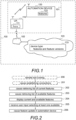
- Figure 1 An extremely general architecture of an exemplary system 100 is illustrated in Figure 1.
- Figure 1 is a simplified system architecture only showing some elements, functional entities, which are logical units whose implementation may differ from what is shown, and some equipment. It is apparent to a person skilled in the art that the system comprises any number of shown elements, other equipment, and structures that are not illustrated.
- the system 100 comprises one or more industrial sites 101 (only one illustrated in Figure 1 ) comprising one or more industrial automation devices 120 (only one illustrated in Figure 1 ) at the industrial site 101 and one or more user apparatuses 110 (only one illustrated in Figure 1 ) that may enter the industrial site 101 and be connected over one or more networks 102 to one or more clouds 103 (only one illustrated in Figure 1 ) comprising a cloud storage 133.
- the user apparatus 110 refers to a computing device (equipment), that may be a portable device or a non-portable device, and it may also be referred to as a user terminal or user device.
- Portable computing devices include wireless mobile communication devices operating with or without a subscriber identification module (SIM) in hardware or in software, including, but not limited to, the following types of devices: mobile phone, smart-phone, laptop and/or touch screen computer, tablet (tablet computer), smart screen (smart display), multimedia device, and wearable devices, including augmented reality devices and virtual reality devices.
- SIM subscriber identification module
- the user apparatus 110 has at least two communications interfaces, depicted by 2 antennas, one to connect to the cloud 103 wirelessly over one or more networks 102 and one to connect to the industrial automation device 120 wirelessly over a local connection. It should be appreciated that the user apparatus 110 is depicted to include 2 antennas only for the sake of clarity. The number of reception and/or transmission antennas, or other communication interfaces, may naturally vary from one to any number according to a current implementation, and the user apparatus type.
- the local connection may be based on a short-range communication technology.
- a non-limiting list of examples for short-range communication technologies include Bluetooth communication standards, and other wireless local area network technologies, such as radio frequency technologies including Wi-Fi, ZigBee, USB Bluetooth, near field communication (NFC), radio-frequency identification (RFID), and optical wireless technologies including Li-Fi and other technologies using at least one of visible light spectrum, ultraviolet and infrared radiation.
- radio frequency technologies including Wi-Fi, ZigBee, USB Bluetooth, near field communication (NFC), radio-frequency identification (RFID), and optical wireless technologies including Li-Fi and other technologies using at least one of visible light spectrum, ultraviolet and infrared radiation.
- NFC near field communication
- RFID radio-frequency identification
- optical wireless technologies including Li-Fi and other technologies using at least one of visible light spectrum, ultraviolet and infrared radiation.
- the local connection may use any mobile wireless technology, such LTE, 4G, 5G and beyond, or be a wired connection using Ethernet, for example.
- the wireless connection to the cloud 103 may be provided by any mobile system, such as LTE, 4G, 5G and beyond, or a combination of a wireless system and a fixed system, like Wi-Fi or Li-Fi providing access to internet, or other wired network, and via the internet, or the other wired network, to the cloud 103.
- the connection to the cloud 103 may be a wired connection as well.
- any existing or future communication technology may be used for the local connection and for the connection to the cloud 103.
- the user apparatus 110 is configured to acquire (retrieve, read) information on features in the automation device 120 and features available to the automation device 120, and to update (adjust) features in the automation device 120.
- the user apparatus 110 comprises a unit, called herein a feature updating unit (f-u-u) 111.
- the user apparatuses 110 may comprise a remote maintenance application, for example, as a mobile app, that comprises as part of the application, or as an add-in or a plug-in to the application, the feature updating unit 111.
- the feature updating unit 111 may be implemented as a separate application. Below term “remote tool" is used to cover all the above implementation alternatives of the feature updating unit 111.
- the industrial automation device 120 refers to electronic equipment that is used for controlling one or more industrial processes having one or more downstream devices.
- automation devices may control the position, speed, torque and/or direction of electric motors in conveyors, grinders, winders, pumps and/or fans.
- An industrial automation device may control the speed and/or torque of a motor by changing the frequency, current and/or voltage of the electrical supply to the motor, for example.
- a non-limiting list of examples of industrial automation devices includes drives, frequency converters, AC/DC converters, DC/AC converters, DC/DC converters, programmable logic controllers, switches, motion controllers or motion drives, servo motors, soft starters, wind turbines and solar inverters.
- the automation device 120 comprises a module providing at least a wireless interface to which the user apparatus 110 at the site 101 may connect to and/or via which module features and parameters of the automation device 120 may be adjusted or acquired, and the functions of the automation device 120 otherwise controlled by a person locating on the site and/or remotely from a service center (not illustrated in Figure 1 ).
- the module may be a separate device (terminal device), or a device detachable connectable to the automation device, or equipment integrated to the automation device. At the simplest the module may be the mere wireless interface.
- the automation device 120 comprises one or more memories 122, in which features, or a list of features, including values and/or content for features are stored.
- feature covers herein also feature versions (feature variants).
- a non-limiting list of examples of features include different language packets (sets) for user interaction, licences required for application(s), or for add-ons to application(s), to run, and applications and add-ons to applications (with different versions, if two or more different versions exits).
- the memory 122 may comprise other information, such as a code required to establish a local connection to the automation device in question.
- the cloud 103 providing the cloud storage 133 may be a private cloud (operated solely for an organization), a community cloud (operated for organizations sharing e.g. mission and security requirements), a public cloud (provider sells cloud services) or a hybrid cloud, i.e. a composition of two or more different clouds.
- Examples of public cloud providers include Amazon Web Services (AWS), Google Cloud Platform (GCP), Microsoft Azure, etc.
- the one or more clouds 103 provides cloud storage 133, which is used herein as an example of a remote data storage. It should be appreciated that any other kind of remote data storage may be used as well.
- a cloud storage 133 is typically implemented so that even though usually a physical storage spans multiple network nodes, for example servers, sometimes in multiple locations, the data storage is logically one data storage, i.e. acting as one data storage.
- cloud providers are responsible for keeping the data available and accessible, and the physical environment protected and running.
- a cloud storage may be accessed through a co-located cloud computing service, a web service application programming interface (API) or by applications that utilize the API, such as the remote tool in the user apparatus 110, for example.
- API application programming interface
- the details of clouds and cloud storages, or any remote data storage are well known by persons skilled in the art and are, as such, irrelevant to the examples. Therefore there is no need to describe the details in more detail here.
- the cloud storage 133 comprises at least information on available features automation device type -specifically.
- the available features may be a set of features available for free to all automation devices of the type, or a set of features including, in addition to features available for free, also available features subject to a fee (purchasable features).
- the cloud storage 133 may comprise other information, such as automation device -specific information, for example identification information of the automation device, type, installed/stored features (feature identifiers), available features (feature identifiers) for this device, etc.
- Device-specific available features may include purchasable features that have been purchased (paid or committed to be paid), such as purchased licenses and purchased language packets, which may or may not be stored in the automation device.
- status information is used for automation device-specific information of an automation device comprising at least information on features stored in the automation device.
- connection local connection or connection to the cloud
- the details of the communication technology, including protocols used and authentication steps, if authentication is implemented, to establish a connection, are well known by persons skilled in the art, are irrelevant to the described examples, and no modifications are needed to them. Therefore, they need not to be discussed in more detail here. Further, in the examples it is assumed that a connection establishment succeeds. It should be appreciated that if a connection establishment fails, the process ends, or is restarted.
- Figure 2 illustrates an example of a functionality of a user apparatus, and more precisely an example of a functionality of the remote tool (or the feature updating unit) the user apparatus comprises.
- step 200 it is assumed that the remote tool is running (step 200), and connections to the automation device and to the cloud storage are established successfully in step 201.
- the connection may be established in response to corresponding one or more user inputs, for example the user inputting "change features", or in response to the user apparatus entering the site, or the remote tool being started, for example.
- retrieving from the automation device a list of current features in the automation device is caused in step 202.
- the list comprises names, or other feature identifiers.
- retrieving from the cloud storage a list of available features for the automation device, using a device type of the automation device, for example, as a retrieval key, is caused in step 203. Both lists, i.e.
- both lists current features and available features
- both lists may be displayed simultaneously, or the user may change between views, one displaying current features and another view displaying available features.
- features that are both in the list of available features and in the list of current features may be displayed only in the list of current features, in which case the displayed list of available features comprises only features not yet stored in the automation device. That facilitates selecting features to be updated in the automation device.
- the updating comprises downloading one or more features via the user apparatus to the automation device.
- updating an available feature which is already a current feature may include deleting the current feature and downloading the feature then as a new feature, i.e. replacing the current feature with the same feature, or it may be that no actual updating takes place, since there is no actual need for updating.
- the new features are stored (updated) in the automation device, configuring the automation device with them may take place.
- no changes are needed to the actual configuration/installation phase, there is no need to describe them in more detail with the example, or with other examples.
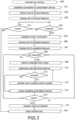
- Figure 3 illustrates another example of a functionality of a user apparatus, and more precisely another example of a functionality of the remote tool (or the feature updating unit) the user apparatus comprises.
- step 300 it is assumed that the remote tool is running (step 300), and a connection to the automation device is established successfully in step 301.
- the connection may be established in response to a corresponding user input, for example the user inputting "read features", or in response to the user apparatus entering the site, for example.
- retrieving from the automation device a list of current features (with variation information, if any exists) in the automation device is caused in step 302, and the list of retrieved features are displayed in step 303 to the user of the user apparatus.
- step 304 retrieves from the automation device a list of current features (with variation information, if any exists) in the automation device is caused in step 302, and the list of retrieved features are displayed in step 303 to the user of the user apparatus.
- step 304 one or more features or a user input closing
- step 317 If the user input closing the remote tool is received (step 317: yes), the remote tool is closed in step 316.
- step 304 If the user input indicating that the user wants to change/update one or more features is received (step 304: yes), a connection to the cloud comprising the cloud storage is established in step 305.
- the connection is established, retrieving from the cloud storage a list of available features for the automation device, using the device type of the automation device, for example, as a retrieval key, is caused in step 306.
- Both lists i.e. current features (with variation information, if any exists) and available features, including different variations, are then displayed in step 307 to a user of the user apparatus.
- the way the lists are displayed may depend on user settings and preferences, as explained above with Figure 2 . Naturally other views may be displayed as well.
- it is monitored whether a user input selecting one or more features in the list of available features is received (step 308) or a user input closing the remote tool is received (step 314).
- step 308:yes the selected one or more features are retrieved (downloaded) in step 309 from the cloud to the user apparatus.
- a selected feature is also a current feature, it may or may not be retrieved.
- the size of the features is determined in step 310 as well as the size of a free memory in the automation device. Information on the size of the free memory area in the automation device may have been received when the list of current features have been retrieved, or it may be concluded from the size of memory in the automation device and sizes of current features, that may have been received with the list of current features, or corresponding information may be separately acquired from the automation device as part of step 310.
- step 311 If there is not enough free memory to store the selected one or more features (step 311: no), the user is prompted in step 312 to select what to delete. In other words, the user is prompted to select amongst the current features and/or the selected one or more available features, which feature or features to delete (or not to update). Then the process returns to step 311 to determine the size of the selected available features and the size of free memory, taking into account the deletion performed in step 312.
- step 311 If, or when, there is enough free memory (step 311: yes), updating features in the automation device is caused in step 313 to contain the selected one or more features. If in step 312 one or more current features were selected to be deleted, the updating in step 313 comprises deleting the features from the memory in the automation device and then adding the selected one or more features to be current features of the automation device.
- step 314 If the remote tool is closed (step 314: yes), the connection to the cloud is released in step 315, and the remote tool is closed in step 316.
- the user may, instead of closing the remote tool, close the feature updating tool, or close a possibility to change features, or close the list of allowable features, in which case the process may release the cloud connection (step 315) and then proceeds to step 302 to update the list of current features to reflect the changes just made, or just to monitor whether the user input closes the remote tool (step 317) or indicate changing one or more features (step 304).
- Figure 4 illustrates a further example of a functionality of a user apparatus, and more precisely an example of a functionality of the remote tool (or the feature updating unit) the user apparatus comprises.
- the functionality relating to purchasable features and purchasing and the canceling functionality, or one of them, may be combined with the examples of Figures 2 and 3 , and with examples described below with Figure 5 .
- step 400 connections to the automation device and to the cloud storage are established successfully in step 401, and retrieving from the automation device a list of current features in the automation device is caused in step 402, as explained above with Figures 2 and 3 .
- the user is prompted in step 403 to select whether he/she wants that all available features, including purchasable features (i.e. features not being purchased, or committed to be paid, that are not free of charge) are to be retrieved. If the user input indicates all features (step 404: yes), i.e. also purchasable features, retrieving from the cloud storage a list of all available features for the automation device, using a device type of the automation device, for example, as a retrieval key, is caused in step 405.
- purchasable features i.e. features not being purchased, or committed to be paid, that are not free of charge
- Both lists i.e. current features and available features, are then displayed in step 406 to a user of the user apparatus.
- the way the lists are displayed may depend on user settings and preferences, as explained with Figure 2 .
- the purchasable features may be displayed using a different colour, tone, font, style, and/or associated with a sign and/or under a subtitle, so that the user is aware of what features are "free" and what not.
- step 407 When, or if, a user input selecting at least one of available features is detected in step 407, it is checked (step 408), whether any of the selected features is a purchasable feature.
- step 408 If one or more purchasable features is selected (step 408: yes), the purchasing is performed in step 409. Any known or future purchasing arrangement/method may be used. The details how the purchasing is actually performed depends on various factors, and bears no significance to the example. Therefore it is sufficient to describe the purchasing in a very general level. Further, it is assumed that the purchasing succeeds. If the purchasing fails, the process may be ended, or the process may return to the selection, for example.
- step 410 the size of the selected features is determined in step 410 as well as the size of a free memory in the automation device, as explained above with Figure 3 .
- step 411 If there is not enough free memory to store the selected one or more features (step 411: no), the user is prompted in step 412 to select what to delete (see explanation with Figure 3 ) or whether to cancel the process. If the user input is not cancelling the process (step 413: no), the process returns to step 410 to determine the size of the selected available features and the size of free memory, taking into account the deletion performed in step 412. If the user input is cancelling the process (step 413: yes), for example because the user is not willing to remove any existing feature, in the illustrated example the remote tool, or at least its feature updating part, is closed in step 414. If the cancelling is combined with example of Figure 3 , step 314 could be the step where the process would continue after the user input "cancel". Thanks to the cancelling possibility the user may cancel the updating process without deleting existing features.
- step 411 If, or when, there is enough free memory (step 411: yes), updating features in the automation device is caused in step 415 to contain the selected one or more features, as described above with Figures 2 and 3 .
- step 408 determines whether purchasable feature is selected (step 408: no). If no purchasable feature is selected (step 408: no), the process proceeds directly to step 410 to determine the size of the selected available features and the size of free memory.
- step 404 If the user input relating to available features, which are to be retrieved, indicates no purchasable features (step 404: no), retrieving from the cloud storage a list of those available features for the automation device, which are downloadable at the retrieval time free of charge, using a device type of the automation device, for example, as a retrieval key, is caused in step 416. Then the process continues to step 406 to display the lists.
- step 416 i.e. retrieving available features not requiring purchasing is performed before step 403, i.e. before the user is prompted to select whether also features requiring purchasing are retrieved.
- the prompting may be skipped if during retrieval it is noted that there are, for the device type, no features requiring purchasing.
- step 409 is performed after "yes" answer in step 411, and then the process continues to step 415.
- the user may be prompted to purchase features before they are displayed to him/her and/or made selectable for the update procedure.
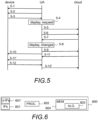
- Figure 5 illustrates exemplified information exchange with different use examples (first, second, third and fourth example).
- the remote tool is running in a user apparatus (UA) which is in the industrial site in which an automation device (device) locates, and succeeds to establish a connection to the automation device and to the cloud storage (cloud), the connection establishments including possible pairing processes, authentications, etc. (not disclosed in detail). It should be appreciated that if either of the connection establishments fails, the information exchange will not continue further.
- the user of the remote tool changes (updates) at least one feature (feature variation) in the automation device, otherwise the illustrated information exchange may end either at point 5-4 or at point 5-8.
- the cloud storage maintains also status information of the automation device, the status information being associated with identification information of the automation device.
- the device type of the automation device may be concluded from the identification information, for example, it may be part of the identification information, or the device type may be associated, in the cloud storage, with the identification information. Therefore, an identifier of the automation device is used as the information indicating the device type. Naturally, information on the device type may be retrieved as a separate information, and send in addition to the identification information of the automation device.
- the user apparatus (UA) establishes a connection (message 5-1) to the automation device (device), and then sends in message 5-2 a request for a list of features to the automation device.
- the list of current features is acquired.
- the automation device sends in message 5-3 the list of current features to the user apparatus (UA).
- the list is displayed in point 5-4 to the user of the user apparatus, and a user input requesting retrieval of list of available features is received in point 5-4. Since there is no connection to the cloud, the request triggers connection establishment to the cloud (depicted by message 5-5), and once the connection has been established, the remote tool causes the user apparatus (UA) to send message 5-6, which requests a list of available features for the automation device, the message containing identification information of the automation device.
- list of available features is retrieved and sent in message 5-7 to the user apparatus.
- the list of available features may contain all available features (free and purchasable) for the device type, or all free features and all purchased features, or a subset created using the status information.
- the subset may contain features (and feature versions) that are not indicated in the status information as current features, and/or that have a later date than the date the status information was updated.
- the list of available features is displayed in point 5-8 to the user of the user apparatus.
- the way the two lists are displayed may depend on user settings and preferences, as explained above with Figure 2 .
- one or more user inputs causing changing one or more features are received in point 5-8.
- Such user inputs include deleting a current feature, updating a current feature to be in accordance of an available feature (for example there is a newer version), installing (downloading) an additional feature to a current feature and installing a new feature.
- the remote tool is configured to keep track to the changes, and in response to a user input requesting performing the updating of the features, cause sending message 5-9 to the cloud storage and message 5-10 to the automation device.
- message 5-10 contains a request/instructions to update the features in the automation device, and information on features that are to be deleted from the automation device, if any features are to be deleted.
- Message 5-9 contains information on features that are indicated to be updated.
- the information is used to download, i.e. retrieve, the features from the cloud storage and to download the features (one or more messages 5-11) to the user apparatus (UA).
- the download (retrieval) may comprise purchasing steps for a purchasable feature.
- the user apparatus (UA) then downloads, i.e. stores, the features to the automation device (one or more messages 5-11'), as indicated in message 5-10.
- message 5-10 and messages 5-11' are combined to be one or more messages requesting update/changes to the current features, including indication of features to be deleted and downloaded features.
- the automation device acknowledges in message 5-12 the changes to the user apparatus.
- the acknowledgement may be a mere "ok", or indicate deleted features (using feature identifiers, for example), and updated/added features (for example, using feature identifiers, possible with version indicators).
- the user apparatus forwards the acknowledgement, with identification information of the automation device, in message 5-12' to the cloud storage which then updates the status information correspondingly.
- the cloud storage maintains the status information of the automation device.
- the status information is used also for current features.
- the process is as described above with the first example to the point the connection (message 5-5) has been established to the cloud and the remote tool causes the user apparatus (UA) to send message 5-6.
- message 5-6 is a request for both a list of available features for the automation device and a list of current features of the automation device, the message containing identification information of the automation device.
- identification information as a retrieval key (search key) in the cloud storage, list of available features, and a list of current features in the status information, are retrieved and sent in message 5-7 to the user apparatus.
- the list of available features is displayed in point 5-8 to the user of the user apparatus. Examples of how to display are described with Figure 2 . Further, the list of current features retrieved from the cloud storage is compared in point 5-8 with the list of current features retrieved from the automation device, and discrepancies, if any exists, are also shown to the user. For example, a displayed current feature not having a counterpart in current features retrieved from the cloud storage may be displayed with a different colour, and/or the user is prompted to solve the discrepancy (solving meaning updating the feature in the automation device, or indicating to the cloud storage the feature as updated to the already existing current feature in the automation device so that next time there should be no discrepancy). Then the process continues as described above with the first example, and is not repeated in vain herein.
- a third example is also based on a solution in which the status information is maintained in the cloud storage and comprises information on current features in an automation device.
- the status information is maintained in the cloud storage and comprises information on current features in an automation device.
- only feature information in the cloud storage is used.
- messages 5-1 to 5-3 include connection establishment and receiving identification information of the automation device but no list of current features.
- selection alternatives comprising at least a selection "read current and available features" are displayed to the user of the user apparatus.
- a connection establishment (message 5-5) is caused and after that the list of current features and the list of available features are retrieved (messages 5-6, 5-7), using the identification information as a retrieval key.
- the retrieved lists i.e. the list of current features and the list of available features are displayed in point 5-8 to the user (the list of available features may comprise all, or only those not displayed in the list of current features, as explained with Figure 2 ).
- the process continues as described with the first and second example. It should be appreciated that if the selection alternatives displayed in point 5-4 contain "read current features", and that is selected, the connection to the cloud is established (message 5-5) and current features retrieved (messages 5-6, 5-7). Then the process continues as in point 5-4 of the first example, except that since there is already a connection to the cloud, there is no need to establish it (i.e. message 5-5 is not send again).
- a fourth example no status information is maintained in the cloud storage, and it is assumed that an automation device transmits, either with the current features, or during connection establishment the device type, or corresponding information indicating the device type directly. It should be appreciated, that the fourth example may be implemented also when the device type of the automation device is concluded from the identification information, as explained above with the first example. Referring to Figure 5 and the fourth example, the information exchange is similar to the one described with the first example until the remote tool causes the user apparatus (UA) to send message 5-6. In the fourth example message 5-6 requests a list of available features for the automation device, the message containing the device type of the automation device as a search key.
- list of available features is retrieved and sent in message 5-7 to the user apparatus.
- the list of available features may contain all available features for the device type, including purchasable features (with no information whether they are bought or not since that would require status information). Therefrom the process continues in point 5-8 in the same way as explained above with the first example. However, after the updating has been performed in the automation device (device), it may be that no acknowledgements (messages 5-12, 5-12') are sent.
- the automation device comprises, instead of or, if memory size allows, in addition to, a default language file, such as English, with a local language file, such as Finnish, or Chinese, for example. Thanks to that, at the factory default factory settings may be used, thereby speeding up the manufacturing process, while the updating to the local language can be taken care smoothly, and without requiring to store all possible local languages to the automation device. Thanks to the local language, the end user working at the site and controlling the automation device, or one or more processes via the automation device, can use the most familiar language, and thereby concentrate on his/her controlling tasks.
- a default language file such as English
- a local language file such as Finnish, or Chinese
- Another example is that features, which require a licence, such as programming languages defined by International Electrotechnical Commission (IEC) for control programs within programmable logic controllers, different functional safety protocols and fieldbus protocols, can be downloaded and/or installed at the site, when needed - it is not any more necessary to be installed (configured) to the automation device at the factory.
- a licence such as programming languages defined by International Electrotechnical Commission (IEC) for control programs within programmable logic controllers, different functional safety protocols and fieldbus protocols
- the steps/points, related functions, and information exchanges described above by means of Figures 2 to 5 are in no absolute chronological order, and some of them may be performed simultaneously or in an order differing from the given one. Other functions can also be executed between them or within them, and other information may be sent. For example, purchasing new features may cause additional steps, or information exchange. Some of the steps/points or part of the steps/points or one or more pieces of information can also be left out or replaced by a corresponding step/point, or part of the step/points, or one or more pieces of information. For example, cancelling the updating may cause leaving something out.
- a user apparatus configured to implement at least partly on what is disclosed above with any of Figures 1 to 5 , including implementing one or more functions/operations described above with an example, for example by means of any of Figures 2 to 5 , comprises not only prior art means, but also means for implementing the one or more functions/operations of a corresponding functionality described with an example, for example by means of any of Figures 2 to 5 , and it may comprise separate means for each separate function/operation, or means may be configured to perform two or more functions/operations.
- one or more of the means and/or the feature updating unit, or its sub-units, described above may be implemented in hardware (one or more devices), firmware (one or more devices), software (one or more modules), or combinations thereof.
- the embodiments/examples may be implemented within one or more application-specific integrated circuits (ASICs), digital signal processors (DSPs), digital signal processing devices (DSPDs), programmable logic devices (PLDs), field programmable gate arrays (FPGAs), radio-frequency circuits (RFICs), graphic processing units (GPUs), processors, controllers, micro-controllers, microprocessors, logic gates, other electronic units designed to perform the functions described herein by means of Figures 2 to 5 , or a combination thereof.
- ASICs application-specific integrated circuits
- DSPs digital signal processors
- DSPDs digital signal processing devices
- PLDs programmable logic devices
- FPGAs field programmable gate arrays
- RFICs radio-frequency circuits
- GPUs graphic processing
- the implementation can be carried out through modules of at least one chipset (e.g. procedures, functions, and so on) that perform the functions described herein.
- the software codes may be stored in a memory unit and executed by processors.
- the memory unit may be implemented within the processor or externally to the processor. In the latter case, the memory unit can be communicatively coupled to the processor via various means, as is known in the art.
- the components of the user apparatus (device/computing devices) described herein may be rearranged and/or complemented by additional components in order to facilitate the achievements of the various aspects, etc., described with regard thereto, and they are not limited to the precise configurations set forth in the given figures, as will be appreciated by one skilled in the art.
- Figure 6 provides a user apparatus (user device) according to some embodiments/examples of the invention.
- Figure 6 illustrates an apparatus 600 configured to carry out the functions described above in connection with the user apparatus and/or the feature updating unit.
- Each user apparatus 600 may comprise one or more processing circuitry, such as at least one processor 602, and at least one memory 603, including one or more algorithms 604, such as a computer program code (software) wherein the at least one memory and the computer program code (software) are configured, with the at least one processor, to cause the apparatus to carry out any one of the exemplified functionalities of the user apparatus, or the feature updating unit.
- the apparatus 600 may further comprise different interfaces 601, 601', such as one or more interfaces 601 for communication, and one or more user interfaces 601' to user interaction.
- the one or more user interfaces 601' may be any kind of a user interface, for example a screen, or other display, microphone and one or more loudspeakers for interaction with the user.
- At least one of the processing circuitries in the user apparatus 600 is configured to provide the corresponding user apparatus functionality or the feature updating unit, or its sub-units, and to carry out functionalities, described above by means of any of Figures 2 to 5 , by one or more circuitries.
- the memory 604 or part of it may be implemented using any suitable data storage technology, such as semiconductor based memory devices, flash memory, magnetic memory devices and systems, optical memory devices and systems, fixed memory and removable memory.
- the one or more interfaces 601 may comprise communication interfaces comprising hardware and/or software for realizing communication connectivity according to one or more communication protocols.
- circuitry refers to all of the following: (a) hardware-only circuit implementations, such as implementations in only analog and/or digital circuitry, and (b) combinations of circuits and software (and/or firmware), such as (as applicable): (i) a combination of processor(s) or (ii) portions of processor(s)/software including digital signal processor(s), software, and memory(ies) that work together to cause an apparatus to perform various functions, and (c) circuits, such as a microprocessor(s) or a portion of a microprocessor(s), that require software or firmware for operation, even if the software or firmware is not physically present.
- This definition of 'circuitry' applies to all uses of this term in this application.
- the at least one processor, the memory, and the computer program code form processing means or comprises one or more computer program code portions for carrying out one or more operations of a user apparatus according to any one of the embodiments/examples of Figures 2 to 5 , or operations thereof.
- Embodiments and/or examples as described may also be carried out in the form of a computer process defined by a computer program or portions thereof. Embodiments and/or examples of the methods described in connection with Figures 2 to 5 may be carried out by executing at least one portion of a computer program comprising corresponding instructions.
- the computer program may be in source code form, object code form, or in some intermediate form, and it may be stored in some sort of carrier, which may be any entity or device capable of carrying the program.
- the computer program may be stored on a computer program distribution medium readable by a computer or a processor.
- the computer program medium may be, for example but not limited to, a record medium, computer memory, read-only memory, electrical carrier signal, telecommunications signal, and software distribution package, for example.
- the computer program medium may be a non-transitory medium. Coding of software for carrying out the examples and/or embodiments as shown and described is well within the scope of a person of ordinary skill in the art.
Landscapes
- Engineering & Computer Science (AREA)
- Software Systems (AREA)
- General Engineering & Computer Science (AREA)
- Theoretical Computer Science (AREA)
- Physics & Mathematics (AREA)
- General Physics & Mathematics (AREA)
- Computer Security & Cryptography (AREA)
- Automation & Control Theory (AREA)
- Human Computer Interaction (AREA)
- Manufacturing & Machinery (AREA)
- Information Transfer Between Computers (AREA)
Description
- The present invention relates to updating features in an automation device.
-
US 2018/0359144 discloses a solution in which a firmware is updated to multiple devices in one task.US 2016/350519 describes how to manage software and software licences in a thread monitoring system.US 2015/095335 discusses how to manage changes to a process control system. - Document
US 2012/015642 A1 relates to updating a firmware of a mobile terminal including receiving size information of an update file, determining whether an available memory capacity is enough for storing the update file and in case the available memory capacity is enough downloading and updating the firmware and if the available memory capacity is not enough issuing an update failure message. - Document
US 2017/212487 A1 relates to updating a group of controllers in a HVAC control system via a provisioning process including identifying an update file containing provisioning data for a main control unit and auxiliary control units, providing the provisioning data and replacing existing data stored within the main and/or the auxiliary control units. The main control unit confirms that its memory has sufficient storage to receive an update or image file needed. If there is insufficient storage, the main control unit may refuse the update file or alternatively may attempt to free up storage for the update file. - Automation devices are devices used for controlling, for example, industrial electromechanical processes. For that purpose automation devices are equipped with hardware, for example with a microcontroller, to perform data processing required to carry out specific automation tasks. Usually, to minimize manufacturing costs, automation devices are equipped with hardware having small memory size. That means that all possible features, and/or feature versions for automation devices, the features and feature versions covering different tasks and/or different geographical locations, cannot be installed/configured to an automation device at a factory. It may be that a feature, required at a site for the specific automation task of the automation device, is missing, or there is a wrong feature version in the automation device. That may affect adversely to the process to be controlled, for example delays or production breaks may be caused. There is a need for a solution that can minimize the possible adverse effects.
- The invention relates to a method, a user apparatus, a system and a program product, which are characterized by what is stated in the independent claims. Further embodiments are disclosed in the dependent claims.
- A general aspect introduces a solution to update features in an automation device at a site.
- In the following, exemplary embodiments will be described in greater detail with reference to accompanying drawings, in which
-
Figure 1 shows simplified architecture of a system and block diagrams of some apparatuses; -
Figures 2 ,3 and4 are flow chart illustrating exemplary functionality; -
Figure 5 illustrates exemplary information exchange; and -
Figure 6 is a block diagram of an exemplary user apparatus. - The following embodiments are exemplary. Although the specification may refer to "an", "one", or "some" embodiment(s) in several locations, this does not necessarily mean that each such reference is to the same embodiment(s), or that the feature only applies to a single embodiment. Single features of different embodiments may also be combined to provide other embodiments. Furthermore, words "comprising" and "including" should be understood as not limiting the described embodiments to consist of only those features that have been mentioned and such embodiments may contain also features/structures that have not been specifically mentioned.
- The present invention is applicable to any user apparatus that is configurable to control any remote-controllable automation device and configurable to retrieve data from a remote data storage.
- An extremely general architecture of an
exemplary system 100 is illustrated inFigure 1. Figure 1 is a simplified system architecture only showing some elements, functional entities, which are logical units whose implementation may differ from what is shown, and some equipment. It is apparent to a person skilled in the art that the system comprises any number of shown elements, other equipment, and structures that are not illustrated. - In the embodiment illustrated in
Figure 1 , thesystem 100 comprises one or more industrial sites 101 (only one illustrated inFigure 1 ) comprising one or more industrial automation devices 120 (only one illustrated inFigure 1 ) at theindustrial site 101 and one or more user apparatuses 110 (only one illustrated inFigure 1 ) that may enter theindustrial site 101 and be connected over one ormore networks 102 to one or more clouds 103 (only one illustrated inFigure 1 ) comprising acloud storage 133. - The
user apparatus 110 refers to a computing device (equipment), that may be a portable device or a non-portable device, and it may also be referred to as a user terminal or user device. Portable computing devices (apparatuses) include wireless mobile communication devices operating with or without a subscriber identification module (SIM) in hardware or in software, including, but not limited to, the following types of devices: mobile phone, smart-phone, laptop and/or touch screen computer, tablet (tablet computer), smart screen (smart display), multimedia device, and wearable devices, including augmented reality devices and virtual reality devices. - In the illustrated example of
Figure 1 theuser apparatus 110 has at least two communications interfaces, depicted by 2 antennas, one to connect to thecloud 103 wirelessly over one ormore networks 102 and one to connect to theindustrial automation device 120 wirelessly over a local connection. It should be appreciated that theuser apparatus 110 is depicted to include 2 antennas only for the sake of clarity. The number of reception and/or transmission antennas, or other communication interfaces, may naturally vary from one to any number according to a current implementation, and the user apparatus type. The local connection may be based on a short-range communication technology. A non-limiting list of examples for short-range communication technologies include Bluetooth communication standards, and other wireless local area network technologies, such as radio frequency technologies including Wi-Fi, ZigBee, USB Bluetooth, near field communication (NFC), radio-frequency identification (RFID), and optical wireless technologies including Li-Fi and other technologies using at least one of visible light spectrum, ultraviolet and infrared radiation. Naturally the local connection may use any mobile wireless technology, such LTE, 4G, 5G and beyond, or be a wired connection using Ethernet, for example. The wireless connection to thecloud 103 may be provided by any mobile system, such as LTE, 4G, 5G and beyond, or a combination of a wireless system and a fixed system, like Wi-Fi or Li-Fi providing access to internet, or other wired network, and via the internet, or the other wired network, to thecloud 103. The connection to thecloud 103 may be a wired connection as well. As a summary, any existing or future communication technology may be used for the local connection and for the connection to thecloud 103. - In the illustrated example of
Figure 1 , theuser apparatus 110 is configured to acquire (retrieve, read) information on features in theautomation device 120 and features available to theautomation device 120, and to update (adjust) features in theautomation device 120. For that purpose theuser apparatus 110 comprises a unit, called herein a feature updating unit (f-u-u) 111. Theuser apparatuses 110 may comprise a remote maintenance application, for example, as a mobile app, that comprises as part of the application, or as an add-in or a plug-in to the application, thefeature updating unit 111. Naturally, thefeature updating unit 111 may be implemented as a separate application. Below term "remote tool" is used to cover all the above implementation alternatives of thefeature updating unit 111. - The
industrial automation device 120, or shortly automation device, refers to electronic equipment that is used for controlling one or more industrial processes having one or more downstream devices. For example, automation devices may control the position, speed, torque and/or direction of electric motors in conveyors, grinders, winders, pumps and/or fans. An industrial automation device may control the speed and/or torque of a motor by changing the frequency, current and/or voltage of the electrical supply to the motor, for example. A non-limiting list of examples of industrial automation devices includes drives, frequency converters, AC/DC converters, DC/AC converters, DC/DC converters, programmable logic controllers, switches, motion controllers or motion drives, servo motors, soft starters, wind turbines and solar inverters. Although not separately illustrated inFigure 1 , theautomation device 120 comprises a module providing at least a wireless interface to which theuser apparatus 110 at thesite 101 may connect to and/or via which module features and parameters of theautomation device 120 may be adjusted or acquired, and the functions of theautomation device 120 otherwise controlled by a person locating on the site and/or remotely from a service center (not illustrated inFigure 1 ). The module may be a separate device (terminal device), or a device detachable connectable to the automation device, or equipment integrated to the automation device. At the simplest the module may be the mere wireless interface. Further, theautomation device 120 comprises one ormore memories 122, in which features, or a list of features, including values and/or content for features are stored. It should be appreciated that term "feature" covers herein also feature versions (feature variants). A non-limiting list of examples of features include different language packets (sets) for user interaction, licences required for application(s), or for add-ons to application(s), to run, and applications and add-ons to applications (with different versions, if two or more different versions exits). Further, thememory 122 may comprise other information, such as a code required to establish a local connection to the automation device in question. - The
cloud 103 providing thecloud storage 133 may be a private cloud (operated solely for an organization), a community cloud (operated for organizations sharing e.g. mission and security requirements), a public cloud (provider sells cloud services) or a hybrid cloud, i.e. a composition of two or more different clouds. Examples of public cloud providers include Amazon Web Services (AWS), Google Cloud Platform (GCP), Microsoft Azure, etc. The one ormore clouds 103 providescloud storage 133, which is used herein as an example of a remote data storage. It should be appreciated that any other kind of remote data storage may be used as well. Acloud storage 133 is typically implemented so that even though usually a physical storage spans multiple network nodes, for example servers, sometimes in multiple locations, the data storage is logically one data storage, i.e. acting as one data storage. Usually cloud providers are responsible for keeping the data available and accessible, and the physical environment protected and running. A cloud storage may be accessed through a co-located cloud computing service, a web service application programming interface (API) or by applications that utilize the API, such as the remote tool in theuser apparatus 110, for example. However, the details of clouds and cloud storages, or any remote data storage, are well known by persons skilled in the art and are, as such, irrelevant to the examples. Therefore there is no need to describe the details in more detail here. - In the illustrated example the
cloud storage 133 comprises at least information on available features automation device type -specifically. Depending on an implementation, the available features may be a set of features available for free to all automation devices of the type, or a set of features including, in addition to features available for free, also available features subject to a fee (purchasable features). Naturally thecloud storage 133 may comprise other information, such as automation device -specific information, for example identification information of the automation device, type, installed/stored features (feature identifiers), available features (feature identifiers) for this device, etc. Device-specific available features may include purchasable features that have been purchased (paid or committed to be paid), such as purchased licenses and purchased language packets, which may or may not be stored in the automation device. Below term "status information" is used for automation device-specific information of an automation device comprising at least information on features stored in the automation device. - Below different examples are described merely mentioning that a connection (local connection or connection to the cloud) is established, without describing further details on a connection establishment. The details of the communication technology, including protocols used and authentication steps, if authentication is implemented, to establish a connection, are well known by persons skilled in the art, are irrelevant to the described examples, and no modifications are needed to them. Therefore, they need not to be discussed in more detail here. Further, in the examples it is assumed that a connection establishment succeeds. It should be appreciated that if a connection establishment fails, the process ends, or is restarted.
-
Figure 2 illustrates an example of a functionality of a user apparatus, and more precisely an example of a functionality of the remote tool (or the feature updating unit) the user apparatus comprises. - Referring to
Figure 2 , it is assumed that the remote tool is running (step 200), and connections to the automation device and to the cloud storage are established successfully instep 201. The connection may be established in response to corresponding one or more user inputs, for example the user inputting "change features", or in response to the user apparatus entering the site, or the remote tool being started, for example. When the connection to the automation device exists, retrieving from the automation device a list of current features in the automation device is caused instep 202. Typically the list comprises names, or other feature identifiers. Further, retrieving from the cloud storage a list of available features for the automation device, using a device type of the automation device, for example, as a retrieval key, is caused instep 203. Both lists, i.e. current features and available features, are then displayed instep 204 to a user of the user apparatus. Depending on an implementation and/or user settings, both lists (current features and available features) may be displayed simultaneously, or the user may change between views, one displaying current features and another view displaying available features. Further, according to one implementation, features that are both in the list of available features and in the list of current features may be displayed only in the list of current features, in which case the displayed list of available features comprises only features not yet stored in the automation device. That facilitates selecting features to be updated in the automation device. When, or if, a user input selecting at least one of available features is detected instep 205, updating the automation device to contain the selected one or more features is caused instep 206. The updating comprises downloading one or more features via the user apparatus to the automation device. In case the list of available features contains also current features, updating an available feature which is already a current feature may include deleting the current feature and downloading the feature then as a new feature, i.e. replacing the current feature with the same feature, or it may be that no actual updating takes place, since there is no actual need for updating. After the new features are stored (updated) in the automation device, configuring the automation device with them may take place. However, since no changes are needed to the actual configuration/installation phase, there is no need to describe them in more detail with the example, or with other examples. -
Figure 3 illustrates another example of a functionality of a user apparatus, and more precisely another example of a functionality of the remote tool (or the feature updating unit) the user apparatus comprises. - Referring to
Figure 3 , it is assumed that the remote tool is running (step 300), and a connection to the automation device is established successfully instep 301. The connection may be established in response to a corresponding user input, for example the user inputting "read features", or in response to the user apparatus entering the site, for example. When the connection to the automation device exits, retrieving from the automation device a list of current features (with variation information, if any exists) in the automation device is caused instep 302, and the list of retrieved features are displayed instep 303 to the user of the user apparatus. Then it is monitored, whether a user input indicating that the user wants to change (step 304) one or more features or a user input closing (step 317) the remote tool is received. - If the user input closing the remote tool is received (step 317: yes), the remote tool is closed in
step 316. - If the user input indicating that the user wants to change/update one or more features is received (step 304: yes), a connection to the cloud comprising the cloud storage is established in
step 305. When the connection is established, retrieving from the cloud storage a list of available features for the automation device, using the device type of the automation device, for example, as a retrieval key, is caused instep 306. Both lists, i.e. current features (with variation information, if any exists) and available features, including different variations, are then displayed instep 307 to a user of the user apparatus. The way the lists are displayed may depend on user settings and preferences, as explained above withFigure 2 . Naturally other views may be displayed as well. Then it is monitored whether a user input selecting one or more features in the list of available features is received (step 308) or a user input closing the remote tool is received (step 314). - If one or more features in the list of available feature are selected (step 308:yes), the selected one or more features are retrieved (downloaded) in
step 309 from the cloud to the user apparatus. As described withFigure 2 , if a selected feature is also a current feature, it may or may not be retrieved. Then the size of the features is determined instep 310 as well as the size of a free memory in the automation device. Information on the size of the free memory area in the automation device may have been received when the list of current features have been retrieved, or it may be concluded from the size of memory in the automation device and sizes of current features, that may have been received with the list of current features, or corresponding information may be separately acquired from the automation device as part ofstep 310. - If there is not enough free memory to store the selected one or more features (step 311: no), the user is prompted in
step 312 to select what to delete. In other words, the user is prompted to select amongst the current features and/or the selected one or more available features, which feature or features to delete (or not to update). Then the process returns to step 311 to determine the size of the selected available features and the size of free memory, taking into account the deletion performed instep 312. - If, or when, there is enough free memory (step 311: yes), updating features in the automation device is caused in
step 313 to contain the selected one or more features. If instep 312 one or more current features were selected to be deleted, the updating instep 313 comprises deleting the features from the memory in the automation device and then adding the selected one or more features to be current features of the automation device. - After that the illustrated example continues to monitoring whether the remote tool is closed (step 314) or whether one or more available features are selected (step 308).
- If the remote tool is closed (step 314: yes), the connection to the cloud is released in
step 315, and the remote tool is closed instep 316. - In other examples, the user may, instead of closing the remote tool, close the feature updating tool, or close a possibility to change features, or close the list of allowable features, in which case the process may release the cloud connection (step 315) and then proceeds to step 302 to update the list of current features to reflect the changes just made, or just to monitor whether the user input closes the remote tool (step 317) or indicate changing one or more features (step 304).
-
Figure 4 illustrates a further example of a functionality of a user apparatus, and more precisely an example of a functionality of the remote tool (or the feature updating unit) the user apparatus comprises. The functionality relating to purchasable features and purchasing and the canceling functionality, or one of them, may be combined with the examples ofFigures 2 and3 , and with examples described below withFigure 5 . - Referring to
Figure 4 , it is assumed that the remote tool is running (step 400), connections to the automation device and to the cloud storage are established successfully instep 401, and retrieving from the automation device a list of current features in the automation device is caused instep 402, as explained above withFigures 2 and3 . Then, in the illustrated example, the user is prompted instep 403 to select whether he/she wants that all available features, including purchasable features (i.e. features not being purchased, or committed to be paid, that are not free of charge) are to be retrieved. If the user input indicates all features (step 404: yes), i.e. also purchasable features, retrieving from the cloud storage a list of all available features for the automation device, using a device type of the automation device, for example, as a retrieval key, is caused instep 405. - Both lists, i.e. current features and available features, are then displayed in
step 406 to a user of the user apparatus. The way the lists are displayed may depend on user settings and preferences, as explained withFigure 2 . Further, the purchasable features may be displayed using a different colour, tone, font, style, and/or associated with a sign and/or under a subtitle, so that the user is aware of what features are "free" and what not. - When, or if, a user input selecting at least one of available features is detected in
step 407, it is checked (step 408), whether any of the selected features is a purchasable feature. - If one or more purchasable features is selected (step 408: yes), the purchasing is performed in
step 409. Any known or future purchasing arrangement/method may be used. The details how the purchasing is actually performed depends on various factors, and bears no significance to the example. Therefore it is sufficient to describe the purchasing in a very general level. Further, it is assumed that the purchasing succeeds. If the purchasing fails, the process may be ended, or the process may return to the selection, for example. - Then the size of the selected features is determined in
step 410 as well as the size of a free memory in the automation device, as explained above withFigure 3 . - If there is not enough free memory to store the selected one or more features (step 411: no), the user is prompted in
step 412 to select what to delete (see explanation withFigure 3 ) or whether to cancel the process. If the user input is not cancelling the process (step 413: no), the process returns to step 410 to determine the size of the selected available features and the size of free memory, taking into account the deletion performed instep 412. If the user input is cancelling the process (step 413: yes), for example because the user is not willing to remove any existing feature, in the illustrated example the remote tool, or at least its feature updating part, is closed instep 414. If the cancelling is combined with example ofFigure 3 , step 314 could be the step where the process would continue after the user input "cancel". Thanks to the cancelling possibility the user may cancel the updating process without deleting existing features. - If, or when, there is enough free memory (step 411: yes), updating features in the automation device is caused in
step 415 to contain the selected one or more features, as described above withFigures 2 and3 . - If no purchasable feature is selected (step 408: no), the process proceeds directly to step 410 to determine the size of the selected available features and the size of free memory.
- If the user input relating to available features, which are to be retrieved, indicates no purchasable features (step 404: no), retrieving from the cloud storage a list of those available features for the automation device, which are downloadable at the retrieval time free of charge, using a device type of the automation device, for example, as a retrieval key, is caused in
step 416. Then the process continues to step 406 to display the lists. - In another
implementation step 416, i.e. retrieving available features not requiring purchasing is performed beforestep 403, i.e. before the user is prompted to select whether also features requiring purchasing are retrieved. In the implementation the prompting may be skipped if during retrieval it is noted that there are, for the device type, no features requiring purchasing. - In another implementation relating to actual purchasing, the purchasing may be performed just before updating is caused, i.e.
step 409 is performed after "yes" answer instep 411, and then the process continues to step 415. - In a still further implementation relating to the purchasing, the user may be prompted to purchase features before they are displayed to him/her and/or made selectable for the update procedure.
-
Figure 5 illustrates exemplified information exchange with different use examples (first, second, third and fourth example). In all examples it is assumed that the remote tool is running in a user apparatus (UA) which is in the industrial site in which an automation device (device) locates, and succeeds to establish a connection to the automation device and to the cloud storage (cloud), the connection establishments including possible pairing processes, authentications, etc. (not disclosed in detail). It should be appreciated that if either of the connection establishments fails, the information exchange will not continue further. Further, in each of the examples it is assumed that the user of the remote tool changes (updates) at least one feature (feature variation) in the automation device, otherwise the illustrated information exchange may end either at point 5-4 or at point 5-8. - In a first example it is assumed that the cloud storage maintains also status information of the automation device, the status information being associated with identification information of the automation device. The device type of the automation device may be concluded from the identification information, for example, it may be part of the identification information, or the device type may be associated, in the cloud storage, with the identification information. Therefore, an identifier of the automation device is used as the information indicating the device type. Naturally, information on the device type may be retrieved as a separate information, and send in addition to the identification information of the automation device.
- Referring to
Figure 5 and the first example, the user apparatus (UA) establishes a connection (message 5-1) to the automation device (device), and then sends in message 5-2 a request for a list of features to the automation device. In other words, the list of current features is acquired. - The automation device (device) sends in message 5-3 the list of current features to the user apparatus (UA). The list is displayed in point 5-4 to the user of the user apparatus, and a user input requesting retrieval of list of available features is received in point 5-4. Since there is no connection to the cloud, the request triggers connection establishment to the cloud (depicted by message 5-5), and once the connection has been established, the remote tool causes the user apparatus (UA) to send message 5-6, which requests a list of available features for the automation device, the message containing identification information of the automation device.
- Using the identification information as a retrieval key (search key) in the cloud storage, list of available features is retrieved and sent in message 5-7 to the user apparatus. The list of available features may contain all available features (free and purchasable) for the device type, or all free features and all purchased features, or a subset created using the status information. The subset may contain features (and feature versions) that are not indicated in the status information as current features, and/or that have a later date than the date the status information was updated.
- The list of available features is displayed in point 5-8 to the user of the user apparatus. The way the two lists are displayed may depend on user settings and preferences, as explained above with
Figure 2 . Then one or more user inputs causing changing one or more features are received in point 5-8. Such user inputs include deleting a current feature, updating a current feature to be in accordance of an available feature (for example there is a newer version), installing (downloading) an additional feature to a current feature and installing a new feature. In the example, the remote tool is configured to keep track to the changes, and in response to a user input requesting performing the updating of the features, cause sending message 5-9 to the cloud storage and message 5-10 to the automation device. In the illustrated example, message 5-10 contains a request/instructions to update the features in the automation device, and information on features that are to be deleted from the automation device, if any features are to be deleted. Message 5-9 contains information on features that are indicated to be updated. The information is used to download, i.e. retrieve, the features from the cloud storage and to download the features (one or more messages 5-11) to the user apparatus (UA). The download (retrieval) may comprise purchasing steps for a purchasable feature. The user apparatus (UA) then downloads, i.e. stores, the features to the automation device (one or more messages 5-11'), as indicated in message 5-10. In another implementation message 5-10 and messages 5-11' are combined to be one or more messages requesting update/changes to the current features, including indication of features to be deleted and downloaded features. - Once the updating (messages 5-10 and 5-11') has been performed in the automation device (device), the automation device acknowledges in message 5-12 the changes to the user apparatus. The acknowledgement may be a mere "ok", or indicate deleted features (using feature identifiers, for example), and updated/added features (for example, using feature identifiers, possible with version indicators). The user apparatus forwards the acknowledgement, with identification information of the automation device, in message 5-12' to the cloud storage which then updates the status information correspondingly.
- Also in a second example it is assumed that the cloud storage maintains the status information of the automation device. However, in the second example the status information is used also for current features. Referring to
Figure 5 and the second example, the process is as described above with the first example to the point the connection (message 5-5) has been established to the cloud and the remote tool causes the user apparatus (UA) to send message 5-6. In the second example message 5-6 is a request for both a list of available features for the automation device and a list of current features of the automation device, the message containing identification information of the automation device. - Using the identification information as a retrieval key (search key) in the cloud storage, list of available features, and a list of current features in the status information, are retrieved and sent in message 5-7 to the user apparatus.
- The list of available features is displayed in point 5-8 to the user of the user apparatus. Examples of how to display are described with
Figure 2 . Further, the list of current features retrieved from the cloud storage is compared in point 5-8 with the list of current features retrieved from the automation device, and discrepancies, if any exists, are also shown to the user. For example, a displayed current feature not having a counterpart in current features retrieved from the cloud storage may be displayed with a different colour, and/or the user is prompted to solve the discrepancy (solving meaning updating the feature in the automation device, or indicating to the cloud storage the feature as updated to the already existing current feature in the automation device so that next time there should be no discrepancy). Then the process continues as described above with the first example, and is not repeated in vain herein. - A third example is also based on a solution in which the status information is maintained in the cloud storage and comprises information on current features in an automation device. In the third example only feature information in the cloud storage is used. Referring to the third example and
Figure 5 , messages 5-1 to 5-3 include connection establishment and receiving identification information of the automation device but no list of current features. Instead of displaying a list of current features in point 5-4, selection alternatives comprising at least a selection "read current and available features" are displayed to the user of the user apparatus. When a user input selecting said selection is detected, a connection establishment (message 5-5) is caused and after that the list of current features and the list of available features are retrieved (messages 5-6, 5-7), using the identification information as a retrieval key. The retrieved lists, i.e. the list of current features and the list of available features are displayed in point 5-8 to the user (the list of available features may comprise all, or only those not displayed in the list of current features, as explained withFigure 2 ). After that the process continues as described with the first and second example. It should be appreciated that if the selection alternatives displayed in point 5-4 contain "read current features", and that is selected, the connection to the cloud is established (message 5-5) and current features retrieved (messages 5-6, 5-7). Then the process continues as in point 5-4 of the first example, except that since there is already a connection to the cloud, there is no need to establish it (i.e. message 5-5 is not send again). - In a fourth example no status information is maintained in the cloud storage, and it is assumed that an automation device transmits, either with the current features, or during connection establishment the device type, or corresponding information indicating the device type directly. It should be appreciated, that the fourth example may be implemented also when the device type of the automation device is concluded from the identification information, as explained above with the first example. Referring to
Figure 5 and the fourth example, the information exchange is similar to the one described with the first example until the remote tool causes the user apparatus (UA) to send message 5-6. In the fourth example message 5-6 requests a list of available features for the automation device, the message containing the device type of the automation device as a search key. Using the device type as a search key in the cloud storage, list of available features is retrieved and sent in message 5-7 to the user apparatus. The list of available features may contain all available features for the device type, including purchasable features (with no information whether they are bought or not since that would require status information). Therefrom the process continues in point 5-8 in the same way as explained above with the first example. However, after the updating has been performed in the automation device (device), it may be that no acknowledgements (messages 5-12, 5-12') are sent. - As is evident from the above examples, it is easy to update an automation device at a site, without increasing, at least in most cases, the memory size in the automation device, and even introducing features not available when the automation device was at the factory, is easy and smooth. This extends the service life of an automation device. Further, since the features can be updated at the site, there is no need to transport the automation device to the factory for updates. This shortens production breaks. The use of remote data storage (cloud storage), and the user apparatus retrieving features from the remote data storage (cloud storage) ensures that a production break is shortened, since there is no need for pre-downloaded features. Hence, no break in updating/production is caused by a user of the user apparatus forgetting to pre-download to the user apparatus a feature to be installed to the automation device prior to entering the site. In addition, since the list of available features is retrieved (instead of downloading all available features) and only those available features that are to be installed are downloaded, use of network resources are minimized and they are not used in vain. Further, by downloading a feature to the automation device at the time when the feature is to be installed, it is ensured that no outdated version is taken into use.
- For example, it is easy to update the automation device to comprise, instead of or, if memory size allows, in addition to, a default language file, such as English, with a local language file, such as Finnish, or Chinese, for example. Thanks to that, at the factory default factory settings may be used, thereby speeding up the manufacturing process, while the updating to the local language can be taken care smoothly, and without requiring to store all possible local languages to the automation device. Thanks to the local language, the end user working at the site and controlling the automation device, or one or more processes via the automation device, can use the most familiar language, and thereby concentrate on his/her controlling tasks. Another example is that features, which require a licence, such as programming languages defined by International Electrotechnical Commission (IEC) for control programs within programmable logic controllers, different functional safety protocols and fieldbus protocols, can be downloaded and/or installed at the site, when needed - it is not any more necessary to be installed (configured) to the automation device at the factory.
- The steps/points, related functions, and information exchanges described above by means of
Figures 2 to 5 are in no absolute chronological order, and some of them may be performed simultaneously or in an order differing from the given one. Other functions can also be executed between them or within them, and other information may be sent. For example, purchasing new features may cause additional steps, or information exchange. Some of the steps/points or part of the steps/points or one or more pieces of information can also be left out or replaced by a corresponding step/point, or part of the step/points, or one or more pieces of information. For example, cancelling the updating may cause leaving something out. - The techniques and methods described herein may be implemented by various means so that a user apparatus configured to implement at least partly on what is disclosed above with any of
Figures 1 to 5 , including implementing one or more functions/operations described above with an example, for example by means of any ofFigures 2 to 5 , comprises not only prior art means, but also means for implementing the one or more functions/operations of a corresponding functionality described with an example, for example by means of any ofFigures 2 to 5 , and it may comprise separate means for each separate function/operation, or means may be configured to perform two or more functions/operations. For example, one or more of the means and/or the feature updating unit, or its sub-units, described above may be implemented in hardware (one or more devices), firmware (one or more devices), software (one or more modules), or combinations thereof. For a hardware implementation, the embodiments/examples may be implemented within one or more application-specific integrated circuits (ASICs), digital signal processors (DSPs), digital signal processing devices (DSPDs), programmable logic devices (PLDs), field programmable gate arrays (FPGAs), radio-frequency circuits (RFICs), graphic processing units (GPUs), processors, controllers, micro-controllers, microprocessors, logic gates, other electronic units designed to perform the functions described herein by means ofFigures 2 to 5 , or a combination thereof. For firmware or software, the implementation can be carried out through modules of at least one chipset (e.g. procedures, functions, and so on) that perform the functions described herein. The software codes may be stored in a memory unit and executed by processors. The memory unit may be implemented within the processor or externally to the processor. In the latter case, the memory unit can be communicatively coupled to the processor via various means, as is known in the art. Additionally, the components of the user apparatus (device/computing devices) described herein may be rearranged and/or complemented by additional components in order to facilitate the achievements of the various aspects, etc., described with regard thereto, and they are not limited to the precise configurations set forth in the given figures, as will be appreciated by one skilled in the art. -
Figure 6 provides a user apparatus (user device) according to some embodiments/examples of the invention.Figure 6 illustrates anapparatus 600 configured to carry out the functions described above in connection with the user apparatus and/or the feature updating unit. Eachuser apparatus 600 may comprise one or more processing circuitry, such as at least oneprocessor 602, and at least onememory 603, including one ormore algorithms 604, such as a computer program code (software) wherein the at least one memory and the computer program code (software) are configured, with the at least one processor, to cause the apparatus to carry out any one of the exemplified functionalities of the user apparatus, or the feature updating unit. Theapparatus 600 may further comprisedifferent interfaces 601, 601', such as one ormore interfaces 601 for communication, and one or more user interfaces 601' to user interaction. The one or more user interfaces 601' may be any kind of a user interface, for example a screen, or other display, microphone and one or more loudspeakers for interaction with the user. - Referring to
Figure 6 , at least one of the processing circuitries in theuser apparatus 600 is configured to provide the corresponding user apparatus functionality or the feature updating unit, or its sub-units, and to carry out functionalities, described above by means of any ofFigures 2 to 5 , by one or more circuitries. - The
memory 604 or part of it may be implemented using any suitable data storage technology, such as semiconductor based memory devices, flash memory, magnetic memory devices and systems, optical memory devices and systems, fixed memory and removable memory. - The one or
more interfaces 601 may comprise communication interfaces comprising hardware and/or software for realizing communication connectivity according to one or more communication protocols. - As used in this application, the term 'circuitry' refers to all of the following: (a) hardware-only circuit implementations, such as implementations in only analog and/or digital circuitry, and (b) combinations of circuits and software (and/or firmware), such as (as applicable): (i) a combination of processor(s) or (ii) portions of processor(s)/software including digital signal processor(s), software, and memory(ies) that work together to cause an apparatus to perform various functions, and (c) circuits, such as a microprocessor(s) or a portion of a microprocessor(s), that require software or firmware for operation, even if the software or firmware is not physically present. This definition of 'circuitry' applies to all uses of this term in this application.
- In an embodiment, the at least one processor, the memory, and the computer program code form processing means or comprises one or more computer program code portions for carrying out one or more operations of a user apparatus according to any one of the embodiments/examples of
Figures 2 to 5 , or operations thereof. - Embodiments and/or examples as described may also be carried out in the form of a computer process defined by a computer program or portions thereof. Embodiments and/or examples of the methods described in connection with
Figures 2 to 5 may be carried out by executing at least one portion of a computer program comprising corresponding instructions. The computer program may be in source code form, object code form, or in some intermediate form, and it may be stored in some sort of carrier, which may be any entity or device capable of carrying the program. For example, the computer program may be stored on a computer program distribution medium readable by a computer or a processor. The computer program medium may be, for example but not limited to, a record medium, computer memory, read-only memory, electrical carrier signal, telecommunications signal, and software distribution package, for example. The computer program medium may be a non-transitory medium. Coding of software for carrying out the examples and/or embodiments as shown and described is well within the scope of a person of ordinary skill in the art. - Even though the invention has been described above with reference to examples according to the accompanying drawings, it is clear that the invention is not restricted thereto but can be modified in several ways within the scope of the appended claims. Therefore, all words and expressions should be interpreted broadly and they are intended to illustrate, not to restrict, the embodiment/example. It will be obvious to a person skilled in the art that, as technology advances, the inventive concept can be implemented in various ways. Further, it is clear to a person skilled in the art that the described examples may, but are not required to, be combined with other examples in various ways.
Claims (12)
- A method comprising:retrieving (202, 302), by a user apparatus, from an industrial automation device in an industrial site a list of current features in the industrial automation device;retrieving (203, 306), by the user apparatus, from a remote data storage a list of available features for the industrial automation device;displaying (204, 302, 307) the lists in the user apparatus;receiving (205), in the user apparatus, a user input indicating that the industrial automation device is to be updated with one or more features selected amongst the available features;determining (310), by the user apparatus, a size required to store the one or more features and a size of a free memory in the industrial automation device;comparing (311), by the user apparatus, the size required with the size of the free memory;if the size required is not bigger than the size of the free memory causing (206, 313), by the user apparatus, downloading the one or more features from the remote data storage via the user apparatus to the automation device to update features in the automation device; andif the size required is bigger than the size of the free memory, prompting (312) a user of the user apparatus to select one or more features to be deleted amongst at least one of the current features and the one or more features selected, and repeating the determining (310) and prompting (312) until the size required is not bigger than the size of the free memory; and causing (206, 313), by the user apparatus, updating the industrial automation device by deleting features from the industrial automation device and downloading features to the industrial automation device via the user apparatus accordingly.
- A method as claimed in claim 1, further comprising:receiving a user input indicating at least retrieval of the list of the available features from the remote data storage; andestablishing (201, 305), in response to said user input, a connection to the remote data storage, to retrieve the list of the available features.
- A method as claimed in claim 1 or 2, wherein the retrieving the list of available features comprises using a device type of the industrial automation device as a retrieval key.
- A method as claimed in any preceding claim, further comprising:receiving a user input indicating retrieval of the list of the current features; andestablishing (201) a connection to the industrial automation device to retrieve said list of the current features from the automation device.
- A method as claimed in any preceding claim, further comprising:
sending an acknowledgement of the updating to the remote data storage, the acknowledgment indicating features updated in the industrial automation device. - A method as claimed in any preceding claim, further comprising:receiving a user input indicating cancelling the updating of the industrial automation device; andstopping the updating of the industrial automation device.
- A user apparatus (600) comprising means for implementing a method as claimed in any preceding claim.
- A system (100) comprising:one or more industrial sites (101);one or more industrial automation devices (120), an industrial automation device locating at an industrial site (101) and comprising a set of current features (122) in the industrial automation device (120);one or more remote data storages(103), a remote data storage comprising at least a set (133) of available features for at least one automation device type;one or more user apparatuses (110) as claimed in claim 7, wherein the user apparatuses (110) comprises means (111) for establishing a connection to an industrial automation device (120) at the industrial site (101) where the industrial automation device locates and means (111) for establishing a connection to a remote data storage.
- A system (100) as claimed in claim 8, wherein the one or more remote data storages (103) are a cloud storage.
- A system (100) as claimed in claim 8 or 9, wherein the industrial automation device (120) is electronic equipment for controlling one or more industrial processes having one or more downstream devices.
- A system (100) as claimed in claim 10, wherein the electronic equipment is one of a drive, a frequency converter, an AC/DC converter, a DC/AC converter, a DC/DC converter, a programmable logic controller, a switch, a motion controller, a motion drive, a servo motor, a soft starter, a wind turbine and a solar inverter.
- A computer program product comprising computer program code configured to perform a method as claimed in any one of claims 1 to 6 when executed on a user apparatus.
Priority Applications (3)
| Application Number | Priority Date | Filing Date | Title |
|---|---|---|---|
| EP19182047.1A EP3757689B1 (en) | 2019-06-24 | 2019-06-24 | Updating features in an automation device |
| CN202010574073.7A CN112130884B (en) | 2019-06-24 | 2020-06-22 | Method and system for updating automation device, user equipment and readable storage medium |
| US16/910,136 US11182146B2 (en) | 2019-06-24 | 2020-06-24 | Updating features in an automation device |
Applications Claiming Priority (1)
| Application Number | Priority Date | Filing Date | Title |
|---|---|---|---|
| EP19182047.1A EP3757689B1 (en) | 2019-06-24 | 2019-06-24 | Updating features in an automation device |
Publications (2)
| Publication Number | Publication Date |
|---|---|
| EP3757689A1 EP3757689A1 (en) | 2020-12-30 |
| EP3757689B1 true EP3757689B1 (en) | 2023-04-12 |
Family
ID=67060279
Family Applications (1)
| Application Number | Title | Priority Date | Filing Date |
|---|---|---|---|
| EP19182047.1A Active EP3757689B1 (en) | 2019-06-24 | 2019-06-24 | Updating features in an automation device |
Country Status (3)
| Country | Link |
|---|---|
| US (1) | US11182146B2 (en) |
| EP (1) | EP3757689B1 (en) |
| CN (1) | CN112130884B (en) |
Families Citing this family (1)
| Publication number | Priority date | Publication date | Assignee | Title |
|---|---|---|---|---|
| US11561532B2 (en) * | 2020-06-19 | 2023-01-24 | Rockwell Automation Technologies, Inc. | Systems and methods for metered automation controller functionality |
Citations (10)
| Publication number | Priority date | Publication date | Assignee | Title |
|---|---|---|---|---|
| US20030032417A1 (en) | 2001-08-13 | 2003-02-13 | Brian Minear | System and method for temporary application component deletion and reload on a wireless device |
| US20100017505A1 (en) | 2006-12-18 | 2010-01-21 | Access Co., Ltd. | Application updating management terminal device, system and program |
| US20120015642A1 (en) * | 2006-09-07 | 2012-01-19 | Sang Uk Seo | Firmware update method for mobile terminal and mobile terminal using the same |
| US20150095335A1 (en) | 2013-09-27 | 2015-04-02 | Fisher-Rosemount Systems, Inc. | Change management system in a process control architecture |
| US20160350519A1 (en) | 2014-01-17 | 2016-12-01 | Vsk Electronics Nv | Threat-monitoring systems and related methods |
| US20170103137A1 (en) | 2012-02-09 | 2017-04-13 | Rockwell Automation Technologies, Inc. | Industrial automation app-store |
| US20170212487A1 (en) * | 2016-01-27 | 2017-07-27 | Johnson Controls Technology Company | Systems and methods for self provisioning building equipment |
| US20180359144A1 (en) | 2017-06-09 | 2018-12-13 | Rockwell Automation Technologies, Inc. | Launch multiple devices firmware update operation from another application with device list context |
| WO2019051439A1 (en) | 2017-09-11 | 2019-03-14 | Schlumberger Technology Corporation | System and method for automated drilling network |
| WO2019109108A2 (en) | 2017-12-01 | 2019-06-06 | Ciambella Ltd | Method and apparatus for creating and managing smart programmable logic controller (plc) solutions |
Family Cites Families (11)
| Publication number | Priority date | Publication date | Assignee | Title |
|---|---|---|---|---|
| US7409685B2 (en) * | 2002-04-12 | 2008-08-05 | Hewlett-Packard Development Company, L.P. | Initialization and update of software and/or firmware in electronic devices |
| KR100875214B1 (en) * | 2004-03-25 | 2008-12-19 | 노키아 코포레이션 | Method, device and system for information based automated selective data handling and provision by identification means |
| US8290903B2 (en) * | 2005-10-04 | 2012-10-16 | Sony Ericsson Mobile Communications Ab | Updating a portable communication device with media files |
| JP2008033827A (en) * | 2006-07-31 | 2008-02-14 | Hitachi Ltd | Storage apparatus and program update method |
| US20080148248A1 (en) * | 2006-12-15 | 2008-06-19 | Michael Volkmer | Automatic software maintenance with change requests |
| CN104899050B (en) * | 2014-03-04 | 2018-12-18 | 广州猎豹网络科技有限公司 | The method, apparatus and electronic equipment of application program are installed in the terminal |
| US9762454B2 (en) * | 2015-05-08 | 2017-09-12 | Rockwell Automation Technologies, Inc. | System and method to capture and document cross-product compatibility status information for industrial devices |
| EP3182232A1 (en) * | 2015-12-14 | 2017-06-21 | ABB Technology Oy | Signalling of specification information on an industrial device |
| CN106502724A (en) * | 2016-09-29 | 2017-03-15 | 未来汽车科技(深圳)有限公司 | A kind of software system update method of automobile instrument and device |
| CN109741141A (en) * | 2018-12-30 | 2019-05-10 | 北京航天数据股份有限公司 | Configure the method and industry pattern running environment configurator of industry pattern running environment |
| CN109857548B (en) * | 2019-01-04 | 2023-08-22 | 平安科技(深圳)有限公司 | Storage space optimization method, storage space optimization device, computer equipment and storage medium |
-
2019
- 2019-06-24 EP EP19182047.1A patent/EP3757689B1/en active Active
-
2020
- 2020-06-22 CN CN202010574073.7A patent/CN112130884B/en active Active
- 2020-06-24 US US16/910,136 patent/US11182146B2/en active Active
Patent Citations (10)
| Publication number | Priority date | Publication date | Assignee | Title |
|---|---|---|---|---|
| US20030032417A1 (en) | 2001-08-13 | 2003-02-13 | Brian Minear | System and method for temporary application component deletion and reload on a wireless device |
| US20120015642A1 (en) * | 2006-09-07 | 2012-01-19 | Sang Uk Seo | Firmware update method for mobile terminal and mobile terminal using the same |
| US20100017505A1 (en) | 2006-12-18 | 2010-01-21 | Access Co., Ltd. | Application updating management terminal device, system and program |
| US20170103137A1 (en) | 2012-02-09 | 2017-04-13 | Rockwell Automation Technologies, Inc. | Industrial automation app-store |
| US20150095335A1 (en) | 2013-09-27 | 2015-04-02 | Fisher-Rosemount Systems, Inc. | Change management system in a process control architecture |
| US20160350519A1 (en) | 2014-01-17 | 2016-12-01 | Vsk Electronics Nv | Threat-monitoring systems and related methods |
| US20170212487A1 (en) * | 2016-01-27 | 2017-07-27 | Johnson Controls Technology Company | Systems and methods for self provisioning building equipment |
| US20180359144A1 (en) | 2017-06-09 | 2018-12-13 | Rockwell Automation Technologies, Inc. | Launch multiple devices firmware update operation from another application with device list context |
| WO2019051439A1 (en) | 2017-09-11 | 2019-03-14 | Schlumberger Technology Corporation | System and method for automated drilling network |
| WO2019109108A2 (en) | 2017-12-01 | 2019-06-06 | Ciambella Ltd | Method and apparatus for creating and managing smart programmable logic controller (plc) solutions |
Non-Patent Citations (2)
| Title |
|---|
| GILANI SYED SHIRAZ; TACK TIM; FLATT HOLGER; JASPERNEITE JURGEN: "An app-based approach for reconfigurable field devices", PROCEEDINGS OF THE 2014 IEEE EMERGING TECHNOLOGY AND FACTORY AUTOMATION (ETFA), 16 September 2014 (2014-09-16), pages 1 - 4, XP032718722, DOI: 10.1109/ETFA.2014.7005091 |
| MARIUS ORFGEN: "Process Orchestration With Modular Software Applications On Intelligent Field Devices", ACTA UNIVERSITATIS CIBINIENSIS, vol. 66, no. 1, 1 July 2015 (2015-07-01), pages 119 - 124, XP093156567, ISSN: 1583-7149, DOI: 10.1515/aucts-2015-0039 |
Also Published As
| Publication number | Publication date |
|---|---|
| EP3757689A1 (en) | 2020-12-30 |
| CN112130884B (en) | 2024-07-12 |
| CN112130884A (en) | 2020-12-25 |
| US20200401394A1 (en) | 2020-12-24 |
| US11182146B2 (en) | 2021-11-23 |
Similar Documents
| Publication | Publication Date | Title |
|---|---|---|
| US10122798B2 (en) | System and process for managing network communications | |
| US10282191B2 (en) | Updating web resources | |
| CN110058863A (en) | Construction method, device, equipment and the storage medium of Docker container | |
| EP3470991A1 (en) | Software update device and software update system | |
| US20130332524A1 (en) | Data service on a mobile device | |
| CN106034070A (en) | Functional plug-in management method of intelligent gateway, client and system thereof | |
| CN105302563A (en) | Plug-in method and system for mobile application service | |
| EP3635547B1 (en) | Systems and methods for preventing service disruption during software updates | |
| CN114531462B (en) | Data processing method and device for Internet of things device | |
| CN106648691A (en) | Multi-module software updating method and system | |
| CN113434233B (en) | Interface jump method, device, storage medium and electronic device | |
| CN109086060A (en) | The method of system, electronic equipment and online upgrading firmware | |
| US11182146B2 (en) | Updating features in an automation device | |
| CN103257889A (en) | Device and method for managing application programs of hybrid architecture system | |
| CN104267979A (en) | Method and device for starting applications on Launcher and terminal | |
| US10666683B2 (en) | User interface for low-touch security policy provisioning | |
| CN104717249B (en) | Method, proxy server and the system of remote operation application issue | |
| CN107526584B (en) | Data access method and device | |
| EP2169543A2 (en) | Apparatus and method for changing language in mobile communication terminal | |
| CN111429127A (en) | Service management method and device applied to payment | |
| US20220397883A1 (en) | Collecting Data on an Industrial Automation Device | |
| CN104123160A (en) | Element level updating method for navigation equipment | |
| CN204644604U (en) | A kind of sewing device update device | |
| GB2583904A (en) | Commissioning a virtualised network function | |
| CN109167826A (en) | The restocking method, apparatus and system of WEB application |
Legal Events
| Date | Code | Title | Description |
|---|---|---|---|
| PUAI | Public reference made under article 153(3) epc to a published international application that has entered the european phase |
Free format text: ORIGINAL CODE: 0009012 |
|
| STAA | Information on the status of an ep patent application or granted ep patent |
Free format text: STATUS: THE APPLICATION HAS BEEN PUBLISHED |
|
| AK | Designated contracting states |
Kind code of ref document: A1 Designated state(s): AL AT BE BG CH CY CZ DE DK EE ES FI FR GB GR HR HU IE IS IT LI LT LU LV MC MK MT NL NO PL PT RO RS SE SI SK SM TR |
|
| AX | Request for extension of the european patent |
Extension state: BA ME |
|
| STAA | Information on the status of an ep patent application or granted ep patent |
Free format text: STATUS: REQUEST FOR EXAMINATION WAS MADE |
|
| 17P | Request for examination filed |
Effective date: 20210630 |
|
| RBV | Designated contracting states (corrected) |
Designated state(s): AL AT BE BG CH CY CZ DE DK EE ES FI FR GB GR HR HU IE IS IT LI LT LU LV MC MK MT NL NO PL PT RO RS SE SI SK SM TR |
|
| GRAP | Despatch of communication of intention to grant a patent |
Free format text: ORIGINAL CODE: EPIDOSNIGR1 |
|
| STAA | Information on the status of an ep patent application or granted ep patent |
Free format text: STATUS: GRANT OF PATENT IS INTENDED |
|
| RIC1 | Information provided on ipc code assigned before grant |
Ipc: G06F 8/65 20180101ALI20220930BHEP Ipc: G05B 19/05 20060101ALI20220930BHEP Ipc: G05B 19/042 20060101AFI20220930BHEP |
|
| INTG | Intention to grant announced |
Effective date: 20221104 |
|
| GRAS | Grant fee paid |
Free format text: ORIGINAL CODE: EPIDOSNIGR3 |
|
| GRAA | (expected) grant |
Free format text: ORIGINAL CODE: 0009210 |
|
| STAA | Information on the status of an ep patent application or granted ep patent |
Free format text: STATUS: THE PATENT HAS BEEN GRANTED |
|
| RAP3 | Party data changed (applicant data changed or rights of an application transferred) |
Owner name: ABB SCHWEIZ AG |
|
| AK | Designated contracting states |
Kind code of ref document: B1 Designated state(s): AL AT BE BG CH CY CZ DE DK EE ES FI FR GB GR HR HU IE IS IT LI LT LU LV MC MK MT NL NO PL PT RO RS SE SI SK SM TR |
|
| REG | Reference to a national code |
Ref country code: GB Ref legal event code: FG4D |
|
| REG | Reference to a national code |
Ref country code: CH Ref legal event code: EP |
|
| REG | Reference to a national code |
Ref country code: DE Ref legal event code: R096 Ref document number: 602019027393 Country of ref document: DE |
|
| REG | Reference to a national code |
Ref country code: IE Ref legal event code: FG4D |
|
| REG | Reference to a national code |
Ref country code: AT Ref legal event code: REF Ref document number: 1560134 Country of ref document: AT Kind code of ref document: T Effective date: 20230515 |
|
| REG | Reference to a national code |
Ref country code: LT Ref legal event code: MG9D |
|
| REG | Reference to a national code |
Ref country code: NL Ref legal event code: MP Effective date: 20230412 |
|
| REG | Reference to a national code |
Ref country code: AT Ref legal event code: MK05 Ref document number: 1560134 Country of ref document: AT Kind code of ref document: T Effective date: 20230412 |
|
| PG25 | Lapsed in a contracting state [announced via postgrant information from national office to epo] |
Ref country code: NL Free format text: LAPSE BECAUSE OF FAILURE TO SUBMIT A TRANSLATION OF THE DESCRIPTION OR TO PAY THE FEE WITHIN THE PRESCRIBED TIME-LIMIT Effective date: 20230412 |
|
| PG25 | Lapsed in a contracting state [announced via postgrant information from national office to epo] |
Ref country code: SE Free format text: LAPSE BECAUSE OF FAILURE TO SUBMIT A TRANSLATION OF THE DESCRIPTION OR TO PAY THE FEE WITHIN THE PRESCRIBED TIME-LIMIT Effective date: 20230412 Ref country code: PT Free format text: LAPSE BECAUSE OF FAILURE TO SUBMIT A TRANSLATION OF THE DESCRIPTION OR TO PAY THE FEE WITHIN THE PRESCRIBED TIME-LIMIT Effective date: 20230814 Ref country code: NO Free format text: LAPSE BECAUSE OF FAILURE TO SUBMIT A TRANSLATION OF THE DESCRIPTION OR TO PAY THE FEE WITHIN THE PRESCRIBED TIME-LIMIT Effective date: 20230712 Ref country code: ES Free format text: LAPSE BECAUSE OF FAILURE TO SUBMIT A TRANSLATION OF THE DESCRIPTION OR TO PAY THE FEE WITHIN THE PRESCRIBED TIME-LIMIT Effective date: 20230412 Ref country code: AT Free format text: LAPSE BECAUSE OF FAILURE TO SUBMIT A TRANSLATION OF THE DESCRIPTION OR TO PAY THE FEE WITHIN THE PRESCRIBED TIME-LIMIT Effective date: 20230412 |
|
| PG25 | Lapsed in a contracting state [announced via postgrant information from national office to epo] |
Ref country code: RS Free format text: LAPSE BECAUSE OF FAILURE TO SUBMIT A TRANSLATION OF THE DESCRIPTION OR TO PAY THE FEE WITHIN THE PRESCRIBED TIME-LIMIT Effective date: 20230412 Ref country code: PL Free format text: LAPSE BECAUSE OF FAILURE TO SUBMIT A TRANSLATION OF THE DESCRIPTION OR TO PAY THE FEE WITHIN THE PRESCRIBED TIME-LIMIT Effective date: 20230412 Ref country code: LV Free format text: LAPSE BECAUSE OF FAILURE TO SUBMIT A TRANSLATION OF THE DESCRIPTION OR TO PAY THE FEE WITHIN THE PRESCRIBED TIME-LIMIT Effective date: 20230412 Ref country code: LT Free format text: LAPSE BECAUSE OF FAILURE TO SUBMIT A TRANSLATION OF THE DESCRIPTION OR TO PAY THE FEE WITHIN THE PRESCRIBED TIME-LIMIT Effective date: 20230412 Ref country code: IS Free format text: LAPSE BECAUSE OF FAILURE TO SUBMIT A TRANSLATION OF THE DESCRIPTION OR TO PAY THE FEE WITHIN THE PRESCRIBED TIME-LIMIT Effective date: 20230812 Ref country code: HR Free format text: LAPSE BECAUSE OF FAILURE TO SUBMIT A TRANSLATION OF THE DESCRIPTION OR TO PAY THE FEE WITHIN THE PRESCRIBED TIME-LIMIT Effective date: 20230412 Ref country code: GR Free format text: LAPSE BECAUSE OF FAILURE TO SUBMIT A TRANSLATION OF THE DESCRIPTION OR TO PAY THE FEE WITHIN THE PRESCRIBED TIME-LIMIT Effective date: 20230713 Ref country code: AL Free format text: LAPSE BECAUSE OF FAILURE TO SUBMIT A TRANSLATION OF THE DESCRIPTION OR TO PAY THE FEE WITHIN THE PRESCRIBED TIME-LIMIT Effective date: 20230412 |
|
| PG25 | Lapsed in a contracting state [announced via postgrant information from national office to epo] |
Ref country code: FI Free format text: LAPSE BECAUSE OF FAILURE TO SUBMIT A TRANSLATION OF THE DESCRIPTION OR TO PAY THE FEE WITHIN THE PRESCRIBED TIME-LIMIT Effective date: 20230412 |
|
| REG | Reference to a national code |
Ref country code: DE Ref legal event code: R026 Ref document number: 602019027393 Country of ref document: DE |
|
| PG25 | Lapsed in a contracting state [announced via postgrant information from national office to epo] |
Ref country code: SK Free format text: LAPSE BECAUSE OF FAILURE TO SUBMIT A TRANSLATION OF THE DESCRIPTION OR TO PAY THE FEE WITHIN THE PRESCRIBED TIME-LIMIT Effective date: 20230412 |
|
| PG25 | Lapsed in a contracting state [announced via postgrant information from national office to epo] |
Ref country code: MC Free format text: LAPSE BECAUSE OF FAILURE TO SUBMIT A TRANSLATION OF THE DESCRIPTION OR TO PAY THE FEE WITHIN THE PRESCRIBED TIME-LIMIT Effective date: 20230412 |
|
| PLBI | Opposition filed |
Free format text: ORIGINAL CODE: 0009260 |
|
| PLAX | Notice of opposition and request to file observation + time limit sent |
Free format text: ORIGINAL CODE: EPIDOSNOBS2 |
|
| PG25 | Lapsed in a contracting state [announced via postgrant information from national office to epo] |
Ref country code: SM Free format text: LAPSE BECAUSE OF FAILURE TO SUBMIT A TRANSLATION OF THE DESCRIPTION OR TO PAY THE FEE WITHIN THE PRESCRIBED TIME-LIMIT Effective date: 20230412 Ref country code: SK Free format text: LAPSE BECAUSE OF FAILURE TO SUBMIT A TRANSLATION OF THE DESCRIPTION OR TO PAY THE FEE WITHIN THE PRESCRIBED TIME-LIMIT Effective date: 20230412 Ref country code: RO Free format text: LAPSE BECAUSE OF FAILURE TO SUBMIT A TRANSLATION OF THE DESCRIPTION OR TO PAY THE FEE WITHIN THE PRESCRIBED TIME-LIMIT Effective date: 20230412 Ref country code: MC Free format text: LAPSE BECAUSE OF FAILURE TO SUBMIT A TRANSLATION OF THE DESCRIPTION OR TO PAY THE FEE WITHIN THE PRESCRIBED TIME-LIMIT Effective date: 20230412 Ref country code: EE Free format text: LAPSE BECAUSE OF FAILURE TO SUBMIT A TRANSLATION OF THE DESCRIPTION OR TO PAY THE FEE WITHIN THE PRESCRIBED TIME-LIMIT Effective date: 20230412 Ref country code: DK Free format text: LAPSE BECAUSE OF FAILURE TO SUBMIT A TRANSLATION OF THE DESCRIPTION OR TO PAY THE FEE WITHIN THE PRESCRIBED TIME-LIMIT Effective date: 20230412 Ref country code: CZ Free format text: LAPSE BECAUSE OF FAILURE TO SUBMIT A TRANSLATION OF THE DESCRIPTION OR TO PAY THE FEE WITHIN THE PRESCRIBED TIME-LIMIT Effective date: 20230412 |
|
| REG | Reference to a national code |
Ref country code: CH Ref legal event code: PL |
|
| 26 | Opposition filed |
Opponent name: FESTO SE & CO. KG Effective date: 20240112 |
|
| REG | Reference to a national code |
Ref country code: BE Ref legal event code: MM Effective date: 20230630 |
|
| PG25 | Lapsed in a contracting state [announced via postgrant information from national office to epo] |
Ref country code: LU Free format text: LAPSE BECAUSE OF NON-PAYMENT OF DUE FEES Effective date: 20230624 |
|
| REG | Reference to a national code |
Ref country code: IE Ref legal event code: MM4A |
|
| PG25 | Lapsed in a contracting state [announced via postgrant information from national office to epo] |
Ref country code: LU Free format text: LAPSE BECAUSE OF NON-PAYMENT OF DUE FEES Effective date: 20230624 |
|
| PG25 | Lapsed in a contracting state [announced via postgrant information from national office to epo] |
Ref country code: IE Free format text: LAPSE BECAUSE OF NON-PAYMENT OF DUE FEES Effective date: 20230624 |
|
| PG25 | Lapsed in a contracting state [announced via postgrant information from national office to epo] |
Ref country code: IE Free format text: LAPSE BECAUSE OF NON-PAYMENT OF DUE FEES Effective date: 20230624 Ref country code: CH Free format text: LAPSE BECAUSE OF NON-PAYMENT OF DUE FEES Effective date: 20230630 |
|
| PG25 | Lapsed in a contracting state [announced via postgrant information from national office to epo] |
Ref country code: SI Free format text: LAPSE BECAUSE OF FAILURE TO SUBMIT A TRANSLATION OF THE DESCRIPTION OR TO PAY THE FEE WITHIN THE PRESCRIBED TIME-LIMIT Effective date: 20230412 |
|
| PLBB | Reply of patent proprietor to notice(s) of opposition received |
Free format text: ORIGINAL CODE: EPIDOSNOBS3 |
|
| PG25 | Lapsed in a contracting state [announced via postgrant information from national office to epo] |
Ref country code: SI Free format text: LAPSE BECAUSE OF FAILURE TO SUBMIT A TRANSLATION OF THE DESCRIPTION OR TO PAY THE FEE WITHIN THE PRESCRIBED TIME-LIMIT Effective date: 20230412 Ref country code: IT Free format text: LAPSE BECAUSE OF FAILURE TO SUBMIT A TRANSLATION OF THE DESCRIPTION OR TO PAY THE FEE WITHIN THE PRESCRIBED TIME-LIMIT Effective date: 20230412 Ref country code: BE Free format text: LAPSE BECAUSE OF NON-PAYMENT OF DUE FEES Effective date: 20230630 |
|
| PG25 | Lapsed in a contracting state [announced via postgrant information from national office to epo] |
Ref country code: BG Free format text: LAPSE BECAUSE OF FAILURE TO SUBMIT A TRANSLATION OF THE DESCRIPTION OR TO PAY THE FEE WITHIN THE PRESCRIBED TIME-LIMIT Effective date: 20230412 |
|
| PG25 | Lapsed in a contracting state [announced via postgrant information from national office to epo] |
Ref country code: BG Free format text: LAPSE BECAUSE OF FAILURE TO SUBMIT A TRANSLATION OF THE DESCRIPTION OR TO PAY THE FEE WITHIN THE PRESCRIBED TIME-LIMIT Effective date: 20230412 |
|
| PLCK | Communication despatched that opposition was rejected |
Free format text: ORIGINAL CODE: EPIDOSNREJ1 |
|
| REG | Reference to a national code |
Ref country code: DE Ref legal event code: R100 Ref document number: 602019027393 Country of ref document: DE |
|
| PLBN | Opposition rejected |
Free format text: ORIGINAL CODE: 0009273 |
|
| STAA | Information on the status of an ep patent application or granted ep patent |
Free format text: STATUS: OPPOSITION REJECTED |
|
| 27O | Opposition rejected |
Effective date: 20250227 |
|
| PGFP | Annual fee paid to national office [announced via postgrant information from national office to epo] |
Ref country code: DE Payment date: 20250618 Year of fee payment: 7 |
|
| PGFP | Annual fee paid to national office [announced via postgrant information from national office to epo] |
Ref country code: GB Payment date: 20250618 Year of fee payment: 7 |
|
| PGFP | Annual fee paid to national office [announced via postgrant information from national office to epo] |
Ref country code: FR Payment date: 20250626 Year of fee payment: 7 |
|
| PG25 | Lapsed in a contracting state [announced via postgrant information from national office to epo] |
Ref country code: CY Free format text: LAPSE BECAUSE OF FAILURE TO SUBMIT A TRANSLATION OF THE DESCRIPTION OR TO PAY THE FEE WITHIN THE PRESCRIBED TIME-LIMIT; INVALID AB INITIO Effective date: 20190624 |
|
| PG25 | Lapsed in a contracting state [announced via postgrant information from national office to epo] |
Ref country code: HU Free format text: LAPSE BECAUSE OF FAILURE TO SUBMIT A TRANSLATION OF THE DESCRIPTION OR TO PAY THE FEE WITHIN THE PRESCRIBED TIME-LIMIT; INVALID AB INITIO Effective date: 20190624 |
|
| PG25 | Lapsed in a contracting state [announced via postgrant information from national office to epo] |
Ref country code: TR Free format text: LAPSE BECAUSE OF FAILURE TO SUBMIT A TRANSLATION OF THE DESCRIPTION OR TO PAY THE FEE WITHIN THE PRESCRIBED TIME-LIMIT Effective date: 20230412 |