EP3756965B1 - Method and apparatus for controlling mobile robot, and control system - Google Patents
Method and apparatus for controlling mobile robot, and control system Download PDFInfo
- Publication number
- EP3756965B1 EP3756965B1 EP19887816.7A EP19887816A EP3756965B1 EP 3756965 B1 EP3756965 B1 EP 3756965B1 EP 19887816 A EP19887816 A EP 19887816A EP 3756965 B1 EP3756965 B1 EP 3756965B1
- Authority
- EP
- European Patent Office
- Prior art keywords
- mobile robot
- speed limit
- real
- information
- limit value
- Prior art date
- Legal status (The legal status is an assumption and is not a legal conclusion. Google has not performed a legal analysis and makes no representation as to the accuracy of the status listed.)
- Active
Links
Images



Classifications
-
- B—PERFORMING OPERATIONS; TRANSPORTING
- B60—VEHICLES IN GENERAL
- B60W—CONJOINT CONTROL OF VEHICLE SUB-UNITS OF DIFFERENT TYPE OR DIFFERENT FUNCTION; CONTROL SYSTEMS SPECIALLY ADAPTED FOR HYBRID VEHICLES; ROAD VEHICLE DRIVE CONTROL SYSTEMS FOR PURPOSES NOT RELATED TO THE CONTROL OF A PARTICULAR SUB-UNIT
- B60W60/00—Drive control systems specially adapted for autonomous road vehicles
- B60W60/001—Planning or execution of driving tasks
- B60W60/0015—Planning or execution of driving tasks specially adapted for safety
- B60W60/0018—Planning or execution of driving tasks specially adapted for safety by employing degraded modes, e.g. reducing speed, in response to suboptimal conditions
- B60W60/00184—Planning or execution of driving tasks specially adapted for safety by employing degraded modes, e.g. reducing speed, in response to suboptimal conditions related to infrastructure
-
- G—PHYSICS
- G05—CONTROLLING; REGULATING
- G05D—SYSTEMS FOR CONTROLLING OR REGULATING NON-ELECTRIC VARIABLES
- G05D1/00—Control of position, course, altitude or attitude of land, water, air or space vehicles, e.g. using automatic pilots
- G05D1/02—Control of position or course in two dimensions
- G05D1/021—Control of position or course in two dimensions specially adapted to land vehicles
-
- G—PHYSICS
- G05—CONTROLLING; REGULATING
- G05D—SYSTEMS FOR CONTROLLING OR REGULATING NON-ELECTRIC VARIABLES
- G05D1/00—Control of position, course, altitude or attitude of land, water, air or space vehicles, e.g. using automatic pilots
- G05D1/02—Control of position or course in two dimensions
- G05D1/021—Control of position or course in two dimensions specially adapted to land vehicles
- G05D1/0276—Control of position or course in two dimensions specially adapted to land vehicles using signals provided by a source external to the vehicle
- G05D1/028—Control of position or course in two dimensions specially adapted to land vehicles using signals provided by a source external to the vehicle using a RF signal
- G05D1/0282—Control of position or course in two dimensions specially adapted to land vehicles using signals provided by a source external to the vehicle using a RF signal generated in a local control room
-
- B—PERFORMING OPERATIONS; TRANSPORTING
- B60—VEHICLES IN GENERAL
- B60W—CONJOINT CONTROL OF VEHICLE SUB-UNITS OF DIFFERENT TYPE OR DIFFERENT FUNCTION; CONTROL SYSTEMS SPECIALLY ADAPTED FOR HYBRID VEHICLES; ROAD VEHICLE DRIVE CONTROL SYSTEMS FOR PURPOSES NOT RELATED TO THE CONTROL OF A PARTICULAR SUB-UNIT
- B60W30/00—Purposes of road vehicle drive control systems not related to the control of a particular sub-unit, e.g. of systems using conjoint control of vehicle sub-units
- B60W30/14—Adaptive cruise control
- B60W30/143—Speed control
- B60W30/146—Speed limiting
-
- B—PERFORMING OPERATIONS; TRANSPORTING
- B60—VEHICLES IN GENERAL
- B60W—CONJOINT CONTROL OF VEHICLE SUB-UNITS OF DIFFERENT TYPE OR DIFFERENT FUNCTION; CONTROL SYSTEMS SPECIALLY ADAPTED FOR HYBRID VEHICLES; ROAD VEHICLE DRIVE CONTROL SYSTEMS FOR PURPOSES NOT RELATED TO THE CONTROL OF A PARTICULAR SUB-UNIT
- B60W50/00—Details of control systems for road vehicle drive control not related to the control of a particular sub-unit, e.g. process diagnostic or vehicle driver interfaces
- B60W50/08—Interaction between the driver and the control system
- B60W50/14—Means for informing the driver, warning the driver or prompting a driver intervention
-
- B—PERFORMING OPERATIONS; TRANSPORTING
- B60—VEHICLES IN GENERAL
- B60W—CONJOINT CONTROL OF VEHICLE SUB-UNITS OF DIFFERENT TYPE OR DIFFERENT FUNCTION; CONTROL SYSTEMS SPECIALLY ADAPTED FOR HYBRID VEHICLES; ROAD VEHICLE DRIVE CONTROL SYSTEMS FOR PURPOSES NOT RELATED TO THE CONTROL OF A PARTICULAR SUB-UNIT
- B60W60/00—Drive control systems specially adapted for autonomous road vehicles
- B60W60/001—Planning or execution of driving tasks
-
- G—PHYSICS
- G05—CONTROLLING; REGULATING
- G05D—SYSTEMS FOR CONTROLLING OR REGULATING NON-ELECTRIC VARIABLES
- G05D1/00—Control of position, course, altitude or attitude of land, water, air or space vehicles, e.g. using automatic pilots
- G05D1/02—Control of position or course in two dimensions
- G05D1/021—Control of position or course in two dimensions specially adapted to land vehicles
- G05D1/0212—Control of position or course in two dimensions specially adapted to land vehicles with means for defining a desired trajectory
- G05D1/0223—Control of position or course in two dimensions specially adapted to land vehicles with means for defining a desired trajectory involving speed control of the vehicle
-
- G—PHYSICS
- G05—CONTROLLING; REGULATING
- G05D—SYSTEMS FOR CONTROLLING OR REGULATING NON-ELECTRIC VARIABLES
- G05D13/00—Control of linear speed; Control of angular speed; Control of acceleration or deceleration, e.g. of a prime mover
- G05D13/62—Control of linear speed; Control of angular speed; Control of acceleration or deceleration, e.g. of a prime mover characterised by the use of electric means, e.g. use of a tachometric dynamo, use of a transducer converting an electric value into a displacement
-
- G—PHYSICS
- G07—CHECKING-DEVICES
- G07C—TIME OR ATTENDANCE REGISTERS; REGISTERING OR INDICATING THE WORKING OF MACHINES; GENERATING RANDOM NUMBERS; VOTING OR LOTTERY APPARATUS; ARRANGEMENTS, SYSTEMS OR APPARATUS FOR CHECKING NOT PROVIDED FOR ELSEWHERE
- G07C5/00—Registering or indicating the working of vehicles
- G07C5/008—Registering or indicating the working of vehicles communicating information to a remotely located station
-
- G—PHYSICS
- G07—CHECKING-DEVICES
- G07C—TIME OR ATTENDANCE REGISTERS; REGISTERING OR INDICATING THE WORKING OF MACHINES; GENERATING RANDOM NUMBERS; VOTING OR LOTTERY APPARATUS; ARRANGEMENTS, SYSTEMS OR APPARATUS FOR CHECKING NOT PROVIDED FOR ELSEWHERE
- G07C5/00—Registering or indicating the working of vehicles
- G07C5/08—Registering or indicating performance data other than driving, working, idle, or waiting time, with or without registering driving, working, idle or waiting time
- G07C5/0808—Diagnosing performance data
-
- G—PHYSICS
- G08—SIGNALLING
- G08G—TRAFFIC CONTROL SYSTEMS
- G08G1/00—Traffic control systems for road vehicles
- G08G1/20—Monitoring the location of vehicles belonging to a group, e.g. fleet of vehicles, countable or determined number of vehicles
-
- B—PERFORMING OPERATIONS; TRANSPORTING
- B60—VEHICLES IN GENERAL
- B60W—CONJOINT CONTROL OF VEHICLE SUB-UNITS OF DIFFERENT TYPE OR DIFFERENT FUNCTION; CONTROL SYSTEMS SPECIALLY ADAPTED FOR HYBRID VEHICLES; ROAD VEHICLE DRIVE CONTROL SYSTEMS FOR PURPOSES NOT RELATED TO THE CONTROL OF A PARTICULAR SUB-UNIT
- B60W50/00—Details of control systems for road vehicle drive control not related to the control of a particular sub-unit, e.g. process diagnostic or vehicle driver interfaces
- B60W50/08—Interaction between the driver and the control system
- B60W50/14—Means for informing the driver, warning the driver or prompting a driver intervention
- B60W2050/143—Alarm means
-
- B—PERFORMING OPERATIONS; TRANSPORTING
- B60—VEHICLES IN GENERAL
- B60W—CONJOINT CONTROL OF VEHICLE SUB-UNITS OF DIFFERENT TYPE OR DIFFERENT FUNCTION; CONTROL SYSTEMS SPECIALLY ADAPTED FOR HYBRID VEHICLES; ROAD VEHICLE DRIVE CONTROL SYSTEMS FOR PURPOSES NOT RELATED TO THE CONTROL OF A PARTICULAR SUB-UNIT
- B60W2555/00—Input parameters relating to exterior conditions, not covered by groups B60W2552/00, B60W2554/00
- B60W2555/60—Traffic rules, e.g. speed limits or right of way
-
- B—PERFORMING OPERATIONS; TRANSPORTING
- B60—VEHICLES IN GENERAL
- B60W—CONJOINT CONTROL OF VEHICLE SUB-UNITS OF DIFFERENT TYPE OR DIFFERENT FUNCTION; CONTROL SYSTEMS SPECIALLY ADAPTED FOR HYBRID VEHICLES; ROAD VEHICLE DRIVE CONTROL SYSTEMS FOR PURPOSES NOT RELATED TO THE CONTROL OF A PARTICULAR SUB-UNIT
- B60W2556/00—Input parameters relating to data
- B60W2556/40—High definition maps
-
- B—PERFORMING OPERATIONS; TRANSPORTING
- B60—VEHICLES IN GENERAL
- B60W—CONJOINT CONTROL OF VEHICLE SUB-UNITS OF DIFFERENT TYPE OR DIFFERENT FUNCTION; CONTROL SYSTEMS SPECIALLY ADAPTED FOR HYBRID VEHICLES; ROAD VEHICLE DRIVE CONTROL SYSTEMS FOR PURPOSES NOT RELATED TO THE CONTROL OF A PARTICULAR SUB-UNIT
- B60W2556/00—Input parameters relating to data
- B60W2556/45—External transmission of data to or from the vehicle
-
- B—PERFORMING OPERATIONS; TRANSPORTING
- B60—VEHICLES IN GENERAL
- B60W—CONJOINT CONTROL OF VEHICLE SUB-UNITS OF DIFFERENT TYPE OR DIFFERENT FUNCTION; CONTROL SYSTEMS SPECIALLY ADAPTED FOR HYBRID VEHICLES; ROAD VEHICLE DRIVE CONTROL SYSTEMS FOR PURPOSES NOT RELATED TO THE CONTROL OF A PARTICULAR SUB-UNIT
- B60W2556/00—Input parameters relating to data
- B60W2556/45—External transmission of data to or from the vehicle
- B60W2556/50—External transmission of data to or from the vehicle of positioning data, e.g. GPS [Global Positioning System] data
-
- B—PERFORMING OPERATIONS; TRANSPORTING
- B60—VEHICLES IN GENERAL
- B60W—CONJOINT CONTROL OF VEHICLE SUB-UNITS OF DIFFERENT TYPE OR DIFFERENT FUNCTION; CONTROL SYSTEMS SPECIALLY ADAPTED FOR HYBRID VEHICLES; ROAD VEHICLE DRIVE CONTROL SYSTEMS FOR PURPOSES NOT RELATED TO THE CONTROL OF A PARTICULAR SUB-UNIT
- B60W2720/00—Output or target parameters relating to overall vehicle dynamics
- B60W2720/10—Longitudinal speed
Definitions
- Embodiments of the present disclosure relate to the field of computer technology, and specifically to a method, an apparatus and a control system for controlling a mobile robot.
- a mobile robot is a machine apparatus that automatically performs work.
- the mobile robot may accept a command from a person, may run a pre-programmed procedure, and may act according to a principle established with the artificial intelligence technology.
- the mobile robot tends to automatically determine the motion speed thereof according to an on-site road condition, a pedestrian condition, a vehicle condition, a passenger condition, etc.
- the vehicle speed limit of the autonomous driving vehicle is generally limited according to a lane speed limit of a lane where the vehicle is currently located.
- CN108482372A discloses a method and device for controlling a traveling speed, an electronic device and a readable storage medium.
- the method includes: acquiring image data, and acquiring an initial speed limit threshold of a vehicle, where the image data include a photographed scenario image of an environment around the vehicle; performing feature recognition processing on the scenario image of the environment around the vehicle, and determining an environmental feature of the environment around the vehicle; and determining an integrated speed limit threshold of the vehicle according to the initial speed limit threshold and the environmental feature.
- EP3372466A1 discloses an autonomous vehicle operating apparatus, which is installed in an autonomous vehicle having two autonomous traveling modes of a first autonomous traveling mode for traveling without operation by a driver and a second autonomous traveling mode for traveling in accordance with an operation by the driver.
- the autonomous vehicle operating apparatus defines an operating section according to traveling conditions and circumferential conditions, and controls the autonomous vehicle in the second autonomous traveling mode to travel in accordance with the operation by the driver during a period in which the autonomous vehicle is located in the operating section.
- WO2017/050358A1 discloses a method for guarantying a safe navigation of a mobile robot on a path within an environment that comprises one or more obstacles, said method comprising the following steps: i) determining the obstacle(s) of said environment, ii) determining a speed of displacement of said mobile robot depending on the determined obstacle(s), iii) determining one or more safety fields around the mobile robot depending on said variable speed, iv) dynamically determining an envelope comprising both said variable safety fields and said mobile robot, said envelope being variable if the at least one safety field varies, v) applying a protection management procedure to prevent that at least one obstacle enters into the envelope, said protection management procedure comprising dynamically adapting the envelope so that the zone defined by said envelope remains free from obstacle.
- Embodiments of the present disclosure provide a method, apparatus, and control system for controlling a mobile robot.
- an embodiment of the present disclosure provides a method for controlling a mobile robot, the method including: in response to receiving a start request sent by the mobile robot, acquiring at least one of position information or condition information of the mobile robot; determining a speed limit value of the mobile robot according to the acquired information; and sending a start command including the speed limit value to the mobile robot, to control the mobile robot to move at a speed smaller than or equal to the speed limit value wherein the determining the speed limit value of the mobile robot according to the acquired information comprises: inputting the acquired information to a speed limit model predetermined for the mobile robot, to obtain the speed limit value of the mobile robot, the speed limit model being configured to represent a corresponding relationship between the speed limit value of the mobile robot and the at least one of the position information or the condition information.
- the acquiring at least one of position information or condition information of the mobile robot includes determining whether the mobile robot is in a movable state; and in response to determining the mobile robot being in the movable state, acquiring at least one of the position information or the condition information of the mobile robot.
- the start request includes an identification of the mobile robot; and the determining whether the mobile robot is in a movable state includes inputting the identification to a predetermined motion state model to obtain motion state information, the motion state model being configured to represent a corresponding relationship between the identification of the mobile robot and the motion state information of the mobile robot, and the motion state information representing that the mobile robot is in the movable state or an immovable state.
- the sending a start command including the speed limit value to the mobile robot includes sending the start command including the speed limit value to the mobile robot using an over the air technology.
- the method further includes: acquiring a real-time motion speed, real-time position information, real-time condition information and real-time environment information of the mobile robot according to a predetermined frequency; determining a real-time speed limit value of the mobile robot according to the real-time position information, the real-time condition information and the real-time environment information; and in response to determining a speed value of the real-time motion speed being greater than the real-time speed limit value, sending at least one of warning information or a speed reduction command to the mobile robot.
- the mobile robot is an autonomous driving vehicle.
- an embodiment of the present disclosure provides an apparatus for controlling a mobile robot, the apparatus including: a first acquiring unit, configured to, in response to receiving a start request sent by a mobile robot, acquire at least one of position information or condition information of the mobile robot; a first determining unit, configured to determine a speed limit value of the mobile robot according to the acquired information; and a first sending unit, configured to send a start command including the speed limit value to the mobile robot, to control the mobile robot to move at a speed smaller than or equal to the speed limit value wherein the first determining unit comprises: an inputting module, configured to input the acquired information to a speed limit model predetermined for the mobile robot, to obtain the speed limit value of the mobile robot, the speed limit model being configured to represent a corresponding relationship between the speed limit value of the mobile robot and the at least one of the position information or the condition information.
- the first acquiring unit includes a determining module, configured to determine whether the mobile robot is in a movable state; and an acquiring module, configured to, in response to determining the mobile robot being in the movable state, acquire at least one of position information or condition information of the mobile robot.
- the start request includes an identification of the mobile robot
- the determining module includes: an inputting submodule, configured to input the identification to a predetermined motion state model to obtain motion state information, the motion state model being configured to represent a corresponding relationship between the identification of the mobile robot and the motion state information of the mobile robot, and the motion state information representing that the mobile robot is in the movable state or an immovable state.
- the first sending unit includes a sending module, configured to send the start command including the speed limit value to the mobile robot using an over the air technology.
- the apparatus further includes a second acquiring unit, configured to acquire a real-time motion speed, real-time position information, real-time condition information and real-time environment information of the mobile robot according to a predetermined frequency; a second determining unit, configured to determine a real-time speed limit value of the mobile robot according to the real-time position information, the real-time condition information and the real-time environment information; and a second sending unit, configured to, in response to determining a speed value of the real-time motion speed being greater than the real-time speed limit value, send at least one of warning information or a speed reduction command to the mobile robot.
- a second acquiring unit configured to acquire a real-time motion speed, real-time position information, real-time condition information and real-time environment information of the mobile robot according to a predetermined frequency
- a second determining unit configured to determine a real-time speed limit value of the mobile robot according to the real-time position information, the real-time condition information and the real-time environment information
- a second sending unit configured to, in
- the mobile robot is an autonomous driving vehicle.
- an embodiment of the present disclosure provides a control system including a mobile robot and a server for providing support to the mobile robot, wherein the mobile robot is configured to send a start request to the server in response to receiving a start command inputted by a user; and the server is configured to acquire at least one of position information or condition information of the mobile robot; determine a speed limit value of the mobile robot according to the acquired information; and send a start command including the speed limit value to the mobile robot wherein the server is further configured to execute the determining (604) the speed limit value of the mobile robot according to the acquired information by inputting the acquired information to a speed limit model predetermined for the mobile robot, to obtain the speed limit value of the mobile robot, the speed limit model being configured to represent a corresponding relationship between the speed limit value of the mobile robot and the at least one of the position information or the condition information.
- the mobile robot is further configured to move at a speed smaller than or equal to a speed limit value.
- the server is further configured to acquire a real-time motion speed, real-time position information, real-time condition information and real-time environment information of the mobile robot according to a predetermined frequency; determine a real-time speed limit value of the mobile robot according to the real-time position information, the real-time condition information and the real-time environment information; and in response to determining a speed value of the real-time motion speed being greater than the real-time speed limit value, send at least one of warning information or a speed reduction command to the mobile robot.
- an embodiment of the present disclosure provides an electronic device for controlling a mobile robot, including one or more processors; a storage apparatus storing one or more programs, wherein the one or more programs, when the one or more programs are executed by the one or more processors, cause the one or more processors implement any embodiment of the method for controlling a mobile robot.
- an embodiment of the present disclosure provides a computer readable medium for controlling a mobile robot, storing a computer program which, when executed by a processor, implements any embodiment of the method for controlling a mobile robot.
- a method, an apparatus, and a control system for controlling a mobile robot are provided in an embodiment of the present disclosure.
- a start request sent by the mobile robot at least one of position information or status information of the mobile robot is acquired, a speed limit value of the mobile robot is determined according to the acquired information, and finally, a start instruction including the speed limit value is sent to the mobile robot to control the mobile robot to move at a speed smaller than or equal to a speed limit value equal to the speed limit value, whereby the limited speed of the mobile robot is determined by at least one of the position information or the status information, so that the limited speed of the mobile robot can be remotely controlled, thereby improving the security of the movement of the mobile robot.
- Fig. 1 illustrates an example system architecture 100 in which an embodiment of a method for controlling a mobile robot or an apparatus for controlling a mobile robot according to embodiments of the present disclosure may be applied.
- the system architecture 100 may include terminal devices 101 and 102, a server 103, a network 104 and mobile robots 105 and 106.
- the network 104 serves as a medium providing a communication link between the terminal devices 101 and 102, the server 103 and the mobile robots 105 and 106.
- the network 104 may include various types of connections, for example, wired or wireless communication links, or optical fiber cables.
- the terminal devices 101 and 102, the server 103 and the mobile robots 105 and 106 may interact via the network 104, to receive or send a message, etc.
- the mobile robots 105 and 106 send position information and condition information thereof to the terminal devices 101 and 102 or the server 103 via the network 104.
- Various communication client applications e.g., a data processing application, an image processing application, a webpage browser application, a shopping application, a search application, an instant communication tool, a mailbox client and social platform software
- a communication client applications e.g., a data processing application, an image processing application, a webpage browser application, a shopping application, a search application, an instant communication tool, a mailbox client and social platform software
- the terminal devices 101 and 102 may be hardware or software.
- the terminal devices 101 and 102 may be various electronic devices, the electronic devices including, but not limited to, a smart phone, a tablet computer, a laptop portable computer, a desktop computer, etc.
- the terminal devices 101 and 102 may be installed in the above listed electronic devices.
- the terminal devices may be implemented as a plurality of pieces of software or a plurality of software modules (e.g., software pieces or software module for providing distributed services), or may be implemented as a single piece of software or a single software module, which will not be specifically defined here.
- the software installed in the terminal devices 101 and 102 may process the received data (e.g., the position information and the condition information of the mobile robots 105 and 106 themselves), and feed back the processing result (e.g., a speed limit value of the mobile robots that is determined based on at least one of the position information or the condition information) to the mobile robots 105 and 106.
- the processing result e.g., a speed limit value of the mobile robots that is determined based on at least one of the position information or the condition information
- the server 103 may be a server providing various services, for example, a backend server processing the data sent by the mobile robots 105 and 106.
- the backend server may process the received data (e.g., the position information and the condition information of the mobile robots 105 and 106 themselves), and feed back the processing result (e.g., the speed limit value of the mobile robots that is determined based on at least one of the position information or the condition information) to the mobile robots 105 and 106.
- the server may be hardware or software.
- the server may be implemented as a distributed server cluster composed of a plurality of servers, or may be implemented as a single server.
- the server may be implemented as a plurality of pieces of software or a plurality of software modules (e.g., software or software modules for providing a distributed service), or may be implemented as a single piece of software pieces or a single software module, which will not be specifically defined here.
- the mobile robots 105 and 106 may be various movable (i.e., mobile) machine apparatuses.
- the mobile robots 105 and 106 may include, but not limited to, an aerial robot (e.g., an unmanned aerial vehicle), a wheeled mobile robot (e.g., an autonomous driving vehicle), a walking mobile robot (one-legged, two-legged and multi-legged mobile robots), a tracked mobile robot, a crawling robot, a creeping robot, a swimming robot, a medical robot, a military robot, a disabled-assisted robot, a cleaning robot, etc.
- the mobile robots 105 and 106 may send a start request to the terminal devices 101 and 102 or the server 103 to request a motion.
- the mobile robots 105 and 106 may also send at least one of the position information or the condition information to the terminal devices 101 and 102 or the server 103 for the terminal devices 101 and 102 or the server 103 to determine the speed limit value of the mobile robot. After receiving the start command including the speed limit value, the mobile robots 105 and 106 may move at a speed smaller than or equal to the speed limit value.
- the method for controlling a mobile robot provided in the embodiments of the present disclosure may be performed by the server 103, and accordingly, the apparatus for controlling a mobile robot may be disposed in the server 103.
- the method for controlling a mobile robot provided in the embodiments of the present disclosure may alternatively be performed by the terminal devices 101 and 102, and accordingly, the apparatus for controlling a mobile robot may also be disposed in the terminal devices 101 and 102.
- the method for controlling a mobile robot provided in the embodiments of the present disclosure may be performed by the mobile robots 105 and 106, and accordingly, the apparatus for controlling a mobile robot may be also disposed in the mobile robots 105 and 106.
- the numbers of the terminal devices, the networks, the servers and the mobile robots in Fig. 1 are merely illustrative. Any number of terminal devices, networks, servers and mobile robots may be provided based on actual requirements.
- the system architecture may only include the electronic device on which the method for controlling a mobile robot is implemented and the mobile robots.
- Fig. 2 illustrates a flow 200 of an embodiment of a method for controlling a mobile robot according to the present disclosure.
- the method for controlling a mobile robot includes the following steps.
- Step 201 includes in response to receiving a start request sent by a mobile robot, acquiring at least one of position information or condition information of the mobile robot.
- an executing body e.g., the server or the terminal devices shown in Fig. 1
- an executing body of the method for controlling a mobile robot may acquire at least one of the position information or the condition information of the mobile robot.
- the mobile robot may be various movable (i.e., mobile) machine apparatuses.
- the mobile robot may include, but not limited to, an aerial robot (e.g., an unmanned aerial vehicle), a wheeled mobile robot (e.g., an autonomous driving vehicle), a walking mobile robot (one-legged, two-legged and multi-legged mobile robots), a tracked mobile robot, a crawling robot, a creeping robot, a swimming robot, a medical robot, a military robot, a disabled-assisted robot, a cleaning robot, etc.
- an aerial robot e.g., an unmanned aerial vehicle
- a wheeled mobile robot e.g., an autonomous driving vehicle
- a walking mobile robot one-legged, two-legged and multi-legged mobile robots
- a tracked mobile robot e.g., a crawling robot, a creeping robot, a swimming robot, a medical robot, a military robot, a disabled-assisted robot, a cleaning robot,
- the mobile robot may be an autonomous driving vehicle.
- the start request may be information sent by the mobile robot to the executing body before beginning to move.
- the start request may be used to indicate that the mobile robot is about to begin moving.
- the start request may be sent by the mobile robot to the executing body after the mobile robot receives a start command sent by a user through an electronic device other than the executing body.
- the position information may be used to represent the position where the mobile robot is located when the start request is sent or before the start request is sent.
- the condition information may be used to represent the condition of the mobile robot when the start request is sent or before the start request is sent.
- the condition information may include, but not limited to, information on whether there is a fault, information on whether the fault affects a motion, information on a position where a fault point is located, etc.
- the step 201 may include the following steps.
- Step 1 includes determining whether the mobile robot is in a movable state, in response to receiving the start request sent by the mobile robot.
- the executing body may first determine the time at which the start request is received, in response to receiving the start request sent by the mobile robot. If the determined time is in a time range (e.g., 0 o'clock to 6 o'clock) predetermined for the mobile robot, the executing body may determine that the mobile robot is in an immovable state. If the determined time is not in the time range (e.g., 0 o'clock to 6 o'clock) predetermined for the mobile robot, the executing body may determine that the mobile robot is in the movable state.
- a time range e.g., 0 o'clock to 6 o'clock
- the start request may include an identification of the mobile robot.
- the identification may be a string composed of a number, a letter, a symbol (e.g., an underscore) etc.
- the executing body may further perform the step of determining whether the mobile robot is in the movable state as follows.
- the identification is inputted to a predetermined motion state model to obtain motion state information.
- the motion state model is configured to represent a corresponding relationship between an identification of the mobile robot and motion state information of the mobile robot.
- the motion state information represents that the mobile robot is in the movable state or the immovable state.
- the motion state model may be a two-dimensional table or a database in which identifications of mobile robots and motion state information of the mobile robots are stored.
- the motion state model may be a configuration file in which the identifications of the mobile robots and the motion state information of the mobile robots are stored.
- the motion state model may alternatively be a model obtained by training an initial model (e.g., a convolutional neural network) using a machine learning algorithm.
- an initial model e.g., a convolutional neural network
- a machine learning algorithm e.g., a convolutional neural network
- step 2 in response to determining that the mobile robot is in the movable state, at least one of the position information or the condition information is acquired.
- Step 202 includes determining a speed limit value of the mobile robot according to the acquired information.
- the executing body may determine the speed limit value of the mobile robot according to the information acquired in step 201 (including at least one of the position information or the condition information).
- the speed limit value may be a speed value used to represent a maximum speed (which may be a linear speed or an angular speed) at which the mobile robot is allowed move.
- the executing body performs step 202 as follows.
- the acquired information is inputted to a speed limit model predetermined for the mobile robot, to obtain the speed limit value of the mobile robot.
- the speed limit model is configured to represent a corresponding relationship between a speed limit value of the mobile robot and at least one of position information or condition information.
- the speed limit model may be configured to represent a corresponding relationship between a position information of the mobile robot and a speed limit value of the mobile robot.
- the speed limit model may be a two-dimensional table or a database in which the position information of the mobile robot and the speed limit value of the mobile robot are stored.
- the speed limit model may be a configuration file in which the position information of the mobile robot and the speed limit value of the mobile robot are stored.
- the speed limit model may be configured to represent a corresponding relationship between condition information of the mobile robot and a speed limit value of the mobile robot.
- the speed limit model may be a two-dimensional table or a database in which the condition information of the mobile robot and the speed limit value of the mobile robot are stored.
- the speed limit model may be a configuration file in which the condition information of the mobile robot and the speed limit value of the mobile robot are stored.
- the speed limit model may be configured to represent a corresponding relationship between position information and condition information of the mobile robot and a speed limit value of the mobile robot.
- the speed limit model may be a two-dimensional table or a database in which the position information and the condition information of the mobile robot and the speed limit value of the mobile robot are stored.
- the speed limit model may be a configuration file in which the position information and the condition information of the mobile robot and the speed limit value of the mobile robot are stored.
- the speed limit model may alternatively be a model obtained by training an initial model (e.g., a convolutional neural network) using a machine learning algorithm.
- an initial model e.g., a convolutional neural network
- a machine learning algorithm e.g., a convolutional neural network
- the executing body may further determine the speed limit value of the mobile robot as follows.
- the executing body may determine the speed value of a maximum speed at which the mobile robot is allowed to move at the position represented by the position information. For example, when the position is a lane, the speed limit value of the limited speed of the lane at the position may be the speed value of the maximum speed at which the mobile robot is allowed to move.
- the executing body may determine the speed value of the speed of the mobile robot moving in the condition represented by the condition information. Thereafter, the executing body may determine a small speed value in the determined speeds as the speed limit value of the mobile robot. It may be appreciated that when the acquired information includes only one of the position information and the condition information, the executing body may determine only one speed value, and in this case, the one speed value determined by the executing body may be the speed limit value of the mobile robot.
- Step 203 includes sending a start command including the speed limit value to the mobile robot, to control the mobile robot to move at a speed smaller than or equal to the speed limit value.
- the executing body may send the start command including the speed limit value to the mobile robot, to control the mobile robot to move at the speed smaller than or equal to the speed limit value.
- the start command may be used to instructs the mobile robot to begin moving.
- the executing body may send the start command including the speed limit value to the mobile robot using an over the air technology (OTA).
- OTA over the air technology
- the over the air technology is a technology in which SIM card data and applications are remotely managed through an air interface of a mobile communication.
- the operation of sending the start command to the mobile robot may be simplified.
- the executing body may further perform the following steps.
- a real-time motion speed, real-time position information, real-time condition information and real-time environment information of the mobile robot are acquired according to a predetermined frequency.
- the real-time motion speed may be the motion speed of the mobile robot when the acquiring step is performed (i.e., the real-time motion speed, the real-time position information, the real-time condition information and the real-time environment information of the mobile robot are acquired according to the predetermined frequency).
- the real-time position information may be information representing a position where the mobile robot is located when the acquiring step is performed.
- the real-time condition information may be information representing a condition of the mobile robot when the acquiring step is performed.
- the real-time environment information may be information representing an environment in which the mobile robot is located when the acquiring step is performed.
- the real-time environment information may include, but not limited to, at least one of weather information, road condition information, or obstacle position information.
- a real-time speed limit value of the mobile robot is determined according to the real-time position information, the real-time condition information and the real-time environment information.
- the executing body may search for a real-time speed limit value corresponding to the real-time position information, the real-time condition information, and the real-time environment information in a speed limit two-dimensional table predetermined for the mobile robot.
- the speed limit two-dimensional table may be configured to represent a corresponding relationship between real-time position information, real-time condition information, real-time environment information and a real-time speed limit value.
- the executing body may search for a real-time speed limit value corresponding to the acquired real-time position information in a first speed limit two-dimensional table predetermined for the mobile robot, to use the real-time speed limit value as a first speed limit value.
- a second speed limit two-dimensional table predetermined for the mobile robot is searched for a real-time speed limit value corresponding to the acquired real-time condition information to be used as a second speed limit value.
- a third speed limit two-dimensional table predetermined for the mobile robot is searched for a real-time speed limit value corresponding to the acquired real-time environment information to be used a third speed limit value.
- the minimum speed limit value in the first speed limit value, the second speed limit value and the third speed limit value is determined as the real-time speed limit value of the mobile robot.
- the first speed limit two-dimensional table may be configured to represent a corresponding relationship between real-time position information and a real-time speed limit value.
- the second speed limit two-dimensional table may be configured to represent a corresponding relationship between real-time condition information and a real-time speed limit value.
- the third speed limit two-dimensional table may be configured to represent a corresponding relationship between real-time environment information and a real-time speed limit value.
- At least one of warning information or a speed reduction command is sent to the mobile robot.
- the warning information may be information for prompting the mobile robot or the user controlling the mobile robot that the current speed of the mobile robot is too large (e.g., exceeding the maximum speed at which the mobile robot can move at present).
- the speed reduction command may be information for instructing the mobile robot to decelerate.
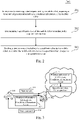
- Fig. 3 is a schematic diagram of an application scenario of the method for controlling a mobile robot according to the present disclosure.
- the cloud server 302 when receiving the start request 311 sent by the mobile robot 301 (autonomous driving vehicle in the drawing), the cloud server 302 acquires the position information and the condition information 312 (e.g., "position information: XX highway, condition information: Good" shown in the drawing) of the mobile robot 301.
- the condition information 312 e.g., "position information: XX highway, condition information: Good" shown in the drawing
- the cloud server 302 determines the speed limit value 313 of the mobile robot 301 according to the acquired information 312 (in the drawing, the cloud server 302 determines that the speed limit value is 60 km per hour based on a two-dimensional table in which position information, condition information, and a speed limit value are stored in advance). Finally, the cloud server 302 sends (e.g., using an over-the-air technology) the start command 314 including the speed limit value to the mobile robot 301, to control the mobile robot to move at a speed smaller than or equal to the speed limit value.
- the cloud server 302 sends (e.g., using an over-the-air technology) the start command 314 including the speed limit value to the mobile robot 301, to control the mobile robot to move at a speed smaller than or equal to the speed limit value.
- the mobile robot in response to receiving the start request sent by the mobile robot, at least one of the position information or the condition information is acquired. Then, the speed limit value of the mobile robot is determined according to the acquired information, and finally, the start command including the speed limit value is sent to the mobile robot to control the mobile robot to move at the speed smaller than or equal to the speed limit value.
- the limited speed of the mobile robot is determined by at least one of the position information or the condition information, thereby realizing remote adjustment of the limited speed of the mobile robot, and improving the safety of the motion of the mobile robot relative to the existing technology (e.g., upon receiving the start command, the mobile robot begins to move at the motion speed indicated by the start command).
- Fig. 4 illustrates a flow 400 of another embodiment of the method for controlling a mobile robot.
- the flow 400 of the method for controlling a mobile robot includes the following steps.
- Step 401 includes in response to receiving a start request sent by an autonomous driving vehicle, determining whether the autonomous driving vehicle is in a movable state.
- an executing body e.g., the server or the terminal devices shown in Fig. 1
- an executing body of the method for controlling a mobile robot may determine whether the autonomous driving vehicle is in the movable state.
- the executing body may first determine the time at which the start request is received, in response to receiving the start request sent by the autonomous driving vehicle. If the determined time is in a time range (e.g., 0 o'clock to 6 o'clock) predetermined for the autonomous driving vehicle, the executing body may determine that the autonomous driving vehicle is in an immovable state. If the determined time is not in the time range (e.g., 0 o'clock to 6 o'clock) predetermined for the mobile robot, the executing body may determine that the autonomous driving vehicle is in the movable state.
- a time range e.g., 0 o'clock to 6 o'clock
- the start request may include an identification of the autonomous driving vehicle.
- the identification may be a string composed of a number, a letter, a symbol (e.g., an underscore) etc.
- the executing body may further perform the step of determining whether the autonomous driving vehicle is in the movable state as follows.
- the identification is inputted to a predetermined motion state model to obtain motion state information.
- the motion state model is configured to represent a corresponding relationship between an identification of the autonomous driving vehicle and motion state information of the autonomous driving vehicle.
- the motion state information represents that the autonomous driving vehicle is in the movable state or an immovable state
- the motion state model may be a two-dimensional table or a database in which identifications of autonomous driving vehicles and motion state information of the autonomous driving vehicles are stored.
- Step 402 includes in response to determining the autonomous driving vehicle being in the movable state, acquiring position information of the autonomous driving vehicle.
- the executing body may acquire the position information of the autonomous driving vehicle.
- the position information may be used to represent the position where the autonomous driving vehicle is located when the start request is sent or before the start request is sent.
- Step 403 includes determining a speed limit value of the autonomous driving vehicle according to the position information.
- the executing body may determine the speed limit value of the autonomous driving vehicle according to the position information.
- the executing body may input the position information acquired in step 402 to a speed limit model predetermined for the autonomous driving vehicle to obtain the speed limit value of the autonomous driving vehicle.
- the speed limit model is configured to represent a corresponding relationship between position information of the autonomous driving vehicle and a speed limit value of the autonomous driving vehicle.
- the speed limit model may be a two-dimensional table or a database in which the position information of the autonomous driving vehicle and the speed limit value of the autonomous driving vehicle are stored.
- the speed limit model may be a configuration file in which the position information of the autonomous driving vehicle and the speed limit value of the autonomous driving vehicle are stored.
- Step 404 includes sending a start command including the speed limit value to the autonomous driving vehicle using an over the air technology.
- the executing body may send the start command including the speed limit value determined in step 403 to the autonomous driving vehicle by using the over the air technology, to control the autonomous driving vehicle to move at a speed smaller than or equal to the speed limit value.
- the start command may be used to instruct the autonomous driving vehicle to begin to move.
- the over the air technology is a technology in which SIM card data and applications are remotely managed through an air interface of a mobile communication.
- the operation of sending the start command to the autonomous driving vehicle may be simplified.
- the flow 400 of the method for controlling a mobile robot in this embodiment emphasizes the step of determining whether the mobile robot is in the movable state, and the mobile robot is specifically an autonomous driving vehicle, thereby improving the safety of the travelling of the autonomous driving vehicle.
- the present disclosure provides an embodiment of an apparatus for controlling a mobile robot.
- the embodiment of the apparatus corresponds to the embodiment of the method shown in Fig. 2 , and may include the feature same as or corresponding to that in the embodiment of the method shown in Fig. 2 in addition to the features described below.
- the apparatus may be applied in various electronic devices.
- the apparatus 500 for controlling a mobile robot includes a first acquiring unit 501, a first determining unit 502, and a first sending unit 503.
- the first acquiring unit 501 is configured to, in response to receiving a start request sent by a mobile robot, acquire at least one of position information or condition information of the mobile robot.
- the first determining unit 502 is configured to determine a speed limit value of the mobile robot according to the acquired information.
- the first sending unit 503 is configured to send a start command including the speed limit value to the mobile robot, to control the mobile robot to move at a speed smaller than or equal to the speed limit value.
- the first acquiring unit 501 of the apparatus 500 for controlling a mobile robot may acquire at least one of the position information or the condition information of the mobile robot.
- the mobile robot may be various movable (i.e., mobile) machine apparatuses.
- the mobile robot may include, but not limited to, an aerial robot (e.g., an unmanned aerial vehicle), a wheeled mobile robot (e.g., an autonomous driving vehicle), a walking mobile robot (one-legged, two-legged and multi-legged mobile robots), a tracked mobile robot, a crawling robot, a creeping robot, a swimming robot, a medical robot, a military robot, a disabled-assisted robot, a cleaning robot, etc.
- an aerial robot e.g., an unmanned aerial vehicle
- a wheeled mobile robot e.g., an autonomous driving vehicle
- a walking mobile robot one-legged, two-legged and multi-legged mobile robots
- a tracked mobile robot e.g., a crawling robot, a creeping robot, a swimming robot, a medical robot, a military robot, a disabled-assisted robot, a cleaning robot,
- the mobile robot may be an autonomous driving vehicle.
- the start request may be information sent by the mobile robot to the above apparatus 500 before beginning to move.
- the start request may be used to indicate that the mobile robot is about to begin moving.
- the start request may be sent by the mobile robot to the apparatus 500 after the mobile robot receives a start command sent by a user through an electronic device other than the apparatus 500.
- the position information may be used to represent the position where the mobile robot is located when the start request is sent or before the start request is sent.
- the condition information may be used to represent the condition of the mobile robot when the start request is sent or before the start request is sent.
- the condition information may include, but not limited to, information on whether there is a fault, information on whether the fault affects a motion, information on a position where a fault point is located, etc.
- the first determining unit 502 determine the speed limit value of the mobile robot.
- the speed limit value may be a speed value used to represent a maximum speed at which the mobile robot is allowed to move.
- the first sending unit 503 may send the start command including the speed limit value to the mobile robot, to control the mobile robot to move at the speed smaller than or equal to the speed limit value.
- the start command may be used to instructs the mobile robot to begin moving.
- the first acquiring unit 501 includes: a determining module (not shown in the drawing), configured to determine whether the mobile robot is in a movable state; and an acquiring module (not shown in the drawing), configured to, in response to determining the mobile robot being in the movable state, acquire at least one of the position information or the condition information of the mobile robot.
- the start request includes an identification of the mobile robot.
- the determining module includes: an inputting submodule (not shown in the drawing), configured to input the identification to a predetermined motion state model to obtain motion state information, the motion state model being configured to represent a corresponding relationship between the identification of the mobile robot and the motion state information of the mobile robot, and the motion state information representing that the mobile robot is in the movable state or an immovable state.
- the first determining unit includes: an inputting module (not shown in the drawing), configured to input the acquired information to a speed limit model predetermined for the mobile robot, to obtain the speed limit value of the mobile robot, the speed limit model being configured to represent a corresponding relationship between a speed limit value of the mobile robot and at least one of position information or condition information.
- the first sending unit includes: a sending module (not shown in the drawing), configured to send the start command including the speed limit value to the mobile robot using an over the air technology.
- the apparatus 500 further includes: a second acquiring unit (not shown in the drawing), configured to acquire a real-time motion speed, real-time position information, real-time condition information and real-time environment information of the mobile robot according to a predetermined frequency; a second determining unit (not shown in the drawing), configured to determine a real-time speed limit value of the mobile robot according to the real-time position information, the real-time condition information and the real-time environment information; and a second sending unit (not shown in the drawing), configured to, in response to determining a speed value of the real-time motion speed being greater than the real-time speed limit value, send at least one of warning information or a speed reduction command to the mobile robot.
- a second acquiring unit (not shown in the drawing)
- a second determining unit configured to determine a real-time speed limit value of the mobile robot according to the real-time position information, the real-time condition information and the real-time environment information
- a second sending unit (not shown in the drawing), configured to, in response to determining
- the mobile robot is an autonomous driving vehicle.
- the first acquiring unit 501 acquires at least one of the position information or the condition information of the mobile robot, in response to receiving the start request sent by a mobile robot. Then, the first determining unit 502 determines the speed limit value of the mobile robot according to the acquired information. Finally, the first sending unit 503 sends the start command including the speed limit value to the mobile robot, to control the mobile robot to move at the speed smaller than or equal to the speed limit value.
- the apparatus 500 determines the limited speed of the mobile robot by at least one of the position information or the condition information, thereby realizing remote adjustment of the limited speed of the mobile robot, and improving the safety of the motion of the mobile robot relative to the existing technology (e.g., upon receiving the start command, the mobile robot begins to move at the motion speed indicated by the start command).
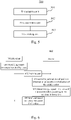
- Fig. 6 is a schematic diagram of an interaction process of an embodiment of a control system according to the present disclosure.
- the control system in the embodiment of the present disclosure may include a mobile robot and a server for providing support to the mobile robot.
- the mobile robot is configured to send a start request to the server in response to receiving a start command inputted by a user.
- the server is configured to acquire at least one of position information or condition information of the mobile robot; determine a speed limit value of the mobile robot according to the acquired information; and send a start command including the speed limit value to the mobile robot.
- step 601 the mobile robot receives the start command inputted by the user.
- the mobile robot may receive the start command inputted by the user.
- the mobile robot may be various movable (i.e., mobile) machine apparatuses.
- the mobile robot may include, but not limited to, an aerial robot (e.g., an unmanned aerial vehicle), a wheeled mobile robot (e.g., an autonomous driving vehicle), a walking mobile robot (one-legged, two-legged and multi-legged mobile robots), a tracked mobile robot, a crawling robot, a creeping robot, a swimming robot, a medical robot, a military robot, a disabled-assisted robot, a cleaning robot, etc.
- the start command may be used to instructs the mobile robot to begin moving.
- the start command may be inputted by the user directly to the mobile robot, or may be, sent by a control device to the mobile robot after being inputted by the user to the control device used by the user and communicated with the mobile robot.
- the server may be a cloud server.
- step 602 the mobile robot sends the start request to the server.
- the mobile robot may send the start request to the server.
- the start request may be information sent by the mobile robot to the server before beginning to move.
- the start request may be used to indicate that the mobile robot is about to begin moving.
- the start request may be sent by the mobile robot to the server after the mobile robot receives the start command sent by the user through an electronic device other than the server.
- the start request may include an identification of the mobile robot.
- the identification may be a string composed of a number, a letter, a symbol (e.g., an underscore) etc.
- step 603 the server acquires at least one of the position information or the condition information of the mobile robot.
- the server may acquire at least one of the position information or the condition information of the mobile robot .
- the position information may be used to represent the position where the mobile robot is located when the start request is sent or before the start request is sent.
- the condition information may be used to represent the condition of the mobile robot when the start request is sent or before the start request is sent.
- the condition information may include, but not limited to, information on whether there is a fault, information on whether the fault affects a motion, information on a position where a fault point is located, etc.
- step 603 may include the following steps.
- step 1 in response to receiving by the server the start request sent by the mobile robot, whether the mobile robot is in a movable state is determined.
- the server may first determine the time at which the start request is received, in response to receiving the start request sent by the mobile robot. If the determined time is in a time range (e.g., 0 o'clock to 6 o'clock) predetermined for the mobile robot, the server may determine that the mobile robot is in an immovable state. If the determined time is not in the time range (e.g., 0 o'clock to 6 o'clock) predetermined for the mobile robot, the server may determine that the mobile robot is in the movable state.
- a time range e.g., 0 o'clock to 6 o'clock
- the start request may include the identification of the mobile robot.
- the server may further perform the step of determining whether the mobile robot is in the movable state as follows.
- the identification is inputted to a predetermined motion state model to obtain motion state information.
- the motion state model is configured to represent a corresponding relationship between an identification of the mobile robot and motion state information of the mobile robot.
- the motion state information represents that the mobile robot is in the movable state or the immovable state.
- the motion state model may be a two-dimensional table or a database in which identifications of mobile robots and motion state information of the mobile robots are stored.
- the motion state model may also be a configuration file in which the identifications of the mobile robots and the motion state information of the mobile robots are stored.
- step 2 in response to determining that the mobile robot is in the movable state, at least one of the position information or the condition information is acquired.
- step 604 the server determines a speed limit value of the mobile robot according to the acquired information.
- the server may determine the speed limit value of the mobile robot according to the acquired information.
- the speed limit value may be a speed value used to represent a maximum speed at which the mobile robot can move.
- step 604 is substantially identical to step 202 in the embodiment corresponding to Fig. 2 , which will not be repeatedly described here.
- step 605 the server sends the start command including the speed limit value to the mobile robot.
- the server may send the start command including the speed limit value to the mobile robot.
- step 605 is substantially identical to step 203 in the embodiment corresponding to Fig. 2 , which will not be repeatedly described here.
- the mobile robot may move at a speed smaller than or equal to the speed limit value.
- the server may perform the following steps.
- a real-time motion speed, real-time position information, real-time condition information and real-time environment information of the mobile robot are acquired according to a predetermined frequency.
- the real-time motion speed may be the motion speed of the mobile robot when the acquiring step is performed (i.e., the real-time motion speed, the real-time position information, the real-time condition information and the real-time environment information of the mobile robot are acquired according to the predetermined frequency).
- the real-time position information may be information representing a position where the mobile robot is located when the acquiring step is performed.
- the real-time condition information may be information representing a condition of the mobile robot when the acquiring step is performed.
- the real-time environment information may be information representing an environment in which the mobile robot is located when the acquiring step is performed.
- the real-time environment information may include, but not limited to, at least one of weather information, road condition information, or obstacle position information.
- a real-time speed limit value of the mobile robot is determined according to the real-time position information, the real-time condition information and the real-time environment information.
- the server may search for a real-time speed limit value corresponding to the real-time position information, the real-time condition information, and the real-time environment information in a speed limit two-dimensional table predetermined for the mobile robot.
- the speed limit two-dimensional table may be configured to represent a corresponding relationship between real-time position information, real-time condition information, real-time environment information and a real-time speed limit value.
- the server may search for a real-time speed limit value corresponding to the acquired real-time position information in a first speed limit two-dimensional table predetermined for the mobile robot, to use the real-time speed limit value as a first speed limit value.
- a second speed limit two-dimensional table predetermined for the mobile robot is searched for a real-time speed limit value corresponding to the acquired real-time condition information to be used as a second speed limit value.
- a third speed limit two-dimensional table predetermined for the mobile robot is searched for a real-time speed limit value corresponding to the acquired real-time environment information to be used a third speed limit value. Then, the minimum speed limit value in the first speed limit value, the second speed limit value and the third speed limit value is determined as the real-time speed limit value of the mobile robot.
- the first speed limit two-dimensional table may be configured to represent a corresponding relationship between real-time position information and a real-time speed limit value.
- the second speed limit two-dimensional table may be configured to represent a corresponding relationship between real-time condition information and a real-time speed limit value.
- the third speed limit two-dimensional table may be configured to represent a corresponding relationship between real-time environment information and a real-time speed limit value.
- At least one of warning information or a speed reduction command is sent to the mobile robot.
- the warning information may be information for prompting the mobile robot or the user controlling the mobile robot that the current speed of the mobile robot is too large (e.g., exceeding the maximum speed at which the mobile robot can move at present).
- the speed reduction command may be information for instructing the mobile robot to decelerate.
- the mobile robot receives the start command inputted by the user. Then, the mobile robot sends the start request to the server, and then the server acquires at least one of the position information or the condition information of the mobile robot. Afterwards, the server acquires at least one of the position information or the condition information of the mobile robot. Finally, the server sends the start command including the speed limit value to the mobile robot.
- the limited speed of the mobile robot is determined by at least one of the position information or the condition information, thereby realizing remote adjustment of the limited speed of the mobile robot, and improving the safety of the motion of the mobile robot relative to the existing technology (e.g., upon receiving the start command, the mobile robot begins to move at the motion speed indicated by the start command).
- FIG. 7 there is shown a schematic structural diagram of a computer system 700 adapted for implementing a server of an embodiment of the present disclosure.
- the electronic device shown in Fig. 7 is merely an example and should not be construed as limiting the functionality and scope of use of embodiments of the present disclosure.
- the computer system 700 includes a central processing unit (CPU) 701, which may perform various appropriate actions and processes according to a program stored in a read-only memory (ROM) 702 or a program loaded into a random access memory (RAM) 703 from a storage portion 708.
- CPU 701, ROM 702, and RAM 703 are connected to each other via a bus 704.
- An input/output (I/O) interface 705 is also connected to bus 704.
- An input portion 706 including a keyboard, a mouse, and the like; an output portion 707 including a cathode ray tube (CRT), a liquid crystal display (LCD), and a speaker; a storage portion 708 including a hard disk or the like; and a communication portion 709 including a network interface card such as a LAN card, a modem, or the like.
- the communication section 709 performs communication processing via a network such as the Internet.
- the driver 710 is also connected to the I/O interface 705 as desired.
- a removable medium 711 such as a magnetic disk, an optical disk, a magneto-optical disk, a semiconductor memory, or the like, is mounted on the drive 710 as required so that a computer program read therefrom is mounted on the storage portion 708 as required.
- the process described above with reference to the flowchart may be implemented as a computer software program.
- embodiments of the present disclosure include a computer program product comprising a computer program embodied on a computer readable medium, the computer program comprising program code for performing the method shown in the flowchart.
- the computer program may be downloaded and installed from the network through the communication portion 709, and/or installed from the removable medium 711.
- CPU central processing unit
- the computer readable medium in the present disclosure may be computer readable signal medium or computer readable storage medium or any combination of the above two.
- An example of the computer readable storage medium may include, but not limited to: electric, magnetic, optical, electromagnetic, infrared, or semiconductor systems, apparatus, elements, or a combination any of the above.
- a more specific example of the computer readable storage medium may include but is not limited to: electrical connection with one or more wire, a portable computer disk, a hard disk, a random access memory (RAM), a read only memory (ROM), an erasable programmable read only memory (EPROM or flash memory), a fibre, a portable compact disk read only memory (CD-ROM), an optical memory, a magnet memory or any suitable combination of the above.
- the computer readable storage medium may be any physical medium containing or storing programs which can be used by a command execution system, apparatus or element or incorporated thereto.
- the computer readable signal medium may include data signal in the base band or propagating as parts of a carrier, in which computer readable program codes are carried.
- the propagating signal may take various forms, including but not limited to: an electromagnetic signal, an optical signal or any suitable combination of the above.
- the signal medium that can be read by computer may be any computer readable medium except for the computer readable storage medium.
- the computer readable medium is capable of transmitting, propagating or transferring programs for use by, or used in combination with, a command execution system, apparatus or element.
- the program codes contained on the computer readable medium may be transmitted with any suitable medium including but not limited to: wireless, wired, optical cable, RF medium etc., or any suitable combination of the above.
- a computer program code for executing operations in the disclosure may be compiled using one or more programming languages or combinations thereof.
- the programming languages include object-oriented programming languages, such as Python, Java, Smalltalk or C++, and also include conventional procedural programming languages, such as "C" language or similar programming languages.
- the program code may be completely executed on a user's computer, partially executed on a user's computer, executed as a separate software package, partially executed on a user's computer and partially executed on a remote computer, or completely executed on a remote computer or server.
- the remote computer may be connected to a user's computer through any network, including local area network (LAN) or wide area network (WAN), or may be connected to an external computer (for example, connected through Internet using an Internet service provider).
- LAN local area network
- WAN wide area network
- Internet service provider for example, connected through Internet using an Internet service provider
- each of the blocks in the flow charts or block diagrams may represent a module, a program segment, or a code portion, said module, program segment, or code portion comprising one or more executable instructions for implementing specified logic functions.
- the functions denoted by the blocks may occur in a sequence different from the sequences shown in the figures. For example, any two blocks presented in succession may be executed, substantially in parallel, or they may sometimes be in a reverse sequence, depending on the function involved.
- each block in the block diagrams and/or flow charts as well as a combination of blocks may be implemented using a dedicated hardware-based system executing specified functions or operations, or by a combination of a dedicated hardware and computer instructions.
- the elements described in the embodiments of the present disclosure may be implemented by means of software or by means of hardware.
- the described unit may also be provided in a processor, which may be described, for example, as a processor including a first acquisition unit, a first determination unit, and a first transmission unit.
- a processor including a first acquisition unit, a first determination unit, and a first transmission unit.
- the names of these units do not constitute a limitation on the unit itself in some cases.
- the first acquisition unit may also be described as a unit for acquiring at least one of position information or condition information of the mobile robot.
- the present disclosure further provides a computer readable medium.
- the computer readable medium may be the computer readable medium included in the apparatus in the above described embodiments, or a stand-alone computer readable medium not assembled into the apparatus.
- the computer readable medium stores one or more programs.
- the one or more programs when executed by a device, cause the device to: in response to receiving a start request sent by the mobile robot, acquire at least one of position information or condition information of the mobile robot; determining a speed limit value of the mobile robot based on the acquired information; and transmitting an activation command including a speed limit value to the mobile robot to control the mobile robot to move at a speed smaller than or equal to the speed limit value.
Landscapes
- Engineering & Computer Science (AREA)
- Automation & Control Theory (AREA)
- Physics & Mathematics (AREA)
- General Physics & Mathematics (AREA)
- Transportation (AREA)
- Mechanical Engineering (AREA)
- Human Computer Interaction (AREA)
- Aviation & Aerospace Engineering (AREA)
- Radar, Positioning & Navigation (AREA)
- Remote Sensing (AREA)
- Control Of Position, Course, Altitude, Or Attitude Of Moving Bodies (AREA)
- Manipulator (AREA)
Description
- Embodiments of the present disclosure relate to the field of computer technology, and specifically to a method, an apparatus and a control system for controlling a mobile robot.
- A mobile robot is a machine apparatus that automatically performs work. The mobile robot may accept a command from a person, may run a pre-programmed procedure, and may act according to a principle established with the artificial intelligence technology.
- At present, in most situations, the mobile robot tends to automatically determine the motion speed thereof according to an on-site road condition, a pedestrian condition, a vehicle condition, a passenger condition, etc. For example, taking an autonomous driving vehicle as an example, the vehicle speed limit of the autonomous driving vehicle is generally limited according to a lane speed limit of a lane where the vehicle is currently located.
-
CN108482372A discloses a method and device for controlling a traveling speed, an electronic device and a readable storage medium. The method includes: acquiring image data, and acquiring an initial speed limit threshold of a vehicle, where the image data include a photographed scenario image of an environment around the vehicle; performing feature recognition processing on the scenario image of the environment around the vehicle, and determining an environmental feature of the environment around the vehicle; and determining an integrated speed limit threshold of the vehicle according to the initial speed limit threshold and the environmental feature. -
EP3372466A1 discloses an autonomous vehicle operating apparatus, which is installed in an autonomous vehicle having two autonomous traveling modes of a first autonomous traveling mode for traveling without operation by a driver and a second autonomous traveling mode for traveling in accordance with an operation by the driver. The autonomous vehicle operating apparatus defines an operating section according to traveling conditions and circumferential conditions, and controls the autonomous vehicle in the second autonomous traveling mode to travel in accordance with the operation by the driver during a period in which the autonomous vehicle is located in the operating section. -
WO2017/050358A1 discloses a method for guarantying a safe navigation of a mobile robot on a path within an environment that comprises one or more obstacles, said method comprising the following steps: i) determining the obstacle(s) of said environment, ii) determining a speed of displacement of said mobile robot depending on the determined obstacle(s), iii) determining one or more safety fields around the mobile robot depending on said variable speed, iv) dynamically determining an envelope comprising both said variable safety fields and said mobile robot, said envelope being variable if the at least one safety field varies, v) applying a protection management procedure to prevent that at least one obstacle enters into the envelope, said protection management procedure comprising dynamically adapting the envelope so that the zone defined by said envelope remains free from obstacle. - The invention is set forth in the independent claims.
- Embodiments of the present disclosure provide a method, apparatus, and control system for controlling a mobile robot.
- According to a first aspect, an embodiment of the present disclosure provides a method for controlling a mobile robot, the method including: in response to receiving a start request sent by the mobile robot, acquiring at least one of position information or condition information of the mobile robot; determining a speed limit value of the mobile robot according to the acquired information; and sending a start command including the speed limit value to the mobile robot, to control the mobile robot to move at a speed smaller than or equal to the speed limit value wherein the determining the speed limit value of the mobile robot according to the acquired information comprises: inputting the acquired information to a speed limit model predetermined for the mobile robot, to obtain the speed limit value of the mobile robot, the speed limit model being configured to represent a corresponding relationship between the speed limit value of the mobile robot and the at least one of the position information or the condition information.
- In some embodiments, the acquiring at least one of position information or condition information of the mobile robot includes determining whether the mobile robot is in a movable state; and in response to determining the mobile robot being in the movable state, acquiring at least one of the position information or the condition information of the mobile robot.
- In some embodiments, the start request includes an identification of the mobile robot; and the determining whether the mobile robot is in a movable state includes inputting the identification to a predetermined motion state model to obtain motion state information, the motion state model being configured to represent a corresponding relationship between the identification of the mobile robot and the motion state information of the mobile robot, and the motion state information representing that the mobile robot is in the movable state or an immovable state.
- In some embodiments, the sending a start command including the speed limit value to the mobile robot includes sending the start command including the speed limit value to the mobile robot using an over the air technology.
- In some embodiments, the method further includes: acquiring a real-time motion speed, real-time position information, real-time condition information and real-time environment information of the mobile robot according to a predetermined frequency; determining a real-time speed limit value of the mobile robot according to the real-time position information, the real-time condition information and the real-time environment information; and in response to determining a speed value of the real-time motion speed being greater than the real-time speed limit value, sending at least one of warning information or a speed reduction command to the mobile robot.
- In some embodiments, the mobile robot is an autonomous driving vehicle.
- According to a second aspect, an embodiment of the present disclosure provides an apparatus for controlling a mobile robot, the apparatus including: a first acquiring unit, configured to, in response to receiving a start request sent by a mobile robot, acquire at least one of position information or condition information of the mobile robot; a first determining unit, configured to determine a speed limit value of the mobile robot according to the acquired information; and a first sending unit, configured to send a start command including the speed limit value to the mobile robot, to control the mobile robot to move at a speed smaller than or equal to the speed limit value wherein the first determining unit comprises: an inputting module, configured to input the acquired information to a speed limit model predetermined for the mobile robot, to obtain the speed limit value of the mobile robot, the speed limit model being configured to represent a corresponding relationship between the speed limit value of the mobile robot and the at least one of the position information or the condition information.
- In some embodiments, the first acquiring unit includes a determining module, configured to determine whether the mobile robot is in a movable state; and an acquiring module, configured to, in response to determining the mobile robot being in the movable state, acquire at least one of position information or condition information of the mobile robot.
- In some embodiments, the start request includes an identification of the mobile robot, and the determining module includes: an inputting submodule, configured to input the identification to a predetermined motion state model to obtain motion state information, the motion state model being configured to represent a corresponding relationship between the identification of the mobile robot and the motion state information of the mobile robot, and the motion state information representing that the mobile robot is in the movable state or an immovable state.
- In some embodiments, the first sending unit includes a sending module, configured to send the start command including the speed limit value to the mobile robot using an over the air technology.
- In some embodiments, the apparatus further includes a second acquiring unit, configured to acquire a real-time motion speed, real-time position information, real-time condition information and real-time environment information of the mobile robot according to a predetermined frequency; a second determining unit, configured to determine a real-time speed limit value of the mobile robot according to the real-time position information, the real-time condition information and the real-time environment information; and a second sending unit, configured to, in response to determining a speed value of the real-time motion speed being greater than the real-time speed limit value, send at least one of warning information or a speed reduction command to the mobile robot.
- In some embodiments, the mobile robot is an autonomous driving vehicle.
- In a third aspect, an embodiment of the present disclosure provides a control system including a mobile robot and a server for providing support to the mobile robot, wherein the mobile robot is configured to send a start request to the server in response to receiving a start command inputted by a user; and the server is configured to acquire at least one of position information or condition information of the mobile robot; determine a speed limit value of the mobile robot according to the acquired information; and send a start command including the speed limit value to the mobile robot wherein the server is further configured to execute the determining (604) the speed limit value of the mobile robot according to the acquired information by inputting the acquired information to a speed limit model predetermined for the mobile robot, to obtain the speed limit value of the mobile robot, the speed limit model being configured to represent a corresponding relationship between the speed limit value of the mobile robot and the at least one of the position information or the condition information.
- In some embodiments, the mobile robot is further configured to move at a speed smaller than or equal to a speed limit value.
- In some embodiments, the server is further configured to acquire a real-time motion speed, real-time position information, real-time condition information and real-time environment information of the mobile robot according to a predetermined frequency; determine a real-time speed limit value of the mobile robot according to the real-time position information, the real-time condition information and the real-time environment information; and in response to determining a speed value of the real-time motion speed being greater than the real-time speed limit value, send at least one of warning information or a speed reduction command to the mobile robot.
- In a fourth aspect, an embodiment of the present disclosure provides an electronic device for controlling a mobile robot, including one or more processors; a storage apparatus storing one or more programs, wherein the one or more programs, when the one or more programs are executed by the one or more processors, cause the one or more processors implement any embodiment of the method for controlling a mobile robot.
- In a fifth aspect, an embodiment of the present disclosure provides a computer readable medium for controlling a mobile robot, storing a computer program which, when executed by a processor, implements any embodiment of the method for controlling a mobile robot.
- A method, an apparatus, and a control system for controlling a mobile robot are provided in an embodiment of the present disclosure. In response to receiving a start request sent by the mobile robot, at least one of position information or status information of the mobile robot is acquired, a speed limit value of the mobile robot is determined according to the acquired information, and finally, a start instruction including the speed limit value is sent to the mobile robot to control the mobile robot to move at a speed smaller than or equal to a speed limit value equal to the speed limit value, whereby the limited speed of the mobile robot is determined by at least one of the position information or the status information, so that the limited speed of the mobile robot can be remotely controlled, thereby improving the security of the movement of the mobile robot.
- After reading detailed descriptions for non-limiting embodiments given with reference to the following accompanying drawings, other features, objectives and advantages of the present disclosure will be more apparent:
-
Fig. 1 is an example system architecture in which an embodiment of the present disclosure may be applied; -
Fig. 2 is a flowchart of an embodiment of a method for controlling a mobile robot according to the present disclosure; -
Fig. 3 is a schematic diagram of an application scenario of the method for controlling a mobile robot according to the present disclosure; -
Fig. 4 is a flowchart of another embodiment of the method for controlling a mobile robot according to the present disclosure; -
Fig. 5 is a schematic structural diagram of an embodiment of an apparatus for controlling a mobile robot according to the present disclosure; -
Fig. 6 is a schematic diagram of an interaction process of an embodiment of a control system according to the present disclosure; and -
Fig. 7 is a schematic structural diagram of a computer system adapted to implement an electronic device according to embodiments of the present disclosure. - The present disclosure will be further described below in detail in combination with the accompanying drawings and the embodiments. It should be appreciated that the specific embodiments described herein are merely used for explaining the relevant disclosure, rather than limiting the disclosure. In addition, it should be noted that, for the ease of description, only the parts related to the relevant disclosure are shown in the accompanying drawings.
- The present disclosure will be described below in detail with reference to the accompanying drawings and in combination with the embodiments.
-
Fig. 1 illustrates anexample system architecture 100 in which an embodiment of a method for controlling a mobile robot or an apparatus for controlling a mobile robot according to embodiments of the present disclosure may be applied. - As shown in
Fig. 1 , thesystem architecture 100 may includeterminal devices server 103, anetwork 104 andmobile robots network 104 serves as a medium providing a communication link between theterminal devices server 103 and themobile robots network 104 may include various types of connections, for example, wired or wireless communication links, or optical fiber cables. - The
terminal devices server 103 and themobile robots network 104, to receive or send a message, etc. Themobile robots terminal devices server 103 via thenetwork 104. Various communication client applications (e.g., a data processing application, an image processing application, a webpage browser application, a shopping application, a search application, an instant communication tool, a mailbox client and social platform software) may be installed on theterminal devices - The
terminal devices terminal devices terminal devices terminal devices mobile robots mobile robots - The
server 103 may be a server providing various services, for example, a backend server processing the data sent by themobile robots mobile robots mobile robots - It should be noted that the server may be hardware or software. When being the hardware, the server may be implemented as a distributed server cluster composed of a plurality of servers, or may be implemented as a single server. When being the software, the server may be implemented as a plurality of pieces of software or a plurality of software modules (e.g., software or software modules for providing a distributed service), or may be implemented as a single piece of software pieces or a single software module, which will not be specifically defined here.
- The
mobile robots mobile robots mobile robots terminal devices server 103 to request a motion. In addition, themobile robots terminal devices server 103 for theterminal devices server 103 to determine the speed limit value of the mobile robot. After receiving the start command including the speed limit value, themobile robots - It should be noted that the method for controlling a mobile robot provided in the embodiments of the present disclosure may be performed by the
server 103, and accordingly, the apparatus for controlling a mobile robot may be disposed in theserver 103. In addition, the method for controlling a mobile robot provided in the embodiments of the present disclosure may alternatively be performed by theterminal devices terminal devices mobile robots mobile robots - It should be appreciated that the numbers of the terminal devices, the networks, the servers and the mobile robots in
Fig. 1 are merely illustrative. Any number of terminal devices, networks, servers and mobile robots may be provided based on actual requirements. When an electronic device on which the method for controlling a mobile robot is implemented does not need to transmit data to an electronic device other than the mobile robots, the system architecture may only include the electronic device on which the method for controlling a mobile robot is implemented and the mobile robots. - Further referring to
Fig. 2, Fig. 2 illustrates aflow 200 of an embodiment of a method for controlling a mobile robot according to the present disclosure. The method for controlling a mobile robot includes the following steps. - Step 201 includes in response to receiving a start request sent by a mobile robot, acquiring at least one of position information or condition information of the mobile robot.
- In this embodiment, in response to receiving the start request sent by the mobile robot, an executing body (e.g., the server or the terminal devices shown in
Fig. 1 ) of the method for controlling a mobile robot may acquire at least one of the position information or the condition information of the mobile robot. - The mobile robot may be various movable (i.e., mobile) machine apparatuses. For example, the mobile robot may include, but not limited to, an aerial robot (e.g., an unmanned aerial vehicle), a wheeled mobile robot (e.g., an autonomous driving vehicle), a walking mobile robot (one-legged, two-legged and multi-legged mobile robots), a tracked mobile robot, a crawling robot, a creeping robot, a swimming robot, a medical robot, a military robot, a disabled-assisted robot, a cleaning robot, etc.
- In some alternative implementations of this embodiment, the mobile robot may be an autonomous driving vehicle.
- The start request may be information sent by the mobile robot to the executing body before beginning to move. The start request may be used to indicate that the mobile robot is about to begin moving. In some use situations, the start request may be sent by the mobile robot to the executing body after the mobile robot receives a start command sent by a user through an electronic device other than the executing body.
- The position information may be used to represent the position where the mobile robot is located when the start request is sent or before the start request is sent.
- The condition information may be used to represent the condition of the mobile robot when the start request is sent or before the start request is sent. For example, the condition information may include, but not limited to, information on whether there is a fault, information on whether the fault affects a motion, information on a position where a fault point is located, etc.
- In some alternative implementations of this embodiment, the
step 201 may include the following steps. - Step 1 includes determining whether the mobile robot is in a movable state, in response to receiving the start request sent by the mobile robot.
- As an example, the executing body may first determine the time at which the start request is received, in response to receiving the start request sent by the mobile robot. If the determined time is in a time range (e.g., 0 o'clock to 6 o'clock) predetermined for the mobile robot, the executing body may determine that the mobile robot is in an immovable state. If the determined time is not in the time range (e.g., 0 o'clock to 6 o'clock) predetermined for the mobile robot, the executing body may determine that the mobile robot is in the movable state.
- In some alternative implementations of this embodiment, the start request may include an identification of the mobile robot. The identification may be a string composed of a number, a letter, a symbol (e.g., an underscore) etc. Thus, the executing body may further perform the step of determining whether the mobile robot is in the movable state as follows.
- The identification is inputted to a predetermined motion state model to obtain motion state information. Here, the motion state model is configured to represent a corresponding relationship between an identification of the mobile robot and motion state information of the mobile robot. The motion state information represents that the mobile robot is in the movable state or the immovable state.
- As an example, the motion state model may be a two-dimensional table or a database in which identifications of mobile robots and motion state information of the mobile robots are stored. Alternatively, the motion state model may be a configuration file in which the identifications of the mobile robots and the motion state information of the mobile robots are stored.
- As another example, the motion state model may alternatively be a model obtained by training an initial model (e.g., a convolutional neural network) using a machine learning algorithm. Here, the technique of training and obtaining a model using the machine learning algorithm is a well-known technique widely studied at present, which will not be repeatedly described here.
- In step 2, in response to determining that the mobile robot is in the movable state, at least one of the position information or the condition information is acquired.
- Step 202 includes determining a speed limit value of the mobile robot according to the acquired information.
- In this embodiment, the executing body may determine the speed limit value of the mobile robot according to the information acquired in step 201 (including at least one of the position information or the condition information). Here, the speed limit value may be a speed value used to represent a maximum speed (which may be a linear speed or an angular speed) at which the mobile robot is allowed move.
- In some alternative implementations of this embodiment, the executing body performs
step 202 as follows. - The acquired information is inputted to a speed limit model predetermined for the mobile robot, to obtain the speed limit value of the mobile robot. Here, the speed limit model is configured to represent a corresponding relationship between a speed limit value of the mobile robot and at least one of position information or condition information.
- Here, when the acquired information includes the position information, and does not include the condition information, the speed limit model may be configured to represent a corresponding relationship between a position information of the mobile robot and a speed limit value of the mobile robot. In this application scenario, the speed limit model may be a two-dimensional table or a database in which the position information of the mobile robot and the speed limit value of the mobile robot are stored. Alternatively, the speed limit model may be a configuration file in which the position information of the mobile robot and the speed limit value of the mobile robot are stored.
- When the acquired information includes the condition information and does not include the position information, the speed limit model may be configured to represent a corresponding relationship between condition information of the mobile robot and a speed limit value of the mobile robot. In this application scenario, the speed limit model may be a two-dimensional table or a database in which the condition information of the mobile robot and the speed limit value of the mobile robot are stored. Alternatively, the speed limit model may be a configuration file in which the condition information of the mobile robot and the speed limit value of the mobile robot are stored.
- When the acquired information includes the position information and the condition information, the speed limit model may be configured to represent a corresponding relationship between position information and condition information of the mobile robot and a speed limit value of the mobile robot. In this application scenario, the speed limit model may be a two-dimensional table or a database in which the position information and the condition information of the mobile robot and the speed limit value of the mobile robot are stored. Alternatively, the speed limit model may be a configuration file in which the position information and the condition information of the mobile robot and the speed limit value of the mobile robot are stored.
- As another example, the speed limit model may alternatively be a model obtained by training an initial model (e.g., a convolutional neural network) using a machine learning algorithm. Here, the technique of training a model using the machine learning algorithm is a well-known technique widely studied at present, which will not be repeatedly described here.
- Alternatively, the executing body may further determine the speed limit value of the mobile robot as follows.
- When the acquired information includes the position information, the executing body may determine the speed value of a maximum speed at which the mobile robot is allowed to move at the position represented by the position information. For example, when the position is a lane, the speed limit value of the limited speed of the lane at the position may be the speed value of the maximum speed at which the mobile robot is allowed to move. When the acquired information includes the condition information, the executing body may determine the speed value of the speed of the mobile robot moving in the condition represented by the condition information. Thereafter, the executing body may determine a small speed value in the determined speeds as the speed limit value of the mobile robot. It may be appreciated that when the acquired information includes only one of the position information and the condition information, the executing body may determine only one speed value, and in this case, the one speed value determined by the executing body may be the speed limit value of the mobile robot.
- Step 203 includes sending a start command including the speed limit value to the mobile robot, to control the mobile robot to move at a speed smaller than or equal to the speed limit value.
- In this embodiment, the executing body may send the start command including the speed limit value to the mobile robot, to control the mobile robot to move at the speed smaller than or equal to the speed limit value. Here, the start command may be used to instructs the mobile robot to begin moving.
- In some alternative implementations of this embodiment, the executing body may send the start command including the speed limit value to the mobile robot using an over the air technology (OTA).
- Here, the over the air technology is a technology in which SIM card data and applications are remotely managed through an air interface of a mobile communication. By using the over the air technology, the operation of sending the start command to the mobile robot may be simplified.
- In some alternative implementations of this embodiment, the executing body may further perform the following steps.
- First, a real-time motion speed, real-time position information, real-time condition information and real-time environment information of the mobile robot are acquired according to a predetermined frequency.
- The real-time motion speed may be the motion speed of the mobile robot when the acquiring step is performed (i.e., the real-time motion speed, the real-time position information, the real-time condition information and the real-time environment information of the mobile robot are acquired according to the predetermined frequency). The real-time position information may be information representing a position where the mobile robot is located when the acquiring step is performed. The real-time condition information may be information representing a condition of the mobile robot when the acquiring step is performed. The real-time environment information may be information representing an environment in which the mobile robot is located when the acquiring step is performed. For example, the real-time environment information may include, but not limited to, at least one of weather information, road condition information, or obstacle position information.
- Then, a real-time speed limit value of the mobile robot is determined according to the real-time position information, the real-time condition information and the real-time environment information.
- For example, the executing body may search for a real-time speed limit value corresponding to the real-time position information, the real-time condition information, and the real-time environment information in a speed limit two-dimensional table predetermined for the mobile robot. The speed limit two-dimensional table may be configured to represent a corresponding relationship between real-time position information, real-time condition information, real-time environment information and a real-time speed limit value.
- Alternatively, the executing body may search for a real-time speed limit value corresponding to the acquired real-time position information in a first speed limit two-dimensional table predetermined for the mobile robot, to use the real-time speed limit value as a first speed limit value. A second speed limit two-dimensional table predetermined for the mobile robot is searched for a real-time speed limit value corresponding to the acquired real-time condition information to be used as a second speed limit value. A third speed limit two-dimensional table predetermined for the mobile robot is searched for a real-time speed limit value corresponding to the acquired real-time environment information to be used a third speed limit value. Then, the minimum speed limit value in the first speed limit value, the second speed limit value and the third speed limit value is determined as the real-time speed limit value of the mobile robot. Here, the first speed limit two-dimensional table may be configured to represent a corresponding relationship between real-time position information and a real-time speed limit value. The second speed limit two-dimensional table may be configured to represent a corresponding relationship between real-time condition information and a real-time speed limit value. The third speed limit two-dimensional table may be configured to represent a corresponding relationship between real-time environment information and a real-time speed limit value.
- Finally, in response to determining that the speed value of the real-time motion speed is greater than the real-time speed limit value, at least one of warning information or a speed reduction command is sent to the mobile robot.
- Here, the warning information may be information for prompting the mobile robot or the user controlling the mobile robot that the current speed of the mobile robot is too large (e.g., exceeding the maximum speed at which the mobile robot can move at present). The speed reduction command may be information for instructing the mobile robot to decelerate.
- Further referring to
Fig. 3, Fig. 3 is a schematic diagram of an application scenario of the method for controlling a mobile robot according to the present disclosure. In the application scenario ofFig. 3 , when receiving thestart request 311 sent by the mobile robot 301 (autonomous driving vehicle in the drawing), thecloud server 302 acquires the position information and the condition information 312 (e.g., "position information: XX highway, condition information: Good" shown in the drawing) of themobile robot 301. Then, thecloud server 302 determines thespeed limit value 313 of themobile robot 301 according to the acquired information 312 (in the drawing, thecloud server 302 determines that the speed limit value is 60 km per hour based on a two-dimensional table in which position information, condition information, and a speed limit value are stored in advance). Finally, thecloud server 302 sends (e.g., using an over-the-air technology) thestart command 314 including the speed limit value to themobile robot 301, to control the mobile robot to move at a speed smaller than or equal to the speed limit value. - According to the method provided in the above embodiment of the present disclosure, in response to receiving the start request sent by the mobile robot, at least one of the position information or the condition information is acquired. Then, the speed limit value of the mobile robot is determined according to the acquired information, and finally, the start command including the speed limit value is sent to the mobile robot to control the mobile robot to move at the speed smaller than or equal to the speed limit value. Thus, the limited speed of the mobile robot is determined by at least one of the position information or the condition information, thereby realizing remote adjustment of the limited speed of the mobile robot, and improving the safety of the motion of the mobile robot relative to the existing technology (e.g., upon receiving the start command, the mobile robot begins to move at the motion speed indicated by the start command).
- Further referring to
Fig. 4, Fig. 4 illustrates aflow 400 of another embodiment of the method for controlling a mobile robot. Theflow 400 of the method for controlling a mobile robot includes the following steps. - Step 401 includes in response to receiving a start request sent by an autonomous driving vehicle, determining whether the autonomous driving vehicle is in a movable state.
- In this embodiment, in response to receiving the start request sent by the autonomous driving vehicle, an executing body (e.g., the server or the terminal devices shown in
Fig. 1 ) of the method for controlling a mobile robot may determine whether the autonomous driving vehicle is in the movable state. - As an example, the executing body may first determine the time at which the start request is received, in response to receiving the start request sent by the autonomous driving vehicle. If the determined time is in a time range (e.g., 0 o'clock to 6 o'clock) predetermined for the autonomous driving vehicle, the executing body may determine that the autonomous driving vehicle is in an immovable state. If the determined time is not in the time range (e.g., 0 o'clock to 6 o'clock) predetermined for the mobile robot, the executing body may determine that the autonomous driving vehicle is in the movable state.
- In some alternative implementations of this embodiment, the start request may include an identification of the autonomous driving vehicle. The identification may be a string composed of a number, a letter, a symbol (e.g., an underscore) etc. Thus, the executing body may further perform the step of determining whether the autonomous driving vehicle is in the movable state as follows.
- The identification is inputted to a predetermined motion state model to obtain motion state information. Here, the motion state model is configured to represent a corresponding relationship between an identification of the autonomous driving vehicle and motion state information of the autonomous driving vehicle. The motion state information represents that the autonomous driving vehicle is in the movable state or an immovable state
- As an example, the motion state model may be a two-dimensional table or a database in which identifications of autonomous driving vehicles and motion state information of the autonomous driving vehicles are stored.
- Step 402 includes in response to determining the autonomous driving vehicle being in the movable state, acquiring position information of the autonomous driving vehicle.
- In this embodiment, in response to determining that the autonomous driving vehicle is in the movable state, the executing body may acquire the position information of the autonomous driving vehicle. Here, the position information may be used to represent the position where the autonomous driving vehicle is located when the start request is sent or before the start request is sent.
- Step 403 includes determining a speed limit value of the autonomous driving vehicle according to the position information.
- In this embodiment, the executing body may determine the speed limit value of the autonomous driving vehicle according to the position information.
- Here, the executing body may input the position information acquired in
step 402 to a speed limit model predetermined for the autonomous driving vehicle to obtain the speed limit value of the autonomous driving vehicle. Here, the speed limit model is configured to represent a corresponding relationship between position information of the autonomous driving vehicle and a speed limit value of the autonomous driving vehicle. The speed limit model may be a two-dimensional table or a database in which the position information of the autonomous driving vehicle and the speed limit value of the autonomous driving vehicle are stored. Alternatively, the speed limit model may be a configuration file in which the position information of the autonomous driving vehicle and the speed limit value of the autonomous driving vehicle are stored. - Step 404 includes sending a start command including the speed limit value to the autonomous driving vehicle using an over the air technology.
- In this embodiment, the executing body may send the start command including the speed limit value determined in
step 403 to the autonomous driving vehicle by using the over the air technology, to control the autonomous driving vehicle to move at a speed smaller than or equal to the speed limit value. Here, the start command may be used to instruct the autonomous driving vehicle to begin to move. - Here, the over the air technology is a technology in which SIM card data and applications are remotely managed through an air interface of a mobile communication. By using the over the air technology, the operation of sending the start command to the autonomous driving vehicle may be simplified.
- It may be seen from
Fig. 4 that, as compared with the embodiment corresponding toFig. 2 , theflow 400 of the method for controlling a mobile robot in this embodiment emphasizes the step of determining whether the mobile robot is in the movable state, and the mobile robot is specifically an autonomous driving vehicle, thereby improving the safety of the travelling of the autonomous driving vehicle. - Further referring to
Fig. 5 , as an implementation of the method shown in the above drawings, the present disclosure provides an embodiment of an apparatus for controlling a mobile robot. The embodiment of the apparatus corresponds to the embodiment of the method shown inFig. 2 , and may include the feature same as or corresponding to that in the embodiment of the method shown inFig. 2 in addition to the features described below. The apparatus may be applied in various electronic devices. - As shown in
Fig. 5 , theapparatus 500 for controlling a mobile robot according to this embodiment includes a first acquiringunit 501, a first determiningunit 502, and afirst sending unit 503. Here, the first acquiringunit 501 is configured to, in response to receiving a start request sent by a mobile robot, acquire at least one of position information or condition information of the mobile robot. The first determiningunit 502 is configured to determine a speed limit value of the mobile robot according to the acquired information. Thefirst sending unit 503 is configured to send a start command including the speed limit value to the mobile robot, to control the mobile robot to move at a speed smaller than or equal to the speed limit value. - In this embodiment, in response to receiving the start request sent by the mobile robot, the first acquiring
unit 501 of theapparatus 500 for controlling a mobile robot may acquire at least one of the position information or the condition information of the mobile robot. - The mobile robot may be various movable (i.e., mobile) machine apparatuses. For example, the mobile robot may include, but not limited to, an aerial robot (e.g., an unmanned aerial vehicle), a wheeled mobile robot (e.g., an autonomous driving vehicle), a walking mobile robot (one-legged, two-legged and multi-legged mobile robots), a tracked mobile robot, a crawling robot, a creeping robot, a swimming robot, a medical robot, a military robot, a disabled-assisted robot, a cleaning robot, etc.
- In some alternative implementations of this embodiment, the mobile robot may be an autonomous driving vehicle.
- The start request may be information sent by the mobile robot to the
above apparatus 500 before beginning to move. The start request may be used to indicate that the mobile robot is about to begin moving. In some use situations, the start request may be sent by the mobile robot to theapparatus 500 after the mobile robot receives a start command sent by a user through an electronic device other than theapparatus 500. - The position information may be used to represent the position where the mobile robot is located when the start request is sent or before the start request is sent.
- The condition information may be used to represent the condition of the mobile robot when the start request is sent or before the start request is sent. For example, the condition information may include, but not limited to, information on whether there is a fault, information on whether the fault affects a motion, information on a position where a fault point is located, etc.
- In this embodiment, according to the information acquired by the first acquiring
unit 501, the first determiningunit 502 determine the speed limit value of the mobile robot. Here, the speed limit value may be a speed value used to represent a maximum speed at which the mobile robot is allowed to move. - In this embodiment, the first sending
unit 503 may send the start command including the speed limit value to the mobile robot, to control the mobile robot to move at the speed smaller than or equal to the speed limit value. Here, the start command may be used to instructs the mobile robot to begin moving. - In some alternative implementations of this embodiment, the first acquiring
unit 501 includes: a determining module (not shown in the drawing), configured to determine whether the mobile robot is in a movable state; and an acquiring module (not shown in the drawing), configured to, in response to determining the mobile robot being in the movable state, acquire at least one of the position information or the condition information of the mobile robot. - In some alternative implementations of this embodiment, the start request includes an identification of the mobile robot. The determining module includes: an inputting submodule (not shown in the drawing), configured to input the identification to a predetermined motion state model to obtain motion state information, the motion state model being configured to represent a corresponding relationship between the identification of the mobile robot and the motion state information of the mobile robot, and the motion state information representing that the mobile robot is in the movable state or an immovable state.
- In some alternative implementations of this embodiment, the first determining unit includes: an inputting module (not shown in the drawing), configured to input the acquired information to a speed limit model predetermined for the mobile robot, to obtain the speed limit value of the mobile robot, the speed limit model being configured to represent a corresponding relationship between a speed limit value of the mobile robot and at least one of position information or condition information.
- In some alternative implementations of this embodiment, the first sending unit includes: a sending module (not shown in the drawing), configured to send the start command including the speed limit value to the mobile robot using an over the air technology.
- In some alternative implementations of this embodiment, the
apparatus 500 further includes: a second acquiring unit (not shown in the drawing), configured to acquire a real-time motion speed, real-time position information, real-time condition information and real-time environment information of the mobile robot according to a predetermined frequency; a second determining unit (not shown in the drawing), configured to determine a real-time speed limit value of the mobile robot according to the real-time position information, the real-time condition information and the real-time environment information; and a second sending unit (not shown in the drawing), configured to, in response to determining a speed value of the real-time motion speed being greater than the real-time speed limit value, send at least one of warning information or a speed reduction command to the mobile robot. - In some alternative implementations of this embodiment, the mobile robot is an autonomous driving vehicle.
- According to the apparatus provided in the above embodiment of the present disclosure, the first acquiring
unit 501 acquires at least one of the position information or the condition information of the mobile robot, in response to receiving the start request sent by a mobile robot. Then, the first determiningunit 502 determines the speed limit value of the mobile robot according to the acquired information. Finally, the first sendingunit 503 sends the start command including the speed limit value to the mobile robot, to control the mobile robot to move at the speed smaller than or equal to the speed limit value. Thus, theapparatus 500 determines the limited speed of the mobile robot by at least one of the position information or the condition information, thereby realizing remote adjustment of the limited speed of the mobile robot, and improving the safety of the motion of the mobile robot relative to the existing technology (e.g., upon receiving the start command, the mobile robot begins to move at the motion speed indicated by the start command). - Further referring to
Fig. 6, Fig. 6 is a schematic diagram of an interaction process of an embodiment of a control system according to the present disclosure. - The control system in the embodiment of the present disclosure may include a mobile robot and a server for providing support to the mobile robot. Here, the mobile robot is configured to send a start request to the server in response to receiving a start command inputted by a user. The server is configured to acquire at least one of position information or condition information of the mobile robot; determine a speed limit value of the mobile robot according to the acquired information; and send a start command including the speed limit value to the mobile robot.
- As shown in
Fig. 6 , in step 601, the mobile robot receives the start command inputted by the user. - In this embodiment, the mobile robot may receive the start command inputted by the user.
- The mobile robot may be various movable (i.e., mobile) machine apparatuses. For example, the mobile robot may include, but not limited to, an aerial robot (e.g., an unmanned aerial vehicle), a wheeled mobile robot (e.g., an autonomous driving vehicle), a walking mobile robot (one-legged, two-legged and multi-legged mobile robots), a tracked mobile robot, a crawling robot, a creeping robot, a swimming robot, a medical robot, a military robot, a disabled-assisted robot, a cleaning robot, etc. The start command may be used to instructs the mobile robot to begin moving. The start command may be inputted by the user directly to the mobile robot, or may be, sent by a control device to the mobile robot after being inputted by the user to the control device used by the user and communicated with the mobile robot. The server may be a cloud server.
- In
step 602, the mobile robot sends the start request to the server. - In this embodiment, the mobile robot may send the start request to the server.
- The start request may be information sent by the mobile robot to the server before beginning to move. The start request may be used to indicate that the mobile robot is about to begin moving. In some use situations, the start request may be sent by the mobile robot to the server after the mobile robot receives the start command sent by the user through an electronic device other than the server.
- Alternatively, the start request may include an identification of the mobile robot. The identification may be a string composed of a number, a letter, a symbol (e.g., an underscore) etc.
- In
step 603, the server acquires at least one of the position information or the condition information of the mobile robot. - In this embodiment, the server may acquire at least one of the position information or the condition information of the mobile robot .
- The position information may be used to represent the position where the mobile robot is located when the start request is sent or before the start request is sent.
- The condition information may be used to represent the condition of the mobile robot when the start request is sent or before the start request is sent. For example, the condition information may include, but not limited to, information on whether there is a fault, information on whether the fault affects a motion, information on a position where a fault point is located, etc.
- In some alternative implementations of this embodiment, step 603 may include the following steps.
- In step 1, in response to receiving by the server the start request sent by the mobile robot, whether the mobile robot is in a movable state is determined.
- As an example, the server may first determine the time at which the start request is received, in response to receiving the start request sent by the mobile robot. If the determined time is in a time range (e.g., 0 o'clock to 6 o'clock) predetermined for the mobile robot, the server may determine that the mobile robot is in an immovable state. If the determined time is not in the time range (e.g., 0 o'clock to 6 o'clock) predetermined for the mobile robot, the server may determine that the mobile robot is in the movable state.
- In some alternative implementations of this embodiment, the start request may include the identification of the mobile robot. Thus, the server may further perform the step of determining whether the mobile robot is in the movable state as follows.
- The identification is inputted to a predetermined motion state model to obtain motion state information. Here, the motion state model is configured to represent a corresponding relationship between an identification of the mobile robot and motion state information of the mobile robot. The motion state information represents that the mobile robot is in the movable state or the immovable state.
- As an example, the motion state model may be a two-dimensional table or a database in which identifications of mobile robots and motion state information of the mobile robots are stored. Alternatively, the motion state model may also be a configuration file in which the identifications of the mobile robots and the motion state information of the mobile robots are stored.
- In step 2, in response to determining that the mobile robot is in the movable state, at least one of the position information or the condition information is acquired.
- In step 604, the server determines a speed limit value of the mobile robot according to the acquired information.
- In this embodiment, the server may determine the speed limit value of the mobile robot according to the acquired information. Here, the speed limit value may be a speed value used to represent a maximum speed at which the mobile robot can move.
- Here, step 604 is substantially identical to step 202 in the embodiment corresponding to
Fig. 2 , which will not be repeatedly described here. - In
step 605, the server sends the start command including the speed limit value to the mobile robot. - In this embodiment, the server may send the start command including the speed limit value to the mobile robot.
- Here,
step 605 is substantially identical to step 203 in the embodiment corresponding toFig. 2 , which will not be repeatedly described here. - In some alternative implementations of this embodiment, the mobile robot may move at a speed smaller than or equal to the speed limit value.
- In some alternative implementations of this embodiment, the server may perform the following steps.
- First, a real-time motion speed, real-time position information, real-time condition information and real-time environment information of the mobile robot are acquired according to a predetermined frequency.
- The real-time motion speed may be the motion speed of the mobile robot when the acquiring step is performed (i.e., the real-time motion speed, the real-time position information, the real-time condition information and the real-time environment information of the mobile robot are acquired according to the predetermined frequency). The real-time position information may be information representing a position where the mobile robot is located when the acquiring step is performed. The real-time condition information may be information representing a condition of the mobile robot when the acquiring step is performed. The real-time environment information may be information representing an environment in which the mobile robot is located when the acquiring step is performed. For example, the real-time environment information may include, but not limited to, at least one of weather information, road condition information, or obstacle position information.
- Then, a real-time speed limit value of the mobile robot is determined according to the real-time position information, the real-time condition information and the real-time environment information.
- For example, the server may search for a real-time speed limit value corresponding to the real-time position information, the real-time condition information, and the real-time environment information in a speed limit two-dimensional table predetermined for the mobile robot. Here, the speed limit two-dimensional table may be configured to represent a corresponding relationship between real-time position information, real-time condition information, real-time environment information and a real-time speed limit value.
- Alternatively, the server may search for a real-time speed limit value corresponding to the acquired real-time position information in a first speed limit two-dimensional table predetermined for the mobile robot, to use the real-time speed limit value as a first speed limit value. A second speed limit two-dimensional table predetermined for the mobile robot is searched for a real-time speed limit value corresponding to the acquired real-time condition information to be used as a second speed limit value. A third speed limit two-dimensional table predetermined for the mobile robot is searched for a real-time speed limit value corresponding to the acquired real-time environment information to be used a third speed limit value. Then, the minimum speed limit value in the first speed limit value, the second speed limit value and the third speed limit value is determined as the real-time speed limit value of the mobile robot. Here, the first speed limit two-dimensional table may be configured to represent a corresponding relationship between real-time position information and a real-time speed limit value. The second speed limit two-dimensional table may be configured to represent a corresponding relationship between real-time condition information and a real-time speed limit value. The third speed limit two-dimensional table may be configured to represent a corresponding relationship between real-time environment information and a real-time speed limit value.
- Finally, in response to determining that the speed value of the real-time motion speed is greater than the real-time speed limit value, at least one of warning information or a speed reduction command is sent to the mobile robot.
- Here, the warning information may be information for prompting the mobile robot or the user controlling the mobile robot that the current speed of the mobile robot is too large (e.g., exceeding the maximum speed at which the mobile robot can move at present). The speed reduction command may be information for instructing the mobile robot to decelerate.
- According to the control system provided in the embodiment of the present disclosure, first, the mobile robot receives the start command inputted by the user. Then, the mobile robot sends the start request to the server, and then the server acquires at least one of the position information or the condition information of the mobile robot. Afterwards, the server acquires at least one of the position information or the condition information of the mobile robot. Finally, the server sends the start command including the speed limit value to the mobile robot. Thus, the limited speed of the mobile robot is determined by at least one of the position information or the condition information, thereby realizing remote adjustment of the limited speed of the mobile robot, and improving the safety of the motion of the mobile robot relative to the existing technology (e.g., upon receiving the start command, the mobile robot begins to move at the motion speed indicated by the start command).
- Referring now to
Fig. 7 , there is shown a schematic structural diagram of acomputer system 700 adapted for implementing a server of an embodiment of the present disclosure. The electronic device shown inFig. 7 is merely an example and should not be construed as limiting the functionality and scope of use of embodiments of the present disclosure. - As shown in
Fig. 7 , thecomputer system 700 includes a central processing unit (CPU) 701, which may perform various appropriate actions and processes according to a program stored in a read-only memory (ROM) 702 or a program loaded into a random access memory (RAM) 703 from astorage portion 708. InRAM 703, various programs and data required for the operation of thesystem 700 are also stored.CPU 701,ROM 702, andRAM 703 are connected to each other via abus 704. An input/output (I/O)interface 705 is also connected tobus 704. - The following components are connected to the I/O interface 705: An
input portion 706 including a keyboard, a mouse, and the like; anoutput portion 707 including a cathode ray tube (CRT), a liquid crystal display (LCD), and a speaker; astorage portion 708 including a hard disk or the like; and acommunication portion 709 including a network interface card such as a LAN card, a modem, or the like. Thecommunication section 709 performs communication processing via a network such as the Internet. Thedriver 710 is also connected to the I/O interface 705 as desired. Aremovable medium 711, such as a magnetic disk, an optical disk, a magneto-optical disk, a semiconductor memory, or the like, is mounted on thedrive 710 as required so that a computer program read therefrom is mounted on thestorage portion 708 as required. - In particular, in accordance with embodiments of the present disclosure, the process described above with reference to the flowchart may be implemented as a computer software program. For example, embodiments of the present disclosure include a computer program product comprising a computer program embodied on a computer readable medium, the computer program comprising program code for performing the method shown in the flowchart. In such embodiments, the computer program may be downloaded and installed from the network through the
communication portion 709, and/or installed from theremovable medium 711. When the computer program is executed by the central processing unit (CPU) 701, the above functions defined in the method of the present disclosure are performed. - It should be noted that the computer readable medium in the present disclosure may be computer readable signal medium or computer readable storage medium or any combination of the above two. An example of the computer readable storage medium may include, but not limited to: electric, magnetic, optical, electromagnetic, infrared, or semiconductor systems, apparatus, elements, or a combination any of the above. A more specific example of the computer readable storage medium may include but is not limited to: electrical connection with one or more wire, a portable computer disk, a hard disk, a random access memory (RAM), a read only memory (ROM), an erasable programmable read only memory (EPROM or flash memory), a fibre, a portable compact disk read only memory (CD-ROM), an optical memory, a magnet memory or any suitable combination of the above. In the present disclosure, the computer readable storage medium may be any physical medium containing or storing programs which can be used by a command execution system, apparatus or element or incorporated thereto. In the present disclosure, the computer readable signal medium may include data signal in the base band or propagating as parts of a carrier, in which computer readable program codes are carried. The propagating signal may take various forms, including but not limited to: an electromagnetic signal, an optical signal or any suitable combination of the above. The signal medium that can be read by computer may be any computer readable medium except for the computer readable storage medium. The computer readable medium is capable of transmitting, propagating or transferring programs for use by, or used in combination with, a command execution system, apparatus or element. The program codes contained on the computer readable medium may be transmitted with any suitable medium including but not limited to: wireless, wired, optical cable, RF medium etc., or any suitable combination of the above.
- A computer program code for executing operations in the disclosure may be compiled using one or more programming languages or combinations thereof. The programming languages include object-oriented programming languages, such as Python, Java, Smalltalk or C++, and also include conventional procedural programming languages, such as "C" language or similar programming languages. The program code may be completely executed on a user's computer, partially executed on a user's computer, executed as a separate software package, partially executed on a user's computer and partially executed on a remote computer, or completely executed on a remote computer or server. In the circumstance involving a remote computer, the remote computer may be connected to a user's computer through any network, including local area network (LAN) or wide area network (WAN), or may be connected to an external computer (for example, connected through Internet using an Internet service provider).
- The flow charts and block diagrams in the accompanying drawings illustrate architectures, functions and operations that may be implemented according to the systems, methods and computer program products of the various embodiments of the present disclosure. In this regard, each of the blocks in the flow charts or block diagrams may represent a module, a program segment, or a code portion, said module, program segment, or code portion comprising one or more executable instructions for implementing specified logic functions. It should also be noted that, in some alternative implementations, the functions denoted by the blocks may occur in a sequence different from the sequences shown in the figures. For example, any two blocks presented in succession may be executed, substantially in parallel, or they may sometimes be in a reverse sequence, depending on the function involved. It should also be noted that each block in the block diagrams and/or flow charts as well as a combination of blocks may be implemented using a dedicated hardware-based system executing specified functions or operations, or by a combination of a dedicated hardware and computer instructions.
- The elements described in the embodiments of the present disclosure may be implemented by means of software or by means of hardware. The described unit may also be provided in a processor, which may be described, for example, as a processor including a first acquisition unit, a first determination unit, and a first transmission unit. Here, the names of these units do not constitute a limitation on the unit itself in some cases. For example, the first acquisition unit may also be described as a unit for acquiring at least one of position information or condition information of the mobile robot.
- In another aspect, the present disclosure further provides a computer readable medium. The computer readable medium may be the computer readable medium included in the apparatus in the above described embodiments, or a stand-alone computer readable medium not assembled into the apparatus. The computer readable medium stores one or more programs. The one or more programs, when executed by a device, cause the device to: in response to receiving a start request sent by the mobile robot, acquire at least one of position information or condition information of the mobile robot; determining a speed limit value of the mobile robot based on the acquired information; and transmitting an activation command including a speed limit value to the mobile robot to control the mobile robot to move at a speed smaller than or equal to the speed limit value.
- The above description only provides an explanation of the preferred embodiments of the present disclosure and the technical principles used.
Claims (13)
- A method for controlling a mobile robot, comprising:in response to receiving a start request sent by the mobile robot, acquiring (201) at least one of position information or condition information of the mobile robot;determining (202) a speed limit value of the mobile robot according to the acquired information; andsending (203) a start command including the speed limit value to the mobile robot, to control the mobile robot to move at a speed smaller than or equal to the speed limit valuecharacterized in thatthe determining the speed limit value of the mobile robot according to the acquired information comprises:
inputting the acquired information to a speed limit model predetermined for the mobile robot, to obtain the speed limit value of the mobile robot, the speed limit model being configured to represent a corresponding relationship between the speed limit value of the mobile robot and the at least one of the position information or the condition information. - The method according to claim 1, wherein the acquiring at least one of position information or condition information of the mobile robot comprises:determining whether the mobile robot is in a movable state; andin response to determining the mobile robot being in the movable state, acquiring at least one of the position information or the condition information of the mobile robot.
- The method according to claim 1, wherein the start request includes an identification of the mobile robot, and
the determining whether the mobile robot is in a movable state comprises:
inputting the identification to a predetermined motion state model to obtain motion state information, the motion state model being configured to represent a corresponding relationship between the identification of the mobile robot and the motion state information of the mobile robot, and the motion state information representing that the mobile robot is in the movable state or an immovable state. - The method according to claim 1, wherein the sending a start command including the speed limit value to the mobile robot comprises:
sending (404) the start command including the speed limit value to the mobile robot using an over the air technology. - The method according to any one of claims 1-4, further comprising:acquiring a real-time motion speed, real-time position information, real-time condition information and real-time environment information of the mobile robot according to a predetermined frequency;determining a real-time speed limit value of the mobile robot according to the real-time position information, the real-time condition information and the real-time environment information; andin response to determining a speed value of the real-time motion speed being greater than the real-time speed limit value, sending at least one of warning information or a speed reduction command to the mobile robot.
- An apparatus for controlling a mobile robot, comprising:a first acquiring unit, configured to, in response to receiving a start request sent by a mobile robot, acquire at least one of position information or condition information of the mobile robot;a first determining unit, configured to determine a speed limit value of the mobile robot according to the acquired information; anda first sending unit, configured to send a start command including the speed limit value to the mobile robot, to control the mobile robot to move at a speed smaller than or equal to the speed limit valuecharacterized in thatthe first determining unit comprises:
an inputting module, configured to input the acquired information to a speed limit model predetermined for the mobile robot, to obtain the speed limit value of the mobile robot, the speed limit model being configured to represent a corresponding relationship between the speed limit value of the mobile robot and the at least one of the position information or the condition information. - The apparatus according to claim 6, wherein the first acquiring unit comprises:a determining module, configured to determine whether the mobile robot is in a movable state; andan acquiring module, configured to, in response to determining the mobile robot being in the movable state, acquire at least one of position information or condition information of the mobile robot, wherein the start request preferably includes an identification of the mobile robot, andthe determining module preferably comprises:
an inputting submodule, configured to input the identification to a predetermined motion state model to obtain motion state information, the motion state model being configured to represent a corresponding relationship between the identification of the mobile robot and the motion state information of the mobile robot, and the motion state information representing that the mobile robot is in the movable state or an immovable state. - The apparatus according to claim 6, wherein the first sending unit comprises:
a sending module, configured to send the start command including the speed limit value to the mobile robot using an over the air technology. - The apparatus according to any one of claims 6-8, further comprising:a second acquiring unit, configured to acquire a real-time motion speed, real-time position information, real-time condition information and real-time environment information of the mobile robot according to a predetermined frequency;a second determining unit, configured to determine a real-time speed limit value of the mobile robot according to the real-time position information, the real-time condition information and the real-time environment information; anda second sending unit, configured to, in response to determining a speed value of the real-time motion speed being greater than the real-time speed limit value, send at least one of warning information or a speed reduction command to the mobile robot
- A control system, comprising a mobile robot and a server for providing support to the mobile robot, whereinthe mobile robot is configured to send (602) a start request to the server in response to receiving a start command inputted by a user; andthe server is configured to acquire (603) at least one of position information or condition information of the mobile robot; determine (604) a speed limit value of the mobile robot according to the acquired information; and send (605) a start command including the speed limit value to the mobile robotcharacterized in thatthe server is further configured to execute the determining (604) the speed limit value of the mobile robot according to the acquired information byinputting the acquired information to a speed limit model predetermined for the mobile robot, to obtain the speed limit value of the mobile robot, the speed limit model being configured to represent a corresponding relationship between the speed limit value of the mobile robot and the at least one of the position information or the condition information.
- The system according to claim 10, wherein the mobile robot is further configured to:
move at a speed smaller than or equal to the speed limit value. - The system according to claim 10 or 11, wherein the server is further configured to:acquire a real-time motion speed, real-time position information, real-time condition information and real-time environment information of the mobile robot according to a predetermined frequency;determine a real-time speed limit value of the mobile robot according to the real-time position information, the real-time condition information and the real-time environment information; andin response to determining a speed value of the real-time motion speed being greater than the real-time speed limit value, send at least one of warning information or a speed reduction command to the mobile robot.
- A computer readable medium, storing a computer program, wherein the program, when executed by a processor, implements the method according to any one of claims 1-5.
Applications Claiming Priority (2)
| Application Number | Priority Date | Filing Date | Title |
|---|---|---|---|
| CN201811382006.4A CN109471437B (en) | 2018-11-20 | 2018-11-20 | Method, device and control system for controlling mobile robot |
| PCT/CN2019/096743 WO2020103477A1 (en) | 2018-11-20 | 2019-07-19 | Method and apparatus for controlling mobile robot, and control system |
Publications (3)
| Publication Number | Publication Date |
|---|---|
| EP3756965A1 EP3756965A1 (en) | 2020-12-30 |
| EP3756965A4 EP3756965A4 (en) | 2021-07-14 |
| EP3756965B1 true EP3756965B1 (en) | 2022-09-14 |
Family
ID=65673930
Family Applications (1)
| Application Number | Title | Priority Date | Filing Date |
|---|---|---|---|
| EP19887816.7A Active EP3756965B1 (en) | 2018-11-20 | 2019-07-19 | Method and apparatus for controlling mobile robot, and control system |
Country Status (5)
| Country | Link |
|---|---|
| US (1) | US11873009B2 (en) |
| EP (1) | EP3756965B1 (en) |
| JP (1) | JP7083402B2 (en) |
| CN (1) | CN109471437B (en) |
| WO (1) | WO2020103477A1 (en) |
Families Citing this family (3)
| Publication number | Priority date | Publication date | Assignee | Title |
|---|---|---|---|---|
| CN109471437B (en) | 2018-11-20 | 2020-10-16 | 百度在线网络技术(北京)有限公司 | Method, device and control system for controlling mobile robot |
| CN113917919B (en) * | 2021-09-30 | 2023-05-12 | 厦门安科科技有限公司 | Control method and control device for interaction between protection net and mobile robot |
| CN117842080A (en) * | 2022-10-08 | 2024-04-09 | 比亚迪股份有限公司 | Vehicle departure warning method, vehicle departure warning system, automobile and storage medium |
Family Cites Families (27)
| Publication number | Priority date | Publication date | Assignee | Title |
|---|---|---|---|---|
| JP4016792B2 (en) * | 2002-10-16 | 2007-12-05 | 日産自動車株式会社 | Mobile information distribution system |
| US7182290B2 (en) * | 2003-11-03 | 2007-02-27 | The Insitu Group, Inc. | Methods and systems for starting propeller-driven devices |
| DE102008000629A1 (en) * | 2008-03-12 | 2009-09-17 | Robert Bosch Gmbh | Method for operating hybrid systems |
| DE102008001159A1 (en) * | 2008-04-14 | 2009-10-15 | Robert Bosch Gmbh | Method and control module for controlling the drive mode of a hybrid drive to prevent jerking |
| JP5617562B2 (en) | 2010-11-26 | 2014-11-05 | 株式会社国際電気通信基礎技術研究所 | Mobile robot |
| JP6051993B2 (en) | 2013-03-25 | 2016-12-27 | 村田機械株式会社 | Autonomous mobile automatic guided vehicle and autonomous mobile automatic transport system |
| JP6369232B2 (en) | 2014-08-29 | 2018-08-08 | 村田機械株式会社 | Traveling vehicle system |
| CN104820424B (en) * | 2015-05-15 | 2017-12-01 | 山东省计算中心(国家超级计算济南中心) | Electric automobile automated driving system and its control method based on Beidou navigation |
| CN105589459B (en) * | 2015-05-19 | 2019-07-12 | 中国人民解放军国防科学技术大学 | The semi-autonomous remote control method of unmanned vehicle |
| CN105151045A (en) * | 2015-07-31 | 2015-12-16 | 小米科技有限责任公司 | Vehicle speed limiting method and device |
| WO2017050358A1 (en) * | 2015-09-22 | 2017-03-30 | Bluebotics Sa | Dynamic navigation for autonomous vehicles |
| US9747506B2 (en) | 2015-10-21 | 2017-08-29 | Ford Global Technologies, Llc | Perception-based speed limit estimation and learning |
| WO2017077598A1 (en) * | 2015-11-04 | 2017-05-11 | 日産自動車株式会社 | Autonomous vehicle operation apparatus and autonomous vehicle operation method |
| CN105739534B (en) * | 2016-04-22 | 2020-02-21 | 百度在线网络技术(北京)有限公司 | Multi-vehicle cooperative driving method and device for unmanned vehicle based on Internet of vehicles |
| US20170368690A1 (en) * | 2016-06-27 | 2017-12-28 | Dilili Labs, Inc. | Mobile Robot Navigation |
| CN106227204B (en) * | 2016-07-08 | 2020-03-10 | 百度在线网络技术(北京)有限公司 | Vehicle-mounted device and system, method and device for controlling unmanned vehicle |
| JP6551381B2 (en) * | 2016-12-20 | 2019-07-31 | トヨタ自動車株式会社 | Control device for hybrid vehicle |
| CN106828188A (en) * | 2017-01-20 | 2017-06-13 | 湖北文理学院 | The control method and control system of a kind of electric automobile |
| US10753763B2 (en) * | 2017-04-10 | 2020-08-25 | Chian Chiu Li | Autonomous driving under user instructions |
| US11307580B2 (en) * | 2017-05-18 | 2022-04-19 | Meter Feeder, Inc. | Autonomous vehicle parking system |
| EP3480074B1 (en) * | 2017-11-01 | 2021-10-06 | Volvo Car Corporation | Method and system for controlling a vehicle tire-to-road friction estimation |
| CN108482372A (en) * | 2018-03-21 | 2018-09-04 | 广东欧珀移动通信有限公司 | Driving speed control method and device, electronic device and readable storage medium |
| US10768631B2 (en) * | 2018-03-27 | 2020-09-08 | Beijing Jingdong Shangke Information Technology Co., Ltd. | Method and apparatus for controlling a mobile robot |
| JP2019185225A (en) * | 2018-04-04 | 2019-10-24 | 株式会社デンソー | Automatic driving control device of vehicle |
| CN108646735A (en) * | 2018-05-02 | 2018-10-12 | 新石器龙码(北京)科技有限公司 | A kind of control method and device of unmanned vehicle |
| JP7231351B2 (en) * | 2018-07-31 | 2023-03-01 | 株式会社小松製作所 | Unmanned vehicle control system, unmanned vehicle, and unmanned vehicle control method |
| CN109471437B (en) * | 2018-11-20 | 2020-10-16 | 百度在线网络技术(北京)有限公司 | Method, device and control system for controlling mobile robot |
-
2018
- 2018-11-20 CN CN201811382006.4A patent/CN109471437B/en active Active
-
2019
- 2019-07-19 WO PCT/CN2019/096743 patent/WO2020103477A1/en not_active Ceased
- 2019-07-19 EP EP19887816.7A patent/EP3756965B1/en active Active
- 2019-07-19 JP JP2020550723A patent/JP7083402B2/en not_active Expired - Fee Related
-
2020
- 2020-09-18 US US17/025,727 patent/US11873009B2/en active Active
Also Published As
| Publication number | Publication date |
|---|---|
| WO2020103477A1 (en) | 2020-05-28 |
| EP3756965A1 (en) | 2020-12-30 |
| US11873009B2 (en) | 2024-01-16 |
| CN109471437B (en) | 2020-10-16 |
| JP2021530008A (en) | 2021-11-04 |
| US20210001895A1 (en) | 2021-01-07 |
| EP3756965A4 (en) | 2021-07-14 |
| JP7083402B2 (en) | 2022-06-10 |
| CN109471437A (en) | 2019-03-15 |
Similar Documents
| Publication | Publication Date | Title |
|---|---|---|
| US11313685B2 (en) | Method and apparatus for generating driving path | |
| US20210341295A1 (en) | Method and apparatus for controlling vehicle | |
| US11873009B2 (en) | Method, apparatus and control system for controlling mobile robot | |
| EP3757875A1 (en) | Obstacle avoidance method and device used for driverless vehicle | |
| US20220185271A1 (en) | Method and apparatus for controlling vehicle driving | |
| US11599122B2 (en) | Vehicle control method and device | |
| US11416005B2 (en) | Method and apparatus for controlling unmanned vehicle to perform route verification | |
| US20210132614A1 (en) | Control method and apparatus for autonomous vehicle | |
| US11392139B2 (en) | Method, apparatus and control system for controlling mobile robot | |
| US20210118286A1 (en) | Method and apparatus for updating information | |
| EP3731190A1 (en) | Human-machine interaction method and apparatus based on high-precision map | |
| US11594125B2 (en) | System and method for supporting the prediction of a future signaling of a traffic infrastructure element | |
| US11281225B2 (en) | Driving method of robot | |
| US10768631B2 (en) | Method and apparatus for controlling a mobile robot | |
| CN107765691B (en) | Method and apparatus for controlling unmanned vehicle | |
| CN109196437A (en) | Intelligent driving method, device and storage medium | |
| CN114446082B (en) | Method, device, wrist-worn device and medium for searching vehicle | |
| CN110096051A (en) | Method and apparatus for generating vehicle control instruction | |
| WO2020009590A1 (en) | Device, system and method for transporting occupants of vehicles to a location for assistance | |
| CN110456798A (en) | Method and device for controlling driving of a vehicle | |
| CN115534935A (en) | Vehicle running control method and device, electronic equipment and computer readable medium | |
| CN111399489B (en) | Method and device for generating information | |
| KR20230086595A (en) | Image processing method, apparatus, electronic device and storage medium, vehicles, servers and programs | |
| CN115649184A (en) | Vehicle control instruction generation method, device and equipment | |
| CN113761091A (en) | Closed-loop detection method, device, electronic device, system and storage medium |
Legal Events
| Date | Code | Title | Description |
|---|---|---|---|
| STAA | Information on the status of an ep patent application or granted ep patent |
Free format text: STATUS: THE INTERNATIONAL PUBLICATION HAS BEEN MADE |
|
| PUAI | Public reference made under article 153(3) epc to a published international application that has entered the european phase |
Free format text: ORIGINAL CODE: 0009012 |
|
| STAA | Information on the status of an ep patent application or granted ep patent |
Free format text: STATUS: REQUEST FOR EXAMINATION WAS MADE |
|
| 17P | Request for examination filed |
Effective date: 20200923 |
|
| AK | Designated contracting states |
Kind code of ref document: A1 Designated state(s): AL AT BE BG CH CY CZ DE DK EE ES FI FR GB GR HR HU IE IS IT LI LT LU LV MC MK MT NL NO PL PT RO RS SE SI SK SM TR |
|
| AX | Request for extension of the european patent |
Extension state: BA ME |
|
| A4 | Supplementary search report drawn up and despatched |
Effective date: 20210614 |
|
| RIC1 | Information provided on ipc code assigned before grant |
Ipc: B60W 40/105 20120101AFI20210608BHEP Ipc: B60W 30/14 20060101ALI20210608BHEP Ipc: G05D 1/12 20060101ALI20210608BHEP Ipc: G05D 13/62 20060101ALI20210608BHEP Ipc: B60W 50/14 20200101ALI20210608BHEP Ipc: B60W 60/00 20200101ALI20210608BHEP Ipc: G05D 1/02 20200101ALI20210608BHEP Ipc: G08G 1/00 20060101ALI20210608BHEP |
|
| RAP1 | Party data changed (applicant data changed or rights of an application transferred) |
Owner name: APOLLO INTELLIGENT DRIVING TECHNOLOGY (BEIJING) CO., LTD. |
|
| DAV | Request for validation of the european patent (deleted) | ||
| DAX | Request for extension of the european patent (deleted) | ||
| GRAP | Despatch of communication of intention to grant a patent |
Free format text: ORIGINAL CODE: EPIDOSNIGR1 |
|
| STAA | Information on the status of an ep patent application or granted ep patent |
Free format text: STATUS: GRANT OF PATENT IS INTENDED |
|
| INTG | Intention to grant announced |
Effective date: 20220329 |
|
| GRAS | Grant fee paid |
Free format text: ORIGINAL CODE: EPIDOSNIGR3 |
|
| GRAA | (expected) grant |
Free format text: ORIGINAL CODE: 0009210 |
|
| STAA | Information on the status of an ep patent application or granted ep patent |
Free format text: STATUS: THE PATENT HAS BEEN GRANTED |
|
| AK | Designated contracting states |
Kind code of ref document: B1 Designated state(s): AL AT BE BG CH CY CZ DE DK EE ES FI FR GB GR HR HU IE IS IT LI LT LU LV MC MK MT NL NO PL PT RO RS SE SI SK SM TR |
|
| REG | Reference to a national code |
Ref country code: GB Ref legal event code: FG4D |
|
| REG | Reference to a national code |
Ref country code: CH Ref legal event code: EP |
|
| REG | Reference to a national code |
Ref country code: DE Ref legal event code: R096 Ref document number: 602019019690 Country of ref document: DE |
|
| REG | Reference to a national code |
Ref country code: IE Ref legal event code: FG4D |
|
| REG | Reference to a national code |
Ref country code: AT Ref legal event code: REF Ref document number: 1518524 Country of ref document: AT Kind code of ref document: T Effective date: 20221015 |
|
| REG | Reference to a national code |
Ref country code: LT Ref legal event code: MG9D |
|
| REG | Reference to a national code |
Ref country code: NL Ref legal event code: MP Effective date: 20220914 |
|
| PG25 | Lapsed in a contracting state [announced via postgrant information from national office to epo] |
Ref country code: SE Free format text: LAPSE BECAUSE OF FAILURE TO SUBMIT A TRANSLATION OF THE DESCRIPTION OR TO PAY THE FEE WITHIN THE PRESCRIBED TIME-LIMIT Effective date: 20220914 Ref country code: RS Free format text: LAPSE BECAUSE OF FAILURE TO SUBMIT A TRANSLATION OF THE DESCRIPTION OR TO PAY THE FEE WITHIN THE PRESCRIBED TIME-LIMIT Effective date: 20220914 Ref country code: NO Free format text: LAPSE BECAUSE OF FAILURE TO SUBMIT A TRANSLATION OF THE DESCRIPTION OR TO PAY THE FEE WITHIN THE PRESCRIBED TIME-LIMIT Effective date: 20221214 Ref country code: LV Free format text: LAPSE BECAUSE OF FAILURE TO SUBMIT A TRANSLATION OF THE DESCRIPTION OR TO PAY THE FEE WITHIN THE PRESCRIBED TIME-LIMIT Effective date: 20220914 Ref country code: LT Free format text: LAPSE BECAUSE OF FAILURE TO SUBMIT A TRANSLATION OF THE DESCRIPTION OR TO PAY THE FEE WITHIN THE PRESCRIBED TIME-LIMIT Effective date: 20220914 Ref country code: FI Free format text: LAPSE BECAUSE OF FAILURE TO SUBMIT A TRANSLATION OF THE DESCRIPTION OR TO PAY THE FEE WITHIN THE PRESCRIBED TIME-LIMIT Effective date: 20220914 |
|
| REG | Reference to a national code |
Ref country code: AT Ref legal event code: MK05 Ref document number: 1518524 Country of ref document: AT Kind code of ref document: T Effective date: 20220914 |
|
| PG25 | Lapsed in a contracting state [announced via postgrant information from national office to epo] |
Ref country code: HR Free format text: LAPSE BECAUSE OF FAILURE TO SUBMIT A TRANSLATION OF THE DESCRIPTION OR TO PAY THE FEE WITHIN THE PRESCRIBED TIME-LIMIT Effective date: 20220914 Ref country code: GR Free format text: LAPSE BECAUSE OF FAILURE TO SUBMIT A TRANSLATION OF THE DESCRIPTION OR TO PAY THE FEE WITHIN THE PRESCRIBED TIME-LIMIT Effective date: 20221215 |
|
| PG25 | Lapsed in a contracting state [announced via postgrant information from national office to epo] |
Ref country code: SM Free format text: LAPSE BECAUSE OF FAILURE TO SUBMIT A TRANSLATION OF THE DESCRIPTION OR TO PAY THE FEE WITHIN THE PRESCRIBED TIME-LIMIT Effective date: 20220914 Ref country code: RO Free format text: LAPSE BECAUSE OF FAILURE TO SUBMIT A TRANSLATION OF THE DESCRIPTION OR TO PAY THE FEE WITHIN THE PRESCRIBED TIME-LIMIT Effective date: 20220914 Ref country code: PT Free format text: LAPSE BECAUSE OF FAILURE TO SUBMIT A TRANSLATION OF THE DESCRIPTION OR TO PAY THE FEE WITHIN THE PRESCRIBED TIME-LIMIT Effective date: 20230116 Ref country code: ES Free format text: LAPSE BECAUSE OF FAILURE TO SUBMIT A TRANSLATION OF THE DESCRIPTION OR TO PAY THE FEE WITHIN THE PRESCRIBED TIME-LIMIT Effective date: 20220914 Ref country code: CZ Free format text: LAPSE BECAUSE OF FAILURE TO SUBMIT A TRANSLATION OF THE DESCRIPTION OR TO PAY THE FEE WITHIN THE PRESCRIBED TIME-LIMIT Effective date: 20220914 Ref country code: AT Free format text: LAPSE BECAUSE OF FAILURE TO SUBMIT A TRANSLATION OF THE DESCRIPTION OR TO PAY THE FEE WITHIN THE PRESCRIBED TIME-LIMIT Effective date: 20220914 |
|
| PG25 | Lapsed in a contracting state [announced via postgrant information from national office to epo] |
Ref country code: SK Free format text: LAPSE BECAUSE OF FAILURE TO SUBMIT A TRANSLATION OF THE DESCRIPTION OR TO PAY THE FEE WITHIN THE PRESCRIBED TIME-LIMIT Effective date: 20220914 Ref country code: PL Free format text: LAPSE BECAUSE OF FAILURE TO SUBMIT A TRANSLATION OF THE DESCRIPTION OR TO PAY THE FEE WITHIN THE PRESCRIBED TIME-LIMIT Effective date: 20220914 Ref country code: IS Free format text: LAPSE BECAUSE OF FAILURE TO SUBMIT A TRANSLATION OF THE DESCRIPTION OR TO PAY THE FEE WITHIN THE PRESCRIBED TIME-LIMIT Effective date: 20230114 Ref country code: EE Free format text: LAPSE BECAUSE OF FAILURE TO SUBMIT A TRANSLATION OF THE DESCRIPTION OR TO PAY THE FEE WITHIN THE PRESCRIBED TIME-LIMIT Effective date: 20220914 |
|
| REG | Reference to a national code |
Ref country code: DE Ref legal event code: R097 Ref document number: 602019019690 Country of ref document: DE |
|
| PG25 | Lapsed in a contracting state [announced via postgrant information from national office to epo] |
Ref country code: NL Free format text: LAPSE BECAUSE OF FAILURE TO SUBMIT A TRANSLATION OF THE DESCRIPTION OR TO PAY THE FEE WITHIN THE PRESCRIBED TIME-LIMIT Effective date: 20220914 Ref country code: AL Free format text: LAPSE BECAUSE OF FAILURE TO SUBMIT A TRANSLATION OF THE DESCRIPTION OR TO PAY THE FEE WITHIN THE PRESCRIBED TIME-LIMIT Effective date: 20220914 |
|
| P01 | Opt-out of the competence of the unified patent court (upc) registered |
Effective date: 20230526 |
|
| PLBE | No opposition filed within time limit |
Free format text: ORIGINAL CODE: 0009261 |
|
| STAA | Information on the status of an ep patent application or granted ep patent |
Free format text: STATUS: NO OPPOSITION FILED WITHIN TIME LIMIT |
|
| PG25 | Lapsed in a contracting state [announced via postgrant information from national office to epo] |
Ref country code: DK Free format text: LAPSE BECAUSE OF FAILURE TO SUBMIT A TRANSLATION OF THE DESCRIPTION OR TO PAY THE FEE WITHIN THE PRESCRIBED TIME-LIMIT Effective date: 20220914 |
|
| 26N | No opposition filed |
Effective date: 20230615 |
|
| PG25 | Lapsed in a contracting state [announced via postgrant information from national office to epo] |
Ref country code: SI Free format text: LAPSE BECAUSE OF FAILURE TO SUBMIT A TRANSLATION OF THE DESCRIPTION OR TO PAY THE FEE WITHIN THE PRESCRIBED TIME-LIMIT Effective date: 20220914 |
|
| PG25 | Lapsed in a contracting state [announced via postgrant information from national office to epo] |
Ref country code: MC Free format text: LAPSE BECAUSE OF FAILURE TO SUBMIT A TRANSLATION OF THE DESCRIPTION OR TO PAY THE FEE WITHIN THE PRESCRIBED TIME-LIMIT Effective date: 20220914 |
|
| PG25 | Lapsed in a contracting state [announced via postgrant information from national office to epo] |
Ref country code: MC Free format text: LAPSE BECAUSE OF FAILURE TO SUBMIT A TRANSLATION OF THE DESCRIPTION OR TO PAY THE FEE WITHIN THE PRESCRIBED TIME-LIMIT Effective date: 20220914 |
|
| REG | Reference to a national code |
Ref country code: CH Ref legal event code: PL |
|
| REG | Reference to a national code |
Ref country code: BE Ref legal event code: MM Effective date: 20230731 |
|
| PG25 | Lapsed in a contracting state [announced via postgrant information from national office to epo] |
Ref country code: LU Free format text: LAPSE BECAUSE OF NON-PAYMENT OF DUE FEES Effective date: 20230719 |
|
| GBPC | Gb: european patent ceased through non-payment of renewal fee |
Effective date: 20230719 |
|
| PG25 | Lapsed in a contracting state [announced via postgrant information from national office to epo] |
Ref country code: LU Free format text: LAPSE BECAUSE OF NON-PAYMENT OF DUE FEES Effective date: 20230719 |
|
| REG | Reference to a national code |
Ref country code: IE Ref legal event code: MM4A |
|
| PG25 | Lapsed in a contracting state [announced via postgrant information from national office to epo] |
Ref country code: GB Free format text: LAPSE BECAUSE OF NON-PAYMENT OF DUE FEES Effective date: 20230719 Ref country code: CH Free format text: LAPSE BECAUSE OF NON-PAYMENT OF DUE FEES Effective date: 20230731 |
|
| PG25 | Lapsed in a contracting state [announced via postgrant information from national office to epo] |
Ref country code: IT Free format text: LAPSE BECAUSE OF FAILURE TO SUBMIT A TRANSLATION OF THE DESCRIPTION OR TO PAY THE FEE WITHIN THE PRESCRIBED TIME-LIMIT Effective date: 20220914 Ref country code: BE Free format text: LAPSE BECAUSE OF NON-PAYMENT OF DUE FEES Effective date: 20230731 |
|
| PG25 | Lapsed in a contracting state [announced via postgrant information from national office to epo] |
Ref country code: IE Free format text: LAPSE BECAUSE OF NON-PAYMENT OF DUE FEES Effective date: 20230719 |
|
| PG25 | Lapsed in a contracting state [announced via postgrant information from national office to epo] |
Ref country code: IE Free format text: LAPSE BECAUSE OF NON-PAYMENT OF DUE FEES Effective date: 20230719 |
|
| PG25 | Lapsed in a contracting state [announced via postgrant information from national office to epo] |
Ref country code: BG Free format text: LAPSE BECAUSE OF FAILURE TO SUBMIT A TRANSLATION OF THE DESCRIPTION OR TO PAY THE FEE WITHIN THE PRESCRIBED TIME-LIMIT Effective date: 20220914 |
|
| PG25 | Lapsed in a contracting state [announced via postgrant information from national office to epo] |
Ref country code: BG Free format text: LAPSE BECAUSE OF FAILURE TO SUBMIT A TRANSLATION OF THE DESCRIPTION OR TO PAY THE FEE WITHIN THE PRESCRIBED TIME-LIMIT Effective date: 20220914 |
|
| PGFP | Annual fee paid to national office [announced via postgrant information from national office to epo] |
Ref country code: FR Payment date: 20250603 Year of fee payment: 7 |
|
| PG25 | Lapsed in a contracting state [announced via postgrant information from national office to epo] |
Ref country code: CY Free format text: LAPSE BECAUSE OF FAILURE TO SUBMIT A TRANSLATION OF THE DESCRIPTION OR TO PAY THE FEE WITHIN THE PRESCRIBED TIME-LIMIT; INVALID AB INITIO Effective date: 20190719 |
|
| PG25 | Lapsed in a contracting state [announced via postgrant information from national office to epo] |
Ref country code: HU Free format text: LAPSE BECAUSE OF FAILURE TO SUBMIT A TRANSLATION OF THE DESCRIPTION OR TO PAY THE FEE WITHIN THE PRESCRIBED TIME-LIMIT; INVALID AB INITIO Effective date: 20190719 |
|
| PGFP | Annual fee paid to national office [announced via postgrant information from national office to epo] |
Ref country code: DE Payment date: 20250722 Year of fee payment: 7 |
|
| PG25 | Lapsed in a contracting state [announced via postgrant information from national office to epo] |
Ref country code: TR Free format text: LAPSE BECAUSE OF FAILURE TO SUBMIT A TRANSLATION OF THE DESCRIPTION OR TO PAY THE FEE WITHIN THE PRESCRIBED TIME-LIMIT Effective date: 20220914 |