EP3756646A1 - Decorative aqueous composition and method for producing same - Google Patents
Decorative aqueous composition and method for producing same Download PDFInfo
- Publication number
- EP3756646A1 EP3756646A1 EP19753939.8A EP19753939A EP3756646A1 EP 3756646 A1 EP3756646 A1 EP 3756646A1 EP 19753939 A EP19753939 A EP 19753939A EP 3756646 A1 EP3756646 A1 EP 3756646A1
- Authority
- EP
- European Patent Office
- Prior art keywords
- colloidal
- decorative
- opal
- aqueous composition
- dispersion medium
- Prior art date
- Legal status (The legal status is an assumption and is not a legal conclusion. Google has not performed a legal analysis and makes no representation as to the accuracy of the status listed.)
- Pending
Links
- 239000000203 mixture Substances 0.000 title claims abstract description 64
- 238000004519 manufacturing process Methods 0.000 title claims abstract description 8
- 239000002245 particle Substances 0.000 claims abstract description 140
- 239000013078 crystal Substances 0.000 claims abstract description 108
- 229920000642 polymer Polymers 0.000 claims abstract description 65
- 239000002612 dispersion medium Substances 0.000 claims abstract description 59
- 239000006185 dispersion Substances 0.000 claims description 41
- LFQSCWFLJHTTHZ-UHFFFAOYSA-N Ethanol Chemical compound CCO LFQSCWFLJHTTHZ-UHFFFAOYSA-N 0.000 claims description 21
- XLYOFNOQVPJJNP-UHFFFAOYSA-N water Substances O XLYOFNOQVPJJNP-UHFFFAOYSA-N 0.000 claims description 20
- 230000005484 gravity Effects 0.000 claims description 19
- 229920006037 cross link polymer Polymers 0.000 claims description 8
- 238000000034 method Methods 0.000 claims description 8
- -1 poly(N-isopropylacrylamide) Polymers 0.000 claims description 8
- 229920002401 polyacrylamide Polymers 0.000 claims description 7
- 229920003213 poly(N-isopropyl acrylamide) Polymers 0.000 claims description 5
- 229920001477 hydrophilic polymer Polymers 0.000 claims description 2
- 238000002156 mixing Methods 0.000 claims description 2
- 239000008341 cosmetic lotion Substances 0.000 abstract description 6
- 230000015572 biosynthetic process Effects 0.000 description 19
- 230000000052 comparative effect Effects 0.000 description 15
- 238000003786 synthesis reaction Methods 0.000 description 14
- 239000000084 colloidal system Substances 0.000 description 12
- 239000000178 monomer Substances 0.000 description 12
- 238000001228 spectrum Methods 0.000 description 12
- 238000005259 measurement Methods 0.000 description 11
- 229920000083 poly(allylamine) Polymers 0.000 description 11
- 239000007864 aqueous solution Substances 0.000 description 10
- 239000000047 product Substances 0.000 description 10
- 150000003839 salts Chemical class 0.000 description 10
- QNILTEGFHQSKFF-UHFFFAOYSA-N n-propan-2-ylprop-2-enamide Chemical compound CC(C)NC(=O)C=C QNILTEGFHQSKFF-UHFFFAOYSA-N 0.000 description 9
- 230000003204 osmotic effect Effects 0.000 description 9
- DBMJMQXJHONAFJ-UHFFFAOYSA-M Sodium laurylsulphate Chemical compound [Na+].CCCCCCCCCCCCOS([O-])(=O)=O DBMJMQXJHONAFJ-UHFFFAOYSA-M 0.000 description 8
- 229920002125 Sokalan® Polymers 0.000 description 8
- HRPVXLWXLXDGHG-UHFFFAOYSA-N Acrylamide Chemical group NC(=O)C=C HRPVXLWXLXDGHG-UHFFFAOYSA-N 0.000 description 7
- 229920001577 copolymer Polymers 0.000 description 7
- 239000003431 cross linking reagent Substances 0.000 description 7
- HEMHJVSKTPXQMS-UHFFFAOYSA-M Sodium hydroxide Chemical compound [OH-].[Na+] HEMHJVSKTPXQMS-UHFFFAOYSA-M 0.000 description 6
- 239000002537 cosmetic Substances 0.000 description 6
- 238000010586 diagram Methods 0.000 description 6
- 238000000502 dialysis Methods 0.000 description 6
- 229920001223 polyethylene glycol Polymers 0.000 description 6
- 238000002360 preparation method Methods 0.000 description 6
- 239000000243 solution Substances 0.000 description 6
- 238000002425 crystallisation Methods 0.000 description 5
- 230000008025 crystallization Effects 0.000 description 5
- 239000000843 powder Substances 0.000 description 5
- 239000002244 precipitate Substances 0.000 description 5
- 239000000126 substance Substances 0.000 description 5
- 239000002202 Polyethylene glycol Substances 0.000 description 4
- 239000003795 chemical substances by application Substances 0.000 description 4
- 238000011161 development Methods 0.000 description 4
- 239000003792 electrolyte Substances 0.000 description 4
- 239000011859 microparticle Substances 0.000 description 4
- ZIUHHBKFKCYYJD-UHFFFAOYSA-N n,n'-methylenebisacrylamide Chemical compound C=CC(=O)NCNC(=O)C=C ZIUHHBKFKCYYJD-UHFFFAOYSA-N 0.000 description 4
- 229920001184 polypeptide Polymers 0.000 description 4
- 229920001282 polysaccharide Polymers 0.000 description 4
- 239000005017 polysaccharide Substances 0.000 description 4
- 150000004804 polysaccharides Chemical class 0.000 description 4
- 102000004196 processed proteins & peptides Human genes 0.000 description 4
- 108090000765 processed proteins & peptides Proteins 0.000 description 4
- 229920002554 vinyl polymer Polymers 0.000 description 4
- KIUKXJAPPMFGSW-DNGZLQJQSA-N (2S,3S,4S,5R,6R)-6-[(2S,3R,4R,5S,6R)-3-Acetamido-2-[(2S,3S,4R,5R,6R)-6-[(2R,3R,4R,5S,6R)-3-acetamido-2,5-dihydroxy-6-(hydroxymethyl)oxan-4-yl]oxy-2-carboxy-4,5-dihydroxyoxan-3-yl]oxy-5-hydroxy-6-(hydroxymethyl)oxan-4-yl]oxy-3,4,5-trihydroxyoxane-2-carboxylic acid Chemical compound CC(=O)N[C@H]1[C@H](O)O[C@H](CO)[C@@H](O)[C@@H]1O[C@H]1[C@H](O)[C@@H](O)[C@H](O[C@H]2[C@@H]([C@@H](O[C@H]3[C@@H]([C@@H](O)[C@H](O)[C@H](O3)C(O)=O)O)[C@H](O)[C@@H](CO)O2)NC(C)=O)[C@@H](C(O)=O)O1 KIUKXJAPPMFGSW-DNGZLQJQSA-N 0.000 description 3
- 239000004793 Polystyrene Substances 0.000 description 3
- 239000004372 Polyvinyl alcohol Substances 0.000 description 3
- 239000000783 alginic acid Substances 0.000 description 3
- 229920000615 alginic acid Polymers 0.000 description 3
- 235000010443 alginic acid Nutrition 0.000 description 3
- 229960001126 alginic acid Drugs 0.000 description 3
- 150000004781 alginic acids Chemical class 0.000 description 3
- 230000000694 effects Effects 0.000 description 3
- 229920002674 hyaluronan Polymers 0.000 description 3
- 229960003160 hyaluronic acid Drugs 0.000 description 3
- 239000003999 initiator Substances 0.000 description 3
- 229920000831 ionic polymer Polymers 0.000 description 3
- 239000007788 liquid Substances 0.000 description 3
- 239000000463 material Substances 0.000 description 3
- 229920002223 polystyrene Polymers 0.000 description 3
- 229920002451 polyvinyl alcohol Polymers 0.000 description 3
- 239000002904 solvent Substances 0.000 description 3
- 239000004094 surface-active agent Substances 0.000 description 3
- 229920003169 water-soluble polymer Polymers 0.000 description 3
- ZMXIYERNXPIYFR-UHFFFAOYSA-N 1-ethylnaphthalene Chemical compound C1=CC=C2C(CC)=CC=CC2=C1 ZMXIYERNXPIYFR-UHFFFAOYSA-N 0.000 description 2
- SMZOUWXMTYCWNB-UHFFFAOYSA-N 2-(2-methoxy-5-methylphenyl)ethanamine Chemical compound COC1=CC=C(C)C=C1CCN SMZOUWXMTYCWNB-UHFFFAOYSA-N 0.000 description 2
- NIXOWILDQLNWCW-UHFFFAOYSA-N 2-Propenoic acid Natural products OC(=O)C=C NIXOWILDQLNWCW-UHFFFAOYSA-N 0.000 description 2
- SQDAZGGFXASXDW-UHFFFAOYSA-N 5-bromo-2-(trifluoromethoxy)pyridine Chemical compound FC(F)(F)OC1=CC=C(Br)C=N1 SQDAZGGFXASXDW-UHFFFAOYSA-N 0.000 description 2
- 229920001287 Chondroitin sulfate Polymers 0.000 description 2
- 229920000663 Hydroxyethyl cellulose Polymers 0.000 description 2
- 239000004354 Hydroxyethyl cellulose Substances 0.000 description 2
- 239000004721 Polyphenylene oxide Substances 0.000 description 2
- FAPWRFPIFSIZLT-UHFFFAOYSA-M Sodium chloride Chemical compound [Na+].[Cl-] FAPWRFPIFSIZLT-UHFFFAOYSA-M 0.000 description 2
- PPBRXRYQALVLMV-UHFFFAOYSA-N Styrene Chemical compound C=CC1=CC=CC=C1 PPBRXRYQALVLMV-UHFFFAOYSA-N 0.000 description 2
- 239000000654 additive Substances 0.000 description 2
- 229920006318 anionic polymer Polymers 0.000 description 2
- 239000003125 aqueous solvent Substances 0.000 description 2
- WGQKYBSKWIADBV-UHFFFAOYSA-O benzylaminium Chemical compound [NH3+]CC1=CC=CC=C1 WGQKYBSKWIADBV-UHFFFAOYSA-O 0.000 description 2
- RJTJVVYSTUQWNI-UHFFFAOYSA-N beta-ethyl naphthalene Natural products C1=CC=CC2=CC(CC)=CC=C21 RJTJVVYSTUQWNI-UHFFFAOYSA-N 0.000 description 2
- 229920006317 cationic polymer Polymers 0.000 description 2
- 239000003922 charged colloid Substances 0.000 description 2
- 229940059329 chondroitin sulfate Drugs 0.000 description 2
- 239000003086 colorant Substances 0.000 description 2
- 230000007547 defect Effects 0.000 description 2
- 238000007720 emulsion polymerization reaction Methods 0.000 description 2
- IDGUHHHQCWSQLU-UHFFFAOYSA-N ethanol;hydrate Chemical compound O.CCO IDGUHHHQCWSQLU-UHFFFAOYSA-N 0.000 description 2
- 230000005496 eutectics Effects 0.000 description 2
- 238000011156 evaluation Methods 0.000 description 2
- 230000002209 hydrophobic effect Effects 0.000 description 2
- 235000019447 hydroxyethyl cellulose Nutrition 0.000 description 2
- 239000002609 medium Substances 0.000 description 2
- 229920005615 natural polymer Polymers 0.000 description 2
- 238000006386 neutralization reaction Methods 0.000 description 2
- 239000006174 pH buffer Substances 0.000 description 2
- 230000000737 periodic effect Effects 0.000 description 2
- 229920000570 polyether Polymers 0.000 description 2
- 239000003505 polymerization initiator Substances 0.000 description 2
- 229920001451 polypropylene glycol Polymers 0.000 description 2
- 229920002717 polyvinylpyridine Polymers 0.000 description 2
- 229920000036 polyvinylpyrrolidone Polymers 0.000 description 2
- 239000001267 polyvinylpyrrolidone Substances 0.000 description 2
- 235000013855 polyvinylpyrrolidone Nutrition 0.000 description 2
- 230000001376 precipitating effect Effects 0.000 description 2
- 239000011347 resin Substances 0.000 description 2
- 229920005989 resin Polymers 0.000 description 2
- 230000007704 transition Effects 0.000 description 2
- 125000000391 vinyl group Chemical group [H]C([*])=C([H])[H] 0.000 description 2
- OMIGHNLMNHATMP-UHFFFAOYSA-N 2-hydroxyethyl prop-2-enoate Chemical compound OCCOC(=O)C=C OMIGHNLMNHATMP-UHFFFAOYSA-N 0.000 description 1
- AGBXYHCHUYARJY-UHFFFAOYSA-N 2-phenylethenesulfonic acid Chemical compound OS(=O)(=O)C=CC1=CC=CC=C1 AGBXYHCHUYARJY-UHFFFAOYSA-N 0.000 description 1
- WHNPOQXWAMXPTA-UHFFFAOYSA-N 3-methylbut-2-enamide Chemical compound CC(C)=CC(N)=O WHNPOQXWAMXPTA-UHFFFAOYSA-N 0.000 description 1
- 241000219495 Betulaceae Species 0.000 description 1
- 230000005653 Brownian motion process Effects 0.000 description 1
- 229920002134 Carboxymethyl cellulose Polymers 0.000 description 1
- CERQOIWHTDAKMF-UHFFFAOYSA-N Methacrylic acid Chemical compound CC(=C)C(O)=O CERQOIWHTDAKMF-UHFFFAOYSA-N 0.000 description 1
- CNCOEDDPFOAUMB-UHFFFAOYSA-N N-Methylolacrylamide Chemical compound OCNC(=O)C=C CNCOEDDPFOAUMB-UHFFFAOYSA-N 0.000 description 1
- VYPSYNLAJGMNEJ-UHFFFAOYSA-N Silicium dioxide Chemical compound O=[Si]=O VYPSYNLAJGMNEJ-UHFFFAOYSA-N 0.000 description 1
- 150000003926 acrylamides Chemical class 0.000 description 1
- 150000001252 acrylic acid derivatives Chemical class 0.000 description 1
- 230000004931 aggregating effect Effects 0.000 description 1
- 125000003277 amino group Chemical group 0.000 description 1
- 238000000429 assembly Methods 0.000 description 1
- 230000000712 assembly Effects 0.000 description 1
- 150000001540 azides Chemical class 0.000 description 1
- 229920001222 biopolymer Polymers 0.000 description 1
- 238000005537 brownian motion Methods 0.000 description 1
- 239000001768 carboxy methyl cellulose Substances 0.000 description 1
- 235000010948 carboxy methyl cellulose Nutrition 0.000 description 1
- 150000001734 carboxylic acid salts Chemical class 0.000 description 1
- 239000008112 carboxymethyl-cellulose Substances 0.000 description 1
- 229940105329 carboxymethylcellulose Drugs 0.000 description 1
- 238000005119 centrifugation Methods 0.000 description 1
- 239000013043 chemical agent Substances 0.000 description 1
- 238000001246 colloidal dispersion Methods 0.000 description 1
- 239000000470 constituent Substances 0.000 description 1
- 238000007334 copolymerization reaction Methods 0.000 description 1
- 238000004132 cross linking Methods 0.000 description 1
- 238000005034 decoration Methods 0.000 description 1
- 238000009792 diffusion process Methods 0.000 description 1
- 238000004090 dissolution Methods 0.000 description 1
- 238000002296 dynamic light scattering Methods 0.000 description 1
- 238000005516 engineering process Methods 0.000 description 1
- 230000001747 exhibiting effect Effects 0.000 description 1
- 238000002474 experimental method Methods 0.000 description 1
- 239000000835 fiber Substances 0.000 description 1
- 238000004108 freeze drying Methods 0.000 description 1
- 239000010437 gem Substances 0.000 description 1
- IXCSERBJSXMMFS-UHFFFAOYSA-N hcl hcl Chemical compound Cl.Cl IXCSERBJSXMMFS-UHFFFAOYSA-N 0.000 description 1
- 125000003010 ionic group Chemical group 0.000 description 1
- 230000001678 irradiating effect Effects 0.000 description 1
- 239000006210 lotion Substances 0.000 description 1
- 239000000693 micelle Substances 0.000 description 1
- 239000013081 microcrystal Substances 0.000 description 1
- WVFLGSMUPMVNTQ-UHFFFAOYSA-N n-(2-hydroxyethyl)-2-[[1-(2-hydroxyethylamino)-2-methyl-1-oxopropan-2-yl]diazenyl]-2-methylpropanamide Chemical compound OCCNC(=O)C(C)(C)N=NC(C)(C)C(=O)NCCO WVFLGSMUPMVNTQ-UHFFFAOYSA-N 0.000 description 1
- WTNTZFRNCHEDOS-UHFFFAOYSA-N n-(2-hydroxyethyl)-2-methylpropanamide Chemical compound CC(C)C(=O)NCCO WTNTZFRNCHEDOS-UHFFFAOYSA-N 0.000 description 1
- QYZFTMMPKCOTAN-UHFFFAOYSA-N n-[2-(2-hydroxyethylamino)ethyl]-2-[[1-[2-(2-hydroxyethylamino)ethylamino]-2-methyl-1-oxopropan-2-yl]diazenyl]-2-methylpropanamide Chemical compound OCCNCCNC(=O)C(C)(C)N=NC(C)(C)C(=O)NCCNCCO QYZFTMMPKCOTAN-UHFFFAOYSA-N 0.000 description 1
- 229920001495 poly(sodium acrylate) polymer Polymers 0.000 description 1
- 239000004584 polyacrylic acid Substances 0.000 description 1
- USHAGKDGDHPEEY-UHFFFAOYSA-L potassium persulfate Chemical compound [K+].[K+].[O-]S(=O)(=O)OOS([O-])(=O)=O USHAGKDGDHPEEY-UHFFFAOYSA-L 0.000 description 1
- 238000001556 precipitation Methods 0.000 description 1
- 238000000746 purification Methods 0.000 description 1
- 239000008213 purified water Substances 0.000 description 1
- 239000007870 radical polymerization initiator Substances 0.000 description 1
- 238000004062 sedimentation Methods 0.000 description 1
- 239000011540 sensing material Substances 0.000 description 1
- 239000011780 sodium chloride Substances 0.000 description 1
- NNMHYFLPFNGQFZ-UHFFFAOYSA-M sodium polyacrylate Chemical compound [Na+].[O-]C(=O)C=C NNMHYFLPFNGQFZ-UHFFFAOYSA-M 0.000 description 1
- 238000007711 solidification Methods 0.000 description 1
- 230000008023 solidification Effects 0.000 description 1
- 230000003595 spectral effect Effects 0.000 description 1
- 239000012798 spherical particle Substances 0.000 description 1
- 239000006228 supernatant Substances 0.000 description 1
- 238000012360 testing method Methods 0.000 description 1
- 230000000007 visual effect Effects 0.000 description 1
Images




Classifications
-
- B—PERFORMING OPERATIONS; TRANSPORTING
- B01—PHYSICAL OR CHEMICAL PROCESSES OR APPARATUS IN GENERAL
- B01J—CHEMICAL OR PHYSICAL PROCESSES, e.g. CATALYSIS OR COLLOID CHEMISTRY; THEIR RELEVANT APPARATUS
- B01J13/00—Colloid chemistry, e.g. the production of colloidal materials or their solutions, not otherwise provided for; Making microcapsules or microballoons
- B01J13/0052—Preparation of gels
-
- A—HUMAN NECESSITIES
- A61—MEDICAL OR VETERINARY SCIENCE; HYGIENE
- A61K—PREPARATIONS FOR MEDICAL, DENTAL OR TOILETRY PURPOSES
- A61K8/00—Cosmetics or similar toiletry preparations
- A61K8/02—Cosmetics or similar toiletry preparations characterised by special physical form
- A61K8/0241—Containing particulates characterized by their shape and/or structure
- A61K8/0245—Specific shapes or structures not provided for by any of the groups of A61K8/0241
-
- A—HUMAN NECESSITIES
- A61—MEDICAL OR VETERINARY SCIENCE; HYGIENE
- A61K—PREPARATIONS FOR MEDICAL, DENTAL OR TOILETRY PURPOSES
- A61K8/00—Cosmetics or similar toiletry preparations
- A61K8/02—Cosmetics or similar toiletry preparations characterised by special physical form
- A61K8/04—Dispersions; Emulsions
-
- A—HUMAN NECESSITIES
- A61—MEDICAL OR VETERINARY SCIENCE; HYGIENE
- A61K—PREPARATIONS FOR MEDICAL, DENTAL OR TOILETRY PURPOSES
- A61K8/00—Cosmetics or similar toiletry preparations
- A61K8/18—Cosmetics or similar toiletry preparations characterised by the composition
- A61K8/72—Cosmetics or similar toiletry preparations characterised by the composition containing organic macromolecular compounds
- A61K8/81—Cosmetics or similar toiletry preparations characterised by the composition containing organic macromolecular compounds obtained by reactions involving only carbon-to-carbon unsaturated bonds
- A61K8/8141—Compositions of homopolymers or copolymers of compounds having one or more unsaturated aliphatic radicals, each having only one carbon-to-carbon double bond, and at least one being terminated by only one carboxyl radical, or of salts, anhydrides, esters, amides, imides or nitriles thereof; Compositions of derivatives of such polymers
- A61K8/8158—Homopolymers or copolymers of amides or imides, e.g. (meth) acrylamide; Compositions of derivatives of such polymers
-
- A—HUMAN NECESSITIES
- A61—MEDICAL OR VETERINARY SCIENCE; HYGIENE
- A61Q—SPECIFIC USE OF COSMETICS OR SIMILAR TOILETRY PREPARATIONS
- A61Q1/00—Make-up preparations; Body powders; Preparations for removing make-up
- A61Q1/02—Preparations containing skin colorants, e.g. pigments
-
- A—HUMAN NECESSITIES
- A61—MEDICAL OR VETERINARY SCIENCE; HYGIENE
- A61Q—SPECIFIC USE OF COSMETICS OR SIMILAR TOILETRY PREPARATIONS
- A61Q19/00—Preparations for care of the skin
-
- B—PERFORMING OPERATIONS; TRANSPORTING
- B01—PHYSICAL OR CHEMICAL PROCESSES OR APPARATUS IN GENERAL
- B01J—CHEMICAL OR PHYSICAL PROCESSES, e.g. CATALYSIS OR COLLOID CHEMISTRY; THEIR RELEVANT APPARATUS
- B01J13/00—Colloid chemistry, e.g. the production of colloidal materials or their solutions, not otherwise provided for; Making microcapsules or microballoons
- B01J13/0004—Preparation of sols
- B01J13/0021—Preparation of sols containing a solid organic phase
-
- A—HUMAN NECESSITIES
- A61—MEDICAL OR VETERINARY SCIENCE; HYGIENE
- A61K—PREPARATIONS FOR MEDICAL, DENTAL OR TOILETRY PURPOSES
- A61K2800/00—Properties of cosmetic compositions or active ingredients thereof or formulation aids used therein and process related aspects
- A61K2800/10—General cosmetic use
-
- A—HUMAN NECESSITIES
- A61—MEDICAL OR VETERINARY SCIENCE; HYGIENE
- A61K—PREPARATIONS FOR MEDICAL, DENTAL OR TOILETRY PURPOSES
- A61K2800/00—Properties of cosmetic compositions or active ingredients thereof or formulation aids used therein and process related aspects
- A61K2800/40—Chemical, physico-chemical or functional or structural properties of particular ingredients
- A61K2800/41—Particular ingredients further characterized by their size
- A61K2800/412—Microsized, i.e. having sizes between 0.1 and 100 microns
-
- A—HUMAN NECESSITIES
- A61—MEDICAL OR VETERINARY SCIENCE; HYGIENE
- A61K—PREPARATIONS FOR MEDICAL, DENTAL OR TOILETRY PURPOSES
- A61K2800/00—Properties of cosmetic compositions or active ingredients thereof or formulation aids used therein and process related aspects
- A61K2800/40—Chemical, physico-chemical or functional or structural properties of particular ingredients
- A61K2800/41—Particular ingredients further characterized by their size
- A61K2800/413—Nanosized, i.e. having sizes below 100 nm
-
- A—HUMAN NECESSITIES
- A61—MEDICAL OR VETERINARY SCIENCE; HYGIENE
- A61K—PREPARATIONS FOR MEDICAL, DENTAL OR TOILETRY PURPOSES
- A61K2800/00—Properties of cosmetic compositions or active ingredients thereof or formulation aids used therein and process related aspects
- A61K2800/40—Chemical, physico-chemical or functional or structural properties of particular ingredients
- A61K2800/48—Thickener, Thickening system
-
- A—HUMAN NECESSITIES
- A61—MEDICAL OR VETERINARY SCIENCE; HYGIENE
- A61K—PREPARATIONS FOR MEDICAL, DENTAL OR TOILETRY PURPOSES
- A61K2800/00—Properties of cosmetic compositions or active ingredients thereof or formulation aids used therein and process related aspects
- A61K2800/40—Chemical, physico-chemical or functional or structural properties of particular ingredients
- A61K2800/60—Particulates further characterized by their structure or composition
- A61K2800/65—Characterized by the composition of the particulate/core
- A61K2800/654—The particulate/core comprising macromolecular material
-
- B—PERFORMING OPERATIONS; TRANSPORTING
- B82—NANOTECHNOLOGY
- B82Y—SPECIFIC USES OR APPLICATIONS OF NANOSTRUCTURES; MEASUREMENT OR ANALYSIS OF NANOSTRUCTURES; MANUFACTURE OR TREATMENT OF NANOSTRUCTURES
- B82Y40/00—Manufacture or treatment of nanostructures
Definitions
- the present invention relates to a decorative aqueous composition that contains opal-type colloidal crystals dispersed in an aqueous dispersion medium and exhibits a structural color through Bragg diffraction, and to a method for producing the same.
- colloidal crystal refers to a substance in which particles having a uniform particle diameter with a size ranging from several nm to several ⁇ m form an ordered structure that is periodically and regularly aligned. Similar to normal crystals, colloidal crystals cause Bragg diffraction of electromagnetic waves according to the lattice spacing.
- the diffraction wavelength can be set to the visible light region, the infrared region, or other various wavelength regions by selecting production conditions (such as the particle concentration, particle diameter, and refractive index of the particles or medium). Therefore, technology has been developed in which colloidal crystals are dispersed in an aqueous dispersion medium to form a glittering decorative aqueous composition (for example, Patent Documents 1 to 3).
- the first type is a charged colloidal crystal.
- This is formed in charged colloidal system in which colloidal particles charged by a surface charge dispersed with electrostatic repulsion exerted between the particles.
- the electrostatic repulsion is small, the colloidal particles move around freely through Brownian motion, and are therefore randomly positioned.
- the particles tend to separate as far as possible from the other particles, and as a result, the particles form a colloidal crystal with the particles aligned at a certain lattice spacing. Since the electrostatic repulsion reaches a long distance, crystals are formed at a low particle concentration (that is, where the distance between particles is long).
- the second type is a hard sphere-type colloidal crystal in which only hard sphere repulsion is exerted between the particles.
- ⁇ 0.49
- the number of possible particle arrangements is greater for a periodic particle arrangement than for a random particle arrangement, and therefore entropy is larger in a crystalline state than in a disordered state. Accordingly, in the hard sphere-type colloidal crystal, a crystal structure is formed in a state where the particles are not in contact with each other, even if in a close-packed condition.
- the third type is an opal-type colloidal crystal, and as illustrated in the figure at the furthest right side of FIG. 2 , the opal-type colloidal crystal has a crystalline structure packed with mutually contacting particles.
- Opals that are used as jewels are formed as colloidal crystals in which silica (SiO 2 ) microparticles having a uniform particle diameter are precipitated and close-packed, and colloidal crystals in which colloidal microparticles are close-packed and crystallized are commonly referred to as opal-type colloidal crystals.
- the volume fraction of such crystals varies depending on the crystal structure, but for example, the volume fraction is approximately 0.68 with a body-centered cubic lattice and approximately 0.74 with a face-centered cubic lattice.
- the decorative aqueous compositions described in the abovementioned Patent Documents 1 to 3 use charged colloidal crystals. That is, the decorative aqueous compositions thereof have charged colloidal crystals that are formed in an aqueous dispersion medium, and result in liquids having a glittering structural color due to the interference of visible light. Therefore, application in cosmetic lotions and the like has been proposed.
- hard sphere-type colloidal crystals require a high concentration of particles with the volume fraction of the particles being 0.5 or greater, and therefore it is difficult to use such hard sphere-type colloidal crystals in decorative applications of cosmetic products or the like.
- opal-type colloidal crystals require an even higher concentration of particles with the volume fraction of the particles being 0.74 or greater, and therefore it becomes even more difficult to use opal-type colloidal crystals in decorative applications of cosmetic products or the like.
- Non-Patent Document 1 a phenomenon was discovered in which, using ethyl naphthalene as the dispersion medium, in a mixed system of two types of crosslinked polystyrene particles and one type of linear polystyrene polymer with the mixed system a plurality of types of opal-type colloidal crystals having different lattice constants are dispersed and coexist in the ethyl naphthalene.
- Non-Patent Document 1 Anna Kozina, et al., Soft Matter, 10, 9523-9533 (2014 )
- the present invention is completed in light of the foregoing circumstances, and an object of the present invention is to provide a decorative aqueous composition that contains opal-type colloidal crystals uniformly and stably dispersed in an aqueous dispersion medium, and exhibits a structural color due to the interference of light, and to provide a method for producing the same.
- a region where the space is too narrow for the dissolved polymer to enter is formed (hereinafter, referred to as a "depletion region"). Therefore, there is a difference in osmotic pressure due to a difference in concentrations of the polymers between the depletion region and other regions. It is known that a close-packed opal-type colloidal crystal is formed, in which the colloidal particles are in close proximity to, and are in contact with each other.
- the present inventors discovered that by dissolving the polymer in a colloidal system in which colloidal particles are dispersed in an aqueous dispersion medium, a decorative aqueous composition having opal-type colloidal crystals dispersed in an aqueous dispersion medium is formed, and the present inventors thereby completed the present invention.
- a decorative aqueous composition of the present invention has opal-type colloidal crystals dispersed in an aqueous dispersion medium, in which a polymer is dissolved, and colloidal particles constituting the opal-type colloidal crystals are dispersible in the aqueous dispersion medium and have an average particle diameter ranging from 10 nm to 1000 nm, and a variation coefficient of the particle diameter is within 20%.
- a polymer is dissolved in an aqueous dispersion medium (in the present specification, the "aqueous dispersion medium” is defined as a dispersion medium containing 50 wt.% or more of water), and therefore a depletion region in which the polymer cannot enter is formed in a vicinity where colloidal particles constituting the opal-type colloidal crystals are in close proximity of each other.
- aqueous dispersion medium is defined as a dispersion medium containing 50 wt.% or more of water
- the dissolved polymer (hereinafter, also referred to as a "depletant”) need not necessarily be a linear polymer, and may also be a branched polymer, or microparticles of a size differing from the microparticles constituting the crystals. In the examples, representative examples are given using linear polymers, but the present invention is not limited to linear polymers.
- the variation coefficient of the particle diameter of the colloidal particles constituting the opal-type colloidal crystals is within 20%, and therefore it is possible to achieve an orderly colloidal crystal structure with few defects.
- the variation coefficient of the particle diameter refers to the standard deviation of the particle diameter ⁇ 100/average particle diameter.
- the average particle diameter of the colloidal particles ranges from 10 nm to 1000 nm, electromagnetic waves of various wavelengths such as ultraviolet rays, visible light rays, and infrared rays can be diffracted. Therefore, a composition having decorative properties can be formed.
- the decorative aqueous composition of the present invention contains opal-type colloidal crystals uniformly and stably dispersed in an aqueous dispersion medium, and exhibits a structural color due to the interference of light.
- the specific gravity of the colloidal particles constituting the opal-type colloidal crystal particles is preferably in a range from 0.9 times to 1.1 times the specific gravity of the aqueous dispersion medium.
- the specific gravity of the colloidal particles is in this range, the specific gravity of the colloidal particles is close to the specific gravity of the aqueous dispersion medium, and therefore the opal-type colloidal crystal particles do not easily precipitate and can be stably dispersed.
- a solute such as sugar may be added to the aqueous dispersion medium.
- even when the density of the particles is large decoration using sedimentation is conceivable.
- the polymer dissolved in the aqueous dispersion medium of the decorative aqueous composition according to an embodiment of the present invention is not limited, and in addition to a vinyl-based polymer (such as an acrylic acid-based polymer and a methacrylic acid-based polymer), a water soluble polysaccharide (such as carboxymethyl cellulose, hyaluronic acid, or alginic acid) can be suitably used.
- a vinyl-based polymer such as an acrylic acid-based polymer and a methacrylic acid-based polymer
- a water soluble polysaccharide such as carboxymethyl cellulose, hyaluronic acid, or alginic acid
- the average molecular weight is preferably 10000 or higher, and the average molecular weight is more preferably 100000 or higher.
- the colloidal particles that form an opal-type colloidal crystal dispersed in a dispersion medium of the decorative aqueous composition according to an embodiment of the present invention are colloidal particles formed from a crosslinked polymer. If the colloidal particles are formed from such polymers, the dispersion medium can freely pass through the crosslinked mesh structure, and thus the apparent specific gravity of the colloidal particles becomes very close to that of the dispersion medium. Therefore, the apparent specific gravity of an opal-type colloidal crystal including colloidal particles is extremely close to that of the dispersion medium, and the opal-type colloidal crystals are stably dispersed in the dispersion medium without precipitating. In addition, since the refractive index of the solvent is also close to that of the colloidal particles, the transparency of the dispersion is enhanced.
- the crosslinked polymer is not limited, and examples thereof include polymers having constituent units of acrylamide, water soluble acrylamide derivatives (such as methylolacrylamide and dimethyl acrylamide), acrylic acid, and water soluble acrylic acid derivatives (such as hydroxyethyl acrylate). Furthermore, polysaccharides and derivatives thereof can also be used.
- the crosslinked polymer preferably has good hydrophilicity.
- the decorative aqueous composition according to an embodiment of the present invention exhibits a beautiful glittering structural color due to the interference of visible light by the dispersed opal-type colloidal crystals, and therefore, the decorative aqueous composition can be used in cosmetic products such as cosmetic lotions or milky lotions.
- the decorative aqueous composition according to an embodiment of the present invention can be used as a sensing material for temperature, pH, or the like.
- the diffraction wavelength of the colloidal microcrystals formed by these particles changes depending on the temperature or pH. Therefore, such changes can be used for visual or spectral sensing.
- the decorative aqueous composition according to an embodiment of the present invention can also be a decorative solidified body that has been solidified using a solidifying agent.
- colloidal crystal particles are immobilized, and the mechanical strength dramatically increases.
- the material is extremely easy to handle.
- the lattice spacing of the colloidal crystals changes when pressure is applied to the solidified body, and therefore the solidified body can be used as a pressure sensor or the like by measuring the change in the reflection spectrum thereof.
- the decorative aqueous composition according to an embodiment of the present invention can be produced by mixing an aqueous dispersion medium, a polymer soluble in the aqueous dispersion medium, and colloidal particles having an average particle diameter ranging from 10 nm to 1000 nm with a variation coefficient of the particle diameter being within 20%, to form a dispersion of particles including opal-type colloidal crystals.
- FIG. 4 is a schematic diagram of a decorative aqueous composition according to an embodiment of the present invention.
- a polymer 2 having an average molecular weight of 100000 or higher is dissolved in an aqueous dispersion medium 1 such as water or water-ethanol (50% or more of water in terms of a weight ratio), and opal-type colloidal crystals 3 are further dispersed in the aqueous dispersion medium 1.
- aqueous dispersion medium 1 such as water or water-ethanol (50% or more of water in terms of a weight ratio
- Each opal-type colloidal crystal 3 has a structure in which colloidal particles 4 are close-packed.
- the average particle diameter of the colloidal particle 4 ranges from 10 nm to 1000 nm, and a variation coefficient of the particle diameter is within 20%.
- the polymer 2 having an average molecular weight of 100000 or higher is dissolved in the aqueous dispersion medium 1, and therefore as illustrated in FIG. 3 , a depletion region of polymer (depletant) is formed in the vicinity where colloidal particles 4 constituting the opal-type colloidal crystal 3 are in close proximity to each other.
- a difference in osmotic pressure osmotic pressure difference
- the average molecular weight of the polymer is preferably 200000 or greater, more preferably 300000 or greater, and even more preferably 500000 or greater.
- the osmotic pressure difference is mostly stable regardless of the concentration of the electrolyte. Therefore, even if the electrolyte concentration of the solvent is at 0.1 mM, the structure of the opal-type colloidal crystal does not collapse.
- the variation coefficient of the particle diameter of the colloidal particles 4 constituting the opal-type colloidal crystals 3 is within 20%, and therefore it is possible to achieve an orderly colloidal crystal structure with few defects. Furthermore, since the average particle diameter of the colloidal particles 4 ranges from 10 nm to 1000 nm, electromagnetic waves of various wavelengths such as ultraviolet rays, visible light rays, and infrared rays can be diffracted. Therefore, a composition having decorative properties can be formed.
- the decorative aqueous composition according to an embodiment of the present invention exhibits glittering structural color.
- the variation coefficient of the particle diameter of the colloidal particles constituting the opal-type colloidal crystals is required to be within 20%, is preferably less than 15%, more preferably less than 10%, and even more preferably less than 5%.
- the specific gravity of the colloidal particles constituting the opal-type colloidal crystal particles is preferably in a range of from 0.9 times to 1.1 times the specific gravity of the aqueous dispersion medium.
- the specific gravity of the colloidal particles is close to the specific gravity of the aqueous dispersion medium, and therefore the opal-type colloidal crystal particles do not easily precipitate and can be stably dispersed.
- the specific gravity of the colloidal particles constituting the opal-type colloidal crystal particles more preferably ranges from 0.99 times to 1.01 times, and most preferably from 0.995 times to 1.005 times.
- the polymer dissolved in the aqueous dispersion medium of the decorative aqueous composition can be used as long as it is a polymer that dissolves in the aqueous dispersion medium.
- the average molecular weight of the polymer is preferably 10000 or greater.
- the polymer preferably has a property of not easily being adsorbed to the colloidal particles dispersed in the aqueous dispersion medium. This is because in a case where the polymer is easily adsorbed to the colloidal particles, the polymer may act as an agglomerating agent, and there is a risk that the colloidal particles may aggregate and precipitate.
- a water-soluble ionic polymer or water-soluble nonionic polymer can be used as the water soluble polymer (depletant) that is added to express depletion attraction force between colloidal particles.
- water-soluble nonionic polymers include polyethylene glycol, polypropylene glycol, polyvinyl alcohol, polyether, and polyvinylpyrrolidone.
- water-soluble ionic polymers include cationic polymers such as polyvinyl pyridine, polyvinyl benzyl ammonium, and polypeptides; and anionic polymers such as polyacrylic acids, polyacrylamides, poly(N-isopropylacrylamide), polypeptides and other such biopolymers, and natural polymers such as hyaluronic acid, chondroitin sulfate, alginic acid and other such polysaccharides.
- anionic polymers such as polyacrylic acids, polyacrylamides, poly(N-isopropylacrylamide), polypeptides and other such biopolymers, and natural polymers such as hyaluronic acid, chondroitin sulfate, alginic acid and other such polysaccharides.
- anionic polymers such as polyacrylic acids, polyacrylamides, poly(N-isopropylacrylamide), polypeptides and other such biopolymers, and natural polymers such as hyalur
- the concentration of the salt in the colloid is adjusted as appropriate to control the thickness of the electric double layer, the attraction force between colloidal particles can be controlled.
- the growth rate of the opal-type colloidal crystals, the half width at half maximum of the colloidal crystal with respect to light, and the like can be controlled.
- methods for controlling the salt concentration include controlling the content rate of ionic groups (such as carboxylic acid salts and amino groups) in the polymer, and adding salt.
- the polymer is not limited to a linear polymer, and various branched polymers, polymer assemblies, micelles, and spherical particles can also be used as long as they exhibit a depletion effect and an attractive force effect.
- the colloidal particles forming the opal-type colloidal crystals are preferably particles made from a hydrophilic polymer. Such colloidal particles can facilitate a stable dispersion of the opal-type colloidal crystal particles in the aqueous dispersion medium.
- the polymer constituting such colloid particles include poly(N-isopropylacrylamide), polyethylene glycol, polypropylene glycol, polyvinyl alcohol, polyether, and polyvinylpyrrolidone. Mixtures or copolymers of these polymers can also be used as the colloidal particles.
- water-soluble ionic polymers include cationic polymers such as polyvinyl pyridine, polyvinyl benzyl ammonium, and polypeptides; and anionic polymers such as polyacrylic acids, polyacrylamides, polypeptides, hyaluronic acid, chondroitin sulfate, alginic acid and other such polysaccharides, and other such natural polymers.
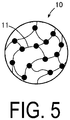
- a hydrophilic colloid particle 10 made from a crosslinked polymer as illustrated in FIG. 5 .
- the colloid particle 10 has a structure in which the polymer 11 is crosslinked with a crosslinking agent, and the dispersion medium can freely pass through the crosslinked mesh structure. Therefore, the apparent specific gravity of the colloidal particles 10 becomes extremely close to that of the dispersion medium, the apparent specific gravity of the opal-type colloidal crystals made from the colloidal particles 10 also becomes extremely close to that of the dispersion medium, and the opal-type colloidal crystals are stably dispersed in the dispersion medium without precipitating.
- the water-soluble polymer described above is desirable as the polymer constituting such a gel.
- hydrophobic particles such as styrene can be used when a dissociable group is introduced on the surface, because the hydrophobic particles can be stably dispersed in the dispersion medium.
- examples of such polymers include polystyrene that has been made hydrophilic through copolymerization of styrene sulfonic acid.
- the decorative aqueous composition according to an embodiment of the present invention can also be made into a decorative solidified body that has been solidified using a solidifying agent.
- a solidifying agent As a result, mechanical strength can be dramatically increased, and handling ease is highly improved.
- the lattice spacing of the colloidal crystals changes when pressure is applied to the solidified body, and therefore the solidified body can be used as a pressure sensor or the like by measuring the change in the reflection spectrum thereof.
- Examples of the solidifying agent include solutions containing a gel monomer, a crosslinking agent and a photopolymerization initiator.
- examples of the gel monomer include vinyl monomers such as acrylamide and derivatives thereof
- examples of the crosslinking agent include N,N'-methylene bisacrylamide
- examples of the photopolymerization initiator include 2,2'-azobis [2-methyl-N- [2-hydroxyethyl]-propionamide].
- a water-soluble photosensitive resin in which an azide-based photosensitive group is pendant to polyvinyl alcohol can also be used.
- the colloid crystals may be formed in the resin monomer and then solidified.
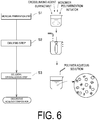
- the decorative aqueous composition according to an embodiment of the present invention can be produced according to the processes illustrated in FIG. 6 .
- hydrophilic colloidal particles 10 made from a crosslinked polymer are prepared as illustrated in FIG. 5 . That is, a monomer that serves as a material of a polymer, a crosslinking agent, a surfactant, and a polymerization initiator are dispersed and mixed in purified water, and then heated to thereby carry out emulsion polymerization. This results in a dispersed liquid in which the microgels formed from the crosslinked polymer illustrated in FIG. 5 are dispersed in the dispersion medium.
- microgel dispersion formed as described above is dialyzed against water, and the surfactant and polymerization initiator are removed (dialysis S2).
- a polymer aqueous solution is added to the microgel dispersion purified by dialysis, and then stirred. This immediately results in a decorative aqueous composition in which opal-type colloidal crystals are dispersed, with the entire sample uniformly exhibiting a structural color.
- N-isopropylacrylamide (NIPAM, Wako Pure Chemical Industries, Ltd.) was used as a monomer
- N,N'-methylenebisacrylamide (BIS, Wako Pure Chemical Industries, Ltd.) was used as a crosslinking agent
- sodium dodecyl sulfate SDS, Wako Pure Chemical Industries, Ltd.
- potassium peroxodisulfate KPS, Kanto Chemical Co., Inc.
- NIPAM (3.93 g) was dissolved in 175 mL of pure water produced in a Milli-Q purification device (hereinafter, referred to as "pure water"), BIS (0.075 g) was dissolved in 10 mL of pure water, and SDS (0.075 g) was dissolved in 60 mL of pure water.
- pure water a Milli-Q purification device
- BIS 0.075 g
- SDS 0.075 g
- the microgel dispersion obtained as described above was purified by dialysis with pure water and diluted to approximately 2 wt.%.
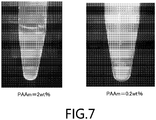
- An aqueous solution of polyacrylamide (PAAm, average molecular weight of 400000) was added to the sample at an amount so as to become 2 wt.%, and the entire sample immediately exhibited a uniform structural color ( FIG. 7 , right).
- Comparative Example 2 the microgels in the microgel dispersion of Comparative Example 1 were forcibly precipitated by centrifugation, and the microgel concentration was set to 40 wt.%.
- the reflection spectrum of the decorative aqueous composition of Example 1 was measured using a fiber spectrometer.
- the reflection spectrum of a sample with a PAAm concentration of 2 wt.% was measured at different heights (h) from the bottom of the measurement cell.
- h heights from the bottom of the measurement cell.
- the reflection spectrum was approximately the same shape regardless of the height from the bottom, and the distance between the particle centers determined by the Bragg equation at the peak position was approximately 250 nm. This value indicates that the microgels were in mutual contact, and very small opal-type colloidal crystals were formed, and suggests crystallization by depletion attraction force (see FIG. 3 ).
- Comparative Example 2 In contrast, in Comparative Example 1 in which the polymer (PAAm) was not added to the microgels, the entire sample did not exhibit a structural color. Therefore, in Comparative Example 2, the microgels were forcibly precipitated using a centrifugal separator and the microgel concentration was set to approximately 40 wt.% or higher, and a structural color was observed.
- the reflection spectrum of Comparative Example 2 is illustrated in FIG. 9 . At this time, the structural color was expressed only in the lower portion of the centrifuge cell (area where the microgels were concentrated to a high concentration).
- the reflection peak wavelength varied depending on the height (h) from the bottom of the measurement cell, and the distance between particle centers determined by the Bragg equation varied in a range of from 290 nm to 310 nm. From the above results, it was found that in Comparative Example 2, hard sphere-type colloidal crystals in which only hard sphere repulsion acted on the microgel particles were formed, and the microgels were not in contact with each other.
- Example 2 sodium chloride (NaCI) was added to pure water serving as a dispersion medium, at an amount to arrive at a predetermined concentration (0.1 mM in Example 2 and 0.01 mM in Example 3). All other conditions were the same as those in Example 1 (polyacrylamide concentration of 2 wt.%), and thus a detailed description thereof is omitted.
- NaCI sodium chloride
- Example 4 hydrochloric acid (HCl) was added to pure water serving as a dispersion medium, at an amount to arrive at a concentration of 0.01 mM. All other conditions were the same as those in Example 1 (polyacrylamide concentration of 2 wt%), and thus a detailed description thereof is omitted.
- Example 5 sodium hydroxide (NaOH) was added to pure water serving as a dispersion medium, at an amount to arrive at a concentration of 0.01 mM. All other conditions were the same as those in Example 1 (polyacrylamide concentration of 2 wt%), and thus a detailed description thereof is omitted.
- the decorative aqueous compositions of Example 2 to 5 prepared as described above, similar to the case of Example 1, the entirety of each sample immediately and uniformly exhibited the similar structural color as Example 1 after the addition of PAAm. In addition, the measurement results of the reflection spectra matched the case of Example 1 within the range of measurement error. From the foregoing, it was found that even in an aqueous solution with a salt concentration of 0.1 mM, the opal-type colloidal crystals were stably dispersed and exhibited a structural color. Therefore, the decorative aqueous compositions of Examples 1 to 5 can be sufficiently used in cosmetic lotions or the like that contains ionic additives or pH buffers.
- Example 6 the decorative aqueous composition of Example 1 was purified by dialysis, and then subjected to lyophilization to obtain a powder.
- this powder was added to a 2 wt.% PAAm aqueous solution, it was found that a structural color was observed when the gel concentration was 2 wt.% or higher, and a dispersion of the opal-type colloidal crystals was obtained.
- PAA polyacrylic acid
- NaPAA sodium polyacrylate
- PAA PAA average molecular weight of 1000000, neutralization degree of 50%
- NIPAM-AAm copolymer gel dispersions of Synthesis Examples 1 to 4 described below were synthesized as microgel dispersions.
- a NIPAM-AAm copolymer microgel dispersion was prepared by using, as monomers, 85 mol% of NIPAM, 10 mol% of acrylamide, and 5 mol% of BIS, and then adding SDS at a ratio of 1.5 wt.% and KPS at a ratio of 0.6 wt.%, with the other conditions being the same as in Example 1.
- a NIPAM-AAm copolymer microgel dispersion was prepared by using, as monomers, 75 mol% of NIPAM, 20 mol% of acrylamide, and 5 mol% of BIS, and then adding SDS at a ratio of 3.0 wt.% and KPS at a ratio of 0.6 wt.%, with the other conditions being the same as in Example 1.
- a NIPAM-AAm copolymer microgel dispersion was prepared by using, as monomers, 85 mol% of NIPAM, 10 mol% of acrylamide, and 5 mol% of BIS, and then adding SDS at a ratio of 1.0 wt.% and KPS at a ratio of 0.6 wt.%, with the other conditions being the same as in Example 1.
- a NIPAM-AAm copolymer microgel dispersion was prepared by using, as monomers, 75 mol% of NIPAM, 20 mol% of acrylamide, and 5 mol% of BIS, and then adding SDS at a ratio of 2.0 wt.% and KPS at a ratio of 0.6 wt.%, with the other conditions being the same as in Example 1.
- microgel dispersions prepared in Synthesis Examples 1 to 4 were lyophilized into a powder, and the microgels were dispersed in ethanol aqueous solutions each having concentrations of 0, 10, 20, 30, 40 and 50 wt.% such that the concentration of the microgels became 2 wt.%.
- concentration of the microgels became 2 wt.%.
- FIG. 10 shows that with all of the dispersions, in a temperature range of from 20°C to 50°C, the microgels were dispersed without aggregating, and color development due to interference of the opal-type colloidal crystals was observed.
- reflection spectrum of the dispersion of Synthesis Example 4 was measured at different temperatures, as illustrated in FIG. 11 , reflection peaks were observed up to at least 50°C, and the appearance maintained its color development as well.
- Example 9 the microgel dispersions of Synthesis Example 1 and Synthesis Example 2 were lyophilized into powders and then dispersed in water to a concentration of 2 wt.% to form dispersions.
- PAA was added at room temperature to these dispersions such that the PAA concentration was 10 mmol/L or 20 mmol/L.
- FIG. 12 interference colors associated with the formation of opal-type colloidal crystals were observed.
- the ethanol concentration was 30 wt.% or higher, the volume of the crystalline portion was reduced due to the shrinkage of the microgels, and a supernatant was observed. Thus, it was possible to maintain color development even when ethanol was added.
- a decorative aqueous composition of Example 10 was prepared by the following operations.
- microgel dispersion prepared in Synthesis Example 3 was lyophilized into a powder, and then dispersed in ethanol aqueous solutions having concentrations of 0, 10, 20, 30, 40 and 50 wt.% such that the microgel concentration was 2 wt.%.
- Hydroxyethyl cellulose molecular weight: 500000, product name: SE550, available from Daicel Corporation was added to the dispersion at a concentration of 0.5 wt.%.
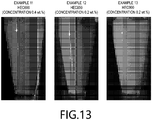
- Example 11 For the decorative aqueous composition of Example 11, hydroxyethyl cellulose having a different molecular weight than that of Example 10 was used (in Example 11, product of the trade name SE600, available from Daicel Corporation, having a molecular weight of 1020000 was used, in Example 12, product of the trade name SE850, available from Daicel Corporation, having a molecular weight of 1480000 was used, and in example 13, product of the trade name SE900, available from Daicel Corporation, having a molecular weight of 1560000 was used). Examples 11 to 13 were prepared with the other details being the same as those of Example 10. As a result, as shown in FIG. 13 , interference colors associated with the formation of opal-type colloidal crystals were clearly observed.
- PNIPAM gel (diameter of 193 nm, 3.56 wt.%) prepared in the same manner as in Example 1, 0.05 g of a 20 wt.% solution of polyethylene glycol (average molecular weight of 500000) was added, the entire sample exhibited a uniform structural color, and it was found that a dispersion of opal-type colloidal crystals can be prepared even when using polyethylene glycol as a water-soluble polymer.
- a water dispersion of the NIPAM microgels produced by the method of Example 1 was prepared, and PAAm having a molecular weight of 400000 (or PEG having a molecular weight of 1000000) was added thereto, and the lattice spacing was determined from a measurement of the Bragg diffraction wavelength. Meanwhile, the inter-particle distance for a case in which the size of the microgels was constant was determined through calculations. The results are shown in FIG. 14 . From the graphs of FIG. 14 , it was found that as the concentration of PAAm (or PEG) increased, the lattice spacing became smaller.
- the dispersions of the opal-type colloidal crystals of each of the examples described above can be immobilized by a known method ( JP 2006-182833 : Gel immobilized colloidal crystals). A specific example thereof is presented below.
- the gel monomer is polymerized by irradiating the dispersion of the above-described composition with ultraviolet light, and a solidified body of the dispersion of opal-type colloidal crystals is obtained.
- the decorative aqueous composition according to the present invention contains opal-type colloidal crystals dispersed in an aqueous dispersion medium, and exhibits a glittering, aesthetically excellent structural color through Bragg diffraction.
- the structural color thereof does not change at a salt concentration of about 0.1 mM, the decorative aqueous composition can be suitably used in cosmetic products such as cosmetic lotions.
Landscapes
- Health & Medical Sciences (AREA)
- Life Sciences & Earth Sciences (AREA)
- Public Health (AREA)
- Animal Behavior & Ethology (AREA)
- Veterinary Medicine (AREA)
- General Health & Medical Sciences (AREA)
- Chemical & Material Sciences (AREA)
- Epidemiology (AREA)
- Birds (AREA)
- Organic Chemistry (AREA)
- Dispersion Chemistry (AREA)
- Geometry (AREA)
- Physics & Mathematics (AREA)
- Chemical Kinetics & Catalysis (AREA)
- Dermatology (AREA)
- Cosmetics (AREA)
- Compositions Of Macromolecular Compounds (AREA)
Abstract
Description
- The present invention relates to a decorative aqueous composition that contains opal-type colloidal crystals dispersed in an aqueous dispersion medium and exhibits a structural color through Bragg diffraction, and to a method for producing the same.
- The term "colloidal crystal" refers to a substance in which particles having a uniform particle diameter with a size ranging from several nm to several µm form an ordered structure that is periodically and regularly aligned. Similar to normal crystals, colloidal crystals cause Bragg diffraction of electromagnetic waves according to the lattice spacing. The diffraction wavelength can be set to the visible light region, the infrared region, or other various wavelength regions by selecting production conditions (such as the particle concentration, particle diameter, and refractive index of the particles or medium). Therefore, technology has been developed in which colloidal crystals are dispersed in an aqueous dispersion medium to form a glittering decorative aqueous composition (for example,
Patent Documents 1 to 3). - Three types of colloid crystals are well known.
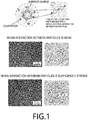
- The first type is a charged colloidal crystal. This is formed in charged colloidal system in which colloidal particles charged by a surface charge dispersed with electrostatic repulsion exerted between the particles. As illustrated in
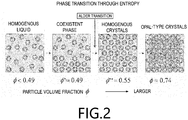
FIG. 1 , when the electrostatic repulsion is small, the colloidal particles move around freely through Brownian motion, and are therefore randomly positioned. However, as the electrostatic repulsion increases, the particles tend to separate as far as possible from the other particles, and as a result, the particles form a colloidal crystal with the particles aligned at a certain lattice spacing. Since the electrostatic repulsion reaches a long distance, crystals are formed at a low particle concentration (that is, where the distance between particles is long). - The second type is a hard sphere-type colloidal crystal in which only hard sphere repulsion is exerted between the particles. When a large number of macroscopic spheres are packed in a limited space, the spheres align in a periodic crystal-like manner, and the hard sphere-type colloidal crystals resemble this phenomenon. The parameter governing crystallization is only the particle volume fraction φ in the dispersion, and as illustrated in
FIG. 2 , crystallization occurs around φ = 0.49 (referred to as the Alder transition). At high concentration conditions of φ > 0.49, the number of possible particle arrangements is greater for a periodic particle arrangement than for a random particle arrangement, and therefore entropy is larger in a crystalline state than in a disordered state. Accordingly, in the hard sphere-type colloidal crystal, a crystal structure is formed in a state where the particles are not in contact with each other, even if in a close-packed condition. - The third type is an opal-type colloidal crystal, and as illustrated in the figure at the furthest right side of
FIG. 2 , the opal-type colloidal crystal has a crystalline structure packed with mutually contacting particles. Opals that are used as jewels are formed as colloidal crystals in which silica (SiO2) microparticles having a uniform particle diameter are precipitated and close-packed, and colloidal crystals in which colloidal microparticles are close-packed and crystallized are commonly referred to as opal-type colloidal crystals. The volume fraction of such crystals varies depending on the crystal structure, but for example, the volume fraction is approximately 0.68 with a body-centered cubic lattice and approximately 0.74 with a face-centered cubic lattice. - Of the three types of colloidal crystals described above, the decorative aqueous compositions described in the
abovementioned Patent Documents 1 to 3 use charged colloidal crystals. That is, the decorative aqueous compositions thereof have charged colloidal crystals that are formed in an aqueous dispersion medium, and result in liquids having a glittering structural color due to the interference of visible light. Therefore, application in cosmetic lotions and the like has been proposed. - However, as the salt concentration of charged colloidal system increases, electrical repulsion is reduced, which makes it difficult to keep the colloidal particles at a constant distance. For example, when the colloidal particles are diluted, charged colloidal crystals do not form at salt concentrations of several 10 µM or greater. In addition, when the concentration of colloidal particles is greater than or equal to 10%, charged colloidal crystals do not form at a salt concentration of approximately 0.1 mM or higher. Therefore, stable charged colloids cannot be formed at a salt concentration of 0.1 mM or higher. Cosmetic products such as cosmetic lotions contain ionic additives and pH buffers, and therefore use of charged colloidal crystals in decorative applications of cosmetic products or such is difficult from a practical perspective.
- On the other hand, hard sphere-type colloidal crystals require a high concentration of particles with the volume fraction of the particles being 0.5 or greater, and therefore it is difficult to use such hard sphere-type colloidal crystals in decorative applications of cosmetic products or the like. In addition, opal-type colloidal crystals require an even higher concentration of particles with the volume fraction of the particles being 0.74 or greater, and therefore it becomes even more difficult to use opal-type colloidal crystals in decorative applications of cosmetic products or the like.
- It is also conceivable to pulverize the hard sphere-type colloidal crystals and the opal-type colloidal crystals and disperse them in a dispersion medium to exhibit structural color, but it is difficult to stably disperse the finely pulverized matter of these colloidal crystals in a liquid for a long period of time, and uniform color development is of course difficult.
- Note that the inventors of the present invention discovered that when a method of dissolving a polymer in a colloidal system in which two types of colloidal particles having a uniform particle diameter are dispersed is used to produce opal-type colloidal crystals, the precipitated colloidal particles become an opal-type colloidal eutectic substance (Patent Document 4). In this method, colloidal particles precipitate to form a eutectic structure, and the opal-type colloidal crystals are not dispersed in the dispersion medium. And thus, a decorative aqueous composition in which the opal-type colloidal crystals are dispersed in an aqueous solvent is not formed.
- In addition, though an aqueous dispersion medium is not used, a phenomenon was discovered in which, using ethyl naphthalene as the dispersion medium, in a mixed system of two types of crosslinked polystyrene particles and one type of linear polystyrene polymer with the mixed system a plurality of types of opal-type colloidal crystals having different lattice constants are dispersed and coexist in the ethyl naphthalene (Non-Patent Document 1).
-
- Patent Document 1:
JP 06-100432 A - Patent Document 2:
JP 3537156 B - Patent Document 3:
JP 05-320022 A - Patent Document 4:
WO 2016/093121 - Non-Patent Document 1: Anna Kozina, et al., Soft Matter, 10, 9523-9533 (2014)
- The present invention is completed in light of the foregoing circumstances, and an object of the present invention is to provide a decorative aqueous composition that contains opal-type colloidal crystals uniformly and stably dispersed in an aqueous dispersion medium, and exhibits a structural color due to the interference of light, and to provide a method for producing the same.
- In a case where a polymer that is soluble in a dispersion medium is added in a colloidal dispersion, when the colloidal particles are in close proximity to each other, as illustrated in
FIG. 3 , a region where the space is too narrow for the dissolved polymer to enter is formed (hereinafter, referred to as a "depletion region"). Therefore, there is a difference in osmotic pressure due to a difference in concentrations of the polymers between the depletion region and other regions. It is known that a close-packed opal-type colloidal crystal is formed, in which the colloidal particles are in close proximity to, and are in contact with each other. Using this phenomenon, the present inventors discovered that by dissolving the polymer in a colloidal system in which colloidal particles are dispersed in an aqueous dispersion medium, a decorative aqueous composition having opal-type colloidal crystals dispersed in an aqueous dispersion medium is formed, and the present inventors thereby completed the present invention. - Namely, a decorative aqueous composition of the present invention has opal-type colloidal crystals dispersed in an aqueous dispersion medium, in which a polymer is dissolved, and colloidal particles constituting the opal-type colloidal crystals are dispersible in the aqueous dispersion medium and have an average particle diameter ranging from 10 nm to 1000 nm, and a variation coefficient of the particle diameter is within 20%.
- With the decorative aqueous composition of the present invention, a polymer is dissolved in an aqueous dispersion medium (in the present specification, the "aqueous dispersion medium" is defined as a dispersion medium containing 50 wt.% or more of water), and therefore a depletion region in which the polymer cannot enter is formed in a vicinity where colloidal particles constituting the opal-type colloidal crystals are in close proximity of each other. As a result, there is a difference in osmotic pressure the depletion region and other regions, and the colloidal particles are brought into contact with each other to form opal-type colloidal crystals. This difference in osmotic pressure is mostly stable regardless of the concentration of the electrolyte, and therefore even if the electrolyte concentration is at 0.1 mM, the crystal structure does not collapse. Note that the dissolved polymer (hereinafter, also referred to as a "depletant") need not necessarily be a linear polymer, and may also be a branched polymer, or microparticles of a size differing from the microparticles constituting the crystals. In the examples, representative examples are given using linear polymers, but the present invention is not limited to linear polymers.
- In addition, the variation coefficient of the particle diameter of the colloidal particles constituting the opal-type colloidal crystals is within 20%, and therefore it is possible to achieve an orderly colloidal crystal structure with few defects. Here, the variation coefficient of the particle diameter refers to the standard deviation of the particle diameter × 100/average particle diameter.
- Furthermore, since the average particle diameter of the colloidal particles ranges from 10 nm to 1000 nm, electromagnetic waves of various wavelengths such as ultraviolet rays, visible light rays, and infrared rays can be diffracted. Therefore, a composition having decorative properties can be formed.
- Accordingly, the decorative aqueous composition of the present invention contains opal-type colloidal crystals uniformly and stably dispersed in an aqueous dispersion medium, and exhibits a structural color due to the interference of light.
- The specific gravity of the colloidal particles constituting the opal-type colloidal crystal particles is preferably in a range from 0.9 times to 1.1 times the specific gravity of the aqueous dispersion medium. When the specific gravity of the colloidal particles is in this range, the specific gravity of the colloidal particles is close to the specific gravity of the aqueous dispersion medium, and therefore the opal-type colloidal crystal particles do not easily precipitate and can be stably dispersed. To bring the specific gravity of the aqueous dispersion medium close to the specific gravity of the colloidal particles constituting the opal-type colloidal crystals, a solute such as sugar may be added to the aqueous dispersion medium. On the other hand, even when the density of the particles is large, decoration using sedimentation is conceivable.
- Furthermore, the polymer dissolved in the aqueous dispersion medium of the decorative aqueous composition according to an embodiment of the present invention is not limited, and in addition to a vinyl-based polymer (such as an acrylic acid-based polymer and a methacrylic acid-based polymer), a water soluble polysaccharide (such as carboxymethyl cellulose, hyaluronic acid, or alginic acid) can be suitably used. From the perspective of facilitating formation of a depletion region between colloidal particles, the average molecular weight (here, "average molecular weight" refers to the number average molecular weight, same hereinafter) is preferably 10000 or higher, and the average molecular weight is more preferably 100000 or higher.
- The colloidal particles that form an opal-type colloidal crystal dispersed in a dispersion medium of the decorative aqueous composition according to an embodiment of the present invention are colloidal particles formed from a crosslinked polymer. If the colloidal particles are formed from such polymers, the dispersion medium can freely pass through the crosslinked mesh structure, and thus the apparent specific gravity of the colloidal particles becomes very close to that of the dispersion medium. Therefore, the apparent specific gravity of an opal-type colloidal crystal including colloidal particles is extremely close to that of the dispersion medium, and the opal-type colloidal crystals are stably dispersed in the dispersion medium without precipitating. In addition, since the refractive index of the solvent is also close to that of the colloidal particles, the transparency of the dispersion is enhanced.
- Moreover, the crosslinked polymer is not limited, and examples thereof include polymers having constituent units of acrylamide, water soluble acrylamide derivatives (such as methylolacrylamide and dimethyl acrylamide), acrylic acid, and water soluble acrylic acid derivatives (such as hydroxyethyl acrylate). Furthermore, polysaccharides and derivatives thereof can also be used.
- In addition, from the perspective of ensuring that the aqueous dispersion medium easily passes through the crosslinked mesh structure, the crosslinked polymer preferably has good hydrophilicity.
- The decorative aqueous composition according to an embodiment of the present invention exhibits a beautiful glittering structural color due to the interference of visible light by the dispersed opal-type colloidal crystals, and therefore, the decorative aqueous composition can be used in cosmetic products such as cosmetic lotions or milky lotions.
- Furthermore, the decorative aqueous composition according to an embodiment of the present invention can be used as a sensing material for temperature, pH, or the like. When colloidal particles that changes the particle diameter depending on the temperature or pH of the medium are used, the diffraction wavelength of the colloidal microcrystals formed by these particles changes depending on the temperature or pH. Therefore, such changes can be used for visual or spectral sensing.
- The decorative aqueous composition according to an embodiment of the present invention can also be a decorative solidified body that has been solidified using a solidifying agent. As a result, colloidal crystal particles are immobilized, and the mechanical strength dramatically increases. As a result, the material is extremely easy to handle. In addition, the lattice spacing of the colloidal crystals changes when pressure is applied to the solidified body, and therefore the solidified body can be used as a pressure sensor or the like by measuring the change in the reflection spectrum thereof.
- The decorative aqueous composition according to an embodiment of the present invention can be produced by mixing an aqueous dispersion medium, a polymer soluble in the aqueous dispersion medium, and colloidal particles having an average particle diameter ranging from 10 nm to 1000 nm with a variation coefficient of the particle diameter being within 20%, to form a dispersion of particles including opal-type colloidal crystals.
-
-
FIG. 1 is a schematic diagram illustrating the formation of a charged colloidal crystal. -
FIG. 2 is a schematic diagram illustrating a phase transition of a colloidal system. -
FIG. 3 is a schematic diagram illustrating a depletion effect due to dissolution of a polymer in a colloidal system. -
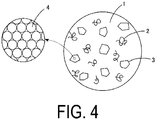
FIG. 4 is a schematic diagram of a decorative aqueous composition according to an embodiment of the present invention. -
FIG. 5 is a schematic view of a colloidal particle made from a crosslinked polymer. -
FIG. 6 is a process diagram illustrating a method for producing a decorative aqueous composition. -
FIG. 7 is photographs of a decorative aqueous composition prepared in Example 1. -
FIG. 8 is a graph showing measurement results for the decorative aqueous composition prepared in Example 1, the results being obtained by measuring the reflection spectrum at a different height from the bottom of a measurement cell. -
FIG. 9 is a graph showing measurement results for a decorative aqueous composition prepared in Comparative Example 2, the results being obtained by measuring the reflection spectrum at a different height from the bottom of the measurement cell. -
FIG. 10 is photographs showing the dispersed state when microgels prepared in Synthesis Examples 1 to 4 were dispersed in water-ethanol solutions at various temperatures. -
FIG. 11 is a graph showing the measurement results of the reflection spectra of microgels prepared in Synthesis Example 4. -
FIG. 12 is photographs of the decorative aqueous composition of Example 9. -
FIG. 13 is photographs of the decorative aqueous compositions of Examples 11 to 13. -
FIG. 14 is graphs showing the relationship between the concentration of the polymer dissolved in the decorative aqueous composition and the lattice spacings. - Hereinafter, embodiments that embody the present invention will be described with reference to the drawings.
-
FIG. 4 is a schematic diagram of a decorative aqueous composition according to an embodiment of the present invention. In this decorative aqueous composition, apolymer 2 having an average molecular weight of 100000 or higher is dissolved in anaqueous dispersion medium 1 such as water or water-ethanol (50% or more of water in terms of a weight ratio), and opal-typecolloidal crystals 3 are further dispersed in theaqueous dispersion medium 1. Each opal-typecolloidal crystal 3 has a structure in whichcolloidal particles 4 are close-packed. The average particle diameter of thecolloidal particle 4 ranges from 10 nm to 1000 nm, and a variation coefficient of the particle diameter is within 20%. - In this decorative aqueous composition, the
polymer 2 having an average molecular weight of 100000 or higher is dissolved in theaqueous dispersion medium 1, and therefore as illustrated inFIG. 3 , a depletion region of polymer (depletant) is formed in the vicinity wherecolloidal particles 4 constituting the opal-typecolloidal crystal 3 are in close proximity to each other. As a result, a difference in osmotic pressure (osmotic pressure difference) is produced between the depletion region and other regions, which causes thecolloidal particles 4 to contact with each other, and thus the opal-typecolloidal crystal 3 is formed. The average molecular weight of the polymer is preferably 200000 or greater, more preferably 300000 or greater, and even more preferably 500000 or greater. The osmotic pressure difference is mostly stable regardless of the concentration of the electrolyte. Therefore, even if the electrolyte concentration of the solvent is at 0.1 mM, the structure of the opal-type colloidal crystal does not collapse. - In addition, the variation coefficient of the particle diameter of the
colloidal particles 4 constituting the opal-typecolloidal crystals 3 is within 20%, and therefore it is possible to achieve an orderly colloidal crystal structure with few defects. Furthermore, since the average particle diameter of thecolloidal particles 4 ranges from 10 nm to 1000 nm, electromagnetic waves of various wavelengths such as ultraviolet rays, visible light rays, and infrared rays can be diffracted. Therefore, a composition having decorative properties can be formed. - Accordingly, light interference occurs due to the opal-type
colloidal crystals 3, and as a result, the decorative aqueous composition according to an embodiment of the present invention exhibits glittering structural color. - The variation coefficient of the particle diameter of the colloidal particles constituting the opal-type colloidal crystals is required to be within 20%, is preferably less than 15%, more preferably less than 10%, and even more preferably less than 5%.
- In addition, the specific gravity of the colloidal particles constituting the opal-type colloidal crystal particles is preferably in a range of from 0.9 times to 1.1 times the specific gravity of the aqueous dispersion medium. When the specific gravity of the colloidal particles is in this range, the specific gravity of the colloidal particles is close to the specific gravity of the aqueous dispersion medium, and therefore the opal-type colloidal crystal particles do not easily precipitate and can be stably dispersed. The specific gravity of the colloidal particles constituting the opal-type colloidal crystal particles more preferably ranges from 0.99 times to 1.01 times, and most preferably from 0.995 times to 1.005 times.
- Furthermore, the polymer dissolved in the aqueous dispersion medium of the decorative aqueous composition can be used as long as it is a polymer that dissolves in the aqueous dispersion medium. The average molecular weight of the polymer is preferably 10000 or greater. As described above, when the colloidal particles are in close proximity to each other, the region where the space is too small for the polymer to enter (that is, the depletion region) is formed, and this region increases in its size. This increase of the depletion region in size brings the particles to be close together due to the osmotic pressure difference, and thereby ensuring the formation of the opal-type colloidal crystals. A polymer having an average molecular weight of 100000 or greater is even more preferable. Furthermore, as a preferable characteristic of the polymer, the polymer preferably has a property of not easily being adsorbed to the colloidal particles dispersed in the aqueous dispersion medium. This is because in a case where the polymer is easily adsorbed to the colloidal particles, the polymer may act as an agglomerating agent, and there is a risk that the colloidal particles may aggregate and precipitate.
- In an embodiment of the present invention, a water-soluble ionic polymer or water-soluble nonionic polymer can be used as the water soluble polymer (depletant) that is added to express depletion attraction force between colloidal particles. Examples of water-soluble nonionic polymers include polyethylene glycol, polypropylene glycol, polyvinyl alcohol, polyether, and polyvinylpyrrolidone. Furthermore, examples of water-soluble ionic polymers include cationic polymers such as polyvinyl pyridine, polyvinyl benzyl ammonium, and polypeptides; and anionic polymers such as polyacrylic acids, polyacrylamides, poly(N-isopropylacrylamide), polypeptides and other such biopolymers, and natural polymers such as hyaluronic acid, chondroitin sulfate, alginic acid and other such polysaccharides. In the selection of these polymers, a polymer having a charge opposite to the surface charge of the colloidal particles is not preferable because such polymer may be adsorbed to the colloidal particles to form a charged colloid. However, even with a polymer having a charge opposite to the surface charge of the colloidal particles, if the salt concentration is high, the electric double layer becomes extremely thin, and the colloidal particles can be brought close to each other. As a result, a difference in osmotic pressure due to the difference in concentration of the polymer is created, which induces a depletion attraction force. Thus, the opal-type colloidal crystal is formed, and such polymer can be used. Furthermore, this phenomenon may be advantageously employed; the concentration of the salt in the colloid is adjusted as appropriate to control the thickness of the electric double layer, the attraction force between colloidal particles can be controlled. And thus, the growth rate of the opal-type colloidal crystals, the half width at half maximum of the colloidal crystal with respect to light, and the like can be controlled. Examples of methods for controlling the salt concentration include controlling the content rate of ionic groups (such as carboxylic acid salts and amino groups) in the polymer, and adding salt. In addition, the polymer is not limited to a linear polymer, and various branched polymers, polymer assemblies, micelles, and spherical particles can also be used as long as they exhibit a depletion effect and an attractive force effect.
- Furthermore, the colloidal particles forming the opal-type colloidal crystals are preferably particles made from a hydrophilic polymer. Such colloidal particles can facilitate a stable dispersion of the opal-type colloidal crystal particles in the aqueous dispersion medium. Examples of the polymer constituting such colloid particles include poly(N-isopropylacrylamide), polyethylene glycol, polypropylene glycol, polyvinyl alcohol, polyether, and polyvinylpyrrolidone. Mixtures or copolymers of these polymers can also be used as the colloidal particles.
- Furthermore, examples of water-soluble ionic polymers include cationic polymers such as polyvinyl pyridine, polyvinyl benzyl ammonium, and polypeptides; and anionic polymers such as polyacrylic acids, polyacrylamides, polypeptides, hyaluronic acid, chondroitin sulfate, alginic acid and other such polysaccharides, and other such natural polymers.
- More preferable is a hydrophilic
colloid particle 10 made from a crosslinked polymer, as illustrated inFIG. 5 . Thecolloid particle 10 has a structure in which thepolymer 11 is crosslinked with a crosslinking agent, and the dispersion medium can freely pass through the crosslinked mesh structure. Therefore, the apparent specific gravity of thecolloidal particles 10 becomes extremely close to that of the dispersion medium, the apparent specific gravity of the opal-type colloidal crystals made from thecolloidal particles 10 also becomes extremely close to that of the dispersion medium, and the opal-type colloidal crystals are stably dispersed in the dispersion medium without precipitating. The water-soluble polymer described above is desirable as the polymer constituting such a gel. - On the other hand, even hydrophobic particles such as styrene can be used when a dissociable group is introduced on the surface, because the hydrophobic particles can be stably dispersed in the dispersion medium. Examples of such polymers include polystyrene that has been made hydrophilic through copolymerization of styrene sulfonic acid.
- The decorative aqueous composition according to an embodiment of the present invention can also be made into a decorative solidified body that has been solidified using a solidifying agent. As a result, mechanical strength can be dramatically increased, and handling ease is highly improved. In addition, the lattice spacing of the colloidal crystals changes when pressure is applied to the solidified body, and therefore the solidified body can be used as a pressure sensor or the like by measuring the change in the reflection spectrum thereof.
- Examples of the solidifying agent include solutions containing a gel monomer, a crosslinking agent and a photopolymerization initiator. Examples of the gel monomer include vinyl monomers such as acrylamide and derivatives thereof, examples of the crosslinking agent include N,N'-methylene bisacrylamide, and examples of the photopolymerization initiator include 2,2'-azobis [2-methyl-N- [2-hydroxyethyl]-propionamide]. In addition, a water-soluble photosensitive resin in which an azide-based photosensitive group is pendant to polyvinyl alcohol can also be used. Furthermore, the colloid crystals may be formed in the resin monomer and then solidified.
- The decorative aqueous composition according to an embodiment of the present invention can be produced according to the processes illustrated in
FIG. 6 . - First, as a microgel preparation S1, hydrophilic
colloidal particles 10 made from a crosslinked polymer are prepared as illustrated inFIG. 5 . That is, a monomer that serves as a material of a polymer, a crosslinking agent, a surfactant, and a polymerization initiator are dispersed and mixed in purified water, and then heated to thereby carry out emulsion polymerization. This results in a dispersed liquid in which the microgels formed from the crosslinked polymer illustrated inFIG. 5 are dispersed in the dispersion medium. - Furthermore, the microgel dispersion formed as described above is dialyzed against water, and the surfactant and polymerization initiator are removed (dialysis S2).
- A polymer aqueous solution is added to the microgel dispersion purified by dialysis, and then stirred. This immediately results in a decorative aqueous composition in which opal-type colloidal crystals are dispersed, with the entire sample uniformly exhibiting a structural color.
- The present invention will be described below while comparing more specific examples according to an embodiment of the present invention with comparative examples.
- N-isopropylacrylamide (NIPAM, Wako Pure Chemical Industries, Ltd.) was used as a monomer, N,N'-methylenebisacrylamide (BIS, Wako Pure Chemical Industries, Ltd.) was used as a crosslinking agent, sodium dodecyl sulfate (SDS, Wako Pure Chemical Industries, Ltd.) was used as a surfactant, and potassium peroxodisulfate (KPS, Kanto Chemical Co., Inc.) was used as a radical polymerization initiator. NIPAM (3.93 g) was dissolved in 175 mL of pure water produced in a Milli-Q purification device (hereinafter, referred to as "pure water"), BIS (0.075 g) was dissolved in 10 mL of pure water, and SDS (0.075 g) was dissolved in 60 mL of pure water. The three solutions were mixed and then transferred to a 500 mL 4-neck round bottom flask and stirred for 1 hour at 850 rpm and 70°C while circulating Ar. Separately, a solution in which KPS (0.15 g) was dissolved in 5 mL of pure water and held at 70°C was added to the 4-neck round bottom flask described above, and the mixture was stirred for an additional 4 hours at 850 rpm and 70°C while circulating Ar to carry out an emulsion polymerization reaction, and a dispersion of microgels, in which polyisopropylacrylamide (PNIPAM) was crosslinked by N,N'-methylenebisacrylamide (BIS), was obtained.
- The microgel dispersion obtained as described above was purified by dialysis with pure water and diluted to approximately 2 wt.%. An aqueous solution of polyacrylamide (PAAm, average molecular weight of 400000) was added to the sample at an amount so as to become 2 wt.%, and the entire sample immediately exhibited a uniform structural color (
FIG. 7 , right). The entire sample immediately exhibited a uniform structural color even when the PAAm concentration was 0.2 wt.%, but with the passage of time, the material precipitated to the bottom of the container in which the sample was placed, and a structural color was observed in the precipitate (FIG. 7 , left). - In Comparative Example 1, PAAm was not added to the microgel dispersion described above. All other details were the same as those of Example 1, and thus a detailed description thereof is omitted.
- In Comparative Example 2, the microgels in the microgel dispersion of Comparative Example 1 were forcibly precipitated by centrifugation, and the microgel concentration was set to 40 wt.%.
- The reflection spectrum of the decorative aqueous composition of Example 1 was measured using a fiber spectrometer. The reflection spectrum of a sample with a PAAm concentration of 2 wt.% was measured at different heights (h) from the bottom of the measurement cell. As a result, as illustrated in
FIG. 8 , the reflection spectrum was approximately the same shape regardless of the height from the bottom, and the distance between the particle centers determined by the Bragg equation at the peak position was approximately 250 nm. This value indicates that the microgels were in mutual contact, and very small opal-type colloidal crystals were formed, and suggests crystallization by depletion attraction force (seeFIG. 3 ). - In contrast, in Comparative Example 1 in which the polymer (PAAm) was not added to the microgels, the entire sample did not exhibit a structural color. Therefore, in Comparative Example 2, the microgels were forcibly precipitated using a centrifugal separator and the microgel concentration was set to approximately 40 wt.% or higher, and a structural color was observed. The reflection spectrum of Comparative Example 2 is illustrated in
FIG. 9 . At this time, the structural color was expressed only in the lower portion of the centrifuge cell (area where the microgels were concentrated to a high concentration). In addition, the reflection peak wavelength varied depending on the height (h) from the bottom of the measurement cell, and the distance between particle centers determined by the Bragg equation varied in a range of from 290 nm to 310 nm. From the above results, it was found that in Comparative Example 2, hard sphere-type colloidal crystals in which only hard sphere repulsion acted on the microgel particles were formed, and the microgels were not in contact with each other. - In Example 2 and Example 3, sodium chloride (NaCI) was added to pure water serving as a dispersion medium, at an amount to arrive at a predetermined concentration (0.1 mM in Example 2 and 0.01 mM in Example 3). All other conditions were the same as those in Example 1 (polyacrylamide concentration of 2 wt.%), and thus a detailed description thereof is omitted.
- In Example 4, hydrochloric acid (HCl) was added to pure water serving as a dispersion medium, at an amount to arrive at a concentration of 0.01 mM. All other conditions were the same as those in Example 1 (polyacrylamide concentration of 2 wt%), and thus a detailed description thereof is omitted.
- In Example 5, sodium hydroxide (NaOH) was added to pure water serving as a dispersion medium, at an amount to arrive at a concentration of 0.01 mM. All other conditions were the same as those in Example 1 (polyacrylamide concentration of 2 wt%), and thus a detailed description thereof is omitted.
- With the decorative aqueous compositions of Example 2 to 5 prepared as described above, similar to the case of Example 1, the entirety of each sample immediately and uniformly exhibited the similar structural color as Example 1 after the addition of PAAm. In addition, the measurement results of the reflection spectra matched the case of Example 1 within the range of measurement error. From the foregoing, it was found that even in an aqueous solution with a salt concentration of 0.1 mM, the opal-type colloidal crystals were stably dispersed and exhibited a structural color. Therefore, the decorative aqueous compositions of Examples 1 to 5 can be sufficiently used in cosmetic lotions or the like that contains ionic additives or pH buffers.
- In Example 6, the decorative aqueous composition of Example 1 was purified by dialysis, and then subjected to lyophilization to obtain a powder. When this powder was added to a 2 wt.% PAAm aqueous solution, it was found that a structural color was observed when the gel concentration was 2 wt.% or higher, and a dispersion of the opal-type colloidal crystals was obtained.
- To 250 µL of a purified PNIPA gel (3.56 wt.%) aqueous solution prepared in the same manner as in Example 1, 25 mg of a polyacrylic acid (PAA, average molecular weight of 1000000) aqueous solution (prepared with a PAA concentration = 5 wt.%) was added, the entire sample immediately exhibited a uniform structural color, and it was found that a dispersion of opal-type colloidal crystals was formed.
- To 200 µL of purified PNIPAM microgels (3.56 wt.%) prepared in the same manner as in Example 1, 5 to 30 mg each of a sodium polyacrylate (NaPAA, PAA average molecular weight of 1000000, neutralization degree of 50%) aqueous solution (prepared with an NaPAA concentration = 5 wt.%) was added the entire sample uniformly exhibited a structural color, and it was found that a dispersion of opal-type colloidal crystals was formed.
- In contrast, to 250 µL of purified PNIPAM microgels (3.56 wt.%) prepared in the same manner as Example 1, 25 mg of an aqueous solution (5 wt.%) of NaPAA (neutralization degree of 50%) having an average molecular weight of 25000 in Comparative Example 3 and a molecular weight of 5000 in Comparative Example 4 was added a structural color was not observed, and it was found that a dispersion of opal-type colloidal crystals was not formed. As a cause for the failure to form the dispersion, it is thought that, due to the low molecular weight of the NaPAA molecules, the NaPAA molecules were able to penetrate into the space that was formed when the PNIPAM microgels were in close proximity to each other, and therefore a depletion region was not formed, failing to create a difference in osmotic pressure.
- NIPAM-AAm copolymer gel dispersions of Synthesis Examples 1 to 4 described below were synthesized as microgel dispersions.
- A NIPAM-AAm copolymer microgel dispersion was prepared by using, as monomers, 85 mol% of NIPAM, 10 mol% of acrylamide, and 5 mol% of BIS, and then adding SDS at a ratio of 1.5 wt.% and KPS at a ratio of 0.6 wt.%, with the other conditions being the same as in Example 1.
- A NIPAM-AAm copolymer microgel dispersion was prepared by using, as monomers, 75 mol% of NIPAM, 20 mol% of acrylamide, and 5 mol% of BIS, and then adding SDS at a ratio of 3.0 wt.% and KPS at a ratio of 0.6 wt.%, with the other conditions being the same as in Example 1.
- A NIPAM-AAm copolymer microgel dispersion was prepared by using, as monomers, 85 mol% of NIPAM, 10 mol% of acrylamide, and 5 mol% of BIS, and then adding SDS at a ratio of 1.0 wt.% and KPS at a ratio of 0.6 wt.%, with the other conditions being the same as in Example 1.
- A NIPAM-AAm copolymer microgel dispersion was prepared by using, as monomers, 75 mol% of NIPAM, 20 mol% of acrylamide, and 5 mol% of BIS, and then adding SDS at a ratio of 2.0 wt.% and KPS at a ratio of 0.6 wt.%, with the other conditions being the same as in Example 1.
- The particle diameters of the NIPAM-AAm copolymer microgel dispersions of Synthesis Examples 1 to 4 prepared as described above were determined by measuring the diffusion coefficient by dynamic light scattering, and then entering the value thereof into the Stokes-Einstein equation. The results are shown in Table 1.
[Table 1] Synthesis Example NIPAM AAm Bis SDS KPS Particle Diameter 1 85 mol% 10 mol% 5 mol% 1.5 wt% 0.6 wt% 271 ± 27.3 nm 2 75 mol% 20 mol% 3.0 wt% 291 ± 53.7 nm 3 85 mol% 10 mol% 1.0 wt% 320 ± 36.1 nm 4 75 mol% 20 mol% 2.0 wt% 335 ± 21.1 nm - The microgel dispersions prepared in Synthesis Examples 1 to 4 were lyophilized into a powder, and the microgels were dispersed in ethanol aqueous solutions each having concentrations of 0, 10, 20, 30, 40 and 50 wt.% such that the concentration of the microgels became 2 wt.%. As a result, as shown in
FIG. 10 , with all of the dispersions, in a temperature range of from 20°C to 50°C, the microgels were dispersed without aggregating, and color development due to interference of the opal-type colloidal crystals was observed. Furthermore, when the reflection spectrum of the dispersion of Synthesis Example 4 was measured at different temperatures, as illustrated inFIG. 11 , reflection peaks were observed up to at least 50°C, and the appearance maintained its color development as well. - In Example 9, the microgel dispersions of Synthesis Example 1 and Synthesis Example 2 were lyophilized into powders and then dispersed in water to a concentration of 2 wt.% to form dispersions. Next, PAA was added at room temperature to these dispersions such that the PAA concentration was 10 mmol/L or 20 mmol/L. As a result, as shown in
FIG. 12 , interference colors associated with the formation of opal-type colloidal crystals were observed. Note that when the ethanol concentration was 30 wt.% or higher, the volume of the crystalline portion was reduced due to the shrinkage of the microgels, and a supernatant was observed. Thus, it was possible to maintain color development even when ethanol was added. In cases in which the ethanol concentration was 60 wt.% or higher, the PAAm did not dissolve. Regarding temperature resistance, microgels that could withstand 50°C were successfully synthesized. The sample ultimately exhibited white turbidity at 54°C. Regarding ethanol, the microgels were not able to withstand 50 wt.% ethanol, but tolerability was improved to 30 wt.%. Only samples of 30 wt.% ethanol exhibited dramatic precipitation. Microgels were dispersed in 60 wt.% to 100 wt.% ethanol, but the PAAm added as a polymer is a poor solvent with respect to ethanol and did not dissolve. - A decorative aqueous composition of Example 10 was prepared by the following operations.
- First, the microgel dispersion prepared in Synthesis Example 3 was lyophilized into a powder, and then dispersed in ethanol aqueous solutions having concentrations of 0, 10, 20, 30, 40 and 50 wt.% such that the microgel concentration was 2 wt.%. Hydroxyethyl cellulose (molecular weight: 500000, product name: SE550, available from Daicel Corporation) was added to the dispersion at a concentration of 0.5 wt.%.
- For the decorative aqueous composition of Example 11, hydroxyethyl cellulose having a different molecular weight than that of Example 10 was used (in Example 11, product of the trade name SE600, available from Daicel Corporation, having a molecular weight of 1020000 was used, in Example 12, product of the trade name SE850, available from Daicel Corporation, having a molecular weight of 1480000 was used, and in example 13, product of the trade name SE900, available from Daicel Corporation, having a molecular weight of 1560000 was used). Examples 11 to 13 were prepared with the other details being the same as those of Example 10. As a result, as shown in
FIG. 13 , interference colors associated with the formation of opal-type colloidal crystals were clearly observed. - To 500 µL of a purified PNIPAM gel (diameter of 193 nm, 3.56 wt.%) prepared in the same manner as in Example 1, 0.05 g of a 20 wt.% solution of polyethylene glycol (average molecular weight of 500000) was added, the entire sample exhibited a uniform structural color, and it was found that a dispersion of opal-type colloidal crystals can be prepared even when using polyethylene glycol as a water-soluble polymer.
- In order to examine the relationship between the concentration of the polymer dissolved in the decorative aqueous composition and the lattice spacing, the following experiment was conducted.
- First, a water dispersion of the NIPAM microgels produced by the method of Example 1 was prepared, and PAAm having a molecular weight of 400000 (or PEG having a molecular weight of 1000000) was added thereto, and the lattice spacing was determined from a measurement of the Bragg diffraction wavelength. Meanwhile, the inter-particle distance for a case in which the size of the microgels was constant was determined through calculations. The results are shown in
FIG. 14 . From the graphs ofFIG. 14 , it was found that as the concentration of PAAm (or PEG) increased, the lattice spacing became smaller. - The dispersions of the opal-type colloidal crystals of each of the examples described above can be immobilized by a known method (
JP 2006-182833 - The following chemical agents are added and dissolved in the dispersion of the opal-type colloidal crystals of each example.
Gel monomer: N,N'-dimethylol acrylamide (N-MAM)
0.67 mol/L
Crosslinking agent: methylenebisacrylamide (BIS) 10 mmol/L
Photopolymerization initiator: 2,2'-azobis [2-methyl-N-[2-hydroxyethyl]-propionamide
4 mg/mL
Sodium dodecyl sulfate: 10 µmol/L - Then, the gel monomer is polymerized by irradiating the dispersion of the above-described composition with ultraviolet light, and a solidified body of the dispersion of opal-type colloidal crystals is obtained.
- The present invention is not limited in any way to the description of the embodiments and examples of the invention described above. Various modified aspects that are within a scope that could be readily conceived of by a person skilled in the art are also included in the present invention without departing from the scope of the claims.
- The decorative aqueous composition according to the present invention contains opal-type colloidal crystals dispersed in an aqueous dispersion medium, and exhibits a glittering, aesthetically excellent structural color through Bragg diffraction. In addition, because the structural color thereof does not change at a salt concentration of about 0.1 mM, the decorative aqueous composition can be suitably used in cosmetic products such as cosmetic lotions.
-
- 1
- Aqueous dispersion medium
- 2
- Polymer
- 3
- Opal-type colloidal crystal
- 4,10
- Colloidal particle
- 11
- Polymer
- 12
- Crosslinking agent
- 13
- Crosslinking point
- S1
- Microgel preparation
- S2
- Dialysis
- S3
- Colloidal crystallization
Claims (9)
- A decorative aqueous composition comprising opal- type colloidal crystals dispersed in an aqueous dispersion medium, a polymer being dissolved in the aqueous dispersion, wherein colloidal particles constituting the opal-type colloidal colloidal crystals are dispersible in the aqueous dispersion medium and have an average particle diameter ranging from 10 nm to 1000 nm, and a variation coefficient of the particle diameter is within 20%.
- The decorative aqueous composition according to claim 1, wherein a specific gravity of the colloidal particles is in a range from 0.9 times to 1.1 times a specific gravity of the aqueous dispersion medium.
- The decorative aqueous composition according to claim 1 or 2, wherein the colloidal particles include a crosslinked polymer.
- The decorative aqueous composition according to any one of claims 1 to 3, wherein the colloidal particles include poly(N-isopropylacrylamide).
- The decorative aqueous composition according to any one of claims 1 to 3, wherein the colloidal particles include poly(N-isopropylacrylamide) and polyacrylamide.
- The decorative aqueous composition according to any one of claims 1 to 5, wherein the aqueous dispersion medium includes an alcohol in addition to water.
- A decorative solidified body formed by solidifying the decorative aqueous composition of any one of claims 1 to 6.
- A method for producing a decorative aqueous composition, the method comprising mixing an aqueous dispersion medium, a polymer soluble in the aqueous dispersion medium, and colloidal particles having an average particle diameter ranging from 10 nm to 1000 nm with a variation coefficient of the particle diameter being within 20%, to form a dispersion of particles including opal- type colloidal colloidal crystals.
- The method for producing a decorative aqueous composition according to claim 8, wherein the hydrophilic colloidal particles are a crosslinked hydrophilic polymer.
Applications Claiming Priority (2)
| Application Number | Priority Date | Filing Date | Title |
|---|---|---|---|
| JP2018026682 | 2018-02-19 | ||
| PCT/JP2019/005758 WO2019160132A1 (en) | 2018-02-19 | 2019-02-18 | Decorative aqueous composition and method for producing same |
Publications (2)
| Publication Number | Publication Date |
|---|---|
| EP3756646A1 true EP3756646A1 (en) | 2020-12-30 |
| EP3756646A4 EP3756646A4 (en) | 2022-03-23 |
Family
ID=67618502
Family Applications (1)
| Application Number | Title | Priority Date | Filing Date |
|---|---|---|---|
| EP19753939.8A Pending EP3756646A4 (en) | 2018-02-19 | 2019-02-18 | Decorative aqueous composition and method for producing same |
Country Status (5)
| Country | Link |
|---|---|
| US (1) | US20200405590A1 (en) |
| EP (1) | EP3756646A4 (en) |
| JP (1) | JP7427174B2 (en) |
| CN (1) | CN111511347B (en) |
| WO (1) | WO2019160132A1 (en) |
Families Citing this family (2)
| Publication number | Priority date | Publication date | Assignee | Title |
|---|---|---|---|---|
| JP7548532B2 (en) * | 2018-06-27 | 2024-09-10 | 学校法人東京理科大学 | Dispersion and method for producing same |
| JP7752334B2 (en) * | 2021-05-25 | 2025-10-10 | 公立大学法人名古屋市立大学 | Decorative aqueous composition and method for producing the same |
Family Cites Families (6)
| Publication number | Priority date | Publication date | Assignee | Title |
|---|---|---|---|---|
| JP4190239B2 (en) * | 2002-09-13 | 2008-12-03 | 財団法人川村理化学研究所 | Colloidal crystal and method for producing the same |
| JP5663752B2 (en) * | 2008-05-28 | 2015-02-04 | 公立大学法人名古屋市立大学 | Method for producing colloidal crystal and colloidal crystal |
| WO2013082597A1 (en) * | 2011-12-02 | 2013-06-06 | President And Fellows Of Harvard College | Photonic balls containing a microstructure of core-shell particles exhibiting angularly-independent structural color |
| JP2014206617A (en) * | 2013-04-12 | 2014-10-30 | 桜宮化学株式会社 | Method for manufacturing colloid crystal particle and colloid crystal particle |
| US10675604B2 (en) * | 2014-12-12 | 2020-06-09 | Public University Corporation Nagoya City University | Eutectic colloidal crystal, eutectic colloidal crystal solidified body, and methods for producing them |
| JP7079923B2 (en) * | 2018-07-18 | 2022-06-03 | 公立大学法人名古屋市立大学 | Materials for SERS measurement and their manufacturing methods |
-
2019
- 2019-02-18 CN CN201980006667.3A patent/CN111511347B/en active Active
- 2019-02-18 US US16/955,614 patent/US20200405590A1/en not_active Abandoned
- 2019-02-18 JP JP2019572308A patent/JP7427174B2/en active Active
- 2019-02-18 WO PCT/JP2019/005758 patent/WO2019160132A1/en not_active Ceased
- 2019-02-18 EP EP19753939.8A patent/EP3756646A4/en active Pending
Also Published As
| Publication number | Publication date |
|---|---|
| EP3756646A4 (en) | 2022-03-23 |
| US20200405590A1 (en) | 2020-12-31 |
| JPWO2019160132A1 (en) | 2021-02-04 |
| JP7427174B2 (en) | 2024-02-05 |
| WO2019160132A1 (en) | 2019-08-22 |
| CN111511347B (en) | 2024-04-19 |
| CN111511347A (en) | 2020-08-07 |
Similar Documents
| Publication | Publication Date | Title |
|---|---|---|
| US7347988B2 (en) | Synthesis, uses and compositions of crystal hydrogels | |
| Xiao et al. | Preparation and characterization of pH-responsive Pickering emulsion stabilized by grafted carboxymethyl starch nanoparticles | |
| Zeeb et al. | Retention and release of oil-in-water emulsions from filled hydrogel beads composed of calcium alginate: impact of emulsifier type and pH | |
| Bulychev et al. | Nanotechnological aspects of temperature-dependent decomposition of polymer solutions | |
| JP4759165B2 (en) | Organic / inorganic composite hydrogel and method for producing the same | |
| Schatz et al. | Formation and properties of positively charged colloids based on polyelectrolyte complexes of biopolymers | |
| Goodwin | Colloids and interfaces with surfactants and polymers | |
| Hou et al. | Exploring the volume phase transition behavior of POEGA-and PNIPAM-based core–shell nanogels from infrared-spectral insights | |
| Zhang et al. | A novel route to prepare pH-and temperature-sensitive nanogels via a semibatch process | |
| Li et al. | Self-assembled nanoparticles from thermo-sensitive polyion complex micelles for controlled drug release | |
| Li et al. | Effect of charge density of polysaccharide on self-assembly behaviors of ovalbumin and sodium alginate | |
| Perevyazko et al. | Nanoprecipitation of poly (methyl methacrylate)‐based nanoparticles: Effect of the molar mass and polymer behavior | |
| JP6754963B2 (en) | Colloidal eutectic, colloidal eutectic solidified product, and method for producing them | |
| Korchagina et al. | Effects of hydrophobic substituents and salt on core–shell aggregates of hydrophobically modified chitosan: Light scattering study | |
| Ezhova et al. | Contraction and coagulation of spherical polyelectrolyte brushes in the presence of Ag+, Mg2+, and Ca2+ cations | |
| Fan et al. | Self-assembled structures of anionic hydrophobically modified polyacrylamide with star-shaped trimeric and hexameric quaternary ammonium surfactants | |
| Moustafa et al. | Synthesis and in vitro release of guest drugs‐loaded copolymer nanospheres MMA/HEMA via differential microemulsion polymerization | |
| US20200405590A1 (en) | Decorative aqueous composition and method for producing same | |
| Takahashi et al. | Lyotropic morphology transition of double zwitterionic diblock copolymer aqueous solutions | |
| Liu et al. | Impact of polymer microstructure on the self-assembly of amphiphilic polymers in aqueous solutions | |
| Kaczmarek et al. | Response of block copolyelectrolyte complexes to addition of ionic surfactants | |
| Mackiewicz et al. | Unusual swelling behavior of core-shell microgels built from polymers exhibiting lower critical solubility temperature | |
| Bu et al. | Effects of the quantity and structure of hydrophobes on the properties of hydrophobically modified alginates in aqueous solutions | |
| Bartkowiak | Effect of the ionic strength on properties of binary alginate/oligochitosan microcapsules | |
| Annaka | Salt effect on microscopic structure and stability of colloidal complex obtained from neutral/polyelectrolyte block copolymer and oppositely charged surfactant |
Legal Events
| Date | Code | Title | Description |
|---|---|---|---|
| STAA | Information on the status of an ep patent application or granted ep patent |
Free format text: STATUS: THE INTERNATIONAL PUBLICATION HAS BEEN MADE |
|
| PUAI | Public reference made under article 153(3) epc to a published international application that has entered the european phase |
Free format text: ORIGINAL CODE: 0009012 |
|
| STAA | Information on the status of an ep patent application or granted ep patent |
Free format text: STATUS: REQUEST FOR EXAMINATION WAS MADE |
|
| 17P | Request for examination filed |
Effective date: 20200806 |
|
| AK | Designated contracting states |
Kind code of ref document: A1 Designated state(s): AL AT BE BG CH CY CZ DE DK EE ES FI FR GB GR HR HU IE IS IT LI LT LU LV MC MK MT NL NO PL PT RO RS SE SI SK SM TR |
|
| AX | Request for extension of the european patent |
Extension state: BA ME |
|
| DAV | Request for validation of the european patent (deleted) | ||
| DAX | Request for extension of the european patent (deleted) | ||
| A4 | Supplementary search report drawn up and despatched |
Effective date: 20220217 |
|
| RIC1 | Information provided on ipc code assigned before grant |
Ipc: B01J 13/00 20060101ALI20220211BHEP Ipc: A61Q 19/00 20060101ALI20220211BHEP Ipc: A61K 8/04 20060101ALI20220211BHEP Ipc: A61K 8/81 20060101AFI20220211BHEP |
|
| STAA | Information on the status of an ep patent application or granted ep patent |
Free format text: STATUS: EXAMINATION IS IN PROGRESS |
|
| 17Q | First examination report despatched |
Effective date: 20231124 |