EP3754593B1 - Bilderkennungsverarbeitungsverfahren und verarbeitungsvorrichtung, die dieses verwenden - Google Patents
Bilderkennungsverarbeitungsverfahren und verarbeitungsvorrichtung, die dieses verwenden Download PDFInfo
- Publication number
- EP3754593B1 EP3754593B1 EP18905937.1A EP18905937A EP3754593B1 EP 3754593 B1 EP3754593 B1 EP 3754593B1 EP 18905937 A EP18905937 A EP 18905937A EP 3754593 B1 EP3754593 B1 EP 3754593B1
- Authority
- EP
- European Patent Office
- Prior art keywords
- image
- processing unit
- input image
- convolutional
- learning
- Prior art date
- Legal status (The legal status is an assumption and is not a legal conclusion. Google has not performed a legal analysis and makes no representation as to the accuracy of the status listed.)
- Active
Links
Images





Classifications
-
- G—PHYSICS
- G06—COMPUTING OR CALCULATING; COUNTING
- G06T—IMAGE DATA PROCESSING OR GENERATION, IN GENERAL
- G06T7/00—Image analysis
- G06T7/0002—Inspection of images, e.g. flaw detection
- G06T7/0004—Industrial image inspection
-
- G—PHYSICS
- G06—COMPUTING OR CALCULATING; COUNTING
- G06T—IMAGE DATA PROCESSING OR GENERATION, IN GENERAL
- G06T7/00—Image analysis
- G06T7/0002—Inspection of images, e.g. flaw detection
- G06T7/0004—Industrial image inspection
- G06T7/0008—Industrial image inspection checking presence/absence
-
- G—PHYSICS
- G06—COMPUTING OR CALCULATING; COUNTING
- G06F—ELECTRIC DIGITAL DATA PROCESSING
- G06F17/00—Digital computing or data processing equipment or methods, specially adapted for specific functions
- G06F17/10—Complex mathematical operations
- G06F17/15—Correlation function computation including computation of convolution operations
-
- G—PHYSICS
- G06—COMPUTING OR CALCULATING; COUNTING
- G06N—COMPUTING ARRANGEMENTS BASED ON SPECIFIC COMPUTATIONAL MODELS
- G06N3/00—Computing arrangements based on biological models
- G06N3/02—Neural networks
- G06N3/04—Architecture, e.g. interconnection topology
-
- G—PHYSICS
- G06—COMPUTING OR CALCULATING; COUNTING
- G06N—COMPUTING ARRANGEMENTS BASED ON SPECIFIC COMPUTATIONAL MODELS
- G06N3/00—Computing arrangements based on biological models
- G06N3/02—Neural networks
- G06N3/04—Architecture, e.g. interconnection topology
- G06N3/0464—Convolutional networks [CNN, ConvNet]
-
- G—PHYSICS
- G06—COMPUTING OR CALCULATING; COUNTING
- G06N—COMPUTING ARRANGEMENTS BASED ON SPECIFIC COMPUTATIONAL MODELS
- G06N3/00—Computing arrangements based on biological models
- G06N3/02—Neural networks
- G06N3/08—Learning methods
-
- G—PHYSICS
- G06—COMPUTING OR CALCULATING; COUNTING
- G06N—COMPUTING ARRANGEMENTS BASED ON SPECIFIC COMPUTATIONAL MODELS
- G06N3/00—Computing arrangements based on biological models
- G06N3/02—Neural networks
- G06N3/08—Learning methods
- G06N3/09—Supervised learning
-
- G—PHYSICS
- G06—COMPUTING OR CALCULATING; COUNTING
- G06T—IMAGE DATA PROCESSING OR GENERATION, IN GENERAL
- G06T2207/00—Indexing scheme for image analysis or image enhancement
- G06T2207/10—Image acquisition modality
- G06T2207/10048—Infrared image
-
- G—PHYSICS
- G06—COMPUTING OR CALCULATING; COUNTING
- G06T—IMAGE DATA PROCESSING OR GENERATION, IN GENERAL
- G06T2207/00—Indexing scheme for image analysis or image enhancement
- G06T2207/20—Special algorithmic details
- G06T2207/20076—Probabilistic image processing
-
- G—PHYSICS
- G06—COMPUTING OR CALCULATING; COUNTING
- G06T—IMAGE DATA PROCESSING OR GENERATION, IN GENERAL
- G06T2207/00—Indexing scheme for image analysis or image enhancement
- G06T2207/20—Special algorithmic details
- G06T2207/20081—Training; Learning
-
- G—PHYSICS
- G06—COMPUTING OR CALCULATING; COUNTING
- G06T—IMAGE DATA PROCESSING OR GENERATION, IN GENERAL
- G06T2207/00—Indexing scheme for image analysis or image enhancement
- G06T2207/20—Special algorithmic details
- G06T2207/20084—Artificial neural networks [ANN]
-
- G—PHYSICS
- G06—COMPUTING OR CALCULATING; COUNTING
- G06T—IMAGE DATA PROCESSING OR GENERATION, IN GENERAL
- G06T2207/00—Indexing scheme for image analysis or image enhancement
- G06T2207/30—Subject of image; Context of image processing
- G06T2207/30108—Industrial image inspection
- G06T2207/30148—Semiconductor; IC; Wafer
Definitions
- the present disclosure relates to a processing technology and, more particularly, to a processing method for performing an image recognition process on an image and a processing device using the processing method.
- Deep learning is used, for example.
- Deep learning is known as a methodology of machine learning using a multilayer neural network.
- a convolutional neural network is used for a multilayer neural network.
- a convolutional neural network is formed by a multilayer neural network in which convolution and pooling in local regions are repeated.
- Jonathan Long, Evan Shelhamer, Trevor Darrell, "Fully Convolutional Networks for Semantic Segmentation", The IEEE Conference on Computer Vision and Pattern Recognition (CVPR), 2015, pp. 3431-3440 describes a structure of a fully convolutional neural network in which all connected layers forming a convolutional neural network are configured as convolutional layers is also proposed.
- the invention subject to the appended claims addresses the above-described issue and an illustrative purpose thereof is to provide a technology of inhibiting a reduction in the precision of an image recognition process while at the same time inhibiting an increase in the workload required for learning.
- the invention is defined by the subject matter of the independent claims.
- Advantageous embodiments are subject to the dependent claims and are discussed in the following.
- An example of inspection of a solar cell is a determination on whether or not an internal crack is found in the solar cell.
- a solar cell in which an internal crack is produced is easily broken in response to an impact and so is defined as a defective product.
- the solar cell is made of a monocrystal silicon, an internal crack is produced at an angle of 45°. Even though it is known that an internal crack occurs at a predefined angle, it is difficult to detect an internal crack if the internal crack overlaps an etching unevenness. For this reason, an image recognition process is used for inspection of a solar cell.
- an image capturing a solar cell is subjected to Gabor filtering to highlight the line at 45° before performing deep learning. If an electrode at an angle of 45° is formed on the surface of the solar cell, however, such an electrode is also highlighted by Gabor filtering, which makes it difficult to use Gabor filtering. In this situation, it is effective to use a convolutional neural network for an image that captures a solar cell.
- a convolutional neural network includes a convolutional layer that extracts a feature through a convolutional process using a plurality of filters, a pooling layer that obtains invariance in local data through a pooling process that aggregates responses in a certain region, and a fully connected layer that performs recognition by using a probability calculated by a Softmax function, etc.
- the fully bonded layer of a convolutional neural network makes it difficult to process an image or an arbitrary size. To resolve this, a fully convolutional neural network in which the fully connected layer of the convolutional neural network is replaced by a convolutional layer is used.
- a downsampling process in which processes in a convolutional layer and a pooling layer are repeated is performed, and then an upsampling process in which processes in a convolutional layer and an up-pooling layer are repeated is performed.
- the downsampling process reduces the spatial dimension of the image and the upsampling process enlarges the spatial dimension of the image.
- the image output from the fully convolutional neural network (hereinafter, referred to as "output image”) through these processes has a dimension equivalent to that of the image that is input (hereinafter, referred to as "input image"). Further, the output image is subjected to segmentation by filling objects in the image with colors.
- the embodiments of the invention use a convolutional neural network in which an upsampling process in a fully convolutional neural network is excluded.
- training data that yields an output image having a 1 ⁇ 1 spatial dimension and an input image corresponding to that training data are used for learning.
- the input image corresponding to the training data may be referred to as "image for learning”.
- the training data only indicates a result of segmentation (e.g., OK), an internal crack, a color unevenness, etc., and positional information is deleted. This facilitates producing training data. Therefore, even if the number of items of training data is increased, the workload required to produce training data is inhibited from increasing.
- Figs. 1A-1C show an example subject of image recognition processing in accordance with the embodiments of the invention.
- Fig. 1A is a perspective view showing a configuration of a solar cell 10 subject to inspection, i.e., subject to an image recognition process.
- the solar cell 10 is made of, for example, a monocrystal silicon and has a plate shape including a light receiving surface 12 and a back surface 14.
- the light receiving surface 12 is a surface that sunlight is mainly incident to, and the back surface 14 is a surface facing away the light receiving surface 12.
- Fig. 1B shows an infrared image 20 of the solar cell 10 of Fig. 1A captured from the side of the light receiving surface 12 or the back surface 14.
- the image 20 shows adsorption pads 22, an etching unevenness 24, an electrode reinforcing wire 26, a saw mark 28, and a wafer thickness distribution 30 appearing as patterns on the solar cell 10. These features are publicly known so that a description thereof is omitted.
- the figure shows a pattern of a non-defective product instead of a defective product.
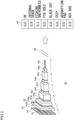
- Each convolutional layer 42 is shown as a hexahedron comprised of two first faces 52 each having a square shape and each having a depth direction and a height direction, and four second faces 54 sandwiched by the two first faces 52.
- the magnitude of the first face 52 indicates the size of the spatial dimension of the image processed by the convolutional layer 42, i.e., the size of the image.
- the convolutional layer 42 subjects the image to spatial filtering, successively shifting a spatial filter of a size smaller than the size of the image.
- Spatial filtering is a publicly known technology, and a description thereof is omitted. Spatial filtering is equivalent to a convolutional process.
- the convolution process extracts a feature amount of the image. Padding, etc. may be performed in the convolutional layer 42.
- the convolutional layer 42 may also use a plurality of spatial filters in parallel and perform a plurality of spatial filtering steps in parallel in the image. Using a plurality of spatial filters in parallel increases the image.
- the number of spatial filters used in parallel in the convolutional layer 42 is referred to as the number of channels, which is indicated by the length of the second face 54 in the horizontal direction.
- Each pooling layer 44 is configured in a manner similar to that of the convolutional layer 42.
- the pooling layer 44 reduces the size of the image by aggregating a plurality of pixels included in an arbitrary region in the image into a single pixel. For aggregation of a plurality of pixels into a single pixel, average pooling or maximum pooling is performed. In average pooling, an average value of a plurality of pixel values in the region is used for the single pixel. In maximum pooling, the maximum value of a plurality of pixel values in the region is used for the single pixel. A pooling process is performed to reinforce the robustness for translation of a representative value or an average value in the region of interest.
- the processes are performed in the order of the first convolutional layer 42a, the first pooling layer 44a, the second convolutional layer 42b, the second pooling layer 44b, the third convolutional layer 42c, the third pooling layer 44c, the fourth convolutional layer 42d, the fourth pooling layer 44d, the fifth convolutional layer 42e, the fifth pooling layer 44e, and the sixth convolutional layer 42f.
- a convolutional process and a pooling process are repeatedly performed.
- the sixth convolutional layer 42f outputs an image having a 1 ⁇ 1 spatial dimension and having one or more channels to the fully connected layer 46. In this case, the number of channels is "8", by way of one example.
- the fully connected layer 46 receives an image from which a feature amount is extracted from the sixth convolutional layer 42f.
- the fully connected layer 46 identifies the image by performing organization into a plurality of classes based on the feature amount.
- a publicly known technology may be used in the process in the fully connected layer 46, and a description thereof is omitted.
- the result of organization in the fully connected layer 46 i.e., the result of identification, is an output 48.
- the output 48 shows a probability for each of 8 classes including "OK”, “internal crack”, “etching unevenness”, "pin hole”, “black dot”, “chip”, “adsorption pad”, and “bus bar”. In this case, the probability "0.9” for "internal crack” is high so that the input image 40 is identified to include the internal crack 32.
- a learning (training) process is performed for the processing device 50 before performing an image recognition process as described above.
- training data that yields the known output 48 and an image for learning corresponding to the training data are input to the processing device 50 to learn a coefficient in the fully connected layer 46 and a coefficient of the spatial filter of each convolutional layer 42.
- the image for learning has the same size as the input image 40 and is an original image that outputs the training data when the image recognition process is performed accurately.
- a publicly known technology may be used.
- the larger the amount of combinations of training data and images for learning used the higher the precision of the coefficients and the more improved the precision of the image recognition process.
- the input image 40 produced by cropping the original image 20 into a predetermined size is input to the processing device 50.
- the processing device 50 performs an image recognition process in a two-dimensional manner to determine whether the internal crack 32 or the like is found in the input image 40. If the internal crack 32 is found in the input image 40, the processing device 50 produces the output 48 indicating the presence of the internal crack 32. This is equivalent to organization into 8 classes in the image recognition process.
- the convolutional neural network used in the processing device 50 includes the fully connected layer 46. Since the size of the output 48 from the fully connected layer 46 is fixed, the size of the input image 40 that can be processed by the convolutional neural network is also fixed. In other words, the processing device 50 can only perform a recognition process on the input image 40 of a limited size. For this reason, a limitation to the size of the input image 40 is provided in the processing device 50.
- Fig. 3 shows an outline of a process in a processing device 70 according to a comparative example.
- the processing device 70 has a configuration of a fully convolutional neural network.
- the processing device 70 includes a first convolutional layer 62a, a second convolutional layer 62b, a third convolutional layer 62c, a fourth convolutional layer 62d, a fifth convolutional layer 62e, a sixth convolutional layer 62f, a seventh convolutional layer 62g, an eighth convolutional layer 62h, a ninth convolutional layer 62i, a tenth convolutional layer 62j, an eleventh convolutional layer 62k, a twelfth convolutional layer 621, a thirteenth convolutional layer 62m, which are generically referred to as convolutional layers 62, a first pooling layer 64a, a second pooling layer 64b, a third pooling layer 64c, a fourth pooling layer 64d, a fifth
- An input image 60 is an image subject to an image recognition process in the processing device 70.
- a fully convolutional neural network does not include the fully connected layer mentioned above so that a limit to the size of the input image 60 is not provided. For this reason, the input image 60 may be the image 20 mentioned above.
- the input image 60 is input to the first convolutional layer 62a.
- the convolutional layer 62 performs a process similar to that of the convolutional layer 42 described above, and the pooling layer 64 performs a process similar to that of the pooling layer 44 described above.
- the up-pooling layer 66 performs a process opposite to the process in the pooling layer 64. In other words, the size of the image is reduced in the pooling layer 64, but the size of the image is enlarged in the up-pooling layer 66.
- a publicly known technology may be used in the process in the up-pooling layer 66, and a description thereof is omitted.
- the downsampling processing unit 72 and the upsampling processing unit 74 are arranged in the stated order.
- the first convolutional layer 62a, the first pooling layer 64a, the second convolutional layer 62b, the second pooling layer 64b, the third convolutional layer 62c, the third pooling layer 64c, the fourth convolutional layer 62d, the fourth pooling layer 64d, the fifth convolutional layer 62e, the fifth pooling layer 64e, and the sixth convolutional layer 62f are arranged in the stated order.
- a convolutional process and a pooling process are repeatedly performed. Further, by repeating a convolutional process and a pooling process, the size of the image is progressively reduced.
- the seventh convolutional layer 62g, the eighth convolutional layer 62h, the first up-pooling layer 66a, the ninth convolutional layer 62i, the second up-pooling layer 66b, the tenth convolutional layer 62j, the third up-pooling layer 66c, the eleventh convolutional layer 62k, the fourth up-pooling layer 66d, the twelfth convolutional layer 621, the fifth up-pooling layer 66e, and the thirteenth convolutional layer 62m are arranged in the stated order. In other words, a convolutional process and an up-pooling process are repeatedly performed.
- output image 68 an image (hereinafter, referred to as "output image 68") of a size close to that of the input image 60.
- the output image 68 is obtained.
- Each object included in the output image 68 is filled with a color determined by the class.
- the output image 68 resulting from the image recognition process is subjected to segmentation by filling objects with colors.
- the output image 68 will include an internal crack region 34.
- the internal crack region 34 is a region recognized as the internal crack 32 and is filled with a color different from those of the other regions in the output image 68.
- the output image 68 will include a region recognized as an etching unevenness (hereinafter, referred to as "etching unevenness region”) and a region recognized as an adsorption pad (hereinafter, referred to as "adsorption pad region").
- etching unevenness region a region recognized as an etching unevenness
- adsorption pad region a region recognized as an adsorption pad
- the internal crack region 34, the etching unevenness region, the adsorption region, and other regions are filled with different colors.
- the output image 68 is also called a feature map.
- a learning (training) process is performed for the processing device 70 before performing an image recognition process described above.
- training data that yields the known output image 68 and an image for learning corresponding to the training data are input to the processing device 70 to learn a coefficient of the spatial filter of each convolutional layer 62.
- the training data is an image subjected to segmentation by filling objects with colors.
- the training data like this is produced by a manual operation. For this reason, the larger the number of items of training data, the larger the workload required to produce the training data. If the number of items of training data is decreased to reduce the workload, the precision of the image recognition process is reduced.
- Figs. 4A-4B show a configuration of a processing device 100.
- Fig. 4A shows a configuration for a learning process
- Fig. 4B shows a configuration for an image recognition process.
- the processing device 100 in Fig. 4A and the processing device in Fig. 4B may be the same device or different devices.
- the processing device 100 includes a first input unit 110, a second input unit 112, and a processing unit 114 as features for a learning process and includes an input unit 132, a correction unit 134, a processing unit 114, and an output unit 136 as features for an image recognition process. Further, the processing device 100 is connected to an imaging device 130.
- the processing unit 114 is trained in a learning process, and the processing unit 114 is used in an image recognition process.
- the configuration of the processing unit 114 will be described as in the case of Figs. 2 and 3 .
- Fig. 5 shows an outline of a process in the processing unit 114.
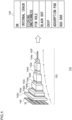
- the processing unit 114 includes a first convolutional layer 142a, a second convolutional layer 142b, a third convolutional layer 142c, a fourth convolutional layer 142d, a fifth convolutional layer 142e, a sixth convolutional layer 142f, which are generically referred to as convolutional layers 142, a first pooling layer 144a, a second pooling layer 144b, a third pooling layer 144c, a fourth pooling layer 144d, and a fifth pooling layer 144e, which are generically referred to as pooling layers 144.
- the convolutional layers 142 and the pooling layers 144 are shown as blocks to give an image of the respective processes.
- An input image 140 is an image subject to an image recognition process in the processing device 100. Like a fully convolutional neural network, the neural network in the processing unit 114 does not include a fully connected layer so that a limit to the size of the input image 140 is not provided. For this reason, the input image 60 may be the image 20 mentioned above.
- the input image 140 is input to the first pooling layer 144a.
- the convolutional layer 142 performs a process similar to that of the convolutional layer 42 and the convolutional layer 62 described above, and the pooling layer 144 performs a process similar to that of the pooling layer 44 and the pooling layer 64 described above.
- the pixel values of the padding 202 are determined as follows.
- the processing unit 114 uses, in the padding 202, a pixel value in a portion of the image to which the filter 210 is applied, i.e., a pixel value of one of pixels.
- a pixel value in a portion of the image to which the filter 210 is applied i.e., a pixel value of one of pixels.
- the filter 210 is applied to a top left portion of the expanded image 204 as shown in Fig. 6 , five paddings 202 and four pixels are included.
- one of the pixels value of the four pixels is used as the pixel value of each padding 202.
- the pixel value of the pixel closest to the padding 202 is used as the pixel value of the padding 202.
- the processing unit 114 uses, in the paddings 202, a statistical value of a portion of the image to which the filter 210 is applied, i.e., a statistical value of pixel values of pixels.
- a statistical value of pixel values of pixels is used as the pixel value of each padding 202.
- the statistical value may be an average value or a median value. Reference is made back to Fig. 5 .
- the sixth convolutional layer 142f outputs an image (hereinafter, referred to as "output image 148") having one or more channels.
- the pooling layer 144 may be provided in the final stage, and the pooling layer 144 may output the output image 148. In this case, too, the number of channels is "8", by way of one example.
- the output image 148 is obtained. The output image 148 is described later in detail.
- the first input unit 110 receives training data that yields the known output image 148
- the second input unit 112 receives an image for learning corresponding to the training data received in the first input unit 110.
- the processing unit 114 has the configuration of Fig. 5 , and a coefficient of the spatial filter of each convolutional layer 142 is learned, based on the training data received in the first input unit 110 and the image for learning received in the second input unit 112.
- the size of the training data has a 1 ⁇ 1 spatial dimension. For this reason, the training data does not have positional information on an object included in the image for learning.
- the training data for one channel merely indicates the presence of an object of one of the 8 classes in the output 48 mentioned above.
- the training data of the class "internal crack” indicates the presence of an internal crack.
- the training data for 8 channels merely indicates the presence of the objects of the respective classes. In other words, the training data for one channel need only indicate whether an object of one class is present or not.
- the training data need not be an image subjected to segmentation by filling objects with colors.
- the workload to produce one item of training data is reduced.
- the image for learning is an original image that outputs the training data when the image recognition process is performed accurately, and its size is defined to result in training data having a 1 ⁇ 1 spatial dimension.
- a publicly known technology may be used so that a description thereof is omitted.
- the imaging device 130 is an infrared camera and images the solar cell 100 of Fig. 1A subject to inspection, i.e., subject to an image recognition process, with infrared light. For example, an image is captured in 8 bits and 9M pixels.
- the imaging device 130 outputs the captured image to the processing device 100.
- the input unit 132 of the processing device 100 receive the image (hereinafter, referred to as "image 120") captured by the imaging device 130.
- Figs. 7A-7C show an image 120 processed in the processing device 100.
- Fig. 7A shows an image 120 input to the input unit 132.
- the image 120 shows the light receiving surface 12 or the back surface 14 of the solar cell 10.
- the solar cell 10 is shown tilted in the image 120.
- Figs. 7A-7B will be described later, and reference is made back to Fig. 4B .
- the input unit 132 outputs the image 120 to the correction unit 134.
- the correction unit 134 receives the image 120 from the input unit 132.
- the correction unit 134 corrects the tilt of the solar cell 10 in the image 120.
- the correction unit 134 identifies a first side L1, a second side L2, a third side L3, and a fourth side L4 of the solar cell 10 in the image 120 of Fig. 7A .
- the correction unit 134 also derives a first point of intersection P1 between the extensions of the first side L1 and the second side L2.
- the correction unit 134 also derives a second point of intersection P2, a third point of intersection P3, and a fourth point of intersection P4 as in the case of the first point of intersection P1.
- the correction unit 134 uses perspective projection transform to deform the image 120 so as to move the first point of intersection P1, the second point of intersection P2, the third point of intersection P3, and the fourth point of intersection P4 to the defined coordinates.
- Fig. 7C shows the result of deformation.
- the correction unit 134 outputs the corrected image 120 to the processing unit 114.
- the processing unit 114 receives the corrected image 120 from the correction unit 134.
- the processing unit 114 has a configuration as shown in Fig. 5 , and the received image 120 corresponds to the input image 140. Therefore, the corrected image 120 will be referred to as the input image 140 below.
- the processing unit 114 subjects the input image 140 to a process of a convolution neural network in which the fully connected layer 46 is excluded.
- the convolutional neural network in the processing unit 114 includes the downsampling processing unit 152, and the downsampling processing unit 152 includes a plurality of convolutional layers 142 and a plurality of pooling layers 144. Therefore, the processing unit 114 performs a downsampling process but does not perform an upsampling process.
- the spatial filter of the convolutional layer 42 is trained to learn the processing result having a 1 ⁇ 1 spatial dimension and having 8 channels, i.e., the training data,
- the spatial filter of the convolutional layer 42 is trained to learn whether the objects of the 8 classes corresponding one to one to the 8 channels are present or absent.
- One of the objects of the 8 classes is the internal crack 32.
- the output image 148 resulting from the process or the inspection is obtained through the image recognition process by the processing unit 114 that has been trained.
- the output image 148 shows the presence or absence of the objects of the 8 classes. Meanwhile, the size of the output image 148 is smaller than the size of the input image 140. Therefore, the output image 148 lacks, for example, accurate positional information on the internal crack 32.
- inspection by the processing device 100 only requires detecting whether the internal crack 32 is present or absent so that accurate positional information on the internal crack 32 is not necessary. For this reason, lack of accurate positional information on the internal crack 32 does not result in a reduction in the precision of the image recognition process.
- the output image 148 has a spatial dimension larger than 1 ⁇ 1, unlike the training data.
- the processing unit 114 outputs the output image 148 to the output unit 136, and the output unit 136 outputs the output image 148 outside.
- the image for learning and the input image 140 have different sizes.
- the size of the input image 140 is larger than the size of the image for learning.
- the image for learning is input to the fully convolutional neural network to train the filter 210 of the convolutional layer and corresponds to the training data.
- the output image 148 output from the output unit 136 will have a spatial dimension smaller than the size of the input image 140 and larger than 1 ⁇ 1.
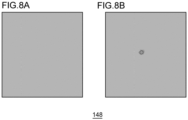
- Figs. 8A-8B show the output image 148 output from the output unit 136.
- Fig. 8A shows that the output image 148 is substantially entirely colored with the same color. This makes it clear that the internal crack 32 is not found in the solar cell 10.
- Fig. 8B shows that the image is filled with colors in accordance with the class.
- the central portion of the output image 148 is colored with a darker color than the other portions. This makes it clear that the internal crack 32 is found in the central portion of the solar cell 10.
- the output image 148 has a spatial dimension larger than 1 ⁇ 1 so that the relative position of the internal crack 32 in the solar cell 10 as well as whether it is present or absent is identified by the feature map.
- the feature map is also called a heat map.
- the device, the system, or the entity that executes the method according to the disclosure is provided with a computer.
- the computer is comprised of a processor that operates in accordance with the program as a main hardware feature.
- the disclosure is non-limiting as to the type of the processor so long as the function is realized by running the program.
- the processor is comprised of one or a plurality of electronic circuits including a semiconductor integrated circuit (IC) or a large-scale integration (LSI).
- the plurality of electronic circuits may be integrated in one chip or provided in a plurality of chips.
- the plurality of chips may be aggregated in one device or provided in a plurality of devices.
- the program is recorded in a non-transitory recording medium such as a computer-readable ROM, optical disk, and hard disk drive.
- the program may be stored in a recording medium in advance or supplied to a recording medium via wide area communication network including the Internet.
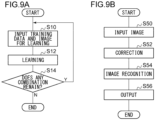
- Figs. 9A-9B show a flowchart showing a sequence of steps performed in the processing device 100.
- Fig. 9A is a flowchart showing a sequence of steps in a learning process.
- the first input unit 110 receives an input of training data
- the second input unit 112 receives an input of image for learning (S10).
- the processing unit 114 uses the training data and the image for learning to learn a coefficient of the spatial filter of each convolutional layer 42 (S12).
- S12 coefficient of the spatial filter of each convolutional layer 42
- Fig. 9B is a flowchart showing a sequence of steps in an image recognition process.
- the input unit 132 receives an input of the image 120 (S50).
- the correction unit 134 corrects the tilt of the image 120 (S52).
- the processing unit 114 performs an image recognition process by using the corrected image 120 as the input image 140 (S54).
- the output unit 136 outputs the output image 148 resulting from the image recognition process (S56).
- a fully convolutional neural network in which the spatial filter of the convolutional layer 142 has learned training data having a 1 ⁇ 1 spatial dimension is used. Therefore, the workload required to produce training data is reduced. Further, since the workload required to produce training data is reduced, the workload required for learning is inhibited from increasing. Further, since the workload required to produce training data is reduced, the number of items of training data can be increased. Further, by increasing the number of items of training data, the precision of learning can be improved.
- a convolutional neural network in which the spatial filter of the convolutional layer 142 has learned training data having a 1 ⁇ 1 spatial dimension it is possible to detect whether a target object is present or absent. Further, since whether a target object is present or absent is detected, the precision of the image recognition process is inhibited from being lowered. Further, since a convolutional neural network in which the spatial filter of the convolutional layer 142 has learned training data having a 1 ⁇ 1 spatial dimension is used, it is possible to inhibit a reduction in the precision of the image recognition process while at the same time inhibiting an increase in the workload required for learning.
- the convolutional neural network performs a downsampling process by using the convolutional layers 142 and the pooling layers 144 and does not perform an upsampling process
- training data having a 1 ⁇ 1 spatial dimension can be used for learning.
- an inspection can be made to determine whether the internal crack 32 is present or absent.
- the output image 148 having a spatial dimension equal to or larger than 1 ⁇ 1 can be obtained. Further, since the output image 148 having a spatial dimension equal to or larger than 1 ⁇ 1 can be obtained, relative positional information can be obtained. Further, by using a pixel value of a pixel included in the image as a pixel value of the padding 202, deterioration in detection precision due to the padding 202 is inhibited. Further, by using a statistical value of pixel values of pixels included in the image as a pixel of the padding 202, deterioration in detection precision due to the padding 202 is inhibited.
- the configuration of the processing unit 114 according to the described embodiment is such that the plurality of convolutional layers 42 and the plurality of pooling layers 44 are alternately arranged.
- the processing unit 114 may have a configuration of a GoogleNet-based network, a DenseNet-based network, etc. According to this variation, the flexibility in configuration can be improved.
- the processing device 100 performs a process for detecting whether the internal crack 32 is present or absent by referring to the input image 140 of the solar cell 10.
- the input image 140 that captures an image of an object other than the solar cell 10 may be subject to the process.
- a process for detecting whether a defect other than the internal crack 32 is present or absent may be performed.
- a process for detecting one or more elements that could be included in an object may be performed instead of a process for detecting whether a defect in the object is present or absent.
- the scope of application of the processing device 100 can be broadened.
Landscapes
- Engineering & Computer Science (AREA)
- Physics & Mathematics (AREA)
- Theoretical Computer Science (AREA)
- General Physics & Mathematics (AREA)
- Mathematical Physics (AREA)
- Data Mining & Analysis (AREA)
- Computing Systems (AREA)
- Software Systems (AREA)
- General Engineering & Computer Science (AREA)
- Biophysics (AREA)
- General Health & Medical Sciences (AREA)
- Molecular Biology (AREA)
- Evolutionary Computation (AREA)
- Computational Linguistics (AREA)
- Biomedical Technology (AREA)
- Artificial Intelligence (AREA)
- Life Sciences & Earth Sciences (AREA)
- Health & Medical Sciences (AREA)
- Mathematical Optimization (AREA)
- Computational Mathematics (AREA)
- Mathematical Analysis (AREA)
- Pure & Applied Mathematics (AREA)
- Computer Vision & Pattern Recognition (AREA)
- Quality & Reliability (AREA)
- Algebra (AREA)
- Databases & Information Systems (AREA)
- Image Analysis (AREA)
Claims (5)
- Verarbeitungsvorrichtung (100), umfassend:eine Eingabeeinheit (132), die konfiguriert ist, um ein Eingabebild (120, 140) zu empfangen, das einem Bilderkennungsprozess zu unterziehen ist;eine Verarbeitungseinheit (114), die eine Downsampling-Verarbeitungseinheit (152) beinhaltet, die konfiguriert ist, um das Eingabebild (120, 140) dem Bilderkennungsprozess zu unterziehen, unter Verwendung eines vollständig faltenden neuronalen Netzwerks, das Faltungs-Schichten (142) und Pooling-Schichten (144) beinhaltet und das keine vollständig verbundene Schicht beinhaltet, wobei der durch die Downsampling-Verarbeitungseinheit (152) durchgeführte Bilderkennungsprozess das Eingabebild (120, 140) einem Downsampling-Prozess unterzieht und keinen Upsampling-Prozess beinhaltet, wobei der durch die Downsampling-Verarbeitungseinheit (152) durchgeführte Bilderkennungsprozess räumliches Filtern des Eingabebildes (120, 140) unter Verwendung räumlicher Filter (210) der Faltungsschichten (142) beinhaltet; undeine Ausgabeeinheit (136), die konfiguriert ist, um ein Ausgabebild (148) als Ergebnis des Bilderkennungsprozesses in der Verarbeitungseinheit (114), der an dem Eingabebild (120, 140) durchgeführt wird, auszugeben, wobei das Ausgabebild (148) eine räumliche Abmessung aufweist, die kleiner als die Größe des Eingabebildes (120, 140) und größer als 1 × 1 ist, und eine Merkmalskarte darstellt, die das Vorhandensein oder Nichtvorhandensein eines Objekts einer jeweiligen Klasse in dem Eingabebild (120, 140) anzeigt;wobeidie Verarbeitungseinheit (114) ferner konfiguriert ist, um einen Lernprozess durchzuführen, in dem die räumlichen Filter (210) der Faltungsschichten (142) in dem vollständig faltenden neuronalen Netzwerk unter Verwendung eines Bildes zum Lernen und von Trainingsdaten, die eine räumliche Abmessung von 1 × 1 aufweisen und das Vorhandensein des Objekts der jeweiligen Klasse anzeigen, trainiert werden, wobei die an dem Bild zum Lernen durchgeführte Bilderkennung in den Trainingsdaten als Ergebnis des Bilderkennungsprozesses in der Verarbeitungseinheit (114) resultiert, undwobei eine Größe des Eingabebildes (120, 140) größer als eine Größe des Bildes zum Lernen ist.
- Verarbeitungsvorrichtung (100) nach Patentanspruch 1, wobeidie Faltungsschicht (142) konfiguriert ist, um eine Grenze des Eingabebildes (120, 140) durch ein Padding (202) zu erweitern und das erweiterte dem Padding unterzogene Bild einer Faltung zu unterziehen, indem der räumliche Filter (210), der eine Größe aufweist, die kleiner als eine Größe des erweiterten Bildes ist, sukzessive verschoben wird, unddie Verarbeitungseinheit (114) konfiguriert ist, um in dem Padding (202) einen von Werten in einem Abschnitt des Eingabebildes (120, 140), auf den der räumliche Filter (210) angewendet wird, zu verwenden.
- Verarbeitungsvorrichtung (100) nach Patentanspruch 1, wobeidie Faltungsschicht (142) konfiguriert ist, um eine Grenze des Eingabebildes (120, 140) durch ein Padding (202) zu erweitern und ein erweitertes Bild einer Faltung zu unterziehen, indem der räumliche Filter (210), der eine Größe aufweist, die kleiner als eine Größe des erweiterten dem Padding unterzogenen Bildes ist, sukzessive verschoben wird, unddie Verarbeitungseinheit (114) konfiguriert ist, um in dem Padding (202) einen statistischen Wert von Werten in einem Abschnitt des Eingabebildes (120, 140), auf den der Filter (210) angewendet wird, zu verwenden, falls der Filter (210) angewendet wird, um das Padding (202) zu beinhalten.
- Verarbeitungsvorrichtung (100) nach einem der Patentansprüche 1 bis 3, wobeidas Eingabebild (120, 140) ein Bild ist, das ein Objekt erfasst, das einer Inspektion unterzogen wird,die räumlichen Filter (210) der Faltungsschichten (142) in dem vollständig faltenden neuronalen Netzwerk konfiguriert sind, um zumindest zu lernen, ob ein Defekt in dem Eingabebild (120, 140) vorhanden oder nicht vorhanden ist, unddie Ausgabeeinheit (136) konfiguriert ist, um das Ergebnis des Prozesses in der Verarbeitungseinheit (114) als ein Inspektionsergebnis auszugeben.
- Verarbeitungsverfahren, das von einer Verarbeitungsvorrichtung (100) durchgeführt wird, wobei das Verfahren umfasst:Empfangen eines Eingabebildes (120, 140), das einem Bilderkennungsprozess zu unterziehen ist;Unterziehen des Eingabebildes (120, 140) dem Bilderkennungsprozess in einer Downsampling-Verarbeitungseinheit (152) einer Verarbeitungseinheit (114) unter Verwendung eines vollständig faltenden neuronalen Netzwerks, das Faltungs-Schichten (142) und Pooling-Schichten (144) beinhaltet und das keine vollständig verbundene Schicht beinhaltet, wobei der durch die Downsampling-Verarbeitungseinheit (152) durchgeführte Bilderkennungsprozess das Eingabebild (120, 140) einem Downsampling-Prozess unterzieht und keinen Upsampling-Prozess beinhaltet, wobei der durch die Downsampling-Verarbeitungseinheit (152) durchgeführte Bilderkennungsprozess räumliches Filtern des Eingabebildes (120, 140) unter Verwendung räumlicher Filter (210) der Faltungsschichten (142) beinhaltet;Ausgeben eines Ausgabebildes (148) als Ergebnis des Bilderkennungsprozesses, der an dem Eingabebild (120, 140) durchgeführt wird, wobei das Ausgabebild (148) eine räumliche Abmessung aufweist, die kleiner als die Größe des Eingabebildes (120, 140) und größer als 1 × 1 ist, und eine Merkmalskarte darstellt, die das Vorhandensein oder Nichtvorhandensein eines Objekts einer jeweiligen Klasse in dem Eingabebild (120, 140) anzeigt; undDurchführen eines Lernprozesses, in dem räumliche Filter (210) der Faltungsschichten (142) in dem vollständig faltenden neuronalen Netzwerk unter Verwendung eines Bildes zum Lernen und von Trainingsdaten, die eine räumliche Abmessung von 1 × 1 aufweisen und das Vorhandensein des Objekts der jeweiligen Klasse anzeigen, trainiert werden, wobei die an dem Bild zum Lernen durchgeführte Bilderkennung in den Trainingsdaten als Ergebnis des Bilderkennungsprozesses in der Verarbeitungseinheit (114) resultiert;wobei eine Größe des Eingabebildes (120, 14) größer als eine Größe des Bildes zum Lernen ist.
Applications Claiming Priority (2)
| Application Number | Priority Date | Filing Date | Title |
|---|---|---|---|
| PCT/JP2018/005494 WO2019159324A1 (ja) | 2018-02-16 | 2018-02-16 | 処理方法およびそれを利用した処理装置 |
| PCT/JP2018/036248 WO2019159419A1 (ja) | 2018-02-16 | 2018-09-28 | 処理方法およびそれを利用した処理装置 |
Publications (4)
| Publication Number | Publication Date |
|---|---|
| EP3754593A1 EP3754593A1 (de) | 2020-12-23 |
| EP3754593A4 EP3754593A4 (de) | 2021-04-28 |
| EP3754593B1 true EP3754593B1 (de) | 2025-03-05 |
| EP3754593C0 EP3754593C0 (de) | 2025-03-05 |
Family
ID=67620971
Family Applications (1)
| Application Number | Title | Priority Date | Filing Date |
|---|---|---|---|
| EP18905937.1A Active EP3754593B1 (de) | 2018-02-16 | 2018-09-28 | Bilderkennungsverarbeitungsverfahren und verarbeitungsvorrichtung, die dieses verwenden |
Country Status (5)
| Country | Link |
|---|---|
| US (1) | US11315235B2 (de) |
| EP (1) | EP3754593B1 (de) |
| JP (1) | JP6952268B2 (de) |
| CN (1) | CN111712853B (de) |
| WO (2) | WO2019159324A1 (de) |
Families Citing this family (17)
| Publication number | Priority date | Publication date | Assignee | Title |
|---|---|---|---|---|
| US11265540B2 (en) * | 2018-02-23 | 2022-03-01 | Sk Telecom Co., Ltd. | Apparatus and method for applying artificial neural network to image encoding or decoding |
| US11538158B2 (en) * | 2018-10-26 | 2022-12-27 | National Cheng Kung University | Convolutional neural network and associated method for identifying basal cell carcinoma |
| JP2021012570A (ja) * | 2019-07-08 | 2021-02-04 | 株式会社日立製作所 | 破面解析装置及び破面解析方法 |
| CN114531911B (zh) * | 2019-09-27 | 2025-09-19 | 兄弟工业株式会社 | 机器学习模型产品、生成装置、记录介质 |
| JP7401246B2 (ja) * | 2019-10-08 | 2023-12-19 | キヤノン株式会社 | 撮像装置、撮像装置の制御方法、及びプログラム |
| JP7273692B2 (ja) * | 2019-11-01 | 2023-05-15 | 株式会社東芝 | 制御装置、制御方法およびプログラム |
| CN111368684A (zh) * | 2020-02-27 | 2020-07-03 | 北华航天工业学院 | 一种基于可变形全卷积神经网络的冬小麦自动解译方法 |
| CN111429415B (zh) * | 2020-03-18 | 2020-12-08 | 东华大学 | 基于网络协同剪枝的产品表面缺陷高效检测模型构建方法 |
| WO2021229745A1 (ja) * | 2020-05-14 | 2021-11-18 | ポリプラスチックス株式会社 | 破面解析装置、学習済みモデル生成装置、破面解析方法、破面解析プログラム、および、学習済みモデル |
| JP7481956B2 (ja) * | 2020-08-26 | 2024-05-13 | 株式会社東芝 | 推論装置、方法、プログラムおよび学習装置 |
| US20230377094A1 (en) * | 2020-10-08 | 2023-11-23 | Panasonic Intellectual Property Management Co., Ltd. | Processing method and processing device using same |
| JP7462168B2 (ja) | 2020-10-08 | 2024-04-05 | パナソニックIpマネジメント株式会社 | 処理方法およびそれを利用した処理装置 |
| FR3115479B1 (fr) * | 2020-10-22 | 2023-04-21 | Arianegroup Sas | Procédé de détection de défauts lors d’une fabrication additive par laser, dispositif de traitement de données, programme d’ordinateur et support de stockage pour la mise en œuvre du procédé. |
| CN112926688A (zh) * | 2021-03-30 | 2021-06-08 | 太原理工大学 | 一种基于DenseNet进行激光芯片缺陷分类的方法 |
| CN113409186B (zh) * | 2021-06-30 | 2024-11-22 | 上海科技大学 | 基于先验知识的单张图片重打光方法、系统、终端及存储介质 |
| CN113936028B (zh) * | 2021-10-19 | 2024-09-06 | 深圳市金视电子科技有限公司 | 一种结合自动产生三元图与深层空洞卷积网络之数字抠像系统 |
| US20240161270A1 (en) * | 2022-11-14 | 2024-05-16 | Kla Corporation | System and method for enhancing defect detection in optical characterization systems using a digital filter |
Family Cites Families (16)
| Publication number | Priority date | Publication date | Assignee | Title |
|---|---|---|---|---|
| US10726560B2 (en) * | 2014-10-31 | 2020-07-28 | Fyusion, Inc. | Real-time mobile device capture and generation of art-styled AR/VR content |
| US10650508B2 (en) * | 2014-12-03 | 2020-05-12 | Kla-Tencor Corporation | Automatic defect classification without sampling and feature selection |
| JP2016146174A (ja) * | 2015-02-06 | 2016-08-12 | パナソニックIpマネジメント株式会社 | 決定方法およびプログラム |
| CN106548127B (zh) * | 2015-09-18 | 2022-11-04 | 松下电器(美国)知识产权公司 | 图像识别方法 |
| JP2017059207A (ja) * | 2015-09-18 | 2017-03-23 | パナソニック インテレクチュアル プロパティ コーポレーション オブ アメリカPanasonic Intellectual Property Corporation of America | 画像認識方法 |
| US11074492B2 (en) * | 2015-10-07 | 2021-07-27 | Altera Corporation | Method and apparatus for performing different types of convolution operations with the same processing elements |
| US10380479B2 (en) * | 2015-10-08 | 2019-08-13 | International Business Machines Corporation | Acceleration of convolutional neural network training using stochastic perforation |
| EP3380859A4 (de) * | 2015-11-29 | 2019-07-31 | Arterys Inc. | Automatisierte herzvolumensegmentierung |
| US10115040B2 (en) * | 2016-09-14 | 2018-10-30 | Kla-Tencor Corporation | Convolutional neural network-based mode selection and defect classification for image fusion |
| US10402688B2 (en) * | 2016-12-07 | 2019-09-03 | Kla-Tencor Corporation | Data augmentation for convolutional neural network-based defect inspection |
| CN106709568B (zh) * | 2016-12-16 | 2019-03-22 | 北京工业大学 | 基于深层卷积网络的rgb-d图像的物体检测和语义分割方法 |
| CN106910161B (zh) * | 2017-01-24 | 2020-06-19 | 华南理工大学 | 一种基于深度卷积神经网络的单幅图像超分辨率重建方法 |
| US20180218254A1 (en) * | 2017-02-02 | 2018-08-02 | International Business Machines Corporation | Solar power forecasting with volumetric convolutional neural network |
| CN107220980B (zh) * | 2017-05-25 | 2019-12-03 | 重庆师范大学 | 一种基于全卷积网络的mri图像脑肿瘤自动分割方法 |
| CN107657257A (zh) * | 2017-08-14 | 2018-02-02 | 中国矿业大学 | 一种基于多通道卷积神经网络的语义图像分割方法 |
| CN107578054A (zh) * | 2017-09-27 | 2018-01-12 | 北京小米移动软件有限公司 | 图像处理方法及装置 |
-
2018
- 2018-02-16 WO PCT/JP2018/005494 patent/WO2019159324A1/ja not_active Ceased
- 2018-09-28 EP EP18905937.1A patent/EP3754593B1/de active Active
- 2018-09-28 CN CN201880089349.3A patent/CN111712853B/zh active Active
- 2018-09-28 US US16/969,838 patent/US11315235B2/en active Active
- 2018-09-28 JP JP2020500261A patent/JP6952268B2/ja active Active
- 2018-09-28 WO PCT/JP2018/036248 patent/WO2019159419A1/ja not_active Ceased
Also Published As
| Publication number | Publication date |
|---|---|
| JPWO2019159419A1 (ja) | 2020-12-03 |
| EP3754593A1 (de) | 2020-12-23 |
| WO2019159419A1 (ja) | 2019-08-22 |
| WO2019159324A1 (ja) | 2019-08-22 |
| CN111712853B (zh) | 2023-11-07 |
| EP3754593A4 (de) | 2021-04-28 |
| EP3754593C0 (de) | 2025-03-05 |
| CN111712853A (zh) | 2020-09-25 |
| US20200380665A1 (en) | 2020-12-03 |
| JP6952268B2 (ja) | 2021-10-20 |
| US11315235B2 (en) | 2022-04-26 |
Similar Documents
| Publication | Publication Date | Title |
|---|---|---|
| EP3754593B1 (de) | Bilderkennungsverarbeitungsverfahren und verarbeitungsvorrichtung, die dieses verwenden | |
| CN112233067A (zh) | 一种热轧钢卷端面质量检测方法及系统 | |
| CN112150460B (zh) | 检测方法、检测系统、设备和介质 | |
| CN110544202B (zh) | 一种基于模板匹配与特征聚类的视差图像拼接方法及系统 | |
| WO2018147059A1 (ja) | 画像処理装置、および画像処理方法、並びにプログラム | |
| JP6876940B2 (ja) | 画像処理装置および画像処理方法 | |
| CN112200790B (zh) | 布料缺陷检测方法、设备和介质 | |
| CN115115522A (zh) | 一种货架商品图像拼接方法及系统 | |
| CN118688207A (zh) | 偏光片表面缺陷智能多分选控制系统及方法 | |
| CN116824294B (zh) | 一种基于小目标识别的焊料缺陷检测方法及系统 | |
| JP2021028841A (ja) | 処理方法およびそれを利用した処理装置 | |
| JP4629086B2 (ja) | 画像欠陥検査方法および画像欠陥検査装置 | |
| CN117152837B (zh) | 基于智慧教室场景下学生课堂姿态行为的检测方法 | |
| JP7557796B2 (ja) | 処理方法およびそれを利用した処理装置 | |
| CN115131327B (zh) | 一种颜色特征融合的显示屏彩色线缺陷检测方法 | |
| Zhou et al. | Fast and robust DCNN based lithography SEM image contour extraction models | |
| CN114445317A (zh) | 检测方法、检测系统、设备和介质 | |
| CN118518005B (zh) | 一种机器视觉定位方法、装置及系统 | |
| CN114897966B (zh) | 一种大元件的视觉识别方法 | |
| CN120689582A (zh) | 一种基于图像识别的pcb缺陷智能检测系统及方法 | |
| CN113554585B (zh) | 影像分析系统及影像分析方法 | |
| WO2023238384A1 (ja) | 試料観察装置および方法 | |
| CN120976133A (zh) | 一种基于深度学习的晶圆边缘缺陷检测方法 | |
| CN116306734A (zh) | 一种二维码修复方法、装置、设备及介质 | |
| JP2024093420A (ja) | 物体認識システム、目標検知システム、および目標対象提示システム |
Legal Events
| Date | Code | Title | Description |
|---|---|---|---|
| STAA | Information on the status of an ep patent application or granted ep patent |
Free format text: STATUS: THE INTERNATIONAL PUBLICATION HAS BEEN MADE |
|
| PUAI | Public reference made under article 153(3) epc to a published international application that has entered the european phase |
Free format text: ORIGINAL CODE: 0009012 |
|
| STAA | Information on the status of an ep patent application or granted ep patent |
Free format text: STATUS: REQUEST FOR EXAMINATION WAS MADE |
|
| 17P | Request for examination filed |
Effective date: 20200814 |
|
| AK | Designated contracting states |
Kind code of ref document: A1 Designated state(s): AL AT BE BG CH CY CZ DE DK EE ES FI FR GB GR HR HU IE IS IT LI LT LU LV MC MK MT NL NO PL PT RO RS SE SI SK SM TR |
|
| AX | Request for extension of the european patent |
Extension state: BA ME |
|
| REG | Reference to a national code |
Ref country code: DE Ref legal event code: R079 Free format text: PREVIOUS MAIN CLASS: G06T0007000000 Ipc: G06N0003040000 Ref document number: 602018079945 Country of ref document: DE |
|
| A4 | Supplementary search report drawn up and despatched |
Effective date: 20210326 |
|
| RIC1 | Information provided on ipc code assigned before grant |
Ipc: G06N 3/04 20060101AFI20210322BHEP Ipc: G06N 3/08 20060101ALI20210322BHEP Ipc: G06T 7/00 20170101ALI20210322BHEP |
|
| DAV | Request for validation of the european patent (deleted) | ||
| DAX | Request for extension of the european patent (deleted) | ||
| STAA | Information on the status of an ep patent application or granted ep patent |
Free format text: STATUS: EXAMINATION IS IN PROGRESS |
|
| 17Q | First examination report despatched |
Effective date: 20230913 |
|
| REG | Reference to a national code |
Ref country code: DE Ref legal event code: R079 Free format text: PREVIOUS MAIN CLASS: G06N0003040000 Ipc: G06N0003046400 Ref document number: 602018079945 Country of ref document: DE |
|
| GRAP | Despatch of communication of intention to grant a patent |
Free format text: ORIGINAL CODE: EPIDOSNIGR1 |
|
| STAA | Information on the status of an ep patent application or granted ep patent |
Free format text: STATUS: GRANT OF PATENT IS INTENDED |
|
| RIC1 | Information provided on ipc code assigned before grant |
Ipc: G06T 7/00 20170101ALI20240925BHEP Ipc: G06N 3/09 20230101ALI20240925BHEP Ipc: G06N 3/0464 20230101AFI20240925BHEP |
|
| INTG | Intention to grant announced |
Effective date: 20241008 |
|
| GRAS | Grant fee paid |
Free format text: ORIGINAL CODE: EPIDOSNIGR3 |
|
| GRAA | (expected) grant |
Free format text: ORIGINAL CODE: 0009210 |
|
| STAA | Information on the status of an ep patent application or granted ep patent |
Free format text: STATUS: THE PATENT HAS BEEN GRANTED |
|
| AK | Designated contracting states |
Kind code of ref document: B1 Designated state(s): AL AT BE BG CH CY CZ DE DK EE ES FI FR GB GR HR HU IE IS IT LI LT LU LV MC MK MT NL NO PL PT RO RS SE SI SK SM TR |
|
| REG | Reference to a national code |
Ref country code: GB Ref legal event code: FG4D |
|
| REG | Reference to a national code |
Ref country code: CH Ref legal event code: EP |
|
| REG | Reference to a national code |
Ref country code: DE Ref legal event code: R096 Ref document number: 602018079945 Country of ref document: DE |
|
| REG | Reference to a national code |
Ref country code: IE Ref legal event code: FG4D |
|
| U01 | Request for unitary effect filed |
Effective date: 20250402 |
|
| U07 | Unitary effect registered |
Designated state(s): AT BE BG DE DK EE FI FR IT LT LU LV MT NL PT RO SE SI Effective date: 20250409 |
|
| PG25 | Lapsed in a contracting state [announced via postgrant information from national office to epo] |
Ref country code: RS Free format text: LAPSE BECAUSE OF FAILURE TO SUBMIT A TRANSLATION OF THE DESCRIPTION OR TO PAY THE FEE WITHIN THE PRESCRIBED TIME-LIMIT Effective date: 20250605 |
|
| PG25 | Lapsed in a contracting state [announced via postgrant information from national office to epo] |
Ref country code: ES Free format text: LAPSE BECAUSE OF FAILURE TO SUBMIT A TRANSLATION OF THE DESCRIPTION OR TO PAY THE FEE WITHIN THE PRESCRIBED TIME-LIMIT Effective date: 20250305 |
|
| PG25 | Lapsed in a contracting state [announced via postgrant information from national office to epo] |
Ref country code: NO Free format text: LAPSE BECAUSE OF FAILURE TO SUBMIT A TRANSLATION OF THE DESCRIPTION OR TO PAY THE FEE WITHIN THE PRESCRIBED TIME-LIMIT Effective date: 20250605 |
|
| PG25 | Lapsed in a contracting state [announced via postgrant information from national office to epo] |
Ref country code: HR Free format text: LAPSE BECAUSE OF FAILURE TO SUBMIT A TRANSLATION OF THE DESCRIPTION OR TO PAY THE FEE WITHIN THE PRESCRIBED TIME-LIMIT Effective date: 20250305 |
|
| PG25 | Lapsed in a contracting state [announced via postgrant information from national office to epo] |
Ref country code: GR Free format text: LAPSE BECAUSE OF FAILURE TO SUBMIT A TRANSLATION OF THE DESCRIPTION OR TO PAY THE FEE WITHIN THE PRESCRIBED TIME-LIMIT Effective date: 20250606 |
|
| PG25 | Lapsed in a contracting state [announced via postgrant information from national office to epo] |
Ref country code: SM Free format text: LAPSE BECAUSE OF FAILURE TO SUBMIT A TRANSLATION OF THE DESCRIPTION OR TO PAY THE FEE WITHIN THE PRESCRIBED TIME-LIMIT Effective date: 20250305 |
|
| PG25 | Lapsed in a contracting state [announced via postgrant information from national office to epo] |
Ref country code: PL Free format text: LAPSE BECAUSE OF FAILURE TO SUBMIT A TRANSLATION OF THE DESCRIPTION OR TO PAY THE FEE WITHIN THE PRESCRIBED TIME-LIMIT Effective date: 20250305 |
|
| PG25 | Lapsed in a contracting state [announced via postgrant information from national office to epo] |
Ref country code: CZ Free format text: LAPSE BECAUSE OF FAILURE TO SUBMIT A TRANSLATION OF THE DESCRIPTION OR TO PAY THE FEE WITHIN THE PRESCRIBED TIME-LIMIT Effective date: 20250305 |
|
| PG25 | Lapsed in a contracting state [announced via postgrant information from national office to epo] |
Ref country code: SK Free format text: LAPSE BECAUSE OF FAILURE TO SUBMIT A TRANSLATION OF THE DESCRIPTION OR TO PAY THE FEE WITHIN THE PRESCRIBED TIME-LIMIT Effective date: 20250305 |
|
| PG25 | Lapsed in a contracting state [announced via postgrant information from national office to epo] |
Ref country code: IS Free format text: LAPSE BECAUSE OF FAILURE TO SUBMIT A TRANSLATION OF THE DESCRIPTION OR TO PAY THE FEE WITHIN THE PRESCRIBED TIME-LIMIT Effective date: 20250705 |
|
| U20 | Renewal fee for the european patent with unitary effect paid |
Year of fee payment: 8 Effective date: 20250924 |
|
| REG | Reference to a national code |
Ref country code: CH Ref legal event code: L10 Free format text: ST27 STATUS EVENT CODE: U-0-0-L10-L00 (AS PROVIDED BY THE NATIONAL OFFICE) Effective date: 20260114 |