EP3754283A1 - Drug-containing capsule, and component for air treatment device - Google Patents
Drug-containing capsule, and component for air treatment device Download PDFInfo
- Publication number
- EP3754283A1 EP3754283A1 EP19775429.4A EP19775429A EP3754283A1 EP 3754283 A1 EP3754283 A1 EP 3754283A1 EP 19775429 A EP19775429 A EP 19775429A EP 3754283 A1 EP3754283 A1 EP 3754283A1
- Authority
- EP
- European Patent Office
- Prior art keywords
- drug
- molds
- capsule
- specific microorganism
- treatment device
- Prior art date
- Legal status (The legal status is an assumption and is not a legal conclusion. Google has not performed a legal analysis and makes no representation as to the accuracy of the status listed.)
- Withdrawn
Links
Images


Classifications
-
- F—MECHANICAL ENGINEERING; LIGHTING; HEATING; WEAPONS; BLASTING
- F28—HEAT EXCHANGE IN GENERAL
- F28F—DETAILS OF HEAT-EXCHANGE AND HEAT-TRANSFER APPARATUS, OF GENERAL APPLICATION
- F28F13/00—Arrangements for modifying heat-transfer, e.g. increasing, decreasing
- F28F13/18—Arrangements for modifying heat-transfer, e.g. increasing, decreasing by applying coatings, e.g. radiation-absorbing, radiation-reflecting; by surface treatment, e.g. polishing
- F28F13/182—Arrangements for modifying heat-transfer, e.g. increasing, decreasing by applying coatings, e.g. radiation-absorbing, radiation-reflecting; by surface treatment, e.g. polishing especially adapted for evaporator or condenser surfaces
-
- A—HUMAN NECESSITIES
- A61—MEDICAL OR VETERINARY SCIENCE; HYGIENE
- A61L—METHODS OR APPARATUS FOR STERILISING MATERIALS OR OBJECTS IN GENERAL; DISINFECTION, STERILISATION OR DEODORISATION OF AIR; CHEMICAL ASPECTS OF BANDAGES, DRESSINGS, ABSORBENT PADS OR SURGICAL ARTICLES; MATERIALS FOR BANDAGES, DRESSINGS, ABSORBENT PADS OR SURGICAL ARTICLES
- A61L2/00—Disinfection or sterilisation of materials or objects, in general; Accessories therefor
- A61L2/16—Disinfection or sterilisation of materials or objects, in general; Accessories therefor using chemical substances
- A61L2/23—Solid materials, e.g. granules, powders, blocks or tablets
- A61L2/235—Solid materials, e.g. granules, powders, blocks or tablets cellular, porous or foamed
-
- A—HUMAN NECESSITIES
- A01—AGRICULTURE; FORESTRY; ANIMAL HUSBANDRY; HUNTING; TRAPPING; FISHING
- A01N—PRESERVATION OF BODIES OF HUMANS OR ANIMALS OR PLANTS OR PARTS THEREOF; BIOCIDES, e.g. AS DISINFECTANTS, AS PESTICIDES OR AS HERBICIDES; PEST REPELLANTS OR ATTRACTANTS; PLANT GROWTH REGULATORS
- A01N25/00—Biocides, pest repellants or attractants, or plant growth regulators, characterised by their forms, or by their non-active ingredients or by their methods of application, e.g. seed treatment or sequential application; Substances for reducing the noxious effect of the active ingredients to organisms other than pests
- A01N25/26—Biocides, pest repellants or attractants, or plant growth regulators, characterised by their forms, or by their non-active ingredients or by their methods of application, e.g. seed treatment or sequential application; Substances for reducing the noxious effect of the active ingredients to organisms other than pests in coated particulate form
-
- A—HUMAN NECESSITIES
- A01—AGRICULTURE; FORESTRY; ANIMAL HUSBANDRY; HUNTING; TRAPPING; FISHING
- A01N—PRESERVATION OF BODIES OF HUMANS OR ANIMALS OR PLANTS OR PARTS THEREOF; BIOCIDES, e.g. AS DISINFECTANTS, AS PESTICIDES OR AS HERBICIDES; PEST REPELLANTS OR ATTRACTANTS; PLANT GROWTH REGULATORS
- A01N25/00—Biocides, pest repellants or attractants, or plant growth regulators, characterised by their forms, or by their non-active ingredients or by their methods of application, e.g. seed treatment or sequential application; Substances for reducing the noxious effect of the active ingredients to organisms other than pests
- A01N25/26—Biocides, pest repellants or attractants, or plant growth regulators, characterised by their forms, or by their non-active ingredients or by their methods of application, e.g. seed treatment or sequential application; Substances for reducing the noxious effect of the active ingredients to organisms other than pests in coated particulate form
- A01N25/28—Microcapsules or nanocapsules
-
- A—HUMAN NECESSITIES
- A01—AGRICULTURE; FORESTRY; ANIMAL HUSBANDRY; HUNTING; TRAPPING; FISHING
- A01N—PRESERVATION OF BODIES OF HUMANS OR ANIMALS OR PLANTS OR PARTS THEREOF; BIOCIDES, e.g. AS DISINFECTANTS, AS PESTICIDES OR AS HERBICIDES; PEST REPELLANTS OR ATTRACTANTS; PLANT GROWTH REGULATORS
- A01N25/00—Biocides, pest repellants or attractants, or plant growth regulators, characterised by their forms, or by their non-active ingredients or by their methods of application, e.g. seed treatment or sequential application; Substances for reducing the noxious effect of the active ingredients to organisms other than pests
- A01N25/34—Shaped forms, e.g. sheets, not provided for in any other sub-group of this main group
-
- A—HUMAN NECESSITIES
- A01—AGRICULTURE; FORESTRY; ANIMAL HUSBANDRY; HUNTING; TRAPPING; FISHING
- A01P—BIOCIDAL, PEST REPELLANT, PEST ATTRACTANT OR PLANT GROWTH REGULATORY ACTIVITY OF CHEMICAL COMPOUNDS OR PREPARATIONS
- A01P1/00—Disinfectants; Antimicrobial compounds or mixtures thereof
-
- A—HUMAN NECESSITIES
- A01—AGRICULTURE; FORESTRY; ANIMAL HUSBANDRY; HUNTING; TRAPPING; FISHING
- A01P—BIOCIDAL, PEST REPELLANT, PEST ATTRACTANT OR PLANT GROWTH REGULATORY ACTIVITY OF CHEMICAL COMPOUNDS OR PREPARATIONS
- A01P3/00—Fungicides
-
- A—HUMAN NECESSITIES
- A61—MEDICAL OR VETERINARY SCIENCE; HYGIENE
- A61K—PREPARATIONS FOR MEDICAL, DENTAL OR TOILETRY PURPOSES
- A61K9/00—Medicinal preparations characterised by special physical form
- A61K9/48—Preparations in capsules, e.g. of gelatin, of chocolate
- A61K9/4808—Preparations in capsules, e.g. of gelatin, of chocolate characterised by the form of the capsule or the structure of the filling; Capsules containing small tablets; Capsules with outer layer for immediate drug release
-
- A—HUMAN NECESSITIES
- A61—MEDICAL OR VETERINARY SCIENCE; HYGIENE
- A61K—PREPARATIONS FOR MEDICAL, DENTAL OR TOILETRY PURPOSES
- A61K9/00—Medicinal preparations characterised by special physical form
- A61K9/48—Preparations in capsules, e.g. of gelatin, of chocolate
- A61K9/50—Microcapsules having a gas, liquid or semi-solid filling; Solid microparticles or pellets surrounded by a distinct coating layer, e.g. coated microspheres, coated drug crystals
-
- F—MECHANICAL ENGINEERING; LIGHTING; HEATING; WEAPONS; BLASTING
- F28—HEAT EXCHANGE IN GENERAL
- F28F—DETAILS OF HEAT-EXCHANGE AND HEAT-TRANSFER APPARATUS, OF GENERAL APPLICATION
- F28F13/00—Arrangements for modifying heat-transfer, e.g. increasing, decreasing
- F28F13/18—Arrangements for modifying heat-transfer, e.g. increasing, decreasing by applying coatings, e.g. radiation-absorbing, radiation-reflecting; by surface treatment, e.g. polishing
-
- F—MECHANICAL ENGINEERING; LIGHTING; HEATING; WEAPONS; BLASTING
- F28—HEAT EXCHANGE IN GENERAL
- F28F—DETAILS OF HEAT-EXCHANGE AND HEAT-TRANSFER APPARATUS, OF GENERAL APPLICATION
- F28F19/00—Preventing the formation of deposits or corrosion, e.g. by using filters or scrapers
- F28F19/02—Preventing the formation of deposits or corrosion, e.g. by using filters or scrapers by using coatings, e.g. vitreous or enamel coatings
-
- F—MECHANICAL ENGINEERING; LIGHTING; HEATING; WEAPONS; BLASTING
- F24—HEATING; RANGES; VENTILATING
- F24F—AIR-CONDITIONING; AIR-HUMIDIFICATION; VENTILATION; USE OF AIR CURRENTS FOR SCREENING
- F24F13/00—Details common to, or for air-conditioning, air-humidification, ventilation or use of air currents for screening
- F24F13/22—Means for preventing condensation or evacuating condensate
-
- F—MECHANICAL ENGINEERING; LIGHTING; HEATING; WEAPONS; BLASTING
- F28—HEAT EXCHANGE IN GENERAL
- F28F—DETAILS OF HEAT-EXCHANGE AND HEAT-TRANSFER APPARATUS, OF GENERAL APPLICATION
- F28F2245/00—Coatings; Surface treatments
-
- F—MECHANICAL ENGINEERING; LIGHTING; HEATING; WEAPONS; BLASTING
- F28—HEAT EXCHANGE IN GENERAL
- F28F—DETAILS OF HEAT-EXCHANGE AND HEAT-TRANSFER APPARATUS, OF GENERAL APPLICATION
- F28F2245/00—Coatings; Surface treatments
- F28F2245/02—Coatings; Surface treatments hydrophilic
-
- F—MECHANICAL ENGINEERING; LIGHTING; HEATING; WEAPONS; BLASTING
- F28—HEAT EXCHANGE IN GENERAL
- F28F—DETAILS OF HEAT-EXCHANGE AND HEAT-TRANSFER APPARATUS, OF GENERAL APPLICATION
- F28F2265/00—Safety or protection arrangements; Arrangements for preventing malfunction
- F28F2265/20—Safety or protection arrangements; Arrangements for preventing malfunction for preventing development of microorganisms
Definitions
- the present disclosure relates to a drug-containing capsule and a component for an air treatment device.
- An object of the present disclosure is to suppress release of the drug while the specific microorganism does not proliferate.
- the specific microorganism causes biodegradation of the degradable part (21a, 31a, 41a) at the spot of proliferation of the microorganism. This results in release of the drug (22, 32, 42) from within the capsule material (21, 31, 41) to destroy the proliferating microorganism. Thus, the drug (22, 32, 42) is not released until the specific microorganism has proliferated to some extent.
- the raw material that is caused to biodegrade by the specific microorganism is a polymer including caprolactone or a polymer including ethylene adipate.
- the film (13) includes a plurality of types of the drug-containing capsules (20, 30, 40), and the plurality of types of the drug-containing capsules (20, 30, 40) are different from each other in a thickness (T1, T2, T3) of the degradable part (21a, 31a, 41a) of the capsule material (21, 31, 41).
- the components (10) of the air conditioning device (1) each include a base member (11), a corrosion resistant film (12) formed on the base member (11), and a hydrophilic film (13) formed on this corrosion resistant film (12).
- the base member (11) is formed of, for example, metal or resin.
- the corrosion resistant film (12) and the hydrophilic film (13) may be formed of, for example, different types of resins.
- the hydrophilic film (13) constitutes a film.
- the hydrophilic film (13) includes therein a plurality of types of drug-containing capsules (20, 30, 40).
- the hydrophilic film (13) includes three types of drug-containing capsules (20, 30, 40), specifically a first drug-containing capsule (20), a second drug-containing capsule (30), and a third drug-containing capsule (40).
- the second drug-containing capsule (30) includes a single capsule material (31) having the shape of, for example, a hollow sphere and a drug (32) disposed within the capsule material (31).
- the capsule material (31) includes a degradable part (31a) formed of a raw material that is caused to biodegrade by a specific microorganism (specifically, a polymer including caprolactone or a polymer including ethylene adipate).
- a specific microorganism specifically, a polymer including caprolactone or a polymer including ethylene adipate.
- the capsule material (31) is wholly constituted by the degradable part (31a).
- the drug (32) has a sterilization action for a specific microorganism and includes, for example, a fungicide-bactericide and a plant essential oil.
- the capsule material (41) of the third drug-containing capsule (40) is then perforated. This causes release of the drug (42) from within the capsule material (41) to destroy the specific microorganism.
- the inventors of the present application focused on disposition of drug-containing capsules (20, 30, 40) for a specific microorganism at the spot of proliferation of the specific microorganism. They have found that, by using a raw material that is caused to biodegrade by the specific microorganism to form at least portions of the capsule materials (21, 31, 41), the specific microorganism is destroyed at the spot and timing of proliferation.
- the degradable parts (21a, 31a, 41a) of the capsule materials (21, 31, 41) of the embodiments are caused to biodegrade by a specific microorganism at the spot of proliferation of the microorganism. This causes release of the drugs (22, 32, 42) from within the capsule materials (21, 31, 41) to destroy the proliferating microorganism. In this way, the drug action of the drugs (22, 32, 42) is exerted at the spot and timing of proliferation of the specific microorganism.
- the inventors of the present application have newly found that such molds, yeasts, or bacteria proliferate in the air treatment device (1).
- a raw material that is caused to biodegrade by such a mold, a yeast, or a bacterium is used to form capsule materials (21, 31, 41). Therefore, the embodiments provide drug-containing capsules (20, 30, 40) that effectively act against such a specific mold, yeast, or bacterium.
- the capsule material (21) includes two capsule materials (21) disposed as layers, and the drug (22) is disposed within each of the capsule materials (21).
- the drug (22) disposed therein is released to destroy the specific microorganism.
- the drug (22) disposed therein is released to destroy the specific microorganism.
- such first drug-containing capsules (20) each provide a drug action twice.
- the component (10) for the air treatment device (1) includes the film (13) including the drug-containing capsules (20, 30, 40).
- the embodiment in the air treatment device (1), effectively suppresses proliferation of the specific microorganism on the component (10) including the film (13) including the drug-containing capsules (20, 30, 40).
- the film (13) includes the first to third drug-containing capsules (20, 30, 40), and, in the third drug-containing capsule (40), the thickness (T3) of the degradable part (41a) of the capsule material (41) is larger than the thicknesses (T1, T2) of the degradable parts (21a, 31a) of the capsule materials (21, 31) of the first and second drug-containing capsules (20, 30).
- T1, T2 thicknesses of the degradable parts (21a, 31a) of the capsule materials (21, 31) of the first and second drug-containing capsules (20, 30.
- the total period of exerting the drug action by the first to third drug-containing capsules (20, 30, 40) becomes longer.
- the drug-containing capsule (20, 30, 40) includes the capsule material (21, 31, 41) including the degradable part (21a, 31a, 41a) formed of a polymer including caprolactone or a polymer including ethylene adipate, and the drug (22, 32, 42) disposed within the capsule material (21, 31, 41) and having a sterilization action for a microorganism.
- the degradable part (21a, 31a, 41a) of the capsule material (21, 31, 41) is caused to biodegrade by a microorganism proliferating in the air treatment device (1).
- This causes release of the drug (22, 32, 42) from within the capsule material (21, 31, 41) to destroy the microorganism.
- the drug action of the drugs (22, 32, 42) is exerted at the spot and timing of proliferation of the microorganism.
- the air treatment device (1) is constituted by the air conditioning device (1).
- the air treatment device (1) may be constituted by, for example, an air purification device, a humidity control device, or a ventilation device.
- the component (10) may be constituted by, for example, a fan or filter of the air purification device, a humidifying unit, fan, or filter of the humidity control device, or a fan, filter, or duct of the ventilation device.
- the drugs (22) disposed within the two capsule materials (21) of the first drug-containing capsule (20) are of the same type.
- the type of a drug (23) disposed within the outer capsule material (21) and the type of a drug (24) disposed within the inner capsule material (21) may be different from each other.
- the drug (23) disposed within the outer capsule material (21) is a fungicide-bactericide
- the drug (24) disposed within the inner capsule material (21) is a plant essential oil.
- the number of the capsule materials (21) of the first drug-containing capsule (20) may be three or more.
- the capsule materials (21, 31, 41) of the first to third drug-containing capsules (20, 30, 40) are wholly constituted by the degradable parts (21a, 31a, 41a).
- the degradable parts (31a) are caused to biodegrade by a specific microorganism to release the drug (32). The same applies to the first and third drug-containing capsules (20, 40).
- the drug-containing capsules (20, 30, 40) included in the hydrophilic film (13) may be of two or less types, or four or more types.
- the present disclosure is useful for drug-containing capsules and components for air treatment devices.
Landscapes
- Life Sciences & Earth Sciences (AREA)
- Health & Medical Sciences (AREA)
- Engineering & Computer Science (AREA)
- General Health & Medical Sciences (AREA)
- Chemical & Material Sciences (AREA)
- Plant Pathology (AREA)
- Wood Science & Technology (AREA)
- Environmental Sciences (AREA)
- Pest Control & Pesticides (AREA)
- Zoology (AREA)
- Animal Behavior & Ethology (AREA)
- Medicinal Chemistry (AREA)
- Public Health (AREA)
- Veterinary Medicine (AREA)
- Epidemiology (AREA)
- Agronomy & Crop Science (AREA)
- Chemical Kinetics & Catalysis (AREA)
- Toxicology (AREA)
- General Chemical & Material Sciences (AREA)
- Dentistry (AREA)
- Physics & Mathematics (AREA)
- Thermal Sciences (AREA)
- Mechanical Engineering (AREA)
- General Engineering & Computer Science (AREA)
- Pharmacology & Pharmacy (AREA)
- Bioinformatics & Cheminformatics (AREA)
- Mycology (AREA)
- Microbiology (AREA)
- Agricultural Chemicals And Associated Chemicals (AREA)
- Disinfection, Sterilisation Or Deodorisation Of Air (AREA)
- Apparatus For Disinfection Or Sterilisation (AREA)
Abstract
Description
- The present disclosure relates to a drug-containing capsule and a component for an air treatment device.
- There is a known fin including a base member and a hydrophilic film and used for a heat exchanger (for example, Patent Literature 1). The hydrophilic film includes a plurality of types of drug particles that have a surface covered with a capsule material having controlled dissolubility in water and that are different from each other in the timing of exerting the drug action. In this way, the drug particles can exert the drug action for a long term.
- PTL 1: Japanese Unexamined Patent Application Publication No.
2016-125698 - However, the above-described capsule material has controlled dissolubility in water and hence the capsule material having been in contact with water for a certain period of time can release the drug particles disposed therein. Specifically, in the case of generation of water near the capsule material, even when a specific microorganism that is the target of the drug action does not proliferate, the drug particles disposed therein are released, so that the drug particles may be wasted without effectively exerting the drug action.
- An object of the present disclosure is to suppress release of the drug while the specific microorganism does not proliferate.
- A first embodiment of the present disclosure is directed to a drug-containing capsule (20, 30, 40) including a capsule material (21, 31, 41) and a drug (22, 32, 42) disposed within the capsule material (21, 31, 41) and having a sterilization action for a specific microorganism. The capsule material (21, 31, 41) includes a degradable part (21a, 31a, 41a) formed of a raw material that is caused to biodegrade by the specific microorganism.
- In the first embodiment, in the capsule material (21, 31, 41), the specific microorganism causes biodegradation of the degradable part (21a, 31a, 41a) at the spot of proliferation of the microorganism. This results in release of the drug (22, 32, 42) from within the capsule material (21, 31, 41) to destroy the proliferating microorganism. Thus, the drug (22, 32, 42) is not released until the specific microorganism has proliferated to some extent.
- In a second embodiment of the present disclosure, in the first embodiment, the specific microorganism is a mold, a yeast, or a bacterium proliferating in an air treatment device (1).
- The second embodiment provides a drug-containing capsule (20, 30, 40) that effectively acts against the mold, the yeast, or the bacterium proliferating in the air treatment device (1).
- In a third embodiment of the present disclosure, in the second embodiment, the mold includes at least one of Penicillium molds, Cladosporium molds, Aspergillus molds, Toxicocladosporium molds, Engyodontium molds, Aureobasidium molds, Alternaria molds, Paecilomyces molds, Tricoderma molds, Nigrospora molds, Chaetomium molds, Ulocladium molds, Fusarium molds, Eurotium molds, Curvularia molds, Rhodotorula molds, Chaetomium molds, Mucor molds, and Rhizopus molds; the yeast includes at least one of true fungi that are collectively called yeast; and the bacterium includes at least one of Arthrobacter bacteria, Baccilus bacteria, Serratia bacteria, and Staphylococcus aureus.
- The third embodiment provides a drug-containing capsule (20, 30, 40) that effectively acts against the specific mold, yeast, or bacterium.
- In a fourth embodiment of the present disclosure, in any one of the first to third embodiments, the raw material that is caused to biodegrade by the specific microorganism is a polymer including caprolactone or a polymer including ethylene adipate.
- The fourth embodiment provides a drug-containing capsule (20, 30, 40) that effectively acts against a microorganism that causes biodegradation of such a polymer.
- In a fifth embodiment of the present disclosure, in any one of the first to fourth embodiments, the capsule material (21) includes a plurality of the capsule materials (21) disposed as layers, and the drug (22) is disposed within each of the capsule materials (21).
- In the fifth embodiment, upon biodegradation of the outermost capsule material (21), the drug (22) disposed therein is released to destroy the specific microorganism. Subsequently, upon biodegradation of the inner capsule material (21), the drug (22) disposed therein is released to destroy the specific microorganism. In this way, such drug-containing capsules (20) each provide a drug action a plurality of times.
- A sixth embodiment of the present disclosure is directed to a component (10) for an air treatment device (1). This component (10) includes a film (13) including the drug-containing capsule (20, 30, 40) according to any one of the first to fifth embodiments.
- In the sixth embodiment, in the air treatment device (1), proliferation of the specific microorganism on the component (10) including the film (13) including the drug-containing capsule (20, 30, 40) is effectively suppressed.
- In a seventh embodiment of the present disclosure, in the sixth embodiment, the film (13) includes a plurality of types of the drug-containing capsules (20, 30, 40), and the plurality of types of the drug-containing capsules (20, 30, 40) are different from each other in a thickness (T1, T2, T3) of the degradable part (21a, 31a, 41a) of the capsule material (21, 31, 41).
- In the seventh embodiment, the capsule materials (21, 31, 41) include the degradable parts (21a, 31a, 41a) that have thicknesses (T1, T2, T3) different from each other, and perforation due to biodegradation occurs at different timings, so that the drugs (22, 32, 42) disposed therein are released at timings different from each other. Therefore, the plurality of types of the drug-containing capsules (20, 30, 40) as a whole exert the drug action for a longer term.
- An eighth embodiment of the present disclosure is directed to a drug-containing capsule (20, 30, 40) used for an air treatment device (1). The drug-containing capsule (20, 30, 40) includes a capsule material (21, 31, 41) including a degradable part (21a, 31a, 41a) formed of a polymer including caprolactone or a polymer including ethylene adipate, and a drug (22, 32, 42) disposed within the capsule material (21, 31, 41) and having a sterilization action for a microorganism.
- In the eighth embodiment, the degradable part (21a, 31a, 41a) of the capsule material (21, 31, 41) is caused to biodegrade by a microorganism proliferating in the air treatment device (1). This causes release of the drug (22, 32, 42) from within the capsule material (21, 31, 41) to destroy the microorganism. Therefore, in the air treatment device (1), the drug action of the drug (22, 32, 42) is exerted at the spot and timing of proliferation of the microorganism.
-
- [
Fig. 1] Fig. 1 is a schematic view illustrating the configuration of an air conditioning device according to an embodiment. - [
Fig. 2] Fig. 2 is a sectional view schematically illustrating a near-surface region of a heat exchanger of an air conditioning device according to an embodiment. - [
Fig. 3] Fig. 3 illustrates an example of a drug-containing capsule according to an embodiment. - [
Fig. 4] Fig. 4 illustrates an example of a drug-containing capsule according to an embodiment. - [
Fig. 5] Fig. 5 illustrates an example of a drug-containing capsule according to an embodiment. - [
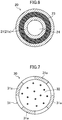
Fig. 6] Fig. 6 illustrates an example of a drug-containing capsule according to another embodiment. - [
Fig. 7] Fig. 7 illustrates an example of a drug-containing capsule according to another embodiment. Description of Embodiments - A drug-containing capsule (20, 30, 40) according to an embodiment is used for an air treatment device (1). As illustrated in
Fig. 1 , the air treatment device (1) according to the embodiment is constituted by an air conditioning device (1). This air conditioning device (1) includes a casing (2), a heat exchanger (10a), a fan (10b), a drain pan (10c), a filter (10d), and a flap (not shown) that are each contained in the casing (2), and a duct (not shown). These individually constitute components (10). - As illustrated in
Fig. 2 , the components (10) of the air conditioning device (1) each include a base member (11), a corrosion resistant film (12) formed on the base member (11), and a hydrophilic film (13) formed on this corrosion resistant film (12). The base member (11) is formed of, for example, metal or resin. The corrosion resistant film (12) and the hydrophilic film (13) may be formed of, for example, different types of resins. The hydrophilic film (13) constitutes a film. - As illustrated in
Fig. 2 , the hydrophilic film (13) includes therein a plurality of types of drug-containing capsules (20, 30, 40). In this example, the hydrophilic film (13) includes three types of drug-containing capsules (20, 30, 40), specifically a first drug-containing capsule (20), a second drug-containing capsule (30), and a third drug-containing capsule (40). - As illustrated in
Fig. 3 , the first drug-containing capsule (20) includes a plurality of (in this example, two) capsule materials (21) disposed as layers and having the shapes of hollow spheres and drugs (22) disposed within the capsule materials (21). The capsule materials (21) include degradable parts (21a) formed of a raw material that is caused to biodegrade by a specific microorganism (specifically, a polymer including caprolactone or a polymer including ethylene adipate). In this example, the capsule materials (21) are wholly constituted by the degradable parts (21a). The drugs (22) have a sterilization action for a specific microorganism and include, for example, a fungicide-bactericide and a plant essential oil. Incidentally, in the drawings, the fungicide-bactericide is illustrated in a white solid color, and the plant essential oil is illustrated as densely hatched areas. - As illustrated in
Fig. 4 , the second drug-containing capsule (30) includes a single capsule material (31) having the shape of, for example, a hollow sphere and a drug (32) disposed within the capsule material (31). The capsule material (31) includes a degradable part (31a) formed of a raw material that is caused to biodegrade by a specific microorganism (specifically, a polymer including caprolactone or a polymer including ethylene adipate). In this example, the capsule material (31) is wholly constituted by the degradable part (31a). The drug (32) has a sterilization action for a specific microorganism and includes, for example, a fungicide-bactericide and a plant essential oil. - As illustrated in
Fig. 5 , the third drug-containing capsule (40) includes a single capsule material (41) having the shape of, for example, a hollow sphere and a drug (42) disposed within the capsule material (41). The capsule material (41) includes a degradable part (41a) formed of a raw material that is caused to biodegrade by a specific microorganism (specifically, a polymer including caprolactone or a polymer including ethylene adipate). In this example, the capsule material (41) is wholly constituted by the degradable part (41a). The thickness (T3) of the capsule material (41) of the third drug-containing capsule (40) is larger than the thickness (T1) of the outer capsule material (21) of the first drug-containing capsule (20) and the thickness (T2) of the capsule material (31) of the second drug-containing capsule (30) (T1 < T3, T2 < T3). The drug (42) has a sterilization action for a specific microorganism and includes, for example, a fungicide-bactericide and a plant essential oil. - Incidentally, in this Description, the "specific microorganism" means a microorganism to be destroyed by the drug-containing capsules (20, 30, 40). The microorganism is specifically a mold, a yeast, or a bacterium proliferating in the air treatment device (1): the mold includes at least one of Penicillium molds, Cladosporium molds, Aspergillus molds, Toxicocladosporium molds, Engyodontium molds, Aureobasidium molds, Alternaria molds, Paecilomyces molds, Tricoderma molds, Nigrospora molds, Chaetomium molds, Ulocladium molds, Fusarium molds, Eurotium molds, Curvularia molds, Rhodotorula molds, Chaetomium molds, Mucor molds, and Rhizopus molds; the yeast includes at least one of true fungi that are collectively called yeast; and the bacterium includes at least one of Arthrobacter bacteria, Baccilus bacteria, Serratia bacteria, and Staphylococcus aureus.
- Hereinafter, how the drug-containing capsules (20, 30, 40) exert the drug action will be described.
- For example, on the surface of the heat exchanger (10a) of the air conditioning device (1), moisture in the air condenses during a cooling operation to generate drain water, which leads to proliferation of a specific microorganism.
- The proliferating specific microorganism causes biodegradation of the capsule materials (21, 31, 41) of the first to third drug-containing capsules (20, 30, 40). In this case, first, the outer capsule material (21) of the first drug-containing capsule (20) and the capsule material (31) of the second drug-containing capsule (30) are perforated. This causes release of the drugs (22, 32) from within the capsule materials (21, 31) to destroy the specific microorganism.
- When the specific microorganism further proliferates, the inner capsule material (21) of the first drug-containing capsule (20) is then perforated. This causes release of the drug (22) from within the capsule material (21) to destroy the specific microorganism.
- When the specific microorganism further proliferates, the capsule material (41) of the third drug-containing capsule (40) is then perforated. This causes release of the drug (42) from within the capsule material (41) to destroy the specific microorganism.
- In this way, the first to third drug-containing capsules (20, 30, 40) exert the drug action at the spot and timing of the proliferation of the specific microorganism. The capsule materials (21, 31, 41) are perforated at timings different from each other, so that the drug action is exerted for a relatively long term.
- The drug-containing capsules (20, 30, 40) according to these embodiments include capsule materials (21, 31, 41) and drugs (22, 32, 42) disposed within the capsule materials (21, 31, 41) and having a sterilization action for a specific microorganism, wherein the capsule materials (21, 31, 41) include degradable parts (21a, 31a, 41a) formed of a raw material that is caused to biodegrade by the specific microorganism.
- The inventors of the present application focused on disposition of drug-containing capsules (20, 30, 40) for a specific microorganism at the spot of proliferation of the specific microorganism. They have found that, by using a raw material that is caused to biodegrade by the specific microorganism to form at least portions of the capsule materials (21, 31, 41), the specific microorganism is destroyed at the spot and timing of proliferation. The degradable parts (21a, 31a, 41a) of the capsule materials (21, 31, 41) of the embodiments are caused to biodegrade by a specific microorganism at the spot of proliferation of the microorganism. This causes release of the drugs (22, 32, 42) from within the capsule materials (21, 31, 41) to destroy the proliferating microorganism. In this way, the drug action of the drugs (22, 32, 42) is exerted at the spot and timing of proliferation of the specific microorganism.
- The specific microorganism is a mold, a yeast, or a bacterium proliferating in the air treatment device (1). Therefore, the embodiments provide drug-containing capsules (20, 30, 40) that effectively act against the mold, the yeast, or the bacterium proliferating in the air treatment device (1).
- The mold includes at least one of Penicillium molds, Cladosporium molds, Aspergillus molds, Toxicocladosporium molds, Engyodontium molds, Aureobasidium molds, Alternaria molds, Paecilomyces molds, Tricoderma molds, Nigrospora molds, Chaetomium molds, Ulocladium molds, Fusarium molds, Eurotium molds, Curvularia molds, Rhodotorula molds, Chaetomium molds, Mucor molds, and Rhizopus molds; the yeast includes at least one of true fungi that are collectively called yeast; and the bacterium includes at least one of Arthrobacter bacteria, Baccilus bacteria, Serratia bacteria, and Staphylococcus aureus. The inventors of the present application have newly found that such molds, yeasts, or bacteria proliferate in the air treatment device (1). In the embodiments, a raw material that is caused to biodegrade by such a mold, a yeast, or a bacterium is used to form capsule materials (21, 31, 41). Therefore, the embodiments provide drug-containing capsules (20, 30, 40) that effectively act against such a specific mold, yeast, or bacterium.
- In the drug-containing capsules (20, 30, 40) according to the embodiments, the raw material that is caused to biodegrade by such a specific microorganism is a polymer including caprolactone or a polymer including ethylene adipate. Therefore, the embodiments provide drug-containing capsules (20, 30, 40) that effectively act against the microorganism that causes biodegradation of such a polymer.
- In the first drug-containing capsule (20) according to the embodiment, the capsule material (21) includes two capsule materials (21) disposed as layers, and the drug (22) is disposed within each of the capsule materials (21). Thus, upon biodegradation of the outer capsule material (21), the drug (22) disposed therein is released to destroy the specific microorganism. Subsequently, upon biodegradation of the inner capsule material (21), the drug (22) disposed therein is released to destroy the specific microorganism. In this way, such first drug-containing capsules (20) each provide a drug action twice.
- The component (10) for the air treatment device (1) according to the embodiment includes the film (13) including the drug-containing capsules (20, 30, 40). Thus, the embodiment, in the air treatment device (1), effectively suppresses proliferation of the specific microorganism on the component (10) including the film (13) including the drug-containing capsules (20, 30, 40).
- In the component (10) for the air treatment device (1) according to the embodiment, the film (13) includes the first to third drug-containing capsules (20, 30, 40), and, in the third drug-containing capsule (40), the thickness (T3) of the degradable part (41a) of the capsule material (41) is larger than the thicknesses (T1, T2) of the degradable parts (21a, 31a) of the capsule materials (21, 31) of the first and second drug-containing capsules (20, 30). Thus, compared with the first drug-containing capsule (20) and the second drug-containing capsule (30), in the third drug-containing capsule (40), perforation of the capsule material (21, 31, 41) due to biodegradation occurs at a later timing, so that the drug action is exerted in a later period. Therefore, compared with a case where the thicknesses (T1 to T3) of the capsule materials (21, 31, 41) of all the drug-containing capsules (20, 30, 40) are substantially the same, the total period of exerting the drug action by the first to third drug-containing capsules (20, 30, 40) becomes longer.
- The drug-containing capsule (20, 30, 40) according to the embodiment includes the capsule material (21, 31, 41) including the degradable part (21a, 31a, 41a) formed of a polymer including caprolactone or a polymer including ethylene adipate, and the drug (22, 32, 42) disposed within the capsule material (21, 31, 41) and having a sterilization action for a microorganism. Thus, the degradable part (21a, 31a, 41a) of the capsule material (21, 31, 41) is caused to biodegrade by a microorganism proliferating in the air treatment device (1). This causes release of the drug (22, 32, 42) from within the capsule material (21, 31, 41) to destroy the microorganism. In this way, in the air treatment device (1), the drug action of the drugs (22, 32, 42) is exerted at the spot and timing of proliferation of the microorganism.
- The above-described embodiments may be provided so as to have the following configurations.
- In the above-described embodiment, the air treatment device (1) is constituted by the air conditioning device (1). Alternatively, the air treatment device (1) may be constituted by, for example, an air purification device, a humidity control device, or a ventilation device. In this case, the component (10) may be constituted by, for example, a fan or filter of the air purification device, a humidifying unit, fan, or filter of the humidity control device, or a fan, filter, or duct of the ventilation device.
- In the above-described embodiment, the drugs (22) disposed within the two capsule materials (21) of the first drug-containing capsule (20) are of the same type. Alternatively, as illustrated in
Fig. 6 , the type of a drug (23) disposed within the outer capsule material (21) and the type of a drug (24) disposed within the inner capsule material (21) may be different from each other. Incidentally, in this example, the drug (23) disposed within the outer capsule material (21) is a fungicide-bactericide, while the drug (24) disposed within the inner capsule material (21) is a plant essential oil. The number of the capsule materials (21) of the first drug-containing capsule (20) may be three or more. - In the above-described embodiment, the capsule materials (21, 31, 41) of the first to third drug-containing capsules (20, 30, 40) are wholly constituted by the degradable parts (21a, 31a, 41a). Alternatively, as illustrated in
Fig. 7 , for example, in the second drug-containing capsule (30), only portions of the capsule material (31) may be constituted by the degradable parts (31a). In this case, the degradable parts (31a) are caused to biodegrade by a specific microorganism to release the drug (32). The same applies to the first and third drug-containing capsules (20, 40). - The drug-containing capsules (20, 30, 40) included in the hydrophilic film (13) may be of two or less types, or four or more types.
- The embodiments and modifications have been described so far, and it would be understood that the forms and details can be changed in various ways without departing from the spirit and scope of the Claims. The above-described embodiments and modifications can be appropriately combined or substituted unless the function of the subject matter of the present disclosure is degraded.
- As has been described so far, the present disclosure is useful for drug-containing capsules and components for air treatment devices.
-
- 1 air conditioning device (air treatment device)
- 10 component
- 10a heat exchanger (component)
- 10b fan (component)
- 10c drain pan (component)
- 10d filter (component)
- 13 hydrophilic film (film)
- 20 first drug-containing capsule (drug-containing capsule)
- 21 capsule material
- 21a degradable part
- 22 drug
- 30 second drug-containing capsule (drug-containing capsule)
- 31 capsule material
- 31a degradable part
- 32 drug
- 40 third drug-containing capsule (drug-containing capsule)
- 41 capsule material
- 41a degradable part
- 42 drug
- T1 to T3 thicknesses (of degradable parts)
Claims (8)
- A drug-containing capsule comprising:a capsule material (21, 31, 41); anda drug (22, 32, 42) disposed within the capsule material (21, 31, 41) and having a sterilization action for a specific microorganism,wherein the capsule material (21, 31, 41) includes a degradable part (21a, 31a, 41a) formed of a raw material that is caused to biodegrade by the specific microorganism.
- The drug-containing capsule according to Claim 1, wherein the specific microorganism is a mold, a yeast, or a bacterium proliferating in an air treatment device (1).
- The drug-containing capsule according to Claim 2,
wherein the mold includes at least one of Penicillium molds, Cladosporium molds, Aspergillus molds, Toxicocladosporium molds, Engyodontium molds, Aureobasidium molds, Alternaria molds, Paecilomyces molds, Tricoderma molds, Nigrospora molds, Chaetomium molds, Ulocladium molds, Fusarium molds, Eurotium molds, Curvularia molds, Rhodotorula molds, Chaetomium molds, Mucor molds, and Rhizopus molds,
the yeast includes at least one of true fungi that are collectively called yeast, and
the bacterium includes at least one of Arthrobacter bacteria, Baccilus bacteria, Serratia bacteria, and Staphylococcus aureus. - The drug-containing capsule according to any one of Claims 1 to 3,
wherein the raw material that is caused to biodegrade by the specific microorganism is a polymer including caprolactone or a polymer including ethylene adipate. - The drug-containing capsule according to any one of Claims 1 to 4,
wherein the capsule material (21) includes a plurality of the capsule materials (21) disposed as layers, and
the drug (22) is disposed within each of the capsule materials (21). - A component for an air treatment device, comprising:
a film (13) including the drug-containing capsule (20, 30, 40) according to any one of Claims 1 to 5. - The drug-containing capsule according to Claim 6,
wherein the film (13) includes a plurality of types of the drug-containing capsules (20, 30, 40), and
the plurality of types of the drug-containing capsules (20, 30, 40) are different from each other in a thickness (T1, T2, T3) of the degradable part (21a, 31a, 41a) of the capsule material (21, 31, 41). - A drug-containing capsule (20, 30, 40) used for an air treatment device (1), comprising:a capsule material (21, 31, 41) including a degradable part (21a, 31a, 41a) formed of a polymer including caprolactone or a polymer including ethylene adipate; anda drug (22, 32, 42) disposed within the capsule material (21, 31, 41) and having a sterilization action for a microorganism.
Applications Claiming Priority (2)
| Application Number | Priority Date | Filing Date | Title |
|---|---|---|---|
| JP2018065107A JP2019174077A (en) | 2018-03-29 | 2018-03-29 | Drug-filled capsule and component for air processing device |
| PCT/JP2019/011146 WO2019188489A1 (en) | 2018-03-29 | 2019-03-18 | Drug-containing capsule, and component for air treatment device |
Publications (2)
| Publication Number | Publication Date |
|---|---|
| EP3754283A1 true EP3754283A1 (en) | 2020-12-23 |
| EP3754283A4 EP3754283A4 (en) | 2021-11-17 |
Family
ID=68061569
Family Applications (1)
| Application Number | Title | Priority Date | Filing Date |
|---|---|---|---|
| EP19775429.4A Withdrawn EP3754283A4 (en) | 2018-03-29 | 2019-03-18 | ACTIVE CAPSULE AND COMPONENT FOR AN AIR TREATMENT DEVICE |
Country Status (5)
| Country | Link |
|---|---|
| US (1) | US11583601B2 (en) |
| EP (1) | EP3754283A4 (en) |
| JP (1) | JP2019174077A (en) |
| CN (1) | CN111919080A (en) |
| WO (1) | WO2019188489A1 (en) |
Family Cites Families (23)
| Publication number | Priority date | Publication date | Assignee | Title |
|---|---|---|---|---|
| JPS544282A (en) * | 1977-06-13 | 1979-01-12 | Norio Tanaka | Manufacture of microbe decomposable microcapsule |
| JPS6410072A (en) * | 1987-07-01 | 1989-01-13 | Hitachi Ltd | Evaporator for automobile air conditioner |
| JPH01123673A (en) | 1987-11-06 | 1989-05-16 | Nippon Parkerizing Co Ltd | Moldproof bacterial hydrophilic surface treatment of aluminum |
| JP3278273B2 (en) | 1993-12-17 | 2002-04-30 | キヤノン株式会社 | Drug sustained release capsule |
| WO1995019180A1 (en) * | 1994-01-14 | 1995-07-20 | Xoma Corporation | Anti-gram-positive bacterial methods and materials |
| CA2235280A1 (en) | 1995-10-20 | 1997-04-24 | Ildiko Bakonyvari | Microencapsulated insecticide preparations and a process for the preparation thereof |
| HU215572B (en) | 1995-10-20 | 1999-01-28 | AGRO-CHEMIE Növényvédőszer Gyártó, Értékesítő és Forgalmazó Kft. | Encapsulated insecticidal compositions and method for their preparation |
| IL141153A (en) * | 1998-07-29 | 2005-12-18 | Syngenta Ltd | Base-triggered release microcapsules |
| JP4687840B2 (en) | 2000-06-28 | 2011-05-25 | トッパン・フォームズ株式会社 | Manufacturing method of dual capsule |
| NL1020716C2 (en) * | 2002-05-30 | 2003-12-02 | Tno | Antimicrobial packaging. |
| JP2005326137A (en) | 2004-04-15 | 2005-11-24 | Daikin Ind Ltd | Air conditioner |
| US20070209373A1 (en) | 2004-04-15 | 2007-09-13 | Daikin Industries, Ltd. | Air Conditioner |
| KR100727181B1 (en) * | 2004-07-13 | 2007-06-13 | 현대자동차주식회사 | Hydrophilic Antimicrobial Composition for Automobile Air Conditioner Evaporator |
| KR100707499B1 (en) * | 2005-04-04 | 2007-04-13 | 장승호 | Dehumidification, humidification and air purification combined use |
| JP2007107806A (en) | 2005-10-13 | 2007-04-26 | Matsushita Electric Ind Co Ltd | Air conditioner |
| EP2150106A2 (en) * | 2007-04-26 | 2010-02-10 | Basf Se | Active ingredient compositions for plant protection |
| JP5397942B2 (en) * | 2009-10-15 | 2014-01-22 | 国立大学法人 鹿児島大学 | Satch-decomposing microbe-encapsulating microcapsules, lawn conservation method using the same, and method for producing the microcapsules |
| CN202262348U (en) * | 2011-09-26 | 2012-06-06 | 郑恩泽 | Environment-friendly trichoderma microcapsule dosage form |
| US9283147B2 (en) | 2011-09-28 | 2016-03-15 | Seiko Epson Corporation | Encapsulation device, medical capsules, and encapsulation method |
| JP5942593B2 (en) | 2011-09-28 | 2016-06-29 | セイコーエプソン株式会社 | Capsule manufacturing apparatus and capsule manufacturing method |
| US20150086623A1 (en) * | 2012-11-02 | 2015-03-26 | Samyang Biopharmaceuticals Corporation | Controlled-release pharmaceutical composition including tamsulosin or pharmaceutically acceptable salts thereof, and oral formulation including the same |
| GB201317293D0 (en) * | 2013-09-30 | 2013-11-13 | Isis Innovation | Methods, materials and products for delivering biocides |
| JP6492650B2 (en) * | 2014-12-26 | 2019-04-03 | ダイキン工業株式会社 | Heat exchanger |
-
2018
- 2018-03-29 JP JP2018065107A patent/JP2019174077A/en active Pending
-
2019
- 2019-03-18 CN CN201980020297.9A patent/CN111919080A/en active Pending
- 2019-03-18 WO PCT/JP2019/011146 patent/WO2019188489A1/en not_active Ceased
- 2019-03-18 EP EP19775429.4A patent/EP3754283A4/en not_active Withdrawn
-
2020
- 2020-08-26 US US17/003,413 patent/US11583601B2/en active Active
Also Published As
| Publication number | Publication date |
|---|---|
| US20200390921A1 (en) | 2020-12-17 |
| CN111919080A (en) | 2020-11-10 |
| EP3754283A4 (en) | 2021-11-17 |
| US11583601B2 (en) | 2023-02-21 |
| JP2019174077A (en) | 2019-10-10 |
| WO2019188489A1 (en) | 2019-10-03 |
Similar Documents
| Publication | Publication Date | Title |
|---|---|---|
| JP2012507608A5 (en) | ||
| WO2020074109A1 (en) | Garment, especially sports garment | |
| JP2017206702A5 (en) | ||
| WO2006023139A3 (en) | Project management systems and methods | |
| WO2008002657A3 (en) | Microparticles containing active agent dispersed in a polymer matrix as implant or as coating for medical devices | |
| JP2004513698A5 (en) | ||
| JP2016093999A5 (en) | ||
| AR064201A1 (en) | MATTEENT AGENT | |
| JP2018506990A5 (en) | ||
| BRPI1009556A2 (en) | vascular implant, method for generating a super hydrophilic layer on the surface of a vascular implant, method of forming a nickel titanium thin film sheet, hydrophilic nickel titanium thin film sheet, system and method for treating a vascular condition. | |
| JP2009517551A5 (en) | ||
| JP2016513562A5 (en) | ||
| EP3943076A3 (en) | A modified release composition of orlistat and acarbose for the treatment of obesity and related metabolic disorders | |
| US11583601B2 (en) | Drug-containing capsule, and component for air treatment device | |
| CN104609029A (en) | Antibacterial surface adopting surface micro-pattern design and antibacterial film | |
| JP2022033220A5 (en) | ||
| CA2526446C (en) | Biofilm growth prevention | |
| JP2020513273A5 (en) | ||
| Wu et al. | Mechano‐bactericidal activities of orthopedic implants with nanostructured surfaces: recent advances and prospects | |
| EP4609906A3 (en) | Guidewire | |
| ES2144948B1 (en) | USE OF GELATINE FOR SUPPORT AND TRANSFER OF IMAGES. | |
| JP2019508187A5 (en) | ||
| JP6492650B2 (en) | Heat exchanger | |
| JP2017205685A (en) | Antibacterial deodorant film manufacturing method, antibacterial deodorant film and packaging material | |
| JP2010188426A (en) | Cleaning sheet |
Legal Events
| Date | Code | Title | Description |
|---|---|---|---|
| STAA | Information on the status of an ep patent application or granted ep patent |
Free format text: STATUS: THE INTERNATIONAL PUBLICATION HAS BEEN MADE |
|
| PUAI | Public reference made under article 153(3) epc to a published international application that has entered the european phase |
Free format text: ORIGINAL CODE: 0009012 |
|
| STAA | Information on the status of an ep patent application or granted ep patent |
Free format text: STATUS: REQUEST FOR EXAMINATION WAS MADE |
|
| 17P | Request for examination filed |
Effective date: 20200915 |
|
| AK | Designated contracting states |
Kind code of ref document: A1 Designated state(s): AL AT BE BG CH CY CZ DE DK EE ES FI FR GB GR HR HU IE IS IT LI LT LU LV MC MK MT NL NO PL PT RO RS SE SI SK SM TR |
|
| AX | Request for extension of the european patent |
Extension state: BA ME |
|
| DAV | Request for validation of the european patent (deleted) | ||
| DAX | Request for extension of the european patent (deleted) | ||
| A4 | Supplementary search report drawn up and despatched |
Effective date: 20211015 |
|
| RIC1 | Information provided on ipc code assigned before grant |
Ipc: A01N 25/26 20060101ALI20211011BHEP Ipc: B01D 46/00 20060101ALI20211011BHEP Ipc: F28F 13/18 20060101ALI20211011BHEP Ipc: F24F 13/22 20060101ALI20211011BHEP Ipc: A61L 2/18 20060101ALI20211011BHEP Ipc: A01P 3/00 20060101ALI20211011BHEP Ipc: A01N 25/28 20060101ALI20211011BHEP Ipc: A01N 25/00 20060101ALI20211011BHEP Ipc: F28F 19/00 20060101AFI20211011BHEP |
|
| RAP3 | Party data changed (applicant data changed or rights of an application transferred) |
Owner name: DAIKIN INDUSTRIES, LTD. |
|
| P01 | Opt-out of the competence of the unified patent court (upc) registered |
Effective date: 20230525 |
|
| STAA | Information on the status of an ep patent application or granted ep patent |
Free format text: STATUS: EXAMINATION IS IN PROGRESS |
|
| 17Q | First examination report despatched |
Effective date: 20250217 |
|
| STAA | Information on the status of an ep patent application or granted ep patent |
Free format text: STATUS: THE APPLICATION HAS BEEN WITHDRAWN |
|
| 18W | Application withdrawn |
Effective date: 20250415 |