EP3753931A1 - Multi-substituted benzene compound having biological activity, preparation method therefor, and application thereof - Google Patents
Multi-substituted benzene compound having biological activity, preparation method therefor, and application thereof Download PDFInfo
- Publication number
- EP3753931A1 EP3753931A1 EP18905751.6A EP18905751A EP3753931A1 EP 3753931 A1 EP3753931 A1 EP 3753931A1 EP 18905751 A EP18905751 A EP 18905751A EP 3753931 A1 EP3753931 A1 EP 3753931A1
- Authority
- EP
- European Patent Office
- Prior art keywords
- alkyl
- group
- compound
- nmr
- mhz
- Prior art date
- Legal status (The legal status is an assumption and is not a legal conclusion. Google has not performed a legal analysis and makes no representation as to the accuracy of the status listed.)
- Withdrawn
Links
- 0 CCc(c(*)c1O)cc(C)c1O Chemical compound CCc(c(*)c1O)cc(C)c1O 0.000 description 13
- XKMBKZXSRNNSQS-UHFFFAOYSA-N CC(OC=CC1=O)=C1OCC#C Chemical compound CC(OC=CC1=O)=C1OCC#C XKMBKZXSRNNSQS-UHFFFAOYSA-N 0.000 description 2
- VESVDSSNUPNOLX-UHFFFAOYSA-N Cc(cc(CC1=COCCC1)c(C=O)c1O)c1O Chemical compound Cc(cc(CC1=COCCC1)c(C=O)c1O)c1O VESVDSSNUPNOLX-UHFFFAOYSA-N 0.000 description 2
- LVIWNALGPMQGMO-UHFFFAOYSA-N Cc(cc(COCc1ccccc1)c(C=O)c1OC)c1OC Chemical compound Cc(cc(COCc1ccccc1)c(C=O)c1OC)c1OC LVIWNALGPMQGMO-UHFFFAOYSA-N 0.000 description 2
- KMRZQHFUNXQAKZ-XVNBXDOJSA-N C/C=C/c(c(C(CC1)c2ccccc2)c1c(C(C)=O)c1O)c1O Chemical compound C/C=C/c(c(C(CC1)c2ccccc2)c1c(C(C)=O)c1O)c1O KMRZQHFUNXQAKZ-XVNBXDOJSA-N 0.000 description 1
- BUDQDWGNQVEFAC-UHFFFAOYSA-N C1COC=CC1 Chemical compound C1COC=CC1 BUDQDWGNQVEFAC-UHFFFAOYSA-N 0.000 description 1
- NCSZRNMVUILZEC-UHFFFAOYSA-N C=C(CC1)c2c1cccc2 Chemical compound C=C(CC1)c2c1cccc2 NCSZRNMVUILZEC-UHFFFAOYSA-N 0.000 description 1
- PPBRXRYQALVLMV-UHFFFAOYSA-N C=Cc1ccccc1 Chemical compound C=Cc1ccccc1 PPBRXRYQALVLMV-UHFFFAOYSA-N 0.000 description 1
- KVOLMWPDXLHSHS-UHFFFAOYSA-N CC(C1[O](C)c2cc(OC)cc(OC)c2CC(C(C=O)=C2O)=C1)=C2O Chemical compound CC(C1[O](C)c2cc(OC)cc(OC)c2CC(C(C=O)=C2O)=C1)=C2O KVOLMWPDXLHSHS-UHFFFAOYSA-N 0.000 description 1
- NRHSKONRJVZHAX-UHFFFAOYSA-N CC(OC(CO)=C1O)=CC1=O Chemical compound CC(OC(CO)=C1O)=CC1=O NRHSKONRJVZHAX-UHFFFAOYSA-N 0.000 description 1
- ABMUBLLNGRHQET-UHFFFAOYSA-N CC(OC(COCC#C)=C1OCC#C)=CC1=O Chemical compound CC(OC(COCC#C)=C1OCC#C)=CC1=O ABMUBLLNGRHQET-UHFFFAOYSA-N 0.000 description 1
- NGGPLHHTRNJSDT-UHFFFAOYSA-N CC(OC=CC1=O)=C1OC Chemical compound CC(OC=CC1=O)=C1OC NGGPLHHTRNJSDT-UHFFFAOYSA-N 0.000 description 1
- MELFYJROVJEFEX-UHFFFAOYSA-N CC(OC=CC1=O)=C1OCC#Cc(cc1)ccc1C(OC)=O Chemical compound CC(OC=CC1=O)=C1OCC#Cc(cc1)ccc1C(OC)=O MELFYJROVJEFEX-UHFFFAOYSA-N 0.000 description 1
- CVYYTGNQUAJXOB-UHFFFAOYSA-N CC(c1c(CCC2c3ccccc3)c2c(COCC#C)c(OC)c1OC)=O Chemical compound CC(c1c(CCC2c3ccccc3)c2c(COCC#C)c(OC)c1OC)=O CVYYTGNQUAJXOB-UHFFFAOYSA-N 0.000 description 1
- ONCWREAKTCTLSZ-UHFFFAOYSA-N CC[O](C=CC1=O)C(C)=C1OCC#C Chemical compound CC[O](C=CC1=O)C(C)=C1OCC#C ONCWREAKTCTLSZ-UHFFFAOYSA-N 0.000 description 1
- KUWOJLXMZXXXRW-UHFFFAOYSA-N CCc(c(C(CC1)c2ccccc2)c1c(C=O)c1O)c1O Chemical compound CCc(c(C(CC1)c2ccccc2)c1c(C=O)c1O)c1O KUWOJLXMZXXXRW-UHFFFAOYSA-N 0.000 description 1
- PGZRHZLLCIRXTL-UHFFFAOYSA-N CCc(c(C(F)(F)F)c(C)c([O](C)=C)c1[O](C)=C)c1[N]#C Chemical compound CCc(c(C(F)(F)F)c(C)c([O](C)=C)c1[O](C)=C)c1[N]#C PGZRHZLLCIRXTL-UHFFFAOYSA-N 0.000 description 1
- DYUWQWMXZHDZOR-UHFFFAOYSA-N COC(c(cc1)ccc1I)=O Chemical compound COC(c(cc1)ccc1I)=O DYUWQWMXZHDZOR-UHFFFAOYSA-N 0.000 description 1
- BSFMKJRIMFDCST-PKPIPKONSA-N C[C@@H](C[O](C)=C)C(C)N Chemical compound C[C@@H](C[O](C)=C)C(C)N BSFMKJRIMFDCST-PKPIPKONSA-N 0.000 description 1
- HZRSFIOGIVAADH-JMPSBRMBSA-N C[C@](CC1)([C@@H](CC2)[C@H]3[C@H]1[C@@](C)(CC[C@@H](C1)OCc(c(-c4ccccc4)c4C)c(C=O)c(O)c4O)C1=CC3)C2=O Chemical compound C[C@](CC1)([C@@H](CC2)[C@H]3[C@H]1[C@@](C)(CC[C@@H](C1)OCc(c(-c4ccccc4)c4C)c(C=O)c(O)c4O)C1=CC3)C2=O HZRSFIOGIVAADH-JMPSBRMBSA-N 0.000 description 1
- CKIZETZRSQXAIU-UHFFFAOYSA-N Cc(c(-c(c(CC1)c2C=O)c(C)c(O)c2O)c1c(C=O)c1O)c1O Chemical compound Cc(c(-c(c(CC1)c2C=O)c(C)c(O)c2O)c1c(C=O)c1O)c1O CKIZETZRSQXAIU-UHFFFAOYSA-N 0.000 description 1
- XFQQWZQVZUHGLB-UHFFFAOYSA-N Cc(c(-c(cc1)ccc1OC)c(COCc1ccccc1)c(C=O)c1O)c1O Chemical compound Cc(c(-c(cc1)ccc1OC)c(COCc1ccccc1)c(C=O)c1O)c1O XFQQWZQVZUHGLB-UHFFFAOYSA-N 0.000 description 1
- FDLAJFJYAROCDQ-UHFFFAOYSA-N Cc(c(-c(cc1)ccc1[N+]([O-])=O)c(COCc1ccccc1)c(C=O)c1O)c1O Chemical compound Cc(c(-c(cc1)ccc1[N+]([O-])=O)c(COCc1ccccc1)c(C=O)c1O)c1O FDLAJFJYAROCDQ-UHFFFAOYSA-N 0.000 description 1
- IMNNIUNJGWRJHX-DJWKRKHSSA-N Cc(c(C(CC1)/C=C\c(cc2)ccc2Br)c1c(C=O)c1O)c1O Chemical compound Cc(c(C(CC1)/C=C\c(cc2)ccc2Br)c1c(C=O)c1O)c1O IMNNIUNJGWRJHX-DJWKRKHSSA-N 0.000 description 1
- JWCFITWUESCGKZ-UHFFFAOYSA-N Cc(c(C(CC1)C#Cc(cc2)ccc2Br)c1c(C=O)c1O)c1O Chemical compound Cc(c(C(CC1)C#Cc(cc2)ccc2Br)c1c(C=O)c1O)c1O JWCFITWUESCGKZ-UHFFFAOYSA-N 0.000 description 1
- AQEBWIFXHKEYLT-UHFFFAOYSA-N Cc(c(C(CC1)C=C(c2ccccc2)c2ccccc2)c1c(C=O)c1O)c1O Chemical compound Cc(c(C(CC1)C=C(c2ccccc2)c2ccccc2)c1c(C=O)c1O)c1O AQEBWIFXHKEYLT-UHFFFAOYSA-N 0.000 description 1
- SRACAZXGDAMOIY-UHFFFAOYSA-N Cc(c(C)c1O)c(COCc2ccccc2)c(C=O)c1O Chemical compound Cc(c(C)c1O)c(COCc2ccccc2)c(C=O)c1O SRACAZXGDAMOIY-UHFFFAOYSA-N 0.000 description 1
- UCKRPQCZIKKNBK-UHFFFAOYSA-N Cc(c(C=O)c1O)c(CC2=CCc3ccccc23)c(C)c1O Chemical compound Cc(c(C=O)c1O)c(CC2=CCc3ccccc23)c(C)c1O UCKRPQCZIKKNBK-UHFFFAOYSA-N 0.000 description 1
- YNDOQFZTWMROOA-UHFFFAOYSA-N Cc(c(NO)c1OC)c(CC2=CCc3ccccc23)c(C)c1OC Chemical compound Cc(c(NO)c1OC)c(CC2=CCc3ccccc23)c(C)c1OC YNDOQFZTWMROOA-UHFFFAOYSA-N 0.000 description 1
- GSAXIHTVWVIZLW-UHFFFAOYSA-N Cc(c(O)c(c(C=O)c1COC(C=C)c2ccccc2)O)c1-c1ccccc1 Chemical compound Cc(c(O)c(c(C=O)c1COC(C=C)c2ccccc2)O)c1-c1ccccc1 GSAXIHTVWVIZLW-UHFFFAOYSA-N 0.000 description 1
- AFNFPFBVNFWBSO-UHFFFAOYSA-N Cc(c(O)c(c(C=O)c1COCc2ccccc2)O)c1-c(cc1)ccc1F Chemical compound Cc(c(O)c(c(C=O)c1COCc2ccccc2)O)c1-c(cc1)ccc1F AFNFPFBVNFWBSO-UHFFFAOYSA-N 0.000 description 1
- HOUATDTZMPKAEG-UHFFFAOYSA-N Cc(c(O)c(c(C=O)c1COCc2ccccc2)O)c1-c1ccccc1C#N Chemical compound Cc(c(O)c(c(C=O)c1COCc2ccccc2)O)c1-c1ccccc1C#N HOUATDTZMPKAEG-UHFFFAOYSA-N 0.000 description 1
- YHCHBFNOVGDBFM-UHFFFAOYSA-N Cc(c(O)c(c(C=O)c1COCc2ccccc2)O)c1-c1ccccc1OC Chemical compound Cc(c(O)c(c(C=O)c1COCc2ccccc2)O)c1-c1ccccc1OC YHCHBFNOVGDBFM-UHFFFAOYSA-N 0.000 description 1
- KTYYNRGJRHWONB-UHFFFAOYSA-N Cc(cc(CO)c(COC)c1OC)c1OC Chemical compound Cc(cc(CO)c(COC)c1OC)c1OC KTYYNRGJRHWONB-UHFFFAOYSA-N 0.000 description 1
- PLWIPVRCOXIMCP-UHFFFAOYSA-N Cc(cc(COCc1ccccc1)c(COC)c1OC)c1OC Chemical compound Cc(cc(COCc1ccccc1)c(COC)c1OC)c1OC PLWIPVRCOXIMCP-UHFFFAOYSA-N 0.000 description 1
- YUJLBYYYUKGMJQ-UHFFFAOYSA-N Cc1c(C(CC2)(CCC3)c4c3cccc4)c2c(C=O)c(O)c1O Chemical compound Cc1c(C(CC2)(CCC3)c4c3cccc4)c2c(C=O)c(O)c1O YUJLBYYYUKGMJQ-UHFFFAOYSA-N 0.000 description 1
- YYQDAQQOJICTRB-UHFFFAOYSA-N Cc1c(C(CC2)(c3ccccc3)c3ccccc3)c2c(C=O)c(O)c1O Chemical compound Cc1c(C(CC2)(c3ccccc3)c3ccccc3)c2c(C=O)c(O)c1O YYQDAQQOJICTRB-UHFFFAOYSA-N 0.000 description 1
- JUSIGWOIQLKTOU-UHFFFAOYSA-N Cc1c(C(CC2)c3ccc(C(F)(F)F)cc3)c2c(C=O)c(O)c1O Chemical compound Cc1c(C(CC2)c3ccc(C(F)(F)F)cc3)c2c(C=O)c(O)c1O JUSIGWOIQLKTOU-UHFFFAOYSA-N 0.000 description 1
- INGIDPNMUZKYQV-UHFFFAOYSA-N Cc1c(C(CC2)c3ccccc3Br)c2c(C=O)c(O)c1O Chemical compound Cc1c(C(CC2)c3ccccc3Br)c2c(C=O)c(O)c1O INGIDPNMUZKYQV-UHFFFAOYSA-N 0.000 description 1
- TUCXKFKGDSATGS-UHFFFAOYSA-N Cc1c(C(CC2)c3ccccc3Cl)c2c(C=O)c(O)c1O Chemical compound Cc1c(C(CC2)c3ccccc3Cl)c2c(C=O)c(O)c1O TUCXKFKGDSATGS-UHFFFAOYSA-N 0.000 description 1
- RUTWGADQZBAZLK-UHFFFAOYSA-N Cc1cc(-c(c(C)c2O)c(COCc3ccccc3)c(C=O)c2O)ccc1 Chemical compound Cc1cc(-c(c(C)c2O)c(COCc3ccccc3)c(C=O)c2O)ccc1 RUTWGADQZBAZLK-UHFFFAOYSA-N 0.000 description 1
- DOGPEWWNAZTFKY-UHFFFAOYSA-N Cc1cc(COCC#C)c(C=O)c(O)c1O Chemical compound Cc1cc(COCC#C)c(C=O)c(O)c1O DOGPEWWNAZTFKY-UHFFFAOYSA-N 0.000 description 1
- GRYMAGBCQMOSHB-UHFFFAOYSA-N Cc1ccc(C(CC2)c(c(C)c3O)c2c(C=O)c3O)cc1 Chemical compound Cc1ccc(C(CC2)c(c(C)c3O)c2c(C=O)c3O)cc1 GRYMAGBCQMOSHB-UHFFFAOYSA-N 0.000 description 1
Classifications
-
- C—CHEMISTRY; METALLURGY
- C07—ORGANIC CHEMISTRY
- C07C—ACYCLIC OR CARBOCYCLIC COMPOUNDS
- C07C39/00—Compounds having at least one hydroxy or O-metal group bound to a carbon atom of a six-membered aromatic ring
- C07C39/12—Compounds having at least one hydroxy or O-metal group bound to a carbon atom of a six-membered aromatic ring polycyclic with no unsaturation outside the aromatic rings
- C07C39/17—Compounds having at least one hydroxy or O-metal group bound to a carbon atom of a six-membered aromatic ring polycyclic with no unsaturation outside the aromatic rings containing other rings in addition to the six-membered aromatic rings, e.g. cyclohexylphenol
-
- A—HUMAN NECESSITIES
- A61—MEDICAL OR VETERINARY SCIENCE; HYGIENE
- A61K—PREPARATIONS FOR MEDICAL, DENTAL OR TOILETRY PURPOSES
- A61K31/00—Medicinal preparations containing organic active ingredients
- A61K31/075—Ethers or acetals
- A61K31/085—Ethers or acetals having an ether linkage to aromatic ring nuclear carbon
- A61K31/09—Ethers or acetals having an ether linkage to aromatic ring nuclear carbon having two or more such linkages
-
- A—HUMAN NECESSITIES
- A61—MEDICAL OR VETERINARY SCIENCE; HYGIENE
- A61K—PREPARATIONS FOR MEDICAL, DENTAL OR TOILETRY PURPOSES
- A61K31/00—Medicinal preparations containing organic active ingredients
- A61K31/11—Aldehydes
-
- A—HUMAN NECESSITIES
- A61—MEDICAL OR VETERINARY SCIENCE; HYGIENE
- A61K—PREPARATIONS FOR MEDICAL, DENTAL OR TOILETRY PURPOSES
- A61K31/00—Medicinal preparations containing organic active ingredients
- A61K31/33—Heterocyclic compounds
- A61K31/335—Heterocyclic compounds having oxygen as the only ring hetero atom, e.g. fungichromin
- A61K31/34—Heterocyclic compounds having oxygen as the only ring hetero atom, e.g. fungichromin having five-membered rings with one oxygen as the only ring hetero atom, e.g. isosorbide
-
- A—HUMAN NECESSITIES
- A61—MEDICAL OR VETERINARY SCIENCE; HYGIENE
- A61K—PREPARATIONS FOR MEDICAL, DENTAL OR TOILETRY PURPOSES
- A61K31/00—Medicinal preparations containing organic active ingredients
- A61K31/33—Heterocyclic compounds
- A61K31/335—Heterocyclic compounds having oxygen as the only ring hetero atom, e.g. fungichromin
- A61K31/35—Heterocyclic compounds having oxygen as the only ring hetero atom, e.g. fungichromin having six-membered rings with one oxygen as the only ring hetero atom
- A61K31/351—Heterocyclic compounds having oxygen as the only ring hetero atom, e.g. fungichromin having six-membered rings with one oxygen as the only ring hetero atom not condensed with another ring
-
- A—HUMAN NECESSITIES
- A61—MEDICAL OR VETERINARY SCIENCE; HYGIENE
- A61K—PREPARATIONS FOR MEDICAL, DENTAL OR TOILETRY PURPOSES
- A61K31/00—Medicinal preparations containing organic active ingredients
- A61K31/33—Heterocyclic compounds
- A61K31/38—Heterocyclic compounds having sulfur as a ring hetero atom
- A61K31/381—Heterocyclic compounds having sulfur as a ring hetero atom having five-membered rings
-
- A—HUMAN NECESSITIES
- A61—MEDICAL OR VETERINARY SCIENCE; HYGIENE
- A61K—PREPARATIONS FOR MEDICAL, DENTAL OR TOILETRY PURPOSES
- A61K31/00—Medicinal preparations containing organic active ingredients
- A61K31/56—Compounds containing cyclopenta[a]hydrophenanthrene ring systems; Derivatives thereof, e.g. steroids
- A61K31/565—Compounds containing cyclopenta[a]hydrophenanthrene ring systems; Derivatives thereof, e.g. steroids not substituted in position 17 beta by a carbon atom, e.g. estrane, estradiol
- A61K31/566—Compounds containing cyclopenta[a]hydrophenanthrene ring systems; Derivatives thereof, e.g. steroids not substituted in position 17 beta by a carbon atom, e.g. estrane, estradiol having an oxo group in position 17, e.g. estrone
-
- A—HUMAN NECESSITIES
- A61—MEDICAL OR VETERINARY SCIENCE; HYGIENE
- A61P—SPECIFIC THERAPEUTIC ACTIVITY OF CHEMICAL COMPOUNDS OR MEDICINAL PREPARATIONS
- A61P35/00—Antineoplastic agents
-
- C—CHEMISTRY; METALLURGY
- C07—ORGANIC CHEMISTRY
- C07C—ACYCLIC OR CARBOCYCLIC COMPOUNDS
- C07C205/00—Compounds containing nitro groups bound to a carbon skeleton
- C07C205/44—Compounds containing nitro groups bound to a carbon skeleton the carbon skeleton being further substituted by —CHO groups
-
- C—CHEMISTRY; METALLURGY
- C07—ORGANIC CHEMISTRY
- C07C—ACYCLIC OR CARBOCYCLIC COMPOUNDS
- C07C255/00—Carboxylic acid nitriles
- C07C255/49—Carboxylic acid nitriles having cyano groups bound to carbon atoms of six-membered aromatic rings of a carbon skeleton
- C07C255/56—Carboxylic acid nitriles having cyano groups bound to carbon atoms of six-membered aromatic rings of a carbon skeleton containing cyano groups and doubly-bound oxygen atoms bound to the carbon skeleton
-
- C—CHEMISTRY; METALLURGY
- C07—ORGANIC CHEMISTRY
- C07C—ACYCLIC OR CARBOCYCLIC COMPOUNDS
- C07C323/00—Thiols, sulfides, hydropolysulfides or polysulfides substituted by halogen, oxygen or nitrogen atoms, or by sulfur atoms not being part of thio groups
- C07C323/10—Thiols, sulfides, hydropolysulfides or polysulfides substituted by halogen, oxygen or nitrogen atoms, or by sulfur atoms not being part of thio groups containing thio groups and singly-bound oxygen atoms bound to the same carbon skeleton
- C07C323/18—Thiols, sulfides, hydropolysulfides or polysulfides substituted by halogen, oxygen or nitrogen atoms, or by sulfur atoms not being part of thio groups containing thio groups and singly-bound oxygen atoms bound to the same carbon skeleton having the sulfur atom of at least one of the thio groups bound to a carbon atom of a six-membered aromatic ring of the carbon skeleton
-
- C—CHEMISTRY; METALLURGY
- C07—ORGANIC CHEMISTRY
- C07C—ACYCLIC OR CARBOCYCLIC COMPOUNDS
- C07C323/00—Thiols, sulfides, hydropolysulfides or polysulfides substituted by halogen, oxygen or nitrogen atoms, or by sulfur atoms not being part of thio groups
- C07C323/22—Thiols, sulfides, hydropolysulfides or polysulfides substituted by halogen, oxygen or nitrogen atoms, or by sulfur atoms not being part of thio groups containing thio groups and doubly-bound oxygen atoms bound to the same carbon skeleton
-
- C—CHEMISTRY; METALLURGY
- C07—ORGANIC CHEMISTRY
- C07C—ACYCLIC OR CARBOCYCLIC COMPOUNDS
- C07C37/00—Preparation of compounds having hydroxy or O-metal groups bound to a carbon atom of a six-membered aromatic ring
- C07C37/01—Preparation of compounds having hydroxy or O-metal groups bound to a carbon atom of a six-membered aromatic ring by replacing functional groups bound to a six-membered aromatic ring by hydroxy groups, e.g. by hydrolysis
-
- C—CHEMISTRY; METALLURGY
- C07—ORGANIC CHEMISTRY
- C07C—ACYCLIC OR CARBOCYCLIC COMPOUNDS
- C07C43/00—Ethers; Compounds having groups, groups or groups
- C07C43/02—Ethers
- C07C43/03—Ethers having all ether-oxygen atoms bound to acyclic carbon atoms
- C07C43/04—Saturated ethers
- C07C43/115—Saturated ethers containing carbocyclic rings
-
- C—CHEMISTRY; METALLURGY
- C07—ORGANIC CHEMISTRY
- C07C—ACYCLIC OR CARBOCYCLIC COMPOUNDS
- C07C43/00—Ethers; Compounds having groups, groups or groups
- C07C43/02—Ethers
- C07C43/03—Ethers having all ether-oxygen atoms bound to acyclic carbon atoms
- C07C43/14—Unsaturated ethers
- C07C43/178—Unsaturated ethers containing hydroxy or O-metal groups
-
- C—CHEMISTRY; METALLURGY
- C07—ORGANIC CHEMISTRY
- C07C—ACYCLIC OR CARBOCYCLIC COMPOUNDS
- C07C43/00—Ethers; Compounds having groups, groups or groups
- C07C43/02—Ethers
- C07C43/03—Ethers having all ether-oxygen atoms bound to acyclic carbon atoms
- C07C43/14—Unsaturated ethers
- C07C43/178—Unsaturated ethers containing hydroxy or O-metal groups
- C07C43/1782—Unsaturated ethers containing hydroxy or O-metal groups containing six-membered aromatic rings
- C07C43/1783—Unsaturated ethers containing hydroxy or O-metal groups containing six-membered aromatic rings with hydroxy or -O-metal groups bound to the aromatic rings
-
- C—CHEMISTRY; METALLURGY
- C07—ORGANIC CHEMISTRY
- C07C—ACYCLIC OR CARBOCYCLIC COMPOUNDS
- C07C43/00—Ethers; Compounds having groups, groups or groups
- C07C43/02—Ethers
- C07C43/03—Ethers having all ether-oxygen atoms bound to acyclic carbon atoms
- C07C43/14—Unsaturated ethers
- C07C43/178—Unsaturated ethers containing hydroxy or O-metal groups
- C07C43/1785—Unsaturated ethers containing hydroxy or O-metal groups having more than one ether bound
-
- C—CHEMISTRY; METALLURGY
- C07—ORGANIC CHEMISTRY
- C07C—ACYCLIC OR CARBOCYCLIC COMPOUNDS
- C07C43/00—Ethers; Compounds having groups, groups or groups
- C07C43/02—Ethers
- C07C43/20—Ethers having an ether-oxygen atom bound to a carbon atom of a six-membered aromatic ring
- C07C43/205—Ethers having an ether-oxygen atom bound to a carbon atom of a six-membered aromatic ring the aromatic ring being a non-condensed ring
-
- C—CHEMISTRY; METALLURGY
- C07—ORGANIC CHEMISTRY
- C07C—ACYCLIC OR CARBOCYCLIC COMPOUNDS
- C07C43/00—Ethers; Compounds having groups, groups or groups
- C07C43/02—Ethers
- C07C43/20—Ethers having an ether-oxygen atom bound to a carbon atom of a six-membered aromatic ring
- C07C43/205—Ethers having an ether-oxygen atom bound to a carbon atom of a six-membered aromatic ring the aromatic ring being a non-condensed ring
- C07C43/2055—Ethers having an ether-oxygen atom bound to a carbon atom of a six-membered aromatic ring the aromatic ring being a non-condensed ring containing more than one ether bond
-
- C—CHEMISTRY; METALLURGY
- C07—ORGANIC CHEMISTRY
- C07C—ACYCLIC OR CARBOCYCLIC COMPOUNDS
- C07C43/00—Ethers; Compounds having groups, groups or groups
- C07C43/02—Ethers
- C07C43/20—Ethers having an ether-oxygen atom bound to a carbon atom of a six-membered aromatic ring
- C07C43/23—Ethers having an ether-oxygen atom bound to a carbon atom of a six-membered aromatic ring containing hydroxy or O-metal groups
-
- C—CHEMISTRY; METALLURGY
- C07—ORGANIC CHEMISTRY
- C07C—ACYCLIC OR CARBOCYCLIC COMPOUNDS
- C07C45/00—Preparation of compounds having >C = O groups bound only to carbon or hydrogen atoms; Preparation of chelates of such compounds
- C07C45/56—Preparation of compounds having >C = O groups bound only to carbon or hydrogen atoms; Preparation of chelates of such compounds from heterocyclic compounds
- C07C45/57—Preparation of compounds having >C = O groups bound only to carbon or hydrogen atoms; Preparation of chelates of such compounds from heterocyclic compounds with oxygen as the only heteroatom
- C07C45/60—Preparation of compounds having >C = O groups bound only to carbon or hydrogen atoms; Preparation of chelates of such compounds from heterocyclic compounds with oxygen as the only heteroatom in six-membered rings
-
- C—CHEMISTRY; METALLURGY
- C07—ORGANIC CHEMISTRY
- C07C—ACYCLIC OR CARBOCYCLIC COMPOUNDS
- C07C47/00—Compounds having —CHO groups
- C07C47/52—Compounds having —CHO groups bound to carbon atoms of six—membered aromatic rings
- C07C47/56—Compounds having —CHO groups bound to carbon atoms of six—membered aromatic rings containing hydroxy groups
- C07C47/57—Compounds having —CHO groups bound to carbon atoms of six—membered aromatic rings containing hydroxy groups polycyclic
-
- C—CHEMISTRY; METALLURGY
- C07—ORGANIC CHEMISTRY
- C07C—ACYCLIC OR CARBOCYCLIC COMPOUNDS
- C07C47/00—Compounds having —CHO groups
- C07C47/52—Compounds having —CHO groups bound to carbon atoms of six—membered aromatic rings
- C07C47/575—Compounds having —CHO groups bound to carbon atoms of six—membered aromatic rings containing ether groups, groups, groups, or groups
-
- C—CHEMISTRY; METALLURGY
- C07—ORGANIC CHEMISTRY
- C07C—ACYCLIC OR CARBOCYCLIC COMPOUNDS
- C07C49/00—Ketones; Ketenes; Dimeric ketenes; Ketonic chelates
- C07C49/76—Ketones containing a keto group bound to a six-membered aromatic ring
- C07C49/82—Ketones containing a keto group bound to a six-membered aromatic ring containing hydroxy groups
- C07C49/83—Ketones containing a keto group bound to a six-membered aromatic ring containing hydroxy groups polycyclic
-
- C—CHEMISTRY; METALLURGY
- C07—ORGANIC CHEMISTRY
- C07C—ACYCLIC OR CARBOCYCLIC COMPOUNDS
- C07C49/00—Ketones; Ketenes; Dimeric ketenes; Ketonic chelates
- C07C49/76—Ketones containing a keto group bound to a six-membered aromatic ring
- C07C49/84—Ketones containing a keto group bound to a six-membered aromatic ring containing ether groups, groups, groups, or groups
-
- C—CHEMISTRY; METALLURGY
- C07—ORGANIC CHEMISTRY
- C07C—ACYCLIC OR CARBOCYCLIC COMPOUNDS
- C07C65/00—Compounds having carboxyl groups bound to carbon atoms of six—membered aromatic rings and containing any of the groups OH, O—metal, —CHO, keto, ether, groups, groups, or groups
- C07C65/21—Compounds having carboxyl groups bound to carbon atoms of six—membered aromatic rings and containing any of the groups OH, O—metal, —CHO, keto, ether, groups, groups, or groups containing ether groups, groups, groups, or groups
- C07C65/24—Compounds having carboxyl groups bound to carbon atoms of six—membered aromatic rings and containing any of the groups OH, O—metal, —CHO, keto, ether, groups, groups, or groups containing ether groups, groups, groups, or groups polycyclic
-
- C—CHEMISTRY; METALLURGY
- C07—ORGANIC CHEMISTRY
- C07C—ACYCLIC OR CARBOCYCLIC COMPOUNDS
- C07C69/00—Esters of carboxylic acids; Esters of carbonic or haloformic acids
- C07C69/76—Esters of carboxylic acids having a carboxyl group bound to a carbon atom of a six-membered aromatic ring
-
- C—CHEMISTRY; METALLURGY
- C07—ORGANIC CHEMISTRY
- C07C—ACYCLIC OR CARBOCYCLIC COMPOUNDS
- C07C69/00—Esters of carboxylic acids; Esters of carbonic or haloformic acids
- C07C69/76—Esters of carboxylic acids having a carboxyl group bound to a carbon atom of a six-membered aromatic ring
- C07C69/94—Esters of carboxylic acids having a carboxyl group bound to a carbon atom of a six-membered aromatic ring of polycyclic hydroxy carboxylic acids, the hydroxy groups and the carboxyl groups of which are bound to carbon atoms of six-membered aromatic rings
-
- C—CHEMISTRY; METALLURGY
- C07—ORGANIC CHEMISTRY
- C07D—HETEROCYCLIC COMPOUNDS
- C07D307/00—Heterocyclic compounds containing five-membered rings having one oxygen atom as the only ring hetero atom
- C07D307/02—Heterocyclic compounds containing five-membered rings having one oxygen atom as the only ring hetero atom not condensed with other rings
- C07D307/34—Heterocyclic compounds containing five-membered rings having one oxygen atom as the only ring hetero atom not condensed with other rings having two or three double bonds between ring members or between ring members and non-ring members
- C07D307/38—Heterocyclic compounds containing five-membered rings having one oxygen atom as the only ring hetero atom not condensed with other rings having two or three double bonds between ring members or between ring members and non-ring members with substituted hydrocarbon radicals attached to ring carbon atoms
- C07D307/40—Radicals substituted by oxygen atoms
- C07D307/42—Singly bound oxygen atoms
-
- C—CHEMISTRY; METALLURGY
- C07—ORGANIC CHEMISTRY
- C07D—HETEROCYCLIC COMPOUNDS
- C07D307/00—Heterocyclic compounds containing five-membered rings having one oxygen atom as the only ring hetero atom
- C07D307/02—Heterocyclic compounds containing five-membered rings having one oxygen atom as the only ring hetero atom not condensed with other rings
- C07D307/34—Heterocyclic compounds containing five-membered rings having one oxygen atom as the only ring hetero atom not condensed with other rings having two or three double bonds between ring members or between ring members and non-ring members
- C07D307/38—Heterocyclic compounds containing five-membered rings having one oxygen atom as the only ring hetero atom not condensed with other rings having two or three double bonds between ring members or between ring members and non-ring members with substituted hydrocarbon radicals attached to ring carbon atoms
- C07D307/40—Radicals substituted by oxygen atoms
- C07D307/46—Doubly bound oxygen atoms, or two oxygen atoms singly bound to the same carbon atom
-
- C—CHEMISTRY; METALLURGY
- C07—ORGANIC CHEMISTRY
- C07D—HETEROCYCLIC COMPOUNDS
- C07D309/00—Heterocyclic compounds containing six-membered rings having one oxygen atom as the only ring hetero atom, not condensed with other rings
- C07D309/16—Heterocyclic compounds containing six-membered rings having one oxygen atom as the only ring hetero atom, not condensed with other rings having one double bond between ring members or between a ring member and a non-ring member
- C07D309/20—Heterocyclic compounds containing six-membered rings having one oxygen atom as the only ring hetero atom, not condensed with other rings having one double bond between ring members or between a ring member and a non-ring member with hydrogen atoms and substituted hydrocarbon radicals directly attached to ring carbon atoms
-
- C—CHEMISTRY; METALLURGY
- C07—ORGANIC CHEMISTRY
- C07D—HETEROCYCLIC COMPOUNDS
- C07D309/00—Heterocyclic compounds containing six-membered rings having one oxygen atom as the only ring hetero atom, not condensed with other rings
- C07D309/16—Heterocyclic compounds containing six-membered rings having one oxygen atom as the only ring hetero atom, not condensed with other rings having one double bond between ring members or between a ring member and a non-ring member
- C07D309/20—Heterocyclic compounds containing six-membered rings having one oxygen atom as the only ring hetero atom, not condensed with other rings having one double bond between ring members or between a ring member and a non-ring member with hydrogen atoms and substituted hydrocarbon radicals directly attached to ring carbon atoms
- C07D309/22—Radicals substituted by oxygen atoms
-
- C—CHEMISTRY; METALLURGY
- C07—ORGANIC CHEMISTRY
- C07D—HETEROCYCLIC COMPOUNDS
- C07D309/00—Heterocyclic compounds containing six-membered rings having one oxygen atom as the only ring hetero atom, not condensed with other rings
- C07D309/16—Heterocyclic compounds containing six-membered rings having one oxygen atom as the only ring hetero atom, not condensed with other rings having one double bond between ring members or between a ring member and a non-ring member
- C07D309/20—Heterocyclic compounds containing six-membered rings having one oxygen atom as the only ring hetero atom, not condensed with other rings having one double bond between ring members or between a ring member and a non-ring member with hydrogen atoms and substituted hydrocarbon radicals directly attached to ring carbon atoms
- C07D309/22—Radicals substituted by oxygen atoms
- C07D309/26—Carboxaldehyde radicals
-
- C—CHEMISTRY; METALLURGY
- C07—ORGANIC CHEMISTRY
- C07D—HETEROCYCLIC COMPOUNDS
- C07D333/00—Heterocyclic compounds containing five-membered rings having one sulfur atom as the only ring hetero atom
- C07D333/02—Heterocyclic compounds containing five-membered rings having one sulfur atom as the only ring hetero atom not condensed with other rings
- C07D333/04—Heterocyclic compounds containing five-membered rings having one sulfur atom as the only ring hetero atom not condensed with other rings not substituted on the ring sulphur atom
- C07D333/06—Heterocyclic compounds containing five-membered rings having one sulfur atom as the only ring hetero atom not condensed with other rings not substituted on the ring sulphur atom with only hydrogen atoms, hydrocarbon or substituted hydrocarbon radicals, directly attached to the ring carbon atoms
- C07D333/22—Radicals substituted by doubly bound hetero atoms, or by two hetero atoms other than halogen singly bound to the same carbon atom
-
- C—CHEMISTRY; METALLURGY
- C07—ORGANIC CHEMISTRY
- C07D—HETEROCYCLIC COMPOUNDS
- C07D333/00—Heterocyclic compounds containing five-membered rings having one sulfur atom as the only ring hetero atom
- C07D333/50—Heterocyclic compounds containing five-membered rings having one sulfur atom as the only ring hetero atom condensed with carbocyclic rings or ring systems
- C07D333/78—Heterocyclic compounds containing five-membered rings having one sulfur atom as the only ring hetero atom condensed with carbocyclic rings or ring systems condensed with rings other than six-membered or with ring systems containing such rings
-
- C—CHEMISTRY; METALLURGY
- C07—ORGANIC CHEMISTRY
- C07F—ACYCLIC, CARBOCYCLIC OR HETEROCYCLIC COMPOUNDS CONTAINING ELEMENTS OTHER THAN CARBON, HYDROGEN, HALOGEN, OXYGEN, NITROGEN, SULFUR, SELENIUM OR TELLURIUM
- C07F7/00—Compounds containing elements of Groups 4 or 14 of the Periodic Table
- C07F7/02—Silicon compounds
- C07F7/08—Compounds having one or more C—Si linkages
- C07F7/18—Compounds having one or more C—Si linkages as well as one or more C—O—Si linkages
- C07F7/1804—Compounds having Si-O-C linkages
-
- C—CHEMISTRY; METALLURGY
- C07—ORGANIC CHEMISTRY
- C07J—STEROIDS
- C07J1/00—Normal steroids containing carbon, hydrogen, halogen or oxygen, not substituted in position 17 beta by a carbon atom, e.g. estrane, androstane
- C07J1/0003—Androstane derivatives
- C07J1/0011—Androstane derivatives substituted in position 17 by a keto group
-
- C—CHEMISTRY; METALLURGY
- C07—ORGANIC CHEMISTRY
- C07J—STEROIDS
- C07J1/00—Normal steroids containing carbon, hydrogen, halogen or oxygen, not substituted in position 17 beta by a carbon atom, e.g. estrane, androstane
- C07J1/0051—Estrane derivatives
- C07J1/0059—Estrane derivatives substituted in position 17 by a keto group
-
- C—CHEMISTRY; METALLURGY
- C07—ORGANIC CHEMISTRY
- C07J—STEROIDS
- C07J5/00—Normal steroids containing carbon, hydrogen, halogen or oxygen, substituted in position 17 beta by a chain of two carbon atoms, e.g. pregnane and substituted in position 21 by only one singly bound oxygen atom, i.e. only one oxygen bound to position 21 by a single bond
- C07J5/0046—Normal steroids containing carbon, hydrogen, halogen or oxygen, substituted in position 17 beta by a chain of two carbon atoms, e.g. pregnane and substituted in position 21 by only one singly bound oxygen atom, i.e. only one oxygen bound to position 21 by a single bond substituted in position 17 alfa
- C07J5/0053—Normal steroids containing carbon, hydrogen, halogen or oxygen, substituted in position 17 beta by a chain of two carbon atoms, e.g. pregnane and substituted in position 21 by only one singly bound oxygen atom, i.e. only one oxygen bound to position 21 by a single bond substituted in position 17 alfa not substituted in position 16
-
- C—CHEMISTRY; METALLURGY
- C07—ORGANIC CHEMISTRY
- C07J—STEROIDS
- C07J75/00—Processes for the preparation of steroids in general
-
- C—CHEMISTRY; METALLURGY
- C07—ORGANIC CHEMISTRY
- C07J—STEROIDS
- C07J9/00—Normal steroids containing carbon, hydrogen, halogen or oxygen substituted in position 17 beta by a chain of more than two carbon atoms, e.g. cholane, cholestane, coprostane
-
- C—CHEMISTRY; METALLURGY
- C07—ORGANIC CHEMISTRY
- C07C—ACYCLIC OR CARBOCYCLIC COMPOUNDS
- C07C2602/00—Systems containing two condensed rings
- C07C2602/02—Systems containing two condensed rings the rings having only two atoms in common
- C07C2602/04—One of the condensed rings being a six-membered aromatic ring
- C07C2602/08—One of the condensed rings being a six-membered aromatic ring the other ring being five-membered, e.g. indane
-
- C—CHEMISTRY; METALLURGY
- C07—ORGANIC CHEMISTRY
- C07C—ACYCLIC OR CARBOCYCLIC COMPOUNDS
- C07C2603/00—Systems containing at least three condensed rings
- C07C2603/93—Spiro compounds
- C07C2603/94—Spiro compounds containing "free" spiro atoms
Definitions
- the disclosure relates to the field of pharmaceutical chemistry, and more particularly to a polysubstituted benzene compound with biological activity, a preparation method and application thereof.
- Tumor which is characterized by an abnormal growth and accumulation of cells, is one of the deadliest diseases endangering human and other mammals.
- the production and development of anti-tumor drugs in China has made great progress, but the products are far from meeting the growing clinical needs, many of which are still dependent on imports, so the market potential for the development and production of anti-tumor drugs is still huge.
- Traditional chemotherapy drugs have obvious clinical therapeutic effect, but the disadvantages include low specificity, poor selectivity, side effects, and multidrug resistance of tumor, limiting the clinical application. Therefore, the discovery of safe and effective anti-tumor drugs has become one of the main goals of the pharmaceutical industry.
- Benzene ring is one of the most important structural units in organic chemistry, of which six hydrogen atoms can be replaced, thus producing many benzene derivatives which can be used in the fields of medicine, pesticide, plastics and organic electronic devices. Meanwhile, as the basic framework of many natural active compounds and the synthons of many heterocyclic compounds with pharmacological activities, benzene ring is also of importance in pharmaceutical chemistry.
- Polysubstituted benzene compounds generally have strong biological activity, including antifungal activity, anti-inflammatory activity, anti-tumor activity, antioxidant activity, anti-rheumatic activity, anti-platelet activity, etc.
- quercetin can significantly inhibit the growth of malignant cells in vitro and the synthesis of DNA, RNA and protein of Ehrlich ascites cancer cells; methyl erythritol can significantly inhibit the proliferation of XWLC-05, HepG2 and MCF-7 cells.
- the polysubstituted benzene is synthesized by substitution reactions, including electrophilic substitution (such as Friede-Crafts alkylation and Friede-Crafts acylation), nucleophilic substitution and coupling reactions.
- electrophilic substitution such as Friede-Crafts alkylation and Friede-Crafts acylation
- nucleophilic substitution and coupling reactions These reactions involve harsh reaction conditions, expensive reagents, toxic metal catalysts, and low regioselectivity, and the operation process is complex.
- One objective of the disclosure is to provide a bioactive polysubstituted benzene compound that has the activity of inhibiting the proliferation of tumor cells and can be used in the preparation of antitumor drugs.
- Another objective of the disclosure is to provide a method for preparing the bioactive polysubstituted benzene compound.
- the raw materials involved in the method are easily available, and the method is cost-effective, easy to operate, and has short route and mild reaction conditions.
- the disclosure also provides a use of the bioactive polysubstituted benzene compound.
- the polysubstituted benzene compound having a formula I or I':
- R 4 , R 7 , X, the carbon atoms connected thereto, and the benzene ring form a fused benzo compound.
- R 4 , R 7 , X, the carbon atoms connected thereto, and the benzene ring form a benzyl compound, benzyl ether compound or benzyl sulfide compound instead of a fused benzo compound.
- the formula I comprises a dotted line referring to R 4 connected to X through a group comprising carbon, or R 4 disconnected to X.
- the formula I' comprises a first dotted line referring to a single bond or a double bond between C 1 and X, and a second dotted line referring to R 4 connected to X through a group comprising carbon, or R 4 disconnected to X.
- the fused benzo compound has one of the following two formulas:
- the dotted line in the two formulas means R 4 is connected to C 2 through a group comprising carbon, or R 4 is disconnected to C 2 .
- the benzyl compound has the following formula:
- the dotted line between C 1 and C 2 refers to a single bond or a double bond between C 1 and C 2 ; the dotted line between R 4 and C 2 means R 4 is connected to C 2 through a group comprising carbon, or R 4 is disconnected to C 2 .
- the benzyl ether compound has the following formula:
- the benzyl sulfide compound has the following formula:
- X represents carbon, sulfur, or oxygen
- R 1 represents a C 1-3 alkyl, allyl, or C 3-4 alkynyl
- R 2 represents hydrogen, halogen, C 1-4 alkyl, allyl, or C 3-7 alkynyl; or an aryl group substituted by 0-5 groups selected from halogen, methyl, methoxyl, C 2-26 alkyl, hydroxyl, nitro, cyano group, aldehyde group and ester group; or a heteroaryl group substituted by 0-5 groups selected from halogen, C 1-6 alkyl, C 1-3 halogenated alkyl, O-C 1-3 alkyl, hydroxyl, nitro, cyano group, aldehyde group and ester group; the heteroaryl group is a 5-6-membered heteroaryl group comprising N, S, O, or a combination thereof; R 3 represents a C 1-3 aldehyde group, C 2-4 acyl group, -COOH
- X represents carbon, sulfur, or oxygen
- R 1 represents a C 1-3 alkyl, allyl, or C 3-4 alkynyl
- R 2 represents hydrogen, halogen, C 1-4 alkyl, allyl, or C 3-7 alkynyl; or an aryl group substituted by 0-5 groups selected from halogen, methyl, methoxyl, C 2-26 alkyl, hydroxyl, nitro, cyano group, aldehyde group and ester group
- R 3 represents C 1-3 aldehyde group, acetyl group, -COOH, hydroxyl-substituted C 1-4 alkyl, -CH 2 O-C 1-4 alkyl or -CO 2 -C 1-4 alkyl
- R 4 and R 7 at each occurrence, represent hydrogen, C 1-17 alkyl, C 2-36 alkenyl, or C 2-10 alkynyl; or an aryl group substituted by 0-5 groups selected from halogen, methoxy
- X represents carbon, sulfur, or oxygen
- R 1 represents a C 1-3 alkyl, allyl, or C 3-4 alkynyl
- R 2 represents hydrogen, halogen, C 1-4 alkyl, allyl, or C 3-7 alkynyl; or an aryl group substituted by 0-5 groups selected from halogen, methyl, methoxyl, C 2-26 alkyl, hydroxyl, nitro, cyano group, aldehyde group and ester group; or a heteroaryl group substituted by 0-5 groups selected from halogen, C 1-6 alkyl, C 1-3 halogenated alkyl, O-C 1-3 alkyl, hydroxyl, nitro, cyano group, aldehyde group and ester group; the heteroaryl group is a 5-6-membered heteroaryl group comprising N, S, O, or a combination thereof; R 3 represents formyl, acetyl, -COOH, hydroxyl-substituted
- bioactive polysubstituted benzene compound is one of the following compounds:
- Alkyl a linear, branched or cyclic alkyl having 1-26 carbon atoms, comprising methyl, ethyl, propyl, isopropyl, butyl, isobutyl, tertiary butyl, sec-butyl, amyl, new amyl, hexyl, heptyl, octyl, cyclopropane or cyclohexane, particularly a linear or branched alkyl having 1-4 carbon atoms, further particularly, methyl, ethyl, or isopropyl.
- Halogen fluorine, chlorine, bromine or iodine.
- Halogenated alkyl refers to an alkyl substituted by one or more halogens, for example, monohalogenated alkyl, polyhalogenated alkyl, and fully halogenated alkyl; the monohalogenated alkyl refers to an alkyl having only one halogen atom; the polyhalogenated alkyl refers to an alkyl having two or more halogen atoms, including and not limited to fluoromethyl, difluoromethyl, trifluoromethyl, chloromethyl, dichloromethyl, trichloromethyl, pentafluoroethyl, heptafluoropropyl, difluorochloromethyl, dichlorofluoromethyl, difluoroethyl, difluoropropyl, dichloroethyl and dichloropropyl.
- C 2-16 alkenyl linear or branched alkyl group having 2-16 carbon atoms and comprising at least one carbon-carbon double bond, including and but not limited to vinyl, allyl, butenyl, and hexenyl group.
- C 2-10 alkynyl linear or branched alkyl group having 2-10 carbon atoms and comprising at least one carbon-carbon triple bond, including and but not limited to ethynyl, propargyl, butynyl and pentynyl.
- C 1-6 aldehyde group linear or branched alkyl group having 1-6 carbon atoms and comprising at least one formyl group, including but not limited to formaldehyde group, acetaldehyde group and hexaaldehyde group.
- Aryl group single or bicyclic aromatic hydrocarbons with 6-14 carbon atoms in the ring part, or aromatic ring comprising non aromatic hydrocarbon, including but not limited to phenyl, indan, naphthyl and tetralyl.
- Heteroaryl group 3-10-membered heteroaryl group comprising N, S, O, or a combination thereof, including saturated, partially saturated, or unsaturated aromatic groups, monocyclic ring, fused-ring, and bridged-ring, and including but not limited to furan, pyrrole, pyrrolidine, pyrazole, imidazole, triazole, isotriazole, tetrazole, thiadiazole, isothiazole, oxadiazole, pyridine, piperidine, pyrazine, oxazole, pyrazine, pyridazine, pyrimidine, piperazine, pyrrolidine, pyrrolidone, morpholine, triazine, oxazine, tetrahydrofuran, tetrahydrothiophene, tetrahydrothiapyran, tetrahydropyran, 1,4-dioxane, 1,4-oxothi
- Alkoxy linear or branched chains having 1-6 carbon atoms, including but not limited to methoxy, ethoxy, propoxy, isopropoxy, butoxy, isobutyoxy, tert-butoxy, sec-butoxy, pentyloxy, neopentyloxy or hexyloxy, particularly linear or branched alkoxy having 1-4 carbon atoms, and more particularly, methoxy.
- the bioactive polysubstituted benzene compound comprises one or more amino and carboxyl groups, or the like, so an acid and/or alkali salt thereof is easily formed, for example, a pharmaceutical salt having the biological effectiveness and properties of the bioactive polysubstituted benzene compound.
- the preparation process is as follows:
- the compound VII reacts with the compound VI to yield the compound V; the compound V further reacts with the compound IV to yield the compound III; thereafter, the carbon rearrangement of the compound V or compound III is captured by the compound II, thereby yielding the compound I or I'.
- the method comprises:
- the base is selected from the group consisting of lithium hydroxide, sodium hydroxide, potassium hydroxide, calcium hydroxide, sodium carbonate, potassium carbonate, calcium carbonate, sodium bicarbonate, potassium bicarbonate, sodium tert-butoxide, potassium tert-butoxide, potassium phosphate, dipotassium phosphate, cesium carbonate, lithium carbonate, pyridine, triethylamine, tributylamine, or a mixture thereof.
- the base is lithium hydroxide or potassium tert-butoxide.
- the organic solvent is selected from the group consisting of methanol, ethanol, isopropanol, tetrahydrofuran, 1,4-dioxane, ethyl acetate, cyclohexane, toluene, xylene, ethylbenzene, chlorobenzene, bromobenzene, dichloromethane, dichloroethane, trichloromethane, carbon tetrachloride, acetonitrile, acetone, N, N-dimethylacetamide, N, N-dimethylformamide, dimethyl sulfoxide, or a mixture thereof.
- the organic solvent is chlorobenzene or acetonitrile.
- the operations of separation and purification comprise silica gel column chromatography, recrystallization, thin layer chromatography, preparative chromatography or distillation.
- the disclosure also provides a use of the polysubstituted benzene compound for preparation of an antitumor pharmaceutical composition, and a use of the polysubstituted benzene compound for preparation of a pharmaceutical composition for treatment of gastric cancer, ovarian cancer, lung cancer, or prostate cancer.
- the involved materials were purchased commercially or prepared by those skilled in the art through conventional experimental methods, and the salt used were prepared by compounds through conventional methods,
- gossypol I-A9 a natural product used as a control group, has the following structural formula:
- the synthetic route is as follows:
- the synthetic route is as follows:
- the synthetic route is as follows:
- the synthetic route is as follows:
- the synthetic route is as follows:
- the synthetic route is as follows:
- the synthetic route is as follows:
- the synthetic route is as follows:
- the synthetic route is as follows:
- the synthetic route is as follows:
- the synthetic route is as follows:
- the synthetic route is as follows:
- the synthetic route is as follows:
- the synthetic route is as follows:
- the synthetic route is as follows:
- the synthetic route is as follows:
- the synthetic route is as follows:
- the synthetic route is as follows:
- the synthetic route is as follows:
- the synthetic route is as follows:
- the synthetic route is as follows:
- the synthetic route is as follows:
- the synthetic route is as follows:
- the synthetic route is as follows:
- the synthetic route is as follows:
- the synthetic route is as follows:
- the synthetic route is as follows:
- the synthetic route is as follows:
- the original culture medium was removed, and human gastric cancer cells MKN45 were rinsed with 2 mL of phosphate buffer saline (PBS), digested with 0.5 mL of pancreatic enzyme for 3 min. 2 mL of culture medium was added to the cells and the mixture was transferred to a centrifuge tube. The mixture was centrifuged (200 g) for 5 min. The supernatant was removed. 2 mL of culture medium was sprayed five times to the remaining solution. 0.5 mL of cell suspension was transferred to an Eppendorf (EP) tube and the cells were counted. The cells were cultured on a 96-well plate, each well having 2000 cells, 3 wells for each compound.
- PBS phosphate buffer saline
- the numbers of the required cells and wells and the amount of culture medium were calculated.
- the cells were diluted by the culture medium. 100 ⁇ L culture medium was added to each well and were evenly dispersed, each well containing 2000 cells. The cells were transferred to the wells using a pipette, and cultured in an incubator.
- the original culture medium was discarded, and the mother liquor of each compound was diluted to final concentrations of 0, 5, 15, 30, 45 and 60 ⁇ M, respectively.
- Each diluent was uniformized. To each head of a multichannel pipette, 100 ⁇ L of the diluent was introduced. Three heads were employed. The diluents were added to 3 marked wells (the cells were undamaged) of a tilted 96-well plate, respectively. Different concentrations of diluents were added to three different marked wells and evenly mixed by alternately sucking and blowing with the multichannel pipette 3 times. The 96-well plate was shaken slightly twice, and cultured in a CO 2 incubator.
- the cells were cultured in different compounds for 48 h and were then detected. Specifically, a clean bench was turned on for 15 min, and phosphate buffer saline (PBS) was pre-heated in a warm water bath for 15 min. MTT was taken out of a refrigerator at -20 degrees, protected from light and thawed (MTT stock solution was 5 mg/mL). MTT and a culture medium were mixed evenly in a V-shaped groove to yield a mixture comprising 500 ⁇ g/mL MTT and a culture medium (a volume ratio thereof being 1:10).
- PBS phosphate buffer saline
- the absorbance value of the cells was measured at a wavelength of 550 nm with a microplate reader.
- the survival rate of the cells treated with different concentrations of compounds was calculated to make a scatter plot.
- the IC 50 results of each compound on the proliferation of human gastric cancer cells MKN45 were shown in Table 1, where Gossypol I-A9 is a control sample.
- Table 1 showed that Compounds I-26, I-39, I-49, I-50, I-96 and I-97 had significant inhibitory effects on human gastric cancer cells MKN45, of which Compounds I-39, I-49 and I-50 was better than the control gossypol I-A9.
- the original culture medium was removed, and human ovarian cancer cells SKOV3 were rinsed with 2 mL of phosphate buffer saline (PBS), digested with 0.5 mL of pancreatic enzyme for 3 min. 2 mL of culture medium was added to the cells and the mixture was transferred to a centrifuge tube. The mixture was centrifuged (200 g) for 5 min. The supernatant was removed. 2 mL of culture medium was sprayed five times to the remaining solution. 0.5 mL of cell suspension was transferred to an Eppendorf (EP) tube and the cells were counted. The cells were cultured on a 96-well plate, each well having 2000 cells, 3 wells for each compound.
- PBS phosphate buffer saline
- the numbers of the required cells and wells and the amount of culture medium were calculated.
- the cells were diluted by the culture medium. 100 ⁇ L culture medium was added to each well and were evenly dispersed, each well containing 2000 cells. The cells were transferred to the wells using a pipette, and cultured in an incubator.
- the original culture medium was discarded, and the mother liquor of each compound was diluted to final concentrations of 0, 1, 2, 4, 8 and 16 ⁇ M, respectively.
- Each diluent was uniformized. To each head of a multichannel pipette, 100 ⁇ L of the diluent was introduced. Three heads were employed. The diluents were added to 3 marked wells (the cells were undamaged) of a tilted 96-well plate, respectively. Different concentrations of diluents were added to three different marked wells and evenly mixed by alternately sucking and blowing with the multichannel pipette 3 times. The 96-well plate was shaken slightly twice, and cultured in a CO 2 incubator.
- the cells were cultured in different compounds for 48 h and were then detected. Specifically, a clean bench was turned on for 15 min, and phosphate buffer saline (PBS) was pre-heated in a warm water bath for 15 min. MTT was taken out of a refrigerator at -20 degrees, protected from light and thawed (MTT stock solution was 5 mg/mL). MTT and a culture medium were mixed evenly in a V-shaped groove to yield a mixture comprising 500 ⁇ g/mL MTT and a culture medium (a volume ratio thereof being 1:10).
- PBS phosphate buffer saline
- the absorbance value of the resulting solution was detected at a wavelength of 550nm with a microplate reader.
- the survival rate of cells treated with different concentrations of drugs was calculated in accordance with the requirements to make a scatter plot.
- the IC 50 results of each compound on the proliferation of human ovarian cancer cells SKOV3 were shown in Table 2, wherein Gossypol I-A9 is a control sample.
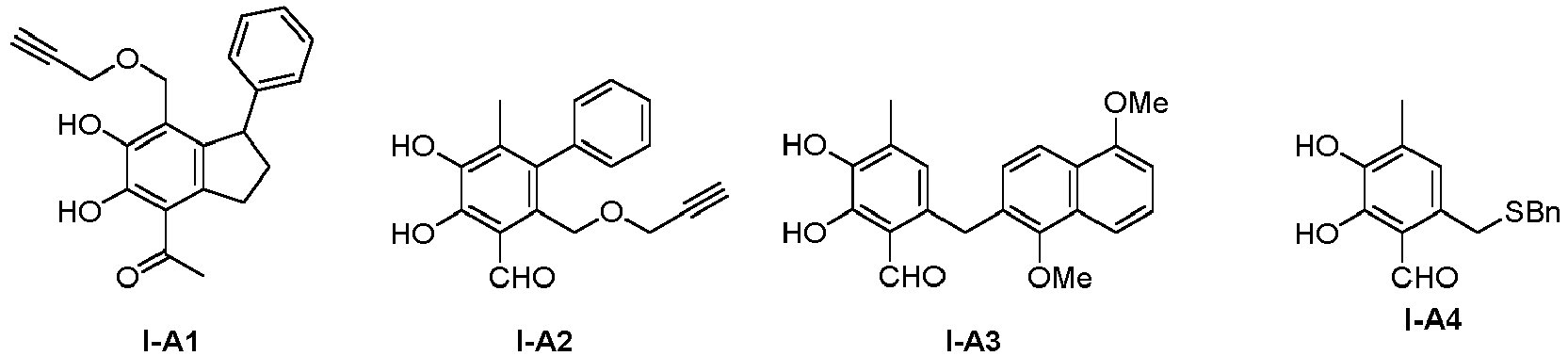
- Table 2 IC 50 results of each compound on the proliferation of human ovarian cancer cells SKOV3 Cancer cell Compound number IC 50 ( ⁇ M) SKOV3 I-49 5.922 I-A2 11.52 I-A3 6.454 I-A5 9.79 I-97 35 I-A9 9.553
- Table 2 showed that Compounds I-49, I -A2, I-A3 and I-A5 had significant inhibitory effects on human ovarian cancer cells SKOV3, of which the effects of Compounds I-49 and I-A3 were superior to that of the gossypol I -A9 as a control sample, while the effects of the compounds I-A2 and I-A5 were similar to that of the gossypol I-A9.
- the original culture medium was removed, and human lung cancer cells A549 were rinsed with 2 mL of phosphate buffer saline (PBS), digested with 0.5 mL of pancreatic enzyme for 3 min.
- 2 mL of culture medium was added to the cells and the mixture was transferred to a centrifuge tube. The mixture was centrifuged (200 g) for 5 min. The supernatant was removed. 2 mL of culture medium was sprayed five times to the remaining solution.
- 0.5 mL of cell suspension was transferred to an Eppendorf (EP) tube and the cells were counted. The cells were cultured on a 96-well plate, each well having 2000 cells, 3 wells for each compound.
- the numbers of the required cells and wells and the amount of culture medium were calculated.
- the cells were diluted by the culture medium. 100 ⁇ L culture medium was added to each well and were evenly dispersed, each well containing 2000 cells. The cells were transferred to the wells using a pipette, and cultured in an incubator.
- the original culture medium was discarded, and the mother liquor of each compound was diluted to final concentrations of 0, 5, 10, 20, 30, 60 and 80 ⁇ M, respectively.
- Each diluent was uniformized. To each head of a multichannel pipette, 100 ⁇ L of the diluent was introduced. Three heads were employed. The diluents were added to 3 marked wells (the cells were undamaged) of a tilted 96-well plate, respectively. Different concentrations of diluents were added to three different marked wells and evenly mixed by alternately sucking and blowing with the multichannel pipette 3 times. The 96-well plate was shaken slightly twice, and cultured in a CO 2 incubator.
- the cells were cultured in different compounds for 48 h and were then detected. Specifically, a clean bench was turned on for 15 min, and phosphate buffer saline (PBS) was pre-heated in a warm water bath for 15 min. MTT was taken out of a refrigerator at -20 degrees, protected from light and thawed (MTT stock solution was 5 mg/mL). MTT and a culture medium were mixed evenly in a V-shaped groove to yield a mixture comprising 500 ⁇ g/mL MTT and a culture medium (a volume ratio thereof being 1:10).
- PBS phosphate buffer saline
- the absorbance value of the resulting solution was detected at a wavelength of 550nm with a microplate reader.
- the survival rate of cells treated with different concentrations of drugs was calculated in accordance with the requirements to make a scatter plot.
- the IC 50 results of each compound on the proliferation of human lung cancer cells A549 were shown in Table 3, where Gossypol I-A9 is a control sample.
- Table 3 IC 50 results of each compound on the proliferation of human lung cancer cells A5499 Cancer cell Compound number IC 50 ( ⁇ M) A549 I-28 67.59 I-29 42.07 I-45 26.04 I-A4 58.87 I-A9 18.06
- Table 3 showed that Compounds I-28, I-29, I-45 and I-A4 had inhibitory effects on human lung cancer cells A549, but were slightly inferior to that of the Gossypol I-A9 as a control sample.
- the original culture medium was removed, and human prostate cancer cells PC3 were rinsed with 2 mL of phosphate buffer saline (PBS), digested with 0.5 mL of pancreatic enzyme for 3 min.
- 2 mL of culture medium was added to the cells and the mixture was transferred to a centrifuge tube. The mixture was centrifuged (200 g) for 5 min. The supernatant was removed. 2 mL of culture medium was sprayed five times to the remaining solution.
- 0.5 mL of cell suspension was transferred to an Eppendorf (EP) tube and the cells were counted.
- the cells were cultured on a 96-well plate, each well having 2000 cells, 3 wells for each compound. The numbers of the required cells and wells and the amount of culture medium were calculated.
- the cells were diluted by the culture medium. 100 ⁇ L culture medium was added to each well and were evenly dispersed, each well containing 2000 cells. The cells were transferred to the wells using a multichannel pipette, and
- the original culture medium was discarded, and the mother liquor of each compound was diluted to final concentrations of 0, 2, 4, 8, 16 and 32 ⁇ M, respectively.
- Each diluent was uniformized. To each head of a multichannel pipette, 100 ⁇ L of the diluent was introduced. Three heads were employed. The diluents were added to 3 marked wells (the cells were undamaged) of a tilted 96-well plate, respectively. Different concentrations of diluents were added to three different marked wells and evenly mixed by alternately sucking and blowing with the multichannel pipette 3 times. The 96-well plate was shaken slightly twice, and cultured in a CO 2 incubator.
- the cells were cultured in different compounds for 48 h and were then detected. Specifically, a clean bench was turned on for 15 min, and phosphate buffer saline (PBS) was pre-heated in a warm water bath for 15 min. MTT was taken out of a refrigerator at -20 degrees, protected from light and thawed (MTT stock solution was 5 mg/mL). MTT and a culture medium were mixed evenly in a V-shaped groove to yield a mixture comprising 500 ⁇ g/mL MTT and a culture medium (a volume ratio thereof being 1:10).
- PBS phosphate buffer saline
- the absorbance value of the resulting solution was detected at a wavelength of 550nm with a microplate reader.
- the survival rate of cells treated with different concentrations of drugs was calculated in accordance with the requirements to make a scatter plot.
- the IC 50 results of each compound on the proliferation of human lung cancer cells A549 were shown in Table 4, where Gossypol I-A9 is a control sample.
- IC 50 results of each compound on the proliferation of human prostate cancer cells
- PC3 Cancer cell Compound number IC 50 ( ⁇ M) I-5 7.091 I-21 8.085 I-24 7.24 I-25 8.322 I-26 10.114 I-29 4.258 I-31 7.25 PC3 I-41 1.759 I-42 2.801 I-43 9.644 I-44 2.913 I-45 6.571 I-46 6.405 I-47 8.119 I-48 22.392 I-49 13.097 I-50 2.882 I-51 5.272 I-53 6.647 I-55 2.049 I-A2 4.998 I-A3 6.544 I-A5 4.185 I-A6 3.453 I-A8 2.371 I-A9 10.049
- Table 4 showed that Compounds I-5, I-21, I-24, I-25, I-26, I-29, I-31, I-41, I-42, I-43, I-44, I-45, I-46, I-47, I-48, I-49, I-50, I-51, I-53, I-55, I-100, I-A2, I-A3, I-A5, I-A6 and I-A8 had significant inhibitory effects on human prostate cancer cells PC3, most of which including I-5, I-21, I-24, I-25, I-29, I-31, I-41, I-42 , I-43, I-44, I-45, I-46, I-47, I-50, I-51, I-53, I-55, I-A2, I-A3, I-A5, I-A6 and I-A8 were superior than the gossypol I-A9 as a control sample.
Landscapes
- Chemical & Material Sciences (AREA)
- Organic Chemistry (AREA)
- Health & Medical Sciences (AREA)
- General Health & Medical Sciences (AREA)
- Medicinal Chemistry (AREA)
- Pharmacology & Pharmacy (AREA)
- Life Sciences & Earth Sciences (AREA)
- Animal Behavior & Ethology (AREA)
- Public Health (AREA)
- Veterinary Medicine (AREA)
- Epidemiology (AREA)
- Chemical Kinetics & Catalysis (AREA)
- General Chemical & Material Sciences (AREA)
- Nuclear Medicine, Radiotherapy & Molecular Imaging (AREA)
- Organic Low-Molecular-Weight Compounds And Preparation Thereof (AREA)
- Pharmaceuticals Containing Other Organic And Inorganic Compounds (AREA)
- Steroid Compounds (AREA)
- Acyclic And Carbocyclic Compounds In Medicinal Compositions (AREA)
- Pyrane Compounds (AREA)
Abstract
Description
- The disclosure relates to the field of pharmaceutical chemistry, and more particularly to a polysubstituted benzene compound with biological activity, a preparation method and application thereof.
- Tumor, which is characterized by an abnormal growth and accumulation of cells, is one of the deadliest diseases endangering human and other mammals. The production and development of anti-tumor drugs in China has made great progress, but the products are far from meeting the growing clinical needs, many of which are still dependent on imports, so the market potential for the development and production of anti-tumor drugs is still huge. Traditional chemotherapy drugs have obvious clinical therapeutic effect, but the disadvantages include low specificity, poor selectivity, side effects, and multidrug resistance of tumor, limiting the clinical application. Therefore, the discovery of safe and effective anti-tumor drugs has become one of the main goals of the pharmaceutical industry.
- Benzene ring is one of the most important structural units in organic chemistry, of which six hydrogen atoms can be replaced, thus producing many benzene derivatives which can be used in the fields of medicine, pesticide, plastics and organic electronic devices. Meanwhile, as the basic framework of many natural active compounds and the synthons of many heterocyclic compounds with pharmacological activities, benzene ring is also of importance in pharmaceutical chemistry.
- Polysubstituted benzene compounds generally have strong biological activity, including antifungal activity, anti-inflammatory activity, anti-tumor activity, antioxidant activity, anti-rheumatic activity, anti-platelet activity, etc. For example, quercetin can significantly inhibit the growth of malignant cells in vitro and the synthesis of DNA, RNA and protein of Ehrlich ascites cancer cells; methyl erythritol can significantly inhibit the proliferation of XWLC-05, HepG2 and MCF-7 cells.
- Conventionally, the polysubstituted benzene is synthesized by substitution reactions, including electrophilic substitution (such as Friede-Crafts alkylation and Friede-Crafts acylation), nucleophilic substitution and coupling reactions. These reactions involve harsh reaction conditions, expensive reagents, toxic metal catalysts, and low regioselectivity, and the operation process is complex.
- Therefore, it is urgent to develop a novel method with simplified process flow to synthesize a series of polysubstituted benzene ring compounds used for the preparation of anti-tumor drugs on a large scale.
- One objective of the disclosure is to provide a bioactive polysubstituted benzene compound that has the activity of inhibiting the proliferation of tumor cells and can be used in the preparation of antitumor drugs.
- Another objective of the disclosure is to provide a method for preparing the bioactive polysubstituted benzene compound. The raw materials involved in the method are easily available, and the method is cost-effective, easy to operate, and has short route and mild reaction conditions.
- Still, the disclosure also provides a use of the bioactive polysubstituted benzene compound.
- The objectives of the disclosure are achieved with the following technical solutions.
- The polysubstituted benzene compound, having a formula I or I':

- In formula I, R4, R7, X, the carbon atoms connected thereto, and the benzene ring form a fused benzo compound.
- In formula I', R4, R7, X, the carbon atoms connected thereto, and the benzene ring form a benzyl compound, benzyl ether compound or benzyl sulfide compound instead of a fused benzo compound.
- The formula I comprises a dotted line referring to R4 connected to X through a group comprising carbon, or R4 disconnected to X.
- The formula I' comprises a first dotted line referring to a single bond or a double bond between C1 and X, and a second dotted line referring to R4 connected to X through a group comprising carbon, or R4 disconnected to X.
- Specifically, the fused benzo compound has one of the following two formulas:

- The dotted line in the two formulas means R4 is connected to C2 through a group comprising carbon, or R4 is disconnected to C2.
- The benzyl compound has the following formula:

- The dotted line between C1 and C2 refers to a single bond or a double bond between C1 and C2; the dotted line between R4 and C2 means R4 is connected to C2 through a group comprising carbon, or R4 is disconnected to C2.
- The benzyl ether compound has the following formula:

- The benzyl sulfide compound has the following formula:

- In the formulas, X represents carbon, sulfur, or oxygen;
- R1 represents a C1-16 alkyl, C2-16 alkenyl, or C2-10 alkynyl;
- R2 represents hydrogen, halogen, C1-16 alkyl, C2-16 alkenyl, or C2-10 alkynyl; or an aryl group substituted by 0-5 groups selected from halogen, C1-26 alkyl, C1-3 halogenated alkyl, O-C1-3 alkyl, hydroxyl, amino, nitro, cyano group, aldehyde group and ester group; or a heteroaryl group substituted by 0-5 groups selected from halogen, C1-26 alkyl, C1-3 halogenated alkyl, O-C1-3 alkyl, hydroxyl, amino, nitro, cyano group, aldehyde group and ester group;
- the heteroaryl group is a 3-10-membered heteroaryl group comprising N, S, O, or a combination thereof;
- R3 represents C1-6 aldehyde group, C2-6 acyl group, -COOH, hydroxyl-substituted C1-6 alkyl, -CH2O-C1-6 alkyl or -CO2-C1-6 alkyl;
- R4 and R7, at each occurrence, represent hydrogen, a C1-20 alkyl, C2-36 alkenyl, or C2-10 alkynyl; or an aryl group substituted by 0-5 groups selected from halogen, C1-3 halogenated alkyl, O-C1-3 alkyl, C1-25 alkyl, hydroxyl, amino, nitro, cyano group, aldehyde group and ester group;
- R5 and R6, at each occurrence, represent hydrogen, C1-6 alkyl or C1-6 silicon.
- Particularly, X represents carbon, sulfur, or oxygen;
- R1 represents a C1-4 alkyl, C2-4 alkenyl, or C3-7 alkynyl;
- R2 represents hydrogen, halogen, C1-4 alkyl, C2-4 alkenyl, or C3-7 alkynyl; or an aryl group substituted by 0-5 groups selected from halogen, C1-26 alkyl, C1-3 halogenated alkyl, O-C1-3 alkyl, hydroxyl, nitro, cyano group, aldehyde group and ester group; or a heteroaryl group substituted by 0-5 groups selected from halogen, C1-6 alkyl, C1-3 halogenated alkyl, O-C1-3 alkyl, hydroxyl, nitro, cyano group, aldehyde group and ester group;
- R3 represents C1-6 aldehyde group, C2-6 acyl group, -COOH, hydroxyl-substituted C1-4 alkyl, -CH2O-C1-4 alkyl or -CO2-C1-6 alkyl;
- R4 and R7, at each occurrence, represent hydrogen, C1-20 alkyl, C2-36 alkenyl, or C2-10 alkynyl; or an aryl group substituted by 0-5 groups selected from halogen, C1-3 halogenated alkyl, O-C1-3 alkyl, C1-25 alkyl, hydroxyl, amino, nitro, cyano group, aldehyde group and ester group; and
- R5 and R6, at each occurrence, represent hydrogen or C1-4 alkyl.
- Particularly, X represents carbon, sulfur, or oxygen;
R1 represents a C1-3 alkyl, allyl, or C3-4 alkynyl;
R2 represents hydrogen, halogen, C1-4 alkyl, allyl, or C3-7 alkynyl; or an aryl group substituted by 0-5 groups selected from halogen, methyl, methoxyl, C2-26 alkyl, hydroxyl, nitro, cyano group, aldehyde group and ester group; or a heteroaryl group substituted by 0-5 groups selected from halogen, C1-6 alkyl, C1-3 halogenated alkyl, O-C1-3 alkyl, hydroxyl, nitro, cyano group, aldehyde group and ester group;
the heteroaryl group is a 5-6-membered heteroaryl group comprising N, S, O, or a combination thereof;
R3 represents a C1-3 aldehyde group, C2-4 acyl group, -COOH, hydroxyl-substituted C1-4 alkyl, -CH2O-C1-4 alkyl or -CO2-C1-4 alkyl;
R4 and R7, at each occurrence, represent hydrogen, a C1-17 alkyl, C2-36 alkenyl, or C2-10 alkynyl; or an aryl group substituted by 0-5 groups selected from halogen, methoxyl, C1-25 alkyl, hydroxyl, nitro, cyano group, aldehyde group and ester group; and
R5 and R6, at each occurrence, represent hydrogen or methyl. - Particularly, X represents carbon, sulfur, or oxygen;
R1 represents a C1-3 alkyl, allyl, or C3-4 alkynyl;
R2 represents hydrogen, halogen, C1-4 alkyl, allyl, or C3-7 alkynyl; or an aryl group substituted by 0-5 groups selected from halogen, methyl, methoxyl, C2-26 alkyl, hydroxyl, nitro, cyano group, aldehyde group and ester group;
R3 represents C1-3 aldehyde group, acetyl group, -COOH, hydroxyl-substituted C1-4 alkyl, -CH2O-C1-4 alkyl or -CO2-C1-4 alkyl;
R4 and R7, at each occurrence, represent hydrogen, C1-17 alkyl, C2-36 alkenyl, or C2-10 alkynyl; or an aryl group substituted by 0-5 groups selected from halogen, methoxyl, C1-25 alkyl, hydroxyl, nitro, cyano group, aldehyde group and ester group; and
R5 and R6, at each occurrence, represent hydrogen or methyl. - Particularly, X represents carbon, sulfur, or oxygen;
R1 represents a C1-3 alkyl, allyl, or C3-4 alkynyl;
R2 represents hydrogen, halogen, C1-4 alkyl, allyl, or C3-7 alkynyl; or an aryl group substituted by 0-5 groups selected from halogen, methyl, methoxyl, C2-26 alkyl, hydroxyl, nitro, cyano group, aldehyde group and ester group; or a heteroaryl group substituted by 0-5 groups selected from halogen, C1-6 alkyl, C1-3 halogenated alkyl, O-C1-3 alkyl, hydroxyl, nitro, cyano group, aldehyde group and ester group;
the heteroaryl group is a 5-6-membered heteroaryl group comprising N, S, O, or a combination thereof;
R3 represents formyl, acetyl, -COOH, hydroxyl-substituted C1-2 alkyl, - CH2O-C1-2 alkyl or -CO2-C1-4 alkyl;
R4 and R7, at each occurrence, represent hydrogen, C1-17 alkyl, C2-36 alkenyl, or C2-10 alkynyl; or an aryl group substituted by 0-5 groups selected from halogen, methoxyl, C1-25 alkyl, hydroxyl, nitro, cyano group, aldehyde group and an ester group; and
R5 and R6, at each occurrence, represent hydrogen or methyl. - Particularly, the bioactive polysubstituted benzene compound is one of the following compounds:




- Herein are the definitions of related groups of the formulas:
Alkyl: a linear, branched or cyclic alkyl having 1-26 carbon atoms, comprising methyl, ethyl, propyl, isopropyl, butyl, isobutyl, tertiary butyl, sec-butyl, amyl, new amyl, hexyl, heptyl, octyl, cyclopropane or cyclohexane, particularly a linear or branched alkyl having 1-4 carbon atoms, further particularly, methyl, ethyl, or isopropyl. - Halogen: fluorine, chlorine, bromine or iodine.
- Halogenated alkyl refers to an alkyl substituted by one or more halogens, for example, monohalogenated alkyl, polyhalogenated alkyl, and fully halogenated alkyl; the monohalogenated alkyl refers to an alkyl having only one halogen atom; the polyhalogenated alkyl refers to an alkyl having two or more halogen atoms, including and not limited to fluoromethyl, difluoromethyl, trifluoromethyl, chloromethyl, dichloromethyl, trichloromethyl, pentafluoroethyl, heptafluoropropyl, difluorochloromethyl, dichlorofluoromethyl, difluoroethyl, difluoropropyl, dichloroethyl and dichloropropyl.
- C2-16 alkenyl: linear or branched alkyl group having 2-16 carbon atoms and comprising at least one carbon-carbon double bond, including and but not limited to vinyl, allyl, butenyl, and hexenyl group.
- C2-10 alkynyl: linear or branched alkyl group having 2-10 carbon atoms and comprising at least one carbon-carbon triple bond, including and but not limited to ethynyl, propargyl, butynyl and pentynyl.
- C1-6 aldehyde group: linear or branched alkyl group having 1-6 carbon atoms and comprising at least one formyl group, including but not limited to formaldehyde group, acetaldehyde group and hexaaldehyde group.
- Aryl group: single or bicyclic aromatic hydrocarbons with 6-14 carbon atoms in the ring part, or aromatic ring comprising non aromatic hydrocarbon, including but not limited to phenyl, indan, naphthyl and tetralyl.
- Heteroaryl group: 3-10-membered heteroaryl group comprising N, S, O, or a combination thereof, including saturated, partially saturated, or unsaturated aromatic groups, monocyclic ring, fused-ring, and bridged-ring, and including but not limited to furan, pyrrole, pyrrolidine, pyrazole, imidazole, triazole, isotriazole, tetrazole, thiadiazole, isothiazole, oxadiazole, pyridine, piperidine, pyrazine, oxazole, pyrazine, pyridazine, pyrimidine, piperazine, pyrrolidine, pyrrolidone, morpholine, triazine, oxazine, tetrahydrofuran, tetrahydrothiophene, tetrahydrothiapyran, tetrahydropyran, 1,4-dioxane, 1,4-oxothiocyclohexane, indazole, quinoline, indole, 8-aza-bicyclo (3.2.1) octane, 2,3-dihydrobenzofuran and 2,3-dihydrobenzothiazole.
- Alkoxy: linear or branched chains having 1-6 carbon atoms, including but not limited to methoxy, ethoxy, propoxy, isopropoxy, butoxy, isobutyoxy, tert-butoxy, sec-butoxy, pentyloxy, neopentyloxy or hexyloxy, particularly linear or branched alkoxy having 1-4 carbon atoms, and more particularly, methoxy.
- The bioactive polysubstituted benzene compound comprises one or more amino and carboxyl groups, or the like, so an acid and/or alkali salt thereof is easily formed, for example, a pharmaceutical salt having the biological effectiveness and properties of the bioactive polysubstituted benzene compound.
- Also provided is a method for preparing the bioactive polysubstituted benzene compound. The preparation process is as follows:

- where: Y is halogen, particularly bromine; R8 represents hydrogen or C1-6 alkyl;
- when X represents carbon, the compound II is an alkyl alkene, aryl alkene, arene, substituted arene, heteroarene or substituted heteroarene, comprising styrene, alkyl substituted styrene, halogen substituted styrene, diphenylethylene, naphthalene ethylene, 1-phenyl-1,3-butadiene, benzene, naphthalene, toluene, ethylbenzene, anisole, phenetole, 2,4,6-trimethoxybenzene, 1,2,4-trimethoxybenzene, 1,5-dimethoxynaphthalene, furan, pyran, thiophene, estrone derived alkene, and cholesterol derived alkene;
- when X represents sulfur, the compound II is a mercaptan compound selected from methylmercaptan, ethanethiol, isoamyl mercaptan or benzyl mercaptan;
- when X represents oxygen, the compound II is an alcoholic compound selected from methanol, ethanol, isopropanol, butanol, allyl alcohol, propargyl alcohol, isoamyl alcohol, benzyl alcohol, substituted benzyl alcohol, 2-bromo-2-propene-1-ol, 1-vinyl-phenylethanol, geraniol or dehydroepiandrosterone.
- Specifically, the compound VII reacts with the compound VI to yield the compound V; the compound V further reacts with the compound IV to yield the compound III; thereafter, the carbon rearrangement of the compound V or compound III is captured by the compound II, thereby yielding the compound I or I'.
- Specifically, the method comprises:
- 1) adding a compound VII, 1-5 equivalents of a base, and 1-3 equivalents of a compound VI to an organic solvent, thereby yielding a first mixture; heating and stirring the first mixture; filtering the first mixture and evaporating the organic solvent to yield a first product, separating and purifying the first product, thereby yielding a first intermediate product V;
- 2) adding the first intermediate product V, 1-3 equivalents of a compound IV, 5% equivalent of copper iodide, 30% equivalent of bis(triphenylphosphine)palladium chloride, and 0.5 equivalent of sodium iodide to the organic solvent, thereby yielding a second mixture; stirring the second mixture, thereby yielding a second intermediate product III; and
- 3) dissolving the first intermediate product V or the second intermediate product III, and a compound II in the organic solvent, thereby yielding a third mixture; heating the third mixture; evaporating the organic solvent to yield a third product, separating and purifying the third product, thereby yielding a compound I or I'.
- Particularly, in 1) and 2), the base is selected from the group consisting of lithium hydroxide, sodium hydroxide, potassium hydroxide, calcium hydroxide, sodium carbonate, potassium carbonate, calcium carbonate, sodium bicarbonate, potassium bicarbonate, sodium tert-butoxide, potassium tert-butoxide, potassium phosphate, dipotassium phosphate, cesium carbonate, lithium carbonate, pyridine, triethylamine, tributylamine, or a mixture thereof.
- Particularly, in 1) and 2), the base is lithium hydroxide or potassium tert-butoxide.
- Particularly, in 1), the reaction temperature of the compound VII and the compound VI is 30-80°C for 5-24 hours.
- Particularly, in 2), the first intermediate product V reacts with the compound IV at room temperature for 5-24 hours.
- Particularly, in 3), the carbon arrangement of the first intermediate product V and the second intermediate product III occurs at 80-180°C for 5-24 hours.
- Particularly, in 1)-3), the organic solvent is selected from the group consisting of methanol, ethanol, isopropanol, tetrahydrofuran, 1,4-dioxane, ethyl acetate, cyclohexane, toluene, xylene, ethylbenzene, chlorobenzene, bromobenzene, dichloromethane, dichloroethane, trichloromethane, carbon tetrachloride, acetonitrile, acetone, N, N-dimethylacetamide, N, N-dimethylformamide, dimethyl sulfoxide, or a mixture thereof.
- Particularly, in 1)-3), the organic solvent is chlorobenzene or acetonitrile.
- The operations of separation and purification comprise silica gel column chromatography, recrystallization, thin layer chromatography, preparative chromatography or distillation.
- The disclosure also provides a use of the polysubstituted benzene compound for preparation of an antitumor pharmaceutical composition, and a use of the polysubstituted benzene compound for preparation of a pharmaceutical composition for treatment of gastric cancer, ovarian cancer, lung cancer, or prostate cancer.
- Compared with the technology in the prior art, advantages of the polysubstituted benzene compound according to embodiments of the disclosure are summarized as follows:
- (1) The compound of the disclosure has good biological activity, has the activity of inhibiting the proliferation of tumor cells, and the inhibitory effect on tumor cells is better than or equal to that of the natural product gossypol I-A9. The compound can be used for the research and development of new drugs, for the preparation of anti-tumor drugs, gastric cancer drugs, ovarian cancer drugs, lung cancer drugs or prostate cancer drugs.
- (2) The preparation method is easy to operate, the raw materials involved therein are easily available, and the method has step economy, mild reaction conditions, low cost, and can be easily scaled-up to an industrial process.
- To further illustrate the invention, embodiments detailing a polysubstituted benzene compound are described below. It should be noted that the following embodiments are intended to describe and not to limit the disclosure.
- In certain embodiments, unless otherwise stated, the involved materials were purchased commercially or prepared by those skilled in the art through conventional experimental methods, and the salt used were prepared by compounds through conventional methods,
- In certain embodiments, gossypol I-A9, a natural product used as a control group, has the following structural formula:

- The synthetic route is as follows:

- Specifically, 1.5 g of 3-hydroxy-2-methyl-4-pyrone (compound VII-1), 3 equivalents of potassium carbonate and 1.2 equivalents of propargyl bromide were added to 300 mL of acetonitrile. The mixture was heated to 80°C and held for 12 hours. Thereafter, the mixture was filtered using a silica gel column; the solvent was evaporated under reduced pressure. The remaining solution was separated through column chromatography, thereby obtaining 17.2 g of the compound V-1, with a yield of 88%.
- The synthetic route is as follows:

- Specifically, 0.25 mmol of Compound V-1, 3.5 equivalents of p-methylphenylene and 1 mL of chlorobenzene were added to a Schlenk tube. The mixture was heated to 150°C and held for 13 hours under nitrogen atmosphere. Thereafter, the mixture was cooled to room temperature, spin-dried, and separated using column chromatography, thereby obtaining 50.1 mg of yellow solid, that is, Compound I-2, with a yield of 70%.
- The synthetic route is as follows:

- Specifically, 0.25 mmol of Compound V-1, 3.5 equivalents of 3-bromostyrene and 1 mL of chlorobenzene were added to a Schlenk tube. The mixture was heated to 150°C and held for 13 hours under nitrogen atmosphere. Thereafter, the mixture was cooled to room temperature, spin-dried, and separated using column chromatography, thereby obtaining 45 mg of yellow solid, that is, Compound I-10, with a yield of 52%.
- The synthetic route is as follows:

- Specifically, 0.25 mmol of Compound V-1, 3.5 equivalents of 3,4-dihydro-2H-pyran and 1 mL of chlorobenzene were added to a Schlenk tube. The mixture was heated to 180°C and held for 5 hours under nitrogen atmosphere. Thereafter, the mixture was cooled to room temperature, spin-dried, and separated using column chromatography, thereby obtaining 24 mg of yellow solid, that is, Compound I-14, with a yield of 38%.
- The synthetic route is as follows:

- Specifically, 6.8 g of 3-hydroxy-2-isopropyl-4-pyrone (Compound VII-2), 3.0 equivalents of potassium carbonate and 1.2 equivalents of propargyl bromide were added to 150 mL of acetonitrile. The mixture was heated to 80°C and held for 5 hours. Thereafter, the mixture was filtered using a silica gel column; the solvent was evaporated under reduced pressure. The remaining solution was separated through column chromatography, thereby obtaining 8.0 g of Compound V-2, with a yield of 94%.
- 0.2 mmol of Compound V-2, 3.5 equivalents of styrene and 1 mL of chlorobenzene were added to a Schlenk tube. The mixture was heated to 150°C and held for 13 hours under nitrogen atmosphere. Thereafter, the mixture was cooled to room temperature, spin-dried, and separated using column chromatography, thereby obtaining 30 mg of yellow solid, that is, Compound I-50, with a yield of 50%.
- The synthetic route is as follows:

- (1) Specifically, 1 mmol of Compound V-1, 0.05 mmol of copper (I) iodide, 0.03 mmol of Bis(triphenylphosphine)palladium(II) dichloride, 20 mL of tetrahydrofuran (THF), 2 mL of triethylamine and 1.2 mmol of Compound IV-1 were added sequentially to a 50 mL Schlenk tube under nitrogen atmosphere. The mixture was stirred at 30°C until TLC analysis confirmed complete conversion of the raw materials. Thereafter, the mixture was filtered, spin-dried, dry-loaded onto a column, and separated using column chromatography, thereby obtaining 126 mg of yellow solid, that is, Compound III-1, with a yield of 51%.
- (2) 0.25 mmol of Compound III-1 and 1 mL of chlorobenzene were added to a Schlenk tube. The mixture was heated to 80°C, held for 24 hours under nitrogen atmosphere. Thereafter, the mixture was cooled to room temperature, spin-dried, and separated using column chromatography, thereby obtaining 38 mg of yellow solid, that is, Compound I-54, with a yield of 60%.
- The synthetic route is as follows:

- (1) Specifically, 0.8 g of Compound VII-3, 4.0 equivalents of potassium carbonate and 2.0 equivalents of propargyl bromide were added to 15 mL of acetonitrile. The mixture was heated to 80°C and held for 12 hours. Thereafter, the mixture was filtered using a silica gel column; the solvent was evaporated under reduced pressure. The remaining solution was separated through column chromatography, thereby obtaining 0.64 g of Compound V-3, with a yield of 54%.
- (2) 0.25 mmol of Compound V-3, 3.5 equivalents of styrene and 1 mL of chlorobenzene were added to a Schlenk tube. The mixture was heated to 150°C and held for 13 hours under nitrogen atmosphere. Thereafter, the mixture was cooled to room temperature, spin-dried, and separated using column chromatography, thereby obtaining 25 mg of yellow solid, that is, Compound I-A1, with a yield of 30%.
- The synthetic route is as follows:

- Specifically, 0.20 mmol of cholesterol derived 4-vinylbenzoic acid, 3.0 equivalents of the Compound V-I and 1 mL of chlorobenzene were added to a Schlenk tube. The mixture was heated to 150°C and held for 13 hours under nitrogen atmosphere. Thereafter, the mixture was cooled to room temperature, spin-dried, and separated using column chromatography, thereby obtaining 56 mg of yellow solid, that is, Compound I-68, with a yield of 41%.
- The synthetic route is as follows:

- Specifically, 0.25 mmol of the Compound V-I, 3.5 equivalents of 1-bromo-4-buteneynyl benzene and 1 mL of chlorobenzene were added to a Schlenk tube. The mixture was heated to 150°C and held for 13 hours under nitrogen atmosphere. Thereafter, the mixture was cooled to room temperature, spin-dried, and separated using column chromatography, thereby obtaining 56 mg of yellow solid, that is, Compound I-70, with a yield of 60%.
- The synthetic route is as follows:

- Specifically, 0.25 mmol of the Compound V-I, 3.5 equivalents of methanol and 1 mL of toluene were added to a Schlenk tube. The mixture was heated to 120°C and held for 20 hours under nitrogen atmosphere. Thereafter, the mixture was cooled to room temperature, spin-dried, and separated using column chromatography, thereby obtaining 20 mg of yellow solid, that is, Compound I-19, with a yield of 40%.
- The synthetic route is as follows:

- Specifically, 0.25 mmol of Compound V-I, 3.5 equivalents of benzyl alcohol and 1 mL of chlorobenzene were added to a Schlenk tube. The mixture was heated to 150°C and held for 13 hours under nitrogen atmosphere. Thereafter, the mixture was cooled to room temperature, spin-dried, and separated using column chromatography, thereby obtaining 47 mg of yellow solid, that is, Compound I-21, with a yield of 64%.
- The synthetic route is as follows:

- Specifically, 0.2 mmol of Compound I-21 was dissolved in a mixed solution containing 0.5 mL of dichloromethane and 0.5 mL of acetic acid, followed by a slow drop of 2.0 equivalents of liquid bromine. The mixture was rested at room temperature for 10 h, quenched with saturated sodium thiosulfate, and extracted with dichloromethane. Thereafter, the mixture was washed sequentially with saturated sodium bicarbonate solution and saturated brine, spin-dried, and separated using column chromatography, thereby obtaining 41 mg of yellow solid, that is, Compound I-A8, with a yield of 58%.
- The synthetic route is as follows:

- (1) Specifically, 1 mmol of Compound V-1, 0.05 mmol of copper (I) iodide, 0.03 mmol of Bis(triphenylphosphine)palladium(II) dichloride, 20 mL of tetrahydrofuran (THF), 2 mL of triethylamine and 1.2 mmol of Compound IV-1 were added sequentially to a 50 mL Schlenk tube under nitrogen atmosphere. The mixture was stirred at room temperature until TLC analysis confirmed complete conversion of the raw materials. Thereafter, the mixture was filtered, spin-dried, dry-loaded onto a column, and separated using column chromatography, thereby obtaining 233 mg of yellow solid, that is, Compound III-2, with a yield of 78%.
- (2) 0.2 mmol of Compound III-2, 3.5 equivalents of benzyl alcohol and 1 mL of chlorobenzene were added to a Schlenk tube. The mixture was heated to 150°C and held for 13 hours under nitrogen atmosphere. Thereafter, the mixture was cooled to room temperature, spin-dried, and separated using column chromatography, thereby obtaining 29 mg of yellow solid, that is, Compound I-77, with a yield of 35%.
- The synthetic route is as follows:

- Specifically, 0.20 mmol of dehydroepiandrosterone, 3.0 equivalents of Compound V-1 and 1 mL of chlorobenzene were added to a Schlenk tube. The mixture was heated to 150°C and held for 13 hours under nitrogen atmosphere. Thereafter, the mixture was cooled to room temperature, spin-dried, and separated using column chromatography, thereby obtaining 48 mg of yellow solid, that is, Compound I-83, with a yield of 52%.
- The synthetic route is as follows:
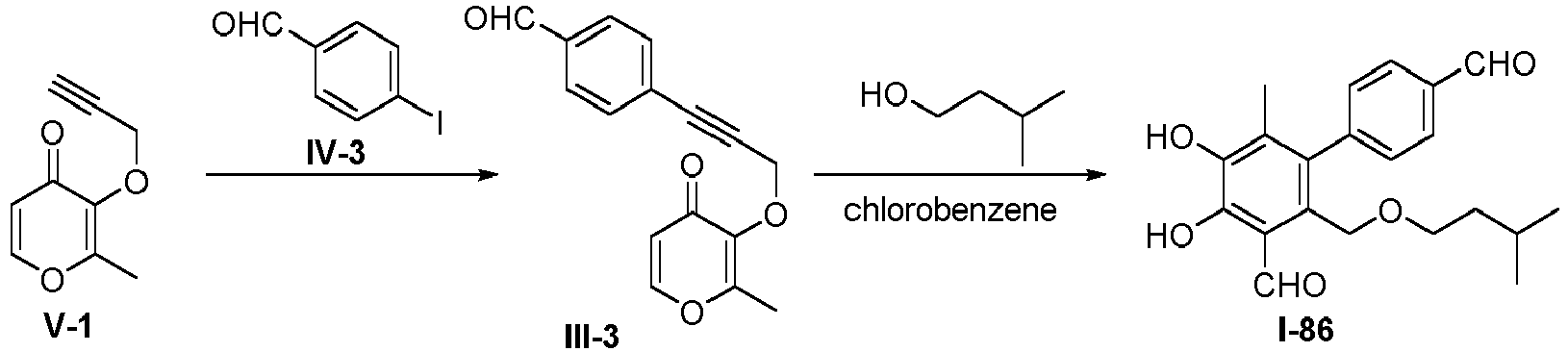
- (1) Specifically, 1 mmol of Compound V-1, 0.05 mmol of copper (I) iodide, 0.03 mmol of Bis(triphenylphosphine)palladium(II) dichloride, 20 mL of tetrahydrofuran (THF), 2 mL of triethylamine and 1.2 mmol of Compound IV-3 were added sequentially to a 50 mL Schlenk tube under nitrogen atmosphere. The mixture was stirred at room temperature until TLC analysis confirmed complete conversion of the raw materials. Thereafter, the mixture was filtered, spin-dried, dry-loaded onto a column, and separated using column chromatography, thereby obtaining 185 mg of yellow solid, that is, Compound III-3, with a yield of 69%.
- (2) 0.25 mmol of Compound III-6, 3.5 equivalents of isoamyl alcohol and 1 mL of chlorobenzene were added to a Schlenk tube. The mixture was heated to 150°C and held for 13 hours under nitrogen atmosphere. Thereafter, the mixture was cooled to room temperature, spin-dried, and separated using column chromatography, thereby obtaining 49 mg of yellow solid, that is, Compound I-86, with a yield of 68%.
- The synthetic route is as follows:

- Specifically, 6.3 g of Compound V-1, 3.5 equivalents of p-methoxybenzyl alcohol and 80 mL of chlorobenzene were added to a Schlenk tube. The mixture was heated to 150°C and held for 13 hours under nitrogen atmosphere. Thereafter, the mixture was cooled to room temperature, spin-dried, and separated using column chromatography, thereby obtaining 6.0 g of yellow solid, that is, Compound I-87, with a yield of 51%.
- The synthetic route is as follows:

- (1) Specifically, 1 mmol of 3-hydroxy-2-methyl-4-pyrone (compound VII-1), 3.0 equivalents of potassium carbonate and 1.2 equivalents of propargyl bromide (Compound VI-4) were added to 5 mL of acetonitrile. The mixture was heated to 80°C and held for 12 hours. Thereafter, the mixture was filtered using a silica gel column; the solvent was evaporated under reduced pressure. The remaining solution was separated through column chromatography, thereby obtaining 154 mg of the compound V-4, with a yield of 50%.
- (2) 0.25 mmol of Compound V-4, 3.5 equivalents of benzyl alcohol and 1 mL of chlorobenzene were added to a Schlenk tube. The mixture was heated to 150°C and held for 13 hours under nitrogen atmosphere. Thereafter, the mixture was cooled to room temperature, spin-dried, and separated using column chromatography, thereby obtaining 40 mg of yellow solid, that is, Compound I-89, with a yield of 38%.
- The synthetic route is as follows:

- (1) Specifically, 8.0 g of Compound V-2, 0.1 eq of copper (I) iodide, 0.5 eq of sodium iodide, 120 mL of acetone, 1.2 eq of Compound IV-4 and 3.0 eq of potassium carbonate were added sequentially to a 250 mL round-bottom flask. The mixture was stirred at room temperature until TLC analysis confirmed complete conversion of the raw materials. Thereafter, the mixture was filtered, spin-dried, dry-loaded onto a column, and separated using column chromatography, thereby obtaining 8.2 g of yellow solid, that is, Compound III-4, with a yield of 85%.
- (2) 5.2 g of Compound III-4, 3.5 equivalents of benzyl alcohol and 1 mL of chlorobenzene were added to a Schlenk tube. The mixture was heated to 150°C and held for 13 hours under nitrogen atmosphere. Thereafter, the mixture was cooled to room temperature, spin-dried, and separated using column chromatography, thereby obtaining 3.35 g of yellow solid, that is, Compound I-91, with a yield of 40%.
- The synthetic route is as follows:

- (1) Specifically, 1 mmol of Compound V-1, 0.05 mmol of copper (I) iodide, 0.03 mmol of Bis(triphenylphosphine)palladium(II) dichloride, 20 mL of tetrahydrofuran (THF), 2 mL of triethylamine and 1.2 mmol of Compound IV-5 were added sequentially to a 50 mL Schlenk tube under nitrogen atmosphere. The mixture was stirred at room temperature until TLC analysis confirmed complete conversion of the raw materials. Thereafter, the mixture was filtered, spin-dried, dry-loaded onto a column, and separated using column chromatography, thereby obtaining 191 mg of yellow solid, that is, Compound III-5, with a yield of 67%.
- (2) 0.2 mmol of Compound III-5, 3.5 equivalents of 1,3,5-trimethoxybenzene and 1 mL of chlorobenzene were added to a Schlenk tube. The mixture was heated to 150°C and held for 13 hours under nitrogen atmosphere. Thereafter, the mixture was cooled to room temperature, spin-dried, and separated using column chromatography, thereby obtaining 70 mg of yellow solid, that is, Compound I-42, with a yield of 76%.
- The synthetic route is as follows:

- (1) Specifically, 1 mmol of Compound V-4, 0.05 mmol of copper (I) iodide, 0.03 mmol of Bis(triphenylphosphine)palladium(II) dichloride, 20 mL of tetrahydrofuran (THF), 2 mL of triethylamine and 1.2 mmol of iodobenzene were added sequentially to a 50 mL Schlenk tube under nitrogen atmosphere. The mixture was stirred at room temperature until TLC analysis confirmed complete conversion of the raw materials. Thereafter, the mixture was filtered, spin-dried, dry-loaded onto a column, and separated using column chromatography, thereby obtaining 180 mg of yellow solid, that is, Compound III-6, with a yield of 71%.
- (2) 0.2 mmol of Compound III-6, 3.5 equivalents of 1,3,5-trimethoxybenzene and 1 mL of chlorobenzene were added to a Schlenk tube. The mixture was heated to 150°C and held for 13 hours under nitrogen atmosphere. Thereafter, the mixture was cooled to room temperature, spin-dried, and separated using column chromatography, thereby obtaining 56 mg of yellow solid, that is, Compound I-44, with a yield of 65%.
- The synthetic route is as follows:

- 0.25 mmol of Compound V-1, 3.5 equivalents of 1,5-dimethoxynaphthalene and 1 mL of chlorobenzene were added to a Schlenk tube. The mixture was heated to 150°C and held for 13 hours under nitrogen atmosphere. Thereafter, the mixture was cooled to room temperature, spin-dried, and separated using column chromatography, thereby obtaining 25 mg of yellow solid, that is, Compound I-43, with a yield of 28%.
- The synthetic route is as follows:

- (1) Specifically, 1 mmol of Compound V-1, 0.05 mmol of copper (I) iodide, 0.03 mmol of Bis(triphenylphosphine)palladium(II) dichloride, 20 mL of tetrahydrofuran (THF), 2 mL of triethylamine and 1.2 mmol of 2-iodofuran were added sequentially to a 50 mL Schlenk tube under nitrogen atmosphere. The mixture was stirred at room temperature until TLC analysis confirmed complete conversion of the raw materials. Thereafter, the mixture was filtered, spin-dried, dry-loaded onto a column, and separated using column chromatography, thereby obtaining 194 mg of yellow solid, that is, Compound III-7, with a yield of 41%.
- (2) 0.16 mmol of Compound III-7, 3.5 equivalents of 1,3,5-trimethoxybenzene and 1 mL of chlorobenzene were added to a Schlenk tube. The mixture was heated to 150°C and held for 13 hours under nitrogen atmosphere. Thereafter, the mixture was cooled to room temperature, spin-dried, and separated using column chromatography, thereby obtaining 14 mg of yellow solid, that is, Compound I-A6, with a yield of 22%.
- The synthetic route is as follows:

- (1) Specifically, 1 mmol of Compound V-1, 0.05 mmol of copper (I) iodide, 0.03 mmol of Bis(triphenylphosphine)palladium(II) dichloride, 20 mL of tetrahydrofuran (THF), 2 mL of triethylamine and 1.2 mmol of iodobenzene were added sequentially to a 50 mL Schlenk tube under nitrogen atmosphere. The mixture was stirred at room temperature until TLC analysis confirmed complete conversion of the raw materials. Thereafter, the mixture was filtered, spin-dried, dry-loaded onto a column, and separated using column chromatography, thereby obtaining 178 mg of yellow solid, that is, Compound III-8, with a yield of 74%.
- (2) 0.25 mmol of Compound III-8, 3.5 equivalents of isoamyl mercaptan and 1 mL of chlorobenzene were added to a Schlenk tube. The mixture was heated to 150°C and held for 13 hours under nitrogen atmosphere. Thereafter, the mixture was cooled to room temperature, spin-dried, and separated using column chromatography, thereby obtaining 23 mg of yellow solid, that is, Compound I-79, with a yield of 27%.
- The synthetic route is as follows:

- 0.25 mmol of Compound V-1 and 1 mL of chlorobenzene were added to a Schlenk tube. The mixture was heated to 150°C and held for 13 hours under nitrogen atmosphere. Thereafter, the mixture was cooled to room temperature, spin-dried, and separated using column chromatography, thereby obtaining 31 mg of yellow solid, that is, Compound I-22, with a yield of 75%.
- The synthetic route is as follows:

- 0.25 mmol of Compound V-1, 3.5 equivalents of 1-methylene-2,3-dihydroindene and 1 mL of chlorobenzene were added to a Schlenk tube. The mixture was heated to 150°C and held for 13 hours under nitrogen atmosphere. Thereafter, the mixture was cooled to room temperature, spin-dried, and separated using column chromatography, thereby obtaining 12 mg of yellow solid, that is, Compound I-95, with a yield of 16%.
- The synthetic route is as follows:

- 0.5 mmol of Compound I-2 was dissolved in 5 mL of methanol, and the temperature was reduced to 0°C, followed by an addition of 1.2 equivalents of sodium borohydride. After reaction for 1 h, the resulting solution was quenched with 10 mL of saturated ammonium chloride solution, rotated and evaporated to remove methanol, and extracted with ethyl acetate. The organic layers were combined together, spin-dried, and separated using column chromatography by addition of petroleum ether: ethyl acetate = 1:3 (V/V), thereby obtaining 95 mg of Compound I-98, with a yield of 70%.
- The synthetic route is as follows:

- 1 mmol of Compound I-87 was slowly dropped into 10 mL of methanol containing 3.0 eq of potassium hydroxide and 5.0 eq of hydrogen peroxide. The solution was rested at room temperature for 4 h, and neutralized with dilute hydrochloric acid to acidity, extracted with ethyl acetate and spin-dried. The resulting product was dissolved in tetrahydrofuran (THF) and 2 mL of saturated Na2S2O4 solution was added. The mixture was rested at room temperature for 2 h, neutralized with dilute hydrochloric acid to acidity, extracted with ethyl acetate, dried and spin-dried, thereby obtaining 125 mg of white solid, that is, Compound I-99, with a yield of 39%.
- The synthetic route is as follows:

- Specifically, 0.2 mmol of the compound I-99 was dissolved in 2 mL of tetrahydrofuran, and then 5.0 eq. potassium hydroxide solution (0.5 mL) was added. The mixture was stirred and 10.0 eq. dimethyl sulfate was added. The solution was rested at room temperature until all the raw materials disappeared. The solution was neutralized with dilute hydrochloric acid, extracted with acetate, spin-dried, and separated using column chromatography, thereby obtaining 33 mg of the compound I-100, with a yield of 46%.
- The structural formulas and characterization data of the compounds prepared in Examples 1 to 28 are as follows:
Structure and number Characterization data 1HNMR, 13CNMR, Mass 
1H NMR (400 MHz, CDCl3) δ 11.51 (s, 1H), 10.09 (s, 1H), 7.25 (t, J = 7.3 Hz, 2H), 7.20 - 7.15 (m, 1H), 7.00 (d, J = 7.1 Hz, 2H), 5.66 (s, 1H), 4.37 (dd, J = 9.0, 3.2 Hz, 1H), 3.30 - 3.09 (m, 2H), 2.65 (dq, J = 12.9, 8.9 Hz, 1H), 2.14 - 2.04 (m, 1H), 1.94 (s, 3H). 13C NMR (101 MHz, CDCl3) δ 195.08, 148.17, 145.32, 141.93, 137.74, 137.12, 130.71, 128.71, 127.31, 126.38, 114.56, 49.68, 35.94, 28.47, 13.37. HR-MS (ESI) calcd. for (C17H16O3+Na)+ 291.0992, found: 291.0987. 
1H NMR (400 MHz, CDCl3) δ 11.54 (s, 1H), 10.12 (s, 1H), 7.10 (d, J = 7.9 Hz, 2H), 6.92 (d, J = 8.0 Hz, 2H), 5.65 (s, 1H), 4.38 (dd, J = 9.0, 3.1 Hz, 1H), 3.33 - 3.10 (m, 2H), 2.67 (dq, J = 12.9, 8.9 Hz, 1H), 2.34 (s, 3H), 2.11 (ddt, J = 11.7, 8.1, 3.5 Hz, 1H), 1.99 (s, 3H). 13C NMR (101 MHz, CDCl3) δ 195.11, 148.10, 142.26, 141.88, 137.71, 137.28, 135.89, 130.71, 129.40, 127.19, 114.55, 49.25, 36.05, 28.43, 21.12, 13.37. HR-MS (ESI) calcd. for (C18H18O3+Na)+ 305.1148, found: 305.1143. 
1H NMR (400 MHz, CDCl3) δ 11.51 (s, 1H), 10.09 (s, 1H), 6.99 - 6.89 (m, 4H), 5.65 (s, 1H), 4.37 (dd, J = 9.0, 3.2 Hz, 1H), 3.29 - 3.06 (m, 2H), 2.65 (dq, J = 13.0, 8.9 Hz, 1H), 2.05 (ddt, J = 12.9, 8.0, 3.7 Hz, 1H), 1.93 (s, 3H). 13C NMR (101 MHz, CDCl3) δ 195.04, 162.78, 160.35, 148.27, 142.05, 141.02, 140.99, 137.58, 136.93, 130.50, 128.71, 128.64, 115.61, 115.40, 114.58, 48.92, 35.98, 28.36, 13.34. 19F NMR (376 MHz, CDCl3) δ -116.95. HR-MS (ESI) calcd. for (C17H25FO3 +H)+ 287.1078, found: 287.1074. 
1H NMR (400 MHz, CDCl3) δ 11.50 (s, 1H), 10.09 (s, 1H), 6.94 - 6.88 (m, 2H), 6.82 - 6.77 (m, 2H), 5.61 (s, 1H), 4.33 (dd, J = 8.9, 3.2 Hz, 1H), 3.77 (s, 3H), 3.28 - 3.08 (m, 2H), 2.62 (dq, J = 12.9, 8.8 Hz, 1H), 2.10 - 2.01 (m, 1H), 1.95 (s, 3H). 13C NMR (101 MHz, CDCl3) δ 195.09, 158.17, 148.10, 141.90, 137.60, 137.41, 137.38, 130.69, 128.24, 114.55, 114.08, 55.36, 48.84, 36.06, 28.38, 13.32. HR-MS (ESI) calcd. for (C18H18O4+Na)+ 321.1097, found: 321.1093. 
1H NMR (400 MHz, CDCl3) δ 11.53 (s, 1H), 10.10 (s, 1H), 7.51 (d, J = 8.1 Hz, 2H), 7.12 (d, J = 8.1 Hz, 2H), 5.66 (s, 1H), 4.45 (dd, J = 9.1, 3.1 Hz, 1H), 3.32 - 3.13 (m, 2H), 2.70 (dq, J = 13.0, 8.9 Hz, 1H), 2.13 - 2.02 (m, 1H), 1.93 (s, 3H). 13C NMR (101 MHz, CDCl3) δ 195.00, 149.47, 148.45, 142.16, 137.70, 136.22, 130.35, 127.62, 125.74 (q, J = 3.7 Hz), 114.61, 49.48, 35.78, 28.45, 13.46. 19F NMR (376 MHz, CDCl3) δ -62.35. HR-MS (ESI) calcd. for (C18H15F3O3+Na)+ 359.0865, found: 359.0862. 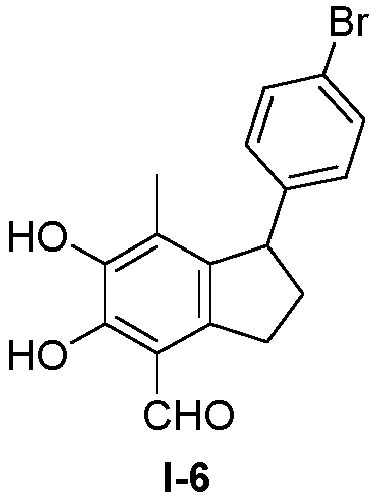
1H NMR (400 MHz, CDCl3) δ 11.54 (s, 1H), 10.11 (s, 1H), 7.40 (d, J = 8.4 Hz, 2H), 6.90 (d, J = 8.4 Hz, 2H), 5.66 (s, 1H), 4.37 (dd, J = 9.0, 3.2 Hz, 1H), 3.32 - 3.11 (m, 2H), 2.68 (dq, J = 13.0, 8.9 Hz, 1H), 2.07 (ddd, J = 16.5, 7.6, 3.6 Hz, 1H), 1.96 (s, 3H). 13C NMR (101 MHz, CDCl3) δ 195.00, 148.32, 144.37, 142.06, 137.63, 136.50, 131.82, 130.42, 129.05, 120.13, 114.56, 49.10, 35.82, 28.39, 13.42. HR-MS (ESI) calcd. for (C17H15BrO3+Na)+ 369.0097, found: 369.0092. 
1H NMR (400 MHz, CDCl3) δ 11.54 (s, 1H), 10.11 (s, 1H), 7.27 - 7.22 (m, 2H), 6.99 - 6.92 (m, 2H), 5.66 (s, 1H), 4.38 (dd, J = 9.0, 3.2 Hz, 1H), 3.30 - 3.13 (m, 2H), 2.68 (dq, J = 13.0, 8.9 Hz, 1H), 2.07 (ddd, J = 16.4, 7.6, 3.7 Hz, 1H), 1.96 (s, 3H). 13C NMR (101 MHz, CDCl3) δ 195.01, 148.31, 143.84, 142.05, 137.63, 136.59, 132.09, 130.44, 128.86, 128.64, 114.57, 49.04, 35.88, 28.39, 13.40. HR-MS (ESI) calcd. for (C17H15ClO3+Na)+ 325.0602, found: 325.0602. 
1H NMR (400 MHz, CDCl3) δ 11.55 (s, 1H), 10.10 (s, 1H), 8.13 (d, J = 8.8 Hz, 2H), 7.18 (d, J = 8.7 Hz, 2H), 5.64 (s, 1H), 4.50 (dd, J = 9.2, 3.3 Hz, 1H), 3.33 - 3.16 (m, 2H), 2.74 (dq, J = 13.1, 8.9 Hz, 1H), 2.14 - 2.02 (m, 1H), 1.92 (s, 3H). 13C NMR (101 MHz, CDCl3) δ 194.91, 153.16, 148.62, 146.78, 142.31, 137.61, 135.68, 130.06, 128.11, 124.16, 114.64, 49.54, 35.71, 28.50, 13.53. HR-MS (ESI) calcd. for (C17H15NO5+Na)+ 336.0842, found: 336.0843. 
1H NMR (400 MHz, CDCl3) δ 11.42 (s, 1H), 10.00 (s, 1H), 7.17 (d, J = 8.4 Hz, 2H), 6.83 (d, J = 8.3 Hz, 2H), 5.57 (s, 1H), 4.26 (dd, J = 9.0, 3.0 Hz, 1H), 3.21 - 3.00 (m, 2H), 2.54 (dq, J = 12.9, 8.9 Hz, 1H), 2.02 (ddt, J = 12.8, 8.1, 3.4 Hz, 1H), 1.87 (s, 3H), 1.20 (s, 9H). 13C NMR (101 MHz, CDCl3) δ 195.11, 149.13, 148.09, 142.07, 141.84, 137.67, 137.44, 130.78, 126.93, 125.50, 114.55, 49.11, 35.88, 34.47, 31.50, 28.48, 13.40. HR-MS (ESI) calcd. for (C21H24O3+Na)+ 347.1618, found: 347.1617. 
1H NMR (400 MHz, CDCl3) δ 11.52 (s, 1H), 10.09 (s, 1H), 7.32 (ddd, J = 7.9, 1.9, 1.0 Hz, 1H), 7.15 (t, J = 1.8 Hz, 1H), 7.12 (t, J = 7.8 Hz, 1H), 6.92 (d, J = 7.7 Hz, 1H), 5.64 (s, 1H), 4.34 (dd, J = 9.1, 3.2 Hz, 1H), 3.28 - 3.12 (m, 2H), 2.66 (dq, J = 13.0, 9.0 Hz, 1H), 2.07 (ddt, J = 13.0, 8.0, 3.7 Hz, 1H), 1.95 (s, 3H). 13C NMR (101 MHz, CDCl3) δ 195.01, 148.39, 147.80, 142.07, 137.69, 136.25, 130.41, 130.31, 129.60, 125.95, 122.96, 114.58, 49.38, 35.81, 28.41, 13.46. HR-MS (ESI) calcd. for (C17H15BrO3+Na)+ 369.0097, found: 369.0091. 
1H NMR (400 MHz, CDCl3) δ 11.53 (s, 1H), 10.09 (s, 1H), 7.59 (dd, J = 7.7, 1.5 Hz, 1H), 7.10 (td, J = 7.4, 1.4 Hz, 1H), 7.05 (td, J = 7.6, 1.9 Hz, 1H), 6.56 (d, J = 6.9 Hz, 1H), 5.67 (s, 1H), 4.79 (dd, J = 9.2, 2.9 Hz, 1H), 3.24 - 3.07 (m, 2H), 2.69 (dq, J = 13.1, 9.1 Hz, 1H), 2.12 - 1.99 (m, 1H), 1.92 (s, 3H). 13C NMR (101 MHz, CDCl3) δ 195.00, 148.36, 143.87, 142.08, 138.28, 136.29, 133.13, 130.47, 128.05, 127.72, 124.41, 114.64, 48.69, 34.15, 28.13, 13.45. HR-MS (ESI) calcd. for (C17H15BrO3+Na)+ 369.0097, found: 369.0091. 
1H NMR (400 MHz, CDCl3) δ 11.53 (s, 1H), 10.09 (s, 1H), 7.40 (dd, J = 7.9, 1.3 Hz, 1H), 7.13 (td, J = 7.6, 1.7 Hz, 1H), 7.06 (td, J = 7.5, 1.2 Hz, 1H), 6.58 (dd, J = 7.7, 1.5 Hz, 1H), 5.66 (s, 1H), 4.82 (dd, J = 9.2, 2.8 Hz, 1H), 3.26 - 3.07 (m, 2H), 2.69 (dq, J = 13.1, 9.1 Hz, 1H), 2.12 - 2.01 (m, 1H), 1.93 (s, 3H). 13C NMR (101 MHz, CDCl3) δ 195.03, 148.35, 142.20, 142.07, 138.27, 136.17, 133.63, 130.48, 129.80, 127.86, 127.74, 127.07, 114.65, 45.99, 34.06, 28.22, 13.38. HR-MS (ESI) calcd. for (C17H15ClO3+Na)+ 325.0602, found: 325.0600. 
1H NMR (400 MHz, CDCl3) δ 11.52 (s, 1H), 10.09 (s, 1H), 7.32 - 7.16 (m, 10H), 5.62 (s, 1H), 3.02 (dd, J = 10.5, 3.6 Hz, 2H), 2.91 (dd, J = 10.5, 3.7 Hz, 2H), 1.57 (s, 3H). 13C NMR (101 MHz, CDCl3) δ 195.15, 147.90, 145.44, 142.17, 139.99, 138.15, 132.28, 129.03, 128.16, 126.43, 114.64, 62.42, 48.82, 27.58, 13.58. HR-MS (ESI) calcd. for (C23H20O3 +Na)+ 367.1305, found: 367.1298. 
1H NMR (400 MHz, CDCl3) δ 12.11 (s, 1H), 10.22 (s, 1H), 6.55 (s, 1H), 6.16 (s, 1H), 5.65 (s, 1H), 3.95 - 3.85 (m, 2H), 3.42 (s, 2H), 2.30 (s, 3H), 1.96 - 1.80 (m, 4H). 13C NMR (101 MHz, CDCl3) δ 195.37, 149.76, 141.61, 141.19, 133.45, 132.54, 123.85, 116.50, 113.13, 108.52, 65.52, 35.38, 23.50, 22.49, 16.37. HR-MS (ESI) calcd. for (C14H16O4+Na)+ 271.0941, found: 271.0939. 
1H NMR (400 MHz, CDCl3) δ 11.47 (s, 1H), 10.08 (s, 1H), 7.42 (d, J = 8.4 Hz, 2H), 7.19 (d, J = 8.5 Hz, 2H), 6.23 (s, 1H), 5.63 (d, J = 4.9 Hz, 1H), 4.02 - 3.92 (m, 1H), 3.19 (dd, J = 8.6, 3.2 Hz, 2H), 2.51 - 2.41 (m, 1H), 2.25 (s, 3H), 2.18 - 2.07 (m, 1H). 13C NMR (101 MHz, CDCl3) δ 194.88, 147.84, 141.63, 137.12, 136.18, 135.86, 132.78, 131.60, 131.52, 130.42, 130.30, 128.03, 127.67, 120.89, 114.65, 46.68, 32.79, 28.10, 13.05. HR-MS (ESI) calcd. for (C19H17BrO3+Na)+ 395.0253, found: 395.0250. 
1H NMR (400 MHz, CDCl3) δ 11.42 (s, 1H), 10.01 (s, 1H), 7.43 (ddd, J = 7.5, 4.4, 1.2 Hz, 2H), 7.38 - 7.34 (m, 1H), 7.29 - 7.26 (m, 2H), 7.24 - 7.17 (m, 5H), 5.99 (d, J = 10.5 Hz, 1H), 5.61 (s, 1H), 3.92 - 3.82 (m, 1H), 3.26 (dt, J = 16.1, 8.1 Hz, 1H), 3.07 (ddd, J = 16.0, 9.1, 4.9 Hz, 1H), 2.47 - 2.36 (m, 1H), 2.18 - 2.06 (m, 1H), 2.10 (s, 3H). 13C NMR (101 MHz, CDCl3) δ 194.97, 147.84, 142.33, 141.73, 140.96, 140.10, 137.41, 136.85, 131.96, 130.66, 130.02, 128.50, 128.29, 127.42, 127.39, 127.31, 114.62, 44.30, 33.43, 28.61, 13.06. HR-MS (ESI) calcd. for (C25H22O3+Na)+ 393.1461, found: 393.1458. 
1H NMR (400 MHz, CDCl3) δ 12.11 (s, 1H), 10.10 (s, 1H), 7.22 (d, J = 7.5 Hz, 1H), 7.15 (d, J = 7.2, 1H), 7.11 - 7.02 (m, 2H), 6.49 (s, 1H), 3.29 (m, 1H), 3.14 - 3.04 (m, 1H), 3.04 - 2.98 (m, 2H), 2.86 (m, 2H), 2.75 - 2.66 (m, 1H), 2.53 (m, 1H), 2.27 (s, 3H), 1.88 (m, 1H), 1.84 - 1.75 (m, 1H) s.. 13C NMR (101 MHz, CDCl3) δ 195.07, 147.70, 142.45, 136.64, 135.10, 134.32, 130.30, 128.55, 128.02, 127.07, 125.77, 123.20, 122.43, 43.93, 36.43, 33.25, 27.21, 23.11, 21.20, 16.36. HR-MS (ESI) calcd. for (C20H22O3 +Na)+ 331.1305, found: 331.1302. 
1H NMR (400 MHz, CDCl3) δ 12.24 (s, 1H), 10.53 (s, 1H), 6.51 (s, 1H), 6.14 (s, 2H), 5.53 (s, 1H), 4.11 (s, 2H), 3.81 (s, 3H), 3.78 (s, 6H), 2.19 (s, 3H). 13C NMR (101 MHz, CDCl3) δ 196.87, 160.20, 158.80, 149.11, 140.74, 136.27, 132.44, 122.74, 116.38, 109.29, 90.89, 55.74, 55.48, 23.17, 16.51. HR-MS (ESI) calcd. for (C18H20O6+Na)+ 355.1152, found: 355.1152. 
1H NMR (400 MHz, CDCl3) δ 12.12 (s, 1H), 10.23 (s, 1H), 6.65 (s, 1H), 5.82 (s, 1H), 4.59 (s, 2H), 3.37 (s, 3H), 2.29 (s, 3H). 13C NMR (101 MHz, CDCl3) δ 196.17, 150.06, 143.23, 131.64, 131.01, 123.68, 116.37, 72.04, 57.98, 16.22. HR-MS (ESI) calcd. for (C10H12O4+H)+ 197.0808, found: 197.0810. 
1H NMR (400 MHz, CDCl3) δ 12.14 (s, 1H), 10.27 (s, 1H), 6.69 (s, 1H), 5.79 (s, 1H), 4.75 (s, 2H), 4.17 (d, J = 2.4 Hz, 2H), 2.50 (t, J = 2.4 Hz, 1H), 2.30 (s, 3H). 13C NMR (101 MHz, CDCl3) δ 196.19, 150.10, 143.48, 131.66, 130.02, 124.15, 116.39, 79.23, 75.38, 68.61, 57.18, 16.22. HR-MS (ESI) calcd. for (C12H12O4+Na)+ 243.0628, found: 243.0624. 
1H NMR (400 MHz, CDCl3) δ 12.12 (s, 1H), 10.23 (s, 1H), 7.40 - 7.25 (m, 5H), 6.64 (s, 1H), 5.88 (s, 1H), 4.66 (s, 2H), 4.53 (s, 2H), 2.28 (s, 3H). 13C NMR (101 MHz, CDCl3) δ 196.20, 150.06, 143.23, 137.68, 131.68, 130.97, 128.63, 128.06, 128.04, 123.79, 116.40, 72.35, 69.41, 16.22. HR-MS (ESI) calcd. for (C16H16O4+Na)+ 295.0941, found: 295.0941. 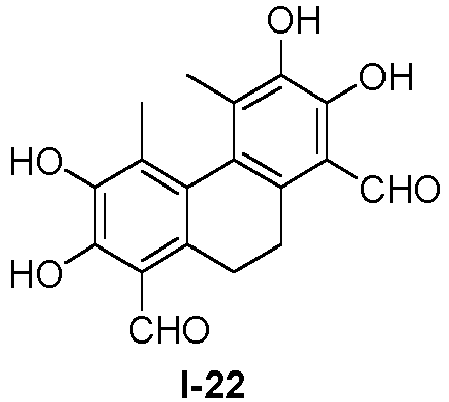
1H NMR (400 MHz, CDCl3) δ 11.96 (s, 2H), 10.37 (s, 2H), 5.73 (s, 2H), 3.41 (d, J = 10.3 Hz, 2H), 2.50 (d, J = 10.4 Hz, 2H), 2.18 (s, 6H). 13C NMR (101 MHz, CDCl3) δ 194.88, 147.33, 141.79, 134.89, 131.87, 126.73, 115.31, 24.40, 16.06. HR-MS (ESI) calcd. for (C18H16O6+Na)+ 351.0839, found: 351.0839. 
1H NMR (400 MHz, CDCl3) δ 11.48 (s, 1H), 10.11 (s, 1H), 7.32 - 7.26 (m, 2H), 7.23 - 7.16 (m, 3H), 5.57 (s, 1H), 3.26 - 3.09 (m, 2H), 2.33 - 2.25 (m, 2H), 1.77 (s, 3H), 1.68 (s, 3H). 13C NMR (101 MHz, CDCl3) δ 195.13, 149.16, 147.77, 142.29, 141.38, 137.15, 130.66, 128.50, 126.29, 126.02, 114.47, 52.32, 46.22, 27.49, 24.64, 12.84. HR-MS (ESI) calcd. for (C18H18O3+Na)+ 305.1148, found: 305.1147. 
1H NMR (400 MHz, CDCl3) δ 12.33 (s, 1H), 9.77 (s, 1H), 7.43 - 7.28 (m, 6H), 7.24 - 7.19 (m, 3H), 7.11 (d, J = 6.5 Hz, 4H), 7.03 (d, J = 7.6 Hz, 2H), 5.93 (t, J = 6.7 Hz, 1H), 5.79 (s, 1H), 3.45 (d, J = 6.7 Hz, 2H), 1.95 (s, 3H). 13C NMR (101 MHz, CDCl3) δ 196.87, 149.25, 142.15, 141.44, 141.20, 139.28, 139.16, 134.68, 132.79, 132.07, 129.93, 128.93, 128.80, 128.51, 128.26, 127.64, 127.62, 127.40, 127.36, 116.00, 29.39, 14.82. HR-MS (ESI) calcd. for (C29H24O3+Na)+ 443.1618, found: 443.1611. 
1H NMR (400 MHz, CDCl3) δ 12.25 (s, 1H), 10.25 (s, 1H), 7.43 - 7.36 (m, 3H), 7.31 - 7.24 (m, 3H), 7.22 - 7.17 (m, 2H), 7.13 (dd, J = 7.5, 1.7 Hz, 2H), 5.91 (s, 1H), 4.39 (s, 2H), 4.33 (s, 2H), 1.98 (s, 3H). 13C NMR (101 MHz, CDCl3) δ 197.14, 149.13, 142.94, 138.53, 137.74, 135.64, 131.00, 130.05, 128.89, 128.55, 128.46, 128.01, 127.95, 127.51, 116.27, 72.74, 65.72, 14.61. HR-MS (ESI) calcd. for (C22H20O4+Na)+ 371.1254, found: 371.1253. 
1H NMR (400 MHz, CDCl3) δ 12.25 (s, 1H), 10.23 (s, 1H), 7.33 - 7.26 (m, 3H), 7.22 - 7.17 (m, 2H), 7.11 - 7.04 (m, 4H), 5.94 (s, 1H), 4.35 (s, 2H), 4.35 (s, 2H), 1.97 (s, 3H). 13C NMR (101 MHz, CDCl3) δ 197.01, 162.27 (d, J = 246.5 Hz), 149.23, 143.02, 137.55, 134.51, 134.32 (d, J = 3.6 Hz), 131.64 (d, J = 7.9 Hz), 131.05, 129.06, 128.58, 128.08, 128.06, 116.30, 115.42 (d, J = 21.3 Hz), 72.88, 65.44, 14.58. 19F NMR (376 MHz, CDCl3) δ -114.83. HR-MS (ESI) calcd. for (C22H19FO4+Na)+ 389.1160, found: 389.1155. 
1H NMR (400 MHz, CDCl3) δ 12.28 (s, 1H), 10.23 (s, 1H), 8.20 (d, J = 8.6 Hz, 2H), 7.32 - 7.26 (m, 5H), 7.22 - 7.15 (m, 2H), 6.04 (bro, 1H), 4.37 (s, 2H), 4.27 (s, 2H), 1.95 (s, 3H). 13C NMR (101 MHz, CDCl3) δ 196.73, 149.64, 147.37, 145.56, 143.34, 137.12, 133.22, 131.09, 129.96, 128.61, 128.40, 128.30, 128.25, 123.62, 116.41, 73.05, 64.89, 14.53. HR-MS (ESI) calcd. for (C22H19NO6+Na)+ 416.1105, found: 416.1100. 
1H NMR (400 MHz, CDCl3) δ 12.32 (s, 1H), 10.25 (s, 1H), 7.73 (d, J = 7.6 Hz, 1H), 7.60 (t, J = 7.4 Hz, 1H), 7.47 (t, J = 7.5 Hz, 1H), 7.27 (dd, J = 10.4, 4.9 Hz, 4H), 7.20 - 7.15 (m, 2H), 6.03 (s, 1H), 4.52 (d, J = 11.3 Hz, 1H), 4.34 (q, J = 11.8 Hz, 2H), 4.11 (d, J = 11.3 Hz, 1H), 1.96 (s, 3H). 13C NMR (101 MHz, CDCl3) δ 196.79, 150.03, 143.41, 142.60, 137.40, 132.90, 132.80, 131.31, 131.28, 130.37, 129.19, 128.54, 128.34, 127.99, 117.53, 116.49, 114.18, 72.76, 65.24, 14.14. HR-MS (ESI) calcd. for (C23H19NO4+Na)+ 396.1206, found: 396.1211. 
1H NMR (400 MHz, CDCl3) δ 12.27 (s, 1H), 10.27 (s, 1H), 7.35 - 7.28 (m, 3H), 7.26 - 7.21 (m, 2H), 7.09 - 7.05 (m, 2H), 6.98 - 6.93 (m, 2H), 5.92 (s, 1H), 4.44 (s, 2H), 4.38 (s, 2H), 3.90 (s, 3H), 2.02 (s, 3H). 13C NMR (101 MHz, CDCl3) δ 197.17, 158.96, 149.04, 142.89, 137.78, 135.33, 131.45, 131.11, 130.66, 129.25, 128.54, 128.06, 127.94, 116.26, 113.85, 72.75, 65.73, 55.43, 14.66. HR-MS (ESI) calcd. for (C23H22O5+Na)+ 401.1359, found: 401.1360. 
1H NMR (400 MHz, CDCl3) δ 12.27 (s, 1H), 10.28 (s, 1H), 7.40 - 7.35 (m, 1H), 7.30 - 7.23 (m, 3H), 7.20 - 7.15 (m, 2H), 7.07 - 6.94 (m, 3H), 5.89 (s, 1H), 4.54 (d, J = 11.3 Hz, 1H), 4.31 (s, 2H), 4.30 (d, J = 11.3 Hz, 1H), 3.71 (s, 3H), 1.95 (s, 3H). 13C NMR (101 MHz, CDCl3) δ 197.20, 157.15, 149.26, 142.86, 137.96, 131.86, 131.71, 129.41, 128.48, 127.88, 127.81, 126.98, 120.73, 116.41, 110.82, 72.43, 66.09, 55.51, 14.08. HR-MS (ESI) calcd. for (C23H22O5+Na)+ 401.1359, found: 401.1360. 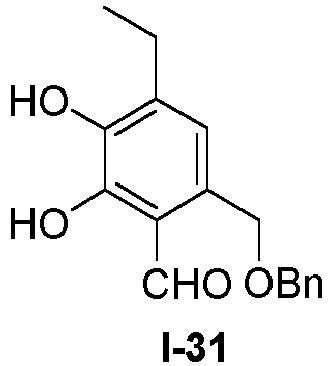
1H NMR (400 MHz, CDCl3) δ 12.12 (s, 1H), 10.24 (s, 1H), 7.42 - 7.26 (m, 5H), 6.66 (s, 1H), 5.82 (s, 1H), 4.68 (s, 2H), 4.54 (s, 2H), 2.69 (q, J = 7.5 Hz, 2H), 1.22 (t, J = 7.5 Hz, 3H). 13C NMR (101 MHz, CDCl3) δ 196.25, 150.12, 142.80, 137.66, 137.46, 131.16, 128.65, 128.11, 128.07, 122.25, 116.37, 72.38, 69.55, 23.50, 13.59. HR-MS (ESI) calcd. for (C17H18O4+Na)+ 309.1097, found: 309.1100. 
1H NMR (400 MHz, CDCl3) δ 12.31 (s, 1H), 10.25 (s, 1H), 7.39 (dd, J = 5.2, 1.1 Hz, 1H), 7.34 - 7.26 (m, 3H), 7.25 - 7.21 (m, 2H), 7.08 (dd, J = 5.2, 3.4 Hz, 1H), 6.85 (dd, J = 3.4, 1.1 Hz, 1H), 5.88 (s, 1H), 4.51 (s, 2H), 4.40 (s, 2H), 2.09 (s, 3H). 13C NMR (101 MHz, CDCl3) δ 197.09, 149.90, 142.95, 138.71, 137.73, 132.71, 131.47, 128.58, 128.46, 128.08, 127.99, 127.34, 127.16, 126.43, 116.32, 72.82, 65.74, 14.49. HR-MS (ESI) calcd. for (C23H22O4+Na)+ 385.1410, found: 385.1413. 
1H NMR (400 MHz, CDCl3) δ 12.34 (s, 1H), 10.31 (s, 1H), 7.70 (dd, J = 8.0, 1.0 Hz, 1H), 7.38 (td, J = 7.4, 1.1 Hz, 1H), 7.34 - 7.26 (m, 4H), 7.21 (td, J = 7.8, 1.7 Hz, 3H), 6.01 (s, 1H), 4.56 (d, J = 11.3 Hz, 1H), 4.37 (s, 2H), 4.19 (d, J = 11.3 Hz, 1H), 1.98 (s, 3H). 13C NMR (101 MHz, CDCl3) δ 197.02, 149.57, 143.11, 139.29, 137.65, 134.25, 132.80, 131.80, 130.87, 129.46, 128.94, 128.51, 127.95, 127.91, 127.59, 125.04, 116.37, 72.87, 65.72, 14.00. HR-MS (ESI) calcd. for (C22H19BrO4+Na)+ 449.0359, found: 449.0363. 
1H NMR (400 MHz, CDCl3) δ 12.25 (s, 1H), 10.22 (s, 1H), 7.50 (d, J = 8.3 Hz, 2H), 7.34 - 7.27 (m, 3H), 7.24 - 7.15 (m, 2H), 6.99 (d, J = 8.3 Hz, 2H), 5.95 (s, 1H), 4.36 (s, 2H), 4.34 (s, 2H), 1.96 (s, 3H). 13C NMR (101 MHz, CDCl3) δ 196.95, 149.29, 143.07, 137.45, 137.37, 134.27, 131.73, 131.65, 130.69, 128.77, 128.60, 128.13, 128.09, 121.76, 116.32, 72.90, 65.31, 14.58. HR-MS (ESI) calcd. for (C22H19BrO4+Na)+ 449.0359, found: 449.0362. 
1H NMR (400 MHz, CDCl3) δ 12.24 (s, 1H), 10.25 (s, 1H), 7.31 - 7.22 (m, 6H), 7.20 - 7.14 (m, 2H), 7.01 (d, J = 7.3 Hz, 1H), 5.90 (s, 1H), 4.41 (d, J = 10.9 Hz, 1H), 4.31 (q, J = 11.7 Hz, 2H), 4.25 (d, J = 10.9 Hz, 1H), 1.97 (s, 3H), 1.91 (s, 3H). 13C NMR (101 MHz, CDCl3) δ 197.15, 149.07, 143.11, 138.00, 137.71, 136.90, 134.59, 130.89, 130.13, 130.05, 128.78, 128.53, 127.97, 127.92, 126.04, 116.47, 72.97, 65.80, 19.91, 14.03. HR-MS (ESI) calcd. for (C23H22O4+Na)+ 385.1410, found: 385.1412. 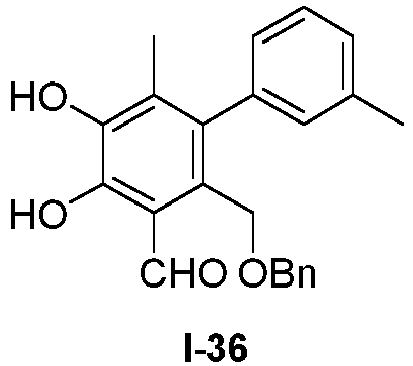
1H NMR (400 MHz, CDCl3) δ 12.24 (s, 1H), 10.25 (s, 1H), 7.32 - 7.24 (m, 4H), 7.22 - 7.16 (m, 3H), 6.98 - 6.90 (m, 2H), 5.90 (s, 1H), 4.40 (s, 2H), 4.34 (s, 2H), 2.38 (s, 3H), 1.99 (s, 3H). 13C NMR (101 MHz, CDCl3) δ 197.16, 149.05, 142.89, 138.43, 138.05, 137.80, 135.80, 131.05, 130.71, 128.87, 128.53, 128.32, 128.22, 127.96, 127.92, 127.09, 116.24, 72.69, 65.82, 21.61, 14.63. HR-MS (ESI) calcd. for (C23H22O4+Na)+ 385.1410, found: 385.1413. 
1H NMR (400 MHz, CDCl3) δ 12.24 (s, 1H), 10.25 (s, 1H), 7.32 - 7.25 (m, 3H), 7.23 - 7.16 (m, 4H), 7.01 (d, J = 8.0 Hz, 2H), 5.87 (s, 1H), 4.40 (s, 2H), 4.34 (s, 2H), 2.42 (s, 3H), 1.98 (s, 3H). 13C NMR (101 MHz, CDCl3) δ 197.19, 149.05, 142.89, 137.79, 137.10, 135.66, 135.44, 131.18, 129.90, 129.16, 129.03, 128.53, 128.05, 127.90, 116.27, 72.69, 65.74, 21.39, 14.63. HR-MS (ESI) calcd. for (C23H22O4+Na)+ 385.1410, found: 385.1415. 
1H NMR (400 MHz, CDCl3) δ 11.49 (s, 1H), 10.10 (s, 1H), 7.25 (dd, J = 8.2, 6.5 Hz, 2H), 7.17 (t, J = 7.3 Hz, 1H), 7.01 (d, J = 7.1 Hz, 2H), 5.57 (s, 1H), 4.42 (dd, J = 9.0, 2.5 Hz, 1H), 3.33 - 3.08 (m, 2H), 2.65 (dq, J = 12.9, 9.1 Hz, 1H), 2.51 (tt, J = 15.0, 7.5 Hz, 1H), 2.41 - 2.22 (m, 1H), 2.18 - 2.00 (m, 1H), 0.84 (t, J = 7.5 Hz, 3H). 13C NMR (101 MHz, CDCl3) δ 195.10, 148.38, 145.88, 141.86, 138.01, 136.75, 136.56, 128.69, 127.36, 126.43, 114.67, 49.34, 35.88, 28.38, 21.55, 12.64. HR-MS (ESI) calcd. for (C18H18O3+H)+ 283.1329, found: 283.1333. 
1H NMR (400 MHz, CDCl3) δ 12.16 (s, 1H), 10.18 (s, 1H), 7.42 - 7.29 (m, 5H), 5.82 (s, 1H), 4.73 (s, 2H), 4.59 (s, 2H), 2.25 (s, 3H), 2.19 (s, 3H). 13C NMR (101 MHz, CDCl3) δ 196.62, 148.00, 142.90, 137.82, 131.72, 128.79, 128.70, 128.18, 128.15, 116.53, 72.74, 63.88, 14.77, 13.34. HR-MS (ESI) calcd. for (C17H18O4+Na)+ 309.1097, found: 309.1096. 
1H NMR (400 MHz, CDCl3) δ 12.39 (s, 1H), 10.27 (s, 1H), 7.01 (t, J = 8.7 Hz, 2H), 6.95 (dd, J = 8.4, 5.8 Hz, 2H), 5.95 (s, 2H), 5.75 (s, 1H), 3.89 (s, 2H), 3.75 (s, 3H), 3.52 (s, 6H), 1.89 (s, 3H). 13C NMR (101 MHz, CDCl3) δ 197.88, 163.17, 160.74, 159.96, 158.53, 148.62, 140.64, 135.80, 135.76, 135.00, 133.94, 132.09, 132.01, 131.15, 116.54, 115.05, 114.83, 110.69, 90.56, 55.39, 22.87, 14.62. 19F NMR (376 MHz, CDCl3) δ -116.47. HR-MS (ESI) calcd. for (C24H23FO6+Na)+ 449.1371, found: 449.1374. 
1H NMR (400 MHz, CDCl3) δ 12.41 (s, 1H), 10.33 (s, 1H), 7.43 (d, J = 8.2 Hz, 2H), 6.84 (d, J = 8.2 Hz, 2H), 5.93 (s, 2H), 5.74 (s, 1H), 3.89 (s, 2H), 3.75 (s, 3H), 3.51 (s, 6H), 1.88 (s, 3H). 13C NMR (101 MHz, CDCl3) δ 197.81, 159.99, 158.57, 148.66, 140.68, 138.83, 134.65, 133.71, 132.25, 131.21, 130.79, 120.96, 116.59, 110.28, 90.43, 55.41, 22.61, 14.59. HR-MS (ESI) calcd. for (C24H23BrO6+Na)+ 509.0570, found: 509.0563. 
1H NMR (400 MHz, CDCl3) δ 12.45 (s, 1H), 10.35 (s, 1H), 8.17 (d, J = 8.6 Hz, 2H), 7.16 (d, J = 8.6 Hz, 2H), 5.92 (s, 2H), 5.84 (s, 1H), 3.87 (s, 2H), 3.75 (s, 3H), 3.48 (s, 6H), 1.87 (s, 3H). 13C NMR (101 MHz, CDCl3) δ 197.60, 160.20, 158.50, 149.05, 147.33, 147.03, 140.91, 134.23, 132.61, 131.61, 129.96, 123.21, 116.63, 109.72, 90.46, 55.41, 55.27, 22.58, 14.50. HR-MS (ESI) calcd. for (C24H23NO8+Na)+ 476.1316, found: 476.1308. 
1H NMR (400 MHz, CDCl3) δ 12.49 (s, 1H), 10.39 (s, 1H), 7.63 (d, J = 7.7 Hz, 1H), 7.52 (t, J = 7.6 Hz, 1H), 7.39 (t, J = 7.6 Hz, 1H), 7.12 (d, J = 7.7 Hz, 1H), 5.91 (s, 2H), 5.76 (s, 1H), 4.10 (d, J = 16.0 Hz, 1H), 3.75 (s, 2H), 3.74 (d, J = 16.0 Hz, 2H), 3.48 (s, 6H), 1.86 (s, 3H). 13C NMR (101 MHz, CDCl3) δ 197.58, 160.19, 158.62, 149.45, 143.87, 141.04, 135.03, 132.46, 132.20, 131.80, 130.64, 130.56, 127.43, 117.74, 116.78, 114.57, 109.44, 90.52, 55.46, 55.36, 22.38, 14.09. HR-MS (ESI) calcd. for (C25H23NO6+Na)+ 456.1418, found: 456.1418. 
1H NMR (400 MHz, CDCl3) δ 12.30 (s, 1H), 10.17 (s, 1H), 7.36 - 7.27 (m, 3H), 7.08 (d, J = 6.9 Hz, 2H), 5.96 (s, 2H), 5.67 (s, 1H), 3.87 (s, 2H), 3.74 (s, 3H), 3.53 (s, 6H), 2.35 (q, J = 7.4 Hz, 2H), 0.95 (t, J = 7.4 Hz, 3H). 13C NMR (101 MHz, CDCl3) δ 197.95, 159.89, 158.44, 148.61, 140.32, 139.68, 137.09, 135.38, 134.47, 130.70, 127.83, 126.77, 116.52, 111.48, 90.73, 55.47, 55.39, 23.42, 21.92, 13.78. HR-MS (ESI) calcd. for (C25H26O6+Na)+ 445.1622, found: 445.1619. 
1H NMR (400 MHz, CDCl3) δ 12.24 (s, 1H), 10.25 (s, 1H), 7.32 - 7.23 (m, 3H), 7.22 - 7.17 (m, 2H), 7.00 (s, 1H), 6.75 (s, 2H), 5.91 (s, 1H), 4.41 (s, 2H), 4.34 (s, 2H), 2.34 (s, 7H), 1.99 (s, 3H). 13C NMR (101 MHz, CDCl3) δ 197.17, 148.96, 142.83, 138.33, 137.85, 135.94, 131.08, 129.04, 128.83, 128.50, 127.91, 127.89, 127.78, 116.21, 72.62, 65.90, 21.48, 14.64. HR-MS (ESI) calcd. for (C24H24O4+Na)+ 399.1567, found: 399.1572. 
1H NMR (400 MHz, CDCl3) δ 12.26 (s, 1H), 10.26 (s, 1H), 7.38 (d, J = 8.3 Hz, 2H), 7.30 - 7.23 (m, 3H), 7.22 - 7.16 (m, 2H), 7.04 (d, J = 8.3 Hz, 2H), 5.91 (s, 1H), 4.40 (s, 2H), 4.35 (s, 2H), 1.99 (s, 3H), 1.37 (s, 9H). 13C NMR (101 MHz, CDCl3) δ 197.24, 150.31, 149.06, 142.87, 137.81, 135.63, 135.31, 131.27, 129.65, 129.05, 128.51, 128.02, 127.91, 125.24, 116.25, 72.57, 65.71, 34.73, 31.56, 14.72. HR-MS (ESI) calcd. for (C26H28O4+Na)+ 427.1880, found: 427.1882. 
1H NMR (400 MHz, CDCl3) δ 12.34 (s, 1H), 10.29 (s, 1H), 7.91 (dd, J = 12.1, 8.3 Hz, 2H), 7.50 (ddd, J = 8.3, 6.3, 2.1 Hz, 2H), 7.41 - 7.34 (m, 2H), 7.26 (dd, J = 7.0, 1.0 Hz, 1H), 7.19 (dd, J = 6.6, 3.6 Hz, 3H), 7.04 - 6.96 (m, 2H), 5.95 (s, 1H), 4.34 (d, J = 11.1 Hz, 1H), 4.19 - 4.11 (m, 3H), 1.84 (s, 3H). 13C NMR (101 MHz, CDCl3) δ 197.23, 149.41, 143.07, 137.60, 135.98, 133.71, 133.12, 132.76, 131.82, 130.00, 128.50, 128.42, 128.20, 127.86, 127.83, 127.81, 126.56, 126.23, 125.78, 125.49, 116.53, 72.73, 65.95, 14.19. HR-MS (ESI) calcd. for (C26H22O4+Na)+ 421.1410, found: 421.1416. 
1H NMR (400 MHz, CDCl3) δ 12.28 (s, 1H), 10.26 (s, 1H), 7.42 (dd, J = 4.9, 3.0 Hz, 1H), 7.37 - 7.29 (m, 3H), 7.28 - 7.22 (m, 2H), 7.09 (dd, J = 3.0, 1.2 Hz, 1H), 6.94 (dd, J = 4.9, 1.2 Hz, 1H), 5.88 (s, 1H), 4.41 (s, 3H), 2.06 (s, 3H). 13C NMR (101 MHz, CDCl3) δ 197.03, 149.28, 143.00, 138.20, 137.72, 131.71, 130.43, 129.80, 129.57, 128.61, 128.08, 128.03, 125.68, 124.07, 116.34, 72.84, 65.68, 14.49. HR-MS (ESI) calcd. for (C20H18O4S+Na)+ 377.0818, found:377.0814. 
1H NMR (400 MHz, CDCl3) δ 12.40 (s, 1H), 10.27 (s, 1H), 8.00 (d, J = 8.3 Hz, 2H), 7.10 (d, J = 8.3 Hz, 2H), 5.93 (s, 2H), 5.78 (s, 1H), 3.94 (s, 3H), 3.88 (s, 2H), 3.75 (s, 3H), 3.49 (s, 6H), 1.88 (s, 3H). 13C NMR (101 MHz, CDCl3) δ 197.83, 167.28, 160.04, 158.48, 148.77, 145.20, 140.76, 134.45, 133.97, 130.70, 130.44, 129.37, 128.71, 116.58, 110.54, 90.58, 55.35, 52.23, 22.93, 14.54. HR-MS (ESI) calcd. for (C26H26O8+Na)+ 489.1520, found: 489.1521. 
1H NMR (400 MHz, CDCl3) δ 11.50 (s, 1H), 10.09 (s, 1H), 7.27 - 7.24 (m, 2H), 7.20 - 7.14 (m, 1H), 7.01 - 6.94 (m, 2H), 5.59 (s, 1H), 4.46 (dd, J = 9.1, 1.9 Hz, 1H), 3.24 - 3.12 (m, 2H), 2.83 (dt, J = 14.0, 7.0 Hz, 1H), 2.63 (dq, J = 12.8, 9.3 Hz, 1H), 2.15 - 2.05 (m, 1H), 1.28 (d, J = 7.0 Hz, 3H), 0.90 (d, J = 7.0 Hz, 3H). 13C NMR (101 MHz, CDCl3) δ 195.08, 148.88, 145.98, 142.77, 139.61, 137.74, 136.27, 128.60, 127.30, 126.34, 114.56, 49.70, 35.57, 31.36, 28.31, 20.06, 19.06. HR-MS (ESI) calcd. for (C19H20O3+Na)+ 
1H NMR (400 MHz, CDCl3) δ 12.24 (s, 1H), 10.51 (s, 1H), 6.76 (s, 1H), 6.12 (s, 2H), 5.62 (s, 1H), 4.11 (s, 2H), 3.79 (s, 3H), 3.78 (s, 6H), 3.27 (hept, J = 6.9 Hz, 1H), 1.18 (d, J = 6.9 Hz, 6H). 13C NMR (101 MHz, CDCl3) δ 197.26, 160.12, 158.63, 149.11, 142.08, 139.77, 136.50, 119.06, 116.23, 109.63, 90.82, 55.61, 55.44, 27.73, 23.83, 22.05. HR-MS (ESI) calcd. for (C20H24O6+Na)+ 383.1465, found: 383.1463. 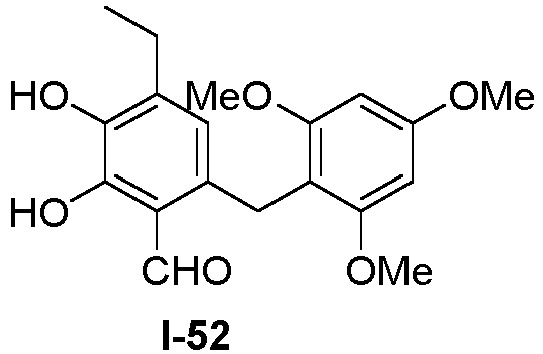
1H NMR (400 MHz, CDCl3) δ 12.23 (s, 1H), 10.52 (s, 1H), 6.60 (s, 1H), 6.13 (s, 2H), 5.51 (s, 1H), 4.12 (s, 2H), 3.80 (s, 3H), 3.78 (s, 6H), 2.60 (q, J = 7.5 Hz, 2H), 1.16 (t, J = 7.6 Hz, 3H). 13C NMR (101 MHz, CDCl3) δ 197.04, 160.17, 158.75, 149.16, 140.30, 138.10, 136.46, 121.45, 116.38, 109.43, 90.87, 55.69, 23.64, 23.49, 13.62. HR-MS (ESI) calcd. for (C19H22O6+Na)+ 369.1309, found: 369.1305. 
1H NMR (400 MHz, CDCl3) δ 12.18 (s, 1H), 10.28 (s, 1H), 7.44 - 7.31 (m, 5H), 6.74 (s, 1H), 5.90 (s, 1H), 4.73 (s, 2H), 4.59 (s, 2H), 3.40 (hept, J = 6.9 Hz, 1H), 1.28 (d, J = 6.9 Hz, 6H). 13C NMR (101 MHz, CDCl3) δ 196.24, 150.11, 142.28, 141.56, 137.65, 131.20, 128.64, 128.15, 128.07, 119.40, 116.21, 72.38, 69.73, 27.70, 21.99. HR-MS (ESI) calcd. for (C18H20O4+Na)+ 323.1254, found: 323.1251. 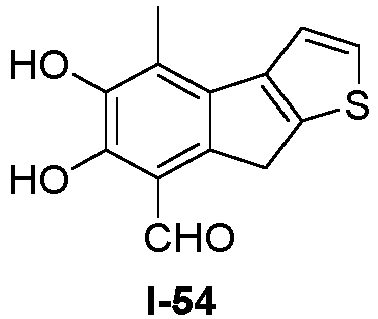
1H NMR (400 MHz, DMSO) δ 10.37 (s, 1H), 10.20 (s, 1H), 8.82 (s, 1H), 7.58 (d, J = 5.0 Hz, 1H), 7.41 (d, J = 5.0 Hz, 1H), 4.06 (s, 2H), 2.49 (s, 3H). 13C NMR (101 MHz, DMSO) δ 192.85, 147.35, 145.65, 142.58, 142.43, 138.74, 130.77, 128.88, 125.39, 120.00, 117.43, 33.55, 13.35. HR-MS (ESI) calcd. for (C13H10O3S+Na)+ 269.0243, found: 269.0237. 
1H NMR (400 MHz, CDCl3) δ 12.23 (s, 1H), 10.22 (s, 1H), 7.42 - 7.36 (m, 3H), 7.32 - 7.26 (m, 3H), 7.21 - 7.16 (m, 2H), 7.16 - 7.11 (m, 2H), 5.93 (s, 1H), 4.31 (s, 2H), 4.30 (s, 2H), 2.73 - 2.59 (m, 1H), 1.23 (s, 3H), 1.22 (s, 3H). 13C NMR (101 MHz, CDCl3) δ 197.07, 149.64, 143.88, 139.83, 139.13, 137.71, 134.85, 129.84, 128.96, 128.55, 128.33, 128.04, 127.96, 127.43, 116.16, 72.86, 65.86, 31.36, 19.81. 
1H NMR (400 MHz, CDCl3) δ 13.15 (s, 1H), 7.26 - 7.22 (m, 2H), 7.18 (t, J = 7.1 Hz, 1H), 7.00 (d, J = 7.4 Hz, 2H), 6.16 (s, 1H), 4.60 (dd, J = 9.1, 2.8 Hz, 1H), 4.55 (d, J = 11.0 Hz, 1H), 4.14 (d, J = 11.0 Hz, 1H), 3.98 (qd, J = 15.7, 2.2 Hz, 2H), 3.27 (dt, J = 16.4, 8.3 Hz, 1H), 3.15 (ddd, J = 16.0, 9.0, 3.2 Hz, 1H), 2.69 (s, 3H), 2.66 - 2.57 (m, 1H), 2.40 (s, 1H), 2.06 (ddd, J = 11.6, 7.1, 3.0 Hz, 1H). 13C NMR (101 MHz, CDCl3) δ 205.75, 150.51, 145.69, 143.87, 137.05, 135.40, 128.68, 127.36, 126.43, 124.96, 117.33, 79.68, 74.75, 63.94, 57.83, 49.04, 35.74, 34.28, 32.20. HR-MS (ESI) calcd. for (C21H20O4+Na)+ 359.1254, found: 359.1260. 
1H NMR (400 MHz, CDCl3) δ 12.29 (s, 1H), 10.32 (s, 1H), 7.49 - 7.35 (m, 3H), 7.15 (d, J = 6.7 Hz, 2H), 5.97 (s, 1H), 4.45 (s, 2H), 4.00 (s, 2H), 2.34 (s, 1H), 1.98 (s, 3H). 13C NMR (101 MHz, CDCl3) δ 197.21, 149.13, 143.10, 138.37, 135.83, 131.01, 130.06, 128.50, 128.06, 127.54, 116.15, 79.13, 75.13, 65.13, 57.61, 14.62. HR-MS (ESI) calcd. for (C18H16O4+Na)+ 319.0941, found: 319.0942. 
1H NMR (400 MHz, CDCl3) δ 12.31 (s, 1H), 10.59 (s, 1H), 7.78 (d, J = 8.9 Hz, 1H), 7.73 (d, J = 8.9 Hz, 1H), 7.19 (d, J = 9.0 Hz, 1H), 7.09 (s, 1H), 7.03 (dd, J = 8.9, 2.2 Hz, 1H), 6.26 (s, 1H), 5.58 (s, 1H), 4.66 (s, 1H), 3.95 (s, 1H), 3.81 (s, 1H), 2.12 (s, 1H). 13C NMR (101 MHz, CDCl3) δ 195.84, 158.56, 155.36, 149.84, 141.17, 134.92, 134.87, 132.68, 130.30, 128.81, 124.93, 122.13, 119.14, 116.49, 116.10, 110.70, 102.38, 56.51, 55.35, 26.38, 16.47. HR-MS (ESI) calcd. for (C21H20O5+Na)+ 375.1203, found: 375.1208. 
1H NMR (400 MHz, CDCl3) δ 12.11 (s, 1H), 10.12 (s, 1H), 7.34 - 7.27 (m, 5H), 6.47 (s, 1H), 5.71 (s, 1H), 3.75 (s, 2H), 3.69 (s, 2H), 2.25 (s, 3H). 13C NMR (101 MHz, CDCl3) δ 195.05, 150.20, 142.60, 137.77, 131.87, 131.08, 129.02, 128.73, 127.38, 124.05, 115.56, 36.71, 31.82, 16.24. HR-MS (ESI) calcd. for (C16H16O3S+Na)+ 311.0712, found: 311.0711. 
1H NMR (400 MHz, CDCl3) δ 12.46 (s, 1H), 10.20 (s, 1H), 7.55 - 7.45 (m, 2H), 7.37 - 7.28 (m, 3H), 6.07 (s, 2H), 5.64 (s, 1H), 4.49 (s, 2H), 3.77 (s, 3H), 3.67 (s, 6H), 2.52 (s, 3H). 13C NMR (101 MHz, CDCl3) δ 198.47, 160.17, 158.61, 149.57, 140.80, 140.04, 133.45, 131.42, 128.44, 128.04, 124.17, 117.39, 116.72, 111.20, 96.32, 91.02, 87.17, 55.74, 55.46, 24.63, 15.17. HR-MS (ESI) calcd. for (C26H24O6+Na)+ 455.1465, found: 455.1469. 
1H NMR (400 MHz, CDCl3) δ 12.44 (s, 1H), 10.14 (s, 1H), 7.48 (s, 1H), 6.44 (s, 1H), 6.24 (d, J = 3.1 Hz, 1H), 6.01 (s, 2H), 5.64 (s, 1H), 4.04 (s, 2H), 3.75 (s, 3H), 3.63 (s, 6H), 2.04 (s, 3H). 13C NMR (101 MHz, CDCl3) δ 198.28, 160.03, 158.33, 151.61, 149.87, 141.82, 140.67, 138.39, 133.23, 124.89, 116.39, 111.51, 110.47, 110.40, 90.86, 55.56, 55.42, 23.42, 14.15. HR-MS (ESI) calcd. for (C22H22O7+Na)+ 421.1258, found: 421.1263. 
1H NMR (400 MHz, CDCl3) δ 13.46 (s, 1H), 7.28 - 7.22 (m, 2H), 7.16 (dd, J = 8.4, 6.2 Hz, 1H), 6.97 (d, J = 7.1 Hz, 2H), 6.64 (dq, J = 15.9, 6.7 Hz, 1H), 6.20 - 6.06 (m, 2H), 4.50 (dd, J = 9.0, 1.8 Hz, 1H), 3.26 - 3.06 (m, 2H), 2.66 (s, 3H), 2.56 (dq, J = 12.6, 9.2 Hz, 1H), 2.08 (ddt, J = 12.4, 7.6, 2.3 Hz, 1H), 1.73 (dd, J = 6.7, 1.6 Hz, 3H). 13C NMR (101 MHz, CDCl3) δ 205.27, 150.45, 145.49, 142.19, 135.28, 135.17, 135.13, 128.64, 127.33, 126.42, 126.25, 124.88, 115.50, 49.49, 35.79, 34.11, 31.93, 20.00. HR-MS (ESI) calcd. for (C20H20O3+Na)+ 331.1305, found: 331.1309. 
1H NMR (400 MHz, CDCl3) δ 12.22 (s, 1H), 10.22 (s, 1H), 7.41 - 7.27 (m, 5H), 5.98 (s, 1H), 5.00 (s, 2H), 4.60 (s, 2H), 2.42 (s, 3H). 13C NMR (101 MHz, CDCl3) δ 196.57, 149.07, 144.00, 137.68, 132.24, 129.97, 128.65, 128.12, 119.47, 117.26, 72.71, 67.84, 17.52. HR-MS (ESI) calcd. for (C16H15BrO4+Na)+ 373.0046, found: 373.0040. 
1H NMR (400 MHz, CDCl3) δ 15.16 (s, 1H), 11.13 (s, 1H), 7.79 (s, 1H), 6.43 (s, 1H), 5.84 (s, 1H), 4.00 - 3.77 (m, 1H), 2.16 (s, 3H), 1.56 (d, J = 6.9 Hz, 6H). 13C NMR (101 MHz, CDCl3) δ 199.50, 156.25, 150.54, 143.62, 134.22, 133.82, 129.85, 118.29, 115.90, 114.78, 111.94, 27.99, 20.45, 20.37. HR-MS (ESI) calcd. for (C30H30O8+H)+ 519.2013, found: 519.2007. 
1H NMR (400 MHz, CDCl3) δ 11.39 (s, 1H), 10.03 (s, 1H), 5.51 (s, 1H), 5.10 - 5.02 (m, 2H), 3.96 (td, J = 9.2, 3.7 Hz, 1H), 3.20 (dt, J = 16.3, 8.2 Hz, 1H), 3.08 (ddd, J = 15.9, 9.1, 4.5 Hz, 1H), 2.38 (dq, J = 12.8, 8.5 Hz, 1H), 2.16 (s, 3H), 2.08 (dd, J = 14.3, 7.2 Hz, 2H), 2.00 (dd, J = 11.1, 4.5 Hz, 2H), 1.86 (ddd, J = 16.8, 8.4, 4.1 Hz, 1H), 1.77 (d, J = 1.0 Hz, 3H), 1.66 (s, 3H), 1.58 (s, 3H). 13C NMR (101 MHz, CDCl3) δ 194.94, 147.49, 141.46, 138.03, 136.74, 134.08, 131.48, 130.42, 127.60, 124.14, 114.51, 42.50, 39.64, 33.10, 28.36, 26.50, 25.68, 17.69, 16.24, 12.65. HR-MS (ESI) calcd. for (C20H26O3+Na)+ 337.1774, found: 337.1779. 
1H NMR (400 MHz, CDCl3) δ 11.57 (s, 1H), 10.21 (s, 1H), 7.77 (d, J = 7.5 Hz, 2H), 7.37 (t, J = 7.4 Hz, 2H), 7.24 (t, J = 7.4 Hz, 2H), 7.16 (d, J = 7.5 Hz, 2H), 5.50 (s, 1H), 3.52 (t, J = 7.3 Hz, 2H), 2.59 (t, J = 7.3 Hz, 2H), 1.17 (s, 2H). 13C NMR (101 MHz, CDCl3) δ 194.94, 151.50, 148.55, 142.11, 140.03, 138.60, 137.32, 130.95, 127.89, 127.63, 123.68, 120.21, 114.67, 62.88, 41.32, 28.70, 10.97. HR-MS (ESI) calcd. for (C23H18O3 +H)+ 343.1329, found: 343.1327. 
1H NMR (400 MHz, CDCl3) δ 11.50 (s, 1H), 10.09 (s, 1H), 7.15 (d, J = 7.8 Hz, 1H), 6.75 (d, J = 7.7 Hz, 1H), 6.74 (s, 1H), 5.59 (s, 1H), 4.32 (dd, J = 8.8, 2.4 Hz, 1H), 3.29 - 3.09 (m, 2H), 2.87 - 2.80 (m, 2H), 2.69 - 2.59 (m, 1H), 2.53 - 2.45 (m, 1H), 2.42 - 2.35 (m, 1H), 2.32 - 2.26 (m, 1H), 2.17 - 2.01 (m, 4H), 1.97 (s, 3H), 1.65 - 1.42 (m, 7H), 0.91 (s, 3H). 13C NMR (101 MHz, CDCl3) δ 195.12, 148.09, 142.65, 141.85, 137.79, 137.20, 136.72, 130.72, 127.86, 125.62, 124.70, 114.59, 50.72, 49.16, 48.14, 44.46, 38.30, 35.99, 31.77, 29.61, 28.48, 26.70, 25.79, 21.73, 14.02, 13.51. HR-MS (ESI) calcd. for (C29H32O4+H)+ 445.2373, found: 445.2371. 
1H NMR (400 MHz, CDCl3) δ 11.52 (s, 1H), 10.10 (s, 1H), 7.93 (d, J = 8.1 Hz, 2H), 7.07 (d, J = 8.1 Hz, 2H), 5.60 (s, 1H), 5.41 (d, J = 4.1 Hz, 1H), 4.88 - 4.79 (m, 1H), 4.43 (dd, J = 9.0, 3.1 Hz, 1H), 3.33 - 3.10 (m, 2H), 2.77 - 2.63 (m, 1H), 2.44 (d, J = 7.8 Hz, 2H), 2.10 - 1.95 (m, 4H), 1.92 (s, 3H), 1.87 - 1.80 (m, 1H), 1.77 - 1.65 (m, 2H), 1.60 - 1.44 (m, 6H), 1.33 (t, J = 9.3 Hz, 3H), 1.26 (t, J = 10.6 Hz, 2H), 1.22 - 1.08 (m, 6H), 1.06 (s, 3H), 1.04 - 0.96 (m, 3H), 0.92 (d, J = 6.4 Hz, 3H), 0.88 (s, 3H), 0.86 (s, 3H), 0.69 (s, 3H). 13C NMR (101 MHz, CDCl3) δ 195.01, 166.01, 150.62, 148.38, 142.12, 139.83, 137.70, 136.45, 130.44, 130.15, 129.21, 127.27, 122.92, 114.61, 74.66, 56.87, 56.32, 50.22, 49.74, 42.49, 39.91, 39.68, 38.39, 37.20, 36.81, 36.35, 35.95, 35.82, 32.09, 32.05, 28.54, 28.38, 28.16, 28.05, 24.45, 23.99, 22.96, 22.71, 21.21, 19.52, 18.88, 13.45, 12.02. 
1H NMR (400 MHz, CDCl3) δ 12.22 (s, 1H), 10.15 (s, 1H), 6.45 (s, 1H), 6.13 (s, 1H), 5.60 (s, 1H), 3.65 (dd, J = 46.3, 15.5 Hz, 2H), 2.26 (s, 3H), 2.20 - 2.08 (m, 1H), 2.02 (dd, J = 13.6, 9.6 Hz, 2H), 1.92 - 1.82 (m, 2H), 1.78 (s, 3H), 1.61 - 1.28 (m, 10H), 1.24 - 0.98 (m, 9H), 0.97 - 0.84 (m, 14H), 0.67 (s, 3H). 13C NMR (101 MHz, CDCl3) δ 195.86, 149.75, 141.12, 136.08, 136.00, 134.59, 132.37, 126.57, 122.82, 119.00, 116.69, 56.81, 56.08, 48.37, 42.33, 39.78, 39.52, 36.17, 36.13, 35.77, 35.33, 34.25, 33.77, 31.46, 28.20, 28.02, 27.92, 24.11, 23.97, 23.80, 22.80, 22.55, 21.15, 18.70, 18.64, 16.43, 11.98. HR-MS (ESI) calcd. for (C37H54O3+Na)+ 569.3965, found: 569. 3971. 
1H NMR (400 MHz, CDCl3) δ 11.47 (s, 1H), 10.03 (s, 1H), 7.39 (d, J = 8.2 Hz, 2H), 7.21 (d, J = 8.2 Hz, 2H), 5.62 (s, 1H), 4.16 (dd, J = 8.5, 3.4 Hz, 1H), 3.34 (m, 1H), 3.24 - 3.12 (m, 1H), 2.59 - 2.49 (m, 1H), 2.42 (s, 3H), 2.41 - 2.35 (m, 1H). 13C NMR (101 MHz, CDCl3) δ 194.79, 148.42, 142.04, 136.35, 134.10, 133.10, 131.55, 130.18, 122.61, 122.07, 114.64, 92.18, 80.97, 35.05, 33.33, 28.62, 13.19. HR-MS (ESI) calcd. for (C19H15BrO3+Na)+ 393.0097, found: 393.0096. 
1H NMR (400 MHz, CDCl3) δ 12.45 (s, 1H), 10.43 (s, 1H), 7.93 (dd, J = 7.7, 1.4 Hz, 1H), 7.39 (dtd, J = 24.4, 7.5, 1.5 Hz, 2H), 6.95 (dd, J = 7.5, 1.2 Hz, 1H), 5.87 (s, 2H), 5.67 (s, 1H), 4.03 (d, J = 15.9 Hz, 1H), 3.74 (s, 3H), 3.68 (d, J = 15.9 Hz, 1H), 3.55 (s, 3H), 3.43 (s, 6H), 1.77 (s, 3H). 13C NMR (101 MHz, CDCl3) δ 197.62, 166.53, 159.79, 158.64, 148.40, 140.91, 140.33, 134.07, 133.12, 132.24, 131.61, 130.75, 130.51, 130.05, 126.97, 116.45, 109.50, 90.20, 55.27, 55.16, 51.62, 22.02, 14.08. HR-MS (ESI) calcd. for (C26H26O8+Na)+ 489.1520, found: 489.1521. 
1H NMR (400 MHz, CDCl3) δ 12.15 (s, 1H), 10.31 (s, 1H), 6.65 (s, 1H), 5.91 (s, 1H), 5.87 (bro, 1H), 5.66 (s, 1H), 4.69 (s, 2H), 4.13 (s, 2H), 2.30 (s, 3H). 13C NMR (101 MHz, CDCl3) δ 196.19, 150.16, 143.46, 131.63, 130.15, 129.10, 123.92, 118.91, 116.40, 74.11, 69.44, 16.23. HR-MS (ESI) calcd. for (C12H13BrO4+Na)+ 322.9889, found: 322.9885. 
1H NMR (400 MHz, CDCl3) δ 10.45 (s, 1H), 6.75 (s, 1H), 6.14 (s, 1H), 6.10 (s, 2H), 3.94 (s, 2H), 3.84 (s, 3H), 3.79 (s, 3H), 3.73 (s, 2H), 3.64 (s, 6H), 2.71 (s, 3H). 13C NMR (101 MHz, CDCl3) δ 205.98, 159.80, 158.95, 147.17, 140.35, 131.72, 130.72, 121.71, 120.62, 109.49, 108.25, 90.76, 55.63, 55.35, 33.24, 26.81, 22.88. 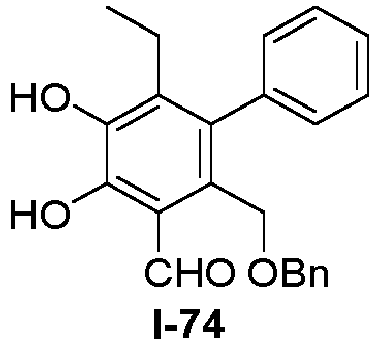
1H NMR (400 MHz, CDCl3) δ 12.26 (s, 1H), 10.27 (s, 1H), 7.44 - 7.39 (m, 3H), 7.34 - 7.28 (m, 3H), 7.25 - 7.17 (m, 4H), 5.91 (s, 1H), 4.38 (s, 2H), 4.35 (s, 2H), 2.45 (q, J = 7.5 Hz, 2H), 0.99 (t, J = 7.5 Hz, 3H) 13C NMR (101 MHz, CDCl3) δ 197.12, 149.26, 142.75, 138.24, 137.72, 136.95, 135.13, 130.17, 129.20, 128.55, 128.24, 128.03, 127.96, 127.52, 116.33, 72.81, 65.70, 21.86, 13.61. HR-MS (ESI) calcd. for (C23H22O4+Na)+ 385.1410, found: 385.1413. 
1H NMR (400 MHz, CDCl3) δ 12.25 (s, 1H), 10.23 (s, 1H), 8.02 (dd, J = 7.8, 1.2 Hz, 1H), 7.59 - 7.41 (m, 2H), 7.32 - 7.22 (m, 3H), 7.16 (d, J = 6.3 Hz, 3H), 5.85 (s, 1H), 4.37 (d, J = 11.2 Hz, 1H), 4.28 (d, J = 4.3 Hz, 2H), 4.17 (d, J = 11.2 Hz, 1H), 3.62 (s, 3H), 1.90 (s, 3H). 13C NMR (101 MHz, CDCl3) δ 196.89, 167.02, 149.02, 142.62, 140.90, 139.52, 137.62, 134.56, 132.01, 131.61, 130.82, 130.61, 130.36, 128.57, 128.37, 128.08, 127.82, 127.76, 127.66, 126.99, 72.64, 67.76, 65.76, 52.03, 14.20. HR-MS (ESI) calcd. for (C26H22O6+Na)+ 429.1309, found: 429.1307. 
1H NMR (400 MHz, CDCl3) δ 12.24 (s, 1H), 10.16 (s, 1H), 7.67 (d, J = 7.6 Hz, 2H), 7.12-6.91 (m, 7H), 6.28 (s, 1H), 4.32 (s, 2H), 4.22 (s, 2H), 2.29 (s, 3H). 
1H NMR (400 MHz, CDCl3) δ 12.26 (s, 1H), 10.23 (s, 1H), 8.07 (d, J = 8.4 Hz, 2H), 7.34 - 7.14 (m, 7H), 5.96 (s, 1H), 4.34 (s, 2H), 4.32 (s, 2H), 3.98 (s, 3H), 1.96 (s, 3H). 13C NMR (101 MHz, CDCl3) δ 196.93, 166.99, 149.37, 143.51, 143.13, 137.44, 134.53, 130.40, 130.21, 129.75, 129.47, 128.59, 128.56, 128.12, 128.08, 116.32, 72.92, 65.40, 52.38, 14.53. HR-MS (ESI) calcd. for (C26H22O6+Na)+ 429.1309, found: 429.1308. 
1H NMR (400 MHz, CDCl3) δ 12.15 (s, 1H), 10.13 (s, 1H), 7.28 (d, J = 8.5 Hz, 2H), 6.90 (d, J = 8.5 Hz, 2H), 5.99 - 5.91 (m, 1H), 5.90 (s, 1H), 5.04 (dd, J = 10.2, 1.5 Hz, 1H), 4.70 (dd, J = 17.2, 1.6 Hz, 1H), 4.58 (s, 2H), 4.53 (s, 2H), 3.81 (s, 3H), 3.41 - 3.36 (m, 2H), 3.21 - 3.09 (m, 1H), 1.34 (d, J = 7.0 Hz, 6H). 13C NMR (101 MHz, CDCl3) δ 196.73, 159.67, 148.84, 144.13, 140.85, 136.96, 129.91, 129.79, 129.24, 128.60, 116.66, 115.95, 114.10, 72.80, 63.77, 55.45, 32.38, 29.88, 19.91. HR-MS (ESI) calcd. for (C22H26O5+Na)+ 393.1672, found: 392.1675. 
1H NMR (400 MHz, CDCl3) δ 12.28 (s, 1H), 10.38 (s, 1H), 7.49 - 7.38 (m, 3H), 7.21 (d, J = 6.8 Hz, 2H), 5.87 (s, 1H), 3.62 (s, 2H), 2.34 (t, J = 6.3 Hz, 2H), 1.95 (s, 3H), 1.52 (heptet, J = 7.1 Hz, 1H), 1.24 (q, J = 7.1 Hz, 2H), 0.81 (s, 3H), 0.79 (s, 3H). 13C NMR (101 MHz, CDCl3) δ 196.17, 149.24, 142.20, 138.49, 134.92, 131.60, 130.00, 129.40, 128.53, 127.59, 115.45, 38.26, 31.67, 30.02, 27.33, 22.30, 14.75. HR-MS (ESI) calcd. for (C20H24O3S+Na)+ 367.1338, found: 367.1343. 
1H NMR (400 MHz, CDCl3) δ 12.16 (s, 1H), 10.36 (s, 1H), 6.57 (s, 1H), 5.72 (s, 1H), 3.90 (s, 2H), 2.49 (t, J = 7.1 Hz, 2H), 2.29 (s, 3H), 1.66 (heptet, J = 6.6 Hz, 2H), 1.48 (q, J = 7.1 Hz, 2H), 0.91 (s, 3H), 0.89 (s, 3H). 13C NMR (101 MHz, CDCl3) δ 195.12, 150.30, 142.58, 131.85, 131.79, 123.82, 115.50, 38.45, 32.54, 30.17, 27.65, 22.41, 16.25. HR-MS (ESI) calcd. for (C14H20O3S+H)+ 269.1206, found: 269.1206. 
1H NMR (400 MHz, CDCl3) δ 12.11 (s, 1H), 10.24 (s, 1H), 6.64 (s, 1H), 5.85 (s, 1H), 4.62 (s, 2H), 3.49 (t, J = 6.7 Hz, 2H), 2.28 (s, 3H), 1.67 (heptet, J = 6.7 Hz, 1H), 1.47 (q, J = 6.8 Hz, 2H), 0.88 (s, 3H), 0.86 (s, 3H). 13C NMR (101 MHz, CDCl3) δ 196.33, 150.02, 143.09, 131.64, 131.44, 123.53, 116.38, 70.42, 68.94, 38.59, 25.12, 22.66, 16.23. HR-MS (ESI) calcd. for (C14H20O4+Na)+ 275.1254, found: 275.1259. 
1H NMR (400 MHz, CDCl3) δ 12.25 (s, 1H), 10.27 (s, 1H), 7.50 - 7.33 (m, 3H), 7.15 (d, J = 7.4 Hz, 2H), 5.99 (s, 1H), 4.32 (s, 2H), 3.28 (t, J = 6.6 Hz, 2H), 1.98 (s, 3H), 1.62 (heptet, J = 6.7 Hz, 1H), 1.36 (q, J = 6.7 Hz, 2H), 0.84 (s, 3H), 0.82 (s, 3H). 13C NMR (101 MHz, CDCl3) δ 197.24, 149.12, 142.78, 138.62, 135.33, 130.95, 130.05, 129.22, 128.41, 127.46, 116.23, 68.79, 66.17, 38.52, 24.98, 22.60, 14.60. HR-MS (ESI) calcd. for (C20H24O4+Na)+ 351.1567, found: 351.1571. 
1H NMR (400 MHz, CDCl3) δ 12.10 (s, 1H), 10.27 (s, 1H), 6.65 (s, 1H), 5.78 (s, 1H), 5.38 (d, J = 4.8 Hz, 1H), 4.68 (s, 2H), 3.38 - 3.22 (m, 1H), 2.52 - 2.36 (m, 2H), 2.28 (s, 3H), 2.32 - 2.20 (m, 1H), 2.16 - 2.04 (m, 2H), 2.00 - 1.82 (m, 4H), 1.73 - 1.63 (m, 3H), 1.59 - 1.45 (m, 3H), 1.34 - 1.23 (m, 2H), 1.12 - 0.96 (m, 2H), 1.03 (s, 3H), 0.89 (s, 3H). 13C NMR (101 MHz, CDCl3) δ 196.38, 150.06, 143.14, 140.97, 131.73, 131.56, 123.51, 121.27, 116.37, 78.78, 67.54, 51.91, 50.40, 47.68, 39.21, 37.22, 37.14, 35.97, 31.61, 31.57, 30.95, 28.42, 22.01, 20.49, 19.52, 16.25, 13.68. HR-MS (ESI) calcd. for (C28H36O5+Na)+ 475.2455, found: 475.2460. 
1H NMR (400 MHz, CDCl3) δ 12.25 (s, 1H), 10.32 (s, 1H), 7.46 - 7.38 (m, 3H), 7.17 - 7.12 (m, 2H), 5.90 (s, 1H), 5.28 (d, J = 4.7 Hz, 1H), 4.39 (s, 2H), 3.09 - 2.97 (m, 1H), 2.48 - 2.41 (m, 1H), 2.17 - 2.04 (m, 4H), 1.99 (s, 3H), 1.95 - 1.88 (m, 1H), 1.87 - 1.76 (m, 2H), 1.71 - 1.59 (m, 4H), 1.57 - 1.33 (m, 3H), 1.32 - 1.21 (m, 2H), 0.98 (s, 3H), 0.97 - 0.91 (m, 2H), 0.87 (s, 3H). 13C NMR (101 MHz, CDCl3) δ 197.30, 149.19, 142.86, 141.05, 138.61, 135.35, 131.00, 130.06, 129.27, 128.44, 127.55, 121.08, 116.23, 78.45, 63.34, 51.92, 50.39, 47.67, 39.10, 37.19, 37.09, 35.97, 31.61, 31.58, 30.93, 28.35, 22.01, 20.47, 19.50, 14.61, 13.68. HR-MS (ESI) calcd. for (C34H40O5+Na)+ 551.2768, found: 551.2776. 
1H NMR (400 MHz, CDCl3) δ 12.12 (s, 1H), 10.26 (s, 1H), 6.64 (s, 1H), 5.83 (s, 1H), 5.35 (t, J = 6.5 Hz, 1H), 5.09 (t, J = 6.6 Hz, 1H), 4.62 (s, 2H), 4.03 (d, J = 6.9 Hz, 2H), 2.28 (s, 3H), 2.15 - 2.01 (m, 4H), 1.67 (s, 3H), 1.65 (s, 3H), 1.60 (s, 3H). 13C NMR (101 MHz, CDCl3) δ 196.36, 150.01, 143.12, 141.35, 131.89, 131.61, 131.40, 124.00, 123.72, 120.37, 116.42, 69.11, 66.63, 39.70, 26.45, 25.81, 17.81, 16.59, 16.21. HR-MS (ESI) calcd. for (C19H26O4+Na)+ 341.1723, found: 341.1729. 
1H NMR (400 MHz, CDCl3) δ 12.28 (s, 1H), 10.27 (s, 1H), 10.10 (s, 1H), 7.97 (d, J = 8.1 Hz, 2H), 7.36 (d, J = 8.0 Hz, 2H), 6.02 (s, 1H), 4.28 (s, 2H), 3.29 (t, J = 6.6 Hz, 2H), 1.97 (s, 3H), 1.69 - 1.54 (m, 1H), 1.37 (q, J = 6.7 Hz, 2H), 0.83 (d, J = 6.6 Hz, 6H). 13C NMR (101 MHz, CDCl3) δ 196.99, 191.97, 149.48, 145.40, 143.10, 135.67, 133.95, 130.97, 130.15, 129.82, 128.88, 116.36, 69.07, 66.10, 38.52, 25.03, 22.60, 14.54. HR-MS (ESI) calcd. for (C21H24O5+Na)+ 379.1516, found: 375.1520. 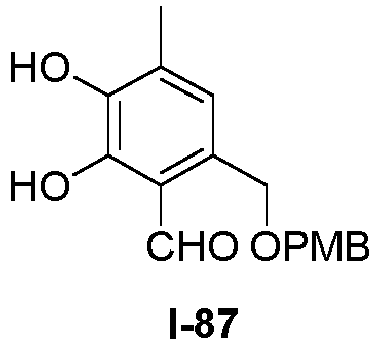
1H NMR (400 MHz, CDCl3) δ 12.11 (s, 1H), 10.21 (s, 1H), 7.24 (d, J = 8.6 Hz, 2H), 6.88 (d, J = 8.6 Hz, 2H), 6.63 (s, 1H), 5.85 (s, 1H), 4.63 (s, 2H), 4.47 (s, 2H), 3.80 (s, 3H), 2.28 (s, 3H). 13C NMR (101 MHz, CDCl3) δ 196.26, 159.55, 150.05, 143.19, 131.66, 131.11, 129.77, 129.71, 123.78, 116.40, 114.05, 72.04, 69.10, 55.41, 16.21. HR-MS (ESI) calcd. for (C17H18O5+H)+ 303.1227, found: 303.1225. 
1H NMR (400 MHz, CDCl3) δ 12.24 (s, 1H), 10.22 (s, 1H), 7.46 - 7.03 (m, 10H), 5.94 (s, 1H), 5.82 (ddd, J = 17.1, 10.5, 6.7 Hz, 1H), 5.14 - 5.04 (m, 2H), 4.54 (d, J = 6.6 Hz, 1H), 4.30 (dd, J = 24.4, 10.8 Hz, 2H), 2.01 - 1.92 (m, 3H). 
1H NMR (400 MHz, CDCl3) δ 12.30 (s, 1H), 10.25 (s, 1H), 7.42 - 7.32 (m, 5H), 5.91 (s, 1H), 4.83 (s, 2H), 4.67 (s, 2H), 4.62 (s, 2H), 2.39 (s, 3H), 0.92 (s, 9H), 0.10 (s, 6H). 1H NMR (400 MHz, CDCl3) δ 12.30, 10.25, 7.41, 7.39, 7.37, 7.36, 7.34, 5.91, 4.83, 4.67, 4.62, 2.39, 0.92, 0.10. HR-MS (ESI) calcd. for (C23H32O5Si+Na)+ 439.1911, found: 439.1919. 
1H NMR (400 MHz, CDCl3) δ 12.21 (s, 1H), 10.23 (s, 1H), 7.44 - 7.31 (m, 5H), 6.04 - 5.81 (m, 2H), 5.03 (d, J = 10.2 Hz, 1H), 4.75 (d, J = 17.2 Hz, 1H), 4.68 (s, 2H), 4.61 (s, 2H), 3.41 (d, J = 4.3 Hz, 2H), 2.28 (s, 3H). 13C NMR (101 MHz, CDCl3) δ 196.75, 148.40, 143.19, 137.73, 136.05, 131.77, 129.78, 129.06, 128.68, 128.23, 128.17, 116.69, 115.69, 72.98, 63.90, 32.42, 12.76. HR-MS (ESI) calcd. for (C19H20O4+Na)+ 335.1254, found: 335.1260. 
1H NMR (400 MHz, CDCl3) δ 12.16 (s, 1H), 10.15 (s, 1H), 7.38 - 7.30 (m, 5H), 5.99 - 5.91 (m, 1H), 5.90 (s, 1H), 5.03 (dd, J = 10.2, 1.6 Hz, 1H), 4.70 (dd, J = 17.2, 1.6 Hz, 1H), 4.61 (s, 2H), 4.59 (s, 2H), 3.43 - 3.36 (m, 2H), 3.21 - 3.10 (m, 1H), 1.34 (d, J = 7.0 Hz, 6H). 13C NMR (101 MHz, CDCl3) δ 196.69, 148.87, 144.19, 140.85, 137.68, 136.93, 129.12, 128.70, 128.63, 128.32, 128.23, 116.68, 115.98, 73.16, 64.12, 32.39, 29.92, 19.92. HR-MS (ESI) calcd. for (C21H24O4+Na)+ 363.1567, found: 363.1573. 
1H NMR (400 MHz, CDCl3) δ 10.45 (s, 1H), 7.46 - 7.22 (m, 6H), 4.88 (s, 2H), 4.67 (s, 2H), 3.97 (s, 3H), 3.84 (s, 3H), 2.33 (s, 3H). 13C NMR (101 MHz, CDCl3) δ 191.87, 157.40, 150.32, 139.91, 138.49, 136.75, 128.55, 127.88, 127.77, 125.35, 124.78, 73.20, 69.96, 62.21, 60.38, 16.77. 
1H NMR (400 MHz, CDCl3) δ 7.44 - 7.36 (m, 4H), 7.36 - 7.30 (m, 1H), 7.04 (s, 1H), 4.62 (s, 2H), 4.58 (s, 2H), 4.52 (s, 2H), 3.89 (s, 3H), 3.85 (s, 3H), 3.36 (s, 3H), 2.29 (s, 3H). 13C NMR (101 MHz, CDCl3) δ 152.29, 151.06, 138.44, 133.58, 132.33, 128.51, 128.24, 128.09, 127.78, 127.08, 72.73, 69.67, 65.52, 61.43, 60.13, 58.31, 15.97. 
1H NMR (400 MHz, CDCl3) δ 6.97 (s, 1H), 4.61 (s, 2H), 4.56 (d, J = 5.7 Hz, 2H), 3.85 (s, 3H), 3.82 (s, 3H), 3.43 (s, 3H), 3.33 (t, J = 6.1 Hz, 1H), 2.26 (s, 3H). 13C NMR (101 MHz, CDCl3) δ 152.10, 150.99, 137.22, 132.82, 127.77, 127.50, 66.19, 64.01, 61.47, 60.18, 58.25, 15.90. HR-MS (ESI) calcd. for (C12H18O4+Na)+ 249.1097, found: 249.1098. 
1H NMR (400 MHz, CDCl3) δ 12.11 (s, 1H), 10.19 (s, 1H), 7.29 (dd, J = 10.0, 5.8 Hz, 3H), 7.13 (dt, J = 7.4, 4.3 Hz, 1H), 5.62 (s, 1H), 4.01 (s, 2H), 3.11 (s, 2H), 2.29 (s, 3H), 2.16 (s, 3H). 13C NMR (101 MHz, CDCl3) δ 195.21, 149.97, 146.80, 142.54, 141.73, 140.18, 134.41, 133.44, 132.93, 126.45, 124.54, 123.55, 123.39, 118.84, 116.32, 40.32, 30.93, 16.43, 10.64. HR-MS (ESI) calcd. for (C19H18O3+Na)+ 317.1148, found: 317.1147.6.43, 10.64. 
1H NMR (400 MHz, CDCl3) δ 7.93 (br, 1H), 7.93 -7.30 (m, 5H), 6.59 (s, 1H), 5.86 (br, 1H), 4.84 (s, 2H), 4.48 (s, 2H), 4.40 (s, 2H), 3.03 (br, 1H), 2.20 (s, 3H). 13C NMR (101 MHz, CDCl3) δ 143.80, 143.44, 137.88, 128.64, 128.17, 128.02, 126.00, 124.27, 123.26, 122.21, 72.13, 71.21, 60.11, 15.47. 
1H NMR (400 MHz, CDCl3) δ 7.75 (s, 1H), 6.35 (s, 1H), 6.16 (s, 2H), 5.46 (s, 1H), 5.08 (s, 2H), 3.82 (s, 3H), 3.77 (s, 6H), 3.75 (s, 2H), 2.44 (br, 1H), 2.12 (s, 3H). 13C NMR (101 MHz, CDCl3) δ 159.82, 158.91, 142.77, 141.16, 129.72, 123.34, 122.21, 120.57, 109.94, 91.00, 60.68, 55.91, 55.47, 24.25, 15.69. 
1H NMR (400 MHz, CDCl3) δ 7.76 (br, 1H), 7.23 (t, J = 7.2 Hz, 2H), 7.18 - 7.10 (m, 1H), 7.00 (d, J = 6.9 Hz, 2H), 5.49 (br, 1H), 4.94 (s, 1H), 4.81 (s, 1H), 4.46 - 4.25 (m, 2H), 2.89 - 2.79 (m 1H), 2.74 - 2.65 (m, 1H), 2.60 - 2.50 (m, 1H), 2.00 - 1.95 (m, 1H), 1.87 (s, 3H), 1.78 - 1.52 (m, 1H). 13C NMR (101 MHz, CDCl3) δ 146.14, 142.27, 142.00, 136.57, 132.29, 128.48, 127.38, 125.99, 120.71, 117.11, 61.93, 50.12, 35.92, 29.25, 12.35. 
HR-MS (ESI) calcd. for (C17H18O6+Na)+ 341.0996, found: 341.0999. 
HR-MS (ESI) calcd. for (C20H24O6+Na)+ 383.1465, found: 383.1461. - The original culture medium was removed, and human gastric cancer cells MKN45 were rinsed with 2 mL of phosphate buffer saline (PBS), digested with 0.5 mL of pancreatic enzyme for 3 min. 2 mL of culture medium was added to the cells and the mixture was transferred to a centrifuge tube. The mixture was centrifuged (200 g) for 5 min. The supernatant was removed. 2 mL of culture medium was sprayed five times to the remaining solution. 0.5 mL of cell suspension was transferred to an Eppendorf (EP) tube and the cells were counted. The cells were cultured on a 96-well plate, each well having 2000 cells, 3 wells for each compound. The numbers of the required cells and wells and the amount of culture medium were calculated. The cells were diluted by the culture medium. 100 µL culture medium was added to each well and were evenly dispersed, each well containing 2000 cells. The cells were transferred to the wells using a pipette, and cultured in an incubator.
- The original culture medium was discarded, and the mother liquor of each compound was diluted to final concentrations of 0, 5, 15, 30, 45 and 60 µM, respectively. Each diluent was uniformized. To each head of a multichannel pipette, 100 µL of the diluent was introduced. Three heads were employed. The diluents were added to 3 marked wells (the cells were undamaged) of a tilted 96-well plate, respectively. Different concentrations of diluents were added to three different marked wells and evenly mixed by alternately sucking and blowing with the multichannel pipette 3 times. The 96-well plate was shaken slightly twice, and cultured in a CO2 incubator.
- The cells were cultured in different compounds for 48 h and were then detected. Specifically, a clean bench was turned on for 15 min, and phosphate buffer saline (PBS) was pre-heated in a warm water bath for 15 min. MTT was taken out of a refrigerator at -20 degrees, protected from light and thawed (MTT stock solution was 5 mg/mL). MTT and a culture medium were mixed evenly in a V-shaped groove to yield a mixture comprising 500 µg/mL MTT and a culture medium (a volume ratio thereof being 1:10). 100 µL of the prepared MTT mixture was added to each well of the 96-well plate using the multichannel pipette, and then incubated at 37°C for an appropriate time (1 h), thereby reducing the MTT to formazan (purple crystals formed in the cells under a microscope, which were different in medicated cells and unmedicated cells). The upper liquid was removed with a white pipette tip attached to a vacuum pump. For each concentration of the compounds, 3 pipette tips were employed. After the incubation, the MTT mixture was discarded, and then 100 µL of DMSO was added to each well using the multichannel pipette. The 96-well plate was shaken in a shaker for 10 min (until the purple crystals were dissolved in the cells under the microscope).
- The absorbance value of the cells was measured at a wavelength of 550 nm with a microplate reader. The survival rate of the cells treated with different concentrations of compounds was calculated to make a scatter plot. The IC50 results of each compound on the proliferation of human gastric cancer cells MKN45 were shown in Table 1, where Gossypol I-A9 is a control sample.
Table 1 IC50 results of each compound on the proliferation of human gastric cancer cells MKN45 Cancer cell Compound number IC50 (µM) MKN45 I-26 16.78 I-39 6.62 I-49 3.117 I-50 12.34 I-A9 15.408 - Table 1 showed that Compounds I-26, I-39, I-49, I-50, I-96 and I-97 had significant inhibitory effects on human gastric cancer cells MKN45, of which Compounds I-39, I-49 and I-50 was better than the control gossypol I-A9.
- The original culture medium was removed, and human ovarian cancer cells SKOV3 were rinsed with 2 mL of phosphate buffer saline (PBS), digested with 0.5 mL of pancreatic enzyme for 3 min. 2 mL of culture medium was added to the cells and the mixture was transferred to a centrifuge tube. The mixture was centrifuged (200 g) for 5 min. The supernatant was removed. 2 mL of culture medium was sprayed five times to the remaining solution. 0.5 mL of cell suspension was transferred to an Eppendorf (EP) tube and the cells were counted. The cells were cultured on a 96-well plate, each well having 2000 cells, 3 wells for each compound. The numbers of the required cells and wells and the amount of culture medium were calculated. The cells were diluted by the culture medium. 100 µL culture medium was added to each well and were evenly dispersed, each well containing 2000 cells. The cells were transferred to the wells using a pipette, and cultured in an incubator.
- The original culture medium was discarded, and the mother liquor of each compound was diluted to final concentrations of 0, 1, 2, 4, 8 and 16 µM, respectively. Each diluent was uniformized. To each head of a multichannel pipette, 100 µL of the diluent was introduced. Three heads were employed. The diluents were added to 3 marked wells (the cells were undamaged) of a tilted 96-well plate, respectively. Different concentrations of diluents were added to three different marked wells and evenly mixed by alternately sucking and blowing with the multichannel pipette 3 times. The 96-well plate was shaken slightly twice, and cultured in a CO2 incubator.
- The cells were cultured in different compounds for 48 h and were then detected. Specifically, a clean bench was turned on for 15 min, and phosphate buffer saline (PBS) was pre-heated in a warm water bath for 15 min. MTT was taken out of a refrigerator at -20 degrees, protected from light and thawed (MTT stock solution was 5 mg/mL). MTT and a culture medium were mixed evenly in a V-shaped groove to yield a mixture comprising 500 µg/mL MTT and a culture medium (a volume ratio thereof being 1:10). 100 µL of the prepared MTT mixture was added to each well of the 96-well plate using the multichannel pipette, and then incubated at 37°C for an appropriate time (1 h), thereby reducing the MTT to formazan (purple crystals formed in the cells under a microscope, which were different in medicated cells and unmedicated cells). The upper liquid was removed with a white pipette tip attached to a vacuum pump. For each concentration of the compounds, 3 pipette tips were employed. After the incubation, the MTT mixture was discarded, and then 100 µL of DMSO was added to each well using the multichannel pipette. The 96-well plate was shaken in a shaker for 10 min (until the purple crystals were dissolved in the cells under the microscope).
- The absorbance value of the resulting solution was detected at a wavelength of 550nm with a microplate reader. The survival rate of cells treated with different concentrations of drugs was calculated in accordance with the requirements to make a scatter plot. The IC50 results of each compound on the proliferation of human ovarian cancer cells SKOV3 were shown in Table 2, wherein Gossypol I-A9 is a control sample.
Table 2 IC50 results of each compound on the proliferation of human ovarian cancer cells SKOV3 Cancer cell Compound number IC50 (µM) SKOV3 I-49 5.922 I-A2 11.52 I-A3 6.454 I-A5 9.79 I-97 35 I-A9 9.553 - Table 2 showed that Compounds I-49, I -A2, I-A3 and I-A5 had significant inhibitory effects on human ovarian cancer cells SKOV3, of which the effects of Compounds I-49 and I-A3 were superior to that of the gossypol I -A9 as a control sample, while the effects of the compounds I-A2 and I-A5 were similar to that of the gossypol I-A9.
- The original culture medium was removed, and human lung cancer cells A549 were rinsed with 2 mL of phosphate buffer saline (PBS), digested with 0.5 mL of pancreatic enzyme for 3 min. 2 mL of culture medium was added to the cells and the mixture was transferred to a centrifuge tube. The mixture was centrifuged (200 g) for 5 min. The supernatant was removed. 2 mL of culture medium was sprayed five times to the remaining solution. 0.5 mL of cell suspension was transferred to an Eppendorf (EP) tube and the cells were counted. The cells were cultured on a 96-well plate, each well having 2000 cells, 3 wells for each compound. The numbers of the required cells and wells and the amount of culture medium were calculated. The cells were diluted by the culture medium. 100 µL culture medium was added to each well and were evenly dispersed, each well containing 2000 cells. The cells were transferred to the wells using a pipette, and cultured in an incubator.
- The original culture medium was discarded, and the mother liquor of each compound was diluted to final concentrations of 0, 5, 10, 20, 30, 60 and 80 µM, respectively. Each diluent was uniformized. To each head of a multichannel pipette, 100 µL of the diluent was introduced. Three heads were employed. The diluents were added to 3 marked wells (the cells were undamaged) of a tilted 96-well plate, respectively. Different concentrations of diluents were added to three different marked wells and evenly mixed by alternately sucking and blowing with the multichannel pipette 3 times. The 96-well plate was shaken slightly twice, and cultured in a CO2 incubator.
- The cells were cultured in different compounds for 48 h and were then detected. Specifically, a clean bench was turned on for 15 min, and phosphate buffer saline (PBS) was pre-heated in a warm water bath for 15 min. MTT was taken out of a refrigerator at -20 degrees, protected from light and thawed (MTT stock solution was 5 mg/mL). MTT and a culture medium were mixed evenly in a V-shaped groove to yield a mixture comprising 500 µg/mL MTT and a culture medium (a volume ratio thereof being 1:10). 100 µL of the prepared MTT mixture was added to each well of the 96-well plate using the multichannel pipette, and then incubated at 37°C for an appropriate time (1 h), thereby reducing the MTT to formazan (purple crystals formed in the cells under a microscope, which were different in medicated cells and unmedicated cells). The upper liquid was removed with a white pipette tip attached to a vacuum pump. For each concentration of the compounds, 3 pipette tips were employed. After the incubation, the MTT mixture was discarded, and then 100 µL of DMSO was added to each well using the multichannel pipette. The 96-well plate was shaken in a shaker for 10 min (until the purple crystals were dissolved in the cells under the microscope).
- The absorbance value of the resulting solution was detected at a wavelength of 550nm with a microplate reader. The survival rate of cells treated with different concentrations of drugs was calculated in accordance with the requirements to make a scatter plot. The IC50 results of each compound on the proliferation of human lung cancer cells A549 were shown in Table 3, where Gossypol I-A9 is a control sample.
Table 3 IC50 results of each compound on the proliferation of human lung cancer cells A5499 Cancer cell Compound number IC50 (µM) A549 I-28 67.59 I-29 42.07 I-45 26.04 I-A4 58.87 I-A9 18.06 - Table 3 showed that Compounds I-28, I-29, I-45 and I-A4 had inhibitory effects on human lung cancer cells A549, but were slightly inferior to that of the Gossypol I-A9 as a control sample.
- Determination of effects of compounds I-5, I-21, I-24, I-25, I-26, I-29, I-31, I-41, I-42, I-43, I-44, I-45, I-46, I-47, I-48, I-49, I-50, I-51, I-53, I-55, I-100, I-A2, I-A3, I-A5, I-A6 and I-A8 on the proliferation of human prostate cancer cells PC3
- The original culture medium was removed, and human prostate cancer cells PC3 were rinsed with 2 mL of phosphate buffer saline (PBS), digested with 0.5 mL of pancreatic enzyme for 3 min. 2 mL of culture medium was added to the cells and the mixture was transferred to a centrifuge tube. The mixture was centrifuged (200 g) for 5 min. The supernatant was removed. 2 mL of culture medium was sprayed five times to the remaining solution. 0.5 mL of cell suspension was transferred to an Eppendorf (EP) tube and the cells were counted. The cells were cultured on a 96-well plate, each well having 2000 cells, 3 wells for each compound. The numbers of the required cells and wells and the amount of culture medium were calculated. The cells were diluted by the culture medium. 100 µL culture medium was added to each well and were evenly dispersed, each well containing 2000 cells. The cells were transferred to the wells using a multichannel pipette, and cultured in an incubator.
- The original culture medium was discarded, and the mother liquor of each compound was diluted to final concentrations of 0, 2, 4, 8, 16 and 32 µM, respectively. Each diluent was uniformized. To each head of a multichannel pipette, 100 µL of the diluent was introduced. Three heads were employed. The diluents were added to 3 marked wells (the cells were undamaged) of a tilted 96-well plate, respectively. Different concentrations of diluents were added to three different marked wells and evenly mixed by alternately sucking and blowing with the multichannel pipette 3 times. The 96-well plate was shaken slightly twice, and cultured in a CO2 incubator.
- The cells were cultured in different compounds for 48 h and were then detected. Specifically, a clean bench was turned on for 15 min, and phosphate buffer saline (PBS) was pre-heated in a warm water bath for 15 min. MTT was taken out of a refrigerator at -20 degrees, protected from light and thawed (MTT stock solution was 5 mg/mL). MTT and a culture medium were mixed evenly in a V-shaped groove to yield a mixture comprising 500 µg/mL MTT and a culture medium (a volume ratio thereof being 1:10). 100 µL of the prepared MTT mixture was added to each well of the 96-well plate using the multichannel pipette, and then incubated at 37°C for an appropriate time (1 h), thereby reducing the MTT to formazan (purple crystals formed in the cells under a microscope, which were different in medicated cells and unmedicated cells). The upper liquid was removed with a white pipette tip attached to a vacuum pump. For each concentration of the compounds, 3 pipette tips were employed. After the incubation, the MTT mixture was discarded, and then 100 µL of DMSO was added to each well using the multichannel pipette. The 96-well plate was shaken in a shaker for 10 min (until the purple crystals were dissolved in the cells under the microscope).
- The absorbance value of the resulting solution was detected at a wavelength of 550nm with a microplate reader. The survival rate of cells treated with different concentrations of drugs was calculated in accordance with the requirements to make a scatter plot. The IC50 results of each compound on the proliferation of human lung cancer cells A549 were shown in Table 4, where Gossypol I-A9 is a control sample.
Table 4 IC50 results of each compound on the proliferation of human prostate cancer cells PC3 Cancer cell Compound number IC50 (µM) I-5 7.091 I-21 8.085 I-24 7.24 I-25 8.322 I-26 10.114 I-29 4.258 I-31 7.25 PC3 I-41 1.759 I-42 2.801 I-43 9.644 I-44 2.913 I-45 6.571 I-46 6.405 I-47 8.119 I-48 22.392 I-49 13.097 I-50 2.882 I-51 5.272 I-53 6.647 I-55 2.049 I-A2 4.998 I-A3 6.544 I-A5 4.185 I-A6 3.453 I-A8 2.371 I-A9 10.049 - Table 4 showed that Compounds I-5, I-21, I-24, I-25, I-26, I-29, I-31, I-41, I-42, I-43, I-44, I-45, I-46, I-47, I-48, I-49, I-50, I-51, I-53, I-55, I-100, I-A2, I-A3, I-A5, I-A6 and I-A8 had significant inhibitory effects on human prostate cancer cells PC3, most of which including I-5, I-21, I-24, I-25, I-29, I-31, I-41, I-42 , I-43, I-44, I-45, I-46, I-47, I-50, I-51, I-53, I-55, I-A2, I-A3, I-A5, I-A6 and I-A8 were superior than the gossypol I-A9 as a control sample.
- The experimental results showed that the polysubstituted benzene compounds having biological activity provided by the disclosure can inhibit the proliferation of cancer cells, thus revealing their potential for significant drug development, and using as lead compounds for further development of new anticancer drugs.
- It will be obvious to those skilled in the art that changes and modifications may be made, and therefore, the aim in the appended claims is to cover all such changes and modifications.
Claims (10)
- A polysubstituted benzene compound, having a formula I or I':
 X represents carbon, sulfur, or oxygen;R1 represents a C1-16 alkyl, C2-16 alkenyl, or C2-10 alkynyl;R2 represents hydrogen, halogen, C1-16 alkyl, C2-16 alkenyl, or C2-10 alkynyl; or an aryl group substituted by 0-5 groups selected from halogen, C1-26 alkyl, C1-3 halogenated alkyl, O-C1-3 alkyl, hydroxyl, amino, nitro, cyano group, aldehyde group and ester group; or a heteroaryl group substituted by 0-5 groups selected from halogen, C1-26 alkyl, C1-3 halogenated alkyl, O-C1-3 alkyl, hydroxyl, amino, nitro, cyano group, aldehyde group and ester group;the heteroaryl group is a 3-10-membered heteroaryl group comprising N, S, O, or a combination thereof;R3 represents C1-6 aldehyde group, C2-6 acyl group, -COOH, hydroxyl-substituted C1-6 alkyl, -CH2O-C1-6 alkyl or -CO2-C1-6 alkyl;R4 and R7, at each occurrence, represent hydrogen, a C1-20 alkyl, C2-36 alkenyl, or C2-10 alkynyl; or an aryl group substituted by 0-5 groups selected from halogen, C1-3 halogenated alkyl, O-C1-3 alkyl, C1-25 alkyl, hydroxyl, amino, nitro, cyano group, aldehyde group and ester group;R5 and R6, at each occurrence, represent hydrogen, C1-6 alkyl or C1-6 silicon;the formula I comprises a dotted line referring to R4 connected to X through a group comprising carbon, or R4 disconnected to X; andthe formula I' comprises a first dotted line referring to a single bond and a double bond between C1 and X, and a second dotted line referring to R4 connected to X through a group comprising carbon, or R4 disconnected to X.
 - The compound of claim 1, wherein:X represents carbon, sulfur, or oxygen;R1 represents a C1-4 alkyl, C2-4 alkenyl, or C3-7 alkynyl;R2 represents hydrogen, halogen, C1-4 alkyl, C2-4 alkenyl, or C3-7 alkynyl; or an aryl group substituted by 0-5 groups selected from halogen, C1-26 alkyl, C1-3 halogenated alkyl, O-C1-3 alkyl, hydroxyl, amino, nitro, cyano group, aldehyde group and ester group; or a heteroaryl group substituted by 0-5 groups selected from halogen, C1-6 alkyl, C1-3 halogenated alkyl, O-C1-3 alkyl, hydroxyl, amino, nitro, cyano group, aldehyde group and ester group;R3 represents C1-6 aldehyde group, C2-6 acyl group, -COOH, hydroxyl-substituted C1-4 alkyl, -CH2O-C1-4 alkyl or -CO2-C1-6 alkyl;R4 and R7, at each occurrence, represent hydrogen, C1-20 alkyl, C2-36 alkenyl, or C2-10 alkynyl; or an aryl group substituted by 0-5 groups selected from halogen, C1-3 halogenated alkyl, O-C1-3 alkyl, C1-25 alkyl, hydroxyl, amino, nitro, cyano group, aldehyde group and ester group; andR5 and R6, at each occurrence, represent hydrogen or C1-4 alkyl.
- The compound of claim 1, wherein:X represents carbon, sulfur, or oxygen;R1 represents a C1-3 alkyl, allyl, or C3-4 alkynyl;R2 represents hydrogen, halogen, C1-4 alkyl, allyl, or C3-7 alkynyl; or an aryl group substituted by 0-5 groups selected from halogen, methyl, methoxyl, C2-26 alkyl, hydroxyl, nitro, cyano group, aldehyde group and ester group; or a heteroaryl group substituted by 0-5 groups selected from halogen, C1-6 alkyl, C1-3 halogenated alkyl, O-C1-3 alkyl, hydroxyl, nitro, cyano group, aldehyde group and ester group;the heteroaryl group is a 5-6-membered heteroaryl group comprising N, S, O, or a combination thereof;R3 represents C1-3 aldehyde group, C2-4 acyl group, -COOH, hydroxyl-substituted C1-4 alkyl, -CH2O-C1-4 alkyl or -CO2-C1-4 alkyl;R4 and R7, at each occurrence, represent hydrogen, a C1-17 alkyl, C2-36 alkenyl, or C2-10 alkynyl; or an aryl group substituted by 0-5 groups selected from halogen, methoxyl, C1-25 alkyl, hydroxyl, nitro, cyano group, aldehyde group and ester group; andR5 and R6, at each occurrence, represent hydrogen or methyl.
- The compound of claim 1, wherein:X represents carbon, sulfur, or oxygen;R1 represents a C1-3 alkyl, allyl, or C3-4 alkynyl;R2 represents hydrogen, halogen, C1-4 alkyl, allyl, or C3-7 alkynyl; or an aryl group substituted by 0-5 groups selected from halogen, methyl, methoxyl, C2-26 alkyl, hydroxyl, nitro, cyano group, aldehyde group and ester group;R3 represents C1-3 aldehyde group, acetyl group, -COOH, hydroxyl-substituted C1-4 alkyl, -CH2O-C1-4 alkyl or -CO2-C1-4 alkyl;R4 and R7, at each occurrence, represent hydrogen, C1-17 alkyl, C2-36 alkenyl, or C2-10 alkynyl; or an aryl group substituted by 0-5 groups selected from halogen, methoxyl, C1-25 alkyl, hydroxyl, nitro, cyano group, aldehyde group and ester group; andR5 and R6, at each occurrence, represent hydrogen or methyl.
- The compound of claim 1, whereinX represents carbon, sulfur, or oxygen;R1 represents a C1-3 alkyl, allyl, or C3-4 alkynyl;R2 represents hydrogen, halogen, C1-4 alkyl, allyl, or C3-7 alkynyl; or an aryl group substituted by 0-5 groups selected from halogen, methyl, methoxyl, C2-26 alkyl, hydroxyl, nitro, cyano group, aldehyde group and ester group; or a heteroaryl group substituted by 0-5 groups selected from halogen, C1-6 alkyl, C1-3 halogenated alkyl, O-C1-3 alkyl, hydroxyl, nitro, cyano group, aldehyde group and ester group;the heteroaryl group is a 5-6-membered heteroaryl group comprising N, S, O, or a combination thereof;R3 represents formyl, acetyl, -COOH, hydroxyl-substituted C1-2 alkyl, -CH2O-C1-2 alkyl or -CO2-C1-4 alkyl;R4 and R7, at each occurrence, represent hydrogen, C1-17 alkyl, C2-36 alkenyl, or C2-10 alkynyl; or an aryl group substituted by 0-5 groups selected from halogen, methoxyl, C1-25 alkyl, hydroxyl, nitro, cyano group, aldehyde group and an ester group; andR5 and R6, at each occurrence, represent hydrogen or methyl.
- The compound of claim 1, being:


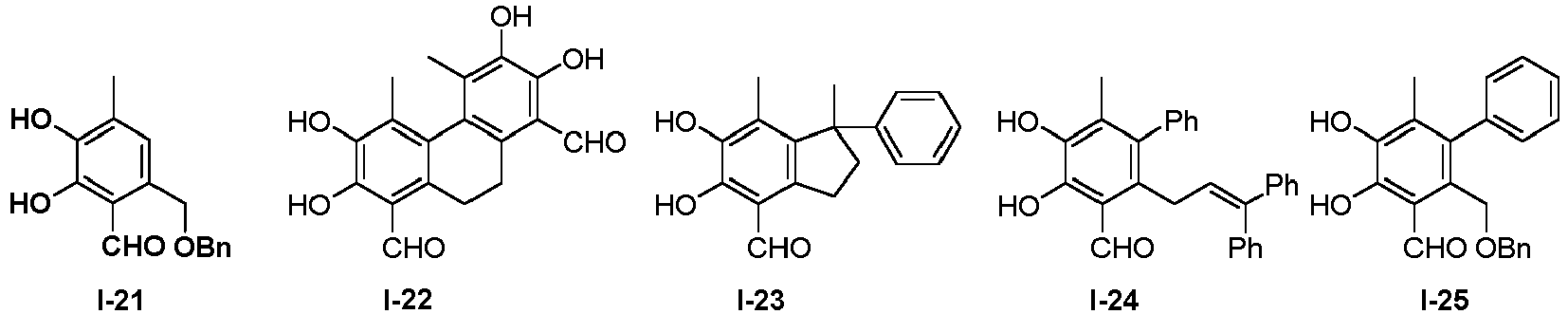


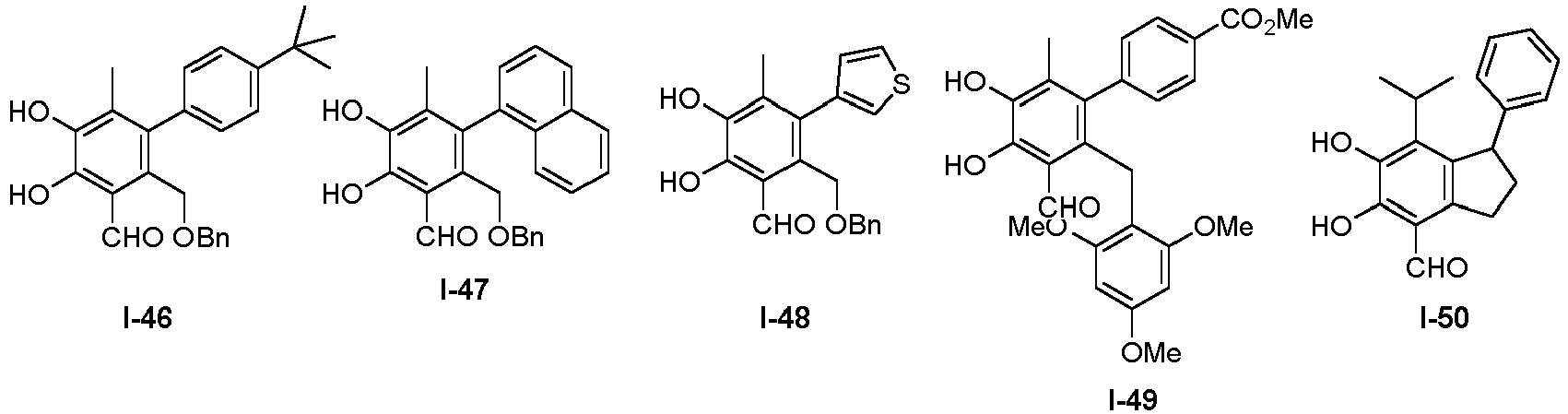

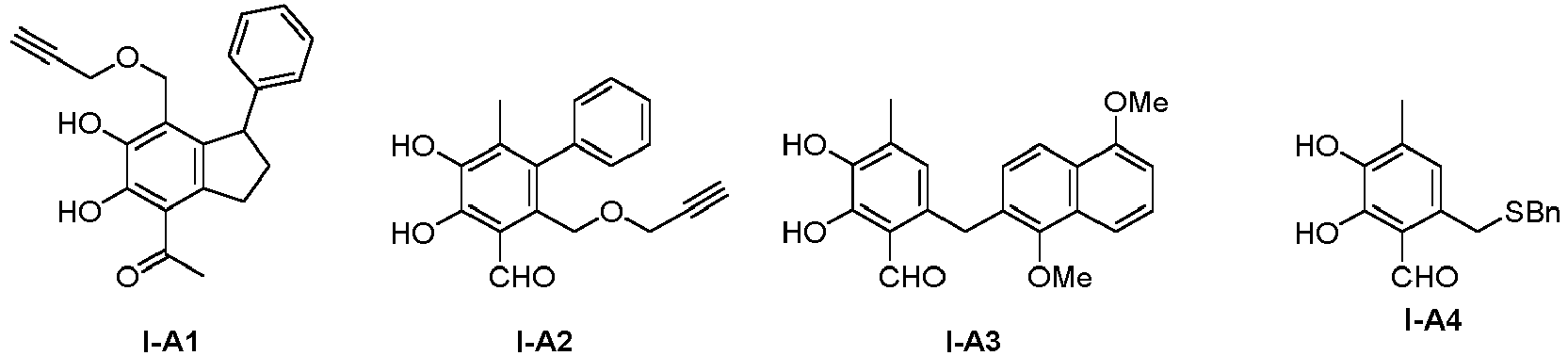
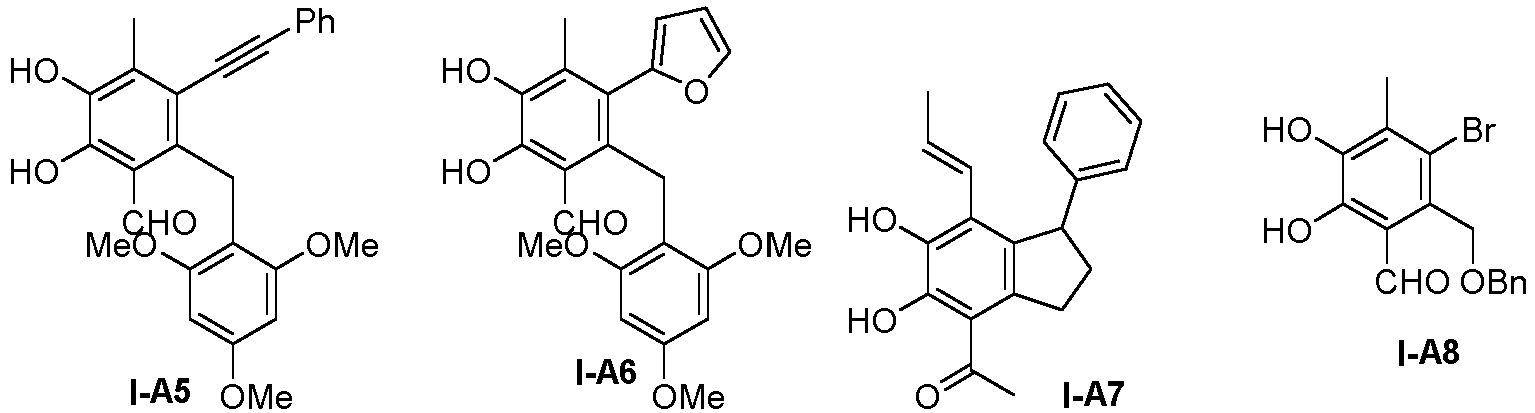


- A method for preparing the compound of any one of claims 1-6, the method comprising:1)adding a compound VII, 1-5 equivalents of a base, and 1-3 equivalents of a compound VI to an organic solvent, thereby yielding a first mixture; heating the first mixture to 30-180°C and stirring for 5-24 hours; filtering the first mixture and evaporating the organic solvent to yield a first product, separating and purifying the first product, thereby yielding a first intermediate product V;2) adding the first intermediate product V, 1-3 equivalents of a compound IV, 5% equivalent of copper iodide, 30% equivalent of bis(triphenylphosphine)palladium chloride to the organic solvent, and 0.5 equivalent of sodium iodide to the organic solvent, thereby yielding a second mixture; stirring the second mixture at room temperature for 5-24 hours, thereby yielding a second intermediate product III; and3) mixing the first intermediate product V or the second intermediate product III and the organic solvent, thereby yielding a third mixture; heating the third mixture to 80-180°C and stirring for 5-24 hours; evaporating the organic solvent to yield a third product, separating and purifying the third product, thereby yielding a compound I or I';wherein, the method has a flow chart as follows:
 Y is halogen; R8 represents hydrogen or C1-6 alkyl;when X represents carbon, the compound II is an alkyl alkene, aryl alkene, arene, substituted arene, heteroarene or substituted heteroarene, comprising styrene, alkyl substituted styrene, halogen substituted styrene, diphenylethylene, naphthalene ethylene, 1-phenyl-1,3-butadiene, benzene, naphthalene, toluene, ethylbenzene, anisole, phenetole, 2,4,6-trimethoxybenzene, 1,2,4-trimethoxybenzene, 1,5-dimethoxynaphthalene, furan, pyran, thiophene, estrone derived alkene, and cholesterol derived alkene;when X represents sulfur, the compound II is a mercaptan compound selected from methylmercaptan, ethanethiol, isoamyl mercaptan or benzyl mercaptan;when X represents oxygen, the compound II is an alcoholic compound selected from methanol, ethanol, isopropanol, butanol, allyl alcohol, propargyl alcohol, isoamyl alcohol, benzyl alcohol, substituted benzyl alcohol, 2-bromo-2-propene-1-ol, 1-vinyl-phenylethanol, geraniol or dehydroepiandrosterone.
 - The method of claim 7, wherein:the base is selected from the group consisting of lithium hydroxide, sodium hydroxide, potassium hydroxide, calcium hydroxide, sodium carbonate, potassium carbonate, calcium carbonate, sodium bicarbonate, potassium bicarbonate, sodium tert-butoxide, potassium tert-butoxide, potassium phosphate, dipotassium phosphate, cesium carbonate, lithium carbonate, pyridine, triethylamine, tributylamine, or a mixture thereof; andthe organic solvent is selected from the group consisting of methanol, ethanol, isopropanol, tetrahydrofuran, 1,4-dioxane, ethyl acetate, cyclohexane, toluene, xylene, ethylbenzene, chlorobenzene, bromobenzene, dichloromethane, dichloroethane, trichloromethane, carbon tetrachloride, acetonitrile, acetone, N, N-dimethylacetamide, N, N-dimethylformamide, dimethyl sulfoxide, or a mixture thereof.
- Use of the compound of any one of claims 1-6 for preparation of an antitumor pharmaceutical composition.
- Use of the compound of any one of claims 1-6 for preparation of a pharmaceutical composition for treatment of gastric cancer, ovarian cancer, lung cancer, or prostate cancer.
Applications Claiming Priority (2)
| Application Number | Priority Date | Filing Date | Title |
|---|---|---|---|
| CN201810148042.8A CN110143858B (en) | 2018-02-12 | 2018-02-12 | Biologically active polysubstituted benzene compound, preparation method and application thereof |
| PCT/CN2018/125074 WO2019153954A1 (en) | 2018-02-12 | 2018-12-28 | Multi-substituted benzene compound having biological activity, preparation method therefor, and application thereof |
Publications (2)
| Publication Number | Publication Date |
|---|---|
| EP3753931A1 true EP3753931A1 (en) | 2020-12-23 |
| EP3753931A4 EP3753931A4 (en) | 2021-05-12 |
Family
ID=67548137
Family Applications (1)
| Application Number | Title | Priority Date | Filing Date |
|---|---|---|---|
| EP18905751.6A Withdrawn EP3753931A4 (en) | 2018-02-12 | 2018-12-28 | MULTIPLE SUBSTITUTION BENZENE COMPOUND WITH HIGH BIOLOGICAL ACTIVITY, PROCESS OF PREPARATION AND USE |
Country Status (13)
| Country | Link |
|---|---|
| US (1) | US11376228B2 (en) |
| EP (1) | EP3753931A4 (en) |
| JP (1) | JP2021513526A (en) |
| KR (1) | KR20200120639A (en) |
| CN (1) | CN110143858B (en) |
| AU (1) | AU2018408191B2 (en) |
| BR (1) | BR112020014318A2 (en) |
| CA (1) | CA3091040A1 (en) |
| IL (1) | IL276617A (en) |
| MX (1) | MX2020007618A (en) |
| RU (1) | RU2020119102A (en) |
| WO (1) | WO2019153954A1 (en) |
| ZA (1) | ZA202004934B (en) |
Families Citing this family (3)
| Publication number | Priority date | Publication date | Assignee | Title |
|---|---|---|---|---|
| CN115057882B (en) * | 2022-04-22 | 2024-07-23 | 苏州大学 | A class of polysubstituted alkenyltin reagents and their stereoselective preparation and application |
| CN118851905B (en) * | 2024-06-21 | 2026-02-24 | 上海凌凯科技股份有限公司 | Di-tert-butyl ester compound, preparation method and application thereof in organic synthesis |
| CN119386688B (en) * | 2024-10-24 | 2025-09-05 | 浙江大学杭州国际科创中心 | A supramolecular polymer film based on pillararene and its preparation method and application |
Family Cites Families (5)
| Publication number | Priority date | Publication date | Assignee | Title |
|---|---|---|---|---|
| US4500543A (en) * | 1982-06-01 | 1985-02-19 | Abbott Laboratories | Substituted 1-aminomethyl-phthalans |
| US5385936A (en) * | 1990-07-12 | 1995-01-31 | The United States Of America As Represented By The Secretary Of The Department Of The Health And Human Services | Gossypol acetic acid for the treatment of cancer |
| EP2388255A1 (en) * | 2010-05-11 | 2011-11-23 | Ikerchem, S.L. | Polysubstituted benzofurans and medicinal applications thereof |
| CN101928270B (en) * | 2010-07-09 | 2012-06-27 | 云南民族大学 | Isobenzofuranone compound, preparation method thereof and use thereof |
| WO2013016441A1 (en) * | 2011-07-26 | 2013-01-31 | The United States of America, represented by The Secretary, Department of Health & Human Services | Hiv integrase inhibitory oxoisoindoline sulfonamides |
-
2018
- 2018-02-12 CN CN201810148042.8A patent/CN110143858B/en active Active
- 2018-12-28 BR BR112020014318-9A patent/BR112020014318A2/en not_active IP Right Cessation
- 2018-12-28 WO PCT/CN2018/125074 patent/WO2019153954A1/en not_active Ceased
- 2018-12-28 RU RU2020119102A patent/RU2020119102A/en unknown
- 2018-12-28 MX MX2020007618A patent/MX2020007618A/en unknown
- 2018-12-28 AU AU2018408191A patent/AU2018408191B2/en not_active Ceased
- 2018-12-28 JP JP2020542427A patent/JP2021513526A/en active Pending
- 2018-12-28 EP EP18905751.6A patent/EP3753931A4/en not_active Withdrawn
- 2018-12-28 KR KR1020207023460A patent/KR20200120639A/en not_active Ceased
- 2018-12-28 CA CA3091040A patent/CA3091040A1/en not_active Abandoned
-
2020
- 2020-08-06 US US16/986,303 patent/US11376228B2/en active Active
- 2020-08-10 IL IL276617A patent/IL276617A/en unknown
- 2020-08-11 ZA ZA2020/04934A patent/ZA202004934B/en unknown
Also Published As
| Publication number | Publication date |
|---|---|
| JP2021513526A (en) | 2021-05-27 |
| CA3091040A1 (en) | 2019-08-15 |
| BR112020014318A2 (en) | 2020-12-08 |
| ZA202004934B (en) | 2021-07-28 |
| US20200361893A1 (en) | 2020-11-19 |
| KR20200120639A (en) | 2020-10-21 |
| MX2020007618A (en) | 2020-09-14 |
| RU2020119102A (en) | 2022-03-14 |
| RU2020119102A3 (en) | 2022-03-14 |
| AU2018408191A1 (en) | 2020-08-13 |
| CN110143858B (en) | 2022-04-29 |
| IL276617A (en) | 2020-09-30 |
| US11376228B2 (en) | 2022-07-05 |
| EP3753931A4 (en) | 2021-05-12 |
| WO2019153954A1 (en) | 2019-08-15 |
| AU2018408191B2 (en) | 2021-02-04 |
| CN110143858A (en) | 2019-08-20 |
Similar Documents
| Publication | Publication Date | Title |
|---|---|---|
| JP6904906B2 (en) | A novel galactoside inhibitor of galectin | |
| US11376228B2 (en) | Polysubstituted benzene, preparation method thereof, and method of using the same | |
| CN103288911B (en) | Toadpoison Medicine glycosylated derivative and method for making thereof and preparing the purposes in antitumor drug | |
| JPH04210946A (en) | Novel aryl vinylamide derivative and method for producing the same | |
| CN103641827A (en) | Purrocoline derivative and synthetic method and application thereof | |
| CN115181112A (en) | Synthesis of 6-Bromocyclic Epimedium Chloran 3,4-Dione Derivatives and Its Antitumor Application | |
| HK40036963A (en) | Multi-substituted benzene compound having biological activity, preparation method therefor, and application thereof | |
| Portilho et al. | Synthesis, molecular docking, and biological activity of thioether derived from juglone in preclinical models of chronic myeloid leukemia | |
| US4244874A (en) | 3,8-Dioxo-scirpen-4β,15-diol esters and their use as antitumor agents | |
| CN108727385A (en) | A kind of preparation method of polysubstituted dihydro-pyrimidin diindyl ketone derivatives | |
| JP5800729B2 (en) | 2,4-O-bridged inverted pyranose compound | |
| CN112824397B (en) | Lomefloxacin propenone derivative and preparation method and application thereof | |
| CN107652338B (en) | Application of sugar coupling-1, 2, 3-triazole substituted polycyclic aromatic hydrocarbon derivative in preparation of anti-cancer drugs | |
| CN100502846C (en) | 3,4,5,-substituted benzyl ethylene derivatives and their preparation and use | |
| CN114805168B (en) | Pyrrolinones and synthesis method thereof | |
| JPH08277242A (en) | Propenone derivative | |
| JPH05148292A (en) | Preparation of 6-o-alkylelsamycin a derivative | |
| Kroutil et al. | Utilization of nosylepimines of 1, 6-anhydro-β-d-hexopyranoses for the preparation of halogenated aminosaccharides | |
| US6022980A (en) | Preparation of 4-halo and 6-halomelatonins | |
| CN107641141B (en) | Sugar-coupled-1,2,3-triazole-substituted polycyclic aromatic hydrocarbon derivatives and preparation method thereof | |
| Wilshire | The anomalous reaction of 2-phenylacrylophenone with some arylhydrazines | |
| CN107629052B (en) | A kind of pyrrolo[3,4b]quinoline-9-amine compound and its preparation method and application | |
| Norris et al. | Preparation of a d-glucose-derived alkene. An E2 reaction for the undergraduate organic chemistry laboratory | |
| CN101117349B (en) | A macrocyclic oxidation substituted pentacyclic triterpanoids derivative and preparation method and use thereof | |
| JPH05163292A (en) | Process for producing elsamycin A derivative in which 3'and / or 4'-position hydroxyl groups are chemically modified |
Legal Events
| Date | Code | Title | Description |
|---|---|---|---|
| STAA | Information on the status of an ep patent application or granted ep patent |
Free format text: STATUS: THE INTERNATIONAL PUBLICATION HAS BEEN MADE |
|
| PUAI | Public reference made under article 153(3) epc to a published international application that has entered the european phase |
Free format text: ORIGINAL CODE: 0009012 |
|
| STAA | Information on the status of an ep patent application or granted ep patent |
Free format text: STATUS: REQUEST FOR EXAMINATION WAS MADE |
|
| 17P | Request for examination filed |
Effective date: 20200825 |
|
| AK | Designated contracting states |
Kind code of ref document: A1 Designated state(s): AL AT BE BG CH CY CZ DE DK EE ES FI FR GB GR HR HU IE IS IT LI LT LU LV MC MK MT NL NO PL PT RO RS SE SI SK SM TR |
|
| AX | Request for extension of the european patent |
Extension state: BA ME |
|
| 19U | Interruption of proceedings before grant |
Effective date: 20200914 |
|
| 19W | Proceedings resumed before grant after interruption of proceedings |
Effective date: 20210401 |
|
| A4 | Supplementary search report drawn up and despatched |
Effective date: 20210414 |
|
| REG | Reference to a national code |
Ref country code: HK Ref legal event code: DE Ref document number: 40036963 Country of ref document: HK |
|
| STAA | Information on the status of an ep patent application or granted ep patent |
Free format text: STATUS: EXAMINATION IS IN PROGRESS |
|
| 17Q | First examination report despatched |
Effective date: 20210709 |
|
| STAA | Information on the status of an ep patent application or granted ep patent |
Free format text: STATUS: THE APPLICATION IS DEEMED TO BE WITHDRAWN |
|
| 18D | Application deemed to be withdrawn |
Effective date: 20230624 |