EP3753012B1 - Direkte sprache-zu-sprache-übersetzung über maschinelles lernen - Google Patents
Direkte sprache-zu-sprache-übersetzung über maschinelles lernen Download PDFInfo
- Publication number
- EP3753012B1 EP3753012B1 EP20718959.8A EP20718959A EP3753012B1 EP 3753012 B1 EP3753012 B1 EP 3753012B1 EP 20718959 A EP20718959 A EP 20718959A EP 3753012 B1 EP3753012 B1 EP 3753012B1
- Authority
- EP
- European Patent Office
- Prior art keywords
- model
- speech
- language
- series
- computing system
- Prior art date
- Legal status (The legal status is an assumption and is not a legal conclusion. Google has not performed a legal analysis and makes no representation as to the accuracy of the status listed.)
- Active
Links
Images



Classifications
-
- G—PHYSICS
- G10—MUSICAL INSTRUMENTS; ACOUSTICS
- G10L—SPEECH ANALYSIS TECHNIQUES OR SPEECH SYNTHESIS; SPEECH RECOGNITION; SPEECH OR VOICE PROCESSING TECHNIQUES; SPEECH OR AUDIO CODING OR DECODING
- G10L13/00—Speech synthesis; Text to speech systems
- G10L13/02—Methods for producing synthetic speech; Speech synthesisers
- G10L13/033—Voice editing, e.g. manipulating the voice of the synthesiser
-
- G—PHYSICS
- G06—COMPUTING OR CALCULATING; COUNTING
- G06F—ELECTRIC DIGITAL DATA PROCESSING
- G06F40/00—Handling natural language data
- G06F40/40—Processing or translation of natural language
- G06F40/42—Data-driven translation
- G06F40/47—Machine-assisted translation, e.g. using translation memory
-
- G—PHYSICS
- G06—COMPUTING OR CALCULATING; COUNTING
- G06F—ELECTRIC DIGITAL DATA PROCESSING
- G06F40/00—Handling natural language data
- G06F40/40—Processing or translation of natural language
- G06F40/58—Use of machine translation, e.g. for multi-lingual retrieval, for server-side translation for client devices or for real-time translation
-
- G—PHYSICS
- G10—MUSICAL INSTRUMENTS; ACOUSTICS
- G10L—SPEECH ANALYSIS TECHNIQUES OR SPEECH SYNTHESIS; SPEECH RECOGNITION; SPEECH OR VOICE PROCESSING TECHNIQUES; SPEECH OR AUDIO CODING OR DECODING
- G10L13/00—Speech synthesis; Text to speech systems
-
- G—PHYSICS
- G10—MUSICAL INSTRUMENTS; ACOUSTICS
- G10L—SPEECH ANALYSIS TECHNIQUES OR SPEECH SYNTHESIS; SPEECH RECOGNITION; SPEECH OR VOICE PROCESSING TECHNIQUES; SPEECH OR AUDIO CODING OR DECODING
- G10L21/00—Speech or voice signal processing techniques to produce another audible or non-audible signal, e.g. visual or tactile, in order to modify its quality or its intelligibility
- G10L21/003—Changing voice quality, e.g. pitch or formants
Definitions
- the present disclosure relates generally to machine learning. More particularly, the present disclosure relates to direct and text-free speech-to-speech translation by machine-learned models such as, for example, sequence-to-sequence models.
- Speech-to-speech translation refers to the process of translating speech in one language (e.g., as represented by a first speech waveform) into speech in another, different language (e.g., as represented by a second, different speech waveform).
- Conventional S2ST systems rely on a cascaded approach in which multiple disparate systems are combined to perform the translation.
- conventional S2ST system are often broken into three components which operate separately and in sequence: automatic speech recognition (ASR), text-to-text machine translation (MT), and text-to-speech (TTS) synthesis.
- ASR automatic speech recognition
- MT text-to-text machine translation
- TTS text-to-speech
- Cascaded systems have the potential of compounding errors between components such as, for example, when recognition errors lead to larger translation errors. Cascaded systems also have other disadvantages, primarily in terms of increased computational requirements and higher inference latency since multiple distinct computational steps are necessary. In addition, cascaded systems struggle to retain paralinguistic and non-linguistic information during translation such as, for example, maintaining the source speaker's voice, intonation, emotion, and prosody, in the synthesized translated speech. Finally, cascaded systems are unable to learn to generate fluent pronunciations of words which do not need be translated, such as names or other proper nouns.
- Haque et al "Conditional End-to-End Audio Transforms", arXiv: 1804.00047 describes an end-to-end method for transforming audio from one style to another.
- Vaswani et al "Attention Is All You Need”, arXiv: 1706.03762 describes a network architecture based on attention mechanisms and without recurrence and convolutions.
- Jia et al "Direct speech-to-speech translation with a sequence-to-sequence model", arXiv: 1904.06037 describes an which can translate speech from one language into speech in another language, without an intermediate text representation.
- the computing system includes one or more processors.
- the computing system includes a machine-learned translation model configured to perform direct and text-free translation.
- the machine-learned translation model includes an encoder model configured to receive and process a series of input acoustic feature representations that are representative of a first speech in a first language to generate a series of hidden state representations.
- the machine-learned translation model includes an attention model configured to receive and process the series of hidden state representations to generate a series of attention outputs.
- the machine-learned translation model includes a decoder model configured to receive and process the series of attention outputs to generate a series of output acoustic feature representations that are representative of a second speech in a second language that is different than the first language.
- the computing system includes one or more non-transitory computer-readable media that collectively store instructions that, when executed by the one or more processors, cause the computing system to perform operations.
- the operations include obtaining the series of input acoustic feature representations that are representative of the first speech in the first language.
- the operations include inputting the series of input acoustic feature representations into the encoder model of the machine-learned translation model.
- the operations include receiving the series of output acoustic feature representations that are representative of the second speech in the second language as an output of the decoder model.
- the operations may further comprise backpropagating a loss function through the machine-learned translation model to train the machine-learned translation model.
- the loss function may evaluate a respective difference between each of the series of output acoustic feature representations and a corresponding ground truth acoustic feature representation derived from the second speech in the second language.
- One or more auxiliary speech recognition models may be configured to receive and process information from the encoder model to predict one or more items of textual content associated with the first speech in the first language or the second speech in the second language.
- the operations may further comprise backpropagating one or more auxiliary loss functions respectively associated with the one or more auxiliary speech recognition models through at least a portion of the encoder model to train at least the portion of the encoder model.
- Each auxiliary loss function evaluates a respective difference between the one or more items of textual content output by the corresponding auxiliary speech recognition model and a corresponding ground truth item of textual content associated with the first speech in the first language or the second speech in the second language.
- the one or more auxiliary speech recognition models may comprise one or more first speech recognition models configured to receive and process the information from the encoder model to predict textual representations of one or more of phonemes, graphemes, words, or n-grams included in the first speech in the first language.
- the one or more auxiliary speech recognition models may comprise one or more second speech recognition models configured to receive and process the information from the encoder model to predict textual representations of one or more of phonemes, graphemes, words, or n-grams included in the second speech in the second language.
- the encoder model may comprise a multi-layer model.
- the information from the encoder model that is received and processed by the one or more first speech recognition models may be extracted from a relatively earlier layer of the encoder model relative to the information from the encoder model that is received and processed by the one or more second speech recognition models.
- a speaker encoder model may be configured to receive and process data descriptive of reference speech uttered by a target speaker to generate a speaker embedding. The operations may further comprise inputting the speaker embedding into the attention model alongside the series of hidden state representations.
- the target speaker may also be a second speaker that spoke the second speech in the second language.
- the target speaker may also be a first speaker that spoke the first speech in the first language.
- a vocoder may be configured to receive and process the series of output acoustic feature representations to generate a waveform of the second speech in the second language.
- the operations may further comprise inputting the series of output acoustic feature representations directly into the vocoder and receiving the waveform of the second speech as an output of the vocoder.
- the vocoder may comprise a Griffin-Lim vocoder or an autoregressive neural network.
- the present disclosure is directed to systems and methods that train and use machine-learned models such as, for example, sequence-to-sequence models, to perform direct and text-free speech-to-speech translation.
- machine-learned models such as, for example, sequence-to-sequence models
- aspects of the present disclosure provide an attention-based sequence-to-sequence neural network which can directly translate speech from one language into speech in another language, without relying on an intermediate text representation.
- additional techniques are provided which enable the machine-learned models to synthesize the translated speech using the voice of a target speaker (e.g., which may, in some instances, be the source speaker that is uttering the speech to be translated).
- a target speaker e.g., which may, in some instances, be the source speaker that is uttering the speech to be translated.
- multitask training can be performed by incorporating auxiliary decoder networks to predict the source or target transcripts, thereby improving performance of the machine-learned translation models.
- example aspects of the present disclosure address the task of speech-to-speech translation (S2ST): translating speech in one language into speech in another.
- S2ST speech-to-speech translation
- ASR automatic speech recognition
- MT text-to-text machine translation
- TTS text-to-speech
- aspects of the present disclosure are directed to a machine-learned translation model that can perform direct and text-free translation and which can be trained in an end-to-end fashion.
- the machine-learned translation model can be a sequence-to-sequence model that includes an encoder model, an attention model, and a decoder model.
- the encoder model can be configured to receive and process a series of input acoustic feature representations that are representative of first speech in a first language to generate a series of hidden state representations.
- the attention model can be configured to receive and process the series of hidden state representations to generate a series of attention outputs.
- the decoder model can be configured to receive and process the series of attention outputs to generate a series of output acoustic feature representations that are representative of second speech in a second language that is different than the first language.
- a computing system can obtain a set of training data that includes a number of pairs of training examples.
- Each training example can include data descriptive of first speech in a first language and data descriptive of second speech in a second language, wherein the second speech includes the same content (e.g., underlying expression or statement) as the first speech, but in a different language.
- the data descriptive of the first speech and second speech can be digital recordings of the first speech and second speech which may take the form of digitized speech waveforms.
- the computing system can generate a respective series of acoustic feature representations for both the first speech and the second speech.
- Example acoustic feature representations include various forms of spectrograms such as, as examples, linear frequency spectrograms or logarithmic frequency spectrograms (e.g., log-mel spectrograms).
- spectrograms such as, as examples, linear frequency spectrograms or logarithmic frequency spectrograms (e.g., log-mel spectrograms).
- the series of acoustic feature representations generated based on the data descriptive of the second speech can be treated as ground truth acoustic feature representations which the translation model will attempt to predict.
- the computing system can input the series of acoustic feature representations generated based on the data descriptive of the first speech in the first language into the machine-learned translation model.
- the translation model can predict a series of output acoustic feature representations for the second speech in the second language.
- the computing system can evaluate a loss function that evaluates a respective difference between each of the series of output acoustic feature representations and a corresponding ground truth acoustic feature representation derived from the second speech in the second language.
- the computing system can backpropagate the loss function through the translation model (e.g., first through the decoder model, then through the attention model, and then through the encoder model) to train the translation model.
- values of parameters of the translation model can be updated using a gradient descent approach.
- the translation model can learn to predict output acoustic feature representations that match the ground truth representations associated with the ground truth translated speech.
- the machine-learned translation model can operate to enable direct translation of speech from the first language to the second language.
- a computing system (which may be the same or different than the system that performed training of the model) can obtain data descriptive of input speech in the first language (e.g., a digital waveform of the input speech in the first language).
- the computing system can generate a series of input acoustic feature representations (e.g., spectrograms) descriptive of the input speech in the first language and can provide the series of input acoustic feature representations as an input to the machine-learned translation model (e.g., as a direct input into the encoder model).
- the machine-learned translation model can generate a series of output acoustic feature representations associated with predicted speech in the second language.
- the computing system can generate, for example through use of a vocoder, a predicted speech waveform for the speech in the second language.
- the computing system can cause playback of the speech waveform for the predicted speech in the second language in real-time, such that the input speech in the first language is quickly and efficiently translated directly into audible speech in the second language.
- the S2ST models proposed herein resemble recent work on sequence-to-sequence models for voice conversion, which is the task of recreating an utterance in the same language but in a different person's voice.
- certain existing voice conversion approaches include an attention-based model to generate spectrograms in the target voice based on input features (e.g., spectrogram concatenated with bottleneck features from an speech recognition model) from the source voice.
- input features e.g., spectrogram concatenated with bottleneck features from an speech recognition model
- the alignment of input and output in the voice conversion task is much simpler.
- the existing voice conversion approaches only train models which are specific to a single input-output speaker pair (i.e. one-to-one voice conversion), whereas the models of the present disclosure are capable of many-to-one and many-to-many speaker configurations.
- Figure 1A depicts a block diagram of an example computing system 100 according to example embodiments of the present disclosure.
- the system 100 includes a user computing device 102, a server computing system 130, and a training computing system 150 that are communicatively coupled over a network 180.
- the user computing device 102 can be any type of computing device, such as, for example, a personal computing device (e.g., laptop or desktop), a mobile computing device (e.g., smartphone or tablet), a gaming console or controller, a wearable computing device, an embedded computing device, or any other type of computing device.
- a personal computing device e.g., laptop or desktop
- a mobile computing device e.g., smartphone or tablet
- a gaming console or controller e.g., a gaming console or controller
- a wearable computing device e.g., an embedded computing device, or any other type of computing device.
- the user computing device 102 includes one or more processors 112 and a memory 114.
- the one or more processors 112 can be any suitable processing device (e.g., a processor core, a microprocessor, an ASIC, a FPGA, a controller, a microcontroller, etc.) and can be one processor or a plurality of processors that are operatively connected.
- the memory 114 can include one or more non-transitory computer-readable storage mediums, such as RAM, ROM, EEPROM, EPROM, flash memory devices, magnetic disks, etc., and combinations thereof.
- the memory 114 can store data 116 and instructions 118 which are executed by the processor 112 to cause the user computing device 102 to perform operations.
- the user computing device 102 can store or include one or more machine-learned translation models 120.
- a machine-learned translation model 120 can totally run on the device-side (e.g., on the user computing device 102) without involving the server computing system 130.
- the machine-learned translation models 120 can be or can otherwise include various machine-learned models such as neural networks (e.g., deep neural networks) or other types of machine-learned models, including non-linear models and/or linear models.
- Neural networks can include feed-forward neural networks, recurrent neural networks (e.g., long short-term memory recurrent neural networks), convolutional neural networks or other forms of neural networks.
- Example machine-learned translation models 120 are discussed with reference to Figures 2-5 .
- the one or more machine-learned translation models 120 can be received from the server computing system 130 over network 180, stored in the user computing device memory 114, and then used or otherwise implemented by the one or more processors 112.
- the user computing device 102 can implement multiple parallel instances of a single machine-learned translation model 120 (e.g., to perform parallel speech-to-speech translation across multiple instances of input speech).
- one or more machine-learned translation models 140 can be included in or otherwise stored and implemented by the server computing system 130 that communicates with the user computing device 102 according to a client-server relationship.
- the machine-learned translation models 140 can be implemented by the server computing system 140 as a portion of a web service (e.g., a speech-to-speech translation service).
- a web service e.g., a speech-to-speech translation service
- the user computing device 102 can also include one or more user input component 122 that receives user input.
- the user input component 122 can be a touch-sensitive component (e.g., a touch-sensitive display screen or a touch pad) that is sensitive to the touch of a user input object (e.g., a finger or a stylus).
- the touch-sensitive component can serve to implement a virtual keyboard.
- Other example user input components include a microphone, a traditional keyboard, or other means by which a user can provide user input.
- the server computing system 130 includes one or more processors 132 and a memory 134.
- the one or more processors 132 can be any suitable processing device (e.g., a processor core, a microprocessor, an ASIC, a FPGA, a controller, a microcontroller, etc.) and can be one processor or a plurality of processors that are operatively connected.
- the memory 134 can include one or more non-transitory computer-readable storage mediums, such as RAM, ROM, EEPROM, EPROM, flash memory devices, magnetic disks, etc., and combinations thereof.
- the memory 134 can store data 136 and instructions 138 which are executed by the processor 132 to cause the server computing system 130 to perform operations.
- the server computing system 130 includes or is otherwise implemented by one or more server computing devices. In instances in which the server computing system 130 includes plural server computing devices, such server computing devices can operate according to sequential computing architectures, parallel computing architectures, or some combination thereof.
- the server computing system 130 can store or otherwise include one or more machine-learned translation models 140.
- the models 140 can be or can otherwise include various machine-learned models.
- Example machine-learned models include neural networks or other multi-layer non-linear models.
- Example neural networks include feed forward neural networks, deep neural networks, recurrent neural networks, and convolutional neural networks.
- Example models 140 are discussed with reference to Figures 2-5 .
- the user computing device 102 and/or the server computing system 130 can train the models 120 and/or 140 via interaction with the training computing system 150 that is communicatively coupled over the network 180.
- the training computing system 150 can be separate from the server computing system 130 or can be a portion of the server computing system 130.
- the training computing system 150 includes one or more processors 152 and a memory 154.
- the one or more processors 152 can be any suitable processing device (e.g., a processor core, a microprocessor, an ASIC, a FPGA, a controller, a microcontroller, etc.) and can be one processor or a plurality of processors that are operatively connected.
- the memory 154 can include one or more non-transitory computer-readable storage mediums, such as RAM, ROM, EEPROM, EPROM, flash memory devices, magnetic disks, etc., and combinations thereof.
- the memory 154 can store data 156 and instructions 158 which are executed by the processor 152 to cause the training computing system 150 to perform operations.
- the training computing system 150 includes or is otherwise implemented by one or more server computing devices.
- the training computing system 150 can include a model trainer 160 that trains the machine-learned models 120 and/or 140 stored at the user computing device 102 and/or the server computing system 130 using various training or learning techniques, such as, for example, backwards propagation of errors.
- performing backwards propagation of errors can include performing truncated backpropagation through time.
- the model trainer 160 can perform a number of generalization techniques (e.g., weight decays, dropouts, etc.) to improve the generalization capability of the models being trained.
- the model trainer 160 can train the machine-learned translation models 120 and/or 140 based on a set of training data 162.
- the training data 162 can include, for example, a number of pairs of training examples.
- Each training example pair can include data descriptive of first speech in a first language and data descriptive of second speech in a second language, wherein the second speech includes the same content (e.g., underlying expression or statement) as the first speech, but in a different language.
- the data descriptive of the first speech and the second speech can be digital recordings of the first speech and second speech which may take the form of digitized speech waveforms.
- a particular training example pair can include a first speech waveform that includes utterance of the Spanish sentence "Me gusta comer la cocina de mi abuela” and a second speech waveform that includes utterance of same content in English: "I like to eat my grandmother's cooking".
- the respective speakers of the Spanish and English utterances can be the same person or can be different people. Any different pair of languages can be used.
- the training data 162 can further include textual transcriptions of the utterances (e.g., in both languages).
- the textual transcriptions can be manually generated by listening to the utterances and/or the utterances can be generated by reading pre-existing textual transcriptions.
- some or all of the utterances included in training example pairs can be synthesized utterances generated using a text-to-speech system such as, for example, a Parallel WaveNet system.
- the training examples can be provided by the user computing device 102.
- the model 120 provided to the user computing device 102 can be trained by the training computing system 150 on user-specific data received from the user computing device 102. In some instances, this process can be referred to as personalizing the model.
- the model trainer 160 includes computer logic utilized to provide desired functionality.
- the model trainer 160 can be implemented in hardware, firmware, and/or software controlling a general purpose processor.
- the model trainer 160 includes program files stored on a storage device, loaded into a memory and executed by one or more processors.
- the model trainer 160 includes one or more sets of computer-executable instructions that are stored in a tangible computer-readable storage medium such as RAM hard disk or optical or magnetic media.
- the network 180 can be any type of communications network, such as a local area network (e.g., intranet), wide area network (e.g., Internet), or some combination thereof and can include any number of wired or wireless links.
- communication over the network 180 can be carried via any type of wired and/or wireless connection, using a wide variety of communication protocols (e.g., TCP/IP, HTTP, SMTP, FTP), encodings or formats (e.g., HTML, XML), and/or protection schemes (e.g., VPN, secure HTTP, SSL).
- Figure 1A illustrates one example computing system that can be used to implement the present disclosure.
- the user computing device 102 can include the model trainer 160 and the training dataset 162.
- the models 120 can be both trained and used locally at the user computing device 102.
- the user computing device 102 can implement the model trainer 160 to personalize the models 120 based on user-specific data.
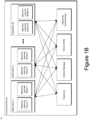
- Figure 1B depicts a block diagram of an example computing device 10 according to example embodiments of the present disclosure.
- the computing device 10 can be a user computing device or a server computing device.
- the computing device 10 includes a number of applications (e.g., applications 1 through N). Each application contains its own machine learning library and machine-learned model(s). For example, each application can include a machine-learned model.
- Example applications include a text messaging application, an email application, a dictation application, a virtual keyboard application, a browser application, etc.
- each application can communicate with a number of other components of the computing device, such as, for example, one or more sensors, a context manager, a device state component, and/or additional components.
- each application can communicate with each device component using an API (e.g., a public API).
- the API used by each application is specific to that application.
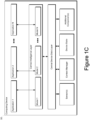
- FIG. 1C depicts a block diagram of an example computing device 50 according to example embodiments of the present disclosure.
- the computing device 50 can be a user computing device or a server computing device.
- the computing device 50 includes a number of applications (e.g., applications 1 through N). Each application is in communication with a central intelligence layer.
- Example applications include a text messaging application, an email application, a dictation application, a virtual keyboard application, a browser application, etc.
- each application can communicate with the central intelligence layer (and model(s) stored therein) using an API (e.g., a common API across all applications).
- the central intelligence layer includes a number of machine-learned models. For example, as illustrated in Figure 1C , a respective machine-learned model (e.g., a model) can be provided for each application and managed by the central intelligence layer. In other implementations, two or more applications can share a single machine-learned model. For example, in some implementations, the central intelligence layer can provide a single model (e.g., a single model) for all of the applications. In some implementations, the central intelligence layer is included within or otherwise implemented by an operating system of the computing device 50.
- a respective machine-learned model e.g., a model
- two or more applications can share a single machine-learned model.
- the central intelligence layer can provide a single model (e.g., a single model) for all of the applications.
- the central intelligence layer is included within or otherwise implemented by an operating system of the computing device 50.
- the central intelligence layer can communicate with a central device data layer.
- the central device data layer can be a centralized repository of data for the computing device 50. As illustrated in Figure 1C , the central device data layer can communicate with a number of other components of the computing device, such as, for example, one or more sensors, a context manager, a device state component, and/or additional components. In some implementations, the central device data layer can communicate with each device component using an API (e.g., a private API).
- an API e.g., a private API
- Figure 2 depicts a block diagram of an example machine-learned translation model 200 according to example embodiments of the present disclosure.
- the machine-learned translation model 200 is trained to receive a series of input acoustic feature representations 204 descriptive of speech in a first language and, as a result of receipt of the series of input acoustic feature representations 204, provide a series of output acoustic feature representations 206 descriptive of speech in a second language.
- the machine-learned translation model 200 can directly translate from acoustic feature representations of speech in one language to acoustic feature representations of speech in another language.
- the series of input acoustic feature representations 204 can be derived from data descriptive of first speech in a first language.
- the data descriptive of the first speech can be a digital recording of the first speech which may, for example, take the form of a digitized speech waveform.
- Example acoustic feature representations include various forms of spectrograms such as, as examples, linear frequency spectrograms or logarithmic frequency spectrograms (e.g., log-mel spectrograms).
- one input spectrogram can be generated for each of a number of time steps into which the input waveform is discretized.
- a computing system can obtain a set of training data that includes a number of pairs of training examples.
- Each training example pair can include data descriptive of first speech in a first language and data descriptive of second speech in a second language, wherein the second speech includes the same content (e.g., underlying expression or statement) as the first speech, but in a different language.
- the data descriptive of the first speech and second speech can be digital recordings of the first speech and second speech which may take the form of digitized speech waveforms.
- the computing system can generate a respective series of acoustic feature representations for both the first speech and the second speech.
- the series of acoustic feature representations generated based on the data descriptive of the second speech can be treated as ground truth acoustic feature representations which the translation model will attempt to predict.
- the computing system can input the series of input acoustic feature representations 204 generated based on the data descriptive of the first speech in the first language into the machine-learned translation model 200.
- the translation model can predict the series of output acoustic feature representations 206 for the second speech in the second language.
- the computing system can evaluate a loss function that evaluates a respective difference between each of the series of output acoustic feature representations 206 and a corresponding ground truth acoustic feature representation derived from the second speech in the second language.
- the computing system can backpropagate the loss function through the translation model 200 to train the translation model 200. For example, values of parameters of the translation model 200 can be updated using a gradient descent approach.
- the translation model 20 can learn to predict output acoustic feature representations 206 that match the ground truth representations associated with the ground truth translated speech.
- the machine-learned translation model 200 can operate to enable direct translation of speech from the first language to the second language.
- a computing system (which may be the same or different than the system that performed training of the model) can obtain data descriptive of input speech in the first language (e.g., a digital waveform of the input speech in the first language).
- the computing system can generate a series of input acoustic feature representations 204 (e.g., spectrograms) descriptive of the input speech in the first language and can provide the series of input acoustic feature representations 204 as an input to the machine-learned translation model 200.
- the machine-learned translation model can generate the series of output acoustic feature representations 206 associated with predicted speech in the second language.
- the number of output acoustic feature representations 206 can be the same as or different than the number of input acoustic feature representations 204.
- two spectrogram frames can be predicted for each time step.
- the computing system can generate, for example through use of a vocoder 208, a predicted speech waveform 210 for the speech in the second language.
- the vocoder 208 can convert the spectrograms into time-domain waveforms.
- Example vocoders include a Griffin-Lim vocoder and/or an autoregressive neural network such as the WaveRNN neural vocoder.
- the computing system can cause playback of the predicted speech waveform 210 for the speech in the second language in real-time, such that the input speech in the first language is quickly and efficiently translated directly into audible speech in the second language.
- Figure 3 depicts a block diagram of an example machine-learned translation model 300 according to example embodiments of the present disclosure.
- the machine-learned translation model 300 is similar to translation model 200 of Figure 2 except that translation model 300 is illustrated as including an encoder model 302, an attention model 306, and a decoder model 310.
- the encoder model 302 can be configured to receive and process a series of input acoustic feature representations 204 that are representative of first speech in a first language to generate a series of hidden state representations 304.
- the encoder model 302 can be configured to operate directly on the feature representations 204 (e.g., spectrograms).
- the feature representations 204 e.g., spectrograms
- the feature representations 204 can be directly input into the encoder model 302 without any intermediate temporal reduction.
- the encoder model 302 can have a significantly increased capacity in order to handle the challenging speech-to-speech translation task.
- the encoder model 302 can be relatively deeper than encoders used for other tasks.
- the encoder model 302 can include a stack of 8 bidirectional LSTM layers.
- the attention model can be configured to receive and process the series of hidden state representations 304 to generate a series of attention outputs 308.
- the decoder model can be configured to receive and process the series of attention outputs 308 to generate a series of output acoustic feature representations 206 that are representative of second speech in a second language that is different than the first language.
- the decoder model 310 can have an architecture similar to the models described in United States Patent Application No. 16/058,640 titled "Synthesizing Speech from Text Using Neural Networks".
- the decoder model 310 can include pre-net, autoregressive LSTM stack, and post-net components.
- the architecture described in United States Patent Application No. 16/058,640 can be modified to use the multi-head additive attention (e.g., with 4 heads) for attention model 306, rather than a location-sensitive attention.
- a significantly narrower 32 dimensional pre-net bottleneck can be used rather than a 256-dimension.
- a reduction factor of 2 can be used, such that two spectrogram frames are predicted for each decoder time step.
- the decoder model 310 can include 4, 6, or other numbers of LSTM layers.
- the decoder model 310 can use attention dropout, LSTM zone-out regularization, all with probability 0.1 For example, training can use the Adafactor optimizer with a batch size of 1024.
- the encoder model 302 can map input acoustic feature representations 204 which take the form of 80-channel log-mel spectrogram features into the hidden state representations 304 which are passed to the attention model 306 which can perform an attention-based alignment mechanism to condition the decoder model 310 (e.g., which can be an autoregressive decoder) which, in turn, predicts the output acoustic feature representations 206 in the form of 1025-dim log-compressed spectrogram frames corresponding to the translated speech.
- the input feature frames can be created by stacking (e.g., with deltas and accelerations) a number (e.g., 3) of adjacent frames of an 80-channel log-mel spectrogram.
- Figure 4 depicts a block diagram of the example machine-learned translation model 300 of Figure 3 in which the translation model 300 is being trained in a multi-task training scheme according to example embodiments of the present disclosure.
- the machine-learned translation model 300 is being trained alongside a plurality of auxiliary speech recognition models 402-412.
- Each of the auxiliary speech recognition models 402-412 is configured to receive and process information from the encoder model 302 to predict one or more items of textual content associated with the first speech in the first language or the second speech in the second language.
- the model 402 is configured to predict phonemes 452 of the speech in the second language;
- the model 404 is configured to predict graphemes 454 of the speech in the second language;
- the model 406 is configured to predict n-grams 456 of the speech in the second language;
- the model 408 is configured to predict phonemes 458 of the speech in the first language;
- the model 410 is configured to predict graphemes 460 of the speech in the first language;
- the model 412 is configured to predict n-grams 462 of the speech in the first language.
- each additional loss function can correspond to one of the models 402-412 and can evaluates a respective difference between each of the one or more items of textual content predicted by such model and a corresponding ground truth item of textual content associated with the first speech in the first language or the second speech in the second language.
- an additional loss function associated with model 402 might evaluate a difference between the predicted phonemes 452 of the speech in the second language to the ground truth phonemes actually contained in the speech of the second language.
- the additional loss function(s) can serve to regularize the encoder model 302 and assist the encoder model 302 in capturing information relevant to phonemes, graphemes, n-grams, and/or the like.
- each of the auxiliary speech recognition models 402-412 is illustrated as including a respective attention model and respective decoder model, the models 402-412 may have different architectures than illustrated.
- the attention model in each of the auxiliary speech recognition models 402-412 is a single-head additive attention model.
- the decoder model in each of the auxiliary speech recognition models 402-412 is a 2-layer LSTM.
- the decoder model in each of the auxiliary speech recognition models 402-412 uses attention dropout, LSTM zone-out regularization, all with probability 0.1 For example, training can use the Adafactor optimizer with a batch size of 1024.
- the output of the final layer of the encoder model 302 is passed to the primary attention and decoder models 306 and 310, whereas intermediate activations of the encoder model 302 are passed to auxiliary models 402-412, which predict textual sequences corresponding to the source and target speech.
- the information from the encoder model 302 that is received and processed by the auxiliary speech recognition models 408-412 that predict aspects of the first language is extracted from a relatively earlier layer of the encoder model 302 relative to the information from the encoder model 302 that is received and processed by the auxiliary speech recognition models 402-406 that predict aspects of the second language. This is because the early layers of the encoder model 302 are more likely to represent the first language content well, whereas deeper layers might learn to encode more information about the second language content.
- Figure 5 depicts a block diagram of an example machine-learned translation model 300 able to generate translations that sound similar to a target speaker according to example embodiments of the present disclosure.
- the machine-learned translation model 300 can be trained and/or used in conjunction with an additional speaker encoder model 502.
- the speaker encoder model 502 can obtain reference speech 504 from a target speaker and can generate a speaker embedding 506 descriptive of the target speaker's speech.
- the speaker embedding 506 can be input into the attention model 306 alongside the series of hidden state representations 304.
- a concatenation operation 508 can be performed to concatenate the speaker embedding 506 to (e.g., each of) the series of hidden state representations 304 prior to input into the attention model 306.
- the reference speech 504 can be in the first language or the second language.
- the target speaker that speaks the reference speech 504 is also a second speaker that spoke the second speech in the second language used to generate the ground truth acoustic feature representations.
- the target speaker that speaks the reference speech 504 is also a first speaker that spoke the first speech in the first language that is the object of the translation effort.
- an optional speaker encoder model 502 can be incorporated into the system.
- the speaker encoder model 502 can be a neural network.
- the speaker encoder model 502 can be discriminatively pretrained on a speaker verification task and used to condition the decoder model 310 by computing the speaker embedding 506 from the reference utterance 504.
- the speaker embedding 506 can be 256 dimensions.
- the speaker encoder model 502 can be trained on a set of 851K speakers across 8 languages including English and Spanish.
- use of the speaker encoding model 502 and the speaker embedding 506 can enable cross language voice conversion simultaneously with translation.
- Example embodiments shown in the Figures can be combined.
- the speaker encoding model 502 and the speaker embedding 506 can be used simultaneous with use of one or more of the auxiliary speech recognition models 402-412.
- the technology discussed herein makes reference to servers, databases, software applications, and other computer-based systems, as well as actions taken and information sent to and from such systems.
- the inherent flexibility of computer-based systems allows for a great variety of possible configurations, combinations, and divisions of tasks and functionality between and among components.
- processes discussed herein can be implemented using a single device or component or multiple devices or components working in combination.
- Databases and applications can be implemented on a single system or distributed across multiple systems. Distributed components can operate sequentially or in parallel.
Landscapes
- Engineering & Computer Science (AREA)
- Physics & Mathematics (AREA)
- Health & Medical Sciences (AREA)
- Audiology, Speech & Language Pathology (AREA)
- Computational Linguistics (AREA)
- Theoretical Computer Science (AREA)
- Multimedia (AREA)
- Human Computer Interaction (AREA)
- Acoustics & Sound (AREA)
- General Engineering & Computer Science (AREA)
- General Physics & Mathematics (AREA)
- General Health & Medical Sciences (AREA)
- Artificial Intelligence (AREA)
- Quality & Reliability (AREA)
- Signal Processing (AREA)
- Machine Translation (AREA)
Claims (14)
- Datenverarbeitungssystem, das Folgendes umfasst:einen oder mehrere Prozessoren (112, 132);ein maschinell angelerntes Übersetzungsmodell (120, 140), das dafür konfiguriert ist, eine direkte und textfreie Übersetzung durchzuführen, wobei das maschinell angelernte Übersetzungsmodell Folgendes umfasst:ein Codierermodell (302), das dafür konfiguriert ist, eine Reihe von eingegebenen Akustikmerkmalsdarstellungen, die für eine erste Rede in einer ersten Sprache repräsentativ sind, zu empfangen und zu verarbeiten, um eine Reihe von verborgenen Zustandsdarstellungen zu erzeugen;ein Aufmerksamkeitsmodell (306), das dafür konfiguriert ist, die Reihe von verborgenen Zustandsdarstellungen zu empfangen und zu verarbeiten, um eine Reihe von Aufmerksamkeitsausgaben zu erzeugen; undein Decodierermodell (310), das dafür konfiguriert ist, die Reihe von Aufmerksamkeitsausgaben zu empfangen und zu verarbeiten, um eine Reihe von ausgegebenen Akustikmerkmalsdarstellungen zu erzeugen, die für eine zweite Rede in einer zweiten Sprache, die sich von der ersten Sprache unterscheidet, repräsentativ sind;ein oder mehrere unterstützende Spracherkennungsmodelle (402-412), die dafür konfiguriert sind, Informationen von dem Decodierermodell zu empfangen und zu verarbeiten, um ein oder mehrere Elemente eines Textinhalts, der mit der ersten Rede in der ersten Sprache oder der zweiten Rede in der zweiten Sprache verknüpft ist, vorherzusagen; undein oder mehrere nichtflüchtige rechnerlesbare Medien, die gemeinsam Anweisungen speichern, die, wenn sie durch den einen oder die mehreren Prozessoren ausgeführt werden, veranlassen, dass das Datenverarbeitungssystem Vorgänge durchführt, wobei die Vorgänge Folgendes umfassen:Erfassen der Reihe von eingegebenen Akustikmerkmalsdarstellungen, die für die erste Rede in der ersten Sprache repräsentativ sind;Eingeben der Reihe von eingegebenen Akustikmerkmalsdarstellungen in das Codierermodell des maschinell angelernten Übersetzungsmodells; undEmpfangen der Reihe von ausgegebenen Akustikmerkmalsdarstellungen, die für die zweite Rede in der zweiten Sprache repräsentativ sind, als eine Ausgabe des Decodierermodells;Rückführen einer Verlustfunktion durch das maschinell angelernte Übersetzungsmodell, um das maschinell angelernte Übersetzungsmodell zu trainieren, wobei die Verlustfunktion eine jeweilige Differenz zwischen jeder Akustikmerkmalsdarstellung von der Reihe von ausgegebenen Akustikmerkmalsdarstellungen und einer entsprechenden Grundwahrheitsakustikmerkmalsdarstellung, die von der zweiten Rede in der zweiten Sprache abgeleitet ist, bewertet;Rückführen einer oder mehrerer unterstützender Verlustfunktionen, die jeweils mit dem einen oder den mehreren unterstützenden Spracherkennungsmodellen verknüpft sind, durch mindestens einen Abschnitt des Codierermodells, um mindestens den Abschnitt des Codierermodells zu trainieren, wobei jede unterstützende Verlustfunktion eine jeweilige Differenz zwischen dem einen oder den mehreren Elementen des Textinhalts, der durch das entsprechende unterstützende Spracherkennungsmodell ausgegeben wird, und einem entsprechenden Grundwahrheitsgegenstand des Textinhalts, der mit der ersten Rede in der ersten Sprache oder der zweiten Rede in der zweiten Sprache verknüpft ist, bewertet, wobei der Textinhalt Textsequenzen umfasst.
- Datenverarbeitungssystem nach Anspruch 1, wobei das eine oder die mehreren unterstützenden Spracherkennungsmodelle (402-412) ein oder mehrere erste Spracherkennungsmodelle umfassen, die dafür konfiguriert sind, die Informationen von dem Codierermodell zu empfangen und zu verarbeiten, um Textdarstellungen eines oder mehrerer von Phonemen, Graphemen, Wörtern oder N-Grammen vorherzusagen, die in der ersten Rede in der ersten Sprache eingeschlossen sind.
- Datenverarbeitungssystem nach Anspruch 1 oder 2, wobei das eine oder die mehreren unterstützenden Spracherkennungsmodelle (402-412) ein oder mehrere zweite Spracherkennungsmodelle umfassen, die dafür konfiguriert sind, die Informationen von dem Codierermodell zu empfangen und zu verarbeiten, um Textdarstellungen eines oder mehrerer von Phonemen, Graphemen, Wörtern oder N-Grammen vorherzusagen, die in der zweiten Rede in der zweiten Sprache eingeschlossen sind.
- Datenverarbeitungssystem nach Anspruch 3, wobei:das Codierermodell (302) ein mehrschichtiges Modell umfasst; unddie Informationen von dem Codierermodell, die durch das eine oder die mehreren ersten Spracherkennungsmodelle empfangen und verarbeitet werden, aus einer Schicht des Codierermodells extrahiert werden, die früher ist als Schichten des Codierermodells, aus denen die Informationen, die durch das eine oder die mehreren zweiten Spracherkennungsmodelle empfangen und verarbeitet werden, extrahiert werden.
- Datenverarbeitungssystem nach einem der vorhergehenden Ansprüche, das ferner Folgendes umfasst:ein Sprechercodierermodell, das dafür konfiguriert ist, Daten, die Referenzrede beschreiben, die durch einen Zielsprecher geäußert wird, zu empfangen und zu verarbeiten, um eine Sprechereinbettung zu erzeugen;wobei die Vorgänge ferner das Eingeben der Sprechereinbettung in das Aufmerksamkeitsmodell (306) neben der Reihe von verborgenen Zustandsdarstellungen umfassen.
- Datenverarbeitungssystem nach Anspruch 5, wobei, während eines Trainings des maschinell angelernten Übersetzungsmodells, der Zielsprecher ebenfalls ein zweiter Sprecher ist, der die zweite Rede in der zweiten Sprache sprach; und/oder.
wobei, während einer Inferenz, die durch das maschinell angelernte Übersetzungsmodell durchgeführt wird, der Zielsprecher ebenfalls ein erster Sprecher ist, der die erste Rede in der ersten Sprache sprach. - Datenverarbeitungssystem nach einem der vorhergehenden Ansprüche, wobeidas Aufmerksamkeitsmodell (306) ein mehrköpfiges Aufmerksamkeitsmodell umfasst; und/oderdas Aufmerksamkeitsmodell ein mehrköpfiges Aufmerksamkeitsmodell umfasst, das additive Aufmerksamkeit durchführt; und/oderdas maschinell angelernte Übersetzungsmodell ein Sequenz-zu-Sequenz-Modell umfasst.
- Datenverarbeitungssystem nach einem der vorhergehenden Ansprüche, wobeieines oder beide von dem Codierermodell (302) und dem Decodierermodell (310) neuronale Netzwerke umfassen; und/odereines oder beide von dem Codierermodell und dem Decodierermodell rekurrente neuronale Netzwerke umfassen; und/odereines oder beide von dem Codierermodell und dem Decodierermodell rekurrente neuronale Netzwerke mit Lang-Kurzzeitgedächtnis umfassen; und/odereines oder beide von dem Codierermodell und dem Decodierermodell bidirektionale rekurrente neuronale Netzwerke umfassen.
- Datenverarbeitungssystem nach einem der vorhergehenden Ansprüche, wobei eines oder beides von Folgendem gilt:die Reihe von eingegebenen Akustikmerkmalsdarstellungen umfasst eine Reihe von eingegebenen Spektrogrammen; oderdie Reihe von ausgegebenen Akustikmerkmalsdarstellungen umfasst eine Reihe von ausgegebenen Spektrogrammen.
- Datenverarbeitungssystem nach Anspruch 9, wobei eines oder beides von Folgendem gilt:die eingegebenen Spektrogramme umfassen logarithmische Spektrogramme oder lineare Spektrogramme; oderdie ausgegebenen Spektrogramme umfassen logarithmische Spektrogramme oder lineare Spektrogramme.
- Datenverarbeitungssystem nach einem der vorhergehenden Ansprüche, das ferner Folgendes umfasst:einen Vocoder (208), der dafür konfiguriert ist, die Reihe von ausgegebenen Akustikmerkmalsdarstellungen zu empfangen und zu verarbeiten, um eine Wellenform der zweiten Rede in der zweiten Sprache zu erzeugen;wobei die Vorgänge ferner Folgendes umfassen:Eingeben der Reihe von ausgegebenen Akustikmerkmalsdarstellungen direkt in den Vocoder; undEmpfangen der Wellenform der zweiten Rede als eine Ausgabe des Vocoders.
- Datenverarbeitungssystem nach Anspruch 11, wobei der Vocoder (208) einen Griffin-Lim-Vocoder oder ein autoregressives neuronales Netzwerk umfasst.
- Rechnerimplementiertes Verfahren, welches das Durchführen der Vorgänge umfasst, die durch den einen oder die mehreren Prozessoren nach Anspruch 1 bis 12 durchgeführt werden.
- Ein oder mehrere nichtflüchtige rechnerlesbare Medien, die gemeinsam Anweisungen zum Durchführen des Verfahrens von Anspruch 13 speichern.
Applications Claiming Priority (2)
| Application Number | Priority Date | Filing Date | Title |
|---|---|---|---|
| US201962826258P | 2019-03-29 | 2019-03-29 | |
| PCT/US2020/023169 WO2020205233A1 (en) | 2019-03-29 | 2020-03-17 | Direct speech-to-speech translation via machine learning |
Publications (2)
| Publication Number | Publication Date |
|---|---|
| EP3753012A1 EP3753012A1 (de) | 2020-12-23 |
| EP3753012B1 true EP3753012B1 (de) | 2024-09-11 |
Family
ID=70285897
Family Applications (1)
| Application Number | Title | Priority Date | Filing Date |
|---|---|---|---|
| EP20718959.8A Active EP3753012B1 (de) | 2019-03-29 | 2020-03-17 | Direkte sprache-zu-sprache-übersetzung über maschinelles lernen |
Country Status (4)
| Country | Link |
|---|---|
| US (1) | US12032920B2 (de) |
| EP (1) | EP3753012B1 (de) |
| CN (1) | CN112204653B (de) |
| WO (1) | WO2020205233A1 (de) |
Families Citing this family (33)
| Publication number | Priority date | Publication date | Assignee | Title |
|---|---|---|---|---|
| US11341340B2 (en) * | 2019-10-01 | 2022-05-24 | Google Llc | Neural machine translation adaptation |
| TWI725608B (zh) * | 2019-11-11 | 2021-04-21 | 財團法人資訊工業策進會 | 語音合成系統、方法及非暫態電腦可讀取媒體 |
| US11580965B1 (en) * | 2020-07-24 | 2023-02-14 | Amazon Technologies, Inc. | Multimodal based punctuation and/or casing prediction |
| CN112767918B (zh) * | 2020-12-30 | 2023-12-01 | 中国人民解放军战略支援部队信息工程大学 | 俄汉语音翻译方法、俄汉语音翻译装置及存储介质 |
| CN112818704B (zh) * | 2021-01-19 | 2024-04-02 | 传神语联网网络科技股份有限公司 | 基于线程间共识反馈的多语种翻译系统与方法 |
| CN112885346B (zh) * | 2021-01-19 | 2024-07-23 | 安徽迪科数金科技有限公司 | 智能语种识别与翻译系统 |
| US11676571B2 (en) * | 2021-01-21 | 2023-06-13 | Qualcomm Incorporated | Synthesized speech generation |
| CN116888665A (zh) | 2021-02-18 | 2023-10-13 | 三星电子株式会社 | 电子设备及其控制方法 |
| KR102508640B1 (ko) * | 2021-03-26 | 2023-03-10 | 한양대학교 산학협력단 | 다화자 훈련 데이터셋에 기초한 음성합성 방법 및 장치 |
| CN113505610B (zh) * | 2021-07-09 | 2022-05-06 | 中国人民解放军战略支援部队信息工程大学 | 基于模型增强的语音翻译模型训练方法、系统及语音翻译方法和设备 |
| KR20240024960A (ko) * | 2021-07-16 | 2024-02-26 | 구글 엘엘씨 | 견고한 다이렉트 스피치-투-스피치 번역 |
| CN113851107A (zh) * | 2021-09-26 | 2021-12-28 | 广州虎牙科技有限公司 | 音频转换方法、装置、电子设备和计算机可读存储介质 |
| CN113920362B (zh) * | 2021-10-01 | 2025-02-28 | 上海梦象智能科技有限公司 | 一种基于注意力的非侵入式负荷分解方法 |
| CN114023343B (zh) * | 2021-10-30 | 2024-04-30 | 西北工业大学 | 基于半监督特征学习的语音转换方法 |
| CN114118108A (zh) * | 2021-11-11 | 2022-03-01 | 支付宝(杭州)信息技术有限公司 | 建立转译模型的方法、转译方法和对应装置 |
| CN114141231B (zh) * | 2021-11-17 | 2025-08-01 | 沈阳雅译网络技术有限公司 | 一种基于块的自注意力实时端到端语音翻译方法 |
| US12469487B2 (en) * | 2021-11-22 | 2025-11-11 | POSTECH Research and Business Development Foundation | Method and apparatus for multilingual speech recognition based on artificial intelligence models |
| CN113920989B (zh) | 2021-12-13 | 2022-04-01 | 中国科学院自动化研究所 | 一种语音识别与语音翻译端到端系统及设备 |
| US11361780B2 (en) * | 2021-12-24 | 2022-06-14 | Sandeep Dhawan | Real-time speech-to-speech generation (RSSG) apparatus, method and a system therefore |
| CN114495977B (zh) * | 2022-01-28 | 2024-01-30 | 北京百度网讯科技有限公司 | 语音翻译和模型训练方法、装置、电子设备以及存储介质 |
| WO2023168717A1 (zh) * | 2022-03-11 | 2023-09-14 | 北京小米移动软件有限公司 | 一种模型训练部署方法/装置/设备及存储介质 |
| JP7846785B2 (ja) * | 2022-03-18 | 2026-04-15 | グーグル エルエルシー | 音声モデルを個別化するためのスケーラブルモデルの特殊化フレームワーク |
| CN114822499B (zh) * | 2022-04-26 | 2024-11-01 | 北京有竹居网络技术有限公司 | 模型训练方法、语音到语音翻译方法、装置及介质 |
| CN115312029B (zh) * | 2022-10-12 | 2023-01-31 | 之江实验室 | 一种基于语音深度表征映射的语音翻译方法及系统 |
| CN115953999A (zh) * | 2022-12-28 | 2023-04-11 | 沈阳雅译网络技术有限公司 | 一种基于协同注意力的语音翻译方法和设备 |
| CN116504223A (zh) * | 2023-05-10 | 2023-07-28 | 北京有竹居网络技术有限公司 | 语音翻译方法及装置、电子设备、存储介质 |
| CN116343751B (zh) * | 2023-05-29 | 2023-08-11 | 深圳市泰为软件开发有限公司 | 基于语音翻译的音频分析方法及装置 |
| CN116778955A (zh) * | 2023-06-06 | 2023-09-19 | 中央民族大学 | 基于跨语言预训练模型的藏汉语音到语音翻译方法及系统 |
| CN117252213B (zh) * | 2023-07-06 | 2024-05-31 | 天津大学 | 使用合成语音作为监督信息的端到端语音翻译方法 |
| CN118800221B (zh) * | 2024-01-23 | 2025-09-19 | 中国移动通信集团湖北有限公司 | 语音识别模型训练、语音识别方法及装置 |
| CN117809621B (zh) * | 2024-02-29 | 2024-06-11 | 暗物智能科技(广州)有限公司 | 一种语音合成方法、装置、电子设备及存储介质 |
| EP4705934A4 (de) * | 2024-07-18 | 2026-04-15 | Lemon Inc | Simultane übersetzung von einer quellsprache in eine zielsprache |
| CN119314466B (zh) * | 2024-12-12 | 2025-03-07 | 深圳市贝铂智能科技有限公司 | 多语言场景下基于ai大模型的语音合成方法、装置以及设备 |
Family Cites Families (7)
| Publication number | Priority date | Publication date | Assignee | Title |
|---|---|---|---|---|
| US8615388B2 (en) * | 2008-03-28 | 2013-12-24 | Microsoft Corporation | Intra-language statistical machine translation |
| CN107516511B (zh) * | 2016-06-13 | 2021-05-25 | 微软技术许可有限责任公司 | 意图识别和情绪的文本到语音学习系统 |
| KR102565275B1 (ko) * | 2016-08-10 | 2023-08-09 | 삼성전자주식회사 | 병렬 처리에 기초한 번역 방법 및 장치 |
| CN107783960B (zh) * | 2017-10-23 | 2021-07-23 | 百度在线网络技术(北京)有限公司 | 用于抽取信息的方法、装置和设备 |
| CN108899050B (zh) * | 2018-06-14 | 2020-10-02 | 南京云思创智信息科技有限公司 | 基于多模态情绪识别系统的语音信号分析子系统 |
| CN108877801B (zh) * | 2018-06-14 | 2020-10-02 | 南京云思创智信息科技有限公司 | 基于多模态情绪识别系统的多轮对话语义理解子系统 |
| US10380997B1 (en) * | 2018-07-27 | 2019-08-13 | Deepgram, Inc. | Deep learning internal state index-based search and classification |
-
2020
- 2020-03-07 US US17/056,554 patent/US12032920B2/en active Active
- 2020-03-17 EP EP20718959.8A patent/EP3753012B1/de active Active
- 2020-03-17 CN CN202080002715.4A patent/CN112204653B/zh active Active
- 2020-03-17 WO PCT/US2020/023169 patent/WO2020205233A1/en not_active Ceased
Also Published As
| Publication number | Publication date |
|---|---|
| EP3753012A1 (de) | 2020-12-23 |
| CN112204653A (zh) | 2021-01-08 |
| CN112204653B (zh) | 2024-04-02 |
| WO2020205233A1 (en) | 2020-10-08 |
| US20210209315A1 (en) | 2021-07-08 |
| US12032920B2 (en) | 2024-07-09 |
Similar Documents
| Publication | Publication Date | Title |
|---|---|---|
| US12032920B2 (en) | Direct speech-to-speech translation via machine learning | |
| US11960852B2 (en) | Robust direct speech-to-speech translation | |
| US11664011B2 (en) | Clockwork hierarchal variational encoder | |
| JP7713087B2 (ja) | 合成トレーニングデータを使用した2レベルのテキスト読上げシステム | |
| EP4292078B1 (de) | Verfahren und systeme zur modifizierung der von einem text-zu-sprache-synthesizer erzeugten sprache | |
| US20200226327A1 (en) | System and method for direct speech translation system | |
| JP7375211B2 (ja) | アテンションベースのジョイント音響およびテキストのオンデバイス・エンド・ツー・エンドモデル | |
| KR20240096867A (ko) | 2-레벨 스피치 운율 전송 | |
| CN112017644A (zh) | 一种声音变换系统、方法及应用 | |
| US12482455B2 (en) | Systems and methods for training dual-mode machine-learned speech recognition models | |
| EP4409568A1 (de) | Kontrastempfindliches siames-netzwerk für halbüberwachte spracherkennung | |
| Shanthamallappa | Robust speech enhancement using dabauchies wavelet based adaptive wavelet thresholding for the development of robust automatic speech recognition: A comprehensive review | |
| US20240386885A1 (en) | Language models using spoken language modeling | |
| Shi et al. | A Comprehensive Study on the Effectiveness of ASR Representations for Noise-Robust Speech Emotion Recognition | |
| Saleh et al. | Arabic Text-to-Speech Service with Syrian Dialect | |
| RU2808582C2 (ru) | Способ и система для распознавания речевого фрагмента пользователя | |
| US20260018189A1 (en) | Approaches to editing audio content using dynamic voice synthesis and systems for accomplishing the same | |
| Rabha et al. | Recent Trends in Speech Recognition for Diverse Indian Languages | |
| Oyekanmi et al. | Toward the Realization of a High Performing Continuous Yorùbá Speech to Text Translation Using a Mobile Phone | |
| Prasad et al. | An ASR Transformer-Based Model for Kannada Speech-to-Text Transcription | |
| Intesum et al. | STFT-GradTTS: a robust, diffusion-based speech synthesis system with iSTFT decoder for Bangla | |
| Xu | StutterZero and StutterFormer: End-to-End Speech Conversion for Stuttering Transcription and Correction | |
| Wang et al. | TEAR: A Cross-Modal Pre-Trained Text Encoder Enhanced by Acoustic Representations for Speech Synthesis | |
| Bibra et al. | Synergizing Voice Cloning and ChatGPT for Multimodal Conversational Interfaces | |
| de Carvalho Campinho | Automatic Speech Recognition for European Portuguese |
Legal Events
| Date | Code | Title | Description |
|---|---|---|---|
| STAA | Information on the status of an ep patent application or granted ep patent |
Free format text: STATUS: UNKNOWN |
|
| STAA | Information on the status of an ep patent application or granted ep patent |
Free format text: STATUS: THE INTERNATIONAL PUBLICATION HAS BEEN MADE |
|
| PUAI | Public reference made under article 153(3) epc to a published international application that has entered the european phase |
Free format text: ORIGINAL CODE: 0009012 |
|
| STAA | Information on the status of an ep patent application or granted ep patent |
Free format text: STATUS: REQUEST FOR EXAMINATION WAS MADE |
|
| 17P | Request for examination filed |
Effective date: 20200917 |
|
| AK | Designated contracting states |
Kind code of ref document: A1 Designated state(s): AL AT BE BG CH CY CZ DE DK EE ES FI FR GB GR HR HU IE IS IT LI LT LU LV MC MK MT NL NO PL PT RO RS SE SI SK SM TR |
|
| AX | Request for extension of the european patent |
Extension state: BA ME |
|
| STAA | Information on the status of an ep patent application or granted ep patent |
Free format text: STATUS: EXAMINATION IS IN PROGRESS |
|
| 17Q | First examination report despatched |
Effective date: 20220318 |
|
| DAV | Request for validation of the european patent (deleted) | ||
| DAX | Request for extension of the european patent (deleted) | ||
| GRAP | Despatch of communication of intention to grant a patent |
Free format text: ORIGINAL CODE: EPIDOSNIGR1 |
|
| STAA | Information on the status of an ep patent application or granted ep patent |
Free format text: STATUS: GRANT OF PATENT IS INTENDED |
|
| RIC1 | Information provided on ipc code assigned before grant |
Ipc: G10L 21/003 20130101ALI20240118BHEP Ipc: G10L 13/00 20060101ALI20240118BHEP Ipc: G10L 13/033 20130101AFI20240118BHEP |
|
| INTG | Intention to grant announced |
Effective date: 20240205 |
|
| P01 | Opt-out of the competence of the unified patent court (upc) registered |
Effective date: 20240425 |
|
| GRAJ | Information related to disapproval of communication of intention to grant by the applicant or resumption of examination proceedings by the epo deleted |
Free format text: ORIGINAL CODE: EPIDOSDIGR1 |
|
| STAA | Information on the status of an ep patent application or granted ep patent |
Free format text: STATUS: EXAMINATION IS IN PROGRESS |
|
| GRAP | Despatch of communication of intention to grant a patent |
Free format text: ORIGINAL CODE: EPIDOSNIGR1 |
|
| STAA | Information on the status of an ep patent application or granted ep patent |
Free format text: STATUS: GRANT OF PATENT IS INTENDED |
|
| INTC | Intention to grant announced (deleted) | ||
| GRAS | Grant fee paid |
Free format text: ORIGINAL CODE: EPIDOSNIGR3 |
|
| INTG | Intention to grant announced |
Effective date: 20240708 |
|
| GRAA | (expected) grant |
Free format text: ORIGINAL CODE: 0009210 |
|
| STAA | Information on the status of an ep patent application or granted ep patent |
Free format text: STATUS: THE PATENT HAS BEEN GRANTED |
|
| AK | Designated contracting states |
Kind code of ref document: B1 Designated state(s): AL AT BE BG CH CY CZ DE DK EE ES FI FR GB GR HR HU IE IS IT LI LT LU LV MC MK MT NL NO PL PT RO RS SE SI SK SM TR |
|
| REG | Reference to a national code |
Ref country code: GB Ref legal event code: FG4D |
|
| REG | Reference to a national code |
Ref country code: CH Ref legal event code: EP |
|
| REG | Reference to a national code |
Ref country code: DE Ref legal event code: R096 Ref document number: 602020037513 Country of ref document: DE |
|
| REG | Reference to a national code |
Ref country code: IE Ref legal event code: FG4D |
|
| REG | Reference to a national code |
Ref country code: LT Ref legal event code: MG9D |
|
| PG25 | Lapsed in a contracting state [announced via postgrant information from national office to epo] |
Ref country code: NO Free format text: LAPSE BECAUSE OF FAILURE TO SUBMIT A TRANSLATION OF THE DESCRIPTION OR TO PAY THE FEE WITHIN THE PRESCRIBED TIME-LIMIT Effective date: 20241211 |
|
| REG | Reference to a national code |
Ref country code: NL Ref legal event code: MP Effective date: 20240911 |
|
| PG25 | Lapsed in a contracting state [announced via postgrant information from national office to epo] |
Ref country code: GR Free format text: LAPSE BECAUSE OF FAILURE TO SUBMIT A TRANSLATION OF THE DESCRIPTION OR TO PAY THE FEE WITHIN THE PRESCRIBED TIME-LIMIT Effective date: 20241212 Ref country code: FI Free format text: LAPSE BECAUSE OF FAILURE TO SUBMIT A TRANSLATION OF THE DESCRIPTION OR TO PAY THE FEE WITHIN THE PRESCRIBED TIME-LIMIT Effective date: 20240911 |
|
| PG25 | Lapsed in a contracting state [announced via postgrant information from national office to epo] |
Ref country code: BG Free format text: LAPSE BECAUSE OF FAILURE TO SUBMIT A TRANSLATION OF THE DESCRIPTION OR TO PAY THE FEE WITHIN THE PRESCRIBED TIME-LIMIT Effective date: 20240911 |
|
| PG25 | Lapsed in a contracting state [announced via postgrant information from national office to epo] |
Ref country code: LV Free format text: LAPSE BECAUSE OF FAILURE TO SUBMIT A TRANSLATION OF THE DESCRIPTION OR TO PAY THE FEE WITHIN THE PRESCRIBED TIME-LIMIT Effective date: 20240911 |
|
| PG25 | Lapsed in a contracting state [announced via postgrant information from national office to epo] |
Ref country code: HR Free format text: LAPSE BECAUSE OF FAILURE TO SUBMIT A TRANSLATION OF THE DESCRIPTION OR TO PAY THE FEE WITHIN THE PRESCRIBED TIME-LIMIT Effective date: 20240911 |
|
| PG25 | Lapsed in a contracting state [announced via postgrant information from national office to epo] |
Ref country code: ES Free format text: LAPSE BECAUSE OF FAILURE TO SUBMIT A TRANSLATION OF THE DESCRIPTION OR TO PAY THE FEE WITHIN THE PRESCRIBED TIME-LIMIT Effective date: 20240911 Ref country code: RS Free format text: LAPSE BECAUSE OF FAILURE TO SUBMIT A TRANSLATION OF THE DESCRIPTION OR TO PAY THE FEE WITHIN THE PRESCRIBED TIME-LIMIT Effective date: 20241211 |
|
| PG25 | Lapsed in a contracting state [announced via postgrant information from national office to epo] |
Ref country code: RS Free format text: LAPSE BECAUSE OF FAILURE TO SUBMIT A TRANSLATION OF THE DESCRIPTION OR TO PAY THE FEE WITHIN THE PRESCRIBED TIME-LIMIT Effective date: 20241211 Ref country code: NO Free format text: LAPSE BECAUSE OF FAILURE TO SUBMIT A TRANSLATION OF THE DESCRIPTION OR TO PAY THE FEE WITHIN THE PRESCRIBED TIME-LIMIT Effective date: 20241211 Ref country code: LV Free format text: LAPSE BECAUSE OF FAILURE TO SUBMIT A TRANSLATION OF THE DESCRIPTION OR TO PAY THE FEE WITHIN THE PRESCRIBED TIME-LIMIT Effective date: 20240911 Ref country code: HR Free format text: LAPSE BECAUSE OF FAILURE TO SUBMIT A TRANSLATION OF THE DESCRIPTION OR TO PAY THE FEE WITHIN THE PRESCRIBED TIME-LIMIT Effective date: 20240911 Ref country code: GR Free format text: LAPSE BECAUSE OF FAILURE TO SUBMIT A TRANSLATION OF THE DESCRIPTION OR TO PAY THE FEE WITHIN THE PRESCRIBED TIME-LIMIT Effective date: 20241212 Ref country code: FI Free format text: LAPSE BECAUSE OF FAILURE TO SUBMIT A TRANSLATION OF THE DESCRIPTION OR TO PAY THE FEE WITHIN THE PRESCRIBED TIME-LIMIT Effective date: 20240911 Ref country code: ES Free format text: LAPSE BECAUSE OF FAILURE TO SUBMIT A TRANSLATION OF THE DESCRIPTION OR TO PAY THE FEE WITHIN THE PRESCRIBED TIME-LIMIT Effective date: 20240911 Ref country code: BG Free format text: LAPSE BECAUSE OF FAILURE TO SUBMIT A TRANSLATION OF THE DESCRIPTION OR TO PAY THE FEE WITHIN THE PRESCRIBED TIME-LIMIT Effective date: 20240911 |
|
| REG | Reference to a national code |
Ref country code: AT Ref legal event code: MK05 Ref document number: 1723419 Country of ref document: AT Kind code of ref document: T Effective date: 20240911 |
|
| PG25 | Lapsed in a contracting state [announced via postgrant information from national office to epo] |
Ref country code: NL Free format text: LAPSE BECAUSE OF FAILURE TO SUBMIT A TRANSLATION OF THE DESCRIPTION OR TO PAY THE FEE WITHIN THE PRESCRIBED TIME-LIMIT Effective date: 20240911 |
|
| PG25 | Lapsed in a contracting state [announced via postgrant information from national office to epo] |
Ref country code: IS Free format text: LAPSE BECAUSE OF FAILURE TO SUBMIT A TRANSLATION OF THE DESCRIPTION OR TO PAY THE FEE WITHIN THE PRESCRIBED TIME-LIMIT Effective date: 20250111 Ref country code: PT Free format text: LAPSE BECAUSE OF FAILURE TO SUBMIT A TRANSLATION OF THE DESCRIPTION OR TO PAY THE FEE WITHIN THE PRESCRIBED TIME-LIMIT Effective date: 20250113 |
|
| PG25 | Lapsed in a contracting state [announced via postgrant information from national office to epo] |
Ref country code: SM Free format text: LAPSE BECAUSE OF FAILURE TO SUBMIT A TRANSLATION OF THE DESCRIPTION OR TO PAY THE FEE WITHIN THE PRESCRIBED TIME-LIMIT Effective date: 20240911 Ref country code: RO Free format text: LAPSE BECAUSE OF FAILURE TO SUBMIT A TRANSLATION OF THE DESCRIPTION OR TO PAY THE FEE WITHIN THE PRESCRIBED TIME-LIMIT Effective date: 20240911 |
|
| PG25 | Lapsed in a contracting state [announced via postgrant information from national office to epo] |
Ref country code: EE Free format text: LAPSE BECAUSE OF FAILURE TO SUBMIT A TRANSLATION OF THE DESCRIPTION OR TO PAY THE FEE WITHIN THE PRESCRIBED TIME-LIMIT Effective date: 20240911 Ref country code: AT Free format text: LAPSE BECAUSE OF FAILURE TO SUBMIT A TRANSLATION OF THE DESCRIPTION OR TO PAY THE FEE WITHIN THE PRESCRIBED TIME-LIMIT Effective date: 20240911 |
|
| PG25 | Lapsed in a contracting state [announced via postgrant information from national office to epo] |
Ref country code: CZ Free format text: LAPSE BECAUSE OF FAILURE TO SUBMIT A TRANSLATION OF THE DESCRIPTION OR TO PAY THE FEE WITHIN THE PRESCRIBED TIME-LIMIT Effective date: 20240911 Ref country code: PL Free format text: LAPSE BECAUSE OF FAILURE TO SUBMIT A TRANSLATION OF THE DESCRIPTION OR TO PAY THE FEE WITHIN THE PRESCRIBED TIME-LIMIT Effective date: 20240911 |
|
| PG25 | Lapsed in a contracting state [announced via postgrant information from national office to epo] |
Ref country code: IT Free format text: LAPSE BECAUSE OF FAILURE TO SUBMIT A TRANSLATION OF THE DESCRIPTION OR TO PAY THE FEE WITHIN THE PRESCRIBED TIME-LIMIT Effective date: 20240911 Ref country code: SK Free format text: LAPSE BECAUSE OF FAILURE TO SUBMIT A TRANSLATION OF THE DESCRIPTION OR TO PAY THE FEE WITHIN THE PRESCRIBED TIME-LIMIT Effective date: 20240911 |
|
| REG | Reference to a national code |
Ref country code: DE Ref legal event code: R097 Ref document number: 602020037513 Country of ref document: DE |
|
| PG25 | Lapsed in a contracting state [announced via postgrant information from national office to epo] |
Ref country code: DK Free format text: LAPSE BECAUSE OF FAILURE TO SUBMIT A TRANSLATION OF THE DESCRIPTION OR TO PAY THE FEE WITHIN THE PRESCRIBED TIME-LIMIT Effective date: 20240911 |
|
| PLBE | No opposition filed within time limit |
Free format text: ORIGINAL CODE: 0009261 |
|
| STAA | Information on the status of an ep patent application or granted ep patent |
Free format text: STATUS: NO OPPOSITION FILED WITHIN TIME LIMIT |
|
| 26N | No opposition filed |
Effective date: 20250612 |
|
| PG25 | Lapsed in a contracting state [announced via postgrant information from national office to epo] |
Ref country code: SE Free format text: LAPSE BECAUSE OF FAILURE TO SUBMIT A TRANSLATION OF THE DESCRIPTION OR TO PAY THE FEE WITHIN THE PRESCRIBED TIME-LIMIT Effective date: 20240911 |
|
| PG25 | Lapsed in a contracting state [announced via postgrant information from national office to epo] |
Ref country code: MC Free format text: LAPSE BECAUSE OF FAILURE TO SUBMIT A TRANSLATION OF THE DESCRIPTION OR TO PAY THE FEE WITHIN THE PRESCRIBED TIME-LIMIT Effective date: 20240911 |
|
| REG | Reference to a national code |
Ref country code: CH Ref legal event code: H13 Free format text: ST27 STATUS EVENT CODE: U-0-0-H10-H13 (AS PROVIDED BY THE NATIONAL OFFICE) Effective date: 20251024 |
|
| PG25 | Lapsed in a contracting state [announced via postgrant information from national office to epo] |
Ref country code: LU Free format text: LAPSE BECAUSE OF NON-PAYMENT OF DUE FEES Effective date: 20250317 |
|
| REG | Reference to a national code |
Ref country code: BE Ref legal event code: MM Effective date: 20250331 |
|
| PG25 | Lapsed in a contracting state [announced via postgrant information from national office to epo] |
Ref country code: BE Free format text: LAPSE BECAUSE OF NON-PAYMENT OF DUE FEES Effective date: 20250331 |
|
| PG25 | Lapsed in a contracting state [announced via postgrant information from national office to epo] |
Ref country code: CH Free format text: LAPSE BECAUSE OF NON-PAYMENT OF DUE FEES Effective date: 20250331 |
|
| PG25 | Lapsed in a contracting state [announced via postgrant information from national office to epo] |
Ref country code: IE Free format text: LAPSE BECAUSE OF NON-PAYMENT OF DUE FEES Effective date: 20250317 |
|
| PGFP | Annual fee paid to national office [announced via postgrant information from national office to epo] |
Ref country code: GB Payment date: 20260327 Year of fee payment: 7 |
|
| PGFP | Annual fee paid to national office [announced via postgrant information from national office to epo] |
Ref country code: DE Payment date: 20260327 Year of fee payment: 7 |
|
| PGFP | Annual fee paid to national office [announced via postgrant information from national office to epo] |
Ref country code: FR Payment date: 20260325 Year of fee payment: 7 |