EP3752947B1 - Schutz einer zwischen kernnetzwerkdomänen übertragenen nachricht - Google Patents
Schutz einer zwischen kernnetzwerkdomänen übertragenen nachricht Download PDFInfo
- Publication number
- EP3752947B1 EP3752947B1 EP19704023.1A EP19704023A EP3752947B1 EP 3752947 B1 EP3752947 B1 EP 3752947B1 EP 19704023 A EP19704023 A EP 19704023A EP 3752947 B1 EP3752947 B1 EP 3752947B1
- Authority
- EP
- European Patent Office
- Prior art keywords
- message
- protection
- portions
- inter
- field
- Prior art date
- Legal status (The legal status is an assumption and is not a legal conclusion. Google has not performed a legal analysis and makes no representation as to the accuracy of the status listed.)
- Active
Links
Images





Classifications
-
- G—PHYSICS
- G06—COMPUTING OR CALCULATING; COUNTING
- G06F—ELECTRIC DIGITAL DATA PROCESSING
- G06F21/00—Security arrangements for protecting computers, components thereof, programs or data against unauthorised activity
- G06F21/60—Protecting data
-
- H—ELECTRICITY
- H04—ELECTRIC COMMUNICATION TECHNIQUE
- H04W—WIRELESS COMMUNICATION NETWORKS
- H04W12/00—Security arrangements; Authentication; Protecting privacy or anonymity
- H04W12/02—Protecting privacy or anonymity, e.g. protecting personally identifiable information [PII]
-
- H—ELECTRICITY
- H04—ELECTRIC COMMUNICATION TECHNIQUE
- H04L—TRANSMISSION OF DIGITAL INFORMATION, e.g. TELEGRAPHIC COMMUNICATION
- H04L63/00—Network architectures or network communication protocols for network security
- H04L63/12—Applying verification of the received information
-
- G—PHYSICS
- G06—COMPUTING OR CALCULATING; COUNTING
- G06F—ELECTRIC DIGITAL DATA PROCESSING
- G06F21/00—Security arrangements for protecting computers, components thereof, programs or data against unauthorised activity
- G06F21/60—Protecting data
- G06F21/602—Providing cryptographic facilities or services
-
- G—PHYSICS
- G06—COMPUTING OR CALCULATING; COUNTING
- G06F—ELECTRIC DIGITAL DATA PROCESSING
- G06F21/00—Security arrangements for protecting computers, components thereof, programs or data against unauthorised activity
- G06F21/60—Protecting data
- G06F21/62—Protecting access to data via a platform, e.g. using keys or access control rules
- G06F21/6218—Protecting access to data via a platform, e.g. using keys or access control rules to a system of files or objects, e.g. local or distributed file system or database
-
- H—ELECTRICITY
- H04—ELECTRIC COMMUNICATION TECHNIQUE
- H04L—TRANSMISSION OF DIGITAL INFORMATION, e.g. TELEGRAPHIC COMMUNICATION
- H04L63/00—Network architectures or network communication protocols for network security
- H04L63/02—Network architectures or network communication protocols for network security for separating internal from external traffic, e.g. firewalls
- H04L63/0281—Proxies
-
- H—ELECTRICITY
- H04—ELECTRIC COMMUNICATION TECHNIQUE
- H04L—TRANSMISSION OF DIGITAL INFORMATION, e.g. TELEGRAPHIC COMMUNICATION
- H04L63/00—Network architectures or network communication protocols for network security
- H04L63/04—Network architectures or network communication protocols for network security for providing a confidential data exchange among entities communicating through data packet networks
- H04L63/0428—Network architectures or network communication protocols for network security for providing a confidential data exchange among entities communicating through data packet networks wherein the data content is protected, e.g. by encrypting or encapsulating the payload
-
- H—ELECTRICITY
- H04—ELECTRIC COMMUNICATION TECHNIQUE
- H04L—TRANSMISSION OF DIGITAL INFORMATION, e.g. TELEGRAPHIC COMMUNICATION
- H04L67/00—Network arrangements or protocols for supporting network services or applications
- H04L67/01—Protocols
- H04L67/02—Protocols based on web technology, e.g. hypertext transfer protocol [HTTP]
-
- H—ELECTRICITY
- H04—ELECTRIC COMMUNICATION TECHNIQUE
- H04W—WIRELESS COMMUNICATION NETWORKS
- H04W12/00—Security arrangements; Authentication; Protecting privacy or anonymity
- H04W12/03—Protecting confidentiality, e.g. by encryption
-
- H—ELECTRICITY
- H04—ELECTRIC COMMUNICATION TECHNIQUE
- H04W—WIRELESS COMMUNICATION NETWORKS
- H04W12/00—Security arrangements; Authentication; Protecting privacy or anonymity
- H04W12/08—Access security
- H04W12/086—Access security using security domains
-
- H—ELECTRICITY
- H04—ELECTRIC COMMUNICATION TECHNIQUE
- H04W—WIRELESS COMMUNICATION NETWORKS
- H04W12/00—Security arrangements; Authentication; Protecting privacy or anonymity
- H04W12/10—Integrity
- H04W12/106—Packet or message integrity
-
- H—ELECTRICITY
- H04—ELECTRIC COMMUNICATION TECHNIQUE
- H04W—WIRELESS COMMUNICATION NETWORKS
- H04W12/00—Security arrangements; Authentication; Protecting privacy or anonymity
- H04W12/60—Context-dependent security
- H04W12/69—Identity-dependent
- H04W12/72—Subscriber identity
-
- H—ELECTRICITY
- H04—ELECTRIC COMMUNICATION TECHNIQUE
- H04W—WIRELESS COMMUNICATION NETWORKS
- H04W84/00—Network topologies
- H04W84/02—Hierarchically pre-organised networks, e.g. paging networks, cellular networks, WLAN [Wireless Local Area Network] or WLL [Wireless Local Loop]
- H04W84/04—Large scale networks; Deep hierarchical networks
- H04W84/042—Public Land Mobile systems, e.g. cellular systems
Definitions
- the present application relates generally to a wireless communication system, and more particularly relates to protecting a message transmitted between different core network domains of a wireless communication system.
- a user's serving network domain includes the core network equipment and functions that are local to the user's access point.
- the user's home network domain includes the core network equipment and functions that are independent of the location of the user's access point.
- the user's home network domain may for instance manage the user's subscription information and/or home-specific services.
- the serving network domain and home network domain communicate with one another, e.g., for user authentication, for user-specific data/services, etc.
- communication between different core network domains should be protected (e.g., with confidentiality and/or integrity protection), to ensure the communication is not inspected or modified by unauthorized parties.
- Some embodiments herein exploit a protection policy for inter-domain security protection of a message transmitted between different core network domains of a wireless communication system.
- the protection policy may indicate which one or more portions of the message inter-domain security protection is to be applied or removed, e.g., such that protection may be applied or removed selectively to only certain portions of the message.
- the protection policy includes information indicating to which one or more portions of the content of a field in the message inter-domain security protection is to be applied or removed. In this way, protection may be applied or removed selectively to certain portion(s) of a given field's content, rather than the field's content as a whole.
- a protection policy for inter-domain security protection of a message may be dynamically received and/or updated.
- the protection policy applicable for a certain message e.g., of a specific type
- the protection policy applicable for the certain message may be included in or otherwise associated with the message itself.
- Selective inter-domain security protection of certain portions of a message may advantageously enable an internetwork exchange provider to read and/or modify the message as needed to offer services to network operators.
- dynamic reception and/or updatability of the protection policy may advantageously provide flexible protection that evolves along with message formatting changes (e.g., attributable to the evolution of network functions in the core network), while minimizing or at least reducing administrative and/or operational overhead that would otherwise be required for such flexibility.
- embodiments herein include a method performed by network equipment in one of multiple different core network domains of a wireless communication system.
- the method may comprise receiving a message that has been, or is to be, transmitted between the different core network domains.
- the method may also comprise applying inter-domain security protection to, or removing inter-domain security protection from, one or more portions of the message (e.g., one or more portions of the content of a field in the message) according to a protection policy.
- the protection policy indicates which one or more portions of the message inter-domain security protection is to be applied or removed.
- the protection policy includes information indicating to which one or more portions of the content of a field in the message inter-domain security protection is to be applied or removed.
- the network equipment may obtain the protection policy by receiving the protection policy, e.g., dynamically in response to a discovery request.
- the method further comprises forwarding the message, with inter-domain security protection applied or removed to the one or more portions, towards a destination of the message.
- the message is a Hypertext Transfer Protocol (HTTP) message and the field is an HTTP field.
- HTTP Hypertext Transfer Protocol
- the HTTP message is an HTTP request message and the field is a path field, and wherein the content of the path field is a request Uniform Resource Identifier, URI.
- the information includes one or more regular expressions that indicate the one or more portions.
- the information includes one or more JavaScript Object Notation, JSON, Pointers, that indicate the one or more portions.
- the protection policy further indicates, for each of the one or more portions, a type of inter-domain security protection to be applied or removed.
- the type of inter-domain security protection to be applied or removed may comprise confidentiality protection and/or integrity protection.
- the protection policy is included in the message.
- the method may further comprise receiving the protection policy from network equipment in a path that the message takes from a source of the message to the destination of the message.
- the method may further comprise, responsive to receiving the message, transmitting a discovery request to a network repository function, NRF, requesting discovery of the protection policy for protecting the message, and receiving the protection policy in response to the discovery request.
- Embodiments herein also include a method performed by network equipment for facilitating protection of a message transmitted between different core network domains of a wireless communication system.
- the method may comprise obtaining a protection policy.
- the protection policy indicates which one or more portions of the message inter-domain security protection is to be applied or removed.
- the protection policy includes information indicating to which one or more portions of the content of a field in the message inter-domain security protection is to be applied or removed.
- the method may also comprise transmitting the protection policy.
- the method comprises transmitting the protection policy to network equipment, in one different core network domains, configured to apply inter-domain security protection to, or remove inter-domain security protection from, the one or more portions according to the protection policy.
- the method is performed by network equipment that implements a network repository function, NRF.
- the method may further comprise receiving a discovery request requesting discovery of the protection policy for protecting the message, and transmitting the protection policy in response to the discovery request.
- the method may be performed by network equipment in a path that the message takes from a source of the message to the destination of the message.
- the protection policy may be included in the message.
- the message is a Hypertext Transfer Protocol (HTTP) message and the field is an HTTP field.
- HTTP Hypertext Transfer Protocol
- the HTTP message is an HTTP request message and the field is a path field, and wherein the content of the path field is a request Uniform Resource Identifier, URI.
- the information includes one or more regular expressions that indicate the one or more portions.
- the information includes one or more JavaScript Object Notation, JSON, Pointers, that indicate the one or more portions.
- the protection policy further indicates, for each of the one or more portions, a type of inter-domain security protection to be applied or removed.
- the type of inter-domain security protection to be applied or removed may comprise confidentiality protection and/or integrity protection.
- Embodiments herein also include corresponding apparatus, computer programs, and carriers (e.g., non-transitory computer readable mediums).
- embodiments herein also include network equipment configured for use in one of multiple different core network domains of a wireless communication system.
- the network equipment comprise communication circuitry and processing circuitry.
- the processing circuitry may be configured to to receive, via the communication circuitry, a message that has been, or is to be, transmitted between the different core network domains.
- the processing circuitry may also be configured to apply inter-domain security protection to, or removing inter-domain security protection from, one or more portions of the content of a field in the message according to a protection policy that includes information indicating to which one or more portions of the content inter-domain security protection is to be applied or removed.
- the processing circuityr may further be configured to forward the message, with inter-domain security protection applied or removed to the one or more portions, towards a destination of the message via the communication circuitry.
- Embodiments further include network equipment comprising communication circuitry and processing circuitry.
- the processing circuitry is configured to obtain a protection policy that includes information indicating to which one or more portions of the content of a field in a message inter-domain security protection is to be applied or removed, wherein the message is to be transmitted between different core network domains of a wireless communication system.
- the processing circuitry is also configured to transmit the protection policy via the communication circuitry.
- FIG. 1 shows a wireless communication system 10 according to some embodiments.
- the system 10 includes one or more radio access networks (RANs) 14 that wirelessly connect wireless devices 12 to one or more core networks (CNs) 16, e.g., of one or more public land mobile networks (PLMNs).
- CNs core networks
- PLMNs public land mobile networks
- the CN(s) 16 in turn connect the wireless devices 12 to one or more data networks 18, e.g., the Internet, a public switched telephone network (PSTN), etc.
- PSTN public switched telephone network
- the CN(s) 16 in some embodiments have a service-based architecture that leverages service-based interactions between CN network functions (NFs), two of which are shown as NFs 20, 30.
- NFs CN network functions
- Each NF 20, 30 may be implemented by network equipment either as a network element on dedicated hardware, as a software instance running on dedicated hardware, or as a virtualized function instantiated on an appropriate platform, e.g., on a cloud infrastructure.
- NFs in the control plane may include an access and mobility management function (AMF), a session management function (SMF), a policy control function (PCF), an authentication server function (AUSF), a unified data management (UDM) function, etc.
- AMF access and mobility management function
- SMF session management function
- PCF policy control function
- AUSF authentication server function
- UDM unified data management
- An NF may provide its services to other authorized NFs that consume those services.
- An NF may thereby take on a provider role as a provider of a service (NF service provider) and/or a consumer role as a consumer of a service (NF service consumer).
- NF 20 operates as NF service consumer to consume services provided by NF 30 as NF service provider.
- the NFs 20, 30 exchange communication in the form of messages.
- the NFs 20, 30 are in different PLMNs. In these and other embodiments, then, these messages must be transmitted between different core network domains.
- FIG. 1 shows that proxies 40, 50 facilitate inter-domain messaging.
- Each proxy 40, 50 is configured as a proxy for a respective core network domain.
- the proxies 40, 50 may be edge proxies (e.g., in the form of security edge protection proxies, SEPPs) at the edge of a respective PLMN.
- Each proxy 40, 50 intercepts messages (e.g., at an application layer) that are incoming to and/or outgoing from that domain, e.g., to inspect and/or filter the messages (e.g., for maliciousness), to perform load balancing, or the like.
- the proxies 40, 50 in some embodiments hide the topology of their respective core network domain.
- the proxies 40, 50 also protect the messages transmitted between the core network domains.
- Figure 1 shows as an example that NF 20 is the source of a message 60 (e.g., an application layer message) to be transmitted to NF 30 as the destination of the message 60.
- proxy 40 receives (e.g., intercepts) the message 60 before the message 60 is transmitted across the core network domain border.
- Proxy 40 applies inter-domain security protection 70 to the message 60.
- the protection 70 includes confidentiality protection
- application of the protection 70 may involve encryption.
- application of the protection 70 may involve addition of a checksum, Message Authentication Code (MAC), signature, or other information for detecting message tampering.
- MAC Authentication Code
- proxy 40 then forwards the message 60, with protection 70 applied, towards NF 30 as the message's destination 30.
- Proxy 50 receives (e.g., intercepts) the message 60 incoming to the core network domain of NF 30.
- Proxy 50 removes the inter-domain security protection 70 (e.g., by performing decryption and/or checksum confirmation and removal).
- Proxy 50 then forwards the message 60 towards NF 30 as the message's destination 30.
- inter-domain security protection 70 is applied to one or more portions or parts of the message 60, e.g., such that protection may be applied selectively to only certain portions of the message 60 rather than having to be applied to the message 60 as a whole.
- protection 70 is applied to one or more portions of the content of a certain field 62 in the message 60.
- Field 62 in this regard may be predefined (e.g., based on the protocol according to which the message 60 is generated) as having content of a certain type and/or purpose.
- Field 62 in some embodiments may also be referred to as an element or information element. In this way, protection may be applied selectively to certain portion(s) of a given field's content, rather than the field's content as a whole.
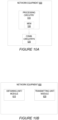
- Figure 2A shows an example.
- the content of the field 62 has multiple portions 62A, 62B, and 62C. These portions may all have the same type and/or purpose so as to together form the field's content.
- protection 70 may be applied selectively to portion 62B, to the exclusion of portions 62A and 62C.
- proxy 50 extracts portion 62B from the field 62 and applies protection 70 selectively to the extracted portion 62B (e.g., by selectively encrypting portion 62B and/or generating a checksum selectively for portion 62B).
- Portions 62A and 62C may remain unprotected.
- Proxy 60 upon receipt of the message 60 may in turn extract portion 62B from the field 62 and remove protection 70 selectively from the extracted portion 62B (e.g., by selectively decrypting portion 62B and/or confirming and removing the checksum for portion 62B).
- Figure 2B illustrates a specific example of the field's content in some embodiments where the message 60 is a HyperText Transfer Protocol (HTTP) message and the field 62 is an HTTP field (e.g., a body or a part of the body of the HTTP message, or a field in an HTTP header or pseudo header).
- HTTP HyperText Transfer Protocol
- the message 60 is an HTTP GET request and the field 62 is a PATH field.
- the content of the PATH field is a request Uniform Resource Identifier (URI).
- URI Uniform Resource Identifier
- protection 70 may be applied to one or more portions of the request URI in the PATH field.
- the content of the PATH field (namely, the request URI) in this example contains multiple portions 62A, 62B, and 62C, with protection 70 selectively applied to only portion 62B of the request URI.
- Portion 62B in this example includes a subscriber identifier in the form of an International Mobile Subscriber Identifier (IMSI).
- IMSI International Mobile Subscriber Identifier
- Other portions 62A and 62C may remain unprotected.
- Selective inter-domain security protection of certain portions of the message 60 may advantageously safeguard those certain portions against unauthorized inspection and/or tampering, while at the same time enabling entities to read and/or modify other portions.
- an internetwork exchange provider that provides the connection between different core network domains may read and/or modify unprotected portions as needed to offer services to network operators.
- the granularity of protection therefore may be narrowly tailored to the granularity of the (e.g., sensitive) content actually needing protection. This avoids overly broad protection that jeopardizes other entities' use of other content and/or that may needlessly increase communication resources or processing power.
- some embodiments herein exploit a protection policy 80 for realizing this selective inter-domain security protection of certain portions of the message 60 (e.g., one or more portions of field 62's content).
- the protection policy 80 includes information indicating to which one or more portions of the message 60 inter-domain security protection 70 is to be applied (e.g., by proxy 40) or removed (e.g., by proxy 50). In some embodiments, then, this information indicates to which one or more portions of the content of a field 62 inter-domain security protection 70 is to be applied or removed.
- the protection policy 80 in one embodiment also indicates, for each of the one or more portions, a type of inter-domain security protection 70 to be applied or removed (e.g., confidentiality and/or integrity protection).
- the information in the protection policy 80 includes one or more regular expressions that indicate the one or more portions.
- a regular expression in this regard may be a sequence of characters that defines a search pattern.
- the search pattern may in turn be used by searching algorithms to find a certain pattern of characters in the message 60 (e.g., in the field's content).
- a regular expression usable to find portion 62B in Figure 2B may be " ⁇ /udm-sdm/v1/([ ⁇ /?#]+)/nssai$".
- the circumflex character (namely, ⁇ ) and the dollar sign character (namely, $) are anchors that do not "consume” any characters, but instead tie the pattern to the beginning and end of the string being searched.
- the characters ([ ⁇ /?#]+) in the regular expression capture any subpattern or subgroup that includes one or more occurrences of any character except the forward slash character (/), the question mark character (?), and the pound character (#). This captured subpattern or subgroup is output from the searching algorithm.
- Protection 70 may therefore be selectively applied to only this subpattern, to the exclusion of other portions 62A and 62C of the field's content.
- the protection policy 80 may include any type of expression, pattern, syntax, language, delimiter, pointer, rule, or other information that indicates the one or more portions.
- the information may be any information that indicates a pattern, token, or substring inside a broader string.
- the information may alternatively indicate portion 62B as the third path segment in the field's content; that is, the subpattern or subgroup of characters occurring between the third and fourth tokens or delimiters in the form of a forward slash (/).
- the information may include one or more ranges of bytes within the field 62, and/or one or more ranges of bits within the field 62, that indicate the one or more portions.
- the information in the protection policy 80 includes one or more JavaScript Object Notation, JSON, Pointers, that indicate the one or more portions.
- a JSON Pointer e.g., as defined in RFC 6901
- a JSON Pointer may be expressed in JSON string values and/or URI fragment identifiers.
- a JSON Pointer in particular is a Unicode string containing a sequence of zero or more reference tokens. Each token is prefixed by a forward slash '/' character.
- the protection policy 80 as an example may indicate one or more portions of content in the body or payload of an HTML message, where that body or payload includes a JSON document.
- the protection policy 80 in some embodiments indicates the portion(s) (to which protection 70 is to be applied or removed) with information that is agnostic to, independent of, and/or generically applicable to any of the underlying message/field content or the message's transmission protocol.
- the protection policy 80 may for instance be capable of indicating any portion(s) of content in a field 62 with the same general kind of information (e.g., a regular expression), no matter the type, structure, or formatting of the field's content.
- the information may be formed (e.g., as a particular regular expression) to indicate a certain portion of content in the field 62 based on the content having a certain type or format (e.g., an IMSI), but in another instance the information may be formed (e.g., as a different regular expression) to indicate a different portion of content in the field 62 based on the content having a different type or format (e.g., a cell identifier).
- the information in both instances has the same general character (e.g., both are regular expressions), so as to universally enable the proxies 40, 50 to identify any portion(s) without regard to whether or how the type, structure, or format of the underlying content evolves.
- proxies 40, 50 configuring proxies 40, 50 to generically understand or process regular expressions or other information in the protection policy 80 sufficiently equips the proxies 40, 50 to selectively apply or remove protection 70 to any portion of content in the message 60 or the field 62, even without the proxies 40, 50 being configured to more specifically understand that content.
- a proxy needs to simply understand how to process a regular expression to protect portion 62B, without having to more specifically understand how to identify an IMSI.
- the proxies 40, 50 can remain unaware of how that underlying content changes or evolves (e.g., in terms of its form or structure), such as in response to the introduction of new entities (e.g., network functions) and/or services (e.g., represented by their HTTP URIs) to the system 10.
- new entities e.g., network functions
- services e.g., represented by their HTTP URIs
- the protection policy 80 e.g., the regular expressions
- dynamically changes or evolves to account for changes or evolution to the underlying content of the message 60 (e.g., in terms of its structure or format), rather than the proxies' general configuration to identify portion(s) using that kind of information.
- a protection policy 80 for inter-domain security protection 70 of a message 60 may be dynamically received and/or updated by the proxy 40 or 50.
- the dynamic retrieval and/or updated of the policy 80 may account for changes or evolution to the content of the message 60. This way, configuration of the proxy 40 or 50 itself does not need be (manually) updated to account for such change or evolution.
- this may advantageously provide flexible protection that evolves along with message formatting changes (e.g., attributable to the evolution of network functions or service in the core network), while minimizing or at least reducing administrative and/or operational overhead that would otherwise be required for such flexibility.
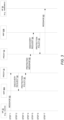
- FIG. 3 for example illustrates some embodiments where the proxy 40 and/or 50 dynamically discovers the protection policy 80 from one or more network repository functions (NRFs) 90, e.g., responsive to receiving the message 60.
- NRFs network repository functions
- NF 20 as the source of the message 60 transmits the message 60, which is intercepted by or otherwise received by proxy 40 (Step 1).
- proxy 40 transmits a discovery request 92 to a discovery service (in its core network domain) requesting discovery of the protection policy 80 for protecting the message 60 (Step 2).
- the discovery service is shown here as being implemented by a network repository function, NRF, 90A but in other embodiments may be implemented by a standalone function co-located with the NRF or by other network equipment or functions.
- the proxy 40 receives the protection policy 80 in response to the discovery request (Step 3).
- the proxy 40 applies protection to one or more portions of the message 60 (e.g., one or more portions of the content of field 62) determined according to the protection policy 80 and transmits the protected message 60 across the core network domain border to proxy 50 (Step 4).
- proxy 50 In response to receiving the message 60, proxy 50 in turn transmits a discovery request 94 to a discovery service (in its core network domain), shown as being implemented by NRF 90B (Step 5).
- proxy 50 receives the protection policy 80 from the discovery service (Step 6).
- the proxy 50 removes protection from the one or more portions of the message 60 (e.g., one or more portions of the content of field 62) determined according to the protection policy 80 and transmits the (unprotected) message 60 towards NF 30 as the message's destination (Step 7).
- the source and/or destination of the message provides the protection policy 80 applicable for the message 60 to the discovery service in one or more of the core network domains, e.g., for later discovery of that policy 80 as shown in Figure 3 .
- NF 30 is a provider NF that provides a service to NF 20 as a consumer NF
- the message 60 is a message that NF 20 sends to NF 30 for consuming that service
- NF 30 as the provider NF in some embodiments provides its service profile to the NRF 90B (e.g., as part of initial registration or registration update), including the protection policy 80 applicable for one or more messages used for consuming a service provided by NF 30.
- the NRF 90B may in turn distribute or otherwise provide the service profile or at least the protection policy 80 to NRF 90A, for later discovery by potential consumer NFs.
- the proxy 40 and/or 50 may subscribe to proactively receive new or updated protection policies from the NRF 90A and/or 90B.
- proxy 40 and/or 50 may store (e.g., cache) received protection policies in anticipation of later use for protecting messages transmitted between the core network domains.
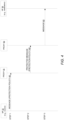
- Figure 4 by contrast shows other embodiments where proxy 40 and/or 50 receives the protection policy 80 from network functions or equipment in a path that the message 60 takes from the source to the destination of the message 60.
- Figure 4 shows that NF 20 as the message source transmits the message 60 with the protection policy 80 embedded or otherwise included in the message 60 itself (e.g., in a header of the message) (Step 1).
- proxy 40 receives the protection policy 80 from the source of the message 60.
- Proxy 40 then transmits the protected message 60 across the core network domain border, again with the protection policy 80 included in the message 80 (Step 2).
- Proxy 50 accordingly receives the protection policy 80 from proxy 40 in a different core network domain. Proxy 50 may then remove protection of the message 60 and forward it on towards NF 30 as the destination (Step 3).
- network equipment in some embodiments generally performs the method 100 shown in Figure 5 .
- the network equipment may be configured as a proxy for one of multiple different core network domains of a wireless communication system 10.
- the method 100 may be performed by network equipment configured as proxy 40 or proxy 50.
- the method 100 as shown includes receiving a message 60 that has been, or is to be, transmitted between the different core network domains (Block 110).
- the method 100 may also include receiving a protection policy 80 that includes information indicating to which one or more portions of the message 60 (e.g., one or more portions of the content of a field 62 in the message 60) inter-domain security protection 70 is to be applied or removed (Block 120).
- the method 100 may further include applying inter-domain security protection to, or removing inter-domain security protection from, the one or more portions according to the protection policy 80 (Block 130).
- the method 100 in some embodiments may also include forwarding the message 60, with inter-domain security protection applied or removed to the one or more portions, towards a destination of the message 60 (Block 140).
- the method further comprises, responsive to receiving the message 60, transmitting a discovery request to a network repository function, NRF, requesting discovery of the protection policy 80 for protecting the message 60, and receiving the protection policy in response to the discovery request.
- the method may comprise receiving the protection policy 80 from network equipment in a path that the message takes from a source of the message to the destination of the message.
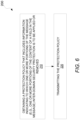
- network equipment in other embodiments generally performs the method 200 shown in Figure 6 for facilitating protection of a message 60 transmitted between different core network domains of a wireless communication system 10.
- the method 200 may be performed for example by network equipment implementing NF 20, proxy 40, proxy 50, NF 30, or NRF(s) 90.
- the method 200 as shown in this regard includes obtaining a protection policy 80 that includes information indicating to which one or more portions of the message 60 (e.g., one or more portions of the content of a field 62 in the message 60) inter-domain security protection 70 is to be applied or removed (Block 210).
- the method 200 may also include transmitting the protection policy 80 (Block 220).
- transmitting the protection policy comprises transmitting the protection policy to network equipment configured, as a proxy one of the different core network domains, to apply inter-domain security protection to, or remove inter-domain security protection from, the one or more portions according to the protection policy.
- the method may be performed by network equipment that implements a network repository function, NRF, and may further comprise receiving a discovery request requesting discovery of the protection policy for protecting the message, and transmitting the protection policy in response to the discovery request.
- NRF network repository function
- the method may be performed by network equipment in a path that the message takes from a source of the message to the destination of the message (e.g., by NF 20, proxy 40, proxy 50, or NF 30).
- a source of the message e.g., by NF 20, proxy 40, proxy 50, or NF 30.
- 3GPP is working on 5G, and its associated Core Network (5GC) that provides services to the connecting users, from authentication to IP address assignment and routing of packets.
- 5GC Core Network
- the 5G core network is significantly different from previous generations.
- SBA Service-Based Architecture
- a number of the interfaces within the core network are changed from legacy telecom-style to modern, web-based application programming interfaces (API)s.
- API application programming interfaces
- the 3GPP CT4 group selected an architecture based on the Representational State Transfer (REST) architectural model.
- REST Representational State Transfer
- the different entities (services, network functions, etc..) in the 5G system interact with each other by invoking actions on a so-called "resource”, which is identified in HTTP by the Uniform Resource Identifier (URI).
- URI Uniform Resource Identifier
- the different actions to be invoked in the different system entities are defined by the different HTTP standard commands (e.g., GET, POST, PUT, DELETE, etc...), while the HTTP messages convey representations of the affected resources in the HTTP payload.
- These representations can be formatted in different data-encoding languages (e.g. JSON).
- the 5G Core Network may follow these requirements: Main protocol: HTTP/2; Transport protocol: TCP; RESTful API design style; Data serialization format: JSON; Server-initiated interactions: "Web-hook”; and Interface Definition Language: OpenAPI 3.0.0 (formerly known as "Swagger”).
- API Application Programming Interface
- HTTP resources Universal Resource Identifiers, URIs
- GET, POST, PUT the allowed operations
- format of the data transported in the message payload (message body).
- NF service consumers discover and select NF service producers dynamically using a Network Repository Function, NRF.
- the NRF is the logical function that is used to maintain the NF profile of available instances of NF service producers and their supported services, receive NF service Discovery Requests from NF service consumers, and provide the information of the available instances of corresponding NF service producers to the requesting NF service consumer.
- the requester NF initiates the NF or NF service discovery by providing the type of the NF or the specific service it is attempting to discover (e.g. session management function, SMF, policy charging function, PCF, user equipment, UE, location Reporting) and other service parameters (e.g. slicing related information) to the NRF.
- the NRF may provide the IP address or the fully qualified domain name (FQDN) or the identifier of the relevant services and/or NF instance(s) to the requester NF.
- the requester NF can select one specific NF instance or an NF instance that is able to provide a particular NF Service (e.g., an instance of the PCF that can provide Policy Authorization).
- the communication may be protected (e.g., cryptographically) between the visited network and the home network, to ensure that the information sent over the interconnecting networks is not inspected or modified by unauthorized parties.
- This task is done by a network element called SEPP (Security Edge Protection Proxy).
- SEPP Security Edge Protection Proxy
- Protection of communication between the SEPPs may be at the application layer.
- integrity protection applies to all attributes transferred over the N32 interface.
- one or more of the following attributes may be confidentiality protected when being sent over the N32 interface: Authentication Vectors; Cryptographic material; Location data, e.g. Cell ID and Physical Cell ID; or subscriber permanent identifier (SUPI) such as International Mobile Subscriber Identifier (IMSI).
- SUPI subscriber permanent identifier
- IMSI International Mobile Subscriber Identifier
- HTTP fields can be, for example, the HTTP request URI, the HTTP headers, and different parts of the HTTP body (or payload).
- IPX providers usually offer additional services to the operators. Some of these services are based on reading and/or changing fields in the messages sent between PLMNs. Hence it is desirable that certain message portions or fields are actually not cryptographically protected when sent over the N32 interface between the vSEPP and the hSEPP.
- the SEPP should protect (encrypt and/or integrity protect) some of the information fields or parts in the messages sent on the N32, and some other parts of the messages the SEPP should to leave unprotected, e.g., for realizing additional services provided by IPX providers.
- the SEPP be able to provide its services without requiring a software upgrade as a result of the usual functional evolution of the different Network Functions in the Core Network.
- Some embodiments herein advantageously provide a policy that defines which parts of a message need to be protected, and in which way they must be protected (confidentiality, integrity).
- this policy is expressed in a language or "mask" that is (pattern matching) applicable for new types of messages. In this way, the policy can be expressed dynamically and does not need to be known at rollout or last update of the SEPP.
- Embodiments herein also include flows for informing the SEPP of the policy applicable for a specific message.
- Embodiments thereby provide a dynamic and flexible way to protect selectively parts of the messages sent on N32, in such a way that the entities performing such protection (encryption and/or integrity protection) are not dependent on static configuration and do not need to be changed when new entities (Network Functions) and new services (represented by their HTTP URIs) are added to the system.
- entities performing such protection (encryption and/or integrity protection) are not dependent on static configuration and do not need to be changed when new entities (Network Functions) and new services (represented by their HTTP URIs) are added to the system.
- Some embodiments allow application of a security mechanism without affecting the design (API) of the services between home and visited PLMNs. Additionally or alternatively, some embodiments allow protection (encryption and/or integrity protection) of sensitive information elements (such as user identities, like IMSI) found in HTTP messages in 5G traffic transported between network operators in a flexible way, not bound to the current definition of service APIs, and prepared for the introduction of new network functions, services and APIs in further evolution of the 5G Core Network.
- sensitive information elements such as user identities, like IMSI
- the SEPP queries the NRF for applicable protection policy information.
- network function NF1 in a PLMN1 intends to send a message to a network function NF2 in a PLMN2.
- the message is routed via SEPP1 and SEPP2 in PLMN1 and PLMN2.
- SEPP1 receives the message, it checks whether it has stored a protection policy for this type of message which has not expired yet. If no such protection policy is available, SEPP1 queries the NRF in PLMN1 (called NRF1).
- NRF1 may need to query NRF2, the NRF in PLMN2.
- NRF1 may have received the protection policies from NF1 at registration.
- NRF2 may have received the protection policies from NF2 at registration.
- SEPP1 Before forwarding the message to SEPP2, SEPP1 performs protection (e.g., cryptographic protection) of the message according to the policy received from NRF1 and/or NRF2. SEPP1 may include the protection policy in the message it forwards. Note that the "forwarding" SEPP might modify the message or even encapsulate it within another message.
- protection e.g., cryptographic protection
- SEPP2 When receiving the message from SEPP1, SEPP2 decrypts the encrypted parts of the message and checks the integrity of the integrity-protected parts of the message. SEPP2 may use the protection policy received from SEPP1 or query NRF1 and/or NRF2 as required to get the protection policy information.
- SEPP2 forwards the message to NF2.
- the NF that sends the message includes the protection policy in the message.
- the NF may have received the policy during service discovery (if it is the service consumer) or during service registration (if it is the service producer).
- a network function NF1 performs service discovery or service registration at NRF1, the NRF in its PLMN.
- the NRF1 may include protection policies of message types that NF1 may send while consuming or producing the service.
- NRF1 may have received the protection policy from NRF2.
- NF1 While consuming or producing the service, NF1 intends to send a message to NF2.
- the message is routed via SEPP1 and SEPP2.
- the NF1 includes the protection policy that is applicable for this message.
- NF1 may have received the policy from NRF1 or NRF2, but the policy may alternatively originate from NF1 itself.
- SEPP1 Before forwarding the message to SEPP2, SEPP1 performs protection of the message according to the policy received from NF1. To ensure that SEPP2 is able to retrieve the original message, SEPP1 may include information that allows the SEPP2 to know what parts were protected. This may for example be solved by the SEPP1 including the protection policy in the message it forwards. Again note that the "forwarding" SEPP might modify the message or even encapsulate it within another message.
- SEPP2 When receiving the message from SEPP1, SEPP2 decrypts the encrypted parts of the message and checks the integrity of the integrity-protected parts of the message. For example, SEPP2 may use a protection policy received from SEPP1.
- SEPP2 forwards the message to NF2.
- a protection policy as discussed in these examples describes which elements of a message should be encrypted and which elements should be integrity protected.
- the policy may describe explicitly which elements should be protected (encrypted and/or integrity protected), or it may describe explicitly which elements should not be protected (not encrypted and/or not integrity protected).
- a protection policy may be defined for all the messages sent and received by a NF. Messages may be either HTTP requests or HTTP responses.
- a protection policy in some embodiments comprises one or more protection rules.
- Each protection rule consists of: (1) a message type the rule is applicable to, including for instance an HTTP request, HTTP response, or both; (2) a message entity the rule is applicable to, which may be for instance the Request-URI, an HTTP pseudo header, an HTTP header, or the HTTP body; and (3) a match and replace operation.
- the operation may be represented by a regular expression, a JSON Pointer (RFC 6901) to an element in a JSON structure and its replacement, or any other expression.
- a protection rule shall exist within the protection policy for every item of every message that requires to be protected.
- a single protection policy may be used in some embodiments.
- This protection policy may be defined by the NF providing the service (i.e. the called NF).
- the protection policy may be applicable to the messages sent and received by the NF.
- the protection policy for a NF may be stored in the NRF located in the PLMN of the NF providing the service.
- a protection policy may be used for the NF communication with several PLMNs, but it may also be possible to define protection policies individually for each PLMN the NF interacts with.
- the protection policy for the NFs in a given PLMN may be common to all NF service consumers the NF providing the service interacts with.
- a SEPP when encrypting a message sent to an NF, shall iterate over the protection rules of the protection policy for that NF. For every policy rule, if the message type of the rule matches the message type of message, it shall apply the corresponding match and replace operation over the message entity determined by the rule.
- a SEPP when decrypting a message received from another SEPP shall iterate over the protection rules of the protection policy for the receiving NF. For every policy rule, if the message type of the rule matches the message type of message, it shall apply the reverse match and replace operation over the message entity determined by the rule.
- the encryption and decryption process finishes when all the protection rules of the protection policy have been evaluated.
- the applicable protection policy may be either provided to the SEPP (by the NF or the SEPP in the other PLMN) or looked up by the SEPP in the NRF.
- the protection policy may be provisioned local to the NF and in the NRF.
- a protection policy may be registered in the NRF for each NF. This may be done by the NF as part of its register process with the NRF, or by a different mechanism, such as Operations and Maintenance (O&M) provisioning. In both cases, the goal is to prevent the SEPP from requiring an upgrade when new NFs or changes in the protection policy of existing NFs are deployed.
- O&M Operations and Maintenance
- a network function in the visited PLMN e.g. an access and mobility function, AMF
- AMF access and mobility function
- UDM unified data management
- the subscription data may be a small part of the subscription profile, such as the required data to select a particular "slice" of the 5G Core Network.
- the AMF queries the local NRF, by issuing a discovery request message.
- the discovery request message includes search criteria such as the required network function type (UDM in this case), or the specific service ("nudm-sdm", in this case).
- the NRF in the vPLMN in turn forwards the discovery request to the NRF in the hPLMN, and as a result a list of available UDM network functions (URI endpoints) in the hPLMN are returned to the vAMF.
- the profile information includes parameters indicating the different available URIs in each service.
- the profile information also includes a protection policy 80 that includes information about where in these URIs there is sensitive information that needs to be protected.
- GET http://www.homeoperator.com/n ud m-sdm/v1 / ⁇ S U PI ⁇ /nssai In this case, an AMF may use this URI when it needs to retrieve the Network Slice Selection Assistance Information (NSSAI) of a given user stored in the UDM in his/her home network.
- NSSAI Network Slice Selection Assistance Information
- the component ⁇ SUPI ⁇ represent a variable to be substituted by the real user identity, such as, for example: GET http://www.homeoperator.com/nudm-sdm/v1/imsi-214050123456789/nssai
- the HTTP request is routed from the AMF to the SEPP in the visited network (vSEPP), and the AMF includes the protection policy 80 in a specific HTTP header, including the information received from NRF about the parts of the URI that need to be protected because they contain sensitive information.
- the vSEPP receives the HTTP message.
- the vSEPP determines the SEPP in the hPLMN (hSEPP), where this information needs to be sent, and checks the relevant roaming agreement to find out the appropriate encryption keys to be used to protect the messages between SEPPs.
- the vSEPP also extracts the specific HTTP header sent by the AMF, and processes the URI accordingly, so the sensitive URI parts can be encrypted using the keys found.
- the HTTP header may indicate, for example, the following regular expression (from the URL example above): " ⁇ /udm-sdm/v1/([ ⁇ /?#]+)/nssai$". This allows finding a full match, where the 1st inner group: "([ ⁇ /?#]+)" is the set of characters where the ⁇ supi ⁇ value is expected to be found.
- the hSEPP receives the HTTP message, and does the reverse operation. It determines the PLMN that is sending the message, to check the applicable roaming agreements, and determine the right encryption keys. Then, it checks the specific HTTP header and determines the parts of the URI that are subject to protection (encrypted), and it decrypts them, and replaces them by the unencrypted version. The hSEPP also removes the HTPP header that indicated the parts of the URI that were encrypted.
- the hSEPP forwards the HTTP message to the UDM instance in the HPLMN.
- This message is identical to the message originated by the vAMF, and therefore the encryption/decryption done between SEPPS, of certain URI components is transparent to the vAMF -> hUDM communication.
- embodiments herein are extendable to any type of core network domains.
- the core network domains are different domains within the same core network.
- embodiments herein may use any of one or more communication protocols known in the art or that may be developed, such as IEEE 802.xx, Code Division Multiple Access (CDMA), Wideband CDMA (WCDMA), Global System for Mobile telecommunications (GSM), Long Term Evolution (LTE), WiMax, New Radio (NR), or the like. Accordingly, although sometimes described herein in the context of 5G, the principles and concepts discussed herein are applicable to 4G systems and others.
- IEEE 802.xx Code Division Multiple Access
- CDMA Code Division Multiple Access
- WCDMA Wideband CDMA
- GSM Global System for Mobile telecommunications
- LTE Long Term Evolution
- WiMax New Radio
- a wireless device as used herein is any type device capable of communicating with another radio node wirelessly over radio signals.
- a wireless device may therefore refer to a user equipment (UE), a mobile station, a laptop, a smartphone, a machine-to-machine (M2M) device, a machine-type communications (MTC) device, a narrowband Internet of Things (IoT) device, etc. That said, although the wireless device may be referred to as a UE, it should be noted that the wireless device does not necessarily have a "user" in the sense of an individual person owning and/or operating the device.
- M2M machine-to-machine
- MTC machine-type communications
- IoT narrowband Internet of Things
- a wireless device may also be referred to as a wireless communication device, a radio device, a radio communication device, a wireless terminal, or simply a terminal - unless the context indicates otherwise, the use of any of these terms is intended to include device-to-device UEs or devices, machine-type devices or devices capable of machine-to-machine communication, sensors equipped with a wireless device, wirelessenabled table computers, mobile terminals, smart phones, laptop-embedded equipped (LEE), laptop-mounted equipment (LME), USB dongles, wireless customer-premises equipment (CPE), etc.
- M2M machine-to-machine
- MTC machine-type communication
- wireless sensor and sensor may also be used. It should be understood that these devices may be UEs, but may be generally configured to transmit and/or receive data without direct human interaction.
- a wireless device as described herein may be, or may be comprised in, a machine or device that performs monitoring or measurements, and transmits the results of such monitoring measurements to another device or a network.
- machines are power meters, industrial machinery, or home or personal appliances, e.g. refrigerators, televisions, personal wearables such as watches etc.
- a wireless communication device as described herein may be comprised in a vehicle and may perform monitoring and/or reporting of the vehicle's operational status or other functions associated with the vehicle.
- network equipment refers to equipment capable, configured, arranged and/or operable to communicate directly or indirectly with a wireless device and/or with other equipment in the wireless communication network that enable and/or provide wireless access to the wireless device.
- network equipment include, but are not limited to, core network equipment in a core network (e.g., equipment that implements an AMF or SMF).
- the network equipment as described above may perform any of the processing herein by implementing any functional means or units.
- the network equipment comprises respective circuits or circuitry configured to perform the steps shown in Figure 5 .
- the circuits or circuitry in this regard may comprise circuits dedicated to performing certain functional processing and/or one or more microprocessors in conjunction with memory.
- memory which may comprise one or several types of memory such as read-only memory (ROM), random-access memory, cache memory, flash memory devices, optical storage devices, etc.
- the memory stores program code that, when executed by the one or more processors, carries out the techniques described herein.
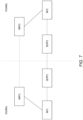
- Figure 9A illustrates network equipment 300 in accordance with one or more embodiments.
- the network equipment 300 includes processing circuitry 310 and communication circuitry 320.
- the communication circuitry 320 is configured to transmit and/or receive information to and/or from one or more other nodes, e.g., via any communication technology.
- the processing circuitry 310 is configured to perform processing described above, e.g., in Figure 5 , such as by executing instructions stored in memory 330.
- the processing circuitry 310 in this regard may implement certain functional means, units, or modules.
- Figure 9B illustrates network equipment 400 in accordance with one or more other embodiments.
- the network equipment 400 implements various functional means, units, or modules, e.g., via the processing circuitry 410 in Figure 9A and/or via software code.
- These functional means, units, or modules, e.g., for implementing the method in Figure 5 include for instance a receiving unit or module 410 for receiving a message 60 that has been, or is to be, transmitted between the different core network domains, and for receiving a protection policy 80 that includes information indicating to which one or more portions of the message 60 (e.g., one or more portions of the content of a field 62 in the message 60) inter-domain security protection 70 is to be applied or removed.
- a receiving unit or module 410 for receiving a message 60 that has been, or is to be, transmitted between the different core network domains
- a protection policy 80 that includes information indicating to which one or more portions of the message 60 (e.g., one or more portions of the content of a field 62
- a protection unit or module 420 for applying inter-domain security protection to, or removing inter-domain security protection from, the one or more portions according to the protection policy 80.
- a forwarding unit or module 430 for forwarding the message 60, with inter-domain security protection applied or removed to the one or more portions, towards a destination of the message 60.
- network equipment may perform any of the processing herein by implementing any functional means or units.
- network equipment comprises respective circuits or circuitry configured to perform the steps shown in Figure 6 .
- the circuits or circuitry in this regard may comprise circuits dedicated to performing certain functional processing and/or one or more microprocessors in conjunction with memory.
- memory which may comprise one or several types of memory such as read-only memory (ROM), random-access memory, cache memory, flash memory devices, optical storage devices, etc.
- the memory stores program code that, when executed by the one or more processors, carries out the techniques described herein.
- FIG 10A illustrates network equipment 500 in accordance with one or more embodiments.
- the network equipment 500 includes processing circuitry 510 and communication circuitry 520.
- the communication circuitry 520 is configured to transmit and/or receive information to and/or from one or more other nodes, e.g., via any communication technology.
- the processing circuitry 510 is configured to perform processing described above, e.g., in Figure 6 , such as by executing instructions stored in memory 530.
- the processing circuitry 510 in this regard may implement certain functional means, units, or modules.
- Figure 10B illustrates network equipment 600 in accordance with one or more other embodiments.
- the network equipment 600 implements various functional means, units, or modules, e.g., via the processing circuitry 610 in Figure 10A and/or via software code.
- These functional means, units, or modules, e.g., for implementing the method in Figure 6 include for instance an obtaining unit or module 410 for obtaining a protection policy 80 that includes information indicating to which one or more portions of the message 60 (e.g., one or more portions of the content of a field 62 in the message 60) inter-domain security protection 70 is to be applied or removed. Further included may be a transmitting unit or module 420 for transmitting the protection policy 80.
- a computer program comprises instructions which, when executed on at least one processor of network equipment, cause the network equipment to carry out any of the respective processing described above.
- a computer program in this regard may comprise one or more code modules corresponding to the means or units described above.
- Embodiments further include a carrier containing such a computer program.
- This carrier may comprise one of an electronic signal, optical signal, radio signal, or computer readable storage medium.
- embodiments herein also include a non-transitory computer readable (storage or recording) medium that has stored thereon instructions that, when executed by a processor of a network equipment, cause the network equipment to perform as described above.
Landscapes
- Engineering & Computer Science (AREA)
- Computer Security & Cryptography (AREA)
- Computer Networks & Wireless Communication (AREA)
- Signal Processing (AREA)
- Computer Hardware Design (AREA)
- General Engineering & Computer Science (AREA)
- Theoretical Computer Science (AREA)
- Computing Systems (AREA)
- Health & Medical Sciences (AREA)
- Bioethics (AREA)
- General Health & Medical Sciences (AREA)
- Software Systems (AREA)
- Physics & Mathematics (AREA)
- General Physics & Mathematics (AREA)
- Databases & Information Systems (AREA)
- Mobile Radio Communication Systems (AREA)
Claims (18)
- Verfahren, das von einer Netzwerkausrüstung (300, 400) in einer von mehreren verschiedenen Kernnetzwerkdomänen eines drahtlosen Kommunikationssystems (10) durchgeführt wird, wobei das Verfahren Folgendes umfasst:Empfangen (110) einer Nachricht (60), die zwischen den verschiedenen Kernnetzwerkdomänen übertragen wurde oder zu übertragen ist;Anwenden (130) eines Schutzes von Sicherheit zwischen Domänen auf einen oder mehrere Teile eines Inhalts eines Feldes in der Nachricht (60), oder Entfernen eines Schutzes von Sicherheit zwischen Domänen von diesen, gemäß einer Schutzrichtlinie (80), die Informationen beinhaltet, die angeben, für welchen einen oder welche mehreren Teile des Inhalts des Feldes ein Schutz von Sicherheit zwischen Domänen anzuwenden ist oder zu entfernen ist, wobei die Informationen eine oder mehrere JavaScript-Object-Notation-(JSON-)Pointer beinhalten, die den einen oder die mehreren Teile des Inhalts des Feldes angeben, für den der Schutz von Sicherheit zwischen Domänen anzuwenden ist oder zu entfernen ist; undWeiterleiten (140) der Nachricht (60) mit Schutz von Sicherheit zwischen Domänen, der für den einen oder die mehreren Teile angewendet oder entfernt ist, in Richtung eines Ziels der Nachricht (60).
- Verfahren nach Anspruch 1, wobei die Nachricht (60) eine Hypertext-Transfer-Protocol-(HTTP)-Nachricht ist und das Feld ein HTTP-Feld ist.
- Verfahren nach Anspruch 2, wobei die HTTP-Nachricht (60) eine HTTP-Anforderungsnachricht ist und das Feld ein Pfadfeld ist und wobei der Inhalt des Pfadfeldes ein Anforderungs-Uniform-Resource-Identifier (URI) ist.
- Verfahren nach einem der Ansprüche 1-3, wobei die Informationen einen oder mehrere reguläre Ausdrücke beinhalten, die den einen oder die mehreren Teile angeben.
- Verfahren nach einem der Ansprüche 1-4, wobei die Schutzrichtlinie (80) ferner für jeden des einen oder der mehreren Teile einen Typ von Schutz von Sicherheit zwischen Domänen angibt, der anzuwenden oder zu entfernen ist, und wobei der Typ des Schutzes von Sicherheit zwischen Domänen, der anzuwenden oder zu entfernen ist, für jeden des einen oder der mehreren Teile Vertraulichkeitsschutz und/oder Integritätsschutz umfasst.
- Verfahren nach einem der Ansprüche 1-5, ferner umfassend, in Reaktion auf das Empfangen der Nachricht (60), Übertragen einer Ermittlungsanforderung an eine Netzwerk-Respository-Funktion (NRF), Anfordern einer Ermittlung der Schutzrichtlinie (80) zum Schützen der Nachricht (60) und Empfangen der Schutzrichtlinie (80) in Reaktion auf die Ermittlungsanforderung.
- Verfahren nach einem der Ansprüche 1-6, wobei das Verfahren durch einen Security Edge Protection Proxy (SEPP) durchgeführt wird.
- Verfahren nach Anspruch 7, wobei der SEPP einen SEPP in einem besuchten Netzwerk (vSEPP) und einen SEPP in einem Heimnetzwerk (hSEPP) umfasst.
- Netzwerkausrüstung (300, 400), die zur Verwendung in einer von mehreren verschiedenen Kernnetzwerkdomänen eines drahtlosen Kommunikationssystems (10) konfiguriert ist, wobei die Netzwerkausrüstung (300, 400) Folgendes umfasst:Kommunikationsschaltung (320); undVerarbeitungsschaltung (310), die zu Folgendem konfiguriert ist:Empfangen, über die Kommunikationsschaltung (320), einer Nachricht (60), die zwischen den verschiedenen Kernnetzwerkdomänen übertragen wurde oder zu übertragen ist;Anwenden eines Schutzes von Sicherheit zwischen Domänen auf einen oder mehrere Teile eines Inhalts eines Feldes in der Nachricht (60), oder Entfernen eines Schutzes von Sicherheit zwischen Domänen von diesen, gemäß einer Schutzrichtlinie (80), die Informationen beinhaltet, die angeben, für welchen einen oder welche mehreren Teile des Inhalts des Feldes ein Schutz von Sicherheit zwischen Domänen anzuwenden ist oder zu entfernen ist, wobei die Informationen eine oder mehrere JavaScript-Object-Notation-(JSON-)Pointer beinhalten, die den einen oder die mehreren Teile des Inhalts angeben, für den der Schutz von Sicherheit zwischen Domänen anzuwenden ist oder zu entfernen ist; undWeiterleiten der Nachricht (60) mit Schutz von Sicherheit zwischen Domänen, der für den einen oder die mehreren Teile angewendet oder entfernt ist, über die Kommunikationsschaltung (320) in Richtung eines Ziels der Nachricht (60).
- Netzwerkausrüstung nach Anspruch 9, wobei die Nachricht (60) eine Hypertext-Transfer-Protocol-(HTTP)-Nachricht ist und das Feld ein HTTP-Feld ist.
- Netzwerkausrüstung nach Anspruch 10, wobei die HTTP-Nachricht (60) eine HTTP-Anforderungsnachricht ist und das Feld ein Pfadfeld ist und wobei der Inhalt des Pfadfeldes ein Anforderungs-Uniform-Resource-Identifier (URI) ist.
- Netzwerkausrüstung nach einem der Ansprüche 9-11, wobei die Informationen einen oder mehrere reguläre Ausdrücke beinhalten, die den einen oder die mehreren Teile angeben.
- Netzwerkausrüstung nach einem der Ansprüche 9-12, wobei die Schutzrichtlinie (80) ferner für jeden des einen oder der mehreren Teile einen Typ von Schutz von Sicherheit zwischen Domänen angibt, der anzuwenden oder zu entfernen ist, und wobei der Typ des Schutzes von Sicherheit zwischen Domänen, der anzuwenden oder zu entfernen ist, für jeden des einen oder der mehreren Teile Vertraulichkeitsschutz und/oder Integritätsschutz umfasst.
- Netzwerkausrüstung nach einem der Ansprüche 9-13, wobei die Verarbeitungsschaltung (310) ferner dazu konfiguriert ist, in Reaktion auf das Empfangen der Nachricht (60) eine Ermittlungsanforderung an eine Netzwerk-Respository-Funktion (NRF) zu übertragen, eine Ermittlung der Schutzrichtlinie (80) zum Schützen der Nachricht (60) anzufordern und die Schutzrichtlinie (80) in Reaktion auf die Ermittlungsanforderung zu empfangen.
- Netzwerkausrüstung nach einem der Ansprüche 9-14, wobei das Verfahren durch einen Security Edge Protection Proxy (SEPP) durchgeführt wird.
- Netzwerkausrüstung nach Anspruch 15, wobei der SEPP einen SEPP in einem besuchten Netzwerk (vSEPP) und einen SEPP in einem Heimnetzwerk (hSEPP) umfasst.
- Computerprogramm, umfassend Anweisungen, die, wenn sie durch mindestens einen Prozessor einer Netzwerkausrüstung (300, 400) in einer von mehreren verschiedenen Kernnetzwerkdomänen eines drahtlosen Kommunikationssystems ausgeführt werden, die Netzwerkausrüstung (300, 400) veranlassen, das Verfahren nach einem der Ansprüche 1-8 durchzuführen.
- Träger, enthaltend das Computerprogramm nach Anspruch 17, wobei der Träger eines von einem elektronischen Signal, einem optischen Signal, einem Funksignal oder einem computerlesbaren Speichermedium ist.
Applications Claiming Priority (2)
| Application Number | Priority Date | Filing Date | Title |
|---|---|---|---|
| EP18382092 | 2018-02-16 | ||
| PCT/EP2019/053784 WO2019158681A1 (en) | 2018-02-16 | 2019-02-15 | Protecting a message transmitted between core network domains |
Publications (3)
| Publication Number | Publication Date |
|---|---|
| EP3752947A1 EP3752947A1 (de) | 2020-12-23 |
| EP3752947C0 EP3752947C0 (de) | 2023-08-09 |
| EP3752947B1 true EP3752947B1 (de) | 2023-08-09 |
Family
ID=61258171
Family Applications (1)
| Application Number | Title | Priority Date | Filing Date |
|---|---|---|---|
| EP19704023.1A Active EP3752947B1 (de) | 2018-02-16 | 2019-02-15 | Schutz einer zwischen kernnetzwerkdomänen übertragenen nachricht |
Country Status (10)
| Country | Link |
|---|---|
| US (3) | US11729609B2 (de) |
| EP (1) | EP3752947B1 (de) |
| JP (1) | JP7050937B2 (de) |
| KR (1) | KR102422660B1 (de) |
| CN (1) | CN111936993B (de) |
| ES (1) | ES2955584T3 (de) |
| MX (1) | MX2020007578A (de) |
| PL (1) | PL3752947T3 (de) |
| RU (1) | RU2760728C1 (de) |
| WO (1) | WO2019158681A1 (de) |
Families Citing this family (22)
| Publication number | Priority date | Publication date | Assignee | Title |
|---|---|---|---|---|
| WO2019068654A1 (en) | 2017-10-02 | 2019-04-11 | Telefonaktiebolaget Lm Ericsson (Publ) | METHODS AND APPARATUS FOR SECURING NETWORK DRIVING INFORMATION |
| AU2019224247B2 (en) * | 2018-02-21 | 2021-10-21 | Ntt Docomo, Inc. | Radio communication system, security proxy device, and relay device |
| US20210250186A1 (en) * | 2018-05-09 | 2021-08-12 | Nokia Technologies Oy | Security management for edge proxies on an inter-network interface in a communication system |
| US12425374B2 (en) | 2018-05-21 | 2025-09-23 | Telefonaktiebolaget Lm Ericsson (Publ) | Message transmission between core network domains |
| WO2020053480A1 (en) * | 2018-09-10 | 2020-03-19 | Nokia Technologies Oy | Method and apparatus for network function messaging |
| WO2020065130A1 (en) * | 2018-09-24 | 2020-04-02 | Nokia Technologies Oy | Security management between edge proxy and internetwork exchange node in a communication system |
| US10944796B2 (en) | 2018-09-27 | 2021-03-09 | Palo Alto Networks, Inc. | Network slice-based security in mobile networks |
| JP7233525B2 (ja) * | 2018-09-27 | 2023-03-06 | パロ アルト ネットワークス,インコーポレイテッド | モバイルネットワークにおけるネットワークスライスベースのセキュリティ |
| US12075251B2 (en) * | 2019-04-11 | 2024-08-27 | Ntt Docomo, Inc. | Network node |
| CN112584396B (zh) * | 2019-09-27 | 2022-08-26 | 华为技术有限公司 | 一种网络功能路由方法、装置及系统 |
| EP3886502B1 (de) * | 2020-03-23 | 2024-03-06 | Nokia Technologies Oy | Vorrichtung, verfahren und computerlesbares medium im zusammenhang mit informationen über scp(s) und sepp(s), die in nrf gespeichert sind |
| US12513217B2 (en) * | 2021-02-03 | 2025-12-30 | Telefonaktiebolaget Lm Ericsson (Publ) | Method for notification of network function producer (NFp) quality |
| CN115150820A (zh) * | 2021-03-30 | 2022-10-04 | 华为技术有限公司 | 一种信令消息处理方法、装置和系统 |
| US11558732B1 (en) * | 2021-04-16 | 2023-01-17 | T-Mobile Innovations Llc | Network function discovery through network repository functions in a wireless communication network |
| US20220353263A1 (en) * | 2021-04-28 | 2022-11-03 | Verizon Patent And Licensing Inc. | Systems and methods for securing network function subscribe notification process |
| US11533358B1 (en) * | 2021-09-17 | 2022-12-20 | Nokia Technologies Oy | Roaming hub for secure interconnect in roaming scenarios |
| US12501252B2 (en) * | 2022-03-01 | 2025-12-16 | Mavenir Networks, Inc. | Roaming hub 5G interconnect for public line mobile networks |
| CN117354232A (zh) * | 2022-06-29 | 2024-01-05 | 中兴通讯股份有限公司 | 消息的路由方法及装置、系统 |
| CN115297465B (zh) * | 2022-08-01 | 2024-11-12 | 中国电信股份有限公司 | 接入网号传递方法、装置、电子设备及计算机存储介质 |
| US12348955B2 (en) * | 2022-11-15 | 2025-07-01 | Oracle International Corporation | Methods, systems, and computer readable media for securing sensitive data to be transmitted in 5G and subsequent generation networks |
| US12356356B2 (en) | 2022-12-14 | 2025-07-08 | Oracle International Corporation | Geographically intelligent network function request routing |
| JP7518518B2 (ja) | 2022-12-15 | 2024-07-18 | Bbix株式会社 | 中継装置、プログラム、及び中継方法 |
Family Cites Families (22)
| Publication number | Priority date | Publication date | Assignee | Title |
|---|---|---|---|---|
| US6615166B1 (en) * | 1999-05-27 | 2003-09-02 | Accenture Llp | Prioritizing components of a network framework required for implementation of technology |
| FR2843522B1 (fr) * | 2002-08-12 | 2004-10-15 | Evolium Sas | Procede pour la protection d'integrite de messages transmis dans un systeme de radiocommunications mobiles |
| US20060106802A1 (en) * | 2004-11-18 | 2006-05-18 | International Business Machines Corporation | Stateless methods for resource hiding and access control support based on URI encryption |
| US8266327B2 (en) * | 2005-06-21 | 2012-09-11 | Cisco Technology, Inc. | Identity brokering in a network element |
| CN101005489A (zh) * | 2006-01-20 | 2007-07-25 | 华为技术有限公司 | 一种保护移动通信系统网络安全的方法 |
| EP2054830A2 (de) * | 2006-08-17 | 2009-05-06 | Neustar, Inc. | System und verfahren zur verwaltung von domain-richtlinien für verbundene kommunikationsnetzwerke |
| CN102036256B (zh) * | 2009-09-28 | 2013-03-20 | 华为技术有限公司 | 数据传输方法、装置及系统 |
| JP2012044325A (ja) | 2010-08-16 | 2012-03-01 | Ntt Docomo Inc | 移動通信方法及び無線基地局 |
| US8312096B2 (en) | 2010-12-08 | 2012-11-13 | Google Inc. | Priority inbox notifications and synchronization for mobile messaging application |
| CN105393583B (zh) * | 2013-02-22 | 2019-07-05 | 瑞典爱立信有限公司 | 具有媒体突发传送能力的媒体分发网络 |
| US9648125B2 (en) * | 2013-10-04 | 2017-05-09 | Akamai Technologies, Inc. | Systems and methods for caching content with notification-based invalidation |
| US9811365B2 (en) * | 2014-05-09 | 2017-11-07 | Amazon Technologies, Inc. | Migration of applications between an enterprise-based network and a multi-tenant network |
| US10057217B2 (en) | 2014-07-15 | 2018-08-21 | Sap Se | System and method to secure sensitive content in a URI |
| US9973475B2 (en) * | 2014-10-22 | 2018-05-15 | Protegrity Corporation | Data computation in a multi-domain cloud environment |
| TWI600332B (zh) | 2015-03-25 | 2017-09-21 | Lg電子股份有限公司 | 用於監測無線通訊系統中之使用者設備可達性的方法及裝置 |
| US10110496B2 (en) * | 2015-03-31 | 2018-10-23 | Juniper Networks, Inc. | Providing policy information on an existing communication channel |
| US10686902B2 (en) | 2016-05-23 | 2020-06-16 | Twilio Inc. | System and method for a multi-channel notification service |
| US9979680B2 (en) | 2016-07-21 | 2018-05-22 | Fujitsu Limited | Smart notification scheduling and modality selection |
| US11323979B2 (en) | 2016-08-09 | 2022-05-03 | Nokia Technologies Oy | Broadcasting or multicasting to user equipment that use extended idle mode discontinuous reception |
| US10999795B2 (en) | 2016-10-06 | 2021-05-04 | Qualcomm Incorporated | Independent wakeups from deep sleep for broadcast and unicast service |
| US10554430B2 (en) | 2016-11-21 | 2020-02-04 | Everbridge, Inc. | Systems and methods for providing adaptive flow control in a notification architecture |
| US10893025B2 (en) | 2018-02-15 | 2021-01-12 | Nokia Technologies Oy | Security management in communication systems with network function assisted mechanism to secure information elements |
-
2019
- 2019-02-15 US US16/969,589 patent/US11729609B2/en active Active
- 2019-02-15 RU RU2020130257A patent/RU2760728C1/ru active
- 2019-02-15 EP EP19704023.1A patent/EP3752947B1/de active Active
- 2019-02-15 WO PCT/EP2019/053784 patent/WO2019158681A1/en not_active Ceased
- 2019-02-15 MX MX2020007578A patent/MX2020007578A/es unknown
- 2019-02-15 KR KR1020207023244A patent/KR102422660B1/ko active Active
- 2019-02-15 ES ES19704023T patent/ES2955584T3/es active Active
- 2019-02-15 CN CN201980013502.9A patent/CN111936993B/zh active Active
- 2019-02-15 JP JP2020537209A patent/JP7050937B2/ja active Active
- 2019-02-15 PL PL19704023.1T patent/PL3752947T3/pl unknown
-
2023
- 2023-08-15 US US18/234,339 patent/US12167232B2/en active Active
-
2024
- 2024-12-10 US US18/975,729 patent/US20250106622A1/en active Pending
Also Published As
| Publication number | Publication date |
|---|---|
| US20230396994A1 (en) | 2023-12-07 |
| US20210014680A1 (en) | 2021-01-14 |
| CN111936993A (zh) | 2020-11-13 |
| EP3752947C0 (de) | 2023-08-09 |
| JP7050937B2 (ja) | 2022-04-08 |
| MX2020007578A (es) | 2020-09-14 |
| US11729609B2 (en) | 2023-08-15 |
| RU2760728C1 (ru) | 2021-11-29 |
| US20250106622A1 (en) | 2025-03-27 |
| JP2021520665A (ja) | 2021-08-19 |
| KR102422660B1 (ko) | 2022-07-20 |
| ES2955584T3 (es) | 2023-12-04 |
| EP3752947A1 (de) | 2020-12-23 |
| KR20200109342A (ko) | 2020-09-22 |
| CN111936993B (zh) | 2024-05-03 |
| WO2019158681A1 (en) | 2019-08-22 |
| PL3752947T3 (pl) | 2024-02-19 |
| US12167232B2 (en) | 2024-12-10 |
Similar Documents
| Publication | Publication Date | Title |
|---|---|---|
| US12167232B2 (en) | Protecting a message transmitted between core network domains | |
| EP3797500B1 (de) | Nachrichtenübertragung zwischen kernnetzwerkdomänen | |
| US12302229B2 (en) | Network function instance selection | |
| US8832436B2 (en) | Obtaining targeted services using a unique identification header (UIDH) | |
| US10070343B2 (en) | Mobile device traffic management | |
| KR20160109060A (ko) | 웹 서비스 제공 방법 및 장치 | |
| US11330038B2 (en) | Systems and methods for utilizing blockchain for securing browsing behavior information | |
| HK40040503A (en) | Protecting a message transmitted between core network domains | |
| CN117118643A (zh) | 一种终端设备的信息查询方法、装置和电子设备 | |
| EP4572231A1 (de) | Cybersicherheit auf basis von domänennamensystemprotokollverarbeitung | |
| EP4560976A1 (de) | Verarbeitung im zusammenhang mit sicheren kundenstandortgeräten | |
| US20240070125A1 (en) | Data Management in a Network Function | |
| WO2026084627A1 (en) | Methods, intermediary device, identifier server, and node | |
| CN120239982A (zh) | 用于用户装备与一个或多个电信网络上的至少两个网络功能或服务进行通信的方法、系统和计算机程序 | |
| CN120303965A (zh) | 用于建立用户装备与电信网络的多个网络功能或服务中的一者之间的非接入阶层通信链路的方法、用户装备、系统或电信网络、用户装备引导功能或服务、程序及计算机程序产品 |
Legal Events
| Date | Code | Title | Description |
|---|---|---|---|
| STAA | Information on the status of an ep patent application or granted ep patent |
Free format text: STATUS: UNKNOWN |
|
| STAA | Information on the status of an ep patent application or granted ep patent |
Free format text: STATUS: THE INTERNATIONAL PUBLICATION HAS BEEN MADE |
|
| PUAI | Public reference made under article 153(3) epc to a published international application that has entered the european phase |
Free format text: ORIGINAL CODE: 0009012 |
|
| STAA | Information on the status of an ep patent application or granted ep patent |
Free format text: STATUS: REQUEST FOR EXAMINATION WAS MADE |
|
| 17P | Request for examination filed |
Effective date: 20200821 |
|
| AK | Designated contracting states |
Kind code of ref document: A1 Designated state(s): AL AT BE BG CH CY CZ DE DK EE ES FI FR GB GR HR HU IE IS IT LI LT LU LV MC MK MT NL NO PL PT RO RS SE SI SK SM TR |
|
| AX | Request for extension of the european patent |
Extension state: BA ME |
|
| STAA | Information on the status of an ep patent application or granted ep patent |
Free format text: STATUS: EXAMINATION IS IN PROGRESS |
|
| 17Q | First examination report despatched |
Effective date: 20210408 |
|
| DAV | Request for validation of the european patent (deleted) | ||
| DAX | Request for extension of the european patent (deleted) | ||
| REG | Reference to a national code |
Ref country code: DE Ref legal event code: R079 Free format text: PREVIOUS MAIN CLASS: G06F0021600000 Ipc: H04L0009400000 Ref document number: 602019034511 Country of ref document: DE |
|
| GRAP | Despatch of communication of intention to grant a patent |
Free format text: ORIGINAL CODE: EPIDOSNIGR1 |
|
| STAA | Information on the status of an ep patent application or granted ep patent |
Free format text: STATUS: GRANT OF PATENT IS INTENDED |
|
| RIC1 | Information provided on ipc code assigned before grant |
Ipc: G06F 21/62 20130101ALI20230403BHEP Ipc: G06F 21/60 20130101ALI20230403BHEP Ipc: H04W 12/02 20090101ALI20230403BHEP Ipc: H04L 67/02 20220101ALI20230403BHEP Ipc: H04L 9/40 20220101AFI20230403BHEP |
|
| INTG | Intention to grant announced |
Effective date: 20230425 |
|
| GRAS | Grant fee paid |
Free format text: ORIGINAL CODE: EPIDOSNIGR3 |
|
| GRAA | (expected) grant |
Free format text: ORIGINAL CODE: 0009210 |
|
| STAA | Information on the status of an ep patent application or granted ep patent |
Free format text: STATUS: THE PATENT HAS BEEN GRANTED |
|
| AK | Designated contracting states |
Kind code of ref document: B1 Designated state(s): AL AT BE BG CH CY CZ DE DK EE ES FI FR GB GR HR HU IE IS IT LI LT LU LV MC MK MT NL NO PL PT RO RS SE SI SK SM TR |
|
| REG | Reference to a national code |
Ref country code: GB Ref legal event code: FG4D |
|
| REG | Reference to a national code |
Ref country code: CH Ref legal event code: EP |
|
| REG | Reference to a national code |
Ref country code: DE Ref legal event code: R096 Ref document number: 602019034511 Country of ref document: DE |
|
| REG | Reference to a national code |
Ref country code: IE Ref legal event code: FG4D |
|
| U01 | Request for unitary effect filed |
Effective date: 20230809 |
|
| U07 | Unitary effect registered |
Designated state(s): AT BE BG DE DK EE FI FR IT LT LU LV MT NL PT SE SI Effective date: 20230814 |
|
| REG | Reference to a national code |
Ref country code: ES Ref legal event code: FG2A Ref document number: 2955584 Country of ref document: ES Kind code of ref document: T3 Effective date: 20231204 |
|
| PG25 | Lapsed in a contracting state [announced via postgrant information from national office to epo] |
Ref country code: GR Free format text: LAPSE BECAUSE OF FAILURE TO SUBMIT A TRANSLATION OF THE DESCRIPTION OR TO PAY THE FEE WITHIN THE PRESCRIBED TIME-LIMIT Effective date: 20231110 |
|
| PG25 | Lapsed in a contracting state [announced via postgrant information from national office to epo] |
Ref country code: IS Free format text: LAPSE BECAUSE OF FAILURE TO SUBMIT A TRANSLATION OF THE DESCRIPTION OR TO PAY THE FEE WITHIN THE PRESCRIBED TIME-LIMIT Effective date: 20231209 |
|
| PG25 | Lapsed in a contracting state [announced via postgrant information from national office to epo] |
Ref country code: RS Free format text: LAPSE BECAUSE OF FAILURE TO SUBMIT A TRANSLATION OF THE DESCRIPTION OR TO PAY THE FEE WITHIN THE PRESCRIBED TIME-LIMIT Effective date: 20230809 Ref country code: NO Free format text: LAPSE BECAUSE OF FAILURE TO SUBMIT A TRANSLATION OF THE DESCRIPTION OR TO PAY THE FEE WITHIN THE PRESCRIBED TIME-LIMIT Effective date: 20231109 Ref country code: IS Free format text: LAPSE BECAUSE OF FAILURE TO SUBMIT A TRANSLATION OF THE DESCRIPTION OR TO PAY THE FEE WITHIN THE PRESCRIBED TIME-LIMIT Effective date: 20231209 Ref country code: HR Free format text: LAPSE BECAUSE OF FAILURE TO SUBMIT A TRANSLATION OF THE DESCRIPTION OR TO PAY THE FEE WITHIN THE PRESCRIBED TIME-LIMIT Effective date: 20230809 Ref country code: GR Free format text: LAPSE BECAUSE OF FAILURE TO SUBMIT A TRANSLATION OF THE DESCRIPTION OR TO PAY THE FEE WITHIN THE PRESCRIBED TIME-LIMIT Effective date: 20231110 |
|
| U20 | Renewal fee for the european patent with unitary effect paid |
Year of fee payment: 6 Effective date: 20240227 |
|
| PG25 | Lapsed in a contracting state [announced via postgrant information from national office to epo] |
Ref country code: SM Free format text: LAPSE BECAUSE OF FAILURE TO SUBMIT A TRANSLATION OF THE DESCRIPTION OR TO PAY THE FEE WITHIN THE PRESCRIBED TIME-LIMIT Effective date: 20230809 Ref country code: RO Free format text: LAPSE BECAUSE OF FAILURE TO SUBMIT A TRANSLATION OF THE DESCRIPTION OR TO PAY THE FEE WITHIN THE PRESCRIBED TIME-LIMIT Effective date: 20230809 Ref country code: CZ Free format text: LAPSE BECAUSE OF FAILURE TO SUBMIT A TRANSLATION OF THE DESCRIPTION OR TO PAY THE FEE WITHIN THE PRESCRIBED TIME-LIMIT Effective date: 20230809 Ref country code: SK Free format text: LAPSE BECAUSE OF FAILURE TO SUBMIT A TRANSLATION OF THE DESCRIPTION OR TO PAY THE FEE WITHIN THE PRESCRIBED TIME-LIMIT Effective date: 20230809 |
|
| REG | Reference to a national code |
Ref country code: DE Ref legal event code: R097 Ref document number: 602019034511 Country of ref document: DE |
|
| PLBE | No opposition filed within time limit |
Free format text: ORIGINAL CODE: 0009261 |
|
| STAA | Information on the status of an ep patent application or granted ep patent |
Free format text: STATUS: NO OPPOSITION FILED WITHIN TIME LIMIT |
|
| 26N | No opposition filed |
Effective date: 20240513 |
|
| PG25 | Lapsed in a contracting state [announced via postgrant information from national office to epo] |
Ref country code: MC Free format text: LAPSE BECAUSE OF FAILURE TO SUBMIT A TRANSLATION OF THE DESCRIPTION OR TO PAY THE FEE WITHIN THE PRESCRIBED TIME-LIMIT Effective date: 20230809 |
|
| REG | Reference to a national code |
Ref country code: CH Ref legal event code: PL |
|
| PG25 | Lapsed in a contracting state [announced via postgrant information from national office to epo] |
Ref country code: CH Free format text: LAPSE BECAUSE OF NON-PAYMENT OF DUE FEES Effective date: 20240229 |
|
| PG25 | Lapsed in a contracting state [announced via postgrant information from national office to epo] |
Ref country code: CH Free format text: LAPSE BECAUSE OF NON-PAYMENT OF DUE FEES Effective date: 20240229 |
|
| PG25 | Lapsed in a contracting state [announced via postgrant information from national office to epo] |
Ref country code: IE Free format text: LAPSE BECAUSE OF NON-PAYMENT OF DUE FEES Effective date: 20240215 |
|
| PG25 | Lapsed in a contracting state [announced via postgrant information from national office to epo] |
Ref country code: IE Free format text: LAPSE BECAUSE OF NON-PAYMENT OF DUE FEES Effective date: 20240215 |
|
| U20 | Renewal fee for the european patent with unitary effect paid |
Year of fee payment: 7 Effective date: 20250227 |
|
| PGFP | Annual fee paid to national office [announced via postgrant information from national office to epo] |
Ref country code: PL Payment date: 20250124 Year of fee payment: 7 |
|
| PG25 | Lapsed in a contracting state [announced via postgrant information from national office to epo] |
Ref country code: CY Free format text: LAPSE BECAUSE OF FAILURE TO SUBMIT A TRANSLATION OF THE DESCRIPTION OR TO PAY THE FEE WITHIN THE PRESCRIBED TIME-LIMIT; INVALID AB INITIO Effective date: 20190215 |
|
| PG25 | Lapsed in a contracting state [announced via postgrant information from national office to epo] |
Ref country code: HU Free format text: LAPSE BECAUSE OF FAILURE TO SUBMIT A TRANSLATION OF THE DESCRIPTION OR TO PAY THE FEE WITHIN THE PRESCRIBED TIME-LIMIT; INVALID AB INITIO Effective date: 20190215 |
|
| PG25 | Lapsed in a contracting state [announced via postgrant information from national office to epo] |
Ref country code: TR Free format text: LAPSE BECAUSE OF FAILURE TO SUBMIT A TRANSLATION OF THE DESCRIPTION OR TO PAY THE FEE WITHIN THE PRESCRIBED TIME-LIMIT Effective date: 20230809 |
|
| U20 | Renewal fee for the european patent with unitary effect paid |
Year of fee payment: 8 Effective date: 20260227 |
|
| PGFP | Annual fee paid to national office [announced via postgrant information from national office to epo] |
Ref country code: GB Payment date: 20260227 Year of fee payment: 8 |
|
| PGFP | Annual fee paid to national office [announced via postgrant information from national office to epo] |
Ref country code: ES Payment date: 20260302 Year of fee payment: 8 |