EP3752198B1 - Therapeutischer elektronenstrahler zur krebsbehandlung - Google Patents
Therapeutischer elektronenstrahler zur krebsbehandlung Download PDFInfo
- Publication number
- EP3752198B1 EP3752198B1 EP19755216.9A EP19755216A EP3752198B1 EP 3752198 B1 EP3752198 B1 EP 3752198B1 EP 19755216 A EP19755216 A EP 19755216A EP 3752198 B1 EP3752198 B1 EP 3752198B1
- Authority
- EP
- European Patent Office
- Prior art keywords
- neutron
- carcinoma cells
- therapeutic source
- therapeutic
- radiation
- Prior art date
- Legal status (The legal status is an assumption and is not a legal conclusion. Google has not performed a legal analysis and makes no representation as to the accuracy of the status listed.)
- Active
Links
Images
Classifications
-
- A—HUMAN NECESSITIES
- A61—MEDICAL OR VETERINARY SCIENCE; HYGIENE
- A61K—PREPARATIONS FOR MEDICAL, DENTAL OR TOILETRY PURPOSES
- A61K41/00—Medicinal preparations obtained by treating materials with wave energy or particle radiation ; Therapies using these preparations
- A61K41/009—Neutron capture therapy, e.g. using uranium or non-boron material
- A61K41/0095—Boron neutron capture therapy, i.e. BNCT, e.g. using boronated porphyrins
-
- A—HUMAN NECESSITIES
- A61—MEDICAL OR VETERINARY SCIENCE; HYGIENE
- A61N—ELECTROTHERAPY; MAGNETOTHERAPY; RADIATION THERAPY; ULTRASOUND THERAPY
- A61N5/00—Radiation therapy
- A61N5/10—X-ray therapy; Gamma-ray therapy; Particle-irradiation therapy
- A61N5/103—Treatment planning systems
- A61N5/1031—Treatment planning systems using a specific method of dose optimization
-
- A—HUMAN NECESSITIES
- A61—MEDICAL OR VETERINARY SCIENCE; HYGIENE
- A61N—ELECTROTHERAPY; MAGNETOTHERAPY; RADIATION THERAPY; ULTRASOUND THERAPY
- A61N5/00—Radiation therapy
- A61N5/10—X-ray therapy; Gamma-ray therapy; Particle-irradiation therapy
-
- A—HUMAN NECESSITIES
- A61—MEDICAL OR VETERINARY SCIENCE; HYGIENE
- A61N—ELECTROTHERAPY; MAGNETOTHERAPY; RADIATION THERAPY; ULTRASOUND THERAPY
- A61N5/00—Radiation therapy
- A61N5/10—X-ray therapy; Gamma-ray therapy; Particle-irradiation therapy
- A61N5/1001—X-ray therapy; Gamma-ray therapy; Particle-irradiation therapy using radiation sources introduced into or applied onto the body; brachytherapy
- A61N5/1027—Interstitial radiation therapy
-
- A—HUMAN NECESSITIES
- A61—MEDICAL OR VETERINARY SCIENCE; HYGIENE
- A61N—ELECTROTHERAPY; MAGNETOTHERAPY; RADIATION THERAPY; ULTRASOUND THERAPY
- A61N5/00—Radiation therapy
- A61N5/10—X-ray therapy; Gamma-ray therapy; Particle-irradiation therapy
- A61N5/1048—Monitoring, verifying, controlling systems and methods
-
- A—HUMAN NECESSITIES
- A61—MEDICAL OR VETERINARY SCIENCE; HYGIENE
- A61N—ELECTROTHERAPY; MAGNETOTHERAPY; RADIATION THERAPY; ULTRASOUND THERAPY
- A61N5/00—Radiation therapy
- A61N5/10—X-ray therapy; Gamma-ray therapy; Particle-irradiation therapy
- A61N5/1048—Monitoring, verifying, controlling systems and methods
- A61N5/1064—Monitoring, verifying, controlling systems and methods for adjusting radiation treatment in response to monitoring
- A61N5/1065—Beam adjustment
- A61N5/1067—Beam adjustment in real time, i.e. during treatment
-
- A—HUMAN NECESSITIES
- A61—MEDICAL OR VETERINARY SCIENCE; HYGIENE
- A61N—ELECTROTHERAPY; MAGNETOTHERAPY; RADIATION THERAPY; ULTRASOUND THERAPY
- A61N5/00—Radiation therapy
- A61N5/10—X-ray therapy; Gamma-ray therapy; Particle-irradiation therapy
- A61N5/1077—Beam delivery systems
-
- A—HUMAN NECESSITIES
- A61—MEDICAL OR VETERINARY SCIENCE; HYGIENE
- A61N—ELECTROTHERAPY; MAGNETOTHERAPY; RADIATION THERAPY; ULTRASOUND THERAPY
- A61N5/00—Radiation therapy
- A61N5/10—X-ray therapy; Gamma-ray therapy; Particle-irradiation therapy
- A61N2005/1085—X-ray therapy; Gamma-ray therapy; Particle-irradiation therapy characterised by the type of particles applied to the patient
- A61N2005/1089—Electrons
-
- A—HUMAN NECESSITIES
- A61—MEDICAL OR VETERINARY SCIENCE; HYGIENE
- A61N—ELECTROTHERAPY; MAGNETOTHERAPY; RADIATION THERAPY; ULTRASOUND THERAPY
- A61N5/00—Radiation therapy
- A61N5/10—X-ray therapy; Gamma-ray therapy; Particle-irradiation therapy
- A61N2005/1085—X-ray therapy; Gamma-ray therapy; Particle-irradiation therapy characterised by the type of particles applied to the patient
- A61N2005/109—Neutrons
-
- A—HUMAN NECESSITIES
- A61—MEDICAL OR VETERINARY SCIENCE; HYGIENE
- A61N—ELECTROTHERAPY; MAGNETOTHERAPY; RADIATION THERAPY; ULTRASOUND THERAPY
- A61N5/00—Radiation therapy
- A61N5/10—X-ray therapy; Gamma-ray therapy; Particle-irradiation therapy
- A61N2005/1092—Details
- A61N2005/1094—Shielding, protecting against radiation
Definitions
- This invention pertains generally to the treatment of cancer and, more particularly to the treatment of highly localized carcinoma cells.
- 6,107,102 discloses a suspension of microdevices for use in delivering a therapeutic compound to the interstitial space of a target region which is characterized by a target-specific marker on a basement membrane forming a vasculature of the target region.
- the microdevices have a non-spherical shape, uniform dimensions and a selected maximum dimension in a range of 0.1 and 3 ⁇ m, and comprise a support having at least one planar surface, and a therapeutic agent attached to the support.
- the activity of the therapeutic agent is expressed in direct response to a chemical or biochemical interaction that occurs upon exposure of the microdevice to a biochemical environment of a target site after administration of the microdevices to a subject.
- the microdevices contain a surface-bound marker-binding molecule effective to bind to such marker, and an enzyme effective to lyse the basement membrane.
- This invention overcomes the detrimental effects of the radiation treatment of cancer by providing a system for treating localized carcinoma cells in a body of an animal, as defined in independent claim 1.
- the therapeutic source is substantially nonradioactive when not exposed to a neutron source below a given activity level, but becomes a source of highly ionizing but weakly penetrating radiation, comprising high energy electrons, when exposed to a neutron field at or above the given activity level, within the body in the vicinity of the carcinoma cells.
- the therapeutic source material is surgically implanted on the carcinoma cells.
- At least one neutron generator device is configured to irradiate the therapeutic source from outside the body with a neutron field at or above the given activity level for a prescribed period of time and to repeat the irradiation at prescribed intervals. This invention focuses on the design and operation of the therapeutic source as the irradiation target to increase the energy and range of the emitted radiation.
- the system comprises electronic neutron generators to produce neutrons that interact with Boron-10 to produce Helium and Lithium ions.
- the B-10 material is surrounded by a very thin layer of atoms with high atomic numbers, such as Platinum or Gold.
- the Helium and Lithium ions are born with large kinetic energies, and when they collide with the dense electron clouds in the surrounding layers of material, large numbers of high energy Compton and photoelectrical scattered electrons are created.
- the emitted electrons may be used to irradiate cancerous tissue adjacent to or surrounding the emitter package. The irradiation ceases when the electronic neutron generator system is turned off.
- the impact of the emitted electrons is further controlled by the application of electric and/or magnetic fields positioned to accelerate the emitted electrons into a penetration depth and/or preferred irradiation direction within the patient tissue.
- this device comprises electronic neutron generators to produce neutrons with energies that have a high probability to interact with a material like Hafnium to produce prompt neutron capture gamma radiation that is used to both directly irradiate cancer cells and to produce Compton and photoelectrical electrons that irradiate cancer cells.
- the hafnium material is surrounded by a thin layer of atoms with high atomic numbers, such as Platinum or Gold. When Hafnium absorbs a neutron, it immediately releases a fairly high energy gamma photon. The gamma radiation primarily destroy the more radiation sensitive cancer cells within the range of the gamma photons.
- the resulting Hafnium isotope is generally not radioactive, so no further radiation is released unless the Hafnium daughter product then absorbs a neutron.
- a neutron In addition to the gamma photon damage, when the gamma radiation collides with the dense electron clouds in the surrounding layers of material, large numbers of high energy Compton and photoelectrical scattered electrons are created.
- the emitted electrons also irradiate cancerous tissue near to or surrounding the emitter package with a much higher probability of destroying the pernicious cells.
- the packages can be made in many shapes and sizes to allow them to be placed directly into or adjacent to cancerous tissue. Since the material is not radioactive unless it is being irradiated by neutrons, there is no personnel radiation exposure occurring while the material is being positioned.
- the irradiation ceases when the electronic neutron generator system is turned off.
- the impact of the emitted electrons is further controlled by the application of electric and/or magnetic fields positioned to accelerate the emitted electrons into a penetration depth and/or preferred irradiation direction within the patient tissue.
- the therapeutic source of highly ionizing, but weakly penetrating radiation is configured so it substantially only irradiates the carcinoma cells.
- a radiation shield material is formed on a side of the therapeutic source not facing the carcinoma cells.
- the irradiation of the therapeutic source includes the use of an electric neutron generator, such as a Neutristor, to irradiate the therapeutic source.
- an electric neutron generator such as a Neutristor
- One such embodiment employs a plurality of electric neutron generators positioned around the body to irradiate the therapeutic source from different angles.
- the system may also include a neutron moderating material between the electric neutron generator and the therapeutic source to adjust the neutron energy to optimize the highly ionizing, but weakly penetrating radiation produced by the therapeutic source.
- the neutron moderating material may be D 2 O, C or other material having similar moderating properties.
- the neutron moderating material is placed outside the body between the electric neutron generator and the body.
- the therapeutic source may be left within the body between treatments of treating the localized carcinoma cells, with the therapeutic source removed from the body once the treatments are complete.
- the therapeutic source may comprise one or more very thin disks or plates on the order of a micron thickness with a sufficient combined surface area to ensure the entire volume of localized carcinoma cells are affected by the highly ionizing but weakly penetrating radiation when one or more of the disks or plates are emplaced around the carcinoma cells and irradiated with the neutron field.
- the system may also include a gamma spectrometer to monitor the intensity of gamma radiation emitted as a byproduct of the neutron radiation of the therapeutic source material and the charged particle production rate can be monitored while the neutron irradiation is occurring.
- the monitored intensity of the gamma radiation and neutron activity of the neutron field can be used to determine the radiation dose that has been applied to the body.
- the system may also control the intensity of the neutron field based on the monitored gamma intensity and the radiation dose.
- the invention also provides a composition for use in a method of treating localized carcinoma cells in a body of an animal, as defined in independent claim 12.
- the invention includes systems for treating carcinoma cells that are localized in a body of an animal, including a subject, human, person or patient (which terms are used interchangeably herein), which include therapeutic and irradiation sources.
- the therapeutic source is positioned or implanted within the body of the patient and, more particularly, in the location or vicinity of the carcinoma cells. In certain embodiments, the therapeutic source is positioned on or adjacent to the carcinoma cells.
- the therapeutic source includes one or more devices that include disk(s) or plate(s) or needle(s) having a thickness of about one micron. The one or more disk(s) or plate(s) or needle(s) each or together have sufficient surface area to ensure that the entire volume of the localized carcinoma cells will be affected by emitted radiation.
- the therapeutic source should be composed or constructed of a material that produces high energy charged particles. Suitable materials are insoluble in water and non-toxic. The neutron reaction products of the material should also be non-toxic to the patient and have very short half-lives.
- the therapeutic source comprises a first material that is substantially nonradioactive without neutron irradiation at a threshold level but becomes a source of highly ionizing and weakly penetrating radiation (particles) when exposed to a neutron field above the threshold level.
- the threshold level may be zero or a preset intensity level.
- This first material is attached on at least one side to a second material.
- the second material has a high atomic number.
- the first material is attached on two sides to a second material.
- the therapeutic source or the irradiation target can be configured in any number of shapes, such as needles or disks, to allow a great deal of therapeutic flexibility.
- the first material of the irradiation target comprises Boron-10; and the second material comprises a high atomic number such as Platinum or Gold.
- B-10 absorbs a thermalized neutron, it splits into highly energetic Helium and Lithium ions. A significant fraction of these nuclei collides with the electron clouds surrounding the Platinum or Gold atoms. This results in the release of many Compton and photoelectrical scattered electrons in the MeV energy range. These electrons are much more penetrating than the He and Li ions that are the basis for the current BCNT methods. Since the range of the electrons produced is still very small relative to gamma radiation treatments, the damage to healthy tissue surrounding the cancerous area is minimized.
- the Boron Electron Radiator Target (BERT) can be configured in a number of shapes, such as needles or disks, to allow a great deal of therapeutic flexibility.
- the first material of the irradiation target comprises Hafnium metal; and a second material is a high atomic number such as Platinum or Gold.
- hafnium absorbs a neutron, it immediately releases gamma photons with an average energy of approximately 6 MeV. A significant fraction of these photons collides with the electron clouds surrounding the Platinum or Gold atoms. This results in the release of many Compton and photoelectrical scattered electrons in the multi-MeV energy range. Since the range of the electrons produced is still very small relative to gamma radiation treatments, the damage to healthy tissue surrounding the cancerous area is minimized.
- the Pulsed Neutron Capture Gamma (PNCG) Radiator Target can be configured in a number of shapes, such as needles or disks, to allow a great deal of therapeutic flexibility.
- the therapeutic source material herein interchangeably referred to as the irradiation target, is shaped using a number of commercially available fabrication techniques and, preferably, has a shielding over at least one side of the source material facing away from the carcinoma that is substantially transparent to neutrons, but shields at least some of the highly ionizing particles from the healthy tissue surrounding the carcinoma.
- Suitable materials include a light metal like aluminum, and like materials that have similar shielding properties. The presence of the therapeutic shield and configuration/position of the therapeutic source contributes to irradiating only the carcinoma cells, and not irradiating healthy cells.
- the invention also includes an array of miniature electrically powered fast neutron generators.
- the neutron generators optionally have a configuration similar to the "Neutristor" design developed by Sandia National Laboratory and described in a Snowmass 2013 White Paper entitled Novel Compact Accelerator Based Neutron and Gamma Sources for Future Detector Calibration, G. Jennings, C. Sanzeni, D.R. Winn, Fairfield University, Fairfield CT 06824 , and can be used to irradiate the therapeutic source with a neutron field once the source is implanted in the patient.
- the array is configured as necessary to provide a neutron intensity at the source position sufficient to maximize the neutron reaction rate without providing too much neutron exposure to other parts of the subject's body.
- the array is geometrically configured to provide neutrons incidents on the carcinoma at different angles to provide the maximum number of sufficiently thermalized neutrons from each generator in the array to reach the target location. This can be accomplished through a combination of neutron source array geometry and variations in the thickness of the neutron moderating material in the neutron moderator placed between the neutron array and the irradiation target. The calculations required to establish the optimum conditions can be performed by those skilled in the art using a number of different commercially available neutron transport calculation products, such as MCNP available from Los Alamos National Laboratory.
- a neutron moderator is provided that is geometrically configured, i.e., configured to mate the tissue being irradiated, includes a sufficient amount of a material like D 2 O or C to be placed between each neutron generator device and the therapeutic source or irradiation target and is independently adjusted to achieve the goal of providing the maximum number of neutrons with the optimum energy for charged particle generation by neutron reactions with the therapeutic source or irradiation target.
- a gamma spectrometer that measures the intensity of the gamma radiation emitted by the target isotope created in the neutron reaction so the charged particle production rate can be monitored while the neutron irradiation is occurring. This can be accomplished using a number of commercially available devices.
- a computational control system uses the measured gamma activity and/or the activity status of the neutron generators to determine radiation dose that has been applied to the patient relative to a dose target.
- the control system has the ability to increase or decrease the intensity of the neutrons provided by any or all of the neutron generators in the array based on gamma intensity and measured dose measurements.
- the dose of neutron irradiation applied can also be adjusted via neutron generator power according to the desired therapeutic effect in combination with the geometry of neutron generators and neutron moderator. Likewise, the duration of irradiation can also be adjusted.
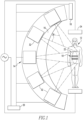
- Figure 1 shows a system for treating highly localized carcinoma cells in accordance with this invention.
- the system employs one or more therapeutic source material 10 ( Figure 2 ) with sufficient surface area to ensure that the entire volume of the localized carcinoma cells will be affected by the radiation emitted when exposed to a neutron field.
- the therapeutic source material 10 comprises very thin (e.g., micron thickness) disks or plates with sufficient surface area to ensure that the entire volume of the localized carcinoma cells will be affected by the radiation emitted when one or more of the devices are implanted within a patient 12 proximate to, and preferably adjacent the tumor tissue 22 and irradiated with neutrons 30 from electronic neutron generators device 14.
- the therapeutic source material 10 used should be one that produces high energy charged particles.
- the therapeutic source material 10 must be insoluble in water and non-toxic.
- the neutron reaction products of the therapeutic source material 10 should also be non-toxic to the subject and have very short half-lives.
- Figure 1 also provides a schematic illustration of an embodiment of the design of the irradiation target 10, also referred to as the therapeutic source material 10.
- the figure shows a representation of the neutron generator device 14 comprising an array of neutron generators 32 that can be configured to provide the neutron energy and dose distribution at the site of the irradiation target 10 through a combination of distance from the patient 12 and neutron moderator 16 (typically made of a flexible moderating material), such as a configurable mass of a highly hydrogenous material or various amounts of deuterium contained in a specially configured plastic container, i.e., configured to match the contour of the tumor tissue 22 being irradiated, positioned between the neutron generator device 14 and the patient 12.
- neutron generator device 14 comprising an array of neutron generators 32 that can be configured to provide the neutron energy and dose distribution at the site of the irradiation target 10 through a combination of distance from the patient 12 and neutron moderator 16 (typically made of a flexible moderating material), such as
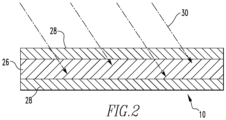
- the therapeutic source material 10 comprises a first material 26 that is substantially nonradioactive without neutron irradiation at a threshold level but becomes a source of highly ionizing and weakly penetrating radiation (particles) when exposed to a neutron field above the threshold level.
- the threshold level may be zero or a preset intensity level.
- the first material 26 is attached on at least one side to a second material 28.
- the second material 28 has a high atomic number.
- the first material 26 is attached on two sides to a second material 28 ( Figure 2 ).
- the therapeutic source material 10 or the irradiation target 10 can be configured in any number of shapes, such as needles or disks, to allow a great deal of therapeutic flexibility.
- the first material 26 of the irradiation target 10 comprises a thin layer of B 4 C composed of mostly Boron-10 (1 ⁇ m) sandwiched between very thin (1 ⁇ m thick) sheets of a second material 28 with a high atomic number such as Platinum or Gold.
- the first material 26 of the irradiation target 10 comprises a thin layer of natural Hafnium metal (1 mm) sandwiched between very thin (1 mm thick) sheets of a material 28 with a high atomic number such as Platinum or Gold.
- the therapeutic source material 10, i.e., the irradiation target 10, to be inserted for irradiation can be shaped using a number of commercially available fabrication techniques and, preferably, has a shielding over at least one side of the source material facing away from the carcinoma that is substantially transparent to neutrons, but shields at least some of the highly ionizing particles from the healthy tissue surrounding the carcinoma.
- a shield may be constructed out of a light metal, optionally aluminum.
- An array of miniature electrically powered fast neutron generators 32 can be used to irradiate the therapeutic source material 10 with a neutron field once the source material 10 is implanted in the patient.
- the array is configured as necessary to provide a neutron intensity at the source position sufficient to maximize the neutron reaction rate without providing too much neutron exposure to other parts of the subject's body.
- the array is geometrically configured to provide neutrons incidents on the carcinoma at different angles to provide the maximum number of sufficiently thermalized neutrons 30 from each generator in the array to reach the target location. This can be accomplished through a combination of neutron source array geometry and variations in the thickness of the neutron moderating material in the neutron moderator 16 placed between the neutron array and the irradiation target 10.
- a neutron moderator 16 is provided that is geometrically configured, i.e., configured to mate the tissue being irradiated, includes a sufficient amount of a material like D 2 O or C to be placed between each neutron generator device 14 and the therapeutic source material or irradiation target 10 and is independently adjusted to achieve the goal of providing the maximum number of neutrons 30 with the optimum energy for charged particle generation by neutron reactions with the therapeutic source material or irradiation target 10.
- a gamma spectrometer 18 is provided that measures the intensity of the gamma radiation emitted by the target isotope created in the neutron reaction so the charged particle production rate can be monitored while the neutron irradiation is occurring. This can be accomplished using a number of commercially available devices.
- a computational control system 20 uses the measured gamma activity and the activity status of the neutron generators 32 to determine radiation dose that has been applied to the patient 12 relative to a dose target.
- the control system 20 has the ability to increase or decrease the intensity of the neutrons provided by any or all of the neutron generators 32 in the array based on gamma intensity and measured dose measurements.
- the dose of neutron irradiation applied can also be adjusted via neutron generator power according to the desired therapeutic effect in combination with the geometry of neutron generators 32 and neutron moderator 16. Likewise, the duration of irradiation can also be adjusted.
- the external electric and/or magnetic field can be manipulated through electric field plate 24 to change the kinetic energy and primary direction of movement of the electrons emitted from the irradiator target 10 to better control the applied dose to the patient.
- application of an oscillating electric field will allow the radiated electrons to be accelerated beyond, or suppressed from, the range dictated by the kinetic energy imparted by the gamma photon collisions with the Gold or Platinum electrons.
- Application of an external magnetic field could be used to concentrate the emitted electron density nearer to or further from the emitter element.
- the method and system for treating carcinoma described herein is different from other types of radiation treatments in that it relies on creating and implanting a non-radioactive target in or around a tumor versus the injection of a compound that provides a limited amount of therapeutic treatment deposition in the desired area.
- the ability this system provides to perform neutron activation of initially non-radioactive materials in a hospital environment maximizes the benefits of charged particle cancer treatment and minimizes the unwanted expense and radiation exposure to the patient and caregivers. This approach allows very precise and efficient cancer killing to occur. Additionally, the target source can be left in position without increasing the whole body radiation dose to the patient, until the tumor is completely dead. Multiple irradiations can occur with relative ease.
- the use of the neutristor neutron generator provides the ability to perform the treatments in a hospital setting instead of a reactor or very large neutron source location. This greatly reduces treatment costs (or greatly increases treatment profitability) relative to existing radiation treatment methods.
Landscapes
- Health & Medical Sciences (AREA)
- Engineering & Computer Science (AREA)
- Biomedical Technology (AREA)
- General Health & Medical Sciences (AREA)
- Veterinary Medicine (AREA)
- Public Health (AREA)
- Life Sciences & Earth Sciences (AREA)
- Animal Behavior & Ethology (AREA)
- Nuclear Medicine, Radiotherapy & Molecular Imaging (AREA)
- Radiology & Medical Imaging (AREA)
- Pathology (AREA)
- Chemical & Material Sciences (AREA)
- Medicinal Chemistry (AREA)
- Pharmacology & Pharmacy (AREA)
- Epidemiology (AREA)
- Radiation-Therapy Devices (AREA)
Claims (15)
- System zum Behandeln von lokalisierten Karzinomzellen (22) in einem Körper (12) eines Lebewesens, das System umfassend:eine therapeutische Quelle (10), umfassend ein erstes Material (26), das eine Außenschicht aus einem zweiten Material (28) aufweist, das eine hohe Atomzahl aufweist, wobei die therapeutische Quelle (10) im Wesentlichen nicht radioaktiv ist, wenn sie keinem Neutronenfeld (30) ausgesetzt ist, jedoch zu einer Quelle von hochionisierender, jedoch schwach durchdringender Strahlung wird, wenn sie dem Neutronenfeld (30) ausgesetzt wird, wobei die therapeutische Quelle angepasst ist, um innerhalb des Körpers (12) in der Nähe der Karzinomzellen (22) positioniert zu werden; undeine Neutronengeneratorvorrichtung (14), umfassend eine Vielzahl von Neutronengeneratoren (32) und konfiguriert, um einen Bestrahlungsschritt durch ein Bereitstellen eines Neutronenfelds (30) auszuführen, um die therapeutische Quelle von außerhalb des Körpers für einen vorgeschriebenen Zeitraum mit dem Neutronenfeld zu bestrahlen; und den Bestrahlungsschritt in vorgeschriebenen Abständen zu wiederholen,wobei das erste Material Bor-10, B4C oder Hafnium umfasst, und das zweite Material Platin, Gold oder eine Kombination davon umfasst;wobeidas zweite Material derart konfiguriert ist, dass hochenergetische Compton- und photoelektrische Streuelektronen zur Verwendung bei der Bestrahlung von Krebsgewebe freigesetzt werden, wenn die therapeutische Quelle (10) dem Neutronenfeld (30) ausgesetzt wird.
- System zum Behandeln von lokalisierten Karzinomzellen (22) nach Anspruch 1, wobei ein Strahlungsabschirmmaterial, das mindestens einen Teil der hochionisierenden Strahlung abschirmt, für Neutronen jedoch im Wesentlichen transparent ist, auf einer Seite der therapeutischen Quelle (10) ausgebildet ist, die den Karzinomzellen (22) nicht zugewandt ist.
- System zum Behandeln von lokalisierten Karzinomzellen (22) nach Anspruch 2, wobei das Strahlungsabschirmmaterial Aluminium umfasst.
- System zum Behandeln von lokalisierten Karzinomzellen (22) nach einem der vorstehenden Ansprüche, wobei die therapeutische Quelle (10) wasserunlöslich und nicht toxisch ist.
- System zum Behandeln von lokalisierten Karzinomzellen (22) nach einem der vorstehenden Ansprüche, das konfiguriert ist, um die Neutronenbestrahlungsdosis gemäß der gewünschten therapeutischen Wirkung in Kombination mit der Geometrie von Neutronengeneratoren (32) und einem Neutronenmoderator (16) einzustellen.
- System zum Behandeln von lokalisierten Karzinomzellen (22) nach Anspruch 5, wobei die Neutronengeneratorvorrichtung (14) eine Vielzahl von elektrischen Neutronengeneratoren (32) umfasst, die um den Körper (12) herum positioniert sind, um die therapeutische Quelle (10) aus verschiedenen Winkeln zu bestrahlen.
- System zum Behandeln von lokalisierten Karzinomzellen (22) nach einem der vorstehenden Ansprüche, ferner umfassend ein neutronenmoderierendes Material (16) zwischen dem elektrischen Neutronengenerator (32) und der therapeutischen Quelle (10), um die Neutronenenergie einzustellen, um die stark ionisierende, jedoch schwach durchdringende Strahlung zu optimieren, die durch die therapeutische Quelle (10) erzeugt wird.
- System zum Behandeln von lokalisierten Karzinomzellen (22) nach Anspruch 7, wobei das neutronenmoderierende Material (16) D2O oder C umfasst.
- System zum Behandeln von lokalisierten Karzinomzellen (22) nach Anspruch 1, wobei die therapeutische Quelle (10) eine oder mehrere sehr dünne Scheiben oder Platten mit einer Dicke in der Größenordnung von einem Mikrometer besteht, die eine ausreichende kombinierte Gesamtfläche aufweisen, um sicherzustellen, dass das gesamte Volumen der lokalisierten Karzinomzellen (22) durch die stark ionisierenden, jedoch schwach durchdringende Strahlung betroffen ist, wenn eine oder mehrere der Scheiben oder Platten um die Karzinomzellen (22) herum platziert und mit dem Neutronenfeld (30) bestrahlt werden.
- System zum Behandeln von lokalisierten Karzinomzellen (22) nach Anspruch 1 ferner umfassend ein Gammaspektrometer (18), um eine Intensität der Gammastrahlung zu überwachen, die durch ein Neutronenstrahlungsprodukt der therapeutischen Quelle (10) emittiert wird, und um eine Produktionsrate geladener Teilchen zu überwachen, während die Neutronenbestrahlung stattfindet.
- System zum Behandeln von lokalisierten Karzinomzellen (22) nach Anspruch 1, wobei das erste Material (26) eine dünne Schicht aus B4C umfasst, hauptsächlich bestehend aus Bor-10 und eine Dicke von 1 µm aufweisend, sandwichartig zwischen sehr dünnen Lagen des zweiten Materials (28), aufweisend eine Dicke von 1 µm, angeordnet.
- Zusammensetzung zur Verwendung bei einer Bestrahlungsbehandlung von lokalisierten Karzinomzellen (22) in einem Körper (12) eines Lebewesens, die Zusammensetzung umfassend ein therapeutisches Quellmaterial, das ein erstes Material (26), das eine Außenschicht aus einem zweiten Material (28) aufweist, das eine hohe Atomzahl aufweist, wobei die Zusammensetzung im Wesentlichen nicht radioaktiv ist, wenn sie keinem Neutronenfeld (30) ausgesetzt ist, jedoch zu einer Quelle von stark ionisierender, aber schwach durchdringender Strahlung wird, wenn sie dem Neutronenfeld (30) ausgesetzt wird, die Behandlung umfassend:Positionieren des therapeutischen Quellmaterials (10) innerhalb des Körpers (12) in der Nähe der Karzinomzellen (22); undBestrahlen des therapeutischen Quellmaterials (10) von außerhalb des Körpers mit dem Neutronenfeld (30) für einen vorgeschriebenen Zeitraum; undWiederholen des Bestrahlungsschritts in vorgeschriebenen Abständen;wobei das erste Material Bor-10, B4C oder Hafnium umfasst, und das zweite Material Platin, Gold oder eine Kombination davon umfasst;derartiges Konfigurieren des zweiten Materials, dass hochenergetische Compton- und photoelektrische Streuelektronen freigesetzt werden, wenn die therapeutische Quelle (10) dem Neutronenfeld (30) ausgesetzt wird; undBestrahlung von Krebsgewebe mit den Elektronen.
- Zusammensetzung nach Anspruch 12, ferner umfassend ein Strahlungsabschirmmaterial, das mindestens einen Teil der hochionisierenden Strahlung abschirmt, für Neutronen jedoch im Wesentlichen durchlässig ist, das auf einer Seite des therapeutischen Quellmaterials (10) ausgebildet ist, die den Karzinomzellen (22) nicht zugewandt ist.
- Zusammensetzung nach Anspruch 12 oder 13, wobei die Zusammensetzung (10) wasserunlöslich und nicht toxisch ist.
- Zusammensetzung nach Anspruch 12, wobei das erste Material (26) eine dünne Schicht aus B4C umfasst, hauptsächlich bestehend aus Bor-10 und eine Dicke von 1 µm aufweisend, sandwichartig zwischen sehr dünnen Lagen des zweiten Materials (28), aufweisend eine Dicke von 1 µm, angeordnet.
Applications Claiming Priority (2)
| Application Number | Priority Date | Filing Date | Title |
|---|---|---|---|
| US201862631734P | 2018-02-17 | 2018-02-17 | |
| PCT/US2019/017821 WO2019160931A1 (en) | 2018-02-17 | 2019-02-13 | Therapeutic electron radiator for cancer treatment |
Publications (3)
| Publication Number | Publication Date |
|---|---|
| EP3752198A1 EP3752198A1 (de) | 2020-12-23 |
| EP3752198A4 EP3752198A4 (de) | 2021-11-17 |
| EP3752198B1 true EP3752198B1 (de) | 2025-05-28 |
Family
ID=67616403
Family Applications (1)
| Application Number | Title | Priority Date | Filing Date |
|---|---|---|---|
| EP19755216.9A Active EP3752198B1 (de) | 2018-02-17 | 2019-02-13 | Therapeutischer elektronenstrahler zur krebsbehandlung |
Country Status (7)
| Country | Link |
|---|---|
| US (1) | US11324967B2 (de) |
| EP (1) | EP3752198B1 (de) |
| JP (1) | JP7358368B2 (de) |
| KR (1) | KR102762790B1 (de) |
| CA (1) | CA3091421A1 (de) |
| ES (1) | ES3035947T3 (de) |
| WO (1) | WO2019160931A1 (de) |
Families Citing this family (6)
| Publication number | Priority date | Publication date | Assignee | Title |
|---|---|---|---|---|
| WO2019160931A1 (en) | 2018-02-17 | 2019-08-22 | Westinghouse Electric Company Llc | Therapeutic electron radiator for cancer treatment |
| US11517769B2 (en) * | 2019-07-10 | 2022-12-06 | Ricoh Company, Ltd. | Neutron beam transmission adjusting device comprising a neutron beam transmission unit including a neutron reactant, method for producing neutron beam transmission adjusting device, and neutron beam adjusting method |
| JP7368024B2 (ja) * | 2020-03-13 | 2023-10-24 | 株式会社J-Beam | Bnct治療システム |
| TWI823175B (zh) * | 2020-11-12 | 2023-11-21 | 日商住友重機械工業股份有限公司 | 測量裝置、測量方法、測量系統及放射線治療系統 |
| AU2022226581A1 (en) * | 2021-02-25 | 2023-09-14 | Westinghouse Electric Company Llc | Devices, systems, and methods for delivering delta radiation using prompt neutron capture gamma radiation |
| WO2022204680A1 (en) * | 2021-03-26 | 2022-09-29 | Westinghouse Electric Company Llc | Production of high energy gamma radiation using an electronic neutron generator for food and medical device sterilization |
Citations (1)
| Publication number | Priority date | Publication date | Assignee | Title |
|---|---|---|---|---|
| US6107102A (en) * | 1995-06-07 | 2000-08-22 | Regents Of The University Of California | Therapeutic microdevices and methods of making and using same |
Family Cites Families (16)
| Publication number | Priority date | Publication date | Assignee | Title |
|---|---|---|---|---|
| US6293899B1 (en) * | 1998-03-24 | 2001-09-25 | Radiomed Corporation | Transmutable radiotherapy device |
| US6645464B1 (en) * | 1998-07-30 | 2003-11-11 | James F. Hainfeld | Loading metal particles into cell membrane vesicles and metal particular use for imaging and therapy |
| SE523926C2 (sv) * | 1999-06-15 | 2004-06-01 | Hans Lundqvist | Stentarrangemang |
| WO2001070336A1 (en) * | 2000-03-23 | 2001-09-27 | Neutron Therapy And Imaging Inc. | Methods and devices for radiation therapy |
| EP1232769A1 (de) * | 2001-02-15 | 2002-08-21 | AEA Technology QSA GmbH | Aus Pd-103 hergestellter Kapsel |
| EP1735012A2 (de) | 2004-04-13 | 2006-12-27 | Pro-Pharmaceuticals, Inc. | Targeting von radiodarstellung und radiotherapiemittel |
| US9833637B2 (en) * | 2011-05-02 | 2017-12-05 | Radiadyne Llc | Skin patch dosimeter |
| US20120330084A1 (en) * | 2011-06-27 | 2012-12-27 | Richard Harris Pantell | Neutron Source for Neutron Capture Therapy |
| WO2013033249A2 (en) * | 2011-08-29 | 2013-03-07 | Rosa Louis | Neutron irradiation therapy device |
| DE102012025351B4 (de) | 2012-12-21 | 2020-12-24 | Docuware Gmbh | Verarbeitung eines elektronischen Dokuments |
| WO2015017034A1 (en) | 2013-08-02 | 2015-02-05 | Gourdie Robert G | Methods of treating a cancer through targeted disruption of alpha connexin 43-zonula occludens-1 (zo-1) interaction |
| WO2015164857A1 (en) * | 2014-04-25 | 2015-10-29 | Nanoprobes, Inc. | Nanoparticle-mediated ablation of glioblastoma and of other malignancies |
| JP6369829B2 (ja) * | 2014-06-13 | 2018-08-08 | 三菱重工機械システム株式会社 | ガンマ線計測装置及びガンマ線計測方法 |
| RU2606337C1 (ru) * | 2015-11-25 | 2017-01-10 | Федеральное государственное бюджетное учреждение науки Институт ядерной физики им. Г.И. Будкера Сибирского отделения РАН (ИЯФ СО РАН) | Способ измерения поглощенной дозы при бор-нейтронозахватной терапии злокачественных опухолей |
| JP2017101930A (ja) * | 2015-11-30 | 2017-06-08 | 学校法人 新潟科学技術学園 | 診断装置、治療装置、及び、薬剤 |
| WO2019160931A1 (en) | 2018-02-17 | 2019-08-22 | Westinghouse Electric Company Llc | Therapeutic electron radiator for cancer treatment |
-
2019
- 2019-02-13 WO PCT/US2019/017821 patent/WO2019160931A1/en not_active Ceased
- 2019-02-13 CA CA3091421A patent/CA3091421A1/en active Pending
- 2019-02-13 US US16/274,808 patent/US11324967B2/en active Active
- 2019-02-13 EP EP19755216.9A patent/EP3752198B1/de active Active
- 2019-02-13 ES ES19755216T patent/ES3035947T3/es active Active
- 2019-02-13 KR KR1020207026588A patent/KR102762790B1/ko active Active
- 2019-02-13 JP JP2020543758A patent/JP7358368B2/ja active Active
Patent Citations (1)
| Publication number | Priority date | Publication date | Assignee | Title |
|---|---|---|---|---|
| US6107102A (en) * | 1995-06-07 | 2000-08-22 | Regents Of The University Of California | Therapeutic microdevices and methods of making and using same |
Also Published As
| Publication number | Publication date |
|---|---|
| EP3752198A1 (de) | 2020-12-23 |
| EP3752198A4 (de) | 2021-11-17 |
| KR20200111270A (ko) | 2020-09-28 |
| US20190255353A1 (en) | 2019-08-22 |
| CA3091421A1 (en) | 2019-08-22 |
| WO2019160931A1 (en) | 2019-08-22 |
| US11324967B2 (en) | 2022-05-10 |
| JP7358368B2 (ja) | 2023-10-10 |
| JP2021513893A (ja) | 2021-06-03 |
| ES3035947T3 (en) | 2025-09-11 |
| KR102762790B1 (ko) | 2025-02-05 |
Similar Documents
| Publication | Publication Date | Title |
|---|---|---|
| EP3752198B1 (de) | Therapeutischer elektronenstrahler zur krebsbehandlung | |
| JP2022169717A (ja) | 中性子捕捉療法システム及び中性子捕捉療法システム用の放射線検出方法 | |
| US11794033B2 (en) | Surgically positioned neutron flux activated high energy therapeutic charged particle generation system | |
| US20120330084A1 (en) | Neutron Source for Neutron Capture Therapy | |
| EP3026673B1 (de) | Neutronenregulierungsvorrichtung und neutronenstrahlungsvorrichtung | |
| JP7764509B2 (ja) | 癌治療用イットリウム90を直接生成するシステム | |
| Mesbahi et al. | Effect of wedge filter and field size on photoneutron dose equivalent for an 18 MV photon beam of a medical linear accelerator | |
| Didi et al. | Calculate primary and secondary dose in proton therapy using 200 and 250 MeV proton beam energy | |
| Ramadhani et al. | Dose Estimation of the Bnct Water Phantom Based on MCNPX Computer Code Simulation | |
| RU2803384C2 (ru) | Хирургически позиционированная активируемая потоком нейтронов система генерирования терапевтических заряженных высокоэнергетических частиц | |
| Bevelacqua | Feasibility of using internal radiation-generating devices in radiotherapy | |
| Ng et al. | Problems and Solutions in Medical Physics: Radiotherapy Physics | |
| Saw et al. | Therapeutic radiation physics primer | |
| Sauerwein et al. | Enhancement of the Absorbed Dose in ad (14)+ Be Fast-Neutron Beam by 10B Neutron-Capture Therapy | |
| Battistoni | NUCLEUS–NUCLEUS INTERACTIONS AND THEIR APPLICATION IN MEDICINE |
Legal Events
| Date | Code | Title | Description |
|---|---|---|---|
| STAA | Information on the status of an ep patent application or granted ep patent |
Free format text: STATUS: THE INTERNATIONAL PUBLICATION HAS BEEN MADE |
|
| PUAI | Public reference made under article 153(3) epc to a published international application that has entered the european phase |
Free format text: ORIGINAL CODE: 0009012 |
|
| STAA | Information on the status of an ep patent application or granted ep patent |
Free format text: STATUS: REQUEST FOR EXAMINATION WAS MADE |
|
| 17P | Request for examination filed |
Effective date: 20200817 |
|
| AK | Designated contracting states |
Kind code of ref document: A1 Designated state(s): AL AT BE BG CH CY CZ DE DK EE ES FI FR GB GR HR HU IE IS IT LI LT LU LV MC MK MT NL NO PL PT RO RS SE SI SK SM TR |
|
| AX | Request for extension of the european patent |
Extension state: BA ME |
|
| DAV | Request for validation of the european patent (deleted) | ||
| DAX | Request for extension of the european patent (deleted) | ||
| A4 | Supplementary search report drawn up and despatched |
Effective date: 20211014 |
|
| RIC1 | Information provided on ipc code assigned before grant |
Ipc: A61N 5/10 20060101ALI20211008BHEP Ipc: A61K 41/00 20200101AFI20211008BHEP |
|
| STAA | Information on the status of an ep patent application or granted ep patent |
Free format text: STATUS: EXAMINATION IS IN PROGRESS |
|
| 17Q | First examination report despatched |
Effective date: 20240213 |
|
| GRAP | Despatch of communication of intention to grant a patent |
Free format text: ORIGINAL CODE: EPIDOSNIGR1 |
|
| STAA | Information on the status of an ep patent application or granted ep patent |
Free format text: STATUS: GRANT OF PATENT IS INTENDED |
|
| INTG | Intention to grant announced |
Effective date: 20241204 |
|
| GRAS | Grant fee paid |
Free format text: ORIGINAL CODE: EPIDOSNIGR3 |
|
| GRAA | (expected) grant |
Free format text: ORIGINAL CODE: 0009210 |
|
| STAA | Information on the status of an ep patent application or granted ep patent |
Free format text: STATUS: THE PATENT HAS BEEN GRANTED |
|
| AK | Designated contracting states |
Kind code of ref document: B1 Designated state(s): AL AT BE BG CH CY CZ DE DK EE ES FI FR GB GR HR HU IE IS IT LI LT LU LV MC MK MT NL NO PL PT RO RS SE SI SK SM TR |
|
| REG | Reference to a national code |
Ref country code: GB Ref legal event code: FG4D |
|
| REG | Reference to a national code |
Ref country code: CH Ref legal event code: EP |
|
| REG | Reference to a national code |
Ref country code: IE Ref legal event code: FG4D Ref country code: DE Ref legal event code: R096 Ref document number: 602019070532 Country of ref document: DE |
|
| REG | Reference to a national code |
Ref country code: SE Ref legal event code: TRGR |
|
| REG | Reference to a national code |
Ref country code: NL Ref legal event code: FP |
|
| REG | Reference to a national code |
Ref country code: ES Ref legal event code: FG2A Ref document number: 3035947 Country of ref document: ES Kind code of ref document: T3 Effective date: 20250911 |
|
| PG25 | Lapsed in a contracting state [announced via postgrant information from national office to epo] |
Ref country code: FI Free format text: LAPSE BECAUSE OF FAILURE TO SUBMIT A TRANSLATION OF THE DESCRIPTION OR TO PAY THE FEE WITHIN THE PRESCRIBED TIME-LIMIT Effective date: 20250528 |
|
| REG | Reference to a national code |
Ref country code: LT Ref legal event code: MG9D |
|
| PG25 | Lapsed in a contracting state [announced via postgrant information from national office to epo] |
Ref country code: NO Free format text: LAPSE BECAUSE OF FAILURE TO SUBMIT A TRANSLATION OF THE DESCRIPTION OR TO PAY THE FEE WITHIN THE PRESCRIBED TIME-LIMIT Effective date: 20250828 Ref country code: GR Free format text: LAPSE BECAUSE OF FAILURE TO SUBMIT A TRANSLATION OF THE DESCRIPTION OR TO PAY THE FEE WITHIN THE PRESCRIBED TIME-LIMIT Effective date: 20250829 |
|
| PG25 | Lapsed in a contracting state [announced via postgrant information from national office to epo] |
Ref country code: PL Free format text: LAPSE BECAUSE OF FAILURE TO SUBMIT A TRANSLATION OF THE DESCRIPTION OR TO PAY THE FEE WITHIN THE PRESCRIBED TIME-LIMIT Effective date: 20250528 |
|
| PG25 | Lapsed in a contracting state [announced via postgrant information from national office to epo] |
Ref country code: BG Free format text: LAPSE BECAUSE OF FAILURE TO SUBMIT A TRANSLATION OF THE DESCRIPTION OR TO PAY THE FEE WITHIN THE PRESCRIBED TIME-LIMIT Effective date: 20250528 |
|
| PG25 | Lapsed in a contracting state [announced via postgrant information from national office to epo] |
Ref country code: HR Free format text: LAPSE BECAUSE OF FAILURE TO SUBMIT A TRANSLATION OF THE DESCRIPTION OR TO PAY THE FEE WITHIN THE PRESCRIBED TIME-LIMIT Effective date: 20250528 |
|
| PG25 | Lapsed in a contracting state [announced via postgrant information from national office to epo] |
Ref country code: RS Free format text: LAPSE BECAUSE OF FAILURE TO SUBMIT A TRANSLATION OF THE DESCRIPTION OR TO PAY THE FEE WITHIN THE PRESCRIBED TIME-LIMIT Effective date: 20250828 |
|
| PG25 | Lapsed in a contracting state [announced via postgrant information from national office to epo] |
Ref country code: IS Free format text: LAPSE BECAUSE OF FAILURE TO SUBMIT A TRANSLATION OF THE DESCRIPTION OR TO PAY THE FEE WITHIN THE PRESCRIBED TIME-LIMIT Effective date: 20250928 |
|
| PG25 | Lapsed in a contracting state [announced via postgrant information from national office to epo] |
Ref country code: LV Free format text: LAPSE BECAUSE OF FAILURE TO SUBMIT A TRANSLATION OF THE DESCRIPTION OR TO PAY THE FEE WITHIN THE PRESCRIBED TIME-LIMIT Effective date: 20250528 |
|
| REG | Reference to a national code |
Ref country code: AT Ref legal event code: MK05 Ref document number: 1798259 Country of ref document: AT Kind code of ref document: T Effective date: 20250528 |
|
| PG25 | Lapsed in a contracting state [announced via postgrant information from national office to epo] |
Ref country code: SM Free format text: LAPSE BECAUSE OF FAILURE TO SUBMIT A TRANSLATION OF THE DESCRIPTION OR TO PAY THE FEE WITHIN THE PRESCRIBED TIME-LIMIT Effective date: 20250528 Ref country code: DK Free format text: LAPSE BECAUSE OF FAILURE TO SUBMIT A TRANSLATION OF THE DESCRIPTION OR TO PAY THE FEE WITHIN THE PRESCRIBED TIME-LIMIT Effective date: 20250528 Ref country code: AT Free format text: LAPSE BECAUSE OF FAILURE TO SUBMIT A TRANSLATION OF THE DESCRIPTION OR TO PAY THE FEE WITHIN THE PRESCRIBED TIME-LIMIT Effective date: 20250528 |
|
| PG25 | Lapsed in a contracting state [announced via postgrant information from national office to epo] |
Ref country code: EE Free format text: LAPSE BECAUSE OF FAILURE TO SUBMIT A TRANSLATION OF THE DESCRIPTION OR TO PAY THE FEE WITHIN THE PRESCRIBED TIME-LIMIT Effective date: 20250528 |
|
| PG25 | Lapsed in a contracting state [announced via postgrant information from national office to epo] |
Ref country code: RO Free format text: LAPSE BECAUSE OF FAILURE TO SUBMIT A TRANSLATION OF THE DESCRIPTION OR TO PAY THE FEE WITHIN THE PRESCRIBED TIME-LIMIT Effective date: 20250528 Ref country code: SK Free format text: LAPSE BECAUSE OF FAILURE TO SUBMIT A TRANSLATION OF THE DESCRIPTION OR TO PAY THE FEE WITHIN THE PRESCRIBED TIME-LIMIT Effective date: 20250528 |
|
| PG25 | Lapsed in a contracting state [announced via postgrant information from national office to epo] |
Ref country code: IT Free format text: LAPSE BECAUSE OF FAILURE TO SUBMIT A TRANSLATION OF THE DESCRIPTION OR TO PAY THE FEE WITHIN THE PRESCRIBED TIME-LIMIT Effective date: 20250528 |
|
| REG | Reference to a national code |
Ref country code: DE Ref legal event code: R097 Ref document number: 602019070532 Country of ref document: DE |
|
| PLBE | No opposition filed within time limit |
Free format text: ORIGINAL CODE: 0009261 |
|
| STAA | Information on the status of an ep patent application or granted ep patent |
Free format text: STATUS: NO OPPOSITION FILED WITHIN TIME LIMIT |
|
| REG | Reference to a national code |
Ref country code: CH Ref legal event code: L10 Free format text: ST27 STATUS EVENT CODE: U-0-0-L10-L00 (AS PROVIDED BY THE NATIONAL OFFICE) Effective date: 20260409 |