EP3742572B1 - Photovoltaic power generation system and photovoltaic power transmission method - Google Patents
Photovoltaic power generation system and photovoltaic power transmission method Download PDFInfo
- Publication number
- EP3742572B1 EP3742572B1 EP19747298.8A EP19747298A EP3742572B1 EP 3742572 B1 EP3742572 B1 EP 3742572B1 EP 19747298 A EP19747298 A EP 19747298A EP 3742572 B1 EP3742572 B1 EP 3742572B1
- Authority
- EP
- European Patent Office
- Prior art keywords
- port
- converter
- power
- photovoltaic
- way
- Prior art date
- Legal status (The legal status is an assumption and is not a legal conclusion. Google has not performed a legal analysis and makes no representation as to the accuracy of the status listed.)
- Active
Links
Images


Classifications
-
- H—ELECTRICITY
- H02—GENERATION; CONVERSION OR DISTRIBUTION OF ELECTRIC POWER
- H02J—ELECTRIC POWER NETWORKS; CIRCUIT ARRANGEMENTS OR SYSTEMS FOR SUPPLYING OR DISTRIBUTING ELECTRIC POWER; SYSTEMS FOR STORING ELECTRIC ENERGY
- H02J3/00—Circuit arrangements for AC mains or AC distribution networks
- H02J3/28—Arrangements for balancing of the load in networks by storage of energy
- H02J3/32—Arrangements for balancing of the load in networks by storage of energy using batteries or super capacitors with converting means
-
- H—ELECTRICITY
- H02—GENERATION; CONVERSION OR DISTRIBUTION OF ELECTRIC POWER
- H02J—ELECTRIC POWER NETWORKS; CIRCUIT ARRANGEMENTS OR SYSTEMS FOR SUPPLYING OR DISTRIBUTING ELECTRIC POWER; SYSTEMS FOR STORING ELECTRIC ENERGY
- H02J3/00—Circuit arrangements for AC mains or AC distribution networks
- H02J3/38—Arrangements for feeding a single network from two or more generators or sources in parallel; Arrangements for feeding already energised networks from additional generators or sources in parallel
- H02J3/381—Dispersed generators
-
- H—ELECTRICITY
- H02—GENERATION; CONVERSION OR DISTRIBUTION OF ELECTRIC POWER
- H02J—ELECTRIC POWER NETWORKS; CIRCUIT ARRANGEMENTS OR SYSTEMS FOR SUPPLYING OR DISTRIBUTING ELECTRIC POWER; SYSTEMS FOR STORING ELECTRIC ENERGY
- H02J3/00—Circuit arrangements for AC mains or AC distribution networks
- H02J3/38—Arrangements for feeding a single network from two or more generators or sources in parallel; Arrangements for feeding already energised networks from additional generators or sources in parallel
- H02J3/46—Controlling the sharing of generated power between the generators, sources or networks
-
- H—ELECTRICITY
- H02—GENERATION; CONVERSION OR DISTRIBUTION OF ELECTRIC POWER
- H02M—APPARATUS FOR CONVERSION BETWEEN AC AND AC, BETWEEN AC AND DC, OR BETWEEN DC AND DC, AND FOR USE WITH MAINS OR SIMILAR POWER SUPPLY SYSTEMS; CONVERSION OF DC OR AC INPUT POWER INTO SURGE OUTPUT POWER; CONTROL OR REGULATION THEREOF
- H02M3/00—Conversion of DC power input into DC power output
- H02M3/02—Conversion of DC power input into DC power output without intermediate conversion into AC
- H02M3/04—Conversion of DC power input into DC power output without intermediate conversion into AC by static converters
- H02M3/10—Conversion of DC power input into DC power output without intermediate conversion into AC by static converters using discharge tubes with control electrode or semiconductor devices with control electrode
- H02M3/145—Conversion of DC power input into DC power output without intermediate conversion into AC by static converters using discharge tubes with control electrode or semiconductor devices with control electrode using devices of a triode or transistor type requiring continuous application of a control signal
- H02M3/155—Conversion of DC power input into DC power output without intermediate conversion into AC by static converters using discharge tubes with control electrode or semiconductor devices with control electrode using devices of a triode or transistor type requiring continuous application of a control signal using semiconductor devices only
- H02M3/156—Conversion of DC power input into DC power output without intermediate conversion into AC by static converters using discharge tubes with control electrode or semiconductor devices with control electrode using devices of a triode or transistor type requiring continuous application of a control signal using semiconductor devices only with automatic control of output voltage or current, e.g. switching regulators
- H02M3/158—Conversion of DC power input into DC power output without intermediate conversion into AC by static converters using discharge tubes with control electrode or semiconductor devices with control electrode using devices of a triode or transistor type requiring continuous application of a control signal using semiconductor devices only with automatic control of output voltage or current, e.g. switching regulators including plural semiconductor devices as final control devices for a single load
-
- H—ELECTRICITY
- H02—GENERATION; CONVERSION OR DISTRIBUTION OF ELECTRIC POWER
- H02M—APPARATUS FOR CONVERSION BETWEEN AC AND AC, BETWEEN AC AND DC, OR BETWEEN DC AND DC, AND FOR USE WITH MAINS OR SIMILAR POWER SUPPLY SYSTEMS; CONVERSION OF DC OR AC INPUT POWER INTO SURGE OUTPUT POWER; CONTROL OR REGULATION THEREOF
- H02M7/00—Conversion of AC power input into DC power output; Conversion of DC power input into AC power output
- H02M7/66—Conversion of AC power input into DC power output; Conversion of DC power input into AC power output with possibility of reversal
- H02M7/68—Conversion of AC power input into DC power output; Conversion of DC power input into AC power output with possibility of reversal by static converters
- H02M7/72—Conversion of AC power input into DC power output; Conversion of DC power input into AC power output with possibility of reversal by static converters using discharge tubes with control electrode or semiconductor devices with control electrode
- H02M7/79—Conversion of AC power input into DC power output; Conversion of DC power input into AC power output with possibility of reversal by static converters using discharge tubes with control electrode or semiconductor devices with control electrode using devices of a triode or transistor type requiring continuous application of a control signal
- H02M7/797—Conversion of AC power input into DC power output; Conversion of DC power input into AC power output with possibility of reversal by static converters using discharge tubes with control electrode or semiconductor devices with control electrode using devices of a triode or transistor type requiring continuous application of a control signal using semiconductor devices only
-
- H—ELECTRICITY
- H02—GENERATION; CONVERSION OR DISTRIBUTION OF ELECTRIC POWER
- H02S—GENERATION OF ELECTRIC POWER BY CONVERSION OF INFRARED RADIATION, VISIBLE LIGHT OR ULTRAVIOLET LIGHT, e.g. USING PHOTOVOLTAIC [PV] MODULES
- H02S40/00—Components or accessories in combination with PV modules, not provided for in groups H02S10/00 - H02S30/00
- H02S40/30—Electrical components
- H02S40/32—Electrical components comprising DC/AC inverter means associated with the PV module itself, e.g. AC modules
-
- H—ELECTRICITY
- H02—GENERATION; CONVERSION OR DISTRIBUTION OF ELECTRIC POWER
- H02J—ELECTRIC POWER NETWORKS; CIRCUIT ARRANGEMENTS OR SYSTEMS FOR SUPPLYING OR DISTRIBUTING ELECTRIC POWER; SYSTEMS FOR STORING ELECTRIC ENERGY
- H02J2101/00—Supply or distribution of decentralised, dispersed or local electric power generation
- H02J2101/20—Dispersed power generation using renewable energy sources
- H02J2101/22—Solar energy
- H02J2101/24—Photovoltaics
- H02J2101/25—Photovoltaics involving maximum power point tracking control for photovoltaic sources
-
- H—ELECTRICITY
- H02—GENERATION; CONVERSION OR DISTRIBUTION OF ELECTRIC POWER
- H02J—ELECTRIC POWER NETWORKS; CIRCUIT ARRANGEMENTS OR SYSTEMS FOR SUPPLYING OR DISTRIBUTING ELECTRIC POWER; SYSTEMS FOR STORING ELECTRIC ENERGY
- H02J7/00—Circuit arrangements for charging or discharging batteries or for supplying loads from batteries
- H02J7/34—Parallel operation in networks using both storage and other DC sources, e.g. providing buffering
- H02J7/35—Parallel operation in networks using both storage and other DC sources, e.g. providing buffering with light sensitive cells
-
- Y—GENERAL TAGGING OF NEW TECHNOLOGICAL DEVELOPMENTS; GENERAL TAGGING OF CROSS-SECTIONAL TECHNOLOGIES SPANNING OVER SEVERAL SECTIONS OF THE IPC; TECHNICAL SUBJECTS COVERED BY FORMER USPC CROSS-REFERENCE ART COLLECTIONS [XRACs] AND DIGESTS
- Y02—TECHNOLOGIES OR APPLICATIONS FOR MITIGATION OR ADAPTATION AGAINST CLIMATE CHANGE
- Y02E—REDUCTION OF GREENHOUSE GAS [GHG] EMISSIONS, RELATED TO ENERGY GENERATION, TRANSMISSION OR DISTRIBUTION
- Y02E10/00—Energy generation through renewable energy sources
- Y02E10/50—Photovoltaic [PV] energy
- Y02E10/56—Power conversion systems, e.g. maximum power point trackers
-
- Y—GENERAL TAGGING OF NEW TECHNOLOGICAL DEVELOPMENTS; GENERAL TAGGING OF CROSS-SECTIONAL TECHNOLOGIES SPANNING OVER SEVERAL SECTIONS OF THE IPC; TECHNICAL SUBJECTS COVERED BY FORMER USPC CROSS-REFERENCE ART COLLECTIONS [XRACs] AND DIGESTS
- Y02—TECHNOLOGIES OR APPLICATIONS FOR MITIGATION OR ADAPTATION AGAINST CLIMATE CHANGE
- Y02E—REDUCTION OF GREENHOUSE GAS [GHG] EMISSIONS, RELATED TO ENERGY GENERATION, TRANSMISSION OR DISTRIBUTION
- Y02E70/00—Other energy conversion or management systems reducing GHG emissions
- Y02E70/30—Systems combining energy storage with energy generation of non-fossil origin
Definitions
- This application relates to the field of electrical circuits, and in particular, to a photovoltaic power generation system and a photovoltaic power transmission method.
- Photovoltaic power generation is a clean technology that directly converts light energy into electrical energy by using a photovoltaic effect of a semiconductor interface. This technology is characterized by, for example, cleanliness, sustainability and safety. Disadvantages of photovoltaic power generation are an unpredictable output power and wide fluctuation of the output power, which bring a series of problems to stability of a power grid.
- One way to solve the foregoing problems is to add an energy storage device to a photovoltaic power generation system.
- an output power of a photovoltaic array is relatively high and an amount of power demanded by a power grid is relatively small, excess electrical energy may be stored in the energy storage device.
- the output power of the photovoltaic array is relatively low and the amount of power demanded by the power grid is relatively large, the electrical energy stored in the energy storage device may be transferred to the power grid, thereby improving stability of the power grid.
- the photovoltaic array is connected to the power grid through a photovoltaic inverter, the energy storage device is connected to the power grid through a direct current-direct current (DC/DC) converter, and the energy storage device is connected to the photovoltaic array through the DC/DC converter to store the excess electrical energy output by the photovoltaic array.
- DC/DC direct current-direct current
- powers of the photovoltaic inverter and the DC/DC converter are both subject to maximum power limits, when the output power of the photovoltaic array needs to be increased, a higher-power photovoltaic inverter is required; and when a smaller amount of power is demanded by the power grid, a larger-capacity storage device is required to store electrical energy. Accordingly, a higher-power DC/DC converter is required. As a result, it is impossible to configure photovoltaic arrays and energy storage devices flexibly for the photovoltaic power generation system.
- JP2017143633A discloses a power conversion device comprising: a DC bus; a non-insulation type DC/DC part, provided between each solar power generation panel and the DC bus; a non-insulation type DC/DC part provided between a storage battery and the DC bus; a DC bus lower than the DC bus in voltage, having two electrical paths, one of which is grounded; and an insulation type DC/DC part connected with a base station through the DC bus, and provided between the DC bus and the DC bus.
- the power conversion device supplies the base station with an electric power by a DC current.
- CN106026646A discloses a non-isolated three-port DC-DC converter.
- CN103199704B discloses a three-port DC-DC (direct current) converter topology circuit.
- CN204089686U discloses a photovoltaic inversion energy-storage system.
- This application provides a photovoltaic power generation system that uses a DC/DC converter including at least three ports to connect an energy storage unit and a photovoltaic inverter, so as to improve flexibility of photovoltaic array and energy storage device configuration for the photovoltaic power generation system, and reduce costs of reengineering the photovoltaic power generation system.
- a photovoltaic power generation system including at least one first photovoltaic module, a photovoltaic inverter, a first two-way DC/DC converter, and at least one first energy storage unit, and further including at least one second photovoltaic module or at least one second energy storage unit.
- the photovoltaic inverter includes a DC/DC converter and a direct current-alternating current (DC-AC) inverter, where an input terminal of the DC/DC converter is electrically connected to an output terminal of the at least one first photovoltaic module, an output terminal of the DC/DC converter is connected to an input terminal of the DC-AC inverter through a direct current bus, and the photovoltaic inverter is configured to convert a direct current output by the first photovoltaic module into an alternating current and output the alternating current to a power grid.
- DC-AC direct current-alternating current
- the first two-way DC/DC converter includes at least three ports, where a first port of the at least three ports of the first two-way DC/DC converter is electrically connected to the direct current bus, a second port of the at least three ports of the first two-way DC/DC converter is electrically connected to a port of the at least one first energy storage unit, a third port of the at least three ports of the first two-way DC/DC converter is electrically connected to an output terminal of the at least one second photovoltaic module or a port of the at least one second energy storage unit, and a circuit between any two ports of the first, second, and third ports of the first two-way DC/DC converter is configured as a circuit with two-way circulation.
- the at least one first photovoltaic module provides daily power supply to the power grid, and the at least one first energy storage unit is configured to ensure stability of daily power supply.
- the at least one second photovoltaic module may be connected to the third port of the first two-way DC/DC converter, to increase an output power of the photovoltaic array.
- the at least one second energy storage unit may be connected to the third port of the first two-way converter to store excess electrical energy.
- the photovoltaic power generation system further includes a second two-way DC/DC converter, at least one third energy storage unit, and at least one third photovoltaic module or at least one fourth energy storage unit.
- the second two-way DC/DC converter includes at least three ports, where a first port of the at least three ports of the second two-way DC/DC converter is electrically connected to the direct current bus of the photovoltaic inverter, a second port of the at least three ports of the second two-way DC/DC converter is electrically connected to a port of the at least one third energy storage unit, and a third port of the at least three ports of the second two-way DC/DC converter is electrically connected to an output terminal of the at least one third photovoltaic module or a port of the at least one fourth energy storage unit.
- the second two-way DC/DC converter may be connected to the photovoltaic inverter, without changing an existing architecture of the photovoltaic power generation system.
- photovoltaic arrays and energy storage devices can be configured more flexibly to cope with the peaks and troughs of power consumption, and reduce the costs for reengineering the photovoltaic power grid.
- the circuit between the first port and the second port of the first two-way DC/DC converter is configured as a booster circuit, where the first port is a high-level port and the second port is a low-level port; the circuit between the first port and the third port of the first two-way DC/DC converter is configured as a booster circuit, where the first port is a high-level port and the third port is a low-level port; and the circuit between the second port and the third port of the first two-way DC/DC converter is configured as a buck-boost circuit.
- the circuit between the first port and the second port may be configured as a booster circuit, and the circuit between the first port and the third port may be configured as a booster circuit, without using any other booster devices. In this way, costs for constructing and reengineering the photovoltaic power generation system are reduced.
- the circuit between the second port and the third port is configured as a buck-boost circuit, meeting input voltage requirements of different types of first energy storage units.
- the third port of the first two-way DC/DC converter includes at least two sub-ports that are electrically connected to output terminals of at least two second photovoltaic modules, and the at least two sub-ports are in a one-to-one correspondence with the at least two second photovoltaic modules.
- the photovoltaic power generation system further includes a maximum power point tracking (MPPT) controller, where the MTTP controller is configured to control a current direction in the first two-way DC/DC converter and a charge/discharge power of the first two-way DC/DC converter.
- MPPT maximum power point tracking
- a photovoltaic power transmission method is provided, which is applied to the photovoltaic power generation system in the first aspect, where the third port of the first two-way DC/DC converter is electrically connected to the output terminal of the at least one second photovoltaic module.
- the method includes:
- the MPPT controller configures the circuit of the first two-way DC/DC converter, so that the at least one first photovoltaic module, the at least one second photovoltaic module, and the first energy storage unit supply power to the power grid simultaneously; and when a power consumption trough comes, the MPPT controller configures the circuit of the first two-way DC/DC converter, so that the first energy storage unit stores excess electrical energy generated by the at least one first photovoltaic module and the at least one second photovoltaic module. In this way, stability of power supply is ensured.
- the MPPT controller configures the current direction of the first two-way DC/DC converter to be from the third port to the first port and/or from the second port to the first port. This includes:
- the MPPT controller controls the first two-way DC/DC converter to preferentially transmit the power generated by the at least one second photovoltaic module to the power grid. In this way, charge/discharge times of the first energy storage unit are reduced and a service life of the first energy storage unit is extended.
- another photovoltaic power transmission method is provided, which is applied to the photovoltaic power generation system in the first aspect, where the third port of the first two-way DC/DC converter is electrically connected to the port of the at least one second energy storage unit.
- the method includes:
- the MPPT controller when the amount of power demanded by the power grid is less than or equals the amount of power generated by the at least one first photovoltaic module, the MPPT controller forbids the first two-way DC/DC converter from transmitting energy stored in the at least one first energy storage unit and the at least one second energy storage unit to the power grid. In this way, charge/discharge times of the first energy storage unit and the second energy storage unit can be reduced, and service lives of the first energy storage unit and the second energy storage unit can be extended.
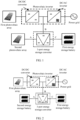
- FIG 1 is a schematic architectural diagram of a photovoltaic power generation system.
- a first photovoltaic array includes at least one first photovoltaic module; a photovoltaic inverter is a cluster inverter formed by a DC/DC converter and a DC/AC inverter connected in series through a direct current bus; and of a 3-port energy storage converter, a port B is connected to the direct current bus, and the other two ports are connected respectively to a second photovoltaic array and a first energy storage battery.
- the second photovoltaic array includes at least one second photovoltaic module, and the first energy storage battery includes at least one first energy storage unit.
- a direct current generated by the first photovoltaic array is converted to an alternating current and the alternating current is transmitted to a power grid, by the photovoltaic inverter.
- the DC/DC converter in the photovoltaic inverter is configured to adjust a voltage of the direct current, so that an output voltage of the first photovoltaic array meets an input voltage of the DC/AC inverter.
- the direct current generated by the first photovoltaic array may be transmitted to the first energy storage battery through the 3-port energy storage converter.
- a direct current generated by the second photovoltaic array is transmitted to the power grid through the 3-port energy storage converter and the DC/AC inverter in the photovoltaic inverter.
- the direct current generated by the second photovoltaic array may be transmitted to the first energy storage battery through the 3-port energy storage converter.
- the 3-port energy storage converter may also be referred to as a two-way DC/DC converter.
- a charge/discharge controller may break a circuit between the port B and a port C and a circuit between a port A and the port C, of the 3-port energy storage converter, so that the electrical energy generated by the first photovoltaic array and the second photovoltaic array is transmitted to the power grid, instead of being stored in the first energy storage battery. If a power demand keeps rising, the charge/discharge controller may close the circuit between the port B and the port C to release the electrical energy stored in the first energy storage battery, thereby meeting the power demand.
- the charge/discharge controller may control a current direction of the 3-port energy storage converter to be from the port B to the port C and from the port A to the port C, and store excess electrical energy generated by the first photovoltaic array and the second photovoltaic array in the first energy storage battery, to avoid impact of the excess electrical energy on the power grid.
- the port A may be disconnected from the second photovoltaic array, and a second energy storage battery may be connected to the 3-port energy storage converter through the port A, to further reduce power generation and store the excess electrical energy.
- a photovoltaic power generation architecture with the port A connected to the second energy storage battery is shown in FIG 2 .
- the 3-port energy storage converter is only an example of description.
- the first two-way DC/DC converter provided here above may further include more ports, for example, being a 4-port two-way DC/DC converter or a 5-port two-way DC/DC converter.
- An additional port of the two-way DC/DC converter may be connected to a photovoltaic array or an energy storage battery. In this way, photovoltaic arrays and energy storage batteries can be configured more flexibly.
- the first photovoltaic array is typically a high-power photovoltaic array
- the second photovoltaic array is typically a low-power photovoltaic array.
- a rated power of the DC/DC converter in the photovoltaic inverter is typically higher than that of the 3-port energy storage converter; and for the DC/DC converter or the 3-port energy storage converter, increase of the rated power is not proportional to increase of costs. For example, costs for increasing a rated power of a DC/DC converter from 100 kilowatts (kW) to 120 kW are much higher than those for increasing a rated power of a 3-port energy storage converter from 20 kW to 40 kW.
- FIG 3 is a schematic architectural diagram of a photovoltaic power generation system according to this application.
- a plurality of 3-port energy storage converters are connected to a direct current bus of a photovoltaic inverter, and a port A and a port C of each 3-port energy storage converter may be connected to one photovoltaic array and one energy storage battery respectively, or each connected to one photovoltaic array or one energy storage battery.
- photovoltaic arrays and energy storage devices can be configured more flexibly to cope with peaks and troughs of power consumption.
- two low-power 3-port energy storage converters cost less than one high-power 3-port energy storage converter.
- two 20 kW 3-port energy storage converters cost less than one 40 kW 3-port energy storage converter. Therefore, with the photovoltaic power generation system shown in FIG 3 , construction and reengineering costs of a photovoltaic power grid can be reduced.
- FIG 4 is a schematic diagram of a circuit topology of a 3-port energy storage converter according to this application.
- a port A to a port B is a booster circuit
- a port C to the port B is a booster circuit
- from the port A to the port C is a buck-boost circuit.
- the port B is configured to connect to a direct current bus of a photovoltaic inverter.
- the port C is configured to connect to an energy storage battery.
- the circuit between the port A and the port C is a circuit with two-way circulation. That is, a current may flow from the port A to the port B, or from the port B to the port A.
- the circuit from the port A to the port B is a one-way circuit from the port A to the port B
- the circuit from the port A to the port C is a circuit with two-way circulation.
- the circuit from the port A to the port B is a circuit with two-way circulation
- the circuit from the port A to the port C may be a circuit with two-way circulation, a circuit with one-way circulation, or an open circuit.
- a circuit direction of the 3-port energy storage converter may be controlled by using a switch.
- a switch shown in FIG 4 is, for example, an insulated gate bipolar transistor (insulated gate bipolar transistor, IGBT).
- the port A of the 3-port energy storage converter in the foregoing photovoltaic power generation system may be a port including at least two sub-ports, with each sub-port connected to at least one photovoltaic module.
- the at least two sub-ports are independent of each other.
- the photovoltaic modules connected to the sub-ports are all connected to a same two-way DC/DC converter, allowing a charge/discharge controller (MPPT controller, for example) to control a charge/discharge power of the photovoltaic power generation system in a centralized manner. In this way, the charge power and the discharge power of the photovoltaic power generation system can be controlled more precisely.
- MPPT controller charge/discharge controller
- the MPPT controller may be a standalone device, or a device or module integrated into the 3-port energy storage converter. This application does not limit a specific form of the MPPT controller.
- FIG 5 is a schematic diagram of a circuit topology of the foregoing 3-port energy storage converter including at least two sub-ports.
- FIG 6 shows a photovoltaic power generation system including the 3-port energy storage converter shown in FIG 5 .
- A1 to An are sub-ports independent of each other and are all sub-ports of the port A.
- a circuit from any one sub-port among A1 to An to the port B is configured as a booster circuit
- a circuit from any one sub-port among A1 to An to the port C is configured as a buck-boost circuit
- a circuit from the port C to the port B is configured as a booster circuit.
- the MPPT controller controls current directions in circuits between the ports.
- an input terminal of a photovoltaic inverter is electrically connected to an output terminal of a first photovoltaic array.
- the first photovoltaic inverter includes at least one first photovoltaic module.
- the sub-ports of the port A of the 3-port energy storage converter (namely, the first two-way DC/DC converter) are all electrically connected to an output terminal of a second photovoltaic module, and the port C of the 3-port energy storage converter is electrically connected to a port of a first energy storage battery.
- the first energy storage battery includes at least one energy storage unit.
- the method 100 includes:
- the MPPT controller configures the circuit of the 3-port energy storage converter, so that the at least one first photovoltaic module, the at least one second photovoltaic module, and the first energy storage unit supply power to the power grid simultaneously; and when a power consumption trough comes, the MPPT controller configures the circuit of the 3-port energy storage converter, so that the first energy storage unit stores excess electrical energy generated by the at least one first photovoltaic module and the at least one second photovoltaic module. In this way, stability of power supply is ensured.
- S130 includes:
- the MPPT controller controls the 3-port energy storage converter, to preferentially transmit the power generated by the at least one second photovoltaic module to the power grid. In this way, charge/discharge times of the first energy storage unit are reduced and a service life of the first energy storage unit is extended.
- the port A in the method 100 may be one or more of the ports of A1 to An.
- this application provides another photovoltaic power transmission method 200.
- the method 200 includes:
- the MPPT controller when the amount of power demanded by the power grid is less than or equals the amount of power generated by the at least one first photovoltaic module, the MPPT controller forbids the 3-port energy storage converter from transmitting energy stored in the at least one first energy storage unit and the at least one second energy storage unit to the power grid. In this way, charge/discharge times of the first energy storage unit and the second energy storage unit are reduced, and service lives of the first energy storage unit and the second energy storage unit are extended.
Landscapes
- Engineering & Computer Science (AREA)
- Power Engineering (AREA)
- Charge And Discharge Circuits For Batteries Or The Like (AREA)
- Photovoltaic Devices (AREA)
- Direct Current Feeding And Distribution (AREA)
Description
- This application relates to the field of electrical circuits, and in particular, to a photovoltaic power generation system and a photovoltaic power transmission method.
- Photovoltaic power generation is a clean technology that directly converts light energy into electrical energy by using a photovoltaic effect of a semiconductor interface. This technology is characterized by, for example, cleanliness, sustainability and safety. Disadvantages of photovoltaic power generation are an unpredictable output power and wide fluctuation of the output power, which bring a series of problems to stability of a power grid.
- One way to solve the foregoing problems is to add an energy storage device to a photovoltaic power generation system. When an output power of a photovoltaic array is relatively high and an amount of power demanded by a power grid is relatively small, excess electrical energy may be stored in the energy storage device. When the output power of the photovoltaic array is relatively low and the amount of power demanded by the power grid is relatively large, the electrical energy stored in the energy storage device may be transferred to the power grid, thereby improving stability of the power grid.
- In the photovoltaic power generation system with the energy storage device added, the photovoltaic array is connected to the power grid through a photovoltaic inverter, the energy storage device is connected to the power grid through a direct current-direct current (DC/DC) converter, and the energy storage device is connected to the photovoltaic array through the DC/DC converter to store the excess electrical energy output by the photovoltaic array.
- Because powers of the photovoltaic inverter and the DC/DC converter are both subject to maximum power limits, when the output power of the photovoltaic array needs to be increased, a higher-power photovoltaic inverter is required; and when a smaller amount of power is demanded by the power grid, a larger-capacity storage device is required to store electrical energy. Accordingly, a higher-power DC/DC converter is required. As a result, it is impossible to configure photovoltaic arrays and energy storage devices flexibly for the photovoltaic power generation system.
-
JP2017143633A -
CN106026646A discloses a non-isolated three-port DC-DC converter.CN103199704B discloses a three-port DC-DC (direct current) converter topology circuit.CN204089686U discloses a photovoltaic inversion energy-storage system. - This application provides a photovoltaic power generation system that uses a DC/DC converter including at least three ports to connect an energy storage unit and a photovoltaic inverter, so as to improve flexibility of photovoltaic array and energy storage device configuration for the photovoltaic power generation system, and reduce costs of reengineering the photovoltaic power generation system.
- According to a first aspect, a photovoltaic power generation system is provided, including at least one first photovoltaic module, a photovoltaic inverter, a first two-way DC/DC converter, and at least one first energy storage unit, and further including at least one second photovoltaic module or at least one second energy storage unit. The photovoltaic inverter includes a DC/DC converter and a direct current-alternating current (DC-AC) inverter, where an input terminal of the DC/DC converter is electrically connected to an output terminal of the at least one first photovoltaic module, an output terminal of the DC/DC converter is connected to an input terminal of the DC-AC inverter through a direct current bus, and the photovoltaic inverter is configured to convert a direct current output by the first photovoltaic module into an alternating current and output the alternating current to a power grid. The first two-way DC/DC converter includes at least three ports, where a first port of the at least three ports of the first two-way DC/DC converter is electrically connected to the direct current bus, a second port of the at least three ports of the first two-way DC/DC converter is electrically connected to a port of the at least one first energy storage unit, a third port of the at least three ports of the first two-way DC/DC converter is electrically connected to an output terminal of the at least one second photovoltaic module or a port of the at least one second energy storage unit, and a circuit between any two ports of the first, second, and third ports of the first two-way DC/DC converter is configured as a circuit with two-way circulation.
- In the photovoltaic power generation system provided in this embodiment, the at least one first photovoltaic module provides daily power supply to the power grid, and the at least one first energy storage unit is configured to ensure stability of daily power supply. When a power consumption peak comes, power generated by a photovoltaic array needs to be increased. To do this, the at least one second photovoltaic module may be connected to the third port of the first two-way DC/DC converter, to increase an output power of the photovoltaic array. When a power consumption trough comes, the at least one second energy storage unit may be connected to the third port of the first two-way converter to store excess electrical energy. In this way, photovoltaic arrays and energy storage devices can be configured flexibly to cope with peaks and troughs of power consumption. In addition, because there is no need to replace the DC/DC converter in the photovoltaic inverter with a higher-power DC/DC converter, costs of reengineering the photovoltaic power grid are reduced.
- The photovoltaic power generation system further includes a second two-way DC/DC converter, at least one third energy storage unit, and at least one third photovoltaic module or at least one fourth energy storage unit. The second two-way DC/DC converter includes at least three ports, where a first port of the at least three ports of the second two-way DC/DC converter is electrically connected to the direct current bus of the photovoltaic inverter, a second port of the at least three ports of the second two-way DC/DC converter is electrically connected to a port of the at least one third energy storage unit, and a third port of the at least three ports of the second two-way DC/DC converter is electrically connected to an output terminal of the at least one third photovoltaic module or a port of the at least one fourth energy storage unit.
- If a power of the first two-way DC/DC converter fails to meet a power demand of the power grid or an energy storage demand of the at least one photovoltaic module, the second two-way DC/DC converter may be connected to the photovoltaic inverter, without changing an existing architecture of the photovoltaic power generation system. In this way, photovoltaic arrays and energy storage devices can be configured more flexibly to cope with the peaks and troughs of power consumption, and reduce the costs for reengineering the photovoltaic power grid.
- Optionally, the circuit between the first port and the second port of the first two-way DC/DC converter is configured as a booster circuit, where the first port is a high-level port and the second port is a low-level port; the circuit between the first port and the third port of the first two-way DC/DC converter is configured as a booster circuit, where the first port is a high-level port and the third port is a low-level port; and the circuit between the second port and the third port of the first two-way DC/DC converter is configured as a buck-boost circuit.
- Because voltages input to the second and third port of the first two-way DC/DC converter are typically low, an input voltage required by the DC/AC inverter in the photovoltaic inverter cannot be fulfilled. Therefore, the circuit between the first port and the second port may be configured as a booster circuit, and the circuit between the first port and the third port may be configured as a booster circuit, without using any other booster devices. In this way, costs for constructing and reengineering the photovoltaic power generation system are reduced. In addition, the circuit between the second port and the third port is configured as a buck-boost circuit, meeting input voltage requirements of different types of first energy storage units.
- Optionally, the third port of the first two-way DC/DC converter includes at least two sub-ports that are electrically connected to output terminals of at least two second photovoltaic modules, and the at least two sub-ports are in a one-to-one correspondence with the at least two second photovoltaic modules.
- Optionally, the photovoltaic power generation system further includes a maximum power point tracking (MPPT) controller, where the MTTP controller is configured to control a current direction in the first two-way DC/DC converter and a charge/discharge power of the first two-way DC/DC converter.
- According to a second aspect, a photovoltaic power transmission method is provided, which is applied to the photovoltaic power generation system in the first aspect, where the third port of the first two-way DC/DC converter is electrically connected to the output terminal of the at least one second photovoltaic module. The method includes:
- when an amount of power demanded by the power grid is less than an amount of power generated by the at least one first photovoltaic module, configuring, by the MPPT controller, the current direction of the first two-way DC/DC converter to be from the first port to the second port and from the third port to the second port; or
- when an amount of power demanded by the power grid equals an amount of power generated by the at least one first photovoltaic module, configuring, by the MPPT controller, the current direction of the first two-way DC/DC converter to be from the third port to the second port; or
- when an amount of power demanded by the power grid is greater than an amount of power generated by the at least one first photovoltaic module, configuring, by the MPPT controller, the current direction of the first two-way DC/DC converter to be from the third port to the first port and/or from the second port to the first port.
- According to the photovoltaic power generation method provided in this embodiment, when a power consumption peak comes, the MPPT controller configures the circuit of the first two-way DC/DC converter, so that the at least one first photovoltaic module, the at least one second photovoltaic module, and the first energy storage unit supply power to the power grid simultaneously; and when a power consumption trough comes, the MPPT controller configures the circuit of the first two-way DC/DC converter, so that the first energy storage unit stores excess electrical energy generated by the at least one first photovoltaic module and the at least one second photovoltaic module. In this way, stability of power supply is ensured.
- Optionally, when the amount of power demanded by the power grid is greater than the amount of power generated by the at least one first photovoltaic module, the MPPT controller configures the current direction of the first two-way DC/DC converter to be from the third port to the first port and/or from the second port to the first port. This includes:
- when the amount of power demanded by the power grid is greater than the amount of power generated by the at least one first photovoltaic module, and less than an amount of power generated by the at least one first photovoltaic module and the at least one second photovoltaic module, configuring, by the MPPT controller, the current direction of the first two-way DC/DC converter to be from the third port to the first port and from the third port to the second port; or
- when the amount of power demanded by the power grid equals an amount of power generated by the at least one first photovoltaic module and the at least one second photovoltaic module, configuring, by the MPPT controller, the current direction of the first two-way DC/DC converter to be from the third port to the first port; or
- when the amount of power demanded by the power grid is greater than an amount of power generated by the at least one first photovoltaic module and the at least one second photovoltaic module, configuring, by the MPPT controller, the current direction of the first two-way DC/DC converter to be from the third port to the first port and from the second port to the first port.
- According to the solution provided in this embodiment, when the amount of power demanded by the power grid is greater than the amount of power generated by the at least one first photovoltaic module, the MPPT controller controls the first two-way DC/DC converter to preferentially transmit the power generated by the at least one second photovoltaic module to the power grid. In this way, charge/discharge times of the first energy storage unit are reduced and a service life of the first energy storage unit is extended.
- According to a third aspect, another photovoltaic power transmission method is provided, which is applied to the photovoltaic power generation system in the first aspect, where the third port of the first two-way DC/DC converter is electrically connected to the port of the at least one second energy storage unit. The method includes:
- when an amount of power demanded by the power grid is less than an amount of power generated by the at least one first photovoltaic module, configuring, by the MPPT controller, the current direction of the first two-way DC/DC converter to be from the first port to the second port and/or from the first port to the third port; or
- when an amount of power demanded by the power grid is greater than an amount of power generated by the at least one first photovoltaic module, configuring, by the MPPT controller, the current direction of the first two-way DC/DC converter to be from the second port to the first port and/or from the third port to the first port.
- According to the solution provided in this embodiment, when the amount of power demanded by the power grid is less than or equals the amount of power generated by the at least one first photovoltaic module, the MPPT controller forbids the first two-way DC/DC converter from transmitting energy stored in the at least one first energy storage unit and the at least one second energy storage unit to the power grid. In this way, charge/discharge times of the first energy storage unit and the second energy storage unit can be reduced, and service lives of the first energy storage unit and the second energy storage unit can be extended.
-
-
FIG 1 is a schematic architectural diagram of a photovoltaic power generation; -
FIG 2 is a schematic architectural diagram of another photovoltaic power generation system; -
FIG 3 is a schematic architectural diagram of a photovoltaic power generation system according to this application; -
FIG 4 is a schematic diagram of a circuit topology of a 3-port energy storage converter according to this application; -
FIG 5 is a schematic diagram of a circuit topology of another 3 -port energy storage converter according to this application; and -
FIG 6 is a schematic architectural diagram of yet another photovoltaic power generation system according to this application. - The embodiments as described herein below with reference to
Fig. 1 and 2 do not form part of the invention as claimed but are presented only for illustrative purposes.FIG 1 is a schematic architectural diagram of a photovoltaic power generation system. - As shown in
FIG 1 , a first photovoltaic array includes at least one first photovoltaic module; a photovoltaic inverter is a cluster inverter formed by a DC/DC converter and a DC/AC inverter connected in series through a direct current bus; and of a 3-port energy storage converter, a port B is connected to the direct current bus, and the other two ports are connected respectively to a second photovoltaic array and a first energy storage battery. The second photovoltaic array includes at least one second photovoltaic module, and the first energy storage battery includes at least one first energy storage unit. - A direct current generated by the first photovoltaic array is converted to an alternating current and the alternating current is transmitted to a power grid, by the photovoltaic inverter. The DC/DC converter in the photovoltaic inverter is configured to adjust a voltage of the direct current, so that an output voltage of the first photovoltaic array meets an input voltage of the DC/AC inverter. Alternatively, the direct current generated by the first photovoltaic array may be transmitted to the first energy storage battery through the 3-port energy storage converter.
- A direct current generated by the second photovoltaic array is transmitted to the power grid through the 3-port energy storage converter and the DC/AC inverter in the photovoltaic inverter. Alternatively, the direct current generated by the second photovoltaic array may be transmitted to the first energy storage battery through the 3-port energy storage converter.
- Because electrical energy generated by the first photovoltaic array and the second photovoltaic array can be stored in the first energy storage battery through the 3-port energy storage converter, and electrical energy stored in the first energy storage battery can be transmitted to the power grid through the 3-port energy storage converter, the 3-port energy storage converter may also be referred to as a two-way DC/DC converter.
- When a power consumption peak comes, a charge/discharge controller may break a circuit between the port B and a port C and a circuit between a port A and the port C, of the 3-port energy storage converter, so that the electrical energy generated by the first photovoltaic array and the second photovoltaic array is transmitted to the power grid, instead of being stored in the first energy storage battery. If a power demand keeps rising, the charge/discharge controller may close the circuit between the port B and the port C to release the electrical energy stored in the first energy storage battery, thereby meeting the power demand.
- When a power consumption trough comes, the charge/discharge controller may control a current direction of the 3-port energy storage converter to be from the port B to the port C and from the port A to the port C, and store excess electrical energy generated by the first photovoltaic array and the second photovoltaic array in the first energy storage battery, to avoid impact of the excess electrical energy on the power grid. If the power demand keeps dropping, the port A may be disconnected from the second photovoltaic array, and a second energy storage battery may be connected to the 3-port energy storage converter through the port A, to further reduce power generation and store the excess electrical energy. A photovoltaic power generation architecture with the port A connected to the second energy storage battery is shown in
FIG 2 . - The 3-port energy storage converter is only an example of description. The first two-way DC/DC converter provided here above may further include more ports, for example, being a 4-port two-way DC/DC converter or a 5-port two-way DC/DC converter. An additional port of the two-way DC/DC converter may be connected to a photovoltaic array or an energy storage battery. In this way, photovoltaic arrays and energy storage batteries can be configured more flexibly.
- In the photovoltaic power generation system shown in
FIG 1 or FIG 2 , the first photovoltaic array is typically a high-power photovoltaic array, and the second photovoltaic array is typically a low-power photovoltaic array. Accordingly, a rated power of the DC/DC converter in the photovoltaic inverter is typically higher than that of the 3-port energy storage converter; and for the DC/DC converter or the 3-port energy storage converter, increase of the rated power is not proportional to increase of costs. For example, costs for increasing a rated power of a DC/DC converter from 100 kilowatts (kW) to 120 kW are much higher than those for increasing a rated power of a 3-port energy storage converter from 20 kW to 40 kW. Therefore, when an existing photovoltaic power generation system is reengineered in accordance with the photovoltaic power generation system described here above, it is unnecessary to replace a DC/DC converter in a photovoltaic inverter, but only a DC/DC converter connected to a first energy storage battery needs to be replaced. In this way, costs for reengineering a photovoltaic power grid are reduced. When the port A is connected to the second energy storage battery, the first energy storage battery and the second energy storage battery are not connected in parallel. This can avoid generation of a circulating current between batteries in parallel and improve available capacities and service lives of the first energy storage battery and the second energy storage battery. -
FIG 3 is a schematic architectural diagram of a photovoltaic power generation system according to this application. - As shown in
FIG 3 , a plurality of 3-port energy storage converters are connected to a direct current bus of a photovoltaic inverter, and a port A and a port C of each 3-port energy storage converter may be connected to one photovoltaic array and one energy storage battery respectively, or each connected to one photovoltaic array or one energy storage battery. In this way, photovoltaic arrays and energy storage devices can be configured more flexibly to cope with peaks and troughs of power consumption. - In general, two low-power 3-port energy storage converters cost less than one high-power 3-port energy storage converter. For example, two 20 kW 3-port energy storage converters cost less than one 40 kW 3-port energy storage converter. Therefore, with the photovoltaic power generation system shown in
FIG 3 , construction and reengineering costs of a photovoltaic power grid can be reduced. -
FIG 4 is a schematic diagram of a circuit topology of a 3-port energy storage converter according to this application. - As shown in
FIG 4 , from a port A to a port B is a booster circuit, from a port C to the port B is a booster circuit, and from the port A to the port C is a buck-boost circuit. The port B is configured to connect to a direct current bus of a photovoltaic inverter. The port C is configured to connect to an energy storage battery. The circuit between the port A and the port C is a circuit with two-way circulation. That is, a current may flow from the port A to the port B, or from the port B to the port A. When the port A is connected to a photovoltaic array, the circuit from the port A to the port B is a one-way circuit from the port A to the port B, and the circuit from the port A to the port C is a circuit with two-way circulation. When the port A is connected to an energy storage battery, the circuit from the port A to the port B is a circuit with two-way circulation, and the circuit from the port A to the port C may be a circuit with two-way circulation, a circuit with one-way circulation, or an open circuit. A circuit direction of the 3-port energy storage converter may be controlled by using a switch. A switch shown inFIG 4 is, for example, an insulated gate bipolar transistor (insulated gate bipolar transistor, IGBT). - The port A of the 3-port energy storage converter in the foregoing photovoltaic power generation system may be a port including at least two sub-ports, with each sub-port connected to at least one photovoltaic module. The at least two sub-ports are independent of each other. The photovoltaic modules connected to the sub-ports are all connected to a same two-way DC/DC converter, allowing a charge/discharge controller (MPPT controller, for example) to control a charge/discharge power of the photovoltaic power generation system in a centralized manner. In this way, the charge power and the discharge power of the photovoltaic power generation system can be controlled more precisely.
- In this application, the MPPT controller may be a standalone device, or a device or module integrated into the 3-port energy storage converter. This application does not limit a specific form of the MPPT controller.
-
FIG 5 is a schematic diagram of a circuit topology of the foregoing 3-port energy storage converter including at least two sub-ports.FIG 6 shows a photovoltaic power generation system including the 3-port energy storage converter shown inFIG 5 . - In the circuitry shown in
FIG 5 , A1 to An are sub-ports independent of each other and are all sub-ports of the port A. A circuit from any one sub-port among A1 to An to the port B is configured as a booster circuit, a circuit from any one sub-port among A1 to An to the port C is configured as a buck-boost circuit, and a circuit from the port C to the port B is configured as a booster circuit. The MPPT controller controls current directions in circuits between the ports. - In the photovoltaic power generation system shown in
FIG 6 , an input terminal of a photovoltaic inverter is electrically connected to an output terminal of a first photovoltaic array. The first photovoltaic inverter includes at least one first photovoltaic module. The sub-ports of the port A of the 3-port energy storage converter (namely, the first two-way DC/DC converter) are all electrically connected to an output terminal of a second photovoltaic module, and the port C of the 3-port energy storage converter is electrically connected to a port of a first energy storage battery. The first energy storage battery includes at least one energy storage unit. - Based on the photovoltaic power generation system shown in
FIG. 3 , andFIG 6 , this application provides a photovoltaic power transmission method 100. The method 100 includes: - S110. When an amount of power demanded by the power grid is less than an amount of power generated by the at least one first photovoltaic module, the MPPT controller configures the current direction of the 3-port energy storage converter to be from the port B to the port C and from the port A to the port C; or
- S120. When an amount of power demanded by the power grid equals an amount of power generated by the at least one first photovoltaic module, the MPPT controller configures the current direction of the 3-port energy storage converter to be from the port A to the port C; or
- S130. When an amount of power demanded by the power grid is greater than an amount of power generated by the at least one first photovoltaic module, the MPPT controller configures the current direction of the 3-port energy storage converter to be from the port A to the port B and/or from the port C to the port B.
- According to the photovoltaic power generation method provided in this embodiment, when a power consumption peak comes, the MPPT controller configures the circuit of the 3-port energy storage converter, so that the at least one first photovoltaic module, the at least one second photovoltaic module, and the first energy storage unit supply power to the power grid simultaneously; and when a power consumption trough comes, the MPPT controller configures the circuit of the 3-port energy storage converter, so that the first energy storage unit stores excess electrical energy generated by the at least one first photovoltaic module and the at least one second photovoltaic module. In this way, stability of power supply is ensured.
- Optionally, S130 includes:
- S131. When the amount of power demanded by the power grid is greater than the amount of power generated by the at least one first photovoltaic module, and less than an amount of power generated by the at least one first photovoltaic module and the at least one second photovoltaic module, the MPPT controller configures the current direction of the 3-port energy storage converter to be from the port A to the port B and from the port A to the port C; or,
- S132. When the amount of power demanded by the power grid equals an amount of power generated by the at least one first photovoltaic module and the at least one second photovoltaic module, the MPPT controller configures the current direction of the 3-port energy storage converter to be from the port A to the port B; or
- S133. When the amount of power demanded by the power grid is greater than an amount of power generated by the at least one first photovoltaic module and the at least one second photovoltaic module, the MPPT controller configures the current direction of the 3-port energy storage converter to be from the port A to the port B and from the port C to the port B.
- According to the solution provided by the method 100, when the amount of power demanded by the power grid is greater than the amount of power generated by the at least one first photovoltaic module, the MPPT controller controls the 3-port energy storage converter, to preferentially transmit the power generated by the at least one second photovoltaic module to the power grid. In this way, charge/discharge times of the first energy storage unit are reduced and a service life of the first energy storage unit is extended. It should be understood that when the method 100 is applied to the photovoltaic power generation system shown in
FIG 6 , the port A in the method 100 may be one or more of the ports of A1 to An. - Based on the photovoltaic power generation system shown in
FIG. 3 , this application provides another photovoltaic power transmission method 200. The method 200 includes: - S210. When an amount of power demanded by the power grid is less than an amount of power generated by the at least one first photovoltaic module, the MPPT controller configures the current direction of the 3-port energy storage converter to be from the port B to the port C and/or from the port B to the port A; or
- S220. When an amount of power demanded by the power grid is greater than an amount of power generated by the at least one first photovoltaic module, the MPPT controller configures the current direction of the 3-port energy storage converter to be from the port C to the port B and/or from the port A to the port B.
- According to the solution provided by the method 200, when the amount of power demanded by the power grid is less than or equals the amount of power generated by the at least one first photovoltaic module, the MPPT controller forbids the 3-port energy storage converter from transmitting energy stored in the at least one first energy storage unit and the at least one second energy storage unit to the power grid. In this way, charge/discharge times of the first energy storage unit and the second energy storage unit are reduced, and service lives of the first energy storage unit and the second energy storage unit are extended.
- The objectives, technical solutions, and beneficial effects of this application are further described in detail in the foregoing specific implementations. It should be understood that the foregoing descriptions are merely specific implementations of this application, but are not intended to limit the protection scope of this application. Any modification, equivalent replacement, or improvement made based on technical solutions of this application shall fall within the protection scope of the appended claims.
Claims (7)
- A photovoltaic power generation system, comprising: at least one first photovoltaic module, a photovoltaic inverter, a first two-way direct current-direct current, DC/DC, converter, and at least one first energy storage unit, and further comprising at least one second photovoltaic module or at least one second energy storage unit, whereinthe photovoltaic inverter comprises a DC/DC converter and a direct current-alternating current DC-AC inverter, wherein an input terminal of the DC/DC converter is electrically connected to an output terminal of the at least one first photovoltaic module, an output terminal of the DC/DC converter is connected to an input terminal of the DC-AC inverter through a direct current bus, and the photovoltaic inverter is configured to convert a direct current output by the first photovoltaic module into an alternating current and output the alternating current to a power grid; andthe first two-way DC/DC converter comprises at least three ports, wherein a first port of the at least three ports of the first two-way DC/DC converter is electrically connected to the direct current bus, a second port of the at least three ports of the first two-way DC/DC converter is electrically connected to a port of the at least one first energy storage unit, a third port of the at least three ports of the first two-way DC/DC converter is electrically connected to an output terminal of the at least one second photovoltaic module or a port of the at least one second energy storage unit, and a circuit between any two ports of the first, second, and third ports of the first two-way DC/DC converter is configured as a circuit with two-way circulation., wherein the photovoltaic power generation system further comprises a second two-way DC/DC converter and at least one third energy storage unit, and the photovoltaic power generation system further comprises at least one third photovoltaic module or at least one fourth energy storage unit, whereinthe second two-way DC/DC converter comprises at least three ports, wherein a first port of the at least three ports of the second two-way DC/DC converter is electrically connected to the direct current bus, a second port of the at least three ports of the second two-way DC/DC converter is electrically connected to a port of the at least one third energy storage unit, and a third port of the at least three ports of the second two-way DC/DC converter is electrically connected to an output terminal of the at least one third photovoltaic module or a port of the at least one fourth energy storage unit.
- The photovoltaic power generation system according to claim 1 whereina circuit between the first port and the second port of the first two-way DC/DC converter is configured as a booster circuit, wherein the first port is a high-level port and the second port is a low-level port;a circuit between the first port and the third port of the first two-way DC/DC converter is configured as a booster circuit, wherein the first port is a high-level port and the third port is a low-level port; anda circuit between the second port and the third port of the first two-way DC/DC converter is configured as a buck-boost circuit.
- The photovoltaic power generation system according to any one of claims 1 to 2, wherein the third port of the first two-way DC/DC converter comprises at least two sub-ports that are electrically connected to output terminals of at least two second photovoltaic modules, and the at least two sub-ports are in a one-to-one correspondence with the at least two second photovoltaic modules.
- The photovoltaic power generation system according to any one of claims 1 to 3, wherein the photovoltaic power generation system further comprises a maximum power point tracking MPPT controller, configured to control a current direction in the first two-way DC/DC converter and a charge/discharge power of the first two-way DC/DC converter.
- A photovoltaic power transmission method, applied to the photovoltaic power generation system according to claim 4, wherein when the third port of the first two-way DC/DC converter is electrically connected to the output terminal of the at least one second photovoltaic module, the method comprises:when an amount of power demanded by the power grid is less than an amount of power generated by the at least one first photovoltaic module, configuring, by the MPPT controller, the current direction of the first two-way DC/DC converter to be from the first port to the second port and from the third port to the second port; orwhen an amount of power demanded by the power grid equals an amount of power generated by the at least one first photovoltaic module, configuring, by the MPPT controller, the current direction of the first two-way DC/DC converter to be from the third port to the second port; orwhen an amount of power demanded by the power grid is greater than an amount of power generated by the at least one first photovoltaic module, configuring, by the MPPT controller, the current direction of the first two-way DC/DC converter to be from the third port to the first port and/or from the second port to the first port.
- The photovoltaic power transmission method according to claim 5, wherein the, when an amount of power demanded by the power grid is greater than an amount of power generated by the at least one first photovoltaic module, configuring, by the MPPT controller, the current direction of the first two-way DC/DC converter to be from the third port to the first port and/or from the second port to the first port, comprises:when the amount of power demanded by the power grid is greater than the amount of power generated by the at least one first photovoltaic module, and less than an amount of power generated by the at least one first photovoltaic module and the at least one second photovoltaic module, configuring, by the MPPT controller, the current direction of the first two-way DC/DC converter to be from the third port to the first port and from the third port to the second port; orwhen the amount of power demanded by the power grid equals an amount of power generated by the at least one first photovoltaic module and the at least one second photovoltaic module, configuring, by the MPPT controller, the current direction of the first two-way DC/DC converter to be from the third port to the first port; orwhen the amount of power demanded by the power grid is greater than an amount of power generated by the at least one first photovoltaic module and the at least one second photovoltaic module, configuring, by the MPPT controller, the current direction of the first two-way DC/DC converter to be from the third port to the first port and from the second port to the first port.
- A photovoltaic power transmission method, applied to the photovoltaic power generation system according to claim 4, wherein when the third port of the first two-way DC/DC converter is electrically connected to the port of the at least one second energy storage unit, the method comprises:when an amount of power demanded by the power grid is less than an amount of power generated by the at least one first photovoltaic module, configuring, by the MPPT controller, the current direction of the first two-way DC/DC converter to be from the first port to the second port and/or from the first port to the third port; orwhen an amount of power demanded by the power grid is greater than an amount of power generated by the at least one first photovoltaic module, configuring, by the MPPT controller, the current direction of the first two-way DC/DC converter to be from the second port to the first port and/or from the third port to the first port.
Priority Applications (1)
| Application Number | Priority Date | Filing Date | Title |
|---|---|---|---|
| EP23166313.9A EP4243235A3 (en) | 2018-02-05 | 2019-01-23 | Photovoltaic power generation system and photovoltaic power transmission method |
Applications Claiming Priority (2)
| Application Number | Priority Date | Filing Date | Title |
|---|---|---|---|
| CN201810114068.0A CN108233421B (en) | 2018-02-05 | 2018-02-05 | Photovoltaic power generation system and photovoltaic power transmission method |
| PCT/CN2019/072778 WO2019149118A1 (en) | 2018-02-05 | 2019-01-23 | Photovoltaic power generation system and photovoltaic power transmission method |
Related Child Applications (1)
| Application Number | Title | Priority Date | Filing Date |
|---|---|---|---|
| EP23166313.9A Division EP4243235A3 (en) | 2018-02-05 | 2019-01-23 | Photovoltaic power generation system and photovoltaic power transmission method |
Publications (3)
| Publication Number | Publication Date |
|---|---|
| EP3742572A1 EP3742572A1 (en) | 2020-11-25 |
| EP3742572A4 EP3742572A4 (en) | 2021-03-24 |
| EP3742572B1 true EP3742572B1 (en) | 2023-04-26 |
Family
ID=62669715
Family Applications (2)
| Application Number | Title | Priority Date | Filing Date |
|---|---|---|---|
| EP19747298.8A Active EP3742572B1 (en) | 2018-02-05 | 2019-01-23 | Photovoltaic power generation system and photovoltaic power transmission method |
| EP23166313.9A Pending EP4243235A3 (en) | 2018-02-05 | 2019-01-23 | Photovoltaic power generation system and photovoltaic power transmission method |
Family Applications After (1)
| Application Number | Title | Priority Date | Filing Date |
|---|---|---|---|
| EP23166313.9A Pending EP4243235A3 (en) | 2018-02-05 | 2019-01-23 | Photovoltaic power generation system and photovoltaic power transmission method |
Country Status (5)
| Country | Link |
|---|---|
| US (2) | US11539212B2 (en) |
| EP (2) | EP3742572B1 (en) |
| CN (1) | CN108233421B (en) |
| AU (1) | AU2019215491B2 (en) |
| WO (1) | WO2019149118A1 (en) |
Families Citing this family (20)
| Publication number | Priority date | Publication date | Assignee | Title |
|---|---|---|---|---|
| CN108233421B (en) | 2018-02-05 | 2020-09-08 | 华为技术有限公司 | Photovoltaic power generation system and photovoltaic power transmission method |
| CN111869086B (en) * | 2018-12-29 | 2022-07-12 | 华为数字能源技术有限公司 | Inverter |
| CN110504710B (en) * | 2019-09-04 | 2020-10-16 | 黄山东安新高能源科技有限公司 | Photovoltaic grid-connected system |
| CN110535179B (en) * | 2019-09-11 | 2021-02-26 | 浙江正泰新能源开发有限公司 | A DC combiner box-level energy storage system and its control method |
| CN110854878A (en) * | 2019-11-19 | 2020-02-28 | 安徽信义电源有限公司 | Photovoltaic power generation active frequency control method and system based on energy storage battery |
| CN110932318A (en) * | 2019-11-29 | 2020-03-27 | 华为技术有限公司 | Photovoltaic system |
| US12418243B2 (en) * | 2020-05-26 | 2025-09-16 | Franklin WH Energy Storage Inc. | Multi-port energy storage battery and multi- port energy storage battery pack |
| GB2605357B (en) * | 2021-02-24 | 2024-05-01 | Mclaren Automotive Ltd | Battery system |
| CN112994105A (en) * | 2021-03-25 | 2021-06-18 | 华为技术有限公司 | Photovoltaic power generation system, power control device and energy storage system |
| CN112952909B (en) * | 2021-04-07 | 2023-12-19 | 爱士惟科技股份有限公司 | Energy dispatching system and method for photovoltaic energy storage system |
| US12456866B2 (en) * | 2021-04-26 | 2025-10-28 | Pontificia Universidad Catolica De Chile | Multi-port power converter and associated system and use |
| CN113131520B (en) * | 2021-04-30 | 2023-07-14 | 厦门科华数能科技有限公司 | Optical storage system, its control method, and storage medium |
| WO2023004712A1 (en) * | 2021-07-29 | 2023-02-02 | 宁德时代新能源科技股份有限公司 | Charging and discharging apparatus, battery charging method, and charging and discharging system |
| CN114301053A (en) * | 2021-12-29 | 2022-04-08 | 北京百度网讯科技有限公司 | Power supply system, control method and data center |
| CN115459334B (en) * | 2022-10-20 | 2024-06-14 | 清华大学 | Rural photovoltaic flexible DC distribution network system and method |
| CN116317512A (en) * | 2023-03-02 | 2023-06-23 | 华为数字能源技术有限公司 | power conversion equipment |
| CN115882516B (en) * | 2023-03-08 | 2023-06-06 | 杭州欣美成套电器制造有限公司 | Photovoltaic grid-connected control device and method for high-efficiency photovoltaic charging control |
| CN116454980B (en) * | 2023-06-15 | 2023-09-01 | 麦田能源股份有限公司 | Power conversion device and maximum power point tracking control method |
| CN119029828A (en) * | 2024-08-15 | 2024-11-26 | 苏州恩易浦科技有限公司 | Photovoltaic energy storage system |
| CN119093436B (en) * | 2024-11-08 | 2025-04-22 | 深圳市恩玖科技有限公司 | A method, system and storage medium for controlling photovoltaic storage based on DC bus coupling |
Family Cites Families (48)
| Publication number | Priority date | Publication date | Assignee | Title |
|---|---|---|---|---|
| CN101286655B (en) * | 2008-05-22 | 2011-08-31 | 中国科学院电工研究所 | Complementary power supply system of wind and photovoltaic power generation based on super capacitor power storage |
| WO2010088545A2 (en) * | 2009-01-30 | 2010-08-05 | Board Of Regents, The University Of Texas System | Methods and apparatus for design and control of multi-port power electronic interface for renewable energy sources |
| KR101084216B1 (en) * | 2009-12-23 | 2011-11-17 | 삼성에스디아이 주식회사 | Energy storage system and its control method |
| US8866334B2 (en) * | 2010-03-02 | 2014-10-21 | Icr Turbine Engine Corporation | Dispatchable power from a renewable energy facility |
| KR101113508B1 (en) | 2010-05-06 | 2012-02-29 | 성균관대학교산학협력단 | Apparatus and method for charging and discharging photovoltaic pcs integrated battery |
| EP2512000B1 (en) * | 2011-04-15 | 2022-03-02 | ABB Schweiz AG | Reconfigurable power systems and converters |
| US8508074B2 (en) * | 2011-10-28 | 2013-08-13 | The Board Of Trustees Of The University Of Illinois | System and method for optimizing solar power conversion |
| DE102012002185B4 (en) | 2012-02-07 | 2019-11-07 | Sew-Eurodrive Gmbh & Co Kg | Energy recovery system with energy storage, method for operating an energy recovery system |
| JP2013183577A (en) * | 2012-03-02 | 2013-09-12 | Kyocera Corp | Power control system, power control unit, and power control method |
| KR101410000B1 (en) * | 2012-05-16 | 2014-07-02 | 엘지전자 주식회사 | Energy storage device and method for controlling the same |
| US20140042815A1 (en) * | 2012-06-10 | 2014-02-13 | The Regents of the University of Colorado, A Body Corporate | Balancing, filtering and/or controlling series-connected cells |
| JP5969304B2 (en) * | 2012-08-06 | 2016-08-17 | 京セラ株式会社 | Management system, management method, control device, and solar cell device |
| CN103199704B (en) * | 2013-04-19 | 2015-07-22 | 深圳市航天新源科技有限公司 | Three-port DC-DC (direct current) converter topology circuit |
| US9912150B2 (en) * | 2013-07-10 | 2018-03-06 | Mitsubishi Electric Corporation | Power control system |
| CN103532214A (en) * | 2013-09-17 | 2014-01-22 | 南京航空航天大学 | Photovoltaic power generation system structure integrating energy storage and grid-connected and off-grid power supply functions and control method |
| JP6160481B2 (en) * | 2013-12-27 | 2017-07-12 | ソニー株式会社 | Power supply device, power supply system, and power supply control method |
| WO2015132631A1 (en) * | 2014-03-06 | 2015-09-11 | Robert Bosch (Sea) Pte. Ltd. | An improved hybrid storage system |
| US9977452B2 (en) * | 2014-03-07 | 2018-05-22 | Board Of Trustees Of The University Of Alabama | Multi-input or multi-output energy system architectures and control methods |
| JP6369154B2 (en) * | 2014-06-11 | 2018-08-08 | 住友電気工業株式会社 | Power supply |
| CN104167799B (en) * | 2014-08-29 | 2017-10-17 | 阳光电源股份有限公司 | A kind of charge-discharge system, method and photovoltaic generating system |
| CN204089686U (en) * | 2014-09-02 | 2015-01-07 | 阳光电源股份有限公司 | A photovoltaic inverter energy storage system |
| CN104410099B (en) | 2014-11-03 | 2017-07-14 | 深圳市西林电气技术有限公司 | A kind of multifunction energy storage system converter control strategy of smooth electricity storage station |
| CN104319798B (en) | 2014-11-17 | 2016-11-30 | 阳光电源股份有限公司 | A kind of bidirectional DC/DC converter and light-preserved system |
| CN104518672B (en) * | 2014-11-21 | 2017-06-06 | 深圳市航天新源科技有限公司 | A kind of integrated three Port Translation devices with zero port current ripple of magnetic |
| US9960698B2 (en) * | 2014-12-22 | 2018-05-01 | Flex Power Control, Inc. | Reliable AC-DC power converter with high voltage DC link |
| CN104467017A (en) * | 2014-12-24 | 2015-03-25 | 国家电网公司 | Multiport photovoltaic energy storage hybrid power generation system based on high frequency magnetic coupling |
| US10263456B1 (en) * | 2015-03-13 | 2019-04-16 | The Florida State University Research Foundation, Inc. | Integrated three-port bidirectional DC-DC converter for renewable energy sources |
| CN104682375A (en) * | 2015-03-24 | 2015-06-03 | 华为技术有限公司 | Power supply equipment and power supply method for data center |
| US9397504B1 (en) * | 2015-04-22 | 2016-07-19 | Solarcity Corporation | Hybrid inverter power control system for PV string, battery, grid and back-up loads |
| WO2016170184A1 (en) * | 2015-04-23 | 2016-10-27 | Danmarks Tekniske Universitet | A three-port direct current converter |
| CN104882906B (en) | 2015-05-04 | 2017-06-13 | 华电电力科学研究院 | A kind of distributed micro-grid black starting-up control system and method based on photovoltaic and energy storage |
| CN105071438A (en) * | 2015-08-12 | 2015-11-18 | 安徽明赫新能源有限公司 | Photovoltaic energy storage and power generation integrated grid-connected system |
| CN105244899A (en) * | 2015-11-05 | 2016-01-13 | 许继电气股份有限公司 | Binary hybrid energy storage device in distributed power generation system and distributed power generation system |
| CN105391301B (en) * | 2015-12-25 | 2019-03-01 | 深圳市航天新源科技有限公司 | A kind of PCU control system of the two-way multiport converter based on wide-voltage range |
| US9941702B2 (en) * | 2015-12-28 | 2018-04-10 | King Fahd University Of Petroleum And Minerals | Fault ride-through and power smoothing system |
| JP2017143633A (en) * | 2016-02-09 | 2017-08-17 | 住友電気工業株式会社 | Power conversion device, power conditioner, power conditioner system, and power source system |
| CN205385293U (en) * | 2016-02-19 | 2016-07-13 | 安徽工程大学 | Little electric wire netting energy storage system of new forms of energy |
| US10381838B2 (en) * | 2016-05-10 | 2019-08-13 | Tesla, Inc. | Power control system with fault detection and data retention for energy generation systems |
| US10447070B2 (en) * | 2016-06-16 | 2019-10-15 | Yu Qin | Solar energy system with built-in battery charger and its method |
| CN106026646B (en) * | 2016-07-23 | 2019-03-08 | 河北工业大学 | A non-isolated three-port DC-DC converter and method of using the same |
| US10183583B2 (en) * | 2016-08-03 | 2019-01-22 | Solarcity Corporation | Energy generation and storage system with electric vehicle charging capability |
| US10340702B2 (en) * | 2016-08-11 | 2019-07-02 | Solarcity Corporation | Optimizer battery PV energy generation systems |
| CN106712156A (en) * | 2016-10-19 | 2017-05-24 | 佛山市柏克新能科技股份有限公司 | Multi-energy-converted inversion device and control method thereof |
| CN106451544B (en) | 2016-10-25 | 2019-05-24 | 中国科学院广州能源研究所 | A kind of united three level grid-connected system control method of light storage |
| CN106787707B (en) * | 2017-02-24 | 2020-05-22 | 上海交通大学 | Embedded energy storage type multi-module tandem photovoltaic direct current boost converter and application method |
| CN107565677B (en) * | 2017-08-24 | 2020-07-21 | 深圳市航天新源科技有限公司 | A multi-busbar high-voltage high-power power supply controller |
| CN108233421B (en) * | 2018-02-05 | 2020-09-08 | 华为技术有限公司 | Photovoltaic power generation system and photovoltaic power transmission method |
| US11043902B2 (en) * | 2018-03-09 | 2021-06-22 | Eugene F. Krzywinski | Bidirectional DC DC converter interface to a DC AC inverter and energy storage |
-
2018
- 2018-02-05 CN CN201810114068.0A patent/CN108233421B/en active Active
-
2019
- 2019-01-23 AU AU2019215491A patent/AU2019215491B2/en active Active
- 2019-01-23 EP EP19747298.8A patent/EP3742572B1/en active Active
- 2019-01-23 WO PCT/CN2019/072778 patent/WO2019149118A1/en not_active Ceased
- 2019-01-23 EP EP23166313.9A patent/EP4243235A3/en active Pending
-
2020
- 2020-08-04 US US16/984,418 patent/US11539212B2/en active Active
-
2022
- 2022-12-02 US US18/074,172 patent/US12272953B2/en active Active
Also Published As
| Publication number | Publication date |
|---|---|
| US11539212B2 (en) | 2022-12-27 |
| AU2019215491A1 (en) | 2020-08-27 |
| CN108233421A (en) | 2018-06-29 |
| US20230095057A1 (en) | 2023-03-30 |
| EP3742572A4 (en) | 2021-03-24 |
| EP3742572A1 (en) | 2020-11-25 |
| EP4243235A3 (en) | 2023-11-22 |
| US12272953B2 (en) | 2025-04-08 |
| AU2019215491B2 (en) | 2023-05-04 |
| WO2019149118A1 (en) | 2019-08-08 |
| US20200366236A1 (en) | 2020-11-19 |
| EP4243235A2 (en) | 2023-09-13 |
| CN108233421B (en) | 2020-09-08 |
Similar Documents
| Publication | Publication Date | Title |
|---|---|---|
| EP3742572B1 (en) | Photovoltaic power generation system and photovoltaic power transmission method | |
| CN204119035U (en) | Produce the device that bucking voltage exports | |
| US20160176305A1 (en) | Muilti-functional power management system | |
| EP3905465B1 (en) | Converter, method and system applied to photovoltaic power generation system | |
| US11929614B2 (en) | Energy storage system and switching power supply thereof | |
| US9190921B2 (en) | Transformerless cycloconverter | |
| US20170047739A1 (en) | Converter module for converting electrical power and inverter for a photovoltaic system having at least two converter modules | |
| EP4187738A1 (en) | Photovoltaic system, inverter, and bus voltage control method for inverter | |
| US9825470B2 (en) | Multi-source power converter | |
| US8766478B2 (en) | Power system and control method thereof | |
| US20170063254A1 (en) | Inverter system | |
| JP6722295B2 (en) | Power conversion system, power supply system, and power conversion device | |
| JP7572017B2 (en) | Power supply system and method | |
| JP7184053B2 (en) | power wiring device | |
| Elfeqy et al. | Design of a low voltage DC grid interfacing PV and energy storage systems | |
| CN220382766U (en) | Comprehensive energy integration module and comprehensive energy system | |
| US12556096B2 (en) | Method for increasing the lifetime of converter switches, and system | |
| CN110932318A (en) | Photovoltaic system | |
| JP7207324B2 (en) | power wiring device | |
| CN120454229A (en) | Charging device and power supply system | |
| CN120474344A (en) | Power supply devices and photovoltaic energy storage systems | |
| CN118801511A (en) | Energy storage system, photovoltaic storage system and power regulation method of energy storage system | |
| TWM494214U (en) | Regenerate power supply system | |
| MX2013002571A (en) | Three-port power converter for generating electric power in an island mode. | |
| CN109904853A (en) | DC power system and power device |
Legal Events
| Date | Code | Title | Description |
|---|---|---|---|
| STAA | Information on the status of an ep patent application or granted ep patent |
Free format text: STATUS: THE INTERNATIONAL PUBLICATION HAS BEEN MADE |
|
| PUAI | Public reference made under article 153(3) epc to a published international application that has entered the european phase |
Free format text: ORIGINAL CODE: 0009012 |
|
| STAA | Information on the status of an ep patent application or granted ep patent |
Free format text: STATUS: REQUEST FOR EXAMINATION WAS MADE |
|
| 17P | Request for examination filed |
Effective date: 20200817 |
|
| AK | Designated contracting states |
Kind code of ref document: A1 Designated state(s): AL AT BE BG CH CY CZ DE DK EE ES FI FR GB GR HR HU IE IS IT LI LT LU LV MC MK MT NL NO PL PT RO RS SE SI SK SM TR |
|
| AX | Request for extension of the european patent |
Extension state: BA ME |
|
| A4 | Supplementary search report drawn up and despatched |
Effective date: 20210219 |
|
| RIC1 | Information provided on ipc code assigned before grant |
Ipc: H02J 3/32 20060101ALI20210215BHEP Ipc: H02J 3/38 20060101AFI20210215BHEP Ipc: H02J 7/35 20060101ALN20210215BHEP |
|
| DAV | Request for validation of the european patent (deleted) | ||
| DAX | Request for extension of the european patent (deleted) | ||
| RAP1 | Party data changed (applicant data changed or rights of an application transferred) |
Owner name: HUAWEI DIGITAL POWER TECHNOLOGIES CO., LTD. |
|
| RIC1 | Information provided on ipc code assigned before grant |
Ipc: H02J 7/35 20060101ALN20220915BHEP Ipc: H02J 3/46 20060101ALI20220915BHEP Ipc: H02J 3/32 20060101ALI20220915BHEP Ipc: H02J 3/38 20060101AFI20220915BHEP |
|
| RIC1 | Information provided on ipc code assigned before grant |
Ipc: H02J 7/35 20060101ALN20221010BHEP Ipc: H02J 3/46 20060101ALI20221010BHEP Ipc: H02J 3/32 20060101ALI20221010BHEP Ipc: H02J 3/38 20060101AFI20221010BHEP |
|
| GRAP | Despatch of communication of intention to grant a patent |
Free format text: ORIGINAL CODE: EPIDOSNIGR1 |
|
| STAA | Information on the status of an ep patent application or granted ep patent |
Free format text: STATUS: GRANT OF PATENT IS INTENDED |
|
| RIC1 | Information provided on ipc code assigned before grant |
Ipc: H02J 7/35 20060101ALN20221114BHEP Ipc: H02J 3/46 20060101ALI20221114BHEP Ipc: H02J 3/32 20060101ALI20221114BHEP Ipc: H02J 3/38 20060101AFI20221114BHEP |
|
| INTG | Intention to grant announced |
Effective date: 20221215 |
|
| GRAS | Grant fee paid |
Free format text: ORIGINAL CODE: EPIDOSNIGR3 |
|
| GRAA | (expected) grant |
Free format text: ORIGINAL CODE: 0009210 |
|
| STAA | Information on the status of an ep patent application or granted ep patent |
Free format text: STATUS: THE PATENT HAS BEEN GRANTED |
|
| AK | Designated contracting states |
Kind code of ref document: B1 Designated state(s): AL AT BE BG CH CY CZ DE DK EE ES FI FR GB GR HR HU IE IS IT LI LT LU LV MC MK MT NL NO PL PT RO RS SE SI SK SM TR |
|
| REG | Reference to a national code |
Ref country code: GB Ref legal event code: FG4D |
|
| REG | Reference to a national code |
Ref country code: CH Ref legal event code: EP |
|
| REG | Reference to a national code |
Ref country code: DE Ref legal event code: R096 Ref document number: 602019028074 Country of ref document: DE |
|
| REG | Reference to a national code |
Ref country code: AT Ref legal event code: REF Ref document number: 1563532 Country of ref document: AT Kind code of ref document: T Effective date: 20230515 |
|
| REG | Reference to a national code |
Ref country code: IE Ref legal event code: FG4D |
|
| P01 | Opt-out of the competence of the unified patent court (upc) registered |
Effective date: 20230524 |
|
| REG | Reference to a national code |
Ref country code: NL Ref legal event code: FP |
|
| REG | Reference to a national code |
Ref country code: LT Ref legal event code: MG9D |
|
| REG | Reference to a national code |
Ref country code: AT Ref legal event code: MK05 Ref document number: 1563532 Country of ref document: AT Kind code of ref document: T Effective date: 20230426 |
|
| PG25 | Lapsed in a contracting state [announced via postgrant information from national office to epo] |
Ref country code: SE Free format text: LAPSE BECAUSE OF FAILURE TO SUBMIT A TRANSLATION OF THE DESCRIPTION OR TO PAY THE FEE WITHIN THE PRESCRIBED TIME-LIMIT Effective date: 20230426 Ref country code: PT Free format text: LAPSE BECAUSE OF FAILURE TO SUBMIT A TRANSLATION OF THE DESCRIPTION OR TO PAY THE FEE WITHIN THE PRESCRIBED TIME-LIMIT Effective date: 20230828 Ref country code: NO Free format text: LAPSE BECAUSE OF FAILURE TO SUBMIT A TRANSLATION OF THE DESCRIPTION OR TO PAY THE FEE WITHIN THE PRESCRIBED TIME-LIMIT Effective date: 20230726 Ref country code: ES Free format text: LAPSE BECAUSE OF FAILURE TO SUBMIT A TRANSLATION OF THE DESCRIPTION OR TO PAY THE FEE WITHIN THE PRESCRIBED TIME-LIMIT Effective date: 20230426 Ref country code: AT Free format text: LAPSE BECAUSE OF FAILURE TO SUBMIT A TRANSLATION OF THE DESCRIPTION OR TO PAY THE FEE WITHIN THE PRESCRIBED TIME-LIMIT Effective date: 20230426 |
|
| PG25 | Lapsed in a contracting state [announced via postgrant information from national office to epo] |
Ref country code: RS Free format text: LAPSE BECAUSE OF FAILURE TO SUBMIT A TRANSLATION OF THE DESCRIPTION OR TO PAY THE FEE WITHIN THE PRESCRIBED TIME-LIMIT Effective date: 20230426 Ref country code: PL Free format text: LAPSE BECAUSE OF FAILURE TO SUBMIT A TRANSLATION OF THE DESCRIPTION OR TO PAY THE FEE WITHIN THE PRESCRIBED TIME-LIMIT Effective date: 20230426 Ref country code: LV Free format text: LAPSE BECAUSE OF FAILURE TO SUBMIT A TRANSLATION OF THE DESCRIPTION OR TO PAY THE FEE WITHIN THE PRESCRIBED TIME-LIMIT Effective date: 20230426 Ref country code: LT Free format text: LAPSE BECAUSE OF FAILURE TO SUBMIT A TRANSLATION OF THE DESCRIPTION OR TO PAY THE FEE WITHIN THE PRESCRIBED TIME-LIMIT Effective date: 20230426 Ref country code: IS Free format text: LAPSE BECAUSE OF FAILURE TO SUBMIT A TRANSLATION OF THE DESCRIPTION OR TO PAY THE FEE WITHIN THE PRESCRIBED TIME-LIMIT Effective date: 20230826 Ref country code: HR Free format text: LAPSE BECAUSE OF FAILURE TO SUBMIT A TRANSLATION OF THE DESCRIPTION OR TO PAY THE FEE WITHIN THE PRESCRIBED TIME-LIMIT Effective date: 20230426 Ref country code: GR Free format text: LAPSE BECAUSE OF FAILURE TO SUBMIT A TRANSLATION OF THE DESCRIPTION OR TO PAY THE FEE WITHIN THE PRESCRIBED TIME-LIMIT Effective date: 20230727 |
|
| PG25 | Lapsed in a contracting state [announced via postgrant information from national office to epo] |
Ref country code: FI Free format text: LAPSE BECAUSE OF FAILURE TO SUBMIT A TRANSLATION OF THE DESCRIPTION OR TO PAY THE FEE WITHIN THE PRESCRIBED TIME-LIMIT Effective date: 20230426 |
|
| PG25 | Lapsed in a contracting state [announced via postgrant information from national office to epo] |
Ref country code: SK Free format text: LAPSE BECAUSE OF FAILURE TO SUBMIT A TRANSLATION OF THE DESCRIPTION OR TO PAY THE FEE WITHIN THE PRESCRIBED TIME-LIMIT Effective date: 20230426 |
|
| REG | Reference to a national code |
Ref country code: DE Ref legal event code: R097 Ref document number: 602019028074 Country of ref document: DE |
|
| PG25 | Lapsed in a contracting state [announced via postgrant information from national office to epo] |
Ref country code: SM Free format text: LAPSE BECAUSE OF FAILURE TO SUBMIT A TRANSLATION OF THE DESCRIPTION OR TO PAY THE FEE WITHIN THE PRESCRIBED TIME-LIMIT Effective date: 20230426 Ref country code: SK Free format text: LAPSE BECAUSE OF FAILURE TO SUBMIT A TRANSLATION OF THE DESCRIPTION OR TO PAY THE FEE WITHIN THE PRESCRIBED TIME-LIMIT Effective date: 20230426 Ref country code: RO Free format text: LAPSE BECAUSE OF FAILURE TO SUBMIT A TRANSLATION OF THE DESCRIPTION OR TO PAY THE FEE WITHIN THE PRESCRIBED TIME-LIMIT Effective date: 20230426 Ref country code: EE Free format text: LAPSE BECAUSE OF FAILURE TO SUBMIT A TRANSLATION OF THE DESCRIPTION OR TO PAY THE FEE WITHIN THE PRESCRIBED TIME-LIMIT Effective date: 20230426 Ref country code: DK Free format text: LAPSE BECAUSE OF FAILURE TO SUBMIT A TRANSLATION OF THE DESCRIPTION OR TO PAY THE FEE WITHIN THE PRESCRIBED TIME-LIMIT Effective date: 20230426 Ref country code: CZ Free format text: LAPSE BECAUSE OF FAILURE TO SUBMIT A TRANSLATION OF THE DESCRIPTION OR TO PAY THE FEE WITHIN THE PRESCRIBED TIME-LIMIT Effective date: 20230426 |
|
| PLBE | No opposition filed within time limit |
Free format text: ORIGINAL CODE: 0009261 |
|
| STAA | Information on the status of an ep patent application or granted ep patent |
Free format text: STATUS: NO OPPOSITION FILED WITHIN TIME LIMIT |
|
| 26N | No opposition filed |
Effective date: 20240129 |
|
| PG25 | Lapsed in a contracting state [announced via postgrant information from national office to epo] |
Ref country code: SI Free format text: LAPSE BECAUSE OF FAILURE TO SUBMIT A TRANSLATION OF THE DESCRIPTION OR TO PAY THE FEE WITHIN THE PRESCRIBED TIME-LIMIT Effective date: 20230426 |
|
| PG25 | Lapsed in a contracting state [announced via postgrant information from national office to epo] |
Ref country code: SI Free format text: LAPSE BECAUSE OF FAILURE TO SUBMIT A TRANSLATION OF THE DESCRIPTION OR TO PAY THE FEE WITHIN THE PRESCRIBED TIME-LIMIT Effective date: 20230426 |
|
| PG25 | Lapsed in a contracting state [announced via postgrant information from national office to epo] |
Ref country code: MC Free format text: LAPSE BECAUSE OF FAILURE TO SUBMIT A TRANSLATION OF THE DESCRIPTION OR TO PAY THE FEE WITHIN THE PRESCRIBED TIME-LIMIT Effective date: 20230426 |
|
| PG25 | Lapsed in a contracting state [announced via postgrant information from national office to epo] |
Ref country code: MC Free format text: LAPSE BECAUSE OF FAILURE TO SUBMIT A TRANSLATION OF THE DESCRIPTION OR TO PAY THE FEE WITHIN THE PRESCRIBED TIME-LIMIT Effective date: 20230426 |
|
| REG | Reference to a national code |
Ref country code: CH Ref legal event code: PL |
|
| PG25 | Lapsed in a contracting state [announced via postgrant information from national office to epo] |
Ref country code: LU Free format text: LAPSE BECAUSE OF NON-PAYMENT OF DUE FEES Effective date: 20240123 |
|
| GBPC | Gb: european patent ceased through non-payment of renewal fee |
Effective date: 20240123 |
|
| PG25 | Lapsed in a contracting state [announced via postgrant information from national office to epo] |
Ref country code: LU Free format text: LAPSE BECAUSE OF NON-PAYMENT OF DUE FEES Effective date: 20240123 |
|
| PG25 | Lapsed in a contracting state [announced via postgrant information from national office to epo] |
Ref country code: GB Free format text: LAPSE BECAUSE OF NON-PAYMENT OF DUE FEES Effective date: 20240123 |
|
| PG25 | Lapsed in a contracting state [announced via postgrant information from national office to epo] |
Ref country code: BE Free format text: LAPSE BECAUSE OF NON-PAYMENT OF DUE FEES Effective date: 20240131 |
|
| PG25 | Lapsed in a contracting state [announced via postgrant information from national office to epo] |
Ref country code: CH Free format text: LAPSE BECAUSE OF NON-PAYMENT OF DUE FEES Effective date: 20240131 |
|
| PG25 | Lapsed in a contracting state [announced via postgrant information from national office to epo] |
Ref country code: GB Free format text: LAPSE BECAUSE OF NON-PAYMENT OF DUE FEES Effective date: 20240123 Ref country code: CH Free format text: LAPSE BECAUSE OF NON-PAYMENT OF DUE FEES Effective date: 20240131 Ref country code: BE Free format text: LAPSE BECAUSE OF NON-PAYMENT OF DUE FEES Effective date: 20240131 |
|
| REG | Reference to a national code |
Ref country code: BE Ref legal event code: MM Effective date: 20240131 |
|
| PG25 | Lapsed in a contracting state [announced via postgrant information from national office to epo] |
Ref country code: BG Free format text: LAPSE BECAUSE OF FAILURE TO SUBMIT A TRANSLATION OF THE DESCRIPTION OR TO PAY THE FEE WITHIN THE PRESCRIBED TIME-LIMIT Effective date: 20230426 |
|
| PG25 | Lapsed in a contracting state [announced via postgrant information from national office to epo] |
Ref country code: BG Free format text: LAPSE BECAUSE OF FAILURE TO SUBMIT A TRANSLATION OF THE DESCRIPTION OR TO PAY THE FEE WITHIN THE PRESCRIBED TIME-LIMIT Effective date: 20230426 |
|
| PG25 | Lapsed in a contracting state [announced via postgrant information from national office to epo] |
Ref country code: IE Free format text: LAPSE BECAUSE OF NON-PAYMENT OF DUE FEES Effective date: 20240123 |
|
| PG25 | Lapsed in a contracting state [announced via postgrant information from national office to epo] |
Ref country code: IE Free format text: LAPSE BECAUSE OF NON-PAYMENT OF DUE FEES Effective date: 20240123 |
|
| PG25 | Lapsed in a contracting state [announced via postgrant information from national office to epo] |
Ref country code: CY Free format text: LAPSE BECAUSE OF FAILURE TO SUBMIT A TRANSLATION OF THE DESCRIPTION OR TO PAY THE FEE WITHIN THE PRESCRIBED TIME-LIMIT; INVALID AB INITIO Effective date: 20190123 |
|
| PG25 | Lapsed in a contracting state [announced via postgrant information from national office to epo] |
Ref country code: HU Free format text: LAPSE BECAUSE OF FAILURE TO SUBMIT A TRANSLATION OF THE DESCRIPTION OR TO PAY THE FEE WITHIN THE PRESCRIBED TIME-LIMIT; INVALID AB INITIO Effective date: 20190123 |
|
| PG25 | Lapsed in a contracting state [announced via postgrant information from national office to epo] |
Ref country code: TR Free format text: LAPSE BECAUSE OF FAILURE TO SUBMIT A TRANSLATION OF THE DESCRIPTION OR TO PAY THE FEE WITHIN THE PRESCRIBED TIME-LIMIT Effective date: 20230426 |
|
| PGFP | Annual fee paid to national office [announced via postgrant information from national office to epo] |
Ref country code: NL Payment date: 20251215 Year of fee payment: 8 Ref country code: FR Payment date: 20251208 Year of fee payment: 8 |
|
| PGFP | Annual fee paid to national office [announced via postgrant information from national office to epo] |
Ref country code: DE Payment date: 20251203 Year of fee payment: 8 |
|
| PGFP | Annual fee paid to national office [announced via postgrant information from national office to epo] |
Ref country code: IT Payment date: 20251219 Year of fee payment: 8 |