EP3741973B1 - Locking assembly for rotatable components - Google Patents
Locking assembly for rotatable components Download PDFInfo
- Publication number
- EP3741973B1 EP3741973B1 EP19208988.6A EP19208988A EP3741973B1 EP 3741973 B1 EP3741973 B1 EP 3741973B1 EP 19208988 A EP19208988 A EP 19208988A EP 3741973 B1 EP3741973 B1 EP 3741973B1
- Authority
- EP
- European Patent Office
- Prior art keywords
- rotor shaft
- gear
- assembly
- lock nut
- inner bore
- Prior art date
- Legal status (The legal status is an assumption and is not a legal conclusion. Google has not performed a legal analysis and makes no representation as to the accuracy of the status listed.)
- Active
Links
Images



Classifications
-
- F—MECHANICAL ENGINEERING; LIGHTING; HEATING; WEAPONS; BLASTING
- F16—ENGINEERING ELEMENTS AND UNITS; GENERAL MEASURES FOR PRODUCING AND MAINTAINING EFFECTIVE FUNCTIONING OF MACHINES OR INSTALLATIONS; THERMAL INSULATION IN GENERAL
- F16B—DEVICES FOR FASTENING OR SECURING CONSTRUCTIONAL ELEMENTS OR MACHINE PARTS TOGETHER, e.g. NAILS, BOLTS, CIRCLIPS, CLAMPS, CLIPS OR WEDGES; JOINTS OR JOINTING
- F16B39/00—Locking of screws, bolts or nuts
- F16B39/02—Locking of screws, bolts or nuts in which the locking takes place after screwing down
- F16B39/12—Locking of screws, bolts or nuts in which the locking takes place after screwing down by means of locknuts
- F16B39/16—Locking of screws, bolts or nuts in which the locking takes place after screwing down by means of locknuts in which the screw-thread of the locknut differs from that of the nut
-
- F—MECHANICAL ENGINEERING; LIGHTING; HEATING; WEAPONS; BLASTING
- F16—ENGINEERING ELEMENTS AND UNITS; GENERAL MEASURES FOR PRODUCING AND MAINTAINING EFFECTIVE FUNCTIONING OF MACHINES OR INSTALLATIONS; THERMAL INSULATION IN GENERAL
- F16D—COUPLINGS FOR TRANSMITTING ROTATION; CLUTCHES; BRAKES
- F16D1/00—Couplings for rigidly connecting two coaxial shafts or other movable machine elements
- F16D1/10—Quick-acting couplings in which the parts are connected by simply bringing them together axially
- F16D1/108—Quick-acting couplings in which the parts are connected by simply bringing them together axially having retaining means rotating with the coupling and acting by interengaging parts, i.e. positive coupling
-
- F—MECHANICAL ENGINEERING; LIGHTING; HEATING; WEAPONS; BLASTING
- F01—MACHINES OR ENGINES IN GENERAL; ENGINE PLANTS IN GENERAL; STEAM ENGINES
- F01D—NON-POSITIVE DISPLACEMENT MACHINES OR ENGINES, e.g. STEAM TURBINES
- F01D25/00—Component parts, details, or accessories, not provided for in, or of interest apart from, other groups
- F01D25/28—Supporting or mounting arrangements, e.g. for turbine casing
-
- F—MECHANICAL ENGINEERING; LIGHTING; HEATING; WEAPONS; BLASTING
- F02—COMBUSTION ENGINES; HOT-GAS OR COMBUSTION-PRODUCT ENGINE PLANTS
- F02C—GAS-TURBINE PLANTS; AIR INTAKES FOR JET-PROPULSION PLANTS; CONTROLLING FUEL SUPPLY IN AIR-BREATHING JET-PROPULSION PLANTS
- F02C7/00—Features, components parts, details or accessories, not provided for in, or of interest apart form groups F02C1/00 - F02C6/00; Air intakes for jet-propulsion plants
- F02C7/26—Starting; Ignition
- F02C7/268—Starting drives for the rotor, acting directly on the rotor of the gas turbine to be started
- F02C7/275—Mechanical drives
- F02C7/277—Mechanical drives the starter being a separate turbine
-
- F—MECHANICAL ENGINEERING; LIGHTING; HEATING; WEAPONS; BLASTING
- F02—COMBUSTION ENGINES; HOT-GAS OR COMBUSTION-PRODUCT ENGINE PLANTS
- F02C—GAS-TURBINE PLANTS; AIR INTAKES FOR JET-PROPULSION PLANTS; CONTROLLING FUEL SUPPLY IN AIR-BREATHING JET-PROPULSION PLANTS
- F02C7/00—Features, components parts, details or accessories, not provided for in, or of interest apart form groups F02C1/00 - F02C6/00; Air intakes for jet-propulsion plants
- F02C7/36—Power transmission arrangements between the different shafts of the gas turbine plant, or between the gas-turbine plant and the power user
-
- F—MECHANICAL ENGINEERING; LIGHTING; HEATING; WEAPONS; BLASTING
- F16—ENGINEERING ELEMENTS AND UNITS; GENERAL MEASURES FOR PRODUCING AND MAINTAINING EFFECTIVE FUNCTIONING OF MACHINES OR INSTALLATIONS; THERMAL INSULATION IN GENERAL
- F16B—DEVICES FOR FASTENING OR SECURING CONSTRUCTIONAL ELEMENTS OR MACHINE PARTS TOGETHER, e.g. NAILS, BOLTS, CIRCLIPS, CLAMPS, CLIPS OR WEDGES; JOINTS OR JOINTING
- F16B41/00—Measures against loss of bolts, nuts, or pins; Measures against unauthorised operation of bolts, nuts or pins
- F16B41/002—Measures against loss of bolts, nuts or pins
-
- F—MECHANICAL ENGINEERING; LIGHTING; HEATING; WEAPONS; BLASTING
- F05—INDEXING SCHEMES RELATING TO ENGINES OR PUMPS IN VARIOUS SUBCLASSES OF CLASSES F01-F04
- F05D—INDEXING SCHEME FOR ASPECTS RELATING TO NON-POSITIVE-DISPLACEMENT MACHINES OR ENGINES, GAS-TURBINES OR JET-PROPULSION PLANTS
- F05D2260/00—Function
- F05D2260/30—Retaining components in desired mutual position
-
- F—MECHANICAL ENGINEERING; LIGHTING; HEATING; WEAPONS; BLASTING
- F16—ENGINEERING ELEMENTS AND UNITS; GENERAL MEASURES FOR PRODUCING AND MAINTAINING EFFECTIVE FUNCTIONING OF MACHINES OR INSTALLATIONS; THERMAL INSULATION IN GENERAL
- F16D—COUPLINGS FOR TRANSMITTING ROTATION; CLUTCHES; BRAKES
- F16D1/00—Couplings for rigidly connecting two coaxial shafts or other movable machine elements
- F16D1/10—Quick-acting couplings in which the parts are connected by simply bringing them together axially
- F16D2001/103—Quick-acting couplings in which the parts are connected by simply bringing them together axially the torque is transmitted via splined connections
Definitions
- This application relates to locking assemblies that may be utilized to secure components such as a rotatable shaft coupled to an air turbine starter.
- Air turbine starters are known, and include a turbine rotor which receives compressed air from a source to drive the turbine rotor.
- the turbine rotor may be coupled to an auxiliary gearbox through a gear system. Rotation of the turbine rotor causes an input of the gear system to rotate, which causes rotation of an output shaft coupled to an output of the gear system.
- the auxiliary gearbox interconnects the output shaft and a prime mover, such as a gas turbine engine in an aircraft, and the turbine rotor is utilized as a starter to begin rotation of the gas turbine engine core.
- the rotor shaft receives a sun gear of the gear system.
- the sun gear may be retained to the rotor shaft utilizing one or more fasteners.
- Coupling systems are known from US 2007/292263 , US 2012/042659 US 4,778,303 , JP S61 22928 and US 1,420,737 .
- An assembly for coupling together rotatable components includes a rotor shaft extending along a centerline axis, the rotor shaft defining an inner bore extending from an axial end of the rotor shaft, a gear mounted on an outer diameter of the rotor shaft, a lock nut threadedly engaged with the outer diameter of the rotor shaft such that the lock nut abuts against an axial end face of the gear, and a retainer including a step portion extending from a head portion and including a projection portion extending from the step portion.
- the projection portion is insertable into the inner bore to bias the lock nut against the axial end face of the gear, and the step portion is dimensioned to establish an interference fit with the rotor shaft along the inner bore.
- FIG. 1 schematically illustrates a starter assembly 20 including an air turbine starter for a gas turbine engine 34.
- An air source 24 delivers high pressure air into an inlet 26. The high pressure air flows across a turbine rotor 28, causing the turbine rotor 28 to rotate. As the turbine rotor 28 rotates, it rotates the output shaft 32 via an epicyclic gear system 30.
- the output shaft 32 may be utilized as an engine starter in some examples, to start operation of a prime mover such as a main gas turbine engine 34.
- the output shaft 32 drives a spool of the gas turbine engine 34 through an accessory gearbox 36.
- a clutch 38 can be provided between the gear system 30 and the output shaft 32, or an output of the gear system 30 can be directly coupled to the output shaft 32.
- the gear system 30 is a star gear system including a sun gear 40 that is driven by a rotor shaft 42 and rotates with the turbine rotor 28.
- the gear system 30 includes a plurality of intermediate gears 43 that mesh with the sun gear 40 and a ring gear 44.
- the gear system 30 interconnects the rotor shaft 42 and output shaft 32.
- the sun gear 40 drives the intermediate gears 43, which drive the ring gear 44.
- the ring gear 44 drives the output shaft 32 and the accessory gearbox 36 through the clutch 38 in response to rotation of the rotor shaft 42.
- FIG 2 illustrates a turbine assembly section 46 of the starter assembly 20 shown in Figure 1 .
- the turbine rotor 28 is rotatable with the rotor shaft 42 about a centerline axis A.
- a stator section 48 is provided axially aft (downstream with respect to the working fluid) of the rotor 28.
- the stator section 48 includes a hub 50 and a gear cage housing 52 radially outward of the hub 50.
- the stator section 48 may include other stationary components of the starter assembly 20.
- a bearing assembly 54 is provided radially between the rotor shaft 42 and the hub 50 and includes one or more ball bearings 56.
- the bearing assembly 54 is received on the rotor shaft 42 axially between the sun gear 40 and the turbine rotor 28 relative to the centerline axis A.
- the inner races of the ball bearings 56 rotate with the rotor shaft 42, while the outer races of the ball bearings 56 are static and support the hub 50.
- the sun gear 40 is provided axially aft of the aft-most ball bearing 56.
- a locking assembly 58 is provided axially aft of the sun gear 40 to clamp the sun gear 40 and the bearing assembly 54 to the rotor shaft 42 to achieve desired compression and balancing.
- Prior art locking assemblies may include customized nuts, which may be expensive and require long assembly times, often requiring shims and/or other additional components for installation.
- Figure 3 illustrates prior art locking assembly 58 including a castellated nut 64 positioned to clamp the sun gear 40.
- Figure 4 illustrates a cross-sectional view of the locking assembly 58 illustrated in Figure 3 .
- the castellated nut 64 is aligned with openings in the rotor shaft 42, and a pin 60 is placed through the castellated portion (grooves or slots in upper face) of the nut 64 and into openings in the rotor shaft 42.
- a shim 62 is then placed to fill any gap between the nut 64 and the sun gear 40 to achieve the desired compression.
- a customized nut is fastened to the rotor shaft against the sun gear and receives a ring having geometrical aspect to interface with a corresponding surfaces on the rotor shaft and nut for positive locking of the nut onto the rotor shaft.
- FIGS 5-8 illustrate an exemplary locking assembly 158 for a coupling together components, such as fixed components and/or rotational components of a starter assembly for a gas turbine engine.
- like reference numerals designate like elements where appropriate and reference numerals with the addition of one-hundred or multiples thereof designate modified elements that are understood to incorporate the same features and benefits of the corresponding original elements.
- the locking assembly 158 can be incorporated into the starter assembly 20 of Figures 1-2 , and the components can include the rotor shaft 42, bearing assembly 54 and sun gear 40 of the gear system 30 of Figures 1-2 , for example.
- Other example components can include a drive shaft coupled to a rotatable hub, and components fixed to a static structure. Other gear and shaft arrangements and other rotating machines may benefit from the teachings of this disclosure.
- the locking assembly 158 includes a lock nut 164, spacer 166 and retainer 168 that cooperate to clamp, mechanically attach or otherwise secure a gear 140 and a bearing assembly 154 to a rotor shaft 142.
- the clamping action of the retainer 168 reduce a likelihood of the lock nut 164 loosening during operation.
- the rotor shaft 142, bearing assembly 154, lock nut 164, spacer 166 and retainer 168 are separate and distinct components that are mechanically attached utilizing the techniques disclosed herein.
- the rotor shaft 142 extends along a centerline axis A.
- the lock nut 164 can be an off-the-shelf component or customized according to design criteria.
- the gear 140 is a sun gear that meshes with a plurality of intermediate gears of an epicyclic gear system comprising a sun gear, such as the sun gear 40 and intermediate gears 43 of the gear system 30 in Figure 1 .
- the gear 140 is a sun gear incorporated into a planetary gear system in which the ring gear is fixed to a static structure and the intermediate gears drive an output shaft through a carrier.
- the gear 140 is mounted on an outer diameter 142A of the rotor shaft 142.
- An inner diameter 164A of the lock nut 164 is threadedly engaged with the outer diameter 142A of the rotor shaft 142 such that the lock nut 164 abuts against an axial end face 140A of the gear 140 to secure the gear 140 to the rotor shaft 142.
- the lock nut 164 limits or otherwise opposes axial movement of the gear 140 relative to the centerline axis A.
- the bearing assembly 154 is mounted on the outer diameter 142A of the rotor shaft 142 such that the gear 140 is sandwiched between the bearing assembly 154 and the lock nut 164, as illustrated by Figures 5-6 .
- An inner diameter 140B of the gear 140 can include a first set of splines 140C that engage with a second set of splines 142C along the outer diameter 142A of the rotor shaft 142 to establish a splined interface, as illustrated by Figure 6A .
- the retainer 168 is positioned relative to the rotor shaft 142 to bias the lock nut 164 against the axial end face 140A of the gear 140.
- the rotor shaft 142 defines an inner bore 170 extending a distance from an axial end 142B of the rotor shaft 142 along the centerline axis A.
- the inner bore 170 is dimensioned to at least partially receive the retainer 168 to limit axial movement of the gear 140 and lock nut 164 relative to the centerline axis A.
- the inner bore 170 is a counterbore including a first portion 170A and a second portion 170B.
- the first portion 170A extends inwardly from the axial end 142B of the rotor shaft 142.
- the second portion 170B extends inwardly from the first portion 170A.
- the first portion 170A has a greater diameter than the second portion 170B.
- the retainer 168 is generally shaped as a bolt and includes a head portion 168A, a step portion 168B and a projection portion 168C.
- the head portion 168A has a generally hexagonally shaped geometry for engagement with tools for assembling and disassembling the locking assembly 158.
- the step portion 168B extends from the head portion 168A.
- the projection portion 168C extends from the step portion 168B such that the step portion 168B has a greater diameter than both the projection portion 168C of the retainer 168 and the second portion 170B of the inner bore 170.
- the projection portion 168C of the retainer 168 is insertable into the second portion 170B of the inner bore 170 to bias the lock nut 164 against the axial end face 140A of the gear 140.
- the retainer 168 extends axially along the centerline axis A and threadedly engages with the rotor shaft 142 along the inner bore 170.
- the projection portion 168C is threadedly engaged with the rotor shaft 142 along the second portion 170B of the inner bore 170 such that the lock nut 164 is biased against the axial end face 140A of the gear 140.
- the projection portion 168C is threadedly engaged with the rotor shaft 142 along the second portion 170B of the inner bore 170 through a threaded helicoil insert 172.
- the helicoil insert 172 radially spaces apart the projection portion 168C and walls of the inner bore 170.
- the helicoil insert 172 can include a lock feature to oppose rotation of the retainer 168 in an installed position.
- a projection portion 268C of retainer 268 directly threadedly engages rotor shaft 242 along inner bore 270 as illustrated by lock assembly 258 of Figure 9 .
- the lock nut 164 is threadedly engaged with the outer diameter 142A of the rotor shaft 142 in a first threaded direction T1 relative to centerline axis A.
- the projection portion 168C of the retainer 168 is threadedly engaged with the inner bore 170 along the second portion 170B in a second threaded direction T2 relative to centerline axis A to fastening the lock nut 164 and retainer 168 to the rotor shaft 142.
- the second direction T2 is opposite the first direction T1.
- the retainer 168 can include left hand threads
- the lock nut 164 can include right hand threads, or vice versa.
- the second direction T2 is the same as the first direction T1.
- the step portion 168B of the retainer 168 is dimensioned to establish an interference fit with the rotor shaft 142 along the first portion 170A of the inner bore 170 to oppose axial movement of the retainer 168.
- the step portion 168B is oversized such that the step portion 168B has a greater diameter than a diameter of the first portion 170A of the inner bore 170.
- the interference fit causes walls of the rotor shaft 142 to deflect outwardly and applies a frictional torque to the step portion 168B within the inner bore 170 to oppose movement of the lock nut 164 and spacer 166.
- the spacer 166 is dimensioned to axially space apart the head portion 168A of the retainer 168 and the axial end 142B of the rotor shaft 142 relative to the centerline axis A.
- the spacer 166 is a jam nut.
- the spacer 166 can be utilized to reduce tolerance mismatches between the components of the locking assembly 158.
- the spacer 166 is threadedly engaged with the outer diameter 142A of the rotor shaft 142.
- the spacer 166 is sandwiched between the lock nut 164 and head portion 168A in an installed position.
- the spacer 166 is a sleeve that translate along the outer diameter 142A of the rotor shaft 142.
- the spacer is omitted and lock nut 264 is dimensioned to directly abut against head portion 268A of retainer 268, as illustrated in Figure 9 .
- the retainer 168 is dimensioned such that the head portion 168A is received against the axial end 142B of the rotor shaft 142.
- Figure 8 illustrates the retainer 168 in a partially installed position. Threading of the projection portion 168C engages with the threaded helicoil insert 172. Full thread engagement can occur, with step portion 168B positioned outwardly of the inner bore 170, prior to establishment of the interference fit.
- Figure 10 illustrates a method of assembly for coupling together static or rotational components in a flow chart 180, such as rotatable components of a starter assembly for a gas turbine engine.
- a flow chart 180 such as rotatable components of a starter assembly for a gas turbine engine.
- the rotor shaft 142 can be coupled to the turbine rotor 28, and the epicyclic gear system 30 can be coupled to the accessory gearbox 36 to drive the gas turbine engine 34 of Figures 1-2 , for example.
- the method 180 includes loading the threaded helicoil insert 172 into the second portion 170B of the inner bore 170 at step 180A, as illustrated in Figure 7 .
- the bearing assembly 154 and gear 140 are mounted or received on the outer diameter 142A of the rotor shaft 142, as illustrated by Figures 5-6 .
- the lock nut 164 is fastened onto the outer diameter 142A of the rotor shaft 142 such that the lock nut 164 abuts against the axial end face 140A of the gear 140.
- the spacer 166 is positioned on the outer diameter 142A of the rotor shaft 142.
- the spacer 166 can be threadedly engaged with or otherwise fastened to the outer diameter 142A of the rotor shaft 142.
- Step 180E the retainer 168 is fastened to the rotor shaft 142 to bias the lock nut 164 against the axial end face 140A of the gear 140.
- Step 180E includes threadedly engaging the projection portion 168C of the retainer 168 in the inner bore 170 such that the step portion 168B of the retainer 168 is driven or otherwise moved in a direction D1 ( Figures 7-8 ) along the centerline axis A of the rotor shaft 142 to establish an interference fit with the rotor shaft 142 along the inner bore 170, as illustrated by Figure 7 .
- the threaded engagement overcomes the frictional torque applied by the interference fit to move the retainer 168 along the centerline axis A.
- the lock nut 164 is threadedly engaged with the outer diameter 142A of the rotor shaft 142 in the first threaded direction T1
- the projection portion 168C of the retainer 168 is threadedly engaged with the rotor shaft 142 along the second portion 170B of the inner bore 170 in the second threaded direction T2.
- the directions T1, T2 can be the same or can differ.
- Threadedly engaging the projection portion 168C can include positioning the threaded helicoil insert 172 between threads along the projection portion 168C and threads along the inner bore 170, as illustrated by Figure 7 . Threadedly engaging the projection portion 168C in the inner bore 170 causes the head portion 168A of the retainer 168 to bias the spacer 166 against the lock nut 164.
- the threaded engagement and interference fit established by the retainer 168/268 cooperate with the lock nut 164/264 to provide additional retention of the gear 140/240.
- the additional retention can reduce a likelihood of the lock nut 164/264 backing off of the gear 140/240 that may otherwise be caused by cyclic loading due to operation of the starter assembly.
- Incorporation of the retainer 168/268 can also reduce assembly complexity and a likelihood of misbalance.
Landscapes
- Engineering & Computer Science (AREA)
- General Engineering & Computer Science (AREA)
- Mechanical Engineering (AREA)
- Chemical & Material Sciences (AREA)
- Combustion & Propulsion (AREA)
- Retarders (AREA)
Description
- This application relates to locking assemblies that may be utilized to secure components such as a rotatable shaft coupled to an air turbine starter.
- Air turbine starters are known, and include a turbine rotor which receives compressed air from a source to drive the turbine rotor. The turbine rotor may be coupled to an auxiliary gearbox through a gear system. Rotation of the turbine rotor causes an input of the gear system to rotate, which causes rotation of an output shaft coupled to an output of the gear system. The auxiliary gearbox interconnects the output shaft and a prime mover, such as a gas turbine engine in an aircraft, and the turbine rotor is utilized as a starter to begin rotation of the gas turbine engine core.
- The rotor shaft receives a sun gear of the gear system. The sun gear may be retained to the rotor shaft utilizing one or more fasteners. Coupling systems are known from
US 2007/292263 ,US 2012/042659 US 4,778,303 ,JP S61 22928 US 1,420,737 . - An assembly for coupling together rotatable components, according to the present invention, includes a rotor shaft extending along a centerline axis, the rotor shaft defining an inner bore extending from an axial end of the rotor shaft, a gear mounted on an outer diameter of the rotor shaft, a lock nut threadedly engaged with the outer diameter of the rotor shaft such that the lock nut abuts against an axial end face of the gear, and a retainer including a step portion extending from a head portion and including a projection portion extending from the step portion. The projection portion is insertable into the inner bore to bias the lock nut against the axial end face of the gear, and the step portion is dimensioned to establish an interference fit with the rotor shaft along the inner bore.
- The various features and advantages of the invention will become apparent to those skilled in the art from the following detailed description. The drawings that accompany the detailed description can be briefly described as follows.
-
-
Figure 1 schematically illustrates a starter assembly for a gas turbine engine. -
Figure 2 illustrates a partial section of the starter assembly ofFigure 1 . -
Figure 3 illustrates a prior art locking assembly. -
Figure 4 illustrates a cross sectional view of the locking assembly taken along line 4-4 ofFigure 3 . -
Figure 5 illustrates a perspective view of an example locking assembly. -
Figure 6 illustrates a sectional view of the locking assembly taken along line 6-6 ofFigure 5 . -
Figure 6A illustrates a splined interface. -
Figure 7 illustrates selected portions of the locking assembly ofFigure 6 . -
Figure 8 illustrates the locking assembly ofFigure 7 including a retainer in a partially installed position. -
Figure 9 illustrates a locking assembly according to another example. -
Figure 10 illustrates a method of assembly for coupling together components. -
Figure 1 schematically illustrates astarter assembly 20 including an air turbine starter for agas turbine engine 34. Anair source 24 delivers high pressure air into aninlet 26. The high pressure air flows across aturbine rotor 28, causing theturbine rotor 28 to rotate. As theturbine rotor 28 rotates, it rotates theoutput shaft 32 via anepicyclic gear system 30. Theoutput shaft 32 may be utilized as an engine starter in some examples, to start operation of a prime mover such as a maingas turbine engine 34. In some examples, as shown, theoutput shaft 32 drives a spool of thegas turbine engine 34 through anaccessory gearbox 36. Aclutch 38 can be provided between thegear system 30 and theoutput shaft 32, or an output of thegear system 30 can be directly coupled to theoutput shaft 32. - The
gear system 30 is a star gear system including asun gear 40 that is driven by arotor shaft 42 and rotates with theturbine rotor 28. Thegear system 30 includes a plurality ofintermediate gears 43 that mesh with thesun gear 40 and aring gear 44. Thegear system 30 interconnects therotor shaft 42 andoutput shaft 32. During an engine start operation, thesun gear 40 drives theintermediate gears 43, which drive thering gear 44. Thering gear 44 drives theoutput shaft 32 and theaccessory gearbox 36 through theclutch 38 in response to rotation of therotor shaft 42. -
Figure 2 illustrates aturbine assembly section 46 of thestarter assembly 20 shown inFigure 1 . Theturbine rotor 28 is rotatable with therotor shaft 42 about a centerline axis A. Astator section 48 is provided axially aft (downstream with respect to the working fluid) of therotor 28. Thestator section 48 includes ahub 50 and a gear cage housing 52 radially outward of thehub 50. Alternatively or additionally, thestator section 48 may include other stationary components of thestarter assembly 20. - A
bearing assembly 54 is provided radially between therotor shaft 42 and thehub 50 and includes one ormore ball bearings 56. Thebearing assembly 54 is received on therotor shaft 42 axially between thesun gear 40 and theturbine rotor 28 relative to the centerline axis A. The inner races of theball bearings 56 rotate with therotor shaft 42, while the outer races of theball bearings 56 are static and support thehub 50. Thesun gear 40 is provided axially aft of the aft-most ball bearing 56. - A
locking assembly 58 is provided axially aft of thesun gear 40 to clamp thesun gear 40 and thebearing assembly 54 to therotor shaft 42 to achieve desired compression and balancing. Prior art locking assemblies may include customized nuts, which may be expensive and require long assembly times, often requiring shims and/or other additional components for installation. -
Figure 3 illustrates priorart locking assembly 58 including a castellatednut 64 positioned to clamp thesun gear 40.Figure 4 illustrates a cross-sectional view of thelocking assembly 58 illustrated inFigure 3 . Referring toFigure 4 , thecastellated nut 64 is aligned with openings in therotor shaft 42, and apin 60 is placed through the castellated portion (grooves or slots in upper face) of thenut 64 and into openings in therotor shaft 42. Ashim 62 is then placed to fill any gap between thenut 64 and thesun gear 40 to achieve the desired compression. - In another prior art locking assembly (not shown), a customized nut is fastened to the rotor shaft against the sun gear and receives a ring having geometrical aspect to interface with a corresponding surfaces on the rotor shaft and nut for positive locking of the nut onto the rotor shaft.
-
Figures 5-8 illustrate anexemplary locking assembly 158 for a coupling together components, such as fixed components and/or rotational components of a starter assembly for a gas turbine engine. In this disclosure, like reference numerals designate like elements where appropriate and reference numerals with the addition of one-hundred or multiples thereof designate modified elements that are understood to incorporate the same features and benefits of the corresponding original elements. Thelocking assembly 158 can be incorporated into thestarter assembly 20 ofFigures 1-2 , and the components can include therotor shaft 42,bearing assembly 54 andsun gear 40 of thegear system 30 ofFigures 1-2 , for example. Other example components can include a drive shaft coupled to a rotatable hub, and components fixed to a static structure. Other gear and shaft arrangements and other rotating machines may benefit from the teachings of this disclosure. - Referring to
Figure 5 , thelocking assembly 158 includes alock nut 164,spacer 166 andretainer 168 that cooperate to clamp, mechanically attach or otherwise secure agear 140 and abearing assembly 154 to arotor shaft 142. The clamping action of theretainer 168 reduce a likelihood of thelock nut 164 loosening during operation. Therotor shaft 142,bearing assembly 154,lock nut 164,spacer 166 andretainer 168 are separate and distinct components that are mechanically attached utilizing the techniques disclosed herein. Therotor shaft 142 extends along a centerline axis A. Thelock nut 164 can be an off-the-shelf component or customized according to design criteria. - In examples, the
gear 140 is a sun gear that meshes with a plurality of intermediate gears of an epicyclic gear system comprising a sun gear, such as thesun gear 40 andintermediate gears 43 of thegear system 30 inFigure 1 . In other examples, thegear 140 is a sun gear incorporated into a planetary gear system in which the ring gear is fixed to a static structure and the intermediate gears drive an output shaft through a carrier. - Referring to
Figure 6 , with continuing reference toFigure 5 , thegear 140 is mounted on anouter diameter 142A of therotor shaft 142. Aninner diameter 164A of thelock nut 164 is threadedly engaged with theouter diameter 142A of therotor shaft 142 such that thelock nut 164 abuts against anaxial end face 140A of thegear 140 to secure thegear 140 to therotor shaft 142. Thelock nut 164 limits or otherwise opposes axial movement of thegear 140 relative to the centerline axis A. In an installed position, the bearingassembly 154 is mounted on theouter diameter 142A of therotor shaft 142 such that thegear 140 is sandwiched between the bearingassembly 154 and thelock nut 164, as illustrated byFigures 5-6 . Aninner diameter 140B of thegear 140 can include a first set ofsplines 140C that engage with a second set ofsplines 142C along theouter diameter 142A of therotor shaft 142 to establish a splined interface, as illustrated byFigure 6A . - The
retainer 168 is positioned relative to therotor shaft 142 to bias thelock nut 164 against theaxial end face 140A of thegear 140. Therotor shaft 142 defines aninner bore 170 extending a distance from anaxial end 142B of therotor shaft 142 along the centerline axis A. Theinner bore 170 is dimensioned to at least partially receive theretainer 168 to limit axial movement of thegear 140 and locknut 164 relative to the centerline axis A. - Referring to
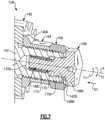
Figure 7 , with continuing reference toFigures 5-6 , in examples theinner bore 170 is a counterbore including afirst portion 170A and asecond portion 170B. Thefirst portion 170A extends inwardly from theaxial end 142B of therotor shaft 142. Thesecond portion 170B extends inwardly from thefirst portion 170A. In the illustrative example ofFigure 7 , thefirst portion 170A has a greater diameter than thesecond portion 170B. - The
retainer 168 is generally shaped as a bolt and includes ahead portion 168A, astep portion 168B and aprojection portion 168C. Thehead portion 168A has a generally hexagonally shaped geometry for engagement with tools for assembling and disassembling the lockingassembly 158. Thestep portion 168B extends from thehead portion 168A. Theprojection portion 168C extends from thestep portion 168B such that thestep portion 168B has a greater diameter than both theprojection portion 168C of theretainer 168 and thesecond portion 170B of theinner bore 170. - The
projection portion 168C of theretainer 168 is insertable into thesecond portion 170B of theinner bore 170 to bias thelock nut 164 against theaxial end face 140A of thegear 140. In an installed position, theretainer 168 extends axially along the centerline axis A and threadedly engages with therotor shaft 142 along theinner bore 170. - In the illustrative example of
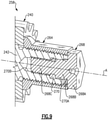
Figure 7 , theprojection portion 168C is threadedly engaged with therotor shaft 142 along thesecond portion 170B of theinner bore 170 such that thelock nut 164 is biased against theaxial end face 140A of thegear 140. Theprojection portion 168C is threadedly engaged with therotor shaft 142 along thesecond portion 170B of theinner bore 170 through a threadedhelicoil insert 172. Thehelicoil insert 172 radially spaces apart theprojection portion 168C and walls of theinner bore 170. Thehelicoil insert 172 can include a lock feature to oppose rotation of theretainer 168 in an installed position. In other examples, aprojection portion 268C ofretainer 268 directly threadedly engagesrotor shaft 242 alonginner bore 270 as illustrated bylock assembly 258 ofFigure 9 . - The
lock nut 164 is threadedly engaged with theouter diameter 142A of therotor shaft 142 in a first threaded direction T1 relative to centerline axis A. Theprojection portion 168C of theretainer 168 is threadedly engaged with theinner bore 170 along thesecond portion 170B in a second threaded direction T2 relative to centerline axis A to fastening thelock nut 164 andretainer 168 to therotor shaft 142. In examples, the second direction T2 is opposite the first direction T1. For example, theretainer 168 can include left hand threads, and thelock nut 164 can include right hand threads, or vice versa. In other examples, the second direction T2 is the same as the first direction T1. - The
step portion 168B of theretainer 168 is dimensioned to establish an interference fit with therotor shaft 142 along thefirst portion 170A of theinner bore 170 to oppose axial movement of theretainer 168. Thestep portion 168B is oversized such that thestep portion 168B has a greater diameter than a diameter of thefirst portion 170A of theinner bore 170. The interference fit causes walls of therotor shaft 142 to deflect outwardly and applies a frictional torque to thestep portion 168B within theinner bore 170 to oppose movement of thelock nut 164 andspacer 166. - The
spacer 166 is dimensioned to axially space apart thehead portion 168A of theretainer 168 and theaxial end 142B of therotor shaft 142 relative to the centerline axis A. In examples, thespacer 166 is a jam nut. Thespacer 166 can be utilized to reduce tolerance mismatches between the components of the lockingassembly 158. In the illustrative example ofFigure 7 , thespacer 166 is threadedly engaged with theouter diameter 142A of therotor shaft 142. Thespacer 166 is sandwiched between thelock nut 164 andhead portion 168A in an installed position. In examples, thespacer 166 is a sleeve that translate along theouter diameter 142A of therotor shaft 142. In other examples, the spacer is omitted and locknut 264 is dimensioned to directly abut againsthead portion 268A ofretainer 268, as illustrated inFigure 9 . In some examples, theretainer 168 is dimensioned such that thehead portion 168A is received against theaxial end 142B of therotor shaft 142. -
Figure 8 illustrates theretainer 168 in a partially installed position. Threading of theprojection portion 168C engages with the threadedhelicoil insert 172. Full thread engagement can occur, withstep portion 168B positioned outwardly of theinner bore 170, prior to establishment of the interference fit. -
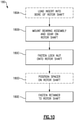
Figure 10 illustrates a method of assembly for coupling together static or rotational components in aflow chart 180, such as rotatable components of a starter assembly for a gas turbine engine. Reference is made to the lockingassembly 158 ofFigures 5-8 for illustrative purposes, which can be incorporated into thestarter assembly 20 ofFigures 1-2 . Therotor shaft 142 can be coupled to theturbine rotor 28, and theepicyclic gear system 30 can be coupled to theaccessory gearbox 36 to drive thegas turbine engine 34 ofFigures 1-2 , for example. - In examples, the
method 180 includes loading the threadedhelicoil insert 172 into thesecond portion 170B of theinner bore 170 atstep 180A, as illustrated inFigure 7 . Atstep 180B, the bearingassembly 154 andgear 140 are mounted or received on theouter diameter 142A of therotor shaft 142, as illustrated byFigures 5-6 . Atstep 180C, thelock nut 164 is fastened onto theouter diameter 142A of therotor shaft 142 such that thelock nut 164 abuts against theaxial end face 140A of thegear 140. - In examples, at
step 180D thespacer 166 is positioned on theouter diameter 142A of therotor shaft 142. Thespacer 166 can be threadedly engaged with or otherwise fastened to theouter diameter 142A of therotor shaft 142. - At
step 180E, theretainer 168 is fastened to therotor shaft 142 to bias thelock nut 164 against theaxial end face 140A of thegear 140.Step 180E includes threadedly engaging theprojection portion 168C of theretainer 168 in theinner bore 170 such that thestep portion 168B of theretainer 168 is driven or otherwise moved in a direction D1 (Figures 7-8 ) along the centerline axis A of therotor shaft 142 to establish an interference fit with therotor shaft 142 along theinner bore 170, as illustrated byFigure 7 . The threaded engagement overcomes the frictional torque applied by the interference fit to move theretainer 168 along the centerline axis A. - In the illustrative example of
Figure 7 , thelock nut 164 is threadedly engaged with theouter diameter 142A of therotor shaft 142 in the first threaded direction T1, and theprojection portion 168C of theretainer 168 is threadedly engaged with therotor shaft 142 along thesecond portion 170B of theinner bore 170 in the second threaded direction T2. The directions T1, T2 can be the same or can differ. Threadedly engaging theprojection portion 168C can include positioning the threadedhelicoil insert 172 between threads along theprojection portion 168C and threads along theinner bore 170, as illustrated byFigure 7 . Threadedly engaging theprojection portion 168C in theinner bore 170 causes thehead portion 168A of theretainer 168 to bias thespacer 166 against thelock nut 164. - The threaded engagement and interference fit established by the
retainer 168/268 cooperate with thelock nut 164/264 to provide additional retention of thegear 140/240. The additional retention can reduce a likelihood of thelock nut 164/264 backing off of thegear 140/240 that may otherwise be caused by cyclic loading due to operation of the starter assembly. Incorporation of theretainer 168/268 can also reduce assembly complexity and a likelihood of misbalance. - It should be understood that relative positional terms such as "forward," "aft," "upper," "lower," "above," "below," and the like are with reference to the normal operational attitude of the vehicle and should not be considered otherwise limiting.
- Although the different examples have the specific components shown in the illustrations, embodiments of this invention, as defined by the claims, are not limited to those particular combinations. It is possible to use some of the components or features from one of the examples in combination with features or components from another one of the examples.
- Although particular step sequences are shown, described, and claimed, it should be understood that steps may be performed in any order, separated or combined unless otherwise indicated and will still benefit from the present disclosure.
Claims (14)
- An assembly for coupling together rotatable components comprisinga rotor shaft (142) extending along a centerline axis, the rotor shaft defining an inner bore (170) extending from an axial end of the rotor shaft;a gear (140) mounted on an outer diameter of the rotor shaft;a lock nut threadedly engaged with the outer diameter of the rotor shaft such that the lock nut (164) abuts against an axial end face of the gear; and characterized by:
a retainer (168) including a step portion (168B) extending from a head portion (168A) and including a projection portion (168C) extending from the step portion, wherein the projection portion is insertable into the inner bore to bias the lock nut against the axial end face of the gear, and the step portion is dimensioned to establish an interference fit with the rotor shaft along the inner bore. - The assembly as set forth in claim 1, wherein the inner bore is a counterbore including a first portion (170A) having a greater diameter than a second portion (170B), and the first portion is dimensioned to establish the interference fit.
- The assembly as set forth in claim 2, wherein the projection portion is threadedly engaged with the rotor shaft along the second portion of the counterbore, and preferably wherein the projection portion is threadedly engaged with the rotor shaft along the second portion of the counterbore through a threaded helicoil insert (172), or wherein the lock nut is threadedly engaged with the outer diameter of the rotor shaft in a first threaded direction, and the projection portion is threadedly engaged with the rotor shaft along the second portion of the counterbore in a second threaded direction opposite the first threaded direction; or wherein the projection portion of the retainer is directly threadedly engaged with the rotor shaft along the inner bore.
- The assembly as set forth in any preceding claim, further comprising an epicyclic gear system (30) comprising a sun gear (140) and a plurality of intermediate gears (43), wherein the gear is the sun gear (140) that meshes with the plurality of intermediate gears (43).
- The assembly as set forth in any preceding claim, wherein an inner diameter of the gear includes a first set of splines that engage with a second set of splines along the outer diameter of the rotor shaft to establish a splined interface.
- The assembly as set forth in any preceding claim, further comprising a bearing assembly (154) mounted on the outer diameter of the rotor shaft such that the gear is sandwiched between the bearing assembly and the lock nut.
- The assembly as set forth in any preceding claim, further comprising a spacer (166) sandwiched between the lock nut and the head portion of the retainer.
- A starter assembly for a gas turbine engine having an output shaft, comprising:an assembly as claimed in claim 1;the inner bore defining counterbore including a first portion having a greater diameter than a second portion;the gear (140) comprising an epicyclic gear system (30) including a sun gear (140), a plurality of intermediate gears (43) and a ring gear, wherein the sun gear is mounted on an outer diameter of the rotor shaft, the plurality of intermediate gears mesh with the sun gear and the ring gear, and the epicyclic gear system interconnects the rotor shaft and the output shaft; andwherein the step portion (168B) is dimensioned to establish an interference fit with the rotor shaft along the first portion of the counterbore, and the projection portion (168C) is threadedly engaged with the rotor shaft along the second portion of the counterbore such that the lock nut is biased against an axial end face of the sun gear;the starter assembly further comprising:a turbine rotor (28) rotatable with the rotor shaft; anda bearing assembly (154) received on the rotor shaft axially between the sun gear and the turbine rotor relative to the centerline axis.
- The starter assembly as set forth in claim 8, wherein the output shaft drives an accessory gearbox (36) of the gas turbine engine in response to rotation of the rotor shaft, and preferably wherein the ring gear drives the output shaft in response to rotation of the rotor shaft.
- A method of assembly for coupling together components of a starter assembly for a gas turbine engine comprising:mounting a gear on an outer diameter of a rotor shaft, the rotor shaft defining an inner bore extending from an axial end of the rotor shaft;fastening a lock nut onto the outer diameter of the rotor shaft such that the lock nut abuts against an axial end face of the gear; andfastening a retainer to the rotor shaft to bias the lock nut against the axial end face of the gear, including threadedly engaging a projection portion of the retainer in the inner bore such that a step portion of the retainer is moved along a centerline axis of the rotor shaft to establish an interference fit with the rotor shaft along the inner bore.
- The method as set forth in claim 10, further comprising:coupling the rotor shaft to a turbine rotor; andcoupling an epicyclic gear system to an accessory gearbox to drive a gas turbine engine.
- The method as set forth in claim 10 or 11, wherein the lock nut is threadedly engaged with the outer diameter of the rotor shaft in a first threaded direction, and the projection portion of the retainer is threadedly engaged with the rotor shaft along the inner bore in a second threaded direction opposite the first threaded direction.
- The method as set forth in claim 10, 11 or 12, wherein the step of threadedly engaging the projection portion includes positioning a threaded helicoil insert between threads along the projection portion and threads along the inner bore.
- The method as set forth in any of claims 10 to 13, further comprising positioning a spacer on the outer diameter of the rotor shaft such that a head portion of the retainer biases the spacer against the lock nut in response to the step of threadedly engaging the projection portion of the retainer in the inner bore.
Applications Claiming Priority (1)
| Application Number | Priority Date | Filing Date | Title |
|---|---|---|---|
| US16/416,830 US11078951B2 (en) | 2019-05-20 | 2019-05-20 | Locking assembly for rotatable components |
Publications (2)
| Publication Number | Publication Date |
|---|---|
| EP3741973A1 EP3741973A1 (en) | 2020-11-25 |
| EP3741973B1 true EP3741973B1 (en) | 2022-03-09 |
Family
ID=68581484
Family Applications (1)
| Application Number | Title | Priority Date | Filing Date |
|---|---|---|---|
| EP19208988.6A Active EP3741973B1 (en) | 2019-05-20 | 2019-11-13 | Locking assembly for rotatable components |
Country Status (2)
| Country | Link |
|---|---|
| US (1) | US11078951B2 (en) |
| EP (1) | EP3741973B1 (en) |
Families Citing this family (3)
| Publication number | Priority date | Publication date | Assignee | Title |
|---|---|---|---|---|
| JP7038536B2 (en) * | 2017-12-12 | 2022-03-18 | 株式会社クボタ | Work vehicle |
| CN119982200B (en) * | 2023-11-10 | 2026-01-16 | 中国航发商用航空发动机有限责任公司 | Reverse thread self-locking assembly |
| CN117697692B (en) * | 2024-02-06 | 2024-04-23 | 成都中科翼能科技有限公司 | Special loading and unloading tool for gas turbine locking connection device |
Family Cites Families (25)
| Publication number | Priority date | Publication date | Assignee | Title |
|---|---|---|---|---|
| US1420737A (en) | 1921-12-01 | 1922-06-27 | Skf Svenska Kullagerfab Ab | Nut lock |
| US2391232A (en) * | 1944-03-22 | 1945-12-18 | Sydney T Farrell | Bolt |
| US2843311A (en) * | 1954-11-27 | 1958-07-15 | Alfred J Buchi | Coupling devices |
| US3181902A (en) * | 1962-01-23 | 1965-05-04 | Remington Arms Co Inc | Sprocket retaining means |
| US3424019A (en) * | 1967-04-03 | 1969-01-28 | Karl Heinz Wolfram | Means for fitting endless flat belts on drives at fixed distances apart |
| DE2147501B1 (en) * | 1971-09-23 | 1972-08-17 | Peter O | Clamping set with conical elements for fastening a hub on a hollow shaft |
| US3884091A (en) * | 1974-04-12 | 1975-05-20 | Gen Motors Corp | Pitman shaft axial self-adjusting device |
| US4022536A (en) * | 1976-04-05 | 1977-05-10 | Caterpillar Tractor Co. | Hinge pin construction |
| US4142765A (en) | 1977-02-10 | 1979-03-06 | Sullair Corporation | Rotor bearing assembly for rotary gas machine |
| US4411549A (en) * | 1980-12-22 | 1983-10-25 | Sheppard Peter H | Installation and retainer device for power steering pitman arm |
| JPS6122928A (en) | 1984-07-11 | 1986-01-31 | Toyota Motor Corp | Manufacture of endless carrier using fiber padding cloth in a power transfer endless belt |
| JPS6122928U (en) * | 1984-07-17 | 1986-02-10 | スズキ株式会社 | Rotating member shaft support device |
| JPS61105326A (en) * | 1984-10-29 | 1986-05-23 | Honda Motor Co Ltd | Flywheel to crankshaft connection structure |
| US4778303A (en) * | 1987-03-26 | 1988-10-18 | Dana Corporation | Quick change gear apparatus |
| US4874275A (en) * | 1987-06-22 | 1989-10-17 | Gene W. Arant | Secure three-piece threaded fastener, and method |
| US4966474A (en) | 1989-06-01 | 1990-10-30 | Ingersoll-Rand Company | Lockable nut for axial adjustment |
| US5052891A (en) * | 1990-03-12 | 1991-10-01 | General Motors Corporation | Connection for gas turbine engine rotor elements |
| US5308183A (en) * | 1992-07-09 | 1994-05-03 | General Motors Corporation | Lock coupling between shaft and rotor |
| US5722163A (en) | 1994-10-04 | 1998-03-03 | Grant; Stanley R. | Bearing and a method for mounting them in screw compressor |
| US5988965A (en) | 1997-06-25 | 1999-11-23 | Mcdonnell Douglas Corporation | Locking fastener |
| US7547185B2 (en) | 2005-08-19 | 2009-06-16 | Honeywell International Inc. | Output shaft air/oil separator to redundantly protect against output shaft o-ring leakage |
| US8113754B2 (en) | 2008-09-29 | 2012-02-14 | The Boeing Company | Fastener system with positive retention mechanism |
| US8651806B2 (en) | 2010-08-17 | 2014-02-18 | Hamilton Sundstrand Corporation | Air turbine starter inlet housing assembly airflow path |
| US9212556B2 (en) | 2012-08-21 | 2015-12-15 | United Technologies Corporation | Multifunction positioning lock washer |
| EP3354883B1 (en) | 2017-01-30 | 2022-04-20 | GE AVIO S.r.l. | Locknut sun gear for gas turbine engine |
-
2019
- 2019-05-20 US US16/416,830 patent/US11078951B2/en active Active
- 2019-11-13 EP EP19208988.6A patent/EP3741973B1/en active Active
Also Published As
| Publication number | Publication date |
|---|---|
| US20200370591A1 (en) | 2020-11-26 |
| US11078951B2 (en) | 2021-08-03 |
| EP3741973A1 (en) | 2020-11-25 |
Similar Documents
| Publication | Publication Date | Title |
|---|---|---|
| EP3741973B1 (en) | Locking assembly for rotatable components | |
| EP2199573B1 (en) | Generator coupling for use with gas turbine engine | |
| US20090145683A1 (en) | Adjusting and Maintaining Bearing Preload in an Axle Assembly | |
| US8397888B2 (en) | One-way clutch of roller type | |
| US11629648B2 (en) | Quick access engine rotator pad | |
| US10612645B2 (en) | Planetary wheel drive single wall lugged output carrier | |
| US11009085B2 (en) | Electromagnetic clutch for gas turbine accessories | |
| US11629596B1 (en) | Rotor assembly for a gas turbine engine and method for assembling same | |
| US10495185B2 (en) | Planetary wheel drive using bushings | |
| CN101484720A (en) | Roller, wedge or ratchet one-way clutch with two backing plates | |
| RU2431063C2 (en) | Attachment system of engine shaft by means of coupling nut, installation method of shaft, compressor of gas-turbine engine, double-flow gas-turbine engine | |
| WO2014184583A1 (en) | Planet gear assembly | |
| US8550956B2 (en) | Planetary gear unit | |
| EP3693579B1 (en) | Starter locking assembly and method | |
| CN111535867B (en) | Power turbine short shaft, turboshaft engine and aircraft | |
| US20120020784A1 (en) | Anti-rotation feature for air turbine starter | |
| US20180252283A1 (en) | Planetary wheel drive brake | |
| US11199224B2 (en) | Hybrid module bearing installation | |
| CN101238312A (en) | Adapter, planetary gear, drive device and method | |
| US12085132B2 (en) | Modified vehicle transmission | |
| US4292000A (en) | Thrust nut lock retainer | |
| US12480546B2 (en) | Shaft bearing retainer assembly | |
| US10272773B2 (en) | Planetary wheel drive using thrust washer—cover arrangement | |
| US10093177B2 (en) | Compact planetary wheel drive | |
| JP2008286359A (en) | Crankshaft bolt fastening structure |
Legal Events
| Date | Code | Title | Description |
|---|---|---|---|
| PUAI | Public reference made under article 153(3) epc to a published international application that has entered the european phase |
Free format text: ORIGINAL CODE: 0009012 |
|
| STAA | Information on the status of an ep patent application or granted ep patent |
Free format text: STATUS: THE APPLICATION HAS BEEN PUBLISHED |
|
| AK | Designated contracting states |
Kind code of ref document: A1 Designated state(s): AL AT BE BG CH CY CZ DE DK EE ES FI FR GB GR HR HU IE IS IT LI LT LU LV MC MK MT NL NO PL PT RO RS SE SI SK SM TR |
|
| AX | Request for extension of the european patent |
Extension state: BA ME |
|
| STAA | Information on the status of an ep patent application or granted ep patent |
Free format text: STATUS: REQUEST FOR EXAMINATION WAS MADE |
|
| 17P | Request for examination filed |
Effective date: 20210525 |
|
| RBV | Designated contracting states (corrected) |
Designated state(s): AL AT BE BG CH CY CZ DE DK EE ES FI FR GB GR HR HU IE IS IT LI LT LU LV MC MK MT NL NO PL PT RO RS SE SI SK SM TR |
|
| RIC1 | Information provided on ipc code assigned before grant |
Ipc: F02C 7/277 20060101AFI20210626BHEP Ipc: F16D 1/108 20060101ALI20210626BHEP Ipc: F16D 1/10 20060101ALN20210626BHEP |
|
| RIC1 | Information provided on ipc code assigned before grant |
Ipc: F16D 1/10 20060101ALN20210826BHEP Ipc: F16D 1/108 20060101ALI20210826BHEP Ipc: F02C 7/277 20060101AFI20210826BHEP |
|
| GRAP | Despatch of communication of intention to grant a patent |
Free format text: ORIGINAL CODE: EPIDOSNIGR1 |
|
| STAA | Information on the status of an ep patent application or granted ep patent |
Free format text: STATUS: GRANT OF PATENT IS INTENDED |
|
| INTG | Intention to grant announced |
Effective date: 20211005 |
|
| GRAS | Grant fee paid |
Free format text: ORIGINAL CODE: EPIDOSNIGR3 |
|
| GRAA | (expected) grant |
Free format text: ORIGINAL CODE: 0009210 |
|
| STAA | Information on the status of an ep patent application or granted ep patent |
Free format text: STATUS: THE PATENT HAS BEEN GRANTED |
|
| AK | Designated contracting states |
Kind code of ref document: B1 Designated state(s): AL AT BE BG CH CY CZ DE DK EE ES FI FR GB GR HR HU IE IS IT LI LT LU LV MC MK MT NL NO PL PT RO RS SE SI SK SM TR |
|
| REG | Reference to a national code |
Ref country code: CH Ref legal event code: EP Ref country code: AT Ref legal event code: REF Ref document number: 1474330 Country of ref document: AT Kind code of ref document: T Effective date: 20220315 |
|
| REG | Reference to a national code |
Ref country code: IE Ref legal event code: FG4D |
|
| REG | Reference to a national code |
Ref country code: DE Ref legal event code: R096 Ref document number: 602019012318 Country of ref document: DE |
|
| REG | Reference to a national code |
Ref country code: LT Ref legal event code: MG9D |
|
| REG | Reference to a national code |
Ref country code: NL Ref legal event code: MP Effective date: 20220309 |
|
| PG25 | Lapsed in a contracting state [announced via postgrant information from national office to epo] |
Ref country code: SE Free format text: LAPSE BECAUSE OF FAILURE TO SUBMIT A TRANSLATION OF THE DESCRIPTION OR TO PAY THE FEE WITHIN THE PRESCRIBED TIME-LIMIT Effective date: 20220309 Ref country code: RS Free format text: LAPSE BECAUSE OF FAILURE TO SUBMIT A TRANSLATION OF THE DESCRIPTION OR TO PAY THE FEE WITHIN THE PRESCRIBED TIME-LIMIT Effective date: 20220309 Ref country code: NO Free format text: LAPSE BECAUSE OF FAILURE TO SUBMIT A TRANSLATION OF THE DESCRIPTION OR TO PAY THE FEE WITHIN THE PRESCRIBED TIME-LIMIT Effective date: 20220609 Ref country code: LT Free format text: LAPSE BECAUSE OF FAILURE TO SUBMIT A TRANSLATION OF THE DESCRIPTION OR TO PAY THE FEE WITHIN THE PRESCRIBED TIME-LIMIT Effective date: 20220309 Ref country code: HR Free format text: LAPSE BECAUSE OF FAILURE TO SUBMIT A TRANSLATION OF THE DESCRIPTION OR TO PAY THE FEE WITHIN THE PRESCRIBED TIME-LIMIT Effective date: 20220309 Ref country code: BG Free format text: LAPSE BECAUSE OF FAILURE TO SUBMIT A TRANSLATION OF THE DESCRIPTION OR TO PAY THE FEE WITHIN THE PRESCRIBED TIME-LIMIT Effective date: 20220609 |
|
| REG | Reference to a national code |
Ref country code: AT Ref legal event code: MK05 Ref document number: 1474330 Country of ref document: AT Kind code of ref document: T Effective date: 20220309 |
|
| PG25 | Lapsed in a contracting state [announced via postgrant information from national office to epo] |
Ref country code: LV Free format text: LAPSE BECAUSE OF FAILURE TO SUBMIT A TRANSLATION OF THE DESCRIPTION OR TO PAY THE FEE WITHIN THE PRESCRIBED TIME-LIMIT Effective date: 20220309 Ref country code: GR Free format text: LAPSE BECAUSE OF FAILURE TO SUBMIT A TRANSLATION OF THE DESCRIPTION OR TO PAY THE FEE WITHIN THE PRESCRIBED TIME-LIMIT Effective date: 20220610 Ref country code: FI Free format text: LAPSE BECAUSE OF FAILURE TO SUBMIT A TRANSLATION OF THE DESCRIPTION OR TO PAY THE FEE WITHIN THE PRESCRIBED TIME-LIMIT Effective date: 20220309 |
|
| PG25 | Lapsed in a contracting state [announced via postgrant information from national office to epo] |
Ref country code: NL Free format text: LAPSE BECAUSE OF FAILURE TO SUBMIT A TRANSLATION OF THE DESCRIPTION OR TO PAY THE FEE WITHIN THE PRESCRIBED TIME-LIMIT Effective date: 20220309 |
|
| PG25 | Lapsed in a contracting state [announced via postgrant information from national office to epo] |
Ref country code: SM Free format text: LAPSE BECAUSE OF FAILURE TO SUBMIT A TRANSLATION OF THE DESCRIPTION OR TO PAY THE FEE WITHIN THE PRESCRIBED TIME-LIMIT Effective date: 20220309 Ref country code: SK Free format text: LAPSE BECAUSE OF FAILURE TO SUBMIT A TRANSLATION OF THE DESCRIPTION OR TO PAY THE FEE WITHIN THE PRESCRIBED TIME-LIMIT Effective date: 20220309 Ref country code: RO Free format text: LAPSE BECAUSE OF FAILURE TO SUBMIT A TRANSLATION OF THE DESCRIPTION OR TO PAY THE FEE WITHIN THE PRESCRIBED TIME-LIMIT Effective date: 20220309 Ref country code: PT Free format text: LAPSE BECAUSE OF FAILURE TO SUBMIT A TRANSLATION OF THE DESCRIPTION OR TO PAY THE FEE WITHIN THE PRESCRIBED TIME-LIMIT Effective date: 20220711 Ref country code: ES Free format text: LAPSE BECAUSE OF FAILURE TO SUBMIT A TRANSLATION OF THE DESCRIPTION OR TO PAY THE FEE WITHIN THE PRESCRIBED TIME-LIMIT Effective date: 20220309 Ref country code: EE Free format text: LAPSE BECAUSE OF FAILURE TO SUBMIT A TRANSLATION OF THE DESCRIPTION OR TO PAY THE FEE WITHIN THE PRESCRIBED TIME-LIMIT Effective date: 20220309 Ref country code: CZ Free format text: LAPSE BECAUSE OF FAILURE TO SUBMIT A TRANSLATION OF THE DESCRIPTION OR TO PAY THE FEE WITHIN THE PRESCRIBED TIME-LIMIT Effective date: 20220309 Ref country code: AT Free format text: LAPSE BECAUSE OF FAILURE TO SUBMIT A TRANSLATION OF THE DESCRIPTION OR TO PAY THE FEE WITHIN THE PRESCRIBED TIME-LIMIT Effective date: 20220309 |
|
| PG25 | Lapsed in a contracting state [announced via postgrant information from national office to epo] |
Ref country code: PL Free format text: LAPSE BECAUSE OF FAILURE TO SUBMIT A TRANSLATION OF THE DESCRIPTION OR TO PAY THE FEE WITHIN THE PRESCRIBED TIME-LIMIT Effective date: 20220309 Ref country code: IS Free format text: LAPSE BECAUSE OF FAILURE TO SUBMIT A TRANSLATION OF THE DESCRIPTION OR TO PAY THE FEE WITHIN THE PRESCRIBED TIME-LIMIT Effective date: 20220709 Ref country code: AL Free format text: LAPSE BECAUSE OF FAILURE TO SUBMIT A TRANSLATION OF THE DESCRIPTION OR TO PAY THE FEE WITHIN THE PRESCRIBED TIME-LIMIT Effective date: 20220309 |
|
| REG | Reference to a national code |
Ref country code: DE Ref legal event code: R097 Ref document number: 602019012318 Country of ref document: DE |
|
| PLBE | No opposition filed within time limit |
Free format text: ORIGINAL CODE: 0009261 |
|
| STAA | Information on the status of an ep patent application or granted ep patent |
Free format text: STATUS: NO OPPOSITION FILED WITHIN TIME LIMIT |
|
| PG25 | Lapsed in a contracting state [announced via postgrant information from national office to epo] |
Ref country code: DK Free format text: LAPSE BECAUSE OF FAILURE TO SUBMIT A TRANSLATION OF THE DESCRIPTION OR TO PAY THE FEE WITHIN THE PRESCRIBED TIME-LIMIT Effective date: 20220309 |
|
| 26N | No opposition filed |
Effective date: 20221212 |
|
| PG25 | Lapsed in a contracting state [announced via postgrant information from national office to epo] |
Ref country code: SI Free format text: LAPSE BECAUSE OF FAILURE TO SUBMIT A TRANSLATION OF THE DESCRIPTION OR TO PAY THE FEE WITHIN THE PRESCRIBED TIME-LIMIT Effective date: 20220309 |
|
| PG25 | Lapsed in a contracting state [announced via postgrant information from national office to epo] |
Ref country code: MC Free format text: LAPSE BECAUSE OF FAILURE TO SUBMIT A TRANSLATION OF THE DESCRIPTION OR TO PAY THE FEE WITHIN THE PRESCRIBED TIME-LIMIT Effective date: 20220309 |
|
| REG | Reference to a national code |
Ref country code: CH Ref legal event code: PL |
|
| P01 | Opt-out of the competence of the unified patent court (upc) registered |
Effective date: 20230603 |
|
| REG | Reference to a national code |
Ref country code: BE Ref legal event code: MM Effective date: 20221130 |
|
| PG25 | Lapsed in a contracting state [announced via postgrant information from national office to epo] |
Ref country code: LI Free format text: LAPSE BECAUSE OF NON-PAYMENT OF DUE FEES Effective date: 20221130 Ref country code: IT Free format text: LAPSE BECAUSE OF FAILURE TO SUBMIT A TRANSLATION OF THE DESCRIPTION OR TO PAY THE FEE WITHIN THE PRESCRIBED TIME-LIMIT Effective date: 20220309 Ref country code: CH Free format text: LAPSE BECAUSE OF NON-PAYMENT OF DUE FEES Effective date: 20221130 |
|
| PG25 | Lapsed in a contracting state [announced via postgrant information from national office to epo] |
Ref country code: LU Free format text: LAPSE BECAUSE OF NON-PAYMENT OF DUE FEES Effective date: 20221113 |
|
| PG25 | Lapsed in a contracting state [announced via postgrant information from national office to epo] |
Ref country code: IE Free format text: LAPSE BECAUSE OF NON-PAYMENT OF DUE FEES Effective date: 20221113 |
|
| PG25 | Lapsed in a contracting state [announced via postgrant information from national office to epo] |
Ref country code: BE Free format text: LAPSE BECAUSE OF NON-PAYMENT OF DUE FEES Effective date: 20221130 |
|
| PG25 | Lapsed in a contracting state [announced via postgrant information from national office to epo] |
Ref country code: CY Free format text: LAPSE BECAUSE OF FAILURE TO SUBMIT A TRANSLATION OF THE DESCRIPTION OR TO PAY THE FEE WITHIN THE PRESCRIBED TIME-LIMIT Effective date: 20220309 |
|
| PG25 | Lapsed in a contracting state [announced via postgrant information from national office to epo] |
Ref country code: MK Free format text: LAPSE BECAUSE OF FAILURE TO SUBMIT A TRANSLATION OF THE DESCRIPTION OR TO PAY THE FEE WITHIN THE PRESCRIBED TIME-LIMIT Effective date: 20220309 Ref country code: HU Free format text: LAPSE BECAUSE OF FAILURE TO SUBMIT A TRANSLATION OF THE DESCRIPTION OR TO PAY THE FEE WITHIN THE PRESCRIBED TIME-LIMIT; INVALID AB INITIO Effective date: 20191113 |
|
| PG25 | Lapsed in a contracting state [announced via postgrant information from national office to epo] |
Ref country code: TR Free format text: LAPSE BECAUSE OF FAILURE TO SUBMIT A TRANSLATION OF THE DESCRIPTION OR TO PAY THE FEE WITHIN THE PRESCRIBED TIME-LIMIT Effective date: 20220309 |
|
| PG25 | Lapsed in a contracting state [announced via postgrant information from national office to epo] |
Ref country code: MT Free format text: LAPSE BECAUSE OF FAILURE TO SUBMIT A TRANSLATION OF THE DESCRIPTION OR TO PAY THE FEE WITHIN THE PRESCRIBED TIME-LIMIT Effective date: 20220309 |
|
| PGFP | Annual fee paid to national office [announced via postgrant information from national office to epo] |
Ref country code: DE Payment date: 20251022 Year of fee payment: 7 |
|
| PGFP | Annual fee paid to national office [announced via postgrant information from national office to epo] |
Ref country code: GB Payment date: 20251022 Year of fee payment: 7 |
|
| PGFP | Annual fee paid to national office [announced via postgrant information from national office to epo] |
Ref country code: FR Payment date: 20251022 Year of fee payment: 7 |