EP3741612A1 - Forecast of electric vehicle state of charge and energy storage capacity - Google Patents
Forecast of electric vehicle state of charge and energy storage capacity Download PDFInfo
- Publication number
- EP3741612A1 EP3741612A1 EP20170537.3A EP20170537A EP3741612A1 EP 3741612 A1 EP3741612 A1 EP 3741612A1 EP 20170537 A EP20170537 A EP 20170537A EP 3741612 A1 EP3741612 A1 EP 3741612A1
- Authority
- EP
- European Patent Office
- Prior art keywords
- charge
- energy storage
- parking area
- electric vehicle
- storage capacity
- Prior art date
- Legal status (The legal status is an assumption and is not a legal conclusion. Google has not performed a legal analysis and makes no representation as to the accuracy of the status listed.)
- Withdrawn
Links
Images

Classifications
-
- B—PERFORMING OPERATIONS; TRANSPORTING
- B60—VEHICLES IN GENERAL
- B60L—PROPULSION OF ELECTRICALLY-PROPELLED VEHICLES; SUPPLYING ELECTRIC POWER FOR AUXILIARY EQUIPMENT OF ELECTRICALLY-PROPELLED VEHICLES; ELECTRODYNAMIC BRAKE SYSTEMS FOR VEHICLES IN GENERAL; MAGNETIC SUSPENSION OR LEVITATION FOR VEHICLES; MONITORING OPERATING VARIABLES OF ELECTRICALLY-PROPELLED VEHICLES; ELECTRIC SAFETY DEVICES FOR ELECTRICALLY-PROPELLED VEHICLES
- B60L58/00—Methods or circuit arrangements for monitoring or controlling batteries or fuel cells, specially adapted for electric vehicles
- B60L58/10—Methods or circuit arrangements for monitoring or controlling batteries or fuel cells, specially adapted for electric vehicles for monitoring or controlling batteries
- B60L58/12—Methods or circuit arrangements for monitoring or controlling batteries or fuel cells, specially adapted for electric vehicles for monitoring or controlling batteries responding to state of charge [SoC]
-
- B—PERFORMING OPERATIONS; TRANSPORTING
- B60—VEHICLES IN GENERAL
- B60L—PROPULSION OF ELECTRICALLY-PROPELLED VEHICLES; SUPPLYING ELECTRIC POWER FOR AUXILIARY EQUIPMENT OF ELECTRICALLY-PROPELLED VEHICLES; ELECTRODYNAMIC BRAKE SYSTEMS FOR VEHICLES IN GENERAL; MAGNETIC SUSPENSION OR LEVITATION FOR VEHICLES; MONITORING OPERATING VARIABLES OF ELECTRICALLY-PROPELLED VEHICLES; ELECTRIC SAFETY DEVICES FOR ELECTRICALLY-PROPELLED VEHICLES
- B60L53/00—Methods of charging batteries, specially adapted for electric vehicles; Charging stations or on-board charging equipment therefor; Exchange of energy storage elements in electric vehicles
- B60L53/60—Monitoring or controlling charging stations
- B60L53/62—Monitoring or controlling charging stations in response to charging parameters, e.g. current, voltage or electrical charge
-
- B—PERFORMING OPERATIONS; TRANSPORTING
- B60—VEHICLES IN GENERAL
- B60L—PROPULSION OF ELECTRICALLY-PROPELLED VEHICLES; SUPPLYING ELECTRIC POWER FOR AUXILIARY EQUIPMENT OF ELECTRICALLY-PROPELLED VEHICLES; ELECTRODYNAMIC BRAKE SYSTEMS FOR VEHICLES IN GENERAL; MAGNETIC SUSPENSION OR LEVITATION FOR VEHICLES; MONITORING OPERATING VARIABLES OF ELECTRICALLY-PROPELLED VEHICLES; ELECTRIC SAFETY DEVICES FOR ELECTRICALLY-PROPELLED VEHICLES
- B60L53/00—Methods of charging batteries, specially adapted for electric vehicles; Charging stations or on-board charging equipment therefor; Exchange of energy storage elements in electric vehicles
- B60L53/60—Monitoring or controlling charging stations
- B60L53/63—Monitoring or controlling charging stations in response to network capacity
-
- B—PERFORMING OPERATIONS; TRANSPORTING
- B60—VEHICLES IN GENERAL
- B60L—PROPULSION OF ELECTRICALLY-PROPELLED VEHICLES; SUPPLYING ELECTRIC POWER FOR AUXILIARY EQUIPMENT OF ELECTRICALLY-PROPELLED VEHICLES; ELECTRODYNAMIC BRAKE SYSTEMS FOR VEHICLES IN GENERAL; MAGNETIC SUSPENSION OR LEVITATION FOR VEHICLES; MONITORING OPERATING VARIABLES OF ELECTRICALLY-PROPELLED VEHICLES; ELECTRIC SAFETY DEVICES FOR ELECTRICALLY-PROPELLED VEHICLES
- B60L55/00—Arrangements for supplying energy stored within a vehicle to a power network, i.e. vehicle-to-grid [V2G] arrangements
-
- G—PHYSICS
- G06—COMPUTING OR CALCULATING; COUNTING
- G06F—ELECTRIC DIGITAL DATA PROCESSING
- G06F16/00—Information retrieval; Database structures therefor; File system structures therefor
- G06F16/20—Information retrieval; Database structures therefor; File system structures therefor of structured data, e.g. relational data
- G06F16/24—Querying
- G06F16/245—Query processing
-
- G—PHYSICS
- G06—COMPUTING OR CALCULATING; COUNTING
- G06Q—INFORMATION AND COMMUNICATION TECHNOLOGY [ICT] SPECIALLY ADAPTED FOR ADMINISTRATIVE, COMMERCIAL, FINANCIAL, MANAGERIAL OR SUPERVISORY PURPOSES; SYSTEMS OR METHODS SPECIALLY ADAPTED FOR ADMINISTRATIVE, COMMERCIAL, FINANCIAL, MANAGERIAL OR SUPERVISORY PURPOSES, NOT OTHERWISE PROVIDED FOR
- G06Q10/00—Administration; Management
- G06Q10/02—Reservations, e.g. for tickets, services or events
-
- G—PHYSICS
- G06—COMPUTING OR CALCULATING; COUNTING
- G06Q—INFORMATION AND COMMUNICATION TECHNOLOGY [ICT] SPECIALLY ADAPTED FOR ADMINISTRATIVE, COMMERCIAL, FINANCIAL, MANAGERIAL OR SUPERVISORY PURPOSES; SYSTEMS OR METHODS SPECIALLY ADAPTED FOR ADMINISTRATIVE, COMMERCIAL, FINANCIAL, MANAGERIAL OR SUPERVISORY PURPOSES, NOT OTHERWISE PROVIDED FOR
- G06Q10/00—Administration; Management
- G06Q10/04—Forecasting or optimisation specially adapted for administrative or management purposes, e.g. linear programming or "cutting stock problem"
-
- G—PHYSICS
- G06—COMPUTING OR CALCULATING; COUNTING
- G06Q—INFORMATION AND COMMUNICATION TECHNOLOGY [ICT] SPECIALLY ADAPTED FOR ADMINISTRATIVE, COMMERCIAL, FINANCIAL, MANAGERIAL OR SUPERVISORY PURPOSES; SYSTEMS OR METHODS SPECIALLY ADAPTED FOR ADMINISTRATIVE, COMMERCIAL, FINANCIAL, MANAGERIAL OR SUPERVISORY PURPOSES, NOT OTHERWISE PROVIDED FOR
- G06Q10/00—Administration; Management
- G06Q10/06—Resources, workflows, human or project management; Enterprise or organisation planning; Enterprise or organisation modelling
- G06Q10/063—Operations research, analysis or management
- G06Q10/0631—Resource planning, allocation, distributing or scheduling for enterprises or organisations
- G06Q10/06312—Adjustment or analysis of established resource schedule, e.g. resource or task levelling, or dynamic rescheduling
-
- G—PHYSICS
- G06—COMPUTING OR CALCULATING; COUNTING
- G06Q—INFORMATION AND COMMUNICATION TECHNOLOGY [ICT] SPECIALLY ADAPTED FOR ADMINISTRATIVE, COMMERCIAL, FINANCIAL, MANAGERIAL OR SUPERVISORY PURPOSES; SYSTEMS OR METHODS SPECIALLY ADAPTED FOR ADMINISTRATIVE, COMMERCIAL, FINANCIAL, MANAGERIAL OR SUPERVISORY PURPOSES, NOT OTHERWISE PROVIDED FOR
- G06Q50/00—Information and communication technology [ICT] specially adapted for implementation of business processes of specific business sectors, e.g. utilities or tourism
- G06Q50/06—Energy or water supply
-
- G—PHYSICS
- G06—COMPUTING OR CALCULATING; COUNTING
- G06Q—INFORMATION AND COMMUNICATION TECHNOLOGY [ICT] SPECIALLY ADAPTED FOR ADMINISTRATIVE, COMMERCIAL, FINANCIAL, MANAGERIAL OR SUPERVISORY PURPOSES; SYSTEMS OR METHODS SPECIALLY ADAPTED FOR ADMINISTRATIVE, COMMERCIAL, FINANCIAL, MANAGERIAL OR SUPERVISORY PURPOSES, NOT OTHERWISE PROVIDED FOR
- G06Q50/00—Information and communication technology [ICT] specially adapted for implementation of business processes of specific business sectors, e.g. utilities or tourism
- G06Q50/40—Business processes related to the transportation industry
-
- G—PHYSICS
- G07—CHECKING-DEVICES
- G07C—TIME OR ATTENDANCE REGISTERS; REGISTERING OR INDICATING THE WORKING OF MACHINES; GENERATING RANDOM NUMBERS; VOTING OR LOTTERY APPARATUS; ARRANGEMENTS, SYSTEMS OR APPARATUS FOR CHECKING NOT PROVIDED FOR ELSEWHERE
- G07C9/00—Individual registration on entry or exit
- G07C9/30—Individual registration on entry or exit not involving the use of a pass
- G07C9/38—Individual registration on entry or exit not involving the use of a pass with central registration
-
- H—ELECTRICITY
- H02—GENERATION; CONVERSION OR DISTRIBUTION OF ELECTRIC POWER
- H02J—ELECTRIC POWER NETWORKS; CIRCUIT ARRANGEMENTS OR SYSTEMS FOR SUPPLYING OR DISTRIBUTING ELECTRIC POWER; SYSTEMS FOR STORING ELECTRIC ENERGY
- H02J3/00—Circuit arrangements for AC mains or AC distribution networks
- H02J3/28—Arrangements for balancing of the load in networks by storage of energy
- H02J3/32—Arrangements for balancing of the load in networks by storage of energy using batteries or super capacitors with converting means
- H02J3/322—Arrangements for balancing of the load in networks by storage of energy using batteries or super capacitors with converting means the battery being on-board an electric or hybrid vehicle, e.g. vehicle to grid arrangements [V2G], power aggregation, use of the battery for network load balancing, coordinated or cooperative battery charging
-
- H—ELECTRICITY
- H02—GENERATION; CONVERSION OR DISTRIBUTION OF ELECTRIC POWER
- H02J—ELECTRIC POWER NETWORKS; CIRCUIT ARRANGEMENTS OR SYSTEMS FOR SUPPLYING OR DISTRIBUTING ELECTRIC POWER; SYSTEMS FOR STORING ELECTRIC ENERGY
- H02J3/00—Circuit arrangements for AC mains or AC distribution networks
- H02J3/38—Arrangements for feeding a single network from two or more generators or sources in parallel; Arrangements for feeding already energised networks from additional generators or sources in parallel
- H02J3/381—Dispersed generators
-
- H—ELECTRICITY
- H02—GENERATION; CONVERSION OR DISTRIBUTION OF ELECTRIC POWER
- H02J—ELECTRIC POWER NETWORKS; CIRCUIT ARRANGEMENTS OR SYSTEMS FOR SUPPLYING OR DISTRIBUTING ELECTRIC POWER; SYSTEMS FOR STORING ELECTRIC ENERGY
- H02J7/00—Circuit arrangements for charging or discharging batteries or for supplying loads from batteries
- H02J7/80—Circuit arrangements for charging or discharging batteries or for supplying loads from batteries including monitoring or indicating arrangements
-
- B—PERFORMING OPERATIONS; TRANSPORTING
- B60—VEHICLES IN GENERAL
- B60K—ARRANGEMENT OR MOUNTING OF PROPULSION UNITS OR OF TRANSMISSIONS IN VEHICLES; ARRANGEMENT OR MOUNTING OF PLURAL DIVERSE PRIME-MOVERS IN VEHICLES; AUXILIARY DRIVES FOR VEHICLES; INSTRUMENTATION OR DASHBOARDS FOR VEHICLES; ARRANGEMENTS IN CONNECTION WITH COOLING, AIR INTAKE, GAS EXHAUST OR FUEL SUPPLY OF PROPULSION UNITS IN VEHICLES
- B60K6/00—Arrangement or mounting of plural diverse prime-movers for mutual or common propulsion, e.g. hybrid propulsion systems comprising electric motors and internal combustion engines
- B60K6/20—Arrangement or mounting of plural diverse prime-movers for mutual or common propulsion, e.g. hybrid propulsion systems comprising electric motors and internal combustion engines the prime-movers consisting of electric motors and internal combustion engines, e.g. HEVs
- B60K6/22—Arrangement or mounting of plural diverse prime-movers for mutual or common propulsion, e.g. hybrid propulsion systems comprising electric motors and internal combustion engines the prime-movers consisting of electric motors and internal combustion engines, e.g. HEVs characterised by apparatus, components or means specially adapted for HEVs
- B60K6/28—Arrangement or mounting of plural diverse prime-movers for mutual or common propulsion, e.g. hybrid propulsion systems comprising electric motors and internal combustion engines the prime-movers consisting of electric motors and internal combustion engines, e.g. HEVs characterised by apparatus, components or means specially adapted for HEVs characterised by the electric energy storing means, e.g. batteries or capacitors
-
- B—PERFORMING OPERATIONS; TRANSPORTING
- B60—VEHICLES IN GENERAL
- B60L—PROPULSION OF ELECTRICALLY-PROPELLED VEHICLES; SUPPLYING ELECTRIC POWER FOR AUXILIARY EQUIPMENT OF ELECTRICALLY-PROPELLED VEHICLES; ELECTRODYNAMIC BRAKE SYSTEMS FOR VEHICLES IN GENERAL; MAGNETIC SUSPENSION OR LEVITATION FOR VEHICLES; MONITORING OPERATING VARIABLES OF ELECTRICALLY-PROPELLED VEHICLES; ELECTRIC SAFETY DEVICES FOR ELECTRICALLY-PROPELLED VEHICLES
- B60L53/00—Methods of charging batteries, specially adapted for electric vehicles; Charging stations or on-board charging equipment therefor; Exchange of energy storage elements in electric vehicles
- B60L53/50—Charging stations characterised by energy-storage or power-generation means
- B60L53/51—Photovoltaic means
-
- B—PERFORMING OPERATIONS; TRANSPORTING
- B60—VEHICLES IN GENERAL
- B60L—PROPULSION OF ELECTRICALLY-PROPELLED VEHICLES; SUPPLYING ELECTRIC POWER FOR AUXILIARY EQUIPMENT OF ELECTRICALLY-PROPELLED VEHICLES; ELECTRODYNAMIC BRAKE SYSTEMS FOR VEHICLES IN GENERAL; MAGNETIC SUSPENSION OR LEVITATION FOR VEHICLES; MONITORING OPERATING VARIABLES OF ELECTRICALLY-PROPELLED VEHICLES; ELECTRIC SAFETY DEVICES FOR ELECTRICALLY-PROPELLED VEHICLES
- B60L53/00—Methods of charging batteries, specially adapted for electric vehicles; Charging stations or on-board charging equipment therefor; Exchange of energy storage elements in electric vehicles
- B60L53/50—Charging stations characterised by energy-storage or power-generation means
- B60L53/52—Wind-driven generators
-
- B—PERFORMING OPERATIONS; TRANSPORTING
- B60—VEHICLES IN GENERAL
- B60Y—INDEXING SCHEME RELATING TO ASPECTS CROSS-CUTTING VEHICLE TECHNOLOGY
- B60Y2200/00—Type of vehicle
- B60Y2200/90—Vehicles comprising electric prime movers
- B60Y2200/91—Electric vehicles
-
- B—PERFORMING OPERATIONS; TRANSPORTING
- B60—VEHICLES IN GENERAL
- B60Y—INDEXING SCHEME RELATING TO ASPECTS CROSS-CUTTING VEHICLE TECHNOLOGY
- B60Y2200/00—Type of vehicle
- B60Y2200/90—Vehicles comprising electric prime movers
- B60Y2200/92—Hybrid vehicles
-
- B—PERFORMING OPERATIONS; TRANSPORTING
- B60—VEHICLES IN GENERAL
- B60Y—INDEXING SCHEME RELATING TO ASPECTS CROSS-CUTTING VEHICLE TECHNOLOGY
- B60Y2300/00—Purposes or special features of road vehicle drive control systems
- B60Y2300/91—Battery charging
-
- H—ELECTRICITY
- H02—GENERATION; CONVERSION OR DISTRIBUTION OF ELECTRIC POWER
- H02J—ELECTRIC POWER NETWORKS; CIRCUIT ARRANGEMENTS OR SYSTEMS FOR SUPPLYING OR DISTRIBUTING ELECTRIC POWER; SYSTEMS FOR STORING ELECTRIC ENERGY
- H02J2101/00—Supply or distribution of decentralised, dispersed or local electric power generation
- H02J2101/20—Dispersed power generation using renewable energy sources
-
- Y—GENERAL TAGGING OF NEW TECHNOLOGICAL DEVELOPMENTS; GENERAL TAGGING OF CROSS-SECTIONAL TECHNOLOGIES SPANNING OVER SEVERAL SECTIONS OF THE IPC; TECHNICAL SUBJECTS COVERED BY FORMER USPC CROSS-REFERENCE ART COLLECTIONS [XRACs] AND DIGESTS
- Y02—TECHNOLOGIES OR APPLICATIONS FOR MITIGATION OR ADAPTATION AGAINST CLIMATE CHANGE
- Y02E—REDUCTION OF GREENHOUSE GAS [GHG] EMISSIONS, RELATED TO ENERGY GENERATION, TRANSMISSION OR DISTRIBUTION
- Y02E60/00—Enabling technologies; Technologies with a potential or indirect contribution to GHG emissions mitigation
-
- Y—GENERAL TAGGING OF NEW TECHNOLOGICAL DEVELOPMENTS; GENERAL TAGGING OF CROSS-SECTIONAL TECHNOLOGIES SPANNING OVER SEVERAL SECTIONS OF THE IPC; TECHNICAL SUBJECTS COVERED BY FORMER USPC CROSS-REFERENCE ART COLLECTIONS [XRACs] AND DIGESTS
- Y02—TECHNOLOGIES OR APPLICATIONS FOR MITIGATION OR ADAPTATION AGAINST CLIMATE CHANGE
- Y02T—CLIMATE CHANGE MITIGATION TECHNOLOGIES RELATED TO TRANSPORTATION
- Y02T10/00—Road transport of goods or passengers
- Y02T10/60—Other road transportation technologies with climate change mitigation effect
- Y02T10/70—Energy storage systems for electromobility, e.g. batteries
-
- Y—GENERAL TAGGING OF NEW TECHNOLOGICAL DEVELOPMENTS; GENERAL TAGGING OF CROSS-SECTIONAL TECHNOLOGIES SPANNING OVER SEVERAL SECTIONS OF THE IPC; TECHNICAL SUBJECTS COVERED BY FORMER USPC CROSS-REFERENCE ART COLLECTIONS [XRACs] AND DIGESTS
- Y02—TECHNOLOGIES OR APPLICATIONS FOR MITIGATION OR ADAPTATION AGAINST CLIMATE CHANGE
- Y02T—CLIMATE CHANGE MITIGATION TECHNOLOGIES RELATED TO TRANSPORTATION
- Y02T10/00—Road transport of goods or passengers
- Y02T10/60—Other road transportation technologies with climate change mitigation effect
- Y02T10/7072—Electromobility specific charging systems or methods for batteries, ultracapacitors, supercapacitors or double-layer capacitors
-
- Y—GENERAL TAGGING OF NEW TECHNOLOGICAL DEVELOPMENTS; GENERAL TAGGING OF CROSS-SECTIONAL TECHNOLOGIES SPANNING OVER SEVERAL SECTIONS OF THE IPC; TECHNICAL SUBJECTS COVERED BY FORMER USPC CROSS-REFERENCE ART COLLECTIONS [XRACs] AND DIGESTS
- Y02—TECHNOLOGIES OR APPLICATIONS FOR MITIGATION OR ADAPTATION AGAINST CLIMATE CHANGE
- Y02T—CLIMATE CHANGE MITIGATION TECHNOLOGIES RELATED TO TRANSPORTATION
- Y02T90/00—Enabling technologies or technologies with a potential or indirect contribution to GHG emissions mitigation
- Y02T90/10—Technologies relating to charging of electric vehicles
- Y02T90/12—Electric charging stations
-
- Y—GENERAL TAGGING OF NEW TECHNOLOGICAL DEVELOPMENTS; GENERAL TAGGING OF CROSS-SECTIONAL TECHNOLOGIES SPANNING OVER SEVERAL SECTIONS OF THE IPC; TECHNICAL SUBJECTS COVERED BY FORMER USPC CROSS-REFERENCE ART COLLECTIONS [XRACs] AND DIGESTS
- Y04—INFORMATION OR COMMUNICATION TECHNOLOGIES HAVING AN IMPACT ON OTHER TECHNOLOGY AREAS
- Y04S—SYSTEMS INTEGRATING TECHNOLOGIES RELATED TO POWER NETWORK OPERATION, COMMUNICATION OR INFORMATION TECHNOLOGIES FOR IMPROVING THE ELECTRICAL POWER GENERATION, TRANSMISSION, DISTRIBUTION, MANAGEMENT OR USAGE, i.e. SMART GRIDS
- Y04S10/00—Systems supporting electrical power generation, transmission or distribution
- Y04S10/12—Monitoring or controlling equipment for energy generation units, e.g. distributed energy generation [DER] or load-side generation
- Y04S10/126—Monitoring or controlling equipment for energy generation units, e.g. distributed energy generation [DER] or load-side generation the energy generation units being or involving electric vehicles [EV] or hybrid vehicles [HEV], i.e. power aggregation of EV or HEV, vehicle to grid arrangements [V2G]
Definitions
- the present disclosure relates to a method and system for forecasting total electric vehicle state of charge and total electric vehicle energy storage capacity in a parking area having parking bays with respective electrical vehicle charging and discharging facilities.
- V2G Vehicle-to-grid technologies relates to systems in which plug-in electric vehicles, such as battery electric vehicles (BEV), plug-in hybrids (PHEV) or hydrogen fuel cell electric vehicles (FCEV), communicate with a power grid to provide demand response services by either returning electricity to the grid or by throttling their charging rate.
- BEV battery electric vehicles
- PHEV plug-in hybrids
- FCEV hydrogen fuel cell electric vehicles
- V2G storage capabilities can also enable EVs to store and discharge electricity generated from renewable energy sources such as solar and wind, with output that fluctuates depending on weather and time of day.
- EVs and V2G technology are the subject of considerable recent research and development.
- Van-Hai Bui, Akhtar Hussain and Hak-Man Kim A Strategy for Optimal Microgrid Operation Considering Vehicle-to-Grid Service, International Journal of Control and Automation, Vol.10, No.3 (2017), pp.405-418 recognises the role that EVs can play as temporary energy storage in a microgrid, and proposes an optimisation strategy as to how the continually varying capacity given unpredictable vehicle arrival and departure times, can be managed.
- the present disclosure is at least partly based on the recognition that it would be desirable to be able to forward forecast EV arrival and departure times as a means for effective scheduling of charging and discharging on a collective basis.
- the present disclosure provides a computer-based method of forecasting total electric vehicle state of charge and total electric vehicle energy storage capacity in a parking area having parking bays with respective electrical vehicle charging and discharging facilities, whereby electric vehicles occupying the parking bays can provide temporary energy storage capacity to an energy grid, the forecasting method including steps of:
- the method has an effect of allowing enabling efficient use of the EVs in the parking area for the provision of electricity grid demand response services.
- the forecast enables effective forward planning (e.g. it facilitates improved collective demand/load management) using the resources of the parking area, rather than merely reactive arrangements based on the instantaneous total state of charge and total storage capacity of the area.
- the forecasting method may include further steps of: confirming connections to the charging and discharging facilities of the parking bays of electric vehicles recorded as arriving at the parking area; and further adjusting, on the basis of the confirmed connections, the forecast of future occupation and the forecast of total electric vehicle state of charge and total electric vehicle energy storage capacity in the parking area.
- the forecasting method may include further steps of: measuring actual amounts of charge and energy storage capacities of the electric vehicles on their connection to the charging and discharging facilities of the parking bays; and further adjusting, on the basis of the measured actual amounts of charge and energy storage capacities, the forecast of total electric vehicle state of charge and total electric vehicle energy storage capacity in the parking area. In these ways, the accuracy of the forecast can be improved.
- the expected arrival times and expected stay durations of electric vehicles entering the parking area may be determined from a computer-based parking reservation system for the parking area.
- a reservation system may be a commercial booking system (e.g. in the context of a parking area providing public commercial parking), a subscription or membership system (e.g. in the context of a parking area servicing a workplace), or a fleet management system (e.g. in the context of a parking area servicing a taxi or delivery fleet).
- the expected charge and discharge capabilities of the electric vehicles may be obtained by interrogating one or more computer databases which cross-reference vehicle types against vehicle registration numbers.
- the vehicle registration numbers may be obtained by automatic number plate recognition (ANPR) on entry into the parking area, and/or from the afore-mentioned reservation system.
- ANPR automatic number plate recognition
- the forecasting method may include further steps of: obtaining inbound journey distance information for the electric vehicles expected to enter the parking area; and predicting, on the basis of the inbound journey distance information, expected amounts of charge and energy storage capacities of the electric vehicles on their connection to the charging and discharging facilities of the parking bays; wherein the forecasting of the total electric vehicle state of charge and total electric vehicle energy storage capacity in the parking area is also performed on the basis of the predicted expected amounts of charge and energy storage capacities of the electric vehicles.
- the inbound journey distance information may be obtained from the afore-mentioned reservation system.
- the inbound journey distance information is supplemented by the pre-journey states of charge of the electric vehicles to improve the prediction of the expected amounts of charge and energy storage capacities of the electric vehicles.
- the parking area may be a parking area of a transport facility where vehicles are parked for onward travel by passengers of the vehicles on another mode of transport offered by the transport facility.
- the transport facility can be an airport, train station, coach/bus station or maritime port.
- the onward travel by the passengers increases the likelihood that the parked vehicles will remain parked for the expected stay durations, and thus increases confidence in the forecasting.
- forecasting can be refined by updating predictions on vehicle disconnection times based on information on the drivers returning in-bound to their vehicles, e.g. flight touchdowns at an airport and/or subsequent requests for transfer to the parking area using a park-and-ride system.
- the present disclosure provides a method of operating an electricity grid which connects one or more sources of electrical power, one or more consumers of electrical power, and charging and discharging facilities of parking bays of a parking area for electric vehicles, the operating method including:
- the one or more sources of electrical power may include one or more sources of intermittent renewable power, such as solar power and wind power.
- the present disclosure provides a computer-based forecasting system for forecasting total electric vehicle state of charge and total electric vehicle energy storage capacity in a parking area having parking bays with respective electrical vehicle charging and discharging facilities, whereby electric vehicles occupying the parking bays can provide temporary energy storage capacity to an energy grid, the forecasting system being programed to perform the method of the first aspect.
- the forecasting system may be programed to:
- the present disclosure provides a temporary energy storage system for supplying storage capacity to an energy grid, the temporary energy storage system including a parking area having parking bays with respective electrical vehicle charging and discharging facilities, whereby electric vehicles occupying the parking bays can provide temporary energy storage capacity to an energy grid, and further including the computer-based forecasting system of the third aspect for forecasting total electric vehicle state of charge and total electric vehicle energy storage capacity in the parking area.
- the present disclosure provides an electricity grid connecting one or more sources of electrical power (e.g. one or more sources of intermittent renewable power, such as solar power and wind power), one or more consumers of electrical power, and the temporary energy storage system of the fourth aspect.
- sources of electrical power e.g. one or more sources of intermittent renewable power, such as solar power and wind power
- consumers of electrical power e.g. one or more consumers of electrical power
- temporary energy storage system of the fourth aspect e.g. one or more sources of intermittent renewable power, such as solar power and wind power
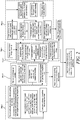
- Figure 1 shows schematically an overview of a computer-based method for forecasting total electric vehicle state of charge and total electric vehicle energy storage capacity in a parking area.
- step 1 a long term dwell forecast is made for each EV expected to occupy a parking space at a time t.
- This forecast of future occupation of the parking bays by the EVs is based on information of expected arrival times and expected stay durations of EVs entering the parking area.
- the information can be obtained in-advance, for example, by interrogating digital data sources such as an on-line reservation/fleet management system for the parking area.
- a pre-connection battery properties assessment is made.
- the expected charge and discharge capabilities of the EVs forecast to enter the parking area are obtained. These capabilities can be extracted, for example, from on-line manufacturer data sources.
- the information collected at step 1 and 2 allows a long term forecast to be made of the total EV state of charge and total EV energy storage capacity in the parking area.
- an immediate forecast correction is made by recording actual arrivals and departures of EVs at the parking area, and adjusting, on the basis of the recorded arrivals and departures, the prediction made by the long term forecasts for the present time and the predictions made by the long term forecasts for future times. In this way, a rolling forecast of parking bay occupation and collective storage capacity and available charge over an entire parking area is obtained.
- a real-time update can be made to the rolling forecasts by confirming connections to the charging and discharging facilities of the parking bays of the EVS recorded as arriving at the parking area.
- a result is, at step 6, a determination of per parking bay dwell forecast.
- a post-connection assessment of the actual battery properties of the connected EVs can be made.
- the actual amounts of charge and energy storage capacities of the EVs on their connection to the charging and discharging facilities of the parking bays can be measured.
- the previous steps are repeated in order to continually update the long term and immediate forecasts, the result being a rolling forecast of parking area collective battery capacity and state of charge.
- This can then be used in a method of operating an electricity grid which connects one or more sources of electrical power, one or more consumers of electrical power, and the EVs parked in the parking area.
- the EVs can provide temporary energy storage capacity for the grid according to the forecasted total electric vehicle state of charge and total electric vehicle energy storage capacity. That is, the electrical power generated by the one or more sources can be stored by the connected electric vehicles for subsequent use by the one or more consumers.
- Such an arrangement can be beneficial for efficient running of a local micro-grid.
- the approach is particularly applicable where there is a high degree of certainty in the EV dwell times and a large parking area capacity, as found for example where the parking area is a parking area of a transport facility (such as an airport, train station, coach/bus station or maritime port).
- Figure 2 shows a more detailed view of the forecasting method of Figure 1 .
- Dashed outline boxes around respective groups of sub-steps indicate sub-steps which combine together to form some of the steps of Figure 1 .
- parking area occupation can be predicted from and then refined from: in-advance data sources such as on-line reservation/fleet management systems, on-arrival data sources such as barrier entry machines and real-time data sources such as charger connection.
- in-advance data sources such as on-line reservation/fleet management systems
- on-arrival data sources such as barrier entry machines
- real-time data sources such as charger connection.
- the as-fitted battery properties of expected/arriving vehicles can be extracted from manufacturer data sources whilst the up-to-date status of these properties are forecasted and then refined on arrival.
- These two parallel processes are continually updated and the results summated across the entire area in question.
- the as-fitted battery properties are adjusted to account for battery deterioration, e.g. on the basis of vehicle age and/or usage.
- the arrangement can facilitate forward load/demand management (i.e. planning of coordinated vehicle charging such as staggered starts) to meet customer-agreed state-of-charge upon collection at minimum cost (i.e. in light of variable supply tariffs) and minimum battery degradation.
- forward load/demand management i.e. planning of coordinated vehicle charging such as staggered starts
- minimum cost i.e. in light of variable supply tariffs
- minimum battery degradation i.e. in light of variable supply tariffs
- Embodiments may be described as a process which is depicted as a flowchart, a flow diagram, a data flow diagram, a structure diagram, or a block diagram. Although a flowchart may describe the operations as a sequential process, many of the operations can be performed in parallel or concurrently. In addition, the order of the operations may be rearranged. A process is terminated when its operations are completed, but could have additional steps not included in the figure. A process may correspond to a method, a function, a procedure, a subroutine, a subprogram, etc. When a process corresponds to a function, its termination corresponds to a return of the function to the calling function or the main function.
- computer readable medium may represent one or more devices for storing data, including read only memory (ROM), random access memory (RAM), magnetic RAM, core memory, magnetic disk storage mediums, optical storage mediums, flash memory devices and/or other machine readable mediums for storing information.
- ROM read only memory
- RAM random access memory
- magnetic RAM magnetic RAM
- core memory magnetic disk storage mediums
- optical storage mediums flash memory devices and/or other machine readable mediums for storing information.
- computer-readable medium includes, but is not limited to portable or fixed storage devices, optical storage devices, wireless channels and various other mediums capable of storing, containing or carrying instruction(s) and/or data.
- embodiments may be implemented by hardware, software, firmware, middleware, microcode, hardware description languages, or any combination thereof.
- the program code or code segments to perform the necessary tasks may be stored in a computer readable medium.
- One or more processors may perform the necessary tasks.
- a code segment may represent a procedure, a function, a subprogram, a program, a routine, a subroutine, a module, a software package, a class, or any combination of instructions, data structures, or program statements.
- a code segment may be coupled to another code segment or a hardware circuit by passing and/or receiving information, data, arguments, parameters, or memory contents. Information, arguments, parameters, data, etc. may be passed, forwarded, or transmitted via any suitable means including memory sharing, message passing, token passing, network transmission, etc.
Landscapes
- Engineering & Computer Science (AREA)
- Business, Economics & Management (AREA)
- Human Resources & Organizations (AREA)
- Power Engineering (AREA)
- Economics (AREA)
- Theoretical Computer Science (AREA)
- Strategic Management (AREA)
- Physics & Mathematics (AREA)
- General Physics & Mathematics (AREA)
- Tourism & Hospitality (AREA)
- Marketing (AREA)
- General Business, Economics & Management (AREA)
- Mechanical Engineering (AREA)
- Transportation (AREA)
- Entrepreneurship & Innovation (AREA)
- Operations Research (AREA)
- Quality & Reliability (AREA)
- Development Economics (AREA)
- Health & Medical Sciences (AREA)
- Game Theory and Decision Science (AREA)
- Primary Health Care (AREA)
- General Health & Medical Sciences (AREA)
- Data Mining & Analysis (AREA)
- Databases & Information Systems (AREA)
- Educational Administration (AREA)
- Computational Linguistics (AREA)
- Public Health (AREA)
- Water Supply & Treatment (AREA)
- General Engineering & Computer Science (AREA)
- Life Sciences & Earth Sciences (AREA)
- Sustainable Development (AREA)
- Sustainable Energy (AREA)
- Charge And Discharge Circuits For Batteries Or The Like (AREA)
Abstract
A computer-based method is provided of forecasting total electric vehicle state of charge and total electric vehicle energy storage capacity in a parking area having parking bays with respective electrical vehicle charging and discharging facilities. Electric vehicles occupying the parking bays can thus provide temporary energy storage capacity to an energy grid. The forecasting method includes steps of: forecasting future occupation of the parking bays by electric vehicles based on expected arrival times and expected stay durations of electric vehicles entering the parking area; obtaining expected charge and discharge capabilities of the electric vehicles forecast to enter the parking area; forecasting, on the basis of the forecast of future occupation and the expected charge and discharge capabilities, a total electric vehicle state of charge and total electric vehicle energy storage capacity in the parking area; recording actual arrivals and departures of electric vehicles at the parking area; and adjusting, on the basis of the recorded arrivals and departures, the forecast of future occupation and the forecast of total electric vehicle state of charge and total electric vehicle energy storage capacity in the parking area.
Description
- The present disclosure relates to a method and system for forecasting total electric vehicle state of charge and total electric vehicle energy storage capacity in a parking area having parking bays with respective electrical vehicle charging and discharging facilities.
- Vehicle-to-grid (V2G) technologies relates to systems in which plug-in electric vehicles, such as battery electric vehicles (BEV), plug-in hybrids (PHEV) or hydrogen fuel cell electric vehicles (FCEV), communicate with a power grid to provide demand response services by either returning electricity to the grid or by throttling their charging rate. V2G storage capabilities can also enable EVs to store and discharge electricity generated from renewable energy sources such as solar and wind, with output that fluctuates depending on weather and time of day.
- EVs and V2G technology are the subject of considerable recent research and development. For example, Van-Hai Bui, Akhtar Hussain and Hak-Man Kim, A Strategy for Optimal Microgrid Operation Considering Vehicle-to-Grid Service, International Journal of Control and Automation, Vol.10, No.3 (2017), pp.405-418 recognises the role that EVs can play as temporary energy storage in a microgrid, and proposes an optimisation strategy as to how the continually varying capacity given unpredictable vehicle arrival and departure times, can be managed.
- The present disclosure, however, is at least partly based on the recognition that it would be desirable to be able to forward forecast EV arrival and departure times as a means for effective scheduling of charging and discharging on a collective basis.
- Accordingly, in a first aspect, the present disclosure provides a computer-based method of forecasting total electric vehicle state of charge and total electric vehicle energy storage capacity in a parking area having parking bays with respective electrical vehicle charging and discharging facilities, whereby electric vehicles occupying the parking bays can provide temporary energy storage capacity to an energy grid, the forecasting method including steps of:
- forecasting future occupation of the parking bays by electric vehicles based on expected arrival times and expected stay durations of electric vehicles entering the parking area;
- obtaining expected charge and discharge capabilities of the electric vehicles forecast to enter the parking area;
- forecasting, on the basis of the forecast of future occupation and the expected charge and discharge capabilities, a total electric vehicle state of charge and total electric vehicle energy storage capacity in the parking area;
- recording actual arrivals and departures of electric vehicles at the parking area; and
- adjusting, on the basis of the recorded arrivals and departures, the forecast of future occupation and the forecast of total electric vehicle state of charge and total electric vehicle energy storage capacity in the parking area.
- Advantageously, by forecasting total electric vehicle state of charge and total electric vehicle energy storage capacity in the parking area, the method has an effect of allowing enabling efficient use of the EVs in the parking area for the provision of electricity grid demand response services. This is because the forecast enables effective forward planning (e.g. it facilitates improved collective demand/load management) using the resources of the parking area, rather than merely reactive arrangements based on the instantaneous total state of charge and total storage capacity of the area.
- Optional features of the forecasting method will now be set out. These are applicable singly or in any combination.
- The forecasting method may include further steps of: confirming connections to the charging and discharging facilities of the parking bays of electric vehicles recorded as arriving at the parking area; and further adjusting, on the basis of the confirmed connections, the forecast of future occupation and the forecast of total electric vehicle state of charge and total electric vehicle energy storage capacity in the parking area. Indeed, in addition to confirming the connections, the forecasting method may include further steps of: measuring actual amounts of charge and energy storage capacities of the electric vehicles on their connection to the charging and discharging facilities of the parking bays; and further adjusting, on the basis of the measured actual amounts of charge and energy storage capacities, the forecast of total electric vehicle state of charge and total electric vehicle energy storage capacity in the parking area. In these ways, the accuracy of the forecast can be improved.
- Conveniently, the expected arrival times and expected stay durations of electric vehicles entering the parking area may be determined from a computer-based parking reservation system for the parking area. Such a reservation system may be a commercial booking system (e.g. in the context of a parking area providing public commercial parking), a subscription or membership system (e.g. in the context of a parking area servicing a workplace), or a fleet management system (e.g. in the context of a parking area servicing a taxi or delivery fleet).
- The expected charge and discharge capabilities of the electric vehicles may be obtained by interrogating one or more computer databases which cross-reference vehicle types against vehicle registration numbers. The vehicle registration numbers may be obtained by automatic number plate recognition (ANPR) on entry into the parking area, and/or from the afore-mentioned reservation system.
- The forecasting method may include further steps of: obtaining inbound journey distance information for the electric vehicles expected to enter the parking area; and predicting, on the basis of the inbound journey distance information, expected amounts of charge and energy storage capacities of the electric vehicles on their connection to the charging and discharging facilities of the parking bays; wherein the forecasting of the total electric vehicle state of charge and total electric vehicle energy storage capacity in the parking area is also performed on the basis of the predicted expected amounts of charge and energy storage capacities of the electric vehicles. By taking into account the distance travelled by the vehicles, and hence the amount of charge likely to have been used before arrival at the parking area, the accuracy of the forecast can be improved. The inbound journey distance information may be obtained from the afore-mentioned reservation system. Preferably, the inbound journey distance information is supplemented by the pre-journey states of charge of the electric vehicles to improve the prediction of the expected amounts of charge and energy storage capacities of the electric vehicles.
- Conveniently, the parking area may be a parking area of a transport facility where vehicles are parked for onward travel by passengers of the vehicles on another mode of transport offered by the transport facility. For example, the transport facility can be an airport, train station, coach/bus station or maritime port. The onward travel by the passengers increases the likelihood that the parked vehicles will remain parked for the expected stay durations, and thus increases confidence in the forecasting. For example, forecasting can be refined by updating predictions on vehicle disconnection times based on information on the drivers returning in-bound to their vehicles, e.g. flight touchdowns at an airport and/or subsequent requests for transfer to the parking area using a park-and-ride system.
- In a second aspect, the present disclosure provides a method of operating an electricity grid which connects one or more sources of electrical power, one or more consumers of electrical power, and charging and discharging facilities of parking bays of a parking area for electric vehicles, the operating method including:
- performing the forecasting method of the first aspect to forecast the total electric vehicle state of charge and total electric vehicle energy storage capacity in the parking area; and
- using the electric vehicles connected to the charging and discharging facilities to provide temporary energy storage capacity for the grid according to the forecasted total electric vehicle state of charge and total electric vehicle energy storage capacity, the electrical power generated by the one or more sources being stored by the connected electric vehicles for subsequent use by the one or more consumers.
- For example, in the second aspect, the one or more sources of electrical power may include one or more sources of intermittent renewable power, such as solar power and wind power.
- In a third aspect, the present disclosure provides a computer-based forecasting system for forecasting total electric vehicle state of charge and total electric vehicle energy storage capacity in a parking area having parking bays with respective electrical vehicle charging and discharging facilities, whereby electric vehicles occupying the parking bays can provide temporary energy storage capacity to an energy grid, the forecasting system being programed to perform the method of the first aspect. Thus, for example, the forecasting system may be programed to:
- forecast future occupation of the parking bays by electric vehicles based on expected arrival times and expected stay durations of electric vehicles entering the parking area;
- obtain expected charge and discharge capabilities of the electric vehicles forecast to enter the parking area;
- forecast, on the basis of the forecast of future occupation and the expected charge and discharge capabilities, a total electric vehicle state of charge and total electric vehicle energy storage capacity in the parking area;
- record actual arrivals and departures of electric vehicles at the parking area; and
- adjust, on the basis of the recorded arrivals and departures, the forecast of future occupation and the forecast of total electric vehicle state of charge and total electric vehicle energy storage capacity in the parking area.
- In a fourth aspect, the present disclosure provides a temporary energy storage system for supplying storage capacity to an energy grid, the temporary energy storage system including a parking area having parking bays with respective electrical vehicle charging and discharging facilities, whereby electric vehicles occupying the parking bays can provide temporary energy storage capacity to an energy grid, and further including the computer-based forecasting system of the third aspect for forecasting total electric vehicle state of charge and total electric vehicle energy storage capacity in the parking area.
- In a fifth aspect, the present disclosure provides an electricity grid connecting one or more sources of electrical power (e.g. one or more sources of intermittent renewable power, such as solar power and wind power), one or more consumers of electrical power, and the temporary energy storage system of the fourth aspect.
- Further aspects of the present disclosure provide: a computer program comprising code which, when the code is executed on a computer, causes the computer to perform the method of the first aspect; and a computer readable medium storing a computer program comprising code which, when the code is executed on a computer, causes the computer to perform the method of the first aspect.
- Embodiments will now be described by way of example only, with reference to the Figures, in which:
-
Figure 1 shows schematically an overview of a method for forecasting total electric vehicle state of charge and total electric vehicle energy storage capacity in a parking area; and -
Figure 2 shows a more detailed view of the forecasting method ofFigure 1 . -
Figure 1 shows schematically an overview of a computer-based method for forecasting total electric vehicle state of charge and total electric vehicle energy storage capacity in a parking area. - In
step 1, a long term dwell forecast is made for each EV expected to occupy a parking space at a time t. This forecast of future occupation of the parking bays by the EVs is based on information of expected arrival times and expected stay durations of EVs entering the parking area. The information can be obtained in-advance, for example, by interrogating digital data sources such as an on-line reservation/fleet management system for the parking area. - In parallel at
step 2, a pre-connection battery properties assessment is made. In particular, the expected charge and discharge capabilities of the EVs forecast to enter the parking area are obtained. These capabilities can be extracted, for example, from on-line manufacturer data sources. - Together, the information collected at
step - Next, at
step 3 an immediate forecast correction is made by recording actual arrivals and departures of EVs at the parking area, and adjusting, on the basis of the recorded arrivals and departures, the prediction made by the long term forecasts for the present time and the predictions made by the long term forecasts for future times. In this way, a rolling forecast of parking bay occupation and collective storage capacity and available charge over an entire parking area is obtained. - At
step 4, a real-time update can be made to the rolling forecasts by confirming connections to the charging and discharging facilities of the parking bays of the EVS recorded as arriving at the parking area. In particular, a result is, atstep 6, a determination of per parking bay dwell forecast. - In parallel, at
step 5, a post-connection assessment of the actual battery properties of the connected EVs can be made. In particular, the actual amounts of charge and energy storage capacities of the EVs on their connection to the charging and discharging facilities of the parking bays can be measured. This allows atstep 7, a better determination of the per parking bay properties forecast, so that, atsteps - As indicated at step 10, the previous steps are repeated in order to continually update the long term and immediate forecasts, the result being a rolling forecast of parking area collective battery capacity and state of charge. This can then be used in a method of operating an electricity grid which connects one or more sources of electrical power, one or more consumers of electrical power, and the EVs parked in the parking area. In particular, the EVs can provide temporary energy storage capacity for the grid according to the forecasted total electric vehicle state of charge and total electric vehicle energy storage capacity. That is, the electrical power generated by the one or more sources can be stored by the connected electric vehicles for subsequent use by the one or more consumers. Such an arrangement can be beneficial for efficient running of a local micro-grid. The approach is particularly applicable where there is a high degree of certainty in the EV dwell times and a large parking area capacity, as found for example where the parking area is a parking area of a transport facility (such as an airport, train station, coach/bus station or maritime port).
-
Figure 2 shows a more detailed view of the forecasting method ofFigure 1 . Dashed outline boxes around respective groups of sub-steps indicate sub-steps which combine together to form some of the steps ofFigure 1 . - In the approach discussed above, digital sources of information concerning the parking arrangements and the battery properties of electric vehicles are interrogated in order to provide a rolling forecast of the collective storage capacity and available charge over an entire parking area. Parking area occupation can be predicted from and then refined from: in-advance data sources such as on-line reservation/fleet management systems, on-arrival data sources such as barrier entry machines and real-time data sources such as charger connection. Separately, the as-fitted battery properties of expected/arriving vehicles can be extracted from manufacturer data sources whilst the up-to-date status of these properties are forecasted and then refined on arrival. These two parallel processes are continually updated and the results summated across the entire area in question. Preferably the as-fitted battery properties are adjusted to account for battery deterioration, e.g. on the basis of vehicle age and/or usage.
- The arrangement can facilitate forward load/demand management (i.e. planning of coordinated vehicle charging such as staggered starts) to meet customer-agreed state-of-charge upon collection at minimum cost (i.e. in light of variable supply tariffs) and minimum battery degradation.
- It can also facilitate forward scheduling of vehicle discharging to grid (i.e. acting in the role of temporary energy storage) to part mitigate generation shortfalls (e.g. intermittency of renewables) and provide valley-filling and ramp-up mitigation.
- Embodiments may be described as a process which is depicted as a flowchart, a flow diagram, a data flow diagram, a structure diagram, or a block diagram. Although a flowchart may describe the operations as a sequential process, many of the operations can be performed in parallel or concurrently. In addition, the order of the operations may be rearranged. A process is terminated when its operations are completed, but could have additional steps not included in the figure. A process may correspond to a method, a function, a procedure, a subroutine, a subprogram, etc. When a process corresponds to a function, its termination corresponds to a return of the function to the calling function or the main function.
- The term "computer readable medium" may represent one or more devices for storing data, including read only memory (ROM), random access memory (RAM), magnetic RAM, core memory, magnetic disk storage mediums, optical storage mediums, flash memory devices and/or other machine readable mediums for storing information. The term "computer-readable medium" includes, but is not limited to portable or fixed storage devices, optical storage devices, wireless channels and various other mediums capable of storing, containing or carrying instruction(s) and/or data.
- Furthermore, embodiments may be implemented by hardware, software, firmware, middleware, microcode, hardware description languages, or any combination thereof. When implemented in software, firmware, middleware or microcode, the program code or code segments to perform the necessary tasks may be stored in a computer readable medium. One or more processors may perform the necessary tasks. A code segment may represent a procedure, a function, a subprogram, a program, a routine, a subroutine, a module, a software package, a class, or any combination of instructions, data structures, or program statements. A code segment may be coupled to another code segment or a hardware circuit by passing and/or receiving information, data, arguments, parameters, or memory contents. Information, arguments, parameters, data, etc. may be passed, forwarded, or transmitted via any suitable means including memory sharing, message passing, token passing, network transmission, etc.
- It will be understood that the invention is not limited to the embodiments above-described and various modifications and improvements can be made without departing from the concepts described herein. Except where mutually exclusive, any of the features may be employed separately or in combination with any other features and the disclosure extends to and includes all combinations and sub-combinations of one or more features described herein.
Claims (14)
- A computer-based method of forecasting total electric vehicle state of charge and total electric vehicle energy storage capacity in a parking area having parking bays with respective electrical vehicle charging and discharging facilities, whereby electric vehicles occupying the parking bays can provide temporary energy storage capacity to an energy grid, the forecasting method including steps of:forecasting future occupation of the parking bays by electric vehicles based on expected arrival times and expected stay durations of electric vehicles entering the parking area;obtaining expected charge and discharge capabilities of the electric vehicles forecast to enter the parking area;forecasting, on the basis of the forecast of future occupation and the expected charge and discharge capabilities, a total electric vehicle state of charge and total electric vehicle energy storage capacity in the parking area;recording actual arrivals and departures of electric vehicles at the parking area; andadjusting, on the basis of the recorded arrivals and departures, the forecast of future occupation and the forecast of total electric vehicle state of charge and total electric vehicle energy storage capacity in the parking area.
- The forecasting method of Claim 1 including further steps of:confirming connections to the charging and discharging facilities of the parking bays of electric vehicles recorded as arriving at the parking area; andfurther adjusting, on the basis of the confirmed connections, the forecast of future occupation and the forecast of total electric vehicle state of charge and total electric vehicle energy storage capacity in the parking area.
- The forecasting method of Claim 2 including further steps of:measuring actual amounts of charge and energy storage capacities of the electric vehicles on their connection to the charging and discharging facilities of the parking bays; andfurther adjusting, on the basis of the measured actual amounts of charge and energy storage capacities, the forecast of total electric vehicle state of charge and total electric vehicle energy storage capacity in the parking area.
- The forecasting method of any one of the previous claims, wherein the expected arrival times and expected stay durations of electric vehicles entering the parking area are determined from a computer-based parking reservation system for the parking area.
- The forecasting method of any one of the previous claims, wherein the expected charge and discharge capabilities of the electric vehicles are obtained by interrogating one or more computer databases which cross-reference vehicle types against vehicle registration numbers.
- The forecasting method of any one of the previous claims, including further steps of:obtaining inbound journey distance information for the electric vehicles expected to enter the parking area; andpredicting, on the basis of the inbound journey distance information, expected amounts of charge and energy storage capacities of the electric vehicles on their connection to the charging and discharging facilities of the parking bays;wherein the forecasting of the total electric vehicle state of charge and total electric vehicle energy storage capacity in the parking area is also performed on the basis of the predicted expected amounts of charge and energy storage capacities of the electric vehicles.
- The forecasting method of any one of the previous claims, wherein the parking area is a parking area of a transport facility where vehicles are parked for onward travel by passengers of the vehicles on another mode of transport offered by the transport facility.
- A method of operating an electricity grid which connects one or more sources of electrical power, one or more consumers of electrical power, and charging and discharging facilities of parking bays of a parking area for electric vehicles, the operating method including:performing the forecasting method of any one of the previous claims to forecast the total electric vehicle state of charge and total electric vehicle energy storage capacity in the parking area; andusing the electric vehicles connected to the charging and discharging facilities to provide temporary energy storage capacity for the grid according to the forecasted total electric vehicle state of charge and total electric vehicle energy storage capacity, the electrical power generated by the one or more sources being stored by the connected electric vehicles for subsequent use by the one or more consumers.
- The operating method of Claim 8, wherein the one or more sources of electrical power include one or more sources of intermittent renewable power.
- A computer-based forecasting system for forecasting total electric vehicle state of charge and total electric vehicle energy storage capacity in a parking area having parking bays with respective electrical vehicle charging and discharging facilities, whereby electric vehicles occupying the parking bays can provide temporary energy storage capacity to an energy grid, the forecasting system being programed to:forecast future occupation of the parking bays by electric vehicles based on expected arrival times and expected stay durations of electric vehicles entering the parking area;obtain expected charge and discharge capabilities of the electric vehicles forecast to enter the parking area;forecast, on the basis of the forecast of future occupation and the expected charge and discharge capabilities, a total electric vehicle state of charge and total electric vehicle energy storage capacity in the parking area;record actual arrivals and departures of electric vehicles at the parking area; andadjust, on the basis of the recorded arrivals and departures, the forecast of future occupation and the forecast of total electric vehicle state of charge and total electric vehicle energy storage capacity in the parking area.
- A temporary energy storage system for supplying storage capacity to an energy grid, the temporary energy storage system including a parking area having parking bays with respective electrical vehicle charging and discharging facilities, whereby electric vehicles occupying the parking bays can provide temporary energy storage capacity to an energy grid, and further including the computer-based forecasting system of claim 10 for forecasting total electric vehicle state of charge and total electric vehicle energy storage capacity in the parking area.
- An electricity grid connecting one or more sources of electrical power, one or more consumers of electrical power, and the temporary energy storage system of Claim 11.
- A computer program comprising code which, when the code is executed on a computer, causes the computer to perform the method of any one of Claims 1 to 9.
- A computer readable medium storing a computer program comprising code which, when the code is executed on a computer, causes the computer to perform the method of any one of Claims 1 to 9.
Applications Claiming Priority (1)
| Application Number | Priority Date | Filing Date | Title |
|---|---|---|---|
| GBGB1907140.6A GB201907140D0 (en) | 2019-05-21 | 2019-05-21 | Forecast of electric vehicles state of charge and energy storage capacity |
Publications (1)
| Publication Number | Publication Date |
|---|---|
| EP3741612A1 true EP3741612A1 (en) | 2020-11-25 |
Family
ID=67385165
Family Applications (1)
| Application Number | Title | Priority Date | Filing Date |
|---|---|---|---|
| EP20170537.3A Withdrawn EP3741612A1 (en) | 2019-05-21 | 2020-04-21 | Forecast of electric vehicle state of charge and energy storage capacity |
Country Status (3)
| Country | Link |
|---|---|
| US (1) | US11498450B2 (en) |
| EP (1) | EP3741612A1 (en) |
| GB (1) | GB201907140D0 (en) |
Cited By (3)
| Publication number | Priority date | Publication date | Assignee | Title |
|---|---|---|---|---|
| CN113409589A (en) * | 2021-06-17 | 2021-09-17 | 安徽信息工程学院 | Device and method for detecting occupation of parking spot of charging pile based on microwave sensing license plate image |
| CN115476689A (en) * | 2022-09-27 | 2022-12-16 | 上汽通用五菱汽车股份有限公司 | Storage battery management system and method |
| CN117935638A (en) * | 2023-12-27 | 2024-04-26 | 国网甘肃省电力公司天水供电公司 | Substation centralized control station simulation interval diagram generation method and system |
Families Citing this family (6)
| Publication number | Priority date | Publication date | Assignee | Title |
|---|---|---|---|---|
| JP7251437B2 (en) | 2019-10-15 | 2023-04-04 | トヨタ自動車株式会社 | power supply system |
| JP7380429B2 (en) * | 2020-06-01 | 2023-11-15 | トヨタ自動車株式会社 | Virtual power plant control device |
| US20220285937A1 (en) * | 2021-03-04 | 2022-09-08 | Toyota Motor North America, Inc | Microgrid energy distribution |
| KR102643523B1 (en) * | 2022-02-08 | 2024-03-06 | 한국에너지기술연구원 | System and method for managing charging infrastructure of electric vehicle |
| DE102022206967A1 (en) * | 2022-07-07 | 2024-01-18 | Magna powertrain gmbh & co kg | Method for optimizing the electrical network load |
| CN116633007B (en) * | 2023-04-12 | 2024-01-09 | 北京丰运海通科技有限公司 | Power equipment state on-line monitoring system based on Internet of things |
Citations (2)
| Publication number | Priority date | Publication date | Assignee | Title |
|---|---|---|---|---|
| US7928693B2 (en) * | 2008-03-13 | 2011-04-19 | International Business Machines Corporation | Plugin hybrid electric vehicle with V2G optimization system |
| US20110196692A1 (en) * | 2010-02-09 | 2011-08-11 | Chavez Jr Lloyd G | Apparatus, system and method for grid storage |
Family Cites Families (8)
| Publication number | Priority date | Publication date | Assignee | Title |
|---|---|---|---|---|
| US9043038B2 (en) | 2010-02-18 | 2015-05-26 | University Of Delaware | Aggregation server for grid-integrated vehicles |
| EP2683053A4 (en) * | 2011-03-04 | 2015-05-20 | Nec Corp | CHARGE CONTROL SYSTEM, CHARGE METHOD, AND RECORDING MEDIUM |
| JP6185945B2 (en) * | 2015-02-23 | 2017-08-23 | 株式会社Subaru | SOC display device for hybrid vehicle |
| CN107169588A (en) * | 2017-04-12 | 2017-09-15 | 中国电力科学研究院 | A kind of electric automobile charging station short-time rating Forecasting Methodology and system |
| CN108805322A (en) * | 2017-05-02 | 2018-11-13 | 南京理工大学 | A kind of charging load spatial and temporal distributions prediction technique of private car |
| CN107436409B (en) * | 2017-07-07 | 2019-12-31 | 淮阴工学院 | An electric vehicle power battery SOC intelligent prediction device |
| CN108663061B (en) * | 2018-03-22 | 2021-11-23 | 河南科技大学 | Electric automobile mileage estimation system and estimation method thereof |
| US20200139845A1 (en) * | 2018-11-07 | 2020-05-07 | Trapeze Software Group Inc. | Battery state monitoring system and method therefor |
-
2019
- 2019-05-21 GB GBGB1907140.6A patent/GB201907140D0/en not_active Ceased
-
2020
- 2020-04-21 EP EP20170537.3A patent/EP3741612A1/en not_active Withdrawn
- 2020-05-06 US US16/867,676 patent/US11498450B2/en active Active
Patent Citations (2)
| Publication number | Priority date | Publication date | Assignee | Title |
|---|---|---|---|---|
| US7928693B2 (en) * | 2008-03-13 | 2011-04-19 | International Business Machines Corporation | Plugin hybrid electric vehicle with V2G optimization system |
| US20110196692A1 (en) * | 2010-02-09 | 2011-08-11 | Chavez Jr Lloyd G | Apparatus, system and method for grid storage |
Non-Patent Citations (2)
| Title |
|---|
| LAKSHMINARAYANAN VENKATESWARAN ET AL: "Real-Time Optimal Energy Management Controller for Electric Vehicle Integration in Workplace Microgrid", IEEE TRANSACTIONS ON TRANSPORTATION ELECTRIFICATION, IEEE, vol. 5, no. 1, 1 March 2019 (2019-03-01), pages 174 - 185, XP011715787, DOI: 10.1109/TTE.2018.2869469 * |
| VAN-HAI BUIAKHTAR HUSSAINHAK-MAN KIM: "A Strategy for Optimal Microgrid Operation Considering Vehicle-to-Grid Service", INTERNATIONAL JOURNAL OF CONTROL AND AUTOMATION, vol. 1 0, no. 3, 2017, pages 405 - 418 |
Cited By (4)
| Publication number | Priority date | Publication date | Assignee | Title |
|---|---|---|---|---|
| CN113409589A (en) * | 2021-06-17 | 2021-09-17 | 安徽信息工程学院 | Device and method for detecting occupation of parking spot of charging pile based on microwave sensing license plate image |
| CN113409589B (en) * | 2021-06-17 | 2022-04-26 | 安徽信息工程学院 | Device and method for detecting occupation of parking spot of charging pile based on microwave sensing license plate image |
| CN115476689A (en) * | 2022-09-27 | 2022-12-16 | 上汽通用五菱汽车股份有限公司 | Storage battery management system and method |
| CN117935638A (en) * | 2023-12-27 | 2024-04-26 | 国网甘肃省电力公司天水供电公司 | Substation centralized control station simulation interval diagram generation method and system |
Also Published As
| Publication number | Publication date |
|---|---|
| US11498450B2 (en) | 2022-11-15 |
| GB201907140D0 (en) | 2019-07-03 |
| US20200369175A1 (en) | 2020-11-26 |
Similar Documents
| Publication | Publication Date | Title |
|---|---|---|
| US11498450B2 (en) | Forecast of electric vehicle state of charge and energy storage capacity | |
| Savari et al. | Internet of Things based real-time electric vehicle load forecasting and charging station recommendation | |
| US11087422B2 (en) | Method and device for determining a configuration for deployment of a public transportation system | |
| Vaidya et al. | Smart electric vehicle charging management for smart cities | |
| KR20210148759A (en) | Charge/Discharge Scheduling Management System, Charge/Discharge Scheduling Server Apparatus and Charge/Discharge Scheduling Method for Electric Vehicle with SOC control | |
| WO2020255507A1 (en) | Vehicle allocation management method, and vehicle allocation management device | |
| JP2021002940A (en) | Energy management method and energy management device | |
| US20250128632A1 (en) | Charging Strategies for Electric Vehicles | |
| US20240217387A1 (en) | Strategic Opportunity Charging for On-Route Electric Vehicles | |
| Hussain et al. | A comprehensive review on electric vehicle battery swapping stations | |
| Gjelaj et al. | Multifunctional applications of batteries within fast‐charging stations based on EV demand‐prediction of the users’ behaviour | |
| Wang et al. | QoS guaranteed online management of battery swapping station under dynamic energy pricing | |
| Afshar et al. | Optimal scheduling of electric vehicles in the presence of mobile charging stations | |
| KR20150078749A (en) | Electric power management Method using elecctric vehicle Battery pack | |
| Mauri et al. | The impact of EV's fast charging stations on the MV distribution grids of the Milan metropolitan area | |
| Dicorato et al. | Performance analysis of EV stations optimal operation in DC microgrid configurations | |
| TWI706366B (en) | Electric vehicle charging station power management method | |
| Kwasinski et al. | Signal processing in the electrification of vehicular transportation: techniques for electric and plug-in hybrid electric vehicles on the smart grid | |
| Gabbar et al. | Fast-charging infrastructure for transit buses | |
| Khalid et al. | Electric vehicle charging modes, technologies and applications in smart cities | |
| Indira | Optimised business model for effective charging of batteries in electric vehicles | |
| Kadam et al. | Optimal coordinated charging strategy for electric vehicles at geographically distributed charging stations | |
| Shaaban | Accommodating a high penetration of plug-in electric vehicles in distribution networks | |
| Li et al. | Navigation Service Optimization for Electric Vehicle | |
| Song et al. | Optimal operation strategy for reconfigurable EV chargers under component failures |
Legal Events
| Date | Code | Title | Description |
|---|---|---|---|
| PUAI | Public reference made under article 153(3) epc to a published international application that has entered the european phase |
Free format text: ORIGINAL CODE: 0009012 |
|
| STAA | Information on the status of an ep patent application or granted ep patent |
Free format text: STATUS: THE APPLICATION HAS BEEN PUBLISHED |
|
| AK | Designated contracting states |
Kind code of ref document: A1 Designated state(s): AL AT BE BG CH CY CZ DE DK EE ES FI FR GB GR HR HU IE IS IT LI LT LU LV MC MK MT NL NO PL PT RO RS SE SI SK SM TR |
|
| AX | Request for extension of the european patent |
Extension state: BA ME |
|
| STAA | Information on the status of an ep patent application or granted ep patent |
Free format text: STATUS: THE APPLICATION IS DEEMED TO BE WITHDRAWN |
|
| 18D | Application deemed to be withdrawn |
Effective date: 20210526 |