EP3740875B1 - Dynamisches experimentierauswertungssystem - Google Patents
Dynamisches experimentierauswertungssystem Download PDFInfo
- Publication number
- EP3740875B1 EP3740875B1 EP19704096.7A EP19704096A EP3740875B1 EP 3740875 B1 EP3740875 B1 EP 3740875B1 EP 19704096 A EP19704096 A EP 19704096A EP 3740875 B1 EP3740875 B1 EP 3740875B1
- Authority
- EP
- European Patent Office
- Prior art keywords
- users
- version
- test
- treatment
- percentage
- Prior art date
- Legal status (The legal status is an assumption and is not a legal conclusion. Google has not performed a legal analysis and makes no representation as to the accuracy of the status listed.)
- Active
Links
Images



Classifications
-
- G—PHYSICS
- G06—COMPUTING OR CALCULATING; COUNTING
- G06F—ELECTRIC DIGITAL DATA PROCESSING
- G06F11/00—Error detection; Error correction; Monitoring
- G06F11/36—Prevention of errors by analysis, debugging or testing of software
- G06F11/3604—Analysis of software for verifying properties of programs
- G06F11/3608—Analysis of software for verifying properties of programs using formal methods, e.g. model checking, abstract interpretation
-
- G—PHYSICS
- G06—COMPUTING OR CALCULATING; COUNTING
- G06F—ELECTRIC DIGITAL DATA PROCESSING
- G06F11/00—Error detection; Error correction; Monitoring
- G06F11/36—Prevention of errors by analysis, debugging or testing of software
- G06F11/3668—Testing of software
- G06F11/3672—Test management
- G06F11/368—Test management for test version control, e.g. updating test cases to a new software version
-
- G—PHYSICS
- G06—COMPUTING OR CALCULATING; COUNTING
- G06F—ELECTRIC DIGITAL DATA PROCESSING
- G06F11/00—Error detection; Error correction; Monitoring
- G06F11/30—Monitoring
- G06F11/34—Recording or statistical evaluation of computer activity, e.g. of down time, of input/output operation ; Recording or statistical evaluation of user activity, e.g. usability assessment
- G06F11/3438—Recording or statistical evaluation of computer activity, e.g. of down time, of input/output operation ; Recording or statistical evaluation of user activity, e.g. usability assessment monitoring of user actions
-
- G—PHYSICS
- G06—COMPUTING OR CALCULATING; COUNTING
- G06F—ELECTRIC DIGITAL DATA PROCESSING
- G06F11/00—Error detection; Error correction; Monitoring
- G06F11/36—Prevention of errors by analysis, debugging or testing of software
- G06F11/3668—Testing of software
- G06F11/3672—Test management
- G06F11/3688—Test management for test execution, e.g. scheduling of test suites
-
- G—PHYSICS
- G06—COMPUTING OR CALCULATING; COUNTING
- G06F—ELECTRIC DIGITAL DATA PROCESSING
- G06F11/00—Error detection; Error correction; Monitoring
- G06F11/36—Prevention of errors by analysis, debugging or testing of software
- G06F11/3698—Environments for analysis, debugging or testing of software
-
- G—PHYSICS
- G06—COMPUTING OR CALCULATING; COUNTING
- G06F—ELECTRIC DIGITAL DATA PROCESSING
- G06F8/00—Arrangements for software engineering
- G06F8/70—Software maintenance or management
- G06F8/71—Version control; Configuration management
-
- G—PHYSICS
- G06—COMPUTING OR CALCULATING; COUNTING
- G06F—ELECTRIC DIGITAL DATA PROCESSING
- G06F2201/00—Indexing scheme relating to error detection, to error correction, and to monitoring
- G06F2201/865—Monitoring of software
-
- G—PHYSICS
- G06—COMPUTING OR CALCULATING; COUNTING
- G06F—ELECTRIC DIGITAL DATA PROCESSING
- G06F2201/00—Indexing scheme relating to error detection, to error correction, and to monitoring
- G06F2201/875—Monitoring of systems including the internet
Definitions
- a controlled experiment is a testing methodology that provides valuable insight into the impact of different variants on a user's behavior using actual performance data.
- An A/B test is one such controlled experiment that involves the comparison of two variants to determine which of the variants is more likely to achieve a desired result.
- A/B testing is often used to compare two different versions of a webpage in order to determine the effect of each web page on a user's behavior. The version of the web page that produces positive results is determined and validates that the version of the web page showing positive results should be used.
- the use of the A/B test produces valid results when the experiment adheres to certain guidelines.
- the guidelines include setting a minimum detectable effect, a pre-configured sample size made before conducting the test and running the test until the fixed number of samples is collected. These guidelines are implemented in order to ensure that the probability of detecting any true effect with the predetermined sample size is maximized given the bound on the proportion of false positives. However, these guidelines place restrictions on the use of the A/B test for real time decision making.
- US 2014/0278198 A1 relates to an automated A/B testing system using a combination of classical and alternative statistical analysis.
- the testing system performs collection of a specified number of samples of user responses to multiple versions of a user interface, employs an alternative statistical analysis to analyze the samples, determines whether a proposed version elicits a statistically significant improvement in user response over a control version, terminates the test before the specified number of samples are collected in response to a statistically significant improvement over the control version elicited by the proposed version, and completes collection of the specified number of samples.
- US 2015/012852 A1 A describes a method employing user inputs values to plan a test of a second version of an item to be tested that includes a change relative to a first version of the item.
- the user inputs include a value that defines the size of the group of participants that are to use the second version instead of the first version.
- First information is determined based on the user-specified inputs and includes the amount of time needed to reach each of several milestones.
- Second information includes a display of test length versus milestones. The first information and the second information provide a basis for defining the length of the test.
- US 7171586 B1 provides a technique for detecting anomalies during operation of a test computer system. Initially, a golden system and the test system are equipped with the same hardware configuration. Next, a deterministic load is executed on the golden system and the test system, and values for performance parameters are monitored while the deterministic load is executing. Next, pairwise differences are computed between values for performance parameters received from the test system and the golden system. Finally, change detection techniques are applied to the pairwise differences to detect anomalies during operation of the test system.
- the sample size may be determined before the test, or may be determined in real time to define a number of samples that likely remain for testing in order to achieve a result.
- US 9141522 B1 relates to a testing technique, in which a pre-defined set of tests associated with a software product is performed on different instances or versions of the software product. Initially, subsets of test users may be selected based on attributes of the individuals. Subsequently, the results of the executed pre-defined set of tests may be used to update the subsets. Furthermore, the testing technique may be repeated until a termination criterion is reached.
- a dynamic experimentation evaluation system includes an A/B test that continuously evaluates the users' behavior while engaged with one of two versions of a software product (i.e., software application, program) in real-time.
- the system monitors metric data generated from the usage of one group of users using a control version of the software product and another group of users using a treatment version of the software product.
- the A/B employs a sequential probability ratio test (SPRT) to continuously assess the differences between the users' behavior in both versions of the software product and to generate alerts in real-time.
- SPRT sequential probability ratio test
- the test statistic generated from the SPRT is used to continuously evaluate the stream of metric data until statistical significance is achieved.
- the subject matter disclosed pertains to a methodology that monitors a continuous stream of metric data to establish a causal relationship between changes in a software program and their influence of user-observable behavior.
- the causal relationship is used to detect significant differences between the two versions of a software program to reject or accept different hypotheses about the relationship between the two versions.
- the outcome of the test may be used to generate real-time alerts.
- An A/B test is an experiment that tests version A with version B.
- the A/B test uses a statistical hypothesis test to compare a control version (i.e., group A) with a treatment version (i.e., group B) in order to determine if a causal relationship exists between the two versions.
- the A/B test evaluates whether the users treat the control version (i.e., group A) differently from the treatment version (i.e.., group B) by performing a statistical test.
- the treatment version is statistically different from the control version if the statistical test rejects a null hypothesis.
- the t-test is a statistical hypothesis test in which the test statistic follows a student's t-distribution under the null hypothesis.
- the z-test is another statistical hypothesis test in which the test statistic follows a normal distribution.
- the test result is summarized in ap-value which is used to reject the null hypothesis when thep-value is less than a prescribed confidence level ⁇ .
- the confidence interval defines the level of error that is acceptable in the test.
- a Type I error " ⁇ " is the probability of rejecting the null hypothesis when it is correct (i.e., false positive).
- a Type II error " ⁇ ” is the probability of not rejecting the null hypothesis when it is in fact incorrect (i.e., false negative).
- An A/B test operates in a fixed-horizon configuration where the total size of the samples needs to be obtained before the test is performed.
- a drawback of this fixed-horizon configuration is that the test may be concluded without having obtained enough samples to meet the desired statistical power. Since the test is not performed until the desired sample size is obtained, this limits the ability of the system to respond dynamically in real time to an adverse situation.
- the A/B test disclosed herein overcomes these drawbacks by utilizing a sequential probability ratio test (SPRT) as the statistical hypothesis test.
- SPRT is a hypothesis test for sequential samples.
- the SPRT technique analyzes successive samples of a sampled parameter or metric.
- the sequence of sampled differences between the control and treatment for a monitored metric should be distributed according to a distribution function around a mean of zero, if there is indeed no difference.
- a test statistic is calculated and compared to one or more decision limits or thresholds.
- the evaluation system picks up the data as it arrives in real-time and performs the test continuously without waiting to receive a target sample size of observations. If no conclusion can be reached, more samples are obtained and tested with the previously-received group of samples. The test may stop in favor of the null hypothesis or the null hypothesis may be rejected in view of the alternate hypothesis.
- the A/B test disclosed herein receives a continuous stream of metric data from users engaged with a software product at different stages of their engagement.
- the metric data is generated from different events as a user engages with the product at different times.
- the metric data is associated with a particular event.
- the user When a user enters the A/B test, the user is assigned to either group A or group B and uses the version of the software product associated with its assigned group. As new users participate into the A/B test, the assignment of the user to a particular group is based on the outcome of the SPRT test.
- the A/B test continues receiving the metric data continuously until the SPRT test determines that enough samples have been tested.
- the SPRT statistical test is used to determine when the comparison of the metrics has reached statistical significance within a target error rate thereby indicating when the test can stop and the results are output.
- a power analysis is used to adjust the assignment of new users into a respective group in order to allocate enough resources for this experiment to achieve conclusion.
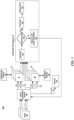
- Fig. 1 illustrates a block diagram of an exemplary system 100 in which various aspects of the invention may be practiced.
- system 100 includes a group of users 102 engaged in a controlled experiment.
- the experiment studies the users' behavior while using one of two different variants of a software product.
- the users 102 are randomly assigned to use either a control version 104 of the software product or a treatment version 106 of the software product.
- the users 102 assigned to use the control version are part of the group A 114 and the users assigned to use the treatment version are part of the group B 116.
- the control version 104 may be a production version of the software product that has been tested and released for public distribution.
- the treatment version 106 may be a version of the software product that has been enhanced with different features than the control version or contains alterations not found in the control version 104.
- the assignment of a user to either the control version or the treatment version is random and performed by the group assignment module 108.
- the percentage of users that are assigned to a particular group is based on an objective that strives to obtain accept or reject the null hypothesis with a statistically sufficient sample size that meets the target error rate.
- the group assignment module 108 determines an initial assignment estimate to split the total number of users into group A by X% (110), into group B by Y% (112), and to discard 120 the residual amount (1-X-Y) % (118).
- An event represents an action performed by a user that is triggered by the application in response to a user action, directly or indirectly.
- the events may include installation of the software product, opening the software product, starting the software product, using a specific feature of the software product, experiencing a crash or hang, experiencing other types of failures during execution of the software product, and so forth.
- the system and techniques described herein are not limited to this particular aspect and that other events may be used.
- an agent (not shown) is embedded in the control and treatment version of the software product.
- the agent generates a metric upon occurrence of an associated event.
- the events are user-defined and configured before the experiment runs. The events occur during the users' usage of the software product.
- the metrics are continuously streamed to the stream A/B test module 118.
- the metric contains a measurement value associated with the event.
- an event can be the installation of the software product and the metric can be the amount of time the version of the software product took to be installed.
- H 1 p 1 .
- the SPRT test 120 for testing H 0 against H 1 is then defined as follows: Given two user-defined boundaries of the SPRT test, a m and r m , where a m ⁇ r m , at each stage m of the test, the value of ⁇ m is computed as in (1) above, and then
- Equations (2) and (3) above are used to determine statistical significance, which is either significantly worse or significantly better relative to the hypotheses (block 126-yes), in which case the stream A/B test is stopped (block 130). In the event the test determines that the performance of one version is statistically worse, an alert may be raised (block 132). The alert may be used to terminate the usage of the poor performing version of the software product and/or to report the outcome of the test.
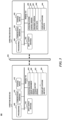
- Fig. 2 shows the stream A/B test module 122 in further detail.
- the stream A/B test module 122 receives a continuous stream of metrics from both the users in group A 114 and the users in group B 116. The metrics are related to a particular event and the test produces metrics from multiple events.
- the stream A/B test module 118 routes each metric to a particular test engine corresponding to its associated event (202A - 202N).
- a metric associated with a group A user (block 204A, 214A) is compared with a metric associated with a group B user (block 204B, 214B) for the same event using the SPRT test when an effective sample pair is received (206A-206N).
- the SPRT test is not applied to a sample pair when there is no difference between the values (e.g., (0,0), (1,1)).
- FIG. 1 and 2 shows components of the system in one aspect of an environment in which various aspects of the invention may be practiced.
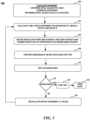
- Fig. 3 there is shown one aspect of a method 300 for performing an A/B test with continuously streaming data.
- the configuration for the A/B test is set by defining the experiment (block 302).
- the A/B test is configured to monitor the conversion rate of two versions of a software product when there is no prior information given about the probability distribution of the observed data.
- the observed values are associated with a particular event and represented as a binary value or output.
- the percentage of users that are assigned into group A or group B is calculated (block 304).
- the assignment of a particular user into group A and B is random. However, this differs from the percentage of users that are assigned into group A and group B.
- the percentage of users assigned into group A is represented by X and the percentage of users assigned to group B is represented by Y.
- a power analysis is used to compute X and Y.
- the power analysis formula is used to estimate the sample size needed to produce a confidence interval estimate with a specified margin of error (precision) or to ensure that a test of hypothesis has a high probability of detecting a meaningful difference in the parameter.
- the power analysis ensures that there is a sufficient number of participants to adequately address the hypotheses. An inadequate number of users or an excessively large number of users are both wasteful in computational resources.
- the test engine As the event data is received, it is transferred to the test engine corresponding to the event (block 306).
- the test engine only receives the effective sample pairs (i.e., (0,1), (1,0)) and not the sample pairs that do not reflect a difference (i.e., (1,1), (0,0)).
- the binary output from an effective sample pair is represented as a pair at each observation i as either (0,1) or (1,0).
- the effective sample pairs arrive sequentially from group A and group B, the accumulated sum, Z i , moves upward or downward.
- Z i crosses either of the two user-specified boundaries, a m or r m , corresponding to the hypotheses, the test terminates and the corresponding hypothesis is selected.
- the SPRT test 120 for testing H 0 against H 1 is then defined as follows: Given two user-defined boundaries of the SPRT test, a m and r m , where a m ⁇ r m , at each stage m of the test, the value of ⁇ m is computed as in (1) above (block 308).
- the test for significance is as follows (block 310):
- the group assignment percentages X and Y are recalculated based on the test statistic from the SPRT test.
- the threshold equation for a m (5) above is used to determine the value of X, which is the value of n in the equation, when the value of the test statistic is substituted for a m .
- the threshold equation for r m (6) above is used to determine the value for Y, which is the value of n in the equation, when the value of the test statistic is substituted for r m .
- new users participate in the test they are assigned to group A or group B based on the recomputed percentages X and Y.
- the A/B test described herein is not limited to the double dichotomies scenario described above and can be utilized in other scenarios that utilize binary output, continuous output and/or integer output.
- the SPRT test maybe configured for other scenarios with other population probability distributions as shown in Table I below.
- Table One the column labeled "output” denotes the type of output (binary, continuous), the column labeled “parameter” represents the value that is tested, the column labeled "batch size” represents the number of values tested at each time interval, and the column labeled “distribution” represents the probability distribution associated with the parameters.
- FIGs. 4A and 4B illustrate two different ways to illustrate the outcome of an experiment.
- Fig. 4A represents the percentage of successes and
- Fig. 4B represents the sum of the successes.
- Fig. 4A is more interpretable to determining the differences between the two conversion rates since graph shows the width of the distance between a m and r m decreasing over time until the test terminates.
- Fig. 4B illustrates the acceptance or rejection of the null hypothesis since the width between a m and r m is constant.
- the graph in Fig. 4A shows the number of observations on the x-axis and the percentage ratio of the successes are on the y-axis.
- the percentage ratio of the successes may illustrate the percentage of customers visiting the download web page to the event of successfully installing the software product.
- the percentage ratio can be computed as follows: 1 ⁇ p 0 p 1 1 ⁇ p 0 p 1 + p 0 1 ⁇ p 1 .
- Fig. 4A shows the upper bound threshold, a m , and the lower bound threshold r m and the distance between these two bounds decreases over time making it is to visually detect the differences in the conversion rates.
- Fig. 4B is a graph representing the overall accumulated sum of the successes, Z.
- the x-axis shows the number of observations and the y-axis shows the accumulated sum of the successes. This graph is used to ascertain whether the null hypothesis was accepted or rejected when the aggregated sum of the successes crosses one of the thresholds, a m or r m .
- Fig. 5 illustrates an exemplary operating environment 600 that includes at least one computing device 602 that serves as the dynamic evaluation experimentation system coupled by a network 604 and to one or more computing devices 606 associated with users.
- the dynamic experimentation evaluation system may be configured as a cloud service that provides a framework for developers to test and evaluate different versions of a software product using the techniques described herein.
- a computing device 602, 606 may be any type of electronic device, such as, without limitation, a mobile device, a personal digital assistant, a mobile computing device, a smart phone, a cellular telephone, a handheld computer, a server, a server array or server farm, a web server, a network server, a blade server, an Internet server, a work station, a mini-computer, a mainframe computer, a supercomputer, a network appliance, a web appliance, a distributed computing system, multiprocessor systems, or combination thereof.
- the operating environment 600 may be configured in a network environment, a distributed environment, a multi-processor environment, or a stand-alone computing device having access to remote or local storage devices.
- a computing device 602, 606 may include one or more processors 608, 626 a communication interface 610, 628 one or more storage devices 612, 630 one or more input and output devices 614, 632 and a memory 616, 634.
- a processor 608, 626 may be any commercially available or customized processor and may include dual microprocessors and multi-processor architectures.
- the communication interface 610, 628 facilitates wired or wireless communications between the computing device 602, 606 and other devices.
- a storage device 612, 630 may be a computer-readable medium that does not contain propagating signals, such as modulated data signals transmitted through a carrier wave.
- Examples of a storage device 612, 630 include without limitation RAM, ROM, EEPROM, flash memory or other memory technology, CD-ROM, digital versatile disks (DVD), or other optical storage, magnetic cassettes, magnetic tape, magnetic disk storage, all of which do not contain propagating signals, such as modulated data signals transmitted through a carrier wave.
- the input/output devices 614, 632 may include a keyboard, mouse, pen, voice input device, touch input device, display, speakers, printers, etc., and any combination thereof.
- the memory 616, 634 may be any non-transitory computer-readable storage media that may store executable procedures, applications, and data.
- the computer-readable storage media does not pertain to propagated signals, such as modulated data signals transmitted through a carrier wave. It may be any type of non-transitory memory device (e.g., random access memory, read-only memory, etc.), magnetic storage, volatile storage, non-volatile storage, optical storage, DVD, CD, floppy disk drive, etc. that does not pertain to propagated signals, such as modulated data signals transmitted through a carrier wave.
- the memory 616, 634 may also include one or more external storage devices or remotely located storage devices that do not pertain to propagated signals, such as modulated data signals transmitted through a carrier wave.
- the memory 616, 634 may contain instructions, components, and data.
- a component is a software program that performs a specific function and is otherwise known as a module, program, engine, and/or application.
- the memory 616 of computing device 602 may include an operating system 614, a group assignment module 616, a stream A/B test module 618, and other applications and data 620.
- the memory 634 of computing device 606 may include an operating system 636, a control version of a software product 638, a treatment version of a software product 640, metric data 642 and other applications and data 644.
- the network 604 may employ a variety of wired and/or wireless communication protocols and/or technologies.
- Various generations of different communication protocols and/or technologies that may be employed by a network may include, without limitation, Global System for Mobile Communication (GSM), General Packet Radio Services (GPRS), Enhanced Data GSM Environment (EDGE), Code Division Multiple Access (CDMA), Wideband Code Division Multiple Access (W-CDMA), Code Division Multiple Access 2000, (CDMA-2000), High Speed Downlink Packet Access (HSDPA), Long Term Evolution (LTE), Universal Mobile Telecommunications System (UMTS), Evolution-Data Optimized (Ev-DO), Worldwide Interoperability for Microwave Access (WiMax), Time Division Multiple Access (TDMA), Orthogonal Frequency Division Multiplexing (OFDM), Ultra Wide Band (UWB), Wireless Application Protocol (WAP), User Datagram Protocol (UDP), Transmission Control Protocol/ Internet Protocol (TCP/IP), any portion of the Open Systems Interconnection (OSI) model protocols, Session Initiated Protocol/ Real-Time Transport
- aspects of the subject matter disclosed herein pertain to the technical problem of predicting the performance and reliability of a new or treatment version of a program by comparing the users' behavior with a control version of the program.
- the technical features associated with addressing this problem uses evaluation techniques that continuously monitor the users' behavior by evaluating, in real-time, the differences in the users' behavior until statistical significance is achieved.
- the dynamic evaluation of the users' behavior has the technical effect of detecting when to terminate the test under the constraints of achieving the desired error rate thereby reducing the amount of computing resources used to perform the test.
- the real-time evaluation is able to provide real-time alerts when a target situation is detected thereby saving computing resources over incurring additional expenses by delayed reactions.
- a system having one or more processors and a memory coupled to the one or more processors.
- the one or more processors are configured to: continuously monitor, in real-time, user interactions from a control group and user interactions from a treatment group, the control group testing a control version of a software product, the treatment group testing a treatment version of the software product, the control version of the software product different from the treatment version of the software product; based on the monitored user interactions, determine in real-time whether to conclude the continuous monitoring based on a sequential probability ratio test (SPRT) that detects a statistically significant effect between the users in the treatment group from the users in the control group; and terminate the continuous monitoring when the statistically significant effect is detected.
- SPRT sequential probability ratio test
- the one or more processors are further configured to: terminate the continuous monitoring when the SPRT test detects a statistically significant improved effect from the users in the treatment group than the users in the control group; continue the continuous monitoring when the SPRT does not detect a statistically significant improvement or worsening effect from the users in the treatment group; assign a first percentage of users to the control group and a second percentage of users to the treatment group before the continuous monitoring occurs; calculate a new value for the first percentage of users assigned to the control group and a new value for the second percentage of users assigned to the treatment group when the SPRT does not detect a statistically significant improvement or worsening effect from the users in the treatment group; assign new users to the control group and the treatment group in accordance with the new value for the first percentage of users assigned to the control group and the new value for the second percentage of users assigned to the treatment group; and raise an alert to terminate users of the treatment group to cease usage of the software product upon detection of the worsening effect of the treatment version.
- a device having one or more processors and a memory. There is at least one module having instructions that when executed on the one or more processors performs actions that: continuously evaluate, in real-time, differences in metric data from a control version of a software application with metric data from a treatment version of the software application; and terminate the continuous real-time evaluation when a sequential probability ratio test (SPRT) indicates a statistical significance between the metric data from the control version and the metric data from the treatment version.
- SPRT sequential probability ratio test
- the statistical significance is based on the SPRT indicating that a conversion rate for the treatment version is greater than a conversion rate for the control version or based on the SPRT indicating that a conversion rate for the control version is greater than a conversion rate for the treatment version.
- Statistical significance is based on a Type I error rate that defines a probability of a false positive and a Type II error rate that defines a probability of a false negative.
- the metric data represents a success or failure associated with an event occurring during usage of the software application.
- a method operates on the system and devices disclosed that configures an A/B test to evaluate a control version of a software product with a treatment version of the software product on a continuous stream of metric data in real-time, the metric data from users of the control version and from users of the treatment version; assigns a first percentage of users to a control version and a second percentage of users to the treatment version, the first percentage of users and the second percentage of users representing an estimate of metric data needed to achieve a target error rate; continuously evaluates, in real-time, metrics from users of the control version with metrics from users of the treatment version using a sequential probability ratio test (SPRT); detects from the SPRT no statistically significant difference from the metrics from the users of the control version with the metrics from the users of the treatment version; assigns new users entering the A/B test to the control version based on a third percentage and to the treatment version based on a fourth percentage; and continuously evaluates metrics, in real-time, from the control version with metrics from the treatment version until the SPRT indicates statistical significance.
- the first percentage of users and the second percentage of users are based on a power analysis.
- the A/B test is configured with a null hypothesis that assumes a conversion rate of the treatment version that is statistically more significant than a conversion rate of the control version
- the method terminates the A/B test upon the SPRT indicating a statistically greater difference between metrics from the control version and the treatment version.
- Statistical significance is determined based on a Type I error rate that defines a probability of a false positive.
- the statistical significance may also be determined based on a Type II error rate that defines a probability of a false negative.
- the method terminates the A/B test upon acceptance of a null hypothesis when an accumulated sum of metric differences being smaller than a lower bound represented by
- the method may be terminate the A/B test upon acceptance of an alternative hypothesis when an accumulated sum of metric differences being larger than an upper bound represented by
Landscapes
- Engineering & Computer Science (AREA)
- Theoretical Computer Science (AREA)
- General Engineering & Computer Science (AREA)
- Physics & Mathematics (AREA)
- General Physics & Mathematics (AREA)
- Computer Hardware Design (AREA)
- Quality & Reliability (AREA)
- Software Systems (AREA)
- Computer Security & Cryptography (AREA)
- Debugging And Monitoring (AREA)
Claims (11)
- Computersystem, das Folgendes umfasst:einen oder mehrere Prozessoren; undeinen Speicher, der mit dem einen oder den mehreren Prozessoren gekoppelt ist;wobei der eine oder die mehreren Prozessoren konfiguriert sind zum:kontinuierlichen Überwachen, in Echtzeit, von Metriken von Benutzern einer Kontrollgruppe und Metriken von Benutzern einer Behandlungsgruppe, wobei Benutzer in der Kontrollgruppe eine Kontrollversion (104) eines Softwareprodukts testen, wobei Benutzer in der Behandlungsgruppe eine Behandlungsversion (106) des Softwareprodukts testen;Zuweisen (108) eines ersten Prozentsatzes von Benutzern zur Kontrollgruppe und eines zweiten Prozentsatzes von Benutzern zur Behandlungsgruppe, bevor das kontinuierliche Überwachen erfolgt, wobei der erste Prozentsatz von Benutzern und der zweite Prozentsatz von Benutzern eine Schätzung von metrischen Daten darstellen, die zum Erreichen einer Zielfehlerrate erforderlich sind;basierend auf den überwachten Metriken, Bestimmen, in Echtzeit, ob ein sequenzieller Wahrscheinlichkeitsquotiententest (Sequential Probability Ratio Test), SPRT, (124) eine statistisch signifikante Wirkung zwischen den Benutzern in der Behandlungsgruppe und den Benutzern in der Kontrollgruppe erfasst;Bestimmen, dass die statistisch signifikante Wirkung nicht erfasst wird;Berechnen (128) eines neuen Werts für den ersten Prozentsatz der Benutzer, die der Kontrollgruppe zugewiesen sind, und eines neuen Werts für den zweiten Prozentsatz der Benutzer, die der Behandlungsgruppe zugewiesen sind;Zuweisen neuer Benutzer zur Kontrollgruppe und zur Behandlungsgruppe entsprechend dem neuen Wert für den ersten Prozentsatz von Benutzern, die der Kontrollgruppe zugewiesen sind, und dem neuen Wert für den zweiten Prozentsatz von Benutzern, die der Behandlungsgruppe zugewiesen sind; undkontinuierliches Evaluieren der Metriken (306), in Echtzeit, aus der Kontrollversion mit Metriken aus der Behandlungsversion, bis (314) der SPRT statistische Signifikanz angibt.
- System nach Anspruch 1, wobei der eine oder die mehreren Prozessoren weiter konfiguriert sind zum:
Beenden (130) des kontinuierlichen Überwachens, wenn der SPRT-Test eine statistisch signifikant verbesserte Wirkung bei den Benutzern in der Behandlungsgruppe im Vergleich zu den Benutzern in der Kontrollgruppe erfasst. - System nach Anspruch 1, wobei der eine oder die mehreren Prozessoren weiter konfiguriert sind zum:
Auslösen eines Alarms, um Benutzer der Behandlungsgruppe nicht weiterzuführen, um Nutzung des Softwareprodukts einzustellen, bei Erfassung der Verschlechterungswirkung der Behandlungsversion. - Verfahren, umfassend:Konfigurieren (302) eines A/B-Tests zum Evaluieren einer Kontrollversion eines Softwareprodukts mit einer Behandlungsversion des Softwareprodukts anhand eines kontinuierlichen Stroms von metrischen Daten in Echtzeit, der metrischen Daten von Benutzern der Kontrollversion und von Benutzern der Behandlungsversion;Zuweisen (304) eines ersten Prozentsatzes von Benutzern zu einer Kontrollversion und eines zweiten Prozentsatzes von Benutzern zur Behandlungsversion, wobei der erste Prozentsatz von Benutzern und der zweite Prozentsatz von Benutzern eine Schätzung von metrischen Daten darstellen, die zum Erreichen einer Zielfehlerrate erforderlich sind;kontinuierliches Evaluieren (306), in Echtzeit, von Metriken von Benutzern der Kontrollversion mit Metriken von Benutzern der Behandlungsversion unter Verwendung eines sequenziellen Wahrscheinlichkeitsquotiententests (Sequential Probability Ratio Test), SPRT;Erfassen anhand des SPRT, dass kein statistisch signifikanter Unterschied zwischen den Metriken der Benutzer der Kontrollversion und den Metriken der Benutzer der Behandlungsversion besteht;Zuweisen (318) neuer Benutzer, die dem A/B-Test beitreten, zur Kontrollversion basierend auf einem dritten Prozentsatz und zur Behandlungsversion basierend auf einem vierten Prozentsatz; undkontinuierliches Evaluieren von Metriken (306), in Echtzeit, aus der Kontrollversion mit Metriken aus der Behandlungsversion, bis (314) der SPRT statistische Signifikanz angibt.
- Verfahren nach Anspruch 4, wobei der erste Prozentsatz von Benutzern und der zweite Prozentsatz von Benutzern auf einer Leistungsanalyse basieren.
- Verfahren nach Anspruch 4, wobei der A/B-Test mit einer Nullhypothese konfiguriert ist, die eine Umwandlungsrate der Behandlungsversion annimmt, die statistisch signifikanter ist als eine Umwandlungsrate der Kontrollversion.
- Verfahren nach Anspruch 4, weiter umfassend:
Beenden des A/B-Tests, wenn der SPRT eine statistisch größere Differenz zwischen Metriken aus der Kontrollversion und der Behandlungsversion angibt. - Verfahren nach Anspruch 4, wobei die statistische Signifikanz basierend auf einer Rate für Fehler 1. Art bestimmt wird, die eine Wahrscheinlichkeit eines falsch positiven Ergebnisses definiert.
- Verfahren nach Anspruch 4, wobei die statistische Signifikanz basierend auf einer Rate für Fehler 2. Art bestimmt wird, die eine Wahrscheinlichkeit eines falsch negativen Ergebnisses definiert.
- Verfahren nach Anspruch 4, weiter umfassend:Beenden des A/B-Tests bei Annahme einer Nullhypothese, wenn eine kumulierte Summe metrischer Differenzen kleiner als eine Untergrenze ist, die dargestellt wird durch[log β/(1- α) ] / [ (log p1/p0) - log (1- p1 )/(1 - p0) ] + n [ (log (1- p1 )/(1- p0)) / (log p1/p0 - log (1- p1)/(1 - p0 )), wobei α die Rate für Fehler 1. Art ist, ß die Rate für Fehler 2. Art ist, p0 eine Umwandlungsrate für die Kontrollversion ist und p1 eine Umwandlungsrate für die Behandlungsversion ist.
- Verfahren nach Anspruch 4, weiter umfassend:Beenden des A/B-Tests bei Annahme einer alternativen Hypothese, wenn eine kumulierte Summe metrischer Differenzen größer als eine Obergrenze ist, die dargestellt wird durch[log (1-ß)/ α)] / [ (log p1/p0) - log (1- p1 )/(1 - p0 ) ] + n [ (log (1- p1)/(1- p0)) / (log p1/p0 - log (1- p1)/(1 - p0 )), wobei α die Rate für Fehler 1. Art ist, ß die Rate für Fehler 2. Art ist, p1 eine Umwandlungsrate für die Kontrollversion ist und p2 eine Umwandlungsrate für die Behandlungsversion ist.
Applications Claiming Priority (3)
| Application Number | Priority Date | Filing Date | Title |
|---|---|---|---|
| US201862619809P | 2018-01-21 | 2018-01-21 | |
| US16/132,334 US11526421B2 (en) | 2018-01-21 | 2018-09-14 | Dynamic experimentation evaluation system |
| PCT/US2019/013420 WO2019143543A2 (en) | 2018-01-21 | 2019-01-14 | Dynamic experimentation evaluation system |
Publications (2)
| Publication Number | Publication Date |
|---|---|
| EP3740875A2 EP3740875A2 (de) | 2020-11-25 |
| EP3740875B1 true EP3740875B1 (de) | 2023-11-29 |
Family
ID=67299353
Family Applications (1)
| Application Number | Title | Priority Date | Filing Date |
|---|---|---|---|
| EP19704096.7A Active EP3740875B1 (de) | 2018-01-21 | 2019-01-14 | Dynamisches experimentierauswertungssystem |
Country Status (3)
| Country | Link |
|---|---|
| US (1) | US11526421B2 (de) |
| EP (1) | EP3740875B1 (de) |
| WO (1) | WO2019143543A2 (de) |
Families Citing this family (18)
| Publication number | Priority date | Publication date | Assignee | Title |
|---|---|---|---|---|
| CN112433932B (zh) * | 2019-08-26 | 2024-05-28 | 腾讯科技(深圳)有限公司 | 一种数据处理方法、装置以及计算机存储介质 |
| CN110727590B (zh) * | 2019-10-10 | 2023-04-18 | 北京字节跳动网络技术有限公司 | 异常试验方案的确定方法、设备及计算机可读存储介质 |
| CN111294253B (zh) * | 2020-01-15 | 2022-03-04 | 腾讯科技(深圳)有限公司 | 测试数据处理方法、装置、计算机设备及存储介质 |
| CN111309614B (zh) * | 2020-02-17 | 2022-10-18 | 支付宝(杭州)信息技术有限公司 | A/b测试方法、装置及电子设备 |
| US12050897B2 (en) * | 2020-07-30 | 2024-07-30 | Bolt Financial, Inc. | Controlled rollouts for frontend assets |
| US20220067754A1 (en) * | 2020-08-27 | 2022-03-03 | Coupang Corporation | Computerized systems and methods for predicting a minimum detectable effect |
| US20220283932A1 (en) * | 2021-03-04 | 2022-09-08 | Adobe Inc. | Framework that enables anytime analysis of controlled experiments for optimizing digital content |
| CN112907128B (zh) * | 2021-03-23 | 2024-09-06 | 百度在线网络技术(北京)有限公司 | 基于ab测试结果的数据分析方法、装置、设备及介质 |
| CN113176992B (zh) * | 2021-04-08 | 2022-02-15 | 深圳依时货拉拉科技有限公司 | A/b实验分流方法、装置和计算机可读存储介质 |
| CN113448872B (zh) * | 2021-07-22 | 2022-04-29 | 网易(杭州)网络有限公司 | 一种测试的执行方法、装置、设备及存储介质 |
| DE102022201857A1 (de) * | 2022-02-22 | 2023-08-24 | Robert Bosch Gesellschaft mit beschränkter Haftung | Verfahren zum Steuern einer Robotervorrichtung |
| US12387235B2 (en) * | 2022-03-22 | 2025-08-12 | International Business Machines Corporation | Subgroup analysis in A/B testing |
| CN115391184A (zh) * | 2022-08-09 | 2022-11-25 | 北京百度网讯科技有限公司 | 一种ab测试的方法、装置及设备 |
| KR102915899B1 (ko) * | 2022-09-16 | 2026-01-21 | 쿠팡 주식회사 | Ab 테스트 코드 정보 관리를 위한 전자 장치 및 그 방법 |
| US12332765B2 (en) * | 2022-09-23 | 2025-06-17 | Apple Inc. | Systems and methods for variant testing at scale |
| WO2024063883A1 (en) * | 2022-09-23 | 2024-03-28 | Apple Inc. | Systems and methods for variant testing at scale |
| US20240152936A1 (en) * | 2022-11-08 | 2024-05-09 | Maplebear Inc. (Dba Instacart) | Assigning test periods of geographic regions to treatment or control groups for a/b testing |
| US11909829B1 (en) * | 2023-06-16 | 2024-02-20 | Amazon Technologies, Inc. | Online testing efficiency through early termination |
Family Cites Families (16)
| Publication number | Priority date | Publication date | Assignee | Title |
|---|---|---|---|---|
| US7171586B1 (en) | 2003-12-17 | 2007-01-30 | Sun Microsystems, Inc. | Method and apparatus for identifying mechanisms responsible for “no-trouble-found” (NTF) events in computer systems |
| EP2179393A4 (de) * | 2007-07-03 | 2012-05-30 | 3M Innovative Properties Co | System und verfahren zum erzeugen von zeitschlitz-samples, denen inhalt zugewiesen werden kann, zur messung von effekten des zugewiesenen inhalts |
| US8112249B2 (en) * | 2008-12-22 | 2012-02-07 | Optimaltest Ltd. | System and methods for parametric test time reduction |
| US20130209982A1 (en) * | 2012-02-15 | 2013-08-15 | Turning Technologies, Llc | System and method for managing and administering a high stakes test |
| US9141522B1 (en) | 2013-01-02 | 2015-09-22 | Intuit Inc. | Virtual cluster immune system for dynamic testing |
| US9201572B2 (en) * | 2013-03-12 | 2015-12-01 | Cbs Interactive, Inc. | A/B test configuration environment |
| US9978074B2 (en) * | 2013-03-12 | 2018-05-22 | Cbs Interactive Inc. | Automated experiment scheduling |
| US20150012852A1 (en) | 2013-07-08 | 2015-01-08 | Kobo Incorporated | User interface tool for planning an ab type of test |
| US20160125749A1 (en) * | 2014-10-30 | 2016-05-05 | Linkedin Corporation | User interface for a/b testing |
| US9760471B2 (en) * | 2015-09-23 | 2017-09-12 | Optimizely, Inc. | Implementing a reset policy during a sequential variation test of content |
| US10755304B2 (en) * | 2016-05-06 | 2020-08-25 | Adobe Inc. | Sample size determination in sequential hypothesis testing |
| US10699294B2 (en) * | 2016-05-06 | 2020-06-30 | Adobe Inc. | Sequential hypothesis testing in a digital medium environment |
| US20180082326A1 (en) * | 2016-09-19 | 2018-03-22 | Adobe Systems Incorporated | Testing an Effect of User Interaction with Digital Content in a Digital Medium Environment |
| US20180341975A1 (en) * | 2017-05-23 | 2018-11-29 | Streamlet Data | Methods for web optimization and experimentation |
| US10516525B2 (en) * | 2017-08-24 | 2019-12-24 | International Business Machines Corporation | System and method for detecting anomalies in examinations |
| US20190095828A1 (en) * | 2017-09-27 | 2019-03-28 | Linkedin Corporation | Automatic ramp-up of controlled experiments |
-
2018
- 2018-09-14 US US16/132,334 patent/US11526421B2/en active Active
-
2019
- 2019-01-14 WO PCT/US2019/013420 patent/WO2019143543A2/en not_active Ceased
- 2019-01-14 EP EP19704096.7A patent/EP3740875B1/de active Active
Also Published As
| Publication number | Publication date |
|---|---|
| WO2019143543A2 (en) | 2019-07-25 |
| US20190227903A1 (en) | 2019-07-25 |
| EP3740875A2 (de) | 2020-11-25 |
| WO2019143543A3 (en) | 2019-10-31 |
| US11526421B2 (en) | 2022-12-13 |
Similar Documents
| Publication | Publication Date | Title |
|---|---|---|
| EP3740875B1 (de) | Dynamisches experimentierauswertungssystem | |
| US10776196B2 (en) | Systems and methods for anomaly detection in a distributed computing system | |
| EP4120653A1 (de) | Leistungs- und fehleranalyse von kommunikationsnetzen unter verwendung von lernmodellen mit modellinterpretation | |
| US10069900B2 (en) | Systems and methods for adaptive thresholding using maximum concentration intervals | |
| Allodi | The heavy tails of vulnerability exploitation | |
| US10324989B2 (en) | Microblog-based event context acquiring method and system | |
| EP3244334B1 (de) | Logdateiengraph wegzersetzung um netzwerkanomalien zu detektieren | |
| US10504028B1 (en) | Techniques to use machine learning for risk management | |
| US20110208679A1 (en) | Trouble pattern creating program and trouble pattern creating apparatus | |
| Thakkar et al. | Clairvoyant: AdaBoost with Cost‐Enabled Cost‐Sensitive Classifier for Customer Churn Prediction | |
| WO2019143540A1 (en) | Machine learning comparison tools | |
| CN115018124B (zh) | 数据预测方法、系统、设备及存储介质 | |
| US8069012B2 (en) | Sampling sufficiency testing | |
| US20210400065A1 (en) | Method and apparatus to detect scripted network traffic | |
| CN114358581B (zh) | 性能指标的异常阈值确定方法和装置、设备、存储介质 | |
| KR20240055011A (ko) | 지능형 예측 a/b 테스팅 | |
| US20160203038A1 (en) | Predicting a likelihood of a critical storage problem | |
| US20230273874A1 (en) | Imbalance detection in online experiments | |
| US20240289458A1 (en) | Method and Device Relating to Decision-Making Threshold | |
| CN118802331B (zh) | 数据处理方法、装置、设备及存储介质 | |
| CN110704614B (zh) | 对应用中的用户群类型进行预测的信息处理方法及装置 | |
| CN118885319A (zh) | 微服务系统故障诊断方法、装置及设备 | |
| EP4177737A1 (de) | Identifizierung der anwendungsprogrammschnittstellenverwendung in einem binärcode | |
| CN114237856A (zh) | 运算类型识别方法、装置、电子设备及存储介质 | |
| CN114265527B (zh) | 一种预测鼠标点击位置的方法、装置、介质及电子设备 |
Legal Events
| Date | Code | Title | Description |
|---|---|---|---|
| STAA | Information on the status of an ep patent application or granted ep patent |
Free format text: STATUS: UNKNOWN |
|
| STAA | Information on the status of an ep patent application or granted ep patent |
Free format text: STATUS: THE INTERNATIONAL PUBLICATION HAS BEEN MADE |
|
| PUAI | Public reference made under article 153(3) epc to a published international application that has entered the european phase |
Free format text: ORIGINAL CODE: 0009012 |
|
| STAA | Information on the status of an ep patent application or granted ep patent |
Free format text: STATUS: REQUEST FOR EXAMINATION WAS MADE |
|
| 17P | Request for examination filed |
Effective date: 20200703 |
|
| AK | Designated contracting states |
Kind code of ref document: A2 Designated state(s): AL AT BE BG CH CY CZ DE DK EE ES FI FR GB GR HR HU IE IS IT LI LT LU LV MC MK MT NL NO PL PT RO RS SE SI SK SM TR |
|
| AX | Request for extension of the european patent |
Extension state: BA ME |
|
| DAV | Request for validation of the european patent (deleted) | ||
| DAX | Request for extension of the european patent (deleted) | ||
| RAP3 | Party data changed (applicant data changed or rights of an application transferred) |
Owner name: MICROSOFT TECHNOLOGY LICENSING, LLC |
|
| STAA | Information on the status of an ep patent application or granted ep patent |
Free format text: STATUS: EXAMINATION IS IN PROGRESS |
|
| 17Q | First examination report despatched |
Effective date: 20220324 |
|
| GRAP | Despatch of communication of intention to grant a patent |
Free format text: ORIGINAL CODE: EPIDOSNIGR1 |
|
| STAA | Information on the status of an ep patent application or granted ep patent |
Free format text: STATUS: GRANT OF PATENT IS INTENDED |
|
| INTG | Intention to grant announced |
Effective date: 20230628 |
|
| GRAS | Grant fee paid |
Free format text: ORIGINAL CODE: EPIDOSNIGR3 |
|
| GRAA | (expected) grant |
Free format text: ORIGINAL CODE: 0009210 |
|
| STAA | Information on the status of an ep patent application or granted ep patent |
Free format text: STATUS: THE PATENT HAS BEEN GRANTED |
|
| P01 | Opt-out of the competence of the unified patent court (upc) registered |
Effective date: 20231018 |
|
| AK | Designated contracting states |
Kind code of ref document: B1 Designated state(s): AL AT BE BG CH CY CZ DE DK EE ES FI FR GB GR HR HU IE IS IT LI LT LU LV MC MK MT NL NO PL PT RO RS SE SI SK SM TR |
|
| REG | Reference to a national code |
Ref country code: GB Ref legal event code: FG4D |
|
| REG | Reference to a national code |
Ref country code: CH Ref legal event code: EP |
|
| REG | Reference to a national code |
Ref country code: DE Ref legal event code: R096 Ref document number: 602019042303 Country of ref document: DE |
|
| REG | Reference to a national code |
Ref country code: IE Ref legal event code: FG4D |
|
| PGFP | Annual fee paid to national office [announced via postgrant information from national office to epo] |
Ref country code: FR Payment date: 20231219 Year of fee payment: 6 |
|
| REG | Reference to a national code |
Ref country code: LT Ref legal event code: MG9D |
|
| REG | Reference to a national code |
Ref country code: NL Ref legal event code: MP Effective date: 20231129 |
|
| PG25 | Lapsed in a contracting state [announced via postgrant information from national office to epo] |
Ref country code: GR Free format text: LAPSE BECAUSE OF FAILURE TO SUBMIT A TRANSLATION OF THE DESCRIPTION OR TO PAY THE FEE WITHIN THE PRESCRIBED TIME-LIMIT Effective date: 20240301 |
|
| PG25 | Lapsed in a contracting state [announced via postgrant information from national office to epo] |
Ref country code: IS Free format text: LAPSE BECAUSE OF FAILURE TO SUBMIT A TRANSLATION OF THE DESCRIPTION OR TO PAY THE FEE WITHIN THE PRESCRIBED TIME-LIMIT Effective date: 20240329 |
|
| PG25 | Lapsed in a contracting state [announced via postgrant information from national office to epo] |
Ref country code: LT Free format text: LAPSE BECAUSE OF FAILURE TO SUBMIT A TRANSLATION OF THE DESCRIPTION OR TO PAY THE FEE WITHIN THE PRESCRIBED TIME-LIMIT Effective date: 20231129 |
|
| PG25 | Lapsed in a contracting state [announced via postgrant information from national office to epo] |
Ref country code: ES Free format text: LAPSE BECAUSE OF FAILURE TO SUBMIT A TRANSLATION OF THE DESCRIPTION OR TO PAY THE FEE WITHIN THE PRESCRIBED TIME-LIMIT Effective date: 20231129 |
|
| PG25 | Lapsed in a contracting state [announced via postgrant information from national office to epo] |
Ref country code: LT Free format text: LAPSE BECAUSE OF FAILURE TO SUBMIT A TRANSLATION OF THE DESCRIPTION OR TO PAY THE FEE WITHIN THE PRESCRIBED TIME-LIMIT Effective date: 20231129 Ref country code: IS Free format text: LAPSE BECAUSE OF FAILURE TO SUBMIT A TRANSLATION OF THE DESCRIPTION OR TO PAY THE FEE WITHIN THE PRESCRIBED TIME-LIMIT Effective date: 20240329 Ref country code: GR Free format text: LAPSE BECAUSE OF FAILURE TO SUBMIT A TRANSLATION OF THE DESCRIPTION OR TO PAY THE FEE WITHIN THE PRESCRIBED TIME-LIMIT Effective date: 20240301 Ref country code: ES Free format text: LAPSE BECAUSE OF FAILURE TO SUBMIT A TRANSLATION OF THE DESCRIPTION OR TO PAY THE FEE WITHIN THE PRESCRIBED TIME-LIMIT Effective date: 20231129 Ref country code: BG Free format text: LAPSE BECAUSE OF FAILURE TO SUBMIT A TRANSLATION OF THE DESCRIPTION OR TO PAY THE FEE WITHIN THE PRESCRIBED TIME-LIMIT Effective date: 20240229 |
|
| REG | Reference to a national code |
Ref country code: AT Ref legal event code: MK05 Ref document number: 1636834 Country of ref document: AT Kind code of ref document: T Effective date: 20231129 |
|
| PG25 | Lapsed in a contracting state [announced via postgrant information from national office to epo] |
Ref country code: NL Free format text: LAPSE BECAUSE OF FAILURE TO SUBMIT A TRANSLATION OF THE DESCRIPTION OR TO PAY THE FEE WITHIN THE PRESCRIBED TIME-LIMIT Effective date: 20231129 |
|
| PG25 | Lapsed in a contracting state [announced via postgrant information from national office to epo] |
Ref country code: SE Free format text: LAPSE BECAUSE OF FAILURE TO SUBMIT A TRANSLATION OF THE DESCRIPTION OR TO PAY THE FEE WITHIN THE PRESCRIBED TIME-LIMIT Effective date: 20231129 Ref country code: RS Free format text: LAPSE BECAUSE OF FAILURE TO SUBMIT A TRANSLATION OF THE DESCRIPTION OR TO PAY THE FEE WITHIN THE PRESCRIBED TIME-LIMIT Effective date: 20231129 Ref country code: PL Free format text: LAPSE BECAUSE OF FAILURE TO SUBMIT A TRANSLATION OF THE DESCRIPTION OR TO PAY THE FEE WITHIN THE PRESCRIBED TIME-LIMIT Effective date: 20231129 Ref country code: NO Free format text: LAPSE BECAUSE OF FAILURE TO SUBMIT A TRANSLATION OF THE DESCRIPTION OR TO PAY THE FEE WITHIN THE PRESCRIBED TIME-LIMIT Effective date: 20240229 Ref country code: NL Free format text: LAPSE BECAUSE OF FAILURE TO SUBMIT A TRANSLATION OF THE DESCRIPTION OR TO PAY THE FEE WITHIN THE PRESCRIBED TIME-LIMIT Effective date: 20231129 Ref country code: LV Free format text: LAPSE BECAUSE OF FAILURE TO SUBMIT A TRANSLATION OF THE DESCRIPTION OR TO PAY THE FEE WITHIN THE PRESCRIBED TIME-LIMIT Effective date: 20231129 Ref country code: HR Free format text: LAPSE BECAUSE OF FAILURE TO SUBMIT A TRANSLATION OF THE DESCRIPTION OR TO PAY THE FEE WITHIN THE PRESCRIBED TIME-LIMIT Effective date: 20231129 |
|
| PG25 | Lapsed in a contracting state [announced via postgrant information from national office to epo] |
Ref country code: DK Free format text: LAPSE BECAUSE OF FAILURE TO SUBMIT A TRANSLATION OF THE DESCRIPTION OR TO PAY THE FEE WITHIN THE PRESCRIBED TIME-LIMIT Effective date: 20231129 |
|
| PG25 | Lapsed in a contracting state [announced via postgrant information from national office to epo] |
Ref country code: AT Free format text: LAPSE BECAUSE OF FAILURE TO SUBMIT A TRANSLATION OF THE DESCRIPTION OR TO PAY THE FEE WITHIN THE PRESCRIBED TIME-LIMIT Effective date: 20231129 Ref country code: CZ Free format text: LAPSE BECAUSE OF FAILURE TO SUBMIT A TRANSLATION OF THE DESCRIPTION OR TO PAY THE FEE WITHIN THE PRESCRIBED TIME-LIMIT Effective date: 20231129 |
|
| PG25 | Lapsed in a contracting state [announced via postgrant information from national office to epo] |
Ref country code: SK Free format text: LAPSE BECAUSE OF FAILURE TO SUBMIT A TRANSLATION OF THE DESCRIPTION OR TO PAY THE FEE WITHIN THE PRESCRIBED TIME-LIMIT Effective date: 20231129 |
|
| PG25 | Lapsed in a contracting state [announced via postgrant information from national office to epo] |
Ref country code: SM Free format text: LAPSE BECAUSE OF FAILURE TO SUBMIT A TRANSLATION OF THE DESCRIPTION OR TO PAY THE FEE WITHIN THE PRESCRIBED TIME-LIMIT Effective date: 20231129 Ref country code: SK Free format text: LAPSE BECAUSE OF FAILURE TO SUBMIT A TRANSLATION OF THE DESCRIPTION OR TO PAY THE FEE WITHIN THE PRESCRIBED TIME-LIMIT Effective date: 20231129 Ref country code: RO Free format text: LAPSE BECAUSE OF FAILURE TO SUBMIT A TRANSLATION OF THE DESCRIPTION OR TO PAY THE FEE WITHIN THE PRESCRIBED TIME-LIMIT Effective date: 20231129 Ref country code: IT Free format text: LAPSE BECAUSE OF FAILURE TO SUBMIT A TRANSLATION OF THE DESCRIPTION OR TO PAY THE FEE WITHIN THE PRESCRIBED TIME-LIMIT Effective date: 20231129 Ref country code: EE Free format text: LAPSE BECAUSE OF FAILURE TO SUBMIT A TRANSLATION OF THE DESCRIPTION OR TO PAY THE FEE WITHIN THE PRESCRIBED TIME-LIMIT Effective date: 20231129 Ref country code: DK Free format text: LAPSE BECAUSE OF FAILURE TO SUBMIT A TRANSLATION OF THE DESCRIPTION OR TO PAY THE FEE WITHIN THE PRESCRIBED TIME-LIMIT Effective date: 20231129 Ref country code: CZ Free format text: LAPSE BECAUSE OF FAILURE TO SUBMIT A TRANSLATION OF THE DESCRIPTION OR TO PAY THE FEE WITHIN THE PRESCRIBED TIME-LIMIT Effective date: 20231129 Ref country code: AT Free format text: LAPSE BECAUSE OF FAILURE TO SUBMIT A TRANSLATION OF THE DESCRIPTION OR TO PAY THE FEE WITHIN THE PRESCRIBED TIME-LIMIT Effective date: 20231129 |
|
| PG25 | Lapsed in a contracting state [announced via postgrant information from national office to epo] |
Ref country code: PT Free format text: LAPSE BECAUSE OF FAILURE TO SUBMIT A TRANSLATION OF THE DESCRIPTION OR TO PAY THE FEE WITHIN THE PRESCRIBED TIME-LIMIT Effective date: 20240401 |
|
| PG25 | Lapsed in a contracting state [announced via postgrant information from national office to epo] |
Ref country code: MC Free format text: LAPSE BECAUSE OF FAILURE TO SUBMIT A TRANSLATION OF THE DESCRIPTION OR TO PAY THE FEE WITHIN THE PRESCRIBED TIME-LIMIT Effective date: 20231129 |
|
| PG25 | Lapsed in a contracting state [announced via postgrant information from national office to epo] |
Ref country code: PT Free format text: LAPSE BECAUSE OF FAILURE TO SUBMIT A TRANSLATION OF THE DESCRIPTION OR TO PAY THE FEE WITHIN THE PRESCRIBED TIME-LIMIT Effective date: 20240401 Ref country code: MC Free format text: LAPSE BECAUSE OF FAILURE TO SUBMIT A TRANSLATION OF THE DESCRIPTION OR TO PAY THE FEE WITHIN THE PRESCRIBED TIME-LIMIT Effective date: 20231129 |
|
| REG | Reference to a national code |
Ref country code: DE Ref legal event code: R097 Ref document number: 602019042303 Country of ref document: DE Ref country code: CH Ref legal event code: PL |
|
| PG25 | Lapsed in a contracting state [announced via postgrant information from national office to epo] |
Ref country code: LU Free format text: LAPSE BECAUSE OF NON-PAYMENT OF DUE FEES Effective date: 20240114 |
|
| PG25 | Lapsed in a contracting state [announced via postgrant information from national office to epo] |
Ref country code: LU Free format text: LAPSE BECAUSE OF NON-PAYMENT OF DUE FEES Effective date: 20240114 |
|
| PLBE | No opposition filed within time limit |
Free format text: ORIGINAL CODE: 0009261 |
|
| STAA | Information on the status of an ep patent application or granted ep patent |
Free format text: STATUS: NO OPPOSITION FILED WITHIN TIME LIMIT |
|
| PG25 | Lapsed in a contracting state [announced via postgrant information from national office to epo] |
Ref country code: BE Free format text: LAPSE BECAUSE OF NON-PAYMENT OF DUE FEES Effective date: 20240131 |
|
| PG25 | Lapsed in a contracting state [announced via postgrant information from national office to epo] |
Ref country code: CH Free format text: LAPSE BECAUSE OF NON-PAYMENT OF DUE FEES Effective date: 20240131 |
|
| PG25 | Lapsed in a contracting state [announced via postgrant information from national office to epo] |
Ref country code: SI Free format text: LAPSE BECAUSE OF FAILURE TO SUBMIT A TRANSLATION OF THE DESCRIPTION OR TO PAY THE FEE WITHIN THE PRESCRIBED TIME-LIMIT Effective date: 20231129 |
|
| PG25 | Lapsed in a contracting state [announced via postgrant information from national office to epo] |
Ref country code: SI Free format text: LAPSE BECAUSE OF FAILURE TO SUBMIT A TRANSLATION OF THE DESCRIPTION OR TO PAY THE FEE WITHIN THE PRESCRIBED TIME-LIMIT Effective date: 20231129 Ref country code: CH Free format text: LAPSE BECAUSE OF NON-PAYMENT OF DUE FEES Effective date: 20240131 Ref country code: BE Free format text: LAPSE BECAUSE OF NON-PAYMENT OF DUE FEES Effective date: 20240131 |
|
| REG | Reference to a national code |
Ref country code: BE Ref legal event code: MM Effective date: 20240131 |
|
| 26N | No opposition filed |
Effective date: 20240830 |
|
| PG25 | Lapsed in a contracting state [announced via postgrant information from national office to epo] |
Ref country code: IE Free format text: LAPSE BECAUSE OF NON-PAYMENT OF DUE FEES Effective date: 20240114 |
|
| PG25 | Lapsed in a contracting state [announced via postgrant information from national office to epo] |
Ref country code: IE Free format text: LAPSE BECAUSE OF NON-PAYMENT OF DUE FEES Effective date: 20240114 |
|
| PG25 | Lapsed in a contracting state [announced via postgrant information from national office to epo] |
Ref country code: CY Free format text: LAPSE BECAUSE OF FAILURE TO SUBMIT A TRANSLATION OF THE DESCRIPTION OR TO PAY THE FEE WITHIN THE PRESCRIBED TIME-LIMIT; INVALID AB INITIO Effective date: 20190114 |
|
| PG25 | Lapsed in a contracting state [announced via postgrant information from national office to epo] |
Ref country code: HU Free format text: LAPSE BECAUSE OF FAILURE TO SUBMIT A TRANSLATION OF THE DESCRIPTION OR TO PAY THE FEE WITHIN THE PRESCRIBED TIME-LIMIT; INVALID AB INITIO Effective date: 20190114 |
|
| PG25 | Lapsed in a contracting state [announced via postgrant information from national office to epo] |
Ref country code: FI Free format text: LAPSE BECAUSE OF FAILURE TO SUBMIT A TRANSLATION OF THE DESCRIPTION OR TO PAY THE FEE WITHIN THE PRESCRIBED TIME-LIMIT Effective date: 20231129 |
|
| PG25 | Lapsed in a contracting state [announced via postgrant information from national office to epo] |
Ref country code: FR Free format text: LAPSE BECAUSE OF NON-PAYMENT OF DUE FEES Effective date: 20250131 |
|
| PG25 | Lapsed in a contracting state [announced via postgrant information from national office to epo] |
Ref country code: TR Free format text: LAPSE BECAUSE OF FAILURE TO SUBMIT A TRANSLATION OF THE DESCRIPTION OR TO PAY THE FEE WITHIN THE PRESCRIBED TIME-LIMIT Effective date: 20231129 |
|
| PGFP | Annual fee paid to national office [announced via postgrant information from national office to epo] |
Ref country code: GB Payment date: 20251219 Year of fee payment: 8 |
|
| PGFP | Annual fee paid to national office [announced via postgrant information from national office to epo] |
Ref country code: DE Payment date: 20251217 Year of fee payment: 8 |