EP3740517B1 - Process for the preparation of polyisoprene with a mainly alternating cis-1,4- alt-3,4 structure in the presence of a catalytic system comprising a pyridyl iron complex - Google Patents
Process for the preparation of polyisoprene with a mainly alternating cis-1,4- alt-3,4 structure in the presence of a catalytic system comprising a pyridyl iron complex Download PDFInfo
- Publication number
- EP3740517B1 EP3740517B1 EP19701738.7A EP19701738A EP3740517B1 EP 3740517 B1 EP3740517 B1 EP 3740517B1 EP 19701738 A EP19701738 A EP 19701738A EP 3740517 B1 EP3740517 B1 EP 3740517B1
- Authority
- EP
- European Patent Office
- Prior art keywords
- groups
- polyisoprene
- hydride
- iso
- general formula
- Prior art date
- Legal status (The legal status is an assumption and is not a legal conclusion. Google has not performed a legal analysis and makes no representation as to the accuracy of the status listed.)
- Active
Links
Images












Classifications
-
- C—CHEMISTRY; METALLURGY
- C08—ORGANIC MACROMOLECULAR COMPOUNDS; THEIR PREPARATION OR CHEMICAL WORKING-UP; COMPOSITIONS BASED THEREON
- C08F—MACROMOLECULAR COMPOUNDS OBTAINED BY REACTIONS ONLY INVOLVING CARBON-TO-CARBON UNSATURATED BONDS
- C08F136/00—Homopolymers of compounds having one or more unsaturated aliphatic radicals, at least one having two or more carbon-to-carbon double bonds
- C08F136/02—Homopolymers of compounds having one or more unsaturated aliphatic radicals, at least one having two or more carbon-to-carbon double bonds the radical having only two carbon-to-carbon double bonds
- C08F136/04—Homopolymers of compounds having one or more unsaturated aliphatic radicals, at least one having two or more carbon-to-carbon double bonds the radical having only two carbon-to-carbon double bonds conjugated
- C08F136/08—Isoprene
-
- A—HUMAN NECESSITIES
- A43—FOOTWEAR
- A43B—CHARACTERISTIC FEATURES OF FOOTWEAR; PARTS OF FOOTWEAR
- A43B1/00—Footwear characterised by the material
- A43B1/10—Footwear characterised by the material made of rubber
-
- A—HUMAN NECESSITIES
- A43—FOOTWEAR
- A43B—CHARACTERISTIC FEATURES OF FOOTWEAR; PARTS OF FOOTWEAR
- A43B13/00—Soles; Sole-and-heel integral units
- A43B13/02—Soles; Sole-and-heel integral units characterised by the material
- A43B13/04—Plastics, rubber or vulcanised fibre
-
- B—PERFORMING OPERATIONS; TRANSPORTING
- B60—VEHICLES IN GENERAL
- B60C—VEHICLE TYRES; TYRE INFLATION; TYRE CHANGING; CONNECTING VALVES TO INFLATABLE ELASTIC BODIES IN GENERAL; DEVICES OR ARRANGEMENTS RELATED TO TYRES
- B60C1/00—Tyres characterised by the chemical composition or the physical arrangement or mixture of the composition
- B60C1/0016—Compositions of the tread
-
- C—CHEMISTRY; METALLURGY
- C07—ORGANIC CHEMISTRY
- C07F—ACYCLIC, CARBOCYCLIC OR HETEROCYCLIC COMPOUNDS CONTAINING ELEMENTS OTHER THAN CARBON, HYDROGEN, HALOGEN, OXYGEN, NITROGEN, SULFUR, SELENIUM OR TELLURIUM
- C07F15/00—Compounds containing elements of Groups 8, 9, 10 or 18 of the Periodic Table
- C07F15/02—Iron compounds
- C07F15/025—Iron compounds without a metal-carbon linkage
-
- C—CHEMISTRY; METALLURGY
- C08—ORGANIC MACROMOLECULAR COMPOUNDS; THEIR PREPARATION OR CHEMICAL WORKING-UP; COMPOSITIONS BASED THEREON
- C08F—MACROMOLECULAR COMPOUNDS OBTAINED BY REACTIONS ONLY INVOLVING CARBON-TO-CARBON UNSATURATED BONDS
- C08F4/00—Polymerisation catalysts
- C08F4/42—Metals; Metal hydrides; Metallo-organic compounds; Use thereof as catalyst precursors
- C08F4/44—Metals; Metal hydrides; Metallo-organic compounds; Use thereof as catalyst precursors selected from light metals, zinc, cadmium, mercury, copper, silver, gold, boron, gallium, indium, thallium, rare earths or actinides
- C08F4/52—Metals; Metal hydrides; Metallo-organic compounds; Use thereof as catalyst precursors selected from light metals, zinc, cadmium, mercury, copper, silver, gold, boron, gallium, indium, thallium, rare earths or actinides selected from boron, aluminium, gallium, indium, thallium or rare earths
-
- C—CHEMISTRY; METALLURGY
- C08—ORGANIC MACROMOLECULAR COMPOUNDS; THEIR PREPARATION OR CHEMICAL WORKING-UP; COMPOSITIONS BASED THEREON
- C08F—MACROMOLECULAR COMPOUNDS OBTAINED BY REACTIONS ONLY INVOLVING CARBON-TO-CARBON UNSATURATED BONDS
- C08F4/00—Polymerisation catalysts
- C08F4/42—Metals; Metal hydrides; Metallo-organic compounds; Use thereof as catalyst precursors
- C08F4/44—Metals; Metal hydrides; Metallo-organic compounds; Use thereof as catalyst precursors selected from light metals, zinc, cadmium, mercury, copper, silver, gold, boron, gallium, indium, thallium, rare earths or actinides
- C08F4/60—Metals; Metal hydrides; Metallo-organic compounds; Use thereof as catalyst precursors selected from light metals, zinc, cadmium, mercury, copper, silver, gold, boron, gallium, indium, thallium, rare earths or actinides together with refractory metals, iron group metals, platinum group metals, manganese, rhenium technetium or compounds thereof
- C08F4/70—Iron group metals, platinum group metals or compounds thereof
- C08F4/7001—Iron group metals, platinum group metals or compounds thereof the metallic compound containing a multidentate ligand, i.e. a ligand capable of donating two or more pairs of electrons to form a coordinate or ionic bond
- C08F4/7003—Bidentate ligand
- C08F4/7004—Neutral ligand
- C08F4/7006—NN
Definitions
- the present invention relates to a process for the preparation of polyisoprene with a mainly alternating cis -1,4- alt -3,4 structure.
- the present invention relates to a process for the preparation of polyisoprene with a mainly alternating cis -1,4- alt -3,4 structure comprising polymerizing isoprene in the presence of a catalytic system comprising: at least one pyridyl iron complex; at least one co-catalyst selected from organo-derivative compounds of aluminum.
- stereospecific polymerization of isoprene can provide stereoregular polymers with different structures: cis -1,4; trans -1,4; 3,4, isotactic and syndiotactic.
- polyisoprene with a cis -1,4 structure can be prepared using catalytic systems comprising neodymium based catalysts and aluminum compounds [for example, the catalytic system diethylaluminum chloride/neodymium 2-ethylhexanoate/tri- iso- butylaluminum (AlEt 2 Cl/Nd(OCOC 7 H 15 ) 3 /Al i Bu 3 )], as described, for example, in: Ricci G. et al, "Die Makromoleculare Chemie, Rapid Communications" (1986), Vol. 7, pag. 355-359 ; Ricci G. et al, "Polymer Communications” (1987), Vol. 28, Issue 8, pag.
- said polyisoprene with a cis -1,4 structure can be prepared using catalytic systems comprising titanium based catalysts and aluminum compounds [for example, the catalytic system titanium tetrachloride/triethyl aluminum (TiCl 4 /AlEt 3 )], as described, for example, in: Porri L. et al "Comprehensive Polymer Science” (1989), Eastmond, G.
- polyisoprene with a trans -1,4 structure can be prepared using catalytic systems comprising vanadium based catalysts [for example, the catalytic system vanadium triacetylacetonate/methylaluminoxane (V(acac) 3 /MAO), operating at a low temperature, i.e. at a temperature ⁇ -20°C], as described, for example, in Ricci G. et al, "Macromolecular Chemistry and Physics” (1994), Vol. 195, Issue 4, pag. 1389-1397 ; Ricci G. et al, "Journal. Polymer Science Part A: Polymer Chemistry” (2007), Vol. 45, Issue 20, pag. 4635-4646 .
- vanadium based catalysts for example, the catalytic system vanadium triacetylacetonate/methylaluminoxane (V(acac) 3 /MAO), operating at a low temperature, i.e. at a temperature ⁇ -20
- Polyisoprene with a syndiotactic 3,4 structure can be prepared using catalytic systems comprising iron based catalysts [for example, the catalytic system diethyl bis(2,2'-bipyridine)iron/methylalurninoxane (FeEt 2 (bipy) 2 /MAO), or diethyl bis(2,2'-bipyridine)iron dichloride/methylaluminoxane (Fe(bipy) 2 Cl 2 /MAO)] as described, for example, in: Bazzini C. et al, "Macromolecular Rapid Communications" (2002), Vol. 23, pag. 922-927 ; Ricci G.
- iron based catalysts for example, the catalytic system diethyl bis(2,2'-bipyridine)iron/methylalurninoxane (FeEt 2 (bipy) 2 /MAO), or diethyl bis(2,2'-bipyridine)iron
- Polyisoprene with an isotactic 3,4 structure can be prepared using catalytic systems comprising catalysts based on scandium metallocene complexes as described, for example, in: Zhang L. et al, "Journal of the American Chemical Society” (2005), Vol. 127(42), pag. 14562-14563 ; Nakajima Y. et al, "Organometallics” (2009), Vol. 28 (24), pag. 6861-6870 .
- the aforesaid polyisoprene is said to have a molecular weight ranging from 60000 gxmol -1 to 80000 gxmol -1 and a glass transition temperature (T g ) equal to about -18°C
- catalytic systems comprising pyridyl iron complexes are able to provide (co)polymers of conjugated dienes, such as polybutadiene or polyisoprene with a mixed structure and, in particular, to modulate the microstructure of the (co)polymers of conjugated dienes obtained, i.e.
- polyisoprene with a mainly alternating cis -1,4- alt -3,4 structure can be advantageously used in different sectors such as, for example, for producing tyres, in particular for tyre treads, as well as in the footwear industry (for example, for producing soles for shoes), the study of new processes able to provide said polyisoprene is still of great interest.
- the Applicant therefore set out to solve the problem of finding a new process able to provide polyisoprene with a mainly alternating cis -1,4- alt -3,4 structure.
- the Applicant has now found a process for the preparation of polyisoprene with a mainly alternating cis -1,4- alt -3,4 structure comprising polymerizing isoprene in the presence of a catalytic system comprising: at least one pyridyl iron complex having the specific general formula (I) provided below; at least one co-catalyst selected from organo-derivative compounds of aluminum.
- a catalytic system comprising: at least one pyridyl iron complex having the specific general formula (I) provided below; at least one co-catalyst selected from organo-derivative compounds of aluminum.
- Said catalytic system further enables operation at a low molar ratio between the aluminum contained in the co-catalyst and the iron contained in the pyridyl iron complex having specific general formula (I) reported below and, in particular, thanks to its high catalytic activity, low quantities of co-catalyst and iron to be used, with consequent significant advantages from an economic point of view.
- said catalytic system can be used in the presence of an inert organic solvent selected from aliphatic hydrocarbons, with consequent significant advantages both from an economic point of view and from an environmental sustainability point of view.
- the subject matter of the present invention is therefore a process for the preparation of polyisoprene with a mainly alternating cis -1,4- alt -3,4 structure comprising polymerizing isoprene in the presence of a catalytic system comprising:
- polyisoprene with a mainly alternating structure indicates that in said polyisoprene there are short sequences of cis -1,4 units (i.e. 3 units) spaced out with alternating cis -1,413,4 sequences; said polyisoprene can be represented as follows: (3,4- cis -1,4-3,4- cis -1,4-3,4- cis -1,4- cis -1,4) .
- C 1 -C 10 alkyl groups and "C 1 -C 20 alkyl groups” means alkyl groups having from 1 to 10 carbon atoms and from 1 to 20 carbon atoms, respectively, linear or branched.
- C 1 -C 10 and C 1 -C 20 alkyl groups are: methyl, ethyl, n -propyl, iso -propyl, n-butyl, s -butyl, iso -butyl, tert -butyl, pentyl, hexyl, heptyl, octyl, n -nonyl, n-decyl, 2-butyloctyl, 5-methylhexyl, 4-ethylhexyl, 2-ethylheptyl, 2-ethylhexyl.
- cycloalkyl groups means cycloalkyl groups having from 3 to 30 carbon atoms. Said cycloalkyl groups can also be optionally substituted with one or more groups, mutually identical or different, selected from: halogen atoms; hydroxyl groups, C 1 -C 12 alkyl groups; C 1 -C 12 alkoxy groups; cyano groups; amino groups; nitro groups.
- cycloalkyl groups are: cyclopropyl, 2,2-difluorocyclopropyl, cyclobutyl, cyclopentyl, cyclohexyl, hexamethylcyclohexyl, pentamethlylcyclopentyl, 2-cyclooctylethyl, methylcyclohexyl, methoxicyclohexyl, fluorocyclohexyl, phenylcyclohexyl.
- aryl groups having 6 to 30 carbon atoms means carbocyclic aromatic groups. Said aryl groups can also be optionally substituted with one or more groups, mutually identical or different, selected from: halogen atoms such as, for example, fluorine, chlorine, bromine; hydroxyl groups, C 1 -C 12 alkyl groups; C 1 -C 12 alkoxy groups; cyano groups; amino groups; nitro groups.
- aryl groups are: phenyl, 2-methylphenyl, 4-methylphenyl, 2- tert -butylphenyl, 2,4,6-trimethylphenyl, 2- iso -propylphenyl, methoxyphenyl, hydroxyphenyl, phenyloxyphenyl, fluorophenyl, pentafluorophenyl, chlorophenyl, bromophenyl, nitrophenyl, dimethylaminophenyl, naphthyl, phenylnaphthyl, phenanthrene, anthracene.
- alkylaryl groups means aryl groups substituted with one or more groups, mutually identical or different, selected from C 1 -C 12 alkyl groups.
- alkylaryl groups are: 2-methylphenyl, 4-methylphenyl, 2,4,6-trimethylphenyl, 2,6-di- iso -propylphenyl.
- arylalkyl groups means alkyl groups substituted with an aryl group.
- arylalkyl groups are: benzyl, phenylethyl, 6-naphthylhexyl.
- alkoxy groups means groups comprising an oxygen atom to which a linear or branched C 1 -C 20 alkyl group is bonded.
- Specific examples of C 1 -C 20 alkoxy groups are: methoxy, ethoxy, n-propoxy, iso -propoxy, n -butoxy, iso- butoxy, t -butoxy, pentoxy, hexyloxy, heptyloxy, octyloxy, nonyloxy, decyloxy, dodecyloxy.
- the pyridyl iron complex having general formula (I) can be considered, in accordance with the present invention, under any physical form such as, for example, the isolated and purified solid form, the form solvated with an appropriate solvent, or the one supported on suitable organic or inorganic solids, preferably having a granular or powdered physical form.
- the pyridyl iron complex having general formula (I) is prepared starting from ligands known in the prior art.
- ligands useful for the purpose of the present invention are those having the following formulae (L1) and (L2):
- Said ligands having formulae (L1) and (L2) can be prepared through processes known in the prior art.
- said ligands having formulae (L1) and (L2) can be prepared through a process comprising the condensation reaction between an appropriate aniline and 2-acetylpyridine, with the formation of the corresponding imine as described, for example, in: Wu J. et ai, "Journal of American Chemical Society” (2009), Vol. 131(36), pg. 12915-12917 ; Laine V. T. et al, "European Journal of Inorganic Chemistry” (1999), Vol. 6, pg. 959-964 ; Bianchini C. et al, "New Journal of Chemistry” (2002), Vol. 26(4), pg. 387-397 ; Lai Yi-C. et al, "Tetrahedron” (2005), Vol. 61(40), pg. 9484-9489 .
- the pyridyl iron complex having general formula (I) may be prepared according to procedures known in the prior art.
- said pyridyl iron complex having general formula (I) can be prepared by reaction between iron compounds having general formula Fe(X) 2 or Fe(X) 3 wherein X is a halogen atom such as, for example, chlorine, bromine, iodine, preferably chlorine, as such or complexed with ethers [for example, diethylether, tetrahydrofuran (THF), dimethoxyethane], or with water, with appropriate pyridine ligands (L) such as, for example, the ligands having formulae (L1) or (L2) reported above, in molar ratio ligand (L)/iron (Fe) ranging from 1 to 2 operating, preferably, in presence of at least one solvent which can be selected, for example, from: chlorinated solvents (for example, dichloromethane), ether solvents, [for example, tetrahydro
- the pyridyl iron complex having general formula (I) thus obtained can be subsequently recovered by means of methods known in the prior art such as, for example, washing the solid product obtained with an appropriate solvent (for example, heptane), followed by drying (for example, under vacuum). More details on the process for the preparation of said pyridyl iron complex having general formula (I) can be found in the examples reported below.
- an appropriate solvent for example, heptane
- ambient temperature means a temperature ranging from +20°C to +25°C.
- aluminoxanes are compounds containing Al-O-Al bonds, with a variable O/Al ratio, obtainable according to processes known in the prior art such as, for example, by reaction, in controlled conditions, of an aluminum alkyl, or of an aluminum alkyl halogenide, with water, or with other compounds containing predetermined quantities of available water such as, for example, in the case of the reaction of aluminum trimethyl with aluminum sulfate hexahydrate, copper sulfate pentahydrate, or iron sulfate pentahydrate.
- Said aluminoxanes and, in particular, methylaluminoxane (MAO) are compounds that can be obtained through known organometallic chemical processes such as, for example, by adding trimethyl aluminum to a suspension of aluminum sulfate hexahydrate in hexane.
- said aluminoxane having general formula (II) can be selected, for example from: methylaluminoxane (MAO), ethylaluminoxane, n -butylaluminoxane, tetra- iso -butylaluminoxane (TIBAO), tert- butylaluminoxane, tetra-(2,4,4-trimethylpentyl)aluminooxane (TIOAO), tetra-(2,3-dimethylbutyl)aluminoxane (TDMBAO), tetra-(2,3,3-trimethylbutyl)aluminoxane (TTMBAO), or mixtures thereof.
- Methylaluminoxane (MAO) is particularly preferred. Further details relative to the aluminoxane having general formula (II) can be found, for example, in international patent application WO 2011/061151 .
- said aluminum compounds having general formula (III) can be selected, for example, from: diethylaluminum hydride, di- n -propylaluminum hydride, di- n -butylaluminum hydride, di- iso- butyl-aluminum hydride (DIBAH), diphenylaluminum hydride, di- p -tolylaluminum hydride, dibenzylaluminum hydride, diethylaluminum hydride, phenyl-n-propylaluminum hydride, p-tolylethylaluminum hydride, p -tolyl- n -propylaluminum hydride, p -tolyl- iso -propylaluminum hydride, benzylethylaluminum hydride, benzyl-n-propylaluminum hydride, benzyl-n-propylaluminum
- the formation of the aforesaid catalytic system is preferably carried out in an inert liquid means, more preferably in a hydrocarbon solvent.
- an inert liquid means more preferably in a hydrocarbon solvent.
- the choice of the pyridyl iron complex having general formula (I) and of the co-catalyst, as well as the particular methodology used, may vary according to the molecular structures and to the desired result, according to what is similarly reported in relevant literature accessible to an expert skilled in the art for other transition metal complexes with ligands of various nature, such as, for example, in: Ricci G. et al, "Advances in Organometallic Chemistry Research” (2007), Yamamoto K. Ed., Nova Science Publisher, Inc., USA, pg. 1-36 ; Ricci G.
- the co-catalyst may be placed in contact with a pyridyl iron complex having general formula (I), in proportions such that the molar ratio between the aluminum contained in the co-catalyst and the iron contained in the pyridyl iron complex having general formula (I) is between the values reported above, i.e. the molar ratio between the aluminum contained in the co-catalyst and the iron contained in the pyridyl iron complex having general formula (I) is ranging from 5 to 60, preferably ranging from 8 to 55.
- the sequence with which the pyridyl iron complex having general formula (I) and the co-catalyst are placed in contact with each other is not particularly critical.
- the terms "mole” and “molar ratio” are used both with reference to compounds consisting of molecules and with reference to atoms and ions, omitting for the latter ones the terms gram atom or atomic ratio, even if they are scientifically more accurate.
- Additives and/or components that can be added in the preparation and/or formulation of the aforesaid catalytic system are, for example: inert solvents such as, for example, aliphatic and/or aromatic hydrocarbons; aliphatic and/or aromatic ethers; weakly coordinating additives (e.g., Lewis bases) selected, for example, from non-polymerizable olefins; sterically hindered or electronically poor ethers; halogenating agents such as, for example, silicon halides, halogenated hydrocarbons, preferably chlorinated; or mixtures thereof.
- inert solvents such as, for example, aliphatic and/or aromatic hydrocarbons
- aliphatic and/or aromatic ethers aliphatic and/or aromatic ethers
- weakly coordinating additives e.g., Lewis bases
- halogenating agents such as, for example, silicon halides, halogenated hydrocarbons, preferably chlorinated; or mixtures thereof.
- Said catalytic system can be prepared, as already reported above, according to methods known in the prior art.
- said catalytic system can be prepared separately (preformed) and subsequently introduced into the polymerization environment.
- said catalytic system can be prepared by making at least one pyridyl iron complex having general formula (I) react with at least one co-catalyst, optionally in the presence of other additives or components selected from those cited above, in the presence of a solvent such as, for example, toluene, heptane, at a temperature ranging from +20°C to +60°C, for a time ranging from 10 seconds to 10 hours, preferably ranging from 30 seconds to 5 hours.
- a solvent such as, for example, toluene, heptane
- said catalytic system can be prepared in situ, i.e. directly in the polymerization environment.
- said catalytic system can be prepared by separately introducing the pyridyl iron complex having general formula (I), the co-catalyst and the isoprene, operating at the conditions wherein the polymerization is carried out. Further details on the preparation of said catalytic system can be found in the examples reported below.
- the aforesaid catalytic system can also be supported on inert solids, preferably consisting of silicon and/or aluminum oxides, such as, for example, silica, alumina or silico-aluminates.
- inert solids preferably consisting of silicon and/or aluminum oxides, such as, for example, silica, alumina or silico-aluminates.
- the known supporting techniques can be used, generally comprising contact, in a suitable inert liquid medium, between the support, optionally activated by heating to temperatures above +200°C, and one or both components of said catalytic system.
- both components to be supported as the pyridyl iron complex having general formula (I), or the co-catalyst, may also be present on the support surface alone. In the latter case, the missing component on the surface is subsequently placed in contact with the supported component when the active catalytic system is to be formed by polymerization.
- the scope of the present invention also includes the pyridyl iron complex having general formula (I), and the catalytic systems based thereon, which are supported on a solid through the functionalization of the latter and the formation of a covalent bond between the solid and the pyridyl iron complex having general formula (I).
- the quantity of the pyridyl iron complex having general formula (I) and of the co-catalyst which can be used in the process object of the present invention varies according to the polymerization process to be carried out. As mentioned above, said quantity is however such as to obtain a molar ratio between the aluminum contained in the co-catalyst and the iron contained in the iron pyridyl complex having general formula (I) ranging from 5 to 60, preferably ranging from 8 to 55.
- said process can be carried out in the presence of at least one inert organic solvent selected, for example, from: saturated aliphatic hydrocarbons such as, for example, butane, pentane, hexane, heptane, or mixtures thereof; saturated cycloaliphatic hydrocarbons such as, for example, cyclopentane, cyclohexane, or mixtures thereof; mono-olefins such as, for example, 1-butene, 2-butene, or mixtures thereof; aromatic hydrocarbons such as, for example, benzene, toluene, xylene, or mixtures thereof; halogenated hydrocarbons such as, for example, dichloromethane, chloroform, carbon tetrachloride, trichloroethylene, perchloroethylene, 1,2-dichloroethane, chlorobenzene, bromobenzene, chlorotoluene, or mixtures thereof.
- saturated aliphatic hydrocarbons such as,
- the concentration of the isoprene in said inert organic solvent may be ranging from 5% by weight to 50% by weight, preferably ranging from 10% by weight to 20% by weight, with respect to the total weight of the mixture of isoprene and inert organic solvent.
- said process can be carried out at a temperature ranging from -30°C to +60°C, preferably ranging from - 20°C and +30°C.
- pressure it is preferable to operate at the pressure of the components of the mixture to be polymerized.
- the process according to the present invention allows a polyisoprene with a mainly alternating cis -1,4- alt -3,4 structure to be obtained, having the following characteristics:
- the polyisoprene with a mainly alternating cis -1,4- alt -3,4 structure obtained according to the process of the present invention can be advantageously used in different sectors such as, for example, for the production of tyres, in particular for tyre treads, as well as in the footwear industry (for example, in the production of shoe soles).
- sample prepared as above was then diluted again by weight in order to obtain concentrations close to the reference ones, before carrying out spectrophotometric measurement. All the samples were prepared in double quantities. The results were considered acceptable if the individual repeated test data did not have a relative deviation of more than 2% with respect to their mean value.
- samples of the pyridyl iron complexes used for the purpose of the present invention were precisely weighed in a 100 ml glass beakers in dry-box under nitrogen flow.
- 2 g of sodium carbonate (Na 2 CO 3 ) were added and, outside the dry-box, 50 ml of MilliQ water. It was brought to the boiling on the hot plate, under magnetic stirring, for about 30 minutes. It was left to cool, then 1/5 diluted sulfuric acid (H 2 SO 4 ) was added, until acid reaction and was then titrated with 0.1 N silver nitrate (AgNO 3 ) with a potentiometric titrator.
- microstructure of the polyisoprenes obtained [i.e. cis -1,4 (%) and 3,4 (%) unit content] was determined through the analysis of the aforesaid spectra based on the indications reported in literature by Ricci G. et al, "Macromolecules” (2009), Vol. 42(23), pag. 9263-9267 , mentioned above.
- the I.R. (FT-IR) spectra were recorded through Thermo Nicolet Nexus 670 and Bruker IFS 48 spectrophotometers.
- the I.R. (FT-IR) spectra of the polyisoprenes obtained were determined by the analysis of polymeric films on potassium bromide (KBr) tablets, said films being obtained through the deposition of a solution in hot 1,2-dichlorobenzene of the polymer to be analyzed.
- concentration of the polymeric solutions analyzed was equal to 10% by weight with respect to the total weight of the polymeric solution.
- MW molecular weight
- M w weight-average molecular weight
- PDI Polydispersion Index
- T g glass transition temperature
- Figure 4 shows the FT-IR spectrum of the polyisoprene obtained.
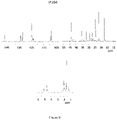
- Figure 5 shows the 1 H-MMR (top) and 13 C-NMR (bottom) spectra of the polyisoprene obtained.
- Table 1A shows the attribution of the different peaks present in the olefinic zone of the 13 C-NMR spectrum.
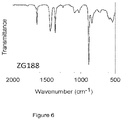
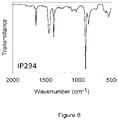
- Figure 6 shows the FT-IR spectrum of the polyisoprene obtained.
- Figure 7 shows the 1 H-NMR (bottom) and 13 C-NMR (top) spectra of the polyisoprene obtained.
- Table 1A shows the attribution of the different peaks present in the olefinic zone of the 13 C-NMR spectrum.
- Figure 8 shows the FT-IR spectrum of the polyisoprene obtained.
- Figure 9 shows the 1 H-NMR (top) and 13 C-NMR (bottom) spectra of the polyisoprene obtained.
- Table 1A shows the attribution of the different peaks present in the olefinic zone of the 13 C-NMR spectrum.
- the polymerization was then quenched by adding 2 ml of methanol containing some drops of hydrochloric acid.
- the polymer obtained was then coagulated by adding 40 ml of a methanol solution containing 4% of Irganox ® 1076 antioxidant (Ciba) obtaining 3.4 g of polyisoprene for a conversion equal to 100%, having an alternating cis -1,413,4structure: further characteristics of the process and of the polyisoprene obtained are reported in Table 1.
- Figure 10 shows the FT-IR spectrum of the polyisoprene obtained.
- Figure 11 shows the 1 H-NMR (top) and 13 C-NMR (bottom) spectra of the polyisoprene obtained.
- Table 1A shows the attribution of the different peaks present in the olefinic zone of the 13 C-NMR spectrum.
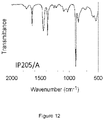
- Figure 12 shows the FT-IR spectrum of the polyisoprene obtained.
- Figure 13 shows the 1 H-NMR (top) and 13 C-NMR (bottom) spectra of the polyisoprene obtained.
- Table 1A shows the attribution of the different peaks present in the olefinic zone of the 13 C-NMR spectrum.
- the polymerization was then quenched by adding 2 ml of methanol containing some drops of hydrochloric acid.
- the polymer obtained was then coagulated by adding 40 ml of a methanol solution containing 4% of Irganox ® 1076 antioxidant (Ciba) obtaining 1.36 g of polyisoprene for a conversion equal to 100%, having an alternating cis -1,4/3,4 structure: further characteristics of the process and of the polyisoprene obtained are reported in Table 1.
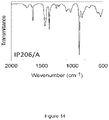
- Figure 14 shows the FT-IR spectrum of the polyisoprene obtained.
- Figure 15 shows the 1 H-MMR (top) and 13 C-NMR (bottom) spectra of the polyisoprene obtained.
- Table 1A shows the attribution of the different peaks present in the olefinic zone of the 13 C-NMR spectrum.
- the polymerization was then quenched by adding 2 ml of methanol containing some drops of hydrochloric acid.
- the polymer obtained was then coagulated by adding 40 ml of a methanol solution containing 4% of Irganox ® 1076 antioxidant (Ciba) obtaining 0.544 g of polyisoprene for a conversion equal to 40%, having an alternating cis -1,4/3,4 structure: further characteristics of the process and of the polyisoprene obtained are reported in Table 1.
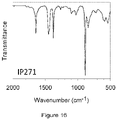
- Figure 16 shows the FT-IR spectrum of the polyisoprene obtained.
- Figure 17 shows the 1 H-NMR (top) and 13 C-NMR (bottom) spectra of the polyisoprene obtained.
- Table 1A shows the attribution of the different peaks present in the olefinic zone of the 13 C-NMR spectrum.
- the polymerization was then quenched by adding 2 ml of methanol containing some drops of hydrochloric acid.
- the polymer obtained was then coagulated by adding 40 ml of a methanol solution containing 4% of Irganox ® 1076 antioxidant (Ciba) obtaining 0.481 g of polyisoprene for a conversion equal to 35.4%, having an alternating cis -1,413,4structure: further characteristics of the process and of the polyisoprene obtained are reported in Table 1.
- Figure 18 shows the FT-IR spectrum of the polyisoprene obtained.
- Figure 19 shows the 1 H-NMR (top) and 13 C-NMR (bottom) spectra of the polyisoprene obtained.
- Table 1A shows the attribution of the different peaks present in the 13 C-NMR spectrum.
- neodymium 2-ethylhexanoate [Nd(OCOC 7 H 15 ) 3 ] (2.38 ⁇ 10 -4 moles; 0.136 grams) and heptane (9.6 ml) were placed into a 25 ml test tube. The solution thus obtained, was kept, under stirring, at ambient temperature, for 1 hour. Subsequently, diethylaluminum chloride (AlEt 2 Cl) in heptane solution [7.5 ⁇ 10 -3 moles; 0.09 grams; 0.47 ml of a heptane solution 1/5 (v/v)] was added, drop by drop: a white/light blue suspension was formed which was kept, under vigorous stirring, for 15 minutes.
- AlEt 2 Cl diethylaluminum chloride
- TIBA tri- iso- butylaluminum
- the polymer obtained was then coagulated by adding 40 ml of a methanol solution containing 4% of Irganox ® 1076 antioxidant (Ciba) obtaining 1.03 g of polyisoprene for a conversion equal to 75.7%, having a mainly cis -1,4 structure ( ⁇ 97%).
- Figure 1A reports the 13 C-NMR spectrum of the polyisoprene obtained.
- Table 1A shows the attribution of the different peaks present in the olefinic zone of the 13 C-NMR spectrum.
- the polyisoprene having a mainly syndiotactic 3,4 structure was obtained by operating as described in Ricci G. et al, "Journal of Molecular Catatalysis A: Chemical” (2003), 204-205, pag. 287-293 , mentioned above
- the polymerization was then quenched by adding 2 ml of methanol containing some drops of hydrochloric acid.
- the polymer obtained was then coagulated by adding 40 ml of a methanol solution containing 4% of Irganox ® 1076 antioxidant (Ciba) obtaining 1.233 g of polyisoprene for a conversion equal to 90.5%, having a mainly syndiotactic 3,4 structure ( ⁇ 80%).
- Figure 1A reports the 13 C-NMR spectrum of the polyisoprene obtained.
- Table 1A shows the attribution of the different peaks present in the olefinic zone of the 13 C-NMR spectrum.
- the polyisoprene with a perfectly alternating cis -1,4- alt -3,4 structure was obtained by operating as described in Ricci G. et al, "Macromolecules” (2009), Vol. 42(23), pag. 9263-9267 , mentioned above.
- the polymerization was then quenched by adding 5 ml of methanol containing some drops of hydrochloric acid.
- the polymer obtained was then coagulated by adding 60 ml of a methanol solution containing 4% of Irganox ® 1076 antioxidant (Ciba) obtaining 2.26 grams of polyisoprene for a conversion equal to 66.5%, having a perfectly alternating cis -1,4- alt -3,4 structure.
- Figure 1A reports the 13 C-NMR spectrum of the polyisoprene obtained.
- Table 1A shows the attribution of the different peaks present in the olefinic zone of the 13 C-NMR spectrum.
- TABLE 1 Polymerization of isoprene with catalytic systems comprising pyridyl iron complexes
Landscapes
- Chemical & Material Sciences (AREA)
- Organic Chemistry (AREA)
- Engineering & Computer Science (AREA)
- Medicinal Chemistry (AREA)
- Polymers & Plastics (AREA)
- Health & Medical Sciences (AREA)
- Chemical Kinetics & Catalysis (AREA)
- Materials Engineering (AREA)
- Mechanical Engineering (AREA)
- Transition And Organic Metals Composition Catalysts For Addition Polymerization (AREA)
- Pyridine Compounds (AREA)
- Addition Polymer Or Copolymer, Post-Treatments, Or Chemical Modifications (AREA)
- Catalysts (AREA)
Description
- The present invention relates to a process for the preparation of polyisoprene with a mainly alternating cis-1,4-alt-3,4 structure.
- More in particular, the present invention relates to a process for the preparation of polyisoprene with a mainly alternating cis-1,4-alt-3,4 structure comprising polymerizing isoprene in the presence of a catalytic system comprising: at least one pyridyl iron complex; at least one co-catalyst selected from organo-derivative compounds of aluminum.
- It is known that the stereospecific (co)polymerization of conjugated dienes is a very important process in the chemical industry in order to obtain products that are among the most widely used rubbers.
- It is also known that the stereospecific polymerization of isoprene can provide stereoregular polymers with different structures: cis-1,4; trans-1,4; 3,4, isotactic and syndiotactic.
- For example, polyisoprene with a cis-1,4 structure can be prepared using catalytic systems comprising neodymium based catalysts and aluminum compounds [for example, the catalytic system diethylaluminum chloride/neodymium 2-ethylhexanoate/tri-iso-butylaluminum (AlEt2Cl/Nd(OCOC7H15)3/AliBu3)], as described, for example, in: Ricci G. et al, "Die Makromoleculare Chemie, Rapid Communications" (1986), Vol. 7, pag. 355-359; Ricci G. et al, "Polymer Communications" (1987), Vol. 28, Issue 8, pag. 223-226; Porri L. et al, "ACS Symposium Series 749 - Olefin Polymerization: Emerging Frontiers" (2000), Arjunan P., McGrath J. C. and Hanlon T. Eds., Oxford University Press, USA, pag. 15-30. Alternatively, said polyisoprene with a cis-1,4 structure can be prepared using catalytic systems comprising titanium based catalysts and aluminum compounds [for example, the catalytic system titanium tetrachloride/triethyl aluminum (TiCl4/AlEt3)], as described, for example, in: Porri L. et al "Comprehensive Polymer Science" (1989), Eastmond, G. C., Ledwith A., Russo S., Sigwalt P. Eds., Pergamon Press Ltd., Oxford Vol. 4, Part II, pag. 53-108; Home S. E. et al, "Industrial Engineering Chemistry" (1956), Vol. 48 (4), pag. 784-791.
- A polyisoprene with a trans-1,4 structure analogous to that of gutta-percha is described by Natta G. et al in "Chemical Abstract" (1959), Vol. 53, pag. 3756 and in Italian patent application
IT 536631 - Alternatively, polyisoprene with a trans-1,4 structure, can be prepared using catalytic systems comprising vanadium based catalysts [for example, the catalytic system vanadium triacetylacetonate/methylaluminoxane (V(acac)3/MAO), operating at a low temperature, i.e. at a temperature < -20°C], as described, for example, in Ricci G. et al, "Macromolecular Chemistry and Physics" (1994), Vol. 195, ; Ricci G. et al, "Journal. Polymer Science Part A: Polymer Chemistry" (2007), Vol. 45, .
- Polyisoprene with a syndiotactic 3,4 structure can be prepared using catalytic systems comprising iron based catalysts [for example, the catalytic system diethyl bis(2,2'-bipyridine)iron/methylalurninoxane (FeEt2(bipy)2/MAO), or diethyl bis(2,2'-bipyridine)iron dichloride/methylaluminoxane (Fe(bipy)2Cl2/MAO)] as described, for example, in: Bazzini C. et al, "Macromolecular Rapid Communications" (2002), Vol. 23, pag. 922-927; Ricci G. et al, "Journal of Molecular Catatalysis A: Chemical" (2003), 204-205, pag. 287-293; Bazzini C. et al, "Polymer" (2004), Vol. 45, pag. 2871-2875; Pirozzi B. et al, "Macromolecular Chemistry and Physics" (2004), Vol. 205, ; Ricci G. et al, "Coordination Chemistry Reviews" (2010), Vol. 254, Issue 5-6, pag. 661-676; or in international patent application
WO 02/102861 - Polyisoprene with an isotactic 3,4 structure can be prepared using catalytic systems comprising catalysts based on scandium metallocene complexes as described, for example, in: Zhang L. et al, "Journal of the American Chemical Society" (2005), Vol. 127(42), pag. 14562-14563; Nakajima Y. et al, "Organometallics" (2009), Vol. 28 (24), pag. 6861-6870.
- A polyisoprene with a perfectly alternating cis-1,4-alt-3,4 structure has recently been obtained through the polymerization of isoprene in the presence of a catalytic system comprising a catalyst based on cobalt complexes with aromatic phosphines and methylaluminoxane (MAO), i.e. the catalytic system CoCl2(PRPh2)2/MAO (wherein R = ethyl, n-propyl, iso-propyl, cyclohexyl), as described, for example in Ricci G. et al, "Macromolecules" (2009), Vol. 42(23), pag. 9263-9267. The aforesaid polyisoprene is said to have a molecular weight ranging from 60000 gxmol-1 to 80000 gxmol-1 and a glass transition temperature (Tg) equal to about -18°C.
- It is also known that catalytic systems comprising pyridyl iron complexes are able to provide (co)polymers of conjugated dienes, such as polybutadiene or polyisoprene with a mixed structure and, in particular, to modulate the microstructure of the (co)polymers of conjugated dienes obtained, i.e. the 1,4-cis, 1,4-trans and 1,2 unit content in the polybutadiene and the 1,4-cis, 1,4-trans and 3,4 unit content in the polyisoprene, and also to provide syndiotactic 1,2 polybutadiene as described, for example, in Italian patent applications
IT 102016000105714 IT 102016000105730 - The Applicant therefore set out to solve the problem of finding a new process able to provide polyisoprene with a mainly alternating cis-1,4-alt-3,4 structure.
- The Applicant has now found a process for the preparation of polyisoprene with a mainly alternating cis-1,4-alt-3,4 structure comprising polymerizing isoprene in the presence of a catalytic system comprising: at least one pyridyl iron complex having the specific general formula (I) provided below; at least one co-catalyst selected from organo-derivative compounds of aluminum. The use of said catalytic system allows a polyisoprene with a mainly alternating cis-1,4-alt-3,4 structure to be obtained. Said catalytic system further enables operation at a low molar ratio between the aluminum contained in the co-catalyst and the iron contained in the pyridyl iron complex having specific general formula (I) reported below and, in particular, thanks to its high catalytic activity, low quantities of co-catalyst and iron to be used, with consequent significant advantages from an economic point of view. Furthermore, said catalytic system can be used in the presence of an inert organic solvent selected from aliphatic hydrocarbons, with consequent significant advantages both from an economic point of view and from an environmental sustainability point of view.
- The subject matter of the present invention is therefore a process for the preparation of polyisoprene with a mainly alternating cis-1,4-alt-3,4 structure comprising polymerizing isoprene in the presence of a catalytic system comprising:
- (a) at least one pyridyl iron complex having general formula (I):

- R1 is selected from linear or branched C1-C20, preferably C1-C15, alkyl groups, optionally substituted cycloalkyl groups, optionally substituted aryl groups;
- R2 is selected from linear or branched C1-C10, preferably C1-C3, alkyl groups;
- X, mutually identical or different, represent a halogen atom such as, for example, chlorine, bromine, iodine; or they are selected from linear or branched C1-C20, preferably C1-C15, alkyl groups, -OCOR3 groups or -OR3 groups wherein R3 is selected from linear or branched C1-C20, preferably C1-C15, alkyl groups.
- n is 2 or 3;
- (b) at least one co-catalyst selected from organo-derivative compounds of aluminum, preferably from
- (b1) aluminoxanes having general formula (II):
(R4)2-Al-O-[-Al(R5)-O-]m-Al-(R6)2 (II)
wherein R4, R5 and R6, mutually identical or different, represent a hydrogen atom, or a halogen atom such as, for example, chlorine, bromine, iodine, fluorine; or they are selected from linear or branched C1-C20 alkyl groups, cycloalkyl groups, aryl groups, said groups being optionally substituted with one or more silicon or germanium atoms; and m is an integer ranging from 0 to 1000; - (b2) aluminum compounds having general formula (III):
Al(R7)(R8)(R9) (III)
wherein R7 is a hydrogen atom, or is selected from linear or branched C1-C20 alkyl groups, cycloalkyl groups, aryl groups, alkylaryl groups, arylalkyl groups, alkoxy groups; R8 and R9, mutually identical or different, are selected from linear or branched C1-C20 alkyl groups, cycloalkyl groups, aryl groups, alkylaryl groups, arylalkyl groups;
- (b1) aluminoxanes having general formula (II):
- For the purpose of the present description and of the following claims, the definitions of the numeric ranges always include the extremes unless specified otherwise.
- For the purpose of the present description and of the following claims, the term "comprising" also includes the terms "which essentially consists of" or "which consists of". For the purpose of the present description and of the following claims, the term "polyisoprene with a mainly alternating structure" indicates that in said polyisoprene there are short sequences of cis-1,4 units (i.e. 3 units) spaced out with alternating cis-1,413,4 sequences; said polyisoprene can be represented as follows:(3,4-cis-1,4-3,4-cis-1,4-3,4-cis-1,4-cis-1,4)
 .
.
- For the purpose of the present description and of the following claims, the term "C1-C10 alkyl groups" and "C1-C20 alkyl groups" means alkyl groups having from 1 to 10 carbon atoms and from 1 to 20 carbon atoms, respectively, linear or branched. Specific examples of C1-C10 and C1-C20 alkyl groups are: methyl, ethyl, n-propyl, iso-propyl, n-butyl, s-butyl, iso-butyl, tert-butyl, pentyl, hexyl, heptyl, octyl, n-nonyl, n-decyl, 2-butyloctyl, 5-methylhexyl, 4-ethylhexyl, 2-ethylheptyl, 2-ethylhexyl.
- For the purpose of the present description and of the following claims, the term "cycloalkyl groups" means cycloalkyl groups having from 3 to 30 carbon atoms. Said cycloalkyl groups can also be optionally substituted with one or more groups, mutually identical or different, selected from: halogen atoms; hydroxyl groups, C1-C12 alkyl groups; C1-C12 alkoxy groups; cyano groups; amino groups; nitro groups. Specific examples of cycloalkyl groups are: cyclopropyl, 2,2-difluorocyclopropyl, cyclobutyl, cyclopentyl, cyclohexyl, hexamethylcyclohexyl, pentamethlylcyclopentyl, 2-cyclooctylethyl, methylcyclohexyl, methoxicyclohexyl, fluorocyclohexyl, phenylcyclohexyl.
- For the purpose of the present description and of the following claims, the term "aryl groups" having 6 to 30 carbon atoms means carbocyclic aromatic groups. Said aryl groups can also be optionally substituted with one or more groups, mutually identical or different, selected from: halogen atoms such as, for example, fluorine, chlorine, bromine; hydroxyl groups, C1-C12 alkyl groups; C1-C12 alkoxy groups; cyano groups; amino groups; nitro groups. Specific examples of aryl groups are: phenyl, 2-methylphenyl, 4-methylphenyl, 2- tert-butylphenyl, 2,4,6-trimethylphenyl, 2-iso-propylphenyl, methoxyphenyl, hydroxyphenyl, phenyloxyphenyl, fluorophenyl, pentafluorophenyl, chlorophenyl, bromophenyl, nitrophenyl, dimethylaminophenyl, naphthyl, phenylnaphthyl, phenanthrene, anthracene.
- For the purpose of the present description and of the following claims, the term "alkylaryl groups" means aryl groups substituted with one or more groups, mutually identical or different, selected from C1-C12 alkyl groups. Specific examples of alkylaryl groups are: 2-methylphenyl, 4-methylphenyl, 2,4,6-trimethylphenyl, 2,6-di-iso-propylphenyl.
- For the purpose of the present description and of the following claims, the term "arylalkyl groups" means alkyl groups substituted with an aryl group. Specific examples of arylalkyl groups are: benzyl, phenylethyl, 6-naphthylhexyl.
- For the purpose of the present description and of the following claims, the term "alkoxy groups" means groups comprising an oxygen atom to which a linear or branched C1-C20 alkyl group is bonded. Specific examples of C1-C20 alkoxy groups are: methoxy, ethoxy, n-propoxy, iso-propoxy, n-butoxy, iso-butoxy, t-butoxy, pentoxy, hexyloxy, heptyloxy, octyloxy, nonyloxy, decyloxy, dodecyloxy.
- In accordance with a preferred embodiment of the present invention, in said pyridyl iron complex having general formula (I):
- R1 represents a methyl group, an ethyl group, an n-propyl group, an iso-propyl group, preferably a methyl group;
- R2 represents a methyl group, an ethyl group, an n-propyl group, an iso-propyl group, preferably a methyl group or an iso-propyl group;
- X, mutually identical, represent a halogen atom such as, for example, chlorine, bromine, iodine; preferably a chlorine atom;
- n is 2 or 3;
- The pyridyl iron complex having general formula (I) can be considered, in accordance with the present invention, under any physical form such as, for example, the isolated and purified solid form, the form solvated with an appropriate solvent, or the one supported on suitable organic or inorganic solids, preferably having a granular or powdered physical form.
- The pyridyl iron complex having general formula (I) is prepared starting from ligands known in the prior art.
- Specific examples of ligands useful for the purpose of the present invention are those having the following formulae (L1) and (L2):

- Said ligands having formulae (L1) and (L2), can be prepared through processes known in the prior art. For example, said ligands having formulae (L1) and (L2) can be prepared through a process comprising the condensation reaction between an appropriate aniline and 2-acetylpyridine, with the formation of the corresponding imine as described, for example, in: Wu J. et ai, "Journal of American Chemical Society" (2009), Vol. 131(36), pg. 12915-12917; Laine V. T. et al, "European Journal of Inorganic Chemistry" (1999), Vol. 6, pg. 959-964; Bianchini C. et al, "New Journal of Chemistry" (2002), Vol. 26(4), pg. 387-397; Lai Yi-C. et al, "Tetrahedron" (2005), Vol. 61(40), pg. 9484-9489.
- The pyridyl iron complex having general formula (I) may be prepared according to procedures known in the prior art. For example, said pyridyl iron complex having general formula (I) can be prepared by reaction between iron compounds having general formula Fe(X)2 or Fe(X)3 wherein X is a halogen atom such as, for example, chlorine, bromine, iodine, preferably chlorine, as such or complexed with ethers [for example, diethylether, tetrahydrofuran (THF), dimethoxyethane], or with water, with appropriate pyridine ligands (L) such as, for example, the ligands having formulae (L1) or (L2) reported above, in molar ratio ligand (L)/iron (Fe) ranging from 1 to 2 operating, preferably, in presence of at least one solvent which can be selected, for example, from: chlorinated solvents (for example, dichloromethane), ether solvents, [for example, tetrahydrofuran (THF)], alcoholic solvents (for example, butanol), hydrocarbon solvents (for example, toluene, hexane), or mixtures thereof, at a temperature ranging from ambient temperature to +110°C. The pyridyl iron complex having general formula (I) thus obtained can be subsequently recovered by means of methods known in the prior art such as, for example, washing the solid product obtained with an appropriate solvent (for example, heptane), followed by drying (for example, under vacuum). More details on the process for the preparation of said pyridyl iron complex having general formula (I) can be found in the examples reported below.
- For the purpose of the present description and of the following claims the expression "ambient temperature" means a temperature ranging from +20°C to +25°C.
- As is known, aluminoxanes are compounds containing Al-O-Al bonds, with a variable O/Al ratio, obtainable according to processes known in the prior art such as, for example, by reaction, in controlled conditions, of an aluminum alkyl, or of an aluminum alkyl halogenide, with water, or with other compounds containing predetermined quantities of available water such as, for example, in the case of the reaction of aluminum trimethyl with aluminum sulfate hexahydrate, copper sulfate pentahydrate, or iron sulfate pentahydrate.
- Said aluminoxanes and, in particular, methylaluminoxane (MAO), are compounds that can be obtained through known organometallic chemical processes such as, for example, by adding trimethyl aluminum to a suspension of aluminum sulfate hexahydrate in hexane.
- In accordance with a preferred embodiment of the present invention, said aluminoxane having general formula (II) can be selected, for example from: methylaluminoxane (MAO), ethylaluminoxane, n-butylaluminoxane, tetra-iso-butylaluminoxane (TIBAO), tert-butylaluminoxane, tetra-(2,4,4-trimethylpentyl)aluminooxane (TIOAO), tetra-(2,3-dimethylbutyl)aluminoxane (TDMBAO), tetra-(2,3,3-trimethylbutyl)aluminoxane (TTMBAO), or mixtures thereof. Methylaluminoxane (MAO) is particularly preferred. Further details relative to the aluminoxane having general formula (II) can be found, for example, in international patent application
WO 2011/061151 . - In accordance with a preferred embodiment of the present invention, said aluminum compounds having general formula (III) can be selected, for example, from: diethylaluminum hydride, di-n-propylaluminum hydride, di-n-butylaluminum hydride, di-iso-butyl-aluminum hydride (DIBAH), diphenylaluminum hydride, di-p-tolylaluminum hydride, dibenzylaluminum hydride, diethylaluminum hydride, phenyl-n-propylaluminum hydride, p-tolylethylaluminum hydride, p-tolyl-n-propylaluminum hydride, p-tolyl-iso-propylaluminum hydride, benzylethylaluminum hydride, benzyl-n-propylaluminum hydride, benzyl-iso-propylafuminum hydride, diethylaluminum ethoxide, di-iso-butylaluminum ethoxide, dipropylaluminum ethoxide, trimethylaluminum, triethylaluminum (TEA), tri-n-propylaluminum, tri-iso-butylaluminum (TiBA), tri-n-butylaluminum, tripentylaluminum, trihexylaluminum, triciclohexylaluminum, trioctylaluminum, triphenylaluminum, tri-p-tolylaluminum, tribenzylaluminum, ethyldiphenylaluminum, ethyl-di-p- tolylaluminum, ethyldibenzylaluminum, diethylphenylaluminum, diethyl-p-tolylaluminum, diethylbenzylaiuminum, or mixtures thereof. Tri-iso-butylaluminum (TIBA) is preferred.
- In general, the formation of the aforesaid catalytic system is preferably carried out in an inert liquid means, more preferably in a hydrocarbon solvent. The choice of the pyridyl iron complex having general formula (I) and of the co-catalyst, as well as the particular methodology used, may vary according to the molecular structures and to the desired result, according to what is similarly reported in relevant literature accessible to an expert skilled in the art for other transition metal complexes with ligands of various nature, such as, for example, in: Ricci G. et al, "Advances in Organometallic Chemistry Research" (2007), Yamamoto K. Ed., Nova Science Publisher, Inc., USA, pg. 1-36; Ricci G. et al, "Coordination Chemistry Reviews" (2010), Vol. 254, pg. 661-676; Ricci G. et al, "Ferrocenes: Compounds, Properties and Applications" (2011), Elisabeth S. Phillips Ed., Nova Science Publisher, Inc., USA, pg. 273-313; Ricci G. et al, "Chromium: Environmental, Medical and Material Studies" (2011), Margaret P. Salden Ed., Nova Science Publisher, Inc., USA, pg. 121-1406; Ricci G. et al, "Cobalt: Characteristics, Compounds, and Applications" (2011), Lucas J. Vidmar Ed., Nova Science Publisher, Inc., USA, pg. 39-81; Ricci G. et al, "Phosphorus: Properties, Health effects and Environment" (2012), Ming Yue Chen and Da-Xia Yang Eds., Nova Science Publisher, Inc., USA, pg. 53-94.
- For the purpose of the present invention, the co-catalyst may be placed in contact with a pyridyl iron complex having general formula (I), in proportions such that the molar ratio between the aluminum contained in the co-catalyst and the iron contained in the pyridyl iron complex having general formula (I) is between the values reported above, i.e. the molar ratio between the aluminum contained in the co-catalyst and the iron contained in the pyridyl iron complex having general formula (I) is ranging from 5 to 60, preferably ranging from 8 to 55. The sequence with which the pyridyl iron complex having general formula (I) and the co-catalyst are placed in contact with each other is not particularly critical.
- For the purpose of the present description and of the following claims, the terms "mole" and "molar ratio" are used both with reference to compounds consisting of molecules and with reference to atoms and ions, omitting for the latter ones the terms gram atom or atomic ratio, even if they are scientifically more accurate.
- For the purpose of the present invention, other additives or components may optionally be added to the aforementioned catalytic system so as to adapt it to satisfy specific practical requirements. The catalytic systems thus obtained can therefore be considered included within the scope of the present invention. Additives and/or components that can be added in the preparation and/or formulation of the aforesaid catalytic system are, for example: inert solvents such as, for example, aliphatic and/or aromatic hydrocarbons; aliphatic and/or aromatic ethers; weakly coordinating additives (e.g., Lewis bases) selected, for example, from non-polymerizable olefins; sterically hindered or electronically poor ethers; halogenating agents such as, for example, silicon halides, halogenated hydrocarbons, preferably chlorinated; or mixtures thereof.
- Said catalytic system can be prepared, as already reported above, according to methods known in the prior art.
- For example, said catalytic system can be prepared separately (preformed) and subsequently introduced into the polymerization environment. For this purpose, said catalytic system can be prepared by making at least one pyridyl iron complex having general formula (I) react with at least one co-catalyst, optionally in the presence of other additives or components selected from those cited above, in the presence of a solvent such as, for example, toluene, heptane, at a temperature ranging from +20°C to +60°C, for a time ranging from 10 seconds to 10 hours, preferably ranging from 30 seconds to 5 hours.
- Alternatively, said catalytic system can be prepared in situ, i.e. directly in the polymerization environment. For this purpose, said catalytic system can be prepared by separately introducing the pyridyl iron complex having general formula (I), the co-catalyst and the isoprene, operating at the conditions wherein the polymerization is carried out. Further details on the preparation of said catalytic system can be found in the examples reported below.
- For the purpose of the present invention, the aforesaid catalytic system can also be supported on inert solids, preferably consisting of silicon and/or aluminum oxides, such as, for example, silica, alumina or silico-aluminates. For supporting said catalytic system the known supporting techniques can be used, generally comprising contact, in a suitable inert liquid medium, between the support, optionally activated by heating to temperatures above +200°C, and one or both components of said catalytic system. It is not necessary, for the purposes of the present invention, for both components to be supported, as the pyridyl iron complex having general formula (I), or the co-catalyst, may also be present on the support surface alone. In the latter case, the missing component on the surface is subsequently placed in contact with the supported component when the active catalytic system is to be formed by polymerization.
- The scope of the present invention also includes the pyridyl iron complex having general formula (I), and the catalytic systems based thereon, which are supported on a solid through the functionalization of the latter and the formation of a covalent bond between the solid and the pyridyl iron complex having general formula (I).
- The quantity of the pyridyl iron complex having general formula (I) and of the co-catalyst which can be used in the process object of the present invention varies according to the polymerization process to be carried out. As mentioned above, said quantity is however such as to obtain a molar ratio between the aluminum contained in the co-catalyst and the iron contained in the iron pyridyl complex having general formula (I) ranging from 5 to 60, preferably ranging from 8 to 55.
- In accordance with a preferred embodiment of the present invention, said process can be carried out in the presence of at least one inert organic solvent selected, for example, from: saturated aliphatic hydrocarbons such as, for example, butane, pentane, hexane, heptane, or mixtures thereof; saturated cycloaliphatic hydrocarbons such as, for example, cyclopentane, cyclohexane, or mixtures thereof; mono-olefins such as, for example, 1-butene, 2-butene, or mixtures thereof; aromatic hydrocarbons such as, for example, benzene, toluene, xylene, or mixtures thereof; halogenated hydrocarbons such as, for example, dichloromethane, chloroform, carbon tetrachloride, trichloroethylene, perchloroethylene, 1,2-dichloroethane, chlorobenzene, bromobenzene, chlorotoluene, or mixtures thereof. Hexane, heptane, toluene, are preferred.
- In accordance with a preferred embodiment of the present invention, in said process the concentration of the isoprene in said inert organic solvent may be ranging from 5% by weight to 50% by weight, preferably ranging from 10% by weight to 20% by weight, with respect to the total weight of the mixture of isoprene and inert organic solvent.
- In accordance with a preferred embodiment of the present invention, said process can be carried out at a temperature ranging from -30°C to +60°C, preferably ranging from - 20°C and +30°C.
- With regard to pressure, it is preferable to operate at the pressure of the components of the mixture to be polymerized.
- Said process can be carried out both continuously and in batch, preferably continuously. The process according to the present invention allows a polyisoprene with a mainly alternating cis-1,4-alt-3,4 structure to be obtained, having the following characteristics:
- glass transition temperature (Tg) less than -25°C, preferably ranging from -28°C to - 35°C.
- weight average molecular weight (Mw) ranging from 100000 gxmol-1 to 400000 gxmol-1, preferably ranging from 110000 gxmol-1 to 380000 gxmol-1.
- The polyisoprene with a mainly alternating cis-1,4-alt-3,4 structure obtained according to the process of the present invention can be advantageously used in different sectors such as, for example, for the production of tyres, in particular for tyre treads, as well as in the footwear industry (for example, in the production of shoe soles).
- For the purpose of understanding the present invention better and to put it into practice, below are some illustrative and non-limiting examples thereof.
- The list below reports the reagents and the materials used in the following examples of the invention, any optional pre-treatments thereof and their manufacturer:
- iron (III) chloride (FeCl3) (Aldrich): purity 99.9%, used as such;
- iron (II) chloride (FeCl2) (Aldrich): purity 97%, used as such;
- neodymium 2-ethylhexanoate [Nd(OCOC7H15)3] (Strem Chemicals): used as such;
- methylaluminoxane (MAO) (
toluene solution 10% by weight) (Crompton): used as such; - tri-iso-butylaluminum (TIBA) (Akzo Nobel): used as such;
- diethylaluminum chloride (AlEt2Cl) (Akzo Nobel): used as such;
- hydrochloric acid in 37% aqueous solution (Aldrich): used as such;
- o-toluidine (Aldrich): distilled at reduced pressure and stored in an inert atmosphere;
- 2-iso-propylaniline (Aldrich): used as such;
- 2-acetylpyridine (Aldrich): used as such;
- ethyl acetate (Aldrich): used as such;
- heptane (Aldrich): pure, ≥ 99%, distilled over sodium (Na) in an inert atmosphere;
- methanol (Carlo Erba, RPE): used as such;
- toluene (Aldrich): pure, ≥ 99.5%, distilled over sodium (Na) in an inert atmosphere;
- isoprene (Aldrich): pure, ≥ 99%, refluxed over calcium hydride for 2 hours, then distilled "trap-to-trap" and stored in a nitrogen atmosphere at +4°C;
- formic acid (HCOOH) (Aldrich): purity ≥ 95%, used as such;
- p-toluenesulfonic acid monohydrate (Aldrich): pure, ≥ 98.5%, used as such;
- hydrofluoric acid (HF) (40% aqueous solution) (Aldrich): used as such;
- sulfuric acid (H2SO4) (96% aqueous solution) (Aldrich): used as such, or diluted with distilled water (1/5);
- nitric acid (HNO3) (70% aqueous solution) (Aldrich): used as such;
- sodium carbonate (Na2CO3) (Aldrich): used as such;
- silver nitrate (AgNO3) (Aldrich): used as such;
- deuterated tetrachloroethylene (C2D2Cl4) (Acros): used as such;
- hexamethyldisilazane (HMDS) (Acros): used as such.
- The analysis and characterization methodologies reported below were used.
- For the determination of the quantity by weight of iron (Fe) in the pyridyl iron complexes used for the purpose of the present invention, an exactly weighed aliquot, operating in dry-box under nitrogen flow, of about 30 mg - 50 mg of sample, was placed in a 30 ml platinum crucible, together with a 1 ml mixture of 40% hydrofluoric acid (HF), 0.25 ml of 96% sulphuric acid (H2SO4) and 1 ml of 70% nitric acid (HNO3). The crucible was then heated on a hot plate increasing the temperature until white sulfur fumes appeared (about +200°C). The mixture thus obtained was cooled to ambient temperature and 1 ml of 70% nitric acid (HNO3) was added, then it was left again until fumes appeared. After repeating the sequence another two times, a clear, almost colorless, solution was obtained. 1 ml of nitric acid (HNO3) and about 15 ml of water were then added cold, then heated to +80°C for about 30 minutes. The sample thus prepared was diluted with MilliQ pure water until it weighed about 50 g, precisely weighed, to obtain a solution on which the instrumental analytical determination was carried out through a Thermo Optek IRIS Advantage Duo ICP-OES (plasma optical emission) spectrometer, for comparison with solutions of known concentration. For this purpose, for every analyte, a calibration curve was prepared in the
range 0 ppm - 10 ppm, measuring calibration solutions by dilution by weight of certified solutions. - The solution of sample prepared as above was then diluted again by weight in order to obtain concentrations close to the reference ones, before carrying out spectrophotometric measurement. All the samples were prepared in double quantities. The results were considered acceptable if the individual repeated test data did not have a relative deviation of more than 2% with respect to their mean value.
- For said purpose, samples of the pyridyl iron complexes used for the purpose of the present invention, about 30 mg - 50 mg, were precisely weighed in a 100 ml glass beakers in dry-box under nitrogen flow. 2 g of sodium carbonate (Na2CO3) were added and, outside the dry-box, 50 ml of MilliQ water. It was brought to the boiling on the hot plate, under magnetic stirring, for about 30 minutes. It was left to cool, then 1/5 diluted sulfuric acid (H2SO4) was added, until acid reaction and was then titrated with 0.1 N silver nitrate (AgNO3) with a potentiometric titrator.
- The determination of carbon, hydrogen and nitrogen, in the pyridyl iron complexes used for the purpose of the present invention, as well as in the ligands used for the purpose of the present invention, was carried out through a Carlo Erba automatic analyzer Mod. 1106.
13 C-NMR and 1 H-NMR spectra - The 13C-NMR and 1H-MMR spectra were recorded through a nuclear magnetic resonance spectrometer mod. Bruker Avance 400, using deuterated tetrachloroethylene (C2D2Cl4) at +103°C, and hexamethyldisilazane (HDMS) as internal standard. For this purpose, polymeric solutions were used with concentrations equal to 10% by weight with respect to the total weight of the polymeric solution.
- The microstructure of the polyisoprenes obtained [i.e. cis-1,4 (%) and 3,4 (%) unit content] was determined through the analysis of the aforesaid spectra based on the indications reported in literature by Ricci G. et al, "Macromolecules" (2009), Vol. 42(23), pag. 9263-9267, mentioned above.
- For that purpose:
-
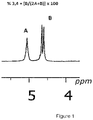
Figure 1 shows, by way of example, the 1H-NMR spectrum of the polyisoprene with a mainly alternating cis-1,4-alt-3,4 structure obtained in Example 9 reported below from which it is possible to determine the microstructure of said polyisoprene; specifically, only the olefinic zone related to the olefinic protons of the isoprene units with a cis-1,4 and 3,4 structure is shown: the percentage of units with a 3,4 structure can be obtained from the following equation:
-
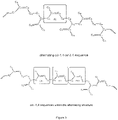
Figure 2 shows, by way of example, the 13C-NMR spectrum (olefinic zone) of the polyisoprene with a mainly alternating cis-1,4-alt-3,4 structure obtained in Example 9 reported below; from such spectrum, it is possible to determine the way wherein the isoprene units with a cis-1,4 and 3,4 structure are distributed along the polymer chain; in fact, only one signal is observed for each of the two olefinic carbons of the isoprene units with a 3,4 structure, indicating that such isoprene units with a 3,4 structure, only experience a single type of environment and, precisely, are only inserted in an alternating cis-1,4-alt-3,4 structure (Figure 3 ), while 4 different signals are observed for each of the two olefinic carbons of the isoprene units with a cis-1,4 structure, indicating that such isoprene units with a cis-1,4structure experience 4 different environments (Figure 3 ). - The I.R. (FT-IR) spectra were recorded through Thermo Nicolet Nexus 670 and Bruker IFS 48 spectrophotometers.
- The I.R. (FT-IR) spectra of the polyisoprenes obtained were determined by the analysis of polymeric films on potassium bromide (KBr) tablets, said films being obtained through the deposition of a solution in hot 1,2-dichlorobenzene of the polymer to be analyzed. The concentration of the polymeric solutions analyzed was equal to 10% by weight with respect to the total weight of the polymeric solution.
- The determination of the molecular weight (MW) of the polyisoprenes obtained was carried out through GPC ("Gel Permeation Chromatography"), using the Waters® Alliance® GPC/
V 2000 System by Waters Corporation which uses two detection lines: Refractive Index (RI) and Viscometer operating under the following conditions: - two PLgel Mixed-B columns;
- solvent/eluent: o-dichlorobenzene (Aldrich);
- flow rate: 0.8 ml/min;
- temperature: +145°C;
- molecular mass calculation: Universal Calibration method.
- The weight-average molecular weight (Mw) and the Polydispersion Index (PDI) corresponding to the ratio Mw/Mn (Mn = number-average molecular weight) are reported.
- Differential Scanning Calorimetry analysis, for the purpose of determining the glass transition temperature (Tg) of the polymers obtained, was carried out through a Perkin Elmer Pyris differential scanning calorimeter. For that purpose, 5 mg of polymer were analyzed, with a scanning speed ranging from +1°C/min to +20°C/min, in an inert nitrogen atmosphere.
-

- In a 250 ml flask, 2-acetylpyridine (9.1 g, 75 mmoles) and some drops of formic acid were added to a solution of o-toluidine (8 g, 75 mmoles) in methanol (100 ml): the mixture obtained was left, under stirring, at ambient temperature, for 48 hours. Subsequently, the solvent was removed through vacuum evaporation and the residue obtained was purified through elution on a silica gel chromatography column [eluent: mixture of heptane/ethyl acetate in ratio of 99/1 (v/v)], obtaining 6.5 g of a light yellow oil (yield = 40%) corresponding to the ligand having formula (L1).
- Molecular weight (MW): 210.28.
- Elementary analysis [found (calculated for C14H14N2)]: C: 80.00% (79.97%); H: 6.77% (6.71%); N: 13.41% (13.32%).
- 1H-MMR (CDCl3, δ ppm) 8.70 (m, 1H, HPy), 8.41 (m, 1H HPy), 7.80 (td, 1H, HPy), 7.39 (dt, 1H, HPy), 7.27-7,18 (m, 2H, Ph), 7.02 (m, 1 H, Ph), 6.69 (d, 1H, Ph), 2.30 (s, 3H, N=C-CH3), 2.10 (s, 3H, Ph-CH3).
-

- In a 250 ml flask, 2-acetylpiridine (3.78 g; 31.1 mmoles) and p-toluenesulfonic acid monohydrate (0.15 g; 0.81 mmoles) were added to a solution of 2-iso-propylaniline (4.20 g; 31.1 mmoles) in toluene (20 ml): the mixture obtained was heated under reflux, for 2 hours. Subsequently, the solvent was removed through vacuum evaporation and the residue obtained was purified through vacuum distillation, obtaining 5.89 g of an orange oil (yield = 79%) corresponding to the ligand having formula (L2).
- Molecular weight (MW): 238.33.
- Elementary analysis [found (calculated for C16H18N2)]: C: 80.17% (80.63%); H: 7.80% (7.61%); N: 11.91% (11.75%).
- 1H-NMR (CDCl3, δ ppm) 8.71 (d, 1 H), 8.37 (d, 1 H), 7.81 (t, 1 H), 7.38 (m, 2 H), 7.22 (t, 1 H), 7.15 (t, 1 H), 6.67 (d, 1 H), 3.05 (sept, 1 H), 2.39 (s, 3 H), 1.23 (d, 6 H).
-

- In a 100 ml flask, to a solution of the ligand having formula (L1) (293 mg; 1.39 mmoles), obtained as described in Example 1, in toluene (20 ml), iron (III) chloride (FeCl3) (225 mg; 1.39 mmoles; molar ratio L1/Fe = 1) was added: the mixture obtained was maintained, under stirring, at ambient temperature, for 3 hours. The supernatant was then removed through evaporation at reduced pressure and the residue obtained was washed with heptane (2 x 15 ml) and vacuum dried, at ambient temperature, obtaining 396 mg of a brown solid product corresponding to the complex FeCl3(L1), equal to a 76% conversion with respect to the iron (III) chloride (FeCl3) loaded.
- Molecular weight (MW): 372.48.
- Elementary analysis [found (calculated for C14H14Cl3FeN2)]: C: 45.00% (45.14%), H: 3.69% (3.79%), N: 7.69% (7.52%), Cl: 28.96% (28.55%), Fe: 15.09% (14.99%).
-

- In a 100 ml flask, to a solution of the ligand having formula (L2) (514 mg; 2.16 mmoles), obtained as described in Example 2, in toluene (20 ml), iron (III) chloride (FeCl3) (350 mg; 2.16 mmoles; molar ratio L2/Fe = 1) was added: the mixture obtained was maintained, under stirring, at ambient temperature, for 3 hours. The supernatant was then removed through evaporation at reduced pressure and the residue obtained was washed with heptane (2 × 15 ml) and vacuum dried, at ambient temperature, obtaining 821 mg of a red solid product corresponding to the complex FeCl3(L2), equal to a 95% conversion with respect to the iron (III) chloride (FeCl3) loaded.
- Molecular weight (MW): 400.53.
- Elementary analysis [found (calculated for C16H18Cl3FeN2)]: C: 48.09% (47.97%), H: 4.71% (4.53%), N: 6.65% (6.99%), Cl: 25.96% (26.55%), Fe: 14.08% (13.94%).
-

- In a 100 ml flask, to a solution of the ligand having formula (L1) (527 mg; 2.51 mmoles), obtained as described in Example 1, in toluene (20 ml), iron (II) chloride (FeCl2) (319 mg; 2.51 mmoles; molar ratio L1/Fe = 1) was added: the mixture obtained was maintained, under stirring, at +100°C, for 3 hours. The supernatant was then removed through evaporation at reduced pressure and the residue obtained was washed with heptane (2 × 15 ml) and vacuum dried, at ambient temperature, obtaining 521 mg of a light blue solid product corresponding to the complex FeCl2(L1), equal to a 62% conversion with respect to the iron (II) chloride (FeCl2) loaded.
- Molecular weight (MW): 337.03
- Elementary analysis [found (calculated for C14H14Cl2FeN2)]: C: 49.10% (49.89%), H: 4.38% (4.19%), N: 8.21% (8.31%), Cl: 21.42% (21.04%), Fe: 16.82% (16.57%).
-

- In a 100 ml flask, to a solution of the ligand having formula (L2) (540 mg; 2.27 mmoles), obtained as described in Example 2, in toluene (20 ml), iron (II) chloride (FeCl2) (288 mg; 2.27 mmoles; molar ratio L2/Fe = 1) was added: the mixture obtained was maintained, under stirring, at +100°C, for 3 hours , The supernatant was then removed through evaporation at reduced pressure and the residue obtained was washed with heptane (2 x 15 ml) and vacuum dried, at ambient temperature, obtaining 665 mg of a light blue solid product corresponding to the complex FeCl2(L2), equal to a 80% conversion with respect to the iron (II) chloride (FeCl2) loaded.
- Molecular weight (MW): 365.08.
- Elementary analysis [found (calculated for C16H18Cl2FeN2)]: C: 52.12% (52.64%), H: 4.65% (4.96%), N: 7.26% (7.67%), Cl: 19.02% (19.42%), Fe: 15.04% (15.30%).
- 2 ml of isoprene equal to about 1.36 g were placed in a 25 ml test tube. Subsequently, 14 ml of toluene were added and the temperature of the solution thus obtained was brought to +20°C. Then, methylaluminoxane (MAO) in toluene solution (0.315 ml; 5×10⁻⁴ moles, equal to about 0.029 g) was added and, subsequently, the FeCl2(L1) complex [sample MG215] (1,7 ml of toluene solution at a concentration of 2 mg/ml; 1×10⁻⁵, equal to about 3.37 mg) obtained as described in Example 5. Everything was kept under magnetic stirring, at ambient temperature, for 5 minutes. The polymerization was then quenched by adding 2 ml of methanol containing some drops of hydrochloric acid. The polymer obtained was then coagulated by adding 40 ml of a methanol solution containing 4% of Irganox® 1076 antioxidant (Ciba) obtaining 1.36 g of polyisoprene for a conversion equal to 100%, having a mainly alternating cis-1,413,4structure: further characteristics of the process and of the polyisoprene obtained are reported in Table 1.
-
Figure 4 shows the FT-IR spectrum of the polyisoprene obtained. -
Figure 5 shows the 1H-MMR (top) and 13C-NMR (bottom) spectra of the polyisoprene obtained. Table 1A shows the attribution of the different peaks present in the olefinic zone of the 13C-NMR spectrum. - 2 ml of isoprene equal to about 1.36 g were placed in a 25 ml test tube. Subsequently, 13.82 ml of toluene were added and the temperature of the solution thus obtained was brought to +20°C. Then, methylaluminoxane (MAO) in toluene solution (0.315 ml; 5×10⁻⁴ moles, equal to about 0.029 g) was added and, subsequently, the FeCl2(L2) complex [sample MG212] (1.87 ml of toluene solution at a concentration of 2 mg/ml; 1×10⁻⁵, equal to about 3.74 mg) obtained as described in Example 6. Everything was kept under magnetic stirring, at ambient temperature, for 10 minutes. The polymerization was then quenched by adding 2 ml of methanol containing some drops of hydrochloric acid. The polymer obtained was then coagulated by adding 40 ml of a methanol solution containing 4% of Irganox® 1076 antioxidant (Ciba) obtaining 1.36 g of polyisoprene for a conversion equal to 100%, having a mainly alternating cis-1,413,4structure: further characteristics of the process and of the polyisoprene obtained are reported in Table 1.
-
Figure 6 shows the FT-IR spectrum of the polyisoprene obtained. -
Figure 7 shows the 1H-NMR (bottom) and 13C-NMR (top) spectra of the polyisoprene obtained. Table 1A shows the attribution of the different peaks present in the olefinic zone of the 13C-NMR spectrum. - 5 ml of isoprene equal to about 3.4 g were placed in a 100 ml test tube. Subsequently, 31.3 ml of toluene were added and the temperature of the solution thus obtained was brought to -10°C. Then, methylaluminoxane (MAO) in toluene solution (0.13 ml; 2×10⁻⁴ moles, equal to about 0.012 g) was added and, subsequently, the FeCl2(L2) complex [sample MG212] (3.6 ml of toluene solution at a concentration of 2 mg/ml; 2×10⁻⁵, equal to about 7.3 mg) obtained as described in Example 6. Everything was kept under magnetic stirring, at ambient temperature, for 240 minutes. The polymerization was then quenched by adding 2 ml of methanol containing some drops of hydrochloric acid. The polymer obtained was then coagulated by adding 40 ml of a methanol solution containing 4% of frganox® 1076 antioxidant (Ciba) obtaining 2.49 g of polyisoprene for a conversion equal to 73.2%, having an alternating cis-1,413,4 structure: further characteristics of the process and of the polyisoprene obtained are reported in Table 1.
-
Figure 8 shows the FT-IR spectrum of the polyisoprene obtained. -
Figure 9 shows the 1H-NMR (top) and 13C-NMR (bottom) spectra of the polyisoprene obtained. Table 1A shows the attribution of the different peaks present in the olefinic zone of the 13C-NMR spectrum. - 5 ml of isoprene equal to about 3.4 g were placed in a 100 ml test tube. Subsequently, 31.3 ml of heptane were added and the temperature of the solution thus obtained was brought to +25°C. Then, methylaluminoxane (MAO) in toluene solution (0.13 ml; 2×10⁻⁴ moles, equal to about 0.012 g) was added and, subsequently, the FeCl2(L2) complex [sample MG212] (3.6 ml of toluene solution at a concentration of 2 mg/ml; 2×10⁻⁵, equal to about 7.3 mg) obtained as described in Example 6. Everything was kept under magnetic stirring, at ambient temperature, for 360 minutes. The polymerization was then quenched by adding 2 ml of methanol containing some drops of hydrochloric acid. The polymer obtained was then coagulated by adding 40 ml of a methanol solution containing 4% of Irganox® 1076 antioxidant (Ciba) obtaining 3.4 g of polyisoprene for a conversion equal to 100%, having an alternating cis-1,413,4structure: further characteristics of the process and of the polyisoprene obtained are reported in Table 1.
-
Figure 10 shows the FT-IR spectrum of the polyisoprene obtained. -
Figure 11 shows the 1H-NMR (top) and 13C-NMR (bottom) spectra of the polyisoprene obtained. Table 1A shows the attribution of the different peaks present in the olefinic zone of the 13C-NMR spectrum. - 2 ml of isoprene equal to about 1.36 g were placed in a 25 ml test tube. Subsequently, 13.82 ml of toluene were added and the temperature of the solution thus obtained was brought to +20°C. Then, methylaluminoxane (MAO) in toluene solution (0.315 ml; 5×10⁻⁴ moles, equal to about 0.029 g) was added and, subsequently, the FeCl3(L1) complex [sample MG213] (1.87 ml of toluene solution at a concentration of 2 mg/ml; 1×10⁻⁵, equal to about 3.74 mg) obtained as described in Example 3. Everything was kept under magnetic stirring, at ambient temperature, for 5 minutes. The polymerization was then quenched by adding 2 ml of methanol containing some drops of hydrochloric acid. The polymer obtained was then coagulated by adding 40 ml of a methanol solution containing 4% of Irganox® 1076 antioxidant (Ciba) obtaining 1.36 g of polyisoprene for a conversion equal to 100%, having an alternating cis-1,413,4structure: further characteristics of the process and of the polyisoprene obtained are reported in Table 1.
-
Figure 12 shows the FT-IR spectrum of the polyisoprene obtained. -
Figure 13 shows the 1H-NMR (top) and 13C-NMR (bottom) spectra of the polyisoprene obtained. Table 1A shows the attribution of the different peaks present in the olefinic zone of the 13C-NMR spectrum. - 2 ml of isoprene equal to about 1.36 g were placed in a 25 ml test tube. Subsequently, 13.72 ml of toluene were added and the temperature of the solution thus obtained was brought to +20°C. Then, methylaluminoxane (MAO) in toluene solution (0.315 ml; 5×10⁻⁴ moles, equal to about 0.029 g) was added and, subsequently, the FeCl3(L2) complex [sample MG208] (2 ml of toluene solution at a concentration of 2 mg/ml; 1 ×10⁻⁵, equal to about 4 mg) obtained as described in Example 4. Everything was kept under magnetic stirring, at ambient temperature, for 5 minutes. The polymerization was then quenched by adding 2 ml of methanol containing some drops of hydrochloric acid. The polymer obtained was then coagulated by adding 40 ml of a methanol solution containing 4% of Irganox® 1076 antioxidant (Ciba) obtaining 1.36 g of polyisoprene for a conversion equal to 100%, having an alternating cis-1,4/3,4 structure: further characteristics of the process and of the polyisoprene obtained are reported in Table 1.
-
Figure 14 shows the FT-IR spectrum of the polyisoprene obtained. -
Figure 15 shows the 1H-MMR (top) and 13C-NMR (bottom) spectra of the polyisoprene obtained. Table 1A shows the attribution of the different peaks present in the olefinic zone of the 13C-NMR spectrum. - 2 ml of isoprene equal to about 1.36 g were placed in a 25 ml test tube. Subsequently, 13.9 ml of heptane were added and the temperature of the solution thus obtained was brought to +20°C. Then, methylaluminoxane (MAO) in toluene solution (0.063 ml; 1×10⁻⁴ moles, equal to about 0.058 g) was added and, subsequently, the FeCl3(L2) complex [sample MG208] (2 ml of toluene solution at a concentration of 2 mg/ml; 1×10⁻⁵, equal to about 4 mg) obtained as described in Example 4. Everything was kept under magnetic stirring, at ambient temperature, for 20 minutes. The polymerization was then quenched by adding 2 ml of methanol containing some drops of hydrochloric acid. The polymer obtained was then coagulated by adding 40 ml of a methanol solution containing 4% of Irganox® 1076 antioxidant (Ciba) obtaining 0.544 g of polyisoprene for a conversion equal to 40%, having an alternating cis-1,4/3,4 structure: further characteristics of the process and of the polyisoprene obtained are reported in Table 1.
-
Figure 16 shows the FT-IR spectrum of the polyisoprene obtained. -
Figure 17 shows the 1H-NMR (top) and 13C-NMR (bottom) spectra of the polyisoprene obtained. Table 1A shows the attribution of the different peaks present in the olefinic zone of the 13C-NMR spectrum. - 2 ml of isoprene equal to about 1.36 g were placed in a 25 ml test tube. Subsequently, 13.4 ml of toluene were added and the temperature of the solution thus obtained was brought to +20°C. Then, tri-iso-butylaluminum (TIBA) (0.07 ml; 3×10⁻⁴ moles, equal to about 0.0595 g) was added and, subsequently, the FeCl3(L2) complex [sample MG208] (1.87 ml of toluene solution at a concentration of 2 mg/ml; 1×10⁻⁵, equal to about 3.74 mg) obtained as described in Example 4. Everything was kept under magnetic stirring, at ambient temperature, for 2880 minutes. The polymerization was then quenched by adding 2 ml of methanol containing some drops of hydrochloric acid. The polymer obtained was then coagulated by adding 40 ml of a methanol solution containing 4% of Irganox® 1076 antioxidant (Ciba) obtaining 0.481 g of polyisoprene for a conversion equal to 35.4%, having an alternating cis-1,413,4structure: further characteristics of the process and of the polyisoprene obtained are reported in Table 1.
-
Figure 18 shows the FT-IR spectrum of the polyisoprene obtained. -
Figure 19 shows the 1H-NMR (top) and 13C-NMR (bottom) spectra of the polyisoprene obtained. Table 1A shows the attribution of the different peaks present in the 13C-NMR spectrum. - The catalytic system AlEt2Cl/Nd(OCOC7H15)3/Al(iBu)3 was prepared as described in Ricci G. et al, "Polymer Communications" (1987), Vol. 28, Issue 8, pag. 223-226, mentioned above.
- For that purpose, neodymium 2-ethylhexanoate [Nd(OCOC7H15)3] (2.38×10⁻⁴ moles; 0.136 grams) and heptane (9.6 ml) were placed into a 25 ml test tube. The solution thus obtained, was kept, under stirring, at ambient temperature, for 1 hour. Subsequently, diethylaluminum chloride (AlEt2Cl) in heptane solution [7.5×10⁻³ moles; 0.09 grams; 0.47 ml of a
heptane solution 1/5 (v/v)] was added, drop by drop: a white/light blue suspension was formed which was kept, under vigorous stirring, for 15 minutes. Subsequently, tri-iso-butylaluminum (TIBA) (7.1 ×10⁻³ moles; 1.42 grams; 1.8 ml) was added: everything was kept, under stirring, at ambient temperature for 24 hours, obtaining a solution of the catalytic system AlEt2Cl/Nd(OCOC7H15)3/Al(iBu)3 having a concentration of neodymium equal to 0.02 M. - 2 ml of isoprene equal to about 1.36 g were placed into a 25 ml test tube. Subsequently 15.5 ml of heptane were added and the temperature of the solution thus obtained was brought to +0°C. Then the catalytic system AlEt2Cl/Nd(OCOC7H15)3/Al(iBu)3 (0.25 ml of heptane solution having a concentration of neodymium equal to 0.02 M; 5×10⁻⁶ moles) was added, obtained as described in Example 15. Everything was kept under magnetic stirring, at +0°C, for 60 minutes. The polymerization was then quenched by adding 2 ml of methanol containing some drops of hydrochloric acid. The polymer obtained was then coagulated by adding 40 ml of a methanol solution containing 4% of Irganox® 1076 antioxidant (Ciba) obtaining 1.03 g of polyisoprene for a conversion equal to 75.7%, having a mainly cis-1,4 structure (≥ 97%).
-
Figure 1A reports the 13C-NMR spectrum of the polyisoprene obtained. Table 1A shows the attribution of the different peaks present in the olefinic zone of the 13C-NMR spectrum. - The polyisoprene having a mainly syndiotactic 3,4 structure was obtained by operating as described in Ricci G. et al, "Journal of Molecular Catatalysis A: Chemical" (2003), 204-205, pag. 287-293, mentioned above
- For that purpose, 2 ml of isoprene equal to about 1.36 g and toluene (10.9 ml) were placed into a 25 ml test tube. The temperature of the solution thus obtained was brought to -30°C, then methylaluminoxane (MAO) in toluene solution (3.8 ml; 6×10⁻³ moles, equal to about 0.348 g) was added and, subsequently the complex FeCl2(bipy)2 (1.3 ml of toluene solution at a concentration of 2 mg/ml; 6×10⁻⁶ moles, equal to about 2.6 mg). Everything was kept under magnetic stirring, at -30°C, for 80 minutes. The polymerization was then quenched by adding 2 ml of methanol containing some drops of hydrochloric acid. The polymer obtained was then coagulated by adding 40 ml of a methanol solution containing 4% of Irganox® 1076 antioxidant (Ciba) obtaining 1.233 g of polyisoprene for a conversion equal to 90.5%, having a mainly syndiotactic 3,4 structure (≥ 80%).
-
Figure 1A reports the 13C-NMR spectrum of the polyisoprene obtained. Table 1A shows the attribution of the different peaks present in the olefinic zone of the 13C-NMR spectrum. - The polyisoprene with a perfectly alternating cis-1,4-alt-3,4 structure was obtained by operating as described in Ricci G. et al, "Macromolecules" (2009), Vol. 42(23), pag. 9263-9267, mentioned above.
- For that purpose, 5 ml of isoprene equal to about 3.4 g were placed in a 50 ml test tube. Subsequently, 6.6 ml of toluene were added and the temperature of the solution thus obtained was brought to +22°C. Then, methylaluminoxane (MAO) in toluene solution (0.63 ml; 1×10⁻³ moles, equal to about 0.058 g) was added and, subsequently, the CoCl2(P n PrPh2)2 complex (5.9 ml of toluene solution at a concentration of 1 mg/ml; 1×10⁻⁵, equal to about 5.9 mg). Everything was kept under stirring, at ambient temperature, for 140 minutes. The polymerization was then quenched by adding 5 ml of methanol containing some drops of hydrochloric acid. The polymer obtained was then coagulated by adding 60 ml of a methanol solution containing 4% of Irganox® 1076 antioxidant (Ciba) obtaining 2.26 grams of polyisoprene for a conversion equal to 66.5%, having a perfectly alternating cis-1,4-alt-3,4 structure.
-
Figure 1A reports the 13C-NMR spectrum of the polyisoprene obtained. Table 1A shows the attribution of the different peaks present in the olefinic zone of the 13C-NMR spectrum.TABLE 1 Polymerization of isoprene with catalytic systems comprising pyridyl iron complexes Example Al/Fe (molar ratio) Time (min) Conversion (%) cis-1,4 (%) 3.4 (%) Mw (gxmol-1) Mw/Mn Tg (°C) 7 50 5 100 58.5 41.5 260800 1.8 -29.7 8 50 10 100 59.3 40.7 244700 2.0 -31.9 9 10 240 73.2 57.2 42.8 315700 1.7 -30.2 10 10 360 100 58.2 41.8 120600 2.1 -29.6 11 50 5 100 59.1 40.9 369900 1.9 -29.3 12 50 5 100 57.7 42.3 355600 2.0 -29.9 13 10 20 40 56.1 43.9 113700 2.2 -29.0 14 30 2880 35.4 56.2 43.8 142900 2.1 -28.1
Claims (5)
- Process for the preparation of polyisoprene with a mainly alternating cis-1,4-alt-3,4 structure comprising polymerizing isoprene in the presence of a catalytic system comprising:(a) at least one pyridyl iron complex having general formula (I):
 - R1 is selected from linear or branched C1-C20, preferably C1-C15, alkyl groups, optionally substituted cycloalkyl groups, optionally substituted aryl groups;- R2 is selected from linear or branched C1-C10, preferably C1-C3, alkyl groups;- X, mutually identical or different, represent a halogen atom such as chlorine, bromine, iodine; or they are selected from linear or branched C1-C20 preferably C1-C15, alkyl groups, -OCOR3 groups or -OR3 groups wherein R3 is selected from linear or branched C1-C20 preferably C1-C15, alkyl groups;- n is 2 or 3;(b) at least one co-catalyst selected from organo-derivative compounds of aluminum, preferably from:(b1) aluminoxanes having general formula (II):
(R4)2-Al-O-[-Al(R5)-O-]m-Al-(R6)2 (II)
wherein R4, R5 and R6, mutually identical or different, represent a hydrogen atom, or a halogen atom such as chlorine, bromine, iodine, fluorine; or they are selected from linear or branched C1-C20 alkyl groups, cycloalkyl groups, aryl groups, said groups being optionally substituted with one or more silicon or germanium atoms; and m is an integer ranging from 0 to 1000;(b2) aluminum compounds having general formula (III):wherein the molar ratio between the aluminum present in the co-catalyst and the iron present in the pyridyl iron complex having general formula (I) is ranging from 5 to 60, preferably ranging from 8 to 55.
Al(R7)(R8)(R9) (III)
wherein R7 represents a hydrogen atom, or is selected from linear or branched C1-C20 alkyl groups, cycloalkyl groups, aryl groups, alkylaryl groups, arylalkyl groups, alkoxy groups; R8 and R9, mutually identical or different, are selected from linear or branched C1-C20 alkyl groups, cycloalkyl groups, aryl groups, alkylaryl groups, arylalkyl groups; - Process for the preparation of polyisoprene with a mainly alternating -cis-1,4-alt-3,4 structure according to claim 1, wherein in said pyridyl iron complex having general formula (I):- R1 represents a methyl group, an ethyl group, an n-propyl group, an iso-propyl group, preferably a methyl group;- R2 represents a methyl group, an ethyl group, an n-propyl group, an iso-propyl group, preferably a methyl group or an iso-propyl group;- X, mutually identical, represent a halogen atom such as chlorine, bromine, iodine; preferably a chlorine atom;- n is 2 or 3.
- Process for the preparation of polyisoprene with a mainly alternating cis-1,4-alt-3,4 structure according to claim 1 or 2, wherein said aluminoxanes having general formula (II) are selected from: methylaluminoxane (MAO), ethylaluminoxane, n-butylaluminoxane, tetra-iso-butylaluminoxane (TIBAO), tert-butylaluminoxane, tetra-(2,4,4-trimethylpentyl)aluminoxane (TIOAO), tetra-(2,3-dimethylbutyl)aluminoxane (TDMBAO), tetra-(2,3,3-trimethylbutyl)aluminoxane (TTMBAO), or mixtures thereof; preferably methylaluminoxane (MAO).
- Process for the preparation of polyisoprene with a mainly alternating cis-1,4-alt-3,4 structure according to claim 1 or 2, wherein said aluminum compounds having general formula (III) are selected from: diethylaluminum hydride, di-n-propylaluminum hydride, di-n-butylaluminum hydride, di-iso-butyl-aluminum hydride (DIBAH), diphenylaluminum hydride, di-p-tolylaluminum hydride, dibenzyl aluminum hydride, diethylaluminum hydride, phenyl-n-propylaluminum hydride, p-tolylethylaluminum hydride, p-tolyl-n-propylaluminum hydride, p-tolyl-iso-propylaluminum hydride, benzylethylaluminum hydride, benzyl-n-propylaluminum hydride, benzyl-iso-propylaluminum hydride, diethylaluminum ethoxide, di-iso-butyl aluminum dioxide, dipropylaluminum ethoxide, trimethylaluminum, triethylaluminum (TEA), tri-n-propylaluminum, tri-iso-butylaluminum (TIBA), tri-n-butylaluminum, tripentylaluminum, trihexaluminum, tricyclohexylaluminum, trioctylaluminum, triphenylaluminum, tri-p-tolylalluminium, tribenzylaluminum, ethyldiphenylaluminum, ethyldi-p-tolylaluminum, etildibenzylaluminum, diethylphenylaluminum, diethyl-p-tolylaluminum, diethylbenzylaluminum, or mixtures thereof; preferably tri-iso-butylaluminum (TIBA).
- Process for the preparation of polyisoprene with a mainly alternating cis-1,4-alt-3,4 structure according to any of the previous claims, wherein:- said process is carried out in the presence of at least one inert organic solvent selected from: saturated aliphatic hydrocarbons such as butane, pentane, hexane, heptane, or mixtures thereof; saturated cycloaliphatic hydrocarbons such as cyclopentane, cyclohexane, or mixtures thereof; mono-olefins such as 1-butene, 2-butene, or mixtures thereof; aromatic hydrocarbons such as benzene, toluene, xylene, or mixtures thereof; halogenated hydrocarbons such as dichloromethane, chloroform, carbon tetrachloride, trichlorethylene, perchloroethylene, 1,2-dichloroethane, chlorobenzene, bromobenzene, chlorotoluene, or mixtures thereof; preferably hexane, heptane, toluene; and/or- in said process the concentration of the isoprene in said inert organic solvent is ranging from 5% by weight to 50% by weight, preferably ranging from 10% by weight to 20% by weight, with respect to the total weight of the mixture of isoprene and inert organic solvent; and/or- said process is carried out at a temperature ranging from -30°C to +60°C, preferably ranging from -20°C to + 30°C.
Priority Applications (3)
| Application Number | Priority Date | Filing Date | Title |
|---|---|---|---|
| HRP20220963TT HRP20220963T1 (en) | 2018-01-17 | 2019-01-16 | Process for the preparation of polyisoprene with a mainly alternating cis-1,4- alt-3,4 structure in the presence of a catalytic system comprising a pyridyl iron complex |
| RS20220697A RS63415B1 (en) | 2018-01-17 | 2019-01-16 | PROCEDURE FOR THE PREPARATION OF POLYISOPRENE WITH MAIN ALTERNATIVE CIS-1,4- ALT-3,4 STRUCTURE IN THE PRESENCE OF A CATALYTIC SYSTEM CONTAINING A PYRIDYL IRON COMPLEX |
| SI201930262T SI3740517T1 (en) | 2018-01-17 | 2019-01-16 | Process for the preparation of polyisoprene with a mainly alternating cis-1,4- alt-3,4 structure in the presence of a catalytic system comprising a pyridyl iron complex |
Applications Claiming Priority (2)
| Application Number | Priority Date | Filing Date | Title |
|---|---|---|---|
| IT201800001149A IT201800001149A1 (en) | 2018-01-17 | 2018-01-17 | PROCEDURE FOR THE PREPARATION OF POLYYSOPRENE WITH A MAINLY ALTERNATING STRUCTURE CIS-1,4-ALT-3,4 IN THE PRESENCE OF A CATALYTIC SYSTEM INCLUDING A PYRIDYL COMPLEX OF IRON |
| PCT/IB2019/050333 WO2019142108A1 (en) | 2018-01-17 | 2019-01-16 | Process for the preparation of polyisoprene with a mainly alternating cis-1,4- alt-3,4 structure in the presence of a catalytic system comprising a pyridyl iron complex |
Publications (2)
| Publication Number | Publication Date |
|---|---|
| EP3740517A1 EP3740517A1 (en) | 2020-11-25 |
| EP3740517B1 true EP3740517B1 (en) | 2022-06-08 |
Family
ID=62002231
Family Applications (1)
| Application Number | Title | Priority Date | Filing Date |
|---|---|---|---|
| EP19701738.7A Active EP3740517B1 (en) | 2018-01-17 | 2019-01-16 | Process for the preparation of polyisoprene with a mainly alternating cis-1,4- alt-3,4 structure in the presence of a catalytic system comprising a pyridyl iron complex |
Country Status (15)
| Country | Link |
|---|---|
| US (1) | US11746167B2 (en) |
| EP (1) | EP3740517B1 (en) |
| JP (1) | JP7317840B2 (en) |
| KR (1) | KR102735350B1 (en) |
| CN (1) | CN111587259B (en) |
| BR (1) | BR112020014508B1 (en) |
| EA (1) | EA202091699A1 (en) |
| ES (1) | ES2924501T3 (en) |
| HR (1) | HRP20220963T1 (en) |
| HU (1) | HUE058837T2 (en) |
| IT (1) | IT201800001149A1 (en) |
| PL (1) | PL3740517T3 (en) |
| RS (1) | RS63415B1 (en) |
| SI (1) | SI3740517T1 (en) |
| WO (1) | WO2019142108A1 (en) |
Families Citing this family (4)
| Publication number | Priority date | Publication date | Assignee | Title |
|---|---|---|---|---|
| CN111574651B (en) * | 2020-05-09 | 2021-06-25 | 江南大学 | A kind of complex catalyst for catalyzing isoprene polymerization and preparation method thereof |
| IT202000028823A1 (en) * | 2020-11-27 | 2022-05-27 | Consiglio Nazionale Ricerche | STEREOBLOCK DIENE COPOLYMERS AND RELATED PREPARATION PROCESS. |
| CN116693724B (en) * | 2023-07-04 | 2024-11-15 | 临沂大学 | Nano SiO2Supported iron catalyst, preparation method thereof and application thereof in isoprene polymerization |
| CN117050219B (en) * | 2023-09-27 | 2024-07-23 | 桂林理工大学 | Preparation method and application of pyridocycloheptane imine iron complex catalyst |
Family Cites Families (14)
| Publication number | Priority date | Publication date | Assignee | Title |
|---|---|---|---|---|
| JPS4926709B1 (en) * | 1970-11-06 | 1974-07-11 | ||
| US5082906A (en) * | 1990-10-24 | 1992-01-21 | The Goodyear Tire & Rubber Company | Catalyst for the synthesis of crystalline 3,4-polyisoprene |
| US5239023A (en) * | 1990-10-24 | 1993-08-24 | The Goodyear Tire & Rubber Company | Process for the synthesis of crystallizable 3,4-polyisoprene and isoprene-butadiene copolymers having high vinyl contents |
| US6277779B1 (en) | 1998-10-14 | 2001-08-21 | Bridgestone Corporation | Process and iron-based catalyst composition for the production of syndiotactic 1,2-polybutadiene |
| US6479601B1 (en) * | 1999-08-06 | 2002-11-12 | The Goodyear Tire & Rubber Company | Transition metal catalysts for diene polymerizations |
| WO2004020413A1 (en) * | 2002-08-29 | 2004-03-11 | Zeon Corporation | Transition metal compounds, polymerization catalysts for conjugated dienes, process for production of conjugated diene polymers, polyisoprene and products of cyclization thereof, and process for production of the same |
| DE102004059156A1 (en) * | 2004-12-08 | 2006-06-14 | Langhals, Heinz, Prof. Dr. | New 9-iodo-perylene-3,4-dicarbonic acid imide compounds are useful e.g. as a fluorescence dye to color polymer; as vat- or corrosion dye to color nature materials such as paper; in chemi-luminescence system and as tracer in biochemistry |
| WO2012109343A2 (en) | 2011-02-08 | 2012-08-16 | President And Fellows Of Harvard College | Iron complexes and methods for polymerization |
| ITMI20122206A1 (en) * | 2012-12-20 | 2014-06-21 | Versalis Spa | PROCEDURE FOR THE PREPARATION OF (CO) POLYMERS OF DIENES CONJUGATED IN THE PRESENCE OF A CATALYTIC SYSTEM INCLUDING A BIS-IMMINO-PYRIDINE COMPLEX OF COBALT |
| CN105085380A (en) | 2014-05-20 | 2015-11-25 | 中国科学院上海有机化学研究所 | NN ligand, NN ligand iron complex, crystals, preparation method and applications thereof |
| CA2956878C (en) * | 2014-09-17 | 2024-01-02 | Versalis S.P.A. | Pyridine complex of zirconium, catalytic system comprising said pyridine complex of zirconium and process of (co)polymerization of conjugated dienes |
| CN106632764B (en) | 2016-10-17 | 2018-10-26 | 曲阜师范大学 | A kind of Fe-series catalyst and preparation method thereof and the application in isoprene polymerization |
| IT201600105714A1 (en) * | 2016-10-20 | 2018-04-20 | Versalis Spa | PROCEDURE FOR THE PREPARATION OF (CO) POLYMERS OF DIENES CONJUGATED IN THE PRESENCE OF A CATALYTIC SYSTEM INCLUDING A PYRIDYLUM IRON COMPLEX (III) |
| CN108485414B (en) | 2018-04-09 | 2020-06-30 | 沈阳帕卡濑精有限总公司 | Self-deposition coating based on acrylic acid/epoxy resin as main material and preparation method and application thereof |
-
2018
- 2018-01-17 IT IT201800001149A patent/IT201800001149A1/en unknown
-
2019
- 2019-01-16 PL PL19701738.7T patent/PL3740517T3/en unknown
- 2019-01-16 CN CN201980008295.8A patent/CN111587259B/en active Active
- 2019-01-16 US US16/962,056 patent/US11746167B2/en active Active
- 2019-01-16 EA EA202091699A patent/EA202091699A1/en unknown
- 2019-01-16 JP JP2020539050A patent/JP7317840B2/en active Active
- 2019-01-16 HU HUE19701738A patent/HUE058837T2/en unknown
- 2019-01-16 BR BR112020014508-4A patent/BR112020014508B1/en active IP Right Grant
- 2019-01-16 HR HRP20220963TT patent/HRP20220963T1/en unknown
- 2019-01-16 RS RS20220697A patent/RS63415B1/en unknown
- 2019-01-16 EP EP19701738.7A patent/EP3740517B1/en active Active
- 2019-01-16 WO PCT/IB2019/050333 patent/WO2019142108A1/en not_active Ceased
- 2019-01-16 KR KR1020207023506A patent/KR102735350B1/en active Active
- 2019-01-16 SI SI201930262T patent/SI3740517T1/en unknown
- 2019-01-16 ES ES19701738T patent/ES2924501T3/en active Active
Also Published As
| Publication number | Publication date |
|---|---|
| EP3740517A1 (en) | 2020-11-25 |
| HRP20220963T1 (en) | 2022-10-28 |
| IT201800001149A1 (en) | 2019-07-17 |
| SI3740517T1 (en) | 2022-11-30 |
| EA202091699A1 (en) | 2020-10-28 |
| JP2021511404A (en) | 2021-05-06 |
| HUE058837T2 (en) | 2022-09-28 |
| BR112020014508A2 (en) | 2020-12-08 |
| BR112020014508B1 (en) | 2024-03-12 |
| KR20200108344A (en) | 2020-09-17 |
| CN111587259A (en) | 2020-08-25 |
| ES2924501T3 (en) | 2022-10-07 |
| CN111587259B (en) | 2023-07-11 |
| JP7317840B2 (en) | 2023-07-31 |
| US20200369805A1 (en) | 2020-11-26 |
| KR102735350B1 (en) | 2024-11-27 |
| PL3740517T3 (en) | 2022-08-16 |
| US11746167B2 (en) | 2023-09-05 |
| WO2019142108A1 (en) | 2019-07-25 |
| RS63415B1 (en) | 2022-08-31 |
Similar Documents
| Publication | Publication Date | Title |
|---|---|---|
| EP3529289B1 (en) | Process for preparing conjugated diene (co)polymers in the presence of a catalytic system comprising a pyridyl iron (iii) complex | |
| EP3740517B1 (en) | Process for the preparation of polyisoprene with a mainly alternating cis-1,4- alt-3,4 structure in the presence of a catalytic system comprising a pyridyl iron complex | |
| EP3066140B1 (en) | Stereoregular diblock polybutadienes having a 1,4-cis/syndiotactic 1,2 structure from stereospecific polymerization | |
| EP3529285B1 (en) | Process for the preparation of syndiotactic 1,2-polybutadiene in the presence of a catalytic system comprising a pyridyl iron complex | |
| EP3374081B1 (en) | Vanadium pyridine-imine complex, catalytic system comprising said vanadium pyridine-immine complex and a (co) polymerization process of conjugated dienes | |
| CN107001501A (en) | Oxo nitridation vanudium complex, the catalyst system and catalyzing comprising oxo nitridation vanudium complex and the technique for making conjugated diene (co) polymerization | |
| US11872548B2 (en) | Oxo-nitrogenated iron complex, catalytic system comprising said oxo-nitrogenated iron complex and process for the (co)polymerization of conjugated dienes | |
| KR102502249B1 (en) | Phosphinic vanadium complex, catalytic system comprising said phosphinic vanadium complex and process for the (co) polymerization of conjugated dienes | |
| EP3571210B1 (en) | Oxo-nitrogenated iron complex, catalytic system comprising said oxo-nitrogenated iron complex and process for the (co)polymerization of conjugated dienes | |
| EA043624B1 (en) | METHOD FOR PRODUCING POLYISOPRENE WITH PRIMARILY ALTERNATING CIS-1,4-ALT-3,4-STRUCTURE IN THE PRESENCE OF A CATALYTIC SYSTEM INCLUDING IRON PYRIDINE COMPLEX | |
| EP3394121B1 (en) | Process for the preparation of (co) polymers of conjugated dienes in the presence of a catalytic system comprising a vanadium bis-imine complex | |
| EP3464393B1 (en) | Oxo-nitrogenated iron complex, catalytic system comprising said oxo-nitrogenated iron complex and process for the (co)polymerization of conjugated dienes | |
| HK1223387B (en) | Stereoregular diblock polybutadienes having a 1,4-cis/syndiotactic 1,2 structure from stereospecific polymerization |
Legal Events
| Date | Code | Title | Description |
|---|---|---|---|
| REG | Reference to a national code |
Ref country code: HR Ref legal event code: TUEP Ref document number: P20220963 Country of ref document: HR |
|
| STAA | Information on the status of an ep patent application or granted ep patent |
Free format text: STATUS: UNKNOWN |
|
| STAA | Information on the status of an ep patent application or granted ep patent |
Free format text: STATUS: THE INTERNATIONAL PUBLICATION HAS BEEN MADE |
|
| PUAI | Public reference made under article 153(3) epc to a published international application that has entered the european phase |
Free format text: ORIGINAL CODE: 0009012 |
|
| STAA | Information on the status of an ep patent application or granted ep patent |
Free format text: STATUS: REQUEST FOR EXAMINATION WAS MADE |
|
| 17P | Request for examination filed |
Effective date: 20200708 |
|
| AK | Designated contracting states |
Kind code of ref document: A1 Designated state(s): AL AT BE BG CH CY CZ DE DK EE ES FI FR GB GR HR HU IE IS IT LI LT LU LV MC MK MT NL NO PL PT RO RS SE SI SK SM TR |
|
| AX | Request for extension of the european patent |
Extension state: BA ME |
|
| DAV | Request for validation of the european patent (deleted) | ||
| DAX | Request for extension of the european patent (deleted) | ||
| GRAP | Despatch of communication of intention to grant a patent |
Free format text: ORIGINAL CODE: EPIDOSNIGR1 |
|
| STAA | Information on the status of an ep patent application or granted ep patent |
Free format text: STATUS: GRANT OF PATENT IS INTENDED |
|
| GRAJ | Information related to disapproval of communication of intention to grant by the applicant or resumption of examination proceedings by the epo deleted |
Free format text: ORIGINAL CODE: EPIDOSDIGR1 |
|
| GRAP | Despatch of communication of intention to grant a patent |
Free format text: ORIGINAL CODE: EPIDOSNIGR1 |
|
| INTG | Intention to grant announced |
Effective date: 20211011 |
|
| INTG | Intention to grant announced |
Effective date: 20211027 |
|
| GRAJ | Information related to disapproval of communication of intention to grant by the applicant or resumption of examination proceedings by the epo deleted |
Free format text: ORIGINAL CODE: EPIDOSDIGR1 |
|
| STAA | Information on the status of an ep patent application or granted ep patent |
Free format text: STATUS: REQUEST FOR EXAMINATION WAS MADE |
|
| GRAP | Despatch of communication of intention to grant a patent |
Free format text: ORIGINAL CODE: EPIDOSNIGR1 |
|
| STAA | Information on the status of an ep patent application or granted ep patent |
Free format text: STATUS: GRANT OF PATENT IS INTENDED |
|
| INTC | Intention to grant announced (deleted) | ||
| INTG | Intention to grant announced |
Effective date: 20220103 |
|
| GRAS | Grant fee paid |
Free format text: ORIGINAL CODE: EPIDOSNIGR3 |
|
| GRAA | (expected) grant |
Free format text: ORIGINAL CODE: 0009210 |
|
| STAA | Information on the status of an ep patent application or granted ep patent |
Free format text: STATUS: THE PATENT HAS BEEN GRANTED |
|
| AK | Designated contracting states |
Kind code of ref document: B1 Designated state(s): AL AT BE BG CH CY CZ DE DK EE ES FI FR GB GR HR HU IE IS IT LI LT LU LV MC MK MT NL NO PL PT RO RS SE SI SK SM TR |
|
| REG | Reference to a national code |
Ref country code: AT Ref legal event code: REF Ref document number: 1496883 Country of ref document: AT Kind code of ref document: T Effective date: 20220615 Ref country code: CH Ref legal event code: EP |
|
| REG | Reference to a national code |
Ref country code: DE Ref legal event code: R096 Ref document number: 602019015654 Country of ref document: DE |
|
| REG | Reference to a national code |
Ref country code: IE Ref legal event code: FG4D |
|
| REG | Reference to a national code |
Ref country code: SE Ref legal event code: TRGR |
|
| REG | Reference to a national code |
Ref country code: FI Ref legal event code: FGE |
|
| REG | Reference to a national code |
Ref country code: RO Ref legal event code: EPE |
|
| REG | Reference to a national code |
Ref country code: NL Ref legal event code: FP |
|
| REG | Reference to a national code |
Ref country code: GR Ref legal event code: EP Ref document number: 20220401489 Country of ref document: GR Effective date: 20220808 |
|
| REG | Reference to a national code |
Ref country code: LT Ref legal event code: MG9D |
|
| REG | Reference to a national code |
Ref country code: HU Ref legal event code: AG4A Ref document number: E058837 Country of ref document: HU |
|
| REG | Reference to a national code |
Ref country code: ES Ref legal event code: FG2A Ref document number: 2924501 Country of ref document: ES Kind code of ref document: T3 Effective date: 20221007 |
|
| REG | Reference to a national code |
Ref country code: HR Ref legal event code: T1PR Ref document number: P20220963 Country of ref document: HR Ref country code: HU Ref legal event code: HC9C Owner name: VERSALIS S.P.A., IT |
|
| PG25 | Lapsed in a contracting state [announced via postgrant information from national office to epo] |
Ref country code: NO Free format text: LAPSE BECAUSE OF FAILURE TO SUBMIT A TRANSLATION OF THE DESCRIPTION OR TO PAY THE FEE WITHIN THE PRESCRIBED TIME-LIMIT Effective date: 20220908 Ref country code: LT Free format text: LAPSE BECAUSE OF FAILURE TO SUBMIT A TRANSLATION OF THE DESCRIPTION OR TO PAY THE FEE WITHIN THE PRESCRIBED TIME-LIMIT Effective date: 20220608 Ref country code: BG Free format text: LAPSE BECAUSE OF FAILURE TO SUBMIT A TRANSLATION OF THE DESCRIPTION OR TO PAY THE FEE WITHIN THE PRESCRIBED TIME-LIMIT Effective date: 20220908 |
|
| PG25 | Lapsed in a contracting state [announced via postgrant information from national office to epo] |
Ref country code: LV Free format text: LAPSE BECAUSE OF FAILURE TO SUBMIT A TRANSLATION OF THE DESCRIPTION OR TO PAY THE FEE WITHIN THE PRESCRIBED TIME-LIMIT Effective date: 20220608 |
|
| PG25 | Lapsed in a contracting state [announced via postgrant information from national office to epo] |
Ref country code: SM Free format text: LAPSE BECAUSE OF FAILURE TO SUBMIT A TRANSLATION OF THE DESCRIPTION OR TO PAY THE FEE WITHIN THE PRESCRIBED TIME-LIMIT Effective date: 20220608 Ref country code: PT Free format text: LAPSE BECAUSE OF FAILURE TO SUBMIT A TRANSLATION OF THE DESCRIPTION OR TO PAY THE FEE WITHIN THE PRESCRIBED TIME-LIMIT Effective date: 20221010 Ref country code: EE Free format text: LAPSE BECAUSE OF FAILURE TO SUBMIT A TRANSLATION OF THE DESCRIPTION OR TO PAY THE FEE WITHIN THE PRESCRIBED TIME-LIMIT Effective date: 20220608 |
|
| REG | Reference to a national code |
Ref country code: HR Ref legal event code: ODRP Ref document number: P20220963 Country of ref document: HR Payment date: 20230103 Year of fee payment: 5 |
|
| PG25 | Lapsed in a contracting state [announced via postgrant information from national office to epo] |
Ref country code: IS Free format text: LAPSE BECAUSE OF FAILURE TO SUBMIT A TRANSLATION OF THE DESCRIPTION OR TO PAY THE FEE WITHIN THE PRESCRIBED TIME-LIMIT Effective date: 20221008 |
|
| REG | Reference to a national code |
Ref country code: DE Ref legal event code: R097 Ref document number: 602019015654 Country of ref document: DE |
|
| PG25 | Lapsed in a contracting state [announced via postgrant information from national office to epo] |
Ref country code: AL Free format text: LAPSE BECAUSE OF FAILURE TO SUBMIT A TRANSLATION OF THE DESCRIPTION OR TO PAY THE FEE WITHIN THE PRESCRIBED TIME-LIMIT Effective date: 20220608 |
|
| PLBE | No opposition filed within time limit |
Free format text: ORIGINAL CODE: 0009261 |
|
| STAA | Information on the status of an ep patent application or granted ep patent |
Free format text: STATUS: NO OPPOSITION FILED WITHIN TIME LIMIT |
|
| PG25 | Lapsed in a contracting state [announced via postgrant information from national office to epo] |
Ref country code: DK Free format text: LAPSE BECAUSE OF FAILURE TO SUBMIT A TRANSLATION OF THE DESCRIPTION OR TO PAY THE FEE WITHIN THE PRESCRIBED TIME-LIMIT Effective date: 20220608 |
|
| 26N | No opposition filed |
Effective date: 20230310 |
|
| P01 | Opt-out of the competence of the unified patent court (upc) registered |
Effective date: 20230519 |
|
| PG25 | Lapsed in a contracting state [announced via postgrant information from national office to epo] |
Ref country code: LU Free format text: LAPSE BECAUSE OF NON-PAYMENT OF DUE FEES Effective date: 20230116 |
|
| REG | Reference to a national code |
Ref country code: AT Ref legal event code: UEP Ref document number: 1496883 Country of ref document: AT Kind code of ref document: T Effective date: 20220608 |
|
| REG | Reference to a national code |
Ref country code: HR Ref legal event code: ODRP Ref document number: P20220963 Country of ref document: HR Payment date: 20240103 Year of fee payment: 6 |
|
| PG25 | Lapsed in a contracting state [announced via postgrant information from national office to epo] |
Ref country code: IE Free format text: LAPSE BECAUSE OF NON-PAYMENT OF DUE FEES Effective date: 20230116 |
|
| PG25 | Lapsed in a contracting state [announced via postgrant information from national office to epo] |
Ref country code: MC Free format text: LAPSE BECAUSE OF FAILURE TO SUBMIT A TRANSLATION OF THE DESCRIPTION OR TO PAY THE FEE WITHIN THE PRESCRIBED TIME-LIMIT Effective date: 20220608 |
|
| PG25 | Lapsed in a contracting state [announced via postgrant information from national office to epo] |
Ref country code: MC Free format text: LAPSE BECAUSE OF FAILURE TO SUBMIT A TRANSLATION OF THE DESCRIPTION OR TO PAY THE FEE WITHIN THE PRESCRIBED TIME-LIMIT Effective date: 20220608 |
|
| PG25 | Lapsed in a contracting state [announced via postgrant information from national office to epo] |
Ref country code: BG Free format text: LAPSE BECAUSE OF FAILURE TO SUBMIT A TRANSLATION OF THE DESCRIPTION OR TO PAY THE FEE WITHIN THE PRESCRIBED TIME-LIMIT Effective date: 20220608 |
|
| PG25 | Lapsed in a contracting state [announced via postgrant information from national office to epo] |
Ref country code: BG Free format text: LAPSE BECAUSE OF FAILURE TO SUBMIT A TRANSLATION OF THE DESCRIPTION OR TO PAY THE FEE WITHIN THE PRESCRIBED TIME-LIMIT Effective date: 20220608 |
|
| REG | Reference to a national code |
Ref country code: HR Ref legal event code: ODRP Ref document number: P20220963 Country of ref document: HR Payment date: 20250108 Year of fee payment: 7 |
|
| PG25 | Lapsed in a contracting state [announced via postgrant information from national office to epo] |
Ref country code: CY Free format text: LAPSE BECAUSE OF FAILURE TO SUBMIT A TRANSLATION OF THE DESCRIPTION OR TO PAY THE FEE WITHIN THE PRESCRIBED TIME-LIMIT; INVALID AB INITIO Effective date: 20190116 |
|
| PGFP | Annual fee paid to national office [announced via postgrant information from national office to epo] |
Ref country code: SI Payment date: 20251230 Year of fee payment: 8 |
|
| REG | Reference to a national code |
Ref country code: CH Ref legal event code: U11 Free format text: ST27 STATUS EVENT CODE: U-0-0-U10-U11 (AS PROVIDED BY THE NATIONAL OFFICE) Effective date: 20260201 |
|
| REG | Reference to a national code |
Ref country code: HR Ref legal event code: ODRP Ref document number: P20220963 Country of ref document: HR Payment date: 20260113 Year of fee payment: 8 |
|
| PGFP | Annual fee paid to national office [announced via postgrant information from national office to epo] |
Ref country code: NL Payment date: 20260126 Year of fee payment: 8 |
|
| PGFP | Annual fee paid to national office [announced via postgrant information from national office to epo] |
Ref country code: HU Payment date: 20260109 Year of fee payment: 8 |
|
| PGFP | Annual fee paid to national office [announced via postgrant information from national office to epo] |
Ref country code: SE Payment date: 20260127 Year of fee payment: 8 |
|
| PGFP | Annual fee paid to national office [announced via postgrant information from national office to epo] |
Ref country code: GB Payment date: 20260127 Year of fee payment: 8 |
|
| PGFP | Annual fee paid to national office [announced via postgrant information from national office to epo] |
Ref country code: ES Payment date: 20260202 Year of fee payment: 8 |
|
| PGFP | Annual fee paid to national office [announced via postgrant information from national office to epo] |
Ref country code: DE Payment date: 20260128 Year of fee payment: 8 |
|
| PGFP | Annual fee paid to national office [announced via postgrant information from national office to epo] |
Ref country code: HR Payment date: 20260113 Year of fee payment: 8 Ref country code: AT Payment date: 20260128 Year of fee payment: 8 |
|
| PGFP | Annual fee paid to national office [announced via postgrant information from national office to epo] |
Ref country code: RO Payment date: 20260113 Year of fee payment: 8 Ref country code: BE Payment date: 20260127 Year of fee payment: 8 Ref country code: FI Payment date: 20260126 Year of fee payment: 8 Ref country code: IT Payment date: 20260121 Year of fee payment: 8 |
|
| PGFP | Annual fee paid to national office [announced via postgrant information from national office to epo] |
Ref country code: RS Payment date: 20260105 Year of fee payment: 8 |
|
| PGFP | Annual fee paid to national office [announced via postgrant information from national office to epo] |
Ref country code: FR Payment date: 20260126 Year of fee payment: 8 |
|
| PGFP | Annual fee paid to national office [announced via postgrant information from national office to epo] |
Ref country code: TR Payment date: 20260116 Year of fee payment: 8 |
|
| PGFP | Annual fee paid to national office [announced via postgrant information from national office to epo] |
Ref country code: CH Payment date: 20260201 Year of fee payment: 8 Ref country code: CZ Payment date: 20260107 Year of fee payment: 8 |
|
| PGFP | Annual fee paid to national office [announced via postgrant information from national office to epo] |
Ref country code: GR Payment date: 20260127 Year of fee payment: 8 Ref country code: PL Payment date: 20260102 Year of fee payment: 8 |
|
| PGFP | Annual fee paid to national office [announced via postgrant information from national office to epo] |
Ref country code: SK Payment date: 20260102 Year of fee payment: 8 |