EP3737664B1 - Antimicrobial 2-[[(phenyl)imino]methyl]-4-nitro-phenol derivatives and related compounds as inhibitors of the nusb-nuse interaction of microorganisms for the treatment of bacterial infections - Google Patents
Antimicrobial 2-[[(phenyl)imino]methyl]-4-nitro-phenol derivatives and related compounds as inhibitors of the nusb-nuse interaction of microorganisms for the treatment of bacterial infections Download PDFInfo
- Publication number
- EP3737664B1 EP3737664B1 EP19739015.6A EP19739015A EP3737664B1 EP 3737664 B1 EP3737664 B1 EP 3737664B1 EP 19739015 A EP19739015 A EP 19739015A EP 3737664 B1 EP3737664 B1 EP 3737664B1
- Authority
- EP
- European Patent Office
- Prior art keywords
- nusb
- nuse
- compounds
- infection
- methyl
- Prior art date
- Legal status (The legal status is an assumption and is not a legal conclusion. Google has not performed a legal analysis and makes no representation as to the accuracy of the status listed.)
- Active
Links
Images


Classifications
-
- C—CHEMISTRY; METALLURGY
- C07—ORGANIC CHEMISTRY
- C07D—HETEROCYCLIC COMPOUNDS
- C07D231/00—Heterocyclic compounds containing 1,2-diazole or hydrogenated 1,2-diazole rings
- C07D231/02—Heterocyclic compounds containing 1,2-diazole or hydrogenated 1,2-diazole rings not condensed with other rings
- C07D231/10—Heterocyclic compounds containing 1,2-diazole or hydrogenated 1,2-diazole rings not condensed with other rings having two or three double bonds between ring members or between ring members and non-ring members
- C07D231/14—Heterocyclic compounds containing 1,2-diazole or hydrogenated 1,2-diazole rings not condensed with other rings having two or three double bonds between ring members or between ring members and non-ring members with hetero atoms or with carbon atoms having three bonds to hetero atoms with at the most one bond to halogen, e.g. ester or nitrile radicals, directly attached to ring carbon atoms
- C07D231/44—Oxygen and nitrogen or sulfur and nitrogen atoms
- C07D231/46—Oxygen atom in position 3 or 5 and nitrogen atom in position 4
- C07D231/50—Acylated on said nitrogen atom
-
- C—CHEMISTRY; METALLURGY
- C07—ORGANIC CHEMISTRY
- C07C—ACYCLIC OR CARBOCYCLIC COMPOUNDS
- C07C251/00—Compounds containing nitrogen atoms doubly-bound to a carbon skeleton
- C07C251/72—Hydrazones
- C07C251/86—Hydrazones having doubly-bound carbon atoms of hydrazone groups bound to carbon atoms of six-membered aromatic rings
-
- A—HUMAN NECESSITIES
- A61—MEDICAL OR VETERINARY SCIENCE; HYGIENE
- A61P—SPECIFIC THERAPEUTIC ACTIVITY OF CHEMICAL COMPOUNDS OR MEDICINAL PREPARATIONS
- A61P31/00—Antiinfectives, i.e. antibiotics, antiseptics, chemotherapeutics
-
- A—HUMAN NECESSITIES
- A61—MEDICAL OR VETERINARY SCIENCE; HYGIENE
- A61P—SPECIFIC THERAPEUTIC ACTIVITY OF CHEMICAL COMPOUNDS OR MEDICINAL PREPARATIONS
- A61P31/00—Antiinfectives, i.e. antibiotics, antiseptics, chemotherapeutics
- A61P31/04—Antibacterial agents
-
- C—CHEMISTRY; METALLURGY
- C07—ORGANIC CHEMISTRY
- C07C—ACYCLIC OR CARBOCYCLIC COMPOUNDS
- C07C205/00—Compounds containing nitro groups bound to a carbon skeleton
- C07C205/13—Compounds containing nitro groups bound to a carbon skeleton the carbon skeleton being further substituted by hydroxy groups
- C07C205/26—Compounds containing nitro groups bound to a carbon skeleton the carbon skeleton being further substituted by hydroxy groups and being further substituted by halogen atoms
-
- C—CHEMISTRY; METALLURGY
- C07—ORGANIC CHEMISTRY
- C07C—ACYCLIC OR CARBOCYCLIC COMPOUNDS
- C07C205/00—Compounds containing nitro groups bound to a carbon skeleton
- C07C205/27—Compounds containing nitro groups bound to a carbon skeleton the carbon skeleton being further substituted by etherified hydroxy groups
- C07C205/35—Compounds containing nitro groups bound to a carbon skeleton the carbon skeleton being further substituted by etherified hydroxy groups having nitro groups and etherified hydroxy groups bound to carbon atoms of six-membered aromatic rings of the carbon skeleton
-
- C—CHEMISTRY; METALLURGY
- C07—ORGANIC CHEMISTRY
- C07C—ACYCLIC OR CARBOCYCLIC COMPOUNDS
- C07C205/00—Compounds containing nitro groups bound to a carbon skeleton
- C07C205/49—Compounds containing nitro groups bound to a carbon skeleton the carbon skeleton being further substituted by carboxyl groups
- C07C205/57—Compounds containing nitro groups bound to a carbon skeleton the carbon skeleton being further substituted by carboxyl groups having nitro groups and carboxyl groups bound to carbon atoms of six-membered aromatic rings of the carbon skeleton
- C07C205/59—Compounds containing nitro groups bound to a carbon skeleton the carbon skeleton being further substituted by carboxyl groups having nitro groups and carboxyl groups bound to carbon atoms of six-membered aromatic rings of the carbon skeleton the carbon skeleton being further substituted by singly-bound oxygen atoms
-
- C—CHEMISTRY; METALLURGY
- C07—ORGANIC CHEMISTRY
- C07C—ACYCLIC OR CARBOCYCLIC COMPOUNDS
- C07C215/00—Compounds containing amino and hydroxy groups bound to the same carbon skeleton
- C07C215/46—Compounds containing amino and hydroxy groups bound to the same carbon skeleton having hydroxy groups bound to carbon atoms of at least one six-membered aromatic ring and amino groups bound to acyclic carbon atoms or to carbon atoms of rings other than six-membered aromatic rings of the same carbon skeleton
- C07C215/48—Compounds containing amino and hydroxy groups bound to the same carbon skeleton having hydroxy groups bound to carbon atoms of at least one six-membered aromatic ring and amino groups bound to acyclic carbon atoms or to carbon atoms of rings other than six-membered aromatic rings of the same carbon skeleton with amino groups linked to the six-membered aromatic ring, or to the condensed ring system containing that ring, by carbon chains not further substituted by hydroxy groups
- C07C215/50—Compounds containing amino and hydroxy groups bound to the same carbon skeleton having hydroxy groups bound to carbon atoms of at least one six-membered aromatic ring and amino groups bound to acyclic carbon atoms or to carbon atoms of rings other than six-membered aromatic rings of the same carbon skeleton with amino groups linked to the six-membered aromatic ring, or to the condensed ring system containing that ring, by carbon chains not further substituted by hydroxy groups with amino groups and the six-membered aromatic ring, or the condensed ring system containing that ring, bound to the same carbon atom of the carbon chain
-
- C—CHEMISTRY; METALLURGY
- C07—ORGANIC CHEMISTRY
- C07C—ACYCLIC OR CARBOCYCLIC COMPOUNDS
- C07C217/00—Compounds containing amino and etherified hydroxy groups bound to the same carbon skeleton
- C07C217/54—Compounds containing amino and etherified hydroxy groups bound to the same carbon skeleton having etherified hydroxy groups bound to carbon atoms of at least one six-membered aromatic ring and amino groups bound to acyclic carbon atoms or to carbon atoms of rings other than six-membered aromatic rings of the same carbon skeleton
- C07C217/56—Compounds containing amino and etherified hydroxy groups bound to the same carbon skeleton having etherified hydroxy groups bound to carbon atoms of at least one six-membered aromatic ring and amino groups bound to acyclic carbon atoms or to carbon atoms of rings other than six-membered aromatic rings of the same carbon skeleton with amino groups linked to the six-membered aromatic ring, or to the condensed ring system containing that ring, by carbon chains not further substituted by singly-bound oxygen atoms
- C07C217/58—Compounds containing amino and etherified hydroxy groups bound to the same carbon skeleton having etherified hydroxy groups bound to carbon atoms of at least one six-membered aromatic ring and amino groups bound to acyclic carbon atoms or to carbon atoms of rings other than six-membered aromatic rings of the same carbon skeleton with amino groups linked to the six-membered aromatic ring, or to the condensed ring system containing that ring, by carbon chains not further substituted by singly-bound oxygen atoms with amino groups and the six-membered aromatic ring, or the condensed ring system containing that ring, bound to the same carbon atom of the carbon chain
-
- C—CHEMISTRY; METALLURGY
- C07—ORGANIC CHEMISTRY
- C07C—ACYCLIC OR CARBOCYCLIC COMPOUNDS
- C07C229/00—Compounds containing amino and carboxyl groups bound to the same carbon skeleton
- C07C229/40—Compounds containing amino and carboxyl groups bound to the same carbon skeleton having amino groups bound to carbon atoms of at least one six-membered aromatic ring and carboxyl groups bound to acyclic carbon atoms of the same carbon skeleton
- C07C229/42—Compounds containing amino and carboxyl groups bound to the same carbon skeleton having amino groups bound to carbon atoms of at least one six-membered aromatic ring and carboxyl groups bound to acyclic carbon atoms of the same carbon skeleton with carboxyl groups linked to the six-membered aromatic ring, or to the condensed ring system containing that ring, by saturated carbon chains
-
- C—CHEMISTRY; METALLURGY
- C07—ORGANIC CHEMISTRY
- C07C—ACYCLIC OR CARBOCYCLIC COMPOUNDS
- C07C229/00—Compounds containing amino and carboxyl groups bound to the same carbon skeleton
- C07C229/46—Compounds containing amino and carboxyl groups bound to the same carbon skeleton having amino or carboxyl groups bound to carbon atoms of rings other than six-membered aromatic rings of the same carbon skeleton
- C07C229/48—Compounds containing amino and carboxyl groups bound to the same carbon skeleton having amino or carboxyl groups bound to carbon atoms of rings other than six-membered aromatic rings of the same carbon skeleton with amino groups and carboxyl groups bound to carbon atoms of the same non-condensed ring
-
- C—CHEMISTRY; METALLURGY
- C07—ORGANIC CHEMISTRY
- C07C—ACYCLIC OR CARBOCYCLIC COMPOUNDS
- C07C251/00—Compounds containing nitrogen atoms doubly-bound to a carbon skeleton
- C07C251/02—Compounds containing nitrogen atoms doubly-bound to a carbon skeleton containing imino groups
- C07C251/24—Compounds containing nitrogen atoms doubly-bound to a carbon skeleton containing imino groups having carbon atoms of imino groups bound to carbon atoms of six-membered aromatic rings
-
- C—CHEMISTRY; METALLURGY
- C07—ORGANIC CHEMISTRY
- C07C—ACYCLIC OR CARBOCYCLIC COMPOUNDS
- C07C255/00—Carboxylic acid nitriles
- C07C255/01—Carboxylic acid nitriles having cyano groups bound to acyclic carbon atoms
- C07C255/32—Carboxylic acid nitriles having cyano groups bound to acyclic carbon atoms having cyano groups bound to acyclic carbon atoms of a carbon skeleton containing at least one six-membered aromatic ring
- C07C255/42—Carboxylic acid nitriles having cyano groups bound to acyclic carbon atoms having cyano groups bound to acyclic carbon atoms of a carbon skeleton containing at least one six-membered aromatic ring the carbon skeleton being further substituted by singly-bound nitrogen atoms, not being further bound to other hetero atoms
-
- C—CHEMISTRY; METALLURGY
- C07—ORGANIC CHEMISTRY
- C07C—ACYCLIC OR CARBOCYCLIC COMPOUNDS
- C07C255/00—Carboxylic acid nitriles
- C07C255/49—Carboxylic acid nitriles having cyano groups bound to carbon atoms of six-membered aromatic rings of a carbon skeleton
- C07C255/53—Carboxylic acid nitriles having cyano groups bound to carbon atoms of six-membered aromatic rings of a carbon skeleton containing cyano groups and hydroxy groups bound to the carbon skeleton
-
- C—CHEMISTRY; METALLURGY
- C07—ORGANIC CHEMISTRY
- C07C—ACYCLIC OR CARBOCYCLIC COMPOUNDS
- C07C255/00—Carboxylic acid nitriles
- C07C255/49—Carboxylic acid nitriles having cyano groups bound to carbon atoms of six-membered aromatic rings of a carbon skeleton
- C07C255/58—Carboxylic acid nitriles having cyano groups bound to carbon atoms of six-membered aromatic rings of a carbon skeleton containing cyano groups and singly-bound nitrogen atoms, not being further bound to other hetero atoms, bound to the carbon skeleton
-
- C—CHEMISTRY; METALLURGY
- C07—ORGANIC CHEMISTRY
- C07C—ACYCLIC OR CARBOCYCLIC COMPOUNDS
- C07C255/00—Carboxylic acid nitriles
- C07C255/49—Carboxylic acid nitriles having cyano groups bound to carbon atoms of six-membered aromatic rings of a carbon skeleton
- C07C255/58—Carboxylic acid nitriles having cyano groups bound to carbon atoms of six-membered aromatic rings of a carbon skeleton containing cyano groups and singly-bound nitrogen atoms, not being further bound to other hetero atoms, bound to the carbon skeleton
- C07C255/59—Carboxylic acid nitriles having cyano groups bound to carbon atoms of six-membered aromatic rings of a carbon skeleton containing cyano groups and singly-bound nitrogen atoms, not being further bound to other hetero atoms, bound to the carbon skeleton the carbon skeleton being further substituted by singly-bound oxygen atoms
-
- C—CHEMISTRY; METALLURGY
- C07—ORGANIC CHEMISTRY
- C07C—ACYCLIC OR CARBOCYCLIC COMPOUNDS
- C07C255/00—Carboxylic acid nitriles
- C07C255/61—Carboxylic acid nitriles containing cyano groups and nitrogen atoms being part of imino groups bound to the same carbon skeleton
-
- C—CHEMISTRY; METALLURGY
- C07—ORGANIC CHEMISTRY
- C07C—ACYCLIC OR CARBOCYCLIC COMPOUNDS
- C07C307/00—Amides of sulfuric acids, i.e. compounds having singly-bound oxygen atoms of sulfate groups replaced by nitrogen atoms, not being part of nitro or nitroso groups
- C07C307/04—Diamides of sulfuric acids
- C07C307/06—Diamides of sulfuric acids having nitrogen atoms of the sulfamide groups bound to acyclic carbon atoms
-
- C—CHEMISTRY; METALLURGY
- C07—ORGANIC CHEMISTRY
- C07C—ACYCLIC OR CARBOCYCLIC COMPOUNDS
- C07C311/00—Amides of sulfonic acids, i.e. compounds having singly-bound oxygen atoms of sulfo groups replaced by nitrogen atoms, not being part of nitro or nitroso groups
- C07C311/30—Sulfonamides, the carbon skeleton of the acid part being further substituted by singly-bound nitrogen atoms, not being part of nitro or nitroso groups
- C07C311/37—Sulfonamides, the carbon skeleton of the acid part being further substituted by singly-bound nitrogen atoms, not being part of nitro or nitroso groups having the sulfur atom of at least one of the sulfonamide groups bound to a carbon atom of a six-membered aromatic ring
- C07C311/38—Sulfonamides, the carbon skeleton of the acid part being further substituted by singly-bound nitrogen atoms, not being part of nitro or nitroso groups having the sulfur atom of at least one of the sulfonamide groups bound to a carbon atom of a six-membered aromatic ring having sulfur atoms of sulfonamide groups and amino groups bound to carbon atoms of six-membered rings of the same carbon skeleton
- C07C311/39—Sulfonamides, the carbon skeleton of the acid part being further substituted by singly-bound nitrogen atoms, not being part of nitro or nitroso groups having the sulfur atom of at least one of the sulfonamide groups bound to a carbon atom of a six-membered aromatic ring having sulfur atoms of sulfonamide groups and amino groups bound to carbon atoms of six-membered rings of the same carbon skeleton having the nitrogen atom of at least one of the sulfonamide groups bound to hydrogen atoms or to an acyclic carbon atom
-
- C—CHEMISTRY; METALLURGY
- C07—ORGANIC CHEMISTRY
- C07C—ACYCLIC OR CARBOCYCLIC COMPOUNDS
- C07C311/00—Amides of sulfonic acids, i.e. compounds having singly-bound oxygen atoms of sulfo groups replaced by nitrogen atoms, not being part of nitro or nitroso groups
- C07C311/30—Sulfonamides, the carbon skeleton of the acid part being further substituted by singly-bound nitrogen atoms, not being part of nitro or nitroso groups
- C07C311/37—Sulfonamides, the carbon skeleton of the acid part being further substituted by singly-bound nitrogen atoms, not being part of nitro or nitroso groups having the sulfur atom of at least one of the sulfonamide groups bound to a carbon atom of a six-membered aromatic ring
- C07C311/38—Sulfonamides, the carbon skeleton of the acid part being further substituted by singly-bound nitrogen atoms, not being part of nitro or nitroso groups having the sulfur atom of at least one of the sulfonamide groups bound to a carbon atom of a six-membered aromatic ring having sulfur atoms of sulfonamide groups and amino groups bound to carbon atoms of six-membered rings of the same carbon skeleton
- C07C311/44—Sulfonamides, the carbon skeleton of the acid part being further substituted by singly-bound nitrogen atoms, not being part of nitro or nitroso groups having the sulfur atom of at least one of the sulfonamide groups bound to a carbon atom of a six-membered aromatic ring having sulfur atoms of sulfonamide groups and amino groups bound to carbon atoms of six-membered rings of the same carbon skeleton having the nitrogen atom of at least one of the sulfonamide groups bound to a carbon atom of a six-membered aromatic ring
-
- C—CHEMISTRY; METALLURGY
- C07—ORGANIC CHEMISTRY
- C07C—ACYCLIC OR CARBOCYCLIC COMPOUNDS
- C07C311/00—Amides of sulfonic acids, i.e. compounds having singly-bound oxygen atoms of sulfo groups replaced by nitrogen atoms, not being part of nitro or nitroso groups
- C07C311/50—Compounds containing any of the groups, X being a hetero atom, Y being any atom
- C07C311/51—Y being a hydrogen or a carbon atom
-
- C—CHEMISTRY; METALLURGY
- C07—ORGANIC CHEMISTRY
- C07D—HETEROCYCLIC COMPOUNDS
- C07D207/00—Heterocyclic compounds containing five-membered rings not condensed with other rings, with one nitrogen atom as the only ring hetero atom
- C07D207/02—Heterocyclic compounds containing five-membered rings not condensed with other rings, with one nitrogen atom as the only ring hetero atom with only hydrogen or carbon atoms directly attached to the ring nitrogen atom
- C07D207/30—Heterocyclic compounds containing five-membered rings not condensed with other rings, with one nitrogen atom as the only ring hetero atom with only hydrogen or carbon atoms directly attached to the ring nitrogen atom having two double bonds between ring members or between ring members and non-ring members
- C07D207/34—Heterocyclic compounds containing five-membered rings not condensed with other rings, with one nitrogen atom as the only ring hetero atom with only hydrogen or carbon atoms directly attached to the ring nitrogen atom having two double bonds between ring members or between ring members and non-ring members with hetero atoms or with carbon atoms having three bonds to hetero atoms with at the most one bond to halogen, e.g. ester or nitrile radicals, directly attached to ring carbon atoms
-
- C—CHEMISTRY; METALLURGY
- C07—ORGANIC CHEMISTRY
- C07D—HETEROCYCLIC COMPOUNDS
- C07D231/00—Heterocyclic compounds containing 1,2-diazole or hydrogenated 1,2-diazole rings
- C07D231/02—Heterocyclic compounds containing 1,2-diazole or hydrogenated 1,2-diazole rings not condensed with other rings
- C07D231/10—Heterocyclic compounds containing 1,2-diazole or hydrogenated 1,2-diazole rings not condensed with other rings having two or three double bonds between ring members or between ring members and non-ring members
- C07D231/14—Heterocyclic compounds containing 1,2-diazole or hydrogenated 1,2-diazole rings not condensed with other rings having two or three double bonds between ring members or between ring members and non-ring members with hetero atoms or with carbon atoms having three bonds to hetero atoms with at the most one bond to halogen, e.g. ester or nitrile radicals, directly attached to ring carbon atoms
- C07D231/18—One oxygen or sulfur atom
- C07D231/20—One oxygen atom attached in position 3 or 5
-
- C—CHEMISTRY; METALLURGY
- C07—ORGANIC CHEMISTRY
- C07D—HETEROCYCLIC COMPOUNDS
- C07D231/00—Heterocyclic compounds containing 1,2-diazole or hydrogenated 1,2-diazole rings
- C07D231/02—Heterocyclic compounds containing 1,2-diazole or hydrogenated 1,2-diazole rings not condensed with other rings
- C07D231/10—Heterocyclic compounds containing 1,2-diazole or hydrogenated 1,2-diazole rings not condensed with other rings having two or three double bonds between ring members or between ring members and non-ring members
- C07D231/14—Heterocyclic compounds containing 1,2-diazole or hydrogenated 1,2-diazole rings not condensed with other rings having two or three double bonds between ring members or between ring members and non-ring members with hetero atoms or with carbon atoms having three bonds to hetero atoms with at the most one bond to halogen, e.g. ester or nitrile radicals, directly attached to ring carbon atoms
- C07D231/38—Nitrogen atoms
- C07D231/42—Benzene-sulfonamido pyrazoles
-
- C—CHEMISTRY; METALLURGY
- C07—ORGANIC CHEMISTRY
- C07D—HETEROCYCLIC COMPOUNDS
- C07D249/00—Heterocyclic compounds containing five-membered rings having three nitrogen atoms as the only ring hetero atoms
- C07D249/02—Heterocyclic compounds containing five-membered rings having three nitrogen atoms as the only ring hetero atoms not condensed with other rings
- C07D249/08—1,2,4-Triazoles; Hydrogenated 1,2,4-triazoles
- C07D249/10—1,2,4-Triazoles; Hydrogenated 1,2,4-triazoles with hetero atoms or with carbon atoms having three bonds to hetero atoms with at the most one bond to halogen, e.g. ester or nitrile radicals, directly attached to ring carbon atoms
- C07D249/12—Oxygen or sulfur atoms
-
- C—CHEMISTRY; METALLURGY
- C07—ORGANIC CHEMISTRY
- C07D—HETEROCYCLIC COMPOUNDS
- C07D257/00—Heterocyclic compounds containing rings having four nitrogen atoms as the only ring hetero atoms
- C07D257/02—Heterocyclic compounds containing rings having four nitrogen atoms as the only ring hetero atoms not condensed with other rings
- C07D257/04—Five-membered rings
-
- C—CHEMISTRY; METALLURGY
- C07—ORGANIC CHEMISTRY
- C07D—HETEROCYCLIC COMPOUNDS
- C07D307/00—Heterocyclic compounds containing five-membered rings having one oxygen atom as the only ring hetero atom
- C07D307/77—Heterocyclic compounds containing five-membered rings having one oxygen atom as the only ring hetero atom ortho- or peri-condensed with carbocyclic rings or ring systems
- C07D307/87—Benzo [c] furans; Hydrogenated benzo [c] furans
- C07D307/88—Benzo [c] furans; Hydrogenated benzo [c] furans with one oxygen atom directly attached in position 1 or 3
-
- C—CHEMISTRY; METALLURGY
- C07—ORGANIC CHEMISTRY
- C07D—HETEROCYCLIC COMPOUNDS
- C07D307/00—Heterocyclic compounds containing five-membered rings having one oxygen atom as the only ring hetero atom
- C07D307/77—Heterocyclic compounds containing five-membered rings having one oxygen atom as the only ring hetero atom ortho- or peri-condensed with carbocyclic rings or ring systems
- C07D307/87—Benzo [c] furans; Hydrogenated benzo [c] furans
- C07D307/90—Benzo [c] furans; Hydrogenated benzo [c] furans with an oxygen atom in position 1 and a nitrogen atom in position 3, or vice versa
-
- C—CHEMISTRY; METALLURGY
- C07—ORGANIC CHEMISTRY
- C07D—HETEROCYCLIC COMPOUNDS
- C07D403/00—Heterocyclic compounds containing two or more hetero rings, having nitrogen atoms as the only ring hetero atoms, not provided for by group C07D401/00
- C07D403/02—Heterocyclic compounds containing two or more hetero rings, having nitrogen atoms as the only ring hetero atoms, not provided for by group C07D401/00 containing two hetero rings
- C07D403/12—Heterocyclic compounds containing two or more hetero rings, having nitrogen atoms as the only ring hetero atoms, not provided for by group C07D401/00 containing two hetero rings linked by a chain containing hetero atoms as chain links
-
- C—CHEMISTRY; METALLURGY
- C07—ORGANIC CHEMISTRY
- C07C—ACYCLIC OR CARBOCYCLIC COMPOUNDS
- C07C2601/00—Systems containing only non-condensed rings
- C07C2601/12—Systems containing only non-condensed rings with a six-membered ring
- C07C2601/14—The ring being saturated
-
- Y—GENERAL TAGGING OF NEW TECHNOLOGICAL DEVELOPMENTS; GENERAL TAGGING OF CROSS-SECTIONAL TECHNOLOGIES SPANNING OVER SEVERAL SECTIONS OF THE IPC; TECHNICAL SUBJECTS COVERED BY FORMER USPC CROSS-REFERENCE ART COLLECTIONS [XRACs] AND DIGESTS
- Y02—TECHNOLOGIES OR APPLICATIONS FOR MITIGATION OR ADAPTATION AGAINST CLIMATE CHANGE
- Y02A—TECHNOLOGIES FOR ADAPTATION TO CLIMATE CHANGE
- Y02A50/00—TECHNOLOGIES FOR ADAPTATION TO CLIMATE CHANGE in human health protection, e.g. against extreme weather
- Y02A50/30—Against vector-borne diseases, e.g. mosquito-borne, fly-borne, tick-borne or waterborne diseases whose impact is exacerbated by climate change
Definitions
- This invention relates to compounds having antimicrobial activity.
- MRSA methicillin resistant Staphylococcus aureus
- EP2151445A1 disclosed bidentate Schiff base ruthenium complexes useful as olefin metathesis catalysts.
- MORO, WHITNEY BEYSSELANCEet al. Virtual screening to identify lead inhibitors for bacterial NAD synthetase (NADs", Bioorganic & Medicinal Chemistry Letters, vol. 19, 12 February 2019 (2019-02-12), pastes2001-2005 ) described the use of (E)-2-(((3-hydroxyphenyl)imino)methyl)-4-nitrophenol as an antibacterial agent.
- LAKHE, DIPTI et al. Synthesis, characterization and antimicrobial activity of mixed ligand complexes of Ni(II).
- WO 2014/022923A1 described antibacterial properties of certain phenolic Mannich bases.
- Chinese patent application No. CN103787913A disclosed antibacterial properties of 3-((2-hydroxybenzylidene)amino)benzoic acid on Erwinia chrysanthemi. Colibacillus , and Staphylococcus aureus.
- the South Korean patent application No. KR20120079616A described antibacterial properties of certain phenolic Mannich bases against Mycobacterium tuberculosis.
- WO 2010/123591A2 described Mannich base inhibitors of bacterial nicotinamide adenine dinucleotide synthetase (NAPs), bacterial nicotinic acid mononucleotide adenylyltransferase. and human nicotinamide mononucleotide adenylyltransferase useful as antimicrobials.
- NAPs bacterial nicotinamide adenine dinucleotide synthetase
- human nicotinamide mononucleotide adenylyltransferase useful as antimicrobials.
- Chinese patent application No. CN102276500 A described the use of salicylamides useful as anticancer agents.
- US patent No. 2784138A described the use of nitrophenol benzyl amine analogs as fungicides. MIAO ZUO et al.
- rRNA comprises up to 80% of total RNA and transcription of rRNA has been shown to positively correlate with bacterial growth rate to meet the demand for protein synthesis. 4 Although rRNA synthesis is one of the most fundamental requirements for living cells, there is a noticeable discrepancy in this process. In eukaryotic cells, the ribosomal genes are transcribed by different types of RNA polymerases, namely, RNA Pol I, Pol II and Pol III. 5 On the other hand, there is only one RNA polymerase in bacteria, which is associated with a number of elongation factors for forming so-called "rRNA antitermination complexes", which ensure efficient transcription of the rRNA genes. 6
- NusB and NusE are highly conserved essential small transcription factors involved in the formation of rRNA antitermination complexes. 7
- the protein-protein interaction between NusB and NusE represents the first regulatory step in rRNA transcription antitermination complex assembly. 8
- other factors such as NusA, NusG, and others
- this invention provides compounds for disruption of NusB-NusE heterodimer formation to result in reduced rates of rRNA synthesis and bacterial cell proliferation.
- the present invention provides a compound for use in the treatment or prevention of a bacterial infection, wherein the compound is selected from the compounds disclosed in the claims.
- this invention provides a compound of formula 1 or a pharmaceutically acceptable salt, or solvate thereof: wherein:
- the present disclosure provides a compound of formula 2 or a pharmaceutically acceptable salt, or solvate thereof wherein:
- the present disclosure provides a compound of formula 3 or a pharmaceutically acceptable salt, or solvate thereof: a pharmaceutically acceptable salt, or a solvate thereof, wherein:
- this disclosure provides a pharmaceutical composition for the treatment of a bacterial infection or a protozoal infection in a mammal, fish, or bird, which comprises a therapeutically effective amount of a compound of formula 1, 2 or 3 with a pharmaceutically acceptable carrier.
- this disclosure provides compounds for use in a method of treating a bacterial infection or a protozoal infection in a mammal, fish, or bird that comprises administering to said mammal, fish or bird a therapeutically effective amount of a compound of formula 1, 2 or 3.
- the present disclosure provides a method for preparing the compound of formula 1, 2, or 3.
- treating means reversing, alleviating, inhibiting the progress of, or preventing the disorder or condition to which such term applies, or one or more symptoms of such disorder or condition.
- treatment refers to the act of treating, as “treating” is defined immediately above.
- bacterial infection(s) As used herein, unless otherwise indicated, the terms or phrases "bacterial infection(s)", “protozoal infection(s)”, and “disorders related to bacterial infections or protozoal infections” include the following: pneumonia, otitis media, sinusitus, bronchitis, tonsillitis, and mastoiditis related to infection by Streptococcus pneumoniae, Haemophilus influenzae, Moraxella catarrhalis, Staphylococcus aureus, Enterococcus faecalis, E. faecium, E. casselflavus, S. epidermidis, S.
- haemolyticus or Peptostreptococcus spp.
- pharyngitis rheumatic fever, and glomerulonephritis related to infection by Streptococcus pyogenes, Groups C and G streptococci, Corynebacterium diphtheriae, or Actinobacillus haemolyticum
- respiratory tract infections related to infection by Mycoplasma pneumoniae, Legionella pneumophila, Streptococcus pneumoniae, Haemophilus influenzae, or Chlamydia pneumoniae
- blood and tissue infections including endocarditis and osteomyelitis, caused by S. aureus, S. haemolyticus, E. faecalis, E.
- faecium E. durans, including strains resistant to known antibacterials such as, but not limited to, beta-lactams, vancomycin, aminoglycosides, quinolones, chloramphenicol, tetracylines and macrolides; uncomplicated skin and soft tissue infections and abscesses, and puerperal fever related to infection by Staphylococcus aureus, coagulase-negative staphylococci (i.e., S. epidermidis, S.
- Streptococcus pyogenes Streptococcus agalactiae, Streptococcal groups C-F (minute-colony streptococci), viridans streptococci, Corynebacterium minutissimum, Clostridium spp., or Bartonella henselae
- uncomplicated acute urinary tract infections related to infection by Staphylococcus aureus, coagulase-negative staphylococcal species, or Enterococcus spp.
- urethritis and cervicitis sexually transmitted diseases related to infection by Chlamydia trachomatis, Haemophilus ducreyi, Treponema pallidum, Ureaplasma urealyticum, or Neiserria gonorrheae
- aureus food poisoning and toxic shock syndrome
- Groups A, B, and C streptococci ulcers related to infection by Helicobacter pylori; systemic febrile syndromes related to infection by Borrelia recurrentis; Lyme disease related to infection by Borrelia burgdorferi; conjunctivitis, keratitis, and dacrocystitis related to infection by Chlamydia trachomatis, Neisseria gonorrhoeae, S. aureus, S. pneumoniae, S. pyogenes, H.
- MAC Mycobacterium avium complex
- Bacterial infections and protozoal infections, and disorders related to such infections, which may be treated or prevented in animals include the following: bovine respiratory disease related to infection by P. haemolytica, P.
- cow enteric disease related to infection by E. coli or protozoa i.e., coccidia, cryptosporidia, etc.
- coli Lawsonia intracellularis, Salmonella, or Serpulina hyodysinteriae
- cow footrot related to infection by Fusobacterium spp.
- cow metritis related to infection by E coli
- cow hairy warts related to infection by Fusobacterium necrophorum or Bacteroides nodosus
- cow pink-eye related to infection by Moraxella bovis
- cow premature abortion related to infection by protozoa (i.e. neosporium); urinary tract infection in dogs and cats related to infection by E. coli
- halo includes fluoro, chloro, bromo or iodo.
- Preferred halo groups are fluoro, chloro and bromo.
- alkyl includes saturated monovalent hydrocarbon radicals having cyclic, straight and/or branched moieties. It is to be understood that to include cyclic moieties, the alkyl group must include at least 3 carbon atoms.
- alkenyl as used herein, unless otherwise indicated, includes alkyl groups as defined above having at least one carbon-carbon double bond at some point in the alkyl chain.
- alkynyl as used herein, unless otherwise indicated, includes alkyl groups as defined above having at least one carbon-carbon triple bond at some point in the alkyl chain.
- aryl includes an organic radical derived from an aromatic hydrocarbon by removal of one hydrogen, such as phenyl or naphthyl.
- the term "4 to 10 membered heterocyclic” includes aromatic and non-aromatic heterocyclic groups containing one or more heteroatoms each selected from O, S and N, wherein each heterocyclic group has from 4 to 10 atoms in its ring system.
- Non-aromatic heterocyclic groups include groups having only 4 atoms in their ring system, but aromatic heterocyclic groups must have at least 5 atoms in their ring system.
- the heterocyclic groups include benzo-fused ring systems and ring systems substituted with one or more oxo moieties.
- An example of a 4 membered heterocyclic group is azetidinyl (derived from azetidine).
- An example of a 5 membered heterocyclic group is thiazolyl and an example of a 10 membered heterocyclic group is quinolinyl.
- Examples of non-aromatic heterocyclic groups are pyrrolidinyl, tetrahydrofuranyl, tetrahydrothienyl, tetrahydropyranyl, tetrahydrothiopyranyl, piperidino, morpholino, thiomorpholino, thioxanyl, piperazinyl, azetidinyl, oxetanyl, thietanyl, homopiperidinyl, oxepanyl, thiepanyl, oxazepinyl, diazepinyl, thiazepinyl, 1,2,3,6-tetrahydropyridinyl, 2-pyrrolinyl, 3-pyrrolinyl, indolinyl, 2H-pyranyl, 4H-pyranyl
- aromatic heterocyclic groups are pyridinyl, imidazolyl, pyrimidinyl, pyrazolyl, triazolyl, pyrazinyl, tetrazolyl, furyl, thienyl, isoxazolyl, thiazolyl, oxazolyl, isothiazolyl, pyrrolyl, quinolinyl, isoquinolinyl, indolyl, benzimidazolyl, benzofuranyl, cinnolinyl, indazolyl, indolizinyl, phthalazinyl, pyridazinyl, triazinyl, isoindolyl, pteridinyl, purinyl, oxadiazolyl, thiadiazolyl, furazanyl, benzofurazanyl.
- benzothiophenyl benzothiazolyl, benzoxazolyl, quinazolinyl, quinoxalinyl, naphthyridinyl, and furopyridinyl.
- the foregoing groups may be C-attached or N-attached where such is possible.
- a group derived from pyrrole may be pyrrol-1-yl (N-attached) or pyrrol-3-yl (C-attached).
- the phrase "pharmaceutically acceptable salt(s)" includes salts of acidic or basic groups which may be present in the compounds of formula 1, 2 or 3.
- the compounds of formula 1, 2 or 3 that are basic in nature are capable of forming a wide variety of salts with various inorganic and organic acids.
- acids that may be used to prepare pharmaceutically acceptable acid addition salts of such basic compounds of formula 1, 2 or 3 are those that form non-toxic acid addition salts, i.e., salts containing pharmacologically acceptable anions, such as the acetate, benzenesulfonate, benzoate, bicarbonate, bisulfate, bitartrate, borate, bromide, calcium edetate, camsylate, carbonate, chloride, clavulanate, citrate, dihydrochloride, edetate, edislyate, estolate, esylate, ethylsuccinate, fumarate, gluceptate, gluconate, glutamate, glycollylarsanilate, hexylresorcinate, hydrabamine, hydrobromide, hydrochloride, iodide, isothionate, lactate, lactobionate, laurate, malate, maleate, mandelate, mesylate, methyl
- the present disclosure relates to compounds of formula 1, 2 or 3 having antibacterial activity.
- those compounds of the formula 1, 2 or 3 that are acidic in nature are capable of forming base salts with various pharmacologically acceptable cations.
- Examples of such salts include the alkali metal or alkaline earth metal salts and particularly, the sodium and potassium salts.
- certain compounds of formula 1, 2 or 3 may have asymmetric centers and therefore exist in different enantiomeric forms.
- This disclosure relates to the use of all optical isomers and stereoisomers of the compounds of formula 1, 2 or 3 and mixtures thereof.
- the invention includes both the E and Z isomers of the compound.
- the disclosure includes tautomers of the compounds of formula 1, 2 or 3.
- the present disclosure also includes isotopically-labelled compounds, and the pharmaceutically acceptable salts thereof, which are identical to those recited in formula 1, 2 or 3, but for the fact that one or more atoms are replaced by an atom having an atomic mass or mass number different from the atomic mass or mass number usually found in nature.
- isotopes that can be incorporated into compounds of the invention include isotopes of hydrogen, carbon, nitrogen, oxygen, phosphorous, fluorine and chlorine, such as 2H, 3H, 13C, 14C, 15N, 180, 170, 35S, 18F, and 36Cl, respectively.
- Compounds of the present invention, prodrugs thereof, and pharmaceutically acceptable salts of said compounds or of said prodrugs which contain the aforementioned isotopes and/or other isotopes of other atoms are within the scope of this invention.
- Certain isotopically-labelled compounds of the present invention, for example those into which radioactive isotopes such as 3H and 14C are incorporated, are useful in drug and/or substrate tissue distribution assays. Tritiated, i.e, 3H, and carbon-14, i.e., 14C, isotopes are particularly preferred for their ease of preparation and detectability.
- Isotopically labelled compounds of formula 1, 2 or 3 of this invention thereof can generally be prepared by carrying out the procedures disclosed in the Schemes and/or in the Examples and Preparations below, by substituting a readily available isotopically labelled reagent for a non-isotopically labelled reagent.
- this disclosure also encompasses pharmaceutical compositions containing, and compounds for use in methods of treating bacterial infections through administering, prodrugs of compounds of the formula 1, 2 or 3.
- Compounds of formula 1, 2 or 3 having free amino, amido, hydroxy or carboxylic groups can be converted into prodrugs.
- Prodrugs include compounds wherein an amino acid residue, or a polypeptide chain of two or more (e.g., two, three or four) amino acid residues is covalently joined through an amide or ester bond to a free amino, hydroxy or carboxylic acid group of compounds of formula 1, 2 or 3.
- the amino acid residues include but are not limited to the 20 naturally occurring amino acids commonly designated by three letter symbols and also includes 4-hydroxyproline, hydroxylysine, demosine, isodemosine, 3-methylhistidine, norvalin, beta-alanine, gamma-aminobutyric acid, citrulline homocysteine, homoserine, ornithine and methionine sulfone. Additional types of prodrugs are also encompassed. For instance, free carboxyl groups can be derivatized as amides or alkyl esters.
- Free hydroxy groups may be derivatized using groups including but not limited to hemisuccinates, phosphate esters, dimethylaminoacetates, and phosphoryloxymethyloxycarbonyls, as outlined in Advanced Drug Delivery Reviews, 1996, 19, 115 .
- Carbamate prodrugs of hydroxy and amino groups are also included, as are carbonate prodrugs, sulfonate esters and sulfate esters of hydroxy groups.
- the compounds of the present disclosure may have asymmetric carbon atoms.
- Diastereomeric mixtures can be separated into their individual diastereomers on the basis of their physical chemical differences by methods known to those skilled in the art, for example, by chromatography or fractional crystallization.
- Enantiomers can be separated by converting the enantiomeric mixtures into a diastereomeric mixture by reaction with an appropriate optically active compound (e.g., alcohol), separating the diastereomers and converting (e.g., hydrolyzing) the individual diastereomers to the corresponding pure enantiomers. All such isomers, including diastereomeric mixtures and pure enantiomers, are considered as part of the invention.
- Any compounds of formula 1, 2 or 3 that are basic in nature are capable of forming a wide variety of salts with various inorganic and organic acids.
- any compounds of the formula 1, 2 or 3 that are acidic in nature are capable of forming base salts with various pharmacologically acceptable cations.
- examples of such salts include the alkali metal or alkaline-earth metal salts and particularly, the sodium and potassium salts. These salts may be prepared by conventional techniques.
- the chemical bases which are used as reagents to prepare the pharmaceutically acceptable base salts of this invention are those which form non-toxic base salts with any acidic compounds of formula 1, 2 or 3.
- Such non-toxic base salts include those derived from such pharmacologically acceptable cations as sodium, potassium calcium and magnesium, etc.
- salts can be prepared by treating the corresponding acidic compounds with an aqueous solution containing the desired pharmacologically acceptable cations, and then evaporating the resulting solution to dryness, preferably under reduced pressure.
- they may also be prepared by mixing lower alkanolic solutions of the acidic compounds and the desired alkali metal alkoxide together, and then evaporating the resulting solution to dryness in the same manner as before.
- stoichiometric quantities of reagents are preferably employed in order to ensure completeness of reaction and maximum yields of the desired final product.
- the compounds of formula 1, 2 or 3, and the pharmaceutically acceptable salts and solvates thereof may be administered through oral, parenteral, topical, or rectal routes in the treatment or prevention of bacterial or protozoal infections. Variations may nevertheless occur depending upon the species of mammal, fish or bird being treated and its individual response to said medicament, as well as on the type of pharmaceutical formulation chosen and the time period and interval at which such administration is carried out.
- the active compounds may be administered alone or in combination with pharmaceutically acceptable carriers or diluents by the routes previously indicated, and such administration may be carried out in single or multiple doses. More particularly, the active compounds may be administered in a wide variety of different dosage forms, i.e., they may be combined with various pharmaceutically acceptable inert carriers in the form of tablets, capsules, lozenges, troches, hard candies, powders, sprays, creams, salves, suppositories, jellies, gels, pastes, lotions, ointments, aqueous suspensions, injectable solutions, elixirs, syrups, and the like.
- Such carriers include solid diluents or fillers, sterile aqueous media and various non-toxic organic solvents, etc.
- oral pharmaceutical compositions can be suitably sweetened and/or flavored.
- the active compounds are present in such dosage forms at concentration levels ranging from about 5.0% to about 70% by weight.
- tablets containing various excipients such as microcrystalline cellulose, sodium citrate, calcium carbonate, dicalcium phosphate and glycine may be employed along with various disintegrants such as starch (and preferably corn, potato, or tapioca starch), alginic acid and certain complex silicates, together with granulation binders like polyvinylpyrrolidone, sucrose, gelatin and acacia.
- lubricating agents such as magnesium stearate, sodium lauryl sulfate and talc are often very useful for tabletting purposes
- Solid compositions of a similar type may also be employed as fillers in gelatin capsules; preferred materials in this connection also include lactose or milk sugar as well as high molecular weight polyethylene glycols.
- the active compound may be combined with various sweetening or flavoring agents, coloring matter or dyes, and, if so desired, emulsifying and/or suspending agents as well, together with such diluents as water, ethanol, propylene glycol, glycerin and various like combinations thereof.
- solutions of an active compound in either sesame or peanut oil or in aqueous propylene glycol may be employed.
- the aqueous solutions should be suitably buffered (preferably pH greater than 8) if necessary and the liquid diluent first rendered isotonic.
- These aqueous solutions are suitable for intravenous injection purposes.
- the oily solutions are suitable for intraarticular, intramuscular and subcutaneous injection purposes. The preparation of all these solutions under sterile conditions is readily accomplished by standard pharmaceutical techniques will known to those skilled in the art.
- the active compounds may be administered in the feed of the animals or orally as a drench composition.
- the active compounds may also be administered in the form of liposome delivery systems, such as small unilamellar vesicles, large unilamellar vesicles and multilamellar vesicles.
- liposomes can be formed from a variety of phospholipids, such as cholesterol, stearylamine or phosphatidylcholines.
- the active compounds may also be coupled with soluble polymers as targetable drug carriers.
- soluble polymers can include polyvinylpyrrolidone, pyran copolymer, polyhydroxypropylmethacrylamide phenyl, polyhydroxyethylaspartamide-phenol, or polyethyleneoxide-polylysine substituted with palmitoylresidues.
- the active compounds may be coupled to a class of biodegradable polymers useful in achieving controlled release of a drug, for example, polylactic acid, polyglycolic acid, copolymers of polylactic and polyglycolic acid, polyepsilon caprolactone, polyhydroxy butyric acid, polyorthoesters, polyacetals, polydihydropyrans, polycyanoacrylates and cross-linked or amphipathic block copolymers of hydrogels.
- a drug for example, polylactic acid, polyglycolic acid, copolymers of polylactic and polyglycolic acid, polyepsilon caprolactone, polyhydroxy butyric acid, polyorthoesters, polyacetals, polydihydropyrans, polycyanoacrylates and cross-linked or amphipathic block copolymers of hydrogels.
- the present disclosure provides a compound of formula 1, a pharmaceutically acceptable salt, or a solvate thereof, wherein:
- the present disclosure provides a compound selected from: MC1: MC2: MC3: MC5: MC6: MC7: MC4-45: MC4-118: ; and MC4-120:
- the present disclosure provides a compound: MC4 (MC4-11) MC4-1: MC4-2: MC4-3: MC4-4: MC4-5: MC4-6: MC4-7: MC4-8: MC4-12: MC4-13: ; MC4-14: ; MC4-15: ; MC4-16: ; MC4-17: ; MC4-18: ; MC4-19: ; MC4-20: ; MC4-21: ; MC4-22: ; MC4-23: MC4-24: MC4-25: MC4-26: MC4-27: MC4-28: MC4-29: MC4-30: MC4-31: MC4-32: MC4-33: MC4-34: MC4-35: MC4-36: MC4-37: MC4-38: MC4-39: MC4-40: MC4-41: MC4-42: MC4-43:
- the present invention provides a pharmaceutical composition for treatment or prevention of bacterial or protozoal infections, comprising the compound.
- the composition is in the form of tablets, capsules, lozenges, troches, hard candies, powders, sprays, creams, salves, suppositories, jellies, gels, pastes, lotions, ointments, aqueous suspensions, injectable solutions, elixirs, or syrups.
- the pharmaceutical composition comprises 5% to 70% by weight of the compound.
- the bacterial or protozoal infections are caused by microorganism selected from the group consisting of Enterococcus faecalis, Staphylococcus aureus, Klebsiella pneumoniae, Acinetobacter baumannii, Pseudomonas aeruginosa, Enterobacter cloacae, Escherichia coli, and Streptococcus pneumoniae.
- the present invention provides compound for use in a method to inhibit NusB-NusE interaction in a microorganism, comprising the step of contacting the compound with said microorganism.
- the NusB is selected from NusB E81, NusB Y18 and NusB E75, and NusE is selected from NusE H15, NusE D19, and NusE R16.
- the microorganism is selected from the group consisting of Enterococcus faecalis, Staphylococcus aureus, Klebsiella pneumoniae, Acinetobacter baumannii, Pseudomonas aeruginosa, Enterobacter cloacae, Escherichia coli, and Streptococcus pneumoniae.
- the present invention provides compounds for use in a method of treating or preventing bacterial or protozoal infections in a subject, comprising a step of administerring a therapeutically effective amount of the compound to said subject.
- the compound is administered through an oral, parenteral, topical, or rectal route.
- the microorganism is selected from the group consisting of Enterococcus faecalis, Staphylococcus aureus, Klebsiella pneumoniae, Acinetobacter baumannii, Pseudomonas aeruginosa, Enterobacter cloacae, Escherichia coli, and Streptococcus pneumoniae.
- the NusB is selected from NusB E81, NusB Y18 and NusB E75, and NusE is selected from NusE H15, NusE D19 and NusE R16.
- the present disclosure provides a compound of formula 2, a pharmaceutically acceptable salt, or a solvate thereof, wherein:
- the compound is selected from the group consisting of: MC4-118: and MC4-120:
- the present disclosure provides a compound of formula 3, a pharmaceutically acceptable salt, or a solvate thereof, wherein:
- the compound is The compound MC4-45 is a reference compound for comparative purposes and not part of the claimed invention.
- a bacterial rRNA transcription complex was modeled on the basis of the crystal structure of the RNA polymerase elongation complex 13 with a suite of Nus transcription factors NusA, NusB, NusE, and NusG ( Figure 1A ).
- NusG binds to the central cleft of RNA polymerase via its N-terminal domain, 14 and its Cterminal domain interacts with NusE, 15 which anchors the NusB-NusE-boxA subcomplex to the downstream face of RNA polymerase ( Figure 1A ).
- NusA binds to RNA polymerase near the RNA exit channel ( Figure 1A ), 16 consistent with its binding to rRNA just downstream of the boxA sequence.
- the structural information about the NusB-NusE heterodimer co-crystal (PDB entry 3D3B) 22 was used to develop a pharmacophore model ( Figure 2A ).
- the pharmacophore model comprised two hydrogen donors (pink), one acceptor (green) to mimic the major hydrogen bonds between NusB and NusE as mentioned above, and one conserved hydrophobic interaction (cyan, Figure 2A ) between E. coli residues NusB L22 and NusE V26.
- cyan Figure 2A
- a series of exclusion zones (gray) were added to minimize steric clashes within the shallow pocket that forms the binding site on NusB.
- the final pharmacophore model was then created using Biovia DS4.5 to map on all the features required.
- MC4 The antimicrobial activity of the seven compounds against community-acquired MRSA strain USA300 were first screened. Of the analogues evaluated, MC4 ( Figure 2B ) was found to demonstrate growth inhibition effects with a minimum inhibitory concentration (MIC) of 64 ⁇ g/mL ( Figure 3 ). With a molecular weight of 266.3, MC4 has been reported to be of use only to form a metal complex dye in optical layers for optical data recording. 26 The antimicrobial activities of MC4 against a panel of representative strains of pathogens were then tested. MC4 demonstrated preferred antimicrobial activity against S. aureus strains, including MRSA, over other pathogens tested, with MICs as low as 8 ⁇ g/mL against control strain S. aureus 25923 and 16 ⁇ g/mL against healthcare acquired MRSA ST239 ( Figure 3 ). Additionally, MC4 did not show significant cytotoxicity against mammalian cell lines compared to 5-fluorouracil (Table 1).
- MC4 showed a significant reduction in the rRNA level, which was lower than that of rifampicintreated cells ( Figure 4 ). Furthermore, MC4 treatment led to a significant reduction in the protein level, while rifampicin did not show this effect, probably as a result of a decreased level of ribosome production, affecting the protein synthesis ability. Oxacillin-treated cells displayed rRNA and protein production levels slightly higher than those of control cells.
- MC4 transcription factors that are required for the formation of highly processive complexes used for the synthesis of rRNA within bacterial cells was targeted.
- One of the short-listed compounds (MC4) showed specific activity against S. aureus strains, including MRSA, without significant toxicity to mammalian cell lines. This compound is like the first designed to target bacterial rRNA synthesis that has antimicrobial activities. The detailed effect of MC4 in rRNA transcription/processing, ribosome biogenesis, and S. aureus virulence is currently under investigation.
- MC4 has been shown to specifically inhibit NusB-NusE interaction at the molecular level, any potential off-target effect on bacterial cells remains to be elucidated. Because NusB and NusE are highly conserved in bacteria, the reason that MC4 has preferred antimicrobial activity against S. aureus over other pathogens needs to be further investigated.
- Bacterial Strains and Chemicals The following bacterial strains were used in this study for the microdilution assay: Enterococcus faecalis ATCC 29212, Klebsiella pneumonia ATCC 700603, Acinetobacter baumannii ATCC 19606, Pseudomonas aeruginosa PA01, Enterobacter cloacae ATCC 13047, E. coli ATCC 25922, Proteus vulgaris ATCC 6380, and S. aureus USA300, ATCC 25923, ATCC 29213, ST22, ST30, ST45, ST59, ST239, JE-2, BAA44. E.
- coli strain DH5 ⁇ (Gibco BRL) was used in this study for cloning and BL21 (DE3) pLysS 33 was used for protein overproduction.
- 5-fluorouracil, rifampicin and other antibiotics used in the microdilution assay were purchased from SigmaAldrich.
- Compounds MC1-7 were purchased from MolPort.
- the antitermination complex model was constructed by consolidating a number of published crystal structures, including the Thermus thermophilus transcription elongation complex (PDB: 205I), 34 E. coli RNA polymerase-NusG complex (PDB: 5tbz), 35 Aquifex aeolicus NusB-E in complex with boxA RNA (PDB: 3R2C), 36 Mycobacterium tuberculosis NusA C-terminal domain-RNA complex (PDB: 2ASB); 37 as well as the NMR solution structure of E. coli NusE:NusG-CTD complex (PDB: 2KVQ), 38 and B. subtilis NusA N-terminal domain (PDB: 2MT4). 39 Structure matching was performed using the MatchMaker function of UCSF Chimera. 40 Images were generated with UCSF Chimera.
- Microdilution assay was performed according to the Clinical & Laboratory Standards Institute recommendations. 42 Serial 2-fold dilutions of the tested compounds and antibiotic controls were made from 256 ⁇ g/ml to 0.5 ⁇ g/ml. DMSO was included as a negative control.
- Cytotoxicity assay was performed as detailed previously 43 except A549 lung carcinoma and HaCaT immortalized human keratinocytes were used in this study.
- DNA and protein quantitation 1 ml cells were harvested and treated with 10 mg/ml lysozyme + 0.5 mg/ml lysostaphin at RT for 1 hr before centrifugation at 13000 g/min for 3 min.
- RNA quantitation 1 ml culture was collected and treated with RNAProtect (Qiagen), before total RNA was extracted with an RNeasy Mini Kit (Qiagen). DNase I treatment was performed with a TURBO DNA-free Kit (ThermoFisher). The extracted RNA was subjected to Agilent 2100 analysis, and the level of major rRNA (the sum of 16S + 23S rRNA) as percentage of total RNA. The values were compared across each treatment group. All experiments were repeated three times.
- B. subtilis nusB was amplified using primers 5 ' - AAAGGAGATCTAGACATGAAAGAAGA-3' (SEQ ID NO: 1) and 5'TTTTCTGGTACCCTATGATTCCC-3' (SEQ ID NO: 2) from purified B. subtilis chromosomal DNA.
- the nusB mutants were made by PCR splicing 44 using mutant primers 5'-CTTTGCAGGCACTAgcTCAAATTGATGTC-3' (SEQ ID NO: 3) and 5'GACATCAATTTGAgcTAGTGCCTGCAAAG-3' (F15A) (SEQ ID NO: 4), 5'-GAATTGGAAGCTCGATgcGATTGCCAATG-3' (SEQ ID NO: 5) and 5'-CATTGGCAATCgcATCGAGCTTCCAATTC-3' (R70A) (SEQ ID NO: 6), and 5'GATTGCCAATGTTGcCCGTGCGATTTTGC-3' (SEQ ID NO: 7) and 5'-GCAAAATCGCACGGgCAACATTGGCAATC-3' (D75A) (SEQ ID NO: 8).
- B. subtilis nusE was amplified using primers 5'-AAGGAGGGTCTAGAATGGCAAAAC-3' (SEQ ID NO: 9) and 5'CTATATTTTAGGTACCAAGTTTAATTT-3' (SEQ ID NO: 10) from B. subtilis chromosomal DNA and ligated into the NdeI and Acc65I sites of pNG651 to give pNG896 (Table 2).
- B. subtilis NusB wild type and mutant
- NusE-GST were overproduced from plasmids (Table 2) and purified using a similar approach to that described previously.
- 45 Purified proteins were dialyzed into 20 mM KH2PO4, 150 mM NaCl, 30% glycerol, pH 7.8 and stored at 80°C.
- ITC Isothermal calorimetric titration
- R70A -T ⁇
- Table 3 Comparison of MC4 and analogues in predicted properties and IC 50 . The compounds listed in table 3 are reference compounds for comparative purposes and part of the claimed invention.
- the antimicrobial activity of the compounds was determined by broth microdilution according to the CLSI guidelines (1).
- the test medium was cation-adjusted Mueller-Hinton broth (MH).
- MH Mueller-Hinton broth
- Serial two-fold dilutions were performed for the tested chemicals starting from 256 ⁇ g/ml to 0.0625 ⁇ g/ml, and the bacterial cell inoculum was adjusted to approximately 5 ⁇ 105 CFU per ml. Results were taken after 20 h of incubation at 37 °C. MIC was defined as the lowest concentration of antibiotic with no visible growth. Experiments were performed in duplicates.
- Most of the compounds listed in the following table are reference compounds for comparative purposes not part of the claimed invention.
- the compounds of the invention are defined in the claims. No.
Landscapes
- Chemical & Material Sciences (AREA)
- Organic Chemistry (AREA)
- Health & Medical Sciences (AREA)
- Communicable Diseases (AREA)
- Oncology (AREA)
- Chemical Kinetics & Catalysis (AREA)
- General Chemical & Material Sciences (AREA)
- Medicinal Chemistry (AREA)
- Nuclear Medicine, Radiotherapy & Molecular Imaging (AREA)
- Pharmacology & Pharmacy (AREA)
- Life Sciences & Earth Sciences (AREA)
- Animal Behavior & Ethology (AREA)
- General Health & Medical Sciences (AREA)
- Public Health (AREA)
- Veterinary Medicine (AREA)
- Pharmaceuticals Containing Other Organic And Inorganic Compounds (AREA)
- Acyclic And Carbocyclic Compounds In Medicinal Compositions (AREA)
- Organic Low-Molecular-Weight Compounds And Preparation Thereof (AREA)
- Agricultural Chemicals And Associated Chemicals (AREA)
- Furan Compounds (AREA)
- Pyrrole Compounds (AREA)
Description
- This invention relates to compounds having antimicrobial activity.
- Infections caused by the Gram-positive pathogen methicillin resistant Staphylococcus aureus (MRSA) have become one of the most serious public health concerns worldwide.1 The pharmaceutical arsenal available to control MRSA is limited to vancomycin, daptomycin, and linezolid,2 for which resistance has already evolved.3 Therefore, there is an urgent need to validate a new antibiotic target, to develop novel antimicrobials with potent and specific activities to combat MRSA-associated infections.
- Numerous antimicrobials have been already described. We can cite for example, YANG. XIAO et al. ("First-In-Class Inhibitor of Ribosomal RNA Synthesis with Antimicrobial Activity against Staphylococcus aureus". Biochemistry, vol. 56, no. 38, 7 August 2017 (2017-08-07), pages 5049-5052) which described the use of nitrophenol phenylimines as antimicrobial agents. Also, international application publication No.
WO 2005/035121 A2 disclosed the use of nitrophenyl Schiff bases metal complexes as olefin metathesis catalysts. European patent application No.EP2151445A1 disclosed bidentate Schiff base ruthenium complexes useful as olefin metathesis catalysts. MORO, WHITNEY BEYSSELANCEet al. ("Virtual screening to identify lead inhibitors for bacterial NAD synthetase (NADs", Bioorganic & Medicinal Chemistry Letters, vol. 19, 12 February 2019 (2019-02-12), pastes2001-2005) described the use of (E)-2-(((3-hydroxyphenyl)imino)methyl)-4-nitrophenol as an antibacterial agent. LAKHE, DIPTI et al. ("Synthesis, characterization and antimicrobial activity of mixed ligand complexes of Ni(II). Cu(II) and Fe(III) ions with [phenol-2-[(3-methylphenyl)imino]methyl-4-nitro-] and [phenol-2-[(3-chlorophenyl)imino]methyl-4-nitro". International Journal of ChemTech Research, vol. 5, no. 1, 31 December 2013, pages 293-298) disclosed the use of [phenol-2-[(phenyl)imino]methyl-4-nitro-] metal complex analogs as antibacterial agents. MAKAL, ANNA et al. ("Hydrogen bonding in Schiff bases - NMR, structural and experimental charge density studies". Dalton Trans, vol. 40, no. 2.31 December 2011, pages 421-430) described the chemical structure of the Schiff base formed from the condensation of 2-hydroxy-5-nitrobenzaldehyde and 2-hydroxybenzylamine. KABEER AHMED SHAIKH et al. ("Solid phase-promoted greener synthesis and antibacterial activity of novel Schiff bases under catalytically free condition". ELIXIR ORG. CHEM, vol. 43, 15 February 2012,pages 6960-6963) described the use of Schiff bases from the condensation of 4-amino-3-methyl phenol or 2-amino-4-methyl phenol and various aryl aldehydes as antibacterial agents. GURBUZ DEMET et al. ("Spectral Characterization and Antimicrobial Activity of Some Schiff Bases Derived from 4-Methyl-2-aminophenol", CHINESE JOURNAL OF CHEMISTRY, vol. 30, no. 4, April 2012, pages 970-978) disclosed the antibacterial activities of Schiff bases derived from 4- methy-2-aminophenol against Staphylococcus aureus, Staphylococcus epidermidis, Escherichia coli, Klebsiella pneumoniae, Pseudomonas aeruginosa and Proteus mirabilis. POPOV L. D. et al. ("Synthesis, structure, and properties of new phosphorus Schiff bases", RUSSIAN JOURNAL OF GENERAL CHEMISTRY., vol. 78, no. 4, 1 April 2008,pages 567-574) disclosed the structure of Schiff bases prepared from (2-aminophenyl)triphenylphosphonium chloride and substituted salicylaldehydes and their characterization.. KAYNAR 1\IIHAL KAN et al. ("Molecular and crystal structure of 2-{(E)-[(4-Methylphenyl)imino]methyl}-4-nitrophenol: A redetermination", CRYSTALLOGRAPHY REPORTS, NAUKA/INTERPERIODICA, MOSCOW, RU, vol. 61, no. 2, 15 April 2016, pages 239-242) disclosed the structure of 2-{(E)-[(4-methylphenyl)iminolmethyl}-4-nitrophenol and its characterization by FTIR and X-ray. OGAWA KEIICHIRO et al., ("Tautomerism of a Nitro Derivative of N-Salicylideneaniline in Crystals". CHEMISTRY LETTERS, vol. 28, no. 7. July 1999. pages 657-658) described the structure of nitro N-salicyildeneaniline compounds and their X-ray crystallographic and electronic absorption spectroscopic studies. The international application publication No.WO 2015/191988 A1 described Mannich bases useful as efflux pump inhibitors. The international application publication No.WO 2014/022923A1 described antibacterial properties of certain phenolic Mannich bases. Chinese patent application No.CN103787913A disclosed antibacterial properties of 3-((2-hydroxybenzylidene)amino)benzoic acid on Erwinia chrysanthemi. Colibacillus, and Staphylococcus aureus. The South Korean patent application No.KR20120079616A WO 2010/123591A2 described Mannich base inhibitors of bacterial nicotinamide adenine dinucleotide synthetase (NAPs), bacterial nicotinic acid mononucleotide adenylyltransferase. and human nicotinamide mononucleotide adenylyltransferase useful as antimicrobials. Chinese patent application No.CN102276500 A described the use of salicylamides useful as anticancer agents.US patent No. 2784138A described the use of nitrophenol benzyl amine analogs as fungicides. MIAO ZUO et al. ("Synthesis and biological evaluation of-aryl salicylamides with a hydroxamic acid moiety at 5-position as novel HDACEGFR dual inhibitors". BIOORGANIC & MEDICINAL CHEMISTRY ELSEVIER. AMSTERDAM, NL. vol. 20, no. 14, 15 May 2012, pages 4405-4412) disclosed hydroxamic acid substituted N-phenyl benzamides histone deacetylase inhibitors useful as anticancer agents. WALTZ FANNY et al. ("Synthesis and Structure-Activity Relationships of a Class of Sodium Iodide Symporter Function Inhibitors", CHEMMEDCHEM COMMUNICATIONS, vol. 6. no. 10, 12 July 2011, pages 1775-1777) taught the structure activity relationship of a series of halogenated phenolic benzylamines useful as sodium iodide symporter inhibitors.KOUSAR FAREEHA et al., ("Synthesis and Biological Activity of Important Phenolic Mannich Bases", ASIAN JOURNAL OF CHEMISTRY, vol. 25, no. 1, 1 January 2013, pages 59-62) disclosed the structure activity relationship of a series of Mannich bases useful as antibacterial agents.US Patent No. 4056540A described 2-aminomethyl-4-phenyl-1,3-benzodioxan analogs useful as anti-convulsant and anti-arrhythmia agents. Finally, SUN LIN et al. ("Synthesis, characterization and structural thermally rearrangement of ortho-amide functional benzoxazine containing acetylene group", THERMOCHIMICA ACTA, vol. 668, 1 October 2018, pastes 1-8) taught FTIR and NMR characterization of N-(3-(3-ethynylphenyl)-3,4-dihydro-2H-benzo[e][1,3]oxazin-8-yl)benzamide and its polymerization behaviors. - In bacterial cells, rRNA comprises up to 80% of total RNA and transcription of rRNA has been shown to positively correlate with bacterial growth rate to meet the demand for protein synthesis.4 Although rRNA synthesis is one of the most fundamental requirements for living cells, there is a noticeable discrepancy in this process. In eukaryotic cells, the ribosomal genes are transcribed by different types of RNA polymerases, namely, RNA Pol I, Pol II and Pol III.5 On the other hand, there is only one RNA polymerase in bacteria, which is associated with a number of elongation factors for forming so-called "rRNA antitermination complexes", which ensure efficient transcription of the rRNA genes.6
- NusB and NusE (also known as the ribosomal protein S10 of the 30S ribosomal subunit) are highly conserved essential small transcription factors involved in the formation of rRNA antitermination complexes.7 The protein-protein interaction between NusB and NusE represents the first regulatory step in rRNA transcription antitermination complex assembly.8 Once a NusB -NusE heterodimer forms, it interacts with a region of the rRNA leader sequence called boxA.9 Following binding of the NusB-NusE-boxA complex to RNA polymerase, other factors (such as NusA, NusG, and others) will be recruited, among which only NusG has a eukaryotic homologue.10
- Because NusB and NusE are essential for bacterial cell viability,11 this invention provides compounds for disruption of NusB-NusE heterodimer formation to result in reduced rates of rRNA synthesis and bacterial cell proliferation.
- The present invention provides a compound for use in the treatment or prevention of a bacterial infection, wherein the compound is selected from the compounds disclosed in the claims.
- Any references in the present description to methods of medical treatment or prevention or medical uses are to be understood as describing compounds for use in a method of medical treatment. Any references to structurally undefined "prodrugs" are to be understood as part of the present disclosure not of the claimed invention.
- The present disclosure provides compounds with antimicrobial activity. In one embodiment, this invention provides a compound of
formula 1 or a pharmaceutically acceptable salt, or solvate thereof:
- (1) X1 is selected from the group consisting of -N=CH-, -CH=N-, -CH=CH-, -NH-CH2-, - CH2-NH-, -CH2-CH2-, -CH2-O-, -O-CH2-, -CH2-S-, -S-CH2-, -S(=O)-CH2-, -S(=O)-NH-, -CH2-S(=O)-, -NH-S(=O)-, -S(=O)2-CH2-, -S(=O)2-NH-, -CH2-S(=O)2-, -NH-S(=O)2-, - C(=O)-NH-, -NH-C(=O)-, and -C(=O)-; and
- (2) Each of R1 - R5 is independently selected from the group consisting of hydrogen, hydroxy, nitro, acetyl, methyl, ethynyl, carboxy, carboxymethyl hydroxymethyl, methoxy, methoxycarbonyl, aminosulfonyl, aminocarbonyl, cyano, tetrazolyl, dimethylaminosulfonylaminocarbonyl, cyanomethyl, acetylaminosulfonyl, methoxyaminocarbonyl, methylsulfonylaminocarbonyl, t-butyl, fluoro, chloro, bromo, phenyl, trifluoromethyl and benzo.
- In one embodiment, the present disclosure provides a compound of
formula 2 or a pharmaceutically acceptable salt, or solvate thereof
- (1) X1 is selected from the group consisting of -N=CH-, -CH=N-, -CH=CH-, -NH-CH2-, - CH2-NH-, -CH2-CH2-, -CH2-O-, -O-CH2-, -CH2-S-, -S-CH2-, -S(=O)-CH2-, -S(=O)-NH-, -CH2-S(=O)-, -NH-S(=O)-, -S(=O)2-CH2-, -S(=O)2-NH-, -CH2-S(=O)2-, -NH-S(=O)2-, - C(=O)-NH-, -NH-C(=O)-, and -C(=O)-; and
- (2) Each of R1 - R5 is independently selected from the group consisting of hydrogen, hydroxy, nitro, acetyl, methyl, ethynyl, carboxy, carboxymethyl hydroxymethyl, methoxy, methoxycarbonyl, aminosulfonyl, aminocarbonyl, cyano, tetrazolyl, dimethylaminosulfonylaminocarbonyl, cyanomethyl, acetylaminosulfonyl, methoxyaminocarbonyl, methylsulfonylaminocarbonyl, t-butyl, fluoro, chloro, bromo, phenyl, trifluoromethyl and benzo.
- In one embodiment, the present disclosure provides a compound of formula 3 or a pharmaceutically acceptable salt, or solvate thereof:

- (1) X1 or Y is selected from the group consisting of -NH-, -CH2-, -O-, and -S-; and
- (2) each of R1 - R5 is independently selected from the group consisting of hydrogen, hydroxy, nitro, acetyl, methyl, ethynyl, carboxy, carboxymethyl hydroxymethyl, methoxy, methoxycarbonyl, aminosulfonyl, aminocarbonyl, cyano, tetrazolyl, dimethylaminosulfonylaminocarbonyl, cyanomethyl, acetylaminosulfonyl, methoxyaminocarbonyl, methylsulfonylaminocarbonyl, t-butyl, fluoro, chloro, bromo, phenyl, trifluoromethyl and benzo.
- In one embodiment, this disclosure provides a pharmaceutical composition for the treatment of a bacterial infection or a protozoal infection in a mammal, fish, or bird, which comprises a therapeutically effective amount of a compound of
formula - In one embodiment, this disclosure provides compounds for use in a method of treating a bacterial infection or a protozoal infection in a mammal, fish, or bird that comprises administering to said mammal, fish or bird a therapeutically effective amount of a compound of
formula - In one embodiment, the present disclosure provides a method for preparing the compound of
formula - The following terms shall be used to describe the present disclosure. In the absence of a specific definition set forth herein, the terms used to describe the present invention shall be given their common meaning as understood by those of ordinary skill in the art.
- As used herein, unless otherwise indicated, the term "treating" means reversing, alleviating, inhibiting the progress of, or preventing the disorder or condition to which such term applies, or one or more symptoms of such disorder or condition. The term "treatment", as used herein, refers to the act of treating, as "treating" is defined immediately above.
- As used herein, unless otherwise indicated, the terms or phrases "bacterial infection(s)", "protozoal infection(s)", and "disorders related to bacterial infections or protozoal infections" include the following: pneumonia, otitis media, sinusitus, bronchitis, tonsillitis, and mastoiditis related to infection by Streptococcus pneumoniae, Haemophilus influenzae, Moraxella catarrhalis, Staphylococcus aureus, Enterococcus faecalis, E. faecium, E. casselflavus, S. epidermidis, S. haemolyticus, or Peptostreptococcus spp.; pharyngitis, rheumatic fever, and glomerulonephritis related to infection by Streptococcus pyogenes, Groups C and G streptococci, Corynebacterium diphtheriae, or Actinobacillus haemolyticum; respiratory tract infections related to infection by Mycoplasma pneumoniae, Legionella pneumophila, Streptococcus pneumoniae, Haemophilus influenzae, or Chlamydia pneumoniae; blood and tissue infections, including endocarditis and osteomyelitis, caused by S. aureus, S. haemolyticus, E. faecalis, E. faecium, E. durans, including strains resistant to known antibacterials such as, but not limited to, beta-lactams, vancomycin, aminoglycosides, quinolones, chloramphenicol, tetracylines and macrolides; uncomplicated skin and soft tissue infections and abscesses, and puerperal fever related to infection by Staphylococcus aureus, coagulase-negative staphylococci (i.e., S. epidermidis, S. hemolyticus, etc.), Streptococcus pyogenes, Streptococcus agalactiae, Streptococcal groups C-F (minute-colony streptococci), viridans streptococci, Corynebacterium minutissimum, Clostridium spp., or Bartonella henselae; uncomplicated acute urinary tract infections related to infection by Staphylococcus aureus, coagulase-negative staphylococcal species, or Enterococcus spp.; urethritis and cervicitis; sexually transmitted diseases related to infection by Chlamydia trachomatis, Haemophilus ducreyi, Treponema pallidum, Ureaplasma urealyticum, or Neiserria gonorrheae; toxin diseases related to infection by S. aureus (food poisoning and toxic shock syndrome), or Groups A, B, and C streptococci; ulcers related to infection by Helicobacter pylori; systemic febrile syndromes related to infection by Borrelia recurrentis; Lyme disease related to infection by Borrelia burgdorferi; conjunctivitis, keratitis, and dacrocystitis related to infection by Chlamydia trachomatis, Neisseria gonorrhoeae, S. aureus, S. pneumoniae, S. pyogenes, H. influenzae, or Listeria spp.; disseminated Mycobacterium avium complex (MAC) disease related to infection by Mycobacterium avium, or Mycobacterium intracellulare; infections caused by Mycobacterium tuberculosis, M. leprae, M. paratuberculosis, M. kansasii, or M. chelonei; gastroenteritis related to infection by Campylobacter jejuni; intestinal protozoa related to infection by Cryptosporidium spp.; odontogenic infection related to infection by viridans streptococci; persistent cough related to infection by Bordetella pertussis; gas gangrene related to infection by Clostridium perfringens or Bacteroides spp.; and atherosclerosis or cardiovascular disease related to infection by Helicobacter pylori or Chlamydia pneumoniae. Bacterial infections and protozoal infections, and disorders related to such infections, which may be treated or prevented in animals include the following: bovine respiratory disease related to infection by P. haemolytica, P. multocida, Mycoplasma bovis, or Bordetella spp.; cow enteric disease related to infection by E. coli or protozoa (i.e., coccidia, cryptosporidia, etc.); dairy cow mastitis related to infection by S. aureus, Strep. uberis, Streptococcus agalactiae, Streptococcus dysgalactiae, Klebsiella spp., Corynebacterium, or Enterococcus spp.; swine respiratory disease related to infection by A. pleuro., P. multocida, or Mycoplasma spp.; swine enteric disease related to infection by E. coli, Lawsonia intracellularis, Salmonella, or Serpulina hyodysinteriae; cow footrot related to infection by Fusobacterium spp.; cow metritis related to infection by E coli; cow hairy warts related to infection by Fusobacterium necrophorum or Bacteroides nodosus; cow pink-eye related to infection by Moraxella bovis; cow premature abortion related to infection by protozoa (i.e. neosporium); urinary tract infection in dogs and cats related to infection by E. coli; skin and soft tissue infections in dogs and cats related to infection by S. epidermidis, S. intermedius, coagulase neg. Staphylococcus or P. multocida; and dental or mouth infections in dogs and cats related to infection by Alcaligenes spp., Bacteroides spp., Clostridium spp., Enterobacter spp., Eubacterium, Peptostreptococcus, Porphyromonas, or Prevotella. Other bacterial infections and protozoal infections, and disorders related to such infections, which may be treated or prevented in accord with the method of the present invention are referred to in J. P. Sanford et al., "The Sanford Guide To Antimicrobial Therapy," 26 th Edition, (Antimicrobial Therapy, Inc., 1996).
- As used herein, unless otherwise indicated, the term "halo" includes fluoro, chloro, bromo or iodo. Preferred halo groups are fluoro, chloro and bromo.
- As used herein, unless otherwise indicated, the term "alkyl" includes saturated monovalent hydrocarbon radicals having cyclic, straight and/or branched moieties. It is to be understood that to include cyclic moieties, the alkyl group must include at least 3 carbon atoms.
- As used herein, unless otherwise indicated, the term "alkenyl", as used herein, unless otherwise indicated, includes alkyl groups as defined above having at least one carbon-carbon double bond at some point in the alkyl chain.
- As used herein, unless otherwise indicated, the term "alkynyl", as used herein, unless otherwise indicated, includes alkyl groups as defined above having at least one carbon-carbon triple bond at some point in the alkyl chain.
- As used herein, unless otherwise indicated, the term "aryl" includes an organic radical derived from an aromatic hydrocarbon by removal of one hydrogen, such as phenyl or naphthyl.
- As used herein, unless otherwise indicated, the term "4 to 10 membered heterocyclic" includes aromatic and non-aromatic heterocyclic groups containing one or more heteroatoms each selected from O, S and N, wherein each heterocyclic group has from 4 to 10 atoms in its ring system. Non-aromatic heterocyclic groups include groups having only 4 atoms in their ring system, but aromatic heterocyclic groups must have at least 5 atoms in their ring system. The heterocyclic groups include benzo-fused ring systems and ring systems substituted with one or more oxo moieties. An example of a 4 membered heterocyclic group is azetidinyl (derived from azetidine). An example of a 5 membered heterocyclic group is thiazolyl and an example of a 10 membered heterocyclic group is quinolinyl. Examples of non-aromatic heterocyclic groups are pyrrolidinyl, tetrahydrofuranyl, tetrahydrothienyl, tetrahydropyranyl, tetrahydrothiopyranyl, piperidino, morpholino, thiomorpholino, thioxanyl, piperazinyl, azetidinyl, oxetanyl, thietanyl, homopiperidinyl, oxepanyl, thiepanyl, oxazepinyl, diazepinyl, thiazepinyl, 1,2,3,6-tetrahydropyridinyl, 2-pyrrolinyl, 3-pyrrolinyl, indolinyl, 2H-pyranyl, 4H-pyranyl, dioxanyl, 1,3-dioxolanyl, pyrazolinyl, dithianyl, dithiolanyl, dihydropyranyl, dihydrothienyl, dihydrofuranyl, pyrazolidinyl, imidazolinyl, imidazolidinyl, 3-azabicyclo[3.1.0]hexanyl, 3-azabicyclo[4.1.0]heptanyl, 3H-indolyl and quinolizinyl. Examples of aromatic heterocyclic groups are pyridinyl, imidazolyl, pyrimidinyl, pyrazolyl, triazolyl, pyrazinyl, tetrazolyl, furyl, thienyl, isoxazolyl, thiazolyl, oxazolyl, isothiazolyl, pyrrolyl, quinolinyl, isoquinolinyl, indolyl, benzimidazolyl, benzofuranyl, cinnolinyl, indazolyl, indolizinyl, phthalazinyl, pyridazinyl, triazinyl, isoindolyl, pteridinyl, purinyl, oxadiazolyl, thiadiazolyl, furazanyl, benzofurazanyl. benzothiophenyl, benzothiazolyl, benzoxazolyl, quinazolinyl, quinoxalinyl, naphthyridinyl, and furopyridinyl. The foregoing groups, as derived from the compounds listed above, may be C-attached or N-attached where such is possible. For instance, a group derived from pyrrole may be pyrrol-1-yl (N-attached) or pyrrol-3-yl (C-attached).
- As used herein, unless otherwise indicated, the phrase "pharmaceutically acceptable salt(s)" includes salts of acidic or basic groups which may be present in the compounds of
formula formula formula -
-
Figure 1A . Model of the bacterial rRNA transcription complex. -
Figure 1B . NusB-NusE interface. -
Figure 2A . Pharmacophore model with MC4 docked in. -
Figure 2B . Chemical structure of (E)-2-{[(3-ethynylphenyl)imino]methyl}-4-nitrophenol (MC4). -
Figure 3 . Antimicrobial activity of MC4 against selected pathogenic bacteria. Abbreviations: MIC, minimum inhibitory concentration; MBC, minimum bactericidal concentration; ND, not determined. -
Figure 4 . Effects of MC4, rifampicin (Rif), and oxacillin (Oxa) at one-quarter minimum inhibitory concentrations (MICs) on DNA, rRNA (16S + 23S), and protein production inS. aureus 25923 cells. -
Figure 5 . Partial sequence alignments of NusB and NusE. Aaeo: Aquifex aeolicus; Bsub: Bacillus subtilis; Ecol: Escherichia coli; Hinf: Haemophilus influenzae; Hpyl: Helicobacter pylori; Paer: Pseudomonas aeruginosa; Mtub: Mycobacterium tuberculosis; Saur: Staphylococcus aureus; Spne: Streptococcus pneumoniae; Arrow indicates residues involved in NusB-E interaction. -
Figure 6 . Seven compounds short listed from in silico screening. MC1, N-{4-[2-(2-nitrobenzoyl)carbohydrazonoyl]phenyl}acetamide (CAS no. 679423-05-3); MC2, 3-({4-[(1,5-dimethyl-3-oxo-2-phenyl-2,3-dihydro-1H-pyrazol-4-yl)sulfamoyl]phenyl}carbamoyl)propanoic acid (CAS no. 253605-53-7); MC3, 3-[3-(3-hydroxy-4H-pyrazol-4-yl)propyl]-1-(4-methoxyphenyl)thiourea (CAS no. 656222-98-9); MC4, (E)-2-[[(3-ethynylphenyl)imino]methyl]-4-nitrophenol (CAS no. 219140-31-5); MC5, (E)-{amino[3-({[4-methyl-5-(trifluoromethyl)-4H-1,2,4-triazol-3-yl]sulfanyl}methyl)phenyl]methylidene}amino N-(4-chlorophenyl)carbamate (CAS no. 882256-39-5 ); MC6, N-(4-{[2-(2,4-dichlorophenoxy)phenyl]sulfamoyl}phenyl)-3,4-dimethoxybenzene-1-sulfonamide (CAS no. 312324-35-9); MC7, methyl 4-[(1E)-[(E)-2-{[4-(methoxycarbonyl)-2,5-dimethyl-1H-pyrrol-3-yl]methylidene}hydrazin-1-ylidene]methyl]-2,5-dimethyl-1H-pyrrole-3-carboxylate (CAS no. 883037-11-4). -
Figure 7 . Ten analogues of MC4. MC4-1, 2-nitro-6-[(E)-(phenylimino)methyl]phenol (CAS no. 243981-87-5); MC4-2, 2-{[(1E)-(2-hydroxy-3-nitrophenyl)methylene]amino}-4-methylphenol (CAS no. 321726-90-3); MC4-3, 1-(3-{[(1E)-(2-hydroxy-5-nitrophenyl)methylene]amino}phenyl)ethanone (CAS no. 316133-49-0); MC4-4, 4-nitro-2-[(phenylimino)methyl]phenol (CAS no. 15667-99-9); MC4-5, 2-{(E)-[(3-methylphenyl)imino]methyl}-4-nitrophenol (CAS no. 303058-73-3); MC4-6, 2-{(E)-[(4-hydroxyphenyl)imino]methyl}-4-nitrophenol (CAS no. 1081780-22-4); MC4-7, 2-{(E)-[(4-chlorophenyl)imino]methyl}-4-nitrophenol (CAS no. 303215-49-8); MC4-8, 2-{(E)-[(3-hydroxyphenyl)imino]methyl}-4-nitrophenol (CAS no. 303215-19-2). -
Figures 8A-8D . Isothermal titration calorimetry assay using MC4 and B. subtilis NusB wild type protein (Fig. 8A ) and variants Y18A, D76A, D81A (Fig. 8B-8D , respectively), wherein N = 0.988 ± 0.076, Kd = 1.45 ± 0.55 µM, ΔH = -7141 ± 939.8 cal/mol, and ΔS = -1.81 cal/mol/deg. -
Figure 9 shows the minimum inhibitory concentration of MC4 analogues on various microorganisms. - The following description of certain embodiment(s) is merely exemplarily.
- The present disclosure relates to compounds of
formula formula - In one embodiment, certain compounds of
formula formula - In one embodiment, the disclosure includes tautomers of the compounds of
formula - In one embodiment, the present disclosure also includes isotopically-labelled compounds, and the pharmaceutically acceptable salts thereof, which are identical to those recited in
formula formula - In one embodiment, this disclosure also encompasses pharmaceutical compositions containing, and compounds for use in methods of treating bacterial infections through administering, prodrugs of compounds of the
formula formula formula - In one embodiment, the compounds of the present disclosure may have asymmetric carbon atoms. Diastereomeric mixtures can be separated into their individual diastereomers on the basis of their physical chemical differences by methods known to those skilled in the art, for example, by chromatography or fractional crystallization. Enantiomers can be separated by converting the enantiomeric mixtures into a diastereomeric mixture by reaction with an appropriate optically active compound (e.g., alcohol), separating the diastereomers and converting (e.g., hydrolyzing) the individual diastereomers to the corresponding pure enantiomers. All such isomers, including diastereomeric mixtures and pure enantiomers, are considered as part of the invention.
- Any compounds of
formula - Any compounds of the
formula formula - In one embodiment, the compounds of
formula - In one embodiment, the active compounds may be administered alone or in combination with pharmaceutically acceptable carriers or diluents by the routes previously indicated, and such administration may be carried out in single or multiple doses. More particularly, the active compounds may be administered in a wide variety of different dosage forms, i.e., they may be combined with various pharmaceutically acceptable inert carriers in the form of tablets, capsules, lozenges, troches, hard candies, powders, sprays, creams, salves, suppositories, jellies, gels, pastes, lotions, ointments, aqueous suspensions, injectable solutions, elixirs, syrups, and the like. Such carriers include solid diluents or fillers, sterile aqueous media and various non-toxic organic solvents, etc. Moreover, oral pharmaceutical compositions can be suitably sweetened and/or flavored. In general, the active compounds are present in such dosage forms at concentration levels ranging from about 5.0% to about 70% by weight.
- In one embodiment, for oral administration, tablets containing various excipients such as microcrystalline cellulose, sodium citrate, calcium carbonate, dicalcium phosphate and glycine may be employed along with various disintegrants such as starch (and preferably corn, potato, or tapioca starch), alginic acid and certain complex silicates, together with granulation binders like polyvinylpyrrolidone, sucrose, gelatin and acacia. Additionally, lubricating agents such as magnesium stearate, sodium lauryl sulfate and talc are often very useful for tabletting purposes Solid compositions of a similar type may also be employed as fillers in gelatin capsules; preferred materials in this connection also include lactose or milk sugar as well as high molecular weight polyethylene glycols. When aqueous suspensions and/or elixirs are desired for oral administration, the active compound may be combined with various sweetening or flavoring agents, coloring matter or dyes, and, if so desired, emulsifying and/or suspending agents as well, together with such diluents as water, ethanol, propylene glycol, glycerin and various like combinations thereof.
- In one embodiment, for parenteral administration, solutions of an active compound in either sesame or peanut oil or in aqueous propylene glycol may be employed. The aqueous solutions should be suitably buffered (preferably pH greater than 8) if necessary and the liquid diluent first rendered isotonic. These aqueous solutions are suitable for intravenous injection purposes. The oily solutions are suitable for intraarticular, intramuscular and subcutaneous injection purposes. The preparation of all these solutions under sterile conditions is readily accomplished by standard pharmaceutical techniques will known to those skilled in the art.
- In another embodiment, it is also possible to administer the active compounds of the present invention topically and this may be done by way of creams, jellies, gels, pastes, patches, ointments and the like, in accordance with standard pharmaceutical practice.
- In one embodiment, for administration to animals other than humans, such as cattle or domestic animals, the active compounds may be administered in the feed of the animals or orally as a drench composition.
- In one embodiment, the active compounds may also be administered in the form of liposome delivery systems, such as small unilamellar vesicles, large unilamellar vesicles and multilamellar vesicles. Liposomes can be formed from a variety of phospholipids, such as cholesterol, stearylamine or phosphatidylcholines.
- In one embodiment, the active compounds may also be coupled with soluble polymers as targetable drug carriers. Such polymers can include polyvinylpyrrolidone, pyran copolymer, polyhydroxypropylmethacrylamide phenyl, polyhydroxyethylaspartamide-phenol, or polyethyleneoxide-polylysine substituted with palmitoylresidues. Furthermore, the active compounds may be coupled to a class of biodegradable polymers useful in achieving controlled release of a drug, for example, polylactic acid, polyglycolic acid, copolymers of polylactic and polyglycolic acid, polyepsilon caprolactone, polyhydroxy butyric acid, polyorthoesters, polyacetals, polydihydropyrans, polycyanoacrylates and cross-linked or amphipathic block copolymers of hydrogels.
- In one embodiment, the present disclosure provides a compound of
formula 1,
- (1) X1 is selected from the group consisting of -N=CH-, -CH=N-, -CH=CH-, -NH-CH2-, -CH2-NH-, -CH2-CH2-, -CH2-O-, -O-CH2-, -CH2-S-, -S-CH2-, -S(=O)-CH2-, -S(=O)-NH-, -CH2-S(=O)-, -NH-S(=O)-, -S(=O)2-CH2-, -S(=O)2-NH-, -CH2-S(=O)2-, -NH-S(=O)2-, -C(=O)-NH-, -NH-C(=O)-, and -C(=O)-; and
- (2) Each of R1 - R5 is independently selected from the group consisting of hydrogen, hydroxy, nitro, acetyl, methyl, ethynyl, carboxy, carboxymethyl hydroxymethyl, methoxy, methoxycarbonyl, aminosulfonyl, aminocarbonyl, cyano, tetrazolyl, dimethylaminosulfonylaminocarbonyl, cyanomethyl, acetylaminosulfonyl, methoxyaminocarbonyl, methylsulfonylaminocarbonyl, t-butyl, fluoro, chloro, bromo, phenyl, trifluoromethyl and benzo.
- In one embodiment, the present disclosure provides a compound selected from:
MC1: 
MC2: 
MC3: 
MC5: 
MC6: 
MC7: 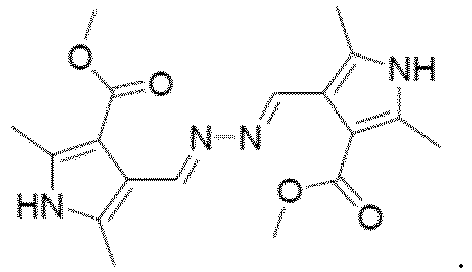
MC4-45: MC4-118: ; and MC4-120: - In one embodiment, the present disclosure provides a compound:
MC4 (MC4-11) MC4-1: 
MC4-2: 
MC4-3: 
MC4-4: 
MC4-5: 
MC4-6: 
MC4-7: 
MC4-8: 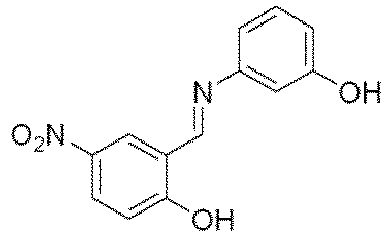
MC4-12: MC4-13: ; MC4-14: ; MC4-15: ; MC4-16: ; MC4-17: ; MC4-18: ; MC4-19: ; MC4-20: ; MC4-21: ; MC4-22: ; MC4-23: 
MC4-24: 
MC4-25: 
MC4-26: 
MC4-27: 
MC4-28: 
MC4-29: 
MC4-30: 
MC4-31: 
MC4-32: 
MC4-33: 
MC4-34: 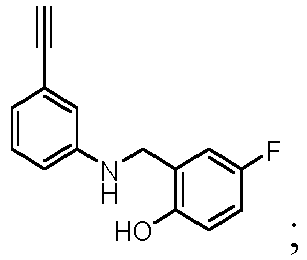
MC4-35: 
MC4-36: 
MC4-37: 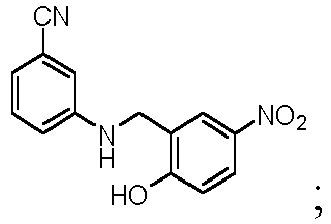
MC4-38: 
MC4-39: 
MC4-40: 
MC4-41: 
MC4-42: 
MC4-43: 
MC4-44: 
MC4-46: 
MC4-47: 
MC4-48: 
MC4-49: 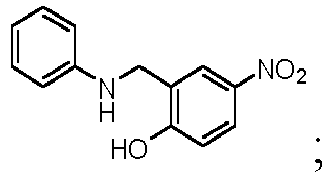
MC4-50: 
MC4-51: 
MC4-52: 
MC4-53: 
MC4-54: 
MC4-55: 
MC4-56: 
MC4-57: 
MC4-58: 
MC4-59: 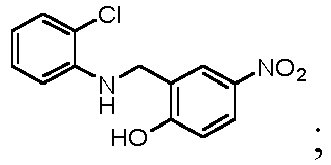
MC4-60: 
MC4-61: 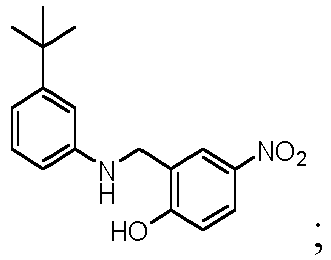
MC4-62: 
MC4-63: 
MC4-64: 
MC4-65: 
MC4-66: 
MC4-67: 
MC4-68: 
MC4-69: 
MC4-70: 
MC4-71: 
MC4-72: 
MC4-73: 
MC4-74: 
MC4-75: 
MC4-76: 
MC4-77: 
MC4-78: 
MC4-79: 
MC4-80: 
MC4-81: 
MC4-82: 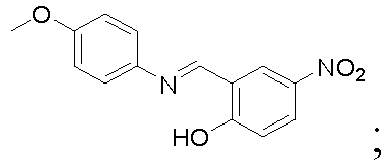
MC4-83: 
MC4-84: 
MC4-85: 
MC4-86: 
MC4-87: 
MC4-88: 
MC4-89: 
MC4-90: 
MC4-91: 
MC4-92: 
MC4-93: 
MC4-94: 
MC4-95: 
MC4-96: 
MC4-97: 
MC4-98: 
MC4-99: 
MC4-100: 
MC4-101: 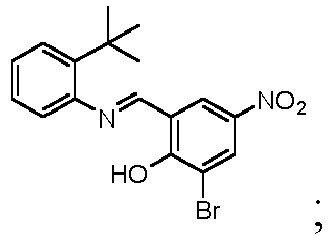
MC4-102: 
MC4-103: 
MC4-104: 
MC4-105: 
MC4-106: 
MC4-107: 
MC4-108: 
MC4-109: 
MC4-110: 
MC4-111: 
MC4-112: 
MC4-113: 
MC4-114: 
MC4-115: 
MC4-116: 
MC4-117: 
MC4-119: 
MC4-121: 
MC4-122: 
MC4-123: 
MC4-124: 
MC4-125: 
MC4-126: 
MC4-127: 
MC4-128: 
MC4-129: 
MC4-131: 
MC4-132: 
MC4-133: 
MC4-134: 
MC4-135: 
MC4-136: 
MC4-137: 
MC4-138: 
MC4-139: 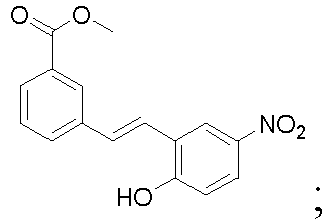
MC4-140: 
MC4-141: 
MC4-142: 
- In one embodiment, the present invention provides a pharmaceutical composition for treatment or prevention of bacterial or protozoal infections, comprising the compound.
- In one embodiment, the composition is in the form of tablets, capsules, lozenges, troches, hard candies, powders, sprays, creams, salves, suppositories, jellies, gels, pastes, lotions, ointments, aqueous suspensions, injectable solutions, elixirs, or syrups.
- In one embodiment, the pharmaceutical composition comprises 5% to 70% by weight of the compound.
- In one embodiment, the bacterial or protozoal infections are caused by microorganism selected from the group consisting of Enterococcus faecalis, Staphylococcus aureus, Klebsiella pneumoniae, Acinetobacter baumannii, Pseudomonas aeruginosa, Enterobacter cloacae, Escherichia coli, and Streptococcus pneumoniae.
- In one embodiment, the present invention provides compound for use in a method to inhibit NusB-NusE interaction in a microorganism, comprising the step of contacting the compound with said microorganism.
- In one embodiment, the NusB is selected from NusB E81, NusB Y18 and NusB E75, and NusE is selected from NusE H15, NusE D19, and NusE R16.
- In one embodiment, the microorganism is selected from the group consisting of Enterococcus faecalis, Staphylococcus aureus, Klebsiella pneumoniae, Acinetobacter baumannii, Pseudomonas aeruginosa, Enterobacter cloacae, Escherichia coli, and Streptococcus pneumoniae.
- In one embodiment, the present invention provides compounds for use in a method of treating or preventing bacterial or protozoal infections in a subject, comprising a step of administerring a therapeutically effective amount of the compound to said subject.
- In one embodiment, the compound is administered through an oral, parenteral, topical, or rectal route.
- In one embodiment, the microorganism is selected from the group consisting of Enterococcus faecalis, Staphylococcus aureus, Klebsiella pneumoniae, Acinetobacter baumannii, Pseudomonas aeruginosa, Enterobacter cloacae, Escherichia coli, and Streptococcus pneumoniae.
- In one embodiment, the NusB is selected from NusB E81, NusB Y18 and NusB E75, and NusE is selected from NusE H15, NusE D19 and NusE R16.
- In one embodiment, the present disclosure provides a compound of
formula 2,
- (1) X1 is selected from the group consisting of -N=CH-, -CH=N-, -CH=CH-, -NH-CH2-, -CH2-NH-, -CH2-CH2-, -CH2-O-, -O-CH2-, -CH2-S-, -S-CH2-, -S(=O)-CH2-, -S(=O)-NH-, -CH2-S(=O)-, -NH-S(=O)-, -S(=O)2-CH2-, -S(=O)2-NH-, -CH2-S(=O)2-, -NH-S(=O)2-, -C(=O)-NH-, -NH-C(=O)-, and -C(=O)-; and
- (2) Each of R1 - R5 is independently selected from the group consisting of hydrogen, hydroxy, nitro, acetyl, methyl, ethynyl, carboxy, carboxymethyl hydroxymethyl, methoxy, methoxycarbonyl, aminosulfonyl, aminocarbonyl, cyano, tetrazolyl, dimethylaminosulfonylaminocarbonyl, cyanomethyl, acetylaminosulfonyl, methoxyaminocarbonyl, methylsulfonylaminocarbonyl, t-butyl, fluoro, chloro, bromo, phenyl, trifluoromethyl and benzo.
- In one embodiment, the compound is selected from the group consisting of:
MC4-118: 
MC4-120: 
- In one embodiment, the present disclosure provides a compound of formula 3,

- (1) each of X1 and Y is independently selected from the group consisting of -NH-, -CH2-, -O-, and -S-; and
- (2) each of R1 - R5 is independently selected from the group consisting of hydrogen, hydroxy, nitro, acetyl, methyl, ethynyl, carboxy, carboxymethyl hydroxymethyl, methoxy, methoxycarbonyl, aminosulfonyl, aminocarbonyl, cyano, tetrazolyl, dimethylaminosulfonylaminocarbonyl, cyanomethyl, acetylaminosulfonyl, methoxyaminocarbonyl, methylsulfonylaminocarbonyl, t-butyl, fluoro, chloro, bromo, phenyl, trifluoromethyl and benzo.
- In one embodiment, the compound is

- Previously, by rational design and pharmacophore-based virtual screening, small chemical molecule inhibitors with antimicrobial activities were identified, targeting the interaction between bacterial RNA polymerase and the essential housekeeping transcription initiation factor σ.12 Using a similar approach, an inhibitor against bacterial rRNA synthesis that has antimicrobial activities against S. aureus strains, including MRSA, was identified.
- A bacterial rRNA transcription complex was modeled on the basis of the crystal structure of the RNA polymerase elongation complex13 with a suite of Nus transcription factors NusA, NusB, NusE, and NusG (
Figure 1A ). NusG binds to the central cleft of RNA polymerase via its N-terminal domain,14 and its Cterminal domain interacts with NusE,15 which anchors the NusB-NusE-boxA subcomplex to the downstream face of RNA polymerase (Figure 1A ). NusA binds to RNA polymerase near the RNA exit channel (Figure 1A ),16 consistent with its binding to rRNA just downstream of the boxA sequence.17 The interaction between RNA polymerase-Nus factors and rRNA results in a constrained loop, facilitating rapid and proper folding of the emerging transcript, which is consistent with previous biochemical observations that the RNA polymerase-Nus factor complex would play the role of a chaperone in rRNA synthesis.18 This assembly also has possible roles in preventing the termination factor Rho from accessing the rRNA transcript,19 ensuring complete transcription of the relatively large rRNA operons during rapid bacterial cell growth. Recently reported structural information about the phage protein λN-dependent transcription antitermination complex also was similar to that of the rRNA transcription complex model used in this invention.20 - Examination of the published crystal structures of the Escherichia coli NusB-NusE heterodimer [Protein Data Bank (PDB) entry 3D3B] (
Figure 1B )21 reveals that NusE contains only 18% α-helix and binds with NusB mainly via interactions with helix 2 (Figure 1B ).22 The hydrogen bonding interactions occur between NusB E81 and NusE H15, NusB Y18 and NusE D19, and NusB E75 and NusE R16 (Figure 1B , expanded view; E. coli amino acid residue numbering), which are highly conserved across prokaryotes (Figure 5 , arrows). Additionally, a nuclear magnetic resonance study of the Aquifex aeolicus NusB-NusE interaction also confirmed similar interactions exist in solution.23 - The structural information about the NusB-NusE heterodimer co-crystal (PDB entry 3D3B)22 was used to develop a pharmacophore model (
Figure 2A ). The pharmacophore model comprised two hydrogen donors (pink), one acceptor (green) to mimic the major hydrogen bonds between NusB and NusE as mentioned above, and one conserved hydrophobic interaction (cyan,Figure 2A ) between E. coli residues NusB L22 and NusE V26. In addition to the interactions, a series of exclusion zones (gray) were added to minimize steric clashes within the shallow pocket that forms the binding site on NusB. The final pharmacophore model was then created using Biovia DS4.5 to map on all the features required.24 As the pharmacophore model was designed on the basis of the properties of the important amino acid residues on the NusE protein responsible for binding to NusB, theoretically, the ideal small molecules capable of docking into this pharmacophore model should be able to bind to NusB and demonstrate inhibitory activity against the NusB-NusE interaction accordingly. - On the basis of the pharmacophore model, an in silico screen was performed using a virtual compound library constructed by combining the mini-Maybridge library and the Enamine antibacterial library.25 The top 50 hits from the initial virtual screen were remapped against the pharmacophore model and the energy-minimized conformations of compounds visually inspected. The compounds that poorly fit into the pharmacophore were removed. As a result, seven compounds (
Figure 6 ) were initially short-listed for wet-laboratory testing. - The antimicrobial activity of the seven compounds against community-acquired MRSA strain USA300 were first screened. Of the analogues evaluated, MC4 (
Figure 2B ) was found to demonstrate growth inhibition effects with a minimum inhibitory concentration (MIC) of 64 µg/mL (Figure 3 ). With a molecular weight of 266.3, MC4 has been reported to be of use only to form a metal complex dye in optical layers for optical data recording.26 The antimicrobial activities of MC4 against a panel of representative strains of pathogens were then tested. MC4 demonstrated preferred antimicrobial activity against S. aureus strains, including MRSA, over other pathogens tested, with MICs as low as 8 µg/mL against controlstrain S. aureus Figure 3 ). Additionally, MC4 did not show significant cytotoxicity against mammalian cell lines compared to 5-fluorouracil (Table 1). - The level of macromolecules in
S. aureus ATCC 25923 cells during exponential growth due to MC4 treatment were analyzed. MC4, rifampicin, and oxacillin were added at a one-quarter MIC level, which did not interfere with the rate of growth ofS. aureus ATCC 25923 cells. As shown inFigure 4 , none of the treatment affected the DNA level, as previewed by the mode of action. In the control cells, the level of major rRNA (16S + 23S) was around 78% of total RNA (Figure 4 ).4 Rifampicin resulted in reduction in the rRNA level consistent with previous observations (Figure 4 ).27 MC4 showed a significant reduction in the rRNA level, which was lower than that of rifampicintreated cells (Figure 4 ). Furthermore, MC4 treatment led to a significant reduction in the protein level, while rifampicin did not show this effect, probably as a result of a decreased level of ribosome production, affecting the protein synthesis ability. Oxacillin-treated cells displayed rRNA and protein production levels slightly higher than those of control cells. - Finally, to establish MC4's mode of action at the molecular level, an enzyme-linked immunosorbent assay-based inhibitory assay was performed to assess the in vitro inhibition of NusB-NusE heterodimer formation by MC4.24 Purified NusB was used to coat the 96-well plate, and GST-tagged NusE was used as the probe. MC4 showed positive inhibition of the NusB-NusE interaction with an IC50 of ~34.7 ± 0.13 µM. By further testing a series of MC4 analogues (
Figure 7 ), it was found that three functional groups on the molecule targeting interactions between NusB E81 and NusE H15, NusB Y18 and NusE D19, and NusB E75 and NusE R16 were compulsory for inhibiting NusB-NusE binding, as predicted by FitScore of Biovia DS4.5 (Table 3). With the change in the phenyl acetylene group to phenols, the IC50 values of the corresponding MC4 analogues increased, while deletion of this terminal triple bond or replacing by methyl or chloride caused a reduced IC50. When p-nitrophenol was modified to o-nitrophenol, the IC50 values increased, probably because of the involvement of the phenol group in the binding interaction with NusB Y81 (Table 3). These results confirmed the pharmacophore model used in this invention and demonstrated that the reactivity of imine and p-nitrophenol did not contribute to the activity of MC4. - The interaction between MC4 and NusB was also biophysically quantified. A previous report demonstrated that NusB bound to NusE in a 1:1 ratio with a Kd of ~1 µM as determined by isothermal titration calorimetry (ITC).21 In similar experiments, it was found that MC4 bound specifically to NusB (
Figure 8A ) with a one-site binding mode with a Kd of 1.45 ± 0.55 µM. Binding of MC4 to NusE could not be detected by ITC (not shown), or between MC4 and NusB variants (Y18A, D76A, and D81A) with the three amino acid residues responsible for NusE binding altered to alanine (Figure 8B-D ). These results together suggest the inhibition of NusB-NusE heterodimer formation is achieved via specific interaction between MC4 and NusB as designed. Further experiments will be performed to resolve the structure of NusB in complex with MC4 for target validation, as well as structure-based lead optimization. - The potential impact of untreatable antibiotic-resistant infections on society is profound, and there is an urgent need to identify new drug targets.28 Traditionally, the bacterial ribosome itself (both 30S and 50S subunits) has been one of the most commonly exploited targets for antibiotics inhibiting protein synthesis.29 Recent drug discovery research had validated the finding that inhibition of rescuing stalled ribosomes at the end of mRNAs resulted in antibacterial activity.30 Given the ribosome is positively related to fast growth/proliferation and the large difference between eukaryotic and prokaryotic rRNA transcription machinery, it is tempting to hypothesize inhibition of rRNA synthesis would be expected to have a major impact on cell growth and/or viability. This hypothesis is strengthened by recent findings showing that many anticancer drugs inhibit rRNA synthesis or maturation.31
- In this work, pharmacophore-based in silico screening followed by biological confirmation was used for identifying a potential new antibiotic lead. An essential interaction between transcription factors NusB and NusE that is required for the formation of highly processive complexes used for the synthesis of rRNA within bacterial cells was targeted. One of the short-listed compounds (MC4) showed specific activity against S. aureus strains, including MRSA, without significant toxicity to mammalian cell lines. This compound is like the first designed to target bacterial rRNA synthesis that has antimicrobial activities. The detailed effect of MC4 in rRNA transcription/processing, ribosome biogenesis, and S. aureus virulence is currently under investigation. Although MC4 has been shown to specifically inhibit NusB-NusE interaction at the molecular level, any potential off-target effect on bacterial cells remains to be elucidated. Because NusB and NusE are highly conserved in bacteria, the reason that MC4 has preferred antimicrobial activity against S. aureus over other pathogens needs to be further investigated.
- An essential protein-protein interaction between transcription factors in the bacterial rRNA synthesis machinery as a novel antimicrobial target was validated. Other important protein-protein interactions involved in bacterial rRNA transcription, e.g., between NusE and NusG, the NusE-RNA polymerase complex might also have the potential as novel antimicrobial targets.32 This work paves the way for the structural optimization of MC4, and potentially other compounds from more comprehensive screens, for development as prospective new antimicrobial lead molecules targeting bacterial rRNA synthesis.
- Bacterial Strains and Chemicals. The following bacterial strains were used in this study for the microdilution assay: Enterococcus faecalis ATCC 29212,
Klebsiella pneumonia ATCC 700603, Acinetobacter baumanniiATCC 19606, Pseudomonas aeruginosa PA01,Enterobacter cloacae ATCC 13047,E. coli ATCC 25922, Proteus vulgaris ATCC 6380, and S. aureus USA300,ATCC 25923,ATCC 29213, ST22, ST30, ST45, ST59, ST239, JE-2, BAA44. E. coli strain DH5α (Gibco BRL) was used in this study for cloning and BL21 (DE3) pLysS33 was used for protein overproduction. 5-fluorouracil, rifampicin and other antibiotics used in the microdilution assay were purchased from SigmaAldrich. Compounds MC1-7 were purchased from MolPort. - Molecular modeling. The antitermination complex model was constructed by consolidating a number of published crystal structures, including the Thermus thermophilus transcription elongation complex (PDB: 205I),34 E. coli RNA polymerase-NusG complex (PDB: 5tbz),35 Aquifex aeolicus NusB-E in complex with boxA RNA (PDB: 3R2C),36 Mycobacterium tuberculosis NusA C-terminal domain-RNA complex (PDB: 2ASB);37 as well as the NMR solution structure of E. coli NusE:NusG-CTD complex (PDB: 2KVQ),38 and B. subtilis NusA N-terminal domain (PDB: 2MT4).39 Structure matching was performed using the MatchMaker function of UCSF Chimera.40 Images were generated with UCSF Chimera.
- Pharmacophore design and virtual screening were performed as described previously.41
- Antibacterial activity test. Microdilution assay was performed according to the Clinical & Laboratory Standards Institute recommendations.42 Serial 2-fold dilutions of the tested compounds and antibiotic controls were made from 256 µg/ml to 0.5 µg/ml. DMSO was included as a negative control.
- Cytotoxicity assay was performed as detailed previously43 except A549 lung carcinoma and HaCaT immortalized human keratinocytes were used in this study.
- DNA, protein and rRNA quantitation. MC4, oxacillin and rifampcin at ¼ MIC level were added to S.
aureus strain ATCC 25923 in LB medium at early log phase (OD595 = 0.2), which was then grown to mid-log phase (OD595 = 0.5). For DNA and protein quantitation, 1 ml cells were harvested and treated with 10 mg/ml lysozyme + 0.5 mg/ml lysostaphin at RT for 1 hr before centrifugation at 13000 g/min for 3 min. The supernatant was discarded and cells lysed with 600 µl Nuclei Lysis Solution (Promega / Genomic DNA Purification Kit) for 5 min, followed by gentle sonication. The amount of DNA was quantified with Qubit dsDNA BR (broad range) and protein quantified with NanoOrange™ Protein Quantitation Kit (ThermoFisher). For rRNA quantitation, 1 ml culture was collected and treated with RNAProtect (Qiagen), before total RNA was extracted with an RNeasy Mini Kit (Qiagen). DNase I treatment was performed with a TURBO DNA-free Kit (ThermoFisher). The extracted RNA was subjected to Agilent 2100 analysis, and the level of major rRNA (the sum of 16S + 23S rRNA) as percentage of total RNA. The values were compared across each treatment group. All experiments were repeated three times. - Plasmid Construction. All of the cloning steps were carried out in E. coli DH5α. The plasmids used and constructed in this work were confirmed by DNA sequencing, and are listed in Table 2. B. subtilis nusB was amplified using primers 5 ' - AAAGGAGATCTAGACATGAAAGAAGA-3' (SEQ ID NO: 1) and 5'TTTTCTGGTACCCTATGATTCCC-3' (SEQ ID NO: 2) from purified B. subtilis chromosomal DNA. The nusB mutants were made by PCR splicing44 using mutant primers 5'-CTTTGCAGGCACTAgcTCAAATTGATGTC-3' (SEQ ID NO: 3) and 5'GACATCAATTTGAgcTAGTGCCTGCAAAG-3' (F15A) (SEQ ID NO: 4), 5'-GAATTGGAAGCTCGATgcGATTGCCAATG-3' (SEQ ID NO: 5) and 5'-CATTGGCAATCgcATCGAGCTTCCAATTC-3' (R70A) (SEQ ID NO: 6), and 5'GATTGCCAATGTTGcCCGTGCGATTTTGC-3' (SEQ ID NO: 7) and 5'-GCAAAATCGCACGGgCAACATTGGCAATC-3' (D75A) (SEQ ID NO: 8). The amplicons were cut with XbaI and Acc65I and inserted into similarly cut pETMCSIII (Table 2) to produce pNG130, pNG1178, pNG1179, and pNG1180 respectively (Table 2). B. subtilis nusE was amplified using primers 5'-AAGGAGGGTCTAGAATGGCAAAAC-3' (SEQ ID NO: 9) and 5'CTATATTTTAGGTACCAAGTTTAATTT-3' (SEQ ID NO: 10) from B. subtilis chromosomal DNA and ligated into the NdeI and Acc65I sites of pNG651 to give pNG896 (Table 2).
- Protein overproduction and purification. B. subtilis NusB (wild type and mutant) and NusE-GST were overproduced from plasmids (Table 2) and purified using a similar approach to that described previously.45 Purified proteins were dialyzed into 20 mM KH2PO4, 150 mM NaCl, 30% glycerol, pH 7.8 and stored at 80°C.
- ELISA-based assays. These assays were performed as described previously,41 except NusB was used to coat the NUNC MaxiSorp™ 96-well plates and GST-tagged NusE used as the probe.
- Isothermal calorimetric titration (ITC). ITC experiments were performed as described previously.41 For compound testing, a 50 mM stock made up in DMSO was diluted to 500 µM in ITC buffer (50 mM KH2PO4, 150 mM NaCl, pH 7.4). All proteins were dialysed into ITC buffer and were supplemented with the same concentration of DMSO (1% v/v) to minimize buffer miss-match. MC4 was then titrated against 50 µM NusB wild type and mutants as described previously41 using 1% DMSO in ITC buffer as the negative control.

-
Table 2. Strains and plasmids used and created in this study. Plasmids Genotype Source/Construction Vectors for cloning pETMCSIII bla Pϕ10 - 6xHis -Tϕ [46] pNG651 bla Pϕ10 - 3CGST -Tϕ [47] Vectors for protein overproduction pNG130 bla Pϕ10-6xHis-nusB-Tϕ This work. nusB cloned into XbaI and Acc65I cut pETMCSIII pNG134 bla Pϕ10 - 6xHis -nusE-Tϕ This work. nusE cloned into XbaI and Acc65I cut pETMCSIII pNG896 bla Pϕ10 -nusE- 3CGST-Tϕ This work. nusE cloned into NdeI and Acc65I cut pNG651 pNG1178 Bla Pϕ10- 6xHis -nusB(F15A)-Tϕ This work. nusB(F15A) cloned into XbaI and Acc65I cut pETMCSIII pNG1179 bla Pϕ10 - 6xHis -nusB(R70A)-Tϕ This work. nusB(R70A) cloned into XbaI and Acc65I cut pETMCSIII pNGl 180 bla Pϕ10 - 6xHis-nusB(D75A)-Tϕ This work. nusB(D75A) cloned into XbaI and Acc65I cut pETMCSIII Table 3. Comparison of MC4 and analogues in predicted properties and IC50. The compounds listed in table 3 are reference compounds for comparative purposes and part of the claimed invention. IC50 (µM) FitScorea AlogPa PSA-2Da(Å) MC4 34.7±0.13 2.638 4.206 74.961 MC4-1 14.4±2.59 NAb 3.078 74.961 MC4-2 38.2±8.78 NAb 2.818 92.262 MC4-3 5.94×10⁻³±1.80 NAb 3.323 95.777 MC4-4 147±17.9 NAb 3.078 74.961 MC4-5 971±11.6 NAb 3.565 74.961 MC4-6 8.15×10⁻³±1.68 2.569 2.836 95.777 MC4-7 1639±12.7 NAb 3.743 74.961 MC4-8 6.92×10⁻³±0.68 2.460 2.836 95.777 a:Biovia DS4.5 calculation; b: No FitScore provided by the software - The structures of further MC4 analogues are presented below with their minimum inhibitory concentrations on 9 microorganisms are shown in
Figure 9 (EFAE 19433:Enterococcus faecalis ATCC 19433; SAUR 25923:Staphylococcus aureus ATCC 25923; SAUR 29213:Staphylococcus aureus ATCC 29213; KPNE 700603:Klebsiella pneumoniae ATCC 700603; ABAU 19606:Acinetobacter baumannii ATCC 19606; PAER 27853:Pseudomonas aeruginosa ATCC 27853 ; ECLO 13047:Enterobacter cloacae ATCC 13047; ECOL 25922:Escherichia coli ATCC 25922; SPNE 49619: Streptococcus pneumoniae ATCC 49619). - The antimicrobial activity of the compounds was determined by broth microdilution according to the CLSI guidelines (1). The test medium was cation-adjusted Mueller-Hinton broth (MH). Serial two-fold dilutions were performed for the tested chemicals starting from 256 µg/ml to 0.0625 µg/ml, and the bacterial cell inoculum was adjusted to approximately 5 × 10⁵ CFU per ml. Results were taken after 20 h of incubation at 37 °C. MIC was defined as the lowest concentration of antibiotic with no visible growth. Experiments were performed in duplicates. Most of the compounds listed in the following table are reference compounds for comparative purposes not part of the claimed invention. The compounds of the invention are defined in the claims.
No. Structure Formula Mol.Wt MC4-1 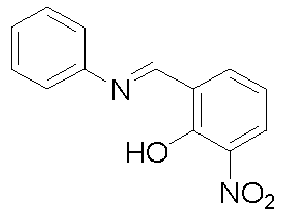
C13H10N2O3 242.23 MC4-2 
C15H12N2O4 284.27 MC4-3 
C14H12N2O4 272.26 MC4-11 
C15H10N2O3 266.26 MC4-12 
C14H10N2O5 286.24 MC4-13 
C15H12N2O5 300.27 MC4-14 
C14H12N2O4 272.26 MC4-15 
C16H13NO2 251.29 MC4-16 
C17H12N2O3 292.29 MC4-17 
C17H13NO3 279.30 MC4-18 
C15H10FNO 239.25 MC4-19 
C15H12N2O3 268.27 MC4-20 
C13H11N3O5S 321.31 MC4-21 
C14H11N3O4 285.26 MC4-22 
C14H9N3O3 267.24 MC4-23 
C14H10N6O3 310.27 MC4-24 
C17H12N2O 260.30 MC4-25 
C16H16N4O6S 392.39 MC4-26 
C15H11N3O3 281.27 MC4-27 
C15H13N3O6S 363.34 MC4-28 
C15H13N3O5 315.29 MC4-29 
C14H44N2O4 274.28 MC4-30 
C14H12N2O5 288.26 MC4-31 
C15H14N2O5 302.29 MC4-32 
C16H15NO2 253.30 MC4-33 
C17H15NO3 281.31 MC4-34 
C15H12FNO 241.27 MC4-35 
C13H13N3O5S 323.32 MC4-36 
C14H13N3O4 287.28 MC4-37 
C14H11N3O3 269.26 MC4-38 
C15H13N3O3 283.29 MC4-39 
C14H12N6O3 312.29 MC4-40 
C15H13N3O6S 363.34 MC4-41 
C15H15N3O6S 365.36 MC4-42 
C16H18N4O6S 394.40 MC4-43 
C15H15N3O5 317.30 MC4-44 
C17H14N2O 262.31 MC4-45 
C16H11NO2 249.27 MC4-46 
C14H12N2O4 272.26 MC4-47 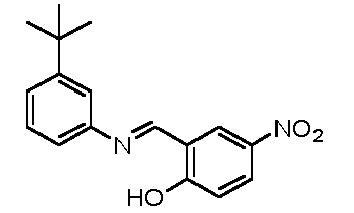
C17H18N2O3 298.34 MC4-48 
C14H14N2O3 258.28 MC4-49 
C13H12N2O3 244.25 MC4-50 
C13H9ClN2O3 276.68 MC4-51 
C15H12N2O5 300.27 MC4-52 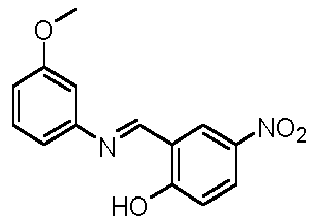
C14H12N2O4 272.26 MC4-53 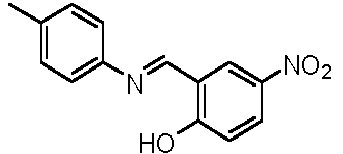
C14H12N2O3 256.26 MC4-54 
C14H14N2O3 258.28 MC4-55 
C15H11NO 221.26 MC4-56 
C13H9ClN2O3 276.68 MC4-57 
C14H12N2O3 256.26 MC4-58 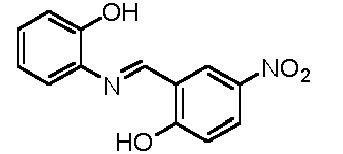
C13H10N2O4 258.23 MC4-59 
C13H11ClN2O3 278.69 MC4-60 
C14H44N2O4 274.28 MC4-61 
C17H20N2O3 300.36 MC4-62 
C15H14N2O5 302.29 MC4-63 
C14H12N2O4 272.26 MC4-64 
C17H18N2O3 298.34 MC4-65 
C15H12N2O5 300.27 MC4-66 
C14H9N3O3 267.24 MC4-67 
C13H12N2O4 260.25 MC4-68 
C14H14N2O3 258.28 MC4-69 
C15H10N2O2 250.26 MC4-70 
C15H9BrN2O3 345.15 MC4-71 
C15H13NO 223.28 MC4-72 
C13H11ClN2O3 278.69 MC4-73 
C19H14N2O3 318.33 MC4-74 
C15H9Cl2NO 290.14 MC4-75 
C15H10N2O3 266.26 MC4-76 
C15H10N2O3 266.26 MC4-77 
C15H14N2O5 302.29 MC4-78 
C14H11N3O3 269.26 MC4-79 
C13H12N2O4 260.25 MC4-80 
C15H10N2O4 282.26 MC4-81 
C14H44N2O4 274.28 MC4-82 
C14H12N2O4 272.26 MC4-83 
C17H18N2O3 298.34 MC4-84 
C17H20N2O3 300.36 MC4-85 
C15H12N2O5 300.27 MC4-86 
C15H11BrN2O3 347.17 MC4-87 
C14H9N3O3 267.24 MC4-88 
C19H16N2O3 320.35 MC4-89 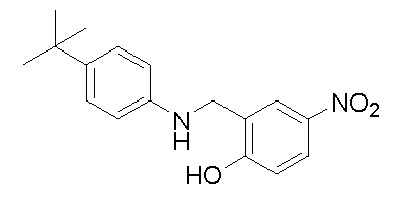
C17H20N2O3 300.36 MC4-90 
C15H10N2O3 266.26 MC4-91 
C14H44N2O4 274.28 MC4-92 
C15H11Cl2NO 292.16 MC4-93 
C15H12N2O3 268.27 MC4-94 
C15H12N2O2 252.27 MC4-95 
C15H14N2O5 302.29 MC4-96 
C14H13NO2 227.26 MC4-97 
C13H9NO4 243.22 MC4-98 
C14H12N2O3 256.26 MC4-99 
C14H11NO3 241.25 MC4-100 
C14H11N3O3 269.26 MC4-101 
C17H17BrN2O3 377.24 MC4-102 
C17H17C12NO 322.23 MC4-103 
C17H19BrN2O3 379.25 MC4-104 
C17H19Cl2NO 324.25 MC4-105 
C14H9F3N2O3 310.23 MC4-106 
C14H9F3N2O3 310.23 MC4-107 
C14H11F3N2O3 312.25 MC4-108 
C14H11F3N2O3 312.25 MC4-109 
C14H9F3N2O3 310.23 MC4-110 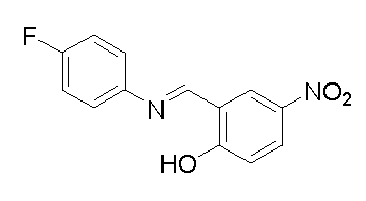
C13H9FN2O3 260.22 MC4-111 
C13H9FN2O3 260.22 MC4-112 
C13H11FN2O3 262.24 MC4-113 
C13H11FN2O3 262.24 MC4-114 
C13H9FN2O3 260.22 MC4-115 
C13H11FN2O3 262.24 MC4-116 
C14H11F3N2O3 312.25 MC4-117 
C17H12N2O3 292.29 MC4-118 
C13H16N2O3 248.28 MC4-119 
C17H14N2O3 294.31 MC4-120 
C13H18N2O3 250.30 MC4-121 
C19H14N2O3 318.33 MC4-122 
C19H14N2O3 318.33 MC4-123 
C19H16N2O3 320.35 MC4-124 
C19H16N2O3 320.35 MC4-125 
C13H9ClN2O3 276.68 MC4-126 
C13H10N2O4 258.23 MC4-127 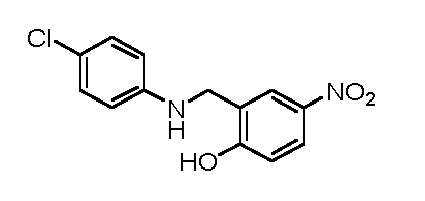
C13H11ClN2O3 278.69 MC4-128 
C15H10N2O3 266.26 MC4-129 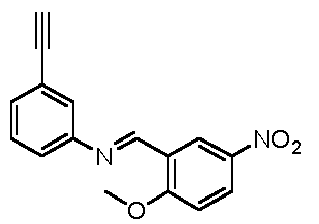
C16H12N2O3 280.28 MC4-131 
C15H10N2O3 266.26 MC4-132 
C16H44N2O3 282.30 MC4-133 
C15H12N2O3 268.27 MC4-134 
C14H10ClNO3 275.69 MC4-135 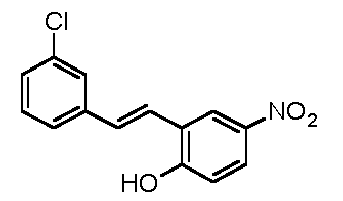
C14H10ClNO3 275.69 MC4-136 
C16H10N2O 246.27 MC4-137 
C15H13NO4 271.27 MC4-138 
C16H12N2O 248.29 MC4-139 
C16H13NO5 299.28 MC4-140 
C15H13NO4 271.27 MC4-141 
C16H13NO5 299.28 MC4-142 
C15H10N2O3 266.26 -
- (1) (a) Jean, S. S., and Hsueh, P. R. (2011) Int. J. Antimicrob. Agents 37, 291-295. (b) Frieden, T. R. (2013) N. Engl. J. Med. 368, 1857-1859.
- (2) Chambers, H. F., and Deleo, F. R. (2009) Nat. Rev. Microbiol. 7, 629-641.
- (3) (a) Gardete, S., and Tomasz, A. (2014) J. Clin. Invest. 124, 2836-2840. (b) Nannini, E., Murray, B. E., and Arias, C. A. (2010) Curr. Opin. Pharmacol. 10, 516-521.
- (4) Jin, D. J., Cagliero, C., and Zhou, Y. N. (2012) FEMS Microbiol.Rev. 36, 269-287.
- (5) Viktorovskaya, O. V., and Schneider, D. A. (2015) Gene 556, 19-26.
- (6) Santangelo, T. J., and Artsimovitch, I. (2011) Nat. Rev. Microbiol. 9, 319-329.
- (7) Richardson, J. P., and Greenblatt, J. (1996) in Escherichia coli and Salmonella: Cellular and molecular biology, 2nd ed., pp 822-848, American Society for Microbiology, Washington, DC.
- (8) Greive, S. J., Lins, A. F., and von Hippel, P. H. (2005) J. Biol. Chem. 280, 36397-36408.
- (9) (a) Nodwell, J. R., and Greenblatt, J. (1993) Cell 72, 261-268. (b) Burmann, B. M., Luo, X., Rosch, P., Wahl, M. C., and Gottesman, M. E. (2010) Nucleic Acids Res. 38, 314-326.
- (10) Werner, F., and Grohmann, D. (2011) Nat. Rev. Microbiol. 9, 85-98.
- (11) (a) Kato, J., and Hashimoto, M. (2007) Mol. Syst. Biol. 3, 132. (b) Bubunenko, M., Baker, T., and Court, D. L. (2007) J. Bacteriol. 189, 2844-2853.
- (12) (a) Ma, C., Yang, X., Kandemir, H., Mielczarek, M., Johnston, E. B., Griffith, R., Kumar, N., and Lewis, P. J. (2013) ACS Chem. Biol. 8, 1972-1980. (b) Ma, C., Yang, X., and Lewis, P. J. (2016) ACS Infect. Dis. 2, 39-46.
- (13) Vassylyev, D. G., Vassylyeva, M. N., Perederina, A., Tahirov, T. H., and Artsimovitch, I. (2007) Nature 448, 157-162.
- (14) Liu, B., and Steitz, T. A. (2017) Nucleic Acids Res. 45, 968-974.
- (15) Burmann, B. M., Schweimer, K., Luo, X., Wahl, M. C., Stitt, B. L., Gottesman, M. E., and Rosch, P. (2010) Science 328, 501-504.
- (16) Yang, X., Molimau, S., Doherty, G. P., Johnston, E. B., Marles-Wright, J., Rothnagel, R., Hankamer, B., Lewis, R. J., and Lewis, P. J. (2009) EMBO Rep. 10, 997-1002.
- (17) (a) Beuth, B., Pennell, S., Arnvig, K. B., Martin, S. R., and Taylor, I. A. (2005) EMBO J. 24, 3576-3587. (b) Prasch, S., Jurk, M., Washburn, R. S., Gottesman, M. E., Wöhrl, B. M., and Rösch, P. (2009) Nucleic Acids Res. 37, 4736-4742.
- (18) (a) Bubunenko, M., Court, D. L., Al Refaii, A., Saxena, S., Korepanov, A., Friedman, D. I., Gottesman, M. E., and Alix, J. H. (2013) Mol. Microbiol. 87, 382-393. (b) Wong, T., Sosnick, T. R., and Pan, T. (2005) Biochemistry 44, 7535-7542.
- (19) Anderson, A. C. (2003) Chem. Biol. 10, 787-797.
- (20) Said, N., Krupp, F., Anedchenko, E., Santos, K. F., Dybkov, O., Huang, Y. H., Lee, C. T., Loll, B., Behrmann, E., Bürger, J., Mielke, T., Loerke, J., Urlaub, H., Spahn, C. M. T., Weber, G., and Wahl, M. C. (2017) Nat. Microbiol. 2, 17062.
- (21) Das, R., Loss, S., Li, J., Waugh, D. S., Tarasov, S., Wingfield, P. T., Byrd, R. A., and Altieri, A. S. (2008) J. Mol. Biol. 376, 705-720.
- (22) Luo, X., Hsiao, H. H., Bubunenko, M., Weber, G., Court, D. L., Gottesman, M. E., Urlaub, H., and Wahl, M. C. (2008) Mol. .
- (23) Stagno, J. R., Altieri, A. S., Bubunenko, M., Tarasov, S. G., Li, J., Court, D. L., Byrd, R. A., and Ji, X. (2011) Nucleic Acids Res. 39, 7803-7815.
- (24) Yang, X., Ma, C., and Lewis, P. J. (2015) Methods 86, 45-50.
- (25) Lipinski, C. A., Lombardo, F., Dominy, B. W., and Feeney, P. J. (2001) Adv. Drug Delivery Rev. 46, 3-26.
- (26) (a)
Luecke, L., Weiss, A., Graciet, J.-C., Steffanut, P., Klein, C., and Winter, M. A. (2008) Eur. Pat. Appl. EP 1930378 . (b)Luecke, L., Weiss, A., Graciet, J.-C., Steffanut, P., Klein, C., and Winter, M. A. (2008) Eur. Pat. Appl. EP 1925643 . - (27) (a) Cangelosi, G. A., and Brabant, W. H. (1997) J. Bacteriol. 179, 4457-4463. (b) Halford, C., Gonzalez, R., Campuzano, S., Hu, B., Babbitt, J. T., Liu, J., Wang, J., Churchill, B. M., and Haake, D. A. (2013) Antimicrob. Agents Chemother. 57, 936-943.
- (28) O'Neil, J. (2014) Antimicrobial resistance: Tackling a crisis for the health and wealth of nations, Wellcome Trust and HM Government, London.
- (29) Chellat, M. F., Raguž, L., and Riedl, R. (2016) Angew. Chem., Int. Ed. 55, 6600-6626.
- (30) Goralski, T. D., Dewan, K. K., Alumasa, J. N., Avanzato, V, Place, D. E., Markley, R. L., Katkere, B., Rabadi, S. M., Bakshi, C. S., Keiler, K. C., and Kirimanjeswara, G. S. (2016) Antimicrob. Agents Chemother. 60, 3276-3282.
- (31) Brighenti, E., Treré, D., and Derenzini, M. (2015) .
- (32) Ma, C., Yang, X., and Lewis, P. J. (2016) Microbiol. Mol. Biol. Rev. 80, 139-160.
- (33) Studier, F. W.; Moffatt, B. A. (1986) J. Mol. Biol. 189, 113-130.
- (34) Vassylyev, D. G.; Vassylyeva, M. N.; Perederina, A.; Tahirov, T. H.; Artsimovitch, I. (2007) Nature 448, 157-162.
- (35) Liu, B.; Steitz, T. A. (2017) Nucleic Acids Res. 45, 968-974.
- (36) Stagno, J. R.; Altieri, A. S.; Bubunenko, M.; Tarasov, S. G.; Li, J.; Court, D. L.; Byrd R. A.; Ji, X. (2011) Nucleic Acids Res. 39, 7803-7815.
- (37) Beuth, B.; Pennell, S.; Arnvig, K. B.; Martin S. R.; Taylor, I. A. (2005) EMBO J. 24, 3576-3587.
- (38) Burmann, B. M.; Schweimer, K.; Luo, X.; Wahl, M. C.; Stitt, B. L.; Gottesman, M. E.; Rosch, P. (2010) Science 328, 501-504.
- (39) Ma, C.; Mobli, M.; Yang, X.; Keller, A. N.; King G. F.; Lewis, P. J. (2015) Nucleic Acids Res. 43, 2829-2840.
- (40) Pettersen, E. F.; Goddard, T. D.; Huang, C. C.; Couch, G. S.; Greenblatt, D. M.; Meng, E. C.; Ferrin, T. E. (2004) J. Comput. Chem. 25, 1605-1612.
- (41) Yang, X.; Ma C.; Lewis, P. J. (2015) Methods 86, 45-50.
- (42) CLSI, Clinical and Laboratory Standards Institute. (2015) Performance Standards for Antimicrobial Susceptibility Testing, Twenty-Fifth Informational Supplement (M100S25).
- (43) Bi, Y; Yang, X.; Zhang, T.; Liu, Z.; Zhang, X.; Lu, J.; Cheng, K.; Xu, J.; Wang, H.; Lv, G.; Lewis, P. J.; Meng Q.; Ma, C. (2015) Eur. J. Med. Chem. 101, 71-80.
- (44) Heckman K. L.; Pease, L. R. (2007) Nat. Protoc. 2, 924-932.
- (45) Ma, C.; Yang, X.; Lewis, P. J. (2016) ACS Infect. Dis. 2, 39-46.
- (46) Neylon, C.; Brown, S. E.; Kralicek, A. V; Miles, C. S.; Love, C. A.; Dixon, N. E. (2000) Biochemistry 39, 11989-11999.
- (47) Ma, C.; Yang, X.; Kandemir, H.; Mielczarek, M.; Johnston, E. B.; Griffith, R.; Kumar, N.; Lewis, P. J. (2013) ACS Chem. Biol. 8, 1972-1980.
Claims (4)
- A compound for use in the treatment or prevention of a bacterial infection, wherein the compound is selected from the group consisting of:
MC4-19: 
MC4-30: 
MC4-29: 
MC4-32: 
MC4-31: 
MC4-34: 
MC4-33: 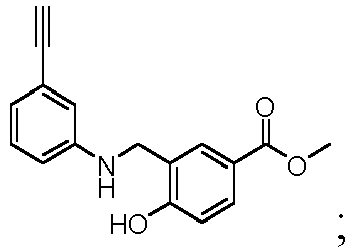
MC4-36: 
MC4-35: 
MC4-38: 
MC4-37: 
MC4-39: 
MC4-41: 
MC4-42: 
MC4-43: 
MC4-44: 
MC4-60: 
MC4-59: 
MC4-62: 
MC4-61: 
MC4-72: 
MC4-77: 
MC4-78: 
MC4-81: 
MC4-84: 
MC4-89: 
MC4-86: 
MC4-91: 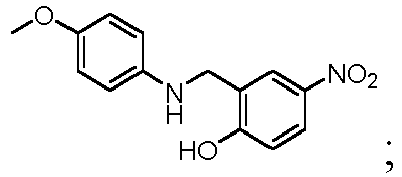
MC4-88: 
MC4-93: 
MC4-92: 
MC4-95: 
MC4-94: 
MC4-103: 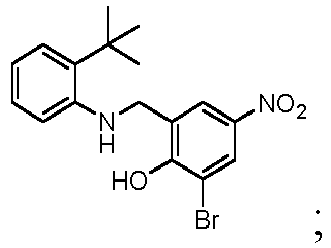
MC4-100: 
MC4-107: 
MC4-104: 
MC4-113: 
MC4-108: 
MC4-115: 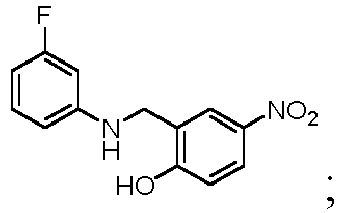
MC4-112: 
MC4-123: 
MC4-116: 
MC4-127: 
MC4-124: 
MC4-133: 
and MC4-138: 
- The compound for use of claim 1, wherein the compound is selected from the group consisting of:
MC4-84: 
and MC4-123: 
- The compound for use of claim 1 or 2, wherein the bacterial infection is a Staphylococcus aureus, Streptococcus pneumoniae, Enterococcus faecalis, or Acinetobacter baumannii infection.
- The compound for use of claim 1 or 2, wherein the bacterial infection is a Staphylococcus aureus infection.
Applications Claiming Priority (2)
| Application Number | Priority Date | Filing Date | Title |
|---|---|---|---|
| US201862615418P | 2018-01-09 | 2018-01-09 | |
| PCT/IB2019/050137 WO2019138323A1 (en) | 2018-01-09 | 2019-01-08 | Compounds with antimicrobial activity |
Publications (5)
| Publication Number | Publication Date |
|---|---|
| EP3737664A1 EP3737664A1 (en) | 2020-11-18 |
| EP3737664A4 EP3737664A4 (en) | 2021-12-01 |
| EP3737664C0 EP3737664C0 (en) | 2024-04-10 |
| EP3737664B1 true EP3737664B1 (en) | 2024-04-10 |
| EP3737664B8 EP3737664B8 (en) | 2024-07-17 |
Family
ID=67218614
Family Applications (1)
| Application Number | Title | Priority Date | Filing Date |
|---|---|---|---|
| EP19739015.6A Active EP3737664B8 (en) | 2018-01-09 | 2019-01-08 | Antimicrobial 2-[[(phenyl)imino]methyl]-4-nitro-phenol derivatives and related compounds as inhibitors of the nusb-nuse interaction of microorganisms for the treatment of bacterial infections |
Country Status (5)
| Country | Link |
|---|---|
| US (1) | US11479529B2 (en) |
| EP (1) | EP3737664B8 (en) |
| JP (1) | JP7450887B2 (en) |
| CN (3) | CN111971271B (en) |
| WO (1) | WO2019138323A1 (en) |
Families Citing this family (3)
| Publication number | Priority date | Publication date | Assignee | Title |
|---|---|---|---|---|
| CN110423210B (en) * | 2019-07-19 | 2021-07-27 | 暨南大学 | A kind of benzyl aryl sulfide derivative and its preparation method and application |
| EP4229414A4 (en) * | 2020-10-16 | 2024-11-27 | The Cleveland Clinic Foundation | SMALL MOLECULE NICOTINAMIDE ADENINE DINUCLEOTIDE MODULATORS |
| CN114344292B (en) * | 2021-11-19 | 2023-03-21 | 中南民族大学 | Novel application of benzimidazole compound |
Family Cites Families (14)
| Publication number | Priority date | Publication date | Assignee | Title |
|---|---|---|---|---|
| US2784138A (en) | 1953-03-07 | 1957-03-05 | Bayer Ag | Fungicidal compositions of nu-arylhydroxyarylmethylamines |
| US2886576A (en) * | 1956-07-05 | 1959-05-12 | Dow Chemical Co | 3-(3-nitroanilino)phthalide |
| US4056540A (en) | 1974-01-01 | 1977-11-01 | Bristol-Myers Company | 4-Phenyl-1,3-benzodioxans |
| WO2005035121A2 (en) * | 2003-10-16 | 2005-04-21 | Universiteit Gent | Schiff base metal complexes for use as catalysts in organic synthesis |
| EP1925643A1 (en) | 2006-11-13 | 2008-05-28 | Clariant International Ltd. | Nitro schiff base metal complex dyes and their use in optical layers for optical data recording |
| EP1930378A1 (en) | 2006-12-07 | 2008-06-11 | Clariant International Ltd. | Nitro schiff base metal complex dyes and their use with monosubstituted squaric acid dyes |
| EP2151445B1 (en) * | 2008-08-01 | 2015-02-18 | Rimtec Corporation | Process for the preparation of bidentate Schiff base ruthenium catalysts containing a salicylaldimine-type ligand |
| WO2010123591A2 (en) | 2009-01-09 | 2010-10-28 | The Uab Research Foundation | Small molecule inhibitors of nads, namnat, and nmnat |
| KR101284174B1 (en) | 2011-01-05 | 2013-07-09 | 한국과학기술연구원 | Antibacterial agents containing diphenyl derivatives |
| CN102276500A (en) | 2011-05-05 | 2011-12-14 | 西安交通大学 | Salicylamide antineoplastic compounds, synthesizing method thereof, and purpose thereof |
| US20150237857A1 (en) | 2012-08-10 | 2015-08-27 | Mcmaster University | Antibacterial inhibitors |
| CN103787913A (en) | 2014-02-20 | 2014-05-14 | 桂林理工大学 | Salicylaldehyde anil derivative and application thereof |
| JP6678599B2 (en) | 2014-06-13 | 2020-04-08 | ユニバーシティー オブ ロチェスター | Small molecule efflux pump inhibitor |
| CN106673989A (en) * | 2016-10-26 | 2017-05-17 | 湘潭智联技术转移促进有限责任公司 | Pharmaceutical composition as well as preparation method and application thereof |
-
2019
- 2019-01-08 CN CN201980007063.0A patent/CN111971271B/en active Active
- 2019-01-08 WO PCT/IB2019/050137 patent/WO2019138323A1/en not_active Ceased
- 2019-01-08 EP EP19739015.6A patent/EP3737664B8/en active Active
- 2019-01-08 CN CN202311108857.0A patent/CN117143060A/en active Pending
- 2019-01-08 JP JP2020529180A patent/JP7450887B2/en active Active
- 2019-01-08 CN CN202311107508.7A patent/CN117229158A/en active Pending
- 2019-01-08 US US16/959,142 patent/US11479529B2/en active Active
Also Published As
| Publication number | Publication date |
|---|---|
| US11479529B2 (en) | 2022-10-25 |
| EP3737664C0 (en) | 2024-04-10 |
| CN111971271B (en) | 2023-10-10 |
| EP3737664A4 (en) | 2021-12-01 |
| EP3737664B8 (en) | 2024-07-17 |
| CN117143060A (en) | 2023-12-01 |
| US20210317076A9 (en) | 2021-10-14 |
| WO2019138323A1 (en) | 2019-07-18 |
| JP7450887B2 (en) | 2024-03-18 |
| CN117229158A (en) | 2023-12-15 |
| US20200347010A1 (en) | 2020-11-05 |
| EP3737664A1 (en) | 2020-11-18 |
| JP2021510143A (en) | 2021-04-15 |
| CN111971271A (en) | 2020-11-20 |
Similar Documents
| Publication | Publication Date | Title |
|---|---|---|
| Mitcheltree et al. | A synthetic antibiotic class overcoming bacterial multidrug resistance | |
| Bai et al. | Targeting RNA polymerase primary σ70 as a therapeutic strategy against methicillin-resistant Staphylococcus aureus by antisense peptide nucleic acid | |
| Bax et al. | The millennium bugs—the need for and development of new antibacterials | |
| Chellat et al. | Targeting antibiotic resistance | |
| Lynch | Efflux systems in bacterial pathogens: an opportunity for therapeutic intervention? An industry view | |
| Kirsch et al. | Beyond the approved: target sites and inhibitors of bacterial RNA polymerase from bacteria and fungi | |
| Zhang et al. | Isolation, structure, and antibacterial activity of philipimycin, a thiazolyl peptide discovered from Actinoplanes philippinensis MA7347 | |
| US11479529B2 (en) | Compounds with antimicrobial activity | |
| US20200339635A1 (en) | Crystal structure of the large ribosomal subunit from s. aureus | |
| US9351963B2 (en) | Defensin-like molecules as novel antimicrobial agents | |
| Ji et al. | Recent advancements in macrolide hybrids against Staphylococcus aureus | |
| Jun et al. | Recent advances in quinolone hybrids with potential antibacterial activity against drug-resistant bacteria | |
| Wang et al. | Design and characterization of a polyamine derivative inhibiting the expression of type III secretion system in Pseudomonas aeruginosa | |
| Liu et al. | Comparative genomics of Mycobacterium tuberculosis drug efflux pumps and their transcriptional regulators | |
| Yang et al. | Design, Synthesis, and Biological Evaluation of 1, 3, 4-Thiadiazole Derivatives as Novel Potent Peptide Deformylase Inhibitors for Combating Drug-Resistant Gram-Positive and-Negative Bacteria | |
| Low | Trends and significance of antimicrobial resistance in respiratory pathogens | |
| EP1251849A1 (en) | Gyrase inhibitors and uses thereof | |
| US20230272010A1 (en) | Antibacterial synthetic-bioinformatic natural products and uses thereof | |
| Espedido et al. | Chromosomal mutations involved in antibiotic resistance in Staphylococcus aureus | |
| CN103550217B (en) | Antituberculous small-molecule compound targeting at bacterium RNA (ribonucleic acid) polymerase | |
| Hwang et al. | Structure-based design and screening of inhibitors for an essential bacterial GTPase, Der | |
| Wang et al. | High antipersister activity of a promising new quinolone drug candidate in eradicating uropathogenic Escherichia coli persisters and persistent infection in mice | |
| KR101145612B1 (en) | A 4-[(5-Trifluoromethyl-pyridin-2-yl)-hydrazonomethyl]-benzene-1,3-diol, and a use as inhibitor of beta-Ketoacyl acyl carrier protein synthase III (KAS III) | |
| Stelitano et al. | Multi‐target Compounds for Tuberculosis | |
| Zhou et al. | Structure‐Based Development of a Covalent Inhibitor Targeting Streptococcus Pyogenes over Staphylococcus Aureus Sortase A |
Legal Events
| Date | Code | Title | Description |
|---|---|---|---|
| STAA | Information on the status of an ep patent application or granted ep patent |
Free format text: STATUS: THE INTERNATIONAL PUBLICATION HAS BEEN MADE |
|
| PUAI | Public reference made under article 153(3) epc to a published international application that has entered the european phase |
Free format text: ORIGINAL CODE: 0009012 |
|
| STAA | Information on the status of an ep patent application or granted ep patent |
Free format text: STATUS: REQUEST FOR EXAMINATION WAS MADE |
|
| 17P | Request for examination filed |
Effective date: 20200630 |
|
| AK | Designated contracting states |
Kind code of ref document: A1 Designated state(s): AL AT BE BG CH CY CZ DE DK EE ES FI FR GB GR HR HU IE IS IT LI LT LU LV MC MK MT NL NO PL PT RO RS SE SI SK SM TR |
|
| AX | Request for extension of the european patent |
Extension state: BA ME |
|
| DAV | Request for validation of the european patent (deleted) | ||
| DAX | Request for extension of the european patent (deleted) | ||
| REG | Reference to a national code |
Ref country code: DE Ref legal event code: R079 Free format text: PREVIOUS MAIN CLASS: C07C0251240000 Ipc: C07D0207340000 Ref country code: DE Ref legal event code: R079 Ref document number: 602019050011 Country of ref document: DE Free format text: PREVIOUS MAIN CLASS: C07C0251240000 Ipc: C07D0207340000 |
|
| A4 | Supplementary search report drawn up and despatched |
Effective date: 20211102 |
|
| RIC1 | Information provided on ipc code assigned before grant |
Ipc: C07C 311/44 20060101ALI20211027BHEP Ipc: C07C 311/39 20060101ALI20211027BHEP Ipc: C07C 307/06 20060101ALI20211027BHEP Ipc: C07C 255/61 20060101ALI20211027BHEP Ipc: C07C 255/58 20060101ALI20211027BHEP Ipc: C07C 255/53 20060101ALI20211027BHEP Ipc: C07C 255/42 20060101ALI20211027BHEP Ipc: C07C 251/86 20060101ALI20211027BHEP Ipc: C07C 229/48 20060101ALI20211027BHEP Ipc: C07C 229/42 20060101ALI20211027BHEP Ipc: C07C 215/50 20060101ALI20211027BHEP Ipc: C07C 205/59 20060101ALI20211027BHEP Ipc: C07C 205/35 20060101ALI20211027BHEP Ipc: C07C 205/26 20060101ALI20211027BHEP Ipc: C07D 307/88 20060101ALI20211027BHEP Ipc: C07D 249/12 20060101ALI20211027BHEP Ipc: C07C 251/24 20060101ALI20211027BHEP Ipc: C07D 257/04 20060101ALI20211027BHEP Ipc: C07D 231/50 20060101ALI20211027BHEP Ipc: C07D 231/20 20060101ALI20211027BHEP Ipc: C07D 207/34 20060101AFI20211027BHEP |
|
| STAA | Information on the status of an ep patent application or granted ep patent |
Free format text: STATUS: EXAMINATION IS IN PROGRESS |
|
| 17Q | First examination report despatched |
Effective date: 20230124 |
|
| RIC1 | Information provided on ipc code assigned before grant |
Ipc: C07C 311/44 20060101ALN20230802BHEP Ipc: A61P 31/00 20060101ALN20230802BHEP Ipc: A61K 31/41 20060101ALN20230802BHEP Ipc: A61K 31/136 20060101ALN20230802BHEP Ipc: C07C 311/51 20060101ALN20230802BHEP Ipc: C07C 311/39 20060101ALI20230802BHEP Ipc: C07C 307/06 20060101ALI20230802BHEP Ipc: C07C 255/61 20060101ALI20230802BHEP Ipc: C07C 255/58 20060101ALI20230802BHEP Ipc: C07C 255/53 20060101ALI20230802BHEP Ipc: C07C 255/42 20060101ALI20230802BHEP Ipc: C07C 251/86 20060101ALI20230802BHEP Ipc: C07C 229/48 20060101ALI20230802BHEP Ipc: C07C 229/42 20060101ALI20230802BHEP Ipc: C07C 215/50 20060101ALI20230802BHEP Ipc: C07C 205/59 20060101ALI20230802BHEP Ipc: C07C 205/35 20060101ALI20230802BHEP Ipc: C07C 205/26 20060101ALI20230802BHEP Ipc: C07D 307/88 20060101ALI20230802BHEP Ipc: C07D 249/12 20060101ALI20230802BHEP Ipc: C07C 251/24 20060101ALI20230802BHEP Ipc: C07D 257/04 20060101ALI20230802BHEP Ipc: C07D 231/50 20060101ALI20230802BHEP Ipc: C07D 231/20 20060101ALI20230802BHEP Ipc: C07D 207/34 20060101AFI20230802BHEP |
|
| GRAP | Despatch of communication of intention to grant a patent |
Free format text: ORIGINAL CODE: EPIDOSNIGR1 |
|
| STAA | Information on the status of an ep patent application or granted ep patent |
Free format text: STATUS: GRANT OF PATENT IS INTENDED |
|
| INTG | Intention to grant announced |
Effective date: 20230912 |
|
| RIC1 | Information provided on ipc code assigned before grant |
Ipc: C07C 311/44 20060101ALN20230901BHEP Ipc: A61P 31/00 20060101ALN20230901BHEP Ipc: A61K 31/41 20060101ALN20230901BHEP Ipc: A61K 31/136 20060101ALN20230901BHEP Ipc: C07C 311/51 20060101ALN20230901BHEP Ipc: C07C 311/39 20060101ALI20230901BHEP Ipc: C07C 307/06 20060101ALI20230901BHEP Ipc: C07C 255/61 20060101ALI20230901BHEP Ipc: C07C 255/58 20060101ALI20230901BHEP Ipc: C07C 255/53 20060101ALI20230901BHEP Ipc: C07C 255/42 20060101ALI20230901BHEP Ipc: C07C 251/86 20060101ALI20230901BHEP Ipc: C07C 229/48 20060101ALI20230901BHEP Ipc: C07C 229/42 20060101ALI20230901BHEP Ipc: C07C 215/50 20060101ALI20230901BHEP Ipc: C07C 205/59 20060101ALI20230901BHEP Ipc: C07C 205/35 20060101ALI20230901BHEP Ipc: C07C 205/26 20060101ALI20230901BHEP Ipc: C07D 307/88 20060101ALI20230901BHEP Ipc: C07D 249/12 20060101ALI20230901BHEP Ipc: C07C 251/24 20060101ALI20230901BHEP Ipc: C07D 257/04 20060101ALI20230901BHEP Ipc: C07D 231/50 20060101ALI20230901BHEP Ipc: C07D 231/20 20060101ALI20230901BHEP Ipc: C07D 207/34 20060101AFI20230901BHEP |
|
| GRAS | Grant fee paid |
Free format text: ORIGINAL CODE: EPIDOSNIGR3 |
|
| GRAA | (expected) grant |
Free format text: ORIGINAL CODE: 0009210 |
|
| STAA | Information on the status of an ep patent application or granted ep patent |
Free format text: STATUS: THE PATENT HAS BEEN GRANTED |
|
| AK | Designated contracting states |
Kind code of ref document: B1 Designated state(s): AL AT BE BG CH CY CZ DE DK EE ES FI FR GB GR HR HU IE IS IT LI LT LU LV MC MK MT NL NO PL PT RO RS SE SI SK SM TR |
|
| REG | Reference to a national code |
Ref country code: GB Ref legal event code: FG4D |
|
| REG | Reference to a national code |
Ref country code: CH Ref legal event code: EP |
|
| REG | Reference to a national code |
Ref country code: DE Ref legal event code: R096 Ref document number: 602019050011 Country of ref document: DE |
|
| REG | Reference to a national code |
Ref country code: IE Ref legal event code: FG4D |
|
| GRAT | Correction requested after decision to grant or after decision to maintain patent in amended form |
Free format text: ORIGINAL CODE: EPIDOSNCDEC |
|
| REG | Reference to a national code |
Ref country code: CH Ref legal event code: PK Free format text: BERICHTIGUNGEN Ref country code: CH Ref legal event code: PK Free format text: BERICHTIGUNG B8 |
|
| U01 | Request for unitary effect filed |
Effective date: 20240509 |
|
| RAP4 | Party data changed (patent owner data changed or rights of a patent transferred) |
Owner name: THE CHINESE UNIVERSITY OF HONG KONG Owner name: THE HONG KONG POLYTECHNIC UNIVERSITY |
|
| U07 | Unitary effect registered |
Designated state(s): AT BE BG DE DK EE FI FR IT LT LU LV MT NL PT SE SI Effective date: 20240524 |
|
| REG | Reference to a national code |
Ref country code: CH Ref legal event code: PK Free format text: BERICHTIGUNG B8 |
|
| RIN2 | Information on inventor provided after grant (corrected) |
Inventor name: YANG, XIAO Inventor name: MA, CONG |
|
| PG25 | Lapsed in a contracting state [announced via postgrant information from national office to epo] |
Ref country code: IS Free format text: LAPSE BECAUSE OF FAILURE TO SUBMIT A TRANSLATION OF THE DESCRIPTION OR TO PAY THE FEE WITHIN THE PRESCRIBED TIME-LIMIT Effective date: 20240810 |
|
| PG25 | Lapsed in a contracting state [announced via postgrant information from national office to epo] |
Ref country code: HR Free format text: LAPSE BECAUSE OF FAILURE TO SUBMIT A TRANSLATION OF THE DESCRIPTION OR TO PAY THE FEE WITHIN THE PRESCRIBED TIME-LIMIT Effective date: 20240410 |
|
| PG25 | Lapsed in a contracting state [announced via postgrant information from national office to epo] |
Ref country code: GR Free format text: LAPSE BECAUSE OF FAILURE TO SUBMIT A TRANSLATION OF THE DESCRIPTION OR TO PAY THE FEE WITHIN THE PRESCRIBED TIME-LIMIT Effective date: 20240711 |
|
| PG25 | Lapsed in a contracting state [announced via postgrant information from national office to epo] |
Ref country code: ES Free format text: LAPSE BECAUSE OF FAILURE TO SUBMIT A TRANSLATION OF THE DESCRIPTION OR TO PAY THE FEE WITHIN THE PRESCRIBED TIME-LIMIT Effective date: 20240410 |
|
| PG25 | Lapsed in a contracting state [announced via postgrant information from national office to epo] |
Ref country code: PL Free format text: LAPSE BECAUSE OF FAILURE TO SUBMIT A TRANSLATION OF THE DESCRIPTION OR TO PAY THE FEE WITHIN THE PRESCRIBED TIME-LIMIT Effective date: 20240410 |
|
| PG25 | Lapsed in a contracting state [announced via postgrant information from national office to epo] |
Ref country code: PL Free format text: LAPSE BECAUSE OF FAILURE TO SUBMIT A TRANSLATION OF THE DESCRIPTION OR TO PAY THE FEE WITHIN THE PRESCRIBED TIME-LIMIT Effective date: 20240410 Ref country code: NO Free format text: LAPSE BECAUSE OF FAILURE TO SUBMIT A TRANSLATION OF THE DESCRIPTION OR TO PAY THE FEE WITHIN THE PRESCRIBED TIME-LIMIT Effective date: 20240710 Ref country code: IS Free format text: LAPSE BECAUSE OF FAILURE TO SUBMIT A TRANSLATION OF THE DESCRIPTION OR TO PAY THE FEE WITHIN THE PRESCRIBED TIME-LIMIT Effective date: 20240810 Ref country code: HR Free format text: LAPSE BECAUSE OF FAILURE TO SUBMIT A TRANSLATION OF THE DESCRIPTION OR TO PAY THE FEE WITHIN THE PRESCRIBED TIME-LIMIT Effective date: 20240410 Ref country code: GR Free format text: LAPSE BECAUSE OF FAILURE TO SUBMIT A TRANSLATION OF THE DESCRIPTION OR TO PAY THE FEE WITHIN THE PRESCRIBED TIME-LIMIT Effective date: 20240711 Ref country code: ES Free format text: LAPSE BECAUSE OF FAILURE TO SUBMIT A TRANSLATION OF THE DESCRIPTION OR TO PAY THE FEE WITHIN THE PRESCRIBED TIME-LIMIT Effective date: 20240410 Ref country code: RS Free format text: LAPSE BECAUSE OF FAILURE TO SUBMIT A TRANSLATION OF THE DESCRIPTION OR TO PAY THE FEE WITHIN THE PRESCRIBED TIME-LIMIT Effective date: 20240710 |
|
| REG | Reference to a national code |
Ref country code: DE Ref legal event code: R097 Ref document number: 602019050011 Country of ref document: DE |
|
| PG25 | Lapsed in a contracting state [announced via postgrant information from national office to epo] |
Ref country code: CZ Free format text: LAPSE BECAUSE OF FAILURE TO SUBMIT A TRANSLATION OF THE DESCRIPTION OR TO PAY THE FEE WITHIN THE PRESCRIBED TIME-LIMIT Effective date: 20240410 |
|
| PG25 | Lapsed in a contracting state [announced via postgrant information from national office to epo] |
Ref country code: SK Free format text: LAPSE BECAUSE OF FAILURE TO SUBMIT A TRANSLATION OF THE DESCRIPTION OR TO PAY THE FEE WITHIN THE PRESCRIBED TIME-LIMIT Effective date: 20240410 Ref country code: RO Free format text: LAPSE BECAUSE OF FAILURE TO SUBMIT A TRANSLATION OF THE DESCRIPTION OR TO PAY THE FEE WITHIN THE PRESCRIBED TIME-LIMIT Effective date: 20240410 |
|
| PG25 | Lapsed in a contracting state [announced via postgrant information from national office to epo] |
Ref country code: SM Free format text: LAPSE BECAUSE OF FAILURE TO SUBMIT A TRANSLATION OF THE DESCRIPTION OR TO PAY THE FEE WITHIN THE PRESCRIBED TIME-LIMIT Effective date: 20240410 |
|
| U20 | Renewal fee for the european patent with unitary effect paid |
Year of fee payment: 7 Effective date: 20241223 |
|
| PG25 | Lapsed in a contracting state [announced via postgrant information from national office to epo] |
Ref country code: SM Free format text: LAPSE BECAUSE OF FAILURE TO SUBMIT A TRANSLATION OF THE DESCRIPTION OR TO PAY THE FEE WITHIN THE PRESCRIBED TIME-LIMIT Effective date: 20240410 Ref country code: SK Free format text: LAPSE BECAUSE OF FAILURE TO SUBMIT A TRANSLATION OF THE DESCRIPTION OR TO PAY THE FEE WITHIN THE PRESCRIBED TIME-LIMIT Effective date: 20240410 Ref country code: RO Free format text: LAPSE BECAUSE OF FAILURE TO SUBMIT A TRANSLATION OF THE DESCRIPTION OR TO PAY THE FEE WITHIN THE PRESCRIBED TIME-LIMIT Effective date: 20240410 Ref country code: CZ Free format text: LAPSE BECAUSE OF FAILURE TO SUBMIT A TRANSLATION OF THE DESCRIPTION OR TO PAY THE FEE WITHIN THE PRESCRIBED TIME-LIMIT Effective date: 20240410 |
|
| PLBE | No opposition filed within time limit |
Free format text: ORIGINAL CODE: 0009261 |
|
| STAA | Information on the status of an ep patent application or granted ep patent |
Free format text: STATUS: NO OPPOSITION FILED WITHIN TIME LIMIT |
|
| 26N | No opposition filed |
Effective date: 20250113 |
|
| REG | Reference to a national code |
Ref country code: CH Ref legal event code: PL |
|
| PG25 | Lapsed in a contracting state [announced via postgrant information from national office to epo] |
Ref country code: MC Free format text: LAPSE BECAUSE OF FAILURE TO SUBMIT A TRANSLATION OF THE DESCRIPTION OR TO PAY THE FEE WITHIN THE PRESCRIBED TIME-LIMIT Effective date: 20240410 |
|
| GBPC | Gb: european patent ceased through non-payment of renewal fee |
Effective date: 20250108 |
|
| PG25 | Lapsed in a contracting state [announced via postgrant information from national office to epo] |
Ref country code: GB Free format text: LAPSE BECAUSE OF NON-PAYMENT OF DUE FEES Effective date: 20250108 |
|
| PG25 | Lapsed in a contracting state [announced via postgrant information from national office to epo] |
Ref country code: CH Free format text: LAPSE BECAUSE OF NON-PAYMENT OF DUE FEES Effective date: 20250131 |
|
| PG25 | Lapsed in a contracting state [announced via postgrant information from national office to epo] |
Ref country code: IE Free format text: LAPSE BECAUSE OF NON-PAYMENT OF DUE FEES Effective date: 20250108 |
|
| U20 | Renewal fee for the european patent with unitary effect paid |
Year of fee payment: 8 Effective date: 20260126 |