EP3737133B1 - Authentifizierungsverfahren und -vorrichtung unter verwendung eines gemeinsamen schlüssels, eines öffentlichen schlüssels und eines privaten schlüssels - Google Patents
Authentifizierungsverfahren und -vorrichtung unter verwendung eines gemeinsamen schlüssels, eines öffentlichen schlüssels und eines privaten schlüssels Download PDFInfo
- Publication number
- EP3737133B1 EP3737133B1 EP19738486.0A EP19738486A EP3737133B1 EP 3737133 B1 EP3737133 B1 EP 3737133B1 EP 19738486 A EP19738486 A EP 19738486A EP 3737133 B1 EP3737133 B1 EP 3737133B1
- Authority
- EP
- European Patent Office
- Prior art keywords
- network
- network element
- message
- identifier information
- plmn
- Prior art date
- Legal status (The legal status is an assumption and is not a legal conclusion. Google has not performed a legal analysis and makes no representation as to the accuracy of the status listed.)
- Active
Links
Images











Classifications
-
- H—ELECTRICITY
- H04—ELECTRIC COMMUNICATION TECHNIQUE
- H04W—WIRELESS COMMUNICATION NETWORKS
- H04W12/00—Security arrangements; Authentication; Protecting privacy or anonymity
- H04W12/04—Key management, e.g. using generic bootstrapping architecture [GBA]
- H04W12/043—Key management, e.g. using generic bootstrapping architecture [GBA] using a trusted network node as an anchor
- H04W12/0433—Key management protocols
-
- H—ELECTRICITY
- H04—ELECTRIC COMMUNICATION TECHNIQUE
- H04L—TRANSMISSION OF DIGITAL INFORMATION, e.g. TELEGRAPHIC COMMUNICATION
- H04L9/00—Cryptographic mechanisms or cryptographic arrangements for secret or secure communications; Network security protocols
- H04L9/32—Cryptographic mechanisms or cryptographic arrangements for secret or secure communications; Network security protocols including means for verifying the identity or authority of a user of the system or for message authentication, e.g. authorization, entity authentication, data integrity or data verification, non-repudiation, key authentication or verification of credentials
- H04L9/3236—Cryptographic mechanisms or cryptographic arrangements for secret or secure communications; Network security protocols including means for verifying the identity or authority of a user of the system or for message authentication, e.g. authorization, entity authentication, data integrity or data verification, non-repudiation, key authentication or verification of credentials using cryptographic hash functions
- H04L9/3242—Cryptographic mechanisms or cryptographic arrangements for secret or secure communications; Network security protocols including means for verifying the identity or authority of a user of the system or for message authentication, e.g. authorization, entity authentication, data integrity or data verification, non-repudiation, key authentication or verification of credentials using cryptographic hash functions involving keyed hash functions, e.g. message authentication codes [MACs], CBC-MAC or HMAC
-
- H—ELECTRICITY
- H04—ELECTRIC COMMUNICATION TECHNIQUE
- H04L—TRANSMISSION OF DIGITAL INFORMATION, e.g. TELEGRAPHIC COMMUNICATION
- H04L9/00—Cryptographic mechanisms or cryptographic arrangements for secret or secure communications; Network security protocols
- H04L9/08—Key distribution or management, e.g. generation, sharing or updating, of cryptographic keys or passwords
- H04L9/0816—Key establishment, i.e. cryptographic processes or cryptographic protocols whereby a shared secret becomes available to two or more parties, for subsequent use
- H04L9/085—Secret sharing or secret splitting, e.g. threshold schemes
-
- H—ELECTRICITY
- H04—ELECTRIC COMMUNICATION TECHNIQUE
- H04L—TRANSMISSION OF DIGITAL INFORMATION, e.g. TELEGRAPHIC COMMUNICATION
- H04L9/00—Cryptographic mechanisms or cryptographic arrangements for secret or secure communications; Network security protocols
- H04L9/30—Public key, i.e. encryption algorithm being computationally infeasible to invert or user's encryption keys not requiring secrecy
-
- H—ELECTRICITY
- H04—ELECTRIC COMMUNICATION TECHNIQUE
- H04L—TRANSMISSION OF DIGITAL INFORMATION, e.g. TELEGRAPHIC COMMUNICATION
- H04L9/00—Cryptographic mechanisms or cryptographic arrangements for secret or secure communications; Network security protocols
- H04L9/32—Cryptographic mechanisms or cryptographic arrangements for secret or secure communications; Network security protocols including means for verifying the identity or authority of a user of the system or for message authentication, e.g. authorization, entity authentication, data integrity or data verification, non-repudiation, key authentication or verification of credentials
- H04L9/3247—Cryptographic mechanisms or cryptographic arrangements for secret or secure communications; Network security protocols including means for verifying the identity or authority of a user of the system or for message authentication, e.g. authorization, entity authentication, data integrity or data verification, non-repudiation, key authentication or verification of credentials involving digital signatures
-
- H—ELECTRICITY
- H04—ELECTRIC COMMUNICATION TECHNIQUE
- H04L—TRANSMISSION OF DIGITAL INFORMATION, e.g. TELEGRAPHIC COMMUNICATION
- H04L9/00—Cryptographic mechanisms or cryptographic arrangements for secret or secure communications; Network security protocols
- H04L9/32—Cryptographic mechanisms or cryptographic arrangements for secret or secure communications; Network security protocols including means for verifying the identity or authority of a user of the system or for message authentication, e.g. authorization, entity authentication, data integrity or data verification, non-repudiation, key authentication or verification of credentials
- H04L9/3271—Cryptographic mechanisms or cryptographic arrangements for secret or secure communications; Network security protocols including means for verifying the identity or authority of a user of the system or for message authentication, e.g. authorization, entity authentication, data integrity or data verification, non-repudiation, key authentication or verification of credentials using challenge-response
-
- H—ELECTRICITY
- H04—ELECTRIC COMMUNICATION TECHNIQUE
- H04W—WIRELESS COMMUNICATION NETWORKS
- H04W12/00—Security arrangements; Authentication; Protecting privacy or anonymity
- H04W12/03—Protecting confidentiality, e.g. by encryption
- H04W12/037—Protecting confidentiality, e.g. by encryption of the control plane, e.g. signalling traffic
-
- H—ELECTRICITY
- H04—ELECTRIC COMMUNICATION TECHNIQUE
- H04W—WIRELESS COMMUNICATION NETWORKS
- H04W12/00—Security arrangements; Authentication; Protecting privacy or anonymity
- H04W12/08—Access security
-
- H—ELECTRICITY
- H04—ELECTRIC COMMUNICATION TECHNIQUE
- H04W—WIRELESS COMMUNICATION NETWORKS
- H04W12/00—Security arrangements; Authentication; Protecting privacy or anonymity
- H04W12/08—Access security
- H04W12/088—Access security using filters or firewalls
-
- H—ELECTRICITY
- H04—ELECTRIC COMMUNICATION TECHNIQUE
- H04W—WIRELESS COMMUNICATION NETWORKS
- H04W12/00—Security arrangements; Authentication; Protecting privacy or anonymity
- H04W12/10—Integrity
- H04W12/108—Source integrity
-
- H—ELECTRICITY
- H04—ELECTRIC COMMUNICATION TECHNIQUE
- H04W—WIRELESS COMMUNICATION NETWORKS
- H04W12/00—Security arrangements; Authentication; Protecting privacy or anonymity
- H04W12/40—Security arrangements using identity modules
-
- H—ELECTRICITY
- H04—ELECTRIC COMMUNICATION TECHNIQUE
- H04W—WIRELESS COMMUNICATION NETWORKS
- H04W60/00—Affiliation to network, e.g. registration; Terminating affiliation with the network, e.g. de-registration
-
- H—ELECTRICITY
- H04—ELECTRIC COMMUNICATION TECHNIQUE
- H04W—WIRELESS COMMUNICATION NETWORKS
- H04W60/00—Affiliation to network, e.g. registration; Terminating affiliation with the network, e.g. de-registration
- H04W60/06—De-registration or detaching
-
- H—ELECTRICITY
- H04—ELECTRIC COMMUNICATION TECHNIQUE
- H04W—WIRELESS COMMUNICATION NETWORKS
- H04W8/00—Network data management
- H04W8/02—Processing of mobility data, e.g. registration information at HLR [Home Location Register] or VLR [Visitor Location Register]; Transfer of mobility data, e.g. between HLR, VLR or external networks
- H04W8/08—Mobility data transfer
- H04W8/12—Mobility data transfer between location registers or mobility servers
-
- H—ELECTRICITY
- H04—ELECTRIC COMMUNICATION TECHNIQUE
- H04L—TRANSMISSION OF DIGITAL INFORMATION, e.g. TELEGRAPHIC COMMUNICATION
- H04L2209/00—Additional information or applications relating to cryptographic mechanisms or cryptographic arrangements for secret or secure communication H04L9/00
- H04L2209/76—Proxy, i.e. using intermediary entity to perform cryptographic operations
-
- H—ELECTRICITY
- H04—ELECTRIC COMMUNICATION TECHNIQUE
- H04W—WIRELESS COMMUNICATION NETWORKS
- H04W12/00—Security arrangements; Authentication; Protecting privacy or anonymity
- H04W12/06—Authentication
-
- H—ELECTRICITY
- H04—ELECTRIC COMMUNICATION TECHNIQUE
- H04W—WIRELESS COMMUNICATION NETWORKS
- H04W12/00—Security arrangements; Authentication; Protecting privacy or anonymity
- H04W12/60—Context-dependent security
- H04W12/69—Identity-dependent
- H04W12/72—Subscriber identity
-
- H—ELECTRICITY
- H04—ELECTRIC COMMUNICATION TECHNIQUE
- H04W—WIRELESS COMMUNICATION NETWORKS
- H04W84/00—Network topologies
- H04W84/02—Hierarchically pre-organised networks, e.g. paging networks, cellular networks, WLAN [Wireless Local Area Network] or WLL [Wireless Local Loop]
- H04W84/04—Large scale networks; Deep hierarchical networks
- H04W84/042—Public Land Mobile systems, e.g. cellular systems
Definitions
- This application relates to the field of communications technologies, and in particular, to a method for performing verification by using a shared key, a method for performing verification by using a public key and a private key, and an apparatus.
- a roaming scenario in an architecture of a 5th generation (5th generation, 5G) mobile communications system is defined.
- an access and mobility management function (access and mobility management function, AMF) entity in the visited network sends an authentication initiation request to an authentication server function (authentication server function, AUSF) entity in a home network.
- AMF access and mobility management function
- AUSF authentication server function
- UDM unified data management
- the UDM generates a corresponding authentication vector based on the authentication method, and sends the authentication vector to the AUSF.
- the AUSF After receiving the authentication vector sent by the UDM, the AUSF sends the authentication vector to the AMF.
- the AMF receives the authentication vector sent by the AUSF, and completes authentication on the terminal device in the visited network.
- the AMF may further send an authentication confirmation message to the AUSF.
- the AUSF After receiving the authentication confirmation message sent by the AMF, the AUSF further completes authentication confirmation for the terminal device in the home network, and the AUSF sends an authentication confirmation result to the UDM.
- the AMF initiates a registration message to the UDM.
- the UDM receives the registration message from the AMF, the UDM records related information of the AMF. If the UDM stores an address of an old AMF, the UDM further sends a deregistration message to the old AMF, to request the old AMF to delete user-related context information.
- a 5G key architecture shown in FIG. 2 lacks a mechanism for performing verification between the AMF in a serving network and the UDM in the home network. Consequently, communication between the AMF in the serving network and the UDM in the home network may be subject to a spoofing attack.
- S3-173221 discloses an initial look at incorporating an Edge Proxy at the edge of the service network with some thoughts on how this can be used to derive a complete security solution for service based interfaces over IPX networks.
- TS23.501 V15.0.0 and V15.1.0 disclose a System architecture for the 5G System.
- S3-181474 provides an update to the SBAliving document for Phase 1.
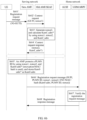
- a method for performing verification by using a shared key including: receiving, by a first network element, a registration request message from a second network element, where the registration request message includes a user identifier, first network identifier information, and second network identifier information, the second network identifier information is obtained by processing the first network identifier information by using a shared key, the shared key is a key used between the first network element and the second network element, the first network element is a data management network element or a first security edge protection proxy, and the second network element is a mobility management network element or a second security edge protection proxy; verifying, by the first network element, the registration request message by using the shared key; and sending, by the first network element, a registration response message to the second network element.
- a home network verifies the registration request message by using a shared key, to avoid a spoofing attack from the visited network.
- the verifying, by the first network element, the registration request message by using the shared key includes: obtaining, by the first network element, third network identifier information based on the first network identifier information by using the shared key; and verifying, by the first network element, the second network identifier information by using the third network identifier information.
- a ciphertext-based verification manner is provided.
- the verifying, by the first network element, the second network identifier information by using the third network identifier information includes: verifying, by the first network element, whether the third network identifier information is consistent with the second network identifier information.
- the processing the first network identifier information by using a shared key includes: encrypting the first network identifier information by using the shared key, or encrypting the first network identifier information and a random number by using the shared key.
- the verifying, by the first network element, the registration request message by using the shared key includes: obtaining, by the first network element, fourth network identifier information based on the second network identifier information by using the shared key; and verifying, by the first network element, the first network identifier information by using the fourth network identifier information.
- a plaintext-based verification manner is provided.
- the verifying, by the first network element, the first network identifier information by using the fourth network identifier information includes: verifying, by the first network element, whether the fourth network identifier information is consistent with the first network identifier information.
- the registration response message is a registration success response message or a registration failure response message
- the sending, by the first network element, a registration response message to the second network element includes: if the verification succeeds, sending, by the first network element, the registration success response message to the second network element; or if the verification fails, sending, by the first network element, the registration failure response message to the second network element.
- that the verification succeeds includes: the third network identifier information is consistent with the second network identifier information, or the fourth network identifier information is consistent with the first network identifier information; or that the verification fails includes: the third network identifier information is inconsistent with the second network identifier information, or the fourth network identifier information is inconsistent with the first network identifier information.
- the method before the verifying, by the first network element, the registration request message by using the shared key, the method further includes: searching for, by the first network element based on a correspondence between a shared key and at least one of a user identifier and network identifier information, the shared key corresponding to at least one of the user identifier and the first network identifier information that are included in the registration request message.
- a first network element has a function of implementing behavior of the first network element in the foregoing method.
- the function may be implemented by using hardware, or may be implemented by executing corresponding software by hardware.
- the hardware or the software includes one or more modules corresponding to the function.
- the first network element includes: a communications unit, configured to receive a registration request message from a second network element, where the registration request message includes a user identifier, first network identifier information, and second network identifier information, the second network identifier information is obtained by processing the first network identifier information by using a shared key, the shared key is a key used between the first network element and the second network element, the first network element is a data management network element or a first security edge protection proxy, and the second network element is a mobility management network element or a second security edge protection proxy; and a processing unit, configured to verify the registration request message by using the shared key.
- the communications unit is further configured to send a registration response message to the second network element.
- the first network element includes a communications interface, a memory, and a processor.
- the memory stores a group of program code
- the processor is configured to invoke the program code stored in the memory, to perform the following operations: receiving a registration request message from a second network element through the communications interface, where the registration request message includes a user identifier, first network identifier information, and second network identifier information, the second network identifier information is obtained by processing the first network identifier information by using a shared key, the shared key is a key used between the first network element and the second network element, the first network element is a data management network element or a first security edge protection proxy, and the second network element is a mobility management network element or a second security edge protection proxy; verifying the registration request message by using the shared key; and controlling the communications interface to send a registration response message to the second network element.
- another method for performing verification by using a shared key including: processing, by a first network element, first network identifier information by using a shared key, to obtain second network identifier information; sending, by the first network element, a deregistration message to a second network element, where the deregistration message includes the first network identifier information and the second network identifier information, the first network element is a data management network element or a first security edge protection proxy, and the second network element is a mobility management network element or a second security edge protection proxy; and receiving, by the first network element, a deregistration response message from the second network element.
- a visited network verifies the deregistration message by using a shared key, to avoid a spoofing attack from the home network.
- the processing first network identifier information by using a shared key includes any one type of the following processing: encrypting the first network identifier information by using the shared key, encrypting the first network identifier information and a random number by using the shared key, performing a message authentication code operation on the first network identifier information and the shared key, performing a message authentication code operation on the first network identifier information, a random number, and the shared key, performing a hash operation on the first network identifier information and the shared key, and performing a hash operation on the first network identifier information, a random number, and the shared key.
- a plurality of manners of processing network identifier information by using the shared key are provided. If the first network element does not have the shared key or processes the network identifier information by using an incorrect shared key, the verification performed by the second network element on the deregistration message does not succeed.
- the deregistration response message is a deregistration success response message or a deregistration failure response message.
- a first network element has a function of implementing behavior of the first network element in the foregoing method.
- the function may be implemented by using hardware, or may be implemented by executing corresponding software by hardware.
- the hardware or the software includes one or more modules corresponding to the function.
- the first network element includes: a processing unit, configured to process first network identifier information by using a shared key, to obtain second network identifier information; and a communications unit, configured to send a deregistration message to a second network element, where the deregistration message includes the first network identifier information and the second network identifier information, the first network element is a data management network element or a first security edge protection proxy, and the second network element is a mobility management network element or a second security edge protection proxy.
- the communications unit is further configured to receive a deregistration response message from the second network element.
- the first network element includes a communications interface, a memory, and a processor.
- the memory stores a group of program code
- the processor is configured to invoke the program code stored in the memory, to perform the following operations: processing first network identifier information by using a shared key, to obtain second network identifier information; controlling the communications interface to send a deregistration message to a second network element, where the deregistration message includes the first network identifier information and the second network identifier information, the first network element is a data management network element or a first security edge protection proxy, and the second network element is a mobility management network element or a second security edge protection proxy; and receiving a deregistration response message from the second network element through the communications interface.
- the method further includes: receiving, by the first network element, the shared key from an authentication server network element; or if the first network element is a first security edge protection proxy, the method further includes: receiving, by the first network element, the shared key from an authentication server network element or a data management network element.
- the shared key may be generated by an AUSF, and the AUSF transfers the shared key to a UDM or the first security edge protection proxy.
- the first network element is a data management network element
- the receiving, by the first network element, the shared key from an authentication server network element includes: receiving, by the first network element, an authentication confirmation notification response message from the authentication server network element, where the authentication confirmation notification response message includes the shared key, and the shared key is generated by the authentication server network element, or the shared key is generated and sent to the authentication server network element by a security anchor network element, or the shared key is generated and sent to the authentication server network element by the second network element, and the second network element is the mobility management network element.
- the method further includes: receiving, by the first network element, an authentication information request from the authentication server network element, where the authentication information request includes at least one of a user identifier and the first network identifier information; and sending, by the first network element, an authentication vector to the authentication server network element; and the receiving, by the first network element, the shared key from an authentication server network element includes: receiving, by the first network element, an authentication confirmation notification response message from the authentication server network element, where the authentication confirmation notification response message includes the shared key, and the shared key is determined by the authentication server network element based on the authentication vector.
- the method further includes: receiving, by the first network element, an authentication information request from the authentication server network element, where the authentication information request includes at least one of the user identifier and the first network identifier information; and sending, by the first network element, an authentication vector to the authentication server network element, so that the authentication server network element sends the authentication vector to a security anchor network element; and the receiving, by the first network element, the shared key from an authentication server network element includes: receiving, by the first network element, an authentication confirmation notification response message from the authentication server network element, where the authentication confirmation notification response message includes the shared key, and the shared key is determined by the security anchor network element based on the authentication vector and sent by the security anchor network element to the authentication server network element.
- an SEAF generates the shared key, and transfers the shared key to a UDM by using an AUSF.
- the method further includes: receiving, by the first network element, an authentication information request from the authentication server network element, where the authentication information request includes at least one of the user identifier and the first network identifier information; and sending, by the first network element, an authentication vector to the authentication server network element, so that the authentication server network element sends the authentication vector to the second network element; and the receiving, by the first network element, the shared key from an authentication server network element includes: receiving, by the first network element, an authentication confirmation notification response message from the authentication server network element, where the authentication confirmation notification response message includes the shared key, and the shared key is determined by the second network element based on the authentication vector and sent by the second network element to the authentication server network element.
- an AMF generates the shared key, and transfers the shared key to a UDM by using an AUSF.
- the authentication confirmation notification response message further includes an authentication result obtained by the authentication server network element by performing authentication on a terminal device.
- the first network identifier information is carried in a public land mobile network identifier parameter or a mobility management network element identifier parameter.
- still another method for performing verification by using a shared key including: processing, by a second network element, first network identifier information by using a first shared key, to obtain second network identifier information, where the first shared key is a key used between a first network element and the second network element, the first network element is a data management network element or a first security edge protection proxy, and the second network element is a first mobility management network element or a second security edge protection proxy; sending, by the second network element, a registration request message to the first network element, where the registration request message includes a user identifier, the first network identifier information, and the second network identifier information; and receiving, by the second network element, a registration response message from the first network element.
- a visited network processes network identifier information in a registration request message by using a shared key.
- a home network verifies the registration request message by using the shared key, to avoid a spoofing attack from the visited network.
- the processing, by a second network element, first network identifier information by using a first shared key includes: encrypting, by the second network element, the first network identifier information by using the shared key; or encrypting, by the second network element, the first network identifier information and a first random number by using the first shared key; or performing, by the second network element, a message authentication code operation on the first network identifier information and the first shared key; or performing, by the second network element, a message authentication code operation on the first network identifier information, a first random number, and the first shared key; or performing, by the second network element, a hash operation on the first network identifier information and the first shared key; or performing, by the second network element, a hash operation on the first network identifier information, a first random number, and the first shared key.
- the method further includes: receiving, by the second network element, the first shared key from a second mobility management network element.
- the method further includes: sending, by the second network element, a context obtaining request to the second mobility management network element; and the receiving, by the second network element, the first shared key from a second mobility management network element includes: receiving, by the second network element, a context obtaining response from the second mobility management network element, where the context obtaining response includes the first shared key.
- the first shared key is generated based on a second shared key and at least one of a second random number and a third random number
- the second shared key is a key used between the second mobility management network element and the first network element
- the second random number is carried in the context obtaining request
- the third random number is generated by the second mobility management network element.
- a second network element has a function of implementing behavior of the second network element in the foregoing method.
- the function may be implemented by using hardware, or may be implemented by executing corresponding software by hardware.
- the hardware or the software includes one or more modules corresponding to the function.
- the second network element includes: a processing unit, configured to process first network identifier information by using a first shared key, to obtain second network identifier information, where the first shared key is a key used between a first network element and the second network element, the first network element is a data management network element or a first security edge protection proxy, and the second network element is a first mobility management network element or a second security edge protection proxy; and a communications unit, configured to send a registration request message to the first network element, where the registration request message includes a user identifier, the first network identifier information, and the second network identifier information.
- the communications unit is further configured to receive a registration response message from the first network element.
- the second network element includes a communications interface, a memory, and a processor.
- the memory stores a group of program code
- the processor is configured to invoke the program code stored in the memory, to perform the following operations: processing first network identifier information by using a first shared key, to obtain second network identifier information, where the first shared key is a key used between a first network element and the second network element, the first network element is a data management network element or a first security edge protection proxy, and the second network element is a first mobility management network element or a second security edge protection proxy; controlling the communications interface to send a registration request message to the first network element, where the registration request message includes a user identifier, the first network identifier information, and the second network identifier information; and receiving a registration response message from the first network element through the communications interface.
- still another method for performing verification by using a shared key includes: receiving, by a second network element, a deregistration message from a first network element, where the deregistration message includes first network identifier information and second network identifier information, the second network identifier information is obtained by processing the first network identifier information by using a shared key, the shared key is a key used between the first network element and the second network element, the first network element is a data management network element or a first security edge protection proxy, and the second network element is a mobility management network element or a second security edge protection proxy; verifying, by the second network element, the deregistration message by using the shared key; and sending, by the second network element, a deregistration response message to the first network element.
- a network element in a home network processes network identifier information in a deregistration message by using a shared key.
- a visited network verifies the deregistration message by using the shared key, to avoid a spoofing attack from the home network.
- the processing the first network identifier information by using a shared key includes any one type of the following processing: performing a message authentication code operation on the first network identifier information and the shared key, performing a message authentication code operation on the first network identifier information, a random number, and the shared key, performing a hash operation on the first network identifier information and the shared key, and performing a hash operation on the first network identifier information, a random number, and the shared key.
- the verifying, by the second network element, the deregistration message by using the shared key includes: obtaining, by the second network element, third network identifier information based on the first network identifier information by using the shared key; and verifying, by the second network element, the second network identifier information by using the third network identifier information.
- the verifying, by the second network element, the second network identifier information by using the third network identifier information includes: verifying, by the second network element, whether the third network identifier information is consistent with the second network identifier information.
- the processing the first network identifier information by using a shared key includes: encrypting the first network identifier information by using the shared key, or encrypting the first network identifier information and a random number by using the shared key.
- the verifying, by the second network element, the deregistration message by using the shared key includes: obtaining, by the second network element, fourth network identifier information based on the second network identifier information by using the shared key; and verifying, by the second network element, the first network identifier information by using the fourth network identifier information.
- the verifying, by the second network element, the first network identifier information by using the fourth network identifier information includes: verifying, by the second network element, whether the fourth network identifier information is consistent with the first network identifier information.
- the deregistration response message is a deregistration success response message or a deregistration failure response message
- the sending, by the second network element, a deregistration response message to the first network element includes: if the verification succeeds, sending, by the second network element, the deregistration success response message to the first network element; or if the verification fails, sending, by the second network element, the deregistration failure response message to the first network element.
- that the verification succeeds includes: the third network identifier information is consistent with the second network identifier information, or the fourth network identifier information is consistent with the first network identifier information; or that the verification fails includes: the third network identifier information is inconsistent with the second network identifier information, or the fourth network identifier information is inconsistent with the first network identifier information.
- the method before the verifying, by the second network element, the deregistration message by using the shared key, the method further includes: searching for, by the second network element based on a stored correspondence between a shared key and at least one of a user identifier and network identifier information, the shared key corresponding to at least one of a user identifier and the first network identifier information that are included in the deregistration message.
- the method further includes: generating, by the second network element, the shared key, and sending the shared key to an authentication server network element, so that the authentication server network element sends the shared key to the first network element; or the method further includes: receiving, by the second network element, the shared key from a security anchor network element or an authentication server network element.
- the method further includes: sending, by the second network element, an authentication initiation request to the authentication server network element, where the authentication initiation request includes at least one of the user identifier and the first network identifier information; receiving, by the second network element, an authentication vector from the authentication server network element; and generating, by the second network element, the shared key based on the authentication vector; and the sending, by the second network element, the shared key to an authentication server network element includes: sending, by the second network element, an authentication confirmation message to the authentication server network element, where the authentication confirmation message includes the shared key.
- the method further includes: receiving, by the second network element, the shared key from a mobility management network element, a security anchor network element, or an authentication server network element.
- a second network element has a function of implementing behavior of the second network element in the foregoing method.
- the function may be implemented by using hardware, or may be implemented by executing corresponding software by hardware.
- the hardware or the software includes one or more modules corresponding to the function.
- the second network element includes: a communications unit, configured to receive a deregistration message from a first network element, where the deregistration message includes first network identifier information and second network identifier information, the second network identifier information is obtained by processing the first network identifier information by using a shared key, the shared key is a key used between the first network element and the second network element, the first network element is a data management network element or a first security edge protection proxy, and the second network element is a mobility management network element or a second security edge protection proxy; and a processing unit, configured to verify the deregistration message by using the shared key.
- the communications unit is further configured to send a deregistration response message to the first network element.
- the second network element includes a communications interface, a memory, and a processor.
- the memory stores a group of program code
- the processor is configured to invoke the program code stored in the memory, to perform the following operations: receiving a deregistration message from a first network element through the communications interface, where the deregistration message includes first network identifier information and second network identifier information, the second network identifier information is obtained by processing the first network identifier information by using a shared key, the shared key is a key used between the first network element and the second network element, the first network element is a data management network element or a first security edge protection proxy, and the second network element is a mobility management network element or a second security edge protection proxy; verifying the deregistration message by using the shared key; and controlling the communications interface to send a deregistration response message to the first network element.
- a method for performing verification by using a public key and a private key including: receiving, by a first network element, a request message from a second network element, where the request message includes first network identifier information and second network identifier information, the second network identifier information is obtained based on the first network identifier information by using a private key, the first network element is a data management network element or a first security edge protection proxy, and the second network element is a mobility management network element or a second security edge protection proxy; verifying, by the first network element, the second network identifier information by using a public key corresponding to the private key; and sending, by the first network element, a response message to the second network element.
- a home network when a home network receives a request message sent by a visited network, where network identifier information in the request message is signed by a network element in the visited network by using a private key, a network element in the home network verifies the network identifier information in the request message by using a preset public key corresponding to the private key, to protect the network from an attack from the visited network.
- the method further includes: searching for, by the first network element, the public key based on the first network identifier information.
- the second network identifier information is obtained by signing the first network identifier information and at least one of a random number and a session identifier by using the private key.
- the method further includes: receiving, by the first network element, a registration request message from the second network element; and sending, by the first network element, a registration response message to the second network element, where the registration response message includes the random number.
- a first network element has a function of implementing behavior of the first network element in the foregoing method.
- the function may be implemented by using hardware, or may be implemented by executing corresponding software by hardware.
- the hardware or the software includes one or more modules corresponding to the function.
- the first network element includes: a communications unit, configured to receive a request message from a second network element, where the request message includes first network identifier information and second network identifier information, the second network identifier information is obtained based on the first network identifier information by using a private key, the first network element is a data management network element or a first security edge protection proxy, and the second network element is a mobility management network element or a second security edge protection proxy; and a processing unit, configured to verify the second network identifier information by using a public key corresponding to the private key.
- the communications unit is further configured to send a response message to the second network element.
- the first network element includes a communications interface, a memory, and a processor.
- the memory stores a group of program code
- the processor is configured to invoke the program code stored in the memory, to perform the following operations: receiving a request message from a second network element through the communications interface, where the request message includes first network identifier information and second network identifier information, the second network identifier information is obtained based on the first network identifier information by using a private key, the first network element is a data management network element or a first security edge protection proxy, and the second network element is a mobility management network element or a second security edge protection proxy; verifying the second network identifier information by using a public key corresponding to the private key; and controlling the communications interface to send a response message to the second network element.
- the second network identifier information is obtained based on the first network identifier information by using the private key includes one of the following cases:
- the "other content” may be at least one of the following: a public key preset in the first network element, a public key in a private-public key pair generated by the first network element, and another parameter that is generated by the first network element and that participates in subsequent key calculation.
- a method for performing verification by using a public key and a private key including: obtaining, by a first network element, second network identifier information based on first network identifier information by using a private key, where the first network element is a data management network element or a first security edge protection proxy; sending, by the first network element, a deregistration message to a second network element, where the deregistration message includes the second network identifier information, so that the second network element verifies the second network identifier information by using a public key corresponding to the private key, and the second network element is a mobility management network element or a second security edge protection proxy; and receiving, by the first network element, a deregistration response message from the second network element.
- a network element in the visited network verifies the network identifier information in the deregistration message by using a preset public key corresponding to the private key, to protect the network from an attack from the home network.
- the obtaining, by a first network element, second network identifier information based on first network identifier information by using a private key includes: obtaining, by the first network element, the second network identifier information by signing the first network identifier information and at least one of a random number and a session identifier by using the private key.
- the first network element includes: a processing unit, configured to obtain second network identifier information based on first network identifier information by using a private key, where the first network element is a data management network element or a first security edge protection proxy; and a communications unit, configured to send a deregistration message to a second network element, where the deregistration message includes the second network identifier information, so that the second network element verifies the second network identifier information by using a public key corresponding to the private key, and the second network element is a mobility management network element or a second security edge protection proxy.
- the communications unit is further configured to receive a deregistration response message from the second network element.
- the first network element includes a communications interface, a memory, and a processor.
- the memory stores a group of program code
- the processor is configured to invoke the program code stored in the memory, to perform the following operations: obtaining second network identifier information based on first network identifier information by using a private key, where the first network element is a data management network element or a first security edge protection proxy; sending a deregistration message to a second network element through the communications interface, where the deregistration message includes the second network identifier information, so that the second network element verifies the second network identifier information by using a public key corresponding to the private key, and the second network element is a mobility management network element or a second security edge protection proxy; and receiving a deregistration response message from the second network element through the communications interface.
- the second network identifier information is obtained based on the first network identifier information by using the private key includes one of the following cases:
- the "other content” may be at least one of the following: a public key preset in the first network element, a public key in a private-public key pair generated by the first network element, and another parameter that is generated by the first network element and that participates in subsequent key calculation.
- a method for performing verification by using a public key and a private key including: obtaining, by a second network element, second network identifier information based on first network identifier information by using a private key, where the second network element is a mobility management network element or a second security edge protection proxy; sending, by the second network element, a request message to a first network element, where the request message includes the first network identifier information and the second network identifier information, so that the first network element verifies the second network identifier information by using a public key corresponding to the private key, and the first network element is a data management network element or a first security edge protection proxy; and receiving, by the second network element, a response message from the first network element.
- a home network when a home network receives a request message sent by a visited network, where network identifier information in the request message is signed by a network element in the visited network by using a private key, a network element in the home network verifies the network identifier information in the request message by using a preset public key corresponding to the private key, to protect the network from an attack from the visited network.
- the obtaining, by a second network element, second network identifier information based on first network identifier information by using a private key includes: obtaining, by the second network element, the second network identifier information by signing the first network identifier information and at least one of a random number and a session identifier by using the private key.
- the method further includes: sending, by the second network element, a registration request message to the first network element; and receiving, by the second network element, a registration response message from the first network element, where the registration response message includes the random number.
- a second network element has a function of implementing behavior of the second network element in the foregoing method.
- the function may be implemented by using hardware, or may be implemented by executing corresponding software by hardware.
- the hardware or the software includes one or more modules corresponding to the function.
- the second network element includes: a processing unit, configured to obtain second network identifier information based on first network identifier information by using a private key, where the second network element is a mobility management network element or a second security edge protection proxy; and a communications unit, configured to send a request message to a first network element, where the request message includes the first network identifier information and the second network identifier information, so that the first network element verifies the second network identifier information by using a public key corresponding to the private key, and the first network element is a data management network element or a first security edge protection proxy.
- the communications unit is further configured to receive a response message from the first network element.
- the second network element includes a communications interface, a memory, and a processor.
- the memory stores a group of program code
- the processor is configured to invoke the program code stored in the memory, to perform the following operations: obtaining second network identifier information based on first network identifier information by using a private key, where the second network element is a mobility management network element or a second security edge protection proxy; sending a request message to a first network element through the communications interface, where the request message includes the first network identifier information and the second network identifier information, so that the first network element verifies the second network identifier information by using a public key corresponding to the private key, and the first network element is a data management network element or a first security edge protection proxy; and receiving a response message from the first network element through the communications interface.
- the second network identifier information is obtained based on the first network identifier information by using the private key includes one of the following cases:
- the "other content” may be at least one of the following: a public key preset in the first network element, a public key in a private-public key pair generated by the first network element, and another parameter that is generated by the first network element and that participates in subsequent key calculation.
- a method for performing verification by using a public key and a private key including: receiving, by a second network element, a deregistration message from a first network element, where the deregistration message includes second network identifier information, the second network identifier information is obtained based on first network identifier information by using a private key, the first network element is a data management network element or a first security edge protection proxy, and the second network element is a mobility management network element or a second security edge protection proxy; verifying, by the second network element, the second network identifier information by using a public key corresponding to the private key; and sending, by the second network element, a deregistration response message to the first network element based on a verification result of the second network identifier information.
- a network element in the visited network verifies the network identifier information in the deregistration message by using a preset public key corresponding to the private key, to protect the network from an attack from the home network.
- a second network element has a function of implementing behavior of the second network element in the foregoing method.
- the function may be implemented by using hardware, or may be implemented by executing corresponding software by hardware.
- the hardware or the software includes one or more modules corresponding to the function.
- the second network element includes: a communications unit, configured to receive a deregistration message from a first network element, where the deregistration message includes second network identifier information, the second network identifier information is obtained based on first network identifier information by using a private key, the first network element is a data management network element or a first security edge protection proxy, and the second network element is a mobility management network element or a second security edge protection proxy; and a processing unit, configured to verify the second network identifier information by using a public key corresponding to the private key.
- the communications unit is further configured to send a deregistration response message to the first network element based on a verification result of the second network identifier information.
- the second network element includes a communications interface, a memory, and a processor.
- the memory stores a group of program code
- the processor is configured to invoke the program code stored in the memory, to perform the following operations: receiving a deregistration message from a first network element through the communications interface, where the deregistration message includes second network identifier information, the second network identifier information is obtained based on first network identifier information by using a private key, the first network element is a data management network element or a first security edge protection proxy, and the second network element is a mobility management network element or a second security edge protection proxy; verifying the second network identifier information by using a public key corresponding to the private key; and sending, through the communications interface, a deregistration response message to the first network element based on a verification result of the second network identifier information.
- the second network identifier information is obtained based on the first network identifier information by using the private key includes one of the following cases:
- the "other content” may be at least one of the following: a public key preset in the first network element, a public key in a private-public key pair generated by the first network element, and another parameter that is generated by the first network element and that participates in subsequent key calculation.
- a method for performing verification by using encryption information including: receiving, by a first network element, a registration request message from a second network element, where the registration request message includes a user identifier, first network identifier information, and encryption information, the encryption information is information obtained by encrypting, signing, performing MAC processing on, or performing hash processing on the first network identifier information, or the encryption information is random information, the first network element is a data management network element or a first security edge protection proxy, and the second network element is a mobility management network element or a second security edge protection proxy; verifying, by the first network element, the registration request message by using the encryption information; and sending, by the first network element, a registration response message to the second network element.
- a home network verifies the registration request message by using encryption information, to avoid a spoofing attack from the visited network.
- a first network element has a function of implementing behavior of the first network element in the foregoing method.
- the function may be implemented by using hardware, or may be implemented by executing corresponding software by hardware.
- the hardware or the software includes one or more modules corresponding to the function.
- the first network element includes: a communications unit, configured to receive a registration request message from a second network element, where the registration request message includes a user identifier, first network identifier information, and encryption information, the encryption information is information obtained by encrypting, signing, performing MAC processing on, or performing hash processing on the first network identifier information, or the encryption information is random information, the first network element is a data management network element or a first security edge protection proxy, and the second network element is a mobility management network element or a second security edge protection proxy; and a processing unit, configured to verify the registration request message by using the encryption information.
- the communications unit is further configured to send a registration response message to the second network element.
- the first network element includes a communications interface, a memory, and a processor.
- the memory stores a group of program code
- the processor is configured to invoke the program code stored in the memory, to perform the following operations: receiving a registration request message from a second network element through the communications interface, where the registration request message includes a user identifier, first network identifier information, and encryption information, the encryption information is information obtained by encrypting, signing, performing MAC processing on, or performing hash processing on the first network identifier information, or the encryption information is random information
- the first network element is a data management network element or a first security edge protection proxy
- the second network element is a mobility management network element or a second security edge protection proxy
- verifying the registration request message by using the encryption information and controlling the communications interface to send a registration response message to the second network element.
- another method for performing verification by using encryption information including: obtaining, by a first network element, encryption information by encrypting, signing, performing MAC processing on, or performing hash processing on first network identifier information, or generating, by a first network element, random information as encryption information; sending, by the first network element, a deregistration message to a second network element, where the deregistration message includes the first network identifier information and the encryption information, the first network element is a data management network element or a first security edge protection proxy, and the second network element is a mobility management network element or a second security edge protection proxy; and receiving, by the first network element, a deregistration response message from the second network element.
- a home network when sending a deregistration message to a visited network, adds encryption information into the deregistration message, so that the visited network can verify the deregistration message by using the encryption information, to avoid a spoofing attack from the home network.
- a first network element has a function of implementing behavior of the first network element in the foregoing method.
- the function may be implemented by using hardware, or may be implemented by executing corresponding software by hardware.
- the hardware or the software includes one or more modules corresponding to the function.
- the first network element includes: a processing unit, configured to: obtain encryption information by encrypting, signing, performing MAC processing on, or performing hash processing on first network identifier information, or generate random information as encryption information; and a communications unit, configured to send deregistration message to a second network element, where the deregistration message includes the first network identifier information and the encryption information, the first network element is a data management network element or a first security edge protection proxy, and the second network element is a mobility management network element or a second security edge protection proxy.
- the communications unit is further configured to receive a deregistration response message from the second network element.
- the first network element includes a communications interface, a memory, and a processor.
- the memory stores a group of program code
- the processor is configured to invoke the program code stored in the memory, to perform the following operations: obtaining encryption information by encrypting, signing, performing MAC processing on, or performing hash processing on first network identifier information, or generating random information as encryption information; controlling the communications interface to send deregistration message to a second network element, where the deregistration message includes the first network identifier information and the encryption information, the first network element is a data management network element or a first security edge protection proxy, and the second network element is a mobility management network element or a second security edge protection proxy; and receiving a deregistration response message from the second network element through the communications interface.
- still another method for performing verification by using encryption information including: obtaining, by a second network element, encryption information by encrypting, signing, performing MAC processing on, or performing hash processing on first network identifier information, or generating, by a second network element, random information as encryption information; sending, by the second network element, a registration request message to a first network element, where the registration request message includes the first network identifier information and the encryption information, the first network element is a data management network element or a first security edge protection proxy, and the second network element is a first mobility management network element or a second security edge protection proxy; and receiving, by the second network element, a registration response message from the first network element.
- a visited network when sending a registration request message to a home network, adds encryption information into the registration request message, so that the home network can verify the registration request message by using the encryption information, to avoid a spoofing attack from the visited network.
- a second network element has a function of implementing behavior of the second network element in the foregoing method.
- the function may be implemented by using hardware, or may be implemented by executing corresponding software by hardware.
- the hardware or the software includes one or more modules corresponding to the function.
- the second network element includes: a processing unit, configured to: obtain encryption information by encrypting, signing, performing MAC processing on, or performing hash processing on first network identifier information, or generate random information as encryption information; and a communications unit, configured to send a registration request message to a first network element, where the registration request message includes the first network identifier information and the encryption information, the first network element is a data management network element or a first security edge protection proxy, and the second network element is a first mobility management network element or a second security edge protection proxy.
- the communications unit is further configured to receive a registration response message from the first network element.
- the second network element includes a communications interface, a memory, and a processor.
- the memory stores a group of program code
- the processor is configured to invoke the program code stored in the memory, to perform the following operations: obtaining encryption information by encrypting, signing, performing MAC processing on, or performing hash processing on first network identifier information, or generating random information as encryption information; controlling the communications interface to send a registration request message to a first network element, where the registration request message includes the first network identifier information and the encryption information, the first network element is a data management network element or a first security edge protection proxy, and the second network element is a first mobility management network element or a second security edge protection proxy; and receiving a registration response message from the first network element through the communications interface.
- still another method for performing verification by using encryption information including: receiving, by a second network element, a deregistration message from a first network element, where the deregistration message includes first network identifier information and encryption information, the encryption information is information obtained by encrypting, signing, performing MAC processing on, or performing hash processing on the first network identifier information, or the encryption information is random information, the first network element is a data management network element or a first security edge protection proxy, and the second network element is a mobility management network element or a second security edge protection proxy; verifying, by the second network element, the deregistration message by using the encryption information; and sending, by the second network element, a deregistration response message to the first network element.
- a visited network verifies the deregistration message by using encryption information, to avoid a spoofing attack from the home network.
- a second network element has a function of implementing behavior of the second network element in the foregoing method.
- the function may be implemented by using hardware, or may be implemented by executing corresponding software by hardware.
- the hardware or the software includes one or more modules corresponding to the function.
- the second network element includes: a communications unit, configured to receive a deregistration message from a first network element, where the deregistration message includes first network identifier information and encryption information, the encryption information is information obtained by encrypting, signing, performing MAC processing on, or performing hash processing on the first network identifier information, or the encryption information is random information, the first network element is a data management network element or a first security edge protection proxy, and the second network element is a mobility management network element or a second security edge protection proxy; and a processing unit, configured to verify the deregistration message by using the encryption information.
- the communications unit is further configured to send a deregistration response message to the first network element.
- the second network element includes a communications interface, a memory, and a processor.
- the memory stores a group of program code
- the processor is configured to invoke the program code stored in the memory, to perform the following operations: receiving a deregistration message from a first network element through the communications interface, where the deregistration message includes first network identifier information and encryption information, the encryption information is information obtained by encrypting, signing, performing MAC processing on, or performing hash processing on the first network identifier information, or the encryption information is random information
- the first network element is a data management network element or a first security edge protection proxy
- the second network element is a mobility management network element or a second security edge protection proxy
- verifying the deregistration message by using the encryption information and controlling the communications interface to send a deregistration response message to the first network element.
- a computer readable storage medium stores an instruction.
- the instruction When the instruction is run on a computer, the computer is enabled to perform the methods in the foregoing aspects.
- a computer program product including an instruction is provided.
- the computer program product is run on a computer, the computer is enabled to perform the methods in the foregoing aspects.
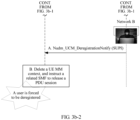
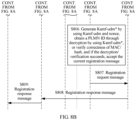
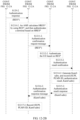
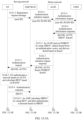
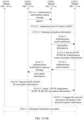
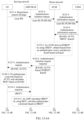
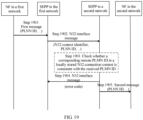
- the UE When the UE roams to a serving network, the UE registers with a visited network. As shown in FIG. 3a-1 and FIG. 3a-2 or FIG. 3b-1 and FIG. 3b-2 , the authentication procedure and the registration procedure of the UE are as follows:
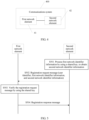
- FIG. 4 is a schematic structural diagram of a communications system 400 according to an embodiment of this application.
- the communications system 400 may include a first network element 41 and a second network element 42.
- the first network element 41 is a network element in a visited network
- the second network element 42 is a network element in a home network.
- the communications system 400 may further include a terminal device (not shown).
- the first network element 41 may be an access and mobility management network element or a security edge proxy gateway in the visited network.
- the second network element 42 may be a unified data management network element or a security edge proxy gateway in the home network.
- the access and mobility management network element and the unified data management network element each are only a name, and the name imposes no limitation on the network element.
- the access and mobility management network element may be replaced with an "access and mobility management function" or have another name.
- the access and mobility management network element may also be corresponding to a network element that includes another function in addition to the access and mobility management function.
- the unified data management network element may be replaced with a "unified data management function" or have another name.
- the unified data management network element may also be corresponding to a network element that includes another function in addition to the unified data management function. Descriptions are centrally provided herein, and details are not described below again.
- a home network when receiving a registration request message from a visited network, a home network verifies the registration request message by using a shared key, to avoid a spoofing attack from the visited network and avoid a spoofing attack from a network.
- the visited network verifies the deregistration message by using a shared key, to avoid a spoofing attack from the home network.
- the communications system may include an AMF and a UDM.
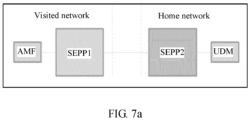
- the communications system includes an AMF and a UDM, and further includes a security edge protection proxy hSEPP in a home network and a security edge protection proxy vSEPP in a visited network.
- the first network element 41 in FIG. 4 is an access and mobility management network element
- the first network element 41 may be an AMF herein.
- the first network element 41 in FIG. 4 is a security edge proxy gateway
- the first network element 41 may be a security anchor function (security anchor function, SEAF) entity herein.
- SEAF security anchor function
- the AMF is mainly responsible for access management of a terminal device.
- the UDM is responsible for centrally managing subscription data of the terminal device.
- the AMF and the SEAF may be separately disposed, and in this case, communication between the AMF and the home network needs to be forwarded by the SEAF, or the AMF and the SEAF may be integrated.
- the ARPF may be a function entity that is a part of the UDM.
- the communications system may further include an access network (access network, AN) device or a radio access network (radio access network, RAN) device (radio), an AUSF, and the like.
- FIG. 1a and FIG. 1b another function entity may be further included, and only several function entities in this application are mainly described herein.
- the entities are connected to each other through an Nx interface (for example, N1 or N2 in the figure).
- Nx interface for example, N1 or N2 in the figure.
- the access and mobility management function entity and the unified data management function entity each are only a name, and the name imposes no limitation on the entity.
- the access and mobility management function entity may be replaced with an "access and mobility management function" or have another name.
- the access and mobility management function entity may also be corresponding to an entity that includes another function in addition to the access and mobility management function.
- the unified data management function entity may be replaced with a "unified data management function" or have another name.
- the unified data management function entity may also be corresponding to an entity that includes another function in addition to the unified data management function. Descriptions are centrally provided herein, and details are not described below again.
- any function entity or network element in the system shown in FIG 1a, FIG. 1b , or FIG. 4 may be implemented by one entity device, or may be jointly implemented by a plurality of entity devices. This is not specifically limited in the embodiments of the present invention.
- the any function entity or network element in the system may be a logical function module in an entity device or a logical function module including a plurality of entity devices. This is not specifically limited in the embodiments of the present invention.
- the terminal device shown in FIG. 1a, FIG. 1b , or FIG. 4 is a device with a wireless receiving/sending function.
- the terminal device may be deployed on land, and includes an indoor device, an outdoor device, a hand-held device, a wearable device, or a vehicle-mounted device; or may be deployed on the water (for example, on a ship); or may be deployed in the air (for example, on an airplane, a balloon, or a satellite).
- the terminal device may be a mobile phone (mobile phone), a tablet computer (Pad), a computer with a wireless receiving/sending function, a virtual reality (virtual reality, VR) terminal device, an augmented reality (augmented reality, AR) terminal device, a wireless terminal in industrial control (industrial control), a wireless terminal in self driving (self driving), a wireless terminal in telemedicine (remote medical), a wireless terminal in a smart grid (smart grid), a wireless terminal in transportation safety (transportation safety), a wireless terminal in a smart city (smart city), a wireless terminal in a smart home (smart home), or the like.
- An application scenario is not limited in the embodiments of this application.
- the terminal device may be sometimes referred to as user equipment (user equipment, UE), an access terminal device, a UE unit, a UE station, a mobile station a remote station, a remote terminal device, a mobile device, a UE terminal device, a terminal (terminal), a wireless communications device, a UE agent, a UE apparatus, or the like.
- UE user equipment
- UE unit user equipment
- UE station mobile station
- a remote station a remote terminal device
- a mobile device a UE terminal device
- terminal terminal
- Network architectures and service scenarios that are described in the embodiments of this application are intended to more clearly describe the technical solutions in the embodiments of this application, but are not intended to limit the technical solutions provided in the embodiments of this application.
- a person of ordinary skill in the art may know that as the network architectures evolve and a new service scenario emerges, the technical solutions provided in the embodiments of this application are also applicable to a similar technical problem.
- system and “network” may be used interchangeably in the embodiments of this application.
- a plurality of means two or more than two, and therefore, “a plurality of” may also be understood as “at least two” in the embodiments of this application.
- the term “and/or” describes an association relationship for describing associated objects and represents that three relationships may exist. For example, A and/or B may represent the following three cases: Only A exists, both A and B exist, and only B exists.
- the character “/” generally indicates an “or” relationship between the associated objects unless otherwise specified.
- first and second are used in the embodiments of this application to distinguish between same items or similar items with basically same functions and purposes.
- a person skilled in the art may understand that the terms such as “first” and “second” do not limit a quantity or an execution sequence, and the terms such as “first” and “second” do not mean that objects are definitely different.
- FIG. 3a-1 and FIG. 3a-2 are a schematic diagram of a spoofing attack from an AMF in a serving network.
- a malicious AMF in a serving network B may send a registration message to a UDM in a home network at any time (scenario 1).
- the message carries an SUPI and a PLMN ID A of a serving network A.
- the UDM finds, by using a table, that authentication on the SUPI succeeds in the serving network A corresponding to the PLMN ID A. Therefore, the UDM instructs an old AMF to deregister a user corresponding to the SUPI.
- the old AMF deletes an MM context of the user corresponding to the SUPI, and instructs a related SMF to release a PDU session. Consequently, the user is forced to be deregistered. This is equivalent to a denial of service DOS attack.
- an attacker may send a large quantity of spoofed registration messages, to enable a large quantity of users to be deregistered
- the embodiments of this application provide a method for performing verification by using a shared key and an apparatus.
- a home network verifies the registration request message by using a shared key, to avoid a spoofing attack from the visited network.
- FIG. 5 is a schematic interaction flowchart of a method for performing verification by using a shared key according to an embodiment of this application. The method is applied to the scenario 1, and the method may include the following steps.
- a second network element processes first network identifier information by using a shared key, to obtain second network identifier information, where the shared key is a key used between a first network element and the second network element, the first network element is a data management network element or a first security edge protection proxy, and the second network element is a first mobility management network element or a second security edge protection proxy.
- the second network element sends a registration request message to the first network element, where the registration request message includes a user identifier, the first network identifier information, and the second network identifier information; and the first network element receives the registration request message from the second network element, where the registration request message includes the user identifier, the first network identifier information, and the second network identifier information, and the second network identifier information is obtained by processing the first network identifier information by using the shared key, and the shared key is a key used between the first network element and the second network element.
- the first network element verifies the registration request message by using the shared key.
- the first network element sends a registration response message to the second network element, and the second network element receives the registration response message from the first network element.
- the first network element may be a data management network element such as a UDM, or the first network element may be a first security edge protection proxy.
- the second network element is a mobility management network element such as an AMF, or the second network element may be a second security edge protection proxy.
- the first network element may be a UDM, and the second network element may be an AMF; or the first network element may be a UDM, and the second network element may be a second security edge protection proxy; or the first network element may be a first security edge protection proxy, and the second network element may be an AMF; or the first network element may be a first security edge protection proxy, and the second network element may be a second security edge protection proxy.
- the security edge protection proxy is described in detail below. In descriptions of this embodiment, an example in which the first network element is a UDM and the second network element is an AMF is used for description.
- a key Kamf-udm is shared between an AMF in the serving network and a UDM in a home network, and the shared key is a key used between the AMF and the UDM.
- the AMF calculates a key material by using the shared key and a PLMN ID of the AMF, and sends the key material to the UDM.
- the UDM verifies the key material based on the shared Kamf-udm. Only after the verification succeeds, a subsequent step can continue to be performed. If the verification fails, a registration procedure is directly terminated, or the AMF is instructed to perform an AKA procedure again. Because an attacker does not know the shared key Kamf-udm, this type of spoofing attack from a network can be effectively prevented.
- the AMF before the AMF sends the registration request message to the UDM, the AMF needs to process the first network identifier information by using the shared key.
- the first network identifier information may be an AMF ID or a PLMN ID.
- the AMF generates the shared key.
- the method further includes the following: The second network element receives the shared key from a second security anchor function network element (namely, the SEAF).
- the AMF obtains the shared key generated by an AUSF. Generation and transfer of the shared key are described in detail below.
- the AMF After obtaining the shared key, the AMF processes the first network identifier information by using the shared key, to obtain the second network identifier information.
- the first network identifier information may be a PLMN ID or an AMF ID
- the second network identifier information is information obtained by processing the first network identifier information by using the shared key.
- a second network element processes first network identifier information by using a first shared key includes the following: The second network element encrypts the first network identifier information by using the shared key; or
- the AMF optionally generates a random number nonce, and uses Kamf-udm and the optional nonce to generate a key Kamf-udm* for one-time use, to protect the PLMN ID.
- the AMF stores Kamf-udm* as Kamf-udm.
- the UDM receives the registration request message sent by the AMF.
- the UDM verifies the registration request message by using the shared key.
- the UDM Before performing verification, the UDM needs to obtain the shared key. Further, the UDM pre-stores a correspondence between a shared key and a user identifier and/or network identifier information based on a user identifier and/or network identifier information. In this case, before S503, the method further includes the following: The first network element searches for, based on the correspondence between a shared key and at least one of a user identifier and network identifier information, the shared key corresponding to at least one of the user identifier and the first network identifier information that are included in the registration request message.
- the correspondence further includes the authentication result in FIG. 3a-1 and FIG. 3a-2 or FIG. 3b-1 and FIG. 3b-2 . If the UDM finds, based on the user identifier and/or the network identifier information, that the authentication result indicates that authentication fails, the UDM does not need to perform the verification process in S503, but directly notifies the AMF that registration fails or instructs the AMF to perform AKA again.
- the UDM obtains the shared key for storage in the following several implementations:
- the method before S501, if the first network element is a data management network element, the method further includes the following: The first network element receives the shared key from an authentication server network element, or the first network element generates the shared key; or if the first network element is a first security edge protection proxy, the method further includes the following: The first network element receives the shared key from an authentication server network element or a data management network element.
- the first network element is a data management network element
- that the first network element receives the shared key from an authentication server network element includes the following:
- the first network element receives an authentication confirmation notification response message from the authentication server network element, where the authentication confirmation notification response message includes the shared key, and the shared key is generated by the authentication server network element, or the shared key is generated and sent to the authentication server network element by a security anchor network element, or the shared key is generated and sent to the authentication server network element by the second network element, and the second network element is the mobility management network element.
- the method further includes the following: The first network element receives an authentication information request from the authentication server network element, where the authentication information request includes at least one of the user identifier and the first network identifier information; and the first network element sends an authentication vector to the authentication server network element.
- That the first network element receives the shared key from an authentication server network element includes the following: The first network element receives an authentication confirmation notification response message from the authentication server network element, where the authentication confirmation notification response message includes the shared key, and the shared key is determined by the authentication server network element based on the authentication vector.
- the method further includes the following: The first network element receives an authentication information request from the authentication server network element, where the authentication information request includes at least one of the user identifier and the first network identifier information; and the first network element sends an authentication vector to the authentication server network element, so that the authentication server network element sends the authentication vector to a security anchor network element.
- That the first network element receives the shared key from an authentication server network element includes the following: The first network element receives an authentication confirmation notification response message from the authentication server network element, where the authentication confirmation notification response message includes the shared key, and the shared key is determined by the security anchor network element based on the authentication vector and sent by the security anchor network element to the authentication server network element.
- the method further includes the following: The first network element receives an authentication information request from the authentication server network element, where the authentication information request includes at least one of the user identifier and the first network identifier information; and the first network element sends an authentication vector to the authentication server network element, so that the authentication server network element sends the authentication vector to the second network element.
- That the first network element receives the shared key from an authentication server network element includes the following: The first network element receives an authentication confirmation notification response message from the authentication server network element, where the authentication confirmation notification response message includes the shared key, and the shared key is determined by the second network element based on the authentication vector and sent by the second network element to the authentication server network element.
- the authentication confirmation notification response message further includes a result obtained after the authentication server network element authenticates a terminal device.
- the method further includes the following:
- the first network element stores a correspondence between the shared key and at least one of the user identifier and the first network identifier information, and adds the correspondence, between the shared key and at least one of the user identifier and the first network identifier information, to the correspondence between a shared key and at least one of a user identifier and network identifier information.
- the processing the first network identifier information by using a shared key includes any one type of the following processing: encrypting the first network identifier information by using the shared key, encrypting the first network identifier information and a random number by using the shared key, performing a message authentication code operation on the first network identifier information and the shared key, performing a message authentication code operation on the first network identifier information, a random number, and the shared key, performing a hash operation on the first network identifier information and the shared key, and performing a hash operation on the first network identifier information, a random number, and the shared key.
- S503 specifically includes the following: The first network element obtains third network identifier information based on the first network identifier information by using the shared key; and the first network element verifies the second network identifier information by using the third network identifier information.
- This implementation is a ciphertext-based verification manner. If encryption processing is performed, the first network identifier information is plaintext information, the third network identifier information obtained by encrypting the first network identifier information by using the shared key is ciphertext information, and the second network identifier information carried in the registration request message is ciphertext information obtained by the AMF through encryption by using the shared key. If a MAC operation or a hash operation is performed, the third network identifier information is a MAC value or a hash value of the first network identifier information.
- That the first network element verifies the second network identifier information by using the third network identifier information specifically includes the following: The first network element verifies whether the third network identifier information is consistent with the second network identifier information.
- the verification process is to determine, through comparison, whether the second network identifier information obtained by the AMF through encryption is the same as the third network identifier information obtained by the UDM through encryption. If a MAC operation is performed, the verification process is to determine, through comparison, whether the third network identifier information and the second network identifier information that are MAC values are the same. If a hash operation is performed, the verification process is to determine, through comparison, whether the third network identifier information and the second network identifier information that are hash values are the same.
- S503 specifically includes the following: The first network element obtains fourth network identifier information based on the second network identifier information by using the shared key; and the first network element verifies the first network identifier information by using the fourth network identifier information.
- the UDM decrypts the second network identifier information (ciphertext information) by using the shared key, to obtain the fourth network identifier information (plaintext information), and compares the fourth network identifier information with the first network identifier information (plaintext information) sent by the AMF.
- That the first network element verifies the first network identifier information by using the fourth network identifier information specifically includes the following: The first network element verifies whether the fourth network identifier information is consistent with the first network identifier information.
- the verification succeeds if the fourth network identifier information obtained by the UDM through decryption is the same as the first network identifier information sent by the AMF.
- the registration response message is a registration success response message or a registration failure response message.
- S504 specifically includes the following: If the verification succeeds, the first network element sends the registration success response message to the second network element; or if the verification fails, the first network element sends the registration failure response message to the second network element.
- the verification succeeds includes: the third network identifier information is consistent with the second network identifier information, or the fourth network identifier information is consistent with the first network identifier information; or that the verification fails includes: the third network identifier information is inconsistent with the second network identifier information, or the fourth network identifier information is inconsistent with the first network identifier information.
- the AMF can perform the authentication procedure again.
- the first network identifier information is carried in a public land mobile network identifier parameter or a mobility management network element identifier parameter, or the first network identifier information is carried in a public land mobile network identifier information element or a mobility management network element identifier information element.
- the AMF does not change when a registration request message is processed.
- a main procedure is as follows.
- UE sends a registration request message and a subsequent message to the AMF.
- S301 and S302 refer to S301 and S302 in the authentication procedure and the registration procedure of the UE that are shown in FIG. 3a-1 or FIG. 3b-1 .
- the AMF optionally generates a random number nonce, and uses Kamf-udm and the optional nonce to generate a key Kamf-udm* for one-time use, to protect a PLMN ID.
- Kamf-udm uses Kamf-udm and the optional nonce to generate a key Kamf-udm* for one-time use, to protect a PLMN ID.
- the AMF stores Kamf-udm* as Kamf-udm.
- the AMF sends a registration request message (for example, Nudm_UECM_Registration) including the optional nonce and information about the protected PLMN ID to a UDM, where nonce may be alternatively a session ID of a random message, and the information about the protected PLMN ID is, for example, an encrypted PLMN ID, a MAC value of a PLMN ID, or a hash value of a PLMN ID.
- a registration request message for example, Nudm_UECM_Registration
- the optional nonce may be alternatively a session ID of a random message
- the information about the protected PLMN ID is, for example, an encrypted PLMN ID, a MAC value of a PLMN ID, or a hash value of a PLMN ID.
- the UDM After receiving the registration request message, the UDM verifies the registration request message. Specifically, the UDM performs the following operations:
- the UDM returns a registration response message (for example, Nudm_UECM_Registration response) to the SEAF/AMF.
- a registration response message for example, Nudm_UECM_Registration response
- the SEAF/AMF returns a registration response message to the UE.
- the PLMN ID may be alternatively replaced with an AMF ID.
- the UDM performing verification through ENC/MAC/hash in the fourth step, the UDM also needs to perform verification based on the AMF ID.
- the AMF changes when a registration request message is processed.
- the method further includes the following: The second network element sends a context obtaining request to the second mobility management network element.
- That the second network element receives the first shared key from a second mobility management network element includes the following: The second network element receives a context obtaining response from the second mobility management network element, where the context obtaining response includes the first shared key.
- the first shared key is generated based on a second shared key and at least one of a second random number and a third random number.
- the second shared key is a key used between the second mobility management network element and the first network element.
- the second random number is generated by the second mobility management network element, or the second random number is carried in the context obtaining request.
- a main procedure is as follows.
- UE initiates a registration request message (Registration Request) and a subsequent message to the AMF.
- Registration Request a registration request message
- AMF Access Management Function
- the new AMF requests a UE context from the old AMF, where the message optionally carries a random number nonce1.
- S604' The old AMF returns a response message of a UE context request message to the new AMF, where the message carries Kamf-udm*.
- a random number nonce may be generated by both or either of the new AMF and the old AMF.
- the AMF generates a key material of the PLMN ID by using Kamf-udm and the optional random number nonce.
- the UDM verifies the PLMN ID by using Kamf-udm and the key material, to avoid spoofed AMF registration.
- a security edge protection proxy (security edge protection proxy, SEPP) is introduced into a 5G network as a security edge proxy gateway, to implement topology hiding and message filtering. Functions of the AMF and the UDM may also be transferred to the security edge proxy gateway.
- a detection point may be placed at a SEPP2 in a home network, or as shown in FIG. 7b , a detection point may be placed at an IPX2 SEPP closest to a home network, or as shown in FIG 7c , a detection point may be placed at a roaming hub SEPP closest to a home network. Therefore, before performing detection, the SEPP2, the IPX2 SEPP, or the roaming hub SEPP needs to obtain Kamf-udm from the UDM.
- the second network element may be an AMF, or may be a SEPP1 in FIG. 7a , or an IPX1 SEPP closest to the home network in FIG. 7b , or the roaming hub SEPP in FIG. 7c .
- the first network element may be a UDM, or may be the SEPP2 in FIG. 7a , or the IPX2 SEPP closest to the serving network in FIG. 7b , or the roaming hub SEPP in FIG. 7c .
- FIG. 8A and FIG. 8B are a schematic flowchart of performing detection by the SEPP2 for the attack scenario 1. A main procedure is as follows.
- UE initiates a registration request message (Registration Request) to an AMF.
- Registration Request a registration request message
- the AMF sends a registration request message (for example, Nudm_UECM_Registration) including the optional nonce and information about the protected PLMN ID to a UDM, where the information about the protected PLMN ID is, for example, an encrypted PLMN, a MAC value of a PLMN, or a hash value of a PLMN.
- a registration request message for example, Nudm_UECM_Registration
- the information about the protected PLMN ID is, for example, an encrypted PLMN, a MAC value of a PLMN, or a hash value of a PLMN.
- the UDM After receiving the registration request message, the UDM finds Kamf-udm based on the SUPI and the PLMN ID in the registration request message, and returns Kamf-udm to the SEPP2.
- S804 and S805 are used as an implementation in which the SEPP2 obtains a shared key from the UDM.
- the SEPP2 may actively obtain, from the UDM, a shared key corresponding to at least one of a plurality of user identifiers and/or network identifier information.
- the SEPP2 After receiving the registration request message, the SEPP2 performs the following operations:
- the SEPP2 transparently transmits the registration request message (for example, Nudm_UECM_Registration) of the AMF to the UDM.
- the registration request message for example, Nudm_UECM_Registration
- the UDM returns a registration response message (Nudm_UECM_Registration response) to the SEAF/AMF.
- the SEAF/AMF returns a registration response message to the UE.
- a home network when receiving a registration request message from a visited network, a home network verifies the registration request message by using a shared key, to avoid a spoofing attack from the visited network.
- FIG. 3b-1 and FIG. 3b-2 are a schematic diagram of a spoofing attack from a UDM in a home network.
- a malicious UDM in a network B directly sends a deregistration message to an AMF in a serving network (scenario 2).
- the AMF receives the deregistration message, the AMF deletes an MM context of a user corresponding to an SUPI, and instructs a related SMF to release a PDU session. Consequently, the user is forced to be deregistered. This is equivalent to a denial of service DOS attack.
- an attacker may send a large quantity of messages, to force a large quantity of users to be deregistered.
- the embodiments of this application provide another method for performing verification by using a shared key and an apparatus.
- a visited network verifies the deregistration message by using a shared key, to avoid a spoofing attack from the home network.
- FIG. 9 is a schematic interaction flowchart of another method for performing verification by using a shared key according to an embodiment of this application.
- the method is applied to the scenario 2, and the method may include the following steps.
- a first network element processes first network identifier information by using a shared key, to obtain second network identifier information.
- the first network element sends a deregistration message to a second network element, where the deregistration message includes the first network identifier information and the second network identifier information, the second network identifier information is obtained by processing the first network identifier information by using the shared key, the first network element is a data management network element or a first security edge protection proxy, and the second network element is a mobility management network element or a second security edge protection proxy; and the second network element receives the deregistration message from the first network element.
- the second network element verifies the deregistration message by using the shared key. S904.
- the second network element sends a deregistration response message to the first network element, and the first network element receives the deregistration response message from the second network element.
- the first network element is a UDM or a first security edge protection proxy
- the second network element is an AMF or a second security edge protection proxy.
- the first network element may be a UDM, and the second network element may be an AMF; or the first network element may be a UDM, and the second network element may be a second security edge protection proxy; or the first network element may be a first security edge protection proxy, and the second network element may be an AMF; or the first network element may be a first security edge protection proxy, and the second network element may be a second security edge protection proxy.
- the security edge protection proxy is described in detail below. In descriptions of this embodiment, an example in which the first network element is a UDM and the second network element is an AMF is used for description.
- the UDM may calculate a key material by using the shared key and a UDM ID or a PLMN ID of the UDM, and send the key material to the AMF.
- the AMF verifies the key material based on the shared Kamf-udm. Only after the verification succeeds, a subsequent step can continue to be performed. If the verification fails, a deregistration procedure is directly terminated.
- the UDM before sending the deregistration message to the AMF, the UDM first obtains the shared key, and processes the first network identifier information by using the shared key, to obtain the second network identifier information.
- the first network identifier information may be a UDM ID
- the second network identifier information may be information obtained by processing the UDM ID by using the shared key.
- the UDM obtains the shared key, and stores a correspondence between a shared key and at least one of a user identifier and/or network identifier information.
- the UDM searches for, based on a user identifier or the first network identifier information that is included in the to-be-sent deregistration message, the shared key corresponding to the user identifier or the first network identifier information that is included in the deregistration message; and processes the first network identifier information in the deregistration message by using the shared key.
- the processing first network identifier information by using a shared key includes any one type of the following processing: encrypting the first network identifier information by using the shared key, encrypting the first network identifier information and a random number by using the shared key, performing a message authentication code operation on the first network identifier information and the shared key, performing a message authentication code operation on the first network identifier information, a random number, and the shared key, performing a hash operation on the first network identifier information and the shared key, and performing a hash operation on the first network identifier information, a random number, and the shared key.
- the UDM uses Kamf-udm to encrypt the UDM ID or only encrypt a PLMN ID obtained based on the UDM ID, or calculates a MAC/hash value.
- the UDM sends the deregistration message to the AMF.
- the AMF receives the deregistration message.
- the AMF verifies the deregistration message by using the shared key.
- the message carries the foregoing encryption value or MAC/hash value.
- the second network element searches for, based on the correspondence between a shared key and at least one of a user identifier and network identifier information, the shared key corresponding to at least one of the user identifier and the first network identifier information that are included in the deregistration message.
- the AMF obtains the shared key in the following several implementations: In an implementation, if the AMF generates the shared key, the method further includes the following: The second network element generates the shared key, and sends the shared key to an authentication server network element, so that the authentication server network element sends the shared key to the first network element.
- the method further includes the following:
- the second network element sends an authentication initiation request to the authentication server network element, where the authentication initiation request includes at least one of the user identifier and the first network identifier information;
- That the second network element sends the shared key to an authentication server network element includes the following: The second network element sends an authentication confirmation message to the authentication server network element, where the authentication confirmation message includes the shared key.
- the method further includes the following: The second network element receives the shared key from a security anchor network element or a data management network element.
- S903 specifically includes the following: The second network element obtains third network identifier information based on the first network identifier information by using the shared key; and the second network element verifies the second network identifier information by using the third network identifier information.
- This implementation is a ciphertext-based verification manner. If encryption processing is performed, the first network identifier information is plaintext information, the third network identifier information obtained by encrypting the first network identifier information by using the shared key is ciphertext information, and the second network identifier information carried in the deregistration message is ciphertext information obtained by the UDM through encryption by using the shared key. If a MAC operation or a hash operation is performed, the third network identifier information is a MAC value or a hash value of the first network identifier information. Further, that the second network element verifies the second network identifier information by using the third network identifier information includes the following: The second network element verifies whether the third network identifier information is consistent with the second network identifier information.
- the verification process is to determine, through comparison, whether the second network identifier information obtained by the UDM through encryption is the same as the third network identifier information obtained by the AMF through encryption. If a MAC operation is performed, the verification process is to determine, through comparison, whether the third network identifier information and the second network identifier information that are MAC values are the same. If a hash operation is performed, the verification process is to determine, through comparison, whether the third network identifier information and the second network identifier information that are hash values are the same.
- the AMF obtains a UDM-ID or a PLMN ID through decryption based on Kamf-udm, or calculates a corresponding MAC or hash value based on Kamf-udm;
- S903 specifically includes the following: The second network element obtains fourth network identifier information based on the second network identifier information by using the shared key; and the second network element verifies the first network identifier information by using the fourth network identifier information.
- the AMF decrypts the second network identifier information (ciphertext information) by using the shared key, to obtain the fourth network identifier information (plaintext information), and compares the fourth network identifier information with the first network identifier information (plaintext information) sent by the UDM.
- the second network element verifies the first network identifier information by using the fourth network identifier information includes the following: The second network element verifies whether the fourth network identifier information is consistent with the first network identifier information.
- the verification succeeds if the fourth network identifier information obtained by the AMF through decryption is the same as the first network identifier information sent by the UDM.
- Step 904 specifically includes the following: If the verification succeeds, the second network element sends the deregistration success response message to the first network element; or if the verification fails, the second network element sends the deregistration failure response message to the first network element.
- That the verification succeeds includes: the third network identifier information is consistent with the second network identifier information, or the fourth network identifier information is consistent with the first network identifier information; or that the verification fails includes: the third network identifier information is inconsistent with the second network identifier information, or the fourth network identifier information is inconsistent with the first network identifier information.
- the AMF sends the deregistration response message to the UDM, where the message carries deregistration message success or failure, and optionally, carries a failure cause.
- the AUSF/SEAF/AMF generates the shared key Kamf-udm between the AMF and the UDM by using Kausf/Kseaf/Kamf in an existing key architecture and a random number RAND, or the UDM generates the shared key Kamf-udm between the AMF and the UDM, thereby resolving a problem that there is no shared key between the AMF and the UDM in a current key architecture.
- the UDM generates a key material of the UDM ID by using Kamf-udm, and the AMF verifies the UDM ID by using Kamf-udm and the key material, to avoid spoofed UDM deregistration.
- functions of the AMF and the UDM may also be transferred to a security edge protection proxy SEPP.
- a detection point may be placed at a SEPP1 in a serving network, or as shown in FIG. 7b , a detection point may be placed at an IPX1 SEPP closest to a serving network, or as shown in FIG. 7c , a detection point may be placed at a roaming hub SEPP. Therefore, before performing detection, the SEPP1, the IPX1 SEPP, or the roaming hub SEPP needs to obtain Kamf-udm from the AMF.
- the first network element may be a UDM, or may be a SEPP2 in FIG. 7a , or an IPX2 SEPP closest to a home network in FIG. 7b , or the roaming hub SEPP in FIG. 7c .
- the second network element may be an AMF, or may be the SEPP1 in FIG. 7a , or the IPX1 SEPP closest to the serving network in FIG. 7b , or the roaming hub SEPP in FIG. 7c .
- a visited network when receiving a deregistration message from a home network, a visited network verifies the deregistration message by using a shared key, to avoid a spoofing attack from the home network.
- an AUSF For generation of a shared key, an AUSF, an SEAF, an AMF, or a UDM may generate the shared key.
- an AUSF For generation of a shared key, an SEAF, an AMF, or a UDM may generate the shared key.
- the following provides detailed descriptions with reference to a specific procedure.
- the AUSF generates the shared key between the AMF and the UDM.
- a procedure in which the AUSF generates the shared key may include the following steps.
- UE sends a registration request message (registration request) to the AMF, where the message includes a user identifier.
- the AMF After receiving the registration request message from the UE, the AMF sends an authentication initiation request (authentication initiation request) to the AUSF, where the authentication initiation request includes the user identifier and an identifier (for example, a PLMN ID) of a serving network.
- the AUSF may determine whether the shared key has expired. If the shared key has expired, the AUSF returns an error code to the AMF, to request the AMF to perform an authentication and key agreement (authentication and key agreement, AKA) procedure again.
- the AUSF After receiving the authentication initiation request, the AUSF sends an authentication information request (authentication information request) to the UDM, where the authentication information request includes the user identifier and the PLMN ID.
- authentication information request includes the user identifier and the PLMN ID.
- the UDM returns an authentication information response to the AUSF, where the response includes an authentication vector, and the authentication vector includes a random number (RAND), AUTN, XRES*, and Kausf.
- RAND random number
- AUTN AUTN
- XRES* XRES*
- Kausf a random number
- the AUSF returns an authentication initiation request response to the AMF, where the response includes the authentication vector and the shared key Kamf-udm between the AMF and the UDM (the AUSF may alternatively send Kamf-udm to the SEAF/AMF by using an authentication confirmation response message in S1013).
- the AMF sends an authentication request message (authentication request) to the UE, where the message carries AUTN and RAND, and stores another information element in the authentication vector, for example, HXRES*.
- the UE returns an authentication request response message (authentication response) to the AMF, where the message carries RES*.
- the AMF calculates HRES* by using RES* according to an algorithm defined in the 3GPP 33.501 specification, and compares HRES* with HXRES* delivered by the AUSF, to complete authentication on a terminal in the serving network.
- the AMF After the authentication succeeds, if the response that is previously received by the AMF from the AUSF includes an authentication confirmation identifier, the AMF sends an authentication confirmation request (authentication confirmation request) to the AUSF, where the message carries RES*.
- the AUSF After receiving the authentication confirmation request, the AUSF compares RES* with XRES*, to complete authentication confirmation for the terminal in a home network.
- the AUSF returns an authentication confirmation response to the AMF, where the response carries Kamf-udm.
- the AUSF sends an authentication confirmation notification response message to the UDM, where the message carries the shared key Kamf-udm between the AMF and the UDM.
- the UDM records a relationship among an SUPI, the PLMN ID, an authentication result, and Kamf-udm.
- the SEAF generates the shared key between the AMF and the UDM.
- a procedure in which the SEAF generates the shared key is similar to the main procedure in which the AUSF generates the shared key. As shown in FIG. 11A and FIG. 11B , the procedure is as follows.
- S111. UE sends a registration request message to the AMF, where the message includes a user identifier.
- the AMF After receiving the registration request message from the UE, the AMF sends an authentication initiation request to an AUSF, where the authentication initiation request includes the user identifier and an identifier (for example, a PLMN ID) of a serving network.
- the authentication initiation request includes the user identifier and an identifier (for example, a PLMN ID) of a serving network.
- the AUSF After receiving the authentication initiation request, the AUSF sends an authentication information request to the UDM, where the authentication information request includes the user identifier and the PLMN ID.
- the UDM returns an authentication vector to the AUSF, where the authentication vector includes a random number (RAND), AUTN, XRES*, and Kausf.
- RAND random number
- AUTN AUTN
- XRES* XRES*
- Kausf a random number
- the AUSF calculates, based on RAND and XRES* in the authentication vector, HXRES* used by the AMF to authenticate the UE, replaces XRES* in the authentication vector with HXRES*, calculates Kausf, and derives Kseaf based on Kausf.
- the AUSF returns the authentication vector to the AMF/SEAF, where the authentication vector includes RAND, AUTN, Kausf, HXRES*, and Kseaf.
- the AMF sends an authentication request message to the UE, where the message carries AUTN and RAND, and stores another information element in the authentication vector, for example, HXRES.
- the UE authenticates a network based on AUTN, and calculates a response value RES* based on RAND.
- the UE returns an authentication request response message to the AMF, where the message carries RES*.
- the AMF calculates HRES* by using RES* according to an algorithm defined in the 3GPP 33.501 specification, and compares HRES* with HXRES* delivered by the AUSF, to complete authentication on a terminal in the serving network.
- Step S1110a may be completed in any step between step S116 and step S1111.
- the AMF sends an authentication confirmation request to the AUSF, where the message carries RES* and Kamf-udm.
- the SEAF may not send Kamf-udm to the AUSF. Instead, the AUSF generates Kamf-udm based on Kseaf and RAND.
- the AUSF After receiving the authentication confirmation request, the AUSF compares RES* with XRES*, to complete authentication confirmation for the terminal in a home network.
- the AUSF returns an authentication confirmation response to the AMF.
- the AUSF sends an authentication confirmation notification response message to the UDM, where the message carries the shared key Kamf-udm between the AMF and the UDM.
- the UDM records a relationship among an SUPI, the PLMN ID, an authentication result, and Kamf-udm.
- corresponding steps in the foregoing procedure in which the SEAF generates the shared key may be replaced with the following steps: S116.
- the AUSF generates RAND1, and sends RAND1 to the SEAF.
- the SEAF generates Kamf-udm based on Kseaf and RAND1. Alternatively, the SEAF generates RAND2, and the SEAF generates Kamf-udm based on Kseaf and RAND1/RAND2.
- the SEAF sends Kamf-udm to the AUSF.
- the SEAF may not send Kamf-udm to the AUSF. Instead, the AUSF generates Kamf-udm based on Kseaf and RAND1/RAND2.
- Kamf ⁇ udm KDF Kseaf , RAND 1 , RAND 2 ;
- Kamf ⁇ udm KDF Kseaf , RAND 1 ;
- Kamf ⁇ udm KDF Kseaf , RAND 2 .
- step S1111 Kamf-udm may be transferred to the AUSF by using an EAP-Response/AKA'-Challenge message.
- the AMF generates the shared key between the AMF and the UDM.
- a procedure in which the AMF generates the shared key is similar to the main procedure in which the AUSF generates the shared key. As shown in FIG. 12-1A and FIG. 12-1B , the procedure is as follows.
- S121. UE sends a registration request message to the AMF, where the message includes a user identifier.
- the AMF After receiving the registration request message from the UE, the AMF sends an authentication initiation request to an AUSF, where the authentication initiation request includes the user identifier and an identifier (for example, a PLMN ID) of a serving network.
- the authentication initiation request includes the user identifier and an identifier (for example, a PLMN ID) of a serving network.
- the AUSF After receiving the authentication initiation request, the AUSF sends an authentication information request to the UDM, where the authentication information request includes the user identifier and the PLMN ID.
- the UDM returns an authentication vector to the AUSF, where the authentication vector includes a random number (RAND), AUTN, XRES*, and Kausf.
- RAND random number
- AUTN AUTN
- XRES* XRES*
- Kausf a random number
- the AUSF calculates, based on RAND and XRES* in the authentication vector, HXRES* used by the AMF to authenticate the UE, replaces XRES* in the authentication vector with HXRES*, calculates Kausf, and derives Kamf based on Kausf.
- the AUSF returns the authentication vector to the AMF/SEAF, where the authentication vector includes RAND, AUTN, Kausf, HXRES*, and Kamf.
- the AMF sends an authentication request message to the UE, where the message carries AUTN and RAND, and stores another information element in the authentication vector, for example, HXRES.
- the UE authenticates a network based on AUTN, and calculates a response value RES* based on RAND.
- the UE returns an authentication request response message to the AMF, where the message carries RES*.
- the AMF calculates HRES* by using RES* according to an algorithm defined in the 3GPP 33.501 specification, and compares HRES* with HXRES* delivered by the AUSF, to complete authentication on a terminal in the serving network.
- Step S 1210a may be completed in any step between step S 126 and step S1211.
- the AMF sends an authentication confirmation request to the AUSF, where the message carries RES* and Kamf-udm.
- the AMF may not send Kamf-udm to the AUSF. Instead, the AUSF generates Kamf-udm based on Kseaf and RAND.
- the AUSF After receiving the authentication confirmation request, the AUSF compares RES* with XRES*, to complete authentication confirmation for the terminal in a home network.
- the AUSF returns an authentication confirmation response to the AMF.
- the AUSF sends an authentication confirmation notification response message to the UDM, where the message carries the shared key Kamf-udm between the AMF and the UDM.
- the UDM records a relationship among an SUPI, the PLMN ID, an authentication result, and Kamf-udm.
- corresponding steps in the foregoing procedure in which the AMF generates the shared key may be replaced with the following steps: S1210a.
- the SEAF and the AMF respectively generate RAND1 and RAND2.
- the AMF generates Kamf-udm based on Kamf and RAND1/RAND2, and sends Kamf-udm to the SEAF, so that Kamf-udm is sent to the AUSF.
- the AMF may not send Kamf-udm to the SEAF.
- the SEAF generates Kamf-udm based on Kamf and RAND 1/RAND2, and then sends Kamf-udm to the AUSF.
- Kamf ⁇ udm KDF Kamf , RAND 1 , RAND 2
- Kamf ⁇ udm KDF Kamf , RAND 1
- Kamf ⁇ udm KDF Kamf , RAND 2 .
- the AUSF/SEAF/AMF generates the shared key Kamf-udm between the AMF and the UDM by using Kausf/Kseaf/Kamf in an existing key architecture and a random number RAND, thereby resolving a problem that there is no shared key between the AMF and the UDM in a current key architecture.
- step S1211 Kamf-udm may be transferred to the AUSF by using an EAP-Response/AKA'-Challenge message.
- the UDM generates the shared key between the AMF and the UDM.
- a procedure in which the UDM generates the shared key is similar to the main procedure in which the AUSF generates the shared key. As shown in FIG. 12-2A and FIG. 12-2B , the procedure is as follows.
- UE sends a registration request message to the AMF, where the message includes a user identifier.
- the AMF After receiving the registration request message from the UE, the AMF sends an authentication initiation request to an AUSF, where the authentication initiation request includes the user identifier and an identifier (for example, a PLMN ID) of a serving network.
- the authentication initiation request includes the user identifier and an identifier (for example, a PLMN ID) of a serving network.
- the AUSF After receiving the authentication initiation request, the AUSF sends an authentication information request to the UDM, where the authentication information request includes the user identifier and the PLMN ID.
- the UDM returns an authentication vector to the AUSF, where the authentication vector includes a random number (RAND), AUTN, XRES*, and Kausf.
- RAND random number
- AUTN AUTN
- XRES* XRES*
- Kausf a random number
- the AUSF calculates, based on RAND and XRES* in the authentication vector, HXRES* used by the AMF to authenticate the UE, replaces XRES* in the authentication vector with HXRES*, calculates Kausf, and derives Kamf based on Kausf.
- the AUSF returns the authentication vector to the AMF/SEAF, where the authentication vector includes RAND, AUTN, Kausf, HXRES*, and Kamf.
- the AMF sends an authentication request message to the UE, where the message carries AUTN and RAND, and stores another information element in the authentication vector, for example, HXRES.
- the UE authenticates a network based on AUTN, and calculates a response value RES* based on RAND.
- the UE returns an authentication request response message to the AMF, where the message carries RES*.
- the AMF calculates HRES* by using RES* according to an algorithm defined in the 3GPP 33.501 specification, and compares HRES* with HXRES* delivered by the AUSF, to complete authentication on a terminal in the serving network.
- the AMF After the authentication succeeds, if the response that is previously received by the AMF from the AUSF includes an authentication confirmation identifier, the AMF sends an authentication confirmation request to the AUSF, where the message carries RES*.
- the AUSF After receiving the authentication confirmation request, the AUSF compares RES* with XRES*, to complete authentication confirmation for the terminal in a home network.
- the AUSF After the authentication confirmation succeeds, the AUSF sends an authentication result notification message to the UDM.
- the UDM generates Kamf-udm, and records a relationship among an SUPI, the PLMN ID, an authentication result, and Kamf-udm.
- the UDM may generate Kamf-udm based on at least one of RAND and Kausf in the authentication vector.
- the UDM may generate Kamf-udm based on at least one of another random number generated by the UDM and a configuration parameter on the UDM. S1215-2.
- the UDM sends an authentication result response to the AUSF, where the authentication result response carries Kamf-udm.
- the AUSF returns an authentication confirmation response to the AMF, where the authentication confirmation response carries Kamf-udm.
- the AMF records a relationship among the SUPI, the PLMN ID, and Kamf-udm.
- the UDM may alternatively generate Kamf-udm in step S124-2 and send Kamf-udm to the AUSF.
- the AUSF may send Kamf-udm to the AMF/SEAF in step S126-2.
- the UDM generates the shared key Kamf-udm between the AMF and the UDM, thereby resolving a problem that there is no shared key between the AMF and the UDM in a current key architecture.
- the foregoing describes a solution for performing verification by using a shared key.
- the following further provides a solution for performing verification by using encryption information and a solution for generating encryption information.
- This application provides a method for performing verification by using encryption information, and a first network element, a second network element, and a system that are based on the method.
- the method includes the following:
- the second network element obtains encryption information by encrypting, signing, performing MAC processing on, or performing hash processing on first network identifier information, or the second network element generates random information as encryption information; and the second network element sends a registration request message to the first network element, where the registration request message includes a user identifier, the first network identifier information, and the encryption information, the encryption information is information obtained by encrypting, signing, performing MAC processing on, or performing hash processing on the first network identifier information, or the encryption information is random information, the first network element is a data management network element or a first security edge protection proxy, and the second network element is a mobility management network element or a second security edge protection proxy.
- the first network element receives the registration request message from the second network element; the first network element verifies the registration request message by using the encryption information; and the first network element sends a registration response message to the second network element.
- the second network element receives the registration response message from the first network element.
- This application provides another method for performing verification by using encryption information, and a first network element, a second network element, and a system that are based on the method.
- the method includes the following: The first network element obtains encryption information by encrypting, signing, performing MAC processing on, or performing hash processing on first network identifier information, or the first network element generates random information as encryption information; and the first network element sends a deregistration message to the second network element, where the deregistration message includes the first network identifier information and the encryption information, the first network element is a data management network element or a first security edge protection proxy, and the second network element is a mobility management network element or a second security edge protection proxy.
- the second network element receives the deregistration message from the first network element; the second network element verifies the deregistration message by using the encryption information; and the second network element sends a deregistration response message to the first network element.
- the first network element receives the deregistration response message from the second network element.
- the encryption information may be information obtained by encrypting information that includes a serving PLMN ID, or may be information obtained by signing a serving PLMN ID by using a private key, or may be a MAC value or a hash value of information that includes a serving PLMN ID, or may be random information (such as a binary number or a string).
- a name of the encryption information is not limited in this application, and the encryption information may also be referred to as token information or have another name.
- an AUSF or a UDM may generate the encryption information.
- the following provides detailed descriptions with reference to a specific procedure.
- the AUSF generates the encryption information.
- a solution for performing verification by using encryption information and a solution for generating encryption information by the AUSF may include the following steps.
- the method in FIG. 12-3A and FIG. 12-3B may include S121-3 to S1218-3, or may include S1219-3 to S1221-3, or may include S121-3 to S1221-3.
- UE sends a registration request message to an AMF, where the message includes a user identifier.
- the AMF After receiving the registration request message from the UE, the AMF sends an authentication initiation request to the AUSF, where the authentication initiation request includes the user identifier and an identifier (for example, a serving PLMN ID) of a serving network.
- the authentication initiation request includes the user identifier and an identifier (for example, a serving PLMN ID) of a serving network.
- the AUSF After receiving the authentication initiation request, the AUSF sends an authentication information request to a UDM, where the authentication information request includes the user identifier and the PLMN ID.
- the UDM returns an authentication vector to the AUSF, where the authentication vector includes a random number (RAND), AUTN, XRES*, and Kausf.
- RAND random number
- AUTN AUTN
- XRES* XRES*
- Kausf a random number
- the AUSF calculates, based on RAND and XRES* in the authentication vector, HXRES* used by the AMF to authenticate the UE, replaces XRES* in the authentication vector with HXRES*, calculates Kausf, and derives Kamf based on Kausf.
- the AUSF returns the authentication vector to the AMF/SEAF, where the authentication vector includes RAND, AUTN, Kausf, HXRES*, and Kamf.
- the AMF sends an authentication request message to the UE, where the message carries AUTN and RAND, and stores another information element in the authentication vector, for example, HXRES.
- the UE authenticates a network based on AUTN, and calculates a response value RES* based on RAND.
- the UE returns an authentication request response message to the AMF, where the message carries RES*.
- the AMF calculates HRES* by using RES* according to an algorithm defined in the 3GPP 33.501 specification, and compares HRES* with HXRES* delivered by the AUSF, to complete authentication on a terminal in the serving network.
- the AMF After the authentication succeeds, if the response that is previously received by the AMF from the AUSF includes an authentication confirmation identifier, the AMF sends an authentication confirmation request to the AUSF, where the message carries RES*.
- the AUSF After receiving the authentication confirmation request, the AUSF compares RES* with XRES*, to complete authentication confirmation for the terminal in a home network.
- the AUSF After the authentication succeeds, the AUSF generates encryption information.
- the AUSF may obtain the encryption information by encrypting information that includes the serving PLMN ID, or the AUSF may obtain the encryption information by signing the serving PLMN ID by using a private key of the AUSF, or the AUSF may obtain the encryption information by performing MAC processing or hash processing on information that includes the serving PLMN ID, or the encryption information may be random information (such as a binary number or a string), and the AUSF may randomly generate the encryption information.
- the AUSF sends an authentication result notification message to the UDM, where the message carries the encryption information.
- the UDM records a relationship among an SUPI, the PLMN ID, an authentication result, and the encryption information.
- the UDM sends an authentication result response to the AUSF.
- the AUSF returns an authentication confirmation response to the AMF, where the authentication confirmation response carries the encryption information.
- the AMF records a relationship among the SUPI, the PLMN ID, and the encryption information.
- the AMF sends a Nudm_UECM_Registration message to the UDM, where the message carries the SUPI, the PLMN ID, and the encryption information.
- the Nudm_UECM_Registration is a type of registration message, and may be another registration message in practice.
- the UDM searches for corresponding encryption information based on the SUPI and the PLMN ID that are carried in the foregoing message, and compares the received encryption information with found stored encryption information.
- the verification performed by the UDM on the AMF succeeds.
- the action of generating the encryption information by the AUSF may be completed in any step between step S124-3 and step S1214-3.
- the AUSF may send the encryption information to the AMF in step S126-3 or S1217-3.
- EAP-AKA improved extensible authentication protocol method for 3rd generation authentication and key agreement
- the message in S126-3 to S1217-3 have different names.
- EAP-AKA' improved extensible authentication protocol method for 3rd generation authentication and key agreement
- the encryption information may be delivered in step S126-3 by using an EAP-Request/AKA'-Challenge message, or may be delivered in step S1217-3 by using an EAP-Success message.
- verification can be performed between the AMF and the UDM by using the encryption information.
- a solution for performing verification by using encryption information and a solution for generating encryption information by the UDM may include the following steps.
- the method in FIG. 12-4A and FIG. 12-4B may include S121-4 to S1217-4, or may include S1218-4 to S1220-4, or may include S121-4 to S1220-4.
- UE sends a registration request message to an AMF, where the message includes a user identifier.
- the AMF After receiving the registration request message from the UE, the AMF sends an authentication initiation request to an AUSF, where the authentication initiation request includes the user identifier and an identifier (for example, a PLMN ID) of a serving network.
- the authentication initiation request includes the user identifier and an identifier (for example, a PLMN ID) of a serving network.
- the AUSF After receiving the authentication initiation request, the AUSF sends an authentication information request to the UDM, where the authentication information request includes the user identifier and the PLMN ID.
- the UDM returns an authentication vector to the AUSF, where the authentication vector includes a random number (RAND), AUTN, XRES*, and Kausf.
- RAND random number
- AUTN AUTN
- XRES* XRES*
- Kausf a random number
- the AUSF calculates, based on RAND and XRES* in the authentication vector, HXRES* used by the AMF to authenticate the UE, replaces XRES* in the authentication vector with HXRES*, calculates Kausf, and derives Kamf based on Kausf.
- the AUSF returns the authentication vector to the AMF/SEAF, where the authentication vector includes RAND, AUTN, Kausf, HXRES*, and Kamf.
- the AMF sends an authentication request message to the UE, where the message carries AUTN and RAND, and stores another information element in the authentication vector, for example, HXRES.
- the UE authenticates a network based on AUTN, and calculates a response value RES* based on RAND.
- the UE returns an authentication request response message to the AMF, where the message carries RES*.
- the AMF calculates HRES* by using RES* according to an algorithm defined in the 3GPP 33.501 specification, and compares HRES* with HXRES* delivered by the AUSF, to complete authentication on a terminal in the serving network.
- the AMF After the authentication succeeds, if the response that is previously received by the AMF from the AUSF includes an authentication confirmation identifier, the AMF sends an authentication confirmation request to the AUSF, where the message carries RES*.
- the AUSF After receiving the authentication confirmation request, the AUSF compares RES* with XRES*, to complete authentication confirmation for the terminal in a home network.
- the AUSF After the authentication succeeds, the AUSF sends an authentication result notification message to the UDM.
- the UDM generates encryption information, and records a relationship among an SUPI, the PLMN ID, an authentication result, and the encryption information.
- the UDM may obtain the encryption information by encrypting information that includes the serving PLMN ID, or the UDM may obtain the encryption information by signing the serving PLMN ID by using a private key of the UDM, or the UDM may obtain the encryption information by performing MAC processing or hash processing on information that includes the serving PLMN ID, or the encryption information may be random information (such as a binary number or a string), and the UDM may randomly generate the encryption information.
- the UDM sends an authentication result response to the AUSF, where the response carries the encryption information.
- the AUSF returns an authentication confirmation response to the AMF, where the authentication confirmation response carries the encryption information.
- the AMF records a relationship among the SUPI, the PLMN ID, and the encryption information.
- the AMF sends a Nudm_UECM_Registration message to the UDM, where the message carries the SUPI, the PLMN ID, and the encryption information.
- the UDM searches for corresponding encryption information based on the SUPI and the PLMN ID that are carried in the foregoing message, and compares the received encryption information with found stored encryption information.
- the verification performed by the UDM on the AMF succeeds.
- the action of generating the encryption information by the UDM may be completed in any step between step S123-4 and step S1215-4.
- the UDM may send the encryption information to the AUSF in step S124-4, and the AUSF sends the encryption information to the AMF in S126-4 or S1216-4.
- EAP-AKA improved extensible authentication protocol method for 3rd generation authentication and key agreement
- the message in S126-4 to S1216-4 have different names.
- EAP-AKA' improved extensible authentication protocol method for 3rd generation authentication and key agreement
- the encryption information may be delivered in step S126-4 by using an EAP-Request/AKA'-Challenge message, or may be delivered in step S1216-4 by using an EAP-Success message.
- verification can be performed between the AMF and the UDM by using the encryption information.
- the foregoing describes the solution for performing verification by using a shared key and the solution for performing verification by using encryption information.
- the following describes a solution for performing verification by using a preset public key and a preset private key.
- FIG. 3a-1 and FIG. 3a-2 are a schematic diagram of a spoofing attack from an AMF in a serving network.
- a malicious AMF in a serving network B may send a registration message to a UDM in a home network at any time (scenario 1).
- the message carries an SUPI and a PLMN ID A of a serving network A.
- the UDM finds, by using a table, that authentication on the SUPI succeeds in the serving network A corresponding to the PLMN ID A. Therefore, the UDM instructs an old AMF to deregister a user corresponding to the SUPI.
- the old AMF deletes an MM context of the user corresponding to the SUPI, and instructs a related SMF to release a PDU session. Consequently, the user is forced to be deregistered. This is equivalent to a denial of service DOS attack.
- an attacker may send a large quantity of spoofed registration messages, to enable a large quantity of users to be deregistered
- FIG. 13 is a schematic interaction flowchart of a method for performing verification by using a public key and a private key according to an embodiment of this application. The method is applied to the scenario 1, and may include the following steps.
- the second network element sends a request message to a first network element, and the first network element receives the request message from the second network element, where the request message includes the first network identifier information and the second network identifier information, the second network identifier information is obtained based on the first network identifier information by using the private key, the first network element is a data management network element or a first security edge protection proxy, and the second network element is a mobility management network element or a second security edge protection proxy.
- the first network element verifies the second network identifier information by using a public key corresponding to the private key.
- the first network element sends a response message to the second network element, and the second network element receives the response message from the first network element.
- the first network element is a UDM or a first security edge protection proxy
- the second network element is an AMF or a second security edge protection proxy.
- the first network element may be a UDM, and the second network element may be an AMF; or the first network element may be a UDM, and the second network element may be a second security edge protection proxy; or the first network element may be a first security edge protection proxy, and the second network element may be an AMF; or the first network element may be a first security edge protection proxy, and the second network element may be a second security edge protection proxy.
- the security edge protection proxy is described in detail below. In descriptions of this embodiment, an example in which the first network element is a UDM and the second network element is an AMF is used for description.
- a private key is preset on the AMF, and a public key and a relationship between the public key and a PLMN ID are preset on the UDM.
- the AMF Before the AMF sends the request message to the UDM, the AMF signs the first network identifier information (for example, a PLMN ID) by using the preset private key, to obtain the second network identifier information.
- the first network identifier information for example, a PLMN ID
- the AMF may further sign the first network identifier information and at least one of a random number and a session identifier by using the preset private key.
- S131 specifically includes the following: The second network element obtains the second network identifier information by signing the first network identifier information and at least one of a random number and a session identifier by using the private key.
- the random number may be a random number delivered by the UDM.
- the method further includes the following: The second network element sends a registration request message to the first network element; and the second network element receives a registration response message from the first network element, where the registration response message includes the random number.
- the AMF sends the request message to the UDM, where the request message may be a request message for obtaining user subscription data, a registration request message, or the like.
- the method further includes the following: The first network element searches for the public key based on the first network identifier information.
- the UDM verifies the second network identifier information by using the found public key.
- the second network identifier information is obtained by signing the first network identifier information and at least one of the random number and the session identifier by using the private key.
- the session identifier may be a ⁇ Session-Id> information element in a header of a Diameter message or a SessionID part in an http(s) message.
- the UDM After verifying the request message, the UDM returns the response message to the AMF. If the verification fails, the response message may further include a failure cause.
- the second network identifier information is obtained based on the first network identifier information by using the private key includes one of the following cases:
- the "other content” may be at least one of the following: a public key preset in the first network element, a public key in a private-public key pair generated by the first network element, and another parameter that is generated by the first network element and that participates in subsequent key calculation.
- a main procedure is as follows.
- S141 Preset a private key on an AMF, and preset a public key and a relationship between the public key and a PLMN ID on a UDM.
- UE initiates a registration request message (Registration Request) and a subsequent message to the AMF.
- Registration Request a registration request message
- S301 to S307 shown in FIG. 3a-1 or FIG. 3b-1 .
- the AMF sends the registration request message to the UDM.
- the UDM sends a registration response message to the AMF, and adds a random number nonce into the registration response message.
- the AMF signs the PLMN ID by using the private key of the AMF.
- the AMF may sign (the PLMN ID, nonce, and/or a session identifier) by using the private key.
- the AMF sends a request message to the UDM, for example, sends a message for obtaining user subscription data, where the message carries the signature in S145.
- the UDM After receiving the message, the UDM searches for a public key of the PLMN ID based on the PLMN ID in the message; verifies the signature in the message by using the public key; and if the verification on the signature succeeds, proceeds to a subsequent procedure; or if the verification fails, returns a rejection message, where the message includes a specific error cause indicating that the verification on the signature fails.
- the UDM returns, to the AMF, a response to the message for obtaining user subscription data.
- the AMF completes registration of the UE.
- a detection point may be placed at a SEPP2 in a home network, or as shown in FIG. 7b , a detection point may be placed at an IPX2 SEPP closest to a home network, or as shown in FIG 7c , a detection point may be placed at a roaming hub SEPP closest to a home network. Therefore, a public key corresponding to a serving network in which the AMF is located and a correspondence between the public key and a PLMN ID of the serving network in which the AMF is located need to be deployed on the SEPP2, the IPX2 SEPP, or the roaming hub SEPP in advance.
- a home network when a home network receives a request message sent by a visited network, where network identifier information in the request message is signed by a network element in the visited network by using a private key, a network element in the home network verifies the network identifier information in the request message by using a preset public key corresponding to the private key, to protect the network from an attack from the visited network.
- FIG. 3b-1 and FIG. 3b-2 are a schematic diagram of a spoofing attack from a UDM in a home network.
- a malicious UDM in a network B directly sends a deregistration message to an AMF in a serving network (scenario 2).
- the AMF receives the deregistration message, the AMF deletes an MM context of a user corresponding to an SUPI, and instructs a related SMF to release a PDU session. Consequently, the user is forced to be deregistered. This is equivalent to a denial of service DOS attack.
- an attacker may send a large quantity of messages, to force a large quantity of users to be deregistered.
- FIG. 15 is a schematic interaction flowchart of another method for performing verification by using a public key and a private key according to an embodiment of this application.
- the method is applied to the scenario 2, and may include the following steps.
- a first network element obtains second network identifier information based on first network identifier information by using a private key, where the first network element is a data management network element or a first security edge protection proxy.
- the first network element sends a deregistration message to a second network element, and the second network element receives the deregistration message from the first network element, where the deregistration message includes the second network identifier information, so that the second network element verifies the second network identifier information by using a public key corresponding to the private key, and the second network element is a mobility management network element or a second security edge protection proxy.
- the second network element sends a deregistration response message to the first network element based on a verification result of the second network identifier information, and the first network element receives the deregistration response message from the second network element.
- the first network element is a UDM or a first security edge protection proxy
- the second network element is an AMF or a second security edge protection proxy.
- the first network element may be a UDM, and the second network element may be an AMF; or the first network element may be a UDM, and the second network element may be a second security edge protection proxy; or the first network element may be a first security edge protection proxy, and the second network element may be an AMF; or the first network element may be a first security edge protection proxy, and the second network element may be a second security edge protection proxy.
- the security edge protection proxy is described in detail below. In descriptions of this embodiment, an example in which the first network element is a UDM and the second network element is an AMF is used for description.
- a public key is preset on the AMF
- a private key is preset on the UDM.
- the first network element obtains the second network identifier information based on the first network identifier information by using the private key.
- the UDM may sign the first network identifier information (for example, a UDM ID) by using the private key, or may sign the first network identifier information and at least one of a random number and a session identifier by using the private key.
- S151 specifically includes the following: The first network element obtains the second network identifier information by signing the first network identifier information and at least one of a random number and a session identifier by using the private key.
- the second network identifier information is obtained based on the first network identifier information by using the private key includes one of the following cases:
- the "other content” may be at least one of the following: a public key preset in the first network element, a public key in a private-public key pair generated by the first network element, and another parameter that is generated by the first network element and that participates in subsequent key calculation.
- a main procedure is as follows:
- a detection point may be placed at a SEPP1 in a serving network, or as shown in FIG. 7b , a detection point may be placed at an IPX1 SEPP closest to a serving network, or as shown in FIG 7c , a detection point may be placed at a roaming hub SEPP. Therefore, a public key corresponding to a network in which the UDM is located and a correspondence between the public key and a PLMN ID of the network in which the UDM is located need to be deployed on the SEPP1, the IPX1 SEPP, or the roaming hub SEPP in advance.
- the first network element may be a UDM, or may be a SEPP2 in FIG. 7a , or an IPX2 SEPP closest to a home network in FIG. 7b , or the roaming hub SEPP in FIG. 7c .
- the second network element may be an AMF, or may be the SEPP1 in FIG. 7a , or the IPX1 SEPP closest to the serving network in FIG. 7b , or the roaming hub SEPP in FIG. 7c .
- a visited network when a visited network receives a deregistration message sent by a home network, where network identifier information in the deregistration message is signed by a network element in the home network by using a private key, a network element in the visited network verifies the network identifier information in the deregistration message by using a preset public key corresponding to the private key, to protect the network from an attack from the home network.
- this application further provides a solution for verifying a serving network identifier serving PLMN ID between an AMF in a serving network and an AUSF in a home network.
- Authentication initiation request message sent by the AMF in the serving network to the AUSF in the home network usually carries the serving PLMN ID.
- the solution in this application may provide a solution for performing verification between the AMF and the AUSF, to prevent a spoofed serving network identifier attack that may exist between the AMF and the AUSF.
- the solution for performing verification between the AMF and the AUSF may include the following cases:
- the foregoing solution for performing verification between the AMF and the AUSF may be independently executed, or may coexist with the solution for performing verification between the AMF and the UDM.
- the solution for performing verification between the AMF and the AUSF may be applied to S 102 in FIG. 10A , S 112 in FIG. 11A , S 122 in FIG. 12-1A , S 122-2 in FIG. 12-2A , S 122-3 in FIG. 12-3A , and S122-4 in FIG. 12-4 .
- this application further provides a solution for verifying a serving network identifier serving PLMN ID between a vSEPP in a serving network and an hSEPP in a home network, or between a vNRF in a serving network and an hNRF in a home network, or between a vSMF in a serving network and an hSMF in a home network, or between a vPCF in a serving network and an hPCF in a home network, or between any network element vNF1 in a serving network and any network element hNF2 in a home network, to prevent a spoofed serving network identifier attack that may exist between the serving network and the home network.
- FIG. 19 is a schematic interaction flowchart of another method for performing verification by using a PLMN ID according to an embodiment of this application.
- the first network may be, for example, a serving network
- the second network is a home network.
- the first network may be, for example, a home network
- the second network is a serving network.
- the PLMN ID may be carried in a dedicated PLMN ID information element, or may be carried in a serving network name information element that includes a PLMN ID, or may be carried in a network function entity identifier that includes a PLMN ID, or may be carried in a terminal, user, or service identifier that includes a PLMN ID, or may be carried in another format. This is not specifically limited herein.
- the function entity in the first network may be any network function node that requires a roaming service in the first network, for example, an AMF, an SMF, or another node. This is not specifically limited herein.
- the function entity may send a first message to a SEPP in a network in which the function entity is located.
- a function entity for example, an AMF
- the function entity sends a first message to a SEPP in a network in which the function entity is located.
- the first message may be a message in an HTTP format.
- Step 1902. After receiving the first message, the SEPP in the first network sends an N32 interface message to a SEPP in a second network, where the N32 interface message includes an N32 interface context identifier (N32 context id) and the PLMN ID carried in the first message, and the N32 context ID is used to instruct the SEPP in the second network to search for an N32 connection context (N32 connection context) corresponding to the SEPP in the first network.
- N32 context id N32 interface context identifier
- PLMN ID carried in the first message
- N32 context ID is used to instruct the SEPP in the second network to search for an N32 connection context (N32 connection context) corresponding to the SEPP in the first network.
- the SEPP in the first network may perform security processing on the first message to convert the first message into an N32 interface message. It should be noted that, the SEPP in the first network may directly send the N32 interface message to the SEPP in the second network, or may indirectly send the N32 interface message to the SEPP in the second network by using an intermediate node.
- the SEPP in the first network may perform integrity protection on the PLMN ID in the N32 interface message.
- the SEPP in the second network receives the N32 interface message sent by the SEPP in the first network; obtains, based on the N32 interface context identifier in the N32 interface message, the N32 interface context corresponding to the SEPP in the first network; and determines whether a PLMN ID stored in the N32 interface context corresponding to the SEPP in the first network is the same as the PLMN ID in the N32 interface message.
- the N32 interface context includes an N32 interface context identifier and a remote PLMN ID (remote PLMN id).
- a PLMN ID corresponding to the SEPP in the first network is the same as a PLMN ID corresponding to the function entity in the first network.
- step 1905 If the PLMN ID stored in the N32 interface context corresponding to the SEPP in the first network is the same as the PLMN ID in the N32 interface message, it indicates that the PLMN ID is not modified, and step 1905 is performed. If the PLMN ID stored in the N32 interface context corresponding to the SEPP in the first network is different from the PLMN ID in the N32 interface message, step 1904 is performed.
- the SEPP in the second network may further obtain, by using another method, the PLMN ID corresponding to a PLMN in which the SEPP in the first network is located. Specifically, if the PLMN ID that is obtained by the SEPP in the second network and that is corresponding to the PLMN network in which the SEPP in the first network is located is the same as the PLMN ID in the N32 interface message, it indicates that the PLMN ID is not modified, and step 1905 is performed.
- step 1904 is performed.
- a manner in which the SEPP in the second network determines the PLMN ID corresponding to the PLMN network in which the SEPP in the first network is located specifically includes: determining the PLMN ID based on a correspondence between a PLMN ID and information in a certificate, an IP address, a port, and other information that are corresponding to the SEPP in the first network.
- integrity verification may be performed first. After the integrity verification succeeds, it is determined whether the PLMN ID stored in the N32 interface context corresponding to the SEPP in the first network is the same as the PLMN ID in the N32 interface message.
- the SEPP in the second network may not send a response message, but directly discard the received N32 interface message.
- Step 1905 If the PLMN ID stored in the N32 interface context corresponding to the SEPP in the first network is the same as the PLMN ID in the N32 interface message, the SEPP in the second network performs other security processing on the N32 interface message to obtain a second message, and sends the second message to a network function entity in the second network, where the second message and the first message include same content.
- the network function entity in the second network may be any network function node that can provide a roaming service in the second network, for example, an AMF, an SMF, or another node. This is not specifically limited herein.
- the second message may be a message in the HTTP format.
- the NF in the first network, the SEPP in the first network, the SEPP in the second network, and the NF in the second network in this embodiment may be the first network element or the second network element in the foregoing embodiment.
- the NF in the second network in this embodiment may be the first network element or the second network element in the foregoing embodiment.
- each network element includes a corresponding hardware structure and/or software module for implementing each function.
- a person of ordinary skill in the art should be easily aware that, in combination with the examples described in the embodiments disclosed in this specification, units and algorithms steps may be implemented by hardware or a combination of hardware and computer software in this application. Whether a function is performed by hardware or hardware driven by computer software depends on particular applications and design constraints of the technical solutions. A person skilled in the art may use different methods to implement the described functions for each particular application, but it should not be considered that the implementation goes beyond the scope of this application.
- the first network element and the second network element each may be divided into function units based on the foregoing method examples.
- each function unit may be obtained through division based on a corresponding function, or two or more functions may be integrated into one processing unit.
- the integrated unit may be implemented in a form of hardware, or may be implemented in a form of a software function unit.
- unit division is an example, is merely a logical function division, and may be other division in actual implementation.
- FIG. 17 is a possible example block diagram of an apparatus 1700 according to an embodiment of this application.
- the apparatus 1700 may exist in a form of software, or may be the foregoing first network element or second network element.
- the apparatus 1700 includes a processing unit 172 and a communications unit 173.
- the processing unit 172 is configured to control and manage an action of the apparatus 1700.
- the communications unit 173 is configured to support the apparatus 1700 in communicating with another network entity (for example, a base station or another mobility management network element).
- the apparatus 1700 may further include a storage unit 171, configured to store program code and data of the apparatus 1700.
- the processing unit 172 may be a processor or a controller, for example, may be a general-purpose central processing unit (central processing unit, CPU), a general purpose processor, a digital signal processor (digital signal processor, DSP), an application-specific integrated circuit (application-specific integrated circuits, ASIC), a field programmable gate array (field programmable gate array, FPGA) or another programmable logical device, a transistor logic device, a hardware component, or a combination thereof.
- the processing unit 172 may implement or execute various example logical blocks, modules, and circuits described with reference to content disclosed in this application.
- the processor may be a combination of processors that implements a computing function, for example, a combination of one or more microprocessors, or a combination of a DSP and a microprocessor.
- the communications unit 173 may be a communications interface, a transceiver, a transceiver circuit, or the like.
- the communications interface is a general term.
- the communications interface may include a plurality of interfaces, for example, may include an interface between a mobility management network element and a base station, an interface between a mobility management network element and another mobility management network element, and/or another interface.
- the storage unit 171 may be a memory.
- the foregoing first network element may be a data management network element, for example, may be the UDM in FIG. 1a or FIG. 1b , or may be a first security edge protection proxy, for example, may be the hSEPP in FIG. 1b , the SEPP1 in FIG. 7a , the IPX1 SEPP closest to the serving network in FIG. 7b , or the roaming hub SEPP in FIG. 7c .
- the processing unit 172 may support the apparatus 1700 in performing an action of the data management network element in the foregoing method examples.
- the processing unit 172 is configured to support the apparatus 1700 in performing step S503 in the embodiment shown in FIG. 5 , step S901 in the embodiment shown in FIG. 9 , step S133 in the embodiment shown in FIG. 13 , and step S151 in the embodiment shown in FIG. 15 , and/or is configured to perform other technical processes described in this specification.
- the communications unit 173 may support communication between the apparatus 1700 and the second network element or another network element.
- the communications unit 173 is configured to support the apparatus 1700 in performing steps S502 and S504 in the embodiment shown in FIG. 5 , steps S902 and S904 in the embodiment shown in FIG. 9 , steps S132 and S134 in the embodiment shown in FIG. 13 , and steps S152 and S154 in the embodiment shown in FIG. 15 .
- the processing unit 172 may support the apparatus 1700 in performing an action of the first security edge protection proxy in the foregoing method examples, for example, performing step S806 in the embodiment shown in FIG. 8A and FIG. 8B .
- the communications unit 173 may support communication between the apparatus 1700 and the second network element or another network element.
- the communications unit 173 may support the apparatus 1700 in performing steps S804, S805, S807, and S808 in the embodiment shown in FIG. 8A and FIG. 8B .
- the foregoing second network element may be a mobility management network element, for example, may be the AMF in FIG. 1a or FIG. 1b , or may be a second security edge protection proxy, for example, may be the vSEPP in FIG. 1b , the SEPP2 in FIG. 7a , the IPX2 SEPP closest to the serving network in FIG. 7b , or the roaming hub SEPP in FIG. 7c .
- the processing unit 172 may support the apparatus 1700 in performing an action of the mobility management network element in the foregoing method examples.
- the processing unit 172 is configured to support the apparatus 1700 in performing step S501 in the embodiment shown in FIG. 5 , step S903 in the embodiment shown in FIG. 9 , step S131 in the embodiment shown in FIG. 13 , and step S153 in the embodiment shown in FIG. 15 , and/or is configured to perform other technical processes described in this specification.
- the communications unit 173 may support communication between the apparatus 1700 and the first network element or another network element.
- the communications unit 173 is configured to support the apparatus 1700 in performing steps S502 and S504 in the embodiment shown in FIG. 5 , steps S902 and S904 in the embodiment shown in FIG. 9 , steps S132 and S134 in the embodiment shown in FIG. 13 , and steps S152 and S154 in the embodiment shown in FIG. 15 .
- the processing unit 172 may support the apparatus 1700 in performing an action of the second security edge protection proxy in the foregoing method examples.
- the apparatus 1700 in this embodiment of this application may be an apparatus 1800 shown in FIG. 18 .
- the apparatus 1800 includes a processor 182, a communications interface 183, and a memory 181.
- the apparatus t 1800 may further include a bus 184.
- the communications interface 183, the processor 182, and the memory 181 may be connected to each other by using the bus 184.
- the bus 184 may be a peripheral component interconnect (peripheral component interconnect, PCI for short) bus, an extended industry standard architecture (extended industry standard architecture, EISA for short) bus, or the like.
- the bus 184 may be classified into an address bus, a data bus, a control bus, and the like. For ease of representation, only one thick line is used to represent the bus in FIG. 18 , but it does not indicate that there is only one bus or only one type of bus.
- the foregoing embodiments may be all or partially implemented by using software, hardware, firmware, or any combination thereof.
- the embodiments may be all or partially implemented in a form of a computer program product.
- the computer program product includes one or more computer instructions.
- the computer may be a general-purpose computer, a dedicated computer, a computer network, or another programmable apparatus.
- the computer instructions may be stored in a computer readable storage medium, or may be transmitted from a computer readable storage medium to another computer readable storage medium.
- the computer instructions may be transmitted from a website, computer, server, or data center to another website, computer, server, or data center in a wired (for example, a coaxial cable, an optical fiber, or a digital subscriber line (DSL)) or wireless (for example, infrared, radio, or microwave) manner.
- the computer readable storage medium may be any usable medium accessible by a computer, or a data storage device, such as a server or a data center, integrating one or more usable media.
- the usable medium may be a magnetic medium (for example, a floppy disk, a hard disk, or a magnetic tape), an optical medium (for example, a DVD), a semiconductor medium (for example, a solid state disk (Solid State Disk, SSD)), or the like.
- a magnetic medium for example, a floppy disk, a hard disk, or a magnetic tape
- an optical medium for example, a DVD
- a semiconductor medium for example, a solid state disk (Solid State Disk, SSD)
- the various illustrative logical units and circuits described in the embodiments of this application may implement or operate the described functions by using a general purpose processor, a digital signal processor, an application-specific integrated circuit (ASIC), a field programmable gate array (FPGA) or another programmable logical apparatus, a discrete gate or transistor logic, a discrete hardware component, or a design of any combination thereof.
- the general purpose processor may be a microprocessor.
- the general purpose processor may be any conventional processor, controller, microcontroller, or state machine.
- the processor may be implemented by a combination of computing apparatuses, such as a digital signal processor and a microprocessor, a plurality of microprocessors, one or more microprocessors with a digital signal processor core, or any other similar configuration.
- Steps of the methods or algorithms described in the embodiments of this application may be directly embedded into hardware, a software unit executed by a processor, or a combination thereof.
- the software unit may be stored in a RAM memory, a flash memory, a ROM memory, an EPROM memory, an EEPROM memory, a register, a hard disk, a removable disk, a CD-ROM, or any other form of storage medium in the art.
- the storage medium may be connected to a processor, so that the processor can read information from the storage medium and write information to the storage medium.
- the storage medium may be integrated into a processor.
- the processor and the storage medium may be disposed in an ASIC, and the ASIC may be disposed in a terminal device.
- the processor and the storage medium may be disposed in different components of a terminal device.
- These computer program instructions may also be loaded onto a computer or another programmable data processing device, so that a series of operations and steps are performed on the computer or the another programmable device, thereby generating computer-implemented processing. Therefore, the instructions executed on the computer or the another programmable device provide steps for implementing a specific function in one or more processes in the flowcharts and/or in one or more blocks in the block diagrams.
Landscapes
- Engineering & Computer Science (AREA)
- Computer Security & Cryptography (AREA)
- Computer Networks & Wireless Communication (AREA)
- Signal Processing (AREA)
- Computing Systems (AREA)
- Theoretical Computer Science (AREA)
- Databases & Information Systems (AREA)
- Power Engineering (AREA)
- Mobile Radio Communication Systems (AREA)
- Data Exchanges In Wide-Area Networks (AREA)
Claims (16)
- Verfahren zum Durchführen einer Verifizierung unter Verwendung einer öffentlichen terrestrischen Mobilfunknetzkennung, PLMN-ID, umfassend:Empfangen (1902), durch einen Security Edge Protection Proxy, SEPP, in einem zweiten Netzwerk, einer N32-Schnittstellennachricht von einem SEPP in einem ersten Netzwerk, wobei die N32-Schnittstellennachricht eine N32-Schnittstellenkontextkennung und eine PLMN-ID des ersten Netzwerks enthält;Erlangen, durch den SEPP im zweiten Netzwerk, basierend auf der N32-Schnittstellenkontextkennung in der N32-Schnittstellennachricht, des N32-Schnittstellenkontexts, der dem SEPP im ersten Netzwerk entspricht; undBestimmen (1903), durch den SEPP im zweiten Netzwerk, ob eine Remote-PLMN-ID, die im N32-Schnittstellenkontext gespeichert ist, welcher der N32-Schnittstellenkontextkennung entspricht, mit der PLMN-ID übereinstimmt, die in der N32-Schnittstellennachricht enthalten ist; undwenn die Remote-PLMN-ID, die im N32-Schnittstellenkontext gespeichert ist, mit der PLMN-ID übereinstimmt, die in der N32-Schnittstellennachricht enthalten ist, Senden (1905), durch den SEPP im zweiten Netzwerk, einer zweiten Nachricht an eine Netzwerkfunktionseinheit im zweiten Netzwerk.
- Verfahren nach Anspruch 1, wobei das Verfahren ferner Folgendes umfasst:
wenn sich die Remote-PLMN-ID, die im N32-Schnittstellenkontext umfasst ist, von der PLMN-ID unterscheidet, die in der N32-Schnittstellennachricht enthalten ist, Senden (1904), durch den SEPP im zweiten Netzwerk an den SEPP im ersten Netzwerk, einer N32-Schnittstellen-Antwortnachricht, die einen Fehler anzeigt. - Verfahren nach Anspruch 2, wobei die N32-Schnittstellen-Antwortnachricht einen Fehlercode umfasst, der einen PLMN-ID-Fehler anzeigt.
- Verfahren nach einem der Ansprüche 1 bis 3, wobei die PLMN-ID, die in der N32-Schnittstellennachricht enthalten ist, eine PLMN-ID ist, die in einer ersten Nachricht von einer Funktionseinheit im ersten Netzwerk an den SEPP im ersten Netzwerk enthalten ist.
- Verfahren nach Anspruch 4, wobei die PLMN-ID in der ersten Nachricht in einem dedizierten PLMN-ID-Informationselement in der ersten Nachricht enthalten ist, in einem Serving-Network-Nameninformationselement enthalten ist, das eine PLMN-ID umfasst, in einer Netzwerkfunktionseinheitskennung enthalten ist, die eine PLMN-ID umfasst, oder in einer Terminal-/Benutzer-/Dienstkennung enthalten ist, die eine PLMN-ID umfasst.
- Verfahren nach Anspruch 4 oder 5, wobei das erste Netzwerk ein Serving Network ist und das zweite Netzwerk ein Heimnetzwerk ist.
- Verfahren nach Anspruch 6, wobei die Funktionseinheit im ersten Netzwerk eine beliebige Netzwerkfunktionseinheit ist, die einen Roaming-Dienst im ersten Netzwerk erfordert, und die Netzwerkfunktionseinheit im zweiten Netzwerk eine beliebige Netzwerkfunktionseinheit ist, die einen Roaming-Dienst im zweiten Netzwerk bereitstellt.
- Security Edge Protection Proxy, SEPP, in einem zweiten Netzwerk, umfassend eine Kommunikationseinheit und eine Verarbeitungseinheit, wobeidie Kommunikationseinheit (173) dazu konfiguriert ist, eine N32-Schnittstellennachricht von einem SEPP in einem ersten Netzwerk zu empfangen, wobei die N32-Schnittstellennachricht eine N32-Schnittstellenkontextkennung und eine PLMN-ID des ersten Netzwerks enthält;die Verarbeitungseinheit (172) dazu konfiguriert ist, basierend auf der N32-Schnittstellenkontextkennung in der N32-Schnittstellennachricht, den N32-Schnittstellenkontext zu erlangen, der dem SEPP im ersten Netzwerk entspricht, und zu bestimmen, ob eine Remote-PLMN-ID, die im N32-Schnittstellenkontext gespeichert ist, mit der PLMN-ID übereinstimmt, die in der N32-Schnittstellennachricht enthalten ist; unddie Kommunikationseinheit (173) ferner zu Folgendem konfiguriert ist: wenn die Verarbeitungseinheit (172) bestimmt, dass die Remote-PLMN-ID, die im N32-Schnittstellenkontext gespeichert ist, mit der PLMN-ID übereinstimmt, die in der N32-Schnittstellennachricht enthalten ist, Senden einer zweiten Nachricht an eine Netzwerkfunktionseinheit im zweiten Netzwerk.
- Kommunikationsvorrichtung nach Anspruch 8, wobei
die Kommunikationseinheit (173) ferner zu Folgendem konfiguriert ist: wenn die Verarbeitungseinheit (172) bestimmt, dass sich die Remote-PLMN-ID, die im N32-Schnittstellenkontext umfasst ist, von der PLMN-ID unterscheidet, die in der N32-Schnittstellennachricht enthalten ist, Senden, an den SEPP im ersten Netzwerk, einer N32-Schnittstellen-Antwortnachricht, die einen Fehler anzeigt. - Kommunikationsvorrichtung nach Anspruch 9, wobei die N32-Schnittstellen-Antwortnachricht einen Fehlercode umfasst, der einen PLMN-ID-Fehler anzeigt.
- Kommunikationsvorrichtung nach einem der Ansprüche 8 bis 10, wobei die PLMN-ID, die in der N32-Schnittstellennachricht enthalten ist, eine PLMN-ID ist, die in einer ersten Nachricht von einer Funktionseinheit im ersten Netzwerk an den SEPP im ersten Netzwerk enthalten ist.
- Kommunikationsvorrichtung nach Anspruch 11, wobei die PLMN-ID in der ersten Nachricht in einem dedizierten PLMN-ID-Informationselement in der ersten Nachricht enthalten ist, in einem Serving-Network-Nameninformationselement enthalten ist, das eine PLMN-ID umfasst, in einer Netzwerkfunktionseinheitskennung enthalten ist, die eine PLMN-ID umfasst, oder in einer Terminal-/Benutzer-/Dienstkennung enthalten ist, die eine PLMN-ID umfasst.
- Kommunikationsvorrichtung nach Anspruch 11 oder 12, wobei das erste Netzwerk ein Serving Network ist und das zweite Netzwerk ein Heimnetzwerk ist.
- Kommunikationsvorrichtung nach Anspruch 13, wobei die Funktionseinheit im ersten Netzwerk eine beliebige Netzwerkfunktionseinheit ist, die einen Roaming-Dienst im ersten Netzwerk erfordert, und die Netzwerkfunktionseinheit im zweiten Netzwerk eine beliebige Netzwerkfunktionseinheit ist, die einen Roaming-Dienst im zweiten Netzwerk bereitstellt.
- Computerlesbares Speichermedium, welches eine Anweisung umfasst, wobei, wenn die Anweisung auf einem Computer ausgeführt wird, der Computer dazu veranlasst wird, das Verfahren, das durch den Security Edge Protection Proxy, SEPP, im zweiten Netzwerk durchgeführt wird, gemäß einem der Ansprüche 1 bis 7 durchzuführen.
- Computerprogrammprodukt, umfassend eine oder mehrere Computeranweisungen, wobei, wenn die Anweisungen auf einem Computer ausgeführt werden, der Computer dazu veranlasst wird, das Verfahren, das durch den Security Edge Protection Proxy, SEPP, im zweiten Netzwerk durchgeführt wird, nach einem der Ansprüche 1 bis 7 durchzuführen.
Priority Applications (1)
| Application Number | Priority Date | Filing Date | Title |
|---|---|---|---|
| EP24198783.3A EP4510502A3 (de) | 2018-01-11 | 2019-01-11 | Verfahren zur durchführung einer verifizierung unter verwendung eines gemeinsamen schlüssels, verfahren zur durchführung der verifizierung unter verwendung eines öffentlichen schlüssels und eines privaten schlüssels und vorrichtung |
Applications Claiming Priority (4)
| Application Number | Priority Date | Filing Date | Title |
|---|---|---|---|
| CN201810028282 | 2018-01-11 | ||
| CN201810174626 | 2018-03-02 | ||
| CN201811082476.9A CN110035433B (zh) | 2018-01-11 | 2018-09-17 | 采用共享密钥、公钥和私钥的验证方法及装置 |
| PCT/CN2019/071414 WO2019137490A1 (zh) | 2018-01-11 | 2019-01-11 | 采用共享密钥、公钥和私钥的验证方法及装置 |
Related Child Applications (1)
| Application Number | Title | Priority Date | Filing Date |
|---|---|---|---|
| EP24198783.3A Division EP4510502A3 (de) | 2018-01-11 | 2019-01-11 | Verfahren zur durchführung einer verifizierung unter verwendung eines gemeinsamen schlüssels, verfahren zur durchführung der verifizierung unter verwendung eines öffentlichen schlüssels und eines privaten schlüssels und vorrichtung |
Publications (4)
| Publication Number | Publication Date |
|---|---|
| EP3737133A1 EP3737133A1 (de) | 2020-11-11 |
| EP3737133A4 EP3737133A4 (de) | 2021-02-24 |
| EP3737133B1 true EP3737133B1 (de) | 2024-09-11 |
| EP3737133C0 EP3737133C0 (de) | 2024-09-11 |
Family
ID=67234631
Family Applications (1)
| Application Number | Title | Priority Date | Filing Date |
|---|---|---|---|
| EP19738486.0A Active EP3737133B1 (de) | 2018-01-11 | 2019-01-11 | Authentifizierungsverfahren und -vorrichtung unter verwendung eines gemeinsamen schlüssels, eines öffentlichen schlüssels und eines privaten schlüssels |
Country Status (3)
| Country | Link |
|---|---|
| US (1) | US11405780B2 (de) |
| EP (1) | EP3737133B1 (de) |
| CN (1) | CN110035433B (de) |
Families Citing this family (54)
| Publication number | Priority date | Publication date | Assignee | Title |
|---|---|---|---|---|
| CN109699031B (zh) * | 2018-01-11 | 2020-03-20 | 华为技术有限公司 | 采用共享密钥、公钥和私钥的验证方法及装置 |
| WO2020053480A1 (en) * | 2018-09-10 | 2020-03-19 | Nokia Technologies Oy | Method and apparatus for network function messaging |
| WO2020060461A1 (en) | 2018-09-17 | 2020-03-26 | Telefonaktiebolaget Lm Ericsson (Publ) | Resuming a radio resource control connection using a security token comprising a globally unique cell identifier |
| EP3854171A1 (de) | 2018-09-17 | 2021-07-28 | Telefonaktiebolaget Lm Ericsson (Publ) | Wiederherstellung einer funkressourcensteuerungsverbindung unter verwendung eines sicherheitstokens mit einem global eindeutigen zellidentifikator |
| US11399322B2 (en) * | 2018-09-17 | 2022-07-26 | Telefonaktiebolaget Lm Ericsson (Publ) | User equipment, network node and methods in a wireless communications network |
| US11895735B2 (en) * | 2018-11-05 | 2024-02-06 | Telefonaktiebolaget Lm Ericsson (Publ) | Fully qualified domain name handling for service interactions in 5G |
| US11977788B2 (en) * | 2019-03-05 | 2024-05-07 | Zhuhai Pantum Electronics Co., Ltd. | Network connection configuration method, network connection configuration apparatus, image forming apparatus, and storage medium |
| WO2020208913A1 (ja) * | 2019-04-11 | 2020-10-15 | 株式会社Nttドコモ | ネットワークノード |
| CN110536293B (zh) * | 2019-08-15 | 2024-10-18 | 中兴通讯股份有限公司 | 访问闭合访问组的方法、装置和系统 |
| CN112399412B (zh) * | 2019-08-19 | 2023-03-21 | 阿里巴巴集团控股有限公司 | 会话建立的方法及装置、通信系统 |
| CN112825498B (zh) * | 2019-11-01 | 2022-08-12 | 中国移动通信有限公司研究院 | 一种认证向量的生成方法、获取方法及设备 |
| CN112839329B (zh) * | 2019-11-06 | 2022-07-22 | 中国移动通信有限公司研究院 | 一种验证方法、装置、设备及计算机可读存储介质 |
| EP4055859A4 (de) | 2019-11-08 | 2022-10-26 | ZTE Corporation | Drahtloses kommunikationsverfahren für registrierungsverfahren |
| CN112953718B (zh) * | 2019-11-26 | 2024-05-28 | 中国移动通信集团安徽有限公司 | Ims网络用户的鉴权方法及装置、呼叫会话控制功能实体 |
| US11411925B2 (en) | 2019-12-31 | 2022-08-09 | Oracle International Corporation | Methods, systems, and computer readable media for implementing indirect general packet radio service (GPRS) tunneling protocol (GTP) firewall filtering using diameter agent and signal transfer point (STP) |
| CN113141327B (zh) * | 2020-01-02 | 2023-05-09 | 中国移动通信有限公司研究院 | 一种信息处理方法、装置及设备 |
| CN113382410B (zh) * | 2020-02-21 | 2022-12-06 | 华为技术有限公司 | 通信方法和相关装置及计算机可读存储介质 |
| EP3902012A4 (de) * | 2020-02-29 | 2022-02-23 | Huawei Technologies Co., Ltd. | Fehlerdiagnoseverfahren und -vorrichtung sowie fahrzeug |
| CN113438196B (zh) | 2020-03-23 | 2022-10-25 | 华为技术有限公司 | 一种服务授权方法、装置及系统 |
| CN113784351B (zh) | 2020-06-10 | 2024-03-01 | 华为技术有限公司 | 切片服务验证方法、实体及设备 |
| US11553342B2 (en) * | 2020-07-14 | 2023-01-10 | Oracle International Corporation | Methods, systems, and computer readable media for mitigating 5G roaming security attacks using security edge protection proxy (SEPP) |
| CN113950051B (zh) * | 2020-07-17 | 2022-11-15 | 大唐移动通信设备有限公司 | 一种鉴权推演方法及装置 |
| EP4169278A4 (de) * | 2020-07-23 | 2023-12-06 | Samsung Electronics Co., Ltd. | Verfahren und systeme zur identifizierung von ausf und zum zugriff auf verwandte schlüssel in 5g-prose |
| WO2022023491A1 (en) * | 2020-07-31 | 2022-02-03 | Telefonaktiebolaget Lm Ericsson (Publ) | Authentication of a wireless device in a wireless communication network |
| US12382284B2 (en) * | 2020-08-06 | 2025-08-05 | Apple Inc. | User equipment authentication and authorization procedure for edge data network |
| WO2022027517A1 (en) | 2020-08-06 | 2022-02-10 | Apple Inc. | Network Authentication for User Equipment Access to an Edge Data Network |
| WO2022027522A1 (zh) * | 2020-08-06 | 2022-02-10 | 华为技术有限公司 | 一种安全通信方法以及装置 |
| CN112311553B (zh) * | 2020-08-24 | 2022-11-08 | 山东卓文信息科技有限公司 | 一种基于挑战应答的设备认证方法 |
| US11751056B2 (en) | 2020-08-31 | 2023-09-05 | Oracle International Corporation | Methods, systems, and computer readable media for 5G user equipment (UE) historical mobility tracking and security screening using mobility patterns |
| US11832172B2 (en) | 2020-09-25 | 2023-11-28 | Oracle International Corporation | Methods, systems, and computer readable media for mitigating spoofing attacks on security edge protection proxy (SEPP) inter-public land mobile network (inter-PLMN) forwarding interface |
| US11825310B2 (en) | 2020-09-25 | 2023-11-21 | Oracle International Corporation | Methods, systems, and computer readable media for mitigating 5G roaming spoofing attacks |
| US11622255B2 (en) * | 2020-10-21 | 2023-04-04 | Oracle International Corporation | Methods, systems, and computer readable media for validating a session management function (SMF) registration request |
| US11528251B2 (en) | 2020-11-06 | 2022-12-13 | Oracle International Corporation | Methods, systems, and computer readable media for ingress message rate limiting |
| US11770694B2 (en) | 2020-11-16 | 2023-09-26 | Oracle International Corporation | Methods, systems, and computer readable media for validating location update messages |
| US11818570B2 (en) | 2020-12-15 | 2023-11-14 | Oracle International Corporation | Methods, systems, and computer readable media for message validation in fifth generation (5G) communications networks |
| US11812271B2 (en) | 2020-12-17 | 2023-11-07 | Oracle International Corporation | Methods, systems, and computer readable media for mitigating 5G roaming attacks for internet of things (IoT) devices based on expected user equipment (UE) behavior patterns |
| US12490089B2 (en) * | 2021-02-09 | 2025-12-02 | Telefonaktiebolaget Lm Ericsson (Publ) | Network nodes and methods therein for facilitating registration of terminal device |
| US11700510B2 (en) | 2021-02-12 | 2023-07-11 | Oracle International Corporation | Methods, systems, and computer readable media for short message delivery status report validation |
| US11516671B2 (en) | 2021-02-25 | 2022-11-29 | Oracle International Corporation | Methods, systems, and computer readable media for mitigating location tracking and denial of service (DoS) attacks that utilize access and mobility management function (AMF) location service |
| WO2022195461A1 (en) * | 2021-03-15 | 2022-09-22 | Lenovo (Singapore) Pte. Ltd. | Registration authentication based on a capability |
| CN115150835A (zh) * | 2021-03-31 | 2022-10-04 | 华为技术有限公司 | 一种信令保护方法、装置及系统 |
| US11743711B2 (en) * | 2021-04-12 | 2023-08-29 | T-Mobile Usa, Inc. | Enforcement of steering of roaming for user equipment via a proxy |
| US11689912B2 (en) | 2021-05-12 | 2023-06-27 | Oracle International Corporation | Methods, systems, and computer readable media for conducting a velocity check for outbound subscribers roaming to neighboring countries |
| US20240276215A1 (en) * | 2021-06-04 | 2024-08-15 | Telefonaktiebolaget Lm Ericsson (Publ) | Serving Network Authentication of a Communication Device |
| CN113783705A (zh) * | 2021-11-12 | 2021-12-10 | 北京华云安信息技术有限公司 | 密钥的零知识证明方法、验证端、设备以及存储介质 |
| CN114006696B (zh) * | 2021-12-20 | 2024-11-29 | 中国电信股份有限公司 | 通信方法、装置、系统及计算机可读存储介质 |
| CN116419223A (zh) * | 2022-01-05 | 2023-07-11 | 华为技术有限公司 | 集成可信度量的通信方法和装置 |
| CN116506138B (zh) * | 2022-01-19 | 2025-12-09 | 中国移动通信有限公司研究院 | 安全交互方法、装置及相关设备 |
| US11974134B2 (en) * | 2022-01-28 | 2024-04-30 | Oracle International Corporation | Methods, systems, and computer readable media for validating subscriber entities against spoofing attacks in a communications network |
| CN118160337A (zh) * | 2022-06-13 | 2024-06-07 | 中兴通讯股份有限公司 | 用于互通网络的归属地触发的主认证 |
| CN117676558A (zh) * | 2022-09-06 | 2024-03-08 | 华为技术有限公司 | 网络信息处理方法及装置 |
| CN119054360A (zh) * | 2022-10-14 | 2024-11-29 | 中兴通讯股份有限公司 | 保护ue发起的基于拜访公共陆地移动网络(vplmn)切片的漫游引导(sor)中的能力指示 |
| CN118055405A (zh) * | 2022-11-16 | 2024-05-17 | 华为技术有限公司 | 通信方法和通信装置 |
| CN116709312A (zh) * | 2023-07-06 | 2023-09-05 | 中国电信股份有限公司技术创新中心 | 一种安全防护方法、装置及电子设备 |
Family Cites Families (14)
| Publication number | Priority date | Publication date | Assignee | Title |
|---|---|---|---|---|
| JP4475377B2 (ja) * | 2002-12-27 | 2010-06-09 | 日本電気株式会社 | 無線通信システム、共通鍵管理サーバ、および無線端末装置 |
| CN100589384C (zh) | 2006-02-24 | 2010-02-10 | 中兴通讯股份有限公司 | 一种用户终端接入软交换系统的安全交互方法 |
| CN101873298A (zh) | 2009-04-21 | 2010-10-27 | 华为软件技术有限公司 | 注册方法及终端、服务器、系统 |
| EP2273820A1 (de) * | 2009-06-30 | 2011-01-12 | Panasonic Corporation | Inter-VPLMN-Übergabe über einen Übergabeproxyknoten |
| US9935925B2 (en) * | 2014-10-03 | 2018-04-03 | Intrinsic Id B.V. | Method for establishing a cryptographically protected communication channel |
| CN105813084B (zh) | 2014-12-30 | 2019-04-05 | 中国电信股份有限公司 | 基于plmn识别的非法用户拦截方法和系统 |
| US9717004B2 (en) * | 2015-03-17 | 2017-07-25 | Qualcomm Incorporated | Apparatus and method for sponsored connectivity to wireless networks using application-specific network access credentials |
| US10219211B2 (en) | 2015-08-05 | 2019-02-26 | Samsung Electronics Co., Ltd. | Method and apparatus for enabling a network selection during change in a location of a user device |
| WO2017034195A1 (ko) * | 2015-08-26 | 2017-03-02 | 엘지전자 주식회사 | 방문 네트워크의 사업자 네트워크 식별번호 획득 방법 |
| WO2017114436A1 (zh) * | 2015-12-28 | 2017-07-06 | 中国移动通信集团公司 | 一种用户连接的建立方法及装置 |
| US10797894B2 (en) * | 2017-12-28 | 2020-10-06 | Ofinno, Llc | Service type and device type-based policy and charging control |
| US11038923B2 (en) * | 2018-02-16 | 2021-06-15 | Nokia Technologies Oy | Security management in communication systems with security-based architecture using application layer security |
| EP3797500B1 (de) * | 2018-05-21 | 2023-11-22 | Telefonaktiebolaget Lm Ericsson (Publ) | Nachrichtenübertragung zwischen kernnetzwerkdomänen |
| US11483741B2 (en) * | 2018-09-06 | 2022-10-25 | Nokia Technologies Oy | Automated roaming service level agreements between network operators via security edge protection proxies in a communication system environment |
-
2018
- 2018-09-17 CN CN201811082476.9A patent/CN110035433B/zh active Active
-
2019
- 2019-01-11 EP EP19738486.0A patent/EP3737133B1/de active Active
-
2020
- 2020-07-09 US US16/924,412 patent/US11405780B2/en active Active
Also Published As
| Publication number | Publication date |
|---|---|
| EP3737133A1 (de) | 2020-11-11 |
| CN110035433B (zh) | 2024-03-19 |
| US11405780B2 (en) | 2022-08-02 |
| CN110035433A (zh) | 2019-07-19 |
| EP3737133C0 (de) | 2024-09-11 |
| US20200344604A1 (en) | 2020-10-29 |
| EP3737133A4 (de) | 2021-02-24 |
Similar Documents
| Publication | Publication Date | Title |
|---|---|---|
| EP3737133B1 (de) | Authentifizierungsverfahren und -vorrichtung unter verwendung eines gemeinsamen schlüssels, eines öffentlichen schlüssels und eines privaten schlüssels | |
| EP4510502A2 (de) | Verfahren zur durchführung einer verifizierung unter verwendung eines gemeinsamen schlüssels, verfahren zur durchführung der verifizierung unter verwendung eines öffentlichen schlüssels und eines privaten schlüssels und vorrichtung | |
| JP6727294B2 (ja) | ユーザ機器ueのアクセス方法、アクセスデバイス、およびアクセスシステム | |
| CN101983517B (zh) | 演进分组系统的非3gpp接入的安全性 | |
| US11212676B2 (en) | User identity privacy protection in public wireless local access network, WLAN, access | |
| TWI388180B (zh) | 通信系統中之金鑰產生 | |
| AU2020200523B2 (en) | Methods and arrangements for authenticating a communication device | |
| CN110831002B (zh) | 一种密钥推演的方法、装置及计算存储介质 | |
| US8908865B2 (en) | Session key generation and distribution with multiple security associations per protocol instance | |
| EP3700124B1 (de) | Sicherheitsauthentifizierungsverfahren, konfigurationsverfahren und zugehörige vorrichtung | |
| CN103313242B (zh) | 密钥的验证方法及装置 | |
| JP7237200B2 (ja) | パラメータ送信方法及び装置 | |
| EP3547601B1 (de) | Verfahren zur herstellung der übertragung von biometrischen informationen , vorrichtung, system und speichermedium | |
| CN110769420B (zh) | 网络接入方法、装置、终端、基站和可读存储介质 | |
| WO2008006312A1 (fr) | Procédé de fourniture de service push de gaa et dispositif associé | |
| CN107205208B (zh) | 鉴权的方法、终端和服务器 | |
| EP2957114A1 (de) | Verfahren und netzwerkknoten für den erhalt einer permanenten identität einer drahtlosen authentifizierungsvorrichtung | |
| CN107820242A (zh) | 一种认证机制的协商方法及装置 | |
| CN108271154B (zh) | 一种认证方法及装置 | |
| CN121037843A (zh) | 接入认证方法及网络设备 | |
| CN121125084A (zh) | 通信网络鉴权密钥生成方法、装置 |
Legal Events
| Date | Code | Title | Description |
|---|---|---|---|
| STAA | Information on the status of an ep patent application or granted ep patent |
Free format text: STATUS: THE INTERNATIONAL PUBLICATION HAS BEEN MADE |
|
| PUAI | Public reference made under article 153(3) epc to a published international application that has entered the european phase |
Free format text: ORIGINAL CODE: 0009012 |
|
| STAA | Information on the status of an ep patent application or granted ep patent |
Free format text: STATUS: REQUEST FOR EXAMINATION WAS MADE |
|
| 17P | Request for examination filed |
Effective date: 20200807 |
|
| AK | Designated contracting states |
Kind code of ref document: A1 Designated state(s): AL AT BE BG CH CY CZ DE DK EE ES FI FR GB GR HR HU IE IS IT LI LT LU LV MC MK MT NL NO PL PT RO RS SE SI SK SM TR |
|
| AX | Request for extension of the european patent |
Extension state: BA ME |
|
| A4 | Supplementary search report drawn up and despatched |
Effective date: 20210127 |
|
| RIC1 | Information provided on ipc code assigned before grant |
Ipc: H04W 12/06 20210101ALN20210121BHEP Ipc: H04W 60/00 20090101ALN20210121BHEP Ipc: H04W 12/108 20210101AFI20210121BHEP Ipc: H04W 8/12 20090101ALN20210121BHEP Ipc: H04L 9/32 20060101ALI20210121BHEP Ipc: H04W 12/72 20210101ALN20210121BHEP Ipc: H04W 12/088 20210101ALI20210121BHEP |
|
| DAV | Request for validation of the european patent (deleted) | ||
| DAX | Request for extension of the european patent (deleted) | ||
| STAA | Information on the status of an ep patent application or granted ep patent |
Free format text: STATUS: EXAMINATION IS IN PROGRESS |
|
| 17Q | First examination report despatched |
Effective date: 20211112 |
|
| REG | Reference to a national code |
Ref country code: DE Ref legal event code: R079 Free format text: PREVIOUS MAIN CLASS: H04W0012060000 Ipc: H04W0012108000 Ref country code: DE Ref legal event code: R079 Ref document number: 602019058696 Country of ref document: DE Free format text: PREVIOUS MAIN CLASS: H04W0012060000 Ipc: H04W0012108000 |
|
| GRAP | Despatch of communication of intention to grant a patent |
Free format text: ORIGINAL CODE: EPIDOSNIGR1 |
|
| STAA | Information on the status of an ep patent application or granted ep patent |
Free format text: STATUS: GRANT OF PATENT IS INTENDED |
|
| RIC1 | Information provided on ipc code assigned before grant |
Ipc: H04W 8/12 20090101ALN20240222BHEP Ipc: H04W 60/00 20090101ALN20240222BHEP Ipc: H04W 12/06 20090101ALN20240222BHEP Ipc: H04W 12/72 20210101ALN20240222BHEP Ipc: H04L 9/32 20060101ALI20240222BHEP Ipc: H04W 12/088 20210101ALI20240222BHEP Ipc: H04W 12/108 20210101AFI20240222BHEP |
|
| INTG | Intention to grant announced |
Effective date: 20240305 |
|
| RIC1 | Information provided on ipc code assigned before grant |
Ipc: H04W 8/12 20090101ALN20240226BHEP Ipc: H04W 60/00 20090101ALN20240226BHEP Ipc: H04W 12/06 20090101ALN20240226BHEP Ipc: H04W 12/72 20210101ALN20240226BHEP Ipc: H04L 9/32 20060101ALI20240226BHEP Ipc: H04W 12/088 20210101ALI20240226BHEP Ipc: H04W 12/108 20210101AFI20240226BHEP |
|
| GRAJ | Information related to disapproval of communication of intention to grant by the applicant or resumption of examination proceedings by the epo deleted |
Free format text: ORIGINAL CODE: EPIDOSDIGR1 |
|
| STAA | Information on the status of an ep patent application or granted ep patent |
Free format text: STATUS: EXAMINATION IS IN PROGRESS |
|
| GRAP | Despatch of communication of intention to grant a patent |
Free format text: ORIGINAL CODE: EPIDOSNIGR1 |
|
| STAA | Information on the status of an ep patent application or granted ep patent |
Free format text: STATUS: GRANT OF PATENT IS INTENDED |
|
| GRAS | Grant fee paid |
Free format text: ORIGINAL CODE: EPIDOSNIGR3 |
|
| INTC | Intention to grant announced (deleted) | ||
| RIC1 | Information provided on ipc code assigned before grant |
Ipc: H04W 8/12 20090101ALN20240703BHEP Ipc: H04W 60/00 20090101ALN20240703BHEP Ipc: H04W 12/06 20090101ALN20240703BHEP Ipc: H04W 12/72 20210101ALN20240703BHEP Ipc: H04L 9/32 20060101ALI20240703BHEP Ipc: H04W 12/088 20210101ALI20240703BHEP Ipc: H04W 12/108 20210101AFI20240703BHEP |
|
| GRAA | (expected) grant |
Free format text: ORIGINAL CODE: 0009210 |
|
| STAA | Information on the status of an ep patent application or granted ep patent |
Free format text: STATUS: THE PATENT HAS BEEN GRANTED |
|
| INTG | Intention to grant announced |
Effective date: 20240712 |
|
| AK | Designated contracting states |
Kind code of ref document: B1 Designated state(s): AL AT BE BG CH CY CZ DE DK EE ES FI FR GB GR HR HU IE IS IT LI LT LU LV MC MK MT NL NO PL PT RO RS SE SI SK SM TR |
|
| REG | Reference to a national code |
Ref country code: GB Ref legal event code: FG4D |
|
| REG | Reference to a national code |
Ref country code: CH Ref legal event code: EP |
|
| REG | Reference to a national code |
Ref country code: DE Ref legal event code: R096 Ref document number: 602019058696 Country of ref document: DE |
|
| REG | Reference to a national code |
Ref country code: IE Ref legal event code: FG4D |
|
| U01 | Request for unitary effect filed |
Effective date: 20240927 |
|
| U07 | Unitary effect registered |
Designated state(s): AT BE BG DE DK EE FI FR IT LT LU LV MT NL PT RO SE SI Effective date: 20241023 |
|
| PG25 | Lapsed in a contracting state [announced via postgrant information from national office to epo] |
Ref country code: NO Free format text: LAPSE BECAUSE OF FAILURE TO SUBMIT A TRANSLATION OF THE DESCRIPTION OR TO PAY THE FEE WITHIN THE PRESCRIBED TIME-LIMIT Effective date: 20241211 |
|
| PG25 | Lapsed in a contracting state [announced via postgrant information from national office to epo] |
Ref country code: GR Free format text: LAPSE BECAUSE OF FAILURE TO SUBMIT A TRANSLATION OF THE DESCRIPTION OR TO PAY THE FEE WITHIN THE PRESCRIBED TIME-LIMIT Effective date: 20241212 |
|
| PG25 | Lapsed in a contracting state [announced via postgrant information from national office to epo] |
Ref country code: HR Free format text: LAPSE BECAUSE OF FAILURE TO SUBMIT A TRANSLATION OF THE DESCRIPTION OR TO PAY THE FEE WITHIN THE PRESCRIBED TIME-LIMIT Effective date: 20240911 |
|
| PG25 | Lapsed in a contracting state [announced via postgrant information from national office to epo] |
Ref country code: RS Free format text: LAPSE BECAUSE OF FAILURE TO SUBMIT A TRANSLATION OF THE DESCRIPTION OR TO PAY THE FEE WITHIN THE PRESCRIBED TIME-LIMIT Effective date: 20241211 Ref country code: ES Free format text: LAPSE BECAUSE OF FAILURE TO SUBMIT A TRANSLATION OF THE DESCRIPTION OR TO PAY THE FEE WITHIN THE PRESCRIBED TIME-LIMIT Effective date: 20240911 |
|
| PG25 | Lapsed in a contracting state [announced via postgrant information from national office to epo] |
Ref country code: RS Free format text: LAPSE BECAUSE OF FAILURE TO SUBMIT A TRANSLATION OF THE DESCRIPTION OR TO PAY THE FEE WITHIN THE PRESCRIBED TIME-LIMIT Effective date: 20241211 Ref country code: NO Free format text: LAPSE BECAUSE OF FAILURE TO SUBMIT A TRANSLATION OF THE DESCRIPTION OR TO PAY THE FEE WITHIN THE PRESCRIBED TIME-LIMIT Effective date: 20241211 Ref country code: HR Free format text: LAPSE BECAUSE OF FAILURE TO SUBMIT A TRANSLATION OF THE DESCRIPTION OR TO PAY THE FEE WITHIN THE PRESCRIBED TIME-LIMIT Effective date: 20240911 Ref country code: GR Free format text: LAPSE BECAUSE OF FAILURE TO SUBMIT A TRANSLATION OF THE DESCRIPTION OR TO PAY THE FEE WITHIN THE PRESCRIBED TIME-LIMIT Effective date: 20241212 Ref country code: ES Free format text: LAPSE BECAUSE OF FAILURE TO SUBMIT A TRANSLATION OF THE DESCRIPTION OR TO PAY THE FEE WITHIN THE PRESCRIBED TIME-LIMIT Effective date: 20240911 |
|
| U20 | Renewal fee for the european patent with unitary effect paid |
Year of fee payment: 7 Effective date: 20250131 |
|
| PG25 | Lapsed in a contracting state [announced via postgrant information from national office to epo] |
Ref country code: IS Free format text: LAPSE BECAUSE OF FAILURE TO SUBMIT A TRANSLATION OF THE DESCRIPTION OR TO PAY THE FEE WITHIN THE PRESCRIBED TIME-LIMIT Effective date: 20250111 |
|
| PG25 | Lapsed in a contracting state [announced via postgrant information from national office to epo] |
Ref country code: SM Free format text: LAPSE BECAUSE OF FAILURE TO SUBMIT A TRANSLATION OF THE DESCRIPTION OR TO PAY THE FEE WITHIN THE PRESCRIBED TIME-LIMIT Effective date: 20240911 |
|
| PG25 | Lapsed in a contracting state [announced via postgrant information from national office to epo] |
Ref country code: PL Free format text: LAPSE BECAUSE OF FAILURE TO SUBMIT A TRANSLATION OF THE DESCRIPTION OR TO PAY THE FEE WITHIN THE PRESCRIBED TIME-LIMIT Effective date: 20240911 Ref country code: CZ Free format text: LAPSE BECAUSE OF FAILURE TO SUBMIT A TRANSLATION OF THE DESCRIPTION OR TO PAY THE FEE WITHIN THE PRESCRIBED TIME-LIMIT Effective date: 20240911 |
|
| PG25 | Lapsed in a contracting state [announced via postgrant information from national office to epo] |
Ref country code: SK Free format text: LAPSE BECAUSE OF FAILURE TO SUBMIT A TRANSLATION OF THE DESCRIPTION OR TO PAY THE FEE WITHIN THE PRESCRIBED TIME-LIMIT Effective date: 20240911 |
|
| PLBE | No opposition filed within time limit |
Free format text: ORIGINAL CODE: 0009261 |
|
| STAA | Information on the status of an ep patent application or granted ep patent |
Free format text: STATUS: NO OPPOSITION FILED WITHIN TIME LIMIT |
|
| 26N | No opposition filed |
Effective date: 20250612 |
|
| REG | Reference to a national code |
Ref country code: CH Ref legal event code: PL |
|
| PG25 | Lapsed in a contracting state [announced via postgrant information from national office to epo] |
Ref country code: MC Free format text: LAPSE BECAUSE OF FAILURE TO SUBMIT A TRANSLATION OF THE DESCRIPTION OR TO PAY THE FEE WITHIN THE PRESCRIBED TIME-LIMIT Effective date: 20240911 |
|
| PG25 | Lapsed in a contracting state [announced via postgrant information from national office to epo] |
Ref country code: CH Free format text: LAPSE BECAUSE OF NON-PAYMENT OF DUE FEES Effective date: 20250131 |
|
| PGFP | Annual fee paid to national office [announced via postgrant information from national office to epo] |
Ref country code: GB Payment date: 20251204 Year of fee payment: 8 |
|
| PG25 | Lapsed in a contracting state [announced via postgrant information from national office to epo] |
Ref country code: IE Free format text: LAPSE BECAUSE OF NON-PAYMENT OF DUE FEES Effective date: 20250111 |
|
| U20 | Renewal fee for the european patent with unitary effect paid |
Year of fee payment: 8 Effective date: 20260202 |