EP3734975A1 - High precision up-sampling in scalable decoding of high bit-depth video - Google Patents
High precision up-sampling in scalable decoding of high bit-depth video Download PDFInfo
- Publication number
- EP3734975A1 EP3734975A1 EP20176417.2A EP20176417A EP3734975A1 EP 3734975 A1 EP3734975 A1 EP 3734975A1 EP 20176417 A EP20176417 A EP 20176417A EP 3734975 A1 EP3734975 A1 EP 3734975A1
- Authority
- EP
- European Patent Office
- Prior art keywords
- bit depth
- data
- depth
- filtering
- bit
- Prior art date
- Legal status (The legal status is an assumption and is not a legal conclusion. Google has not performed a legal analysis and makes no representation as to the accuracy of the status listed.)
- Pending
Links
Images
Classifications
-
- H—ELECTRICITY
- H04—ELECTRIC COMMUNICATION TECHNIQUE
- H04N—PICTORIAL COMMUNICATION, e.g. TELEVISION
- H04N19/00—Methods or arrangements for coding, decoding, compressing or decompressing digital video signals
- H04N19/30—Methods or arrangements for coding, decoding, compressing or decompressing digital video signals using hierarchical techniques, e.g. scalability
- H04N19/33—Methods or arrangements for coding, decoding, compressing or decompressing digital video signals using hierarchical techniques, e.g. scalability in the spatial domain
-
- H—ELECTRICITY
- H04—ELECTRIC COMMUNICATION TECHNIQUE
- H04N—PICTORIAL COMMUNICATION, e.g. TELEVISION
- H04N19/00—Methods or arrangements for coding, decoding, compressing or decompressing digital video signals
- H04N19/10—Methods or arrangements for coding, decoding, compressing or decompressing digital video signals using adaptive coding
- H04N19/102—Methods or arrangements for coding, decoding, compressing or decompressing digital video signals using adaptive coding characterised by the element, parameter or selection affected or controlled by the adaptive coding
- H04N19/103—Selection of coding mode or of prediction mode
-
- H—ELECTRICITY
- H04—ELECTRIC COMMUNICATION TECHNIQUE
- H04N—PICTORIAL COMMUNICATION, e.g. TELEVISION
- H04N19/00—Methods or arrangements for coding, decoding, compressing or decompressing digital video signals
- H04N19/10—Methods or arrangements for coding, decoding, compressing or decompressing digital video signals using adaptive coding
- H04N19/102—Methods or arrangements for coding, decoding, compressing or decompressing digital video signals using adaptive coding characterised by the element, parameter or selection affected or controlled by the adaptive coding
- H04N19/103—Selection of coding mode or of prediction mode
- H04N19/105—Selection of the reference unit for prediction within a chosen coding or prediction mode, e.g. adaptive choice of position and number of pixels used for prediction
-
- H—ELECTRICITY
- H04—ELECTRIC COMMUNICATION TECHNIQUE
- H04N—PICTORIAL COMMUNICATION, e.g. TELEVISION
- H04N19/00—Methods or arrangements for coding, decoding, compressing or decompressing digital video signals
- H04N19/30—Methods or arrangements for coding, decoding, compressing or decompressing digital video signals using hierarchical techniques, e.g. scalability
-
- H—ELECTRICITY
- H04—ELECTRIC COMMUNICATION TECHNIQUE
- H04N—PICTORIAL COMMUNICATION, e.g. TELEVISION
- H04N19/00—Methods or arrangements for coding, decoding, compressing or decompressing digital video signals
- H04N19/50—Methods or arrangements for coding, decoding, compressing or decompressing digital video signals using predictive coding
- H04N19/59—Methods or arrangements for coding, decoding, compressing or decompressing digital video signals using predictive coding involving spatial sub-sampling or interpolation, e.g. alteration of picture size or resolution
-
- H—ELECTRICITY
- H04—ELECTRIC COMMUNICATION TECHNIQUE
- H04N—PICTORIAL COMMUNICATION, e.g. TELEVISION
- H04N19/00—Methods or arrangements for coding, decoding, compressing or decompressing digital video signals
- H04N19/80—Details of filtering operations specially adapted for video compression, e.g. for pixel interpolation
Definitions
- the present invention relates generally to images. More particularly, an embodiment of the present invention relates to high precision up-sampling in scalable video codecs for high bit-depth video.
- Audio and video compression is a key component in the development, storage, distribution, and consumption of multimedia content.
- the choice of a compression method involves tradeoffs among coding efficiency, coding complexity, and delay. As the ratio of processing power over computing cost increases, it allows for the development of more complex compression techniques that allow for more efficient compression.
- MPEG Motion Pictures Expert Group
- ISO International Standards Organization
- H.264/AVC H.264/AVC
- HEVC High Efficiency Video Coding
- JCT-VC Joint Collaborative Team on Video Coding
- Video signals may be characterized by multiple parameters, such as bit-depth, color space, color gamut, and resolution.
- Modern televisions and video playback devices e.g., Blu-ray players
- support a variety of resolutions including standard-definition (e.g., 720x480i) and high-definition (HD) (e.g., 1090 x 1080p).
- Ultra high-definition (UHD) is a next generation resolution format with at least a 3,840 x 2,160 resolution. Ultra high-definition may also be referred to as Ultra HD, UHDTV, or super high-vision.
- UHD denotes any resolution higher than HD resolution.
- Dynamic range is a range of intensity (e.g., luminance, luma) in an image, e.g., from darkest darks to brightest brights.
- DR dynamic range
- the term 'dynamic range' (DR) may relate to a capability of the human psychovisual system (HVS) to perceive a range of intensity (e.g., luminance, luma) in an image, e.g., from darkest darks to brightest brights.
- HVS human psychovisual system
- DR relates to a 'scene-referred' intensity.
- DR may also relate to the ability of a display device to adequately or approximately render an intensity range of a particular breadth.
- DR relates to a 'display-referred' intensity.
- DR relates to a 'display-referred' intensity.
- high dynamic range relates to a DR breadth that spans the some 14-15 orders of magnitude of the human visual system (HVS).
- HVS human visual system
- well adapted humans with essentially normal e.g., in one or more of a statistical, biometric or ophthalmological sense
- intensity range that spans about 15 orders of magnitude.
- Adapted humans may perceive dim light sources of as few as a mere handful of photons.
- these same humans may perceive the near painfully brilliant intensity of the noonday sun in desert, sea or snow (or even glance into the sun, however briefly to prevent damage). This span though is available to 'adapted' humans, e.g., those whose HVS has a time period in which to reset and adjust.
- the DR over which a human may simultaneously perceive an extensive breadth in intensity range may be somewhat truncated, in relation to HDR.
- the terms 'enhanced dynamic range' (EDR), 'visual dynamic range,' or 'variable dynamic range' (VDR) may individually or interchangeably relate to the DR that is simultaneously perceivable by a HVS.
- EDR may relate to a DR that spans 5-6 orders of magnitude.
- EDR nonetheless represents a wide DR breadth.
- the term 'simultaneous dynamic range' may relate to EDR.
- image or video "bit-depth" denotes the number of bits used to represent or store pixel values of a color component of an image or video signal.
- pixel values of a color component e.g., R, G, or B
- video signal may take values within the range 0 to 2 N -1.
- legacy decoders may use the base layer to reconstruct an HD SDR version of the content.
- Advanced decoders may use both the base layer and the enhancement layers to reconstruct an UHD EDR version of the content to render it on more capable displays.
- improved techniques for the coding of high bit-depth video using scalable codecs are desirable.
- High-precision up-sampling in scalable coding of video inputs with high bit-depth is described herein. Given parameters related to the bit-depth of intermediate results, the internal input bit-depth, and filter precision bit-depth, scaling and rounding factors are determined to preserve accuracy of operations and prevent overflow.
- Example embodiments described herein relate to high-precision up-sampling in layered coding and decoding of video signals with high bit-depth.
- the input data, and the filtering coefficients, scaling and rounding parameters are determined for a separable up-scaling filter.
- Input data are first filtered across a first spatial direction using a first rounding parameter to generate first up-sampled data.
- First intermediate data are generated by scaling the first up-sampled data using a first shift parameter.
- the intermediate data are then filtered across a second spatial direction using a second rounding parameter to generate second up-sampled data.
- Second intermediate data are generated by scaling the second up-sampled data using a second shift parameter.
- Final up-sampled data may be generated by clipping the second intermediate data.
- Existing display and play-back devices such as HDTVs, set-top boxes, or Blu-ray players, typically support signals of up to 1080p HD resolution (e.g., 1920 x 1080 at 60 frames per second).
- signals are now typically compressed using a bit-depth of 8 bits per pixel per color component in a luma-chroma color format where typically the chroma components have a lower resolution than then luma component (e.g., the YCbCr or YUV 4:2:0 color format). Because of the 8-bit depth and the corresponding low dynamic range, such signals are typically referred to as signals with standard dynamic range (SDR).
- SDR standard dynamic range
- Ultra High Definition As new television standards are being developed, such as Ultra High Definition (UHD), it may be desirable to encode signals with enhanced resolution and/or higher bit-depth in a scalable format.
- UHD Ultra High Definition
- FIG. 1 depicts an embodiment of an example implementation of a scalable encoding system.
- base layer (BL) input signal 104 may represent an HD SDR signal and enhancement layer (EL) input 102 may represent an UHD HDR (or SDR) signal at a high bit-depth.
- the BL input 104 is compressed (or encoded) using BL Encoder 105 to generate coded BL bitstream 107.
- BL encoder 105 may compress or encode BL input signal 104 using any of the known or future video compression algorithms, such as MPEG-2, MPEG-4, part 2, H.264, HEVC, VP8, and the like.
- encoding system 100 Given BL input 104, encoding system 100 generates not only coded BL bitstream 107 but also BL signal 112 which represents the BL signal 107 as it will be decoded by a corresponding receiver.
- signal 112 may be generated by a separate BL decoder (110) following BL encoder 105.
- signal 112 may be generated from the feedback loop used to perform motion compensation in BL encoder 105.
- signal 112 may be processed by inter-layer processing unit 115 to generate a signal suitable to be used by inter-layer prediction process 120.
- inter-layer processing unit 115 may up-scale signal 112 to match the spatial resolution of EL input 102 (e.g., from an HD resolution to an UHD resolution).
- a residual 127 is computed, which is subsequently coded by an EL encoder 132 to generate coded EL bitstream 132.
- BL bitstream 107 and EL bitstream 132 are typically multiplexed into a single coded bitstream which is transmitted to suitable receivers.
- SHVC denotes a scalable extension of a new generation of video compression technology known as High Efficiency Video Coding (HEVC) [1], which enables substantially higher compression capability than the existing AVC (H.264) standard [2].
- HEVC High Efficiency Video Coding
- SHVC is currently being developed jointly by the ISO/IEC MPEG and ITU-T WP3/16 groups.
- One of the key aspects of SHVC is spatial scalability, where inter-layer texture prediction (e.g., 120 or 210) provides the most significant gain.
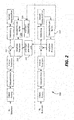
- An example of an SHVC decoder is shown in FIG. 2 .
- an up-sampling process (220) up-samples or up-converts pixel data from the base layer (215) to match the pixel resolution of the data received in the enhancement layer (e.g. 202 or 230).
- the up-sampling process may be performed by applying an up-sampling or interpolation filter.
- an up-sampling or interpolation filter In Scalable extension of H.264 (SVC) or SHVC SMuC0.1.1 software [3], a separable poly-phase up-sampling/interpolation filter is applied. While such filters perform well with input data with standard bit depth (e.g., images using 8 bits per pixel, per color component), they may overflow for input data with high bit-depth (e.g., images using 10 bits or more per pixel, per color component).
- the filter precision (denoted as US_FILTER_PREC) of eF is set to 6 bits.
- the internal bit-depth of refSampleArray is 8 bits, then tempArray may be kept within the target implementation bit depth (e.g. 14 or 16 bits). But when the internal bit-depth of refSampleArray is more than 8 bits (e.g., 10 bits), then the output of equation (1) may overflow.
- such overflow may be prevented by: (a) fixing the order of operations in the up-sampling process, and (b) by incorporating intermediate scaling operations.
- up-sampling may be implemented as follows:
- INTERNAL_INPUT_BITDEPTH denote the bit-depth used for representing in the processor the input video signal.
- INTERNAL_INPUT_BITDEPTH may be equal or larger than the original bit-depth of the input signal.
- nShift 1 US_FILTER_PREC + INTERNAL_INPUT_BITDEPTH ⁇ INTERM_BITDEPTH
- nShift 2 2 * US_FILTER_PREC ⁇ nShift 1.
- nShift1 and nShift2 values may not be allowed to be negative.
- a negative value for nShift1 indicates that the bit resolution allowed for intermediate results is more than adequate to prevent overflow; hence, when negative, nShift1 may be set to zero.
- iOffset 1 1 ⁇ ⁇ nShift 1 ⁇ 1
- iOffset 2 1 ⁇ ⁇ nShift 2 ⁇ 1
- iOffset 1 0
- iOffset 2 1 ⁇ ⁇ nShift 2 ⁇ 1 ;
- USFILTER PREC 6
- INTERNAL INPUT BITDEPTH 10
- INTERM_BITDEPTH 14
- the proper filtering may be either be fixed and predetermined by all decoders (e.g., by a decoding standard or specification), or in some embodiments the proper order may be signal by an encoder to the decoder using an appropriate flag in metadata.
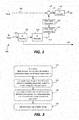
- FIG. 3 depicts an example process for image data up-sampling according to an embodiment of this invention.
- the encoder or decoder in the layered coding system determines the proper filtering order (e.g., horizontal filtering followed by vertical filtering) and the scaling and rounding parameters.
- scaling and rounding parameters may be determined according to equations (5)- (14) based on the required bit depths for intermediate storage (e.g., INTERMBITDEPTH), filter coefficients (e.g., US FILTER PREC) and internal input representation (e.g., INTERNAL_INPUT_BITDEPTH).
- image data are up-sampled in a first direction (e.g., horizontal).
- the output results of this stage are rounded and scaled before intermediate storage using a first shift parameter (e.g., nShift1) and a first rounding parameter (e.g., iOffset1).
- a first shift parameter e.g., nShift1
- a first rounding parameter e.g., iOffset1
- the intermediate results are up-sampled in the second direction (e.g., vertical).
- the output results of this stage are rounded and scaled using a second shift parameter (e.g., nShift2) and a second rounding parameter (e.g., iOffset2).
- the output data of the second stage is clipped before final output or storage.
- the methods described herein may also be applicable to other imaging applications that employ separable filtering of high bit-depth image data, such as down-scaling, noise filtering, or frequency transforms.
- Embodiments of the present invention may be implemented with a computer system, systems configured in electronic circuitry and components, an integrated circuit (IC) device such as a microcontroller, a field programmable gate array (FPGA), or another configurable or programmable logic device (PLD), a discrete time or digital signal processor (DSP), an application specific IC (ASIC), and/or apparatus that includes one or more of such systems, devices or components.
- IC integrated circuit
- FPGA field programmable gate array
- PLD configurable or programmable logic device
- DSP discrete time or digital signal processor
- ASIC application specific IC
- the computer and/or IC may perform, control or execute instructions relating to high-precision up-sampling, such as those described herein.
- the computer and/or IC may compute any of a variety of parameters or values that relate to high-precision up-sampling as described herein.
- the encoding and decoding embodiments may be implemented in hardware, software, firmware and various combinations thereof.
- Certain implementations of the invention comprise computer processors which execute software instructions which cause the processors to perform a method of the invention.
- processors in a display, an encoder, a set top box, a transcoder or the like may implement methods related to high-precision up-sampling as described above by executing software instructions in a program memory accessible to the processors.
- the invention may also be provided in the form of a program product.
- the program product may comprise any medium which carries a set of computer-readable signals comprising instructions which, when executed by a data processor, cause the data processor to execute a method of the invention.
- Program products according to the invention may be in any of a wide variety of forms.
- the program product may comprise, for example, physical media such as magnetic data storage media including floppy diskettes, hard disk drives, optical data storage media including CD ROMs, DVDs, electronic data storage media including ROMs, flash RAM, or the like.
- the computer-readable signals on the program product may optionally be compressed or encrypted.
- a component e.g. a software module, processor, assembly, device, circuit, etc.
- reference to that component should be interpreted as including as equivalents of that component any component which performs the function of the described component (e.g., that is functionally equivalent), including components which are not structurally equivalent to the disclosed structure which performs the function in the illustrated example embodiments of the invention.
- EEEs enumerated example embodiments
Landscapes
- Engineering & Computer Science (AREA)
- Multimedia (AREA)
- Signal Processing (AREA)
- Compression Or Coding Systems Of Tv Signals (AREA)
- Image Processing (AREA)
Abstract
Description
- This application is a European divisional application of Euro-PCT patent application
EP 13826802.4 - The present invention relates generally to images. More particularly, an embodiment of the present invention relates to high precision up-sampling in scalable video codecs for high bit-depth video.
- Audio and video compression is a key component in the development, storage, distribution, and consumption of multimedia content. The choice of a compression method involves tradeoffs among coding efficiency, coding complexity, and delay. As the ratio of processing power over computing cost increases, it allows for the development of more complex compression techniques that allow for more efficient compression. As an example, in video compression, the Motion Pictures Expert Group (MPEG) from the International Standards Organization (ISO) has continued improving upon the original MPEG-1 video standard by releasing the MPEG-2, MPEG-4 (part 2), and H.264/AVC (or MPEG-4, part 10) coding standards.
- Despite the compression efficiency and success of H.264, a new generation of video compression technology, known as High Efficiency Video Coding (HEVC), in now under development. HEVC, for which a draft is available in " High efficiency video coding (HEVC) text specification draft 9," ITU-T/ISO/IEC Joint Collaborative Team on Video Coding (JCT-VC) document JCTVC-K1003, Oct. 2012, by B. Bross, W.-J. Han, G. J. Sullivan, J.-R. Ohm, and T. Wiegand, which is incorporated herein by reference in its entirety, is expected to provide improved compression capability over the existing H.264 (also known as AVC) standard, published as, " Advanced Video Coding for generic audio-visual services," ITU T Rec. H.264 and ISO/IEC 14496-10, which is incorporated herein in its entirety.
- Video signals may be characterized by multiple parameters, such as bit-depth, color space, color gamut, and resolution. Modern televisions and video playback devices (e.g., Blu-ray players) support a variety of resolutions, including standard-definition (e.g., 720x480i) and high-definition (HD) (e.g., 1090 x 1080p). Ultra high-definition (UHD) is a next generation resolution format with at least a 3,840 x 2,160 resolution. Ultra high-definition may also be referred to as Ultra HD, UHDTV, or super high-vision. As used herein, UHD denotes any resolution higher than HD resolution.
- Another aspect of a video signal's characteristic is it dynamic range. Dynamic range (DR) is a range of intensity (e.g., luminance, luma) in an image, e.g., from darkest darks to brightest brights. As used herein, the term 'dynamic range' (DR) may relate to a capability of the human psychovisual system (HVS) to perceive a range of intensity (e.g., luminance, luma) in an image, e.g., from darkest darks to brightest brights. In this sense, DR relates to a 'scene-referred' intensity. DR may also relate to the ability of a display device to adequately or approximately render an intensity range of a particular breadth. In this sense, DR relates to a 'display-referred' intensity. Unless a particular sense is explicitly specified to have particular significance at any point in the description herein, it should be inferred that the term may be used in either sense, e.g. interchangeably.
- As used herein, the term high dynamic range (HDR) relates to a DR breadth that spans the some 14-15 orders of magnitude of the human visual system (HVS). For example, well adapted humans with essentially normal (e.g., in one or more of a statistical, biometric or ophthalmological sense) have an intensity range that spans about 15 orders of magnitude. Adapted humans may perceive dim light sources of as few as a mere handful of photons. Yet, these same humans may perceive the near painfully brilliant intensity of the noonday sun in desert, sea or snow (or even glance into the sun, however briefly to prevent damage). This span though is available to 'adapted' humans, e.g., those whose HVS has a time period in which to reset and adjust.
- In contrast, the DR over which a human may simultaneously perceive an extensive breadth in intensity range may be somewhat truncated, in relation to HDR. As used herein, the terms 'enhanced dynamic range' (EDR), 'visual dynamic range,' or 'variable dynamic range' (VDR) may individually or interchangeably relate to the DR that is simultaneously perceivable by a HVS. As used herein, EDR may relate to a DR that spans 5-6 orders of magnitude. Thus while perhaps somewhat narrower in relation to true scene referred HDR, EDR nonetheless represents a wide DR breadth. As used herein, the term 'simultaneous dynamic range' may relate to EDR.
- As used herein, the term image or video "bit-depth" denotes the number of bits used to represent or store pixel values of a color component of an image or video signal. For example, the term N-bit video (e.g., N=8) denotes that pixel values of a color component (e.g., R, G, or B) in that video signal may take values within the range 0 to 2N-1.
- As used herein, the term "high bit-depth" denotes any bit-depth values larger than 8 bits (e.g., N=10 bits). Note that while HDR image and video signals are typically associated with high bit-depth, a high bit-depth image may not necessarily have a high dynamic range. Hence, as used herein, high bit-depth imaging may be associated with both HDR and SDR images.
- To support backwards compatibility with legacy playback devices as well as new display technologies, multiple layers may be used to deliver UHD and HDR (or SDR) video data from an upstream device to downstream devices. Given such a multi-layer stream, legacy decoders may use the base layer to reconstruct an HD SDR version of the content. Advanced decoders may use both the base layer and the enhancement layers to reconstruct an UHD EDR version of the content to render it on more capable displays. As appreciated by the inventors here, improved techniques for the coding of high bit-depth video using scalable codecs are desirable.
- The approaches described in this section are approaches that could be pursued, but not necessarily approaches that have been previously conceived or pursued. Therefore, unless otherwise indicated, it should not be assumed that any of the approaches described in this section qualify as prior art merely by virtue of their inclusion in this section. Similarly, issues identified with respect to one or more approaches should not assume to have been recognized in any prior art on the basis of this section, unless otherwise indicated.
- An embodiment of the present invention is illustrated by way of example, and not in way by limitation, in the figures of the accompanying drawings and in which like reference numerals refer to similar elements and in which:
-
FIG. 1 depicts an example implementation of a scalable coding system according to an embodiment of this invention; -
FIG. 2 depicts an example implementation of a scalable decoding system according to an embodiment of this invention; -
FIG. 3 depicts an example process for image data up-sampling according to an embodiment of this invention. - High-precision up-sampling in scalable coding of video inputs with high bit-depth is described herein. Given parameters related to the bit-depth of intermediate results, the internal input bit-depth, and filter precision bit-depth, scaling and rounding factors are determined to preserve accuracy of operations and prevent overflow.
- In the following description, for the purposes of explanation, numerous specific details are set forth in order to provide a thorough understanding of the present invention. It will be apparent, however, that the present invention may be practiced without these specific details. In other instances, well-known structures and devices are not described in exhaustive detail, in order to avoid unnecessarily obscuring the present invention.
- Example embodiments described herein relate to high-precision up-sampling in layered coding and decoding of video signals with high bit-depth. In response to bit-depth requirements of the video coding or decoding system, the input data, and the filtering coefficients, scaling and rounding parameters are determined for a separable up-scaling filter. Input data are first filtered across a first spatial direction using a first rounding parameter to generate first up-sampled data. First intermediate data are generated by scaling the first up-sampled data using a first shift parameter. The intermediate data are then filtered across a second spatial direction using a second rounding parameter to generate second up-sampled data. Second intermediate data are generated by scaling the second up-sampled data using a second shift parameter. Final up-sampled data may be generated by clipping the second intermediate data.
- Existing display and play-back devices, such as HDTVs, set-top boxes, or Blu-ray players, typically support signals of up to 1080p HD resolution (e.g., 1920 x 1080 at 60 frames per second). For consumer applications, such signals are now typically compressed using a bit-depth of 8 bits per pixel per color component in a luma-chroma color format where typically the chroma components have a lower resolution than then luma component (e.g., the YCbCr or YUV 4:2:0 color format). Because of the 8-bit depth and the corresponding low dynamic range, such signals are typically referred to as signals with standard dynamic range (SDR).
- As new television standards are being developed, such as Ultra High Definition (UHD), it may be desirable to encode signals with enhanced resolution and/or higher bit-depth in a scalable format.
-
FIG. 1 depicts an embodiment of an example implementation of a scalable encoding system. In an example embodiment, base layer (BL)input signal 104 may represent an HD SDR signal and enhancement layer (EL)input 102 may represent an UHD HDR (or SDR) signal at a high bit-depth. TheBL input 104 is compressed (or encoded) usingBL Encoder 105 to generatecoded BL bitstream 107.BL encoder 105 may compress or encodeBL input signal 104 using any of the known or future video compression algorithms, such as MPEG-2, MPEG-4, part 2, H.264, HEVC, VP8, and the like. - Given
BL input 104,encoding system 100 generates not only codedBL bitstream 107 but alsoBL signal 112 which represents the BL signal 107 as it will be decoded by a corresponding receiver. In some embodiments, signal 112 may be generated by a separate BL decoder (110) followingBL encoder 105. In some other embodiments, signal 112 may be generated from the feedback loop used to perform motion compensation inBL encoder 105. As depicted inFIG. 1 , signal 112 may be processed byinter-layer processing unit 115 to generate a signal suitable to be used byinter-layer prediction process 120. In some embodiments,inter-layer processing unit 115 may up-scale signal 112 to match the spatial resolution of EL input 102 (e.g., from an HD resolution to an UHD resolution). Followinginter-layer prediction 120, a residual 127 is computed, which is subsequently coded by anEL encoder 132 to generatecoded EL bitstream 132.BL bitstream 107 andEL bitstream 132 are typically multiplexed into a single coded bitstream which is transmitted to suitable receivers. - The term SHVC denotes a scalable extension of a new generation of video compression technology known as High Efficiency Video Coding (HEVC) [1], which enables substantially higher compression capability than the existing AVC (H.264) standard [2]. SHVC is currently being developed jointly by the ISO/IEC MPEG and ITU-T WP3/16 groups. One of the key aspects of SHVC is spatial scalability, where inter-layer texture prediction (e.g., 120 or 210) provides the most significant gain. An example of an SHVC decoder is shown in
FIG. 2 . As part of inter-layer prediction, an up-sampling process (220) up-samples or up-converts pixel data from the base layer (215) to match the pixel resolution of the data received in the enhancement layer (e.g. 202 or 230). In an embodiment, the up-sampling process may be performed by applying an up-sampling or interpolation filter. In Scalable extension of H.264 (SVC) or SHVC SMuC0.1.1 software [3], a separable poly-phase up-sampling/interpolation filter is applied. While such filters perform well with input data with standard bit depth (e.g., images using 8 bits per pixel, per color component), they may overflow for input data with high bit-depth (e.g., images using 10 bits or more per pixel, per color component). - In 2D up-sampling or interpolation processes, a common practice is to apply separable filters to reduce processing complexity. Such filter up-sample an image first in one spatial direction (e.g., horizontal or vertical) and then in the other direction (e.g., vertical or horizontal). Without loss of generality, in the following description, it is assumed vertical up-sampling follows horizontal up-sampling. Then, the filtering process can be described as:
- Horizontal up-sampling:

- Vertical up-sampling


- In SMuC0.01 [3], the filter precision (denoted as US_FILTER_PREC) of eF is set to 6 bits. When the internal bit-depth of refSampleArray is 8 bits, then tempArray may be kept within the target implementation bit depth (e.g. 14 or 16 bits). But when the internal bit-depth of refSampleArray is more than 8 bits (e.g., 10 bits), then the output of equation (1) may overflow.
- In an embodiment, such overflow may be prevented by: (a) fixing the order of operations in the up-sampling process, and (b) by incorporating intermediate scaling operations. In an embodiment, when horizontal filtering is followed by vertical filtering, up-sampling may be implemented as follows:
- Horizontal up-sampling:

- Vertical up-sampling

- Without loss of generality, let INTERM_BITDEPTH denote the bit-depth (or bit resolution) requirement for intermediate filter processing; that is, no result can be represented in more bits than INTERMBITDEPTH (e.g. INTERM BITDEPTH = 16). Let INTERNAL_INPUT_BITDEPTH denote the bit-depth used for representing in the processor the input video signal. Note that INTERNAL_INPUT_BITDEPTH may be equal or larger than the original bit-depth of the input signal. For example, in some embodiments, 8-bit input video data may be represented internally using INTERNAL_INPUT_BITDEPTH = 10. Alternatively, in another example, 14-bit input video may be represented with INTERNAL_INPUT_BITDEPTH = 14.
- In one embodiment, the scaling parameters in equations (3) and (4) may be computed as


- If rounding is used in both (3) and (4) (highest complexity, highest precision):


- Alternatively, when no rounding is used in both (3) and (4) (lowest complexity, lowest precision):


- Alternatively, if rounding is used in (3) but not used in (4):


- Alternatively, if rounding is used in (4) but not used in (3) (which is common):


- In an example embodiment, let INTERM_BITDEPTH=14, USFILTER PREC = 6, and INTERNAL_INPUT_BITDEPTH =8, then, from equations (5) and (6), nShift1=0 and nShift2=12. In another example, for USFILTER PREC = 6, if INTERNAL INPUT BITDEPTH =10, and INTERM_BITDEPTH = 14, then nShift1 = 2 and iOffset1 = 0 or 2, depending on the selected rounding mode. In addition, nShift2 = 10 and iOffset2 = 0 or 29, depending on the selected rounding mode.
- Note that using the implementation depicted in equations (3) and (4), vertical filtering followed by horizontal filtering may yield different results than horizontal filtering followed by vertical filtering, hence. in a decoder, the proper filtering may be either be fixed and predetermined by all decoders (e.g., by a decoding standard or specification), or in some embodiments the proper order may be signal by an encoder to the decoder using an appropriate flag in metadata.
-
FIG. 3 depicts an example process for image data up-sampling according to an embodiment of this invention. First (305), the encoder or decoder in the layered coding system determines the proper filtering order (e.g., horizontal filtering followed by vertical filtering) and the scaling and rounding parameters. In an embodiment, scaling and rounding parameters may be determined according to equations (5)- (14) based on the required bit depths for intermediate storage (e.g., INTERMBITDEPTH), filter coefficients (e.g., US FILTER PREC) and internal input representation (e.g., INTERNAL_INPUT_BITDEPTH). Atstep 310, image data are up-sampled in a first direction (e.g., horizontal). The output results of this stage are rounded and scaled before intermediate storage using a first shift parameter (e.g., nShift1) and a first rounding parameter (e.g., iOffset1). Next (315), the intermediate results are up-sampled in the second direction (e.g., vertical). The output results of this stage are rounded and scaled using a second shift parameter (e.g., nShift2) and a second rounding parameter (e.g., iOffset2). Finally (320), the output data of the second stage is clipped before final output or storage. - The methods described herein may also be applicable to other imaging applications that employ separable filtering of high bit-depth image data, such as down-scaling, noise filtering, or frequency transforms.
- Embodiments of the present invention may be implemented with a computer system, systems configured in electronic circuitry and components, an integrated circuit (IC) device such as a microcontroller, a field programmable gate array (FPGA), or another configurable or programmable logic device (PLD), a discrete time or digital signal processor (DSP), an application specific IC (ASIC), and/or apparatus that includes one or more of such systems, devices or components. The computer and/or IC may perform, control or execute instructions relating to high-precision up-sampling, such as those described herein. The computer and/or IC may compute any of a variety of parameters or values that relate to high-precision up-sampling as described herein. The encoding and decoding embodiments may be implemented in hardware, software, firmware and various combinations thereof.
- Certain implementations of the invention comprise computer processors which execute software instructions which cause the processors to perform a method of the invention. For example, one or more processors in a display, an encoder, a set top box, a transcoder or the like may implement methods related to high-precision up-sampling as described above by executing software instructions in a program memory accessible to the processors. The invention may also be provided in the form of a program product. The program product may comprise any medium which carries a set of computer-readable signals comprising instructions which, when executed by a data processor, cause the data processor to execute a method of the invention. Program products according to the invention may be in any of a wide variety of forms. The program product may comprise, for example, physical media such as magnetic data storage media including floppy diskettes, hard disk drives, optical data storage media including CD ROMs, DVDs, electronic data storage media including ROMs, flash RAM, or the like. The computer-readable signals on the program product may optionally be compressed or encrypted.
- Where a component (e.g. a software module, processor, assembly, device, circuit, etc.) is referred to above, unless otherwise indicated, reference to that component (including a reference to a "means") should be interpreted as including as equivalents of that component any component which performs the function of the described component (e.g., that is functionally equivalent), including components which are not structurally equivalent to the disclosed structure which performs the function in the illustrated example embodiments of the invention.
- Example embodiments that relate to high-precision up-sampling in scalable coding of high bit-depth video are thus described. In the foregoing specification, embodiments of the present invention have been described with reference to numerous specific details that may vary from implementation to implementation. Thus, the sole and exclusive indicator of what is the invention, and is intended by the applicants to be the invention, is the set as recited in claims that issue from this application, in the specific form in which such claims issue, including any subsequent correction. Any definitions expressly set forth herein for terms contained in such claims shall govern the meaning of such terms as used in the claims. Hence, no limitation, element, property, feature, advantage or attribute that is not expressly recited in a claim should limit the scope of such claim in any way. The specification and drawings are, accordingly, to be regarded in an illustrative rather than a restrictive sense.
- Various aspects of the present invention may be appreciated from the following enumerated example embodiments (EEEs):
- EEE1. In a scalable video system, a method for up-sampling image data from a first layer to a second layer, the method comprising:
- determining with a processor scaling and rounding parameters in response to bit-depth requirements of the scalable video system;
- generating first up-sampled data by filtering the image data from the first layer , wherein the filtering of the image data is performed across a first spatial direction using a first rounding parameter;
- generating first intermediate data by scaling the first up-sampled data with a first shift parameter;
- generating second up-sampled data by filtering the first intermediate data, wherein the filtering of the first intermediate data is performed across a second spatial direction using a second rounding parameter;
- generating second intermediate data by scaling the second up-sampled data with a second shift parameter; and
- generating output up-sampled data for the second layer by clipping the second intermediate data.
- EEE2. The method of EEE 1, wherein the scalable video system comprises a video encoder.
- EEE3. The method of EEE 1, wherein the scalable video system comprises a video decoder.
- EEE4. The method of EEE 1 wherein the bit depth requirements of the scalable video system comprise at least one of an intermediate values bit depth, an internal input bit depth, and a filtering coefficients precision bit depth.
- EEE5. The method of EEE 4, wherein determining the first shift parameter comprises adding the bit depth values of the internal input bit depth with the filtering coefficients precision bit depth and subtracting from their sum the intermediate values bit depth.
- EEE6. The method of EEE 4, wherein determining the second shift parameter comprises subtracting the first shift parameter from twice the filtering coefficients precision bit depth.
- EEE7. The method of EEE 1 wherein determining the first and second rounding parameters comprises computing


- EEE8. The method of EEE 1 wherein the first and second rounding parameters are determined to be equal to zero.
- EEE9. The method of EEE 1 wherein determining the first and second rounding parameters comprises computing

iOffset2 = 0,
wherein iOffset1 is the first rounding parameter, iOffset2 is the second rounding parameter, and nShift1 is the first shift parameter. - EEE10. The method of EEE 1 wherein determining the first and second rounding parameters comprises computing
iOffset1 = 0, and
- EEE11. The method of EEE 1, wherein the first spatial direction is a horizontal direction and the second spatial direction is a vertical direction.
- EEE12. The method of EEE 1, wherein the first spatial direction is a vertical direction and the second spatial direction is a horizontal direction.
- EEE13. The method of EEE 1, wherein the first spatial direction is fixed and predetermined by a specification of a video decoding standard.
- EEE14. The method of EEE 1, wherein the first spatial direction is determined by an encoder and communicated to a decoder by the encoder.
- EEE15. An apparatus comprising a processor and configured to perform the method recited in EEE 1.
- EEE16. A non-transitory computer-readable storage medium having stored thereon computer-executable instructions for executing a method in accordance with EEE 1.
-
- [1] B. Bross, W.-J. Han, G. J. Sullivan, J.-R. Ohm, and T. Wiegand, "High efficiency video coding (HEVC) text specification draft 9," ITU-T/ISO/IEC Joint Collaborative Team on Video Coding (JCT-VC) document JCTVC-K1003, Oct. 2012.
- [2] ITU-T and ISO/IEC JTC 1, "Advanced Video Coding for generic audio-visual services," ITU T Rec. H.264 and ISO/IEC 14496-10 (AVC)
- [3] SMuC0.1.1 software for SHVC (scalable extension of HEVC): https://hevc.hhi.fraunhofer.de/svn/svn SMuCSoftware/tags/0.1.1/.
Claims (11)
- In a decoder, a method for up-sampling image data from a first layer to a second layer, performed by a processor, in a scalable video system including the processor, the method comprising:determining scaling and rounding parameters in response to bit-depth requirements of the scalable video system;generating first up-sampled data by filtering the image data from the first layer, wherein the filtering of the image data is performed across a first spatial direction;generating first intermediate data by scaling the first up-sampled data with a first shift parameter;generating second up-sampled data by filtering the first intermediate data, wherein the filtering of the first intermediate data is performed across a second spatial direction using a second rounding parameter;generating second intermediate data by scaling the second up-sampled data with a second shift parameter; andgenerating output up-sampled data for the second layer by clipping the second intermediate data,wherein determining the second rounding parameter comprises computing

- The method of claim 1 wherein the bit depth requirements of the scalable video system comprise at least one of an intermediate values bit depth, an internal input bit depth, and a filtering coefficients precision bit depth.
- The method of claim 2, wherein the internal input bit depth is equal to or greater than a bit-depth of the image data.
- The method of claim 2 or claim 3, wherein determining the first shift parameter comprises adding the internal input bit depth with the filtering coefficients precision bit depth and subtracting the intermediate values bit depth.
- The method of any of claims 2-4, wherein determining the second shift parameter comprises subtracting the first shift parameter from twice the filtering coefficients precision bit depth.
- The method of claims 4 and 5, wherein given an intermediate values bit depth of 14 bits, a filtering coefficients precision bit depth of 6 bits and an internal input bit depth of 8, nShift1 = 0 and nShift2 = 12, wherein nShift1 is the first shift parameter.
- The method of claims 4 and 5, wherein given an intermediate values bit depth of 14 bits, a filtering coefficients precision bit depth of 6 bits and an internal bit depth of 10, nShiftl = 2 and nShift2 = 10, wherein nShift1 is the first shift parameter.
- The method of claim 1, wherein the first spatial direction is a horizontal direction and the second spatial direction is a vertical direction.
- The method of claim 1, wherein the first spatial direction is a vertical direction and the second spatial direction is a horizontal direction.
- An apparatus comprising a processor and configured to perform the method recited in any of the claims 1-9.
- A non-transitory computer-readable storage medium having stored thereon computer-executable instructions, which when executed on a computing device or system, cause said computing device or system to execute a method in accordance with any of the claims 1-9.
Applications Claiming Priority (3)
| Application Number | Priority Date | Filing Date | Title |
|---|---|---|---|
| US201261745050P | 2012-12-21 | 2012-12-21 | |
| PCT/US2013/073006 WO2014099370A1 (en) | 2012-12-21 | 2013-12-04 | High precision up-sampling in scalable coding of high bit-depth video |
| EP13826802.4A EP2936820B1 (en) | 2012-12-21 | 2013-12-04 | High precision up-sampling in scalable coding of high bit-depth video |
Related Parent Applications (2)
| Application Number | Title | Priority Date | Filing Date |
|---|---|---|---|
| EP13826802.4A Division-Into EP2936820B1 (en) | 2012-12-21 | 2013-12-04 | High precision up-sampling in scalable coding of high bit-depth video |
| EP13826802.4A Division EP2936820B1 (en) | 2012-12-21 | 2013-12-04 | High precision up-sampling in scalable coding of high bit-depth video |
Publications (1)
| Publication Number | Publication Date |
|---|---|
| EP3734975A1 true EP3734975A1 (en) | 2020-11-04 |
Family
ID=50031497
Family Applications (2)
| Application Number | Title | Priority Date | Filing Date |
|---|---|---|---|
| EP13826802.4A Active EP2936820B1 (en) | 2012-12-21 | 2013-12-04 | High precision up-sampling in scalable coding of high bit-depth video |
| EP20176417.2A Pending EP3734975A1 (en) | 2012-12-21 | 2013-12-04 | High precision up-sampling in scalable decoding of high bit-depth video |
Family Applications Before (1)
| Application Number | Title | Priority Date | Filing Date |
|---|---|---|---|
| EP13826802.4A Active EP2936820B1 (en) | 2012-12-21 | 2013-12-04 | High precision up-sampling in scalable coding of high bit-depth video |
Country Status (11)
| Country | Link |
|---|---|
| US (6) | US10165288B2 (en) |
| EP (2) | EP2936820B1 (en) |
| JP (2) | JP6034983B2 (en) |
| KR (4) | KR20160110546A (en) |
| CN (3) | CN108055543B (en) |
| BR (2) | BR122017002044B1 (en) |
| IN (1) | IN2015MN01331A (en) |
| MY (2) | MY181150A (en) |
| RU (4) | RU2610589C2 (en) |
| TW (3) | TWI521946B (en) |
| WO (1) | WO2014099370A1 (en) |
Families Citing this family (14)
| Publication number | Priority date | Publication date | Assignee | Title |
|---|---|---|---|---|
| US9924166B2 (en) | 2012-08-06 | 2018-03-20 | Vid Scale, Inc. | Sampling grid information for spatial layers in multi-layer video coding |
| EP3490256B1 (en) * | 2013-01-02 | 2021-07-21 | Dolby Laboratories Licensing Corporation | Backward-compatible coding for ultra high definition video signals with enhanced dynamic range |
| US9497473B2 (en) * | 2013-10-03 | 2016-11-15 | Qualcomm Incorporated | High precision explicit weighted prediction for video coding |
| JP5906504B1 (en) * | 2014-06-26 | 2016-04-20 | パナソニックIpマネジメント株式会社 | Data output device, data output method, and data generation method |
| US10200703B2 (en) | 2015-02-17 | 2019-02-05 | Dolby Laboratories Licensing Corporation | Inter-layer prediction for signals with enhanced dynamic range |
| US10257524B2 (en) * | 2015-07-01 | 2019-04-09 | Mediatek Inc. | Residual up-sampling apparatus for performing transform block up-sampling and residual down-sampling apparatus for performing transform block down-sampling |
| WO2017019704A2 (en) | 2015-07-28 | 2017-02-02 | Dolby Laboratories Licensing Corporation | Sdr bit depth enhancement via codeword range amplification in a codec with inverse display management |
| EP4124137B1 (en) | 2017-05-15 | 2026-08-05 | Samsung Electronics Co., Ltd. | Method and apparatus for control resource set configuration and monitoring of downlink control channel in wireless communication system |
| US10609372B2 (en) * | 2017-09-29 | 2020-03-31 | Dolby Laboratories Licensing Corporation | Up-conversion to content adaptive perceptual quantization video signals |
| US20200322656A1 (en) * | 2019-04-02 | 2020-10-08 | Nbcuniversal Media, Llc | Systems and methods for fast channel changing |
| US11375219B2 (en) * | 2019-09-24 | 2022-06-28 | Tencent America LLC | Coding method and system with improved dynamic internal bit depth |
| US11082473B1 (en) * | 2020-03-15 | 2021-08-03 | Tfi Digital Media Limited | Method for complexity reduction in video coding by coding parameters reuse |
| US12518413B2 (en) * | 2021-12-31 | 2026-01-06 | Microsoft Technology Licensing, Llc | Interpolating image and/or audio in plural passes that use different configurations |
| US20240430415A1 (en) * | 2023-06-23 | 2024-12-26 | Google Llc | Adaptive Filter Computation Precision in Video Coding |
Citations (3)
| Publication number | Priority date | Publication date | Assignee | Title |
|---|---|---|---|---|
| EP1353514A2 (en) * | 2002-04-10 | 2003-10-15 | Microsoft Corporation | Sub-pixel interpolation in motion estimation and compensation |
| US20060209959A1 (en) * | 2005-03-18 | 2006-09-21 | Sharp Laboratories Of America, Inc. | Methods and systems for extended spatial scalability with picture-level adaptation |
| US20070160153A1 (en) * | 2006-01-06 | 2007-07-12 | Microsoft Corporation | Resampling and picture resizing operations for multi-resolution video coding and decoding |
Family Cites Families (45)
| Publication number | Priority date | Publication date | Assignee | Title |
|---|---|---|---|---|
| US7227895B1 (en) * | 2000-12-12 | 2007-06-05 | Sony Corporation | System and method for generating decoded digital video image data |
| US7929610B2 (en) * | 2001-03-26 | 2011-04-19 | Sharp Kabushiki Kaisha | Methods and systems for reducing blocking artifacts with reduced complexity for spatially-scalable video coding |
| WO2002089046A1 (en) * | 2001-04-26 | 2002-11-07 | Georgia Tech Research Corporation | Video enhancement using multiple frame techniques |
| US7305034B2 (en) | 2002-04-10 | 2007-12-04 | Microsoft Corporation | Rounding control for multi-stage interpolation |
| NO319629B1 (en) * | 2003-11-28 | 2005-09-05 | Tandberg Telecom As | Procedure for correcting interpolated pixel values |
| US7379587B2 (en) * | 2004-02-12 | 2008-05-27 | Xerox Corporation | Systems and methods for identifying regions within an image having similar continuity values |
| KR100679022B1 (en) * | 2004-10-18 | 2007-02-05 | 삼성전자주식회사 | Video coding and decoding method using inter-layer filtering, video encoder and decoder |
| US8175168B2 (en) * | 2005-03-18 | 2012-05-08 | Sharp Laboratories Of America, Inc. | Methods and systems for picture up-sampling |
| WO2007000988A1 (en) * | 2005-06-29 | 2007-01-04 | Matsushita Electric Industrial Co., Ltd. | Scalable decoder and disappeared data interpolating method |
| US7561478B2 (en) | 2005-06-30 | 2009-07-14 | Seiko Epson Corporation | Integrated circuit device and electronic instrument |
| JP2007028393A (en) * | 2005-07-20 | 2007-02-01 | Matsushita Electric Ind Co Ltd | Method for obtaining motion vector of direct mode block of bi-predictive coded picture |
| KR100718135B1 (en) * | 2005-08-24 | 2007-05-14 | 삼성전자주식회사 | Apparatus and method for image prediction for multi-format codecs and apparatus and method for image encoding / decoding using same |
| CN101568036A (en) * | 2005-10-11 | 2009-10-28 | 华为技术有限公司 | Up-sampling method and system for spatial scalable coding video images |
| US8948260B2 (en) | 2005-10-17 | 2015-02-03 | Qualcomm Incorporated | Adaptive GOP structure in video streaming |
| KR20080092425A (en) * | 2006-01-10 | 2008-10-15 | 노키아 코포레이션 | Switched filter-up-sampling mechanism for scalable video coding |
| US8880571B2 (en) * | 2006-05-05 | 2014-11-04 | Microsoft Corporation | High dynamic range data format conversions for digital media |
| EP2044773A4 (en) * | 2006-07-10 | 2011-10-12 | Sharp Kk | Methods and systems for combining layers in a multi-layer bitstream |
| US8774269B2 (en) * | 2006-10-25 | 2014-07-08 | Franuhofer-Gesellschaft Zur Foerderung Der Angewandten Forschung E.V. | Quality scalable coding with mapping different ranges of bit depths |
| US20080101467A1 (en) * | 2006-10-27 | 2008-05-01 | Radiospire Networks, Inc. | Method and system for secure and efficient wireless transmission of HDCP-encrypted HDMI/DVI signals |
| KR20080067922A (en) * | 2007-01-17 | 2008-07-22 | 삼성전자주식회사 | An image decoding method and apparatus having an image reduction function |
| US8107571B2 (en) * | 2007-03-20 | 2012-01-31 | Microsoft Corporation | Parameterized filters and signaling techniques |
| WO2009003499A1 (en) * | 2007-06-29 | 2009-01-08 | Fraunhofer-Gesellschaft zur Förderung der angewandten Forschung e.V. | Scalable video coding supporting pixel value refinement scalability |
| PL2835976T3 (en) * | 2008-04-16 | 2017-04-28 | Ge Video Compression, Llc | Bit depth scalability |
| US9571856B2 (en) * | 2008-08-25 | 2017-02-14 | Microsoft Technology Licensing, Llc | Conversion operations in scalable video encoding and decoding |
| TWI383684B (en) | 2008-11-18 | 2013-01-21 | Univ Nat Taiwan | System and method for dynamic video encoding in multimedia streaming |
| CN102308579B (en) * | 2009-02-03 | 2017-06-06 | 汤姆森特许公司 | The method and apparatus of the motion compensation of the gradable middle use smooth reference frame of locating depth |
| CN101827264A (en) * | 2009-03-06 | 2010-09-08 | 刘永 | Hierarchical self-adaptive video frame sampling method |
| US9112618B2 (en) | 2009-07-02 | 2015-08-18 | Qualcomm Incorporated | Coding latency reductions during transmitter quieting |
| US9161057B2 (en) * | 2009-07-09 | 2015-10-13 | Qualcomm Incorporated | Non-zero rounding and prediction mode selection techniques in video encoding |
| TW201119396A (en) | 2009-11-24 | 2011-06-01 | Hon Hai Prec Ind Co Ltd | Multi-standard video decoding system and method |
| CN102714725B (en) * | 2010-01-06 | 2015-04-29 | 杜比实验室特许公司 | High performance rate control for multi-layered video coding applications |
| WO2011127964A2 (en) * | 2010-04-13 | 2011-10-20 | Fraunhofer-Gesellschaft zur Förderung der angewandten Forschung e.V. | Apparatus for intra predicting a block, apparatus for reconstructing a block of a picture, apparatus for reconstructing a block of a picture by intra prediction |
| US9185422B2 (en) | 2010-07-15 | 2015-11-10 | Qualcomm Incorporated | Variable localized bit-depth increase for fixed-point transforms in video coding |
| MX2013003868A (en) | 2010-10-05 | 2013-06-24 | Gen Instrument Corp | Method and apparatus for feature based video coding. |
| US9532059B2 (en) * | 2010-10-05 | 2016-12-27 | Google Technology Holdings LLC | Method and apparatus for spatial scalability for video coding |
| US8880573B2 (en) * | 2010-10-12 | 2014-11-04 | Dolby Laboratories Licensing Corporation | System and method of dynamic precision operations |
| JP5802666B2 (en) * | 2010-12-22 | 2015-10-28 | パナソニック株式会社 | Image encoding device, image decoding device, image encoding method, and image decoding method |
| BR112013031215B8 (en) * | 2011-06-10 | 2022-07-19 | Mediatek Inc | SCALABLE VIDEO CODING METHOD AND DEVICE |
| TW201309036A (en) * | 2011-06-28 | 2013-02-16 | Samsung Electronics Co Ltd | Apparatus and method for predicting chrominance component images using luminance component images |
| US9055304B2 (en) * | 2011-07-01 | 2015-06-09 | Qualcomm Incorporated | Reduced resolution pixel interpolation |
| US10616581B2 (en) * | 2012-01-19 | 2020-04-07 | Huawei Technologies Co., Ltd. | Modified coding for a transform skipped block for CABAC in HEVC |
| WO2013174254A1 (en) * | 2012-05-21 | 2013-11-28 | Mediatek Singapore Pte. Ltd. | Method and apparatus of inter-layer filtering for scalable video coding |
| US9420280B2 (en) * | 2012-06-08 | 2016-08-16 | Qualcomm Incorporated | Adaptive upsampling filters |
| CN102740078B (en) * | 2012-07-12 | 2014-10-22 | 北方工业大学 | Adaptive spatial scalable coding based on HEVC (high efficiency video coding) standard |
| AU2013290459B2 (en) | 2012-07-16 | 2017-08-24 | Pratomo ALIMSIJAH | Fluid delivery system, and associated apparatus and method |
-
2013
- 2013-11-26 TW TW102143014A patent/TWI521946B/en active
- 2013-11-26 TW TW104138553A patent/TWI597968B/en active
- 2013-11-26 TW TW106115654A patent/TWI618397B/en active
- 2013-12-04 IN IN1331MUN2015 patent/IN2015MN01331A/en unknown
- 2013-12-04 KR KR1020167024774A patent/KR20160110546A/en not_active Abandoned
- 2013-12-04 RU RU2015123238A patent/RU2610589C2/en active
- 2013-12-04 KR KR1020197013074A patent/KR102052876B1/en active Active
- 2013-12-04 MY MYPI2015701858A patent/MY181150A/en unknown
- 2013-12-04 MY MYPI2019002165A patent/MY202235A/en unknown
- 2013-12-04 US US14/649,198 patent/US10165288B2/en active Active
- 2013-12-04 CN CN201810143518.9A patent/CN108055543B/en active Active
- 2013-12-04 EP EP13826802.4A patent/EP2936820B1/en active Active
- 2013-12-04 BR BR122017002044-7A patent/BR122017002044B1/en active IP Right Grant
- 2013-12-04 WO PCT/US2013/073006 patent/WO2014099370A1/en not_active Ceased
- 2013-12-04 BR BR112015014277-0A patent/BR112015014277B1/en active Search and Examination
- 2013-12-04 CN CN201380066796.4A patent/CN104871545B/en active Active
- 2013-12-04 JP JP2015549434A patent/JP6034983B2/en active Active
- 2013-12-04 EP EP20176417.2A patent/EP3734975A1/en active Pending
- 2013-12-04 KR KR1020177014064A patent/KR101985647B1/en active Active
- 2013-12-04 CN CN201810143517.4A patent/CN108055542B/en active Active
- 2013-12-04 KR KR1020157016476A patent/KR101694139B1/en active Active
- 2013-12-04 RU RU2017102758A patent/RU2017102758A/en not_active Application Discontinuation
-
2016
- 2016-09-07 JP JP2016174431A patent/JP6272419B2/en active Active
-
2018
- 2018-10-23 US US16/168,644 patent/US10516889B2/en active Active
-
2019
- 2019-09-24 US US16/580,820 patent/US10958922B2/en active Active
- 2019-11-08 RU RU2019135853A patent/RU2718159C1/en active
-
2020
- 2020-03-11 RU RU2020110114A patent/RU2728738C1/en active
-
2021
- 2021-03-19 US US17/206,843 patent/US11284095B2/en active Active
-
2022
- 2022-02-16 US US17/673,646 patent/US11570455B2/en active Active
-
2023
- 2023-01-23 US US18/158,417 patent/US11792416B2/en active Active
Patent Citations (4)
| Publication number | Priority date | Publication date | Assignee | Title |
|---|---|---|---|---|
| EP1353514A2 (en) * | 2002-04-10 | 2003-10-15 | Microsoft Corporation | Sub-pixel interpolation in motion estimation and compensation |
| EP1353514B1 (en) * | 2002-04-10 | 2005-12-07 | Microsoft Corporation | Sub-pixel interpolation in motion estimation and compensation |
| US20060209959A1 (en) * | 2005-03-18 | 2006-09-21 | Sharp Laboratories Of America, Inc. | Methods and systems for extended spatial scalability with picture-level adaptation |
| US20070160153A1 (en) * | 2006-01-06 | 2007-07-12 | Microsoft Corporation | Resampling and picture resizing operations for multi-resolution video coding and decoding |
Non-Patent Citations (5)
| Title |
|---|
| "Advanced Video Coding for generic audio-visual services", ITU T REC. H.264 AND ISO/IEC 14496-10 |
| "Advanced Video Coding for generic audio-visual services", ITU-T AND ISO/IEC JTC 1 |
| B. BROSSW.-J. HANG. J. SULLIVANJ.-R. OHMT. WIEGAND: "High efficiency video coding (HEVC) text specification draft 9", ITU-T/ISO/IEC JOINT COLLABORATIVE TEAM ON VIDEO CODING (JCT-VC) DOCUMENT JCTVC-K1003, October 2012 (2012-10-01) |
| SMUCO. 1.1 SOFTWARE FOR SHVC, Retrieved from the Internet <URL:https://hevc.hhi.fraunhofer.de/svn/svnSMuCSoftware/tags/0.1.1/> |
| SYMES P D: "TEN-BIT PROCESSING IN AN 8-BIT ENVIRONMENT", SMPTE - MOTION IMAGING JOURNAL, SOCIETY OF MOTION PICTURE AND TELEVISION ENGINEERS, WHITE PLAINS, NY, US, vol. 98, no. 6, 1 June 1989 (1989-06-01), pages 444 - 446, XP000033810, ISSN: 0036-1682 * |
Also Published As
Similar Documents
| Publication | Publication Date | Title |
|---|---|---|
| US11792416B2 (en) | High precision up-sampling in scalable coding of high bit-depth video | |
| EP3490256B1 (en) | Backward-compatible coding for ultra high definition video signals with enhanced dynamic range | |
| EP3259917B1 (en) | Inter-layer prediction for signals with enhanced dynamic range | |
| HK1208577B (en) | High precision up-sampling in scalable coding of high bit-depth video |
Legal Events
| Date | Code | Title | Description |
|---|---|---|---|
| PUAI | Public reference made under article 153(3) epc to a published international application that has entered the european phase |
Free format text: ORIGINAL CODE: 0009012 |
|
| STAA | Information on the status of an ep patent application or granted ep patent |
Free format text: STATUS: THE APPLICATION HAS BEEN PUBLISHED |
|
| AC | Divisional application: reference to earlier application |
Ref document number: 2936820 Country of ref document: EP Kind code of ref document: P |
|
| AK | Designated contracting states |
Kind code of ref document: A1 Designated state(s): AL AT BE BG CH CY CZ DE DK EE ES FI FR GB GR HR HU IE IS IT LI LT LU LV MC MK MT NL NO PL PT RO RS SE SI SK SM TR |
|
| STAA | Information on the status of an ep patent application or granted ep patent |
Free format text: STATUS: REQUEST FOR EXAMINATION WAS MADE |
|
| 17P | Request for examination filed |
Effective date: 20210504 |
|
| RBV | Designated contracting states (corrected) |
Designated state(s): AL AT BE BG CH CY CZ DE DK EE ES FI FR GB GR HR HU IE IS IT LI LT LU LV MC MK MT NL NO PL PT RO RS SE SI SK SM TR |
|
| STAA | Information on the status of an ep patent application or granted ep patent |
Free format text: STATUS: EXAMINATION IS IN PROGRESS |
|
| 17Q | First examination report despatched |
Effective date: 20230103 |
|
| RAP3 | Party data changed (applicant data changed or rights of an application transferred) |
Owner name: DOLBY LABORATORIES LICENSING CORPORATION |
|
| P01 | Opt-out of the competence of the unified patent court (upc) registered |
Effective date: 20230417 |