EP3730816A1 - Low profile auxiliary lubrication system - Google Patents
Low profile auxiliary lubrication system Download PDFInfo
- Publication number
- EP3730816A1 EP3730816A1 EP20171248.6A EP20171248A EP3730816A1 EP 3730816 A1 EP3730816 A1 EP 3730816A1 EP 20171248 A EP20171248 A EP 20171248A EP 3730816 A1 EP3730816 A1 EP 3730816A1
- Authority
- EP
- European Patent Office
- Prior art keywords
- primary
- reservoir
- circulating system
- jet
- operating condition
- Prior art date
- Legal status (The legal status is an assumption and is not a legal conclusion. Google has not performed a legal analysis and makes no representation as to the accuracy of the status listed.)
- Granted
Links
Images


Classifications
-
- F—MECHANICAL ENGINEERING; LIGHTING; HEATING; WEAPONS; BLASTING
- F16—ENGINEERING ELEMENTS AND UNITS; GENERAL MEASURES FOR PRODUCING AND MAINTAINING EFFECTIVE FUNCTIONING OF MACHINES OR INSTALLATIONS; THERMAL INSULATION IN GENERAL
- F16H—GEARING
- F16H57/00—General details of gearing
- F16H57/04—Features relating to lubrication or cooling or heating
- F16H57/0434—Features relating to lubrication or cooling or heating relating to lubrication supply, e.g. pumps; Pressure control
- F16H57/0442—Features relating to lubrication or cooling or heating relating to lubrication supply, e.g. pumps; Pressure control for supply in case of failure, i.e. auxiliary supply
-
- F—MECHANICAL ENGINEERING; LIGHTING; HEATING; WEAPONS; BLASTING
- F01—MACHINES OR ENGINES IN GENERAL; ENGINE PLANTS IN GENERAL; STEAM ENGINES
- F01D—NON-POSITIVE DISPLACEMENT MACHINES OR ENGINES, e.g. STEAM TURBINES
- F01D25/00—Component parts, details, or accessories, not provided for in, or of interest apart from, other groups
- F01D25/18—Lubricating arrangements
- F01D25/20—Lubricating arrangements using lubrication pumps
-
- F—MECHANICAL ENGINEERING; LIGHTING; HEATING; WEAPONS; BLASTING
- F01—MACHINES OR ENGINES IN GENERAL; ENGINE PLANTS IN GENERAL; STEAM ENGINES
- F01M—LUBRICATING OF MACHINES OR ENGINES IN GENERAL; LUBRICATING INTERNAL COMBUSTION ENGINES; CRANKCASE VENTILATING
- F01M11/00—Component parts, details or accessories, not provided for in, or of interest apart from, groups F01M1/00 - F01M9/00
- F01M11/0004—Oilsumps
-
- F—MECHANICAL ENGINEERING; LIGHTING; HEATING; WEAPONS; BLASTING
- F01—MACHINES OR ENGINES IN GENERAL; ENGINE PLANTS IN GENERAL; STEAM ENGINES
- F01M—LUBRICATING OF MACHINES OR ENGINES IN GENERAL; LUBRICATING INTERNAL COMBUSTION ENGINES; CRANKCASE VENTILATING
- F01M11/00—Component parts, details or accessories, not provided for in, or of interest apart from, groups F01M1/00 - F01M9/00
- F01M11/06—Means for keeping lubricant level constant or for accommodating movement or position of machines or engines
-
- F—MECHANICAL ENGINEERING; LIGHTING; HEATING; WEAPONS; BLASTING
- F16—ENGINEERING ELEMENTS AND UNITS; GENERAL MEASURES FOR PRODUCING AND MAINTAINING EFFECTIVE FUNCTIONING OF MACHINES OR INSTALLATIONS; THERMAL INSULATION IN GENERAL
- F16H—GEARING
- F16H57/00—General details of gearing
- F16H57/04—Features relating to lubrication or cooling or heating
- F16H57/0405—Monitoring quality of lubricant or hydraulic fluids
-
- F—MECHANICAL ENGINEERING; LIGHTING; HEATING; WEAPONS; BLASTING
- F16—ENGINEERING ELEMENTS AND UNITS; GENERAL MEASURES FOR PRODUCING AND MAINTAINING EFFECTIVE FUNCTIONING OF MACHINES OR INSTALLATIONS; THERMAL INSULATION IN GENERAL
- F16H—GEARING
- F16H57/00—General details of gearing
- F16H57/04—Features relating to lubrication or cooling or heating
- F16H57/0434—Features relating to lubrication or cooling or heating relating to lubrication supply, e.g. pumps; Pressure control
- F16H57/0435—Pressure control for supplying lubricant; Circuits or valves therefor
-
- F—MECHANICAL ENGINEERING; LIGHTING; HEATING; WEAPONS; BLASTING
- F16—ENGINEERING ELEMENTS AND UNITS; GENERAL MEASURES FOR PRODUCING AND MAINTAINING EFFECTIVE FUNCTIONING OF MACHINES OR INSTALLATIONS; THERMAL INSULATION IN GENERAL
- F16H—GEARING
- F16H57/00—General details of gearing
- F16H57/04—Features relating to lubrication or cooling or heating
- F16H57/0434—Features relating to lubrication or cooling or heating relating to lubrication supply, e.g. pumps; Pressure control
- F16H57/0441—Arrangements of pumps
-
- F—MECHANICAL ENGINEERING; LIGHTING; HEATING; WEAPONS; BLASTING
- F16—ENGINEERING ELEMENTS AND UNITS; GENERAL MEASURES FOR PRODUCING AND MAINTAINING EFFECTIVE FUNCTIONING OF MACHINES OR INSTALLATIONS; THERMAL INSULATION IN GENERAL
- F16H—GEARING
- F16H57/00—General details of gearing
- F16H57/04—Features relating to lubrication or cooling or heating
- F16H57/0434—Features relating to lubrication or cooling or heating relating to lubrication supply, e.g. pumps; Pressure control
- F16H57/0445—Features relating to lubrication or cooling or heating relating to lubrication supply, e.g. pumps; Pressure control for supply of different gearbox casings or sections
-
- F—MECHANICAL ENGINEERING; LIGHTING; HEATING; WEAPONS; BLASTING
- F16—ENGINEERING ELEMENTS AND UNITS; GENERAL MEASURES FOR PRODUCING AND MAINTAINING EFFECTIVE FUNCTIONING OF MACHINES OR INSTALLATIONS; THERMAL INSULATION IN GENERAL
- F16H—GEARING
- F16H57/00—General details of gearing
- F16H57/04—Features relating to lubrication or cooling or heating
- F16H57/045—Lubricant storage reservoirs, e.g. reservoirs in addition to a gear sump for collecting lubricant in the upper part of a gear case
-
- B—PERFORMING OPERATIONS; TRANSPORTING
- B64—AIRCRAFT; AVIATION; COSMONAUTICS
- B64C—AEROPLANES; HELICOPTERS
- B64C27/00—Rotorcraft; Rotors peculiar thereto
- B64C27/04—Helicopters
- B64C27/12—Rotor drives
-
- B—PERFORMING OPERATIONS; TRANSPORTING
- B64—AIRCRAFT; AVIATION; COSMONAUTICS
- B64D—EQUIPMENT FOR FITTING IN OR TO AIRCRAFT; FLIGHT SUITS; PARACHUTES; ARRANGEMENT OR MOUNTING OF POWER PLANTS OR PROPULSION TRANSMISSIONS IN AIRCRAFT
- B64D35/00—Transmitting power from power plants to propellers or rotors; Arrangements of transmissions
-
- F—MECHANICAL ENGINEERING; LIGHTING; HEATING; WEAPONS; BLASTING
- F01—MACHINES OR ENGINES IN GENERAL; ENGINE PLANTS IN GENERAL; STEAM ENGINES
- F01M—LUBRICATING OF MACHINES OR ENGINES IN GENERAL; LUBRICATING INTERNAL COMBUSTION ENGINES; CRANKCASE VENTILATING
- F01M11/00—Component parts, details or accessories, not provided for in, or of interest apart from, groups F01M1/00 - F01M9/00
- F01M11/0004—Oilsumps
- F01M2011/0025—Oilsumps with heat exchangers
-
- F—MECHANICAL ENGINEERING; LIGHTING; HEATING; WEAPONS; BLASTING
- F01—MACHINES OR ENGINES IN GENERAL; ENGINE PLANTS IN GENERAL; STEAM ENGINES
- F01M—LUBRICATING OF MACHINES OR ENGINES IN GENERAL; LUBRICATING INTERNAL COMBUSTION ENGINES; CRANKCASE VENTILATING
- F01M11/00—Component parts, details or accessories, not provided for in, or of interest apart from, groups F01M1/00 - F01M9/00
- F01M11/0004—Oilsumps
- F01M2011/0029—Oilsumps with oil filters
-
- F—MECHANICAL ENGINEERING; LIGHTING; HEATING; WEAPONS; BLASTING
- F01—MACHINES OR ENGINES IN GENERAL; ENGINE PLANTS IN GENERAL; STEAM ENGINES
- F01M—LUBRICATING OF MACHINES OR ENGINES IN GENERAL; LUBRICATING INTERNAL COMBUSTION ENGINES; CRANKCASE VENTILATING
- F01M11/00—Component parts, details or accessories, not provided for in, or of interest apart from, groups F01M1/00 - F01M9/00
- F01M2011/0095—Supplementary oil tank
-
- F—MECHANICAL ENGINEERING; LIGHTING; HEATING; WEAPONS; BLASTING
- F05—INDEXING SCHEMES RELATING TO ENGINES OR PUMPS IN VARIOUS SUBCLASSES OF CLASSES F01-F04
- F05D—INDEXING SCHEME FOR ASPECTS RELATING TO NON-POSITIVE-DISPLACEMENT MACHINES OR ENGINES, GAS-TURBINES OR JET-PROPULSION PLANTS
- F05D2220/00—Application
- F05D2220/30—Application in turbines
- F05D2220/32—Application in turbines in gas turbines
- F05D2220/329—Application in turbines in gas turbines in helicopters
-
- F—MECHANICAL ENGINEERING; LIGHTING; HEATING; WEAPONS; BLASTING
- F05—INDEXING SCHEMES RELATING TO ENGINES OR PUMPS IN VARIOUS SUBCLASSES OF CLASSES F01-F04
- F05D—INDEXING SCHEME FOR ASPECTS RELATING TO NON-POSITIVE-DISPLACEMENT MACHINES OR ENGINES, GAS-TURBINES OR JET-PROPULSION PLANTS
- F05D2260/00—Function
- F05D2260/40—Transmission of power
- F05D2260/403—Transmission of power through the shape of the drive components
- F05D2260/4031—Transmission of power through the shape of the drive components as in toothed gearing
-
- F—MECHANICAL ENGINEERING; LIGHTING; HEATING; WEAPONS; BLASTING
- F16—ENGINEERING ELEMENTS AND UNITS; GENERAL MEASURES FOR PRODUCING AND MAINTAINING EFFECTIVE FUNCTIONING OF MACHINES OR INSTALLATIONS; THERMAL INSULATION IN GENERAL
- F16H—GEARING
- F16H57/00—General details of gearing
- F16H57/02—Gearboxes; Mounting gearing therein
- F16H2057/02039—Gearboxes for particular applications
- F16H2057/02043—Gearboxes for particular applications for vehicle transmissions
-
- F—MECHANICAL ENGINEERING; LIGHTING; HEATING; WEAPONS; BLASTING
- F16—ENGINEERING ELEMENTS AND UNITS; GENERAL MEASURES FOR PRODUCING AND MAINTAINING EFFECTIVE FUNCTIONING OF MACHINES OR INSTALLATIONS; THERMAL INSULATION IN GENERAL
- F16H—GEARING
- F16H57/00—General details of gearing
- F16H57/04—Features relating to lubrication or cooling or heating
- F16H57/0456—Lubrication by injection; Injection nozzles or tubes therefor
-
- F—MECHANICAL ENGINEERING; LIGHTING; HEATING; WEAPONS; BLASTING
- F16—ENGINEERING ELEMENTS AND UNITS; GENERAL MEASURES FOR PRODUCING AND MAINTAINING EFFECTIVE FUNCTIONING OF MACHINES OR INSTALLATIONS; THERMAL INSULATION IN GENERAL
- F16N—LUBRICATING
- F16N2210/00—Applications
- F16N2210/08—Aircraft
-
- F—MECHANICAL ENGINEERING; LIGHTING; HEATING; WEAPONS; BLASTING
- F16—ENGINEERING ELEMENTS AND UNITS; GENERAL MEASURES FOR PRODUCING AND MAINTAINING EFFECTIVE FUNCTIONING OF MACHINES OR INSTALLATIONS; THERMAL INSULATION IN GENERAL
- F16N—LUBRICATING
- F16N2210/00—Applications
- F16N2210/12—Gearings
-
- F—MECHANICAL ENGINEERING; LIGHTING; HEATING; WEAPONS; BLASTING
- F16—ENGINEERING ELEMENTS AND UNITS; GENERAL MEASURES FOR PRODUCING AND MAINTAINING EFFECTIVE FUNCTIONING OF MACHINES OR INSTALLATIONS; THERMAL INSULATION IN GENERAL
- F16N—LUBRICATING
- F16N7/00—Arrangements for supplying oil or unspecified lubricant from a stationary reservoir or the equivalent in or on the machine or member to be lubricated
- F16N7/38—Arrangements for supplying oil or unspecified lubricant from a stationary reservoir or the equivalent in or on the machine or member to be lubricated with a separate pump; Central lubrication systems
- F16N7/40—Arrangements for supplying oil or unspecified lubricant from a stationary reservoir or the equivalent in or on the machine or member to be lubricated with a separate pump; Central lubrication systems in a closed circulation system
Definitions
- the embodiments disclosed herein relate to transmission systems, and more particularly, to a lubrication system of a mechanical power transmission system of a rotary wing aircraft.
- Rotary-wing aircraft power transmission systems incorporate a multitude of gears and bearings which are subject to heat, sliding and surface wear. Such conditions are significantly increased during oil-out operating conditions caused by, for example, ballistic damage, pump failure and system leaks.
- the primary components of a power transmission system which may be failure points under oil-out conditions include bearings and gears which are constantly oil lubricated under normal conditions using pressurized oil jets or splash oil lubrication methods.
- the United States Department of Defense (U.S. DoD) currently imposes a requirement that all rotary-wing aircraft power transmission systems operate for a predetermined period of time in an oil-out condition.
- the requirement includes the capability to maintain flight operations for 30 to 60 minutes during the oil-out condition, albeit at reduced power levels, sufficient only to sustain level flight operations.
- Lubricating wicks and jets have been provided for lubricating individual components along with a small recirculation system.
- Air aspirated nozzles have also been utilized for delivering a stream of oil to each individual component. Even through relatively effective, these existing systems may not completely satisfy the U.S. DoD imposed requirements.
- a lubrication system for a transmission assembly includes a primary reservoir, at least one primary jet, a primary circulating system fluidly coupling the primary reservoir and the at least one primary jet, a secondary reservoir, at least one secondary jet, and a secondary circulating system fluidly coupling the primary reservoir and the at least one secondary jet and fluidly coupling the primary reservoir and the secondary reservoir.
- the secondary reservoir is positioned within the interior of the housing.
- the secondary reservoir is positioned vertically above the primary reservoir such that lubricant in the secondary reservoir falls into the primary reservoir.
- the primary circulating system further comprises includes a primary pump for delivering lubricant from the primary reservoir to the at least one primary jet.
- the secondary circulating system further comprises a secondary pump, a first conduit extending between the secondary pump and the at least one secondary jet, and a second conduit extending between the secondary pump and the secondary reservoir.
- the secondary circulating system further comprising a pressure regulating valve located within the second conduit, upstream from the secondary reservoir.
- the processing device is configured to control operation of the secondary circulating system in response to an operating condition of the primary circulating system.
- the processing device is configured to determine whether the lubrication system is in a normal operating condition or an abnormal operating condition based on a pressure within the primary circulating system, to deactivate the secondary circulating system when in the normal operating condition such that lubrication from the primary reservoir is not provided to the at least one secondary jet, and to active the second circulating system when in the abnormal operating condition such that lubrication from the primary reservoir is provided to the at least one secondary jet.
- the primary circulating system delivers lubricant from the reservoir to the at least one primary jet from the primary reservoir and the secondary circulating system is non-operational.
- the primary circulating system is not operational and does not provide lubricant from the primary reservoir to the at least one primary jet, and the secondary circulating system delivers lubricant from the primary reservoir to the at least one secondary jet.
- the secondary circulating system further delivers lubricant from the primary reservoir to the secondary reservoir and the secondary reservoir provides the lubricant to the primary reservoir at a rate which is substantially the same as a rate at which lubricant flows through the at least one secondary jet in the secondary circulating system.
- the transmission assembly is a gearbox.
- the gearbox is a main power transmission gearbox of a rotary-wing aircraft.
- a method of operating a lubrication system of a transmission assembly includes monitoring an operational parameter of a primary circulating system of the lubrication system, determining an operating condition of the lubrication system in response to the operational parameter as one of a normal operating condition and an abnormal operating condition, delivering lubricant from a reservoir to at least one primary jet via the primary circulating system when the operating condition of the lubrication system is determined to be the normal operating condition, delivering lubricant from the reservoir to at least one secondary jet via a secondary circulating system when the operating condition of the lubrication system is determined to be the abnormal operating condition, and delivering lubricant to the secondary reservoir via the secondary circulating system when a pressure within the secondary circulating system exceeds a threshold.
- the monitoring the operational parameter of a primary circulating system of the lubrication system includes sensing a pressure within the primary circulating system.
- the determining the operating condition of the lubrication system in response to the operational parameter further comprises: determining that operation of the lubrication system is normal if the operational parameter exceeds a threshold and determining that operation of the lubrication system is abnormal if the operational parameter is below a threshold.
- FIG. 1 schematically illustrated is a rotary-wing aircraft 10 having a main rotor system 12 in an exemplary embodiment.
- the aircraft 10 includes an airframe 14 having an extending tail 16 which mounts a tail rotor system 18, such as an anti-torque system.
- the main rotor system 12 is driven through a main power transmission gearbox, illustrated schematically at 20, by one or more engines E.
- Aircraft 10 may be a piloted (e.g., a manned aircraft), an unmanned aerial vehicle, optionally piloted vehicle, etc.
- the gearbox 20 includes a gearbox housing 22 and an interior 24.
- a plurality of components are disposed within the interior 24 of the gearbox housing 22.
- a lubrication system 30 communicates with the gearbox 20.
- the lubrication system 30 generally includes a reservoir 32 which retains a quantity of lubricant, i.e. lubricating oil.
- the reservoir 32 may be arranged adjacent a side 26 of the gearbox housing 22.
- the reservoir 32 may extend vertically beyond a bottom 34 of the gearbox housing 22.
- the interior 24 of the gearbox housing 22 may be fluidly coupled to the reservoir 32.
- a pump (not shown) may be mounted at the bottom 34 of the gearbox housing 22 and used to direct lubricant collected at the bottom 34 of the gearbox housing 22 back to the reservoir 32.
- the lubrication system 30 additionally includes one or more primary jets 40 and a primary circulating system 42 for circulating lubricant from the reservoir to the primary jets and/or to other high friction locations to provide for effective operation of the gearbox assembly during normal operating conditions.
- the one or more primary jets 40 are mounted at various locations within the interior 24 of the gearbox housing 22.
- the primary jets 40 may be mounted at any suitable position to deliver lubricant to the components within the interior 24 of the gearbox housing 22.
- jet as used herein is intended to include any suitable mechanism for delivering a quantity of lubricant, including but not limited to a nozzle, a misting system, and a drip tank system for example.
- the primary circulating system 42 may include at least one primary pump 44 for drawing lubricant from the reservoir 32.
- other components such as a filter 48, heat exchanger 50, and bypass valve (not shown) may be disposed within the fluid flow path of the primary circulating system 42.
- the primary circulating system 42 need not be described in detail herein as various systems may be utilized in accordance with the principles of the present disclosure.
- various lubricants and lubricating oils may also be used herewith, such as, for example, DOD-L-85734 or MIL-PRF-23699.
- the lubrication system 30 additionally includes one or more secondary jets 54 and a secondary circulating system 56 for circulating lubricant from the reservoir 32 to the secondary or auxiliary jets 54 and/or to other high friction locations to provide for effective operation of the gearbox 20 during abnormal operating conditions, such as in the event of an emergency, or following a loss of pressure within the primary circulating system.
- the secondary jets 54 may be located at the most critical areas of the gearbox 20, for example the area most susceptible to friction or heat, within the gearbox housing 22.
- the secondary circulating system 56 includes a secondary pump 58. As shown, a first conduit 60 extends from the reservoir 32 to an inlet of the secondary pump 58 to fluidly couple the secondary pump 58 and the reservoir 32. An outlet of the secondary pump 58 is arranged in fluid communication with the plurality of secondary jets 54 via a second conduit 62.
- a screen extends from the bottom surface 34 of the gearbox 22 across the reservoir 32.
- the screen has a nonlinear contour.
- the screen 63 has a first angled section arranged adjacent the bottom surface 34 of the gearbox 22, and a second horizontal portion extending from a center of the reservoir 32 to an outer side wall 26 of the gearbox 22.
- the screen is angled to allow debris to tumble toward the primary oil inlet.
- an inlet 64 of the first conduit 60 is located at a position vertically lower than an inlet 66 of the primary circulating system 42 within the reservoir 32.
- the inlet end 64 of the first conduit 60 of the secondary circulating system 56 is positioned generally adjacent a bottom 68 of the reservoir 32, below the screen 63, and the inlet end 66 of the primary circulating system 42 is disposed vertically above the screen 63. Because lubricant, but not debris can pass through the openings formed in the screen 63, the screen 63 is intended to remove debris generated by the system from the flow of lubricant provided to the primary circulating system 42 during normal operation.
- the secondary circulating system 56 is operable to draw lubricant from the reservoir 32 when the level of lubricant within the reservoir 32 is less than required to maintain an operating pressure for the primary circulating system 42.
- the at least one primary pump 44 is a mechanical unit directly connected to the drive train of the gearbox, such as via one or more gears for example.
- the at least one primary pump 44 is driven by another device are also within the scope of the disclosure.
- Operation of the at least one secondary pump 58 is controlled by a processing device 70.
- the processor logic of the processing device 70 is initiates the secondary pump 58 when the pressure within the primary circulating system 42 falls below a defined threshold.
- the secondary circulating system 56 is non-operational, and therefore lubricant is not provided to the secondary jets 54.
- the pressure of the primary circulating system and the level of lubricant within the reservoir 32 are related. Accordingly, a pressure of the primary circulating system below a defined threshold indicates that the level of lubricant within the reservoir 32 is below the inlet 66 associated with the primary pump 44. This is because when the one or more primary pumps 44 are no longer able to draw a sufficient quantity of lubricant from the reservoir 32, and therefore an air/oil mixture or only air will be drawn through the inlet 66, the pressure within the primary circulating system 42 drops.
- the primary circulating system 42 may include one or more pressure devices 72, such as sensors for example, operable to monitor the pressure within the primary circulating system 42.
- the pressure devices 72 may be arranged in communication with the processing device 70.
- the secondary pump 58 In response to sensing a reduced pressure within the primary circulating system 42, operation of the secondary pump 58 is initiated via the processing device 70.
- the secondary pump 58 is operable to draw lubricant from adjacent the bottom 68 of the reservoir 32 and circulate that lubricant to one or more secondary jets 54.
- the primary pump 44 will continue to operate and circulate air during operation of the secondary circulating system 56.
- the one or more primary pumps 44 may be deactivated in response to detection of the reduced pressure and/or activation of the secondary pump 58.
- the overall size, an in particular the depth, of the reservoir 32 may be restricted.
- the depth of the reservoir 32 extends minimally beyond the inlet 66 associated with the primary circulating system 42.
- the lubrication system 30 may additionally include a secondary reservoir 74 disposed within the interior 24 of the gearbox housing 22.
- the secondary reservoir 74 may be configured to retain a volume of lubricant for use under abnormal operating conditions or in "emergency conditions," such as an oil-out condition for example.
- the secondary reservoir 74 is vertically offset from the bottom 34 of the gearbox housing 22.
- the primary circulating system 42 includes a conduit 76 having an outlet arranged in fluid communication with the secondary reservoir 74.
- lubricant may be pumped into the secondary reservoir 74 from one or more areas of the gearbox 22 from which lubricant is unable to drain via gravity, illustrated schematically at 78. Accordingly, during normal operation of the lubricating system 30, lubricant is provided to the secondary reservoir 74.
- the secondary reservoir 74 is additionally arranged in fluid communication with an outlet of the secondary pump 58 via a third conduit 80.
- the second conduit 62 and the third conduit 80 are arranged generally in parallel such that a first portion of the lubricant output from the secondary pump 58 may be provided to the secondary jets 54 and a second portion of the lubricant provided at the outlet of the secondary pump 58 may be delivered to the secondary reservoir 74.
- a pressure regulating valve 82 is disposed within the third conduit 80. Accordingly, when the pressure of the lubricant output from the secondary pump 58 exceeds the threshold of the pressure regulating valve 80, the valve will open, thereby allowing the flow of lubricant to the secondary reservoir 74. When the pressure of the lubricant output from the secondary pump 58 is below the threshold of the pressure regulating valve 80, the valve remains closed. If the total amount of lubricant within the lubrication system 30 is limited, the pressure within the secondary circulating system 56 will be limited. In such instances, the lubricant provided at the outlet of the secondary pump 58 will be provided to the secondary jets 54 but not to the secondary reservoir 74. Inclusion of a pressure regulating valve 82 having an outlet in communication with the secondary reservoir 74 ensures that a maximum amount of lubricant is saved from being lost to a compromised primary system 42.
- the secondary reservoir 74 may be arranged in fluid communication with the interior 24 of the gearbox housing 22.
- one or more openings 84 are formed in a bottom surface 86 of the secondary reservoir 74. As a result, a portion of the lubricant accumulated within the secondary reservoir 74 may fall therefrom into the reservoir 32, or alternatively into the gearbox housing 22, where it is collected at the bottom 34 of the interior 24, and provided to the reservoir 32. Further, it should be understood that the one or more openings 84 may be sized to restrict or limit the flow of lubricant into the gearbox housing 22. In an embodiment, the rate at which lubricant is drained from the secondary reservoir 74 may be substantially the same as the rate at which lubricant flows through the secondary circulating system 56.
- the secondary reservoir 74 maintains an adequate volume of lubricant for initial charging of the system and for occasional losses to the primary system 42, such as due to maneuvering for example.
- the rate at which lubricant is provided to the primary reservoir 32 from the secondary reservoir 74 is substantially the same as the rate that lubricant flows through the at least one secondary jet 54 of the secondary circulating system 56.
- a lubrication system 30 as illustrated and described herein is capable of providing lubricant necessary to pressurize a secondary circulating system 56 within the structural envelope of existing systems.
Landscapes
- Engineering & Computer Science (AREA)
- General Engineering & Computer Science (AREA)
- Mechanical Engineering (AREA)
- Quality & Reliability (AREA)
- General Details Of Gearings (AREA)
Abstract
Description
- The embodiments disclosed herein relate to transmission systems, and more particularly, to a lubrication system of a mechanical power transmission system of a rotary wing aircraft.
- Rotary-wing aircraft power transmission systems incorporate a multitude of gears and bearings which are subject to heat, sliding and surface wear. Such conditions are significantly increased during oil-out operating conditions caused by, for example, ballistic damage, pump failure and system leaks. The primary components of a power transmission system which may be failure points under oil-out conditions include bearings and gears which are constantly oil lubricated under normal conditions using pressurized oil jets or splash oil lubrication methods.
- The United States Department of Defense (U.S. DoD) currently imposes a requirement that all rotary-wing aircraft power transmission systems operate for a predetermined period of time in an oil-out condition. The requirement includes the capability to maintain flight operations for 30 to 60 minutes during the oil-out condition, albeit at reduced power levels, sufficient only to sustain level flight operations.
- Various emergency or secondary lubrication systems are known and practiced. Lubricating wicks and jets have been provided for lubricating individual components along with a small recirculation system. Air aspirated nozzles have also been utilized for delivering a stream of oil to each individual component. Even through relatively effective, these existing systems may not completely satisfy the U.S. DoD imposed requirements.
- According to an embodiment, a lubrication system for a transmission assembly includes a primary reservoir, at least one primary jet, a primary circulating system fluidly coupling the primary reservoir and the at least one primary jet, a secondary reservoir, at least one secondary jet, and a secondary circulating system fluidly coupling the primary reservoir and the at least one secondary jet and fluidly coupling the primary reservoir and the secondary reservoir.
- In addition to one or more of the features described above, or as an alternative, in further embodiments comprising a housing, wherein the at least one primary jet and the at least one secondary jet are positioned within an interior of the housing.
- In addition to one or more of the features described above, or as an alternative, in further embodiments the secondary reservoir is positioned within the interior of the housing.
- In addition to one or more of the features described above, or as an alternative, in further embodiments the secondary reservoir is positioned vertically above the primary reservoir such that lubricant in the secondary reservoir falls into the primary reservoir.
- In addition to one or more of the features described above, or as an alternative, in further embodiments the primary circulating system further comprises includes a primary pump for delivering lubricant from the primary reservoir to the at least one primary jet.
- In addition to one or more of the features described above, or as an alternative, in further embodiments the secondary circulating system further comprises a secondary pump, a first conduit extending between the secondary pump and the at least one secondary jet, and a second conduit extending between the secondary pump and the secondary reservoir.
- In addition to one or more of the features described above, or as an alternative, in further embodiments the secondary circulating system further comprising a pressure regulating valve located within the second conduit, upstream from the secondary reservoir.
- In addition to one or more of the features described above, or as an alternative, in further embodiments comprising a processing device operably coupled to a portion of the secondary circulating system to selectively activate and deactivate the secondary jet.
- In addition to one or more of the features described above, or as an alternative, in further embodiments the processing device is configured to control operation of the secondary circulating system in response to an operating condition of the primary circulating system.
- In addition to one or more of the features described above, or as an alternative, in further embodiments the processing device is configured to determine whether the lubrication system is in a normal operating condition or an abnormal operating condition based on a pressure within the primary circulating system, to deactivate the secondary circulating system when in the normal operating condition such that lubrication from the primary reservoir is not provided to the at least one secondary jet, and to active the second circulating system when in the abnormal operating condition such that lubrication from the primary reservoir is provided to the at least one secondary jet.
- In addition to one or more of the features described above, or as an alternative, in further embodiments in the normal operating condition, the primary circulating system delivers lubricant from the reservoir to the at least one primary jet from the primary reservoir and the secondary circulating system is non-operational.
- In addition to one or more of the features described above, or as an alternative, in further embodiments in the abnormal operating condition, the primary circulating system is not operational and does not provide lubricant from the primary reservoir to the at least one primary jet, and the secondary circulating system delivers lubricant from the primary reservoir to the at least one secondary jet.
- In addition to one or more of the features described above, or as an alternative, in further embodiments in the abnormal operating condition, the secondary circulating system further delivers lubricant from the primary reservoir to the secondary reservoir and the secondary reservoir provides the lubricant to the primary reservoir at a rate which is substantially the same as a rate at which lubricant flows through the at least one secondary jet in the secondary circulating system.
- In addition to one or more of the features described above, or as an alternative, in further embodiments the transmission assembly is a gearbox.
- In addition to one or more of the features described above, or as an alternative, in further embodiments the gearbox is a main power transmission gearbox of a rotary-wing aircraft.
- According to another embodiment, a method of operating a lubrication system of a transmission assembly includes monitoring an operational parameter of a primary circulating system of the lubrication system, determining an operating condition of the lubrication system in response to the operational parameter as one of a normal operating condition and an abnormal operating condition, delivering lubricant from a reservoir to at least one primary jet via the primary circulating system when the operating condition of the lubrication system is determined to be the normal operating condition, delivering lubricant from the reservoir to at least one secondary jet via a secondary circulating system when the operating condition of the lubrication system is determined to be the abnormal operating condition, and delivering lubricant to the secondary reservoir via the secondary circulating system when a pressure within the secondary circulating system exceeds a threshold.
- In addition to one or more of the features described above, or as an alternative, in further embodiments the monitoring the operational parameter of a primary circulating system of the lubrication system includes sensing a pressure within the primary circulating system.
- In addition to one or more of the features described above, or as an alternative, in further embodiments the determining the operating condition of the lubrication system in response to the operational parameter further comprises: determining that operation of the lubrication system is normal if the operational parameter exceeds a threshold and determining that operation of the lubrication system is abnormal if the operational parameter is below a threshold.
- In addition to one or more of the features described above, or as an alternative, in further embodiments in response to determining that operation of the lubrication system is abnormal, initiating operation of the secondary circulating system.
- In addition to one or more of the features described above, or as an alternative, in further embodiments in response to determining that operation of the lubricating system is abnormal operating condition, stopping operation of the primary circulating system.
- The following descriptions should not be considered limiting in any way. With reference to the accompanying drawings, like elements are numbered alike:
-
FIG. 1 is a perspective view of an example of a rotary-wing aircraft; -
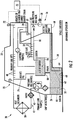
FIG. 2 schematic diagram of a lubrication system of a gearbox of a rotary wing aircraft in normal operation according to an embodiment; and -
FIG. 3 schematic diagram of another lubrication system of a gearbox of a rotary wing aircraft in an abnormal operation according to an embodiment. - A detailed description of one or more embodiments of the disclosed apparatus and method are presented herein by way of exemplification and not limitation with reference to the Figures.
- Referring to
FIG. 1 , schematically illustrated is a rotary-wing aircraft 10 having amain rotor system 12 in an exemplary embodiment. Theaircraft 10 includes anairframe 14 having an extendingtail 16 which mounts atail rotor system 18, such as an anti-torque system. Themain rotor system 12 is driven through a main power transmission gearbox, illustrated schematically at 20, by one or more engines E. Although a particular helicopter configuration is illustrated and described in the disclosed embodiment, other configurations and/or machines, such as ground vehicles, jet aircraft, turbofan engines, high speed compound rotary wing aircraft with supplemental translational thrust systems, dual contra-rotating, coaxial rotor system aircraft, quad-copter, multi-rotor lifting bodies, turbo-props, tilt-rotors and tilt-wing aircraft, and the like may also benefit from the embodiments described herein.Aircraft 10 may be a piloted (e.g., a manned aircraft), an unmanned aerial vehicle, optionally piloted vehicle, etc. - With reference to
FIG. 2 , a schematic diagram of a gearbox, such as the mainpower transmission gearbox 20 for example, is shown. Although the disclosure is provided with reference to the illustrated rotary-wing aircraft main power transmission gearbox having 20 highly-loaded torque transmitting gears and bearings, it should be appreciated that the teachings herein are applicable to any system which may require oil-out operation. Thegearbox 20 includes agearbox housing 22 and an interior 24. A plurality of components (not shown), such as bearings and gears for example, are disposed within the interior 24 of thegearbox housing 22. - A
lubrication system 30 communicates with thegearbox 20. Thelubrication system 30 generally includes areservoir 32 which retains a quantity of lubricant, i.e. lubricating oil. As shown, thereservoir 32 may be arranged adjacent aside 26 of thegearbox housing 22. In the illustrated, non-limiting embodiment, thereservoir 32 may extend vertically beyond abottom 34 of thegearbox housing 22. Accordingly, the interior 24 of thegearbox housing 22 may be fluidly coupled to thereservoir 32. Alternatively or in addition, a pump (not shown) may be mounted at thebottom 34 of thegearbox housing 22 and used to direct lubricant collected at thebottom 34 of thegearbox housing 22 back to thereservoir 32. - The
lubrication system 30 additionally includes one or moreprimary jets 40 and a primary circulatingsystem 42 for circulating lubricant from the reservoir to the primary jets and/or to other high friction locations to provide for effective operation of the gearbox assembly during normal operating conditions. In an embodiment, the one or moreprimary jets 40 are mounted at various locations within the interior 24 of thegearbox housing 22. However, theprimary jets 40 may be mounted at any suitable position to deliver lubricant to the components within the interior 24 of thegearbox housing 22. The term "jet" as used herein is intended to include any suitable mechanism for delivering a quantity of lubricant, including but not limited to a nozzle, a misting system, and a drip tank system for example. The primary circulatingsystem 42 may include at least one primary pump 44 for drawing lubricant from thereservoir 32. In addition, other components, such as afilter 48,heat exchanger 50, and bypass valve (not shown) may be disposed within the fluid flow path of the primary circulatingsystem 42. The primary circulatingsystem 42 need not be described in detail herein as various systems may be utilized in accordance with the principles of the present disclosure. Furthermore, it should be understood that various lubricants and lubricating oils may also be used herewith, such as, for example, DOD-L-85734 or MIL-PRF-23699. - The
lubrication system 30 additionally includes one or moresecondary jets 54 and a secondary circulatingsystem 56 for circulating lubricant from thereservoir 32 to the secondary orauxiliary jets 54 and/or to other high friction locations to provide for effective operation of thegearbox 20 during abnormal operating conditions, such as in the event of an emergency, or following a loss of pressure within the primary circulating system. Thesecondary jets 54 may be located at the most critical areas of thegearbox 20, for example the area most susceptible to friction or heat, within thegearbox housing 22. In the illustrated, non-limiting embodiment, the secondary circulatingsystem 56 includes asecondary pump 58. As shown, afirst conduit 60 extends from thereservoir 32 to an inlet of thesecondary pump 58 to fluidly couple thesecondary pump 58 and thereservoir 32. An outlet of thesecondary pump 58 is arranged in fluid communication with the plurality ofsecondary jets 54 via asecond conduit 62. - A screen extends from the
bottom surface 34 of thegearbox 22 across thereservoir 32. In the illustrated, non-limiting embodiment, the screen has a nonlinear contour. For example, thescreen 63 has a first angled section arranged adjacent thebottom surface 34 of thegearbox 22, and a second horizontal portion extending from a center of thereservoir 32 to anouter side wall 26 of thegearbox 22. In an embodiment, the screen is angled to allow debris to tumble toward the primary oil inlet. Further, aninlet 64 of thefirst conduit 60 is located at a position vertically lower than aninlet 66 of the primary circulatingsystem 42 within thereservoir 32. In the illustrated, non-limiting embodiment, theinlet end 64 of thefirst conduit 60 of the secondary circulatingsystem 56 is positioned generally adjacent a bottom 68 of thereservoir 32, below thescreen 63, and theinlet end 66 of the primary circulatingsystem 42 is disposed vertically above thescreen 63. Because lubricant, but not debris can pass through the openings formed in thescreen 63, thescreen 63 is intended to remove debris generated by the system from the flow of lubricant provided to the primary circulatingsystem 42 during normal operation. By positioning theinlet end 64 of theconduit 60 vertically below thescreen 63, the secondary circulatingsystem 56 is operable to draw lubricant from thereservoir 32 when the level of lubricant within thereservoir 32 is less than required to maintain an operating pressure for the primary circulatingsystem 42. - In an embodiment, the at least one primary pump 44 is a mechanical unit directly connected to the drive train of the gearbox, such as via one or more gears for example. However, embodiments where the at least one primary pump 44 is driven by another device are also within the scope of the disclosure. Operation of the at least one
secondary pump 58 is controlled by aprocessing device 70. In an embodiment, the processor logic of theprocessing device 70 is initiates thesecondary pump 58 when the pressure within the primary circulatingsystem 42 falls below a defined threshold. - During normal operation of the
lubrication system 30, the secondary circulatingsystem 56 is non-operational, and therefore lubricant is not provided to thesecondary jets 54. The pressure of the primary circulating system and the level of lubricant within thereservoir 32 are related. Accordingly, a pressure of the primary circulating system below a defined threshold indicates that the level of lubricant within thereservoir 32 is below theinlet 66 associated with the primary pump 44. This is because when the one or more primary pumps 44 are no longer able to draw a sufficient quantity of lubricant from thereservoir 32, and therefore an air/oil mixture or only air will be drawn through theinlet 66, the pressure within the primary circulatingsystem 42 drops. In an embodiment, the primary circulatingsystem 42 may include one ormore pressure devices 72, such as sensors for example, operable to monitor the pressure within the primary circulatingsystem 42. Thepressure devices 72 may be arranged in communication with theprocessing device 70. - In response to sensing a reduced pressure within the primary circulating
system 42, operation of thesecondary pump 58 is initiated via theprocessing device 70. Thesecondary pump 58 is operable to draw lubricant from adjacent the bottom 68 of thereservoir 32 and circulate that lubricant to one or moresecondary jets 54. In embodiments where the at least one primary pump 44 of the primary circulatingsystem 42 is mechanically driven, the primary pump 44 will continue to operate and circulate air during operation of the secondary circulatingsystem 56. However, in embodiments where the one or more primary pumps 44 are electrically driven, such as viaprocessing device 70 for example, the one or more primary pumps 44 may be deactivated in response to detection of the reduced pressure and/or activation of thesecondary pump 58. - In embodiments where the available space surrounding the
gearbox 20 is limited, the overall size, an in particular the depth, of thereservoir 32 may be restricted. For example, in the illustrated, non-limiting embodiment, the depth of thereservoir 32 extends minimally beyond theinlet 66 associated with the primary circulatingsystem 42. Accordingly, in such low profile configurations, thelubrication system 30 may additionally include asecondary reservoir 74 disposed within the interior 24 of thegearbox housing 22. Thesecondary reservoir 74 may be configured to retain a volume of lubricant for use under abnormal operating conditions or in "emergency conditions," such as an oil-out condition for example. - As shown, the
secondary reservoir 74 is vertically offset from the bottom 34 of thegearbox housing 22. In an embodiment, the primary circulatingsystem 42 includes aconduit 76 having an outlet arranged in fluid communication with thesecondary reservoir 74. Alternatively, or in addition, lubricant may be pumped into thesecondary reservoir 74 from one or more areas of thegearbox 22 from which lubricant is unable to drain via gravity, illustrated schematically at 78. Accordingly, during normal operation of thelubricating system 30, lubricant is provided to thesecondary reservoir 74. - The
secondary reservoir 74 is additionally arranged in fluid communication with an outlet of thesecondary pump 58 via athird conduit 80. Thesecond conduit 62 and thethird conduit 80 are arranged generally in parallel such that a first portion of the lubricant output from thesecondary pump 58 may be provided to thesecondary jets 54 and a second portion of the lubricant provided at the outlet of thesecondary pump 58 may be delivered to thesecondary reservoir 74. - In an embodiment, a
pressure regulating valve 82 is disposed within thethird conduit 80. Accordingly, when the pressure of the lubricant output from thesecondary pump 58 exceeds the threshold of thepressure regulating valve 80, the valve will open, thereby allowing the flow of lubricant to thesecondary reservoir 74. When the pressure of the lubricant output from thesecondary pump 58 is below the threshold of thepressure regulating valve 80, the valve remains closed. If the total amount of lubricant within thelubrication system 30 is limited, the pressure within the secondary circulatingsystem 56 will be limited. In such instances, the lubricant provided at the outlet of thesecondary pump 58 will be provided to thesecondary jets 54 but not to thesecondary reservoir 74. Inclusion of apressure regulating valve 82 having an outlet in communication with thesecondary reservoir 74 ensures that a maximum amount of lubricant is saved from being lost to a compromisedprimary system 42. - The
secondary reservoir 74 may be arranged in fluid communication with the interior 24 of thegearbox housing 22. In an embodiment, one ormore openings 84 are formed in abottom surface 86 of thesecondary reservoir 74. As a result, a portion of the lubricant accumulated within thesecondary reservoir 74 may fall therefrom into thereservoir 32, or alternatively into thegearbox housing 22, where it is collected at the bottom 34 of the interior 24, and provided to thereservoir 32. Further, it should be understood that the one ormore openings 84 may be sized to restrict or limit the flow of lubricant into thegearbox housing 22. In an embodiment, the rate at which lubricant is drained from thesecondary reservoir 74 may be substantially the same as the rate at which lubricant flows through the secondary circulatingsystem 56. As a result, thesecondary reservoir 74 maintains an adequate volume of lubricant for initial charging of the system and for occasional losses to theprimary system 42, such as due to maneuvering for example. Further, in an embodiment, the rate at which lubricant is provided to theprimary reservoir 32 from thesecondary reservoir 74 is substantially the same as the rate that lubricant flows through the at least onesecondary jet 54 of the secondary circulatingsystem 56. - A
lubrication system 30 as illustrated and described herein is capable of providing lubricant necessary to pressurize a secondary circulatingsystem 56 within the structural envelope of existing systems. - The term "about" is intended to include the degree of error associated with measurement of the particular quantity based upon the equipment available at the time of filing the application.
- The terminology used herein is for the purpose of describing particular embodiments only and is not intended to be limiting of the present disclosure. As used herein, the singular forms "a", "an" and "the" are intended to include the plural forms as well, unless the context clearly indicates otherwise. It will be further understood that the terms "comprises" and/or "comprising," when used in this specification, specify the presence of stated features, integers, steps, operations, elements, and/or components, but do not preclude the presence or addition of one or more other features, integers, steps, operations, element components, and/or groups thereof.
- While the present disclosure has been described with reference to an exemplary embodiment or embodiments, it will be understood by those skilled in the art that various changes may be made and equivalents may be substituted for elements thereof without departing from the scope of the present disclosure. In addition, many modifications may be made to adapt a particular situation or material to the teachings of the present disclosure without departing from the essential scope thereof. Therefore, it is intended that the present disclosure not be limited to the particular embodiment disclosed as the best mode contemplated for carrying out this present disclosure, but that the present disclosure will include all embodiments falling within the scope of the claims.
Claims (15)
- A lubrication system for a transmission assembly comprising:a primary reservoir;at least one primary jet;a primary circulating system fluidly coupling the primary reservoir and the at least one primary jet;a secondary reservoir;at least one secondary jet; anda secondary circulating system fluidly coupling the primary reservoir and the at least one secondary jet and fluidly coupling the primary reservoir and the secondary reservoir.
- The lubrication system of claim 1, further comprising a housing, wherein the at least one primary jet and the at least one secondary jet are positioned within an interior of the housing, particularly wherein the secondary reservoir is positioned within the interior of the housing.
- The lubrication system of one of claims 1-2, wherein the secondary reservoir is positioned vertically above the primary reservoir such that lubricant in the secondary reservoir falls into the primary reservoir.
- The lubrication system of one of claims 1-3, wherein the primary circulating system further comprises includes a primary pump for delivering lubricant from the primary reservoir to the at least one primary jet.
- The lubrication system of claim 4, wherein the secondary circulating system further comprises a secondary pump, a first conduit extending between the secondary pump and the at least one secondary jet, and a second conduit extending between the secondary pump and the secondary reservoir, particularly wherein the secondary circulating system further comprising a pressure regulating valve located within the second conduit, upstream from the secondary reservoir.
- The lubrication system of one of claims 1-5, further comprising a processing device operably coupled to a portion of the secondary circulating system to selectively activate and deactivate the secondary jet, particularly wherein the processing device is configured to control operation of the secondary circulating system in response to an operating condition of the primary circulating system.
- The lubrication system of claim 6, wherein the processing device is configured to determine whether the lubrication system is in a normal operating condition or an abnormal operating condition based on a pressure within the primary circulating system, to deactivate the secondary circulating system when in the normal operating condition such that lubrication from the primary reservoir is not provided to the at least one secondary jet, and to active the second circulating system when in the abnormal operating condition such that lubrication from the primary reservoir is provided to the at least one secondary jet.
- The lubrication system of claim 7, wherein in the normal operating condition, the primary circulating system delivers lubricant from the reservoir to the at least one primary jet from the primary reservoir and the secondary circulating system is non-operational.
- The lubrication system of claim 8, wherein in the abnormal operating condition, the primary circulating system is not operational and does not provide lubricant from the primary reservoir to the at least one primary jet, and the secondary circulating system delivers lubricant from the primary reservoir to the at least one secondary jet.
- The lubrication system of one of claims 7-9, wherein in the abnormal operating condition, the secondary circulating system further delivers lubricant from the primary reservoir to the secondary reservoir and the secondary reservoir provides the lubricant to the primary reservoir at a rate which is substantially the same as a rate at which lubricant flows through the at least one secondary jet in the secondary circulating system.
- The lubrication system of one of claims 1-10, wherein the transmission assembly is a gearbox, particularly wherein the gearbox is a main power transmission gearbox of a rotary-wing aircraft.
- A method of operating a lubrication system of a transmission assembly comprising:monitoring an operational parameter of a primary circulating system of the lubrication system;determining an operating condition of the lubrication system in response to the operational parameter as one of a normal operating condition and an abnormal operating condition;delivering lubricant from a reservoir to at least one primary jet via the primary circulating system when the operating condition of the lubrication system is determined to be the normal operating condition;delivering lubricant from the reservoir to at least one secondary jet via a secondary circulating system when the operating condition of the lubrication system is determined to be the abnormal operating condition; anddelivering lubricant to the secondary reservoir via the secondary circulating system when a pressure within the secondary circulating system exceeds a threshold.
- The method of claim 12, wherein the monitoring the operational parameter of a primary circulating system of the lubrication system includes sensing a pressure within the primary circulating system.
- The method of claim 12 or 13, wherein the determining the operating condition of the lubrication system in response to the operational parameter further comprises:determining that operation of the lubrication system is normal if the operational parameter exceeds a threshold; anddetermining that operation of the lubrication system is abnormal if the operational parameter is below a threshold.
- The method of one of claims 12-14, wherein in response to determining that operation of the lubrication system is abnormal, initiating operation of the secondary circulating system and/or stopping operation of the primary circulating system.
Applications Claiming Priority (1)
| Application Number | Priority Date | Filing Date | Title |
|---|---|---|---|
| US16/394,540 US11391363B2 (en) | 2019-04-25 | 2019-04-25 | Low profile auxiliary lubrication system |
Publications (2)
| Publication Number | Publication Date |
|---|---|
| EP3730816A1 true EP3730816A1 (en) | 2020-10-28 |
| EP3730816B1 EP3730816B1 (en) | 2022-10-05 |
Family
ID=70613567
Family Applications (1)
| Application Number | Title | Priority Date | Filing Date |
|---|---|---|---|
| EP20171248.6A Active EP3730816B1 (en) | 2019-04-25 | 2020-04-24 | Low profile auxiliary lubrication system |
Country Status (2)
| Country | Link |
|---|---|
| US (1) | US11391363B2 (en) |
| EP (1) | EP3730816B1 (en) |
Cited By (1)
| Publication number | Priority date | Publication date | Assignee | Title |
|---|---|---|---|---|
| EP4130442A1 (en) * | 2021-07-06 | 2023-02-08 | Pratt & Whitney Canada Corp. | Lubrication system for a turbine engine |
Families Citing this family (10)
| Publication number | Priority date | Publication date | Assignee | Title |
|---|---|---|---|---|
| FR3114861B1 (en) * | 2020-10-01 | 2022-08-19 | Airbus Helicopters | Lubrication system with an emergency tank |
| FR3134440B1 (en) * | 2022-04-07 | 2024-03-15 | Airbus Helicopters | Mechanical system provided with a casing housing above elements to be lubricated or cooled a reservoir of a lubricating fluid system |
| US20250137529A1 (en) * | 2022-06-22 | 2025-05-01 | General Electric Company | Gearbox assembly with lubricant extraction volume ratio |
| US12320418B2 (en) * | 2022-06-22 | 2025-06-03 | General Electric Company | Gearbox assembly with lubricant extraction volume ratio |
| US12326115B2 (en) * | 2022-06-22 | 2025-06-10 | General Electric Company | Gearbox assembly with lubricant extraction volume ratio |
| US12078239B2 (en) | 2022-10-25 | 2024-09-03 | Lockheed Martin Corporation | Gearbox lubrication system for an aircraft |
| US11852232B1 (en) * | 2022-11-01 | 2023-12-26 | Textron Innovations Inc. | Persistent lubrication systems for aircraft gearboxes |
| US12276333B2 (en) * | 2023-06-21 | 2025-04-15 | General Electric Company | Gearbox assembly lubrication system for a turbine engine |
| US20250035013A1 (en) * | 2023-07-28 | 2025-01-30 | General Electric Company | Method of operating a lubrication system for a turbine engine |
| DE102023212248A1 (en) * | 2023-12-05 | 2025-06-05 | Magna powertrain gmbh & co kg | Electric traction drive with active and passive coolant/lubricant circuit and method for operating the traction drive |
Citations (3)
| Publication number | Priority date | Publication date | Assignee | Title |
|---|---|---|---|---|
| US5121815A (en) * | 1990-02-20 | 1992-06-16 | Aerospatiale Societe Nationale Industrielle | Emergency lubricating device for a reduction unit particularly for a main gear box of a rotary-wing aircraft |
| US6666300B2 (en) * | 1999-09-10 | 2003-12-23 | Eurocopter | Device for lubricating a step-up/down mechanical assembly |
| WO2016171786A1 (en) * | 2015-04-21 | 2016-10-27 | Sikorsky Aircraft Corporation | Gearbox lubrication system for aircraft |
Family Cites Families (12)
| Publication number | Priority date | Publication date | Assignee | Title |
|---|---|---|---|---|
| US4717000A (en) * | 1986-08-05 | 1988-01-05 | Avco Corporation | Integrated emergency lubrication system |
| FR2826094B1 (en) | 2001-06-15 | 2003-11-28 | Eurocopter France | LUBRICATION AND COOLING SYSTEM FOR A MECHANICAL ASSEMBLY |
| US8602166B2 (en) | 2006-01-05 | 2013-12-10 | Sikorsky Aircraft Corporation | Secondary lubrication system with injectable additive |
| FR3027992B1 (en) * | 2014-10-31 | 2016-12-09 | Airbus Helicopters | LUBRICATION DEVICE WITH INCREASED TRIPLE CIRCUIT RELIABILITY OF A MAIN POWER TRANSMISSION BOX OF AN AIRCRAFT |
| FR3027998B1 (en) | 2014-10-31 | 2017-08-25 | Airbus Helicopters | DUAL CIRCUIT RELIABLE LUBRICATION METHOD AND DEVICE OF A MAIN POWER TRANSMISSION BOX OF AN AIRCRAFT |
| FR3037355B1 (en) * | 2015-06-11 | 2017-05-19 | Airbus Helicopters | TRANSMISSION BOX OF POWER AND AIRCRAFT |
| US10145276B2 (en) * | 2015-06-23 | 2018-12-04 | United Technologies Corporation | Lubricant valve monitoring method and assembly |
| US10190672B2 (en) | 2016-04-04 | 2019-01-29 | Bell Helicopter Textron Inc. | Gearbox lubrication system |
| JP6809393B2 (en) * | 2017-06-20 | 2021-01-06 | トヨタ自動車株式会社 | Lubrication device for vehicle power transmission device |
| US10844948B2 (en) * | 2017-12-08 | 2020-11-24 | Airbus Helicopters | Lubrication device having a plurality of lubrication liquid recovery tanks, and optimized and reliable delivery means to a main tank |
| US11506274B2 (en) * | 2018-07-25 | 2022-11-22 | Toyota Jidosha Kabushiki Kaisha | Power transmitting system of vehicle |
| JP6996474B2 (en) * | 2018-10-31 | 2022-01-17 | トヨタ自動車株式会社 | Lubrication device for power transmission device |
-
2019
- 2019-04-25 US US16/394,540 patent/US11391363B2/en active Active
-
2020
- 2020-04-24 EP EP20171248.6A patent/EP3730816B1/en active Active
Patent Citations (3)
| Publication number | Priority date | Publication date | Assignee | Title |
|---|---|---|---|---|
| US5121815A (en) * | 1990-02-20 | 1992-06-16 | Aerospatiale Societe Nationale Industrielle | Emergency lubricating device for a reduction unit particularly for a main gear box of a rotary-wing aircraft |
| US6666300B2 (en) * | 1999-09-10 | 2003-12-23 | Eurocopter | Device for lubricating a step-up/down mechanical assembly |
| WO2016171786A1 (en) * | 2015-04-21 | 2016-10-27 | Sikorsky Aircraft Corporation | Gearbox lubrication system for aircraft |
Cited By (1)
| Publication number | Priority date | Publication date | Assignee | Title |
|---|---|---|---|---|
| EP4130442A1 (en) * | 2021-07-06 | 2023-02-08 | Pratt & Whitney Canada Corp. | Lubrication system for a turbine engine |
Also Published As
| Publication number | Publication date |
|---|---|
| US20200340574A1 (en) | 2020-10-29 |
| EP3730816B1 (en) | 2022-10-05 |
| US11391363B2 (en) | 2022-07-19 |
Similar Documents
| Publication | Publication Date | Title |
|---|---|---|
| US11391363B2 (en) | Low profile auxiliary lubrication system | |
| EP2505878B1 (en) | Gearbox with passive lubrication system | |
| US9765875B2 (en) | Lubrication systems for gearbox assemblies | |
| EP1496302B1 (en) | Failure tolerant passive lubrication system | |
| US10677343B2 (en) | Fluid distribution assembly having anti-clog inlet housing | |
| WO2008091341A2 (en) | Lubrication system with prolonged loss of lubricant operation | |
| EP3447267B1 (en) | Supplemental lubrication pressurized by component or reservoir rotation | |
| US11280397B2 (en) | Method of retrofitting a gear box assembly with an emergency lubrication system | |
| EP3332103B1 (en) | Lubrication systems for transmissions | |
| EP3633239B1 (en) | Hybrid pressurized and non-pressurized lubrication system for aircraft gearbox | |
| KR20220044404A (en) | Lubrication system with a reserve tank | |
| US12134468B2 (en) | Hover-capable aircraft and lubrication method for a module of a transmission unit of said aircraft | |
| US10480636B2 (en) | Anti-clog lubricant distribution assembly |
Legal Events
| Date | Code | Title | Description |
|---|---|---|---|
| PUAI | Public reference made under article 153(3) epc to a published international application that has entered the european phase |
Free format text: ORIGINAL CODE: 0009012 |
|
| STAA | Information on the status of an ep patent application or granted ep patent |
Free format text: STATUS: THE APPLICATION HAS BEEN PUBLISHED |
|
| AK | Designated contracting states |
Kind code of ref document: A1 Designated state(s): AL AT BE BG CH CY CZ DE DK EE ES FI FR GB GR HR HU IE IS IT LI LT LU LV MC MK MT NL NO PL PT RO RS SE SI SK SM TR |
|
| AX | Request for extension of the european patent |
Extension state: BA ME |
|
| STAA | Information on the status of an ep patent application or granted ep patent |
Free format text: STATUS: REQUEST FOR EXAMINATION WAS MADE |
|
| 17P | Request for examination filed |
Effective date: 20210421 |
|
| RBV | Designated contracting states (corrected) |
Designated state(s): AL AT BE BG CH CY CZ DE DK EE ES FI FR GB GR HR HU IE IS IT LI LT LU LV MC MK MT NL NO PL PT RO RS SE SI SK SM TR |
|
| RIC1 | Information provided on ipc code assigned before grant |
Ipc: B64D 35/00 20060101ALN20220304BHEP Ipc: F01M 11/06 20060101ALN20220304BHEP Ipc: F01M 11/00 20060101ALN20220304BHEP Ipc: F01D 25/20 20060101ALN20220304BHEP Ipc: F16N 29/02 20060101ALI20220304BHEP Ipc: B64C 27/12 20060101ALI20220304BHEP Ipc: F16H 57/04 20100101AFI20220304BHEP |
|
| GRAP | Despatch of communication of intention to grant a patent |
Free format text: ORIGINAL CODE: EPIDOSNIGR1 |
|
| STAA | Information on the status of an ep patent application or granted ep patent |
Free format text: STATUS: GRANT OF PATENT IS INTENDED |
|
| RIC1 | Information provided on ipc code assigned before grant |
Ipc: B64D 35/00 20060101ALN20220314BHEP Ipc: F01M 11/06 20060101ALN20220314BHEP Ipc: F01M 11/00 20060101ALN20220314BHEP Ipc: F01D 25/20 20060101ALN20220314BHEP Ipc: F16N 29/02 20060101ALI20220314BHEP Ipc: B64C 27/12 20060101ALI20220314BHEP Ipc: F16H 57/04 20100101AFI20220314BHEP |
|
| INTG | Intention to grant announced |
Effective date: 20220419 |
|
| GRAS | Grant fee paid |
Free format text: ORIGINAL CODE: EPIDOSNIGR3 |
|
| GRAA | (expected) grant |
Free format text: ORIGINAL CODE: 0009210 |
|
| STAA | Information on the status of an ep patent application or granted ep patent |
Free format text: STATUS: THE PATENT HAS BEEN GRANTED |
|
| AK | Designated contracting states |
Kind code of ref document: B1 Designated state(s): AL AT BE BG CH CY CZ DE DK EE ES FI FR GB GR HR HU IE IS IT LI LT LU LV MC MK MT NL NO PL PT RO RS SE SI SK SM TR |
|
| REG | Reference to a national code |
Ref country code: GB Ref legal event code: FG4D |
|
| REG | Reference to a national code |
Ref country code: CH Ref legal event code: EP |
|
| REG | Reference to a national code |
Ref country code: AT Ref legal event code: REF Ref document number: 1522927 Country of ref document: AT Kind code of ref document: T Effective date: 20221015 |
|
| REG | Reference to a national code |
Ref country code: IE Ref legal event code: FG4D |
|
| REG | Reference to a national code |
Ref country code: DE Ref legal event code: R096 Ref document number: 602020005432 Country of ref document: DE |
|
| REG | Reference to a national code |
Ref country code: LT Ref legal event code: MG9D |
|
| REG | Reference to a national code |
Ref country code: NL Ref legal event code: MP Effective date: 20221005 |
|
| REG | Reference to a national code |
Ref country code: AT Ref legal event code: MK05 Ref document number: 1522927 Country of ref document: AT Kind code of ref document: T Effective date: 20221005 |
|
| PG25 | Lapsed in a contracting state [announced via postgrant information from national office to epo] |
Ref country code: NL Free format text: LAPSE BECAUSE OF FAILURE TO SUBMIT A TRANSLATION OF THE DESCRIPTION OR TO PAY THE FEE WITHIN THE PRESCRIBED TIME-LIMIT Effective date: 20221005 |
|
| PG25 | Lapsed in a contracting state [announced via postgrant information from national office to epo] |
Ref country code: SE Free format text: LAPSE BECAUSE OF FAILURE TO SUBMIT A TRANSLATION OF THE DESCRIPTION OR TO PAY THE FEE WITHIN THE PRESCRIBED TIME-LIMIT Effective date: 20221005 Ref country code: PT Free format text: LAPSE BECAUSE OF FAILURE TO SUBMIT A TRANSLATION OF THE DESCRIPTION OR TO PAY THE FEE WITHIN THE PRESCRIBED TIME-LIMIT Effective date: 20230206 Ref country code: NO Free format text: LAPSE BECAUSE OF FAILURE TO SUBMIT A TRANSLATION OF THE DESCRIPTION OR TO PAY THE FEE WITHIN THE PRESCRIBED TIME-LIMIT Effective date: 20230105 Ref country code: LT Free format text: LAPSE BECAUSE OF FAILURE TO SUBMIT A TRANSLATION OF THE DESCRIPTION OR TO PAY THE FEE WITHIN THE PRESCRIBED TIME-LIMIT Effective date: 20221005 Ref country code: FI Free format text: LAPSE BECAUSE OF FAILURE TO SUBMIT A TRANSLATION OF THE DESCRIPTION OR TO PAY THE FEE WITHIN THE PRESCRIBED TIME-LIMIT Effective date: 20221005 Ref country code: ES Free format text: LAPSE BECAUSE OF FAILURE TO SUBMIT A TRANSLATION OF THE DESCRIPTION OR TO PAY THE FEE WITHIN THE PRESCRIBED TIME-LIMIT Effective date: 20221005 Ref country code: AT Free format text: LAPSE BECAUSE OF FAILURE TO SUBMIT A TRANSLATION OF THE DESCRIPTION OR TO PAY THE FEE WITHIN THE PRESCRIBED TIME-LIMIT Effective date: 20221005 |
|
| PG25 | Lapsed in a contracting state [announced via postgrant information from national office to epo] |
Ref country code: RS Free format text: LAPSE BECAUSE OF FAILURE TO SUBMIT A TRANSLATION OF THE DESCRIPTION OR TO PAY THE FEE WITHIN THE PRESCRIBED TIME-LIMIT Effective date: 20221005 Ref country code: PL Free format text: LAPSE BECAUSE OF FAILURE TO SUBMIT A TRANSLATION OF THE DESCRIPTION OR TO PAY THE FEE WITHIN THE PRESCRIBED TIME-LIMIT Effective date: 20221005 Ref country code: LV Free format text: LAPSE BECAUSE OF FAILURE TO SUBMIT A TRANSLATION OF THE DESCRIPTION OR TO PAY THE FEE WITHIN THE PRESCRIBED TIME-LIMIT Effective date: 20221005 Ref country code: IS Free format text: LAPSE BECAUSE OF FAILURE TO SUBMIT A TRANSLATION OF THE DESCRIPTION OR TO PAY THE FEE WITHIN THE PRESCRIBED TIME-LIMIT Effective date: 20230205 Ref country code: HR Free format text: LAPSE BECAUSE OF FAILURE TO SUBMIT A TRANSLATION OF THE DESCRIPTION OR TO PAY THE FEE WITHIN THE PRESCRIBED TIME-LIMIT Effective date: 20221005 Ref country code: GR Free format text: LAPSE BECAUSE OF FAILURE TO SUBMIT A TRANSLATION OF THE DESCRIPTION OR TO PAY THE FEE WITHIN THE PRESCRIBED TIME-LIMIT Effective date: 20230106 |
|
| P01 | Opt-out of the competence of the unified patent court (upc) registered |
Effective date: 20230517 |
|
| REG | Reference to a national code |
Ref country code: DE Ref legal event code: R097 Ref document number: 602020005432 Country of ref document: DE |
|
| PG25 | Lapsed in a contracting state [announced via postgrant information from national office to epo] |
Ref country code: SM Free format text: LAPSE BECAUSE OF FAILURE TO SUBMIT A TRANSLATION OF THE DESCRIPTION OR TO PAY THE FEE WITHIN THE PRESCRIBED TIME-LIMIT Effective date: 20221005 Ref country code: RO Free format text: LAPSE BECAUSE OF FAILURE TO SUBMIT A TRANSLATION OF THE DESCRIPTION OR TO PAY THE FEE WITHIN THE PRESCRIBED TIME-LIMIT Effective date: 20221005 Ref country code: EE Free format text: LAPSE BECAUSE OF FAILURE TO SUBMIT A TRANSLATION OF THE DESCRIPTION OR TO PAY THE FEE WITHIN THE PRESCRIBED TIME-LIMIT Effective date: 20221005 Ref country code: DK Free format text: LAPSE BECAUSE OF FAILURE TO SUBMIT A TRANSLATION OF THE DESCRIPTION OR TO PAY THE FEE WITHIN THE PRESCRIBED TIME-LIMIT Effective date: 20221005 Ref country code: CZ Free format text: LAPSE BECAUSE OF FAILURE TO SUBMIT A TRANSLATION OF THE DESCRIPTION OR TO PAY THE FEE WITHIN THE PRESCRIBED TIME-LIMIT Effective date: 20221005 |
|
| PLBE | No opposition filed within time limit |
Free format text: ORIGINAL CODE: 0009261 |
|
| STAA | Information on the status of an ep patent application or granted ep patent |
Free format text: STATUS: NO OPPOSITION FILED WITHIN TIME LIMIT |
|
| PG25 | Lapsed in a contracting state [announced via postgrant information from national office to epo] |
Ref country code: SK Free format text: LAPSE BECAUSE OF FAILURE TO SUBMIT A TRANSLATION OF THE DESCRIPTION OR TO PAY THE FEE WITHIN THE PRESCRIBED TIME-LIMIT Effective date: 20221005 Ref country code: AL Free format text: LAPSE BECAUSE OF FAILURE TO SUBMIT A TRANSLATION OF THE DESCRIPTION OR TO PAY THE FEE WITHIN THE PRESCRIBED TIME-LIMIT Effective date: 20221005 |
|
| 26N | No opposition filed |
Effective date: 20230706 |
|
| PG25 | Lapsed in a contracting state [announced via postgrant information from national office to epo] |
Ref country code: SI Free format text: LAPSE BECAUSE OF FAILURE TO SUBMIT A TRANSLATION OF THE DESCRIPTION OR TO PAY THE FEE WITHIN THE PRESCRIBED TIME-LIMIT Effective date: 20221005 |
|
| REG | Reference to a national code |
Ref country code: CH Ref legal event code: PL |
|
| PG25 | Lapsed in a contracting state [announced via postgrant information from national office to epo] |
Ref country code: LU Free format text: LAPSE BECAUSE OF NON-PAYMENT OF DUE FEES Effective date: 20230424 |
|
| REG | Reference to a national code |
Ref country code: BE Ref legal event code: MM Effective date: 20230430 |
|
| PG25 | Lapsed in a contracting state [announced via postgrant information from national office to epo] |
Ref country code: MC Free format text: LAPSE BECAUSE OF FAILURE TO SUBMIT A TRANSLATION OF THE DESCRIPTION OR TO PAY THE FEE WITHIN THE PRESCRIBED TIME-LIMIT Effective date: 20221005 |
|
| PG25 | Lapsed in a contracting state [announced via postgrant information from national office to epo] |
Ref country code: MC Free format text: LAPSE BECAUSE OF FAILURE TO SUBMIT A TRANSLATION OF THE DESCRIPTION OR TO PAY THE FEE WITHIN THE PRESCRIBED TIME-LIMIT Effective date: 20221005 Ref country code: LI Free format text: LAPSE BECAUSE OF NON-PAYMENT OF DUE FEES Effective date: 20230430 Ref country code: CH Free format text: LAPSE BECAUSE OF NON-PAYMENT OF DUE FEES Effective date: 20230430 |
|
| REG | Reference to a national code |
Ref country code: IE Ref legal event code: MM4A |
|
| PG25 | Lapsed in a contracting state [announced via postgrant information from national office to epo] |
Ref country code: BE Free format text: LAPSE BECAUSE OF NON-PAYMENT OF DUE FEES Effective date: 20230430 |
|
| PG25 | Lapsed in a contracting state [announced via postgrant information from national office to epo] |
Ref country code: IE Free format text: LAPSE BECAUSE OF NON-PAYMENT OF DUE FEES Effective date: 20230424 |
|
| PG25 | Lapsed in a contracting state [announced via postgrant information from national office to epo] |
Ref country code: IE Free format text: LAPSE BECAUSE OF NON-PAYMENT OF DUE FEES Effective date: 20230424 |
|
| PG25 | Lapsed in a contracting state [announced via postgrant information from national office to epo] |
Ref country code: BG Free format text: LAPSE BECAUSE OF FAILURE TO SUBMIT A TRANSLATION OF THE DESCRIPTION OR TO PAY THE FEE WITHIN THE PRESCRIBED TIME-LIMIT Effective date: 20221005 |
|
| PG25 | Lapsed in a contracting state [announced via postgrant information from national office to epo] |
Ref country code: BG Free format text: LAPSE BECAUSE OF FAILURE TO SUBMIT A TRANSLATION OF THE DESCRIPTION OR TO PAY THE FEE WITHIN THE PRESCRIBED TIME-LIMIT Effective date: 20221005 |
|
| PGFP | Annual fee paid to national office [announced via postgrant information from national office to epo] |
Ref country code: DE Payment date: 20250429 Year of fee payment: 6 |
|
| PGFP | Annual fee paid to national office [announced via postgrant information from national office to epo] |
Ref country code: GB Payment date: 20250428 Year of fee payment: 6 |
|
| PGFP | Annual fee paid to national office [announced via postgrant information from national office to epo] |
Ref country code: IT Payment date: 20250422 Year of fee payment: 6 |
|
| PGFP | Annual fee paid to national office [announced via postgrant information from national office to epo] |
Ref country code: FR Payment date: 20250425 Year of fee payment: 6 |
|
| PG25 | Lapsed in a contracting state [announced via postgrant information from national office to epo] |
Ref country code: CY Free format text: LAPSE BECAUSE OF FAILURE TO SUBMIT A TRANSLATION OF THE DESCRIPTION OR TO PAY THE FEE WITHIN THE PRESCRIBED TIME-LIMIT; INVALID AB INITIO Effective date: 20200424 |
|
| PG25 | Lapsed in a contracting state [announced via postgrant information from national office to epo] |
Ref country code: HU Free format text: LAPSE BECAUSE OF FAILURE TO SUBMIT A TRANSLATION OF THE DESCRIPTION OR TO PAY THE FEE WITHIN THE PRESCRIBED TIME-LIMIT; INVALID AB INITIO Effective date: 20200424 |
|
| PG25 | Lapsed in a contracting state [announced via postgrant information from national office to epo] |
Ref country code: TR Free format text: LAPSE BECAUSE OF FAILURE TO SUBMIT A TRANSLATION OF THE DESCRIPTION OR TO PAY THE FEE WITHIN THE PRESCRIBED TIME-LIMIT Effective date: 20221005 |