EP3729779B1 - Verfahren, und computerprogramm und vorrichtung für kontenübergreifende transfers zwischen verteilten ledgern - Google Patents
Verfahren, und computerprogramm und vorrichtung für kontenübergreifende transfers zwischen verteilten ledgern Download PDFInfo
- Publication number
- EP3729779B1 EP3729779B1 EP18893095.2A EP18893095A EP3729779B1 EP 3729779 B1 EP3729779 B1 EP 3729779B1 EP 18893095 A EP18893095 A EP 18893095A EP 3729779 B1 EP3729779 B1 EP 3729779B1
- Authority
- EP
- European Patent Office
- Prior art keywords
- transaction
- distributed ledger
- ledger
- initiating
- locking
- Prior art date
- Legal status (The legal status is an assumption and is not a legal conclusion. Google has not performed a legal analysis and makes no representation as to the accuracy of the status listed.)
- Active
Links
Images








Classifications
-
- G—PHYSICS
- G06—COMPUTING OR CALCULATING; COUNTING
- G06Q—INFORMATION AND COMMUNICATION TECHNOLOGY [ICT] SPECIALLY ADAPTED FOR ADMINISTRATIVE, COMMERCIAL, FINANCIAL, MANAGERIAL OR SUPERVISORY PURPOSES; SYSTEMS OR METHODS SPECIALLY ADAPTED FOR ADMINISTRATIVE, COMMERCIAL, FINANCIAL, MANAGERIAL OR SUPERVISORY PURPOSES, NOT OTHERWISE PROVIDED FOR
- G06Q20/00—Payment architectures, schemes or protocols
- G06Q20/04—Payment circuits
- G06Q20/06—Private payment circuits, e.g. involving electronic currency used among participants of a common payment scheme
-
- G—PHYSICS
- G06—COMPUTING OR CALCULATING; COUNTING
- G06Q—INFORMATION AND COMMUNICATION TECHNOLOGY [ICT] SPECIALLY ADAPTED FOR ADMINISTRATIVE, COMMERCIAL, FINANCIAL, MANAGERIAL OR SUPERVISORY PURPOSES; SYSTEMS OR METHODS SPECIALLY ADAPTED FOR ADMINISTRATIVE, COMMERCIAL, FINANCIAL, MANAGERIAL OR SUPERVISORY PURPOSES, NOT OTHERWISE PROVIDED FOR
- G06Q20/00—Payment architectures, schemes or protocols
- G06Q20/04—Payment circuits
- G06Q20/06—Private payment circuits, e.g. involving electronic currency used among participants of a common payment scheme
- G06Q20/065—Private payment circuits, e.g. involving electronic currency used among participants of a common payment scheme using e-cash
-
- G—PHYSICS
- G06—COMPUTING OR CALCULATING; COUNTING
- G06Q—INFORMATION AND COMMUNICATION TECHNOLOGY [ICT] SPECIALLY ADAPTED FOR ADMINISTRATIVE, COMMERCIAL, FINANCIAL, MANAGERIAL OR SUPERVISORY PURPOSES; SYSTEMS OR METHODS SPECIALLY ADAPTED FOR ADMINISTRATIVE, COMMERCIAL, FINANCIAL, MANAGERIAL OR SUPERVISORY PURPOSES, NOT OTHERWISE PROVIDED FOR
- G06Q20/00—Payment architectures, schemes or protocols
- G06Q20/30—Payment architectures, schemes or protocols characterised by the use of specific devices or networks
- G06Q20/36—Payment architectures, schemes or protocols characterised by the use of specific devices or networks using electronic wallets or electronic money safes
- G06Q20/367—Payment architectures, schemes or protocols characterised by the use of specific devices or networks using electronic wallets or electronic money safes involving electronic purses or money safes
- G06Q20/3678—Payment architectures, schemes or protocols characterised by the use of specific devices or networks using electronic wallets or electronic money safes involving electronic purses or money safes e-cash details, e.g. blinded, divisible or detecting double spending
-
- G—PHYSICS
- G06—COMPUTING OR CALCULATING; COUNTING
- G06Q—INFORMATION AND COMMUNICATION TECHNOLOGY [ICT] SPECIALLY ADAPTED FOR ADMINISTRATIVE, COMMERCIAL, FINANCIAL, MANAGERIAL OR SUPERVISORY PURPOSES; SYSTEMS OR METHODS SPECIALLY ADAPTED FOR ADMINISTRATIVE, COMMERCIAL, FINANCIAL, MANAGERIAL OR SUPERVISORY PURPOSES, NOT OTHERWISE PROVIDED FOR
- G06Q20/00—Payment architectures, schemes or protocols
- G06Q20/38—Payment protocols; Details thereof
- G06Q20/381—Currency conversion
-
- G—PHYSICS
- G06—COMPUTING OR CALCULATING; COUNTING
- G06Q—INFORMATION AND COMMUNICATION TECHNOLOGY [ICT] SPECIALLY ADAPTED FOR ADMINISTRATIVE, COMMERCIAL, FINANCIAL, MANAGERIAL OR SUPERVISORY PURPOSES; SYSTEMS OR METHODS SPECIALLY ADAPTED FOR ADMINISTRATIVE, COMMERCIAL, FINANCIAL, MANAGERIAL OR SUPERVISORY PURPOSES, NOT OTHERWISE PROVIDED FOR
- G06Q20/00—Payment architectures, schemes or protocols
- G06Q20/38—Payment protocols; Details thereof
- G06Q20/382—Payment protocols; Details thereof insuring higher security of transaction
-
- G—PHYSICS
- G06—COMPUTING OR CALCULATING; COUNTING
- G06Q—INFORMATION AND COMMUNICATION TECHNOLOGY [ICT] SPECIALLY ADAPTED FOR ADMINISTRATIVE, COMMERCIAL, FINANCIAL, MANAGERIAL OR SUPERVISORY PURPOSES; SYSTEMS OR METHODS SPECIALLY ADAPTED FOR ADMINISTRATIVE, COMMERCIAL, FINANCIAL, MANAGERIAL OR SUPERVISORY PURPOSES, NOT OTHERWISE PROVIDED FOR
- G06Q20/00—Payment architectures, schemes or protocols
- G06Q20/38—Payment protocols; Details thereof
- G06Q20/382—Payment protocols; Details thereof insuring higher security of transaction
- G06Q20/3827—Use of message hashing
-
- G—PHYSICS
- G06—COMPUTING OR CALCULATING; COUNTING
- G06Q—INFORMATION AND COMMUNICATION TECHNOLOGY [ICT] SPECIALLY ADAPTED FOR ADMINISTRATIVE, COMMERCIAL, FINANCIAL, MANAGERIAL OR SUPERVISORY PURPOSES; SYSTEMS OR METHODS SPECIALLY ADAPTED FOR ADMINISTRATIVE, COMMERCIAL, FINANCIAL, MANAGERIAL OR SUPERVISORY PURPOSES, NOT OTHERWISE PROVIDED FOR
- G06Q20/00—Payment architectures, schemes or protocols
- G06Q20/38—Payment protocols; Details thereof
- G06Q20/389—Keeping log of transactions for guaranteeing non-repudiation of a transaction
-
- G—PHYSICS
- G06—COMPUTING OR CALCULATING; COUNTING
- G06Q—INFORMATION AND COMMUNICATION TECHNOLOGY [ICT] SPECIALLY ADAPTED FOR ADMINISTRATIVE, COMMERCIAL, FINANCIAL, MANAGERIAL OR SUPERVISORY PURPOSES; SYSTEMS OR METHODS SPECIALLY ADAPTED FOR ADMINISTRATIVE, COMMERCIAL, FINANCIAL, MANAGERIAL OR SUPERVISORY PURPOSES, NOT OTHERWISE PROVIDED FOR
- G06Q20/00—Payment architectures, schemes or protocols
- G06Q20/38—Payment protocols; Details thereof
- G06Q20/40—Authorisation, e.g. identification of payer or payee, verification of customer or shop credentials; Review and approval of payers, e.g. check credit lines or negative lists
- G06Q20/401—Transaction verification
- G06Q20/4014—Identity check for transactions
-
- H—ELECTRICITY
- H04—ELECTRIC COMMUNICATION TECHNIQUE
- H04L—TRANSMISSION OF DIGITAL INFORMATION, e.g. TELEGRAPHIC COMMUNICATION
- H04L63/00—Network architectures or network communication protocols for network security
- H04L63/12—Applying verification of the received information
-
- H—ELECTRICITY
- H04—ELECTRIC COMMUNICATION TECHNIQUE
- H04L—TRANSMISSION OF DIGITAL INFORMATION, e.g. TELEGRAPHIC COMMUNICATION
- H04L67/00—Network arrangements or protocols for supporting network services or applications
- H04L67/01—Protocols
- H04L67/10—Protocols in which an application is distributed across nodes in the network
- H04L67/1097—Protocols in which an application is distributed across nodes in the network for distributed storage of data in networks, e.g. transport arrangements for network file system [NFS], storage area networks [SAN] or network attached storage [NAS]
-
- H—ELECTRICITY
- H04—ELECTRIC COMMUNICATION TECHNIQUE
- H04L—TRANSMISSION OF DIGITAL INFORMATION, e.g. TELEGRAPHIC COMMUNICATION
- H04L9/00—Cryptographic mechanisms or cryptographic arrangements for secret or secure communications; Network security protocols
- H04L9/32—Cryptographic mechanisms or cryptographic arrangements for secret or secure communications; Network security protocols including means for verifying the identity or authority of a user of the system or for message authentication, e.g. authorization, entity authentication, data integrity or data verification, non-repudiation, key authentication or verification of credentials
- H04L9/3236—Cryptographic mechanisms or cryptographic arrangements for secret or secure communications; Network security protocols including means for verifying the identity or authority of a user of the system or for message authentication, e.g. authorization, entity authentication, data integrity or data verification, non-repudiation, key authentication or verification of credentials using cryptographic hash functions
-
- H—ELECTRICITY
- H04—ELECTRIC COMMUNICATION TECHNIQUE
- H04L—TRANSMISSION OF DIGITAL INFORMATION, e.g. TELEGRAPHIC COMMUNICATION
- H04L9/00—Cryptographic mechanisms or cryptographic arrangements for secret or secure communications; Network security protocols
- H04L9/32—Cryptographic mechanisms or cryptographic arrangements for secret or secure communications; Network security protocols including means for verifying the identity or authority of a user of the system or for message authentication, e.g. authorization, entity authentication, data integrity or data verification, non-repudiation, key authentication or verification of credentials
- H04L9/3247—Cryptographic mechanisms or cryptographic arrangements for secret or secure communications; Network security protocols including means for verifying the identity or authority of a user of the system or for message authentication, e.g. authorization, entity authentication, data integrity or data verification, non-repudiation, key authentication or verification of credentials involving digital signatures
-
- H—ELECTRICITY
- H04—ELECTRIC COMMUNICATION TECHNIQUE
- H04L—TRANSMISSION OF DIGITAL INFORMATION, e.g. TELEGRAPHIC COMMUNICATION
- H04L9/00—Cryptographic mechanisms or cryptographic arrangements for secret or secure communications; Network security protocols
- H04L9/40—Network security protocols
-
- H—ELECTRICITY
- H04—ELECTRIC COMMUNICATION TECHNIQUE
- H04L—TRANSMISSION OF DIGITAL INFORMATION, e.g. TELEGRAPHIC COMMUNICATION
- H04L9/00—Cryptographic mechanisms or cryptographic arrangements for secret or secure communications; Network security protocols
- H04L9/50—Cryptographic mechanisms or cryptographic arrangements for secret or secure communications; Network security protocols using hash chains, e.g. blockchains or hash trees
-
- H—ELECTRICITY
- H04—ELECTRIC COMMUNICATION TECHNIQUE
- H04M—TELEPHONIC COMMUNICATION
- H04M15/00—Arrangements for metering, time-control or time indication ; Metering, charging or billing arrangements for voice wireline or wireless communications, e.g. VoIP
- H04M15/70—Administration or customization aspects; Counter-checking correct charges
- H04M15/785—Reserving amount on the account
-
- G—PHYSICS
- G06—COMPUTING OR CALCULATING; COUNTING
- G06Q—INFORMATION AND COMMUNICATION TECHNOLOGY [ICT] SPECIALLY ADAPTED FOR ADMINISTRATIVE, COMMERCIAL, FINANCIAL, MANAGERIAL OR SUPERVISORY PURPOSES; SYSTEMS OR METHODS SPECIALLY ADAPTED FOR ADMINISTRATIVE, COMMERCIAL, FINANCIAL, MANAGERIAL OR SUPERVISORY PURPOSES, NOT OTHERWISE PROVIDED FOR
- G06Q20/00—Payment architectures, schemes or protocols
- G06Q20/22—Payment schemes or models
- G06Q20/227—Payment schemes or models characterised in that multiple accounts are available, e.g. to the payer
-
- G—PHYSICS
- G06—COMPUTING OR CALCULATING; COUNTING
- G06Q—INFORMATION AND COMMUNICATION TECHNOLOGY [ICT] SPECIALLY ADAPTED FOR ADMINISTRATIVE, COMMERCIAL, FINANCIAL, MANAGERIAL OR SUPERVISORY PURPOSES; SYSTEMS OR METHODS SPECIALLY ADAPTED FOR ADMINISTRATIVE, COMMERCIAL, FINANCIAL, MANAGERIAL OR SUPERVISORY PURPOSES, NOT OTHERWISE PROVIDED FOR
- G06Q20/00—Payment architectures, schemes or protocols
- G06Q20/38—Payment protocols; Details thereof
- G06Q20/40—Authorisation, e.g. identification of payer or payee, verification of customer or shop credentials; Review and approval of payers, e.g. check credit lines or negative lists
- G06Q20/401—Transaction verification
-
- G—PHYSICS
- G06—COMPUTING OR CALCULATING; COUNTING
- G06Q—INFORMATION AND COMMUNICATION TECHNOLOGY [ICT] SPECIALLY ADAPTED FOR ADMINISTRATIVE, COMMERCIAL, FINANCIAL, MANAGERIAL OR SUPERVISORY PURPOSES; SYSTEMS OR METHODS SPECIALLY ADAPTED FOR ADMINISTRATIVE, COMMERCIAL, FINANCIAL, MANAGERIAL OR SUPERVISORY PURPOSES, NOT OTHERWISE PROVIDED FOR
- G06Q20/00—Payment architectures, schemes or protocols
- G06Q20/38—Payment protocols; Details thereof
- G06Q20/40—Authorisation, e.g. identification of payer or payee, verification of customer or shop credentials; Review and approval of payers, e.g. check credit lines or negative lists
- G06Q20/409—Device specific authentication in transaction processing
- G06Q20/4097—Device specific authentication in transaction processing using mutual authentication between devices and transaction partners
- G06Q20/40975—Device specific authentication in transaction processing using mutual authentication between devices and transaction partners using encryption therefor
-
- G—PHYSICS
- G06—COMPUTING OR CALCULATING; COUNTING
- G06Q—INFORMATION AND COMMUNICATION TECHNOLOGY [ICT] SPECIALLY ADAPTED FOR ADMINISTRATIVE, COMMERCIAL, FINANCIAL, MANAGERIAL OR SUPERVISORY PURPOSES; SYSTEMS OR METHODS SPECIALLY ADAPTED FOR ADMINISTRATIVE, COMMERCIAL, FINANCIAL, MANAGERIAL OR SUPERVISORY PURPOSES, NOT OTHERWISE PROVIDED FOR
- G06Q2220/00—Business processing using cryptography
-
- H—ELECTRICITY
- H04—ELECTRIC COMMUNICATION TECHNIQUE
- H04L—TRANSMISSION OF DIGITAL INFORMATION, e.g. TELEGRAPHIC COMMUNICATION
- H04L2209/00—Additional information or applications relating to cryptographic mechanisms or cryptographic arrangements for secret or secure communication H04L9/00
- H04L2209/56—Financial cryptography, e.g. electronic payment or e-cash
Definitions
- the present disclosure relates generally to computer and network technology. More particularly, the present disclosure relates to blockchain and other distributed ledger technologies.
- a blockchain is a chain of block data structures (blocks) that is accessed and validated by a blockchain network.
- One example of a blockchain is known as the BITCOIN blockchain which functions as a distributed ledger of BITCOIN transactions, where BITCOIN is a specific cryptocurrency.
- Each block in the BITCOIN blockchain encodes multiple transactions of BITCOINs.
- each block includes a block header and a root of the Merkle tree of hash values for transactions included in the block.
- Each block is identified by a block hash (which is a hash value of the block header).
- the block header includes the root of the block's Merkle tree, the block hash of the previous block in the chain, and a nonce.
- a new block of transactions may be added to the BITCOIN blockchain by a miner in the BITCOIN network. Miners may access the blockchain and receive broadcasts of new transactions.
- a new block may be added to the blockchain when a miner validates the transactions in a prospective block and satisfies a challenge.
- a consensus protocol protects the consistency and integrity of the BITCOIN blockchain.
- US 2016/0330034 A1 describes systems and methods for transferring an asset from a parent chain to a sidechain.
- a simplified payment verification (SPV) proof associated with the parent chain asset may be generated.
- the SPV proof may include a threshold level of work.
- the SPV proof associated with the parent chain asset may be validated, and a sidechain asset corresponding to the parent chain asset may be generated. If no reorganization proof is detected, the sidechain asset is released.
- a SPV proof associated with the sidechain asset may be generated.
- the parent chain may validate the SPV proof associated with the sidechain asset.
- the parent chain asset associated with the sidechain asset may be held for a second predetermined contest period. The parent chain asset may then be released if no reorganization proof associated with the sidechain asset is detected.
- US 2017/0221052 A1 describes that the computationally efficient transfer processing, auditing, and search apparatuses, methods and systems (“SOCOACT”) transforms smart contract request, crypto currency deposit request, crypto collateral deposit request, crypto currency transfer request, crypto collateral transfer request inputs via SOCOACT components into transaction confirmation outputs. Also, SOCOACT transforms transaction record inputs via SOCOACT components into matrix and list tuple outputs for computationally efficient auditing.
- a blockchain transaction data auditing apparatus comprises a blockchain recordation component, a matrix Conversion component, and a bloom filter component.
- the blockchain recordation component receives a plurality of transaction records for each of a plurality of transactions, each transaction record comprising a source address, a destination address, a transaction amount and a timestamp of a transaction; the source address comprising a source wallet address corresponding to a source digital wallet, and the destination address comprising a destination wallet address corresponding to a destination virtual currency wallet; verifies that the transaction amount is available in the source virtual currency wallet; and when the transaction amount is available, cryptographically records the transaction in a blockchain comprising a plurality of hashes of transaction records.
- the Bloom Filter component receives the source address and the destination address, hashes the source address using a Bloom Filter to generate a source wallet address, and hashes the destination address using the Bloom Filter to generate a destination wallet address.
- the Matrix Conversion component adds the source wallet address as a first row and a column entry to a stored distance matrix representing the plurality of transactions, adds the destination wallet address as a second row and column entry to the stored distance matrix representing the plurality of transactions, adds the transaction amount and the timestamp as an entry to the row corresponding to the source wallet address and the column corresponding to the destination wallet address; and generate a list representation of the matrix, where each entry in the list comprises a tuple having the source wallet address, the destination wallet address, the transaction amount and the timestamp.
- US 2013/0226891 A1 describes that a first process in a data grid provides an initial version that corresponds to transaction data controlled by the first to a second process and a third process.
- the first process receives a request of the second process and changes the transaction data based on a first transaction.
- the first process provides a current version value of the transaction data to the second process and commit the change to the transaction data based on the first transaction if the current version value matches the initial version value provided to the second process and creates a new version value for the transaction data upon committing the change.
- the first process changes the transaction data based on the second transaction and rolls back the change made to the transaction data based on the second transaction if the new version value does not match the initial version value provided to the third process.
- the transaction throughput of conventional distributed ledger technologies has significant limitations and is not readily scalable.
- the BITCOIN blockchain network has highly problematic throughput limitations due to latency and bandwidth issues, along with block size limits. It is highly desirable to solve the throughput scalability problem of distributed ledger technology.
- the presently-disclosed solution provides cross-ledger transfers between distributed ledgers to achieve highly-scalable transaction throughput.
- Disclosed are methods and instruction code for writing a cross-ledger transfer in a way that effectively transfers value from a source to a target distributed ledger while preventing double spending of the value.
- system architectures that utilize cross-ledger transfers between multiple distributed ledgers to achieve highly-scalable transaction throughput.
- computer apparatus configured to implement cross- ledger transfers between distributed ledgers.
- the cross-ledger transfer of the presently-disclosed solution results in the transformation or modification of the ledgers in that the total value in the source ledger is decreased by the transferred value while the total value in the target ledger is increased by the same amount.
- the extinction of the transferred value in the source ledger and the re-creation of the transferred value in the target ledger may be accomplished using a locking transaction in the source ledger and initiating and completing transactions in the target ledger.
- the locking transaction references the initiating transaction
- the completing transaction references the locking transaction and spends a transaction output of the initiating transaction.
- This alternative generally uses a distributed ledger to clear and settle transactions in a cryptographic currency.
- a notable example of such a cryptographic currency is BITCOIN which is maintained by the BITCOIN blockchain network.
- Other examples of cryptographic currencies include LITECOIN, NOVACOIN, NAMECOIN, DOGECOIN, PEER-COIN, ETHEREUM, and RIPPLE.
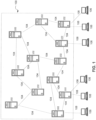
- FIG. 1 is a diagram depicting the structure of a single distributed ledger network 100 in accordance with an embodiment of the invention.
- the distributed ledger network 100 may be used to maintain a distributed ledger of transactions.
- a distributed ledger is the BITCOIN blockchain.
- the distributed ledger network 100 may be generally any blockchain network or may be another type of distributed ledger network, such as one that uses a directed acyclic graph (DAG) algorithm to provide a DAG-based ledger.
- DAG directed acyclic graph
- the presently-disclosed solution is generally applicable to (compatible with) a distributed ledger that is implemented using block of transactions, where each block header has a Merkle root of the transactions contained in the block.
- the distributed ledger network 100 includes a plurality of nodes 102 with communicative connections 104 therebetween. For purpose of ease of illustration, only several nodes 102 are shown in the figure, but the distributed ledger network 100 may have a very large number of nodes with various interconnections 104 therebetween.
- the nodes 102 generally each contain a complete and up-to-date copy of the data of the distributed ledger and so may be referred to as full nodes.
- full nodes may operate as miners of the BITCOIN blockchain, where successful miners are paid in the digital currency of BITCOIN.
- a distributed ledger may not need to pay successful miners in a digital currency and, furthermore, may deal more generally with digitally-represented assets (or liabilities) which need not be in a cryptocurrency.
- a plurality of clients 106 may be communicatively connected to the digital ledger network 100. These clients 106 are lightweight nodes in that they do not maintain a complete and up-to-date copy of the distributed ledger, but they still have the capability to verify transactions in the distributed ledger.
- the clients 106 may be implemented as payment verification (PV) nodes which may verify transactions using a payment verification method.
- PV node may be a non-full node that is connected to the distributed ledger network and holds the data required to prove the validity of a transaction in the distributed ledger. Individual transaction records are generally missing from the data at a PV node, so the PV node may be considered to be a client of a distributed ledger network.
- the PV node when the distributed ledger is a blockchain, the PV node may be a simplified payment verification (SPV) node, and the required data includes a Merkle root of the transactions in the block, the previous block hash, and a list of block signatures created by block validators.
- SPV payment verification
- the clients 106 may be considered to form part of an extended network beyond the core distributed ledger network. While only a few clients 106 are shown for ease of illustration, a multitude of clients 106 may be connected to the distributed ledger network 100. As mentioned above, a famous example of a distributed ledger is a blockchain.
- a blockchain is maintained by a peer-to-peer (P2P) network of nodes running a P2P protocol to reach consensus serially on blocks of transactions.
- P2P peer-to-peer
- the presently-disclosed solution may be generally applied to blockchain technology or to other distributed ledger technologies.
- a transaction in the distributed ledger may include a list of inputs and a list of outputs.
- a transaction hash may be constructed by hashing all of the data within a transaction.
- a transaction hash may be used to reference a transaction (i.e. as a transaction identifier or tx id).
- a transaction output may be identified by the hash of its transaction, its index within the transaction, and an identification of the recipient of the TXO.
- a TXO may hold any digitally-represented asset. TXOs are not transferred; the digitally- represented economic values within TXOs are transferred.
- the recipient may be identified by the hash of a public key of the recipient (who has the corresponding private key).
- a transaction input references a TXO.
- a transaction input references a TXO by the transaction hash and output index of the TXO.
- the transaction input 210 for a cross-ledger transaction may be as described below in relation to FIG. 2 .
- a conventional distributed ledger network such as the BITCOIN network, has substantial transaction throughput limitations. These limitations are due to latency and bandwidth issues, along with limits to the block size.
- the present disclosure provides an innovative solution to overcome the above- discussed transaction throughput limitations of a conventional distributed ledger technologies.
- Disclosed is technology that provides a multiple distributed ledger system with cross-ledger transfers.
- the cross-ledger transfers enable digitally- represented economic value to be transferred from one distributed ledger to another distributed ledger.
- An example of digitally-represented economic value is a cryptocurrency, such as BITCOIN in the BITCOIN blockchain.
- the digitally-represented economic value transferred between source and target distributed ledgers may be any digitally-represented asset (such as conventional currency, cryptocurrency, a commodity, or other property) or liability (such as a debt).
- the digitally-represented economic value may be in an amount of currency.
- the digitally-represented economic value may be in an amount of cryptocurrency.
- the digitally-represented economic value may be an amount of a commodity.
- the cross-ledger transactions may be used to, in effect, link together the multiple distributed ledgers of the system. As such, the integrity of the transactions in each distributed ledger depends upon the integrity of the transactions in the other linked distributed ledger(s).
- each co-ledger is a separate or"foreign" distributed ledger in relation to the other co-ledgers.
- Each co-ledger maintains its own ledger of transactions, and its ledger does not include transactions of the other co-ledgers.
- a transaction in one co-ledger may reference a transaction in a different co-ledger.
- a multiple distributed ledger system having a scalable number of co-ledgers may be applied to overcome the above-discussed throughput limitations of a single distributed ledger network.
- the latency limitation may be overcome because, when two validator nodes have a long latency between them, then they may be separated into distinct distributed ledger networks within the system. Since the two nodes validate different ledgers, the long latency between them will not affect the consensus time of either ledger. Hence, the presently-disclosed solution may be used to substantially reduce or eliminate the effect on performance of long latencies between nodes.
- the bandwidth limitation may be overcome because the block size may be effectively reduced by using multiple co-ledgers, instead of a single distributed ledger.
- a structure with N co-ledgers may be used to effectively reduce the block size by a factor on the order of 1/N.
- a cross-ledger transaction between two distributed ledgers effectively extinguishes an existing unspent transaction output (UTXO) on the source distributed ledger 200S and creates one or more new UTXOs (with a total value equal to the extinguished UTXO) in the target distributed ledger 200T.
- UTXO unspent transaction output
- FIG. 2 Components of a cross-ledger transaction 205 that are written into the target distributed ledger 200T are depicted FIG. 2 in accordance with an embodiment of the invention.
- the cross-ledger transaction 205 (which is to be written into the target distributed ledger 200T) comprises a transaction input 210, that provides references into the source distributed ledger 200S and a transaction output (or outputs) 220 which transfer value (or values) to a recipient (or recipients) in the target distributed ledger 200T.
- the transaction input 210 may include the chain identifier 211 of the source distributed ledger 200S, the block header 212 for the block for the existing transaction being referenced (including the Merkle branch hashes 214 for the Merkle tree of the block), the existing transaction being referenced 213, and the output index 215 which comprises a number that indicates the specific output of the existing transaction.
- the number of Merkle branch hashes 214 required is greater than, or equal to, a base 2 logarithm of the number of transactions in the block. Flence, if there are 1000 (one thousand) transactions in the block, then 10 (ten) Merkle branch hashes. are required.
- the transaction hash (which may be referred to as a transaction identifier or tx id) is a hash value derived from the referenced transaction 213 by applying a hash function to the contents of the referenced transaction.
- the transaction hash may be hashed with the Merkle branch hashes to form a Merkle root. This Merkle root may be matched against the Merkle root of the block within the source distributed ledger 200S to prove the transaction 213 exists in the source distributed ledger 200S.
- the transaction output or outputs 220 provide the data for the spending of the that was obtained from the UTXO in the source distributed ledger 200S (as specified by the transaction 213 and the output index 215).
- Each transaction output 220 provides a digitally-represented economic value which has been transferred to a recipient and a hash of the public key of the recipient. Two-Transaction Cross-Ledger Transfer Which Prevents Spending in the Source Distributed Ledger.
- TXO transaction output
- a transaction output (TXO) in a referenced transaction is guaranteed to have existed sometime in the past, but it is not guaranteed to still be unspent (at the current time or in the future). This means that referencing a TXO in the source chain is insufficient to support a cross-ledger transaction because only an unspent TXO (i.e. a UTXO) must be referenced.
- the mint license granting transaction 302 in a source distributed ledger is a transaction that, by definition, will never be granted to another minter in the source distributed ledger.
- the TXO ' from the mint license granting transaction 302 is essentially unspendable in the source distributed ledger.
- using a Merkle proof 304 to prove the presence of the transaction granting the mint license in the source chain suffices to prove that the TXO is unspent (because it is unspendable) in the source distributed ledger.
- the fact that the mint license granting transaction exists in the source distributed ledger provides a basis for the mint transaction 306 to mint digitally- represented economic value in the target distributed ledger. Thereafter, the minted value may be used normally 308 for transactions in the target distributed ledger.
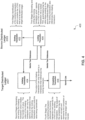
- the method 400 depicted in FIG. 4 transfers digitally-represented economic value between co-ledgers.
- the cross ledger transfer is performed in a way which guarantees, via a series of handshakes, that the value cannot be created out of nowhere by spending the unspent value in the source distributed ledger in more than one target distributed ledger.
- an exemplary implementation of such a cross-ledger transfer may generate and commit a series of three individual transactions to the distributed ledgers of the system. These transactions include an initiating transaction in the target distributed ledger; a locking transaction in the source distributed ledger; and a completing transaction in the target distributed ledger.
- an unspent transaction output (UTXO) of an existing transaction 402 in the source distributed ledger 200S is found or identified. It is this UTXO in the source distributed ledger that is to be spent in the target distributed ledger 200T.
- an initiating transaction 404 is generated and committed to the target distributed ledger 200T.
- the initiating transaction 404 creates the same digitally-represented economic value as the identified UTXO of the existing transaction 402.
- the initiating transaction 404 has a special property in that its output cannot be spent in a normal manner. (More particularly, as discussed below, the UTXO of the initiating transaction 404 can only be spent by a completing transaction 408 that references the locking transaction 406 which references the initiating transaction 404 and spends the identified UTXO of the existing transaction 402.)
- a locking transaction 406 is generated and committed to the source distributed ledger 200S.
- the transaction input of the locking transaction 406 is the identified UTXO of the existing transaction 402 in the source distributed ledger 200S.
- the locking transaction 406 spends the identified UTXO of the existing transaction 402 so that output becomes a spent TXO (and so no longer spendable) in the source distributed ledger 200S.
- its output is unspendable (i.e. its output can never be spent).
- the locking transaction 406 locks the identified UTXO of the existing transaction 402 such that it is never spent in the source distributed ledger 200S.
- the locking transaction 406 references the initiating transaction 404 in the target distributed ledger 200T by providing the entire initiating transaction and the Merkle root and branch hashes for verifying the existence of the initiating transaction in the target block. This "Merkle reference" from the locking transaction 406 to the initiating transaction 404 is used to prevent the value of the identified UTXO from being spent by more than once.
- a completing transaction 408 is generated and committed to the target distributed ledger 200T.
- a valid completing transaction 408 spends the UTXO created by the initiating transaction 404.
- the completing transaction 408 In order to be valid, the completing transaction 408 must reference the locking transaction 406 (by providing the entire locking transaction and the Merkle root and branch hashes that is used to verify the existence of the locking transaction in the source block) which spent the identified UTXO. Because the output of the locking transaction 406 cannot be spent, the existence of the locking transaction 406 in the source distributed ledger 200S provides a guarantee that the identified UTXO has been, in effect, extinguished in the source distributed ledger 200S. More than one completing transaction 408 cannot be committed. This is because the completing transaction 408 is only valid if it spends (by way of its transaction input) the UTXO of the initiating transaction 404 which is referenced by the locking transaction 406. iHence, if the output being spent by the completing transaction 408 is not the output of the initiating transaction 404 referenced by the locking transaction 406, then the completing transaction 408 is invalid and so is prevented from being committed to the target distributed ledger 200T.
- the transaction output or outputs (TXO or TXOs) of a valid completing transaction 408 represents the completion of the cross-ledger digitally-represented economic value transfer to one or more recipients in the target distributed ledger 200T.
- the TXO or TXOs of the completing transaction 408 may be spent normally within the target distributed ledger 200T by the recipient or recipients. In other words, once the completing transaction is committed to the target distributed ledger, the TXO(s) of the completing transaction may be spent within the target distributed ledger without needing to further reference any transaction in the source distributed ledger.
- One system architecture that may be used to support cross-ledger transfers may have each full node of the source distributed ledger also be a full node of the target distributed ledger. Although such a full-overlapping system architecture would support cross-ledger transfers, it would require substantial extra resources at each node. Disclosed herein are exemplary system architectures which support cross-ledger transfers while requiring less resources than a fully-overlapping system architecture.
- a first exemplary system architecture embeds foreign payment verification (PV) nodes into distributed ledger networks.
- PV foreign payment verification
- a second exemplary system architecture utilizes a set of shared full nodes while not having every node be a shared node.
- PV nodes for other (i.e. foreign) co-ledgers are co-located at all, or a portion of, nodes in each distributed ledger network of the multiple distributed ledger system.
- the co-located PV nodes are used to support cross-ledger payment verification.
- the PV nodes may be non-full nodes.
- each PV node may implemented as a simplified payment verification (SPV) node.
- SPV payment verification
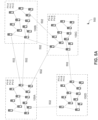
- FIG. 5A a multiple distributed ledger system with four co-ledgers is depicted in FIG. 5A , a multiple distributed ledger system may include any number of co-ledgers.
- a first distributed ledger A is maintained by a first distributed ledger network 100A
- a second distributed ledger B is maintained by a second distributed ledger network 100B
- a third distributed ledger C is maintained by a third distributed ledger network 100C
- a fourth distributed ledger D is maintained by a fourth distributed ledger network 100D.
- Each of these distributed ledger networks (100A, 100B, 100C and 100D) includes its own nodes 102 with interconnections 104 therebetween, as described above in relation to FIG. 1 .
- there are further communicative interconnections 502 between some nodes 102 in the different consensus networks so as to communicatively interconnect the consensus networks (100A, 100B, 100C and 100D).
- each distributed ledger network may be configured to run both a"local" full node-stack for its own distributed ledger and a"foreign" PV node- stack for the co-ledgers with which it is to interact.
- a full node-stack for a distributed ledger includes a set of software routines or programs at a full node of the distributed ledger network.
- the set of software routines or programs performs tasks and/or functions relating to the distributed ledger, including, if applicable: converting API (application program interface) requests to distributed ledger transactions; managing user keys; signing transactions; notifying other systems when transactions are committed; submitting transactions to the distributed ledger; and providing proofs of inclusion for transactions.
- a PV node-stack for a distributed ledger includes a reduced set of software routines or programs at a client communicating with the distributed ledger network. The reduced set of software routines or programs performs tasks and/or functions including: providing proofs of inclusion for transactions; and submitting transactions to the distributed ledger.
- At least some of the nodes 102 in the first network 100A have been configured to also run PV nodes (PV-B, PV-C and PV-D) for each of the second, third and fourth networks (100B, 100C and 100D).
- at least some of the nodes 102 in the second network 100B have been configured to also run PV nodes (PV-A, PV-C and PV-D) for each of the first, third and fourth networks (100A, 100C and 100D).
- at least some of the nodes 102 in the third network 100C have been configured to also run PV nodes (PV-A, PV-B and PV-D) for each of the first, second and fourth networks (100A, 100B and 100D).
- at least some of the nodes 102 in the fourth network 100D have been configured to also run PV nodes (PV-A, PV-B and PV-C) for each of the first, second and third networks (100A, 100B and 100C).
- Each PV-A node maintains a chain of block headers and signatures (i.e. a block header/signature chain) for co-ledger A.
- each PV-B node maintains a block header/signature chain for co-ledger B
- each PV-C node maintains a block header/signature chain for co-ledger C
- each PV-D node maintains a block header/signature chain for co-ledger D.
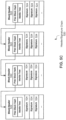
- FIG. 5B depicts an exemplary implementation of a computer system 510 for a node 102A in a distributed ledger network 100A within the system architecture of FIG. 5A in accordance with an embodiment of the invention.
- the computer system 510 may be implemented using multiple processors, including one or more central processing units (CPUs) and one or more graphics processing units (GPUs), for example.
- CPUs central processing units
- GPUs graphics processing units
- the computer system 510 includes a full node-stack A 512-A for the local distributed ledger A.
- the full node-stack A 512-A includes a complete copy of the local distributed ledger A.
- the computer system 510 includes a SPV node-stack B 514-B for the foreign distributed ledger B, a SPV node-stack C 514-C for the foreign distributed ledger C, and a SPV node-stack D 514-D for the foreign distributed ledger D.
- the SPV nodestack B 514-B includes a block header/signature chain for the foreign distributed ledger
- the SPV node-stack C 514-C includes a block header/signature chain for the foreign distributed ledger C.
- the SPV node-stack D 514-D includes a block header/signature chain for the foreign distributed ledger D.
- FIG. 5C The structure of a block header/signature chain that may be maintained at a PV node, particularly a PV node implemented as an SPV node, is depicted in FIG. 5C .
- the block header/signature chain 520 includes the block headers 522 and the block signatures 524 of the relevant distributed ledger, where the block signature is a signature by a block validator of the relevant distributed ledger network which indicates that the validator accepts that the block that is signed is valid.
- the first exemplary multiple distributed ledger system 500 is to be constructed so as to achieve a goal of 100,000 transactions per second, for example, and that each co-ledger is capable of individually handling 333 transactions per second.
- a participant node or validator in a distributed ledger is a node that is allowed to vote on the validity of blocks. A supermajority (for example, two-thirds or more) of the validators in the distributed ledger generally must agree on the validity of the block for it to be committed to the chain.)
- each distributed ledger will produce about 7 kilobytes of data per second to be maintained by an SPV node for that ledger.
- the data includes the block header and block signatures for that distributed ledger. This 7 kilobytes per second per co-ledger estimate assumes that we have no more than about 100 consensus participants for each co-ledger, with a two-thirds (2/3) threshold of votes required, and that there are 100 bytes per signature.
- the "foreign" PV nodes for all the other co-ledgers may be co-located at some, or all of, the participating"local" nodes of a co-ledger. Furthermore, using the index provided with each PV node, the participating node may efficiently find the pertinent Merkle root so as to readily verify a transaction reference.
- a set of nodes are shared by all the distributed ledger networks in the multiple distributed ledger system.
- Each of these shared nodes may operate as a full node for all the co-ledgers of the multiple distributed ledger system so as to efficiently support cross-ledger transfers. Note that, while a multiple distributed ledger system with three co-ledgers is depicted in FIG. 6A , any number of co-ledgers may be included in the system.
- a first distributed ledger A is maintained by a first distributed ledger network 100A
- a second distributed ledger B is maintained by a second distributed ledger network 100B
- a third distributed ledger C is maintained by a third distributed ledger network 100C.
- Each of these distributed ledger networks (100A, 100B, and 100C) includes nodes 102 with interconnections 104 therebetween, as described above in relation to FIG. 1 .
- each node in the shared set 100ABC is operational as a full node of each of the three distributed ledger networks (100A, 100B, and 100C).
- each node in the shared set 100ABC contains a copy of each of the three distributed ledgers (A, B and C).
- the three distributed ledgers (A, B, C) remain separate distributed ledgers, each recording a separate ledger of transactions.
- an index of block hashes to block headers for each distributed ledger in the system may be created from the distributed ledger data and provided at each node in the shared set of full nodes (100ABC). The index may be used for the Merkle tree referencing depicted in FIG. 4 (from locking transaction 406 to initiating transaction 404, and from completing transaction 408 to locking transaction 406) so as to perform inter-ledger verification.
- Any participant node may send a query through the network to a node of the shared set of full nodes (100ABC) to verify cross-ledger transactions.
- FIG. 6B depicts an exemplary implementation of a computer system 610 for a node 102ABC in the set of shared nodes100ABC within the system architecture of FIG. 6A in accordance with an embodiment of the invention.
- the computer system 610 includes a full node-stack A 512-A for the local distributed ledger A, a full node-stack B 512-B for the local distributed ledger B, and a full node-stack C 512-C for the local distributed ledger C.
- the full node-stack A 512-A includes a complete copy of the local distributed ledger A.
- the full node-stack B 512-B includes a complete copy of the local distributed ledger B.
- the full node-stack C 512-C includes a complete copy of the local distributed ledger C.
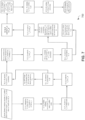
- FIG. 7 is a flow chart of a method 700 for an owner of a digitally-represented economic value on a source distributed ledger to transfer the digitally-represented economic value to an entity on a target distributed ledger in accordance with an embodiment of the present invention.
- the value to be transferred is one million US dollars (USD).
- Components used by the method 700 may include the following: a source distributed ledger L_A; a target distributed ledger L_B; a first network node that has a full node-stack (N_A) of L_A and which is also configured to operate as at least an SPV node (S_B) of LB (and so includes at least the block headers for L_B); and a second network node that has a full node-stack (N_B) of L_B and which is also configured to operate as at least an SPV node (S_A) of L_A (and so includes at least the block headers for L_A).
- the node-stack N_A may have the following data and capabilities: an index of UTXOs on the assets of each entity using L_A; capability to construct transactions with those UTXOs; capability to listen for committed transactions from L_A; capability to submit transactions to a foreign node-stack (for example, N_B) to be committed to the foreign distributed ledger (for example, L_B); capability to listen for committed transactions from a foreign node-stack (for example, N_B), where the transactions were submitted by itself; capabilities to accept and index transactions submitted by a foreign node-stack (for example, N_B); and capability to push out committed transactions from L_A to a foreign node-stack (for example, N_B), if the committed transaction was submitted by itself.
- the node-stack N_B may have the following data and capabilities: an index of UTXOs on the assets of each entity using L B; capability to construct transactions with those UTXOs; capability to listen for committed transactions from L_B; capability to submit transactions to a foreign node-stack (for example, N_A) to be committed to the foreign distributed ledger (for example, L_A); capability to listen for committed transactions from a foreign node-stack (for example, N_A), where the transactions were submitted by itself; capabilities to accept and index transactions submitted by a foreign node-stack (for example, N_A); and capability to push out committed transactions from L_A to a foreign node-stack (for example, N_A), if the committed transaction was submitted by itself.
- step 1 as a client of node-stack N_A, entity A which is the asset owner and transfer source initiates a cross-ledger transfer of the specified value (in this example, one million USD) from the source distributed ledger A (L_A) to entity B on the target distributed ledger B (L_B).
- Pseudo code relating to step 1 to be implemented in a full node-stack (for example, in node-stack N_A) is provided in lines 1-2 of FIG. 9 .
- node-stack N_A identifies the specified value of entity A's assets in UTXO U_1 in L_A.
- Pseudo code relating to step 2 to be implemented in a full node- stack (for example, in node-stack N_A) is provided in lines 3-4 of FIG. 9 .
- N_A builds the initiating transaction T_l of the specified value.
- Pseudo code relating to step 3 to be implemented in a full node-stack (for example, in node-stack N_A) is provided in lines 5-6 of FIG. 9 .
- N_A submits TJ to node-stack N_B.
- Pseudo code relating to step 4 to be implemented in a full node-stack (for example, in node-stack N_A) is provided in lines 11-14 of FIG. 9 which calls the pseudo code routine in FIG. 11 .
- node-stack N_B submits TJ to L_B.
- Pseudo code relating to step 5 to be implemented in a full node-stack (for example, in node-stack NJ3) is provided in lines 5-6 of FIG. 11 which calls the pseudo code routine in FIG. 12 .
- Step 6 L_B commits TJ and notifies N_B once TJ has been committed. Step 6 may be performed using conventional code for the distributed ledger.
- SPV node S_B receives the SPV information (i.e. the header and signatures) for the block containing TJ.
- N_B notifies N_A that TJ was committed.
- Pseudo code relating to steps 7a and 7b to be implemented in a full node-stack (for example, in node-stack N_B) is provided by the pseudo code in FIGS. 13 and 14 .
- N_A constructs the locking transaction T_L which references TJ and locks U_1.
- Pseudo code relating to step 8 to be implemented in a full node-stack (for example, in node-stack N_A) is provided in lines 7-12 of FIG. 10 .
- N_A submits TJ. to L_A.
- Pseudo code relating to step 9 to be implemented in a full node-stack (for example, in node-stack N_A of distributed ledger L_A) is in lines 13-14 of FIG. 10 which calls the pseudo code routine in FIG. 12 .
- L_A checks with S_B to verify that TJ (which is referenced in T_L) was committed by L_B.
- Pseudo code relating to step 10 to be implemented by a distributed ledger (for example, distributed ledger L_A) is provided in FIG. 12 .
- An exemplary procedure for verifying that a transaction is committed in a foreign distributed ledger is described below in relation to FIG. 8 .
- Step 11 after successful verification, L_A commits T_L and notifies N_A once T_L is committed. Step 11 may be performed using conventional code for the distributed ledger.
- SPV node S_A receives the SPV information (i.e. the header and signatures) for the block containing T_L.
- N_A constructs the completing transaction T_C which references T_L and has an output of the specified value to be owned by the transfer target B.
- Pseudo code relating to steps 12a and 12b to be implemented in a full node- stack is provided by the pseudo code in FIGS. 13 and 14 .
- N_A submits T_C to N_B.
- Pseudo code relating to step 13 to be implemented in a full node-stack (for example, in node-stack N_A) is provided in lines 27-30 of FIG. 10 and the pseudo code in FIG. 11 .
- N_B submits T_C to L_B.
- Pseudo code relating to step 14 to be implemented in a full node-stack (for example, in node-stack N_A of distributed ledger L_A) is provided by the pseudo code in FIG. 12 .
- L_B checks with S_A to verify that T_L (which is referenced in T_C) was committed by L_A, and L_B also checks to verify that the input to T_C is the output of T_1 (which is referenced in T_L).
- Pseudo code relating to step 10 to be implemented by a distributed ledger (for example, distributed ledger L_B) is provided in FIG. 12 .
- An exemplary procedure for verifying that a transaction is committed in a foreign distributed ledger is described below in relation to FIG. 8 .
- Step 16 after the successful verifications, L_B commits T_C and notifies N_B once T_C is committed. Step 16 may be performed using conventional code for the distributed ledger. Per step 17, N_B notifies N_A that T_C was committed by L B. Pseudo code relating to step 17 to be implemented in a full node-stack (for example, in node-stack N_B) is provided in FIG. 14 .
- N_B indexes the output of T_C for entity B.
- Pseudo code relating to step 18 to be implemented in a full node-stack (for example, in node-stack N_B) is provided in lines 33-34 of FIG. 10 .
- the method 700 described above is particularly suited for use with the first system architecture 500 depicted in FIG. 5A . This is because the first system architecture 500 co-locates SPV nodes of a foreign distributed ledger with full nodes of a local distributed ledger.
- the method 700 may be readily modified for use with the second system architecture 600 depicted in FIG. 6 .
- the second system architecture 600 co-locates full nodes of a foreign distributed ledger with full nodes of a local distributed ledger. As such, steps 7a and 12a of the method 700 are not needed.
- L_A may check with N_B to verify that T_l was committed in step 10
- L_B may check with N_A to verify that T_C was committed in step 15.
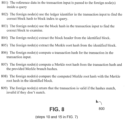
- FIG. 8 An exemplary process 800 for verifying transactions in a foreign distributed ledger is shown in FIG. 8 .
- the process 800 may be applied, for example, in step 10 of FIG. 7 to verify that the initiating transaction exists in the target distributed ledger, and in step 15 of FIG. 7 to verify that the locking transaction exists in the source distributed ledger.
- the reference data of the transaction input for the transaction being verified is passed inside a query from the local node to one or more foreign nodes.
- the local node is a node of the local distributed ledger
- a foreign node is a node of the foreign distributed ledger in which the transaction is to be verified.
- the transaction may be considered as validly committed as long as one of the foreign nodes returns that the transaction is valid.
- a foreign node may be used in either the first system architecture 500 depicted in FIG. 5A or the second system architecture 600 depicted in FIG. 6 .
- a foreign node may be used for the first system architecture 500 depicted in FIG. 5A or the second system architecture 600 depicted in FIG. 6 .
- a foreign node-stack may be a foreign full node-stack which is co-located with a local full node-stack.
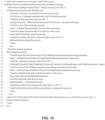
- FIGS. 9 through 14 show pseudocode that provides a detailed"blueprint" for an exemplary implementation of an embodiment of the present invention. Comments in the pseudocode are preceded by //.
- the pseudocode procedure shown in FIG. 9 is performed when a cross-ledger transaction is submitted to a node stack.
- a UTXO In order to construct the transaction, a UTXO must be found corresponding to the asset that is to be transacted. Once that UTXO is found, an initiating transaction should be constructed out of that UTXO. This initiating transaction should be indexed for later lookup, along with the source of the transaction and the target of the transaction. The initiating transaction should be signed by the owner of the asset in the UTXO. Then, the target node stack is located, and the initiating transaction is sent to the target node stack, along with knowledge of the source.
- the pseudocode procedure shown in FIG. 10 is performed when a node stack is notified that a transaction has been committed. There are two cases, depending on whether the transaction is an initiating transaction or a locking transaction.
- the first case is if the transaction that is committed is an initiating transaction. When this occurs, we can look up the UTXO that we need to lock from the index described in Fig 9 . We then build a locking transaction out of this UTXO. This transaction needs to be signed by the owner of the asset in the UTXO, which we also look up using the index described in Fig 9 . Finally, we submit this transaction to the local ledger.
- the second case is if the transaction that is committed is a locking transaction.
- the transaction that is committed is a locking transaction.
- the available UTXO pool needs to be updated.
- the pseudocode procedure shown in FIG. 11 is performed when a node stack receives a transaction from a foreign node stack (such as when an initiating or completing transaction is received).
- the transaction is indexed to the source that the transaction is received from, then the transaction is submitted to the local distributed ledger.
- the pseudocode procedure shown in FIG. 12 is performed when a distributed ledger receives a submitted transaction. There are some steps that are taken to perform common validations across all transactions, that are skipped (not shown) in the figure. For those transactions that contain SPV references (the locking and completing transactions), we apply certain validations to their inputs.
- the pseudocode procedure shown in FIG. 13 is performed when a distributed ledger commits a block containing transactions.
- the figure does not show the process where the distributed ledger decides how to add transactions to blocks and how the ledgers reach consensus on blocks, as those topics are beyond the scope of this disclosure.
- the ledger stores the block to some persisted storage, sends SPV info for the block to the SPV node, then notifies the local node stack that the block has been committed.
- the pseudocode procedure of FIG. 14 shows how a local node stack distributes notifications regarding committed transactions. This procedure is performed for the initiating and completing transactions.
- the local node stack For all transactions in a block, the local node stack looks in the foreign index (defined in FIG. 11 ) to determine whether the transaction had a foreign source. If the transaction had a foreign source, the local node stack finds the node stack for the foreign source and sends the committed transaction and SPV information for the committed transaction over to that foreign node stack. The local node stack is notified of all committed transactions (whether the source is local or foreign).
- FIG. 15 shows a general structure for a standard transaction 1500 which may include a cross-ledger referenced transaction input accordance with an embodiment of the present invention.
- the standard transaction in FIG. 15 includes a list of transaction inputs and a list of transaction outputs.
- a first type of transaction input is an intra-ledger (i.e. standard) transaction input 1502.
- Each intra-ledger transaction input includes bytes which identify the input transaction and an integer which provides the output offset for the input transaction.
- a second type of transaction input is a cross-ledger referenced transaction input 1504.
- Each cross-ledger referenced transaction input includes bytes which identify the foreign ledger, bytes for a block hash which identifies the block within the foreign ledger, a list of Merkle branch hashes for the transactions in the identified block, transaction bytes of the input transaction within the identified block, and an integer offset which provides the offset for a specific output being referenced within the given transaction bytes.
- Each transaction output 1506 includes bytes which identify the digital property being output and a bytes lock which is an encoded lock for the transaction output. The bytes lock is unlocked by providing a signature from the matching private key.
- FIGS. 16 through 18 show structures for the three transactions which together provide a cross-ledger transfer in accordance with an embodiment of the present invention. These three structures may be used to implement the three-transaction cross-ledger transfer 400 depicted in FIG. 4 .
- FIG. 16 shows a specific structure for an initiating transaction 1600 of the three- transaction cross-ledger transfer in accordance with an embodiment of the present invention.
- the initiating transaction includes no transaction inputs and a single transaction output 1606.
- the transaction output 1606 includes bytes that identify the digital property being transferred and a byte lock.
- the byte lock may be unlocked (for spending the digital property) only by a completing transaction with a reference to a locking transaction which references this initiating transaction.
- FIG. 17 shows a specific structure for a locking transaction 1700 of the three- transaction cross-ledger transfer in accordance with an embodiment of the present invention.
- the locking transaction 1700 includes a list of transaction inputs and a list of transaction outputs.
- the transaction inputs include one or more intra-ledger transaction input 1702 and a single cross-ledger reference transaction input 1704.
- Each intra-ledger transaction input 1702 includes bytes which identify an input transaction in the source ledger and an integer which provides the output offset for that transaction.
- Each input transaction corresponds to an existing transaction in the source ledger, and the output offset indicates a specific output of the existing transaction that is being input to the locking transaction 1700.
- the cross-ledger reference transaction input 1704 is used to reference the initiating transaction in the target ledger.
- the cross-ledger reference transaction input 1704 includes bytes which identify the target ledger, bytes for a block hash which identifies the block within the target ledger, a list of Merkle branch hashes for the transactions in the identified block, transaction bytes of the initiating transaction within the identified block, and an integer offset which provides the offset for a specific output being referenced within the given transaction bytes.
- the locking transaction 1700 does not need any transaction output 1706 and so may have zero or more transaction outputs 1706. If there is a transaction output 1706, it includes bytes that identify the digital property being output and a byte lock.
- the digital property of the transaction outputs 1706 must be equal to the difference between the digital property that the intra-ledger transaction inputs 1702 point to (from the output or outputs of one or more existing transactions) and the digital property that the crossledger reference transaction input 1704 points to (from the specified output of the initiating transaction). If those amounts of digital property are equal, then there is no transaction output 1706.
- FIG. 18 shows a specific structure for a completing transaction 1800 of the three- transaction cross-ledger transfer in accordance with an embodiment of the present invention.
- the completing transaction 1800 includes two transaction inputs and one or more transaction outputs.
- the two transaction inputs include a single intra-ledger transaction input 1802 and a single cross-ledger reference transaction input 1804.
- the intra-ledger transaction input 1802 includes bytes of a transaction ID which identifies the initiating transaction in the target ledger and an integer which provides the output offset for that transaction.
- the output offset indicates a specific output of the initiating transaction that is being input to the completing transaction 1800.
- This transaction ID in the intra-ledger transaction input 1802 must match the transaction ID of the initiating transaction pointed at by the locking transaction; otherwise, the completing transaction will be invalid.
- the cross-ledger reference transaction input 1804 is used to reference the locking transaction in the source ledger.
- the cross-ledger reference transaction input 1804 includes bytes which identify the source ledger, bytes for a block hash which identifies the block within the source ledger, a list of Merkle branch hashes for the transactions in the identified block, transaction bytes of the locking transaction within the identified block, and an integer offset which provides the offset for a specific output being referenced within the given transaction bytes, if any.
- Each transaction output 1806 includes bytes which identify the digital property being output and a bytes lock which is an encoded lock for the transaction output.
- the bytes lock is unlocked by providing a signature from the matching private key.
- This section describes scalability gains as evidenced by calculations of system performance for a system having multiple distributed ledgers (for example, multiple blockchains).
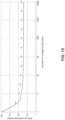
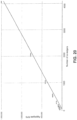
- the calculated transaction throughput per co-ledger in RPS as a function of the number of co-ledgers, N, in the system is shown by the graph in FIG. 19 in accordance with an embodiment of the present invention.
- the total transaction throughput in RPS is equal to the RPS per ledger multiplied by the number of co-ledgers, N.
- the RPS per ledger per co-chain when each ledger is a blockchain
- the system throughput is about 105 .
- the calculated aggregate transaction throughput for the system in RPS as a function of the number of co-ledgers (co-chains when each ledger is a blockchain) is shown by the graph in FIG. 20 in accordance with an embodiment of the present invention. As shown, the aggregate transaction throughput scales linearly with the number of co-ledgers in the system.
- the calculations presented above are based on a worst-case distribution of transactions in the system and a worst-case size of a transaction reference. It is very likely that, at least in many cases, the assignment of nodes to the various consensus networks in the system may be made so as to greatly increase the ratio X/Y of intra-ledger transactions to inter-ledger transactions to be greater than one. In other words, a system is likely to be configurable such that there are more intraledger transactions than inter-ledger transactions. In contrast, the worst-case assumption in the above-described calculations is that there are many more inter-ledger transactions than intra-ledger transactions. Hence, the performance of an actual system is potentially much better than the system performance in the above calculations.
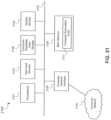
- FIG. 21 depicts, at a high level, components of a computer system 2100 that may be used, for example, to implement full or partial nodes of a distributed ledger network.
- a computer system may be implemented with fewer or more components than shown in the figure.
- the computer systems may include one or more processors 2101 (including graphics processors) and one or more buses 2103 coupling its various components.
- the computer system may also include one or more user input devices 2102 (e.g., keyboard, mouse), one or more data storage devices 2106 (e.g., hard drives, optical disks, solid state memory disks), one or more display monitors 2104 (e.g., liquid crystal display, flat panel monitor), one or more computer network interfaces 2105 (e.g., network adapter, modem), and a main memory 2108 (i.e., random access memory).
- a computer network interface 2105 may be coupled to a computer network 2109, which may be, in this case, a distributed ledger network.
- the computer system is a particular machine as programmed with one or more software modules, comprising computer-readable code or instructions stored in a non- transitory manner in the main memory 2108 for execution by the processor 2101.
- An article of manufacture may be embodied as computer-readable storage medium including instructions that when executed by a processor 2101 causes the computer system to be operable to perform the functions of the one or more software modules.
- the presently-disclosed solution uses multiple distributed ledgers and cross- ledger transfers to achieve highly scalable transaction throughput.
- Disclosed are methods and instruction code for writing a cross-ledger transfer in a way that effectively transfers value from a source to a target blockchain while preventing double spending of the value.
- system architectures that utilize cross-ledger transfers between multiple distributed ledgers to achieve highly-scalable transaction throughput.
- computer apparatus configured to implement cross-ledger transfers between distributed ledgers.
Landscapes
- Business, Economics & Management (AREA)
- Engineering & Computer Science (AREA)
- Accounting & Taxation (AREA)
- Finance (AREA)
- General Physics & Mathematics (AREA)
- Strategic Management (AREA)
- Theoretical Computer Science (AREA)
- General Business, Economics & Management (AREA)
- Physics & Mathematics (AREA)
- Computer Security & Cryptography (AREA)
- Computer Networks & Wireless Communication (AREA)
- Signal Processing (AREA)
- Development Economics (AREA)
- Economics (AREA)
- Computing Systems (AREA)
- General Engineering & Computer Science (AREA)
- Computer Hardware Design (AREA)
- Information Retrieval, Db Structures And Fs Structures Therefor (AREA)
- Financial Or Insurance-Related Operations Such As Payment And Settlement (AREA)
Claims (15)
- Verfahren zum Erzielen eines skalierbaren Transaktionsdurchsatzes in einem System mit mehreren verteilten Ledgern, das eine Mehrzahl von verteilte Ledger aufweisenden Netzen (100) einschließt, von denen jedes eine Mehrzahl von Knoten (102) aufweist, wobei eines von der Mehrzahl von verteilte Ledger aufweisenden Netzen (100) ein verteiltes Quell-Ledger (200S) aufweist und ein anderes Netz (100) mit verteiltem Ledger ein verteiltes Ziel-Ledger (200T) aufweist, wobei das Verfahren umfasst:Bestimmen einer existierenden Transaktion (402) mit einem unverbrauchten Transaktionsausgang in dem verteilten Quell-Ledger (200S), wobei eines von dem verteilten Quell-Ledger (200S) und dem verteilten Ziel-Ledger (200T) sich darin von dem anderen unterscheidet, dass es mindestens eine Transaktion aufweist, die in dem anderen nicht existiert;Erzeugen einer initiierenden Transaktion (404) und Überantworten derselben an das verteilte Ziel-Ledger (200T), wobei die initiierende Transaktion (404) einen Transaktionsausgang aufweist;Erzeugen einer Sperrtransaktion (406) und Überantworten derselben an das verteilte Quell-Ledger (200S), wobei die Sperrtransaktion (406) erzeugt wird, um den Transaktionsausgang der existierenden Transaktion (402) in dem verteilten Quell-Ledger (200S) zu verbrauchen und zu sperren, und die initiierende Transaktion (404) in dem verteilten Ziel-Ledger (200T) referenziert, um die Existenz der initiierenden Transaktion (404) zu verifizieren; undErzeugen einer Abschlusstransaktion (408) und Überantworten derselben an das verteilte Ziel-Ledger (200T), wobei die Abschlusstransaktion (408) erzeugt wird, um den Transaktionsausgang der initiierenden Transaktion (404) in dem verteilten Ziel-Ledger (200T) zu verbrauchen, und die Sperrtransaktion (406) in dem verteilten Quell-Ledger (200S) referenziert, um die Existenz der Sperrtransaktion (406)zu verifizieren.
- Verfahren nach dem vorangehenden Anspruch, wobei der Transaktionsausgang der initiierenden Transaktion (404) nur dann durch die Abschlusstransaktion (408) verbrauchbar ist, wenn die Abschlusstransaktion (408) die Sperrtransaktion (406) referenziert und wenn ein Wert des Transaktionsausgangs der initiierenden Transaktion (404) mit einem Wert des Transaktionsausgangs der existierenden Transaktion (402) übereinstimmt.
- Verfahren nach dem vorangehenden Anspruch, wobei die Sperrtransaktion (406) eine Hash-Baum-Referenz verwenden, um die initiierende Transaktion (404) zu referenzieren, und die Abschlusstransaktion (408) eine andere Hash-Baum-Referenz verwendet, um die Sperrtransaktion (406) zu referenzieren.
- Verfahren nach einem der vorangehenden Ansprüche, wobei das Verfahren von einem Knotenstapel des verteilten Quell-Ledgers (200S) durchgeführt wird.
- Verfahren nach dem vorangehenden Anspruch, wobei die Initiierungs- und Abschlusstransaktionen (404, 408) einem Knotenstapel des verteilten Ziel-Ledger (200T) übergeben wird und der Knotenstapel des verteilten Ziel-Ledger (200T) die Initiierungs- und Abschlusstransaktionen (404, 408) an das verteilte Ziel-Ledger (200T) weitergibt.
- Verfahren nach einem der vorangehenden Ansprüche, wobei das Verfahren von einem Knotenstapel des verteilten Ziel-Ledger (200T) durchgeführt wird.
- Verfahren nach dem vorangehenden Anspruch, wobei die Sperrtransaktion (406) einem Knotenstapel des verteilten Quell-Ledger (2005) übergeben wird und der Knotenstapel des verteilten Quell-Ledger (2005) die Sperrtransaktion (406) an das verteilte Quell-Ledger (200S) weitergibt.
- Verfahren nach einem der vorangehenden Ansprüche, wobeisowohl das verteilte Quell-Ledger (2005) als auch das verteilte Ziel-Ledger (200T) eine Blockchain umfassen, oder wobeisowohl das verteilte Quell-Ledger (2005) als auch das verteilte Ziel-Ledger (200T) einen gerichteten azyklischen Graphen verwenden, oderwobei der unverbrauchte Transaktionsausgang der existierenden Transaktion (402) einen Währungsbetrag darstellt.
- Computerprogrammprodukt, ein oder mehrere in einem Computer verwendbare nichtflüchtige Medien umfassend, in die computerlesbare Programmcodes eingebettet sind, um ein System mit mehreren verteilten Ledgern zu betreiben, das eine Mehrzahl von verteilte Ledger aufweisenden Netzen (100) mit jeweils einer Mehrzahl von Knoten (102) einschließt, von denen jedes ein verteiltes Quell-Ledger (2005) aufweist, und wobei ein anderes Netz (100) mit verteiltem Ledger ein verteiltes Ledger als Ziel (200T) aufweist, wobei die computerlesbaren Programmcodes konfiguriert sind, um das System zu veranlassen, einen kontenübergreifenden Transaktionsprozess auszuführen, wobei der Prozess umfasst:Bestimmen einer existierenden Transaktion (402) mit unverbrauchtem Transaktionsausgang in einem verteilten Quell-Ledger (200S), wobei eines von dem verteilten Quell-Ledger (200S) und dem verteilten Ziel-Ledger (200T) sich darin von dem anderen unterscheidet, dass es mindestens eine Transaktion aufweist, die in dem anderen nicht existiert;Erzeugen einer initiierenden Transaktion (404) und Überantworten derselben an das verteilte Ziel-Ledger (200T), wobei die initiierende Transaktion (404) einen Transaktionsausgang aufweist;Erzeugen einer Sperrtransaktion (406) und Überantworten derselben an das verteilte Quell-Ledger (200S), wobei die Sperrtransaktion (406) erzeugt wird, um den Transaktionsausgang der existierenden Transaktion (402) in dem verteilten Quell-Ledger (200S) zu verbrauchen und zu sperren, und die initiierende Transaktion (404) in dem verteilten Ziel-Ledger (200T) referenziert, um die Existenz der initiierenden Transaktion (404) zu verifizieren; undErzeugen einer Abschlusstransaktion (408) und Überantworten derselben an das verteilte Ziel-Ledger (200T), wobei die Abschlusstransaktion (408) erzeugt wird, um den Transaktionsausgang der initiierenden Transaktion (404) in dem verteilten Ziel-Ledger (200T) zu verbrauchen, und die Sperrtransaktion (406) in dem verteilten Quell-Ledger (200S) referenziert, um die Existenz der Sperrtransaktion (406)zu verifizieren.
- Computerprogrammprodukt nach dem vorangehenden Anspruch, wobei der Transaktionsausgang der initiierenden Transaktion (404) nur dann durch die Abschlusstransaktion (408) verbrauchbar ist, wenn die Abschlusstransaktion (408) auf die Sperrtransaktion (406) referenziert und wenn ein Wert des Transaktionsausgangs der initiierenden Transaktion (404) mit einem Wert des Transaktionsausgangs der existierenden Transaktion (402) übereinstimmt.
- Computerprogrammprodukt nach einem der vorangehenden Ansprüche, wobei die Sperrtransaktion (406) eine Hash-Baum-Referenz verwendet, um die initiierende Transaktion (404) zu referenzieren, oder die Abschlusstransaktion (408) eine andere Hash-Baum-Referenz verwendet, um die Sperrtransaktion (406) zu referenzieren.
- Computerprogramm nach einem der vorangehenden Ansprüche, wobeisowohl das verteilte Quell-Ledger (2005) als auch das verteilte Ziel-Ledger (200T) eine Blockchain umfassen, oder wobeisowohl das verteilte Quell-Ledger (2005) als auch das verteilte Ziel-Ledger (200T) einen gerichteten azyklischen Graphen verwenden, oderwobei der unverbrauchte Transaktionsausgang der existierenden Transaktion (402) einen Währungsbetrag darstellt.
- Computeranlage für kontenübergreifende Transfers zwischen einer Mehrzahl von verteilten Ledgern für einen skalierbaren Transaktionsdurchsatz, wobei die Computeranlage umfasst:einen Speicher zur Hinterlegung von computerlesbarem Code und Daten;computerlesbaren Code, der konfiguriert ist, um eine existierende Transaktion (402) mit unverbrauchtem Transaktionsausgang in einem verteilten Quell-Ledger (200S) von der Mehrzahl von verteilten Ledgern zu bestimmen;computerlesbaren Code, der konfiguriert ist, um eine initiierende Transaktion (404) zu erzeugen und einem verteilten Ziel-Ledger (200T) von der Mehrzahl von verteilten Ledgern zu überantworten, wobei die initiierende Transaktion (404) einen Transaktionsausgang aufweist, wobei eines von dem verteilten Quell-Ledger (200S) und dem verteilten Ziel-Ledger (200T) sich von dem anderen dadurch unterscheidet, dass es mindestens eine Transaktion aufweist, die in dem anderen nicht existiert;computerlesbaren Code, der konfiguriert ist, um eine Sperrtransaktion (406) zu erzeugen und einem verteilten Quell-Ledger (2005) zu überantworten, wobei die Sperrtransaktion (406) erzeugt wird, um den Transaktionsausgang der existierenden Transaktion (402) in dem verteilten Quell-Ledger (2005) zu verbrauchen und zu sperren, und die initiierende Transaktion (404) in dem verteilten Ziel-Ledger (200T) referenziert, um die Existenz der initiierenden Transaktion (404) zu verifizieren; undcomputerlesbaren Code, der konfiguriert ist, um eine Abschlusstransaktion (408) zu erzeugen und einem verteilten Ziel-Ledger (200T) zu überantworten, wobei die Abschlusstransaktion (408) erzeugt wird, um den Transaktionsausgang der initiierenden Transaktion (404) in dem verteilten Ziel-Ledger (200T) zu verbrauchen, und die Sperrtransaktion (406) in dem verteilten Quell-Ledger (200S) referenziert, um die Existenz der Sperrtransaktion (406)zu verifizieren.
- Computeranlage nach dem vorangehenden Anspruch, wobei der Transaktionsausgang der initiierenden Transaktion (404) nur dann durch die Abschlusstransaktion (408) verbrauchbar ist, wenn die Abschlusstransaktion (408) die Sperrtransaktion (406) referenziert und wenn ein Wert des Transaktionsausgangs der initiierenden Transaktion (404) mit einem Wert des Transaktionsausgangs der existierenden Transaktion (402) übereinstimmt.
- Computeranlage nach einem der vorangehenden Ansprüche, wobei die Sperrtransaktion (406) eine Hash-Baum-Referenz verwenden, um die initiierende Transaktion (404) zu referenzieren, oder die Abschlusstransaktion (408) eine andere Hash-Baum-Referenz verwendet, um die Sperrtransaktion (406) zu referenzieren.
Priority Applications (1)
| Application Number | Priority Date | Filing Date | Title |
|---|---|---|---|
| EP24188849.4A EP4462337A3 (de) | 2017-12-19 | 2018-01-16 | Verfahren und vorrichtung für kontenübergreifende transfers zwischen verteilten konten und systeme mit kontenübergreifenden transfers |
Applications Claiming Priority (5)
| Application Number | Priority Date | Filing Date | Title |
|---|---|---|---|
| US201762607453P | 2017-12-19 | 2017-12-19 | |
| US15/866,280 US20190188697A1 (en) | 2017-12-19 | 2018-01-09 | Systems of multiple distributed ledgers using cross-ledger transfers for highly-scalable transaction throughput |
| US15/866,266 US11461777B2 (en) | 2017-12-19 | 2018-01-09 | Cross-ledger transfers between distributed ledgers |
| US15/866,290 US20190188698A1 (en) | 2017-12-19 | 2018-01-09 | Computer apparatus for cross-ledger transfers between distributed ledgers |
| PCT/US2018/013861 WO2019125506A1 (en) | 2017-12-19 | 2018-01-16 | Methods and apparatus for cross-ledger transfers between distributed ledgers and systems using cross-ledger transfers |
Related Child Applications (1)
| Application Number | Title | Priority Date | Filing Date |
|---|---|---|---|
| EP24188849.4A Division EP4462337A3 (de) | 2017-12-19 | 2018-01-16 | Verfahren und vorrichtung für kontenübergreifende transfers zwischen verteilten konten und systeme mit kontenübergreifenden transfers |
Publications (4)
| Publication Number | Publication Date |
|---|---|
| EP3729779A1 EP3729779A1 (de) | 2020-10-28 |
| EP3729779A4 EP3729779A4 (de) | 2021-12-15 |
| EP3729779C0 EP3729779C0 (de) | 2024-07-17 |
| EP3729779B1 true EP3729779B1 (de) | 2024-07-17 |
Family
ID=66814603
Family Applications (2)
| Application Number | Title | Priority Date | Filing Date |
|---|---|---|---|
| EP18893095.2A Active EP3729779B1 (de) | 2017-12-19 | 2018-01-16 | Verfahren, und computerprogramm und vorrichtung für kontenübergreifende transfers zwischen verteilten ledgern |
| EP24188849.4A Pending EP4462337A3 (de) | 2017-12-19 | 2018-01-16 | Verfahren und vorrichtung für kontenübergreifende transfers zwischen verteilten konten und systeme mit kontenübergreifenden transfers |
Family Applications After (1)
| Application Number | Title | Priority Date | Filing Date |
|---|---|---|---|
| EP24188849.4A Pending EP4462337A3 (de) | 2017-12-19 | 2018-01-16 | Verfahren und vorrichtung für kontenübergreifende transfers zwischen verteilten konten und systeme mit kontenübergreifenden transfers |
Country Status (7)
| Country | Link |
|---|---|
| US (3) | US20190188698A1 (de) |
| EP (2) | EP3729779B1 (de) |
| JP (2) | JP7307910B2 (de) |
| KR (1) | KR102548540B1 (de) |
| CN (2) | CN111615817B (de) |
| SG (1) | SG11202005655UA (de) |
| WO (1) | WO2019125506A1 (de) |
Families Citing this family (60)
| Publication number | Priority date | Publication date | Assignee | Title |
|---|---|---|---|---|
| US10419225B2 (en) | 2017-01-30 | 2019-09-17 | Factom, Inc. | Validating documents via blockchain |
| US10810546B2 (en) | 2017-10-02 | 2020-10-20 | R3 Ltd. | Settling obligations via netting transactions |
| US10630769B2 (en) * | 2017-12-26 | 2020-04-21 | Akamai Technologies, Inc. | Distributed system of record transaction receipt handling in an overlay network |
| WO2019144948A1 (en) * | 2018-01-27 | 2019-08-01 | Redrock Biometrics Inc | Decentralized biometric authentication platform |
| US11438139B2 (en) * | 2018-02-07 | 2022-09-06 | Raouf Boutaba | Blockchain based secure naming and update verification |
| US20210004906A1 (en) * | 2018-02-08 | 2021-01-07 | 2Bc Innovations, Llc | Modifying a portfolio of blockchain-encoded rived longevity-contingent instruments |
| CN112767158B (zh) * | 2018-02-27 | 2024-11-08 | 蚂蚁链技术有限公司 | 基于区块链的交易执行方法及装置、电子设备 |
| US10848395B2 (en) * | 2018-04-10 | 2020-11-24 | Zscaler, Inc. | State management across distributed services using cryptographically bound journals |
| KR102310803B1 (ko) * | 2018-04-16 | 2021-10-13 | 비씨 디벨롭먼트 랩스 게엠베하 | 최소 검증 클라이언트를 사용하는 무신뢰 무상태 인센티브화 원격 노드 네트워크 |
| US11194837B2 (en) * | 2018-05-01 | 2021-12-07 | International Business Machines Corporation | Blockchain implementing cross-chain transactions |
| US11030217B2 (en) * | 2018-05-01 | 2021-06-08 | International Business Machines Corporation | Blockchain implementing cross-chain transactions |
| JP2021523504A (ja) | 2018-05-06 | 2021-09-02 | ストロング フォース ティエクス ポートフォリオ 2018,エルエルシーStrong Force Tx Portfolio 2018,Llc | エネルギー、コンピュータ、ストレージ、及びその他のリソースの、スポット市場及び先物市場における分散型元帳及びその他のトランザクションの実行を自動化する、機械及びシステムを改善するための方法及びシステム |
| US11550299B2 (en) | 2020-02-03 | 2023-01-10 | Strong Force TX Portfolio 2018, LLC | Automated robotic process selection and configuration |
| US11544782B2 (en) | 2018-05-06 | 2023-01-03 | Strong Force TX Portfolio 2018, LLC | System and method of a smart contract and distributed ledger platform with blockchain custody service |
| US12412120B2 (en) | 2018-05-06 | 2025-09-09 | Strong Force TX Portfolio 2018, LLC | Systems and methods for controlling rights related to digital knowledge |
| US11669914B2 (en) | 2018-05-06 | 2023-06-06 | Strong Force TX Portfolio 2018, LLC | Adaptive intelligence and shared infrastructure lending transaction enablement platform responsive to crowd sourced information |
| WO2019227052A1 (en) * | 2018-05-24 | 2019-11-28 | Walmart Apollo, Llc | System and methods for multi-variant tracking |
| WO2019226986A1 (en) | 2018-05-24 | 2019-11-28 | Walmart Apollo, Llc | Nested blockchain system |
| US11620642B2 (en) * | 2018-08-06 | 2023-04-04 | Inveniam Capital Partners, Inc. | Digital contracts in blockchain environments |
| US11196543B2 (en) * | 2018-09-05 | 2021-12-07 | International Business Machines Corporation | Minimum evidence calculation in blockchain transactions |
| CN109272385B (zh) * | 2018-09-14 | 2021-03-23 | 创新先进技术有限公司 | 一种基于区块链的版权事件代理存证方法及系统 |
| CN109274667B (zh) | 2018-09-14 | 2020-06-23 | 阿里巴巴集团控股有限公司 | 一种基于区块链的版权事件存证方法及系统 |
| CN110008686B (zh) * | 2018-11-16 | 2020-12-04 | 创新先进技术有限公司 | 跨区块链的数据处理方法、装置、客户端、区块链系统 |
| US11121860B2 (en) * | 2018-12-27 | 2021-09-14 | Lendingclub Corporation | Multi-layered blockchain for digital assets |
| JP6899911B2 (ja) | 2018-12-28 | 2021-07-07 | アドバンスド ニュー テクノロジーズ カンパニー リミテッド | アクセラレーションノードを用いたブロックチェーンネットワーク内のトランザクション配信の高速化 |
| WO2019072306A2 (en) | 2018-12-28 | 2019-04-18 | Alibaba Group Holding Limited | ACCELERATION OF TRANSACTION DELIVERIES IN BLOCK CHAIN NETWORKS USING A TRANSACTION RETURN |
| JP2020516108A (ja) * | 2018-12-28 | 2020-05-28 | アリババ・グループ・ホールディング・リミテッドAlibaba Group Holding Limited | グローバル加速ノードを用いたブロックチェーントランザクション速度の改善 |
| US11177962B2 (en) * | 2019-02-05 | 2021-11-16 | Visa International Service Association | Optimizations for verification of interactions system and method |
| KR102822288B1 (ko) * | 2019-02-15 | 2025-06-19 | 엔체인 홀딩스 리미티드 | 블록체인 네트워크를 통한 이전을 구현하는 컴퓨터 구현 시스템 및 방법 |
| US11997205B2 (en) * | 2019-02-25 | 2024-05-28 | Tbcasoft, Inc. | Credential verification and issuance through credential service providers |
| US20200327627A1 (en) * | 2019-03-03 | 2020-10-15 | Deep Chakraborty | Methods and systems of a blockchain for distributed-energy-project management |
| WO2019120334A2 (en) | 2019-04-12 | 2019-06-27 | Alibaba Group Holding Limited | Performing parallel execution of transactions in a distributed ledger system |
| WO2019120333A2 (en) * | 2019-04-12 | 2019-06-27 | Alibaba Group Holding Limited | Performing parallel execution of transactions in a distributed ledger system |
| US20200334677A1 (en) * | 2019-04-16 | 2020-10-22 | Nokia Solutions And Networks Oy | Transparent blockchain sidechains to support blockchain processing heterogeneity |
| US11251938B2 (en) * | 2019-06-03 | 2022-02-15 | International Business Machines Corporation | Blockchain verification using non-consecutive blocks |
| CN110288480B (zh) * | 2019-06-28 | 2023-06-09 | 深圳前海微众银行股份有限公司 | 一种区块链的私密交易方法及装置 |
| US10771524B1 (en) * | 2019-07-31 | 2020-09-08 | Theta Labs, Inc. | Methods and systems for a decentralized data streaming and delivery network |
| SG10201907333RA (en) * | 2019-08-08 | 2020-01-30 | Alibaba Group Holding Ltd | Methods And Devices For Executing Cross-Chain Anonymous Multi-Swap Contracts |
| WO2021050929A1 (en) * | 2019-09-11 | 2021-03-18 | Visa International Service Association | Blockchain sharding with adjustable quorums |
| GB2589147A (en) * | 2019-11-25 | 2021-05-26 | Nchain Holdings Ltd | Methods and devices for automated digital certificate verification |
| US11468044B2 (en) | 2019-11-25 | 2022-10-11 | Visa International Service Association | Optimizations for verification of interactions system and method using probability density functions |
| US11544252B2 (en) * | 2019-12-17 | 2023-01-03 | Akamai Technologies, Inc. | High performance distributed system of record with extended transaction processing capability |
| US12099997B1 (en) | 2020-01-31 | 2024-09-24 | Steven Mark Hoffberg | Tokenized fungible liabilities |
| US11982993B2 (en) | 2020-02-03 | 2024-05-14 | Strong Force TX Portfolio 2018, LLC | AI solution selection for an automated robotic process |
| CN111340631B (zh) * | 2020-05-15 | 2020-12-01 | 支付宝(杭州)信息技术有限公司 | 资产转移方法、装置、设备及系统 |
| EP4168964A4 (de) * | 2020-06-17 | 2024-06-05 | Coinbase Inc. | Systeme und verfahren zur umwandlung von kryptowährung |
| JP7462903B2 (ja) * | 2020-07-01 | 2024-04-08 | 日本電信電話株式会社 | 利用者端末、認証者端末、登録者端末、管理システムおよびプログラム |
| CA3091660A1 (en) * | 2020-08-31 | 2021-11-03 | Polymath Inc. | Method, system, and medium for blockchain-enabled atomic settlement |
| KR20220057823A (ko) * | 2020-10-30 | 2022-05-09 | 서강대학교산학협력단 | 블록체인 네트워크에서의 블록 사이즈 조절 방법 및 이를 이용한 블록체인 네트워크 |
| KR102742726B1 (ko) * | 2021-01-28 | 2024-12-16 | 한국전자통신연구원 | 블록체인 기반으로 데이터 기밀성과 무결성을 강화한 전력 중개 방법 및 전력 중개 시스템 |
| WO2022260500A1 (ko) * | 2021-06-11 | 2022-12-15 | 삼성전자 주식회사 | 블록체인 네트워크에서 부분 원장을 가진 전자 장치 및 그의 동작 방법 |
| US12041190B2 (en) * | 2021-06-25 | 2024-07-16 | Prateek GOEL | System and method to manage large data in blockchain |
| CN113362068B (zh) * | 2021-08-10 | 2022-03-29 | 北京连琪科技有限公司 | 一种轻节点验证区块链状态转移的方法 |
| US20230087602A1 (en) * | 2021-09-19 | 2023-03-23 | International Business Machines Corporation | Privacy-preserving state reference |
| US11379429B1 (en) | 2021-10-28 | 2022-07-05 | Tassat Group LLC | Computer-based systems configured for permission events management on a blockchain and methods of use thereof |
| WO2023127530A1 (ja) * | 2021-12-28 | 2023-07-06 | 京セラ株式会社 | システム、ノード、及びプログラム |
| CN114675941B (zh) * | 2022-03-08 | 2025-09-23 | 中国邮政储蓄银行股份有限公司 | 交易事务的处理方法及其装置、计算机可读存储介质 |
| JP7776086B2 (ja) * | 2023-02-13 | 2025-11-26 | ティービーシーエーソフト,インコーポレイテッド | 多重分散台帳システムでの分割可能な非代替性トークンのための方法およびシステム |
| US12362941B2 (en) * | 2023-03-06 | 2025-07-15 | Verizon Patent And Licensing Inc. | Systems and methods for distributed ledger migration |
| US20240378600A1 (en) * | 2023-05-08 | 2024-11-14 | Indian Institute Of Technology Bombay | Methods and systems for formation and termination of payment channel between distinct ledgers |
Family Cites Families (30)
| Publication number | Priority date | Publication date | Assignee | Title |
|---|---|---|---|---|
| US20130226891A1 (en) * | 2012-02-29 | 2013-08-29 | Red Hat Inc. | Managing versions of transaction data used for multiple transactions in distributed environments |
| US11023968B2 (en) * | 2015-03-05 | 2021-06-01 | Goldman Sachs & Co. LLC | Systems and methods for updating a distributed ledger based on partial validations of transactions |
| US10812274B2 (en) * | 2015-05-07 | 2020-10-20 | Blockstream Corporation | Transferring ledger assets between blockchains via pegged sidechains |
| US20160335641A1 (en) * | 2015-05-13 | 2016-11-17 | Mastercard International Incorporated | Enhanced payment card platform |
| US20160342977A1 (en) * | 2015-05-20 | 2016-11-24 | Vennd.io Pty Ltd | Device, method and system for virtual asset transactions |
| US11488147B2 (en) * | 2015-07-14 | 2022-11-01 | Fmr Llc | Computationally efficient transfer processing and auditing apparatuses, methods and systems |
| EP3125489B1 (de) * | 2015-07-31 | 2017-08-09 | BRITISH TELECOMMUNICATIONS public limited company | Abschwächung eines blockkettenangriffs |
| US20180089651A9 (en) * | 2015-11-06 | 2018-03-29 | Cable Television Laboratories, Inc | Blockchaining systems and methods for frictionless media |
| US11941588B2 (en) * | 2015-11-06 | 2024-03-26 | Cable Television Laboratories, Inc. | Systems and methods for blockchain virtualization and scalability |
| US10440101B2 (en) * | 2016-02-22 | 2019-10-08 | Bank Of America Corporation | System for external validation of private-to-public transition protocols |
| AU2017240796A1 (en) * | 2016-03-31 | 2018-10-25 | Clause, Inc. | System and method for creating and executing data-driven legal contracts |
| US10521775B2 (en) * | 2016-04-18 | 2019-12-31 | R3 Ltd. | Secure processing of electronic transactions by a decentralized, distributed ledger system |
| WO2017189027A1 (en) * | 2016-04-29 | 2017-11-02 | Digital Asset Holdings | Digital asset modeling |
| JP6628188B2 (ja) * | 2016-05-10 | 2020-01-08 | 日本電信電話株式会社 | 決済システム、決済方法、トランザクション生成装置及びトランザクション生成プログラム |
| AU2017263465B9 (en) * | 2016-05-11 | 2021-01-28 | Nasdaq, Inc. | Application framework using blockchain-based asset ownership |
| US10713731B2 (en) * | 2016-07-22 | 2020-07-14 | Nec Corporation | Method for secure ledger distribution and computer system using secure distributed ledger technology |
| EP3491600B1 (de) * | 2016-07-29 | 2023-09-13 | nChain Licensing AG | Blockchain-implementiertes verfahren und system |
| GB201613176D0 (en) * | 2016-07-29 | 2016-09-14 | Eitc Holdings Ltd | Computer-implemented method and system |
| US10339014B2 (en) * | 2016-09-28 | 2019-07-02 | Mcafee, Llc | Query optimized distributed ledger system |
| US11182851B2 (en) * | 2016-10-20 | 2021-11-23 | International Business Machines Corporation | Inter-ledger messaging in a blockchain |
| US10540652B2 (en) * | 2016-11-18 | 2020-01-21 | Intel Corporation | Technology for secure partitioning and updating of a distributed digital ledger |
| US11270395B2 (en) * | 2016-12-15 | 2022-03-08 | Mastercard International Incorporated | Systems and methods for building a data table to reduce false declines over a network |
| US10452998B2 (en) * | 2017-03-19 | 2019-10-22 | International Business Machines Corporation | Cognitive blockchain automation and management |
| EA035281B1 (ru) * | 2017-04-25 | 2020-05-25 | Товарыство З Обмеженою Видповидальнистю "Симкорд" | Способ осуществления транзакции по передаче цифровой ценности и система передачи цифровых ценностей для его осуществления |
| CN107239951A (zh) * | 2017-06-07 | 2017-10-10 | 北京天德科技有限公司 | 一种基于第三代区块链的可扩展央行数字货币交易方法 |
| CN113204532B (zh) * | 2017-10-04 | 2024-11-12 | 邓白氏公司 | 跨全异的不可变分布式账本网络进行身份解析的系统和方法 |
| GB2569278A (en) * | 2017-10-23 | 2019-06-19 | Cygnetise Ltd | Methods and apparatus for verifying a user transaction |
| US11244309B2 (en) * | 2017-11-22 | 2022-02-08 | Cornell University | Real-time cryptocurrency exchange using trusted hardware |
| US20190172026A1 (en) * | 2017-12-02 | 2019-06-06 | Alchemy Limited LLC | Cross blockchain secure transactions |
| US10673620B2 (en) * | 2017-12-14 | 2020-06-02 | Paypal, Inc. | Blockchain validation system |
-
2018
- 2018-01-09 US US15/866,290 patent/US20190188698A1/en not_active Abandoned
- 2018-01-09 US US15/866,280 patent/US20190188697A1/en active Pending
- 2018-01-09 US US15/866,266 patent/US11461777B2/en active Active
- 2018-01-16 KR KR1020207020979A patent/KR102548540B1/ko active Active
- 2018-01-16 CN CN201880081967.3A patent/CN111615817B/zh active Active
- 2018-01-16 JP JP2020533691A patent/JP7307910B2/ja active Active
- 2018-01-16 CN CN202311183432.6A patent/CN118096139A/zh active Pending
- 2018-01-16 SG SG11202005655UA patent/SG11202005655UA/en unknown
- 2018-01-16 WO PCT/US2018/013861 patent/WO2019125506A1/en not_active Ceased
- 2018-01-16 EP EP18893095.2A patent/EP3729779B1/de active Active
- 2018-01-16 EP EP24188849.4A patent/EP4462337A3/de active Pending
-
2023
- 2023-06-21 JP JP2023101855A patent/JP2023134492A/ja active Pending
Also Published As
| Publication number | Publication date |
|---|---|
| SG11202005655UA (en) | 2020-07-29 |
| WO2019125506A1 (en) | 2019-06-27 |
| US20190188711A1 (en) | 2019-06-20 |
| CN111615817A (zh) | 2020-09-01 |
| US20190188698A1 (en) | 2019-06-20 |
| JP7307910B2 (ja) | 2023-07-13 |
| EP3729779C0 (de) | 2024-07-17 |
| CN118096139A (zh) | 2024-05-28 |
| US11461777B2 (en) | 2022-10-04 |
| EP3729779A1 (de) | 2020-10-28 |
| JP2023134492A (ja) | 2023-09-27 |
| EP4462337A2 (de) | 2024-11-13 |
| JP2021508111A (ja) | 2021-02-25 |
| KR20200100773A (ko) | 2020-08-26 |
| CN111615817B (zh) | 2023-10-17 |
| EP3729779A4 (de) | 2021-12-15 |
| KR102548540B1 (ko) | 2023-06-29 |
| EP4462337A3 (de) | 2024-11-27 |
| US20190188697A1 (en) | 2019-06-20 |
Similar Documents
| Publication | Publication Date | Title |
|---|---|---|
| EP3729779B1 (de) | Verfahren, und computerprogramm und vorrichtung für kontenübergreifende transfers zwischen verteilten ledgern | |
| AU2022203954B2 (en) | Systems and methods for providing data privacy in a private distributed ledger | |
| JP7221355B2 (ja) | 匿名エントリを含む分散型データベースのための方法および装置 | |
| Komalavalli et al. | Overview of blockchain technology concepts | |
| Saraf et al. | Blockchain platforms: A compendium | |
| Robinson et al. | Atomic crosschain transactions for ethereum private sidechains | |
| JP2022119949A (ja) | スマートコントラクトに基づく自動給与支払方法及びシステムをもたらす、ブロックチェーン上の給与支払に関連付けられた暗号通貨の効率的な転送のための方法及びシステム | |
| Kang et al. | Fabzk: Supporting privacy-preserving, auditable smart contracts in hyperledger fabric | |
| JP2022037089A (ja) | ブロックチェーンからのデータのセキュアな抽出のための暗号方法及びシステム | |
| AU2019204733A1 (en) | Performing parallel execution of transactions in a distributed ledger system | |
| CN112513906A (zh) | 管理区块链网络上的交易 | |
| Pop et al. | Blockchain based decentralized applications: Technology review and development guidelines | |
| Vakilinia et al. | An incentive-compatible mechanism for decentralized storage network | |
| Lovejoy et al. | Hamilton: A {high-performance} transaction processor for central bank digital currencies | |
| Linus et al. | BitVM2: Bridging Bitcoin to Second Layers | |
| EP3918750A1 (de) | Turing-vollständige intelligente kontrakte für kryptowährungen | |
| Yoshihama et al. | Study on integrity and privacy requirements of distributed ledger technologies | |
| Mathys et al. | A limitlessly scalable transaction system | |
| WO2021139391A1 (en) | Methods and devices for mitigating invoice financing fraud | |
| EP4254247A1 (de) | Atomarer mehreinheitentransfer von einzelinstanzdateneinheiten in einer gemeinsam genutzten blockchain | |
| EP3952207A1 (de) | Sichere übertragung von dateneinheiten unter verwendung einer shard-blockkette | |
| EP3876472A1 (de) | Überprüfbarer eindeutiger transfer von exklusiver steuerung von dateneinheiten | |
| HK40036990A (en) | Methods and apparatus for cross-ledger transfers between distributed ledgers and systems using cross-ledger transfers | |
| Fujimoto et al. | ConnectionChain: the secure interworking of blockchains | |
| HK40036990B (zh) | 使用跨分户账转账的在分布式分户账和系统之间跨分户账转账的方法和装置 |
Legal Events
| Date | Code | Title | Description |
|---|---|---|---|
| STAA | Information on the status of an ep patent application or granted ep patent |
Free format text: STATUS: THE INTERNATIONAL PUBLICATION HAS BEEN MADE |
|
| PUAI | Public reference made under article 153(3) epc to a published international application that has entered the european phase |
Free format text: ORIGINAL CODE: 0009012 |
|
| STAA | Information on the status of an ep patent application or granted ep patent |
Free format text: STATUS: REQUEST FOR EXAMINATION WAS MADE |
|
| 17P | Request for examination filed |
Effective date: 20200708 |
|
| AK | Designated contracting states |
Kind code of ref document: A1 Designated state(s): AL AT BE BG CH CY CZ DE DK EE ES FI FR GB GR HR HU IE IS IT LI LT LU LV MC MK MT NL NO PL PT RO RS SE SI SK SM TR |
|
| AX | Request for extension of the european patent |
Extension state: BA ME |
|
| DAV | Request for validation of the european patent (deleted) | ||
| DAX | Request for extension of the european patent (deleted) | ||
| A4 | Supplementary search report drawn up and despatched |
Effective date: 20211111 |
|
| RIC1 | Information provided on ipc code assigned before grant |
Ipc: H04L 29/08 20060101ALI20211105BHEP Ipc: G06Q 20/40 20120101ALI20211105BHEP Ipc: G06Q 20/22 20120101ALI20211105BHEP Ipc: G06Q 20/06 20120101ALI20211105BHEP Ipc: H04M 15/00 20060101ALI20211105BHEP Ipc: H04L 29/06 20060101AFI20211105BHEP |
|
| REG | Reference to a national code |
Ref legal event code: R079 Free format text: PREVIOUS MAIN CLASS: H04L0029060000 Ref country code: DE Ref document number: 602018072018 Country of ref document: DE Ipc: H04L0067109700 |
|
| GRAP | Despatch of communication of intention to grant a patent |
Free format text: ORIGINAL CODE: EPIDOSNIGR1 |
|
| STAA | Information on the status of an ep patent application or granted ep patent |
Free format text: STATUS: GRANT OF PATENT IS INTENDED |
|
| RIC1 | Information provided on ipc code assigned before grant |
Ipc: G06Q 20/40 20120101ALI20240122BHEP Ipc: G06Q 20/06 20120101ALI20240122BHEP Ipc: G06Q 20/22 20120101ALI20240122BHEP Ipc: H04L 12/14 20060101ALI20240122BHEP Ipc: H04M 15/00 20060101ALI20240122BHEP Ipc: H04W 4/24 20180101ALI20240122BHEP Ipc: H04L 67/1097 20220101AFI20240122BHEP |
|
| INTG | Intention to grant announced |
Effective date: 20240212 |
|
| GRAS | Grant fee paid |
Free format text: ORIGINAL CODE: EPIDOSNIGR3 |
|
| GRAA | (expected) grant |
Free format text: ORIGINAL CODE: 0009210 |
|
| STAA | Information on the status of an ep patent application or granted ep patent |
Free format text: STATUS: THE PATENT HAS BEEN GRANTED |
|
| AK | Designated contracting states |
Kind code of ref document: B1 Designated state(s): AL AT BE BG CH CY CZ DE DK EE ES FI FR GB GR HR HU IE IS IT LI LT LU LV MC MK MT NL NO PL PT RO RS SE SI SK SM TR |
|
| REG | Reference to a national code |
Ref country code: CH Ref legal event code: EP |
|
| REG | Reference to a national code |
Ref country code: DE Ref legal event code: R096 Ref document number: 602018072018 Country of ref document: DE |
|
| REG | Reference to a national code |
Ref country code: IE Ref legal event code: FG4D |
|
| U01 | Request for unitary effect filed |
Effective date: 20240819 |
|
| U07 | Unitary effect registered |
Designated state(s): AT BE BG DE DK EE FI FR IT LT LU LV MT NL PT RO SE SI Effective date: 20241002 |
|
| PG25 | Lapsed in a contracting state [announced via postgrant information from national office to epo] |
Ref country code: NO Free format text: LAPSE BECAUSE OF FAILURE TO SUBMIT A TRANSLATION OF THE DESCRIPTION OR TO PAY THE FEE WITHIN THE PRESCRIBED TIME-LIMIT Effective date: 20241017 |
|
| PG25 | Lapsed in a contracting state [announced via postgrant information from national office to epo] |
Ref country code: GR Free format text: LAPSE BECAUSE OF FAILURE TO SUBMIT A TRANSLATION OF THE DESCRIPTION OR TO PAY THE FEE WITHIN THE PRESCRIBED TIME-LIMIT Effective date: 20241018 Ref country code: PL Free format text: LAPSE BECAUSE OF FAILURE TO SUBMIT A TRANSLATION OF THE DESCRIPTION OR TO PAY THE FEE WITHIN THE PRESCRIBED TIME-LIMIT Effective date: 20240717 |
|
| PG25 | Lapsed in a contracting state [announced via postgrant information from national office to epo] |
Ref country code: IS Free format text: LAPSE BECAUSE OF FAILURE TO SUBMIT A TRANSLATION OF THE DESCRIPTION OR TO PAY THE FEE WITHIN THE PRESCRIBED TIME-LIMIT Effective date: 20241117 |
|
| PG25 | Lapsed in a contracting state [announced via postgrant information from national office to epo] |
Ref country code: HR Free format text: LAPSE BECAUSE OF FAILURE TO SUBMIT A TRANSLATION OF THE DESCRIPTION OR TO PAY THE FEE WITHIN THE PRESCRIBED TIME-LIMIT Effective date: 20240717 |
|
| PG25 | Lapsed in a contracting state [announced via postgrant information from national office to epo] |
Ref country code: ES Free format text: LAPSE BECAUSE OF FAILURE TO SUBMIT A TRANSLATION OF THE DESCRIPTION OR TO PAY THE FEE WITHIN THE PRESCRIBED TIME-LIMIT Effective date: 20240717 Ref country code: RS Free format text: LAPSE BECAUSE OF FAILURE TO SUBMIT A TRANSLATION OF THE DESCRIPTION OR TO PAY THE FEE WITHIN THE PRESCRIBED TIME-LIMIT Effective date: 20241017 |
|
| PG25 | Lapsed in a contracting state [announced via postgrant information from national office to epo] |
Ref country code: RS Free format text: LAPSE BECAUSE OF FAILURE TO SUBMIT A TRANSLATION OF THE DESCRIPTION OR TO PAY THE FEE WITHIN THE PRESCRIBED TIME-LIMIT Effective date: 20241017 Ref country code: PL Free format text: LAPSE BECAUSE OF FAILURE TO SUBMIT A TRANSLATION OF THE DESCRIPTION OR TO PAY THE FEE WITHIN THE PRESCRIBED TIME-LIMIT Effective date: 20240717 Ref country code: NO Free format text: LAPSE BECAUSE OF FAILURE TO SUBMIT A TRANSLATION OF THE DESCRIPTION OR TO PAY THE FEE WITHIN THE PRESCRIBED TIME-LIMIT Effective date: 20241017 Ref country code: IS Free format text: LAPSE BECAUSE OF FAILURE TO SUBMIT A TRANSLATION OF THE DESCRIPTION OR TO PAY THE FEE WITHIN THE PRESCRIBED TIME-LIMIT Effective date: 20241117 Ref country code: HR Free format text: LAPSE BECAUSE OF FAILURE TO SUBMIT A TRANSLATION OF THE DESCRIPTION OR TO PAY THE FEE WITHIN THE PRESCRIBED TIME-LIMIT Effective date: 20240717 Ref country code: GR Free format text: LAPSE BECAUSE OF FAILURE TO SUBMIT A TRANSLATION OF THE DESCRIPTION OR TO PAY THE FEE WITHIN THE PRESCRIBED TIME-LIMIT Effective date: 20241018 Ref country code: ES Free format text: LAPSE BECAUSE OF FAILURE TO SUBMIT A TRANSLATION OF THE DESCRIPTION OR TO PAY THE FEE WITHIN THE PRESCRIBED TIME-LIMIT Effective date: 20240717 |
|
| U20 | Renewal fee for the european patent with unitary effect paid |
Year of fee payment: 8 Effective date: 20250127 |
|
| PG25 | Lapsed in a contracting state [announced via postgrant information from national office to epo] |
Ref country code: SM Free format text: LAPSE BECAUSE OF FAILURE TO SUBMIT A TRANSLATION OF THE DESCRIPTION OR TO PAY THE FEE WITHIN THE PRESCRIBED TIME-LIMIT Effective date: 20240717 |
|
| PG25 | Lapsed in a contracting state [announced via postgrant information from national office to epo] |
Ref country code: CZ Free format text: LAPSE BECAUSE OF FAILURE TO SUBMIT A TRANSLATION OF THE DESCRIPTION OR TO PAY THE FEE WITHIN THE PRESCRIBED TIME-LIMIT Effective date: 20240717 |
|
| PG25 | Lapsed in a contracting state [announced via postgrant information from national office to epo] |
Ref country code: SK Free format text: LAPSE BECAUSE OF FAILURE TO SUBMIT A TRANSLATION OF THE DESCRIPTION OR TO PAY THE FEE WITHIN THE PRESCRIBED TIME-LIMIT Effective date: 20240717 |
|
| PGFP | Annual fee paid to national office [announced via postgrant information from national office to epo] |
Ref country code: GB Payment date: 20250128 Year of fee payment: 8 |
|
| PLBE | No opposition filed within time limit |
Free format text: ORIGINAL CODE: 0009261 |
|
| STAA | Information on the status of an ep patent application or granted ep patent |
Free format text: STATUS: NO OPPOSITION FILED WITHIN TIME LIMIT |
|
| 26N | No opposition filed |
Effective date: 20250422 |
|
| REG | Reference to a national code |
Ref country code: CH Ref legal event code: PL |
|
| PG25 | Lapsed in a contracting state [announced via postgrant information from national office to epo] |
Ref country code: MC Free format text: LAPSE BECAUSE OF FAILURE TO SUBMIT A TRANSLATION OF THE DESCRIPTION OR TO PAY THE FEE WITHIN THE PRESCRIBED TIME-LIMIT Effective date: 20240717 |
|
| PG25 | Lapsed in a contracting state [announced via postgrant information from national office to epo] |
Ref country code: CH Free format text: LAPSE BECAUSE OF NON-PAYMENT OF DUE FEES Effective date: 20250131 |