EP3729100B1 - Method of assessing growth hormone deficiency in humans by a macimorelin containing composition - Google Patents
Method of assessing growth hormone deficiency in humans by a macimorelin containing composition Download PDFInfo
- Publication number
- EP3729100B1 EP3729100B1 EP18827044.1A EP18827044A EP3729100B1 EP 3729100 B1 EP3729100 B1 EP 3729100B1 EP 18827044 A EP18827044 A EP 18827044A EP 3729100 B1 EP3729100 B1 EP 3729100B1
- Authority
- EP
- European Patent Office
- Prior art keywords
- growth hormone
- macimorelin
- subject
- minutes
- blood samples
- Prior art date
- Legal status (The legal status is an assumption and is not a legal conclusion. Google has not performed a legal analysis and makes no representation as to the accuracy of the status listed.)
- Active
Links
Images




Classifications
-
- G—PHYSICS
- G06—COMPUTING OR CALCULATING; COUNTING
- G06F—ELECTRIC DIGITAL DATA PROCESSING
- G06F1/00—Details not covered by groups G06F3/00 - G06F13/00 and G06F21/00
-
- G—PHYSICS
- G01—MEASURING; TESTING
- G01N—INVESTIGATING OR ANALYSING MATERIALS BY DETERMINING THEIR CHEMICAL OR PHYSICAL PROPERTIES
- G01N33/00—Investigating or analysing materials by specific methods not covered by groups G01N1/00 - G01N31/00
- G01N33/48—Biological material, e.g. blood, urine; Haemocytometers
- G01N33/483—Physical analysis of biological material
- G01N33/487—Physical analysis of biological material of liquid biological material
- G01N33/49—Blood
-
- G—PHYSICS
- G01—MEASURING; TESTING
- G01N—INVESTIGATING OR ANALYSING MATERIALS BY DETERMINING THEIR CHEMICAL OR PHYSICAL PROPERTIES
- G01N33/00—Investigating or analysing materials by specific methods not covered by groups G01N1/00 - G01N31/00
- G01N33/48—Biological material, e.g. blood, urine; Haemocytometers
- G01N33/50—Chemical analysis of biological material, e.g. blood, urine; Testing involving biospecific ligand binding methods; Immunological testing
- G01N33/5005—Chemical analysis of biological material, e.g. blood, urine; Testing involving biospecific ligand binding methods; Immunological testing involving human or animal cells
- G01N33/5091—Chemical analysis of biological material, e.g. blood, urine; Testing involving biospecific ligand binding methods; Immunological testing involving human or animal cells for testing the pathological state of an organism
-
- G—PHYSICS
- G01—MEASURING; TESTING
- G01N—INVESTIGATING OR ANALYSING MATERIALS BY DETERMINING THEIR CHEMICAL OR PHYSICAL PROPERTIES
- G01N33/00—Investigating or analysing materials by specific methods not covered by groups G01N1/00 - G01N31/00
- G01N33/48—Biological material, e.g. blood, urine; Haemocytometers
- G01N33/50—Chemical analysis of biological material, e.g. blood, urine; Testing involving biospecific ligand binding methods; Immunological testing
- G01N33/74—Chemical analysis of biological material, e.g. blood, urine; Testing involving biospecific ligand binding methods; Immunological testing involving hormones or other non-cytokine intercellular protein regulatory factors such as growth factors, including receptors to hormones and growth factors
-
- G—PHYSICS
- G01—MEASURING; TESTING
- G01N—INVESTIGATING OR ANALYSING MATERIALS BY DETERMINING THEIR CHEMICAL OR PHYSICAL PROPERTIES
- G01N2333/00—Assays involving biological materials from specific organisms or of a specific nature
- G01N2333/435—Assays involving biological materials from specific organisms or of a specific nature from animals; from humans
- G01N2333/575—Hormones
- G01N2333/61—Growth hormones [GH] (Somatotropin)
-
- G—PHYSICS
- G01—MEASURING; TESTING
- G01N—INVESTIGATING OR ANALYSING MATERIALS BY DETERMINING THEIR CHEMICAL OR PHYSICAL PROPERTIES
- G01N2800/00—Detection or diagnosis of diseases
- G01N2800/04—Endocrine or metabolic disorders
- G01N2800/048—Pituitary or hypothalamic - pituitary relationships, e.g. vasopressin or ADH related
Definitions
- the present applications refers to an in vitro screening method for diagnosing growth hormone deficiency (GHD) by using macimorelin and to the substance macimorelin for use in in vitro diagnosing GHD.
- GHD growth hormone deficiency
- Growth hormone is a major body system-wide metabolic hormone that regulates protein, lipid, and carbohydrate homeostasis and is required for growth, development, and maintenance of the body and mind.
- GH is produced in the anterior lobe of the pituitary gland upon stimulation by growth hormone releasing hormone (GHRH) from the hypothalamus gland.
- GHRH growth hormone releasing hormone
- GH is secreted from the pituitary in a pulsatile fashion of approximately 6-10 random bursts during a 24-hour period.
- GHD Growth hormone deficiency
- GHD may be classified broadly into four categories based on the source of the GH deficiency: 1) pituitary or "classic" GHD, 2) hypothalamic GHD, 3) functional GHD and 4) idiopathic GHD.
- GHD may become clinically overt in childhood or in the adult. Childhood onset GHD is characterized by short stature, micropenis, increased fat, high-pitched voice, and a propensity to hypoglycemia due to relatively unopposed insulin action.
- the consequences of GHD in the adult can vary from the inability of young adults to achieve maximum bone density and negative impacts on lean body mass, to cardiovascular risk factors in middle age and to effects on quality of life in older subjects.
- AGHD adult growth hormone deficiency
- morbidity metabolic syndrome, osteoporosis, muscle wasting impaired quality of life
- cardiovascular events a main cause of the increased mortality observed in this population.
- Recombinant human growth hormone was approved in 1996 for the treatment of AGHD.
- the incidence of GHD in children is between 1 in 4,000 and 1 in 10,000. More than 50,000 adults in the US are GHD and 6,000 new cases are reported each year, including GHD children who transition to GHD as an adult. (Human Growth Foundation www.hgfound.org).
- GHD Grenadothelial growth factor
- GH therapy for GHD offers benefits in growth and development in children and in body composition, exercise capacity, endothelial function, inflammatory biomarkers, bone mineral density, and quality of life measures. The diagnosis of GHD is therefore important.
- Such provocative agents include insulin used in the insulin tolerance test (ITT), arginine+GH releasing hormone (GHRH), arginine alone, clonidine, levodopa and glucagon in the glucagon stimulation test (GST).
- ITT insulin tolerance test
- GHRH arginine+GH releasing hormone
- GST glucagon stimulation test
- the ITT has been considered the gold standard for evaluation of GHD.
- An intravenous administration of insulin is used to induce hypoglycaemia, which in turn leads to GH release.
- this test is labor intensive as due to the potential risks associated with hypoglycaemia, intensive medical monitoring of the subject is required. The side effects are often reported as dangerous.
- the ITT is contraindicated in elderly subjects and in subjects with seizure disorders and ischemic heart disease [Yuen 2011; Yuen 2013].
- GHRH plus arginine was an alternative to ITT in the USA until 2008 when Geref, the only approved form of GHRH in the USA, was taken off the market.
- the GST is an alternative that has grown in usage [Molitch 2011; Yuen 2011; Yuen 2013].
- the common side effects of the GST include nausea, vomiting and headaches. Additionally, there are the limitations of the length of the test (3-4 hours) and the need for an intramuscular injection. There remains a real unmet medical need for alternative tests that are safe and reliable.
- Ghrelin potently stimulates GH release [Kojima 1999].
- the GH-releasing effects of ghrelin are thought to be mediated by specific receptors mainly present at the pituitary and hypothalamic level [Nogueiras 2006].
- membrane preparations containing the GHS-receptor derived from human hypothalamus and pituitary gland it was demonstrated that macimorelin shows binding potency to the human GHS receptor comparable to that of its natural ligand, ghrelin [Broglio 2002]. Macimorelin is readily absorbed from the gastrointestinal tract and is assumed to exert its action in the same way as ghrelin.
- macimorelin Based on the ability of macimorelin to exert the release of a GH pulse shortly after oral administration in healthy subjects, macimorelin has been developed as an oral diagnostic agent for GH deficiency in adults.
- Macimorelin as a compound and its use in treatment of GHD has been disclosed by Martinez et al. in WO 01/96300 A1 .
- a Macimorelin GHST is disclosed by Garcia et al. (J Clin Endocrinol Metab. 2013, 2422-9 , in J Clin Endocrinol Metab. 2018, 3083-3093 and a poster titled " Validation of Macimorelin As a Diagnostic Test for Adult Growth Hormone Deficiency (AGHD): A Phase 3 Study in Comparison with the Insulin Tolerance test (ITT)" presented on the 99th Annual Meeting of the Endocrine Society in 2017 ).
- the present invention provides the following:
- Preferred embodiments of the in vitro screening method for diagnosing GHD by using macimorelin and preferred embodiments of the substance macimorelin for use in in vitro diagnosing GHD are set out in the appended set of claims.
- the present invention relates to a macimorelin containing composition and a method to diagnose GHD by collecting two or three post-administration samples within a range of 40 to 95 minutes from a subject after oral administration of the macimorelin containing composition and comparing the GH levels in the two to three post-administration samples to a single threshold value (also known as cut-off point).
- the composition is comprising macimorelin, lactose monohydrate, crospovidone, silicon dioxide, sodium stearyl fumarate, and saccharin.
- a novel method for determining GHD in a subject includes these steps: (a) orally administering to the subject an amount of macimorelin effective for inducing GH secretion; and (b) measuring GH level(s) in (i) two blood samples taken from the subject at 45 ⁇ 5 minutes after step (a) and at 60 ⁇ 5 minutes after step (a), or (ii) two blood samples taken from the subject at 60 ⁇ 5 minutes after step (a) and at 90 ⁇ 5 minutes after step (a), or (iii) three blood samples taken from the subject at 45 ⁇ 5 minutes after step (a), at 60 ⁇ 5 minutes after step (a), and at 90 ⁇ 5 minutes after step (a).
- the method does not include any further steps where any additional blood sample is taken from the subject. That is, according to the present invention neither more than the given number of post-administration samples, i.e. two or three, nor any pre-administration or concurrent to administration blood samples are taken, measured or used for comparison.
- the method further includes these steps: (c) The GH levels in the two or three blood samples are compared with a single threshold value; and (d) a subject is determined as having GHD (diagnosis of GHD), when all GH levels in the two or three blood samples are lower than said single threshold value and as having no GHD, when at least one GH level in the two or three blood samples is not lower than said single threshold value.
- GHD diagnosis of GHD
- the two or three blood samples are serum samples. In other embodiments, the two or three blood samples are plasma samples. Typically, when two or three blood samples are taken, they are of the same type: for example, they are two serum samples or two plasma samples.
- step (a) about 0.5 mg per kg subject bodyweight of macimorelin is orally administered in step (a).
- the two blood samples are taken from the subject at 45 ⁇ 5 minutes after step (a) and at 60 ⁇ 5 minutes after step (a); or the two blood samples are taken from the subject at 60 ⁇ 5 minutes after step (a) and at 90 ⁇ 5 minutes after step (a).
- the three blood samples are taken from the subject at 45 ⁇ 5 minutes after step (a), at 60 ⁇ 5 minutes after step (a), and at 90 ⁇ 5 minutes after step (a).
- the GH levels measured in the two blood samples in step (b) is compared with a single predetermined threshold value, e.g., the predetermined threshold value is 2.8 ng/ml.
- the subject is determined as having GHD, when the subject's GH levels in the two blood samples are both lower than the single predetermined threshold value and as having no GHD, when at least one of the subject's GH levels in the two blood samples is not lower than the single predetermined threshold value.
- the subject is determined as having GHD, because both GH levels measured in the two blood samples in step (b) are lower than 2.8 ng/mL.
- the subject is determined as having no GHD, because at least one of the subject's GH levels (the one at 3.5 ng/mL) in the two blood samples is not lower than 2.8 ng/mL.
- the GH levels measured in the three blood samples in step (b) are compared with a single predetermined threshold value, e.g., the predetermined threshold value is 2.8 ng/ml.
- the subject is determined as having GHD, when the subject's GH levels in the three blood samples are all lower than the single predetermined threshold value and as having no GHD, when at least one of the subject's GH levels in the three blood samples is not lower than the single predetermined threshold value.
- the subject is determined as having GHD, because all GH levels measured in the three blood samples in step (b) are lower than 2.8 ng/mL.
- the subject is determined as having no GHD, because at least one of the subject's GH levels (the one at 3.6 ng/mL) in the three blood samples is not lower than 2.8 ng/mL.
- the macimorelin in step (a) is administered in a composition comprising saccharin.
- the composition may comprise 3.5% macimorelin (calculated as free base), 93.1% spray-dried lactose monohydrate, 2.0% Type A crospovidone, 0.1% colloidal silicon dioxide, 1.0% sodium stearyl fumarate, and 0.3% saccharin sodium dihydrate.
- the subject whose GH level is being tested is an adult human or a child. In other cases, the subject whose GH level is being tested is a non-human mammal.
- a "subject” is a human or a vertebrate animal, especially an animal of a mammalian species, such as a pig, dog, cat, horse/donkey, bull/cow, goat/sheep, rodent, rabbit, fox, etc., and as well as a non-human primate such as a chimpanzee, a monkey, and the like.
- a “subject” may be of any gender (a male or a female) or age (a juvenile or an adult).
- an effective amount refers to an amount of a given substance that is sufficient in quantity to produce a desired effect.
- an effective amount of macimorelin for inducing GH secretion in a recipient is an amount of the compound capable to achieve a detectable increase in the secretion of GH upon its administration to the recipient. Any given amount of macimorelin can be determined by routine testing as to whether or not it is an effective amount for stimulating GH secretion.
- an effective amount of macimorelin is in the range of from about 0.01, about 0.02, about 0.05, about 0.10, to about 0.20 mg per kg bodyweight of recipient at the low-end, and from about 1, about 2, about 5, about 10, about 20, about 25, to about 50 mg/kg bodyweight at the high-end, or within a range defined by any one of the low-end amounts and any one of the high-end amounts, e.g., from about 0.20 to about 2 mg/kg body weight, or about 0.5 mg/kg bodyweight.
- macimorelin refers to a peptidomimetic compound acting as the ghrelin receptor agonist with growth hormone secretagogue (GHS) activity. Its chemical structure and use in the treatment of GHD are disclosed in U.S. Patent No. 6,861,409 , WO 01/96300 , and WO 2007/093820 .
- blood sample encompasses a whole blood sample as well as a fraction of whole blood such as serum or plasma sample.
- these "blood samples” are of the same type: for example, if the first sample is serum, then the second and any subsequent samples are also serum.
- the term " about” denotes a range encompassing minus and plus 10% of a reference value. For example, “about 10” describes a range of 9 to 11.
- samples are collected from a subject undergoing a GHST to determine GH levels after administration of a provocative agent inducing GH secretion.
- the number of samples to be collected and the test duration are important parameters to describe the subject's burden during the test as well as to describe the effort of the healthcare professional (HCP) conducting the test.
- HCP healthcare professional
- Table 1 summarizes the total number of collected blood samples during a GHST administered via injection, as recommended by the Endocrine Society and the American Association of Clinical Endocrinologists (AACE). Table 1: Total number collected blood samples during a GHST administered via injection Test RoA Recommended by Time of Blood samples collected after administration. Sample # Time of Test Insulin (ITT) IV Endo -30, 0, 30, 60 and 120 minutes a) 5 3 hours AACE fasting, and 20, 30, 40, and 60 min after a hypoglycemia is achieved.
- ITT Time of Test Insulin
- GHSTs administered via injection collect at least 5 samples during a time window of at least 120 min, including at least one pre-dose sample, i.e., at 0 minutes and/or before. Therefore, it can be concluded that a full GH level profile including pre-administration level(s) is a clinical standard.
- Claim 1 of WO 2007/093820 A1 is directed to:
- composition containing macimorelin, lactose monohydrate, crospovidone, silicon dioxide, and sodium stearyl fumarate for oral administration.
- WO 2007/093820 A1 discloses the sampling of full GH level profiles, as presented in
- pituitary-related GHD is diagnosed in a human or animal subject, when after oral administration of a macimorelin containing composition to said subject a single, two or three post-administration samples within a range of 40 to 95 minutes after administration are collected from said subject, the level(s) of GH in the single, the two or three samples are determined and found to be below a single cut-off point, e.g. below 2.8 ng/ml.
- the macimorelin containing composition comprises of macimorelin, lactose, crospovidone, silicon dioxide, stearyl fumarate, and saccharin.
- a test to diagnose GHD using a macimorelin containing composition is conducted by a healthcare professional (HCP) in a medical setting, e.g. in a medical practice or a clinic or hospital.
- HCP healthcare professional
- the HCP prescribes the macimorelin test after an initial assessment that the subject exhibits risk factors for GHD and therefore requires a GHST to confirm a GHD diagnose.
- the HCP assures that the subject is fasted for 6-8 hours before the macimorelin test.
- the HCP uses a macimorelin test kit comprising the macimorelin containing composition provided in a single use container and prepares a 0.5 mg per mL macimorelin solution according to the instructions included in the kit. Then the HCP determines the individual quantity of the solution based on the subject's weight and have the subject drink the individual quantity.
- the subject After administration of the macimorelin solution, the subject waits for 40 to 95 minutes and two or three samples are collected from the subject within that time window. There is no sample taken before administration of the macimorelin solution (no pre-dose sample). As the macimorelin test is safe and generally very well tolerated, there are no severe adverse reactions to be expected, based on the macimorelin safety profile established during clinical studies. Constant medical supervision is not required.
- the level of blood GH is measured using a suitable GH assay, e. g. using an automated chemiluminescence immunoassay.
- the determined GH level induced by macimorelin is assessed to diagnose GHD by comparing to a single threshold value, e.g. a threshold value of 2.8 ng/mL.
- a single threshold value e.g. a threshold value of 2.8 ng/mL.
- a determined GH level below the threshold value is indicative of having GHD, while a GH level not below the threshold value is indicative of not having GHD.
- the two post-administration samples are collected from the subject within 40 to 65 minutes after administration.
- the first of the two post-administration samples is collected from the subject within 40 to 50 minutes and the second within 55 to 65 minutes after administration, i.e. the first sample is collected within a time window of 5 minutes before and after 45 minutes after administration, or in other words, within 45 ⁇ 5 minutes after administration and the second sample is collected within a time window of 5 minutes before and after 60 minutes after administration, i.e. within 55 to 65 minutes after administration, or in other words, within 60 ⁇ 5 minutes after administration.
- the two post-administration samples are collected from the subject within 55 to 95 minutes after administration.
- the first of the two post-administration samples is collected from the subject within 55 to 65 minutes and the second within 85 to 95 minutes after administration, i.e. the first sample is collected within a time window of 5 minutes before and after 60 minutes after administration, or in other words, within 60 ⁇ 5 minutes after administration and the second sample is collected within a time window of 5 minutes before and after 90 minutes after administration, i.e. within 85 to 95 minutes after administration, or in other words, within 90 ⁇ 5 minutes after administration.
- the three post-administration samples are collected from the subject within 40 to 95 minutes after administration.
- the first of the three post-administration samples is collected from the subject within 40 to 50 minutes, the second within 55 to 65 minutes, and the third within 85 to 95 minutes after administration, i.e. the first sample is collected within a time window of 5 minutes before and after 40 minutes after administration, or in other words, within 40 ⁇ 5 minutes after administration;
- the second sample is collected within a time window of 5 minutes before and after 60 minutes after administration, i.e. within 55 to 65 minutes after administration, or in other words, within 60 ⁇ 5 minutes after administration;
- the third sample is collected within a time window of 5 minutes before and after 90 minutes after administration, i.e. within 85 to 95 minutes after administration, or in other words, within 90 ⁇ 5 minutes after administration.
- said human or animal subject to be diagnosed of GHD may be either a child or an adult.
- Examples for an animal subject include a horse, cow, sheep, pig, goat, cat, or dog.
- said two post-administration samples are two blood samples, e.g. two serum samples or two plasma samples, as needed.
- Said three post-administration samples are three blood samples, e.g. three serum samples or three plasma samples, as needed.
- Example 1 A macimorelin containing composition for diagnosing GHD
- the macimorelin containing composition comprises the following ingredients as listed in Table 3.
- One unit dose consists of 1.000 g macimorelin containing composition for preparation of an oral solution in water.
- the prepared solution contains 0.5 mg macimorelin per ml solution.
- a bodyweight adjusted aliquot of the reconstituted solution is administered to the subject resulting in a dose of 0.5 mg per kilogram body weight of the subject.
- Said unit dose is defined for a macimorelin calculated as a free base with a content of 100%.
- the mass of the macimorelin free base or its free base equivalent within said unit dose is adjusted according to the content.
- Macimorelin can be included in said unit dose as a suitable pharmaceutical salt.
- suitable pharmaceutical salts are the acetate salt and the trifluoro acetate salt.
- Said unit dose might be filled into a suitable container for easy availability of the GHD test.
- a suitable container are a sachet or a pouch, or containers of suitable size made of glass of plastic.
- the container with macimorelin containing composition may comprise 63.6 mg macimorelin, 1691.8 mg spray-dried lactose monohydrate, 36.6 mg Type A crospovidone, 1.8 mg colloidal silicon dioxide, 18.2 mg sodium stearyl fumarate, and 5.5 mg saccharin sodium dihydrate.
- 1 mL provides 0.5 mg macimorelin.
- the container may be filled with a small amount of macimorelin containing composition in addition to said unit dose ("overfill").
- overfill ensures that the concentration of the macimorelin solution is 0.5mg / mL despite a small amount of composition remaining in the container due to for example absorption effects.
- the amount of overfill depends on the type of container and must be determined empirically.
- the overfill is 3.6 mg.
- Example 2 Use of Saccharin in the macimorelin containing composition to mask bad taste
- saccharin was found to be a suitable taste masking agent, although the bitter taste was still not fully masked.
- the macimorelin containing composition described in Example 1 was used, and only 1 out of 48 (2%) test subjects reported bad taste in mild intensity.
- Example 3 Comparing the diagnostic performance of macimorelin to the ITT for the diagnosis of AGHD
- Blood samples were collected before and 30, 45, 60, and 90 minutes after administration of macimorelin and before and 15, 30, 45, 60, 90 and 120 minutes after administration of insulin to the efficacy data set subjects and GH levels were determined for all samples.
- the study protocol allowed for a 5 minutes time window for each of said time points, meaning that a blood sample collected for example within 25 to 35 min after GH provocation agent administration was validly collected for the 30 min time point.
- Table 4 Overview of statistical data on time distribution following administration of macimorelin Time.Point N Mean StDev Median Min Max 30min 139 30.122 1.17 30 25 35 45min 139 45.122 1.113 45 40 50 60min 138 61.087 2.297 60 50 70 90min 138 90.978 6.644 90 85 165
- a negative % agreement value (i.e., a negative macimorelin GHD diagnosis matching a negative ITT GHD diagnosis) is considered as more important compared to the positive % agreement, because a chronic GH treatment of a subject, who does not need such treatment, based on a false-positive GHST result should be avoided. Nevertheless, a high positive % agreement is also sought. However, criteria for positive agreement might be less stringent as a HCP will base a diagnosis on the overall clinical presentation guided by physical examination, medical history, clinical symptoms, concomitant risk factors and laboratory parameters of a subject, not only on a GHST.
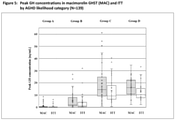
- the box-plot in Table 5 summarizes by AGHD likelihood group the peak GH concentrations achieved in the macimorelin GHST and in the ITT. It is evident that higher peak GH levels in the macimorelin GHST, as compared to the ITT, are consistently seen in all groups of the study. Moreover, the data show that peak GH levels were inversely related to the likelihood of having AGHD, i.e., the subjects assigned to the intermediate likelihood (Group B) had lower GH levels than subjects assigned to the low likelihood (Group C).
- TEAE test emergent adverse event
- TEAEs after the ITT included in the order of decreasing frequency 5 (3.2%) subjects each with somnolence, hyperhidrosis; 4 (2.5%) with asthenia; 3 (1.9%) with hunger; 2 (1.3%) with nervousness, and 1 (0.6%) with tremor.
- Ghrelin is a growth-hormone-releasing acylated peptide from stomach. Nature 1999;402(6762):656-60 Nogueiras 2006 Nogueiras R, Perez-Tilve D, Wortley KE, Tschöp M. Growth hormone secretagogue (ghrelin-) receptors--a complex drug target for the regulation of body weight.
Landscapes
- Health & Medical Sciences (AREA)
- Life Sciences & Earth Sciences (AREA)
- Engineering & Computer Science (AREA)
- Molecular Biology (AREA)
- Immunology (AREA)
- Biomedical Technology (AREA)
- Hematology (AREA)
- Chemical & Material Sciences (AREA)
- Urology & Nephrology (AREA)
- Physics & Mathematics (AREA)
- General Physics & Mathematics (AREA)
- Biochemistry (AREA)
- Pathology (AREA)
- General Health & Medical Sciences (AREA)
- Food Science & Technology (AREA)
- Medicinal Chemistry (AREA)
- Analytical Chemistry (AREA)
- Cell Biology (AREA)
- Biotechnology (AREA)
- Microbiology (AREA)
- Endocrinology (AREA)
- Tropical Medicine & Parasitology (AREA)
- Physiology (AREA)
- Theoretical Computer Science (AREA)
- General Engineering & Computer Science (AREA)
- Ecology (AREA)
- Biophysics (AREA)
- Investigating Or Analysing Biological Materials (AREA)
- Medicines That Contain Protein Lipid Enzymes And Other Medicines (AREA)
- Medicinal Preparation (AREA)
- Pharmaceuticals Containing Other Organic And Inorganic Compounds (AREA)
Description
- The present applications refers to an in vitro screening method for diagnosing growth hormone deficiency (GHD) by using macimorelin and to the substance macimorelin for use in in vitro diagnosing GHD.
- Growth hormone (GH) is a major body system-wide metabolic hormone that regulates protein, lipid, and carbohydrate homeostasis and is required for growth, development, and maintenance of the body and mind. GH is produced in the anterior lobe of the pituitary gland upon stimulation by growth hormone releasing hormone (GHRH) from the hypothalamus gland. GH is secreted from the pituitary in a pulsatile fashion of approximately 6-10 random bursts during a 24-hour period.
- Growth hormone deficiency (GHD) may be classified broadly into four categories based on the source of the GH deficiency: 1) pituitary or "classic" GHD, 2) hypothalamic GHD, 3) functional GHD and 4) idiopathic GHD. GHD may become clinically overt in childhood or in the adult. Childhood onset GHD is characterized by short stature, micropenis, increased fat, high-pitched voice, and a propensity to hypoglycemia due to relatively unopposed insulin action. The consequences of GHD in the adult can vary from the inability of young adults to achieve maximum bone density and negative impacts on lean body mass, to cardiovascular risk factors in middle age and to effects on quality of life in older subjects. It is recognized that adult growth hormone deficiency (AGHD) leads to increased morbidity (metabolic syndrome, osteoporosis, muscle wasting impaired quality of life) and increased incidence of cardiovascular events, a main cause of the increased mortality observed in this population. Recombinant human growth hormone was approved in 1996 for the treatment of AGHD. In the USA, it is estimated that the incidence of GHD in children is between 1 in 4,000 and 1 in 10,000. More than 50,000 adults in the US are GHD and 6,000 new cases are reported each year, including GHD children who transition to GHD as an adult. (Human Growth Foundation www.hgfound.org).
- According to the 2011 Endocrine Society's Clinical Guidelines [Molitch 2011] and other published literature [Woodhouse 1999; Biller 2000; Attanasio 2002; Hoffman 2004; Bollerslev 2006], GH therapy for GHD offers benefits in growth and development in children and in body composition, exercise capacity, endothelial function, inflammatory biomarkers, bone mineral density, and quality of life measures. The diagnosis of GHD is therefore important.
- Published guidelines recommend evaluation of AGHD to be based upon clinical findings, medical history, and using the appropriate GH stimulation test (GHST) for biochemical confirmation [Yuen 2011; Yuen 2013]. Since GH is secreted in pulses, random measurements of GH levels (i.e., the blood concentration of GH, expressed e.g. in ng/mL) do not distinguish GH-deficient from GH-sufficient subjects reliably. Accordingly, the diagnosis of AGHD often depends on GHSTs using agents known to provoke endogenous GH release above a certain level in healthy individuals to determine the peak GH level in subjects suspected of having the disorder. Such provocative agents include insulin used in the insulin tolerance test (ITT), arginine+GH releasing hormone (GHRH), arginine alone, clonidine, levodopa and glucagon in the glucagon stimulation test (GST).
- The ITT has been considered the gold standard for evaluation of GHD. An intravenous administration of insulin is used to induce hypoglycaemia, which in turn leads to GH release. However, this test is labor intensive as due to the potential risks associated with hypoglycaemia, intensive medical monitoring of the subject is required. The side effects are often reported as dangerous. Furthermore, the ITT is contraindicated in elderly subjects and in subjects with seizure disorders and ischemic heart disease [Yuen 2011; Yuen 2013]. GHRH plus arginine was an alternative to ITT in the USA until 2008 when Geref, the only approved form of GHRH in the USA, was taken off the market.
- The GST is an alternative that has grown in usage [Molitch 2011; Yuen 2011; Yuen 2013]. The common side effects of the GST include nausea, vomiting and headaches. Additionally, there are the limitations of the length of the test (3-4 hours) and the need for an intramuscular injection. There remains a real unmet medical need for alternative tests that are safe and reliable.
- A test to diagnose GHD based on macimorelin, an orally-available peptidomimetic ghrelin receptor agonist with growth hormone secretagogue (GHS) activity, has been disclosed by
Larsen in WO 2007/093820 A1 . - Ghrelin potently stimulates GH release [Kojima 1999]. The GH-releasing effects of ghrelin are thought to be mediated by specific receptors mainly present at the pituitary and hypothalamic level [Nogueiras 2006]. In membrane preparations containing the GHS-receptor derived from human hypothalamus and pituitary gland, it was demonstrated that macimorelin shows binding potency to the human GHS receptor comparable to that of its natural ligand, ghrelin [Broglio 2002]. Macimorelin is readily absorbed from the gastrointestinal tract and is assumed to exert its action in the same way as ghrelin.
- Based on the ability of macimorelin to exert the release of a GH pulse shortly after oral administration in healthy subjects, macimorelin has been developed as an oral diagnostic agent for GH deficiency in adults.
- Macimorelin as a compound and its use in treatment of GHD has been disclosed by
Martinez et al. in WO 01/96300 A1 - A Macimorelin GHST is disclosed by Garcia et al. (J Clin Endocrinol Metab. 2013, 2422-9, in J Clin Endocrinol Metab. 2018, 3083-3093 and a poster titled "Validation of Macimorelin As a Diagnostic Test for Adult Growth Hormone Deficiency (AGHD): A ).
- The present invention provides the following:
- (1) An in vitro screening method for diagnosing GHD by using macimorelin comprising:
- (a) providing two to three blood samples, taken from a subject within 40 to 95 minutes following an administration of an amount of macimorelin effective for inducing GH secretion;
- (b) measuring the GH level of each blood sample provided in step (a);
- (c) comparing the measured GH level obtained in step (b) with a single threshold value, wherein the single threshold value is 2.8 ng/ml;
- (d) determining the subject, whose GH level is lower than said single threshold value in each of the blood samples provided in step (a), as having GHD, or determining the subject, whose GH level is not lower than said single threshold value in at least one of the blood samples provided in step (a), as having no GHD.
- (2) The use of the substance macimorelin for in vitro diagnosing GHD wherein
- (a) two to three blood samples are provided, taken from a subject within 40 to 95 minutes following an administration of an amount of macimorelin effective for inducing GH secretion;
- (b) the GH level of each blood sample provided in step (a) is measured;
- (c) the measured GH level obtained in step (b) is compared with a single threshold value, wherein the single threshold value is 2.8 ng/ml;
- (d) the subject, whose GH level is lower than said single threshold value in each of the blood samples provided in step (a), is determined as having GHD, or the subject, whose GH level is not lower than said single threshold value in at least one of the blood samples provided in step (a), is determined as having no GHD.
- Preferred embodiments of the in vitro screening method for diagnosing GHD by using macimorelin and preferred embodiments of the substance macimorelin for use in in vitro diagnosing GHD are set out in the appended set of claims.
- In particular, the present invention relates to a macimorelin containing composition and a method to diagnose GHD by collecting two or three post-administration samples within a range of 40 to 95 minutes from a subject after oral administration of the macimorelin containing composition and comparing the GH levels in the two to three post-administration samples to a single threshold value (also known as cut-off point). The composition is comprising macimorelin, lactose monohydrate, crospovidone, silicon dioxide, sodium stearyl fumarate, and saccharin.
- In one aspect of the present invention, a novel method for determining GHD in a subject is provided. The method includes these steps: (a) orally administering to the subject an amount of macimorelin effective for inducing GH secretion; and (b) measuring GH level(s) in (i) two blood samples taken from the subject at 45±5 minutes after step (a) and at 60±5 minutes after step (a), or (ii) two blood samples taken from the subject at 60±5 minutes after step (a) and at 90±5 minutes after step (a), or (iii) three blood samples taken from the subject at 45±5 minutes after step (a), at 60±5 minutes after step (a), and at 90±5 minutes after step (a). Typically, the method does not include any further steps where any additional blood sample is taken from the subject. That is, according to the present invention neither more than the given number of post-administration samples, i.e. two or three, nor any pre-administration or concurrent to administration blood samples are taken, measured or used for comparison.
- The method further includes these steps: (c) The GH levels in the two or three blood samples are compared with a single threshold value; and (d) a subject is determined as having GHD (diagnosis of GHD), when all GH levels in the two or three blood samples are lower than said single threshold value and as having no GHD, when at least one GH level in the two or three blood samples is not lower than said single threshold value.
- In some embodiments, the two or three blood samples are serum samples. In other embodiments, the two or three blood samples are plasma samples. Typically, when two or three blood samples are taken, they are of the same type: for example, they are two serum samples or two plasma samples.
- In some embodiments, about 0.5 mg per kg subject bodyweight of macimorelin is orally administered in step (a).
- In some embodiments, the two blood samples are taken from the subject at 45±5 minutes after step (a) and at 60±5 minutes after step (a); or the two blood samples are taken from the subject at 60±5 minutes after step (a) and at 90±5 minutes after step (a). In some embodiments, the three blood samples are taken from the subject at 45±5 minutes after step (a), at 60±5 minutes after step (a), and at 90±5 minutes after step (a).
- In some embodiments, the GH levels measured in the two blood samples in step (b) is compared with a single predetermined threshold value, e.g., the predetermined threshold value is 2.8 ng/ml. The subject is determined as having GHD, when the subject's GH levels in the two blood samples are both lower than the single predetermined threshold value and as having no GHD, when at least one of the subject's GH levels in the two blood samples is not lower than the single predetermined threshold value.
- For example, when the GH levels measured in the two blood samples in step (b) are 1.6 and 1.7 ng/mL, and these GH levels are compared to a single threshold value of 2.8 ng/mL, then the subject is determined as having GHD, because both GH levels measured in the two blood samples in step (b) are lower than 2.8 ng/mL.
- For another example, when the GH levels measured in the two blood samples in step (b) are 2.6 and 3.5 ng/mL, and these GH levels are compared to a single threshold value of 2.8 ng/mL, then the subject is determined as having no GHD, because at least one of the subject's GH levels (the one at 3.5 ng/mL) in the two blood samples is not lower than 2.8 ng/mL.
- In some embodiments, the GH levels measured in the three blood samples in step (b) are compared with a single predetermined threshold value, e.g., the predetermined threshold value is 2.8 ng/ml. The subject is determined as having GHD, when the subject's GH levels in the three blood samples are all lower than the single predetermined threshold value and as having no GHD, when at least one of the subject's GH levels in the three blood samples is not lower than the single predetermined threshold value.
- For example, when the GH levels measured in the three blood samples in step (b) are 1.1, 1.3 and 1.5 ng/mL, and these GH levels are compared to a single threshold value of 2.8 ng/mL, then the subject is determined as having GHD, because all GH levels measured in the three blood samples in step (b) are lower than 2.8 ng/mL.
- For another example, when the GH levels measured in the three blood samples in step (b) are 2.4, 2.5 and 3.6 ng/mL, and these GH levels are compared to a single threshold value of 2.8 ng/mL, then the subject is determined as having no GHD, because at least one of the subject's GH levels (the one at 3.6 ng/mL) in the three blood samples is not lower than 2.8 ng/mL.
- In some embodiments, in step (a) the macimorelin is administered in a composition comprising saccharin. For example, the composition may comprise 3.5% macimorelin (calculated as free base), 93.1% spray-dried lactose monohydrate, 2.0% Type A crospovidone, 0.1% colloidal silicon dioxide, 1.0% sodium stearyl fumarate, and 0.3% saccharin sodium dihydrate.
- In some embodiments, the subject whose GH level is being tested is an adult human or a child. In other cases, the subject whose GH level is being tested is a non-human mammal.
- As used herein, a "subject" is a human or a vertebrate animal, especially an animal of a mammalian species, such as a pig, dog, cat, horse/donkey, bull/cow, goat/sheep, rodent, rabbit, fox, etc., and as well as a non-human primate such as a chimpanzee, a monkey, and the like. A "subject" may be of any gender (a male or a female) or age (a juvenile or an adult).
- As used herein, the term "effective amount" refers to an amount of a given substance that is sufficient in quantity to produce a desired effect. For example, an effective amount of macimorelin for inducing GH secretion in a recipient is an amount of the compound capable to achieve a detectable increase in the secretion of GH upon its administration to the recipient. Any given amount of macimorelin can be determined by routine testing as to whether or not it is an effective amount for stimulating GH secretion. Typically, an effective amount of macimorelin is in the range of from about 0.01, about 0.02, about 0.05, about 0.10, to about 0.20 mg per kg bodyweight of recipient at the low-end, and from about 1, about 2, about 5, about 10, about 20, about 25, to about 50 mg/kg bodyweight at the high-end, or within a range defined by any one of the low-end amounts and any one of the high-end amounts, e.g., from about 0.20 to about 2 mg/kg body weight, or about 0.5 mg/kg bodyweight.
- As used herein, "macimorelin" refers to a peptidomimetic compound acting as the ghrelin receptor agonist with growth hormone secretagogue (GHS) activity. Its chemical structure and use in the treatment of GHD are disclosed in
U.S. Patent No. 6,861,409 ,WO 01/96300 WO 2007/093820 . - As used herein, the term "blood sample" encompasses a whole blood sample as well as a fraction of whole blood such as serum or plasma sample. Whenever two or more "blood samples" are used for testing in the same method scheme, these "blood samples" are of the same type: for example, if the first sample is serum, then the second and any subsequent samples are also serum.
- As used herein, the term "about" denotes a range encompassing minus and plus 10% of a reference value. For example, "about 10" describes a range of 9 to 11.
- In general, samples are collected from a subject undergoing a GHST to determine GH levels after administration of a provocative agent inducing GH secretion. The number of samples to be collected and the test duration are important parameters to describe the subject's burden during the test as well as to describe the effort of the healthcare professional (HCP) conducting the test. The lower the number of samples is and/or the shorter a test duration is, the higher will be the acceptance to conduct such a test for subject and HCP. This is in particular true, when the subject is a child.
- The following table 1 summarizes the total number of collected blood samples during a GHST administered via injection, as recommended by the Endocrine Society and the American Association of Clinical Endocrinologists (AACE).
Table 1: Total number collected blood samples during a GHST administered via injection Test RoA Recommended by Time of Blood samples collected after administration. Sample # Time of Test Insulin (ITT) IV Endo -30, 0, 30, 60 and 120 minutes a)5 3 hours AACE fasting, and 20, 30, 40, and 60 min after a hypoglycemia is achieved. b) 5 3 hours Glucagon (GST) IM Endo 0, 30, 60, 90, 120, 150, 180, 210, and 240 min a)9 4 hours AACE 0, 30, 60, 90, 120, 150, 180, 210 and 240 minutes b)9 4 hours Arginine IV Endo - - - AACE -30, 0, 30, 60, 90, 120, 150 minutes a)7 3 hours GHRH + Arg IV Endo 0, 30, 45, 60, 75, 90, 105, and 120 minutes b)7 3 hours AACE -30, 0, 30, 60, 90, 120 and 150 minutes d)7 3 hours RoA: Route of Administration, Sample #: number of collected samples a) M. Fleseriu, J Clin Endcrinol Met, 2016, 3888 - 3921 b) K. Yuen, Endocr Pract, 2016, 1235-1244 - It is clearly visible that all GHSTs administered via injection collect at least 5 samples during a time window of at least 120 min, including at least one pre-dose sample, i.e., at 0 minutes and/or before. Therefore, it can be concluded that a full GH level profile including pre-administration level(s) is a clinical standard.
- This standard exits for several years. In 1998, Davies described the ITT collecting blood sample at 0, 30, 60, 90, and 120 minutes. In 2002, Gomez described the GST collecting blood samples at baseline, 90, 120, 150, 180, 210 and 240 minutes. In a study comparing 6 GHSTs in 2002, Biller collected 6 blood samples within -30 to 150 minutes (Biller, B. M. K. et al., J. Clin. Endocrinol. Metab. (2002), 87(5), p 2067-2079).
- It should be noted that despite proposals to use a smaller number of blood samples (e.g. Jabbar et al., Scand. J. Clin. Lab. Invest, 2009, 359-64, or Aimaretti et al., Pituitary, 2001, 129-34), two major associations of clinical endocrinologists recommended collection of full GH profiles as recently as 2016 (see Table 1). This may be due to the burden of a GHST on the subject. A high number of blood samples will prevent repetition of a GHST should an error during blood sampling or GH determination invalidates use of a blood sample.
- The macimorelin based test disclosed by Larsen in
WO 2007/093820 A1 and by Garcia et al. (J Clin Endocrinol Metab. 2013, 2422-9, in J Clin Endocrinol Metab. 2018, 3083-3093 and the Poster presented on the 99th Annual Meeting of the Endocrine Society in 2017) is the only orally administered GHST so far. -
Claim 1 ofWO 2007/093820 A1 is directed to: - 1. A method of assessing growth hormone deficiency in a human or animal subject, the method comprising administering orally to the subject EP 1572 [i.e., macimorelin] or EP 1573, obtaining at least one post-administration sample from the subject, determining the level of growth hormone in sample or samples and assessing whether the level of growth hormone in the sample or samples is indicative of growth hormone deficiency in the subject.
- Further disclosed is a composition containing macimorelin, lactose monohydrate, crospovidone, silicon dioxide, and sodium stearyl fumarate for oral administration.
- The number of needed samples are mentioned to be "at least one post-administration sample" (claim 1) or "two or three or four or five samples" (p. 7, line 25).
- However, apart from such rather general statements,
WO 2007/093820 A1 is silent regarding the specific number of samples or the corresponding time points. In addition, there is no reason given why a smaller number of samples should be sufficient compared to the clinical standard of a full GH level profile. - While being silent on the specific number of the "at least one post-administration sample",
WO 2007/093820 A1 discloses the sampling of full GH level profiles, as presented in - Example 1 disclosing a macimorelin based GHST with one pre-dose and 11 post-dose samples ranging from a pre-dose to a 300-minute sample (p. 16 line 8),
- Example 2 disclosing a macimorelin based GHST with one pre-dose and 6 post-dose samples ranging from a pre-dose to a 150-minute sample (p. 18, lines 5-6) and
- Example 3 disclosing a macimorelin based GHST with one pre-dose and 5 post-dose samples ranging from a pre-dose sample to a 120-minute sample (p. 18, lines 25 - 28). Example 3 is marked as a "Standard protocol".
- In consequence, a person skilled in the art will conclude that only full GH level profile are disclosed by Larsen, being in alignment with the clinical standard known from the prior art. There is no teaching nor any guidance whether the pre-dose sample can be omitted nor whether any sample number lower than 5 appears suitable, or which time point should be chosen to collect the "at least one post-administration sample".
- In 2013, Garcia et al. (J Clin Endocrinol Metab. 2013, 2422-9) disclosed a Macimorelin based GHST measuring GH levels at 15-30 min before dosing, immediately prior to dosing and 30, 45, 60, 75, 90, 120 and 150 min after dosing. The composition of the administered test is not disclosed.
- The performance of the macimorelin GHST as disclosed by Garcia 2013 is summarized in Table 2.
Table 2: performance of the macimorelin GHST as disclosed by Garcia 2013 Sensitivity [%] Specificity [%] Comments #1: peak GH of 5 blood draws 82 92 Using single CP of 2.7 ng/mL #2: peak GH of 5 blood draws 86 92 Using two CPs, namely a CP of 6.8 ng/mL for BMI <30 and a CP of 2.7 ng/mL for BMI >=30 #3: 45 min 90 85 #4: peak of 45 & 60 86 90 #5: peak of 45 & 60 & 90 86 92 CP: cut-off point (also referred to as threshold value) - It has now surprisingly been found that pituitary-related GHD is diagnosed in a human or animal subject, when after oral administration of a macimorelin containing composition to said subject a single, two or three post-administration samples within a range of 40 to 95 minutes after administration are collected from said subject, the level(s) of GH in the single, the two or three samples are determined and found to be below a single cut-off point, e.g. below 2.8 ng/ml. The macimorelin containing composition comprises of macimorelin, lactose, crospovidone, silicon dioxide, stearyl fumarate, and saccharin.
- Typically, a test to diagnose GHD using a macimorelin containing composition (further referred to as "macimorelin test") is conducted by a healthcare professional (HCP) in a medical setting, e.g. in a medical practice or a clinic or hospital. The HCP prescribes the macimorelin test after an initial assessment that the subject exhibits risk factors for GHD and therefore requires a GHST to confirm a GHD diagnose. There are no contraindications known that prevent the use of a macimorelin containing composition in a subject.
- The HCP assures that the subject is fasted for 6-8 hours before the macimorelin test. Typically, the HCP uses a macimorelin test kit comprising the macimorelin containing composition provided in a single use container and prepares a 0.5 mg per mL macimorelin solution according to the instructions included in the kit. Then the HCP determines the individual quantity of the solution based on the subject's weight and have the subject drink the individual quantity.
- After administration of the macimorelin solution, the subject waits for 40 to 95 minutes and two or three samples are collected from the subject within that time window. There is no sample taken before administration of the macimorelin solution (no pre-dose sample). As the macimorelin test is safe and generally very well tolerated, there are no severe adverse reactions to be expected, based on the macimorelin safety profile established during clinical studies. Constant medical supervision is not required. Mild to moderate adverse reactions might occur as dysgeusia (4.5%), dizziness, headache, fatigue (each 3.9%), nausea, and hunger (each 3.2%), diarrhea, upper respiratory tract infection (each 1.9%), feeling hot, hyperhidrosis, nasopharyngitis, and sinus bradycardia (each 1.3%).
- The level of blood GH is measured using a suitable GH assay, e. g. using an automated chemiluminescence immunoassay.
- The determined GH level induced by macimorelin is assessed to diagnose GHD by comparing to a single threshold value, e.g. a threshold value of 2.8 ng/mL. A determined GH level below the threshold value is indicative of having GHD, while a GH level not below the threshold value is indicative of not having GHD.
- In another aspect, the two post-administration samples are collected from the subject within 40 to 65 minutes after administration. Preferably, the first of the two post-administration samples is collected from the subject within 40 to 50 minutes and the second within 55 to 65 minutes after administration, i.e. the first sample is collected within a time window of 5 minutes before and after 45 minutes after administration, or in other words, within 45 ± 5 minutes after administration and the second sample is collected within a time window of 5 minutes before and after 60 minutes after administration, i.e. within 55 to 65 minutes after administration, or in other words, within 60 ± 5 minutes after administration.
- In another aspect, the two post-administration samples are collected from the subject within 55 to 95 minutes after administration. Preferably, the first of the two post-administration samples is collected from the subject within 55 to 65 minutes and the second within 85 to 95 minutes after administration, i.e. the first sample is collected within a time window of 5 minutes before and after 60 minutes after administration, or in other words, within 60 ± 5 minutes after administration and the second sample is collected within a time window of 5 minutes before and after 90 minutes after administration, i.e. within 85 to 95 minutes after administration, or in other words, within 90 ± 5 minutes after administration.
- In another aspect, the three post-administration samples are collected from the subject within 40 to 95 minutes after administration. Preferably, the first of the three post-administration samples is collected from the subject within 40 to 50 minutes, the second within 55 to 65 minutes, and the third within 85 to 95 minutes after administration, i.e. the first sample is collected within a time window of 5 minutes before and after 40 minutes after administration, or in other words, within 40 ± 5 minutes after administration; the second sample is collected within a time window of 5 minutes before and after 60 minutes after administration, i.e. within 55 to 65 minutes after administration, or in other words, within 60 ± 5 minutes after administration; the third sample is collected within a time window of 5 minutes before and after 90 minutes after administration, i.e. within 85 to 95 minutes after administration, or in other words, within 90 ± 5 minutes after administration.
- In yet another aspect of the invention, said human or animal subject to be diagnosed of GHD may be either a child or an adult. Examples for an animal subject include a horse, cow, sheep, pig, goat, cat, or dog.
- In yet another aspect of the invention, said two post-administration samples are two blood samples, e.g. two serum samples or two plasma samples, as needed. Said three post-administration samples are three blood samples, e.g. three serum samples or three plasma samples, as needed.
- The macimorelin containing composition comprises the following ingredients as listed in Table 3.
Table 3: Composition per unit dose Composition Unit quantity Percentage Quantity Macimorelin (content = 100%) 0.0350g 3.50% Lactose monohydrate, spray-dried 0.9310g 93.10% Crospovidone, Type A 0.0200g 2.00% Colloidal silicon dioxide 0.0010g 0.10% Sodium stearyl fumarate 0.0100g 1.00% Saccharin sodium, dihydrate 0.0030g 0.30% Total 1.0000g 100.00% - One unit dose consists of 1.000 g macimorelin containing composition for preparation of an oral solution in water. Typically, the prepared solution contains 0.5 mg macimorelin per ml solution.
- A bodyweight adjusted aliquot of the reconstituted solution is administered to the subject resulting in a dose of 0.5 mg per kilogram body weight of the subject.
- Said unit dose is defined for a macimorelin calculated as a free base with a content of 100%. The mass of the macimorelin free base or its free base equivalent within said unit dose is adjusted according to the content.
- Macimorelin can be included in said unit dose as a suitable pharmaceutical salt. Examples for suitable pharmaceutical salts are the acetate salt and the trifluoro acetate salt.
- Said unit dose might be filled into a suitable container for easy availability of the GHD test. Examples for a suitable container are a sachet or a pouch, or containers of suitable size made of glass of plastic.
- Based on the unit dose and the recommended dose of 0.5 mg per kilogram body weight of the subject, several amounts of macimorelin containing composition may be provided per container.
- For a subject of up to 120 kg, the container with macimorelin containing composition may comprise 63.6 mg macimorelin, 1691.8 mg spray-dried lactose monohydrate, 36.6 mg Type A crospovidone, 1.8 mg colloidal silicon dioxide, 18.2 mg sodium stearyl fumarate, and 5.5 mg saccharin sodium dihydrate. When reconstituted in 120 mL of water, 1 mL provides 0.5 mg macimorelin.
- If needed, the container may be filled with a small amount of macimorelin containing composition in addition to said unit dose ("overfill"). Such an overfill ensures that the concentration of the macimorelin solution is 0.5mg / mL despite a small amount of composition remaining in the container due to for example absorption effects. The amount of overfill depends on the type of container and must be determined empirically.
- For a sachet made of polyethylene-laminated aluminum foil intended for subjects up to 120 kg, the overfill is 3.6 mg.
- In a multicenter, randomized, two-way, crossover study, 100 subjects with confirmed AGHD received GHRH + L-Arg and macimorelin as GHSTs to determine the diagnostic efficacy of macimorelin for AGHD.
- This study was conducted in two parts. In the first part, the macimorelin containing composition described in Example 1, but without saccharin was used and mild to moderate bad taste was reported by 12 out of 52 (21%) subjects.
- During a study halt, saccharin was found to be a suitable taste masking agent, although the bitter taste was still not fully masked. In the second part of the study, the macimorelin containing composition described in Example 1 (with saccharin) was used, and only 1 out of 48 (2%) test subjects reported bad taste in mild intensity.
- In a multicenter, open-label, randomized, 2-way crossover clinical trial, 157 subjects received at least one dose of macimorelin (using the macimorelin containing composition as described in Example 1) or the ITT and were included into the safety data set. Of these, 139 subjects with a valid macimorelin test and a valid ITT were included into the efficacy data set, stratified into high (Group A, N=38), intermediate (Group B, N=37), and low (Group C, N=39) likelihood for AGHD and healthy, matched controls (Group D, N=25).
- Blood samples were collected before and 30, 45, 60, and 90 minutes after administration of macimorelin and before and 15, 30, 45, 60, 90 and 120 minutes after administration of insulin to the efficacy data set subjects and GH levels were determined for all samples.
- The study protocol allowed for a 5 minutes time window for each of said time points, meaning that a blood sample collected for example within 25 to 35 min after GH provocation agent administration was validly collected for the 30 min time point.
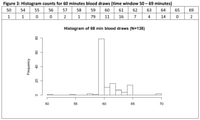
- The distribution of collected blood draws per timepoint following administration of macimorelin is shown in the table 4 and
figures 1-4 below.Table 4: Overview of statistical data on time distribution following administration of macimorelin Time.Point N Mean StDev Median Min Max 30min 139 30.122 1.17 30 25 35 45min 139 45.122 1.113 45 40 50 60min 138 61.087 2.297 60 50 70 90min 138 90.978 6.644 90 85 165 - Using GH cut-off levels of 2.8 ng/mL for macimorelin and 5.1 ng/mL for the ITT, percent agreements between the Macimorelin and the ITT GHST were found as listed in Table 5. A GH level below 2.8 ng/mL for macimorelin and 5.1 ng/mL for the ITT is referred to as a positive test, suggesting AGHD.
Table 5: performance of the macimorelin GHST as disclosed by Garcia 2013 Blood draws at Core study analysis Agreement between MAC and INTT (mITT , N=139) MAC GH cut-off point: 2.8 ng/mL ITT GH cut-off point: 5.1 ng/mL ROC analysis for MAC (Groups A+D; N=38+25) Negative agreement Positive agreement Overall agreement Sensitivity Specificity (%) (%) (%) (%) (%) 0 & 30 & 45 & 60 & 90 min (peak level) 95.38 74.32 84.17 86.84 96.00 Pre-dose (Omin) 13.85 98.65 58.99 86.84 96.00 30 min 73.85 82.43 78.42 92.11 80.00 45 min 86.15 78.38 82.01 89.47 92.00 45 & 60 min (peak level) 95.38 75.68 84.89 86.84 96.00 60 min 95.31 81.08 87.68 92.11 96.00 60 & 90 min (peak level) 95.38 79.73 87.05 97.37 88.00 90 min 84.62 87.84 86.33 97.37 88.00 45 & 60 & 90 min (peak level) 95.38 74.32 84.17 86.84 96.00 - When assessing blood draws taken at 0, 30, 45, 60, and 90 min after macimorelin administration, the highest (peak) GH level determined in these Macimorelin samples is used and compared to the highest GH level determined over all ITT samples. It was found that 95.38% of negative Macimorelin test results matched negative ITT test results. Similarly, 74.32 % of positive Macimorelin test results matched positive ITT test results, resulting in a total agreement of 84.17% between the macimorelin and the ITT GHST (see row '0 & 30 & 45 & 60 & 90 min (peak level)').
- When taking only the 45 min macimorelin GH level to compare to the highest GH level determined over all ITT samples, negative agreement is 86.15%, positive agreement is 78.38% and total agreement is 82.01% between the macimorelin and the ITT GHST (see row '45 min'.
- When taking the highest (peak) macimorelin GH level for 45 and 60 min to compare to the highest GH level determined over all ITT samples, negative agreement is 95.38%, positive agreement is 75.68% and total agreement is 84.89% between the macimorelin and the ITT GHST (see row '45 & 60 min (peak level)').
- When taking the highest (peak) macimorelin GH level for 45, 60 and 90 min to compare to the highest GH level determined over all ITT samples, negative agreement is 95.38%, positive agreement is 74.32% and total agreement is 84.17% between the macimorelin and the ITT GHST (see row '45 & 60 & 90 min (peak level)').
- A negative % agreement value (i.e., a negative macimorelin GHD diagnosis matching a negative ITT GHD diagnosis) is considered as more important compared to the positive % agreement, because a chronic GH treatment of a subject, who does not need such treatment, based on a false-positive GHST result should be avoided. Nevertheless, a high positive % agreement is also sought. However, criteria for positive agreement might be less stringent as a HCP will base a diagnosis on the overall clinical presentation guided by physical examination, medical history, clinical symptoms, concomitant risk factors and laboratory parameters of a subject, not only on a GHST.
- The box-plot in Table 5 summarizes by AGHD likelihood group the peak GH concentrations achieved in the macimorelin GHST and in the ITT. It is evident that higher peak GH levels in the macimorelin GHST, as compared to the ITT, are consistently seen in all groups of the study. Moreover, the data show that peak GH levels were inversely related to the likelihood of having AGHD, i.e., the subjects assigned to the intermediate likelihood (Group B) had lower GH levels than subjects assigned to the low likelihood (Group C).
- To assess the repeatability of the macimorelin GHST, 33 subjects with a valid first macimorelin test (core study) underwent a second macimorelin test (repeatability study extension). The result of the second macimorelin test matched the result of the first test in 94%., i.e., in 31 out of 33 subjects the outcome of the test results below or above the cut-off point was reproducible (
Figure 6 ). - Any test emergent adverse event (TEAE) was recorded in 39 (25.3%) of a total of 154 subjects of the safety set following the macimorelin GHST and in 151 (96.2%) of a total of 157 subjects following ITT, with a total number of 77 and 761 AEs, respectively (Table 6).
Table 6: Common Adverse Reactions after administration of macimorelin TEAEs Macimorelin GHST (N=154/33) ITT (N=157) Frequency1 ∗A/∗∗B %2 ∗A/∗∗B N AEs3 ∗A/∗∗B Frequency1 %2 N AEs3 Any TEAE 39/6 25.3/17.6 77/9 151 96.2 761 Any TEAE (likely or possible related) 22/4 14.3/11.8 37/5 149 94.9 710 Any test emergent severe AE 1/0 0.6/0 1/0 11 7 25 1: Number of subjects with any TEAE, each subject was counted only once within each category,
2: Number of subjects with any AE / number of all subjects, 3: Number of all AEs,
∗A: All subjects with at least one macimorelin GHST; ∗∗B: Repeatability macimorelin GHST - Severe TEAEs after the ITT included in the order of decreasing frequency: 5 (3.2%) subjects each with somnolence, hyperhidrosis; 4 (2.5%) with asthenia; 3 (1.9%) with hunger; 2 (1.3%) with nervousness, and 1 (0.6%) with tremor. TEAEs following macimorelin GHST were of mild to moderate intensity: dysgeusia (4.5%), dizziness, headache, fatigue (each 3.9%), nausea, hunger (each 3.2%), diarrhea, upper respiratory tract infection (each 1.9%), feeling hot, hyperhidrosis, nasopharyngitis, and sinus bradycardia (each 1.3%).
List of References Molitch 2011 Molitch ME, Clemmons DR, Malozowski S, Merriam GR, Vance ML. Evaluation and treatment of adult growth hormone deficiency: an Endocrine Society clinical practice guideline. J Clin Endocrinol Metab 2011;96(6):1587-609 Woodhouse 1999 Woodhouse U, Asa SL, Thomas SG, Ezzat S. Measures of submaximal aerobic performance evaluate and predict functional response to growth hormone (GH) treatment in GH-deficient adults. J Clin Endocrinol Metab 1999;84:4570-7 Biller 2000 Biller BM, Sesmilo G, Baum HB, Hayden D, Schoenfeld D, Klibanski A. Withdrawal of long-term physiological growth hormone (GH) administration: differential effects on bone density and body composition in men with adult-onset GH deficiency. J Clin Endocrinol Metab 2000;85:970-6 Attanasio 2002 Attanasio AF, Howell S, Bates PC, Frewer P, Chipman J, Blum WF, Shalet SM. Body composition, IGF-I and IGFBP-3 concentrations as outcome measures in severely GH-deficient (GHD) patients after childhood GH treatment: a comparison with adult onset GHD patients. J Clin Endocrinol Metab 2002;87:3368-72 Hoffman 2004 Hoffman AR, Kuntze JE, Baptista J, Baum HB, Baumann GP, Biller BM, Clark RV, Cook D, Inzucchi SE, Kleinberg D, Klibanski A, Phillips LS, Ridgway EC, Robbins RJ, Schlechte J, Sharma M, Thorner MO, Vance ML. Growth hormone (GH) replacement therapy in adult-onset gh deficiency: effects on body composition in men and women in a double-blind, randomized, placebo-controlled trial. J Clin Endocrinol Metab 2004;89:2048-56 Bollerslev 2006 Bollerslev J, Ueland T, Jorgensen AP, Fougner KJ, Wergeland R, Schreiner T, Burman P. Positive effects of a physiological dose of GH on markers of atherogenesis: a placebo-controlled study in patients with adult-onset GH deficiency. Eur J Endocrinol 2006;154:537-43 Yuen 2011 Yuen KC. Glucagon stimulation testing in assessing for adult growth hormone deficiency: current status and future perspectives. ISRN Endocrinol 2011; article ID 608056 Yuen 2013 Yuen KCJ, Chong LE, Rhoads SA. Evaluation of adult growth hormone deficiency: current and future perspectives. 2013 / Kojima 1999 Kojima M, Hosoda H, Date Y, Nakazato M, Matsuo H, Kangawa K. Ghrelin is a growth-hormone-releasing acylated peptide from stomach. Nature 1999;402(6762):656-60 Nogueiras 2006 Nogueiras R, Perez-Tilve D, Wortley KE, Tschöp M. Growth hormone secretagogue (ghrelin-) receptors--a complex drug target for the regulation of body weight. CNS Neurol Disord Drug Targets 2006;5(3):335-43 Broglio 2002 Broglio F, Boutignon F, Benso A, Gottero C, Prodam F, Arvat E, Ghè C, Catapano F, Torsello A, Locatelli V, Muccioli G, Boeglin D, Guerlavais V, Fehrentz JA, Martinez J, Ghigo E, Deghenghi R.EP1572: A novel peptido-mimetic GH secretagogue with potent and selective GH-releasing activity in man. J Endocrinol Invest. 2002 Sep;25(8):RC26-8. Martinez et al. U.S. Patent No. 6,861,409 Martinez et al. WO 01/96300 A1 Poster by Garcia et al. "Validation of Macimorelin As a Diagnostic Test for Adult Growth Hormone Deficiency (AGHD): A Garcia et al. 2013 Garcia et al., J Clin Endocrinol Metab. 2013, 2422-9 Garcia et al. 2018 Garcia et al., J Clin Endocrinol Metab. 2018, 3083-3093 Fleseriu 2016 M. Fleseriu, J Clin Endcrinol Met, 2016, 3888 - 3921 Yuen 2016 K. Yuen, Endocr Pract, 2016, 1235-1244 Davies 1998 Clin Endocrinol (Oxf). 1998, 217-20. Gomez 2002 Clinical Endocrinology (2002), 56, 329-334 Biller 2002 Biller, B. M. K. et al., J. Clin. Endocrinol. Metab. (2002), 87(5), p 2067-2079 Jabbar 2009 Jabbar et al., Scand. J. Clin. Lab. Invest, 2009, 359-64 Aimaretti 2001 Aimaretti et al., Pituitary, 2001, 129-34 Larsen WO 2007/093820 A1
Claims (13)
- An in vitro screening method for diagnosing growth hormone deficiency by using macimorelin comprising:(a) providing two to three blood samples, taken from a subject within 40 to 95 minutes following an administration of an amount of macimorelin effective for inducing growth hormone secretion;(b) measuring the growth hormone level of each blood sample provided in step (a);(c) comparing the measured growth hormone level obtained in step (b) with a single threshold value, wherein the single threshold value is 2.8 ng/ml;(d) determining the subject, whose growth hormone level is lower than said single threshold value in each of the blood samples provided in step (a), as having growth hormone deficiency, or determining the subject, whose growth hormone level is not lower than said single threshold value in at least one of the blood samples provided in step (a), as having no growth hormone deficiency.
- Use of the substance macimorelin for in vitro diagnosing growth hormone deficiency wherein(a) two to three blood samples are provided, taken from a subject within 40 to 95 minutes following an administration of an amount of macimorelin effective for inducing growth hormone secretion;(b) the growth hormone level of each blood sample provided in step (a) is measured;(c) the measured growth hormone level obtained in step (b) is compared with a single threshold value, wherein the single threshold value is 2.8 ng/ml;(d) the subject, whose growth hormone level is lower than said single threshold value in each of the blood samples provided in step (a), is determined as having growth hormone deficiency, or the subject, whose growth hormone level is not lower than said single threshold value in at least one of the blood samples provided in step (a), is determined as having no growth hormone deficiency.
- The method according to claim 1 or the use of the substance for in vitro diagnosing growth hormone deficiency according to claim 2, wherein in step (a) three blood samples are provided.
- The method according to any of claims 1 or 3 or the use of the substance for in vitro diagnosing growth hormone deficiency according to any one of claims 2 or 3, wherein in step (a) the blood samples are serum samples.
- The method according to any of claims 1 or 3 or the use of the substance for in vitro diagnosing growth hormone deficiency according to any one of claims 2 to 3 wherein in step (a) the blood samples are plasma samples.
- The method according to any of claims 1, 3 to 5 or the use of the substance for in vitro diagnosing growth hormone deficiency according to any one of claims 2 to 5, wherein in step (a) about 0.5 mg per kg subject bodyweight of macimorelin has been administered.
- The method according to any of claims 1, 3 to 6 or the use of the substance for in vitro diagnosing growth hormone deficiency according to any one of claims 2 to 6, wherein in step (a) the administration of macimorelin is oral administration.
- The method according to any of claims 1, 4 to 7 or the use of the substance for in vitro diagnosing growth hormone deficiency according to any one of claims 2, 4 to 7, wherein in step (a) two blood samples are provided, which are taken from the subject at 45±5 minutes and at 60±5 minutes after administration of macimorelin.
- The method according to any of claims 1, 4 to 7or the use of the substance for in vitro diagnosing growth hormone deficiency according to any one of claims 2, 4 to 7, wherein in step (a) two blood samples are provided, which are taken from the subject at 60±5 minutes and at 90±5 minutes after administration of macimorelin.
- The method according to any of claims 1, 3 to 7 or the use of the substance for in vitro diagnosing growth hormone deficiency according to any one of claims 2 to 7, wherein in step (a) three blood samples are provided, which are taken from the subject at 45±5 minutes, 60±5 minutes and at 90±5 minutes after administration of macimorelin.
- The method according to any of claims 1, 3 to 10 or the use of the substance for in vitro diagnosing growth hormone deficiency according to any one of claims 2 to 10, wherein in step (a) the macimorelin has been administered in a composition comprising saccharin.
- The method according to any of claims 1, 3 to 11 or the use of the substance for in vitro diagnosing growth hormone deficiency according to any one of claims 2 to 11, wherein the composition comprises 3.5% w/w macimorelin calculated as free base, 93.1% w/w spray-dried lactose monohydrate, 2.0% w/w Type A crospovidone, 0.1% w/w colloidal silicon dioxide, 1.0% w/w sodium stearyl fumarate, and 0.3% w/w saccharin sodium dihydrate.
- The method according to any of claims 1, 3 to 12 or the use of substance for in vitro diagnosing growth hormone deficiency according to any one of claims 2 to 12, wherein the subject is selected from the group consisting of an adult human, a human child and a non-human mammal.
Priority Applications (6)
| Application Number | Priority Date | Filing Date | Title |
|---|---|---|---|
| RS20220429A RS63272B1 (en) | 2017-12-19 | 2018-12-18 | PROCEDURE FOR ASSESSMENT OF GROWTH HORMONE DEFICIENCY IN HUMANS USING PREPARATIONS CONTAINING MACIMORELIN |
| EP25168234.0A EP4575496A3 (en) | 2017-12-19 | 2018-12-18 | Method of assessing growth hormone deficiency in humans by a macimorelin containing composition |
| SI201830684T SI3729100T1 (en) | 2017-12-19 | 2018-12-18 | Method of assessing growth hormone deficiency in humans by a macimorelin containing composition |
| SM20220210T SMT202200210T1 (en) | 2017-12-19 | 2018-12-18 | METHOD FOR ASSESSING GROWTH HORMONE DEFICIENCY IN HUMANS USING A COMPOSITION CONTAINING MACIMORELIN |
| EP22163144.3A EP4036584A1 (en) | 2017-12-19 | 2018-12-18 | Method of assessing growth hormone deficiency in humans by a macimorelin containing composition |
| HRP20220584TT HRP20220584T1 (en) | 2017-12-19 | 2018-12-18 | Method of assessing growth hormone deficiency in humans by a macimorelin containing composition |
Applications Claiming Priority (3)
| Application Number | Priority Date | Filing Date | Title |
|---|---|---|---|
| US201762607866P | 2017-12-19 | 2017-12-19 | |
| US201762609059P | 2017-12-21 | 2017-12-21 | |
| PCT/EP2018/085622 WO2019121762A1 (en) | 2017-12-19 | 2018-12-18 | Method of assessing growth hormone deficiency in humans by a macimorelin containing composition |
Related Child Applications (2)
| Application Number | Title | Priority Date | Filing Date |
|---|---|---|---|
| EP25168234.0A Division EP4575496A3 (en) | 2017-12-19 | 2018-12-18 | Method of assessing growth hormone deficiency in humans by a macimorelin containing composition |
| EP22163144.3A Division EP4036584A1 (en) | 2017-12-19 | 2018-12-18 | Method of assessing growth hormone deficiency in humans by a macimorelin containing composition |
Publications (2)
| Publication Number | Publication Date |
|---|---|
| EP3729100A1 EP3729100A1 (en) | 2020-10-28 |
| EP3729100B1 true EP3729100B1 (en) | 2022-03-23 |
Family
ID=64901532
Family Applications (3)
| Application Number | Title | Priority Date | Filing Date |
|---|---|---|---|
| EP25168234.0A Pending EP4575496A3 (en) | 2017-12-19 | 2018-12-18 | Method of assessing growth hormone deficiency in humans by a macimorelin containing composition |
| EP18827044.1A Active EP3729100B1 (en) | 2017-12-19 | 2018-12-18 | Method of assessing growth hormone deficiency in humans by a macimorelin containing composition |
| EP22163144.3A Pending EP4036584A1 (en) | 2017-12-19 | 2018-12-18 | Method of assessing growth hormone deficiency in humans by a macimorelin containing composition |
Family Applications Before (1)
| Application Number | Title | Priority Date | Filing Date |
|---|---|---|---|
| EP25168234.0A Pending EP4575496A3 (en) | 2017-12-19 | 2018-12-18 | Method of assessing growth hormone deficiency in humans by a macimorelin containing composition |
Family Applications After (1)
| Application Number | Title | Priority Date | Filing Date |
|---|---|---|---|
| EP22163144.3A Pending EP4036584A1 (en) | 2017-12-19 | 2018-12-18 | Method of assessing growth hormone deficiency in humans by a macimorelin containing composition |
Country Status (21)
| Country | Link |
|---|---|
| US (1) | US10288629B1 (en) |
| EP (3) | EP4575496A3 (en) |
| JP (2) | JP7116793B2 (en) |
| KR (2) | KR102432993B1 (en) |
| CN (1) | CN111684283B (en) |
| AU (1) | AU2018387239B2 (en) |
| CA (1) | CA3086079C (en) |
| CY (1) | CY1125204T1 (en) |
| DK (1) | DK3729100T3 (en) |
| ES (1) | ES2914795T3 (en) |
| HR (1) | HRP20220584T1 (en) |
| IL (1) | IL275275B2 (en) |
| LT (1) | LT3729100T (en) |
| MD (1) | MD3729100T2 (en) |
| NZ (1) | NZ764338A (en) |
| PL (1) | PL3729100T3 (en) |
| PT (1) | PT3729100T (en) |
| RS (1) | RS63272B1 (en) |
| SI (1) | SI3729100T1 (en) |
| SM (1) | SMT202200210T1 (en) |
| WO (1) | WO2019121762A1 (en) |
Families Citing this family (2)
| Publication number | Priority date | Publication date | Assignee | Title |
|---|---|---|---|---|
| WO2022017599A1 (en) * | 2020-07-22 | 2022-01-27 | Aeterna Zentaris Gmbh | A screening method for diagnosing growth hormone deficiency in pediatric patients by using macimorelin |
| US11644474B2 (en) * | 2020-07-22 | 2023-05-09 | Æterna Zentaris Gmbh | Use of macimorelin in assessing growth hormone deficiency in children |
Family Cites Families (14)
| Publication number | Priority date | Publication date | Assignee | Title |
|---|---|---|---|---|
| ES2292900T3 (en) | 2000-06-13 | 2008-03-16 | Aeterna Zentaris Gmbh | SECRETAGOGOS OF THE HORMONE OF GROWTH. |
| US7390503B1 (en) | 2003-08-22 | 2008-06-24 | Barr Laboratories, Inc. | Ondansetron orally disintegrating tablets |
| DK2274978T3 (en) * | 2003-09-12 | 2015-06-15 | Ipsen Biopharmaceuticals Inc | Methods of treating an insulin-like growth factor-I (IGF-I) deficiency |
| GB0603295D0 (en) | 2006-02-18 | 2006-03-29 | Ardana Bioscience Ltd | Methods and kits |
| WO2008143835A1 (en) * | 2007-05-15 | 2008-11-27 | Yale University | Ghrelin protects substantia nigra dopamine neurons |
| PT2572705T (en) | 2007-10-01 | 2017-11-08 | Lesvi Laboratorios Sl | Orodispersible tablets |
| US20110112020A1 (en) * | 2009-04-30 | 2011-05-12 | The Children's Mercy Hospital | MEASUREMENT OF G-PROTEIN mRNA IN THE DIAGNOSIS OF GROWTH HORMONE INSUFFICIENCY |
| CN102713606A (en) * | 2009-11-13 | 2012-10-03 | 无限制药股份有限公司 | Compositions, kits, and methods for identification, assessment, prevention, and therapy of cancer |
| CN105209055A (en) * | 2013-03-11 | 2015-12-30 | 阿穆尼克斯运营公司 | Treatment of pediatric growth hormone deficiency with human growth hormone analogues |
| ITMI20130874A1 (en) | 2013-05-29 | 2014-11-30 | Zambon Spa | DEGLUTIBLE TABLETS OF N-ACETYLCISTEIN |
| US10317418B2 (en) * | 2015-02-24 | 2019-06-11 | Massachusetts Institute Of Technology | Use of ghrelin or functional ghrelin receptor agonists to prevent and treat stress-sensitive psychiatric illness |
| CN106310229A (en) | 2015-06-30 | 2017-01-11 | 深圳翰宇药业股份有限公司 | Macimorelin film coated tablet and preparation method thereof |
| KR20230116961A (en) * | 2015-09-21 | 2023-08-04 | 암모네트 파마 엘엘씨 | Detecting and treating growth hormone deficiency |
| JP2017061427A (en) * | 2015-09-25 | 2017-03-30 | 学校法人慶應義塾 | Preventive and / or therapeutic agent for diabetic nephropathy |
-
2018
- 2018-05-30 US US15/993,507 patent/US10288629B1/en active Active
- 2018-12-18 JP JP2020534516A patent/JP7116793B2/en active Active
- 2018-12-18 EP EP25168234.0A patent/EP4575496A3/en active Pending
- 2018-12-18 EP EP18827044.1A patent/EP3729100B1/en active Active
- 2018-12-18 CA CA3086079A patent/CA3086079C/en active Active
- 2018-12-18 IL IL275275A patent/IL275275B2/en unknown
- 2018-12-18 SI SI201830684T patent/SI3729100T1/en unknown
- 2018-12-18 WO PCT/EP2018/085622 patent/WO2019121762A1/en not_active Ceased
- 2018-12-18 EP EP22163144.3A patent/EP4036584A1/en active Pending
- 2018-12-18 PT PT188270441T patent/PT3729100T/en unknown
- 2018-12-18 LT LTEPPCT/EP2018/085622T patent/LT3729100T/en unknown
- 2018-12-18 CN CN201880081711.2A patent/CN111684283B/en active Active
- 2018-12-18 NZ NZ764338A patent/NZ764338A/en unknown
- 2018-12-18 MD MDE20201093T patent/MD3729100T2/en unknown
- 2018-12-18 HR HRP20220584TT patent/HRP20220584T1/en unknown
- 2018-12-18 PL PL18827044.1T patent/PL3729100T3/en unknown
- 2018-12-18 RS RS20220429A patent/RS63272B1/en unknown
- 2018-12-18 DK DK18827044.1T patent/DK3729100T3/en active
- 2018-12-18 ES ES18827044T patent/ES2914795T3/en active Active
- 2018-12-18 AU AU2018387239A patent/AU2018387239B2/en active Active
- 2018-12-18 KR KR1020227000902A patent/KR102432993B1/en active Active
- 2018-12-18 KR KR1020207017004A patent/KR102351225B1/en active Active
- 2018-12-18 SM SM20220210T patent/SMT202200210T1/en unknown
-
2022
- 2022-03-01 JP JP2022030644A patent/JP7361816B2/en active Active
- 2022-05-25 CY CY20221100358T patent/CY1125204T1/en unknown
Also Published As
Similar Documents
| Publication | Publication Date | Title |
|---|---|---|
| Richmond et al. | Current indications for growth hormone therapy for children and adolescents | |
| Vanderheyden et al. | Greater lactate accumulation following an acute bout of high-intensity exercise in males suppresses acylated ghrelin and appetite postexercise | |
| JP4852728B2 (en) | Methods and kits | |
| ES2967259T3 (en) | Detection and treatment of growth hormone deficiency | |
| Csákváry et al. | Safety, tolerability, pharmacokinetics, and pharmacodynamics of macimorelin in children with suspected growth hormone deficiency: an open-label, group comparison, dose-escalation trial | |
| JP7361816B2 (en) | Method for evaluating growth hormone deficiency in humans with macimorelin-containing compositions | |
| Hoeck et al. | Differences in reproducibility and peak growth hormone responses to repeated testing with various stimulators in healthy adults | |
| Crinò et al. | Effects of growth hormone therapy on glucose metabolism and insulin sensitivity indices in prepubertal children with Prader-Willi syndrome | |
| HK40122780A (en) | Method of assessing growth hormone deficiency in humans by a macimorelin containing composition | |
| Juul et al. | Diagnosis of growth hormone (GH) deficiency and the use of GH in children with growth disorders | |
| EA041109B1 (en) | METHOD FOR ASSESSING GROWTH HORMONE DEFICIENCY IN HUMANS USING A COMPOSITION CONTAINING MACIMORELIN | |
| Çamtosun et al. | Prospective follow-up of children with idiopathic growth hormone deficiency after termination of growth hormone treatment: is there really need for treatment at transition to adulthood? | |
| AU2020460118B2 (en) | A screening method for diagnosing growth hormone deficiency in pediatric patients by using macimorelin | |
| US11644474B2 (en) | Use of macimorelin in assessing growth hormone deficiency in children | |
| Djurdjevic | Macimorelin as a Diagnostic Test for Adult Growth Hormone Deficiency | |
| Spiliotis et al. | Combined growth hormone-releasing hormone and growth hormone-releasing peptide-6 test for the evaluation of growth hormone secretion in children with growth hormone deficiency and growth hormone neurosecretory dysfunction | |
| Zarghami et al. | Relationship between insulin like growth factor-1 and leptin in type II diabetic patients. |
Legal Events
| Date | Code | Title | Description |
|---|---|---|---|
| REG | Reference to a national code |
Ref country code: HR Ref legal event code: TUEP Ref document number: P20220584T Country of ref document: HR |
|
| STAA | Information on the status of an ep patent application or granted ep patent |
Free format text: STATUS: UNKNOWN |
|
| STAA | Information on the status of an ep patent application or granted ep patent |
Free format text: STATUS: THE INTERNATIONAL PUBLICATION HAS BEEN MADE |
|
| PUAI | Public reference made under article 153(3) epc to a published international application that has entered the european phase |
Free format text: ORIGINAL CODE: 0009012 |
|
| STAA | Information on the status of an ep patent application or granted ep patent |
Free format text: STATUS: REQUEST FOR EXAMINATION WAS MADE |
|
| 17P | Request for examination filed |
Effective date: 20200630 |
|
| AK | Designated contracting states |
Kind code of ref document: A1 Designated state(s): AL AT BE BG CH CY CZ DE DK EE ES FI FR GB GR HR HU IE IS IT LI LT LU LV MC MK MT NL NO PL PT RO RS SE SI SK SM TR |
|
| AX | Request for extension of the european patent |
Extension state: BA ME |
|
| RAV | Requested validation state of the european patent: fee paid |
Extension state: MD Effective date: 20200630 |
|
| STAA | Information on the status of an ep patent application or granted ep patent |
Free format text: STATUS: EXAMINATION IS IN PROGRESS |
|
| 17Q | First examination report despatched |
Effective date: 20210702 |
|
| GRAP | Despatch of communication of intention to grant a patent |
Free format text: ORIGINAL CODE: EPIDOSNIGR1 |
|
| STAA | Information on the status of an ep patent application or granted ep patent |
Free format text: STATUS: GRANT OF PATENT IS INTENDED |
|
| INTG | Intention to grant announced |
Effective date: 20211022 |
|
| GRAS | Grant fee paid |
Free format text: ORIGINAL CODE: EPIDOSNIGR3 |
|
| GRAA | (expected) grant |
Free format text: ORIGINAL CODE: 0009210 |
|
| STAA | Information on the status of an ep patent application or granted ep patent |
Free format text: STATUS: THE PATENT HAS BEEN GRANTED |
|
| AK | Designated contracting states |
Kind code of ref document: B1 Designated state(s): AL AT BE BG CH CY CZ DE DK EE ES FI FR GB GR HR HU IE IS IT LI LT LU LV MC MK MT NL NO PL PT RO RS SE SI SK SM TR |
|
| REG | Reference to a national code |
Ref country code: GB Ref legal event code: FG4D |
|
| REG | Reference to a national code |
Ref country code: CH Ref legal event code: EP |
|
| REG | Reference to a national code |
Ref country code: DK Ref legal event code: T3 Effective date: 20220405 |
|
| REG | Reference to a national code |
Ref country code: FI Ref legal event code: FGE Ref country code: IE Ref legal event code: FG4D |
|
| REG | Reference to a national code |
Ref country code: DE Ref legal event code: R096 Ref document number: 602018032742 Country of ref document: DE |
|
| REG | Reference to a national code |
Ref country code: AT Ref legal event code: REF Ref document number: 1477788 Country of ref document: AT Kind code of ref document: T Effective date: 20220415 |
|
| REG | Reference to a national code |
Ref country code: SE Ref legal event code: TRGR |
|
| REG | Reference to a national code |
Ref country code: NL Ref legal event code: FP |
|
| REG | Reference to a national code |
Ref country code: RO Ref legal event code: EPE |
|
| RAP4 | Party data changed (patent owner data changed or rights of a patent transferred) |
Owner name: AETERNA ZENTARIS GMBH |
|
| REG | Reference to a national code |
Ref country code: PT Ref legal event code: SC4A Ref document number: 3729100 Country of ref document: PT Date of ref document: 20220504 Kind code of ref document: T Free format text: AVAILABILITY OF NATIONAL TRANSLATION Effective date: 20220428 |
|
| REG | Reference to a national code |
Ref country code: HR Ref legal event code: T1PR Ref document number: P20220584 Country of ref document: HR |
|
| REG | Reference to a national code |
Ref country code: ES Ref legal event code: FG2A Ref document number: 2914795 Country of ref document: ES Kind code of ref document: T3 Effective date: 20220616 |
|
| REG | Reference to a national code |
Ref country code: GR Ref legal event code: EP Ref document number: 20220401088 Country of ref document: GR Effective date: 20220608 |
|
| REG | Reference to a national code |
Ref country code: MD Ref legal event code: VAGR Ref document number: 3729100 Country of ref document: MD Date of ref document: 20220630 Kind code of ref document: T2 |
|
| REG | Reference to a national code |
Ref country code: NO Ref legal event code: T2 Effective date: 20220323 |
|
| REG | Reference to a national code |
Ref country code: EE Ref legal event code: FG4A Ref document number: E022357 Country of ref document: EE Effective date: 20220527 |
|
| REG | Reference to a national code |
Ref country code: HU Ref legal event code: AG4A Ref document number: E058422 Country of ref document: HU |
|
| PG25 | Lapsed in a contracting state [announced via postgrant information from national office to epo] |
Ref country code: SM Free format text: LAPSE BECAUSE OF FAILURE TO SUBMIT A TRANSLATION OF THE DESCRIPTION OR TO PAY THE FEE WITHIN THE PRESCRIBED TIME-LIMIT Effective date: 20220323 |
|
| REG | Reference to a national code |
Ref country code: DE Ref legal event code: R097 Ref document number: 602018032742 Country of ref document: DE |
|
| REG | Reference to a national code |
Ref country code: HR Ref legal event code: ODRP Ref document number: P20220584 Country of ref document: HR Payment date: 20221212 Year of fee payment: 5 |
|
| PLBE | No opposition filed within time limit |
Free format text: ORIGINAL CODE: 0009261 |
|
| STAA | Information on the status of an ep patent application or granted ep patent |
Free format text: STATUS: NO OPPOSITION FILED WITHIN TIME LIMIT |
|
| VSFP | Annual fee paid to validation state [announced via postgrant information from national office to epo] |
Ref country code: MD Payment date: 20221124 Year of fee payment: 5 |
|
| 26N | No opposition filed |
Effective date: 20230102 |
|
| REG | Reference to a national code |
Ref country code: HR Ref legal event code: ODRP Ref document number: P20220584 Country of ref document: HR Payment date: 20231207 Year of fee payment: 6 |
|
| VSFP | Annual fee paid to validation state [announced via postgrant information from national office to epo] |
Ref country code: MD Payment date: 20231211 Year of fee payment: 6 |
|
| PG25 | Lapsed in a contracting state [announced via postgrant information from national office to epo] |
Ref country code: SM Free format text: LAPSE BECAUSE OF FAILURE TO SUBMIT A TRANSLATION OF THE DESCRIPTION OR TO PAY THE FEE WITHIN THE PRESCRIBED TIME-LIMIT Effective date: 20220323 |
|
| PGRI | Patent reinstated in contracting state [announced from national office to epo] |
Ref country code: SM Effective date: 20220324 |
|
| REG | Reference to a national code |
Ref country code: AT Ref legal event code: UEP Ref document number: 1477788 Country of ref document: AT Kind code of ref document: T Effective date: 20220323 |
|
| REG | Reference to a national code |
Ref country code: HR Ref legal event code: ODRP Ref document number: P20220584 Country of ref document: HR Payment date: 20241206 Year of fee payment: 7 |
|
| VSFP | Annual fee paid to validation state [announced via postgrant information from national office to epo] |
Ref country code: MD Payment date: 20241204 Year of fee payment: 7 |
|
| PGFP | Annual fee paid to national office [announced via postgrant information from national office to epo] |
Ref country code: PT Payment date: 20251204 Year of fee payment: 8 |
|
| REG | Reference to a national code |
Ref country code: CH Ref legal event code: U11 Free format text: ST27 STATUS EVENT CODE: U-0-0-U10-U11 (AS PROVIDED BY THE NATIONAL OFFICE) Effective date: 20260101 |
|
| PGFP | Annual fee paid to national office [announced via postgrant information from national office to epo] |
Ref country code: IS Payment date: 20251211 Year of fee payment: 8 Ref country code: DE Payment date: 20250918 Year of fee payment: 8 |
|
| PGFP | Annual fee paid to national office [announced via postgrant information from national office to epo] |
Ref country code: LT Payment date: 20251124 Year of fee payment: 8 Ref country code: GB Payment date: 20251219 Year of fee payment: 8 |
|
| PGFP | Annual fee paid to national office [announced via postgrant information from national office to epo] |
Ref country code: MC Payment date: 20251223 Year of fee payment: 8 |
|
| PGFP | Annual fee paid to national office [announced via postgrant information from national office to epo] |
Ref country code: AT Payment date: 20251222 Year of fee payment: 8 Ref country code: SM Payment date: 20251127 Year of fee payment: 8 Ref country code: MK Payment date: 20251120 Year of fee payment: 8 |
|
| PGFP | Annual fee paid to national office [announced via postgrant information from national office to epo] |
Ref country code: IT Payment date: 20251223 Year of fee payment: 8 Ref country code: FI Payment date: 20251224 Year of fee payment: 8 Ref country code: DK Payment date: 20251224 Year of fee payment: 8 |
|
| PGFP | Annual fee paid to national office [announced via postgrant information from national office to epo] |
Ref country code: LU Payment date: 20251219 Year of fee payment: 8 Ref country code: HR Payment date: 20251204 Year of fee payment: 8 Ref country code: HU Payment date: 20251223 Year of fee payment: 8 Ref country code: NL Payment date: 20251219 Year of fee payment: 8 Ref country code: FR Payment date: 20251229 Year of fee payment: 8 |
|
| VSFP | Annual fee paid to validation state [announced via postgrant information from national office to epo] |
Ref country code: MD Payment date: 20251206 Year of fee payment: 8 |
|
| PGFP | Annual fee paid to national office [announced via postgrant information from national office to epo] |
Ref country code: TR Payment date: 20251210 Year of fee payment: 8 Ref country code: AL Payment date: 20251212 Year of fee payment: 8 Ref country code: GR Payment date: 20251222 Year of fee payment: 8 Ref country code: BE Payment date: 20251219 Year of fee payment: 8 |
|
| REG | Reference to a national code |
Ref country code: HR Ref legal event code: ODRP Ref document number: P20220584 Country of ref document: HR Payment date: 20251204 Year of fee payment: 8 |
|
| PGFP | Annual fee paid to national office [announced via postgrant information from national office to epo] |
Ref country code: SE Payment date: 20251219 Year of fee payment: 8 |
|
| PGFP | Annual fee paid to national office [announced via postgrant information from national office to epo] |
Ref country code: IE Payment date: 20251219 Year of fee payment: 8 Ref country code: CZ Payment date: 20251215 Year of fee payment: 8 Ref country code: CY Payment date: 20251120 Year of fee payment: 8 |
|
| PGFP | Annual fee paid to national office [announced via postgrant information from national office to epo] |
Ref country code: LV Payment date: 20251218 Year of fee payment: 8 Ref country code: MT Payment date: 20251128 Year of fee payment: 8 |
|
| PGFP | Annual fee paid to national office [announced via postgrant information from national office to epo] |
Ref country code: BG Payment date: 20251219 Year of fee payment: 8 Ref country code: PL Payment date: 20251204 Year of fee payment: 8 |
|
| PGFP | Annual fee paid to national office [announced via postgrant information from national office to epo] |
Ref country code: EE Payment date: 20251229 Year of fee payment: 8 |
|
| PGFP | Annual fee paid to national office [announced via postgrant information from national office to epo] |
Ref country code: SK Payment date: 20251210 Year of fee payment: 8 Ref country code: RO Payment date: 20251209 Year of fee payment: 8 |
|
| PGFP | Annual fee paid to national office [announced via postgrant information from national office to epo] |
Ref country code: RS Payment date: 20251204 Year of fee payment: 8 |
|
| PGFP | Annual fee paid to national office [announced via postgrant information from national office to epo] |
Ref country code: SI Payment date: 20251204 Year of fee payment: 8 |
|
| PGFP | Annual fee paid to national office [announced via postgrant information from national office to epo] |
Ref country code: ES Payment date: 20260130 Year of fee payment: 8 |
|
| PGFP | Annual fee paid to national office [announced via postgrant information from national office to epo] |
Ref country code: NO Payment date: 20251230 Year of fee payment: 8 |
|
| PGFP | Annual fee paid to national office [announced via postgrant information from national office to epo] |
Ref country code: CH Payment date: 20260101 Year of fee payment: 8 |