EP3726042B1 - In-situ assessing of solid rocket motor propellant grain lifespan - Google Patents
In-situ assessing of solid rocket motor propellant grain lifespan Download PDFInfo
- Publication number
- EP3726042B1 EP3726042B1 EP19216310.3A EP19216310A EP3726042B1 EP 3726042 B1 EP3726042 B1 EP 3726042B1 EP 19216310 A EP19216310 A EP 19216310A EP 3726042 B1 EP3726042 B1 EP 3726042B1
- Authority
- EP
- European Patent Office
- Prior art keywords
- propellant grain
- rocket motor
- gas
- perforation
- solid rocket
- Prior art date
- Legal status (The legal status is an assumption and is not a legal conclusion. Google has not performed a legal analysis and makes no representation as to the accuracy of the status listed.)
- Active
Links
Images

Classifications
-
- G—PHYSICS
- G01—MEASURING; TESTING
- G01N—INVESTIGATING OR ANALYSING MATERIALS BY DETERMINING THEIR CHEMICAL OR PHYSICAL PROPERTIES
- G01N3/00—Investigating strength properties of solid materials by application of mechanical stress
- G01N3/08—Investigating strength properties of solid materials by application of mechanical stress by applying steady tensile or compressive forces
- G01N3/10—Investigating strength properties of solid materials by application of mechanical stress by applying steady tensile or compressive forces generated by pneumatic or hydraulic pressure
-
- F—MECHANICAL ENGINEERING; LIGHTING; HEATING; WEAPONS; BLASTING
- F02—COMBUSTION ENGINES; HOT-GAS OR COMBUSTION-PRODUCT ENGINE PLANTS
- F02K—JET-PROPULSION PLANTS
- F02K9/00—Rocket-engine plants, i.e. plants carrying both fuel and oxidant therefor; Control thereof
- F02K9/08—Rocket-engine plants, i.e. plants carrying both fuel and oxidant therefor; Control thereof using solid propellants
- F02K9/10—Shape or structure of solid propellant charges
- F02K9/18—Shape or structure of solid propellant charges of the internal-burning type having a star or like shaped internal cavity
-
- F—MECHANICAL ENGINEERING; LIGHTING; HEATING; WEAPONS; BLASTING
- F02—COMBUSTION ENGINES; HOT-GAS OR COMBUSTION-PRODUCT ENGINE PLANTS
- F02K—JET-PROPULSION PLANTS
- F02K9/00—Rocket-engine plants, i.e. plants carrying both fuel and oxidant therefor; Control thereof
- F02K9/08—Rocket-engine plants, i.e. plants carrying both fuel and oxidant therefor; Control thereof using solid propellants
- F02K9/10—Shape or structure of solid propellant charges
-
- F—MECHANICAL ENGINEERING; LIGHTING; HEATING; WEAPONS; BLASTING
- F02—COMBUSTION ENGINES; HOT-GAS OR COMBUSTION-PRODUCT ENGINE PLANTS
- F02K—JET-PROPULSION PLANTS
- F02K9/00—Rocket-engine plants, i.e. plants carrying both fuel and oxidant therefor; Control thereof
- F02K9/08—Rocket-engine plants, i.e. plants carrying both fuel and oxidant therefor; Control thereof using solid propellants
- F02K9/32—Constructional parts; Details not otherwise provided for
-
- F—MECHANICAL ENGINEERING; LIGHTING; HEATING; WEAPONS; BLASTING
- F02—COMBUSTION ENGINES; HOT-GAS OR COMBUSTION-PRODUCT ENGINE PLANTS
- F02K—JET-PROPULSION PLANTS
- F02K9/00—Rocket-engine plants, i.e. plants carrying both fuel and oxidant therefor; Control thereof
- F02K9/08—Rocket-engine plants, i.e. plants carrying both fuel and oxidant therefor; Control thereof using solid propellants
- F02K9/32—Constructional parts; Details not otherwise provided for
- F02K9/38—Safety devices, e.g. to prevent accidental ignition
-
- F—MECHANICAL ENGINEERING; LIGHTING; HEATING; WEAPONS; BLASTING
- F02—COMBUSTION ENGINES; HOT-GAS OR COMBUSTION-PRODUCT ENGINE PLANTS
- F02K—JET-PROPULSION PLANTS
- F02K9/00—Rocket-engine plants, i.e. plants carrying both fuel and oxidant therefor; Control thereof
- F02K9/70—Rocket-engine plants, i.e. plants carrying both fuel and oxidant therefor; Control thereof using semi- solid or pulverulent propellants
-
- F—MECHANICAL ENGINEERING; LIGHTING; HEATING; WEAPONS; BLASTING
- F02—COMBUSTION ENGINES; HOT-GAS OR COMBUSTION-PRODUCT ENGINE PLANTS
- F02K—JET-PROPULSION PLANTS
- F02K9/00—Rocket-engine plants, i.e. plants carrying both fuel and oxidant therefor; Control thereof
- F02K9/96—Rocket-engine plants, i.e. plants carrying both fuel and oxidant therefor; Control thereof characterised by specially adapted arrangements for testing or measuring
-
- G—PHYSICS
- G01—MEASURING; TESTING
- G01N—INVESTIGATING OR ANALYSING MATERIALS BY DETERMINING THEIR CHEMICAL OR PHYSICAL PROPERTIES
- G01N33/00—Investigating or analysing materials by specific methods not covered by groups G01N1/00 - G01N31/00
- G01N33/22—Fuels; Explosives
- G01N33/222—Solid fuels, e.g. coal
-
- F—MECHANICAL ENGINEERING; LIGHTING; HEATING; WEAPONS; BLASTING
- F05—INDEXING SCHEMES RELATING TO ENGINES OR PUMPS IN VARIOUS SUBCLASSES OF CLASSES F01-F04
- F05D—INDEXING SCHEME FOR ASPECTS RELATING TO NON-POSITIVE-DISPLACEMENT MACHINES OR ENGINES, GAS-TURBINES OR JET-PROPULSION PLANTS
- F05D2220/00—Application
- F05D2220/80—Application in supersonic vehicles excluding hypersonic vehicles or ram, scram or rocket propulsion
-
- F—MECHANICAL ENGINEERING; LIGHTING; HEATING; WEAPONS; BLASTING
- F05—INDEXING SCHEMES RELATING TO ENGINES OR PUMPS IN VARIOUS SUBCLASSES OF CLASSES F01-F04
- F05D—INDEXING SCHEME FOR ASPECTS RELATING TO NON-POSITIVE-DISPLACEMENT MACHINES OR ENGINES, GAS-TURBINES OR JET-PROPULSION PLANTS
- F05D2260/00—Function
- F05D2260/80—Diagnostics
-
- F—MECHANICAL ENGINEERING; LIGHTING; HEATING; WEAPONS; BLASTING
- F05—INDEXING SCHEMES RELATING TO ENGINES OR PUMPS IN VARIOUS SUBCLASSES OF CLASSES F01-F04
- F05D—INDEXING SCHEME FOR ASPECTS RELATING TO NON-POSITIVE-DISPLACEMENT MACHINES OR ENGINES, GAS-TURBINES OR JET-PROPULSION PLANTS
- F05D2260/00—Function
- F05D2260/83—Testing, e.g. methods, components or tools therefor
-
- F—MECHANICAL ENGINEERING; LIGHTING; HEATING; WEAPONS; BLASTING
- F05—INDEXING SCHEMES RELATING TO ENGINES OR PUMPS IN VARIOUS SUBCLASSES OF CLASSES F01-F04
- F05D—INDEXING SCHEME FOR ASPECTS RELATING TO NON-POSITIVE-DISPLACEMENT MACHINES OR ENGINES, GAS-TURBINES OR JET-PROPULSION PLANTS
- F05D2270/00—Control
- F05D2270/30—Control parameters, e.g. input parameters
- F05D2270/301—Pressure
-
- F—MECHANICAL ENGINEERING; LIGHTING; HEATING; WEAPONS; BLASTING
- F05—INDEXING SCHEMES RELATING TO ENGINES OR PUMPS IN VARIOUS SUBCLASSES OF CLASSES F01-F04
- F05D—INDEXING SCHEME FOR ASPECTS RELATING TO NON-POSITIVE-DISPLACEMENT MACHINES OR ENGINES, GAS-TURBINES OR JET-PROPULSION PLANTS
- F05D2300/00—Materials; Properties thereof
- F05D2300/50—Intrinsic material properties or characteristics
-
- G—PHYSICS
- G01—MEASURING; TESTING
- G01N—INVESTIGATING OR ANALYSING MATERIALS BY DETERMINING THEIR CHEMICAL OR PHYSICAL PROPERTIES
- G01N2203/00—Investigating strength properties of solid materials by application of mechanical stress
- G01N2203/003—Generation of the force
- G01N2203/0042—Pneumatic or hydraulic means
- G01N2203/0044—Pneumatic means
-
- G—PHYSICS
- G01—MEASURING; TESTING
- G01N—INVESTIGATING OR ANALYSING MATERIALS BY DETERMINING THEIR CHEMICAL OR PHYSICAL PROPERTIES
- G01N2203/00—Investigating strength properties of solid materials by application of mechanical stress
- G01N2203/0058—Kind of property studied
- G01N2203/0069—Fatigue, creep, strain-stress relations or elastic constants
- G01N2203/0075—Strain-stress relations or elastic constants
-
- G—PHYSICS
- G01—MEASURING; TESTING
- G01N—INVESTIGATING OR ANALYSING MATERIALS BY DETERMINING THEIR CHEMICAL OR PHYSICAL PROPERTIES
- G01N2203/00—Investigating strength properties of solid materials by application of mechanical stress
- G01N2203/0058—Kind of property studied
- G01N2203/0076—Hardness, compressibility or resistance to crushing
- G01N2203/0085—Compressibility
-
- G—PHYSICS
- G01—MEASURING; TESTING
- G01N—INVESTIGATING OR ANALYSING MATERIALS BY DETERMINING THEIR CHEMICAL OR PHYSICAL PROPERTIES
- G01N2203/00—Investigating strength properties of solid materials by application of mechanical stress
- G01N2203/02—Details not specific for a particular testing method
- G01N2203/0202—Control of the test
- G01N2203/0212—Theories, calculations
-
- G—PHYSICS
- G01—MEASURING; TESTING
- G01N—INVESTIGATING OR ANALYSING MATERIALS BY DETERMINING THEIR CHEMICAL OR PHYSICAL PROPERTIES
- G01N2203/00—Investigating strength properties of solid materials by application of mechanical stress
- G01N2203/02—Details not specific for a particular testing method
- G01N2203/026—Specifications of the specimen
- G01N2203/0262—Shape of the specimen
- G01N2203/0274—Tubular or ring-shaped specimens
-
- G—PHYSICS
- G01—MEASURING; TESTING
- G01N—INVESTIGATING OR ANALYSING MATERIALS BY DETERMINING THEIR CHEMICAL OR PHYSICAL PROPERTIES
- G01N2203/00—Investigating strength properties of solid materials by application of mechanical stress
- G01N2203/02—Details not specific for a particular testing method
- G01N2203/06—Indicating or recording means; Sensing means
- G01N2203/067—Parameter measured for estimating the property
- G01N2203/0676—Force, weight, load, energy, speed or acceleration
Definitions
- the present disclosure relates generally to solid rocket motors, and more particularly, to systems and methods for assessing propellant grain lifespan.
- Rocket propellant grains rely on a polymer binder for their structural integrity. Changes to structural integrity may be described by a change in mechanical properties that, in part, determines the propellant grain lifespan. While the chemical composition of a polymer type affects the way it ages, the changes in propellant grain mechanical properties due to polymer aging are a factor in determining propellant grain lifespan.
- One method of assessing the lifespan of a solid rocket motor is by destructively disassembling the solid rocket motor to measure mechanical properties of the propellant grain US 2008/110274 A1 relates to a relaxation modulus sensor.
- a method as defined in claim 1 is provided.
- the method further comprises determining the lifespan of the solid rocket motor propellant grain based upon the pressure of the gas.
- the method further comprises calculating a value of a mechanical property of the solid rocket motor propellant grain based upon the deformation.
- a method as defined in claim 6 is provided.
- the method further comprises comparing the first value with the second value.
- the method further comprises predicting a future value of the relaxation modulus based on a trend between the first value and the second value.
- the method further comprises determining a remaining lifespan of the solid rocket motor propellant grain based on a comparison between the future value and a predetermined design threshold.
- the first value of the relaxation modulus is measured based upon an initial volume of the perforation and a second volume of the perforation.
- a solid rocket motor propellant grain arrangement as defined in claim 10 is provided.
- the solid rocket motor propellant grain arrangement further comprises a conduit coupled to the port.
- the solid rocket motor propellant grain arrangement further comprises a pressure gauge in fluid communication with the perforation, via the port.
- Solid rocket motor 100 may comprise an aft end 190 and a forward end 192.
- Solid rocket motor 100 may comprise a casing 102 extending between aft end 190 and forward end 192.
- casing 102 may comprise a cylindrical geometry.
- Solid rocket motor 100 may comprise a nozzle 120 disposed at aft end 190. Nozzle 120 may be coupled to casing 102.
- Solid rocket motor 100 may comprise a solid rocket motor propellant grain (propellant grain) 110 disposed within casing 102.
- propellant grain 110 may be comprised of a solid fuel, such as a pure fuel, inert without an oxidizer.
- propellant grain 110 may comprise a hydroxyl-terminated polybutadiene (HTPB), a polymethyl methacrylate (PMMA), or a polyethylene (PE), among others.
- propellant grain 110 may be comprised of a composite propellant comprising both a fuel and an oxidizer mixed and immobilized within a cured polymer-based binder.
- propellant grain 110 may comprise an ammonium nitrate-based composite propellant (ANCP) or ammonium perchlorate-based composite propellant (APCP).
- Propellant grain 110 is a solid mass with an exposed inner surface area defining a perforation volume (also referred to herein as a perforation) in the interior of the solid rocket motor.
- propellant grain 110 comprises a perforation 112.
- Perforation 112 may be defined by a bore extending axially through propellant grain 110.
- a mechanical property envelope describes the minimum and maximum performance values necessary for a propellant grain to function as designed.
- the calculated mechanical property envelope is typically derived from a series of tests to determine propellant failure limits under various loading conditions. When a propellant sample mechanical property falls outside of the calculated envelope, the propellant grain service life is at an end.
- the mechanical properties of the propellant comprising the grain can be measured both immediately after curing and after an accelerated aging period. Typically, the measurements are performed on propellant samples produced simultaneously with the production of propellant grains. Accelerated aging of the propellant samples is usually achieved through exposure to high temperatures for a duration of time designed to mimic the passage of time.
- the mechanical properties of the propellant grain contained within the rocket motor are typically assumed to be represented by the simultaneously produced propellant samples. The service life of the propellant grain is then assumed to be represented by the performance of the propellant samples subjected to accelerated aging, with a conservative reduction to compensate for potential variation between propellant sample and propellant grain.
- a sacrificial solid rocket motor is disassembled using destructive means to gain access to the propellant of the sacrificial solid rocket motor in order to take proper measurements.
- the sacrificial solid rocket motor would typically be similar to the plurality of solid rocket motors (e.g., same type, age, storage conditions, etc.). Stated differently, a solid rocket motor is sacrificed in order to estimate the health of a plurality of similar solid rocket motors.
- the present disclosure provides systems and methods for non-destructively surveilling solid rocket motor propellant grains for predicting the lifespan and the remaining lifespan of the solid rocket motor.
- Method 200 includes applying a first force to a surface of the propellant grain at a first time, wherein a first deformation is formed on the surface of the propellant grain in response to the first force (step 210).
- Method 200 includes calculating a first value of the mechanical property of the propellant grain, based on the first deformation (step 220).
- Method 200 includes applying a second force to the surface of the propellant grain at a second time, a second deformation formed on the surface of the propellant grain in response to the second force (step 230).
- Method 200 includes calculating a second value of the mechanical property of the propellant grain, based on the second deformation (step 240). Method 200 includes determining the remaining lifespan of the propellant grain, based on the first value and the second value (step 250) and through comparison of their values with the modeled performance minima and/or maxima.
- step 210 and step 230 includes applying a force to surface 114 of propellant grain 110.
- the force is applied via a variety of devices and/or methods, as will be described with further detail herein.
- Surface 114 is an inner surface of propellant grain 110.
- Surface 114 may be a radially displayed inner surface of propellant grain 110.
- Surface 114 defines perforation 112.
- Perforation 112 comprises a bore formed through propellant grain 110.
- a deformation may be formed in propellant grain 110 in response to the force.
- a deformation may be formed in surface 114 in response to the force.
- Step 220 and step 240 includes calculating a mechanical property of propellant grain 110, based upon the respective deformations.
- a mechanical property that may be calculated is the bulk relaxation modulus (k) of propellant grain 110.
- the amount of deformation of the propellant grain 110 in response to a given force may indicate the magnitude of the bulk relaxation modulus (k) of propellant grain 110.
- step 210 occurs at a first time and step 230 occurs at a second time.
- step 220 may occur during the first time and step 240 may occur during the second time.
- step 230 and step 240 may occur a year or more after step 210 and step 220.
- the health of solid rocket motor 100 may be surveilled over a period of time.
- FIG. 3A a plot 300 of various bulk relaxation modulus (k) values calculated over time is illustrated, in accordance with various embodiments.
- first value 302 may be calculated at a first time
- second value 304 may be calculated at a second time
- third value 306 may be calculated at a third time.
- a trend (also referred to herein as a curve) 310 may be determined based on first value 302, second value 304, and third value 306.
- a curve of best fit i.e., curve 310) may be determined using any suitable method including, but not limited to, interpolation, polynomial interpolation, smoothing, line fitting, curve fitting, extrapolation, analytic models, etc.
- curve 310 may be determined using two or more values. For example, using solely first value 302 and second value 304, or using more than three values.
- Curve 310 may be used to determine a future value 309. For example, curve 310 may be compared with a pre-determined threshold value 320 of bulk relaxation modulus (k) and a time 392 at which curve 310 will intersect with pre-determined threshold value 320 may be used to define future value 309. In this regard, curve 310 may be extrapolated to estimate a time 392 at which the mechanical property (e.g., bulk relaxation modulus (k)) will reach the pre-determined threshold value 320.
- Value 320 can be determined by modeling and calculation, through measurement of propellant samples subjected to accelerated aging, or by destructive testing of a sacrificial solid rocket motor. In this regard, it may be determined that solid rocket motor 100 has a lifespan of duration 380. Duration 380 may be measured in units of time, such as years, months, or days, for example.
- Plot 301 differs from plot 300 of FIG. 3A in that the propellant grain bulk relaxation modulus (k) of plot 301 increases over time.
- methods described herein may be suitable for propellant grains that have a bulk relaxation modulus (k) that increase or decrease over time. Stated differently, methods described herein may be suitable for propellant grains that soften or harden over time.
- Method 400 includes applying a force to a surface of the propellant grain, wherein a deformation is formed on the surface of the propellant grain in response to the force (step 410).
- Method 400 includes calculating a value of a mechanical property of the propellant grain, based on the deformation (step 420).
- Method 400 includes determining the remaining lifespan of the propellant grain, based on the calculated value and a predetermined trend (step 430).
- step 410 may include applying a force to surface 114 of propellant grain 110.
- Step 420 may include calculating a mechanical property of propellant grain 110, based upon the deformation.
- a mechanical property that may be calculated is the bulk relaxation modulus (k) of propellant grain 110.
- Step 430 may include comparing the calculated bulk relaxation modulus (k) of propellant grain 110 with a predetermined trend which represents that of propellant grain 110, for example using a trend representing the performance (i.e., bulk relaxation modulus) of a propellant sample subjected to an accelerated aging process, or a trend calculated using a model produced by the structural analysis of the propellant grain.
- the predetermined trend is determined by modeling and calculation, through measurement of propellant samples subjected to accelerated aging, and/or by destructive testing of a sacrificial solid rocket motor
- a plot 500 of a calculated bulk relaxation modulus (k) value with respect to a predetermined trend is illustrated, in accordance with various embodiments.
- value 504 may be calculated and compared with a predetermined trend (also referred to herein as a curve) 510 representing the change in bulk relaxation modulus of the propellant grain with respect to time.
- Curve 310 may be used to determine a future value 309.
- Curve 510 may be compared with a pre-determined threshold value 520 of bulk relaxation modulus (k) and a future time 592 at which curve 510 will intersect with pre-determined threshold value 520 may be used to define future value 509.
- calculated value 504 may be superimposed with curve 510 to estimate a time 592 at which the mechanical property (e.g., bulk relaxation modulus (k)) will reach the pre-determined threshold value 520.
- Value 520 can be determined by modeling and calculation, through measurement of propellant samples subjected to accelerated aging, and/or by destructive testing of a sacrificial solid rocket motor. In this regard, it may be determined that solid rocket motor 100 has a remaining lifespan of duration 580. Duration 580 may be measured in units of time, such as years, months, or days, for example.
- FIGs. 6 through FIG. 7B illustrate various methods for applying a force to the propellant grain, as well as calculating the mechanical property.
- step 210 and/or step 230 of method 200 of FIG. 2 and/or a step 410 of method 400 of FIG. 4 may include moving a gas into a perforation (sub-step 630).
- Step 220 and/or step 240 of method 200 of FIG. 2 and/or a step 420 of method 400 of FIG. 4 may include measuring a pressure of the gas (sub-step 630).
- Step 220 and/or step 240 of method 200 of FIG. 2 and/or a step 420 of method 400 of FIG. 4 may include calculating a mechanical property of the propellant grain, based on the pressure (sub-step 640).
- FIG. 7A and FIG. 7B elements with like element numbering, as depicted in FIG. 1 , are intended to be the same and will not necessarily be repeated for the sake of clarity.
- perforation 112 is hermetically sealed at both axial ends thereof.
- a first end 702 of perforation 112 may be sealed via a seal 706.
- Seal 706 may comprise any suitable hermetic seal, including rubber plugs, or glass-to-metal hermetic seals, among others.
- Seal 706 may be coupled to propellant grain 110 such that pressurized gas does not leak from perforation 112.
- second end 704 of perforation 112 may be hermetically sealed.
- the forward end wall 708 of casing 102 at second end 704 may hermetically seal perforation 112.
- forward end wall 708 includes an ignitor for igniting propellant grain 110.
- solid rocket motor 100 includes a port 710 in fluid communication with perforation 112.
- sub-step 620 may include connecting a conduit 732, such as a hose for example, to port 710.
- Perforation 112 may comprise an initial volume ( V initial ).
- sub-step 620 may include moving a gas 735 into perforation 112.
- Gas 735 may be any compressible gas including air, nitrogen, etc.
- a gas supply 770 may be connected to conduit 732 to supply the gas 735 to perforation 112.
- gas supply 770 may comprise a gas cylinder.
- sub-step 620 may include moving a pre-determined number of moles of gas 735 into perforation 112.
- gas 735 may be moved into perforation 112 in a controlled manner.
- Perforation 112 may expand in response to the gas 735 being moved into perforation 112.
- all radial expansion of perforation 112 may correspond to deformation of propellant grain 110.
- gas 735 may exert a force, depicted by arrows 795, on surface 114 which may cause surface 114 to expand. Force 795 may be exerted onto surface 114 of propellant grain 110 in response to gas 735 being moved into perforation 112.
- perforation 112 may comprise a volume (V 2 ) in response to being filled with gas 735.
- a change in volume of perforation 112 may correspond to a volume of the deformation.
- the change in volume of perforation 112 may correspond to a mechanical property of propellant grain 110, such as the bulk relaxation modulus (k) of propellant grain 110 for example.
- Force 795 may be a relatively small force, causing a relatively small deformation, such that the deformation does not damage the performance of propellant grain 110.
- Sub-step 630 may include measuring a pressure (P 2 ) of gas 735.
- a pressure gauge 772 may be used to measure pressure (P 2 ).
- pressure gauge 772 may be in fluid communication with perforation 730.
- Pressure (P 2 ) is the pressure of a pre-determined number of moles of gas 735 in perforation 730.
- the pressure (P 2 ) may vary in response to the bulk relaxation modulus (k) of propellant grain 110.
- force 795 may be the product of pressure (P) and the area of the perforation 730 in contact with surface 114.
- the initial volume ( V initial ) is a known value. In various embodiments, the initial volume ( V initial ) is calculated by moving a known number of moles of gas (n), at a known temperature (T) into perforation 730 at a low, measured pressure (P meas ) (i.e., low enough such that the volume of perforation 730 does not increase in response to the low pressure), and calculating V using equation 3 below.
- the expected pressure ( P calc ) is then compared with the measured pressure (P 2 ) and the difference in pressures (i.e., P calc - P 2 ) is noted.
- the difference from ideality is due to the compression of the propellant grain 110 under pressure of gas 735.
- the calculated pressure (P calc ) and the measured pressure (P 2 ) may be slightly different for controlled additions of gas (varying n) in response to the propellant grain being compressed which in turn will create a slightly larger volume (and reduced pressure) for the gas 735 to occupy.
- the difference between calculated pressure (P calc ) and the measured pressure (P 2 ) may be used to determine the remaining lifespan of propellant grain 110.
- the pressure (P 2 ) corresponds to the modulus of propellant grain 110.
- the modulus of propellant grain 110 may be calculated based upon the measured pressure (P 2 ).
- the ambient temperature and atmospheric pressure is known so that any change in temperature or atmospheric pressure between calculation may be taken into account.
Landscapes
- Engineering & Computer Science (AREA)
- Chemical & Material Sciences (AREA)
- Combustion & Propulsion (AREA)
- Mechanical Engineering (AREA)
- General Engineering & Computer Science (AREA)
- Health & Medical Sciences (AREA)
- Life Sciences & Earth Sciences (AREA)
- General Health & Medical Sciences (AREA)
- Physics & Mathematics (AREA)
- Analytical Chemistry (AREA)
- Biochemistry (AREA)
- General Physics & Mathematics (AREA)
- Immunology (AREA)
- Pathology (AREA)
- Medicinal Chemistry (AREA)
- Food Science & Technology (AREA)
- Investigating Strength Of Materials By Application Of Mechanical Stress (AREA)
Description
- The present disclosure relates generally to solid rocket motors, and more particularly, to systems and methods for assessing propellant grain lifespan.
- Rocket propellant grains rely on a polymer binder for their structural integrity. Changes to structural integrity may be described by a change in mechanical properties that, in part, determines the propellant grain lifespan. While the chemical composition of a polymer type affects the way it ages, the changes in propellant grain mechanical properties due to polymer aging are a factor in determining propellant grain lifespan. One method of assessing the lifespan of a solid rocket motor is by destructively disassembling the solid rocket motor to measure mechanical properties of the propellant grain
US 2008/110274 A1 relates to a relaxation modulus sensor. - A method as defined in claim 1 is provided.
- [deleted].
- In various embodiments, the method further comprises determining the lifespan of the solid rocket motor propellant grain based upon the pressure of the gas.
- [deleted].
- [deleted].
- [deleted].
- In various embodiments, the method further comprises calculating a value of a mechanical property of the solid rocket motor propellant grain based upon the deformation.
- In various embodiments, the mechanical property comprises a bulk relaxation modulus (k) calculated using equation

- A method as defined in claim 6 is provided.
- In various embodiments, the method further comprises comparing the first value with the second value.
- In various embodiments, the method further comprises predicting a future value of the relaxation modulus based on a trend between the first value and the second value.
- In various embodiments, the method further comprises determining a remaining lifespan of the solid rocket motor propellant grain based on a comparison between the future value and a predetermined design threshold.
- [deleted].
- [deleted].
- [deleted].
- In various embodiments, the first value of the relaxation modulus is measured based upon an initial volume of the perforation and a second volume of the perforation.
- In various embodiments, the first value of the relaxation modulus is calculated using an equation P2Vinitial = nRT, where R is a universal gas constant of the gas, T is a temperature of the gas, n is a number of moles of the gas, Vinitial is an initial volume of the perforation, and P 2 is a measured pressure of the gas.
- A solid rocket motor propellant grain arrangement as defined in claim 10 is provided.
- In various embodiments, the solid rocket motor propellant grain arrangement further comprises a conduit coupled to the port.
- In various embodiments, the solid rocket motor propellant grain arrangement further comprises a pressure gauge in fluid communication with the perforation, via the port.
- These features and elements as well as the operation thereof will become more apparent in light of the following description and the accompanying drawings. It should be understood, however, the following description and drawings are intended to be exemplary in nature and non-limiting.
- The subject matter of the present disclosure is particularly pointed out and distinctly claimed in the concluding portion of the specification. A more complete understanding of the present disclosure, however, may best be obtained by referring to the detailed description and claims when considered in connection with the drawing figures.
-
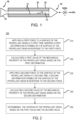
FIG. 1 illustrates a cross section view of a solid rocket motor comprising a propellant grain having a perforation, in accordance with various embodiments; -
FIG. 2 illustrates a method for non-destructively surveilling a mechanical property of a solid rocket motor propellant grain, in accordance with various embodiments; -
FIG. 3A and FIG. 3B illustrate plots of bulk relaxation modulus of a propellant grain versus time, in accordance with various embodiments; -
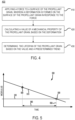
FIG. 4 illustrates a method for non-destructively surveilling a mechanical property of a solid rocket motor propellant grain, in accordance with various embodiments; -
FIG. 5 illustrate plots of bulk relaxation modulus of a propellant grain versus time, in accordance with various embodiments; -
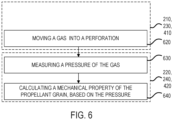
FIG. 6 illustrates sub-steps of the method ofFIG. 2 and/orFIG. 4 , including methods for applying a force (or pressure) to the propellant grain, as well as calculating the mechanical property, in accordance with various embodiments; -
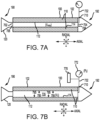
FIG. 7A illustrates a cross section view of the solid rocket motor ofFIG. 1 with a port in fluid communication with the hermetically sealed perforation, in accordance with various embodiments; and -
FIG. 7B illustrates a cross section view of the solid rocket motor ofFIG. 7A with the perforation filled with a gas, the perforation having expanded in response to the pressurized gas, in accordance with various embodiments. - The detailed description of various embodiments herein makes reference to the accompanying drawings, which show various embodiments by way of illustration. While these various embodiments are described in sufficient detail to enable those skilled in the art to practice the disclosure, it should be understood that other embodiments may be realized and that logical, chemical, and mechanical changes may be made without departing from the scope of the disclosure. Thus, the detailed description herein is presented for purposes of illustration only and not of limitation.
- With reference to
FIG. 1 , asolid rocket motor 100 is illustrated, in accordance with various embodiments.Solid rocket motor 100 may comprise anaft end 190 and aforward end 192.Solid rocket motor 100 may comprise acasing 102 extending betweenaft end 190 andforward end 192. In various embodiments,casing 102 may comprise a cylindrical geometry.Solid rocket motor 100 may comprise anozzle 120 disposed ataft end 190.Nozzle 120 may be coupled tocasing 102.Solid rocket motor 100 may comprise a solid rocket motor propellant grain (propellant grain) 110 disposed withincasing 102. In various embodiments,propellant grain 110 may be comprised of a solid fuel, such as a pure fuel, inert without an oxidizer. For example,propellant grain 110 may comprise a hydroxyl-terminated polybutadiene (HTPB), a polymethyl methacrylate (PMMA), or a polyethylene (PE), among others. In various embodiments,propellant grain 110 may be comprised of a composite propellant comprising both a fuel and an oxidizer mixed and immobilized within a cured polymer-based binder. For example,propellant grain 110 may comprise an ammonium nitrate-based composite propellant (ANCP) or ammonium perchlorate-based composite propellant (APCP).Propellant grain 110 is a solid mass with an exposed inner surface area defining a perforation volume (also referred to herein as a perforation) in the interior of the solid rocket motor. In this regard,propellant grain 110 comprises aperforation 112.Perforation 112 may be defined by a bore extending axially throughpropellant grain 110. - A mechanical property envelope describes the minimum and maximum performance values necessary for a propellant grain to function as designed. The calculated mechanical property envelope is typically derived from a series of tests to determine propellant failure limits under various loading conditions. When a propellant sample mechanical property falls outside of the calculated envelope, the propellant grain service life is at an end.
- The mechanical properties of the propellant comprising the grain can be measured both immediately after curing and after an accelerated aging period. Typically, the measurements are performed on propellant samples produced simultaneously with the production of propellant grains. Accelerated aging of the propellant samples is usually achieved through exposure to high temperatures for a duration of time designed to mimic the passage of time. The mechanical properties of the propellant grain contained within the rocket motor are typically assumed to be represented by the simultaneously produced propellant samples. The service life of the propellant grain is then assumed to be represented by the performance of the propellant samples subjected to accelerated aging, with a conservative reduction to compensate for potential variation between propellant sample and propellant grain.
- To validate the typical assumption that the propellant grain within the rocket motor is accurately represented by the propellant samples, it may be desirable to calculate mechanical properties of a propellant grain to determine the health of the corresponding solid rocket motor. Typically, in order to determine the health of a plurality of solid rocket motors, a sacrificial solid rocket motor is disassembled using destructive means to gain access to the propellant of the sacrificial solid rocket motor in order to take proper measurements. The sacrificial solid rocket motor would typically be similar to the plurality of solid rocket motors (e.g., same type, age, storage conditions, etc.). Stated differently, a solid rocket motor is sacrificed in order to estimate the health of a plurality of similar solid rocket motors.
- The present disclosure, as described herein, provides systems and methods for non-destructively surveilling solid rocket motor propellant grains for predicting the lifespan and the remaining lifespan of the solid rocket motor.
- With reference to
FIG. 2 , amethod 200 for non-destructively surveilling a mechanical property of a solid rocket motor propellant grain is illustrated, in accordance with various embodiments.Method 200 includes applying a first force to a surface of the propellant grain at a first time, wherein a first deformation is formed on the surface of the propellant grain in response to the first force (step 210).Method 200 includes calculating a first value of the mechanical property of the propellant grain, based on the first deformation (step 220).Method 200 includes applying a second force to the surface of the propellant grain at a second time, a second deformation formed on the surface of the propellant grain in response to the second force (step 230).Method 200 includes calculating a second value of the mechanical property of the propellant grain, based on the second deformation (step 240).Method 200 includes determining the remaining lifespan of the propellant grain, based on the first value and the second value (step 250) and through comparison of their values with the modeled performance minima and/or maxima. - With combined reference to
FIG. 1 and FIG. 2 ,step 210 and step 230 includes applying a force to surface 114 ofpropellant grain 110. The force is applied via a variety of devices and/or methods, as will be described with further detail herein.Surface 114 is an inner surface ofpropellant grain 110.Surface 114 may be a radially displayed inner surface ofpropellant grain 110.Surface 114 definesperforation 112.Perforation 112 comprises a bore formed throughpropellant grain 110. A deformation may be formed inpropellant grain 110 in response to the force. For example, a deformation may be formed insurface 114 in response to the force. Step 220 and step 240 includes calculating a mechanical property ofpropellant grain 110, based upon the respective deformations. For example, a mechanical property that may be calculated is the bulk relaxation modulus (k) ofpropellant grain 110. As will be described with further detail herein, the amount of deformation of thepropellant grain 110 in response to a given force, may indicate the magnitude of the bulk relaxation modulus (k) ofpropellant grain 110. - In various embodiments,
step 210 occurs at a first time and step 230 occurs at a second time. Similarly, step 220 may occur during the first time and step 240 may occur during the second time. For example,step 230 and step 240 may occur a year or more afterstep 210 andstep 220. In this regard, the health ofsolid rocket motor 100 may be surveilled over a period of time. With additional reference toFIG. 3A , a plot 300 of various bulk relaxation modulus (k) values calculated over time is illustrated, in accordance with various embodiments. For example,first value 302 may be calculated at a first time,second value 304 may be calculated at a second time, andthird value 306 may be calculated at a third time. A trend (also referred to herein as a curve) 310 may be determined based onfirst value 302,second value 304, andthird value 306. For example, a curve of best fit (i.e., curve 310) may be determined using any suitable method including, but not limited to, interpolation, polynomial interpolation, smoothing, line fitting, curve fitting, extrapolation, analytic models, etc. Although illustrated as having three separate values, it is contemplated thatcurve 310 may be determined using two or more values. For example, using solelyfirst value 302 andsecond value 304, or using more than three values. -
Curve 310 may be used to determine afuture value 309. For example,curve 310 may be compared with apre-determined threshold value 320 of bulk relaxation modulus (k) and atime 392 at which curve 310 will intersect withpre-determined threshold value 320 may be used to definefuture value 309. In this regard,curve 310 may be extrapolated to estimate atime 392 at which the mechanical property (e.g., bulk relaxation modulus (k)) will reach thepre-determined threshold value 320.Value 320 can be determined by modeling and calculation, through measurement of propellant samples subjected to accelerated aging, or by destructive testing of a sacrificial solid rocket motor. In this regard, it may be determined thatsolid rocket motor 100 has a lifespan ofduration 380.Duration 380 may be measured in units of time, such as years, months, or days, for example. - With reference to
FIG. 3B , aplot 301 of various bulk relaxation modulus (k) values calculated over time is illustrated, in accordance with various embodiments.Plot 301 differs from plot 300 ofFIG. 3A in that the propellant grain bulk relaxation modulus (k) ofplot 301 increases over time. Thus, methods described herein may be suitable for propellant grains that have a bulk relaxation modulus (k) that increase or decrease over time. Stated differently, methods described herein may be suitable for propellant grains that soften or harden over time. - Having described a method for non-destructively surveilling a mechanical property of a solid rocket motor propellant grain using two measured values, it is contemplated herein that a method for non-destructively surveilling a mechanical property of a solid rocket motor propellant grain may be performed using only a single measured value. With reference to
FIG. 4 amethod 400 for non-destructively surveilling a mechanical property of a solid rocket motor propellant grain is illustrated, in accordance with various embodiments.Method 400 includes applying a force to a surface of the propellant grain, wherein a deformation is formed on the surface of the propellant grain in response to the force (step 410).Method 400 includes calculating a value of a mechanical property of the propellant grain, based on the deformation (step 420).Method 400 includes determining the remaining lifespan of the propellant grain, based on the calculated value and a predetermined trend (step 430). - With combined reference to
FIG. 1 andFIG. 4 , step 410 may include applying a force to surface 114 ofpropellant grain 110. Step 420 may include calculating a mechanical property ofpropellant grain 110, based upon the deformation. For example, a mechanical property that may be calculated is the bulk relaxation modulus (k) ofpropellant grain 110. Step 430 may include comparing the calculated bulk relaxation modulus (k) ofpropellant grain 110 with a predetermined trend which represents that ofpropellant grain 110, for example using a trend representing the performance (i.e., bulk relaxation modulus) of a propellant sample subjected to an accelerated aging process, or a trend calculated using a model produced by the structural analysis of the propellant grain. In various embodiments, the predetermined trend is determined by modeling and calculation, through measurement of propellant samples subjected to accelerated aging, and/or by destructive testing of a sacrificial solid rocket motor - With additional reference to
FIG. 5 , aplot 500 of a calculated bulk relaxation modulus (k) value with respect to a predetermined trend is illustrated, in accordance with various embodiments. For example,value 504 may be calculated and compared with a predetermined trend (also referred to herein as a curve) 510 representing the change in bulk relaxation modulus of the propellant grain with respect to time.Curve 310 may be used to determine afuture value 309.Curve 510 may be compared with apre-determined threshold value 520 of bulk relaxation modulus (k) and afuture time 592 at which curve 510 will intersect withpre-determined threshold value 520 may be used to definefuture value 509. In this regard,calculated value 504 may be superimposed withcurve 510 to estimate atime 592 at which the mechanical property (e.g., bulk relaxation modulus (k)) will reach thepre-determined threshold value 520.Value 520 can be determined by modeling and calculation, through measurement of propellant samples subjected to accelerated aging, and/or by destructive testing of a sacrificial solid rocket motor. In this regard, it may be determined thatsolid rocket motor 100 has a remaining lifespan ofduration 580.Duration 580 may be measured in units of time, such as years, months, or days, for example. - Having described methods for non-destructively surveilling a mechanical property of a solid rocket motor propellant grain for determining a lifespan of a solid rocket motor,
FIGs. 6 through FIG. 7B illustrate various methods for applying a force to the propellant grain, as well as calculating the mechanical property. - With reference to
FIG. 6 ,step 210 and/or step 230 ofmethod 200 ofFIG. 2 and/or astep 410 ofmethod 400 ofFIG. 4 may include moving a gas into a perforation (sub-step 630). Step 220 and/or step 240 ofmethod 200 ofFIG. 2 and/or astep 420 ofmethod 400 ofFIG. 4 may include measuring a pressure of the gas (sub-step 630). Step 220 and/or step 240 ofmethod 200 ofFIG. 2 and/or astep 420 ofmethod 400 ofFIG. 4 may include calculating a mechanical property of the propellant grain, based on the pressure (sub-step 640). - With respect to
FIG. 7A and FIG. 7B , elements with like element numbering, as depicted inFIG. 1 , are intended to be the same and will not necessarily be repeated for the sake of clarity. - With reference to
FIG. 7A ,perforation 112 is hermetically sealed at both axial ends thereof. In this regard, afirst end 702 ofperforation 112 may be sealed via aseal 706.Seal 706 may comprise any suitable hermetic seal, including rubber plugs, or glass-to-metal hermetic seals, among others.Seal 706 may be coupled topropellant grain 110 such that pressurized gas does not leak fromperforation 112. Furthermore, second end 704 ofperforation 112 may be hermetically sealed. Theforward end wall 708 ofcasing 102 at second end 704 may hermetically sealperforation 112. In various embodiments,forward end wall 708 includes an ignitor for ignitingpropellant grain 110. - In various embodiments,
solid rocket motor 100 includes aport 710 in fluid communication withperforation 112. With combined reference to FIG. 6A andFIG. 7A , sub-step 620 may include connecting aconduit 732, such as a hose for example, toport 710.Perforation 112 may comprise an initial volume (Vinitial ). With combined reference to FIG. 6A andFIG. 7B , sub-step 620 may include moving agas 735 intoperforation 112.Gas 735 may be any compressible gas including air, nitrogen, etc. Agas supply 770 may be connected toconduit 732 to supply thegas 735 toperforation 112. In various embodiments,gas supply 770 may comprise a gas cylinder. In various embodiments, sub-step 620 may include moving a pre-determined number of moles ofgas 735 intoperforation 112. Thus,gas 735 may be moved intoperforation 112 in a controlled manner.Perforation 112 may expand in response to thegas 735 being moved intoperforation 112. In this manner, all radial expansion ofperforation 112 may correspond to deformation ofpropellant grain 110. For example,gas 735 may exert a force, depicted byarrows 795, onsurface 114 which may causesurface 114 to expand.Force 795 may be exerted ontosurface 114 ofpropellant grain 110 in response togas 735 being moved intoperforation 112. Thus,perforation 112 may comprise a volume (V2) in response to being filled withgas 735. In this regard, a change in volume ofperforation 112 may correspond to a volume of the deformation. The change in volume ofperforation 112 may correspond to a mechanical property ofpropellant grain 110, such as the bulk relaxation modulus (k) ofpropellant grain 110 for example.Force 795 may be a relatively small force, causing a relatively small deformation, such that the deformation does not damage the performance ofpropellant grain 110. - Sub-step 630 may include measuring a pressure (P2) of
gas 735. Apressure gauge 772 may be used to measure pressure (P2). In this regard,pressure gauge 772 may be in fluid communication with perforation 730. Pressure (P2) is the pressure of a pre-determined number of moles ofgas 735 in perforation 730. The pressure (P2) may vary in response to the bulk relaxation modulus (k) ofpropellant grain 110. For example, bulk relaxation modulus (k) is defined per equation 1 below:
gas 735 topropellant grain 110, ΔV is the change in volume of perforation 730, and Vinitial is the initial volume of perforation 730 before expansion, such as is shown inFIG. 7A for example. In this regard,force 795 may be the product of pressure (P) and the area of the perforation 730 in contact withsurface 114. - In this regard, ΔV may be defined by
equation 2 below:
gas 735. - In various embodiments, the initial volume (Vinitial ) is a known value. In various embodiments, the initial volume (Vinitial ) is calculated by moving a known number of moles of gas (n), at a known temperature (T) into perforation 730 at a low, measured pressure (Pmeas) (i.e., low enough such that the volume of perforation 730 does not increase in response to the low pressure), and calculating V using equation 3 below.
- Using the known initial volume, the expected pressure (Pcalc ) of
gas 735 can be determined using equation 3:
gas 735, T is the temperature ofgas 735, n is the number of moles ofgas 735, and V is the initial volume (Vinitial ) ofperforation 112. The expected pressure (Pcalc ) is then compared with the measured pressure (P2) and the difference in pressures (i.e., Pcalc - P2) is noted. The difference from ideality is due to the compression of thepropellant grain 110 under pressure ofgas 735. Stated differently, the calculated pressure (Pcalc) and the measured pressure (P2) may be slightly different for controlled additions of gas (varying n) in response to the propellant grain being compressed which in turn will create a slightly larger volume (and reduced pressure) for thegas 735 to occupy. The difference between calculated pressure (Pcalc) and the measured pressure (P2) may be used to determine the remaining lifespan ofpropellant grain 110. In this regard, the Y-axis ofFIG. 3A, FIG. 3B , andFIG. 5 may be "pressure (P2)" instead of "modulus" or pressure difference (Pcalc - P2) instead of "modulus." However, it is understood herein that, in various embodiments, the pressure (P2) corresponds to the modulus ofpropellant grain 110. In this regard, the modulus ofpropellant grain 110 may be calculated based upon the measured pressure (P2). - In various embodiments, the ambient temperature and atmospheric pressure is known so that any change in temperature or atmospheric pressure between calculation may be taken into account.
Claims (12)
- A method (200) for non-destructively determining a lifespan of a solid rocket motor propellant grain (110), wherein the solid rocket motor propellant grain is a solid mass with an exposed inner surface area defining a perforation in the interior of the solid rocket motor propellant grain, comprising:
moving a gas (735) into the perforation, thereby applying a force (210) to a surface of the solid rocket motor propellant grain with a pressure of the gas, wherein a deformation is formed on the surface of the solid rocket motor propellant grain in response to the application of the force;
wherein the gas is pressurized in response to moving a pre-determined number of moles of gas into the perforation, wherein the deformation is formed in response to the gas being pressurized; and
measuring (630) a pressure of the gas. - The method of claim 1, further comprising determining a lifespan of the solid rocket motor propellant grain (110) based upon the pressure of the gas (735).
- The method of claim 1, further comprising calculating a value of a mechanical property of the solid rocket motor propellant grain (110) based upon the deformation, and optionally wherein the mechanical property comprises a bulk relaxation modulus (k) calculated using equation

- The method of any preceding claim, further comprising:
calculating a value of a mechanical property of the solid rocket motor propellant grain based upon a change in volume of the perforation and the pressure of the gas. - The method of claim 4, further comprising:
determining the lifespan of the solid rocket motor propellant grain based upon the value of the mechanical property. - A method for non-destructively surveilling a mechanical property of a solid rocket motor propellant grain (110), comprising:applying a first force to a surface of the solid rocket motor propellant grain at a first time, wherein a first deformation is formed on the surface of the solid rocket motor propellant grain in response to the applying the first force;measuring a first value of a relaxation modulus of the solid rocket motor propellant grain based on the first deformation;applying a second force to the surface of the solid rocket motor propellant grain at a second time, wherein a second deformation is formed on the surface of the solid rocket motor propellant grain in response to the applying the second force; andmeasuring a second value of the relaxation modulus of the solid rocket motor propellant grain based on the second deformation,wherein at least one of the first force or the second force is applied to the surface by moving a gas into a perforation of the solid rocket motor propellant grain; wherein the gas is pressurized in response to moving a pre-determined number of moles of gas into the perforation, and at least one of the first deformation or the second deformation is formed in response to the gas being pressurized.
- The method of claim 6, further comprising comparing the first value with the second value, and optionally further comprising predicting a future value of the relaxation modulus based on a trend between the first value and the second value, and optionally further comprising determining a remaining lifespan of the solid rocket motor propellant grain (110) based on a comparison between the future value and a pre-determined design threshold.
- The method of claim 6, wherein the first value of the relaxation modulus is measured by measuring a pressure of the gas (735), and optionally
wherein the first value of the relaxation modulus is measured based upon an initial volume of the perforation and a second volume of the perforation. - The method of claim 6, wherein the first value of the relaxation modulus is calculated using an equation P 2 Vinitial = nRT, where R is a universal gas constant of the gas, T is a temperature of the gas, n is a number of moles of the gas, Vinitial is an initial volume of the perforation, and P 2 is a measured pressure of the gas.
- A solid rocket motor propellant grain arrangement, comprising:a case;a propellant grain (110) disposed within the case;a perforation (112) extending through the propellant grain, characterised by the perforation being hermetically sealed at both axial ends thereof; anda port (710) in fluid communication with the perforation, wherein the perforation is configured to receive a gas via the port while the perforation is hermetically sealed so as to expand the perforation.
- The solid rocket motor propellant grain arrangement of claim 10, further comprising a conduit (732) coupled to the port (710).
- The solid rocket motor propellant grain arrangement of claim 11, further comprising a pressure gauge (772) in fluid communication with the perforation, via the port.
Applications Claiming Priority (1)
| Application Number | Priority Date | Filing Date | Title |
|---|---|---|---|
| US16/386,186 US11204307B2 (en) | 2019-04-16 | 2019-04-16 | In-situ solid rocket motor propellant grain aging using gas |
Publications (2)
| Publication Number | Publication Date |
|---|---|
| EP3726042A1 EP3726042A1 (en) | 2020-10-21 |
| EP3726042B1 true EP3726042B1 (en) | 2024-09-11 |
Family
ID=68917457
Family Applications (1)
| Application Number | Title | Priority Date | Filing Date |
|---|---|---|---|
| EP19216310.3A Active EP3726042B1 (en) | 2019-04-16 | 2019-12-13 | In-situ assessing of solid rocket motor propellant grain lifespan |
Country Status (3)
| Country | Link |
|---|---|
| US (1) | US11204307B2 (en) |
| EP (1) | EP3726042B1 (en) |
| KR (1) | KR102728063B1 (en) |
Families Citing this family (3)
| Publication number | Priority date | Publication date | Assignee | Title |
|---|---|---|---|---|
| CN113047981B (en) * | 2021-03-16 | 2022-11-22 | 西北工业大学 | Method for judging effectiveness of original experimental data in solid propellant burning rate test by impulse method |
| CN115235888B (en) * | 2022-07-06 | 2023-06-13 | 中国人民解放军国防科技大学 | Material elastic property in-situ local touch pressure measurement method and measurement system |
| CN119742017B (en) * | 2025-03-06 | 2025-04-29 | 中国人民解放军国防科技大学 | Aging/creep coupled analysis method for long-term storage solid propellant grains |
Citations (1)
| Publication number | Priority date | Publication date | Assignee | Title |
|---|---|---|---|---|
| US3583162A (en) * | 1969-03-07 | 1971-06-08 | Thiokol Chemical Corp | Closure and solid propellant grain support for a solid propellant rocket motor |
Family Cites Families (25)
| Publication number | Priority date | Publication date | Assignee | Title |
|---|---|---|---|---|
| US2988877A (en) * | 1957-12-30 | 1961-06-20 | Phillips Petroleum Co | Solid propellant rocket motor |
| US3121993A (en) | 1960-12-05 | 1964-02-25 | Pennington William | Rocket propellant support |
| US3533485A (en) * | 1969-02-12 | 1970-10-13 | Barbara J Slates | Method and apparatus for determining the acoustics of rocket motor chambers |
| US3662592A (en) * | 1970-08-28 | 1972-05-16 | Robert L Geisler | Non-destructive testing device for the detection of flaws in solid rocket motors |
| US3937070A (en) | 1974-04-29 | 1976-02-10 | Aerojet-General Corporation | Method and sensors for predetermining dynamic moduli in situ of castable-type material |
| US4664234A (en) | 1984-04-30 | 1987-05-12 | General Motors Corporation | Self pressurized damper |
| US4925503A (en) | 1988-02-17 | 1990-05-15 | Olin Corporation | Solid explosive and propellant compositions containing a polyurethane polyacetal elastomer binder and method for the preparation thereof |
| USH682H (en) * | 1989-02-27 | 1989-10-03 | The United States Of America As Represented By The Secretary Of The Army | Erosion rate determinator: rocket nozzle |
| US5582001A (en) | 1989-08-24 | 1996-12-10 | Bradford; Michael D. | Hybrid rocket combustion enhancement |
| US5038295A (en) | 1989-12-28 | 1991-08-06 | The United States Of America As Represented By The Secretary Of The Air Force | Solid propellant service life analysis via nondestructive testing |
| US5540794A (en) | 1992-05-11 | 1996-07-30 | Thiokol Corporation | Energetic binder and thermoplastic elastomer-based low vulnerability ammunition gun propellants with improved mechanical properties |
| US6619029B2 (en) * | 2001-11-01 | 2003-09-16 | Alliant Techsystems Inc. | Rocket motors with insensitive munitions systems |
| US6776049B2 (en) * | 2001-12-07 | 2004-08-17 | Alliant Techsystems Inc. | System and method for measuring stress at an interface |
| US20060032562A1 (en) | 2004-06-14 | 2006-02-16 | University Of Utah Research Foundation | Method for reducing violence of accidental explosions in solid fuel rocket motors and other energetic devices |
| US7581450B2 (en) | 2006-10-31 | 2009-09-01 | Alliant Techsystems Inc. | Relaxation modulus sensor, structure incorporating same, and method for use of same |
| US7652488B1 (en) | 2007-04-26 | 2010-01-26 | The United States Of America As Represented By The Secretary Of The Navy | Method for measuring the health of solid rocket propellant using an embedded sensor |
| KR101153989B1 (en) * | 2009-11-16 | 2012-06-08 | 한국항공대학교산학협력단 | Hybrid rocket fuel with grain port of tapered shape |
| FR2954498B1 (en) | 2009-12-23 | 2012-03-16 | Snpe Materiaux Energetiques | DEVICE FOR CONTROLLING A VISCOELASTIC MATERIAL |
| US8210052B1 (en) | 2010-05-20 | 2012-07-03 | The United States Of America As Represented By The Secretary Of The Navy | Method for forecasting the fatigue damage of a solid rocket motor through ignition |
| DE102011115812B4 (en) | 2011-10-13 | 2016-08-11 | Bayern-Chemie Gesellschaft Für Flugchemische Antriebe Mbh | Procedure for lifetime monitoring of rockets and accompanying sample to carry out the same |
| US9273635B2 (en) | 2012-03-29 | 2016-03-01 | The Aerospace Corporation | Hypergolic hybrid motor igniter |
| US9447672B2 (en) * | 2013-02-28 | 2016-09-20 | Orbital Atk, Inc. | Method and apparatus for ballistic tailoring of propellant structures and operation thereof for downhole stimulation |
| CN104820083B (en) | 2015-05-04 | 2016-08-24 | 西安近代化学研究所 | A kind of predictor method of large scale NEPE propellant loading storage life |
| CN107923828A (en) | 2015-08-24 | 2018-04-17 | 航天喷气发动机洛克达因股份有限公司 | The technique for carrying out nondestructive testing using direct strain imaging |
| AU2016319724B2 (en) * | 2015-09-10 | 2020-12-24 | Nederlandse Organisatie Voor Toegepast-Natuurwetenschappelijk Onderzoek Tno | Propellant charge |
-
2019
- 2019-04-16 US US16/386,186 patent/US11204307B2/en active Active
- 2019-12-13 EP EP19216310.3A patent/EP3726042B1/en active Active
- 2019-12-20 KR KR1020190171412A patent/KR102728063B1/en active Active
Patent Citations (1)
| Publication number | Priority date | Publication date | Assignee | Title |
|---|---|---|---|---|
| US3583162A (en) * | 1969-03-07 | 1971-06-08 | Thiokol Chemical Corp | Closure and solid propellant grain support for a solid propellant rocket motor |
Also Published As
| Publication number | Publication date |
|---|---|
| US11204307B2 (en) | 2021-12-21 |
| KR20200121721A (en) | 2020-10-26 |
| EP3726042A1 (en) | 2020-10-21 |
| KR102728063B1 (en) | 2024-11-07 |
| US20200333224A1 (en) | 2020-10-22 |
Similar Documents
| Publication | Publication Date | Title |
|---|---|---|
| EP3726042B1 (en) | In-situ assessing of solid rocket motor propellant grain lifespan | |
| US8210052B1 (en) | Method for forecasting the fatigue damage of a solid rocket motor through ignition | |
| CN105716948A (en) | System and method for testing temperature response coefficient of heat insulation stress change of underground rock | |
| EP3726041B1 (en) | In-situ solid rocket motor propellant grain aging using pneumatically activated bladder | |
| EP3726039B1 (en) | In-situ solid rocket motor propellant grain aging using hydraulically actuated bladder | |
| Tussiwand et al. | Non-destructive ageing state determination of solid rocket motors charges | |
| EP3726040B1 (en) | In-situ solid rocket motor propellant grain aging using liquid | |
| US6799469B2 (en) | Method of measuring forces in the presence of an external pressure | |
| Tussiwand | Application of Embedded Sensors Technology to a Full-Scale Nozzleless Rocket Motor | |
| CN113310696A (en) | Engine charging aging test method and charging tester | |
| KR102049510B1 (en) | Method for verifying dynamometer using module-type propeller test equipment | |
| Miller | Characterization of propellant modulus and rocket motor stress-free temperature using stress sensors | |
| Reeling Brouwer et al. | Aging in composite propellant grains | |
| Reeling Brouwer et al. | Use of Embedded Bond Stress Sensors to Determine Aging | |
| US20020161531A1 (en) | Method for determining joint stiffness degradation | |
| CN120651468B (en) | Device and method for modal test of axial load sensor of aero-engine | |
| RU2327128C2 (en) | Method of controlling loss of tightness of tank separator in pressure fuelling system for engine unit of spacecraft | |
| Jingdong et al. | Life prediction of seal lifecycle for solid rocket motor based on leakage rate | |
| Muhammad et al. | Technique to Assess Aging of Propellant Grain | |
| Mathes et al. | Methods for determining characteristics of acoustic waves in rocket motors | |
| JPH0127378B2 (en) | ||
| RU1796950C (en) | Method of mechanically testing structures | |
| Ho | Non-Destructive Evaluation Methods for Solid Rocket Motor Structural Health Monitoring | |
| KELLEY et al. | Elements of solid rocket service life prediction | |
| Henning | Effects of Relaxation of a Core on a Wound Roll |
Legal Events
| Date | Code | Title | Description |
|---|---|---|---|
| PUAI | Public reference made under article 153(3) epc to a published international application that has entered the european phase |
Free format text: ORIGINAL CODE: 0009012 |
|
| STAA | Information on the status of an ep patent application or granted ep patent |
Free format text: STATUS: THE APPLICATION HAS BEEN PUBLISHED |
|
| AK | Designated contracting states |
Kind code of ref document: A1 Designated state(s): AL AT BE BG CH CY CZ DE DK EE ES FI FR GB GR HR HU IE IS IT LI LT LU LV MC MK MT NL NO PL PT RO RS SE SI SK SM TR |
|
| STAA | Information on the status of an ep patent application or granted ep patent |
Free format text: STATUS: REQUEST FOR EXAMINATION WAS MADE |
|
| 17P | Request for examination filed |
Effective date: 20210421 |
|
| RBV | Designated contracting states (corrected) |
Designated state(s): AL AT BE BG CH CY CZ DE DK EE ES FI FR GB GR HR HU IE IS IT LI LT LU LV MC MK MT NL NO PL PT RO RS SE SI SK SM TR |
|
| STAA | Information on the status of an ep patent application or granted ep patent |
Free format text: STATUS: EXAMINATION IS IN PROGRESS |
|
| 17Q | First examination report despatched |
Effective date: 20220829 |
|
| P01 | Opt-out of the competence of the unified patent court (upc) registered |
Effective date: 20230922 |
|
| GRAP | Despatch of communication of intention to grant a patent |
Free format text: ORIGINAL CODE: EPIDOSNIGR1 |
|
| STAA | Information on the status of an ep patent application or granted ep patent |
Free format text: STATUS: GRANT OF PATENT IS INTENDED |
|
| INTG | Intention to grant announced |
Effective date: 20240409 |
|
| GRAS | Grant fee paid |
Free format text: ORIGINAL CODE: EPIDOSNIGR3 |
|
| GRAA | (expected) grant |
Free format text: ORIGINAL CODE: 0009210 |
|
| STAA | Information on the status of an ep patent application or granted ep patent |
Free format text: STATUS: THE PATENT HAS BEEN GRANTED |
|
| AK | Designated contracting states |
Kind code of ref document: B1 Designated state(s): AL AT BE BG CH CY CZ DE DK EE ES FI FR GB GR HR HU IE IS IT LI LT LU LV MC MK MT NL NO PL PT RO RS SE SI SK SM TR |
|
| REG | Reference to a national code |
Ref country code: GB Ref legal event code: FG4D |
|
| REG | Reference to a national code |
Ref country code: CH Ref legal event code: EP |
|
| REG | Reference to a national code |
Ref country code: DE Ref legal event code: R096 Ref document number: 602019058633 Country of ref document: DE |
|
| REG | Reference to a national code |
Ref country code: IE Ref legal event code: FG4D |
|
| REG | Reference to a national code |
Ref country code: LT Ref legal event code: MG9D |
|
| PG25 | Lapsed in a contracting state [announced via postgrant information from national office to epo] |
Ref country code: NO Free format text: LAPSE BECAUSE OF FAILURE TO SUBMIT A TRANSLATION OF THE DESCRIPTION OR TO PAY THE FEE WITHIN THE PRESCRIBED TIME-LIMIT Effective date: 20241211 |
|
| REG | Reference to a national code |
Ref country code: NL Ref legal event code: MP Effective date: 20240911 |
|
| PG25 | Lapsed in a contracting state [announced via postgrant information from national office to epo] |
Ref country code: GR Free format text: LAPSE BECAUSE OF FAILURE TO SUBMIT A TRANSLATION OF THE DESCRIPTION OR TO PAY THE FEE WITHIN THE PRESCRIBED TIME-LIMIT Effective date: 20241212 Ref country code: FI Free format text: LAPSE BECAUSE OF FAILURE TO SUBMIT A TRANSLATION OF THE DESCRIPTION OR TO PAY THE FEE WITHIN THE PRESCRIBED TIME-LIMIT Effective date: 20240911 |
|
| PG25 | Lapsed in a contracting state [announced via postgrant information from national office to epo] |
Ref country code: BG Free format text: LAPSE BECAUSE OF FAILURE TO SUBMIT A TRANSLATION OF THE DESCRIPTION OR TO PAY THE FEE WITHIN THE PRESCRIBED TIME-LIMIT Effective date: 20240911 |
|
| PG25 | Lapsed in a contracting state [announced via postgrant information from national office to epo] |
Ref country code: LV Free format text: LAPSE BECAUSE OF FAILURE TO SUBMIT A TRANSLATION OF THE DESCRIPTION OR TO PAY THE FEE WITHIN THE PRESCRIBED TIME-LIMIT Effective date: 20240911 |
|
| PG25 | Lapsed in a contracting state [announced via postgrant information from national office to epo] |
Ref country code: HR Free format text: LAPSE BECAUSE OF FAILURE TO SUBMIT A TRANSLATION OF THE DESCRIPTION OR TO PAY THE FEE WITHIN THE PRESCRIBED TIME-LIMIT Effective date: 20240911 |
|
| PG25 | Lapsed in a contracting state [announced via postgrant information from national office to epo] |
Ref country code: RS Free format text: LAPSE BECAUSE OF FAILURE TO SUBMIT A TRANSLATION OF THE DESCRIPTION OR TO PAY THE FEE WITHIN THE PRESCRIBED TIME-LIMIT Effective date: 20241211 Ref country code: ES Free format text: LAPSE BECAUSE OF FAILURE TO SUBMIT A TRANSLATION OF THE DESCRIPTION OR TO PAY THE FEE WITHIN THE PRESCRIBED TIME-LIMIT Effective date: 20240911 |
|
| PG25 | Lapsed in a contracting state [announced via postgrant information from national office to epo] |
Ref country code: RS Free format text: LAPSE BECAUSE OF FAILURE TO SUBMIT A TRANSLATION OF THE DESCRIPTION OR TO PAY THE FEE WITHIN THE PRESCRIBED TIME-LIMIT Effective date: 20241211 Ref country code: NO Free format text: LAPSE BECAUSE OF FAILURE TO SUBMIT A TRANSLATION OF THE DESCRIPTION OR TO PAY THE FEE WITHIN THE PRESCRIBED TIME-LIMIT Effective date: 20241211 Ref country code: LV Free format text: LAPSE BECAUSE OF FAILURE TO SUBMIT A TRANSLATION OF THE DESCRIPTION OR TO PAY THE FEE WITHIN THE PRESCRIBED TIME-LIMIT Effective date: 20240911 Ref country code: HR Free format text: LAPSE BECAUSE OF FAILURE TO SUBMIT A TRANSLATION OF THE DESCRIPTION OR TO PAY THE FEE WITHIN THE PRESCRIBED TIME-LIMIT Effective date: 20240911 Ref country code: GR Free format text: LAPSE BECAUSE OF FAILURE TO SUBMIT A TRANSLATION OF THE DESCRIPTION OR TO PAY THE FEE WITHIN THE PRESCRIBED TIME-LIMIT Effective date: 20241212 Ref country code: FI Free format text: LAPSE BECAUSE OF FAILURE TO SUBMIT A TRANSLATION OF THE DESCRIPTION OR TO PAY THE FEE WITHIN THE PRESCRIBED TIME-LIMIT Effective date: 20240911 Ref country code: ES Free format text: LAPSE BECAUSE OF FAILURE TO SUBMIT A TRANSLATION OF THE DESCRIPTION OR TO PAY THE FEE WITHIN THE PRESCRIBED TIME-LIMIT Effective date: 20240911 Ref country code: BG Free format text: LAPSE BECAUSE OF FAILURE TO SUBMIT A TRANSLATION OF THE DESCRIPTION OR TO PAY THE FEE WITHIN THE PRESCRIBED TIME-LIMIT Effective date: 20240911 |
|
| REG | Reference to a national code |
Ref country code: AT Ref legal event code: MK05 Ref document number: 1722871 Country of ref document: AT Kind code of ref document: T Effective date: 20240911 |
|
| PG25 | Lapsed in a contracting state [announced via postgrant information from national office to epo] |
Ref country code: NL Free format text: LAPSE BECAUSE OF FAILURE TO SUBMIT A TRANSLATION OF THE DESCRIPTION OR TO PAY THE FEE WITHIN THE PRESCRIBED TIME-LIMIT Effective date: 20240911 |
|
| PG25 | Lapsed in a contracting state [announced via postgrant information from national office to epo] |
Ref country code: PT Free format text: LAPSE BECAUSE OF FAILURE TO SUBMIT A TRANSLATION OF THE DESCRIPTION OR TO PAY THE FEE WITHIN THE PRESCRIBED TIME-LIMIT Effective date: 20250113 Ref country code: IS Free format text: LAPSE BECAUSE OF FAILURE TO SUBMIT A TRANSLATION OF THE DESCRIPTION OR TO PAY THE FEE WITHIN THE PRESCRIBED TIME-LIMIT Effective date: 20250111 |
|
| PG25 | Lapsed in a contracting state [announced via postgrant information from national office to epo] |
Ref country code: SM Free format text: LAPSE BECAUSE OF FAILURE TO SUBMIT A TRANSLATION OF THE DESCRIPTION OR TO PAY THE FEE WITHIN THE PRESCRIBED TIME-LIMIT Effective date: 20240911 Ref country code: RO Free format text: LAPSE BECAUSE OF FAILURE TO SUBMIT A TRANSLATION OF THE DESCRIPTION OR TO PAY THE FEE WITHIN THE PRESCRIBED TIME-LIMIT Effective date: 20240911 |
|
| PG25 | Lapsed in a contracting state [announced via postgrant information from national office to epo] |
Ref country code: EE Free format text: LAPSE BECAUSE OF FAILURE TO SUBMIT A TRANSLATION OF THE DESCRIPTION OR TO PAY THE FEE WITHIN THE PRESCRIBED TIME-LIMIT Effective date: 20240911 Ref country code: AT Free format text: LAPSE BECAUSE OF FAILURE TO SUBMIT A TRANSLATION OF THE DESCRIPTION OR TO PAY THE FEE WITHIN THE PRESCRIBED TIME-LIMIT Effective date: 20240911 |
|
| PG25 | Lapsed in a contracting state [announced via postgrant information from national office to epo] |
Ref country code: PL Free format text: LAPSE BECAUSE OF FAILURE TO SUBMIT A TRANSLATION OF THE DESCRIPTION OR TO PAY THE FEE WITHIN THE PRESCRIBED TIME-LIMIT Effective date: 20240911 Ref country code: CZ Free format text: LAPSE BECAUSE OF FAILURE TO SUBMIT A TRANSLATION OF THE DESCRIPTION OR TO PAY THE FEE WITHIN THE PRESCRIBED TIME-LIMIT Effective date: 20240911 |
|
| PG25 | Lapsed in a contracting state [announced via postgrant information from national office to epo] |
Ref country code: SK Free format text: LAPSE BECAUSE OF FAILURE TO SUBMIT A TRANSLATION OF THE DESCRIPTION OR TO PAY THE FEE WITHIN THE PRESCRIBED TIME-LIMIT Effective date: 20240911 Ref country code: IT Free format text: LAPSE BECAUSE OF FAILURE TO SUBMIT A TRANSLATION OF THE DESCRIPTION OR TO PAY THE FEE WITHIN THE PRESCRIBED TIME-LIMIT Effective date: 20240911 |
|
| REG | Reference to a national code |
Ref country code: DE Ref legal event code: R097 Ref document number: 602019058633 Country of ref document: DE |
|
| PG25 | Lapsed in a contracting state [announced via postgrant information from national office to epo] |
Ref country code: MC Free format text: LAPSE BECAUSE OF FAILURE TO SUBMIT A TRANSLATION OF THE DESCRIPTION OR TO PAY THE FEE WITHIN THE PRESCRIBED TIME-LIMIT Effective date: 20240911 |
|
| PG25 | Lapsed in a contracting state [announced via postgrant information from national office to epo] |
Ref country code: DK Free format text: LAPSE BECAUSE OF FAILURE TO SUBMIT A TRANSLATION OF THE DESCRIPTION OR TO PAY THE FEE WITHIN THE PRESCRIBED TIME-LIMIT Effective date: 20240911 |
|
| PLBE | No opposition filed within time limit |
Free format text: ORIGINAL CODE: 0009261 |
|
| STAA | Information on the status of an ep patent application or granted ep patent |
Free format text: STATUS: NO OPPOSITION FILED WITHIN TIME LIMIT |
|
| REG | Reference to a national code |
Ref country code: CH Ref legal event code: PL |
|
| PG25 | Lapsed in a contracting state [announced via postgrant information from national office to epo] |
Ref country code: LU Free format text: LAPSE BECAUSE OF NON-PAYMENT OF DUE FEES Effective date: 20241213 |
|
| 26N | No opposition filed |
Effective date: 20250612 |
|
| PG25 | Lapsed in a contracting state [announced via postgrant information from national office to epo] |
Ref country code: SE Free format text: LAPSE BECAUSE OF FAILURE TO SUBMIT A TRANSLATION OF THE DESCRIPTION OR TO PAY THE FEE WITHIN THE PRESCRIBED TIME-LIMIT Effective date: 20240911 |
|
| REG | Reference to a national code |
Ref country code: BE Ref legal event code: MM Effective date: 20241231 |
|
| PG25 | Lapsed in a contracting state [announced via postgrant information from national office to epo] |
Ref country code: BE Free format text: LAPSE BECAUSE OF NON-PAYMENT OF DUE FEES Effective date: 20241231 |
|
| PG25 | Lapsed in a contracting state [announced via postgrant information from national office to epo] |
Ref country code: CH Free format text: LAPSE BECAUSE OF NON-PAYMENT OF DUE FEES Effective date: 20241231 |
|
| PG25 | Lapsed in a contracting state [announced via postgrant information from national office to epo] |
Ref country code: IE Free format text: LAPSE BECAUSE OF NON-PAYMENT OF DUE FEES Effective date: 20241213 |
|
| PGFP | Annual fee paid to national office [announced via postgrant information from national office to epo] |
Ref country code: DE Payment date: 20251126 Year of fee payment: 7 |
|
| PGFP | Annual fee paid to national office [announced via postgrant information from national office to epo] |
Ref country code: GB Payment date: 20251119 Year of fee payment: 7 |
|
| PGFP | Annual fee paid to national office [announced via postgrant information from national office to epo] |
Ref country code: FR Payment date: 20251120 Year of fee payment: 7 |